EP1751184B1 - Fgf-21 fusion proteins - Google Patents
Fgf-21 fusion proteins Download PDFInfo
- Publication number
- EP1751184B1 EP1751184B1 EP05742237A EP05742237A EP1751184B1 EP 1751184 B1 EP1751184 B1 EP 1751184B1 EP 05742237 A EP05742237 A EP 05742237A EP 05742237 A EP05742237 A EP 05742237A EP 1751184 B1 EP1751184 B1 EP 1751184B1
- Authority
- EP
- European Patent Office
- Prior art keywords
- igg4
- fgf
- fgf21
- fusion protein
- terminus
- Prior art date
- Legal status (The legal status is an assumption and is not a legal conclusion. Google has not performed a legal analysis and makes no representation as to the accuracy of the status listed.)
- Expired - Lifetime
Links
Classifications
-
- C—CHEMISTRY; METALLURGY
- C07—ORGANIC CHEMISTRY
- C07K—PEPTIDES
- C07K14/00—Peptides having more than 20 amino acids; Gastrins; Somatostatins; Melanotropins; Derivatives thereof
- C07K14/435—Peptides having more than 20 amino acids; Gastrins; Somatostatins; Melanotropins; Derivatives thereof from animals; from humans
- C07K14/475—Growth factors; Growth regulators
- C07K14/50—Fibroblast growth factor [FGF]
-
- A—HUMAN NECESSITIES
- A61—MEDICAL OR VETERINARY SCIENCE; HYGIENE
- A61P—SPECIFIC THERAPEUTIC ACTIVITY OF CHEMICAL COMPOUNDS OR MEDICINAL PREPARATIONS
- A61P3/00—Drugs for disorders of the metabolism
-
- A—HUMAN NECESSITIES
- A61—MEDICAL OR VETERINARY SCIENCE; HYGIENE
- A61P—SPECIFIC THERAPEUTIC ACTIVITY OF CHEMICAL COMPOUNDS OR MEDICINAL PREPARATIONS
- A61P3/00—Drugs for disorders of the metabolism
- A61P3/04—Anorexiants; Antiobesity agents
-
- A—HUMAN NECESSITIES
- A61—MEDICAL OR VETERINARY SCIENCE; HYGIENE
- A61P—SPECIFIC THERAPEUTIC ACTIVITY OF CHEMICAL COMPOUNDS OR MEDICINAL PREPARATIONS
- A61P3/00—Drugs for disorders of the metabolism
- A61P3/08—Drugs for disorders of the metabolism for glucose homeostasis
- A61P3/10—Drugs for disorders of the metabolism for glucose homeostasis for hyperglycaemia, e.g. antidiabetics
-
- A—HUMAN NECESSITIES
- A61—MEDICAL OR VETERINARY SCIENCE; HYGIENE
- A61K—PREPARATIONS FOR MEDICAL, DENTAL OR TOILETRY PURPOSES
- A61K38/00—Medicinal preparations containing peptides
-
- C—CHEMISTRY; METALLURGY
- C07—ORGANIC CHEMISTRY
- C07K—PEPTIDES
- C07K2319/00—Fusion polypeptide
- C07K2319/30—Non-immunoglobulin-derived peptide or protein having an immunoglobulin constant or Fc region, or a fragment thereof, attached thereto
-
- C—CHEMISTRY; METALLURGY
- C07—ORGANIC CHEMISTRY
- C07K—PEPTIDES
- C07K2319/00—Fusion polypeptide
- C07K2319/31—Fusion polypeptide fusions, other than Fc, for prolonged plasma life, e.g. albumin
-
- C—CHEMISTRY; METALLURGY
- C07—ORGANIC CHEMISTRY
- C07K—PEPTIDES
- C07K2319/00—Fusion polypeptide
- C07K2319/70—Fusion polypeptide containing domain for protein-protein interaction
- C07K2319/74—Fusion polypeptide containing domain for protein-protein interaction containing a fusion for binding to a cell surface receptor
- C07K2319/75—Fusion polypeptide containing domain for protein-protein interaction containing a fusion for binding to a cell surface receptor containing a fusion for activation of a cell surface receptor, e.g. thrombopoeitin, NPY and other peptide hormones
Definitions
- the mutein may possess increased compatibility with pharmaceutical preservatives (e.g., m-cresol, phenol, benzyl alcohol), thus enabling the preparation of a preserved pharmaceutical formulation that maintains the physiochemical properties and biological activity of the protein during storage.
- pharmaceutical preservatives e.g., m-cresol, phenol, benzyl alcohol
- the mutein may have reduced O-glycosylation when expressed in yeast.
- the mutein may have less deamidation when compared to wild type FGF-21. As used herein, these terms are not limiting, it being entirely possible that a given mutein has one or more modified properties of the wild-type protein.
- Modifications at amino acid side groups include, without limitation, acylation of lysine ⁇ -amino groups, N-alkylation of arginine, histidine, or lysine, alkylation of glutamic or aspartic carboxylic acid groups, and deamidation of glutamine or asparagine.
- Modifications of the terminal amino group include, without limitation, the des-amino, N-lower alkyl, N-di-lower alkyl, and N-acyl modifications.
- Modifications of the terminal carboxy group include, without limitation, the amide, lower alkyl amide, dialkyl amide, and lower alkyl ester modifications.
- one or more side groups, or terminal groups may be protected by protective groups known to the ordinarily-skilled protein chemist.
- the ⁇ -carbon of an amino acid may be mono- or dimethylated.
- Immunoglobulins are molecules containing polypeptide chains held together by disulfide bonds, typically having two light chains and two heavy chains. In each chain, one domain (V) has a variable amino acid sequence depending on the antibody specificity of the molecule. The other domains (C) have a rather constant sequence common to molecules of the same class.
- the Fc or Fc-like region must serve to prolong the in vivo plasma half-life of the FGF-21 compound fused at the C-terminus or N-terminus. Furthermore, the fused FGF-21 compound must retain some biological activity. Biological activity can be determined by in vitro and in vivo methods known in the art. Representative biological assays are described in Examples 1 and 2.
- IgG4 refers to an analog of the human IgG4 Fc sequence specified as SEQ ID NO:4. Substitutions in the IgG4 Fc portion of the heterologous fusion protein are indicated in parenthesis.
- the wild-type amino acid is specified by its common abbreviation followed by the position number in the context of the entire IgG4 sequence using the EU numbering system followed by the amino acid being substituted at that position specified by its common abbreviation.
- the FGF-21-Fc fusion protein has an elimination half-life of approximately 24 hours compared to an elimination half-life of 0.6 hours for native FGF-21.
- the FGF-21-Fc fusion protein demonstrates prolonged time action when compared to native FGF-21.
Landscapes
- Health & Medical Sciences (AREA)
- Chemical & Material Sciences (AREA)
- Life Sciences & Earth Sciences (AREA)
- Organic Chemistry (AREA)
- Diabetes (AREA)
- General Health & Medical Sciences (AREA)
- Medicinal Chemistry (AREA)
- Pharmacology & Pharmacy (AREA)
- Public Health (AREA)
- Chemical Kinetics & Catalysis (AREA)
- General Chemical & Material Sciences (AREA)
- Hematology (AREA)
- Nuclear Medicine, Radiotherapy & Molecular Imaging (AREA)
- Bioinformatics & Cheminformatics (AREA)
- Engineering & Computer Science (AREA)
- Veterinary Medicine (AREA)
- Animal Behavior & Ethology (AREA)
- Obesity (AREA)
- Biochemistry (AREA)
- Toxicology (AREA)
- Zoology (AREA)
- Gastroenterology & Hepatology (AREA)
- Biophysics (AREA)
- Genetics & Genomics (AREA)
- Molecular Biology (AREA)
- Proteomics, Peptides & Aminoacids (AREA)
- Endocrinology (AREA)
- Child & Adolescent Psychology (AREA)
- Emergency Medicine (AREA)
- Peptides Or Proteins (AREA)
- Medicines That Contain Protein Lipid Enzymes And Other Medicines (AREA)
Abstract
Description
- The present invention relates to fibroblast growth factor 21 compounds fused to proteins that have the effect of extending the in vivo half-life of the polypeptides. These fusion proteins can be used to treat non-insulin dependent diabetes mellitus, obesity and metabolic syndrome.
- Fibroblast growth factors are large polypeptides widely expressed in developing and adult tissues (Baird et al., Cancer Cells, 3:239-243, 1991) and play crucial roles in multiple physiological functions including angiogenesis, mitogenesis, pattern formation, cellular differentiation, metabolic regulation and repair of tissue injury (McKeehan et al., Prog. Nucleic Acid Res. Mol. Biol. 59:135-176, 1998). According to the published literature, the FGF family now consists of twenty-two members (Reuss et al., Cell Tissue Res. 313:139-157 (2003)).
- Fibroblast growth factor 21 (FGF-21) has been reported to be preferentially expressed in the liver and described as a treatment for ischemic vascular disease, wound healing, and diseases associated with loss of pulmonary, bronchia or alveolar cell function and numerous other disorders (Nishimura et al., Biochimica et Biophysica Acta, 1492:203-206, (2000);
US 6,716,626 andWO01/18172 WO03/011213 - The present invention is based on the finding that the fusion of a protein with a long circulating half-life, such as the Fc portion or an immunoglobulin or albumin, to a FGF-21 compound results in a biologically active, FGF-21 fusion protein with an extended elimination half-life and reduced clearance when compared to that of native FGF-21.
- The FGF-21 fusion proteins of the present invention have greater usefulness as a therapeutic as well as greater convenience of use than wild-type FGF-21 because they retain all or a portion of the biological activity of wild-type FGF-21 yet have an extended time action when compared to that of the wild-type FGF-21.
- Therefore, FGF-21 fusion proteins of the present invention are useful to treat subjects with disorders including, but not limited to, type 2 diabetes, obesity, and metabolic syndrome, with particular advantages being that the FGF-21 fusion proteins of the present invention have improved efficacy due to constant exposure and require fewer doses, increasing both the convenience to a subject in need of such therapy and the likelihood of a subject's compliance with dosing requirements.
-
WO 01/72957 -
WO 02/46227 - According to the present invention, there is provided a heterologous fusion protein comprising a first polypeptide with a N-terminus and a C-terminus fused to a second polypeptide with a N-terminus and a C-terminus wherein the first polypeptide is a FGF-21 compound and the second polypeptide comprises the sequence of SEQ ID NO: 4:
 wherein:
- Xaa at position 11 is Pro;
- Xaa at position 16 is Pro or Glu;
- Xaa at position 17 is Phe, Val, or Ala;
- Xaa at position 18 is Leu, Glu, or Ala;
- Xaa at position 80 is Asn or Ala; and
- Xaa at position 230 is Lys or is absent,
- (i) the C-terminus of the first polypeptide is fused to the N-terminus of the second polypeptide, or (ii) wherein the N-terminus of the first polypeptide is fused to the C-terminus of the second peptide via a linker selected from:
a) a peptide linker selected from SEQ ID NO: 6, SEQ ID NO: 8 or SEQ ID NO: 9; b) a glycine rich peptide; c) a peptide having the sequence [Gly-Gly-Gly-Gly-Ser]n where n is 1, 1.5, 2, 3, 4, 5 or 6. - Preferably, the heterologous fusion protein of the present invention is selected from: L118C/A134C/S167A-1L-IgG4 S228P; L118C/A134C/S167A -1L-IgG4 S228P, F234A, L235A; L118C/A134C/S167A -IL-IgG4 S228P, N297A; L118C/A134C/S167A -1L-IgG4 S228P, F234A, L235A, N297A; L118C/A134C/S167A -1.5L-IgG4 S228P; L118C/A134C/S167A -1.5L-IgG4 S228P, F234A, L235A; L118C/A134C/S167A -1.5L-IgG4 S228P, N297A; L118C/A134C/S167A -1.5L-IgG4 S228P, F234A, L235A, N297A; L118C/A134C/S167A -2L-IgG4 S228P; L118C/A134C/S167A -2L-IgG4 S228P, F234A, L235A; L118C/A134C/S167A -2L-IgG4 S228P, N297A; and L118C/A134C/S167A -2L-IgG4 S228P, F234A, L235A, N297A.
- More preferably, the heterologous fusion protein of the present invention is selected from: L118C/A134C-1L-IgG4 S228P; L118C/A134C-1L-IgG4 S228P, F234A, L235A; L118C/A134C-1L-IgG4 S228P, N297A; L118C/A134C-1L-IgG4 S228P, F234A, L235A, N297A; L118C/A134C-1.5L-IgG4 S228P; L118C/A134C-1.5L-IgG4 S228P, F234A, L235A; L118C/A134C-1.5L-IgG4 S228P, N297A; L118C/A134C-1.5L-IgG4 S228P, F234A, L235A, N297A; L118C/A134C-2L-IgG4 S228P; L118C/A134C-2L-IgG4 S228P, F234A, L235A; L118C/A134C-2L-IgG4 S228P, N297A; and L118C/A134C-2L-IgG4 S228P, F234A, L235A, N297A.
- Preferably, the heterologous fusion protein of the present invention is selected from: I152E/S163E/L118C/A134C-1L-IgG4 S228P; I152E/S163E/L118C/A134C-1L-IgG4 S228P, F234A, L235A; I152E/S163E/L118C/A134C-1L-IgG4 S228P, N297A; I152E/S163E/L118C/A134C-1L-IgG4 S228P, F234A, L235A, N297A; I152E/S163E/L118C/A134C-1.5L-IgG4 S228P; I152E/S163E/L118C/A134C-1.5L-IgG4 S228P, F234A, L235A; I152E/S163E/L118C/A134C-1.5L-IgG4 S228P, N297A; I152E/S163E/L118C/A134C-1.5L-IgG4 S228P, F234A, L235A, N297A; I152E/S163E/L118C/A134C-2L-IgG4 S228P; I152E/S163E/L118C/A134C-2L-IgG4 S228P, F234A, L235A; I152E/S163E/L118C/A134C-2L-IgG4 S228P, N297A; and I152E/S163E/L118C/A134C-2L-IgG4 S228P, F234A, L235A, N297A.
- The present invention also includes polynucleotides encoding the heterologous fusion protein described herein, vectors comprising these polynucleotides and host cells transfected or transformed with the vectors described herein. Also included is a process for producing a heterologous fusion protein comprising the steps of transcribing and translating a polynucleotide described herein under conditions wherein the heterologous fusion protein is expressed in detectable amounts.
- Another embodiment of the present invention encompasses pharmaceutical compositions of FGF-21 fusion proteins and methods of treating a patient suffering from type 2 diabetes, obesity, or metabolic syndrome comprising administering to said patient a therapeutically effective amount of a heterologous fusion protein described herein.
- For purposes of the present invention, as disclosed and claimed herein, the following terms are as defined below.
- FGF-21 is a 208 amino acid polypeptide containing a 27 amino acid leader sequence. Human FGF-21 has ∼79% amino acid identity to mouse FGF-21 and ∼80% amino acid identity to rat FGF-21. Human FGF-21 or a mutein thereof is the preferred polypeptide template for the FGF-21 fusion proteins of the present invention but it is recognized that one with skill in the art could readily make fusion proteins based on an alternative mammalian FGF-21 polypeptide sequence.
- The amino acid positions of the present invention are determined from the mature, wild type or native human 181 amino acid FGF-21 polypeptide as shown below (SEQ ID NO:1):

- The corresponding DNA sequence coding for the mature human 181 amino acid FGF-21 polypeptide is (SEQ ID NO:2):

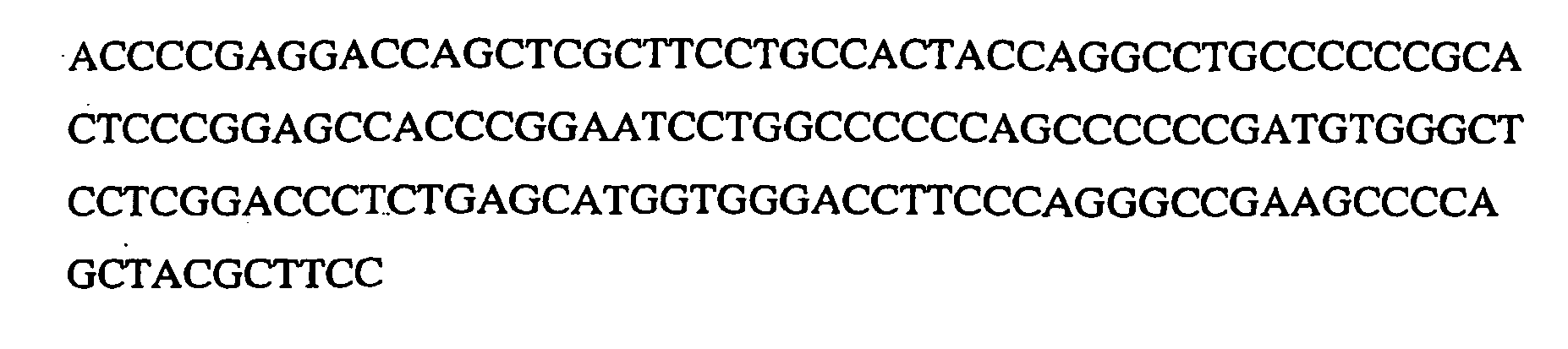
- The FGF-21 useful in the methods of the present invention is preferably a mutein, analog or derivative of human FGF-21 as shown in SEQ ID NO:1, hereinafter collectively known as FGF-21 compounds. FGF-21 compounds have sufficient homology to FGF-21 such that the compounds have the ability to bind to the FGF-21 receptor and initiate a signal transduction pathway resulting in glucose uptake stimulation or other physiological effects as described herein. For example, FGF-21 compounds can be tested for glucose uptake activity using a cell-based assay such as that described in Example 1.
- A "subject" or "patient" is a mammal, preferably a human.
- Type 2 diabetes (non-insulin dependent diabetes mellitus (NIDDM)) is characterized by excess glucose production in spite of the availability of insulin, and circulating glucose levels remain excessively high as a result of inadequate glucose clearance.
- Glucose intolerance can be defined as an exceptional sensitivity to glucose.
- Hyperglycemia is defined as an excess of sugar (glucose) in the blood.
- Hypoglycemia, also called low blood sugar, occurs when your blood glucose level drops too low to provide enough energy for your body's activities.
- Hyperinsulinemia is defined as a higher-than-normal level of insulin in the blood.
- Insulin resistance is defined as a state in which a normal amount of insulin produces a subnormal biologic response.
- Metabolic syndrome can be defined as a cluster of at least three of the following signs: abdominal fat - in most men, a 40-inch waist or greater; high blood sugar - at least 110 milligrams per deciliter (mg/dl) after fasting; high triglycerides - at least 150 mg/dL in the bloodstream; low HDL - less than 40 mg/dl; and, blood pressure of 130/85 or higher.
- Native or wild-type refers to the mature human 181 amino acid FGF-21 polypeptide as shown in SEQ ID NO:1. The term "native" or "wild-type" is intended to encompass allelic variants of the polypeptide in question.
- The term "amino acid" is used herein in its broadest sense, and includes naturally occurring amino acids as well as non-naturally occurring amino acids, including amino acid variants and derivatives. One skilled in the art will recognize, in view of this broad definition, that reference herein to an amino acid includes, for example, naturally occurring proteogenic L-amino acids; D-amino acids; chemically modified amino acids such as amino acid variants and derivatives; naturally occurring non-proteogenic amino acids such as norleucine, β-alanine, ornithine, etc.; and chemically synthesized compounds having properties known in the art to be characteristic of amino acids. Examples of non-naturally occurring amino acids include α-methyl amino acids (e.g., (α-methyl alanine), D-amino acids, histidine-like amino acids (e.g., 2-amino-histidine, β-hydroxy-histidine, homohistidine, α-fluoromethyl-histidine and α-methyl-histidine), amino acids having an extra methylene in the side chain ("homo" amino acids) and amino acids in which a carboxylic acid functional group in the side chain is replaced with a sulfonic acid group (e.g., cysteic acid). Preferably, however, the FGF-21 compounds of the present invention comprise only naturally occurring amino acids except as otherwise specifically provided herein.
- In the nomenclature used herein to designate FGF-21 compounds, amino acids are identified using the three-letter code or alternatively using the standard one letter code. Mutations are designated by the three-letter code for the original amino acid, followed by the amino acid number, followed by the three-letter code for the replacement amino acid. The numerical designations of each mutein is based on SEQ ID NO:1. For example, a substitution for leucine at position 118 (i.e. Leu118 or L118) with cysteine (Cys) is designated as Leu118Cys or L118C. In a similar fashion, the double substitution for isoleucine at position 152 and serine at position 163 (Ile152/Ser163) with the negatively charged amino acid, glutamate (Glu) is designated as Ile152Glu/Ser163Glu or I152E/S163E.
- "In vitro potency" as used herein, is the measure of glucose uptake of a FGF-21 fusion protein in a cell-based assay and is a measure of the biological potency of a FGF-21 compound. In vitro potency is expressed as the "EC50" which is the effective concentration of compound that results in 50% activity in a single dose-response experiment. For the purposes of the present invention, in vitro potency is determined using a glucose uptake assay that employs 3T3-L1 cells (Example 1).
- The term "plasma half-life" refers to the time in which half of the relevant molecules circulate in the plasma prior to being cleared. An alternatively used term is "elimination half-life." The terms "extended time action" or "longer time action" used in the context of plasma half-life or elimination half-life indicates there is a statistically significant increase in the half-life of a FGF-21 fusion protein relative to that of the reference molecule (e.g., the non-fusion form of the polypeptide or the native polypeptide) as determined under comparable conditions. Preferably a FGF-21 fusion protein of the present invention has an elimination half-life greater than that of a comparable FGF-21 compound. The half-life reported herein in Example 3 is the elimination half-life; it is that which corresponds to the terminal log-linear rate of elimination. Those of skill in the art appreciate that half-life is a derived parameter that changes as a function of both clearance and volume of distribution.
- Clearance is the measure of the body's ability to eliminate a drug. As clearance decreases due, for example, to modifications to a drug, half-life would be expected to increase. However, this reciprocal relationship is exact only when there is no change in the volume of distribution. A useful approximate relationship between the terminal log-linear half-life (t ½), clearance (C), and volume of distribution (V) is given by the equation: t ½ ≈ 0.693 (V/C). Clearance does not indicate how much drug is being removed but, rather, the volume of biological fluid such as blood or plasma that would have to be completely freed of drug to account for the elimination. Clearance is expressed as a volume per unit of time (See Example 3).
- The heterologous fusion proteins of the present invention comprise a FGF-21 compound fused to the Fc portion of an immunoglobulin, an analog of the Fc portion of an immunoglobulin, a fragment of the Fc portion of an immunoglobulin, human albumin, a human albumin analog, or a human albumin fragment. The C-terminus of the FGF-21 compound may be fused directly, or fused via a peptide linker, to the N-terminus of an albumin or Fc protein. Conversely, the N-terminus of the FGF-21 compound may be fused directly, or fused via a peptide linker, to the C-terminus of an albumin or Fc protein. These heterologous fusion proteins are biologically active and have an increased half-life compared to native FGF-21.
- A "human FGF-21 mutein" is defined as comprising human FGF-21 in which at least one amino acid of the wild-type mature protein has been substituted by another amino acid. Examples of FGF-21 muteins are described in
U.S. patent applications 60/528,582 ,60/606,805 60/606,830 60/635,882 - Examples of FGF-21 muteins with enhanced pharmaceutical stability include the substitution with a charged and/or polar but uncharged amino acid for one or more of the following: glycine 42, glutamine 54, arginine 77, alanine 81, leucine 86, phenylalanine 88, lysine 122, histidine 125, arginine 126, proline 130, arginine 131, leucine 139, alanine145, leucine 146, isoleucine 152, alanine 154, glutamine 156, glycine 161, serine 163, glycine 170, or serine 172 wherein the numbering of the amino acids is based on SEQ ID NO:1. A charged amino acid is defined as a positively or negatively charged amino acid. A positively charged amino acid is defined to include histidine, lysine, arginine, and non-naturally occurring analogs thereof (e.g., gamma aminobutyric acid, ornithine, etc.). A negatively charged amino acid is defined to included aspartate, glutamate, and non-naturally occurring analogs thereof (e.g., aminoadipic acid). A polar but uncharged amino acid is defined to include serine, threonine, asparagine, glutamine, and non-naturally occurring analogs thereof. Preferred muteins are Gln54Glu, Leu139Glu, Ala145Glu, Leu146Glu, Ile152Glu, Gln156Glu, Ser163Glu, and Ile152Glu-Ser163Glu.
- Additional muteins of FGF-21 with enhanced pharmaceutical stability include FGF-21 with the substitution of a cysteine for two or more of the following: arginine 19, tyrosine 20, leucine 21, tyrosine 22, threonine 23, aspartate 24, aspartate 25, alanine 26, glutamine 27, lutamine 28, alanine 31, leucine 33, isoleucine 35, leucine 37, valine 41, glycine 42, glycine 43, glutamate 50, glutamine 54, leucine 58, valine 62, leucine 66, glycine 67, lysine 69, arginine 72, phenylalanine 73, glutamine 76, arginine 77, aspartate 79, glycine 80, alanine 81, leucine 82, glycine 84, serine 85, proline 90, alanine 92, serine 94, phenylalanine 95, leucine 100, aspartate 102, tyrosine 104, tyrosine 107, serine 109, glutamate 110, proline 115, histidine 117, leucine 118, proline 119, asparagine 121, lysine 122, serine 123, proline 124, histidine 125, arginine 126, aspartate 127, alanine 129, proline 130, glycine 132, alanine 134, arginine 135, leucine 137, proline 138, or leucine 139, wherein the numbering of the amino acids is based on SEQ ID NO:1.
- Specific muteins of FGF-21 with engineered disulfide bonds, in addition to the naturally occurring one at Cys75-Cys93, are as follows: Gln76Cys-Ser109Cys, Cys75-Ser85Cys, Cys75-Ala92Cys, Phe73Cys-Cys93, Ser123Cys-His125-Cys, Asp102Cys-Tyr104Cys, Asp127Cys-Gly132Cys, Ser94Cys-Glu110Cys, Pro115Cys-His117Cys, Asn121Cys-Asp127Cys, Leu100Cys-Asp102Cys, Phe95Cys-Tyr107Cys, Arg19Cys-Pro138Cys, Tyr20Cys-Leu139Cys, Tyr22Cys-Leu137Cys, Arg77Cys-Asp79Cys, Pro90Cys-Ala92Cys, Glu50Cys-Lys69Cys, Thr23Cys-Asp25Cys, Ala31Cys-Gly43Cys, Gln28Cys-Gly43Cys, Thr23Cys-Gln28Cys, Val41Cys-Leu82Cys, Leu58Cys-Va162Cys, Gln54Cys-Leu66Cys, Ile35Cys-Gly67Cys, Gly67Cys-Arg72Cys, Ile35Cys-Gly84Cys, Arg72Cys-Gly84Cys, or Arg77Cys-Ala81Cys, wherein the numbering of the amino acids is based on SEQ ID NO:1. Preferred muteins with engineered disulfide bonds are Tyr22Cys-Leu139Cys; Asp24Cys-Arg135Cys; Leu118Cys-Gly132Cys; His117Cys-Pro130Cys; His117Cys-Ala129Cys; Leu82Cys-Pro119Cys; Gly80Cys-Ala129Cys; Gly43Cys-Pro124Cys; Gly42Cys-Arg126Cys; Gly42Cys-Pro124Cys; Gln28Cys-Pro124Cys; Gln27Cys-Ser123Cys; Ala26Cys-Lys122Cys; or Asp25Cys-Lys122Cys. Most preferred muteins with engineered disulfide bonds are Leu118Cys-Alal34Cys; Leu21Cys-Leu33Cys; Ala26Cys-Lys122Cys; Leu21Cys-Leu33Cys/Leu118Cys-Ala134Cys; Ile152Glu-Ser163Glu/Leu118Cys-Ala134Cys; and, Leu118Cys-Ala134Cys/Ser167Ala.
- Examples of muteins of human FGF-21, or a biologically active peptide thereof, with reduced capacity of O-glycosylation when expressed in yeast compared to wild-type human FGF-21 include the substitution of any amino acid except Ser or Thr for Ser 167, in combination with the substitution of a cysteine for two or more of the following: arginine 19, tyrosine 20, leucine 21, tyrosine 22, threonine 23, aspartate 24, aspartate 25, alanine 26, glutamine 27, glutamine 28, alanine 31, leucine 33, isoleucine 35, leucine 37, valine 41, glycine 42, glycine 43, glutamate 50, glutamine 54, leucine 58, valine 62, leucine 66, glycine 67, lysine 69, arginine 72, phenylalanine 73, glutamine 76, arginine 77, aspartate 79, glycine 80, alanine 81, leucine 82, glycine 84, serine 85, proline 90, alanine 92, serine 94, phenylalanine 95, leucine 100, aspartate 102, tyrosine 104, tyrosine 107, serine 109, glutamate 110, proline 115, histidine 117, leucine 118, proline 119, asparagine 121, lysine 122, serine 123, proline 124, histidine 125, arginine 126, aspartate 127, alanine 129, proline 130, glycine 132, alanine 134, arginine 135, leucine 137, proline 138, or leucine 139, wherein the numbering of amino acids is based on SEQ ID NO:1. The most preferred muteins with reduced capacity of O-glycosylation when expressed in yeast compared to wild-type human FGF-21 are Leu118Cys-Ala134Cys-Ser167Ala; Leu21Cys-Leu33Cys-Ser167Ala; Ala26Cys-Lys122Cys-Ser167Ala; or Leu21Cys-Leu33Cys/Leu118Cys-Ala134Cys-Ser167Ala.
- An FGF-21 compound also includes an "FGF-21 derivative" which is defined as a molecule having the amino acid sequence of FGF-21 or an FGF-21 analog, but additionally having a chemical modification of one or more of its amino acid side groups, α-carbon atoms, terminal amino group, or terminal carboxylic acid group. A chemical modification includes, but is not limited to, adding chemical moieties, creating new bonds, and removing chemical moieties.
- Modifications at amino acid side groups include, without limitation, acylation of lysine ε-amino groups, N-alkylation of arginine, histidine, or lysine, alkylation of glutamic or aspartic carboxylic acid groups, and deamidation of glutamine or asparagine. Modifications of the terminal amino group include, without limitation, the des-amino, N-lower alkyl, N-di-lower alkyl, and N-acyl modifications. Modifications of the terminal carboxy group include, without limitation, the amide, lower alkyl amide, dialkyl amide, and lower alkyl ester modifications. Furthermore, one or more side groups, or terminal groups, may be protected by protective groups known to the ordinarily-skilled protein chemist. The α-carbon of an amino acid may be mono- or dimethylated.
- FGF-21 fusion proteins of the present invention have an in vitro biological activity that is comparable to that of native FGF-21. Although some FGF-21 fusion proteins of the invention may have biological activity lower than that of native FGF-21 as measured in a particular assay, this activity decrease is compensated by the compound's extended half-life and/or lower clearance value and may even be a favorable characteristic for an FGF-21 compound with an extended elimination half-life.
- The FGF-21 fusion proteins of the present invention can comprise glycosylation sites. Glycosylation is a chemical modification wherein sugar moieties are added to the protein at specific sites. Glycosylation of proteins play a role in ensuring the correct charge, confirmation, and stability of maturing protein and can target the protein to the cell surface and eventual secretion of the protein. Most importantly, glycosylation effects the in vivo clearance rate for many proteins. Sugars can be O-linked or N-linked. Generally, O-linked sugars are added to the hydroxyl-group oxygen of serine and threonine, while N-linked sugars are added to the amide nitrogen of asparagine. The consensus site for N-glycosylation is Asn X1 X2 wherein X1 is any amino acid except Pro and X2 is Ser or Thr.
- The FGF-21 compounds described above can be fused directly or via a peptide linker to the Fc portion of an immunoglobulin. Immunoglobulins are molecules containing polypeptide chains held together by disulfide bonds, typically having two light chains and two heavy chains. In each chain, one domain (V) has a variable amino acid sequence depending on the antibody specificity of the molecule. The other domains (C) have a rather constant sequence common to molecules of the same class.
- As used herein, the Fc portion of an immunoglobulin has the meaning commonly given to the term in the field of immunology. Specifically, this term refers to an antibody fragment that is obtained by removing the two antigen binding regions (the Fab fragments) from the antibody. One way to remove the Fab fragments is to digest the immunoglobulin with papain protease. Thus, the Fc portion is formed from approximately equal sized fragments of the constant region from both heavy chains, which associate through non-covalent interactions and disulfide bonds. The Fc portion can include the hinge regions and extend through the CH2 and CH3 domains to the C-terminus of the antibody. Representative hinge regions for human and mouse immunoglobulins can be found in Antibody Engineering, A Practical Guide, Borrebaeck, C.A.K., ed., W.H. Freeman and Co., 1992. The Fc portion can further include one or more glycosylation sites. The amino acid sequence of a representative Fc protein containing a hinge region, CH2 and CH3 domains, and one N-glycosylation site at position 82 is shown below:

- There are five types of human immunoglobulin Fc regions with different effector and pharmacokinetic properties: IgG, IgA, IgM, IgD, and IgE. IgG is the most abundant immunoglobulin in serum. IgG also has the longest half-life in serum of any immunoglobulin (23 days). Unlike other immunoglobulins, IgG is efficiently recirculated following binding to an Fc receptor. There are four IgG subclasses G1, G2, G3, and G4, each of which have different effect or functions. These effector functions are generally mediated through interaction with the Fc receptor (FcγR) or by binding C1q and fixing complement. Binding to FcγR can lead to antibody dependent cell mediated cytolysis, whereas binding to complement factors can lead to complement mediated cell lysis. In designing heterologous Fc fusion proteins wherein the Fc portion is being utilized solely for its ability to extend half-life, it is important to minimize any effector function. All IgG subclasses are capable of binding to Fc receptors (CD16, CD32, CD64) with G1 and G3 being more effective than G2 and G4. The Fc receptor binding region of IgG is formed by residues located in both the hinge and the carboxy terminal regions of the CH2 domain.
- Depending on the desired in vivo effect, the heterologous fusion proteins of the present invention may contain any of the isotypes described above or may contain mutated Fc regions wherein the complement and/or Fc receptor binding functions have been altered. Thus, the heterologous fusion proteins of the present invention may contain the entire Fc portion of an immunoglobulin, fragments of the Fc portion of an immunoglobulin, or analogs thereof fused to a FGF-21 compound.
- The fusion proteins of the present invention can consist of single chain proteins or as multi-chain polypeptides. Two or more Fc fusion proteins can be produced such that they interact through disulfide bonds that naturally form between Fc regions. These multimers can be homogeneous with respect to the FGF-21 compound or they may contain different FGF-21 compounds fused at the N-terminus of the Fc portion of the fusion protein.
- Regardless of the final structure of the fusion protein, the Fc or Fc-like region must serve to prolong the in vivo plasma half-life of the FGF-21 compound fused at the C-terminus or N-terminus. Furthermore, the fused FGF-21 compound must retain some biological activity. Biological activity can be determined by in vitro and in vivo methods known in the art. Representative biological assays are described in Examples 1 and 2.
- It is preferable that the Fc region used for the heterologous fusion proteins of the present invention be derived from an IgG1 or an IgG4 Fc region. It is even more preferable that the heterologous fusion proteins of the present invention contain an Fc portion which is derived from human IgG4, but comprises one or more substitutions compared to the wild-type human sequence. As used herein, the Fc portion of an immunoglobulin has the meaning commonly given to the term in the field of immunology. Specifically, this term refers to an antibody fragment which does not contain the two antigen binding regions (the Fab fragments) from the antibody. The Fc portion consists of the constant region of an antibody from both heavy chains, which associate through non-covalent interactions and disulfide bonds. The Fc portion can include the hinge regions and extend through the CH2 and CH3 domains to the c-terminus of the antibody. The Fc portion can further include one or more glycosylation sites.
- Thus, heterologous fusion proteins of the present invention are derived from the human IgG4 Fc region because of its reduced ability to bind FcγR and complement factors compared to other IgG sub-types. The human IgG4 Fc portion of an immunoglobulin fused to an FGF-21 compound of the present invention comprises the sequence of SEQ ID NO:4wherein:

- Xaa at position 11 is Pro or Ser;
- Xaa at position 16 is Pro or Glu;
- Xaa at position 17 is Phe, Val, or Ala;
- Xaa at position 18 is Leu, Glu, or Ala;
- Xaa at position 80 is Asn or Ala; and
- Xaa at position 230 is Lys or is absent.
- Moreover, the IgG4 Fc region which is part of the heterologous fusion proteins of the present invention may contain one or more of the following substitutions that eliminate effector function: substitution of proline for serine at residue 228; substitution of proline for glutamate at residue 233; alanine or valine for phenylalanine at residue 234; and, alanine or glutamate for leucine at residue 235 (EU numbering, Kabat, E.A. et al. (1991) Sequences of Proteins of Immunological Interest, 5th Ed. U.S. Dept. of Health and Human Services, Bethesda, MD, NIH Publication no. 91-3242). These residues correspond to positions 11, 16, 17, and 18 in SEQ ID NO:4, respectively. Further, removing the N-linked glycosylation site in the IgG4 Fc region by substituting Ala for Asn at residue 297 (EU numbering) which corresponds to position 80 of SEQ ID NO:4 is another way to ensure that residual effector activity is eliminated in the context of a heterologous fusion protein.
- The C-terminal lysine residue present in the native molecule may be deleted in the IgG4 derivative Fc portion of the heterologous fusion proteins discussed herein (position 230 of SEQ ID NO:4; deleted lysine referred to as des-K). Fusion proteins expressed in some cell types (such as NSO cells) wherein lysine is encoded by the C-terminal codon are heterogeneous in that a portion of the molecules have lysine as the C-terminal amino acid and a portion have lysine deleted. The deletion is due to protease action during expression in some types of mammalian cells. Thus, to avoid this heterogeneity, it is preferred that Fc fusion expression constructs lack a C-terminal codon for lysine.
- It is preferred that the C-terminal amino acid of the FGF-21 compound discussed herein is fused to the N-terminus of the IgG4 Fc analog portion via a glycine-rich linker (G-rich), designated by L, with the number immediately preceding the L referring to the number of linkers separating the FGF-21 compound from the Fc portion. The in vivo function and stability of the heterologous fusion proteins of the present invention can be optimized by adding the small peptide linkers to prevent potentially unwanted domain interactions. Further, a G-rich linker provides some structural flexibility such that the FGF-21 compound can interact productively with the receptor on target cells. These linkers, however, can significantly increase the risk that the fusion protein will be immunogenic in vivo. Thus, it is preferred that the length be no longer than necessary to prevent unwanted domain interactions and/or optimize biological activity and/or stability. Although more copies of this linker may be used in the heterologous fusion proteins of the present invention, it is preferred that a single copy of this linker be used to minimize the risk of immunogenicity associated with prolonged and repeated administration.
- The FGF-21 compound and Fc or HSA portion of the heterologous fusion proteins of the present invention are preferably fused together via 1, 1.5 or 2 repeats of the G-rich peptide linker. The most preferred glycine-rich linker is designated 1L and comprises the sequence Gly-Gly-Gly-Gly-Ser-Gly-Gly-Gly-Gly-Ser-Gly-Gly-Gly-Gly-Ser (SEQ ID NO:5). Additional preferred peptide linkers include a linker specified as 1.5L, - Gly-Ser-Gly-Gly-Gly-Gly-Ser-Gly-Gly-Gly-Gly-Ser-Gly-Gly-Gly-Gly-Ser-Gly-Gly-Gly-Gly-Ser (SEQ ID NO:6); a linker specified as 2L, Gly-Gly-Gly-Gly-Ser-Gly-Gly-Gly-Gly-Ser-Gly-Gly-Gly-Gly-Ser-Gly-Gly-Gly-Gly-Ser-Gly-Gly-Gly-Gly-Ser-Gly-Gly-Gly-Gly-Ser (SEQ ID NO:7); [a linker specified as H1, Asp-Ala-Ala-Ala-Lys-Glu-Ala-Ala-Ala-Lys-Asp-Ala-Ala-Ala-Arg-Glu-Ala-Ala-Ala-Arg-Asp-Ala-Ala-Ala-Lys (SEQ ID NO:8); and, a linker specified as S1, Asn-Val-Asp-His-Lys-Pro-Ser-Asn-Thr-Lys-Val-Asp-Lys-Arg (SEQ ID NO:9).] In some cases, 3, 4, 5, or even 6 repeats of the G-rich peptide linker may be utilized.
- In the heterologous fusion proteins indicated below, IgG4 refers to an analog of the human IgG4 Fc sequence specified as SEQ ID NO:4. Substitutions in the IgG4 Fc portion of the heterologous fusion protein are indicated in parenthesis. The wild-type amino acid is specified by its common abbreviation followed by the position number in the context of the entire IgG4 sequence using the EU numbering system followed by the amino acid being substituted at that position specified by its common abbreviation.
- Preferred FGF-21-Fc-heterlogous fusion proteins of the present invention include the following proteins: I152E/S163E/L118C/A134C-1L-IgG4 (S228P), I152E/S163E/L118C/A134C-1L-IgG4 (S228P, F234A, L235A), I152E/S163E/L118C/A134C-1L-IgG4 (S228P, N297A), I152E/S163E/L118C/A134C-1L-IgG4 (S228P, F234A, L235A, N297A), I152E/S163E/L118C/A134C-1.5L-IgG4 (S228P), I152E/S163E/L118C/A134C-1.5L-IgG4 (S228P, F234A, L235A), I152E/S163E/L118C/A134C-1.5L-IgG4 (S228P, N297A), I152E/S163E/L118C/A134C-1.5L-IgG4 (S228P, F234A, L235A, N297A), I152E/S163E/L118C/A134C-2L-IgG4 (S228P), I152E/S163E/L118C/A134C-2L-IgG4 (S228P, F234A, L235A), I152E/S163E/L118C/A134C-2L-IgG4 (S228P, N297A), and I152E/S163E/L118C/A134C-2L-IgG4 (S228P, F234A, L235A, N297A).
- More preferred FGF-21-Fc heterologous fusion proteins of the present invention include the following proteins: L118C/A134C-1L-IgG4 (S228P), L118C/A134C-1L-IgG4 (S228P, F234A, L235A), L118C/A134C-1L-IgG4 (S228P, N297A), L118C/A134C-1L-IgG4 (S228P, F234A, L235A, N297A), L118C/A134C-1.5L-IgG4 (S228P), L118C/A134C-1.5L-IgG4 (S228P, F234A, L235A), L118C/A134C-1.5L-IgG4 (S228P, N297A), L118C/A134C-1.5L-IgG4 (S228P, F234A, L235A, N297A), L118C/A134C-2L-IgG4 (S228P), L118C/A134C-2L-IgG4 (S228P, F234A, L235A), L118C/A134C-2L-IgG4 (S228P, N297A), and L118C/A134C-2L-IgG4 (S228P, F234A, L235A, N297A).
- Even more preferred FGF-21-Fc heterologous fusion proteins of the present invention include the following proteins: L118C/A134C/S167A-1L-IgG4 (S228P); L118C/A134C/S167A -1L-IgG4 (S228P, F234A, L235A), L118C/A134C/S167A -1L-IgG4 (S228P, N297A), L118C/A134C/S167A -1L-IgG4 (S228P, F234A, L235A, N297A), L118C/A134C/S167A -1.5L-IgG4 (S228P), L118C/A134C/S167A -1.5L-IgG4 (S228P, F234A, L235A), L118C/A134C/S167A -1.5L-IgG4 (S228P, N297A), L118C/A134C/S167A -1.5L-IgG4 (S228P, F234A, L235A, N297A), L118C/A134C/S167A -2L-IgG4 (S228P), L118C/A134C/S167A -2L-IgG4 (S228P, F234A, L235A), L118C/A134C/S167A -2L-IgG4 (S228P, N297A), and L118C/A134C/S167A -2L-IgG4 (S228P, F234A, L235A, N297A).
- It is understood that the heterologous fusion proteins of the present invention include FGF-21 compounds that are coupled to any albumin protein including fragments, analogs, and derivatives wherein such fusion protein is biologically active and has a longer plasma half-life than the FGF-21 compound alone. Fragments, analogs, and derivatives are known or can be generated that have longer half-lives or have half-lives intermediate to that of native human albumin and the FGF-21 compound of interest.
- The heterologous fusion proteins of the present invention encompass proteins having conservative amino acid substitutions in the FGF-21 compound and/or the Fc portion of the fusion protein. A "conservative substitution" is the replacement of an amino acid with another amino acid that has the same net electronic charge and approximately the same size and shape. Amino acids with aliphatic or substituted aliphatic amino acid side chains have approximately the same size when the total number carbon and heteroatoms in their side chains differs by no more than about four. They have approximately the same shape when the number of branches in their side chains differs by no more than one. Amino acids with phenyl or substituted phenyl groups in their side chains are considered to have about the same size and shape. Except as otherwise specifically provided herein, conservative substitutions are preferably made with naturally occurring amino acids.
- As outlined above, amino acid substitutions in the fusion proteins of the present invention can be based on the relative similarity of the amino acid side-chain substituents, for example, their hydrophobicity, hydrophilicity, charge, size, etc. Furthermore, substitutions can be made based on secondary structure propensity. For example, a helical amino acid can be replaced with an amino acid that would preserve the helical structure. Exemplary substitutions that take various of the foregoing characteristics into consideration in order to produce conservative amino acid changes resulting in silent changes within the present peptides, etc., can be selected from other members of the class to which the naturally occurring amino acid belongs. Amino acids can be divided into the following four groups: (1) acidic amino acids; (2) basic amino acids; (3) neutral polar amino acids; and (4) neutral non-polar amino acids.
- The FGF-21 compounds of the present invention may be generated and/or isolated by any means known in the art. Because of the size of the fusion proteins, recombinant methods are preferred such as described in Sambrook et al., Molecular Cloning: A Laboratory Manual,Cold Spring Harbor Laboratory Press, NY (1989).
- Various methods of protein purification may be employed and such methods are known in the art and described, for example, in Deutscher, Methods in Enzymology 182: 83-9 (1990) and Scopes, Protein Purification: Principles and Practice, Springer-Verlag, NY (1982). The purification step(s) selected will depend, for example, on the nature of the production process used for FGF-21
- Wild-type human IgG4 proteins can be obtained from a variety of sources. For example, these proteins can be obtained from a cDNA library prepared from cells that express the mRNA of interest at a detectable level. Libraries can be screened with probes designed using the published DNA or protein sequence for the particular protein of interest. For example, immunoglobulin light or heavy chain constant regions are described in Adams, et al. (1980) Biochemistry 19:2711-2719; Goughet, et al. (1980) Biochemistry 19:2702-2710; Dolby, et al. (1980) Proc. Natl. Acad. Sci. USA 77:6027-6031; Rice et al. (1982) Proc. Natl. Acad. Sci. USA 79:7862-7862; Falkner, et al. (1982) Nature 298:286-288; and Morrison, et al. (1984) Ann. Rev. Immunol. 2:239-256.
- Screening a cDNA or genomic library with the selected probe may be conducted using standard procedures, such as described in Sambrook et al., Molecular Cloning: A Laboratory Manual, Cold Spring Harbor Laboratory Press, NY (1989). An alternative means to isolate a gene encoding an immunoglobulin protein is to use PCR methodology [Sambrook et al., supra; Dieffenbach et al., PCR Primer: A Laboratory Manual, Cold Spring Harbor Laboratory Press, NY (1995)]. PCR primers can be designed based on published sequences.
- Generally the full-length wild-type sequences cloned from a particular library can serve as a template to create the IgG4 Fc analog fragments of the present invention that retain the ability to confer a longer plasma half-life on the FGF-21 compound that is part of the fusion protein. The IgG4 Fc analog fragments can be generated using PCR techniques with primers designed to hybridize to sequences corresponding to the desired ends of the fragment. PCR primers can also be designed to create restriction enzyme sites to facilitate cloning into expression vectors.
- The gene encoding a fusion protein can then be constructed by ligating DNA encoding a FGF-21 compound in-frame to DNA encoding the IgG Fc proteins described herein. The DNA encoding theFGF-21 compound and IgG4 Fc fragments can be mutated either before ligation or in the context of a cDNA encoding an entire fusion protein. A variety of mutagenesis techniques are well known in the art. The gene encoding the FGF-21 compound and the gene encoding the IgG4 Fc analog protein can also be joined in-frame via DNA encoding a G-rich linker peptide.
- FGF-21 compounds have a variety of biological activities. FGF-21 is particularly promising as a treatment for non-insulin dependent diabetes mellitus (NIDDM, type 2) as it does not present a risk of hypoglycemia as do present NIDDM treatments. FGF-21 is also contemplated to be a treatment for obesity and metabolic syndrome.
- It is also considered that a use of FGF-21 fusion proteins of the present invention includes use in the manufacture of a medicament for the treatment of type 2 diabetes, obesity and metabolic syndrome. FGF-21 fusion proteins may be combined with other modifications known in the art to increase FGF-21 half-life and thereby increase the half-life of the compound even further than a fusion protein alone or the other modification method alone.
- As used herein, the term "FGF-21 compound" also includes pharmaceutically acceptable salts of the compounds described herein. An FGF-21 compound of this invention can possess a sufficiently acidic, a sufficiently basic, or both functional groups, and accordingly react with any of a number of inorganic bases, and inorganic and organic acids, to form a salt.
- The FGF-21 fusion proteins of the present invention are particularly suited for parenteral administration, they can be also be delivered orally, by nasal administration, or by inhalation. Parenteral administration can include, for example, systemic administration, such as by intramuscular, intravenous, subcutaneous, or intraperitoneal injection. The FGF-21 fusion proteins can be administered to the subject in conjunction with an acceptable pharmaceutical carrier, diluent or excipient as part of a pharmaceutical composition for treating the diseases discussed above. The pharmaceutical composition can be a solution or, if administered parenterally, a suspension of the FGF-21. Suitable pharmaceutical carriers may contain inert ingredients which do not interact with the peptide or peptide derivative. Standard pharmaceutical formulation techniques may be employed such as those described in Remington's Pharmaceutical Sciences, Mack Publishing Company, Easton, PA. Suitable pharmaceutical carriers for parenteral administration include, for example, sterile water, physiological saline, bacteriostatic saline (saline containing about 0.9% mg/ml benzyl alcohol), phosphate-buffered saline, Hank's solution, Ringer's-lactate and the like. Some examples of suitable excipients include lactose, dextrose, sucrose, trehalose, sorbitol, and mannitol.
- The FGF-21 fusion proteins of the invention may be formulated for administration such that blood plasma levels are maintained in the efficacious range for extended time periods.
- A "therapeutically effective amount" of a FGF-21 fusion protein is the quantity that results in a desired therapeutic and/or prophylactic effect without causing unacceptable side-effects when administered to a subject. A "desired therapeutic effect" includes one or more of the following: 1) an amelioration of the symptom(s) associated with the disease or condition; 2) a delay in the onset of symptoms associated with the disease or condition; 3) increased longevity compared with the absence of the treatment; and 4) greater quality of life compared with the absence of the treatment. For example, an "effective amount" of a FGF-21 fusion protein for the treatment of type 2 diabetes is the quantity that would result in greater control of blood glucose concentration than in the absence of treatment, thereby resulting in a delay in the onset of diabetic complications such as retinopathy, neuropathy or kidney disease. An "effective amount" of a FGF-21 fusion protein for the prevention of diabetes is the quantity that would delay, compared with the absence of treatment, the onset of elevated blood glucose levels that require treatment with anti-hypoglycaemic drugs such as sulfonyl ureas, thiazolidinediones, insulin and/or bisguanidines. Moreover, a "therapeutically effective amount" of the FGF-21 fusion protein administered to a subject will also depend on the type and severity of the disease and on the characteristics of the subject, such as general health, age, sex, body weight and tolerance to drugs.
- Those skilled in the art can readily optimize pharmaceutically effective dosages and administration regimens for therapeutic compositions comprising a FGF-21 fusion protein, as determined by good medical practice and the clinical condition of the individual patient. A typical dose range for the FGF-21 fusion proteins of the present invention will range from about 0.01 mg/kg to about 1000 mg/kg body weight. Preferably, the dosage ranges from about 0.1 mg/kg to about 100 mg/kg, more preferably from about 1.0 mg/kg to about 10 mg/kg. Most preferably, the dosage is about 1-5 mg/kg body weight. The appropriate dose of a FGF-21 fusion protein administered will result in lowering blood glucose levels and increasing energy expenditure by faster and more efficient glucose utilization, and thus is useful for treating type 2 diabetes, obesity and metabolic syndrome. The frequency of dosing is determined by the plasma half life/clearance of the FGF-21 fusion protein. Preferably, dosing will be about every 2 days. More preferably, dosing will be about twice weekly. Even more preferably, dosing will be about once weekly. Most preferably, dosing will be about twice a month.
- Having now described the present invention in detail, the same will be more clearly understood by reference to the following examples, which are included herewith for purposes of illustration only and are not intended to be limiting of the invention.
- Alternatively, FGF-21 fusion proteins are produced in a mammalian cell expression system using HEK293EBNA cells (EdgeBiosystems, Gaiethersburg, MD). FGF-21 fusion proteins are subcloned in the proprietary expression vector representing a modification of commercially available pEAK10, between NheI and XbaI restriction sites in the MCS. The cDNA sequence encoding an FGF-21 fusion protein is fused in frame with the Igκ leader sequence to enhance secretion of the desired product in the tissue culture media. The expression is driven by the strong viral CMV promoter. HEK293EBNA cells are transiently transfected using a standard transfection reagent such as Fugene (Roche Diagnostics, Indianapolis IN, USA) and the appropriate amount of recombinant plasmid, either as a monolayer or suspension culture, at the adequate cell density. Cells are incubated at 37°C and 5% C02, in serum free media, and collections are made every day for 5 days. Typically the expression level in the HEK293EBNA suspension culture is - 30 mg/L. The expression of an FGF-21 fusion protein in mammalian cells yields the natural N-terminal sequence, HPIP, i.e. without a methionine residue at the N-terminus
- To purify a FGF-21 Fc fusion protein from HEK293EBNA cells, concentrated cell culture supernatant is loaded onto a 5ml HiTrap rProtein A FF column (Amersham Biosciences AB, Uppsala, Sweden) equilibrated in PBS, pH 7.4, and proteins are eluted with 50mM citric acid, pH3.3. The fractions are immediately neutralized with Tris and 0.5 M NaOH. The fraction pool is concentrated with Millipore 30K Amicon ultra centrifugal filter devices (UFC903024) and loaded onto a 26/60 Superdex 200 column (Amersham Bioscience AB, Uppsala, Sweden) equilibrated in PBS, pH7.4. Fractions are analyzed by SDS PAGE, pooled and concentrated by Millipore 30K Amicon ultra centrifugal filter devices and filter sterilized using a 0.22µm MILLEX-GV filter (Millipore SLGVR25CS). The final concentration is determined by absorbance at 280nm (scatter corrected). MALDI and N-terminal sequence are used to confirm the protein.
- To purify an FGF-21 HSA fusion protein from HEK293EBNA cells, concentrated cell culture supernatant is loaded onto a self-packed 20ml FF Q Sepharose column equilibrated in 20mM Tris, pH7.5. Protein is eluted using a linear gradient from 0 to 500mM NaCl, appropriate fractions are pooled, acetonitile with 0.1% TFA is added to a final concentration of 20%, and the material is loaded onto a Vydac protein C4 10x 250mm column, (Cat# 214TP510) equilibrated with 0.1% TFA in water. Protein is eluted using a linear gradient from 20 to 50% acetonitrile. The fraction pool is concentrated with Millipore 30K Amicon ultra centrifugal filter devices ( UFC903024) and loaded onto a 26/60 Superdex 200 column ( Amersham Bioscience AB, Uppsala, Sweden), equilibrated in PBS, pH7.4. Fractions are analyzed by SDS-PAGE, pooled, concentrated and filter sterilized. The final concentration is determined by absorbance at 280nm (scatter corrected). MALDI and N-terminal sequence are used to confirm the protein.
- Yet another expression system for production of a FGF-21 fusion protein is yeast, such as Pichia pastoris, Pichia methanolica or Saccharomyces cerevisiae. For production in Pichia pastoris, a commercially available system (Invitrogen, Carlsbad, CA) uses vectors with the powerful AOX1 (alcohol oxidase) promters to drive high-level expression of recombinant proteins. Alternatively, vectors that use the promoter from the GAP gene (glyceraldehyde-3-phosphate dehydrogenase) are available for high level constitutive expression. The multi-copy Pichia expression vectors allow one to obtain strains with multiple copies of the gene of interest integrated into the genome. Increasing the number of copies of the gene of interest in a recombinant Pichia strain can increase protein expression levels.
- 3T3-L1 cells are obtained from the American Type Culture Collection (ATCC, Rockville, MD). Cells are cultured in growth medium (GM) containing 10% iron-enriched fetal bovine serum in Dulbecco's modified Eagle's medium. For standard adipocyte differentiation, two days after cells reached confluency (referred as day 0), cells are exposed to differentiation medium (DM) containing 10% fetal bovine serum, 10 µg/ml of insulin, 1 µM dexamethasone, and 0.5 µM isobutylmethylxanthine, for 48 h. Cells then are maintained in post differentiation medium containing 10% fetal bovine serum, and 10 µg/ml of insulin.
- Glucose Transport Assay-- Hexose uptake, as assayed by the accumulation of 0.1 mM 2-deoxy-D-[14C]glucose, is measured as follows: 3T3-L1 adipocytes in 12-well plates are washed twice with KRP buffer (136 mM NaCl, 4.7 mM KCl, 10 mM NaPO4, 0.9 mM CaCl2, 0.9 mM MgSO4, pH 7.4) warmed to 37 °C and containing 0.2% BSA, incubated in Leibovitz's L-15 medium containing 0.2% BSA for 2 h at 37°C in room air, washed twice again with KRP containing, 0.2% BSA buffer, and incubated in KRP, 0.2% BSA buffer in the absence (Me2SO only) or presence of wortmannin for 30 min at 37 °C in room air. Insulin is then added to a final concentration of 100 nM for 15 min, and the uptake of 2-deoxy-D-[14C]glucose is measured for the last 4 min. Nonspecific uptake, measured in the presence of 10 µM cytochalasin B, is subtracted from all values. Protein concentrations are determined with the Pierce bicinchoninic acid assay. Uptake is measured routinely in triplicate or quadruplicate for each experiment.
- In vitro potency (EC50) is compared to the in vitro activity of wild-type FGF-21. The in vitro potency of FGF-21 fusion proteins of the present invention is compared to wild-type FGF-21 in Table 1. As indicated in Table 1, the FGF-21 fusion proteins of the present invention have reduced in vitro potency to various degrees compare to wild-type FGF-21. However, the decrease in in vitro potency is likely compensated for with the increase in time extension (plasma half life) of the FGF-21 fusion protein.
Table 1 FGF-21 Fusion Protein In vitro Potency EC50 (nM) Wild-type Control 1.1 FGF-21-Fc* 13.3 FGF-21-L-Fc** 124 FGF-21-L-IgG4m-e** 89 FGF-21-L-HSA** 73 HSA-L-FGF-21*** 2.2 Fc-L-FGF-21*** 7.2 * C-terminus of FGF-21 fused to the N-terminus of the fusion protein
** C-terminus of FGF-21 fused to the N-terminus of the fusion protein via a linker peptide, (Gly-Gly-Gly-Gly-Ser)3.
*** N-terminus of FGF-21 fused to the C-terminus of the fusion protein via a linker peptide, (Gly-Gly-Gly-Gly-Ser)3. - The Ob/ob mouse model is an animal model for hyperglycemia, insulin resistance and obesity. Male oblob mice are used to monitor plasma glucose levels and triglyceride levels after treatment with FGF-21 fusion proteins compared to FGF-21 alone. The test groups of male oblob mice (7 weeks old) are: (1) s.c. vehicle control (0.9% NaCl, 0.1 ml/mouse) for seven days; (2) FGF-21, 11 µg/day, administered by continuous infusion for seven days (Alzet pumps 1007D, 100mcl, 0.5mcl/h); (3) FGF-21-Fc fusion protein, 2.55 nM, administered on Day 0 only; (4) FGF-21-Fc fusion protein, 1.5 nM, administered on Day 0 only.; (5) FGF-21-Fc fusion protein, 0.5 nM, administered on Day 0 only. FGF-21-Fc fusion protein is administered s.c. in 0.1 ml.
- Blood glucose levels are measured daily for 7 days, 1 hour post dosing, using a standard protocol. The extended time action of FGF-21-Fc fusion proteins is indicated in Table 2 where a single dose on day 0 lowers blood glucose levels for 6 days.
TABLE 2 Treatment Blood Glucose Levels in ob/ob mice (mg/dl)
Days of Treatment0 1 2 3 4 5 6 7 Veh. Ctl. (s.c.) 280 288 295 253 260 254 296 321 FGF-21 11µg/day for 7 days 281 237 168 154 135 129 124 157 FGF-21-Fc* 2.55 nM, day 0 only 281 225 181 177 166 198 195 273 FGF-21-Fc* 1.5 nM, day 0 only 279 253 221 226 205 246 241 328 FGF-21-Fc* 0.5 nM, day 0 only 279 232 218 216 234 252 220 304 * FGF-21-Fc fusion proteins: FGF-21 C terminus is fused to the N-terminus of an IgG4 Fc, without a linker peptide. - In another experiment, male oblob mice are used to monitor plasma glucose levels after a single treatment with a FGF-21 fusion protein fused with a linker peptide, compared to continuous infusion of FGF-21 alone. The test groups of male oblob mice (7 weeks old) are: (1) vehicle control (0.9% NaCl) by continuous infusion for seven days (Alzet pumps 1007D, 100mcl, 0.5mcl/h); (2) FGF-21, 3.4nM by continuous infusion for seven days; (3) FGF-21-L-Fc fusion protein, 3.4nM; administered s.c. in 0.1 ml on Day 0 only; and (4) Fc-L-FGF-21 fusion protein, 3.4 nM administered s.c. in 0.1 ml on Day 0 only; (5) FGF-21-L-HSA fusion protein, 3.4 nM administered s.c. in 0.1 ml on Day 0 only. L is the peptide linker, (Gly-Gly-Gly-Gly-Ser)3, in the above fusion proteins
- The animals of groups (1) and (2) are dosed by continuous infusion for 7 days and groups (3) through (5) are dosed on day 0 only. Blood glucose levels are measured daily for 7 days, 1 hour post dosing, using a standard protocol. The superior extended time action of FGF-21 fusion proteins is demonstrated in Table 3, where a single dose on day 0 lowers blood glucose levels for 7 days.
- In addition, plasma triglyceride levels are measured on day 7 of the experiment. The superior extended time action of FGF-21 fusion proteins is demonstrated in Table 4 where a single dose on day 0 lowers plasma triglyceride levels for 7 days.
Table 3 Treatment Blood Glucose Levels in oblob mice (mg/dl)*
Days of Treatment0 1 2 3 4 5 6 7 Veh. Ctl. Continuous infusion 280 270 215 200 200 230 250 310 FGF-21 3.4 nM Continuous infusion 281 230 175 130 135 140 130 155 FGF-21-L-Fc* 3.4 nM, 279 210 180 140 135 140 150 200 Fc-L-FGF-21** 1.5nM, 279 240 225 165 167 205 230 228 FGF-21-L-HSA+ 2.55nM, 281 235 170 130 155 185 215 250 * FGF-21 C terminus fused to the N-terminus of an IgG4 Fc
** C-terminus of an IgG4 Fc fused to the N terminus of FGF-21
+ FGF-21 C terminus fused to the N-terminus of HSATable 4 Test Group Day 7 Plasma Triglycerides (mmol/l) Vehicle control 640 FGF-21 Control, 3.4 nM 280 FGF-21-L-Fc* 400 Fc-L-FGF-21** 490 FGF-21-L-HSA* 380 * C-terminus of FGF-21 fused to the N-terminus of the fusion protein via a linker peptide, (Gly-Gly-Gly-Gly-Ser)3.
** N-terminus of FGF-21 fused to the C-terminus of the fusion protein via a linker peptide, (Gly-Gly-Gly-Gly-Ser)3. - FGF-21 fusion proteins are administered by intravenous (IV) or subcutaneous (SC) routes at a dose of 0.4 mg/kg to CD-1 mice. The animals are bled at various times between 0 and 336 hours after dosing. Plasma is collected from each sample and analyzed by radioimmunoassay. Pharmacokinetic parameters are calculated using model-dependent (IV data) and independent (SC data) methods (WinNonlin Pro) and are reported in Table 5 below. By IV administration, the FGF-21-Fc fusion protein has an elimination half-life of approximately 53.9 hours compared to an elimination half-life of 0.5 hours for native FGF-21. By SC administration the FGF-21-Fc fusion protein has an elimination half-life of approximately 24 hours compared to an elimination half-life of 0.6 hours for native FGF-21. By both routes of administration the FGF-21-Fc fusion protein demonstrates prolonged time action when compared to native FGF-21.
- By IV administration, the FGF-21-HSA fusion protein has an elimination half-life of approximately 14.3 hours compared to an elimination half-life of 0.5 hours for native FGF-21. By SC administration the FGF-21-HSA fusion protein has an elimination half-life of approximately 8 hours compared to an elimination half-life of 0.6 hours for native FGF-21. By both routes of administration the FGF-21-HSA fusion protein demonstrates prolonged time action when compared to native FGF-21.
Table 5 Compound Route Cmax a
(ng/mL)Tmax b
(d)AUC0-∞ c
(ng*h/mL)t 1/2 d
(h)CL/Fe
(mL/h/kg)%
FgFGF-21-Fc IV 4432 - 137383 53.9 2.9 SC 1899 24 145056 48.6 2.8 10
6FGF-21-HSA IV 6577 69886 14.3 5.7 FGF-21 SC 1380 8 37098 14.5 10.8 -53 IV 4300 - 1200 0.5 803 - SC 440 1.0 980 0.6 1024 78 a Maximum observed plasma concentration.
b Time of maximum observed plasma concentration.
c Area under the plasma concentration-time curve measured from 0 to infinity.
d Elimination half-life in hours.
e Total body clearance as a function of bioavailability.
g Percent bioavailability. -
- <110> Eli Lilly & Company
- <120> FGF-21 FUSION PROTEINS
- <130> x16740
- <150> US 60,570,908
<151> 2007-05-13 - <160> 10
- <170> Patentin version 3.2
- <210> 1
<211> 181
<212> PRT
<213> homo sapiens - <400> 1


- <210> 2
<211> 543
<212> DNA
<213> homo sapiens - <400> 2

- <210> 3
<211> 232
<212> PRT
<213> homo sapiens - <400> 3


- <210> 4
<211> 230
<212> PRT
<213> homo sapiens - <220>
<221> MISC_FEATURE
<222> (11)..(11)
Xaa at position 11 = Pro or Ser - <220>
<221> MISC_FEATURE
<222> (16)..(16)
<223> Xaa at position 16 = Pro or Glu - <220>
<221> MISC_FEATURE
<222> (17)..(17)
<223> Xaa at position 18 = Phe, Val, or Ala - <220>
<221> MISC_FEATURE
<222> (18)..(18)
<223> Xaa at position 18 = Leu, Glu, or Ala - <220>
<221> MISC_FEATURE
<222> (80)..(80)
<223> Xaa at position 80 = Asn or Ala - <220>
<221> MISC_FEATURE
<222> (230)..(230)
<223> Xaa at position 230 = Lys or is absent - <400> 4


- <210> 5
<211> 15
<212> PRT
<213> homo sapiens - <400> 5

- <210> 6
<211> 22
<212> PRT
<213> homo sapiens - <400> 6

- <210> 7
<211> 30
<212> PRT
<213> homo sapiens - <400> 7

- <210> 8
<211> 25
<212> PRT
<213> homo sapiens - <400> 8

- <210> 9
<211> 14
<212> PRT
<213> homo sapiens - <400> 9

- <210> 10
<211> 585
<212> PRT
<213> homo sapiens - <400> 10


Claims (10)
- A heterologous fusion protein comprising a first polypeptide with a N-terminus and a C-terminus fused to a second polypeptide with a N-terminus and a C-terminus wherein the first polypeptide is a FGF-21 compound and the second polypeptide comprises the sequence of SEQ ID NO: 4:wherein:
 Xaa at position 11 is Pro;Xaa at position 16 is Pro or Glu;Xaa at position 17 is Phe, Val, or Ala;Xaa at position 18 is Leu, Glu, or Ala;Xaa at position 80 is Asn or Ala; andXaa at position 230 is Lys or is absent,and wherein(i) the C-terminus of the first polypeptide is fused to the N-terminus of the second polypeptide via a linker, or(ii) wherein the N-terminus of the first polypeptide is fused to the C-terminus of the second peptide via a linker, wherein the linker in (i) or (ii) is selected from:a) SEQ ID NO: 5, SEQ ID NO: 6, SEQ ID NO: 7, SEQ ID NO: 8 or SEQ ID NO: 9;b) a glycine rich peptide.
 - A heterologous fusion protein according to claim 1 selected from: FGF21-L118C/A134C/S167A-1L-IgG4 S228P; FGF21-L118C/A134C/S167A -1L-IgG4 S228P, F234A, L235A; FGF21-L118C/A134C/S167A -1L-IgG4 S228P, N297A; FGF21-L118C/A134C/S167A -1L-IgG4 S228P, F234A, L235A, N297A; FGF21-L118C/A134C/S167A -1.5L-IgG4 S228P; FGF21-L118C/A134C/S167A -1.5L-IgG4 S228P, F234A, L235A; FGF21-L118C/A134C/S167A -1.5L-IgG4 S228P, N297A; FGF21-L118C/A134C/S167A -1.5L-IgG4 S228P, F234A, L235A, N297A; FGF21-L118C/A134C/S167A -2L-IgG4 S228P; FGF21-L118C/A134C/S167A -2L-IgG4 S228P, F234A, L235A; FGF21-L118C/A134C/S167A -2L-IgG4 S228P, N297A; and FGF21-L118C/A134C/S167A -2L-IgG4 S228P, F234A, L235A, N297A.
- A heterologous fusion protein according to claim 1 selected from: FGF21-L118C/A134C-1L-IgG4 S228P; FGF21-L118C/A134C-1L-IgG4 S228P, F234A, L235A; FGF21-L118C/A134C-1L-IgG4 S228P, N297A; FGF21-L118C/A134C-1L-IgG4 S228P, F234A, L235A, N297A; FGF21-L118C/A134C-1.5L-IgG4 S228P; FGF21-L118C/A134C-1.5L-IgG4 S228P, F234A, L235A; FGF21-L118C/A134C-1.5L-IgG4 S228P, N297A; FGF21-L18C/A134C-1.5L-IgG4 S228P, F234A, L235A, N297A; FGF21-L118C/A134C-2L-IgG4 S228P; FGF21-L118C/A134C-2L-IgG4 S228P, F234A, L235A; FGF21-L118C/A134C-2L-IgG4 S228P, N297A; and FGF21-L118C/A134C-2L-IgG4 S228P, F234A, L235A, N297A.
- A heterologous fusion protein according to claim 1 selected from: FGF21-I152E/S163E/L118C/A134C-1L-IgG4 S228P; FGF21-I152E/S163E/L118C/A134C-1L-IgG4 S228P, F234A, L235A; FGF21-I152E/S163E/L118C/A134C-1L-IgG4 S228P, N297A; FGF21-I152E/S163E/L118C/A134C-1L-IgG4 S228P, F234A, L235A, N297A; FGF21-I152E/S163E/L118C/A134C-1.5L-IgG4 S228P; FGF21-I152E/S163E/L118C/A134C-1.5L-IgG4 S228P, F234A, L235A; FGF21-I152E/S163E/L118C/A134C-1.5L-IgG4 S228P, N297A; FGF21-I152E/S163E/L118C/A134C-1.5L-IgG4 S228P, F234A, L235A, N297A; FGF21-I152E/S163E/L118C/A134C-2L-IgG4 S228P; FGF21-I152E/S163E/L118C/A134C-2L-IgG4 S228P, F234A, L235A; FGFZ1-I152E/S163E/L118C/A134C-2L-IgG4 S228P, N297A; and FGF21-I152E/S163E/L118C/A134C-2L-IgG4 S228P, F234A, L235A, N297A.
- A polynucleotide encoding the heterologous fusion protein of any one of claims 1 to 4.
- A vector comprising the polynucleotide of claim 5.
- A host cell comprising the vector of claim 6.
- A pharmaceutical composition for use in the treatment of a patient exhibiting one or more of obesity, type 2 diabetes, or metabolic syndrome comprising the following:(a) a therapeutically effective amount of the heterologous fusion protein of any one of claims 1 to 4; and(b) an acceptable pharmaceutical carrier.
- A heterologous fusion protein of any one of claims 1 to 4 for use as a medicament.
- A heterologous fusion protein of any one of claims 1 to 4 for use in the treatment of obesity, type 2 diabetes, or metabolic syndrome.
Priority Applications (3)
| Application Number | Priority Date | Filing Date | Title |
|---|---|---|---|
| SI200530853T SI1751184T1 (en) | 2004-05-13 | 2005-05-02 | Fgf-21 fusion proteins |
| EP09150627A EP2194064A1 (en) | 2004-05-13 | 2005-05-02 | FGF-21 fusion proteins |
| PL05742237T PL1751184T3 (en) | 2004-05-13 | 2005-05-02 | Fgf-21 fusion proteins |
Applications Claiming Priority (2)
| Application Number | Priority Date | Filing Date | Title |
|---|---|---|---|
| US57090804P | 2004-05-13 | 2004-05-13 | |
| PCT/US2005/015111 WO2005113606A2 (en) | 2004-05-13 | 2005-05-02 | Fgf-21 fusion proteins |
Related Child Applications (1)
| Application Number | Title | Priority Date | Filing Date |
|---|---|---|---|
| EP09150627A Division EP2194064A1 (en) | 2004-05-13 | 2005-05-02 | FGF-21 fusion proteins |
Publications (2)
| Publication Number | Publication Date |
|---|---|
| EP1751184A2 EP1751184A2 (en) | 2007-02-14 |
| EP1751184B1 true EP1751184B1 (en) | 2009-09-30 |
Family
ID=92541399
Family Applications (2)
| Application Number | Title | Priority Date | Filing Date |
|---|---|---|---|
| EP09150627A Withdrawn EP2194064A1 (en) | 2004-05-13 | 2005-05-02 | FGF-21 fusion proteins |
| EP05742237A Expired - Lifetime EP1751184B1 (en) | 2004-05-13 | 2005-05-02 | Fgf-21 fusion proteins |
Family Applications Before (1)
| Application Number | Title | Priority Date | Filing Date |
|---|---|---|---|
| EP09150627A Withdrawn EP2194064A1 (en) | 2004-05-13 | 2005-05-02 | FGF-21 fusion proteins |
Country Status (12)
| Country | Link |
|---|---|
| US (1) | US7576190B2 (en) |
| EP (2) | EP2194064A1 (en) |
| JP (1) | JP2008506635A (en) |
| AT (1) | ATE444306T1 (en) |
| CA (1) | CA2565300A1 (en) |
| DE (1) | DE602005016917D1 (en) |
| DK (1) | DK1751184T3 (en) |
| ES (1) | ES2332100T3 (en) |
| PL (1) | PL1751184T3 (en) |
| PT (1) | PT1751184E (en) |
| SI (1) | SI1751184T1 (en) |
| WO (1) | WO2005113606A2 (en) |
Families Citing this family (101)
| Publication number | Priority date | Publication date | Assignee | Title |
|---|---|---|---|---|
| US7459540B1 (en) * | 1999-09-07 | 2008-12-02 | Amgen Inc. | Fibroblast growth factor-like polypeptides |
| US8981061B2 (en) | 2001-03-20 | 2015-03-17 | Novo Nordisk A/S | Receptor TREM (triggering receptor expressed on myeloid cells) and uses thereof |
| US9453251B2 (en) | 2002-10-08 | 2016-09-27 | Pfenex Inc. | Expression of mammalian proteins in Pseudomonas fluorescens |
| CA2574953A1 (en) | 2004-07-26 | 2006-02-09 | Dow Global Technolgies Inc. | Process for improved protein expression by strain engineering |
| JP4809352B2 (en) * | 2004-09-02 | 2011-11-09 | イーライ リリー アンド カンパニー | Fibroblast growth factor 21 mutein |
| GB0426146D0 (en) | 2004-11-29 | 2004-12-29 | Bioxell Spa | Therapeutic peptides and method |
| KR100888022B1 (en) * | 2006-12-21 | 2009-03-09 | 재단법인 목암생명공학연구소 | Fusion protein between immunoglobulin Fc and human apolipoprotein (a) kringle fragment L8 8Fc |
| BRPI0809583B1 (en) | 2007-03-30 | 2022-02-22 | Ambrx, Inc | Modified fgf-21 polypeptide, composition comprising the same, method for producing said fgf-21 polypeptide, and cell comprising a polynucleotide |
| US9580719B2 (en) | 2007-04-27 | 2017-02-28 | Pfenex, Inc. | Method for rapidly screening microbial hosts to identify certain strains with improved yield and/or quality in the expression of heterologous proteins |
| CA2685326A1 (en) | 2007-04-27 | 2008-11-06 | Dow Global Technologies Inc. | Method for rapidly screening microbial hosts to identify certain strains with improved yield and/or quality in the expression of heterologous proteins |
| EP2185178B1 (en) | 2007-08-03 | 2017-08-23 | Eli Lilly And Company | Use of an fgf-21 compound and a glp-1 compound for the treatment of obesity |
| JOP20190083A1 (en) | 2008-06-04 | 2017-06-16 | Amgen Inc | Fgf21 mutant fusion polypeptides and uses thereof |
| US9279013B2 (en) | 2008-10-10 | 2016-03-08 | Amgen Inc. | FGF-21 mutants comprising polyethylene glycol and uses thereof |
| RU2525393C2 (en) * | 2009-01-23 | 2014-08-10 | Ново Нордиск А/С | Fgf21 derivatives with albumin binding agent a-b-c-d-e- and their application |
| CA2760674A1 (en) | 2009-05-05 | 2010-11-11 | Amgen Inc. | Fgf21 mutants and uses thereof |
| JP5823954B2 (en) | 2009-05-05 | 2015-11-25 | アムジエン・インコーポレーテツド | FGF21 variants and uses thereof |
| WO2010148142A1 (en) * | 2009-06-17 | 2010-12-23 | Amgen Inc. | Chimeric fgf19 polypeptides and uses thereof |
| EP2488643A4 (en) * | 2009-10-15 | 2013-07-03 | Hoffmann La Roche | CHIMERIC FIBROBLAST GROWTH FACTORS WITH MODIFIED RECEPTOR SPECIFICITY |
| EP2679234A3 (en) | 2009-12-02 | 2014-04-23 | Amgen Inc. | Binding proteins that bind to human FGFR1C, human beta-klotho and both human FGFR1C and human beta-klotho |
| UA109888C2 (en) | 2009-12-07 | 2015-10-26 | ANTIBODY OR ANTIBODILITY ANTIBODY OR ITS BINDING TO THE β-CLOTE, FGF RECEPTORS AND THEIR COMPLEXES | |
| EP2460527A1 (en) | 2010-01-21 | 2012-06-06 | Sanofi | Pharmaceutical composition for treating a metabolic syndrome |
| US20150231215A1 (en) | 2012-06-22 | 2015-08-20 | Randolph J. Noelle | VISTA Antagonist and Methods of Use |
| EP3153521B1 (en) | 2010-03-26 | 2019-09-04 | Trustees of Dartmouth College | Vista regulatory t cell mediator protein, vista binding agents and use thereof |
| US10745467B2 (en) | 2010-03-26 | 2020-08-18 | The Trustees Of Dartmouth College | VISTA-Ig for treatment of autoimmune, allergic and inflammatory disorders |
| US9517264B2 (en) | 2010-04-15 | 2016-12-13 | Amgen Inc. | Human FGF receptor and β-Klotho binding proteins |
| JP5767314B2 (en) | 2010-04-16 | 2015-08-19 | ソーク インスティチュート フォー バイオロジカル スタディーズ | Methods for treating metabolic disorders using FGF |
| JP2013533227A (en) | 2010-06-08 | 2013-08-22 | ノヴォ ノルディスク アー/エス | FGF21 analogs and derivatives |
| US9655974B2 (en) | 2010-07-20 | 2017-05-23 | Novo Nordisk A/S | N-terminal modified FGF21 compounds |
| CN103282055A (en) * | 2010-11-05 | 2013-09-04 | CovX科技爱尔兰有限公司 | antidiabetic compound |
| US9023791B2 (en) * | 2010-11-19 | 2015-05-05 | Novartis Ag | Fibroblast growth factor 21 mutations |
| KR20220003656A (en) | 2011-06-28 | 2022-01-10 | 인히브릭스, 인크. | Serpin fusion polypeptides and methods of use thereof |
| EP3597666A3 (en) | 2011-07-01 | 2020-04-22 | NGM Biopharmaceuticals, Inc. | Compositions, uses and methods for treatment of metabolic disorders and diseases |
| EP2548570A1 (en) | 2011-07-19 | 2013-01-23 | Sanofi | Pharmaceutical composition for treating a metabolic syndrome |
| US9006400B2 (en) * | 2011-09-26 | 2015-04-14 | Novartis Ag | Fibroblast growth factor-21-Fc fusion proteins |
| US9163227B2 (en) | 2011-12-22 | 2015-10-20 | Covx Technologies Ireland Limited | Anti-diabetic compounds |
| LT2814842T (en) | 2012-02-15 | 2018-11-12 | Novo Nordisk A/S | Antibodies that bind peptidoglycan recognition protein 1 |
| US9550830B2 (en) | 2012-02-15 | 2017-01-24 | Novo Nordisk A/S | Antibodies that bind and block triggering receptor expressed on myeloid cells-1 (TREM-1) |
| RS56593B1 (en) | 2012-02-15 | 2018-02-28 | Novo Nordisk As | Antibodies that bind and block triggering receptor expressed on myeloid cells-1 (trem-1) |
| WO2013131091A1 (en) | 2012-03-02 | 2013-09-06 | New York University | Chimeric fgf21 proteins with enhanced binding affinity for beta-klotho for the treatment of type ii diabetes, obesity and related metabolic disorders |
| US9464126B2 (en) | 2012-06-07 | 2016-10-11 | New York University | Chimeric fibroblast growth factor 21 proteins and methods of use |
| US9474785B2 (en) | 2012-06-07 | 2016-10-25 | New York University | Chimeric fibroblast growth factor 19 proteins and methods of use |
| US9657075B2 (en) | 2012-06-07 | 2017-05-23 | New York University | Chimeric fibroblast growth factor 23 proteins and methods of use |
| US9422353B2 (en) | 2012-06-11 | 2016-08-23 | Eli Lilly And Company | Fibroblast growth factor 21 variant, composition , and uses thereof |
| TWI513705B (en) | 2012-06-11 | 2015-12-21 | Lilly Co Eli | Fibroblast growth factor 21 proteins |
| CN104619722B (en) * | 2012-06-22 | 2022-10-04 | 达特茅斯大学理事会 | Novel VISTA-IG constructs and use of VISTA-IG for treatment of autoimmune, allergic and inflammatory diseases |
| US9890215B2 (en) | 2012-06-22 | 2018-02-13 | King's College London | Vista modulators for diagnosis and treatment of cancer |
| EP2892558B1 (en) | 2012-09-07 | 2019-04-10 | The Trustees Of Dartmouth College | Vista modulators for diagnosis and treatment of cancer |
| ES2828505T3 (en) | 2012-11-28 | 2021-05-26 | Ngm Biopharmaceuticals Inc | Compositions and methods for the treatment of metabolic disorders and diseases |
| US9290557B2 (en) | 2012-11-28 | 2016-03-22 | Ngm Biopharmaceuticals, Inc. | Compositions comprising variants and fusions of FGF19 polypeptides |
| PL2938740T3 (en) | 2012-12-27 | 2022-07-11 | Ngm Biopharmaceuticals, Inc. | Chimeric fgf19 peptides for use in treating bile acid disorders |
| US9273107B2 (en) | 2012-12-27 | 2016-03-01 | Ngm Biopharmaceuticals, Inc. | Uses and methods for modulating bile acid homeostasis and treatment of bile acid disorders and diseases |
| WO2014130659A1 (en) | 2013-02-22 | 2014-08-28 | New York University | Chimeric fibroblast growth factor 23 proteins and methods of use |
| WO2015057908A1 (en) | 2013-10-18 | 2015-04-23 | Novartis Ag | Methods of treating diabetes and related disorders |
| JP6621752B2 (en) | 2013-10-21 | 2019-12-18 | ソーク インスティテュート フォー バイオロジカル スタディーズ | Mutated fibroblast growth factor (FGF) 1 and methods of use |
| KR102178945B1 (en) | 2013-10-28 | 2020-11-13 | 엔지엠 바이오파마슈티컬스, 아이엔씨. | Cancer models and associated methods |
| SI3712174T1 (en) | 2013-12-24 | 2022-06-30 | Janssen Pharmaceutica Nv | VISTA antibodies and particles |
| US11014987B2 (en) | 2013-12-24 | 2021-05-25 | Janssen Pharmaceutics Nv | Anti-vista antibodies and fragments, uses thereof, and methods of identifying same |
| SI3097122T1 (en) | 2014-01-24 | 2020-07-31 | Ngm Biopharmaceuticals, Inc. | Antibodies binding beta klotho domain 2 and methods of use thereof |
| WO2015138278A1 (en) | 2014-03-11 | 2015-09-17 | Novartis Ag | Methods of treating metabolic disorders associated with lipodystrophies and defects in insulin production or signaling |
| US10398758B2 (en) | 2014-05-28 | 2019-09-03 | Ngm Biopharmaceuticals, Inc. | Compositions comprising variants of FGF19 polypeptides and uses thereof for the treatment of hyperglycemic conditions |
| JP6997619B2 (en) | 2014-06-11 | 2022-01-17 | キャシー・エイ・グリーン | Use of VISTA agonists and VISTA antagonists for suppression or enhancement of humoral immunity |
| CA2951153A1 (en) | 2014-06-16 | 2015-12-23 | Ngm Biopharmaceuticals, Inc. | Methods and uses for modulating bile acid homeostasis and treatment of bile acid disorders and diseases |
| RU2017101436A (en) * | 2014-06-24 | 2018-07-24 | Ново Нордиск А/С | MIC-1 FUSION PROTEINS AND THEIR APPLICATION |
| TN2017000008A1 (en) | 2014-07-17 | 2018-07-04 | Novo Nordisk As | Site directed mutagenesis of trem-1 antibodies for decreasing viscosity. |
| UA123763C2 (en) | 2014-10-23 | 2021-06-02 | Енджіем Байофармасьютикалз, Інк. | PHARMACEUTICAL COMPOSITION FOR CONTROL OR TREATMENT OF FGF19 DISEASE OR DISORDER |
| SG11201702824UA (en) | 2014-10-24 | 2017-05-30 | Bristol Myers Squibb Co | Modified fgf-21 polypeptides and uses thereof |
| US10434144B2 (en) | 2014-11-07 | 2019-10-08 | Ngm Biopharmaceuticals, Inc. | Methods for treatment of bile acid-related disorders and prediction of clinical sensitivity to treatment of bile acid-related disorders |
| AU2015357463B2 (en) | 2014-12-05 | 2021-10-07 | Immunext, Inc. | Identification of VSIG8 as the putative vista receptor and its use thereof to produce vista/VSIG8 modulators |
| DK3236991T3 (en) | 2014-12-23 | 2019-08-26 | Novo Nordisk As | FGF21 DERIVATIVES AND APPLICATIONS THEREOF |
| KR20160088656A (en) * | 2015-01-16 | 2016-07-26 | 주식회사유한양행 | Long-acting fgf21 fusion proteins and pharmaceutical composition comprising the same |
| WO2016207717A1 (en) | 2015-06-24 | 2016-12-29 | Janssen Pharmaceutica Nv | Anti-vista antibodies and fragments |
| US10800843B2 (en) | 2015-07-29 | 2020-10-13 | Ngm Biopharmaceuticals, Inc. | Beta klotho-binding proteins |
| EP3368059A4 (en) | 2015-10-30 | 2019-03-27 | Salk Institute for Biological Studies | TREATMENT OF STEROID-INDUCED HYPERGLYCEMIA WITH FIBROBLAST GROWTH FACTOR (FGF) ANALOGUES 1 |
| US10744185B2 (en) | 2015-11-09 | 2020-08-18 | Ngm Biopharmaceuticals, Inc. | Methods of using variants of FGF19 polypeptides for the treatment of pruritus |
| CN109069626A (en) | 2016-02-12 | 2018-12-21 | 詹森药业有限公司 | Anti-VISTA(B7H5) antibody |
| EP3442579A4 (en) | 2016-04-15 | 2019-12-18 | Immunext Inc. | ANTI-HUMAN ANTI-VISTA ANTIBODIES AND USES THEREOF |
| TW201741333A (en) | 2016-05-24 | 2017-12-01 | 諾佛 儂迪克股份有限公司 | MIC-1 compound and its use |
| WO2018032638A1 (en) | 2016-08-19 | 2018-02-22 | 安源医药科技(上海)有限公司 | Linker peptide for constructing fusion protein |
| CN106279437B (en) | 2016-08-19 | 2017-10-31 | 安源医药科技(上海)有限公司 | Hyperglycosylated human coagulation factor VIII fusion proteins and preparation method thereof and purposes |
| CN107759696A (en) | 2016-08-19 | 2018-03-06 | 安源医药科技(上海)有限公司 | Fusion protein of human interleukin 7 and preparation method thereof |
| WO2018039557A1 (en) | 2016-08-26 | 2018-03-01 | Ngm Biopharmaceuticals, Inc. | Methods of treating fibroblast growth factor 19-mediated cancers and tumors |
| EP3596130B1 (en) * | 2017-03-14 | 2024-12-04 | Sunshine Lake Pharma Co., Ltd. | Dual-target fusion proteins comprising the fc portion of an immunoglobulin |
| TWI798209B (en) | 2017-03-23 | 2023-04-11 | 南韓商韓美藥品股份有限公司 | A conjugate of insulin analog with reduced affinity to insulin receptor and use thereof |
| TWI710377B (en) | 2017-05-23 | 2020-11-21 | 丹麥商諾佛 儂迪克股份有限公司 | Mic-1 compounds and uses thereof |
| SG11202001379WA (en) | 2017-09-08 | 2020-03-30 | Bristol Myers Squibb Co | Modified fibroblast growth factor 21 (fgf-21) for use in methods for treating nonalcoholic steatohepatitis (nash) |
| KR20200103733A (en) | 2017-12-22 | 2020-09-02 | 노파르티스 아게 | How to treat metabolic disorders with the FGF21 variant |
| EP3749367A4 (en) * | 2018-02-06 | 2021-12-01 | Vancouver Biotech Ltd. | Use of ghr-106 monoclonal antibody as a gnrh antagonist |
| US11679143B2 (en) | 2018-02-08 | 2023-06-20 | Sunshine Lake Pharma Co., Ltd. | FGF21 variant, fusion protein and application thereof |
| AR117566A1 (en) | 2018-04-02 | 2021-08-18 | Bristol Myers Squibb Co | ANTI-TREM-1 ANTIBODIES AND THEIR USES |
| CA3104686A1 (en) | 2018-07-03 | 2020-01-09 | Bristol-Myers Squibb Company | Fgf-21 formulations |
| CN111195349B (en) * | 2018-11-16 | 2023-02-24 | 鲁南制药集团股份有限公司 | Freeze-dried powder preparation for metabolic regulation fusion protein |
| CN114853908B (en) * | 2019-05-16 | 2024-06-07 | 浙江道尔生物科技有限公司 | Fusion protein for treating metabolic diseases |
| US11542309B2 (en) | 2019-07-31 | 2023-01-03 | Salk Institute For Biological Studies | Fibroblast growth factor 1 (FGF1) mutant proteins that selectively activate FGFR1B to reduce blood glucose |
| AU2021205912A1 (en) | 2020-01-08 | 2022-07-28 | Bristol-Myers Squibb Company | FGF-21 conjugate formulations |
| WO2021139744A1 (en) | 2020-01-11 | 2021-07-15 | Beijing Ql Biopharmaceutical Co., Ltd. | Conjugates of fusion proteins of glp-1 and fgf21 |
| US11981718B2 (en) | 2020-05-27 | 2024-05-14 | Ampsource Biopharma Shanghai Inc. | Dual-function protein for lipid and blood glucose regulation |
| WO2022017309A1 (en) * | 2020-07-24 | 2022-01-27 | 江苏晟斯生物制药有限公司 | Insulin-fc fusion protein and application thereof |
| EP4192495A1 (en) | 2020-08-07 | 2023-06-14 | Bristol-Myers Squibb Company | Fgf21 combined with ccr2/5 antagonists for the treatment of fibrosis |
| US20240123031A1 (en) | 2020-11-25 | 2024-04-18 | Bristol-Myers Squibb Company | Methods of treating liver diseases |
| CN116635402B (en) | 2021-07-14 | 2024-03-15 | 北京质肽生物医药科技有限公司 | Fusion polypeptides for metabolic disorders |
| WO2024132147A1 (en) | 2022-12-22 | 2024-06-27 | Lifearc | Galanin-2 receptor agonists |
Family Cites Families (12)
| Publication number | Priority date | Publication date | Assignee | Title |
|---|---|---|---|---|
| US606830A (en) | 1898-07-05 | Insulator | ||
| US528582A (en) | 1894-11-06 | Can-opener | ||
| US606805A (en) | 1898-07-05 | Can-opener | ||
| US635882A (en) | 1898-11-02 | 1899-10-31 | Henry Torrance Jr | Refrigerating system. |
| CN1117155C (en) * | 1994-07-29 | 2003-08-06 | 史密丝克莱恩比彻姆有限公司 | Novel compounds |
| US6548634B1 (en) * | 1998-09-30 | 2003-04-15 | Chiron Corporation | Synthetic peptides having FGF receptor affinity |
| US7459540B1 (en) | 1999-09-07 | 2008-12-02 | Amgen Inc. | Fibroblast growth factor-like polypeptides |
| US6716626B1 (en) * | 1999-11-18 | 2004-04-06 | Chiron Corporation | Human FGF-21 nucleic acids |
| EP1232264B1 (en) * | 1999-11-18 | 2009-10-21 | Novartis Vaccines and Diagnostics, Inc. | Human fgf-21 gene and gene expression products |
| WO2001072957A2 (en) * | 2000-03-31 | 2001-10-04 | Nobuyuki Itoh | Fibroblast growth factor-like molecules and uses thereof |
| BR0116024A (en) * | 2000-12-07 | 2005-12-13 | Lilly Co Eli | Heterologous Fusion Protein and Use thereof |
| US20070253966A1 (en) | 2003-06-12 | 2007-11-01 | Eli Lilly And Company | Fusion Proteins |
-
2005
- 2005-05-02 DK DK05742237T patent/DK1751184T3/en active
- 2005-05-02 PL PL05742237T patent/PL1751184T3/en unknown
- 2005-05-02 AT AT05742237T patent/ATE444306T1/en active
- 2005-05-02 ES ES05742237T patent/ES2332100T3/en not_active Expired - Lifetime
- 2005-05-02 PT PT05742237T patent/PT1751184E/en unknown
- 2005-05-02 DE DE602005016917T patent/DE602005016917D1/en not_active Expired - Lifetime
- 2005-05-02 EP EP09150627A patent/EP2194064A1/en not_active Withdrawn
- 2005-05-02 CA CA002565300A patent/CA2565300A1/en not_active Abandoned
- 2005-05-02 US US11/578,614 patent/US7576190B2/en not_active Expired - Fee Related
- 2005-05-02 EP EP05742237A patent/EP1751184B1/en not_active Expired - Lifetime
- 2005-05-02 SI SI200530853T patent/SI1751184T1/en unknown
- 2005-05-02 JP JP2007513191A patent/JP2008506635A/en not_active Withdrawn
- 2005-05-02 WO PCT/US2005/015111 patent/WO2005113606A2/en not_active Ceased
Also Published As
| Publication number | Publication date |
|---|---|
| US7576190B2 (en) | 2009-08-18 |
| ATE444306T1 (en) | 2009-10-15 |
| EP2194064A1 (en) | 2010-06-09 |
| JP2008506635A (en) | 2008-03-06 |
| EP1751184A2 (en) | 2007-02-14 |
| ES2332100T3 (en) | 2010-01-26 |
| WO2005113606A3 (en) | 2006-05-04 |
| DK1751184T3 (en) | 2009-11-23 |
| SI1751184T1 (en) | 2010-01-29 |
| US20070237768A1 (en) | 2007-10-11 |
| CA2565300A1 (en) | 2005-12-01 |
| WO2005113606A2 (en) | 2005-12-01 |
| PL1751184T3 (en) | 2010-02-26 |
| PT1751184E (en) | 2009-11-10 |
| DE602005016917D1 (en) | 2009-11-12 |
Similar Documents
| Publication | Publication Date | Title |
|---|---|---|
| EP1751184B1 (en) | Fgf-21 fusion proteins | |
| US20250084144A1 (en) | Dual-target fusion proteins comprising fgf21 and glp-1, connected through a fc portion of an immunoglobulin | |
| JP4809352B2 (en) | Fibroblast growth factor 21 mutein | |
| JP6182600B2 (en) | Fibroblast growth factor 21 protein | |
| EP1961425B1 (en) | Methods and erythropoeitin analogs for the prevention and treatment of anemia | |
| CN110028587B (en) | A synergistic bifunctional protein for the regulation of blood sugar and lipids | |
| JP6181752B2 (en) | Fibroblast growth factor 21 mutant | |
| US20070265200A1 (en) | Glycol Linked Fgf-21 Compounds | |
| US20120238496A1 (en) | Fusion protein regulating plasma glucose and lipid, its preparation method and use | |
| CN106559984A (en) | Compositions comprising long-acting insulin analogue conjugates and long-acting insulinotropic peptide conjugates for treating diabetes | |
| US20080200378A1 (en) | KGF polypeptide compositions | |
| EP1961821B1 (en) | Erythropoietin fusion protein | |
| AU2002326742A1 (en) | KGF polypeptide compositions | |
| HK40015284A (en) | Dual-target fusion proteins comprising the fc portion of an immunoglobulin | |
| HK40015284B (en) | Dual-target fusion proteins comprising the fc portion of an immunoglobulin | |
| HK1045160A (en) | Expression and export of anti-obesity proteins as fc fusion proteins |
Legal Events
| Date | Code | Title | Description |
|---|---|---|---|
| PUAI | Public reference made under article 153(3) epc to a published international application that has entered the european phase |
Free format text: ORIGINAL CODE: 0009012 |
|
| 17P | Request for examination filed |
Effective date: 20061213 |
|
| AK | Designated contracting states |
Kind code of ref document: A2 Designated state(s): AT BE BG CH CY CZ DE DK EE ES FI FR GB GR HU IE IS IT LI LT LU MC NL PL PT RO SE SI SK TR |
|
| 17Q | First examination report despatched |
Effective date: 20070705 |
|
| DAX | Request for extension of the european patent (deleted) | ||
| GRAP | Despatch of communication of intention to grant a patent |
Free format text: ORIGINAL CODE: EPIDOSNIGR1 |
|
| GRAS | Grant fee paid |
Free format text: ORIGINAL CODE: EPIDOSNIGR3 |
|
| GRAA | (expected) grant |
Free format text: ORIGINAL CODE: 0009210 |
|
| AK | Designated contracting states |
Kind code of ref document: B1 Designated state(s): AT BE BG CH CY CZ DE DK EE ES FI FR GB GR HU IE IS IT LI LT LU MC NL PL PT RO SE SI SK TR |
|
| REG | Reference to a national code |
Ref country code: GB Ref legal event code: FG4D Ref country code: CH Ref legal event code: EP Ref country code: CH Ref legal event code: NV Representative=s name: E. BLUM & CO. AG PATENT- UND MARKENANWAELTE VSP |
|
| REG | Reference to a national code |
Ref country code: IE Ref legal event code: FG4D |
|
| REG | Reference to a national code |
Ref country code: PT Ref legal event code: SC4A Free format text: AVAILABILITY OF NATIONAL TRANSLATION Effective date: 20091104 |
|
| REF | Corresponds to: |
Ref document number: 602005016917 Country of ref document: DE Date of ref document: 20091112 Kind code of ref document: P |
|
| REG | Reference to a national code |
Ref country code: GR Ref legal event code: EP Ref document number: 20090402688 Country of ref document: GR |
|
| REG | Reference to a national code |
Ref country code: DK Ref legal event code: T3 |
|
| REG | Reference to a national code |
Ref country code: RO Ref legal event code: EPE |
|
| REG | Reference to a national code |
Ref country code: SE Ref legal event code: TRGR |
|
| REG | Reference to a national code |
Ref country code: ES Ref legal event code: FG2A Ref document number: 2332100 Country of ref document: ES Kind code of ref document: T3 |
|
| PG25 | Lapsed in a contracting state [announced via postgrant information from national office to epo] |
Ref country code: LT Free format text: LAPSE BECAUSE OF FAILURE TO SUBMIT A TRANSLATION OF THE DESCRIPTION OR TO PAY THE FEE WITHIN THE PRESCRIBED TIME-LIMIT Effective date: 20090930 |
|
| LTIE | Lt: invalidation of european patent or patent extension |
Effective date: 20090930 |
|
| REG | Reference to a national code |
Ref country code: PL Ref legal event code: T3 |
|
| REG | Reference to a national code |
Ref country code: SK Ref legal event code: T3 Ref document number: E 6456 Country of ref document: SK |
|
| REG | Reference to a national code |
Ref country code: HU Ref legal event code: AG4A Ref document number: E006984 Country of ref document: HU |
|
| PG25 | Lapsed in a contracting state [announced via postgrant information from national office to epo] |
Ref country code: IS Free format text: LAPSE BECAUSE OF FAILURE TO SUBMIT A TRANSLATION OF THE DESCRIPTION OR TO PAY THE FEE WITHIN THE PRESCRIBED TIME-LIMIT Effective date: 20100130 |
|
| PG25 | Lapsed in a contracting state [announced via postgrant information from national office to epo] |
Ref country code: CY Free format text: LAPSE BECAUSE OF FAILURE TO SUBMIT A TRANSLATION OF THE DESCRIPTION OR TO PAY THE FEE WITHIN THE PRESCRIBED TIME-LIMIT Effective date: 20090930 |
|
| PLBE | No opposition filed within time limit |
Free format text: ORIGINAL CODE: 0009261 |
|
| STAA | Information on the status of an ep patent application or granted ep patent |
Free format text: STATUS: NO OPPOSITION FILED WITHIN TIME LIMIT |
|
| 26N | No opposition filed |
Effective date: 20100701 |
|
| PG25 | Lapsed in a contracting state [announced via postgrant information from national office to epo] |
Ref country code: MC Free format text: LAPSE BECAUSE OF NON-PAYMENT OF DUE FEES Effective date: 20100531 |
|
| PGFP | Annual fee paid to national office [announced via postgrant information from national office to epo] |
Ref country code: BG Payment date: 20110318 Year of fee payment: 7 Ref country code: CH Payment date: 20110328 Year of fee payment: 7 |
|
| PGFP | Annual fee paid to national office [announced via postgrant information from national office to epo] |
Ref country code: CZ Payment date: 20110428 Year of fee payment: 7 Ref country code: GR Payment date: 20110428 Year of fee payment: 7 Ref country code: TR Payment date: 20110426 Year of fee payment: 7 Ref country code: PT Payment date: 20110427 Year of fee payment: 7 Ref country code: SE Payment date: 20110506 Year of fee payment: 7 Ref country code: IE Payment date: 20110427 Year of fee payment: 7 |
|
| PGFP | Annual fee paid to national office [announced via postgrant information from national office to epo] |
Ref country code: SI Payment date: 20110428 Year of fee payment: 7 Ref country code: RO Payment date: 20110429 Year of fee payment: 7 Ref country code: NL Payment date: 20110523 Year of fee payment: 7 Ref country code: HU Payment date: 20110427 Year of fee payment: 7 Ref country code: PL Payment date: 20110420 Year of fee payment: 7 Ref country code: SK Payment date: 20110401 Year of fee payment: 7 Ref country code: AT Payment date: 20110421 Year of fee payment: 7 Ref country code: EE Payment date: 20110426 Year of fee payment: 7 Ref country code: DK Payment date: 20110426 Year of fee payment: 7 Ref country code: FI Payment date: 20110505 Year of fee payment: 7 |
|
| PGFP | Annual fee paid to national office [announced via postgrant information from national office to epo] |
Ref country code: BE Payment date: 20110622 Year of fee payment: 7 |
|
| PG25 | Lapsed in a contracting state [announced via postgrant information from national office to epo] |
Ref country code: LU Free format text: LAPSE BECAUSE OF NON-PAYMENT OF DUE FEES Effective date: 20100502 |
|
| REG | Reference to a national code |
Ref country code: PT Ref legal event code: MM4A Free format text: LAPSE DUE TO NON-PAYMENT OF FEES Effective date: 20121102 |
|
| BERE | Be: lapsed |
Owner name: ELI LILLY AND CY Effective date: 20120531 |
|
| REG | Reference to a national code |
Ref country code: NL Ref legal event code: V1 Effective date: 20121201 |
|
| REG | Reference to a national code |
Ref country code: CH Ref legal event code: PL |
|
| REG | Reference to a national code |
Ref country code: SE Ref legal event code: EUG |
|
| REG | Reference to a national code |
Ref country code: AT Ref legal event code: MM01 Ref document number: 444306 Country of ref document: AT Kind code of ref document: T Effective date: 20120502 |
|
| REG | Reference to a national code |
Ref country code: DK Ref legal event code: EBP |
|
| PG25 | Lapsed in a contracting state [announced via postgrant information from national office to epo] |
Ref country code: HU Free format text: LAPSE BECAUSE OF NON-PAYMENT OF DUE FEES Effective date: 20120503 Ref country code: CH Free format text: LAPSE BECAUSE OF NON-PAYMENT OF DUE FEES Effective date: 20120531 Ref country code: AT Free format text: LAPSE BECAUSE OF NON-PAYMENT OF DUE FEES Effective date: 20120502 Ref country code: FI Free format text: LAPSE BECAUSE OF NON-PAYMENT OF DUE FEES Effective date: 20120502 Ref country code: LI Free format text: LAPSE BECAUSE OF NON-PAYMENT OF DUE FEES Effective date: 20120531 Ref country code: EE Free format text: LAPSE BECAUSE OF NON-PAYMENT OF DUE FEES Effective date: 20120531 Ref country code: SK Free format text: LAPSE BECAUSE OF NON-PAYMENT OF DUE FEES Effective date: 20120502 Ref country code: CZ Free format text: LAPSE BECAUSE OF NON-PAYMENT OF DUE FEES Effective date: 20120502 |
|
| REG | Reference to a national code |
Ref country code: SI Ref legal event code: KO00 Effective date: 20121211 |
|
| REG | Reference to a national code |
Ref country code: SK Ref legal event code: MM4A Ref document number: E 6456 Country of ref document: SK Effective date: 20120502 |
|
| REG | Reference to a national code |
Ref country code: GR Ref legal event code: ML Ref document number: 20090402688 Country of ref document: GR Effective date: 20121204 |
|
| REG | Reference to a national code |
Ref country code: EE Ref legal event code: MM4A Ref document number: E003852 Country of ref document: EE Effective date: 20120531 |
|
| REG | Reference to a national code |
Ref country code: IE Ref legal event code: MM4A |
|
| PG25 | Lapsed in a contracting state [announced via postgrant information from national office to epo] |
Ref country code: SI Free format text: LAPSE BECAUSE OF NON-PAYMENT OF DUE FEES Effective date: 20120503 Ref country code: BE Free format text: LAPSE BECAUSE OF NON-PAYMENT OF DUE FEES Effective date: 20120531 Ref country code: SE Free format text: LAPSE BECAUSE OF NON-PAYMENT OF DUE FEES Effective date: 20120503 Ref country code: GR Free format text: LAPSE BECAUSE OF NON-PAYMENT OF DUE FEES Effective date: 20121204 Ref country code: PT Free format text: LAPSE BECAUSE OF NON-PAYMENT OF DUE FEES Effective date: 20121102 |
|
| PG25 | Lapsed in a contracting state [announced via postgrant information from national office to epo] |
Ref country code: NL Free format text: LAPSE BECAUSE OF NON-PAYMENT OF DUE FEES Effective date: 20121201 |
|
| PG25 | Lapsed in a contracting state [announced via postgrant information from national office to epo] |
Ref country code: IE Free format text: LAPSE BECAUSE OF NON-PAYMENT OF DUE FEES Effective date: 20120502 Ref country code: RO Free format text: LAPSE BECAUSE OF NON-PAYMENT OF DUE FEES Effective date: 20120502 Ref country code: DK Free format text: LAPSE BECAUSE OF NON-PAYMENT OF DUE FEES Effective date: 20120531 |
|
| PG25 | Lapsed in a contracting state [announced via postgrant information from national office to epo] |
Ref country code: BG Free format text: LAPSE BECAUSE OF NON-PAYMENT OF DUE FEES Effective date: 20121231 |
|
| PG25 | Lapsed in a contracting state [announced via postgrant information from national office to epo] |
Ref country code: PL Free format text: LAPSE BECAUSE OF NON-PAYMENT OF DUE FEES Effective date: 20120502 |
|
| REG | Reference to a national code |
Ref country code: PL Ref legal event code: LAPE |
|
| PG25 | Lapsed in a contracting state [announced via postgrant information from national office to epo] |
Ref country code: TR Free format text: LAPSE BECAUSE OF NON-PAYMENT OF DUE FEES Effective date: 20120502 |
|
| REG | Reference to a national code |
Ref country code: FR Ref legal event code: PLFP Year of fee payment: 11 |
|
| PGFP | Annual fee paid to national office [announced via postgrant information from national office to epo] |
Ref country code: ES Payment date: 20150512 Year of fee payment: 11 Ref country code: DE Payment date: 20150601 Year of fee payment: 11 Ref country code: GB Payment date: 20150424 Year of fee payment: 11 |
|
| PGFP | Annual fee paid to national office [announced via postgrant information from national office to epo] |
Ref country code: FR Payment date: 20150424 Year of fee payment: 11 Ref country code: IT Payment date: 20150514 Year of fee payment: 11 |
|
| REG | Reference to a national code |
Ref country code: DE Ref legal event code: R119 Ref document number: 602005016917 Country of ref document: DE |
|
| GBPC | Gb: european patent ceased through non-payment of renewal fee |
Effective date: 20160502 |
|
| PG25 | Lapsed in a contracting state [announced via postgrant information from national office to epo] |
Ref country code: IT Free format text: LAPSE BECAUSE OF NON-PAYMENT OF DUE FEES Effective date: 20160502 |
|
| REG | Reference to a national code |
Ref country code: FR Ref legal event code: ST Effective date: 20170131 |
|
| PG25 | Lapsed in a contracting state [announced via postgrant information from national office to epo] |
Ref country code: FR Free format text: LAPSE BECAUSE OF NON-PAYMENT OF DUE FEES Effective date: 20160531 Ref country code: DE Free format text: LAPSE BECAUSE OF NON-PAYMENT OF DUE FEES Effective date: 20161201 |
|
| PG25 | Lapsed in a contracting state [announced via postgrant information from national office to epo] |
Ref country code: GB Free format text: LAPSE BECAUSE OF NON-PAYMENT OF DUE FEES Effective date: 20160502 |
|
| PG25 | Lapsed in a contracting state [announced via postgrant information from national office to epo] |
Ref country code: ES Free format text: LAPSE BECAUSE OF NON-PAYMENT OF DUE FEES Effective date: 20160503 |
|
| REG | Reference to a national code |
Ref country code: ES Ref legal event code: FD2A Effective date: 20181204 |