EP1599205B1 - Pten inhibitor or maxi-k channels opener - Google Patents
Pten inhibitor or maxi-k channels opener Download PDFInfo
- Publication number
- EP1599205B1 EP1599205B1 EP04713984A EP04713984A EP1599205B1 EP 1599205 B1 EP1599205 B1 EP 1599205B1 EP 04713984 A EP04713984 A EP 04713984A EP 04713984 A EP04713984 A EP 04713984A EP 1599205 B1 EP1599205 B1 EP 1599205B1
- Authority
- EP
- European Patent Office
- Prior art keywords
- compound
- maxi
- salt
- dihydrocarbostyril
- preparation
- Prior art date
- Legal status (The legal status is an assumption and is not a legal conclusion. Google has not performed a legal analysis and makes no representation as to the accuracy of the status listed.)
- Expired - Lifetime
Links
- 0 *[n]1nnnc1*Oc(cc1)cc(CC2)c1NC2=O Chemical compound *[n]1nnnc1*Oc(cc1)cc(CC2)c1NC2=O 0.000 description 3
Images


Classifications
-
- A—HUMAN NECESSITIES
- A61—MEDICAL OR VETERINARY SCIENCE; HYGIENE
- A61K—PREPARATIONS FOR MEDICAL, DENTAL OR TOILETRY PURPOSES
- A61K31/00—Medicinal preparations containing organic active ingredients
- A61K31/33—Heterocyclic compounds
- A61K31/395—Heterocyclic compounds having nitrogen as a ring hetero atom, e.g. guanethidine or rifamycins
- A61K31/435—Heterocyclic compounds having nitrogen as a ring hetero atom, e.g. guanethidine or rifamycins having six-membered rings with one nitrogen as the only ring hetero atom
- A61K31/47—Quinolines; Isoquinolines
- A61K31/4709—Non-condensed quinolines and containing further heterocyclic rings
-
- A—HUMAN NECESSITIES
- A61—MEDICAL OR VETERINARY SCIENCE; HYGIENE
- A61K—PREPARATIONS FOR MEDICAL, DENTAL OR TOILETRY PURPOSES
- A61K31/00—Medicinal preparations containing organic active ingredients
- A61K31/33—Heterocyclic compounds
- A61K31/395—Heterocyclic compounds having nitrogen as a ring hetero atom, e.g. guanethidine or rifamycins
- A61K31/435—Heterocyclic compounds having nitrogen as a ring hetero atom, e.g. guanethidine or rifamycins having six-membered rings with one nitrogen as the only ring hetero atom
- A61K31/47—Quinolines; Isoquinolines
-
- A—HUMAN NECESSITIES
- A61—MEDICAL OR VETERINARY SCIENCE; HYGIENE
- A61P—SPECIFIC THERAPEUTIC ACTIVITY OF CHEMICAL COMPOUNDS OR MEDICINAL PREPARATIONS
- A61P1/00—Drugs for disorders of the alimentary tract or the digestive system
-
- A—HUMAN NECESSITIES
- A61—MEDICAL OR VETERINARY SCIENCE; HYGIENE
- A61P—SPECIFIC THERAPEUTIC ACTIVITY OF CHEMICAL COMPOUNDS OR MEDICINAL PREPARATIONS
- A61P1/00—Drugs for disorders of the alimentary tract or the digestive system
- A61P1/06—Anti-spasmodics, e.g. drugs for colics, esophagic dyskinesia
-
- A—HUMAN NECESSITIES
- A61—MEDICAL OR VETERINARY SCIENCE; HYGIENE
- A61P—SPECIFIC THERAPEUTIC ACTIVITY OF CHEMICAL COMPOUNDS OR MEDICINAL PREPARATIONS
- A61P13/00—Drugs for disorders of the urinary system
-
- A—HUMAN NECESSITIES
- A61—MEDICAL OR VETERINARY SCIENCE; HYGIENE
- A61P—SPECIFIC THERAPEUTIC ACTIVITY OF CHEMICAL COMPOUNDS OR MEDICINAL PREPARATIONS
- A61P13/00—Drugs for disorders of the urinary system
- A61P13/06—Anti-spasmodics
-
- A—HUMAN NECESSITIES
- A61—MEDICAL OR VETERINARY SCIENCE; HYGIENE
- A61P—SPECIFIC THERAPEUTIC ACTIVITY OF CHEMICAL COMPOUNDS OR MEDICINAL PREPARATIONS
- A61P15/00—Drugs for genital or sexual disorders; Contraceptives
-
- A—HUMAN NECESSITIES
- A61—MEDICAL OR VETERINARY SCIENCE; HYGIENE
- A61P—SPECIFIC THERAPEUTIC ACTIVITY OF CHEMICAL COMPOUNDS OR MEDICINAL PREPARATIONS
- A61P15/00—Drugs for genital or sexual disorders; Contraceptives
- A61P15/04—Drugs for genital or sexual disorders; Contraceptives for inducing labour or abortion; Uterotonics
-
- A—HUMAN NECESSITIES
- A61—MEDICAL OR VETERINARY SCIENCE; HYGIENE
- A61P—SPECIFIC THERAPEUTIC ACTIVITY OF CHEMICAL COMPOUNDS OR MEDICINAL PREPARATIONS
- A61P15/00—Drugs for genital or sexual disorders; Contraceptives
- A61P15/06—Antiabortive agents; Labour repressants
-
- A—HUMAN NECESSITIES
- A61—MEDICAL OR VETERINARY SCIENCE; HYGIENE
- A61P—SPECIFIC THERAPEUTIC ACTIVITY OF CHEMICAL COMPOUNDS OR MEDICINAL PREPARATIONS
- A61P25/00—Drugs for disorders of the nervous system
-
- A—HUMAN NECESSITIES
- A61—MEDICAL OR VETERINARY SCIENCE; HYGIENE
- A61P—SPECIFIC THERAPEUTIC ACTIVITY OF CHEMICAL COMPOUNDS OR MEDICINAL PREPARATIONS
- A61P25/00—Drugs for disorders of the nervous system
- A61P25/02—Drugs for disorders of the nervous system for peripheral neuropathies
-
- A—HUMAN NECESSITIES
- A61—MEDICAL OR VETERINARY SCIENCE; HYGIENE
- A61P—SPECIFIC THERAPEUTIC ACTIVITY OF CHEMICAL COMPOUNDS OR MEDICINAL PREPARATIONS
- A61P25/00—Drugs for disorders of the nervous system
- A61P25/04—Centrally acting analgesics, e.g. opioids
-
- A—HUMAN NECESSITIES
- A61—MEDICAL OR VETERINARY SCIENCE; HYGIENE
- A61P—SPECIFIC THERAPEUTIC ACTIVITY OF CHEMICAL COMPOUNDS OR MEDICINAL PREPARATIONS
- A61P25/00—Drugs for disorders of the nervous system
- A61P25/06—Antimigraine agents
-
- A—HUMAN NECESSITIES
- A61—MEDICAL OR VETERINARY SCIENCE; HYGIENE
- A61P—SPECIFIC THERAPEUTIC ACTIVITY OF CHEMICAL COMPOUNDS OR MEDICINAL PREPARATIONS
- A61P25/00—Drugs for disorders of the nervous system
- A61P25/08—Antiepileptics; Anticonvulsants
-
- A—HUMAN NECESSITIES
- A61—MEDICAL OR VETERINARY SCIENCE; HYGIENE
- A61P—SPECIFIC THERAPEUTIC ACTIVITY OF CHEMICAL COMPOUNDS OR MEDICINAL PREPARATIONS
- A61P25/00—Drugs for disorders of the nervous system
- A61P25/14—Drugs for disorders of the nervous system for treating abnormal movements, e.g. chorea, dyskinesia
- A61P25/16—Anti-Parkinson drugs
-
- A—HUMAN NECESSITIES
- A61—MEDICAL OR VETERINARY SCIENCE; HYGIENE
- A61P—SPECIFIC THERAPEUTIC ACTIVITY OF CHEMICAL COMPOUNDS OR MEDICINAL PREPARATIONS
- A61P25/00—Drugs for disorders of the nervous system
- A61P25/22—Anxiolytics
-
- A—HUMAN NECESSITIES
- A61—MEDICAL OR VETERINARY SCIENCE; HYGIENE
- A61P—SPECIFIC THERAPEUTIC ACTIVITY OF CHEMICAL COMPOUNDS OR MEDICINAL PREPARATIONS
- A61P25/00—Drugs for disorders of the nervous system
- A61P25/24—Antidepressants
-
- A—HUMAN NECESSITIES
- A61—MEDICAL OR VETERINARY SCIENCE; HYGIENE
- A61P—SPECIFIC THERAPEUTIC ACTIVITY OF CHEMICAL COMPOUNDS OR MEDICINAL PREPARATIONS
- A61P25/00—Drugs for disorders of the nervous system
- A61P25/28—Drugs for disorders of the nervous system for treating neurodegenerative disorders of the central nervous system, e.g. nootropic agents, cognition enhancers, drugs for treating Alzheimer's disease or other forms of dementia
-
- A—HUMAN NECESSITIES
- A61—MEDICAL OR VETERINARY SCIENCE; HYGIENE
- A61P—SPECIFIC THERAPEUTIC ACTIVITY OF CHEMICAL COMPOUNDS OR MEDICINAL PREPARATIONS
- A61P31/00—Antiinfectives, i.e. antibiotics, antiseptics, chemotherapeutics
- A61P31/04—Antibacterial agents
-
- A—HUMAN NECESSITIES
- A61—MEDICAL OR VETERINARY SCIENCE; HYGIENE
- A61P—SPECIFIC THERAPEUTIC ACTIVITY OF CHEMICAL COMPOUNDS OR MEDICINAL PREPARATIONS
- A61P43/00—Drugs for specific purposes, not provided for in groups A61P1/00-A61P41/00
-
- A—HUMAN NECESSITIES
- A61—MEDICAL OR VETERINARY SCIENCE; HYGIENE
- A61P—SPECIFIC THERAPEUTIC ACTIVITY OF CHEMICAL COMPOUNDS OR MEDICINAL PREPARATIONS
- A61P7/00—Drugs for disorders of the blood or the extracellular fluid
- A61P7/10—Antioedematous agents; Diuretics
Definitions
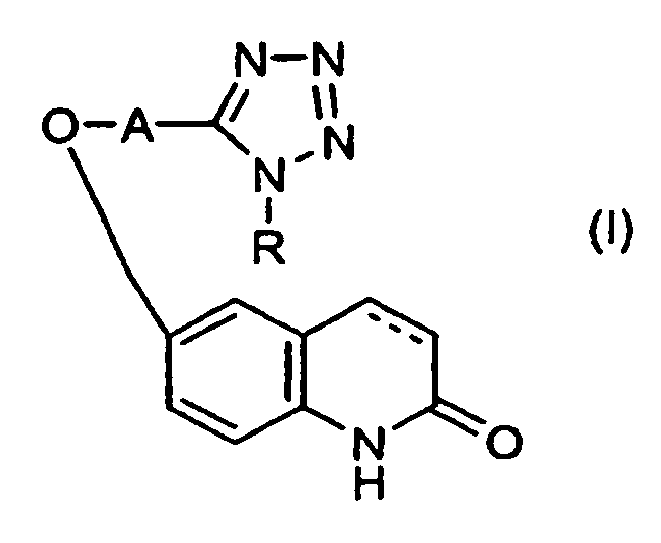
- the present invention relates to a new PTEN inhibitor or a new Maxi-K channels opener. More particularly, it relates to a PTEN inhibitor or new Maxi-K channels opener, which comprises as an active ingredient a tetrazolylalkoxy-dihydrocarbostyril compound of the formula (I): wherein R is a cycloalkyl group, A is a lower alkylene group, and the bond between 3- and 4-positions of the carbostyril nucleus means a single bond or a double bond, or a salt thereof.
- PTEN Phosphatase and Tensin homolog deleted on chromosome Ten
- PIP3 phosphatidylinositol 3,4,5-trisphosphate
- PTEN In view of the functions of PTEN, it is expected that when inhibition of PTEN will be effective for promotion of the survival of normal cells, brain cells, heart cells, and skin, and further effective for inhibiting of Gram negative sepsis and cell migration and cell invasion.
- Maxi-K channel is a class of large conductance calcium sensitive potassium channels, and the activity of Maxi-K channels is controlled by intracellular calcium concentration and membrane potential, etc.
- the Maxi-K channels are widely distributed within the living body such as neurons, heart cells, smooth muscle cells, and the opening of the Maxi-K channels induces hyperpolarization of cells.
- the opening of the Maxi-K channels is useful for the treatment of neuronal disorders, for example, as a medicament such as (1) an anticonvulsant, (2) a medicine for neuroprotection, for treatment of regional cerebral edema and neurologic motor impairment, cognitive disorders, traumatic brain injury, Parkinson's disease, epilepsy, migraine, and Alzheimer's disease, (3) a medicine for control of a pain, (4) a medicine for treating urge urinary incontinence, intestinal hypermotility, uterine contractility, anxiety, and depression.
- a medicament such as (1) an anticonvulsant, (2) a medicine for neuroprotection, for treatment of regional cerebral edema and neurologic motor impairment, cognitive disorders, traumatic brain injury, Parkinson's disease, epilepsy, migraine, and Alzheimer's disease, (3) a medicine for control of a pain, (4) a medicine for treating urge urinary incontinence, intestinal hypermotility, uterine contractility, anxiety, and depression.
- the present inventor has found that the tetrazolylalkoxy-dihydrocarbostyril compounds of the formula (I) or a salt thereof as mentioned above, particularly 6-[4-(1-cyclohexyl-1H-tetrazol-5-yl)butoxy]-3,4-dihydro-carbostyril or a salt thereof, which are known to have platelet aggregation inhibitory activity and vasodilating activity, exhibit an activity of inhibiting PTEN and hence are useful as a PTEN inhibitor, and then the present invention has been accomplished.
- the present inventor has found that the tetrazolylalkoxy-dihydrocarbostyril compounds of the formula (I) or a salt thereof as mentioned above, particularly 6-[4-(1-cyclohexyl-1H-tetrazol-5-yl)butoxy]-3,4-dihydrocarbostyril or a salt thereof, which are known to have platelet aggregation inhibitory activity and vasodilating activity, exhibit an activity of opening of Maxi-K channels and hence are useful as a Maxi-K channels opener, and then the present invention has been accomplished.
- the present invention provides a new PTEN inhibitor or new Maxi-K channels opener which comprises as an active ingredient a tetrazolylalkoxy-carbostyril compound of the formula (I) or a salt thereof.
- the present invention further provides a method for inhibiting PTEN and a method for opening Maxi-K channels, which comprises administering the tetrazolylalkoxy-carbostyril compound (I) or a salt thereof to a patient in need of such treatments, and further provides a use of the tetrazolylalkoxy-carbostyril compound (I) or a salt thereof for inhibiting PTEN as well as for opening Maxi-K channels.
- the compound of the formula (I) or a salt thereof has excellent PTEN inhibitory effect and hence the PTEN inhibitor of the present invention comprising as an active ingredient the compound of the formula (I) or a salt thereof is useful as a medicament for promotion of the survival of normal cells, brain cells, heart cells, and skin, and further for inhibiting of Gram negative sepsis and cell migration and cell invasion without any side effect due to inhibition of PTEN.
- the compound of the formula (I) or a salt thereof has excellent effect of opening of a large conductance calcium-activated K + channel (Maxi-K channels) and hence the Maxi-K channel opener of the present invention comprising as an active ingredient the compound of the formula (I) or a salt thereof is useful as a medicament for the treatment of neuronal disorders, for example, an anticonvulsant, a neuroprotecting agent, a medicament for treatment of regional cerebral edema and neurologic motor impairment, cognitive disorders, traumatic brain injury, Parkinson's disease, epilepsy, migraine, and Alzheimer's disease, pain, urge urinary incontinence, intestinal hypermotility, uterine contractility, anxiety, and depression.
- neuronal disorders for example, an anticonvulsant, a neuroprotecting agent, a medicament for treatment of regional cerebral edema and neurologic motor impairment, cognitive disorders, traumatic brain injury, Parkinson's disease, epilepsy, migraine, and Alzheimer's disease, pain, urge urinary incontinence, intestinal hypermotility, uterine
- the "cycloalkyl group” includes C 3-8 cycloalkyl groups such as cyclopropyl, cyclobutyl, cyclopentyl, cyclohexyl, cycloheptyl, cyclooctyl, etc. but preferable one is cyclohexyl.
- the "lower alkylene group” includes C 1-6 alkylene groups such as methylene, ethylene, propylene, butylene, etc. but preferable one is butylene.
- Particularly preferred compound is 6-[4-(1-cyclohexyl-1H-tetrazol-5-yl)butoxy]-3,4-dihydro-carbostyril, which has been sold as a vasodilator under a tradename of cilostazol.
- the compound of the formula (I) of the present invention can be used in bulk or preferably in the form of a pharmaceutical preparation with a conventional pharmaceutical carrier or diluent.
- the dosage form is not limited to a specific form, but may be in any conventional dosage forms, for example, preparations for oral administration, such as tablets, capsules, granules, various liquid preparations suitable for oral administration, or preparations for parenteral administration, such as injections, suppositories.
- the dosage is not limited to a specific range but is usually in the range of 100 to 400 mg per day in adult (50kg of body weight) which is administered once or being divided in one to several times.
- the active compound is preferably contained in the preparation in an amount of 50 to 100 mg per dosage unit.
- the preparation for injection is usually prepared in the form of a liquid preparation, an emulsion, or a suspension, which are sterilized and further are preferably made isotonic to the blood.
- the preparations in the form of a liquid, emulsion or suspension are usually prepared by using conventional pharmaceutical diluents, for example, water, ethyl alcohol, propylene glycol, ethoxylated isostearyl alcohol, polyoxylated isostearyl alcohol, polyoxyethylene sorbitan fatty acid esters.
- preparations may be incorporated with an isotonic agent such as sodium chloride, glucose, glycerin in an amount sufficient for making isotonic and may further incorporated with conventional solubilizers, buffers, anesthetizing agents, and optionally colorants, preservatives, fragrant materials, flavors, sweetening agents, and other medicaments.
- an isotonic agent such as sodium chloride, glucose, glycerin in an amount sufficient for making isotonic and may further incorporated with conventional solubilizers, buffers, anesthetizing agents, and optionally colorants, preservatives, fragrant materials, flavors, sweetening agents, and other medicaments.
- the preparations such as tablets, capsules, liquid for oral administration may be prepared by a conventional method.
- the tablets may be prepared by mixing with conventional pharmaceutical carriers such as gelatin, starches, lactose, magnesium stearate, talc, gum arabic, and the like.
- the capsules may be prepared by mixing with inert pharmaceutical fillers or diluents and filled in a hard gelatin capsule or a soft capsule.
- the oral liquid preparations such as syrups or elixirs are prepared by mixing the active compound and sweetening agents (e.g. sucrose), preservatives (e.g. methylparaben, propylparaben), colorants, flavors, and the like.
- the preparations for parenteral administration may also be prepared by a conventional method, for example, by dissolving the compound (I) of the present invention in a sterilized aqueous carrier, preferably water or a saline solution.
- Preferred liquid preparation suitable for parenteral administration is prepared by dissolving about 50 - 100 mg of the active compound (I) in water and an organic solvent and further in a polyethylene glycol having a molecular weight of 300 to 5000, which is preferably incorporated with a lubricant such as sodium carboxy-methylcellulose, methyl-cellulose, polyvinylpyrrolidone, and polyvinyl alcohol.
- the above liquid preparations may preferably be further incorporated with a disinfectant (e.g.
- the preparation for parenteral administration may be filled in a capsule, followed by removing the aqueous medium by a conventional lyophilizing technique, and is recovered into a liquid preparation by dissolving in an aqueous medium when used.
- the present invention is illustrated by the following preparation examples and experiments of suppressing effects of the compounds on the increase of PTEN phosphorylation which is stimulated by TNF- ⁇ or on the Maxi-K + channel opening, but should not be construed to be limited thereto.
- injection preparation Components Amount 6-[4-(1-Cyclohexyl-1,2,3,4-tetrazol-5-yl)butoxy]-3,4-dihydrocarbostyril 5 g Polyethyleneglycol (molecular weight: 4000) 0.3 g Sodium chloride 0.9 g Polyoxyethylene sorbitan monooleate 0.4 g Sodium metabisulfite 0.1 g Methylparaben 0.18 g Propylparaben 0.02 g Distilled water for injection 10.0 ml
- the above parabens, sodium metabisulfite and sodium chloride are dissolved in a half amount of the above distilled water with stirring at 80°C.
- the mixture is cooled to 40°C, and thereto are dissolved the active compound, and further polyethylene glycol and polyoxyethylene sorbitan monooleate.
- the remaining distilled water for injection is added to the mixture, sterilized by filtering with a filter paper to give the desired injection preparation.
- lactose, cornstarch and crystalline cellulose are mixed well and the mixture is granulated with 5% aqueous solution of hydroxypropylcellulose, and the granulated mixture is sieved with 200 mesh screen to dry the granules carefully, and then the granules are tabletted by a conventional method to give tablets (1000 tablets).
- SK-N-SH KCLB 30011, human brain neuroblastoma
- MEM Eagle's minimum essential medium
- L-glutamine 2 mM L-glutamine
- sodium pyruvate 1.0 mM sodium pyruvate supplemented with 10% heat-inactivated fetal bovine serum.
- Cells were grown to confluence at 37°C in 5% CO 2 and used for experiments at no greater than passage 20.
- junction potentials were zeroed with the electrode in the standard bath solution. Gigaohm seal formation was achieved by suction and, after establishing the whole cell configuration, the capacitive transients elicited by symmetrical 10 mV voltage clamp steps from -80 mV were recorded at 50 kHz for calculation of cell capacitance.
- the normal bath solution for the whole-cell recordings was: NaCl 130 mM, KCl 5 mM, MgCl, 1.2 mM, CaCl 2 1.8 mM, HEPES 10 mM, glucose 5.2 mM and the pH was adjusted to 7.4 with NaOH.
- Pipettes were filled with KCl 140 mM, MgCl 2 0.5 mM, CaCl 2 0.1 mM, ethylenebis(oxonitrilo) tetra-acetic acid (EGTA) 0.09 mM, HEPES 10 mM, glucose 10 mM and the pH was adjusted to 7.4 with KOH.
- KCl 140 mM MgCl 2 0.5 mM, CaCl 2 0.1 mM
- EGTA ethylenebis(oxonitrilo) tetra-acetic acid
- HEPES 10 mM glucose 10 mM
- the pH was adjusted to 7.4 with KOH.
- cilostazol was applied to the bath.
- cilostazol was applied to the bath about 20 minutes after administering glibenclamide or iberiotoxin.
- Fig. 2A shows the effects of cilostazol
- Fig. 2B shows effects of cilostazol and/or glibenclamide ("GBC”, suggestive of opening of Maxi-K + channels)
- Fig. 2C shows effects of cilostazol and/or iberiotoxin ("Ibtx”, Maxi-K + channel blocker).
- the current was significantly increased by cilostazol, but on the other hand, it reversibly blocked by addition of iberiotoxin (100 nM) to the bath, but not by glibenclamide (10 ⁇ M).
- iberiotoxin 100 nM
- glibenclamide 10 ⁇ M
- the increase in Maxi-K channel-medicated currents was given by cilostazol even in co-existence of glibenclamide, while glibenclamide alone could not increase the Maxi-K channel-mediated currents.
- Maxi-K channel blocker increase of the current was rather less than iberiotoxin alone.
- CMC carboxymethylcellurose
- Vehicle Control (0.5% carboxymethylcellurose:CMC; 1 kg/5ml) twice daily gavage.
- Test Compound (Cilostazol; 100 mg/kg/5ml) twice daily gavage.
- mice have an innate tendency to explore their environment. Successful exploration depends on the ability to avoid places recently visited, where food may have been depleted or absent ("spontaneous alternation").
- the Y-maze is an ethologically based test that does not involve reward delivery. Mice with compromised "working memory” function cannot hold information regarding places just visited in their working memory; therefore they show decreased spontaneous alternation.
- Cilostazol has an anti-platelet and vaso-dilating action, which has an indication for ASO and prevention of secondary brain infarction.
- Cilostazol may contribute to reduce the deposition of amyloid-beta protein, and improve a behavior of Alzheimer's dementia.
- the tetrazolylalkoxy-dihydrocarbostyril compounds (I) or a salt thereof of the present invention is effective for opening Maxi-K Channels and is useful for the treatment of neuronal disorders, particularly for the treatment of Alzheimer's disease.
- the present invention provides a composition
- a composition comprising as an active ingredient a tetrazolylalkoxy-dihydrocarbostyril compound (I) or a salt thereof, which has excellent PEN inhibitory effects and is useful as a medicament for promotion of the survival of normal cells, brain cells, heart cells, and skin, and further for inhibiting of Gram negative sepsis and cell migration and cell invasion without any side effect due to inhibition of PTEN.
- composition of the present invention is further useful as an opener of a large conductance Ca 2+ -activated K + channel (Maxi-K channel) and hence as a medicament for the treatment of neuronal disorders, for example, an anticonvulsant, a neuroprotecting agent, a medicament for treatment of regional cerebral edema and neurologic motor impairment, cognitive disorders, traumatic brain injury, Parkinson's disease, epilepsy, migraine, and Alzheimer's disease, etc.
- a large conductance Ca 2+ -activated K + channel for example, an anticonvulsant, a neuroprotecting agent, a medicament for treatment of regional cerebral edema and neurologic motor impairment, cognitive disorders, traumatic brain injury, Parkinson's disease, epilepsy, migraine, and Alzheimer's disease, etc.
Landscapes
- Health & Medical Sciences (AREA)
- Animal Behavior & Ethology (AREA)
- Chemical & Material Sciences (AREA)
- Veterinary Medicine (AREA)
- Public Health (AREA)
- Medicinal Chemistry (AREA)
- General Health & Medical Sciences (AREA)
- Pharmacology & Pharmacy (AREA)
- Life Sciences & Earth Sciences (AREA)
- Bioinformatics & Cheminformatics (AREA)
- Engineering & Computer Science (AREA)
- Organic Chemistry (AREA)
- General Chemical & Material Sciences (AREA)
- Chemical Kinetics & Catalysis (AREA)
- Nuclear Medicine, Radiotherapy & Molecular Imaging (AREA)
- Neurosurgery (AREA)
- Biomedical Technology (AREA)
- Neurology (AREA)
- Pain & Pain Management (AREA)
- Epidemiology (AREA)
- Reproductive Health (AREA)
- Endocrinology (AREA)
- Pregnancy & Childbirth (AREA)
- Psychiatry (AREA)
- Gynecology & Obstetrics (AREA)
- Urology & Nephrology (AREA)
- Psychology (AREA)
- Hospice & Palliative Care (AREA)
- Hematology (AREA)
- Diabetes (AREA)
- Communicable Diseases (AREA)
- Oncology (AREA)
- Pharmaceuticals Containing Other Organic And Inorganic Compounds (AREA)
- Plural Heterocyclic Compounds (AREA)
Description
- The present invention relates to a new PTEN inhibitor or a new Maxi-K channels opener. More particularly, it relates to a PTEN inhibitor or new Maxi-K channels opener, which comprises as an active ingredient a tetrazolylalkoxy-dihydrocarbostyril compound of the formula (I):

- PTEN (Phosphatase and Tensin homolog deleted on chromosome Ten) was isolated as a tumor suppressor gene in 1997, and since then the physiological functions thereof have been analyzed from various viewpoints. It is reported in 1998 that the PTEN gene product exhibits a new phosphatase activity, i.e. it is able to dephosphorylate a
phosphatidylinositol - In view of the functions of PTEN, it is expected that when inhibition of PTEN will be effective for promotion of the survival of normal cells, brain cells, heart cells, and skin, and further effective for inhibiting of Gram negative sepsis and cell migration and cell invasion.
- Besides, it is known that the opening of potassium channel induces flowing the intracellular potassium ion out of cells which results in negative intracellular potential and that the potassium channel is voltage-dependent and is controlled intracellular calcium concentration and intracellular ATP. Maxi-K channel is a class of large conductance calcium sensitive potassium channels, and the activity of Maxi-K channels is controlled by intracellular calcium concentration and membrane potential, etc. The Maxi-K channels are widely distributed within the living body such as neurons, heart cells, smooth muscle cells, and the opening of the Maxi-K channels induces hyperpolarization of cells. It is also known that the opening of the Maxi-K channels is useful for the treatment of neuronal disorders, for example, as a medicament such as (1) an anticonvulsant, (2) a medicine for neuroprotection, for treatment of regional cerebral edema and neurologic motor impairment, cognitive disorders, traumatic brain injury, Parkinson's disease, epilepsy, migraine, and Alzheimer's disease, (3) a medicine for control of a pain, (4) a medicine for treating urge urinary incontinence, intestinal hypermotility, uterine contractility, anxiety, and depression.
- During the studies on PTEN, the present inventor has found that the tetrazolylalkoxy-dihydrocarbostyril compounds of the formula (I) or a salt thereof as mentioned above, particularly 6-[4-(1-cyclohexyl-1H-tetrazol-5-yl)butoxy]-3,4-dihydro-carbostyril or a salt thereof, which are known to have platelet aggregation inhibitory activity and vasodilating activity, exhibit an activity of inhibiting PTEN and hence are useful as a PTEN inhibitor, and then the present invention has been accomplished.
- Further, during the studies on functional analysis of Maxi-K channels, the present inventor has found that the tetrazolylalkoxy-dihydrocarbostyril compounds of the formula (I) or a salt thereof as mentioned above, particularly 6-[4-(1-cyclohexyl-1H-tetrazol-5-yl)butoxy]-3,4-dihydrocarbostyril or a salt thereof, which are known to have platelet aggregation inhibitory activity and vasodilating activity, exhibit an activity of opening of Maxi-K channels and hence are useful as a Maxi-K channels opener, and then the present invention has been accomplished.
-
- Fig. 1 shows a suppression of the TNF-α (50 ng/ml)-stimulated increased PTEN phosphorylation level by cilostazol (tradename of 6-[4-(1-cyclohexyl-1H-tetrazol-5-yl)butoxy]-3,4-dihydro-carbostyril).
- Fig. 2 shows effects of drugs on opening of calcium-activated K+ current in SK-N-SH cells, and Fig. 2A shows the effects of cilostazol (tradename of 6-[4-(1-cyclohexyl-1H-tetrazol-5-yl)butoxy]-3,4-dihydrocarbostyril), Fig. 2B shows effects of cilostazol and/or glibenclamide (abbreviated as "GBC", which is commercially available antidiabetics, suggestive of absence of opening of ATP-sensitive K+ channels), and Fig. 2C shows effects of cilostazol and/or iberiotoxin (abbreviated as "Ibtx", which is known as Maxi-K+ channel blocker, suggestive of opening of Maxi-K+ channels).
- Fig. 3 shows total amyloid-beta concentration (A-Beta 40 and
A-Beta 42 levels) in brains of mice in the control and cilostazole treated groups which were detected by ELISA. - Fig. 4 shows a summary of experimental results obtained from the Y-maze behavior paradigm for testing the effects on Alzheimer's disease of the compound of the present invention.
- The present invention provides a new PTEN inhibitor or new Maxi-K channels opener which comprises as an active ingredient a tetrazolylalkoxy-carbostyril compound of the formula (I) or a salt thereof. The present invention further provides a method for inhibiting PTEN and a method for opening Maxi-K channels, which comprises administering the tetrazolylalkoxy-carbostyril compound (I) or a salt thereof to a patient in need of such treatments, and further provides a use of the tetrazolylalkoxy-carbostyril compound (I) or a salt thereof for inhibiting PTEN as well as for opening Maxi-K channels.
- The compound of the formula (I) or a salt thereof has excellent PTEN inhibitory effect and hence the PTEN inhibitor of the present invention comprising as an active ingredient the compound of the formula (I) or a salt thereof is useful as a medicament for promotion of the survival of normal cells, brain cells, heart cells, and skin, and further for inhibiting of Gram negative sepsis and cell migration and cell invasion without any side effect due to inhibition of PTEN.
- Furthermore, the compound of the formula (I) or a salt thereof has excellent effect of opening of a large conductance calcium-activated K+ channel (Maxi-K channels) and hence the Maxi-K channel opener of the present invention comprising as an active ingredient the compound of the formula (I) or a salt thereof is useful as a medicament for the treatment of neuronal disorders, for example, an anticonvulsant, a neuroprotecting agent, a medicament for treatment of regional cerebral edema and neurologic motor impairment, cognitive disorders, traumatic brain injury, Parkinson's disease, epilepsy, migraine, and Alzheimer's disease, pain, urge urinary incontinence, intestinal hypermotility, uterine contractility, anxiety, and depression.
- The tetrazolylalkoxy-dihydrocarbostyril compounds of the formula (I) and processes for preparation thereof are disclosed in JP-63-20235.
- In the formula (I), the "cycloalkyl group" includes C3-8 cycloalkyl groups such as cyclopropyl, cyclobutyl, cyclopentyl, cyclohexyl, cycloheptyl, cyclooctyl, etc. but preferable one is cyclohexyl. The "lower alkylene group" includes C1-6 alkylene groups such as methylene, ethylene, propylene, butylene, etc. but preferable one is butylene.
- Particularly preferred compound is 6-[4-(1-cyclohexyl-1H-tetrazol-5-yl)butoxy]-3,4-dihydro-carbostyril, which has been sold as a vasodilator under a tradename of cilostazol.
- The compound of the formula (I) of the present invention can be used in bulk or preferably in the form of a pharmaceutical preparation with a conventional pharmaceutical carrier or diluent. The dosage form is not limited to a specific form, but may be in any conventional dosage forms, for example, preparations for oral administration, such as tablets, capsules, granules, various liquid preparations suitable for oral administration, or preparations for parenteral administration, such as injections, suppositories. The dosage is not limited to a specific range but is usually in the range of 100 to 400 mg per day in adult (50kg of body weight) which is administered once or being divided in one to several times. The active compound is preferably contained in the preparation in an amount of 50 to 100 mg per dosage unit.
- The preparation for injection is usually prepared in the form of a liquid preparation, an emulsion, or a suspension, which are sterilized and further are preferably made isotonic to the blood. The preparations in the form of a liquid, emulsion or suspension are usually prepared by using conventional pharmaceutical diluents, for example, water, ethyl alcohol, propylene glycol, ethoxylated isostearyl alcohol, polyoxylated isostearyl alcohol, polyoxyethylene sorbitan fatty acid esters. These preparations may be incorporated with an isotonic agent such as sodium chloride, glucose, glycerin in an amount sufficient for making isotonic and may further incorporated with conventional solubilizers, buffers, anesthetizing agents, and optionally colorants, preservatives, fragrant materials, flavors, sweetening agents, and other medicaments.
- The preparations such as tablets, capsules, liquid for oral administration may be prepared by a conventional method. The tablets may be prepared by mixing with conventional pharmaceutical carriers such as gelatin, starches, lactose, magnesium stearate, talc, gum arabic, and the like. The capsules may be prepared by mixing with inert pharmaceutical fillers or diluents and filled in a hard gelatin capsule or a soft capsule. The oral liquid preparations such as syrups or elixirs are prepared by mixing the active compound and sweetening agents (e.g. sucrose), preservatives (e.g. methylparaben, propylparaben), colorants, flavors, and the like. The preparations for parenteral administration may also be prepared by a conventional method, for example, by dissolving the compound (I) of the present invention in a sterilized aqueous carrier, preferably water or a saline solution. Preferred liquid preparation suitable for parenteral administration is prepared by dissolving about 50 - 100 mg of the active compound (I) in water and an organic solvent and further in a polyethylene glycol having a molecular weight of 300 to 5000, which is preferably incorporated with a lubricant such as sodium carboxy-methylcellulose, methyl-cellulose, polyvinylpyrrolidone, and polyvinyl alcohol. The above liquid preparations may preferably be further incorporated with a disinfectant (e.g. benzyl alcohol, phenol, thimerosal), a fungicide, and further optionally with an isotonic agent (e.g. sucrose, sodium chloride), a topical anesthetic, a stabilizer, a buffer, and the like. In view of keeping stability, the preparation for parenteral administration may be filled in a capsule, followed by removing the aqueous medium by a conventional lyophilizing technique, and is recovered into a liquid preparation by dissolving in an aqueous medium when used.
- The present invention is illustrated by the following preparation examples and experiments of suppressing effects of the compounds on the increase of PTEN phosphorylation which is stimulated by TNF-α or on the Maxi-K+ channel opening, but should not be construed to be limited thereto.
- Preparation of injection preparation:
Components Amount 6-[4-(1-Cyclohexyl-1,2,3,4-tetrazol-5-yl)butoxy]-3,4-dihydrocarbostyril 5 g Polyethyleneglycol (molecular weight: 4000) 0.3 g Sodium chloride 0.9 g Polyoxyethylene sorbitan monooleate 0.4 g Sodium metabisulfite 0.1 g Methylparaben 0.18 g Propylparaben 0.02 g Distilled water for injection 10.0 ml - The above parabens, sodium metabisulfite and sodium chloride are dissolved in a half amount of the above distilled water with stirring at 80°C. The mixture is cooled to 40°C, and thereto are dissolved the active compound, and further polyethylene glycol and polyoxyethylene sorbitan monooleate. The remaining distilled water for injection is added to the mixture, sterilized by filtering with a filter paper to give the desired injection preparation.
- Preparation of tablets:
Components Amount 6-[4-(1-Cyclohexyl-1,2,3,4-tetrazol-5-yl)butoxy]-3,4-dihydrocarbostyril 100 g Lactose (Japanese Pharmacopeia) 40 g Cornstarch (Japanese Pharmacopeia) 40 g Crystalline cellulose (Japanese Pharmacopeia) 20 g Hydroxypropylcellulose (Japanese Pharmacopeia) 4 g Magnesium stearate (Japanese Pharmacopeia) 2 g - The above compound of the present invention, lactose, cornstarch and crystalline cellulose are mixed well and the mixture is granulated with 5% aqueous solution of hydroxypropylcellulose, and the granulated mixture is sieved with 200 mesh screen to dry the granules carefully, and then the granules are tabletted by a conventional method to give tablets (1000 tablets).
- The effects for suppression of the TNF-α-stimulated increased PTEN phosphorylation level by the representative compound of the present invention: cilostazol were tested
- Further, the effects on opening of Maxi-K channels of the representative compound of the present invention: cilostazol and some commercially available Maxi-K channels opener or blocker were tested.
- Effects of cilostazol on the suppression of the TNF-α-stimulated increase in PTEN phosphorylation level :
- Materials:
- Cell cultures: SK-N-SH (KCLB 30011, human brain neuroblastoma) cells were cultured in Eagle's minimum essential medium (MEM) with 2 mM L-glutamine and 1.0 mM sodium pyruvate supplemented with 10% heat-inactivated fetal bovine serum. Cells were grown to confluence at 37°C in 5% CO2 and used for experiments at no greater than
passage 20. - Preparation of TNF-α solution: TNF-α (Upstate Biotechnology, Inc., Lake Placid, NY) was dissolved in the phosphate buffered saline as a 10 µg/ml stock solution.
- Cell cultures: SK-N-SH (KCLB 30011, human brain neuroblastoma) cells were cultured in Eagle's minimum essential medium (MEM) with 2 mM L-glutamine and 1.0 mM sodium pyruvate supplemented with 10% heat-inactivated fetal bovine serum. Cells were grown to confluence at 37°C in 5% CO2 and used for experiments at no greater than
- Method:
- Western blot analysis: The confluent cells received MEM medium with 1% FBS plus
cilostazol 3 hours prior to stimulation with TNF-α and then were exposed to TNF-α for one hour. - The cells were lysed in lysis buffer containing 50 mM Tris-Cl (pH 8.0), 150 mM NaCl, 0.02% sodium azide, 100 µg/ml phenylmethylsulfonyl fluoride, 1 µg/ml aprotinin and 1% Triton X-100. Following centrifugation at 12,000 rpm, 50 µg of total protein was loaded into 8 or 10% SDS-PAGE gel, and transferred to nitrocellulose membrane (Amersham Pharmacia Biotech, Piscataway, NJ). The blocked membranes were then incubated with the indicated antibody, and the immunoreactive bands were visualized using chemiluminescent reagent as recommended by Supersignal West Dura Extended Duration Substrate Kit (Pierce, Rockford, IL). The signals of the bands were quantified using a GS-710 Calibrated imaging Densitomerter (Bio-Rad Laboratories, Hercules, CA). The results were expressed as a relative density. Polyclonal antibodies against PTEN, phospho-PTEN (Ser 380/Thr382/383) were from the Cell Signaling Technology (Beverly, MA).
- Statistical analysis: The results are expressed as means ± SEM. Statistical differences between groups were determined by Student's t-test. p<0.05 was considered to be significant.
- Western blot analysis: The confluent cells received MEM medium with 1% FBS plus
- Results:
- The Western blot and densitometric analysis are shown in the accompanying Fig. 1.
- As is seen from Fig. 1, cilostazol (1, 10 and 100 µM) concentration-dependently suppressed the TNF-α (50 ng/ml)-stimulated increased PTEN phosphorylation level.
- From the above experimental results, it is clear that cilostazol showed potent activity of inhibiting PTEN phosphorylation.
- Cell cultures: SK-N-SH (KCLB 30011, human brain neuroblastoma) cells were cultured in Eagle's minimum essential medium (MEM) with 2 mM L-glutamine and 1.0 mM sodium pyruvate supplemented with 10% heat-inactivated fetal bovine serum. Cells were grown to confluence at 37°C in 5% CO2 and used for experiments at no greater than
passage 20. -
- (1) Cilostazol (a compound of the present invention, a tradename of 6-[4-(1-cyclohexyl-1H-tetrazol-5-yl)-butoxy]-3,4-dihydro-carbostyril).
- (2) Glibenclamide (abbreviated as "GBC", general name: Glyburide, chemical name: 5-chloro-N-[2-[4-[[[(cyclohexyl-amino)carbonyl]amino]sulfonyl]phenyl] ethyl]-2-methoxybenzamide, which is commercially available antidiabetics, a blocker of ATP-sensitive K+ channels).
- (3) Iberiotoxin (abbreviated as "Ibtx", which is known as Maxi-K+ channel blocker).
- Recording of the whole-cell K+ current: The experiments were performed in a small bath (0.5 ml) mounted on the stage of an inverted microscope (Nikon model TE300, Tokyo, Japan) perfused continuously at a flow rate of 1 ml/min. Using the whole-cell configuration of the patch clamp technique, the K+ currents were recorded at room temperature (20~22°C) with an Axopatch-200B patch clamp amplifier (Axon Instruments, Foster City, CA). Currents were sampled at 1 to 10 kHz after anti-alias filtering at 0.5 to 5 kHz. Data acquisition and command potentials were controlled by pClamp 6.0.3 software (Axon Instruments, Foster City, CA). To ensure the voltage clamp quality, electrode resistance was kept below 3 MΩ. Junction potentials were zeroed with the electrode in the standard bath solution. Gigaohm seal formation was achieved by suction and, after establishing the whole cell configuration, the capacitive transients elicited by symmetrical 10 mV voltage clamp steps from -80 mV were recorded at 50 kHz for calculation of cell capacitance. The normal bath solution for the whole-cell recordings was: NaCl 130 mM,
KCl 5 mM, MgCl, 1.2 mM, CaCl2 1.8 mM,HEPES 10 mM, glucose 5.2 mM and the pH was adjusted to 7.4 with NaOH. Pipettes were filled with KCl 140 mM, MgCl2 0.5 mM, CaCl2 0.1 mM, ethylenebis(oxonitrilo) tetra-acetic acid (EGTA) 0.09 mM,HEPES 10 mM,glucose 10 mM and the pH was adjusted to 7.4 with KOH. - After establishment of whole-cell recordings and collecting control recordings for approximately 5 minutes until the current elicited by depolarization stabilized, cilostazol was applied to the bath. In the experiments, using glibenclamide or iberiotoxin, cilostazol was applied to the bath about 20 minutes after administering glibenclamide or iberiotoxin.
- The test results are shown in the accompanying Fig. 2, wherein Fig. 2A shows the effects of cilostazol, Fig. 2B shows effects of cilostazol and/or glibenclamide ("GBC", suggestive of opening of Maxi-K+ channels), and Fig. 2C shows effects of cilostazol and/or iberiotoxin ("Ibtx", Maxi-K+ channel blocker).
- As is seen from Fig. 2, the current was significantly increased by cilostazol, but on the other hand, it reversibly blocked by addition of iberiotoxin (100 nM) to the bath, but not by glibenclamide (10 µM). The increase in Maxi-K channel-medicated currents was given by cilostazol even in co-existence of glibenclamide, while glibenclamide alone could not increase the Maxi-K channel-mediated currents. When cilostazol was added to the cells together with iberiotoxin, Maxi-K channel blocker, increase of the current was rather less than iberiotoxin alone.
- Vehicle control; 0.5% carboxymethylcellurose. twice daily (n=10)
Cilostazol; 100 mg/kg, twice daily (n=10)
Triturate a small amount of powder (cilostazol) by agate mortar. Add two or three drops of 0.5% carboxymethylcellurose (CMC) and triturate well. Add 4-5ml of 0.5% CMC and recover the suspended cilostazol to a light protected glass bottle. - Test compound preparation weekly at the concentration of 1000 mg/50ml, and store protected from light at 4°C.
- Before administration, sonicate the stock bottle of test compound by ultra-sonic sonicator and mix well.
- Compounds via twice daily oral gavage as per group assignments.
- Vehicle Control (0.5% carboxymethylcellurose:CMC; 1 kg/5ml) twice daily gavage. Test Compound (Cilostazol; 100 mg/kg/5ml) twice daily gavage.
-
a. The animals (8 weeks of age, Hemizygous transgenic mice that express mutant human APPK670N,M6711/line Tg2576) were randomized into 2 groups of double transgenic APP/PS1 mice (control and cilostazol, total = 20 mice). Each mouse was administered twice daily by gavage for 6 weeks, as shown in the following table:Protocol Design Treatment Start Age Number of Mice Age at End Control (Vehicle) 8 weeks 10 14 weeks Test Compound 8 weeks 10 14 weeks Total Mice = 20
b. Mice were genotyped at the beginning and end of the study. '
c. Mice were subjected to the Y-maze behavior paradigm prior to completing the in-life phase.
d. The mice were sacrificed at 14 weeks of age.
e. Upon sacrifice, 1 ml of blood was collected for cilostazol blood concentration measurement, and APP/PS1 mice were perfused with saline. Brains were hemisected with one hemisphere fixed and the other hemisphere frozen.
f. The frozen hemisphere was homogenized and analyzed for total amyloid-beta concentration via ELISA. - Total A-Beta 40 and total A-Beta 42 levels in brains of mice were detected in the control group and in cilostazol treated group. The results are shown in the accompanying Fig. 3.
- The following procedure outlines the steps taken to perform the test "Spontaneous Alternation in the Y-maze". Mice have an innate tendency to explore their environment. Successful exploration depends on the ability to avoid places recently visited, where food may have been depleted or absent ("spontaneous alternation"). The Y-maze is an ethologically based test that does not involve reward delivery. Mice with compromised "working memory" function cannot hold information regarding places just visited in their working memory; therefore they show decreased spontaneous alternation.
- Published results have shown decreased spontaneous alternation and increased exploration in certain transgenic mouse strains, for example APP/PS1 mice.
- Cilostazol has an anti-platelet and vaso-dilating action, which has an indication for ASO and prevention of secondary brain infarction.
- These actions of Cilostazol may contribute to reduce the deposition of amyloid-beta protein, and improve a behavior of Alzheimer's dementia.
- i. Bring mice to be tested into the testing room. Avoid bringing many mice (more than three cages) into the testing area at once, as this may influence their behavior. (Optional, do only if animals are not marked otherwise, e.g. by transponders or clearly visible tattoo.) Mark their tails with a non-toxic color marker in the following order:
- 1:
- red
- 2:
- green
- 3:
- blue
- 4:
- black
- ii. Experiments may be recorded by video. This produces a permanent record and allows the investigators to revisit the experiments if there are any questions.
- iii. Take the first mouse to be tested out of its home cage by the base of the tail, and weigh it. Record the weight in the Y-Maze Data Spreadsheet. Place the mice back in the cage. (Alternatively, mice may be weighed before the start of the experiment, e.g. on the previous day)
- iv. Leave the mice undisturbed for 1 hour before the testing starts so that they can acclimate to the room. Extra care should be taken to ensure that cages are not left adjacent to one particular arm, as the smell, for example, may influence the entry of a mouse into a single arm. Therefore, either place the cage at a distance from the apparatus or ensure that the cages are evenly distributed around the room. (eg. may introduce three cages at once ? one in proximity to each arm). Technician may be present in the testing room, but must not disturb the mice.
- v. Before the test starts, wipe the inside of the Y-maze with isopropanol.
- vi. Handle mice gently, holding by tail and let rest on arm, taking care not to let mouse plunge down head first into maze. Mice are individually placed in the center of a Y maze, with all three arms (arm A, arm B and arm C) available for exploration, for a period of 8 minutes.
- vii. Record all entries on a printout of the Y-maze data sheet. Enter an "A" into the ARM ENTERED field if the mouse completely enters arm A, etc.
In the same row, enter "end" into OBSERVATIONS if the mouse explores the arm to the end, "R" for each time the mouse rears (sits on its hind legs with forelegs free) or "L" if it leans ("explores up the wall" with the forefeet touching the wall), and "F" if it freezes (remains motionless for 5 seconds or more). If the mouse goes back and forth within arm A, enter another "bf" in OBSERVATIONS in the same row. Enter any other observations in full text. If there is not enough time to enter observations, skip them. If the mouse returns to the center, start a new line. Enter "A" in the new line if mouse returns to arm A, "B" for arm B or "C" for arm C. - viii. After 8 minutes, remove the mice by the tail and place them in their home cage. Record the number of boli and whether or not the mice urinated in the Y-maze spreadsheet. Wipe the inside of the Y-maze with isopropanol. Use brush to get in corners, clean both walls and floor. Make sure that the Y-maze is clean and clear of any smell, bedding or food that may have been brought into the maze by a previous mouse. Make sure the Y-maze is dry after cleaning with alcohol. Make sure no cleaning material (such as tissue) is left behind in the maze.
- ix. Repeat steps for all of the mice to be tested.
- x. After the test, transfer data from hard copy to Excel spreadsheet.
The results obtained from the Y-maze behavior paradigm are summarized in the accompanying Fig. 4. - xi. Data analysis: An alternation is defined as a visit to all three arms without re-entry (ABC, ACB, BAC, BCA, CAB or CBA). Analyze each ARM ENTRY separately and determine whether it completed an alternation. The sequence ABCABC has four alternations, the first ends with C, the next with A, then B, then C. The sequence ABCBAC has only three alternations, the first ending in C, the second ending with A, and the third with C. % alternations is (number of observed alternations)/(number of possible alternations). If n arms are visited, the highest possible number of alternations is n-2. If the animal moves randomly, 22% alternations would be expected (3*2*1/3*3*3). Global activity is reflected in the total number of visits to the different arms. ACTIVITY is therefore (total number of arm entries)/minutes of observation).
- Thus, the tetrazolylalkoxy-dihydrocarbostyril compounds (I) or a salt thereof of the present invention is effective for opening Maxi-K Channels and is useful for the treatment of neuronal disorders, particularly for the treatment of Alzheimer's disease.
- The present invention provides a composition comprising as an active ingredient a tetrazolylalkoxy-dihydrocarbostyril compound (I) or a salt thereof, which has excellent PEN inhibitory effects and is useful as a medicament for promotion of the survival of normal cells, brain cells, heart cells, and skin, and further for inhibiting of Gram negative sepsis and cell migration and cell invasion without any side effect due to inhibition of PTEN. The composition of the present invention is further useful as an opener of a large conductance Ca2+-activated K+ channel (Maxi-K channel) and hence as a medicament for the treatment of neuronal disorders, for example, an anticonvulsant, a neuroprotecting agent, a medicament for treatment of regional cerebral edema and neurologic motor impairment, cognitive disorders, traumatic brain injury, Parkinson's disease, epilepsy, migraine, and Alzheimer's disease, etc.
Claims (7)
- A use of a tetrazolylalkoxy-dihydrocarbostyril compound of the formula (I):
- The use according to claim 1, wherein the compound is 6-[4-(1-cyclohexyl-1H-tetrazol-5-yl)butoxy]-3,4-dihydrocarbostyril or a salt thereof.
- A use of a tetrazolylalkoxy-dihydrocarbostyril compound of the formula (I):

- The use according to claim 3, wherein the compound is 6-[4-(1-cyclohexyl-1H-tetrazol-5-yl)butoxy]-3,4-dihydrocarbostyril or a salt thereof.
- The use according to claim 3 or 4, which is for the preparation of a medicament for the treatment of a neuronal disorder.
- The use according to claim 5, wherein the neuronal disorder is an Alzheimer's disease.
- The use according to claim 5, wherein the neuronal disorder is selected from convulsion, regional cerebral edema, neurologic motor impairment, cognitive disorder, traumatic brain injury, Parkinson's disease, epilepsy, migraine, pain, urge urinary incontinence, intestinal hypermotility, uterine contractility, anxiety and depression.
Priority Applications (1)
| Application Number | Priority Date | Filing Date | Title |
|---|---|---|---|
| SI200430133T SI1599205T1 (en) | 2003-02-25 | 2004-02-24 | Pten inhibitor or maxi-k channels opener |
Applications Claiming Priority (5)
| Application Number | Priority Date | Filing Date | Title |
|---|---|---|---|
| US44943503P | 2003-02-25 | 2003-02-25 | |
| US449435P | 2003-02-25 | ||
| US44958903P | 2003-02-26 | 2003-02-26 | |
| US449589P | 2003-02-26 | ||
| PCT/JP2004/002146 WO2004075897A1 (en) | 2003-02-25 | 2004-02-24 | Pten inhibitor or maxi-k channels opener |
Publications (2)
| Publication Number | Publication Date |
|---|---|
| EP1599205A1 EP1599205A1 (en) | 2005-11-30 |
| EP1599205B1 true EP1599205B1 (en) | 2006-11-22 |
Family
ID=32930512
Family Applications (1)
| Application Number | Title | Priority Date | Filing Date |
|---|---|---|---|
| EP04713984A Expired - Lifetime EP1599205B1 (en) | 2003-02-25 | 2004-02-24 | Pten inhibitor or maxi-k channels opener |
Country Status (19)
| Country | Link |
|---|---|
| US (3) | US7825130B2 (en) |
| EP (1) | EP1599205B1 (en) |
| JP (3) | JP4590397B2 (en) |
| KR (1) | KR101031163B1 (en) |
| CN (2) | CN1780623B (en) |
| AR (1) | AR043379A1 (en) |
| AT (1) | ATE345800T1 (en) |
| AU (1) | AU2004216340B9 (en) |
| BR (1) | BRPI0407832A (en) |
| CA (1) | CA2515590C (en) |
| CY (1) | CY1106294T1 (en) |
| DE (1) | DE602004003348T2 (en) |
| DK (1) | DK1599205T3 (en) |
| ES (1) | ES2276282T3 (en) |
| MX (1) | MXPA05008996A (en) |
| MY (1) | MY136863A (en) |
| PT (1) | PT1599205E (en) |
| TW (1) | TWI323660B (en) |
| WO (1) | WO2004075897A1 (en) |
Families Citing this family (16)
| Publication number | Priority date | Publication date | Assignee | Title |
|---|---|---|---|---|
| TWI323660B (en) * | 2003-02-25 | 2010-04-21 | Otsuka Pharma Co Ltd | Pten inhibitor or maxi-k channels opener |
| TW200848041A (en) | 2007-03-30 | 2008-12-16 | Otsuka Pharma Co Ltd | A medicament for treating schizophrenia comprising cilostazol |
| RU2469723C2 (en) * | 2007-05-22 | 2012-12-20 | Оцука Фармасьютикал Ко., Лтд. | Therapeutic agent containing carbostiryl derivative and donepezil for treating alzheimer's disease |
| AR067746A1 (en) * | 2007-08-02 | 2009-10-21 | Otsuka Pharma Co Ltd | A MEDICINAL PRODUCT TO TREAT GLAUCOMA THAT IT INCLUDES AS A COMPOSITE ACTIVE ITEM OF CYCLODEXTRINE - CILOSTAZOL CLATRATE |
| KR101639820B1 (en) | 2008-01-17 | 2016-07-14 | 쿠이 류 | Methods for in vitro maturation of ovarian follicles |
| AR070816A1 (en) * | 2008-03-14 | 2010-05-05 | Otsuka Pharma Co Ltd | COMBINATION PHARMACO TO TREAT VASCULAR DISORDERS |
| WO2009117387A2 (en) * | 2008-03-17 | 2009-09-24 | The Trustees Of Columbia University In The City Of New York | Methods to treat neurodegenerative conditions or diseases by targeting components of a pten signaling pathway |
| AU2009255973B2 (en) * | 2008-06-06 | 2013-08-15 | Children's Medical Center Corporation | Promoting axon regeneration in the adult CNS through control of protein translation |
| CN104740614A (en) * | 2009-10-16 | 2015-07-01 | 不列颠哥伦比亚大学 | Inhibitors of phosphatase and tensin homolog (pten) compositions, uses and methods |
| EP2322163A1 (en) * | 2009-11-03 | 2011-05-18 | Pharnext | New therapeutics approaches for treating alzheimer disease |
| US9511036B2 (en) | 2011-11-01 | 2016-12-06 | Children's Medical Center Corporation | Co-activation of mTOR and STAT3 pathways to promote neuronal survival and regeneration |
| MX2014015310A (en) * | 2012-06-15 | 2015-07-06 | Found Biomedical Res & Innov | Prophylactic and/or therapeutic agent for mild cognitive impairment. |
| JP2016040542A (en) * | 2014-08-13 | 2016-03-24 | 学校法人金沢医科大学 | Screening method of therapeutic agent for dementia or candidate substance of therapeutic agent for dementia |
| JP2017070404A (en) * | 2015-10-06 | 2017-04-13 | アンディ チャオ | Aroma pad for keeping toilet floor surface clean |
| JP6872201B2 (en) | 2016-05-19 | 2021-05-19 | 国立研究開発法人国立循環器病研究センター | Drugs for the prevention and / or treatment of dementia |
| WO2021230131A1 (en) * | 2020-05-11 | 2021-11-18 | 株式会社島津製作所 | Therapeutic agent for mild cognitive impairment |
Family Cites Families (22)
| Publication number | Priority date | Publication date | Assignee | Title |
|---|---|---|---|---|
| JPS5535019A (en) * | 1978-09-01 | 1980-03-11 | Otsuka Pharmaceut Co Ltd | Carbostyryl derivative |
| JPS5649378A (en) * | 1979-08-25 | 1981-05-02 | Otsuka Pharmaceut Co Ltd | Tetrazolylalkoxycarbostyril derivative |
| JPH0653666B2 (en) | 1990-10-22 | 1994-07-20 | 大塚製薬株式会社 | Remedies for human diabetic sensory disorders and peripheral neuropathy |
| JPH0614444A (en) * | 1992-06-25 | 1994-01-21 | Central Japan Railway Co | Fixing device for power cable connection |
| JPH06239745A (en) * | 1992-12-24 | 1994-08-30 | Otsuka Pharmaceut Co Ltd | Medicine for psoriasis |
| AU5715994A (en) * | 1992-12-24 | 1994-07-19 | Otsuka Pharmaceutical Co., Ltd. | Psoriasis remedy |
| JPH0776584A (en) | 1993-09-07 | 1995-03-20 | Otsuka Pharmaceut Co Ltd | Suppressor for endothelial cytotoxicity |
| JP3944257B2 (en) | 1995-12-07 | 2007-07-11 | 大塚製薬株式会社 | Hepatocyte growth factor production increasing agent |
| US6428488B1 (en) * | 1997-08-28 | 2002-08-06 | Kenneth Kensey | Dual riser/dual capillary viscometer for newtonian and non-newtonian fluids |
| US6019735A (en) * | 1997-08-28 | 2000-02-01 | Visco Technologies, Inc. | Viscosity measuring apparatus and method of use |
| US6322525B1 (en) * | 1997-08-28 | 2001-11-27 | Visco Technologies, Inc. | Method of analyzing data from a circulating blood viscometer for determining absolute and effective blood viscosity |
| US6322524B1 (en) * | 1997-08-28 | 2001-11-27 | Visco Technologies, Inc. | Dual riser/single capillary viscometer |
| JP2002537231A (en) * | 1998-05-01 | 2002-11-05 | カトラー,ニール,アール | Treatment of sexual dysfunction in specific patient groups |
| US6187790B1 (en) * | 1999-03-04 | 2001-02-13 | Neal R. Cutler | Use of cilostazol for treatment of sexual dysfunction |
| US6294192B1 (en) * | 1999-02-26 | 2001-09-25 | Lipocine, Inc. | Triglyceride-free compositions and methods for improved delivery of hydrophobic therapeutic agents |
| US6267985B1 (en) * | 1999-06-30 | 2001-07-31 | Lipocine Inc. | Clear oil-containing pharmaceutical compositions |
| US6257985B1 (en) * | 1999-10-01 | 2001-07-10 | Rexnord Corporation | Global shaft coupling |
| US6484565B2 (en) * | 1999-11-12 | 2002-11-26 | Drexel University | Single riser/single capillary viscometer using mass detection or column height detection |
| JP4159224B2 (en) | 2000-02-29 | 2008-10-01 | 三洋電機株式会社 | Dishwasher |
| US6458804B1 (en) * | 2001-01-26 | 2002-10-01 | R.T. Alamo Venturesi, Llc | Methods for the treatment of central nervous system disorders in certain patient groups |
| US6743806B2 (en) * | 2002-10-23 | 2004-06-01 | Otsuka Pharmaceutical Company, Limited | Active oxygen scavenger |
| TWI323660B (en) * | 2003-02-25 | 2010-04-21 | Otsuka Pharma Co Ltd | Pten inhibitor or maxi-k channels opener |
-
2004
- 2004-02-11 TW TW093103143A patent/TWI323660B/en not_active IP Right Cessation
- 2004-02-17 MY MYPI20040511A patent/MY136863A/en unknown
- 2004-02-24 DE DE602004003348T patent/DE602004003348T2/en not_active Expired - Lifetime
- 2004-02-24 CN CN2004800111403A patent/CN1780623B/en not_active Expired - Fee Related
- 2004-02-24 ES ES04713984T patent/ES2276282T3/en not_active Expired - Lifetime
- 2004-02-24 JP JP2006502683A patent/JP4590397B2/en not_active Expired - Fee Related
- 2004-02-24 AR ARP040100573A patent/AR043379A1/en unknown
- 2004-02-24 AT AT04713984T patent/ATE345800T1/en active
- 2004-02-24 EP EP04713984A patent/EP1599205B1/en not_active Expired - Lifetime
- 2004-02-24 CN CN201010130082.3A patent/CN101829116B/en not_active Expired - Fee Related
- 2004-02-24 MX MXPA05008996A patent/MXPA05008996A/en active IP Right Grant
- 2004-02-24 KR KR1020057015646A patent/KR101031163B1/en not_active Expired - Fee Related
- 2004-02-24 BR BRPI0407832-2A patent/BRPI0407832A/en not_active IP Right Cessation
- 2004-02-24 US US10/546,632 patent/US7825130B2/en not_active Expired - Fee Related
- 2004-02-24 CA CA2515590A patent/CA2515590C/en not_active Expired - Fee Related
- 2004-02-24 PT PT04713984T patent/PT1599205E/en unknown
- 2004-02-24 AU AU2004216340A patent/AU2004216340B9/en not_active Ceased
- 2004-02-24 DK DK04713984T patent/DK1599205T3/en active
- 2004-02-24 WO PCT/JP2004/002146 patent/WO2004075897A1/en not_active Ceased
-
2006
- 2006-12-19 CY CY20061101814T patent/CY1106294T1/en unknown
-
2009
- 2009-12-30 US US12/650,275 patent/US8329731B2/en not_active Expired - Fee Related
-
2010
- 2010-08-12 JP JP2010180661A patent/JP5208172B2/en not_active Expired - Lifetime
-
2012
- 2012-11-07 US US13/671,448 patent/US8653104B2/en not_active Expired - Fee Related
-
2013
- 2013-01-10 JP JP2013002314A patent/JP5566482B2/en not_active Expired - Lifetime
Also Published As
Similar Documents
| Publication | Publication Date | Title |
|---|---|---|
| US8329731B2 (en) | PTEN inhibitor or Maxi-K channels opener | |
| CN101589026B (en) | Method of treatment of glioma brain tumour | |
| RS67438B1 (en) | Treating amyotrophic lateral sclerosis with pridopidine | |
| EP2862572B1 (en) | Prophylactic and/or therapeutic agent for mild cognitive impairment | |
| JP2009525025A (en) | Neuronal nicotinic receptor ligands and uses thereof | |
| US20250082688A1 (en) | Compositions and methods for williams syndrome (ws) therapy | |
| JP5705136B2 (en) | Read-through inducer and nonsense mutant hereditary disease drug | |
| JP6796581B2 (en) | Recovery of physiology using small molecule mimics of missing proteins | |
| Zhang et al. | Acute atrial arrhythmogenicity and altered Ca2+ homeostasis in murine RyR2-P2328S hearts | |
| EP2694065B1 (en) | Composition for treating hypoactive sexual desire disorder | |
| EP2131838B1 (en) | A medicament for treating schizophrenia comprising cilostazol | |
| JP2021521147A (en) | Combination of quinoline-4-carboxamide and benzonaphthalene derivative as an antimalarial combination drug. | |
| HK1091409B (en) | Pten inhibitor or maxi-k channels opener | |
| HK1148225B (en) | Pten inhibitor or maxi-k channel opener |
Legal Events
| Date | Code | Title | Description |
|---|---|---|---|
| PUAI | Public reference made under article 153(3) epc to a published international application that has entered the european phase |
Free format text: ORIGINAL CODE: 0009012 |
|
| 17P | Request for examination filed |
Effective date: 20050809 |
|
| AK | Designated contracting states |
Kind code of ref document: A1 Designated state(s): AT BE BG CH CY CZ DE DK EE ES FI FR GB GR HU IE IT LI LU MC NL PT RO SE SI SK TR |
|
| AX | Request for extension of the european patent |
Extension state: AL LT LV MK |
|
| GRAP | Despatch of communication of intention to grant a patent |
Free format text: ORIGINAL CODE: EPIDOSNIGR1 |
|
| DAX | Request for extension of the european patent (deleted) | ||
| RIN1 | Information on inventor provided before grant (corrected) |
Inventor name: HONG, KI WHAN |
|
| GRAS | Grant fee paid |
Free format text: ORIGINAL CODE: EPIDOSNIGR3 |
|
| GRAA | (expected) grant |
Free format text: ORIGINAL CODE: 0009210 |
|
| AK | Designated contracting states |
Kind code of ref document: B1 Designated state(s): AT BE BG CH CY CZ DE DK EE ES FI FR GB GR HU IE IT LI LU MC NL PT RO SE SI SK TR |
|
| REG | Reference to a national code |
Ref country code: GB Ref legal event code: FG4D |
|
| REG | Reference to a national code |
Ref country code: RO Ref legal event code: EPE |
|
| REG | Reference to a national code |
Ref country code: CH Ref legal event code: EP |
|
| REG | Reference to a national code |
Ref country code: IE Ref legal event code: FG4D |
|
| REF | Corresponds to: |
Ref document number: 602004003348 Country of ref document: DE Date of ref document: 20070104 Kind code of ref document: P |
|
| REG | Reference to a national code |
Ref country code: GR Ref legal event code: EP Ref document number: 20060404395 Country of ref document: GR |
|
| REG | Reference to a national code |
Ref country code: HU Ref legal event code: AG4A Ref document number: E000945 Country of ref document: HU |
|
| REG | Reference to a national code |
Ref country code: PT Ref legal event code: SC4A Free format text: AVAILABILITY OF NATIONAL TRANSLATION Effective date: 20061229 |
|
| REG | Reference to a national code |
Ref country code: EE Ref legal event code: FG4A Ref document number: E000744 Country of ref document: EE Effective date: 20061205 |
|
| REG | Reference to a national code |
Ref country code: CH Ref legal event code: NV Representative=s name: A. BRAUN, BRAUN, HERITIER, ESCHMANN AG PATENTANWAE |
|
| REG | Reference to a national code |
Ref country code: SE Ref legal event code: TRGR |
|
| REG | Reference to a national code |
Ref country code: DK Ref legal event code: T3 |
|
| ET | Fr: translation filed | ||
| REG | Reference to a national code |
Ref country code: ES Ref legal event code: FG2A Ref document number: 2276282 Country of ref document: ES Kind code of ref document: T3 |
|
| PLBE | No opposition filed within time limit |
Free format text: ORIGINAL CODE: 0009261 |
|
| STAA | Information on the status of an ep patent application or granted ep patent |
Free format text: STATUS: NO OPPOSITION FILED WITHIN TIME LIMIT |
|
| 26N | No opposition filed |
Effective date: 20070823 |
|
| REG | Reference to a national code |
Ref country code: CH Ref legal event code: PFA Owner name: OTSUKA PHARMACEUTICAL CO., LTD. Free format text: OTSUKA PHARMACEUTICAL CO., LTD.#9, KANDATSUKASA-CHO 2-CHOME#CHIYODA-KU TOKYO 101-8535 (JP) -TRANSFER TO- OTSUKA PHARMACEUTICAL CO., LTD.#9, KANDATSUKASA-CHO 2-CHOME#CHIYODA-KU TOKYO 101-8535 (JP) |
|
| REG | Reference to a national code |
Ref country code: CH Ref legal event code: PCAR Free format text: NEW ADDRESS: HOLBEINSTRASSE 36-38, 4051 BASEL (CH) |
|
| REG | Reference to a national code |
Ref country code: FR Ref legal event code: PLFP Year of fee payment: 13 |
|
| REG | Reference to a national code |
Ref country code: FR Ref legal event code: PLFP Year of fee payment: 14 |
|
| PGFP | Annual fee paid to national office [announced via postgrant information from national office to epo] |
Ref country code: MC Payment date: 20161227 Year of fee payment: 14 Ref country code: IE Payment date: 20161221 Year of fee payment: 14 Ref country code: EE Payment date: 20161221 Year of fee payment: 14 |
|
| PGFP | Annual fee paid to national office [announced via postgrant information from national office to epo] |
Ref country code: PT Payment date: 20161222 Year of fee payment: 14 Ref country code: GR Payment date: 20161221 Year of fee payment: 14 Ref country code: ES Payment date: 20161228 Year of fee payment: 14 Ref country code: BG Payment date: 20161229 Year of fee payment: 14 |
|
| PGFP | Annual fee paid to national office [announced via postgrant information from national office to epo] |
Ref country code: RO Payment date: 20170221 Year of fee payment: 14 Ref country code: FR Payment date: 20170109 Year of fee payment: 14 Ref country code: DE Payment date: 20170302 Year of fee payment: 14 Ref country code: SE Payment date: 20170213 Year of fee payment: 14 Ref country code: CH Payment date: 20170209 Year of fee payment: 14 Ref country code: FI Payment date: 20170201 Year of fee payment: 14 |
|
| PGFP | Annual fee paid to national office [announced via postgrant information from national office to epo] |
Ref country code: LU Payment date: 20170216 Year of fee payment: 14 Ref country code: SI Payment date: 20161223 Year of fee payment: 14 Ref country code: AT Payment date: 20170223 Year of fee payment: 14 Ref country code: GB Payment date: 20170127 Year of fee payment: 14 Ref country code: CZ Payment date: 20170223 Year of fee payment: 14 Ref country code: SK Payment date: 20170222 Year of fee payment: 14 Ref country code: HU Payment date: 20170103 Year of fee payment: 14 Ref country code: DK Payment date: 20170216 Year of fee payment: 14 Ref country code: CY Payment date: 20161222 Year of fee payment: 14 Ref country code: NL Payment date: 20170226 Year of fee payment: 14 Ref country code: BE Payment date: 20170127 Year of fee payment: 14 |
|
| PGFP | Annual fee paid to national office [announced via postgrant information from national office to epo] |
Ref country code: IT Payment date: 20170207 Year of fee payment: 14 |
|
| REG | Reference to a national code |
Ref country code: DE Ref legal event code: R119 Ref document number: 602004003348 Country of ref document: DE |
|
| REG | Reference to a national code |
Ref country code: CH Ref legal event code: PL |
|
| REG | Reference to a national code |
Ref country code: EE Ref legal event code: MM4A Ref document number: E000744 Country of ref document: EE Effective date: 20180228 |
|
| REG | Reference to a national code |
Ref country code: DK Ref legal event code: EBP Effective date: 20180228 |
|
| PG25 | Lapsed in a contracting state [announced via postgrant information from national office to epo] |
Ref country code: MC Free format text: LAPSE BECAUSE OF NON-PAYMENT OF DUE FEES Effective date: 20180228 |
|
| REG | Reference to a national code |
Ref country code: SE Ref legal event code: EUG |
|
| REG | Reference to a national code |
Ref country code: NL Ref legal event code: MM Effective date: 20180301 |
|
| REG | Reference to a national code |
Ref country code: AT Ref legal event code: MM01 Ref document number: 345800 Country of ref document: AT Kind code of ref document: T Effective date: 20180224 |
|
| GBPC | Gb: european patent ceased through non-payment of renewal fee |
Effective date: 20180224 |
|
| PG25 | Lapsed in a contracting state [announced via postgrant information from national office to epo] |
Ref country code: SE Free format text: LAPSE BECAUSE OF NON-PAYMENT OF DUE FEES Effective date: 20180225 Ref country code: PT Free format text: LAPSE BECAUSE OF NON-PAYMENT OF DUE FEES Effective date: 20180824 Ref country code: CY Free format text: LAPSE BECAUSE OF NON-PAYMENT OF DUE FEES Effective date: 20180224 Ref country code: HU Free format text: LAPSE BECAUSE OF NON-PAYMENT OF DUE FEES Effective date: 20180225 Ref country code: EE Free format text: LAPSE BECAUSE OF NON-PAYMENT OF DUE FEES Effective date: 20180228 Ref country code: FI Free format text: LAPSE BECAUSE OF NON-PAYMENT OF DUE FEES Effective date: 20180224 Ref country code: RO Free format text: LAPSE BECAUSE OF NON-PAYMENT OF DUE FEES Effective date: 20180224 |
|
| REG | Reference to a national code |
Ref country code: SK Ref legal event code: MM4A Ref document number: E 1506 Country of ref document: SK Effective date: 20180224 |
|
| REG | Reference to a national code |
Ref country code: IE Ref legal event code: MM4A |
|
| REG | Reference to a national code |
Ref country code: BE Ref legal event code: MM Effective date: 20180228 |
|
| PG25 | Lapsed in a contracting state [announced via postgrant information from national office to epo] |
Ref country code: LI Free format text: LAPSE BECAUSE OF NON-PAYMENT OF DUE FEES Effective date: 20180228 Ref country code: GR Free format text: LAPSE BECAUSE OF NON-PAYMENT OF DUE FEES Effective date: 20180904 Ref country code: AT Free format text: LAPSE BECAUSE OF NON-PAYMENT OF DUE FEES Effective date: 20180224 Ref country code: SI Free format text: LAPSE BECAUSE OF NON-PAYMENT OF DUE FEES Effective date: 20180225 Ref country code: CH Free format text: LAPSE BECAUSE OF NON-PAYMENT OF DUE FEES Effective date: 20180228 Ref country code: SK Free format text: LAPSE BECAUSE OF NON-PAYMENT OF DUE FEES Effective date: 20180224 Ref country code: LU Free format text: LAPSE BECAUSE OF NON-PAYMENT OF DUE FEES Effective date: 20180224 Ref country code: CZ Free format text: LAPSE BECAUSE OF NON-PAYMENT OF DUE FEES Effective date: 20180224 |
|
| REG | Reference to a national code |
Ref country code: SI Ref legal event code: KO00 Effective date: 20181009 Ref country code: FR Ref legal event code: ST Effective date: 20181031 |
|
| PG25 | Lapsed in a contracting state [announced via postgrant information from national office to epo] |
Ref country code: NL Free format text: LAPSE BECAUSE OF NON-PAYMENT OF DUE FEES Effective date: 20180301 |
|
| PG25 | Lapsed in a contracting state [announced via postgrant information from national office to epo] |
Ref country code: DE Free format text: LAPSE BECAUSE OF NON-PAYMENT OF DUE FEES Effective date: 20180901 Ref country code: DK Free format text: LAPSE BECAUSE OF NON-PAYMENT OF DUE FEES Effective date: 20180228 Ref country code: IE Free format text: LAPSE BECAUSE OF NON-PAYMENT OF DUE FEES Effective date: 20180224 Ref country code: BG Free format text: LAPSE BECAUSE OF NON-PAYMENT OF DUE FEES Effective date: 20180903 |
|
| PG25 | Lapsed in a contracting state [announced via postgrant information from national office to epo] |
Ref country code: IT Free format text: LAPSE BECAUSE OF NON-PAYMENT OF DUE FEES Effective date: 20180224 Ref country code: BE Free format text: LAPSE BECAUSE OF NON-PAYMENT OF DUE FEES Effective date: 20180228 Ref country code: FR Free format text: LAPSE BECAUSE OF NON-PAYMENT OF DUE FEES Effective date: 20180228 Ref country code: GB Free format text: LAPSE BECAUSE OF NON-PAYMENT OF DUE FEES Effective date: 20180224 |
|
| REG | Reference to a national code |
Ref country code: ES Ref legal event code: FD2A Effective date: 20190801 |
|
| PG25 | Lapsed in a contracting state [announced via postgrant information from national office to epo] |
Ref country code: ES Free format text: LAPSE BECAUSE OF NON-PAYMENT OF DUE FEES Effective date: 20180225 |
|
| PGFP | Annual fee paid to national office [announced via postgrant information from national office to epo] |
Ref country code: TR Payment date: 20210219 Year of fee payment: 18 |