EP1516627A1 - Interferon-Gamma for the treatment of diseases associated with the NOD2 gene - Google Patents
Interferon-Gamma for the treatment of diseases associated with the NOD2 gene Download PDFInfo
- Publication number
- EP1516627A1 EP1516627A1 EP03021005A EP03021005A EP1516627A1 EP 1516627 A1 EP1516627 A1 EP 1516627A1 EP 03021005 A EP03021005 A EP 03021005A EP 03021005 A EP03021005 A EP 03021005A EP 1516627 A1 EP1516627 A1 EP 1516627A1
- Authority
- EP
- European Patent Office
- Prior art keywords
- nod2
- disease
- gene
- cells
- use according
- Prior art date
- Legal status (The legal status is an assumption and is not a legal conclusion. Google has not performed a legal analysis and makes no representation as to the accuracy of the status listed.)
- Withdrawn
Links
- 108010074328 Interferon-gamma Proteins 0.000 title claims abstract description 28
- 101150083031 Nod2 gene Proteins 0.000 title claims abstract description 24
- 208000037265 diseases, disorders, signs and symptoms Diseases 0.000 title claims abstract description 18
- 201000010099 disease Diseases 0.000 title claims abstract description 17
- 102000008070 Interferon-gamma Human genes 0.000 title claims description 11
- 229960003130 interferon gamma Drugs 0.000 title claims description 11
- 230000035772 mutation Effects 0.000 claims abstract description 24
- 230000014509 gene expression Effects 0.000 claims abstract description 16
- 206010020751 Hypersensitivity Diseases 0.000 claims abstract description 8
- 230000007815 allergy Effects 0.000 claims abstract description 8
- 208000026935 allergic disease Diseases 0.000 claims abstract description 7
- 208000027866 inflammatory disease Diseases 0.000 claims abstract description 7
- 208000006673 asthma Diseases 0.000 claims abstract description 5
- 238000002360 preparation method Methods 0.000 claims abstract description 4
- MZOFCQQQCNRIBI-VMXHOPILSA-N (3s)-4-[[(2s)-1-[[(2s)-1-[[(1s)-1-carboxy-2-hydroxyethyl]amino]-4-methyl-1-oxopentan-2-yl]amino]-5-(diaminomethylideneamino)-1-oxopentan-2-yl]amino]-3-[[2-[[(2s)-2,6-diaminohexanoyl]amino]acetyl]amino]-4-oxobutanoic acid Chemical compound OC[C@@H](C(O)=O)NC(=O)[C@H](CC(C)C)NC(=O)[C@H](CCCN=C(N)N)NC(=O)[C@H](CC(O)=O)NC(=O)CNC(=O)[C@@H](N)CCCCN MZOFCQQQCNRIBI-VMXHOPILSA-N 0.000 claims description 16
- 108060008682 Tumor Necrosis Factor Proteins 0.000 claims description 16
- 208000011231 Crohn disease Diseases 0.000 claims description 14
- 102000004127 Cytokines Human genes 0.000 claims description 9
- 108090000695 Cytokines Proteins 0.000 claims description 9
- 208000009766 Blau syndrome Diseases 0.000 claims description 7
- 102200146596 rs2066845 Human genes 0.000 claims description 5
- 206010003645 Atopy Diseases 0.000 claims description 4
- 206010039085 Rhinitis allergic Diseases 0.000 claims description 4
- 201000010105 allergic rhinitis Diseases 0.000 claims description 4
- 239000008194 pharmaceutical composition Substances 0.000 claims description 4
- 102200146742 rs2066844 Human genes 0.000 claims description 4
- 206010012438 Dermatitis atopic Diseases 0.000 claims description 3
- 201000008937 atopic dermatitis Diseases 0.000 claims description 3
- 230000002265 prevention Effects 0.000 claims description 3
- 102200146887 rs104895462 Human genes 0.000 claims description 3
- 102200146925 rs2066842 Human genes 0.000 claims description 3
- 102220575282 Nucleotide-binding oligomerization domain-containing protein 2_A432V_mutation Human genes 0.000 claims description 2
- 102220592971 Nucleotide-binding oligomerization domain-containing protein 2_R760C_mutation Human genes 0.000 claims description 2
- 208000006045 Spondylarthropathies Diseases 0.000 claims description 2
- 239000003246 corticosteroid Substances 0.000 claims description 2
- 230000003247 decreasing effect Effects 0.000 claims description 2
- 239000003018 immunosuppressive agent Substances 0.000 claims description 2
- 229940124589 immunosuppressive drug Drugs 0.000 claims description 2
- 102200146888 rs104895461 Human genes 0.000 claims description 2
- 102200146893 rs5743271 Human genes 0.000 claims description 2
- 102200146885 rs5743272 Human genes 0.000 claims description 2
- 102220183424 rs5743275 Human genes 0.000 claims description 2
- 102200146743 rs5743276 Human genes 0.000 claims description 2
- 102200146741 rs5743277 Human genes 0.000 claims description 2
- 102200146730 rs5743278 Human genes 0.000 claims description 2
- 102200146704 rs5743279 Human genes 0.000 claims description 2
- 102200146484 rs5743291 Human genes 0.000 claims description 2
- 102000000852 Tumor Necrosis Factor-alpha Human genes 0.000 claims 1
- 102100037850 Interferon gamma Human genes 0.000 abstract description 17
- 239000003814 drug Substances 0.000 abstract description 5
- 230000006806 disease prevention Effects 0.000 abstract description 2
- 102100029441 Nucleotide-binding oligomerization domain-containing protein 2 Human genes 0.000 description 54
- 101001125026 Homo sapiens Nucleotide-binding oligomerization domain-containing protein 2 Proteins 0.000 description 53
- 210000004027 cell Anatomy 0.000 description 26
- 108090000623 proteins and genes Proteins 0.000 description 26
- 102000004169 proteins and genes Human genes 0.000 description 19
- 101001125032 Homo sapiens Nucleotide-binding oligomerization domain-containing protein 1 Proteins 0.000 description 17
- 102100029424 Nucleotide-binding oligomerization domain-containing protein 1 Human genes 0.000 description 17
- 102100040247 Tumor necrosis factor Human genes 0.000 description 16
- 239000013598 vector Substances 0.000 description 13
- 238000002474 experimental method Methods 0.000 description 11
- 102000004890 Interleukin-8 Human genes 0.000 description 10
- 108090001007 Interleukin-8 Proteins 0.000 description 10
- 230000000694 effects Effects 0.000 description 10
- 239000002158 endotoxin Substances 0.000 description 10
- 229920006008 lipopolysaccharide Polymers 0.000 description 10
- 102000021350 Caspase recruitment domains Human genes 0.000 description 8
- 108091011189 Caspase recruitment domains Proteins 0.000 description 8
- 108020004999 messenger RNA Proteins 0.000 description 8
- 108700028369 Alleles Proteins 0.000 description 7
- 108010057466 NF-kappa B Proteins 0.000 description 7
- 102000003945 NF-kappa B Human genes 0.000 description 7
- 102000002689 Toll-like receptor Human genes 0.000 description 7
- 108020000411 Toll-like receptor Proteins 0.000 description 7
- 238000002560 therapeutic procedure Methods 0.000 description 7
- 238000001890 transfection Methods 0.000 description 7
- 241000894006 Bacteria Species 0.000 description 6
- 238000000034 method Methods 0.000 description 6
- BSOQXXWZTUDTEL-ZUYCGGNHSA-N muramyl dipeptide Chemical group OC(=O)CC[C@H](C(N)=O)NC(=O)[C@H](C)NC(=O)[C@@H](C)O[C@H]1[C@H](O)[C@@H](CO)O[C@@H](O)[C@@H]1NC(C)=O BSOQXXWZTUDTEL-ZUYCGGNHSA-N 0.000 description 6
- 108010042708 Acetylmuramyl-Alanyl-Isoglutamine Proteins 0.000 description 5
- 238000002965 ELISA Methods 0.000 description 5
- 108060001084 Luciferase Proteins 0.000 description 5
- 239000005089 Luciferase Substances 0.000 description 5
- 102100023435 NLR family CARD domain-containing protein 4 Human genes 0.000 description 5
- 101710182264 NLR family CARD domain-containing protein 4 Proteins 0.000 description 5
- 230000004913 activation Effects 0.000 description 5
- 239000013612 plasmid Substances 0.000 description 5
- 230000028327 secretion Effects 0.000 description 5
- 108091032973 (ribonucleotides)n+m Proteins 0.000 description 4
- 102100022900 Actin, cytoplasmic 1 Human genes 0.000 description 4
- 108010085238 Actins Proteins 0.000 description 4
- 102100034524 Apoptotic protease-activating factor 1 Human genes 0.000 description 4
- 101000924629 Homo sapiens Apoptotic protease-activating factor 1 Proteins 0.000 description 4
- 102100022691 NACHT, LRR and PYD domains-containing protein 3 Human genes 0.000 description 4
- 108700008625 Reporter Genes Proteins 0.000 description 4
- 150000001875 compounds Chemical class 0.000 description 4
- 230000002950 deficient Effects 0.000 description 4
- 239000012636 effector Substances 0.000 description 4
- 230000006698 induction Effects 0.000 description 4
- 230000003993 interaction Effects 0.000 description 4
- 102000007863 pattern recognition receptors Human genes 0.000 description 4
- 108010089193 pattern recognition receptors Proteins 0.000 description 4
- 230000034190 positive regulation of NF-kappaB transcription factor activity Effects 0.000 description 4
- 230000001177 retroviral effect Effects 0.000 description 4
- 206010061218 Inflammation Diseases 0.000 description 3
- 241001465754 Metazoa Species 0.000 description 3
- 241001529936 Murinae Species 0.000 description 3
- 101710126825 NACHT, LRR and PYD domains-containing protein 3 Proteins 0.000 description 3
- 208000007156 Spondylarthritis Diseases 0.000 description 3
- 201000002661 Spondylitis Diseases 0.000 description 3
- 238000004458 analytical method Methods 0.000 description 3
- 230000001580 bacterial effect Effects 0.000 description 3
- 230000009286 beneficial effect Effects 0.000 description 3
- 238000011278 co-treatment Methods 0.000 description 3
- 238000001514 detection method Methods 0.000 description 3
- 238000011161 development Methods 0.000 description 3
- 230000006870 function Effects 0.000 description 3
- 238000001415 gene therapy Methods 0.000 description 3
- 230000028993 immune response Effects 0.000 description 3
- 230000004054 inflammatory process Effects 0.000 description 3
- 230000007246 mechanism Effects 0.000 description 3
- 230000000813 microbial effect Effects 0.000 description 3
- 238000006384 oligomerization reaction Methods 0.000 description 3
- 230000001105 regulatory effect Effects 0.000 description 3
- 238000003757 reverse transcription PCR Methods 0.000 description 3
- 230000019491 signal transduction Effects 0.000 description 3
- 230000011664 signaling Effects 0.000 description 3
- 239000000243 solution Substances 0.000 description 3
- 230000000638 stimulation Effects 0.000 description 3
- 239000000126 substance Substances 0.000 description 3
- 239000006228 supernatant Substances 0.000 description 3
- 210000001519 tissue Anatomy 0.000 description 3
- 241001430294 unidentified retrovirus Species 0.000 description 3
- KDCGOANMDULRCW-UHFFFAOYSA-N 7H-purine Chemical compound N1=CNC2=NC=NC2=C1 KDCGOANMDULRCW-UHFFFAOYSA-N 0.000 description 2
- 108091003079 Bovine Serum Albumin Proteins 0.000 description 2
- 108090000426 Caspase-1 Proteins 0.000 description 2
- 102100035904 Caspase-1 Human genes 0.000 description 2
- 108020004414 DNA Proteins 0.000 description 2
- 241000196324 Embryophyta Species 0.000 description 2
- 241000713813 Gibbon ape leukemia virus Species 0.000 description 2
- 206010018691 Granuloma Diseases 0.000 description 2
- 241000713858 Harvey murine sarcoma virus Species 0.000 description 2
- 102000015696 Interleukins Human genes 0.000 description 2
- 108010063738 Interleukins Proteins 0.000 description 2
- 108010055717 JNK Mitogen-Activated Protein Kinases Proteins 0.000 description 2
- 241000713869 Moloney murine leukemia virus Species 0.000 description 2
- MSFSPUZXLOGKHJ-UHFFFAOYSA-N Muraminsaeure Natural products OC(=O)C(C)OC1C(N)C(O)OC(CO)C1O MSFSPUZXLOGKHJ-UHFFFAOYSA-N 0.000 description 2
- 108700002045 Nod2 Signaling Adaptor Proteins 0.000 description 2
- 108091028043 Nucleic acid sequence Proteins 0.000 description 2
- 108010013639 Peptidoglycan Proteins 0.000 description 2
- 102000005583 Pyrin Human genes 0.000 description 2
- 108010059278 Pyrin Proteins 0.000 description 2
- 241000219061 Rheum Species 0.000 description 2
- 241000714474 Rous sarcoma virus Species 0.000 description 2
- 210000001744 T-lymphocyte Anatomy 0.000 description 2
- 239000004480 active ingredient Substances 0.000 description 2
- 230000033289 adaptive immune response Effects 0.000 description 2
- 230000003321 amplification Effects 0.000 description 2
- 206010003246 arthritis Diseases 0.000 description 2
- LMEKQMALGUDUQG-UHFFFAOYSA-N azathioprine Chemical compound CN1C=NC([N+]([O-])=O)=C1SC1=NC=NC2=C1NC=N2 LMEKQMALGUDUQG-UHFFFAOYSA-N 0.000 description 2
- 229960002170 azathioprine Drugs 0.000 description 2
- 244000052616 bacterial pathogen Species 0.000 description 2
- 230000037396 body weight Effects 0.000 description 2
- 210000004899 c-terminal region Anatomy 0.000 description 2
- 238000004113 cell culture Methods 0.000 description 2
- OPTASPLRGRRNAP-UHFFFAOYSA-N cytosine Chemical compound NC=1C=CNC(=O)N=1 OPTASPLRGRRNAP-UHFFFAOYSA-N 0.000 description 2
- 230000001086 cytosolic effect Effects 0.000 description 2
- 210000004443 dendritic cell Anatomy 0.000 description 2
- 229940079593 drug Drugs 0.000 description 2
- 239000003937 drug carrier Substances 0.000 description 2
- 238000010864 dual luciferase reporter gene assay Methods 0.000 description 2
- 238000000313 electron-beam-induced deposition Methods 0.000 description 2
- 239000000839 emulsion Substances 0.000 description 2
- 239000012894 fetal calf serum Substances 0.000 description 2
- 210000001035 gastrointestinal tract Anatomy 0.000 description 2
- 210000002443 helper t lymphocyte Anatomy 0.000 description 2
- 208000015181 infectious disease Diseases 0.000 description 2
- 230000015788 innate immune response Effects 0.000 description 2
- 238000003780 insertion Methods 0.000 description 2
- 230000037431 insertion Effects 0.000 description 2
- 230000000968 intestinal effect Effects 0.000 description 2
- 238000004519 manufacturing process Methods 0.000 description 2
- 239000000463 material Substances 0.000 description 2
- 230000001404 mediated effect Effects 0.000 description 2
- 239000012528 membrane Substances 0.000 description 2
- GLVAUDGFNGKCSF-UHFFFAOYSA-N mercaptopurine Chemical compound S=C1NC=NC2=C1NC=N2 GLVAUDGFNGKCSF-UHFFFAOYSA-N 0.000 description 2
- 244000005700 microbiome Species 0.000 description 2
- 210000001616 monocyte Anatomy 0.000 description 2
- 238000003199 nucleic acid amplification method Methods 0.000 description 2
- 230000002018 overexpression Effects 0.000 description 2
- 244000052769 pathogen Species 0.000 description 2
- 230000001717 pathogenic effect Effects 0.000 description 2
- 102000054765 polymorphisms of proteins Human genes 0.000 description 2
- 230000009467 reduction Effects 0.000 description 2
- 150000003431 steroids Chemical class 0.000 description 2
- 238000007920 subcutaneous administration Methods 0.000 description 2
- 230000002195 synergetic effect Effects 0.000 description 2
- 230000001225 therapeutic effect Effects 0.000 description 2
- 230000003827 upregulation Effects 0.000 description 2
- XLYOFNOQVPJJNP-UHFFFAOYSA-N water Substances O XLYOFNOQVPJJNP-UHFFFAOYSA-N 0.000 description 2
- 238000001262 western blot Methods 0.000 description 2
- HVCOBJNICQPDBP-UHFFFAOYSA-N 3-[3-[3,5-dihydroxy-6-methyl-4-(3,4,5-trihydroxy-6-methyloxan-2-yl)oxyoxan-2-yl]oxydecanoyloxy]decanoic acid;hydrate Chemical compound O.OC1C(OC(CC(=O)OC(CCCCCCC)CC(O)=O)CCCCCCC)OC(C)C(O)C1OC1C(O)C(O)C(O)C(C)O1 HVCOBJNICQPDBP-UHFFFAOYSA-N 0.000 description 1
- 208000004998 Abdominal Pain Diseases 0.000 description 1
- 108091093088 Amplicon Proteins 0.000 description 1
- 208000011594 Autoinflammatory disease Diseases 0.000 description 1
- 241000714235 Avian retrovirus Species 0.000 description 1
- 208000035143 Bacterial infection Diseases 0.000 description 1
- 206010006187 Breast cancer Diseases 0.000 description 1
- 102100024080 CASP8-associated protein 2 Human genes 0.000 description 1
- 101100000858 Caenorhabditis elegans act-3 gene Proteins 0.000 description 1
- 102000004039 Caspase-9 Human genes 0.000 description 1
- 108090000566 Caspase-9 Proteins 0.000 description 1
- 108010076667 Caspases Proteins 0.000 description 1
- 102000011727 Caspases Human genes 0.000 description 1
- 206010009900 Colitis ulcerative Diseases 0.000 description 1
- 208000019736 Cranial nerve disease Diseases 0.000 description 1
- 101000658547 Escherichia coli (strain K12) Type I restriction enzyme EcoKI endonuclease subunit Proteins 0.000 description 1
- 101000658543 Escherichia coli Type I restriction enzyme EcoAI endonuclease subunit Proteins 0.000 description 1
- 101000658546 Escherichia coli Type I restriction enzyme EcoEI endonuclease subunit Proteins 0.000 description 1
- 101000658530 Escherichia coli Type I restriction enzyme EcoR124II endonuclease subunit Proteins 0.000 description 1
- 101000658540 Escherichia coli Type I restriction enzyme EcoprrI endonuclease subunit Proteins 0.000 description 1
- 108090000331 Firefly luciferases Proteins 0.000 description 1
- 229930186217 Glycolipid Natural products 0.000 description 1
- 241000696272 Gull adenovirus Species 0.000 description 1
- 101000658545 Haemophilus influenzae (strain ATCC 51907 / DSM 11121 / KW20 / Rd) Type I restriction enyme HindI endonuclease subunit Proteins 0.000 description 1
- 101000910382 Homo sapiens CASP8-associated protein 2 Proteins 0.000 description 1
- 101000599940 Homo sapiens Interferon gamma Proteins 0.000 description 1
- 101001109463 Homo sapiens NACHT, LRR and PYD domains-containing protein 1 Proteins 0.000 description 1
- 101001109465 Homo sapiens NACHT, LRR and PYD domains-containing protein 3 Proteins 0.000 description 1
- 101001052435 Homo sapiens Ubiquitin carboxyl-terminal hydrolase MINDY-3 Proteins 0.000 description 1
- 102000001284 I-kappa-B kinase Human genes 0.000 description 1
- 108060006678 I-kappa-B kinase Proteins 0.000 description 1
- HEFNNWSXXWATRW-UHFFFAOYSA-N Ibuprofen Chemical compound CC(C)CC1=CC=C(C(C)C(O)=O)C=C1 HEFNNWSXXWATRW-UHFFFAOYSA-N 0.000 description 1
- 102000003814 Interleukin-10 Human genes 0.000 description 1
- 108090000174 Interleukin-10 Proteins 0.000 description 1
- 108090001005 Interleukin-6 Proteins 0.000 description 1
- FBOZXECLQNJBKD-ZDUSSCGKSA-N L-methotrexate Chemical compound C=1N=C2N=C(N)N=C(N)C2=NC=1CN(C)C1=CC=C(C(=O)N[C@@H](CCC(O)=O)C(O)=O)C=C1 FBOZXECLQNJBKD-ZDUSSCGKSA-N 0.000 description 1
- ROHFNLRQFUQHCH-UHFFFAOYSA-N Leucine Natural products CC(C)CC(N)C(O)=O ROHFNLRQFUQHCH-UHFFFAOYSA-N 0.000 description 1
- 101000658548 Methanocaldococcus jannaschii (strain ATCC 43067 / DSM 2661 / JAL-1 / JCM 10045 / NBRC 100440) Putative type I restriction enzyme MjaIXP endonuclease subunit Proteins 0.000 description 1
- 101000658542 Methanocaldococcus jannaschii (strain ATCC 43067 / DSM 2661 / JAL-1 / JCM 10045 / NBRC 100440) Putative type I restriction enzyme MjaVIIIP endonuclease subunit Proteins 0.000 description 1
- 101000658529 Methanocaldococcus jannaschii (strain ATCC 43067 / DSM 2661 / JAL-1 / JCM 10045 / NBRC 100440) Putative type I restriction enzyme MjaVIIP endonuclease subunit Proteins 0.000 description 1
- 241000699666 Mus <mouse, genus> Species 0.000 description 1
- 241000699670 Mus sp. Species 0.000 description 1
- 102100022698 NACHT, LRR and PYD domains-containing protein 1 Human genes 0.000 description 1
- 108020004485 Nonsense Codon Proteins 0.000 description 1
- 108700020796 Oncogene Proteins 0.000 description 1
- 239000002033 PVDF binder Substances 0.000 description 1
- 206010034133 Pathogen resistance Diseases 0.000 description 1
- 108091000080 Phosphotransferase Proteins 0.000 description 1
- 102000001253 Protein Kinase Human genes 0.000 description 1
- 238000002123 RNA extraction Methods 0.000 description 1
- 239000013614 RNA sample Substances 0.000 description 1
- 108010052090 Renilla Luciferases Proteins 0.000 description 1
- 239000006146 Roswell Park Memorial Institute medium Substances 0.000 description 1
- 241000293869 Salmonella enterica subsp. enterica serovar Typhimurium Species 0.000 description 1
- 101001042773 Staphylococcus aureus (strain COL) Type I restriction enzyme SauCOLORF180P endonuclease subunit Proteins 0.000 description 1
- 101000838760 Staphylococcus aureus (strain MRSA252) Type I restriction enzyme SauMRSORF196P endonuclease subunit Proteins 0.000 description 1
- 101000838761 Staphylococcus aureus (strain MSSA476) Type I restriction enzyme SauMSSORF170P endonuclease subunit Proteins 0.000 description 1
- 101000838758 Staphylococcus aureus (strain MW2) Type I restriction enzyme SauMW2ORF169P endonuclease subunit Proteins 0.000 description 1
- 101001042566 Staphylococcus aureus (strain Mu50 / ATCC 700699) Type I restriction enzyme SauMu50ORF195P endonuclease subunit Proteins 0.000 description 1
- 101000838763 Staphylococcus aureus (strain N315) Type I restriction enzyme SauN315I endonuclease subunit Proteins 0.000 description 1
- 101000838759 Staphylococcus epidermidis (strain ATCC 35984 / RP62A) Type I restriction enzyme SepRPIP endonuclease subunit Proteins 0.000 description 1
- 101000838756 Staphylococcus saprophyticus subsp. saprophyticus (strain ATCC 15305 / DSM 20229 / NCIMB 8711 / NCTC 7292 / S-41) Type I restriction enzyme SsaAORF53P endonuclease subunit Proteins 0.000 description 1
- 230000005867 T cell response Effects 0.000 description 1
- 102100024205 Ubiquitin carboxyl-terminal hydrolase MINDY-3 Human genes 0.000 description 1
- 201000006704 Ulcerative Colitis Diseases 0.000 description 1
- 206010046865 Vaccinia virus infection Diseases 0.000 description 1
- 241000700605 Viruses Species 0.000 description 1
- 230000004721 adaptive immunity Effects 0.000 description 1
- 239000002671 adjuvant Substances 0.000 description 1
- 239000011543 agarose gel Substances 0.000 description 1
- 150000001413 amino acids Chemical group 0.000 description 1
- 239000000427 antigen Substances 0.000 description 1
- 108091007433 antigens Proteins 0.000 description 1
- 102000036639 antigens Human genes 0.000 description 1
- 206010003230 arteritis Diseases 0.000 description 1
- 208000022362 bacterial infectious disease Diseases 0.000 description 1
- 230000004071 biological effect Effects 0.000 description 1
- 125000003178 carboxy group Chemical group [H]OC(*)=O 0.000 description 1
- 239000000969 carrier Substances 0.000 description 1
- 239000013592 cell lysate Substances 0.000 description 1
- 210000000170 cell membrane Anatomy 0.000 description 1
- 238000012512 characterization method Methods 0.000 description 1
- 239000003795 chemical substances by application Substances 0.000 description 1
- 210000000349 chromosome Anatomy 0.000 description 1
- 206010009887 colitis Diseases 0.000 description 1
- 210000004922 colonic epithelial cell Anatomy 0.000 description 1
- 238000007796 conventional method Methods 0.000 description 1
- 229960001334 corticosteroids Drugs 0.000 description 1
- 230000004940 costimulation Effects 0.000 description 1
- 208000014826 cranial nerve neuropathy Diseases 0.000 description 1
- 229940104302 cytosine Drugs 0.000 description 1
- 230000006735 deficit Effects 0.000 description 1
- 238000004925 denaturation Methods 0.000 description 1
- 230000036425 denaturation Effects 0.000 description 1
- 230000001419 dependent effect Effects 0.000 description 1
- 238000003745 diagnosis Methods 0.000 description 1
- 230000004069 differentiation Effects 0.000 description 1
- 238000010790 dilution Methods 0.000 description 1
- 239000012895 dilution Substances 0.000 description 1
- LOKCTEFSRHRXRJ-UHFFFAOYSA-I dipotassium trisodium dihydrogen phosphate hydrogen phosphate dichloride Chemical compound P(=O)(O)(O)[O-].[K+].P(=O)(O)([O-])[O-].[Na+].[Na+].[Cl-].[K+].[Cl-].[Na+] LOKCTEFSRHRXRJ-UHFFFAOYSA-I 0.000 description 1
- 208000035475 disorder Diseases 0.000 description 1
- 231100000673 dose–response relationship Toxicity 0.000 description 1
- 230000003828 downregulation Effects 0.000 description 1
- 230000007783 downstream signaling Effects 0.000 description 1
- 241001493065 dsRNA viruses Species 0.000 description 1
- 230000009977 dual effect Effects 0.000 description 1
- 210000003162 effector t lymphocyte Anatomy 0.000 description 1
- 108010030074 endodeoxyribonuclease MluI Proteins 0.000 description 1
- 239000003623 enhancer Substances 0.000 description 1
- 210000002919 epithelial cell Anatomy 0.000 description 1
- 239000013613 expression plasmid Substances 0.000 description 1
- 239000013604 expression vector Substances 0.000 description 1
- 210000002950 fibroblast Anatomy 0.000 description 1
- 239000012634 fragment Substances 0.000 description 1
- 231100000221 frame shift mutation induction Toxicity 0.000 description 1
- 230000037433 frameshift Effects 0.000 description 1
- 239000000499 gel Substances 0.000 description 1
- 230000002068 genetic effect Effects 0.000 description 1
- 239000003862 glucocorticoid Substances 0.000 description 1
- 230000036541 health Effects 0.000 description 1
- 230000016784 immunoglobulin production Effects 0.000 description 1
- 230000001506 immunosuppresive effect Effects 0.000 description 1
- 230000001771 impaired effect Effects 0.000 description 1
- 239000012678 infectious agent Substances 0.000 description 1
- 230000002458 infectious effect Effects 0.000 description 1
- 201000008638 inflammatory bowel disease 1 Diseases 0.000 description 1
- 201000008145 inflammatory bowel disease 4 Diseases 0.000 description 1
- 208000001234 inflammatory bowel disease 5 Diseases 0.000 description 1
- 201000008141 inflammatory bowel disease 6 Diseases 0.000 description 1
- 230000004968 inflammatory condition Effects 0.000 description 1
- 230000002757 inflammatory effect Effects 0.000 description 1
- 230000028709 inflammatory response Effects 0.000 description 1
- 229960000598 infliximab Drugs 0.000 description 1
- 238000002347 injection Methods 0.000 description 1
- 239000007924 injection Substances 0.000 description 1
- 229940076144 interleukin-10 Drugs 0.000 description 1
- 210000002490 intestinal epithelial cell Anatomy 0.000 description 1
- 230000003834 intracellular effect Effects 0.000 description 1
- 238000007918 intramuscular administration Methods 0.000 description 1
- 238000001990 intravenous administration Methods 0.000 description 1
- 230000009545 invasion Effects 0.000 description 1
- 125000001909 leucine group Chemical group [H]N(*)C(C(*)=O)C([H])([H])C(C([H])([H])[H])C([H])([H])[H] 0.000 description 1
- 238000010841 mRNA extraction Methods 0.000 description 1
- 230000007257 malfunction Effects 0.000 description 1
- 210000004962 mammalian cell Anatomy 0.000 description 1
- 210000001161 mammalian embryo Anatomy 0.000 description 1
- 239000003550 marker Substances 0.000 description 1
- 229960001428 mercaptopurine Drugs 0.000 description 1
- 229960000485 methotrexate Drugs 0.000 description 1
- 239000000203 mixture Substances 0.000 description 1
- 238000010369 molecular cloning Methods 0.000 description 1
- 210000005087 mononuclear cell Anatomy 0.000 description 1
- 231100000350 mutagenesis Toxicity 0.000 description 1
- 238000002703 mutagenesis Methods 0.000 description 1
- 210000002569 neuron Anatomy 0.000 description 1
- 239000002773 nucleotide Substances 0.000 description 1
- 125000003729 nucleotide group Chemical group 0.000 description 1
- 210000000056 organ Anatomy 0.000 description 1
- 239000002245 particle Substances 0.000 description 1
- 230000007170 pathology Effects 0.000 description 1
- 239000013610 patient sample Substances 0.000 description 1
- 239000002953 phosphate buffered saline Substances 0.000 description 1
- 102000020233 phosphotransferase Human genes 0.000 description 1
- 102000040430 polynucleotide Human genes 0.000 description 1
- 108091033319 polynucleotide Proteins 0.000 description 1
- 239000002157 polynucleotide Substances 0.000 description 1
- 229920002981 polyvinylidene fluoride Polymers 0.000 description 1
- 239000000047 product Substances 0.000 description 1
- 230000000770 proinflammatory effect Effects 0.000 description 1
- 230000006916 protein interaction Effects 0.000 description 1
- 238000000164 protein isolation Methods 0.000 description 1
- 108060006633 protein kinase Proteins 0.000 description 1
- 102000005962 receptors Human genes 0.000 description 1
- 108020003175 receptors Proteins 0.000 description 1
- 238000003571 reporter gene assay Methods 0.000 description 1
- 230000004044 response Effects 0.000 description 1
- 230000012423 response to bacterium Effects 0.000 description 1
- 102200028037 rs28937887 Human genes 0.000 description 1
- 102200093459 rs397517963 Human genes 0.000 description 1
- 210000002966 serum Anatomy 0.000 description 1
- 238000002415 sodium dodecyl sulfate polyacrylamide gel electrophoresis Methods 0.000 description 1
- 238000010561 standard procedure Methods 0.000 description 1
- 239000008174 sterile solution Substances 0.000 description 1
- 238000006467 substitution reaction Methods 0.000 description 1
- 239000000758 substrate Substances 0.000 description 1
- 230000004083 survival effect Effects 0.000 description 1
- 229940037128 systemic glucocorticoids Drugs 0.000 description 1
- 230000008685 targeting Effects 0.000 description 1
- 238000004448 titration Methods 0.000 description 1
- 230000000699 topical effect Effects 0.000 description 1
- 231100000331 toxic Toxicity 0.000 description 1
- 230000002588 toxic effect Effects 0.000 description 1
- 238000013518 transcription Methods 0.000 description 1
- 230000035897 transcription Effects 0.000 description 1
- 230000001052 transient effect Effects 0.000 description 1
- 230000010474 transient expression Effects 0.000 description 1
- 241001529453 unidentified herpesvirus Species 0.000 description 1
- 208000007089 vaccinia Diseases 0.000 description 1
- 239000013603 viral vector Substances 0.000 description 1
- 239000000080 wetting agent Substances 0.000 description 1
Images


Classifications
-
- A—HUMAN NECESSITIES
- A61—MEDICAL OR VETERINARY SCIENCE; HYGIENE
- A61K—PREPARATIONS FOR MEDICAL, DENTAL OR TOILETRY PURPOSES
- A61K38/00—Medicinal preparations containing peptides
- A61K38/16—Peptides having more than 20 amino acids; Gastrins; Somatostatins; Melanotropins; Derivatives thereof
- A61K38/17—Peptides having more than 20 amino acids; Gastrins; Somatostatins; Melanotropins; Derivatives thereof from animals; from humans
- A61K38/19—Cytokines; Lymphokines; Interferons
- A61K38/21—Interferons [IFN]
- A61K38/217—IFN-gamma
-
- A—HUMAN NECESSITIES
- A61—MEDICAL OR VETERINARY SCIENCE; HYGIENE
- A61P—SPECIFIC THERAPEUTIC ACTIVITY OF CHEMICAL COMPOUNDS OR MEDICINAL PREPARATIONS
- A61P11/00—Drugs for disorders of the respiratory system
- A61P11/06—Antiasthmatics
-
- A—HUMAN NECESSITIES
- A61—MEDICAL OR VETERINARY SCIENCE; HYGIENE
- A61P—SPECIFIC THERAPEUTIC ACTIVITY OF CHEMICAL COMPOUNDS OR MEDICINAL PREPARATIONS
- A61P29/00—Non-central analgesic, antipyretic or antiinflammatory agents, e.g. antirheumatic agents; Non-steroidal antiinflammatory drugs [NSAID]
-
- A—HUMAN NECESSITIES
- A61—MEDICAL OR VETERINARY SCIENCE; HYGIENE
- A61P—SPECIFIC THERAPEUTIC ACTIVITY OF CHEMICAL COMPOUNDS OR MEDICINAL PREPARATIONS
- A61P37/00—Drugs for immunological or allergic disorders
- A61P37/08—Antiallergic agents
Definitions
- the present invention relates to the use of IFN- ⁇ fo the preparation of a medicament for the treatment/prevention of diseases associated with one or more mutations affecting the NOD2 gene or its expression, in particular diseases like asthma, allergy or inflammatory diseases.
- a fundamental for the survival of multicellular organisms is the removal of infectious agents by the host.
- Specialized host-cell receptors that recognize molecules expressed exclusively by microorganisms are used by animals and plants for the initial detection of microbial antigenes.
- detection of microbial agents is mediated by the recognition of pathogen-associated molecular patterns (PAMPs) by specific host pattern-recognition receptors (PRRs).
- PAMPs pathogen-associated molecular patterns
- PRRs specific host pattern-recognition receptors
- TLRs plasma membrane TOLL-LIKE RECEPTORS
- TLRs mediate the secretion of different pro-inflammatory cytokines and cell-surface molecules by activation of the transcription factor nuclear factor kappa B (NF- ⁇ B). This leads to a non-specific pathogen resistance and a specific adaptive immunity following clearence of the pathogenic invasion.
- NF- ⁇ B transcription factor nuclear factor kappa B
- NOD nucleotide-binding oligomerization domain
- EBD N-terminal effector-binding domain
- NOD C-terminal ligand-recognition domain
- the NOD is required for self-oligomerization which is necessary for the activation of downstream effector molecules (Inohara et al., Oncogene 20 2001),6473.
- the EBD of NOD proteins is structurally variable and can mediate homophilic as well as non-homophilic protein interaction.
- Two EBDs, the caspase recruitment domain (CARD) and the pyrin domain (PYD) are involved in homophilic interactions. CARDs and PYDs are found in a large number of NOD proteins that contain C-terminal leucine-rich reapeats (LRR).
- CATERPILLAR CARD, transcription enhancer, R(purine)-binding, pyrin, lots of LRRs
- members such as NOD1, NOD2, IPAF (ICE-protease activating factor) and others.
- NOD proteins Almost all human NOD proteins, including NOD1 and NOD2, contain LRRs in their carboxyl termini (Inohara et al., J.Biol.Chem. 274 (1999), 14560; Ogura et al., J.Biol.Chem. 276 (2001), 4812; Bertin et al., J.Biol.Chem. 274 (1999), 12955) and there is evidence that the NOD proteins are negatively regulated through their LRRs. For example, mutant forms of NOD1, NOD2, IPAF and cryopyrin that lack their LRRs have enhanced ability to activate NF- ⁇ B or caspase-1 (Inohara et al., J.Biol.Chem.
- the amino-terminal EBDs of NOD proteins include APAF1, CED-4, NOD1, NOD2, IPAF and cryopyrin, have an essential role in linking these proteins to downstream signalling molecules.
- the CARD of APAF1 interacts with the CARD of pro-caspase-9, whereas the CARD of NOD1 binds to the CARD present in RICK through homophilic CARD-CARD interactions.
- NOD1 and NOD2 do not activate NF- ⁇ B expressed by mouse embryo fibroblasts derived from mice that are deficient in RICK, but NF- ⁇ B activity is restored after exogenous addition of RICK.
- IKK I ⁇ B kinase
- NOD1 has been reported to activate c-JUN N-terminal kinase (JNK) in response to bacteria.
- NOD proteins including NOD1, NOD2, IPAF and DEFCAP, promote the activation of caspases.
- NOD1 promotes activation of caspase-1 in transient overexpression studies (Yoo et al., Biochem.Biophys.Res.Commun. 299 (2002), 652).
- NOD1 and NOD2 have been shown to recognize bacterial lipopolysaccharide (LPS) and/or peptidoglycan through their carboxy-terminal LRRs. Peptidoglycan is responsible for providing shape and mechanical rigidity to bacteria. A role for NOD2 in adaptive immune responses is indicated by the observation that MDP functions as an adjuvant for antigen-specific T-cell responses and antibody production.
- LPS bacterial lipopolysaccharide
- MDP functions as an adjuvant for antigen-specific T-cell responses and antibody production.
- muramyl dipeptide can also induce the secretion of various cytokines, including IL-6 and IL-12, by monocytes and dendritic cells, as well as the expression of membrane-bound co-stimulatory molecules, which promote the differentiation of naive T cells into effector T cells.
- cytokines including IL-6 and IL-12
- NOD2 which is expressed by monocytes and dendritic cells, has a role in linking innate and adaptive immune responses in a similar manner to that reported for TLRs.
- MDP synergizes with LPS in the production of cytokines, indicating that TLRs and NOD proteins cooperate in immune responses against bacteria.
- NOD2 and CIAS1 have been implicated in several autoinflammatory diseases.
- a frameshift mutation caused by a cytosine insertion that results in an amino acid substitution at position 1007 and a premature stop codon (Leu1007fsinsC) and two missense mutations (Gly908Arg and Arg702Trp) in NOD2 are associated with Crohn's disease, a common inflammatory disease of the intestinal tract (Ogura et al., Nature 411 (2001), 603; Hugot et al., Nature 411 (2001), 599; Hampe et al., Lancet 357 (2001), 1925).
- NF- ⁇ B activation of NF- ⁇ B that is induced by MDP is absent in mononuclear cells from patients with Crohn's disease that are homozygous for the Leu1007fsinsC mutation.
- the mechanism by which NOD2 mutations increase the susceptibility to Crohn's disease is at present not understood.
- the observation that the response to bacterial components is impaired in Crohn's disease-associated NOD2 variants indicates that a deficit in sensing bacteria might trigger, secondarily, diffuse activation of NF- ⁇ B and inflammation in intestinal tissue through NOD2-independent mechanisms.
- deficient NOD2 signalling might lead to the inappropriate induction of co-stimulatory signals for T cells and result in the development of inflammatory disease.
- IBD2 Chr 12q13
- IBD3 Chr 6q13
- IBD4 14q11
- IBD5 5q31-33
- IBD6 (19q13)
- NOD2 is an important susceptibility gene for Blau syndrome and for other granulomatoses that display phenotypic traits beyond those of classic Blau syndrome.
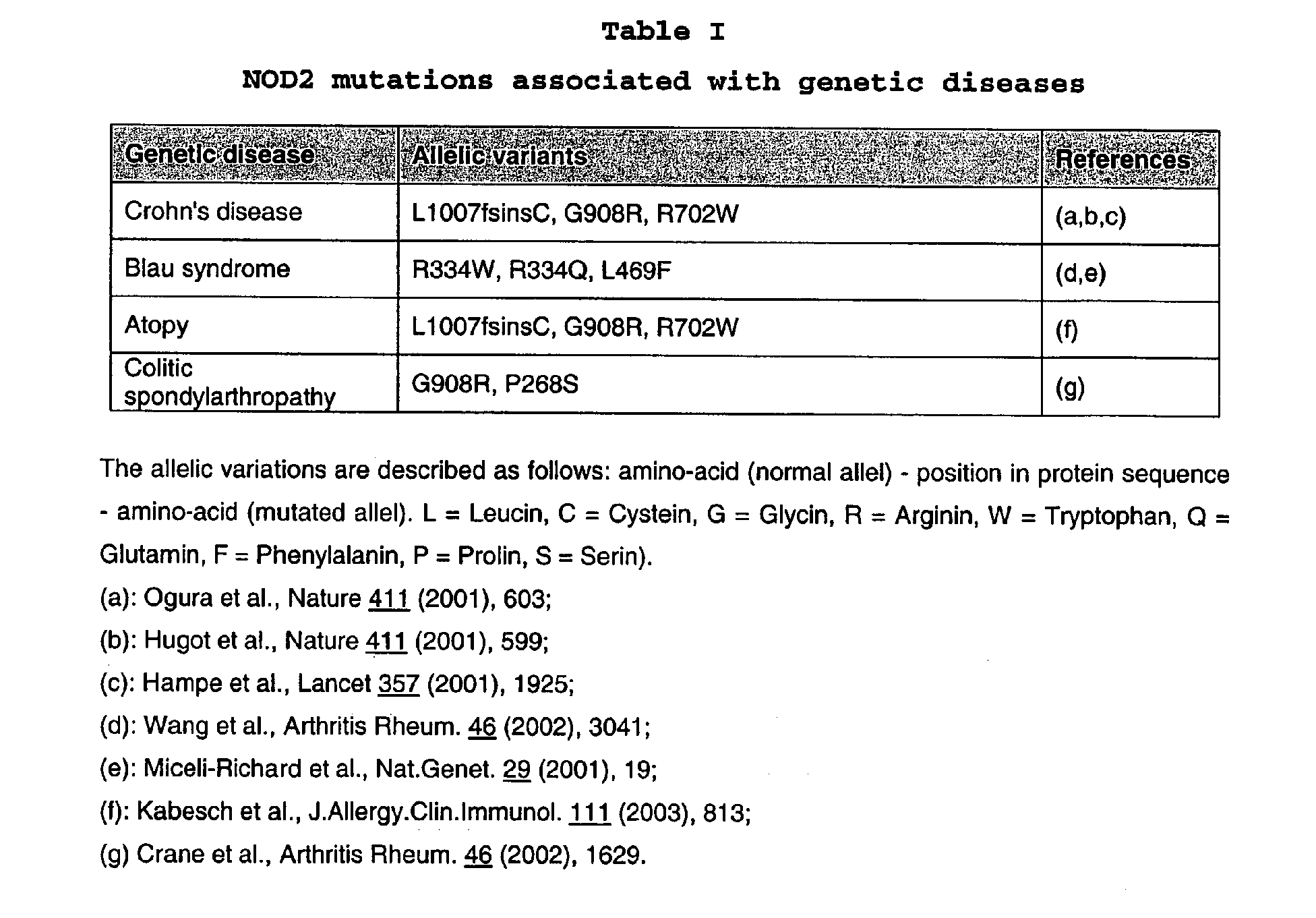
- Table I summarizes the current knowledge concerning the association of NOD2 mutations with different diseases.
- FIG. 1 Production and secretion of interleukin (IL)-8 by SW620 after 24 hours of LPS stimulation
- Figure 2 Expression of NOD2 mRNA is synergistically upregulated by co-treatment with TNF- ⁇ and IFN- ⁇
- Figure 3 The NOD2 promoter is synergistically activated by co-treatment with TNF- ⁇ and IFN- ⁇
- HeLa S3 cells were transfected with the respective reporter gene plasmid comprising the NOD2 promoter (-1316 to +51) and 24 hours were induced with the cytokines as outlined in the graph. Each experiment was performed in triplicets.
- the present invention relates to the use of interferon- ⁇ for the preparation of a pharmaceutical composition for the prevention or treatment of a disease associated with a heterocygous mutation of the NOD2 gene or decreased expression of the NOD2 gene.
- interferon- ⁇ is combined with a pharmaceutically acceptable carrier.
- a pharmaceutically acceptable carrier is meant to encompass any carrier, which does not interfere with the effectiveness of the biological activity of the active ingredient and that is not toxic to the host to which it is administered.
- suitable pharmaceutical carriers include phosphate buffered saline solutions, water, emulsions, such as oil/water emulsions, various types of wetting agents, sterile solutions etc.. Such carriers can be formulated by conventional methods and can be administered to the subject at an effective dose.
- an “effective dose” refers to an amount of the active ingredient that is sufficient to affect the course and the severity of the disease, leading to the reduction or remission of such pathology.
- an "effective dose" useful for treating and/or preventing these diseases or disorders may be determined using methods known to one skilled in the art (see for example, Fingl et al., The Pharmocological Basis of Therapeutics, Goodman and Gilman, eds. Macmillan Publishing Co., New York, pp. 1-46 ((1975)).
- Administration of the suitable compositions may be effected by different ways, e.g. by intravenous, intraperetoneal, subcutaneous, intramuscular, topical or intradermal administration.
- the route of administration depends on the kind of therapy and the kind of compound contained in the pharmaceutical composition.
- the dosage regimen will be determined by the attending physician and other clinical factors. As is well known in the medical arts, dosages for any one patient depends on many factors, including the patient's size, body surface area, age, sex, the particular compound to be administered, time and route of administration, the kind of therapy, general health and other drugs being administered concurrently.
- interferon- ⁇ of the present invention also comprises the administration of DNA sequences encoding said compound in such a form that they are expressed in the patient or a desired tissue of the patient.
- the recombinant vectors for expression of interferon- ⁇ can be constructed according to methods well known to the person skilled in the art; see, e.g., Sambrook, Molecular Cloning A Laboratory Manual, Cold Spring Harbor Laboratory (1989).
- Preferred recombinant vectors useful for gene therapy are viral vectors, e.g. adenovirus, herpes virus, vaccinia, or, more preferably, an RNA virus such as a retrovirus.
- the retroviral vector is a derivative of a murine or avian retrovirus.
- retroviral vectors which can be used in the present invention are: Moloney murine leukemia virus (MoMuLV), Harvey murine sarcoma virus (HaMuSV), murine mammary tumor virus (MuMTV) and Rous sarcoma virus (RSV).
- MoMuLV Moloney murine leukemia virus
- HaMuSV Harvey murine sarcoma virus
- MuMTV murine mammary tumor virus
- RSV Rous sarcoma virus
- a non-human primate retroviral vector is employed, such as the gibbon ape leukemia virus (GaLV), providing a broader host range compared to murine vectors. Since recombinant retroviruses are defective, assistance is required in order to produce infectious particles.
- GaLV gibbon ape leukemia virus
- helper cell lines that contain plasmids encoding all of the structural genes of the retrovirus under the control of regulatory sequences within the LTR.
- Suitable helper cell lines are well known to those skilled in the art.
- Said vectors can additionally contain a gene encoding a selectable marker so that the transduced cells can be identified.
- the retroviral vectors can be modified in such a way that they become target specific. This can be achieved, e.g., by inserting a polynucleotide encoding a sugar, a glycolipid, or a protein, preferably an antibody.
- Those skilled in the art know additional methods for generating target specific vectors. Further suitable vectors and methods for in vitro- or in vivo- gene therapy are described in the literature and are known to the persons skilled in the art; see, e.g., WO 94/29469 or WO 97/00957.
- the DNA sequence encoding interferon- ⁇ can also be operably linked to a tissue specific promoter and used for gene therapy.
- tissue specific promoters are well known to those skilled in the art (see e.g. Zimmermann et al, (1994) Neuron 12, 11-24; Vidal et al., (1990) EMBO J. 9 , 833-840; Mayford et al., (1995), Cell 81, 891-904; Pinkert et al., (1987) Genes & Dev. 1 , 268-76).
- interferon- ⁇ is used in combination with additional cytokines (e.g. interleukin-10), adhesion molecule blockers (e.g. anti- ⁇ or ⁇ -integrin, anti-ICAM-1), immunosuppressive drugs (e.g. azathioprine, methotrexate, 6-mercaptopurine) or corticosteroids.
- additional cytokines e.g. interleukin-10
- adhesion molecule blockers e.g. anti- ⁇ or ⁇ -integrin, anti-ICAM-1
- immunosuppressive drugs e.g. azathioprine, methotrexate, 6-mercaptopurine
- corticosteroids e.g. azathioprine, methotrexate, 6-mercaptopurine
- Heterocygous mutations of the NOD2 gene which can be prevented/treated by the use of interferon- ⁇ comprise the following mutations: (a) P268S, (b) N289S, (c) R334W, (d) R334Q, (e) H352R, (f) A432V, (g) L468F, (h) A471C, (i) P668L, (j) R684W, (k) R702W, (l) R703C, (m) A725G, (n) R760C, (o) R790Q, (p) G908R, (q) V955I, (r) L1007fsinsC or (s) R1019L.
- interferon- ⁇ are the treatment/prevention of an inflammatory disease, preferably Crohn's disease, atopy, spondylarthropathy, or granulomatosis, e.g., Blau syndrome, asthma or allergy, preferably atopic dermatitis or allergic rhinitis.
- an inflammatory disease preferably Crohn's disease, atopy, spondylarthropathy, or granulomatosis, e.g., Blau syndrome, asthma or allergy, preferably atopic dermatitis or allergic rhinitis.
- the expression vector for NOD2 was obtained from G.Nunez (Ann Arbor, MI, USA) (Ogura et al. 2001, J. Biol. Chem. 276, 7, 4812-18). TNF- ⁇ and IFN- ⁇ were purchased from R&D Systems (MN, USA). Purified LPS (protein content ⁇ 0.2 %) was obtained from Sigma (Deisenhofen, Germany).
- Human epithelial HeLa S3 cells (ACC 161) and intestinal epithelial HT-29 cells (ACC 299) were purchased from the German Collection of Microorganisms and Cell Cultures (DSMZ, Braunschweig, Germany). Another colonic epithelial cell line, SW620 was kindly provided by Holger Kalthoff (UKK, Kiel, Germany). All cells were cultured in RPMI + 10% fetal calf serum (FCS). One day before transfection the cells were seeded at a density of 5 x 10 5 cells/2 ml on 6-well plates.
- FCS fetal calf serum
- Transfections were performed with Polyfect TM (Qiagen, Hilden, Germany) according to the manufacturer's manual by using 1.8 ⁇ g of the target plasmid and 0.2 ⁇ g of the pRL-TK reference plasmid (Promega, CA, USA) for the reporter gene assays. 24 to 48 hours after transfection the cells were harvested and further used for protein or RNA isolation. Transfection efficiency was determined by parallel detection of pRL-TK activity in a dual luciferase reportergene assay (Promega, Madison, WI, USA). Every single transfection experiment was performed in duplicates and was repeated at least three times.
- the NOD2 promoter from -1316 to +51 was amplified from 100 ng of human genomic DNA by PCR under standard conditions with the following primers (restriction sites underlined) pNOD2_sense(KpnI) 5'-CGG GTA CCG TGA CAG TTT CAC TGG AGC-3'; pNOD2_anti( MluI ) 5'-GCA CGC GTA GAA CGC CAA AAG CC-3' and cloned into the pGL3-basic plasmid (Promega).
- the constructs were sequence-verified with an ABI3700 sequencer (ABI, Foster City, CA, USA) prior to use. All primers were purchased from Eurogentec (Liège, Belgium)
- PCR Denaturation for 5 min at 95°C; 32 cycles (costimulation TNF/IFN) or 39 cycles (kinetics/titration) of 30 sec at 95°C, 20 sec at 60°C, 90 sec at 72°C; final extension for 10 min at 72°C.
- the primers were IL-8_s 5'-ACC GGA AGG AAC CAT CTC ACT-3' and IL-8_a 5'-AAA CTT CTC CAC AAC CCT CTG C-3'.
- Luciferase activity was determined with a dual luciferase reporter gene kit (DLR) from Promega according to the manufacturer's manual. The cell lysates were analyzed with a MicroLumatPlus LB96V microplate luminometer (EG&G Berthold, Wellesley, MA, USA) after automatic injection of the necessary substrate solutions. All samples were at least measured in duplicates. The results for firefly luciferase activity were normalized to renilla luciferase activity.
- DLR dual luciferase reporter gene kit
- IL-8 was measured by enzyme linked immunosorbent assay (ELISA) (R&D Systems, MN, USA) according to the manufacturer's protocol. The results were expressed as pg cytokine/5x10 5 cells.
- Example 2 NOD2 expression enhances LPS-induced IL-8 secretion in the IEC line SW620
- SW620 cells were transfected with 2 ⁇ g of either pcDNA3-NOD2 or pcDNA3.1 (mock) as described in Example 1. 8 hours later the cells were treated with different concentrations of purified LPS (1-10 ⁇ g/ml). After 24 hours the cells and supernatants were harvested and analyzed for IL-8 mRNA by RT-PCR (Fig. 1A) and secreted IL-8 protein by ELISA (Fig. 1B). Cells transfected with pcDNA3-NOD2 showed significantly elevated levels of IL-8 mRNA when treated with LPS.
- Example 3 NOD2 mRNA and protein expression is synergistically upregulated in intestinal epithelial cell lines by TNF- ⁇ and IFN- ⁇
- Example 4 Synergistic activation of the NOD2 promoter by TNF- ⁇ and IFN- ⁇
- luciferase reporter gene construct (pGL3B-NOD2 (-1316)) driven by the NOD2 promoter was transfected into HeLa S3 cells (Figure 3).
- a 15-fold increase of luciferase activity was observed after treatment with TNF- ⁇ alone, whereas cotreatment with TNF- ⁇ and IFN- ⁇ resulted into a 30-fold elevated luciferase activity.
- This experiment clearly demonstrates that IFN- ⁇ enhances the TNF- ⁇ -induced expression of the NOD2 gene.
- Example 5 Results of the treatment of Crohn's disease patients bearing a heterocygous mutation of the NOD2 gene
- CDAI CD activity index
Landscapes
- Health & Medical Sciences (AREA)
- Life Sciences & Earth Sciences (AREA)
- Pharmacology & Pharmacy (AREA)
- Veterinary Medicine (AREA)
- Public Health (AREA)
- General Health & Medical Sciences (AREA)
- Animal Behavior & Ethology (AREA)
- Chemical & Material Sciences (AREA)
- Medicinal Chemistry (AREA)
- Chemical Kinetics & Catalysis (AREA)
- Pulmonology (AREA)
- Nuclear Medicine, Radiotherapy & Molecular Imaging (AREA)
- General Chemical & Material Sciences (AREA)
- Organic Chemistry (AREA)
- Bioinformatics & Cheminformatics (AREA)
- Engineering & Computer Science (AREA)
- Immunology (AREA)
- Pain & Pain Management (AREA)
- Rheumatology (AREA)
- Zoology (AREA)
- Gastroenterology & Hepatology (AREA)
- Proteomics, Peptides & Aminoacids (AREA)
- Epidemiology (AREA)
- Measuring Or Testing Involving Enzymes Or Micro-Organisms (AREA)
Abstract
Described is the use of IFN-γ for the preparation of a
medicament for the treatment/prevention of diseases associated
with one or more mutations affecting the NOD2 gene or its
expression, in particular diseases like asthma, allergy or
inflammatory diseases.
Description
- The present invention relates to the use of IFN-γ fo the preparation of a medicament for the treatment/prevention of diseases associated with one or more mutations affecting the NOD2 gene or its expression, in particular diseases like asthma, allergy or inflammatory diseases.
- A fundamental for the survival of multicellular organisms is the removal of infectious agents by the host. Specialized host-cell receptors that recognize molecules expressed exclusively by microorganisms are used by animals and plants for the initial detection of microbial antigenes. In animals, detection of microbial agents is mediated by the recognition of pathogen-associated molecular patterns (PAMPs) by specific host pattern-recognition receptors (PRRs). The identification and characterization of plasma membrane TOLL-LIKE RECEPTORS (TLRs) as PRRs have provided fundamental insights into the mechanisms of host defence in animals. This indicates that TLRs have a central role in mediating immune responses to bacterial pathogens. TLRs mediate the secretion of different pro-inflammatory cytokines and cell-surface molecules by activation of the transcription factor nuclear factor kappa B (NF-κB). This leads to a non-specific pathogen resistance and a specific adaptive immunity following clearence of the pathogenic invasion.
- Recently, different cytosolic systems have been identified in mammalians which represent a second frontier against invasive bacteria. However, the host factors and signalling pathways that are involved in such recognition are still poorly understood. A constantly growing group of cytosolic proteins comprising a so-called nucleotide-binding oligomerization domain (NOD) has recently been implicated to be involved in bacterial recognition, innate immunity and inflammatory responses. There is evidence that some of these proteins function as PRRs and induce signalling pathways which mediate specific answers against bacteria. More than 20 different members of the NOD family have been described by now. Most of these proteins contain three distinct functional domains, i.e. an N-terminal effector-binding domain (EBD), a central NOD and a C-terminal ligand-recognition domain (LRD). The NOD is required for self-oligomerization which is necessary for the activation of downstream effector molecules (Inohara et al., Oncogene 20 2001),6473. The EBD of NOD proteins is structurally variable and can mediate homophilic as well as non-homophilic protein interaction. Two EBDs, the caspase recruitment domain (CARD) and the pyrin domain (PYD) are involved in homophilic interactions. CARDs and PYDs are found in a large number of NOD proteins that contain C-terminal leucine-rich reapeats (LRR). These proteins build a subfamily of the NOD family called CATERPILLAR (CARD, transcription enhancer, R(purine)-binding, pyrin, lots of LRRs) and includes members such as NOD1, NOD2, IPAF (ICE-protease activating factor) and others.
- Almost all human NOD proteins, including NOD1 and NOD2, contain LRRs in their carboxyl termini (Inohara et al., J.Biol.Chem. 274 (1999), 14560; Ogura et al., J.Biol.Chem. 276 (2001), 4812; Bertin et al., J.Biol.Chem. 274 (1999), 12955) and there is evidence that the NOD proteins are negatively regulated through their LRRs. For example, mutant forms of NOD1, NOD2, IPAF and cryopyrin that lack their LRRs have enhanced ability to activate NF-κB or caspase-1 (Inohara et al., J.Biol.Chem. 274 (1999), 14560; Ogura et al., J.Biol.Chem. 276 (2001), 4812; Bertin et al., J.Biol.Chem. 274 (1999), 12955). In addition to the NOD, which mediates self-oligomerization, the amino-terminal EBDs of NOD proteins, including APAF1, CED-4, NOD1, NOD2, IPAF and cryopyrin, have an essential role in linking these proteins to downstream signalling molecules. For example, the CARD of APAF1 interacts with the CARD of pro-caspase-9, whereas the CARD of NOD1 binds to the CARD present in RICK through homophilic CARD-CARD interactions.
- Initial studies showed that transient expression of NOD1 and NOD2 by mammalian cells induces NF-κB activation. This activity was not observed with APAF1, indicating that NOD1 or NOD2 and APAF1 activate distinct signalling pathways. Mutation analyses indicated that the CARDs and the NODs of NOD1 and NOD2 were required for the induction of NF-κB whereas its LRRs were dispensable. These observations indicate that the CARDs function as effector domains for NOD1 and NOD2 signalling. Both NOD1 and NOD2 physically associate with RICK, a CARD-containing protein kinase, through homophilic CARD-CARD interactions (Inohara et al., J.Biol.Chem. 274 (1999), 14560; Ogura et al., J.Biol.Chem. 276 (2001), 4812; Bertin et al., J.Biol.Chem. 274 (1999), 12955). A role for RICK in NOD1 and NOD2 signalling is supported by several studies. NOD1 and NOD2 do not activate NF-κB expressed by mouse embryo fibroblasts derived from mice that are deficient in RICK, but NF-κB activity is restored after exogenous addition of RICK. An intermediate region that is located between the CARD and the kinase domain of RICK interacts with IκB kinase (IKK)γ, the regulatory subunit of the IKK complex, thereby linking NOD1 and presumably NOD2 to the IKK. In addition to NF-κB, NOD1 has been reported to activate c-JUN N-terminal kinase (JNK) in response to bacteria.
- In addition many NOD proteins, including NOD1, NOD2, IPAF and DEFCAP, promote the activation of caspases. For example, NOD1 promotes activation of caspase-1 in transient overexpression studies (Yoo et al., Biochem.Biophys.Res.Commun. 299 (2002), 652).
- Whereas plant R proteins recognize distinct effector molecules from pathogenic bacteria, human TLRs and NOD proteins seem to recognize conserved structures that are shared by many pathogens. NOD1 and NOD2 have been shown to recognize bacterial lipopolysaccharide (LPS) and/or peptidoglycan through their carboxy-terminal LRRs. Peptidoglycan is responsible for providing shape and mechanical rigidity to bacteria. A role for NOD2 in adaptive immune responses is indicated by the observation that MDP functions as an adjuvant for antigen-specific T-cell responses and antibody production. In addition to TNF-α and IL-1β, muramyl dipeptide (MDP) can also induce the secretion of various cytokines, including IL-6 and IL-12, by monocytes and dendritic cells, as well as the expression of membrane-bound co-stimulatory molecules, which promote the differentiation of naive T cells into effector T cells. This indicates that NOD2, which is expressed by monocytes and dendritic cells, has a role in linking innate and adaptive immune responses in a similar manner to that reported for TLRs. MDP synergizes with LPS in the production of cytokines, indicating that TLRs and NOD proteins cooperate in immune responses against bacteria.
- Mutations in NOD2 and CIAS1 (the gene that encodes cryopyrin) have been implicated in several autoinflammatory diseases. A frameshift mutation caused by a cytosine insertion that results in an amino acid substitution at position 1007 and a premature stop codon (Leu1007fsinsC) and two missense mutations (Gly908Arg and Arg702Trp) in NOD2 are associated with Crohn's disease, a common inflammatory disease of the intestinal tract (Ogura et al., Nature 411 (2001), 603; Hugot et al., Nature 411 (2001), 599; Hampe et al., Lancet 357 (2001), 1925). Importantly, having one copy of the mutated alleles confers a 2-4-fold increased risk of developing Crohn's disease, whereas homozygocity or compound heterozygocity for NOD2 mutations increases the risk 20-40-fold (Ogura et al., Nature 411 (2001), 603; Hugot et al., Nature 411 (2001), 599; Hampe et al., Lancet 357 (2001), 1925) indicating that lack of NOD2 function is important for disease development. Notably, all three Crohn's disease-associated mutations result in proteins that are defective in the induction of peptidoglycan- and MDP-mediated NF-κB activation. Moreover, activation of NF-κB that is induced by MDP is absent in mononuclear cells from patients with Crohn's disease that are homozygous for the Leu1007fsinsC mutation. The mechanism by which NOD2 mutations increase the susceptibility to Crohn's disease is at present not understood. The observation that the response to bacterial components is impaired in Crohn's disease-associated NOD2 variants indicates that a deficit in sensing bacteria might trigger, secondarily, diffuse activation of NF-κB and inflammation in intestinal tissue through NOD2-independent mechanisms. Alternatively, deficient NOD2 signalling might lead to the inappropriate induction of co-stimulatory signals for T cells and result in the development of inflammatory disease.
- The allele frequencies of the three most important mutations of the NOD2 gene in European CD cohorts have been determined as follows: R702W (SNP8): 11%; G908R (SNP12): 6%; Leu1007finsC (SNP13): 12% (Hugot et al., Nature 411 (2001),.599). This means that in total only nearly 30% of all registered CD cases in Europe could be explained by the occurence of one (or more) mutation(s) of the NOD2 gene. Genomewide linkage studies in the past have shown that beside the IBD1 locus on chromosome 16q12 which contains the NOD2 gene also other loci are in high linkage to CD, i.e. IBD2 (Chr 12q13), IBD3 (Chr 6q13), IBD4 (14q11), IBD5 (5q31-33) and IBD6 (19q13) (29-32). However, a second disease gene which is located within this susceptibility regions was not identified until now.
- Meanwhile also other diseases have been shown to be associated with one or more polymorphisms of the NOD2 gene. A large population of German schoolchildren (N = 1872) from East and West Germany was genotyped for 3 functional relevant CARD15 polymorphisms for their role in the development of asthma and allergy (Kabesch et al., J. Allergy Clin. Immunol. 111 (2003), 813). Children with the polymorphic allele C2722 had a more than 3-fold risk to develop allergic rhinitis (P <.001) and an almost 2-fold risk for atopic dermatitis (P <.05). Furthermore, the T2104 allele was associated with an almost 2-fold risk for allergic rhinitis (P <.05). When a C insertion at position 3020 was present, the risk of atopy increased by 50% (P <.05) and serum IgE levels were elevated (P <.01). These results indicate that the shared genetic background between Crohn's disease and atopy may impair the recognition of microbial exposures which results in an insufficient downregulation of excessive immune responses, giving rise to either TH2 dominated allergies or
T H1 related Crohn's disease. - Crane et al. (Arthritis Rheum 46 (2002), 1629) demonstrated that spondylarthritis in patients with ulcerative colitis (n = 119) (P = 0.016, odds ratio 4.6) was associated with the Gly908Arg polymorphism in the NOD2 gene. This association was not found in a cohort of 78 Crohn's disease patients. The Pro268Ser variant of NOD2 was inversely associated with UC spondylarthritis. The entire study indicates that NOD2 variants may influence the susceptibility to, and manifestation of, colitis spondylarthritis.
- Wang et al. (Arthritis Rheum. 46 (2002), 3041) analyzed CARD15 gene in 10 families with heritable multi-organ granulomatoses, including the original Blau syndrome kindred as well as other families with related granulomatous conditions. These studies resulted in the identification, in 5 of the families, of 2 sequence variants at position 334 of the gene product (R334W and R334Q). Affected family members from the original Blau syndrome kindred were heterozygous for the R334W missense mutation; mutations at the same position were also observed in several unrelated Blau syndrome families, some of whose phenotypes included large-vessel arteritis and cranial neuropathy. The missense mutations segregated with the disease phenotype in the families, and were not seen in 208 control alleles. The results demonstrate that NOD2 is an important susceptibility gene for Blau syndrome and for other granulomatoses that display phenotypic traits beyond those of classic Blau syndrome.
- Table I summarizes the current knowledge concerning the association of NOD2 mutations with different diseases.
- Unfortunately, so far the therapy of NOD2 associated diseases like CD is quite unsatisfactory. Standard immunosuppressive medication with glucocorticoids renders 40% of the patients non-responsive and 30-40% become steroid-dependent. Even second (e.g. azathioprine) and third line (e.g. infliximab) therapies can only improve 30-40% of the treated patients. No therapy is presently known that specifically addresses NOD2 variant patients. Thus, the technical problem underlying the present invention was to provide means suitable for treating or preventing diseases associated with malfunction of the NOD2 gene and thereby targeting a specific therapy to a defined subgroup of patients.
- The solution of the said technical problem is achieved by providing the embodiments characterized in the claims. During the experiments leading to the present invention it was found that IFN-γ, preferably in combination with TNF-α, activates the promoter of the NOD2 gene. It could be, furthermore, shown that the treatment of patients bearing a heterocygous mutation of the NOD2 gene (i.e. CD patients) with IFN-γ has a beneficial therapeutic effect, presumably due to the enhanced expression of the unaffected NOD2 allele of the patient: Within one weak of treatment a complete remission was achieved.
- Cells were transfected with 2 µg of either an expression plasmid containing NOD2 (pcDNA3-NOD2) or the appropriate vector control. 8h after transfection, cells were stimulated with LPS. (A) 24h post-stimulation mRNA levels for the chemotactic cytokine IL-8 were determined by RT-PCR. Parallel β-actin amplification served as loading control. (B) Secretion of IL-8 was detected by ELISA. Values are expressed as mean ± SEM.
- Stimulation of HT-29 or HeLa S3 cells for 20 h with TNF-α (10 ng/ml) and/or IFN-γ (1000 U/ml). β-actin was amplified in parallel in all experiments from the same RNA samples and analyzed on a separate gel (lower panel). The histograms represent means of the densitometrical analysis.
- HeLa S3 cells were transfected with the respective reporter gene plasmid comprising the NOD2 promoter (-1316 to +51) and 24 hours were induced with the cytokines as outlined in the graph. Each experiment was performed in triplicets.
- Thus, the present invention relates to the use of interferon-γ for the preparation of a pharmaceutical composition for the prevention or treatment of a disease associated with a heterocygous mutation of the NOD2 gene or decreased expression of the NOD2 gene.
- Preferably, in said pharmaceutical composition, interferon-γ is combined with a pharmaceutically acceptable carrier. "Pharmaceutically acceptable" is meant to encompass any carrier, which does not interfere with the effectiveness of the biological activity of the active ingredient and that is not toxic to the host to which it is administered. Examples of suitable pharmaceutical carriers are well known in the art and include phosphate buffered saline solutions, water, emulsions, such as oil/water emulsions, various types of wetting agents, sterile solutions etc.. Such carriers can be formulated by conventional methods and can be administered to the subject at an effective dose.
- An "effective dose" refers to an amount of the active ingredient that is sufficient to affect the course and the severity of the disease, leading to the reduction or remission of such pathology.
- An "effective dose" useful for treating and/or preventing these diseases or disorders may be determined using methods known to one skilled in the art (see for example, Fingl et al., The Pharmocological Basis of Therapeutics, Goodman and Gilman, eds. Macmillan Publishing Co., New York, pp. 1-46 ((1975)).
- Administration of the suitable compositions may be effected by different ways, e.g. by intravenous, intraperetoneal, subcutaneous, intramuscular, topical or intradermal administration. The route of administration, of course, depends on the kind of therapy and the kind of compound contained in the pharmaceutical composition. The dosage regimen will be determined by the attending physician and other clinical factors. As is well known in the medical arts, dosages for any one patient depends on many factors, including the patient's size, body surface area, age, sex, the particular compound to be administered, time and route of administration, the kind of therapy, general health and other drugs being administered concurrently.
- The use of interferon-γ of the present invention also comprises the administration of DNA sequences encoding said compound in such a form that they are expressed in the patient or a desired tissue of the patient.
- The recombinant vectors for expression of interferon-γ can be constructed according to methods well known to the person skilled in the art; see, e.g., Sambrook, Molecular Cloning A Laboratory Manual, Cold Spring Harbor Laboratory (1989). Preferred recombinant vectors useful for gene therapy are viral vectors, e.g. adenovirus, herpes virus, vaccinia, or, more preferably, an RNA virus such as a retrovirus. Even more preferably, the retroviral vector is a derivative of a murine or avian retrovirus. Examples of such retroviral vectors which can be used in the present invention are: Moloney murine leukemia virus (MoMuLV), Harvey murine sarcoma virus (HaMuSV), murine mammary tumor virus (MuMTV) and Rous sarcoma virus (RSV). Most preferably, a non-human primate retroviral vector is employed, such as the gibbon ape leukemia virus (GaLV), providing a broader host range compared to murine vectors. Since recombinant retroviruses are defective, assistance is required in order to produce infectious particles. Such assistance can be provided, e.g., by using helper cell lines that contain plasmids encoding all of the structural genes of the retrovirus under the control of regulatory sequences within the LTR. Suitable helper cell lines are well known to those skilled in the art. Said vectors can additionally contain a gene encoding a selectable marker so that the transduced cells can be identified. Moreover, the retroviral vectors can be modified in such a way that they become target specific. This can be achieved, e.g., by inserting a polynucleotide encoding a sugar, a glycolipid, or a protein, preferably an antibody. Those skilled in the art know additional methods for generating target specific vectors. Further suitable vectors and methods for in vitro- or in vivo- gene therapy are described in the literature and are known to the persons skilled in the art; see, e.g., WO 94/29469 or WO 97/00957.
- In order to achieve expression only in the target organ, the DNA sequence encoding interferon-γ can also be operably linked to a tissue specific promoter and used for gene therapy. Such promoters are well known to those skilled in the art (see e.g. Zimmermann et al, (1994) Neuron 12, 11-24; Vidal et al., (1990) EMBO J. 9, 833-840; Mayford et al., (1995), Cell 81, 891-904; Pinkert et al., (1987) Genes & Dev. 1, 268-76).
- Preferably, interferon-γ is used in combination with additional cytokines (e.g. interleukin-10), adhesion molecule blockers (e.g. anti-α or β-integrin, anti-ICAM-1), immunosuppressive drugs (e.g. azathioprine, methotrexate, 6-mercaptopurine) or corticosteroids. Due to the specific interaction between interferon-γ and TNF-α, it may be necessary to co-administrate recombinant TNF-α, a substance that would not be normally used in inflammatory conditions.
- Heterocygous mutations of the NOD2 gene which can be prevented/treated by the use of interferon-γ comprise the following mutations: (a) P268S, (b) N289S, (c) R334W, (d) R334Q, (e) H352R, (f) A432V, (g) L468F, (h) A471C, (i) P668L, (j) R684W, (k) R702W, (l) R703C, (m) A725G, (n) R760C, (o) R790Q, (p) G908R, (q) V955I, (r) L1007fsinsC or (s) R1019L.
- Preferred medical uses of interferon-γ are the treatment/prevention of an inflammatory disease, preferably Crohn's disease, atopy, spondylarthropathy, or granulomatosis, e.g., Blau syndrome, asthma or allergy, preferably atopic dermatitis or allergic rhinitis.
- The below examples explain the invention in more detail.
- The expression vector for NOD2 (pcDNA3-NOD2) was obtained from G.Nunez (Ann Arbor, MI, USA) (Ogura et al. 2001, J. Biol. Chem. 276, 7, 4812-18). TNF-α and IFN-γ were purchased from R&D Systems (MN, USA). Purified LPS (protein content <0.2 %) was obtained from Sigma (Deisenhofen, Germany).
- Human epithelial HeLa S3 cells (ACC 161) and intestinal epithelial HT-29 cells (ACC 299) were purchased from the German Collection of Microorganisms and Cell Cultures (DSMZ, Braunschweig, Germany). Another colonic epithelial cell line, SW620 was kindly provided by Holger Kalthoff (UKK, Kiel, Germany). All cells were cultured in RPMI + 10% fetal calf serum (FCS). One day before transfection the cells were seeded at a density of 5 x 10⁵ cells/2 ml on 6-well plates. Transfections were performed with PolyfectTM (Qiagen, Hilden, Germany) according to the manufacturer's manual by using 1.8 µg of the target plasmid and 0.2 µg of the pRL-TK reference plasmid (Promega, CA, USA) for the reporter gene assays. 24 to 48 hours after transfection the cells were harvested and further used for protein or RNA isolation. Transfection efficiency was determined by parallel detection of pRL-TK activity in a dual luciferase reportergene assay (Promega, Madison, WI, USA). Every single transfection experiment was performed in duplicates and was repeated at least three times.
- The NOD2 promoter from -1316 to +51 was amplified from 100 ng of human genomic DNA by PCR under standard conditions with the following primers (restriction sites underlined) pNOD2_sense(KpnI) 5'-CGG GTA CCG TGA CAG TTT CAC TGG AGC-3'; pNOD2_anti(MluI) 5'-GCA CGC GTA GAA CGC CAA AAG CC-3' and cloned into the pGL3-basic plasmid (Promega). The constructs were sequence-verified with an ABI3700 sequencer (ABI, Foster City, CA, USA) prior to use. All primers were purchased from Eurogentec (Liège, Belgium)
- Total RNA was isolated using the RNeasy kit from Qiagen. 500 ng of total RNA were reverse transcribed as described by Seegert et al., GUT 48 (2001), 326. NOD2-specific primers for PCR: NOD2_sense 5'-CGT TCT GCA CAA GGC CTA CC-3'; NOD2_anti 5'-TCC ATT CGC TTT CAC CGT G-3'. Expected amplicon length: 642 bp. PCR: Denaturation for 5 min at 95°C; 32 cycles (costimulation TNF/IFN) or 39 cycles (kinetics/titration) of 30 sec at 95°C, 20 sec at 60°C, 90 sec at 72°C; final extension for 10 min at 72°C. For IL-8 experiments, the primers were IL-8_s 5'-ACC GGA AGG AAC CAT CTC ACT-3' and IL-8_a 5'-AAA CTT CTC CAC AAC CCT CTG C-3'. To confirm the use of equal amounts of RNA in each experiment all samples were checked in parallel for β-actin mRNA expression. All amplified DNA fragments were analyzed on 1% agarose gels and subsequently documented by a BioDoc Analyzer (Biometra, Göttingen, Germany).
- Luciferase activity was determined with a dual luciferase reporter gene kit (DLR) from Promega according to the manufacturer's manual. The cell lysates were analyzed with a MicroLumatPlus LB96V microplate luminometer (EG&G Berthold, Wellesley, MA, USA) after automatic injection of the necessary substrate solutions. All samples were at least measured in duplicates. The results for firefly luciferase activity were normalized to renilla luciferase activity.
- Western blots were performed as previously described (Waetzig et al., J. Immunol. 168 (2002), 5342). 10 µg of total protein were separated by SDS polyacrylamide gel electrophoresis and transferred to PVDF membrane by standard techniques. NOD2 was detected with an anti-NOD2 antibody (Cayman Chemical Company, Ann Arbor, Michigan, USA) in a dilution of 1:500, which is identical to the antibody used in earlier publications.
- Supernatants of IEC cultures transfected with 500 ng of pcDNA3 vector control or pcDNA3NOD2wt vector were collected after 24 hours with or without stimulation with LPS (1-10 µg/ml). IL-8 was measured by enzyme linked immunosorbent assay (ELISA) (R&D Systems, MN, USA) according to the manufacturer's protocol. The results were expressed as pg cytokine/5x105 cells.
- To determine the impact of NOD2 overexpression in epithelial cells, SW620 cells were transfected with 2 µg of either pcDNA3-NOD2 or pcDNA3.1 (mock) as described in Example 1. 8 hours later the cells were treated with different concentrations of purified LPS (1-10 µg/ml). After 24 hours the cells and supernatants were harvested and analyzed for IL-8 mRNA by RT-PCR (Fig. 1A) and secreted IL-8 protein by ELISA (Fig. 1B). Cells transfected with pcDNA3-NOD2 showed significantly elevated levels of IL-8 mRNA when treated with LPS. A dose-dependent increase of secreted IL-8 protein after LPS-stimulation could be detected only in the supernatants of pcDNA3-NOD2 transfected cells. This experiment demonstrates the beneficial role of NOD2 upregulation during bacterial infections. It has also been shown elsewhere that the load of viable intracellular bacteria after S. typhimurium infection of Caco2 was significantly higher in cells lacking the NOD2 wildtype protein or cells expressing a mutated NOD2 variant as compared to cells expressing wildtype NOD2.
- A synergistic upregulation of NOD2 expression effect was seen after co-treatment of HT-29 or HeLa S3 cells with a combination of TNF-α (5 ng/ml) and IFN-γ (1000 U/ml) (Fig. 2A). In untreated cells the amount of NOD2 transcripts was low, IFN-γ alone led to no appreciable increase of NOD2 mRNA expression. The use of equal amounts of total RNA in each experiment was documented by parallel amplification of β-actin mRNA (lower panels). The densitometrical analysis of the bands is represented by the histograms below.
- A luciferase reporter gene construct (pGL3B-NOD2 (-1316)) driven by the NOD2 promoter was transfected into HeLa S3 cells (Figure 3). A 15-fold increase of luciferase activity was observed after treatment with TNF-α alone, whereas cotreatment with TNF-α and IFN-γ resulted into a 30-fold elevated luciferase activity. This experiment clearly demonstrates that IFN-γ enhances the TNF-α-induced expression of the NOD2 gene.
- The intention of this experiment was to demonstrate that treatment of Crohn's disease patients bearing a heterocygous mutation of the NOD2 gene has a beneficial therapeutic effect. Based on the experiments shown before the idea of this study was to enhance the expression of the unaffected NOD2 allele of the patient by treatment with IFN-γ. Because Crohn's disease patients are known to express significantly high amounts of TNF-α (and other inflammatory cytokines) application of additional IFN-γ might result in a collaborative induction of the NOD2 gene.
Patient K. P., female, 40 years, 42 kg, 165 cm Diagnosis Steroid refractory Crohn' disease with heterocygous L1007fsinsC mutation of the NOD2 gene. Substance Human IFN-γ Application method Subcutaneous Therapy scheme 3 times a week, 1.5 µg IFN-γ per kg body weight - A complete remission was reached within 1 week of treatment with a significant reduction of the CD activity index (CDAI) from 270 to < 120 (The CDAI is comprising several disease specific parameters, e.g. number of stools, body weight, abdominal pain, endoscopic appearance (Best et al., Gastroenterology 70 (1976), 439. The higher the CDAI the pronounced the inflammation grade. A remission is defined by a CDAI < 150, a severe inflammation > 250.)
Claims (8)
- Use of interferon-γ for the preparation of a pharmaceutical composition for the prevention or treatment of a disease associated with a heterocygous mutation of the NOD2 gene or decreased expression of the NOD2 gene.
- Use according to claim 1, wherein additionally a cytokine, immunosuppressive drug or corticosteroid is used.
- Use according to claim 2, wherein the additional cytokine is TNF-α.
- Use according to any one of claims 1 to 3, wherein the NOD2 gene carries one or more of the following mutations: (a) P268S, (b) N289S, (c) R334W, (d) R334Q, (e) H352R, (f) A432V, (g) L468F, (h) A471C, (i) P668L, (j) R684W, (k) R702W, (l) R703C, (m) A725G, (n) R760C, (o) R790Q, (p) G908R, (q) V955I, (r) L1007fsinsC or (s) R1019L.
- Use according to any one of claims 1 to 4, wherein said disease is an inflammatory disease, asthma or allergy.
- Use according to claim 5, wherein said inflammatory disease is Crohn's disease, atopy, spondylarthropathy, or granulomatosis.
- Use according to claim 5, wherein said allergy is atopic dermatitis or allergic rhinitis.
- Use according to claim 6, wherein said granulomatosis is Blau syndrome.
Priority Applications (2)
| Application Number | Priority Date | Filing Date | Title |
|---|---|---|---|
| EP03021005A EP1516627A1 (en) | 2003-09-17 | 2003-09-17 | Interferon-Gamma for the treatment of diseases associated with the NOD2 gene |
| PCT/EP2004/010480 WO2005025608A1 (en) | 2003-09-17 | 2004-09-17 | Ifn-ϝ for treatment of diseases associated with malfunction of the nod2 gene |
Applications Claiming Priority (1)
| Application Number | Priority Date | Filing Date | Title |
|---|---|---|---|
| EP03021005A EP1516627A1 (en) | 2003-09-17 | 2003-09-17 | Interferon-Gamma for the treatment of diseases associated with the NOD2 gene |
Publications (1)
| Publication Number | Publication Date |
|---|---|
| EP1516627A1 true EP1516627A1 (en) | 2005-03-23 |
Family
ID=34178423
Family Applications (1)
| Application Number | Title | Priority Date | Filing Date |
|---|---|---|---|
| EP03021005A Withdrawn EP1516627A1 (en) | 2003-09-17 | 2003-09-17 | Interferon-Gamma for the treatment of diseases associated with the NOD2 gene |
Country Status (2)
| Country | Link |
|---|---|
| EP (1) | EP1516627A1 (en) |
| WO (1) | WO2005025608A1 (en) |
Citations (8)
| Publication number | Priority date | Publication date | Assignee | Title |
|---|---|---|---|---|
| DE3608608A1 (en) * | 1985-06-18 | 1986-12-18 | Bioferon biochemische Substanzen GmbH & Co, 7958 Laupheim | Use of interferon-gamma (IFN-gamma) containing preparations for the systemic treatment of autoimmune diseases, viral diseases and malignant diseases in humans in low dosage |
| US5122372A (en) * | 1985-09-09 | 1992-06-16 | Biogen, Inc. | Process for treatment of allergies |
| US5200177A (en) * | 1989-12-01 | 1993-04-06 | The Children's Medical Center Corporation | Treatment of atopic disorders with gamma-interferon |
| WO1994026302A1 (en) * | 1993-05-12 | 1994-11-24 | Genentech, Inc. | Stable liquid compositions of gamma interferon |
| WO2001023006A1 (en) * | 1999-09-28 | 2001-04-05 | Amarillo Biosciences, Inc. | Low dose ifn-gamma for treatment of disease |
| WO2001034180A2 (en) * | 1999-11-10 | 2001-05-17 | Mondobiotech Sa | Interferon gamma for the treatment of asthma |
| WO2002069996A1 (en) * | 2001-03-02 | 2002-09-12 | Lovelace Respiratory Research Institute | Induced metaplastic mucous cell apoptosis |
| WO2003024387A2 (en) * | 2001-09-17 | 2003-03-27 | Yeda Research And Development Co. Ltd. | Method and pharmaceutical composition for treating inflammation |
-
2003
- 2003-09-17 EP EP03021005A patent/EP1516627A1/en not_active Withdrawn
-
2004
- 2004-09-17 WO PCT/EP2004/010480 patent/WO2005025608A1/en not_active Ceased
Patent Citations (8)
| Publication number | Priority date | Publication date | Assignee | Title |
|---|---|---|---|---|
| DE3608608A1 (en) * | 1985-06-18 | 1986-12-18 | Bioferon biochemische Substanzen GmbH & Co, 7958 Laupheim | Use of interferon-gamma (IFN-gamma) containing preparations for the systemic treatment of autoimmune diseases, viral diseases and malignant diseases in humans in low dosage |
| US5122372A (en) * | 1985-09-09 | 1992-06-16 | Biogen, Inc. | Process for treatment of allergies |
| US5200177A (en) * | 1989-12-01 | 1993-04-06 | The Children's Medical Center Corporation | Treatment of atopic disorders with gamma-interferon |
| WO1994026302A1 (en) * | 1993-05-12 | 1994-11-24 | Genentech, Inc. | Stable liquid compositions of gamma interferon |
| WO2001023006A1 (en) * | 1999-09-28 | 2001-04-05 | Amarillo Biosciences, Inc. | Low dose ifn-gamma for treatment of disease |
| WO2001034180A2 (en) * | 1999-11-10 | 2001-05-17 | Mondobiotech Sa | Interferon gamma for the treatment of asthma |
| WO2002069996A1 (en) * | 2001-03-02 | 2002-09-12 | Lovelace Respiratory Research Institute | Induced metaplastic mucous cell apoptosis |
| WO2003024387A2 (en) * | 2001-09-17 | 2003-03-27 | Yeda Research And Development Co. Ltd. | Method and pharmaceutical composition for treating inflammation |
Non-Patent Citations (2)
| Title |
|---|
| BOUMA G ET AL: "The immunological and genetic basis of inflammatory bowel disease", NATURE REVIEWS IMMUNOLOGY, (JUL 2003) VOL. 3, NO. 7, PP. 521-533. PUBLISHER: NATURE PUBLISHING GROUP, MACMILLAN BUILDING, 4 CRINAN ST, LONDON N1 9XW, ENGLAND. ISSN: 1474-1733., NIAID, Mucosal Immun Sect, NIH, Clin Invest Lab, 10 Ctr Dr, Room 11N238, Bethesda, MD 20892 USA (Reprint);NIAID, Mucosal Immun Sect, NIH, Clin Invest Lab, Bethesda, MD 20892 USA; Vrije Univ Amsterdam,, XP009022981 * |
| ROSENSTIEL P ET AL: "TNF-alpha and IFN - gamma regulate the expression of the NOD2 (CARD15) gene in human intestinal epithelial cells", GASTROENTEROLOGY, (APR 2003) VOL. 124, NO. 4, PP. 1001-1009. PUBLISHER: W B SAUNDERS CO, INDEPENDENCE SQUARE WEST CURTIS CENTER, STE 300, PHILADELPHIA, PA 19106-3399 USA. ISSN: 0016-5085., Conaris Res Inst AG, Schauenburgerstr 116, D-24118 Kiel, Germany (Reprint);Conaris Res Inst AG, D-24118 Kiel, Germany; Univ Kiel, Dept Med 1, Kiel, Germany; Univ Roma Tor Vergata, Rome, Italy, XP009022988 * |
Also Published As
| Publication number | Publication date |
|---|---|
| WO2005025608A1 (en) | 2005-03-24 |
Similar Documents
| Publication | Publication Date | Title |
|---|---|---|
| Gigon et al. | Eosinophils from A to Z | |
| Matucci et al. | Eosinophils, the IL-5/IL-5Rα axis, and the biologic effects of benralizumab in severe asthma | |
| Du et al. | Mechanism of inhibition of LPS-induced IL-12p40 production by IL-10 and TGF-β in ANA-1 cells | |
| Wolk et al. | Biology of interleukin-22 | |
| Uezu et al. | Accumulation of γδ T cells in the lungs and their regulatory roles in Th1 response and host defense against pulmonary infection with Cryptococcus neoformans | |
| Miossec et al. | Targeting IL-17 and TH17 cells in chronic inflammation | |
| Hart et al. | Regulation of surface and soluble TNF receptor expression on human monocytes and synovial fluid macrophages by IL-4 and IL-10 | |
| Liu et al. | Expression of type II nitric oxide synthase in primary human astrocytes and microglia: role of IL-1beta and IL-1 receptor antagonist | |
| Andoh et al. | Mucosal cytokine network in inflammatory bowel disease | |
| Martinez et al. | Regulation and function of proinflammatory TH17 cells | |
| Hu et al. | IL-17RC is required for IL-17A–and IL-17F–dependent signaling and the pathogenesis of experimental autoimmune encephalomyelitis | |
| Numasaki et al. | IL-28 elicits antitumor responses against murine fibrosarcoma | |
| Cannetti et al. | IL-18 enhances collagen-induced arthritis by recruiting neutrophils via TNF-α and leukotriene B4 | |
| JP5766124B2 (en) | Compositions and methods for the treatment of inflammatory and autoimmune diseases | |
| Cheung et al. | Accessory protein-like is essential for IL-18-mediated signaling | |
| Komai-Koma et al. | Chemoattraction of human T cells by IL-18 | |
| Martinet et al. | Differential expression of the tumor necrosis factor/cachectin gene by blood and lung mononuclear phagocytes | |
| Suzuki et al. | IL-1 receptor-associated kinase 4 is essential for IL-18-mediated NK and Th1 cell responses | |
| Nakamura et al. | Tyk2-signaling plays an important role in host defense against Escherichia coli through IL-23-induced IL-17 production by γδ T cells | |
| Noma et al. | Mendelian susceptibility to mycobacterial diseases: state of the art | |
| JP2022519829A (en) | Microenvironmental sensor for regulating recombinant gene expression | |
| Tan et al. | IL-17 receptor knockout mice have enhanced myelotoxicity and impaired hemopoietic recovery following gamma irradiation | |
| Thomas et al. | The TNF family member TL1A induces IL-22 secretion in committed human Th17 cells via IL-9 induction | |
| Amo-Aparicio et al. | Extracellular and nuclear roles of IL-37 after spinal cord injury | |
| Nobel et al. | STAT signaling in the intestine |
Legal Events
| Date | Code | Title | Description |
|---|---|---|---|
| PUAI | Public reference made under article 153(3) epc to a published international application that has entered the european phase |
Free format text: ORIGINAL CODE: 0009012 |
|
| AK | Designated contracting states |
Kind code of ref document: A1 Designated state(s): AT BE BG CH CY CZ DE DK EE ES FI FR GB GR HU IE IT LI LU MC NL PT RO SE SI SK TR |
|
| AX | Request for extension of the european patent |
Extension state: AL LT LV MK |
|
| AKX | Designation fees paid | ||
| REG | Reference to a national code |
Ref country code: DE Ref legal event code: 8566 |
|
| STAA | Information on the status of an ep patent application or granted ep patent |
Free format text: STATUS: THE APPLICATION IS DEEMED TO BE WITHDRAWN |
|
| 18D | Application deemed to be withdrawn |
Effective date: 20050924 |