EP1392846B1 - METHODS AND COMPOSITIONS FOR MODIFYING APOLIPOPROTEIN B mRNA EDITING - Google Patents
METHODS AND COMPOSITIONS FOR MODIFYING APOLIPOPROTEIN B mRNA EDITING Download PDFInfo
- Publication number
- EP1392846B1 EP1392846B1 EP02731102A EP02731102A EP1392846B1 EP 1392846 B1 EP1392846 B1 EP 1392846B1 EP 02731102 A EP02731102 A EP 02731102A EP 02731102 A EP02731102 A EP 02731102A EP 1392846 B1 EP1392846 B1 EP 1392846B1
- Authority
- EP
- European Patent Office
- Prior art keywords
- chimeric protein
- protein
- apolipoprotein
- cells
- seq
- Prior art date
- Legal status (The legal status is an assumption and is not a legal conclusion. Google has not performed a legal analysis and makes no representation as to the accuracy of the status listed.)
- Expired - Lifetime
Links
- 101710095342 Apolipoprotein B Proteins 0.000 title claims abstract description 146
- 102100040202 Apolipoprotein B-100 Human genes 0.000 title claims abstract description 146
- 108020004999 messenger RNA Proteins 0.000 title claims abstract description 94
- 239000000203 mixture Substances 0.000 title claims description 35
- 238000000034 method Methods 0.000 title abstract description 18
- 108020001507 fusion proteins Proteins 0.000 claims abstract description 211
- 102000037865 fusion proteins Human genes 0.000 claims abstract description 210
- 108090000623 proteins and genes Proteins 0.000 claims abstract description 189
- 102000004169 proteins and genes Human genes 0.000 claims abstract description 156
- 108010079649 APOBEC-1 Deaminase Proteins 0.000 claims abstract description 122
- 102000012758 APOBEC-1 Deaminase Human genes 0.000 claims abstract description 121
- 238000010361 transduction Methods 0.000 claims abstract description 75
- 230000026683 transduction Effects 0.000 claims abstract description 75
- 230000017156 mRNA modification Effects 0.000 claims abstract description 69
- 102000004196 processed proteins & peptides Human genes 0.000 claims abstract description 58
- 108090000765 processed proteins & peptides Proteins 0.000 claims abstract description 58
- 229920001184 polypeptide Polymers 0.000 claims abstract description 57
- 239000002502 liposome Substances 0.000 claims abstract description 49
- 239000012634 fragment Substances 0.000 claims abstract description 45
- 210000002966 serum Anatomy 0.000 claims abstract description 37
- 208000037265 diseases, disorders, signs and symptoms Diseases 0.000 claims abstract description 22
- 239000002353 niosome Substances 0.000 claims abstract description 22
- 230000000923 atherogenic effect Effects 0.000 claims abstract description 17
- 238000001727 in vivo Methods 0.000 claims abstract description 16
- 201000010099 disease Diseases 0.000 claims abstract description 13
- 208000035475 disorder Diseases 0.000 claims abstract description 9
- 210000004027 cell Anatomy 0.000 claims description 173
- 108020004414 DNA Proteins 0.000 claims description 53
- 108050005774 APOBEC1 complementation factor Proteins 0.000 claims description 33
- 102000017509 APOBEC1 complementation factor Human genes 0.000 claims description 32
- 101710154606 Hemagglutinin Proteins 0.000 claims description 22
- 101710093908 Outer capsid protein VP4 Proteins 0.000 claims description 22
- 101710135467 Outer capsid protein sigma-1 Proteins 0.000 claims description 22
- 101710176177 Protein A56 Proteins 0.000 claims description 22
- 239000000185 hemagglutinin Substances 0.000 claims description 22
- 239000002773 nucleotide Substances 0.000 claims description 21
- 125000003729 nucleotide group Chemical group 0.000 claims description 21
- 102000053602 DNA Human genes 0.000 claims description 19
- 241000282414 Homo sapiens Species 0.000 claims description 19
- 210000005229 liver cell Anatomy 0.000 claims description 19
- 230000004700 cellular uptake Effects 0.000 claims description 15
- 241000124008 Mammalia Species 0.000 claims description 9
- 230000001105 regulatory effect Effects 0.000 claims description 9
- 108010070875 Human Immunodeficiency Virus tat Gene Products Proteins 0.000 claims description 8
- 210000004899 c-terminal region Anatomy 0.000 claims description 8
- 210000000805 cytoplasm Anatomy 0.000 claims description 8
- 239000003937 drug carrier Substances 0.000 claims description 8
- 239000013604 expression vector Substances 0.000 claims description 8
- 125000000487 histidyl group Chemical group [H]N([H])C(C(=O)O*)C([H])([H])C1=C([H])N([H])C([H])=N1 0.000 claims description 7
- AOJJSUZBOXZQNB-TZSSRYMLSA-N Doxorubicin Chemical compound O([C@H]1C[C@@](O)(CC=2C(O)=C3C(=O)C=4C=CC=C(C=4C(=O)C3=C(O)C=21)OC)C(=O)CO)[C@H]1C[C@H](N)[C@H](O)[C@H](C)O1 AOJJSUZBOXZQNB-TZSSRYMLSA-N 0.000 claims description 6
- 239000000243 solution Substances 0.000 claims description 6
- 241000287828 Gallus gallus Species 0.000 claims description 5
- 108010044715 asialofetuin Proteins 0.000 claims description 5
- 230000007711 cytoplasmic localization Effects 0.000 claims description 5
- -1 polyoxyethylene Polymers 0.000 claims description 5
- 239000000725 suspension Substances 0.000 claims description 4
- 102000013009 Pyruvate Kinase Human genes 0.000 claims description 3
- 108020005115 Pyruvate Kinase Proteins 0.000 claims description 3
- 239000002775 capsule Substances 0.000 claims description 3
- 230000007423 decrease Effects 0.000 claims description 3
- 229960004679 doxorubicin Drugs 0.000 claims description 3
- 230000000968 intestinal effect Effects 0.000 claims description 3
- 230000004807 localization Effects 0.000 claims description 3
- 210000003205 muscle Anatomy 0.000 claims description 3
- 239000003826 tablet Substances 0.000 claims description 3
- 239000000232 Lipid Bilayer Substances 0.000 claims description 2
- 229920003171 Poly (ethylene oxide) Polymers 0.000 claims description 2
- 239000000839 emulsion Substances 0.000 claims description 2
- 239000007943 implant Substances 0.000 claims description 2
- 210000004400 mucous membrane Anatomy 0.000 claims description 2
- 239000000843 powder Substances 0.000 claims description 2
- 125000003275 alpha amino acid group Chemical group 0.000 claims 10
- 238000002513 implantation Methods 0.000 claims 1
- 239000003981 vehicle Substances 0.000 abstract description 2
- 235000018102 proteins Nutrition 0.000 description 128
- 241000700159 Rattus Species 0.000 description 41
- 108010007622 LDL Lipoproteins Proteins 0.000 description 33
- 102000007330 LDL Lipoproteins Human genes 0.000 description 33
- 230000000694 effects Effects 0.000 description 33
- 108010008150 Apolipoprotein B-100 Proteins 0.000 description 30
- 102000006991 Apolipoprotein B-100 Human genes 0.000 description 30
- 101800001976 Apolipoprotein B-48 Proteins 0.000 description 28
- 102400000352 Apolipoprotein B-48 Human genes 0.000 description 28
- 230000014509 gene expression Effects 0.000 description 27
- 210000003494 hepatocyte Anatomy 0.000 description 26
- HVYWMOMLDIMFJA-DPAQBDIFSA-N cholesterol Chemical compound C1C=C2C[C@@H](O)CC[C@]2(C)[C@@H]2[C@@H]1[C@@H]1CC[C@H]([C@H](C)CCCC(C)C)[C@@]1(C)CC2 HVYWMOMLDIMFJA-DPAQBDIFSA-N 0.000 description 22
- 150000001413 amino acids Chemical class 0.000 description 20
- 210000004185 liver Anatomy 0.000 description 19
- 241000699670 Mus sp. Species 0.000 description 18
- 102000004895 Lipoproteins Human genes 0.000 description 16
- 108090001030 Lipoproteins Proteins 0.000 description 16
- 230000003197 catalytic effect Effects 0.000 description 16
- 239000000499 gel Substances 0.000 description 16
- 108091032973 (ribonucleotides)n+m Proteins 0.000 description 15
- 241000283973 Oryctolagus cuniculus Species 0.000 description 15
- 238000010357 RNA editing Methods 0.000 description 15
- 230000026279 RNA modification Effects 0.000 description 15
- 230000001086 cytosolic effect Effects 0.000 description 15
- 230000006698 induction Effects 0.000 description 15
- 101710149951 Protein Tat Proteins 0.000 description 14
- 230000001965 increasing effect Effects 0.000 description 14
- 238000012546 transfer Methods 0.000 description 14
- 101000944251 Emericella nidulans (strain FGSC A4 / ATCC 38163 / CBS 112.46 / NRRL 194 / M139) Calcium/calmodulin-dependent protein kinase cmkA Proteins 0.000 description 13
- 101001138544 Homo sapiens UMP-CMP kinase Proteins 0.000 description 13
- 102100020797 UMP-CMP kinase Human genes 0.000 description 13
- 230000002440 hepatic effect Effects 0.000 description 13
- 101150102415 Apob gene Proteins 0.000 description 12
- 108010062497 VLDL Lipoproteins Proteins 0.000 description 12
- 239000000872 buffer Substances 0.000 description 12
- 238000009826 distribution Methods 0.000 description 12
- 238000011282 treatment Methods 0.000 description 12
- 241000699666 Mus <mouse, genus> Species 0.000 description 11
- 238000013459 approach Methods 0.000 description 11
- 229940079593 drug Drugs 0.000 description 11
- 239000003814 drug Substances 0.000 description 11
- 239000012528 membrane Substances 0.000 description 11
- 210000004379 membrane Anatomy 0.000 description 11
- 238000010369 molecular cloning Methods 0.000 description 11
- 239000013598 vector Substances 0.000 description 11
- 102000004190 Enzymes Human genes 0.000 description 10
- 108090000790 Enzymes Proteins 0.000 description 10
- 101000799953 Homo sapiens APOBEC1 complementation factor Proteins 0.000 description 10
- 108700019146 Transgenes Proteins 0.000 description 10
- 230000022813 cytidine to uridine editing Effects 0.000 description 10
- 230000001404 mediated effect Effects 0.000 description 10
- 238000002560 therapeutic procedure Methods 0.000 description 10
- 206010028980 Neoplasm Diseases 0.000 description 9
- 108091028043 Nucleic acid sequence Proteins 0.000 description 9
- 238000004458 analytical method Methods 0.000 description 9
- 230000001413 cellular effect Effects 0.000 description 9
- 235000012000 cholesterol Nutrition 0.000 description 9
- 238000001415 gene therapy Methods 0.000 description 9
- 238000000338 in vitro Methods 0.000 description 9
- 102000039446 nucleic acids Human genes 0.000 description 9
- 108020004707 nucleic acids Proteins 0.000 description 9
- 150000007523 nucleic acids Chemical class 0.000 description 9
- 230000002018 overexpression Effects 0.000 description 9
- 238000013518 transcription Methods 0.000 description 9
- 230000009261 transgenic effect Effects 0.000 description 9
- 102000018616 Apolipoproteins B Human genes 0.000 description 8
- 108010027006 Apolipoproteins B Proteins 0.000 description 8
- 101000964330 Homo sapiens C->U-editing enzyme APOBEC-1 Proteins 0.000 description 8
- 102000000853 LDL receptors Human genes 0.000 description 8
- 108010001831 LDL receptors Proteins 0.000 description 8
- 241001465754 Metazoa Species 0.000 description 8
- XSQUKJJJFZCRTK-UHFFFAOYSA-N Urea Chemical compound NC(N)=O XSQUKJJJFZCRTK-UHFFFAOYSA-N 0.000 description 8
- HNDVDQJCIGZPNO-UHFFFAOYSA-N histidine Natural products OC(=O)C(N)CC1=CN=CN1 HNDVDQJCIGZPNO-UHFFFAOYSA-N 0.000 description 8
- 102000046390 human APOBEC1 Human genes 0.000 description 8
- NOESYZHRGYRDHS-UHFFFAOYSA-N insulin Chemical compound N1C(=O)C(NC(=O)C(CCC(N)=O)NC(=O)C(CCC(O)=O)NC(=O)C(C(C)C)NC(=O)C(NC(=O)CN)C(C)CC)CSSCC(C(NC(CO)C(=O)NC(CC(C)C)C(=O)NC(CC=2C=CC(O)=CC=2)C(=O)NC(CCC(N)=O)C(=O)NC(CC(C)C)C(=O)NC(CCC(O)=O)C(=O)NC(CC(N)=O)C(=O)NC(CC=2C=CC(O)=CC=2)C(=O)NC(CSSCC(NC(=O)C(C(C)C)NC(=O)C(CC(C)C)NC(=O)C(CC=2C=CC(O)=CC=2)NC(=O)C(CC(C)C)NC(=O)C(C)NC(=O)C(CCC(O)=O)NC(=O)C(C(C)C)NC(=O)C(CC(C)C)NC(=O)C(CC=2NC=NC=2)NC(=O)C(CO)NC(=O)CNC2=O)C(=O)NCC(=O)NC(CCC(O)=O)C(=O)NC(CCCNC(N)=N)C(=O)NCC(=O)NC(CC=3C=CC=CC=3)C(=O)NC(CC=3C=CC=CC=3)C(=O)NC(CC=3C=CC(O)=CC=3)C(=O)NC(C(C)O)C(=O)N3C(CCC3)C(=O)NC(CCCCN)C(=O)NC(C)C(O)=O)C(=O)NC(CC(N)=O)C(O)=O)=O)NC(=O)C(C(C)CC)NC(=O)C(CO)NC(=O)C(C(C)O)NC(=O)C1CSSCC2NC(=O)C(CC(C)C)NC(=O)C(NC(=O)C(CCC(N)=O)NC(=O)C(CC(N)=O)NC(=O)C(NC(=O)C(N)CC=1C=CC=CC=1)C(C)C)CC1=CN=CN1 NOESYZHRGYRDHS-UHFFFAOYSA-N 0.000 description 8
- 210000004940 nucleus Anatomy 0.000 description 8
- 210000001519 tissue Anatomy 0.000 description 8
- 241000699660 Mus musculus Species 0.000 description 7
- 108010077850 Nuclear Localization Signals Proteins 0.000 description 7
- 101100433670 Rattus norvegicus A1cf gene Proteins 0.000 description 7
- 102000007056 Recombinant Fusion Proteins Human genes 0.000 description 7
- 108010008281 Recombinant Fusion Proteins Proteins 0.000 description 7
- 238000007792 addition Methods 0.000 description 7
- 239000006143 cell culture medium Substances 0.000 description 7
- 102000048197 human A1CF Human genes 0.000 description 7
- 238000004519 manufacturing process Methods 0.000 description 7
- 230000035897 transcription Effects 0.000 description 7
- 102000007592 Apolipoproteins Human genes 0.000 description 6
- 108010071619 Apolipoproteins Proteins 0.000 description 6
- 206010058314 Dysplasia Diseases 0.000 description 6
- LFQSCWFLJHTTHZ-UHFFFAOYSA-N Ethanol Chemical compound CCO LFQSCWFLJHTTHZ-UHFFFAOYSA-N 0.000 description 6
- 208000035150 Hypercholesterolemia Diseases 0.000 description 6
- 108091081024 Start codon Proteins 0.000 description 6
- 239000002299 complementary DNA Substances 0.000 description 6
- 230000009716 hepatic expression Effects 0.000 description 6
- RAXXELZNTBOGNW-UHFFFAOYSA-N imidazole Natural products C1=CNC=N1 RAXXELZNTBOGNW-UHFFFAOYSA-N 0.000 description 6
- 238000002372 labelling Methods 0.000 description 6
- 210000004962 mammalian cell Anatomy 0.000 description 6
- 239000002609 medium Substances 0.000 description 6
- 238000000746 purification Methods 0.000 description 6
- 238000013519 translation Methods 0.000 description 6
- 102000040650 (ribonucleotides)n+m Human genes 0.000 description 5
- 108020004705 Codon Proteins 0.000 description 5
- XUJNEKJLAYXESH-UHFFFAOYSA-N Cysteine Chemical compound SCC(N)C(O)=O XUJNEKJLAYXESH-UHFFFAOYSA-N 0.000 description 5
- 241000588724 Escherichia coli Species 0.000 description 5
- 241000713772 Human immunodeficiency virus 1 Species 0.000 description 5
- 235000001014 amino acid Nutrition 0.000 description 5
- 238000012512 characterization method Methods 0.000 description 5
- 239000003795 chemical substances by application Substances 0.000 description 5
- 230000002950 deficient Effects 0.000 description 5
- 230000001419 dependent effect Effects 0.000 description 5
- 230000003834 intracellular effect Effects 0.000 description 5
- 239000000463 material Substances 0.000 description 5
- 108020001580 protein domains Proteins 0.000 description 5
- 230000002829 reductive effect Effects 0.000 description 5
- 238000011830 transgenic mouse model Methods 0.000 description 5
- 241000701161 unidentified adenovirus Species 0.000 description 5
- 241000894006 Bacteria Species 0.000 description 4
- 229920002261 Corn starch Polymers 0.000 description 4
- HVLSXIKZNLPZJJ-TXZCQADKSA-N HA peptide Chemical compound C([C@@H](C(=O)N[C@@H](CC(O)=O)C(=O)N[C@@H](C(C)C)C(=O)N1[C@@H](CCC1)C(=O)N[C@@H](CC(O)=O)C(=O)N[C@@H](CC=1C=CC(O)=CC=1)C(=O)N[C@@H](C)C(O)=O)NC(=O)[C@H]1N(CCC1)C(=O)[C@@H](N)CC=1C=CC(O)=CC=1)C1=CC=C(O)C=C1 HVLSXIKZNLPZJJ-TXZCQADKSA-N 0.000 description 4
- 101000889953 Homo sapiens Apolipoprotein B-100 Proteins 0.000 description 4
- 241000725303 Human immunodeficiency virus Species 0.000 description 4
- 102000004877 Insulin Human genes 0.000 description 4
- 108090001061 Insulin Proteins 0.000 description 4
- FFEARJCKVFRZRR-BYPYZUCNSA-N L-methionine Chemical compound CSCC[C@H](N)C(O)=O FFEARJCKVFRZRR-BYPYZUCNSA-N 0.000 description 4
- 101100377883 Mus musculus Apobec1 gene Proteins 0.000 description 4
- 241000700157 Rattus norvegicus Species 0.000 description 4
- 238000001042 affinity chromatography Methods 0.000 description 4
- 125000000539 amino acid group Chemical group 0.000 description 4
- 230000027455 binding Effects 0.000 description 4
- 239000004202 carbamide Substances 0.000 description 4
- 108091092328 cellular RNA Proteins 0.000 description 4
- 238000006243 chemical reaction Methods 0.000 description 4
- 230000000295 complement effect Effects 0.000 description 4
- 239000008120 corn starch Substances 0.000 description 4
- 229940099112 cornstarch Drugs 0.000 description 4
- 238000012377 drug delivery Methods 0.000 description 4
- 230000002068 genetic effect Effects 0.000 description 4
- 102000052249 human APOB Human genes 0.000 description 4
- 230000001939 inductive effect Effects 0.000 description 4
- 229940125396 insulin Drugs 0.000 description 4
- 150000002632 lipids Chemical class 0.000 description 4
- 230000007246 mechanism Effects 0.000 description 4
- 238000012986 modification Methods 0.000 description 4
- 230000009984 peri-natal effect Effects 0.000 description 4
- 230000009467 reduction Effects 0.000 description 4
- 238000002415 sodium dodecyl sulfate polyacrylamide gel electrophoresis Methods 0.000 description 4
- 230000009466 transformation Effects 0.000 description 4
- 238000011144 upstream manufacturing Methods 0.000 description 4
- GUBGYTABKSRVRQ-XLOQQCSPSA-N Alpha-Lactose Chemical compound O[C@@H]1[C@@H](O)[C@@H](O)[C@@H](CO)O[C@H]1O[C@@H]1[C@@H](CO)O[C@H](O)[C@H](O)[C@H]1O GUBGYTABKSRVRQ-XLOQQCSPSA-N 0.000 description 3
- 201000001320 Atherosclerosis Diseases 0.000 description 3
- PEDCQBHIVMGVHV-UHFFFAOYSA-N Glycerine Chemical compound OCC(O)CO PEDCQBHIVMGVHV-UHFFFAOYSA-N 0.000 description 3
- 229940121710 HMGCoA reductase inhibitor Drugs 0.000 description 3
- 241000282412 Homo Species 0.000 description 3
- XUJNEKJLAYXESH-REOHCLBHSA-N L-Cysteine Chemical compound SC[C@H](N)C(O)=O XUJNEKJLAYXESH-REOHCLBHSA-N 0.000 description 3
- GUBGYTABKSRVRQ-QKKXKWKRSA-N Lactose Natural products OC[C@H]1O[C@@H](O[C@H]2[C@H](O)[C@@H](O)C(O)O[C@@H]2CO)[C@H](O)[C@@H](O)[C@H]1O GUBGYTABKSRVRQ-QKKXKWKRSA-N 0.000 description 3
- 108010033266 Lipoprotein(a) Proteins 0.000 description 3
- 102000057248 Lipoprotein(a) Human genes 0.000 description 3
- DNIAPMSPPWPWGF-UHFFFAOYSA-N Propylene glycol Chemical compound CC(O)CO DNIAPMSPPWPWGF-UHFFFAOYSA-N 0.000 description 3
- 102000044126 RNA-Binding Proteins Human genes 0.000 description 3
- 238000010240 RT-PCR analysis Methods 0.000 description 3
- 108020004511 Recombinant DNA Proteins 0.000 description 3
- 230000002411 adverse Effects 0.000 description 3
- 230000002776 aggregation Effects 0.000 description 3
- 238000004220 aggregation Methods 0.000 description 3
- 230000008901 benefit Effects 0.000 description 3
- 230000012292 cell migration Effects 0.000 description 3
- 230000001276 controlling effect Effects 0.000 description 3
- 235000018417 cysteine Nutrition 0.000 description 3
- 238000000502 dialysis Methods 0.000 description 3
- MHMNJMPURVTYEJ-UHFFFAOYSA-N fluorescein-5-isothiocyanate Chemical compound O1C(=O)C2=CC(N=C=S)=CC=C2C21C1=CC=C(O)C=C1OC1=CC(O)=CC=C21 MHMNJMPURVTYEJ-UHFFFAOYSA-N 0.000 description 3
- 239000002471 hydroxymethylglutaryl coenzyme A reductase inhibitor Substances 0.000 description 3
- 230000010189 intracellular transport Effects 0.000 description 3
- 238000011813 knockout mouse model Methods 0.000 description 3
- 239000008101 lactose Substances 0.000 description 3
- 239000007788 liquid Substances 0.000 description 3
- 230000014759 maintenance of location Effects 0.000 description 3
- 230000004060 metabolic process Effects 0.000 description 3
- 229930182817 methionine Natural products 0.000 description 3
- 230000004048 modification Effects 0.000 description 3
- 239000000546 pharmaceutical excipient Substances 0.000 description 3
- 102000005962 receptors Human genes 0.000 description 3
- 108020003175 receptors Proteins 0.000 description 3
- 230000000717 retained effect Effects 0.000 description 3
- 230000000392 somatic effect Effects 0.000 description 3
- 241000894007 species Species 0.000 description 3
- 239000003381 stabilizer Substances 0.000 description 3
- 230000001225 therapeutic effect Effects 0.000 description 3
- 238000002604 ultrasonography Methods 0.000 description 3
- CJDRUOGAGYHKKD-XMTJACRCSA-N (+)-Ajmaline Natural products O[C@H]1[C@@H](CC)[C@@H]2[C@@H]3[C@H](O)[C@@]45[C@@H](N(C)c6c4cccc6)[C@@H](N1[C@H]3C5)C2 CJDRUOGAGYHKKD-XMTJACRCSA-N 0.000 description 2
- CABVTRNMFUVUDM-VRHQGPGLSA-N (3S)-3-hydroxy-3-methylglutaryl-CoA Chemical compound O[C@@H]1[C@H](OP(O)(O)=O)[C@@H](COP(O)(=O)OP(O)(=O)OCC(C)(C)[C@@H](O)C(=O)NCCC(=O)NCCSC(=O)C[C@@](O)(CC(O)=O)C)O[C@H]1N1C2=NC=NC(N)=C2N=C1 CABVTRNMFUVUDM-VRHQGPGLSA-N 0.000 description 2
- UHDGCWIWMRVCDJ-UHFFFAOYSA-N 1-beta-D-Xylofuranosyl-NH-Cytosine Natural products O=C1N=C(N)C=CN1C1C(O)C(O)C(CO)O1 UHDGCWIWMRVCDJ-UHFFFAOYSA-N 0.000 description 2
- FWBHETKCLVMNFS-UHFFFAOYSA-N 4',6-Diamino-2-phenylindol Chemical compound C1=CC(C(=N)N)=CC=C1C1=CC2=CC=C(C(N)=N)C=C2N1 FWBHETKCLVMNFS-UHFFFAOYSA-N 0.000 description 2
- 102100033311 APOBEC1 complementation factor Human genes 0.000 description 2
- 101710159080 Aconitate hydratase A Proteins 0.000 description 2
- 101710159078 Aconitate hydratase B Proteins 0.000 description 2
- 208000002109 Argyria Diseases 0.000 description 2
- 108010078791 Carrier Proteins Proteins 0.000 description 2
- 102000003952 Caspase 3 Human genes 0.000 description 2
- 108090000397 Caspase 3 Proteins 0.000 description 2
- 108010004103 Chylomicrons Proteins 0.000 description 2
- UHDGCWIWMRVCDJ-PSQAKQOGSA-N Cytidine Natural products O=C1N=C(N)C=CN1[C@@H]1[C@@H](O)[C@@H](O)[C@H](CO)O1 UHDGCWIWMRVCDJ-PSQAKQOGSA-N 0.000 description 2
- 241000701959 Escherichia virus Lambda Species 0.000 description 2
- 108010010803 Gelatin Proteins 0.000 description 2
- 108010010369 HIV Protease Proteins 0.000 description 2
- 208000031226 Hyperlipidaemia Diseases 0.000 description 2
- 208000000563 Hyperlipoproteinemia Type II Diseases 0.000 description 2
- 239000004367 Lipase Substances 0.000 description 2
- 102000004882 Lipase Human genes 0.000 description 2
- 108090001060 Lipase Proteins 0.000 description 2
- 102100024640 Low-density lipoprotein receptor Human genes 0.000 description 2
- ATUOYWHBWRKTHZ-UHFFFAOYSA-N Propane Chemical compound CCC ATUOYWHBWRKTHZ-UHFFFAOYSA-N 0.000 description 2
- 108010029485 Protein Isoforms Proteins 0.000 description 2
- 102000001708 Protein Isoforms Human genes 0.000 description 2
- 101710105008 RNA-binding protein Proteins 0.000 description 2
- CZMRCDWAGMRECN-UGDNZRGBSA-N Sucrose Chemical compound O[C@H]1[C@H](O)[C@@H](CO)O[C@@]1(CO)O[C@@H]1[C@H](O)[C@@H](O)[C@H](O)[C@@H](CO)O1 CZMRCDWAGMRECN-UGDNZRGBSA-N 0.000 description 2
- 229930006000 Sucrose Natural products 0.000 description 2
- 108091023040 Transcription factor Proteins 0.000 description 2
- 102000040945 Transcription factor Human genes 0.000 description 2
- 239000007983 Tris buffer Substances 0.000 description 2
- 206010045261 Type IIa hyperlipidaemia Diseases 0.000 description 2
- DRTQHJPVMGBUCF-XVFCMESISA-N Uridine Chemical compound O[C@@H]1[C@H](O)[C@@H](CO)O[C@H]1N1C(=O)NC(=O)C=C1 DRTQHJPVMGBUCF-XVFCMESISA-N 0.000 description 2
- 230000002378 acidificating effect Effects 0.000 description 2
- 230000009471 action Effects 0.000 description 2
- 239000002671 adjuvant Substances 0.000 description 2
- 239000000443 aerosol Substances 0.000 description 2
- 238000003556 assay Methods 0.000 description 2
- 230000001580 bacterial effect Effects 0.000 description 2
- 239000003613 bile acid Substances 0.000 description 2
- 229920000080 bile acid sequestrant Polymers 0.000 description 2
- 230000015572 biosynthetic process Effects 0.000 description 2
- 239000000969 carrier Substances 0.000 description 2
- 230000015556 catabolic process Effects 0.000 description 2
- 125000002091 cationic group Chemical group 0.000 description 2
- 230000008859 change Effects 0.000 description 2
- 238000004587 chromatography analysis Methods 0.000 description 2
- 150000001875 compounds Chemical class 0.000 description 2
- 238000011443 conventional therapy Methods 0.000 description 2
- UHDGCWIWMRVCDJ-ZAKLUEHWSA-N cytidine Chemical compound O=C1N=C(N)C=CN1[C@H]1[C@H](O)[C@@H](O)[C@H](CO)O1 UHDGCWIWMRVCDJ-ZAKLUEHWSA-N 0.000 description 2
- 230000003247 decreasing effect Effects 0.000 description 2
- 230000007547 defect Effects 0.000 description 2
- 230000007812 deficiency Effects 0.000 description 2
- 238000006731 degradation reaction Methods 0.000 description 2
- 230000005684 electric field Effects 0.000 description 2
- 238000004520 electroporation Methods 0.000 description 2
- 230000008030 elimination Effects 0.000 description 2
- 238000003379 elimination reaction Methods 0.000 description 2
- 239000003623 enhancer Substances 0.000 description 2
- 238000002474 experimental method Methods 0.000 description 2
- 201000001386 familial hypercholesterolemia Diseases 0.000 description 2
- 230000004907 flux Effects 0.000 description 2
- 230000004927 fusion Effects 0.000 description 2
- 229920000159 gelatin Polymers 0.000 description 2
- 239000008273 gelatin Substances 0.000 description 2
- 235000019322 gelatine Nutrition 0.000 description 2
- 235000011852 gelatine desserts Nutrition 0.000 description 2
- 238000003209 gene knockout Methods 0.000 description 2
- 125000003630 glycyl group Chemical group [H]N([H])C([H])([H])C(*)=O 0.000 description 2
- 238000001114 immunoprecipitation Methods 0.000 description 2
- 230000001976 improved effect Effects 0.000 description 2
- 238000010348 incorporation Methods 0.000 description 2
- 210000000936 intestine Anatomy 0.000 description 2
- NNPPMTNAJDCUHE-UHFFFAOYSA-N isobutane Chemical compound CC(C)C NNPPMTNAJDCUHE-UHFFFAOYSA-N 0.000 description 2
- 238000002955 isolation Methods 0.000 description 2
- BPHPUYQFMNQIOC-NXRLNHOXSA-N isopropyl beta-D-thiogalactopyranoside Chemical compound CC(C)S[C@@H]1O[C@H](CO)[C@H](O)[C@H](O)[C@H]1O BPHPUYQFMNQIOC-NXRLNHOXSA-N 0.000 description 2
- 235000019421 lipase Nutrition 0.000 description 2
- 230000007774 longterm Effects 0.000 description 2
- 239000000314 lubricant Substances 0.000 description 2
- HQKMJHAJHXVSDF-UHFFFAOYSA-L magnesium stearate Chemical compound [Mg+2].CCCCCCCCCCCCCCCCCC([O-])=O.CCCCCCCCCCCCCCCCCC([O-])=O HQKMJHAJHXVSDF-UHFFFAOYSA-L 0.000 description 2
- 230000002503 metabolic effect Effects 0.000 description 2
- 125000001360 methionine group Chemical group N[C@@H](CCSC)C(=O)* 0.000 description 2
- 238000002703 mutagenesis Methods 0.000 description 2
- 231100000350 mutagenesis Toxicity 0.000 description 2
- 239000003921 oil Substances 0.000 description 2
- 235000019198 oils Nutrition 0.000 description 2
- 210000000056 organ Anatomy 0.000 description 2
- 230000036961 partial effect Effects 0.000 description 2
- 239000002245 particle Substances 0.000 description 2
- 230000007170 pathology Effects 0.000 description 2
- 230000002085 persistent effect Effects 0.000 description 2
- 239000012071 phase Substances 0.000 description 2
- 239000013612 plasmid Substances 0.000 description 2
- 229920000642 polymer Polymers 0.000 description 2
- 238000002360 preparation method Methods 0.000 description 2
- 230000008569 process Effects 0.000 description 2
- 238000012545 processing Methods 0.000 description 2
- 230000009465 prokaryotic expression Effects 0.000 description 2
- 239000003380 propellant Substances 0.000 description 2
- 230000008141 pubertal development Effects 0.000 description 2
- 230000004044 response Effects 0.000 description 2
- 230000002441 reversible effect Effects 0.000 description 2
- 210000003705 ribosome Anatomy 0.000 description 2
- 230000028327 secretion Effects 0.000 description 2
- 239000007787 solid Substances 0.000 description 2
- UCSJYZPVAKXKNQ-HZYVHMACSA-N streptomycin Chemical compound CN[C@H]1[C@H](O)[C@@H](O)[C@H](CO)O[C@H]1O[C@@H]1[C@](C=O)(O)[C@H](C)O[C@H]1O[C@@H]1[C@@H](NC(N)=N)[C@H](O)[C@@H](NC(N)=N)[C@H](O)[C@H]1O UCSJYZPVAKXKNQ-HZYVHMACSA-N 0.000 description 2
- 239000000758 substrate Substances 0.000 description 2
- 239000005720 sucrose Substances 0.000 description 2
- 239000004094 surface-active agent Substances 0.000 description 2
- 238000003786 synthesis reaction Methods 0.000 description 2
- 230000008685 targeting Effects 0.000 description 2
- 230000005026 transcription initiation Effects 0.000 description 2
- 230000037317 transdermal delivery Effects 0.000 description 2
- 230000001052 transient effect Effects 0.000 description 2
- 230000014621 translational initiation Effects 0.000 description 2
- LENZDBCJOHFCAS-UHFFFAOYSA-N tris Chemical compound OCC(N)(CO)CO LENZDBCJOHFCAS-UHFFFAOYSA-N 0.000 description 2
- XLYOFNOQVPJJNP-UHFFFAOYSA-N water Substances O XLYOFNOQVPJJNP-UHFFFAOYSA-N 0.000 description 2
- 108020004465 16S ribosomal RNA Proteins 0.000 description 1
- FFEARJCKVFRZRR-FOEKBKJKSA-N 3654-96-4 Chemical compound C[35S]CC[C@H](N)C(O)=O FFEARJCKVFRZRR-FOEKBKJKSA-N 0.000 description 1
- 101150019028 Antp gene Proteins 0.000 description 1
- 102000005427 Asialoglycoprotein Receptor Human genes 0.000 description 1
- 241000283707 Capra Species 0.000 description 1
- 239000004215 Carbon black (E152) Substances 0.000 description 1
- 201000009030 Carcinoma Diseases 0.000 description 1
- 102000014914 Carrier Proteins Human genes 0.000 description 1
- 102000016918 Complement C3 Human genes 0.000 description 1
- 108010028780 Complement C3 Proteins 0.000 description 1
- 241000255581 Drosophila <fruit fly, genus> Species 0.000 description 1
- 101100015729 Drosophila melanogaster drk gene Proteins 0.000 description 1
- 239000006144 Dulbecco’s modified Eagle's medium Substances 0.000 description 1
- 206010013883 Dwarfism Diseases 0.000 description 1
- 241000196324 Embryophyta Species 0.000 description 1
- 241000206602 Eukaryota Species 0.000 description 1
- 108700028146 Genetic Enhancer Elements Proteins 0.000 description 1
- 108700039691 Genetic Promoter Regions Proteins 0.000 description 1
- 229930182566 Gentamicin Natural products 0.000 description 1
- CEAZRRDELHUEMR-URQXQFDESA-N Gentamicin Chemical compound O1[C@H](C(C)NC)CC[C@@H](N)[C@H]1O[C@H]1[C@H](O)[C@@H](O[C@@H]2[C@@H]([C@@H](NC)[C@@](C)(O)CO2)O)[C@H](N)C[C@@H]1N CEAZRRDELHUEMR-URQXQFDESA-N 0.000 description 1
- WQZGKKKJIJFFOK-GASJEMHNSA-N Glucose Natural products OC[C@H]1OC(O)[C@H](O)[C@@H](O)[C@@H]1O WQZGKKKJIJFFOK-GASJEMHNSA-N 0.000 description 1
- 102000018997 Growth Hormone Human genes 0.000 description 1
- 108010051696 Growth Hormone Proteins 0.000 description 1
- 208000028782 Hereditary disease Diseases 0.000 description 1
- 102100028896 Heterogeneous nuclear ribonucleoprotein Q Human genes 0.000 description 1
- 101710141313 Heterogeneous nuclear ribonucleoprotein Q Proteins 0.000 description 1
- 241000238631 Hexapoda Species 0.000 description 1
- 108010025076 Holoenzymes Proteins 0.000 description 1
- 102000009331 Homeodomain Proteins Human genes 0.000 description 1
- 108010048671 Homeodomain Proteins Proteins 0.000 description 1
- 101900315094 Human herpesvirus 1 Tegument protein VP22 Proteins 0.000 description 1
- 102000006496 Immunoglobulin Heavy Chains Human genes 0.000 description 1
- 108010019476 Immunoglobulin Heavy Chains Proteins 0.000 description 1
- 208000026350 Inborn Genetic disease Diseases 0.000 description 1
- ZDXPYRJPNDTMRX-VKHMYHEASA-N L-glutamine Chemical compound OC(=O)[C@@H](N)CCC(N)=O ZDXPYRJPNDTMRX-VKHMYHEASA-N 0.000 description 1
- 229930182816 L-glutamine Natural products 0.000 description 1
- QIVBCDIJIAJPQS-VIFPVBQESA-N L-tryptophane Chemical compound C1=CC=C2C(C[C@H](N)C(O)=O)=CNC2=C1 QIVBCDIJIAJPQS-VIFPVBQESA-N 0.000 description 1
- 108010028554 LDL Cholesterol Proteins 0.000 description 1
- 238000008214 LDL Cholesterol Methods 0.000 description 1
- 240000007472 Leucaena leucocephala Species 0.000 description 1
- 235000010643 Leucaena leucocephala Nutrition 0.000 description 1
- 208000024556 Mendelian disease Diseases 0.000 description 1
- 101710094503 Metallothionein-1 Proteins 0.000 description 1
- 108010006519 Molecular Chaperones Proteins 0.000 description 1
- 241000713333 Mouse mammary tumor virus Species 0.000 description 1
- 208000003019 Neurofibromatosis 1 Diseases 0.000 description 1
- 108090000854 Oxidoreductases Proteins 0.000 description 1
- 102000004316 Oxidoreductases Human genes 0.000 description 1
- 238000012408 PCR amplification Methods 0.000 description 1
- 108091007960 PI3Ks Proteins 0.000 description 1
- 229930040373 Paraformaldehyde Natural products 0.000 description 1
- 235000019483 Peanut oil Nutrition 0.000 description 1
- 102000003993 Phosphatidylinositol 3-kinases Human genes 0.000 description 1
- 108090000430 Phosphatidylinositol 3-kinases Proteins 0.000 description 1
- 239000002202 Polyethylene glycol Substances 0.000 description 1
- 108700020471 RNA-Binding Proteins Proteins 0.000 description 1
- 230000004570 RNA-binding Effects 0.000 description 1
- 241000283984 Rodentia Species 0.000 description 1
- 102000014400 SH2 domains Human genes 0.000 description 1
- 108050003452 SH2 domains Proteins 0.000 description 1
- 108010028723 SN50 peptide Proteins 0.000 description 1
- 240000004808 Saccharomyces cerevisiae Species 0.000 description 1
- 108091081021 Sense strand Proteins 0.000 description 1
- BQCADISMDOOEFD-UHFFFAOYSA-N Silver Chemical compound [Ag] BQCADISMDOOEFD-UHFFFAOYSA-N 0.000 description 1
- FAPWRFPIFSIZLT-UHFFFAOYSA-M Sodium chloride Chemical compound [Na+].[Cl-] FAPWRFPIFSIZLT-UHFFFAOYSA-M 0.000 description 1
- 235000021355 Stearic acid Nutrition 0.000 description 1
- 241001664469 Tibicina haematodes Species 0.000 description 1
- QIVBCDIJIAJPQS-UHFFFAOYSA-N Tryptophan Natural products C1=CC=C2C(CC(N)C(O)=O)=CNC2=C1 QIVBCDIJIAJPQS-UHFFFAOYSA-N 0.000 description 1
- 206010067584 Type 1 diabetes mellitus Diseases 0.000 description 1
- 241000700605 Viruses Species 0.000 description 1
- HVUMOYIDDBPOLL-XGKPLOKHSA-N [2-[(2r,3r,4s)-3,4-dihydroxyoxolan-2-yl]-2-hydroxyethyl] octadecanoate Chemical compound CCCCCCCCCCCCCCCCCC(=O)OCC(O)[C@H]1OC[C@H](O)[C@H]1O HVUMOYIDDBPOLL-XGKPLOKHSA-N 0.000 description 1
- HDRRAMINWIWTNU-PRJDIBJQSA-N [[(5r)-5-(2-amino-6-oxo-3h-purin-9-yl)oxolan-2-yl]methoxy-hydroxyphosphoryl] phosphono hydrogen phosphate Chemical compound C1=2NC(N)=NC(=O)C=2N=CN1[C@H]1CCC(COP(O)(=O)OP(O)(=O)OP(O)(O)=O)O1 HDRRAMINWIWTNU-PRJDIBJQSA-N 0.000 description 1
- ZOIORXHNWRGPMV-UHFFFAOYSA-N acetic acid;zinc Chemical compound [Zn].CC(O)=O.CC(O)=O ZOIORXHNWRGPMV-UHFFFAOYSA-N 0.000 description 1
- 230000004913 activation Effects 0.000 description 1
- 239000000783 alginic acid Substances 0.000 description 1
- 235000010443 alginic acid Nutrition 0.000 description 1
- 229920000615 alginic acid Polymers 0.000 description 1
- 229960001126 alginic acid Drugs 0.000 description 1
- 150000004781 alginic acids Chemical class 0.000 description 1
- 230000001668 ameliorated effect Effects 0.000 description 1
- 238000000137 annealing Methods 0.000 description 1
- 239000002246 antineoplastic agent Substances 0.000 description 1
- 229940041181 antineoplastic drug Drugs 0.000 description 1
- 239000008346 aqueous phase Substances 0.000 description 1
- 108010006523 asialoglycoprotein receptor Proteins 0.000 description 1
- 230000003190 augmentative effect Effects 0.000 description 1
- 238000000376 autoradiography Methods 0.000 description 1
- DRTQHJPVMGBUCF-PSQAKQOGSA-N beta-L-uridine Natural products O[C@H]1[C@@H](O)[C@H](CO)O[C@@H]1N1C(=O)NC(=O)C=C1 DRTQHJPVMGBUCF-PSQAKQOGSA-N 0.000 description 1
- 239000011230 binding agent Substances 0.000 description 1
- 229920000249 biocompatible polymer Polymers 0.000 description 1
- 230000033228 biological regulation Effects 0.000 description 1
- 210000004369 blood Anatomy 0.000 description 1
- 239000008280 blood Substances 0.000 description 1
- 230000008499 blood brain barrier function Effects 0.000 description 1
- 210000001218 blood-brain barrier Anatomy 0.000 description 1
- 230000037396 body weight Effects 0.000 description 1
- KQNZDYYTLMIZCT-KQPMLPITSA-N brefeldin A Chemical compound O[C@@H]1\C=C\C(=O)O[C@@H](C)CCC\C=C\[C@@H]2C[C@H](O)C[C@H]21 KQNZDYYTLMIZCT-KQPMLPITSA-N 0.000 description 1
- JUMGSHROWPPKFX-UHFFFAOYSA-N brefeldin-A Natural products CC1CCCC=CC2(C)CC(O)CC2(C)C(O)C=CC(=O)O1 JUMGSHROWPPKFX-UHFFFAOYSA-N 0.000 description 1
- 239000001273 butane Substances 0.000 description 1
- 238000004113 cell culture Methods 0.000 description 1
- 210000000170 cell membrane Anatomy 0.000 description 1
- 210000003855 cell nucleus Anatomy 0.000 description 1
- 238000005119 centrifugation Methods 0.000 description 1
- 239000003153 chemical reaction reagent Substances 0.000 description 1
- 238000002512 chemotherapy Methods 0.000 description 1
- 238000010367 cloning Methods 0.000 description 1
- 239000011248 coating agent Substances 0.000 description 1
- 238000000576 coating method Methods 0.000 description 1
- 230000002860 competitive effect Effects 0.000 description 1
- 230000021615 conjugation Effects 0.000 description 1
- 238000007796 conventional method Methods 0.000 description 1
- 101150054175 cro gene Proteins 0.000 description 1
- 238000011461 current therapy Methods 0.000 description 1
- 230000009615 deamination Effects 0.000 description 1
- 238000006481 deamination reaction Methods 0.000 description 1
- 238000001514 detection method Methods 0.000 description 1
- 239000008121 dextrose Substances 0.000 description 1
- 235000005911 diet Nutrition 0.000 description 1
- 230000037213 diet Effects 0.000 description 1
- 239000003085 diluting agent Substances 0.000 description 1
- 238000010790 dilution Methods 0.000 description 1
- 239000012895 dilution Substances 0.000 description 1
- 239000006185 dispersion Substances 0.000 description 1
- 231100000673 dose–response relationship Toxicity 0.000 description 1
- 239000003596 drug target Substances 0.000 description 1
- 238000002651 drug therapy Methods 0.000 description 1
- 238000010828 elution Methods 0.000 description 1
- 239000003995 emulsifying agent Substances 0.000 description 1
- 210000001163 endosome Anatomy 0.000 description 1
- 230000010235 enterohepatic circulation Effects 0.000 description 1
- 230000002255 enzymatic effect Effects 0.000 description 1
- 210000003527 eukaryotic cell Anatomy 0.000 description 1
- 238000011156 evaluation Methods 0.000 description 1
- 239000000945 filler Substances 0.000 description 1
- 238000000799 fluorescence microscopy Methods 0.000 description 1
- 208000016361 genetic disease Diseases 0.000 description 1
- 238000010353 genetic engineering Methods 0.000 description 1
- 229960002518 gentamicin Drugs 0.000 description 1
- 150000002334 glycols Chemical class 0.000 description 1
- 101150098203 grb2 gene Proteins 0.000 description 1
- 230000012010 growth Effects 0.000 description 1
- 239000000122 growth hormone Substances 0.000 description 1
- 230000036541 health Effects 0.000 description 1
- 206010073071 hepatocellular carcinoma Diseases 0.000 description 1
- 231100000844 hepatocellular carcinoma Toxicity 0.000 description 1
- 229930195733 hydrocarbon Natural products 0.000 description 1
- 150000002430 hydrocarbons Chemical class 0.000 description 1
- 230000008676 import Effects 0.000 description 1
- 230000002779 inactivation Effects 0.000 description 1
- 210000003000 inclusion body Anatomy 0.000 description 1
- 239000000411 inducer Substances 0.000 description 1
- 230000001524 infective effect Effects 0.000 description 1
- 239000003112 inhibitor Substances 0.000 description 1
- 230000005764 inhibitory process Effects 0.000 description 1
- 230000000977 initiatory effect Effects 0.000 description 1
- 239000007924 injection Substances 0.000 description 1
- 238000002347 injection Methods 0.000 description 1
- 102000006495 integrins Human genes 0.000 description 1
- 108010044426 integrins Proteins 0.000 description 1
- 230000003993 interaction Effects 0.000 description 1
- 230000002452 interceptive effect Effects 0.000 description 1
- 238000001361 intraarterial administration Methods 0.000 description 1
- 238000007918 intramuscular administration Methods 0.000 description 1
- 238000007912 intraperitoneal administration Methods 0.000 description 1
- 239000007928 intraperitoneal injection Substances 0.000 description 1
- 238000001990 intravenous administration Methods 0.000 description 1
- 239000001282 iso-butane Substances 0.000 description 1
- 230000000670 limiting effect Effects 0.000 description 1
- 230000037356 lipid metabolism Effects 0.000 description 1
- 239000006166 lysate Substances 0.000 description 1
- 102000033952 mRNA binding proteins Human genes 0.000 description 1
- 108091000373 mRNA binding proteins Proteins 0.000 description 1
- 235000019359 magnesium stearate Nutrition 0.000 description 1
- 238000005259 measurement Methods 0.000 description 1
- 239000002480 mineral oil Substances 0.000 description 1
- 235000010446 mineral oil Nutrition 0.000 description 1
- 238000000329 molecular dynamics simulation Methods 0.000 description 1
- 239000000178 monomer Substances 0.000 description 1
- 210000000865 mononuclear phagocyte system Anatomy 0.000 description 1
- 230000035772 mutation Effects 0.000 description 1
- 208000010125 myocardial infarction Diseases 0.000 description 1
- IJDNQMDRQITEOD-UHFFFAOYSA-N n-butane Chemical compound CCCC IJDNQMDRQITEOD-UHFFFAOYSA-N 0.000 description 1
- OFBQJSOFQDEBGM-UHFFFAOYSA-N n-pentane Natural products CCCCC OFBQJSOFQDEBGM-UHFFFAOYSA-N 0.000 description 1
- 210000004897 n-terminal region Anatomy 0.000 description 1
- 239000006199 nebulizer Substances 0.000 description 1
- 102000042567 non-coding RNA Human genes 0.000 description 1
- 239000002736 nonionic surfactant Substances 0.000 description 1
- 230000005937 nuclear translocation Effects 0.000 description 1
- 230000030648 nucleus localization Effects 0.000 description 1
- QIQXTHQIDYTFRH-UHFFFAOYSA-N octadecanoic acid Chemical compound CCCCCCCCCCCCCCCCCC(O)=O QIQXTHQIDYTFRH-UHFFFAOYSA-N 0.000 description 1
- OQCDKBAXFALNLD-UHFFFAOYSA-N octadecanoic acid Natural products CCCCCCCC(C)CCCCCCCCC(O)=O OQCDKBAXFALNLD-UHFFFAOYSA-N 0.000 description 1
- 229920002113 octoxynol Polymers 0.000 description 1
- 101150073640 ompF gene Proteins 0.000 description 1
- 230000014207 opsonization Effects 0.000 description 1
- 229920002866 paraformaldehyde Polymers 0.000 description 1
- 230000037361 pathway Effects 0.000 description 1
- 239000000312 peanut oil Substances 0.000 description 1
- 230000035699 permeability Effects 0.000 description 1
- 239000003208 petroleum Substances 0.000 description 1
- 239000008194 pharmaceutical composition Substances 0.000 description 1
- 208000003068 pituitary dwarfism Diseases 0.000 description 1
- 229940096701 plain lipid modifying drug hmg coa reductase inhibitors Drugs 0.000 description 1
- 229920002401 polyacrylamide Polymers 0.000 description 1
- 229920001223 polyethylene glycol Polymers 0.000 description 1
- 239000011148 porous material Substances 0.000 description 1
- 229920001592 potato starch Polymers 0.000 description 1
- 229940116317 potato starch Drugs 0.000 description 1
- 210000001236 prokaryotic cell Anatomy 0.000 description 1
- 230000035755 proliferation Effects 0.000 description 1
- 230000002035 prolonged effect Effects 0.000 description 1
- 239000001294 propane Substances 0.000 description 1
- 230000004850 protein–protein interaction Effects 0.000 description 1
- 230000017854 proteolysis Effects 0.000 description 1
- 101150079601 recA gene Proteins 0.000 description 1
- 108091008146 restriction endonucleases Proteins 0.000 description 1
- 238000003757 reverse transcription PCR Methods 0.000 description 1
- 238000012552 review Methods 0.000 description 1
- 108020004418 ribosomal RNA Proteins 0.000 description 1
- 150000003839 salts Chemical class 0.000 description 1
- 238000000926 separation method Methods 0.000 description 1
- 229910052709 silver Inorganic materials 0.000 description 1
- 239000004332 silver Substances 0.000 description 1
- 210000000813 small intestine Anatomy 0.000 description 1
- 239000011780 sodium chloride Substances 0.000 description 1
- AJPJDKMHJJGVTQ-UHFFFAOYSA-M sodium dihydrogen phosphate Chemical compound [Na+].OP(O)([O-])=O AJPJDKMHJJGVTQ-UHFFFAOYSA-M 0.000 description 1
- 229910000162 sodium phosphate Inorganic materials 0.000 description 1
- 239000007892 solid unit dosage form Substances 0.000 description 1
- 239000002904 solvent Substances 0.000 description 1
- 239000003549 soybean oil Substances 0.000 description 1
- 235000012424 soybean oil Nutrition 0.000 description 1
- 238000013222 sprague-dawley male rat Methods 0.000 description 1
- 239000008117 stearic acid Substances 0.000 description 1
- 230000004936 stimulating effect Effects 0.000 description 1
- 230000000638 stimulation Effects 0.000 description 1
- 210000000434 stratum corneum Anatomy 0.000 description 1
- 229960005322 streptomycin Drugs 0.000 description 1
- 238000007920 subcutaneous administration Methods 0.000 description 1
- 239000000126 substance Substances 0.000 description 1
- 238000006467 substitution reaction Methods 0.000 description 1
- 238000012360 testing method Methods 0.000 description 1
- 230000002463 transducing effect Effects 0.000 description 1
- 238000012256 transgenic experiment Methods 0.000 description 1
- 230000007704 transition Effects 0.000 description 1
- 238000011269 treatment regimen Methods 0.000 description 1
- 230000002476 tumorcidal effect Effects 0.000 description 1
- 230000007306 turnover Effects 0.000 description 1
- 241001515965 unidentified phage Species 0.000 description 1
- DRTQHJPVMGBUCF-UHFFFAOYSA-N uracil arabinoside Natural products OC1C(O)C(CO)OC1N1C(=O)NC(=O)C=C1 DRTQHJPVMGBUCF-UHFFFAOYSA-N 0.000 description 1
- 229940045145 uridine Drugs 0.000 description 1
- 238000010200 validation analysis Methods 0.000 description 1
- 235000013311 vegetables Nutrition 0.000 description 1
- 108700026220 vif Genes Proteins 0.000 description 1
- 238000001262 western blot Methods 0.000 description 1
- QDLHCMPXEPAAMD-QAIWCSMKSA-N wortmannin Chemical compound C1([C@]2(C)C3=C(C4=O)OC=C3C(=O)O[C@@H]2COC)=C4[C@@H]2CCC(=O)[C@@]2(C)C[C@H]1OC(C)=O QDLHCMPXEPAAMD-QAIWCSMKSA-N 0.000 description 1
- QDLHCMPXEPAAMD-UHFFFAOYSA-N wortmannin Natural products COCC1OC(=O)C2=COC(C3=O)=C2C1(C)C1=C3C2CCC(=O)C2(C)CC1OC(C)=O QDLHCMPXEPAAMD-UHFFFAOYSA-N 0.000 description 1
- 239000004246 zinc acetate Substances 0.000 description 1
- 238000011684 zucker rat (obese) Methods 0.000 description 1
Images


Classifications
-
- C—CHEMISTRY; METALLURGY
- C12—BIOCHEMISTRY; BEER; SPIRITS; WINE; VINEGAR; MICROBIOLOGY; ENZYMOLOGY; MUTATION OR GENETIC ENGINEERING
- C12N—MICROORGANISMS OR ENZYMES; COMPOSITIONS THEREOF; PROPAGATING, PRESERVING, OR MAINTAINING MICROORGANISMS; MUTATION OR GENETIC ENGINEERING; CULTURE MEDIA
- C12N9/00—Enzymes; Proenzymes; Compositions thereof; Processes for preparing, activating, inhibiting, separating or purifying enzymes
- C12N9/14—Hydrolases (3)
- C12N9/78—Hydrolases (3) acting on carbon to nitrogen bonds other than peptide bonds (3.5)
-
- A—HUMAN NECESSITIES
- A61—MEDICAL OR VETERINARY SCIENCE; HYGIENE
- A61P—SPECIFIC THERAPEUTIC ACTIVITY OF CHEMICAL COMPOUNDS OR MEDICINAL PREPARATIONS
- A61P3/00—Drugs for disorders of the metabolism
-
- A—HUMAN NECESSITIES
- A61—MEDICAL OR VETERINARY SCIENCE; HYGIENE
- A61P—SPECIFIC THERAPEUTIC ACTIVITY OF CHEMICAL COMPOUNDS OR MEDICINAL PREPARATIONS
- A61P3/00—Drugs for disorders of the metabolism
- A61P3/06—Antihyperlipidemics
-
- A—HUMAN NECESSITIES
- A61—MEDICAL OR VETERINARY SCIENCE; HYGIENE
- A61P—SPECIFIC THERAPEUTIC ACTIVITY OF CHEMICAL COMPOUNDS OR MEDICINAL PREPARATIONS
- A61P9/00—Drugs for disorders of the cardiovascular system
- A61P9/10—Drugs for disorders of the cardiovascular system for treating ischaemic or atherosclerotic diseases, e.g. antianginal drugs, coronary vasodilators, drugs for myocardial infarction, retinopathy, cerebrovascula insufficiency, renal arteriosclerosis
-
- A—HUMAN NECESSITIES
- A61—MEDICAL OR VETERINARY SCIENCE; HYGIENE
- A61K—PREPARATIONS FOR MEDICAL, DENTAL OR TOILETRY PURPOSES
- A61K38/00—Medicinal preparations containing peptides
-
- C—CHEMISTRY; METALLURGY
- C07—ORGANIC CHEMISTRY
- C07K—PEPTIDES
- C07K2319/00—Fusion polypeptide
Definitions
- the present invention related generally to the chimeric proteins, compositions and products containing one or more chimeric proteins, as well as the use thereof to modify apolipoprotein B processing, to treat or prevent atherogenic diseases or disorders, and to modify the intravascular lipoprotein population.
- Apolipoprotein B is an integral and non-exchangeable structural component of lipoprotein particles referred to as chylomicrons, very low density lipoprotein (“VLDL”), and low density lipoprotein (“LDL”).
- VLDL very low density lipoprotein
- LDL low density lipoprotein
- Apolipoprotein B circulates in human plasma as two isoforms, apolipoprotein B100 and apolipoprotein B48.
- Apolipoprotein B48 is generated by an RNA editing mechanism which changes codon 2153 (CAA) to a translation stop codon (UAA) ( Chen et al., "Apolipoprotein B-48 is the product of a messenger RNA with an organ-specific in-frame stop codon," Science 238:363-366 (1987 ); Powell et al., "A novel form of tissue-specific RNA processing produces apolipoprotein-B48 in intestine," Cell 50:831-840 (1987 )).
- CAA codon 2153
- UAA translation stop codon
- Editing is a site-specific deamination event catalyzed by apolipoprotein B mRNA editing catalytic subunit 1 (known as APOBEC-1) ( Teng et al., "Molecular cloning of an apo B messenger RNA editing protein," Science 260:18116-1819 (1993 )) with the help of auxiliary factors ( Teng et al., "Molecular cloning of an apo B messenger RNA editing protein," Science 260:18116-1819 (1993 )), Yang et al., "Partial characterization of the auxiliary factors involved in apo B mRNA editing through APOBEC-1 affinity chromatography," J. Biol. Chem.
- Apolipoprotein B100 and apolipoprotein B48 play different roles in lipid metabolism, most importantly, apolipoprotein B100-associated lipoproteins (VLDL and LDL) are much more atherogenic than apolipoprotein B48-associated lipoproteins (chylomicrons and their remnants and VLDL).
- the apolipoprotein B48-associated lipoproteins are cleared from serum more rapidly than the apolipoprotein B 100-associated lipoproteins.
- apolipoprotein B48-VLDL usually are not present in serum for an amount of time sufficient for serum lipases to convert the VLDL to LDL.
- the apolipoprotein B100-VLDL are present in the serum for sufficient amounts of time, allowing serum lipases to convert the VLDL to LDL.
- Elevated serum levels of LDL are of particular biomedical significance as they are associated with an increased risk of atherogenic diseases or disorders.
- Lipoprotein analyses have shown that the ability of mammalian liver to edit results in a lowering of the VLDL + LDL : HDL ratio. Therefore, it would be desirable to identify an approach for modifying apolipoprotein B editing which would favor an increase in the relative concentration of apolipoprotein B48 in proportion to apolipoprotein B100 (or total apolipoprotein concentration), thereby clearing a greater concentration of lipoproteins from serum and minimizing the atherogenic risks associated with high serum levels of VLDL and LDL.
- Statins are competitive inhibitors of hydroxymethylglutaryl-coenzyme A (HMG-CoA) reductase, which catalyzes the committed step in the synthesis of cholesterol ( Davignon et al., "HMG-CoA reductase inhibitors: a look back and a look ahead," Can. J. Cardiol. 8:843-64 (1992 )).
- HMG-CoA reductase inhibitors a look back and a look ahead
- Bile-acid-binding resins sequester bile acids in the intestine, thereby interrupting the enterohepatic circulation of bile acids and increasing the elimination of cholesterol from the body.
- NCEP National Cholesterol Education Program
- Stimulating hepatic apolipoprotein B mRNA editing is a means of reducing serum LDL through the reduction in synthesis and secretion of apolipoprotein B100 containing VLDL.
- apolipoprotein B mRNA editing is carried out only in the small intestine.
- the presence of substantial editing in liver is associated with a less atherogenic lipoprotein profile compared with animals that do not have liver editing activity ( Greeve et al., "Apolipoprotein B mRNA editing in 12 different mammalian species: hepatic expression is reflected in low concentrations of apoB-containing plasma lipoproteins," J. Lipid Res. 34:1367-1383 (1993 )).
- APOBEC-1 is expressed in all tissues that cany out apolipoprotein B mRNA editing ( Teng et al., "Molecular cloning of an apo B messenger RNA editing protein," Science 260:18116-1819 (1993 )).
- Human liver does not express APOBEC-1 but it does express sufficient auxiliary proteins to complement exogenous APOBEC-1 in apolipoprotein B mRNA editing in transfected cells ( Teng et al., "Molecular cloning of an apo B messenger RNA editing protein," Science 260:18116-1819 (1993 )); Sowden et al., "Apolipoprotein B RNA Sequence 3' of the mooring sequence and cellular sources of auxiliary factors determine the location and extent of promiscuous editing," Nucleic Acids Res. 26:1644-1652 (1998 )).
- Apolipoprotein B 100 is not essential for life as mice that synthesize exclusively apolipoprotein B48 (apolipoprotein B48-only mice) generated through targeted mutagenesis developed normally, were healthy and fertile.
- apolipoprotein B mRNA editing activity through apobec-1 gene transfer and tissue-specific overexpression poses a significant challenge in that it has induced hepatocellular dysplasia and carcinoma in transgenic mice and rabbits ( Yamanaka et al., "Apolipoprotein B mRNA editing protein induces hepatocellular carcinoma and dysplasia in transgenic animals.," Proc. Natl. Acad. Sci. USA 92: 8483-8487 (1995 )); Yamanaka et al., "Hyperediting of multiple cytidines of apolipoprotein B mRNA by APOBEC-1 requires auxiliary protein(s) but not a mooring sequence motif," J. Biol.
- Adverse effects were not observed in transgenic animals with low to moderate levels of APOBEC-1 expression ( Teng et al., "Adenovirus-mediated gene transfer of rat apolipoprotein B mRNA editing protein in mice virtually eliminates apolipoprotein B100 and normal low density lipoprotein production," J. Biol. Chem. 269:29395-29404 (1994 )); Qian et al., "Low expression of the apolipoprotein B mRNA editing transgene in mice reduces LDL but does not cause liver dysplasia or tumors," Arteriosc. Thromb. Vasc. Biol.
- a first aspect of the present invention relates to a chimeric protein including: a first polypeptide that includes a protein transduction domain; and a second polypeptide that includes APOBEC-1 or a fragment thereof which can edit mRNA encoding apolipoprotein B.
- a second aspect of the present invention relates to a chimeric protein including: a first polypeptide that includes a protein transduction domain; and a second polypeptide that includes APOBEC-1 Complementation Factor ("ACF”) or a fragment thereof which can bind to apolipoprotein B mRNA to facilitate editing of the mRNA by APOBEC-1.
- ACF APOBEC-1 Complementation Factor
- Third and fourth aspects of the present invention relate to DNA molecules which encode one of the chimeric proteins of the present invention.
- DNA constructs, expression vectors, and recombinant host cells including such DNA molecules are also disclosed.
- a fifth aspect of the present invention relates to a composition which includes: a pharmaceutically acceptable carrier and a chimeric protein of the present invention.
- a sixth aspect of the present invention relates to a composition which includes: a first chimeric protein including a first polypeptide that includes a protein transduction domain and a second polypeptide that includes APOBEC-1 or a fragment thereof which can edit mRNA encoding apolipoprotein B; and a second chimeric protein including a first polypeptide that includes a protein transduction domain and a second polypeptide that includes ACF or a fragment thereof which can bind to apolipoprotein B mRNA to facilitate editing of the mRNA by APOBEC-1 or the fragment thereof.
- a seventh aspect of the present invention relates to a delivery device which includes either a chimeric protein of the present invention or a composition of the present invention.
- An eighth aspect of the present invention relates to a chimeric protein as defined herein before for use in modifying VLDL-apolipoprotein B mRNA editing in vivo, wherein VLDL-apolipoprotein B mRNA in a cell is contacted with said chimeric protein under conditions effective to increase the concentration of VLDL-apolipoprotein B48 which is secreted by the cell, as compared to the concentration of VLDL-apolipoprotein B100 which is secreted by the cell, relative to an untreated cell.
- a ninth aspect of the present invention relates to a chimeric protein as herein before defined for use in reducing serum LDL levels in a patient, wherein said protein is delivered into one or more cells of the patient, without genetically modifying the cells, in an amount which is effective to increase the concentration of VLDL-apolipoprotein B48 that is secreted by one or more of the cells into serum.
- a tenth aspect of the present invention relates to a chimeric protein as herein before defined for use in treating or preventing an atherogenic disease or disorder, wherein the protein is administered to a patient and wherein upon said administration the protein is taken up by one or more cells of the patient that can synthesize and secrete VDLL-apoliproprotein B under conditions which are effective to increase the concentration of VLDL apolipoprotein B48 that is secreted by the one or more cells into serum, whereby rapid clearing of VLDL-apolipoprotein B48 from serum decreases the serum concentration of LDL.
- An eleventh aspect of the present invention relates to a liposome or niosome which is targeted for uptake by a liver cell, the liposome or niosome containing (i) a chimeric protein comprising a first polypeptide comprising a protein transduction domain; and a second polypeptide comprising APOBEC-1 or a fragment thereof which can edit mRNA encoding apolipoprotein B, (ii) a chimeric protein comprising a first polypeptide comprising a protein transduction domain; and a second polypeptide comprising ACF or a fragment thereof which can bind to apolipoprotein B mRNA to facilitate editing of the mRNA by APOBEC-1, or (iii) a combination thereof.
- Compositions which include the liposome or niosome are also disclosed.
- the present invention demonstrates the efficacy of protein-mediated delivery to increase intracellular APOBEC-1 in cells which produce and secrete VLDL-apolipoprotein B.
- VLDL-apolipoprotein B mRNA editing By increasing the extent of apolipoprotein B mRNA editing in vivo, it is possible to modify the ratio of VLDL-apolipoprotein 948 to, VLDL-apolipoprotein B 100 which is secreted by such cells, specifically increasing the relative serum concentration of VLDL-apolipoprotein B48 and decreasing the relative serum concentration of VLDL-apolipoprotein B100. Due to the nature of these complexes, the B48 complex is cleared much more rapidly from serum, minimizing the conversion of VLDL into LDL, a major atherogenic disease factor.
- VLDL-apolipoprotein B100 By minimizing the amount of VLDL-apolipoprotein B100 and increasing the amount of VLDL-apolipoprotein B48, it is possible to both treat and prevent atherogenic diseases or disorders. Moreover, by using protein delivery, it is possible to avoid the apparently unavoidable side effects of gene therapy.
- the present invention relates to protein-mediated approaches for regulating apolipoprotein B mRNA editing and, therefore, regulating the relative concentration of secreted apolipoprotein B derivatives, which offers an approach for controlling the serum levels of atherogenic disease factors such as low density lipoproteins ("LDL”) which associates with apolipoprotein B and its derivatives.
- LDL low density lipoproteins
- a first chimeric protein for such uses.
- the first chimeric protein includes a first polypeptide that includes a protein transduction domain and a second polypeptide that includes APOBEC-1 or a fragment thereof which can edit mRNA encoding apolipoprotein B.
- the first polypeptide can be any protein, or polypeptide fragment thereof, which is suitable for inducing cellular uptake of the chimeric protein.
- protein transduction domains from several known proteins can be employed, including without limitation, HIV-1 Tat protein, Drosophila homeotic transcription factor (ANTP), and HSV-1 VP22 transcription factor ( Schwarze et al., "In vivo protein transduction: Intracellular delivery of biologically active proteins, compounds, and DNA," TiPS 21:45-48 (2000 ).
- a preferred protein transduction domain is the protein transduction domain of the human immunodeficiency virus ("HIV") tat protein.
- HIV tat protein transduction domain has an amino acid sequence of SEQ ID No: 9 as follows: This protein transduction domain has also been noted to be a nuclear translocation domain (HIV Sequence Compendium 2000, Kuiken et al. (eds.), Theoretical Biology and Biophysics Group, Los Alamos National Laboratory).
- One DNA molecule which encodes the HIV tat protein transduction domain has a nucleotide sequence of SEQ ID No: 10 as follows:
- the second polypeptide can be either a full length APOBEC-1 or a fragment thereof which includes the catalytic domain thereof.
- the APOBEC-1 protein or fragment thereof is a mammalian APOBEC-1 protein or fragment thereof, including without limitation, human, rat, mouse, etc.
- the full length human APOBEC-1 has an amino acid sequence according to SEQ ID No: 11 as follows: This human APOBEC-1 sequence is reported at Genbank Accession No. NP_001635. The full length human APOBEC-1 is believed to include a putative bipartite nuclear localization signal between amino acid residues 15-34, a catalytic center between amino acid residues 61-98, and a putative cytoplasmic retention signal between amino acid residues 173-229.
- a cDNA sequence which encodes the full length human APOBEC-1 is set forth as SEQ ID No: 12 as follows:
- the full length rat APOBEC-1 has an amino acid sequence according to SEQ ID No: 13 as follows: This rat APOBEC-1 sequence is reported at Genbank Accession No. P38483. Recombinant studies using rat APOBEC-1 have demonstrated that an N-terminal region, containing the putative nuclear localization signal, is required for nuclear distribution of APOBEC-1 while a C-terminal region, containing a putative cytoplasmic retention signal ( Yang et al., "Multiple protein domains determine the cell type-specific nuclear distribution of the catalytic subunit required for apolipoprotein B mRNA editing," Proc. Natl. Acad. Sci. USA 94:13075-13080 (1997 )).
- a cDNA sequence which encodes the full length rat APOBEC-1 is set forth as SEQ ID No: 14 as follows: The cDNA molecule is reported at Genbank Accession No. L07114.
- the full length mouse APOBEC-1 has an amino acid sequence according to SEQ ID No: 15 as follows: This mouse APOBEC-1 sequence is reported at Genbank Accession No. NP_112436. A cDNA sequence which encodes the full length mouse APOBEC-1 is set forth as SEQ ID No: 16 as follows: The cDNA molecule is reported at Genbank Accession No. NM_031159.
- the first chimeric protein of the present invention can also include one or more other polypeptide sequences, including without limitation: (i) a polypeptide that includes a cytoplasmic localization protein or a fragment thereof which, upon cellular uptake of the first chimeric protein, localizes the first chimeric protein to the cytoplasm; (ii) a polypeptide that includes a plurality of adjacent histidine residues; and (iii) a polypeptide that includes an epitope tag.
- the polypeptide that includes a cytoplasmic localization protein or a fragment thereof can be any protein, or fragment thereof, which can effectively retain the first chimeric protein within the cytoplasm of a cell into which the first chimeric protein has been translocated.
- CMPK chicken muscle pyruvate kinase
- a DNA molecule encoding the full length CMPK has a nucleotide sequence according to SEQ ID No: 18 as follows: The amino acid sequence and nucleotide sequence for the full length CMPK is reported at Genbank Accession Nos. AAA49021 and J00903, respectively.
- Fragments of CMPK which afford cytoplasmic retention of the first chimeric protein include, without limitation, polypeptides containing at a minimum residues 1-479 of SEQ ID No: 18.
- the polypeptide that includes a plurality of histidine residues preferably contains a sufficient number of histidine residues so as to allow the first chimeric protein containing such histidine residues to be bound by an antibody which recognizes the plurality of histidine residues.
- One type of DNA molecule encoding H n is (cac) n , where n is greater than 1, but preferably greater than about 5. This His region can be used during immuno-purification, which is described in greater detail below.
- the polypeptide that includes an epitope tag can be any epitope tag that is recognized with antibodies raised against the epitope tag.
- An exemplary epitope tag is a hemagglutinin ("HA") domain.
- the HA domain is present only when it is desirable to examine, i.e., in vitro, localization of the first chimeric protein within cells that have translocated it.
- One suitable HA domain has an amino acid sequence according to SEQ ID No: 19 as follows: This HA sequence is encoded by a DNA molecule having a nucleotide sequence according to SEQ ID No: 20 as follows:
- FIG. 1A An exemplary first chimeric protein of the present invention which is suitable for use in humans, designated TAT-hAPOBEC-CMPK, is set forth in Figure 1A .
- This first chimeric protein (human) includes: an N-terminal HIV tat protein transduction domain, a hemagglutinin domain, a polypeptide fragment of human APOBEC-1, a CMPK domain, and a C-terminal His tag.
- the amino acid sequence (SEQ ID No: 2) and encoding nucleotide sequence (SEQ ID No: 1) of this exemplary first chimeric protein (human) is set forth in Figures 1D and 1B-C , respectively.
- FIG. 2A An exemplary first chimeric protein of the present invention which is suitable for use in rats, designated TAT-rAPOBEC-CMPK, is set forth in Figure 2A .
- This first chimeric protein (rat) includes: an N-terminal HIV tat protein transduction domain, a hemagglutinin domain, a polypeptide fragment of rat APOBEC-1, a CMPK domain, and a C-terminal His tag.
- the amino acid sequence (SEQ ID No: 4) and encoding nucleotide sequence (SEQ ID No: 3) of this exemplary first chimeric protein (rat) is set forth in Figures 2D and 2B-C , respectively.
- a second chimeric protein for use in combination with the first chimeric protein described above.
- the second chimeric protein includes a first polypeptide that includes a protein transduction domain and a second polypeptide the includes ACF or a fragment thereof which can bind to apolipoprotein B mRNA.
- the first polypeptide of the second chimeric protein can be a protein transduction domain of the type described above
- the protein transduction domain of the second chimeric protein can be the same or different from the protein transduction domain of the first chimeric protein.
- the second polypeptide of the second chimeric protein includes ACF or a fragment thereof which can bind to apolipoprotein B mRNA.
- ACF has been identified as the minimal protein complement for editing in vitro in the human system ( Mehta et al., Molecular cloning of apobec-1 complementation factor, a novel RNA binding protein involved in the editing of apo B mRNA," Mol. Cell. Biol. 20:1846-1854 (2000 ).
- the second chimeric protein binds apolipoprotein B mRNA at the mooring sequence and through its interactions with the first chimeric protein, sequesters the first chimeric protein to the cytidine of the apolipoprotein B mRNA to be edited (i.e., at position 6666), thereby resulting in its conversion to a uridine.
- this conversion results in a stop codon that contributes to expression of the apolipoprotein B48 derivative.
- APOBEC-1 requires a chaperone for its nuclear localization ( Yang et al., "Intracellular trafficking determinants in APOBEC-1, the catalytic subunit for cytidine to uridine editing of apolipoprotein B mRNA," Exp. Cell Res. 267:153-164 (2001 ). More recently, however, it has been learned that APOBEC-1 is most likely associated with ACF throughout the cell and, therefore, it may import to the nucleus as an APOBEC-1/ACF complex. A bipartite nuclear localization signal is predicted in ACF (see below).
- ACF is expressed at sufficient levels within the hepatic cells of rat ( Dance et al., "Two proteins essential for apolipoprotein B mRNA editing are expressed from a single gene through alternative splicing," J. Biol. Chem., electronically published as manuscript M 111337200 (2002 ), such that augmenting of the intracellular ACF concentration is not needed.
- the full length rat ACF has an amino acid sequence according to SEQ ID No: 21 as follows:
- a DNA molecule encoding the full length rat ACF has a nucleotide sequence according to SEQ ID No: 22 as follows:
- the amino acid sequence and nucleotide sequence for the full length rat ACF65 is reported at Genbank Accession Nos. AAK50145 and AY028945, respectively.
- Genbank Accession No. AF290984 a short isoform of rat ACF64 exists, as identified at Genbank Accession No. AF290984.
- the full length human ACF has an amino acid sequence according to SEQ ID No: 23 as follows:
- a DNA molecule encoding the full length human ACF has a nucleotide sequence according to SEQ ID No: 24 as follows:
- the amino acid sequence and nucleotide sequence for the full length human ACF is reported at Genbank Accession Nos. AAF76221 and AF271789, respectively.
- the second chimeric protein of the present invention can also include one or more other polypeptide sequences, including without limitation: (i) a polypeptide that includes a cytoplasmic localization protein or a fragment thereof which, upon cellular uptake of the second chimeric protein, localizes the second chimeric protein to the cytoplasm; (ii) a polypeptide that includes a plurality of adjacent histidine residues; and (iii) a polypeptide that includes a hemagglutinin domain. Each of these has been described above with respect to the first chimeric protein.
- FIG. 3A An exemplary second chimeric protein of the present invention which is suitable for use in humans, designated TAT-hACF, is set forth in Figure 3A .
- This second chimeric protein (human) includes: an N-terminal HIV tat protein transduction domain, a hemagglutinin domain, a polypeptide fragment of human ACF, and a C-terminal His tag.
- the amino acid sequence (SEQ ID No: 6) and encoding nucleotide sequence (SEQ ID No: 5) of this exemplary second chimeric protein (human) is set forth in Figures 3B-C .
- FIG. 4A An exemplary second chimeric protein of the present invention which is suitable for use in rats, designated TAT-rACF, is set forth in Figure 4A .
- This second chimeric protein (rat) includes: an N-terminal HIV tat protein transduction domain, a hemagglutinin domain, a polypeptide fragment of rat ACF, and a C-terminal His tag.
- the amino acid sequence (SEQ ID No: 8) and encoding nucleotide sequence (SEQ ID No: 7) of this exemplary second chimeric protein (rat) is set forth in Figures 4B-C .
- DNA molecules encoding the above-identified first and second chimeric proteins can be assembled using conventional molecular genetic manipulation for subcloning gene fragments, such as described by Sambrook et al., Molecular Cloning: A Laboratory Manual, Cold Springs Laboratory, Cold Springs Harbor, New York (1989 ), and Ausubel et al. (ed.), Current Protocols in Molecular Biology, John Wiley & Sons (New York, NY) (1999 and preceding editions ).
- desired fragments of the APOBEC-1, ACF, or CMPK encoding DNA molecules can be obtained using the PCR technique together with specific sets of primers chosen to represent particular portions of the protein. Erlich et al., Science 252:1643-51 (1991 ).
- DNA constructs can be assembled by ligating together the DNA molecule encoding the first or second chimeric protein with appropriate regulatory sequences including, without limitation, a promoter sequence operably connected 5' to the DNA molecule, a 3' regulatory sequence operably connected 3' of the DNA molecule, as well as any enhancer elements, suppressor elements, etc.
- the DNA construct can then be inserted into an appropriate expression vector. Thereafter, the vector can be used to transform a host cell, typically although not exclusively a prokaryote, and the recombinant host cell can express the first or second chimeric protein of the present invention.
- the promoter region used to construct the DNA construct i.e., transgene
- Eukaryotic promoters and accompanying genetic signals may not be recognized in or may not function in a prokaryotic system and, further, prokaryotic promoters are not recognized and do not function in eukaryotic cells.
- SD Shine-Dalgarno
- Promoters vary in their "strength" (i.e., their ability to promote transcription). For the purposes of expressing a cloned gene, it is desirable to use strong promoters in order to obtain a high level of transcription and, hence, expression of the gene. Depending upon the host cell system utilized, any one of a number of suitable promoters may be used. For instance, when cloning in E.
- promoters such as the T7 phage promoter, lac promoter, trp promoter, rec A promoter, ribosomal RNA promoter, the P R and P L promoters of coliphage lambda and others, including but not limited, to lac UV5, omp F , bla, lpp, and the like, may be used to direct high levels of transcription of adjacent DNA segments. Additionally, a hybrid trp-lac UV5 (tac) promoter or other E. coli promoters produced by recombinant DNA or other synthetic DNA techniques may be used to provide for transcription of the inserted gene.
- tac hybrid trp-lac UV5
- Bacterial host cell strains and expression vectors may be chosen which inhibit the action of the promoter unless specifically induced.
- the addition of specific inducers is necessary for efficient transcription of the inserted DNA.
- the lac operon is induced by the addition of lactose or IPTG (isopropylthio-beta-D-galactoside).
- IPTG isopropylthio-beta-D-galactoside.
- Specific initiation signals are also required for efficient gene transcription and translation in prokaryotic cells. These transcription and translation initiation signals may vary in "strength” as measured by the quantity of gene specific messenger RNA and protein synthesized, respectively.
- the DNA expression vector which contains a promoter, may also contain any combination of various "strong" transcription and/or translation initiation signals. For instance, efficient translation in E. coli requires a Shine-Dalgarno ("SD") sequence about 7-9 bases 5' to the initiation codon ("ATG”) to provide a ribosome binding site. Thus, any SD-ATG combination that can be utilized by host cell ribosomes may be employed.
- Such combinations include, but are not limited to, the SD-ATG combination from the cro gene or the N gene of coliphage lambda, or from the E. coli tryptophan E, D, C, B or A genes. Additionally, any SD-ATG combination produced by recombinant DNA or other techniques involving incorporation of synthetic nucleotides may be used.
- Mammalian cells can also be used to recombinantly produce the first or second chimeric proteins of the present invention.
- Suitable mammalian host cells include, without limitation: COS (e.g., ATCC No. CRL 1650 or 1651), BHK (e.g., ATCC No. CRL 6281), CHO (ATCC No. CCL 61), HeLa (e.g., ATCC No. CCL 2), 293 (ATCC No. 1573), CHOP, and NS-1 cells.
- Suitable expression vectors for directing expression in mammalian cells generally include a promoter, as well as other transcription and translation control sequences known in the art. Common promoters include, without limitation, SV40, MMTV, metallothionein-1, adenovirus Ela, CMV, immediate early, immunoglobulin heavy chain promoter and enhancer, and RSV-LTR.
- DNA molecule coding for a first or second chimeric protein has been ligated to its appropriate regulatory regions using well known molecular cloning techniques, it can then be introduced into a suitable vector or otherwise introduced directly into a host cell using transformation protocols well known in the art ( Sambrook et al., Molecular Cloning: A Laboratory Manual, Second Edition, Cold Spring Harbor Press, NY (1989 ).
- the recombinant DNA molecule can be introduced into host cells via transformation, particularly transduction, conjugation, mobilization, or electroporation.
- Suitable host cells include, but are not limited to, bacteria, virus, yeast, mammalian cells, insect, plant, and the like.
- the host cells when grown in an appropriate medium, are capable of expressing the chimeric protein, which can then be isolated therefrom and, if necessary, purified.
- the first or second chimeric protein is preferably produced in purified form (preferably at least about 80%, more preferably 90%, pure) by conventional techniques, including immuno-purification techniques. Immuno-isolation followed by metal-chelating affinity chromatography and cationic exchange chromatography is described in Example 1 infra.
- a further aspect of the present invention relates to a number of compositions, preferably pharmaceutical compositions, which include the first and/or second chimeric protein of the present invention.
- a composition includes a pharmaceutically acceptable carrier and the first chimeric protein of the present invention.
- the first chimeric protein is preferably present in an amount which is effective to modify apolipoprotein B mRNA editing in cells which uptake the first chimeric protein.
- a composition includes the first and second chimeric proteins of the present invention.
- This composition can also include a pharmaceutically acceptable carrier in which the first and second chimeric proteins are dispersed.
- the first chimeric protein is present in an amount which is effective to modify apolipoprotein B mRNA editing in cells which uptake the first chimeric protein and the second chimeric protein is present in an amount which is effective to bind apolipoprotein B mRNA and assist the first chimeric protein in modifying apolipoprotein B mRNA in cells which uptake the first and second chimeric proteins.
- compositions of the present invention can also include suitable excipients, or stabilizers, and can be in solid or liquid form such as, tablets, capsules, powders, solutions, suspensions, or emulsions.
- suitable excipients, or stabilizers can be in solid or liquid form such as, tablets, capsules, powders, solutions, suspensions, or emulsions.
- the compositions will contain from about 0.01 to 99 percent, preferably from about 20 to 75 percent of the chimeric protein(s), together with the carrier, excipient, stabilizer, etc.
- the solid unit dosage forms can be of the conventional type.
- the solid form can be a capsule, such as an ordinary gelatin type containing the first and/or second chimeric protein(s) of the present invention and a carrier, for example, lubricants and inert fillers such as, lactose, sucrose, or cornstarch.
- these first and/or second chimeric protein(s) are tableted with conventional tablet bases such as lactose, sucrose, or cornstarch in combination with binders like acacia, cornstarch, or gelatin, disintegrating agents, such as cornstarch, potato starch, or alginic acid, and a lubricant, like stearic acid or magnesium stearate.
- the first and/or second chimeric protein(s) of the present invention may also be administered in injectable or topically-applied dosages by solution or suspension of these materials in a physiologically acceptable diluent with a pharmaceutical carrier.
- a pharmaceutical carrier include sterile liquids, such as water and oils, with or without the addition of a surfactant and other pharmaceutically and physiologically acceptable carrier, including adjuvants, excipients or stabilizers.
- Illustrative oils are those of petroleum, animal, vegetable, or synthetic origin, for example, peanut oil, soybean oil, or mineral oil.
- water, saline, aqueous dextrose and related sugar solution, and glycols, such as propylene glycol or polyethylene glycol are preferred liquid carriers, particularly for injectable solutions.
- the first and/or second chimeric protein(s) of the present invention in solution or suspension may be packaged in a pressurized aerosol container together with suitable propellants, for example, hydrocarbon propellants like propane, butane, or isobutane with conventional adjuvants.
- suitable propellants for example, hydrocarbon propellants like propane, butane, or isobutane with conventional adjuvants.
- the compositions of the present invention also may be administered in a non-pressurized form such as in a nebulizer or atomizer.
- the compounds of the present invention can be administered orally, topically, transdermally, parenterally, subcutaneously, intravenously, intramuscularly, intraperitoneally, by intracavitary or intravesical instillation, intraocularly, intraarterially, intralesionally, or by application to mucous membranes, such as, that of the nose, throat, and bronchial tubes.
- parenterally subcutaneous, intravenous, intramuscular, intraperitoneal, and intraarterial routes are preferred.
- compositions within the scope of this invention include all compositions wherein the first and/or second chimeric proteins of the present invention is contained in an amount effective to achieve its intended purpose, noted above. While individual needs vary, determination of optimal ranges of effective amounts of each of the first and second chimeric proteins is within the skill of the art.
- Typical dosages comprise about 0.01 to about 100 mg/kg-body wt.
- the preferred dosages comprise about 0.1 to about 100 mg/kg body wt.
- the most preferred dosages comprise about 1 to about 100 mg/kg body wt.
- the amounts of the first and second chimeric proteins can be determined by one of ordinary skill in the art using routine testing to optimize the dosage levels of the first and second chimeric proteins in accordance with the desired degree of apolipoprotein B mRNA editing. Based on May 2001 guidelines by the National Institutes of Health's National Cholesterol Education Program (NCEP), individuals at low risk for a heart attack should have LDL levels under 160 mg/dL, while those at highest risk should aim for LDLs under 100 mg/dL.
- Treatment regimen for the administration of the first and/or second chimeric proteins of the present invention can also be determined readily by those with ordinary skill in art.
- the first and/or second chimeric proteins can be administered via a drug delivery device which includes a chimeric protein or a composition of the present invention.
- a drug delivery device which includes a chimeric protein or a composition of the present invention.
- exemplary delivery devices include, without limitation, liposomes, niosomes, transdermal patches, implants, and syringes.
- Liposomes are vesicles comprised of one or more concentrically ordered lipid bilayers which encapsulate an aqueous phase. They are normally not leaky, but can become leaky if a hole or pore occurs in the membrane, if the membrane is dissolved or degrades, or if the membrane temperature is increased to the phase transition temperature.
- Current methods of drug delivery via liposomes require that the liposome carrier ultimately become permeable and release the encapsulated drug at the target site. This can be accomplished, for example, in a passive manner wherein the liposome bilayer degrades over time through the action of various agents in the body. Every liposome composition will have a characteristic half-life in the circulation or at other sites in the body and, thus, by controlling the half-life of the liposome composition, the rate at which the bilayer degrades can be somewhat regulated.
- active drug release involves using an agent to induce a permeability change in the liposome vesicle.
- Liposome membranes can be constructed so that they become destabilized when the environment becomes acidic near the liposome membrane (see, e.g., Proc. Natl. Acad. Sci. USA 84:7851 (1987 ); Biochemistry 28: 908 (1989 ).
- liposomes When liposomes are endocytosed by a target cell, for example, they can be routed to acidic endosomes which will destabilize the liposome and result in drug release.
- the liposome membrane can be chemically modified such that an enzyme is placed as a coating on the membrane which slowly destabilizes the liposome. Since control of drug release depends on the concentration of enzyme initially placed in the membrane, there is no real effective way to modulate or alter drug release to achieve "on demand” drug delivery. The same problem exists for pH-sensitive liposomes in that as soon as the liposome vesicle comes into contact with a target cell, it will be engulfed and a drop in pH will lead to drug release.
- liposome delivery system can also be made to accumulate at a target organ, tissue, or cell via active targeting.
- liposomes can be targeted to liver cells by incorporating into the liposome bilayer a molecule which target hepatocyte receptors.
- a molecule which target hepatocyte receptors is the asialoglycoprotein asialofetuin, which targets the asialoglycoprotein receptor of hepatocytes.
- the incorporation of asialofetuin into the liposome bilayer can be performed according to the procedures set forth in Wu et al., "Increased liver uptake of liposomes and improved targeting efficacy by labeling with asialofetuin in rodents," Hepatology 27(3):772-778 (1998 ).
- Niosomes are vesicles formed by amphiphilic materials.
- Non-ionic surfactants were the first materials studied ( Iga et al., "Membrane modification by negatively charged stearylpolyoxyethylene derivatives for thermosensitive liposomes: Reduced liposomal aggregation and avoidance of reticuloendothelial system uptake," J. Drug Target 2:259-67 (1994 )).
- niosomal materials may be used for delivery of the first or second chimeric protein or for delivery of APOBEC-1 or fragments thereof alone or in combination with ACF or fragments thereof.
- doxorubicin niosomes with a polyoxyethylene (molecular weight 1,000) surface have been shown to be rapidly taken up by the liver ( Uchegbu et al., "Distribution, metabolism and tumoricidal activity of doxorubicin administered in sorbitan monostearate (Span 60) niosomes in the mouse," Pharm. Res. 12:1019-24 (1995 )), allowing polymeric drug conjugates to be formed for delivery of the drug (see Duncan, “Drug polymer conjugates - potential for improved chemotherapy,” Anti-Cancer Drugs 3:175-210 (1992 )).
- These techniques can be readily adapted for delivery of the first and second chimeric proteins
- compositions including the liposomes or niosomes in a pharmaceutically acceptable carrier are also contemplated.
- Transdermal delivery devices have been employed for delivery of low molecular weight proteins by using lipid-based compositions (i.e., in the form of a patch) in combination with sonophoresis.
- transdermal delivery can be further enhanced by the application of an electric field, for example, by iontophoresis or electroporation.
- an electric field for example, by iontophoresis or electroporation.
- Using low frequency ultrasound which induces cavitation of the lipid layers of the stratum corneum higher transdermal fluxes, rapid control of transdermal fluxes, and drug delivery at lower ultrasound intensities can be achieved.
- Still further enhancement can be obtained using a combination of chemical enhancers and/or magnetic field along with the electric field and ultrasound.
- Implantable or injectable protein depot compositions can also be employed, providing long-term delivery of, e.g., the first and second chimeric proteins.
- U.S. Patent No. 6,331,31 to Brodbeck et al. reports an injectable depot gel composition which includes a biocompatible polymer, a solvent that dissolves the polymer and forms a viscous gel, and an emulsifying agent in the form of a dispersed droplet phase in the viscous gel.
- a gel composition can provide a relatively continuous rate of dispersion of the agent to be delivered, thereby avoiding an initial burst of the agent to be delivered.
- the present invention affords the first chimeric protein for use in modifying apolipoprotein BmRNA editing in vivo.
- This aspect of the present invention can be carried out by contacting apolipoprotein B mRNA in a cell with the first chimeric protein of the present invention under conditions effective to increase the concentration of apolipoprotein B48 which is secreted by the cell as compared to the concentration of apolipoprotein B100 which is secreted by the cell, relative to an untreated cell (i.e., which has not taken up the first chimeric protein).
- the contacting is carried out by exposing the cell to the first chimeric protein under conditions effective to induce cellular uptake of the first chimeric protein. Because the first chimeric protein includes the first polypeptide (i.e., which includes a protein transduction domain), the first chimeric protein is taken up by the cell.
- the same cell can also be contacted with the second chimeric protein of the present invention, causing the second chimeric protein also to be taken up by the cell.
- the apolipoprotein B mRNA in the cell is contacted by the second chimeric protein, binding the apolipoprotein mRNA (as described above) so as to facilitate editing thereof by the first chimeric protein.
- the cell in which the apolipoprotein B mRNA editing is modified can be any cell which can synthesize and secrete VLDL with apolipoprotein B or its derivatives.
- Exemplary cells of this type include liver cells and intestinal cells, although preferably liver cells.
- the cell can also be in a mammal, preferably a human.
- the present invention also affords a chimeric protein as herein before described for use in of reducing serum LDL levels.
- This aspect of the present invention can be carried out by delivering into one or more cells of a patient, without genetically modifying the cells, an amount of a chimeric protein comprising a first polypeptide comprising a protein transduction domain and a second polypeptide comprising APOBEC-1 or a fragment thereof which can edit mRNA encoding apolipoprotein B, which amount is effective to increase the concentration of VLDL-apolipoprotein B48 that is secreted by the one or more cells into serum and, consequently, reduce the serum concentration of LDL.
- the patient is a mammal, preferably a human, and the one or more cells are preferably liver cells, intestinal cells, or a combination thereof.
- delivery of the chimeric protein into the one or more cells is preferably repeated periodically (i.e., following a delay of from about 1 to about 7 days).
- Delivery of the chimeric protein into the one or more cells can be carried out by exposing the one or more cells to the protein under conditions effective to cause cellular uptake of the protein.
- the protein transduction domain induces cellular uptake by the one or more cells.
- a second chimeric protein can also be delivered simultaneously into the one or more cells of the patient, without genetically modifying the cells, where the second chimeric protein comprises a first polypeptide comprising a protein transduction domain and a second polypeptide comprising APOBEC-1 Complementation Factor (AFC) or a fragment thereof which can bind to apolipoprotien B mRNA to facilitate editing of the mRNA by APOBEC-1.
- the protein transduction domain induces cellular uptake by the one or more cells.
- APOBEC-1 can be delivered directly into one or more liver cells by contacting each of them with liposomes including a molecule which binds to a hepatocyte receptor (e.g., asialofetuin), thereby inducing uptake of the liposomes and degradation thereof intracellularly to empty their contents into the one or more liver cells.
- liposomes including a molecule which binds to a hepatocyte receptor (e.g., asialofetuin), thereby inducing uptake of the liposomes and degradation thereof intracellularly to empty their contents into the one or more liver cells.
- ACF or a fragment thereof which can bind to apolipoprotein B mRNA can also be delivered via the liposomes.
- the present invention also relates to a chimeric protein as herein before described for use in treating or preventing an atherogenic disease or disorder.
- This aspect of the present invention can be carried out by administering to a patient an effective amount of a first chimeric protein as herein before described, wherein upon said administering the protein is taken up by one or more cells of the patient that can synthesize and secrete VLDL-apolipoprotein under conditions which are effective to increase the concentration of VLDL-apolipoprotein B48 that is secreted by the one or more cells into serum, whereby rapid clearing of VLDL-apolipoprotein B48 from serum decreases the serum concentration of LDL, to treat or prevent the atherogenic disease or disorder.
- the patient is a mammal, preferably a human, and the one or more cells are preferably liver cells.
- Administration of the protein can be carried out according to any of the above identified approaches.
- Continued preventative or therapeutic treatment can be effected by repeatedly administering the first chimeric protein periodically (i.e., following a delay of from about 1 to about 7 days).
- the protein transduction domain induces cellular uptake by the one or more cells.
- a second chimeric protein as herein before described can also be delivered simultaneously.
- the protein transduction domain induces cellular uptake by the one or more cells.
- APOBEC-1 and optionally ACF can be delivered directly into one or more liver cells by contacting each of them with a liposome including a molecule which binds to a hepatocyte receptor, thereby inducing uptake of the liposomes and degradation thereof intracellularly to empty their contents into the one or more liver cells.
- TAT mediated APOBEC-1 protein transduction into liver cells It has been shown that linking an 11-amino-acid protein transduction domain (PTD) of HIV-1 TAT protein to heterologous protein conferred the ability to transduce into cells ( Nagahara et al., "Transduction of full-length TAT fusion proteins into mammalian cells: TAT-p27Kip1 induces cell migration," Nature Med.
- PTD 11-amino-acid protein transduction domain
- Schwarze et al. "In vivo protein transduction: delivery of a biologically active protein into the mouse," Science 285:1569-1572 (1999 ); Vocero-Akbani et al., "Killing HIV-infected cells by transduction with an HIV protease-activated caspase-3 protein," Nature Med. 5:29-33 (1999 )).
- PTD-linked protein transduced into ⁇ 100% of cells and the transduction process occurred in a rapid and concentrationdependent but receptor- and transporter-independent manner ( Schwarze et al., "Protein transduction: unrestricted delivery into all cells," Trends Cell Biol. 10:290-295 (2000 ).
- Liver cells have been shown to be susceptible to transduction ( Nagahara et al., "Transduction of full-length TAT fusion proteins into mammalian cells: TAT-p27Kip1 induces cell migration," Nature Med. 4:1449-1452 (1998 )).
- a prokaryotic expression vector was constructed that has an N-terminal PTD flanked by glycine residues for free bond rotation of the domain ( Schwarze et al., "In vivo protein transduction: delivery of a biologically active protein into the mouse," Science 285:1569-1572 (1999 )). an hemagglutinin (HA) tag and a C-terminal 6-histidine tag.
- HA hemagglutinin
- a plasmid was constructed to encode full-length TAT-rAPOBEC-CMPK protein, SEQ ID No: 4 ( Figures 2A , 2D , and 5A ).
- APOBEC-1 conjugated to CMPK was used in this study because it showed a less robust editing activity in vitro and targeted primarily cytoplasmic mRNAs ( Yang et al., "Induction of cytidine to uridine editing on cytoplasmic apolipoprotein B mRNA by overexpressing APOBEC-1," J. Biol. Chem. 275:22663-22669 (2000 ).
- a double-stranded oligomeric nucleotide encoding the 9-amino acid TAT domain flanked by glycine residues (sense strand shown below, SEQ ID No: 25)
- Recombinant proteins were solubilized in 8M urea buffer from bacterial cells so as to maximize their yield from inclusion bodies. Previous studies have shown that denatured proteins could transduce as well as native proteins ( Schwarze et al., "In vivo protein transduction: delivery of a biologically active protein into the mouse," Science 285:1569-1572 (1999 )). The proteins were purified through metal-chelating affinity chromatography followed by cationic exchange chromatography. The urea was removed by rapid dialysis and the purity of full-length 86 kDa TAT-rAPOBEC-CMPK, SEQ ID No: 4, was apparent as shown by silver staining ( Figure 5B ). The purification of full-length protein was also confirmed by western blot using anti-His 6 antibody.
- TAT-rAPOBEC-CMPK SEQ ID No: 4
- McArdle cells The uptake of TAT-rAPOBEC-CMPK, SEQ ID No: 4, into McArdle cells was evaluated using an antibody reactive with the HA epitope and fluorescence microscopy.
- McArdle RH7777 cells were obtained from ATCC (Manassas, Virginia) and cultured as described previously ( Yang et al., "Partial characterization of the auxiliary factors involved in apo B mRNA editing through APOBEC-1 affinity chromatography," J. Biol. Chem. 272:27700-27706 (1997 )). McArdle cells, grown on six well cluster plates were treated with either TAT-rAPOBEC-CMPK or TAT-CMPK for the indicated times.
- Recombinant APOBEC-1 has a tendency to aggregate, a property which persists in TAT-rAPOBEC-CMPK, apparent as aggregates of HA antibody-reactive material attached to the surface of cells 1h following the addition of the protein to the media ( Figures 6A-B ). Aggregation was not a property of the TAT motif or CMPK as control protein (TAT-CMPK) at a higher molar concentration appeared as an array of speckles attached to the surface of McArdle cells 1 h following its addition to the media ( Figures 7A and B ).
- TAT-rAPOBEC-CMPK Figures 6C-D
- TAT-CMPK Figures 7C-D
- TAT-rAPOBEC-CMPK Figures 7C-D
- many of the cells treated with TAT-rAPOBEC-CMPK demonstrated bright perinuclear fluorescence and also a low intensity of fluorescence throughout the nucleus and cytoplasm ( Figures 6E-F ).
- Cells treated for 24 h with TAT-CMPK demonstrated bright fluorescent speckles in the cytoplasm and fainter homogenous nuclear fluorescence ( Figure 7E-F ).
- the nuclear distribution of the recombinant protein might have been facilitated by the embedded nuclear localization signal (NLS) in TAT sequence ( Schwarze et al., "In vivo protein transduction: delivery of a biologically active protein into the mouse,” Science 285:1569-1572 (1999 )) as APOBEC-1 alone does not have a functional NLS ( Yang et al., “Multiple protein domains determine the cell type-specific nuclear distribution of the catalytic subunit required for apo B mRNA editing," Proc. Natl. Acad. Sci. USA 94:13075-13080 (1997 )).
- NLS embedded nuclear localization signal
- Editing activity was determined by the reverse transcriptase-polymerase chain reaction (RT-PCR) methodology described previously ( Smith et al. "In vitro apolipoprotein B mRNA editing: Identification of a 27S editing complex," Proc. Natl. Acad. Sci. USA 88:1489-1493 (1991 )).
- First strand cDNA was generated using oligo dT-primed total cellular RNA.
- Specific PCR amplification of rat apolipoprotein B sequence surrounding the editing site was accomplished using ND1/ND2 primer pairs set forth below:
- PCR products were gel isolated and the editing efficiency was determined by poisoned primer extension assay using 32 P ATP (NEN, Boston, Massachusetts) end-labeled DD3 primer (SEQ ID No: 31) as follows:
- rat primary hepatocytes were prepared and then treated with TAT-rAPOBEC-CMPK.
- the rat primary hepatocytes were prepared from unfasted, male Sprague-Dawley rats (250-275 g body weight, Taconic Farm) fed ad libitum normal rat chow as described previously ( Van Mater et a]., "Ethanol increases apolipoprotein B mRNA editing in rat primary hepatocytes and McArdle cells," Biochem. Biophys. Res. Comm. 252:334-339 (1998 )). Recombinant TAT fusion protein was added directly to the cell culture media after dialysis.
- the editing activity of hepatocytes increased in proportion to the amount of TAT-rAPOBEC-CMPK added to the cell culture media relative to cells treated with buffer alone ( Figure 10 ) or treated with TAT-CMPK ( Figure 8 ). Given that the primary hepatocytes were seeded at the same cell number as McArdle cells, a comparison of the data in Figures 9 and 10 suggested that TAT-rAPOBEC-CMPK was more effective in inducing editing activity in the primary cell culture.
- apolipoprotein B protein was evaluated in primary rat hepatocytes that were long-term metabolically labeled with [ 35 S]-methionine and [ 35 S]-cysteine after TAT-rAPOBEC-CMPK treatment.
- rat primary hepatocytes grown in Waymouth's 752/1 media were treated for 11 hours with TAT-rAPOBEC-CMPK and then incubated for 1 hour in DMEM deficient medium (without methionine, cysteine and L-glutamine) (Sigma, St. Louis, MO) containing 0.2% (w/v) BSA, 0.1 nM insulin, 100 ⁇ g/ml streptomycin and 50 ⁇ g/ml gentamicin.
- the medium was replaced with fresh labeling medium containing 0.7 ⁇ Ci/ml L-[ 35 S]-Methionine and L-[ 35 S]-Cysteine using EXPRE 35 S 35 S protein labeling mix (NEN, Boston, Massachusetts). Cells were incubated in the labeling medium for 30 minutes. One volume of Waymouth's medium with cold cysteine and methionine was added to cells and the labeling continued for an additional 12 hours, after which cell culture medium was collected for the isolation and analysis of secreted apolipoprotein B protein and RNAs. (RNA analysis was conducted as in Example 3 above.)
- apolipoprotein B was used to precipitate apolipoprotein B.
- the immunoprecipitants were separated by SDS-PAGE on 5% gel. The gel was dried and exposed to film to reveal the secreted apolipoprotein B containing lipoprotein profile which represents the secreted apolipoprotein B48 and apolipoprotein B 100 during the 12 hour labeling period.
- the secreted [ 35 S]-labeled apolipoprotein B lipoproteins were isolated from the cell culture media exposed to cells for 12 hours followed by immunoprecipitation, and analyzed by autoradiography after SDS-PAGE separation.
- the signal on the gel was in direct proportion to the number of cysteine and methionine residues in apolipoprotein B100 and apolipoprotein B48. Since apolipoprotein B48 was the N-terminal 48% of apolipoprotein B 100, stronger signal was expected from apolipoprotein B100 in control cells.
- the present invention offers a novel approach to curtail hepatic output of apolipoprotein B100 associated atherogenic factors through up-regulating apolipoprotein B mRNA editing by using protein transduction into target (e.g., liver) cells.
- target e.g., liver
- the PTD, amino acid residues 49-57, of HIV-1 TAT protein has been used in other systems to deliver functional full-length protein molecules into cells ( Nagahara et al., "Transduction of full-length TAT fusion proteins into mammalian cells: TAT-p27Kip1 induces cell migration," Nature Med.
- the protein transduction method may have limitations in that some proteins may not be able successfully to adopt an active conformation after they have been unfolded. It is significant, therefore, that the above Examples demonstrate that both TAT-CMPK (expression product of SEQ ID No: 28) and TAT-rAPOBEC-CMPK (SEQ ID No: 4) had the capacity to enter hepatocytes and that TAT-rAPOBEC-CMPK activated editing within 6 hours of its addition to the media. Similar kinetics have been observed with TAT-rAPOBEC-CMPK prepared under native conditions.
- TAT-CMPK could not stimulate editing activity, demonstrating that the observed changes in editing were specific to APOBEC-1 containing recombinant proteins.
- APOBEC-1 containing proteins Considering the tendency for APOBEC-1 containing proteins to aggregate, part of the lag in entering cells could have been due to the inability of these multimeric complexes to cross the plasma membrane and the time it took for TAT-rAPOBEC-CMPK monomers to dissociate from the aggregates and cross the membrane. This is supported by the finding that TAT-CMPK, which did not appear to form large aggregates, appeared to accumulate within the cells with more rapid kinetics than that observed for TAT-rAPOBEC-CMPK. The six hour lag before an increase in editing activity could be measured may have also been due to the time required for the transduced protein to refold and assemble editosomes.
- Apolipoprotein B mRNA editing occurs in the cell nucleus despite the fact that editing factors can also be demonstrated in the cytoplasm ( Yang et al., "Induction of cytidine to uridine editing on cytoplasmic apolipoprotein B mRNA by overexpressing APOBEC-1," J. Biol. Chem. 275:22663-22669 (2000 ). The mechanism responsible for APOBEC-1's distribution in the nucleus is not understood ( Yang et al., "Intracellular Trafficking Determinants in APOBEC-1, the Catalytic Subunit for Cytidine to Uridine Editing of ApoB mRNA," Exp. Cell Res.
- TAT-rAPOBEC-CMPK's ability to distribute in both the cytoplasm and the nucleus was consistent with the proposed ability of the TAT PTD to act also as a nuclear localization signal ( Schwarze et al., "In vivo protein transduction: delivery of a biologically active protein into the mouse," Science 285:1569-1572 (1999 )).
- TAT-rAPOBEC-CMPK's distribution mimicked that of the wild type enzyme's distribution ( Yang et al., "Multiple protein domains determine the cell type-specific nuclear distribution of the catalytic subunit required for apo B mRNA editing," Proc. Natl. Acad. Sci.
- Enhancement of editing activity by overexpression of APOBEC-1 through gene transfer has been shown to be associated with promiscuous editing on both nuclear and cytoplasmic transcripts ( Sowden et al., "Overexpression of APOBEC-1 results in mooring-sequence-dependent promiscuous RNA editing," J. Biol. Chem. 271:3011-3017 (1996 ); Yang et al., "Induction of cytidine to uridine editing on cytoplasmic apolipoprotein B mRNA by overexpressing APOBEC-1," J. Biol. Chem. 275:22663-22669 (2000 ).
- the PTD should allow protein to enter all cells of the body, even if the protein is delivery intravenously ( Schwarze et al., "In vivo protein transduction: delivery of a biologically active protein into the mouse," Science 285:1569-1572 (1999 )).
- the liver should be specifically targeted with TAT-rAPOBEC-CMPK and an intraperitoneal injection can be utilized to accomplish a first pass clearance, transducing most of the protein into hepatocytes.
- TAT-rAPOBEC-CMPK or TAT-hAPOBEC-CMPK Uptake of TAT-rAPOBEC-CMPK or TAT-hAPOBEC-CMPK is unlikely to induce any side effects.
- overexpression of APOBEC-1 in liver can lead to editing of mRNAs other than apolipoprotein B ( Yamanaka et al., "A novel translational repressor mRNA is edited extensively in livers containing tumors caused by the transgene expression of the apoB mRNA editing enzyme," Genes & Dev.
- apobec-1 gene knock out studies have shown that there were no other editing enzymes capable of editing apolipoprotein B mRNA and that APOBEC-1 was not required for life ( Hirano et al., "Targeted disruption of the mouse apobec-1 gene abolishes apolipoprotein B mRNA editing and eliminates apolipoprotein B48," J. Biol. Chem.
Landscapes
- Health & Medical Sciences (AREA)
- Life Sciences & Earth Sciences (AREA)
- Chemical & Material Sciences (AREA)
- Engineering & Computer Science (AREA)
- Bioinformatics & Cheminformatics (AREA)
- Organic Chemistry (AREA)
- Medicinal Chemistry (AREA)
- General Health & Medical Sciences (AREA)
- Wood Science & Technology (AREA)
- Genetics & Genomics (AREA)
- Zoology (AREA)
- Nuclear Medicine, Radiotherapy & Molecular Imaging (AREA)
- Chemical Kinetics & Catalysis (AREA)
- Pharmacology & Pharmacy (AREA)
- Animal Behavior & Ethology (AREA)
- General Chemical & Material Sciences (AREA)
- Public Health (AREA)
- Veterinary Medicine (AREA)
- Diabetes (AREA)
- Hematology (AREA)
- General Engineering & Computer Science (AREA)
- Biochemistry (AREA)
- Molecular Biology (AREA)
- Biomedical Technology (AREA)
- Biotechnology (AREA)
- Obesity (AREA)
- Microbiology (AREA)
- Vascular Medicine (AREA)
- Urology & Nephrology (AREA)
- Heart & Thoracic Surgery (AREA)
- Cardiology (AREA)
- Medicines That Contain Protein Lipid Enzymes And Other Medicines (AREA)
- Medicinal Preparation (AREA)
- Peptides Or Proteins (AREA)
- Preparation Of Compounds By Using Micro-Organisms (AREA)
- Micro-Organisms Or Cultivation Processes Thereof (AREA)
Abstract
Description
- The present invention related generally to the chimeric proteins, compositions and products containing one or more chimeric proteins, as well as the use thereof to modify apolipoprotein B processing, to treat or prevent atherogenic diseases or disorders, and to modify the intravascular lipoprotein population.
- Cholesterol is carried in blood by specific carrier proteins called apolipoproteins and from one tissue to another as lipoprotein particles. Apolipoprotein B is an integral and non-exchangeable structural component of lipoprotein particles referred to as chylomicrons, very low density lipoprotein ("VLDL"), and low density lipoprotein ("LDL"). Apolipoprotein B circulates in human plasma as two isoforms, apolipoprotein B100 and apolipoprotein B48. Apolipoprotein B48 is generated by an RNA editing mechanism which changes codon 2153 (CAA) to a translation stop codon (UAA) (Chen et al., "Apolipoprotein B-48 is the product of a messenger RNA with an organ-specific in-frame stop codon," Science 238:363-366 (1987); Powell et al., "A novel form of tissue-specific RNA processing produces apolipoprotein-B48 in intestine," Cell 50:831-840 (1987)). Editing is a site-specific deamination event catalyzed by apolipoprotein B mRNA editing catalytic subunit 1 (known as APOBEC-1) (Teng et al., "Molecular cloning of an apo B messenger RNA editing protein," Science 260:18116-1819 (1993)) with the help of auxiliary factors (Teng et al., "Molecular cloning of an apo B messenger RNA editing protein," Science 260:18116-1819 (1993)), Yang et al., "Partial characterization of the auxiliary factors involved in apo B mRNA editing through APOBEC-1 affinity chromatography," J. Biol. Chem. 272:27700-27706 (1997)); Yang et al., "Multiple protein domains determine the cell type-specific nuclear distribution of the catalytic subunit required for apo B mRNA editing," Proc. Natl. Acad. Sci. USA 94: 13075-13080 (1997)); Lellek et al., "Purification and Molecular cloning of a novel essential component of the apo B mRNA editing enzyme complex," J. Biol. Chem. 275: 19848-19856 (2000); Mehta et al., "Molecular cloning of apobec-1 complementation factor, a novel RNA-binding protein involved in the editing of apolipoprotein B mRNA," Mol. Cell. Biol. 20:1846-1854 (2000); Yang et al., "Induction of cytidine to uridine editing on cytoplasmic apolipoprotein B mRNA by overexpressing APOBEC-1," J. Biol. Chem. 275:22663-22669 (2000); Blanc et al., "Identification of GRY-RBP as an apoB mRNA binding protein that interacts with both apobec-1 and with apobec-1 complementation factor (ACF) to modulate C to U editing," J. Biol. Chem. 276:10272-10283 (2001)) as a holoenzyme or editosome (Smith et al. "In vitro apolipoprotein B mRNA editing: Identification of a 27S editing complex," Proc. Natl. Acad. Sci. USA 88:1489-1493 (1991)); Harris et al., "Extract-specific heterogeneity in high-order complexes containing apo B mRNA editing activity and RNA-binding proteins," J. Biol. Chem. 268:7382-7392 (1993))). Apolipoprotein B100 and apolipoprotein B48 play different roles in lipid metabolism, most importantly, apolipoprotein B100-associated lipoproteins (VLDL and LDL) are much more atherogenic than apolipoprotein B48-associated lipoproteins (chylomicrons and their remnants and VLDL).
- Specifically, the apolipoprotein B48-associated lipoproteins are cleared from serum more rapidly than the apolipoprotein B 100-associated lipoproteins. As a result, apolipoprotein B48-VLDL usually are not present in serum for an amount of time sufficient for serum lipases to convert the VLDL to LDL. In contrast, the apolipoprotein B100-VLDL are present in the serum for sufficient amounts of time, allowing serum lipases to convert the VLDL to LDL. Elevated serum levels of LDL are of particular biomedical significance as they are associated with an increased risk of atherogenic diseases or disorders. Lipoprotein analyses have shown that the ability of mammalian liver to edit results in a lowering of the VLDL + LDL : HDL ratio. Therefore, it would be desirable to identify an approach for modifying apolipoprotein B editing which would favor an increase in the relative concentration of apolipoprotein B48 in proportion to apolipoprotein B100 (or total apolipoprotein concentration), thereby clearing a greater concentration of lipoproteins from serum and minimizing the atherogenic risks associated with high serum levels of VLDL and LDL.
- Current lipid-lowering therapies include statins and bile-acid-binding resins. Statins are competitive inhibitors of hydroxymethylglutaryl-coenzyme A (HMG-CoA) reductase, which catalyzes the committed step in the synthesis of cholesterol (Davignon et al., "HMG-CoA reductase inhibitors: a look back and a look ahead," Can. J. Cardiol. 8:843-64 (1992)). Bile-acid-binding resins sequester bile acids in the intestine, thereby interrupting the enterohepatic circulation of bile acids and increasing the elimination of cholesterol from the body. These are effective therapies for some patients with hyperlipidemia; however, adverse effects have been observed in up to 30% of the patients, suggesting the need for alternative therapies. Mutations in the gene encoding the LDL-receptor or apolipoprotein B can cause a human genetic disease known as familial hypercholesterolemia, characterized by an elevated level of cholesterol and early atherosclerosis due to the defect in LDL-receptor mediated cholesterol uptake by cells (Goldstein et al., Familial hypercholesterolemia," In The Metabolic and Molecular Bases of Inherited Disease, Vol. 2., p1981-2030, Scriver et al. (eds.), McGraw-Hill, New York (1995)). Therapy for children with this disorder is needed in order to prevent morbidity or mortality, however the National Cholesterol Education Program (NCEP) recommends consideration of drug treatment only for children 10 years of age or older due to the risk that prolonged drug therapy may impair growth and pubertal development. Developing alternative approaches for lowering serum LDL levels is therefore essential for the sectors of the population still at risk.
- Stimulating hepatic apolipoprotein B mRNA editing is a means of reducing serum LDL through the reduction in synthesis and secretion of apolipoprotein B100 containing VLDL. In most mammals (including humans), apolipoprotein B mRNA editing is carried out only in the small intestine. The presence of substantial editing in liver (found in 4 species) is associated with a less atherogenic lipoprotein profile compared with animals that do not have liver editing activity (Greeve et al., "Apolipoprotein B mRNA editing in 12 different mammalian species: hepatic expression is reflected in low concentrations of apoB-containing plasma lipoproteins," J. Lipid Res. 34:1367-1383 (1993)). APOBEC-1 is expressed in all tissues that cany out apolipoprotein B mRNA editing (Teng et al., "Molecular cloning of an apo B messenger RNA editing protein," Science 260:18116-1819 (1993)). Human liver does not express APOBEC-1 but it does express sufficient auxiliary proteins to complement exogenous APOBEC-1 in apolipoprotein B mRNA editing in transfected cells (Teng et al., "Molecular cloning of an apo B messenger RNA editing protein," Science 260:18116-1819 (1993)); Sowden et al., "Apolipoprotein B RNA Sequence 3' of the mooring sequence and cellular sources of auxiliary factors determine the location and extent of promiscuous editing," Nucleic Acids Res. 26:1644-1652 (1998)).
- Transgenic experiments aiming to enhance hepatic editing through apobec-1 gene transfer have shown a marked lowering of
plasma apolipoprotein B 100 and significant reduction of serum LDL (Teng et al., "Adenovirus-mediated gene transfer of rat apolipoprotein B mRNA editing protein in mice virtually eliminates apolipoprotein B100 and normal low density lipoprotein production," J. Biol. Chem. 269:29395-29404 (1994)); Hughs et al., "Gene transfer of cytidine deaminase APOBEC-1 lowers lipoprotein(a) in transgenic mice and induces apolipoprotein B mRNA editing in rabbits," Hum. Gene Ther. 7:39-49 (1996)); Nakamuta et al., "Complete phenotypic characterization of the apobec-1 knockout mice with a wild-type genetic background and a human apolipoprotein B transgenic background, and restoration of apolipoprotein B mRNA editing by somatic gene transfer of Apobec-1," J. Biol. Chem. 271:25981-25988 (1996)); Kozarsky et al., "Hepatic expression of the catalytic subunit of the apolipoprotein B mRNA editing enzyme ameliorates hypercholesterolemia in LDL receptor-deficient rabbits," Hum. Gene Ther. 7:943-957 (1996)); Farese et al., "Phenotypic analysis of mice expressing exclusively apolipoprotein B48 or apolipoprotein B100," Proc. Natl. Acad. Sci. USA 93:6393-6398 (1996)); Qian et al., "Low expression of the apolipoprotein B mRNA editing transgene in mice reduces LDL but does not cause liver dysplasia or tumors," Arteriosc. Thromb. Vasc. Biol. 18:1013-1020 (1998)); Wu et al., "Normal perinatal rise in serum cholesterol is inhibited by hepatic delivery of adenoviral vector expressing apolipoprotein B mRNA editing enzyme in rabbits," J. Surg. Res. 85:148-157 (1999)). ApolipoproteinB 100 is not essential for life as mice that synthesize exclusively apolipoprotein B48 (apolipoprotein B48-only mice) generated through targeted mutagenesis developed normally, were healthy and fertile. Compared with wild-type mice fed on a chow diet, the level of LDL-cholesterol was lower in apolipoprotein B48-only mice (Farese et al., "Phenotypic analysis of mice expressing exclusively apolipoprotein B48 or apolipoprotein B100," Proc. Natl. Acad. Sci. USA 93:6393-6398 (1996)). However, the induction of apolipoprotein B mRNA editing activity through apobec-1 gene transfer and tissue-specific overexpression poses a significant challenge in that it has induced hepatocellular dysplasia and carcinoma in transgenic mice and rabbits (Yamanaka et al., "Apolipoprotein B mRNA editing protein induces hepatocellular carcinoma and dysplasia in transgenic animals.," Proc. Natl. Acad. Sci. USA 92: 8483-8487 (1995)); Yamanaka et al., "Hyperediting of multiple cytidines of apolipoprotein B mRNA by APOBEC-1 requires auxiliary protein(s) but not a mooring sequence motif," J. Biol. Chem. 271:11506-11510 (1996)); Yamanaka et al., "A novel translational repressor mRNA is edited extensively in livers containing tumors caused by the transgene expression of the apoB mRNA editing enzyme," Genes & Dev. 11:321-333 (1997)). This was proposed to be due to persistent high levels of APOBEC-1 expression resulting in unregulated and nonspecific mRNA editing (Sowden et al., "Overexpression of APOBEC-1 results in mooring-sequence-dependent promiscuous RNA editing," J. Biol. Chem. 271:3011-3017 (1996)); Yamanaka et al., "A novel translational repressor mRNA is edited extensively in livers containing tumors caused by the transgene expression of the apoB mRNA editing enzyme," Genes & Dev. 11:321-333 (1997)); Sowden et al., "Apolipoprotein B RNA Sequence 3' of the mooring sequence and cellular sources of auxiliary factors determine the location and extent of promiscuous editing," Nucleic Acids Res. 26:1644-1652 (1998)). Adverse effects were not observed in transgenic animals with low to moderate levels of APOBEC-1 expression (Teng et al., "Adenovirus-mediated gene transfer of rat apolipoprotein B mRNA editing protein in mice virtually eliminates apolipoprotein B100 and normal low density lipoprotein production," J. Biol. Chem. 269:29395-29404 (1994)); Qian et al., "Low expression of the apolipoprotein B mRNA editing transgene in mice reduces LDL but does not cause liver dysplasia or tumors," Arteriosc. Thromb. Vasc. Biol. 18:1013-1020 (1998)); Wu et al., "Normal perinatal rise in serum cholesterol is inhibited by hepatic delivery of adenoviral vector expressing apolipoprotein B mRNA editing enzyme in rabbits," J. Sure. Res. 85:148-157 (1999)). Despite the limited success of apobec-1 gene therapy in modifying apolipoprotein B mRNA editing, such gene therapy poses too great a risk of adverse effects stemming from either persistent elevated levels of APOBEC-1 expression or problems associated with the use of infective transformation vectors (e.g., adenoviral vectors). - For these reasons, it would be desirable to identify an approach to achieve apolipoprotein B mRNA editing, where its induction can be maintained at low levels and importantly, achieved in a transient manner. Moreover, it would be desirable to identify an approach to achieve apolipoprotein B mRNA editing which is substantially free of the side-effects observed with reported gene therapy approaches. The present invention is directed to overcoming these and other deficiencies in the art.
- A first aspect of the present invention relates to a chimeric protein including: a first polypeptide that includes a protein transduction domain; and a second polypeptide that includes APOBEC-1 or a fragment thereof which can edit mRNA encoding apolipoprotein B.
- A second aspect of the present invention relates to a chimeric protein including: a first polypeptide that includes a protein transduction domain; and a second polypeptide that includes APOBEC-1 Complementation Factor ("ACF") or a fragment thereof which can bind to apolipoprotein B mRNA to facilitate editing of the mRNA by APOBEC-1.
- Third and fourth aspects of the present invention relate to DNA molecules which encode one of the chimeric proteins of the present invention. DNA constructs, expression vectors, and recombinant host cells including such DNA molecules are also disclosed.
- A fifth aspect of the present invention relates to a composition which includes: a pharmaceutically acceptable carrier and a chimeric protein of the present invention.
- A sixth aspect of the present invention relates to a composition which includes: a first chimeric protein including a first polypeptide that includes a protein transduction domain and a second polypeptide that includes APOBEC-1 or a fragment thereof which can edit mRNA encoding apolipoprotein B; and a second chimeric protein including a first polypeptide that includes a protein transduction domain and a second polypeptide that includes ACF or a fragment thereof which can bind to apolipoprotein B mRNA to facilitate editing of the mRNA by APOBEC-1 or the fragment thereof.
- A seventh aspect of the present invention relates to a delivery device which includes either a chimeric protein of the present invention or a composition of the present invention.
- An eighth aspect of the present invention relates to a chimeric protein as defined herein before for use in modifying VLDL-apolipoprotein B mRNA editing in vivo, wherein VLDL-apolipoprotein B mRNA in a cell is contacted with said chimeric protein under conditions effective to increase the concentration of VLDL-apolipoprotein B48 which is secreted by the cell, as compared to the concentration of VLDL-apolipoprotein B100 which is secreted by the cell, relative to an untreated cell.
- A ninth aspect of the present invention relates to a chimeric protein as herein before defined for use in reducing serum LDL levels in a patient, wherein said protein is delivered into one or more cells of the patient, without genetically modifying the cells, in an amount which is effective to increase the concentration of VLDL-apolipoprotein B48 that is secreted by one or more of the cells into serum.
- A tenth aspect of the present invention relates to a chimeric protein as herein before defined for use in treating or preventing an atherogenic disease or disorder, wherein the protein is administered to a patient and wherein upon said administration the protein is taken up by one or more cells of the patient that can synthesize and secrete VDLL-apoliproprotein B under conditions which are effective to increase the concentration of VLDL apolipoprotein B48 that is secreted by the one or more cells into serum, whereby rapid clearing of VLDL-apolipoprotein B48 from serum decreases the serum concentration of LDL.
- An eleventh aspect of the present invention relates to a liposome or niosome which is targeted for uptake by a liver cell, the liposome or niosome containing (i) a chimeric protein comprising a first polypeptide comprising a protein transduction domain; and a second polypeptide comprising APOBEC-1 or a fragment thereof which can edit mRNA encoding apolipoprotein B, (ii) a chimeric protein comprising a first polypeptide comprising a protein transduction domain; and a second polypeptide comprising ACF or a fragment thereof which can bind to apolipoprotein B mRNA to facilitate editing of the mRNA by APOBEC-1, or (iii) a combination thereof. Compositions which include the liposome or niosome are also disclosed.
- The present invention demonstrates the efficacy of protein-mediated delivery to increase intracellular APOBEC-1 in cells which produce and secrete VLDL-apolipoprotein B. By increasing the extent of apolipoprotein B mRNA editing in vivo, it is possible to modify the ratio of VLDL-apolipoprotein 948 to, VLDL-
apolipoprotein B 100 which is secreted by such cells, specifically increasing the relative serum concentration of VLDL-apolipoprotein B48 and decreasing the relative serum concentration of VLDL-apolipoprotein B100. Due to the nature of these complexes, the B48 complex is cleared much more rapidly from serum, minimizing the conversion of VLDL into LDL, a major atherogenic disease factor. By minimizing the amount of VLDL-apolipoprotein B100 and increasing the amount of VLDL-apolipoprotein B48, it is possible to both treat and prevent atherogenic diseases or disorders. Moreover, by using protein delivery, it is possible to avoid the apparently unavoidable side effects of gene therapy. These results presented here open new possibilities for the treatment of hyperlipidemia through the induction of precisely controlled hepatic editing activity. -
-
Figures 1A-D illustrate the structure (1A) and both nucleotide (1B-C, SEQ ID No: 1) and amino acid (1D, SEQ ID No: 2) sequences for an exemplary first chimeric protein (designated TAT-hAPOBEC-CMPK) specific for human apolipoprotein B mRNA editing. InFigures 1B-C , the region encoding human APOBEC-1 is shown in lowerease letters and the start codon for this construct is at the beginning of the sequence. The sequences encoding a TAT protein transduction domain and a hemagglutinin domain are shown in uppercase letters near the 5' end (i.e., upstream of the APOBEC-1 sequence). The sequence encoding CMPK is shown 3' of the APOBEC-1 sequence in uppercase letters. At the 3' terminal region and shown in lowercase letters is a sequence encoding a histidine tag. InFigure 1D , beginning from the N-terminal end, the TAT protein transduction domain is shown in bold, followed by the hemagglutinin domain also shown in bold, human APOBEC-1 shown underlined, CMPK also shown underlined, and the histidine tag shown in bold at the C-terminus. -
Figures 2A-D illustrate the structure (2A) and both nucleotide (2B-C, SEQ ID No: 3) and amino acid (2D, SEQ ID No: 4) sequences for an exemplary first chimeric protein (designated TAT-rAPOBEC-CMPK) specific for rat apolipoprotein B mRNA editing. InFigures 2B-C , the region encoding rat APOBEC-1 is shown in lowercase letters and the start codon for this construct is at the beginning of the sequence. The sequences encoding a TAT protein transduction domain and a hemagglutinin domain are shown in uppercase letters near the 5' end (i.e., upstream of the APOBEC- sequence). The sequence encoding CMPK is shown 3' of the APOBEC-1 sequence in uppercase letters. At the 3' terminal region and shown in lowercase letters is a sequence encoding a histidine tag. InFigure 2D , beginning from the N-terminal end, the TAT protein transduction domain is shown in bold, followed by the hemagglutinin domain also shown in bold, rat APOBEC-1 shown underlined, CMPK also shown underlined, and the histidine tag shown in bold at the C-terminus. -
Figures 3A-C illustrate the structure (3A) and both nucleotide (3B, SEQ ID No: 5) and amino acid (3C, SEQ ID No: 6) sequences for an exemplary second chimeric protein (designated TAT-hACF) specific for complementing human APOBEC-1. InFigure 3B , the region encoding human ACF is shown in lowercase letters and the start codon for this construct is at the beginning of the sequence. The sequence encoding a TAT protein transduction domain and a hemagglutinin domain is shown in uppercase letters near the 5' end (i.e., upstream of the ACF sequence). At the 3' terminal region and shown in lowercase letters is a sequence encoding a histidine tag. InFigure 3C , beginning from the N-terminal end, the TAT protein transduction domain is shown in bold, followed by the hemagglutinin domain also shown in bold, human ACF shown underlined, and the histidine tag shown in bold at the C-terminus. -
Figures 4A-C illustrate the structure (4A) and both nucleotide (4B, SEQ ID No: 7) and amino acid (4C, SEQ ID No: 8) sequences for an exemplary second chimeric protein (designated TAT-rACF) specific for complementing rat APOBEC-1. InFigure 4B , the region encoding rat ACF is shown in lowercase letters and the start codon for this construct is at the beginning of the sequence. The sequence encoding a TAT protein transduction domain and a hemagglutinin domain is shown in uppercase letters near the 5' end (i.e., upstream of the ACF sequence). At the 3' terminal region and shown in lowercase letters is a sequence encoding a histidine tag. InFigure 4C , beginning from the N-terminal end, the TAT protein transduction domain is shown in bold, followed by the hemagglutinin domain also shown in bold, rat ACF shown underlined, and the histidine tag shown in bold at the C-terminus. -
Figures 5A-B illustrate the purification of full-length TAT-rAPOBEC-CMPK protein. InFigure 5A , a schematic image illustrates generally the structure of a prokaryotic expression vector, pET-24b, encoding the TAT fusion protein.Figure 5B illustrates the image of a gel following two-column purification and silver-staining. The TAT fusion protein is the only protein recovered in significant concentrations. -
Figures 6A-F are images of immuno-stained cells exposed to the TAT fusion protein TAT-rAPOBEC-CMPK. McArdle cells were treated with 650 nM of recombinant TAT-rAPOBEC-CMPK for the indicated times (1h, 6h, or 24h). Cells were fixed, permeabilized, reacted with antibody to the HA epitope and FITC-conjugated anti-mouse secondary antibody and mounted in DAPI containing buffer as described in the Examples. Arrowheads indicated the position of select nuclei. -
Figures 7A-F are images of immuno-stained cell exposed to TAT-CMPK fusion protein. McArdle cells were treated with 1125 nM of recombinant TAT-CMPK for the indicated times (1h, 6h, or 24h). Cells were fixed, permeabilized, reacted with antibody to the HA epitope and FITC-conjugated anti-mouse secondary antibody and mounted in DAPI containing buffer as described in the Examples. Arrowheads indicated the position of select nuclei. -
Figure 8 is an image of a gel indicating that TAT-CMPK did not stimulate editing. McArdle cells were treated with 45 nM, 225 nM and 1125 nM of recombinant TAT-CMPK for 24 h. Total cellular RNA was isolated and apolipoprotein B mRNA was selectively amplified by reverse transcription-polymerase chain reaction ("RT-PCR") and the proportion of edited apolipoprotein B RNA determined by poisoned primer extension as described in the Examples. CAA, primer extension product corresponding to unedited RNA; UAA, primer extension product corresponding to edited RNA; P, primer. -
Figure 9 is an image of a gel indicating that TAT-rAPOBEC-CMPK increased editing activity in McArdle cells. The TAT fusion protein (360 nM or 62 µg protein/ml media) was added into cell culture media and RNAs were isolated subsequent to treatment from wild type McArdle cells at the indicated time points. Control cells were treated with a corresponding aliquot of buffer B used to dialyze the recombinant protein. The editing efficiency was calculated as described in the Examples. The standard deviations for each of the lanes on the gel, reading left to right, are as follows: 0.9, 2.2, 3.8, 2.1, 1.1, 0.9, 0.2, n=3. CAA, primer extension product corresponding to unedited RNA; UAA, primer extension product corresponding to edited RNA; P, primer. -
Figure 10 is an image of a gel indicating that TAT fusion protein increased editing activity in primary rat hepatocytes. Hepatocytes were prepared and treated with TAT-rAPOBEC-CMPK as described in the Examples. Control cells were treated with a corresponding aliquot of buffer B used to dialyze the recombinant protein. The increase in editing activity caused by TAT fusion protein was apparent. The standard deviations for each of the lanes on the gel, reading left to right, are as follows: 2.2, 3.6, 2.5, 1.9, n=3. -
Figure 11 is an image showing the changes in secreted lipoprotein profile due to TAT-rAPOBEC-CMPK treatment. Primary hepatocytes were treated with TAT fusion protein first, then labeled with [35S]methionine and [35S]cysteine. Control cells (-) were treated with a corresponding aliquot of buffer B used to dialyze the recombinant protein. Cell culture media were collected, apolipoprotein B48 and apolipoprotein B100 were precipitated by anti-apoB antibody and separated by SDS-PAGE. The second band below apolipoprotein B48 might have been due to protein degradation and the band between apolipoprotein B100 and apolipoprotein B48 could be C-3 complement. The editing efficiency of the same cells is shown at the bottom. The results are from a single experiment representative three experiments with similar results. - The present invention relates to protein-mediated approaches for regulating apolipoprotein B mRNA editing and, therefore, regulating the relative concentration of secreted apolipoprotein B derivatives, which offers an approach for controlling the serum levels of atherogenic disease factors such as low density lipoproteins ("LDL") which associates with apolipoprotein B and its derivatives.
- According to one aspect of the present invention, a first chimeric protein is provided for such uses. The first chimeric protein includes a first polypeptide that includes a protein transduction domain and a second polypeptide that includes APOBEC-1 or a fragment thereof which can edit mRNA encoding apolipoprotein B.
- The first polypeptide can be any protein, or polypeptide fragment thereof, which is suitable for inducing cellular uptake of the chimeric protein.
- By way of example, protein transduction domains from several known proteins can be employed, including without limitation, HIV-1 Tat protein, Drosophila homeotic transcription factor (ANTP), and HSV-1 VP22 transcription factor (Schwarze et al., "In vivo protein transduction: Intracellular delivery of biologically active proteins, compounds, and DNA," TiPS 21:45-48 (2000).
- A preferred protein transduction domain is the protein transduction domain of the human immunodeficiency virus ("HIV") tat protein. An exemplary HIV tat protein transduction domain has an amino acid sequence of SEQ ID No: 9 as follows:This protein transduction domain has also been noted to be a nuclear translocation domain (

HIV Sequence Compendium 2000, Kuiken et al. (eds.), Theoretical Biology and Biophysics Group, Los Alamos National Laboratory). One DNA molecule which encodes the HIV tat protein transduction domain has a nucleotide sequence of SEQ ID No: 10 as follows: - agaaaaaaaa gaagacaaag aagaaga 27
- Other cellular uptake polypeptides and their use have been described in the literature, including membrane-permeable sequences of the SN50 peptide, the Grb2 SH2 domain, and integrin β3, β1, and αIIb cytoplasmic domains (Hawiger, "Noninvasive intracellular delivery of functional peptides and proteins," Curr. Opin. Chem. Biol. 3:89-94 (1999)).
- The second polypeptide can be either a full length APOBEC-1 or a fragment thereof which includes the catalytic domain thereof. The APOBEC-1 protein or fragment thereof is a mammalian APOBEC-1 protein or fragment thereof, including without limitation, human, rat, mouse, etc.
- The full length human APOBEC-1 has an amino acid sequence according to SEQ ID No: 11 as follows:
 This human APOBEC-1 sequence is reported at Genbank Accession No. NP_001635. The full length human APOBEC-1 is believed to include a putative bipartite nuclear localization signal between amino acid residues 15-34, a catalytic center between amino acid residues 61-98, and a putative cytoplasmic retention signal between amino acid residues 173-229. A cDNA sequence which encodes the full length human APOBEC-1 is set forth as SEQ ID No: 12 as follows:

- The full length rat APOBEC-1 has an amino acid sequence according to SEQ ID No: 13 as follows:
 This rat APOBEC-1 sequence is reported at Genbank Accession No. P38483. Recombinant studies using rat APOBEC-1 have demonstrated that an N-terminal region, containing the putative nuclear localization signal, is required for nuclear distribution of APOBEC-1 while a C-terminal region, containing a putative cytoplasmic retention signal (Yang et al., "Multiple protein domains determine the cell type-specific nuclear distribution of the catalytic subunit required for apolipoprotein B mRNA editing," Proc. Natl. Acad. Sci. USA 94:13075-13080 (1997)). A cDNA sequence which encodes the full length rat APOBEC-1 is set forth as SEQ ID No: 14 as follows:
 The cDNA molecule is reported at Genbank Accession No. L07114.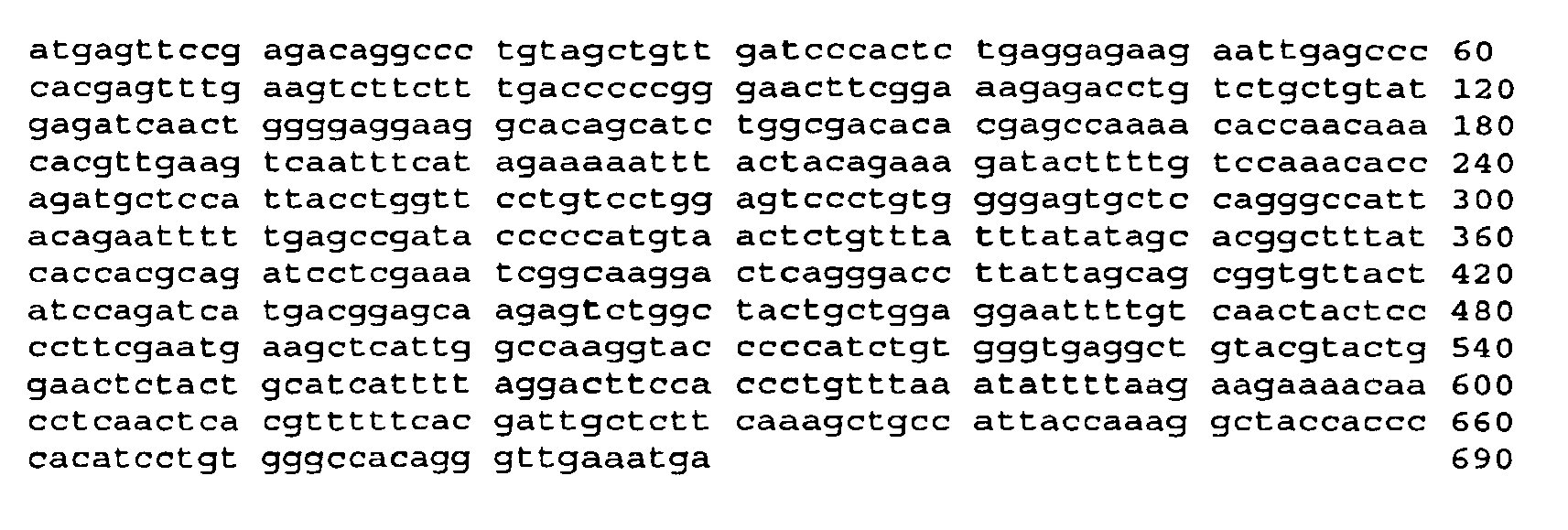
- The full length mouse APOBEC-1 has an amino acid sequence according to SEQ ID No: 15 as follows:
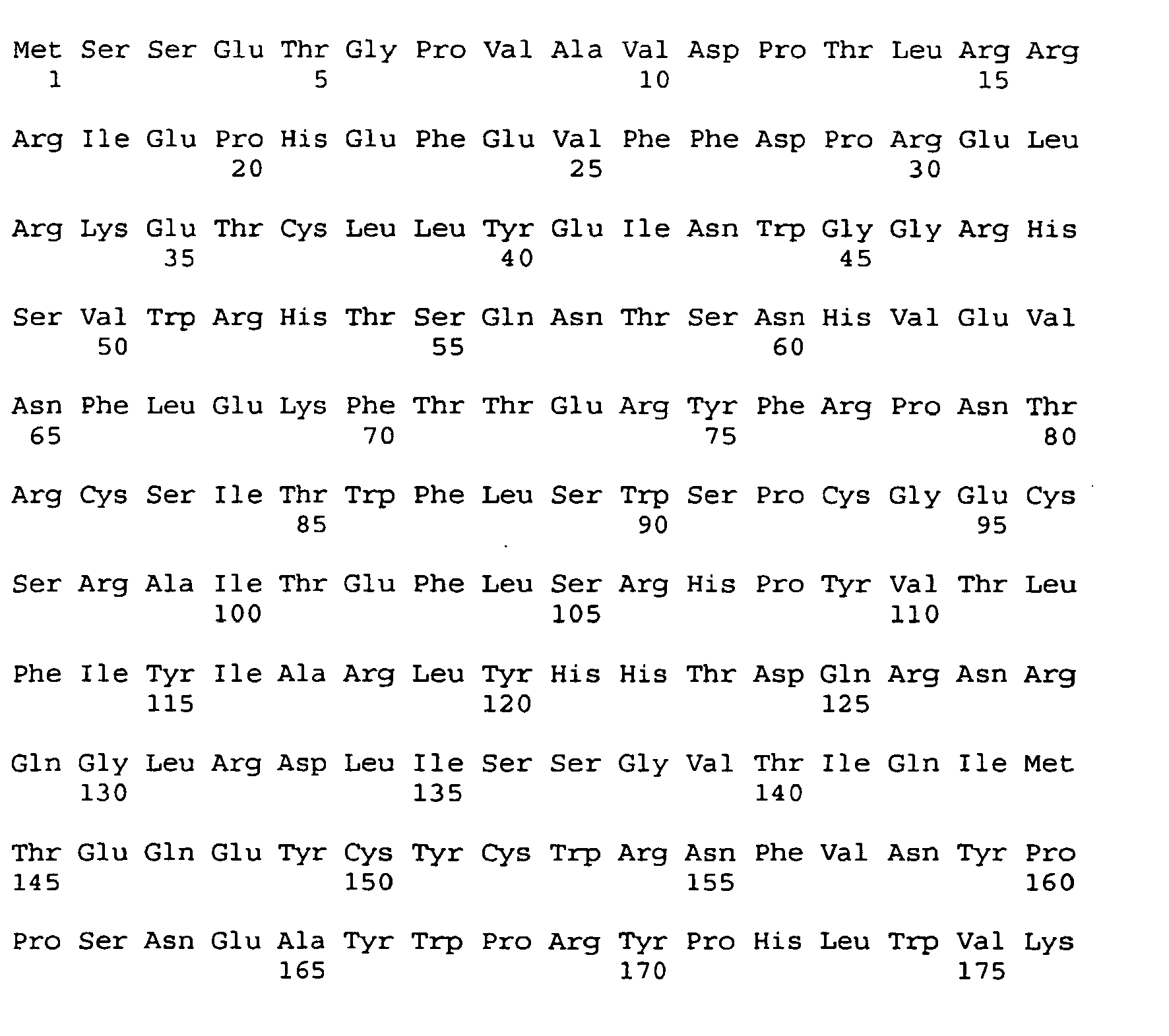 This mouse APOBEC-1 sequence is reported at Genbank Accession No. NP_112436. A cDNA sequence which encodes the full length mouse APOBEC-1 is set forth as SEQ ID No: 16 as follows:
 The cDNA molecule is reported at Genbank Accession No. NM_031159.
- The first chimeric protein of the present invention can also include one or more other polypeptide sequences, including without limitation: (i) a polypeptide that includes a cytoplasmic localization protein or a fragment thereof which, upon cellular uptake of the first chimeric protein, localizes the first chimeric protein to the cytoplasm; (ii) a polypeptide that includes a plurality of adjacent histidine residues; and (iii) a polypeptide that includes an epitope tag.
- The polypeptide that includes a cytoplasmic localization protein or a fragment thereof can be any protein, or fragment thereof, which can effectively retain the first chimeric protein within the cytoplasm of a cell into which the first chimeric protein has been translocated. One such protein is chicken muscle pyruvate kinase ("CMPK"), which has an amino acid sequence of SEQ ID No: 17 as follows:
 A DNA molecule encoding the full length CMPK has a nucleotide sequence according to SEQ ID No: 18 as follows:
 The amino acid sequence and nucleotide sequence for the full length CMPK is reported at Genbank Accession Nos. AAA49021 and J00903, respectively.
- Fragments of CMPK which afford cytoplasmic retention of the first chimeric protein include, without limitation, polypeptides containing at a minimum residues 1-479 of SEQ ID No: 18.
- The polypeptide that includes a plurality of histidine residues preferably contains a sufficient number of histidine residues so as to allow the first chimeric protein containing such histidine residues to be bound by an antibody which recognizes the plurality of histidine residues. One type of DNA molecule encoding Hn is (cac)n, where n is greater than 1, but preferably greater than about 5. This His region can be used during immuno-purification, which is described in greater detail below.
- The polypeptide that includes an epitope tag can be any epitope tag that is recognized with antibodies raised against the epitope tag. An exemplary epitope tag is a hemagglutinin ("HA") domain. The HA domain is present only when it is desirable to examine, i.e., in vitro, localization of the first chimeric protein within cells that have translocated it. One suitable HA domain has an amino acid sequence according to SEQ ID No: 19 as follows:This HA sequence is encoded by a DNA molecule having a nucleotide sequence according to SEQ ID No: 20 as follows:

- tacccctacg acgtgcccga ctacgcc 27
- An exemplary first chimeric protein of the present invention which is suitable for use in humans, designated TAT-hAPOBEC-CMPK, is set forth in
Figure 1A . This first chimeric protein (human) includes: an N-terminal HIV tat protein transduction domain, a hemagglutinin domain, a polypeptide fragment of human APOBEC-1, a CMPK domain, and a C-terminal His tag. The amino acid sequence (SEQ ID No: 2) and encoding nucleotide sequence (SEQ ID No: 1) of this exemplary first chimeric protein (human) is set forth inFigures 1D and1B-C , respectively. - An exemplary first chimeric protein of the present invention which is suitable for use in rats, designated TAT-rAPOBEC-CMPK, is set forth in
Figure 2A . This first chimeric protein (rat) includes: an N-terminal HIV tat protein transduction domain, a hemagglutinin domain, a polypeptide fragment of rat APOBEC-1, a CMPK domain, and a C-terminal His tag. The amino acid sequence (SEQ ID No: 4) and encoding nucleotide sequence (SEQ ID No: 3) of this exemplary first chimeric protein (rat) is set forth inFigures 2D and2B-C , respectively. - According to a second aspect of the present invention, a second chimeric protein is provided for use in combination with the first chimeric protein described above. The second chimeric protein includes a first polypeptide that includes a protein transduction domain and a second polypeptide the includes ACF or a fragment thereof which can bind to apolipoprotein B mRNA.
- The first polypeptide of the second chimeric protein can be a protein transduction domain of the type described above The protein transduction domain of the second chimeric protein can be the same or different from the protein transduction domain of the first chimeric protein.
- The second polypeptide of the second chimeric protein, as noted above, includes ACF or a fragment thereof which can bind to apolipoprotein B mRNA. Although it has been proposed that a number of different proteins assist APOBEC-1 in editing apolipoprotein B mRNA, ACF has been identified as the minimal protein complement for editing in vitro in the human system (Mehta et al., Molecular cloning of apobec-1 complementation factor, a novel RNA binding protein involved in the editing of apo B mRNA," Mol. Cell. Biol. 20:1846-1854 (2000). In accordance with the present invention, therefore, the second chimeric protein binds apolipoprotein B mRNA at the mooring sequence and through its interactions with the first chimeric protein, sequesters the first chimeric protein to the cytidine of the apolipoprotein B mRNA to be edited (i.e., at position 6666), thereby resulting in its conversion to a uridine. As noted above, this conversion results in a stop codon that contributes to expression of the apolipoprotein B48 derivative.
- Recent studies have suggested that APOBEC-1 requires a chaperone for its nuclear localization (Yang et al., "Intracellular trafficking determinants in APOBEC-1, the catalytic subunit for cytidine to uridine editing of apolipoprotein B mRNA," Exp. Cell Res. 267:153-164 (2001). More recently, however, it has been learned that APOBEC-1 is most likely associated with ACF throughout the cell and, therefore, it may import to the nucleus as an APOBEC-1/ACF complex. A bipartite nuclear localization signal is predicted in ACF (see below).
- ACF is expressed at sufficient levels within the hepatic cells of rat (Dance et al., "Two proteins essential for apolipoprotein B mRNA editing are expressed from a single gene through alternative splicing," J. Biol. Chem., electronically published as manuscript M 111337200 (2002), such that augmenting of the intracellular ACF concentration is not needed. However, to optimize apolipoprotein B mRNA editing, in some instances it may be desirable to increase the intracellular concentration of ACF.
- The full length rat ACF has an amino acid sequence according to SEQ ID No: 21 as follows:

 A DNA molecule encoding the full length rat ACF has a nucleotide sequence according to SEQ ID No: 22 as follows:
 The amino acid sequence and nucleotide sequence for the full length rat ACF65 is reported at Genbank Accession Nos. AAK50145 and AY028945, respectively. In addition, it should be noted that a short isoform of rat ACF64 exists, as identified at Genbank Accession No. AF290984.
- The full length human ACF has an amino acid sequence according to SEQ ID No: 23 as follows:

 A DNA molecule encoding the full length human ACF has a nucleotide sequence according to SEQ ID No: 24 as follows:
 The amino acid sequence and nucleotide sequence for the full length human ACF is reported at Genbank Accession Nos. AAF76221 and AF271789, respectively.
- In comparing the human and rat ACF homologs, it is apparent that these proteins share 93.5 percent identity at the amino acid level and, moreover, antibodies raised against the human ACF also recognize rat ACF. Is has been reported that functional complementation of apolipoprotein B mRNA editing by APOBEC-1 involves the N-terminal 380 residues of ACF (Blanc et al., "Mutagenesis of Apobec-1 complementation factor reveals distinct domains that modulate RNA binding, protein-protein interaction with Apobec-1, and complementation of C to U RNA-editing activity," J. Biol. Chem. 276(49): 46386-46393 (2001).
- The second chimeric protein of the present invention can also include one or more other polypeptide sequences, including without limitation: (i) a polypeptide that includes a cytoplasmic localization protein or a fragment thereof which, upon cellular uptake of the second chimeric protein, localizes the second chimeric protein to the cytoplasm; (ii) a polypeptide that includes a plurality of adjacent histidine residues; and (iii) a polypeptide that includes a hemagglutinin domain. Each of these has been described above with respect to the first chimeric protein.
- An exemplary second chimeric protein of the present invention which is suitable for use in humans, designated TAT-hACF, is set forth in
Figure 3A . This second chimeric protein (human) includes: an N-terminal HIV tat protein transduction domain, a hemagglutinin domain, a polypeptide fragment of human ACF, and a C-terminal His tag. The amino acid sequence (SEQ ID No: 6) and encoding nucleotide sequence (SEQ ID No: 5) of this exemplary second chimeric protein (human) is set forth inFigures 3B-C . - An exemplary second chimeric protein of the present invention which is suitable for use in rats, designated TAT-rACF, is set forth in
Figure 4A . This second chimeric protein (rat) includes: an N-terminal HIV tat protein transduction domain, a hemagglutinin domain, a polypeptide fragment of rat ACF, and a C-terminal His tag. The amino acid sequence (SEQ ID No: 8) and encoding nucleotide sequence (SEQ ID No: 7) of this exemplary second chimeric protein (rat) is set forth inFigures 4B-C . - DNA molecules encoding the above-identified first and second chimeric proteins can be assembled using conventional molecular genetic manipulation for subcloning gene fragments, such as described by Sambrook et al., Molecular Cloning: A Laboratory Manual, Cold Springs Laboratory, Cold Springs Harbor, New York (1989), and Ausubel et al. (ed.), Current Protocols in Molecular Biology, John Wiley & Sons (New York, NY) (1999 and preceding editions). In conjunction therewith, desired fragments of the APOBEC-1, ACF, or CMPK encoding DNA molecules can be obtained using the PCR technique together with specific sets of primers chosen to represent particular portions of the protein. Erlich et al., Science 252:1643-51 (1991).
- Once the desired DNA molecules have been assembled, DNA constructs can be assembled by ligating together the DNA molecule encoding the first or second chimeric protein with appropriate regulatory sequences including, without limitation, a promoter sequence operably connected 5' to the DNA molecule, a 3' regulatory sequence operably connected 3' of the DNA molecule, as well as any enhancer elements, suppressor elements, etc. The DNA construct can then be inserted into an appropriate expression vector. Thereafter, the vector can be used to transform a host cell, typically although not exclusively a prokaryote, and the recombinant host cell can express the first or second chimeric protein of the present invention.
- When a prokaryotic host cell is selected for subsequent transformation, the promoter region used to construct the DNA construct (i.e., transgene) should be appropriate for the particular host. The DNA sequences of eukaryotic promoters, as described infra for expression in eukaryotic host cells, differ from those of prokaryotic promoters. Eukaryotic promoters and accompanying genetic signals may not be recognized in or may not function in a prokaryotic system and, further, prokaryotic promoters are not recognized and do not function in eukaryotic cells.
- Similarly, translation of mRNA in prokaryotes depends upon the presence of the proper prokaryotic signals which differ from those of eukaryotes. Efficient translation of mRNA in prokaryotes requires a ribosome binding site called the Shine-Dalgarno ("SD") sequence on the mRNA. This sequence is a short nucleotide sequence of mRNA that is located before the start codon, usually AUG, which encodes the amino-terminal methionine of the protein. The SD sequences are complementary to the 3'-end of the 16S rRNA (ribosomal RNA) and probably promote binding of mRNA to ribosomes by duplexing with the rRNA to allow correct positioning of the ribosome. For a review on maximizing gene expression, see Roberts and Lauer, Methods in Enzymology, 68:473 (1979).
- Promoters vary in their "strength" (i.e., their ability to promote transcription). For the purposes of expressing a cloned gene, it is desirable to use strong promoters in order to obtain a high level of transcription and, hence, expression of the gene. Depending upon the host cell system utilized, any one of a number of suitable promoters may be used. For instance, when cloning in E. coli, its bacteriophages, or plasmids, promoters such as the T7 phage promoter, lac promoter, trp promoter, recA promoter, ribosomal RNA promoter, the PR and PL promoters of coliphage lambda and others, including but not limited, to lacUV5, ompF, bla, lpp, and the like, may be used to direct high levels of transcription of adjacent DNA segments. Additionally, a hybrid trp-lacUV5 (tac) promoter or other E. coli promoters produced by recombinant DNA or other synthetic DNA techniques may be used to provide for transcription of the inserted gene.
- Bacterial host cell strains and expression vectors may be chosen which inhibit the action of the promoter unless specifically induced. In certain operons, the addition of specific inducers is necessary for efficient transcription of the inserted DNA. For example, the lac operon is induced by the addition of lactose or IPTG (isopropylthio-beta-D-galactoside). A variety of other operons, such as trp, pro, etc., are under different controls.
- Specific initiation signals are also required for efficient gene transcription and translation in prokaryotic cells. These transcription and translation initiation signals may vary in "strength" as measured by the quantity of gene specific messenger RNA and protein synthesized, respectively. The DNA expression vector, which contains a promoter, may also contain any combination of various "strong" transcription and/or translation initiation signals. For instance, efficient translation in E. coli requires a Shine-Dalgarno ("SD") sequence about 7-9 bases 5' to the initiation codon ("ATG") to provide a ribosome binding site. Thus, any SD-ATG combination that can be utilized by host cell ribosomes may be employed. Such combinations include, but are not limited to, the SD-ATG combination from the cro gene or the N gene of coliphage lambda, or from the E. coli tryptophan E, D, C, B or A genes. Additionally, any SD-ATG combination produced by recombinant DNA or other techniques involving incorporation of synthetic nucleotides may be used.
- Mammalian cells can also be used to recombinantly produce the first or second chimeric proteins of the present invention. Suitable mammalian host cells include, without limitation: COS (e.g., ATCC No.
CRL 1650 or 1651), BHK (e.g., ATCC No. CRL 6281), CHO (ATCC No. CCL 61), HeLa (e.g., ATCC No. CCL 2), 293 (ATCC No. 1573), CHOP, and NS-1 cells. Suitable expression vectors for directing expression in mammalian cells generally include a promoter, as well as other transcription and translation control sequences known in the art. Common promoters include, without limitation, SV40, MMTV, metallothionein-1, adenovirus Ela, CMV, immediate early, immunoglobulin heavy chain promoter and enhancer, and RSV-LTR. - Regardless of the selection of host cell, once the DNA molecule coding for a first or second chimeric protein has been ligated to its appropriate regulatory regions using well known molecular cloning techniques, it can then be introduced into a suitable vector or otherwise introduced directly into a host cell using transformation protocols well known in the art (Sambrook et al., Molecular Cloning: A Laboratory Manual, Second Edition, Cold Spring Harbor Press, NY (1989).
- The recombinant DNA molecule can be introduced into host cells via transformation, particularly transduction, conjugation, mobilization, or electroporation. Suitable host cells include, but are not limited to, bacteria, virus, yeast, mammalian cells, insect, plant, and the like. The host cells, when grown in an appropriate medium, are capable of expressing the chimeric protein, which can then be isolated therefrom and, if necessary, purified. The first or second chimeric protein is preferably produced in purified form (preferably at least about 80%, more preferably 90%, pure) by conventional techniques, including immuno-purification techniques. Immuno-isolation followed by metal-chelating affinity chromatography and cationic exchange chromatography is described in Example 1 infra.
- A further aspect of the present invention relates to a number of compositions, preferably pharmaceutical compositions, which include the first and/or second chimeric protein of the present invention.
- According to one embodiment, a composition includes a pharmaceutically acceptable carrier and the first chimeric protein of the present invention. The first chimeric protein is preferably present in an amount which is effective to modify apolipoprotein B mRNA editing in cells which uptake the first chimeric protein.
- According to a second embodiment, a composition includes the first and second chimeric proteins of the present invention. This composition can also include a pharmaceutically acceptable carrier in which the first and second chimeric proteins are dispersed. Preferably, the first chimeric protein is present in an amount which is effective to modify apolipoprotein B mRNA editing in cells which uptake the first chimeric protein and the second chimeric protein is present in an amount which is effective to bind apolipoprotein B mRNA and assist the first chimeric protein in modifying apolipoprotein B mRNA in cells which uptake the first and second chimeric proteins.
- The compositions of the present invention can also include suitable excipients, or stabilizers, and can be in solid or liquid form such as, tablets, capsules, powders, solutions, suspensions, or emulsions. Typically, the compositions will contain from about 0.01 to 99 percent, preferably from about 20 to 75 percent of the chimeric protein(s), together with the carrier, excipient, stabilizer, etc.
- The solid unit dosage forms can be of the conventional type. The solid form can be a capsule, such as an ordinary gelatin type containing the first and/or second chimeric protein(s) of the present invention and a carrier, for example, lubricants and inert fillers such as, lactose, sucrose, or cornstarch. In another embodiment, these first and/or second chimeric protein(s) are tableted with conventional tablet bases such as lactose, sucrose, or cornstarch in combination with binders like acacia, cornstarch, or gelatin, disintegrating agents, such as cornstarch, potato starch, or alginic acid, and a lubricant, like stearic acid or magnesium stearate.
- The first and/or second chimeric protein(s) of the present invention may also be administered in injectable or topically-applied dosages by solution or suspension of these materials in a physiologically acceptable diluent with a pharmaceutical carrier. Such carriers include sterile liquids, such as water and oils, with or without the addition of a surfactant and other pharmaceutically and physiologically acceptable carrier, including adjuvants, excipients or stabilizers. Illustrative oils are those of petroleum, animal, vegetable, or synthetic origin, for example, peanut oil, soybean oil, or mineral oil. In general, water, saline, aqueous dextrose and related sugar solution, and glycols, such as propylene glycol or polyethylene glycol, are preferred liquid carriers, particularly for injectable solutions.
- For use as aerosols, the first and/or second chimeric protein(s) of the present invention in solution or suspension may be packaged in a pressurized aerosol container together with suitable propellants, for example, hydrocarbon propellants like propane, butane, or isobutane with conventional adjuvants. The compositions of the present invention also may be administered in a non-pressurized form such as in a nebulizer or atomizer.
- Depending upon the treatment being effected, the compounds of the present invention can be administered orally, topically, transdermally, parenterally, subcutaneously, intravenously, intramuscularly, intraperitoneally, by intracavitary or intravesical instillation, intraocularly, intraarterially, intralesionally, or by application to mucous membranes, such as, that of the nose, throat, and bronchial tubes. In most instances, subcutaneous, intravenous, intramuscular, intraperitoneal, and intraarterial routes are preferred.
- Compositions within the scope of this invention include all compositions wherein the first and/or second chimeric proteins of the present invention is contained in an amount effective to achieve its intended purpose, noted above. While individual needs vary, determination of optimal ranges of effective amounts of each of the first and second chimeric proteins is within the skill of the art. Typical dosages comprise about 0.01 to about 100 mg/kg-body wt. The preferred dosages comprise about 0.1 to about 100 mg/kg body wt. The most preferred dosages comprise about 1 to about 100 mg/kg body wt.
- The amounts of the first and second chimeric proteins can be determined by one of ordinary skill in the art using routine testing to optimize the dosage levels of the first and second chimeric proteins in accordance with the desired degree of apolipoprotein B mRNA editing. Based on May 2001 guidelines by the National Institutes of Health's National Cholesterol Education Program (NCEP), individuals at low risk for a heart attack should have LDL levels under 160 mg/dL, while those at highest risk should aim for LDLs under 100 mg/dL. Treatment regimen for the administration of the first and/or second chimeric proteins of the present invention can also be determined readily by those with ordinary skill in art.
- Typically, the first and/or second chimeric proteins (or compositions which contain one or both of the chimeric proteins of the present invention) can be administered via a drug delivery device which includes a chimeric protein or a composition of the present invention. Exemplary delivery devices include, without limitation, liposomes, niosomes, transdermal patches, implants, and syringes.
- Liposomes are vesicles comprised of one or more concentrically ordered lipid bilayers which encapsulate an aqueous phase. They are normally not leaky, but can become leaky if a hole or pore occurs in the membrane, if the membrane is dissolved or degrades, or if the membrane temperature is increased to the phase transition temperature. Current methods of drug delivery via liposomes require that the liposome carrier ultimately become permeable and release the encapsulated drug at the target site. This can be accomplished, for example, in a passive manner wherein the liposome bilayer degrades over time through the action of various agents in the body. Every liposome composition will have a characteristic half-life in the circulation or at other sites in the body and, thus, by controlling the half-life of the liposome composition, the rate at which the bilayer degrades can be somewhat regulated.
- In contrast to passive drug release, active drug release involves using an agent to induce a permeability change in the liposome vesicle. Liposome membranes can be constructed so that they become destabilized when the environment becomes acidic near the liposome membrane (see, e.g., Proc. Natl. Acad. Sci. USA 84:7851 (1987); Biochemistry 28: 908 (1989). When liposomes are endocytosed by a target cell, for example, they can be routed to acidic endosomes which will destabilize the liposome and result in drug release.
- Alternatively, the liposome membrane can be chemically modified such that an enzyme is placed as a coating on the membrane which slowly destabilizes the liposome. Since control of drug release depends on the concentration of enzyme initially placed in the membrane, there is no real effective way to modulate or alter drug release to achieve "on demand" drug delivery. The same problem exists for pH-sensitive liposomes in that as soon as the liposome vesicle comes into contact with a target cell, it will be engulfed and a drop in pH will lead to drug release.
- This liposome delivery system can also be made to accumulate at a target organ, tissue, or cell via active targeting. In accordance with the present invention, liposomes can be targeted to liver cells by incorporating into the liposome bilayer a molecule which target hepatocyte receptors. One such molecule is the asialoglycoprotein asialofetuin, which targets the asialoglycoprotein receptor of hepatocytes. The incorporation of asialofetuin into the liposome bilayer can be performed according to the procedures set forth in Wu et al., "Increased liver uptake of liposomes and improved targeting efficacy by labeling with asialofetuin in rodents," Hepatology 27(3):772-778 (1998).
- Niosomes are vesicles formed by amphiphilic materials. Non-ionic surfactants were the first materials studied (Iga et al., "Membrane modification by negatively charged stearylpolyoxyethylene derivatives for thermosensitive liposomes: Reduced liposomal aggregation and avoidance of reticuloendothelial system uptake," J. Drug Target 2:259-67 (1994)). and a large number of surfactants have since been found to self assemble into closed bilayer vesicles (Ahl et al., "Enhancement of the in vivo circulation lifetime of L-alpha-distearoylphosphatidylcholine liposomes: Importance of liposomal aggregation versus complement opsonization," Biochim Biophys Acta 1329:370-82 (1997)). These niosomal materials may be used for delivery of the first or second chimeric protein or for delivery of APOBEC-1 or fragments thereof alone or in combination with ACF or fragments thereof.
- For example, 200nm doxorubicin niosomes with a polyoxyethylene (molecular weight 1,000) surface have been shown to be rapidly taken up by the liver (Uchegbu et al., "Distribution, metabolism and tumoricidal activity of doxorubicin administered in sorbitan monostearate (Span 60) niosomes in the mouse," Pharm. Res. 12:1019-24 (1995)), allowing polymeric drug conjugates to be formed for delivery of the drug (see Duncan, "Drug polymer conjugates - potential for improved chemotherapy," Anti-Cancer Drugs 3:175-210 (1992)). These techniques can be readily adapted for delivery of the first and second chimeric proteins
- Compositions including the liposomes or niosomes in a pharmaceutically acceptable carrier are also contemplated.
- Transdermal delivery devices have been employed for delivery of low molecular weight proteins by using lipid-based compositions (i.e., in the form of a patch) in combination with sonophoresis. However, as reported in
U.S. Patent No. 6,041,253 to Ellinwood, Jr. et al. , transdermal delivery can be further enhanced by the application of an electric field, for example, by iontophoresis or electroporation. Using low frequency ultrasound which induces cavitation of the lipid layers of the stratum corneum, higher transdermal fluxes, rapid control of transdermal fluxes, and drug delivery at lower ultrasound intensities can be achieved. Still further enhancement can be obtained using a combination of chemical enhancers and/or magnetic field along with the electric field and ultrasound. - Implantable or injectable protein depot compositions can also be employed, providing long-term delivery of, e.g., the first and second chimeric proteins. For example,
U.S. Patent No. 6,331,31 to Brodbeck et al. , reports an injectable depot gel composition which includes a biocompatible polymer, a solvent that dissolves the polymer and forms a viscous gel, and an emulsifying agent in the form of a dispersed droplet phase in the viscous gel. Upon injection, such a gel composition can provide a relatively continuous rate of dispersion of the agent to be delivered, thereby avoiding an initial burst of the agent to be delivered. - Other suitable protein delivery system which are known to those of skill in the art can also be employed to achieve the desired delivery and, thus, modification in the editing of apolipoprotein B mRNA and its concomitant effects.
- By virtue of the first chimeric protein being able to edit apolipoprotein B mRNA, the present invention affords the first chimeric protein for use in modifying apolipoprotein BmRNA editing in vivo. This aspect of the present invention can be carried out by contacting apolipoprotein B mRNA in a cell with the first chimeric protein of the present invention under conditions effective to increase the concentration of apolipoprotein B48 which is secreted by the cell as compared to the concentration of apolipoprotein B100 which is secreted by the cell, relative to an untreated cell (i.e., which has not taken up the first chimeric protein). Basically, the contacting is carried out by exposing the cell to the first chimeric protein under conditions effective to induce cellular uptake of the first chimeric protein. Because the first chimeric protein includes the first polypeptide (i.e., which includes a protein transduction domain), the first chimeric protein is taken up by the cell. In addition, the same cell can also be contacted with the second chimeric protein of the present invention, causing the second chimeric protein also to be taken up by the cell. As a result, the apolipoprotein B mRNA in the cell is contacted by the second chimeric protein, binding the apolipoprotein mRNA (as described above) so as to facilitate editing thereof by the first chimeric protein. The cell in which the apolipoprotein B mRNA editing is modified can be any cell which can synthesize and secrete VLDL with apolipoprotein B or its derivatives. Exemplary cells of this type include liver cells and intestinal cells, although preferably liver cells. The cell can also be in a mammal, preferably a human.
- Likewise, the present invention also affords a chimeric protein as herein before described for use in of reducing serum LDL levels. This aspect of the present invention can be carried out by delivering into one or more cells of a patient, without genetically modifying the cells, an amount of a chimeric protein comprising a first polypeptide comprising a protein transduction domain and a second polypeptide comprising APOBEC-1 or a fragment thereof which can edit mRNA encoding apolipoprotein B, which amount is effective to increase the concentration of VLDL-apolipoprotein B48 that is secreted by the one or more cells into serum and, consequently, reduce the serum concentration of LDL. In accordance with this aspect of the present invention, the patient is a mammal, preferably a human, and the one or more cells are preferably liver cells, intestinal cells, or a combination thereof.
- To sustain the reduced serum LDL levels, delivery of the chimeric protein into the one or more cells is preferably repeated periodically (i.e., following a delay of from about 1 to about 7 days).
- Delivery of the chimeric protein into the one or more cells can be carried out by exposing the one or more cells to the protein under conditions effective to cause cellular uptake of the protein. Preferably, the protein transduction domain induces cellular uptake by the one or more cells. In addition to delivering the first chimeric protein, a second chimeric protein can also be delivered simultaneously into the one or more cells of the patient, without genetically modifying the cells, where the second chimeric protein comprises a first polypeptide comprising a protein transduction domain and a second polypeptide comprising APOBEC-1 Complementation Factor (AFC) or a fragment thereof which can bind to apolipoprotien B mRNA to facilitate editing of the mRNA by APOBEC-1. Preferably, the protein transduction domain induces cellular uptake by the one or more cells.
- APOBEC-1 can be delivered directly into one or more liver cells by contacting each of them with liposomes including a molecule which binds to a hepatocyte receptor (e.g., asialofetuin), thereby inducing uptake of the liposomes and degradation thereof intracellularly to empty their contents into the one or more liver cells. In addition, ACF or a fragment thereof which can bind to apolipoprotein B mRNA can also be delivered via the liposomes.
- By increasing the ratio of apolipoprotein B48 to apolipoprotein B100 which is secreted by the one or more cells, the present invention also relates to a chimeric protein as herein before described for use in treating or preventing an atherogenic disease or disorder. This aspect of the present invention can be carried out by administering to a patient an effective amount of a first chimeric protein as herein before described, wherein upon said administering the protein is taken up by one or more cells of the patient that can synthesize and secrete VLDL-apolipoprotein under conditions which are effective to increase the concentration of VLDL-apolipoprotein B48 that is secreted by the one or more cells into serum, whereby rapid clearing of VLDL-apolipoprotein B48 from serum decreases the serum concentration of LDL, to treat or prevent the atherogenic disease or disorder. In accordance with this aspect of the present invention, the patient is a mammal, preferably a human, and the one or more cells are preferably liver cells.
- Administration of the protein can be carried out according to any of the above identified approaches. Continued preventative or therapeutic treatment can be effected by repeatedly administering the first chimeric protein periodically (i.e., following a delay of from about 1 to about 7 days).
- Preferably, the protein transduction domain induces cellular uptake by the one or more cells. As with the above-described methods, a second chimeric protein as herein before described can also be delivered simultaneously. Preferably, the protein transduction domain induces cellular uptake by the one or more cells.
- Using a liposome delivery vehicle, APOBEC-1 and optionally ACF can be delivered directly into one or more liver cells by contacting each of them with a liposome including a molecule which binds to a hepatocyte receptor, thereby inducing uptake of the liposomes and degradation thereof intracellularly to empty their contents into the one or more liver cells.
- The following examples are intended to illustrate, but by no means are intended to limit, the scope of the present invention as set forth in the appended claims.
- The induction of hepatic apolipoprotein B mRNA editing was sought through TAT mediated APOBEC-1 protein transduction into liver cells. It has been shown that linking an 11-amino-acid protein transduction domain (PTD) of HIV-1 TAT protein to heterologous protein conferred the ability to transduce into cells (Nagahara et al., "Transduction of full-length TAT fusion proteins into mammalian cells: TAT-p27Kip1 induces cell migration," Nature Med. 4:1449-1452 (1998); Schwarze et al., "In vivo protein transduction: delivery of a biologically active protein into the mouse," Science 285:1569-1572 (1999); Vocero-Akbani et al., "Killing HIV-infected cells by transduction with an HIV protease-activated caspase-3 protein," Nature Med. 5:29-33 (1999)). PTD-linked protein transduced into ~ 100% of cells and the transduction process occurred in a rapid and concentrationdependent but receptor- and transporter-independent manner (Schwarze et al., "Protein transduction: unrestricted delivery into all cells," Trends Cell Biol. 10:290-295 (2000). Liver cells have been shown to be susceptible to transduction (Nagahara et al., "Transduction of full-length TAT fusion proteins into mammalian cells: TAT-p27Kip1 induces cell migration," Nature Med. 4:1449-1452 (1998)). In order to produce in-frame TAT fusion protein from E. coli, a prokaryotic expression vector was constructed that has an N-terminal PTD flanked by glycine residues for free bond rotation of the domain (Schwarze et al., "In vivo protein transduction: delivery of a biologically active protein into the mouse," Science 285:1569-1572 (1999)). an hemagglutinin (HA) tag and a C-terminal 6-histidine tag. Using this vector as a backbone, a plasmid was constructed to encode full-length TAT-rAPOBEC-CMPK protein, SEQ ID No: 4 (
Figures 2A ,2D , and5A ). APOBEC-1 conjugated to CMPK was used in this study because it showed a less robust editing activity in vitro and targeted primarily cytoplasmic mRNAs (Yang et al., "Induction of cytidine to uridine editing on cytoplasmic apolipoprotein B mRNA by overexpressing APOBEC-1," J. Biol. Chem. 275:22663-22669 (2000). In vitro studies demonstrated that APOBEC-1 retained catalytic activity when conjugated to various lengths of nonspecific proteins (Siddiqui et al., "Disproportionate relationship between APOBEC-1 expression and apoB mRNA editing activity," Exp. Cell Res. 252:154-164 (1999)); Yang et al., "Induction of cytidine to uridine editing on cytoplasmic apolipoprotein B mRNA by overexpressing APOBEC-1," J. Biol. Chem. 275:22663-22669 (2000). - A double-stranded oligomeric nucleotide encoding the 9-amino acid TAT domain flanked by glycine residues (sense strand shown below, SEQ ID No: 25)
- catatgggaa gaaaaaaaag aagacaaaga agaagaggcc tcgag 45
- Recombinant proteins were solubilized in 8M urea buffer from bacterial cells so as to maximize their yield from inclusion bodies. Previous studies have shown that denatured proteins could transduce as well as native proteins (Schwarze et al., "In vivo protein transduction: delivery of a biologically active protein into the mouse," Science 285:1569-1572 (1999)). The proteins were purified through metal-chelating affinity chromatography followed by cationic exchange chromatography. The urea was removed by rapid dialysis and the purity of full-length 86 kDa TAT-rAPOBEC-CMPK, SEQ ID No: 4, was apparent as shown by silver staining (
Figure 5B ). The purification of full-length protein was also confirmed by western blot using anti-His6 antibody. - The uptake of TAT-rAPOBEC-CMPK, SEQ ID No: 4, into McArdle cells was evaluated using an antibody reactive with the HA epitope and fluorescence microscopy.
- McArdle RH7777 cells were obtained from ATCC (Manassas, Virginia) and cultured as described previously (Yang et al., "Partial characterization of the auxiliary factors involved in apo B mRNA editing through APOBEC-1 affinity chromatography," J. Biol. Chem. 272:27700-27706 (1997)). McArdle cells, grown on six well cluster plates were treated with either TAT-rAPOBEC-CMPK or TAT-CMPK for the indicated times. Cells were then washed extensively with PBS and subsequently fixed with 2% paraformaldehyde, permeabilized with 0.4
% Triton X 100, blocked with 1% BSA and reacted with affinity purified anti-HA (Babco, Berkeley, CA) and affinity purified FITC conjugated goat anti-mouse secondary antibody (Organon Teknika, West Chester, PA), each at 1:1000 dilution. Fluorescence was observed and electronic images captured on an inverted, fluorescence Olympus microscope. - Recombinant APOBEC-1 has a tendency to aggregate, a property which persists in TAT-rAPOBEC-CMPK, apparent as aggregates of HA antibody-reactive material attached to the surface of
cells 1h following the addition of the protein to the media (Figures 6A-B ). Aggregation was not a property of the TAT motif or CMPK as control protein (TAT-CMPK) at a higher molar concentration appeared as an array of speckles attached to the surface ofMcArdle cells 1 h following its addition to the media (Figures 7A and B ). - Within 6 h following treatment, both TAT-rAPOBEC-CMPK (
Figures 6C-D ) and TAT-CMPK (Figures 7C-D ) were apparent inside the cells and the cell surface-attached aggregates appeared to be more disperse. Following 24 h of treatment, many of the cells treated with TAT-rAPOBEC-CMPK demonstrated bright perinuclear fluorescence and also a low intensity of fluorescence throughout the nucleus and cytoplasm (Figures 6E-F ). Cells treated for 24 h with TAT-CMPK demonstrated bright fluorescent speckles in the cytoplasm and fainter homogenous nuclear fluorescence (Figure 7E-F ). The nuclear distribution of the recombinant protein might have been facilitated by the embedded nuclear localization signal (NLS) in TAT sequence (Schwarze et al., "In vivo protein transduction: delivery of a biologically active protein into the mouse," Science 285:1569-1572 (1999)) as APOBEC-1 alone does not have a functional NLS (Yang et al., "Multiple protein domains determine the cell type-specific nuclear distribution of the catalytic subunit required for apo B mRNA editing," Proc. Natl. Acad. Sci. USA 94:13075-13080 (1997)). and 6His-HA-APOBEC-CMPK was excluded from the nucleus (Yang et al., "Induction of cytidine to uridine editing on cytoplasmic apolipoprotein B mRNA by overexpressing APOBEC-1," J. Biol. Chem. 275:22663-22669 (2000). The data suggested that both TAT-rAPOBEC-CMPK and TAT-CMPK were taken up by McArdle cells. Comparatively, the efficiency of TAT-rAPOBEC-CMPK uptake was poorer than that for TAT-CMPK, and the distribution of these proteins within the cells appeared different. - Given that TAT-CMPK entered McArdle cells, as demonstrated in Example 2, an evaluation was made as to whether this would affect apolipoprotein B mRNA editing activity (
Figure 8 ). Cells were treated with the indicated amounts of TAT-CMPK (using the same preparation of protein as inFigure 7 ) and total cellular RNA was isolated following 24 h and the proportion of edited apolipoprotein B mRNA measured. - Total cellular RNA was isolated from cells with Tri-Reagent (Molecular Research Center, Cincinnati, Ohio) according to manufacture's recommendations. Purified RNAs were digested with RQ-DNase I (Promega, Madison, Wisconsin) and with RsaI (Promega) restriction enzyme that has a recognition site between the PCR annealing sites of target substrates to ensure the removal of the contaminating genomic DNA.
- Editing activity was determined by the reverse transcriptase-polymerase chain reaction (RT-PCR) methodology described previously (Smith et al. "In vitro apolipoprotein B mRNA editing: Identification of a 27S editing complex," Proc. Natl. Acad. Sci. USA 88:1489-1493 (1991)). First strand cDNA was generated using oligo dT-primed total cellular RNA. Specific PCR amplification of rat apolipoprotein B sequence surrounding the editing site was accomplished using ND1/ND2 primer pairs set forth below:
- ND1 (SEQ ID No: 29)
atctgactgg gagagacaag tag 23 - ND2 (SEQ ID No: 30)
gttcttttta agtcctgtgc atc 23 - PCR products were gel isolated and the editing efficiency was determined by poisoned primer extension assay using 32P ATP (NEN, Boston, Massachusetts) end-labeled DD3 primer (SEQ ID No: 31) as follows:
- aatcatgtaa atcataacta tctttaatat actga 35
- No change in the percent editing of apolipoprotein B mRNA relative to untreated cells (see
Figure 9 ) was observed with TAT-CMPK concentrations ranging from 45 to 1125 nM (5 to 133 µg protein/ml of media) (Figure 8 ). - In contrast, editing activity increased in McArdle cells with 360 nM (62 µg protein/ml media) TAT-rAPOBEC-
CMPK following 6 h and continued to a peak by 24 h, a more than 3-fold increase over the level of editing observed in control cells (Figure 9 ). The proportion of edited RNA remained elevated up to 48 h after treatment (Figure 9 ) and approached baseline by 72 h. It has been reported that the enzymatic activity lagged the appearance of the transduced protein inside the cells, probably due to a slow refolding of the transduced protein (Schwarze et al., "In vivo protein transduction: delivery of a biologically active protein into the mouse," Science 285:1569-1572 (1999)). Taken together, the results demonstrated that TAT-rAPOBEC-CMPK transduced into McArdle cells, refolded into an enzymatically active conformation over the first 6 hr and then edited apolipoprotein B mRNA. The reduction in the proportion of edited apolipoprotein B mRNA after 48 hr was likely due to enzyme inactivation and apolipoprotein B mRNA turnover. This characteristic was important as it demonstrated the transient and reversible nature of the protein transduction system. - To determine if the results obtained using McArdle cells would be applicable in primary liver cells, cultured rat primary hepatocytes were prepared and then treated with TAT-rAPOBEC-CMPK. The rat primary hepatocytes were prepared from unfasted, male Sprague-Dawley rats (250-275 g body weight, Taconic Farm) fed ad libitum normal rat chow as described previously (Van Mater et a]., "Ethanol increases apolipoprotein B mRNA editing in rat primary hepatocytes and McArdle cells," Biochem. Biophys. Res. Comm. 252:334-339 (1998)). Recombinant TAT fusion protein was added directly to the cell culture media after dialysis.
- It has been shown that the editing efficiency in primary rat hepatocytes decreased as a result of proliferation after 72 hours in culture (Van Mater et al., "Ethanol increases apolipoprotein B mRNA editing in rat primary hepatocytes and McArdle cells," Biochem. Biophys. Res. Comm. 252:334-339 (1998)). Together with the fact that TAT-rAPOBEC-CMPK maximally increased
editing 24 hours after treatment in McArdle cells, a decision was made to evaluate dose response for a fixed time rather than study kinetics. Primary hepatocytes were treated with the indicated amounts of TAT-rAPOBEC-CMPK and analyzed for editedapolipoprotein B mRNA 24 hours afterwards. Analysis of apolipoprotein B mRNA was carried out a described in Example 3 above. - The editing activity of hepatocytes increased in proportion to the amount of TAT-rAPOBEC-CMPK added to the cell culture media relative to cells treated with buffer alone (
Figure 10 ) or treated with TAT-CMPK (Figure 8 ). Given that the primary hepatocytes were seeded at the same cell number as McArdle cells, a comparison of the data inFigures 9 and10 suggested that TAT-rAPOBEC-CMPK was more effective in inducing editing activity in the primary cell culture. This was true for several preparations of recombinant protein and primary cells and, therefore, the difference may be due to the fact that the primary hepatocytes have a higher baseline of editing than McArdle cells (48% versus 7%) and/or may be "primed" with more auxiliary factors. - Promiscuous editing of additional cytidines in rat apolipoprotein B mRNA oftransfected cells (Sowden et al., "Overexpression of APOBEC-1 results in mooring-sequence-dependent promiscuous RNA editing," J. Biol. Chem. 271:3011-3017 (1996); Yamanaka et al., "Hyperediting of multiple cytidines of apolipoprotein B mRNA by APOBEC-1 requires auxiliary protein(s) but not a mooring sequence motif," J. Biol. Chem. 271:11506-11510 (1996); Sowden et al., "Apolipoprotein B RNA Sequence 3' of the mooring sequence and cellular sources of auxiliary factors determine the location and extent of promiscuous editing," Nucleic Acids Res. 26:1644-1652 (1998). or hyper-editing of other mRNAs in transgenic mice and rabbits (Yamanaka et al., "Hyperediting of multiple cytidines of apolipoprotein B mRNA by APOBEC-1 requires auxiliary protein(s) but not a mooring sequence motif," J. Biol. Chem. 271:11506-11510 (1996); Yamanaka et al., "A novel translational repressor mRNA is edited extensively in livers containing tumors caused by the transgene expression of the apoB mRNA editing enzyme," Genes & Dev. 11:321-333 (1997)) has been observed in response to very high levels of APOBEC-1 expression. Editing of cytidines 5' of the wild type editing site (C6666) was a bellwether for the loss of editing site fidelity in rat cells and could be used to monitor the induction of promiscuous editing in relation to changes in APOBEC-1 expression (Sowden et al., "Apolipoprotein B RNA Sequence 3' of the mooring sequence and cellular sources of auxiliary factors determine the location and extent of promiscuous editing," Nucleic Acids Res. 26:1644-1652 (1998); Siddiqui et al., "Disproportionate relationship between APOBEC-1 expression and apoB mRNA editing activity," Exp. Cell Res. 252 : 154-164 (1999)). Promiscuous editing of cytidine 3' C6666 in apolipoprotein B mRNA did not occur to a significant extent in rat cells and hyperediting of mRNAs other than apolipoprotein B was not a characteristic of APOBEC-1 overexpression in rat cells (Sowden et al., "Apolipoprotein B RNA Sequence 3' of the mooring sequence and cellular sources of auxiliary factors determine the location and extent of promiscuous editing," Nucleic Acids Res. 26 : 1644-1652 (1998)).
- Despite the high level of editing activity in treated primary hepatocytes, promiscuous editing (evident as additional primer extension products above UAA (Sowden et al., "Determinants involved in regulating the proportion of edited apolipoprotein B RNAs," RNA 2:274-288 (1996); Sowden et al., "Apolipoprotein B RNA Sequence 3' of the mooring sequence and cellular sources of auxiliary factors determine the location and extent of promiscuous editing," Nucleic Acids Res. 26:1644-1652 (1998). was not observed (
Figure 10 ). Given that our detection limit for promiscuous editing was 0.3% (Sowden et al., "Determinants involved in regulating the proportion of edited apolipoprotein B RNAs," RNA 2:274-288 (1996)) the data suggested that TAT-rAPOBEC-CMPK could be used to substantially increase site-specific editing of apolipoprotein B mRNA without significant loss of fidelity of the reaction. - To further confirm the efficacy of this method, secreted apolipoprotein B protein was evaluated in primary rat hepatocytes that were long-term metabolically labeled with [35S]-methionine and [35S]-cysteine after TAT-rAPOBEC-CMPK treatment.
- Twelve to eighteen hour rat primary hepatocytes grown in Waymouth's 752/1 media (Sigma, St. Louis, MO) were treated for 11 hours with TAT-rAPOBEC-CMPK and then incubated for 1 hour in DMEM deficient medium (without methionine, cysteine and L-glutamine) (Sigma, St. Louis, MO) containing 0.2% (w/v) BSA, 0.1 nM insulin, 100 µg/ml streptomycin and 50 µg/ml gentamicin. The medium was replaced with fresh labeling medium containing 0.7µCi/ml L-[35S]-Methionine and L-[35S]-Cysteine using EXPRE35S35S protein labeling mix (NEN, Boston, Massachusetts). Cells were incubated in the labeling medium for 30 minutes. One volume of Waymouth's medium with cold cysteine and methionine was added to cells and the labeling continued for an additional 12 hours, after which cell culture medium was collected for the isolation and analysis of secreted apolipoprotein B protein and RNAs. (RNA analysis was conducted as in Example 3 above.)
- Immunoprecipitation of apolipoprotein B from cell culture medium was performed as described previously (Sparks et al., "Insulin-mediated inhibition of apolipoprotein B secretion requires an intracellular trafficking event and phosphatidylinositol 3-kinase activation: studies with brefeldin A and wortmannin in primary cultures of rat hepatocytes," Biochem. J. 313:567-574 (1996)). A rabbit polyclonal antibody raised against rat apolipoprotein B and reactive with the N-terminus of apolipoprotein B100 and apolipoprotein B48 (obtained from Drs. J.D. Sparks and C.E. Sparks, University of Rochester) was used to precipitate apolipoprotein B. The immunoprecipitants were separated by SDS-PAGE on 5% gel. The gel was dried and exposed to film to reveal the secreted apolipoprotein B containing lipoprotein profile which represents the secreted apolipoprotein B48 and
apolipoprotein B 100 during the 12 hour labeling period. - The secreted [35S]-labeled apolipoprotein B lipoproteins were isolated from the cell culture media exposed to cells for 12 hours followed by immunoprecipitation, and analyzed by autoradiography after SDS-PAGE separation. The signal on the gel was in direct proportion to the number of cysteine and methionine residues in apolipoprotein B100 and apolipoprotein B48. Since apolipoprotein B48 was the N-terminal 48% of
apolipoprotein B 100, stronger signal was expected from apolipoprotein B100 in control cells. However, as the editing efficiency approached 90% due to TAT-rAPOBEC-CMPK treatment, an increasing amount of apolipoprotein B48 was secreted, and apolipoprotein B100 became almost undetectable (Figure 11 ). Thus, lowering apolipoprotein B100 associated atherogenic risk factors through precisely controlled hepatic apolipoprotein B mRNA editing was achievable by protein transduction with TAT-rAPOBEC-CMPK. - It is believed that the present invention offers a novel approach to curtail hepatic output of apolipoprotein B100 associated atherogenic factors through up-regulating apolipoprotein B mRNA editing by using protein transduction into target (e.g., liver) cells. The PTD, amino acid residues 49-57, of HIV-1 TAT protein has been used in other systems to deliver functional full-length protein molecules into cells (Nagahara et al., "Transduction of full-length TAT fusion proteins into mammalian cells: TAT-p27Kip1 induces cell migration," Nature Med. 4:1449-1452 (1998); Schwarze et al., "In vivo protein transduction: delivery of a biologically active protein into the mouse," Science 285:1569-1572 (1999)); Vocero-Akbani et al., "Killing HIV-infected cells by transduction with an HIV protease-activated caspase-3 protein," . Nature Med. 5:29-33 (1999)). Some of these fusion molecules, when introduced into mice, entered all tissue cells, even crossing the blood brain barrier (Schwarze et al., "In vivo protein transduction: delivery of a biologically active protein into the mouse," Science 285:1569-1572 (1999)). Although the detailed mechanism for the cellular uptake of the fusions remains unknown, denaturing of the protein during membrane transduction is thought to be a rapid process and the rate limiting event is the renaturing of the transduced protein once inside of cells (Schwarze et al., "Protein transduction: unrestricted delivery into all cells," Trends Cell Biol. 10:290-295 (2000).
- In this regard, the protein transduction method may have limitations in that some proteins may not be able successfully to adopt an active conformation after they have been unfolded. It is significant, therefore, that the above Examples demonstrate that both TAT-CMPK (expression product of SEQ ID No: 28) and TAT-rAPOBEC-CMPK (SEQ ID No: 4) had the capacity to enter hepatocytes and that TAT-rAPOBEC-CMPK activated editing within 6 hours of its addition to the media. Similar kinetics have been observed with TAT-rAPOBEC-CMPK prepared under native conditions.
- Importantly, TAT-CMPK could not stimulate editing activity, demonstrating that the observed changes in editing were specific to APOBEC-1 containing recombinant proteins. Considering the tendency for APOBEC-1 containing proteins to aggregate, part of the lag in entering cells could have been due to the inability of these multimeric complexes to cross the plasma membrane and the time it took for TAT-rAPOBEC-CMPK monomers to dissociate from the aggregates and cross the membrane. This is supported by the finding that TAT-CMPK, which did not appear to form large aggregates, appeared to accumulate within the cells with more rapid kinetics than that observed for TAT-rAPOBEC-CMPK. The six hour lag before an increase in editing activity could be measured may have also been due to the time required for the transduced protein to refold and assemble editosomes.
- Apolipoprotein B mRNA editing occurs in the cell nucleus despite the fact that editing factors can also be demonstrated in the cytoplasm (Yang et al., "Induction of cytidine to uridine editing on cytoplasmic apolipoprotein B mRNA by overexpressing APOBEC-1," J. Biol. Chem. 275:22663-22669 (2000). The mechanism responsible for APOBEC-1's distribution in the nucleus is not understood (Yang et al., "Intracellular Trafficking Determinants in APOBEC-1, the Catalytic Subunit for Cytidine to Uridine Editing of ApoB mRNA," Exp. Cell Res. 267:163-184 (2001)), however its mass appeared to be important as the chimeric protein APOBEC-CMPK was excluded from the nucleus (Yang et al., "Multiple protein domains determine the cell type-specific nuclear distribution of the catalytic subunit required for apo B mRNA editing," Proc. Natl. Acad. Sci. USA 94:13075-13080 (1997); Yang et al., "Induction of cytidine to uridine editing on cytoplasmic apolipoprotein B mRNA by overexpressing APOBEC-1," J. Biol. Chem. 275:22663-22669 (2000). TAT-rAPOBEC-CMPK's ability to distribute in both the cytoplasm and the nucleus was consistent with the proposed ability of the TAT PTD to act also as a nuclear localization signal (Schwarze et al., "In vivo protein transduction: delivery of a biologically active protein into the mouse," Science 285:1569-1572 (1999)). Although TAT-rAPOBEC-CMPK's distribution mimicked that of the wild type enzyme's distribution (Yang et al., "Multiple protein domains determine the cell type-specific nuclear distribution of the catalytic subunit required for apo B mRNA editing," Proc. Natl. Acad. Sci. USA 94:13075-13080 (1997)), uncertainty remains as to whether all of the transduced TAT-rAPOBEC-CMPK molecules were active in editing, as well as whether cytoplasmic or nuclear transcripts were edited. Nonetheless, regardless of the degree of activity or its localization within the cell, a positive reduction in apolipoprotein B100 lipoprotein was demonstrated.
- Enhancement of editing activity by overexpression of APOBEC-1 through gene transfer has been shown to be associated with promiscuous editing on both nuclear and cytoplasmic transcripts (Sowden et al., "Overexpression of APOBEC-1 results in mooring-sequence-dependent promiscuous RNA editing," J. Biol. Chem. 271:3011-3017 (1996); Yang et al., "Induction of cytidine to uridine editing on cytoplasmic apolipoprotein B mRNA by overexpressing APOBEC-1," J. Biol. Chem. 275:22663-22669 (2000). Metabolic stimulation of apolipoprotein B mRNA editing always retained fidelity (Wu et al., "ApoB mRNA editing: validation of a sensitive assay and developmental biology of RNA editing in the rat," J. Biol. Chem. 265:12312-12316 (1990); Greeve et al., "Apolipoprotein B mRNA editing in 12 different mammalian species: hepatic expression is reflected in low concentrations of apoB-containing plasma lipoproteins," J. Lipid Res. 34:1367-1383 (1993); Phung et al., "Regulation of hepatic apoB RNA editing in the genetically obese Zucker rat," Metabolism 45:1056-1058 (1996); von Wronski et al., "Insulin increases expression of apobec-1, the catalytic subunit of the apoB B mRNA editing complex in rat hepatocytes," Metabolism Clinical & Exp. 7:869-873 (1998)). It is highly significant, therefore, that the fidelity of the editing activity was retained with TAT-rAPOBEC-CMPK even when editing was enhanced to >90%. This level of high fidelity editing could not be achieved without hyper-editing in apobec-I transgenic animals (Yamanaka et al., "Hyperediting of multiple cytidines of apolipoprotein B mRNA by APOBEC-1 I requires auxiliary protein(s) but not a mooring sequence motif," J. Biol. Chem. 271:11506-11510 (1996); Yamanaka et al., "A novel translational repressor mRNA is edited extensively in livers containing tumors caused by the transgene expression of the apoB mRNA editing enzyme," Genes & Dev. 11:321-333 (1997); Sowden et al., "Overexpression of APOBEC-1 results in mooring-sequence-dependent promiscuous RNA editing," J. Biol. Chem. 271:3011-3017 (1996); Sowden et al., "Apolipoprotein B RNA Sequence 3' of the mooring sequence and cellular sources of auxiliary factors determine the location and extent of promiscuous editing," Nucleic Acids Res. 26:1644-1652 (1998)). There was no pathology in transgenic animals in which induction of hepatic apolipoprotein B mRNA editing was achieved at a low level of apobec-1 expression and these animals had a markedly lower serum apolipoprotein B100 and significantly reduced serum LDL compared to controls (Teng et al., "Adenovirus-mediated gene transfer of rat apolipoprotein B mRNA editing protein in mice virtually eliminates apolipoprotein B-100 and normal low density lipoprotein production," J. Biol. Chem. 269:29395-29404 (1994); Hughs et al., "Gene transfer of cytidine deaminase APOBEC-1 lowers lipoprotein(a) in transgenic mice and induces apolipoprotein B mRNA editing in rabbits," Hum. Gene Ther. 7:39-49 (1996); Kozarsky et al., "Hepatic expression of the catalytic subunit of the apolipoprotein B mRNA editing enzyme ameliorates hypercholesterolemia in LDL receptor-deficient rabbits," Hum. Gene Ther. 7:943-957 (1996); Farese et al., "Phenotypic analysis of mice expressing exclusively apolipoprotein B48 or ); Qian et al., "Low expression of the apolipoprotein B mRNA editing transgene in mice reduces LDL but does not cause liver dysplasia or tumors," Arteriosc. Thromb. Vasc. Biol. 18:1013-1020 (1998); Wu et al., "Normal perinatal rise in serum cholesterol is inhibited by hepatic delivery of adenoviral vector expressing apolipoprotein B mRNA editing enzyme in rabbits," J. Surg. Res. 85:148-157 (1999)), Interestingly, apobec-I gene transfer into apobec- gene knockout mice restored editing and reduced serum LDL levels (Nakamuta et al., "Complete phenotypic characterization of the apobec-1 knockout mice with a wild-type genetic background and a human apolipoprotein B transgenic background, and restoration of apolipoprotein B mRNA editing by somatic gene transfer of Apobec-1," J. Biol. Chem. 271:25981-25988 (1996)), demonstrating that APOBEC-1 has therapeutic potential in livers with no prior editing activity. The induction of hepatic editing of apolipoprotein B mRNA in apobec-1 transgenic rabbits with an LDL receptor deficiency also ameliorated hypercholesterolemia (Kozarsky et al., "Hepatic expression of the catalytic subunit of the apolipoprotein B mRNA editing enzyme ameliorates hypercholesterolemia in LDL receptor-deficient rabbits," Hum. Gene Ther. 7:943-957 (1996). Taken together, these studies suggested that apolipoprotein B mRNA editing could be safely targeted as a mechanism for reducing serum LDL and the risk of atherogenic diseases.
- However, controlling a low level of apobec-1 expression using gene therapy is difficult and, quite often, unpredictable. For all of these reasons, despite the limited success of gene therapy approaches, gene therapy using apobec-1 does not appear to be a promising avenue which can be pursued for preventative or therapeutic control over atherogenic disease factors The advantage of protein transduction therapy is that the dose can be modulated relative to the desired response and that the effect on editing can be terminated by withdrawing therapy.
- The PTD should allow protein to enter all cells of the body, even if the protein is delivery intravenously (Schwarze et al., "In vivo protein transduction: delivery of a biologically active protein into the mouse," Science 285:1569-1572 (1999)). Ideally the liver should be specifically targeted with TAT-rAPOBEC-CMPK and an intraperitoneal injection can be utilized to accomplish a first pass clearance, transducing most of the protein into hepatocytes. Even though APOBEC-1 is not widely expressed in tissues (Teng et al., "Molecular cloning of an apo B messenger RNA editing protein," Science 260:18116-1819 (1993)), its generalized expression in transgenic animals did not induce pathology (Teng et al., "Adenovirus-mediated gene transfer of rat apolipoprotein B mRNA editing protein in mice virtually eliminates apolipoprotein B-100 and normal low density lipoprotein production," J. Biol. Chem. 269:29395-29404 (1994); Hughs et al., "Gene transfer of cytidine deaminase APOBEC-1 lowers lipoprotein(a) in transgenic mice and induces apolipoprotein B mRNA editing in rabbits," Hum. Gene Ther. 7:39-49 (1996); Kozarsky et al., "Hepatic expression of the catalytic subunit of the apolipoprotein B mRNA editing enzyme ameliorates hypercholesterolemia in LDL receptor-deficient rabbits," Hum. Gene Ther. 7:943-957 (1996); Farese et al., "Phenotypic analysis of mice expressing exclusively apolipoprotein B48 or apolipoprotein B100," Proc. Natl. Acad. Sci. USA 93:6393-6398 (1996); Qian et al., "Low expression of the apolipoprotein B mRNA editing transgene in mice reduces LDL but does not cause liver dysplasia or tumors," Arteriosc. Thromb. Vasc. Biol. 18:1013-1020 (1998); Wu et al., "Normal perinatal rise in serum cholesterol is inhibited by hepatic delivery of adenoviral vector expressing apolipoprotein B mRNA editing enzyme in rabbits," J. Surg. Res. 85:148-157 (1999)).
- Uptake of TAT-rAPOBEC-CMPK or TAT-hAPOBEC-CMPK is unlikely to induce any side effects. Aside from one study suggesting that overexpression of APOBEC-1 in liver can lead to editing of mRNAs other than apolipoprotein B (Yamanaka et al., "A novel translational repressor mRNA is edited extensively in livers containing tumors caused by the transgene expression of the apoB mRNA editing enzyme," Genes & Dev. 11:321-333 (1997), which is hereby incorporated by reference in its entirety) no other mRNA substrates for APOBEC-1 have been found (Skuse et al., "Neurofibromatosis type I mRNA undergoes base-modification RNA editing," Nucleic Acids Res. 24:478-486 (1996); Sowden et al., "Apolipoprotein B RNA Sequence 3' of the mooring sequence and cellular sources of auxiliary factors determine the location and extent of promiscuous editing," Nucleic Acids Res. 26:1644-1652 (1998)). Furthermore, apobec-1 gene knock out studies have shown that there were no other editing enzymes capable of editing apolipoprotein B mRNA and that APOBEC-1 was not required for life (Hirano et al., "Targeted disruption of the mouse apobec-1 gene abolishes apolipoprotein B mRNA editing and eliminates apolipoprotein B48," J. Biol. Chem. 271:9887-9890 (1996); Nakamuta et al., "Complete phenotypic characterization of the apobec-1 knockout mice with a wild-type genetic background and a human apolipoprotein B transgenic background, and restoration of apolipoprotein B mRNA editing by somatic gene transfer of Apobec-1," J. Biol. Chem. 271:25981-25988 (1996)). Taken together the data suggest that mRNA editing by APOBEC is self-limited due to its specificity for apolipoprotein B mRNA and, therefore, neither TAT-rAPOBEC-CMPK nor TAT-hAPOBEC-CMPK is likely to have effects in tissues other than those which express apolipoprotein B mRNA and auxiliary proteins.
- Current cholesterol-lowering therapies target circulating cholesterol at the level of enhanced elimination or reduced production. A sector of the population remains at risk for atherosclerosis due to side effects from current therapies in some of these patients and the inability of others with defects in apolipoprotein B and/or the LDL receptor mediated uptake pathway to completely benefit from conventional cholesterol lowering therapies. Hypercholesterolemia is an early onset disease yet the restricted usage of conventional therapies among children due to the potential of interfering with pubertal development has not been resolved. Protein based therapies such as insulin or growth hormone have been extensively used among children to treat Type I diabetes or pituitary dwarfism, respectively. To the patient or the parent of the patient, the reversible nature of protein based therapy may be more appealing than gene therapy. To this end, the above results illustrate an alternative to conventional or gene therapy approaches for reducing the risk of atherosclerosis in the sectors of population at risk.
- Although preferred embodiments have been depicted and described in detail herein, it will be apparent to those skilled in the relevant art that various modifications, additions, substitutions, and the like can be made.
-
- <110> University of Rochester
Smith, Harold C.
Yang, Yan
Sowden, Mark P. - <120> METHODS AND COMPOSITIONS FOR MODIFYING APOLIPOPROTEIN B mRNA EDITING
- <130> 59.68.82107
- <140> European Patent Application No.
02731102.6
<141> 2002-02-26 - <150>
PCT/US02/05824
<151> 2002-02-26 - <150>
60/271,856
<151> 2001-02-27 - <160> 31
- <170> Patent In Ver. 2.1
- <210> 1
<211> 2406
<212> DNA
<213> Artificial Sequence - <220>
<223> Description of Artificial Sequence:
TAT-hAPOBEC-CMPK - <400> 1

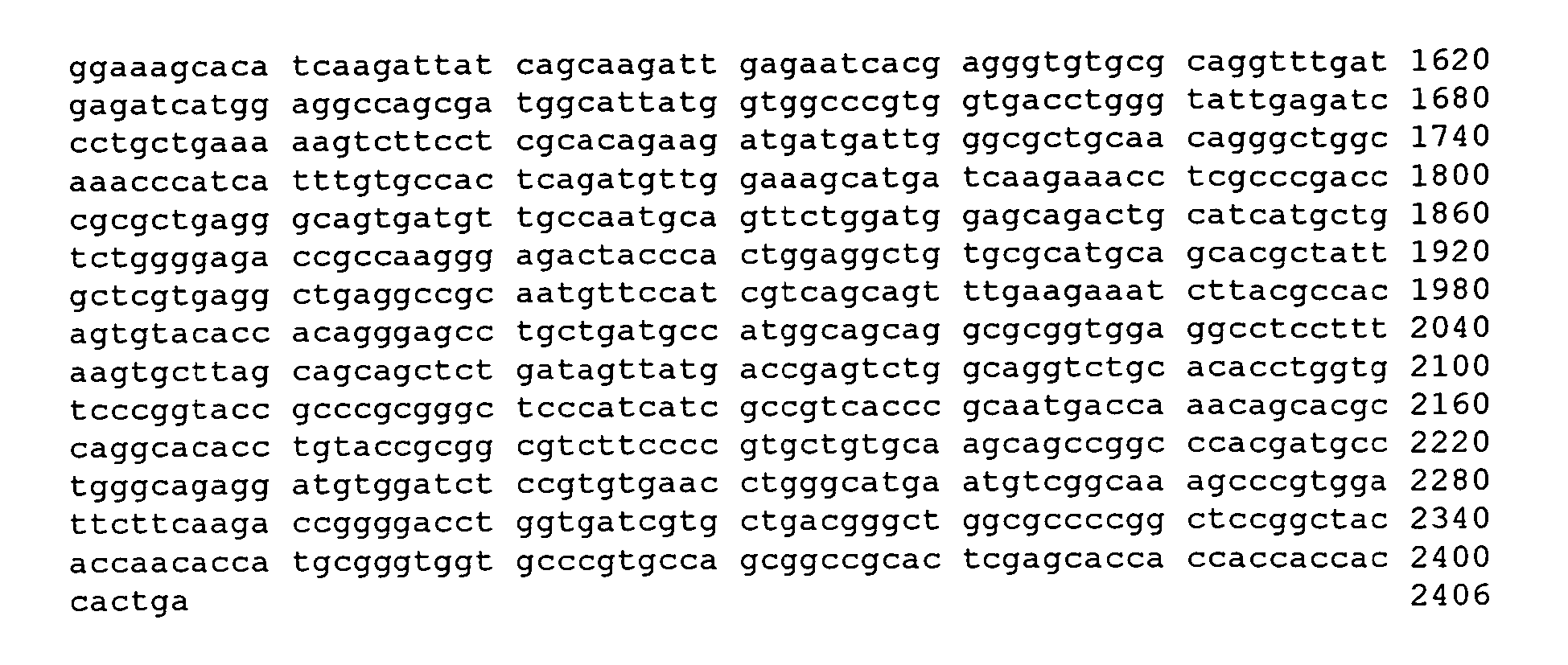
- <210> 2
<211> 801
<212> PRT
<213> Artificial Sequence - <220>
- <223> Description of Artificial Sequence:
TAT-hAPOBEC-CMPK - <400> 2


- <210> 3
<211> 2385
<212> DNA
<213> Artificial Sequence - <220>
- <223> Description of Artificial Sequence:
TAT-rAPOBEC-CMPK - <400> 3

- <210> 4
<211> 794
<212> PRT
<213> Artificial Sequence - <220>
<223> Description of Artificial Sequence:
TAT-rAPOBEC-CMPK - <400> 4
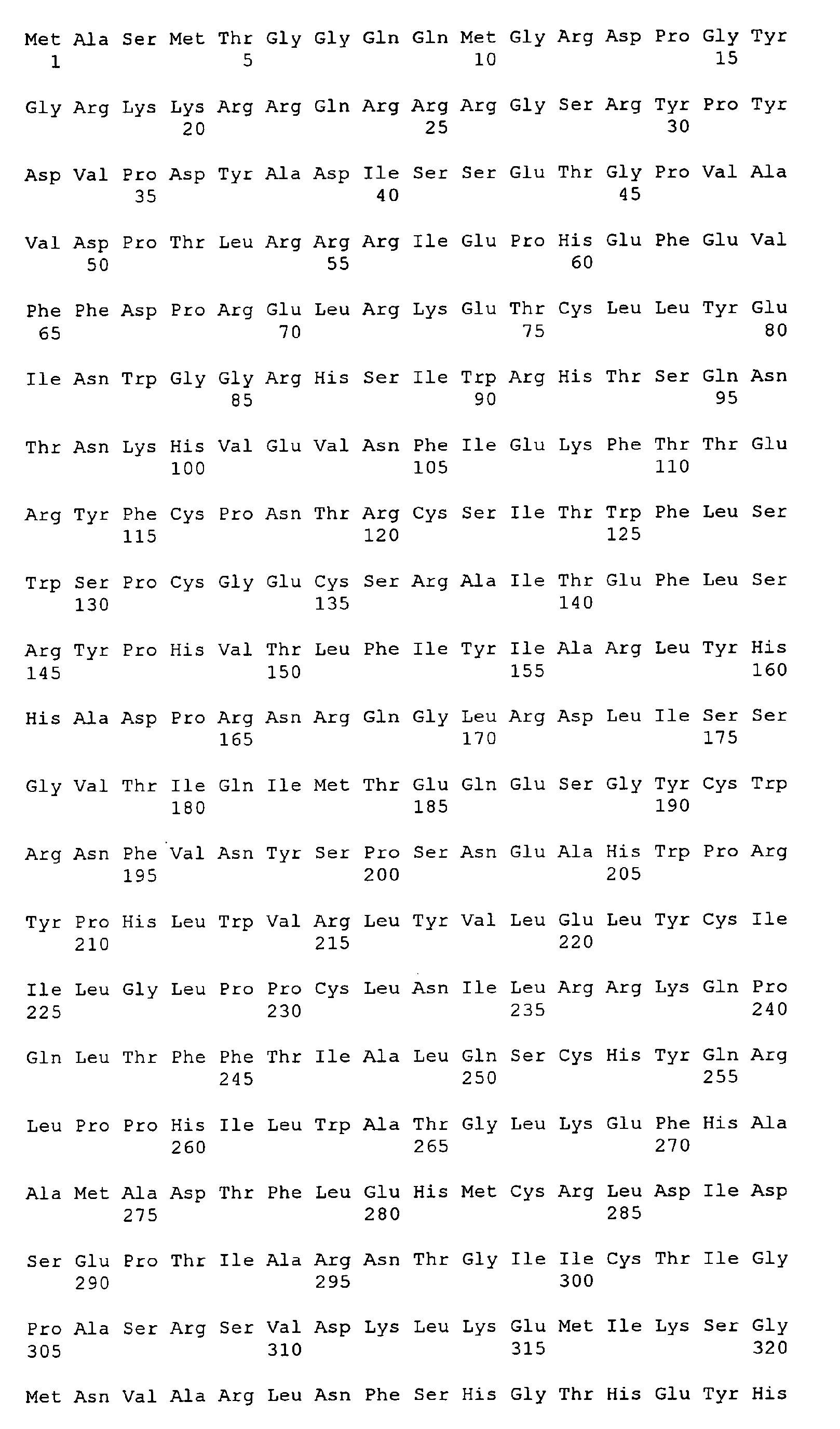


- <210> 5
<211> 1914
<212> DNA
<213> Artificial Sequence - <220>
<223> Description of Artificial Sequence: TAT-hACF - <400> 5
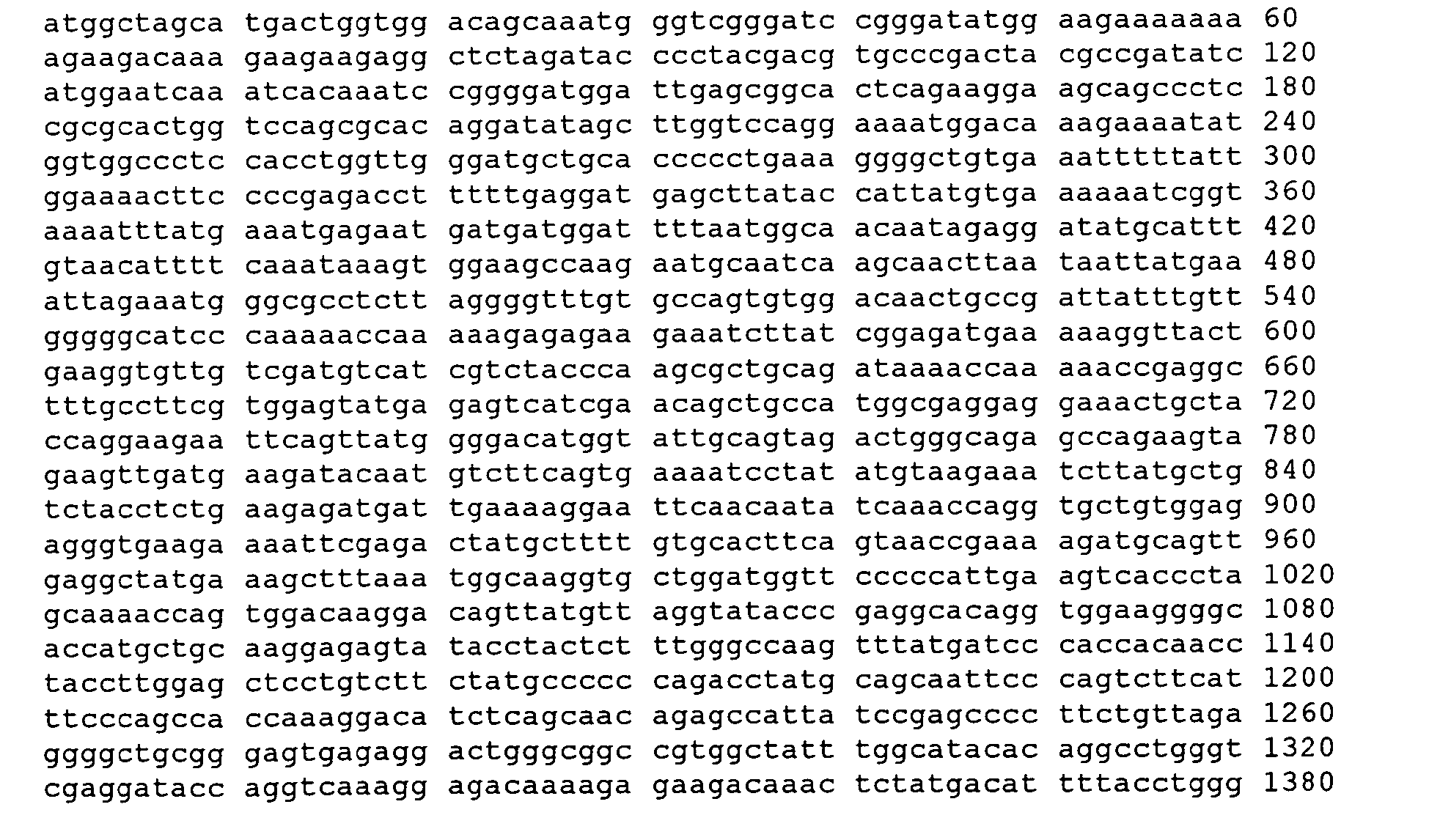

- <210> 6
<211> 637
<212> PRT
<213> Artificial Sequence - <220>
<223> Description of Artificial Sequence: TAT-hACF - <400> 6


- <210> 7
<211> 1914
<212> DNA
<213> Artificial Sequence - <220>
<223> Description of Artificial Sequence: TAT-rACF - <400> 7

- <210> 8
<211> 637
<212> PRT
<213> Artificial Sequence - <220>
<223> Description of Artificial Sequence: TAT-rACF - <400> 8


- <210> 9
<211> 9
<212> PRT
<213> Artificial Sequence - <220>
<223> Description of Artificial Sequence: protein transduction domain of HIV-1 - <400> 9

- <210> 10
<211> 27
<212> DNA
<213> Artificial Sequence - <220>
<223> Description of Artificial Sequence: encodes protein transduction domain of HIV-1 - <400> 10
agaaaaaaaa gaagacaaag aagaaga 27 - <210> 11
<211> 236
<212> PRT
<213> Homo sapiens - <400> 11


- <210> 12
<211> 711
<212> DNA
<213> Homo sapiens - <400> 12

- <210> 13
<211> 229
<212> PRT
<213> Rattus norvegicus - <400> 13


- <210> 14
<211> 690
<212> DNA
<213> Rattus norvegicus - <400> 14

- <210> 15
<211> 229
<212> PRT
<213> Mus musculus - <400> 15

- <210> 16
<211> 690
<212> DNA
<213> Mus musculus - <400> 16


- <210> 17
<211> 530
<212> PRT
<213> Gallus gallus - <400> 17
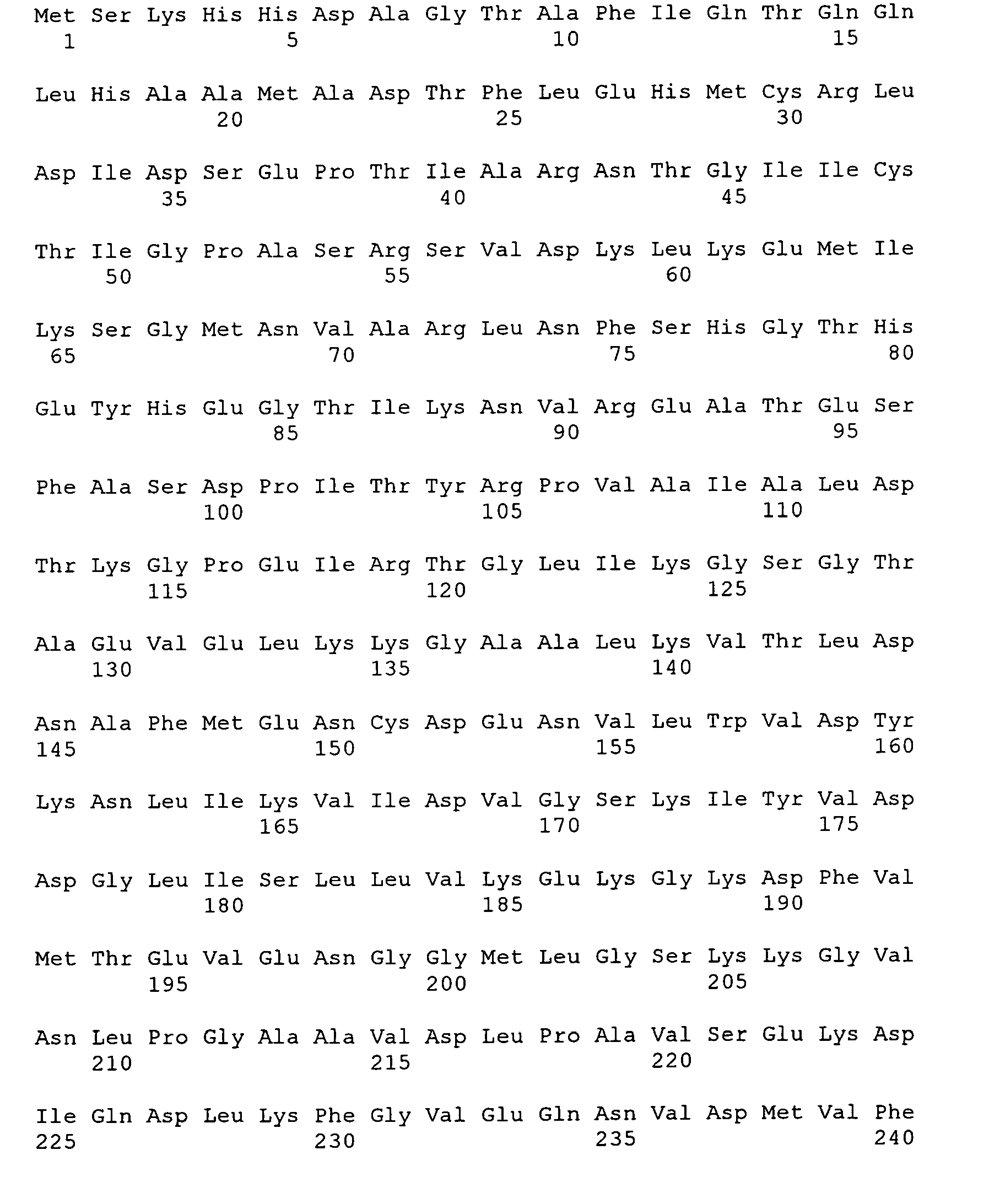

- <210> 18
<211> 1593
<212> DNA
<213> Gallus gallus - <400> 18

- <210> 19
<211> 9
<212> PRT
<213> Artificial Sequence - <220>
<223> Description of Artificial Sequence: hemagglutinin epitope tag - <400> 19

- <210> 20
<211> 27
<212> DNA
<213> Artificial Sequence - <220>
<223> Description of Artificial Sequence: encodes hemagglutinin epitope tag - <400> 20
tacccctacg acgtgcccga ctacgcc 27 - <210> 21
<211> 594
<212> PRT
<213> Rattus norvegicus - <400> 21

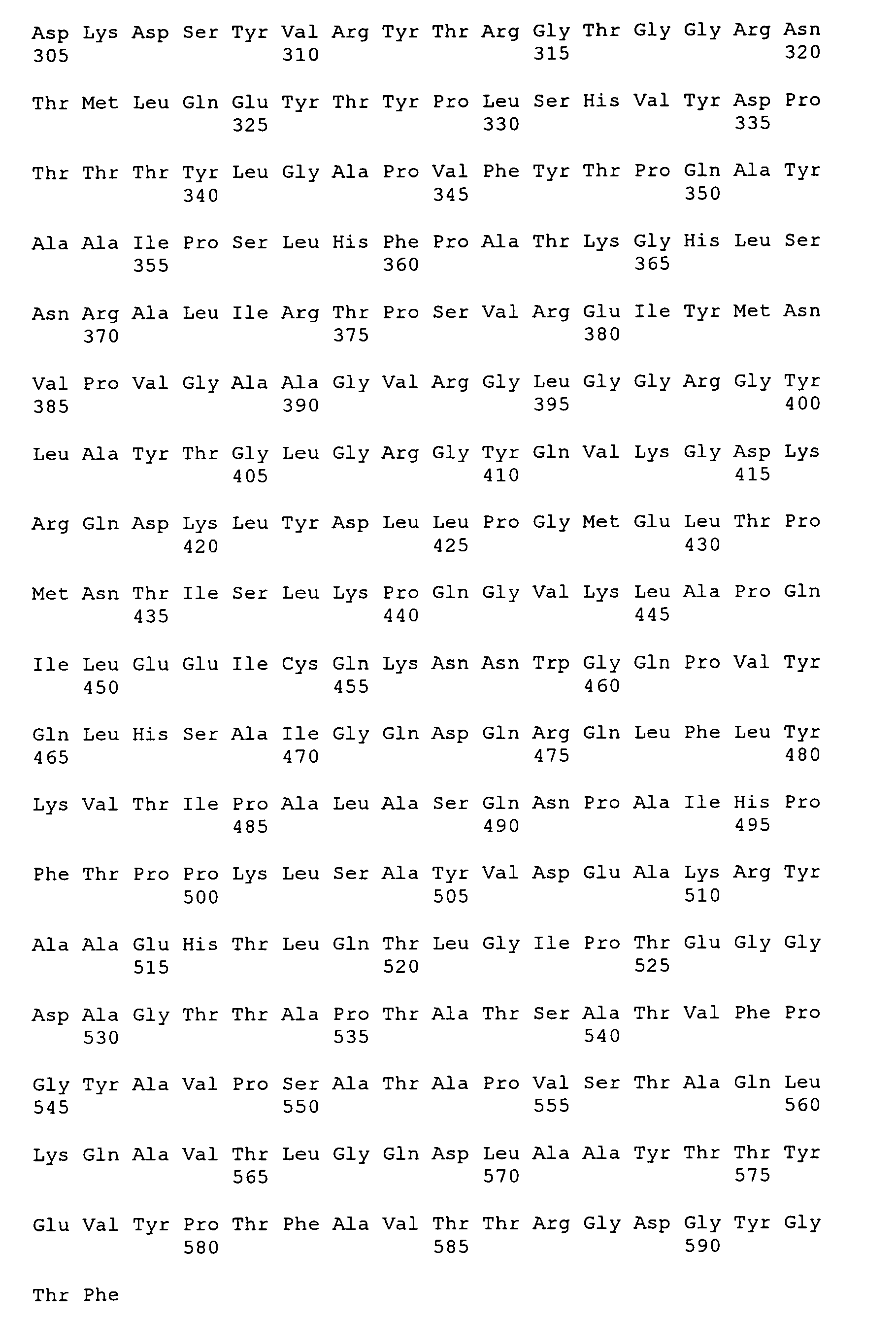
- <210> 22
<211> 1785
<212> DNA
<213> Rattus norvegicus - <400> 22

- <210> 23
<211> 586
<212> PRT
<213> Homo sapiens - <400> 23


- <210> 24
<211> 1761
<212> DNA
<213> Homo sapiens - <400> 24


- <210> 25
<211> 45
<212> DNA - <213> Artificial Sequence
- <220>
<223> Description of Artificial Sequence: oligomer encoding TAT protein transduction domain - <400> 25
catatgggaa gaaaaaaaag aagacaaaga agaagaggcc tcgag 45 - <210> 26
<211> 2274
<212> DNA
<213> Artificial Sequence - <220>
<223> Description of Artificial Sequence:
HA-rAPOBEC-CMPK construct - <400> 26


- <210> 27
<211> 1590
<212> DNA
<213> Artificial Sequence - <220>
<223> Description of Artificial Sequence: HA-CMPK construct - <400> 27

- <210> 28
<211> 1629
<212> DNA
<213> Artificial Sequence - <220>
<223> Description of Artificial Sequence: TAT-HA-CMPK construct - <400> 28

- <210> 29
<211> 23
<212> DNA
<213> Artificial Sequence - <220>
<223> Description of Artificial Sequence: primer ND1 - <400> 29
atctgactgg gagagacaag tag 23 - <210> 30
<211> 23
<212> DNA
<213> Artificial Sequence - <220>
<223> Description of Artificial Sequence: primer ND2 - <400> 30
gttcttttta agtcctgtgc atc 23 - <210> 31
<211> 35
<212> DNA
<213> Artificial Sequence - <220>
<223> Description of Artificial Sequence: primer DD3 - <400> 31
aatcatgtaa atcataacta tctttaatat actga 35


Claims (68)
- A chimeric protein comprising:a first polypeptide comprising a protein transduction domain; anda second polypeptide comprising APOBEC-1 or a fragment thereof which can edit mRNA. encoding apolipoprotein B.
- The chimeric protein according to claim 1 wherein the APOBEC-1 or fragment thereof comprises an amino acid sequence of SEQ ID No: 11, SEQ ID No: 13, or SEQ ID No: 15, or fragments thereof.
- The chimeric protein according to claim 1 or 2 further comprising:a third polypeptide comprising a cytoplasmic localization protein or a fragment thereof which, upon cellular uptake of the chimeric protein, enhances localization of the chimeric protein to the cytoplasm.
- The chimeric protein according to claim 3 wherein the cytoplasmic localization protein or fragment thereof is chicken muscle pyruvate kinase or a fragment thereof.
- The chimeric protein according to claim 4 wherein the chicken muscle pyruvate kinase or a fragment thereof comprises an amino acid sequence of SEQ ID No: 17 or fragments thereof.
- The chimeric protein according to any one of claims 3 -5 wherein, within the chimeric protein, the third polypeptide is C-terminal of the second polypeptide.
- The chimeric protein according to any one of claims 1 - 6, wherein the chimeric protein comprises an amino acid sequence of SEQ ID No: 2 or SEQ ID No: 4.
- A chimeric protein comprising:a first polypeptide comprising a protein transduction domain; anda second polypeptide comprising APOBEC-1 Complementation Factor (ACF) or a fragment thereof which can bind to apolipoprotein B mRNA to facilitate editing of the mRNA by APOBEC-1.
- The chimeric protein according to claim 8 wherein the ACF or fragment thereof comprises an amino acid sequence of SEQ ID No: 21 or SEQ ID No: 23 or fragments thereof.
- The chimeric protein according to claim 8 wherein the chimeric protein comprises an amino acid sequence of SEQ ID No: 6 or SEQ ID No: 8.
- The chimeric protein according to any of claims 1-10 wherein the protein transduction domain is an HIV tat protein transduction domain.
- The chimeric protein according to claim 11, wherein the HIV tat protein transduction domain comprises an amino acid sequence of SEQ ID No: 9.
- The chimeric protein according to any one of claims 1, 2 or 8 - 12 further comprising:a third polypeptide comprising a plurality of adjacent histidine residues.
- The chimeric protein according to any one of claims 1, 2 or 8-12 further comprising:a third polypeptide comprising a hemagglutinin domain.
- The chimeric protein according to any one of claims 1-14 wherein, within the chimeric protein, the first polypeptide is N-terminal of the second polypeptide.
- The chimeric protein according to any one of claims 1-15 wherein the chimeric protein is in isolated form.
- A composition comprising:a pharmaceutically acceptable carrier andthe chimeric protein according to any one of claims 1-7.
- The composition according to claim 17, wherein the chimeric protein is present in an amount which is effective to modify apolipoprotein B mRNA editing in liver cells which uptake the chimeric protein.
- A composition comprising:a first chimeric protein according to any one of claims 1 to 7; anda second chimeric protein according to any of claims 8 - 16.
- The composition according to claim 19 wherein
the first chimeric protein is present in an amount effective to modify apolipoprotein B mRNA editing in cells which uptake the first chimeric protein and
the second chimeric protein is present in an amount which is effective to bind apolipoprotein B mRNA and assist the first chimeric protein in modifying apolipoprotein B mRNA in cells which uptake the first and second chimeric proteins. - The composition according to claim 19 or 20 further comprising:a pharmaceutically acceptable carrier in which the First and second chimeric proteins are dispersed.
- The composition according to any one of claims 17, 18 or 19-21 wherein the composition is in the form of a tablet, capsule, powder, solution, suspension, or emulsion.
- A DNA molecule encoding a chimeric protein as defined in any one of claims 1-16.
- The DNA molecule according to claim 23 comprising a nucleotide sequence of SEQ ID No: 1 or SEQ ID No: 3.
- The DNA molecule according to claim 23 comprising a nucleotide sequence of SEQ ID No: 5 or SEQ ID No: 7.
- A DNA construct comprising:the DNA molecule according to any one of claims 23-25; a promoter sequence operably connected 5' to the DNA molecule; and a 3' regulatory sequence operably , connected 3' of the DNA molecule.
- An expression vector comprising a DNA molecule according to any one of claims 23-25.
- A recombinant host cell transformed with a DNA molecule according to any one of claims 23-25.
- A delivery device comprising a chimeric protein as defined in any one of claims 1-16.
- A delivery device comprising a composition as defined in any one of claims 17-20.
- The delivery device according to claims 29 or 30, wherein the delivery device is in the form of a liposome, a niosome, a transdermal patch, an implant, or a syringe.
- A chimeric protein as defined in any one of claims 1-7 for use in modifying VLDL-apolipoprotein B mRNA editing in vivo, wherein VLDL-apolipoprotein B mRNA in a cell is contacted with said chimeric protein under conditions effective to increase the concentration of VLDL-apolipoprotein B48 which is secreted by the cell, as compared to the concentration of VLDL-apolipoprotein B100 which is secreted by the cell, relative to an untreated cell.
- The chimeric protein according to claim 32 characterised in that the cell is a liver cell.
- The chimeric protein according to claim 32 or 33 characterised in that the cell is present in a mammal.
- The chimeric protein according to any one of claims 32-34 wherein the cell is exposed to said chimeric protein under conditions effective to induce cellular uptake of said chimeric protein prior to contacting the cell with said chimeric protein under the conditions defined in claim 32.
- The chimeric protein of any one of claims 33-35, wherein the apolipoprotein B mRNA in the cell is further
contacted with a second chimeric protein according to any one of claims 8-16. - The chimeric protein of claim 36 wherein the second chimeric protein comprises an amino acid sequence of SEQ ID No.6 or SEQ ID No.8.
- The chimeric protein of claim 1 for use in reducing serum LDL levels in a patient, wherein said protein is delivered into one or more cells of the patient, without genetically modifying the cells, in an amount which is effective to increase the concentration of VLDL-apolipoprotein B48 that is secreted by one or more of the cells into serum.
- The chimeric protein of claim 38 wherein the one or more cells are liver cells, intestinal cells, or a combination thereof.
- The chimeric protein of claims 38 or 39 wherein the patient is a mammal.
- The chimeric protein of claim 40 wherein the mammal is a human.
- The chimeric protein according to any one of claims 38-41 wherein said protein is delivered by exposing the one or more cells to the protein under conditions effective to cause cellular uptake of the protein.
- The chimeric protein according to any one of claims 38-42 wherein the protein is present in a liposome or noisome which is taken up by liver cells.
- The chimeric protein of any one of claims 38-42 or 43 which is simultaneously delivered into the one or more cells of the patient with an amount of a second protein comprising ACF or a fragment thereof which can bind to apolipoprotein B mRNA, also without genetically modifying the cells.
- The chimeric protein of claim 44 wherein the proteins are simultaneously delivered by exposing the one or more cells to the second protein under conditions effective to cause cellular uptake of the second protein.
- The chimeric protein of claim 44 wherein the second protein is a chimeric protein which further comprises a polypeptide comprising a protein transduction domain.
- The chimeric protein according to claim 46 wherein the second chimeric protein comprises an amino acid sequence of SEQ ID No: 6 or SEQ ID No: 8.
- The chimeric protein according to any one of claims 38-42 and 44-48 wherein delivering is repeated following a delay.
- The protein according to claim 48 wherein the delay is from about 1 to about 7 days.
- The chimeric protein of claim 1 for use in treating or preventing an atherogenic disease or disorder, wherein the protein is administered to a patient and wherein upon said administration the protein is taken up by one or more cells of the patient that can synthesize and secrete VLDL-apolipoprotein B under conditions which are effective to increase the concentration of VLDL-apolipoprotein B48 that is secreted by the one or more cells into serum, whereby rapid clearing of VLDL-apolipoprotein B48 from serum decreases the serum concentration of LDL.
- The chimeric protein according to claim 50 wherein the patient is a mammal.
- The chimeric protein according to claim 51 wherein the mammal is a human.
- The chimeric protein according to any one of claims 50-52 wherein said administration is carried out orally, topically, transdermally, parenterally, subcutaneously, intravenously, intramuscularly, intraperitoneally, by intracavitary or intravesical instillation, intraocularly, intraarterially, intralesionally, by application to mucous membranes, or by implantation.
- The chimeric protein according to any one of claims 50-53 wherein the chimeric protein comprises an amino acid sequence of SEQ ID No: 2 or SEQ ID No: 4.
- The chimeric protein according to any of claims 51-56 wherein the protein is present in a liposome or noisome which is taken up by liver cells.
- The chimeric protein according to any one of claims 50-55 wherein an effective amount of a second protein comprising ACF or a fragment thereof which can bind to apolipoprotein B mRNA is also administered to the patient.
- The chimeric protein according to claim 56 wherein both proteins are administered simultaneously.
- The chimeric protein according to claim 56 or 57 wherein the second protein is a chimeric protein which further comprises a protein transduction domain.
- The chimeric protein according to claim 58 wherein the second chimeric protein comprises an amino acid sequence of SEQ ID No: 6 or SEQ ID No: 8.
- The chimeric protein according to any one of claims 50-59 wherein the administration is repeated following a delay.
- The protein according to claim 60 wherein the delay is from about 1 to about 7 days.
- A liposome or niosome which is targeted for uptake by a liver cell, the liposome or niosome containing (i) the chimeric protein of claim 1, or (ii) the chimeric protein of claim 8, or (iii) a combination thereof.
- The liposome or niosome according to claim 62 in the form of a liposome comprising asialofetuin incorporated into a lipid bilayer.
- The liposome or niosome according to claim 62 or 63, in the form of a niosome comprising doxorubicin with a polyoxyethylene surface.
- The liposome or niosome according to any one of claims 62-64, wherein the liposome or niosome contains the chimeric protein of claim 1.
- The liposome or niosome according to any one of claims 62-64, wherein the liposome or niosome contains the chimeric protein of claim 8.
- The liposome or niosome according to any one of claim 62-66, wherein the liposome or niosome contains a combination of the chimeric protein of claim 1 and the chimeric protein of claim 8.
- A composition comprising:a pharmaceutically acceptable carrier and the liposome or niosome according to any one of claims 62-67.
Applications Claiming Priority (3)
| Application Number | Priority Date | Filing Date | Title |
|---|---|---|---|
| US27185601P | 2001-02-27 | 2001-02-27 | |
| US271856P | 2001-02-27 | ||
| PCT/US2002/005824 WO2002068676A2 (en) | 2001-02-27 | 2002-02-26 | METHODS AND COMPOSITIONS FOR MODIFYING APOLIPOPROTEIN B mRNA EDITING |
Publications (3)
| Publication Number | Publication Date |
|---|---|
| EP1392846A2 EP1392846A2 (en) | 2004-03-03 |
| EP1392846A4 EP1392846A4 (en) | 2005-09-21 |
| EP1392846B1 true EP1392846B1 (en) | 2008-06-11 |
Family
ID=23037380
Family Applications (1)
| Application Number | Title | Priority Date | Filing Date |
|---|---|---|---|
| EP02731102A Expired - Lifetime EP1392846B1 (en) | 2001-02-27 | 2002-02-26 | METHODS AND COMPOSITIONS FOR MODIFYING APOLIPOPROTEIN B mRNA EDITING |
Country Status (7)
| Country | Link |
|---|---|
| US (2) | US20040115184A1 (en) |
| EP (1) | EP1392846B1 (en) |
| JP (1) | JP2004521625A (en) |
| AT (1) | ATE398180T1 (en) |
| CA (1) | CA2439472A1 (en) |
| DE (1) | DE60227069D1 (en) |
| WO (1) | WO2002068676A2 (en) |
Families Citing this family (43)
| Publication number | Priority date | Publication date | Assignee | Title |
|---|---|---|---|---|
| WO2004013160A2 (en) * | 2002-08-05 | 2004-02-12 | University Of Rochester | Protein transducing domain/deaminase chimeric proteins, related compounds, and uses thereof |
| WO2005023985A2 (en) * | 2003-09-03 | 2005-03-17 | University Of Rochester | Cytidine deaminase activators, deoxycytidine deaminase activators, vif antagonists, and methods of screening for molecules thereof |
| WO2005115410A2 (en) | 2004-05-06 | 2005-12-08 | University Of Rochester | Context dependent inhibitors of cytidine deaminases and uses thereof |
| EP2059122B1 (en) * | 2006-08-28 | 2012-06-20 | University of Rochester | Methods and compositions related to apobec-1 expression |
| US9084762B2 (en) | 2008-09-30 | 2015-07-21 | The Regents Of The University Of California | T-cell immunogens derived from anti-viral proteins and methods of using same |
| EP2731964A2 (en) * | 2011-07-12 | 2014-05-21 | Regents of the University of Minnesota | Micro-utrophin polypeptides and methods |
| US10323236B2 (en) | 2011-07-22 | 2019-06-18 | President And Fellows Of Harvard College | Evaluation and improvement of nuclease cleavage specificity |
| US9163284B2 (en) | 2013-08-09 | 2015-10-20 | President And Fellows Of Harvard College | Methods for identifying a target site of a Cas9 nuclease |
| US9359599B2 (en) | 2013-08-22 | 2016-06-07 | President And Fellows Of Harvard College | Engineered transcription activator-like effector (TALE) domains and uses thereof |
| US9322037B2 (en) | 2013-09-06 | 2016-04-26 | President And Fellows Of Harvard College | Cas9-FokI fusion proteins and uses thereof |
| US9340799B2 (en) | 2013-09-06 | 2016-05-17 | President And Fellows Of Harvard College | MRNA-sensing switchable gRNAs |
| US9526784B2 (en) | 2013-09-06 | 2016-12-27 | President And Fellows Of Harvard College | Delivery system for functional nucleases |
| US20150165054A1 (en) | 2013-12-12 | 2015-06-18 | President And Fellows Of Harvard College | Methods for correcting caspase-9 point mutations |
| US10077453B2 (en) | 2014-07-30 | 2018-09-18 | President And Fellows Of Harvard College | CAS9 proteins including ligand-dependent inteins |
| US10167457B2 (en) | 2015-10-23 | 2019-01-01 | President And Fellows Of Harvard College | Nucleobase editors and uses thereof |
| KR20250103795A (en) | 2016-08-03 | 2025-07-07 | 프레지던트 앤드 펠로우즈 오브 하바드 칼리지 | Adenosine nucleobase editors and uses thereof |
| EP3497214B1 (en) | 2016-08-09 | 2023-06-28 | President and Fellows of Harvard College | Programmable cas9-recombinase fusion proteins and uses thereof |
| WO2018039438A1 (en) | 2016-08-24 | 2018-03-01 | President And Fellows Of Harvard College | Incorporation of unnatural amino acids into proteins using base editing |
| AU2017342543B2 (en) | 2016-10-14 | 2024-06-27 | President And Fellows Of Harvard College | AAV delivery of nucleobase editors |
| US10745677B2 (en) | 2016-12-23 | 2020-08-18 | President And Fellows Of Harvard College | Editing of CCR5 receptor gene to protect against HIV infection |
| US12390514B2 (en) | 2017-03-09 | 2025-08-19 | President And Fellows Of Harvard College | Cancer vaccine |
| EP3592853A1 (en) | 2017-03-09 | 2020-01-15 | President and Fellows of Harvard College | Suppression of pain by gene editing |
| US11542496B2 (en) | 2017-03-10 | 2023-01-03 | President And Fellows Of Harvard College | Cytosine to guanine base editor |
| BR112019019655A2 (en) | 2017-03-23 | 2020-04-22 | Harvard College | nucleobase editors comprising nucleic acid programmable dna binding proteins |
| WO2018209320A1 (en) | 2017-05-12 | 2018-11-15 | President And Fellows Of Harvard College | Aptazyme-embedded guide rnas for use with crispr-cas9 in genome editing and transcriptional activation |
| US11732274B2 (en) | 2017-07-28 | 2023-08-22 | President And Fellows Of Harvard College | Methods and compositions for evolving base editors using phage-assisted continuous evolution (PACE) |
| US11319532B2 (en) | 2017-08-30 | 2022-05-03 | President And Fellows Of Harvard College | High efficiency base editors comprising Gam |
| AU2018352592C1 (en) | 2017-10-16 | 2025-09-25 | Beam Therapeutics, Inc. | Uses of adenosine base editors |
| US12406749B2 (en) | 2017-12-15 | 2025-09-02 | The Broad Institute, Inc. | Systems and methods for predicting repair outcomes in genetic engineering |
| JP7642531B2 (en) | 2018-05-11 | 2025-03-10 | ビーム セラピューティクス インク. | Methods for replacing pathogenic amino acids using a programmable base editor system |
| US12157760B2 (en) | 2018-05-23 | 2024-12-03 | The Broad Institute, Inc. | Base editors and uses thereof |
| US12522807B2 (en) | 2018-07-09 | 2026-01-13 | The Broad Institute, Inc. | RNA programmable epigenetic RNA modifiers and uses thereof |
| KR20210055733A (en) | 2018-09-07 | 2021-05-17 | 빔 테라퓨틱스, 인크. | Compositions and methods for delivering nucleobase editing systems |
| EP3850088A4 (en) | 2018-09-07 | 2023-07-19 | Beam Therapeutics, Inc. | COMPOSITIONS AND METHODS FOR IMPROVED BASE TREATMENT |
| WO2020092453A1 (en) | 2018-10-29 | 2020-05-07 | The Broad Institute, Inc. | Nucleobase editors comprising geocas9 and uses thereof |
| US12351837B2 (en) | 2019-01-23 | 2025-07-08 | The Broad Institute, Inc. | Supernegatively charged proteins and uses thereof |
| CN114127285B (en) | 2019-03-19 | 2024-09-10 | 布罗德研究所股份有限公司 | Methods and compositions for editing nucleotide sequences |
| EP3956349A1 (en) | 2019-04-17 | 2022-02-23 | The Broad Institute, Inc. | Adenine base editors with reduced off-target effects |
| WO2021056302A1 (en) * | 2019-09-26 | 2021-04-01 | Syngenta Crop Protection Ag | Methods and compositions for dna base editing |
| US12435330B2 (en) | 2019-10-10 | 2025-10-07 | The Broad Institute, Inc. | Methods and compositions for prime editing RNA |
| DE112021002672T5 (en) | 2020-05-08 | 2023-04-13 | President And Fellows Of Harvard College | METHODS AND COMPOSITIONS FOR EDIT BOTH STRANDS SIMULTANEOUSLY OF A DOUBLE STRANDED NUCLEOTIDE TARGET SEQUENCE |
| WO2022241270A2 (en) * | 2021-05-14 | 2022-11-17 | Beam Therapeutics Inc. | Compositions and methods for treating transthyretin amyloidosis |
| CN113234745B (en) * | 2021-06-11 | 2021-11-02 | 山东祥维斯生物科技股份有限公司 | Transmembrane transduction of low-temperature lipase genes from marine microorganisms using PTD-Tat |
Family Cites Families (12)
| Publication number | Priority date | Publication date | Assignee | Title |
|---|---|---|---|---|
| US5468022A (en) * | 1994-06-14 | 1995-11-21 | Massachusetts Institute Of Technology | Sample tube identification flag |
| US6041253A (en) * | 1995-12-18 | 2000-03-21 | Massachusetts Institute Of Technology | Effect of electric field and ultrasound for transdermal drug delivery |
| US5866333A (en) * | 1996-03-01 | 1999-02-02 | Regents Of The University Of California | Screening methods to detect mRNA targets of editing enzymes |
| US5747319A (en) * | 1996-07-25 | 1998-05-05 | Incyte Pharmaceuticals, Inc. | Human mRNA editing enzyme |
| WO1998027962A2 (en) * | 1996-12-20 | 1998-07-02 | Alza Corporation | Injectable depot gel composition and method of preparing the composition |
| US5804185A (en) * | 1997-03-13 | 1998-09-08 | Incyte Pharmaceuticals, Inc. | RNA editing enzyme REE-2 |
| FR2773079B1 (en) * | 1997-12-30 | 2002-05-17 | Itzik Harosh | TREATMENT TARGET FOR ATHEROSCLEROSIS, OBESITY AND TYPE II DIABETES |
| AU2002307229B2 (en) * | 2001-04-06 | 2007-05-24 | Thomas Jefferson University | Multimerization of HIV-1 Vif protein as a therapeutic target |
| US20040009951A1 (en) * | 2002-06-13 | 2004-01-15 | Malim Michael H | DNA deamination mediates innate immunity to (retro)viral infection |
| WO2004013160A2 (en) * | 2002-08-05 | 2004-02-12 | University Of Rochester | Protein transducing domain/deaminase chimeric proteins, related compounds, and uses thereof |
| DE602004012406T2 (en) * | 2003-05-23 | 2009-04-30 | Oregon Health & Science University, Portland | PROCESS FOR IDENTIFYING INHIBITORS |
| WO2005023985A2 (en) * | 2003-09-03 | 2005-03-17 | University Of Rochester | Cytidine deaminase activators, deoxycytidine deaminase activators, vif antagonists, and methods of screening for molecules thereof |
-
2002
- 2002-02-26 EP EP02731102A patent/EP1392846B1/en not_active Expired - Lifetime
- 2002-02-26 US US10/468,987 patent/US20040115184A1/en not_active Abandoned
- 2002-02-26 JP JP2002568770A patent/JP2004521625A/en not_active Withdrawn
- 2002-02-26 DE DE60227069T patent/DE60227069D1/en not_active Expired - Lifetime
- 2002-02-26 CA CA002439472A patent/CA2439472A1/en not_active Abandoned
- 2002-02-26 AT AT02731102T patent/ATE398180T1/en not_active IP Right Cessation
- 2002-02-26 WO PCT/US2002/005824 patent/WO2002068676A2/en not_active Ceased
-
2010
- 2010-05-20 US US12/784,310 patent/US20100297219A1/en not_active Abandoned
Also Published As
| Publication number | Publication date |
|---|---|
| US20100297219A1 (en) | 2010-11-25 |
| EP1392846A4 (en) | 2005-09-21 |
| US20040115184A1 (en) | 2004-06-17 |
| JP2004521625A (en) | 2004-07-22 |
| CA2439472A1 (en) | 2002-09-06 |
| WO2002068676A2 (en) | 2002-09-06 |
| EP1392846A2 (en) | 2004-03-03 |
| DE60227069D1 (en) | 2008-07-24 |
| ATE398180T1 (en) | 2008-07-15 |
| WO2002068676A3 (en) | 2003-12-24 |
Similar Documents
| Publication | Publication Date | Title |
|---|---|---|
| EP1392846B1 (en) | METHODS AND COMPOSITIONS FOR MODIFYING APOLIPOPROTEIN B mRNA EDITING | |
| JP2869396B2 (en) | TAT-derived transport polypeptide | |
| JP4188909B2 (en) | Cytoplasmic residual cell membrane permeation peptide and uses thereof {CytoplasmicTransductionPeptides and Usetherof} | |
| US9655953B2 (en) | Targeted protein replacement for the treatment of lysosomal storage disorders | |
| JP2022159570A (en) | Administration of kynurenine-depleting enzymes for the treatment of tumors | |
| US10131888B2 (en) | Intracellular protein delivery | |
| US12331102B2 (en) | APOA-1 fusion polypeptides and related compositions | |
| US20230322873A1 (en) | Methods to produce rod-derived cone viability factor (rdcvf) | |
| JP7640976B2 (en) | Multimerized delivery systems for intracellular delivery of molecules | |
| EP1290153A2 (en) | Molecular delivery vehicle for delivery of selected compounds to targets | |
| CA3083951A1 (en) | Cdkl5 expression variants and cdkl5 fusion proteins | |
| KR102050621B1 (en) | Rtrail mutant and monomethyl auristatin e conjugate thereof | |
| JP2010513471A (en) | Fusion protein of immunoglobulin Fc and human apolipoprotein kringle fragment | |
| JP2001521733A (en) | Fusion protein of human epidermal growth factor and human angiogenin and method for producing the same | |
| Lee et al. | Cell permeable cocaine esterases constructed by chemical conjugation and genetic recombination | |
| AU2002303101A1 (en) | Methods and compositions for modifying apolipoprotein B mRNA editing | |
| EP1605964B1 (en) | TARGETED PROTEIN DEGRADATION VEHICLES (TPDVs), NUCLEIC ACID CONSTRUCTS ENCODING THEM AND THEIR USE | |
| HK40075111A (en) | Multimerization delivery system for intracellular delivery of molecule | |
| WO2006076024A2 (en) | A method for targeting synapse with acetylcholinesterase | |
| PHENYLKETONURIA | The latest version is at |
Legal Events
| Date | Code | Title | Description |
|---|---|---|---|
| PUAI | Public reference made under article 153(3) epc to a published international application that has entered the european phase |
Free format text: ORIGINAL CODE: 0009012 |
|
| 17P | Request for examination filed |
Effective date: 20030924 |
|
| AK | Designated contracting states |
Kind code of ref document: A2 Designated state(s): AT BE CH CY DE DK ES FI FR GB GR IE IT LI LU MC NL PT SE TR |
|
| AX | Request for extension of the european patent |
Extension state: AL LT LV MK RO SI |
|
| RIC1 | Information provided on ipc code assigned before grant |
Ipc: 7C 12N 9/78 B Ipc: 7C 07K 19/00 B Ipc: 7C 12N 15/63 B Ipc: 7C 07K 14/47 B Ipc: 7A 61K 38/50 B Ipc: 7C 12N 15/52 B Ipc: 7C 12N 15/62 A Ipc: 7C 12N 5/10 B Ipc: 7A 61K 38/17 B |
|
| A4 | Supplementary search report drawn up and despatched |
Effective date: 20050804 |
|
| 17Q | First examination report despatched |
Effective date: 20060321 |
|
| GRAP | Despatch of communication of intention to grant a patent |
Free format text: ORIGINAL CODE: EPIDOSNIGR1 |
|
| GRAS | Grant fee paid |
Free format text: ORIGINAL CODE: EPIDOSNIGR3 |
|
| GRAA | (expected) grant |
Free format text: ORIGINAL CODE: 0009210 |
|
| AK | Designated contracting states |
Kind code of ref document: B1 Designated state(s): AT BE CH CY DE DK ES FI FR GB GR IE IT LI LU MC NL PT SE TR |
|
| REG | Reference to a national code |
Ref country code: GB Ref legal event code: FG4D |
|
| REG | Reference to a national code |
Ref country code: CH Ref legal event code: EP |
|
| REF | Corresponds to: |
Ref document number: 60227069 Country of ref document: DE Date of ref document: 20080724 Kind code of ref document: P |
|
| REG | Reference to a national code |
Ref country code: IE Ref legal event code: FG4D |
|
| PG25 | Lapsed in a contracting state [announced via postgrant information from national office to epo] |
Ref country code: FI Free format text: LAPSE BECAUSE OF FAILURE TO SUBMIT A TRANSLATION OF THE DESCRIPTION OR TO PAY THE FEE WITHIN THE PRESCRIBED TIME-LIMIT Effective date: 20080611 |
|
| PG25 | Lapsed in a contracting state [announced via postgrant information from national office to epo] |
Ref country code: AT Free format text: LAPSE BECAUSE OF FAILURE TO SUBMIT A TRANSLATION OF THE DESCRIPTION OR TO PAY THE FEE WITHIN THE PRESCRIBED TIME-LIMIT Effective date: 20080611 |
|
| PG25 | Lapsed in a contracting state [announced via postgrant information from national office to epo] |
Ref country code: PT Free format text: LAPSE BECAUSE OF FAILURE TO SUBMIT A TRANSLATION OF THE DESCRIPTION OR TO PAY THE FEE WITHIN THE PRESCRIBED TIME-LIMIT Effective date: 20081111 Ref country code: SE Free format text: LAPSE BECAUSE OF FAILURE TO SUBMIT A TRANSLATION OF THE DESCRIPTION OR TO PAY THE FEE WITHIN THE PRESCRIBED TIME-LIMIT Effective date: 20080911 Ref country code: ES Free format text: LAPSE BECAUSE OF FAILURE TO SUBMIT A TRANSLATION OF THE DESCRIPTION OR TO PAY THE FEE WITHIN THE PRESCRIBED TIME-LIMIT Effective date: 20080922 |
|
| PG25 | Lapsed in a contracting state [announced via postgrant information from national office to epo] |
Ref country code: BE Free format text: LAPSE BECAUSE OF FAILURE TO SUBMIT A TRANSLATION OF THE DESCRIPTION OR TO PAY THE FEE WITHIN THE PRESCRIBED TIME-LIMIT Effective date: 20080611 |
|
| PLBE | No opposition filed within time limit |
Free format text: ORIGINAL CODE: 0009261 |
|
| STAA | Information on the status of an ep patent application or granted ep patent |
Free format text: STATUS: NO OPPOSITION FILED WITHIN TIME LIMIT |
|
| PG25 | Lapsed in a contracting state [announced via postgrant information from national office to epo] |
Ref country code: DK Free format text: LAPSE BECAUSE OF FAILURE TO SUBMIT A TRANSLATION OF THE DESCRIPTION OR TO PAY THE FEE WITHIN THE PRESCRIBED TIME-LIMIT Effective date: 20080611 |
|
| 26N | No opposition filed |
Effective date: 20090312 |
|
| PG25 | Lapsed in a contracting state [announced via postgrant information from national office to epo] |
Ref country code: MC Free format text: LAPSE BECAUSE OF NON-PAYMENT OF DUE FEES Effective date: 20090228 |
|
| REG | Reference to a national code |
Ref country code: CH Ref legal event code: PL |
|
| PG25 | Lapsed in a contracting state [announced via postgrant information from national office to epo] |
Ref country code: LI Free format text: LAPSE BECAUSE OF NON-PAYMENT OF DUE FEES Effective date: 20090228 Ref country code: CH Free format text: LAPSE BECAUSE OF NON-PAYMENT OF DUE FEES Effective date: 20090228 |
|
| REG | Reference to a national code |
Ref country code: IE Ref legal event code: MM4A |
|
| PG25 | Lapsed in a contracting state [announced via postgrant information from national office to epo] |
Ref country code: IE Free format text: LAPSE BECAUSE OF NON-PAYMENT OF DUE FEES Effective date: 20090226 |
|
| PGFP | Annual fee paid to national office [announced via postgrant information from national office to epo] |
Ref country code: NL Payment date: 20100223 Year of fee payment: 9 |
|
| PG25 | Lapsed in a contracting state [announced via postgrant information from national office to epo] |
Ref country code: GR Free format text: LAPSE BECAUSE OF FAILURE TO SUBMIT A TRANSLATION OF THE DESCRIPTION OR TO PAY THE FEE WITHIN THE PRESCRIBED TIME-LIMIT Effective date: 20080912 |
|
| PG25 | Lapsed in a contracting state [announced via postgrant information from national office to epo] |
Ref country code: LU Free format text: LAPSE BECAUSE OF NON-PAYMENT OF DUE FEES Effective date: 20090226 |
|
| PG25 | Lapsed in a contracting state [announced via postgrant information from national office to epo] |
Ref country code: TR Free format text: LAPSE BECAUSE OF FAILURE TO SUBMIT A TRANSLATION OF THE DESCRIPTION OR TO PAY THE FEE WITHIN THE PRESCRIBED TIME-LIMIT Effective date: 20080611 |
|
| REG | Reference to a national code |
Ref country code: NL Ref legal event code: V1 Effective date: 20110901 |
|
| PG25 | Lapsed in a contracting state [announced via postgrant information from national office to epo] |
Ref country code: CY Free format text: LAPSE BECAUSE OF FAILURE TO SUBMIT A TRANSLATION OF THE DESCRIPTION OR TO PAY THE FEE WITHIN THE PRESCRIBED TIME-LIMIT Effective date: 20080611 |
|
| PG25 | Lapsed in a contracting state [announced via postgrant information from national office to epo] |
Ref country code: NL Free format text: LAPSE BECAUSE OF NON-PAYMENT OF DUE FEES Effective date: 20110901 |
|
| PGFP | Annual fee paid to national office [announced via postgrant information from national office to epo] |
Ref country code: IT Payment date: 20120224 Year of fee payment: 11 |
|
| PGFP | Annual fee paid to national office [announced via postgrant information from national office to epo] |
Ref country code: DE Payment date: 20130227 Year of fee payment: 12 Ref country code: FR Payment date: 20130311 Year of fee payment: 12 Ref country code: GB Payment date: 20130227 Year of fee payment: 12 |
|
| REG | Reference to a national code |
Ref country code: DE Ref legal event code: R119 Ref document number: 60227069 Country of ref document: DE |
|
| GBPC | Gb: european patent ceased through non-payment of renewal fee |
Effective date: 20140226 |
|
| REG | Reference to a national code |
Ref country code: FR Ref legal event code: ST Effective date: 20141031 |
|
| REG | Reference to a national code |
Ref country code: DE Ref legal event code: R119 Ref document number: 60227069 Country of ref document: DE Effective date: 20140902 |
|
| PG25 | Lapsed in a contracting state [announced via postgrant information from national office to epo] |
Ref country code: FR Free format text: LAPSE BECAUSE OF NON-PAYMENT OF DUE FEES Effective date: 20140228 Ref country code: DE Free format text: LAPSE BECAUSE OF NON-PAYMENT OF DUE FEES Effective date: 20140902 Ref country code: GB Free format text: LAPSE BECAUSE OF NON-PAYMENT OF DUE FEES Effective date: 20140226 |
|
| PG25 | Lapsed in a contracting state [announced via postgrant information from national office to epo] |
Ref country code: IT Free format text: LAPSE BECAUSE OF NON-PAYMENT OF DUE FEES Effective date: 20140226 |