EP0842949A1 - NOVEL MONOCLONAL ANTIBODY AND METHOD OF IMMUNOLOGICAL ANALYSIS OF e-D DIMER AND e-DD/E COMPLEX - Google Patents
NOVEL MONOCLONAL ANTIBODY AND METHOD OF IMMUNOLOGICAL ANALYSIS OF e-D DIMER AND e-DD/E COMPLEX Download PDFInfo
- Publication number
- EP0842949A1 EP0842949A1 EP97922063A EP97922063A EP0842949A1 EP 0842949 A1 EP0842949 A1 EP 0842949A1 EP 97922063 A EP97922063 A EP 97922063A EP 97922063 A EP97922063 A EP 97922063A EP 0842949 A1 EP0842949 A1 EP 0842949A1
- Authority
- EP
- European Patent Office
- Prior art keywords
- monoclonal antibody
- fibrinogen
- dimer
- complex
- produced
- Prior art date
- Legal status (The legal status is an assumption and is not a legal conclusion. Google has not performed a legal analysis and makes no representation as to the accuracy of the status listed.)
- Granted
Links
Images
Classifications
-
- G—PHYSICS
- G01—MEASURING; TESTING
- G01N—INVESTIGATING OR ANALYSING MATERIALS BY DETERMINING THEIR CHEMICAL OR PHYSICAL PROPERTIES
- G01N33/00—Investigating or analysing materials by specific methods not covered by groups G01N1/00 - G01N31/00
- G01N33/48—Biological material, e.g. blood, urine; Haemocytometers
- G01N33/50—Chemical analysis of biological material, e.g. blood, urine; Testing involving biospecific ligand binding methods; Immunological testing
- G01N33/86—Chemical analysis of biological material, e.g. blood, urine; Testing involving biospecific ligand binding methods; Immunological testing involving blood coagulating time or factors, or their receptors
-
- C—CHEMISTRY; METALLURGY
- C07—ORGANIC CHEMISTRY
- C07K—PEPTIDES
- C07K16/00—Immunoglobulins [IGs], e.g. monoclonal or polyclonal antibodies
- C07K16/18—Immunoglobulins [IGs], e.g. monoclonal or polyclonal antibodies against material from animals or humans
-
- G—PHYSICS
- G01—MEASURING; TESTING
- G01N—INVESTIGATING OR ANALYSING MATERIALS BY DETERMINING THEIR CHEMICAL OR PHYSICAL PROPERTIES
- G01N33/00—Investigating or analysing materials by specific methods not covered by groups G01N1/00 - G01N31/00
- G01N33/48—Biological material, e.g. blood, urine; Haemocytometers
- G01N33/50—Chemical analysis of biological material, e.g. blood, urine; Testing involving biospecific ligand binding methods; Immunological testing
- G01N33/53—Immunoassay; Biospecific binding assay; Materials therefor
- G01N33/573—Immunoassay; Biospecific binding assay; Materials therefor for enzymes or isoenzymes
-
- G—PHYSICS
- G01—MEASURING; TESTING
- G01N—INVESTIGATING OR ANALYSING MATERIALS BY DETERMINING THEIR CHEMICAL OR PHYSICAL PROPERTIES
- G01N2333/00—Assays involving biological materials from specific organisms or of a specific nature
- G01N2333/435—Assays involving biological materials from specific organisms or of a specific nature from animals; from humans
- G01N2333/745—Assays involving non-enzymic blood coagulation factors
- G01N2333/75—Fibrin; Fibrinogen
-
- G—PHYSICS
- G01—MEASURING; TESTING
- G01N—INVESTIGATING OR ANALYSING MATERIALS BY DETERMINING THEIR CHEMICAL OR PHYSICAL PROPERTIES
- G01N2333/00—Assays involving biological materials from specific organisms or of a specific nature
- G01N2333/90—Enzymes; Proenzymes
- G01N2333/914—Hydrolases (3)
- G01N2333/948—Hydrolases (3) acting on peptide bonds (3.4)
- G01N2333/966—Elastase
Definitions
- the present invention relates to a novel monoclonal antibody, and an immunological assay of a D-dimer produced by digesting human stabilized fibrin with granulocyte elastase (hereinafter sometimes referred to as "e-D-dimer”) and a DD/E complex produced by digesting human stabilized fibrin with granulocyte elastase (hereinafter sometimes referred to as e-DD/E complex).
- e-D-dimer granulocyte elastase
- e-DD/E complex a DD/E complex produced by digesting human stabilized fibrin with granulocyte elastase
- the monoclonal antibody according to the present invention is useful as a reagent for the immunological assay of the e-D-dimer and the e-DD/E complex which are produced in plasma or serum when human stabilized fibrin is digested with granulocyte elastase.
- the e-D-dimer and the e-DD/E complex are useful as a maker to predict postoperative disorder of multiple organs and pulmonary emphysema.
- Digestion products of human stabilized fibrin with various proteases are useful as diagnostic markers in clinical diagnosis.
- a D-dimer produced by digesting human stabilized fibrin with plasmin hereinafter sometimes referred to as "p-D-dimer”
- a DD/E complex produced by digesting human stabilized fibrin with plasmin hereinafter sometimes referred to as "p-DD/E complex”
- DIC disseminated intravascular coagulation
- agglutination of latex sensitized with a monoclonal antibody specific to the p-D-dimer is generally used.
- the e-D-dimer and e-DD/E complex of human stabilized fibrin are useful as a marker to predict postoperative disorder of multiple organs and pulmonary emphysema.
- Agglutination reaction of latex sensitized with the above monoclonal antibody specific to the p-D-dimer makes it possible to determine the p-D-dimer and p-DD/E complex produced by the action of plasmin,but does not make it possible to determine the e-D-dimer and e-DD/E complex produced by the action of granulocyte elastase. Therefore, there have been some attempts to determine the e-D-dimer and e-DD/E complex of human stabilized fibrin.
- a monoclonal antibody which reacts with an N-terminal site (A ⁇ 22-36)newly formed on the A ⁇ chain of fibrinogen when it is digested with granulocyte elastase was reported (Blood Coagulation and Fibrinolysis, vol. 6, p 259, 1995).
- the monoclonal antibody has an antigen-binding site in an E domain, and therefore, different from the monoclonal antibody according to the present invention. Further, the former monoclonal antibody slightly reacts with fibrinogen, and thus, digestion products of fibrinogen or fibrin with granulocyte elastase in plasma cannot be determined by EIA wherein the former monoclonal antibody is used.
- polyclonal antibodies prepared by adsorbing and removing antibodies which can react with plasmin-digested D-monomer, plasmin-digested D-dimer, plasmin-digested DD/E complex and fibrinogen from polyclonal antibodies obtained by immunization with granulocyte elastase-D-fragment of fibrinogen (J. Lab. Clin. Med. vol. 102, p 858, 1983) are sometimes used, but the procedure is cumbersome.
- the object of the present invention is to provide an assay method of an amount of the e-D-dimer and e-DD/E complex in a sample from a living body, such as plasma, without an influence of amounts of fibrinogen, plasmin-digested products of fibrinogen, or plasmin-digested products of human stabilized fibrin (particularly, p-D-dimer or p-DD/E complex) which are expected to co-exist therewith in the sample.
- a monoclonal antibody which specifically reacts with a D-monomer produced by digesting human fibrinogen with granulocyte elastase and D-domain containing digestion products produced by digesting human stabilized fibrin with granulocyte elastase, but does not react with fibrinogen, or a fragment X, Y or E produced by digesting fibrinogen with granulocyte elastase.
- a monoclonal antibody which reacts with a peptide having an amino acid sequence, SEQ ID NO: 1: Ser Glu Asp Leu Arg Ser.
- an immunological assay for a D-dimer and a DD/E complex which are produced by digesting human stabilized fibrin with granulocyte elastase, in a sample from a living body, characterized by bring the sample into contact with a carrier coated with the above monoclonal antibodies or fragments thereof, and detecting aggregate formed by the D-dimer or DD/E complex with the coated carrier.
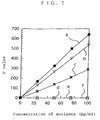
- Figure 1 is a graph illustrating correlation between concentrations of antigens and agglutination rates, in agglutination reaction caused by contacting various antigens with latexes sensitized with monoclonal antibody IF-101 of the present invention.
- granulocyte elastase used herein means elastase which is contained in an azurophil granule of granulocyte; released from granulocyte activated by local inflammation; and hydrolyzes physiological substrates, for example, elastin, collagen, fibronectin or proteoglycan contained in cellular matrix, or blood proteins, such as fibrinogen, fibrin, plasminogen or antithrombin III, at the carboxylic acid terminus of hydrophobic amino acids, such as valine or alanine.
- physiological substrates for example, elastin, collagen, fibronectin or proteoglycan contained in cellular matrix, or blood proteins, such as fibrinogen, fibrin, plasminogen or antithrombin III, at the carboxylic acid terminus of hydrophobic amino acids, such as valine or alanine.
- a digested product formed by digestion with granulocyte elastase is sometimes denoted by placing the symbol e- " in front of the product.
- the D-monomer produced by digesting human fibrinogen with granulocyte elastase, a fragment X produced by digesting human fibrinogen with granulocyte elastase, a fragment Y produced by digesting human fibrinogen with granulocyte elastase, or a fragment E produced by digesting human fibrinogen with granulocyte elastase is denoted by an e-D-monomer of human fibrinogen, an e-fragment X of human fibrinogen, an e-fragment Y of human fibrinogen, or an e-fragment E of human fibrinogen, respectively.
- a digested product formed by digestion with plasmin is sometimes denoted by placing the symbol p- " in front of the product.
- the monoclonal antibody of the present invention may be obtained by a method for producing a monoclonal antibody from a hybridoma prepared by a cell fusion method recently used in various fields.
- the monoclonal antibody of the present invention specifically reacts with the D-monomer produced by digesting human fibrinogen with granulocyte elastase (e-D-monomer) and the D-domain-containing digestion products produced by digesting human stabilized fibrin with granulocyte elastase, but does not react with fibrinogen, or the fragment X, Y or E produced by digesting fibrinogen with granulocyte elastase.
- the term D-domain containing digestion products produced by digesting human stabilized fibrin with granulocyte elastase means digestion products which is produced by treating human stabilized fibrin with granulocyte elastase, and contain an e-D-domain of human stabilized fibrin.
- e-DD/E polymer-like substances containing e-DD/E base units, the e-D-dimer, or the e-DD/E complex, particularly the e-D-dimer, or the e-DD/E complex.
- Preferable monoclonal antibody of the present invention does not react with digestion products of human fibrinogen with plasmin, or digestion products of human stabilized fibrin with plasmin.
- the present invention relates to a monoclonal antibody which reacts with a peptide having an amino acid sequence, SEQ ID NO: 1: Ser Glu Asp Leu Arg Ser.
- SEQ ID NO: 1 Ser Glu Asp Leu Arg Ser.
- the above amino acid sequence of SEQ ID NO: 1 corresponds to the amino acid sequence of the 112nd amino acid to 117th amino acid in the A ⁇ chain, counting from the N-terminus of the A ⁇ chain.
- the A ⁇ chain is one of three polypeptides (i.e., A ⁇ chain, B ⁇ chain and ⁇ chain) which human fibrinogen is composed of.
- amino acid sequence of SEQ ID NO: 1 corresponds to the amino acid sequence of the first amino acid to the sixth amino acid of an A ⁇ chain partial fragment, counting from the amino group-terminus of the A ⁇ chain partial fragment which is one of polypeptides composing granulocyte elastase-digested D-monomers of human fibrinogen; namely, a peptide produced by removing a polypeptide having an amino acid sequence of the first to 111th amino acids from the A ⁇ chain; hereinafter referred to as / ⁇ chain).
- Preferable monoclonal antibody of the present invention reacts with the peptide having the amino acid sequence of SEQ ID NO: 1, and specifically reacts with the e-D-monomer of human fibrinogen and the D-domain-containing digestion products of human stabilized fibrin with granulocyte elastase, but does not react with fibrinogen, or the fragment X, Y or E produced by digesting fibrinogen with granulocyte elastase. More preferable monoclonal antibody of the present invention does not react with the digestion products of human fibrinogen with plasmin, or the digestion products of human stabilized fibrin with plasmin.
- the monoclonal antibody of the present invention can be produced by culturing a hybridoma (such as a mouse hybridoma) capable of producing such a monoclonal antibody, for example, in a suitable medium or abdominal cavity in a mammal, such as a mouse.
- the hybridoma can be produced by cell fusion of a spleen cell from a mammal (such as a mouse) or a bird immunized with the e-D-dimer as an immunogen and a myeloma cell of a mammal (such as a mouse) in accordance with the standard method of the cell fusion by Köhler and Milstein (see Nature, vol. 256, p 495, 1975). More particularly, the hybridoma can be produced by the procedure in Examples as mentioned below.
- any medium suitable for cultivation of a hybridoma may be used.
- a medium comprising the Dulbeccos modified Eeagle's minimum essential medium (hereinafter referred to as DME), and fetal calf serum, L-glutamin, L-pyruvic acid and antibiotics (penicillin G and streptomycin) is used.
- the cultivation of the hybridoma is preferably carried out, for example, in 5 % CO 2 and at 37°C for about 3 days in a medium, or for about 14 days in the abdominal cavities of mice.
- the antibody fragment of the present invention namely the antibody fragment of the monoclonal antibody according to the present invention which contains an antigen-binding site specifically reacting with the D-monomer produced by digesting human fibrinogen with granulocyte elastase and the D-domain-containing digestion products produced by digesting human stabilized fibrin with granulocyte elastase
- an antigen-binding site specifically reacting with the D-monomer produced by digesting human fibrinogen with granulocyte elastase and the D-domain-containing digestion products produced by digesting human stabilized fibrin with granulocyte elastase there may be mentioned, for example, Fab, Fab', F(ab') 2 , Fv or the like.
- the fragment may be obtained, for example, by digesting the monoclonal antibody of the present invention with a protease in a conventional method, and then carrying out a conventional isolation and purification method of proteins.
- the assay of the present invention can be applied to a conventional agglutination method, such as a latex agglutination method, except that the monoclonal antibody or the fragment thereof according to the present invention is used.
- the assay of the present invention can be applied not only to a visual detection of agglutination on a slide glass, but also to an optically automatic assay by an automatic analyzer.
- the assay of the present invention it is possible to detect the presence of the granulocyte elastase-digested D-dimer and the granulocyte elastase-digested DD/E complex of human stabilized fibrin, or semi-quantitatively or quantitatively determine the granulocyte elastase-digested D-dimer and the granulocyte elastase-digested DD/E complex of human stabilized fibrin.
- a carrier on which the monoclonal antibodies and/or the fragments thereof are coated and which may be used in the assay of the present invention can be prepared by a conventionally known method.
- a carrier such as water-insoluble carrier, particularly polystyrene latex
- a buffer containing the antibodies with stirring
- the mixture is centrifuged, and a resulting precipitate is suspended in a suitable buffer.
- the coated carrier can react with the e-D-dimer and the e-DD/E complex, and the e-D-monomer, respectively, but cannot react with other substances.
- agglutination reaction of the coated carriers is caused, because the e-D-dimer and the e-DD/E complex have plural antigenic determinants.
- the e-D-monomer has only one antigenic determinant. Therefore, if the coated carrier is brought into contact with the e-D-monomer, agglutination reaction of the coated carriers is not caused.
- the agglutination reaction is caused by the reaction with the e-D-dimer and the e-DD/E complex.
- the amount of the e-D-dimer and/or the e-DD/E complex in the sample from a living body can be measured without an influence of the e-D-monomer, on the basis of the differences of such agglutination reaction.
- an amount of a fraction retaining a stereostructure of the e-D-dimer and/or the e-DD/E complex in the sample from a living body can be determined by mixing a certain amount of the coated latexes and a certain amount of the sample from a living body on a slide plate or a microtiter plate for a certain period of time, and observing the presence or absence of the aggregates, or the strength of the aggregates.
- an amount of a fraction retaining a stereostructure of the e-D-dimer and/or the e-DD/E complex in the sample from a living body can be determined by mixing a certain amount of the coated latexes and a certain amount of the sample from a living body, and spectroscopically measuring an increase of absorption at an appropriate wave length after a certain period of time.
- the coated carrier do not react with human fibrinogen, plasmin-digested products of human fibrinogen, or plasmin-digested products of human stabilized fibrin, even if the sample from a living body contains such compounds. Therefore, the amount of the e-D-dimer and/or the e-DD/E complex in the sample can be measured without influence of such compounds.
- the sample from a living body which can be assayed in the present invention is, for example, plasma, serum, urine, or the like.
- the e-D-dimer was prepared in accordance with, mainly, the method of Stephanie A. Olexa and Andrei Z. Budzynski (1978), the method of Olexa et al., Circulation, Suppl. 58, 119, (1979), and the method of Biochim. Biophys. Acta 576, 39 to 50.
- fibrinogen Korean Diagnostica; Sweden
- human thrombin at the final concentration of 10 units/ml
- calcium chloride in the final concentration of 10 mM
- Fibrin was suspended in 20 ml of 0.15 M tris-HCl buffer (pH 7.8)/5 mM calcium chloride/0.02% NaN 3 .
- 0.5 ml of human granulocyte elastase 25 units/ml; Elastin Product; USA. Reaction was performed at 37°C.
- diisopropyl fluorophosphate DFP
- the digestion products obtained by the treatment for 1 hour after the addition of DFP was referred to as the DD/E complex/granulocyte elastase-digested products of stabilized fibrin.
- the fragment was the mixture of DD/E and DD/E polymer-like substances containing DD/E base units.
- the fraction of e-DD/E complex was identified and isolated by molecular weight markers, and the Ouchterlony method, using anti-D-antiserum, and anti-E-antiserum (Hoechst, Germany).
- the resulting e-DD/E complex was incubated at 37°C for 4 hours in 3 M urea/50 mM citrate solution (pH 5.5).
- the e-D-dimer (DD) fraction and the e-E (E) fraction were identified and isolated by molecular weight markers, and the Ouchterlony method, using anti-D-antiserum, and anti-E-antiserum.
- the resulting e-D-dimer was used as an immunogen for producing hybridomas which can secrete monoclonal antibodies reacting specifically to the e-D-dimer, and as an antigen for selecting the hybridomas in enzyme immunoassay (ELISA).
- the above-mentioned spleens aseptically taken were placed in a laboratory dish containing 5 ml of a DME medium containing 10 to 15% fetal calf serum. Then, the spleens were perfused with about 15 ml of a DME medium containing 10 to 15% fetal calf serum to flush out the spleen cells. The resulting suspension of the spleen cells was passed through a nylon mesh. The spleen cells were collected in a 50 ml centrifugation tube and were centrifuged at 500 x g for 10 minutes.
- a hemolyzing solution 155 mM NH 4 Cl, 10 mM KHCO 3 , 1 mM Na 2 EDTA; pH 7.0
- the suspension was allowed to stand at 0 °C for 5 to 10 minutes to lyse the red blood cells therein.
- a DME medium (10 to 20 ml) containing 10 to 15% fetal calf serum was added, and the mixture was centrifuged.
- the resulting cell pellets were washed with a DME medium by the centrifugation method and the number of living spleen cells was counted.
- the above spleen cells (1 x 10 8 ) were added to about 2 x 10 7 pre-cultivated mouse myeloma cells SP2/0-Ag14 and the whole was thoroughly mixed in a DME medium, and centrifuged (500 x g, 10 minutes). The supernatant was sucked up, and the pellets were thoroughly unfastened.
- 0.5 ml of 40% polyethylene glycol 4000 solution (warmed at 37°C) was added dropwise, and then, the centrifugation tube was gently rotated by hand for 1 minute to thereby mix the polyethylene glycol solution with the cell pellets. Then, a DME medium warmed at 37°C was added in 1 ml amounts every 30 seconds and the tube was gently rotated.
- a DME medium containing 10 to 15% fetal calf serum was added and the whole was centrifuged (500 x g, 10 minutes). After the supernatant was removed, the cell pellets were washed twice by the centrifugation method with a HAT medium (prepared by adding, to a DME medium, aminopterin, thymidine and hypoxanthine so that the concentrations thereof became to 4 x 10 -7 M, 1.6 x 10 -5 M, and 1 x 10 -4 M, respectively) containing 10 to 15% fetal calf serum, and then suspended in 40 ml of the HAT medium.
- a HAT medium prepared by adding, to a DME medium, aminopterin, thymidine and hypoxanthine so that the concentrations thereof became to 4 x 10 -7 M, 1.6 x 10 -5 M, and 1 x 10 -4 M, respectively
- the cell suspension was poured into each well of 96-well cell cultivation plates in an amount of 200 ⁇ l/well, and cultivated in a carbon dioxide gas incubator containing 5% carbon dioxide gas at 37°C. During the cultivation, about 100 ⁇ l of the medium was removed from each of the wells at 2 to 3 day intervals and 100 ⁇ l of fresh HAT medium was added to select the hybridomas which grew in the HAT medium.
- the medium was substituted for an HT medium (prepared by adding, to a CME medium, thymidine and hypoxanthine so that the concentrations thereof became to 1.6 x 10 -5 M and 1 x 10 -4 M, respectively) containing 10 to 15% fetal calf serum and the growth of the hybridomas was observed.
- an HT medium prepared by adding, to a CME medium, thymidine and hypoxanthine so that the concentrations thereof became to 1.6 x 10 -5 M and 1 x 10 -4 M, respectively
- the hybridomas producing the antibodies reacting with e-D-monomer and e-D-dimer (hereinafter referred to as anti-e-D-monomer/e-D-dimer antibodies) were screened by the ELISA method as mentioned below.
- the presence of produced antibodies in the supernatant of the hybridoma culture was determined by the ELISA method.
- the anti-e-D-dimer antibodies in the culture supernatants selected by the above ELISA method were examined for the reactivities to e-D-monomer, e-fragment X, e-fragment Y, e-fragment E, and fibrinogen, using 96-well ELISA plates sensitized with the antigens in the same manner.
- the hybridomas in the well supernatant specifically reactive to the e-D-dimer and the e-D-monomer were transferred to a 24-well plate and were cultivated for 4 to 5 days in an HT medium containing 10 to 15% fetal calf serum. Thereafter, the cross reactivities with digestion products of fibrinogen with plasmin (a mixture of P-fragment X, p-fragment Y, p-fragment D and p-fragment E) and digestion product of the stabilized fibrin with plasmin (p-DD/E complex) were determined by the ELISA method, to find no cross reaction with plasmin-digested products.
- fibrinogen with plasmin a mixture of P-fragment X, p-fragment Y, p-fragment D and p-fragment E
- digestion product of the stabilized fibrin with plasmin p-DD/E complex
- the presence of the produced anti-e-D-monomer/e-D-dimer antibodies was confirmed by the ELISA method, and then, cloning was carried out by the limiting dilution method.
- 100 ⁇ l of the cell suspension diluted with an HT medium so that the concentration of the hybridoma became 5 hybridomas/ml was poured into each of the wells of 96-well plate wherein 2 x 10 4 abdominal cells of normal BALB/C mice were poured in advance in each well. After about 10 days, clones of the hybridomas producing anti-e-D-dimer and anti-e-D-monomer antibodies were screened by the ELISA method.
- Mouse hybridoma IF-101 was cultivated in a DME medium containing 15% fetal calf serum at 37 °C for 72 to 96 hours in a 5% carbon dioxide atmosphere. After the culture was centrifuged (10,000 x g, 10 minutes), solid ammonium sulfate was gradually added to the supernatant so that a final concentration thereof became 50%. The mixture was stirred for 30 minutes while cooled with ice. After allowed to stand for 60 minutes, the mixture was centrifuged (10,000 x g, 10 minutes). The residue was dissolved in a small amount of a 10 mM phosphate buffer (pH 8.0) and was dialyzed to a 1000-fold amount of 10 mM phosphate buffer.
- a 10 mM phosphate buffer pH 8.0
- the resulting dialyzate was applied to a column of DEAE-cellulose which had been equilibrated with 10 mM phosphate buffer.
- the monoclonal antibody was eluted by the density gradient method between 10 mM phosphate buffer (pH 8.0) to 10 mM phosphate buffer (pH 8.0) containing 0.2 M NaCl.
- the eluted monoclonal antibody was concentrated by the ultra filtration method and was dialyzed to 0.1 M phosphate buffer (pH 8.0).
- the dialyzed product was passed through goat anti-bovine serum IgG-Sepharose 4B column.
- the passed solution was applied to a protein A-Sepharose 4B column equilibrated with 0.1 M phosphate buffer (pH 8.0).
- the column was eluted with a buffer (pH 3.5) to obtain the purified anti-e-D-monomer/e-D-dimer monoclonal antibody IF-101 according to the present invention.
- Bristane (2,6,10,14-tetramethylpentadecane) (0.5 ml) was administered intraperitoneally into 10 to 12 week old BALB/C mice. After 14 to 20 days, the abdominal cavities of the mice was inoculated with 2 x 10 6 cells/mouse of hybridoma IF-101 proliferated in vitro.
- the concentrations of the antibody were 5 to 10 mg/ml.
- the purification of the monoclonal antibody from ascites was carried out by repeating the procedures same as those in vitro purification, except that the step of passing through a column of goat anti-bovine serum IgG-Sepharose was not carried out.
- the immunoglobulin class of the anti-e-D-monomer/e-D-dimer monoclonal antibody IF-101 of the present invention was examined by the Ouchterlony immunodiffusion method.
- the immunoglobulin class of the monoclonal antibody IF-101 was IgG1 ⁇ .
- the recognition site of the monoclonal antibody IF-101 was identified by a western blotting method.
- the procedures were mainly in accordance with the Zeta-Probe Blotting Mewbranes Instruction Manual (Bio-Rad, USA), as follows: Fibrinogen was treated with granulocyte elastase for 30 minutes, 60 minutes or 24 hours. The digested fibrinogen-products after the reaction for 30 minutes, 60 minutes and 24 hours were treated by an SDS polyacrylamide gel electrophoresis in the presence or absence of dithiothreitol (DTT). Blotting and enzyme immunoassay were carried out in the above method.
- Example 5 show that the monoclonal antibody IF-101recognizes the / ⁇ chain of e-D-monomer.
- the amino acid sequence of the / ⁇ chain of e-D-monomer was determined.
- peptides having the same amino acid sequences were prepared, and binding-inhibiting experiments between the monoclonal antibody IF-101 and e-D-monomer, e-D-monomer/ ⁇ chain, e-D-dimer, and e-DD/E complex were carried out, using the peptides, to determine the amino acid sequence of the epitope.
- Concrete procedure is as follows:
- amino acid sequence at the N-terminus of the / ⁇ chain of e-D-monomer was analyzed by a protein sequencer (Applied Systems Japan K.K.) to find Ser Glu Asp Leu Arg Ser Arg Ile (SEQ ID NO: 2).
- Three peptides having amino acid sequences after the 112nd amino acid of the A ⁇ chain of human fibrinogen were prepared.
- the binding-inhibiting experiments between the monoclonal antibody IF-101 and e-D-monomer, e-D-monomer/ ⁇ chain, e-D-dimer, and e-DD/E complex were carried out, using the peptides.
- the binding-inhibiting experiments were conducted by a western blotting method. More particularly, the products (containing e-D-monomer) obtained by digesting fibrinogen with granulocyte elastase for 24 hours were treated by an SDS polyacrylamide gel electrophoresis, together with the purified e-D-dimer and e-DD/E complex (digestion products of stabilized fibrin with granulocyte elastase), in the presence or absence of dithiothreitol (DTT). Then, blotting was carried out in accordance with the Zeta-Probe Blotting Mewbranes Instruction Manual (Bio-Rad, USA).
- the monoclonal antibody IF-101 was reacted in the presence of the peptides (100 ⁇ M) or the absence thereof, to determine whether or not the peptides inhibit the reaction of the monoclonal antibody IF-101.
- the results are shown in Table 3.
- the peptide A has the amino acid sequence: Ser Glu Asp Leu Arg Ser (SEQ ID NO: 1), which corresponds to the amino acid sequence from the 112nd to 117th amino acids in the A ⁇ chain of human fibrinogen.
- the peptide B has the amino acid sequence: Ser Arg Ile Glu Val Leu (SEQ ID NO: 3), which corresponds to the amino acid sequence from the 117th to 122nd amino acids in the A ⁇ chain of human fibrinogen.
- the peptide C has the amino acid sequence: Leu Lys Arg Lys Val Ile (SEQ ID NO: 4), which corresponds to the amino acid sequence from the 122nd to 127th amino acids in the A ⁇ chain of human fibrinogen.
- Example 7 Preparation of Monoclonal Antibody IF-101-bound-latex, and Determination of e-D-Dimer and e-DD/E Complex (Digestion Products of Stabilized Fibrin with Granulocyte Elastase, Using the Latex
- the mixture was centrifuged (20,000 X g; 10 minutes), washed with distilled water containing 0.05% NaN 3 four times, suspended in 0.1 M tris-HCl buffer (pH 8.0) containing BSA (1 mg/ml) and stored.
- the coated latex was mixed with various concentrations of e-D-dimer, e-DD/E complex, digestion products of fibrinogen with granulocyte elastase, digestion products of fibrinogen with plasmin, or digestion products of stabilized fibrin with plasmin.
- a fully-automatic immunological serum testing system (LPIA-200; Mitsubishi Chemical Corp.) was used to measure the reaction rates of agglutination for determination.
- Fig. 1 The results are shown in Fig. 1.
- the line a illustrates the results of e-D-dimer used as an antigen
- the line b illustrates the results of e-DD/E complex
- the line c illustrates the results of a mixture of e-DD/E complex and p-DD/E complex in equivalent amounts
- the line d illustrates the results of the digestion products of fibrinogen with plasmin
- the line e illustrates the results of p-DD/E complex
- the line f illustrates the results of the digestion products of fibrinogen with granulocyte elastase.
- the V value means a reaction rate of agglutination.
- the monoclonal antibody of the present invention can provide an immunological assay capable of quantitatively and specifically determining an amount of e-D-dimer or e-DD/E complex in a sample from a living body, without interference of the substances which are supposed to be present in the sample, i.e., fibrinogen, digestion products of fibrinogen with plasmin, or digestion products of stabilized fibrin with plasmin, particularly p-D-dimer or p-DD/E complex.
Landscapes
- Health & Medical Sciences (AREA)
- Life Sciences & Earth Sciences (AREA)
- Chemical & Material Sciences (AREA)
- Engineering & Computer Science (AREA)
- Immunology (AREA)
- Hematology (AREA)
- Molecular Biology (AREA)
- Biomedical Technology (AREA)
- Urology & Nephrology (AREA)
- General Health & Medical Sciences (AREA)
- Biochemistry (AREA)
- Medicinal Chemistry (AREA)
- Food Science & Technology (AREA)
- Pathology (AREA)
- Physics & Mathematics (AREA)
- Analytical Chemistry (AREA)
- Cell Biology (AREA)
- Biotechnology (AREA)
- General Physics & Mathematics (AREA)
- Microbiology (AREA)
- Organic Chemistry (AREA)
- Genetics & Genomics (AREA)
- Proteomics, Peptides & Aminoacids (AREA)
- Biophysics (AREA)
- Preparation Of Compounds By Using Micro-Organisms (AREA)
- Peptides Or Proteins (AREA)
- Micro-Organisms Or Cultivation Processes Thereof (AREA)
Abstract
Description
Ser Glu Asp Leu Arg Ser.

Ser Glu Asp Leu Arg Ser.
The above amino acid sequence of SEQ ID NO: 1 corresponds to the amino acid sequence of the 112nd amino acid to 117th amino acid in the Aα chain, counting from the N-terminus of the Aα chain. The Aα chain is one of three polypeptides (i.e., Aα chain, Bβ chain and γ chain) which human fibrinogen is composed of. Further, the above amino acid sequence of SEQ ID NO: 1 corresponds to the amino acid sequence of the first amino acid to the sixth amino acid of an Aα chain partial fragment, counting from the amino group-terminus of the Aα chain partial fragment which is one of polypeptides composing granulocyte elastase-digested D-monomers of human fibrinogen; namely, a peptide produced by removing a polypeptide having an amino acid sequence of the first to 111th amino acids from the Aα chain; hereinafter referred to as /α chain).
Fibrinogen was treated with granulocyte elastase for 30 minutes, 60 minutes or 24 hours. The digested fibrinogen-products after the reaction for 30 minutes, 60 minutes and 24 hours were treated by an SDS polyacrylamide gel electrophoresis in the presence or absence of dithiothreitol (DTT). Blotting and enzyme immunoassay were carried out in the above method. The results therefrom and the results from protein staining of the above SDS polyacrylamide gel electrophoresis with Coomassie Brilliant Blue G-250 were compared to identify the recognition site of the monoclonal antibody IF-101. For fibrinogen, purified e-D-dimer and e-DD/E complex (digestion products of stabilized fibrin with granulocyte elastase), the same procedures were repeated. The binding reactivities of the present monoclonal antibody IF-101 to various antigens are shown in Table 1. In Table 1,

| Antigens | Binding reactivity |
| Fibrinogen | - |
| e-x | - |
| e-Y | - |
| e-D | + |
| e-E1 | - |
| e-E2 | - |
| e-E3 | - |
| e-D-dimer | + |
| e-DD/E complex | + |
| Aα | - |
| Bβ | - |
| γ | - |
| e-D-monomer/α | + |
| e-D-monomer/β | - |
| e-D-monomer/γ | - |
| Antigens | Binding reactivity |
| Fibrinogen | - |
| p-x | - |
| p-Y | - |
| p-D | - |
| p-E1 | - |
| p-E2 | - |
| p-E3 | - |
| p-D-dimer | - |
| p-DD/E complex | - |
| Aα | - |
| Bβ | - |
| γ | - |
| p-D-monomer/α | - |
| p-D-monomer/β | - |
| p-D-monomer/γ | - |
Ser Glu Asp Leu Arg Ser Arg Ile (SEQ ID NO: 2).
Ser112-Glu113-Asp114-Leu115-Arg116-Ser117-Arg118-Ile119-
of the Aα chain of human fibrinogen.
Ser Glu Asp Leu Arg Ser (SEQ ID NO: 1),
which corresponds to the amino acid sequence from the 112nd to 117th amino acids in the Aα chain of human fibrinogen. The peptide B has the amino acid sequence:
Ser Arg Ile Glu Val Leu (SEQ ID NO: 3),
which corresponds to the amino acid sequence from the 117th to 122nd amino acids in the Aα chain of human fibrinogen. The peptide C has the amino acid sequence:
Leu Lys Arg Lys Val Ile (SEQ ID NO: 4),
which corresponds to the amino acid sequence from the 122nd to 127th amino acids in the Aα chain of human fibrinogen. In Table 3,
Ser-Glu-Asp-Leu-Arg-Ser
which contains the N-terminal amino acid of the /α chain of e-D-monomer. The amino acid sequence corresponds to:
Ser112-Glu113-Asp114-Leu115-Arg116-Ser117-Arg118-Ile119-
of the Aα chain of human fibrinogen.
| e-D-monomer | e-D-monomer/α | e-D-dimer | e-DD/E complex | |
| Peptide A | + | + | + | + |
| Peptide B | - | - | - | - |
| Peptide C | - | - | - | - |

Claims (8)
- A monoclonal antibody which specifically reacts with D-monomer produced by digesting human fibrinogen with granulocyte elastase and D-domain containing digestion products produced by digesting human stabilized fibrin with granulocyte elastase, but does not react with fibrinogen, or fragment X, Y or E produced by digesting fibrinogen with granulocyte elastase.
- The monoclonal antibody according to claim 1, which does not react with digestion products of human fibrinogen with plasmin, or digestion products of stabilized fibrin with plasmin.
- An antibody fragment of said monoclonal antibody according to claim 1 or 2, which contains an antigen-binding site specifically reacting with D-monomer produced by digesting human fibrinogen with granulocyte elastase and D-domain containing digestion products produced by digesting human stabilized fibrin with granulocyte elastase.
- A hybridoma which produces said monoclonal antibody according to claim 1 or 2.
- A monoclonal antibody which reacts with a peptide having an amino acid sequence, SEQ ID NO: 1:
Ser Glu Asp Leu Arg Ser. - An antibody fragment of said monoclonal antibody according to claim 5, which contains an antigen-binding site reacting with said peptide having said amino acid sequence, SEQ ID NO: 1.
- A hybridoma which produces said monoclonal antibody according to claim 5.
- An immunological assay for D-dimer produced by digesting human stabilized fibrin with granulocyte elastase and DD/E complex produced by digesting human stabilized fibrin with granulocyte elastase, in a sample from a living body, characterized by bring said sample into contact with a carrier coated with the monoclonal antibody according to claim 1 or 2, the antibody fragment according to claim 3, the monoclonal antibody according to claim 5, or the antibody fragment according to claim 6, and detecting aggregate formed by said D-dimer or DD/E complex with said coated carrier.
Applications Claiming Priority (3)
| Application Number | Priority Date | Filing Date | Title |
|---|---|---|---|
| JP14513996A JP3889084B2 (en) | 1996-05-15 | 1996-05-15 | Novel monoclonal antibody and immunoassay for e-D dimer and e-DD / E complex |
| JP145139/96 | 1996-05-15 | ||
| PCT/JP1997/001639 WO1997043315A1 (en) | 1996-05-15 | 1997-05-15 | NOVEL MONOCLONAL ANTIBODY AND METHOD OF IMMUNOLOGICAL ANALYSIS OF e-D DIMER AND e-DD/E COMPLEX |
Publications (3)
| Publication Number | Publication Date |
|---|---|
| EP0842949A1 true EP0842949A1 (en) | 1998-05-20 |
| EP0842949A4 EP0842949A4 (en) | 2002-06-12 |
| EP0842949B1 EP0842949B1 (en) | 2007-07-18 |
Family
ID=15378322
Family Applications (1)
| Application Number | Title | Priority Date | Filing Date |
|---|---|---|---|
| EP97922063A Expired - Lifetime EP0842949B1 (en) | 1996-05-15 | 1997-05-15 | NOVEL MONOCLONAL ANTIBODY AND METHOD OF IMMUNOLOGICAL ANALYSIS OF e-D DIMER AND e-DD/E COMPLEX |
Country Status (9)
| Country | Link |
|---|---|
| US (1) | US6132719A (en) |
| EP (1) | EP0842949B1 (en) |
| JP (1) | JP3889084B2 (en) |
| AT (1) | ATE367402T1 (en) |
| CA (1) | CA2226968C (en) |
| DE (1) | DE69737927T2 (en) |
| DK (1) | DK0842949T3 (en) |
| ES (1) | ES2288759T3 (en) |
| WO (1) | WO1997043315A1 (en) |
Cited By (4)
| Publication number | Priority date | Publication date | Assignee | Title |
|---|---|---|---|---|
| US6451545B2 (en) | 1997-06-24 | 2002-09-17 | Nissui Pharmaceutical Co., Ltd. | Monoclonal antibody specific to anti-human fibrin monomer, process for producing the same, hybridomas, and immunoassay method |
| EP1143248A3 (en) * | 2000-02-29 | 2004-02-11 | Boehringer Mannheim Gmbh | Method to immobilise conjugates in diagnostic tests |
| CN103025871A (en) * | 2010-07-30 | 2013-04-03 | 希森美康株式会社 | Anti-FDP monoclonal antibody, FDP measurement reagent and reagent kit using same, and FDP measurement method |
| CN107602698A (en) * | 2010-04-01 | 2018-01-19 | 美迪恩斯生命科技株式会社 | New monoclonal antibody and the immunological assay method of D dimer |
Families Citing this family (6)
| Publication number | Priority date | Publication date | Assignee | Title |
|---|---|---|---|---|
| DE4242736A1 (en) * | 1992-12-17 | 1994-06-23 | Behringwerke Ag | Synthetic peptides, antibodies against them and their use |
| JP4616516B2 (en) * | 2001-06-15 | 2011-01-19 | 積水メディカル株式会社 | Immunological assay |
| CN1531554A (en) * | 2001-06-26 | 2004-09-22 | ��������ҽѧ����˾ | Humanized antibodies derived from DD-3B 6/22 specific for the D-dimer fragment of fibrin |
| DE102007026153A1 (en) * | 2007-06-04 | 2008-12-11 | Dade Behring Marburg Gmbh | Stable D-Dimer liquid preparation |
| JP5709425B2 (en) * | 2010-07-27 | 2015-04-30 | シスメックス株式会社 | Reagent for D-dimer measurement |
| CN119285785B (en) * | 2024-09-26 | 2025-04-18 | 武汉奥科博泰生物科技有限公司 | Anti-D-dimer monoclonal antibody and its application |
Family Cites Families (3)
| Publication number | Priority date | Publication date | Assignee | Title |
|---|---|---|---|---|
| JPS6379900A (en) * | 1986-09-22 | 1988-04-09 | Yatoron:Kk | Monoclonal antibody and detection thereof |
| DE68925923T2 (en) * | 1988-06-10 | 1996-11-14 | Merck & Co Inc | Antigens of the only fibrinogen cleavage site by elastase |
| US6124107A (en) * | 1988-06-10 | 2000-09-26 | Merck & Co., Inc. | Assay for marker of human polymorphonuclear leukocyte elastase activity |
-
1996
- 1996-05-15 JP JP14513996A patent/JP3889084B2/en not_active Expired - Lifetime
-
1997
- 1997-05-15 AT AT97922063T patent/ATE367402T1/en active
- 1997-05-15 DK DK97922063T patent/DK0842949T3/en active
- 1997-05-15 CA CA002226968A patent/CA2226968C/en not_active Expired - Lifetime
- 1997-05-15 DE DE69737927T patent/DE69737927T2/en not_active Expired - Lifetime
- 1997-05-15 EP EP97922063A patent/EP0842949B1/en not_active Expired - Lifetime
- 1997-05-15 ES ES97922063T patent/ES2288759T3/en not_active Expired - Lifetime
- 1997-05-15 WO PCT/JP1997/001639 patent/WO1997043315A1/en not_active Ceased
- 1997-05-15 US US08/983,047 patent/US6132719A/en not_active Expired - Lifetime
Cited By (9)
| Publication number | Priority date | Publication date | Assignee | Title |
|---|---|---|---|---|
| US6451545B2 (en) | 1997-06-24 | 2002-09-17 | Nissui Pharmaceutical Co., Ltd. | Monoclonal antibody specific to anti-human fibrin monomer, process for producing the same, hybridomas, and immunoassay method |
| EP1143248A3 (en) * | 2000-02-29 | 2004-02-11 | Boehringer Mannheim Gmbh | Method to immobilise conjugates in diagnostic tests |
| US6998246B2 (en) | 2000-02-29 | 2006-02-14 | Roche Diagnostics Corporation | Method for immobilizing conjugates in diagnostic tests |
| US7241628B2 (en) | 2000-02-29 | 2007-07-10 | Roche Diagnostics Corporation | Method for immobilizing conjugates in diagnostic tests |
| US7241418B2 (en) | 2000-02-29 | 2007-07-10 | Roche Diagnostics Corporation | Method for immobilizing conjugates in diagnostic tests |
| CN107602698A (en) * | 2010-04-01 | 2018-01-19 | 美迪恩斯生命科技株式会社 | New monoclonal antibody and the immunological assay method of D dimer |
| CN103025871A (en) * | 2010-07-30 | 2013-04-03 | 希森美康株式会社 | Anti-FDP monoclonal antibody, FDP measurement reagent and reagent kit using same, and FDP measurement method |
| US8865424B2 (en) | 2010-07-30 | 2014-10-21 | Sysmex Corporation | Anti-FDP monoclonal antibody, FDP measurement reagent and reagent kit using same, and FDP measurement method |
| CN103025871B (en) * | 2010-07-30 | 2016-05-18 | 希森美康株式会社 | Anti-FDP monoclonal antibody, use its FDP to measure with reagent and kit and FDP assay method |
Also Published As
| Publication number | Publication date |
|---|---|
| EP0842949B1 (en) | 2007-07-18 |
| JPH09301999A (en) | 1997-11-25 |
| CA2226968C (en) | 2006-11-28 |
| EP0842949A4 (en) | 2002-06-12 |
| DE69737927D1 (en) | 2007-08-30 |
| ATE367402T1 (en) | 2007-08-15 |
| JP3889084B2 (en) | 2007-03-07 |
| DE69737927T2 (en) | 2008-03-20 |
| WO1997043315A1 (en) | 1997-11-20 |
| CA2226968A1 (en) | 1997-11-20 |
| AU715828B2 (en) | 2000-02-10 |
| US6132719A (en) | 2000-10-17 |
| DK0842949T3 (en) | 2007-11-05 |
| ES2288759T3 (en) | 2008-01-16 |
| AU2789297A (en) | 1997-12-05 |
Similar Documents
| Publication | Publication Date | Title |
|---|---|---|
| US5516639A (en) | Antibodies specific for human prostate glandular kallkrein | |
| EP0528525B1 (en) | Assay methods and compositions for detecting serum proteases,particularly activated protein C. | |
| US9897616B2 (en) | Monoclonal antibody against D-dimer and methods of use therefor | |
| EP0678524B1 (en) | Anti-human soluble fibrin antibodies, hybridoma producing them, and immunoassaying method | |
| US6132719A (en) | Monoclonal antibody and method of immunological analysis of e-D-dimer and e-DD/E complex | |
| JPWO1995012617A1 (en) | Anti-human soluble fibrin antibodies, hybridomas and immunoassays | |
| EP0522169B1 (en) | Antihuman stromelysin monoclonal antibody and diagnosis of rheumatoid arthritis by enzyme immunoassay | |
| EP0812859B1 (en) | ANTIFACTOR Xa-TISSUE FACTOR PATHWAY INHIBITOR COMPLEX MONOCLONAL ANTIBODY AND USE OF THE SAME | |
| EP0516863B1 (en) | Antibody against human plasmin-alpha 2-plasmin inhibitor complex, hybridoma and immunoassay | |
| JPH0746104B2 (en) | FDP measurement method | |
| WO2007013709A1 (en) | Monoclonal antibody against d-dimer and diagnosis agent for detecting d-dimer, crosslinked fibrin and its derivatives containing d-dimer by using the antibody | |
| JP2001021557A (en) | Method and kit for immunological analysis of D-dimer and DD / E complex | |
| JPH0548119B2 (en) | ||
| WO2006085441A1 (en) | Antibody for assay of adamts13 activity and method of activity assay | |
| JP4142747B2 (en) | Anti-human fibrin monomer-specific monoclonal antibody, method for producing the monoclonal antibody, hybridoma, and immunological assay | |
| JP4612922B2 (en) | Novel monoclonal antibody and method for immunological analysis of e-D monomer, e-D dimer, and e-DD / E complex | |
| JP3841364B2 (en) | Anti-human vitronectin / thrombin / antithrombin III complex monoclonal antibody, hybridoma, and immunological assay | |
| JPWO1998059047A1 (en) | Anti-human fibrin monomer-specific monoclonal antibody, method for producing said monoclonal antibody, hybridoma, and immunological assay method | |
| EP0251186B1 (en) | Monoclonal antibody to human plasminogen, method for production thereof, assay reagent and kit comprising said antibody, and hybridoma producing said antibody | |
| CA2165672C (en) | Antibodies specific for human prostate glandular kallikrein | |
| JP2837030B2 (en) | Anti-human plasmin-α 2 -plasmin inhibitor complex-specific antibody and immunoassay |
Legal Events
| Date | Code | Title | Description |
|---|---|---|---|
| PUAI | Public reference made under article 153(3) epc to a published international application that has entered the european phase |
Free format text: ORIGINAL CODE: 0009012 |
|
| 17P | Request for examination filed |
Effective date: 19980204 |
|
| AK | Designated contracting states |
Kind code of ref document: A1 Designated state(s): AT BE CH DE DK ES FR GB IT LI NL SE |
|
| RIC1 | Information provided on ipc code assigned before grant |
Free format text: 7C 07K 16/18 A, 7C 12N 5/20 B, 7G 01N 33/53 B, 7G 01N 33/577 B, 7C 07K 16/36 B, 7C 12P 21/08 -, 7C 12N 15/06 -, 7C 12R 1:91 Z |
|
| A4 | Supplementary search report drawn up and despatched |
Effective date: 20020503 |
|
| AK | Designated contracting states |
Kind code of ref document: A4 Designated state(s): AT BE CH DE DK ES FR GB IT LI NL SE |
|
| 17Q | First examination report despatched |
Effective date: 20030314 |
|
| RAP1 | Party data changed (applicant data changed or rights of an application transferred) |
Owner name: MITSUBISHI KAGAKU IATRON, INC. |
|
| RAP1 | Party data changed (applicant data changed or rights of an application transferred) |
Owner name: MITSUBISHI KAGAKU IATRON, INC. |
|
| RIC1 | Information provided on ipc code assigned before grant |
Ipc: C12R 1/91 20060101ALI20060905BHEP Ipc: C12N 15/06 20060101ALI20060905BHEP Ipc: C12P 21/08 20060101ALI20060905BHEP Ipc: C07K 16/36 20060101ALI20060905BHEP Ipc: G01N 33/577 20060101ALI20060905BHEP Ipc: G01N 33/53 20060101ALI20060905BHEP Ipc: C12N 5/20 20060101ALI20060905BHEP Ipc: C07K 16/18 20060101AFI20060905BHEP |
|
| GRAP | Despatch of communication of intention to grant a patent |
Free format text: ORIGINAL CODE: EPIDOSNIGR1 |
|
| GRAS | Grant fee paid |
Free format text: ORIGINAL CODE: EPIDOSNIGR3 |
|
| RIN1 | Information on inventor provided before grant (corrected) |
Inventor name: FUKUSHI, KEN,MITSUBISHI KAGAKU IATRON, INC. Inventor name: ITO, YUMIKO,MITSUBISHI KAGAKU IATRON, INC. Inventor name: INUZUKA, KIMIKO,MITSUBISHI KAGAKU IATRON, INC. Inventor name: KOHNO, ISAO,MITSUBISHI KAGAKU IATRON, INC. |
|
| GRAA | (expected) grant |
Free format text: ORIGINAL CODE: 0009210 |
|
| AK | Designated contracting states |
Kind code of ref document: B1 Designated state(s): AT BE CH DE DK ES FR GB IT LI NL SE |
|
| REG | Reference to a national code |
Ref country code: GB Ref legal event code: FG4D |
|
| REG | Reference to a national code |
Ref country code: CH Ref legal event code: EP |
|
| REF | Corresponds to: |
Ref document number: 69737927 Country of ref document: DE Date of ref document: 20070830 Kind code of ref document: P |
|
| REG | Reference to a national code |
Ref country code: SE Ref legal event code: TRGR |
|
| REG | Reference to a national code |
Ref country code: DK Ref legal event code: T3 |
|
| REG | Reference to a national code |
Ref country code: CH Ref legal event code: NV Representative=s name: VOSSIUS & PARTNER |
|
| ET | Fr: translation filed | ||
| REG | Reference to a national code |
Ref country code: ES Ref legal event code: FG2A Ref document number: 2288759 Country of ref document: ES Kind code of ref document: T3 |
|
| REG | Reference to a national code |
Ref country code: CH Ref legal event code: PCAR Free format text: VOSSIUS & PARTNER;NADELBERG 3;4051 BASEL (CH) |
|
| PLBE | No opposition filed within time limit |
Free format text: ORIGINAL CODE: 0009261 |
|
| STAA | Information on the status of an ep patent application or granted ep patent |
Free format text: STATUS: NO OPPOSITION FILED WITHIN TIME LIMIT |
|
| 26N | No opposition filed |
Effective date: 20080421 |
|
| REG | Reference to a national code |
Ref country code: GB Ref legal event code: 732E Free format text: REGISTERED BETWEEN 20100610 AND 20100616 |
|
| REG | Reference to a national code |
Ref country code: NL Ref legal event code: SD Effective date: 20100716 |
|
| REG | Reference to a national code |
Ref country code: CH Ref legal event code: PUE Owner name: MITSUBISHI CHEMICAL MEDIENCE CORPORATION Free format text: MITSUBISHI KAGAKU IATRON, INC.#13-1, NISHI-GOKEN-CHO, SHINJUKU-KU#TOKYO 162-0812 (JP) -TRANSFER TO- MITSUBISHI CHEMICAL MEDIENCE CORPORATION#2-8, SHIBAURA 4-CHOME, MINATO-KU#TOKYO 108-8550 (JP) |
|
| REG | Reference to a national code |
Ref country code: FR Ref legal event code: TP |
|
| REG | Reference to a national code |
Ref country code: DE Ref legal event code: R082 Ref document number: 69737927 Country of ref document: DE Representative=s name: VOSSIUS & PARTNER PATENTANWAELTE RECHTSANWAELT, DE |
|
| REG | Reference to a national code |
Ref country code: CH Ref legal event code: PFA Owner name: LSI MEDIENCE CORPORATION, JP Free format text: FORMER OWNER: MITSUBISHI CHEMICAL MEDIENCE CORPORATION, JP |
|
| REG | Reference to a national code |
Ref country code: ES Ref legal event code: PC2A Owner name: LSI MEDIENCE CORPORATION Effective date: 20150407 |
|
| REG | Reference to a national code |
Ref country code: DE Ref legal event code: R082 Ref document number: 69737927 Country of ref document: DE Representative=s name: VOSSIUS & PARTNER PATENTANWAELTE RECHTSANWAELT, DE Effective date: 20150310 Ref country code: DE Ref legal event code: R081 Ref document number: 69737927 Country of ref document: DE Owner name: LSI MEDIENCE CORPORATION, JP Free format text: FORMER OWNER: MITSUBISHI CHEMICAL MEDIENCE CORP., TOKYO, JP Effective date: 20150310 |
|
| REG | Reference to a national code |
Ref country code: AT Ref legal event code: HC Ref document number: 367402 Country of ref document: AT Kind code of ref document: T Owner name: LSI MEDIENCE CORPORATION, JP Effective date: 20150401 |
|
| REG | Reference to a national code |
Ref country code: NL Ref legal event code: TD Effective date: 20150511 |
|
| REG | Reference to a national code |
Ref country code: FR Ref legal event code: CD Owner name: LSI MEDIENCE CORPORATION, JP Effective date: 20150519 Ref country code: FR Ref legal event code: CA Effective date: 20150519 |
|
| REG | Reference to a national code |
Ref country code: FR Ref legal event code: PLFP Year of fee payment: 20 |
|
| PGFP | Annual fee paid to national office [announced via postgrant information from national office to epo] |
Ref country code: NL Payment date: 20160519 Year of fee payment: 20 |
|
| REG | Reference to a national code |
Ref country code: CH Ref legal event code: PFA Owner name: LSI MEDIENCE CORPORATION, JP Free format text: FORMER OWNER: LSI MEDIENCE CORPORATION, JP |
|
| PGFP | Annual fee paid to national office [announced via postgrant information from national office to epo] |
Ref country code: CH Payment date: 20160519 Year of fee payment: 20 Ref country code: GB Payment date: 20160520 Year of fee payment: 20 Ref country code: DE Payment date: 20160520 Year of fee payment: 20 Ref country code: ES Payment date: 20160512 Year of fee payment: 20 |
|
| PGFP | Annual fee paid to national office [announced via postgrant information from national office to epo] |
Ref country code: BE Payment date: 20160519 Year of fee payment: 20 Ref country code: DK Payment date: 20160519 Year of fee payment: 20 Ref country code: SE Payment date: 20160519 Year of fee payment: 20 Ref country code: AT Payment date: 20160520 Year of fee payment: 20 Ref country code: IT Payment date: 20160524 Year of fee payment: 20 Ref country code: FR Payment date: 20160520 Year of fee payment: 20 |
|
| REG | Reference to a national code |
Ref country code: DE Ref legal event code: R071 Ref document number: 69737927 Country of ref document: DE |
|
| REG | Reference to a national code |
Ref country code: NL Ref legal event code: MK Effective date: 20170514 |
|
| REG | Reference to a national code |
Ref country code: DK Ref legal event code: EUP Effective date: 20170515 |
|
| REG | Reference to a national code |
Ref country code: CH Ref legal event code: PL |
|
| REG | Reference to a national code |
Ref country code: GB Ref legal event code: PE20 Expiry date: 20170514 |
|
| REG | Reference to a national code |
Ref country code: SE Ref legal event code: EUG |
|
| REG | Reference to a national code |
Ref country code: AT Ref legal event code: MK07 Ref document number: 367402 Country of ref document: AT Kind code of ref document: T Effective date: 20170515 |
|
| PG25 | Lapsed in a contracting state [announced via postgrant information from national office to epo] |
Ref country code: GB Free format text: LAPSE BECAUSE OF EXPIRATION OF PROTECTION Effective date: 20170514 |
|
| REG | Reference to a national code |
Ref country code: ES Ref legal event code: FD2A Effective date: 20170825 |
|
| PG25 | Lapsed in a contracting state [announced via postgrant information from national office to epo] |
Ref country code: ES Free format text: LAPSE BECAUSE OF EXPIRATION OF PROTECTION Effective date: 20170516 |