EP0804576B1 - A novel haemopoietin receptor - Google Patents
A novel haemopoietin receptor Download PDFInfo
- Publication number
- EP0804576B1 EP0804576B1 EP95931079A EP95931079A EP0804576B1 EP 0804576 B1 EP0804576 B1 EP 0804576B1 EP 95931079 A EP95931079 A EP 95931079A EP 95931079 A EP95931079 A EP 95931079A EP 0804576 B1 EP0804576 B1 EP 0804576B1
- Authority
- EP
- European Patent Office
- Prior art keywords
- seq
- receptor
- amino acid
- sequence
- cells
- Prior art date
- Legal status (The legal status is an assumption and is not a legal conclusion. Google has not performed a legal analysis and makes no representation as to the accuracy of the status listed.)
- Expired - Lifetime
Links
- 102000005962 receptors Human genes 0.000 claims description 74
- 108020003175 receptors Proteins 0.000 claims description 74
- 150000001413 amino acids Chemical class 0.000 claims description 63
- 241001529936 Murinae Species 0.000 claims description 61
- 108010017521 Interleukin-11 Receptors Proteins 0.000 claims description 58
- 102000004553 Interleukin-11 Receptors Human genes 0.000 claims description 58
- 125000003275 alpha amino acid group Chemical group 0.000 claims description 56
- 108020004707 nucleic acids Proteins 0.000 claims description 33
- 102000039446 nucleic acids Human genes 0.000 claims description 33
- 150000007523 nucleic acids Chemical class 0.000 claims description 33
- 239000002773 nucleotide Substances 0.000 claims description 21
- 125000003729 nucleotide group Chemical group 0.000 claims description 21
- 108090000765 processed proteins & peptides Proteins 0.000 claims description 20
- 102000004196 processed proteins & peptides Human genes 0.000 claims description 18
- 229920001184 polypeptide Polymers 0.000 claims description 15
- 230000004048 modification Effects 0.000 claims description 8
- 238000012986 modification Methods 0.000 claims description 8
- 102000015696 Interleukins Human genes 0.000 claims description 7
- 108010063738 Interleukins Proteins 0.000 claims description 7
- 239000013598 vector Substances 0.000 claims description 7
- FWMNVWWHGCHHJJ-SKKKGAJSSA-N 4-amino-1-[(2r)-6-amino-2-[[(2r)-2-[[(2r)-2-[[(2r)-2-amino-3-phenylpropanoyl]amino]-3-phenylpropanoyl]amino]-4-methylpentanoyl]amino]hexanoyl]piperidine-4-carboxylic acid Chemical compound C([C@H](C(=O)N[C@H](CC(C)C)C(=O)N[C@H](CCCCN)C(=O)N1CCC(N)(CC1)C(O)=O)NC(=O)[C@H](N)CC=1C=CC=CC=1)C1=CC=CC=C1 FWMNVWWHGCHHJJ-SKKKGAJSSA-N 0.000 claims description 5
- 239000004971 Cross linker Substances 0.000 claims description 5
- 230000000295 complement effect Effects 0.000 claims description 4
- 238000010348 incorporation Methods 0.000 claims description 4
- 238000007385 chemical modification Methods 0.000 claims description 2
- 241000124008 Mammalia Species 0.000 claims 1
- 238000000034 method Methods 0.000 abstract description 22
- 238000010367 cloning Methods 0.000 abstract description 15
- 230000002068 genetic effect Effects 0.000 abstract description 14
- 239000003446 ligand Substances 0.000 abstract description 9
- 239000003153 chemical reaction reagent Substances 0.000 abstract description 6
- 230000003993 interaction Effects 0.000 abstract description 6
- 239000000556 agonist Substances 0.000 abstract description 5
- 238000011161 development Methods 0.000 abstract description 5
- 239000005557 antagonist Substances 0.000 abstract description 4
- 239000003814 drug Substances 0.000 abstract description 4
- 210000004027 cell Anatomy 0.000 description 197
- 102000003815 Interleukin-11 Human genes 0.000 description 81
- 108090000177 Interleukin-11 Proteins 0.000 description 81
- 235000001014 amino acid Nutrition 0.000 description 50
- 239000002299 complementary DNA Substances 0.000 description 50
- 229940024606 amino acid Drugs 0.000 description 48
- 108020004414 DNA Proteins 0.000 description 47
- 101710152369 Interleukin-6 receptor subunit beta Proteins 0.000 description 41
- 102100037795 Interleukin-6 receptor subunit beta Human genes 0.000 description 41
- 108090000581 Leukemia inhibitory factor Proteins 0.000 description 26
- 102100032352 Leukemia inhibitory factor Human genes 0.000 description 26
- 230000027455 binding Effects 0.000 description 26
- 108090000623 proteins and genes Proteins 0.000 description 25
- 101710142062 Leukemia inhibitory factor receptor Proteins 0.000 description 23
- 102100021747 Leukemia inhibitory factor receptor Human genes 0.000 description 23
- 230000014509 gene expression Effects 0.000 description 23
- 101001003147 Homo sapiens Interleukin-11 receptor subunit alpha Proteins 0.000 description 22
- 230000004044 response Effects 0.000 description 22
- 101001010568 Homo sapiens Interleukin-11 Proteins 0.000 description 21
- 102000049885 human IL11 Human genes 0.000 description 21
- 238000003752 polymerase chain reaction Methods 0.000 description 21
- 102000004169 proteins and genes Human genes 0.000 description 21
- 108091034117 Oligonucleotide Proteins 0.000 description 20
- 102000004889 Interleukin-6 Human genes 0.000 description 19
- 108090001005 Interleukin-6 Proteins 0.000 description 19
- 108010002386 Interleukin-3 Proteins 0.000 description 18
- 102000000646 Interleukin-3 Human genes 0.000 description 18
- 229940076264 interleukin-3 Drugs 0.000 description 18
- 235000018102 proteins Nutrition 0.000 description 18
- 241000699666 Mus <mouse, genus> Species 0.000 description 17
- 239000013615 primer Substances 0.000 description 17
- 238000004458 analytical method Methods 0.000 description 15
- 239000012634 fragment Substances 0.000 description 15
- 108090000630 Oncostatin M Proteins 0.000 description 14
- 102100031942 Oncostatin-M Human genes 0.000 description 14
- 108020004999 messenger RNA Proteins 0.000 description 14
- 238000006243 chemical reaction Methods 0.000 description 13
- 108091028043 Nucleic acid sequence Proteins 0.000 description 12
- 230000035755 proliferation Effects 0.000 description 12
- 108091003079 Bovine Serum Albumin Proteins 0.000 description 11
- FAPWRFPIFSIZLT-UHFFFAOYSA-M Sodium chloride Chemical compound [Na+].[Cl-] FAPWRFPIFSIZLT-UHFFFAOYSA-M 0.000 description 11
- DBMJMQXJHONAFJ-UHFFFAOYSA-M Sodium laurylsulphate Chemical compound [Na+].CCCCCCCCCCCCOS([O-])(=O)=O DBMJMQXJHONAFJ-UHFFFAOYSA-M 0.000 description 11
- JLCPHMBAVCMARE-UHFFFAOYSA-N [3-[[3-[[3-[[3-[[3-[[3-[[3-[[3-[[3-[[3-[[3-[[5-(2-amino-6-oxo-1H-purin-9-yl)-3-[[3-[[3-[[3-[[3-[[3-[[5-(2-amino-6-oxo-1H-purin-9-yl)-3-[[5-(2-amino-6-oxo-1H-purin-9-yl)-3-hydroxyoxolan-2-yl]methoxy-hydroxyphosphoryl]oxyoxolan-2-yl]methoxy-hydroxyphosphoryl]oxy-5-(5-methyl-2,4-dioxopyrimidin-1-yl)oxolan-2-yl]methoxy-hydroxyphosphoryl]oxy-5-(6-aminopurin-9-yl)oxolan-2-yl]methoxy-hydroxyphosphoryl]oxy-5-(6-aminopurin-9-yl)oxolan-2-yl]methoxy-hydroxyphosphoryl]oxy-5-(6-aminopurin-9-yl)oxolan-2-yl]methoxy-hydroxyphosphoryl]oxy-5-(6-aminopurin-9-yl)oxolan-2-yl]methoxy-hydroxyphosphoryl]oxyoxolan-2-yl]methoxy-hydroxyphosphoryl]oxy-5-(5-methyl-2,4-dioxopyrimidin-1-yl)oxolan-2-yl]methoxy-hydroxyphosphoryl]oxy-5-(4-amino-2-oxopyrimidin-1-yl)oxolan-2-yl]methoxy-hydroxyphosphoryl]oxy-5-(5-methyl-2,4-dioxopyrimidin-1-yl)oxolan-2-yl]methoxy-hydroxyphosphoryl]oxy-5-(5-methyl-2,4-dioxopyrimidin-1-yl)oxolan-2-yl]methoxy-hydroxyphosphoryl]oxy-5-(6-aminopurin-9-yl)oxolan-2-yl]methoxy-hydroxyphosphoryl]oxy-5-(6-aminopurin-9-yl)oxolan-2-yl]methoxy-hydroxyphosphoryl]oxy-5-(4-amino-2-oxopyrimidin-1-yl)oxolan-2-yl]methoxy-hydroxyphosphoryl]oxy-5-(4-amino-2-oxopyrimidin-1-yl)oxolan-2-yl]methoxy-hydroxyphosphoryl]oxy-5-(4-amino-2-oxopyrimidin-1-yl)oxolan-2-yl]methoxy-hydroxyphosphoryl]oxy-5-(6-aminopurin-9-yl)oxolan-2-yl]methoxy-hydroxyphosphoryl]oxy-5-(4-amino-2-oxopyrimidin-1-yl)oxolan-2-yl]methyl [5-(6-aminopurin-9-yl)-2-(hydroxymethyl)oxolan-3-yl] hydrogen phosphate Polymers Cc1cn(C2CC(OP(O)(=O)OCC3OC(CC3OP(O)(=O)OCC3OC(CC3O)n3cnc4c3nc(N)[nH]c4=O)n3cnc4c3nc(N)[nH]c4=O)C(COP(O)(=O)OC3CC(OC3COP(O)(=O)OC3CC(OC3COP(O)(=O)OC3CC(OC3COP(O)(=O)OC3CC(OC3COP(O)(=O)OC3CC(OC3COP(O)(=O)OC3CC(OC3COP(O)(=O)OC3CC(OC3COP(O)(=O)OC3CC(OC3COP(O)(=O)OC3CC(OC3COP(O)(=O)OC3CC(OC3COP(O)(=O)OC3CC(OC3COP(O)(=O)OC3CC(OC3COP(O)(=O)OC3CC(OC3COP(O)(=O)OC3CC(OC3COP(O)(=O)OC3CC(OC3COP(O)(=O)OC3CC(OC3COP(O)(=O)OC3CC(OC3CO)n3cnc4c(N)ncnc34)n3ccc(N)nc3=O)n3cnc4c(N)ncnc34)n3ccc(N)nc3=O)n3ccc(N)nc3=O)n3ccc(N)nc3=O)n3cnc4c(N)ncnc34)n3cnc4c(N)ncnc34)n3cc(C)c(=O)[nH]c3=O)n3cc(C)c(=O)[nH]c3=O)n3ccc(N)nc3=O)n3cc(C)c(=O)[nH]c3=O)n3cnc4c3nc(N)[nH]c4=O)n3cnc4c(N)ncnc34)n3cnc4c(N)ncnc34)n3cnc4c(N)ncnc34)n3cnc4c(N)ncnc34)O2)c(=O)[nH]c1=O JLCPHMBAVCMARE-UHFFFAOYSA-N 0.000 description 11
- 230000004069 differentiation Effects 0.000 description 11
- 102000004127 Cytokines Human genes 0.000 description 10
- 108090000695 Cytokines Proteins 0.000 description 10
- PXIPVTKHYLBLMZ-UHFFFAOYSA-N Sodium azide Chemical compound [Na+].[N-]=[N+]=[N-] PXIPVTKHYLBLMZ-UHFFFAOYSA-N 0.000 description 10
- 210000001185 bone marrow Anatomy 0.000 description 10
- 238000009396 hybridization Methods 0.000 description 10
- 210000004185 liver Anatomy 0.000 description 10
- 239000012894 fetal calf serum Substances 0.000 description 9
- 239000000523 sample Substances 0.000 description 9
- 238000006467 substitution reaction Methods 0.000 description 9
- 229920001817 Agar Polymers 0.000 description 8
- 108010038501 Interleukin-6 Receptors Proteins 0.000 description 8
- 102000010781 Interleukin-6 Receptors Human genes 0.000 description 8
- 239000008272 agar Substances 0.000 description 8
- 239000000872 buffer Substances 0.000 description 8
- 230000001419 dependent effect Effects 0.000 description 8
- 230000006870 function Effects 0.000 description 8
- 239000012528 membrane Substances 0.000 description 8
- 239000000047 product Substances 0.000 description 8
- 108091026890 Coding region Proteins 0.000 description 7
- 125000000539 amino acid group Chemical group 0.000 description 7
- 210000002540 macrophage Anatomy 0.000 description 7
- 238000012216 screening Methods 0.000 description 7
- 108010076504 Protein Sorting Signals Proteins 0.000 description 6
- 230000015572 biosynthetic process Effects 0.000 description 6
- 239000013604 expression vector Substances 0.000 description 6
- 238000003780 insertion Methods 0.000 description 6
- 230000037431 insertion Effects 0.000 description 6
- RXWNCPJZOCPEPQ-NVWDDTSBSA-N puromycin Natural products C1=CC(OC)=CC=C1C[C@H](N)C(=O)N[C@H]1[C@@H](O)[C@H](N2C3=NC=NC(=C3N=C2)N(C)C)O[C@@H]1CO RXWNCPJZOCPEPQ-NVWDDTSBSA-N 0.000 description 6
- 210000001519 tissue Anatomy 0.000 description 6
- 102100031181 Glyceraldehyde-3-phosphate dehydrogenase Human genes 0.000 description 5
- DHMQDGOQFOQNFH-UHFFFAOYSA-N Glycine Chemical compound NCC(O)=O DHMQDGOQFOQNFH-UHFFFAOYSA-N 0.000 description 5
- 101000599056 Homo sapiens Interleukin-6 receptor subunit beta Proteins 0.000 description 5
- 238000010240 RT-PCR analysis Methods 0.000 description 5
- 108091036066 Three prime untranslated region Proteins 0.000 description 5
- 244000309466 calf Species 0.000 description 5
- 238000005119 centrifugation Methods 0.000 description 5
- 102000003675 cytokine receptors Human genes 0.000 description 5
- 108010057085 cytokine receptors Proteins 0.000 description 5
- 238000012217 deletion Methods 0.000 description 5
- 230000037430 deletion Effects 0.000 description 5
- 238000002474 experimental method Methods 0.000 description 5
- 108020004445 glyceraldehyde-3-phosphate dehydrogenase Proteins 0.000 description 5
- 238000011534 incubation Methods 0.000 description 5
- 239000002609 medium Substances 0.000 description 5
- 210000004379 membrane Anatomy 0.000 description 5
- 230000008488 polyadenylation Effects 0.000 description 5
- 210000002966 serum Anatomy 0.000 description 5
- 230000009870 specific binding Effects 0.000 description 5
- 108091032973 (ribonucleotides)n+m Proteins 0.000 description 4
- 108020004635 Complementary DNA Proteins 0.000 description 4
- 239000006144 Dulbecco’s modified Eagle's medium Substances 0.000 description 4
- 102100034343 Integrase Human genes 0.000 description 4
- DCXYFEDJOCDNAF-REOHCLBHSA-N L-asparagine Chemical compound OC(=O)[C@@H](N)CC(N)=O DCXYFEDJOCDNAF-REOHCLBHSA-N 0.000 description 4
- 108091026898 Leader sequence (mRNA) Proteins 0.000 description 4
- TWRXJAOTZQYOKJ-UHFFFAOYSA-L Magnesium chloride Chemical compound [Mg+2].[Cl-].[Cl-] TWRXJAOTZQYOKJ-UHFFFAOYSA-L 0.000 description 4
- 241001465754 Metazoa Species 0.000 description 4
- 108010092799 RNA-directed DNA polymerase Proteins 0.000 description 4
- 102000004357 Transferases Human genes 0.000 description 4
- 108090000992 Transferases Proteins 0.000 description 4
- 239000011543 agarose gel Substances 0.000 description 4
- 125000003277 amino group Chemical group 0.000 description 4
- 125000003178 carboxy group Chemical group [H]OC(*)=O 0.000 description 4
- 239000002131 composite material Substances 0.000 description 4
- 125000000151 cysteine group Chemical group N[C@@H](CS)C(=O)* 0.000 description 4
- 230000018109 developmental process Effects 0.000 description 4
- 238000004520 electroporation Methods 0.000 description 4
- 229950010131 puromycin Drugs 0.000 description 4
- 238000010839 reverse transcription Methods 0.000 description 4
- 238000012163 sequencing technique Methods 0.000 description 4
- 230000011664 signaling Effects 0.000 description 4
- 239000011780 sodium chloride Substances 0.000 description 4
- KYRUKRFVOACELK-UHFFFAOYSA-N (2,5-dioxopyrrolidin-1-yl) 3-(4-hydroxyphenyl)propanoate Chemical class C1=CC(O)=CC=C1CCC(=O)ON1C(=O)CCC1=O KYRUKRFVOACELK-UHFFFAOYSA-N 0.000 description 3
- QKNYBSVHEMOAJP-UHFFFAOYSA-N 2-amino-2-(hydroxymethyl)propane-1,3-diol;hydron;chloride Chemical compound Cl.OCC(N)(CO)CO QKNYBSVHEMOAJP-UHFFFAOYSA-N 0.000 description 3
- WFDIJRYMOXRFFG-UHFFFAOYSA-N Acetic anhydride Chemical compound CC(=O)OC(C)=O WFDIJRYMOXRFFG-UHFFFAOYSA-N 0.000 description 3
- DCXYFEDJOCDNAF-UHFFFAOYSA-N Asparagine Natural products OC(=O)C(N)CC(N)=O DCXYFEDJOCDNAF-UHFFFAOYSA-N 0.000 description 3
- 102000016989 Ciliary Neurotrophic Factor Receptor Human genes 0.000 description 3
- 108091092195 Intron Proteins 0.000 description 3
- ROHFNLRQFUQHCH-YFKPBYRVSA-N L-leucine Chemical compound CC(C)C[C@H](N)C(O)=O ROHFNLRQFUQHCH-YFKPBYRVSA-N 0.000 description 3
- KDXKERNSBIXSRK-UHFFFAOYSA-N Lysine Natural products NCCCCC(N)C(O)=O KDXKERNSBIXSRK-UHFFFAOYSA-N 0.000 description 3
- 239000004677 Nylon Substances 0.000 description 3
- 229920001213 Polysorbate 20 Polymers 0.000 description 3
- HEMHJVSKTPXQMS-UHFFFAOYSA-M Sodium hydroxide Chemical compound [OH-].[Na+] HEMHJVSKTPXQMS-UHFFFAOYSA-M 0.000 description 3
- 108010006785 Taq Polymerase Proteins 0.000 description 3
- 238000007792 addition Methods 0.000 description 3
- 230000000692 anti-sense effect Effects 0.000 description 3
- 235000009582 asparagine Nutrition 0.000 description 3
- 229960001230 asparagine Drugs 0.000 description 3
- 238000003556 assay Methods 0.000 description 3
- 238000004166 bioassay Methods 0.000 description 3
- 210000005220 cytoplasmic tail Anatomy 0.000 description 3
- 230000001086 cytosolic effect Effects 0.000 description 3
- 230000004927 fusion Effects 0.000 description 3
- 239000000499 gel Substances 0.000 description 3
- BRZYSWJRSDMWLG-CAXSIQPQSA-N geneticin Chemical compound O1C[C@@](O)(C)[C@H](NC)[C@@H](O)[C@H]1O[C@@H]1[C@@H](O)[C@H](O[C@@H]2[C@@H]([C@@H](O)[C@H](O)[C@@H](C(C)O)O2)N)[C@@H](N)C[C@H]1N BRZYSWJRSDMWLG-CAXSIQPQSA-N 0.000 description 3
- 230000013595 glycosylation Effects 0.000 description 3
- 238000006206 glycosylation reaction Methods 0.000 description 3
- 206010073071 hepatocellular carcinoma Diseases 0.000 description 3
- 229920001778 nylon Polymers 0.000 description 3
- 229920002401 polyacrylamide Polymers 0.000 description 3
- 239000000256 polyoxyethylene sorbitan monolaurate Substances 0.000 description 3
- 235000010486 polyoxyethylene sorbitan monolaurate Nutrition 0.000 description 3
- 230000002062 proliferating effect Effects 0.000 description 3
- 108091008146 restriction endonucleases Proteins 0.000 description 3
- 230000019491 signal transduction Effects 0.000 description 3
- 239000007787 solid Substances 0.000 description 3
- 230000001629 suppression Effects 0.000 description 3
- 238000012360 testing method Methods 0.000 description 3
- 230000009466 transformation Effects 0.000 description 3
- 230000014616 translation Effects 0.000 description 3
- 108020005345 3' Untranslated Regions Proteins 0.000 description 2
- DFVFTMTWCUHJBL-UHFFFAOYSA-N 4-azaniumyl-3-hydroxy-6-methylheptanoate Chemical compound CC(C)CC(N)C(O)CC(O)=O DFVFTMTWCUHJBL-UHFFFAOYSA-N 0.000 description 2
- 241000972773 Aulopiformes Species 0.000 description 2
- 241000894006 Bacteria Species 0.000 description 2
- HEDRZPFGACZZDS-UHFFFAOYSA-N Chloroform Chemical compound ClC(Cl)Cl HEDRZPFGACZZDS-UHFFFAOYSA-N 0.000 description 2
- 108010000063 Ciliary Neurotrophic Factor Receptor Proteins 0.000 description 2
- 108010006197 Cytokine Receptor gp130 Proteins 0.000 description 2
- 102000005754 Cytokine Receptor gp130 Human genes 0.000 description 2
- 108010054576 Deoxyribonuclease EcoRI Proteins 0.000 description 2
- QSJXEFYPDANLFS-UHFFFAOYSA-N Diacetyl Chemical compound CC(=O)C(C)=O QSJXEFYPDANLFS-UHFFFAOYSA-N 0.000 description 2
- 241000588724 Escherichia coli Species 0.000 description 2
- XZWYTXMRWQJBGX-VXBMVYAYSA-N FLAG peptide Chemical compound NCCCC[C@@H](C(O)=O)NC(=O)[C@H](CC(O)=O)NC(=O)[C@H](CC(O)=O)NC(=O)[C@H](CC(O)=O)NC(=O)[C@H](CC(O)=O)NC(=O)[C@H](CCCCN)NC(=O)[C@@H](NC(=O)[C@@H](N)CC(O)=O)CC1=CC=C(O)C=C1 XZWYTXMRWQJBGX-VXBMVYAYSA-N 0.000 description 2
- 229920001917 Ficoll Polymers 0.000 description 2
- WHUUTDBJXJRKMK-UHFFFAOYSA-N Glutamic acid Natural products OC(=O)C(N)CCC(O)=O WHUUTDBJXJRKMK-UHFFFAOYSA-N 0.000 description 2
- 239000004471 Glycine Substances 0.000 description 2
- 108010017080 Granulocyte Colony-Stimulating Factor Proteins 0.000 description 2
- 102000004269 Granulocyte Colony-Stimulating Factor Human genes 0.000 description 2
- 241000282412 Homo Species 0.000 description 2
- 108050006430 Immunoglobulin-like domains Proteins 0.000 description 2
- 102000016844 Immunoglobulin-like domains Human genes 0.000 description 2
- 108010002352 Interleukin-1 Proteins 0.000 description 2
- QNAYBMKLOCPYGJ-REOHCLBHSA-N L-alanine Chemical compound C[C@H](N)C(O)=O QNAYBMKLOCPYGJ-REOHCLBHSA-N 0.000 description 2
- 239000004472 Lysine Substances 0.000 description 2
- 241000699670 Mus sp. Species 0.000 description 2
- NQTADLQHYWFPDB-UHFFFAOYSA-N N-Hydroxysuccinimide Chemical class ON1C(=O)CCC1=O NQTADLQHYWFPDB-UHFFFAOYSA-N 0.000 description 2
- PCLIMKBDDGJMGD-UHFFFAOYSA-N N-bromosuccinimide Chemical compound BrN1C(=O)CCC1=O PCLIMKBDDGJMGD-UHFFFAOYSA-N 0.000 description 2
- 230000004988 N-glycosylation Effects 0.000 description 2
- 229930193140 Neomycin Natural products 0.000 description 2
- 239000000020 Nitrocellulose Substances 0.000 description 2
- 238000000636 Northern blotting Methods 0.000 description 2
- 108700026244 Open Reading Frames Proteins 0.000 description 2
- 239000013614 RNA sample Substances 0.000 description 2
- 239000012980 RPMI-1640 medium Substances 0.000 description 2
- 238000002105 Southern blotting Methods 0.000 description 2
- 108091023045 Untranslated Region Proteins 0.000 description 2
- 230000010933 acylation Effects 0.000 description 2
- 238000005917 acylation reaction Methods 0.000 description 2
- 235000004279 alanine Nutrition 0.000 description 2
- 230000029936 alkylation Effects 0.000 description 2
- 238000005804 alkylation reaction Methods 0.000 description 2
- 230000003321 amplification Effects 0.000 description 2
- 239000000074 antisense oligonucleotide Substances 0.000 description 2
- 238000012230 antisense oligonucleotides Methods 0.000 description 2
- 229940098773 bovine serum albumin Drugs 0.000 description 2
- 210000004556 brain Anatomy 0.000 description 2
- 150000001718 carbodiimides Chemical class 0.000 description 2
- 238000012512 characterization method Methods 0.000 description 2
- 239000003795 chemical substances by application Substances 0.000 description 2
- 239000003636 conditioned culture medium Substances 0.000 description 2
- XLJMAIOERFSOGZ-UHFFFAOYSA-M cyanate Chemical compound [O-]C#N XLJMAIOERFSOGZ-UHFFFAOYSA-M 0.000 description 2
- XVOYSCVBGLVSOL-UHFFFAOYSA-N cysteic acid Chemical compound OC(=O)C(N)CS(O)(=O)=O XVOYSCVBGLVSOL-UHFFFAOYSA-N 0.000 description 2
- 108091092330 cytoplasmic RNA Proteins 0.000 description 2
- 238000010790 dilution Methods 0.000 description 2
- 239000012895 dilution Substances 0.000 description 2
- 238000010494 dissociation reaction Methods 0.000 description 2
- 230000005593 dissociations Effects 0.000 description 2
- 230000000694 effects Effects 0.000 description 2
- BTCSSZJGUNDROE-UHFFFAOYSA-N gamma-aminobutyric acid Chemical compound NCCCC(O)=O BTCSSZJGUNDROE-UHFFFAOYSA-N 0.000 description 2
- LEQAOMBKQFMDFZ-UHFFFAOYSA-N glyoxal Chemical compound O=CC=O LEQAOMBKQFMDFZ-UHFFFAOYSA-N 0.000 description 2
- 239000001963 growth medium Substances 0.000 description 2
- 210000002216 heart Anatomy 0.000 description 2
- 230000002209 hydrophobic effect Effects 0.000 description 2
- 125000001165 hydrophobic group Chemical group 0.000 description 2
- 230000006698 induction Effects 0.000 description 2
- JDNTWHVOXJZDSN-UHFFFAOYSA-N iodoacetic acid Chemical compound OC(=O)CI JDNTWHVOXJZDSN-UHFFFAOYSA-N 0.000 description 2
- 210000003734 kidney Anatomy 0.000 description 2
- 229910001629 magnesium chloride Inorganic materials 0.000 description 2
- 210000003205 muscle Anatomy 0.000 description 2
- 229960004927 neomycin Drugs 0.000 description 2
- 230000003472 neutralizing effect Effects 0.000 description 2
- 229920001220 nitrocellulos Polymers 0.000 description 2
- 238000003199 nucleic acid amplification method Methods 0.000 description 2
- 230000003647 oxidation Effects 0.000 description 2
- 238000007254 oxidation reaction Methods 0.000 description 2
- OJUGVDODNPJEEC-UHFFFAOYSA-N phenylglyoxal Chemical compound O=CC(=O)C1=CC=CC=C1 OJUGVDODNPJEEC-UHFFFAOYSA-N 0.000 description 2
- 210000002826 placenta Anatomy 0.000 description 2
- 230000003169 placental effect Effects 0.000 description 2
- 230000004983 pleiotropic effect Effects 0.000 description 2
- 125000001500 prolyl group Chemical group [H]N1C([H])(C(=O)[*])C([H])([H])C([H])([H])C1([H])[H] 0.000 description 2
- 238000001243 protein synthesis Methods 0.000 description 2
- 239000011541 reaction mixture Substances 0.000 description 2
- 230000009467 reduction Effects 0.000 description 2
- 238000006722 reduction reaction Methods 0.000 description 2
- 230000002829 reductive effect Effects 0.000 description 2
- 238000011160 research Methods 0.000 description 2
- 210000003079 salivary gland Anatomy 0.000 description 2
- 235000019515 salmon Nutrition 0.000 description 2
- FSYKKLYZXJSNPZ-UHFFFAOYSA-N sarcosine Chemical compound C[NH2+]CC([O-])=O FSYKKLYZXJSNPZ-UHFFFAOYSA-N 0.000 description 2
- 238000013207 serial dilution Methods 0.000 description 2
- 239000012279 sodium borohydride Substances 0.000 description 2
- 229910000033 sodium borohydride Inorganic materials 0.000 description 2
- FQENQNTWSFEDLI-UHFFFAOYSA-J sodium diphosphate Chemical compound [Na+].[Na+].[Na+].[Na+].[O-]P([O-])(=O)OP([O-])([O-])=O FQENQNTWSFEDLI-UHFFFAOYSA-J 0.000 description 2
- 229940048086 sodium pyrophosphate Drugs 0.000 description 2
- 241000894007 species Species 0.000 description 2
- 210000000952 spleen Anatomy 0.000 description 2
- 230000000638 stimulation Effects 0.000 description 2
- 239000000126 substance Substances 0.000 description 2
- 238000004114 suspension culture Methods 0.000 description 2
- 235000019818 tetrasodium diphosphate Nutrition 0.000 description 2
- 239000001577 tetrasodium phosphonato phosphate Substances 0.000 description 2
- -1 thiol compounds Chemical class 0.000 description 2
- 210000001541 thymus gland Anatomy 0.000 description 2
- 238000001890 transfection Methods 0.000 description 2
- HRXKRNGNAMMEHJ-UHFFFAOYSA-K trisodium citrate Chemical compound [Na+].[Na+].[Na+].[O-]C(=O)CC(O)(CC([O-])=O)C([O-])=O HRXKRNGNAMMEHJ-UHFFFAOYSA-K 0.000 description 2
- BAAVRTJSLCSMNM-CMOCDZPBSA-N (2s)-2-[[(2s)-2-[[(2s)-2-[[(2s)-2-amino-3-(4-hydroxyphenyl)propanoyl]amino]-4-carboxybutanoyl]amino]-3-(4-hydroxyphenyl)propanoyl]amino]pentanedioic acid Chemical compound C([C@H](N)C(=O)N[C@@H](CCC(O)=O)C(=O)N[C@@H](CC=1C=CC(O)=CC=1)C(=O)N[C@@H](CCC(O)=O)C(O)=O)C1=CC=C(O)C=C1 BAAVRTJSLCSMNM-CMOCDZPBSA-N 0.000 description 1
- NPDBDJFLKKQMCM-SCSAIBSYSA-N (2s)-2-amino-3,3-dimethylbutanoic acid Chemical compound CC(C)(C)[C@H](N)C(O)=O NPDBDJFLKKQMCM-SCSAIBSYSA-N 0.000 description 1
- KMOUUZVZFBCRAM-OLQVQODUSA-N (3as,7ar)-3a,4,7,7a-tetrahydro-2-benzofuran-1,3-dione Chemical compound C1C=CC[C@@H]2C(=O)OC(=O)[C@@H]21 KMOUUZVZFBCRAM-OLQVQODUSA-N 0.000 description 1
- NHJVRSWLHSJWIN-UHFFFAOYSA-N 2,4,6-trinitrobenzenesulfonic acid Chemical compound OS(=O)(=O)C1=C([N+]([O-])=O)C=C([N+]([O-])=O)C=C1[N+]([O-])=O NHJVRSWLHSJWIN-UHFFFAOYSA-N 0.000 description 1
- 150000003923 2,5-pyrrolediones Chemical class 0.000 description 1
- KFDPCYZHENQOBV-UHFFFAOYSA-N 2-(bromomethyl)-4-nitrophenol Chemical compound OC1=CC=C([N+]([O-])=O)C=C1CBr KFDPCYZHENQOBV-UHFFFAOYSA-N 0.000 description 1
- FALRKNHUBBKYCC-UHFFFAOYSA-N 2-(chloromethyl)pyridine-3-carbonitrile Chemical compound ClCC1=NC=CC=C1C#N FALRKNHUBBKYCC-UHFFFAOYSA-N 0.000 description 1
- JKMHFZQWWAIEOD-UHFFFAOYSA-N 2-[4-(2-hydroxyethyl)piperazin-1-yl]ethanesulfonic acid Chemical compound OCC[NH+]1CCN(CCS([O-])(=O)=O)CC1 JKMHFZQWWAIEOD-UHFFFAOYSA-N 0.000 description 1
- WTOFYLAWDLQMBZ-UHFFFAOYSA-N 2-azaniumyl-3-thiophen-2-ylpropanoate Chemical compound OC(=O)C(N)CC1=CC=CS1 WTOFYLAWDLQMBZ-UHFFFAOYSA-N 0.000 description 1
- LJGHYPLBDBRCRZ-UHFFFAOYSA-N 3-(3-aminophenyl)sulfonylaniline Chemical compound NC1=CC=CC(S(=O)(=O)C=2C=C(N)C=CC=2)=C1 LJGHYPLBDBRCRZ-UHFFFAOYSA-N 0.000 description 1
- FBTSQILOGYXGMD-LURJTMIESA-N 3-nitro-L-tyrosine Chemical class OC(=O)[C@@H](N)CC1=CC=C(O)C([N+]([O-])=O)=C1 FBTSQILOGYXGMD-LURJTMIESA-N 0.000 description 1
- JAJQQUQHMLWDFB-UHFFFAOYSA-N 4-azaniumyl-3-hydroxy-5-phenylpentanoate Chemical compound OC(=O)CC(O)C(N)CC1=CC=CC=C1 JAJQQUQHMLWDFB-UHFFFAOYSA-N 0.000 description 1
- SLXKOJJOQWFEFD-UHFFFAOYSA-N 6-aminohexanoic acid Chemical compound NCCCCCC(O)=O SLXKOJJOQWFEFD-UHFFFAOYSA-N 0.000 description 1
- 102000011767 Acute-Phase Proteins Human genes 0.000 description 1
- 108010062271 Acute-Phase Proteins Proteins 0.000 description 1
- VJVQKGYHIZPSNS-FXQIFTODSA-N Ala-Ser-Arg Chemical compound C[C@H](N)C(=O)N[C@@H](CO)C(=O)N[C@H](C(O)=O)CCCN=C(N)N VJVQKGYHIZPSNS-FXQIFTODSA-N 0.000 description 1
- 239000004475 Arginine Substances 0.000 description 1
- HCAUEJAQCXVQQM-ACZMJKKPSA-N Asn-Glu-Asp Chemical compound [H]N[C@@H](CC(N)=O)C(=O)N[C@@H](CCC(O)=O)C(=O)N[C@@H](CC(O)=O)C(O)=O HCAUEJAQCXVQQM-ACZMJKKPSA-N 0.000 description 1
- 241000304886 Bacilli Species 0.000 description 1
- 241000283690 Bos taurus Species 0.000 description 1
- 101100394073 Caenorhabditis elegans hil-1 gene Proteins 0.000 description 1
- 241000282472 Canis lupus familiaris Species 0.000 description 1
- 241000283707 Capra Species 0.000 description 1
- 201000009030 Carcinoma Diseases 0.000 description 1
- 241000700198 Cavia Species 0.000 description 1
- 108010005939 Ciliary Neurotrophic Factor Proteins 0.000 description 1
- 102100031614 Ciliary neurotrophic factor Human genes 0.000 description 1
- 241000581364 Clinitrachus argentatus Species 0.000 description 1
- 108010069514 Cyclic Peptides Proteins 0.000 description 1
- 102000001189 Cyclic Peptides Human genes 0.000 description 1
- ZGERHCJBLPQPGV-ACZMJKKPSA-N Cys-Ser-Gln Chemical compound C(CC(=O)N)[C@@H](C(=O)O)NC(=O)[C@H](CO)NC(=O)[C@H](CS)N ZGERHCJBLPQPGV-ACZMJKKPSA-N 0.000 description 1
- 239000003155 DNA primer Substances 0.000 description 1
- 102000004190 Enzymes Human genes 0.000 description 1
- 108090000790 Enzymes Proteins 0.000 description 1
- 241000283086 Equidae Species 0.000 description 1
- 102000003951 Erythropoietin Human genes 0.000 description 1
- 108090000394 Erythropoietin Proteins 0.000 description 1
- 108010020195 FLAG peptide Proteins 0.000 description 1
- 241000282326 Felis catus Species 0.000 description 1
- 102000020897 Formins Human genes 0.000 description 1
- 108091022623 Formins Proteins 0.000 description 1
- 108010010803 Gelatin Proteins 0.000 description 1
- FTIJVMLAGRAYMJ-MNXVOIDGSA-N Gln-Ile-Leu Chemical compound CC(C)C[C@@H](C(O)=O)NC(=O)[C@H]([C@@H](C)CC)NC(=O)[C@@H](N)CCC(N)=O FTIJVMLAGRAYMJ-MNXVOIDGSA-N 0.000 description 1
- CBEUFCJRFNZMCU-SRVKXCTJSA-N Glu-Met-Leu Chemical compound [H]N[C@@H](CCC(O)=O)C(=O)N[C@@H](CCSC)C(=O)N[C@@H](CC(C)C)C(O)=O CBEUFCJRFNZMCU-SRVKXCTJSA-N 0.000 description 1
- SXRSQZLOMIGNAQ-UHFFFAOYSA-N Glutaraldehyde Chemical compound O=CCCCC=O SXRSQZLOMIGNAQ-UHFFFAOYSA-N 0.000 description 1
- 108010070675 Glutathione transferase Proteins 0.000 description 1
- 102000005720 Glutathione transferase Human genes 0.000 description 1
- ZZJVYSAQQMDIRD-UWVGGRQHSA-N Gly-Pro-His Chemical compound NCC(=O)N1CCC[C@H]1C(=O)N[C@@H](Cc1cnc[nH]1)C(O)=O ZZJVYSAQQMDIRD-UWVGGRQHSA-N 0.000 description 1
- 108010017213 Granulocyte-Macrophage Colony-Stimulating Factor Proteins 0.000 description 1
- 102000004457 Granulocyte-Macrophage Colony-Stimulating Factor Human genes 0.000 description 1
- 102000016355 Granulocyte-Macrophage Colony-Stimulating Factor Receptors Human genes 0.000 description 1
- 108010092372 Granulocyte-Macrophage Colony-Stimulating Factor Receptors Proteins 0.000 description 1
- 108010051696 Growth Hormone Proteins 0.000 description 1
- 102100021519 Hemoglobin subunit beta Human genes 0.000 description 1
- 108091005904 Hemoglobin subunit beta Proteins 0.000 description 1
- 241000238631 Hexapoda Species 0.000 description 1
- RXVOMIADLXPJGW-GUBZILKMSA-N His-Asp-Glu Chemical compound [H]N[C@@H](CC1=CNC=N1)C(=O)N[C@@H](CC(O)=O)C(=O)N[C@@H](CCC(O)=O)C(O)=O RXVOMIADLXPJGW-GUBZILKMSA-N 0.000 description 1
- 101000993364 Homo sapiens Ciliary neurotrophic factor Proteins 0.000 description 1
- 101000856513 Homo sapiens Inactive N-acetyllactosaminide alpha-1,3-galactosyltransferase Proteins 0.000 description 1
- 101000942967 Homo sapiens Leukemia inhibitory factor Proteins 0.000 description 1
- 101001042362 Homo sapiens Leukemia inhibitory factor receptor Proteins 0.000 description 1
- 101001024703 Homo sapiens Nck-associated protein 5 Proteins 0.000 description 1
- 101000992170 Homo sapiens Oncostatin-M Proteins 0.000 description 1
- RENBRDSDKPSRIH-HJWJTTGWSA-N Ile-Phe-Met Chemical compound N[C@@H]([C@@H](C)CC)C(=O)N[C@@H](CC1=CC=CC=C1)C(=O)N[C@@H](CCSC)C(=O)O RENBRDSDKPSRIH-HJWJTTGWSA-N 0.000 description 1
- 102100025509 Inactive N-acetyllactosaminide alpha-1,3-galactosyltransferase Human genes 0.000 description 1
- 108010002350 Interleukin-2 Proteins 0.000 description 1
- 102000000588 Interleukin-2 Human genes 0.000 description 1
- 108090000978 Interleukin-4 Proteins 0.000 description 1
- 102000004388 Interleukin-4 Human genes 0.000 description 1
- 108010002616 Interleukin-5 Proteins 0.000 description 1
- 102000000743 Interleukin-5 Human genes 0.000 description 1
- 108010002586 Interleukin-7 Proteins 0.000 description 1
- 102000000704 Interleukin-7 Human genes 0.000 description 1
- 102000010782 Interleukin-7 Receptors Human genes 0.000 description 1
- 108010038498 Interleukin-7 Receptors Proteins 0.000 description 1
- 108010002335 Interleukin-9 Proteins 0.000 description 1
- 102000000585 Interleukin-9 Human genes 0.000 description 1
- SNDPXSYFESPGGJ-BYPYZUCNSA-N L-2-aminopentanoic acid Chemical compound CCC[C@H](N)C(O)=O SNDPXSYFESPGGJ-BYPYZUCNSA-N 0.000 description 1
- AHLPHDHHMVZTML-BYPYZUCNSA-N L-Ornithine Chemical compound NCCC[C@H](N)C(O)=O AHLPHDHHMVZTML-BYPYZUCNSA-N 0.000 description 1
- ZGUNAGUHMKGQNY-ZETCQYMHSA-N L-alpha-phenylglycine zwitterion Chemical compound OC(=O)[C@@H](N)C1=CC=CC=C1 ZGUNAGUHMKGQNY-ZETCQYMHSA-N 0.000 description 1
- CKLJMWTZIZZHCS-REOHCLBHSA-N L-aspartic acid Chemical compound OC(=O)[C@@H](N)CC(O)=O CKLJMWTZIZZHCS-REOHCLBHSA-N 0.000 description 1
- AGPKZVBTJJNPAG-WHFBIAKZSA-N L-isoleucine Chemical compound CC[C@H](C)[C@H](N)C(O)=O AGPKZVBTJJNPAG-WHFBIAKZSA-N 0.000 description 1
- FFEARJCKVFRZRR-BYPYZUCNSA-N L-methionine Chemical compound CSCC[C@H](N)C(O)=O FFEARJCKVFRZRR-BYPYZUCNSA-N 0.000 description 1
- SNDPXSYFESPGGJ-UHFFFAOYSA-N L-norVal-OH Natural products CCCC(N)C(O)=O SNDPXSYFESPGGJ-UHFFFAOYSA-N 0.000 description 1
- LRQKBLKVPFOOQJ-YFKPBYRVSA-N L-norleucine Chemical compound CCCC[C@H]([NH3+])C([O-])=O LRQKBLKVPFOOQJ-YFKPBYRVSA-N 0.000 description 1
- COLNVLDHVKWLRT-QMMMGPOBSA-N L-phenylalanine Chemical compound OC(=O)[C@@H](N)CC1=CC=CC=C1 COLNVLDHVKWLRT-QMMMGPOBSA-N 0.000 description 1
- TYYLDKGBCJGJGW-UHFFFAOYSA-N L-tryptophan-L-tyrosine Natural products C=1NC2=CC=CC=C2C=1CC(N)C(=O)NC(C(O)=O)CC1=CC=C(O)C=C1 TYYLDKGBCJGJGW-UHFFFAOYSA-N 0.000 description 1
- OUYCCCASQSFEME-QMMMGPOBSA-N L-tyrosine Chemical compound OC(=O)[C@@H](N)CC1=CC=C(O)C=C1 OUYCCCASQSFEME-QMMMGPOBSA-N 0.000 description 1
- ROHFNLRQFUQHCH-UHFFFAOYSA-N Leucine Natural products CC(C)CC(N)C(O)=O ROHFNLRQFUQHCH-UHFFFAOYSA-N 0.000 description 1
- 108010013563 Lipoprotein Lipase Proteins 0.000 description 1
- 102100022119 Lipoprotein lipase Human genes 0.000 description 1
- YKIRNDPUWONXQN-GUBZILKMSA-N Lys-Asn-Gln Chemical compound C(CCN)C[C@@H](C(=O)N[C@@H](CC(=O)N)C(=O)N[C@@H](CCC(=O)N)C(=O)O)N YKIRNDPUWONXQN-GUBZILKMSA-N 0.000 description 1
- PEEHTFAAVSWFBL-UHFFFAOYSA-N Maleimide Chemical compound O=C1NC(=O)C=C1 PEEHTFAAVSWFBL-UHFFFAOYSA-N 0.000 description 1
- 101000599057 Mus musculus Interleukin-6 receptor subunit beta Proteins 0.000 description 1
- 102100036946 Nck-associated protein 5 Human genes 0.000 description 1
- 150000007930 O-acyl isoureas Chemical class 0.000 description 1
- 108020005187 Oligonucleotide Probes Proteins 0.000 description 1
- AHLPHDHHMVZTML-UHFFFAOYSA-N Orn-delta-NH2 Natural products NCCCC(N)C(O)=O AHLPHDHHMVZTML-UHFFFAOYSA-N 0.000 description 1
- UTJLXEIPEHZYQJ-UHFFFAOYSA-N Ornithine Natural products OC(=O)C(C)CCCN UTJLXEIPEHZYQJ-UHFFFAOYSA-N 0.000 description 1
- 241001494479 Pecora Species 0.000 description 1
- BQMFWUKNOCJDNV-HJWJTTGWSA-N Phe-Val-Ile Chemical compound [H]N[C@@H](CC1=CC=CC=C1)C(=O)N[C@@H](C(C)C)C(=O)N[C@@H]([C@@H](C)CC)C(O)=O BQMFWUKNOCJDNV-HJWJTTGWSA-N 0.000 description 1
- 235000014676 Phragmites communis Nutrition 0.000 description 1
- 208000007452 Plasmacytoma Diseases 0.000 description 1
- 108010021757 Polynucleotide 5'-Hydroxyl-Kinase Proteins 0.000 description 1
- 102000008422 Polynucleotide 5'-hydroxyl-kinase Human genes 0.000 description 1
- 108010057464 Prolactin Proteins 0.000 description 1
- 102100024819 Prolactin Human genes 0.000 description 1
- ONIBWKKTOPOVIA-UHFFFAOYSA-N Proline Natural products OC(=O)C1CCCN1 ONIBWKKTOPOVIA-UHFFFAOYSA-N 0.000 description 1
- 102000004022 Protein-Tyrosine Kinases Human genes 0.000 description 1
- 108090000412 Protein-Tyrosine Kinases Proteins 0.000 description 1
- 241000700159 Rattus Species 0.000 description 1
- 108020004511 Recombinant DNA Proteins 0.000 description 1
- 108010077895 Sarcosine Proteins 0.000 description 1
- 229920005654 Sephadex Polymers 0.000 description 1
- 239000012507 Sephadex™ Substances 0.000 description 1
- 238000012300 Sequence Analysis Methods 0.000 description 1
- MTCFGRXMJLQNBG-UHFFFAOYSA-N Serine Natural products OCC(N)C(O)=O MTCFGRXMJLQNBG-UHFFFAOYSA-N 0.000 description 1
- 102100038803 Somatotropin Human genes 0.000 description 1
- 241000282887 Suidae Species 0.000 description 1
- 239000012505 Superdex™ Substances 0.000 description 1
- 108020005038 Terminator Codon Proteins 0.000 description 1
- NYTOUQBROMCLBJ-UHFFFAOYSA-N Tetranitromethane Chemical compound [O-][N+](=O)C([N+]([O-])=O)([N+]([O-])=O)[N+]([O-])=O NYTOUQBROMCLBJ-UHFFFAOYSA-N 0.000 description 1
- GQPQJNMVELPZNQ-GBALPHGKSA-N Thr-Ser-Trp Chemical compound C[C@H]([C@@H](C(=O)N[C@@H](CO)C(=O)N[C@@H](CC1=CNC2=CC=CC=C21)C(=O)O)N)O GQPQJNMVELPZNQ-GBALPHGKSA-N 0.000 description 1
- AYFVYJQAPQTCCC-UHFFFAOYSA-N Threonine Natural products CC(O)C(N)C(O)=O AYFVYJQAPQTCCC-UHFFFAOYSA-N 0.000 description 1
- 239000004473 Threonine Substances 0.000 description 1
- 102000036693 Thrombopoietin Human genes 0.000 description 1
- 108010041111 Thrombopoietin Proteins 0.000 description 1
- QIVBCDIJIAJPQS-UHFFFAOYSA-N Tryptophan Natural products C1=CC=C2C(CC(N)C(O)=O)=CNC2=C1 QIVBCDIJIAJPQS-UHFFFAOYSA-N 0.000 description 1
- LUMQYLVYUIRHHU-YJRXYDGGSA-N Tyr-Ser-Thr Chemical compound [H]N[C@@H](CC1=CC=C(O)C=C1)C(=O)N[C@@H](CO)C(=O)N[C@@H]([C@@H](C)O)C(O)=O LUMQYLVYUIRHHU-YJRXYDGGSA-N 0.000 description 1
- FZADUTOCSFDBRV-RNXOBYDBSA-N Tyr-Tyr-Trp Chemical compound C([C@H](N)C(=O)N[C@@H](CC=1C=CC(O)=CC=1)C(=O)N[C@@H](CC=1C2=CC=CC=C2NC=1)C(O)=O)C1=CC=C(O)C=C1 FZADUTOCSFDBRV-RNXOBYDBSA-N 0.000 description 1
- GVJUTBOZZBTBIG-AVGNSLFASA-N Val-Lys-Arg Chemical compound CC(C)[C@@H](C(=O)N[C@@H](CCCCN)C(=O)N[C@@H](CCCN=C(N)N)C(=O)O)N GVJUTBOZZBTBIG-AVGNSLFASA-N 0.000 description 1
- 230000001594 aberrant effect Effects 0.000 description 1
- 239000002253 acid Substances 0.000 description 1
- 230000004913 activation Effects 0.000 description 1
- 210000001789 adipocyte Anatomy 0.000 description 1
- 238000001042 affinity chromatography Methods 0.000 description 1
- 230000001270 agonistic effect Effects 0.000 description 1
- 150000001299 aldehydes Chemical class 0.000 description 1
- 125000000217 alkyl group Chemical group 0.000 description 1
- 230000004075 alteration Effects 0.000 description 1
- 150000001408 amides Chemical class 0.000 description 1
- 229940093740 amino acid and derivative Drugs 0.000 description 1
- 150000003862 amino acid derivatives Chemical class 0.000 description 1
- 229960002684 aminocaproic acid Drugs 0.000 description 1
- 230000003042 antagnostic effect Effects 0.000 description 1
- 238000013459 approach Methods 0.000 description 1
- ODKSFYDXXFIFQN-UHFFFAOYSA-N arginine Natural products OC(=O)C(N)CCCNC(N)=N ODKSFYDXXFIFQN-UHFFFAOYSA-N 0.000 description 1
- 125000000637 arginyl group Chemical group N[C@@H](CCCNC(N)=N)C(=O)* 0.000 description 1
- 108010062796 arginyllysine Proteins 0.000 description 1
- 235000003704 aspartic acid Nutrition 0.000 description 1
- OQFSQFPPLPISGP-UHFFFAOYSA-N beta-carboxyaspartic acid Natural products OC(=O)C(N)C(C(O)=O)C(O)=O OQFSQFPPLPISGP-UHFFFAOYSA-N 0.000 description 1
- 230000001588 bifunctional effect Effects 0.000 description 1
- 230000003115 biocidal effect Effects 0.000 description 1
- 230000031018 biological processes and functions Effects 0.000 description 1
- 210000003969 blast cell Anatomy 0.000 description 1
- 210000002798 bone marrow cell Anatomy 0.000 description 1
- 229910021538 borax Inorganic materials 0.000 description 1
- 238000010804 cDNA synthesis Methods 0.000 description 1
- 230000021235 carbamoylation Effects 0.000 description 1
- 235000014633 carbohydrates Nutrition 0.000 description 1
- 150000001720 carbohydrates Chemical class 0.000 description 1
- 230000024245 cell differentiation Effects 0.000 description 1
- 230000032823 cell division Effects 0.000 description 1
- 230000004663 cell proliferation Effects 0.000 description 1
- 239000006285 cell suspension Substances 0.000 description 1
- 230000008859 change Effects 0.000 description 1
- AWGTVRDHKJQFAX-UHFFFAOYSA-M chloro(phenyl)mercury Chemical compound Cl[Hg]C1=CC=CC=C1 AWGTVRDHKJQFAX-UHFFFAOYSA-M 0.000 description 1
- VIMWCINSBRXAQH-UHFFFAOYSA-M chloro-(2-hydroxy-5-nitrophenyl)mercury Chemical compound OC1=CC=C([N+]([O-])=O)C=C1[Hg]Cl VIMWCINSBRXAQH-UHFFFAOYSA-M 0.000 description 1
- 230000004186 co-expression Effects 0.000 description 1
- 150000001875 compounds Chemical class 0.000 description 1
- 239000007859 condensation product Substances 0.000 description 1
- 235000018417 cysteine Nutrition 0.000 description 1
- XUJNEKJLAYXESH-UHFFFAOYSA-N cysteine Natural products SCC(N)C(O)=O XUJNEKJLAYXESH-UHFFFAOYSA-N 0.000 description 1
- SUYVUBYJARFZHO-RRKCRQDMSA-N dATP Chemical compound C1=NC=2C(N)=NC=NC=2N1[C@H]1C[C@H](O)[C@@H](COP(O)(=O)OP(O)(=O)OP(O)(O)=O)O1 SUYVUBYJARFZHO-RRKCRQDMSA-N 0.000 description 1
- SUYVUBYJARFZHO-UHFFFAOYSA-N dATP Natural products C1=NC=2C(N)=NC=NC=2N1C1CC(O)C(COP(O)(=O)OP(O)(=O)OP(O)(O)=O)O1 SUYVUBYJARFZHO-UHFFFAOYSA-N 0.000 description 1
- RGWHQCVHVJXOKC-SHYZEUOFSA-J dCTP(4-) Chemical compound O=C1N=C(N)C=CN1[C@@H]1O[C@H](COP([O-])(=O)OP([O-])(=O)OP([O-])([O-])=O)[C@@H](O)C1 RGWHQCVHVJXOKC-SHYZEUOFSA-J 0.000 description 1
- HAAZLUGHYHWQIW-KVQBGUIXSA-N dGTP Chemical compound C1=NC=2C(=O)NC(N)=NC=2N1[C@H]1C[C@H](O)[C@@H](COP(O)(=O)OP(O)(=O)OP(O)(O)=O)O1 HAAZLUGHYHWQIW-KVQBGUIXSA-N 0.000 description 1
- NHVNXKFIZYSCEB-XLPZGREQSA-N dTTP Chemical compound O=C1NC(=O)C(C)=CN1[C@@H]1O[C@H](COP(O)(=O)OP(O)(=O)OP(O)(O)=O)[C@@H](O)C1 NHVNXKFIZYSCEB-XLPZGREQSA-N 0.000 description 1
- 230000007812 deficiency Effects 0.000 description 1
- 238000001514 detection method Methods 0.000 description 1
- 239000000032 diagnostic agent Substances 0.000 description 1
- 229940039227 diagnostic agent Drugs 0.000 description 1
- 239000005546 dideoxynucleotide Substances 0.000 description 1
- FFYPMLJYZAEMQB-UHFFFAOYSA-N diethyl pyrocarbonate Chemical compound CCOC(=O)OC(=O)OCC FFYPMLJYZAEMQB-UHFFFAOYSA-N 0.000 description 1
- 238000006073 displacement reaction Methods 0.000 description 1
- 125000004119 disulfanediyl group Chemical group *SS* 0.000 description 1
- VHJLVAABSRFDPM-QWWZWVQMSA-N dithiothreitol Chemical compound SC[C@@H](O)[C@H](O)CS VHJLVAABSRFDPM-QWWZWVQMSA-N 0.000 description 1
- 238000009510 drug design Methods 0.000 description 1
- 230000002900 effect on cell Effects 0.000 description 1
- 238000010828 elution Methods 0.000 description 1
- 239000006167 equilibration buffer Substances 0.000 description 1
- 229940105423 erythropoietin Drugs 0.000 description 1
- 210000003527 eukaryotic cell Anatomy 0.000 description 1
- 230000007717 exclusion Effects 0.000 description 1
- 125000000524 functional group Chemical group 0.000 description 1
- 229960003692 gamma aminobutyric acid Drugs 0.000 description 1
- 238000001641 gel filtration chromatography Methods 0.000 description 1
- 239000008273 gelatin Substances 0.000 description 1
- 229920000159 gelatin Polymers 0.000 description 1
- 235000019322 gelatine Nutrition 0.000 description 1
- 235000011852 gelatine desserts Nutrition 0.000 description 1
- 238000002523 gelfiltration Methods 0.000 description 1
- 235000013922 glutamic acid Nutrition 0.000 description 1
- 239000004220 glutamic acid Substances 0.000 description 1
- ZDXPYRJPNDTMRX-UHFFFAOYSA-N glutamine Natural products OC(=O)C(N)CCC(N)=O ZDXPYRJPNDTMRX-UHFFFAOYSA-N 0.000 description 1
- 108010042598 glutamyl-aspartyl-glycine Proteins 0.000 description 1
- 229940015043 glyoxal Drugs 0.000 description 1
- 239000000122 growth hormone Substances 0.000 description 1
- ZRALSGWEFCBTJO-UHFFFAOYSA-N guanidine group Chemical group NC(=N)N ZRALSGWEFCBTJO-UHFFFAOYSA-N 0.000 description 1
- 125000000623 heterocyclic group Chemical group 0.000 description 1
- HNDVDQJCIGZPNO-UHFFFAOYSA-N histidine Natural products OC(=O)C(N)CC1=CN=CN1 HNDVDQJCIGZPNO-UHFFFAOYSA-N 0.000 description 1
- 125000000487 histidyl group Chemical group [H]N([H])C(C(=O)O*)C([H])([H])C1=C([H])N([H])C([H])=N1 0.000 description 1
- 102000046645 human LIF Human genes 0.000 description 1
- 102000043703 human OSM Human genes 0.000 description 1
- 150000002463 imidates Chemical class 0.000 description 1
- 125000002883 imidazolyl group Chemical group 0.000 description 1
- 238000000338 in vitro Methods 0.000 description 1
- 238000001727 in vivo Methods 0.000 description 1
- 125000001041 indolyl group Chemical group 0.000 description 1
- 230000005764 inhibitory process Effects 0.000 description 1
- 230000002452 interceptive effect Effects 0.000 description 1
- 229940074383 interleukin-11 Drugs 0.000 description 1
- 230000026045 iodination Effects 0.000 description 1
- 238000006192 iodination reaction Methods 0.000 description 1
- PGLTVOMIXTUURA-UHFFFAOYSA-N iodoacetamide Chemical compound NC(=O)CI PGLTVOMIXTUURA-UHFFFAOYSA-N 0.000 description 1
- 238000002955 isolation Methods 0.000 description 1
- AGPKZVBTJJNPAG-UHFFFAOYSA-N isoleucine Natural products CCC(C)C(N)C(O)=O AGPKZVBTJJNPAG-UHFFFAOYSA-N 0.000 description 1
- 229960000310 isoleucine Drugs 0.000 description 1
- 238000009533 lab test Methods 0.000 description 1
- 238000002372 labelling Methods 0.000 description 1
- 210000000265 leukocyte Anatomy 0.000 description 1
- 235000019626 lipase activity Nutrition 0.000 description 1
- 150000002632 lipids Chemical class 0.000 description 1
- 239000007788 liquid Substances 0.000 description 1
- 210000005229 liver cell Anatomy 0.000 description 1
- 244000144972 livestock Species 0.000 description 1
- FPYJFEHAWHCUMM-UHFFFAOYSA-N maleic anhydride Chemical compound O=C1OC(=O)C=C1 FPYJFEHAWHCUMM-UHFFFAOYSA-N 0.000 description 1
- 210000004962 mammalian cell Anatomy 0.000 description 1
- 210000003593 megakaryocyte Anatomy 0.000 description 1
- 229930182817 methionine Natural products 0.000 description 1
- SJFKGZZCMREBQH-UHFFFAOYSA-N methyl ethanimidate Chemical compound COC(C)=N SJFKGZZCMREBQH-UHFFFAOYSA-N 0.000 description 1
- 239000000203 mixture Substances 0.000 description 1
- 238000007479 molecular analysis Methods 0.000 description 1
- 238000011206 morphological examination Methods 0.000 description 1
- 238000002703 mutagenesis Methods 0.000 description 1
- 231100000350 mutagenesis Toxicity 0.000 description 1
- 230000035772 mutation Effects 0.000 description 1
- 238000006396 nitration reaction Methods 0.000 description 1
- 230000009871 nonspecific binding Effects 0.000 description 1
- 239000002751 oligonucleotide probe Substances 0.000 description 1
- 229960003104 ornithine Drugs 0.000 description 1
- 210000001672 ovary Anatomy 0.000 description 1
- 238000010647 peptide synthesis reaction Methods 0.000 description 1
- COLNVLDHVKWLRT-UHFFFAOYSA-N phenylalanine Natural products OC(=O)C(N)CC1=CC=CC=C1 COLNVLDHVKWLRT-UHFFFAOYSA-N 0.000 description 1
- 239000013612 plasmid Substances 0.000 description 1
- 102000054765 polymorphisms of proteins Human genes 0.000 description 1
- 229920006316 polyvinylpyrrolidine Polymers 0.000 description 1
- 239000013641 positive control Substances 0.000 description 1
- OXCMYAYHXIHQOA-UHFFFAOYSA-N potassium;[2-butyl-5-chloro-3-[[4-[2-(1,2,4-triaza-3-azanidacyclopenta-1,4-dien-5-yl)phenyl]phenyl]methyl]imidazol-4-yl]methanol Chemical compound [K+].CCCCC1=NC(Cl)=C(CO)N1CC1=CC=C(C=2C(=CC=CC=2)C2=N[N-]N=N2)C=C1 OXCMYAYHXIHQOA-UHFFFAOYSA-N 0.000 description 1
- 210000000229 preadipocyte Anatomy 0.000 description 1
- 238000002360 preparation method Methods 0.000 description 1
- 125000002924 primary amino group Chemical group [H]N([H])* 0.000 description 1
- 230000008569 process Effects 0.000 description 1
- 210000001236 prokaryotic cell Anatomy 0.000 description 1
- 229940097325 prolactin Drugs 0.000 description 1
- NGVDGCNFYWLIFO-UHFFFAOYSA-N pyridoxal 5'-phosphate Chemical compound CC1=NC=C(COP(O)(O)=O)C(C=O)=C1O NGVDGCNFYWLIFO-UHFFFAOYSA-N 0.000 description 1
- 235000007682 pyridoxal 5'-phosphate Nutrition 0.000 description 1
- 239000011589 pyridoxal 5'-phosphate Substances 0.000 description 1
- 239000011535 reaction buffer Substances 0.000 description 1
- 238000005932 reductive alkylation reaction Methods 0.000 description 1
- 230000002441 reversible effect Effects 0.000 description 1
- 229940043230 sarcosine Drugs 0.000 description 1
- 229920006395 saturated elastomer Polymers 0.000 description 1
- 238000013391 scatchard analysis Methods 0.000 description 1
- 230000028327 secretion Effects 0.000 description 1
- 238000002864 sequence alignment Methods 0.000 description 1
- 229910052709 silver Inorganic materials 0.000 description 1
- 239000004332 silver Substances 0.000 description 1
- 239000001509 sodium citrate Substances 0.000 description 1
- 229960000999 sodium citrate dihydrate Drugs 0.000 description 1
- 239000001488 sodium phosphate Substances 0.000 description 1
- 229910000162 sodium phosphate Inorganic materials 0.000 description 1
- 235000010339 sodium tetraborate Nutrition 0.000 description 1
- 239000007790 solid phase Substances 0.000 description 1
- 239000000243 solution Substances 0.000 description 1
- 210000002325 somatostatin-secreting cell Anatomy 0.000 description 1
- 125000006850 spacer group Chemical group 0.000 description 1
- 238000001228 spectrum Methods 0.000 description 1
- ATHGHQPFGPMSJY-UHFFFAOYSA-N spermidine Chemical compound NCCCCNCCCN ATHGHQPFGPMSJY-UHFFFAOYSA-N 0.000 description 1
- 210000000130 stem cell Anatomy 0.000 description 1
- 210000002536 stromal cell Anatomy 0.000 description 1
- 229940014800 succinic anhydride Drugs 0.000 description 1
- 230000004083 survival effect Effects 0.000 description 1
- 210000001550 testis Anatomy 0.000 description 1
- 229940124597 therapeutic agent Drugs 0.000 description 1
- 230000001225 therapeutic effect Effects 0.000 description 1
- 238000002560 therapeutic procedure Methods 0.000 description 1
- 125000003396 thiol group Chemical group [H]S* 0.000 description 1
- 238000013519 translation Methods 0.000 description 1
- YNJBWRMUSHSURL-UHFFFAOYSA-N trichloroacetic acid Chemical compound OC(=O)C(Cl)(Cl)Cl YNJBWRMUSHSURL-UHFFFAOYSA-N 0.000 description 1
- BSVBQGMMJUBVOD-UHFFFAOYSA-N trisodium borate Chemical compound [Na+].[Na+].[Na+].[O-]B([O-])[O-] BSVBQGMMJUBVOD-UHFFFAOYSA-N 0.000 description 1
- 235000019263 trisodium citrate Nutrition 0.000 description 1
- 229940038773 trisodium citrate Drugs 0.000 description 1
- RYFMWSXOAZQYPI-UHFFFAOYSA-K trisodium phosphate Chemical compound [Na+].[Na+].[Na+].[O-]P([O-])([O-])=O RYFMWSXOAZQYPI-UHFFFAOYSA-K 0.000 description 1
- 125000000430 tryptophan group Chemical group [H]N([H])C(C(=O)O*)C([H])([H])C1=C([H])N([H])C2=C([H])C([H])=C([H])C([H])=C12 0.000 description 1
- 108010044292 tryptophyltyrosine Proteins 0.000 description 1
- OUYCCCASQSFEME-UHFFFAOYSA-N tyrosine Natural products OC(=O)C(N)CC1=CC=C(O)C=C1 OUYCCCASQSFEME-UHFFFAOYSA-N 0.000 description 1
- 125000001493 tyrosinyl group Chemical group [H]OC1=C([H])C([H])=C(C([H])=C1[H])C([H])([H])C([H])(N([H])[H])C(*)=O 0.000 description 1
- 108010032276 tyrosyl-glutamyl-tyrosyl-glutamic acid Proteins 0.000 description 1
- 241001515965 unidentified phage Species 0.000 description 1
- 210000000689 upper leg Anatomy 0.000 description 1
- 210000002700 urine Anatomy 0.000 description 1
- 210000004291 uterus Anatomy 0.000 description 1
- 238000005406 washing Methods 0.000 description 1
- XLYOFNOQVPJJNP-UHFFFAOYSA-N water Substances O XLYOFNOQVPJJNP-UHFFFAOYSA-N 0.000 description 1
- 210000005253 yeast cell Anatomy 0.000 description 1
Images


Classifications
-
- C—CHEMISTRY; METALLURGY
- C07—ORGANIC CHEMISTRY
- C07K—PEPTIDES
- C07K14/00—Peptides having more than 20 amino acids; Gastrins; Somatostatins; Melanotropins; Derivatives thereof
- C07K14/435—Peptides having more than 20 amino acids; Gastrins; Somatostatins; Melanotropins; Derivatives thereof from animals; from humans
- C07K14/705—Receptors; Cell surface antigens; Cell surface determinants
- C07K14/715—Receptors; Cell surface antigens; Cell surface determinants for cytokines; for lymphokines; for interferons
-
- A—HUMAN NECESSITIES
- A61—MEDICAL OR VETERINARY SCIENCE; HYGIENE
- A61P—SPECIFIC THERAPEUTIC ACTIVITY OF CHEMICAL COMPOUNDS OR MEDICINAL PREPARATIONS
- A61P43/00—Drugs for specific purposes, not provided for in groups A61P1/00-A61P41/00
Definitions
- the present invention relates generally to novel haemopoietin receptors, or components or parts thereof and to a method for cloning genetic sequences encoding same. More particularly, the subject invention is directed to recombinant or synthetic haemopoietin receptors or components or parts thereof.
- the receptor molecules or components or parts thereof and their genetic sequences of the present invention are useful in the development of a wide range of agonists, antagonists and therapeutics and diagnostic reagents based on ligand interaction with its receptor.
- cytokine The proliferation, differentiation and function of a wide variety of cells are controlled by secreted regulators, known as cytokines.
- cytokine is interleukin (IL)-11 which is a functionally pleiotropic molecule (1,2), initially characterized by its ability to stimulate proliferation of the IL-6-dependent plasmacytoma cell line, T11 65 (3).
- Other biological actions of IL-11 include induction of multipotential haemopoietin progenitor cell proliferation (4,5,6), enhancement of megakaryocyte and platelet formation (7,8,9,10), stimulation of acute phase protein synthesis (11) and inhibition of adipocyte lipoprotein lipase activity (12, 13).
- the diverse and pleiotropic function of IL-11 makes it an important haemopoietin molecule to study, especially at the level of its interaction with its receptor.
- IL-11 receptor The structure of the IL-11 receptor is not well known. It is known that neutralising antibodies to gp130 inhibit IL-11-dependent proliferation of TF-1 cells (14) and, hence, it is likely that gp130 forms part of the receptor. Yang and Yin (Biofactors, 4, pages 15-21, 1992 ) reported that IL-6 and IL-11 appear to use the gp130 signal transducer and Fourcin et al. (Eur. J. Immunol., 24, pages 277-280, 1994 ) reported that IL-11 acts through the signal transducer gp130/IL-6 signalling protein.
- haemopoietin receptor family generally comprise ⁇ - and ⁇ -chains (15,16,17).
- IL-11 receptor chains there was no information on the existence of IL-11 receptor chains.
- the cloning procedure has been successful in cloning the IL-11 receptor ⁇ -chain permitting, for the first time, a detailed molecular analysis of the IL-11 receptor.
- the present invention is based, therefore, on a generalized method for cloning haemopoietin receptors and in particular component chains thereof which provides a basis for developing a range of agonists, antagonists, therapeutic and diagnostic agents based on the IL-11 receptor.
- one aspect of the present invention provides an isolated nucleic acid molecule comprising a nucleotide sequence encoding, or complementary to a sequence encoding, an ⁇ chain of an Interleukin (IL)-11 receptor having
- the present invention is based on a method of identifying and/or cloning a genetic sequence encoding or complementary to a sequence encoding a haemopoietin receptor and in particular an IL-11 receptor or a component or part thereof, said method comprising screening a source of genetic material with one or more degenerate oligonucleotides designed from the sequence of amino acids comprising the sequence set forth in SEQ ID NO: 1:
- sequence defined in SEQ ID NO: 1 has been identified in both ⁇ and ⁇ chains of haemopoietin receptors and in particular IL-11 receptor. Accordingly, the method is applicable to the cloning of genetic sequences encoding an ⁇ -chain, a ⁇ -chain or a combination of both ⁇ - and ⁇ -chains such as in a full length receptor.
- the genetic molecule is of mammalian origin such as but not limited to humans, livestock animals (e.g. sheep, cows, pigs, goats, horses), laboratory test animals (e.g. mice, rats, guinea pigs), companion animals (e.g. cats, dogs) or captive wild animals. Most preferred origins are from humans and murine species (e.g. mice).
- the source of genetic material may be a genomic library or a cDNA library obtained from mRNA from a particular cell type such as would not limit to liver cells, bone marrow cells, placenta cells and heptatoma cells.
- a cDNA library is preferred and may also be an expression library.
- the cDNA library may be prepared by high error rate polymerase chain reaction (PCR) resulting in a mutant library.
- screening includes any convenient means to identify target clones. For example, colony hybridization may be employed with oligonucleotide probes or if an expression library is prepared, screening may be, for example, enzyme activity or antibody interactivity.
- Terms such as “components”, “parts” or “fragments” include separately an ⁇ -chain and a ⁇ -chain or parts thereof. Preferably, the “components”, “parts” and “fragments” are functional and more preferably a functional ⁇ - or ⁇ -chain.
- the genetic molecule may be single or double stranded, linear or closed circle DNA (e.g. genomic DNA), cDNA or mRNA or combinations thereof.
- the genetic molecule may also include a vector such as an expression vector component to facilitate expression of the IL-11 receptor genetic sequence.
- the genetic sequence encodes the ⁇ -chain of IL-11 receptors and in particular murine IL-11 receptor ⁇ -chain encoded by a nucleotide sequence as set forth in SEQ ID NO: 2 or comprises an amino acid sequence as set forth in SEQ ID NO: 3, or comprises a part or derivative thereof as defined above.
- the cloning method used herein may however also be used to clone or identify other haemopoietin receptor sequences, such as that encoding the ⁇ -chain of human IL-11 receptor and comprising the nucleotide sequence as set forth in SEQ ID NO: 4 or an amino acid sequence as set forth in SEQ ID NO: 5 or a part or derivative thereof also disclosed but not claimed herein.
- Genetic sequences then identified may include a molecule capable of encoding a full length IL-11 receptor or a fragmented portion thereof such as an ⁇ -chain or a ⁇ -chain whether functional or not or may correspond to a portion thereof characterised by the amino acid sequence Trp-Ser-Xaa-Trp-Ser wherein Xaa is any amino acid residue. Additionally, the genetic sequence or part thereof may act as an antisense molecule or molecules to mRNA encoding the ⁇ - or ⁇ -chain of the IL-11 receptor. Such antisense molecules may be useful in genetic therapy or in the rational design of agonistic or antagonistic agents.
- a genetic sequence which encodes an IL-11 receptor or a component, part or fragment thereof wherein said genetic sequence comprises a sequence of nucleotides to which SEQ ID NO: 2 may hybridise under high stringency conditions.
- Such a genetic sequence may be defined by the ability of an oligonucleotide selected from the following list to hybridise thereto:
- a low stringency is defined herein as being in 0.1-0.5% w/v SDS at 37-45 C for 2-3 hours.
- alternative conditions of stringency may be employed such as medium stringent conditions which are considered herein to be 0.25-0.5% w/v SDS at ⁇ 45 C for 2-3 hours or high stringent conditions as disclosed by Sambrook et al (26).
- the genetic sequence is fused to a heterologous genetic sequence to thereby encode a fusion molecule with, for example, glutathione-S-transferase, a receptor or subunit thereof for IL-2, IL-3, IL-4, IL-5, IL-6, IL-7, IL-9, erythropoietin, thrombopoietin, growth hormone, prolactin, CNTF, G-CSF, GM-CSF, gp130, or the p40 subunit of IL- 12.
- the genetic molecule may be single or double stranded, linear or closed circle DNA (e.g. genomic DNA), cDNA or mRNA or combinations thereof such as in the form of DNA:RNA hybrids.
- the genetic molecule may also include a vector such as an expression vector component to facilitate expression of the IL-11 receptor or its components or parts.
- the genetic sequence encodes the ⁇ -chain of IL-11 having an amino acid sequence set forth in SEQ ID NO: 3 (murine) or comprises a part or derivative thereof as defined above.
- the genetic sequence comprises a nucleotide sequence as set forth in SEQ ID NO: 2 (murine) or comprises a nucleotide sequence hybridising thereto under high stringency conditions.
- a kit useful for cloning a member of the haemopoietin receptor family or a component or part thereof may comprise in compartmental form a first compartment adapted to contain at least one species of oligonucleotides having a nucleotide sequence based on the amino acid sequence SEQ ID NO: 1:
- Another aspect of the present invention is directed to a recombinant polypeptide comprising a sequence of amino acids corresponding to a mammalian IL-11 receptor ⁇ -chain and having
- polypeptide comprises an amino acid sequence as substantially set forth in SEQ ID NO: 3 (murine) or having at least about 80% and yet even more preferably at least about 90-95% or greater similarity to the sequence set forth in SEQ ID NO: 3.
- the polypeptide may have additional amino acid sequences fused thereto including GST, another cytokine, a receptor component or gp130. It may be glycosylated or unglycosylated depending on the cell used to produce same. Accordingly, the polypeptide may be produced in a prokaryotic cell (e.g. E. coli or Bacilli sp) or in a eukaryotic cell (e.g. mammalian cells such as BA/F3 cells [18] yeast cells, insect cells).
- a prokaryotic cell e.g. E. coli or Bacilli sp
- a eukaryotic cell e.g. mammalian cells such as BA/F3 cells [18] yeast cells, insect cells.
- Mutants and derivatives of the recombinant polypeptide haemopoietin receptor properties include amino acid substitutions, deletions and/or additions. Furthermore, amino acids may be replaced by other amino acids having like properties, such as hydrophobicity, hydrophilicity, electronegativity, bulky side chains, interactive and/or functional groups and so on.
- Amino acid substitutions are typically of single residues; insertions usually will be of the order of about 1-10 amino acid residues; and deletions will range from about 1-20 residues. Deletions or insertions preferably are made in adjacent pairs, i.e: a deletion of 2 residues or insertion of 2 residues.
- amino acid variants referred to above may readily be made using peptide synthetic techniques well known in the art, such as solid phase peptide synthesis and the like, or by recombinant DNA manipulations. Techniques for making substitution mutations at predetermined sites in DNA having known sequence are well known, for example through M13 mutagenesis. The manipulation of DNA sequences to produce variant proteins which manifest as substitutional, insertional or deletional variants are well known in the art.
- recombinant or synthetic mutants and derivatives of the recombinant haemopoietin receptor polypeptide of the present invention include single or multiple substitutions, deletions and/or additions to any molecule associated with the ligand such as carbohydrates, lipids and/or proteins or polypeptides. Naturally occurring or altered glycosylated forms of the subject ligand are particularly contemplated by the present invention.
- Amino acid alterations to the subject polypeptide contemplated herein include insertions such as amino acid and/or carboxyl terminal fusions as well as intra-sequence insertions of single or multiple amino acids. Generally, insertions within the amino acid sequence will be smaller than amino or carboxyl terminal fusions, of the order of say 1 to 4 residues. Insertional amino acid sequence variants are those in which one or more amino acid residues are introduced into a predetermined site in the protein. Deletional variants are characterised by the removal of one or more amino acids from the sequence. Substitutional variants are those in which at least one residue in the sequence has been removed and a different residue inserted in its place.
- substitutions may be made in accordance with Table 1: TABLE 1 Original Residue Exemplary Substitutions Ala Ser Arg Lys Asn Gln; His Asp Glu Cys Ser Gln Asn Glu Asp Gly Pro His Asn; Gln Ile Leu; Val Leu Ile; Val Lys Arg; Gln; Glu Met Leu; Ile Phe Met; Leu; Tyr Ser Thr Thr Ser Trp Tyr Tyr Trp; Phe Val Ile; Leu
- analogues and derivatives also extend to any functional chemical equivalent of the ligand characterised by its increased stability and/or efficacy in vivo or in vitro.
- the terms “analogue” and “derivatives” further extend to any amino acid derivative of the ligand as described above.
- Analogues of the haemopoietin polypeptide receptor contemplated herein include, but are not limited to, modifications to side chains, incorporation of unnatural amino acids and/or derivatising the molecule and the use of crosslinkers and other methods which impose conformational constraints on the peptides or their analogues.
- side chain modifications contemplated by the present invention include modifications of amino groups such as by reductive alkylation by reaction with an aldehyde followed by reduction with NaBH 4 ; amidination with methylacetimidate; acylation with acetic anhydride; carbamoylation of amino groups with cyanate; trinitrobenzylation of amino groups with 2, 4, 6-trinitrobenzene sulphonic acid (TNBS); acylation of amino groups with succinic anhydride and tetrahydrophthalic anhydride; and pyridoxylation of lysine with pyridoxal-5'-phosphate followed by reduction with NaBH 4 .
- amino groups such as by reductive alkylation by reaction with an aldehyde followed by reduction with NaBH 4 ; amidination with methylacetimidate; acylation with acetic anhydride; carbamoylation of amino groups with cyanate; trinitrobenzylation of amino groups with 2, 4, 6-trinitrobenzene sulphonic acid (TNBS);
- the guanidine group of arginine residues may be modified by the formation of heterocyclic condensation products with reagents such as 2,3- butanedione, phenylglyoxal and glyoxal.
- the carboxyl group may be modified by carbodiimide activation via O-acylisourea formation followed by subsequent derivitisation, for example, to a corresponding amide.
- Sulphydryl groups may be modified by methods such as carboxymethylation with iodoacetic acid or iodoacetamide; performic acid oxidation to cysteic acid; formation of a mixed disulphides with other thiol compounds; reaction with maleimide, maleic anhydride or other substituted maleimide; formation of mercurial derivatives using 4-chloromercuribenzoate, 4-chloromercuriphenylsulphonic acid, phenylmercury chloride, 2-chloromercuri-4-nitrophenol and other mercurials; carbomoylation with cyanate at alkaline pH.
- Tryptophan residues may be modified by, for example, oxidation with N-bromosuccinimide or alkylation of the indole ring with 2-hydroxy-5-nitrobenzyl bromide or sulphenyl halides.
- Tyrosine residues on the other hand, may be altered by nitration with tetranitromethane to form a 3-nitrotyrosine derivative.
- Modification of the imidazole ring of a histidine residue may be accomplished by alkylation with iodoacetic acid derivatives or N-carbethoxylation with diethylpyrocarbonate.
- Examples of incorporating unnatural amino acids and derivatives during protein synthesis include, but are not limited to, use of norleucine, 4-amino butyric acid, 4-amino-3-hydroxy-5-phenylpentanoic acid, 6-aminohexanoic acid, t-butylglycine, norvaline, phenylglycine, ornithine, sarcosine, 4-amino-3-hydroxy-6-methylheptanoic acid, 2-thienyl alanine and/or D-isomers of amino acids.
- peptides could be conformationally constrained by, for example, incorporation of C ⁇ and N ⁇ -methylamino acids, introduction of double bonds between C ⁇ and C ⁇ atoms of amino acids and the formation of cyclic peptides or analogues by introducing covalent bonds such as forming an amide bond between the N and C termini, between two side chains or between a side chain and the N or C terminus.
- the present invention extends to peptides or polypeptides and amino acid and/or chemical analogues thereof having the identifying characteristics of the ⁇ -chain of IL-11 receptor.
- ⁇ -chain of the IL-I1 receptor or a polypeptide having IL-11 ⁇ -chain properties includes the naturally occurring molecule, recombinant, synthetic and analogue forms thereof and to any mutants, derivatives and human and non-human homologues thereof including amino acid and glycosylation variants.
- IL-11 receptor ⁇ -chain and genetic sequences encoding same permits for the first time the development of a range of agonists, antagonists, therapeutics and diagnostics to treat a variety of conditions involving a deficiency of IL- 11, an excess amount of IL-11 or aberrant effects of normal endogenous IL-11 levels.
- IL-11 Interleukin 11 IL-11r: IL-11 receptor IL- 11r ⁇ : IL-11 receptor ⁇ -chain D: Domain SD: Sub-domain Nr1 IL-11r
- the filters were rinsed twice in 0.1% w/v sodium dodecyl sulfate (SDS), 0.1 x SSC (SSC is 150 mM sodium chloride, 15 mM sodium citrate dihydrate) at room temperature and prehybridised overnight at 37°C in 6 x SSC containing 2 mg/ml bovine serum albumin, 2 mg/ml Ficoll, 2 mg/ml polyvinylpryrrolidone, 100 ⁇ M ATP, 10 ⁇ g/ml tRNA, 2 mM sodium pyrophosphate, 2mg/ml salmon sperm DNA, 0.1% NP-40 and 200 ⁇ g/ml sodium azide. The pre-hybridisation buffer was removed.
- SDS sodium dodecyl sulfate
- SSC sodium dodecyl sulfate
- oligonucleotides for hybridisation (HYB1, HYB2 and HYB3; Table 1) were phosphorylated with T4 polynucleotide kinase using 960 ⁇ Ci of ⁇ 32 P-ATP (Bresatec, S.A., Australia). Unincorporated ATP was separated from the labelled oligonucleotide using a pre-packed gel filtration column (NAP-5; Pharmacia, Uppsala, SWEDEN).
- Filters were hybridised overnight at 37°C in 80 ml of the prehybridisation buffer containing 0.1 % w/v SDS, rather than NP40, and 10 6 - 10 7 cpm/ml of labelled oligonucleotide. Filters were briefly rinsed twice at room temperature in 6 x SSC, 0.1% v/v SDS, twice for 30 min at 45°C in a shaking waterbath containing 1.5 1 of the same buffer and then briefly in 6 x SSC at room temperature. Filters were then blotted dry and exposed to autoradiographic film at -70°C using intensifying screens, for 7-14 days prior to development.
- Plaques that appeared positive on orientated duplicate filters were picked, eluted in 1 ml of 100 mM NaCl, 10 mM MgCl 2 , 10 mM Tris.HCl pH7.4 containing 0.5% w/v gelatin and 0.5% v/v chloroform and stored at 4°C. After 2 days LE392 cells were infected with the eluate from the primary plugs and replated for the secondary screen. This process was repeated until hybridising plaques were pure.
- DNA was prepared from positive plaques using Promega Magic Lambda DNA columns (Promega Corporation, WI, USA) according to the manufacturer's instructions. An amount of 100 ng of DNA from each positive bacteriophage was sequenced using a fmol sequencing kit (Promega Corporation, WI, USA) with the 33 P-labelled oligonucleotide primers gt10for, gt10 rev and either HYB1, HYB2 or HYB3. The products were resolved on a 6% w/v polyacrylamide gel and the sequence of each clone was analysed using the Blast database comparison programs and the translation function of the Wisconsin suite of programs.
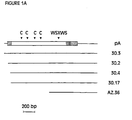
- the sequence of one clone contained motifs characteristic of the haemopoietin receptor family.
- Two oligonucleotides, #26 and #60 were designed from this sequence and used rescreen the primary filters from the original liver library and two other adult liver cDNA libraries.
- Nr1-AZ-36 The initially isolated cDNA clone, Nr1-AZ-36, and four other cDNA clones (Nrl-30.2, 30.3, 30.4 and 30.17) were sequenced completely, on both strands, using the dideoxy method (18) with the Pharmacia T7 polymerase sequencing kit (Pharmacia, Uppsala, SWEDEN).
- the sequence of the new receptor was compared to the EMBL and Genbank database using the FASTA program. Alignments with known cytokine receptors were carried out by eye.
- Primary positive plaques are identified and picked.
- 5 ⁇ l of primary plaque eluate was used in a polymerase chain reaction containing the following: 5 ⁇ l 10x PCR buffer with Mg (Boehringer Mannheim,) 1 ⁇ l 10 mM dATP, dCTP, dGTP and dTTP (Promega Corp), 2.5 ⁇ l of each primer at 100 ⁇ g/ml and 0.5 ⁇ l of Taq polymerase (Boehringer Mannheim).
- the primers utilised were those WSXWS primers used in hybridisation in combination with primers specific to the ⁇ -bacteriophage in which the library was cloned.
- PCR was carried in a Perkin Elmer 9600 machine using the following protocol: 96°C for 2 min, 25 cycles of 96°C for 30 sec, 55°C for 30 sec and 72°C for 2 min, 4°C indefinitely.
- First strand cDNA synthesis was performed on 1 ⁇ g of polyA+ cytoplasmic RNA. Reverse transcription was carried out at 42°C for 60 min in 20 ⁇ l of 50 mM Tris.HCl pH8.3, 20 mM KCl, 10 mM MgCl 2 , 5mM dithiothreitol, 1 mM of each dNTP, 20 ⁇ g/ml oligo (dT) 15 and 12.5 units of AMV reverse transcriptase (Boehringer Mannheim GmbH, Mannheim, Germany). Control reactions were performed for each RNA sample under identical conditions except that reverse transcriptase was omitted from the reaction. The reverse transcription reaction mixture was diluted to 100 ⁇ l with water and 5 ⁇ l was used for each PCR reaction.
- PCR reactions were carried out in 50 ⁇ l of reaction buffer (Boehringer Mannheim GmbH, Mannheim, Germany) containing 200 ⁇ M of each dNTP, 1 ⁇ M of each primer and 2.5 U of Taq polymerase (Boehringer Mannheim GmbH, Mannheim, Germany).
- the primers used for amplification of IL-11 receptor ⁇ -chain (Nr1) cDNA were, from homologY with other members of the haemopoietin receptor family, predicted to span at least one intron.
- These oligonucleotides were #449 and #285 (nucleotides 133-156 and 677-661; Figure 1 , Table 2), while for amplification of GAPDH cDNA primers #495 and #496 were used (Table 2).
- PCR was performed for 30 cycles at 94°C for 2 min, at 60°C for 2 min and at 72°C for 3 min in a Perkin Elmer Cetus Thermal cycler (Perkin Elmer Cetus, CA, USA). An aliquot of the reaction mixture was electrophoresed on a 1.0% w/v agarose gel and DNA was transferred to a zetaprobe membrane. Southern blots were performed as described by Reed and Mann (19). Hybridisation was carried out with end-labelled oligonucleotides (#489 for the IL-11 receptor ⁇ -chain and #741 for GAPDH; Table 2).
- Nr1-30.3 was used in a PCR with primers 30fl and 30r1 (Table 2) to generate a cDNA that contained little 5' or 3' untranslated region.
- the PCR product was cloned into the BstX I site ofpEF-BOS (21) using BstX I adaptors (Invitrogen, CA, USA).
- the cDNA insert was sequenced on both strands.
- cDNAs encoding the human LIF receptor and mouse gp130 were also subcloned into pEF-BOS. Receptor cDNAs in pEF-BOS were linearized with Aat II prior to transfection.
- pBluescript derivatives containing cDNAs encoding the selectable markers puromycin transferase (pPGKpuropA) and neomycin transferase (pPGKneopA) transcribed from a PGK promoter and with the ⁇ -globin 3'-untranslated region were linearised with Sca I.
- Cells were stably transfected by electroporation. Briefly, cells were washed twice in ice cold PBS and resuspended in PBS at 5 x 10 6 per ml. An amount of 4 x 10 6 cells was aliquoted into 0.4 mm electroporation cuvettes with 20 ⁇ g of pEF-BOS with or without Nr1, gp130 or the LIF receptor cloned into the BstX I site and 2 ⁇ g of the selectable markers pPGKpuro or pPGKneo.
- DNA and cells were incubated for 10 minutes on ice and electroporated at 270 V and 960 ⁇ F in a Bio-Rad Gene Pulser (Bio-Rad Laboratories, CA, USA).
- the cells were mixed with 1 ml of culture medium, centrifuged through 3 ml of FCS and resuspended in 100 ml of culture medium. Cells were than aliquoted into four 24 well dishes. After two days, selection was commenced by the addition of geneticin to a concentration of 1.2 mg/ml, of puromycin to a concentration of 40 ⁇ g/ml for M1 cells and 5 ⁇ g/ml for Ba/F3 cells. After 10-14 days, clones of proliferating cells were transferred to flasks and, after expansion, tested for receptor expression.
- Murine IL-3 and IL-11 were purchased from PeproTech (PeproTech, NJ, USA), human LIF and human OSM were produced using the pGEX system, essentially as described (25).
- the proliferation of Ba/F3 cells in response to cytokines was measured in Lux60 microwell HL-A plate (Nunc Inc., IL, USA). Cells were washed three times in DME containing 20% v/v new born calf serum and resuspended at a concentration of 2 x 10 4 cells per ml in the same medium. Aliquots of 10 ⁇ l of the cell suspension were placed in the culture wells with 5 ⁇ l of serial dilutions of purified recombinant IL-3, IL-11 or LIF, or IL-6 at 3 ⁇ g/ml and soluble IL-6 receptor ⁇ -chain at 500 ng/ml. After 2 days of incubation at 37°C in a fully humidified incubator containing 10% v/v CO 2 in air, viable cells were counted using an inverted microscope.
- IL-11 was dissolved at a concentration of 100 ⁇ g/ml in 50 mM sodium phosphate, 150 mM NaCl (PBS), 0.02% v/v Tween 20 and 0.02% w/v sodium azide at pH 7.4.
- IL-11 was radio-iodinated according to the method of Bolton and Hunter (24). Briefly, 2 ⁇ g of IL-11 was incubated with 2 mCi of monoiodinated Bolton-Hunter reagent (New England Nuclear, MA, USA) at room temperature in 20 ⁇ l of 150 mM sodium borate pH 8.5.
- the 125 IL-11 Prior to use the 125 IL-11 was diluted 10-fold with 50 mM Tris HCl pH 7.5, containing 0.02% v/v Tween 20 and 0.02% w/v sodium azide and applied to a 250 ⁇ l column of CM-Sephamse CL-4B (Pharmacia, Uppsala, SWEDEN) equilibrated in the same buffer. The column was washed with 5 ml of equilibration buffer and eluted with sequential 5 ml aliquots of DME containing 10% v/v FCS. At this stage the 125 I was greater than 95% precipitable with cold trichloroacetic acid. The bindability of the 125 I-IL-11 preparation was assessed as previously described (21) and was approximately 80%. The specific radioactivity of the 12SI-IL-11 was approximately 130,000 cpm/ng and was determined by self-displacement analysis (22).
- Binding studies were performed essentially as previously described (22). Briefly, 5 x 10 5 - 1.5 x 10 7 cells in 40 ⁇ l RPMI-1640 medium containing 20 mM Hepes pH 7.4 and 10% v/v foetal calf serum (RHF), were incubated overnight on ice, with between 5 x 10 3 and 2 x 10 6 cpm of 125 I-IL-11, with or without a 100-fold excess of unlabelled IL-11. In other experiments receptors were saturated with constant amount of 125 I-IL-11 and increasing amounts of unlabelled IL-I1 or unlabelled IL-3, IL-6, LIF, OSM or G-CSF. Cell associated and free 125 I-IL-11 were separated by rapid centrifugation through 180 ⁇ l of foetal calf serum and quantitated in a ⁇ -counter.
- haemopoietin receptor family exhibit a relatively low level of sequence similarity.
- One of the features of receptors in this family is the five amino acid motif Trp-Ser-Xaa-Trp-Ser (WSXWS) (15, 16, 17).
- Trp-Ser-Xaa-Trp-Ser 15, 16, 17.
- WSXWS five amino acid motif Trp-Ser-Xaa-Trp-Ser
- Nr1 cDNA To isolate a full length Nr1 cDNA, the original library and a second adult mouse liver cDNA library were screened with oligonucleotides (#26 and #60; Table 2) designed from the 5' end of clone Nr1-AZ-36. Eight cDNA clones were isolated and four were sequenced completely ( Figure 1 ). Analyses of the cDNA sequences revealed an open reading frame of 1296 bp which encoded a protein of 432 amino acids in length.
- the predicted primary sequence included a potential hydrophobic leader sequence (residues 1-23), extracellular domain with two potential N-linked glycosylation sites (residues 24-367), transmembrane domain (residues 368-393) and short cytoplasmic tail (residues 394-432).
- the core molecular weight of the mature receptor has been initially estimated to be approximately 36,000 daltons.
- the extracellular domain contained residues characteristic of a classical haemopoietin domain (D200; 15) ( Figures 1 and 2 ), including proline residues preceding each 100 amino acid sub domain (SD100), four conserved cysteine residues, a series of polar and hydrophobic residues, and a WSXWS motif.
- the haemopoietin receptor domain of the new receptor was preceded by an 87 amino acid immunoglobulin-like domain and followed by 37 amino acids before the transmembrane domain.
- the new receptor was most similar to the IL-6 receptor ⁇ -chain (24% amino acid identity), the CNTF receptor ⁇ -chain (22% amino acid identity) and the p40 subunit of IL-12 (16% amino acid identity).
- Nr1 mRNA expression was analysed by Northern blot and reverse transcriptase polymerase chain reaction (RT-PCR).
- RT-PCR reverse transcriptase polymerase chain reaction
- Nr1 mRNA The low abundance of the Nr1 mRNA suggested from Northern analyses prompted the use of RT-PCR as a more sensitive means of detection. All samples contained GAPDH mRNA as judged by RT-PCR ( Figure 3 ), however only 3T3-L1 cells, the stromal line BAd, the embryonic carcinoma cell line PC13 and the factor dependent haemopoietin cell lines FDCP-1 and D35 expressed Nr1 mRNA ( Figure 3 ). A wide range of primary tissues were also positive ( Figure 3 ) including the haemopoietin tissues bone marrow, spleen and thymus as well as the liver, brain, heart, kidney, muscle and salivary gland.
- Nr1 In mRNA samples from several cell lines and tissues transcripts for Nr1 could not be detected. Such negative results need to be confirmed using a more quantitative approach to mRNA analysis. In control experiments, PCR was performed on mRNA that had not been subjected to reverse transcription. In none of these samples was a Nr1 product detected.
- Nr1 IS A LOW AFFINITY RECEPTOR FOR IL-11 AND INTERACTS WITH gp130 TO GENERATE A HIGH AFFINITY IL-11 RECEPTOR
- Nr1 might be a receptor ⁇ -chain which interacts with gp130 and/or the LIF receptor to generate a high affinity receptor capable of signal transduction. Since no receptor ⁇ -chains, similar in structure to the IL-6 receptor ⁇ -chain, have been described for LIF, OSM and IL-11, these cytokines represent attractive candidates for the cognate ligand of Nr1.
- the factor-dependent haemopoietin cell line Ba/F3 and the mouse leukaemic cell line M1 were stably transfected with the vector pEF-BOS containing the cDNA encoding Nr1.
- Parental M1 cells express the LIF receptor and gp130 and, therefore, bound 125 I-LIF and 125 I-OSM.
- Expression of Nr1 in M1 cells did not result in altered binding of either 125 I-LIF or 125 I-OSM.
- Ba/F3 cells expressed neither the LIF receptor nor gp130 and no binding of 125 I-LIF and 125 I-OSM was observed on either parental Ba/F3 cells or cells expressing Nr1.
- the apparent equilibrium dissociation constant (K D ) for this interaction was estimated to be approximately 10 pM and cells expressed an average of between 2,000 and 8,000 receptors at their surface ( Figure 4A ).
- the IL-11 receptors expressed on M1 cells transfected with Nr1 were similar in affinity to the receptors expressed naturally on 3T3-L 1 cells ( Figure 4D ).
- Nr1 itself has an intrinsically low affinity for IL-11, but M1 cells express an excess of an additional receptor component required for the generation of a high affinity complex.
- gp130 and/or the LIF receptor were expressed in parental Ba/F3 cells or in Ba/F3 cells expressing Nr1.
- Nr1 appears to be a receptor that is specific for IL-11.
- the binding of 125 I-IL-11 to Ba/F3 cells expressing Nr1 was competed for by unlabelled IL-11, but not IL-6, LIF, OSM or IL-3 ( Figure 5 ).
- the binding of 125 I-IL-11 to Ba/F3 cells expressing Nr1 and gp130 was completed for by OSM and unlabelled IL-11 ( Figure 5 ), while binding to Ba/F3 cells expressing Nr1, gp130 and the LIF receptor was competed for by LIF, as well as OSM and IL-11 ( Figure 5 ).
- the IL-3-dependent haemopoietin cell line Ba/F3 has been used to study the capacity of a variety of cytokine receptors to transduce a proliferative signal.
- Ba/F3 cells are absolutely dependent on IL-3 for proliferation, but do not proliferate in response to IL-11, LIF or IL-6. It was determined, therefore, whether expression of Nr1, gp130 and the LIF receptor broadened the spectrum of cytokines to which these cells could respond.
- Figure 10A shows a specific band of 14 kb in human DNA, compared with 4.8 kb in the murine DNA, when examined under conditions of high hybridisation stringency (0.2 X SSC, at 65°C).
- the same murine probe (445 bp Sph I/ Sac I fragment) was then used to screen approximately 10 6 plaques from five human cDNA libraries. These included two adult bone marrow libraries (27; Clontech Cat. no. HL1058a) and libraries from the human placenta (Clontech Cat. no. HL1008b), liver (Clontech Cat. no. HL1001a) and a hepatoma cell line (Clontech Cat. no. HL1015b). Positive plaques were isolated and purified by successive rounds of hybridisation-screening (for method see Example 17). Approximately 30 positive clones were obtained from each of the adult bone marrow libraries and the placental library.
- the nucleotide sequence of the insert from each of these clones was determined in both directions.
- the insert from clone #9.1 was used to generate a probe to re-screen the bone marrow cDNA library and resulted in the identification of another unique clone (#17.1, Fig. 11 ).
- the nucleotide sequence of this clone was also determined in both directions.
- clones #9.1, and #4.3 were incomplete while clones #8.2 and #17.1 encompassed the entire coding region.
- Clones #8.2 and #17.1 contained a 287 bp intronic sequence and clones #4.3 and #8.2 contained a 254 bp intronic sequence. These sequences were confirmed as introns by analysis of genomic DNA clones, exhibited typical splice donor-acceptor sequences and were attributed to incomplete splicing of mRNA.
- Figure 8 shows the composite nucleotide sequence determined from the four IL-11r ⁇ cDNA clones.
- the sequence included 127 bp of 5' untranslated region (UTR) that was represented in 3 clones, and a 3' UTR with a polyadenylation signal and poly A tail.
- UTR 5' untranslated region
- the predicted protein had a potential hydrophobic leader sequence (1-23 a.a.), extracellular region (24-366 a.a.), transmembrane domain (367-392 a.a.) and a cytoplasmic tail (393-423 a.a.).
- the extracellular domain contained two possible sites of N-linked glycosylation ( Fig. 8 ).
- the human IL-11r ⁇ As with the murine IL-11r ⁇ (see previous Examples) and in common with other cytokine receptors (15;28), the human IL-11r ⁇ exhibited an immunoglobulin-like domain and an hemopoietin domain (D200, Fig. 8 ) in the extracellular region. The latter was composed of two subdomains of 100 a.a. (SD100, Fig. 8 ) and included proline residues preceding each subdomain, four conserved cysteine residues, a series of polar and hydrophobic residues an the WSXWS motif. The variable amino acid "S" was identified as theonine in the human receptor compared to alanine in the murine equivalent (see previous Examples).
- the murine myeloid leukemic cell line M1 constitutively expresses murine gp 130 the signalling molecule for LIF, IL-6, OSM and IL-11 receptors.
- LIF, OSM and IL-6 colonies of parental M1 cells in semisolid agar become dispersed as cells differentiate into macrophages and acquire the ability to migrate through agar.
- M1 cells manipulated to express the murine IL-11r ⁇ displayed specific binding of IL-11 and differentiated in response to IL-11 (see previous Examples).
- the human IL-11r ⁇ was expressed in murine M1 cells using the mammalian expression vector pEFBOS (30; Example 15).
- Binding studies using 125 I-labelled human IL-11 were carried out to test whether IL-11 specifically bound to the these cells (see Example 15 for methods).
- M1 cells manipuated to express the human IL-11r ⁇ (pools #1 - #4) demonstrated significant specific binding of human IL-11.
- the positive control cells, M1 cells and Ba/F3 cells expressing the murine IL-11r ⁇ and murine gp130 (see previous Examples) also showed high level binding.
- the parental M1 cells exhibited no detectable specific binding of IL-11. Scatchard analysis of saturation isotherms of IL-11 binding to M1 cells that expressed human IL-11r ⁇ confirmed high-affinity binding ( Fig. 13 ).
- Table 4 summarises the results of agar culture experiments of M1 cells that expressed human IL-11r ⁇ and shows their response to LIF and IL-11.
- M1 cells expressing the murine IL-11r ⁇ displayed clonal suppression and macrophage differentiation in response to IL-11.
- the central parental M1 cells did not respond to IL-11.
- the four pools of M1 cells manipulated to express the human IL-11r ⁇ when treated with In-11 showed marked suppression of clonogenicity (Table 4).
- the few colonies that grew in IL-11 displayed a differentiated phenotype. All cells lines showed the expected response to LIF.
- M1 cells expressing human IL-11r ⁇ and control cells were also examined in suspension cultures to assess macrophage differentiation in response to IL-11 and LIF (31; 32). Macrophage morphology was assessed after five days in culture. As shown in Fig. 13 , the majority of the cells displayed a macrophage phenotype following stimulation with IL-11. Similar results were observed with M1 cells expressing the murine IL-11r ⁇ , while parental M1 cells did not respond to IL-11. Thus, these experiments documented the ability of the isolated human cDNA to encode a functional receptor protein and demonstrated that co-operation between the human IL-11r ⁇ and murine gp130 was sufficient for signal transduction.
- Ba/F3 cells were examined. These cells are totally dependent on IL-3 for survival and do not constitutively express gp130.
- Ba/F3 cells were manipulated to express human IL-11r ⁇ and expanded based on the expression of the co-electroporated puromycin-resistance gene.
- Three clonal cell lines were established. These were confirmed to express human IL-11r ⁇ as assessed by binding of radio-labelled human IL-11, albeit at low level (106; 97; 116; mean specific counts bound per 10 6 cells versus undetectable binding for parental Ba/F3 cells). As shown in Fig. 14 these cells were unresponsive to IL-11.
- the human gp130 molecule was then expressed in each of these clonal cell lines:cells then proliferated in response to IL-11 ( Fig. 14 ). This result confirmed the expression of the human IL-11r ⁇ , in Ba/F3 cells and the requirement for gp130 for proliferation. Parental Ba/F3 cells used as control did not respond to IL-11 and, as expected, all cells proliferated in response to murine IL-3.
- the following human cDNA libraries were screened using the above mentioned murine probe:two bone marrow libraries (27; Clontech Cat. no. HL1058a), a placental library (Clontech Cat. no. HL1008b), a liver library (Clontech Cat. no. HL1001a), and a hepatoma cell library (Clontech Cat. no. HL1015b). Approximately 10 6 plaques from each library were lifted onto nitrocellulose membranes and fixed by incubating at 80°C for 2 hr. under vacuum. The filters were pre-hybridised for 1 hr. and then hybridised at 65°C for 16 hr.
- a 445 bp Sph I/ Sac I restriction enzyme digest fragment from the murine IL-11r ⁇ clone 30.1 (see earlier Examples) and a 560 bp Pst I/ Sba I restriction digest fragment from the human cDNA clone #17.1 were used as probes.
- An amount of 100 ng of DNA was labelled using a random decanucleotide labelling kit (Braesatec, Sydney, S.A., Australia).
- the incorporated [32 P] ATP was separated from unincorporated label using a NICK column (Pharmacia, Uppsala, Sweden).
- the membrane was prehybridised and hybridised at 65°C overnight in the buffer recommended by the manufacturer.
- the membrane was finally washed in 0.1% w/v SDS, 0.2 X SSC (30 mM sodium chloride, 3 mM tri-sodium citrate) for 30 min. at 65°C.
- Positive plaques isolated using the murine probe were further screened by a PCR-based strategy. Eluate from pure plaques (5 ⁇ l) was used as a template in a 50 ⁇ l volume PCR reaction using 2.5 U Taq polymerase (Boehringer Mannheim, Germany), the supplied buffer, 200 ⁇ M of each dNTP. The reaction was primed with 250 ng of an anti-sense oligonucleotide primer corresponding to WSXWS motif 5'-[(G/A)CTCCA(N)GC(G/A)CTCAA-3'] (SEQ ID NO.
- a composite cDNA construct including the entire coding region and the polyadenylation signal but excluding the intronic sequences was made by ligating restriction enzyme digest fragments from #9.1 ( Eco RI/ Pst I fragment) and #17.1 (Pst I/ Eco RI fragment).
- the construct was cloned into the Bst XI site of pEF-BOS (30) using Bst XI adaptors (Invitrogen, San Diego, CA, USA). It was linearized with Aat II prior to electroporation into M1 and Ba/F3 cells.
- pPGKpuropA and pPGKneopA are pBluescript derivatives containing the cDNA encoding puromycin transferase and neomycin transferase and were co-electroporated into cells and used as a selection markers.
- Human gp130 cloned into pEF-BOS was electroporated in BaF3 cells manipulated to express the human IL-11r ⁇ .
- M1 cells (29) were grown in Dulbecco's modified Eagle's medium (DMEM) containing 10% v/v Fetal Calf Serum (FCS) in 10% v/v CO 2 at 37°C.
- DMEM Dulbecco's modified Eagle's medium
- Ba/F3 cells (33) were grown in RPMI-1640 medium containing 10% v/v FCS and WEHI-3B D -conditioned media as a source of IL-3 (34). M1 and Ba/F3 cells stably expressing the human IL-11r ⁇ construct were generated by electroporation as described above. Cells were co-electroporated with pPGKPuropA. Clones of Ba/F3 expressing human IL-11r ⁇ were expanded with puromycin antibiotic selection and human gp130 was introduced with pPGKneopA. These cells were expanded in G418.
- M1 cells (300 per ml) were cultured in DMEM, 20% v/v FCS, 0.3% w/v agar and with human IL-11 (1000 U/ml) or murine LIF (1000 U/ml) or normal saline. Cultures were incubated in humidified air with 10% v/v CO 2 at 37°C. After 7 days colonies were counted and differentiation was assessed using standard criteria (35). In suspension cultures 1.5x10 4 M1 cells were cultured in 1.5 ml of DMEM containing 10% v/v FCS and with or without IL-11 (1000 U/ml) or LIF (1000 U/ml) and incubated as above. Differentiation was determined by morphological examination of May-Grunwald Giemsa stained cells: a minimum of 200 cells was examined.
- Ba/F3 cells The proliferation of Ba/F3 cells was measured in a microwell assay as described above. Briefly, 200 cells/well were incubated in 15 ⁇ l of media containing the following stimuli: normal saline, murine interleukin-3 (IL-3) at final concentration 1000 units/ml and series dilutions of human IL-11. Viable cells were counted after 48 hours.
- stimuli normal saline, murine interleukin-3 (IL-3) at final concentration 1000 units/ml and series dilutions of human IL-11. Viable cells were counted after 48 hours.
- IL-3 murine interleukin-3
- Murine IL-3 and human IL-11 was purchased from Peprotech (Rocky Hill, NJ, USA) and murine LIF and AMRAD Pty. Ltd. (Melbourne, Australia).
- Human IL-11 used in ligand binding studies was obtained by expression in COS-M6 cells. Briefly, a cDNA encoding the mature protein for human IL-11 was obtained by polymerase chain reaction from cDNA derived from a human stromal cell line 197/17 (36).
- the human IL-11 mature coding region was inserted into pEF/IL3SIG/FLAG which is a pEF-BOS (30) derived expression vector containing sequences encoding the murine IL-3 signal sequence followed by the FLAG sequence (Eastman Kodak, CT, USA), and then expressed in COS-M6 cells resulting in the secretion of a biologically active human IL-11 protein with a N-terminal flag.
- the N-terminal flag human IL-11 was purified by affinity chromatography on an anti-FLAG M2 monoclonal antibody column (Eastman Kodak, CT, USA) as recommended by the manufacturer with peptide elution followed by gel filtration chromatography on Superdex 75 (Pharmacia, Uppsala, Sweden). The purified protein gave a single band of MW 25,000 on SDS polyacrylamide gels.
- constructs were engineered to express a soluble version of the murine IL-11 receptor ⁇ chain with an N-terminal FLAG epitope (International Biotechnologies/Eastman Kodak, CT, USA).
- pEF-BOS was generated so that it contained DNA encoding the signal sequence of murine IL-3 (MVLASSTTSIHTMLLLLLMLFHLGLQASIS) and the FLAG epitope (DYKDDDDK), followed by a unique Xba I cloning site.
- This vector was named pEF/IL3SIG/FLAG.
- PCR was performed using to amplify DNA fragments encoding the extracellular domain without the transmembrane or cytoplasmic regions (S24 to Q367).
- the primers used were:
- COS cells were transiently transfected with these constructs. Briefly, COS cells from a confluent 175 cm 2 tissue culture flask were resuspended in PBS and electroporated (BioRad Gene pulser; 500 ⁇ F, 300 V) with 20 ⁇ g of uncut pEF-sIL-11r ⁇ in a 0.4 cm cuvette (BioRad). After 2 to 3 days at 37°C in a fully humidified incubator containing 10% v/v CO 2 in air cells were used for analyses of protein expression. Conditioned medium was collected by centrifugation and stored sterile at 4°C.
- the purified soluble murine IL-11 receptor ⁇ chain was tested for its ability to stimulate the differentiation of M1 cells in the presence or absence of IL-11.
- IL-11 and the soluble murine IL-11 receptor ⁇ chain were unable to stimulate M1 differentiation alone, however, when combined, differentiation was observed in both liquid and semi-solid culture.
- soluble murine IL-11 receptor ⁇ chain may act as an agonist, allowing IL-11 to exert effects on cells expressing gp130 in the absence of membrane bound IL-11 receptor ⁇ chain. In this way soluble IL-11 receptor ⁇ chain is similar to soluble IL-6 receptor ⁇ chain.
Landscapes
- Health & Medical Sciences (AREA)
- Chemical & Material Sciences (AREA)
- Life Sciences & Earth Sciences (AREA)
- Organic Chemistry (AREA)
- Medicinal Chemistry (AREA)
- General Health & Medical Sciences (AREA)
- Immunology (AREA)
- Toxicology (AREA)
- Proteomics, Peptides & Aminoacids (AREA)
- Molecular Biology (AREA)
- Genetics & Genomics (AREA)
- Biophysics (AREA)
- Biochemistry (AREA)
- Gastroenterology & Hepatology (AREA)
- Zoology (AREA)
- Cell Biology (AREA)
- Public Health (AREA)
- Engineering & Computer Science (AREA)
- Veterinary Medicine (AREA)
- Nuclear Medicine, Radiotherapy & Molecular Imaging (AREA)
- Bioinformatics & Cheminformatics (AREA)
- Animal Behavior & Ethology (AREA)
- Chemical Kinetics & Catalysis (AREA)
- Pharmacology & Pharmacy (AREA)
- General Chemical & Material Sciences (AREA)
- Peptides Or Proteins (AREA)
- Preparation Of Compounds By Using Micro-Organisms (AREA)
- Pharmaceuticals Containing Other Organic And Inorganic Compounds (AREA)
- Micro-Organisms Or Cultivation Processes Thereof (AREA)
- Nitrogen Condensed Heterocyclic Rings (AREA)
- Measuring Or Testing Involving Enzymes Or Micro-Organisms (AREA)
- Medicines That Contain Protein Lipid Enzymes And Other Medicines (AREA)
- Medicines Containing Material From Animals Or Micro-Organisms (AREA)
Abstract
Description
- The present invention relates generally to novel haemopoietin receptors, or components or parts thereof and to a method for cloning genetic sequences encoding same. More particularly, the subject invention is directed to recombinant or synthetic haemopoietin receptors or components or parts thereof. The receptor molecules or components or parts thereof and their genetic sequences of the present invention are useful in the development of a wide range of agonists, antagonists and therapeutics and diagnostic reagents based on ligand interaction with its receptor.
- Bibliographic details of the publications numerically referred to in this specification are collected at the end of the description. Sequence Identity Numbers (SEQ ID NOs.) for the nucleotide and amino acid sequences referred to in the specification are defined following the bibliography.
- Throughout this specification and the claims which follow, unless the context requires otherwise, the word "comprise", or variations such as "comprises" or "comprising", will be understood to imply the inclusion of a stated integer or group of integers but not the exclusion of any other integer or group of integers.
- The proliferation, differentiation and function of a wide variety of cells are controlled by secreted regulators, known as cytokines. One such cytokine is interleukin (IL)-11 which is a functionally pleiotropic molecule (1,2), initially characterized by its ability to stimulate proliferation of the IL-6-dependent plasmacytoma cell line, T11 65 (3). Other biological actions of IL-11 include induction of multipotential haemopoietin progenitor cell proliferation (4,5,6), enhancement of megakaryocyte and platelet formation (7,8,9,10), stimulation of acute phase protein synthesis (11) and inhibition of adipocyte lipoprotein lipase activity (12, 13). The diverse and pleiotropic function of IL-11 makes it an important haemopoietin molecule to study, especially at the level of its interaction with its receptor.
- The structure of the IL-11 receptor is not well known. It is known that neutralising antibodies to gp130 inhibit IL-11-dependent proliferation of TF-1 cells (14) and, hence, it is likely that gp130 forms part of the receptor. Yang and Yin (Biofactors, 4, pages 15-21, 1992) reported that IL-6 and IL-11 appear to use the gp130 signal transducer and Fourcin et al. (Eur. J. Immunol., 24, pages 277-280, 1994) reported that IL-11 acts through the signal transducer gp130/IL-6 signalling protein.
- Members of the haemopoietin receptor family generally comprise α- and β-chains (15,16,17). However, until the advent of the present invention, there was no information on the existence of IL-11 receptor chains. In work leading up to the present invention, the inventors developed a cloning procedure for haemopoietin receptors which does not require prior knowledge of their ligands. The cloning procedure has been successful in cloning the IL-11 receptor α-chain permitting, for the first time, a detailed molecular analysis of the IL-11 receptor. The present invention is based, therefore, on a generalized method for cloning haemopoietin receptors and in particular component chains thereof which provides a basis for developing a range of agonists, antagonists, therapeutic and diagnostic agents based on the IL-11 receptor.
- Accordingly, one aspect of the present invention provides an isolated nucleic acid molecule comprising a nucleotide sequence encoding, or complementary to a sequence encoding, an α chain of an Interleukin (IL)-11 receptor having
- (i) an amino acid sequence as set forth in SEQ ID NO: 3; or
- (ii) an amino acid sequence being part of the amino acid sequence set forth in SEQ ID NO: 3, said amino acid sequence comprising
amino acids 24 to 432 of SEQ ID NO: 3, oramino acids 1 to 367 of SEQ ID NO: 3 oramino acids 24 to 367 of SEQ ID NO: 3, which sequence comprises an amino acid sequence motif as set forth in SEQ ID NO: 1:- Trp-Ser-Xaa-Trp-Ser
- (iii) an amino acid sequence having at least 80% similarity to the amino acid sequence set forth in SEQ ID NO: 3, which comprises an amino acid sequence motif as set forth in SEQ ID NO: 1:
- Trp-Ser-Xaa-Trp-Ser
- The present invention is based on a method of identifying and/or cloning a genetic sequence encoding or complementary to a sequence encoding a haemopoietin receptor and in particular an IL-11 receptor or a component or part thereof, said method comprising screening a source of genetic material with one or more degenerate oligonucleotides designed from the sequence of amino acids comprising the sequence set forth in SEQ ID NO: 1:
- Trp-Ser-Xaa-Trp-Ser
- The sequence defined in SEQ ID NO: 1 has been identified in both α and β chains of haemopoietin receptors and in particular IL-11 receptor. Accordingly, the method is applicable to the cloning of genetic sequences encoding an α-chain, a β-chain or a combination of both α- and β-chains such as in a full length receptor.
- Preferably, the genetic molecule is of mammalian origin such as but not limited to humans, livestock animals (e.g. sheep, cows, pigs, goats, horses), laboratory test animals (e.g. mice, rats, guinea pigs), companion animals (e.g. cats, dogs) or captive wild animals. Most preferred origins are from humans and murine species (e.g. mice). The source of genetic material may be a genomic library or a cDNA library obtained from mRNA from a particular cell type such as would not limit to liver cells, bone marrow cells, placenta cells and heptatoma cells. A cDNA library is preferred and may also be an expression library. Furthermore, for the generation of mutants the cDNA library may be prepared by high error rate polymerase chain reaction (PCR) resulting in a mutant library.
- The term "screening" includes any convenient means to identify target clones. For example, colony hybridization may be employed with oligonucleotide probes or if an expression library is prepared, screening may be, for example, enzyme activity or antibody interactivity. Terms such as "components", "parts" or "fragments" include separately an α-chain and a β-chain or parts thereof. Preferably, the "components", "parts" and "fragments" are functional and more preferably a functional α- or β-chain.
- The genetic molecule may be single or double stranded, linear or closed circle DNA (e.g. genomic DNA), cDNA or mRNA or combinations thereof. The genetic molecule may also include a vector such as an expression vector component to facilitate expression of the IL-11 receptor genetic sequence.
- According to the present invention, the genetic sequence encodes the α-chain of IL-11 receptors and in particular murine IL-11 receptor α-chain encoded by a nucleotide sequence as set forth in SEQ ID NO: 2 or comprises an amino acid sequence as set forth in SEQ ID NO: 3, or comprises a part or derivative thereof as defined above. The cloning method used herein may however also be used to clone or identify other haemopoietin receptor sequences, such as that encoding the α-chain of human IL-11 receptor and comprising the nucleotide sequence as set forth in SEQ ID NO: 4 or an amino acid sequence as set forth in SEQ ID NO: 5 or a part or derivative thereof also disclosed but not claimed herein. Genetic sequences then identified may include a molecule capable of encoding a full length IL-11 receptor or a fragmented portion thereof such as an α-chain or a β-chain whether functional or not or may correspond to a portion thereof characterised by the amino acid sequence Trp-Ser-Xaa-Trp-Ser wherein Xaa is any amino acid residue. Additionally, the genetic sequence or part thereof may act as an antisense molecule or molecules to mRNA encoding the α- or β-chain of the IL-11 receptor. Such antisense molecules may be useful in genetic therapy or in the rational design of agonistic or antagonistic agents.
- In a particular embodiment, there is provided a genetic sequence which encodes an IL-11 receptor or a component, part or fragment thereof wherein said genetic sequence comprises a sequence of nucleotides to which SEQ ID NO: 2 may hybridise under high stringency conditions. Such a genetic sequence may be defined by the ability of an oligonucleotide selected from the following list to hybridise thereto:
- 5' (A/G)CTCCA(C/T)TC(A/G)CTCCA 3' (SEQ ID NO: 6);
- 5' (A/G)CTCCA(A/G)TC(A/G)CTCCA 3' (SEQ ID NO: 7);
- 5' (A/G)CTCCA(N)GC(C/T)CTCCA 3' (SEQ ID NO: 8);
- 5' (A/G)CTCCA(N)GG(A/G)CTCCA 3' (SEQ ID NO: 9);
- 5' (A/G)CTCCA(C/T)TT(A/G)CTCCA 3' (SEQ ID NO: 10);
- For the purposes of defining the level of stringency, reference can conveniently be made to Sambrook et al (26) which is herein incorporated by reference where the washing steps at pages 9.52-9.57 are considered high stringency. A low stringency is defined herein as being in 0.1-0.5% w/v SDS at 37-45 C for 2-3 hours. Depending on the source and concentration of nucleic acid involved in the hybridisation, alternative conditions of stringency may be employed such as medium stringent conditions which are considered herein to be 0.25-0.5% w/v SDS at ≥ 45 C for 2-3 hours or high stringent conditions as disclosed by Sambrook et al (26).
- Reference in the Examples to an α-chain is considered shorthand notation to the entire receptor or various parts thereof, including the α- or β-chain.
- In a further embodiment, the genetic sequence is fused to a heterologous genetic sequence to thereby encode a fusion molecule with, for example, glutathione-S-transferase, a receptor or subunit thereof for IL-2, IL-3, IL-4, IL-5, IL-6, IL-7, IL-9, erythropoietin, thrombopoietin, growth hormone, prolactin, CNTF, G-CSF, GM-CSF, gp130, or the p40 subunit of IL- 12.
- The genetic molecule may be single or double stranded, linear or closed circle DNA (e.g. genomic DNA), cDNA or mRNA or combinations thereof such as in the form of DNA:RNA hybrids. The genetic molecule may also include a vector such as an expression vector component to facilitate expression of the IL-11 receptor or its components or parts. In a preferred embodiment, the genetic sequence encodes the α-chain of IL-11 having an amino acid sequence set forth in SEQ ID NO: 3 (murine) or comprises a part or derivative thereof as defined above. Most preferably, the genetic sequence comprises a nucleotide sequence as set forth in SEQ ID NO: 2 (murine) or comprises a nucleotide sequence hybridising thereto under high stringency conditions.
- A kit useful for cloning a member of the haemopoietin receptor family or a component or part thereof, may comprise in compartmental form a first compartment adapted to contain at least one species of oligonucleotides having a nucleotide sequence based on the amino acid sequence SEQ ID NO: 1:
- Trp-Ser-Xaa-Trp-Ser
- Another aspect of the present invention is directed to a recombinant polypeptide comprising a sequence of amino acids corresponding to a mammalian IL-11 receptor α-chain and having
- (i) the amino acid sequence as set forth in SEQ ID NO: 3; or
- (ii) an amino acid sequence being part of the amino acid sequence set forth in SEQ ID NO: 3, said amino acid sequence comprising
amino acids 24 to 432 of SEQ ID NO: 3, oramino acids 1 to 367 of SEQ ID NO: 3 oramino acids 24 to 367 of SEQ ID NO: 3, which sequence comprises an amino acid sequence motif as set forth in SEQ ID NO: 1:- Trp-Ser-Xaa-Trp-Ser
- (iii) an amino acid sequence having at least 80% similarity to the amino acid sequence set forth in SEQ ID NO: 3, which comprises an amino acid sequence motif as set forth in SEQ ID NO: 1:
- Trp-Ser-Xaa-Trp-Ser
- (iv) an amino acid sequence as set forth in SEQ ID NO: 3 or an amino acid sequence comprising
amino acids 24 to 432 of SEQ ID NO: 3,amino acids 1 to 367 of SEQ ID NO: 3 oramino acids 24 to 367 of SEQ ID NO: 3 which is chemically modified by side chain modification, incorporation of unnatural amino acids, crosslinkers or other chemical modifications which impose a conformational constraint on the polypeptide, and which has the function of an IL-11 receptor α-chain. - In one embodiment the polypeptide comprises an amino acid sequence as substantially set forth in SEQ ID NO: 3 (murine) or having at least about 80% and yet even more preferably at least about 90-95% or greater similarity to the sequence set forth in SEQ ID NO: 3.
- The polypeptide may have additional amino acid sequences fused thereto including GST, another cytokine, a receptor component or gp130. It may be glycosylated or unglycosylated depending on the cell used to produce same. Accordingly, the polypeptide may be produced in a prokaryotic cell (e.g. E. coli or Bacilli sp) or in a eukaryotic cell (e.g. mammalian cells such as BA/F3 cells [18] yeast cells, insect cells).
- Mutants and derivatives of the recombinant polypeptide haemopoietin receptor properties include amino acid substitutions, deletions and/or additions. Furthermore, amino acids may be replaced by other amino acids having like properties, such as hydrophobicity, hydrophilicity, electronegativity, bulky side chains, interactive and/or functional groups and so on.
- Amino acid substitutions are typically of single residues; insertions usually will be of the order of about 1-10 amino acid residues; and deletions will range from about 1-20 residues. Deletions or insertions preferably are made in adjacent pairs, i.e: a deletion of 2 residues or insertion of 2 residues.
- The amino acid variants referred to above may readily be made using peptide synthetic techniques well known in the art, such as solid phase peptide synthesis and the like, or by recombinant DNA manipulations. Techniques for making substitution mutations at predetermined sites in DNA having known sequence are well known, for example through M13 mutagenesis. The manipulation of DNA sequences to produce variant proteins which manifest as substitutional, insertional or deletional variants are well known in the art.
- Other examples of recombinant or synthetic mutants and derivatives of the recombinant haemopoietin receptor polypeptide of the present invention include single or multiple substitutions, deletions and/or additions to any molecule associated with the ligand such as carbohydrates, lipids and/or proteins or polypeptides. Naturally occurring or altered glycosylated forms of the subject ligand are particularly contemplated by the present invention.
- Amino acid alterations to the subject polypeptide contemplated herein include insertions such as amino acid and/or carboxyl terminal fusions as well as intra-sequence insertions of single or multiple amino acids. Generally, insertions within the amino acid sequence will be smaller than amino or carboxyl terminal fusions, of the order of
say 1 to 4 residues. Insertional amino acid sequence variants are those in which one or more amino acid residues are introduced into a predetermined site in the protein. Deletional variants are characterised by the removal of one or more amino acids from the sequence. Substitutional variants are those in which at least one residue in the sequence has been removed and a different residue inserted in its place. Such substitutions may be made in accordance with Table 1:TABLE 1 Original Residue Exemplary Substitutions Ala Ser Arg Lys Asn Gln; His Asp Glu Cys Ser Gln Asn Glu Asp Gly Pro His Asn; Gln Ile Leu; Val Leu Ile; Val Lys Arg; Gln; Glu Met Leu; Ile Phe Met; Leu; Tyr Ser Thr Thr Ser Trp Tyr Tyr Trp; Phe Val Ile; Leu - The terms "analogues" and "derivatives" also extend to any functional chemical equivalent of the ligand characterised by its increased stability and/or efficacy in vivo or in vitro. The terms "analogue" and "derivatives" further extend to any amino acid derivative of the ligand as described above.
- Analogues of the haemopoietin polypeptide receptor contemplated herein include, but are not limited to, modifications to side chains, incorporation of unnatural amino acids and/or derivatising the molecule and the use of crosslinkers and other methods which impose conformational constraints on the peptides or their analogues. Examples of side chain modifications contemplated by the present invention include modifications of amino groups such as by reductive alkylation by reaction with an aldehyde followed by reduction with NaBH4; amidination with methylacetimidate; acylation with acetic anhydride; carbamoylation of amino groups with cyanate; trinitrobenzylation of amino groups with 2, 4, 6-trinitrobenzene sulphonic acid (TNBS); acylation of amino groups with succinic anhydride and tetrahydrophthalic anhydride; and pyridoxylation of lysine with pyridoxal-5'-phosphate followed by reduction with NaBH4.
- The guanidine group of arginine residues may be modified by the formation of heterocyclic condensation products with reagents such as 2,3- butanedione, phenylglyoxal and glyoxal.
- The carboxyl group may be modified by carbodiimide activation via O-acylisourea formation followed by subsequent derivitisation, for example, to a corresponding amide.
- Sulphydryl groups may be modified by methods such as carboxymethylation with iodoacetic acid or iodoacetamide; performic acid oxidation to cysteic acid; formation of a mixed disulphides with other thiol compounds; reaction with maleimide, maleic anhydride or other substituted maleimide; formation of mercurial derivatives using 4-chloromercuribenzoate, 4-chloromercuriphenylsulphonic acid, phenylmercury chloride, 2-chloromercuri-4-nitrophenol and other mercurials; carbomoylation with cyanate at alkaline pH.
- Tryptophan residues may be modified by, for example, oxidation with N-bromosuccinimide or alkylation of the indole ring with 2-hydroxy-5-nitrobenzyl bromide or sulphenyl halides. Tyrosine residues on the other hand, may be altered by nitration with tetranitromethane to form a 3-nitrotyrosine derivative.
- Modification of the imidazole ring of a histidine residue may be accomplished by alkylation with iodoacetic acid derivatives or N-carbethoxylation with diethylpyrocarbonate.
- Examples of incorporating unnatural amino acids and derivatives during protein synthesis include, but are not limited to, use of norleucine, 4-amino butyric acid, 4-amino-3-hydroxy-5-phenylpentanoic acid, 6-aminohexanoic acid, t-butylglycine, norvaline, phenylglycine, ornithine, sarcosine, 4-amino-3-hydroxy-6-methylheptanoic acid, 2-thienyl alanine and/or D-isomers of amino acids.
- Crosslinkers can be used, for example, to stabilise 3D conformations, using homo-bifunctional crosslinkers such as the bifunctional imido esters having (CH2)n spacer groups with n = 1 to n = 6, glutaraldehyde, N-hydroxysuccinimide esters and heterobifunctional reagents which usually contain an amino-reactive moiety such as N-hydroxysuccinimide and another group specific-reactive moiety such as maleimido or dithio moiety (SH) or carbodiimide (COOH). In addition, peptides could be conformationally constrained by, for example, incorporation of Cα and Nα-methylamino acids, introduction of double bonds between Cα and Cβ atoms of amino acids and the formation of cyclic peptides or analogues by introducing covalent bonds such as forming an amide bond between the N and C termini, between two side chains or between a side chain and the N or C terminus.
- The present invention, therefore, extends to peptides or polypeptides and amino acid and/or chemical analogues thereof having the identifying characteristics of the α-chain of IL-11 receptor.
- Accordingly, reference herein to the α-chain of the IL-I1 receptor or a polypeptide having IL-11 α-chain properties includes the naturally occurring molecule, recombinant, synthetic and analogue forms thereof and to any mutants, derivatives and human and non-human homologues thereof including amino acid and glycosylation variants.
- The availability of recombinant IL-11 receptor α-chain and genetic sequences encoding same permits for the first time the development of a range of agonists, antagonists, therapeutics and diagnostics to treat a variety of conditions involving a deficiency of IL- 11, an excess amount of IL-11 or aberrant effects of normal endogenous IL-11 levels.
- The present invention further described by the following non-limiting Figures and/or Examples.
- In the Figures:
-
Figure 1 is a representation of the nucleotide sequence, predicted amino acid sequence and cDNA structure of the IL-11 receptor α-chain (IL-Nrl); (A) Structure of the IL-11rα cDNA, showing the 5' and 3' untranslated regions (solid line) and the coding region containing the predicted signal sequence (■), the mature extracellular domain (□), transmembrane domain (▥) and cytoplasmic domain (▦). The size and extent of each of the IL-11rα cDNA clones that were sequenced completely are shown below. (B). The nucleotide and predicted amino acid sequence of IL-11rα. The untranslated region is shown in lower case and the coding region in upper case. The conventional one letter code for amino acids is employed throughout. The two potential asparagine-linked glycosylation sites (NXS/T) are shown underlined and in bold type. The potential signal sequence and the transmembrane domain are highlighted by bars between the nucleotide and amino acid sequence. The haemopoietin domain (D200) is boxed, and the broken line separates the two SD100 domains that comprise the D200 domain. A consensus polyadenylation signal in the 3'-untranslated region is shown in bold type. -
Figure 2 is a comparison of Nr1 with other members of the haemopoietin receptor family; Amino acid sequence alignment of murine Nr1, the murine IL-6 receptor α-chain, the human CNTF receptor α-chain, the p40 subunit of human IL-12 and the murine GM-CSF receptor α-chain. Alignments were carried out by eye. -
Figure 3 is a photographic representation of reverse transcriptase polymerase chain analyses of Nr1 mRNA; Cytoplasmic RNA was prepared from the following sources;lane 2, 3T3-L1 cells;lane 3, BAd cells;lane 4, UMR-106 cells;lane 5, PC13 cells;lane 6, NFS-60 cells;lane 7, FDCP-1 cells;lane 8 32D cells;lane 9, D35 cells;lane 10, M1 cells;lane 11,J774 cells;lane 12 WEHI-3B D-cells;lane 13, human bone marrow;lane 14, mouse bone marrow;lane 15, mouse spleen;lane 16, mouse thymus;lane 17, mouse ovary;lane 18, mouse uterus;lane 19, mouse testis;lane 20, mouse epididymus;lane 21, mouse brain;lane 22, mouse heart;lane 23, mouse kidney;lane 24 mouse thigh muscle;lane 25; mouse liver andlane 26, mouse salivary gland. 1 µg of each RNA sample and a control containing no RNA (lane 1) was subject to reverse transcription, with an identical reaction performed in the absence of reverse transcriptase. 5% of first strand cDNA reaction was subjected to PCR with primers specific for Nr1 (upper panel) or the control GAPDH (lower panel). PCR products were resolved on a 1.0% w/v agarose gel, transferred to nitrocellulose and hybridised with internal oligonucleotides specific to GAPDH or Nr1. -
Figure 4 is a graphical representation of scatchard analyses of saturation isotherms of IL-11 binding to various cell lines; (A) parental Ba/F3 cells (●), Ba/F3 cells expressing Nr1 (O), Ba/F3 cells expressing Nr1 and the LIF receptor (■), (B) Ba/F3 cells expressing the LIF receptor and gp130 (●), Ba/F3 cells expressing Nr1 and gp130 (■), Ba/F3 cells expressing the Nr1 LIF receptor and gp130 (O), (C) parental M1 cells (●), M1 cells expressing Nr1 (O), and (D) 3T3-L1 cells (■) were incubated with various concentrations of labelled IL-11 in the presence of absence of a 10-100-fold excess of unlabelled IL-11. After 18 hours incubation on ice, bound and free IL-11 were separated by centrifugation through foetal calf serum. Bound and free 125I-IL-11 was quantitated in a γ-counter and the data was depicted as a Scatchard transformation. In each case data were normalised for cell number and shown as binding to 106 cells. -
Figure 5 shows the molecular specificity of IL-11 binding to various cell lines: Ba/F3 cells expressing the designated receptors were incubated in 100 µl of medium containing 60,000 cpm (Ba/F3 Nr1 or 6,000 cpm of 125I-IL-11 (Ba/F3 Nr1/gp130 and Ba/F3 Nrl/gp130/LIF receptor), in the presence or absence of 20 ng IL-11 or 200 ng of IL-6, LIF, OSM or IL-3. After 18 hours incubation on ice, bound and free IL-11 were separated by centrifugation through foetal calf serum. Bound and free 125I-IL-11 were quantitated in a γ-counter and the amount of binding was expressed as a percentage of that observed in the absence of competitor. -
Figure 6 shows differentiations of M1 cells expressing Nr1 in response to IL-11; 300 parental M1 cells (left panel) or M1 cells expressing Nr1 (right panel) were cultured in 1 ml of semi-solid agar with the designated concentration of LIF (O) or IL-11 (●). After 7 days, the proportion of colonies containing differentiated cells were determined. -
Figure 7 shows factor dependent proliferation of Ba/F3 cells expressing various combinations of Nr1 gp130 and the LIF receptor; Parental Ba/F3 cells, Ba/F3 cells expressing Nr1, Ba/F3 cells expressing the Nr1 and the LIF receptor, Ba/F3 cells expressing LIF receptor and gyp130, Ba/F3 cells expressing Nr1 and gp130 and Ba/F3 cells expressing Nr1 the LIF receptor and gp130 were incubated at 200 cells per well in a volume of 15µl, with the designated concentrations of IL-11 (●), IL-3(□) or LIF(O). or with 3 µg/ml IL-6 and 500 ng/ml soluble IL-6 receptor α-chain (▲). After 48 hours the numbers of viable cells were counted. -
Figure 8 is a representation of the composite nucleotide sequence and the predicted amino acid sequence of the human IL-11 receptor α chain. The predicted amino acid sequence is displayed using the conventional single letter code. The asterisk represents the termination codon. The four conserved cysteine residues, the WSTWS motif and the potential asparagine-linked glycosylation sites (NXS/T) are shown in bold type and underlined. The potential signal sequence and the transmembrane region is displayed by thin underline and double underline, respectively. A consensus poly-adenylation signal is shown in lower case and bold type. The boxed region represents the 200 amino acid hemopoietin domain (D200) and is composed of two 100 amino acid subdomains (SD100) as marked by the broken line. The two arrows indicate the position of intronic sequences present in some of the cDNA clones. -
Figure 9 is a representation of a comparison of the predicted amino acid sequence of the human (H) and the murine (M) IL-11 receptor α chain. The asterisk symbol indicates identity. The hatch (#) marks represent gaps introduced to improve the alignment. -
Figure 10 is a photographic representation of a Southern blot demonstrating cross-species hybridisation of (A) murine IL-11 receptor α chain cDNA probe (445 bp Sph I/Sac I fragment) and (B) of human IL-11 receptor α chain cDNA probe (560 bp Pst I/Xba I fragment from clone #17.1) to human (H) and to murine (M) genomic DNA digested with Hind III. Nylon membrane processed under conditions of high stringency (0.2 X SSC, 0.1% w/v SDS, 65°C). Exposure was for 16 hours at -70°C using intensifying screens. -
Figure 11 is a diagrammatic representation of structure of the human IL-1 1rα cDNA, displaying the 5' and 3' untranslated region (solid line) and the coding region containing the signal sequence (▦), the extracellular domain (□), the transmembrane region (▥), the cytoplasmic portion (■) and the poly A tail (AAAA). The approximate position of the conserved cysteine residues (C) and the WSXWS motif is indicated. The size and extent of the four cDNA clones selected for analysis is shown below. The approximate positions of the introns is indicated (V) as is their size in bp. The length of the clones is depicted without the introns. The composite cDNA was obtained from clines #9.1 and #17.1 by ligation at the indicated Pst I site (arrow) and used for expression studies. -
Figure 12 is a diagrammatic representation of scatchard analyses of saturation isotherms of human IL-11 binding to M1 cells manipuated to express human IL-11rα (), M1 cells expressing the murine IL-11rα(●) and parental M1 cells (O). Cells were incubated with various concentrations of labelled IL-11 in the presence of 10-100-fold excess of unlabelled IL-11. After 18 hours incubation on ice, bound and free IL-11 were separated by centrifugation through FCS. Bound and free labelled IL-11 was quantitated n a γ counter and the data was depicted as a Scatchard transformation. In each case data were normalised for cell number and shown as binding to 106 cells. The amount of non-specific binding was between 0.1 and 1% of the total labelled IL-11 added. High-affinity binding was seen for M1 cells expressing human IL-1 1rα (Kd=250 pM) and urine IL-11rα (Kd=275 pM). Parental M1 cells did not display any specific binding. -
Figure 13 is a photographic representation showing morphology of parental M1 cells and M1 cells manipulated to express the human IL-11 receptor α chain (M1/hIL-11rα) and in response to human IL-11 (1000 U/ml) and murine LIF (1000 U/ml). Cell morphology was examined after 5 days of incubation. Panels a, b and c show parental M1 cells with: normal saline (Panel a), LIF (Panel b) and IL-11 (Panel c). Panel d is representative of M1/hIL-11rα cells stimulated with IL-11 (X400). -
Figure 14 is a graphical representation showing proliferation of parental Ba/F3 cells (▲), Ba/F3 cells manipulated to express the human IL-11 receptor α chain (Ba/F3+hIL-11rα) and Ba/F3 manipulated to express human IL-11 receptor α chain along with human gp130 (Ba/F3+hIL-1 Irα+gp130). Three clonal cell lines (Ba/F3+hIL-11rα) were established (represented by ●) that were unresponsive. Following the expression of the human gp130 molecule, all cell lines were IL-11 responsive (open symbols). Series dilutions of human IL-11 are shown. The results are means of triplicates from two experiments. All cells proliferated in IL-3. - The following single and three letter abbreviations for amino acid residues are used in the specification:
Amino Acid Three-letter Abbreviation One-letter Symbol Alanine Ala A Arginine Arg R Asparagine Asn N Aspartic acid Asp D Cysteine Cys C Glutamine Gln Q Glutamic acid Glu E Glycine Gly G Histidine His H Isoleucine Ile I Leucine Leu L Lysine Lys K Methionine Met M Phenylalanine Phe F Proline Pro P Serine Ser S Threonine Thr T Tryptophan Trp W Tyrosine Tyr Y Valine Val V Any residue Xaa X - The following abbreviations are adopted in the subject specification:
IL-11: Interleukin 11IL-11r: IL-11 receptor IL- 11rα: IL-11 receptor α-chain D: Domain SD: Sub-domain Nr1 IL-11r - Commercial adult mouse liver cDNA libraries cloned into λgt10 and λZAP (Clonetech, CA, USA and Stratagene, CA, USA) were used to infect Escherichia coli of the strain LE392. Infected bacteria were grown on twenty 150 mm plates of agar, to give approximately 50,000 plaques per plate. Plaques were then transferred to duplicate 150 mm diameter nylon membranes (Colony/Plaque Screen ™, NEN Research Products, MA, USA), bacteria were lysed and the DNA was fixed by autoclaving at 100°C for min with dry exhaust. The filters were rinsed twice in 0.1% w/v sodium dodecyl sulfate (SDS), 0.1 x SSC (SSC is 150 mM sodium chloride, 15 mM sodium citrate dihydrate) at room temperature and prehybridised overnight at 37°C in 6 x SSC containing 2 mg/ml bovine serum albumin, 2 mg/ml Ficoll, 2 mg/ml polyvinylpryrrolidone, 100 µM ATP, 10 µg/ml tRNA, 2 mM sodium pyrophosphate, 2mg/ml salmon sperm DNA, 0.1% NP-40 and 200 µg/ml sodium azide. The pre-hybridisation buffer was removed. An amount of 1.2 µg of the degenerate oligonucleotides for hybridisation (HYB1, HYB2 and HYB3; Table 1) were phosphorylated with T4 polynucleotide kinase using 960 µCi of γ32P-ATP (Bresatec, S.A., Australia). Unincorporated ATP was separated from the labelled oligonucleotide using a pre-packed gel filtration column (NAP-5; Pharmacia, Uppsala, SWEDEN). Filters were hybridised overnight at 37°C in 80 ml of the prehybridisation buffer containing 0.1 % w/v SDS, rather than NP40, and 106 - 107 cpm/ml of labelled oligonucleotide. Filters were briefly rinsed twice at room temperature in 6 x SSC, 0.1% v/v SDS, twice for 30 min at 45°C in a shaking waterbath containing 1.5 1 of the same buffer and then briefly in 6 x SSC at room temperature. Filters were then blotted dry and exposed to autoradiographic film at -70°C using intensifying screens, for 7-14 days prior to development.
- Plaques that appeared positive on orientated duplicate filters were picked, eluted in 1 ml of 100 mM NaCl, 10 mM MgCl2, 10 mM Tris.HCl pH7.4 containing 0.5% w/v gelatin and 0.5% v/v chloroform and stored at 4°C. After 2 days LE392 cells were infected with the eluate from the primary plugs and replated for the secondary screen. This process was repeated until hybridising plaques were pure.
- DNA was prepared from positive plaques using Promega Magic Lambda DNA columns (Promega Corporation, WI, USA) according to the manufacturer's instructions. An amount of 100 ng of DNA from each positive bacteriophage was sequenced using a fmol sequencing kit (Promega Corporation, WI, USA) with the 33P-labelled oligonucleotide primers gt10for, gt10rev and either HYB1, HYB2 or HYB3. The products were resolved on a 6% w/v polyacrylamide gel and the sequence of each clone was analysed using the Blast database comparison programs and the translation function of the Wisconsin suite of programs.
- The sequence of one clone (Nr1-AZ-36) contained motifs characteristic of the haemopoietin receptor family. Two oligonucleotides, #26 and #60 (nucleotides 946-970 and 1005-1034;
Figure 1 ; Table 2), were designed from this sequence and used rescreen the primary filters from the original liver library and two other adult liver cDNA libraries. The initially isolated cDNA clone, Nr1-AZ-36, and four other cDNA clones (Nrl-30.2, 30.3, 30.4 and 30.17) were sequenced completely, on both strands, using the dideoxy method (18) with the Pharmacia T7 polymerase sequencing kit (Pharmacia, Uppsala, SWEDEN). The sequence of the new receptor was compared to the EMBL and Genbank database using the FASTA program. Alignments with known cytokine receptors were carried out by eye. - An alternative, quicker method for the analysis of positive plaques identified using degenerate oligonucleotides to the WSXWS motif.
- Primary positive plaques are identified and picked.
- 5µl of primary plaque eluate was used in a polymerase chain reaction containing the following: 5µl 10x PCR buffer with Mg (Boehringer Mannheim,) 1
µl 10 mM dATP, dCTP, dGTP and dTTP (Promega Corp), 2.5 µl of each primer at 100 µg/ml and 0.5µl of Taq polymerase (Boehringer Mannheim). The primers utilised were those WSXWS primers used in hybridisation in combination with primers specific to the λ-bacteriophage in which the library was cloned. PCR was carried in a Perkin Elmer 9600 machine using the following protocol: 96°C for 2 min, 25 cycles of 96°C for 30 sec, 55°C for 30 sec and 72°C for 2 min, 4°C indefinitely. - 20µl of the PCR was electrophoresed on a 1% w/v agarose gel in TAE. Any products were isolated using GeneClean reagent and sequenced either using 33P-labelled WSXWS primers with the fmol sequencing kit (Promega Corp) or unlabelled WSXWS primers and fluoresceinated dideoxy nucleotides with an automated sequencer. The sequence is then used to check for motifs common to receptors of the haemopoietin family.
TABLE 2 SEQUENCE OF OLIGONUCLEOTIDES Oligonucleotide Sequence SEQ ID NO: HYB1 5' (A/G)CTCCA(C/T)TC(A/G)CTCCA 3' 6 HYB2 5' (A/G)CTCCA(A/G)TC(A/G)CTCCA 3' 7 HYB3 5' (A/G)CTCCA(N)GC(C/T)CTCCA 3' 8 #26 5' TGGTCCACGGTGGAGCCCATTGGCT 3' 11 # 60 5' CCACACGCGGTACGAGTCAGTGCCAGGGAC 3' 12 gt10for 5' AGCAAGTTCAGCCTGGTTAAG 3' 13 gt10rev 5' CTTATGAGTATTTCTTCCAGGGTA 3' 14 #495 5' CCCTTCATTGACCTCAACTACATG 3' 15 #496 5' CATGCCAGTGAGCTTCCCGTTCAG 3' 16 #449 5' GGGTCCTCCAGGGGTCCAGTATGG 3' 17 #285 5' GGAGGCCTCCAGAGGGT 3' 18 #489 5' CTCCTGTACTTGGAGTCCAGG 3' 19 #741 5' GGAAAGCTGTGGCGTGATGGCCGTGGGGCA 3' 20 30fl 5' GGGCGGAGGCCGCTGGCGGGCG 3' 21 30r1 5' TTATCAGCTGAAGTTCTCTGGGG 3' 22 - First strand cDNA synthesis was performed on 1 µg of polyA+ cytoplasmic RNA. Reverse transcription was carried out at 42°C for 60 min in 20µl of 50 mM Tris.HCl pH8.3, 20 mM KCl, 10 mM MgCl2, 5mM dithiothreitol, 1 mM of each dNTP, 20µg/ml oligo (dT)15 and 12.5 units of AMV reverse transcriptase (Boehringer Mannheim GmbH, Mannheim, Germany). Control reactions were performed for each RNA sample under identical conditions except that reverse transcriptase was omitted from the reaction. The reverse transcription reaction mixture was diluted to 100µl with water and 5µl was used for each PCR reaction. PCR reactions were carried out in 50µl of reaction buffer (Boehringer Mannheim GmbH, Mannheim, Germany) containing 200 µM of each dNTP, 1µM of each primer and 2.5 U of Taq polymerase (Boehringer Mannheim GmbH, Mannheim, Germany). The primers used for amplification of IL-11 receptor α-chain (Nr1) cDNA were, from homologY with other members of the haemopoietin receptor family, predicted to span at least one intron. These oligonucleotides were #449 and #285 (nucleotides 133-156 and 677-661;
Figure 1 , Table 2), while for amplification of GAPDH cDNA primers #495 and #496 were used (Table 2). PCR was performed for 30 cycles at 94°C for 2 min, at 60°C for 2 min and at 72°C for 3 min in a Perkin Elmer Cetus Thermal cycler (Perkin Elmer Cetus, CA, USA). An aliquot of the reaction mixture was electrophoresed on a 1.0% w/v agarose gel and DNA was transferred to a zetaprobe membrane. Southern blots were performed as described by Reed and Mann (19). Hybridisation was carried out with end-labelled oligonucleotides (#489 for the IL-11 receptor α-chain and #741 for GAPDH; Table 2). - Nr1-30.3 was used in a PCR with primers 30fl and 30r1 (Table 2) to generate a cDNA that contained little 5' or 3' untranslated region. The PCR product was cloned into the BstX I site ofpEF-BOS (21) using BstX I adaptors (Invitrogen, CA, USA). The cDNA insert was sequenced on both strands. cDNAs encoding the human LIF receptor and mouse gp130 were also subcloned into pEF-BOS. Receptor cDNAs in pEF-BOS were linearized with Aat II prior to transfection. pBluescript derivatives containing cDNAs encoding the selectable markers puromycin transferase (pPGKpuropA) and neomycin transferase (pPGKneopA) transcribed from a PGK promoter and with the β-globin 3'-untranslated region were linearised with Sca I.
- Cells were stably transfected by electroporation. Briefly, cells were washed twice in ice cold PBS and resuspended in PBS at 5 x 10⁶ per ml. An amount of 4 x 10⁶ cells was aliquoted into 0.4 mm electroporation cuvettes with 20µg of pEF-BOS with or without Nr1, gp130 or the LIF receptor cloned into the BstX I site and 2 µg of the selectable markers pPGKpuro or pPGKneo. DNA and cells were incubated for 10 minutes on ice and electroporated at 270 V and 960 µF in a Bio-Rad Gene Pulser (Bio-Rad Laboratories, CA, USA). The cells were mixed with 1 ml of culture medium, centrifuged through 3 ml of FCS and resuspended in 100 ml of culture medium. Cells were than aliquoted into four 24 well dishes. After two days, selection was commenced by the addition of geneticin to a concentration of 1.2 mg/ml, of puromycin to a concentration of 40 µg/ml for M1 cells and 5 µg/ml for Ba/F3 cells. After 10-14 days, clones of proliferating cells were transferred to flasks and, after expansion, tested for receptor expression.
- Murine IL-3 and IL-11 were purchased from PeproTech (PeproTech, NJ, USA), human LIF and human OSM were produced using the pGEX system, essentially as described (25).
- The proliferation of Ba/F3 cells in response to cytokines was measured in Lux60 microwell HL-A plate (Nunc Inc., IL, USA). Cells were washed three times in DME containing 20% v/v new born calf serum and resuspended at a concentration of 2 x 10⁴ cells per ml in the same medium. Aliquots of 10 µl of the cell suspension were placed in the culture wells with 5µl of serial dilutions of purified recombinant IL-3, IL-11 or LIF, or IL-6 at 3 µg/ml and soluble IL-6 receptor α-chain at 500 ng/ml. After 2 days of incubation at 37°C in a fully humidified incubator containing 10% v/v CO2 in air, viable cells were counted using an inverted microscope.
- In order to assay the differentiation of M1 cells in response to cytokines, 300 cells were cultured in 35 mm Petri dishes containing 1ml of DME supplemented with 20% v/v FCS, 0.3% w/v agar and 0.1 ml of serial dilutions of IL-6, IL-11, LIF or OSM. After 7 days culture at 37°C in a fully humidified atmosphere, containing 10% v/v CO2 in air, colonies of M1 cells were counted and classified as differentiated if they contained dispersed cells or a corona of dispersed cells around a tightly packed centre.
- IL-11 was dissolved at a concentration of 100 µg/ml in 50 mM sodium phosphate, 150 mM NaCl (PBS), 0.02% v/
v Tween 20 and 0.02% w/v sodium azide at pH 7.4. IL-11 was radio-iodinated according to the method of Bolton and Hunter (24). Briefly, 2 µg of IL-11 was incubated with 2 mCi of monoiodinated Bolton-Hunter reagent (New England Nuclear, MA, USA) at room temperature in 20 µl of 150 mM sodium borate pH 8.5. After two hours the reaction was quenched with 100µl of 1M glycine in the same buffer and the labelled protein was separated from unincorporated Bolton-Hunter reagent using a pre-packed Sephadex G-25 column (PD-10; Pharmacia, Uppsala, Sweden) equilibrated in PBS containing 0.02% v/v Tween 20 and 0.02% w/v sodium azide. Prior to use the 125IL-11 was diluted 10-fold with 50 mM Tris HCl pH 7.5, containing 0.02% v/v Tween 20 and 0.02% w/v sodium azide and applied to a 250 µl column of CM-Sephamse CL-4B (Pharmacia, Uppsala, SWEDEN) equilibrated in the same buffer. The column was washed with 5 ml of equilibration buffer and eluted with sequential 5 ml aliquots of DME containing 10% v/v FCS. At this stage the 125I was greater than 95% precipitable with cold trichloroacetic acid. The bindability of the 125I-IL-11 preparation was assessed as previously described (21) and was approximately 80%. The specific radioactivity of the 12SI-IL-11 was approximately 130,000 cpm/ng and was determined by self-displacement analysis (22). - Binding studies were performed essentially as previously described (22). Briefly, 5 x 10⁵ - 1.5
x 107 cells in 40 µl RPMI-1640 medium containing 20 mM Hepes pH 7.4 and 10% v/v foetal calf serum (RHF), were incubated overnight on ice, with between 5 x 10³ and 2 x 10⁶ cpm of 125I-IL-11, with or without a 100-fold excess of unlabelled IL-11. In other experiments receptors were saturated with constant amount of 125I-IL-11 and increasing amounts of unlabelled IL-I1 or unlabelled IL-3, IL-6, LIF, OSM or G-CSF. Cell associated and free 125I-IL-11 were separated by rapid centrifugation through 180µl of foetal calf serum and quantitated in a γ-counter. - Members of the haemopoietin receptor family exhibit a relatively low level of sequence similarity. One of the features of receptors in this family is the five amino acid motif Trp-Ser-Xaa-Trp-Ser (WSXWS) (15, 16, 17). In an attempt to clone novel haemopoietin receptors, 106 plaques from an adult mouse liver cDNA library were screened with degenerate oligonucleotides corresponding to the WSXSW motif. λ-bacteriophage plaques that appeared positive on the duplicate primary filters were picked, eluted and isolated by two subsequent rounds of plaque enrichment. DNA from pure hybridising plaques was then sequenced.
- The utility of this technique was demonstrated by the identification of several cDNAs encoding the murine LIF receptor, IL-7 receptor, gp130 and a novel sequence that appeared related to members of the haemopoietin receptor family which is termed herein "Nr1". The cDNA (Nr1-AZ-36 encoding this novel receptor was sequenced fully and although it contained a polyadenylation signal and an extensive poly-A tail, it was clearly truncated at the 5' end (
Figure 1 ). - To isolate a full length Nr1 cDNA, the original library and a second adult mouse liver cDNA library were screened with oligonucleotides (#26 and #60; Table 2) designed from the 5' end of clone Nr1-AZ-36. Eight cDNA clones were isolated and four were sequenced completely (
Figure 1 ). Analyses of the cDNA sequences revealed an open reading frame of 1296 bp which encoded a protein of 432 amino acids in length. The predicted primary sequence included a potential hydrophobic leader sequence (residues 1-23), extracellular domain with two potential N-linked glycosylation sites (residues 24-367), transmembrane domain (residues 368-393) and short cytoplasmic tail (residues 394-432). The core molecular weight of the mature receptor has been initially estimated to be approximately 36,000 daltons. - The extracellular domain contained residues characteristic of a classical haemopoietin domain (D200; 15) (
Figures 1 and2 ), including proline residues preceding each 100 amino acid sub domain (SD100), four conserved cysteine residues, a series of polar and hydrophobic residues, and a WSXWS motif. The haemopoietin receptor domain of the new receptor was preceded by an 87 amino acid immunoglobulin-like domain and followed by 37 amino acids before the transmembrane domain. Regarding its overall structure and its primary sequence (Figure 2 ), the new receptor was most similar to the IL-6 receptor α-chain (24% amino acid identity), the CNTF receptor α-chain (22% amino acid identity) and the p40 subunit of IL-12 (16% amino acid identity). - The distribution of Nr1 mRNA expression was analysed by Northern blot and reverse transcriptase polymerase chain reaction (RT-PCR). Among a survey of polyadenylated RNA from 15 primary tissue samples and 17 cell lines, only RNA from the pre-adipocyte cell line 3T3-
L 1, yielded a detectable hybridising band of approximately 2.0kb in length on a Northern blot. This compares to a length of approximately 1650 bp for the longest Nr1 cDNA isolated and suggests that this clone may not be complete at the 5' end. - The low abundance of the Nr1 mRNA suggested from Northern analyses prompted the use of RT-PCR as a more sensitive means of detection. All samples contained GAPDH mRNA as judged by RT-PCR (
Figure 3 ), however only 3T3-L1 cells, the stromal line BAd, the embryonic carcinoma cell line PC13 and the factor dependent haemopoietin cell lines FDCP-1 and D35 expressed Nr1 mRNA (Figure 3 ). A wide range of primary tissues were also positive (Figure 3 ) including the haemopoietin tissues bone marrow, spleen and thymus as well as the liver, brain, heart, kidney, muscle and salivary gland. In mRNA samples from several cell lines and tissues transcripts for Nr1 could not be detected. Such negative results need to be confirmed using a more quantitative approach to mRNA analysis. In control experiments, PCR was performed on mRNA that had not been subjected to reverse transcription. In none of these samples was a Nr1 product detected. - Given its sequence similarity with the IL-6 and CNTF receptor α-chains and its expression in 3T3-L1-cells, it was reasoned that Nr1 might be a receptor α-chain which interacts with gp130 and/or the LIF receptor to generate a high affinity receptor capable of signal transduction. Since no receptor α-chains, similar in structure to the IL-6 receptor α-chain, have been described for LIF, OSM and IL-11, these cytokines represent attractive candidates for the cognate ligand of Nr1.
- To test whether LIF, OSM or IL-11 bound to the new receptor, the factor-dependent haemopoietin cell line Ba/F3 and the mouse leukaemic cell line M1 were stably transfected with the vector pEF-BOS containing the cDNA encoding Nr1. Parental M1 cells express the LIF receptor and gp130 and, therefore, bound 125I-LIF and 125I-OSM. Expression of Nr1 in M1 cells did not result in altered binding of either 125I-LIF or 125I-OSM. In contrast, Ba/F3 cells expressed neither the LIF receptor nor gp130 and no binding of 125I-LIF and 125I-OSM was observed on either parental Ba/F3 cells or cells expressing Nr1.
- No binding of 125I-IL- 11 could be detected on parental M1 or Ba/F3 cells (
Figure 4A & C ). Strikingly, however, expression of Nr1 in each cell type resulted in the ability to bind 125I-IL- 11 which suggested that Nr1 might be the α-chain of the IL-11 receptor. Scatchard transformation of the saturation binding isotherms revealed that the affinity of IL-11 for its receptor differed between the two cell types (Figure 4A versus 4C ). Binding of 125I-IL-11 to Ba/F3 cells expressing Nr1 was of very low affinity. The apparent equilibrium dissociation constant (KD) for this interaction was estimated to be approximately 10 pM and cells expressed an average of between 2,000 and 8,000 receptors at their surface (Figure 4A ). M1 cells transfected with a Nr1 cDNA expressed a similar number of IL-11 receptors (Figure 4C ), however, the affinity of the interaction was higher (KD=400-800 pM). The IL-11 receptors expressed on M1 cells transfected with Nr1 were similar in affinity to the receptors expressed naturally on 3T3-L 1 cells (Figure 4D ). - One explanation for the generation of low affinity or high affinity receptors according to the cell type in which Nr1 is expressed, is that Nr1 itself has an intrinsically low affinity for IL-11, but M1 cells express an excess of an additional receptor component required for the generation of a high affinity complex. Indirect evidence exists for the role of gp130 in IL-11 receptor signal transduction, since neutralising antibodies to gp130 inhibited IL-11 induced proliferation of TF-1 cells. In order to test this proposition directly, gp130 and/or the LIF receptor were expressed in parental Ba/F3 cells or in Ba/F3 cells expressing Nr1.
- Parental Ba/F3 cells and Ba/F3 cells expressing gp130 and the LIF receptor, alone or in combination did not bind IL-11 (
Figure 4A and B ). Ba/F3 cells expressing Nr1 and the LIF receptor, bound IL-11 with a very low affinity that was indistinguishable from cells expressing IL-11 receptor α-chain alone (Figure 4A ). In contrast, when gp130 and Nr1 were co-expressed in Ba/F3 cells, high affinity receptors for IL-I1 were generated (Figure 4B ). The affinity of these receptors was similar to that of receptors expressed by 3T3-L1 cells and M1 cells expressing IL-11 receptor α-chain (Figure 4B-D ). Expression of the LIF receptor with Nr1 and gp130 did not increase the affinity of IL-11 binding (Figure 4B ). - Nr1 appears to be a receptor that is specific for IL-11. The binding of 125I-IL-11 to Ba/F3 cells expressing Nr1 was competed for by unlabelled IL-11, but not IL-6, LIF, OSM or IL-3 (
Figure 5 ). A more complex situation exists in cells in which Nr1 is expressed with gp130 and the LIF receptor. The binding of 125I-IL-11 to Ba/F3 cells expressing Nr1 and gp130, was completed for by OSM and unlabelled IL-11 (Figure 5 ), while binding to Ba/F3 cells expressing Nr1, gp130 and the LIF receptor was competed for by LIF, as well as OSM and IL-11 (Figure 5 ). - Many cytokines exert effects upon cell differentiation as well as cell division. In the absence of differentiative stimuli, colonies of parental leukaemic M1 cells are tightly packed and are composed of undifferentiated blast cells. In response to LIF, OSM and IL-6, but not IL-11, M1 colonies grown in semi-solid agar become dispersed because of the induction of macrophage differentiation (
Figure 6A ). In addition, LIF, OSM and IL-6 suppress the clonogenicity of M1 cells resulting in the development of reduced numbers of colonies. M1 cells expressing the IL-11 receptor α-chain exhibited a normal response to LIF, OSM and IL-6 but now differentiated into macrophages when stimulated by IL-11 (Figure 6B ). As with LIF, IL-6 and OSM, fewer colonies were produced by M1 cells expressing Nr1 in the presence of IL-11 than in control cultures and these colonies contained fewer cells. - The IL-3-dependent haemopoietin cell line Ba/F3 has been used to study the capacity of a variety of cytokine receptors to transduce a proliferative signal. Ba/F3 cells are absolutely dependent on IL-3 for proliferation, but do not proliferate in response to IL-11, LIF or IL-6. It was determined, therefore, whether expression of Nr1, gp130 and the LIF receptor broadened the spectrum of cytokines to which these cells could respond. While none of the cell lines examined could proliferate in response to IL-6 alone, each cell line that expressed gp130, irrespective of whether or not other receptors were co-expressed, proliferated in response to a combination of IL-6 and the soluble IL-6 receptor α-chain (
Figure 7 ). Proliferation in response to LIF required coexpression of the LIF receptor and gp130 (Figure 7 ), however, these cells were unable to proliferate in response to IL-11. Likewise, Ba/F3 cells expressing Nr1 alone or Nr1 and the LIF receptor were incapable of responding to IL-11 (Figure 7 ). Response to IL-11 required coexpression of both Nr1 and gp130 (Figure 7 ). Half-maximal proliferation of these cells occurred at an IL-11 concentration of between 20 and 100 pg/ml. Expression of the LIF receptor, in addition to Nr1 and gp130, did not alter this response (Figure 7 ). - In order to determine the feasibility of cloning the human IL-11rα based on homology with the murine receptor, analysis of murine and human genomic DNA was carried out using a murine IL-11rα cDNA fragment as a probe (for method see Example 13).
Figure 10A shows a specific band of 14 kb in human DNA, compared with 4.8 kb in the murine DNA, when examined under conditions of high hybridisation stringency (0.2 X SSC, at 65°C). - The same murine probe (445 bp Sph I/Sac I fragment) was then used to screen approximately 106 plaques from five human cDNA libraries. These included two adult bone marrow libraries (27; Clontech Cat. no. HL1058a) and libraries from the human placenta (Clontech Cat. no. HL1008b), liver (Clontech Cat. no. HL1001a) and a hepatoma cell line (Clontech Cat. no. HL1015b). Positive plaques were isolated and purified by successive rounds of hybridisation-screening (for method see Example 17). Approximately 30 positive clones were obtained from each of the adult bone marrow libraries and the placental library. No positive clones were identified from the liver or hepatoma libraries despite the murine receptor being isolated from this tissue (see previous Examples). The positive plaques were also examined using a PCR-based strategy; plaque eluates were used as templates in a PCR reaction primed with an antisense oligonucleotide encoding the murine WSXWS motif and an appropriate oligonucleotide primer derived from the vector sequence in the region adjacent to the cloning site. Three clones from a bone marrow library were initially chosen for detailed characterisation. Southern analysis using a restriction fragment from the human cDNA identified equivalent bands to those detected using the murine IL-11rα, thus confirming the identity of the human cDNA (
Fig. 10B ). The nucleotide sequence of the insert from each of these clones (#9.1, #4.3, #8.2), was determined in both directions. The insert from clone #9.1 was used to generate a probe to re-screen the bone marrow cDNA library and resulted in the identification of another unique clone (#17.1,Fig. 11 ). The nucleotide sequence of this clone was also determined in both directions. - As depicted in
Fig 11 , clones #9.1, and #4.3 were incomplete while clones #8.2 and #17.1 encompassed the entire coding region. Clones #8.2 and #17.1 contained a 287 bp intronic sequence and clones #4.3 and #8.2 contained a 254 bp intronic sequence. These sequences were confirmed as introns by analysis of genomic DNA clones, exhibited typical splice donor-acceptor sequences and were attributed to incomplete splicing of mRNA.Figure 8 shows the composite nucleotide sequence determined from the four IL-11rα cDNA clones. The sequence included 127 bp of 5' untranslated region (UTR) that was represented in 3 clones, and a 3' UTR with a polyadenylation signal and poly A tail. There was an open reading frame of 1269 bp which was predicted to encode a protein of 432 amino acids (a.a.). The predicted protein had a potential hydrophobic leader sequence (1-23 a.a.), extracellular region (24-366 a.a.), transmembrane domain (367-392 a.a.) and a cytoplasmic tail (393-423 a.a.). The extracellular domain contained two possible sites of N-linked glycosylation (Fig. 8 ). As with the murine IL-11rα (see previous Examples) and in common with other cytokine receptors (15;28), the human IL-11rα exhibited an immunoglobulin-like domain and an hemopoietin domain (D200,Fig. 8 ) in the extracellular region. The latter was composed of two subdomains of 100 a.a. (SD100,Fig. 8 ) and included proline residues preceding each subdomain, four conserved cysteine residues, a series of polar and hydrophobic residues an the WSXWS motif. The variable amino acid "S" was identified as theonine in the human receptor compared to alanine in the murine equivalent (see previous Examples). - Several differences were noted between clones isolated from the same library. A nucleotide substitution in clone #4.3 (G↔C at 944 bp,
Fig. 8 ) resulted in a different amino acid residue (E↔Q at 273 a.a.,Fig. 8 ). Clone #4.3 and #17.1 differed from clone #8.2 by a nucleotide substitution (G↔A at 1135 bp,Fig. 8 ) in the coding region with no consequent change in protein. Also, clones #17.1 and #8.2 differed in the 3' UTR by a single substitution (A↔G at 1658 bp,Fig. 8 ). These differences were interpreted as representing polymorphisms. - Comparison of the sequences of the murine and human IL-11rα chains showed a high degree of homology (
Fig. 12 ). There was overall 85% identity at the nucleic acid level and 84% at the protein level. The homology was more evident in the extracellular and transmembrane regions and less so in the cytoplasmic tail where the human receptor was 8 amino acids shorter than the murine equivalent. Neither protein contained an identifiable tyrosine kinase like domain. - The murine myeloid leukemic cell line M1 (29) constitutively expresses
murine gp 130 the signalling molecule for LIF, IL-6, OSM and IL-11 receptors. In response to LIF, OSM and IL-6, colonies of parental M1 cells in semisolid agar become dispersed as cells differentiate into macrophages and acquire the ability to migrate through agar. In addition, there is suppression of clonogenicity leading to reduced colony numbers. M1 cells manipulated to express the murine IL-11rα displayed specific binding of IL-11 and differentiated in response to IL-11 (see previous Examples). The human IL-11rα was expressed in murine M1 cells using the mammalian expression vector pEFBOS (30; Example 15). Binding studies using 125I-labelled human IL-11 were carried out to test whether IL-11 specifically bound to the these cells (see Example 15 for methods). As shown in Table 3, M1 cells manipuated to express the human IL-11rα (pools #1 - #4) demonstrated significant specific binding of human IL-11. The positive control cells, M1 cells and Ba/F3 cells expressing the murine IL-11rα and murine gp130 (see previous Examples) also showed high level binding. As expected, the parental M1 cells exhibited no detectable specific binding of IL-11. Scatchard analysis of saturation isotherms of IL-11 binding to M1 cells that expressed human IL-11rα confirmed high-affinity binding (Fig. 13 ). The apparent equilibrium dissociation constant (Kd) was estimated to be 250 pM. These cells expressed an average 3190 receptors at their surface. This result was comparable to M1 cells expressing murine IL-11rα (Kd=275 pM, and 4815 receptors/cell) and was attributed to an interaction of the human IL-11rα with murine gp130. - Table 4 summarises the results of agar culture experiments of M1 cells that expressed human IL-11rα and shows their response to LIF and IL-11. As described above, M1 cells expressing the murine IL-11rα displayed clonal suppression and macrophage differentiation in response to IL-11. In contrast, the central parental M1 cells did not respond to IL-11. The four pools of M1 cells manipulated to express the human IL-11rα when treated with In-11, showed marked suppression of clonogenicity (Table 4). In addition, the few colonies that grew in IL-11 displayed a differentiated phenotype. All cells lines showed the expected response to LIF.
- M1 cells expressing human IL-11rα and control cells were also examined in suspension cultures to assess macrophage differentiation in response to IL-11 and LIF (31; 32). Macrophage morphology was assessed after five days in culture. As shown in
Fig. 13 , the majority of the cells displayed a macrophage phenotype following stimulation with IL-11. Similar results were observed with M1 cells expressing the murine IL-11rα, while parental M1 cells did not respond to IL-11. Thus, these experiments documented the ability of the isolated human cDNA to encode a functional receptor protein and demonstrated that co-operation between the human IL-11rα and murine gp130 was sufficient for signal transduction. - To directly address the requirement of gp130 to human IL-11 receptor signalling, murine Ba/F3 cells were examined. These cells are totally dependent on IL-3 for survival and do not constitutively express gp130. Ba/F3 cells were manipulated to express human IL-11rα and expanded based on the expression of the co-electroporated puromycin-resistance gene. Three clonal cell lines were established. These were confirmed to express human IL-11rα as assessed by binding of radio-labelled human IL-11, albeit at low level (106; 97; 116; mean specific counts bound per 106 cells versus undetectable binding for parental Ba/F3 cells). As shown in
Fig. 14 these cells were unresponsive to IL-11. The human gp130 molecule was then expressed in each of these clonal cell lines:cells then proliferated in response to IL-11 (Fig. 14 ). This result confirmed the expression of the human IL-11rα, in Ba/F3 cells and the requirement for gp130 for proliferation. Parental Ba/F3 cells used as control did not respond to IL-11 and, as expected, all cells proliferated in response to murine IL-3. - The following human cDNA libraries were screened using the above mentioned murine probe:two bone marrow libraries (27; Clontech Cat. no. HL1058a), a placental library (Clontech Cat. no. HL1008b), a liver library (Clontech Cat. no. HL1001a), and a hepatoma cell library (Clontech Cat. no. HL1015b). Approximately 106 plaques from each library were lifted onto nitrocellulose membranes and fixed by incubating at 80°C for 2 hr. under vacuum. The filters were pre-hybridised for 1 hr. and then hybridised at 65°C for 16 hr. in a solution containing 2 X SSC, 2 mg/ml bovine serum albumin, 2 mg/ml ficoll, 2 mg/ml polyvinylpyrrolidine, 100 µM ATP, 50 µg/ml tRNA, 2 mM sodium pyrophosphate, 2 mg/ml salmon sperm DNA, 200 µg/ml of sodium azide and 1% w/v SDS. The Filters were finally washed for 30 mins. at 65°C with 0.2 X SSC, 0.1% SDS. Positive plaques on duplicate filters were isolated and purified by further rounds of hybridisation screening.
- Human clone #91. (
Fig. 11 ) was also labelled and used to probe one human bone marrow cDNA library. This resulted in clone #17.1. - An amount of 15µg of human genomic DNA (obtained from peripheral blood leucocytes) and murine genomic DNA (obtained from the FDCP-1 cell line) was digested to completion with the restriction enzyme Hind III (Boehringer Mannheim, Germany). DNA fragments were separated on an 0.8% w/v agarose gel and transferred with 0.4 M NaOH on to nylon membrane (Gene Screen Plus, Biotechnology Systems, NEN Research Products).
- A 445 bp Sph I/Sac I restriction enzyme digest fragment from the murine IL-11rα clone 30.1 (see earlier Examples) and a 560 bp Pst I/Sba I restriction digest fragment from the human cDNA clone #17.1 were used as probes. An amount of 100 ng of DNA was labelled using a random decanucleotide labelling kit (Braesatec, Adelaide, S.A., Australia). The incorporated [32P] ATP was separated from unincorporated label using a NICK column (Pharmacia, Uppsala, Sweden). The membrane was prehybridised and hybridised at 65°C overnight in the buffer recommended by the manufacturer. The membrane was finally washed in 0.1% w/v SDS, 0.2 X SSC (30 mM sodium chloride, 3 mM tri-sodium citrate) for 30 min. at 65°C.
- Positive plaques isolated using the murine probe were further screened by a PCR-based strategy. Eluate from pure plaques (5 µl) was used as a template in a 50 µl volume PCR reaction using 2.5 U Taq polymerase (Boehringer Mannheim, Germany), the supplied buffer, 200 µM of each dNTP. The reaction was primed with 250 ng of an anti-sense oligonucleotide primer corresponding to WSXWS motif 5'-[(G/A)CTCCA(N)GC(G/A)CTCAA-3'] (SEQ ID NO. 23) and an appropriate vector oligonucleotide primer that flanked the cloned cDNA:T3 and T7 promoter primers for pBluescript plasmid, and the appropriate ygt10 and γgt11 forward and reverse primers. Control reactions that lacked the template were also performed. Three plaques (#91., #4.3, #8.2 isolated from a bone marrow library) were selected. The cDNA were sequenced on both strands using the dideoxy-termination method (18) and the Pharmacia T7 polymerase sequencing kit (Pharmacia, Uppsala, Sweden).
- A composite cDNA construct including the entire coding region and the polyadenylation signal but excluding the intronic sequences was made by ligating restriction enzyme digest fragments from #9.1 (Eco RI/Pst I fragment) and #17.1 (Pst I/Eco RI fragment). The construct was cloned into the Bst XI site of pEF-BOS (30) using Bst XI adaptors (Invitrogen, San Diego, CA, USA). It was linearized with Aat II prior to electroporation into M1 and Ba/F3 cells. pPGKpuropA and pPGKneopA are pBluescript derivatives containing the cDNA encoding puromycin transferase and neomycin transferase and were co-electroporated into cells and used as a selection markers. Human gp130 cloned into pEF-BOS was electroporated in BaF3 cells manipulated to express the human IL-11rα. M1 cells (29) were grown in Dulbecco's modified Eagle's medium (DMEM) containing 10% v/v Fetal Calf Serum (FCS) in 10% v/v CO2 at 37°C. Ba/F3 cells (33) were grown in RPMI-1640 medium containing 10% v/v FCS and WEHI-3B D-conditioned media as a source of IL-3 (34). M1 and Ba/F3 cells stably expressing the human IL-11rα construct were generated by electroporation as described above. Cells were co-electroporated with pPGKPuropA. Clones of Ba/F3 expressing human IL-11rα were expanded with puromycin antibiotic selection and human gp130 was introduced with pPGKneopA. These cells were expanded in G418.
- For biological assays, M1 cells (300 per ml) were cultured in DMEM, 20% v/v FCS, 0.3% w/v agar and with human IL-11 (1000 U/ml) or murine LIF (1000 U/ml) or normal saline. Cultures were incubated in humidified air with 10% v/v CO2 at 37°C. After 7 days colonies were counted and differentiation was assessed using standard criteria (35). In suspension cultures 1.5x10⁴ M1 cells were cultured in 1.5 ml of DMEM containing 10% v/v FCS and with or without IL-11 (1000 U/ml) or LIF (1000 U/ml) and incubated as above. Differentiation was determined by morphological examination of May-Grunwald Giemsa stained cells: a minimum of 200 cells was examined.
- The proliferation of Ba/F3 cells was measured in a microwell assay as described above. Briefly, 200 cells/well were incubated in 15 µl of media containing the following stimuli: normal saline, murine interleukin-3 (IL-3) at final concentration 1000 units/ml and series dilutions of human IL-11. Viable cells were counted after 48 hours.
- Iodination of IL-11 using the Bolton-Hunter reagent and binding studies with M1 and Ba/F3 cells were performed as previously described above.
- Murine IL-3 and human IL-11 was purchased from Peprotech (Rocky Hill, NJ, USA) and murine LIF and AMRAD Pty. Ltd. (Melbourne, Australia). Human IL-11 used in ligand binding studies was obtained by expression in COS-M6 cells. Briefly, a cDNA encoding the mature protein for human IL-11 was obtained by polymerase chain reaction from cDNA derived from a human stromal cell line 197/17 (36). The human IL-11 mature coding region was inserted into pEF/IL3SIG/FLAG which is a pEF-BOS (30) derived expression vector containing sequences encoding the murine IL-3 signal sequence followed by the FLAG sequence (Eastman Kodak, CT, USA), and then expressed in COS-M6 cells resulting in the secretion of a biologically active human IL-11 protein with a N-terminal flag. The N-terminal flag human IL-11 was purified by affinity chromatography on an anti-FLAG M2 monoclonal antibody column (Eastman Kodak, CT, USA) as recommended by the manufacturer with peptide elution followed by gel filtration chromatography on Superdex 75 (Pharmacia, Uppsala, Sweden). The purified protein gave a single band of MW 25,000 on SDS polyacrylamide gels.
- Since antibodies to the IL-11 receptor a chain were not available to monitor expression, constructs were engineered to express a soluble version of the murine IL-11 receptor α chain with an N-terminal FLAG epitope (International Biotechnologies/Eastman Kodak, CT, USA). First a derivative of the mammalian expression vector pEF-BOS was generated so that it contained DNA encoding the signal sequence of murine IL-3 (MVLASSTTSIHTMLLLLLMLFHLGLQASIS) and the FLAG epitope (DYKDDDDK), followed by a unique Xba I cloning site. This vector was named pEF/IL3SIG/FLAG.
- PCR was performed using to amplify DNA fragments encoding the extracellular domain without the transmembrane or cytoplasmic regions (S24 to Q367). The primers used were:
- 5'-ATCTTCTAGATCCCCCTGCCCCCAAGCT-3' (SEQ ID NO: 24)
- 5'ACTTTCTAGATTATTGCTCCAAGGGGTCCCTGTG-3' (SEQ ID NO: 25)
- In order to confirm soluble murine IL-I1 receptor α chain could be produced using the expression vectors pEF-SIL-11ra, COS cells were transiently transfected with these constructs. Briefly, COS cells from a confluent 175 cm2 tissue culture flask were resuspended in PBS and electroporated (BioRad Gene pulser; 500 µF, 300 V) with 20 µg of uncut pEF-sIL-11rα in a 0.4 cm cuvette (BioRad). After 2 to 3 days at 37°C in a fully humidified incubator containing 10% v/v CO2 in air cells were used for analyses of protein expression. Conditioned medium was collected by centrifugation and stored sterile at 4°C.
- Medium was then chromatographed on an anti-FLAG antibody affinity column (International Biotechnologies/Eastman Kodak, CT, USA). Proteins that failed to bind to the column were washed through with PBS containing, while those proteins the murine IL-I1 receptor α chain proteins which bound to the column was eluted with 8 ml of ug/ml FLAG peptide. The purified soluble murine IL-11 receptor α chain was electrophoresed on a SDS-polyacrylamide gel, which was stained with silver to reveal the presence of a major band with an apparent molecular weight of approximately 40,000 similar to the predicted size of the soluble murine IL-11 receptor α chain.
- The purified soluble murine IL-11 receptor α chain was tested for its ability to stimulate the differentiation of M1 cells in the presence or absence of IL-11. IL-11 and the soluble murine IL-11 receptor α chain were unable to stimulate M1 differentiation alone, however, when combined, differentiation was observed in both liquid and semi-solid culture. These results demonstrate that soluble murine IL-11 receptor α chain may act as an agonist, allowing IL-11 to exert effects on cells expressing gp130 in the absence of membrane bound IL-11 receptor α chain. In this way soluble IL-11 receptor α chain is similar to soluble IL-6 receptor α chain.
- Those skilled in the art will appreciate that the invention described herein is susceptible to variations and modifications other than those specifically described. It is to be understood that the invention includes all such variations and modifications. The invention also includes all of the steps, features, compositions and compounds referred to or indicated in this specification, individually or collectively, and any and all combinations of any two or more of said steps or features.
-
- 1. Du, X.X. and Williams, D.A. (1994) Blood 83: 2023-2030.
- 2. Yang, Y.C. and Yin, T. (1992) Biofactors 4: 15-21.
- 3. Paul, S.R., Bennett, F., Calvetti, J.A., Kelleher, K., Wood, C.R., O'Hara, R.J.J., Leary, A.C., Sibley, B., Clark, S.C., Williams, D.A. and Yang, Y.-C. (1990) Proc. Natl. Acad. Sci. USA 87: 7512.
- 4. Musashi, M., Clark, S.C., Sudo, T., Urdal, D.L., and Ogawa, M. (1991) Blood 78: 1448-1451.
- 5. Schibler, K.R., Yang, Y.C. and Christensen, R.D. (1992) Blood 80: 900-3.
- 6. Tsuji, K., Lyman, S.D., Sudo, T., Clark, S.C., and Ogawa, M. (1992) Blood 79: 2855-60.
- 7. Burstein, S.A., Mei, R.L., Henthorn, J., Friese, P. and turner, K. (1992) J. Cell. Physiol. 153: 305-12.
- 8. Hangoc, G., Yin, T., Cooper, S., Schendel, P., Yang, Y.C. and Broxmeyer, H.E. (1993) Blood 81: 965-72.
- 9. Teramura, M., Kobayashi, S., Hoshino, S., Oshimi, K. and Mizoguchi, H. (1992) Blood 79: 327-31.
- 10. Yonemura, Y., Kawakita, M., Masuda, T., Fujimoto, K., Kato, K. and Takatsuki, K. (1992) Exp. Hematol. 20: 1011-6.
- 11. Baumann, H. and Schendel, P. (1991) J. Biol. Chem. 266: 20424-7.
- 12. Kawashima, I., Ohsumi, J., Mita-Honjo, K., Shimoda-Takano, K., Ishikawa, H., Sakakibara, S., Miyadai, K. and Takiguchi, Y. (1991) Febs. Lett. 283: 199-202.
- 13. Keller, D.C., Du, X.X., Srour, E.f., Hoffman, R. and Williams, D.A. (1993) Blood 82: 1428-35.
- 14. Yin, T., Miyazawa, K. and Yang, Y.C. (1992) J. Biol. Chem. 267: 8347-51.
- 15. Bazan, J.F. (1990) Proc. Natl. Acad Sci. USA 87: 6934-8.
- 16. Cosman, D., Lyman, S.D. Idzerda, R.L., Beckmann, M.P., Park, L.S., Goodwin, R.G. and March, C.J. (1990) Trends Biochem. Sci. 15: 265-70.
- 17. Gearing, D.P., King, J.A., Gough, N.M., and Nicola, N.A. (1989) EMBO J. 8: 3667-76.
- 18. Sanger, F.A., Nicken, J. and Coulson, A.R. (1977) Proc. Natl. Acad. Sci. USA 74: 5463-5467.
- 19. Reed, K.C. and Mann, D.A. (1987) Nucl. Acids Res. 13: 7207-7221.
- 20. Gough, N.M. (1988) Anal. Biochem. 173: 93-95.
- 21. Gonda, T., et al. (1982) Mol. Cell. Biol. 2: 617-624.
- 22. Chomczynski, P. and Sacchi, N. (1987) Anal. Biochem. 162: 156-159.
- 23. Hilton, D.J. and Nicola, N.A. (1992) J. Biol. Chem. 267: 10238-47.
- 24. Bolton, A.E. and Hunter, W.M. (1973) Biochem. J. 133: 529-539.
- 25. Gearing, D.P., Nicola, N.A., Metcalf, D., Foote, S., Willson, T.A., Gough, N.M. and Williams, L. (1989) BioTechnology 7: 1157-61.
- 26. Sambrook, J., Fritsch, E.F. and Maniatis, T. (1989) Molecular cloning: A Laboratory Manual Cold Spring Harbor Laboratory, Cold Spring Harbor, New York.
- 27. Begley, C.G., Aplan, P.D., Denning, S.M., Haynes, B.F., Waldmann, T.A. & Kirsch, I.R. (1989). Proc. Natl. Acad Sci. USA, 86, 10128-10132.
- 28. (Tetsuga & Kishimoto, 1992)
- 29. Ichikawa, Y. (1969). J. Cell. Physiol., 74, 223-234.
- 30. Mizushima, S. & Nagata, S. (1990). Nucl. Acid. Res., 18, 5322.
- 31. Tanigawa, T., Elwood, N., Metcalf, D., Cary, D., DeLuca, E., Nicola, N., and Begley, G.C. (1993). Proc. Natl. Acad. Sci. USA, 90, 7864-7868.
- 32. Tanigawa, T., Nicola, N., McArthur, G., Strasser, A., and Begley, C.G. (1995). Blood, 85, 379-390.
- 33. Palacios, R. and Steinmetz, M. (1985) Cell, 41, 727-734.
- 34. Metcalf, D. (1984) Haemopoietic Colony Stimulating Factors. Elsevier, Amsterdam.
- 35. Metcalf, D., (1985). Science, 229, 16-22.
- 36. Novotny, J.R., Dyehrsen, U., Welch, K., Layton, J.E., Cebon, J.S., and Boyd, A.W. (1990). Exp Hematol, 18, 775-784.
-
- (1) GENERAL INFORMATION:
- (i) APPLICANT (other than U.S.): AMRAD CORPORATION LIMITED (U.S. only): Douglas James HILTON
- (ii) TITLE OF INVENTION: A NOVEL HAEMOPOIETIN RECEPTOR
- (iii) NUMBER OF SEQUENCES: 25
- (iv) CORRESPONDENCE ADDRESS:
- (A) ADDRESSEE: DAVIES COLLISON CAVE
- (B) STREET: 1 LITTLE COLLINS STREET
- (C) CITY: MELBOURNE
- (D) STATE: VICTORIA
- (E) COUNTRY: AUSTRALIA
- (F) ZIP: 3000
- (v) COMPUTER READABLE FORM:
- (A) MEDIUM TYPE: Floppy disk
- (B) COMPUTER: IBM PC compatible
- (C) OPERATING SYSTEM: PC-DOS/MS-DOS
- (D) SOFTWARE: PatentIn Release #1.0, Version #1.25
- (vi) CURRENT APPLICATION DATA:
- (A) APPLICATION NUMBER: AU PROVISIONAL
- (B) FILING DATE: 05-SEP-1994
- (viii) ATTORNEY/AGENT INFORMATION:
- (A) NAME: HUGHES DR, E JOHN L
- (C) REFERENCE/DOCKET NUMBER: EJH/EK
- (ix) TELECOMMUNICATION INFORMATION:
- (A) TELEPHONE: +61 3 9254 2777
- (B) TELEFAX: +61 3 9254 2770
- (2) INFORMATION FOR SEQ ID NO:1:
- (i) SEQUENCE CHARACTERISTICS:
- (A) LENGTH: 5 amino acids
- (B) TYPE: amino acid
- (C) STRANDEDNESS: single
- (D) TOPOLOGY: linear
- (ii) MOLECULE TYPE: DNA
- (xi) SEQUENCE DESCRIPTION: SEQ ID NO:1:

- (i) SEQUENCE CHARACTERISTICS:
- (2) INFORMATION FOR SEQ ID NO:2:
- (i) SEQUENCE CHARACTERISTICS:
- (A) LENGTH: 1705 base pairs
- (B) TYPE: nucleic acid
- (C) STRANDEDNESS: single
- (D) TOPOLOGY: linear
- (ii) MOLECULE TYPE: DNA
- (ix) FEATURE:
- (A) NAME/KEY: CDS
- (B) LOCATION: 45..1340
- (xi) SEQUENCE DESCRIPTION: SEQ ID N0:2:


- (i) SEQUENCE CHARACTERISTICS:
- (2) INFORMATION FOR SEQ ID NO:3:
- (i) SEQUENCE CHARACTERISTICS:
- (A) LENGTH: 432 amino acids
- (B) TYPE: amino acid
- (D) TOPOLOGY: linear
- (ii) MOLECULE TYPE: protein
- (xi) SEQUENCE DESCRIPTION: SEQ ID NO:3:


- (i) SEQUENCE CHARACTERISTICS:
- (2) INFORMATION FOR SEQ ID NO:4:
- (i) SEQUENCE CHARACTERISTICS:
- (A) LENGTH: 1800 base pairs
- (B) TYPE: nucleic acid
- (C) STRANDEDNESS: single
- (D) TOPOLOGY: linear
- (ii) MOLECULE TYPE: cDNA
- (iii) HYPOTHETICAL: NO
- (iv) ANTI-SENSE: NO
- (ix) FEATURE:
- (A) NAME/KEY: CDS
- (B) LOCATION: 128..1396
- (xi) SEQUENCE DESCRIPTION: SEQ ID NO:1:


- (i) SEQUENCE CHARACTERISTICS:
- (2) INFORMATION FOR SEQ ID NO:5:
- (i) SEQUENCE CHARACTERISTICS:
- (A) LENGTH: 423 amino acids
- (B) TYPE: amino acid
- (D) TOPOLOGY: linear
- (ii) MOLECULE TYPE: protein
- (xi) SEQUENCE DESCRIPTION: SEQ ID NO:2:


- (i) SEQUENCE CHARACTERISTICS:
- (2) INFORMATION FOR SEQ ID NO:6:
- (i) SEQUENCE CHARACTERISTICS:
- (A) LENGTH: 15 base pairs
- (B) TYPE: nucleic acid
- (C) STRANDEDNESS: single
- (D) TOPOLOGY: linear
- (ii) MOLECULE TYPE: DNA
- (xi) SEQUENCE DESCRIPTION: SEQ ID NO:6:
RCTCCAYT CRCTCCA 15
- (i) SEQUENCE CHARACTERISTICS:
- (2) INFORMATION FOR SEQ ID NO:7:
- (i) SEQUENCE CHARACTERISTICS:
- (A) LENGTH: 15 base pairs
- (B) TYPE: nucleic acid
- (C) STRANDEDNESS: single
- (D) TOPOLOGY: linear
- (ii) MOLECULE TYPE: DNA
- (xi) SEQUENCE DESCRIPTION: SEQ ID NO:7:
RCTCCART CRCTCCA 15
- (i) SEQUENCE CHARACTERISTICS:
- (2) INFORMATION FOR SEQ ID NO:8:
- (i) SEQUENCE CHARACTERISTICS:
- (A) LENGTH: 15 base pairs
- (B) TYPE: nucleic acid
- (C) STRANDEDNESS: single
- (D) TOPOLOGY: linear
- (ii) MOLECULE TYPE: DNA
- (xi) SEQUENCE DESCRIPTION: SEQ ID NO:8:
RCTCCANGCY CTCCA 15
- (i) SEQUENCE CHARACTERISTICS:
- (2) INFORMATION FOR SEQ ID NO:9:
- (i) SEQUENCE CHARACTERISTICS:
- (A) LENGTH: 15 base pairs
- (B) TYPE: nucleic acid
- (C) STRANDEDNESS: single
- (D) TOPOLOGY: linear
- (ii) MOLECULE TYPE: DNA
- (xi) SEQUENCE DESCRIPTION: SEQ ID NO:9:
RCTCCANGG RCTCCA 15
- (i) SEQUENCE CHARACTERISTICS:
- (2) INFORMATION FOR SEQ ID NO:10:
- (i) SEQUENCE CHARACTERISTICS:
- (A) LENGTH: 15 base pairs
- (B) TYPE: nucleic acid
- (C) STRANDEDNESS: single
- (D) TOPOLOGY: linear
- (ii) MOLECULE TYPE: DNA
- (xi) SEQUENCE DESCRIPTION: SEQ ID NO:10:
RCTCCAYT TRCTCCA 15
- (i) SEQUENCE CHARACTERISTICS:
- (2) INFORMATION FOR SEQ ID NO:11:
- (i) SEQUENCE CHARACTERISTICS:
- (A) LENGTH: 25 base pairs
- (B) TYPE: nucleic acid
- (C) STRANDEDNESS: single
- (D) TOPOLOGY: linear
- (ii) MOLECULE TYPE: DNA
- (xi) SEQUENCE DESCRIPTION: SEQ ID NO:11:
TGGTCCACGG TGGAGCCCAT TGGCT 25
- (i) SEQUENCE CHARACTERISTICS:
- (2) INFORMATION FOR SEQ ID NO:12:
- (i) SEQUENCE CHARACTERISTICS:
- (A) LENGTH: 30 base pairs
- (B) TYPE: nucleic acid
- (C) STRANDEDNESS: single
- (D) TOPOLOGY: linear
- (ii) MOLECULE TYPE: DNA
- (xi) SEQUENCE DESCRIPTION: SEQ ID NO:12:
CCACACGCGG TACGAGTCAG TGCCAGGGAC 30
- (i) SEQUENCE CHARACTERISTICS:
- (2) INFORMATION FOR SEQ ID NO:13:
- (i) SEQUENCE CHARACTERISTICS:
- (A) LENGTH: 21 base pairs
- (B) TYPE: nucleic acid
- (C) STRANDEDNESS: single
- (D) TOPOLOGY: linear
- (ii) MOLECULE TYPE: DNA
- (xi) SEQUENCE DESCRIPTION: SEQ ID NO:13:
AGCAAGTTCA GCCTGGTTAA G 21
- (i) SEQUENCE CHARACTERISTICS:
- (2) INFORMATION FOR SEQ ID NO:14:
- (i) SEQUENCE CHARACTERISTICS:
- (A) LENGTH: 24 base pairs
- (B) TYPE: nucleic acid
- (C) STRANDEDNESS: single
- (D) TOPOLOGY: linear
- (ii) MOLECULE TYPE: DNA
- (xi) SEQUENCE DESCRIPTION: SEQ ID NO:14:
CTTATGAGTA TTTCTTCCAG GGTA 24
- (i) SEQUENCE CHARACTERISTICS:
- (2) INFORMATION FOR SEQ ID NO:15:
- (i) SEQUENCE CHARACTERISTICS:
- (A) LENGTH: 24 base pairs
- (B) TYPE: nucleic acid
- (C) STRANDEDNESS: single
- (D) TOPOLOGY: linear
- (ii) MOLECULE TYPE: DNA
- (xi) SEQUENCE DESCRIPTION: SEQ ID NO:15:
CCCTTCATTG ACCTCAACTA CATG 24
- (i) SEQUENCE CHARACTERISTICS:
- (2) INFORMATION FOR SEQ ID NO:16:
- (i) SEQUENCE CHARACTERISTICS:
- (A) LENGTH: 24 base pairs
- (B) TYPE: nucleic acid
- (C) STRANDEDNESS: single
- (D) TOPOLOGY: linear
- (ii) MOLECULE TYPE: DNA
- (xi) SEQUENCE DESCRIPTION: SEQ ID NO:16:
CATGCCAGTG AGCTTCCCGT TCAG 24
- (i) SEQUENCE CHARACTERISTICS:
- (2) INFORMATION FOR SEQ ID NO:17:
- (i) SEQUENCE CHARACTERISTICS:
- (A) LENGTH: 24 base pairs
- (B) TYPE: nucleic acid
- (C) STRANDEDNESS: single
- (D) TOPOLOGY: linear
- (ii) MOLECULE TYPE: DNA
- (xi) SEQUENCE DESCRIPTION: SEQ ID NO: 17:
GGGTCCTCCA GGGGTCCAGT ATGG 24
- (i) SEQUENCE CHARACTERISTICS:
- (2) INFORMATION FOR SEQ ID NO:18:
- (i) SEQUENCE CHARACTERISTICS:
- (A) LENGTH: 17 base pairs
- (B) TYPE: nucleic acid
- (C) STRANDEDNESS: single
- (D) TOPOLOGY: linear
- (ii) MOLECULE TYPE: DNA
- (xi) SEQUENCE DESCRIPTION: SEQ ID NO:18:
GGAGGCCTCC AGAGGGT 17
- (i) SEQUENCE CHARACTERISTICS:
- (2) INFORMATION FOR SEQ ID NO:19:
- (i) SEQUENCE CHARACTERISTICS:
- (A) LENGTH: 21 base pairs
- (B) TYPE: nucleic acid
- (C) STRANDEDNESS: single
- (D) TOPOLOGY: linear
- (ii) MOLECULE TYPE: DNA
- (xi) SEQUENCE DESCRIPTION: SEQ ID NO:19:
CTCCTGTACT TGGAGTCCAG G 21
- (i) SEQUENCE CHARACTERISTICS:
- (2) INFORMATION FOR SEQ ID NO:20:
- (i) SEQUENCE CHARACTERISTICS:
- (A) LENGTH: 30 base pairs
- (B) TYPE: nucleic acid
- (C) STRANDEDNESS: single
- (D) TOPOLOGY: linear
- (ii) MOLECULE TYPE: DNA
- (xi) SEQUENCE DESCRIPTION: SEQ ID NO:20:
GGAAAGCTGT GGCGTGATGG CCGTGGGGCA 30
- (i) SEQUENCE CHARACTERISTICS:
- (2) INFORMATION FOR SEQ ID NO:21:
- (i) SEQUENCE CHARACTERISTICS:
- (A) LENGTH: 22 base pairs
- (B) TYPE: nucleic acid
- (C) STRANDEDNESS: single
- (D) TOPOLOGY: linear
- (ii) MOLECULE TYPE: DNA
- (xi) SEQUENCE DESCRIPTION: SEQ ID NO:21:
GGGCGGAGGC CGCTGGCGGG CG 22
- (i) SEQUENCE CHARACTERISTICS:
- (2) INFORMATION FOR SEQ ID NO:22:
- (i) SEQUENCE CHARACTERISTICS:
- (A) LENGTH: 23 base pairs
- (B) TYPE: nucleic acid
- (C) STRANDEDNESS: single
- (D) TOPOLOGY: linear
- (ii) MOLECULE TYPE: DNA
- (xi) SEQUENCE DESCRIPTION: SEQ ID NO:22:
TTATCAGCTG AAGTTCTCTG GGG 23
- (i) SEQUENCE CHARACTERISTICS:
- (2) INFORMATION FOR SEQ ID NO:23:
- (i) SEQUENCE CHARACTERISTICS:
- (A) LENGTH: 15 base pairs
- (B) TYPE: nucleic acid
- (C) STRANDEDNESS: single
- (D) TOPOLOGY: linear
- (ii) MOLECULE TYPE: DNA
- (xi) SEQUENCE DESCRIPTION: SEQ ID NO: 23:
RCTCCANGCR CTCAA 15
- (i) SEQUENCE CHARACTERISTICS:
- (2) INFORMATION FOR SEQ ID NO:24:
- (i) SEQUENCE CHARACTERISTICS:
- (A) LENGTH: 28 base pairs
- (B) TYPE: nucleic acid
- (C) STRANDEDNESS: single
- (D) TOPOLOGY: linear
- (ii) MOLECULE TYPE: DNA
- (xi) SEQUENCE DESCRIPTION: SEQ ID NO:24:
ATCTTCTAGA TCCCCCTGCC CCCAAGCT 28
- (i) SEQUENCE CHARACTERISTICS:
- (2) INFORMATION FOR SEQ ID NO:25:
- (i) SEQUENCE CHARACTERISTICS:
- (A) LENGTH: 34 base pairs
- (B) TYPE: nucleic acid
- (C) STRANDEDNESS: single
- (D) TOPOLOGY: linear
- (ii) MOLECULE TYPE: DNA
- (xi) SEQUENCE DESCRIPTION: SEQ ID NO:25:
ACTTTCTAGA TTATTGCTCC AAGGGGTCCC TGTG 34
- (i) SEQUENCE CHARACTERISTICS:
Claims (8)
- An isolated nucleic acid molecule comprising a nucleotide sequence encoding, or complementary to a sequence encoding, an a chain of an Interleukin (IL)-11 receptor having(i) an amino acid sequence as set forth in SEQ ID NO: 3; or(ii) an amino acid sequence being part of the amino acid sequence set forth in SEQ ID NO: 3, said amino acid sequence comprising amino acids 24 to 432 of SEQ ID NO: 3, or amino acids 1 to 367 of SEQ ID NO: 3 or amino acids 24 to 367 of SEQ ID NO: 3, which sequence comprises an amino acid sequence motif as set forth in SEQ ID NO: 1:Trp-Ser-Xaa-Trp-Serwherein Xaa is any amino acid, and which sequence has the function of an IL-11 receptor α-chain; or(iii) an amino acid sequence having at least 80% similarity to the amino acid sequence set forth in SEQ ID NO: 3, which comprises an amino acid sequence motif as set forth in SEQ ID NO: 1:Trp-Ser-Xaa-Trp-Serwherein Xaa is any amino acid and which has the function of an IL-11 receptor α chain.
- An isolated nucleic acid molecule according to claim 1 wherein the IL-11 receptor is of mammalian origin.
- An isolated nucleic acid molecule according to claim 1 or claim 2 wherein the IL-11 receptor is of human or murine origin.
- An isolated nucleic acid molecule according to any one of the preceding claims wherein the nucleic acid is DNA.
- An isolated nucleic acid molecule according to any one of claims 1 to 4, wherein said nucleic acid molecule(i) comprises a sequence of nucleotides as set forth in SEQ ID NO: 2 or(ii) is capable of hybridising to the sequence of SEQ ID NO: 2 under high stringency conditions.
- A recombinant vector comprising the nucleic acid molecule according to any one of claims 1 to 5.
- A recombinant polypeptide comprising a sequence of amino acids corresponding to a mammalian IL-11 receptor α-chain and having(i) the amino acid sequence as set forth in SEQ ID NO: 3; or(ii) an amino acid sequence being part of the amino acid sequence set forth in SEQ ID NO: 3, said amino acid sequence comprising amino acids 24 to 432 of SEQ ID NO: 3, or amino acids 1 to 367 of SEQ ID NO: 3 or amino acids 24 to 367 of SEQ ID NO: 3, which sequence comprises an amino acid sequence motif as set forth in SEQ ID NO: 1:Trp-Ser-Xaa-Trp-Serwherein Xaa is any amino acid, and which sequence has the function of an IL-11 receptor α-chain; or(iii) an amino acid sequence having at least 80% similarity to the amino acid sequence set forth in SEQ ID NO: 3, which comprises an amino acid sequence motif as set forth in SEQ ID NO: 1:Trp-Ser-Xaa-Trp-Serwherein Xaa is any amino acid, and which has the function of an IL-11 receptor α chain; or(iv) an amino acid sequence as set forth in SEQ ID NO: 3 or an amino acid sequence comprising amino acids 24 to 432 of SEQ ID NO: 3, amino acids 1 to 367 of SEQ ID NO: 3 or amino acids 24 to 367 of SEQ ID NO: 3 which is chemically modified by side chain modification, incorporation of unnatural amino acids, crosslinkers or other chemical modifications which impose a conformational constraint on the polypeptide, and which has the function of an IL-11 receptor α-chain.
- A recombinant polypeptide according to claim 7 wherein the mammal is a human or murine species.
Applications Claiming Priority (5)
| Application Number | Priority Date | Filing Date | Title |
|---|---|---|---|
| AUPM7901A AUPM790194A0 (en) | 1994-09-05 | 1994-09-05 | A method for cloning haemopoietin receptor genetic sequences |
| AUPM7902/94 | 1994-09-05 | ||
| AUPM7902A AUPM790294A0 (en) | 1994-09-05 | 1994-09-05 | A novel haemopoietin receptor |
| AUPM7901/94 | 1994-09-05 | ||
| PCT/AU1995/000578 WO1996007737A1 (en) | 1994-09-05 | 1995-09-05 | A novel haemopoietin receptor |
Publications (3)
| Publication Number | Publication Date |
|---|---|
| EP0804576A1 EP0804576A1 (en) | 1997-11-05 |
| EP0804576A4 EP0804576A4 (en) | 1999-11-17 |
| EP0804576B1 true EP0804576B1 (en) | 2008-09-03 |
Family
ID=25644759
Family Applications (1)
| Application Number | Title | Priority Date | Filing Date |
|---|---|---|---|
| EP95931079A Expired - Lifetime EP0804576B1 (en) | 1994-09-05 | 1995-09-05 | A novel haemopoietin receptor |
Country Status (8)
| Country | Link |
|---|---|
| US (4) | US6274708B1 (en) |
| EP (1) | EP0804576B1 (en) |
| JP (1) | JP3949715B2 (en) |
| AT (1) | ATE407208T1 (en) |
| CA (1) | CA2197873A1 (en) |
| DE (1) | DE69535831D1 (en) |
| ES (1) | ES2316149T3 (en) |
| WO (1) | WO1996007737A1 (en) |
Families Citing this family (13)
| Publication number | Priority date | Publication date | Assignee | Title |
|---|---|---|---|---|
| EP0804576B1 (en) * | 1994-09-05 | 2008-09-03 | Amrad Operations Pty.,Ltd. | A novel haemopoietin receptor |
| US6355237B1 (en) | 1994-09-14 | 2002-03-12 | Progenitor, Inc. | Methods for using the obese gene and its gene product to stimulate hematopoietic development |
| US5643748A (en) * | 1994-09-14 | 1997-07-01 | Progenitor, Inc. | HU-B1.219, a novel human hematopoietin receptor |
| US5763211A (en) * | 1994-09-14 | 1998-06-09 | Progenitor, Inc. | Isolated nucleic acid encoding Hu-B1.219, a novel human hematopoietin |
| US6451523B1 (en) | 1994-09-14 | 2002-09-17 | Interneuron Pharmaceuticals, Inc. | Detection of a leptin receptor variant and methods for regulating obesity |
| US6274547B1 (en) | 1996-06-14 | 2001-08-14 | Genetics Institute, Inc. | Methods comprising the use of human interleukin-11 receptor proteins |
| CA2208457A1 (en) * | 1994-12-22 | 1996-06-27 | Genetics Institute, Inc. | Human interleukin-11 receptor |
| ES2334408T3 (en) * | 1995-10-23 | 2010-03-09 | Zenyth Operations Pty Ltd | HEMATOPOYETINE RECEIVER AND GENETIC SEQUENCES THAT CODE IT. |
| AU731968B2 (en) * | 1996-09-11 | 2001-04-12 | Amrad Operations Pty. Limited | A novel haemopoietin receptor and genetic sequences encoding same |
| AUPO224696A0 (en) * | 1996-09-11 | 1996-10-03 | Amrad Operations Pty. Limited | A novel haemopoietin receptor and genetic sequences encoding same |
| AUPO439396A0 (en) | 1996-12-24 | 1997-01-23 | Walter And Eliza Hall Institute Of Medical Research, The | A method of treatment and prophylaxis |
| WO2003072014A2 (en) | 2002-02-25 | 2003-09-04 | Mpex Bioscience, Inc. | Minicell compositions and methods |
| JP2006509504A (en) * | 2002-12-11 | 2006-03-23 | ユニバーシティー オブ マサチューセッツ | Method for introducing siRNA into adipocytes |
Family Cites Families (5)
| Publication number | Priority date | Publication date | Assignee | Title |
|---|---|---|---|---|
| AU651596B2 (en) | 1990-06-05 | 1994-07-28 | Immunex Corporation | Type II interleukin-1 receptors |
| US5314899A (en) | 1992-03-03 | 1994-05-24 | The United States Of America As Represented By The Secretary Of The Department Of Health And Human Services | Epibatidine and derivatives, compositions and methods of treating pain |
| DE69321720T2 (en) | 1992-03-09 | 1999-05-06 | Ludwig Institute For Cancer Research, New York, N.Y. | NUCLEIC ACID SEQUENCES ENCODING FOR THE INTERLEUKIN 9 RECEPTOR OR FOR COMPLEMENTARY NULEIC ACID SEQUENCES |
| EP0804576B1 (en) * | 1994-09-05 | 2008-09-03 | Amrad Operations Pty.,Ltd. | A novel haemopoietin receptor |
| CA2208457A1 (en) * | 1994-12-22 | 1996-06-27 | Genetics Institute, Inc. | Human interleukin-11 receptor |
-
1995
- 1995-09-05 EP EP95931079A patent/EP0804576B1/en not_active Expired - Lifetime
- 1995-09-05 AT AT95931079T patent/ATE407208T1/en not_active IP Right Cessation
- 1995-09-05 WO PCT/AU1995/000578 patent/WO1996007737A1/en not_active Ceased
- 1995-09-05 US US08/702,665 patent/US6274708B1/en not_active Expired - Fee Related
- 1995-09-05 DE DE69535831T patent/DE69535831D1/en not_active Expired - Fee Related
- 1995-09-05 CA CA002197873A patent/CA2197873A1/en not_active Abandoned
- 1995-09-05 JP JP50900296A patent/JP3949715B2/en not_active Expired - Fee Related
- 1995-09-05 ES ES95931079T patent/ES2316149T3/en not_active Expired - Lifetime
-
2000
- 2000-03-22 US US09/532,263 patent/US7002000B1/en not_active Expired - Fee Related
-
2001
- 2001-05-10 US US09/853,105 patent/US20030149236A1/en not_active Abandoned
-
2005
- 2005-08-16 US US11/204,563 patent/US7476732B2/en not_active Expired - Fee Related
Non-Patent Citations (1)
| Title |
|---|
| PAUL ET AL: "Molecular cloning of a cDNA encoding interleukin 11, a stromal cell-derived lymphopoietic and hematopoietic cytokine", PROC NATL ACAD. SCI., vol. 87, no. 19, 1990, pages 7512 - 7516, XP000160074, DOI: doi:10.1073/pnas.87.19.7512 * |
Also Published As
| Publication number | Publication date |
|---|---|
| ES2316149T3 (en) | 2009-04-01 |
| US20060051842A1 (en) | 2006-03-09 |
| JPH10505068A (en) | 1998-05-19 |
| HK1004411A1 (en) | 1998-11-27 |
| JP3949715B2 (en) | 2007-07-25 |
| ATE407208T1 (en) | 2008-09-15 |
| DE69535831D1 (en) | 2008-10-16 |
| WO1996007737A1 (en) | 1996-03-14 |
| US7002000B1 (en) | 2006-02-21 |
| EP0804576A1 (en) | 1997-11-05 |
| EP0804576A4 (en) | 1999-11-17 |
| US20030149236A1 (en) | 2003-08-07 |
| CA2197873A1 (en) | 1996-03-14 |
| US7476732B2 (en) | 2009-01-13 |
| US6274708B1 (en) | 2001-08-14 |
Similar Documents
| Publication | Publication Date | Title |
|---|---|---|
| Keegan et al. | An IL-4 receptor region containing an insulin receptor motif is important for IL-4-mediated IRS-1 phosphorylation and cell growth | |
| Skoda et al. | Murine c‐mpl: a member of the hematopoietic growth factor receptor superfamily that transduces a proliferative signal. | |
| Wang et al. | Naturally occurring dominant negative variants of Stat5 | |
| US7994292B2 (en) | MU-1, member of the cytokine receptor family | |
| Fukunaga et al. | Growth and differentiation signals mediated by different regions in the cytoplasmic domain of granulocyte colony-stimulating factor receptor | |
| US5807991A (en) | Human interleukin-5 receptor | |
| EP0804576B1 (en) | A novel haemopoietin receptor | |
| NZ238255A (en) | Type ii interleukin i receptor proteins and their preparation | |
| JP4125954B2 (en) | Isolated nucleic acid molecule encoding a soluble IL-TIF / IL-22 receptor or a binding protein that binds to IL-TIF / IL-22 and uses thereof | |
| US7189400B2 (en) | Methods of treatment with antagonists of MU-1 | |
| WO1996010629A1 (en) | The irs family of genes | |
| JPH10507369A (en) | Use of "immunodeficiency virus inhibitory lymphokine (ISL)" to inhibit the replication of viruses, especially retroviruses | |
| AU677995B2 (en) | Detection and treatment of mutations in a CD40 ligand gene | |
| CA2252432A1 (en) | Mammalian mixed lymphocyte receptors, chemokine receptors [mmlr-ccr] | |
| JP3598386B2 (en) | A nucleic acid sequence indicating the genetic code of an interleukin-9 receptor, or a nucleic acid sequence complementary to said nucleic acid sequence | |
| WO1998030688A1 (en) | Novel stat function-regulatory protein | |
| WO1993016102A1 (en) | Human cd26 and methods for use | |
| AU690743B2 (en) | A novel haemopoietin receptor | |
| WO1994009132A1 (en) | Human cd26 and methods for use | |
| HK1004411B (en) | A novel haemopoietin receptor | |
| US6455683B1 (en) | DNA molecules encoding human CLAX proteins and their soluble fusion proteins | |
| CA2139384A1 (en) | Cytokine regulated transcription factor | |
| US6489442B1 (en) | Heptahelix receptor and its use | |
| Young et al. | The Structure of Avian CD5 Implies a Conserved | |
| WO2000071583A1 (en) | Murine interleukin-1 homologue, il-1h3 |
Legal Events
| Date | Code | Title | Description |
|---|---|---|---|
| PUAI | Public reference made under article 153(3) epc to a published international application that has entered the european phase |
Free format text: ORIGINAL CODE: 0009012 |
|
| 17P | Request for examination filed |
Effective date: 19970401 |
|
| AK | Designated contracting states |
Kind code of ref document: A1 Designated state(s): AT BE CH DE DK ES FR GB GR IE IT LI LU MC NL PT SE |
|
| A4 | Supplementary search report drawn up and despatched |
Effective date: 19991006 |
|
| AK | Designated contracting states |
Kind code of ref document: A4 Designated state(s): AT BE CH DE DK ES FR GB GR IE IT LI LU MC NL PT SE |
|
| 17Q | First examination report despatched |
Effective date: 20020711 |
|
| GRAP | Despatch of communication of intention to grant a patent |
Free format text: ORIGINAL CODE: EPIDOSNIGR1 |
|
| GRAS | Grant fee paid |
Free format text: ORIGINAL CODE: EPIDOSNIGR3 |
|
| GRAA | (expected) grant |
Free format text: ORIGINAL CODE: 0009210 |
|
| AK | Designated contracting states |
Kind code of ref document: B1 Designated state(s): AT BE CH DE DK ES FR GB GR IE IT LI LU MC NL PT SE |
|
| REG | Reference to a national code |
Ref country code: GB Ref legal event code: FG4D |
|
| REG | Reference to a national code |
Ref country code: CH Ref legal event code: EP |
|
| REG | Reference to a national code |
Ref country code: IE Ref legal event code: FG4D |
|
| REF | Corresponds to: |
Ref document number: 69535831 Country of ref document: DE Date of ref document: 20081016 Kind code of ref document: P |
|
| RAP2 | Party data changed (patent owner data changed or rights of a patent transferred) |
Owner name: THE WALTER AND ELIZA HALL INSTITUTE OF MEDICAL RES |
|
| PG25 | Lapsed in a contracting state [announced via postgrant information from national office to epo] |
Ref country code: NL Free format text: LAPSE BECAUSE OF FAILURE TO SUBMIT A TRANSLATION OF THE DESCRIPTION OR TO PAY THE FEE WITHIN THE PRESCRIBED TIME-LIMIT Effective date: 20080903 |
|
| PGFP | Annual fee paid to national office [announced via postgrant information from national office to epo] |
Ref country code: DE Payment date: 20081127 Year of fee payment: 14 |
|
| PG25 | Lapsed in a contracting state [announced via postgrant information from national office to epo] |
Ref country code: AT Free format text: LAPSE BECAUSE OF FAILURE TO SUBMIT A TRANSLATION OF THE DESCRIPTION OR TO PAY THE FEE WITHIN THE PRESCRIBED TIME-LIMIT Effective date: 20080903 |
|
| PGFP | Annual fee paid to national office [announced via postgrant information from national office to epo] |
Ref country code: ES Payment date: 20081201 Year of fee payment: 14 |
|
| NLV1 | Nl: lapsed or annulled due to failure to fulfill the requirements of art. 29p and 29m of the patents act | ||
| PG25 | Lapsed in a contracting state [announced via postgrant information from national office to epo] |
Ref country code: BE Free format text: LAPSE BECAUSE OF FAILURE TO SUBMIT A TRANSLATION OF THE DESCRIPTION OR TO PAY THE FEE WITHIN THE PRESCRIBED TIME-LIMIT Effective date: 20080903 |
|
| PGFP | Annual fee paid to national office [announced via postgrant information from national office to epo] |
Ref country code: IT Payment date: 20081129 Year of fee payment: 14 |
|
| REG | Reference to a national code |
Ref country code: ES Ref legal event code: FG2A Ref document number: 2316149 Country of ref document: ES Kind code of ref document: T3 Ref country code: GB Ref legal event code: 732E Free format text: REGISTERED BETWEEN 20090305 AND 20090311 |
|
| PG25 | Lapsed in a contracting state [announced via postgrant information from national office to epo] |
Ref country code: MC Free format text: LAPSE BECAUSE OF NON-PAYMENT OF DUE FEES Effective date: 20080930 |
|
| PGFP | Annual fee paid to national office [announced via postgrant information from national office to epo] |
Ref country code: FR Payment date: 20081128 Year of fee payment: 14 |
|
| REG | Reference to a national code |
Ref country code: CH Ref legal event code: PL |
|
| PG25 | Lapsed in a contracting state [announced via postgrant information from national office to epo] |
Ref country code: PT Free format text: LAPSE BECAUSE OF FAILURE TO SUBMIT A TRANSLATION OF THE DESCRIPTION OR TO PAY THE FEE WITHIN THE PRESCRIBED TIME-LIMIT Effective date: 20090203 |
|
| REG | Reference to a national code |
Ref country code: HK Ref legal event code: GR Ref document number: 1004411 Country of ref document: HK |
|
| REG | Reference to a national code |
Ref country code: IE Ref legal event code: MM4A |
|
| PGFP | Annual fee paid to national office [announced via postgrant information from national office to epo] |
Ref country code: GB Payment date: 20081126 Year of fee payment: 14 |
|
| PLBE | No opposition filed within time limit |
Free format text: ORIGINAL CODE: 0009261 |
|
| STAA | Information on the status of an ep patent application or granted ep patent |
Free format text: STATUS: NO OPPOSITION FILED WITHIN TIME LIMIT |
|
| PG25 | Lapsed in a contracting state [announced via postgrant information from national office to epo] |
Ref country code: IE Free format text: LAPSE BECAUSE OF NON-PAYMENT OF DUE FEES Effective date: 20080905 Ref country code: DK Free format text: LAPSE BECAUSE OF FAILURE TO SUBMIT A TRANSLATION OF THE DESCRIPTION OR TO PAY THE FEE WITHIN THE PRESCRIBED TIME-LIMIT Effective date: 20080903 |
|
| 26N | No opposition filed |
Effective date: 20090604 |
|
| PG25 | Lapsed in a contracting state [announced via postgrant information from national office to epo] |
Ref country code: LI Free format text: LAPSE BECAUSE OF NON-PAYMENT OF DUE FEES Effective date: 20080930 Ref country code: CH Free format text: LAPSE BECAUSE OF NON-PAYMENT OF DUE FEES Effective date: 20080930 |
|
| PG25 | Lapsed in a contracting state [announced via postgrant information from national office to epo] |
Ref country code: SE Free format text: LAPSE BECAUSE OF FAILURE TO SUBMIT A TRANSLATION OF THE DESCRIPTION OR TO PAY THE FEE WITHIN THE PRESCRIBED TIME-LIMIT Effective date: 20081203 |
|
| GBPC | Gb: european patent ceased through non-payment of renewal fee |
Effective date: 20090905 |
|
| REG | Reference to a national code |
Ref country code: FR Ref legal event code: ST Effective date: 20100531 |
|
| PG25 | Lapsed in a contracting state [announced via postgrant information from national office to epo] |
Ref country code: LU Free format text: LAPSE BECAUSE OF NON-PAYMENT OF DUE FEES Effective date: 20080905 |
|
| PG25 | Lapsed in a contracting state [announced via postgrant information from national office to epo] |
Ref country code: FR Free format text: LAPSE BECAUSE OF NON-PAYMENT OF DUE FEES Effective date: 20090930 Ref country code: DE Free format text: LAPSE BECAUSE OF NON-PAYMENT OF DUE FEES Effective date: 20100401 |
|
| PG25 | Lapsed in a contracting state [announced via postgrant information from national office to epo] |
Ref country code: GR Free format text: LAPSE BECAUSE OF FAILURE TO SUBMIT A TRANSLATION OF THE DESCRIPTION OR TO PAY THE FEE WITHIN THE PRESCRIBED TIME-LIMIT Effective date: 20081204 |
|
| PG25 | Lapsed in a contracting state [announced via postgrant information from national office to epo] |
Ref country code: GB Free format text: LAPSE BECAUSE OF NON-PAYMENT OF DUE FEES Effective date: 20090905 |
|
| PG25 | Lapsed in a contracting state [announced via postgrant information from national office to epo] |
Ref country code: IT Free format text: LAPSE BECAUSE OF NON-PAYMENT OF DUE FEES Effective date: 20090905 |
|
| REG | Reference to a national code |
Ref country code: ES Ref legal event code: FD2A Effective date: 20110708 |
|
| PG25 | Lapsed in a contracting state [announced via postgrant information from national office to epo] |
Ref country code: ES Free format text: LAPSE BECAUSE OF NON-PAYMENT OF DUE FEES Effective date: 20110628 |
|
| PG25 | Lapsed in a contracting state [announced via postgrant information from national office to epo] |
Ref country code: ES Free format text: LAPSE BECAUSE OF NON-PAYMENT OF DUE FEES Effective date: 20090906 |