EP0554247B1 - Neuroprotective indolone and related derivatives - Google Patents
Neuroprotective indolone and related derivatives Download PDFInfo
- Publication number
- EP0554247B1 EP0554247B1 EP91905608A EP91905608A EP0554247B1 EP 0554247 B1 EP0554247 B1 EP 0554247B1 EP 91905608 A EP91905608 A EP 91905608A EP 91905608 A EP91905608 A EP 91905608A EP 0554247 B1 EP0554247 B1 EP 0554247B1
- Authority
- EP
- European Patent Office
- Prior art keywords
- compound
- hydrogen
- formula
- hydroxy
- mmol
- Prior art date
- Legal status (The legal status is an assumption and is not a legal conclusion. Google has not performed a legal analysis and makes no representation as to the accuracy of the status listed.)
- Expired - Lifetime
Links
Classifications
-
- C—CHEMISTRY; METALLURGY
- C07—ORGANIC CHEMISTRY
- C07D—HETEROCYCLIC COMPOUNDS
- C07D451/00—Heterocyclic compounds containing 8-azabicyclo [3.2.1] octane, 9-azabicyclo [3.3.1] nonane, or 3-oxa-9-azatricyclo [3.3.1.0<2,4>] nonane ring systems, e.g. tropane or granatane alkaloids, scopolamine; Cyclic acetals thereof
- C07D451/02—Heterocyclic compounds containing 8-azabicyclo [3.2.1] octane, 9-azabicyclo [3.3.1] nonane, or 3-oxa-9-azatricyclo [3.3.1.0<2,4>] nonane ring systems, e.g. tropane or granatane alkaloids, scopolamine; Cyclic acetals thereof containing not further condensed 8-azabicyclo [3.2.1] octane or 3-oxa-9-azatricyclo [3.3.1.0<2,4>] nonane ring systems, e.g. tropane; Cyclic acetals thereof
- C07D451/04—Heterocyclic compounds containing 8-azabicyclo [3.2.1] octane, 9-azabicyclo [3.3.1] nonane, or 3-oxa-9-azatricyclo [3.3.1.0<2,4>] nonane ring systems, e.g. tropane or granatane alkaloids, scopolamine; Cyclic acetals thereof containing not further condensed 8-azabicyclo [3.2.1] octane or 3-oxa-9-azatricyclo [3.3.1.0<2,4>] nonane ring systems, e.g. tropane; Cyclic acetals thereof with hetero atoms directly attached in position 3 of the 8-azabicyclo [3.2.1] octane or in position 7 of the 3-oxa-9-azatricyclo [3.3.1.0<2,4>] nonane ring system
-
- A—HUMAN NECESSITIES
- A61—MEDICAL OR VETERINARY SCIENCE; HYGIENE
- A61P—SPECIFIC THERAPEUTIC ACTIVITY OF CHEMICAL COMPOUNDS OR MEDICINAL PREPARATIONS
- A61P25/00—Drugs for disorders of the nervous system
-
- A—HUMAN NECESSITIES
- A61—MEDICAL OR VETERINARY SCIENCE; HYGIENE
- A61P—SPECIFIC THERAPEUTIC ACTIVITY OF CHEMICAL COMPOUNDS OR MEDICINAL PREPARATIONS
- A61P25/00—Drugs for disorders of the nervous system
- A61P25/28—Drugs for disorders of the nervous system for treating neurodegenerative disorders of the central nervous system, e.g. nootropic agents, cognition enhancers, drugs for treating Alzheimer's disease or other forms of dementia
-
- C—CHEMISTRY; METALLURGY
- C07—ORGANIC CHEMISTRY
- C07D—HETEROCYCLIC COMPOUNDS
- C07D401/00—Heterocyclic compounds containing two or more hetero rings, having nitrogen atoms as the only ring hetero atoms, at least one ring being a six-membered ring with only one nitrogen atom
- C07D401/02—Heterocyclic compounds containing two or more hetero rings, having nitrogen atoms as the only ring hetero atoms, at least one ring being a six-membered ring with only one nitrogen atom containing two hetero rings
- C07D401/06—Heterocyclic compounds containing two or more hetero rings, having nitrogen atoms as the only ring hetero atoms, at least one ring being a six-membered ring with only one nitrogen atom containing two hetero rings linked by a carbon chain containing only aliphatic carbon atoms
-
- C—CHEMISTRY; METALLURGY
- C07—ORGANIC CHEMISTRY
- C07D—HETEROCYCLIC COMPOUNDS
- C07D413/00—Heterocyclic compounds containing two or more hetero rings, at least one ring having nitrogen and oxygen atoms as the only ring hetero atoms
- C07D413/02—Heterocyclic compounds containing two or more hetero rings, at least one ring having nitrogen and oxygen atoms as the only ring hetero atoms containing two hetero rings
- C07D413/06—Heterocyclic compounds containing two or more hetero rings, at least one ring having nitrogen and oxygen atoms as the only ring hetero atoms containing two hetero rings linked by a carbon chain containing only aliphatic carbon atoms
-
- C—CHEMISTRY; METALLURGY
- C07—ORGANIC CHEMISTRY
- C07D—HETEROCYCLIC COMPOUNDS
- C07D451/00—Heterocyclic compounds containing 8-azabicyclo [3.2.1] octane, 9-azabicyclo [3.3.1] nonane, or 3-oxa-9-azatricyclo [3.3.1.0<2,4>] nonane ring systems, e.g. tropane or granatane alkaloids, scopolamine; Cyclic acetals thereof
- C07D451/02—Heterocyclic compounds containing 8-azabicyclo [3.2.1] octane, 9-azabicyclo [3.3.1] nonane, or 3-oxa-9-azatricyclo [3.3.1.0<2,4>] nonane ring systems, e.g. tropane or granatane alkaloids, scopolamine; Cyclic acetals thereof containing not further condensed 8-azabicyclo [3.2.1] octane or 3-oxa-9-azatricyclo [3.3.1.0<2,4>] nonane ring systems, e.g. tropane; Cyclic acetals thereof
- C07D451/04—Heterocyclic compounds containing 8-azabicyclo [3.2.1] octane, 9-azabicyclo [3.3.1] nonane, or 3-oxa-9-azatricyclo [3.3.1.0<2,4>] nonane ring systems, e.g. tropane or granatane alkaloids, scopolamine; Cyclic acetals thereof containing not further condensed 8-azabicyclo [3.2.1] octane or 3-oxa-9-azatricyclo [3.3.1.0<2,4>] nonane ring systems, e.g. tropane; Cyclic acetals thereof with hetero atoms directly attached in position 3 of the 8-azabicyclo [3.2.1] octane or in position 7 of the 3-oxa-9-azatricyclo [3.3.1.0<2,4>] nonane ring system
- C07D451/06—Oxygen atoms
Definitions
- the present invention is directed to neuroprotective (antiischemic and excitatory aminoacid receptor blocking) piperidine derivatives defined by the formula (I) below; pharmaceutically acceptable salts thereof; the use of these compounds for the manufacture of a medicament for the treatment of stroke, traumatic brain injury or CNS degenerative diseases such as Alzheimer's disease, senile dementia of the Alzheimer's type, Huntington's disease and Parkinson's disease; and to certain intermediates therefor.
- neuroprotective (antiischemic and excitatory aminoacid receptor blocking) piperidine derivatives defined by the formula (I) below pharmaceutically acceptable salts thereof; the use of these compounds for the manufacture of a medicament for the treatment of stroke, traumatic brain injury or CNS degenerative diseases such as Alzheimer's disease, senile dementia of the Alzheimer's type, Huntington's disease and Parkinson's disease; and to certain intermediates therefor.
- Ifenprodil is a racemic, so-called dl-erythro compound having the relative stereochemical formula which is marketed as a hypotensive agent, a utility shared by a number of close analogs; Carron et al., U.S. Patent 3,509,164; Carron et al., Drug Res., v. 21, pp. 1992-1999 (1971). Ifenprodil has also been shown to possess antiischemic and excitatory aminoacid receptor blocking activity; Gotti et al., J. Pharm. Exp. Therap., v. 247, pp. 1211-21 (1988); Carter et al., loc . cit ., pp. 1222-32 (1988). See also published European patent application 322,361 and French Patent 2546166. A goal, substantially met by the present invention, has been to find compounds possessing such neuroprotective effect in good measure, while at the same time having lowered or no significant hypotensive effect.
- GB-A-2,071,094 and JP-A-57 142 972 disclose carbostyril derivatives with a CNS controlling effect and an antihistamine effect.
- EP-A-0 109 317 discloses 1-phenyl-2-piperidinoethanol derivatives useful for treating cerebral problems and depressed states.
- EP-A-0 288 563 discloses cyclic amino derivatives for treating mental troubles.
- the present invention is directed to a racemic or optically active compound of the formula wherein
- the preferred compounds of the present invention generally have R 2 as hydrogen or methyl, most preferably as methyl, having relative stereochemistry in 1-hydroxypropyl side chain depicted as and which is specified either as (1 S *,2 S *) or (1 R *,2 R *).
- the preferred values of A are generally (forming a 2(1H,3H)-indolone or oxindole); (forming a 3,4-dihydro-2(1H)-quinolone and subject to the above proviso that both R and R 1 cannot be H); (forming an indole); and (forming a 2(3H)-benzoxazoaone).
- the present invention is also directed to intermediate compounds of the formula wherein the variable groups are as defined above.
- the present invention is further directed to pharmaceutical compositions comprising a compound of the formula (I), and to their use in treating stroke, traumatic brain injury or a CNS degenerative disease
- salts are intended to include but is not limited to such salts as the hydrochloride, hydrobromide, hydroiodide, nitrate, hydrogen sulfate, dihydrogen phosphate, mesylate, maleate and succinate.
- Such salts are conventionally prepared by reacting the free base form of the compound (I), with an appropriate acid, usually one molar equivalent, and in a solvent. Those salts which do not precipitate directly are generally isolated by concentration of the solvent and/or addition of a non-solvent.
- the alcohols are also potentially resolved by chromatography or fractional crystallization of esters or urethanes derived by reaction with activated forms of optically active acids or with optically active isocyanates, as also exemplified below.
- the present invention should not be construed as limited to the racemic forms of the present compounds.
- the precursor ketones are generally prepared by nucleophilic displacement of an appropriately substituted 2-halo, 2-alkanesulfonyloxy- or 2-arylsulfonyloxy-1-alkanone with an appropriately substituted piperidine derivative, e.g., wherein X is typically chloro, bromo, mesyloxy or tosyloxy.
- This reaction is carried out under conditions typical of nucleophilic displacements in general.
- the two reactants are about equivalent in availability, close to substantially molar equivalents may be used; although when one is more readily available, it is usually preferred to use that one in excess, in order to force this bimolecular reaction to completion in a shorter period of time.
- the reaction is generally carried out in the presence of at least 1 molar equivalent of a base, the piperidine derivative itself, if it is readily available, but more usually a tertiary amine which is at least comparable in base strength to the nucleophilic piperidine; and in a reaction inert solvent such as ethanol.
- a reaction inert solvent such as ethanol.
- the reaction is catalyzed by the addition by the addition of up to one molar equivalent or more of an iodide salt (e.g., NaI, KI).
- an iodide salt e.g., NaI, KI
- Temperature is not critical, but will generally be somewhat elevated in order to force the reaction to completion within a shorter time period, but not so high as to lead to undue decomposition. A temperature in the range of 50-120°C is generally satisfactory. Conveniently, the temperature is the reflux temperature of the reaction mixture.
- reaction inert solvent refers to any solvent which does not interact with starting materials, reagents, intermediates or products in a manner which adversely affects the yield of the desired product.
- ketone intermediates are conveniently converted to corresponding alcohols by conventional reduction with NaBH 4 , usually in excess, in a protic solvent such as methanol or ethanol, generally at temperature in the range of about 15-45°C.
- the present compounds of the formula (I) possess selective neuroprotective activity, based upon their antiischemic activity and ability to block excitatory aminoacid receptors, while at the same time generally having lowered or no significant hypotensive activity.
- the antiischemic activity of the present compounds is determined according to one or more of the methods which have been detailed previously by Gotti et al. and Carter et al. cited above, or by similar methods.
- the ability of the compounds of the present invention to block excitatory amino acid receptors is demonstrated by their ability to block N-methyl-D-aspartic acid-induced (NMDA) elevations of cGMP in neonatal rat cerebellums according to the following procedure.
- NMDA N-methyl-D-aspartic acid-induced
- Cerebellums from ten 8-14 day old Wistar rats are quickly excised and placed in 4° C. Krebs/bicarbonate buffer, pH 7.4 and then chopped in 0.5 mm x 0.5 mm sections using a McIlvain tissue chopper (The Nickle Laboratory Engineering Co., Gomshall, Surrey, England). The resulting pieces of cerebellum are transferred to 100 ml of Krebs/bicarbonate buffer at 37° C. which is continuously equilibrated with 95:5 O 2 /CO 2 . The pieces of cerebellum are incubated in such a manner for ninety minutes with three changes of the buffer.
- the buffer then is decanted, the tissue centrifuged (1 min., 3200 r.p.m.) and the tissue resuspended in 20 ml of the Krebs/bicarbonate buffer. Then, 250 ⁇ l aliquots (approximately 2 mg) are removed and placed in 1.5 ml microfuge tubes. To those tubes are added 10 ⁇ l of the compound under study from a stock solution followed, after a 10 minute incubation period, by 10 ⁇ l of a 2.5 mM solution of NMDA to start the reaction. The final NMDA concentration is 100 ⁇ M. Controls do not have NMDA added. The tubes are incubated for one minute at 37° C.
- Such selective neuroprotective antiischemic and excitatory amino acid blocking activities reflect the valuable utility of the present compounds in the treatment of stroke, traumatic brain injury and degenerative CNS (central nervous system) disorders such as Alzheimer's disease, senile dementia of the Alzheimer's type, Parkinson's disease and Huntington's disease; without significant potential for a concurrent, undue drop in blood pressure.
- the dosage is typically from about 0.02 to 10 mg/kg/day (1-500 mg/day in a typical human weighing 50 kg) in single or divided doses, regardless of the route of administration.
- doses outside this range may be prescribed by the attending physician.
- the oral route of administration is generally preferred. However, if the patient is unable to swallow, or oral absorption is otherwise impaired, the preferred route of administration will be parenteral (i.m., i.v.) or topical.
- compositions comprising at least one of the compounds of the formula (I) together with a pharmaceutically acceptable vehicle or diluent.
- Such compositions are generally formulated in a conventional manner utilizing solid or liquid vehicles or diluents as appropriate to the mode of desired administration: for oral administration, such as in the form of tablets, hard or soft gelatin capsules, suspensions, granules or powders; for parenteral administration, such as in the form of injectable solutions or suspensions; and for topical administration, such as in the form of solutions, lotions, ointments or salves.
- Example 2 The product from Example 1 (0.75 g, 1.98 mmol) was dissolved in 50 ml of hot ethanol and allowed to cool. The solution was added over 1-2 minutes to a slurry of sodium borohydride (0.113 g, 2.98 mmol) in ethanol (50 ml) with a 25 ml ethanol rinse. The mixture was stirred overnight. Water (2 ml) was added and the solvent was removed at reduced pressure. The residue was partitioned between ethyl acetate and water. Note that a small amount of dithionite was added to all aqueous washes to prevent air oxidation of the product. The organic layer was separated, washed with brine, dried over calcium sulfate and concentrated to a white solid.
- Example 3 To a mixture of CH 2 Cl 2 (25 ml) and DMF (1 ml) were added title product of Example 3 (0.366 g, 1 mmol), dicyclohexyl carbodiimide (0.226 g, 1.1 mmol), 1-hydroxybenzotriazole (0.148 g, 1.1 mmol), 4-dimethylaminopyridine (0.134 g, 1.1 mmol), and N-tert-butyloxycarbonyl-L-alanine (0.189 g, 1 mmol). The mixture was stirred under a nitrogen atmosphere overnight.
- the homogeneous solution was diluted with ethyl acetate (25 ml) and filtered through Celite (TM) to remove dicyclohexyl urea.
- the filtrate was concentrated and taken up in ethyl acetate (150 ml). A second filtration removed still more urea-by-product.
- the filtrate was washed with aqueous bicarbonate, water 1N aqueous LiCl and brine.
- the organic phase was dried over calcium sulfate and concentrated to an oily foam.
- This t-boc-alanine adduct (0.047 g, 0.087 mmol) was dissolved in 9 ml of a 0.32N solution of sodium methoxide (0.15 g of Na dissolved in 20 ml of methanol). The mixture was stirred 2 hours and the solvent was removed at ambient temperature under vacuum. The residue was taken up in ethyl acetate and extracted with aqueous bicarbonate and brine. The organic phase was dried over calcium sulfate and concentrated. The crude product was flash chromatographed on silica gel 25.4 x 50.8 mm (1 x 2 inches).
- the opposite enantiomer was prepared in a similar manner from N-tert-butyloxycarbonyl-D-alanine but the coupling reaction employed carbonyl diimidazole. Carbonyl diimidazole (0.42 g, 2 mmol) was added all at once to a stirred solution of N-tert-butyloxycarbonyl-D-alanine (0.76 g, 2 mmol) in methylene chloride (80 ml). The mixture was stirred 1 hour; then Example 3 title product (0.366 g, 1 mmol) was added all at once and the reaction stirred overnight. The mixture was diluted with methylene chloride and extracted with aqueous bicarbonate.
- the crude product was purified by flash chromatography on silica gel (50 x 100 mm (2 x 4 inches), 50% ethyl acetate/hexane eluent) to yield 0.58 g of the desired product.
- This product was further purified by recrystallization from acetonitrile/ether to give 0.2 g of light yellow solid; m.p. 197-199.5°C.
- Tropine (14.2 g, 100 mmol) was dissolved in CH 2 Cl 2 (210 ml) and triethylamine (23 ml, 160 mmol) was added.
- Methanesulfonyl chloride (9.3 ml, 120 mmol) was added rapidly dropwise which caused the methylene chloride solution to reflux gently. The mixture was stirred one hour further; then extracted with cold 0.5 molar sodium hydroxide, water, and brine, dried by filtration through phase separating paper and concentrated to yield 13.8 g (65%) of title product as a yellow solid.
- the homologous 3- exo -benzyl derivative is prepared in like manner, substituting benzylmagnesium bromide for phenylmagnesium bromide.
- the homologous 3- exo -benzyl derivative is prepared in like manner.
Landscapes
- Chemical & Material Sciences (AREA)
- Organic Chemistry (AREA)
- Health & Medical Sciences (AREA)
- Engineering & Computer Science (AREA)
- Bioinformatics & Cheminformatics (AREA)
- Biomedical Technology (AREA)
- Neurology (AREA)
- Neurosurgery (AREA)
- Animal Behavior & Ethology (AREA)
- Veterinary Medicine (AREA)
- Medicinal Chemistry (AREA)
- Nuclear Medicine, Radiotherapy & Molecular Imaging (AREA)
- Pharmacology & Pharmacy (AREA)
- Life Sciences & Earth Sciences (AREA)
- Chemical Kinetics & Catalysis (AREA)
- General Health & Medical Sciences (AREA)
- Public Health (AREA)
- General Chemical & Material Sciences (AREA)
- Hospice & Palliative Care (AREA)
- Psychiatry (AREA)
- Pharmaceuticals Containing Other Organic And Inorganic Compounds (AREA)
- Indole Compounds (AREA)
- Plural Heterocyclic Compounds (AREA)
- Nitrogen Condensed Heterocyclic Rings (AREA)
- Hydrogenated Pyridines (AREA)
- Acyclic And Carbocyclic Compounds In Medicinal Compositions (AREA)
- Organic Low-Molecular-Weight Compounds And Preparation Thereof (AREA)
- Medicines Containing Material From Animals Or Micro-Organisms (AREA)
Abstract
Description
- The present invention is directed to neuroprotective (antiischemic and excitatory aminoacid receptor blocking) piperidine derivatives defined by the formula (I) below; pharmaceutically acceptable salts thereof; the use of these compounds for the manufacture of a medicament for the treatment of stroke, traumatic brain injury or CNS degenerative diseases such as Alzheimer's disease, senile dementia of the Alzheimer's type, Huntington's disease and Parkinson's disease; and to certain intermediates therefor.
- Ifenprodil is a racemic, so-called dl-erythro compound having the relative stereochemical formulawhich is marketed as a hypotensive agent, a utility shared by a number of close analogs; Carron et al., U.S. Patent 3,509,164; Carron et al., Drug Res., v. 21, pp. 1992-1999 (1971). Ifenprodil has also been shown to possess antiischemic and excitatory aminoacid receptor blocking activity; Gotti et al., J. Pharm. Exp. Therap., v. 247, pp. 1211-21 (1988); Carter et al., loc. cit., pp. 1222-32 (1988). See also published European patent application 322,361 and French Patent 2546166. A goal, substantially met by the present invention, has been to find compounds possessing such neuroprotective effect in good measure, while at the same time having lowered or no significant hypotensive effect.
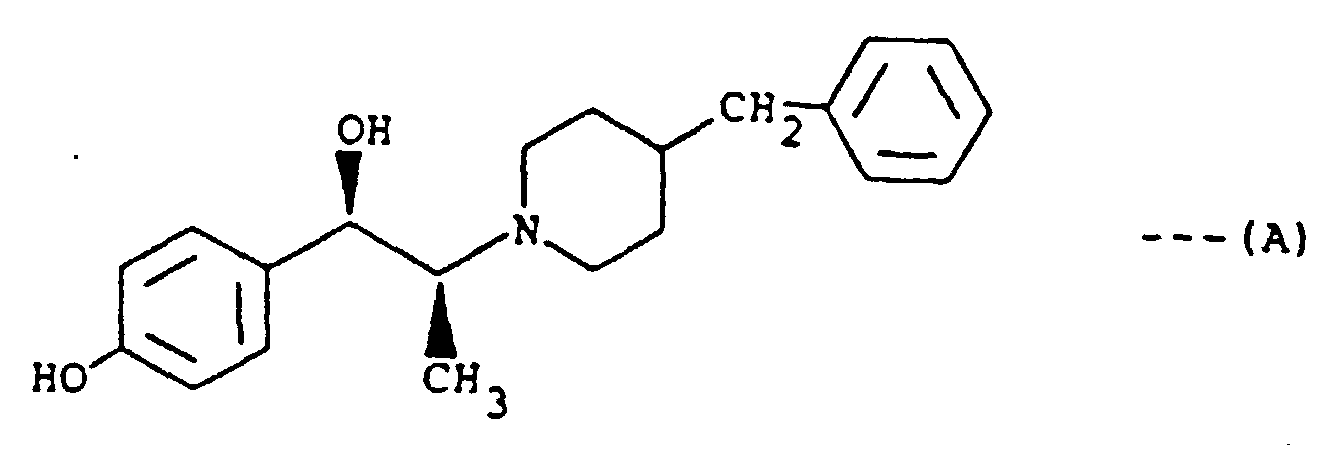
- Certain structurally related 1-phenyl-3-(4-aryl-4-acyloxypiperidino)-1-propanols have also been reported to be useful as analgesics, U.S. Patent 3,294,804; and 1-[4-(amino- and hydroxy-alkyl)phenyl]-2-(4-hydroxy-4-tolylpiperazino)-1-alkanols and alkanones have been reported to possess analgesic, antihypertensive, psychotropic or antiinflammatory activity, Japanese Kokai 53-02,474 (CA 89:43498y; Derwent Abs. 14858A), 53-59,675 (CA 89:146938w; Derwent Abs. 48671A) and 51-118,772 (CA 86:189738m).
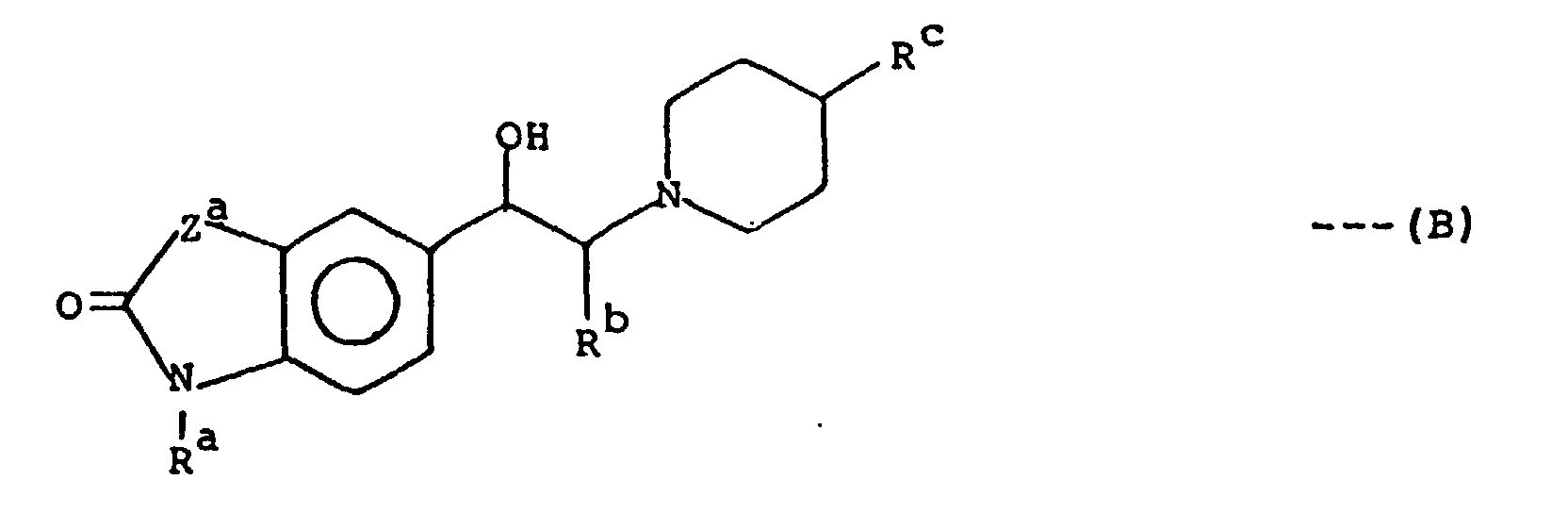
- More recently, in published European Patent Application No. 351,282, compounds which include those of the formulawherein Ra and Rb are each independently hydrogen or (C1-C4)alkyl, Rc is benzyl, phenoxy, benzyloxy or phenoxymethyl, and Za is CH2, C(CH3)2 or CH2CH2, have been reported as having neuroprotective type activity.
- Also, amino ketone and amino alcohol derivatives of benzoxazolinone and their adrenergic and antihypertensive properties are described in the European Journal of Medicinal Chemistry, 25, 361-368, (1990), C.A. 113:191213f.
- GB-A-2,071,094 and JP-A-57 142 972 disclose carbostyril derivatives with a CNS controlling effect and an antihistamine effect. EP-A-0 109 317 discloses 1-phenyl-2-piperidinoethanol derivatives useful for treating cerebral problems and depressed states. EP-A-0 288 563 discloses cyclic amino derivatives for treating mental troubles.
- The nomenclature used herein is generally that of Rigaudy et al., IUPAC Nomenclature of Organic Chemistry, 1979 Edition, Pergammon Press, New York. 2(1H,3H)-Indolones are alternatively named as oxindoles.
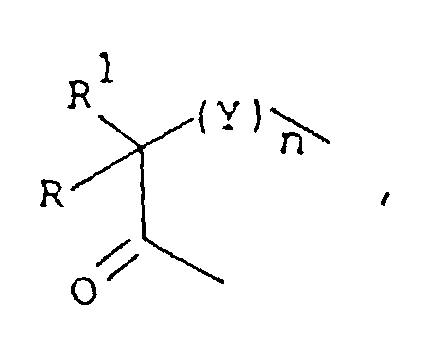
- The present invention is directed to a racemic or optically active compound of the formulawherein

- A is

- n is 0 or 1;
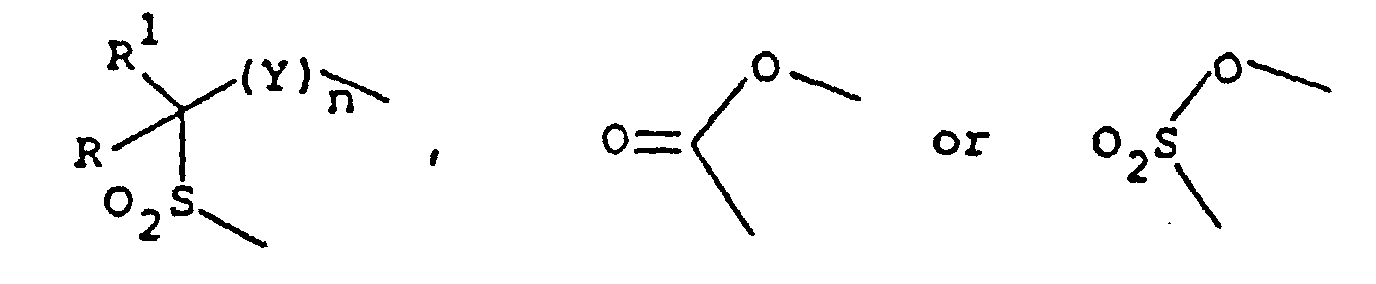
- m is 0 or an integer from 1-6;
- R, R1 and R2 are each independently hydrogen or (C1-C3)alkyl;
- R3 and R4 are taken separately and are each hydrogen, or R3 and R4 are taken together and are ethylene;
- X is hydrogen, (C1-C3)alkoxy or [(C1-C3)alkoxy]carbonyl;
- Y is CH2 or oxygen; and
- Z and Z1 are each independently hydrogen, (C1-C3)alkyl, (C1-C3)alkoxy, fluoro, chloro or bromo;
- and the pharmaceutically-acceptable acid addition salts thereof;
- with the proviso that, when A is
and Y is CH2 and n is 1 and R is H, then R1 cannot be H.
-
- The preferred compounds of the present invention generally have R2 as hydrogen or methyl, most preferably as methyl, having relative stereochemistry in 1-hydroxypropyl side chain depicted asand which is specified either as (1S*,2S*) or (1R*,2R*).
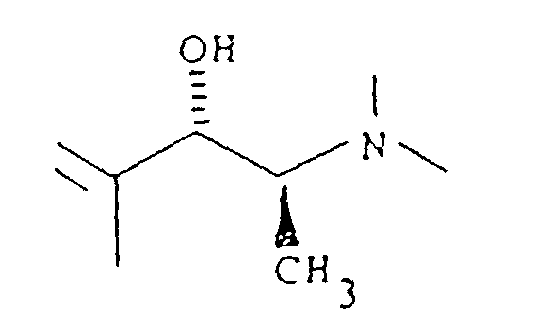
- The preferred values of A are generally(forming a 2(1H,3H)-indolone or oxindole);
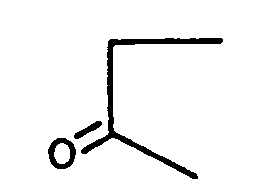 (forming a 3,4-dihydro-2(1H)-quinolone and subject to the above proviso that both R and R1 cannot be H);
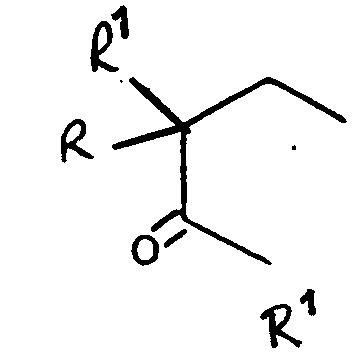 (forming an indole); and
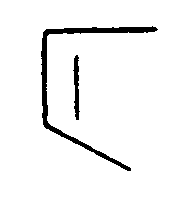 (forming a 2(3H)-benzoxazoaone).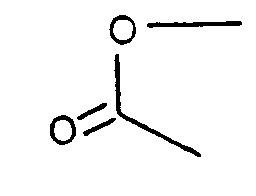
- The present invention is also directed to intermediate compounds of the formulawherein the variable groups are as defined above.

- The present invention is further directed to pharmaceutical compositions comprising a compound of the formula (I), and to their use in treating stroke, traumatic brain injury or a CNS degenerative disease
- The expression "pharmaceutically-acceptable acid addition salts" is intended to include but is not limited to such salts as the hydrochloride, hydrobromide, hydroiodide, nitrate, hydrogen sulfate, dihydrogen phosphate, mesylate, maleate and succinate. Such salts are conventionally prepared by reacting the free base form of the compound (I), with an appropriate acid, usually one molar equivalent, and in a solvent. Those salts which do not precipitate directly are generally isolated by concentration of the solvent and/or addition of a non-solvent.
- It will be noted that compounds of the formula (I) which, in the central portion of the molecule, are 1-alkanols possess an asymmetric C-1 carbon, while those wherein R2 is other than hydrogen possess a second asymmetric center at the C-2 carbon of the alkanol. Similarly, compounds of the formula (IV) which are 1-alkanones wherein R2 is other than hydrogen possess a C-2 asymmetric carbon. It will be evident to those skilled in the art of organic chemistry, therefore, that such compounds can be resolved into optical isomers showing equal but opposite rotation of plane polarized light. For example, all of these compounds are potentially resolved by fractional crystallization of their diastereomeric addition salts with an optically active acid, as exemplified below. The alcohols are also potentially resolved by chromatography or fractional crystallization of esters or urethanes derived by reaction with activated forms of optically active acids or with optically active isocyanates, as also exemplified below. Thus, the present invention should not be construed as limited to the racemic forms of the present compounds.
- The compounds of the present invention, having the formula (I) defined above, are readily prepared.
- The precursor ketones are generally prepared by nucleophilic displacement of an appropriately substituted 2-halo, 2-alkanesulfonyloxy- or 2-arylsulfonyloxy-1-alkanone with an appropriately substituted piperidine derivative, e.g.,wherein X is typically chloro, bromo, mesyloxy or tosyloxy. This reaction is carried out under conditions typical of nucleophilic displacements in general. Where the two reactants are about equivalent in availability, close to substantially molar equivalents may be used; although when one is more readily available, it is usually preferred to use that one in excess, in order to force this bimolecular reaction to completion in a shorter period of time. The reaction is generally carried out in the presence of at least 1 molar equivalent of a base, the piperidine derivative itself, if it is readily available, but more usually a tertiary amine which is at least comparable in base strength to the nucleophilic piperidine; and in a reaction inert solvent such as ethanol. If desired, the reaction is catalyzed by the addition by the addition of up to one molar equivalent or more of an iodide salt (e.g., NaI, KI). Temperature is not critical, but will generally be somewhat elevated in order to force the reaction to completion within a shorter time period, but not so high as to lead to undue decomposition. A temperature in the range of 50-120°C is generally satisfactory. Conveniently, the temperature is the reflux temperature of the reaction mixture.
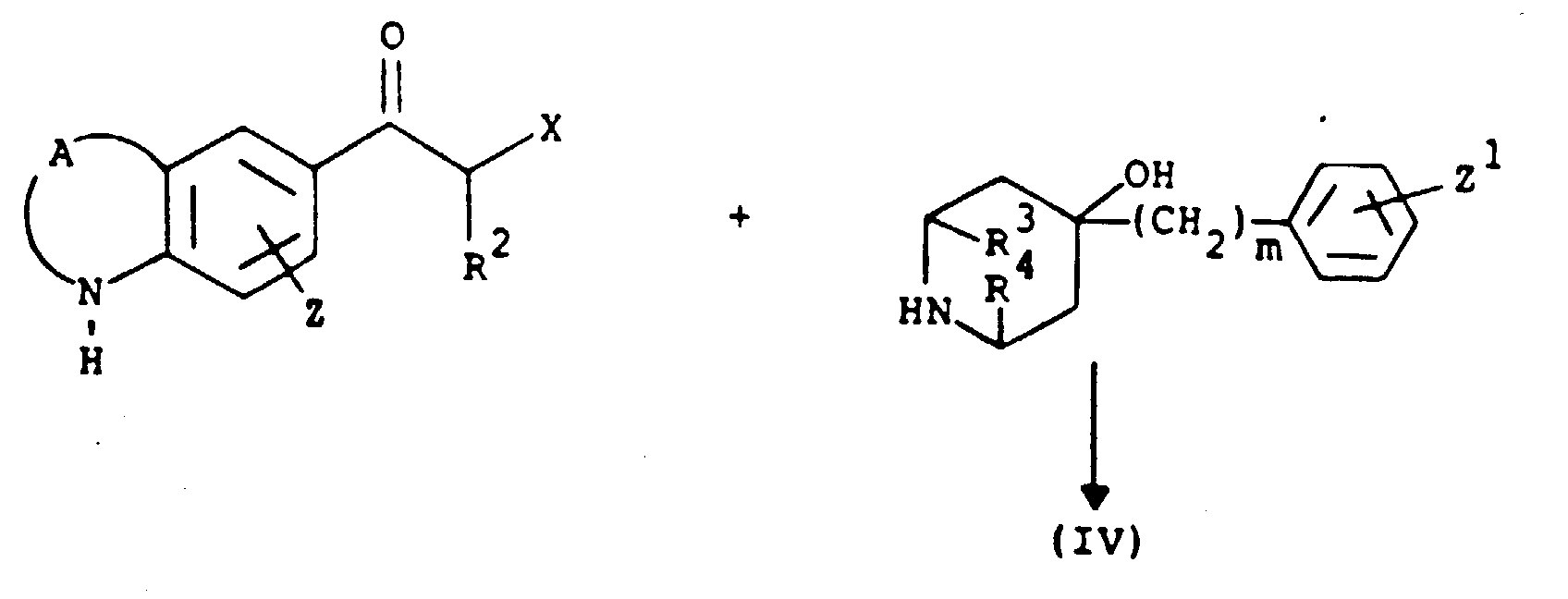
- As used in the preceding paragraph, and elsewhere herein, the expression reaction inert solvent" refers to any solvent which does not interact with starting materials, reagents, intermediates or products in a manner which adversely affects the yield of the desired product.
- The resulting ketone intermediates are conveniently converted to corresponding alcohols by conventional reduction with NaBH4, usually in excess, in a protic solvent such as methanol or ethanol, generally at temperature in the range of about 15-45°C.
- The starting materials and reagents required for the synthesis of the compounds of the present invention are readily available, either commercially, according to literature methods, or by methods exemplified in Preparations below.
- The present compounds of the formula (I) possess selective neuroprotective activity, based upon their antiischemic activity and ability to block excitatory aminoacid receptors, while at the same time generally having lowered or no significant hypotensive activity. The antiischemic activity of the present compounds is determined according to one or more of the methods which have been detailed previously by Gotti et al. and Carter et al. cited above, or by similar methods. The ability of the compounds of the present invention to block excitatory amino acid receptors is demonstrated by their ability to block N-methyl-D-aspartic acid-induced (NMDA) elevations of cGMP in neonatal rat cerebellums according to the following procedure. Cerebellums from ten 8-14 day old Wistar rats are quickly excised and placed in 4° C. Krebs/bicarbonate buffer, pH 7.4 and then chopped in 0.5 mm x 0.5 mm sections using a McIlvain tissue chopper (The Nickle Laboratory Engineering Co., Gomshall, Surrey, England). The resulting pieces of cerebellum are transferred to 100 ml of Krebs/bicarbonate buffer at 37° C. which is continuously equilibrated with 95:5 O2/CO2. The pieces of cerebellum are incubated in such a manner for ninety minutes with three changes of the buffer. The buffer then is decanted, the tissue centrifuged (1 min., 3200 r.p.m.) and the tissue resuspended in 20 ml of the Krebs/bicarbonate buffer. Then, 250 µl aliquots (approximately 2 mg) are removed and placed in 1.5 ml microfuge tubes. To those tubes are added 10 µl of the compound under study from a stock solution followed, after a 10 minute incubation period, by 10 µl of a 2.5 mM solution of NMDA to start the reaction. The final NMDA concentration is 100 µM. Controls do not have NMDA added. The tubes are incubated for one minute at 37° C. in a shaking water bath and then 750 µl of a 50 mM Tris-Cl, 5mM EDTA solution is added to stop the reaction. The tubes are placed immediately in a boiling water bath for five minutes. The contents of each tube then are sonicated for 15 seconds using a probe sonicator set at power level three. Ten microliters are removed and the protein determined by the method of Lowry, Anal. Biochem. 100:201-220 (1979). The tubes are then centrifuged (5 min., 10,000 xg), 100 µl of the supernatant is removed and the level of cyclic GMP (cGMP) is assayed using a New England Nuclear (Boston, Massachusetts) cGMP RIA assay according to the method of the supplier. The data is reported as pmole cGMP generated per mg. protein. Undesired hypotensive activity is also determined by known methods, for example, according to the methods of Carron et al., also cited above.
- Such selective neuroprotective antiischemic and excitatory amino acid blocking activities reflect the valuable utility of the present compounds in the treatment of stroke, traumatic brain injury and degenerative CNS (central nervous system) disorders such as Alzheimer's disease, senile dementia of the Alzheimer's type, Parkinson's disease and Huntington's disease; without significant potential for a concurrent, undue drop in blood pressure. In the systemic treatment of such diseases with a neuroprotective amount of compounds of the formula (I), the dosage is typically from about 0.02 to 10 mg/kg/day (1-500 mg/day in a typical human weighing 50 kg) in single or divided doses, regardless of the route of administration. Of course, depending upon the exact compound and the exact nature of the individual illness, doses outside this range may be prescribed by the attending physician. The oral route of administration is generally preferred. However, if the patient is unable to swallow, or oral absorption is otherwise impaired, the preferred route of administration will be parenteral (i.m., i.v.) or topical.
- The compounds of the present invention are generally administered in the form of pharmaceutical compositions comprising at least one of the compounds of the formula (I) together with a pharmaceutically acceptable vehicle or diluent. Such compositions are generally formulated in a conventional manner utilizing solid or liquid vehicles or diluents as appropriate to the mode of desired administration: for oral administration, such as in the form of tablets, hard or soft gelatin capsules, suspensions, granules or powders; for parenteral administration, such as in the form of injectable solutions or suspensions; and for topical administration, such as in the form of solutions, lotions, ointments or salves.
- The present invention is illustrated by the following examples.
- 5-(2-Chloropropionyl)-2(1H,3H)-indolone (2.5 g, 11.2 mmol), 4-hydroxy-4-benzylpiperidine (2.1 g, 11.2 mmol), and triethylamine (1.56 ml, 11.2 mmol) were combined in ethanol and refluxed overnight. The mixture was cooled to room temperature and concentrated at reduced pressure. The residue was partitioned between ethyl acetate and water and the phases were separated. The aqueous layer was extracted with ethyl acetate and the combined organic phase was washed with brine, dried over calcium sulfate, and concentrated. The crude product was flash chromatographed on silica gel eluting first unreacted 5-(2-chloropropionyl)-2(1H,3H)-indolone with 1:1 ethyl acetate:hexane. Continued elution with ethyl acetate gave 3.6 g of product as a light brown foam. Recrystallization from ethyl acetate/hexane gave 1.23 g of purified title product. Less pure fractions from the column and mother liquors from the recrystallization were rechromatographed as above with 1:1 and then 3:1 ethyl acetate:hexane. Product fractions were triturated with ether/hexane to give 0.2 g more product for a total yield of 1.43 g, 34%; m.p. 188-192°C; NMR 8.22 (s, 1H), 8.08 (d, J=8 Hz, 2H), 7.99 (s, 1H), 7.31-7.13 (m, 5H), 6.89 (d, J=8 Hz, 1H), 4.03 (q, J=6.8 Hz, 1H), 3.57 (s, 2H), 2.72 (s, 2H), 2.72-2.58 (m, 3H), 2.46 (distorted t, 1H), 1.75-1.40 m, 4H), 1.26 (d, J=6.8 Hz, 3H), 1.23-1.19 (m, 1H).
Anal. calcd for C23H26N2O3: C, 72.99; H, 6.92; N, 7.40%. Found: C, 72.68; H, 6.77; N, 7.28%. - The product from Example 1 (0.75 g, 1.98 mmol) was dissolved in 50 ml of hot ethanol and allowed to cool. The solution was added over 1-2 minutes to a slurry of sodium borohydride (0.113 g, 2.98 mmol) in ethanol (50 ml) with a 25 ml ethanol rinse. The mixture was stirred overnight. Water (2 ml) was added and the solvent was removed at reduced pressure. The residue was partitioned between ethyl acetate and water. Note that a small amount of dithionite was added to all aqueous washes to prevent air oxidation of the product. The organic layer was separated, washed with brine, dried over calcium sulfate and concentrated to a white solid. This material was recrystallized from ethanol to give 0.24 g of product. The mother liquors were flash chromatographed on silica gel with ethyl acetate elution to afford 0.19 g more product for a total yield of 0.43 g, 57%; m.p. 228-229°C. NMR 7.66 (br s, 1H), 7.31-7.10 (m, 7H), 6.77 (d, J=8 Hz, 1H), 4.17 (d, J=10 Hz, 1H), 3.49 (s, 2H), 2.84 (dt, J=2.5, 11 Hz, 1H), 2.76 (s, 2H), 2.65-2.40 (m, 4H), 1.86-1.50 (m, 5H), 1.15 (s, 1H), 0.76 (d, J=6.5 Hz, 3H).
Anal. calcd for C23H28N2O3: C, 72.61; H, 7.42; N, 7.36%. Found: C, 73.04; H, 7.50; N, 7.35%. - By the procedures of Examples 1 and 2, 4-hydroxy-4-phenylpiperidine was converted to present title product in 38% over-all yield. The product was purified by silica gel flash chromatography and trituration with ethyl acetate; m.p. 216-218°C; NMR 7.51 (d, J=9 Hz, 3H--has NH proton in this signal), 7.36 (t, J=7.5 Hz, 2H), 7.24 (dt, J=1.2, 7.5 Hz, 2H), 7.17 (dd, J=1.2, 7.5 Hz, 1H), 6.78 (d, J=8 Hz, 1H), 4.22 (d, J=10 Hz, 1H), 3.51 (s, 2H), 3.08 (dt, J=2, 11 Hz, 1H), 2.7-2.48 (m, 5H), 2.24-1.98 (m, 2H), 1.83-1.70 (br d, 2H), 1.49 (s, 1H), 0.82 (d, J=7 Hz, 3H).
Anal. calcd for C22H26N2O3: C, 72.11; H, 7.15; N, 7.64%. Found: C, 72.23; H, 7.30; N, 7.30%. - By the method of Examples 1 and 2, 5-(2-chloropropionyl)-3-methyl-2(1H,3H)-indolone and 4-hydroxy-4-phenylpiperidine were converted to present title product in 24% yield; m.p. 219-220°C (from ethyl acetate).
- 5-(2-Bromopropionyl)-1-(p-toluenesulfonyl)indole (1.67 g, 3.37 mmol, 83% purity) was dissolved in hot ethanol (100 ml) and 4-hydroxy-4-phenylpiperidine (0.6 g, 3.39 mmol) and triethylamine (0.94 ml, 6.74 mmol) were added. The mixture was refluxed overnight. The reaction was cooled and concentrated directly onto silica gel and flash chromatographed. Elution with 1:3 ethyl acetate:hexane removed 0.1 g of non-brominated ketone. Continued elution with 1:1 ethyl acetate:hexane cave 1.47 g, 87% of the title product as a glassy orange solid. NMR 8.34 (s, 1H), 8.09 (d, J=9 Hz, 1H), 8.00 (d, J=8.5 Hz, 1H), 7.77 (d, J=8.5 Hz, 2H), 7.61 (d, J=3.5 Hz, 1H), 7.45 (d, J=9 Hz, 2H), 7.33-7.29 (m, 2H), 7.24-7.21 (m, 4H), 6.72 (d, J=3.5 Hz, 1H), 4.18 (q, J=7 Hz, 1H), 2.88-2.84 (m, 2H), 2.73-2.62 (m, 2H), 2.32 (s, 3H), 2.18-2.06 (m, 1H), 2.05-1.97 (m, 1H), 1.77-1.66 (m, 1H), 1.59-1.54 (m, 1H), 1.31 (d, J=7 Hz, 3H). IR 1679, 1605, 1375, 1289, 1260, 1169, 1126, 994. FAB HRMS calcd for C29H31N2O4S (MH+): 503.2006. Observed m/e: 503.2023.
- The product of the preceding Example (1.3 g, 2.75 mmol) was dissolved in methanol (50 ml) and potassium hydroxide (0.324 g, 5.79 mmol) was added all at once. The mixture was refluxed 6 hours, then cooled and the solvent removed at reduced pressure. The residue was partitioned between ethyl acetate and water. The phases were separated and the aqueous layer was extracted with ethyl acetate. The combined organic layer was washed with brine, dried over calcium sulfate and concentrated. The residue was flash chromatographed on silica gel with 1:1 ethyl acetate:hexane elution to give 0.719 g, 75% of present title product as a glassy solid; m.p. 60-70°C. NMR 8.52 (s, 1H), 8.49 (br s, 1H), 8.00 (dd, J=1.5, 8.5 Hz, 1H), 7.49-7.41 (m, 3H), 7.35-7.21 (m, 4H), 6.67 (s, 1H), 4.30 (q, J=6.5 Hz, 1H), 2.89-2.85 (m, 3H), 2.66 (t, J=9.5 Hz, 1H), 2.23-2.07 (m, 2H), 1.77-1.65 (m, 2H), 1.38 (d, J=6.5 Hz, 3H). IR(CHCl3) 3470, 2924, 1673, 1613, 1412, 1348, 1323, 1276, 1224, 1115. FAB HRMS calcd for C22H25N2O4 (MH+): 349.1918. Observed m/e: 349.1930.
- The product of the preceding Example was reduced according to the procedure of Example 2. Present title product was obtained as a fluffy white solid in 15% yield after silica gel chromatography and recrystallization from ethanol; m.p. 220.5-221°C. NMR 8.16 (br s, 1H), 7.63 (s, 1H), 7.54 (d, J=8.5 Hz, 2H), 7.38 (t, J=7.5 Hz, 3H), 7.30-7.19 (m, 3H), 6.53 (s, 1H), 4.39 (d, J=10 Hz, 1H), 3.08 (dt, J=2, 11.5 Hz, 1H), 2.90-2.62 (m, 4H), 2.35-2.10 (m, 2H), 1.90-1.80 (m, 2H), 0.82 (d, J=6.5 Hz, 3H). IR(CHCl3) 3475, 2922, 1731, 1376, 1250, 1201, 1038.
Anal. calcd for C22H26N2O2: C, 75.40; H, 7.48; N, 7.99%. Found: C, 74.99; H, 7.47; N, 7.91%. - A mixture of 5-(chloroacetyl)-2(1H,3H)-indolone (2.05 g, 9.78 mmol), 4-hydroxy-4-benzylpiperidine (1.87 g, 9.78 mmol), potassium carbonate (2.97 g, 21.49 mmol), and potassium iodide (0.08 g, 0.48 mmol) in acetonitrile (200 ml) was refluxed overnight. The reaction was cooled and filtered through a celite pad. The filtrate was concentrated to give an orange foam which was flash chromatographed on silica gel with ethyl acetate elution. This afforded 0.79 g of oily yellow solid product. NMR 9.41 (br s, 1H), 7.91 (d, J=8 Hz, 1H), 7.86 (s, 1H), 7.28-7.14 (m, 5H), 6.90 (d, J=8 Hz, 1H), 3.76 (s, 2H), 3.52 (s, 2H), 2.78-2.73 (m, 4H), 2.43 (t, J=10.5 Hz, 2H), 1.86-1.76 (m, 2H), 1.50 (br d, J=12 Hz, 2H), 1.36 (br s, 1H). IR(KBr) 2920, 2815, 1710, 1685, 1615, 1240, 1115. FAB HRMS calcd for C22H25N2O3 (MH+): 365.1867. Observed m/e: 365.1883.
- Reduction was carried out on the product of the preceding Example according to the procedure of Example 2. The product was purified by flash chromatography and recrystallization from ethyl acetate to yield present title product as a tan solid in 18% yield; m.p. 168.5-169.5°C. NMR 8.40 (br s, 1H), 7.35-7.17 (m, 7H), 6.80 (d, J=8 Hz, 1H), 4.66 (dd, J=3.5, 10 Hz, 1H), 3.50 (s, 2H), 2.89 (br d, J=11 Hz, 1H), 2.77 (s, 2H), 2.68-2.33 (m, 6H), 1.83-1.67 (m, 2H), 1.59-1.52 (m, 2H), 1.27 (br s, 1H). IR(KBr) 3420, 3170, 2945, 2820, 1705, 1625, 1490, 1320, 1115, 830, 707. FAB HRMS calcd for C22H27N2O3 (MH+): 367.2023. Observed m/e: 367.2061.
- By the procedures of Examples 8 and 2, 4-hydroxy-4-phenylpiperidine was converted to present title product in 5% yield after flash chromatography and repeated recrystallization from methylene chloride/ether; m.p. 192-194°C. 1R(KBr) 3420, 3180, 2930, 2825, 1715, 1490, 705.
Anal. calcd for C21H24N2O3·0.5 H2O: C, 69.79; H, 6.97; N, 7.75%. Found: C, 69.77; H, 6.52; N, 7.60%. - By the procedures of Examples 8 and 2, 6-(2-chloroacetyl)-2(1H)-benzoxazolone and 4-hydroxy-4-phenylpiperidine were converted to present title product in 25% yield after recrystallization from ethanol/ether; m.p. 175-177°C. NMR (methanol-d4) 7.51 (dd, J=1.5, 8.5 Hz, 2H), 7.35-7.29 (m, 3H), 7.24-7.19 (m, 2H), 7.05 (d, J=8 Hz, 1H), 4.94-4.90 (m, 1H--becomes dd J=3, 8.5 Hz with D2O wash), 2.96-2.90 (m, 2H), 2.80-2.57 (m, 4H), 2.19 (dq, J=4.5, 13 Hz, 2H), 1.74 (br d, J=14.5 Hz, 2H). IR(KBr) 3320, 3115, 2920, 2830, 1785, 1750.
- By the procedures of Examples 1 and 2, 5-chloro-6-(2-chloropropionyl)-2(1H)-benzoxazolone and 4-hydroxy-4-phenylpiperidine were converted to present title product in 79% yield; m.p. 198-199°C (from ethanol).
- By the procedures of Examples 1 and 2, 3-hydroxy-3-phenyl-8-azabicyclo(3.2.1]octane is converted to present title product.
- By the procedures of Examples 1 and 2, 3-benzyl-3-hydroxy-8-azabicyclo[3.2.1]octane is converted to present title product.
- A mixture of (+) camphor sulfonic acid (232 mg, 1 mmol) and title product of Example 3 (366 mg, 1 mmol) was stirred in 25 ml of ethanol. A clear homogeneous solution was nearly obtained before the salt began to precipitate. After standing at ambient temperature overnight, the salt was collected, rinsed with ethanol and dried under a stream of nitrogen. The 460 mg of pink salt obtained in this manner was recrystallized from ethanol four times. The resulting product weighed 260 mg, and had m.p. 241-242.5°C and [α]Na = +19.0° (c = 0.295, methanol), indicating that it was only partially resolved.
- To a mixture of CH2Cl2 (25 ml) and DMF (1 ml) were added title product of Example 3 (0.366 g, 1 mmol), dicyclohexyl carbodiimide (0.226 g, 1.1 mmol), 1-hydroxybenzotriazole (0.148 g, 1.1 mmol), 4-dimethylaminopyridine (0.134 g, 1.1 mmol), and N-tert-butyloxycarbonyl-L-alanine (0.189 g, 1 mmol). The mixture was stirred under a nitrogen atmosphere overnight. The homogeneous solution was diluted with ethyl acetate (25 ml) and filtered through Celite (TM) to remove dicyclohexyl urea. The filtrate was concentrated and taken up in ethyl acetate (150 ml). A second filtration removed still more urea-by-product. The filtrate was washed with aqueous bicarbonate, water 1N aqueous LiCl and brine. The organic phase was dried over calcium sulfate and concentrated to an oily foam. Flash chromatography on silica gel (50 x 100 mm (2 x 4 inches) packed with 50% ethyl acetate/hexane) gave upon elution with 75% ethyl acetate/hexane first 0.1 g of a nearly pure diastereomer of the alanine adduct. This was followed by 0.2 g of a mixture of the diastereomers and finally 0.1 g of a partially enriched sample of the other diastereomer. The 0.2 g sample was rechromatographed in the same fashion to afford another 0.06 g of the first pure diastereomer. The combined 0.16 g product was recrystallized from ethyl acetate/hexane to give 0.094 g of the adduct as a white solid; m.p. 189-190°C. NMR (CDCl3) 7.61 (br s, 1H--D2O washes out), 7.48 (dd, J=1.5, 8 Hz, 2H), 7.37 (t, J=7.5 Hz, 2H), 7.34-7.18 (m, 3H), 6.83 (d, J=8 Hz, 1H), 5.76 (d, J=10 Hz, 1H), 5.19 (br d, J=7 Hz, 1H), 4.37 (br t, J=7 Hz, 1H), 3.54 (s, 2H), 3.06-2.90 (m, 2H), 2.84-2.52 (m, 3H), 2.16-1.88 (m, 2H), 1.82-1.69 (m, 2H), 1.52 (d, J=7 Hz, 3H), 1.40 (s, 9H), 0.78 (d, J=7 Hz, 3H). [α]D = +69.5°, c=0.295 in methanol.
Analysis calculated for C30H39N3O6: C, 67.02; H, 7.31; N, 7.82. Found: C, 66.92; H, 7.46; N, 7.80. - This t-boc-alanine adduct (0.047 g, 0.087 mmol) was dissolved in 9 ml of a 0.32N solution of sodium methoxide (0.15 g of Na dissolved in 20 ml of methanol). The mixture was stirred 2 hours and the solvent was removed at ambient temperature under vacuum. The residue was taken up in ethyl acetate and extracted with aqueous bicarbonate and brine. The organic phase was dried over calcium sulfate and concentrated. The crude product was flash chromatographed on silica gel 25.4 x 50.8 mm (1 x 2 inches). After flushing the column with 50% ethyl acetate/hexane, the fully resolved dextrorotatory product was eluted with ethyl acetate; 0.011 g (34%). [α]D = +45.3°, c=0.19 in methanol.
- The opposite enantiomer was prepared in a similar manner from N-tert-butyloxycarbonyl-D-alanine but the coupling reaction employed carbonyl diimidazole. Carbonyl diimidazole (0.42 g, 2 mmol) was added all at once to a stirred solution of N-tert-butyloxycarbonyl-D-alanine (0.76 g, 2 mmol) in methylene chloride (80 ml). The mixture was stirred 1 hour; then Example 3 title product (0.366 g, 1 mmol) was added all at once and the reaction stirred overnight. The mixture was diluted with methylene chloride and extracted with aqueous bicarbonate. The organic phase was dried concentrated and flash chromatographed on silica gel 50.8 x 177.8 mm (2 x 7 inches). Elution with 25% ethyl acetate/hexane followed by 50% ethyl acetate/hexane gave 0.13 g of the desired diastereomer, recrystallized from ethyl acetate/hexane to yield 0.077 g of purified material; m.p. 187-188°C. [α]D = -64.1°, c=0.17 in methanol. This was hydrolyzed with methanolic sodium methoxide as above to give present title product in 85% yield; [α]D = -40.5°, c=0.21 in methanol. Continued elution of the above flash chromatography gave the other diastereomer contaminated with the first product.
- A mixture of 7-fluoro-5-(2-chloropropionyl)-2(1H,3H)-indolone (1.0 g, 4.14 mmol), 4-hydroxy-4-phenylpiperidine (0.74 g, 4.17 mmol) and triethylamine (1.2 ml, 8.6 mmol) in anhydrous dimethylformamide was heated to between 70 and 90°C for 3 hours. The mixture was poured into 1N aqueous LiCl and extracted with two portions of ethyl acetate. The combined organic phase was washed with 1N HCl, water and brine. The organic phase was dried over magnesium sulfate, filtered and concentrated to 1.6 g of a reddish solid. The crude product was purified by flash chromatography on silica gel (50 x 100 mm (2 x 4 inches), 50% ethyl acetate/hexane eluent) to yield 0.58 g of the desired product. This product was further purified by recrystallization from acetonitrile/ether to give 0.2 g of light yellow solid; m.p. 197-199.5°C. NMR (DMSO-d6) 11.25 (s, 1H), 7.90 (d, J=11.6 Hz, 1H), 7.82 (s, 1H), 7.42 (d, J=7.2 Hz, 2H), 7.28 (t, J=7.4 Hz, 2H), 7.17 (t, J=7.2 Hz, 1H), 4.76 (s, 1H), 4.25 (q, J=6.6 Hz, 1H), 3.66 (s, 2H), 2.88-2.63 (m, 2H), 2.60-2.55 (m, 1H), 2.49-2.38 (m, 1H), 1.88 (dt, J=12.2, 4.3 Hz, 1H), 1.77-1.49 (m, 3H), 1.16 (d, J=6.6 Hz, 3H). The mother liquors were rechromatographed to afford another 0.15 g of product for a total yield of 0.35 g (22%).
Analysis calculated for C22H23FN2O3: C, 69.09; H, 6.06; N, 7.32. Found: C, 68.36; H, 5.85; N, 7.31. - Sodium borohydride (0.033 g, 0.872 mmol) was dissolved in absolute ethanol (3 ml) and the ketone product from the above reaction (0.3 g, 0.78 mmol) was added all at once as a solid. The reaction was further diluted with 10 ml of ethanol. The mixture was stirred under nitrogen for 2 hours. The excess hydride was quenched with water and the mixture was concentrated. The residue was partitioned between ethyl acetate and water. The phases were separated and the organic layer was washed with brine, dried over magnesium sulfate and concentrated to a glassy solid. This material was flash chromatographed on silica gel (2.54 x 10.16 cm (1 x 4 inches)).
- Elution with 50% ethyl acetate/hexane and then 100% ethyl acetate gave 0.2 g of white solid. Further purification by recrystallization from acetonitrile/ethyl acetate gave 0.1 g (33%) of product as a white powder; m.p. 225-227°C. NMR (DMSO-d6) 10.83 (br s, 1H), 7.54 (d, J=7.3 Hz, 2H), 7.33 (t, J=7.6 Hz, 2H), 7.21 (t, J=7.3 Hz, 1H), 7.07 (t, J=5,3 Hz, 2H), 5.09 (br s, 1H), 4.82 (s, 1H), 4.26 (d, J=9.3 Hz, 1H), 3.56 (s, 2H), 2.97 (t, J=10.6 Hz, 1H), 2.62-2.56 (m, 4H), 2.12-1.92 (m, 2H), 1.63 (br d, J=12.9 Hz, 2H), 0.74 (d, J=6.6 Hz, 3H).
Analysis calculated for C22H25FN2O3: C, 68.73; H, 6.55; N, 7.29. Found: C, 68.53; H, 6.31; N, 7.13. - By the methods of the preceding examples, the following additional compounds were prepared (showing yield in final step, melting point and solvent from which isolated).
- 18. 6-Chloro-5-[1S*-hydroxy-2S*(4-hydroxy-4-phenylpiperidino)propyl]-2(1H,3H)-indolone; 1.7%; m.p. 200-203°C (ether).
- 19. 7-Fluoro-5-[1S*-hydroxy-2S*(4-hydroxy-4-phenylpiperidino)propyl]-2(1H,3H)-indolone; 33%; m.p. 225-227°C (ethyl acetate/acetonitrile).
- 20. 4-Chloro-5-[1S*-hydroxy-2S*(4-hydroxy-4-phenylpiperidino)propyl]-2(1H,3H)-indolone; 31%; m.p. 231-233°C (ethanol/ether).
- 21. 4-Chloro-5-[1R*-hydroxy-2S*(4-hydroxy-4-phenylpiperidino)propyl]-2(1H,3H)-indolone; 14%; m.p. 213.5-218°C (ethanol/ether).
- 22. 5-[1S*-hydroxy-2S*-(4-hydroxy-4-phenylpiperidino)propyl]-7-methyl-2(1H,3H)-indolone; 14%; m.p. 227.5-230°C (ethanol/dimethylsulfoxide).
- 23. 5-[1S*-hydroxy-2S*-(4-hydroxy-4-phenylpiperidino)propyl]-4-methyl-2(1H,3H)-indolone; 22%; m.p. 241-242°C (ethanol/dimethylsulfoxide).
-
- Sodium hydride (8.4 g, 210 mmol) was washed twice with hexane and then suspended in tetrahydrofuran (500 ml). 5-Cyanoindole (20 g, 140 mmol) in tetrahydrofuran (200 ml) was added dropwise. The resulting mixture was stirred at ambient temperature for 1 hour and then p-toluenesulfonyl chloride (26.7 g, 140 mmol) in tetrahydrofuran (200 ml) was added. The reaction was stirred 3 hours more followed by addition of water. The phases were separated and the aqueous phase was extracted twice with ethyl acetate. The combined organic phase was washed with brine, dried over calcium sulfate and concentrated. The residue was recrystallized from ether to afford 29.97 g, 72% of title product; m.p. 129-131°C; NMR 8.04 (d, J=8.5 Hz, 1H), 7.85 (d, J=1 Hz, 1H), 7.75 (d, J=9 Hz, 2H), 7.67 (d, J=3.5 Hz, 1H), 7.53 (m, 1H), 7.23 (m, 2H), 6.68 (d, J=3.5 Hz, 1H), 2.34 (s, 3H). IR(CHCl3 solution) 2225, 1597, 1453, 1380, 1289, 1266, 1169, 1138, 1123, 1089 (shoulder), 990. FAB HRMS calcd for C16H13N2O2S(MH+): 297.0669. Observed m/e: 297.0685.
- The product of the preceding Preparation (11.4 g, 40 mmol) was dissolved in dry toluene (760 ml) and chilled to 0°C. Ethylmagnesium bromide (14 ml, 42 mmol, 3 M) in 40 ml of dry toluene was added dropwise. The mixture was warmed to 58°C for 24 hours, cooled, and quenched with water (60 ml) and 1N HCl (60 ml) with 0.5 hour stirring. The phases were separated and the aqueous layer was extracted 3 times with ethyl acetate. The combined organic phase was washed with brine, dried over calcium sulfate and concentrated. The residue was recrystallized from ethyl acetate to afford 6.8 g, 64% of present title product as a yellow solid; m.p. 162-164°C. NMR 8.16 (d, J=1.5 Hz, 1H), 8.01 (d, J=8.5 Hz, 1H), 7.94 (dd, J=1.5, 8.5 Hz, 1H), 7.75 (d, J=8.5 Hz, 2H), 7.62 (d, J=3.5 Hz, 1H), 7.23 (d, J=8.5 Hz, 2H), 6.72 (d, J=3.5 Hz, 1H), 3.02 (q, J=7 Hz, 2H), 2.33 (s, 3H), 1.21 (t, J=7 Hz, 3H).
- The product of the preceding Preparation (2.0 g, 6.12 mmol) was dissolved in chloroform (60 ml) and added dropwise to a suspension of cupric bromide (2.1 g, 9.4 mmol) in ethyl acetate (60 ml). The resulting mixture was refluxed overnight. The reaction was cooled and filtered through a celite pad and concentrated. The residue was recrystallized from ethyl acetate/hexane to afford 1.70 g, 69% of present title product as a brown solid. NMR analysis of this material showed it to be a 83/17 mixture of product and starting material which was used in the coupling reaction without further purification. NMR signals of the product: 8.22 (d, J=1.5 Hz, 1H), 8.04-7.91 (m, 2H), 7.77-7.73 (m, 2H), 7.62 (d, J=4 Hz, 1H), 7.24-7.19 (m, 2H), 6.73 (d, J=4 Hz, 1H), 5.31 (g, J=6.5 Hz, 1H), 2.32 (s, 3H), 1.87 (d, J=6.5 Hz, 3H).
- Tropine (14.2 g, 100 mmol) was dissolved in CH2Cl2 (210 ml) and triethylamine (23 ml, 160 mmol) was added. Methanesulfonyl chloride (9.3 ml, 120 mmol) was added rapidly dropwise which caused the methylene chloride solution to reflux gently. The mixture was stirred one hour further; then extracted with cold 0.5 molar sodium hydroxide, water, and brine, dried by filtration through phase separating paper and concentrated to yield 13.8 g (65%) of title product as a yellow solid. NMR 4.88 (t, J=5 Hz, 1H), 3.10-3.05 (m, 2H), 2.94 (s, 3H), 2.22 (s, 3H), 2.20-2.10 (m, 2H), 2.02-1.88 (m, 6H).
- 8-(2,2,2-Trichloroethoxycarbonyl)-8-azabicyclo[3.2.1]octan-3-one (5.0 g, 16.6 mmol) was dissolved in ether (450 ml) and phenylmagnesium bromide (7.2 ml, 21.6 mmol, 3M in ether) was added dropwise over 5 minutes with stirring. A white precipitate formed and the mixture was stirred 30 minutes. Saturated ammonium chloride was added and the mixture was concentrated. The residue was taken up in methylene chloride and extracted with brine. The organic phase was further dried through phase separating filter paper and concentrated to yield title product as a thick yellow oil (5.94 g, 94%). This material was used in the next reaction without further purification.
- The homologous 3-exo-benzyl derivative is prepared in like manner, substituting benzylmagnesium bromide for phenylmagnesium bromide.
- The entire title product from the preceding Preparation was dissolved in tetrahydrofuran (100 ml) and added to a mixture of zinc dust (45 g, 688 mmol) and 1M aqueous monopotassium phosphate (45 ml). The mixture was stirred for 3 days. Water (100 ml) was then added and the pH was adjusted to about 10 by the addition of solid sodium carbonate. The mixture was filtered through Celite (TM) and concentrated to give 1.85 g (58%) of present title product as a white solid. Integration of the NMR spectrum for the bridgehead protons of this product showed it to be a 92:8 mixture of the desired product (δ 3.6) and its 3-endo phenyl isomer (δ 3.85). This mixture was used as is for the coupling reactions as separation of the coupled products is facile. 13C-NMR (300 MHz, CDCl3)delta: 150.42, 128.15, 126.57, 124.52, 73.33, 54.45, 46.62, 29.29. The minor isomer showed aliphatic 13C signals at δ 54.92, 50.99, 30.33, 30.16.
- The homologous 3-exo-benzyl derivative is prepared in like manner.
Claims (17)
- A racemic or optically active compound having the formulawherein
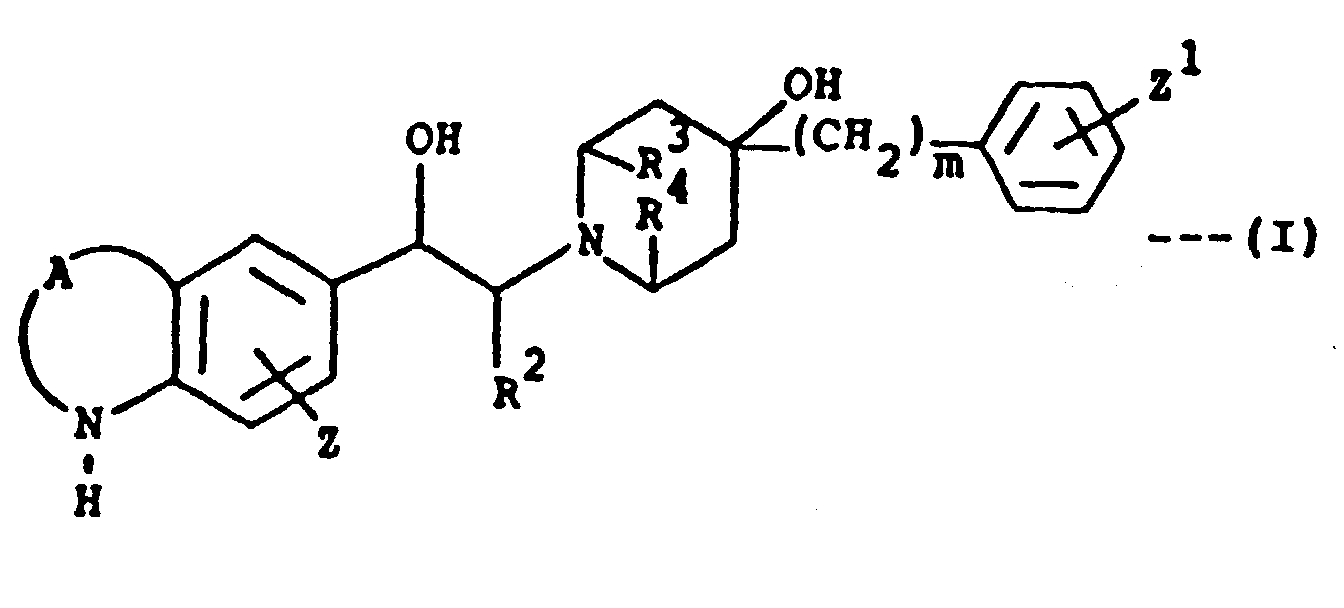 A is
A is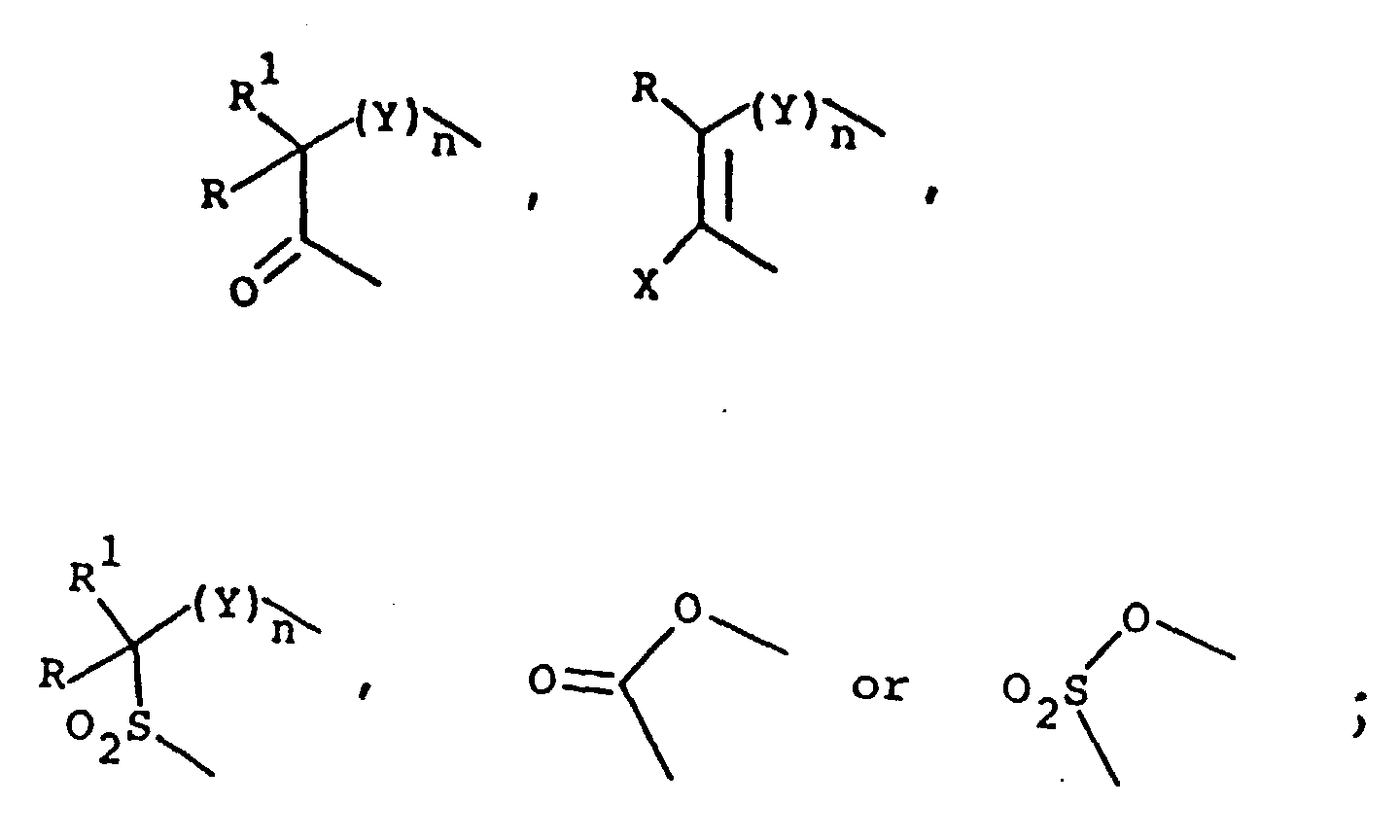 n is 0 or 1;m is 0 or an integer from 1-6;R, R1 and R2 are each independently hydrogen or (C1-C3)alkyl;R3 and R4 are taken separately and are each hydrogen, or R3 and R4 are taken together and are ethylene;X is hydrogen, (C1-C3)alkoxy or [(C1-C3)alkoxy]carbonyl;Y is CH2 or oxygen; andZ and Z1 are each independently hydrogen, (C1-C3)alkyl, (C1-C3)alkoxy, fluoro, chloro or bromo;or a pharmaceutically acceptable acid addition salt thereof,with the proviso that, when A isand Y is CH2 and n is 1 and R is H, then R1 cannot be H.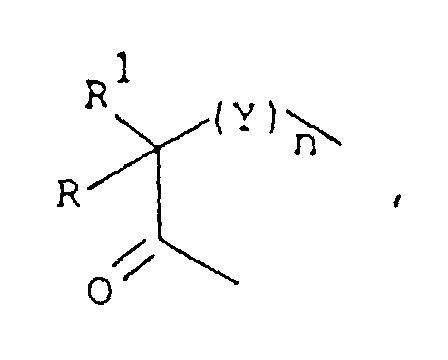
- A compound of claim 1
wherein m is 0 or 1, Z and Z1 are each hydrogen and R2 is hydrogen or methyl. - A compound of claim 2 wherein R2 is methyl having the relative stereochemical formula

- A compound of claim 3 wherein R3 and R4 are taken separately and are each hydrogen.
- An optically active compound of claim 4 wherein m is 0.
- A compound of claim 3 wherein R3 and R4 are taken together and are ethylene.
- A compound having the formulawherein A, Z, R2 R3 R4 m and Z1 are as defined in claim 1.

- A pharmaceutical composition comprising a compound of the formula (I), or a pharmaceutically acceptable acid addition salt thereof, as claimed in any one of claims 1 to 6, and a pharmaceutically acceptable diluent or carrier.
- A compound of the formula (I), or a pharmaceutically acceptable acid addition salt or composition thereof, as claimed in any one of claims 1 to 6 and 8 respectively, for use as a medicament.
- The use of a compound of the formula (I), or of a pharmaceutically acceptable acid addition salt or composition thereof, as claimed in any one of claims 1 to 6 and 8 respectively, for the manufacture of a medicament for the treatment of stroke, traumatic brain injury or a CNS degenerative disease.
- Use as claimed in claim 10 for the manufacture of a medicament for the treatment of Alzheimer's disease, senile dementia of the Alzheimer's type, Huntingdon's disease and Parkinson's disease.
- A process for the preparation of a racemic or optically active compound having the formulawherein
 A is
A is n is 0 or 1;
 m is 0 or an integer from 1-6;R, R1 and R2 are each independently hydrogen or (C1-C3) alkyl;R3 and R4 are taken separately and are each hydrogen, or R3 and R4 are taken together and are ethylene;X is hydrogen, (C1-C3)alkoxy or [(C1-C3)alkoxy]-carbonyl;Y is CH2 or oxygen; andZ and Z1 are each independently hydrogen, (C1-C3)alkyl, (C1-C3)alkoxy, fluoro, chloro or bromo;or a pharmaceutically-acceptable acid addition salt thereof;with the proviso that, when A isand Y is CH2 and n is 1 and R is H, then R1 cannot be H.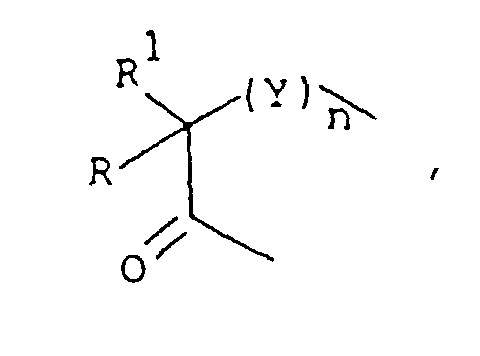
which comprises the reduction of a compound having the formulawherein A, m, R2 R3, R4, Z and Z1 are as previously defined in this claim: said process being optionally followed by conversion of the compound of the formula (I) to a pharmaceutically acceptable acid addition salt thereof.
- A process of claim 12 for preparing a compound having the formula (I) wherein m is 0 or 1, Z and Z1 are each hydrogen and R2 is hydrogen or methyl.
- A process of claim 13 for preparing a compound wherein R2 is methyl having the relative stereochemical formula
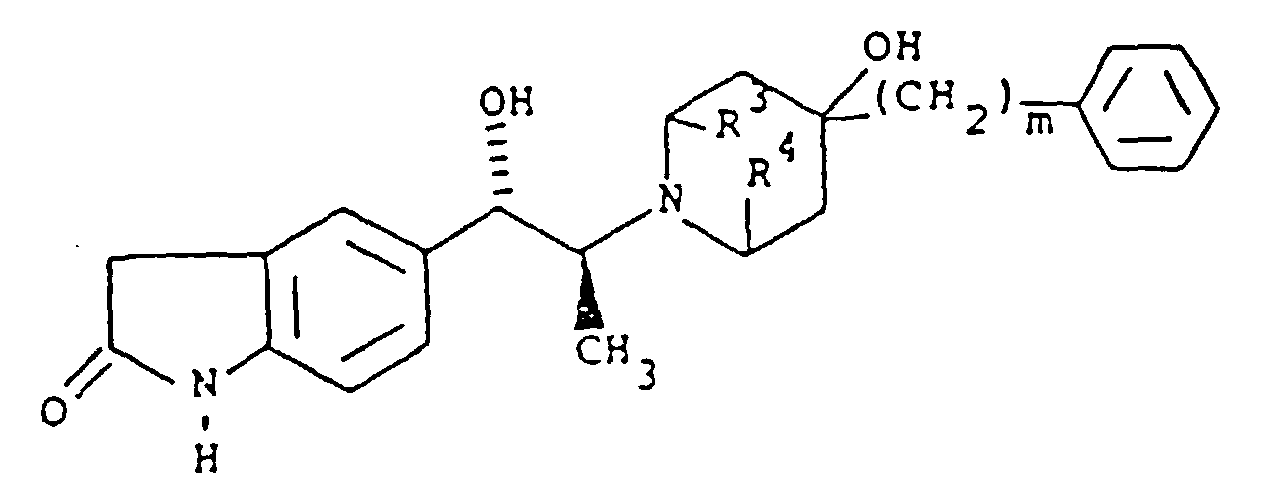
- A process of claim 14 for preparing a compound wherein R3 and R4 are taken separately and are each hydrogen.
- A process of claim 15 for preparing an optically active compound wherein m is 0.
- A process of claim 14 for preparing a compound wherein R3 and R4 are taken together and are ethylene.
Applications Claiming Priority (3)
| Application Number | Priority Date | Filing Date | Title |
|---|---|---|---|
| US52233290A | 1990-05-10 | 1990-05-10 | |
| US522332 | 1990-05-10 | ||
| PCT/US1991/001470 WO1991017156A1 (en) | 1990-05-10 | 1991-03-04 | Neuroprotective indolone and related derivatives |
Publications (2)
| Publication Number | Publication Date |
|---|---|
| EP0554247A1 EP0554247A1 (en) | 1993-08-11 |
| EP0554247B1 true EP0554247B1 (en) | 2000-04-26 |
Family
ID=24080448
Family Applications (1)
| Application Number | Title | Priority Date | Filing Date |
|---|---|---|---|
| EP91905608A Expired - Lifetime EP0554247B1 (en) | 1990-05-10 | 1991-03-04 | Neuroprotective indolone and related derivatives |
Country Status (30)
| Country | Link |
|---|---|
| US (1) | US5306723A (en) |
| EP (1) | EP0554247B1 (en) |
| JP (1) | JPH0699423B2 (en) |
| KR (1) | KR0163355B1 (en) |
| CN (1) | CN1037439C (en) |
| AT (1) | ATE192149T1 (en) |
| AU (1) | AU642994B2 (en) |
| BR (1) | BR9106432A (en) |
| CA (1) | CA2080475C (en) |
| CZ (1) | CZ280560B6 (en) |
| DE (1) | DE69132141T2 (en) |
| DK (1) | DK0554247T3 (en) |
| EG (1) | EG19647A (en) |
| ES (1) | ES2146578T3 (en) |
| FI (1) | FI109121B (en) |
| GR (1) | GR3034005T3 (en) |
| HU (1) | HU221193B1 (en) |
| IE (1) | IE911569A1 (en) |
| IL (1) | IL98056A (en) |
| MY (1) | MY107799A (en) |
| NO (1) | NO301979B1 (en) |
| PH (1) | PH29902A (en) |
| PL (1) | PL169267B1 (en) |
| PT (1) | PT97602B (en) |
| RU (1) | RU2068414C1 (en) |
| SK (1) | SK280833B6 (en) |
| TW (1) | TW198720B (en) |
| WO (1) | WO1991017156A1 (en) |
| YU (1) | YU48528B (en) |
| ZA (1) | ZA913494B (en) |
Families Citing this family (40)
| Publication number | Priority date | Publication date | Assignee | Title |
|---|---|---|---|---|
| US5594007A (en) * | 1991-04-18 | 1997-01-14 | Pfizer Inc. | Method for treating spinal cord trauma with phenolic 2-piperidino-1-alkanols |
| DE9290042U1 (en) * | 1991-04-18 | 1993-12-16 | Pfizer Inc., New York, N.Y. | Pro-drug ester of phenolic 2-piperidino-1-alkanols |
| HUT70528A (en) * | 1991-07-17 | 1995-10-30 | Pfizer | 2-(4-hydroxypiperidino)-1-alkanol derivatives as antiischemic agents and process for production thereof |
| FR2688504B1 (en) * | 1992-03-13 | 1995-05-05 | Synthelabo | DERIVATIVES OF 2- (PIPERIDIN-1-YL) ETHANOL, THEIR PREPARATION AND THEIR THERAPEUTIC APPLICATION. |
| US5319096A (en) * | 1992-04-03 | 1994-06-07 | Hoechst-Roussel Pharmaceuticals Inc. | (1H-indol-1-yl)-2-(amino) acetamides and related (1H-indol-1-yl)-(aminoalkyl)amides, pharmaceutical composition and use |
| US6255322B1 (en) | 1992-06-19 | 2001-07-03 | Pfizer Inc. | 2-(4-hydroxypiperidino)-1-alkanol derivatives as antiischemic agents |
| US5436255A (en) * | 1992-07-23 | 1995-07-25 | Pfizer Inc. | Method of treating diseases susceptable to treatment by blocking NMDA-receptors |
| DK0666854T3 (en) * | 1992-10-30 | 1997-04-28 | Pfizer | Neuroprotective 3,4-dihydro-2 (1H) -quinolone compounds |
| US5498610A (en) * | 1992-11-06 | 1996-03-12 | Pfizer Inc. | Neuroprotective indolone and related derivatives |
| NZ284852A (en) * | 1994-08-18 | 1998-06-26 | Pfizer | 3-(piperidin-1-yl)-chroman-4,7-diol and 1-(4-hydrophenyl)-2-(piperidin-1-yl) alkanol derivatives; medicaments; used as a neuroprotective agent |
| GB9510459D0 (en) | 1995-05-24 | 1995-07-19 | Zeneca Ltd | Bicyclic amines |
| ZA9610745B (en) * | 1995-12-22 | 1997-06-24 | Warner Lambert Co | 4-Subsituted piperidine analogs and their use as subtype selective nmda receptor antagonists |
| ZA9610738B (en) * | 1995-12-22 | 1997-06-24 | Warner Lambert Co | Subtype selective nmda receptor ligands and the use thereof |
| ZA9610741B (en) | 1995-12-22 | 1997-06-24 | Warner Lambert Co | 4-Substituted piperidine analogs and their use as subtype selective nmda receptor antagonists |
| ZA9610736B (en) * | 1995-12-22 | 1997-06-27 | Warner Lambert Co | 2-Substituted piperidine analogs and their use as subtypeselective nmda receptor antagonists |
| TW427978B (en) * | 1996-02-03 | 2001-04-01 | Hoffmann La Roche | Tetrahydroisoquinoline derivatives |
| CZ287821B6 (en) * | 1996-05-13 | 2001-02-14 | Zeneca Ltd | Bicyclic amines, process of their preparation and insecticidal, acaricidal and nematocidal agent containing thereof |
| GB9623944D0 (en) * | 1996-11-15 | 1997-01-08 | Zeneca Ltd | Bicyclic amine derivatives |
| GB9624114D0 (en) * | 1996-11-20 | 1997-01-08 | Zeneca Ltd | Pesticidal bicyclic amine derivatives |
| GB9624611D0 (en) | 1996-11-26 | 1997-01-15 | Zeneca Ltd | Bicyclic amine compounds |
| NZ335422A (en) | 1996-11-26 | 2000-10-27 | Zeneca Ltd | 8-azabicyclo[3.2.1]octane-, 8-azabicyclo [3.2.1] oct-6-ene-, 9-azabicyclo[3.3.1]nonane-, 9-aza-3-oxabicyclo[3.3.1]nonane- and 9-aza-3-thiabicyclo[3.3.1]nonane derivatives for use in insecticides |
| EP0846683B1 (en) * | 1996-12-03 | 2001-09-19 | F. Hoffmann-La Roche Ag | 4-Hydroxy-piperidine derivatives |
| CA2220649C (en) | 1996-12-03 | 2007-02-13 | F. Hoffmann-La Roche Ag | 4-hydroxy-piperidine derivatives |
| AU4556800A (en) * | 1999-04-27 | 2000-11-10 | Smithkline Beecham Plc | Novel treatment |
| WO2001030330A2 (en) | 1999-10-29 | 2001-05-03 | Merck Sharp & Dohme Limited | Method to treat pain utilizing benzimidazole nmda/nr2b antagonists |
| US6369076B1 (en) | 1999-10-29 | 2002-04-09 | Merck & Co. Inc. | 5-benzyl-octahydroindole and 6-benzyl-decahydroquinoline NMDA/NR2B antagonists |
| US6316474B1 (en) | 1999-10-29 | 2001-11-13 | Merck & Co., Inc. | 2-benzyl and 2-heteroaryl benzimidazole NMDA/NR2B antagonists |
| US6476041B1 (en) | 1999-10-29 | 2002-11-05 | Merck & Co., Inc. | 1,4 substituted piperidinyl NMDA/NR2B antagonists |
| US6291499B1 (en) | 1999-10-29 | 2001-09-18 | Merck & Co., Inc. | 2-cyclohexyl benzimidazole NMDA/NR2B antagonists |
| US6432976B1 (en) | 1999-10-29 | 2002-08-13 | Merck & Co., Inc. | 8-aza-bicyclo[3.2.1]octane NMDA/NR2B antagonists |
| US6495561B2 (en) | 1999-10-29 | 2002-12-17 | Merck & Co., Inc. | 2-cyclohexyl imidazopyridine NMDA/NR2B antagonists |
| US6489477B1 (en) | 1999-10-29 | 2002-12-03 | Merck & Co., Inc. | 2-aza-bicyclo[2.2.2]octane NMDA/NR2B antigonists |
| US6380205B1 (en) | 1999-10-29 | 2002-04-30 | Merck & Co., Inc. | 2-cyclohexyl quinazoline NMDA/NR2B antagonists |
| EA005974B1 (en) | 2001-02-23 | 2005-08-25 | Мерк Энд Ко., Инк. | N-substituted nonaryl-heterocyclic nmda/nr2b antagonists |
| US7259157B2 (en) * | 2001-04-03 | 2007-08-21 | Merck & Co., Inc. | N-substituted nonaryl-heterocyclo amidyl NMDA/NR2B Antagonists |
| US7148236B2 (en) * | 2002-01-17 | 2006-12-12 | Merck & Co., Inc. | Modulators of acetylcholine receptors |
| US6713490B2 (en) * | 2002-04-26 | 2004-03-30 | Pfizer, Inc. | 3,4-dihydroquinolin-2(1H)-one compounds as NR2B receptor antagonists |
| BRPI0415113A (en) * | 2003-10-08 | 2006-11-28 | Pfizer | condensed lactam compounds |
| EP1838705A2 (en) * | 2005-01-13 | 2007-10-03 | Neurosearch A/S | 3,8-substituted 8-aza-bicyclo [3.2.1] octane derivatives and their use as monoamine neurotransmitter re-uptake inhibitors |
| US20220218640A1 (en) | 2021-01-14 | 2022-07-14 | Rob Dickerman | Amino acid delivery system |
Citations (5)
| Publication number | Priority date | Publication date | Assignee | Title |
|---|---|---|---|---|
| GB2071094A (en) * | 1980-03-06 | 1981-09-16 | Otsuka Pharma Co Ltd | Carbostyril derivatives processes for their production andpharmaceutical composition containing them |
| JPS57142972A (en) * | 1981-02-27 | 1982-09-03 | Otsuka Pharmaceut Co Ltd | Carbostyril derivative |
| EP0109317A2 (en) * | 1982-10-13 | 1984-05-23 | Synthelabo | Phenyl-1-piperidino-2-propanol derivatives, their preparation and medicaments containing them |
| EP0288563A1 (en) * | 1986-09-30 | 1988-11-02 | Eisai Co., Ltd. | Cyclic amine derivatives |
| EP0398578A2 (en) * | 1989-05-17 | 1990-11-22 | Pfizer Inc. | 2-piperidino-1-alkanol derivatives as antiischemic agents |
Family Cites Families (11)
| Publication number | Priority date | Publication date | Assignee | Title |
|---|---|---|---|---|
| US3294804A (en) * | 1961-01-27 | 1966-12-27 | Sterling Drug Inc | 1-(3-hydroxy-3-phenylpropyl)-4-phenyl-4-propionoxy-piperidine |
| FR5733M (en) * | 1966-09-27 | 1968-01-22 | ||
| JPS51118772A (en) * | 1975-04-09 | 1976-10-18 | Otsuka Pharmaceut Co Ltd | Method for preparing carbostyryl derivatives |
| US4082755A (en) * | 1977-02-14 | 1978-04-04 | Janssen Pharmaceutica N.V. | 1-[(Diarylmethyl)aminoalkyl]piperidimes |
| WO1980000152A1 (en) * | 1978-07-03 | 1980-02-07 | Sandoz Ag | 3-aminopropoxy-aryl derivates,preparation and use thereof |
| US4358456A (en) * | 1980-05-03 | 1982-11-09 | John Wyeth & Brother Limited | Antipsychotic piperidinomethyl-indole derivatives |
| DE3045688A1 (en) * | 1980-12-04 | 1982-07-08 | C.H. Boehringer Sohn, 6507 Ingelheim | NEW 8-ARYLALKYL-3-PHENYL-3-NORTROPANOLE, THE ACID ADDITION SALTS THEREOF, THE MEDICINAL PRODUCTS CONTAINING THE SAME AND METHOD FOR THE PRODUCTION THEREOF |
| FR2546166B1 (en) * | 1983-05-19 | 1985-10-25 | Synthelabo | ENANTIOMERS OF ERYTHRO (BENZYL-4 PIPERIDINO) -2 (HYDROXY-4 OR BENZYLOXY-4 PHENYL) -1 PROPANOL, THEIR PREPARATION AND THEIR THERAPEUTIC APPLICATION |
| FR2581993B1 (en) * | 1985-05-14 | 1988-03-18 | Synthelabo | (BENZOYL-4 PIPERIDINO) -2 PHENYL-1 ALCANOLS DERIVATIVES, THEIR PREPARATION AND THEIR THERAPEUTIC APPLICATION |
| EP0322361A3 (en) * | 1987-12-23 | 1990-01-24 | Ciba-Geigy Ag | Hydrogenated 1-benzooxacycloalkyl pyridine-carboxylic-acid compounds |
| FR2640266B2 (en) * | 1988-07-12 | 1992-07-10 | Synthelabo | INDOLONES-2, QUINOLEINONES-2, BENZO (B) AZEPINONES-2 AND BENZIMIDAZOLONES-2 DERIVATIVES OF (HYDROXY-1 PIPERIDINYL-2 ALKYL), THEIR PREPARATION AND THEIR THERAPEUTIC APPLICATION |
-
1991
- 1991-03-04 EP EP91905608A patent/EP0554247B1/en not_active Expired - Lifetime
- 1991-03-04 HU HU9203515A patent/HU221193B1/en not_active IP Right Cessation
- 1991-03-04 DE DE69132141T patent/DE69132141T2/en not_active Expired - Fee Related
- 1991-03-04 WO PCT/US1991/001470 patent/WO1991017156A1/en not_active Ceased
- 1991-03-04 KR KR1019920702794A patent/KR0163355B1/en not_active Expired - Fee Related
- 1991-03-04 PL PL91296711A patent/PL169267B1/en not_active IP Right Cessation
- 1991-03-04 AT AT91905608T patent/ATE192149T1/en not_active IP Right Cessation
- 1991-03-04 BR BR919106432A patent/BR9106432A/en not_active Application Discontinuation
- 1991-03-04 DK DK91905608T patent/DK0554247T3/en active
- 1991-03-04 JP JP3505475A patent/JPH0699423B2/en not_active Expired - Fee Related
- 1991-03-04 CA CA002080475A patent/CA2080475C/en not_active Expired - Fee Related
- 1991-03-04 AU AU74565/91A patent/AU642994B2/en not_active Ceased
- 1991-03-04 RU RU9192016415A patent/RU2068414C1/en not_active IP Right Cessation
- 1991-03-04 US US07/941,118 patent/US5306723A/en not_active Expired - Fee Related
- 1991-03-04 ES ES91905608T patent/ES2146578T3/en not_active Expired - Lifetime
- 1991-04-02 TW TW080102540A patent/TW198720B/zh active
- 1991-04-24 PH PH42344A patent/PH29902A/en unknown
- 1991-05-03 IL IL9805691A patent/IL98056A/en not_active IP Right Cessation
- 1991-05-08 CZ CS911354A patent/CZ280560B6/en not_active IP Right Cessation
- 1991-05-08 PT PT97602A patent/PT97602B/en active IP Right Grant
- 1991-05-08 ZA ZA913494A patent/ZA913494B/en unknown
- 1991-05-08 SK SK1354-91A patent/SK280833B6/en unknown
- 1991-05-08 MY MYPI91000778A patent/MY107799A/en unknown
- 1991-05-08 EG EG27191A patent/EG19647A/en active
- 1991-05-09 IE IE156991A patent/IE911569A1/en not_active IP Right Cessation
- 1991-05-09 CN CN91103022A patent/CN1037439C/en not_active Expired - Fee Related
- 1991-05-09 YU YU81091A patent/YU48528B/en unknown
-
1992
- 1992-11-09 NO NO924310A patent/NO301979B1/en not_active IP Right Cessation
- 1992-11-09 FI FI925069A patent/FI109121B/en not_active IP Right Cessation
-
2000
- 2000-07-24 GR GR20000401691T patent/GR3034005T3/en not_active IP Right Cessation
Patent Citations (5)
| Publication number | Priority date | Publication date | Assignee | Title |
|---|---|---|---|---|
| GB2071094A (en) * | 1980-03-06 | 1981-09-16 | Otsuka Pharma Co Ltd | Carbostyril derivatives processes for their production andpharmaceutical composition containing them |
| JPS57142972A (en) * | 1981-02-27 | 1982-09-03 | Otsuka Pharmaceut Co Ltd | Carbostyril derivative |
| EP0109317A2 (en) * | 1982-10-13 | 1984-05-23 | Synthelabo | Phenyl-1-piperidino-2-propanol derivatives, their preparation and medicaments containing them |
| EP0288563A1 (en) * | 1986-09-30 | 1988-11-02 | Eisai Co., Ltd. | Cyclic amine derivatives |
| EP0398578A2 (en) * | 1989-05-17 | 1990-11-22 | Pfizer Inc. | 2-piperidino-1-alkanol derivatives as antiischemic agents |
Also Published As
Similar Documents
| Publication | Publication Date | Title |
|---|---|---|
| EP0554247B1 (en) | Neuroprotective indolone and related derivatives | |
| US5498610A (en) | Neuroprotective indolone and related derivatives | |
| US5356905A (en) | Neuroprotective 3-piperidino-4-hydroxychroman derivatives and analogs | |
| US5391742A (en) | Intermediates for 2-piperidino-1-alkanols | |
| US5272160A (en) | 2-piperidino-1-alkanol derivatives as antiischemic agents | |
| EP0398578B1 (en) | 2-piperidino-1-alkanol derivatives as antiischemic agents | |
| EP0624156A1 (en) | Isatin derivatives, processes for the preparation thereof and pharmaceutical composition comprising the same | |
| HK1000468B (en) | 2-piperidino-1-alkanol derivatives as antiischemic agents | |
| CA2240964C (en) | Piperidone tachykinin antagonists | |
| US5422353A (en) | Tetrahydropyridine derivatives | |
| US5527912A (en) | Intermediates for 2-piperidino-1-alkanol derivatives | |
| NZ241346A (en) | Phenyl- or thienyl-substituted 8-azabicyclo (3,2,1) octane; use as neuroprotective agents | |
| HU205077B (en) | Process for produicng hydroquinone derivatives and pharmaceutical compositions comprising such compounds |
Legal Events
| Date | Code | Title | Description |
|---|---|---|---|
| PUAI | Public reference made under article 153(3) epc to a published international application that has entered the european phase |
Free format text: ORIGINAL CODE: 0009012 |
|
| 17P | Request for examination filed |
Effective date: 19921105 |
|
| AK | Designated contracting states |
Kind code of ref document: A1 Designated state(s): AT BE CH DE DK ES FR GB GR IT LI LU NL SE |
|
| 17Q | First examination report despatched |
Effective date: 19940831 |
|
| GRAG | Despatch of communication of intention to grant |
Free format text: ORIGINAL CODE: EPIDOS AGRA |
|
| GRAG | Despatch of communication of intention to grant |
Free format text: ORIGINAL CODE: EPIDOS AGRA |
|
| GRAG | Despatch of communication of intention to grant |
Free format text: ORIGINAL CODE: EPIDOS AGRA |
|
| GRAG | Despatch of communication of intention to grant |
Free format text: ORIGINAL CODE: EPIDOS AGRA |
|
| GRAH | Despatch of communication of intention to grant a patent |
Free format text: ORIGINAL CODE: EPIDOS IGRA |
|
| GRAH | Despatch of communication of intention to grant a patent |
Free format text: ORIGINAL CODE: EPIDOS IGRA |
|
| GRAA | (expected) grant |
Free format text: ORIGINAL CODE: 0009210 |
|
| AK | Designated contracting states |
Kind code of ref document: B1 Designated state(s): AT BE CH DE DK ES FR GB GR IT LI LU NL SE |
|
| REF | Corresponds to: |
Ref document number: 192149 Country of ref document: AT Date of ref document: 20000515 Kind code of ref document: T |
|
| REG | Reference to a national code |
Ref country code: CH Ref legal event code: NV Representative=s name: E. BLUM & CO. PATENTANWAELTE Ref country code: CH Ref legal event code: EP |
|
| REF | Corresponds to: |
Ref document number: 69132141 Country of ref document: DE Date of ref document: 20000531 |
|
| ET | Fr: translation filed | ||
| ITF | It: translation for a ep patent filed | ||
| REG | Reference to a national code |
Ref country code: DK Ref legal event code: T3 |
|
| REG | Reference to a national code |
Ref country code: ES Ref legal event code: FG2A Ref document number: 2146578 Country of ref document: ES Kind code of ref document: T3 |
|
| PLBE | No opposition filed within time limit |
Free format text: ORIGINAL CODE: 0009261 |
|
| STAA | Information on the status of an ep patent application or granted ep patent |
Free format text: STATUS: NO OPPOSITION FILED WITHIN TIME LIMIT |
|
| 26N | No opposition filed | ||
| REG | Reference to a national code |
Ref country code: GB Ref legal event code: IF02 |
|
| PGFP | Annual fee paid to national office [announced via postgrant information from national office to epo] |
Ref country code: GR Payment date: 20040116 Year of fee payment: 14 |
|
| PGFP | Annual fee paid to national office [announced via postgrant information from national office to epo] |
Ref country code: LU Payment date: 20040121 Year of fee payment: 14 |
|
| PGFP | Annual fee paid to national office [announced via postgrant information from national office to epo] |
Ref country code: DK Payment date: 20040123 Year of fee payment: 14 |
|
| PGFP | Annual fee paid to national office [announced via postgrant information from national office to epo] |
Ref country code: GB Payment date: 20040205 Year of fee payment: 14 Ref country code: AT Payment date: 20040205 Year of fee payment: 14 |
|
| PGFP | Annual fee paid to national office [announced via postgrant information from national office to epo] |
Ref country code: NL Payment date: 20040209 Year of fee payment: 14 |
|
| PGFP | Annual fee paid to national office [announced via postgrant information from national office to epo] |
Ref country code: FR Payment date: 20040302 Year of fee payment: 14 |
|
| PGFP | Annual fee paid to national office [announced via postgrant information from national office to epo] |
Ref country code: SE Payment date: 20040303 Year of fee payment: 14 |
|
| PGFP | Annual fee paid to national office [announced via postgrant information from national office to epo] |
Ref country code: CH Payment date: 20040319 Year of fee payment: 14 |
|
| PGFP | Annual fee paid to national office [announced via postgrant information from national office to epo] |
Ref country code: ES Payment date: 20040322 Year of fee payment: 14 |
|
| PGFP | Annual fee paid to national office [announced via postgrant information from national office to epo] |
Ref country code: DE Payment date: 20040331 Year of fee payment: 14 |
|
| PGFP | Annual fee paid to national office [announced via postgrant information from national office to epo] |
Ref country code: BE Payment date: 20040416 Year of fee payment: 14 |
|
| PG25 | Lapsed in a contracting state [announced via postgrant information from national office to epo] |
Ref country code: LU Free format text: LAPSE BECAUSE OF NON-PAYMENT OF DUE FEES Effective date: 20050304 Ref country code: IT Free format text: LAPSE BECAUSE OF NON-PAYMENT OF DUE FEES Effective date: 20050304 Ref country code: AT Free format text: LAPSE BECAUSE OF NON-PAYMENT OF DUE FEES Effective date: 20050304 |
|
| PG25 | Lapsed in a contracting state [announced via postgrant information from national office to epo] |
Ref country code: SE Free format text: LAPSE BECAUSE OF NON-PAYMENT OF DUE FEES Effective date: 20050305 Ref country code: ES Free format text: LAPSE BECAUSE OF NON-PAYMENT OF DUE FEES Effective date: 20050305 |
|
| PG25 | Lapsed in a contracting state [announced via postgrant information from national office to epo] |
Ref country code: LI Free format text: LAPSE BECAUSE OF NON-PAYMENT OF DUE FEES Effective date: 20050331 Ref country code: DK Free format text: LAPSE BECAUSE OF NON-PAYMENT OF DUE FEES Effective date: 20050331 Ref country code: CH Free format text: LAPSE BECAUSE OF NON-PAYMENT OF DUE FEES Effective date: 20050331 Ref country code: BE Free format text: LAPSE BECAUSE OF NON-PAYMENT OF DUE FEES Effective date: 20050331 |
|
| BERE | Be: lapsed |
Owner name: *PFIZER INC. Effective date: 20050331 |
|
| PG25 | Lapsed in a contracting state [announced via postgrant information from national office to epo] |
Ref country code: NL Free format text: LAPSE BECAUSE OF NON-PAYMENT OF DUE FEES Effective date: 20051001 Ref country code: DE Free format text: LAPSE BECAUSE OF NON-PAYMENT OF DUE FEES Effective date: 20051001 |
|
| PG25 | Lapsed in a contracting state [announced via postgrant information from national office to epo] |
Ref country code: GR Free format text: LAPSE BECAUSE OF NON-PAYMENT OF DUE FEES Effective date: 20051004 |
|
| EUG | Se: european patent has lapsed | ||
| REG | Reference to a national code |
Ref country code: CH Ref legal event code: PL |
|
| GBPC | Gb: european patent ceased through non-payment of renewal fee |
Effective date: 20050304 |
|
| PG25 | Lapsed in a contracting state [announced via postgrant information from national office to epo] |
Ref country code: FR Free format text: LAPSE BECAUSE OF NON-PAYMENT OF DUE FEES Effective date: 20051130 |
|
| NLV4 | Nl: lapsed or anulled due to non-payment of the annual fee |
Effective date: 20051001 |
|
| REG | Reference to a national code |
Ref country code: DK Ref legal event code: EBP |
|
| REG | Reference to a national code |
Ref country code: FR Ref legal event code: ST Effective date: 20051130 |
|
| REG | Reference to a national code |
Ref country code: ES Ref legal event code: FD2A Effective date: 20050305 |
|
| BERE | Be: lapsed |
Owner name: *PFIZER INC. Effective date: 20050331 |