EP0539274B1 - Method for the synthesis of aldehydes and of their derivatives - Google Patents
Method for the synthesis of aldehydes and of their derivatives Download PDFInfo
- Publication number
- EP0539274B1 EP0539274B1 EP92402844A EP92402844A EP0539274B1 EP 0539274 B1 EP0539274 B1 EP 0539274B1 EP 92402844 A EP92402844 A EP 92402844A EP 92402844 A EP92402844 A EP 92402844A EP 0539274 B1 EP0539274 B1 EP 0539274B1
- Authority
- EP
- European Patent Office
- Prior art keywords
- acid
- benzoic
- acids
- hydroxy
- process according
- Prior art date
- Legal status (The legal status is an assumption and is not a legal conclusion. Google has not performed a legal analysis and makes no representation as to the accuracy of the status listed.)
- Expired - Lifetime
Links
- 238000000034 method Methods 0.000 title claims abstract description 56
- 150000001299 aldehydes Chemical class 0.000 title claims abstract description 32
- 230000015572 biosynthetic process Effects 0.000 title description 9
- 238000003786 synthesis reaction Methods 0.000 title description 9
- 239000003054 catalyst Substances 0.000 claims abstract description 73
- 229910052707 ruthenium Inorganic materials 0.000 claims abstract description 35
- KJTLSVCANCCWHF-UHFFFAOYSA-N Ruthenium Chemical compound [Ru] KJTLSVCANCCWHF-UHFFFAOYSA-N 0.000 claims abstract description 29
- 239000001257 hydrogen Substances 0.000 claims abstract description 23
- 229910052739 hydrogen Inorganic materials 0.000 claims abstract description 23
- 150000008064 anhydrides Chemical class 0.000 claims abstract description 21
- 150000001735 carboxylic acids Chemical class 0.000 claims abstract description 21
- 238000002360 preparation method Methods 0.000 claims abstract description 20
- 230000009467 reduction Effects 0.000 claims abstract description 19
- 150000002148 esters Chemical class 0.000 claims abstract description 18
- 125000004435 hydrogen atom Chemical class [H]* 0.000 claims abstract description 18
- -1 hydrocarbon radical Chemical group 0.000 claims description 114
- 125000004432 carbon atom Chemical group C* 0.000 claims description 65
- 239000002253 acid Substances 0.000 claims description 59
- 230000008569 process Effects 0.000 claims description 51
- 150000003254 radicals Chemical class 0.000 claims description 49
- 229920006395 saturated elastomer Polymers 0.000 claims description 40
- 125000004429 atom Chemical group 0.000 claims description 28
- WPYMKLBDIGXBTP-UHFFFAOYSA-N benzoic acid group Chemical group C(C1=CC=CC=C1)(=O)O WPYMKLBDIGXBTP-UHFFFAOYSA-N 0.000 claims description 25
- QTBSBXVTEAMEQO-UHFFFAOYSA-N Acetic acid Natural products CC(O)=O QTBSBXVTEAMEQO-UHFFFAOYSA-N 0.000 claims description 24
- 239000005711 Benzoic acid Substances 0.000 claims description 24
- 150000001732 carboxylic acid derivatives Chemical class 0.000 claims description 24
- 229910052718 tin Inorganic materials 0.000 claims description 22
- ATJFFYVFTNAWJD-UHFFFAOYSA-N Tin Chemical compound [Sn] ATJFFYVFTNAWJD-UHFFFAOYSA-N 0.000 claims description 18
- 150000007513 acids Chemical class 0.000 claims description 18
- XBDQKXXYIPTUBI-UHFFFAOYSA-N dimethylselenoniopropionate Natural products CCC(O)=O XBDQKXXYIPTUBI-UHFFFAOYSA-N 0.000 claims description 17
- UFHFLCQGNIYNRP-UHFFFAOYSA-N Hydrogen Chemical compound [H][H] UFHFLCQGNIYNRP-UHFFFAOYSA-N 0.000 claims description 16
- 125000003118 aryl group Chemical group 0.000 claims description 15
- FJKROLUGYXJWQN-UHFFFAOYSA-N 4-hydroxybenzoic acid Chemical compound OC(=O)C1=CC=C(O)C=C1 FJKROLUGYXJWQN-UHFFFAOYSA-N 0.000 claims description 12
- ZYGHJZDHTFUPRJ-UHFFFAOYSA-N coumarin Chemical compound C1=CC=C2OC(=O)C=CC2=C1 ZYGHJZDHTFUPRJ-UHFFFAOYSA-N 0.000 claims description 12
- 125000000623 heterocyclic group Chemical group 0.000 claims description 12
- 125000001931 aliphatic group Chemical group 0.000 claims description 11
- 125000005843 halogen group Chemical group 0.000 claims description 9
- 125000001997 phenyl group Chemical group [H]C1=C([H])C([H])=C(*)C([H])=C1[H] 0.000 claims description 9
- 125000001424 substituent group Chemical group 0.000 claims description 9
- 235000010233 benzoic acid Nutrition 0.000 claims description 8
- 229930195733 hydrocarbon Natural products 0.000 claims description 8
- 125000002887 hydroxy group Chemical group [H]O* 0.000 claims description 8
- 229910052751 metal Inorganic materials 0.000 claims description 8
- 235000019260 propionic acid Nutrition 0.000 claims description 8
- IUVKMZGDUIUOCP-BTNSXGMBSA-N quinbolone Chemical compound O([C@H]1CC[C@H]2[C@H]3[C@@H]([C@]4(C=CC(=O)C=C4CC3)C)CC[C@@]21C)C1=CCCC1 IUVKMZGDUIUOCP-BTNSXGMBSA-N 0.000 claims description 8
- LBKFGYZQBSGRHY-UHFFFAOYSA-N 3-hydroxy-4-methoxybenzoic acid Chemical compound COC1=CC=C(C(O)=O)C=C1O LBKFGYZQBSGRHY-UHFFFAOYSA-N 0.000 claims description 7
- IKHGUXGNUITLKF-UHFFFAOYSA-N Acetaldehyde Chemical compound CC=O IKHGUXGNUITLKF-UHFFFAOYSA-N 0.000 claims description 7
- 239000004215 Carbon black (E152) Substances 0.000 claims description 7
- YGSDEFSMJLZEOE-UHFFFAOYSA-N Salicylic acid Natural products OC(=O)C1=CC=CC=C1O YGSDEFSMJLZEOE-UHFFFAOYSA-N 0.000 claims description 7
- 125000002837 carbocyclic group Chemical group 0.000 claims description 7
- 125000002496 methyl group Chemical group [H]C([H])([H])* 0.000 claims description 7
- PVNIIMVLHYAWGP-UHFFFAOYSA-N nicotinic acid Natural products OC(=O)C1=CC=CN=C1 PVNIIMVLHYAWGP-UHFFFAOYSA-N 0.000 claims description 7
- YBCAZPLXEGKKFM-UHFFFAOYSA-K ruthenium(iii) chloride Chemical compound [Cl-].[Cl-].[Cl-].[Ru+3] YBCAZPLXEGKKFM-UHFFFAOYSA-K 0.000 claims description 7
- SMQUZDBALVYZAC-UHFFFAOYSA-N salicylaldehyde Chemical compound OC1=CC=CC=C1C=O SMQUZDBALVYZAC-UHFFFAOYSA-N 0.000 claims description 7
- IZZIWIAOVZOBLF-UHFFFAOYSA-N 5-methyloxysalicylic acid Natural products COC1=CC=C(O)C(C(O)=O)=C1 IZZIWIAOVZOBLF-UHFFFAOYSA-N 0.000 claims description 6
- PNEYBMLMFCGWSK-UHFFFAOYSA-N Alumina Chemical group [O-2].[O-2].[O-2].[Al+3].[Al+3] PNEYBMLMFCGWSK-UHFFFAOYSA-N 0.000 claims description 6
- ZOXJGFHDIHLPTG-UHFFFAOYSA-N Boron Chemical compound [B] ZOXJGFHDIHLPTG-UHFFFAOYSA-N 0.000 claims description 6
- 125000001584 benzyloxycarbonyl group Chemical group C(=O)(OCC1=CC=CC=C1)* 0.000 claims description 6
- 229910052796 boron Inorganic materials 0.000 claims description 6
- 125000004744 butyloxycarbonyl group Chemical group 0.000 claims description 6
- 235000001671 coumarin Nutrition 0.000 claims description 6
- 229960000956 coumarin Drugs 0.000 claims description 6
- 229910052731 fluorine Inorganic materials 0.000 claims description 6
- 125000002950 monocyclic group Chemical group 0.000 claims description 6
- OKTJSMMVPCPJKN-UHFFFAOYSA-N Carbon Chemical compound [C] OKTJSMMVPCPJKN-UHFFFAOYSA-N 0.000 claims description 5
- TTXWERZRUCSUED-UHFFFAOYSA-N [Ru].[Sn] Chemical compound [Ru].[Sn] TTXWERZRUCSUED-UHFFFAOYSA-N 0.000 claims description 5
- 150000001991 dicarboxylic acids Chemical class 0.000 claims description 5
- 125000000325 methylidene group Chemical group [H]C([H])=* 0.000 claims description 5
- IJGRMHOSHXDMSA-UHFFFAOYSA-N nitrogen Substances N#N IJGRMHOSHXDMSA-UHFFFAOYSA-N 0.000 claims description 5
- WKOLLVMJNQIZCI-UHFFFAOYSA-N vanillic acid Chemical compound COC1=CC(C(O)=O)=CC=C1O WKOLLVMJNQIZCI-UHFFFAOYSA-N 0.000 claims description 5
- GLDQAMYCGOIJDV-UHFFFAOYSA-N 2,3-dihydroxybenzoic acid Chemical compound OC(=O)C1=CC=CC(O)=C1O GLDQAMYCGOIJDV-UHFFFAOYSA-N 0.000 claims description 4
- BOZRCGLDOHDZBP-UHFFFAOYSA-N 2-ethylhexanoic acid;tin Chemical compound [Sn].CCCCC(CC)C(O)=O BOZRCGLDOHDZBP-UHFFFAOYSA-N 0.000 claims description 4
- BWLBGMIXKSTLSX-UHFFFAOYSA-N 2-hydroxyisobutyric acid Chemical compound CC(C)(O)C(O)=O BWLBGMIXKSTLSX-UHFFFAOYSA-N 0.000 claims description 4
- ZQLCWPXBHUALQC-UHFFFAOYSA-N 3-hydroxy-4-methylbenzoic acid Chemical compound CC1=CC=C(C(O)=O)C=C1O ZQLCWPXBHUALQC-UHFFFAOYSA-N 0.000 claims description 4
- IAVREABSGIHHMO-UHFFFAOYSA-N 3-hydroxybenzaldehyde Chemical compound OC1=CC=CC(C=O)=C1 IAVREABSGIHHMO-UHFFFAOYSA-N 0.000 claims description 4
- IJFXRHURBJZNAO-UHFFFAOYSA-N 3-hydroxybenzoic acid Chemical compound OC(=O)C1=CC=CC(O)=C1 IJFXRHURBJZNAO-UHFFFAOYSA-N 0.000 claims description 4
- WHBMMWSBFZVSSR-UHFFFAOYSA-N 3-hydroxybutyric acid Chemical compound CC(O)CC(O)=O WHBMMWSBFZVSSR-UHFFFAOYSA-N 0.000 claims description 4
- AUZQQIPZESHNMG-UHFFFAOYSA-N 3-methoxysalicylic acid Chemical compound COC1=CC=CC(C(O)=O)=C1O AUZQQIPZESHNMG-UHFFFAOYSA-N 0.000 claims description 4
- SEPQTYODOKLVSB-UHFFFAOYSA-N 3-methylbut-2-enal Chemical compound CC(C)=CC=O SEPQTYODOKLVSB-UHFFFAOYSA-N 0.000 claims description 4
- NGSWKAQJJWESNS-UHFFFAOYSA-N 4-coumaric acid Chemical compound OC(=O)C=CC1=CC=C(O)C=C1 NGSWKAQJJWESNS-UHFFFAOYSA-N 0.000 claims description 4
- RGHHSNMVTDWUBI-UHFFFAOYSA-N 4-hydroxybenzaldehyde Chemical compound OC1=CC=C(C=O)C=C1 RGHHSNMVTDWUBI-UHFFFAOYSA-N 0.000 claims description 4
- 229940090248 4-hydroxybenzoic acid Drugs 0.000 claims description 4
- MRIXVKKOHPQOFK-UHFFFAOYSA-N 4-methoxysalicylic acid Chemical compound COC1=CC=C(C(O)=O)C(O)=C1 MRIXVKKOHPQOFK-UHFFFAOYSA-N 0.000 claims description 4
- QNVNLUSHGRBCLO-UHFFFAOYSA-N 5-hydroxybenzene-1,3-dicarboxylic acid Chemical compound OC(=O)C1=CC(O)=CC(C(O)=O)=C1 QNVNLUSHGRBCLO-UHFFFAOYSA-N 0.000 claims description 4
- AEMRFAOFKBGASW-UHFFFAOYSA-N Glycolic acid Chemical compound OCC(O)=O AEMRFAOFKBGASW-UHFFFAOYSA-N 0.000 claims description 4
- CIUQDSCDWFSTQR-UHFFFAOYSA-N [C]1=CC=CC=C1 Chemical compound [C]1=CC=CC=C1 CIUQDSCDWFSTQR-UHFFFAOYSA-N 0.000 claims description 4
- NIXOWILDQLNWCW-UHFFFAOYSA-N acrylic acid group Chemical group C(C=C)(=O)O NIXOWILDQLNWCW-UHFFFAOYSA-N 0.000 claims description 4
- 230000004913 activation Effects 0.000 claims description 4
- 125000002619 bicyclic group Chemical group 0.000 claims description 4
- GDTBXPJZTBHREO-UHFFFAOYSA-N bromine Chemical compound BrBr GDTBXPJZTBHREO-UHFFFAOYSA-N 0.000 claims description 4
- QUPDWYMUPZLYJZ-UHFFFAOYSA-N ethyl Chemical compound C[CH2] QUPDWYMUPZLYJZ-UHFFFAOYSA-N 0.000 claims description 4
- ROBFUDYVXSDBQM-UHFFFAOYSA-N hydroxymalonic acid Chemical compound OC(=O)C(O)C(O)=O ROBFUDYVXSDBQM-UHFFFAOYSA-N 0.000 claims description 4
- JVTAAEKCZFNVCJ-UHFFFAOYSA-N lactic acid Chemical compound CC(O)C(O)=O JVTAAEKCZFNVCJ-UHFFFAOYSA-N 0.000 claims description 4
- 239000002184 metal Substances 0.000 claims description 4
- ZRSNZINYAWTAHE-UHFFFAOYSA-N p-methoxybenzaldehyde Chemical compound COC1=CC=C(C=O)C=C1 ZRSNZINYAWTAHE-UHFFFAOYSA-N 0.000 claims description 4
- SATCULPHIDQDRE-UHFFFAOYSA-N piperonal Chemical compound O=CC1=CC=C2OCOC2=C1 SATCULPHIDQDRE-UHFFFAOYSA-N 0.000 claims description 4
- VDVJGIYXDVPQLP-UHFFFAOYSA-N piperonylic acid Chemical compound OC(=O)C1=CC=C2OCOC2=C1 VDVJGIYXDVPQLP-UHFFFAOYSA-N 0.000 claims description 4
- YQUVCSBJEUQKSH-UHFFFAOYSA-N protochatechuic acid Natural products OC(=O)C1=CC=C(O)C(O)=C1 YQUVCSBJEUQKSH-UHFFFAOYSA-N 0.000 claims description 4
- 229910001925 ruthenium oxide Inorganic materials 0.000 claims description 4
- WOCIAKWEIIZHES-UHFFFAOYSA-N ruthenium(iv) oxide Chemical compound O=[Ru]=O WOCIAKWEIIZHES-UHFFFAOYSA-N 0.000 claims description 4
- 229960004889 salicylic acid Drugs 0.000 claims description 4
- HPGGPRDJHPYFRM-UHFFFAOYSA-J tin(iv) chloride Chemical compound Cl[Sn](Cl)(Cl)Cl HPGGPRDJHPYFRM-UHFFFAOYSA-J 0.000 claims description 4
- TUUBOHWZSQXCSW-UHFFFAOYSA-N vanillic acid Natural products COC1=CC(O)=CC(C(O)=O)=C1 TUUBOHWZSQXCSW-UHFFFAOYSA-N 0.000 claims description 4
- WJUFSDZVCOTFON-UHFFFAOYSA-N veratraldehyde Chemical compound COC1=CC=C(C=O)C=C1OC WJUFSDZVCOTFON-UHFFFAOYSA-N 0.000 claims description 4
- 125000003088 (fluoren-9-ylmethoxy)carbonyl group Chemical group 0.000 claims description 3
- 239000006230 acetylene black Substances 0.000 claims description 3
- 125000000217 alkyl group Chemical group 0.000 claims description 3
- 229910052782 aluminium Inorganic materials 0.000 claims description 3
- XAGFODPZIPBFFR-UHFFFAOYSA-N aluminium Chemical compound [Al] XAGFODPZIPBFFR-UHFFFAOYSA-N 0.000 claims description 3
- 125000002915 carbonyl group Chemical group [*:2]C([*:1])=O 0.000 claims description 3
- 125000001495 ethyl group Chemical group [H]C([H])([H])C([H])([H])* 0.000 claims description 3
- 125000005842 heteroatom Chemical group 0.000 claims description 3
- 150000002430 hydrocarbons Chemical group 0.000 claims description 3
- 150000005165 hydroxybenzoic acids Chemical class 0.000 claims description 3
- 239000012442 inert solvent Substances 0.000 claims description 3
- 150000002739 metals Chemical class 0.000 claims description 3
- 229960003512 nicotinic acid Drugs 0.000 claims description 3
- 235000001968 nicotinic acid Nutrition 0.000 claims description 3
- 239000011664 nicotinic acid Substances 0.000 claims description 3
- 229910052757 nitrogen Inorganic materials 0.000 claims description 3
- SIOXPEMLGUPBBT-UHFFFAOYSA-N picolinic acid Chemical class OC(=O)C1=CC=CC=N1 SIOXPEMLGUPBBT-UHFFFAOYSA-N 0.000 claims description 3
- 125000003367 polycyclic group Chemical group 0.000 claims description 3
- 239000011347 resin Substances 0.000 claims description 3
- 229920005989 resin Polymers 0.000 claims description 3
- 239000010703 silicon Substances 0.000 claims description 3
- BJEPYKJPYRNKOW-REOHCLBHSA-N (S)-malic acid Chemical compound OC(=O)[C@@H](O)CC(O)=O BJEPYKJPYRNKOW-REOHCLBHSA-N 0.000 claims description 2
- RBNPOMFGQQGHHO-UHFFFAOYSA-N -2,3-Dihydroxypropanoic acid Natural products OCC(O)C(O)=O RBNPOMFGQQGHHO-UHFFFAOYSA-N 0.000 claims description 2
- WBYWAXJHAXSJNI-VOTSOKGWSA-M .beta-Phenylacrylic acid Natural products [O-]C(=O)\C=C\C1=CC=CC=C1 WBYWAXJHAXSJNI-VOTSOKGWSA-M 0.000 claims description 2
- GQXURJDNDYACGE-UHFFFAOYSA-N 1-hydroxycyclopropane-1-carboxylic acid Chemical compound OC(=O)C1(O)CC1 GQXURJDNDYACGE-UHFFFAOYSA-N 0.000 claims description 2
- LNETULKMXZVUST-UHFFFAOYSA-N 1-naphthoic acid Chemical compound C1=CC=C2C(C(=O)O)=CC=CC2=C1 LNETULKMXZVUST-UHFFFAOYSA-N 0.000 claims description 2
- 229940082044 2,3-dihydroxybenzoic acid Drugs 0.000 claims description 2
- KRHQRJXHSUXNQY-UHFFFAOYSA-N 2-(2-hydroxyphenyl)propanoic acid Chemical compound OC(=O)C(C)C1=CC=CC=C1O KRHQRJXHSUXNQY-UHFFFAOYSA-N 0.000 claims description 2
- QDAWXRKTSATEOP-UHFFFAOYSA-N 2-acetylbenzoic acid Chemical compound CC(=O)C1=CC=CC=C1C(O)=O QDAWXRKTSATEOP-UHFFFAOYSA-N 0.000 claims description 2
- UYDGECQHZQNTQS-UHFFFAOYSA-N 2-amino-4,6-dimethylpyridine-3-carboxamide Chemical compound CC1=CC(C)=C(C(N)=O)C(N)=N1 UYDGECQHZQNTQS-UHFFFAOYSA-N 0.000 claims description 2
- FGTYTUFKXYPTML-UHFFFAOYSA-N 2-benzoylbenzoic acid Chemical compound OC(=O)C1=CC=CC=C1C(=O)C1=CC=CC=C1 FGTYTUFKXYPTML-UHFFFAOYSA-N 0.000 claims description 2
- SMNDYUVBFMFKNZ-UHFFFAOYSA-N 2-furoic acid Chemical compound OC(=O)C1=CC=CO1 SMNDYUVBFMFKNZ-UHFFFAOYSA-N 0.000 claims description 2
- DHZVWQPHNWDCFS-UHFFFAOYSA-N 2-hydroxy-3,5-diiodobenzoic acid Chemical compound OC(=O)C1=CC(I)=CC(I)=C1O DHZVWQPHNWDCFS-UHFFFAOYSA-N 0.000 claims description 2
- ONFOSYPQQXJWGS-UHFFFAOYSA-N 2-hydroxy-4-(methylthio)butanoic acid Chemical compound CSCCC(O)C(O)=O ONFOSYPQQXJWGS-UHFFFAOYSA-N 0.000 claims description 2
- AAUQLHHARJUJEH-UHFFFAOYSA-N 2-hydroxy-5-methoxybenzoic acid Natural products COC1=CC=CC(O)=C1C(O)=O AAUQLHHARJUJEH-UHFFFAOYSA-N 0.000 claims description 2
- DLGBEGBHXSAQOC-UHFFFAOYSA-N 2-hydroxy-5-methylbenzoic acid Chemical compound CC1=CC=C(O)C(C(O)=O)=C1 DLGBEGBHXSAQOC-UHFFFAOYSA-N 0.000 claims description 2
- VHBSECWYEFJRNV-UHFFFAOYSA-N 2-hydroxybenzoic acid Chemical compound OC(=O)C1=CC=CC=C1O.OC(=O)C1=CC=CC=C1O VHBSECWYEFJRNV-UHFFFAOYSA-N 0.000 claims description 2
- AFENDNXGAFYKQO-UHFFFAOYSA-N 2-hydroxybutyric acid Chemical compound CCC(O)C(O)=O AFENDNXGAFYKQO-UHFFFAOYSA-N 0.000 claims description 2
- ONPJWQSDZCGSQM-UHFFFAOYSA-N 2-phenylprop-2-enoic acid Chemical compound OC(=O)C(=C)C1=CC=CC=C1 ONPJWQSDZCGSQM-UHFFFAOYSA-N 0.000 claims description 2
- 125000003903 2-propenyl group Chemical group [H]C([*])([H])C([H])=C([H])[H] 0.000 claims description 2
- WFIBQVFJXGQICQ-UHFFFAOYSA-N 3,4-O-Dimethylgallic acid Chemical compound COC1=CC(C(O)=O)=CC(O)=C1OC WFIBQVFJXGQICQ-UHFFFAOYSA-N 0.000 claims description 2
- JPHKMYXKNKLNDF-UHFFFAOYSA-N 3,4-difluorobenzaldehyde Chemical compound FC1=CC=C(C=O)C=C1F JPHKMYXKNKLNDF-UHFFFAOYSA-N 0.000 claims description 2
- KMRRXSZDSGYLCD-UHFFFAOYSA-N 3,5-dihydroxy-4-methylbenzoic acid Chemical compound CC1=C(O)C=C(C(O)=O)C=C1O KMRRXSZDSGYLCD-UHFFFAOYSA-N 0.000 claims description 2
- IQGMRVWUTCYCST-UHFFFAOYSA-N 3-Aminosalicylic acid Chemical compound NC1=CC=CC(C(O)=O)=C1O IQGMRVWUTCYCST-UHFFFAOYSA-N 0.000 claims description 2
- ZFGVLYWWBSRAFN-UHFFFAOYSA-N 3-benzoyloxypropanoic acid Chemical compound OC(=O)CCOC(=O)C1=CC=CC=C1 ZFGVLYWWBSRAFN-UHFFFAOYSA-N 0.000 claims description 2
- HEKGHQKEERXLOI-UHFFFAOYSA-N 3-hydroxy-4-methyl-2-nitrobenzoic acid Chemical compound CC1=CC=C(C(O)=O)C([N+]([O-])=O)=C1O HEKGHQKEERXLOI-UHFFFAOYSA-N 0.000 claims description 2
- XLDLRRGZWIEEHT-UHFFFAOYSA-N 3-hydroxy-4-nitrobenzoic acid Chemical compound OC(=O)C1=CC=C([N+]([O-])=O)C(O)=C1 XLDLRRGZWIEEHT-UHFFFAOYSA-N 0.000 claims description 2
- WJXSWCUQABXPFS-UHFFFAOYSA-N 3-hydroxyanthranilic acid Chemical compound NC1=C(O)C=CC=C1C(O)=O WJXSWCUQABXPFS-UHFFFAOYSA-N 0.000 claims description 2
- GDBUZIKSJGRBJP-UHFFFAOYSA-N 4-acetoxy benzoic acid Chemical compound CC(=O)OC1=CC=C(C(O)=O)C=C1 GDBUZIKSJGRBJP-UHFFFAOYSA-N 0.000 claims description 2
- QBHDSQZASIBAAI-UHFFFAOYSA-N 4-acetylbenzoic acid Chemical compound CC(=O)C1=CC=C(C(O)=O)C=C1 QBHDSQZASIBAAI-UHFFFAOYSA-N 0.000 claims description 2
- WUBBRNOQWQTFEX-UHFFFAOYSA-N 4-aminosalicylic acid Chemical compound NC1=CC=C(C(O)=O)C(O)=C1 WUBBRNOQWQTFEX-UHFFFAOYSA-N 0.000 claims description 2
- IFQUPKAISSPFTE-UHFFFAOYSA-N 4-benzoylbenzoic acid Chemical compound C1=CC(C(=O)O)=CC=C1C(=O)C1=CC=CC=C1 IFQUPKAISSPFTE-UHFFFAOYSA-N 0.000 claims description 2
- AVPYQKSLYISFPO-UHFFFAOYSA-N 4-chlorobenzaldehyde Chemical compound ClC1=CC=C(C=O)C=C1 AVPYQKSLYISFPO-UHFFFAOYSA-N 0.000 claims description 2
- NJESAXZANHETJV-UHFFFAOYSA-N 4-methylsalicylic acid Chemical compound CC1=CC=C(C(O)=O)C(O)=C1 NJESAXZANHETJV-UHFFFAOYSA-N 0.000 claims description 2
- RYAQFHLUEMJOMF-UHFFFAOYSA-N 4-phenoxybenzoic acid Chemical compound C1=CC(C(=O)O)=CC=C1OC1=CC=CC=C1 RYAQFHLUEMJOMF-UHFFFAOYSA-N 0.000 claims description 2
- QRYSWXFQLFLJTC-UHFFFAOYSA-N 616-82-0 Chemical compound OC(=O)C1=CC=C(O)C([N+]([O-])=O)=C1 QRYSWXFQLFLJTC-UHFFFAOYSA-N 0.000 claims description 2
- BSYNRYMUTXBXSQ-UHFFFAOYSA-N Aspirin Chemical compound CC(=O)OC1=CC=CC=C1C(O)=O BSYNRYMUTXBXSQ-UHFFFAOYSA-N 0.000 claims description 2
- JCHFMJJRHVOGAA-UHFFFAOYSA-N COC1=CC(C(O)=O)=CC(OC)=C1O.COC1=CC(C(O)=O)=CC(OC)=C1O Chemical compound COC1=CC(C(O)=O)=CC(OC)=C1O.COC1=CC(C(O)=O)=CC(OC)=C1O JCHFMJJRHVOGAA-UHFFFAOYSA-N 0.000 claims description 2
- LSPHULWDVZXLIL-UHFFFAOYSA-N Camphoric acid Natural products CC1(C)C(C(O)=O)CCC1(C)C(O)=O LSPHULWDVZXLIL-UHFFFAOYSA-N 0.000 claims description 2
- KZBUYRJDOAKODT-UHFFFAOYSA-N Chlorine Chemical compound ClCl KZBUYRJDOAKODT-UHFFFAOYSA-N 0.000 claims description 2
- XLOPRKKSAJMMEW-SFYZADRCSA-N Chrysanthemic acid Natural products CC(C)=C[C@@H]1[C@@H](C(O)=O)C1(C)C XLOPRKKSAJMMEW-SFYZADRCSA-N 0.000 claims description 2
- WBYWAXJHAXSJNI-SREVYHEPSA-N Cinnamic acid Chemical compound OC(=O)\C=C/C1=CC=CC=C1 WBYWAXJHAXSJNI-SREVYHEPSA-N 0.000 claims description 2
- WTEVQBCEXWBHNA-UHFFFAOYSA-N Citral Natural products CC(C)=CCCC(C)=CC=O WTEVQBCEXWBHNA-UHFFFAOYSA-N 0.000 claims description 2
- RBNPOMFGQQGHHO-UWTATZPHSA-N D-glyceric acid Chemical compound OC[C@@H](O)C(O)=O RBNPOMFGQQGHHO-UWTATZPHSA-N 0.000 claims description 2
- 235000021355 Stearic acid Nutrition 0.000 claims description 2
- NINIDFKCEFEMDL-UHFFFAOYSA-N Sulfur Chemical group [S] NINIDFKCEFEMDL-UHFFFAOYSA-N 0.000 claims description 2
- DYQCHRXUXQTMHN-UHFFFAOYSA-N [B].[Sn].[Ru] Chemical group [B].[Sn].[Ru] DYQCHRXUXQTMHN-UHFFFAOYSA-N 0.000 claims description 2
- PCBMYXLJUKBODW-UHFFFAOYSA-N [Ru].ClOCl Chemical compound [Ru].ClOCl PCBMYXLJUKBODW-UHFFFAOYSA-N 0.000 claims description 2
- 125000000218 acetic acid group Chemical group C(C)(=O)* 0.000 claims description 2
- 150000007933 aliphatic carboxylic acids Chemical class 0.000 claims description 2
- BJEPYKJPYRNKOW-UHFFFAOYSA-N alpha-hydroxysuccinic acid Natural products OC(=O)C(O)CC(O)=O BJEPYKJPYRNKOW-UHFFFAOYSA-N 0.000 claims description 2
- 150000001412 amines Chemical group 0.000 claims description 2
- 229960004909 aminosalicylic acid Drugs 0.000 claims description 2
- 125000003236 benzoyl group Chemical group [H]C1=C([H])C([H])=C(C([H])=C1[H])C(*)=O 0.000 claims description 2
- 229910052794 bromium Inorganic materials 0.000 claims description 2
- 125000000484 butyl group Chemical group [H]C([*])([H])C([H])([H])C([H])([H])C([H])([H])[H] 0.000 claims description 2
- LSPHULWDVZXLIL-QUBYGPBYSA-N camphoric acid Chemical compound CC1(C)[C@H](C(O)=O)CC[C@]1(C)C(O)=O LSPHULWDVZXLIL-QUBYGPBYSA-N 0.000 claims description 2
- 150000007942 carboxylates Chemical class 0.000 claims description 2
- 239000000460 chlorine Substances 0.000 claims description 2
- 229910052801 chlorine Inorganic materials 0.000 claims description 2
- 150000001805 chlorine compounds Chemical class 0.000 claims description 2
- XLOPRKKSAJMMEW-UHFFFAOYSA-N chrysanthemic acid Chemical compound CC(C)=CC1C(C(O)=O)C1(C)C XLOPRKKSAJMMEW-UHFFFAOYSA-N 0.000 claims description 2
- 229930016911 cinnamic acid Natural products 0.000 claims description 2
- 235000013985 cinnamic acid Nutrition 0.000 claims description 2
- 229940043350 citral Drugs 0.000 claims description 2
- 125000001153 fluoro group Chemical group F* 0.000 claims description 2
- WTEVQBCEXWBHNA-JXMROGBWSA-N geranial Chemical compound CC(C)=CCC\C(C)=C\C=O WTEVQBCEXWBHNA-JXMROGBWSA-N 0.000 claims description 2
- 229910052736 halogen Inorganic materials 0.000 claims description 2
- 150000002367 halogens Chemical class 0.000 claims description 2
- YPGCWEMNNLXISK-UHFFFAOYSA-N hydratropic acid Chemical compound OC(=O)C(C)C1=CC=CC=C1 YPGCWEMNNLXISK-UHFFFAOYSA-N 0.000 claims description 2
- 150000001261 hydroxy acids Chemical class 0.000 claims description 2
- 239000011261 inert gas Substances 0.000 claims description 2
- 125000000959 isobutyl group Chemical group [H]C([H])([H])C([H])(C([H])([H])[H])C([H])([H])* 0.000 claims description 2
- 125000001449 isopropyl group Chemical group [H]C([H])([H])C([H])(*)C([H])([H])[H] 0.000 claims description 2
- 125000000654 isopropylidene group Chemical group C(C)(C)=* 0.000 claims description 2
- 239000004310 lactic acid Substances 0.000 claims description 2
- 235000014655 lactic acid Nutrition 0.000 claims description 2
- 239000007788 liquid Substances 0.000 claims description 2
- KKSDGJDHHZEWEP-UHFFFAOYSA-N m-hydroxycinnamic acid Natural products OC(=O)C=CC1=CC=CC(O)=C1 KKSDGJDHHZEWEP-UHFFFAOYSA-N 0.000 claims description 2
- 239000001630 malic acid Substances 0.000 claims description 2
- 235000011090 malic acid Nutrition 0.000 claims description 2
- HNEGQIOMVPPMNR-NSCUHMNNSA-N mesaconic acid Chemical class OC(=O)C(/C)=C/C(O)=O HNEGQIOMVPPMNR-NSCUHMNNSA-N 0.000 claims description 2
- KBOPZPXVLCULAV-UHFFFAOYSA-N mesalamine Chemical compound NC1=CC=C(O)C(C(O)=O)=C1 KBOPZPXVLCULAV-UHFFFAOYSA-N 0.000 claims description 2
- 229960004963 mesalazine Drugs 0.000 claims description 2
- 229910044991 metal oxide Inorganic materials 0.000 claims description 2
- 150000004706 metal oxides Chemical group 0.000 claims description 2
- 125000005395 methacrylic acid group Chemical group 0.000 claims description 2
- WBYWAXJHAXSJNI-UHFFFAOYSA-N methyl p-hydroxycinnamate Natural products OC(=O)C=CC1=CC=CC=C1 WBYWAXJHAXSJNI-UHFFFAOYSA-N 0.000 claims description 2
- 125000001624 naphthyl group Chemical group 0.000 claims description 2
- 150000002823 nitrates Chemical class 0.000 claims description 2
- BDJRBEYXGGNYIS-UHFFFAOYSA-N nonanedioic acid Chemical compound OC(=O)CCCCCCCC(O)=O BDJRBEYXGGNYIS-UHFFFAOYSA-N 0.000 claims description 2
- WHSXTWFYRGOBGO-UHFFFAOYSA-N o-cresotic acid Natural products CC1=CC=CC(C(O)=O)=C1O WHSXTWFYRGOBGO-UHFFFAOYSA-N 0.000 claims description 2
- QIQXTHQIDYTFRH-UHFFFAOYSA-N octadecanoic acid Chemical class CCCCCCCCCCCCCCCCCC(O)=O QIQXTHQIDYTFRH-UHFFFAOYSA-N 0.000 claims description 2
- ZQPPMHVWECSIRJ-KTKRTIGZSA-N oleic acid group Chemical group C(CCCCCCC\C=C/CCCCCCCC)(=O)O ZQPPMHVWECSIRJ-KTKRTIGZSA-N 0.000 claims description 2
- 150000002902 organometallic compounds Chemical class 0.000 claims description 2
- 125000004430 oxygen atom Chemical group O* 0.000 claims description 2
- IPCSVZSSVZVIGE-UHFFFAOYSA-N palmitic acid group Chemical group C(CCCCCCCCCCCCCCC)(=O)O IPCSVZSSVZVIGE-UHFFFAOYSA-N 0.000 claims description 2
- IUSPGFXRAJDYRG-UHFFFAOYSA-I pentafluororuthenium Chemical compound F[Ru](F)(F)(F)F IUSPGFXRAJDYRG-UHFFFAOYSA-I 0.000 claims description 2
- 229940081310 piperonal Drugs 0.000 claims description 2
- 125000001436 propyl group Chemical group [H]C([*])([H])C([H])([H])C([H])([H])[H] 0.000 claims description 2
- 125000004805 propylene group Chemical group [H]C([H])([H])C([H])([*:1])C([H])([H])[*:2] 0.000 claims description 2
- NIPZZXUFJPQHNH-UHFFFAOYSA-N pyrazine-2-carboxylic acid Chemical compound OC(=O)C1=CN=CC=N1 NIPZZXUFJPQHNH-UHFFFAOYSA-N 0.000 claims description 2
- WRHZVMBBRYBTKZ-UHFFFAOYSA-N pyrrole-2-carboxylic acid Chemical compound OC(=O)C1=CC=CN1 WRHZVMBBRYBTKZ-UHFFFAOYSA-N 0.000 claims description 2
- OJLCQGGSMYKWEK-UHFFFAOYSA-K ruthenium(3+);triacetate Chemical compound [Ru+3].CC([O-])=O.CC([O-])=O.CC([O-])=O OJLCQGGSMYKWEK-UHFFFAOYSA-K 0.000 claims description 2
- 125000002914 sec-butyl group Chemical group [H]C([H])([H])C([H])([H])C([H])(*)C([H])([H])[H] 0.000 claims description 2
- 125000000999 tert-butyl group Chemical group [H]C([H])([H])C(*)(C([H])([H])[H])C([H])([H])[H] 0.000 claims description 2
- QERYCTSHXKAMIS-UHFFFAOYSA-N thiophene-2-carboxylic acid Chemical compound OC(=O)C1=CC=CS1 QERYCTSHXKAMIS-UHFFFAOYSA-N 0.000 claims description 2
- KKSDGJDHHZEWEP-SNAWJCMRSA-N trans-3-coumaric acid Chemical compound OC(=O)\C=C\C1=CC=CC(O)=C1 KKSDGJDHHZEWEP-SNAWJCMRSA-N 0.000 claims description 2
- YJGJRYWNNHUESM-UHFFFAOYSA-J triacetyloxystannyl acetate Chemical compound [Sn+4].CC([O-])=O.CC([O-])=O.CC([O-])=O.CC([O-])=O YJGJRYWNNHUESM-UHFFFAOYSA-J 0.000 claims description 2
- MWOOGOJBHIARFG-UHFFFAOYSA-N vanillin Chemical compound COC1=CC(C=O)=CC=C1O MWOOGOJBHIARFG-UHFFFAOYSA-N 0.000 claims description 2
- FGQOOHJZONJGDT-UHFFFAOYSA-N vanillin Natural products COC1=CC(O)=CC(C=O)=C1 FGQOOHJZONJGDT-UHFFFAOYSA-N 0.000 claims description 2
- 235000012141 vanillin Nutrition 0.000 claims description 2
- 125000000391 vinyl group Chemical group [H]C([*])=C([H])[H] 0.000 claims description 2
- 229920002554 vinyl polymer Polymers 0.000 claims description 2
- UHOVQNZJYSORNB-UHFFFAOYSA-N Benzene Chemical compound C1=CC=CC=C1 UHOVQNZJYSORNB-UHFFFAOYSA-N 0.000 claims 6
- 125000000951 phenoxy group Chemical group [H]C1=C([H])C([H])=C(O*)C([H])=C1[H] 0.000 claims 3
- BRRSNXCXLSVPFC-UHFFFAOYSA-N 2,3,4-Trihydroxybenzoic acid Chemical compound OC(=O)C1=CC=C(O)C(O)=C1O BRRSNXCXLSVPFC-UHFFFAOYSA-N 0.000 claims 2
- IBHWREHFNDMRPR-UHFFFAOYSA-N 2,4,6-Trihydroxybenzoic acid Chemical compound OC(=O)C1=C(O)C=C(O)C=C1O IBHWREHFNDMRPR-UHFFFAOYSA-N 0.000 claims 2
- UIAFKZKHHVMJGS-UHFFFAOYSA-N 2,4-dihydroxybenzoic acid Chemical compound OC(=O)C1=CC=C(O)C=C1O UIAFKZKHHVMJGS-UHFFFAOYSA-N 0.000 claims 2
- WXTMDXOMEHJXQO-UHFFFAOYSA-N 2,5-dihydroxybenzoic acid Chemical compound OC(=O)C1=CC(O)=CC=C1O WXTMDXOMEHJXQO-UHFFFAOYSA-N 0.000 claims 2
- AKEUNCKRJATALU-UHFFFAOYSA-N 2,6-dihydroxybenzoic acid Chemical compound OC(=O)C1=C(O)C=CC=C1O AKEUNCKRJATALU-UHFFFAOYSA-N 0.000 claims 2
- UYEMGAFJOZZIFP-UHFFFAOYSA-N 3,5-dihydroxybenzoic acid Chemical compound OC(=O)C1=CC(O)=CC(O)=C1 UYEMGAFJOZZIFP-UHFFFAOYSA-N 0.000 claims 2
- QGZKDVFQNNGYKY-UHFFFAOYSA-N Ammonia Chemical compound N QGZKDVFQNNGYKY-UHFFFAOYSA-N 0.000 claims 2
- QSACCXVHEVWNMX-UHFFFAOYSA-N N-acetylanthranilic acid Chemical compound CC(=O)NC1=CC=CC=C1C(O)=O QSACCXVHEVWNMX-UHFFFAOYSA-N 0.000 claims 2
- 150000004945 aromatic hydrocarbons Chemical group 0.000 claims 2
- LNTHITQWFMADLM-UHFFFAOYSA-N gallic acid Chemical compound OC(=O)C1=CC(O)=C(O)C(O)=C1 LNTHITQWFMADLM-UHFFFAOYSA-N 0.000 claims 2
- 150000002763 monocarboxylic acids Chemical class 0.000 claims 2
- 229910052710 silicon Inorganic materials 0.000 claims 2
- JVTSHOJDBRTPHD-UHFFFAOYSA-N 2,2,2-trifluoroacetaldehyde Chemical compound FC(F)(F)C=O JVTSHOJDBRTPHD-UHFFFAOYSA-N 0.000 claims 1
- UFDFFEMHDKXMBG-UHFFFAOYSA-N 2-acetamidoprop-2-enoic acid Chemical compound CC(=O)NC(=C)C(O)=O UFDFFEMHDKXMBG-UHFFFAOYSA-N 0.000 claims 1
- BOBATFKNMFWLFG-UHFFFAOYSA-N 2-amino-2-cyano-n-methylacetamide Chemical compound CNC(=O)C(N)C#N BOBATFKNMFWLFG-UHFFFAOYSA-N 0.000 claims 1
- WWWFHFGUOIQNJC-UHFFFAOYSA-N 2-hydroxy-3-nitrobenzoic acid Chemical compound OC(=O)C1=CC=CC([N+]([O-])=O)=C1O WWWFHFGUOIQNJC-UHFFFAOYSA-N 0.000 claims 1
- RGDPZMQZWZMONQ-UHFFFAOYSA-N 3-acetamidobenzoic acid Chemical compound CC(=O)NC1=CC=CC(C(O)=O)=C1 RGDPZMQZWZMONQ-UHFFFAOYSA-N 0.000 claims 1
- UYCCWEOLAAJDAW-UHFFFAOYSA-N 4-phenoxycyclohexa-1,5-diene-1,4-dicarboxylic acid Chemical compound C(=O)(O)C1(CC=C(C(=O)O)C=C1)OC1=CC=CC=C1 UYCCWEOLAAJDAW-UHFFFAOYSA-N 0.000 claims 1
- 239000005864 Sulphur Chemical group 0.000 claims 1
- 239000004411 aluminium Substances 0.000 claims 1
- 229910021529 ammonia Inorganic materials 0.000 claims 1
- 229940114055 beta-resorcylic acid Drugs 0.000 claims 1
- 229910052799 carbon Inorganic materials 0.000 claims 1
- 238000000151 deposition Methods 0.000 claims 1
- 238000004519 manufacturing process Methods 0.000 claims 1
- RMIODHQZRUFFFF-UHFFFAOYSA-N methoxyacetic acid Chemical compound COCC(O)=O RMIODHQZRUFFFF-UHFFFAOYSA-N 0.000 claims 1
- QJGQUHMNIGDVPM-UHFFFAOYSA-N nitrogen group Chemical group [N] QJGQUHMNIGDVPM-UHFFFAOYSA-N 0.000 claims 1
- PMOWTIHVNWZYFI-UHFFFAOYSA-N o-Coumaric acid Natural products OC(=O)C=CC1=CC=CC=C1O PMOWTIHVNWZYFI-UHFFFAOYSA-N 0.000 claims 1
- 230000001012 protector Effects 0.000 claims 1
- 150000003330 sebacic acids Chemical class 0.000 claims 1
- 239000000758 substrate Substances 0.000 claims 1
- UIERETOOQGIECD-ONEGZZNKSA-N tiglic acid group Chemical group C(\C(\C)=C\C)(=O)O UIERETOOQGIECD-ONEGZZNKSA-N 0.000 claims 1
- 239000012974 tin catalyst Substances 0.000 claims 1
- 238000006243 chemical reaction Methods 0.000 abstract description 26
- YXFVVABEGXRONW-UHFFFAOYSA-N Toluene Chemical compound CC1=CC=CC=C1 YXFVVABEGXRONW-UHFFFAOYSA-N 0.000 description 24
- VYPSYNLAJGMNEJ-UHFFFAOYSA-N silicon dioxide Inorganic materials O=[Si]=O VYPSYNLAJGMNEJ-UHFFFAOYSA-N 0.000 description 22
- 235000012239 silicon dioxide Nutrition 0.000 description 15
- YYPNJNDODFVZLE-UHFFFAOYSA-N 3-methylbut-2-enoic acid Chemical compound CC(C)=CC(O)=O YYPNJNDODFVZLE-UHFFFAOYSA-N 0.000 description 12
- XLYOFNOQVPJJNP-UHFFFAOYSA-N water Substances O XLYOFNOQVPJJNP-UHFFFAOYSA-N 0.000 description 11
- 150000001875 compounds Chemical class 0.000 description 10
- 235000001014 amino acid Nutrition 0.000 description 8
- 229940024606 amino acid Drugs 0.000 description 8
- 239000010453 quartz Substances 0.000 description 8
- 238000003756 stirring Methods 0.000 description 8
- 125000002029 aromatic hydrocarbon group Chemical group 0.000 description 7
- 229910052681 coesite Inorganic materials 0.000 description 7
- 229910052906 cristobalite Inorganic materials 0.000 description 7
- 239000007789 gas Substances 0.000 description 7
- 239000000377 silicon dioxide Substances 0.000 description 7
- 229910052682 stishovite Inorganic materials 0.000 description 7
- 229910052905 tridymite Inorganic materials 0.000 description 7
- WFDIJRYMOXRFFG-UHFFFAOYSA-N Acetic anhydride Chemical compound CC(=O)OC(C)=O WFDIJRYMOXRFFG-UHFFFAOYSA-N 0.000 description 6
- XTHFKEDIFFGKHM-UHFFFAOYSA-N Dimethoxyethane Chemical compound COCCOC XTHFKEDIFFGKHM-UHFFFAOYSA-N 0.000 description 6
- 238000004458 analytical method Methods 0.000 description 6
- 230000003197 catalytic effect Effects 0.000 description 6
- 239000011521 glass Substances 0.000 description 6
- YCKRFDGAMUMZLT-UHFFFAOYSA-N Fluorine atom Chemical compound [F] YCKRFDGAMUMZLT-UHFFFAOYSA-N 0.000 description 5
- 238000013019 agitation Methods 0.000 description 5
- 150000001413 amino acids Chemical class 0.000 description 5
- ATCRIUVQKHMXSH-UHFFFAOYSA-N 2,4-dichlorobenzoic acid Chemical compound OC(=O)C1=CC=C(Cl)C=C1Cl ATCRIUVQKHMXSH-UHFFFAOYSA-N 0.000 description 4
- DHMQDGOQFOQNFH-UHFFFAOYSA-N Glycine Chemical compound NCC(O)=O DHMQDGOQFOQNFH-UHFFFAOYSA-N 0.000 description 4
- DTQVDTLACAAQTR-UHFFFAOYSA-N Trifluoroacetic acid Chemical compound OC(=O)C(F)(F)F DTQVDTLACAAQTR-UHFFFAOYSA-N 0.000 description 4
- ZUOUZKKEUPVFJK-UHFFFAOYSA-N diphenyl Chemical compound C1=CC=CC=C1C1=CC=CC=C1 ZUOUZKKEUPVFJK-UHFFFAOYSA-N 0.000 description 4
- 238000004821 distillation Methods 0.000 description 4
- 239000011737 fluorine Substances 0.000 description 4
- 150000002431 hydrogen Chemical class 0.000 description 4
- FPENCTDAQQQKNY-UHFFFAOYSA-N 3,4-difluorobenzoic acid Chemical compound OC(=O)C1=CC=C(F)C(F)=C1 FPENCTDAQQQKNY-UHFFFAOYSA-N 0.000 description 3
- LFQSCWFLJHTTHZ-UHFFFAOYSA-N Ethanol Chemical compound CCO LFQSCWFLJHTTHZ-UHFFFAOYSA-N 0.000 description 3
- VGGSQFUCUMXWEO-UHFFFAOYSA-N Ethene Chemical compound C=C VGGSQFUCUMXWEO-UHFFFAOYSA-N 0.000 description 3
- 125000002252 acyl group Chemical group 0.000 description 3
- 150000003934 aromatic aldehydes Chemical class 0.000 description 3
- 238000004817 gas chromatography Methods 0.000 description 3
- QSHDDOUJBYECFT-UHFFFAOYSA-N mercury Chemical compound [Hg] QSHDDOUJBYECFT-UHFFFAOYSA-N 0.000 description 3
- 229910052753 mercury Inorganic materials 0.000 description 3
- VLKZOEOYAKHREP-UHFFFAOYSA-N n-Hexane Chemical compound CCCCCC VLKZOEOYAKHREP-UHFFFAOYSA-N 0.000 description 3
- 239000002904 solvent Substances 0.000 description 3
- 239000012808 vapor phase Substances 0.000 description 3
- QAOJBHRZQQDFHA-UHFFFAOYSA-N 2,3-dichlorobenzoic acid Chemical compound OC(=O)C1=CC=CC(Cl)=C1Cl QAOJBHRZQQDFHA-UHFFFAOYSA-N 0.000 description 2
- JLZVIWSFUPLSOR-UHFFFAOYSA-N 2,3-difluorobenzoic acid Chemical compound OC(=O)C1=CC=CC(F)=C1F JLZVIWSFUPLSOR-UHFFFAOYSA-N 0.000 description 2
- NJYBIFYEWYWYAN-UHFFFAOYSA-N 2,4-difluorobenzoic acid Chemical compound OC(=O)C1=CC=C(F)C=C1F NJYBIFYEWYWYAN-UHFFFAOYSA-N 0.000 description 2
- LBQMIAVIGLLBGW-UHFFFAOYSA-N 2,5-difluorobenzoic acid Chemical compound OC(=O)C1=CC(F)=CC=C1F LBQMIAVIGLLBGW-UHFFFAOYSA-N 0.000 description 2
- MRUDNSFOFOQZDA-UHFFFAOYSA-N 2,6-dichlorobenzoic acid Chemical compound OC(=O)C1=C(Cl)C=CC=C1Cl MRUDNSFOFOQZDA-UHFFFAOYSA-N 0.000 description 2
- VPHHJAOJUJHJKD-UHFFFAOYSA-N 3,4-dichlorobenzoic acid Chemical compound OC(=O)C1=CC=C(Cl)C(Cl)=C1 VPHHJAOJUJHJKD-UHFFFAOYSA-N 0.000 description 2
- CXKCZFDUOYMOOP-UHFFFAOYSA-N 3,5-dichlorobenzoic acid Chemical compound OC(=O)C1=CC(Cl)=CC(Cl)=C1 CXKCZFDUOYMOOP-UHFFFAOYSA-N 0.000 description 2
- FQXQBFUUVCDIRK-UHFFFAOYSA-N 3-trifluoromethylbenzoic acid Chemical compound OC(=O)C1=CC=CC(C(F)(F)F)=C1 FQXQBFUUVCDIRK-UHFFFAOYSA-N 0.000 description 2
- SWKPKONEIZGROQ-UHFFFAOYSA-N 4-trifluoromethylbenzoic acid Chemical compound OC(=O)C1=CC=C(C(F)(F)F)C=C1 SWKPKONEIZGROQ-UHFFFAOYSA-N 0.000 description 2
- MEXUTNIFSHFQRG-UHFFFAOYSA-N 6,7,12,13-tetrahydro-5h-indolo[2,3-a]pyrrolo[3,4-c]carbazol-5-one Chemical compound C12=C3C=CC=C[C]3NC2=C2NC3=CC=C[CH]C3=C2C2=C1C(=O)NC2 MEXUTNIFSHFQRG-UHFFFAOYSA-N 0.000 description 2
- 239000004475 Arginine Substances 0.000 description 2
- DCXYFEDJOCDNAF-UHFFFAOYSA-N Asparagine Natural products OC(=O)C(N)CC(N)=O DCXYFEDJOCDNAF-UHFFFAOYSA-N 0.000 description 2
- 241000790917 Dioxys <bee> Species 0.000 description 2
- WSFSSNUMVMOOMR-UHFFFAOYSA-N Formaldehyde Chemical compound O=C WSFSSNUMVMOOMR-UHFFFAOYSA-N 0.000 description 2
- 239000004471 Glycine Substances 0.000 description 2
- OAKJQQAXSVQMHS-UHFFFAOYSA-N Hydrazine Chemical compound NN OAKJQQAXSVQMHS-UHFFFAOYSA-N 0.000 description 2
- PMMYEEVYMWASQN-DMTCNVIQSA-N Hydroxyproline Chemical compound O[C@H]1CN[C@H](C(O)=O)C1 PMMYEEVYMWASQN-DMTCNVIQSA-N 0.000 description 2
- XEEYBQQBJWHFJM-UHFFFAOYSA-N Iron Chemical compound [Fe] XEEYBQQBJWHFJM-UHFFFAOYSA-N 0.000 description 2
- ONIBWKKTOPOVIA-BYPYZUCNSA-N L-Proline Chemical compound OC(=O)[C@@H]1CCCN1 ONIBWKKTOPOVIA-BYPYZUCNSA-N 0.000 description 2
- QNAYBMKLOCPYGJ-REOHCLBHSA-N L-alanine Chemical compound C[C@H](N)C(O)=O QNAYBMKLOCPYGJ-REOHCLBHSA-N 0.000 description 2
- ODKSFYDXXFIFQN-BYPYZUCNSA-P L-argininium(2+) Chemical compound NC(=[NH2+])NCCC[C@H]([NH3+])C(O)=O ODKSFYDXXFIFQN-BYPYZUCNSA-P 0.000 description 2
- DCXYFEDJOCDNAF-REOHCLBHSA-N L-asparagine Chemical compound OC(=O)[C@@H](N)CC(N)=O DCXYFEDJOCDNAF-REOHCLBHSA-N 0.000 description 2
- CKLJMWTZIZZHCS-REOHCLBHSA-N L-aspartic acid Chemical compound OC(=O)[C@@H](N)CC(O)=O CKLJMWTZIZZHCS-REOHCLBHSA-N 0.000 description 2
- WHUUTDBJXJRKMK-VKHMYHEASA-N L-glutamic acid Chemical compound OC(=O)[C@@H](N)CCC(O)=O WHUUTDBJXJRKMK-VKHMYHEASA-N 0.000 description 2
- ZDXPYRJPNDTMRX-VKHMYHEASA-N L-glutamine Chemical compound OC(=O)[C@@H](N)CCC(N)=O ZDXPYRJPNDTMRX-VKHMYHEASA-N 0.000 description 2
- HNDVDQJCIGZPNO-YFKPBYRVSA-N L-histidine Chemical compound OC(=O)[C@@H](N)CC1=CN=CN1 HNDVDQJCIGZPNO-YFKPBYRVSA-N 0.000 description 2
- AGPKZVBTJJNPAG-WHFBIAKZSA-N L-isoleucine Chemical compound CC[C@H](C)[C@H](N)C(O)=O AGPKZVBTJJNPAG-WHFBIAKZSA-N 0.000 description 2
- ROHFNLRQFUQHCH-YFKPBYRVSA-N L-leucine Chemical compound CC(C)C[C@H](N)C(O)=O ROHFNLRQFUQHCH-YFKPBYRVSA-N 0.000 description 2
- KDXKERNSBIXSRK-YFKPBYRVSA-N L-lysine Chemical compound NCCCC[C@H](N)C(O)=O KDXKERNSBIXSRK-YFKPBYRVSA-N 0.000 description 2
- OUYCCCASQSFEME-QMMMGPOBSA-N L-tyrosine Chemical compound OC(=O)[C@@H](N)CC1=CC=C(O)C=C1 OUYCCCASQSFEME-QMMMGPOBSA-N 0.000 description 2
- KZSNJWFQEVHDMF-BYPYZUCNSA-N L-valine Chemical compound CC(C)[C@H](N)C(O)=O KZSNJWFQEVHDMF-BYPYZUCNSA-N 0.000 description 2
- ROHFNLRQFUQHCH-UHFFFAOYSA-N Leucine Natural products CC(C)CC(N)C(O)=O ROHFNLRQFUQHCH-UHFFFAOYSA-N 0.000 description 2
- KDXKERNSBIXSRK-UHFFFAOYSA-N Lysine Natural products NCCCCC(N)C(O)=O KDXKERNSBIXSRK-UHFFFAOYSA-N 0.000 description 2
- 239000004472 Lysine Substances 0.000 description 2
- ISWSIDIOOBJBQZ-UHFFFAOYSA-N Phenol Chemical compound OC1=CC=CC=C1 ISWSIDIOOBJBQZ-UHFFFAOYSA-N 0.000 description 2
- ONIBWKKTOPOVIA-UHFFFAOYSA-N Proline Natural products OC(=O)C1CCCN1 ONIBWKKTOPOVIA-UHFFFAOYSA-N 0.000 description 2
- 229910019891 RuCl3 Inorganic materials 0.000 description 2
- VMHLLURERBWHNL-UHFFFAOYSA-M Sodium acetate Chemical compound [Na+].CC([O-])=O VMHLLURERBWHNL-UHFFFAOYSA-M 0.000 description 2
- AYFVYJQAPQTCCC-UHFFFAOYSA-N THREONINE Chemical compound CC(O)C(N)C(O)=O AYFVYJQAPQTCCC-UHFFFAOYSA-N 0.000 description 2
- KKEYFWRCBNTPAC-UHFFFAOYSA-N Terephthalic acid Chemical compound OC(=O)C1=CC=C(C(O)=O)C=C1 KKEYFWRCBNTPAC-UHFFFAOYSA-N 0.000 description 2
- 229910021626 Tin(II) chloride Inorganic materials 0.000 description 2
- KZSNJWFQEVHDMF-UHFFFAOYSA-N Valine Natural products CC(C)C(N)C(O)=O KZSNJWFQEVHDMF-UHFFFAOYSA-N 0.000 description 2
- 235000004279 alanine Nutrition 0.000 description 2
- 150000001408 amides Chemical class 0.000 description 2
- ODKSFYDXXFIFQN-UHFFFAOYSA-N arginine Natural products OC(=O)C(N)CCCNC(N)=N ODKSFYDXXFIFQN-UHFFFAOYSA-N 0.000 description 2
- 150000001491 aromatic compounds Chemical class 0.000 description 2
- 235000009582 asparagine Nutrition 0.000 description 2
- 229960001230 asparagine Drugs 0.000 description 2
- 239000004305 biphenyl Substances 0.000 description 2
- 235000010290 biphenyl Nutrition 0.000 description 2
- 150000001244 carboxylic acid anhydrides Chemical class 0.000 description 2
- 239000003638 chemical reducing agent Substances 0.000 description 2
- XUJNEKJLAYXESH-UHFFFAOYSA-N cysteine Natural products SCC(N)C(O)=O XUJNEKJLAYXESH-UHFFFAOYSA-N 0.000 description 2
- 230000008021 deposition Effects 0.000 description 2
- PMMYEEVYMWASQN-UHFFFAOYSA-N dl-hydroxyproline Natural products OC1C[NH2+]C(C([O-])=O)C1 PMMYEEVYMWASQN-UHFFFAOYSA-N 0.000 description 2
- ZDXPYRJPNDTMRX-UHFFFAOYSA-N glutamine Natural products OC(=O)C(N)CCC(N)=O ZDXPYRJPNDTMRX-UHFFFAOYSA-N 0.000 description 2
- 235000004554 glutamine Nutrition 0.000 description 2
- 238000010438 heat treatment Methods 0.000 description 2
- XLYOFNOQVPJJNP-ZSJDYOACSA-N heavy water Substances [2H]O[2H] XLYOFNOQVPJJNP-ZSJDYOACSA-N 0.000 description 2
- HNDVDQJCIGZPNO-UHFFFAOYSA-N histidine Natural products OC(=O)C(N)CC1=CN=CN1 HNDVDQJCIGZPNO-UHFFFAOYSA-N 0.000 description 2
- 229960002591 hydroxyproline Drugs 0.000 description 2
- 238000005470 impregnation Methods 0.000 description 2
- 239000000543 intermediate Substances 0.000 description 2
- AGPKZVBTJJNPAG-UHFFFAOYSA-N isoleucine Natural products CCC(C)C(N)C(O)=O AGPKZVBTJJNPAG-UHFFFAOYSA-N 0.000 description 2
- 229960000310 isoleucine Drugs 0.000 description 2
- TWBYWOBDOCUKOW-UHFFFAOYSA-N isonicotinic acid Chemical compound OC(=O)C1=CC=NC=C1 TWBYWOBDOCUKOW-UHFFFAOYSA-N 0.000 description 2
- RVTZCBVAJQQJTK-UHFFFAOYSA-N oxygen(2-);zirconium(4+) Chemical compound [O-2].[O-2].[Zr+4] RVTZCBVAJQQJTK-UHFFFAOYSA-N 0.000 description 2
- 125000005575 polycyclic aromatic hydrocarbon group Chemical group 0.000 description 2
- 239000000376 reactant Substances 0.000 description 2
- 230000036632 reaction speed Effects 0.000 description 2
- 238000010992 reflux Methods 0.000 description 2
- 150000003304 ruthenium compounds Chemical class 0.000 description 2
- 150000003839 salts Chemical class 0.000 description 2
- CXMXRPHRNRROMY-UHFFFAOYSA-N sebacic acid Chemical compound OC(=O)CCCCCCCCC(O)=O CXMXRPHRNRROMY-UHFFFAOYSA-N 0.000 description 2
- 239000001632 sodium acetate Substances 0.000 description 2
- 235000017281 sodium acetate Nutrition 0.000 description 2
- 239000012279 sodium borohydride Substances 0.000 description 2
- 229910000033 sodium borohydride Inorganic materials 0.000 description 2
- 235000011150 stannous chloride Nutrition 0.000 description 2
- 239000011593 sulfur Substances 0.000 description 2
- 229910052717 sulfur Inorganic materials 0.000 description 2
- 150000003606 tin compounds Chemical class 0.000 description 2
- AXZWODMDQAVCJE-UHFFFAOYSA-L tin(II) chloride (anhydrous) Chemical compound [Cl-].[Cl-].[Sn+2] AXZWODMDQAVCJE-UHFFFAOYSA-L 0.000 description 2
- FGMPLJWBKKVCDB-UHFFFAOYSA-N trans-L-hydroxy-proline Natural products ON1CCCC1C(O)=O FGMPLJWBKKVCDB-UHFFFAOYSA-N 0.000 description 2
- OUYCCCASQSFEME-UHFFFAOYSA-N tyrosine Natural products OC(=O)C(N)CC1=CC=C(O)C=C1 OUYCCCASQSFEME-UHFFFAOYSA-N 0.000 description 2
- 239000004474 valine Substances 0.000 description 2
- 229910009112 xH2O Inorganic materials 0.000 description 2
- 229910001928 zirconium oxide Inorganic materials 0.000 description 2
- MTCFGRXMJLQNBG-REOHCLBHSA-N (2S)-2-Amino-3-hydroxypropansäure Chemical compound OC[C@H](N)C(O)=O MTCFGRXMJLQNBG-REOHCLBHSA-N 0.000 description 1
- 125000004178 (C1-C4) alkyl group Chemical group 0.000 description 1
- KJPRLNWUNMBNBZ-QPJJXVBHSA-N (E)-cinnamaldehyde Chemical compound O=C\C=C\C1=CC=CC=C1 KJPRLNWUNMBNBZ-QPJJXVBHSA-N 0.000 description 1
- VMSLCPKYRPDHLN-UHFFFAOYSA-N (R)-Humulone Chemical compound CC(C)CC(=O)C1=C(O)C(CC=C(C)C)=C(O)C(O)(CC=C(C)C)C1=O VMSLCPKYRPDHLN-UHFFFAOYSA-N 0.000 description 1
- WTXAYXHQTCVNGE-UHFFFAOYSA-N 1-phenyl-6-propan-2-ylidenecyclohexa-1,3-diene Chemical group CC(C)=C1CC=CC=C1C1=CC=CC=C1 WTXAYXHQTCVNGE-UHFFFAOYSA-N 0.000 description 1
- NOGFHTGYPKWWRX-UHFFFAOYSA-N 2,2,6,6-tetramethyloxan-4-one Chemical compound CC1(C)CC(=O)CC(C)(C)O1 NOGFHTGYPKWWRX-UHFFFAOYSA-N 0.000 description 1
- CGFDSIZRJWMQPP-UHFFFAOYSA-N 2,3,5-trichlorobenzoic acid Chemical compound OC(=O)C1=CC(Cl)=CC(Cl)=C1Cl CGFDSIZRJWMQPP-UHFFFAOYSA-N 0.000 description 1
- QVTQYSFCFOGITD-UHFFFAOYSA-N 2,5-dichlorobenzoic acid Chemical compound OC(=O)C1=CC(Cl)=CC=C1Cl QVTQYSFCFOGITD-UHFFFAOYSA-N 0.000 description 1
- SMZOUWXMTYCWNB-UHFFFAOYSA-N 2-(2-methoxy-5-methylphenyl)ethanamine Chemical compound COC1=CC=C(C)C=C1CCN SMZOUWXMTYCWNB-UHFFFAOYSA-N 0.000 description 1
- FALRKNHUBBKYCC-UHFFFAOYSA-N 2-(chloromethyl)pyridine-3-carbonitrile Chemical compound ClCC1=NC=CC=C1C#N FALRKNHUBBKYCC-UHFFFAOYSA-N 0.000 description 1
- FBRJYBGLCHWYOE-UHFFFAOYSA-N 2-(trifluoromethyl)benzoic acid Chemical compound OC(=O)C1=CC=CC=C1C(F)(F)F FBRJYBGLCHWYOE-UHFFFAOYSA-N 0.000 description 1
- WECIKJKLCDCIMY-UHFFFAOYSA-N 2-chloro-n-(2-cyanoethyl)acetamide Chemical compound ClCC(=O)NCCC#N WECIKJKLCDCIMY-UHFFFAOYSA-N 0.000 description 1
- NSTREUWFTAOOKS-UHFFFAOYSA-N 2-fluorobenzoic acid Chemical compound OC(=O)C1=CC=CC=C1F NSTREUWFTAOOKS-UHFFFAOYSA-N 0.000 description 1
- PCTJPPBMHPZOLS-UHFFFAOYSA-N 2-phenylcyclohexa-2,4-dien-1-imine Chemical group N=C1CC=CC=C1C1=CC=CC=C1 PCTJPPBMHPZOLS-UHFFFAOYSA-N 0.000 description 1
- SLRMQYXOBQWXCR-UHFFFAOYSA-N 2154-56-5 Chemical compound [CH2]C1=CC=CC=C1 SLRMQYXOBQWXCR-UHFFFAOYSA-N 0.000 description 1
- NMFOOIYPNIYAID-UHFFFAOYSA-N 6-methylidene-1-phenylcyclohexa-1,3-diene Chemical group C=C1CC=CC=C1C1=CC=CC=C1 NMFOOIYPNIYAID-UHFFFAOYSA-N 0.000 description 1
- WKBOTKDWSSQWDR-UHFFFAOYSA-N Bromine atom Chemical compound [Br] WKBOTKDWSSQWDR-UHFFFAOYSA-N 0.000 description 1
- 229910052684 Cerium Inorganic materials 0.000 description 1
- VEXZGXHMUGYJMC-UHFFFAOYSA-M Chloride anion Chemical compound [Cl-] VEXZGXHMUGYJMC-UHFFFAOYSA-M 0.000 description 1
- ZAMOUSCENKQFHK-UHFFFAOYSA-N Chlorine atom Chemical compound [Cl] ZAMOUSCENKQFHK-UHFFFAOYSA-N 0.000 description 1
- VYZAMTAEIAYCRO-UHFFFAOYSA-N Chromium Chemical compound [Cr] VYZAMTAEIAYCRO-UHFFFAOYSA-N 0.000 description 1
- XDTMQSROBMDMFD-UHFFFAOYSA-N Cyclohexane Chemical compound C1CCCCC1 XDTMQSROBMDMFD-UHFFFAOYSA-N 0.000 description 1
- LVZWSLJZHVFIQJ-UHFFFAOYSA-N Cyclopropane Chemical compound C1CC1 LVZWSLJZHVFIQJ-UHFFFAOYSA-N 0.000 description 1
- YZCKVEUIGOORGS-OUBTZVSYSA-N Deuterium Chemical compound [2H] YZCKVEUIGOORGS-OUBTZVSYSA-N 0.000 description 1
- FEWJPZIEWOKRBE-JCYAYHJZSA-N Dextrotartaric acid Chemical compound OC(=O)[C@H](O)[C@@H](O)C(O)=O FEWJPZIEWOKRBE-JCYAYHJZSA-N 0.000 description 1
- BDAGIHXWWSANSR-UHFFFAOYSA-N Formic acid Chemical compound OC=O BDAGIHXWWSANSR-UHFFFAOYSA-N 0.000 description 1
- 229910052688 Gadolinium Inorganic materials 0.000 description 1
- WHUUTDBJXJRKMK-UHFFFAOYSA-N Glutamic acid Natural products OC(=O)C(N)CCC(O)=O WHUUTDBJXJRKMK-UHFFFAOYSA-N 0.000 description 1
- XUJNEKJLAYXESH-REOHCLBHSA-N L-Cysteine Chemical compound SC[C@H](N)C(O)=O XUJNEKJLAYXESH-REOHCLBHSA-N 0.000 description 1
- FFEARJCKVFRZRR-BYPYZUCNSA-N L-methionine Chemical compound CSCC[C@H](N)C(O)=O FFEARJCKVFRZRR-BYPYZUCNSA-N 0.000 description 1
- COLNVLDHVKWLRT-QMMMGPOBSA-N L-phenylalanine Chemical compound OC(=O)[C@@H](N)CC1=CC=CC=C1 COLNVLDHVKWLRT-QMMMGPOBSA-N 0.000 description 1
- AYFVYJQAPQTCCC-GBXIJSLDSA-N L-threonine Chemical compound C[C@@H](O)[C@H](N)C(O)=O AYFVYJQAPQTCCC-GBXIJSLDSA-N 0.000 description 1
- QIVBCDIJIAJPQS-VIFPVBQESA-N L-tryptophane Chemical compound C1=CC=C2C(C[C@H](N)C(O)=O)=CNC2=C1 QIVBCDIJIAJPQS-VIFPVBQESA-N 0.000 description 1
- 239000012448 Lithium borohydride Substances 0.000 description 1
- GRYLNZFGIOXLOG-UHFFFAOYSA-N Nitric acid Chemical compound O[N+]([O-])=O GRYLNZFGIOXLOG-UHFFFAOYSA-N 0.000 description 1
- MUBZPKHOEPUJKR-UHFFFAOYSA-N Oxalic acid Chemical compound OC(=O)C(O)=O MUBZPKHOEPUJKR-UHFFFAOYSA-N 0.000 description 1
- 238000003684 Perkin reaction Methods 0.000 description 1
- LGRFSURHDFAFJT-UHFFFAOYSA-N Phthalic anhydride Natural products C1=CC=C2C(=O)OC(=O)C2=C1 LGRFSURHDFAFJT-UHFFFAOYSA-N 0.000 description 1
- ZLMJMSJWJFRBEC-UHFFFAOYSA-N Potassium Chemical compound [K] ZLMJMSJWJFRBEC-UHFFFAOYSA-N 0.000 description 1
- 229910052777 Praseodymium Inorganic materials 0.000 description 1
- QQONPFPTGQHPMA-UHFFFAOYSA-N Propene Chemical compound CC=C QQONPFPTGQHPMA-UHFFFAOYSA-N 0.000 description 1
- MTCFGRXMJLQNBG-UHFFFAOYSA-N Serine Natural products OCC(N)C(O)=O MTCFGRXMJLQNBG-UHFFFAOYSA-N 0.000 description 1
- FEWJPZIEWOKRBE-UHFFFAOYSA-N Tartaric acid Natural products [H+].[H+].[O-]C(=O)C(O)C(O)C([O-])=O FEWJPZIEWOKRBE-UHFFFAOYSA-N 0.000 description 1
- 239000004473 Threonine Substances 0.000 description 1
- QIVBCDIJIAJPQS-UHFFFAOYSA-N Tryptophan Natural products C1=CC=C2C(CC(N)C(O)=O)=CNC2=C1 QIVBCDIJIAJPQS-UHFFFAOYSA-N 0.000 description 1
- AXMVYSVVTMKQSL-UHFFFAOYSA-N UNPD142122 Natural products OC1=CC=C(C=CC=O)C=C1O AXMVYSVVTMKQSL-UHFFFAOYSA-N 0.000 description 1
- 229910052770 Uranium Inorganic materials 0.000 description 1
- XTXRWKRVRITETP-UHFFFAOYSA-N Vinyl acetate Chemical compound CC(=O)OC=C XTXRWKRVRITETP-UHFFFAOYSA-N 0.000 description 1
- HCHKCACWOHOZIP-UHFFFAOYSA-N Zinc Chemical compound [Zn] HCHKCACWOHOZIP-UHFFFAOYSA-N 0.000 description 1
- QCWXUUIWCKQGHC-UHFFFAOYSA-N Zirconium Chemical compound [Zr] QCWXUUIWCKQGHC-UHFFFAOYSA-N 0.000 description 1
- 125000004423 acyloxy group Chemical group 0.000 description 1
- 239000000654 additive Substances 0.000 description 1
- 230000000996 additive effect Effects 0.000 description 1
- 239000003905 agrochemical Substances 0.000 description 1
- 125000002723 alicyclic group Chemical group 0.000 description 1
- 125000006615 aromatic heterocyclic group Chemical group 0.000 description 1
- 235000003704 aspartic acid Nutrition 0.000 description 1
- QVGXLLKOCUKJST-UHFFFAOYSA-N atomic oxygen Chemical compound [O] QVGXLLKOCUKJST-UHFFFAOYSA-N 0.000 description 1
- 150000001559 benzoic acids Chemical class 0.000 description 1
- OQFSQFPPLPISGP-UHFFFAOYSA-N beta-carboxyaspartic acid Natural products OC(=O)C(N)C(C(O)=O)C(O)=O OQFSQFPPLPISGP-UHFFFAOYSA-N 0.000 description 1
- JHIWVOJDXOSYLW-UHFFFAOYSA-N butyl 2,2-difluorocyclopropane-1-carboxylate Chemical compound CCCCOC(=O)C1CC1(F)F JHIWVOJDXOSYLW-UHFFFAOYSA-N 0.000 description 1
- 239000000969 carrier Substances 0.000 description 1
- 210000004534 cecum Anatomy 0.000 description 1
- ZMIGMASIKSOYAM-UHFFFAOYSA-N cerium Chemical compound [Ce][Ce][Ce][Ce][Ce][Ce][Ce][Ce][Ce][Ce][Ce][Ce][Ce][Ce][Ce][Ce][Ce][Ce][Ce][Ce][Ce][Ce][Ce][Ce][Ce][Ce][Ce][Ce][Ce][Ce][Ce][Ce][Ce][Ce][Ce][Ce][Ce][Ce] ZMIGMASIKSOYAM-UHFFFAOYSA-N 0.000 description 1
- 229910052804 chromium Inorganic materials 0.000 description 1
- 239000011651 chromium Substances 0.000 description 1
- KJPRLNWUNMBNBZ-UHFFFAOYSA-N cinnamic aldehyde Natural products O=CC=CC1=CC=CC=C1 KJPRLNWUNMBNBZ-UHFFFAOYSA-N 0.000 description 1
- 229940117916 cinnamic aldehyde Drugs 0.000 description 1
- 229910017052 cobalt Inorganic materials 0.000 description 1
- 239000010941 cobalt Substances 0.000 description 1
- GUTLYIVDDKVIGB-UHFFFAOYSA-N cobalt atom Chemical compound [Co] GUTLYIVDDKVIGB-UHFFFAOYSA-N 0.000 description 1
- 238000007796 conventional method Methods 0.000 description 1
- 229910052593 corundum Inorganic materials 0.000 description 1
- 238000002425 crystallisation Methods 0.000 description 1
- 230000008025 crystallization Effects 0.000 description 1
- 125000000113 cyclohexyl group Chemical group [H]C1([H])C([H])([H])C([H])([H])C([H])(*)C([H])([H])C1([H])[H] 0.000 description 1
- 235000018417 cysteine Nutrition 0.000 description 1
- 230000000694 effects Effects 0.000 description 1
- 229940082150 encore Drugs 0.000 description 1
- 238000005516 engineering process Methods 0.000 description 1
- 150000002170 ethers Chemical class 0.000 description 1
- 238000001704 evaporation Methods 0.000 description 1
- 230000008020 evaporation Effects 0.000 description 1
- 150000002191 fatty alcohols Chemical class 0.000 description 1
- 125000002541 furyl group Chemical group 0.000 description 1
- UIWYJDYFSGRHKR-UHFFFAOYSA-N gadolinium atom Chemical compound [Gd] UIWYJDYFSGRHKR-UHFFFAOYSA-N 0.000 description 1
- 235000013922 glutamic acid Nutrition 0.000 description 1
- 239000004220 glutamic acid Substances 0.000 description 1
- 239000001307 helium Substances 0.000 description 1
- 229910052734 helium Inorganic materials 0.000 description 1
- SWQJXJOGLNCZEY-UHFFFAOYSA-N helium atom Chemical compound [He] SWQJXJOGLNCZEY-UHFFFAOYSA-N 0.000 description 1
- 125000002883 imidazolyl group Chemical group 0.000 description 1
- 125000001841 imino group Chemical group [H]N=* 0.000 description 1
- 230000003993 interaction Effects 0.000 description 1
- 229910052742 iron Inorganic materials 0.000 description 1
- 125000001786 isothiazolyl group Chemical group 0.000 description 1
- 125000000842 isoxazolyl group Chemical group 0.000 description 1
- 150000004715 keto acids Chemical class 0.000 description 1
- 239000007791 liquid phase Substances 0.000 description 1
- FPYJFEHAWHCUMM-UHFFFAOYSA-N maleic anhydride Chemical compound O=C1OC(=O)C=C1 FPYJFEHAWHCUMM-UHFFFAOYSA-N 0.000 description 1
- WPBNNNQJVZRUHP-UHFFFAOYSA-L manganese(2+);methyl n-[[2-(methoxycarbonylcarbamothioylamino)phenyl]carbamothioyl]carbamate;n-[2-(sulfidocarbothioylamino)ethyl]carbamodithioate Chemical compound [Mn+2].[S-]C(=S)NCCNC([S-])=S.COC(=O)NC(=S)NC1=CC=CC=C1NC(=S)NC(=O)OC WPBNNNQJVZRUHP-UHFFFAOYSA-L 0.000 description 1
- 229930182817 methionine Natural products 0.000 description 1
- 125000001160 methoxycarbonyl group Chemical group [H]C([H])([H])OC(*)=O 0.000 description 1
- WCYWZMWISLQXQU-UHFFFAOYSA-N methyl Chemical compound [CH3] WCYWZMWISLQXQU-UHFFFAOYSA-N 0.000 description 1
- HNEGQIOMVPPMNR-UHFFFAOYSA-N methylfumaric acid Natural products OC(=O)C(C)=CC(O)=O HNEGQIOMVPPMNR-UHFFFAOYSA-N 0.000 description 1
- GRVDJDISBSALJP-UHFFFAOYSA-N methyloxidanyl Chemical compound [O]C GRVDJDISBSALJP-UHFFFAOYSA-N 0.000 description 1
- 239000000203 mixture Substances 0.000 description 1
- 125000000896 monocarboxylic acid group Chemical group 0.000 description 1
- 150000004682 monohydrates Chemical class 0.000 description 1
- 125000004593 naphthyridinyl group Chemical group N1=C(C=CC2=CC=CN=C12)* 0.000 description 1
- 229910017604 nitric acid Inorganic materials 0.000 description 1
- OQCDKBAXFALNLD-UHFFFAOYSA-N octadecanoic acid Natural products CCCCCCCC(C)CCCCCCCCC(O)=O OQCDKBAXFALNLD-UHFFFAOYSA-N 0.000 description 1
- 125000005616 oxoacid group Chemical group 0.000 description 1
- 239000001301 oxygen Substances 0.000 description 1
- 229910052760 oxygen Inorganic materials 0.000 description 1
- RUDFQVOCFDJEEF-UHFFFAOYSA-N oxygen(2-);yttrium(3+) Chemical class [O-2].[O-2].[O-2].[Y+3].[Y+3] RUDFQVOCFDJEEF-UHFFFAOYSA-N 0.000 description 1
- 230000000737 periodic effect Effects 0.000 description 1
- 239000012071 phase Substances 0.000 description 1
- 150000002989 phenols Chemical class 0.000 description 1
- COLNVLDHVKWLRT-UHFFFAOYSA-N phenylalanine Natural products OC(=O)C(N)CC1=CC=CC=C1 COLNVLDHVKWLRT-UHFFFAOYSA-N 0.000 description 1
- 229940081066 picolinic acid Drugs 0.000 description 1
- 229910052700 potassium Inorganic materials 0.000 description 1
- 239000011591 potassium Substances 0.000 description 1
- PUDIUYLPXJFUGB-UHFFFAOYSA-N praseodymium atom Chemical compound [Pr] PUDIUYLPXJFUGB-UHFFFAOYSA-N 0.000 description 1
- 230000001376 precipitating effect Effects 0.000 description 1
- 125000006239 protecting group Chemical group 0.000 description 1
- 125000003226 pyrazolyl group Chemical group 0.000 description 1
- 125000002098 pyridazinyl group Chemical group 0.000 description 1
- 125000004076 pyridyl group Chemical group 0.000 description 1
- 125000000714 pyrimidinyl group Chemical group 0.000 description 1
- 125000000168 pyrrolyl group Chemical group 0.000 description 1
- 125000005493 quinolyl group Chemical group 0.000 description 1
- 239000002994 raw material Substances 0.000 description 1
- 239000003507 refrigerant Substances 0.000 description 1
- 238000007363 ring formation reaction Methods 0.000 description 1
- 235000003441 saturated fatty acids Nutrition 0.000 description 1
- 150000004671 saturated fatty acids Chemical class 0.000 description 1
- 229910052706 scandium Inorganic materials 0.000 description 1
- SIXSYDAISGFNSX-UHFFFAOYSA-N scandium atom Chemical compound [Sc] SIXSYDAISGFNSX-UHFFFAOYSA-N 0.000 description 1
- 229910052814 silicon oxide Inorganic materials 0.000 description 1
- 239000007858 starting material Substances 0.000 description 1
- 239000008117 stearic acid Substances 0.000 description 1
- 239000000126 substance Substances 0.000 description 1
- 229940014800 succinic anhydride Drugs 0.000 description 1
- 239000011975 tartaric acid Substances 0.000 description 1
- 235000002906 tartaric acid Nutrition 0.000 description 1
- 150000003505 terpenes Chemical class 0.000 description 1
- 235000007586 terpenes Nutrition 0.000 description 1
- DZLFLBLQUQXARW-UHFFFAOYSA-N tetrabutylammonium Chemical compound CCCC[N+](CCCC)(CCCC)CCCC DZLFLBLQUQXARW-UHFFFAOYSA-N 0.000 description 1
- 125000001544 thienyl group Chemical group 0.000 description 1
- 125000003944 tolyl group Chemical group 0.000 description 1
- 235000021122 unsaturated fatty acids Nutrition 0.000 description 1
- 150000004670 unsaturated fatty acids Chemical class 0.000 description 1
- DNYWZCXLKNTFFI-UHFFFAOYSA-N uranium Chemical compound [U][U][U][U][U][U][U][U][U][U][U][U][U][U][U][U][U][U][U][U][U][U][U][U][U][U][U][U][U][U][U][U][U][U][U][U][U][U][U][U][U][U][U][U][U][U][U][U][U][U][U][U][U][U][U][U][U][U][U][U][U][U][U][U][U][U][U][U][U][U][U][U][U][U][U][U][U][U][U][U][U][U][U][U][U][U][U][U][U][U][U][U][U][U][U][U][U][U][U][U][U][U][U][U][U][U][U][U][U][U][U][U][U][U] DNYWZCXLKNTFFI-UHFFFAOYSA-N 0.000 description 1
- 235000019155 vitamin A Nutrition 0.000 description 1
- 239000011719 vitamin A Substances 0.000 description 1
- 235000019165 vitamin E Nutrition 0.000 description 1
- 239000011709 vitamin E Substances 0.000 description 1
- 238000005406 washing Methods 0.000 description 1
- 229910001845 yogo sapphire Inorganic materials 0.000 description 1
- 229910052727 yttrium Inorganic materials 0.000 description 1
- VWQVUPCCIRVNHF-UHFFFAOYSA-N yttrium atom Chemical compound [Y] VWQVUPCCIRVNHF-UHFFFAOYSA-N 0.000 description 1
- 229910052725 zinc Inorganic materials 0.000 description 1
- 239000011701 zinc Substances 0.000 description 1
- 229910052726 zirconium Inorganic materials 0.000 description 1
Classifications
-
- C—CHEMISTRY; METALLURGY
- C07—ORGANIC CHEMISTRY
- C07C—ACYCLIC OR CARBOCYCLIC COMPOUNDS
- C07C45/00—Preparation of compounds having >C = O groups bound only to carbon or hydrogen atoms; Preparation of chelates of such compounds
- C07C45/41—Preparation of compounds having >C = O groups bound only to carbon or hydrogen atoms; Preparation of chelates of such compounds by hydrogenolysis or reduction of carboxylic groups or functional derivatives thereof
-
- B—PERFORMING OPERATIONS; TRANSPORTING
- B01—PHYSICAL OR CHEMICAL PROCESSES OR APPARATUS IN GENERAL
- B01J—CHEMICAL OR PHYSICAL PROCESSES, e.g. CATALYSIS OR COLLOID CHEMISTRY; THEIR RELEVANT APPARATUS
- B01J23/00—Catalysts comprising metals or metal oxides or hydroxides, not provided for in group B01J21/00
- B01J23/38—Catalysts comprising metals or metal oxides or hydroxides, not provided for in group B01J21/00 of noble metals
- B01J23/54—Catalysts comprising metals or metal oxides or hydroxides, not provided for in group B01J21/00 of noble metals combined with metals, oxides or hydroxides provided for in groups B01J23/02 - B01J23/36
- B01J23/56—Platinum group metals
- B01J23/62—Platinum group metals with gallium, indium, thallium, germanium, tin or lead
- B01J23/622—Platinum group metals with gallium, indium, thallium, germanium, tin or lead with germanium, tin or lead
- B01J23/626—Platinum group metals with gallium, indium, thallium, germanium, tin or lead with germanium, tin or lead with tin
-
- C—CHEMISTRY; METALLURGY
- C07—ORGANIC CHEMISTRY
- C07D—HETEROCYCLIC COMPOUNDS
- C07D311/00—Heterocyclic compounds containing six-membered rings having one oxygen atom as the only hetero atom, condensed with other rings
- C07D311/02—Heterocyclic compounds containing six-membered rings having one oxygen atom as the only hetero atom, condensed with other rings ortho- or peri-condensed with carbocyclic rings or ring systems
- C07D311/04—Benzo[b]pyrans, not hydrogenated in the carbocyclic ring
- C07D311/06—Benzo[b]pyrans, not hydrogenated in the carbocyclic ring with oxygen or sulfur atoms directly attached in position 2
- C07D311/08—Benzo[b]pyrans, not hydrogenated in the carbocyclic ring with oxygen or sulfur atoms directly attached in position 2 not hydrogenated in the hetero ring
- C07D311/10—Benzo[b]pyrans, not hydrogenated in the carbocyclic ring with oxygen or sulfur atoms directly attached in position 2 not hydrogenated in the hetero ring unsubstituted
Definitions
- the present invention relates to a process for the synthesis of aldehydes. More particularly, it relates to a process for the synthesis of aldehydes by reduction in the vapor phase of acids, esters or their derivatives.
- An object of the invention therefore resides in a process for the preparation of aldehydes by reduction of carboxylic acids, esters or anhydrides, characterized in that one operates in the vapor phase, in the presence of a bimetallic catalyst of ruthenium-tin type.
- bimetallic ruthenium-tin type catalyst means a catalyst comprising at least ruthenium and tin as active elements.
- Ru / Sn / B type catalysts have already been described in the literature [J. Cat., 121 , 165-173 (1990)], as well as their use for the reduction, in the liquid phase, of saturated and unsaturated fatty acids to corresponding fatty alcohols [J. Cat., 121 , 174-182 (1990)].
- bimetallic ruthenium-tin type catalysts for the preparation of aldehydes from acids.
- the carboxylic acids or derivatives preferably used correspond to formula (II) in which R represents an optionally substituted hydrocarbon radical containing from 1 to 20 carbon atoms.
- the process of the invention applies to any mono- or polycarboxylic carboxylic acid such as saturated or unsaturated aliphatic acids; carbocyclic or heterocyclic, saturated, unsaturated or aromatic, monocyclic or polycyclic; saturated or unsaturated aliphatics carrying a cyclic substituent such as a saturated, unsaturated or aromatic carbocyclic or heterocyclic ring.
- mono- or polycarboxylic carboxylic acid such as saturated or unsaturated aliphatic acids
- carbocyclic or heterocyclic saturated, unsaturated or aromatic, monocyclic or polycyclic
- saturated or unsaturated aliphatics carrying a cyclic substituent such as a saturated, unsaturated or aromatic carbocyclic or heterocyclic ring.
- aldehydes from saturated aliphatic carboxylic acids such as fluorine or unsaturated, in particular those which have a conjugated double bond with the carbonyl group of the carboxylic, ester or anhydride function.
- aldehydes from aromatic carboxylic acids, in particular benzoic acids, in particular hydroxybenzoic acids and halobenzoic acids, preferably fluorobenzoic acids.
- aromatic compound means the classic notion of aromaticity as defined in the literature, in particular by Jerry MARCH - Advanced Organic Chemistry, 3rd edition, John Wiley and Sons, 1985 p. 37 and following.
- benzoic acid is understood to mean any aromatic compound carrying at least one COOH function.
- any carboxylic acid capable of being in gaseous form can be used under the conditions of the invention.
- carboxylic acids of general formula (II) in which R represents an optionally substituted, monocyclic or polycyclic aromatic hydrocarbon residue are particularly suitable for carrying out the process of the invention.
- Any substituent may be present on the ring as long as it does not interfere with the reaction for reducing the carboxylic function.
- the radicals Q can be identical or different and 2 successive carbon atoms of the benzene ring can be linked together by a ketal bridge such as the extranuclear methylene dioxy or ethylene dioxy radicals.
- n is equal to 0, 1, 2 or 3.
- the compounds of formula (II) are chosen in which the identical or different Q radicals are a hydrogen atom, a hydroxyl group, a methyl radical, a methoxy radical, a -CHO group.
- radicals R corresponding to formula (III)
- radicals R there may be mentioned more specifically the phenyl, tolyl or xylyl radicals and the biphenyl, methylene-1,1 ′ biphenyl, isopropylidene-1,1 ′ biphenyl, oxy-1 radicals, 1 ′ biphenyl, imino-1,1 ′ biphenyl: the said radicals being able to be substituted by one or more radicals Q such as predefined, preferably a hydroxyl group or a halogen atom.
- R can also represent a polycyclic aromatic hydrocarbon residue; the cycles being able to form between them ortho-condensed, ortho- and peri-condensed systems. Mention may more particularly be made of a naphthalene residue; said rings being able to be substituted by 1 to 4 radicals R1, preferably 1 to 3, R1 having the meanings stated previously for the substituents of the aromatic hydrocarbon residue of general formula (III).
- R can also represent a carbocyclic residue saturated or comprising 1 or 2 unsaturations in the ring, generally having from 3 to 7 carbon atoms, preferably 6 carbon atoms in the ring; said cycle possibly being substituted by 1 to 5 radicals R1, preferably 1 to 3, R1 having the meanings stated above for the substituents of the aromatic hydrocarbon residue of general formula (III).
- radicals R mention may be made of cyclohexyl or cyclohexene-yl radicals, optionally substituted by linear or branched alkyl radicals, having from 1 to 4 carbon atoms.
- R can represent an acyclic aliphatic residue, saturated or unsaturated, linear or branched.
- R represents a linear or branched acyclic aliphatic residue preferably having from 1 to 12 carbon atoms, saturated or comprising one to several unsaturations on the chain, generally, 1 to 3 unsaturations which may be double or simple or conjugated bonds or triple bonds.
- R corresponds to the following formula: in which R7, R8 and R9, identical or different, are chosen from a hydrogen atom, a linear or branched alkyl radical containing 1 to 10 carbon atoms, a linear or branched alkenyl radical containing 1 to 10 carbon atoms, a linear or branched alkoxy radical containing 1 to 10 carbon atoms, a hydroxyl group, an amine function or a halogen atom or a group -CF3.
- R7 and / or R8 and / or R9 represent an unsaturated group.
- one of the 3 groups R7, R8 and R9 has a double bond conjugated with the carbonyl group of the acid, of the ester or of the carboxylic anhydride.
- R represents an acyclic aliphatic residue, saturated or unsaturated, linear or branched which may optionally carry a cyclic substituent.
- cycle is meant a carbocyclic or heterocyclic, saturated, unsaturated or aromatic cycle.
- the aliphatic acyclic residue can be linked to the cycle by a valential bond or by one of the following groups: -O-, -CO-, -S-, -SO2- in these formulas, R6 having the meaning given above.
- cyclic substituents it is possible to envisage cycloaliphatic, aromatic or heterocyclic, in particular cycloaliphatic, substituents comprising 6 carbon atoms in the ring or benzenic, these cyclic substituents themselves being optionally carriers of 1, 2, 3, 4 or 5 radicals R1, identical or different, R1 having the meanings stated above for the substituents of the aromatic hydrocarbon residue of general formula (III).
- R can also represent a heterocyclic residue, saturated or not, comprising in particular 5 or 6 atoms in the ring including 1 or 2 heteroatoms such as the nitrogen, sulfur and oxygen; the carbon atoms of the heterocycle possibly being substituted, in their entirety or for a part of them only by radicals R1, R1 having the meanings stated above for the substituents of the aromatic hydrocarbon residue of general formula (III).
- R can also represent a polycyclic heterocyclic residue defined as being either a radical consisting of at least 2 aromatic heterocyclics or not containing at least one heteroatom in each cycle and forming between them ortho- or ortho- and peri-condensed systems or either consisting of at least one aromatic or non-aromatic hydrocarbon ring and at least one aromatic or non-aromatic heterocycle forming between them ortho- or ortho- and peri-condensed systems; the carbon atoms of said rings possibly being substituted, in their entirety or for a part of them only by radicals R1, R1 having the meanings stated above for the substituents of the aromatic hydrocarbon residue of general formula (III).
- heterocyclic type groups R there may be mentioned, among others, the furyl, pyrrolyl, thienyl, isoxazolyl, furazannyl, isothiazolyl, imidazolyl, pyrazolyl, pyridyl, pyridazinyl, pyrimidinyl and quinolyl, naphthyridinyl, benzofuryl radicals. indolyle.
- R ′ preferably represents an aliphatic radical containing from 1 to 10 carbon atoms, optionally substituted. More preferably, R ′ represents a linear or branched alkyl radical having from 1 to 6 carbon atoms.
- R ′ radicals mention may be made of methyl, ethyl or hexyl radicals.
- the preferred esters are those which derive from the list of the abovementioned carboxylic acids.
- a carboxylic acid in the form of its anhydride.
- carboxylic anhydrides mention may be made more particularly of the anhydrides of the abovementioned carboxylic acids and cyclic anhydrides.
- R ′ is a group
- R ⁇ can be linked together to form a saturated or unsaturated ring having 5 to 7 atoms comprising the anhydride function.
- They preferably form a linear or branched alkylene radical having from 2 to 6 carbon atoms and even more preferably a radical - (CH2) t - with t equal from 2 to 4.
- the preferred compounds are bicyclic and consist of a benzene ring and a heterocycle since the cycle comprises the oxygen atom of the anhydride function, said cycle preferably having from 5 to 6 atoms.
- cyclic anhydrides of polycarboxylic acids mention may be made of phthalic anhydride.
- the process of the invention is carried out in the gas phase.
- the reaction is carried out at a temperature between 150 ° C and 500 ° C, and even more preferably between 200 and 400 ° C. It is understood that the temperature is adapted by a person skilled in the art as a function of the starting acid, and of the desired reaction speed.
- the catalyst can be subjected beforehand to temperatures close to approximately 500 ° C., and preferably to 450 ° C.
- the activation is advantageously carried out under a stream of hydrogen.
- a practical way of implementing the present invention consists in introducing into a reactor a desired quantity of catalyst, optionally between 2 quartz beds to promote contacting of the reactants.
- the reactor temperature is then raised under a stream of hydrogen to a determined value, enabling the catalyst to be activated, then brought back to the reaction temperature.
- the acid is then injected at the desired rate and the aldehyde formed is recovered.
- the acid is injected directly in gaseous form after having been vaporized by heating.
- inert solvent for the reaction.
- Mention may in particular be made, as inert solvents, of aliphatic (for example hexane), alicyclic (for example cyclohexane), aromatic (for example toluene), or ethers (for example dimethoxyethane) hydrocarbons.
- the acid thus injected is vaporized at the level of the first quartz bed.
- the hydrogen can be injected at atmospheric pressure or under a slight pressure compatible with the vapor phase (a few bars, for example from 5 to 10 bars). Hydrogen can also be diluted in an inert gas such as nitrogen or helium.
- the hydrogen is injected at a flow rate between 0.1 and 10 liters per hour, and the acid at a liquid flow rate at most equal to 10 ml / h, and preferably between 0 , 5 and 5 ml / h.
- the aldehyde is recovered by any suitable means such as distillation or crystallization.
- the aldehyde can be obtained in a hydrated form.
- catalysts can be used in the present invention.
- the catalyst used can be supported or not.
- ruthenium represents between 0.1 and 50% of the weight of the catalyst.
- the ruthenium represents from 10% to 50% of the weight of the catalyst.
- a catalyst is used in supported form.
- the support can be chosen from metal oxides, such as aluminum, silicon and / or zirconium oxides, or alternatively from coals optionally activated by a well-known treatment with nitric acid, acetylene black, or resins. It is generally preferable to choose a support that does not have a too high specific surface, to limit the risks of direct interaction of the support with the reactants of the reaction.
- the ruthenium content is adapted by a person skilled in the art as a function of the support (nature, specific surface) and of the desired reaction speed.
- the ruthenium content of the catalyst is advantageously chosen between 0.1 and 20.0% by weight, and even more preferably, between 0.5 and 3.0% by weight.
- the specific surface (B.E.T.) of the support is advantageously chosen between 50 and 100 m2 / g when the ruthenium content of the catalyst is between 0.1 and 1%.
- catalysts are used in the invention in which the molar ratio between the tin and the ruthenium engaged tin (Sn) / ruthenium (Ru) is between 1 and 10 inclusive, and, even more preferably, between 2 and 6 included.
- a first embodiment of the invention consists in using a ruthenium-tin-boron catalyst.
- the boron content is generally less than 1% and most often close to 0.5%.
- Said catalysts which can be used in the process of the invention can be prepared in different ways and in particular by impregnation according to the process described by Desphande et al. [J. Cat., 121 , 165-173 (1990)].
- the two metals are dissolved in water in the form of salts, optionally in the presence of the support, and the impregnation is allowed to take place over a period of approximately 15 hours.
- a chemical reducing agent can then be added, before recovering and washing the bimetallic catalyst. This is then air dried before use.
- borohydrides such as sodium borohydride, lithium borohydride, potassium borohydride or tetrabutylammonium borohydride; hydrazine or formalin.
- Another preferred mode of the process of the invention consists in using a new bimetallic catalyst comprising ruthenium and tin, free of boron, the active elements being preferably supported.
- One of its preparation methods consists, for example, of introducing a support into a solution which is prepared by dissolving at least one appropriate compound from the elements chosen; the active elements are deposited on the support by distilling off the solvent, preferably water, which can be removed by evaporation under reduced pressure, preferably chosen between 5 and 20 mm of mercury.
- the contact mass thus obtained is subjected to reduction by means of a stream of hydrogen.
- the deposition of the compound or compounds providing the metallic elements on the support is carried out by precipitating the compounds in a manner known per se and by subjecting the contact mass thus obtained to a reduction by means of hydrogen .
- the deposition on the support of several metal elements can of course be carried out successively but preferably simultaneously.
- Metals themselves such as ruthenium and tin can be used.
- ruthenium compounds of ruthenium chloride III, ruthenium chloride IV, pentafluoride ruthenium, ruthenium oxide II, ruthenium oxide IV, ammoniacal ruthenium oxychloride Ru2 (OH) 2Cl4, 7NH3, 5H2O, ruthenium acetate and, as tin compounds, the oxides , chlorides, nitrates, carboxylates, tin alcoholates or organometallic compounds in which the tin is linked to a hydrogen atom and / or alkyl radicals preferably having from 1 to 4 carbon atoms.
- the preferred salts are: ruthenium compounds such as ruthenium III chloride, tin compounds such as tin chloride II, tin chloride IV, tin acetate II, tin octoate II, l tin ethylhexanoate.
- Another object of the invention therefore relates to a bimetallic catalyst comprising tin and ruthenium, free of boron optionally on a support, characterized in that it comprises ruthenium and tin used in quantities such as tin / ruthenium molar ratio is at least 2, preferably between 2 and 10 inclusive and even more preferably between 2 and 6 inclusive.
- the molar ratio is chosen between 4 and 6.
- the invention allows the preparation of numerous aldehydes which are used as pharmaceutical and / or agrochemical intermediates such as, for example, 3,4-difluoro-benzaldehyde, 4-chloro-benzaldehyde.
- salicylic aldehyde which can be used, inter alia, for the preparation of coumarin.
- the salicylic aldehyde obtained according to the process of the invention can be used as a raw material in the synthesis of coumarin: the latter resulting from a well known cyclization step widely described in the literature.
- the process of the invention is also suitable for the preparation of other aromatic aldehydes such as 3-hydroxy benzaldehyde, 4-hydroxy benzaldehyde, vanillin, veratraldehyde, p-anisaldehyde, piperonal.
- aromatic aldehydes such as 3-hydroxy benzaldehyde, 4-hydroxy benzaldehyde, vanillin, veratraldehyde, p-anisaldehyde, piperonal.
- the present invention can also be used for the synthesis of various aldehydes. It can be used to prepare saturated aldehydes such as fluorine or acetic aldehyde. It is particularly suitable for the synthesis of unsaturated aldehydes, in particular in the chemistry of terpenes (prenal, citral ...), intermediates of synthesis of vitamins A or E.
- the invention is particularly suitable for the preparation of aldehydes of formula: in which R10 and R11, equal or different, are chosen from alkyl radicals having from 1 to 20 carbon atoms approximately, and phenyl and naphthyl radicals optionally substituted by alkyl radicals having from 1 to 20 carbon atoms.
- aldehydes By way of example of aldehydes, mention may be made of prenal and cinnamic aldehyde.
- the catalyst is filtered, then washed 5 times with 500 ml of water and 1 time with 500 ml of ethanol.
- Catalysts with variable Sn / Ru ratio were prepared according to Example 1 with a mass content of ruthenium of 0.63% (w / w).
- the reduction of senecioic acid to prenatal was carried out according to Example 2.
- catalysts with variable ruthenium content are prepared according to Example 1.
- the reduction of senecioic acid to prenatal was carried out according to Example 2.
- Senecioic acid is diluted to 18% (w / w) in 3 different solvents.
- Solvent TT (%) Senecioic acid RR (%) RT (%) Prenatal toluene 81.5 50 61 DME 80 56.5 70.5 DME + H2O 52 36 70 * H2O is added in stoichiometric ratio with senecioic acid.
- the catalysts described can be used for the synthesis of various aldehydes, under the conditions of Example 2.
- SiO2 0X50 (Degussa) are added. Leave to stir for 15 minutes. The agitation is then cut and left to stand for 16 hours. At the end of the rest, it is then evaporated to dryness by heating to 80 ° C. under 20 mm of mercury.
- the residue is then dried under 20 mm of mercury at 40 ° C in an oven.
- the acetic acid is distilled while maintaining a reflux such that the column head temperature is close to 118 ° C.
- the coumarin is dosed by gas chromatography in the boiler, which makes it possible to determine a coumarin yield of 81%.
Landscapes
- Chemical & Material Sciences (AREA)
- Organic Chemistry (AREA)
- Engineering & Computer Science (AREA)
- Materials Engineering (AREA)
- Chemical Kinetics & Catalysis (AREA)
- Organic Low-Molecular-Weight Compounds And Preparation Thereof (AREA)
- Low-Molecular Organic Synthesis Reactions Using Catalysts (AREA)
- Catalysts (AREA)
Abstract
Description
La présente invention concerne un procédé de synthèse d'aldéhydes. Plus particulièrement, elle concerne un procédé de synthèse d'aldéhydes par réduction en phase vapeur d'acides, d'esters ou de leurs dérivés.The present invention relates to a process for the synthesis of aldehydes. More particularly, it relates to a process for the synthesis of aldehydes by reduction in the vapor phase of acids, esters or their derivatives.
Il est connu dans l'art antérieur de préparer des aldéhydes aromatiques ou aliphatiques saturés par réduction des acides ou esters correspondants au moyen d'un catalyseur choisi parmi les oxydes de cérium, zirconium, uranium, praséodyme et yttrium, à une température comprise entre 350 et 450°C (US 4,328,373).It is known in the prior art to prepare saturated aromatic or aliphatic aldehydes by reduction of the corresponding acids or esters by means of a catalyst chosen from cerium, zirconium, uranium, praseodymium and yttrium oxides, at a temperature between 350 and 450 ° C (US 4,328,373).
Il est également connu de préparer des aldéhydes aromatiques par réduction des acides ou esters correspondants en présence d'un catalyseur à base d'oxyde de zirconium contenant un additif choisi par exemple parmi le chrome, le manganèse, le fer, le cobalt ou le zinc, ou parmi certains éléments du groupe III de la classification périodique des éléments, tels que l'aluminium, le scandium, l'yttrium ou le gadolinium (EP 150 961). Ce procédé est conduit à des températures supérieures à 300°C.It is also known to prepare aromatic aldehydes by reduction of the corresponding acids or esters in the presence of a catalyst based on zirconium oxide containing an additive chosen for example from chromium, manganese, iron, cobalt or zinc , or among certain elements of group III of the periodic table of elements, such as aluminum, scandium, yttrium or gadolinium (EP 150 961). This process is carried out at temperatures above 300 ° C.
Compte tenu des conditions de températures requises pour leur mise en oeuvre, ces procédés ne permettent pas de préparer des aldéhydes à partir d'acides thermosensibles tels que les acides phénols. De même, ces procédés ne permettent pas de préparer des aldéhydes insaturés à partir d'acides insaturés.Given the temperature conditions required for their implementation, these methods do not make it possible to prepare aldehydes from heat-sensitive acids such as phenol acids. Likewise, these methods do not make it possible to prepare unsaturated aldehydes from unsaturated acids.
La présente invention permet de remédier à ces inconvénients. La demanderesse a en effet montré que les catalyseurs bimétalliques ruthénium-étain permettaient :
- d'hydrogéner des acides à des températures plus douces, ce qui rend possible la réduction d'acides thermosensibles en aldéhydes,
- de réduire sélectivement des acides ou esters insaturés en aldéhydes insaturés, ou encore,
- de préparer avec des rendements élevés des aldéhydes à partir d'acides aromatiques ou aliphatiques saturés.
- to hydrogenate acids at milder temperatures, which makes it possible to reduce thermosensitive acids to aldehydes,
- selectively reduce unsaturated acids or esters to unsaturated aldehydes, or
- to prepare aldehydes with high yields from saturated aromatic or aliphatic acids.
Un objet de l'invention réside donc dans un procédé de préparation d'aldéhydes par réduction d'acides, d'esters ou d'anhydrides carboxyliques caractérisé en ce que l'on opère en phase vapeur, en présence d'un catalyseur bimétallique de type ruthénium-étain.An object of the invention therefore resides in a process for the preparation of aldehydes by reduction of carboxylic acids, esters or anhydrides, characterized in that one operates in the vapor phase, in the presence of a bimetallic catalyst of ruthenium-tin type.
Dans l'exposé qui suit de la présente invention, on entend par catalyseur bimétallique de type ruthénium-étain, un catalyseur comprenant comme éléments actifs, au moins du ruthénium et de l'étain.In the following description of the present invention, the term “bimetallic ruthenium-tin type catalyst” means a catalyst comprising at least ruthenium and tin as active elements.
Des catalyseurs de type Ru/Sn/B ont déjà été décrits dans la littérature [J. Cat., 121, 165-173 (1990)], ainsi que leur utilisation pour la réduction, en phase liquide, d'acides gras saturés et insaturés en alcools gras correspondants [J. Cat., 121, 174-182 (1990)]. Toutefois, rien dans ces documents ne suggère la possibilité d'utiliser des catalyseurs bimétalliques de type ruthénium-étain pour la préparation d'aldéhydes à partir d'acides.Ru / Sn / B type catalysts have already been described in the literature [J. Cat., 121 , 165-173 (1990)], as well as their use for the reduction, in the liquid phase, of saturated and unsaturated fatty acids to corresponding fatty alcohols [J. Cat., 121 , 174-182 (1990)]. However, nothing in these documents suggests the possibility of using bimetallic ruthenium-tin type catalysts for the preparation of aldehydes from acids.
L'invention est plus particulièrement adaptée à la préparation d'aldéhydes de formule générale :

dans laquelle R représente un atome d'hydrogène ou un radical hydrocarboné, éventuellement substitué comportant de 1 à 40 atomes de carbone qui peut être un radical aliphatique acyclique saturé ou insaturé, linéaire ou ramifié ; un radical carbocyclique ou hétérocyclique saturé, insaturé ou aromatique, monocyclique ou polycyclique, par réduction d'esters, d'anhydrides ou d'acides de formule :
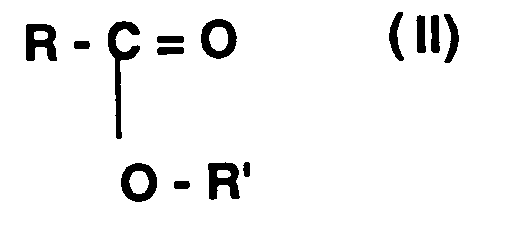
dans laquelle :
- R est défini comme précédemment,
- R′ représente :
- un groupement R tel que précédemment défini,
- un groupement
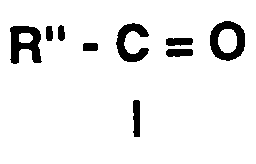
- les deux groupements R et R˝ pouvant être liés entre eux pour former un cycle saturé ou insaturé ayant de 5 à 7 atomes et comprenant la fonction anhydride,
- les deux groupements R et R˝ par l'intermédiaire de deux atomes vicinaux pouvant former ensemble un pont d'un système bicyclique ortho-condensé.
in which R represents a hydrogen atom or an optionally substituted hydrocarbon radical comprising from 1 to 40 carbon atoms which may be a saturated or unsaturated, linear or branched acyclic aliphatic radical; a saturated, unsaturated or aromatic, monocyclic or polycyclic carbocyclic or heterocyclic radical, by reduction of esters, anhydrides or acids of formula:
in which :
- R is defined as above,
- R ′ represents:
- a group R as previously defined,
- a group
- the two groups R and R˝ being able to be linked together to form a saturated or unsaturated ring having 5 to 7 atoms and comprising the anhydride function,
- the two groups R and R˝ via two vicinal atoms which can together form a bridge of an ortho-condensed bicyclic system.
Les acides carboxyliques ou dérivés mis en oeuvre préférentiellement répondent à la formule (II) dans laquelle R représente un radical hydrocarboné, éventuellement substitué comportant de 1 à 20 atomes de carbone.The carboxylic acids or derivatives preferably used correspond to formula (II) in which R represents an optionally substituted hydrocarbon radical containing from 1 to 20 carbon atoms.
Le procédé de l'invention s'applique à tout acide carboxylique mono- ou polycarboxylique tels que les acides aliphatiques saturés ou insaturés ; carbocycliques ou hétérocycliques, saturés, insaturés ou aromatiques, monocycliques ou polycycliques ; aliphatiques saturés ou insaturés porteurs d'un substituant cyclique tel qu'un cycle carbocyclique ou hétérocyclique saturé, insaturé ou aromatique.The process of the invention applies to any mono- or polycarboxylic carboxylic acid such as saturated or unsaturated aliphatic acids; carbocyclic or heterocyclic, saturated, unsaturated or aromatic, monocyclic or polycyclic; saturated or unsaturated aliphatics carrying a cyclic substituent such as a saturated, unsaturated or aromatic carbocyclic or heterocyclic ring.
Il convient tout à fait bien, à la préparation d'aldéhydes à partir d'acides carboxyliques aliphatiques saturés tels que le fluoral ou insaturés, notamment ceux qui présentent une double liaison conjuguée avec le groupement carbonyle de la fonction carboxylique, ester ou anhydride.It is entirely suitable for the preparation of aldehydes from saturated aliphatic carboxylic acids such as fluorine or unsaturated, in particular those which have a conjugated double bond with the carbonyl group of the carboxylic, ester or anhydride function.
Il est très bien adapté à la synthèse d'aldéhydes à partir d'acides carboxyliques aromatiques, notamment d'acides benzoïques en particulier les acides hydroxybenzoïques et les acides halogénobenzoïques, de préférence les acides fluorobenzoïques.It is very well suited for the synthesis of aldehydes from aromatic carboxylic acids, in particular benzoic acids, in particular hydroxybenzoic acids and halobenzoic acids, preferably fluorobenzoic acids.
Dans l'exposé qui suit de la présente invention, on entend par composé aromatique, la notion classique d'aromaticité telle que définie dans la littérature, notamment par Jerry MARCH - Advanced Organic Chemistry, 3ème édition, John Wiley and Sons, 1985 p. 37 et suivantes.In the following description of the present invention, the term “aromatic compound” means the classic notion of aromaticity as defined in the literature, in particular by Jerry MARCH - Advanced Organic Chemistry, 3rd edition, John Wiley and Sons, 1985 p. 37 and following.
On entend par acide benzoïque, tout composé aromatique portant au moins une fonction COOH.The term benzoic acid is understood to mean any aromatic compound carrying at least one COOH function.
Conformément au procédé de l'invention, on peut mettre en oeuvre n'importe quel acide carboxylique susceptible d'être sous forme gazeuse dans les conditions de l'invention.In accordance with the process of the invention, any carboxylic acid capable of being in gaseous form can be used under the conditions of the invention.
On peut donc faire appel comme matière première de départ à un acide carboxylique répondant à la formule (II) dans laquelle le reste R représente un radical hydrocarboné, substitué ou non qui peut être un radical aliphatique acyclique saturé ou insaturé, linéaire ou ramifié ; un radical carbocyclique ou hétérocyclique saturé, insaturé ou aromatique, monocyclique ou polycyclique.It is therefore possible to use, as starting starting material, a carboxylic acid corresponding to formula (II) in which the residue R represents a hydrocarbon radical, substituted or not, which can be a saturated or unsaturated, linear or branched acyclic aliphatic radical; a saturated, unsaturated or aromatic, monocyclic or polycyclic carbocyclic or heterocyclic radical.
Conviennent tout particulièrement bien à la mise en oeuvre du procédé de l'invention, les acides carboxyliques de formule générale (II) dans laquelle R représente un reste hydrocarboné aromatique éventuellement, substitué, monocyclique ou polycyclique.Particularly suitable for carrying out the process of the invention, the carboxylic acids of general formula (II) in which R represents an optionally substituted, monocyclic or polycyclic aromatic hydrocarbon residue.
N'importe quel substituant peut être présent sur le cycle dans la mesure où il ne gêne pas la réaction de réduction de la fonction carboxylique.Any substituent may be present on the ring as long as it does not interfere with the reaction for reducing the carboxylic function.
R représente préférentiellement un reste hydrocarboné aromatique, et notamment benzénique répondant à la formule générale (III) :

dans ladite formule (III) :
- n est un nombre entier de 0 à 5, de préférence de 0 à 3,
- Q représente R₁, l'un des groupes ou fonctions suivantes :
- . un radical alkyle, linéaire ou ramifié, ayant de 1 à 6 atomes de carbone, de préférence de 1 à 4 atomes de carbone, tel que méthyle, éthyle, propyle, isopropyle, butyle, isobutyle, sec-butyle, tert-butyle,
- . un radical alcényle linéaire ou ramifié ayant de 2 à 6 atomes de carbone, de préférence, de 2 à 4 atomes de carbone, tel que vinyle, allyle,
- . un radical alkoxy linéaire ou ramifié ayant de 1 à 6 atomes de carbone, de préférence de 1 à 4 atomes de carbone tel que les radicaux méthoxy, éthoxy, propoxy, isopropoxy, butoxy,
- . un groupe acyle ayant de 2 à 6 atomes de carbone,
- . un radical de formule :
-R₂-OH
-R₂-COOR₅
-R₂-CHO
-R₂-NO₂
-R₂-CN
-R₂-(NR₅)₂
-R₂-CO-(NR₅)₂
-R₂-SH
-R₂-X
-R₂-CF₃
dans lesdites formules, R₂ représente un lien valentiel ou un radical hydrocarboné divalent, linéaire ou ramifié, saturé ou insaturé, ayant de 1 à 6 atomes de carbone tel que, par exemple, méthylène, éthylène, propylène, isopropylène, isopropylidène ; R₅ représente un atome d'hydrogène ou un radical alkyle linéaire ou ramifié ayant de 1 à 6 atomes de carbone; X symbolise un atome d'halogène, de préférence un atome de chlore, de brome ou de fluor.
- Q représente R₃, l'un des radicaux plus complexes suivants :
- . un radical

- . un radical -R₂-A-R₄ dans lequel R₂ a la signification donnée précédemment, R₄ représente un radical alkyle linéaire ou ramifié ayant de 1 à 6 atomes de carbone, de préférence, de 1 à 4 atomes de carbone ou un radical de formule
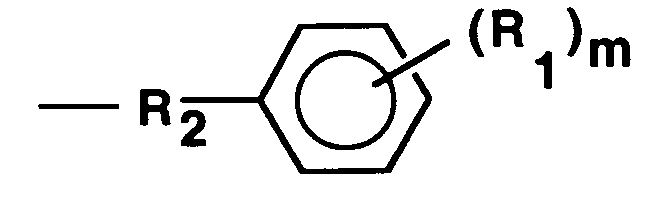
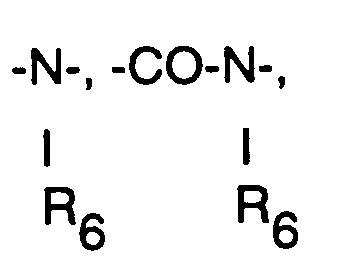
- . un radical
in said formula (III):
- n is an integer from 0 to 5, preferably from 0 to 3,
- Q represents R₁, one of the following groups or functions:
- . an alkyl radical, linear or branched, having from 1 to 6 carbon atoms, preferably from 1 to 4 carbon atoms, such as methyl, ethyl, propyl, isopropyl, butyl, isobutyl, sec-butyl, tert-butyl,
- . a linear or branched alkenyl radical having from 2 to 6 carbon atoms, preferably from 2 to 4 carbon atoms, such as vinyl, allyl,
- . a linear or branched alkoxy radical having from 1 to 6 carbon atoms, preferably from 1 to 4 carbon atoms such as the methoxy, ethoxy, propoxy, isopropoxy, butoxy radicals,
- . an acyl group having from 2 to 6 carbon atoms,
- . a radical of formula:
-R₂-OH
-R₂-COOR₅
-R₂-CHO
-R₂-NO₂
-R₂-CN
-R₂- (NR₅) ₂
-R₂-CO- (NR₅) ₂
-R₂-SH
-R₂-X
-R₂-CF₃
in said formulas, R₂ represents a valential bond or a divalent hydrocarbon radical, linear or branched, saturated or unsaturated, having from 1 to 6 carbon atoms such as, for example, methylene, ethylene, propylene, isopropylene, isopropylidene; R₅ represents a hydrogen atom or a linear or branched alkyl radical having from 1 to 6 carbon atoms; X symbolizes a halogen atom, preferably a chlorine, bromine or fluorine atom.
- Q represents R₃, one of the following more complex radicals:
- . a radical
- . a radical -R₂-A-R₄ in which R₂ has the meaning given above, R₄ represents a linear or branched alkyl radical having from 1 to 6 carbon atoms, preferably from 1 to 4 carbon atoms or a radical of formula
- . a radical
Lorsque n est supérieur à 1, les radicaux Q peuvent être identiques ou différents et 2 atomes de carbone successifs du cycle benzénique peuvent être reliés entre eux par un pont cétalique tels que les radicaux méthylène dioxy ou éthylène dioxy extranucléaires.When n is greater than 1, the radicals Q can be identical or different and 2 successive carbon atoms of the benzene ring can be linked together by a ketal bridge such as the extranuclear methylene dioxy or ethylene dioxy radicals.
De préférence, n est égal à 0, 1, 2 ou 3.Preferably, n is equal to 0, 1, 2 or 3.
Parmi tous les restes R précités, on met en oeuvre tout préférentiellement dans le procédé de l'invention, les acides carboxyliques ou dérivés répondant à la formule générale (II) dans laquelle R représente un reste aromatique répondant à la formule générale (III) dans laquelle :
- n est égal à 0, 1, 2 ou 3,
- Q représente l'un des groupes ou fonctions suivantes :
- . un atome d'hydrogène,
- . un radical alkyle linéaire ou ramifié, ayant de 1 à 4 atomes de carbone,
- . un radical alkoxy linéaire ou ramifié ayant de 1 à 4 atomes de carbone,
- . un radical méthylène ou éthylène dioxy,
- . un groupe -OH,
- . un groupe -CHO,
- . un groupe NH₂,
- . un radical phényle,
- . un atome d'halogène,
- . un groupe CF₃.
- n is 0, 1, 2 or 3,
- Q represents one of the following groups or functions:
- . a hydrogen atom,
- . a linear or branched alkyl radical having from 1 to 4 carbon atoms,
- . a linear or branched alkoxy radical having from 1 to 4 carbon atoms,
- . a methylene or ethylene dioxy radical,
- . an -OH group,
- . a -CHO group,
- . an NH₂ group,
- . a phenyl radical,
- . a halogen atom,
- . a CF₃ group.
Encore plus préférentiellement, on choisit les composés de formule (II) dans laquelle les radicaux Q identiques ou différents sont un atome d'hydrogène, un groupe hydroxyle, un radical méthyle, un radical méthoxy, un groupe -CHO.Even more preferably, the compounds of formula (II) are chosen in which the identical or different Q radicals are a hydrogen atom, a hydroxyl group, a methyl radical, a methoxy radical, a -CHO group.
Comme exemples de radicaux R répondant à la formule (III), on peut mentionner plus précisément les radicaux phényle, tolyle ou xylyle et les radicaux biphényle, méthylène-1,1′ biphényle, isopropylidène-1,1′ biphényle, oxy-1,1′ biphényle, imino-1,1′ biphényle : lesdits radicaux pouvant être substitués par un ou plusieurs radicaux Q tels que prédéfinis, de préférence un groupe hydroxyle ou un atome d'halogène.As examples of radicals R corresponding to formula (III), there may be mentioned more specifically the phenyl, tolyl or xylyl radicals and the biphenyl, methylene-1,1 ′ biphenyl, isopropylidene-1,1 ′ biphenyl, oxy-1 radicals, 1 ′ biphenyl, imino-1,1 ′ biphenyl: the said radicals being able to be substituted by one or more radicals Q such as predefined, preferably a hydroxyl group or a halogen atom.
R peut également représenter un reste hydrocarboné aromatique polycyclique ; les cycles pouvant former entre eux des systèmes ortho-condensés, ortho- et péri-condensés. On peut citer plus particulièrement, un reste naphtalénique ; lesdits cycles pouvant être substitués par 1 à 4 radicaux R₁, de préférence 1 à 3, R₁ ayant les significations énoncées précédemment pour les substituants du reste hydrocarboné aromatique de formule générale (III).R can also represent a polycyclic aromatic hydrocarbon residue; the cycles being able to form between them ortho-condensed, ortho- and peri-condensed systems. Mention may more particularly be made of a naphthalene residue; said rings being able to be substituted by 1 to 4 radicals R₁, preferably 1 to 3, R₁ having the meanings stated previously for the substituents of the aromatic hydrocarbon residue of general formula (III).
Dans la formule générale (II) des acides carboxyliques, R peut représenter également un reste carbocyclique saturé ou comprenant 1 ou 2 insaturations dans le cycle, ayant généralement de 3 à 7 atomes de carbone, de préférence, 6 atomes de carbone dans le cycle ; ledit cycle pouvant être substitué par 1 à 5 radicaux R₁, de préférence 1 à 3, R₁ ayant les significations énoncées précédemment pour les substituants du reste hydrocarboné aromatique de formule générale (III).In the general formula (II) of the carboxylic acids, R can also represent a carbocyclic residue saturated or comprising 1 or 2 unsaturations in the ring, generally having from 3 to 7 carbon atoms, preferably 6 carbon atoms in the ring; said cycle possibly being substituted by 1 to 5 radicals R₁, preferably 1 to 3, R₁ having the meanings stated above for the substituents of the aromatic hydrocarbon residue of general formula (III).
Comme exemples préférés de radicaux R, on peut citer les radicaux cyclohexyle ou cyclohexène-yle, éventuellement substitué par des radicaux alkyle linéaires ou ramifiés, ayant de 1 à 4 atomes de carbone.As preferred examples of radicals R, mention may be made of cyclohexyl or cyclohexene-yl radicals, optionally substituted by linear or branched alkyl radicals, having from 1 to 4 carbon atoms.
Comme mentionné précédemment, R peut représenter un reste aliphatique acyclique, saturé ou insaturé, linéaire ou ramifié.As mentioned previously, R can represent an acyclic aliphatic residue, saturated or unsaturated, linear or branched.
Plus précisément, R représente un reste aliphatique acyclique linéaire ou ramifié ayant de préférence de 1 à 12 atomes de carbone, saturé ou comprenant une à plusieurs insaturations sur la chaîne, généralement, 1 à 3 insaturations qui peuvent être des doubles liaisons simples ou conjuguées ou des triples liaisons.More specifically, R represents a linear or branched acyclic aliphatic residue preferably having from 1 to 12 carbon atoms, saturated or comprising one to several unsaturations on the chain, generally, 1 to 3 unsaturations which may be double or simple or conjugated bonds or triple bonds.
La chaîne hydrocarbonée peut être éventuellement :
- interrompue par l'un des groupes suivants :
-O-, -CO-,
dans ces formules R₆ représente l'hydrogène ou un radical alkyle linéaire ou ramifié ayant de 1 à 4 atomes de carbone, de préférence, un radical méthyle ou éthyle, - et/ou porteuse de l'un des substituants suivants :
-OH, -COOR₅, -CHO, -NO₂, -CN, -NH₂, -SH, -X, -CF₃,
dans ces formules, R₅ ayant la signification donnée précédemment.
- interrupted by one of the following groups:
-O-, -CO-,
in these formulas R₆ represents hydrogen or a linear or branched alkyl radical having from 1 to 4 carbon atoms, preferably a methyl or ethyl radical, - and / or carries one of the following substituents:
-OH, -COOR₅, -CHO, -NO₂, -CN, -NH₂, -SH, -X, -CF₃,
in these formulas, R₅ having the meaning given above.
Dans un mode préféré de l'invention, R répond à la formule suivante :

dans laquelle R₇, R₈ et R₉, identiques ou différents, sont choisis parmi un atome d'hydrogène, un radical alkyle linéaire ou ramifié contenant 1 à 10 atomes de carbone, un radical alcényle linéaire ou ramifié contenant 1 à 10 atomes de carbone,un radical alkoxy linéaire ou ramifié contenant 1 à 10 atomes de carbone, un groupe hydroxyle, une fonction amine ou un atome d'halogène ou un groupe -CF₃.In a preferred embodiment of the invention, R corresponds to the following formula:
in which R₇, R₈ and R₉, identical or different, are chosen from a hydrogen atom, a linear or branched alkyl radical containing 1 to 10 carbon atoms, a linear or branched alkenyl radical containing 1 to 10 carbon atoms, a linear or branched alkoxy radical containing 1 to 10 carbon atoms, a hydroxyl group, an amine function or a halogen atom or a group -CF₃.
Préférentiellement, R₇ et/ou R₈ et/ou R₉ représentent un groupement insaturé.Preferably, R₇ and / or R₈ and / or R₉ represent an unsaturated group.
Encore plus préférentiellement, dans la formule (IV), l'un des 3 groupements R₇, R₈ et R₉ possède une double liaison conjuguée avec le groupement carbonyle de l'acide, de l'ester ou de l'anhydride carboxylique.Even more preferably, in formula (IV), one of the 3 groups R₇, R₈ and R₉ has a double bond conjugated with the carbonyl group of the acid, of the ester or of the carboxylic anhydride.
Il est également possible de faire appel à un acide carboxylique ou dérivé de formule (II) dans laquelle R représente un reste aliphatique acyclique, saturé ou insaturé, linéaire ou ramifié pouvant être éventuellement porteur d'un substituant cyclique. Par cycle, on entend un cycle carbocyclique ou hétérocyclique, saturé, insaturé ou aromatique.It is also possible to use a carboxylic acid or derivative of formula (II) in which R represents an acyclic aliphatic residue, saturated or unsaturated, linear or branched which may optionally carry a cyclic substituent. By cycle is meant a carbocyclic or heterocyclic, saturated, unsaturated or aromatic cycle.
Le reste aliphatique acyclique peut être relié au cycle par un lien valentiel ou par l'un des groupes suivants :
-O-, -CO-,
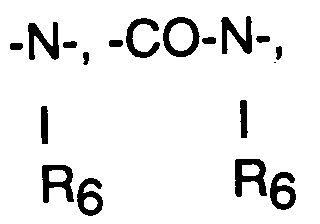
-S-, -SO₂-
dans ces formules, R₆ ayant la signification donnée précédemment.The aliphatic acyclic residue can be linked to the cycle by a valential bond or by one of the following groups:
-O-, -CO-,
-S-, -SO₂-
in these formulas, R₆ having the meaning given above.
Comme exemples de substituants cycliques, on peut envisager des substituants cycloaliphatiques, aromatiques ou hétérocycliques, notamment cycloaliphatiques comprenant 6 atomes de carbone dans le cycle ou benzéniques, ces substituants cycliques étant eux-mêmes éventuellement porteurs de 1, 2, 3, 4 ou 5 radicaux R₁, identiques ou différents, R₁ ayant les significations énoncées précédemment pour les substituants du reste hydrocarboné aromatique de formule générale (III).As examples of cyclic substituents, it is possible to envisage cycloaliphatic, aromatic or heterocyclic, in particular cycloaliphatic, substituents comprising 6 carbon atoms in the ring or benzenic, these cyclic substituents themselves being optionally carriers of 1, 2, 3, 4 or 5 radicals R₁, identical or different, R₁ having the meanings stated above for the substituents of the aromatic hydrocarbon residue of general formula (III).
Comme exemples de tels radicaux, on peut mentionner, entre autres, le radical benzyle.As examples of such radicals, there may be mentioned, among others, the benzyl radical.
Dans la formule générale (II) des acides carboxyliques, R peut également représenter un reste hétérocyclique, saturé ou non, comportant notamment 5 ou 6 atomes dans le cycle dont 1 ou 2 hétéroatomes tels que les atomes d'azote, de soufre et d'oxygène ; les atomes de carbone de l'hétérocycle pouvant éventuellement être substitués, dans leur totalité ou pour une partie d'entre eux seulement par des radicaux R₁, R₁ ayant les significations énoncées précédemment pour les substituants du reste hydrocarboné aromatique de formule générale (III).In the general formula (II) of the carboxylic acids, R can also represent a heterocyclic residue, saturated or not, comprising in particular 5 or 6 atoms in the ring including 1 or 2 heteroatoms such as the nitrogen, sulfur and oxygen; the carbon atoms of the heterocycle possibly being substituted, in their entirety or for a part of them only by radicals R₁, R₁ having the meanings stated above for the substituents of the aromatic hydrocarbon residue of general formula (III).
R peut aussi représenter un reste hétérocyclique polycyclique défini comme étant soit un radical constitué par au moins 2 hétérocycles aromatiques ou non contenant au moins un hétéroatome dans chaque cycle et formant entre eux des systèmes ortho- ou ortho- et péri-condensés ou soit un radical constitué par au moins un cycle hydrocarboné aromatique ou non et au moins un hétérocycle aromatique ou non formant entre eux des systèmes ortho- ou ortho- et péri-condensés; les atomes de carbone desdits cycles pouvant éventuellement être substitués, dans leur totalité ou pour une partie d'entre eux seulement par des radicaux R₁, R₁ ayant les significations énoncées précédemment pour les substituants du reste hydrocarboné aromatique de formule générale (III).R can also represent a polycyclic heterocyclic residue defined as being either a radical consisting of at least 2 aromatic heterocyclics or not containing at least one heteroatom in each cycle and forming between them ortho- or ortho- and peri-condensed systems or either consisting of at least one aromatic or non-aromatic hydrocarbon ring and at least one aromatic or non-aromatic heterocycle forming between them ortho- or ortho- and peri-condensed systems; the carbon atoms of said rings possibly being substituted, in their entirety or for a part of them only by radicals R₁, R₁ having the meanings stated above for the substituents of the aromatic hydrocarbon residue of general formula (III).
A titre d'exemples de groupements R de type hétérocyclique, on peut citer entre autres, les radicaux furyle, pyrrolyle, thiényle, isoxazolyle, furazannyle, isothiazolyle, imidazolyle, pyrazolyle, pyridyle, pyridazinyle, pyrimidinyle et les radicaux quinolyle, naphtyridinyle, benzofurannyle, indolyle.As examples of heterocyclic type groups R, there may be mentioned, among others, the furyl, pyrrolyl, thienyl, isoxazolyl, furazannyl, isothiazolyl, imidazolyl, pyrazolyl, pyridyl, pyridazinyl, pyrimidinyl and quinolyl, naphthyridinyl, benzofuryl radicals. indolyle.
A titre d'acides carboxyliques comprenant au moins un groupe carboxylique répondant à la formule (II), on fait appel plus particulièrement aux acides carboxyliques suivants :
- les acides monocarboxyliques aliphatiques saturés tels que l'acide formique, acétique, propionique, butyrique, isobutyrique, valérique, isovalérique, pivalique, laurique, myristique, palmitique, stéarique,
- les acides dicarboxyliques aliphatiques saturés tels que l'acide oxalique, malonique, succinique, glutarique, adipique, pimélique, subérique, azélaïque, sébacique,
- les acides monocarboxyliques ou dicarboxyliques aliphatiques insaturés tels que l'acide acrylique, propiolique, méthacrylique, crotonique, isocrotonique, sénécioïque, oléïque, maléique, fumarique, citraconique, mésaconique,
- les acides carboxyliques carbocycliques saturés ou insaturés tels que l'acide camphorique, l'acide chrysanthémique,
- les acides carboxyliques hétérocycliques tels que les acides furannecarboxyliques, thiophènecarboxyliques, pyrrolecarboxyliques, pyrazinecarboxyliques, l'acide nicotinique, isonicotinique, l'acide picolinique,
- les acides carboxyliques carbocycliques aromatiques tels que l'acide benzoïque, phtalique, isophtalique, téréphtalique, les acides naphtalènecarboxyliques, les acides toluiques,
- les acides carboxyliques arylaliphatiques saturés tels que, notamment les arylpropioniques comme l'acide phényl-2 propionique, l'acide [(butyl-2)-4 phényl]-2 propionique, l'acide (benzoyl-3 phényl)-2 propionique, l'acide (méthoxy-6 naphtyl-2)-2 propionique ou les acides insaturés comme par exemple l'acide phényl-2 propénoïque, l'acide cinnamique,
- les acides carboxyliques aliphatiques ou aromatiques halogénés tels que l'acide monofluoroacétique, difluroacétique, monochloroacétique, dichloroacétique, trichloroacétique, monochloropropionique, α-bromopropionique, α-bromobutyrique, trifluoroacétique, l'acide monofluoro-o-benzoïque, l'acide monofluoro-m-benzoïque, l'acide monofluoro-p-benzoïque, l'acide difluoro-2,3 benzoïque, l'acide difluoro-2,4 benzoïque, l'acide difluoro-2,5 benzoïque, l'acide difluoro-3,4 benzoïque, l'acide trifluoro-2,3,6 benzoïque, l'acide trifluoro-2,4,5 benzoïque, l'acide tétrafluoro-2,3,4,5 benzoïque, l'acide pentafluorobenzoïque, l'acide α,α,α-trifluoro-o-toluique, l'acide α,α,α-trifluoro-m-toluique, l'acide α,α,α-trifluoro-p-toluique, l'acide monochloro-o-benzoïque, l'acide monochloro-m-benzoïque, l'acide monochloro-p-benzoïque, l'acide dichloro-2,3 benzoïque, l'acide dichloro-2,4 benzoïque, l'acide dichloro-2,5 benzoïque, l'acide dichloro-2,6 benzoïque, l'acide dichloro-3,4 benzoïque, l'acide dichloro-3,5 benzoïque, l'acide trichloro-2,3,5 benzoïque, l'acide trichloro-2,3,6 benzoïque, l'acide chloro-2 fluoro-4,5 benzoïque, l'acide chloro-3 trifluro-2,4,5 benzoïque, l'acide monobromo-o-benzoïque, l'acide monobromo-m-benzoïque, l'acide monobromo-p-benzoïque.
- les hydroxy-acides aliphatiques, cycloaliphatiques, arylaliphatiques, tels que l'acide glycolique, l'acide lactique, l'acide glycérique, l'acide hydroxy-2 butanoïque, l'acide hydroxy-3 butanoïque, l'acide méthyl-2 lactique, l'acide hydroxy-2 méthylthio-4 butanoïque, l'acide tartronique, l'acide malique, l'acide tartrique, l'acide hydroxy-1 cyclopropane carboxylique, l'acide hydroxy-2 phénylpropanoïque, l'acide hydroxy-2 cinnamique, l'acide hydroxy-3 cinnamique, l'acide hydroxy-4 cinnamique,
- les acides hydroxybenzoïques suivants : l'acide hydroxy-2 benzoïque (acide salicylique), l'acide hydroxy-3 benzoïque, l'acide hydroxy-4 benzoïque, l'acide méthyl-3 salicylique, l'acide méthyl-4 salicylique, l'acide méthyl-5 salicylique, l'acide hydroxy-3 méthyl-4 benzoïque, l'acide méthoxy-3 salicylique, l'acide méthoxy-4 salicylique, l'acide méthoxy-5 salicylique, l'acide hydroxy-3 méthoxy-4 benzoïque (acide isovanillique), l'acide hydroxy-4 méthoxy-3 benzoïque (acide vanillique), l'acide hydroxy-3 diméthoxy-4,5 benzoïque, l'acide hydroxy-4 diméthoxy-3,5 benzoïque (acide syringique), l'acide hydroxy-5 isophtalique, l'acide amino-3 salicylique, l'acide amino-4 salicylique, l'acide amino-5 salicylique, l'acide hydroxy-3 amino-2 benzoïque, l'acide nitro-3 salicylique, l'acide hydroxy-3 nitro-4 benzoïque, l'acide hydroxy-4 nitro-3 benzoïque, l'acide hydroxy-3 méthyl-4 nitro-2 benzoïque, l'acide diiodo-3,5 salicylique, l'acide dihydroxy-2,3 benzoïque, l'acide dihydroxy-2,4 benzoïque, l'acide dihydroxy-2,5 benzoïque, l'acide dihydroxy-2,6 benzoïque, l'acide dihydroxy-3,4 benzoïque (acide protocatéchique), l'acide dihydroxy-3,5 benzoïque, l'acide dihydroxy-3,5 méthyl-4 benzoïque, l'acide trihydroxy-2,3,4 benzoïque, l'acide trihydroxy-2,4,6 benzoïque, l'acide trihydroxy-3,4,5 benzoïque,
- les alcoxy- et phénoxyacides tels que l'acide méthoxyacétique, phénoxyacétique, dichloro-2,4 phénoxyacétique, phénoxypropionique, dichloro-2,4 phénoxypropionique, p-hydroxyphénoxypropionique, m-chlorophénoxypropionique, l'acide phénoxy-4 benzoïque, l'acide (carboxy-4 phénoxy-4) benzoïque, l'acide pipéronylique,
- les oxo-acides tels que l'acide acétyl-2 benzoïque, l'acide acétyl-4 benzoïque, l'acide benzoyl-2 benzoïque, l'acide benzoyl-4 benzoïque,
- les acyloxy-acides tels que l'acide benzoyloxy-3 propionique, l'acide acétoxy-2 benzoïque, l'acide acétoxy-4 benzoïque,
- les amido-acides tels que l'acide acétamido-2 acrylique, l'acide acétamido-2 benzoïque, l'acide acétamido-3 benzoïque, l'acide N-acétamido-4 benzoïque,
- les acides aminés éventuellement N- protégés par un groupe protecteur comme par exemple les groupes suivants acyle (acétyle, benzoyle), BOC (butyloxycarbonyl), CBZ (carbobenzoxy), FMOC (fluorényl-9 méthoxycarbonyl), MSOC (méthanesulfényl-2 éthoxycarbonyl).
- saturated aliphatic monocarboxylic acids such as formic, acetic, propionic, butyric, isobutyric, valeric, isovaleric, pivalic, lauric, myristic, palmitic, stearic acid,
- saturated aliphatic dicarboxylic acids such as oxalic, malonic, succinic, glutaric, adipic, pimelic, suberic, azelaic, sebacic acid,
- unsaturated aliphatic monocarboxylic or dicarboxylic acids such as acrylic, propiolic, methacrylic, crotonic, isocrotonic, senecioic, oleic, maleic, fumaric, citraconic, mesaconic acid,
- saturated or unsaturated carbocyclic carboxylic acids such as camphoric acid, chrysanthemic acid,
- heterocyclic carboxylic acids such as furanecarboxylic acids, thiophenecarboxylic acids, pyrrolecarboxylic acids, pyrazinecarboxylic acids, nicotinic acid, isonicotinic acid, picolinic acid,
- aromatic carbocyclic carboxylic acids such as benzoic, phthalic, isophthalic, terephthalic acid, naphthalenecarboxylic acids, toluic acids,
- saturated arylaliphatic carboxylic acids such as, in particular arylpropionics such as 2-phenyl propionic acid, [(2-butyl-4) phenyl] -2 propionic acid, (3-benzoyl-phenyl) -2 propionic acid, (6-methoxy-naphthyl-2) -2 propionic acid or unsaturated acids such as, for example, 2-phenyl propenoic acid, cinnamic acid,
- halogenated aliphatic or aromatic carboxylic acids such as monofluoroacetic, difluroacetic, monochloroacetic, dichloroacetic, trichloroacetic, monochloropropionic, α-bromopropionic, α-bromobutyric, trifluoroacetic, monofluoro-o-benzoic acid, monofluoro-o-benzoic acid benzoic, monofluoro-p-benzoic acid, 2,3-difluoro-benzoic acid, 2,4-difluoro-benzoic acid, 2,5-difluoro benzoic acid, 3,4-difluoro benzoic acid , 2,3,5,6 benzoic trifluoro acid, 2,4,5,5 benzoic trifluoro acid, 2,3,4,5 benzoic tetrafluoro acid, pentafluorobenzoic acid, α, α acid , α-trifluoro-o-toluic acid α, α, α-trifluoro-m-toluic acid α, α, α-trifluoro-p-toluic acid monochloro-o-benzoic acid monochloro-m-benzoic acid, monochloro-p-benzoic acid, 2,3-dichloro-benzoic acid, 2,4-dichloro-benzoic acid, 2,5-dichloro benzoic acid, 2,6-dichloro benzoic acid, 3,4-dichloro benzoic acid, 3,5-dichloro benzoic acid, 2,3,5-trichloro acid benzoic, 2,3,6,6-benzoic trichloro, 2-chloro-4,5-fluoro benzoic acid, 3-chloro-2,4,5-benzoic acid benzoic, monobromo-o-benzoic acid , monobromo-m-benzoic acid, monobromo-p-benzoic acid.
- aliphatic, cycloaliphatic, arylaliphatic hydroxy acids, such as glycolic acid, lactic acid, glyceric acid, 2-hydroxybutanoic acid, 3-hydroxybutanoic acid, 2-methyl lactic acid , 2-hydroxy-4-methylthio-butanoic acid, tartronic acid, malic acid, tartaric acid, 1-hydroxy-cyclopropane carboxylic acid, 2-hydroxyphenylpropanoic acid, 2-hydroxy acid cinnamic, 3-hydroxy cinnamic acid, 4-hydroxy cinnamic acid,
- the following hydroxybenzoic acids: 2-hydroxy benzoic acid (salicylic acid), 3-hydroxy benzoic acid, 4-hydroxy benzoic acid, 3-methyl salicylic acid, 4-methyl salicylic acid, l 5-methyl salicylic acid, 3-hydroxy-4 methyl benzoic acid, 3-methoxy salicylic acid, 4-methoxy salicylic acid, 5-methoxy salicylic acid, 3-hydroxy methoxy acid 4 benzoic (isovanillic acid), 4-hydroxy-3-methoxy-benzoic acid (vanillic acid), 3-hydroxy-4,5-dimethoxy benzoic acid, 4-hydroxy-3,5-dimethoxy benzoic acid (syringic acid ), 5-hydroxy isophthalic acid, 3-amino salicylic acid, 4-amino salicylic acid, 5-amino salicylic acid, 3-hydroxy-2 amino benzoic acid, nitro- acid 3 salicylic, 3-hydroxy-4-nitro benzoic acid, 4-hydroxy-3-nitro benzoic acid, 3-hydroxy-4-methyl-2-nitro benzoic acid, 3,5-diiodo salicylic acid, l 2,3-dihydroxy benzoic acid, dihy acid 2,4-benzoic droxy, 2,5-benzoic dihydroxy acid, 2,6-benzoic dihydroxy acid, 3,4-benzoic dihydroxy acid (Protocatechic acid), 3,5-benzoic dihydroxy acid , 3,5-dihydroxy-4-methyl benzoic acid, 2,3,4,4-trihydroxy benzoic acid, 2,4,6,6-benzoic trihydroxy acid, 3,4,5-benzoic trihydroxy acid,
- alkoxy- and phenoxyacids such as methoxyacetic, phenoxyacetic, 2,4-dichloro-phenoxyacetic, phenoxypropionic, 2,4-dichloro-phenoxypropionic, p-hydroxyphenoxypropionic, m-chlorophenoxypropionic, 4-phenoxy-benzoic acid, ( 4-carboxyphenoxy-4) benzoic, piperonylic acid,
- oxo-acids such as 2-acetyl benzoic acid, 4-acetyl benzoic acid, 2-benzoyl benzoic acid, 4-benzoyl benzoic acid,
- acyloxy acids such as 3-benzoyloxy-propionic acid, 2-acetoxy-benzoic acid, 4-acetoxy-benzoic acid,
- amido-acids such as acetamido-2 acrylic acid, acetamido-2 benzoic acid, acetamido-3 benzoic acid, N-acetamido-4 benzoic acid,
- amino acids optionally N- protected by a protective group such as for example the following groups acyl (acetyl, benzoyl), BOC (butyloxycarbonyl), CBZ (carbobenzoxy), FMOC (fluorenyl-9 methoxycarbonyl), MSOC (methanesulfenyl-2 ethoxycarbonyl).
On peut citer les acides aminés suivants :
- acides aminés aliphatiques : glycine, alanine, valine, leucine, isoleucine,
- acides aminés hydroxylés : sérine, thréonine,
- acides aminés soufrés : cystéine, méthionine,
- acides aminés dicarboxyliques et leurs amides : acide aspartique, asparagine, acide glutamique, glutamine,
- . acides aminés possédant deux groupements basiques : lysine, arginine, histidine,
- . acides aminés aromatiques : phénylalanine, tyrosine, tryptophanne,
- . imino-acides : proline, hydroxyproline.
- aliphatic amino acids: glycine, alanine, valine, leucine, isoleucine,
- hydroxylated amino acids: serine, threonine,
- sulfur amino acids: cysteine, methionine,
- dicarboxylic amino acids and their amides: aspartic acid, asparagine, glutamic acid, glutamine,
- . amino acids with two basic groups: lysine, arginine, histidine,
- . aromatic amino acids: phenylalanine, tyrosine, tryptophan,
- . imino acids: proline, hydroxyproline.
Parmi tous les composés cités précédemment à titre illustratif et sans caractère limitatif, le procédé de l'invention s'applique particulièrement bien aux composés suivants :
- l'acide salicylique et l'acide hydroxy-4 benzoïque.
- l'acide acétique, l'acide propionique et leurs dérivés substitués par un groupe hydroxy, halogène, phényle, phényloxy,
- l'acide benzoïque et ses dérivés substitués par un groupe alkyle C₁-C₄, acétoxy, acétamido, hydroxy, méthoxy, éthoxy,
- les acides carboxyliques aliphatiques ou aromatiques halogénés tels que l'acide monofluoroacétique, difluroacétique, monochloroacétique, dichloroacétique, trichloroacétique, monochloropropionique, α-bromopropionique, α-bromobutyrique, trifluoroacétique, l'acide monofluoro-o-benzoïque, l'acide monofluoro-m-benzoïque, l'acide monofluoro-p-benzoïque, l'acide difluoro-2,3 benzoïque, l'acide difluoro-2,4 benzoïque, l'acide difluoro-2,5 benzoïque, l'acide difluoro-3,4 benzoïque, l'acide trifluoro-2,3,6 benzoïque, l'acide trifluoro-2,4,5 benzoïque, l'acide tétrafluoro-2,3,4,5 benzoïque, l'acide pentafluorobenzoïque, l'acide α,α,α-trifluoro-o-toluique, l'acide α,α,α-trifluoro-m-toluique, l'acide α,α,α-trifluoro-p-toluique, l'acide monochloro-o-benzoïque, l'acide monochloro-m-benzoïque, l'acide monochloro-p-benzoïque, l'acide dichloro-2,3 benzoïque, l'acide dichloro-2,4 benzoïque, l'acide dichloro-2,5 benzoïque, l'acide dichloro-2,6 benzoïque, l'acide dichloro-3,4 benzoïque, l'acide dichloro-3,5 benzoïque, l'acide trichloro-2,3,5 benzoïque, l'acide trichloro-2,3,6 benzoïque, l'acide chloro-2 fluoro-4,5 benzoïque, l'acide chloro-3 trifluro-2,4,5 benzoïque, l'acide monobromo-o-benzoïque, l'acide monobromo-m-benzoïque, l'acide monobromo-p-benzoïque.
- l'acide nicotinique.
- salicylic acid and 4-hydroxy benzoic acid.
- acetic acid, propionic acid and their derivatives substituted by a hydroxy, halogen, phenyl, phenyloxy group,
- benzoic acid and its derivatives substituted by a C₁-C₄ alkyl group, acetoxy, acetamido, hydroxy, methoxy, ethoxy,
- halogenated aliphatic or aromatic carboxylic acids such as monofluoroacetic, difluroacetic, monochloroacetic, dichloroacetic, trichloroacetic, monochloropropionic, α-bromopropionic, α-bromobutyric, trifluoroacetic, monofluoro-o-benzoic acid, monofluoro-o-benzoic acid benzoic, monofluoro-p-benzoic acid, 2,3-difluoro-benzoic acid, 2,4-difluoro-benzoic acid, 2,5-difluoro benzoic acid, 3,4-difluoro benzoic acid , 2,3,4,5 benzoic trifluoro acid, 2,4,5,5 benzoic trifluoro acid, 2,3,4,5 benzoic tetrafluoro acid, acid pentafluorobenzoic acid, α, α, α-trifluoro-o-toluic acid, α, α, α-trifluoro-m-toluic acid, α, α, α-trifluoro-p-toluic acid, acid monochloro-o-benzoic, monochloro-m-benzoic acid, monochloro-p-benzoic acid, 2,3-dichloro benzoic acid, 2,4-dichloro benzoic acid, 2-dichloro acid , 5 benzoic, 2,6-dichloro benzoic acid, 3,4-dichloro benzoic acid, 3,5-dichloro benzoic acid, 2,3,5-trichloro benzoic acid, trichloro acid -2.3.6 benzoic, 2-chloro-4,5 fluoro benzoic acid, 3-chloro-trifluro-2,4,5 benzoic acid, monobromo-o-benzoic acid, monobromo acid m-benzoic, monobromo-p-benzoic acid.
- nicotinic acid.
Comme indiqué précédemment, il est également possible de mettre en oeuvre l'acide carboxylique tel que défini ci-dessus sous la forme de son ester. Dans ce cas, dans la formule (II), R′ représente de préférence un radical aliphatique contenant de 1 à 10 atomes de carbone, éventuellement substitué. Plus préférentiellement, R′ représente un radical alkyle linéaire ou ramifié ayant de 1 à 6 atomes de carbone. A titre d'exemples de radicaux R′ préférés, on peut citer les radicaux méthyle, éthyle ou hexyle.As indicated above, it is also possible to use the carboxylic acid as defined above in the form of its ester. In this case, in formula (II), R ′ preferably represents an aliphatic radical containing from 1 to 10 carbon atoms, optionally substituted. More preferably, R ′ represents a linear or branched alkyl radical having from 1 to 6 carbon atoms. As examples of preferred R ′ radicals, mention may be made of methyl, ethyl or hexyl radicals.
Les esters préférés sont ceux qui dérivent de la liste des acides carboxyliques précités.The preferred esters are those which derive from the list of the abovementioned carboxylic acids.
Conformément à la présente invention, on peut faire appel à un acide carboxylique sous la forme de son anhydride.According to the present invention, use may be made of a carboxylic acid in the form of its anhydride.
Comme exemples d'anhydrides carboxyliques, on peut mentionner plus particulièrement les anhydrides des acides carboxyliques précités et les anhydrides cycliques.As examples of carboxylic anhydrides, mention may be made more particularly of the anhydrides of the abovementioned carboxylic acids and cyclic anhydrides.
En effet, lorsque l'anhydride répond à la formule (II) dans laquelle R′ est un groupement

les deux groupements R et R˝ peuvent être liés entre eux pour former un cycle saturé ou insaturé ayant de 5 à 7 atomes comprenant la fonction anhydride. Ils forment de préférence un radical alkylène linéaire ou ramifié ayant de 2 à 6 atomes de carbone et encore plus préférentiellement un radical -(CH₂)t- avec t égal de 2 à 4.Indeed, when the anhydride corresponds to formula (II) in which R ′ is a group
the two groups R and R˝ can be linked together to form a saturated or unsaturated ring having 5 to 7 atoms comprising the anhydride function. They preferably form a linear or branched alkylene radical having from 2 to 6 carbon atoms and even more preferably a radical - (CH₂) t - with t equal from 2 to 4.
Comme exemples de tels anhydrides cycliques, on peut citer l'anhydride succinique ou l'anhydride maléique.As examples of such cyclic anhydrides, mention may be made of succinic anhydride or maleic anhydride.
Lorsque l'anhydride répond à la formule (II) dans laquelle R′ est un groupement

les deux groupements R et R˝, par l'intermédiaire de deux atomes vicinaux peuvent former ensemble un pont d'un système bicyclique orthocondensé.When the anhydride corresponds to formula (II) in which R ′ is a group
the two groups R and R˝, via two vicinal atoms can together form a bridge of an orthocondensed bicyclic system.
Les composés préférés sont bicycliques et constitués d'un cycle benzénique et d'un hétérocycle puisque le cycle comprend l'atome d'oxygène de la fonction anhydride, ledit cycle ayant de préférence de 5 à 6 atomes. Comme exemples de tels anhydrides cycliques d'acides polycarboxyliques, on peut mentionner l'anhydride phtalique.The preferred compounds are bicyclic and consist of a benzene ring and a heterocycle since the cycle comprises the oxygen atom of the anhydride function, said cycle preferably having from 5 to 6 atoms. As examples of such cyclic anhydrides of polycarboxylic acids, mention may be made of phthalic anhydride.
Le procédé de l'invention est mis en oeuvre en phase gazeuse. Avantageusement, la réaction est conduite à une température comprise entre 150°C et 500°C, et encore plus préférentiellement entre 200 et 400°C. Il est entendu que la température est adaptée par l'homme de l'art en fonction de l'acide de départ, et de la vitesse de réaction recherchée.The process of the invention is carried out in the gas phase. Advantageously, the reaction is carried out at a temperature between 150 ° C and 500 ° C, and even more preferably between 200 and 400 ° C. It is understood that the temperature is adapted by a person skilled in the art as a function of the starting acid, and of the desired reaction speed.
Par ailleurs, il peut être particulièrement avantageux de procéder à une activation préalable du catalyseur, par forte élévation de température. Notamment, le catalyseur peut être préalablement soumis à des températures proches de 500°C environ, et préférentiellement de 450°C. L'activation est conduite avantageusement sous courant d'hydrogène.Furthermore, it may be particularly advantageous to carry out a prior activation of the catalyst, by a sharp rise in temperature. In particular, the catalyst can be subjected beforehand to temperatures close to approximately 500 ° C., and preferably to 450 ° C. The activation is advantageously carried out under a stream of hydrogen.
Une manière pratique de mettre en oeuvre la présente invention consiste à introduire dans un réacteur une quantité désirée de catalyseur, éventuellement entre 2 lits de quartz pour favoriser la mise en contact des réactifs. La température du réacteur est ensuite élevée sous courant d'hydrogène jusqu'à une valeur déterminée, permettant d'activer le catalyseur, puis ramenée à la température de réaction. L'acide est ensuite injecté au débit souhaité et l'aldéhyde formé est récupéré.A practical way of implementing the present invention consists in introducing into a reactor a desired quantity of catalyst, optionally between 2 quartz beds to promote contacting of the reactants. The reactor temperature is then raised under a stream of hydrogen to a determined value, enabling the catalyst to be activated, then brought back to the reaction temperature. The acid is then injected at the desired rate and the aldehyde formed is recovered.
Préférentiellement, l'acide est injecté directement sous forme gazeuse après avoir été vaporisé par chauffage.Preferably, the acid is injected directly in gaseous form after having been vaporized by heating.
Toutefois, il peut également être injecté en solution dans un solvant inerte pour la réaction. On peut citer en particulier comme solvants inertes les hydrocarbures aliphatiques (par exemple l'hexane), alicycliques (par exemple le cyclohexane), aromatiques (par exemple le toluène), ou les éthers (par exemple le diméthoxyéthane).However, it can also be injected in solution in an inert solvent for the reaction. Mention may in particular be made, as inert solvents, of aliphatic (for example hexane), alicyclic (for example cyclohexane), aromatic (for example toluene), or ethers (for example dimethoxyethane) hydrocarbons.
Sous l'effet de la température élevée, l'acide ainsi injecté est vaporisé au niveau du premier lit de quartz. L'hydrogène peut être injecté à la pression atmosphérique ou sous une légère pression compatible avec la phase vapeur (quelques bar, par exemple de 5 à 10 bar). L'hydrogène peut également être dilué dans un gaz inerte tel que l'azote ou l'hélium.Under the effect of the high temperature, the acid thus injected is vaporized at the level of the first quartz bed. The hydrogen can be injected at atmospheric pressure or under a slight pressure compatible with the vapor phase (a few bars, for example from 5 to 10 bars). Hydrogen can also be diluted in an inert gas such as nitrogen or helium.
Avantageusement, pour 1 ml de catalyseur, l'hydrogène est injecté à un débit compris entre 0,1 et 10 litres par heure, et l'acide à un débit liquide au plus égal à 10 ml/h, et de préférence compris entre 0,5 et 5 ml/h.Advantageously, for 1 ml of catalyst, the hydrogen is injected at a flow rate between 0.1 and 10 liters per hour, and the acid at a liquid flow rate at most equal to 10 ml / h, and preferably between 0 , 5 and 5 ml / h.
En fin de réaction, on récupère l'aldéhyde par tout moyen approprié tel que distillation ou cristallisation. Dans certains cas, notamment dans le cas du fluoral, l'aldéhyde peut être obtenu sous une forme hydratée.At the end of the reaction, the aldehyde is recovered by any suitable means such as distillation or crystallization. In certain cases, in particular in the case of fluorine, the aldehyde can be obtained in a hydrated form.
Différents types de catalyseurs peuvent être utilisés dans la présente invention. En particulier, le catalyseur utilisé peut être supporté ou non.Different types of catalysts can be used in the present invention. In particular, the catalyst used can be supported or not.
Plus généralement, le ruthénium représente entre 0,1 et 50 % du poids du catalyseur.More generally, ruthenium represents between 0.1 and 50% of the weight of the catalyst.
Dans le cas où l'on fait appel à un catalyseur massique, le ruthénium représente de 10 % à 50 % du poids du catalyseur.In the case where a mass catalyst is used, the ruthenium represents from 10% to 50% of the weight of the catalyst.
Dans un mode préféré de mise en oeuvre, on utilise toutefois un catalyseur sous forme supportée. A cet effet, le support peut être choisi parmi les oxydes de métaux, tels que les oxydes d'aluminium, de silicium et/ou de zirconium, ou encore parmi les charbons éventuellement activés par un traitement bien connu à l'acide nitrique, le noir d'acétylène, ou les résines. Il est généralement préférable de choisir un support n'ayant pas une surface spécifique trop élevée, pour limiter les risques d'interaction directe du support avec les réactifs de la réaction.In a preferred embodiment, however, a catalyst is used in supported form. To this end, the support can be chosen from metal oxides, such as aluminum, silicon and / or zirconium oxides, or alternatively from coals optionally activated by a well-known treatment with nitric acid, acetylene black, or resins. It is generally preferable to choose a support that does not have a too high specific surface, to limit the risks of direct interaction of the support with the reactants of the reaction.
Dans le cas d'un catalyseur supporté, la teneur en ruthénium est adaptée par l'homme de l'art en fonction du support (nature, surface spécifique) et de la vitesse de réaction recherchée.In the case of a supported catalyst, the ruthenium content is adapted by a person skilled in the art as a function of the support (nature, specific surface) and of the desired reaction speed.
Généralement, la teneur en ruthénium du catalyseur est avantageusement choisie entre 0,1 et 20,0 % en poids, et encore plus préférentiellement, entre 0,5 et 3,0 % en poids.Generally, the ruthenium content of the catalyst is advantageously chosen between 0.1 and 20.0% by weight, and even more preferably, between 0.5 and 3.0% by weight.
Précisons uniquement à titre d'exemples, que la surface spécifique (B.E.T.) du support est avantageusement choisie entre 50 et 100 m²/g lorsque la teneur en ruthénium du catalyseur est comprise entre 0,1 et 1 %.It should be noted, by way of example only, that the specific surface (B.E.T.) of the support is advantageously chosen between 50 and 100 m² / g when the ruthenium content of the catalyst is between 0.1 and 1%.
Avantageusement, on utilise dans l'invention des catalyseurs dans lesquels le rapport molaire entre l'étain et le ruthénium engagés étain (Sn)/ruthénium (Ru) est compris entre 1 et 10 inclus, et, encore plus préférentiellement, entre 2 et 6 inclus.Advantageously, catalysts are used in the invention in which the molar ratio between the tin and the ruthenium engaged tin (Sn) / ruthenium (Ru) is between 1 and 10 inclusive, and, even more preferably, between 2 and 6 included.
Un premier mode de réalisation de l'invention consiste à faire appel à un catalyseur ruthénium-étain-bore.A first embodiment of the invention consists in using a ruthenium-tin-boron catalyst.
Dans ce cas, la teneur en bore est généralement inférieure à 1 % et le plus souvent voisine de 0,5 %.In this case, the boron content is generally less than 1% and most often close to 0.5%.
Lesdits catalyseurs utilisables dans le procédé de l'invention peuvent être préparés de différentes manières et notamment par imprégnation selon le procédé décrit par Desphande et al. [J. Cat., 121, 165-173 (1990)].Said catalysts which can be used in the process of the invention can be prepared in different ways and in particular by impregnation according to the process described by Desphande et al. [J. Cat., 121 , 165-173 (1990)].
Généralement, on dissout dans l'eau les deux métaux sous forme de sels, éventuellement en présence du support, et on laisse l'imprégnation s'effectuer sur une période de 15 heures environ. Selon les cas, on peut ensuite ajouter un réducteur chimique, avant de récupérer et laver le catalyseur bimétallique. Celui-ci est ensuite séché à l'air avant son emploi. Parmi les réducteurs chimiques utilisables, on peut citer notamment les borohydrures, tels que le borohydrure de sodium, le borohydrure de lithium, le borohydrure de potassium ou le borohydrure de tétrabutylammonium; l'hydrazine ou encore le formol.Generally, the two metals are dissolved in water in the form of salts, optionally in the presence of the support, and the impregnation is allowed to take place over a period of approximately 15 hours. Depending on the case, a chemical reducing agent can then be added, before recovering and washing the bimetallic catalyst. This is then air dried before use. Among the chemical reducing agents which can be used, mention may in particular be made of borohydrides, such as sodium borohydride, lithium borohydride, potassium borohydride or tetrabutylammonium borohydride; hydrazine or formalin.
Un autre mode préféré du procédé de l'invention, consiste à avoir recours à un nouveau catalyseur bimétallique comprenant du ruthénium et de l'étain, exempt de bore, les éléments actifs étant de préférence supportés.Another preferred mode of the process of the invention consists in using a new bimetallic catalyst comprising ruthenium and tin, free of boron, the active elements being preferably supported.
Pour le préparer, on peut recourir à des techniques classiques, connues en elles-mêmes, de préparation de catalyseurs métalliques supportés.To prepare it, recourse can be had to conventional techniques, known in themselves, for the preparation of supported metal catalysts.
L'un de ses procédés de préparation consiste, par exemple, à introduire un support dans une solution que l'on prépare en dissolvant au moins un composé approprié des éléments choisis ; le dépôt des éléments actifs sur le support est réalisé en distillant le solvant de préférence l'eau qui peut êtr éliminée par évaporation sous pression réduite choisie de préférence entre 5 et 20 mm de mercure. La masse de contact ainsi obtenue est soumise à une réduction au moyen d'un courant d'hydrogène.One of its preparation methods consists, for example, of introducing a support into a solution which is prepared by dissolving at least one appropriate compound from the elements chosen; the active elements are deposited on the support by distilling off the solvent, preferably water, which can be removed by evaporation under reduced pressure, preferably chosen between 5 and 20 mm of mercury. The contact mass thus obtained is subjected to reduction by means of a stream of hydrogen.
Selon un autre mode de préparation classique, le dépôt du ou des composés apportant les éléments métalliques sur le support est réalisé en précipitant les composés de manière en soi connue et en soumettant la masse de contact ainsi obtenue à une réduction au moyen de l'hydrogène.According to another conventional mode of preparation, the deposition of the compound or compounds providing the metallic elements on the support is carried out by precipitating the compounds in a manner known per se and by subjecting the contact mass thus obtained to a reduction by means of hydrogen .
Le dépôt sur le support de plusieurs éléments métalliques peut bien entendu être réalisé successivement mais de préférence simultanément.The deposition on the support of several metal elements can of course be carried out successively but preferably simultaneously.
La nature des composés apportant les éléments métalliques utilisés pour la préparation des catalyseurs de l'invention n'est pas critique.The nature of the compounds providing the metallic elements used for the preparation of the catalysts of the invention is not critical.
On peut faire appel aux métaux eux-mêmes tels que le ruthénium et l'étain.Metals themselves such as ruthenium and tin can be used.
A titre d'exemples de composés susceptibles d'être mis en oeuvre pour la préparation des catalyseurs de l'invention, on peut citer, à titre de composés du ruthénium, le chlorure de ruthénium III, le chlorure de ruthénium IV, le pentafluorure de ruthénium, l'oxyde de ruthénium II, l'oxyde de ruthénium IV, l'oxychlorure de ruthénium ammoniaqué Ru₂(OH)₂Cl₄, 7NH₃, 5H₂O, l'acétate de ruthénium et, à titre de composés de l'étain, les oxydes, chlorures, nitrates, carboxylates, alcoolates d'étain ou des composés organométalliques dans lesquels l'étain est lié à un atome d'hydrogène et/ou des radicaux alkyle ayant de préférence de 1 à 4 atomes de carbone. Les sels préférés sont les suivants : les composés du ruthénium tels que le chlorure de ruthénium III, les composés de l'étain tels que le chlorure d'étain II, le chlorure d'étain IV, l'acétate d'étain II, l'octoate d'étain II, l'éthylhexanoate d'étain.As examples of compounds capable of being used for the preparation of the catalysts of the invention, mention may be made, as ruthenium compounds, of ruthenium chloride III, ruthenium chloride IV, pentafluoride ruthenium, ruthenium oxide II, ruthenium oxide IV, ammoniacal ruthenium oxychloride Ru₂ (OH) ₂Cl₄, 7NH₃, 5H₂O, ruthenium acetate and, as tin compounds, the oxides , chlorides, nitrates, carboxylates, tin alcoholates or organometallic compounds in which the tin is linked to a hydrogen atom and / or alkyl radicals preferably having from 1 to 4 carbon atoms. The preferred salts are: ruthenium compounds such as ruthenium III chloride, tin compounds such as tin chloride II, tin chloride IV, tin acetate II, tin octoate II, l tin ethylhexanoate.
Un autre objet de l'invention concerne donc un catalyseur bimétallique comprenant de l'étain et du ruthénium, exempt de bore éventuellement sur un support caractérisé en ce qu'il comprend du ruthénium et de l'étain mis en oeuvre en quantités telles que le rapport molaire étain/ruthénium est d'au moins 2, de préférence compris entre 2 et 10 inclus et encore plus préférentiellement entre 2 et 6 inclus.Another object of the invention therefore relates to a bimetallic catalyst comprising tin and ruthenium, free of boron optionally on a support, characterized in that it comprises ruthenium and tin used in quantities such as tin / ruthenium molar ratio is at least 2, preferably between 2 and 10 inclusive and even more preferably between 2 and 6 inclusive.
Dans les catalyseurs préférés, le rapport molaire est choisi entre 4 et 6.In the preferred catalysts, the molar ratio is chosen between 4 and 6.
La présente invention convient tout à fait bien à la préparation d'aldéhydes aromatiques et notamment les aldéhydes répndant à la formule :

dans laquelle :
- n est égal à 0, 1, 2 ou 3,
- Q représente l'un des groupes ou fonctions suivantes :
- . un atome d'hydrogène,
- . un radical alkyle linéaire ou ramifié, ayant de 1 à 4 atomes de carbone,
- . un radical alkoxy linéaire ou ramifié ayant de 1 à 4 atomes de carbone,
- . un radical méthylène ou éthylène dioxy,
- . un groupe -OH,
- . un groupe -CHO,
- . un groupe NH₂,
- . un radical phényle,
- . un atome d'halogène,
- . un groupe CF₃.
in which :
- n is 0, 1, 2 or 3,
- Q represents one of the following groups or functions:
- . a hydrogen atom,
- . a linear or branched alkyl radical having from 1 to 4 carbon atoms,
- . a linear or branched alkoxy radical having from 1 to 4 carbon atoms,
- . a methylene or ethylene dioxy radical,
- . an -OH group,
- . a -CHO group,
- . an NH₂ group,
- . a phenyl radical,
- . a halogen atom,
- . a CF₃ group.
L'invention permet la préparation de nombreu aldéhydes qui sont utilisés comme produits intermédiaires pharmaceutiques et/ou agrochimiques tels que par exemple, le difluoro-3,4 benzaldéhyde, le chloro-4 benzaldéhyde.The invention allows the preparation of numerous aldehydes which are used as pharmaceutical and / or agrochemical intermediates such as, for example, 3,4-difluoro-benzaldehyde, 4-chloro-benzaldehyde.
Il est particulièrement intéressant pour la préparation de l'aldéhyde salicylique qui peut être utilisé, entre autres, pour la préparation de la coumarine. L'aldéhyde salicylique obtenu selon le procédé de l'invention peut être engagé comme matière première dans la synthèse de la coumarine : celle-ci résultant d'une étape de cyclisation bien connue et largement décrite dans la littérature. On peut citer notamment la préparation de la coumarine selon la réaction de Perkin par réaction de l'aldéhyde salicylique et de l'anhydride acétique, en présence d'acétate de sodium (KIRK-OTHMER - Encyclopedia of Chemical Technology 7, p 198, 3 ème édition).It is particularly interesting for the preparation of salicylic aldehyde which can be used, inter alia, for the preparation of coumarin. The salicylic aldehyde obtained according to the process of the invention can be used as a raw material in the synthesis of coumarin: the latter resulting from a well known cyclization step widely described in the literature. We may include in particular the preparation of coumarin according to the Perkin reaction by reaction of salicylic aldehyde and acetic anhydride, in the presence of sodium acetate (KIRK-OTHMER - Encyclopedia of Chemical Technology 7, p 198, 3 rd editing).
Le procédé de l'invention convient également pour la préparation d'autres aldéhydes aromatiques tels que l'hydroxy-3 benzaldéhyde, l'hydroxy-4 benzaldéhyde, la vanilline, le vératraldéhyde, le p-anisaldéhyde, le pipéronal.The process of the invention is also suitable for the preparation of other aromatic aldehydes such as 3-hydroxy benzaldehyde, 4-hydroxy benzaldehyde, vanillin, veratraldehyde, p-anisaldehyde, piperonal.
La présente invention est également utilisable pour la synthèse d'aldéhydes divers. Elle peut servir pour préparer des aldéhydes saturés tels que le fluoral ou l'aldéhyde acétique. Elle est particulièrement adaptée à la synthèse d'aldéhydes insaturés, notamment dans la chimie des terpènes (prénal, citral ...), intermédiaires de synthèse de vitamines A ou E.The present invention can also be used for the synthesis of various aldehydes. It can be used to prepare saturated aldehydes such as fluorine or acetic aldehyde. It is particularly suitable for the synthesis of unsaturated aldehydes, in particular in the chemistry of terpenes (prenal, citral ...), intermediates of synthesis of vitamins A or E.
L'invention est particulièrement adaptée à la préparation d'aldéhydes de formule :

dans laquelle R₁₀ et R₁₁, égaux ou différents, sont choisis parmi les radicaux alkyle ayant de 1 à 20 atomes de carbone environ, et les radicaux phényle et naphtyle éventuellement substitués par des radicaux alkyles ayant de 1 à 20 atomes de carbone.The invention is particularly suitable for the preparation of aldehydes of formula:
in which R₁₀ and R₁₁, equal or different, are chosen from alkyl radicals having from 1 to 20 carbon atoms approximately, and phenyl and naphthyl radicals optionally substituted by alkyl radicals having from 1 to 20 carbon atoms.
A titre d'exemple d'aldéhydes, on peut citer le prénal et l'aldéhyde cinnamique.By way of example of aldehydes, mention may be made of prenal and cinnamic aldehyde.
Les exemples suivants, donnés à titre illustratif et non limitatif, permettent de compléter la présente description.The following examples, given by way of nonlimiting illustration, make it possible to complete the present description.
Dans un tricol de 1 litre, on charge 0,37 g de RuCl₃,xH₂O avec x égal à environ 2 (dissous auparavant dans 40 ml d'eau). On ajoute, sous agitation, en 30 minutes, 1,5 g de SnCl₂,2H₂O dissous dans 120 ml d'eau.0.37 g of RuCl₃, xH₂O are loaded into a three-liter three-necked flask with x equal to approximately 2 (previously dissolved in 40 ml of water). 1.5 g of SnCl₂, 2H₂O dissolved in 120 ml of water are added, with stirring, over 30 minutes.
Sous agitation, on ajoute alors 25 g d'alumine γ. On laisse agiter 15 minutes. On coupe alors l'agitation et on laisse reposer 16 heures. En fin de repos, on ajoute 25 ml d'eau, sous agitation.With stirring, 25 g of γ alumina are then added. Leave to stir for 15 minutes. The agitation is then cut and left to stand for 16 hours. At the end of the rest, 25 ml of water are added, with stirring.
On dissout 5,5 g de NaBH₄ dans 500 ml d'eau que l'on additionne goutte à goutte à température ambiante sur le catalyseur. La réduction se fait en deux temps :
- 1 heure sous agitation
- 16 heures au repos sans agitation.
- 1 hour with stirring
- 16 hours rest without agitation.
Une fois la réduction effectuée, le catalyseur est filtré, puis lavé 5 fois avec 500 ml d'eau et 1 fois avec 500 ml d'éthanol.Once the reduction has been carried out, the catalyst is filtered, then washed 5 times with 500 ml of water and 1 time with 500 ml of ethanol.
Le catalyseur est alors séché à température ambiante. On obtient un catalyseur Ru-Sn-B/γ Al₂O₃ avec Sn/Ru = 4,7 (mol/mol) soit 1,2 % Ru (p/p), 3 % Sn (p/p).The catalyst is then dried at room temperature. A Ru-Sn-B / γ Al₂O₃ catalyst is obtained with Sn / Ru = 4.7 (mol / mol), ie 1.2% Ru (w / w), 3% Sn (w / w).
Dans un réacteur tubulaire en verre de 18 mm de diamètre, on dispose 1 ml de catalyseur obtenu selon l'exemple 1 entre deux lits de 5 ml de quartz. On réduit le lit catalytique 1 heure à 450°C sous courant d'hydrogène 2,5 litres par heure. On abaisse ensuite la température à 240°C. Au moyen d'un pousse-seringue, on injecte alors la solution toluénique d'acide sénécioïque (18 % p/p acide/toluène) à un débit de 4 ml par heure. Le gaz issu de la réaction est condensé. Après deux heures de réaction, l'analyse du condensat donne le taux de transformation (TT) en acide sénécioïque et le rendement réel en prénal.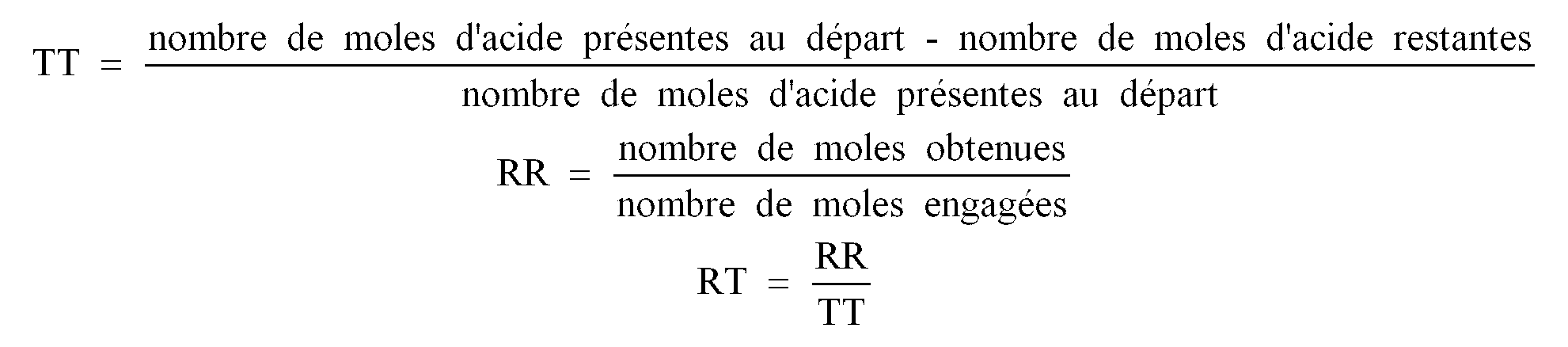
Des catalyseurs à rapport variable Sn/Ru ont été préparés selon l'exemple 1 à teneur massique en ruthénium de 0,63 % (p/p). La réduction de l'acide sénécioïque en prénal a été effectuée selon l'exemple 2.
A rapport Sn/Ru fixe de 4,2 mol/mol, on prépare, selon l'exemple 1, des catalyseurs à teneur variable en ruthénium. La réduction de l'acide sénécioïque en prénal a été effectuée selon l'exemple 2.
Différents supports ont été utilisés pour préparer des catalyseurs à O,63 % (p/p) Ru et Sn/Ru = 4,2 (mol/mol) suivant l'exemple 1. Ils sont comparés lors de la réduction de l'acide sénécioïque selon l'exemple décrit en 2.
La réduction de l'acide sénécioïque est comparée sur le catalyseur Ru-Sn-B/γAl₂O₃ à 0,63 % (p/p) Ru et Sn/Ru = 4,2 activé 1 heure sous H₂, selon l'exemple 2, à différentes températures avant de faire la réaction à 240°C.
L'acide sénécioïque est dilué à 18 % (p/p) dans 3 solvants différents. On compare la réduction de l'acide selon l'exemple 2, sur un catalyseur à O,6 % Ru et Sn/Ru = 4,2 (mol/mol) sur γAl₂O₃, réduit chimiquement avec KBH₄ selon l'exemple 1.
Les catalyseurs décrits peuvent être utilisés pour la synthèse de divers aldéhydes, dans les conditions de l'exemple 2.

On opère selon l'exemple 2 en utilisant une solution d'acide dans le diméthoxyéthane. On obtient :

Dans un réacteur tubulaire en verre de 18 mm de diamètre, on dispose 2 ml de catalyseur obtenu selon l'exemple 1 en remplaçant la γ alumine par une SiO₂ XOL 30, entre deux lits de quartz de 5 ml. On réduit le lit catalytique 1 heure à 450°C sous courant d'hydrogène 2,5 litres par heure. On abaisse ensuite la température à 275°C. Au moyen d'un pousse seringue on injecte alors la solution toluénique d'acide 3,4-difluorobenzoïque 10 % p/v acide/toluène à un débit de 3 ml/h. Le gaz issu de la réaction est condensé. Après 2 heures de réaction, l'analyse du condensat donne le taux de transformation et le rendement réel en aldéhyde (RR).
TT = 100 %
RR = 65 %
A 300°C, en remplaçant SiO₂ XOL30 par SiO₂ OX50 (Degussa), on obtient les rendements suivants :
TT = 100 %
RR = 80 %.In a tubular glass reactor 18 mm in diameter, there are 2 ml of catalyst obtained according to Example 1 by replacing the γ alumina with a SiO₂ XOL 30, between two quartz beds of 5 ml. The catalytic bed is reduced for 1 hour to 450 ° C. under a stream of hydrogen 2.5 liters per hour. The temperature is then lowered to 275 ° C. Using a syringe pump, the toluene solution of 3,4-difluorobenzoic acid 10% w / v acid / toluene is then injected at a flow rate of 3 ml / h. The gas from the reaction is condensed. After 2 hours of reaction, the analysis of the condensate gives the conversion rate and the actual aldehyde yield (RR).
TT = 100%
RR = 65%
At 300 ° C, replacing SiO₂ XOL30 with SiO₂ OX50 (Degussa), the following yields are obtained:
TT = 100%
RR = 80%.
Dans un réacteur tubulaire en verre de 18 mm de diamètre, on dispose 1 ml de catalyseur obtenu selon l'exemple 1 entre deux lits de quartz de 5 ml. On réduit le lit catalytique 1 heure à 450°C sous courant d'hydrogène 2 litres par heure. On abaisse ensuite la température à 300°C. Au moyen d'un pousse seringue on injecte alors la solution toluénique d'anhydride benzoïque 10 % p/v anhydride/toluène à un débit de 2 ml/h. Le gaz issu de la réaction est condensé. Après 6 heures de réaction, l'analyse du condensat donne le taux de transformation (TT) et le rendement réel en aldéhyde (RR).
TT = 86 %
RR = 39 %.In a tubular glass reactor 18 mm in diameter, 1 ml of catalyst obtained according to Example 1 is placed between two 5 ml quartz beds. The catalytic bed is reduced for 1 hour to 450 ° C. under a stream of hydrogen 2 liters per hour. The temperature is then lowered to 300 ° C. Using a syringe pump, the toluene solution of benzoic anhydride 10% w / v anhydride / toluene is then injected at a flow rate of 2 ml / h. The gas from the reaction is condensed. After 6 hours of reaction, the analysis of the condensate gives the conversion rate (TT) and the actual aldehyde yield (RR).
TT = 86%
RR = 39%.
Dans un réacteur agité de 500 ml, on charge 0,375 g de RuCl₃,xH₂O (dissous auparavant dans 40 ml d'eau). On ajoute, sous agitation, en 30 minutes, 1,5 g de SnCl₂,2H₂O dissous dans 150 ml d'eau.0.375 g of RuCl₃, xH₂O (previously dissolved in 40 ml of water) are charged to a 500 ml stirred reactor. 1.5 g of SnCl₂, 2H₂O dissolved in 150 ml of water are added, with stirring, over 30 minutes.
Sous agitation, on ajoute 25 g de SiO₂ 0X50 (Degussa). On laisse agiter 15 minutes. On coupe alors l'agitation et on laisse reposer 16 heures. En fin de repos, on évapore ensuite à sec en chauffant à 80°C sous 20 mm de mercure.With stirring, 25 g of SiO₂ 0X50 (Degussa) are added. Leave to stir for 15 minutes. The agitation is then cut and left to stand for 16 hours. At the end of the rest, it is then evaporated to dryness by heating to 80 ° C. under 20 mm of mercury.
On sèche ensuite le résidu sous 20 mm de mercure à 40°C en étuve.The residue is then dried under 20 mm of mercury at 40 ° C in an oven.
On obtient un catalyseur Ru-Sn/SiO₂ avec Sn/Ru = 4,0 (mol/mol) soit 0,6 % Ru (p/p).A Ru-Sn / SiO₂ catalyst is obtained with Sn / Ru = 4.0 (mol / mol), ie 0.6% Ru (w / w).
Dans un réacteur tubulaire en verre de 18 mm de diamètre, on dispose 1 ml de catalyseur obtenu selon l'exemple 12 entre deux lits de 5 ml de quartz. On réduit le lit catalytique 1 heure à 450°C sous courant d'hydrogène 2,0 litres par heure. On abaisse ensuite la température à 200°C. Au moyen d'un pousse-seringue, on injecte alors de l'acide trifluoroacétique toujours sous courant d'hydrogène à 2,0 litres par heure à un débit de 1 ml par heure. Les gaz issus de la réaction sont condensés.In a tubular glass reactor 18 mm in diameter, 1 ml of catalyst obtained according to Example 12 is placed between two 5 ml beds of quartz. The catalytic bed is reduced for 1 hour to 450 ° C. under a stream of hydrogen of 2.0 liters per hour. The temperature is then lowered to 200 ° C. Using a syringe pump, trifluoroacetic acid is then injected still under a stream of hydrogen at 2.0 liters per hour at a flow rate of 1 ml per hour. The gases from the reaction are condensed.
Après 5 heures de réaction, l'analyse du condensat donne les résultats suivants :
- TT acide trifluoroacétique = 68%
- RRfluoral monohydraté = 64 %.
- TT trifluoroacetic acid = 68%
- Fluorine RR monohydrate = 64%.
Dans un réacteur tubulaire en verre de 18 mm de diamètre, on dispose 1 ml de catalyseur obtenu selon l'exemple 12 entre deux lits de 5 ml de quartz. On réduit le lit catalytique 1 heure à 450°C sous courant d'hydrogène 3,0 litres par heure. On abaisse ensuite la température à 400°C. Au moyen d'un pousse-seringue, on injecte alors de l'acide acétique toujours sous courant d'hydrogène à 3,0 litres par heure à un débit de 1 ml par heure. Les gaz issus de la réaction sont condensés.In a tubular glass reactor 18 mm in diameter, 1 ml of catalyst obtained according to Example 12 is placed between two 5 ml beds of quartz. The catalytic bed is reduced for 1 hour to 450 ° C. under a stream of hydrogen 3.0 liters per hour. The temperature is then lowered to 400 ° C. Using a syringe pump, acetic acid is then injected still under a stream of hydrogen at 3.0 liters per hour at a rate of 1 ml per hour. The gases from the reaction are condensed.
Après 5 heures de réaction, l'analyse du condensat par chromatographie en phase gazeuse donne les résultats suivants :
- TTacide acétique = 87 %
- RRacétaldéhyde = 30 %.
- TT acetic acid = 87%
- RR acetaldehyde = 30%.
Dans un réacteur tubulaire en verre de 18 mm de diamètre, on dispose 1 ml de catalyseur obtenu selon l'exemple 12 entre deux lits de 5 ml de quartz. On réduit le lit catalytique 1 heure à 450°C sous courant d'hydrogène 3,0 litres par heure. On abaisse ensuite la température à 300°C. Au moyen d'un pousse-seringue, on injecte alors une solution d'acide salicylique à 10 % en poids dans du diméthoxy-1,2 éthane toujours sous courant d'hydrogène à 3,0 litres par heure à un débit de 8 ml par heure. Les gaz issus de la réaction sont condensés.In a tubular glass reactor 18 mm in diameter, 1 ml of catalyst obtained according to Example 12 is placed between two 5 ml beds of quartz. The catalytic bed is reduced for 1 hour to 450 ° C. under a stream of hydrogen 3.0 liters per hour. The temperature is then lowered to 300 ° C. Using a syringe pump, a 10% by weight salicylic acid solution is then injected into 1,2-dimethoxyethane, always under a stream of hydrogen at 3.0 liters per hour at a flow rate of 8 ml. per hour. The gases from the reaction are condensed.
Après 2 heures de réaction, l'analyse du condensat par chromatographie en phase gazeuse donne les résultats suivants :
- TTacide salicylique = 50 %
- RRaldéhyde salicylique = 30 %.
- RRphénol = 6 %.
- TT salicylic acid = 50%
- RR salicylic aldehyde = 30%.
- RR phenol = 6%.
Dans un ballon tricol équipé d'un thermomètre, d'une colonne à distiller, d'un rétrogradateur, d'un réfrigérant, d'un séparateur, on charge :
- de l'aldéhyde salicylique (600 mmol) préparé selon l'exemple précédent et récupéré par distillation,
- de l'anhydride acétique (1,90 mmol) en solution dans de l'acide acétique (3,47 g).
- salicylic aldehyde (600 mmol) prepared according to the previous example and recovered by distillation,
- acetic anhydride (1.90 mmol) dissolved in acetic acid (3.47 g).
On porte à reflux et l'on introduit de l'acétate de sodium (2,1 mmol) en solution dans de l'acide acétique (3,47 g).The mixture is brought to reflux and sodium acetate (2.1 mmol) is introduced in solution in acetic acid (3.47 g).
On distille l'acide acétique en maintenant un reflux tel que la température de tête de colonne soit voisine de 118°C.The acetic acid is distilled while maintaining a reflux such that the column head temperature is close to 118 ° C.
Après 2 heures 50 de réaction, on dose par chromatographie en phase gazeuse, la coumarine dans le bouilleur ce qui permet de déterminer un rendement en coumarine de 81 %.After 2.5 hours of reaction, the coumarin is dosed by gas chromatography in the boiler, which makes it possible to determine a coumarin yield of 81%.
Claims (43)
- A process for the preparation of aldehydes and their derivatives by hydrogen reduction of carboxylic acids, esters or anhydrides, characterised in that the operation is carried out in vapour phase, in the presence of a bimetallic catalyst of the ruthenium/tin type.
- A process according to Claim 1, characterised in that the catalyst is a ruthenium-tin-boron catalyst.
- A process according to Claim 2, characterised in that the boron content is less than 1% and preferably close to 0.5%.
- A process according to Claim 1, characterised in that the catalyst is a bimetallic ruthenium-tin catalyst free from boron.
- A process according to Claim 1, characterised in that the catalyst is such that the Sn/Ru tin/ruthenium molar ratio used is between 1 and 10 inclusive, preferably between 2 and 6 inclusive.
- A process according to any one of Claims 1 to 5, characterised in that the ruthenium represents between 0.1% and 50% approximately by weight of the catalyst.
- A process according to Claim 6, characterised in that the ruthenium represents from 10 to 50% by weight of the catalyst when in mass, and from 0.1 to 20%, preferably from 0.5 to 3% by weight of the catalyst when it is supported.
- A process according to any one of Claims 1 to 7, characterised in that a supported catalyst is used.
- A process according to Claim 8, characterised in that the support is selected from metal oxides, carbons and resins.
- A process according to Claim 9, characterised in that the support is an aluminium oxide and/or silicon.
- A process according to one of Claims 8 to 10, characterised in that the support has a specific surface (B.E.T.) which is selected between 50 and 100 m²/g when the ruthenium content of the catalyst is between 0.1 and 1%.
- A process according to Claim 1, characterised in that the operation is carried out at a temperature of between 150°C and 500°C, preferably of between 200 and 400°C.
- A process according to one of Claims 1 to 12, characterised in that the catalyst is activated beforehand, by greatly increasing the temperature, preferably to temperatures close to about 500°C, and preferably close to 450°C: the activation preferably being carried out in a flow of hydrogen.
- A process according to Claim 1, characterised in that for 1 ml of catalyst, the hydrogen is injected at a flow rate of between 0.1 and 10 l/h, and the acid, ester or anhydride at a flow rate at the most equal to 10 ml/h, and preferably between 0.5 and 5 ml/h.
- A process according to Claim 1, characterised in that the carboxylic acid, ester or anhydride is injected directly in gaseous form.
- A process according to Claim 1, characterised in that the carboxylic acid, ester or anhydride is injected in liquid form into an inert solvent.
- A process according to Claim 1, characterised in that the hydrogen is injected at atmospheric pressure or at low pressure, possibly diluted in an inert gas.
- A process according to one of Claims 1 to 17 for the preparation of aldehydes of the general formula:
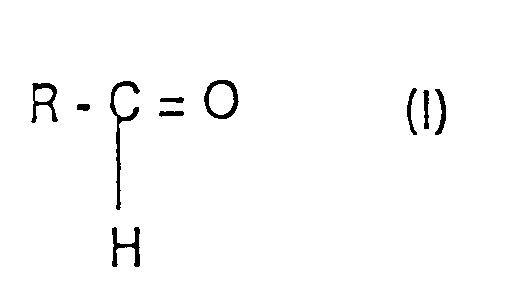
 - R is defined as hereinabove,- R' represents:- an R grouping as defined hereinabove,- an
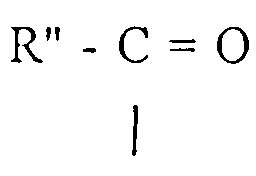 - the two R and R'' groupings being able to be linked together to form a saturated or unsaturated cycle having 5 to 7 atoms and comprising the anhydride function,- the two R and R'' groupings by the intermediary of two neighbouring atoms being able to form together a bridge of an orthocondensed bicyclic system.
 - A process according to Claim 18, characterised in that the carboxylic acid or derivative corresponds to Formula (II) in which the group R represents a hydrocarbon radical, possibly substituted, comprising 1 to 20 carbon atoms.
- A process according to one of Claims 18 and 19, characterised in that the carboxylic acid or derivative corresponds to Formula (II) in which the grouping R preferably represents an aromatic hydrocarbon residue, in particular benzene, corresponding to general formula (III):
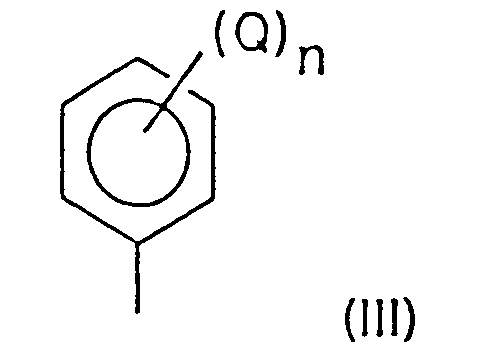 - n is a whole number from 0 to 5, preferably from 0 to 3,- Q represents R₁, one of the following groups or functions:. an straight or branched alkyl radical with 1 to 6 carbon atoms, preferably 1 to 4 carbon atoms, such as methyl, ethyl, propyl, isopropyl, butyl, isobutyl, sec-butyl, tert-butyl,. a straight or branched alkenyl radical with 2 to 6 carbon atoms, preferably with 2 to 4 carbon atoms, such as vinyl, allyl,. a straight or branched alkoxy radical with 1 to 6 carbon atoms, preferably 1 to 4 carbon atoms, such as methoxy, ethoxy, propoxy, isopropoxy, butoxy radicals,. an akyl group with 2 to 6 carbon atoms,. a radical of formula:
-R₂-OH
-R₂-COOR₅
-R₂-CHO
-R₂-NO₂
-R₂-CN
-R₂-(NR₅)₂
-R₂-CO-(NR₅)₂
-R₂-SH
-R₂-X
-R₂-CF₃
in which formulae, R₂ represents a valency bond or a saturated or unsaturated, straight or branched, divalent hydrocarbon radical with 1 to 6 carbon atoms, such as methylene, ethylene, propylene, isopropylene, isopropylidene, for example; R₅ represents a hydrogen atom or a straight or branched alkyl radical with 1 to 6 carbon atoms; X symbolises a halogen atom preferably a chlorine, bromine or fluorine atom.- Q represents R₃, one of the following more complex radicals:. a radical . a -R₂-A-R₄ radical wherein R₂ has the meaning given hereinabove, R₄ represents a straight or branched, alkyl radical with 1 to 6 carbon atoms, preferably 1 to 4 carbon atoms, or a radical of the formula
-O-, -CO-,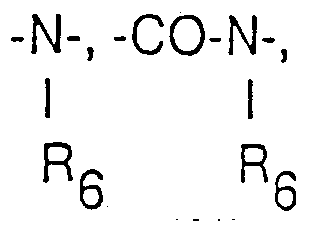
in which formulae, R₆ represents a hydrogen atom or a straight or branched alkyl radical with 1 to 4 carbon atoms, preferably a methyl or ethyl radical. - A process according to Claim 20, characterised in that the carboxylic acid or derivative corresponds to formula (II) wherein the R grouping represents an aromatic hydrocarbon residue corresponding to general formula (III), wherein, when n is greater than 1, the Q radicals can be the same or different, and 2 successive carbon atoms of the benzene cycle can be interconnected by a ketal bridge such as extranuclear methylene dioxy or ethylene dioxy radicals.
- A process according to Claim 20, characterised in that the carboxylic acid or derivative corresponds to general formula (II) wherein the R grouping represents an aromatic residue corresponding to general formula (III) in which:- n is equal to 0, 1, 2 or 3,- Q represents one of the following groups or functions:. a hydrogen atom. a straight or branched alkyl radical, with 1 to 4 carbon atoms,. a straight or branched alkoxy radical with 1 to 4 carbon atoms,. a methylene or ethylene dioxy radical,. an -OH group,. a -CHO group,. a NH₂ group,. a phenyl radical,. a halogen atom,. a CF₃ group
- A process according to one of Claims 18 and 19, characterised in that the carboxylic acid or derivative corresponds to general formula (II) wherein the R grouping represents a naphthalene residue: said cycles can be substituted by 1 to 4 radicals R₁, preferably by 1 to 3, R₁ having the meanings mentioned hereinabove in Claim 20.
- A process according to one of Claims 18 and 19, characterised in that the carboxylic acid or derivative corresponds to general formula (II), in which the R grouping represents a saturated carbocyclic residue or comprising 1 to 2 insaturations in the cycle, usually with 3 to 7 carbon atoms, preferably with 6 carbon atoms, in the cycle; said cycle can be substituted by 1 to 5 R₁ radicals, preferably with 1 to 3, R₁ having the meanings mentioned hereinabove in Claim 20.
- A process according to one of Claims 18 and 19, characterised in that the carboxylic acid or derivative corresponds to general formula (II), wherein the R grouping represents a straight or branched acyclic aliphatic residue preferably having 1 to 12 carbon atoms, either in saturated form or comprising one or several unsaturations on the chain, usually 1 to 3 unsaturations, which can be single or conjugate double bonds or triple bonds; the hydrocarbon chain can possibly be:- interrupted by one of the following groups:
-O-,-CO-,
in which formulae, R₆ represents hydrogen or a straight or branched alkyl radical with 1 to 4 carbon atoms, preferably a methyl or ethyl radical,- and/or carrying one of the following substituents:
-OH, -COOR₅, -CHO, -NO₂, -CN, -NH₂, -SH, -X, -CF₃,
in which formulae, R₅ has the meaning given hereinabove in Claim 20. - A process according to one of Claims 18 and 19, characterised in that the carboxylic acid or derivative corresponds to general formula (II), wherein the R grouping corresponds to the following formula:
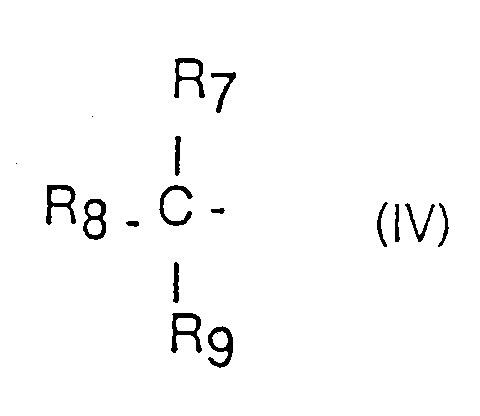
- A process according to Claim 26, characterised in that the carboxylic acid or derivative corresponds to the general formula (II) in which the R grouping corresponds to formula (IV) in which one of the 3 groupings R₇, R₈ and R₉ has a carbon atom which forms a double bond with the carbonyl grouping of the carboxylic acid, ester or anhydride.
- A process according to one of Claims 18 and 19, characterised in that the carboxylic acid or derivative corresponds to the general formula (II), wherein the R grouping represents a straight or branched, saturated or unsaturated acyclic aliphatic residue which can optionally carry a cyclic substituent, said acyclic aliphatic residue being able to be linked to the cycle by a valency bond or by one of the following groups:
-O-,-CO-,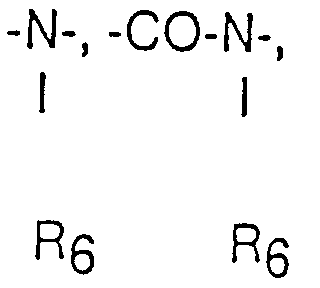
in which formulae, R₆ has the meaning given hereinabove in Claim 20. - A process according to one of Claims 18 and 19, characterised in that the carboxylic acid or derivative corresponds to the general formula (II), wherein the R grouping represents a heterocyclic residue which may or may not be saturated and which comprises, in particular, 5 or 6 atoms in the cycle, including 1 or 2 heteroatoms such as nitrogen, sulphur or oxygen atoms; the carbon atoms of the heterocycle can possibly be substituted wholly or only partly by radicals R₁, R₁ having the meanings mentioned hereinabove in Claim 20, or the R grouping represents a polycyclic heterocyclic residue.
- A process according to one of Claims 1 to 29, characterised in that the initial substrate is any mono- or polycarboxylic carboxylic acid, such as the saturated or unsaturated aliphatic acids; monocyclic or polycyclic, saturated, unsaturated or aromatic carbocyclics or heterocyclics; saturated or unsaturated aliphatics carrying a cyclic substituent such as a saturated, unsaturated or aromatic carbocyclic or heterocyclic cycle.
- A process according to Claims 1 to 30, characterised in that the carboxylic acid or derivative corresponding to general formula (II) is selected from:- saturated, aliphatic, monocarboxylic acids,- saturated, aliphatic, dicarboxylic acids,- unsaturated, aliphatic, dicarboxylic or monocarboxylic acids.- saturated or unsaturated, carbocyclic, carboxylic acids,- heterocyclic, carboxylic acids,- aromatic, carbocyclic, carboxylic acids,- saturated or unsaturated, aryl aliphatic, carboxylic acids,- halogenated aliphatic or aromatic, carboxylic acids,- aliphatic, cycloaliphatic or arylaliphatic hydroxy acids,- hydroxybenzoic acids,- alkoxy and phenoxy acids,- oxo acids,- acyloxy acids,- amido acids,- optionally N-protected amino acids.
- A process according to one of Claims 1 to 31, characterised in that the carboxylic acid or derivative corresponding to general formula (II) is selected from:. saturated aliphatic monocarboxylic acids, such as formic, acetic, propionic, butyric, isobutyric, valeric, isovaleric, pivalic, lauric, myristic, palmitic, stearic acids,- saturated aliphatic dicarboxylic acids, such as oxalic, malonic, succinic, glutaric, adipic, pimelic, suberic, azelaic, sebacic acids,- unsaturated aliphatic monocarboxylic or dicarboxylic acids, such as acrylic, propiolic, methacrylic, crotonic, isocrotonic, senecioic, tiglic, oleic, maleic, fumaric, citraconic, mesaconic acids,- saturated or unsaturated carbocyclic carboxylic acids, such as camphoric acid, chrysanthemic acid,- heterocyclic carboxylic acids, such as furan carboxylic, thiophene carboxylic, pyrrole carboxylic, pyrazine carboxylic, nicotinic, isonicotinic, picolinic acids,- aromatic carbocyclic carboxylic acids, such as benzoic, phthalic, isophthalic, terephthalic, naphthalene carboxylic, toluic acids,- saturated arylaliphatic carboxylic acids, such as, in particular, the arylpropionics such as 2-phenyl propionic acid, [(2-butyl)-4 phenyl]-2 propionic acid, (3-benzoyl phenyl)-2 propionic acid, (6-methoxy 2-naphtyl)-2 propionic acid or unsaturated acids, such as 2-phenyl propenoic acid, cinnamic acid,- halogenated aliphatic or aromatic, carboxylic acids such as monofluoroacetic, difluoroacetic, monochloroacetic, dichloroacetic, trichloroacetic, monochloropropionic, α-bromopropionic, α-bromobutyric, trifluoroacetic, monofluoro-o-benzoic, monofluoro-m-benzoic, monofluoro-p-benzoic, difluoro-2,3-benzoic, difluoro-2,4-benzoic, difluoro-2,5-benzoic, difluoro-3,4-benzoic, trifluoro-2,3,6-benzoic, trifluoro-2,4,5-benzoic, tetrafluoro-2,3,4,5-benzoic, pentafluorobenzoic, α,α,α-trifluoro-o-toluic, α,α,α-trifluoro-m-toluic, α,α,α-trifluoro-p-toluic,monochloro-o-benzoic,monochloro-m-benzoic,monochloro-p-benzoic, dichloro-2,3-benzoic, dichloro-2,4-benzoic, dichloro-2,5-benzoic, dichloro-2,6-benzoic, dichloro-3,4-benzoic, dichloro-3,5-benzoic, trichloro-2,3,5-benzoic, trichloro-2,3,6-benzoic, 2-chloro-4,5-fluorobenzoic, 3-chloro-2,4,5-trifluorobenzoic, monobromo-o-benzoic, monobromo-m-benzoic and monobromo-p-benzoic acids.- arylaliphatic cycloaliphatic aliphatic hydroxy acids, such as glycolic acid, lactic acid, glyceric acid, 2-hydroxy butanoic acid, 3-hydroxy butanoic acid, 2-methyl lactic acid, 2-hydroxy 4-methylthio butanoic acid, tartronic acid, malic acid, tartric acid, 1-hydroxy cyclopropane carboxylic acid, 2-hydroxy phenylpropanoic acid, 2-hydroxy cinnamic acid, 3-hydroxy cinnamic acid, 4-hydroxy cinnamic acid,- the following hydroxybenzoic acids: 2-hydroxy benzoic acid (salicylic acid), 3-hydroxy benzoic acid, 4-hydroxy benzoic acid, 3-methyl salicylic acid, 4-methyl salicylic acid, 5-methyl salicylic acid, 3-hydroxy 4-methyl benzoic acid, 3-methoxy salicylic acid, 4-methoxy salicylic acid, 5-methoxy salicylic acid, 3-hydroxy 4-methoxy benzoic acid (isovanillic acid), 4-hydroxy 3-methoxy benzoic acid (vanillic acid), 3-hydroxy 4,5-dimethoxy benzoic acid, 4-hydroxy 3,5-dimethoxy benzoic acid (syringic acid), 5-hydroxy isophthalic acid, 3-amino salicylic acid, 4-amino salicylic acid, 5-amino salicylic acid, 3-hydroxy 2-amino benzoic acid, 3-nitro salicylic acid, 3-hydroxy 4-nitro benzoic acid, 4-hydroxy 3-nitro benzoic acid, 3-hydroxy 4-methyl 2-nitro benzoic acid, 3,5-diiodo salicylic acid, 2,3-dihydroxy benzoic acid, 2,4-dihydroxy benzoic acid, 2,5-dihydroxy benzoic acid, 2,6-dihydroxy benzoic acid, 3,4-dihydroxy benzoic acid (protocatechic acid), 3,5-dihydroxy benzoic acid, 3,5-dihydroxy 4-methyl benzoic acid, 2,3,4-trihydroxy benzoic acid, 2,4,6-trihydroxy benzoic acid, 3,4,5-trihydroxy benzoic acid,- alkoxy and phenoxy acids, such as methoxyacetic acid, phenoxyacetic, 2,4-dichloro phenoxy acetic, phenoxy propionic, 2,4-dichloro phenoxy propionic, p-hydroxy phenoxy propionic, m-chlorophenoxy propionic, 4-phenoxy benzoic acid, (4-carboxy 4-phenoxy) benzoic acid, piperonylic acid,- oxo-acids, such as 2-acetyl benzoic acid, 4-acetyl benzoic acid, 2-benzoyl benzoic acid, 4-benzoyl benzoic acid,- acyloxy acids, such as 3-benzoyloxy propionic acid, 2-acetoxy benzoic acid, 4-acetoxy benzoic acid,- amido acids, such as 2-acetamido acrylic acid, 2-acetamido benzoic acid, 3-acetamido benzoic acid, 4-N-acetamido benzoic acid,- amine acids, possibly N-protected by a protector group such as the following groups: alkyl (acetyl, benzoyl), BOC (butyloxycarbonyl), CBZ (carbobenzoxy), FMOC (9-fluorenyl methoxycarbonyl), MSOC (2-methane sulphenyl ethoxy carbonyl).
- A process according to Claim 32, characterised in that the carboxylic acid or derivative corresponding to general formula (II) is selected from:- saturated or unsaturated carboxylic or dicarboxylic acids,- salicylic acid and 4-hydroxy benzoic acid.- acetic acid, propionic acid and their derivatives, substituted by a hydroxy group, halogen, phenyl, phenyloxy,- benzoic acid and its derivatives substituted by an alkyl C₁-C₄ group, acetoxy, acetamido, hydroxy, methoxy, ethoxy,- halogenated aliphatic or aromatic carboxylic acids,- nicotinic acid.
- A process according to one of Claims 1 to 33, characterised in that the aldehyde prepared corresponds, more particularly, to the general formula (V):
 - n is equal to 0,1,2 or 3,- Q represents one of the following groups or functions:. a hydrogen atom,. a straight or branched alkyl radical, with 1 to 4 carbon atoms,. a straight or branched alkoxy radical with 1 to 4 carbon atoms,. a methylene or ethylene dioxy radical,. a -OH group,. a -CHO group,. a NH₂ group,. a phenyl radical,. a halogen atom,. a CF₃ group.
 - A process according to one of Claims 1 to 34, characterised in that the aldehyde prepared is more particularly 3,4-difluorobenzaldehyde, 4-chlorobenzaldehyde, salicylic aldehyde, 3-hydroxybenzaldehyde, 4-hydroxybenzaldehyde, vanillin, veratraldehyde, p-anisaldehyde, sinnamic aldehyde, piperonal, fluoral, acetic aldehyde, prenal or citral.
- Use of the salicylic aldehyde obtained according to the preparations process described in one of Claims 1 to 33 as a coumarin production intermediate.
- A bimetallic catalyst comprising tin and ruthenium, free of boron, optionally on a support, characterised in that it comprises ruthenium and tin used in quantities such that the tin/ruthenium molar ratio is at least 2, preferably between 2 and 10 inclusive, and still more preferably between 2 and 6 inclusive.
- A catalyst according to Claim 37, characterised in that it is prepared by depositing, in known manner, metallic elements on the support, and by then subjecting the contact mass to reduction by means of hydrogen.
- A catalyst according to any one of Claims 37 and 38, characterised in that the ruthenium represents between 0.1% and 50% approximately of the weight of the catalyst.
- A catalyst according to Claim 39, characterised in that the ruthenium represents from 10 to 50% by weight of the catalyst when it is in mass form, and from 0.1 to 20%, preferably from 0.5 to 3% by weight of the catalyst when it is supported.
- A catalyst according to Claim 37, characterised in that it is supported and in that the support is selected from oxides of metals, preferably the oxides of aluminium and/or silicon, carbons, acetylene black and resins.
- A catalyst according to one of Claims 37 to 41, characterised in that the ruthenium is introduced in the form of metallic ruthenium, ruthenium chloride III, ruthenium chloride IV, ruthenium pentafluoride, ruthenium oxide II, ruthenium oxide IV, ruthenium oxychloride with ammonia, ruthenium acetate, preferably ruthenium chloride III.
- A catalyst according to one of Claims 37 to 42, characterised in that the tin is introduced in the form of metallic tin, oxides, chlorides, nitrates, carboxylates, alcoholates of tin or organometallic compounds in which the tin is linked to a hydrogen atom and/or alkyl radicals which preferably have from 1 to 4 carbon atoms, preferably tin chloride II, tin chloride IV, tin acetate II, tin octoate II, tin ethylhexanoate.
Applications Claiming Priority (2)
| Application Number | Priority Date | Filing Date | Title |
|---|---|---|---|
| FR9113147A FR2682949B1 (en) | 1991-10-24 | 1991-10-24 | PROCESS FOR THE SYNTHESIS OF ALDEHYDES. |
| FR9113147 | 1991-10-24 |
Publications (2)
| Publication Number | Publication Date |
|---|---|
| EP0539274A1 EP0539274A1 (en) | 1993-04-28 |
| EP0539274B1 true EP0539274B1 (en) | 1996-04-10 |
Family
ID=9418283
Family Applications (1)
| Application Number | Title | Priority Date | Filing Date |
|---|---|---|---|
| EP92402844A Expired - Lifetime EP0539274B1 (en) | 1991-10-24 | 1992-10-16 | Method for the synthesis of aldehydes and of their derivatives |
Country Status (10)
| Country | Link |
|---|---|
| US (2) | US5334769A (en) |
| EP (1) | EP0539274B1 (en) |
| JP (2) | JPH0768155B2 (en) |
| AT (1) | ATE136534T1 (en) |
| BR (1) | BR9204072A (en) |
| CA (2) | CA2081275C (en) |
| DE (1) | DE69209770T2 (en) |
| DK (1) | DK0539274T3 (en) |
| ES (1) | ES2085593T3 (en) |
| FR (1) | FR2682949B1 (en) |
Cited By (16)
| Publication number | Priority date | Publication date | Assignee | Title |
|---|---|---|---|---|
| US7112699B2 (en) | 2003-04-10 | 2006-09-26 | Firmenich Sa | Process for the direct conversion of lactones into unsaturated ketones or aldehydes |
| US8304586B2 (en) | 2010-02-02 | 2012-11-06 | Celanese International Corporation | Process for purifying ethanol |
| US8344186B2 (en) | 2010-02-02 | 2013-01-01 | Celanese International Corporation | Processes for producing ethanol from acetaldehyde |
| US8460405B2 (en) | 2010-02-02 | 2013-06-11 | Celanese International Corporation | Ethanol compositions |
| US8541633B2 (en) | 2010-02-02 | 2013-09-24 | Celanese International Corporation | Processes for producing anhydrous ethanol compositions |
| US8546622B2 (en) | 2008-07-31 | 2013-10-01 | Celanese International Corporation | Process for making ethanol from acetic acid using acidic catalysts |
| US8569551B2 (en) | 2010-05-07 | 2013-10-29 | Celanese International Corporation | Alcohol production process integrating acetic acid feed stream comprising water from carbonylation process |
| US8668750B2 (en) | 2010-02-02 | 2014-03-11 | Celanese International Corporation | Denatured fuel ethanol compositions for blending with gasoline or diesel fuel for use as motor fuels |
| US8680342B2 (en) | 2010-05-07 | 2014-03-25 | Celanese International Corporation | Process for recovering alcohol produced by hydrogenating an acetic acid feed stream comprising water |
| US8680343B2 (en) | 2010-02-02 | 2014-03-25 | Celanese International Corporation | Process for purifying ethanol |
| US8728179B2 (en) | 2010-02-02 | 2014-05-20 | Celanese International Corporation | Ethanol compositions |
| US8747492B2 (en) | 2010-02-02 | 2014-06-10 | Celanese International Corporation | Ethanol/fuel blends for use as motor fuels |
| US8754267B2 (en) | 2010-05-07 | 2014-06-17 | Celanese International Corporation | Process for separating acetaldehyde from ethanol-containing mixtures |
| US8858659B2 (en) | 2010-02-02 | 2014-10-14 | Celanese International Corporation | Processes for producing denatured ethanol |
| US8907142B2 (en) | 2011-12-29 | 2014-12-09 | Celanese International Corporation | Process for promoting catalyst activity for ethyl acetate conversion |
| US8932372B2 (en) | 2010-02-02 | 2015-01-13 | Celanese International Corporation | Integrated process for producing alcohols from a mixed acid feed |
Families Citing this family (52)
| Publication number | Priority date | Publication date | Assignee | Title |
|---|---|---|---|---|
| FR2682949B1 (en) * | 1991-10-24 | 1993-12-17 | Rhone Poulenc Chimie | PROCESS FOR THE SYNTHESIS OF ALDEHYDES. |
| DE69321051T2 (en) * | 1992-07-24 | 1999-02-25 | Firmenich S.A., Genf/Geneve | Process for the preparation of a bicyclic decalin ketone |
| WO1994005420A1 (en) * | 1992-09-10 | 1994-03-17 | Daicel Chemical Industries, Ltd. | Ru-Sn HETEROPOLYNUCLEAR COMPLEX AND PROCESS FOR PRODUCING ACETIC ACID OR METHYL ACETATE BY USING THE SAME |
| DE4431987A1 (en) | 1994-09-08 | 1996-03-28 | Hoechst Ag | Process for the preparation of aldehydes by catalytic gas phase hydrogenation of carboxylic acids or their derivatives with the aid of a tin catalyst |
| DE4443704A1 (en) * | 1994-12-08 | 1996-06-13 | Basf Ag | Process for the preparation of aldehydes |
| FR2729586B1 (en) * | 1995-01-23 | 1997-04-04 | Rhone Poulenc Chimie | PROCESS FOR THE SYNTHESIS OF ALDEHYDES AND DERIVATIVES THEREOF AND CATALYST FOR SELECTIVE REDUCTION OF CARBOXYL DERIVATIVES IN ALDEHYDES |
| FR2740708B1 (en) * | 1995-11-08 | 1997-12-26 | Rhone Poulenc Chimie | PROCESS FOR THE PREPARATION OF A RUTHENIUM / TIN BI-METAL CATALYST AND ITS USE IN A PROCESS FOR THE PREPARATION OF ALDEHYDES AND THEIR DERIVATIVES |
| FR2740707B1 (en) * | 1995-11-08 | 1997-12-26 | Rhone Poulenc Chimie | PROCESS FOR THE PREPARATION OF A RUTHENIUM / TIN BI-METAL CATALYST |
| US5985789A (en) * | 1997-03-27 | 1999-11-16 | E. I. Du Pont De Nemours And Company | Ru, Sn/oxide catalyst and process for hydrogenation in acidic aqueous solution |
| US6121498A (en) * | 1998-04-30 | 2000-09-19 | Eastman Chemical Company | Method for producing acetaldehyde from acetic acid |
| DE69926243T2 (en) * | 1998-08-27 | 2006-04-20 | Japan Science And Technology Agency, Kawaguchi | CATALYTIC PREPARATION OF ALDEHYDE BY DIRECT HYDROGENATION OF CARBOXYLIC ACIDS |
| DE10137248A1 (en) * | 2001-07-30 | 2003-02-27 | Ri Hyo Son | Oxidative surface treatment of active carbon to increases the number of oxygen-containing functional group is useful for producing catalysts by ion exchange |
| JP5236194B2 (en) * | 2007-03-15 | 2013-07-17 | 健二 山本 | Method for producing aldehydes, method for producing syringic acid and method for producing 3,4,5-trihydroxybenzaldehyde |
| US8338650B2 (en) | 2008-07-31 | 2012-12-25 | Celanese International Corporation | Palladium catalysts for making ethanol from acetic acid |
| US8637714B2 (en) | 2008-07-31 | 2014-01-28 | Celanese International Corporation | Process for producing ethanol over catalysts containing platinum and palladium |
| US7816565B2 (en) | 2008-07-31 | 2010-10-19 | Celanese International Corporation | Direct and selective production of acetaldehyde from acetic acid utilizing a supported metal catalyst |
| US8309772B2 (en) | 2008-07-31 | 2012-11-13 | Celanese International Corporation | Tunable catalyst gas phase hydrogenation of carboxylic acids |
| US8680317B2 (en) | 2008-07-31 | 2014-03-25 | Celanese International Corporation | Processes for making ethyl acetate from acetic acid |
| US8471075B2 (en) | 2008-07-31 | 2013-06-25 | Celanese International Corporation | Processes for making ethanol from acetic acid |
| US8501652B2 (en) | 2008-07-31 | 2013-08-06 | Celanese International Corporation | Catalysts for making ethanol from acetic acid |
| US8309773B2 (en) | 2010-02-02 | 2012-11-13 | Calanese International Corporation | Process for recovering ethanol |
| CN102317251B (en) | 2008-12-13 | 2014-05-28 | 塞拉尼斯化学品欧洲有限公司 | Process for producing vinyl acetate |
| US8178715B2 (en) * | 2008-12-31 | 2012-05-15 | Celanese International Corporation | Integrated process for the production of vinyl acetate from acetic acid via acetaldehyde |
| US8450535B2 (en) | 2009-07-20 | 2013-05-28 | Celanese International Corporation | Ethanol production from acetic acid utilizing a cobalt catalyst |
| US8710277B2 (en) | 2009-10-26 | 2014-04-29 | Celanese International Corporation | Process for making diethyl ether from acetic acid |
| US8680321B2 (en) | 2009-10-26 | 2014-03-25 | Celanese International Corporation | Processes for making ethanol from acetic acid using bimetallic catalysts |
| US8211821B2 (en) | 2010-02-01 | 2012-07-03 | Celanese International Corporation | Processes for making tin-containing catalysts |
| CN102421521B (en) | 2010-02-02 | 2015-01-07 | 国际人造丝公司 | Preparation and use of a catalyst for producing ethanol comprising a crystalline support modifier |
| US8314272B2 (en) | 2010-02-02 | 2012-11-20 | Celanese International Corporation | Process for recovering ethanol with vapor separation |
| US8222466B2 (en) | 2010-02-02 | 2012-07-17 | Celanese International Corporation | Process for producing a water stream from ethanol production |
| US8846988B2 (en) | 2010-07-09 | 2014-09-30 | Celanese International Corporation | Liquid esterification for the production of alcohols |
| FR2972450B1 (en) * | 2011-03-07 | 2013-04-12 | Rhodia Operations | PREPARATION OF (POLY) GLYCEROL ETHERS |
| FR2972451B1 (en) | 2011-03-07 | 2013-12-20 | Rhodia Operations | ETHER OBTAINED FROM POLYOL AND PROCESS FOR PREPARING THE SAME |
| US8350098B2 (en) | 2011-04-04 | 2013-01-08 | Celanese International Corporation | Ethanol production from acetic acid utilizing a molybdenum carbide catalyst |
| US9000233B2 (en) | 2011-04-26 | 2015-04-07 | Celanese International Corporation | Process to recover alcohol with secondary reactors for hydrolysis of acetal |
| US8907141B2 (en) | 2011-04-26 | 2014-12-09 | Celanese International Corporation | Process to recover alcohol with secondary reactors for esterification of acid |
| JP6035918B2 (en) * | 2011-08-03 | 2016-11-30 | セントラル硝子株式会社 | Method for producing α-fluoroaldehyde |
| US8536382B2 (en) | 2011-10-06 | 2013-09-17 | Celanese International Corporation | Processes for hydrogenating alkanoic acids using catalyst comprising tungsten |
| US8658843B2 (en) | 2011-10-06 | 2014-02-25 | Celanese International Corporation | Hydrogenation catalysts prepared from polyoxometalate precursors and process for using same to produce ethanol while minimizing diethyl ether formation |
| US8703868B2 (en) | 2011-11-28 | 2014-04-22 | Celanese International Corporation | Integrated process for producing polyvinyl alcohol or a copolymer thereof and ethanol |
| US9000234B2 (en) | 2011-12-22 | 2015-04-07 | Celanese International Corporation | Calcination of modified support to prepare hydrogenation catalysts |
| US9233899B2 (en) | 2011-12-22 | 2016-01-12 | Celanese International Corporation | Hydrogenation catalysts having an amorphous support |
| US8575406B2 (en) | 2011-12-22 | 2013-11-05 | Celanese International Corporation | Catalysts having promoter metals and process for producing ethanol |
| BR112014015584A8 (en) | 2012-01-06 | 2017-07-04 | Celanese Int Corp | cobalt modified support hydrogenation catalysts |
| US9024086B2 (en) | 2012-01-06 | 2015-05-05 | Celanese International Corporation | Hydrogenation catalysts with acidic sites |
| US8981164B2 (en) | 2012-01-06 | 2015-03-17 | Celanese International Corporation | Cobalt and tin hydrogenation catalysts |
| US9050585B2 (en) | 2012-02-10 | 2015-06-09 | Celanese International Corporation | Chemisorption of ethyl acetate during hydrogenation of acetic acid to ethanol |
| US8772553B2 (en) | 2012-10-26 | 2014-07-08 | Celanese International Corporation | Hydrogenation reaction conditions for producing ethanol |
| US9108895B2 (en) | 2012-10-26 | 2015-08-18 | Eastman Chemical Company | Promoted ruthenium catalyst for the improved hydrogenation of carboxylic acids to the corresponding alcohols |
| EP3109226A1 (en) | 2015-06-25 | 2016-12-28 | Basf Se | Process for preparing vanillin |
| JP6480835B2 (en) * | 2015-09-02 | 2019-03-13 | 株式会社ダイセル | Solid catalyst, method for producing solid catalyst, and method for producing acetaldehyde |
| JP2022082890A (en) * | 2020-11-24 | 2022-06-03 | 旭化成株式会社 | Catalyst and method for producing the same and method for producing alcohol |
Family Cites Families (9)
| Publication number | Priority date | Publication date | Assignee | Title |
|---|---|---|---|---|
| US3691102A (en) * | 1970-05-11 | 1972-09-12 | Gulf Research Development Co | Group viii metal-tin catalyst and method of making same |
| US3935265A (en) * | 1974-05-09 | 1976-01-27 | Standard Oil Company | Vapor phase conversion of aromatic esters to aromatic aldehydes |
| US4328373A (en) * | 1980-03-17 | 1982-05-04 | The Dow Chemical Company | Method of preparing aldehydes |
| US4356328A (en) * | 1980-10-06 | 1982-10-26 | The Halcon Sd Group, Inc. | Process for the preparation of acetaldehyde |
| US4522935A (en) * | 1983-06-02 | 1985-06-11 | Uop Inc. | Platinum and indium-containing catalyst for reforming hydrocarbons |
| DE3562619D1 (en) * | 1984-01-18 | 1988-06-16 | Mitsubishi Chem Ind | Catalytic process of producing aromatic aldehydes |
| US4585900A (en) * | 1985-01-22 | 1986-04-29 | Chem Systems Inc. | Hydrogenation of carboxylic acid compounds to aldehydes using Cu/YtO as catalyst |
| US4677094A (en) * | 1986-09-22 | 1987-06-30 | Uop Inc. | Trimetallic reforming catalyst |
| FR2682949B1 (en) * | 1991-10-24 | 1993-12-17 | Rhone Poulenc Chimie | PROCESS FOR THE SYNTHESIS OF ALDEHYDES. |
-
1991
- 1991-10-24 FR FR9113147A patent/FR2682949B1/en not_active Expired - Fee Related
-
1992
- 1992-10-16 EP EP92402844A patent/EP0539274B1/en not_active Expired - Lifetime
- 1992-10-16 DK DK92402844.2T patent/DK0539274T3/en active
- 1992-10-16 ES ES92402844T patent/ES2085593T3/en not_active Expired - Lifetime
- 1992-10-16 AT AT92402844T patent/ATE136534T1/en not_active IP Right Cessation
- 1992-10-16 DE DE69209770T patent/DE69209770T2/en not_active Expired - Lifetime
- 1992-10-20 BR BR929204072A patent/BR9204072A/en not_active IP Right Cessation
- 1992-10-23 CA CA002081275A patent/CA2081275C/en not_active Expired - Fee Related
- 1992-10-23 CA CA002214429A patent/CA2214429C/en not_active Expired - Fee Related
- 1992-10-23 JP JP4286146A patent/JPH0768155B2/en not_active Expired - Fee Related
- 1992-10-26 US US07/966,385 patent/US5334769A/en not_active Expired - Lifetime
-
1994
- 1994-03-30 US US08/220,171 patent/US5476827A/en not_active Expired - Lifetime
- 1994-12-07 JP JP30406194A patent/JP3615811B2/en not_active Expired - Fee Related
Cited By (19)
| Publication number | Priority date | Publication date | Assignee | Title |
|---|---|---|---|---|
| US7112699B2 (en) | 2003-04-10 | 2006-09-26 | Firmenich Sa | Process for the direct conversion of lactones into unsaturated ketones or aldehydes |
| US8546622B2 (en) | 2008-07-31 | 2013-10-01 | Celanese International Corporation | Process for making ethanol from acetic acid using acidic catalysts |
| US8668750B2 (en) | 2010-02-02 | 2014-03-11 | Celanese International Corporation | Denatured fuel ethanol compositions for blending with gasoline or diesel fuel for use as motor fuels |
| US8858659B2 (en) | 2010-02-02 | 2014-10-14 | Celanese International Corporation | Processes for producing denatured ethanol |
| US8460405B2 (en) | 2010-02-02 | 2013-06-11 | Celanese International Corporation | Ethanol compositions |
| US8541633B2 (en) | 2010-02-02 | 2013-09-24 | Celanese International Corporation | Processes for producing anhydrous ethanol compositions |
| US8344186B2 (en) | 2010-02-02 | 2013-01-01 | Celanese International Corporation | Processes for producing ethanol from acetaldehyde |
| US9447005B2 (en) | 2010-02-02 | 2016-09-20 | Celanese International Corporation | Processes for producing anhydrous ethanol compositions |
| US8304586B2 (en) | 2010-02-02 | 2012-11-06 | Celanese International Corporation | Process for purifying ethanol |
| US8932372B2 (en) | 2010-02-02 | 2015-01-13 | Celanese International Corporation | Integrated process for producing alcohols from a mixed acid feed |
| US8680343B2 (en) | 2010-02-02 | 2014-03-25 | Celanese International Corporation | Process for purifying ethanol |
| US8704014B2 (en) | 2010-02-02 | 2014-04-22 | Celansese International Corporation | Process for purifying ethanol |
| US8728179B2 (en) | 2010-02-02 | 2014-05-20 | Celanese International Corporation | Ethanol compositions |
| US8747492B2 (en) | 2010-02-02 | 2014-06-10 | Celanese International Corporation | Ethanol/fuel blends for use as motor fuels |
| US8426652B2 (en) | 2010-02-02 | 2013-04-23 | Celanese International Corporation | Processes for producing ethanol from acetaldehyde |
| US8754267B2 (en) | 2010-05-07 | 2014-06-17 | Celanese International Corporation | Process for separating acetaldehyde from ethanol-containing mixtures |
| US8680342B2 (en) | 2010-05-07 | 2014-03-25 | Celanese International Corporation | Process for recovering alcohol produced by hydrogenating an acetic acid feed stream comprising water |
| US8569551B2 (en) | 2010-05-07 | 2013-10-29 | Celanese International Corporation | Alcohol production process integrating acetic acid feed stream comprising water from carbonylation process |
| US8907142B2 (en) | 2011-12-29 | 2014-12-09 | Celanese International Corporation | Process for promoting catalyst activity for ethyl acetate conversion |
Also Published As
| Publication number | Publication date |
|---|---|
| US5476827A (en) | 1995-12-19 |
| DK0539274T3 (en) | 1996-05-06 |
| CA2214429C (en) | 2001-06-26 |
| US5334769A (en) | 1994-08-02 |
| CA2081275A1 (en) | 1993-04-25 |
| BR9204072A (en) | 1993-06-01 |
| JPH0768155B2 (en) | 1995-07-26 |
| EP0539274A1 (en) | 1993-04-28 |
| ES2085593T3 (en) | 1996-06-01 |
| FR2682949A1 (en) | 1993-04-30 |
| DE69209770D1 (en) | 1996-05-15 |
| JPH05294882A (en) | 1993-11-09 |
| FR2682949B1 (en) | 1993-12-17 |
| DE69209770T2 (en) | 1996-10-02 |
| JPH07178339A (en) | 1995-07-18 |
| CA2081275C (en) | 1999-08-03 |
| CA2214429A1 (en) | 1993-04-25 |
| JP3615811B2 (en) | 2005-02-02 |
| ATE136534T1 (en) | 1996-04-15 |
Similar Documents
| Publication | Publication Date | Title |
|---|---|---|
| EP0539274B1 (en) | Method for the synthesis of aldehydes and of their derivatives | |
| EP0874687B1 (en) | Method for preparing a bimetallic ruthenium/tin catalyst | |
| FR2488248A1 (en) | PROCESS FOR HYDROCARBONYLATION AND / OR CARBONYLATION OF ALKYL CARBOXYLATES | |
| US4425277A (en) | Method for the preparation of alkenyl esters of carboxylic acids | |
| FR2537576A1 (en) | PROCESS FOR OXIDATION OF ALCOHOLS WITH CORRESPONDING CARBONYL COMPOUNDS | |
| JPH0511113B2 (en) | ||
| WO1997017134A1 (en) | Method for preparing a bimetallic ruthenium/tin catalyst | |
| EP0433191B1 (en) | Process for preparing 1,6-hexendioic acids from butendiol | |
| CA1282075C (en) | Process for preparing hexenedioate esters | |
| KR20070026697A (en) | Method for preparing α, β-unsaturated carboxylic acid | |
| EP0351336B1 (en) | Process for the preparation of hydroxybenzaldehydes by hydrocarbonylation | |
| EP0087347A1 (en) | Process for the preparation of 2-benzoxazolone and its derivatives from orthonitro phenols and carbon monoxide | |
| CA1251468A (en) | Process for synthesizing 2,2,2-trifluoro-ethanol | |
| EP0433189B1 (en) | Process for the preparation of diesters of hexenedioic acid | |
| JP2598296B2 (en) | Method for producing intermediate compound | |
| BE819455A (en) | PROCESS FOR THE PREPARATION OF CARBOXYLIC ACID ANHYDRIDES | |
| JP4088695B2 (en) | Method for producing aldehyde | |
| JPS58116437A (en) | Preparation of 7-octenoic acid | |
| JPS61151153A (en) | Production of alkenylidene diacetate | |
| Kulp et al. | Synthesis and hydrolysis of hindered 2, 2-disubstituted 5-cyanocyclopentanonimines | |
| JPH01175951A (en) | Production of higher aliphatic ketones | |
| JPS5848534B2 (en) | Method for producing carboxylic acid alkenyl ester | |
| WO1997035826A1 (en) | Method for preparing carboxylic acids and/or esters thereof by isomerising esters | |
| FR2655644A1 (en) | PROCESS FOR THE PREPARATION OF 1,6-HEXENEDIOUIC ACIDS. | |
| FR2775284A1 (en) | Preparation of aromatic ketones by reaction of a dihalo aromatic compound with an alpha ketone - using hydrogen, a base and a Group VIII metal complex |
Legal Events
| Date | Code | Title | Description |
|---|---|---|---|
| PUAI | Public reference made under article 153(3) epc to a published international application that has entered the european phase |
Free format text: ORIGINAL CODE: 0009012 |
|
| 17P | Request for examination filed |
Effective date: 19921021 |
|
| AK | Designated contracting states |
Kind code of ref document: A1 Designated state(s): AT BE CH DE DK ES FR GB GR IE IT LI LU NL PT SE |
|
| 17Q | First examination report despatched |
Effective date: 19940613 |
|
| ITF | It: translation for a ep patent filed | ||
| GRAA | (expected) grant |
Free format text: ORIGINAL CODE: 0009210 |
|
| AK | Designated contracting states |
Kind code of ref document: B1 Designated state(s): AT BE CH DE DK ES FR GB GR IE IT LI LU NL PT SE |
|
| PG25 | Lapsed in a contracting state [announced via postgrant information from national office to epo] |
Ref country code: GR Free format text: LAPSE BECAUSE OF FAILURE TO SUBMIT A TRANSLATION OF THE DESCRIPTION OR TO PAY THE FEE WITHIN THE PRESCRIBED TIME-LIMIT Effective date: 19960410 |
|
| REF | Corresponds to: |
Ref document number: 136534 Country of ref document: AT Date of ref document: 19960415 Kind code of ref document: T |
|
| REG | Reference to a national code |
Ref country code: DK Ref legal event code: T3 |
|
| REF | Corresponds to: |
Ref document number: 69209770 Country of ref document: DE Date of ref document: 19960515 |
|
| REG | Reference to a national code |
Ref country code: CH Ref legal event code: NV Representative=s name: KIRKER & CIE SA Ref country code: IE Ref legal event code: FG4D Free format text: 67906 |
|
| REG | Reference to a national code |
Ref country code: ES Ref legal event code: FG2A Ref document number: 2085593 Country of ref document: ES Kind code of ref document: T3 |
|
| GBT | Gb: translation of ep patent filed (gb section 77(6)(a)/1977) |
Effective date: 19960530 |
|
| PG25 | Lapsed in a contracting state [announced via postgrant information from national office to epo] |
Ref country code: PT Effective date: 19960710 |
|
| GRAH | Despatch of communication of intention to grant a patent |
Free format text: ORIGINAL CODE: EPIDOS IGRA |
|
| PG25 | Lapsed in a contracting state [announced via postgrant information from national office to epo] |
Ref country code: LU Free format text: LAPSE BECAUSE OF NON-PAYMENT OF DUE FEES Effective date: 19961031 |
|
| PLBE | No opposition filed within time limit |
Free format text: ORIGINAL CODE: 0009261 |
|
| STAA | Information on the status of an ep patent application or granted ep patent |
Free format text: STATUS: NO OPPOSITION FILED WITHIN TIME LIMIT |
|
| 26N | No opposition filed | ||
| REG | Reference to a national code |
Ref country code: GB Ref legal event code: IF02 |
|
| PGFP | Annual fee paid to national office [announced via postgrant information from national office to epo] |
Ref country code: SE Payment date: 20091007 Year of fee payment: 18 Ref country code: IE Payment date: 20091016 Year of fee payment: 18 Ref country code: ES Payment date: 20091016 Year of fee payment: 18 Ref country code: DK Payment date: 20091014 Year of fee payment: 18 Ref country code: DE Payment date: 20091008 Year of fee payment: 18 Ref country code: CH Payment date: 20091014 Year of fee payment: 18 Ref country code: AT Payment date: 20091013 Year of fee payment: 18 |
|
| PGFP | Annual fee paid to national office [announced via postgrant information from national office to epo] |
Ref country code: NL Payment date: 20091004 Year of fee payment: 18 |
|
| PGFP | Annual fee paid to national office [announced via postgrant information from national office to epo] |
Ref country code: IT Payment date: 20091017 Year of fee payment: 18 Ref country code: GB Payment date: 20091014 Year of fee payment: 18 Ref country code: FR Payment date: 20091029 Year of fee payment: 18 |
|
| PGFP | Annual fee paid to national office [announced via postgrant information from national office to epo] |
Ref country code: BE Payment date: 20091019 Year of fee payment: 18 |
|
| BERE | Be: lapsed |
Owner name: *RHONE-POULENC CHIMIE Effective date: 20101031 |
|
| REG | Reference to a national code |
Ref country code: NL Ref legal event code: V1 Effective date: 20110501 |
|
| REG | Reference to a national code |
Ref country code: DK Ref legal event code: EBP |
|
| REG | Reference to a national code |
Ref country code: CH Ref legal event code: PL |
|
| GBPC | Gb: european patent ceased through non-payment of renewal fee |
Effective date: 20101016 |
|
| PG25 | Lapsed in a contracting state [announced via postgrant information from national office to epo] |
Ref country code: LI Free format text: LAPSE BECAUSE OF NON-PAYMENT OF DUE FEES Effective date: 20101031 Ref country code: CH Free format text: LAPSE BECAUSE OF NON-PAYMENT OF DUE FEES Effective date: 20101031 Ref country code: FR Free format text: LAPSE BECAUSE OF NON-PAYMENT OF DUE FEES Effective date: 20101102 |
|
| REG | Reference to a national code |
Ref country code: FR Ref legal event code: ST Effective date: 20110630 |
|
| REG | Reference to a national code |
Ref country code: IE Ref legal event code: MM4A |
|
| PG25 | Lapsed in a contracting state [announced via postgrant information from national office to epo] |
Ref country code: NL Free format text: LAPSE BECAUSE OF NON-PAYMENT OF DUE FEES Effective date: 20110501 Ref country code: AT Free format text: LAPSE BECAUSE OF NON-PAYMENT OF DUE FEES Effective date: 20101016 Ref country code: BE Free format text: LAPSE BECAUSE OF NON-PAYMENT OF DUE FEES Effective date: 20101031 Ref country code: GB Free format text: LAPSE BECAUSE OF NON-PAYMENT OF DUE FEES Effective date: 20101016 |
|
| PG25 | Lapsed in a contracting state [announced via postgrant information from national office to epo] |
Ref country code: SE Free format text: LAPSE BECAUSE OF NON-PAYMENT OF DUE FEES Effective date: 20101017 |
|
| REG | Reference to a national code |
Ref country code: DE Ref legal event code: R119 Ref document number: 69209770 Country of ref document: DE Effective date: 20110502 |
|
| PG25 | Lapsed in a contracting state [announced via postgrant information from national office to epo] |
Ref country code: DK Free format text: LAPSE BECAUSE OF NON-PAYMENT OF DUE FEES Effective date: 20101031 Ref country code: IE Free format text: LAPSE BECAUSE OF NON-PAYMENT OF DUE FEES Effective date: 20101018 |
|
| REG | Reference to a national code |
Ref country code: ES Ref legal event code: FD2A Effective date: 20111118 |
|
| PG25 | Lapsed in a contracting state [announced via postgrant information from national office to epo] |
Ref country code: IT Free format text: LAPSE BECAUSE OF NON-PAYMENT OF DUE FEES Effective date: 20101016 |
|
| PG25 | Lapsed in a contracting state [announced via postgrant information from national office to epo] |
Ref country code: ES Free format text: LAPSE BECAUSE OF NON-PAYMENT OF DUE FEES Effective date: 20101017 |
|
| PG25 | Lapsed in a contracting state [announced via postgrant information from national office to epo] |
Ref country code: DE Free format text: LAPSE BECAUSE OF NON-PAYMENT OF DUE FEES Effective date: 20110502 |