EP0467407A2 - Pharmaceutically applicable naphthaline and anthracene derivatives - Google Patents
Pharmaceutically applicable naphthaline and anthracene derivatives Download PDFInfo
- Publication number
- EP0467407A2 EP0467407A2 EP91112192A EP91112192A EP0467407A2 EP 0467407 A2 EP0467407 A2 EP 0467407A2 EP 91112192 A EP91112192 A EP 91112192A EP 91112192 A EP91112192 A EP 91112192A EP 0467407 A2 EP0467407 A2 EP 0467407A2
- Authority
- EP
- European Patent Office
- Prior art keywords
- group
- compounds according
- formula
- compounds
- alkyl group
- Prior art date
- Legal status (The legal status is an assumption and is not a legal conclusion. Google has not performed a legal analysis and makes no representation as to the accuracy of the status listed.)
- Granted
Links
- MBVBPVSZKIBFAL-UHFFFAOYSA-N NC(CC(c1c2O)O)(Cc1cc(cc1)c2c(O)c1C1=C(CN(CC2=O)O)C2OC2OC=CC=C12)O Chemical compound NC(CC(c1c2O)O)(Cc1cc(cc1)c2c(O)c1C1=C(CN(CC2=O)O)C2OC2OC=CC=C12)O MBVBPVSZKIBFAL-UHFFFAOYSA-N 0.000 description 1
Classifications
-
- C—CHEMISTRY; METALLURGY
- C07—ORGANIC CHEMISTRY
- C07C—ACYCLIC OR CARBOCYCLIC COMPOUNDS
- C07C49/00—Ketones; Ketenes; Dimeric ketenes; Ketonic chelates
- C07C49/587—Unsaturated compounds containing a keto groups being part of a ring
- C07C49/703—Unsaturated compounds containing a keto groups being part of a ring containing hydroxy groups
- C07C49/747—Unsaturated compounds containing a keto groups being part of a ring containing hydroxy groups containing six-membered aromatic rings
-
- C—CHEMISTRY; METALLURGY
- C07—ORGANIC CHEMISTRY
- C07C—ACYCLIC OR CARBOCYCLIC COMPOUNDS
- C07C50/00—Quinones
- C07C50/38—Quinones containing —CHO or non—quinoid keto groups
-
- C—CHEMISTRY; METALLURGY
- C07—ORGANIC CHEMISTRY
- C07C—ACYCLIC OR CARBOCYCLIC COMPOUNDS
- C07C2603/00—Systems containing at least three condensed rings
- C07C2603/02—Ortho- or ortho- and peri-condensed systems
- C07C2603/04—Ortho- or ortho- and peri-condensed systems containing three rings
- C07C2603/22—Ortho- or ortho- and peri-condensed systems containing three rings containing only six-membered rings
- C07C2603/24—Anthracenes; Hydrogenated anthracenes
Definitions
- the invention relates to certain anthracene compounds for therapeutic use, and to pharmaceutical compositions containing these compounds.
- Karwinskia humboldtiana is a shrub from the Rhamnaceae family that is common in the semi-deserts of northern and central Mexico and the southwestern United States, e.g. in Hager's Handbook of Pharmaceutical Practice, 4th Edition, V. Volume, p. 397. The plant was struck by the fact that paralysis symptoms were observed when eating parts of plants, the symptoms of which are similar to those of Guillain-Barre syndrome, poliomyelitis and other peripheral polyneuropathies.
- the compounds according to the invention have a selective cytostatic and a cytotoxic and antiviral effect.
- the effect on tumor cells was particularly advantageous.
- a preferred embodiment is the compounds of the formula: wherein A, B and R I- R 4 have the meanings given above.
- the radical R 4 is preferably bonded to the phenyl ring in the ortho position to the radical R 3 .
- a further preferred embodiment is the compounds of the formula 1 in which R 1 is a C 1 -C 4 -acyl group, in particular an acetyl group, and R 2 is a C 1 -C 4 -alkyl group, in particular a methyl group.
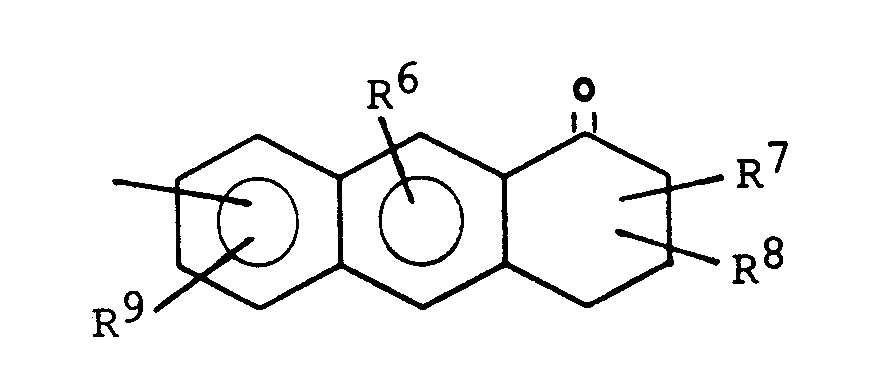
- one of the radicals R 4 and R 5 and in particular the radical R 5 represents a group of the formula:
- R 6 , R 9 and one of the radicals R 7 and R 8 are preferably a hydroxyl group and the other of the radicals R 7 and R 8 are a C 1 -C 4 -alkyl group, in particular a methyl group.
- One of the radicals R 4 and R 5 particularly preferably represents a group of the formula: which is particularly tied to the basic structure via its 2-lug.
- the radical R 3 in the formulas mentioned above preferably represents a hydroxyl group.
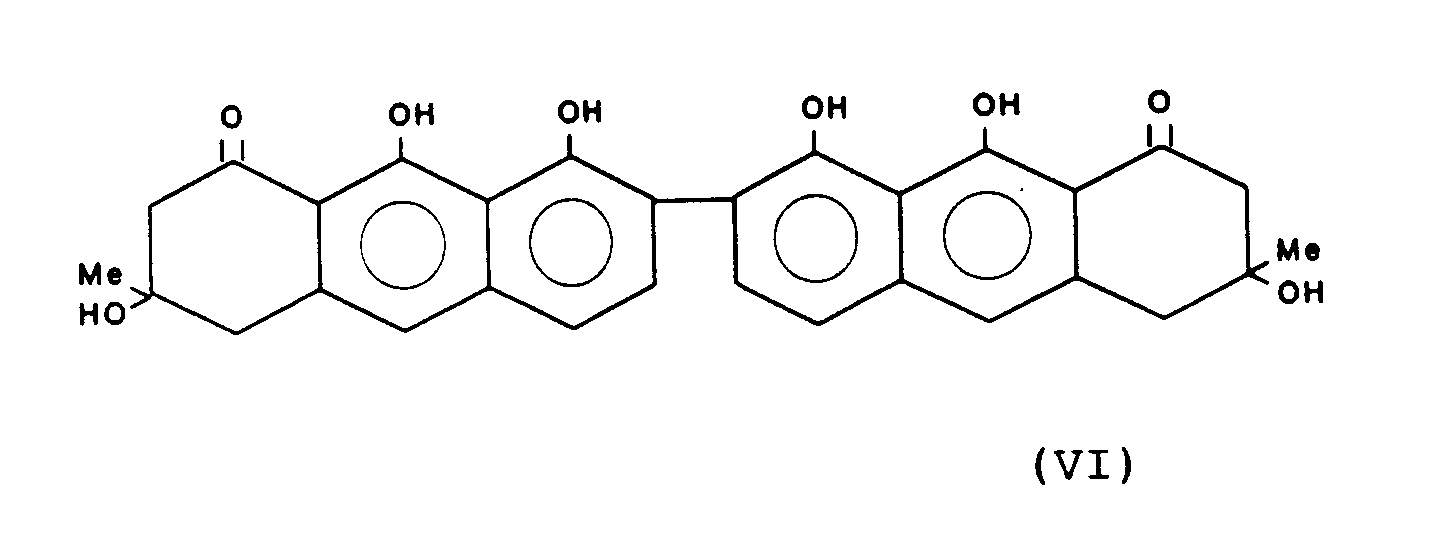
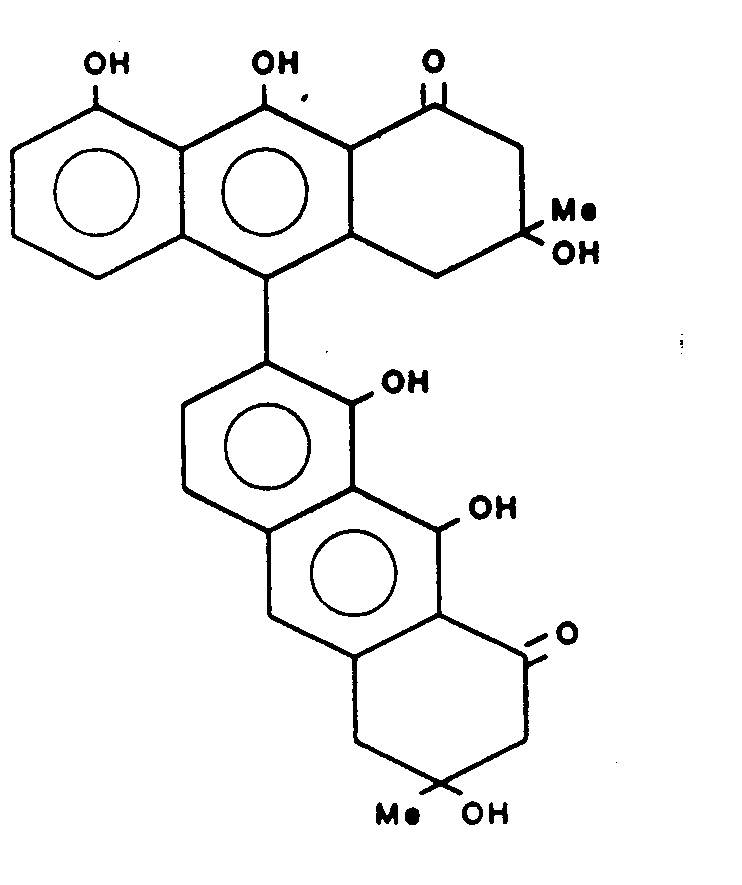
- Particularly preferred compounds are: These compounds are referred to below with the abbreviation given, which refers to the molecular weight.
- the process for the preparation of the compounds according to the invention consists in isolating them from the fruits of the genus Karwinskia (or other plants containing the compounds according to the invention). For this purpose, the fruits are dried and crushed in the usual way. Degreasing is then carried out using a non-polar organic solvent, for example pentane, hexane, petroleum ether, etc. The defatted fruits are then extracted with a medium polarity solvent. Suitable solvents are chlorinated aliphatic hydrocarbons, such as chloroform, methylene chloride, ethylene dichloride, etc. The extraction is carried out in a conventional manner, using about 3 to 10 times the amount of solvent, based on the fruit to be extracted (v / w). The extract is expediently concentrated before further processing, for example to one tenth to one twentieth of the original volume. If necessary, the solvent can also be removed completely and the residue can be worked up as described below.
- a non-polar organic solvent for example pentane, hexan
- a product which contains one (or more) of the compounds according to the invention is precipitated from the concentrated extract by adding a non-polar organic solvent, for example pentane, hexane, petroleum ether etc. This is obtained in the usual way, for example by means of thin-layer or column chromatography or by means of fractional crystallization.
- a non-polar organic solvent for example pentane, hexane, petroleum ether etc.
- the compounds obtained in this way can be converted into other compounds according to the invention by customary chemical reactions, such as esterifications, etherifications, ester and ether hydrolysis, substitution reactions on the aromatic nucleus, oxidations and reductions.
- the compounds T-514, 496, 544 and 516 can be obtained from the fruits of Karwinskia humboldtiana, for example according to the method described in J. Am. Isolate Chem. Soc. 97, 4986 (1975). Another method for obtaining T-514 is described in Toxicon 25, No. 5, 565-568 (1987).
- cytostatic and cytotoxic activity of the compounds according to the invention is very selective, in particular towards the liver, lungs and colon tissue.
- the compounds according to the invention are able to distinguish between benign and malignant cell types. They are therefore useful for the treatment of tumors, in particular for the treatment of liver, lung and colon carcinomas.
- the compounds according to the invention have antiviral activity and are therefore useful for the treatment of viral diseases, e.g. herpes simplex I, 11, 111.
- the compounds according to the invention can be administered either individually as therapeutic agents or together with other therapeutic agents. They can be administered as such, but in general they are administered in the form of pharmaceutical agents, that is to say as a mixture of the active compounds with suitable pharmaceutical carriers and / or auxiliaries.
- the compounds or agents can be administered orally or parenterally, preferably in parenteral dosage forms.
- the active ingredients are used in conventional pharmaceutical carriers, for example in the form of infusion solutions.
- compositions are produced in a customary manner by incorporating the active ingredient into a pharmaceutical carrier and / or excipient.
- the compounds according to the invention can be used in mammals (humans and animals) in doses of about 0.01 to about 2 mg, preferably about 0.01 mg to about 1 mg and in particular about 0.01 mg to about 0.5 mg or about 0.01 mg to about 0.1 mg per kg of body weight per day. They can be administered in a single dose or in multiple divided doses.
- the dose range mentioned is only an example. It is clear that the doctor will determine the most appropriate dose, taking into account such factors as age, weight, the disease to be treated, the severity and the location of the disease.
- the yellow powder obtained is fractionated on silica gel G (layer thickness 0.5 mm) with benzene: acetone (2: 1) as the eluent.
- the fraction with the lowest R f is compound T-514.
- This fraction is scraped off the chromatography plate and eluted back with acetone.
- the product is further purified on acetylated polyamide (0.5 mm layer thickness) with methanol: H 2 0 (2: 1) as the eluent. After recrystallization from benzene-hexane, pure T-514 (50 mg) is obtained.
- LD 50 (after intraperitoneal administration to the mouse): 6.52 + 0.86 mg / kg.
- T-510 of the formula 500 g of dried, crushed fruits of Karwinskia affin humboldtiana are extracted in succession with 3 l of petroleum ether (boiling range 60 - 70 ° C) and 3 l of chloroform.
- the chloroform extract is concentrated to 100 ml and the product is precipitated by adding 300 ml of n-hexane.
- the powder obtained is purified by layer chromatography on silica gel with benzene: acetone (3: 1) as the solvent.
- the fraction with the highest R f is purified on a silica gel column using benzene: acetone (40: 1) as the eluent.
- T-496 of the formula 500 g of dried, crushed fruits of Karwinskia humboldtiana are extracted in succession with 3 l of petroleum ether (boiling range approximately 60 to 70 ° C.) and 3 l of chloroform.
- the chloroform extract is concentrated to 100 ml and the product is precipitated by adding 300 ml of n-hexane twice.
- the yellow powder obtained is fractionated on silica gel G (layer thickness 0.5 mm) with benzene: acetone (2: 1) as the eluent.
- the fraction with the highest R f value is chromatographed on a column with silica gel with benzene: acetone (40: 1) as solvent.
- the pure product is precipitated with benzene-hexane. Yield: 50 mg of pure powder.
- T ISO 514 of the formula 500 g of dried, crushed fruits of the Karwinskia umbelleta are extracted in succession with 3 l of petroleum ether (boiling point 60-70 ° C.) and 3 l of chloroform.
- the chloroform extract is concentrated to 100 ml and the product is precipitated by adding 300 ml of n-hexane.
- the powder obtained is purified by layer chromatography on silica gel with benzene: acetone (2: 1) as solvent.
- the fraction with the lowest R f is subjected to silica gel column chromatography.
- the product is eluted with benzene: acetone (1: 1) and then purified on a Sephadex column LH with MeOH as solvent. Precipitation with n-hexane gives 30 mg of pure product.
- T-544 of the formula 500 g of dried, crushed fruits of Karwinskia humboldtiana are extracted in succession with 3 l of petroleum ether (boiling range approximately 60-70 ° C. and 3 l of chloroform. The chloroform extract is concentrated to 100 ml and the product is precipitated by adding 300 ml of n-hexane twice.
- the yellow powder obtained is fractionated on silica gel G (layer thickness 0.5 mm) with benzene; acetone (2: 1) as the eluent, and the fraction with the average R f value is determined by column chromatography on silica gel and benzene / acetone (20: 1 ) as the eluent After renewed chromatography and precipitation with n-hexane, 200 mg of pure product are obtained.
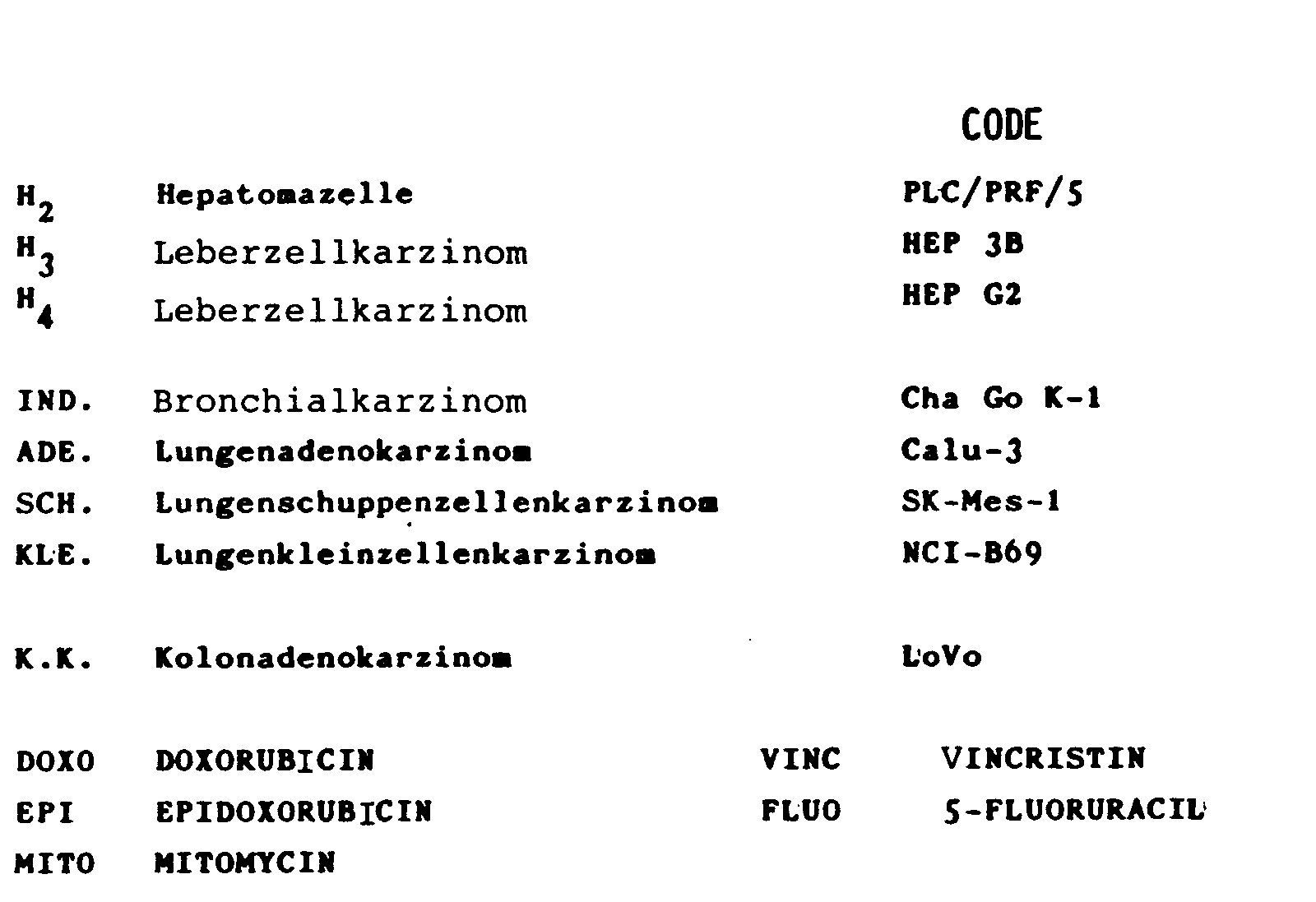
- Benign Chang liver cells were used as hepatic cells and three cell lines were used as neoplastic cells, namely Hepatom PLC / PRF / 5, Hep3B with the surface antigen of Hepatitis B and Hep2B without antigen.
- Benign lung epithelial cells Wi 1003 were used as cells of pulmonary origin and four cell lines were used as neoplastic cells, namely squamous cell carcinoma SK-mes-1, adenocarcinoma Calu, undifferentiated bronchogenic carcinoma Cha-Go-K-1 and small cell carcinoma NCI-H 69.
- Benign colonic epithelial cells were CCD-33Co as colon cells and the LoVo colon adenocarcinoma cell line as neoplastic cells.
- a mixture of Eagle's basal medium and sheep fetus serum (9 + 1) was used as the cell culture medium for all cell lines examined.
- the test substances (dissolved in ethanol or water) were added to the cell cultures in the concentrations below ( ⁇ g / ml).
- the evaluation after 72 hours of incubation was carried out in the usual way, determining the plate adhesion, morphology and proliferation of the cells.
- the modified therapeutic index shows the selectivity of the test substances, that is, a positive therapeutic index means that the neoplastic cells are more sensitive to the test substances than benign cells, whereas the reverse is the case with a negative modified therapeutic index.
- Table 3 The results are summarized in Table 3.
- the compound T-514 acts very selectively, that is to say it has a greater activity against malignant than against benign tumor cells.
- the compounds according to the invention are therefore useful cytostatics and tumor therapeutics with a large safety margin.
Landscapes
- Chemical & Material Sciences (AREA)
- Organic Chemistry (AREA)
- Acyclic And Carbocyclic Compounds In Medicinal Compositions (AREA)
- Organic Low-Molecular-Weight Compounds And Preparation Thereof (AREA)
- Pharmaceuticals Containing Other Organic And Inorganic Compounds (AREA)
Abstract
Description
Die Erfindung betrifft bestimmte Anthracenverbindungen zur therapeutischen Anwendung, sowie pharmazeutische Mittel, die diese Verbindungen enthalten.The invention relates to certain anthracene compounds for therapeutic use, and to pharmaceutical compositions containing these compounds.
Karwinskia humboldtiana ist ein Strauch aus der Familie der Rhamnaceen, der in den Halbwüsten von Nord- und Zentralmexiko und im Südwesten der USA häufig vorkommt und z.B. in Hagers Handbuch der pharmazeutischen Praxis, 4. Ausgabe, V. Band, S. 397, beschrieben ist. Die Pflanze ist dadurch aufgefallen, daß beim Genuß von Pflanzenteilen Lähmungserscheinungen beobachtet worden sind, deren Symptome ähnlich denjenigen des Guillain-Barre-Syndroms, der Poliomyelitis und anderer peripherer Polyneuropathien sind.Karwinskia humboldtiana is a shrub from the Rhamnaceae family that is common in the semi-deserts of northern and central Mexico and the southwestern United States, e.g. in Hager's Handbook of Pharmaceutical Practice, 4th Edition, V. Volume, p. 397. The plant was struck by the fact that paralysis symptoms were observed when eating parts of plants, the symptoms of which are similar to those of Guillain-Barre syndrome, poliomyelitis and other peripheral polyneuropathies.
Weiter wurde von extraneuronalen Schäden bei Ziegen und Schafen berichtet.Extraneuronal damage to goats and sheep has also been reported.
Untersucht wurden bisher vor allem die Früchte. Dreyer et al. in J. Am Chem. Soc. 1975, 97, 4986 konnte aus dem Endokarp dieser Früchte vier dimere Anthracenverbindungen isolieren und auftrennen. Diese Verbindungen erhielten entsprechend ihrem Molekulargewicht die Kurzbezeichnungen Z-496, T-514, T-516 und T-544.So far, mainly the fruits have been examined. Dreyer et al. in J. Am Chem. Soc. 1975, 97, 4986 was able to isolate and separate four dimeric anthracene compounds from the endocarp of these fruits. These compounds were given the abbreviations Z-496, T-514, T-516 and T-544 according to their molecular weight.
Überraschenderweise wurde nun gefunden, daß die erfindungsgemäßen Verbindungen eine selektive cytostatische und eine cytotoxische sowie antivirale Wirkung haben. Besonders vorteilhaft war die Wirkung auf Tumorzellen.Surprisingly, it has now been found that the compounds according to the invention have a selective cytostatic and a cytotoxic and antiviral effect. The effect on tumor cells was particularly advantageous.
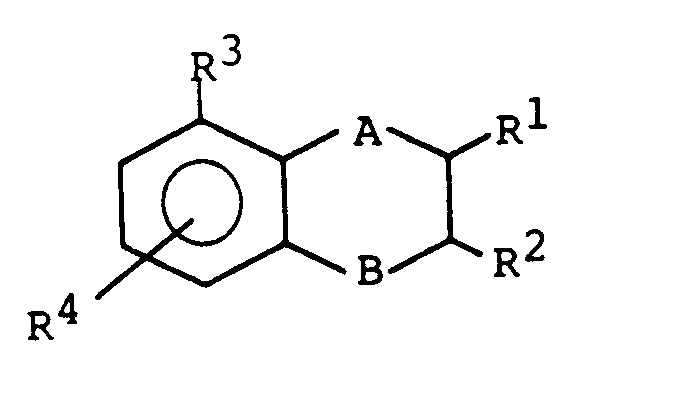
Die vorliegende Erfindung betrifft daher die Verbindungen der Formel 1:
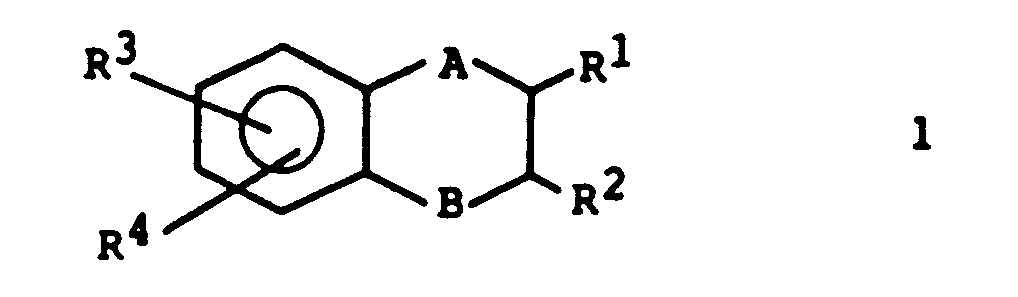
- A für C = O oder C-OH steht und B für CH-R5 oder C-R5 steht, wobei der die Gruppen A und B aufweisende Ring aromatisch ist, wenn A für C-OH und B für C-R5 stehen,
- R1 und R2, die gleich oder verschieden sein können, für eine C1-C4-Acylgruppe, C1-C4-Alkylgruppe, C1-C4-Alkoxygruppe steht oder R1 und R2 zusammen mit den Kohlenstoffatomen, an die sie gebunden sind, für einen Phenyl-, Cyclohexanon- oder Tetrahydropyranring stehen, der durch mindestens einen Rest substituiert sein kann, der ausgewählt ist unter einer C1-C4-Alkylgruppe, C1-C4-Alkoxygruppe, Hydroxygruppe, und C1-C4-Acyloxygruppe,
- R3 für eine C1-C4-Alkylgruppe, C1-C4-Alkoxygruppe, C1-C4-Acyloxygruppe oder Hydroxygruppe steht, und
einer der Reste R4 und R5 für ein Wasserstoffatom und der andere für eine Gruppe der Formel:

und deren tautomere Formen, Stellungsisomere und optische Isomere.The present invention therefore relates to the compounds of the formula 1:
- A stands for C = O or C-OH and B stands for CH-R 5 or CR 5 , the ring containing groups A and B being aromatic if A stands for C-OH and B for CR 5 ,
- R 1 and R 2 , which may be the same or different, represent a C 1 -C 4 acyl group, C 1 -C 4 alkyl group, C 1 -C 4 alkoxy group or R 1 and R 2 together with the carbon atoms, to which they are attached represent a phenyl, cyclohexanone or tetrahydropyran ring which can be substituted by at least one radical which is selected from a C 1 -C 4 alkyl group, C 1 -C 4 alkoxy group, hydroxy group, and C 1 -C 4 acyloxy group,
- R 3 represents a C 1 -C 4 alkyl group, C 1 -C 4 alkoxy group, C 1 -C 4 acyloxy group or hydroxy group, and
one of the radicals R 4 and R 5 for a hydrogen atom and the other for a group of the formula:
and their tautomeric forms, positional isomers and optical isomers.
Eine bevorzugte Ausführungsform sind die Verbindungen der Formel:

Vorzugsweise ist der Rest R4 in ortho-Stellung zum Rest R3 an den Phenylring gebunden.The radical R 4 is preferably bonded to the phenyl ring in the ortho position to the radical R 3 .
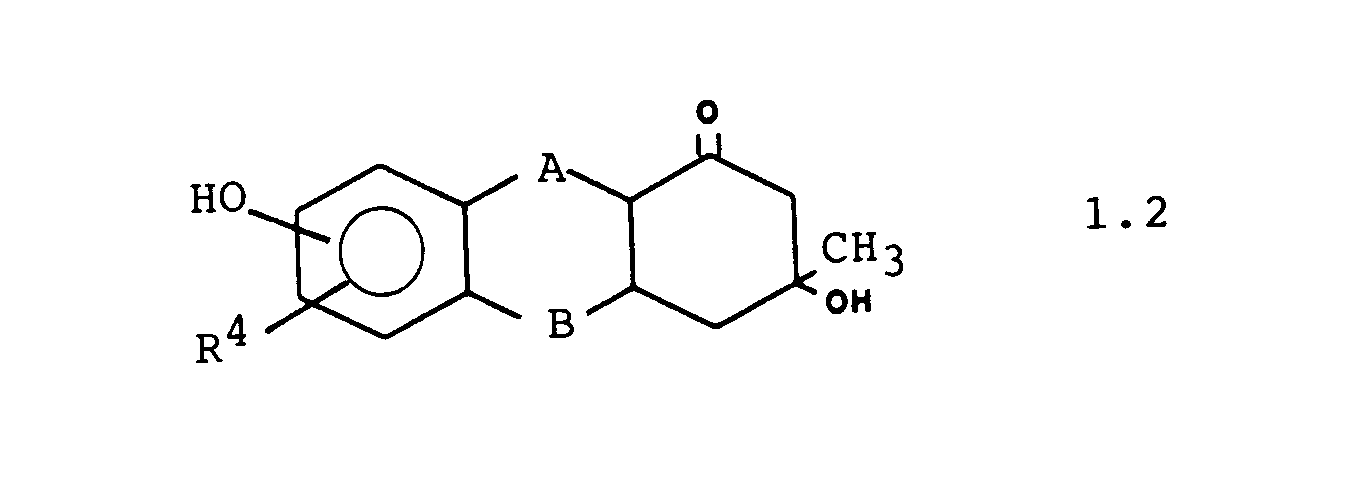
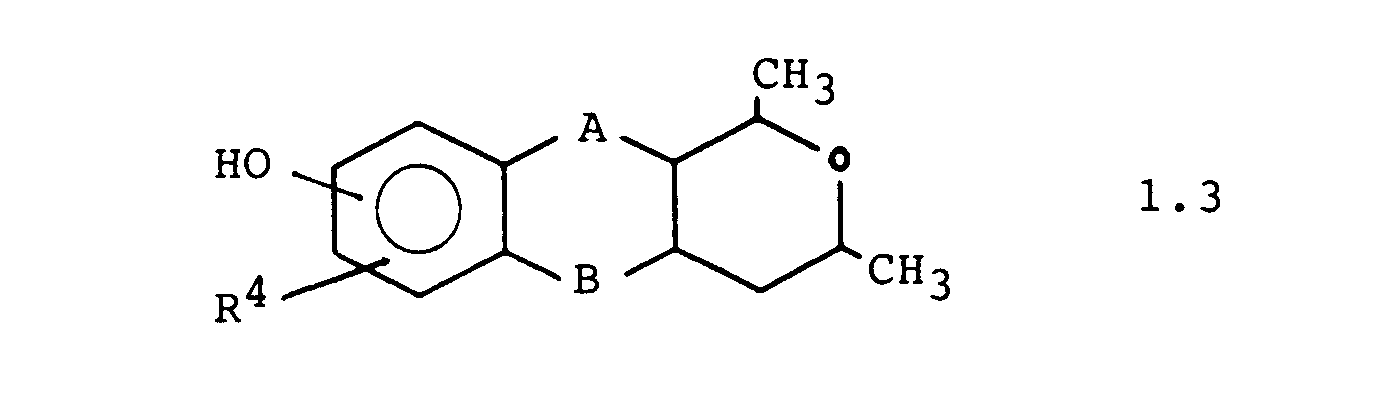
Weitere bevorzugte Ausführungsformen sind die Verbindungen der Formeln 1.1. 1.2 und 1.3:
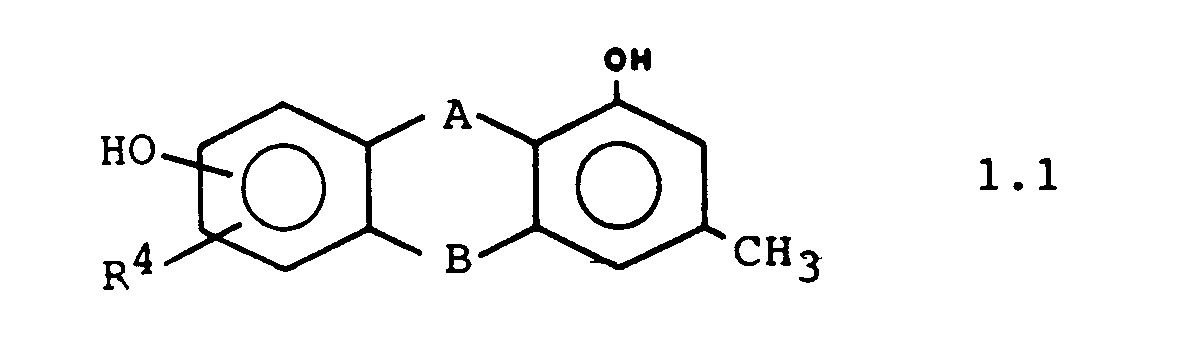
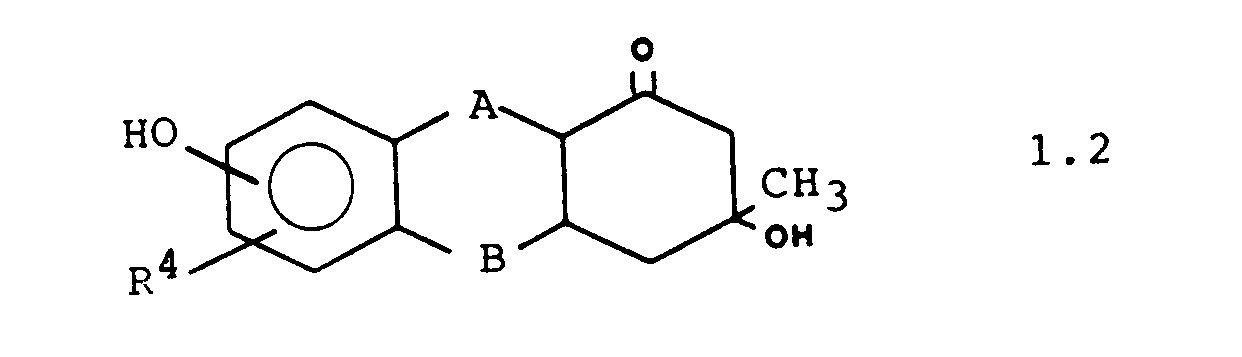
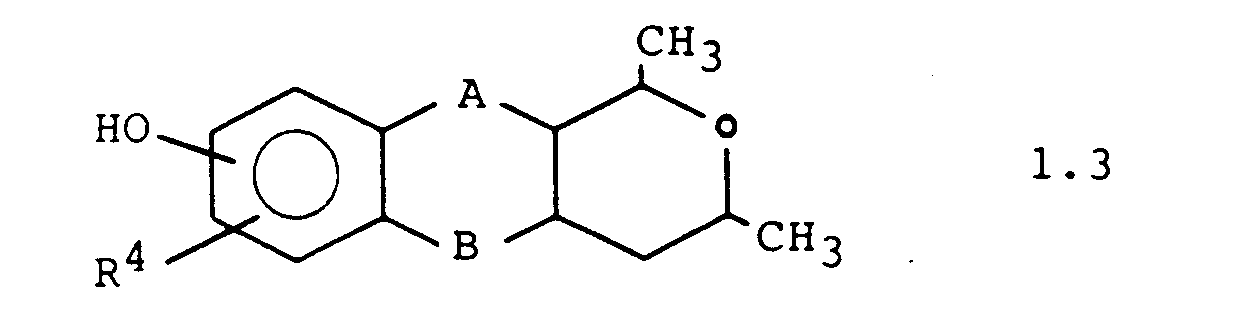
Eine weitere bevorzugte Ausführungsform sind die Verbindungen der Formel 1, worin R1 für eine C1-C4-Acylgruppe, insbesondere eine Acetylgruppe, und R2 für eine C1-C4-Alkylgruppe,insbesondere eine Methylgruppe, stehen.A further preferred embodiment is the compounds of the formula 1 in which R 1 is a C 1 -C 4 -acyl group, in particular an acetyl group, and R 2 is a C 1 -C 4 -alkyl group, in particular a methyl group.
In den oben genannten Formeln steht einer der Reste R4 und R5 und insbesondere der Rest R5 für eine Gruppe der Formel:
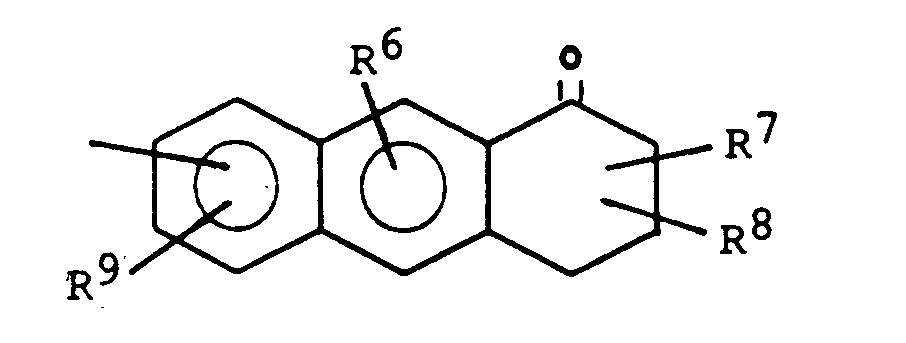
Vorzugsweise stehen R6, R9 und einer der Reste R7 und R8 für eine Hydroxygruppe und der andere der Reste R7 und R8 für eine C1-C4-Alkylgruppe, insbesondere eine Methylgruppe.R 6 , R 9 and one of the radicals R 7 and R 8 are preferably a hydroxyl group and the other of the radicals R 7 and R 8 are a C 1 -C 4 -alkyl group, in particular a methyl group.
Besonders bevorzugt steht einer der Reste R4 und R5 für eine Gruppe der Formel:

Vorzugsweise steht der Rest R3 in den oben genannten Formeln für eine Hydroxygruppe.The radical R 3 in the formulas mentioned above preferably represents a hydroxyl group.
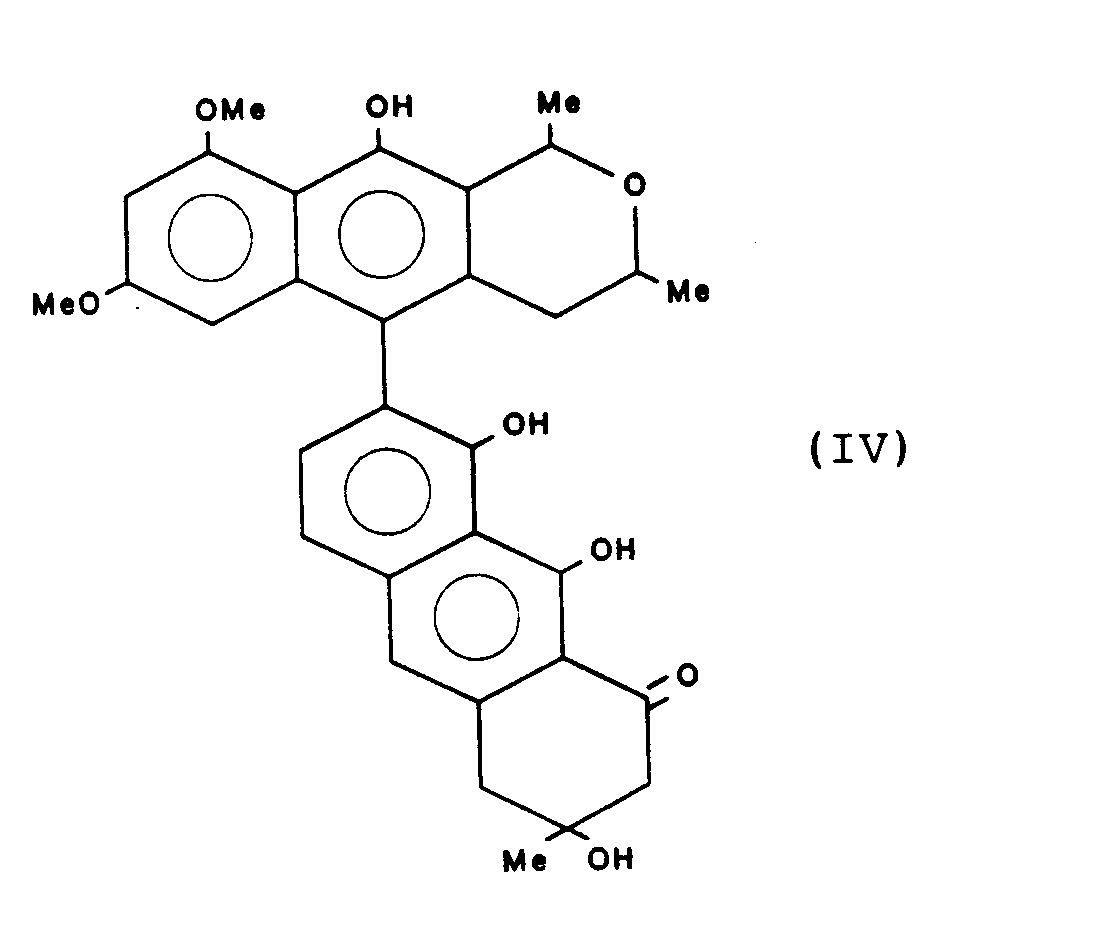
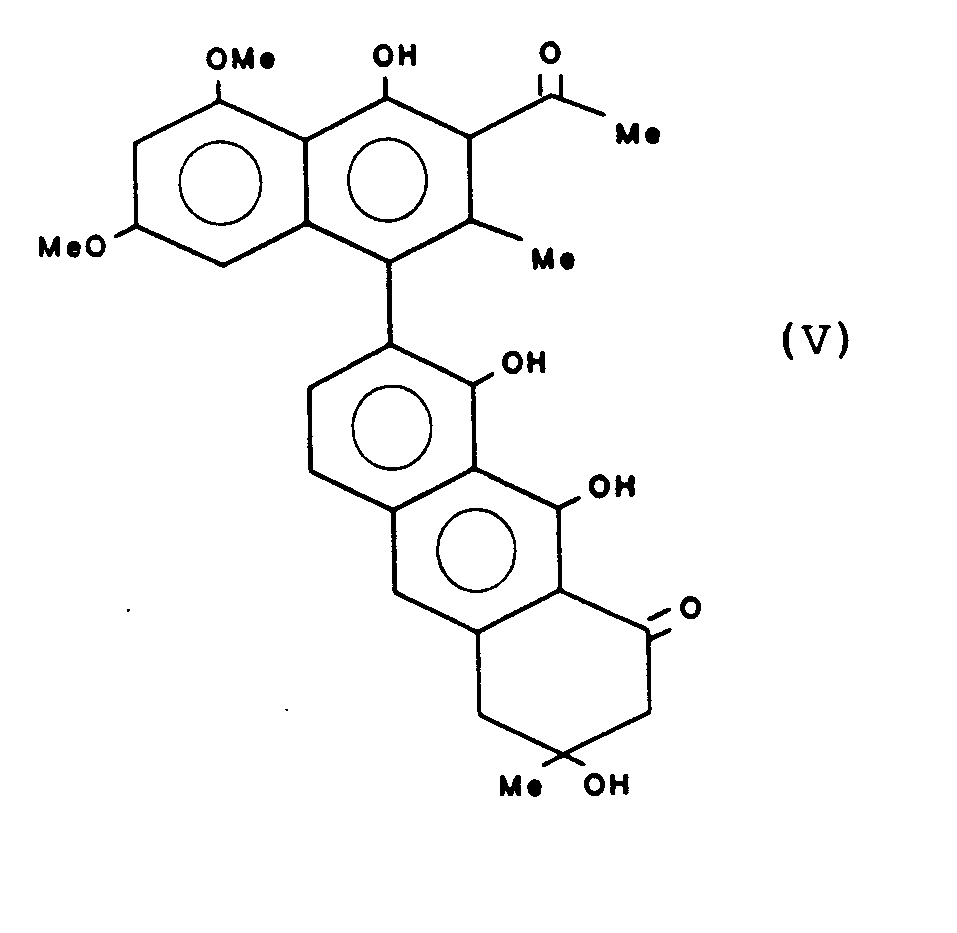
Besonders bevorzugte Verbindungen sind:
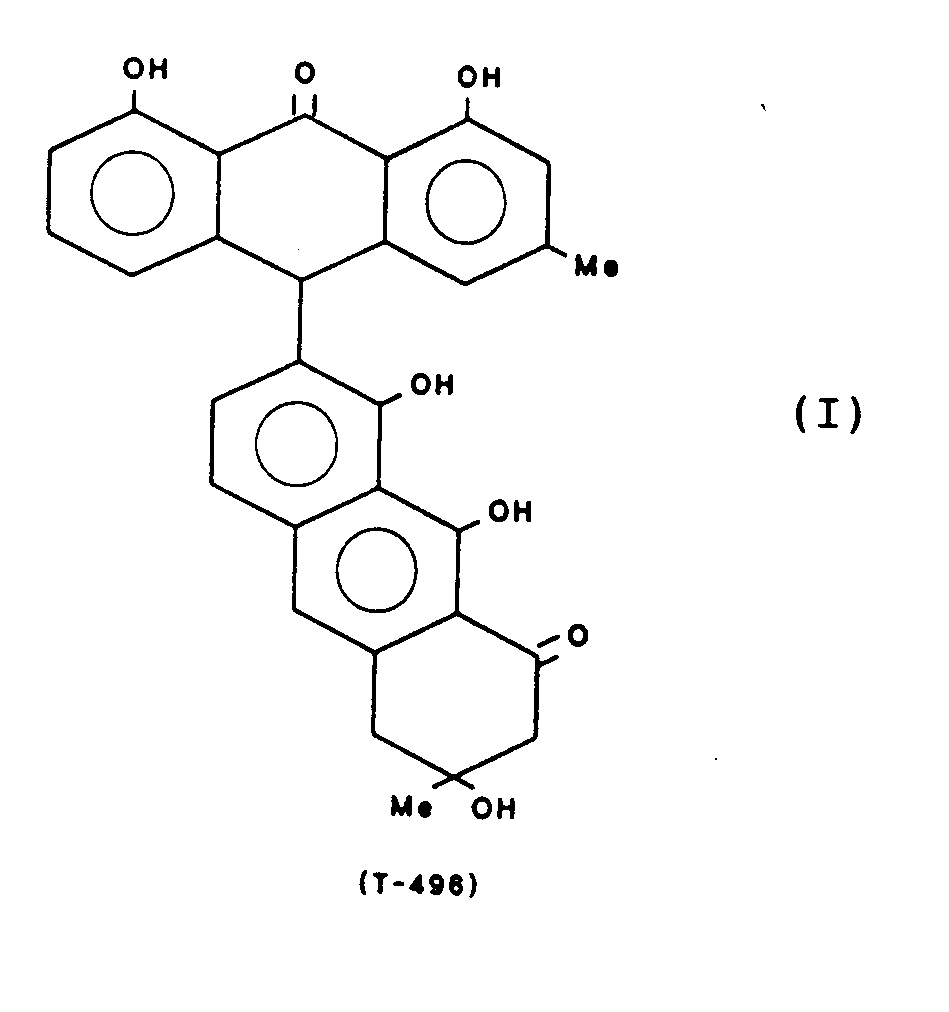
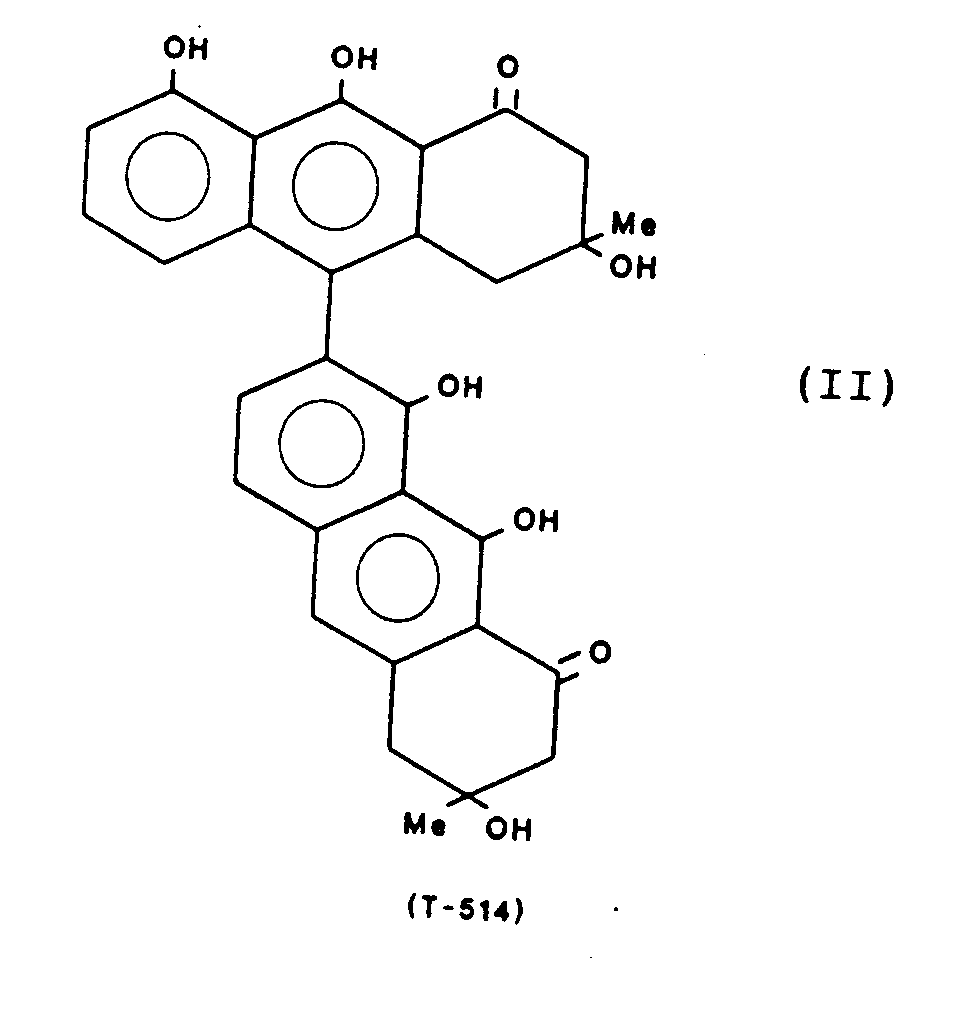


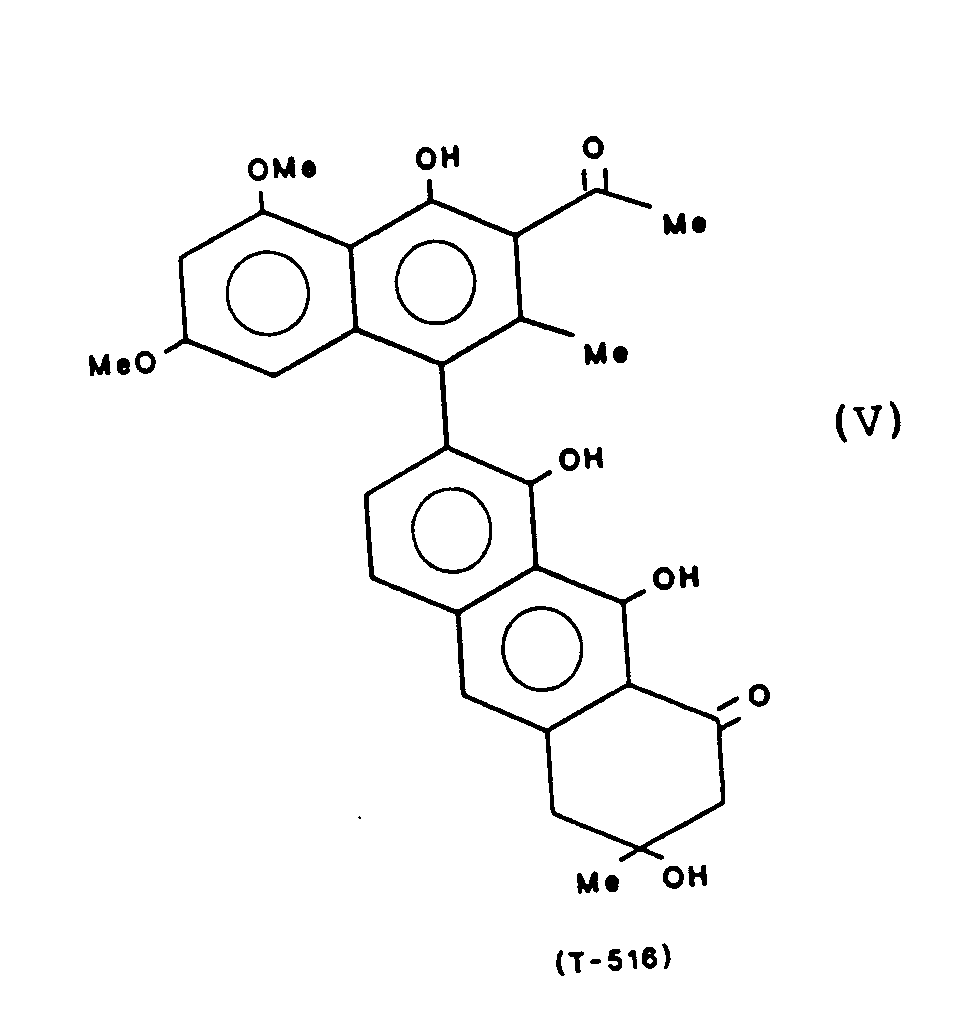

Das Verfahren zur Herstellung der erfindungsgemäßen Verbindungen besteht darin, daß man diese aus den Früchten der Gattung Karwinskia (oder anderer die erfindungsgemäßen Verbindungen enthaltenden Pflanzen) isoliert. Zu diesem Zweck werden die Früchte in üblicher Weise getrocknet und zerkleinert. Anschließend führt man eine Entfettung mit einem unpolaren organischen Lösungsmittel, beispielsweise Pentan, Hexan, Petrolether etc. Durch. Die entfetteten Früchte werden dann mit einem Lösungsmittel mittlerer Polarität extrahiert. Geeignete Lösungsmittel sind chlorierte aliphatische Kohlenwasserstofe, wie Chloroform, Methylenchlorid, Ethylendichlorid etc. Die Extraktion führt man in üblicher Weise durch, wobei man etwa die 3- bis 10fache Menge an Lösungsmittel, bezogen auf die zu extrahierenden Früchte (V/G), verwendet. Zweckmäßigerwise wird vor der Weiterverarbeitung der Extrakt eingeengt, beispielsweise auf ein Zehntel bis ein Zwanzigstel des ursprünglichen Volumens. Gegebenenfalls kann das Lösungsmittel auch vollständig entfernt und der Rückstand wie unten beschrieben, aufgearbeitet werden.The process for the preparation of the compounds according to the invention consists in isolating them from the fruits of the genus Karwinskia (or other plants containing the compounds according to the invention). For this purpose, the fruits are dried and crushed in the usual way. Degreasing is then carried out using a non-polar organic solvent, for example pentane, hexane, petroleum ether, etc. The defatted fruits are then extracted with a medium polarity solvent. Suitable solvents are chlorinated aliphatic hydrocarbons, such as chloroform, methylene chloride, ethylene dichloride, etc. The extraction is carried out in a conventional manner, using about 3 to 10 times the amount of solvent, based on the fruit to be extracted (v / w). The extract is expediently concentrated before further processing, for example to one tenth to one twentieth of the original volume. If necessary, the solvent can also be removed completely and the residue can be worked up as described below.
Aus dem eingeengten Extrakt wird durch Zugabe eines unpolaren organischen Lösungsmittels, beispielsweise Pentan, Hexan, Petrolether etc., ein Produkt ausgefällt, das eine (oder mehrere)der erfindungsgemäßen Verbindungen enthält. Dieses wird in üblicher Weise gewonnen, beispielsweise mittels Dünnschicht- oder Säulenchromatographie oder mittels fraktionierter Kristallisation.A product which contains one (or more) of the compounds according to the invention is precipitated from the concentrated extract by adding a non-polar organic solvent, for example pentane, hexane, petroleum ether etc. This is obtained in the usual way, for example by means of thin-layer or column chromatography or by means of fractional crystallization.
Die auf diese Weise erhaltenen Verbindungen können durch übliche chemische Umsetzungen, wie Veresterungen, Veretherungen, Ester- und Etherhydrolysen, Substitutionsreaktionen am aromatischen Kern, Oxidationen und Reduktionen in andere erfindungsgemäße Verbindungen umgewandelt werden.The compounds obtained in this way can be converted into other compounds according to the invention by customary chemical reactions, such as esterifications, etherifications, ester and ether hydrolysis, substitution reactions on the aromatic nucleus, oxidations and reductions.
Die Verbindungen T-514, 496, 544 und 516 lassen sich aus den Früchten von Karwinskia humboldtiana beispielsweise nach dem in J. Am. Chem. Soc.97 , 4986 (1975) beschriebenen Verfahren isolieren. Ein weiteres Verfahren zur Gewinnung von T-514 ist in Toxicon 25, Nr. 5, 565-568 (1987) beschrieben.The compounds T-514, 496, 544 and 516 can be obtained from the fruits of Karwinskia humboldtiana, for example according to the method described in J. Am. Isolate Chem. Soc. 97, 4986 (1975). Another method for obtaining T-514 is described in Toxicon 25, No. 5, 565-568 (1987).
Pharmakologische Untersuchungen haben gezeigt, daß die cytostatische und cytotoxische Wirkung der erfindungsgemäßen Verbindungen sehr selektiv ist, insbesondere gegenüber Leber, Lunge und Kolongewebe. Die erfindungsgemäßen Verbindungen sind in der Lage, zwischen gutartigen und bösartigen Zelltypen zu unterscheiden. Sie sind daher zur Tumorbehandlung, insbesondere zur Behandlung von Leber-, Lungen-und Kolonkarzinomen, brauchbar. Außerdem hat sich gezeigt, daß die erfindungsgemäßen Verbindungen antivirale Wirkung besitzen und daher zur Behandlung von Viruserkrankungen, z.B.Herpes simplex I, 11, 111, brauchbar sind.Pharmacological studies have shown that the cytostatic and cytotoxic activity of the compounds according to the invention is very selective, in particular towards the liver, lungs and colon tissue. The compounds according to the invention are able to distinguish between benign and malignant cell types. They are therefore useful for the treatment of tumors, in particular for the treatment of liver, lung and colon carcinomas. In addition, it has been shown that the compounds according to the invention have antiviral activity and are therefore useful for the treatment of viral diseases, e.g. herpes simplex I, 11, 111.
Die erfindungsgemäßen Verbindungen können entweder einzeln als therapeutische Wirkstoffe oder zusammen mit anderen therapeutischen Wirkstoffen verabreicht werden. Sie können als solche verabreicht werden, im allgemeinen werden sie jedoch in Form pharmazeutischer Mittel verabreicht, das heißt als Mischung der Wirkstoffe mit geeigneten pharmazeutischen Trägern und/oder Hilfsstoffen. Die Verbindungen oder Mittel können oral oder parenteral, vorzugsweise in parenteralen Darreichungsformen, verabreicht werden. Zu diesem Zweck kommen die Wirkstoffe in üblichen pharmazeutischen Trägern zur Anwendung, beispielsweise in Form von Infusionslösungen.The compounds according to the invention can be administered either individually as therapeutic agents or together with other therapeutic agents. They can be administered as such, but in general they are administered in the form of pharmaceutical agents, that is to say as a mixture of the active compounds with suitable pharmaceutical carriers and / or auxiliaries. The compounds or agents can be administered orally or parenterally, preferably in parenteral dosage forms. For this purpose, the active ingredients are used in conventional pharmaceutical carriers, for example in the form of infusion solutions.
Die Herstellung der pharmazeutischen Mittel erfolgt in üblicher Weise, indem man den Wirkstoff einem pharmazeutischen Träger und/oder Hilfsstoff einverleibt.The pharmaceutical compositions are produced in a customary manner by incorporating the active ingredient into a pharmaceutical carrier and / or excipient.
Zur therapeutischen Behandlung können die erfindungsgemäßen Verbindungen Säugern (Mensch und Tier) in Dosen von etwa 0,01 bis etwa 2 mg, vorzugsweise etwa 0.01 mg bis etwa 1 mg und insbesondere etwa 0.01 mg bis etwa 0.5 mg oder etwa 0.01 mg bis etwa 0.1 mg pro kg Körpergewicht pro Tag verabreicht werden. Sie können in einer einzelnen Dosis oder in mehreren aufgeteilten Dosen verabreicht werden. Der genannte Dosisbereich ist nur beispielhaft. Es ist klar, daß der Arzt die am besten geeignete Dosis bestimmt, wobei solche Faktoren wie Alter, Gewicht, die zu behandelnde Krankheit, die Schwere und der Situs der Krankheit zu berücksichtigen sind.For therapeutic treatment, the compounds according to the invention can be used in mammals (humans and animals) in doses of about 0.01 to about 2 mg, preferably about 0.01 mg to about 1 mg and in particular about 0.01 mg to about 0.5 mg or about 0.01 mg to about 0.1 mg per kg of body weight per day. They can be administered in a single dose or in multiple divided doses. The dose range mentioned is only an example. It is clear that the doctor will determine the most appropriate dose, taking into account such factors as age, weight, the disease to be treated, the severity and the location of the disease.
Die folgenden Beispiele erläutern die Erfindung.The following examples illustrate the invention.
Gewinnung von 3,3',8,8',9,9'-Hexahydroxy-3,3,4,4-tetrahydro-(7,10')-bisanthracen-1,1'-(2H,2H')-dion (T-514) der Formel
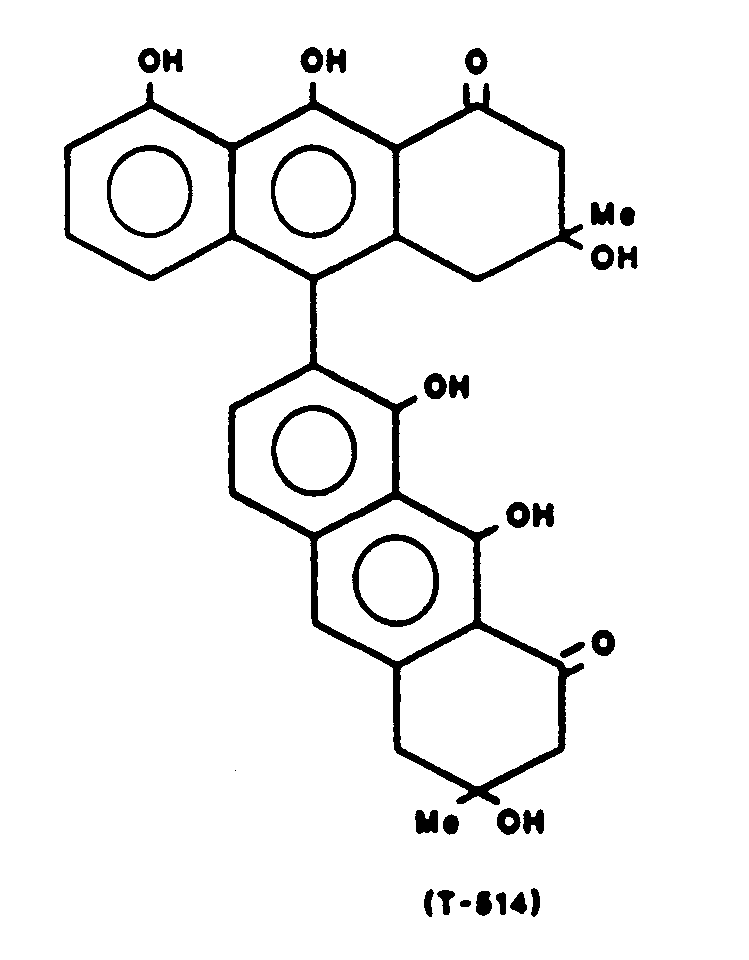
Schmelzpunkt: 130 °C 1H-NMR und 13C-NMR-Spektren sind in Tabelle 1, Beispiel 2 zusammengestellt.Melting point: 130 ° C. 1 H-NMR and 13 C-NMR spectra are compiled in Table 1, Example 2.
LD50 (nach intraperitonealer Verabreichung an der Maus): 6,52
500 g getrocknete, gemahlene Früchte von Karwinskia parvifolia wurden nacheinander mit jeweils 3 l Petroläther, Chloroform und Methanol extrahiert. Die Extraktionen erfolgten jeweils 3 Tage bei Raumtemperatur. Der Chloroformextrakt wurde nach Abdampfen des Lösungsmittels an Kieselgel mit Benzol : Aceton(3 : 1), 0,1 % Essigsäure, in drei Fraktionen aufgetrennt. Jede Fraktion wurde weiter durch Chromatographie an Kieselgel und acetyliertem Polyamid gereinigt. Aus der 1. Fraktion wurde eine als T-496 bezeichnete Verbindung, aus der 3. Fraktion die Verbindung T-514 und aus der 2. Fraktion die gewünschte Verbindung T 514' gewonnen. Umkristallisation von T-514' aus Benzol-Hexan liefert ein gelbes Pulver (450 mg) mit einem Schmelzpunkt von 169 bis 171 °C. UV (MeOH) max 220 (4,83), 266 (4,97), 408 (4,38);500 g of dried, ground fruits of Karwinskia parvifolia were extracted successively with 3 l of petroleum ether, chloroform and methanol. The extractions were carried out for 3 days at room temperature. After evaporation of the solvent on silica gel, the chloroform extract was separated into three fractions with benzene: acetone (3: 1), 0.1% acetic acid. Each fraction was further purified by chromatography on silica gel and acetylated polyamide. A compound designated T-496 was obtained from the 1st fraction, compound T-514 from the 3rd fraction and the desired compound T 514 'from the 2nd fraction. Recrystallization of T-514 'from benzene-hexane gives a yellow powder (450 mg) with a melting point of 169 to 171 ° C. UV (MeOH) max 220 (4.83), 266 (4.97), 408 (4.38);
IR: 3360,1625,1350,1250;IR: 3360, 1625, 1350, 1250;
EIMS: m/z (rel. int.) M 514 (30), 478 (80), 240 (10), 43 (100)EIMS: m / z (rel. Int.) M 514 (30), 478 (80), 240 (10), 43 (100)
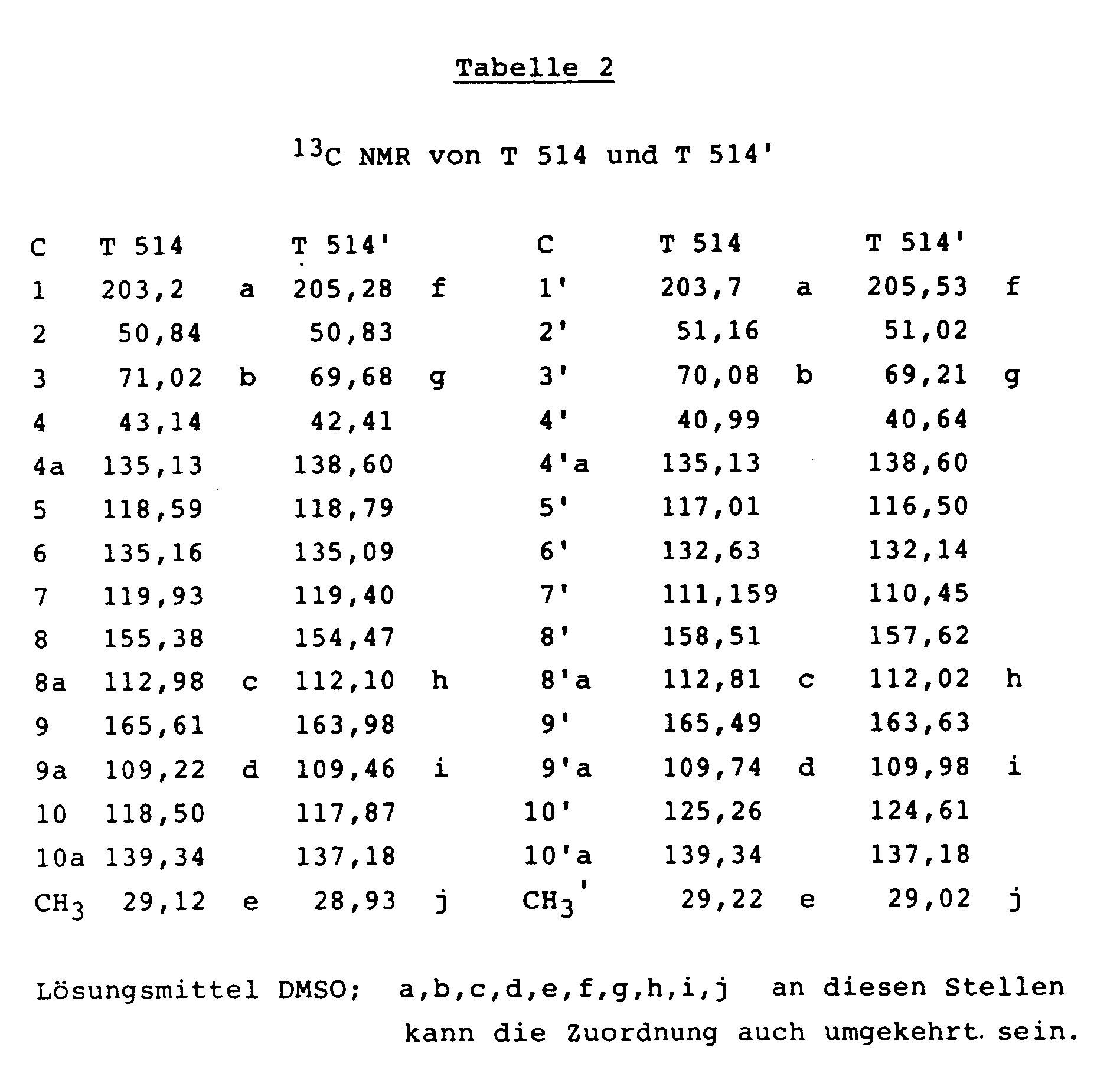
Die NMR-Spektren von T-514 und T-514' sind in den nachfolgenden Tabellen 1 und 2 zusammengestellt.

Gewinnung von T-510 der Formel:
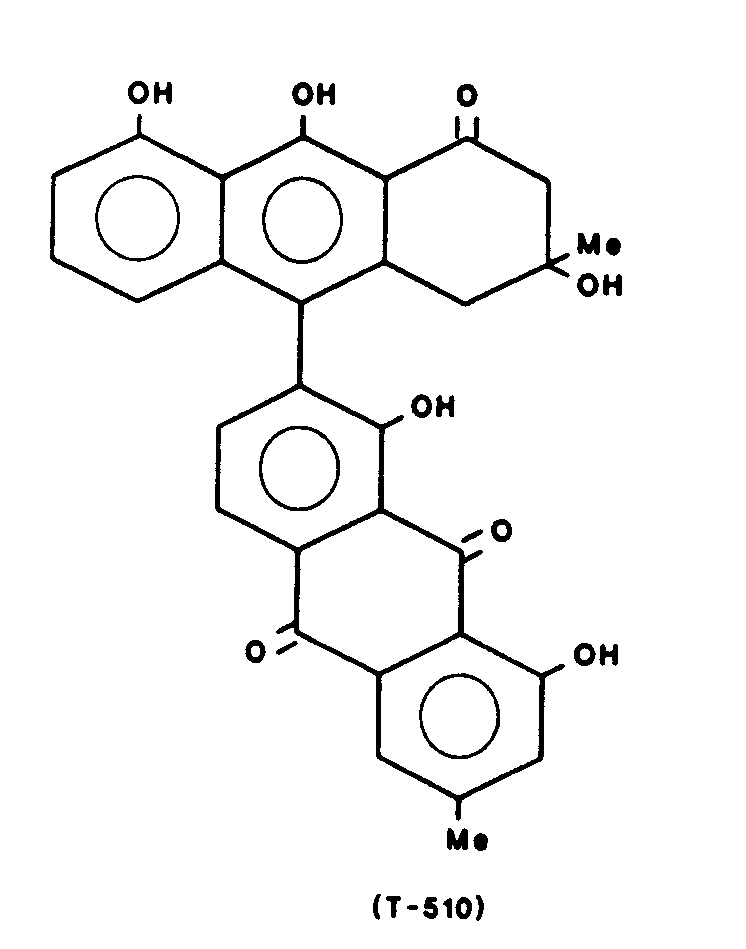
Schmelzpunkt 136 - 138 °C UV : λ max. 423 (4.28) 314(4.78) 264 (4.70) 226 (4.78)Melting point 136 - 138 ° C UV: λ max. 423 (4.28) 314 (4.78) 264 (4.70) 226 (4.78)
IR (cm-1) 3400, 1720, 1690, 1630, 1270, 750IR (cm -1 ) 3400, 1720, 1690, 1630, 1270, 750

Gewinnung von T-496 der Formel:
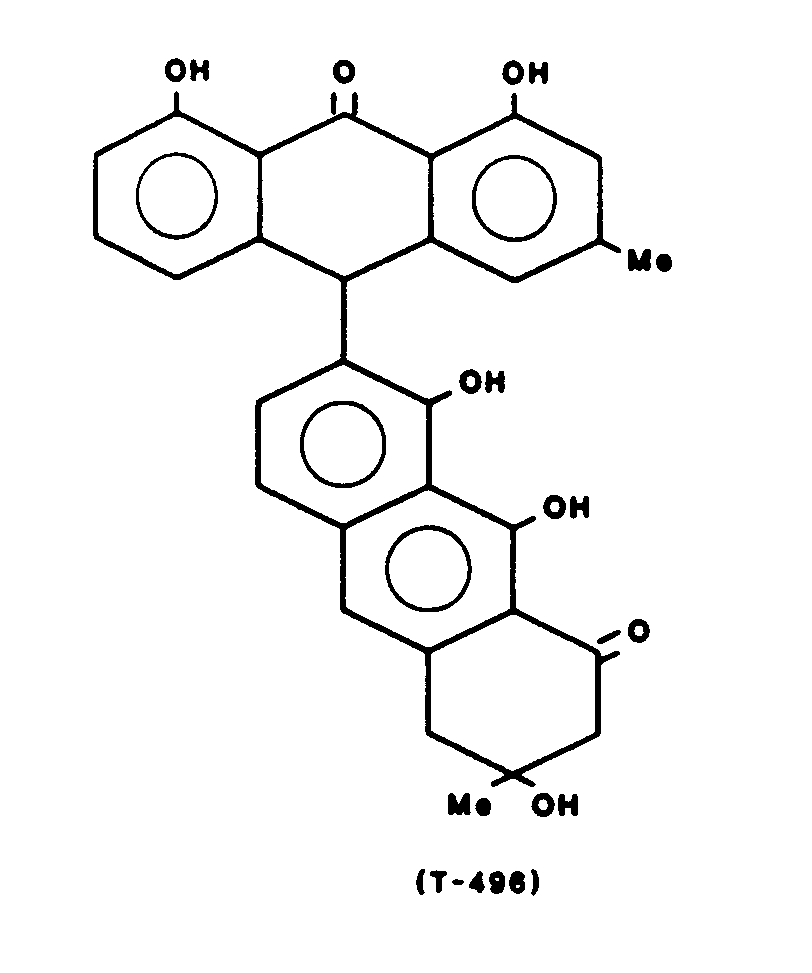
Schmelzpunkt 230° CMelting point 230 ° C
UV: λ max 227 (4.66) 273. (4.71) 397(4.15)UV: λ max 227 (4.66) 273. (4.71) 397 (4.15)
IR: (cm -1) 3415,1635,1620,1600IR: (cm -1 ) 3415.1635.1620.1600
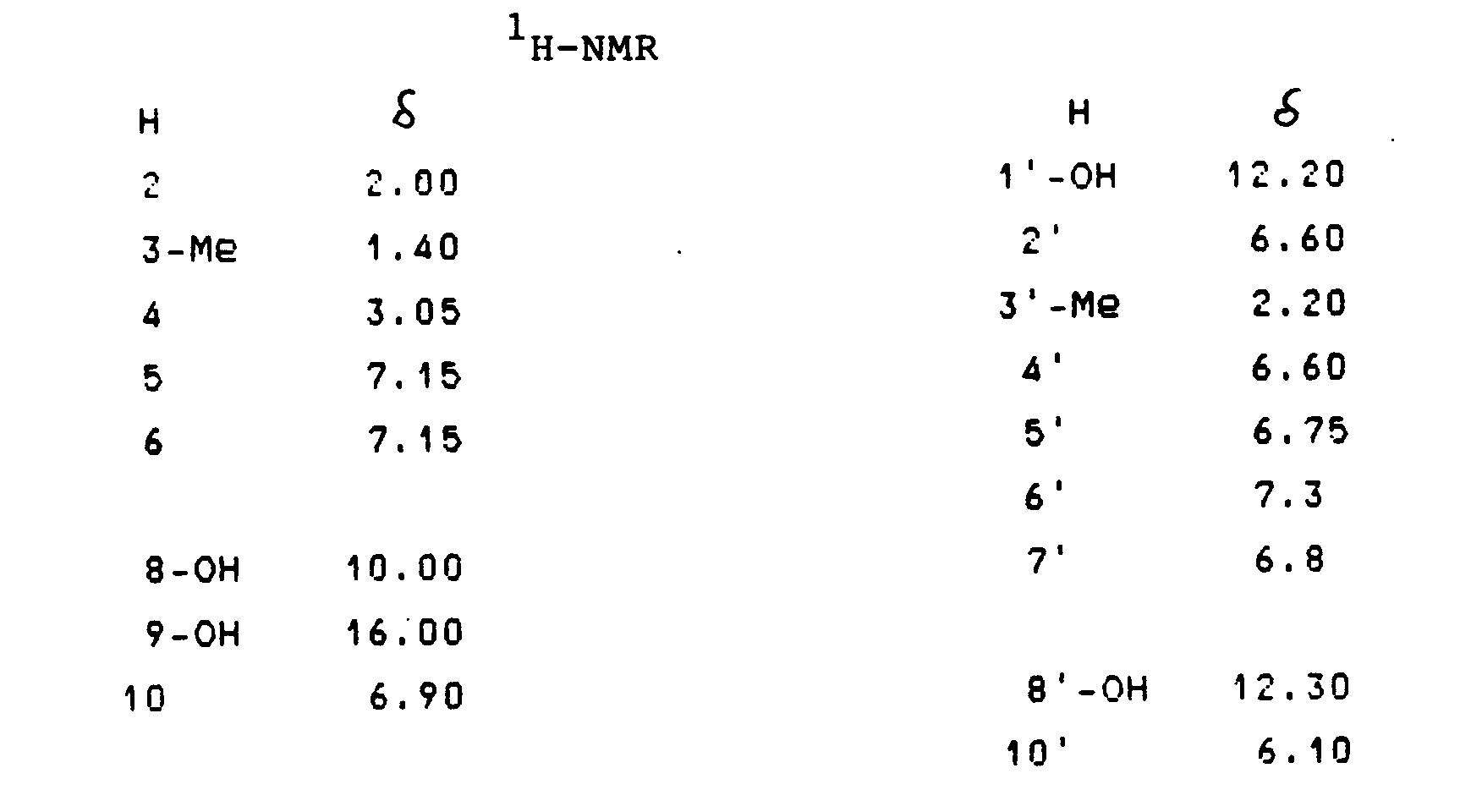
Gewinnung von T ISO 514 der Formel:
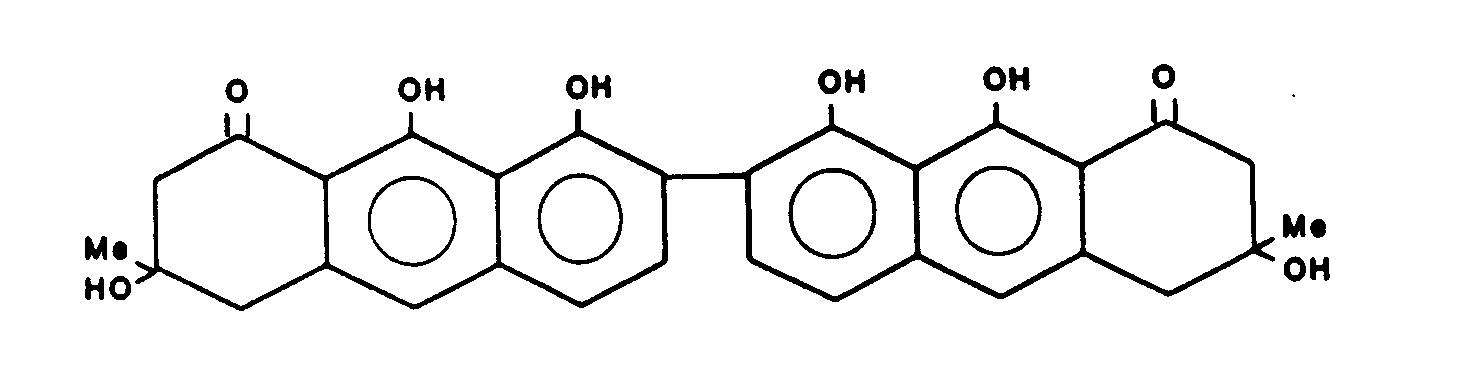
Schmelzpunkt : 161 - 164 CMelting point: 161-164 C.
UV : λ max. 422 (3.75) 270 (4.64) 220 (4.1 )UV: λ max. 422 (3.75) 270 (4.64) 220 (4.1)
lR(cm-1) 3400,1630,1600lR (cm -1 ) 3400.1630.1600

Gewinnung von T-544 der Formel:

Schmelzpunkt : 166 - 168 °CMelting point: 166-168 ° C
UV (MeOH) λ max. 228 (4.67) 242 (4.77) 270 (4.63) 415 (4.00)UV (MeOH) λ max. 228 (4.67) 242 (4.77) 270 (4.63) 415 (4.00)
lR(cm-1) 3390,1625lR (cm -1 ) 3390.1625
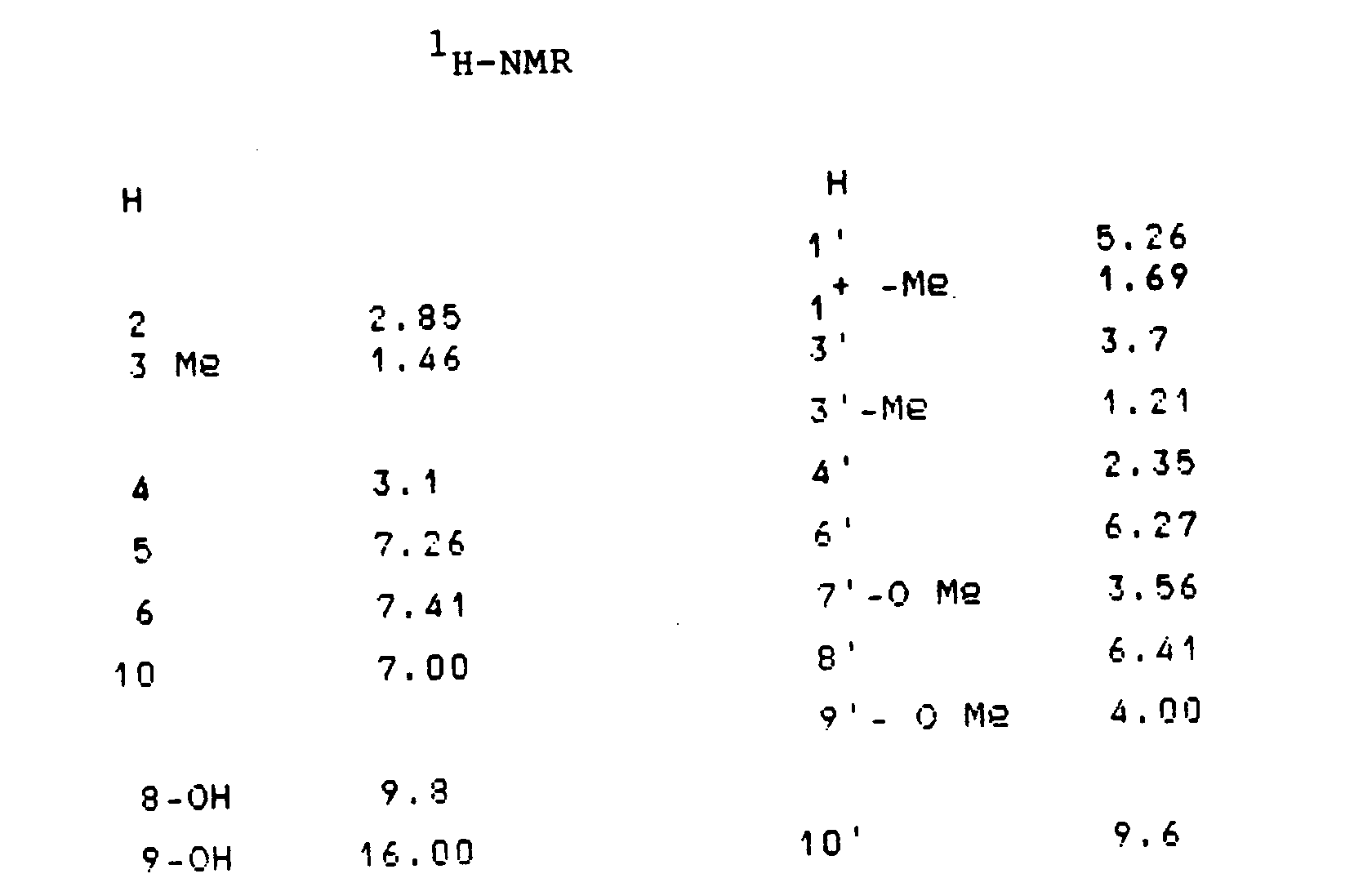
Cytotoxische Wirkung von T-514Cytotoxic effects of T-514
Für den Test wurden Zellen menschlichen Ursprungs verwendet. Als hepatische Zellen wurden gutartige Chang-Leberzellen und als neoplastische Zellen drei Zellinien verwendet, nämlich Hepatom PLC/PRF/5, Hep3B mit dem Oberflächenantigen von Hepatitis B und Hep2B ohne Antigen.Cells of human origin were used for the test. Benign Chang liver cells were used as hepatic cells and three cell lines were used as neoplastic cells, namely Hepatom PLC / PRF / 5, Hep3B with the surface antigen of Hepatitis B and Hep2B without antigen.
Als Zellen pulmonalen Ursprungs wurden gutartige Lungenepithelzellen Wi 1003 und als neoplastische Zellen vier Zellinien verwendet, nämlich Schuppenkarzinom SK-mes-1, Adenokarzinom Calu, undifferenziertes bronchogenes Karzinom Cha-Go-K-1 und Kleinzellenkarzinom NCI-H 69.Benign lung epithelial cells Wi 1003 were used as cells of pulmonary origin and four cell lines were used as neoplastic cells, namely squamous cell carcinoma SK-mes-1, adenocarcinoma Calu, undifferentiated bronchogenic carcinoma Cha-Go-K-1 and small cell carcinoma NCI-H 69.
Als Kolonzellen wurden gutartige Kolonepithelzellen CCD-33Co und als neoplastische Zellen die Kolonadenokarzinom-Zellinie LoVo.Benign colonic epithelial cells were CCD-33Co as colon cells and the LoVo colon adenocarcinoma cell line as neoplastic cells.
Als Zellkulturmedium für alle untersuchten Zellinien kam eine Mischung aus Eagle's Basalmedium und Schaf-Fötusserum (9 + 1) zur Anwendung. Die Testsubstanzen (in Äthanol oder Wasser gelöst) wurden den Zellkulturen in den nachstehenden Konzentrationen (ug/ml) hinzugefügt.
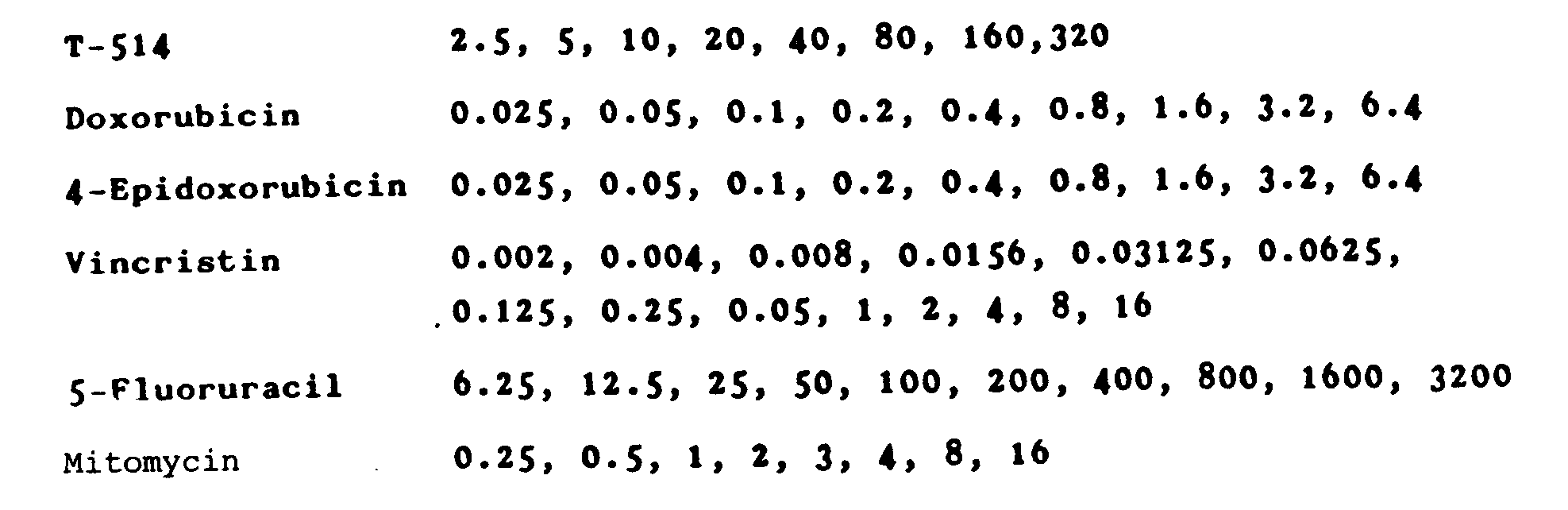
Für die Kontrollversuche wurde das Lösungsmittel ohne die Testsubstanzen eingesetzt.The solvent without the test substances was used for the control experiments.
Die Auswertung nach 72-stündiger Inkubation erfolgte in üblicher Weise unter Bestimmung der Plattenhaftung, Morphologie und Proliferation der Zellen.The evaluation after 72 hours of incubation was carried out in the usual way, determining the plate adhesion, morphology and proliferation of the cells.
Die Ergebnisse sind als modifizierter therapeutischer Index LD05% / ED95% angegeben.The results are given as a modified therapeutic index LD 05% / ED 95% .
Die Werte wurden aus den entsprechenden Kurven extrapoliert. Der modifizierte therapeutische Index zeigt die Selektivität der Testsubstanzen auf, das heißt, ein positiver therapeutischer Index bedeutet, daß die neoplastischen Zellen empfindlicher auf die Testsubstanzen reagieren als gutartige Zellen, während dies bei einem negativen modifizierten therapeutischen Index genau umgekehrt ist. Die Ergebnisse sind in der Tabelle 3 zusammengestellt.
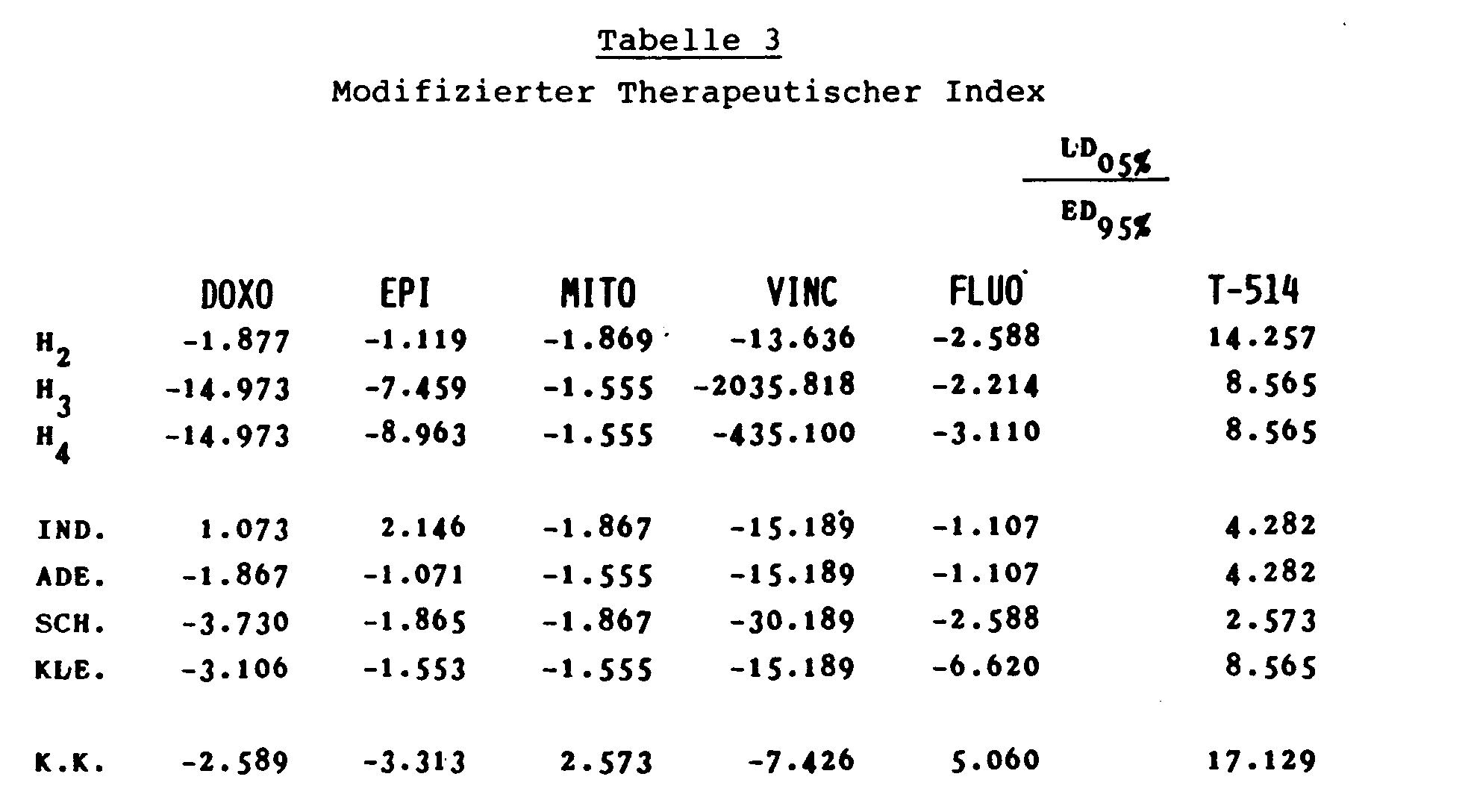
Die Ergebnisse zeigen, daß die Verbindung T-514 sehr selektiv wirkt, das heißt, eine größere Aktivität gegenüber malignen als gegenüber benignen Tumorzellen besitzt. Die erfindungsgemäßen Verbindungen sind daher brauchbare Cytostatika und Tumortherapeutika mit einem großen Sicherheitsabstand.The results show that the compound T-514 acts very selectively, that is to say it has a greater activity against malignant than against benign tumor cells. The compounds according to the invention are therefore useful cytostatics and tumor therapeutics with a large safety margin.
Claims (11)

einer der Reste R4 und R5 für ein Wasserstoffatom und der andere für eine Gruppe der Formel:
und deren tautomere Formen, Stellungsisomere und optische Isomere.1. Anthracene compounds of the formula 1:
one of the radicals R 4 and R 5 for a hydrogen atom and the other for a group of the formula:
and their tautomeric forms, positional isomers and optical isomers.



Applications Claiming Priority (2)
| Application Number | Priority Date | Filing Date | Title |
|---|---|---|---|
| DE4023159 | 1990-07-20 | ||
| DE4023159A DE4023159A1 (en) | 1990-07-20 | 1990-07-20 | CYTOTOXIC BISANTHRACENE COMPOUNDS |
Publications (3)
| Publication Number | Publication Date |
|---|---|
| EP0467407A2 true EP0467407A2 (en) | 1992-01-22 |
| EP0467407A3 EP0467407A3 (en) | 1993-05-26 |
| EP0467407B1 EP0467407B1 (en) | 1995-11-29 |
Family
ID=6410717
Family Applications (1)
| Application Number | Title | Priority Date | Filing Date |
|---|---|---|---|
| EP91112192A Expired - Lifetime EP0467407B1 (en) | 1990-07-20 | 1991-07-19 | Pharmaceutically applicable naphthaline and anthracene derivatives |
Country Status (10)
| Country | Link |
|---|---|
| US (1) | US5578646A (en) |
| EP (1) | EP0467407B1 (en) |
| KR (1) | KR100202320B1 (en) |
| AT (1) | ATE130836T1 (en) |
| CA (1) | CA2047550C (en) |
| DE (2) | DE4023159A1 (en) |
| DK (1) | DK0467407T3 (en) |
| ES (1) | ES2083489T3 (en) |
| GR (1) | GR3019148T3 (en) |
| MX (1) | MX9100290A (en) |
Cited By (2)
| Publication number | Priority date | Publication date | Assignee | Title |
|---|---|---|---|---|
| US7319152B2 (en) | 2005-09-19 | 2008-01-15 | Wyeth | 5-Aryl-indan-1-one and analogs useful as progesterone receptor modulators |
| US7414142B2 (en) | 2005-09-19 | 2008-08-19 | Wyeth | 5-aryl-indan-1-one oximes and analogs useful as progesterone receptor modulators |
Families Citing this family (2)
| Publication number | Priority date | Publication date | Assignee | Title |
|---|---|---|---|---|
| US20070066628A1 (en) * | 2005-09-19 | 2007-03-22 | Wyeth | 5-Aryl-indan-1-ol and analogs useful as progesterone receptor modulators |
| CN106854144B (en) * | 2016-12-16 | 2020-07-14 | 大连理工大学 | Inhibitor and application thereof in inhibiting activities of chitinase and hexosaminidase |
Family Cites Families (4)
| Publication number | Priority date | Publication date | Assignee | Title |
|---|---|---|---|---|
| US4283390A (en) * | 1979-11-01 | 1981-08-11 | Eli Lilly And Company | Antibiotics and process for production thereof |
| US4670265A (en) * | 1983-07-22 | 1987-06-02 | Sydiskis Robert J | Aloe emodin and other anthraquinones and anthraquinone-like compounds from plants virucidal against herpes simplex viruses |
| JPH07103020B2 (en) * | 1986-03-06 | 1995-11-08 | 大正製薬株式会社 | Anti-cancer drug |
| JPH0244231A (en) * | 1988-08-04 | 1990-02-14 | Fuji Electric Co Ltd | Neutralization titration apparatus |
-
1990
- 1990-07-20 DE DE4023159A patent/DE4023159A1/en not_active Withdrawn
-
1991
- 1991-07-19 ES ES91112192T patent/ES2083489T3/en not_active Expired - Lifetime
- 1991-07-19 US US07/733,191 patent/US5578646A/en not_active Expired - Fee Related
- 1991-07-19 DE DE59106972T patent/DE59106972D1/en not_active Expired - Fee Related
- 1991-07-19 MX MX9100290A patent/MX9100290A/en not_active IP Right Cessation
- 1991-07-19 EP EP91112192A patent/EP0467407B1/en not_active Expired - Lifetime
- 1991-07-19 DK DK91112192.9T patent/DK0467407T3/en active
- 1991-07-19 AT AT91112192T patent/ATE130836T1/en not_active IP Right Cessation
- 1991-07-20 KR KR1019910012443A patent/KR100202320B1/en not_active Expired - Fee Related
- 1991-07-22 CA CA002047550A patent/CA2047550C/en not_active Expired - Fee Related
-
1996
- 1996-02-29 GR GR950403219T patent/GR3019148T3/en unknown
Cited By (2)
| Publication number | Priority date | Publication date | Assignee | Title |
|---|---|---|---|---|
| US7319152B2 (en) | 2005-09-19 | 2008-01-15 | Wyeth | 5-Aryl-indan-1-one and analogs useful as progesterone receptor modulators |
| US7414142B2 (en) | 2005-09-19 | 2008-08-19 | Wyeth | 5-aryl-indan-1-one oximes and analogs useful as progesterone receptor modulators |
Also Published As
| Publication number | Publication date |
|---|---|
| DK0467407T3 (en) | 1996-01-22 |
| CA2047550A1 (en) | 1992-01-21 |
| MX9100290A (en) | 1993-01-01 |
| US5578646A (en) | 1996-11-26 |
| EP0467407A3 (en) | 1993-05-26 |
| GR3019148T3 (en) | 1996-05-31 |
| KR100202320B1 (en) | 1999-06-15 |
| ES2083489T3 (en) | 1996-04-16 |
| EP0467407B1 (en) | 1995-11-29 |
| CA2047550C (en) | 2000-09-19 |
| KR920002498A (en) | 1992-02-28 |
| ATE130836T1 (en) | 1995-12-15 |
| DE4023159A1 (en) | 1992-01-23 |
| DE59106972D1 (en) | 1996-01-11 |
Similar Documents
| Publication | Publication Date | Title |
|---|---|---|
| EP0013983B1 (en) | Antineoplastics on the basis of little or non-irritating diterpenalcohols,and derivatives thereof, and their preparation | |
| DE2557784C2 (en) | Forskolin, process for obtaining it and pharmaceutical preparations containing this compound | |
| DE3024855C2 (en) | ||
| DE69728544T2 (en) | TOTAL SYNTHESIS OF ACYL FULVENES WITH ANTITUARY EFFECT | |
| EP0192056B1 (en) | Process for the preparation of labdane derivatives, and their pharmaceutical use | |
| DE2640275A1 (en) | PHARMACOLOGICALLY EFFECTIVE SUBSTANCE FROM LABIATS | |
| EP0467407B1 (en) | Pharmaceutically applicable naphthaline and anthracene derivatives | |
| CH632759A5 (en) | METHOD FOR PRODUCING NEW SUBSTITUTED PURINES. | |
| DE2434929C2 (en) | p-Acetylaminophenol esters of phenylsalicylic acids, processes for their preparation and pharmaceuticals containing these compounds | |
| DE69318046T2 (en) | Anti-cancer benzaldehyde compounds | |
| DE2632118B2 (en) | Apovincaminol esters and processes for their production and pharmaceuticals | |
| EP0636115B1 (en) | Novel bis-phenyl-hexenes | |
| DE2618223C2 (en) | ||
| DE2503135C3 (en) | Terpene compounds, processes for their preparation and pharmaceuticals containing these products | |
| DE69509621T2 (en) | Diarylheptanoid derivative and pharmaceutical composition containing the same | |
| DE69217221T2 (en) | Hydroquinone derivatives and antioxidants containing them, as well as tumor inhibitors | |
| DE3228006C2 (en) | Deoxybouvardin derivatives, process for their preparation and their use | |
| EP1532129B1 (en) | Sorbicillactone-a derivatives for the treatment of tumour and viral diseases | |
| DE3347658A1 (en) | 1.4-NAPHTHOCHINONE DERIVATIVES WITH ANTI-INFLAMMATORY EFFECT | |
| DE2849107A1 (en) | 2,6-DIPHENYL-3,7-DIOXABICYCLO 3.3.0 OCTANE-4,8-DIONE DERIVATIVES METHOD FOR THEIR PRODUCTION AND THE AGENTS CONTAINING THEY | |
| DE2753791A1 (en) | DERIVATIVES OF VINCAAL CALALS, METHOD FOR THEIR PRODUCTION AND MEDICINAL PRODUCTS | |
| DE3808024A1 (en) | 3- (2-HALOGENALKYL) -1,4-OXATHIINE AND 2- (2-HALOGENALKYL) -1,4-DITHIINE AND THEIR USE FOR THE TREATMENT OF LEUKAEMIA AND TUMORS | |
| DE2213028B2 (en) | DL-3-FORMYLAMINOTHIACYCLOPENTAN-2-ON, PROCESS FOR THE PRODUCTION THEREOF, AND DL-3-FORMYLAMINO-THIACYCLOPENTAN-2-ON AND OTHER PHARMACEUTICAL COMPOSITIONS CONTAINING ACYLDER DERIVATIVES | |
| DE68915750T2 (en) | CATHECHOL COMPOUNDS, METHOD FOR THE PRODUCTION AND PREPARATION OF MEDICINAL PRODUCTS CONTAINING THEM. | |
| EP0196330B1 (en) | Use of pyrrothine derivatives |
Legal Events
| Date | Code | Title | Description |
|---|---|---|---|
| PUAI | Public reference made under article 153(3) epc to a published international application that has entered the european phase |
Free format text: ORIGINAL CODE: 0009012 |
|
| AK | Designated contracting states |
Kind code of ref document: A2 Designated state(s): AT BE CH DE DK ES FR GB GR IT LI LU NL SE |
|
| RAP1 | Party data changed (applicant data changed or rights of an application transferred) |
Owner name: HEYL CHEMISCH-PHARMAZEUTISCHE FABRIK GMBH & CO. KG |
|
| PUAL | Search report despatched |
Free format text: ORIGINAL CODE: 0009013 |
|
| AK | Designated contracting states |
Kind code of ref document: A3 Designated state(s): AT BE CH DE DK ES FR GB GR IT LI LU NL SE |
|
| 17P | Request for examination filed |
Effective date: 19931125 |
|
| RAP1 | Party data changed (applicant data changed or rights of an application transferred) |
Owner name: PINEYRO-LOPEZ, ALFREDO, PROF. DR., |
|
| 17Q | First examination report despatched |
Effective date: 19940912 |
|
| GRAA | (expected) grant |
Free format text: ORIGINAL CODE: 0009210 |
|
| RAP1 | Party data changed (applicant data changed or rights of an application transferred) |
Owner name: UNIVERSIDAD AUTONOMA DE NUEVO-LEON Owner name: PINEYRO-LOPEZ, ALFREDO, PROF. DR., |
|
| AK | Designated contracting states |
Kind code of ref document: B1 Designated state(s): AT BE CH DE DK ES FR GB GR IT LI LU NL SE |
|
| REF | Corresponds to: |
Ref document number: 130836 Country of ref document: AT Date of ref document: 19951215 Kind code of ref document: T |
|
| REF | Corresponds to: |
Ref document number: 59106972 Country of ref document: DE Date of ref document: 19960111 |
|
| ET | Fr: translation filed | ||
| REG | Reference to a national code |
Ref country code: DK Ref legal event code: T3 |
|
| ITF | It: translation for a ep patent filed | ||
| REG | Reference to a national code |
Ref country code: CH Ref legal event code: NV Representative=s name: BOVARD AG PATENTANWAELTE |
|
| GBT | Gb: translation of ep patent filed (gb section 77(6)(a)/1977) |
Effective date: 19960304 |
|
| REG | Reference to a national code |
Ref country code: ES Ref legal event code: FG2A Ref document number: 2083489 Country of ref document: ES Kind code of ref document: T3 |
|
| REG | Reference to a national code |
Ref country code: GR Ref legal event code: FG4A Free format text: 3019148 |
|
| PLBE | No opposition filed within time limit |
Free format text: ORIGINAL CODE: 0009261 |
|
| STAA | Information on the status of an ep patent application or granted ep patent |
Free format text: STATUS: NO OPPOSITION FILED WITHIN TIME LIMIT |
|
| 26N | No opposition filed | ||
| REG | Reference to a national code |
Ref country code: GB Ref legal event code: IF02 |
|
| PGFP | Annual fee paid to national office [announced via postgrant information from national office to epo] |
Ref country code: GB Payment date: 20040721 Year of fee payment: 14 |
|
| PGFP | Annual fee paid to national office [announced via postgrant information from national office to epo] |
Ref country code: NL Payment date: 20040727 Year of fee payment: 14 Ref country code: FR Payment date: 20040727 Year of fee payment: 14 |
|
| PGFP | Annual fee paid to national office [announced via postgrant information from national office to epo] |
Ref country code: SE Payment date: 20040728 Year of fee payment: 14 Ref country code: AT Payment date: 20040728 Year of fee payment: 14 |
|
| PGFP | Annual fee paid to national office [announced via postgrant information from national office to epo] |
Ref country code: DK Payment date: 20040729 Year of fee payment: 14 Ref country code: DE Payment date: 20040729 Year of fee payment: 14 Ref country code: CH Payment date: 20040729 Year of fee payment: 14 |
|
| PGFP | Annual fee paid to national office [announced via postgrant information from national office to epo] |
Ref country code: GR Payment date: 20040730 Year of fee payment: 14 |
|
| PGFP | Annual fee paid to national office [announced via postgrant information from national office to epo] |
Ref country code: ES Payment date: 20040825 Year of fee payment: 14 |
|
| PGFP | Annual fee paid to national office [announced via postgrant information from national office to epo] |
Ref country code: BE Payment date: 20040909 Year of fee payment: 14 |
|
| PGFP | Annual fee paid to national office [announced via postgrant information from national office to epo] |
Ref country code: LU Payment date: 20041020 Year of fee payment: 14 |
|
| PG25 | Lapsed in a contracting state [announced via postgrant information from national office to epo] |
Ref country code: LU Free format text: LAPSE BECAUSE OF NON-PAYMENT OF DUE FEES Effective date: 20050719 Ref country code: IT Free format text: LAPSE BECAUSE OF NON-PAYMENT OF DUE FEES;WARNING: LAPSES OF ITALIAN PATENTS WITH EFFECTIVE DATE BEFORE 2007 MAY HAVE OCCURRED AT ANY TIME BEFORE 2007. THE CORRECT EFFECTIVE DATE MAY BE DIFFERENT FROM THE ONE RECORDED. Effective date: 20050719 Ref country code: GB Free format text: LAPSE BECAUSE OF NON-PAYMENT OF DUE FEES Effective date: 20050719 Ref country code: AT Free format text: LAPSE BECAUSE OF NON-PAYMENT OF DUE FEES Effective date: 20050719 |
|
| PG25 | Lapsed in a contracting state [announced via postgrant information from national office to epo] |
Ref country code: SE Free format text: LAPSE BECAUSE OF NON-PAYMENT OF DUE FEES Effective date: 20050720 Ref country code: ES Free format text: LAPSE BECAUSE OF NON-PAYMENT OF DUE FEES Effective date: 20050720 |
|
| PG25 | Lapsed in a contracting state [announced via postgrant information from national office to epo] |
Ref country code: LI Free format text: LAPSE BECAUSE OF NON-PAYMENT OF DUE FEES Effective date: 20050731 Ref country code: CH Free format text: LAPSE BECAUSE OF NON-PAYMENT OF DUE FEES Effective date: 20050731 Ref country code: BE Free format text: LAPSE BECAUSE OF NON-PAYMENT OF DUE FEES Effective date: 20050731 |
|
| PG25 | Lapsed in a contracting state [announced via postgrant information from national office to epo] |
Ref country code: DK Free format text: LAPSE BECAUSE OF NON-PAYMENT OF DUE FEES Effective date: 20050801 |
|
| PG25 | Lapsed in a contracting state [announced via postgrant information from national office to epo] |
Ref country code: NL Free format text: LAPSE BECAUSE OF NON-PAYMENT OF DUE FEES Effective date: 20060201 Ref country code: DE Free format text: LAPSE BECAUSE OF NON-PAYMENT OF DUE FEES Effective date: 20060201 |
|
| PG25 | Lapsed in a contracting state [announced via postgrant information from national office to epo] |
Ref country code: GR Free format text: LAPSE BECAUSE OF NON-PAYMENT OF DUE FEES Effective date: 20060202 |
|
| REG | Reference to a national code |
Ref country code: CH Ref legal event code: PL |
|
| EUG | Se: european patent has lapsed | ||
| GBPC | Gb: european patent ceased through non-payment of renewal fee |
Effective date: 20050719 |
|
| PG25 | Lapsed in a contracting state [announced via postgrant information from national office to epo] |
Ref country code: FR Free format text: LAPSE BECAUSE OF NON-PAYMENT OF DUE FEES Effective date: 20060331 |
|
| NLV4 | Nl: lapsed or anulled due to non-payment of the annual fee |
Effective date: 20060201 |
|
| REG | Reference to a national code |
Ref country code: DK Ref legal event code: EBP |
|
| REG | Reference to a national code |
Ref country code: FR Ref legal event code: ST Effective date: 20060331 |
|
| REG | Reference to a national code |
Ref country code: ES Ref legal event code: FD2A Effective date: 20050720 |
|
| BERE | Be: lapsed |
Owner name: *UNIVERSIDAD AUTONOMA DE NUEVO-LEON Effective date: 20050731 Owner name: *PINEYRO-LOPEZ ALFREDO Effective date: 20050731 |