EP0450527A2 - N-Tris(hydroxymethyl)methylfatty acid amides and cosmetic compositions containing same - Google Patents
N-Tris(hydroxymethyl)methylfatty acid amides and cosmetic compositions containing same Download PDFInfo
- Publication number
- EP0450527A2 EP0450527A2 EP91105051A EP91105051A EP0450527A2 EP 0450527 A2 EP0450527 A2 EP 0450527A2 EP 91105051 A EP91105051 A EP 91105051A EP 91105051 A EP91105051 A EP 91105051A EP 0450527 A2 EP0450527 A2 EP 0450527A2
- Authority
- EP
- European Patent Office
- Prior art keywords
- hydroxymethyl
- tris
- formula
- fatty acid
- methyl
- Prior art date
- Legal status (The legal status is an assumption and is not a legal conclusion. Google has not performed a legal analysis and makes no representation as to the accuracy of the status listed.)
- Withdrawn
Links
- GQHQNIIWQRMVJY-ALCCZGGFSA-N CC(C)(/C=N\C)OC Chemical compound CC(C)(/C=N\C)OC GQHQNIIWQRMVJY-ALCCZGGFSA-N 0.000 description 1
Images


Classifications
-
- A—HUMAN NECESSITIES
- A61—MEDICAL OR VETERINARY SCIENCE; HYGIENE
- A61Q—SPECIFIC USE OF COSMETICS OR SIMILAR TOILETRY PREPARATIONS
- A61Q19/00—Preparations for care of the skin
-
- A—HUMAN NECESSITIES
- A61—MEDICAL OR VETERINARY SCIENCE; HYGIENE
- A61K—PREPARATIONS FOR MEDICAL, DENTAL OR TOILETRY PURPOSES
- A61K8/00—Cosmetics or similar toiletry preparations
- A61K8/18—Cosmetics or similar toiletry preparations characterised by the composition
- A61K8/30—Cosmetics or similar toiletry preparations characterised by the composition containing organic compounds
- A61K8/40—Cosmetics or similar toiletry preparations characterised by the composition containing organic compounds containing nitrogen
- A61K8/42—Amides
-
- A—HUMAN NECESSITIES
- A61—MEDICAL OR VETERINARY SCIENCE; HYGIENE
- A61Q—SPECIFIC USE OF COSMETICS OR SIMILAR TOILETRY PREPARATIONS
- A61Q5/00—Preparations for care of the hair
-
- C—CHEMISTRY; METALLURGY
- C07—ORGANIC CHEMISTRY
- C07C—ACYCLIC OR CARBOCYCLIC COMPOUNDS
- C07C233/00—Carboxylic acid amides
- C07C233/01—Carboxylic acid amides having carbon atoms of carboxamide groups bound to hydrogen atoms or to acyclic carbon atoms
- C07C233/16—Carboxylic acid amides having carbon atoms of carboxamide groups bound to hydrogen atoms or to acyclic carbon atoms having the nitrogen atom of at least one of the carboxamide groups bound to a carbon atom of a hydrocarbon radical substituted by singly-bound oxygen atoms
- C07C233/17—Carboxylic acid amides having carbon atoms of carboxamide groups bound to hydrogen atoms or to acyclic carbon atoms having the nitrogen atom of at least one of the carboxamide groups bound to a carbon atom of a hydrocarbon radical substituted by singly-bound oxygen atoms with the substituted hydrocarbon radical bound to the nitrogen atom of the carboxamide group by an acyclic carbon atom
- C07C233/18—Carboxylic acid amides having carbon atoms of carboxamide groups bound to hydrogen atoms or to acyclic carbon atoms having the nitrogen atom of at least one of the carboxamide groups bound to a carbon atom of a hydrocarbon radical substituted by singly-bound oxygen atoms with the substituted hydrocarbon radical bound to the nitrogen atom of the carboxamide group by an acyclic carbon atom having the carbon atom of the carboxamide group bound to a hydrogen atom or to a carbon atom of an acyclic saturated carbon skeleton
-
- C—CHEMISTRY; METALLURGY
- C07—ORGANIC CHEMISTRY
- C07D—HETEROCYCLIC COMPOUNDS
- C07D263/00—Heterocyclic compounds containing 1,3-oxazole or hydrogenated 1,3-oxazole rings
- C07D263/02—Heterocyclic compounds containing 1,3-oxazole or hydrogenated 1,3-oxazole rings not condensed with other rings
- C07D263/08—Heterocyclic compounds containing 1,3-oxazole or hydrogenated 1,3-oxazole rings not condensed with other rings having one double bond between ring members or between a ring member and a non-ring member
- C07D263/10—Heterocyclic compounds containing 1,3-oxazole or hydrogenated 1,3-oxazole rings not condensed with other rings having one double bond between ring members or between a ring member and a non-ring member with only hydrogen atoms, hydrocarbon or substituted hydrocarbon radicals, directly attached to ring carbon atoms
- C07D263/14—Heterocyclic compounds containing 1,3-oxazole or hydrogenated 1,3-oxazole rings not condensed with other rings having one double bond between ring members or between a ring member and a non-ring member with only hydrogen atoms, hydrocarbon or substituted hydrocarbon radicals, directly attached to ring carbon atoms with radicals substituted by oxygen atoms
-
- A—HUMAN NECESSITIES
- A61—MEDICAL OR VETERINARY SCIENCE; HYGIENE
- A61Q—SPECIFIC USE OF COSMETICS OR SIMILAR TOILETRY PREPARATIONS
- A61Q1/00—Make-up preparations; Body powders; Preparations for removing make-up
- A61Q1/02—Preparations containing skin colorants, e.g. pigments
-
- A—HUMAN NECESSITIES
- A61—MEDICAL OR VETERINARY SCIENCE; HYGIENE
- A61Q—SPECIFIC USE OF COSMETICS OR SIMILAR TOILETRY PREPARATIONS
- A61Q1/00—Make-up preparations; Body powders; Preparations for removing make-up
- A61Q1/02—Preparations containing skin colorants, e.g. pigments
- A61Q1/04—Preparations containing skin colorants, e.g. pigments for lips
- A61Q1/06—Lipsticks
-
- A—HUMAN NECESSITIES
- A61—MEDICAL OR VETERINARY SCIENCE; HYGIENE
- A61Q—SPECIFIC USE OF COSMETICS OR SIMILAR TOILETRY PREPARATIONS
- A61Q1/00—Make-up preparations; Body powders; Preparations for removing make-up
- A61Q1/02—Preparations containing skin colorants, e.g. pigments
- A61Q1/08—Preparations containing skin colorants, e.g. pigments for cheeks, e.g. rouge
-
- A—HUMAN NECESSITIES
- A61—MEDICAL OR VETERINARY SCIENCE; HYGIENE
- A61Q—SPECIFIC USE OF COSMETICS OR SIMILAR TOILETRY PREPARATIONS
- A61Q19/00—Preparations for care of the skin
- A61Q19/10—Washing or bathing preparations
-
- A—HUMAN NECESSITIES
- A61—MEDICAL OR VETERINARY SCIENCE; HYGIENE
- A61Q—SPECIFIC USE OF COSMETICS OR SIMILAR TOILETRY PREPARATIONS
- A61Q5/00—Preparations for care of the hair
- A61Q5/06—Preparations for styling the hair, e.g. by temporary shaping or colouring
-
- A—HUMAN NECESSITIES
- A61—MEDICAL OR VETERINARY SCIENCE; HYGIENE
- A61Q—SPECIFIC USE OF COSMETICS OR SIMILAR TOILETRY PREPARATIONS
- A61Q5/00—Preparations for care of the hair
- A61Q5/12—Preparations containing hair conditioners
Definitions
- This invention relates to novel fatty acid amides and a novel cosmetic composition containing the same. More particularly, the present invention relates to novel fatty acid amides which are useful as bases, emulsifiers, lubricants and the like in a cosmetic preparation to be applied to the hair or skin, to a method for producing the amides, to an intermediate in the production of the amide and to a novel cosmetic composition containing the fatty acid amides, which have good emulsion stability and, when applied, show good spreadability or extendibility with a favorable feeling during use without stickiness.
- humectants have been used in cosmetics, however, they have problems. For instance, when used in small amounts, they produce their humectant (moisture-retaining) effect only to an unsatisfactory extent while, when used in large amounts, they impair the feel and/or stability of the resulting systems.
- Emulsion-type cosmetics are in wide use since, owing to their composition, they can provide the skin or hair with appropriate amounts of oil and moisture.
- Various emulsions differing in physical properties and feeling during use can be obtained by varying the oil phase components and the contents thereof.
- emulsions are thermodynamically unstable and can not be stabilized satisfactorily.
- a large number of studies and attempts have been directed to the stabilization of emulsions.
- One of the efficient measures hitherto known is the addition of an emulsification aid or promoter, which may be cationic, anionic, amphoteric or nonionic.
- emulsification aids are effective for a wide variety of oil phase components, hence are most preferred.
- higher alcohols such as cetanol and cetostearyl alcohol
- cetanol and cetostearyl alcohol are added to emulsions for cosmetic use and it is known that such higher alcohols have liquid crystal structures in the emulsions and thereby improve the stability thereof.
- the addition of higher alcohols has its drawbacks although it is effective in preventing high-melting fats and oils from crystallizing.
- higher alcohols When higher alcohols are used in amounts sufficient to maintain emulsions in a stable state, the emulsions acquire a very high viscosity and become not only poor in spreadability on application but also highly greasy and sticky.
- liquid crystal structures of higher alcohols have the problem that destruction of the structures results in precipitation of crystals having a pearl-like luster and in viscosity decrease, among others.
- compositions containing a nonionic emulsification aid capable of forming a lamellar liquid crystal structure have been developed.
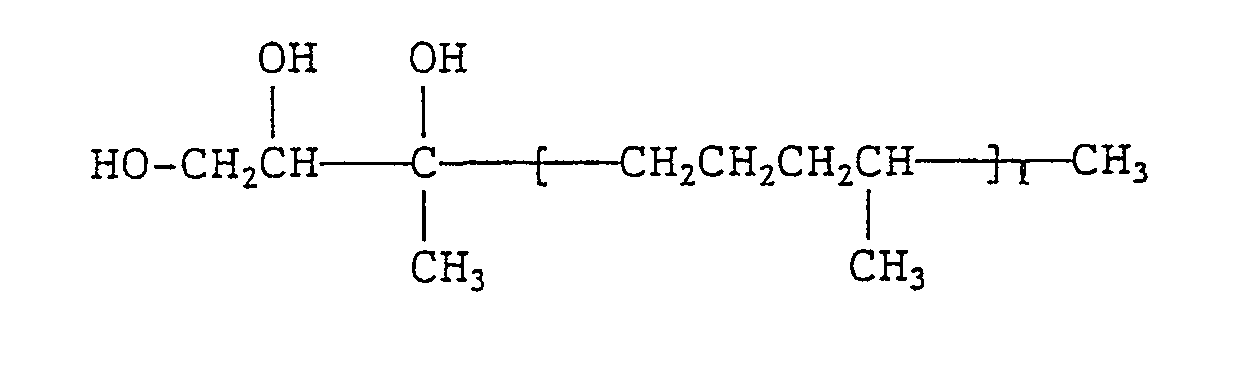
- JP-B-38-5050 discloses skin care or hair care compositions containing a triol of the formula: wherein represents an integer of 1 to 3.
- this triol turns into an inverted middle liquid crystal in aqueous solution. It gives a strong greasy feeling and is insufficient in humectancy-securing effect.
- JP-A-63-23737 discloses an aqueous dispersion of niosomes comprising lipid lamellae of a polyglycerol ether used as a nonionic amphiphilic substance, with a water-soluble active substance being included in the aqueous section between the lipid layers.
- the stability of the active substance is thus improved.
- treatment at a high temperature not lower than 80 C is required, making it difficult to apply this technique to active substances having poor high-temperature stability.
- JP-B-58-8287 (corresponding to GB-A-1539625), JP-B-61-56016 (corresponding to GB-A-1539625), JP-A-57-77613 (corresponding to EP-A-43827) and JP-A-57-94326 (corresponding to EP-A-43327) also disclose aqueous dispersions of lipid spheres in which a polyglycerol ether is used.
- a polyglycerol ether corresponding to EP-A-43827
- JP-A-57-94326 (corresponding to EP-A-43327) also disclose aqueous dispersions of lipid spheres in which a polyglycerol ether is used.
- the processes for manufacturing such dispersions require homogenization or include dissolution of a lipid in an organic solvent, such as chloroform-methanol, and the subsequent evaporation of the solvent and are complicated and difficult to carry out on a commercial scale.
- the prior art nonionic emulsification aids are disadvantageous in that they form liquid crystals only in a narrow concentration range and at a relatively high temperature and that commercial scale liquid crystal formation using them is difficult to attain.
- cosmetic compositions containing high-melting active substances that are not uniformly emulsified or dispersed but are in a separated state do not produce a satisfactory humectancy-securing effect.
- Some of the nonionic aids can serve as humectants but their effect is unsatisfactory.
- cosmetic compositions which can remain homogeneous and stable at use temperatures and in a wide emulsification aid concentration range without undergoing changes such as crystal form transition and at the same time have a good moisture-retaining effect are desired.
- N-tris(hydroxymethyl)methyl-fatty acid amides can be used as auxiliary detergent components (United States Patent No. 2,927,081). However, whether they have excellent moisture-retaining activity has remained unknown so far.
- trimethylol compounds such as trimethylolpropane, trimethylolethane and trimethylolnonane, are used as raw materials for the production of alkyd resins, polyurethanes and polyesters, among others.
- These known trimethylol compounds are also used as bases, emulsifiers and lubricants for cosmetic preparations to be applied to the hair and skin, for instance.
- they are not fully satisfactory when evaluated from the performance characteristics viewpoint; for instance, some are high-melting solids, some are difficult to uniformly disperse in water because of their inadequate hydrophile-lipophile balance, and some have poor compatibility with solvents.
- N-tris(hydroxymethyl)methyl-fatty acid amides have those characteristics that are required of cosmetic bases, emulsifiers and lubricants, and that these fatty acid amides can be synthesized in high purity and high yield from inexpensive and readily available, materials.
- these fatty acid amides have excellent humectant activity, that cosmetic excellent in humectancy can be obtained using these fatty acid amides, and that when incorporated in emulsion-type cosmetic compositions, the amides contribute not only to good humectancy but also to the stabilization of the emulsions.
- the amides extend the homogeneity range of high melting active ingredients and provide cosmetics capable of spreading well upon application, giving a refreshing feeling during use without stickiness. The present invention has been completed based on these findings.
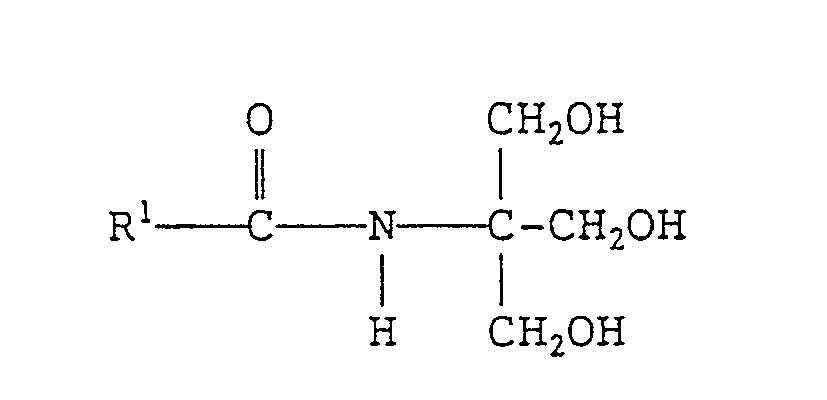
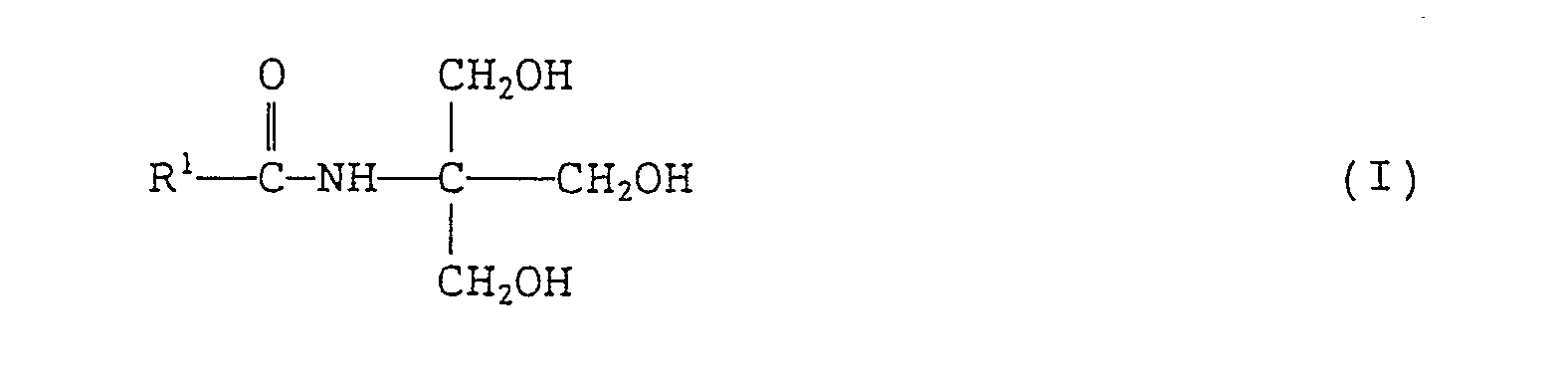
- the present invention provides an N-tris(hydroxymethyl)methyl-fatty acid amides of formula (I): wherein R 1 represents a branched alkyl group containing 4 to 27 carbon atoms.
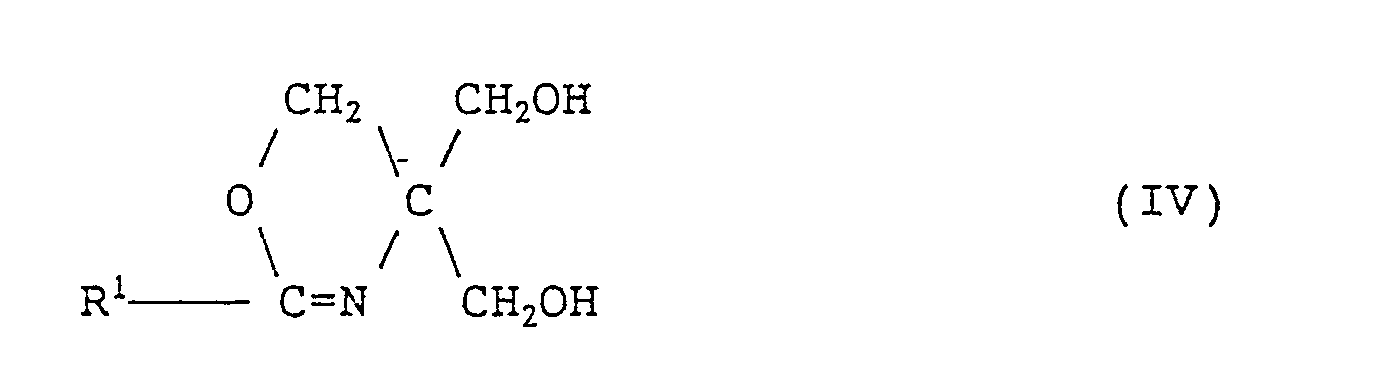
- the present invention further provides a method for producing the fatty acid amides of formula (1) given above, which comprises reacting a branched fatty acid of formula (II): wherein R 1 is as defined above, with tris(hydroxymethyl)aminomethane of formula (III): and hydrolyzing the resulting compound of formula (IV): wherein R 1 is as defined above, in a mixed solvent composed of a lower alcohol containing 1 to 6 carbon atoms and water.
- the present invention furthermore provides an intermediate in the production of the N-tris-(hydroxymethyl)methyl-fatty acid amide of formula (I) above.
- the invention provides, as preferred species, branched fatty acid amides of formula (ia): wherein m and n each independently represents an integer of 0 to 20 provided that the sum of m and n is 1 to 20.
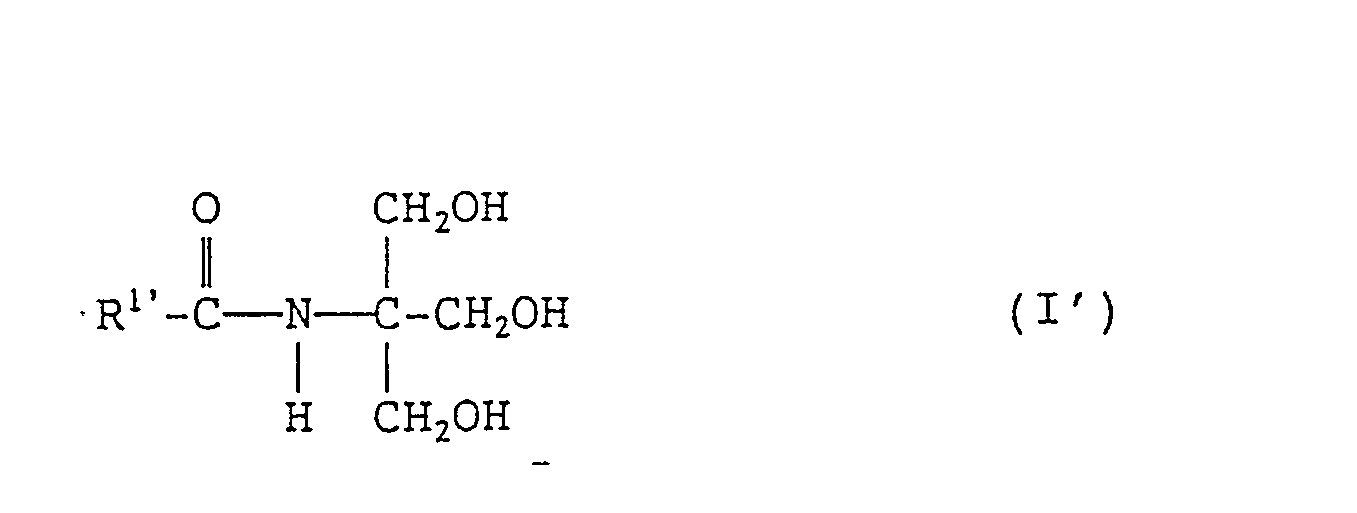
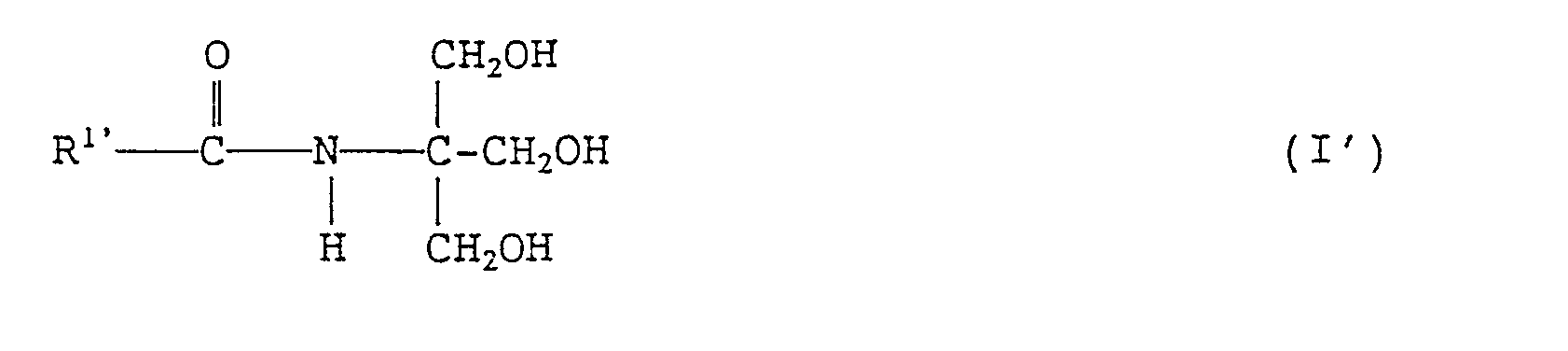
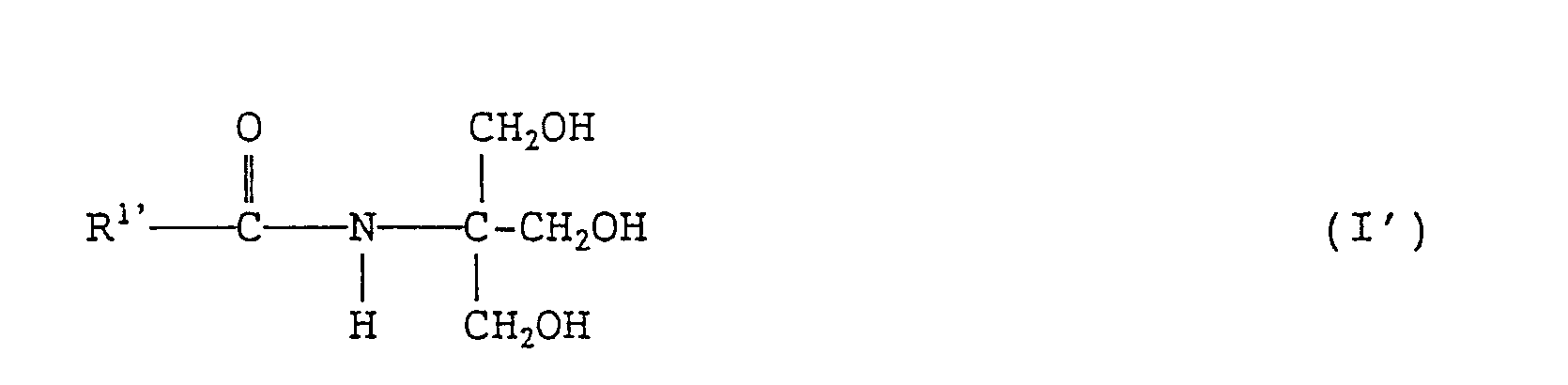
- the present invention also provides a cosmetic composition and a humectant each containing an N-tris-(hydroxymethyl)methyl-fatty acid amide of formula (I'): wherein R 1 , represents a branched alkyl or linear alkenyl group each containing 4 to 27 carbon atoms.
- the branched alkyl group represented by R 1 in formula (I) above contains 4 to 27 carbon atoms, preferably 10 to 22 carbon atoms, and more preferably 14 to 20 carbon atoms.
- N-tris(hydroxymethyl)methyl-fatty acid amides of the present invention is represented by the above formula (I).
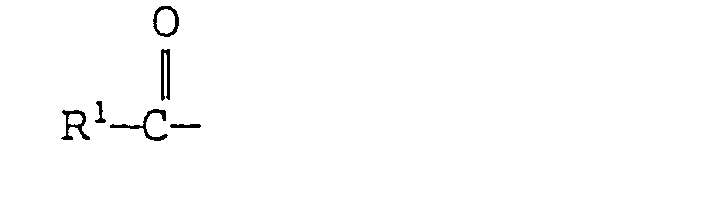
- branched-chain acyl groups such as isostearoyl, 2-octyldecanoyl and 2-heptylundecanoyl groups.
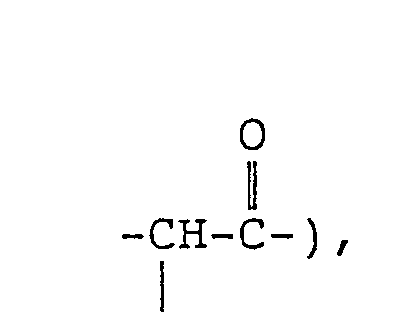
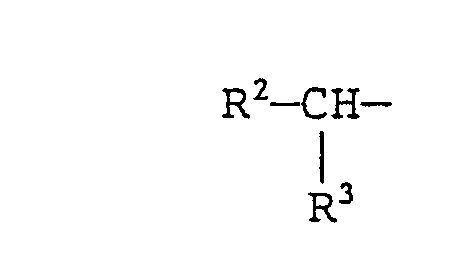
- Particularly preferred are those branched acyl groups that are represented by formula (V) or (VI) given below.
- m and n each represent an integer of 0 to 20, preferably 0 to 16, provided that the sum of m and n is 1 to 20, preferably 10 to 16.
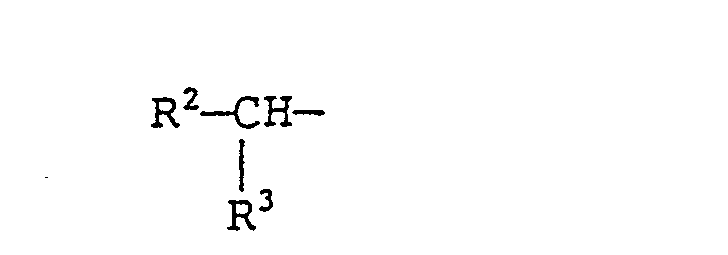
- R 2 and R 3 each represent a linear alkyl group containing 2 to 24 carbon atoms, provided that the sum of the carbon numbers of the alkyl groups represented by R 2 and R 3 is 4 to 26.
- Typical examples of these branched acyl groups include residues of carboxylic acids which are obtained by radical addition of an a-olefin at a-position of a carboxyl group or a Guerbet acid.
- N-tris(hydroxymethyl)methyl-fatty acid amides (I) whose group is represented by the above formula (V) occur as lamellar liquid crystals in the presence of water-at room temperature and are characterized by their good compatibility with most solvents and by their ability to disperse almost uniformly in water upon admixing with water.
- the N-tris(hydroxymethyl)methyl-fatty acid amides (I) can be produced advantageously by the following process.
- R 1 is as defined above.
- n are as defined above.
- branched fatty acids (II) or (11 a) those which are commercially available are generally mixtures with a certain distribution with respect to the total number of carbon atoms in the alkyl moiety and with respect to the position of the branching methyl group.
- the reaction (first-step reaction) between the branched fatty acid (II) or (Ila) and tris(hydroxymethyl)-aminomethane (III) is an oxazoline ring formation reaction and these materials are preferably used in approximately equimolar amounts.
- This reaction is preferably carried out without using any solvent or in an inert solvent, such as toluene, xylene, mesitylene, cumene, hexane or decane, at a temperature of 100-250 . C, more preferably 130-220 C, most preferably 150-200 C, while removing the byproduct water continuously. At lower temperatures, the reaction will not proceed substantially while, at higher temperatures discoloration is intense and side reactions occur.
- the reaction may be conducted either under a nitrogen atmosphere or under an ordinary air atmosphere. The reaction period may vary depending on various conditions. Generally, however, 1 to 24 hours is preferred.
- the second-step reaction namely hydrolysis of the oxazoline ring
- a mixed solvent composed of a lower alcohol containing 1 to 6 carbon atoms and water.
- a method of hydrolyzing oxazolines having a straight-chain alkyl group which comprises using water alone as the solvent is disclosed in U.S. Patent No. 2,877,242.
- this method is disadvantageous in that water is required in large excess, say about 20 parts by weight per part by weight of oxazoline; smaller amounts of water lead to lower yields.
- the use of the above-mentioned mixed solvent according to the invention makes it possible to hydrolyze oxazolines in a small amount of solvent with a high yield.
- the ratio by volume between the lower alcohol and water is preferably within the range of 1:10 to 10:1, more preferably 2:5 to 5:2, most preferably 1:2 to 2:1.
- the mixed solvent is preferably used in an amount of 0.1 to 20 parts by weight per part by weight of the compound (IV) or (IVa). Larger amounts decrease the productivity, hence are not practical, while smaller amounts slow down the rate of hydrolysis.
- methanol ethanol
- isopropanol propanol
- butanol isobutanol
- sec-butanol isobutanol
- tert-butanol amyl alcohol
- neopentyl alcohol hexyl alcohol
- the hydrolysis reaction may be conducted either under a nitrogen atmosphere or under an ordinary air atmosphere.
- the reaction temperature should preferably be within the range of 50-150 C, more preferably 60-130 C, most preferably 70-120 C. At lower temperatures, the reaction substantially fails to progress while, at higher temperatures, discoloration becomes severe and side reactions occur. Although the reaction period may vary depending on the reaction temperature and other factors, 1 to 15 hours is generally preferred.
- This hydrolysis reaction may be conducted in the presence of an alkaline (e.g., hydroxides, carbonates and hydrogencarbonates of alkali metals) or acidic substance (e.g., phosphonic acid, hydrochloric acid and p-toluene sulfonic acid).
- an alkaline e.g., hydroxides, carbonates and hydrogencarbonates of alkali metals
- acidic substance e.g., phosphonic acid, hydrochloric acid and p-toluene sulfonic acid.
- the compound (I) according to the invention can be isolated from the reaction mixture in the conventional manner, for example by solvent removal by distillation, recrystallization, chromatography and the like, employed either alone or in combination.
- the branched fatty acid amides according to the invention occur as lyotropic liquid crystals in the presence of water at room temperature. Characteristically, they have excellent lubricating properties, show good compatibility with most solvents and, when admixed with water, can be dispersed almost uniformly. They are very useful as bases, emulsifiers and lubricants for hair treatment preparations and cosmetics.
- the fatty acid amides can be produced in an industrially advantageous manner by using a mixed solvent composed of a lower alcohol and water in the hydrolysis step, thus allowing the reaction to proceed smoothly without requiring water in large amounts and without causing gelation.
- the cosmetic composition according to the invention contains one or more of the N-tris(hydroxymethyl)-methyl-fatty acid amides mentioned above. Further, an N-tris(hydroxymethyl)methyl-fatty acid amide of formula (I) whose R 1 represents a linear alkenyl group containing 4 to 27 carbon atoms can also be contained in the cosmetic composition according to the invention.
- N-tris(hydroxymethyl)methyl-fatty acid amide to be contained in the cosmetic composition according to the invention can be represented by the following formula (I') wherein, R 1 represents a branched alkyl or linear alkenyl group each containing 4 to 27 carbon atoms.
- Typical examples of the group whose R 1 is a branched alkyl group include those mentioned above as the group
- the linear alkenyl group represented by R 1 contains preferably 10 to 22 carbon atoms and more preferably 14 to 20 carbon atoms.
- straight-chain unsaturated acyl groups such as oleoyl group.
- Particularly preferred are those straight-chain alkaryl groups that are represented by formula (VII) given below: wherein x and y each represents an integer of 0 to 24, provided that the sum of x and y is 4 to 24.
- Specific examples thereof include 8-heptadecenyl, 12-heneicosenyl, 9-octadecenyl and 13-docosenyl groups.
- N-tris(hydroxymethyl)methyl-fatty acid amide of formula (I') whose R 1 is a linear alkyl group can be produced in the same manner as that of the N-tris(hydroxymethyl)methyl-fatty acid amide of formula (I) above.
- the cosmetic composition according to the invention contains one or more of the N-tris(hydroxymethyl)-methyl-fatty acid amides of formula (I') above generally in amounts of 0.01 to 80% by weight preferably 0.1 to 60% by weight, based on the total weight of the composition.
- the amount is not critical, however.
- one or more surfactants may be used additionally in the composition.
- Such surfactants may be nonionic, cationic, anionic or amphoteric ones.
- nonionic surfactants are preferred in cosmetic preparations to be applied to the skin, and cationic surfactants in hairdressing composition.
- the nonionic surfactants include, among others, polyoxyethylene alkyl ethers, polyoxyethylene alkylphenyl ethers, polyoxyethylene fatty acid esters, sorbitan fatty acid esters, polyoxyethylenesorbitan fatty acid esters, fatty acid monoglycerides and glyceryl ethers.
- cationic surfactant examples include quaternary ammonium salts, alkylpyridinium salts, alkylmor- pholinium salts, alkylisoquinolinium salts, alkylimidonium salts, alkylamine salts and alkylamideamine salts, which are commonly used in cosmetic compositions.
- cationic surfactants are still preferred because the combined use of the N-tris-(hydroxymethyl)methyl-fatty acid amide with the cationic surfactant shows a favorable feel at use.
- quaternary ammonium salts containing at least one alkyl group having 8 to 28 carbon atoms are preferable.
- examples thereof include quaternary ammonium salts of the following formulae (VIII) and (IX): wherein at least one of R 4 , R 5 , R 6 and R 7 represents an alkyl group or an alkenyl group, which may be substituted with an alkoxy group, an alkenyloxy group, an alkanoylamino group or an alkenoylamino group, where the total number of carbon atom is 8 to 28, while the others, if not such an alkyl or alkenyl group, each represent a benzyl group or an alkyl group having 1 to 5 carbon atoms or a hydroxyalkyl group having 1 to 5 carbon atoms, R 7 represents an alkylene group having 2 or 3 carbon atoms, X- represents a halogen ion or an organic anion and r is an integer of from 1
- the quaternary ammonium salts represented by formulae (VIII) and (IX) may be synthesized in a conventional manner as disclosed, for example, in the above mentioned Kesyohin Genryo Kijun.
- a quaternary ammonium salt of formula (VIII) is preferable. More preferable examples of the quaternary ammonium salts of formula (VIII) include branched quaternary ammonium salts of the following general formulae (X) to (Xll): wherein R 9 represents (a) a branched alkyl group of the formula: wherein R 15 represents a methyl group or an ethyl group and p is an integer which will give R 9 a total carbon atom number of from 8 to 16 and/or (b) a straight chain alkyl group of the formula: wherein q is an integer of from 7 to 15), R 10 and R 11 each represent a benzyl group or an alkyl group having 1 to 3 carbon atoms or a hydroxyalkyl group having 1 to 3 carbon atoms, R 12 and R 13 each represent an alkyl group having 2 to 12 carbon atoms, R 14 represents a group represented by the formula: or an
- the branched quaternary ammonium salt(s) represented by formula (X) may be synthesized, for example, from an oxoalcohol having 8 to 16 carbon atoms in a conventional manner as described in the above mentioned Kesyohin Genryo Kijun.
- Examples thereof include dialkyldimethylammonium salts, dial- kylethylhydroxyethylammonium salts and dialkylmethylbenzylammonium salts each having an alkyl group derived from an oxoalcohol.
- quaternary ammonium salt(s) of formula (X) those having the branching ratio as earlier defined of from 10 to 100 % as a whole is usually employed in the present invention.
- one quaternary ammonium salt of formula (X) may have one or two of the substituent (a) for R 9 and another quaternary ammonium salt of formula (X) may have one or two of the substituent (b) for R 9 , provided that the mixture thereof as a whole suffices to the branching ratio as earlier defined.
- the total number of carbon atoms in the R 8 group may range from 8 to 16. It is preferable to use such quaternary ammonium salts having a specific distribution. It is more preferable to use those having the following distribution:
- quaternary ammonium salts include dialkyldimethylammonium chloride carrying alkyl groups having 8 to 16 carbon atoms and having a branching ratio as earlier defined of from 10 to 50 %.
- the branched quaternary ammonium salts represented by formula (XI) may be synthesized in a conventional manner from a Guerbet alcohol where R 12 and R 13 are as earlier identified) having 8 to 28 carbon atoms.
- Preferable examples of the branched quaternary ammonium salt include alkyltrimethylammonium salts, alkyldimethylbenzylammonium salts, dialkyldimethylammonium salts, dialkylmethylhydroxyethyl ammonium salts and dialkylmethylbenzylammonium salts, each having an alkyl group derived from a Guerbet alcohol.
- 2-decyltetradecyltrimethylammonium chloride 2-dodecylhexadecyltrimethylammonium chloride, di-2-hexyl- decyldimethylammonium chloride and di-2-octyldodecyldimethylammonium chloride are particularly preferable.
- the methyl branched quaternary ammonium salt represented by formula (XII) may be synthesized by the manner described, for example, in The fifteenth IFSCC International Congress (1988), Preprints, vol.1, pages 71 to 87.
- Examples of the counter ion X- in the quaternary ammonium salts represented by formulae (XIII), (IX), (X), (XI) and (XII) include halogen ions (for example, chlorine, iodine, bromine ions); and organic anions (for example, methosulfate, ethosulfate, methophosphate, ethophosphate).
- surfactants are used in amounts of 0.01 to 30% by weight, preferably 0.1 to 10% by weight, on the basis of the whole composition.
- the cosmetic composition according to the invention may further contain, if necessary or where appropriate, one or more of those ingredients that are generally used in cosmetics, drugs and foods, for example higher alcohols having a straight or branched alkyl or alkenyl group; hydrocarbons such as liquid paraffin, vaseline and solid paraffin; lanolin and derivatives such as liquid lanolin and lanolin fatty acids; silicone derivatives such as dimethylpolysiloxane, polyether-modified polysiloxanes, amino-modified polysiloxanes and stearoxy-modified siloxanes; fats and oils such as higher alcohol higher fatty acid esters, higher fatty acids and alkyl- or alkenyl-containing long-chain amideamines; and animal- or plant-derived fats and oils such as mink oil and olive oil.
- higher alcohols having a straight or branched alkyl or alkenyl group such as liquid paraffin, vaseline and solid paraffin
- lanolin and derivatives such as liquid lanolin and
- the silicone derivatives can preferably be contained in the cosmetic composition of the invention since the combined use of the N-tris(hydroxymethyl)methyl-fatty acid amide with the silicone derivative shows a favorable feel during use.
- silicone derivative examples are as follows:
- those as defined in the above (1), (3), (7) and (10) are preferably employed in a hairdressing composition to be rinsed away, for example, a hair rinse or a hair conditioner.
- the n' in the formula (XIII) may range from 0 to 9,000, though it preferably ranges from 100 to 1,000 in order to give a hair style of a light feel.
- those as defined in the above (1), (2), (3), (7) and (10) are preferably employed in a hairdressing composition which is not rinsed away, such as a hair cream, a styling lotion or a styling mousse.
- the n' in the formula (XIII) preferably range from 6,000 to 8,000 in order to minimize any oily feel.
- the cosmetic composition according to the invention may still further contain, if necessary or where appropriate, one or more of those ingredients that are generally used in cosmetics, drugs and food, for example, biologically active agents such as antidandruff agents, biocides and vitamins; preservatives such as parabens; thickening agents such as water-soluble macromolecules, colorants such as dyes and pigments; ultraviolet absorbers; astringents; humectants such as propylene glycol, glycerin, carbitols, 3-methyl-1,3-butanediol and sugars; water and perfumes.
- biologically active agents such as antidandruff agents, biocides and vitamins
- preservatives such as parabens
- thickening agents such as water-soluble macromolecules, colorants such as dyes and pigments
- ultraviolet absorbers such as dyes and pigments
- humectants such as propylene glycol, glycerin, carbitols, 3-methyl-1,3-but
- the cosmetic composition according to the invention can be manufactured in a conventional manner and can be provided for example in the form of skin care preparations of the oil-in-water or water-in-oil emulsion type or of the oleaginous type; make-up preparations such as rouge and foundations; and hair cosmetics such as hair rinses, hair treatment preparations, hair conditioners and hair sprays.
- the cosmetic composition according to the invention Since the N-tris(hydroxymethyl)methyl-fatty acid amides serve as excellent humectants and occur as lamellar liquid crystals in the presence of water, the cosmetic composition according to the invention has good spreadability or extendibility and gives only a minimum of greasy feeling. Furthermore, since the liquid crystals take in high-melting substances, the stability of the system is improved and the active ingredients can function efficiently. Therefore, the cosmetic composition according to the invention is excellent in humectancy and, when applied, can spread smoothly, giving a refreshing feeling during use without stickiness. Furthermore, the composition has good emulsion stability.
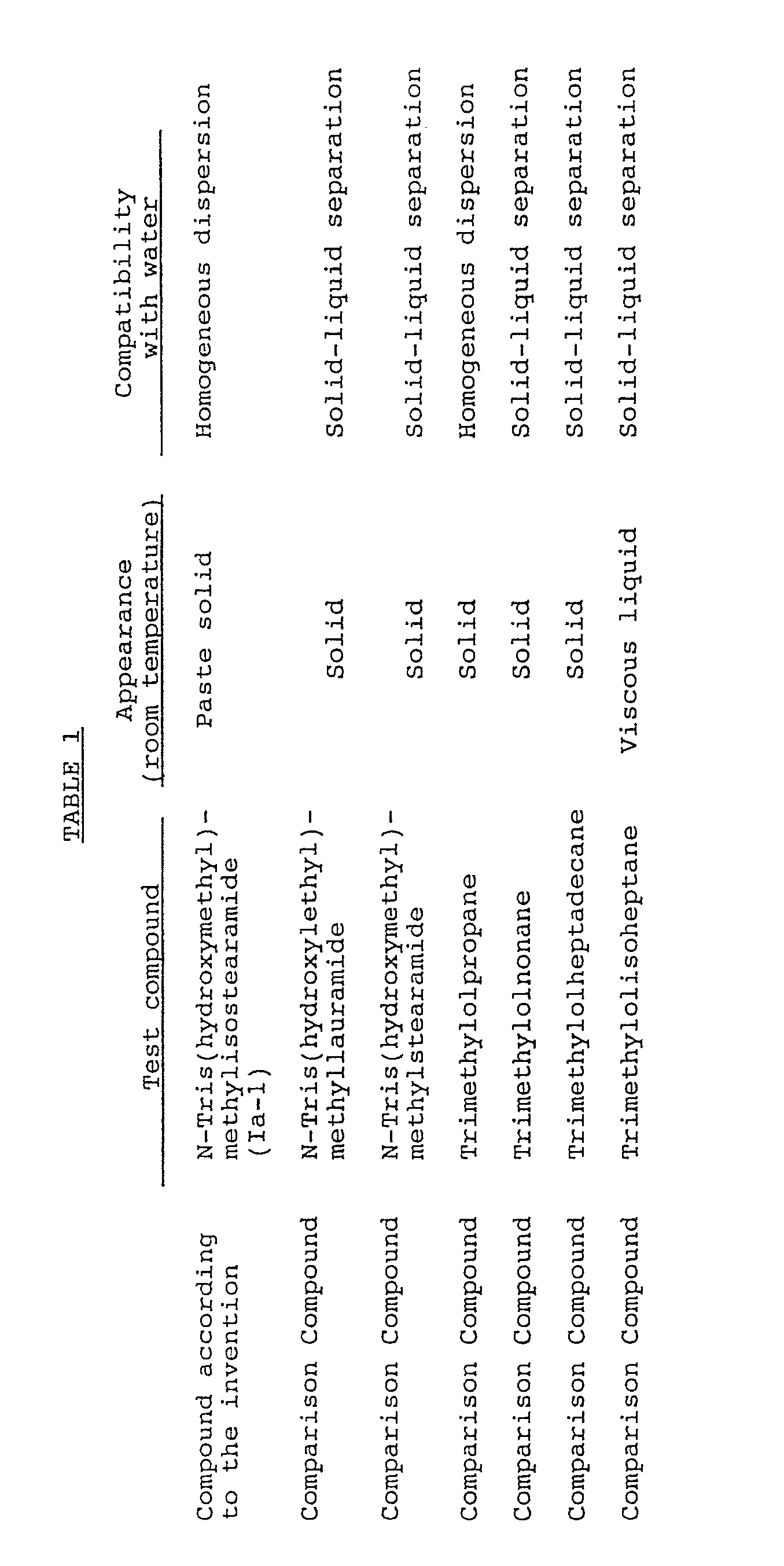
- N-Tris(hydroxymethyl)methylisostearamide (la-1) obtained in Example 1 and several known compounds similar in structure, namely two N-tris(hydroxymethyl)methyl-straight chain fatty acid amides and four trimethylol-alkanes, were examined for appearance at room temperature and for compatibility with water.
- the test compound-water mixture systems gave the results shown in Table 1 over the entire concentration range.
- the results are shown in Fig. 3.
- the composition according to the invention showed a superior water-retaining capacity as compared with the conventional humectants.
- composition 2 Using the compound according to the invention as produced in Example 1, a hair rinse composition (composition 2 according to the invention) was prepared according to the formulation given in Table 2 and evaluated for its rinsing effect.
- the hair rinse composition containing N-tris(hydroxymethyl)methylisostearamide according to the invention was superior in softness- and smoothness-imparting properties and gave a minimum of greasy feeling.
- composition 3 according to the invention:
- the above formulation gave a hair treatment composition excellent in smoothing and softening properties and capable of providing hair with a light, moist, good feeling without giving any significant greasy feeling.
- composition 4 according to the invention:
- the above formulation gave a hair cream composition excellent in smoothing and softening properties and capable of providing hair with a good feeling without stickiness.
- composition 5 composition 5 according to the invention:
- the above formulation gave a setting composition having good feel and capable of providing hair with the ability to retain a hair style satisfactorily.
- Conditioning mousse composition composition 6 according to the invention:
- the above formulation gave a conditioning mousse composition capable of providing hair with a good feel.
- Cream composition 7 according to the invention
- the cream according to the invention had an excellent feel during use and showed a good humectant effect.
- composition 8 according to the invention
- the milky lotion according to the invention showed a good and long-lasting humectant effect.
- composition 9 according to the invention
- the above ingredients were made up into a one-phase cosmetic base by heating all the ingredients for dissolution, followed by mixing and cooling.
- the cosmetic base had an excellent feel during use and showed a good humectant effect.
- Various oil-soluble substances can be incorporated into the base.
- Emulsion-type foundation composition 10 according to the invention:
- the foundation according to the invention has an excellent feel during use and showed a good humectant effect.
- composition 11 according to the invention is composition 11 according to the invention.
- the rouge according to the invention had a good feel during use and showed an excellent humectant effect.
- composition 12 according to the invention:
- the cleansing cream according to the invention was very stable and showed an excellent cleansing effect.
- a 200 ml reactor equipped with a thermometer, a reflux condenser and a stirrer was charged with 50 g (0.176 mole) of a-heptylundecanic acid (Diadol; trade name of a product manufactured by Mitsubishi Kasei Corporation) and 63.96 g (0.528 mole) of tris(hydroxymethyl)aminomethane.
- the temperature was raised with stirring and the reaction was carried out at 150-170° C for 34 hours and then the reaction mixture was cooled to 100 C followed by the addition of 100 g of water. The reaction mixture became cloudy. After 24 hours of refluxing at 98 C, the reaction mixture was cooled to room temperature.
- composition 13 according to the invention is a composition 13 according to the invention.
- the cleansing cream according to the invention was very stable and showed an excellent cleansing effect.
- composition 14 according to the invention:
- the cleansing cream according to the invention was very stable and showed an excellent cleansing effect.
- composition 15 according to the invention is a composition 15 according to the invention.
- the cleansing cream according to the invention was very stable and showed an excellent cleansing effect.
Landscapes
- Organic Chemistry (AREA)
- Chemical & Material Sciences (AREA)
- Health & Medical Sciences (AREA)
- Life Sciences & Earth Sciences (AREA)
- Public Health (AREA)
- General Health & Medical Sciences (AREA)
- Animal Behavior & Ethology (AREA)
- Veterinary Medicine (AREA)
- Epidemiology (AREA)
- Birds (AREA)
- Dermatology (AREA)
- Cosmetics (AREA)
- Organic Low-Molecular-Weight Compounds And Preparation Thereof (AREA)
Abstract

Description
- This invention relates to novel fatty acid amides and a novel cosmetic composition containing the same. More particularly, the present invention relates to novel fatty acid amides which are useful as bases, emulsifiers, lubricants and the like in a cosmetic preparation to be applied to the hair or skin, to a method for producing the amides, to an intermediate in the production of the amide and to a novel cosmetic composition containing the fatty acid amides, which have good emulsion stability and, when applied, show good spreadability or extendibility with a favorable feeling during use without stickiness.
- Various humectants have been used in cosmetics, however, they have problems. For instance, when used in small amounts, they produce their humectant (moisture-retaining) effect only to an unsatisfactory extent while, when used in large amounts, they impair the feel and/or stability of the resulting systems.
- Emulsion-type cosmetics are in wide use since, owing to their composition, they can provide the skin or hair with appropriate amounts of oil and moisture. Various emulsions differing in physical properties and feeling during use can be obtained by varying the oil phase components and the contents thereof.
- However, emulsions are thermodynamically unstable and can not be stabilized satisfactorily. A large number of studies and attempts have been directed to the stabilization of emulsions. One of the efficient measures hitherto known is the addition of an emulsification aid or promoter, which may be cationic, anionic, amphoteric or nonionic. Nonionic emulsification aids are effective for a wide variety of oil phase components, hence are most preferred.
- As an example of the addition of nonionic emulsification aide, higher alcohols, such as cetanol and cetostearyl alcohol, are added to emulsions for cosmetic use and it is known that such higher alcohols have liquid crystal structures in the emulsions and thereby improve the stability thereof. The addition of higher alcohols, however, has its drawbacks although it is effective in preventing high-melting fats and oils from crystallizing. When higher alcohols are used in amounts sufficient to maintain emulsions in a stable state, the emulsions acquire a very high viscosity and become not only poor in spreadability on application but also highly greasy and sticky.
- Furthermore, the liquid crystal structures of higher alcohols have the problem that destruction of the structures results in precipitation of crystals having a pearl-like luster and in viscosity decrease, among others.
- Therefore, compositions containing a nonionic emulsification aid capable of forming a lamellar liquid crystal structure have been developed. For instance, JP-B-38-5050 (the term "JP-B" as used herein means "examined Japanese Patent Publication") discloses skin care or hair care compositions containing a triol of the formula:
- JP-A-63-23737 (the term "JP-A" as used herein means "unexamined published Japanese Patent Application") (corresponding to GB-A-2189457) discloses an aqueous dispersion of niosomes comprising lipid lamellae of a polyglycerol ether used as a nonionic amphiphilic substance, with a water-soluble active substance being included in the aqueous section between the lipid layers. The stability of the active substance is thus improved. However, for the formation of niosomes containing the active substance in their vesicle, treatment at a high temperature not lower than 80 C is required, making it difficult to apply this technique to active substances having poor high-temperature stability.
- JP-B-58-8287 (corresponding to GB-A-1539625), JP-B-61-56016 (corresponding to GB-A-1539625), JP-A-57-77613 (corresponding to EP-A-43827) and JP-A-57-94326 (corresponding to EP-A-43327) also disclose aqueous dispersions of lipid spheres in which a polyglycerol ether is used. However, the processes for manufacturing such dispersions require homogenization or include dissolution of a lipid in an organic solvent, such as chloroform-methanol, and the subsequent evaporation of the solvent and are complicated and difficult to carry out on a commercial scale.
- As mentioned above, the prior art nonionic emulsification aids are disadvantageous in that they form liquid crystals only in a narrow concentration range and at a relatively high temperature and that commercial scale liquid crystal formation using them is difficult to attain.
- Generally, cosmetic compositions containing high-melting active substances that are not uniformly emulsified or dispersed but are in a separated state do not produce a satisfactory humectancy-securing effect. Some of the nonionic aids can serve as humectants but their effect is unsatisfactory.
- Accordingly, cosmetic compositions which can remain homogeneous and stable at use temperatures and in a wide emulsification aid concentration range without undergoing changes such as crystal form transition and at the same time have a good moisture-retaining effect are desired.
- It is known that N-tris(hydroxymethyl)methyl-fatty acid amides can be used as auxiliary detergent components (United States Patent No. 2,927,081). However, whether they have excellent moisture-retaining activity has remained unknown so far.
- On the other hand, trimethylol compounds such as trimethylolpropane, trimethylolethane and trimethylolnonane, are used as raw materials for the production of alkyd resins, polyurethanes and polyesters, among others. These known trimethylol compounds are also used as bases, emulsifiers and lubricants for cosmetic preparations to be applied to the hair and skin, for instance. For cosmetic purposes however, they are not fully satisfactory when evaluated from the performance characteristics viewpoint; for instance, some are high-melting solids, some are difficult to uniformly disperse in water because of their inadequate hydrophile-lipophile balance, and some have poor compatibility with solvents.
- Accordingly, there is a need for novel trimethylol compounds having characteristics favorable for use as a base, an emulsifier, a lubricant or the like for cosmetics to be applied to the hair or skin.
- Under the circumstances, the present inventors have made intensive investigations in an attempt to solve the problems mentioned above. As a result, they found that certain N-tris(hydroxymethyl)methyl-fatty acid amides have those characteristics that are required of cosmetic bases, emulsifiers and lubricants, and that these fatty acid amides can be synthesized in high purity and high yield from inexpensive and readily available, materials.
- Further, they found that these fatty acid amides have excellent humectant activity, that cosmetic excellent in humectancy can be obtained using these fatty acid amides, and that when incorporated in emulsion-type cosmetic compositions, the amides contribute not only to good humectancy but also to the stabilization of the emulsions. The amides extend the homogeneity range of high melting active ingredients and provide cosmetics capable of spreading well upon application, giving a refreshing feeling during use without stickiness. The present invention has been completed based on these findings.
- Accordingly, the present invention provides an N-tris(hydroxymethyl)methyl-fatty acid amides of formula (I):

- The present invention further provides a method for producing the fatty acid amides of formula (1) given above, which comprises reacting a branched fatty acid of formula (II):


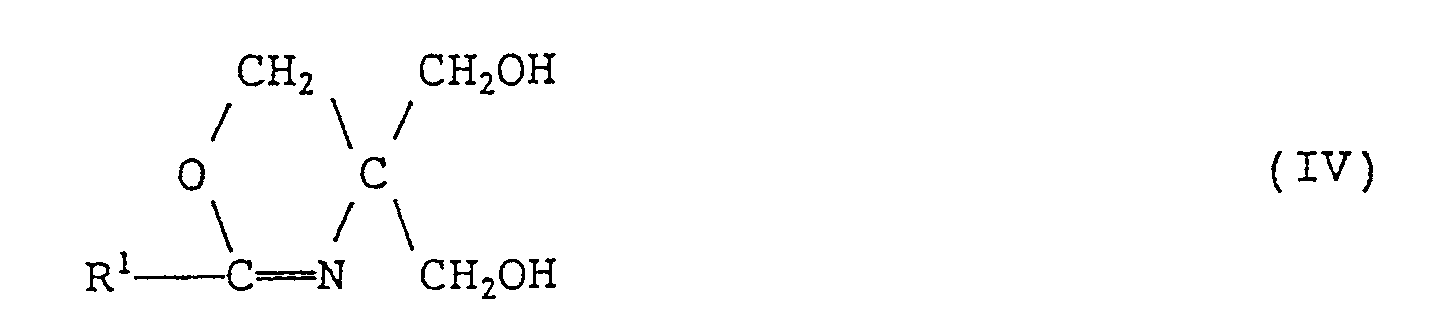
- The present invention furthermore provides an intermediate in the production of the N-tris-(hydroxymethyl)methyl-fatty acid amide of formula (I) above.
- In a further aspect, the invention provides, as preferred species, branched fatty acid amides of formula (ia):
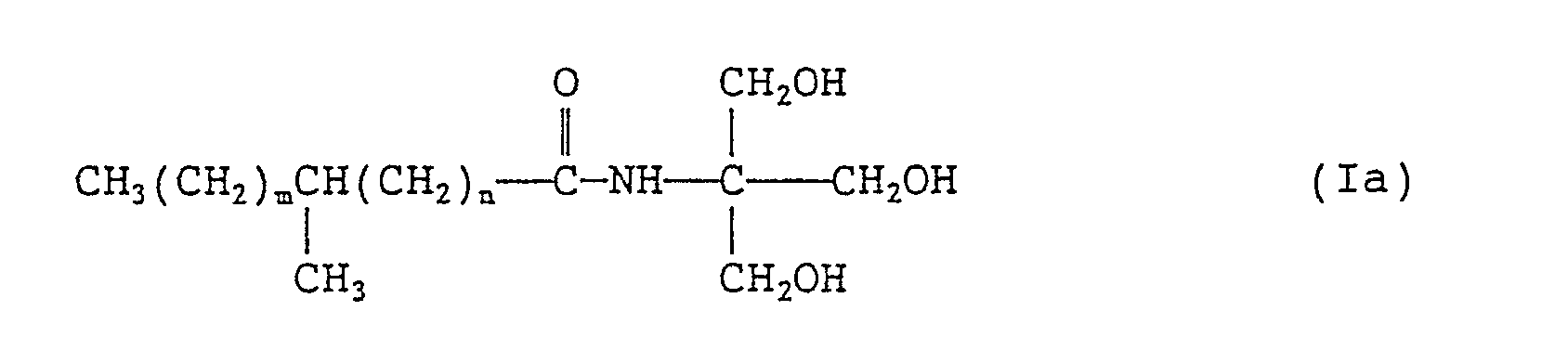
- The present invention also provides a cosmetic composition and a humectant each containing an N-tris-(hydroxymethyl)methyl-fatty acid amide of formula (I'):

-
- Fig. 1 shows an infrared absorption spectrum of N-tris(hydroxymethyl)methylisostearamide obtained in Example 1;
- Fig. 2 shows a nuclear magnetic resonance spectrum of the same; and
- Fig. 3 is a diagram showing the time course of water retention (changes in water content) for each of the samples tested in Example 3.
- The branched alkyl group represented by R1 in formula (I) above contains 4 to 27 carbon atoms, preferably 10 to 22 carbon atoms, and more preferably 14 to 20 carbon atoms.
- The N-tris(hydroxymethyl)methyl-fatty acid amides of the present invention is represented by the above formula (I). As typical examples of the group


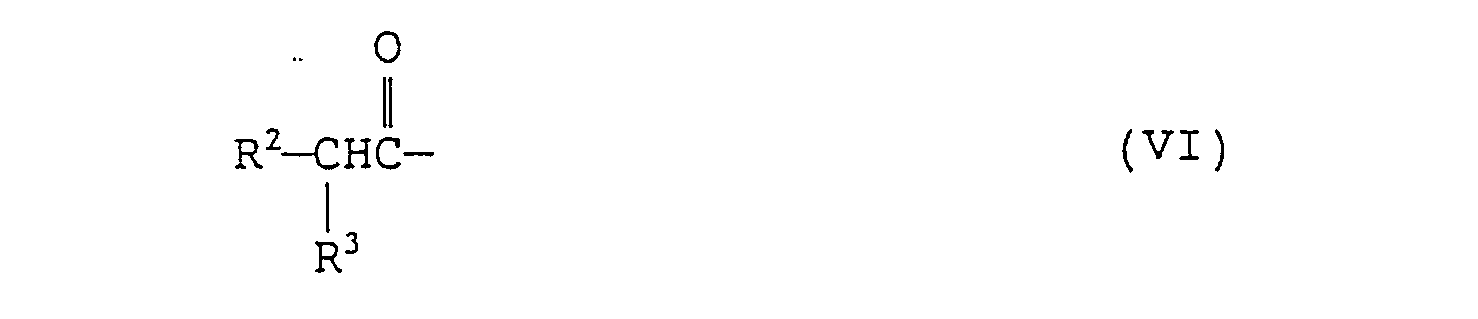
- In formula (V), m and n each represent an integer of 0 to 20, preferably 0 to 16, provided that the sum of m and n is 1 to 20, preferably 10 to 16. In formula (VI), R2 and R3 each represent a linear alkyl group containing 2 to 24 carbon atoms, provided that the sum of the carbon numbers of the alkyl groups represented by R2 and R3 is 4 to 26. Typical examples of these branched acyl groups include residues of carboxylic acids which are obtained by radical addition of an a-olefin at a-position of a carboxyl group or a Guerbet acid.
- More preferred as
- The N-tris(hydroxymethyl)methyl-fatty acid amides (I) whose

- In accordance with the invention, the N-tris(hydroxymethyl)methyl-fatty acid amides (I) can be produced advantageously by the following process.
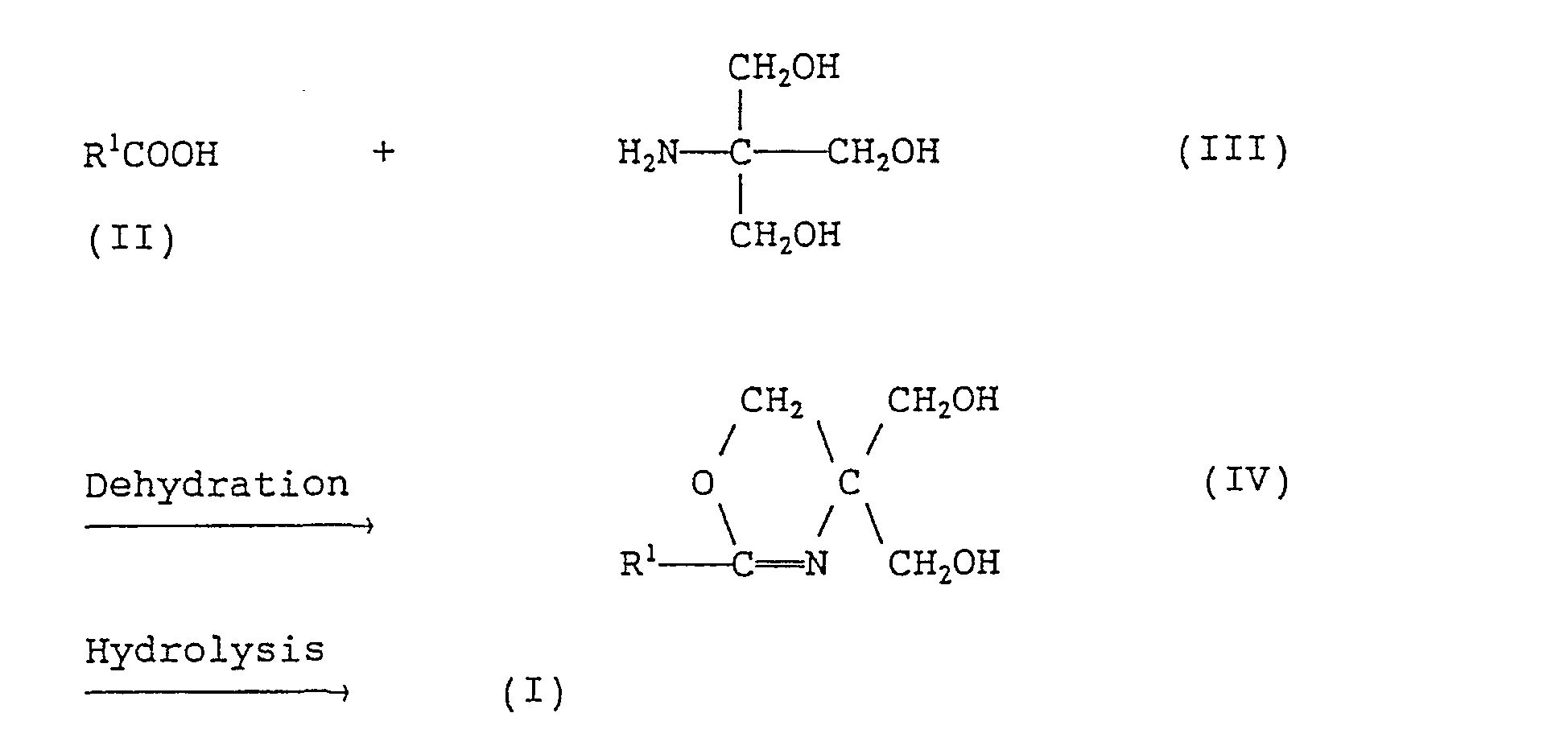
- In formulas (II) and (IV), R1 is as defined above.
- Thus, a fatty acid (II) is reacted with tris(hydroxymethyl)aminomethane (III) and the resulting compound (IV) is then hydrolyzed to give the corresponding compound (I).
- For the preferred compounds having an acyl group of formula (la), the above process may be illustrated as follows:
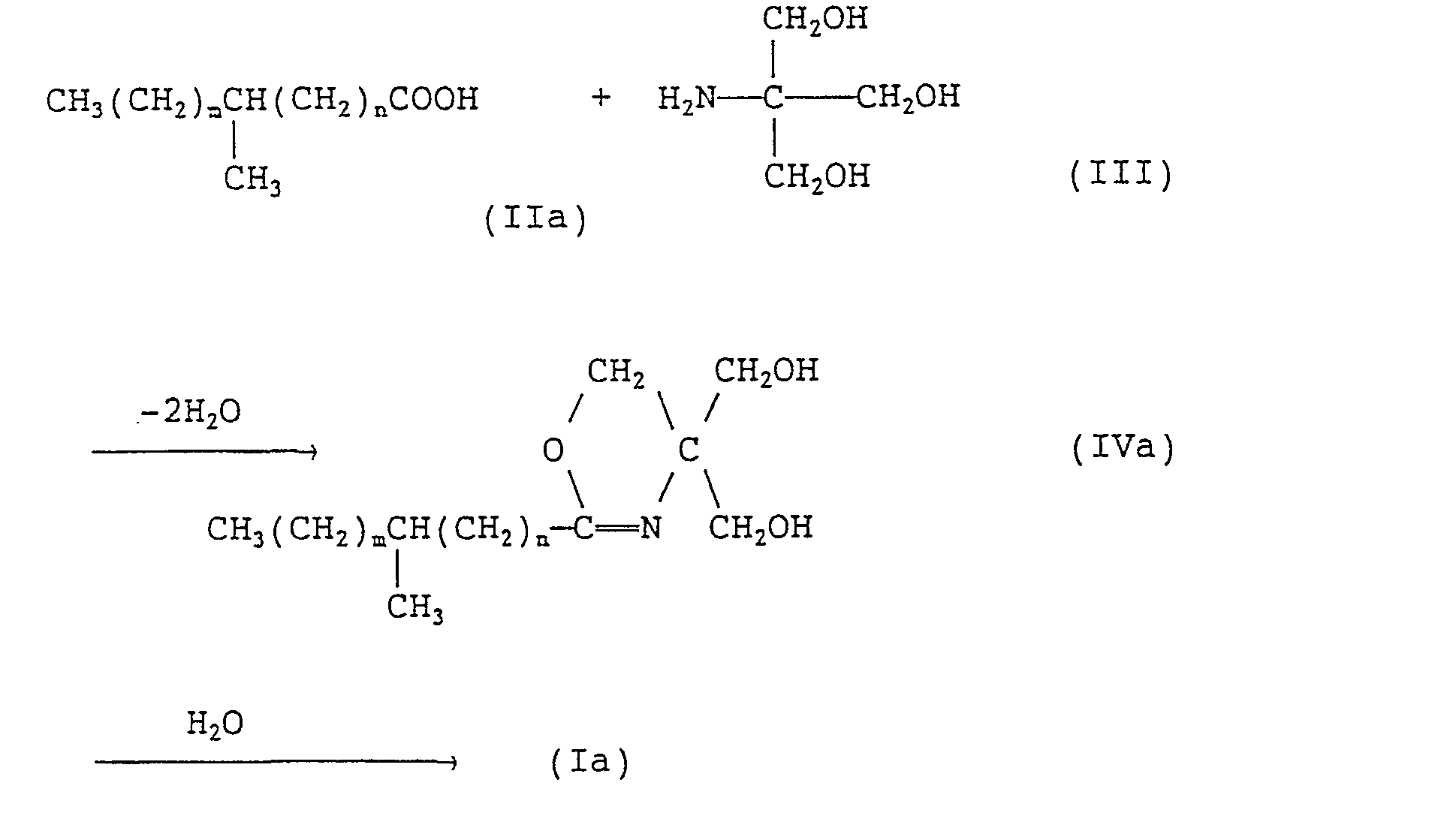
- In the above formulas, m and n are as defined above.
- Among the branched fatty acids (II) or (11 a), those which are commercially available are generally mixtures with a certain distribution with respect to the total number of carbon atoms in the alkyl moiety and with respect to the position of the branching methyl group. Methyl-branched isostearic acid, which is a byproduct in the manufacture of oleic acid dimer, contains not less than about 75% of C18 acids (wherein m + n = 14) with C14, C16 and C20 acids accounting for the balance, the branching methyl group being located approximately in the middle of the principal alkyl chain (J. Amer. Oil Chem. Soc., 51 522 (1974); ibid. 56 823A (1979). Examples thereof include, for example, Emersol® 875 (a product manufactured by Emery) and Century@ 1105 (a product manufactured by Unioncamp).
- The reaction (first-step reaction) between the branched fatty acid (II) or (Ila) and tris(hydroxymethyl)-aminomethane (III) is an oxazoline ring formation reaction and these materials are preferably used in approximately equimolar amounts. This reaction is preferably carried out without using any solvent or in an inert solvent, such as toluene, xylene, mesitylene, cumene, hexane or decane, at a temperature of 100-250. C, more preferably 130-220 C, most preferably 150-200 C, while removing the byproduct water continuously. At lower temperatures, the reaction will not proceed substantially while, at higher temperatures discoloration is intense and side reactions occur. The reaction may be conducted either under a nitrogen atmosphere or under an ordinary air atmosphere. The reaction period may vary depending on various conditions. Generally, however, 1 to 24 hours is preferred.
- The second-step reaction, namely hydrolysis of the oxazoline ring, is preferably carried out in a mixed solvent composed of a lower alcohol containing 1 to 6 carbon atoms and water. A method of hydrolyzing oxazolines having a straight-chain alkyl group which comprises using water alone as the solvent is disclosed in U.S. Patent No. 2,877,242. However, this method is disadvantageous in that water is required in large excess, say about 20 parts by weight per part by weight of oxazoline; smaller amounts of water lead to lower yields. The use of the above-mentioned mixed solvent according to the invention makes it possible to hydrolyze oxazolines in a small amount of solvent with a high yield.
- The ratio by volume between the lower alcohol and water is preferably within the range of 1:10 to 10:1, more preferably 2:5 to 5:2, most preferably 1:2 to 2:1. When this ratio is above 10:1, the amount of water in the reaction system becomes too small and, when the ratio is below 1:10, the system becomes inhomogeneous; in both cases, the hydrolysis proceeds only slowly. The mixed solvent is preferably used in an amount of 0.1 to 20 parts by weight per part by weight of the compound (IV) or (IVa). Larger amounts decrease the productivity, hence are not practical, while smaller amounts slow down the rate of hydrolysis. As examples of the lower alcohol that are suited for use in the above hydrolysis, there may be mentioned methanol, ethanol, isopropanol, propanol, butanol, isobutanol, sec-butanol, tert-butanol, amyl alcohol, tert- amyl alcohol, neopentyl alcohol and hexyl alcohol, among others.
- The hydrolysis reaction may be conducted either under a nitrogen atmosphere or under an ordinary air atmosphere. The reaction temperature should preferably be within the range of 50-150 C, more preferably 60-130 C, most preferably 70-120 C. At lower temperatures, the reaction substantially fails to progress while, at higher temperatures, discoloration becomes severe and side reactions occur. Although the reaction period may vary depending on the reaction temperature and other factors, 1 to 15 hours is generally preferred. This hydrolysis reaction may be conducted in the presence of an alkaline (e.g., hydroxides, carbonates and hydrogencarbonates of alkali metals) or acidic substance (e.g., phosphonic acid, hydrochloric acid and p-toluene sulfonic acid).
- The compound (I) according to the invention can be isolated from the reaction mixture in the conventional manner, for example by solvent removal by distillation, recrystallization, chromatography and the like, employed either alone or in combination.
- The branched fatty acid amides according to the invention occur as lyotropic liquid crystals in the presence of water at room temperature. Characteristically, they have excellent lubricating properties, show good compatibility with most solvents and, when admixed with water, can be dispersed almost uniformly. They are very useful as bases, emulsifiers and lubricants for hair treatment preparations and cosmetics. In accordance with the invention, the fatty acid amides can be produced in an industrially advantageous manner by using a mixed solvent composed of a lower alcohol and water in the hydrolysis step, thus allowing the reaction to proceed smoothly without requiring water in large amounts and without causing gelation.
- The cosmetic composition according to the invention contains one or more of the N-tris(hydroxymethyl)-methyl-fatty acid amides mentioned above. Further, an N-tris(hydroxymethyl)methyl-fatty acid amide of formula (I) whose R1 represents a linear alkenyl group containing 4 to 27 carbon atoms can also be contained in the cosmetic composition according to the invention.
- That is, the N-tris(hydroxymethyl)methyl-fatty acid amide to be contained in the cosmetic composition according to the invention can be represented by the following formula (I')
- Typical examples of the group

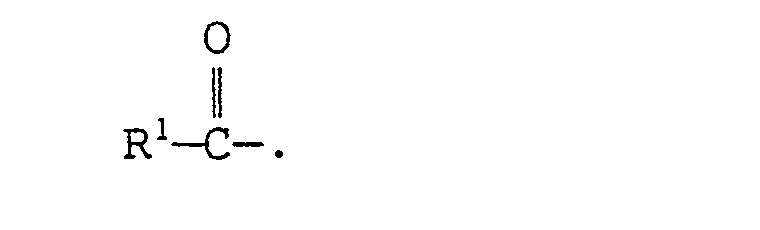
- The linear alkenyl group represented by R1 contains preferably 10 to 22 carbon atoms and more preferably 14 to 20 carbon atoms. At typical examples of the group


- The N-tris(hydroxymethyl)methyl-fatty acid amide of formula (I') whose R1 is a linear alkyl group can be produced in the same manner as that of the N-tris(hydroxymethyl)methyl-fatty acid amide of formula (I) above.
- The cosmetic composition according to the invention contains one or more of the N-tris(hydroxymethyl)-methyl-fatty acid amides of formula (I') above generally in amounts of 0.01 to 80% by weight preferably 0.1 to 60% by weight, based on the total weight of the composition. The amount is not critical, however.
- For further heightening effects of the invention, one or more surfactants may be used additionally in the composition. Such surfactants may be nonionic, cationic, anionic or amphoteric ones. In particular, nonionic surfactants are preferred in cosmetic preparations to be applied to the skin, and cationic surfactants in hairdressing composition.
- The nonionic surfactants include, among others, polyoxyethylene alkyl ethers, polyoxyethylene alkylphenyl ethers, polyoxyethylene fatty acid esters, sorbitan fatty acid esters, polyoxyethylenesorbitan fatty acid esters, fatty acid monoglycerides and glyceryl ethers.
- Examples of the cationic surfactant include quaternary ammonium salts, alkylpyridinium salts, alkylmor- pholinium salts, alkylisoquinolinium salts, alkylimidonium salts, alkylamine salts and alkylamideamine salts, which are commonly used in cosmetic compositions.
- Of these surfactants, cationic surfactants are still preferred because the combined use of the N-tris-(hydroxymethyl)methyl-fatty acid amide with the cationic surfactant shows a favorable feel at use.
- Among those cationic surfactants, quaternary ammonium salts containing at least one alkyl group having 8 to 28 carbon atoms are preferable. Examples thereof include quaternary ammonium salts of the following formulae (VIII) and (IX):


- The quaternary ammonium salts represented by formulae (VIII) and (IX) may be synthesized in a conventional manner as disclosed, for example, in the above mentioned Kesyohin Genryo Kijun.
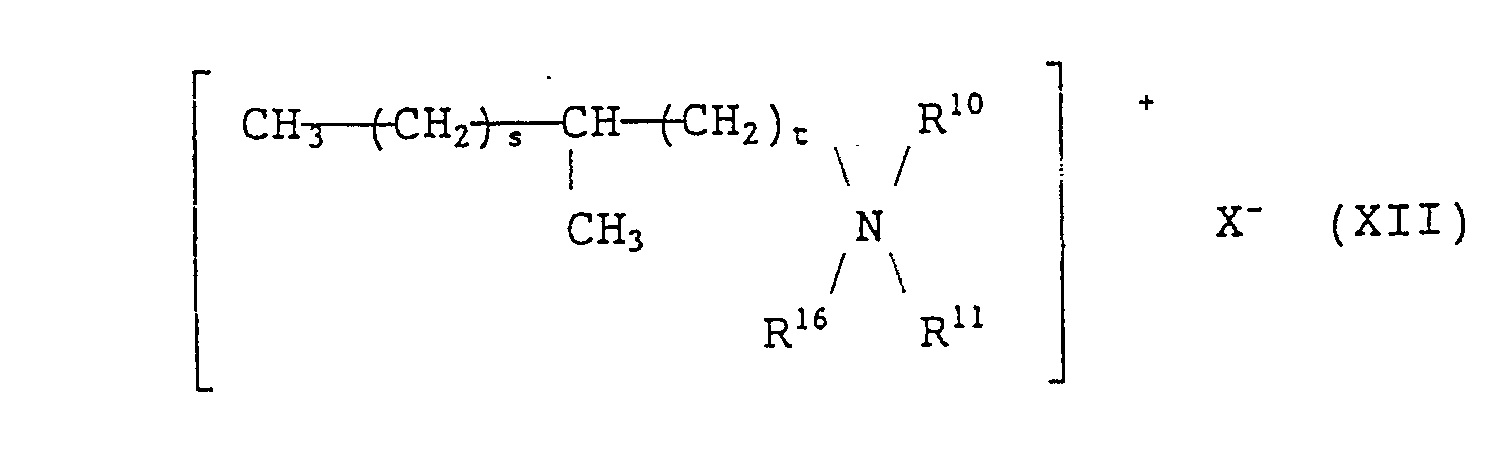
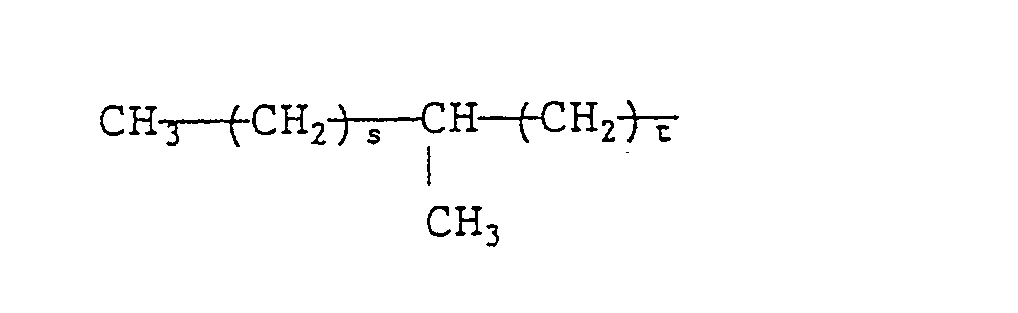
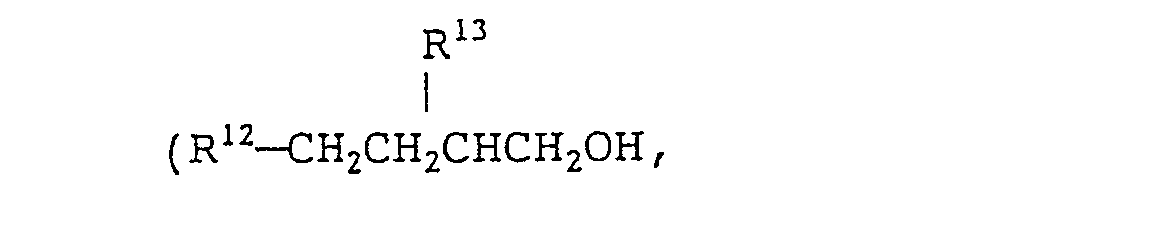
- Among these quaternary ammonium salts, a quaternary ammonium salt of formula (VIII) is preferable. More preferable examples of the quaternary ammonium salts of formula (VIII) include branched quaternary ammonium salts of the following general formulae (X) to (Xll):
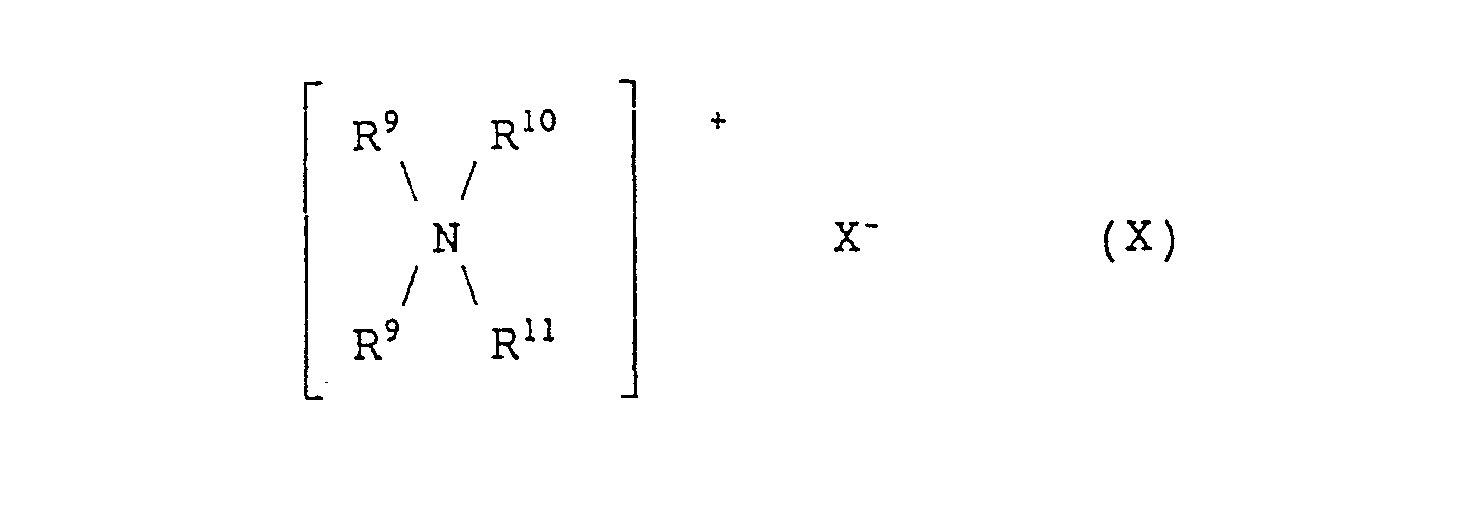

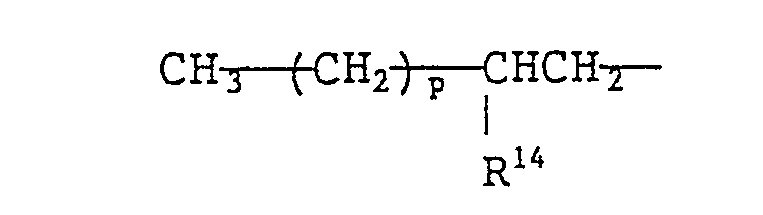

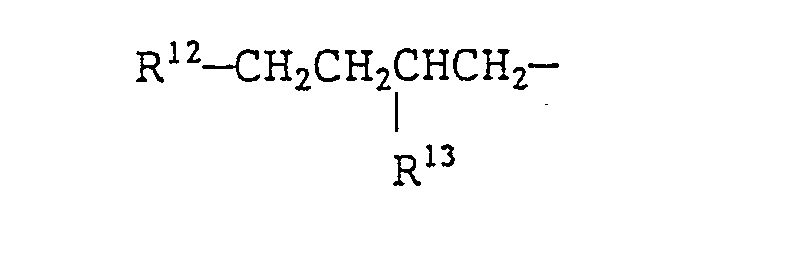
- The branched quaternary ammonium salt(s) represented by formula (X) may be synthesized, for example, from an oxoalcohol having 8 to 16 carbon atoms in a conventional manner as described in the above mentioned Kesyohin Genryo Kijun. Examples thereof include dialkyldimethylammonium salts, dial- kylethylhydroxyethylammonium salts and dialkylmethylbenzylammonium salts each having an alkyl group derived from an oxoalcohol.
- As the quaternary ammonium salt(s) of formula (X), those having the branching ratio as earlier defined of from 10 to 100 % as a whole is usually employed in the present invention. In the present invention, one quaternary ammonium salt of formula (X) may have one or two of the substituent (a) for R9 and another quaternary ammonium salt of formula (X) may have one or two of the substituent (b) for R9, provided that the mixture thereof as a whole suffices to the branching ratio as earlier defined.
- It is particularly preferable to use those having a branching ratio as earlier defined of from 10 to 50 %. In the present invention, the total number of carbon atoms in the R8 group may range from 8 to 16. It is preferable to use such quaternary ammonium salts having a specific distribution. It is more preferable to use those having the following distribution:
- C8 - C11: 5 % by mol or less,
- C12: 10 - 35 % by mol,
- Ci3: 15 - 40 % by mol,
- C14: 20 - 45 % by mol,
- C15: 5 - 30 % by mol and
- C16: 5 % by mol or less, total being 100%.
- Specific examples of such quaternary ammonium salts include dialkyldimethylammonium chloride carrying alkyl groups having 8 to 16 carbon atoms and having a branching ratio as earlier defined of from 10 to 50 %.
- The branched quaternary ammonium salts represented by formula (XI) may be synthesized in a conventional manner from a Guerbet alcohol
- As the methyl branched quaternary ammonium salt represented by formula (XII), those wherein s + t is 15 are preferable.
- The methyl branched quaternary ammonium salt represented by formula (XII) may be synthesized by the manner described, for example, in The fifteenth IFSCC International Congress (1988), Preprints, vol.1, pages 71 to 87.
- Examples of the counter ion X- in the quaternary ammonium salts represented by formulae (XIII), (IX), (X), (XI) and (XII) include halogen ions (for example, chlorine, iodine, bromine ions); and organic anions (for example, methosulfate, ethosulfate, methophosphate, ethophosphate).
- These surfactants are used in amounts of 0.01 to 30% by weight, preferably 0.1 to 10% by weight, on the basis of the whole composition.
- The cosmetic composition according to the invention may further contain, if necessary or where appropriate, one or more of those ingredients that are generally used in cosmetics, drugs and foods, for example higher alcohols having a straight or branched alkyl or alkenyl group; hydrocarbons such as liquid paraffin, vaseline and solid paraffin; lanolin and derivatives such as liquid lanolin and lanolin fatty acids; silicone derivatives such as dimethylpolysiloxane, polyether-modified polysiloxanes, amino-modified polysiloxanes and stearoxy-modified siloxanes; fats and oils such as higher alcohol higher fatty acid esters, higher fatty acids and alkyl- or alkenyl-containing long-chain amideamines; and animal- or plant-derived fats and oils such as mink oil and olive oil.
- In particular, the silicone derivatives can preferably be contained in the cosmetic composition of the invention since the combined use of the N-tris(hydroxymethyl)methyl-fatty acid amide with the silicone derivative shows a favorable feel during use.
- Examples of the silicone derivative are as follows:
- (1) dimethyl polysiloxane: (CH3)3SiO[(CH3)2SiO]nSi(CH3)3 (XIII) wherein n' is from 0 to 9,000,
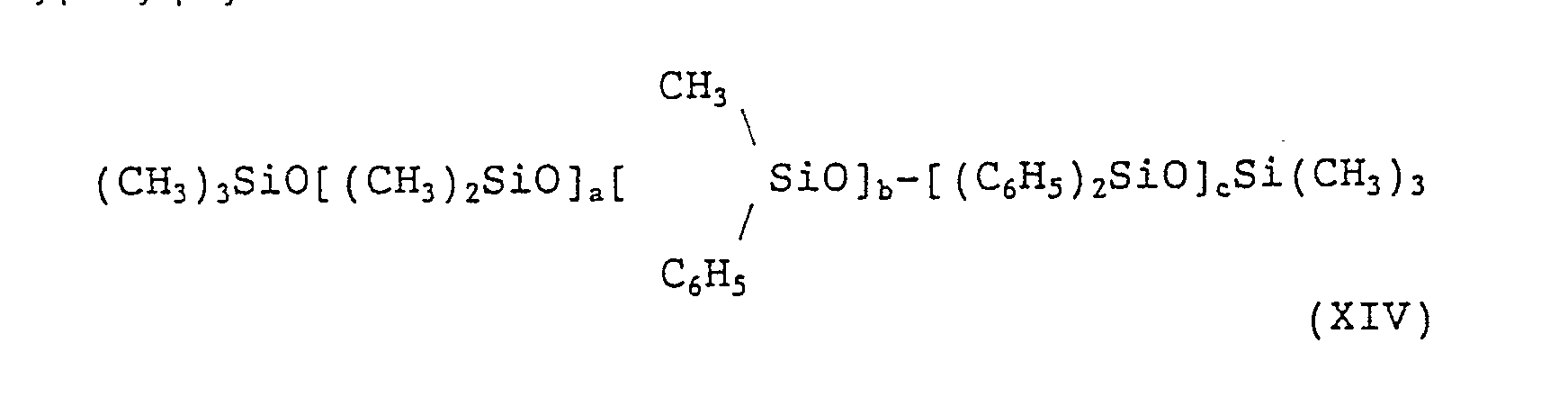
- (2) methylphenyl polysiloxane:
- (3) amino-denatured silicone:
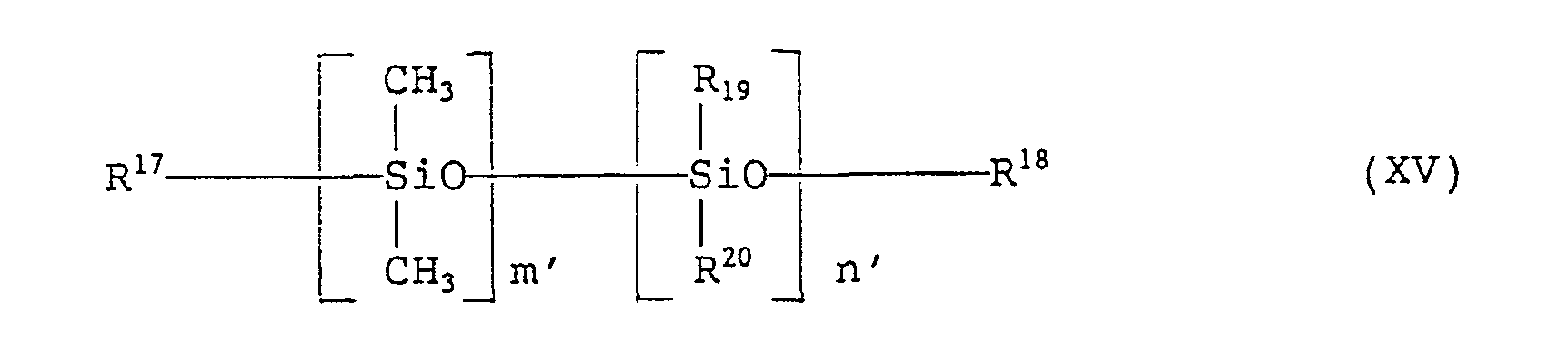



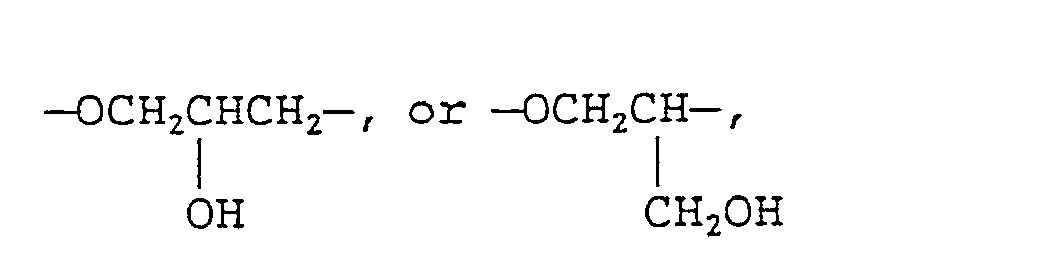
- (4) fatty acid-denatured polysiloxane: wherein f, g and h each represents 1 to 350, i is 0 to 10, and R25 represents a group

- (5) alcohol-denatured silicone: HO(CH2)·R26-[(CH3)2SiO]j(CH3)2SiR26-CH2OH (XIX-1)

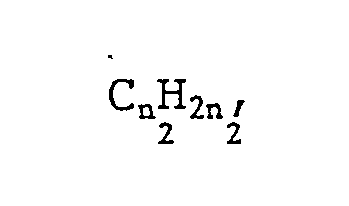
- (6) aliphatic alcohol-denatured polysiloxane:


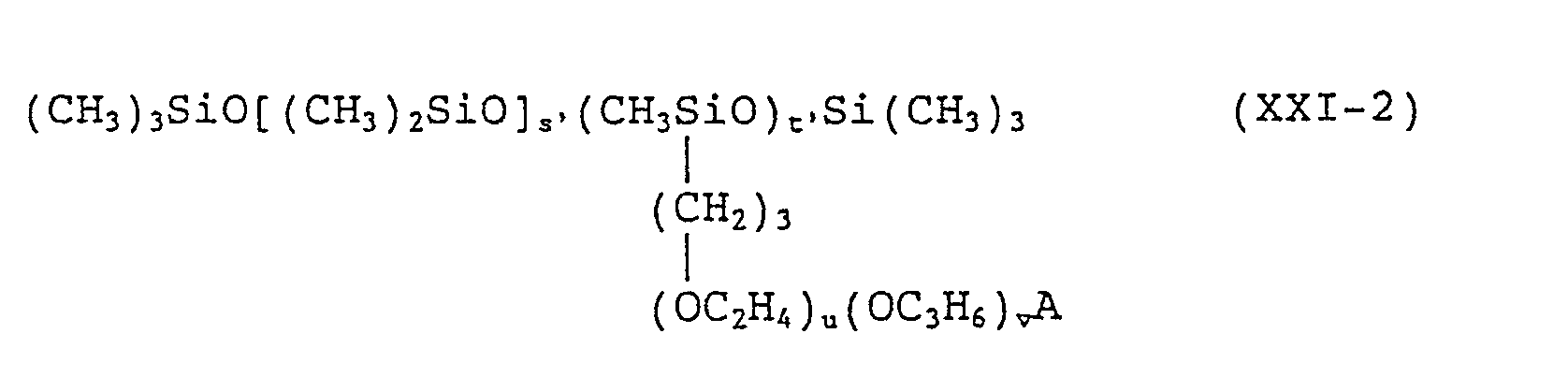
- (7) polyether-denatured silicone:


- (8) epoxy-denatured silicone:

- (9) fluorine-denature silicone:

- (10) cyclic silicone:
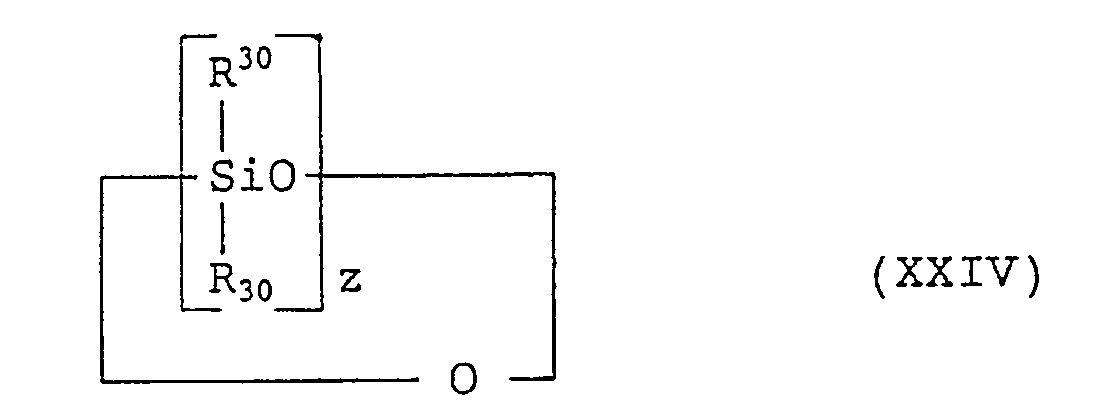
- (11) alkyl-denatured silicone:



- (12) alkoxy-denatured silicone:
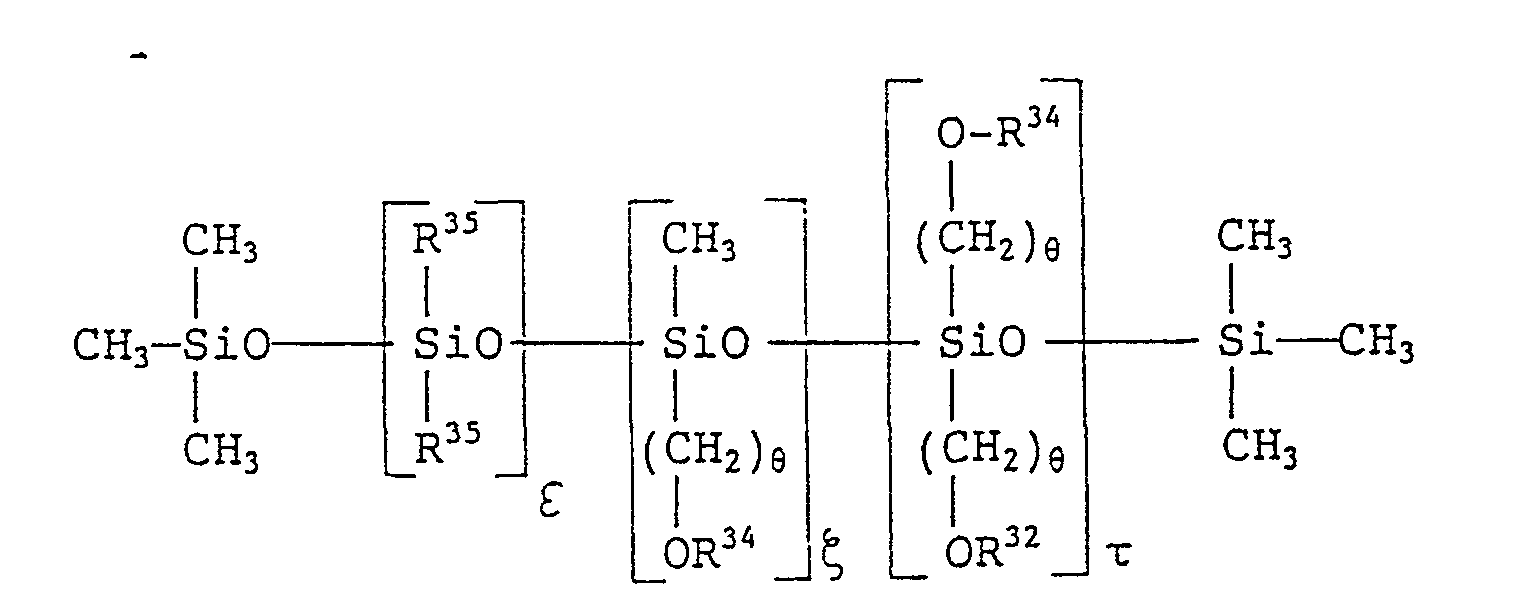
- Among these silicone compounds, those as defined in the above (1), (3), (7) and (10) are preferably employed in a hairdressing composition to be rinsed away, for example, a hair rinse or a hair conditioner. Regarding the silicone compounds of (1), the n' in the formula (XIII) may range from 0 to 9,000, though it preferably ranges from 100 to 1,000 in order to give a hair style of a light feel. On the other hand, those as defined in the above (1), (2), (3), (7) and (10) are preferably employed in a hairdressing composition which is not rinsed away, such as a hair cream, a styling lotion or a styling mousse. Regarding the silicone compounds of (1), the n' in the formula (XIII) preferably range from 6,000 to 8,000 in order to minimize any oily feel.
- The cosmetic composition according to the invention may still further contain, if necessary or where appropriate, one or more of those ingredients that are generally used in cosmetics, drugs and food, for example, biologically active agents such as antidandruff agents, biocides and vitamins; preservatives such as parabens; thickening agents such as water-soluble macromolecules, colorants such as dyes and pigments; ultraviolet absorbers; astringents; humectants such as propylene glycol, glycerin, carbitols, 3-methyl-1,3-butanediol and sugars; water and perfumes.
- The cosmetic composition according to the invention can be manufactured in a conventional manner and can be provided for example in the form of skin care preparations of the oil-in-water or water-in-oil emulsion type or of the oleaginous type; make-up preparations such as rouge and foundations; and hair cosmetics such as hair rinses, hair treatment preparations, hair conditioners and hair sprays.
- Since the N-tris(hydroxymethyl)methyl-fatty acid amides serve as excellent humectants and occur as lamellar liquid crystals in the presence of water, the cosmetic composition according to the invention has good spreadability or extendibility and gives only a minimum of greasy feeling. Furthermore, since the liquid crystals take in high-melting substances, the stability of the system is improved and the active ingredients can function efficiently. Therefore, the cosmetic composition according to the invention is excellent in humectancy and, when applied, can spread smoothly, giving a refreshing feeling during use without stickiness. Furthermore, the composition has good emulsion stability.
- The following examples are further illustrative of the present invention but by no means limitative of the scope thereof.
- Synthesis of N-tris(hydroxymethyl)methylisostearamide (Compound (ia-1)):
- (1) iso-Heptadecyl-4,4-bis(hydroxymethyl)-2-oxazoline (Compound (lVa-1)):
- A one-liter reactor equipped with a thermometer, a reflux condenser, a Dean-Stark trap and a stirrer was charged with 300 g (1.055 moles) of isostearic acid (Emersolp 875; trade name of a product manufactured by Emery) and 127.75 g (1.055 moles) of tris(hydroxymethyl)aminomethane. The temperature was raised with stirring and the reaction was carried out at 140-160° C for 3 hours and then further at 160-196 C for 3 hours, whereby the calculated amount of water was distilled off to give 386.25 g of the title compound (IVa-1) (yield 99.1 %). This product occurred as a viscous yellow liquid at 140° C and solidified into a wax at room temperature. Melting point 53-58° C.
- Purity determined by gas chromatography: 90.7%
- (2) N-Tris(hydroxymethyl)methylisostearamide (Compound (la-1)):
- A one-liter reactor equipped with a thermometer, a reflux condenser and a stirrer was charged with 150 g (0.368 mole) of compound (IVa-1) obtained as described above and 300 ml of ethanol. The temperature was raised with stirring and, at 76° C, 450 ml of water was added dropwise to the reactor over 15 minutes. The reaction mixture became cloudy. After 5 hours of refluxing at 83-84° C with stirring, the reaction mixture was cooled to room temperature, whereupon the reaction mixture became almost clear and transparent. The mixture was dehydrated by several repetitions of evaporation following addition of ethanol to give 157.67 g of a crude form of the compound (la-1). This crude product had a purity of 87.6% as determined by gas chromatography. The product was dissolved in 1,000 ml of chloroform, the insoluble matter was removed, the filtrate was evaporated, and the residue was recrystallized from 500 ml of hexane. The solid thus obtained was washed with hexane and dried under vacuum at 50 C. Thus was obtained 79.62 g of the compound (la-1) (yield 55.8%).
- Purity determined by gas chromatography: 95.2%
- At room temperature, this product occurred as a colorless paste solid. Acid value: 1.42 Hydroxyl value: 414.1 (theoretical value: 434.26) IR (KBr, cm-1) (cf. Fig. 1): 3380 (O-H stretching), 3300 (N-H stretching), 2928, 2860 (C-H stretching), 1626 (C=O stretching), 1536 (N-H deformation), 1468, 1380 (C-H deformation), 1050, 1026 (C-O stretching), 722 (CH2 rocking), 668 (N-H out-of-plane deformation) NMR (CDCl3, 8 ppm) (cf. Fig. 2): 0.65 - 1.05 (6H, broad, -CH3), 1.05 - 2.02 (27H, broad, -CH2-,
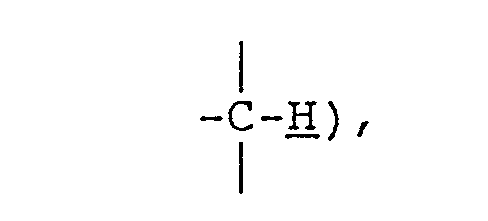
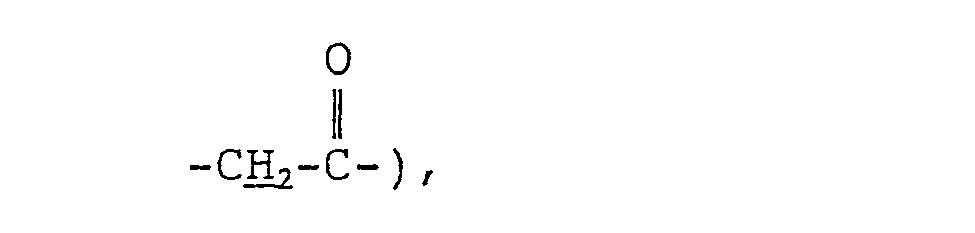

- N-Tris(hydroxymethyl)methylisostearamide (la-1) obtained in Example 1 and several known compounds similar in structure, namely two N-tris(hydroxymethyl)methyl-straight chain fatty acid amides and four trimethylol-alkanes, were examined for appearance at room temperature and for compatibility with water. The test compound-water mixture systems gave the results shown in Table 1 over the entire concentration range.
- An 80% by weight aqueous solution of each humectant sample was prepared, about 1.5 g of the solution was placed in a dish having a diameter of 30 mm and allowed to stand in a P2O5 desiccator at room temperature and the decrease in the weight of the solution was measured by a balance followed at timed intervals for evaluating the water-retaining capacity.
-
-
Composition 1 according to the invention: N-Tris(hydroxymethyl)methylisostearamide (obtained in Example 1) - Composition for comparison 1: Propylene glycol
- Composition for comparison 2: Glycerin
- The results are shown in Fig. 3. The composition according to the invention showed a superior water-retaining capacity as compared with the conventional humectants.
- Using the compound according to the invention as produced in Example 1, a hair rinse composition (
composition 2 according to the invention) was prepared according to the formulation given in Table 2 and evaluated for its rinsing effect. - The ingredients shown in Table 2 were melted by heating at 70 C and added to water heated at the same temperature. The resulting mixture was stirred to thoroughly mix the ingredients and then cooled to room temperature with stirring to give a hair rinse composition. (Evaluation)
- Twenty grams (20 g) of hair (15 cm long) from a Japanese female who had not undergone cosmetic treatment such as cold waving, bleaching or the like were bundled, shampooed with an anionic surfactant- based commercial shampoo and evenly coated with 2 g of the test hair rinse composition specified in Table 2. The coated hair was rinsed in running water for 30 seconds and then towel-dried. The hair bundle in a wet condition was subjected to sensory evaluation for softness, smoothness and greasy feeling according to the following criteria: very good-A, good-B, average-C, poor-D. The results are shown in Table 2.

- The hair rinse composition containing N-tris(hydroxymethyl)methylisostearamide according to the invention was superior in softness- and smoothness-imparting properties and gave a minimum of greasy feeling.
- Hair treatment composition (composition 3 according to the invention):

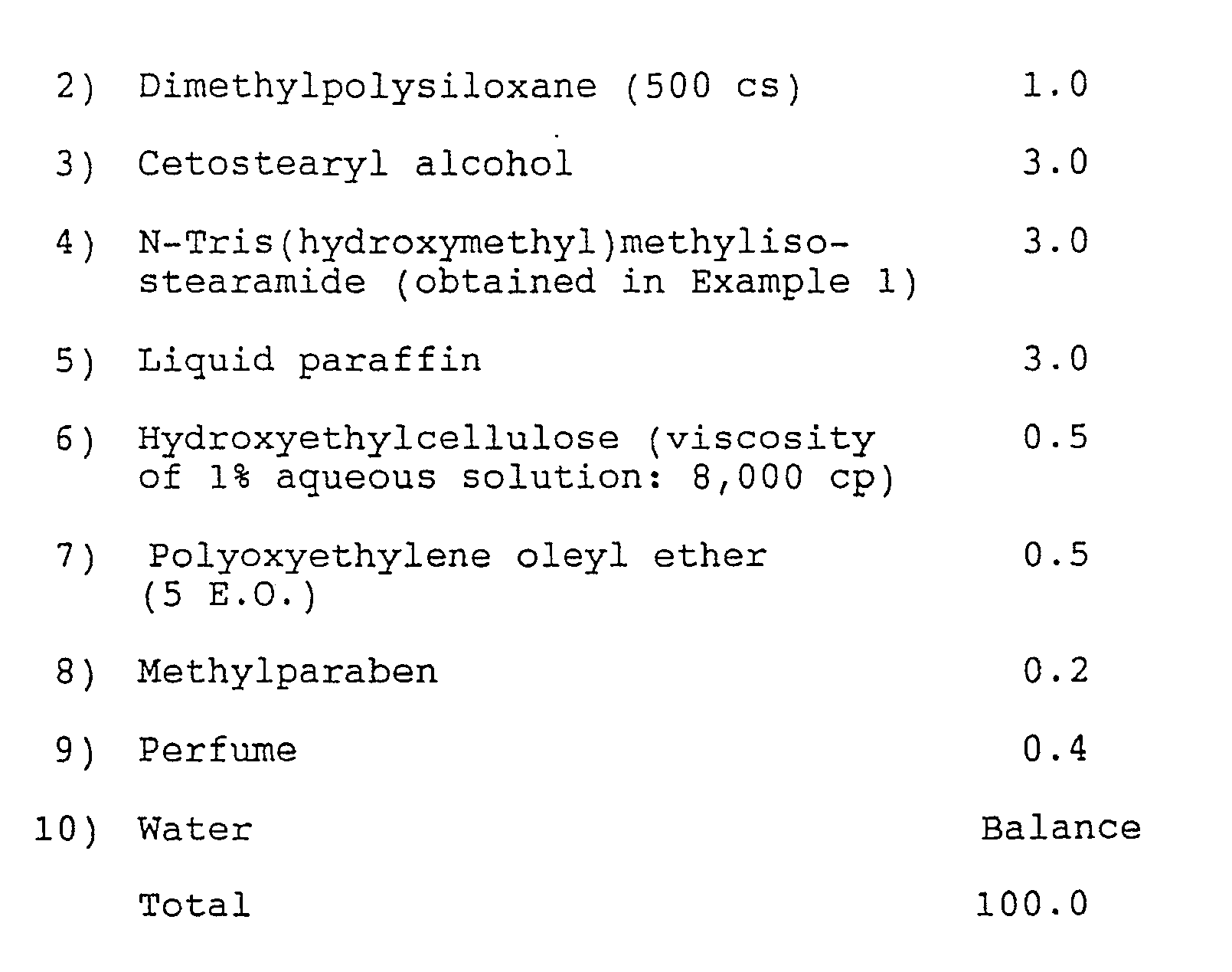
- The above formulation gave a hair treatment composition excellent in smoothing and softening properties and capable of providing hair with a light, moist, good feeling without giving any significant greasy feeling.
- Hair cream composition (composition 4 according to the invention):

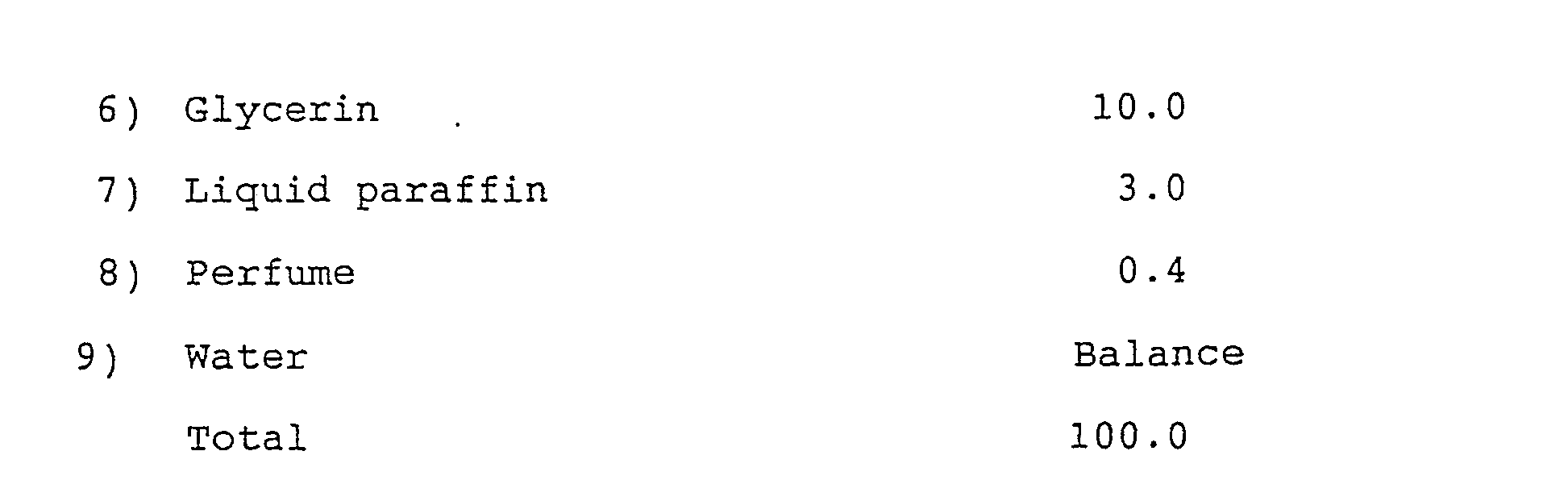
- The above formulation gave a hair cream composition excellent in smoothing and softening properties and capable of providing hair with a good feeling without stickiness.
- Styling lotion composition (
composition 5 according to the invention):
- The above formulation gave a setting composition having good feel and capable of providing hair with the ability to retain a hair style satisfactorily.
- Conditioning mousse composition (composition 6 according to the invention):
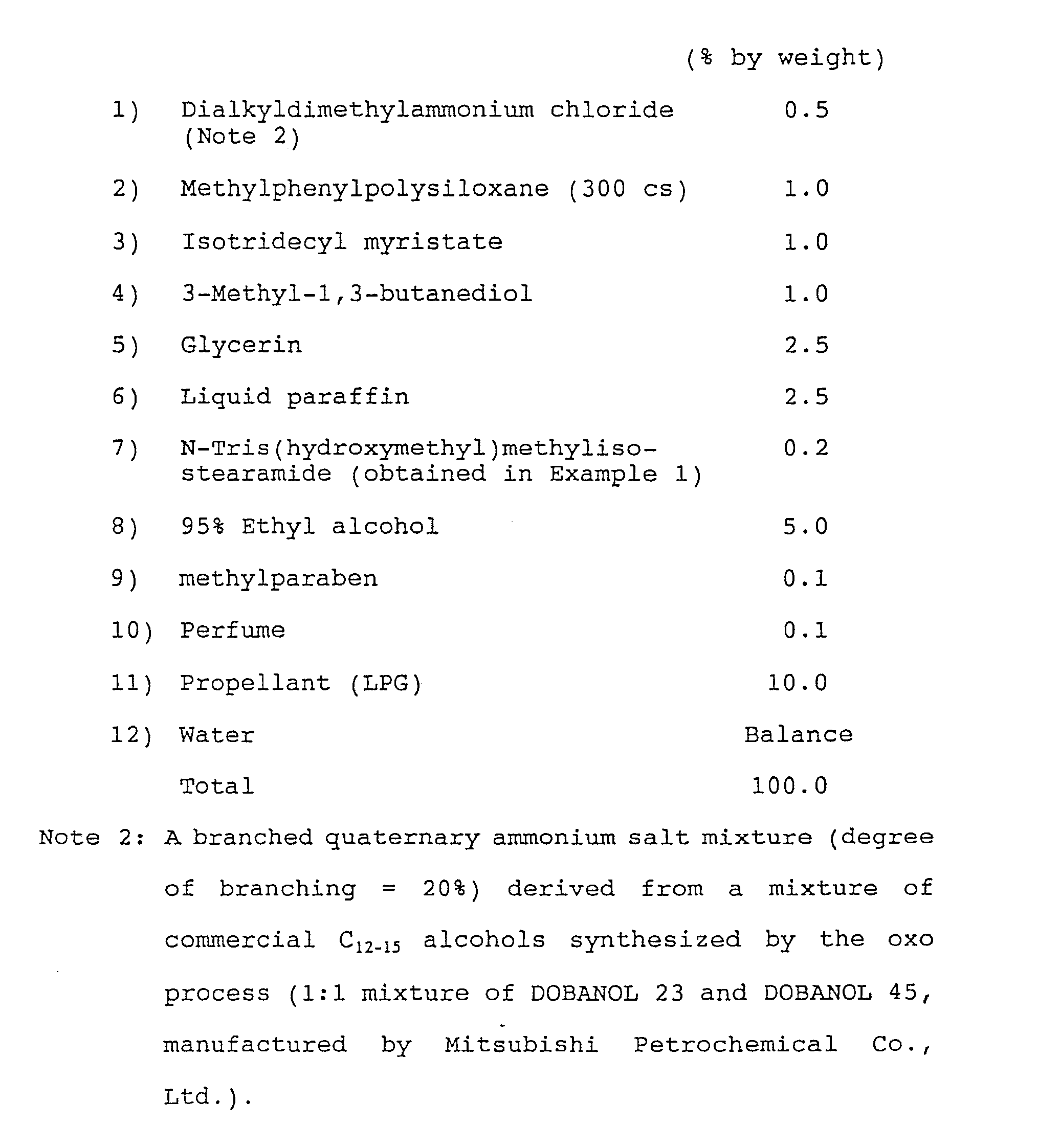
- The above formulation gave a conditioning mousse composition capable of providing hair with a good feel.
- Cream (composition 7 according to the invention)
-

-

- The cream according to the invention had an excellent feel during use and showed a good humectant effect.
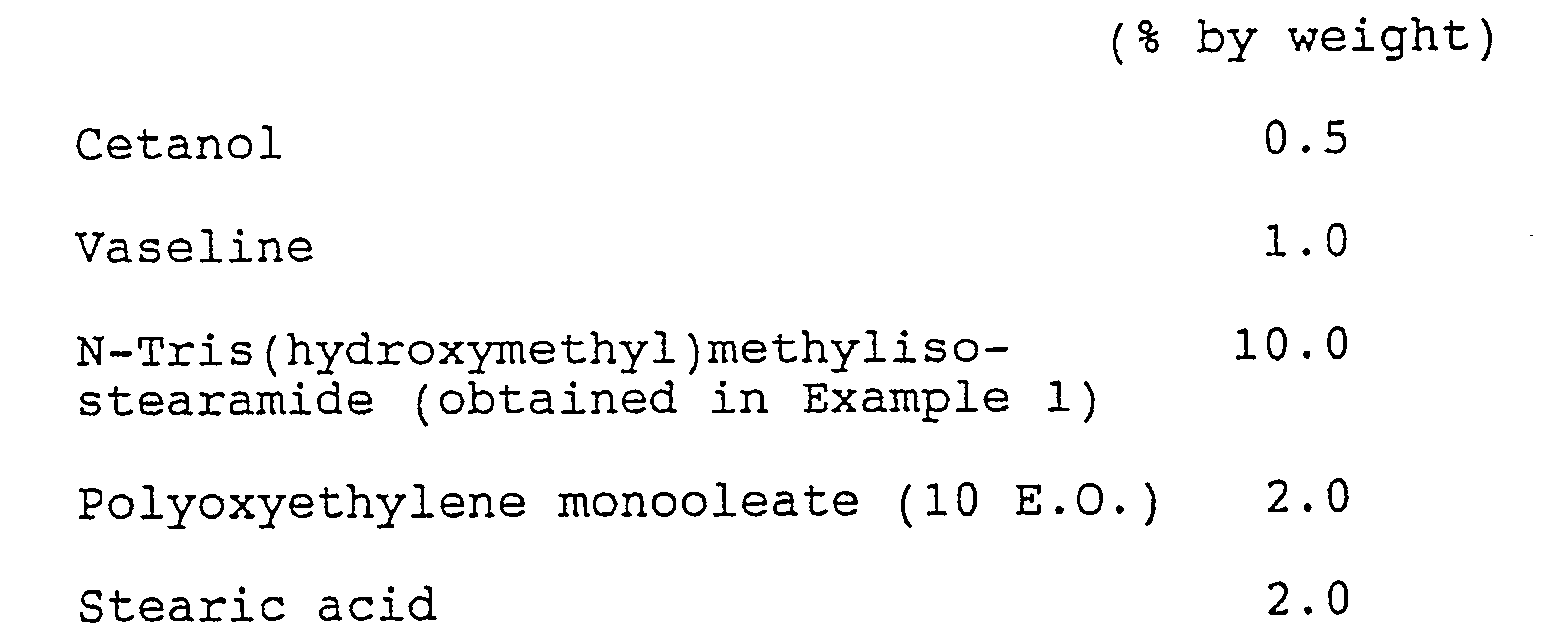
- Milky lotion (
composition 8 according to the invention) -
-

- The milky lotion according to the invention showed a good and long-lasting humectant effect.
- Cosmetic base (composition 9 according to the invention)
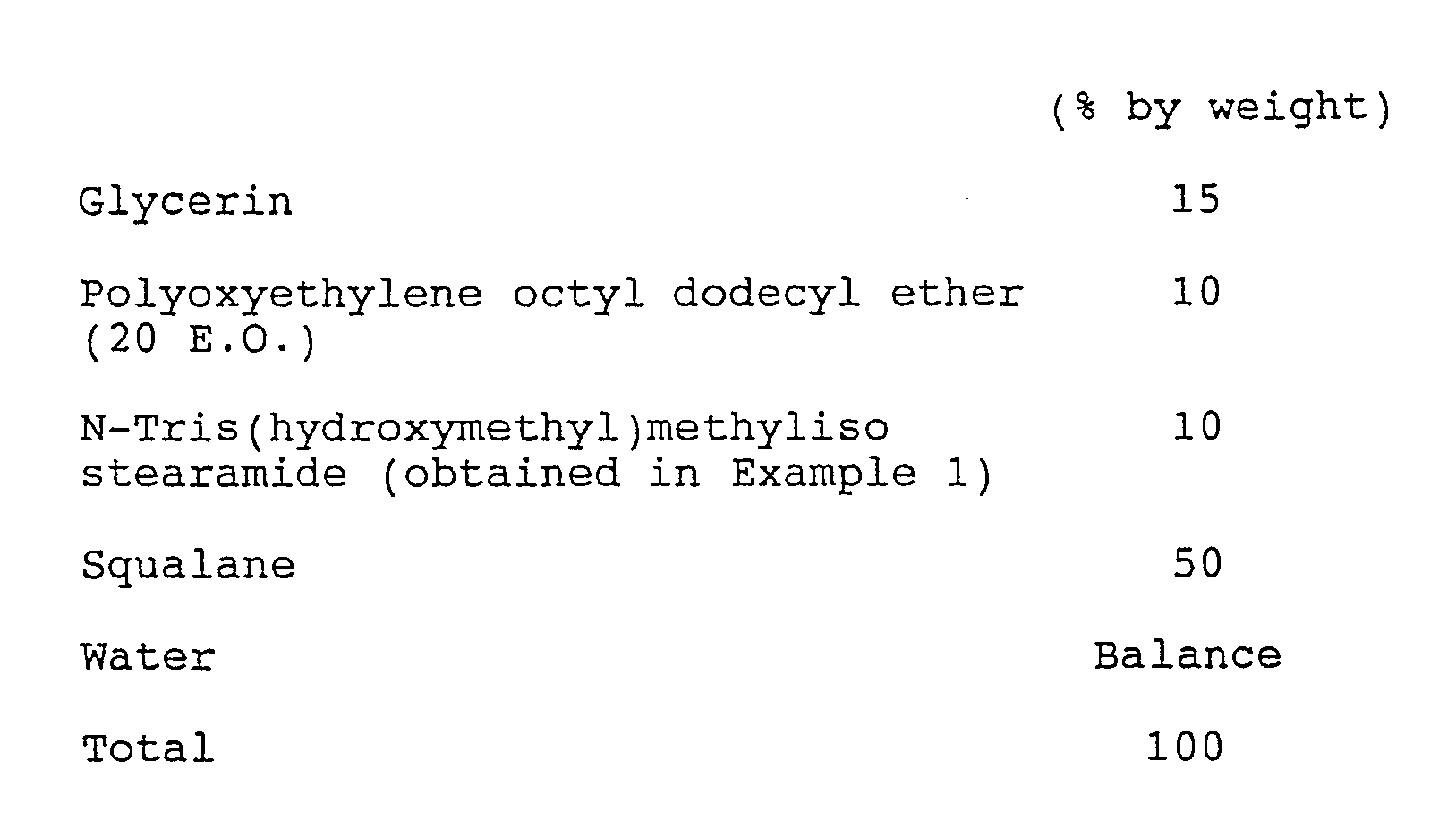
- The above ingredients were made up into a one-phase cosmetic base by heating all the ingredients for dissolution, followed by mixing and cooling. The cosmetic base had an excellent feel during use and showed a good humectant effect. Various oil-soluble substances can be incorporated into the base.
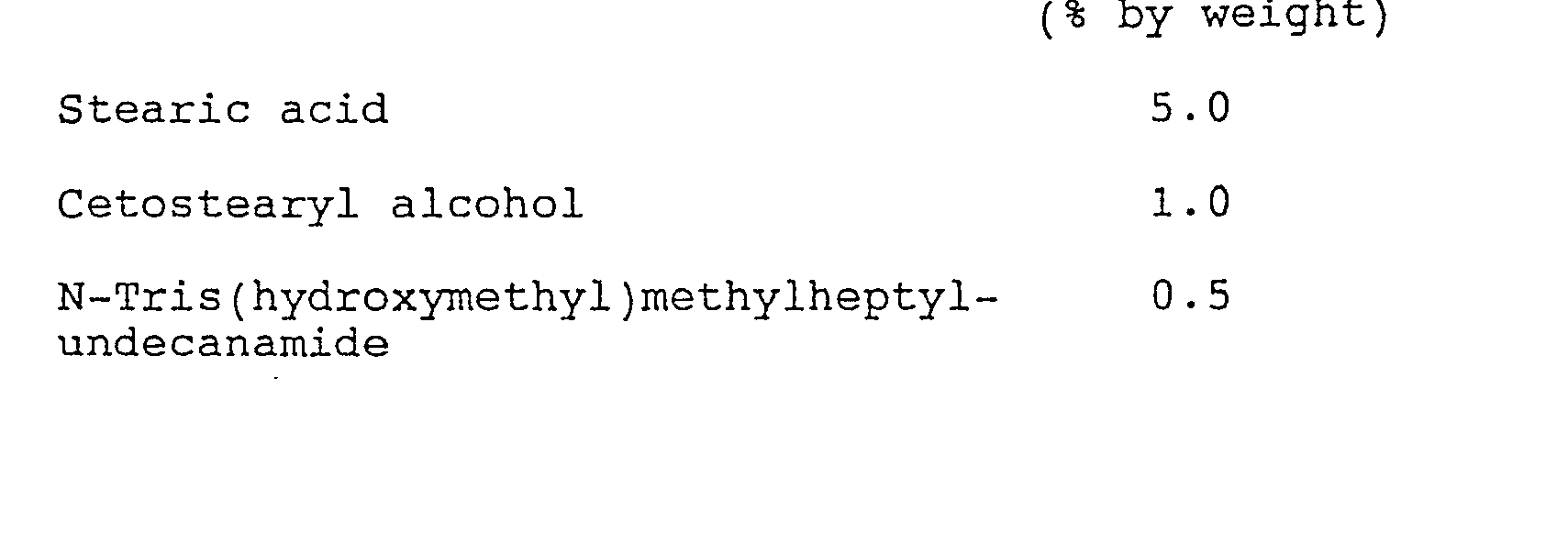
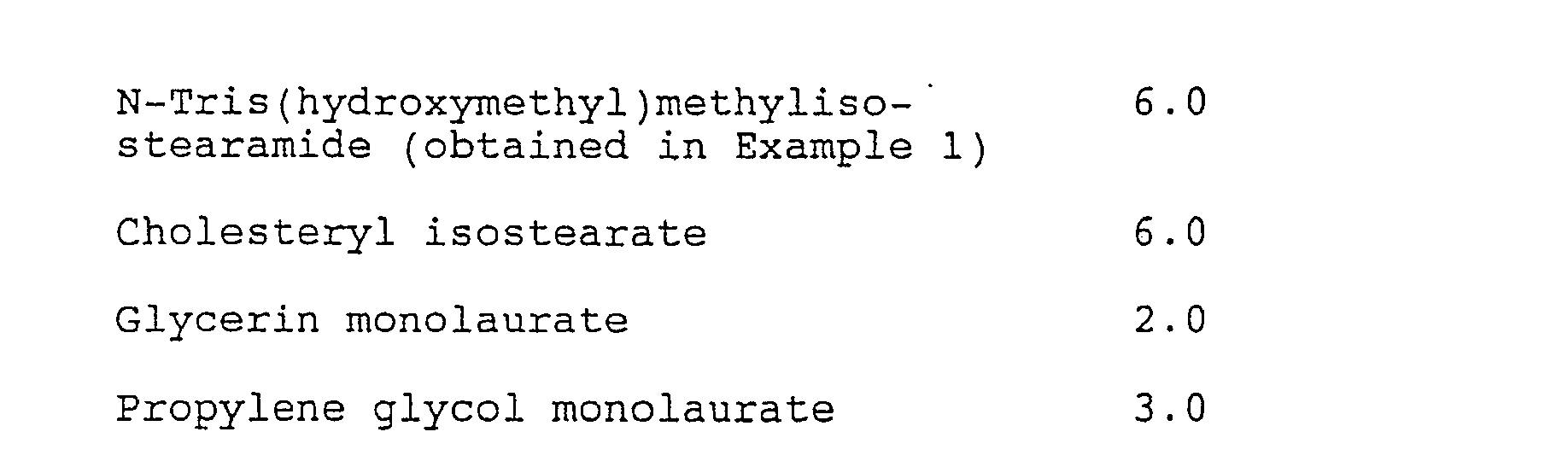
- Emulsion-type foundation (
composition 10 according to the invention): -
-

-
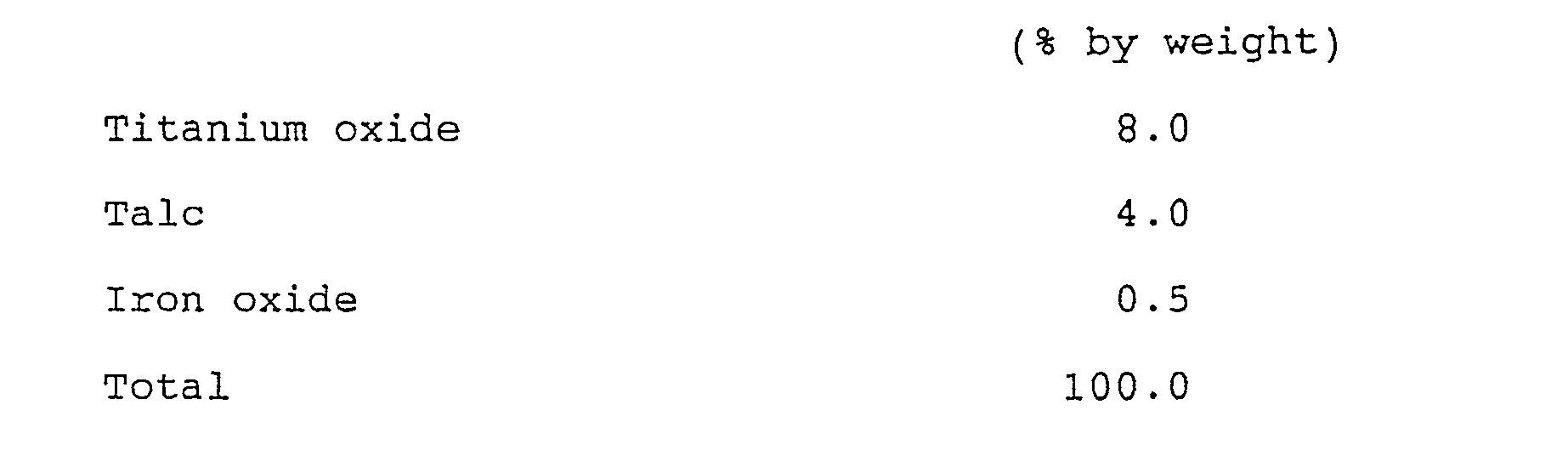
- The foundation according to the invention has an excellent feel during use and showed a good humectant effect.
- Rouge or lipstick (composition 11 according to the invention):

- The rouge according to the invention had a good feel during use and showed an excellent humectant effect.
- Cleansing cream (composition 12 according to the invention):


- The cleansing cream according to the invention was very stable and showed an excellent cleansing effect.
- Synthesis of N-tris(hydroxymethyl)methyl-a-methylstearamide (Compound (la-2)) represented by the formula
-
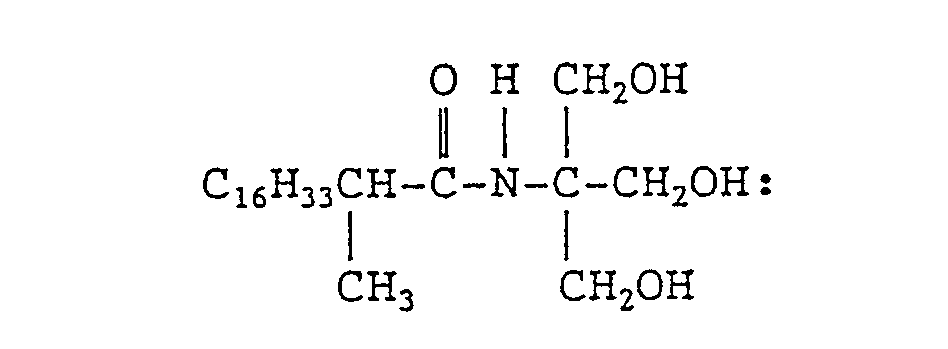
- A 300 ml reactor equipped with a thermometer, a reflux condenser, a Dean-Stark trap and a stirrer was charged with 103.2 g (0.346 mole) of a-methylstearic acid and 42.4 g (0.350 mole) of tris-(hydroxymethyl)aminomethane. The temperature was raised with stirring and the reaction was carried out at 160°C for 15 hours and then further at 140-160 C for 51 hours, whereby the calculated amount of water was distilled off to give 131.40 g of the title compound (IVa-2) (yield 99.0%). This product occurred as a viscous yellow liquid at 140 C and solidified into a wax at room temperature. Melting point 44-45°C.
- IR (KBr, cm-1):
- 3404 (O-H stretching), 2924, 2856 (C-H stretching), 1664 (C-H stretching), 1470, 1382 (C-H deformation), 1142 (C-O-C stretching), 1028 (C-O stretching), 724 (CH2 rocking)
- NMR (CDCl3, δ ppm): 0.88 (6H, triplet, J=6Hz, -CH3), 0.95 - 1.80 (30H, broad, -CH2-), 2.30-2.60 (1H, broad,
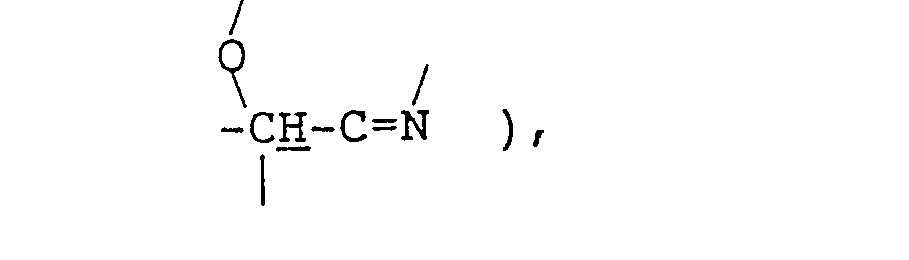
- 2.90 - 3.90 (2H, broad, -CH20H),3.62 (4H, doublet x doublet, J=12.4Hz, 14.6Hz, -CH2OH), 4.14 (2H, singlet,
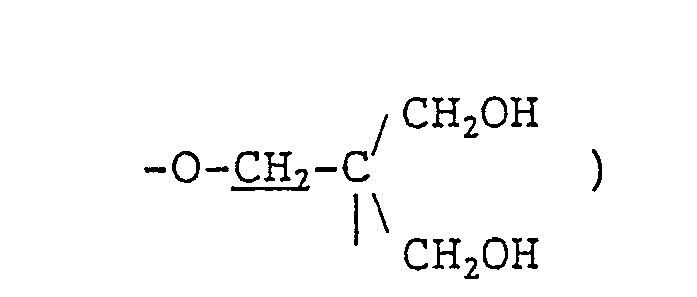
- A 200 ml reactor equipped with a thermometer, a reflux condenser and a stirrer was charged with 105.2 g (0.274 mole) of compound (IVa-2) obtained as described above and 15 ml of ethanol. The temperature was raised with stirring and, at 90° C, 14.7 g (0.817 mole) of water was added dropwise to the reactor over 40 minutes. The reaction mixture became cloudy. After 21 hours of refluxing at 90-110°C with stirring, the reaction mixture was cooled to room temperature. The mixture was dehydrated by several repetitions of evaporation following addition of ethanol to give a crude form of the compound (la-2). The crude product thus obtained was dissolved in 500 ml of chloroform while heating, the insoluble matter was removed, and then recrystallization was conducted. The solid thus obtained was washed with chloroform and dried under vacuum at 40 °C. Thus was obtained 39.1 g of the compound (la-2) (yield 35.5%). Melting point 108 - 111 °C.
- Purity determined by gas chromatography: 93.6%
- Acid value: 5.1
- Hydroxyl value: 406.2 (theoretical value: 434.26)
- IR (KBr, cm-1):
- 3324 (O-H stretching, N-H stretching), 2920, 2852 (C-H stretching), 1628 (C=O stretching), 1528 (N-H deformation), 1468, 1378 (C-H deformation), 1048, 1024 (C-O stretching), 720 (CH2 rocking), 670 (N-H out-of-plane deformation)
- NMR (CDCl3, δ ppm):
- 0.88 (3H, triplet, J=6.6Hz, -CH3), 1.00 - 1.80 (30H, broad, -CH2-), 1.13 (3H, doublet, J=6.8Hz,
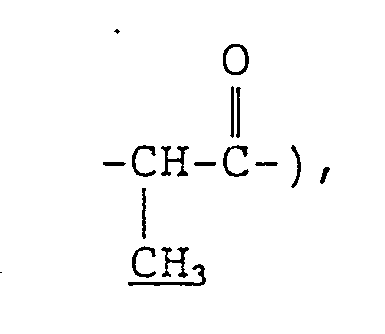
-


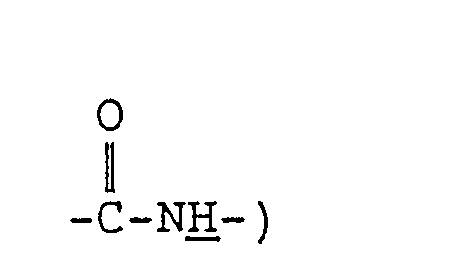
- Synthesis of N-tris(hydroxymethyl)methyl-α-octylarachamide (Compound (la-3)) represented by the formula
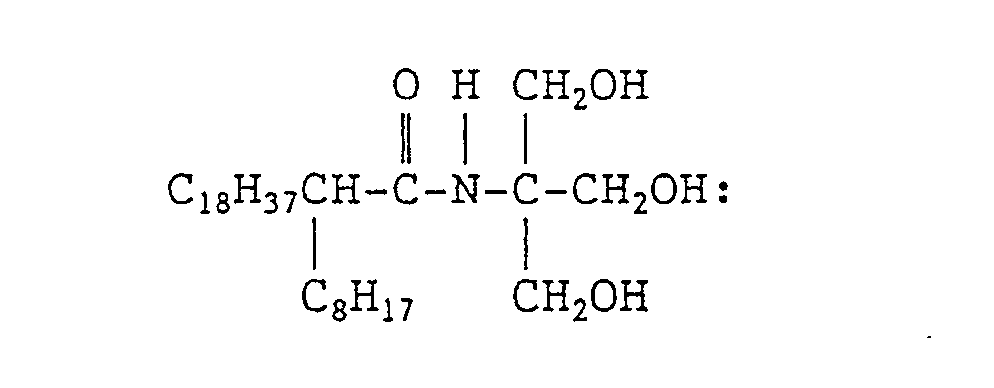
- A 300 ml reactor equipped with a thermometer, a reflux condenser, a Dean-Stark trap and a stirrer was charged with 100 g (0.235 mole) of α-octylarachic acid and 27.74 g (0.229 mole) of tris-(hydroxymethyl)aminomethane. The temperature was raised with stirring and the reaction was carried out at 160-179° C for 55 hours, whereby the calculated amount of water was distilled off to give 112.15 g of the title compound (IVa-3) (yield 96.1%).
- Purity determined by gas chromatography: 93.2%
- IR (NEAT, cm-1):
- 3292 (O-H stretching), 2928, 2860 (C-H stretching), 1660 (C=N stretching), 1466, 1380 (C-H deformation), 1125 (C-O-C stretching), 1054, 1000 (C-0 stretching), 722 (CH2 rocking)
- NMR (CDCl3, δ ppm):
- 0.88 (6H, triplet, J = 6.2Hz, -CH3), 1.00 - 1.80 (48H, broad, -CH2-); 1.80 - 2.20 (2H, broad, -CH20H), 2.20
- - 2.60 (1 H, broad,
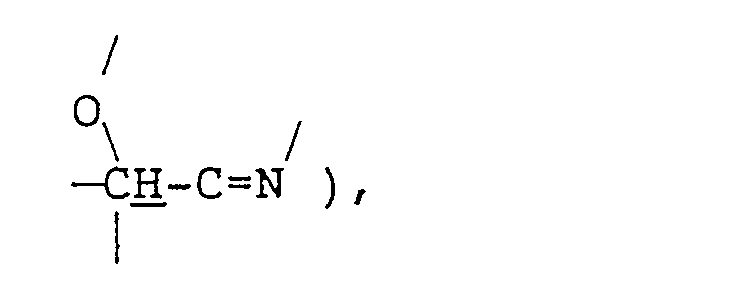

- A 300 ml reactor equipped with a thermometer, a reflux condenser and a stirrer was charged with 80 g (0.157 mole) of compound (IVa-3) obtained as described above and 8.5 ml of ethanol. The temperature was raised with stirring and, at 90 C, 8.47 g (0.471 mole) of water was added dropwise to the reactor over 5 minutes. The reaction mixture became cloudy. After 92 hours of refluxing at 83-117° C with stirring, the reaction mixture was cooled to room temperature. The mixture was dehydrated by several repetitions of evaporation following addition of ethanol to give 80.66 g of a crude form of the compound (la-3). The product was purified by means of a silica gel column chromatography using chloroform/methanol. Thus was obtained 24.86 g of the compound (la-3) (yield 30.3%). Melting point 57-63 C.
- Purity determined by gas chromatography: 95.2%
- Acid value: 2.03
- Hydroxyl value: 288.2 (theoretical value: 318.87)
- IR (NEAT, cm-1):
- 3344 (O-H stretching, N-H stretching), 2924, 2856 (C-H stretching), 1628 (C=O stretching), 1526 (N-H deformation), 1464, 1380 (C-H deformation), 1056, 1028 (C-O stretching), 720 (CH2 rocking)
- NMR (CDCl3, δ ppm):
- 0.88 (6H, triplet, J = 6.7Hz, -CH3), 1.00 - 1.80 (48H, broad, -CH2), 1.90 - 2.20 (1 H, broad,
- Synthesis of N-tris(hydroxymethyl)methyl-a-heptylundecanamide (Compound (la-4)) represented by the formula:
-

- A 200 ml reactor equipped with a thermometer, a reflux condenser and a stirrer was charged with 50 g (0.176 mole) of a-heptylundecanic acid (Diadol; trade name of a product manufactured by Mitsubishi Kasei Corporation) and 63.96 g (0.528 mole) of tris(hydroxymethyl)aminomethane. The temperature was raised with stirring and the reaction was carried out at 150-170° C for 34 hours and then the reaction mixture was cooled to 100 C followed by the addition of 100 g of water. The reaction mixture became cloudy. After 24 hours of refluxing at 98 C, the reaction mixture was cooled to room temperature. After adding 50 ml of water, the mixture was extracted thrice with ether (200 ml, 100 ml and 100 ml). These ether layers were washed three times with a saturated aqueous solution of NaHC03 and two times with a saturated aqueous solution of common salt, and then dried over Glauber's salt followed by evaporation to thereby give 56.29 g of a crude form of the compound (la-4). This crude product was purified by means of a silica gel column chromatography using chloroform/methanol. Thus was obtained 13.64 g of the compound (la-4) (yield 20.0%). Melting point 75-78° C.
- Purity determined by gas chromatography: 97.8%
- Hydroxyl value: 410.4 (theoretical value: 434.26)
- IR (KBr, cm-1):
- 3344 (O-H stretching, N-H stretching), 2932, 2864 (C-H stretching), 1628 (C=0 stretching), 1532 (N-H deformation), 1468, 1384 (C-H deformation), 1058, 1026 (C-O deformation), 724 (CH2 rocking), 676 (N-H out-of-plane deformation)
- NMR (CDCl3, 6 ppm):
- 0.65 - 1.05 (6H, broad, -CH3), 1.05 - 2.40 (29H, broad, -CH2-,


- Cleansing cream (composition 13 according to the invention):

- The cleansing cream according to the invention was very stable and showed an excellent cleansing effect.
- Cleansing cream (composition 14 according to the invention):
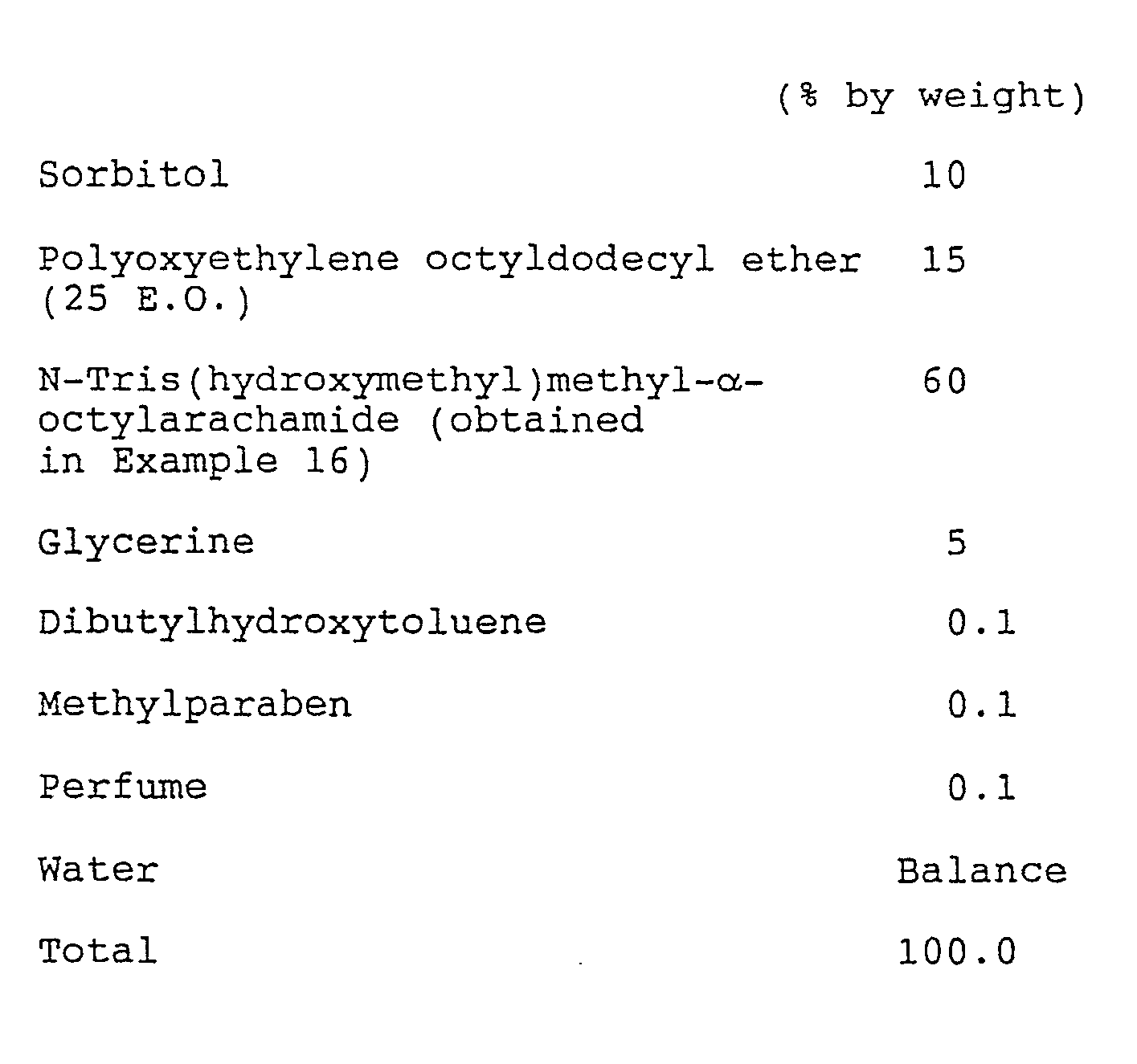
- The cleansing cream according to the invention was very stable and showed an excellent cleansing effect.
- Cleansing cream (composition 15 according to the invention):
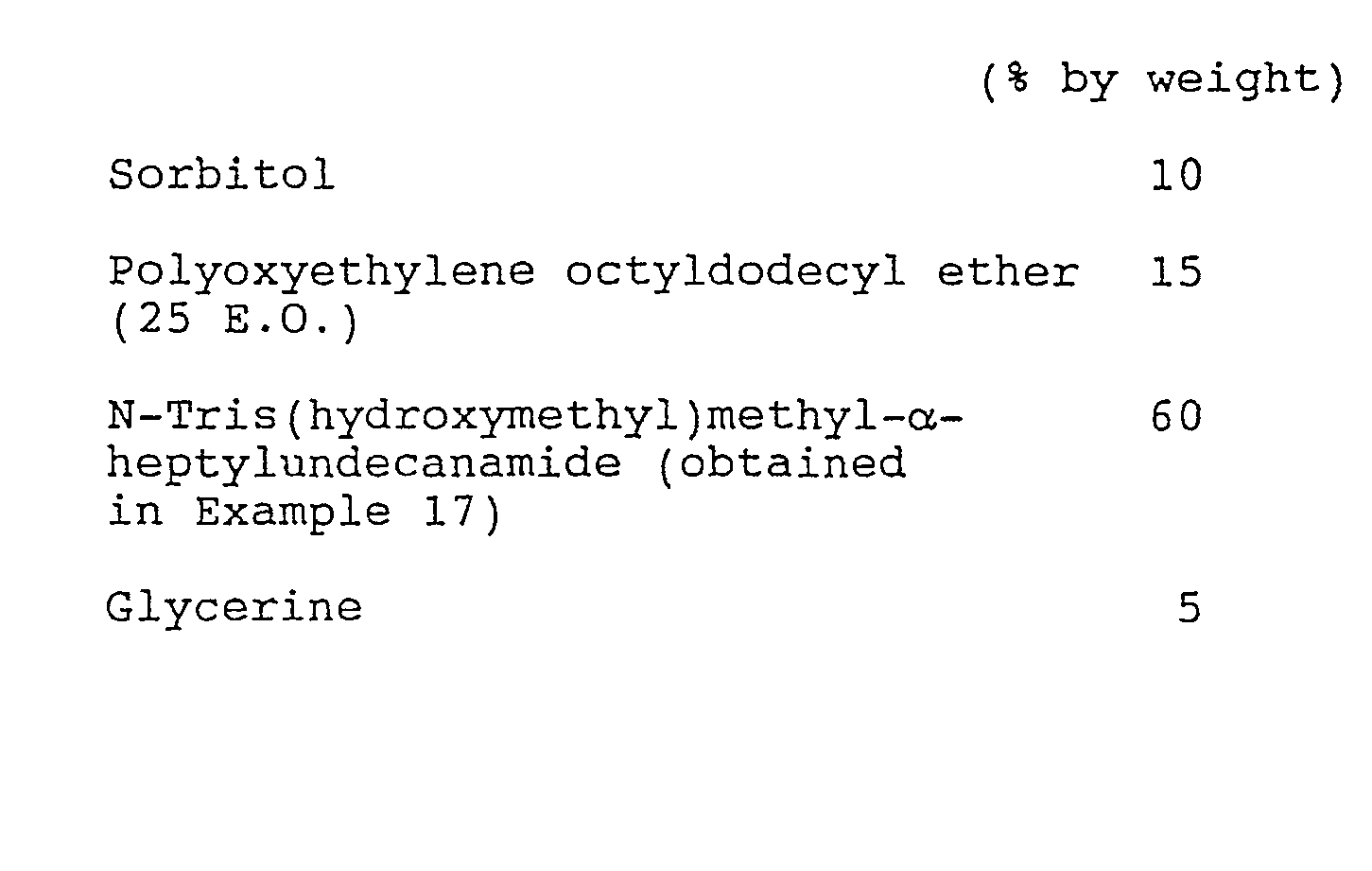

- The cleansing cream according to the invention was very stable and showed an excellent cleansing effect.
- While the invention has been described in detail and with reference to specific embodiments thereof, it will be apparent to one skilled in the art that various changes and modifications can be made therein without departing from the spirit and scope thereof.
Claims (18)





wherein m and n each, independently, represents an integer of 0 to 20 provided that the sum of m and n is 1 to 20.


Applications Claiming Priority (4)
| Application Number | Priority Date | Filing Date | Title |
|---|---|---|---|
| JP8522490 | 1990-03-30 | ||
| JP85224/90 | 1990-03-30 | ||
| JP10976290A JPH049309A (en) | 1990-04-25 | 1990-04-25 | Cosmetic |
| JP109762/90 | 1990-04-25 |
Publications (2)
| Publication Number | Publication Date |
|---|---|
| EP0450527A2 true EP0450527A2 (en) | 1991-10-09 |
| EP0450527A3 EP0450527A3 (en) | 1991-10-30 |
Family
ID=26426245
Family Applications (1)
| Application Number | Title | Priority Date | Filing Date |
|---|---|---|---|
| EP19910105051 Withdrawn EP0450527A3 (en) | 1990-03-30 | 1991-03-28 | N-tris(hydroxymethyl)methylfatty acid amides and cosmetic compositions containing same |
Country Status (1)
| Country | Link |
|---|---|
| EP (1) | EP0450527A3 (en) |
Cited By (13)
| Publication number | Priority date | Publication date | Assignee | Title |
|---|---|---|---|---|
| WO1994007844A1 (en) * | 1992-10-07 | 1994-04-14 | Quest International B.V. | Hydroxy alkyl amides of dicarboxylic acids and their use in cosmetic compositions |
| EP0666251A1 (en) * | 1994-02-07 | 1995-08-09 | L'oreal | N-hydroxy substituted alkyl carbamates and their use in cosmetics especially in hair-care compositions |
| WO1995021181A1 (en) * | 1994-02-01 | 1995-08-10 | Henkel Kommanditgesellschaft Auf Aktien | Pseudo-ceramides |
| WO1995021182A1 (en) * | 1994-02-03 | 1995-08-10 | Henkel Kommanditgesellschaft Auf Aktien | Pseudoceramides |
| WO1995021851A1 (en) * | 1994-02-10 | 1995-08-17 | Henkel Kommanditgesellschaft Auf Aktien | Pseudoceramides |
| WO1995023807A1 (en) * | 1994-03-03 | 1995-09-08 | Henkel Kommanditgesellschaft Auf Aktien | Pseudoceramides |
| EP0677288A1 (en) * | 1994-04-13 | 1995-10-18 | L'oreal | Cosmetic or pharmaceutic composition comprising an alkyl-carbonate as moisturizing agent |
| DE4435383C1 (en) * | 1994-10-04 | 1995-11-09 | Henkel Kgaa | Cosmetic products |
| FR2725131A1 (en) * | 1994-09-29 | 1996-04-05 | Oreal | USE OF N- (HYDROXYALKYL) ALKYL CARBAMATES IN A COSMETIC COMPOSITION |
| US5604229A (en) * | 1992-10-21 | 1997-02-18 | Yoshitomi Pharmaceutical Industries, Ltd. | 2-amino-1,3-propanediol compound and immunosuppressant |
| EP0776653A1 (en) * | 1995-11-30 | 1997-06-04 | Henkel Kommanditgesellschaft auf Aktien | Cosmetic and/or pharmaceutical compositions containing polyhydroxy fatty acid amides |
| US7067471B2 (en) | 2000-07-04 | 2006-06-27 | Kawaken Fine Chemicals Co., Ltd. | Process for producing a refined product of polyoxyproylene fatty acid isopropanolamide surfactant |
| EP1534669A4 (en) * | 2002-09-05 | 2007-03-14 | Mayne Pharma Int Pty Ltd | Urea-, glycerate- and, hydroxyamide-headed hydrocarbon chain lyotropic phases forming surfactants |
Family Cites Families (6)
| Publication number | Priority date | Publication date | Assignee | Title |
|---|---|---|---|---|
| US2927081A (en) * | 1956-01-31 | 1960-03-01 | Lever Brothers Ltd | Detergent composition containing n-tris (methylol) methyl amides |
| NL125056C (en) * | 1963-12-16 | 1900-01-01 | ||
| US3493635A (en) * | 1967-06-28 | 1970-02-03 | Reichhold Chemicals Inc | Polyester resins containing oxazoline derivatives |
| US3785855A (en) * | 1972-01-14 | 1974-01-15 | D Sausaman | Method for coating steel |
| IT1193212B (en) * | 1979-08-10 | 1988-06-15 | Anic Spa | DISPERSING ADDITIVES FOR LUBRICANTS AND METHOD FOR THEIR PREPARATION |
| WO1983004412A1 (en) * | 1982-06-11 | 1983-12-22 | National Research Development Corporation | Amphipathic compounds |
-
1991
- 1991-03-28 EP EP19910105051 patent/EP0450527A3/en not_active Withdrawn
Cited By (19)
| Publication number | Priority date | Publication date | Assignee | Title |
|---|---|---|---|---|
| WO1994007844A1 (en) * | 1992-10-07 | 1994-04-14 | Quest International B.V. | Hydroxy alkyl amides of dicarboxylic acids and their use in cosmetic compositions |
| US5656668A (en) * | 1992-10-07 | 1997-08-12 | Quest International B.V. | Hydroxy alkyl amides of dicarboxylic acids and their use in cosmetic compositions |
| US5604229A (en) * | 1992-10-21 | 1997-02-18 | Yoshitomi Pharmaceutical Industries, Ltd. | 2-amino-1,3-propanediol compound and immunosuppressant |
| US5952316A (en) * | 1992-10-21 | 1999-09-14 | Yoshitomi Pharmaceutical Industries, Ltd. | 2-amino-1,3-propanediol compound and immunosuppressant |
| WO1995021181A1 (en) * | 1994-02-01 | 1995-08-10 | Henkel Kommanditgesellschaft Auf Aktien | Pseudo-ceramides |
| WO1995021182A1 (en) * | 1994-02-03 | 1995-08-10 | Henkel Kommanditgesellschaft Auf Aktien | Pseudoceramides |
| FR2715933A1 (en) * | 1994-02-07 | 1995-08-11 | Oreal | New alkyl N- (hydroxyalkyl) carbamates and their applications in cosmetics, more particularly in hair compositions. |
| EP0666251A1 (en) * | 1994-02-07 | 1995-08-09 | L'oreal | N-hydroxy substituted alkyl carbamates and their use in cosmetics especially in hair-care compositions |
| WO1995021851A1 (en) * | 1994-02-10 | 1995-08-17 | Henkel Kommanditgesellschaft Auf Aktien | Pseudoceramides |
| WO1995023807A1 (en) * | 1994-03-03 | 1995-09-08 | Henkel Kommanditgesellschaft Auf Aktien | Pseudoceramides |
| EP0677288A1 (en) * | 1994-04-13 | 1995-10-18 | L'oreal | Cosmetic or pharmaceutic composition comprising an alkyl-carbonate as moisturizing agent |
| FR2725131A1 (en) * | 1994-09-29 | 1996-04-05 | Oreal | USE OF N- (HYDROXYALKYL) ALKYL CARBAMATES IN A COSMETIC COMPOSITION |
| EP0705599A1 (en) * | 1994-09-29 | 1996-04-10 | L'oreal | Use of N-(hydroxyalkyl)-substituted alkyl carbamates as tensioactive agents in cosmetic composition |
| US5849308A (en) * | 1994-09-29 | 1998-12-15 | L'oreal | Method of providing surfactant properties to a cosmetic or pharmaceutical composition using alkyl N-(hydroxyalkyl) carbamates |
| DE4435383C1 (en) * | 1994-10-04 | 1995-11-09 | Henkel Kgaa | Cosmetic products |
| WO1996010386A1 (en) * | 1994-10-04 | 1996-04-11 | Henkel Kommanditgesellschaft Auf Aktien | Cosmetic agents containing fatty acid-n-alkyl glucamide and silicon compounds |
| EP0776653A1 (en) * | 1995-11-30 | 1997-06-04 | Henkel Kommanditgesellschaft auf Aktien | Cosmetic and/or pharmaceutical compositions containing polyhydroxy fatty acid amides |
| US7067471B2 (en) | 2000-07-04 | 2006-06-27 | Kawaken Fine Chemicals Co., Ltd. | Process for producing a refined product of polyoxyproylene fatty acid isopropanolamide surfactant |
| EP1534669A4 (en) * | 2002-09-05 | 2007-03-14 | Mayne Pharma Int Pty Ltd | Urea-, glycerate- and, hydroxyamide-headed hydrocarbon chain lyotropic phases forming surfactants |
Also Published As
| Publication number | Publication date |
|---|---|
| EP0450527A3 (en) | 1991-10-30 |
Similar Documents
| Publication | Publication Date | Title |
|---|---|---|
| US5028416A (en) | External skin care preparation | |
| US5210133A (en) | Silicone polyester polymers as delivery systems | |
| EP1166766B1 (en) | External preparation compositions | |
| US6010708A (en) | Cosmetics and N-acylamino acid composition | |
| US5041283A (en) | Cosmetic composition | |
| EP0450527A2 (en) | N-Tris(hydroxymethyl)methylfatty acid amides and cosmetic compositions containing same | |
| EP0828706B1 (en) | Amide derivatives and external skin or hair care preparations | |
| EP0398272B1 (en) | Amide derivatives and dermatologic preparations containing the same | |
| JP2946145B2 (en) | Cosmetics | |
| JPH0517399A (en) | Ester derivative and cosmetics containing the same | |
| JP2893128B2 (en) | Cosmetic additive and cosmetic containing the same | |
| JPH0680538A (en) | Hair cosmetics | |
| JP3073813B2 (en) | Cosmetics | |
| JP2961559B2 (en) | Methyl-branched alkyl glycoside and cosmetic containing the same | |
| JP3115282B2 (en) | Lipid compounds derived from sphingoid bases and their preparation and their use in cosmetics and dermatological products | |
| EP1142930B1 (en) | Novel benzylidene malonate siloxane | |
| JP3788633B2 (en) | Phosphoric acid triester and cosmetics and external preparations containing the same | |
| JP2004026781A (en) | Use of hydroxy fatty acid dialkylaminoalykylamide as hair treating agent | |
| JPH0565485B2 (en) | ||
| JP3813231B2 (en) | External preparation for skin containing phosphate triester | |
| JP2610496B2 (en) | Alcohol-modified silicone ester derivatives and cosmetics containing the same | |
| JP4220625B2 (en) | External preparation composition | |
| JPH0763613B2 (en) | Water-in-oil emulsion composition | |
| JPH049309A (en) | Cosmetic | |
| JPH0469320A (en) | Hair cosmetic |
Legal Events
| Date | Code | Title | Description |
|---|---|---|---|
| PUAI | Public reference made under article 153(3) epc to a published international application that has entered the european phase |
Free format text: ORIGINAL CODE: 0009012 |
|
| PUAL | Search report despatched |
Free format text: ORIGINAL CODE: 0009013 |
|
| AK | Designated contracting states |
Kind code of ref document: A2 Designated state(s): AT CH DE ES FR GB LI NL |
|
| AK | Designated contracting states |
Kind code of ref document: A3 Designated state(s): AT CH DE ES FR GB LI NL |
|
| RAP1 | Party data changed (applicant data changed or rights of an application transferred) |
Owner name: KAO CORPORATION |
|
| 17P | Request for examination filed |
Effective date: 19920206 |
|
| STAA | Information on the status of an ep patent application or granted ep patent |
Free format text: STATUS: THE APPLICATION HAS BEEN WITHDRAWN |
|
| 18W | Application withdrawn |
Withdrawal date: 19920623 |