EP0446225B1 - Medicament for treatment of pathological vascular permeability and plasma loss to tissue - Google Patents
Medicament for treatment of pathological vascular permeability and plasma loss to tissue Download PDFInfo
- Publication number
- EP0446225B1 EP0446225B1 EP89912676A EP89912676A EP0446225B1 EP 0446225 B1 EP0446225 B1 EP 0446225B1 EP 89912676 A EP89912676 A EP 89912676A EP 89912676 A EP89912676 A EP 89912676A EP 0446225 B1 EP0446225 B1 EP 0446225B1
- Authority
- EP
- European Patent Office
- Prior art keywords
- local anaesthetic
- chemical
- tissue
- agent according
- anaesthetic agent
- Prior art date
- Legal status (The legal status is an assumption and is not a legal conclusion. Google has not performed a legal analysis and makes no representation as to the accuracy of the status listed.)
- Expired - Lifetime
Links
- 239000003814 drug Substances 0.000 title claims abstract description 19
- 230000008728 vascular permeability Effects 0.000 title claims description 11
- 238000011282 treatment Methods 0.000 title description 14
- 230000001575 pathological effect Effects 0.000 title description 10
- 230000006378 damage Effects 0.000 claims abstract description 41
- 239000000126 substance Substances 0.000 claims abstract description 38
- 208000014674 injury Diseases 0.000 claims abstract description 35
- 208000027418 Wounds and injury Diseases 0.000 claims abstract description 33
- 229960005015 local anesthetics Drugs 0.000 claims abstract description 31
- 230000005764 inhibitory process Effects 0.000 claims abstract description 13
- 210000000683 abdominal cavity Anatomy 0.000 claims abstract description 9
- 230000001225 therapeutic effect Effects 0.000 claims abstract description 8
- 210000001835 viscera Anatomy 0.000 claims abstract description 8
- 208000018380 Chemical injury Diseases 0.000 claims abstract description 6
- 210000004204 blood vessel Anatomy 0.000 claims abstract description 6
- 210000000038 chest Anatomy 0.000 claims abstract description 6
- 208000009084 Cold Injury Diseases 0.000 claims abstract description 4
- 230000002595 cold damage Effects 0.000 claims abstract description 4
- 230000000069 prophylactic effect Effects 0.000 claims abstract description 4
- 238000004519 manufacturing process Methods 0.000 claims abstract description 3
- NNJVILVZKWQKPM-UHFFFAOYSA-N Lidocaine Chemical compound CCN(CC)CC(=O)NC1=C(C)C=CC=C1C NNJVILVZKWQKPM-UHFFFAOYSA-N 0.000 claims description 37
- 229960004194 lidocaine Drugs 0.000 claims description 37
- 230000003444 anaesthetic effect Effects 0.000 claims description 22
- 239000006071 cream Substances 0.000 claims description 13
- 229960003150 bupivacaine Drugs 0.000 claims description 10
- 238000002360 preparation method Methods 0.000 claims description 10
- LEBVLXFERQHONN-UHFFFAOYSA-N 1-butyl-N-(2,6-dimethylphenyl)piperidine-2-carboxamide Chemical compound CCCCN1CCCCC1C(=O)NC1=C(C)C=CC=C1C LEBVLXFERQHONN-UHFFFAOYSA-N 0.000 claims description 8
- 238000001990 intravenous administration Methods 0.000 claims description 7
- BLFLLBZGZJTVJG-UHFFFAOYSA-N benzocaine Chemical compound CCOC(=O)C1=CC=C(N)C=C1 BLFLLBZGZJTVJG-UHFFFAOYSA-N 0.000 claims description 6
- 239000002674 ointment Substances 0.000 claims description 6
- 150000003839 salts Chemical class 0.000 claims description 5
- 238000011200 topical administration Methods 0.000 claims description 5
- 239000003795 chemical substances by application Substances 0.000 claims description 4
- 150000001875 compounds Chemical group 0.000 claims description 4
- 239000007921 spray Substances 0.000 claims description 4
- VTUSIVBDOCDNHS-UHFFFAOYSA-N Etidocaine Chemical compound CCCN(CC)C(CC)C(=O)NC1=C(C)C=CC=C1C VTUSIVBDOCDNHS-UHFFFAOYSA-N 0.000 claims description 3
- 229960005274 benzocaine Drugs 0.000 claims description 3
- PUFQVTATUTYEAL-UHFFFAOYSA-N cinchocaine Chemical compound C1=CC=CC2=NC(OCCCC)=CC(C(=O)NCCN(CC)CC)=C21 PUFQVTATUTYEAL-UHFFFAOYSA-N 0.000 claims description 3
- 229960001747 cinchocaine Drugs 0.000 claims description 3
- 229960003976 etidocaine Drugs 0.000 claims description 3
- 229960002409 mepivacaine Drugs 0.000 claims description 3
- INWLQCZOYSRPNW-UHFFFAOYSA-N mepivacaine Chemical compound CN1CCCCC1C(=O)NC1=C(C)C=CC=C1C INWLQCZOYSRPNW-UHFFFAOYSA-N 0.000 claims description 3
- 229960001896 pramocaine Drugs 0.000 claims description 3
- DQKXQSGTHWVTAD-UHFFFAOYSA-N pramocaine Chemical compound C1=CC(OCCCC)=CC=C1OCCCN1CCOCC1 DQKXQSGTHWVTAD-UHFFFAOYSA-N 0.000 claims description 3
- 229960001807 prilocaine Drugs 0.000 claims description 3
- MVFGUOIZUNYYSO-UHFFFAOYSA-N prilocaine Chemical compound CCCNC(C)C(=O)NC1=CC=CC=C1C MVFGUOIZUNYYSO-UHFFFAOYSA-N 0.000 claims description 3
- 229960004919 procaine Drugs 0.000 claims description 3
- MFDFERRIHVXMIY-UHFFFAOYSA-N procaine Chemical compound CCN(CC)CCOC(=O)C1=CC=C(N)C=C1 MFDFERRIHVXMIY-UHFFFAOYSA-N 0.000 claims description 3
- 239000000725 suspension Substances 0.000 claims description 3
- 230000009885 systemic effect Effects 0.000 claims description 3
- 229960002372 tetracaine Drugs 0.000 claims description 3
- GKCBAIGFKIBETG-UHFFFAOYSA-N tetracaine Chemical compound CCCCNC1=CC=C(C(=O)OCCN(C)C)C=C1 GKCBAIGFKIBETG-UHFFFAOYSA-N 0.000 claims description 3
- 235000007173 Abies balsamea Nutrition 0.000 claims description 2
- 239000004857 Balsam Substances 0.000 claims description 2
- LFQSCWFLJHTTHZ-UHFFFAOYSA-N Ethanol Chemical compound CCO LFQSCWFLJHTTHZ-UHFFFAOYSA-N 0.000 claims description 2
- 244000018716 Impatiens biflora Species 0.000 claims description 2
- 239000000839 emulsion Substances 0.000 claims description 2
- 239000000843 powder Substances 0.000 claims description 2
- 238000004090 dissolution Methods 0.000 claims 1
- 230000008595 infiltration Effects 0.000 claims 1
- 238000001764 infiltration Methods 0.000 claims 1
- 238000001361 intraarterial administration Methods 0.000 claims 1
- 238000007913 intrathecal administration Methods 0.000 claims 1
- 230000002035 prolonged effect Effects 0.000 claims 1
- 230000002459 sustained effect Effects 0.000 claims 1
- 230000035699 permeability Effects 0.000 abstract description 5
- 210000001519 tissue Anatomy 0.000 description 40
- 210000003491 skin Anatomy 0.000 description 32
- 238000000034 method Methods 0.000 description 30
- VEXZGXHMUGYJMC-UHFFFAOYSA-N Hydrochloric acid Chemical compound Cl VEXZGXHMUGYJMC-UHFFFAOYSA-N 0.000 description 28
- 241001465754 Metazoa Species 0.000 description 27
- 230000036407 pain Effects 0.000 description 19
- 238000001802 infusion Methods 0.000 description 18
- 102000009027 Albumins Human genes 0.000 description 17
- 108010088751 Albumins Proteins 0.000 description 17
- 238000012360 testing method Methods 0.000 description 17
- 230000000694 effects Effects 0.000 description 16
- 210000004303 peritoneum Anatomy 0.000 description 16
- 230000008569 process Effects 0.000 description 16
- COXVTLYNGOIATD-HVMBLDELSA-N CC1=C(C=CC(=C1)C1=CC(C)=C(C=C1)\N=N\C1=C(O)C2=C(N)C(=CC(=C2C=C1)S(O)(=O)=O)S(O)(=O)=O)\N=N\C1=CC=C2C(=CC(=C(N)C2=C1O)S(O)(=O)=O)S(O)(=O)=O Chemical compound CC1=C(C=CC(=C1)C1=CC(C)=C(C=C1)\N=N\C1=C(O)C2=C(N)C(=CC(=C2C=C1)S(O)(=O)=O)S(O)(=O)=O)\N=N\C1=CC=C2C(=CC(=C(N)C2=C1O)S(O)(=O)=O)S(O)(=O)=O COXVTLYNGOIATD-HVMBLDELSA-N 0.000 description 15
- FAPWRFPIFSIZLT-UHFFFAOYSA-M Sodium chloride Chemical compound [Na+].[Cl-] FAPWRFPIFSIZLT-UHFFFAOYSA-M 0.000 description 15
- 229960003699 evans blue Drugs 0.000 description 15
- 230000000451 tissue damage Effects 0.000 description 15
- 231100000827 tissue damage Toxicity 0.000 description 15
- ZHNUHDYFZUAESO-UHFFFAOYSA-N Formamide Chemical compound NC=O ZHNUHDYFZUAESO-UHFFFAOYSA-N 0.000 description 12
- 229940079593 drug Drugs 0.000 description 11
- 210000003932 urinary bladder Anatomy 0.000 description 11
- 239000011780 sodium chloride Substances 0.000 description 10
- WSFSSNUMVMOOMR-UHFFFAOYSA-N Formaldehyde Chemical compound O=C WSFSSNUMVMOOMR-UHFFFAOYSA-N 0.000 description 9
- IJGRMHOSHXDMSA-UHFFFAOYSA-N nitrogen Substances N#N IJGRMHOSHXDMSA-UHFFFAOYSA-N 0.000 description 9
- 210000000813 small intestine Anatomy 0.000 description 9
- XLYOFNOQVPJJNP-UHFFFAOYSA-N water Substances O XLYOFNOQVPJJNP-UHFFFAOYSA-N 0.000 description 8
- 230000015572 biosynthetic process Effects 0.000 description 7
- 239000000902 placebo Substances 0.000 description 7
- 229940068196 placebo Drugs 0.000 description 7
- 208000005615 Interstitial Cystitis Diseases 0.000 description 6
- 210000001015 abdomen Anatomy 0.000 description 6
- ZPUCINDJVBIVPJ-LJISPDSOSA-N cocaine Chemical compound O([C@H]1C[C@@H]2CC[C@@H](N2C)[C@H]1C(=O)OC)C(=O)C1=CC=CC=C1 ZPUCINDJVBIVPJ-LJISPDSOSA-N 0.000 description 6
- 230000004054 inflammatory process Effects 0.000 description 6
- 210000000936 intestine Anatomy 0.000 description 6
- 206010034674 peritonitis Diseases 0.000 description 6
- WZSPWMATVLBWRS-UHFFFAOYSA-N 2-(diethylamino)-n-(2,6-dimethylphenyl)acetamide;n-(2-methylphenyl)-2-(propylamino)propanamide Chemical compound CCCNC(C)C(=O)NC1=CC=CC=C1C.CCN(CC)CC(=O)NC1=C(C)C=CC=C1C WZSPWMATVLBWRS-UHFFFAOYSA-N 0.000 description 5
- 206010070419 Chemical peritonitis Diseases 0.000 description 5
- 206010061218 Inflammation Diseases 0.000 description 5
- 230000002159 abnormal effect Effects 0.000 description 5
- 238000000799 fluorescence microscopy Methods 0.000 description 5
- 239000007788 liquid Substances 0.000 description 5
- 229910052757 nitrogen Inorganic materials 0.000 description 5
- 238000001356 surgical procedure Methods 0.000 description 5
- 206010006802 Burns second degree Diseases 0.000 description 4
- 206010030113 Oedema Diseases 0.000 description 4
- 230000009471 action Effects 0.000 description 4
- 238000004458 analytical method Methods 0.000 description 4
- 230000005284 excitation Effects 0.000 description 4
- 230000035876 healing Effects 0.000 description 4
- 208000008384 ileus Diseases 0.000 description 4
- 229940119319 lidocaine / prilocaine Drugs 0.000 description 4
- 239000003550 marker Substances 0.000 description 4
- 239000000825 pharmaceutical preparation Substances 0.000 description 4
- 230000000144 pharmacologic effect Effects 0.000 description 4
- 235000018102 proteins Nutrition 0.000 description 4
- 102000004169 proteins and genes Human genes 0.000 description 4
- 108090000623 proteins and genes Proteins 0.000 description 4
- 230000005855 radiation Effects 0.000 description 4
- 230000000699 topical effect Effects 0.000 description 4
- 230000001960 triggered effect Effects 0.000 description 4
- WVDDGKGOMKODPV-UHFFFAOYSA-N Benzyl alcohol Chemical compound OCC1=CC=CC=C1 WVDDGKGOMKODPV-UHFFFAOYSA-N 0.000 description 3
- 102000007562 Serum Albumin Human genes 0.000 description 3
- 108010071390 Serum Albumin Proteins 0.000 description 3
- 239000013543 active substance Substances 0.000 description 3
- 239000000443 aerosol Substances 0.000 description 3
- 150000001408 amides Chemical class 0.000 description 3
- 238000006243 chemical reaction Methods 0.000 description 3
- 229960003920 cocaine Drugs 0.000 description 3
- 210000001072 colon Anatomy 0.000 description 3
- 230000007423 decrease Effects 0.000 description 3
- 150000002148 esters Chemical class 0.000 description 3
- 150000002170 ethers Chemical class 0.000 description 3
- 238000010562 histological examination Methods 0.000 description 3
- 208000015181 infectious disease Diseases 0.000 description 3
- 238000010253 intravenous injection Methods 0.000 description 3
- 238000005259 measurement Methods 0.000 description 3
- 230000007246 mechanism Effects 0.000 description 3
- 229940021182 non-steroidal anti-inflammatory drug Drugs 0.000 description 3
- 210000000056 organ Anatomy 0.000 description 3
- 238000011458 pharmacological treatment Methods 0.000 description 3
- 230000002829 reductive effect Effects 0.000 description 3
- 239000000243 solution Substances 0.000 description 3
- 230000001629 suppression Effects 0.000 description 3
- 238000007910 systemic administration Methods 0.000 description 3
- FUFLCEKSBBHCMO-UHFFFAOYSA-N 11-dehydrocorticosterone Natural products O=C1CCC2(C)C3C(=O)CC(C)(C(CC4)C(=O)CO)C4C3CCC2=C1 FUFLCEKSBBHCMO-UHFFFAOYSA-N 0.000 description 2
- 206010002091 Anaesthesia Diseases 0.000 description 2
- 241000894006 Bacteria Species 0.000 description 2
- OKTJSMMVPCPJKN-UHFFFAOYSA-N Carbon Chemical group [C] OKTJSMMVPCPJKN-UHFFFAOYSA-N 0.000 description 2
- MFYSYFVPBJMHGN-ZPOLXVRWSA-N Cortisone Chemical compound O=C1CC[C@]2(C)[C@H]3C(=O)C[C@](C)([C@@](CC4)(O)C(=O)CO)[C@@H]4[C@@H]3CCC2=C1 MFYSYFVPBJMHGN-ZPOLXVRWSA-N 0.000 description 2
- MFYSYFVPBJMHGN-UHFFFAOYSA-N Cortisone Natural products O=C1CCC2(C)C3C(=O)CC(C)(C(CC4)(O)C(=O)CO)C4C3CCC2=C1 MFYSYFVPBJMHGN-UHFFFAOYSA-N 0.000 description 2
- 241000233866 Fungi Species 0.000 description 2
- NTYJJOPFIAHURM-UHFFFAOYSA-N Histamine Chemical compound NCCC1=CN=CN1 NTYJJOPFIAHURM-UHFFFAOYSA-N 0.000 description 2
- 206010020751 Hypersensitivity Diseases 0.000 description 2
- XADCESSVHJOZHK-UHFFFAOYSA-N Meperidine Chemical compound C=1C=CC=CC=1C1(C(=O)OCC)CCN(C)CC1 XADCESSVHJOZHK-UHFFFAOYSA-N 0.000 description 2
- 208000019155 Radiation injury Diseases 0.000 description 2
- 241000700605 Viruses Species 0.000 description 2
- 230000003187 abdominal effect Effects 0.000 description 2
- 238000001949 anaesthesia Methods 0.000 description 2
- 230000037005 anaesthesia Effects 0.000 description 2
- 238000010171 animal model Methods 0.000 description 2
- 239000003242 anti bacterial agent Substances 0.000 description 2
- 229940088710 antibiotic agent Drugs 0.000 description 2
- 125000003118 aryl group Chemical group 0.000 description 2
- 230000017531 blood circulation Effects 0.000 description 2
- 230000036760 body temperature Effects 0.000 description 2
- 229960001050 bupivacaine hydrochloride Drugs 0.000 description 2
- 230000004087 circulation Effects 0.000 description 2
- 229960004544 cortisone Drugs 0.000 description 2
- 230000002526 effect on cardiovascular system Effects 0.000 description 2
- 239000003792 electrolyte Substances 0.000 description 2
- 238000002474 experimental method Methods 0.000 description 2
- 210000001105 femoral artery Anatomy 0.000 description 2
- 210000003191 femoral vein Anatomy 0.000 description 2
- 239000012530 fluid Substances 0.000 description 2
- 238000005286 illumination Methods 0.000 description 2
- 230000002401 inhibitory effect Effects 0.000 description 2
- 238000002347 injection Methods 0.000 description 2
- 239000007924 injection Substances 0.000 description 2
- 230000007794 irritation Effects 0.000 description 2
- 229960004393 lidocaine hydrochloride Drugs 0.000 description 2
- YECIFGHRMFEPJK-UHFFFAOYSA-N lidocaine hydrochloride monohydrate Chemical compound O.[Cl-].CC[NH+](CC)CC(=O)NC1=C(C)C=CC=C1C YECIFGHRMFEPJK-UHFFFAOYSA-N 0.000 description 2
- 210000001363 mesenteric artery superior Anatomy 0.000 description 2
- 210000001758 mesenteric vein Anatomy 0.000 description 2
- 244000005700 microbiome Species 0.000 description 2
- 239000000203 mixture Substances 0.000 description 2
- BQJCRHHNABKAKU-KBQPJGBKSA-N morphine Chemical compound O([C@H]1[C@H](C=C[C@H]23)O)C4=C5[C@@]12CCN(C)[C@@H]3CC5=CC=C4O BQJCRHHNABKAKU-KBQPJGBKSA-N 0.000 description 2
- 244000045947 parasite Species 0.000 description 2
- WEXRUCMBJFQVBZ-UHFFFAOYSA-N pentobarbital Chemical compound CCCC(C)C1(CC)C(=O)NC(=O)NC1=O WEXRUCMBJFQVBZ-UHFFFAOYSA-N 0.000 description 2
- 229960000482 pethidine Drugs 0.000 description 2
- 230000009467 reduction Effects 0.000 description 2
- 125000000467 secondary amino group Chemical group [H]N([*:1])[*:2] 0.000 description 2
- 230000035945 sensitivity Effects 0.000 description 2
- QZAYGJVTTNCVMB-UHFFFAOYSA-N serotonin Chemical compound C1=C(O)C=C2C(CCN)=CNC2=C1 QZAYGJVTTNCVMB-UHFFFAOYSA-N 0.000 description 2
- 238000012453 sprague-dawley rat model Methods 0.000 description 2
- 150000003431 steroids Chemical class 0.000 description 2
- 125000001424 substituent group Chemical group 0.000 description 2
- 230000008961 swelling Effects 0.000 description 2
- 208000024891 symptom Diseases 0.000 description 2
- JCQBWMAWTUBARI-UHFFFAOYSA-N tert-butyl 3-ethenylpiperidine-1-carboxylate Chemical compound CC(C)(C)OC(=O)N1CCCC(C=C)C1 JCQBWMAWTUBARI-UHFFFAOYSA-N 0.000 description 2
- 125000001302 tertiary amino group Chemical group 0.000 description 2
- 238000002560 therapeutic procedure Methods 0.000 description 2
- 210000000115 thoracic cavity Anatomy 0.000 description 2
- VZCYOOQTPOCHFL-UHFFFAOYSA-N trans-butenedioic acid Natural products OC(=O)C=CC(O)=O VZCYOOQTPOCHFL-UHFFFAOYSA-N 0.000 description 2
- 230000002792 vascular Effects 0.000 description 2
- 208000012260 Accidental injury Diseases 0.000 description 1
- QTBSBXVTEAMEQO-UHFFFAOYSA-M Acetate Chemical compound CC([O-])=O QTBSBXVTEAMEQO-UHFFFAOYSA-M 0.000 description 1
- BVKZGUZCCUSVTD-UHFFFAOYSA-M Bicarbonate Chemical compound OC([O-])=O BVKZGUZCCUSVTD-UHFFFAOYSA-M 0.000 description 1
- 102400000967 Bradykinin Human genes 0.000 description 1
- 101800004538 Bradykinin Proteins 0.000 description 1
- 244000025254 Cannabis sativa Species 0.000 description 1
- 241001631457 Cannula Species 0.000 description 1
- KRKNYBCHXYNGOX-UHFFFAOYSA-K Citrate Chemical compound [O-]C(=O)CC(O)(CC([O-])=O)C([O-])=O KRKNYBCHXYNGOX-UHFFFAOYSA-K 0.000 description 1
- FEWJPZIEWOKRBE-JCYAYHJZSA-N Dextrotartaric acid Chemical compound OC(=O)[C@H](O)[C@@H](O)C(O)=O FEWJPZIEWOKRBE-JCYAYHJZSA-N 0.000 description 1
- 206010014418 Electrolyte imbalance Diseases 0.000 description 1
- 241000792859 Enema Species 0.000 description 1
- VZCYOOQTPOCHFL-OWOJBTEDSA-N Fumaric acid Chemical compound OC(=O)\C=C\C(O)=O VZCYOOQTPOCHFL-OWOJBTEDSA-N 0.000 description 1
- 206010017835 Gastric ulcer perforation Diseases 0.000 description 1
- QXZGBUJJYSLZLT-UHFFFAOYSA-N H-Arg-Pro-Pro-Gly-Phe-Ser-Pro-Phe-Arg-OH Natural products NC(N)=NCCCC(N)C(=O)N1CCCC1C(=O)N1C(C(=O)NCC(=O)NC(CC=2C=CC=CC=2)C(=O)NC(CO)C(=O)N2C(CCC2)C(=O)NC(CC=2C=CC=CC=2)C(=O)NC(CCCN=C(N)N)C(O)=O)CCC1 QXZGBUJJYSLZLT-UHFFFAOYSA-N 0.000 description 1
- 206010061213 Iatrogenic injury Diseases 0.000 description 1
- 206010061245 Internal injury Diseases 0.000 description 1
- 239000004166 Lanolin Substances 0.000 description 1
- AFVFQIVMOAPDHO-UHFFFAOYSA-M Methanesulfonate Chemical compound CS([O-])(=O)=O AFVFQIVMOAPDHO-UHFFFAOYSA-M 0.000 description 1
- NZXKDOXHBHYTKP-UHFFFAOYSA-N Metohexital Chemical compound CCC#CC(C)C1(CC=C)C(=O)NC(=O)N(C)C1=O NZXKDOXHBHYTKP-UHFFFAOYSA-N 0.000 description 1
- 229910002651 NO3 Inorganic materials 0.000 description 1
- NHNBFGGVMKEFGY-UHFFFAOYSA-N Nitrate Chemical compound [O-][N+]([O-])=O NHNBFGGVMKEFGY-UHFFFAOYSA-N 0.000 description 1
- 229910019142 PO4 Inorganic materials 0.000 description 1
- 206010033645 Pancreatitis Diseases 0.000 description 1
- 206010033647 Pancreatitis acute Diseases 0.000 description 1
- 208000037273 Pathologic Processes Diseases 0.000 description 1
- 239000004264 Petrolatum Substances 0.000 description 1
- 206010040880 Skin irritation Diseases 0.000 description 1
- 208000007107 Stomach Ulcer Diseases 0.000 description 1
- QAOWNCQODCNURD-UHFFFAOYSA-L Sulfate Chemical compound [O-]S([O-])(=O)=O QAOWNCQODCNURD-UHFFFAOYSA-L 0.000 description 1
- 206010053615 Thermal burn Diseases 0.000 description 1
- 238000012084 abdominal surgery Methods 0.000 description 1
- 210000003815 abdominal wall Anatomy 0.000 description 1
- 238000009825 accumulation Methods 0.000 description 1
- 239000002253 acid Substances 0.000 description 1
- 150000007513 acids Chemical class 0.000 description 1
- 230000004913 activation Effects 0.000 description 1
- 201000003229 acute pancreatitis Diseases 0.000 description 1
- 230000002411 adverse Effects 0.000 description 1
- 125000000217 alkyl group Chemical group 0.000 description 1
- 230000007815 allergy Effects 0.000 description 1
- 230000000202 analgesic effect Effects 0.000 description 1
- 230000000844 anti-bacterial effect Effects 0.000 description 1
- 230000001857 anti-mycotic effect Effects 0.000 description 1
- 230000000840 anti-viral effect Effects 0.000 description 1
- 239000002246 antineoplastic agent Substances 0.000 description 1
- 230000006793 arrhythmia Effects 0.000 description 1
- 206010003119 arrhythmia Diseases 0.000 description 1
- 125000003710 aryl alkyl group Chemical group 0.000 description 1
- 238000000376 autoradiography Methods 0.000 description 1
- 230000001580 bacterial effect Effects 0.000 description 1
- 230000008952 bacterial invasion Effects 0.000 description 1
- 235000013871 bee wax Nutrition 0.000 description 1
- 239000012166 beeswax Substances 0.000 description 1
- 235000019445 benzyl alcohol Nutrition 0.000 description 1
- 125000001797 benzyl group Chemical group [H]C1=C([H])C([H])=C(C([H])=C1[H])C([H])([H])* 0.000 description 1
- 239000003833 bile salt Substances 0.000 description 1
- 229940093761 bile salts Drugs 0.000 description 1
- 230000031018 biological processes and functions Effects 0.000 description 1
- 230000037396 body weight Effects 0.000 description 1
- 210000000988 bone and bone Anatomy 0.000 description 1
- QXZGBUJJYSLZLT-FDISYFBBSA-N bradykinin Chemical compound NC(=N)NCCC[C@H](N)C(=O)N1CCC[C@H]1C(=O)N1[C@H](C(=O)NCC(=O)N[C@@H](CC=2C=CC=CC=2)C(=O)N[C@@H](CO)C(=O)N2[C@@H](CCC2)C(=O)N[C@@H](CC=2C=CC=CC=2)C(=O)N[C@@H](CCCNC(N)=N)C(O)=O)CCC1 QXZGBUJJYSLZLT-FDISYFBBSA-N 0.000 description 1
- 230000001413 cellular effect Effects 0.000 description 1
- OJYGBLRPYBAHRT-IPQSZEQASA-N chloralose Chemical compound O1[C@H](C(Cl)(Cl)Cl)O[C@@H]2[C@@H](O)[C@@H]([C@H](O)CO)O[C@@H]21 OJYGBLRPYBAHRT-IPQSZEQASA-N 0.000 description 1
- 229950009941 chloralose Drugs 0.000 description 1
- 239000000470 constituent Substances 0.000 description 1
- 238000012936 correction and preventive action Methods 0.000 description 1
- 239000000824 cytostatic agent Substances 0.000 description 1
- 229940127089 cytotoxic agent Drugs 0.000 description 1
- 230000018044 dehydration Effects 0.000 description 1
- 238000006297 dehydration reaction Methods 0.000 description 1
- 238000011161 development Methods 0.000 description 1
- 238000003745 diagnosis Methods 0.000 description 1
- 208000037265 diseases, disorders, signs and symptoms Diseases 0.000 description 1
- 208000035475 disorder Diseases 0.000 description 1
- 238000002651 drug therapy Methods 0.000 description 1
- 239000003995 emulsifying agent Substances 0.000 description 1
- 239000007920 enema Substances 0.000 description 1
- 229940095399 enema Drugs 0.000 description 1
- 230000007613 environmental effect Effects 0.000 description 1
- 229940052303 ethers for general anesthesia Drugs 0.000 description 1
- 210000000245 forearm Anatomy 0.000 description 1
- 230000002538 fungal effect Effects 0.000 description 1
- 230000004927 fusion Effects 0.000 description 1
- 210000000232 gallbladder Anatomy 0.000 description 1
- 239000000499 gel Substances 0.000 description 1
- 239000011521 glass Substances 0.000 description 1
- 150000002334 glycols Chemical class 0.000 description 1
- 125000000623 heterocyclic group Chemical group 0.000 description 1
- 229960001340 histamine Drugs 0.000 description 1
- 230000006698 induction Effects 0.000 description 1
- 230000001939 inductive effect Effects 0.000 description 1
- 239000004615 ingredient Substances 0.000 description 1
- 239000003112 inhibitor Substances 0.000 description 1
- 238000009434 installation Methods 0.000 description 1
- 230000000968 intestinal effect Effects 0.000 description 1
- 238000007918 intramuscular administration Methods 0.000 description 1
- 238000010255 intramuscular injection Methods 0.000 description 1
- 239000007927 intramuscular injection Substances 0.000 description 1
- 230000002427 irreversible effect Effects 0.000 description 1
- 230000000622 irritating effect Effects 0.000 description 1
- 210000001630 jejunum Anatomy 0.000 description 1
- 235000019388 lanolin Nutrition 0.000 description 1
- 229940039717 lanolin Drugs 0.000 description 1
- 210000000265 leukocyte Anatomy 0.000 description 1
- 150000002617 leukotrienes Chemical class 0.000 description 1
- 210000003041 ligament Anatomy 0.000 description 1
- VZCYOOQTPOCHFL-UPHRSURJSA-N maleic acid Chemical compound OC(=O)\C=C/C(O)=O VZCYOOQTPOCHFL-UPHRSURJSA-N 0.000 description 1
- 230000010534 mechanism of action Effects 0.000 description 1
- 239000002480 mineral oil Substances 0.000 description 1
- 235000010446 mineral oil Nutrition 0.000 description 1
- 229960005181 morphine Drugs 0.000 description 1
- 210000004400 mucous membrane Anatomy 0.000 description 1
- 210000003205 muscle Anatomy 0.000 description 1
- QJGQUHMNIGDVPM-UHFFFAOYSA-N nitrogen group Chemical group [N] QJGQUHMNIGDVPM-UHFFFAOYSA-N 0.000 description 1
- 239000000041 non-steroidal anti-inflammatory agent Substances 0.000 description 1
- 231100000252 nontoxic Toxicity 0.000 description 1
- 230000003000 nontoxic effect Effects 0.000 description 1
- 230000037311 normal skin Effects 0.000 description 1
- 229940094443 oxytocics prostaglandins Drugs 0.000 description 1
- 230000003071 parasitic effect Effects 0.000 description 1
- 230000009054 pathological process Effects 0.000 description 1
- 210000000578 peripheral nerve Anatomy 0.000 description 1
- 229940066842 petrolatum Drugs 0.000 description 1
- 235000019271 petrolatum Nutrition 0.000 description 1
- NIXKBAZVOQAHGC-UHFFFAOYSA-N phenylmethanesulfonic acid Chemical compound OS(=O)(=O)CC1=CC=CC=C1 NIXKBAZVOQAHGC-UHFFFAOYSA-N 0.000 description 1
- NBIIXXVUZAFLBC-UHFFFAOYSA-K phosphate Chemical compound [O-]P([O-])([O-])=O NBIIXXVUZAFLBC-UHFFFAOYSA-K 0.000 description 1
- 239000010452 phosphate Substances 0.000 description 1
- 210000004224 pleura Anatomy 0.000 description 1
- 229920001223 polyethylene glycol Polymers 0.000 description 1
- 229940068917 polyethylene glycols Drugs 0.000 description 1
- 238000010837 poor prognosis Methods 0.000 description 1
- 238000003825 pressing Methods 0.000 description 1
- 102000004196 processed proteins & peptides Human genes 0.000 description 1
- 108090000765 processed proteins & peptides Proteins 0.000 description 1
- 230000000750 progressive effect Effects 0.000 description 1
- 150000003180 prostaglandins Chemical class 0.000 description 1
- 235000004252 protein component Nutrition 0.000 description 1
- 230000001105 regulatory effect Effects 0.000 description 1
- 230000008439 repair process Effects 0.000 description 1
- 238000002271 resection Methods 0.000 description 1
- 230000002441 reversible effect Effects 0.000 description 1
- 230000033764 rhythmic process Effects 0.000 description 1
- 229940076279 serotonin Drugs 0.000 description 1
- 230000036556 skin irritation Effects 0.000 description 1
- 231100000475 skin irritation Toxicity 0.000 description 1
- 239000002904 solvent Substances 0.000 description 1
- 210000000278 spinal cord Anatomy 0.000 description 1
- 239000003381 stabilizer Substances 0.000 description 1
- 239000008174 sterile solution Substances 0.000 description 1
- 210000002784 stomach Anatomy 0.000 description 1
- 229910021653 sulphate ion Inorganic materials 0.000 description 1
- 239000000829 suppository Substances 0.000 description 1
- 238000011477 surgical intervention Methods 0.000 description 1
- 238000002636 symptomatic treatment Methods 0.000 description 1
- 229940095064 tartrate Drugs 0.000 description 1
- 210000004876 tela submucosa Anatomy 0.000 description 1
- 238000011287 therapeutic dose Methods 0.000 description 1
- 208000037816 tissue injury Diseases 0.000 description 1
- 231100000419 toxicity Toxicity 0.000 description 1
- 230000001988 toxicity Effects 0.000 description 1
- 210000000689 upper leg Anatomy 0.000 description 1
- 210000001635 urinary tract Anatomy 0.000 description 1
- 230000003966 vascular damage Effects 0.000 description 1
- 230000003612 virological effect Effects 0.000 description 1
- 230000000007 visual effect Effects 0.000 description 1
- 238000005303 weighing Methods 0.000 description 1
Classifications
-
- A—HUMAN NECESSITIES
- A61—MEDICAL OR VETERINARY SCIENCE; HYGIENE
- A61K—PREPARATIONS FOR MEDICAL, DENTAL OR TOILETRY PURPOSES
- A61K45/00—Medicinal preparations containing active ingredients not provided for in groups A61K31/00 - A61K41/00
- A61K45/06—Mixtures of active ingredients without chemical characterisation, e.g. antiphlogistics and cardiaca
-
- A—HUMAN NECESSITIES
- A61—MEDICAL OR VETERINARY SCIENCE; HYGIENE
- A61K—PREPARATIONS FOR MEDICAL, DENTAL OR TOILETRY PURPOSES
- A61K31/00—Medicinal preparations containing organic active ingredients
- A61K31/33—Heterocyclic compounds
- A61K31/395—Heterocyclic compounds having nitrogen as a ring hetero atom, e.g. guanethidine or rifamycins
- A61K31/435—Heterocyclic compounds having nitrogen as a ring hetero atom, e.g. guanethidine or rifamycins having six-membered rings with one nitrogen as the only ring hetero atom
- A61K31/44—Non condensed pyridines; Hydrogenated derivatives thereof
- A61K31/445—Non condensed piperidines, e.g. piperocaine
-
- A—HUMAN NECESSITIES
- A61—MEDICAL OR VETERINARY SCIENCE; HYGIENE
- A61K—PREPARATIONS FOR MEDICAL, DENTAL OR TOILETRY PURPOSES
- A61K31/00—Medicinal preparations containing organic active ingredients
-
- A—HUMAN NECESSITIES
- A61—MEDICAL OR VETERINARY SCIENCE; HYGIENE
- A61K—PREPARATIONS FOR MEDICAL, DENTAL OR TOILETRY PURPOSES
- A61K31/00—Medicinal preparations containing organic active ingredients
- A61K31/16—Amides, e.g. hydroxamic acids
- A61K31/165—Amides, e.g. hydroxamic acids having aromatic rings, e.g. colchicine, atenolol, progabide
-
- A—HUMAN NECESSITIES
- A61—MEDICAL OR VETERINARY SCIENCE; HYGIENE
- A61K—PREPARATIONS FOR MEDICAL, DENTAL OR TOILETRY PURPOSES
- A61K31/00—Medicinal preparations containing organic active ingredients
- A61K31/21—Esters, e.g. nitroglycerine, selenocyanates
- A61K31/215—Esters, e.g. nitroglycerine, selenocyanates of carboxylic acids
- A61K31/235—Esters, e.g. nitroglycerine, selenocyanates of carboxylic acids having an aromatic ring attached to a carboxyl group
- A61K31/24—Esters, e.g. nitroglycerine, selenocyanates of carboxylic acids having an aromatic ring attached to a carboxyl group having an amino or nitro group
-
- A—HUMAN NECESSITIES
- A61—MEDICAL OR VETERINARY SCIENCE; HYGIENE
- A61P—SPECIFIC THERAPEUTIC ACTIVITY OF CHEMICAL COMPOUNDS OR MEDICINAL PREPARATIONS
- A61P23/00—Anaesthetics
- A61P23/02—Local anaesthetics
-
- A—HUMAN NECESSITIES
- A61—MEDICAL OR VETERINARY SCIENCE; HYGIENE
- A61P—SPECIFIC THERAPEUTIC ACTIVITY OF CHEMICAL COMPOUNDS OR MEDICINAL PREPARATIONS
- A61P25/00—Drugs for disorders of the nervous system
- A61P25/02—Drugs for disorders of the nervous system for peripheral neuropathies
-
- A—HUMAN NECESSITIES
- A61—MEDICAL OR VETERINARY SCIENCE; HYGIENE
- A61P—SPECIFIC THERAPEUTIC ACTIVITY OF CHEMICAL COMPOUNDS OR MEDICINAL PREPARATIONS
- A61P37/00—Drugs for immunological or allergic disorders
Definitions
- the present invention relates to previously unreported properties of known local anaesthetic drugs, which properties involve an inhibition of increased permeability in the blood vessels, which contributes to preventing increased plasma loss to tissue in association with certain pathological conditions.
- Loss of circulating protein components and cellular elements from plasma constitutes an initial and very important subcomponent in many pathological conditions where damage of various tissues occurs as a result of external action.
- pathological condition to which the patent application relates can occur as a result of non-specific action such as, for example, heat, fire, cold and radiation or as a result of microorganisms, for example viruses, bacteria, fungi and parasites.
- the particular types of damage processes to which the present invention can relate occur in the case of burn injuries, cold injuries or chemical injuries of the skin or internal organs, in particular in the abdominal cavity or thoracic cage.
- ERTAIN disorders which can arise in the case of damage processes of this type are nowadays treated by medical/pharmacological means or by surgery.
- the pharmacological treatment comprises a number of different drug groups such as, for example, antibiotics and chemotherapeutic agents, NSAIDs (NonSteroid AntiInflammatory Drugs), steroids and cytostatic agents.
- Surgical therapy most often involves resection of tissue or parts of organs.
- the aim of the invention is to provide a medicament and a treatment programme which counteracts the injury process at a very early stage. This means that the tissue damage can be limited, which in turn means that recourse need not be made to the abovementioned medical/pharmacological or surgical treatment methods.
- local anaesthetics for these new indications, it is possible to limit the protein loss and, therefore, to promote the body's own healing processes without the abovementioned disadvantages and side effects of other drug therapy or surgical treatment.
- a chemical local anaesthetic agent selected from the local anaesthetic compound groups: esters, for example BENZOCAINE, PROCAINE and TETRACAINE, amides, for example CINCHOCAINE, LIDOCAINE, PRILOCAINE, MEPIVACAINE, BUPIVACAINE and ETIDOCAINE, ethers, for example CHINISOCAINE and PRAMOCAINE, for the production of a medicament for prophylactic or therapeutic inhibition of increased vascular permeability in the blood vessels, which contributes to preventing increased plasma loss to tissue in the case of burn injuries, cold injuries or chemical injuries of the skin or internal organs, in particular in the abdominal cavity or thoracic cage. Because the injury process is inhibited at this early stage, it is possible to prevent or counteract subsequent tissue damage or symptoms caused by viral, bacterial, parasitic or fungal attack.
- esters for example BENZOCAINE, PROCAINE and TETRACAINE
- amides for example CINCHOCAINE, LIDOCAINE,
- the present invention or the medicament involves administering pharmacologically active amounts of individual chemical local anaesthetics or mixtures thereof systemically, orally, topically, vaginally or rectally to patients.
- Pharmaceutically inert vehicles which can be mentioned are, for example, balsam, suspension emulsion, ointment, cream, powder, spray, enema or suppository.
- Local anaesthetics are a group of drugs comprising a number of chemical structures.
- the predominant pharmacological effect of local anaesthetics consists of a reversible blockage of excitation and conduction in peripheral nerves or in the spinal cord, the primary result of which is a reduction in the sensitivity to pain and contact.
- An aromatic or heterocyclic ring usually functions as the lipophilic centre, but aralkyl or alkyl can also occur.
- the middle chain is made up partly by a carbon chain, partly by the groups -COO-, -NH-COO-, -CO-NH-, -NH-CO-, -NH-CO-NH-, -CO- or -O-. Structures with only the carbon chain can also have a local anaesthetic effect.
- a tertiary or secondary amino group is generally seen as the hydrophilic centre, if appropriate -OH as in benzyl alcohol. Quaternary nitrogen is not among the structures which are of therapeutic interest as local anaesthetics. It is generally considered that the balance between the hydrophilic and lipophilic properties is of great importance for the local anaesthetic properties.
- esters for example benzocaine, procaine, tetracaine
- amides for example cinchocaine, lidocaine, prilocaine, mepivacaine, bupivacaine, etidocaine
- ethers for example chinisocaine, pramocaine
- the local anaesthetic substances primarily concerned in this invention comprise a'group of compounds which have the formulae: in which R1 is a substituted benzyl ring with one or more substituents chosen from a group consisting of -Cl, -CH3, -NH2, -HNH9C4, OCH2CH2CH3 or OCH2CH2CH2CH3, and R2 is a secondary or tertiary amino group which has been chosen from a group of the following substituents:
- R1 is a substituted benzyl ring with one or more substituents chosen from a group consisting of -Cl, -CH3, -NH2, -HNH9C4, OCH2CH2CH3 or OCH2CH2CH2CH3, and R2 is a secondary or tertiary amino group which has been chosen from a group of the following substituents:
- these and other chemically related synthetic amides, esters and ethers function in the same way as lidocaine, whose experimental
- Lidocaine and its pharmaceutically active salts have been found, according to the invention, to possess pronounced permeability-inhibiting properties in damage to the organism resulting in connection with burn injury, chemical injury and radiation injury. These properties have been observed in experimental animal models and in connection with pathological conditions which have occurred in the event of external injury in humans.
- the invention lies partly in the knowledge that those properties of lidocaine concerned in this patent application appear within a dosage range considerably below the doses which are used to obtain the local anaesthetic effect.
- the recommended local anaesthetic doses which have normally been used hitherto depend on the condition or conditions which it is desired to treat, but in the case of systemic administration the dose is generally about 4.3 mg/kg body weight.
- the total recommended daily dose amounts to about 300 mg.
- a 1.5 to 10% preparation is usually given 3 to 4 times a day.
- the salt consists of a non-toxic salt, for example a sulphate, nitrate, phosphate, acetate, tartrate, citrate, fumarate, maleate, toluene sulphonate, methane sulphonate or hydrohalide.
- a non-toxic salt for example a sulphate, nitrate, phosphate, acetate, tartrate, citrate, fumarate, maleate, toluene sulphonate, methane sulphonate or hydrohalide.
- lidocaine or its pharmaceutically acceptable salt forms in substance form, it should however in principle always be given in the form of a pharmaceutical preparation.
- This pharmaceutical preparation consists of the active substance together with an acceptable vehicle.
- This vehicle must be "acceptable” in the sense that it will be compatible with the other ingredients included in the preparation and that it will not cause damage or have negative consequences when administered.
- the preparations concerned in this patent application will be capable of being manufactured by means of known pharmaceutical techniques.
- the vehicle can contain one or more of the following substances: petrolatum, lanolin, polyethylene glycols, glycols, beeswax, mineral oil or other suitable vehicles.
- the preparation can also comprise solvents such as water and alcohol, emulsifiers, stabilizers or other suitable substances.
- the topical preparations can contain lidocaine or comparable substances specified above in an amount suitably of 1.5 to 10 percent by weight or volume.
- compositions for parenteral use can comprise sterile solutions or suspensions of the active substance or substances in water or other suitable vehicles.
- Lidocaine in the treatment of pathological vascular permeability and plasma loss to tissue
- the invention concerns previously unreported properties of local anaesthetic drugs as defined hereinabove, which properties comprise an inhibition of increased permeability in the blood vessels, which contributes to preventing an increased plasma loss to tissue in connection with external injury or certain pathological conditions.
- tissue damage occurs in connection with abnormal temperature conditions, chemical substances and/or radiation. Since the early damage processes which occur in the tissue as a result of such non-specific action have very great similarities in respect of their mechanism of action, the damage process can be treated as an entity.
- a large number of different types of agents or processes such as, for example, heat, fire, cold and radiation or microorganisms, for example viruses, bacteria, fungi and parasites, give rise in their very early stages to an increased vascular permeability and accompanying plasma loss to tissue, which constitutes a trigger mechanism for progressive tissue damage.
- burn injuries occurring when humans or animals are subjected to abnormal temperature conditions are generally covered by the term burn injuries .
- the most common causes of burn injuries are fire or other abnormally hot objects or liquids. Injuries which are similar to burn injuries occur when tissues are subjected to excessive cold in the event of low environmental temperatures or in the event of accidental direct contact with, for example, parts of the skin. These injuries arising from abnormal temperature conditions result in long periods of treatment in intensive care wards, with a high mortality rate.
- the therapeutic problem consists in attempting to decrease or stop this substantial loss in order to thereby reduce the considerable fluid and electrolyte imbalance which occurs.
- Tests were carried out on 106 Sprague-Dawley rats. The animals were fasted for 12-15 hours before the experiment. The animals were anaesthetized with 50 mg/kg mebumal i.p., after which anaesthesia was maintained by means of continuous i.v. infusion of chloralose. Tracheal cannulas were inserted, and catheters were introduced into the femoral artery and vein. The body temperature was maintained by using a thermo-regulated hotplate. The skin of the abdomen was shaved carefully, and a burn injury was effected on the abdominal skin using an electrically heated hot-rod (base surface 1 x 1 cm) coupled to an adjustable transformer.
- an electrically heated hot-rod base surface 1 x 1 cm
- a heat-sensitive electrode on the hotplate was coupled to a Grass polygraph for graded temperature control.
- the plate was immersed in 5 ml of water, and the current was switched on until the water began to boil and the curve levelled out. At temperature level of 100°C was set, after which the current was switched off and the rod was allowed to cool. At a temperature of 55°C the hotplate was brought into contact with the skin of the abdomen until the temperature had fallen to 45°C, after which the contact was broken.
- This method permits administration of a constant amount of heat energy to the skin independently of the body temperature and blood flow. It was possible to standardize the pressure of the hot-rod on the skin by pressing down a cylindrical handle which compresses a spring on the hot-rod. The room temperature varied between 21 and 23°C.
- the burned skin was treated with lidocaine/prilocaine cream (25 mg of each local anaesthetic in 1 g) for 15 minutes following the burn injury. The cream was allowed to act for 11 ⁇ 2 hours.
- the animals were subjected to the same type of burn injury, while the skin was treated with a placebo cream with the same pH and composition, but without local anaesthetic.
- the animals were not subjected to any burn injury and were used here as a reference for normal skin.
- the infusion was started 15 minutes following the burn injury.
- One control group with burns and one control group without burns received corresponding injections and infusions of saline. All volumes were administered at a rate of 0.6 ⁇ 0.03 ml/hour.
- Evans blue (EB) was injected intravenously (20 mg/kg) dissolved in 1 ml of NaCl. EB binds to albumin in plasma and functions as a marker for this in cases of extravascular loss.
- the animals were sacrificed 30 minutes later using saturated KCl.
- the skin area with the burn injury (1x1 cm) was cut out (full skin thickness), dried on filter paper and weighed.
- Nach tissue sample was placed in 4 ml of formamide and incubated for 24 hours in a water bath at 50°C.
- the EB-albumin loss to tissue was measured at 612 nm. Three measurements were carried out on each tissue sample. Calculations were carried out by comparison with an external standard in formamide. All the tissue analyses were carried out by a laboratory assistant not informed of the details of the test protocol.
- histological examination was carried out to determine the EB-albumin loss in burned tissue by means of fluorescence microscopy. Thirty minutes after injection of EB, the burned skin area was cut out and fixed in 4% formaldehyde for 24 h. After this procedure which was carried out on 5 animals from each group, corresponding to the groups described above, the samples were frozen in liquid nitrogen and cut into 10 ⁇ m thick sections which were then heat-dried at 30°C for 1 minute.
- the sections were examined under a fluorescence microscope (Microphot-FX, Nikon) using the epi-illumination technique (Ploek Pam System) consisting of a UV lamp, excitation filter (450-490 nm) and mirror and suppression filter.
- Burned skin exhibited significantly greater loss of albumin compared to unburned skin (p ⁇ 0.001).
- Topical administration of lidocaine/prilocaine cream on burned skin produced a significant and very pronounced inhibition of plasma albumin loss (p ⁇ 0.001). This inhibition was of such an extent that there was no significant difference in plasma albumin loss between burned skin treated with topical local anaesthetics and unburned skin.
- lidocaine In the group in which lidocaine was administered as a continuous intravenous infusion, the albumin loss was significantly reduced at 10 and 20 ⁇ g kg ⁇ 1 min ⁇ 1 (p ⁇ 0.01). At a lidocaine infusion of 10 ⁇ g kg ⁇ 1 min ⁇ 1, there was no significant difference in plasma albumin loss compared to unburned skin. No cardiovascular effects were detected during the lidocaine infusions, i.e. the effect on burn injuries was observed upon therapeutic infusion of lidocaine.
- Fluorescence microscopy showed red fluorescence where EB-albumin had leaked out into free tissue. In unburned skin the fluorescence was found in the lumen of large blood vessels. In the case of burned skin, a considerable loss could be seen in all layers of the skin. Topical and systemic administration of a local anaesthetic significantly reduced this loss.
- a defibrillator In electroversion, a defibrillator is used to apply one or more current pulses to the thoracic cage. In addition to the, effect on the heart rhythm, these pulses also result in a local first-degree burning of the skin which causes the patient pain and skin irritation. The degree of the burn depends on the amount of energy supplied, which varies between 100 and 300 Ws. With the aid of a new computerized technique (Computer Assisted Photograph Analysis), the degree of increase in blood flow in the burn area and the subsequent oedema formation are assessed. The method has a high resolution. In an assessment of 10 patients, 5 patients received lidocaine/prilocaine cream on the skin where the positive electrode plate was placed about 1 hour before electroversion, while 5 patients received a placebo cream in a corresponding manner. The results show an almost complete inhibition of redness and oedema formation under the electrode plate compared to the placebo group. In addition, the lidocaine/prilocaine group experienced complete freedom from pain during the 4-hour long observation period.
- Tissue damage can be caused by a number of different chemical substances which by their chemical nature are acids or bases and which, upon contact with the skin or internal organs, can trigger an increased vascular permeability and accompanying plasma loss to tissue.
- Other chemical substances can cause a release of biochemical peptides in the tissue, for example bradykinin, histamine, serotonin, prostaglandins or leukotrienes and can in this way initiate changes in permeability and leakage.
- Chemical tissue damage can therefore occur when tissue-irritating chemical substances come into contact with the skin or internal organs, particularly in the abdominal cavity or thoracic cage.
- the chemical substances which initiate the damage can come from the body itself, such as, for example, hydrochloric acid in the stomach, bicarbonate in the small intestine, or bile salts in the gallbladder. It can of course also be external chemical substances which come into contact with skin or internal organs in connection with accidental or non-accidental injury.
- a common form of non-accidental or iatrogenic injury consists of surgical operations in which small amounts of exogenous substances come into contact with the operation wound, peritoneum, pleura etc. and can thus trigger an increased vascular permeability and accompanying plasma loss to tissue.
- This initial process can then be the cause of inflammation of the peritoneum (chemical peritonitis) or serious conditions involving complete blockage of the intestine (occlusive ileus) with excessive loss from circulation to tissue.
- chemical irritation in the urogenital organs can give rise to basically the same type of tissue damage.
- a control group was treated in a corresponding manner for 5 minutes with gauze containing sodium chloride.
- EB Evans blue
- tissue sample was placed in 4 ml of formamide and incubated for 24 hours in a water bath at 50°C.
- the loss of EB-albumin to tissue was measured at 612 nm.
- Three measurements were carried out on each tissue sample. Calculations were carried out by comparison with an external standard in formamide. All the tissue analyses were carried out by a laboratory assistant not informed of the details of the test protocol.
- a histological examination was carried out on a separate series of animals in order to determine the EB-albumin loss in burned tissue by means of fluorescence microscopy.
- Five minutes after administration of EB the experimental area was cut out and fixed in 4% formaldehyde for 24 h. After this procedure, the samples were frozen in liquid nitrogen and cut into 10- ⁇ m thick sections which were then heat-dried at 30°C for 1 minute. The sections were examined under a fluorescence microscope (Microphot-FX, Nikon) using the epi-illumination technique (Ploek Pam System) consisting of a UV lamp, excitation filter (450-490 nm) and a mirror and suppression filter. Photographs were taken using ASA 160 film (Kodak ektachrome 135-36).
- the peritoneum was treated for 5 min with 0.5% 3H-bupivacaine (470 mCi/mmol).
- the experimental area was then cut out and immediately immersed in liquid nitrogen.
- the preparation was then fixed and was cut into 20- ⁇ m thick sections in a cryostat, transferred to a glass plate and heated to 70°C for 30 s.
- An X-ray film (Kodak DF-57) was placed over the sections at room temperature and was exposed for 4-8 days. The position of the 3H-bupivacaine was detected on the X-ray film and was compared to the corresponding histological sections.
- Fluorescence histology showed a considerable extra-vascularization of albumin in the peritoneum and underlying tissue.
- Treatment with lidocaine and bupivacaine both before and after exposure to hydrochloric acid greatly inhibited the loss, which it was possible to observe with considerably weaker fluorescence in free tissue compared with the control.
- Cortisone-containing solutions have hitherto been used in clinical contexts in order to wash the peritoneum, with the risk of serious systemic side effects upon repeated treatment. No such side effects have been observed for local anaesthetic drugs within the dose range in question, for which reason this method of treatment,' which has also been shown to be more effective than cortisone, is to be preferred in clinical use.
- the tests were carried out on Sprague Dawley rats which had been dehydrated for 12 hours.
- the animals were anaesthetized with brietal, after which the abdomen was opened and a ligature was established round the jejunum 10 cm distal of Treitz' ligament.
- the abdomen was then closed using synthetic sutures, and the animals were allowed to recover.
- the animals were anaesthetized once more with i.p. mebumal, and catheters were inserted into the femoral artery and into the femoral vein.
- the animals were tracheotomized.
- the abdomen was opened again, and the occluded segment of the small intestine was studied.
- tissue sample was placed in 4 ml of formamide and incubated for 24 hours in a water bath at 50°C.
- the loss of EB-albumin to tissue was measured at 612 nm.
- Three measurements were carried out on each tissue sample. Calculations were carried out by comparison with an external standard in formamide. All tissue analyses were carried out by a laboratory assistant not informed of the details of the test protocol.
- One group was treated with 10% lidocaine aerosol on the section of the small intestine proximal of the ligature made in the first operation.
- a control group was treated with placebo aerosol, which was identical but did not contain lidocaine.
- the albumin loss in the control group treated with placebo aerosol was very pronounced. This was demonstrated quantitatively by means of a spectrophotometer and qualitatively by means of fluorescence microscopy. In the group which was treated with lidocaine, there was a pronounced and significant inhibition of albumin loss to free intestinal tissue.
- lidocaine or other local anaesthetic drugs in accordance with the above can be started as soon as the diagnosis is established by X-ray and can be continued during the whole period of treatment, given the low rate of side effects with these drugs.
- Local anaesthetics can also be administered topically in a suitable preparation form, for prophylactic or therapeutic purposes, in patients undergoing surgical intervention in the abdominal or thoracic cavity.
- Interstitial cystitis is a severe irritation of the urinary bladder, involving swelling of the mucous membrane and muscle wall of the urinary bladder, which in turn causes the patient severe pain and abnormally small bladder volumes.
- No effective symptomatic treatment is available at present, and for this reason many patients finally undergo a Bricker operation in which the bladder is removed and the intestine is made to act as a bladder.
- the effect of lidocaine on the fluid loss and the swelling in the wall of the urinary bladder of patients with interstitial cystitis can be illustrated here on the basis of a case report: (B. Asklin and J.
Landscapes
- Health & Medical Sciences (AREA)
- Pharmacology & Pharmacy (AREA)
- Veterinary Medicine (AREA)
- Public Health (AREA)
- Chemical & Material Sciences (AREA)
- General Health & Medical Sciences (AREA)
- Medicinal Chemistry (AREA)
- Animal Behavior & Ethology (AREA)
- Life Sciences & Earth Sciences (AREA)
- Epidemiology (AREA)
- General Chemical & Material Sciences (AREA)
- Organic Chemistry (AREA)
- Nuclear Medicine, Radiotherapy & Molecular Imaging (AREA)
- Chemical Kinetics & Catalysis (AREA)
- Anesthesiology (AREA)
- Bioinformatics & Cheminformatics (AREA)
- Engineering & Computer Science (AREA)
- Biomedical Technology (AREA)
- Neurology (AREA)
- Neurosurgery (AREA)
- Immunology (AREA)
- Emergency Medicine (AREA)
- Pharmaceuticals Containing Other Organic And Inorganic Compounds (AREA)
- Acyclic And Carbocyclic Compounds In Medicinal Compositions (AREA)
- Medicinal Preparation (AREA)
- Hydrogenated Pyridines (AREA)
- Medicines That Contain Protein Lipid Enzymes And Other Medicines (AREA)
Abstract
Description
- The present invention relates to previously unreported properties of known local anaesthetic drugs, which properties involve an inhibition of increased permeability in the blood vessels, which contributes to preventing increased plasma loss to tissue in association with certain pathological conditions.
- These newly discovered properties of local anaesthetic drugs therefore mean that the substances in question can be used in pathological conditions where local anaesthetics have hitherto not been used, but instead other pharmacological or surgical treatment forms have predominated.
- Loss of circulating protein components and cellular elements from plasma constitutes an initial and very important subcomponent in many pathological conditions where damage of various tissues occurs as a result of external action.
- The type of pathological condition to which the patent application relates can occur as a result of non-specific action such as, for example, heat, fire, cold and radiation or as a result of microorganisms, for example viruses, bacteria, fungi and parasites.
- These external agents or damaging processes can therefore, by means of similar initial mechanisms, initiate a sequence of biological processes which mean that irreversible tissue damage occurs. This tissue damage is caused by the body's own biological defence processes which, in the event of excessive activation, can have damaging consequences. Of course, the particular reaction or reactions initiated initially have purposeful components which aim to limit the damaging or pathological processes.
- In association with a damage process of the abovementioned type, a direct loss of chemical substances from plasma occurs in the damaged area. This initial stage is followed by local accumulation of white blood cells which produce biological mediators of a chemical nature which can act on and limit the subsequent bacterial invasion. This gradually leads to the process of tissue damage being counteracted, and the subsequent healing process is promoted. However, the inflammatory and healing process is a subsequent phenomenon which succeeds the initial protein loss following the injury. However, these later inflammation and healing phenomena do not come within this patent application.
- To sum up, the loss of plasma constituents can often lead to reactions which can be damaging to the individual, since uncontrolled, non-purposeful injury processes follow this initial process in those tissues or organs affected by the external injury.
- The particular types of damage processes to which the present invention can relate occur in the case of burn injuries, cold injuries or chemical injuries of the skin or internal organs, in particular in the abdominal cavity or thoracic cage.
- Disorders which can arise in the case of damage processes of this type are nowadays treated by medical/pharmacological means or by surgery. The pharmacological treatment comprises a number of different drug groups such as, for example, antibiotics and chemotherapeutic agents, NSAIDs (NonSteroid AntiInflammatory Drugs), steroids and cytostatic agents. Surgical therapy most often involves resection of tissue or parts of organs.
- The drugs which are used nowadays in the treatment of these injury processes have more or less serious side effects, which often seriously limit their use over prolonged periods. These side effects can comprise, in the case of antibiotics or NSAIDS, serious allergic reactions and, in the case of steroids, for example gastric ulcers, brittle bones and increased sensitivity to infection.
- The aim of the invention is to provide a medicament and a treatment programme which counteracts the injury process at a very early stage. This means that the tissue damage can be limited, which in turn means that recourse need not be made to the abovementioned medical/pharmacological or surgical treatment methods. By using local anaesthetics for these new indications, it is possible to limit the protein loss and, therefore, to promote the body's own healing processes without the abovementioned disadvantages and side effects of other drug therapy or surgical treatment.
- This aim is achieved by the present invention, which is based on the use of a chemical local anaesthetic agent selected from the local anaesthetic compound groups: esters, for example BENZOCAINE, PROCAINE and TETRACAINE, amides, for example CINCHOCAINE, LIDOCAINE, PRILOCAINE, MEPIVACAINE, BUPIVACAINE and ETIDOCAINE, ethers, for example CHINISOCAINE and PRAMOCAINE, for the production of a medicament for prophylactic or therapeutic inhibition of increased vascular permeability in the blood vessels, which contributes to preventing increased plasma loss to tissue in the case of burn injuries, cold injuries or chemical injuries of the skin or internal organs, in particular in the abdominal cavity or thoracic cage. Because the injury process is inhibited at this early stage, it is possible to prevent or counteract subsequent tissue damage or symptoms caused by viral, bacterial, parasitic or fungal attack.
- Previous tests have shown that chemical substances belonging to the group of local anaesthetics have, in addition to the local anaesthetic properties, other properties which give rise to a specific inhibition of inflammatory reactions, without thereby adversely affecting the resistance to infection. On the contrary, local anaesthetics can themselves have direct antiviral, antibacterial and antimycotic effects (see, for example, US Patent 587,398 and EP 154,344) which in theory means that the infection itself can be completely cured more quickly. However, a medicament which inhibits the increased vascular permeability and the pathological protein loss occurring in tissue in connection with abnormal temperature conditions, chemical substances and/or radiation is not described.
- The present invention or the medicament involves administering pharmacologically active amounts of individual chemical local anaesthetics or mixtures thereof systemically, orally, topically, vaginally or rectally to patients. Pharmaceutically inert vehicles which can be mentioned are, for example, balsam, suspension emulsion, ointment, cream, powder, spray, enema or suppository.
- Local anaesthetics are a group of drugs comprising a number of chemical structures. The predominant pharmacological effect of local anaesthetics consists of a reversible blockage of excitation and conduction in peripheral nerves or in the spinal cord, the primary result of which is a reduction in the sensitivity to pain and contact.
- The oldest of the substances with a local anaesthetic action is cocaine, whose general structure has been known since 1896 (Willstätter). Since cocaine is unsuitable as a local anaesthetic on account of its dependency-inducing effect, early attempts were made to synthesize local anaesthetics having lower toxicity and fewer side effects. In this work, structures were synthesized which had the same principal structure as the cocaine molecule, i.e. aromatic structure - middle chain - amino group, or even more generally:
lipophilic centre - middle chain - hydrophilic centre. - An aromatic or heterocyclic ring usually functions as the lipophilic centre, but aralkyl or alkyl can also occur.
- The middle chain is made up partly by a carbon chain, partly by the groups -COO-, -NH-COO-, -CO-NH-, -NH-CO-, -NH-CO-NH-, -CO- or -O-. Structures with only the carbon chain can also have a local anaesthetic effect.
- A tertiary or secondary amino group is generally seen as the hydrophilic centre, if appropriate -OH as in benzyl alcohol. Quaternary nitrogen is not among the structures which are of therapeutic interest as local anaesthetics. It is generally considered that the balance between the hydrophilic and lipophilic properties is of great importance for the local anaesthetic properties. Local anaesthetics are generally classed in the following groups (Pharmacopeia Nordica): esters (for example benzocaine, procaine, tetracaine), amides (for example cinchocaine, lidocaine, prilocaine, mepivacaine, bupivacaine, etidocaine) and ethers (for example chinisocaine, pramocaine).
- The local anaesthetic substances primarily concerned in this invention comprise a'group of compounds which have the formulae:

in which R₁ is a substituted benzyl ring with one or more substituents chosen from a group consisting of -Cl, -CH₃, -NH₂, -HNH₉C₄,
OCH₂CH₂CH₃ or OCH₂CH₂CH₂CH₃, and R₂ is a secondary or tertiary amino group which has been chosen from a group of the following substituents:
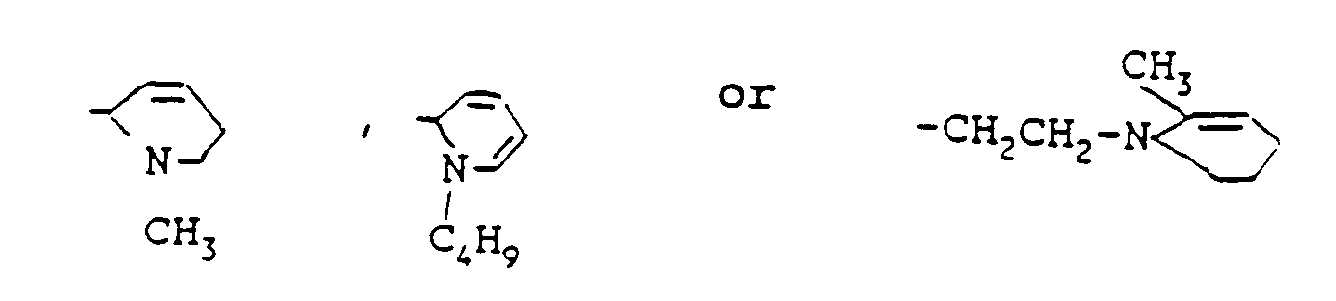
Insofar as these and other chemically related synthetic amides, esters and ethers function in the same way as lidocaine, whose experimental and clinical properties as an inhibitor of pathological vascular permeability and of accompanying plasma loss to tissue are described in detail below, these substances are to be regarded as identical to lidocaine as regards the properties which the invention encompasses and thus come within the scope of this patent application. - Lidocaine and its pharmaceutically active salts have been found, according to the invention, to possess pronounced permeability-inhibiting properties in damage to the organism resulting in connection with burn injury, chemical injury and radiation injury. These properties have been observed in experimental animal models and in connection with pathological conditions which have occurred in the event of external injury in humans. The invention lies partly in the knowledge that those properties of lidocaine concerned in this patent application appear within a dosage range considerably below the doses which are used to obtain the local anaesthetic effect. The recommended local anaesthetic doses which have normally been used hitherto depend on the condition or conditions which it is desired to treat, but in the case of systemic administration the dose is generally about 4.3 mg/kg body weight. Thus, in a man weighing 70 kilos, the total recommended daily dose amounts to about 300 mg. In the case of local (topical) administration (usually as an ointment, solution or spray) a 1.5 to 10% preparation is usually given 3 to 4 times a day.
- When lidocaine is administered in a pharmaceutically acceptable form, the salt consists of a non-toxic salt, for example a sulphate, nitrate, phosphate, acetate, tartrate, citrate, fumarate, maleate, toluene sulphonate, methane sulphonate or hydrohalide.
- Even if it is possible to administer lidocaine or its pharmaceutically acceptable salt forms in substance form, it should however in principle always be given in the form of a pharmaceutical preparation. This pharmaceutical preparation consists of the active substance together with an acceptable vehicle. This vehicle must be "acceptable" in the sense that it will be compatible with the other ingredients included in the preparation and that it will not cause damage or have negative consequences when administered. The preparations concerned in this patent application will be capable of being manufactured by means of known pharmaceutical techniques.
- In cases where the pharmaceutical preparation is administered topically in the form of, for example, a solution, spray, ointment, cream or gel, the vehicle can contain one or more of the following substances: petrolatum, lanolin, polyethylene glycols, glycols, beeswax, mineral oil or other suitable vehicles. The preparation can also comprise solvents such as water and alcohol, emulsifiers, stabilizers or other suitable substances. The topical preparations can contain lidocaine or comparable substances specified above in an amount suitably of 1.5 to 10 percent by weight or volume.
- Pharmaceutical preparations for parenteral use can comprise sterile solutions or suspensions of the active substance or substances in water or other suitable vehicles.
- The invention concerns previously unreported properties of local anaesthetic drugs as defined hereinabove, which properties comprise an inhibition of increased permeability in the blood vessels, which contributes to preventing an increased plasma loss to tissue in connection with external injury or certain pathological conditions. Such tissue damage occurs in connection with abnormal temperature conditions, chemical substances and/or radiation. Since the early damage processes which occur in the tissue as a result of such non-specific action have very great similarities in respect of their mechanism of action, the damage process can be treated as an entity. A large number of different types of agents or processes such as, for example, heat, fire, cold and radiation or microorganisms, for example viruses, bacteria, fungi and parasites, give rise in their very early stages to an increased vascular permeability and accompanying plasma loss to tissue, which constitutes a trigger mechanism for progressive tissue damage.
- Insofar as other types of external or internal injury processes or other agents giving rise to the same type of initial tissue damage as burn injuries, chemical injuries or radiation injuries of the skin or internal organs with increased vascular permeability and accompanying plasma loss to tissue are described in detail below, these types of injury are to be considered as identical in respect of the mechanisms of action which the invention encompasses and thus fall within the claims of this patent application.
- Tissue injuries occurring when humans or animals are subjected to abnormal temperature conditions are generally covered by the term burn injuries. The most common causes of burn injuries are fire or other abnormally hot objects or liquids. Injuries which are similar to burn injuries occur when tissues are subjected to excessive cold in the event of low environmental temperatures or in the event of accidental direct contact with, for example, parts of the skin. These injuries arising from abnormal temperature conditions result in long periods of treatment in intensive care wards, with a high mortality rate. The therapeutic problem consists in attempting to decrease or stop this substantial loss in order to thereby reduce the considerable fluid and electrolyte imbalance which occurs.
- Early administration of local anaesthetics topically in the case of minor burns or intravenously in the case of more extensive burns has a marked effect on the subsequent development of the tissue damage. The studies which have been carried out within the framework of the invention show that local anaesthetics, administered topically on the skin as a cream or ointment, or systemically as an intravenous infusion, can be used in the therapeutic armamentarium in the clinical treatment of burn injuries.
- The following experimental systemic studies, clinical tests and case studies document the clinical applicability of local anaesthetics in burn injuries.
- Experimental studies on animals have shown that topical administration, on the skin, of a cream or ointment containing local anaesthetic significantly reduces the loss of Evans blue albumin, which functions as a marker for the initial vascular damage occurring in the burn area. A similar effect is achieved when local anaesthetics are administered as an intravenous infusion.
- A detailed description of the test protocol and of the results obtained is given hereinbelow:
- Tests were carried out on 106 Sprague-Dawley rats. The animals were fasted for 12-15 hours before the experiment. The animals were anaesthetized with 50 mg/kg mebumal i.p., after which anaesthesia was maintained by means of continuous i.v. infusion of chloralose. Tracheal cannulas were inserted, and catheters were introduced into the femoral artery and vein. The body temperature was maintained by using a thermo-regulated hotplate. The skin of the abdomen was shaved carefully, and a burn injury was effected on the abdominal skin using an electrically heated hot-rod (base surface 1 x 1 cm) coupled to an adjustable transformer. A heat-sensitive electrode on the hotplate was coupled to a Grass polygraph for graded temperature control. The plate was immersed in 5 ml of water, and the current was switched on until the water began to boil and the curve levelled out. At temperature level of 100°C was set, after which the current was switched off and the rod was allowed to cool. At a temperature of 55°C the hotplate was brought into contact with the skin of the abdomen until the temperature had fallen to 45°C, after which the contact was broken. This method permits administration of a constant amount of heat energy to the skin independently of the body temperature and blood flow. It was possible to standardize the pressure of the hot-rod on the skin by pressing down a cylindrical handle which compresses a spring on the hot-rod. The room temperature varied between 21 and 23°C.
- In the first experimental group (n=15) the burned skin was treated with lidocaine/prilocaine cream (25 mg of each local anaesthetic in 1 g) for 15 minutes following the burn injury. The cream was allowed to act for 1½ hours. In the control group, the animals were subjected to the same type of burn injury, while the skin was treated with a placebo cream with the same pH and composition, but without local anaesthetic. In a third group, the animals were not subjected to any burn injury and were used here as a reference for normal skin.
- In a separate series of experiments, the animals were given an intravenous injection of lidocaine (2 mg/kg) followed by a continuous intravenous infusion of lidocaine at an infusion rate of 5 (n=10), 10 (n=12), 20 (n=10) or 30 (n=10) µg kg⁻¹ min⁻¹ for 1½ hours. The infusion was started 15 minutes following the burn injury. One control group with burns and one control group without burns received corresponding injections and infusions of saline. All volumes were administered at a rate of 0.6 ± 0.03 ml/hour.
- At the end of all the tests, Evans blue (EB) was injected intravenously (20 mg/kg) dissolved in 1 ml of NaCl. EB binds to albumin in plasma and functions as a marker for this in cases of extravascular loss. The animals were sacrificed 30 minutes later using saturated KCl. The skin area with the burn injury (1x1 cm) was cut out (full skin thickness), dried on filter paper and weighed. Nach tissue sample was placed in 4 ml of formamide and incubated for 24 hours in a water bath at 50°C. The EB-albumin loss to tissue was measured at 612 nm. Three measurements were carried out on each tissue sample. Calculations were carried out by comparison with an external standard in formamide. All the tissue analyses were carried out by a laboratory assistant not informed of the details of the test protocol.
- In a separate series of animals (in addition to the 106 animals described above) histological examination was carried out to determine the EB-albumin loss in burned tissue by means of fluorescence microscopy. Thirty minutes after injection of EB, the burned skin area was cut out and fixed in 4% formaldehyde for 24 h. After this procedure which was carried out on 5 animals from each group, corresponding to the groups described above, the samples were frozen in liquid nitrogen and cut into 10µm thick sections which were then heat-dried at 30°C for 1 minute. The sections were examined under a fluorescence microscope (Microphot-FX, Nikon) using the epi-illumination technique (Ploek Pam System) consisting of a UV lamp, excitation filter (450-490 nm) and mirror and suppression filter.
- Burned skin exhibited significantly greater loss of albumin compared to unburned skin (p<0.001). Topical administration of lidocaine/prilocaine cream on burned skin produced a significant and very pronounced inhibition of plasma albumin loss (p<0.001). This inhibition was of such an extent that there was no significant difference in plasma albumin loss between burned skin treated with topical local anaesthetics and unburned skin.
- In the group in which lidocaine was administered as a continuous intravenous infusion, the albumin loss was significantly reduced at 10 and 20 µg kg⁻¹ min⁻¹ (p<0.01). At a lidocaine infusion of 10 µg kg⁻¹ min⁻¹, there was no significant difference in plasma albumin loss compared to unburned skin. No cardiovascular effects were detected during the lidocaine infusions, i.e. the effect on burn injuries was observed upon therapeutic infusion of lidocaine.
- Fluorescence microscopy showed red fluorescence where EB-albumin had leaked out into free tissue. In unburned skin the fluorescence was found in the lumen of large blood vessels. In the case of burned skin, a considerable loss could be seen in all layers of the skin. Topical and systemic administration of a local anaesthetic significantly reduced this loss.
- A 44 year old male, previously healthy. No medicines and no allergies. Works for a company which services and repairs steam furnaces. On the day of the accident the patient was lying under a so-called low-pressure furnace, which he wrongly thought empty. When he opened the valve, he was hit by water at 90°C over the front of the trunk, right arm and thigh. Upon admission to hospital, he was assessed as having second degree burns covering about 10% of the body surface. There was extensive blister formation over the burned surfaces. In pain upon admission, writhing on the stretcher. 97 points on the pain scale (VAP - visual analog pain scale: 0= no pain, 100= unbearable pain). Received intramuscular injection of 75 mg pethidine, with little alleviating effect on the pain after 1 hour. Given the extensive blister formation and the pain, the patient was put on lidocaine. He received a 100 mg i.v. injection of lidocaine, followed by continuous intravenous infusion of lidocaine at a rate of 3 mg/min for a total of 3 days. The plasma loss from the burn area was drastically reduced as early as the second day, and it was possible to reduce the number of dressings from 11 on the first day to 3 on the second and third days. The loss usually increases during the first days following the burn injury, and then slowly decreases in the course of 1-2 weeks. In addition, the patient experienced almost complete freedom from pain during the period of the lidocaine infusion (mean of accumulated pain score = 8!). No morphine product was required during the infusion. When infusion was stopped, the plasma loss remained inhibited, but the pain returned with high intensity.
- A 45 year old male, who had previously been essentially healthy, was admitted with second degree burns over the front of the trunk and on the arms and hands (10% of total body surface). The patient presented severe blister formation in the burned areas. Moreover, upon admission, the patient was in great pain. He was given intramuscular pethidine, without a sufficient analgesic effect. He received intravenous injection of 100 mg lidocaine, followed by a continuous intravenous infusion of lidocaine at a rate of 3 mg/min over the course of 3½ days (therapeutic dose for heart arrhythmia). As in the preceding case, the patient responded with a rapid decrease in plasma loss from the burn blisters and with almost complete freedom from pain. The draining effect on the burn blisters remained after infusion was stopped, but the pain returned, albeit to a lesser extent than in the preceding case.
- In electroversion, a defibrillator is used to apply one or more current pulses to the thoracic cage. In addition to the, effect on the heart rhythm, these pulses also result in a local first-degree burning of the skin which causes the patient pain and skin irritation. The degree of the burn depends on the amount of energy supplied, which varies between 100 and 300 Ws. With the aid of a new computerized technique (Computer Assisted Photograph Analysis), the degree of increase in blood flow in the burn area and the subsequent oedema formation are assessed. The method has a high resolution. In an assessment of 10 patients, 5 patients received lidocaine/prilocaine cream on the skin where the positive electrode plate was placed about 1 hour before electroversion, while 5 patients received a placebo cream in a corresponding manner. The results show an almost complete inhibition of redness and oedema formation under the electrode plate compared to the placebo group. In addition, the lidocaine/prilocaine group experienced complete freedom from pain during the 4-hour long observation period.
- Using the same technique described above for experimental burns in animals, we produced a first-degree burn on the inside of the forearm of test volunteers by means of a hot-rod (burn surface 1x1 cm). A group of 3 individuals received 5% lidocaine/prilocaine cream, applied to the skin 5 min after burning, and placebo cream was applied to the same individuals at a later occasion. The burn was photographed by the CAPA technique and was analyzed in respect of redness and oedema formation. The results show that application of a local anaesthetic after burning also produces a pronounced inhibition of redness and oedema formation.
- Tissue damage can be caused by a number of different chemical substances which by their chemical nature are acids or bases and which, upon contact with the skin or internal organs, can trigger an increased vascular permeability and accompanying plasma loss to tissue. Other chemical substances can cause a release of biochemical peptides in the tissue, for example bradykinin, histamine, serotonin, prostaglandins or leukotrienes and can in this way initiate changes in permeability and leakage.
- Chemical tissue damage can therefore occur when tissue-irritating chemical substances come into contact with the skin or internal organs, particularly in the abdominal cavity or thoracic cage. The chemical substances which initiate the damage can come from the body itself, such as, for example, hydrochloric acid in the stomach, bicarbonate in the small intestine, or bile salts in the gallbladder. It can of course also be external chemical substances which come into contact with skin or internal organs in connection with accidental or non-accidental injury. A common form of non-accidental or iatrogenic injury consists of surgical operations in which small amounts of exogenous substances come into contact with the operation wound, peritoneum, pleura etc. and can thus trigger an increased vascular permeability and accompanying plasma loss to tissue. This initial process can then be the cause of inflammation of the peritoneum (chemical peritonitis) or serious conditions involving complete blockage of the intestine (occlusive ileus) with excessive loss from circulation to tissue. In some cases, chemical irritation in the urogenital organs (interstitial cystitis) can give rise to basically the same type of tissue damage.
- Experimental studies of chemical tissue damage can be carried out by means of administration of irritating chemical compounds to the skin, abdominal cavity or thoracic cavity. The effects of lidocaine according to the invention were observed in an animal model which simulates chemical peritonitis in humans.
- Chemical peritonitis occurs clinically, for example in cases of acute pancreatitis or perforated gastric ulcer, resulting in loss of plasma from the circulation to the free abdominal cavity. This in turn leads to a disturbed fluid and electrolyte balance in already extremely sick patients with poor prognosis. Experimental studies carried out within the framework of the invention have shown that topical administration of local anaesthetics to the peritoneum before induction of chemical peritonitis almost completely prevents increased vascular permeability and the accompanying plasma loss to tissue. These studies have also shown that the administration of local anaesthetic agents after peritonitis has been triggered significantly inhibits the loss of Evans blue albumin as a measure of plasma loss to tissue.
- A detailed description of the test protocol and of the results obtained in these tests is given hereinbelow:
- In all the tests the abdominal wall was opened with a midline incision down to the abdominal cavity. The colon and its peritoneum-covered surface were exposed. This study assessed the effect of lidocaine and bupivacaine on peritonitis triggered with hydrochloric acid (HCl).
- A piece of gauze (1.5 x 1.5 cm) containing 1% lidocaine hydrochloride (pH 6.9;n=8) or 0.5% bupivacaine hydrochloride (pH 7.1; n=8) was placed on the peritoneum for 5 minutes. A control group was treated in a corresponding manner for 5 minutes with gauze containing sodium chloride. The same area of the peritoneum was thereafter subjected to hydrochloric acid by means of a piece of gauze (1x1 cm) containing 0.5 ml of 0.1 M HCl being placed on the peritoneum.
- Here peritonitis was triggered first by placing gauze containing hydrochloric acid, as described above, on the peritoneum for 5 minutes. The peritonitis was allowed to develop for 15 minutes, after which 3 groups were treated for 5 minutes with gauze containing 1% lidocaine hydrochloride (pH 6.9;n=8), 0.5% bupivacaine hydrochloride (pH 7.0;n=8) or sodium chloride (pH 7.0;n=7).
- Fifteen minutes after the procedure in models 1 and 2, Evans blue (EB) was injected intravenously (20 mg/kg) dissolved in 1 ml of NaCl. EB binds to albumin in plasma and functions as a marker for this in cases of extravascular loss. Five minutes later the superior mesenteric artery was catheterized and the superior mesenteric vein was cut away, after which the vascular bed of the colon was flushed with 20 ml of saline (37°C) in order to eliminate all EB albumin which had not leaked out to the free tissue. The animals were sacrificed with saturated KCl. The surface of the intestine exposed to hydrochloric acid was cut out, dried on filter paper and weighed. Each tissue sample was placed in 4 ml of formamide and incubated for 24 hours in a water bath at 50°C. The loss of EB-albumin to tissue was measured at 612 nm. Three measurements were carried out on each tissue sample. Calculations were carried out by comparison with an external standard in formamide. All the tissue analyses were carried out by a laboratory assistant not informed of the details of the test protocol.
- A histological examination was carried out on a separate series of animals in order to determine the EB-albumin loss in burned tissue by means of fluorescence microscopy. Five minutes after administration of EB, the experimental area was cut out and fixed in 4% formaldehyde for 24 h. After this procedure, the samples were frozen in liquid nitrogen and cut into 10-µm thick sections which were then heat-dried at 30°C for 1 minute. The sections were examined under a fluorescence microscope (Microphot-FX, Nikon) using the epi-illumination technique (Ploek Pam System) consisting of a UV lamp, excitation filter (450-490 nm) and a mirror and suppression filter. Photographs were taken using ASA 160 film (Kodak ektachrome 135-36).
- In a group of 5 animals, the peritoneum was treated for 5 min with 0.5% ³H-bupivacaine (470 mCi/mmol). The experimental area was then cut out and immediately immersed in liquid nitrogen. The preparation was then fixed and was cut into 20-µm thick sections in a cryostat, transferred to a glass plate and heated to 70°C for 30 s. An X-ray film (Kodak DF-57) was placed over the sections at room temperature and was exposed for 4-8 days. The position of the ³H-bupivacaine was detected on the X-ray film and was compared to the corresponding histological sections.
- Hydrochloric acid on the peritoneum (peritonitis) triggered a pronounced loss of albumin. When 1% lidocaine was administered to the peritoneum before administration of HCl, there was a significant and pronounced inhibition of albumin loss (p<0.01). No significant difference was found between lidocaine-treated peritoneum subjected to HCl and peritoneum not treated with hydrochloric acid. Similar results were obtained when 0.5% bupivacaine was administered before the hydrochloric acid.
- When lidocaine and bupivacaine were administered 5 min after the peritoneum had been subjected to the hydrochloric acid, here too there was a pronounced inhibition of plasma loss compared with administration of saline.
- Fluorescence histology showed a considerable extra-vascularization of albumin in the peritoneum and underlying tissue. Treatment with lidocaine and bupivacaine both before and after exposure to hydrochloric acid greatly inhibited the loss, which it was possible to observe with considerably weaker fluorescence in free tissue compared with the control.
- Autoradiography of the peritoneum and colon showed that isotope-labelled bupivacaine penetrates down to the muscularis interna but does not penetrate further into the submucosa, i.e. covers well the area from which the albumin loss takes place.
- Cortisone-containing solutions have hitherto been used in clinical contexts in order to wash the peritoneum, with the risk of serious systemic side effects upon repeated treatment. No such side effects have been observed for local anaesthetic drugs within the dose range in question, for which reason this method of treatment,' which has also been shown to be more effective than cortisone, is to be preferred in clinical use.
- Blockage of the small intestine as a result of fusion in the abdomen, for example after previous abdominal surgery, so-called occlusive ileus, leads to a life-threatening condition with serious fluid and electrolyte losses to the intestine and dehydration of the patient. The mortality associated with this condition is still very high. No previously known therapy has been found to be able to reduce the great fluid losses before and after surgery. Experimental studies on animals have shown that local anaesthetics administered topically on the occluded section of the intestine or intravenously reduce the inflammation in the occluded intestine and thereby reduce the serious fluid losses compared to saline placebo.
- A detailed description of the test protocol and of the results obtained in these tests is given hereinbelow:
- The tests were carried out on Sprague Dawley rats which had been dehydrated for 12 hours. The animals were anaesthetized with brietal, after which the abdomen was opened and a ligature was established round the jejunum 10 cm distal of Treitz' ligament. The abdomen was then closed using synthetic sutures, and the animals were allowed to recover. After 18 hours the animals were anaesthetized once more with i.p. mebumal, and catheters were inserted into the femoral artery and into the femoral vein. The animals were tracheotomized. The abdomen was opened again, and the occluded segment of the small intestine was studied.
- Evans blue (EB) (20 mg/kg) dissolved in 1 ml of NaCl was injected intravenously. EB binds to albumin in plasma and functions as a marker for this in cases of extravascular loss. Five minutes later, the superior mesenteric artery was catheterized and the superior mesenteric vein was cut away, after which the vascular bed in the small intestine was flushed with 20 ml of saline (37°C) in order to eliminate all EB-albumin which had not leaked out to the free tissue. The animals were sacrificed with saturated KCl. A piece of the occluded small intestine was cut out, dried on filter paper and weighed. Each tissue sample was placed in 4 ml of formamide and incubated for 24 hours in a water bath at 50°C. The loss of EB-albumin to tissue was measured at 612 nm. Three measurements were carried out on each tissue sample. Calculations were carried out by comparison with an external standard in formamide. All tissue analyses were carried out by a laboratory assistant not informed of the details of the test protocol.
- Histological examination of the same animals was carried out in order to determine the EB-albumin loss in burned tissue by means of fluorescence microscopy. Five minutes after administration of EB, part of the small intestine was cut out and fixed in 4% formaldehyde for 24 hours. After this procedure, the samples were frozen in liquid nitrogen and cut into 10-µm thick sections which were then heat-dried at 30°C for 1 minute. The sections were examined under a fluorescence microscope (Microphot-FX, Nikon) using the epi-illimination technique (Ploek Pam System) consisting of a UV lamp, excitation filter (450-490 nm) and a mirror and suppression filter.
- One group was treated with 10% lidocaine aerosol on the section of the small intestine proximal of the ligature made in the first operation. A control group was treated with placebo aerosol, which was identical but did not contain lidocaine.
- The albumin loss in the control group treated with placebo aerosol was very pronounced. This was demonstrated quantitatively by means of a spectrophotometer and qualitatively by means of fluorescence microscopy. In the group which was treated with lidocaine, there was a pronounced and significant inhibition of albumin loss to free intestinal tissue.
- No cardiovascular effects were observed in the animals. The results illustrate the inhibitory power by demonstrating the same degree of albumin loss in normal, non-occluded small intestine as in an occluded small intestine treated with local anaesthetic drugs.
- Thus, continuous systemic administration of a suitable preparation of lidocaine or other local anaesthetic drugs in accordance with the above can be started as soon as the diagnosis is established by X-ray and can be continued during the whole period of treatment, given the low rate of side effects with these drugs. Local anaesthetics can also be administered topically in a suitable preparation form, for prophylactic or therapeutic purposes, in patients undergoing surgical intervention in the abdominal or thoracic cavity.
- Interstitial cystitis is a severe irritation of the urinary bladder, involving swelling of the mucous membrane and muscle wall of the urinary bladder, which in turn causes the patient severe pain and abnormally small bladder volumes. No effective symptomatic treatment is available at present, and for this reason many patients finally undergo a Bricker operation in which the bladder is removed and the intestine is made to act as a bladder. The effect of lidocaine on the fluid loss and the swelling in the wall of the urinary bladder of patients with interstitial cystitis can be illustrated here on the basis of a case report:
(B. Asklin and J. Cassuto, "Intravesical lidocaine in severe interstitial cystitis", in publication) A woman with interstitial cystitis and severe pain in the urinary tract was treated experimentally with lidocaine. Before treatment she had a total bladder volume of 50 ml, for which reason she was forced to empty the bladder into diapers during the night (cannot have KAD on account of pain). Treatment was started with intravesical installation of local anaesthetic agents daily into the bladder via a cystoscope under local anaesthesia. After 5 days it was possible to reduce the treatment to every third day. Three weeks later the woman's bladder volume had increased to 250 ml and cystoscopic examination showed a very pronounced reduction in the inflammation of the mucous memhrane of the patient's bladder. The woman remained virtually free of symptoms and was able to continue treatment at home.
Claims (9)
- Use of a chemical local anaesthetic agent selected from the local anaesthetic compound groups:- esters, for example BENZOCAINE, PROCAINE and TETRACAINE,- amides, for example CINCHOCAINE, LIDOCAINE, PRILOCAINE, MEPIVACAINE, BUPIVACAINE and ETIDOCAINE,- ethers, for example CHINISOCAINE and PRAMOCAINE,
for the production of a medicament for prophylactic or therapeutic inhibition of increased vascular permeability in the blood vessels, which contributes to preventing increased plasma loss to tissue in the case of burn injuries, cold injuries or chemical injuries of the skin or internal organs, in particular in the abdominal cavity or thoracic cage. - Use of a chemical local anaesthetic agent according to claim 1, characterized in that it is present in base form or as a pharmaceutically acceptable salt.
- Use of a chemical local anaesthetic agent according to any one of claims 1 - 2, characterized in that it contains one or more inert vehicles for systemic, i.e. infiltration, intravascular (intravenous or intraarterial), intraarticular, epidural and/or intrathecal administration to patients.
- Use of a chemical local anaesthetic agent according to any one of claims 1 - 3, characterized in that it contains one or more inert vehicles for topical administration to patients.
- Use of a chemical local anaesthetic agent according to claim 4, characterized in that the pharmaceutically inert vehicle comprises an alcohol, balsam, suspension, emulsion, ointment, cream, powder or spray.
- Use of a chemical local anaesthetic agent according to any one of claims 1 - 2, characterized in that it contains one or more inert vehicles for oral administration to patients.
- Use of a chemical local anaesthetic agent according to any one of claims 1 - 2, characterized in that it is formed into a preparation for rectal, vaginal or vesical administration.
- Use of a chemical local anaesthetic agent according to any one of claims 3 - 6, characterized in that it is formed into or contained in a medium with sustained dissolution or administration, by means of which the medicament is able to act for a prolonged period of time after administration.
- Use of a chemical local anaesthetic agent according to claim 4, characterized in that it is formed into a shampooing agent.
Priority Applications (1)
| Application Number | Priority Date | Filing Date | Title |
|---|---|---|---|
| AT89912676T ATE86106T1 (en) | 1988-11-22 | 1989-11-22 | DRUG FOR TREATMENT OF PATHOLOGICAL VASSY PERMEABILITY AND PLASMA TISSUE LOSS. |
Applications Claiming Priority (2)
| Application Number | Priority Date | Filing Date | Title |
|---|---|---|---|
| SE8804214A SE8804214L (en) | 1988-11-22 | 1988-11-22 | ANTI-INFLAMMATORY AND ANTI-INFECTIVE MEDICINE |
| SE8804214 | 1988-11-22 |
Publications (2)
| Publication Number | Publication Date |
|---|---|
| EP0446225A1 EP0446225A1 (en) | 1991-09-18 |
| EP0446225B1 true EP0446225B1 (en) | 1993-03-03 |
Family
ID=20374022
Family Applications (1)
| Application Number | Title | Priority Date | Filing Date |
|---|---|---|---|
| EP89912676A Expired - Lifetime EP0446225B1 (en) | 1988-11-22 | 1989-11-22 | Medicament for treatment of pathological vascular permeability and plasma loss to tissue |
Country Status (7)
| Country | Link |
|---|---|
| EP (1) | EP0446225B1 (en) |
| JP (1) | JPH04503055A (en) |
| KR (1) | KR900701324A (en) |
| AU (1) | AU639418B2 (en) |
| DK (1) | DK95191A (en) |
| SE (1) | SE8804214L (en) |
| WO (1) | WO1990005542A1 (en) |
Families Citing this family (5)
| Publication number | Priority date | Publication date | Assignee | Title |
|---|---|---|---|---|
| SE9102890D0 (en) * | 1991-10-07 | 1991-10-07 | Hans Evers | INSEKTSREPELLERINGSMEDEL |
| US5434731A (en) * | 1992-11-12 | 1995-07-18 | Seagate Technology, Inc. | Process for making a one-piece flexure for small magnetic heads |
| US6562326B1 (en) * | 1996-08-12 | 2003-05-13 | Bruce W. Miller | Topical composition for burn healing |
| NL1016776C2 (en) * | 2000-12-01 | 2002-06-04 | Julia Caussin | Composition for topical treatment of skin wounds comprises a local anesthetic and an iodophore |
| JP5872131B2 (en) * | 2006-11-29 | 2016-03-01 | ロート製薬株式会社 | Antifungal pharmaceutical composition |
Family Cites Families (10)
| Publication number | Priority date | Publication date | Assignee | Title |
|---|---|---|---|---|
| FR3385M (en) * | 1963-12-02 | 1965-06-21 | Sobio Lab | Therapeutic compositions based on procaine ascorbate. |
| US3337406A (en) * | 1963-12-12 | 1967-08-22 | Mar Sal Inc | Treatment of arteriosclerotic diseases |
| US4333941A (en) * | 1975-12-22 | 1982-06-08 | The Dow Chemical Company | Inhibition of enveloped viruses with phenyl ketones |
| US4181725A (en) * | 1977-05-02 | 1980-01-01 | The Regents Of The University Of Michigan | Method for alleviating psoriasis |
| US4618490A (en) * | 1980-06-06 | 1986-10-21 | Marco Peter T De | Method of treatment of animal and human tissues damaged by burns and frank visible gangrene |
| US4466973A (en) * | 1983-02-01 | 1984-08-21 | Thomas Rennie | Method of treating nasal and sinus congestion |
| US4628063A (en) * | 1984-03-08 | 1986-12-09 | Dana P. Brigham | Antiviral pharmaceutical preparations and methods for their use |
| GB8517300D0 (en) * | 1985-07-09 | 1985-08-14 | Salim A S M | Biologically active substances |
| SE8802040D0 (en) * | 1988-06-01 | 1988-06-01 | Astra Ab | NEW USE |
| JPH03501386A (en) * | 1988-06-09 | 1991-03-28 | アルザ・コーポレーション | Permeation enhancers including ethanol and glycerol monooleate |
-
1988
- 1988-11-22 SE SE8804214A patent/SE8804214L/en not_active Application Discontinuation
-
1989
- 1989-11-22 KR KR1019900701566A patent/KR900701324A/en not_active Withdrawn
- 1989-11-22 AU AU45220/89A patent/AU639418B2/en not_active Expired - Fee Related
- 1989-11-22 WO PCT/SE1989/000680 patent/WO1990005542A1/en not_active Ceased
- 1989-11-22 JP JP1511732A patent/JPH04503055A/en active Pending
- 1989-11-22 EP EP89912676A patent/EP0446225B1/en not_active Expired - Lifetime
-
1991
- 1991-05-21 DK DK095191A patent/DK95191A/en unknown
Non-Patent Citations (1)
| Title |
|---|
| Chemical Abstracts, volume 78, no. 1, 8 January 1973, (Columbus, Ohio, US), A.I. Krotov et al: "Experimental study of the effectiveness of combinations of fenasal with cucurubine and novocaine in treatment of hymenolepidosis of white mice", see page 16, abstract 188c * |
Also Published As
| Publication number | Publication date |
|---|---|
| KR900701324A (en) | 1990-12-01 |
| DK95191D0 (en) | 1991-05-21 |
| DK95191A (en) | 1991-07-19 |
| AU4522089A (en) | 1990-06-12 |
| JPH04503055A (en) | 1992-06-04 |
| WO1990005542A1 (en) | 1990-05-31 |
| AU639418B2 (en) | 1993-07-29 |
| SE8804214L (en) | 1990-05-23 |
| SE8804214D0 (en) | 1988-11-22 |
| EP0446225A1 (en) | 1991-09-18 |
Similar Documents
| Publication | Publication Date | Title |
|---|---|---|
| Moore | Spinal anesthesia: bupivacaine compared with tetracaine | |
| Rich et al. | Early ocular hypertension after cataract extraction | |
| JPH0552814B2 (en) | ||
| AU2018392985A1 (en) | Compositions and methods of treatment for neurological disorders comprising motor neuron diseases | |
| JP4987209B2 (en) | Use of biguanide derivatives for the manufacture of pharmaceuticals with scarring action | |
| CN114177133A (en) | Drug sustained-release carrier, sustained-release drug composition and application thereof | |
| US5198454A (en) | Use of OB-104 to treat ocular inflammation | |
| RU2207852C2 (en) | Agents for prophylaxis or treatment of diseases associated with abnormal proliferation of retina epithelial pigment cells | |
| KR100375003B1 (en) | Therapeutic drug for the treatment of micturition disorders | |
| EP0446225B1 (en) | Medicament for treatment of pathological vascular permeability and plasma loss to tissue | |
| CN100389776C (en) | Use of CM101 in the manufacture of a medicament | |
| US6232301B1 (en) | Remedies for bladder disorders | |
| JPH07188022A (en) | Use of phthaloyl hydrazide derivatives as antihypoxic and protective agents | |
| WO2000041716A1 (en) | New use of melagatran | |
| CN1233172A (en) | Secondary cataract inhibitor | |
| JPH02504146A (en) | Flavoxate and derivatives for erectile dysfunction | |
| US5002956A (en) | Use of heterocyclic compounds for iontophoretic treatment | |
| WO2000040234A1 (en) | Topical anesthesia of the urinary bladder | |
| Mazier | An evaluation of the surgical treatment of anal fissures | |
| CN106466318A (en) | Application in preparation treatment medicine for treating diabetic nephropathy for the 1- heterocyclic substituted benzyl pyridine ketone compounds | |
| RU2039557C1 (en) | Method for treating pyo-inflammatory diseases of abdominal cavity | |
| CN116898977A (en) | A combination drug for anesthesia and analgesia | |
| US4446149A (en) | Medicine for treatment of cervical erosion | |
| US6548487B2 (en) | Agent for treatment of bladder troubles | |
| JPH05271226A (en) | Wound curing promoter |
Legal Events
| Date | Code | Title | Description |
|---|---|---|---|
| PUAI | Public reference made under article 153(3) epc to a published international application that has entered the european phase |
Free format text: ORIGINAL CODE: 0009012 |
|
| 17P | Request for examination filed |
Effective date: 19910502 |
|
| AK | Designated contracting states |
Kind code of ref document: A1 Designated state(s): AT BE CH DE FR GB IT LI LU NL SE |
|
| 17Q | First examination report despatched |
Effective date: 19911230 |
|
| GRAA | (expected) grant |
Free format text: ORIGINAL CODE: 0009210 |
|
| AK | Designated contracting states |
Kind code of ref document: B1 Designated state(s): AT BE CH DE FR GB IT LI LU NL SE |
|
| PG25 | Lapsed in a contracting state [announced via postgrant information from national office to epo] |
Ref country code: IT Free format text: LAPSE BECAUSE OF FAILURE TO SUBMIT A TRANSLATION OF THE DESCRIPTION OR TO PAY THE FEE WITHIN THE PRESCRIBED TIME-LIMIT;WARNING: LAPSES OF ITALIAN PATENTS WITH EFFECTIVE DATE BEFORE 2007 MAY HAVE OCCURRED AT ANY TIME BEFORE 2007. THE CORRECT EFFECTIVE DATE MAY BE DIFFERENT FROM THE ONE RECORDED. Effective date: 19930303 Ref country code: FR Effective date: 19930303 Ref country code: AT Effective date: 19930303 Ref country code: BE Effective date: 19930303 Ref country code: DE Effective date: 19930303 Ref country code: NL Effective date: 19930303 Ref country code: SE Effective date: 19930303 |
|
| REF | Corresponds to: |
Ref document number: 86106 Country of ref document: AT Date of ref document: 19930315 Kind code of ref document: T |
|
| REF | Corresponds to: |
Ref document number: 68905197 Country of ref document: DE Date of ref document: 19930408 |
|
| EN | Fr: translation not filed | ||
| NLV1 | Nl: lapsed or annulled due to failure to fulfill the requirements of art. 29p and 29m of the patents act | ||
| PG25 | Lapsed in a contracting state [announced via postgrant information from national office to epo] |
Ref country code: GB Effective date: 19931122 |
|
| PG25 | Lapsed in a contracting state [announced via postgrant information from national office to epo] |
Ref country code: LU Free format text: LAPSE BECAUSE OF NON-PAYMENT OF DUE FEES Effective date: 19931130 Ref country code: LI Effective date: 19931130 Ref country code: CH Effective date: 19931130 |
|
| PLBE | No opposition filed within time limit |
Free format text: ORIGINAL CODE: 0009261 |
|
| STAA | Information on the status of an ep patent application or granted ep patent |
Free format text: STATUS: NO OPPOSITION FILED WITHIN TIME LIMIT |
|
| 26N | No opposition filed | ||
| GBPC | Gb: european patent ceased through non-payment of renewal fee |
Effective date: 19931122 |
|
| REG | Reference to a national code |
Ref country code: CH Ref legal event code: PL |