EP0435229A1 - DNA of non-A, non-B hepatitis virus gene, its clone and use thereof - Google Patents
DNA of non-A, non-B hepatitis virus gene, its clone and use thereof Download PDFInfo
- Publication number
- EP0435229A1 EP0435229A1 EP90125293A EP90125293A EP0435229A1 EP 0435229 A1 EP0435229 A1 EP 0435229A1 EP 90125293 A EP90125293 A EP 90125293A EP 90125293 A EP90125293 A EP 90125293A EP 0435229 A1 EP0435229 A1 EP 0435229A1
- Authority
- EP
- European Patent Office
- Prior art keywords
- nanbh
- dna
- primers
- deoxyribonucleotides
- stranded dna
- Prior art date
- Legal status (The legal status is an assumption and is not a legal conclusion. Google has not performed a legal analysis and makes no representation as to the accuracy of the status listed.)
- Withdrawn
Links
- 241000700605 Viruses Species 0.000 title claims abstract description 27
- 108090000623 proteins and genes Proteins 0.000 title claims abstract description 22
- 208000006454 hepatitis Diseases 0.000 title claims abstract description 6
- 231100000283 hepatitis Toxicity 0.000 title claims abstract description 6
- 239000005547 deoxyribonucleotide Substances 0.000 claims abstract description 34
- 125000002637 deoxyribonucleotide group Chemical group 0.000 claims abstract description 34
- 108020004414 DNA Proteins 0.000 claims abstract description 33
- 239000012634 fragment Substances 0.000 claims abstract description 27
- 210000002966 serum Anatomy 0.000 claims abstract description 17
- 238000003752 polymerase chain reaction Methods 0.000 claims abstract description 16
- 238000003745 diagnosis Methods 0.000 claims abstract description 9
- 102000053602 DNA Human genes 0.000 claims description 27
- 108020004682 Single-Stranded DNA Proteins 0.000 claims description 19
- 125000003275 alpha amino acid group Chemical group 0.000 claims description 8
- 239000002773 nucleotide Substances 0.000 claims description 7
- 125000003729 nucleotide group Chemical group 0.000 claims description 7
- 108020004635 Complementary DNA Proteins 0.000 claims description 4
- 238000010804 cDNA synthesis Methods 0.000 claims description 4
- 230000000295 complement effect Effects 0.000 claims description 4
- 239000002299 complementary DNA Substances 0.000 claims description 4
- OPTASPLRGRRNAP-UHFFFAOYSA-N cytosine Chemical compound NC=1C=CNC(=O)N=1 OPTASPLRGRRNAP-UHFFFAOYSA-N 0.000 claims description 4
- UYTPUPDQBNUYGX-UHFFFAOYSA-N guanine Chemical compound O=C1NC(N)=NC2=C1N=CN2 UYTPUPDQBNUYGX-UHFFFAOYSA-N 0.000 claims description 4
- RWQNBRDOKXIBIV-UHFFFAOYSA-N thymine Chemical compound CC1=CNC(=O)NC1=O RWQNBRDOKXIBIV-UHFFFAOYSA-N 0.000 claims description 4
- GFFGJBXGBJISGV-UHFFFAOYSA-N Adenine Chemical compound NC1=NC=NC2=C1N=CN2 GFFGJBXGBJISGV-UHFFFAOYSA-N 0.000 claims description 2
- 229930024421 Adenine Natural products 0.000 claims description 2
- 229960000643 adenine Drugs 0.000 claims description 2
- 229940104302 cytosine Drugs 0.000 claims description 2
- 229940113082 thymine Drugs 0.000 claims description 2
- 108091032973 (ribonucleotides)n+m Proteins 0.000 abstract description 27
- 238000000034 method Methods 0.000 abstract description 12
- 238000001962 electrophoresis Methods 0.000 abstract description 6
- 108020004999 messenger RNA Proteins 0.000 abstract description 4
- 230000002194 synthesizing effect Effects 0.000 abstract 1
- 208000005176 Hepatitis C Diseases 0.000 description 49
- 208000010710 hepatitis C virus infection Diseases 0.000 description 49
- 108091028043 Nucleic acid sequence Proteins 0.000 description 11
- 239000000523 sample Substances 0.000 description 9
- 239000013598 vector Substances 0.000 description 8
- 239000000243 solution Substances 0.000 description 7
- HEDRZPFGACZZDS-UHFFFAOYSA-N Chloroform Chemical compound ClC(Cl)Cl HEDRZPFGACZZDS-UHFFFAOYSA-N 0.000 description 6
- 230000015572 biosynthetic process Effects 0.000 description 5
- 210000004369 blood Anatomy 0.000 description 5
- 239000008280 blood Substances 0.000 description 5
- 238000003786 synthesis reaction Methods 0.000 description 5
- 241001227713 Chiron Species 0.000 description 4
- ISWSIDIOOBJBQZ-UHFFFAOYSA-N Phenol Chemical compound OC1=CC=CC=C1 ISWSIDIOOBJBQZ-UHFFFAOYSA-N 0.000 description 4
- 238000010367 cloning Methods 0.000 description 4
- 239000000463 material Substances 0.000 description 4
- 239000011541 reaction mixture Substances 0.000 description 4
- LFQSCWFLJHTTHZ-UHFFFAOYSA-N Ethanol Chemical compound CCO LFQSCWFLJHTTHZ-UHFFFAOYSA-N 0.000 description 3
- 241000282577 Pan troglodytes Species 0.000 description 3
- 240000004808 Saccharomyces cerevisiae Species 0.000 description 3
- 239000000427 antigen Substances 0.000 description 3
- 108091007433 antigens Proteins 0.000 description 3
- 102000036639 antigens Human genes 0.000 description 3
- 238000007796 conventional method Methods 0.000 description 3
- 239000000203 mixture Substances 0.000 description 3
- 229960005486 vaccine Drugs 0.000 description 3
- 108010014303 DNA-directed DNA polymerase Proteins 0.000 description 2
- 102000016928 DNA-directed DNA polymerase Human genes 0.000 description 2
- 102000004163 DNA-directed RNA polymerases Human genes 0.000 description 2
- 108090000626 DNA-directed RNA polymerases Proteins 0.000 description 2
- 241000588724 Escherichia coli Species 0.000 description 2
- 102100034343 Integrase Human genes 0.000 description 2
- 241001465754 Metazoa Species 0.000 description 2
- 206010028980 Neoplasm Diseases 0.000 description 2
- 239000002202 Polyethylene glycol Substances 0.000 description 2
- 239000013614 RNA sample Substances 0.000 description 2
- 229930006000 Sucrose Natural products 0.000 description 2
- CZMRCDWAGMRECN-UGDNZRGBSA-N Sucrose Chemical compound O[C@H]1[C@H](O)[C@@H](CO)O[C@@]1(CO)O[C@@H]1[C@H](O)[C@@H](O)[C@H](O)[C@@H](CO)O1 CZMRCDWAGMRECN-UGDNZRGBSA-N 0.000 description 2
- 210000004102 animal cell Anatomy 0.000 description 2
- AIYUHDOJVYHVIT-UHFFFAOYSA-M caesium chloride Chemical compound [Cl-].[Cs+] AIYUHDOJVYHVIT-UHFFFAOYSA-M 0.000 description 2
- 239000003795 chemical substances by application Substances 0.000 description 2
- 238000000605 extraction Methods 0.000 description 2
- 230000001900 immune effect Effects 0.000 description 2
- 238000000338 in vitro Methods 0.000 description 2
- 244000005700 microbiome Species 0.000 description 2
- 238000004806 packaging method and process Methods 0.000 description 2
- 229920001223 polyethylene glycol Polymers 0.000 description 2
- 238000001556 precipitation Methods 0.000 description 2
- 239000002994 raw material Substances 0.000 description 2
- 238000000926 separation method Methods 0.000 description 2
- 239000005720 sucrose Substances 0.000 description 2
- 238000012360 testing method Methods 0.000 description 2
- 229920002527 Glycogen Polymers 0.000 description 1
- 101710203526 Integrase Proteins 0.000 description 1
- 102000003960 Ligases Human genes 0.000 description 1
- 108090000364 Ligases Proteins 0.000 description 1
- 108010092799 RNA-directed DNA polymerase Proteins 0.000 description 1
- 108091027568 Single-stranded nucleotide Proteins 0.000 description 1
- 150000001413 amino acids Chemical class 0.000 description 1
- 238000010171 animal model Methods 0.000 description 1
- 230000000890 antigenic effect Effects 0.000 description 1
- 239000007864 aqueous solution Substances 0.000 description 1
- 201000011510 cancer Diseases 0.000 description 1
- 238000006243 chemical reaction Methods 0.000 description 1
- 238000004925 denaturation Methods 0.000 description 1
- 230000036425 denaturation Effects 0.000 description 1
- 238000011161 development Methods 0.000 description 1
- 230000018109 developmental process Effects 0.000 description 1
- 239000012895 dilution Substances 0.000 description 1
- 238000010790 dilution Methods 0.000 description 1
- 239000003814 drug Substances 0.000 description 1
- 239000013604 expression vector Substances 0.000 description 1
- 229940096919 glycogen Drugs 0.000 description 1
- ZJYYHGLJYGJLLN-UHFFFAOYSA-N guanidinium thiocyanate Chemical compound SC#N.NC(N)=N ZJYYHGLJYGJLLN-UHFFFAOYSA-N 0.000 description 1
- 238000003780 insertion Methods 0.000 description 1
- 230000037431 insertion Effects 0.000 description 1
- 210000005228 liver tissue Anatomy 0.000 description 1
- 239000003550 marker Substances 0.000 description 1
- YHXISWVBGDMDLQ-UHFFFAOYSA-N moclobemide Chemical compound C1=CC(Cl)=CC=C1C(=O)NCCN1CCOCC1 YHXISWVBGDMDLQ-UHFFFAOYSA-N 0.000 description 1
- 239000013600 plasmid vector Substances 0.000 description 1
- 229920001184 polypeptide Polymers 0.000 description 1
- 230000003449 preventive effect Effects 0.000 description 1
- 108090000765 processed proteins & peptides Proteins 0.000 description 1
- 102000004196 processed proteins & peptides Human genes 0.000 description 1
- 238000000746 purification Methods 0.000 description 1
- 238000011084 recovery Methods 0.000 description 1
- 238000003756 stirring Methods 0.000 description 1
- 231100000419 toxicity Toxicity 0.000 description 1
- 230000001988 toxicity Effects 0.000 description 1
- 125000005287 vanadyl group Chemical group 0.000 description 1
- 210000005253 yeast cell Anatomy 0.000 description 1
Images


Classifications
-
- C—CHEMISTRY; METALLURGY
- C07—ORGANIC CHEMISTRY
- C07K—PEPTIDES
- C07K14/00—Peptides having more than 20 amino acids; Gastrins; Somatostatins; Melanotropins; Derivatives thereof
- C07K14/005—Peptides having more than 20 amino acids; Gastrins; Somatostatins; Melanotropins; Derivatives thereof from viruses
-
- C—CHEMISTRY; METALLURGY
- C12—BIOCHEMISTRY; BEER; SPIRITS; WINE; VINEGAR; MICROBIOLOGY; ENZYMOLOGY; MUTATION OR GENETIC ENGINEERING
- C12N—MICROORGANISMS OR ENZYMES; COMPOSITIONS THEREOF; PROPAGATING, PRESERVING, OR MAINTAINING MICROORGANISMS; MUTATION OR GENETIC ENGINEERING; CULTURE MEDIA
- C12N15/00—Mutation or genetic engineering; DNA or RNA concerning genetic engineering, vectors, e.g. plasmids, or their isolation, preparation or purification; Use of hosts therefor
- C12N15/09—Recombinant DNA-technology
- C12N15/11—DNA or RNA fragments; Modified forms thereof; Non-coding nucleic acids having a biological activity
-
- C—CHEMISTRY; METALLURGY
- C12—BIOCHEMISTRY; BEER; SPIRITS; WINE; VINEGAR; MICROBIOLOGY; ENZYMOLOGY; MUTATION OR GENETIC ENGINEERING
- C12Q—MEASURING OR TESTING PROCESSES INVOLVING ENZYMES, NUCLEIC ACIDS OR MICROORGANISMS; COMPOSITIONS OR TEST PAPERS THEREFOR; PROCESSES OF PREPARING SUCH COMPOSITIONS; CONDITION-RESPONSIVE CONTROL IN MICROBIOLOGICAL OR ENZYMOLOGICAL PROCESSES
- C12Q1/00—Measuring or testing processes involving enzymes, nucleic acids or microorganisms; Compositions therefor; Processes of preparing such compositions
- C12Q1/68—Measuring or testing processes involving enzymes, nucleic acids or microorganisms; Compositions therefor; Processes of preparing such compositions involving nucleic acids
- C12Q1/6844—Nucleic acid amplification reactions
- C12Q1/686—Polymerase chain reaction [PCR]
-
- C—CHEMISTRY; METALLURGY
- C12—BIOCHEMISTRY; BEER; SPIRITS; WINE; VINEGAR; MICROBIOLOGY; ENZYMOLOGY; MUTATION OR GENETIC ENGINEERING
- C12Q—MEASURING OR TESTING PROCESSES INVOLVING ENZYMES, NUCLEIC ACIDS OR MICROORGANISMS; COMPOSITIONS OR TEST PAPERS THEREFOR; PROCESSES OF PREPARING SUCH COMPOSITIONS; CONDITION-RESPONSIVE CONTROL IN MICROBIOLOGICAL OR ENZYMOLOGICAL PROCESSES
- C12Q1/00—Measuring or testing processes involving enzymes, nucleic acids or microorganisms; Compositions therefor; Processes of preparing such compositions
- C12Q1/70—Measuring or testing processes involving enzymes, nucleic acids or microorganisms; Compositions therefor; Processes of preparing such compositions involving virus or bacteriophage
- C12Q1/701—Specific hybridization probes
- C12Q1/706—Specific hybridization probes for hepatitis
- C12Q1/707—Specific hybridization probes for hepatitis non-A, non-B Hepatitis, excluding hepatitis D
-
- C—CHEMISTRY; METALLURGY
- C12—BIOCHEMISTRY; BEER; SPIRITS; WINE; VINEGAR; MICROBIOLOGY; ENZYMOLOGY; MUTATION OR GENETIC ENGINEERING
- C12N—MICROORGANISMS OR ENZYMES; COMPOSITIONS THEREOF; PROPAGATING, PRESERVING, OR MAINTAINING MICROORGANISMS; MUTATION OR GENETIC ENGINEERING; CULTURE MEDIA
- C12N2770/00—MICROORGANISMS OR ENZYMES; COMPOSITIONS THEREOF; PROPAGATING, PRESERVING, OR MAINTAINING MICROORGANISMS; MUTATION OR GENETIC ENGINEERING; CULTURE MEDIA ssRNA viruses positive-sense
- C12N2770/00011—Details
- C12N2770/24011—Flaviviridae
- C12N2770/24211—Hepacivirus, e.g. hepatitis C virus, hepatitis G virus
- C12N2770/24222—New viral proteins or individual genes, new structural or functional aspects of known viral proteins or genes
Definitions
- the invention relates to a DNA of non-A, non-B hepatitis (hereinafter referred merely to "NANBH”) virus gene, its clone and use thereof for diagnosing the NANBH.
- NANBH non-A, non-B hepatitis
- the NANBH occupies 90 to 95% among a family of blood transfusional hepatitises, and a positive remedy thereof has not yet been established. Therefore, there is a strong demand for developments of its diagnosing method, effective medicine, agent for treating a transfusional blood to inactivate or kill possible NANBH virus therein, preventive vaccine and others.
- the product is a single-stranded RNA having about 9000 deoxyribonucleotides, which is similar to that for filavi virus, named the same as "HCV", and reported a part of nucleotide sequence for the cloned DNA (about 7000 deoxyribonucleotides among said about 9000 deoxyribonucleotides) [EP 0318216(A1)].
- Chiron Corporation has developed and marketed a diagnosis kit which comprises a yeast transformed by a part of the HCV gene, said yeast producing a polypeptide which acts as an antigen reacting with an antibody in a serum sample derived from a patient infected with NANBH, and they said that the kit is employed to judge whether a patient with NANBH was infected with HCV or not, and that the judgement can be passed with about 70% in immunological probability.
- Said method diagnoses whether the NANBH patient has been infected with HCV or not, and therefore, it can not be judged whether the NANBH patient is, at the present time, infected with HCV.
- said HCV gene is a virus gene derived from a plasma sample of a chimpanzee being infected with a blood let from an american individual with NANBH and host is the chimpanzee, further, such a possibility can not be negated that the HCV gene in question is different from a nature type human NANBH virus gene, due to a variation in body of the host.
- an immunological search using the diagnosis kit marketed from Chiron Corporation shows that it can not always be obtained a satisfiable result.
- a basic object of the invention is to provide a DNA of at least a part of human NANBH virus gene, which has no variation from nature one or less in variation.
- An additional object of the invention is to provide a cloned DNA of at least a part of human NANBH virus gene.
- Another additional object of the invention is to provide a method of diagnosing NANBH, which uses the cloned DNA.
- the inventors have energetically studied and investigated on a cloning of NANBH virus gene, which starts from a blood, and more particularly plasma derived from individuals infected with NANBH and is carried out without through another animal.
- the inventors have found a single-stranded DNA having about 5000 deoxyribonucleotides, which has been estimated to have a nucleotide sequence encoding at least a part of amino acid sequence of the nature human NANBH virus gene, and a double-stranded DNA consisting of said single-stranded DNA and its complementary single-stranded DNA.
- Each of single-stranded DNAs according to the invention and constituting a family of NANBH virus genes is a part of said single-stranded DNA with about 5000 deoxyribonucleotides, and has about 210 - 240 deoxyribonucleotides.
- the single-stranded DNA according to the invention has a nucleotide sequence selected from the group consisting of wherein each of symbols of A, C, G and T is a deoxyribonucleotide having adenine, cytosine, guanine or thymine base.
- nucleotide sequences there are differences of deoxyribonucleotides only in 14 positions, namely at 2nd, 3rd, 5th, 108th, 109th, 111th, 112th, 158th, 159th, 160th, 162th, 169th, 171st and 196th. It may be estimated that the difference has been appeared due to differences in plasma samples derived from different individuals who were definitely diagnosed as patient infected with NANBH and used for the cloning, or a possible variation or denaturation of nature human NANBH virus gene during various operations for the cloning. Even if the differences have been caused by the variation, a homology in said nucleotide sequences reaches about 95% or more and far excellent than that of about 70% homology as reported by Chiron Corporation.
- Amino acid sequences translated from said nucleotide sequences are as follows.
- Each of the double-stranded DNAs containing the single-stranded DNA with about 210 or 240 deoxyribonucleotides can be prepared by extracting RNA from a granular fraction of a plasma sample derived from a patient infected with NANBH, purifying the RNA, and carrying out two-stage strand synthesis with use of conventional techniques known in the art and the purified RNA as a template.
- the resulting double-stranded DNA can be inserted with a conventional techniques into an expression vector such as a phage or plasmid vector to obtain a cloned DNA.
- an expression vector such as a phage or plasmid vector
- Microorganisms such as Escherichia coli and yeast, or animal cells can be transformed with the recombinant vector to produce an antigen due to NANBH virus gene through a cultivation of the microorganism or animal cell. If a toxicity of the antigenous material can be weaken through conventional techniques such as a subcluturing method, a vaccine to NANBH will be obtained.
- the vaccine may be administered to an experimental animal to produce an antibody material which can be taken from the animal to prepare a remedy to NANBH and an agent for treating a transfusional blood.
- the antibody material can be made into monoclonal or polyclonal one to supply the remedy in a stable manner and large amount. If a series of dilutions shall be prepared with use of the antibody material, a stage of advance or recovery of the hepatitis and cancer or tumor due to NANBH virus can be judged with a high probability.
- a diagnosis of NANBH can be done by carrying out a polymerase chain reaction (PCR) method (method for detecting a virus marker, which has recently been developed by Cetus Corporation, U.S.A.), in accordance with the description given by KANEKO et al ["Journal of Clinical Microbiology", Vol. 27., pages 1930 - 1933 (1989)] with use of primers which are fragments of the cloned DNA as well as a RNA derived from a serum sample of an individual to be diagnosed, since if the individual is the carrier of NANBH virus, a result of electrophoresis shows a predetermined band. but no such band can be detected, when an RNA employed has been prepared from a serum sample of a normal individual not infected with NANBH.
- PCR polymerase chain reaction
- the fraction was solubilized by adding TEN in an amount of 5 folds and high speed centrifuged to remove a none-soluble fraction.
- the resulting solution was put on a cushion of 15% and 60% sucrose solution in TEN and supercentrifuged at 25000rpm for 12 hours, with use of SW 28 rotor to obtain a granular fraction.
- the resulting granular fraction was put on another cushion of 15% sucrose solution in TEN and supercentrifuged at 25000rpm for 12 hours, with use of SW 28 rotor to obtain a granular fraction which was dissolved in TEN.
- RNA fraction RNA fraction
- RNA fraction A double stage extraction of RNA were applied to the RNA fraction, with use of firstly a mixture of chloroform and phenol, and secondary chloroform.
- glycogen as a carrier was gradually added (final concentration : 20 ⁇ g/ml) and then ethanol was added to cause a precipitation.
- the resulting solution with the precipitation was centrifuged to obtain a precipitational fraction as a desirous purified RNA.
- the first stage strand synthesis was carried out by using oligo(dT) as a primer (random hexamers may also be employed for this purpose) to the purified RNA obtained in Item (a), and incuvating the same at 42°C for 45min., in the presence of a reverse transcriptase (20U).
- This operation provides a double-stranded product consisting of the RNA as the template and its complementary single-stranded DNA (cDNA).
- the second strand synthesis was carried out by adding to the resulting reaction mixture an RNase H (0.8U) and a DNA polymerase (23U) and incuvating the resulting mixture through three stages, namely at 12°C for 60min., 22°C for 60min., and 70°C for 10min.
- RNase H 0.U
- 23U DNA polymerase
- the single-stranded cDNA is separated from the product in the first strand synthesis and a desired double-stranded DNA is synthesized, which the last mentioned DNA consists of said separated single-stranded cDNA and its complementary single-stranded DNA.
- T4 DNA polymerase (2.0U) was added to the resulting reaction mixture to incuvate at 37°C for 10min., so that each end of the DNA fragment was blunted.
- EcoRI linker was ligated at both ends with use of T4 ligase, digested with EcoRI, and then purified to obtain a desired double-stranded DNA fragment.
- This double-stranded DNA fragment can be separated into constitutional single-stranded DNAs, in a conventional manner.
- a phage vector of ⁇ gt11 was selected and cleaved with EcoRI.
- the DNA fragment obtained in Item (b) and with EcoRI recognition site at both ends was ligated.
- the resulting recombinant vector was screened by carrying out in vitro packaging method to isolate and obtain a phage vector clone with said DNA insert.
- Each of the DNA fragments derived from 7 patients was separated into its constitutional single-stranded DNAs and cleaved to obtain several short fragments.
- PCR method was applied with use of the resulting fragments as primers and RNA fraction derived from a serum sample of another patient infected with NANBH to detect a predetermined band, as a result of electrophoresis.
- each of the larger DNA fragments is a clone having a part of NANBH virus gene, since the band can not be detected, when another RNA derived from a serum sample of a normal individual who is not infected with NANBH.
- a homology of the constitutional deoxyribonucleotides in the sequences reaches to about 95% or more.
- Fig. 2 there are shown amino acid sequences translated from the nucleotide sequences given in Fig. 1. As apparently seen from this Figure, there are deferences in amino acids only in 8 positions, namely at 1st, 2nd, 37th, 38th, 53rd, 54th, 57th and 66th, and a homology thereof reaches about 90% or more. More particularly, the last 3 amino acid sequences (E, F and G) are common, with one another.
- RNA and primers of cDNA fragments corresponding to nucleotide sequences of 22nd to 57th deoxyribonucleotides in A of Fig. 1 and 174th to 209th deoxyribonucleotides are incuvated at 42°C for 1 hour, in the presence of a transcriptase, to synthesize a complementary DNA fragment.
- the reaction mixture was subjected to a first polymerase chain reaction to amplify the DNA. This reaction can be made in accordance with the disclosure given by KANEKO et al in "Journal of Clinical Microbiology", Vol. 27, pages 1930 - 1933 (1989).
- a second polymerase chain reaction was carried out with use of other primers of cDNA fragments corresponding to nucleotide sequences of 37th to 57th deoxyribonucleotides in A of Fig. 1 and 174th to 194th deoxyribonucleotides to further amplify the DNA. Then, an electrophoresis was carried out to obtain patterns given in lanes 2 to 5 of Fig. 3 (Lane 1 shows patterns, when size markers employed in lieu of the cDNA).
- a second test was carried out with use of each 4 RNA samples derived from said 4 NANBH patients.
- first and second polymerase chain reactions were carried out with use of primers of cDNA fragments corresponding to nucleotide sequences of 1st to 36th deoxyribonucleotides and 127th to 162nd deoxyribonucleotides as well as 16th to 36th deoxyribonucleotides and 142nd to 162nd deoxyribonucleotides, respectively.
- a band of about 100 base pairs can also be detected in each case as shown in lanes 7 - 10 of Fig. 3. Please note that lane 6 of Fig. 3 shows patterns on size markers.
- RNA and primers of cDNA fragments corresponding to nucleotide sequences of 22nd to 57th deoxyribonucleotides in F of Fig. 1 and 174th to 209th deoxyribonucleotides are incuvated at 42°C for 1 hour, in the presence of a transcriptase, to synthesize a complementary DNA.
- the reaction mixture was subjected to a first polymerase chain reaction to amplify the DNA.
- a second polymerase chain reaction was carried out with use of other primers of cDNA fragments corresponding to nucleotide sequences of 37th to 57th deoxyribonucleotides in F of Fig.
- a second test was carried out with use of each 2 RNA samples derived from said 2 NANBH patients.
- first and second polymerase chain reactions were carried out with use of primers of cDNA fragments corresponding to nucleotide sequences of 1st to 36th deoxyribonucleotides and 127th to 162nd deoxyribonucleotides as well as 16th to 36th deoxyribonucleotides and 142nd to 162nd deoxyribonucleotides, respectively.
- a band of about 100 base pairs can also be detected in both cases as shown in lanes 5 and 6 of Fig. 4. Please note that lane 4 of Fig. 4 shows patterns on size markers.
Landscapes
- Chemical & Material Sciences (AREA)
- Life Sciences & Earth Sciences (AREA)
- Health & Medical Sciences (AREA)
- Organic Chemistry (AREA)
- Engineering & Computer Science (AREA)
- Genetics & Genomics (AREA)
- Wood Science & Technology (AREA)
- Zoology (AREA)
- Proteomics, Peptides & Aminoacids (AREA)
- Molecular Biology (AREA)
- Biophysics (AREA)
- Biochemistry (AREA)
- Bioinformatics & Cheminformatics (AREA)
- General Health & Medical Sciences (AREA)
- General Engineering & Computer Science (AREA)
- Biotechnology (AREA)
- Biomedical Technology (AREA)
- Physics & Mathematics (AREA)
- Immunology (AREA)
- Microbiology (AREA)
- Communicable Diseases (AREA)
- Virology (AREA)
- Analytical Chemistry (AREA)
- Chemical Kinetics & Catalysis (AREA)
- Plant Pathology (AREA)
- Gastroenterology & Hepatology (AREA)
- Medicinal Chemistry (AREA)
- Measuring Or Testing Involving Enzymes Or Micro-Organisms (AREA)
Abstract
A family of DNAs derived from non-A, non-B hepatitis (NANBH) virus gene is provided. Each of the DNAs has about 210 to 240 deoxyribonucleotides and is prepared by obtaining and purifying RNA fraction derived from a plasma sample of an NANBH patient, separating mRNA from the RNA fraction, and synthesizing into the DNA with use of the mRNA as a template. A diagnosis of NANBH is done through a polymerase chain reaction method which uses a DNA synthesized by starting from RNA derived from a serum sample of a person to be diagnosed and a set of primers, each of which primers is a DNA fragment constituting a part of the DNA having about 210 to 240 deoxyribonucleotides, and through a judgement of whether a predetermined band can be detected or not in a pattern of electrophoresis.
Description
- The invention relates to a DNA of non-A, non-B hepatitis (hereinafter referred merely to "NANBH") virus gene, its clone and use thereof for diagnosing the NANBH.
- At the present time, the NANBH occupies 90 to 95% among a family of blood transfusional hepatitises, and a positive remedy thereof has not yet been established. Therefore, there is a strong demand for developments of its diagnosing method, effective medicine, agent for treating a transfusional blood to inactivate or kill possible NANBH virus therein, preventive vaccine and others.
- In recent years, a search on NANBH virus antigens great progresses and several reports have been issued. Namely, in Jap. Pat. Nos. Sho 62 - 249999(A) and Sho 63 - 91328(A), there is given a statement that a single-stranded RNA having about 10000 deoxyribonucleotides may concern to NANBH virus gene. While, Michael HOUGTON et al in Chiron Corporation located at California, U.S.A. have made a cDNA derived from a liver tissue sample of a chimpanzee infected with NANBH into its clone, and expressed the same in Escherichia coli with λ gt11 vector transformed by the cloned DNA, to find that a product thereof reacts with a serum sample derived from an NANBH patient. They have finally confirmed that the product is a single-stranded RNA having about 9000 deoxyribonucleotides, which is similar to that for filavi virus, named the same as "HCV", and reported a part of nucleotide sequence for the cloned DNA (about 7000 deoxyribonucleotides among said about 9000 deoxyribonucleotides) [EP 0318216(A1)].
- Further, Chiron Corporation has developed and marketed a diagnosis kit which comprises a yeast transformed by a part of the HCV gene, said yeast producing a polypeptide which acts as an antigen reacting with an antibody in a serum sample derived from a patient infected with NANBH, and they said that the kit is employed to judge whether a patient with NANBH was infected with HCV or not, and that the judgement can be passed with about 70% in immunological probability.
- Said method diagnoses whether the NANBH patient has been infected with HCV or not, and therefore, it can not be judged whether the NANBH patient is, at the present time, infected with HCV. Since said HCV gene is a virus gene derived from a plasma sample of a chimpanzee being infected with a blood let from an american individual with NANBH and host is the chimpanzee, further, such a possibility can not be negated that the HCV gene in question is different from a nature type human NANBH virus gene, due to a variation in body of the host. In fact, an immunological search using the diagnosis kit marketed from Chiron Corporation shows that it can not always be obtained a satisfiable result.
- Further, a recent newspaper has introduced such a report made by Terukatsu ARIMA et al of Okayama University, Japan that a fragment of NANBH virus gene, which corresponds to about a half of entire gene has been separated and elucidated, but it has not yet been confirmed as an actual NANBH virus gene.
- A basic object of the invention is to provide a DNA of at least a part of human NANBH virus gene, which has no variation from nature one or less in variation.
- An additional object of the invention is to provide a cloned DNA of at least a part of human NANBH virus gene.
- Another additional object of the invention is to provide a method of diagnosing NANBH, which uses the cloned DNA.
- In view of the basic object of the invention, the inventors have energetically studied and investigated on a cloning of NANBH virus gene, which starts from a blood, and more particularly plasma derived from individuals infected with NANBH and is carried out without through another animal.
- As a result, the inventors have found a single-stranded DNA having about 5000 deoxyribonucleotides, which has been estimated to have a nucleotide sequence encoding at least a part of amino acid sequence of the nature human NANBH virus gene, and a double-stranded DNA consisting of said single-stranded DNA and its complementary single-stranded DNA.
- Each of single-stranded DNAs according to the invention and constituting a family of NANBH virus genes is a part of said single-stranded DNA with about 5000 deoxyribonucleotides, and has about 210 - 240 deoxyribonucleotides.
- The single-stranded DNA according to the invention has a nucleotide sequence selected from the group consisting of

wherein each of symbols of A, C, G and T is a deoxyribonucleotide having adenine, cytosine, guanine or thymine base. - In the nucleotide sequences, there are differences of deoxyribonucleotides only in 14 positions, namely at 2nd, 3rd, 5th, 108th, 109th, 111th, 112th, 158th, 159th, 160th, 162th, 169th, 171st and 196th. It may be estimated that the difference has been appeared due to differences in plasma samples derived from different individuals who were definitely diagnosed as patient infected with NANBH and used for the cloning, or a possible variation or denaturation of nature human NANBH virus gene during various operations for the cloning. Even if the differences have been caused by the variation, a homology in said nucleotide sequences reaches about 95% or more and far excellent than that of about 70% homology as reported by Chiron Corporation.
- Amino acid sequences translated from said nucleotide sequences are as follows.

- Each of the double-stranded DNAs containing the single-stranded DNA with about 210 or 240 deoxyribonucleotides can be prepared by extracting RNA from a granular fraction of a plasma sample derived from a patient infected with NANBH, purifying the RNA, and carrying out two-stage strand synthesis with use of conventional techniques known in the art and the purified RNA as a template.
- The resulting double-stranded DNA can be inserted with a conventional techniques into an expression vector such as a phage or plasmid vector to obtain a cloned DNA. For carrying out the cloning, it is convenient to employ an in vitro packaging method, when the phage is selected as the vector. Microorganisms such as Escherichia coli and yeast, or animal cells can be transformed with the recombinant vector to produce an antigen due to NANBH virus gene through a cultivation of the microorganism or animal cell. If a toxicity of the antigenous material can be weaken through conventional techniques such as a subcluturing method, a vaccine to NANBH will be obtained. Further, the vaccine may be administered to an experimental animal to produce an antibody material which can be taken from the animal to prepare a remedy to NANBH and an agent for treating a transfusional blood. The antibody material can be made into monoclonal or polyclonal one to supply the remedy in a stable manner and large amount. If a series of dilutions shall be prepared with use of the antibody material, a stage of advance or recovery of the hepatitis and cancer or tumor due to NANBH virus can be judged with a high probability.
- According to the invention, a diagnosis of NANBH can be done by carrying out a polymerase chain reaction (PCR) method (method for detecting a virus marker, which has recently been developed by Cetus Corporation, U.S.A.), in accordance with the description given by KANEKO et al ["Journal of Clinical Microbiology", Vol. 27., pages 1930 - 1933 (1989)] with use of primers which are fragments of the cloned DNA as well as a RNA derived from a serum sample of an individual to be diagnosed, since if the individual is the carrier of NANBH virus, a result of electrophoresis shows a predetermined band. but no such band can be detected, when an RNA employed has been prepared from a serum sample of a normal individual not infected with NANBH.
- The invention will now be further explained in more detail with reference to Examples which shall refer to drawings, wherein
- Fig. 1 shows 7 single-stranded nucleotide sequences of cDNA clones derived from plasma samples of different individuals who had definitely been diagnosed as patients with NANBH;
- Fig. 2 shows amino acid sequences translated from the nucleotide sequences given in Fig. 1;
- Fig. 3 is patterns showing results of electrophoresis after polymerase chain reaction which uses serum samples of 4 different individuals who had definitely been diagnosed as patients infected with NANBH and primers which are fragments of single-stranded cDNA clone shown as A in Fig. 1; and
- Fig. 4 is patterns similar to those in Fig. 3, but with use of serum samples derived from other 2 patients and primers which are fragments of single-stranded cDNA clone shown as F in Fig. 1.
- In each of 7 plasma samples derived from 7 different individuals who had definitely been diagnosed as patients infected with NANBH, 20% polyethylene glycol (PEG) solution in TEN (TEN buffer) was added to stir and left to stand for 30min. Then, the solution was high speed centrifuged to obtain a precipitational fraction.
- The fraction was solubilized by adding TEN in an amount of 5 folds and high speed centrifuged to remove a none-soluble fraction.
- The resulting solution was put on a cushion of 15% and 60% sucrose solution in TEN and supercentrifuged at 25000rpm for 12 hours, with use of SW 28 rotor to obtain a granular fraction. After repeated the operation, the resulting granular fraction was put on another cushion of 15% sucrose solution in TEN and supercentrifuged at 25000rpm for 12 hours, with use of SW 28 rotor to obtain a granular fraction which was dissolved in TEN.
- GIT was added to the solution and the resulting mixture was put on a cushion of CsCl in TEN (density : 1.7) and supercentrifuged at 35000rpm for 12 hours, with use of SW 28 rotor to obtain a precipitational fraction which shall be used as "RNA fraction".
- A double stage extraction of RNA were applied to the RNA fraction, with use of firstly a mixture of chloroform and phenol, and secondary chloroform. In a separated aqueous solution, glycogen as a carrier was gradually added (final concentration : 20µ g/ml) and then ethanol was added to cause a precipitation. The resulting solution with the precipitation was centrifuged to obtain a precipitational fraction as a desirous purified RNA.
- The first stage strand synthesis was carried out by using oligo(dT) as a primer (random hexamers may also be employed for this purpose) to the purified RNA obtained in Item (a), and incuvating the same at 42°C for 45min., in the presence of a reverse transcriptase (20U). This operation provides a double-stranded product consisting of the RNA as the template and its complementary single-stranded DNA (cDNA).
- In the next place, the second strand synthesis was carried out by adding to the resulting reaction mixture an RNase H (0.8U) and a DNA polymerase (23U) and incuvating the resulting mixture through three stages, namely at 12°C for 60min., 22°C for 60min., and 70°C for 10min. Through this operation, the single-stranded cDNA is separated from the product in the first strand synthesis and a desired double-stranded DNA is synthesized, which the last mentioned DNA consists of said separated single-stranded cDNA and its complementary single-stranded DNA.
- Then, T₄ DNA polymerase (2.0U) was added to the resulting reaction mixture to incuvate at 37°C for 10min., so that each end of the DNA fragment was blunted.
- To the DNA fragment extracted with phenol and chloroform, EcoRI linker was ligated at both ends with use of T₄ ligase, digested with EcoRI, and then purified to obtain a desired double-stranded DNA fragment.
- This double-stranded DNA fragment can be separated into constitutional single-stranded DNAs, in a conventional manner.
- A phage vector of λ gt11 was selected and cleaved with EcoRI. To the cleaved vector, the DNA fragment obtained in Item (b) and with EcoRI recognition site at both ends was ligated. The resulting recombinant vector was screened by carrying out in vitro packaging method to isolate and obtain a phage vector clone with said DNA insert.
- Each of the DNA fragments derived from 7 patients was separated into its constitutional single-stranded DNAs and cleaved to obtain several short fragments.
- PCR method was applied with use of the resulting fragments as primers and RNA fraction derived from a serum sample of another patient infected with NANBH to detect a predetermined band, as a result of electrophoresis. This means that each of the larger DNA fragments is a clone having a part of NANBH virus gene, since the band can not be detected, when another RNA derived from a serum sample of a normal individual who is not infected with NANBH.
- A nucleotide sequence of each DNA clone obtained in Item (c) and confirmed in Item (d) was checked in accordance with the dideoxy method. A part of each nucleotide sequence, which is subject matter of the invention, is shown in Fig. 1.
- As apparently seen from the Figure, a homology of the constitutional deoxyribonucleotides in the sequences reaches to about 95% or more.
- In Fig. 2, there are shown amino acid sequences translated from the nucleotide sequences given in Fig. 1. As apparently seen from this Figure, there are deferences in amino acids only in 8 positions, namely at 1st, 2nd, 37th, 38th, 53rd, 54th, 57th and 66th, and a homology thereof reaches about 90% or more. More particularly, the last 3 amino acid sequences (E, F and G) are common, with one another.
- Entire RNA was extracted from 4 serum samples derived from different 4 patients definitely diagnosed as infected with NANBH. This extraction can be done in accordance with the method using guanidine thiocyanate and disclosed by Zirgwin in "Biochemistry", Vol. 18, pages 5294 - 5299 (1979) or using a vanadyl complex.
- Each of the resulting RNA and primers of cDNA fragments corresponding to nucleotide sequences of 22nd to 57th deoxyribonucleotides in A of Fig. 1 and 174th to 209th deoxyribonucleotides, are incuvated at 42°C for 1 hour, in the presence of a transcriptase, to synthesize a complementary DNA fragment. The reaction mixture was subjected to a first polymerase chain reaction to amplify the DNA. This reaction can be made in accordance with the disclosure given by KANEKO et al in "Journal of Clinical Microbiology", Vol. 27, pages 1930 - 1933 (1989). A second polymerase chain reaction was carried out with use of other primers of cDNA fragments corresponding to nucleotide sequences of 37th to 57th deoxyribonucleotides in A of Fig. 1 and 174th to 194th deoxyribonucleotides to further amplify the DNA. Then, an electrophoresis was carried out to obtain patterns given in
lanes 2 to 5 of Fig. 3 (Lane 1 shows patterns, when size markers employed in lieu of the cDNA). In thelanes 2 to 5, there is a band of about 100 base pairs, which shows that the person furnished the serum is infected with NANBH virus, since if a serum derived from a normal individual not infected with NANBH, is employed as the raw material for extracting RNA therein, no band of about 100 base pairs can be detected. - A second test was carried out with use of each 4 RNA samples derived from said 4 NANBH patients. In this case, first and second polymerase chain reactions were carried out with use of primers of cDNA fragments corresponding to nucleotide sequences of 1st to 36th deoxyribonucleotides and 127th to 162nd deoxyribonucleotides as well as 16th to 36th deoxyribonucleotides and 142nd to 162nd deoxyribonucleotides, respectively. A band of about 100 base pairs can also be detected in each case as shown in lanes 7 - 10 of Fig. 3. Please note that
lane 6 of Fig. 3 shows patterns on size markers. - In Fig. 3, the patterns in
lanes - Entire RNA was extracted from serum samples derived from 2 patients definitely diagnosed as infected with NANBH.
- The resulting RNA and primers of cDNA fragments corresponding to nucleotide sequences of 22nd to 57th deoxyribonucleotides in F of Fig. 1 and 174th to 209th deoxyribonucleotides, are incuvated at 42°C for 1 hour, in the presence of a transcriptase, to synthesize a complementary DNA. The reaction mixture was subjected to a first polymerase chain reaction to amplify the DNA. A second polymerase chain reaction was carried out with use of other primers of cDNA fragments corresponding to nucleotide sequences of 37th to 57th deoxyribonucleotides in F of Fig. 1 and 174th to 194th deoxyribonucleotides to further amplify the DNA. Then, an electrophoresis was carried out to obtain pattern given in
lanes Lane 1 shows patterns, when size markers employed in lieu of the cDNA). In thelanes - A second test was carried out with use of each 2 RNA samples derived from said 2 NANBH patients. In this case, first and second polymerase chain reactions were carried out with use of primers of cDNA fragments corresponding to nucleotide sequences of 1st to 36th deoxyribonucleotides and 127th to 162nd deoxyribonucleotides as well as 16th to 36th deoxyribonucleotides and 142nd to 162nd deoxyribonucleotides, respectively. A band of about 100 base pairs can also be detected in both cases as shown in
lanes lane 4 of Fig. 4 shows patterns on size markers.


Claims (9)
- A single-stranded DNA encoding a part of non-A, non-B hepatitis virus (NANBH) gene and comprising about 210 to 240 deoxyribonucleotides, a double-stranded DNA consisting of said single-stranded DNA and its complementary DNA, or a fragment thereof.
- A single-stranded DNA having a nucleotide sequence selected from the group consisting of

- A single-stranded DNA having about 240 deoxyribonucleotides as claimed in Claim 1, which encodes an amino acid sequence of
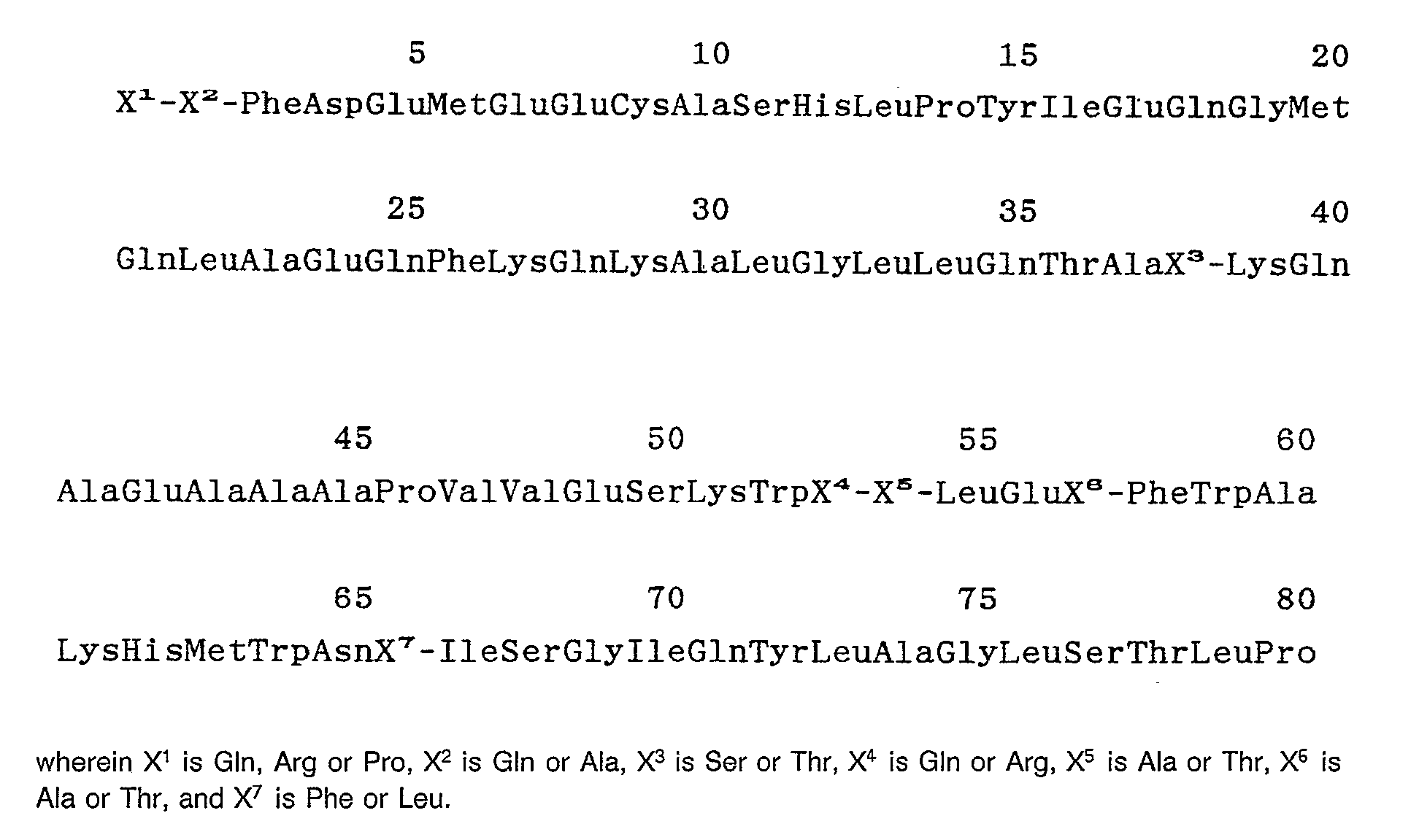
- A single-stranded DNA having about 210 deoxyribonucleotides as claimed in Claim 1, which encodes an amino acid sequence of

- A diagnosis of NANBH, characterized in that a polymerase chain reaction is carried out with use of a double-stranded fragment consisting of a single-stranded RNA derived from a serum sample of an individual to be diagnosed and its complementary single-stranded DNA fragment as well as a set of primers which are parts of a single-stranded DNA fragment encoding a part of NANBH virus gene and having about 210 to 240 deoxyribonucleotides.
- A diagnosis as claimed in Claim 3, wherein the polymerase chain reaction is carried out in two stages, by using in the first stage a set of the primers of


- A diagnosis as claimed in Claim 3, wherein the polymerase chain reaction is carried out in two stages, by using in the first stage a set of the primers of


- A diagnosis as claimed in Claim 3, wherein the polymerase chain reaction is carried out in two stages, by using in the first stage a set of the primers of


- A diagnosis as claimed in Claim 3, wherein the polymerase chain reaction is carried out in two stages, by using in the first stage a set of the primers of


Applications Claiming Priority (4)
| Application Number | Priority Date | Filing Date | Title |
|---|---|---|---|
| JP34487689A JPH03198777A (en) | 1989-12-27 | 1989-12-27 | Dna of human non-a non-b type hepatitis virus, its clone and use including non-a non-b type hepatitis diagnosis thereof |
| JP344876/89 | 1989-12-27 | ||
| JP28534/90 | 1990-02-09 | ||
| JP2853490A JPH03232492A (en) | 1990-02-09 | 1990-02-09 | Dna of non-a non-b type hepatitis virus, clone thereof and utilizing method thereof |
Publications (1)
| Publication Number | Publication Date |
|---|---|
| EP0435229A1 true EP0435229A1 (en) | 1991-07-03 |
Family
ID=26366655
Family Applications (1)
| Application Number | Title | Priority Date | Filing Date |
|---|---|---|---|
| EP90125293A Withdrawn EP0435229A1 (en) | 1989-12-27 | 1990-12-21 | DNA of non-A, non-B hepatitis virus gene, its clone and use thereof |
Country Status (1)
| Country | Link |
|---|---|
| EP (1) | EP0435229A1 (en) |
Cited By (11)
| Publication number | Priority date | Publication date | Assignee | Title |
|---|---|---|---|---|
| EP0488243A1 (en) * | 1990-11-30 | 1992-06-03 | Sanwa Kagaku Kenkyusho Co., Ltd. | Method of extracting virus genome from sample derived from living body infected with the virus and detecting the genome |
| EP0510952A1 (en) * | 1991-04-26 | 1992-10-28 | Immuno Japan Inc. | Oligonucleotide primers and their application for high-fidelity detection of non-a, non-b hepatitis virus |
| US5574132A (en) * | 1991-04-05 | 1996-11-12 | Biochem Immunosystems Inc. | Peptides and mixtures thereof for detecting antibodies to hepatitis C virus (HCV) |
| US5763159A (en) * | 1991-11-21 | 1998-06-09 | Common Services Agency | Hepatitis-C virus testing |
| US6150087A (en) * | 1991-06-24 | 2000-11-21 | Chiron Corporation | NANBV diagnostics and vaccines |
| US6447992B1 (en) * | 1995-02-09 | 2002-09-10 | Roche Diagnostics Gmbh | Method for serological typing using type-specific antigens |
| US7157226B1 (en) * | 1993-04-27 | 2007-01-02 | Innogenetics S.A. | Sequences of hepatitis C virus genotypes and their use as therapeutic and diagnostic agents |
| US7196183B2 (en) | 2001-08-31 | 2007-03-27 | Innogenetics N.V. | Hepatitis C virus genotype, and its use as prophylactic, therapeutic and diagnostic agent |
| EP1947104A3 (en) * | 2002-03-11 | 2009-04-08 | Lab 21 Limited | Method and compositions for identifying and characterizing hepatitis C |
| WO2008046923A3 (en) * | 2006-10-20 | 2009-07-23 | Innogenetics Nv | Methodology for analysis of sequence variations within the hcv ns3/4a genomic region |
| US8124747B2 (en) | 2003-08-29 | 2012-02-28 | Innogenetics | HCV clade and prototype sequences thereof |
Citations (5)
| Publication number | Priority date | Publication date | Assignee | Title |
|---|---|---|---|---|
| EP0229701A2 (en) * | 1986-01-10 | 1987-07-22 | F. Hoffmann-La Roche Ag | Detection of viruses by amplification and hybridization |
| EP0279460A1 (en) * | 1987-02-20 | 1988-08-24 | Renate Dr. Seelig | Virus antigen, method for its preparation and its use in diagnosis and therapy (as a vaccine) |
| EP0293274A1 (en) * | 1987-03-31 | 1988-11-30 | Mitsubishi Kasei Corporation | DNA molecules encoding non-A, non-B hepatitis antigens, and their use in producing said antigens |
| EP0318216A1 (en) * | 1987-11-18 | 1989-05-31 | Chiron Corporation | NANBV diagnostics and vaccines |
| EP0388232A1 (en) * | 1989-03-17 | 1990-09-19 | Chiron Corporation | NANBV diagnostics and vaccines |
-
1990
- 1990-12-21 EP EP90125293A patent/EP0435229A1/en not_active Withdrawn
Patent Citations (5)
| Publication number | Priority date | Publication date | Assignee | Title |
|---|---|---|---|---|
| EP0229701A2 (en) * | 1986-01-10 | 1987-07-22 | F. Hoffmann-La Roche Ag | Detection of viruses by amplification and hybridization |
| EP0279460A1 (en) * | 1987-02-20 | 1988-08-24 | Renate Dr. Seelig | Virus antigen, method for its preparation and its use in diagnosis and therapy (as a vaccine) |
| EP0293274A1 (en) * | 1987-03-31 | 1988-11-30 | Mitsubishi Kasei Corporation | DNA molecules encoding non-A, non-B hepatitis antigens, and their use in producing said antigens |
| EP0318216A1 (en) * | 1987-11-18 | 1989-05-31 | Chiron Corporation | NANBV diagnostics and vaccines |
| EP0388232A1 (en) * | 1989-03-17 | 1990-09-19 | Chiron Corporation | NANBV diagnostics and vaccines |
Non-Patent Citations (1)
| Title |
|---|
| PATENT ABSTRACTS OF JAPAN vol. 12, no. 326 (C-525), 5 September 1988; & JP - A - 63091328 (MITSUBISHI CHEM. IND. LTD.) 22.04.1988 * |
Cited By (17)
| Publication number | Priority date | Publication date | Assignee | Title |
|---|---|---|---|---|
| EP0488243A1 (en) * | 1990-11-30 | 1992-06-03 | Sanwa Kagaku Kenkyusho Co., Ltd. | Method of extracting virus genome from sample derived from living body infected with the virus and detecting the genome |
| US5574132A (en) * | 1991-04-05 | 1996-11-12 | Biochem Immunosystems Inc. | Peptides and mixtures thereof for detecting antibodies to hepatitis C virus (HCV) |
| EP0510952A1 (en) * | 1991-04-26 | 1992-10-28 | Immuno Japan Inc. | Oligonucleotide primers and their application for high-fidelity detection of non-a, non-b hepatitis virus |
| US6346375B1 (en) | 1991-06-24 | 2002-02-12 | Chiron Corporation | NANBV diagnostics and vaccines |
| US6150087A (en) * | 1991-06-24 | 2000-11-21 | Chiron Corporation | NANBV diagnostics and vaccines |
| US7179470B2 (en) | 1991-11-21 | 2007-02-20 | Common Services Agency | Hepatitis-C virus testing |
| US5763159A (en) * | 1991-11-21 | 1998-06-09 | Common Services Agency | Hepatitis-C virus testing |
| US7709006B2 (en) | 1991-11-21 | 2010-05-04 | Common Services Agency | Hepatitis-C virus testing |
| US7976849B2 (en) | 1991-11-21 | 2011-07-12 | Common Services Agency | Hepatitis-C virus testing |
| US8318421B2 (en) | 1991-11-21 | 2012-11-27 | Common Services Agency | Hepatitis-C virus testing |
| US7157226B1 (en) * | 1993-04-27 | 2007-01-02 | Innogenetics S.A. | Sequences of hepatitis C virus genotypes and their use as therapeutic and diagnostic agents |
| US6447992B1 (en) * | 1995-02-09 | 2002-09-10 | Roche Diagnostics Gmbh | Method for serological typing using type-specific antigens |
| US7196183B2 (en) | 2001-08-31 | 2007-03-27 | Innogenetics N.V. | Hepatitis C virus genotype, and its use as prophylactic, therapeutic and diagnostic agent |
| EP1947104A3 (en) * | 2002-03-11 | 2009-04-08 | Lab 21 Limited | Method and compositions for identifying and characterizing hepatitis C |
| US8173795B2 (en) | 2002-03-11 | 2012-05-08 | Lab 21 Limited | Methods and compositions for identifying and characterizing hepatitis C |
| US8124747B2 (en) | 2003-08-29 | 2012-02-28 | Innogenetics | HCV clade and prototype sequences thereof |
| WO2008046923A3 (en) * | 2006-10-20 | 2009-07-23 | Innogenetics Nv | Methodology for analysis of sequence variations within the hcv ns3/4a genomic region |
Similar Documents
| Publication | Publication Date | Title |
|---|---|---|
| Wiborg et al. | The human ubiquitin multigene family: some genes contain multiple directly repeated ubiquitin coding sequences. | |
| Kubo et al. | A cDNA fragment of hepatitis C virus isolated from an implicated donor of post-transfusion non-A, non-B hepatitis in Japan | |
| CA1340787C (en) | Cdnas coding for members of the carcinoembryonic antigen family | |
| US7932350B2 (en) | Viral material and nucleotide fragments associated with multiple sclerosis, for diagnostic, prophylactic and therapeutic purposes | |
| EP0435229A1 (en) | DNA of non-A, non-B hepatitis virus gene, its clone and use thereof | |
| Seeburg et al. | Nucleotide sequence of part of the gene for human chorionic somatomammotropin: purification of DNA complementary to predominant mRNA species | |
| US5427909A (en) | Oligonucleotides and determination system of HCV genotypes | |
| EP0633321A1 (en) | HCV related oligonucleotides and uses thereof in methods for detecting and genotyping of HCV, and kits used in these methods | |
| Stohwasser et al. | Molecular characterization of the RNA S segment of nephropathia epidemica virus strain Hällnäs B1 | |
| HK1047961A1 (en) | Detection and typing of hcv using 5'utr and ns5 nucleic acid sequences | |
| JPH04505558A (en) | Oligonucleotide sequences for amplifying the genomes of retroviruses of the HIV-2 and SIV types and the use of such sequences for in-vitro diagnosis of these viral infections | |
| White et al. | Evidence for a multigene family involved in bile acid 7-dehydroxylation in Eubacterium sp. strain VPI 12708 | |
| EP0510952A1 (en) | Oligonucleotide primers and their application for high-fidelity detection of non-a, non-b hepatitis virus | |
| Weiss et al. | Nucleic acid sequence relationships among “slow” viruses of sheep | |
| JP2000512129A (en) | Pig retrovirus | |
| Ichikawa et al. | Cloning and expression of cDNAs from enterically-transmitted non-A, non-B hepatitis virus | |
| Sakamoto et al. | Comparison of the hypervariable region of hepatitis C virus genomes in plasma and liver | |
| JPH06502542A (en) | Polypeptide derived from hepatitis C virus protein, test kit containing the polypeptide, and vaccine for preventing hepatitis C virus infection | |
| EP0269072B1 (en) | Cloning of dna encoding human gip precursor and expression of the precursor | |
| EP0541089A2 (en) | cDNA of human hepatitis C virus, its clone and use thereof | |
| US6342583B1 (en) | cDNAs coding for members of the carcinoembryonic antigen family | |
| JP3373549B2 (en) | Hepatitis virus gene | |
| JP2004509620A (en) | Preparation of capped mRNA | |
| EP4349985A1 (en) | Peptide translated by circular rna circ-ace2 and application thereof | |
| JP3197552B2 (en) | Nucleic acid fragment encoding non-A non-B hepatitis virus constituent peptide and use thereof |
Legal Events
| Date | Code | Title | Description |
|---|---|---|---|
| PUAI | Public reference made under article 153(3) epc to a published international application that has entered the european phase |
Free format text: ORIGINAL CODE: 0009012 |
|
| AK | Designated contracting states |
Kind code of ref document: A1 Designated state(s): AT BE CH DE DK ES FR GB GR IT LI LU NL SE |
|
| 17P | Request for examination filed |
Effective date: 19910808 |
|
| 17Q | First examination report despatched |
Effective date: 19931108 |
|
| STAA | Information on the status of an ep patent application or granted ep patent |
Free format text: STATUS: THE APPLICATION IS DEEMED TO BE WITHDRAWN |
|
| 18D | Application deemed to be withdrawn |
Effective date: 19940519 |