EP0352946A1 - Triazole antifungal agents - Google Patents
Triazole antifungal agents Download PDFInfo
- Publication number
- EP0352946A1 EP0352946A1 EP89307167A EP89307167A EP0352946A1 EP 0352946 A1 EP0352946 A1 EP 0352946A1 EP 89307167 A EP89307167 A EP 89307167A EP 89307167 A EP89307167 A EP 89307167A EP 0352946 A1 EP0352946 A1 EP 0352946A1
- Authority
- EP
- European Patent Office
- Prior art keywords
- mmole
- formula
- compound
- alkyl
- piperazin
- Prior art date
- Legal status (The legal status is an assumption and is not a legal conclusion. Google has not performed a legal analysis and makes no representation as to the accuracy of the status listed.)
- Withdrawn
Links
- 0 C*(CC1)C=CC1N(C(CC1)=O)C1=O Chemical compound C*(CC1)C=CC1N(C(CC1)=O)C1=O 0.000 description 11
- KZNICNPSHKQLFF-UHFFFAOYSA-N O=C(CC1)NC1=O Chemical compound O=C(CC1)NC1=O KZNICNPSHKQLFF-UHFFFAOYSA-N 0.000 description 1
- BNHYDULILNJFFY-UHFFFAOYSA-N [O-][N+](c(cc1)ccc1N(CC1)CCN1c(cc1)ccc1O)=O Chemical compound [O-][N+](c(cc1)ccc1N(CC1)CCN1c(cc1)ccc1O)=O BNHYDULILNJFFY-UHFFFAOYSA-N 0.000 description 1
Classifications
-
- C—CHEMISTRY; METALLURGY
- C07—ORGANIC CHEMISTRY
- C07D—HETEROCYCLIC COMPOUNDS
- C07D231/00—Heterocyclic compounds containing 1,2-diazole or hydrogenated 1,2-diazole rings
- C07D231/02—Heterocyclic compounds containing 1,2-diazole or hydrogenated 1,2-diazole rings not condensed with other rings
- C07D231/10—Heterocyclic compounds containing 1,2-diazole or hydrogenated 1,2-diazole rings not condensed with other rings having two or three double bonds between ring members or between ring members and non-ring members
- C07D231/12—Heterocyclic compounds containing 1,2-diazole or hydrogenated 1,2-diazole rings not condensed with other rings having two or three double bonds between ring members or between ring members and non-ring members with only hydrogen atoms, hydrocarbon or substituted hydrocarbon radicals, directly attached to ring carbon atoms
-
- A—HUMAN NECESSITIES
- A61—MEDICAL OR VETERINARY SCIENCE; HYGIENE
- A61P—SPECIFIC THERAPEUTIC ACTIVITY OF CHEMICAL COMPOUNDS OR MEDICINAL PREPARATIONS
- A61P31/00—Antiinfectives, i.e. antibiotics, antiseptics, chemotherapeutics
- A61P31/04—Antibacterial agents
-
- A—HUMAN NECESSITIES
- A61—MEDICAL OR VETERINARY SCIENCE; HYGIENE
- A61P—SPECIFIC THERAPEUTIC ACTIVITY OF CHEMICAL COMPOUNDS OR MEDICINAL PREPARATIONS
- A61P31/00—Antiinfectives, i.e. antibiotics, antiseptics, chemotherapeutics
- A61P31/10—Antimycotics
-
- C—CHEMISTRY; METALLURGY
- C07—ORGANIC CHEMISTRY
- C07D—HETEROCYCLIC COMPOUNDS
- C07D233/00—Heterocyclic compounds containing 1,3-diazole or hydrogenated 1,3-diazole rings, not condensed with other rings
- C07D233/54—Heterocyclic compounds containing 1,3-diazole or hydrogenated 1,3-diazole rings, not condensed with other rings having two double bonds between ring members or between ring members and non-ring members
- C07D233/56—Heterocyclic compounds containing 1,3-diazole or hydrogenated 1,3-diazole rings, not condensed with other rings having two double bonds between ring members or between ring members and non-ring members with only hydrogen atoms or radicals containing only hydrogen and carbon atoms, attached to ring carbon atoms
-
- C—CHEMISTRY; METALLURGY
- C07—ORGANIC CHEMISTRY
- C07D—HETEROCYCLIC COMPOUNDS
- C07D249/00—Heterocyclic compounds containing five-membered rings having three nitrogen atoms as the only ring hetero atoms
- C07D249/02—Heterocyclic compounds containing five-membered rings having three nitrogen atoms as the only ring hetero atoms not condensed with other rings
- C07D249/08—1,2,4-Triazoles; Hydrogenated 1,2,4-triazoles
Definitions
- This invention relates to novel triazole derivatives which have antifungal activity and are useful in the treatment of fungal infections in animals, including humans, and as agricultural fungicides.
- R is either (a) a phenyl group optionally substituted with 1 to 3 substituents, each selected independently from halo and CF 3 ; or (b) a 5-chloropyridin-2-yl group; R 1 is either
- C 3 and C 4 alkyl and alkoxy groups and C 4 alkanoyl groups may be straight or branched chain.
- Halo means F, Cl, Br or I.
- the preferred haloalkyl groups are 3-chloroprop-1-yl and 2,2,2-trifluoroethyl.
- R is a substituted phenyl group this includes, for example, 4-fluorophenyl, 4-chlorophenyl, 4-bromophenyl, 4-iodophenyl, 4-trifluoromethylphenyl, 2-fluorophenyl, 2-chlorophenyl, 2,4-dichlorophenyl, 2,4-difluorophenyl, 2-chloro-4-fluorophenyl, 2-fluoro-4-chlorophenyl, 2,5-difluorophenyl, 2,4,6-trifluorophenyl and 4-bromo-2,5-difluorophenyl.
- R is either a phenyl group substituted by 1 to 3 halo (preferably F or Cl) substituents or a 5-chloropyridin-2-yl group.
- R is phenyl substituted by 1 or 2 halo substituents.
- R is 2,4-dichlorophenyl or 2,4-difluorophenyl.
- R 1 is either (a) a phenyl group, para-substituted by one of the following groups:-
- R 1 is either
- the invention further provides a pharmaceutical composition
- a pharmaceutical composition comprising a compound of the formula (I) or a pharmaceutically acceptable salt thereof, together with a pharmaceutically acceptable diluent or carrier.
- the invention yet further provides a compound of the formula (I) or a pharmaceutically acceptable salt thereof, for use as a medicament.
- the invention also provides the use of a compound of the formula (I) or of a pharmaceutically acceptable salt thereof, for the manufacture of an antifungal agent.
- the invention further provides an antifungal composition for agricultural (including horticultural) use, comprising a compound of the formula (I) or an agriculturally acceptable salt thereof, together with an agriculturally acceptable diluent or carrier.
- the invention yet further provides a method of treating an animal (including a human being), plant or seed to cure or prevent a fungal infection, which comprises treating said animal, plant or seed, or the locus of said plant or seed, with an effective amount of a compound of the formula (I) or with, as appropriate, a pharmaceutically or agriculturally acceptable salt thereof.
- compound (III) may be acylated with a carboxylic acid of the formula R 2 COOH in the presence of a suitable dehydrating agent, e.g. 1,1'-carbonyldiimidazole.
- a suitable dehydrating agent e.g. 1,1'-carbonyldiimidazole.
- R 2 COOH is used in the form of its "functional equivalent as an acylating agent", e.g. as a compound of the formula R 2 COCI, R 2 COBr or (R 2 CO) 2 0, or with 2-chloronicotinic acid, more preferably in the form of an activated ester.
- Such activated esters are formed in situ between 2-chloronicotinic acid and, e.g., N-hydroxysuccinimide or 1-hydroxybenzotriazole, in the presence of a suitable dehydrating agent, e.g. 1,3-dicyclohexylcarbodiimide.
- a suitable dehydrating agent e.g. 1,3-dicyclohexylcarbodiimide.
- the acylation is typically carried out at from 0° C to the reflux temperature, preferably at from 0° C to room temperature, in a suitable organic solvent, e.g. methylene chloride or tetrahydrofuran, and, when using an acid halide or an acid anhydride, preferably in the presence of an acid acceptor, e.g., triethylamine or pyridine.
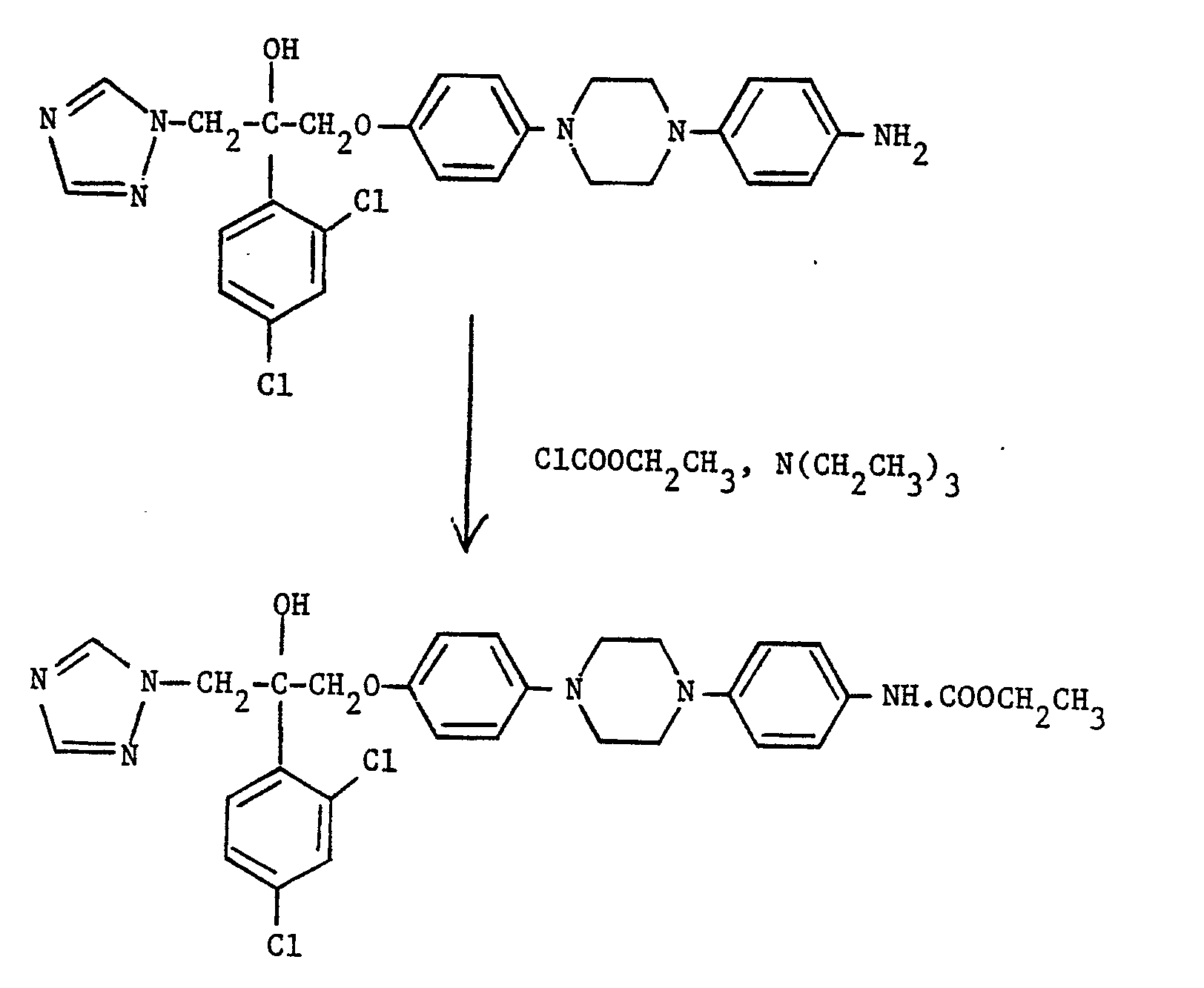
- compound (III) is reacted with a chloroformate reagent of the formula CICO(Ci-C 4 alkoxy or allyloxy) in the presence of an acid acceptor such as triethylamine.
- the reaction is typically carried out at from 0°C to room temperature, preferably at 0 C, in a suitable organic solvent, e.g. methylene chloride.
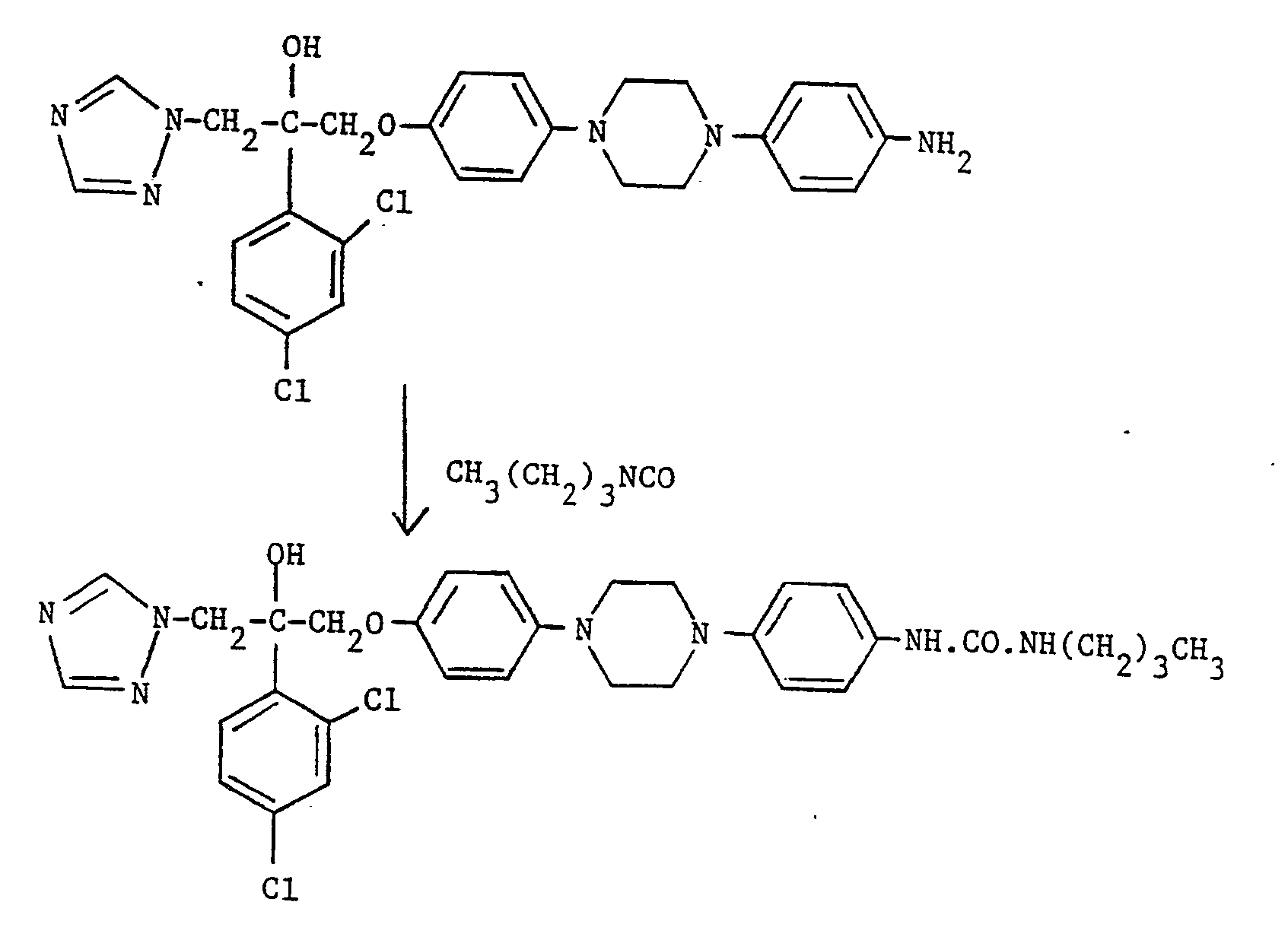
- R 1 is compound (III) is reacted with a C 1 -C 4 alkyl isocyanate.
- the reaction is typically carried out at up to, and preferably at the reflux temperature in a suitable organic solvent, e.g. tetrahydrofuran.
- compound (III) is reacted with a sulphonyl halide of the formula (C 1 -C4 alkyl or halo-[C 1 -C 4 alkyl]).SO 2 .(Cl or Br), a sulphonic anhydride of the formula ([C 1 -C 4 alkyl or halo-(C 1 -C 4 alkyl)]S0 2 ) 2 0 or with a sulphamoyl chloride of the formula (C 1 -C 4 alkyl) 2 NS0 2 CI in the presence of a suitable acid acceptor, e.g., triethylamine or pyridine.
- a suitable acid acceptor e.g., triethylamine or pyridine.
- the reaction is typically carried out at from 0°C to the reflux temperature, preferably at from 0°C to room temperature when a sulphonyl halide or sulphonic anhydride is used, and preferably at from room temperature to the reflux temperature when a sulphamoyl chloride is used, in a suitable organic solvent, e.g. methylene chloride.
- a suitable organic solvent e.g. methylene chloride.
- Z and Z 1 are leaving groups, e.g. Cl, Br or methanesulphonyloxy. Z and Z 1 are preferably Cl.
- X is NH or N-(C 1 -C 4 alkyl)
- the reagents of formula (IV) are conveniently used in acid addition salt form, e.g. as the hydrochloride.
- the reaction is typically carried out at up to, and preferably at the reflux temperature in a suitable organic solvent, e.g. ethanol, and in the presence of an acid acceptor such as potassium carbonate.
- compound (V) where X is NH is acylated with a C2-C4 alkanoyl chloride or bromide, or with an acid anhydride of the formula (C 2 -C 4 alkanoyl) 2 0.
- the reaction is typically carried out at from 0°C to room temperature in a suitable organic solvent, e.g. methylene chloride, and in the presence of a suitable acid acceptor, e.g. pyridine.
- compound (V) in which X is N-CHO is typically formylated with acetic-formic anhydride by conventional methods.
- R 1 is compound (III) is reacted with succinic anhydride.
- the reaction is typically carried out at up to, and preferably at the reflux temperature in a suitable acidic solvent medium, e.g. acetic acid.
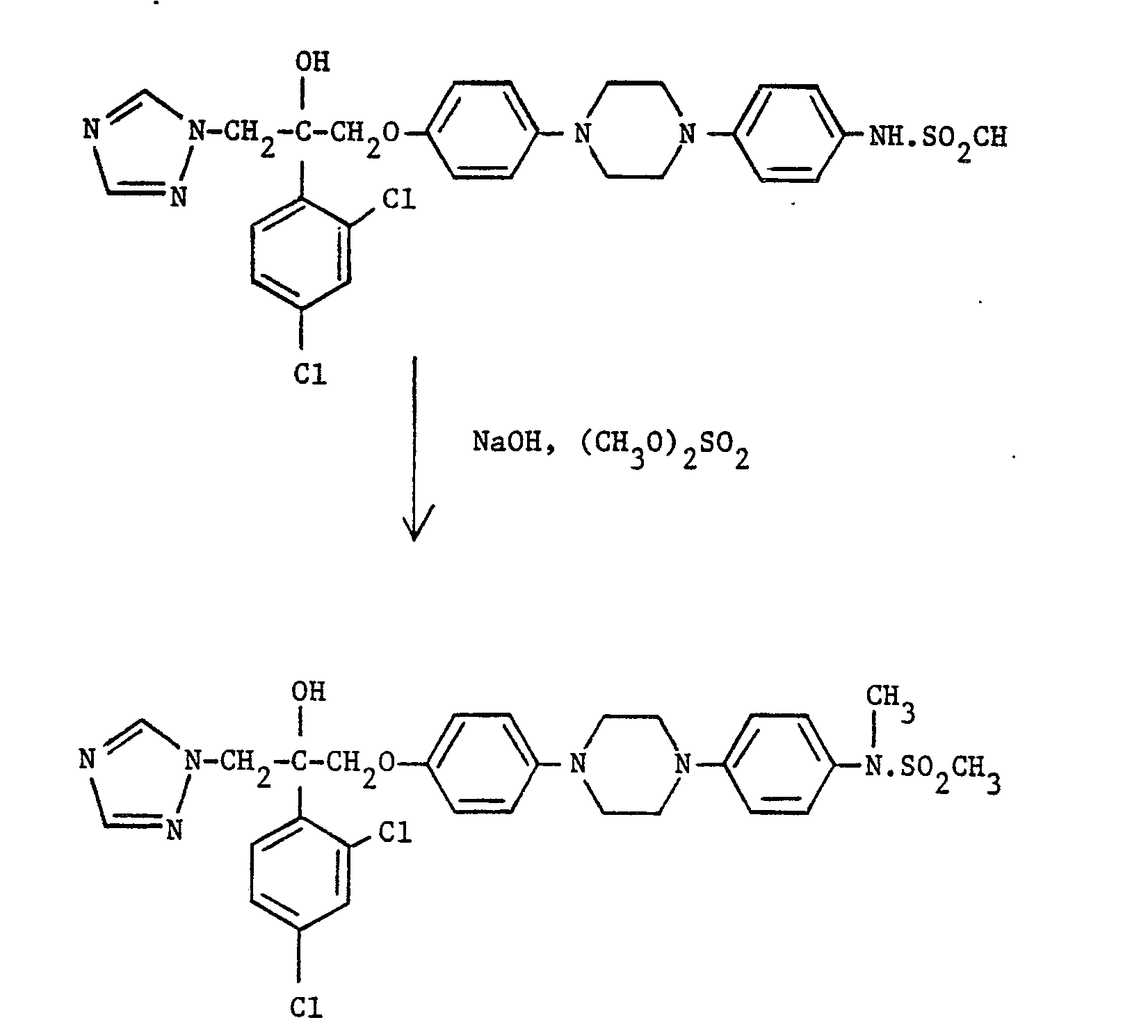
- compound (I), where R 1 is is reacted with a suitable methylating reagent, e.g. dimethyl sulphate, in the presence of a base, e.g. sodium hydroxide.
- a suitable methylating reagent e.g. dimethyl sulphate
- a base e.g. sodium hydroxide.
- the reaction is typically carried out at room temperature in a suitable solvent, e.g. aqueous THF.
- compound (I), where R 1 is where Y is halo, preferably Cl is subjected to intramolecular cyclisation in the presence of a suitable base, e.g. sodium ethoxide.
- a suitable base e.g. sodium ethoxide.
- the reaction is typically carried out at, or just below, the reflux temperature in a suitable organic solvent, e.g. ethanol.
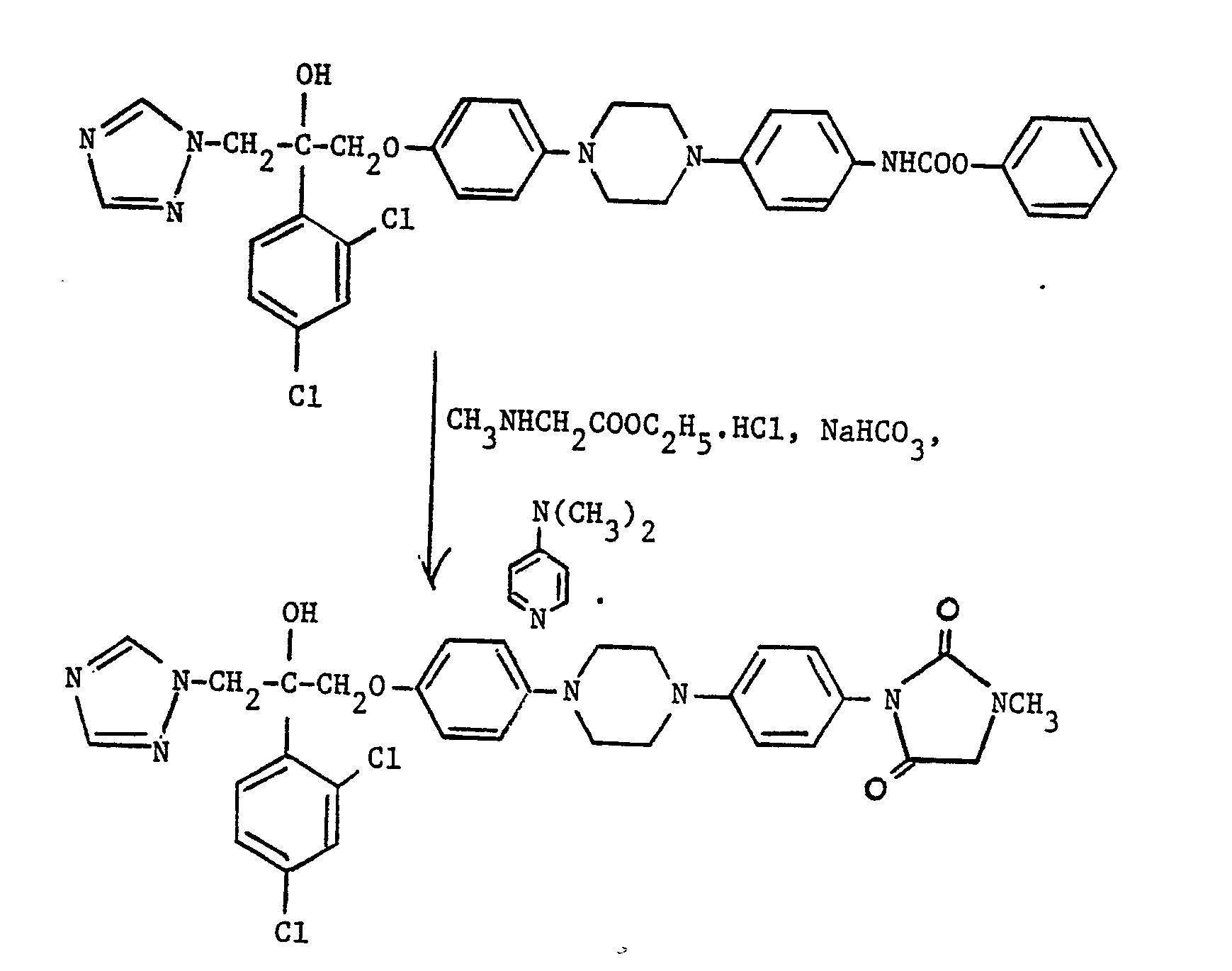
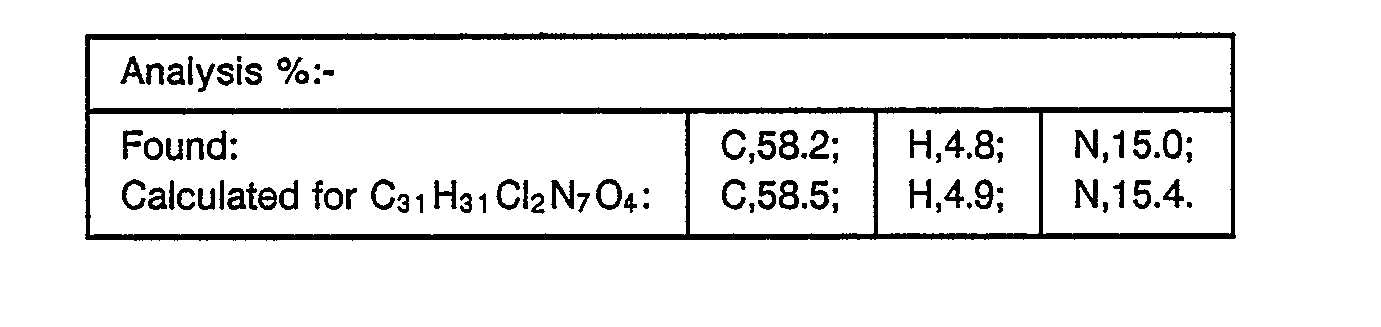
- a compound (I), where R 1 is is reacted with a compound of the formula R 6 NHCH 2 COO(C 1 -C 2 alkyl), which may be used in acid addition salt form, e.g. as the hydrochloride salt, provided a neutralising amount of a base such as sodium bicarbonate is present.
- the reaction is typically carried out at up to, and preferably at the reflux temperature in a suitable organic solvent, e.g. 1,4-dioxane, in the presence of a catalytic amount of 4-(N,N-dimethylamino)pyridine.
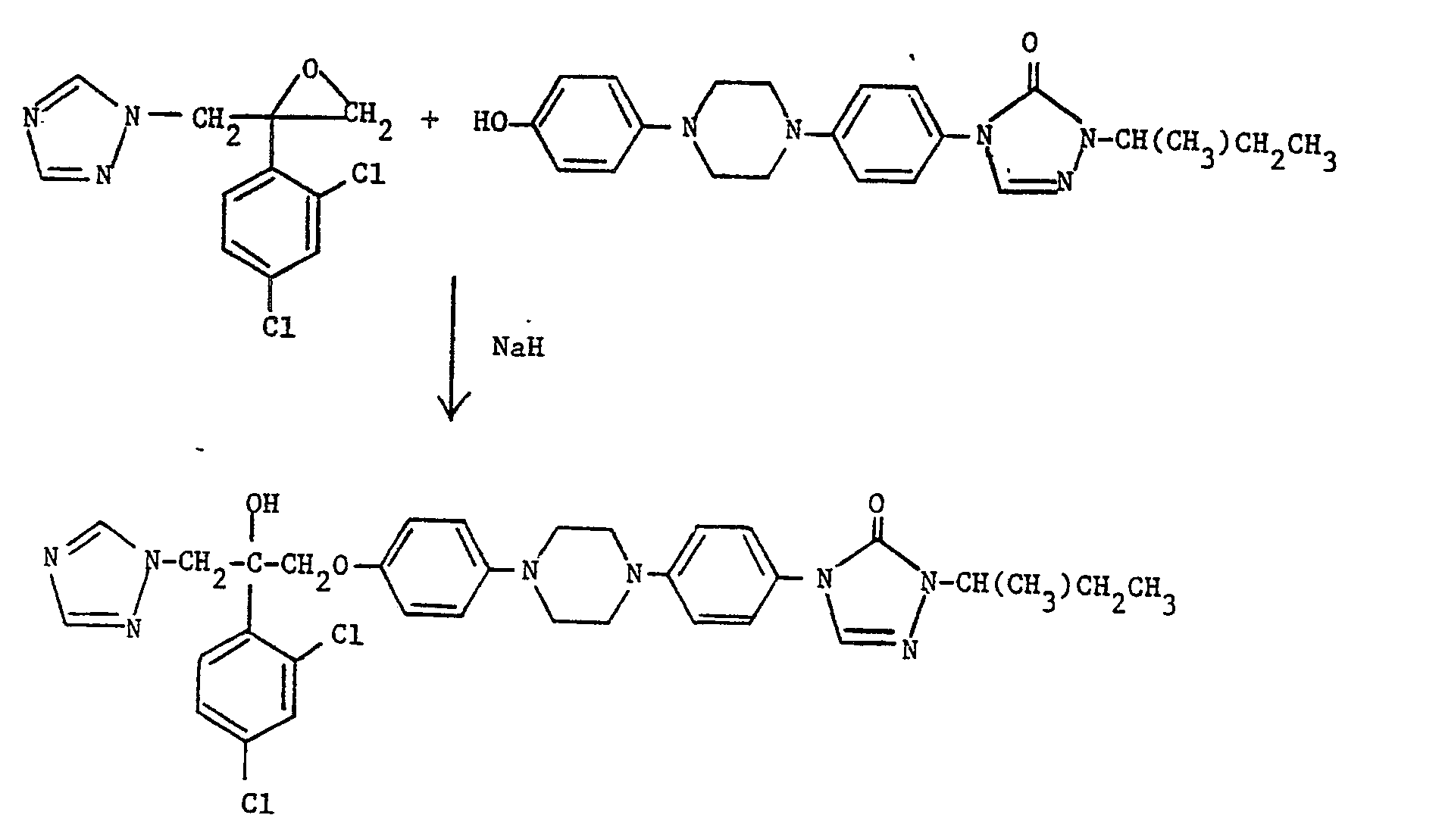
- the reaction is typically carried out at from 50 ° C to the reflux temperature, preferably at between 60-100°C, in a suitable organic solvent, e.g. dimethylformamide, in the presence of a suitable base, e.g. sodium hydride or cesium carbonate.
- a suitable organic solvent e.g. dimethylformamide
- a suitable base e.g. sodium hydride or cesium carbonate.
- the starting materials of the formula (VI) are known compounds (see e.g. EP-A-44605, EP-A-69442 and EP-A-0106515).
- the starting materials of formula (VII) are either known compounds (see J. Med. Chem., 27, 894 [1984], or are preparable by analogous methods thereto) or can be prepared conventionally, e.g. as described in the following Preparations section.
- the invention includes both the resolved and unresolved forms, including diastereomers.
- Pharmaceutically acceptable acid addition salts of the compounds of the formula (I) include those formed from strong acids which form non-toxic acid addition salts, such as hydrochloric, hydrobromic, sulphuric and methanesulphonic acids. Such salts are also useful for agricultural use.
- the salts may be obtained by conventional procedures, e.g. by mixing solutions containing approximately equimolar amounts of the free base and desired acid, and the required salt is collected by filtration, if insoluble, or by evaporation of the solvent.
- the compounds of the formula (I) and their salts are antifungal agents, useful in the curative or prophylactic treatment of fungal infections in animals, including humans.
- they are useful in treating topical fungal infections in man caused by, among other organisms, species of Candida, Trichophyton, Microsporum or Epidermophyton, or in mucosal infections caused by Candida albicans (e.g. thrush and vaginal candidiasis).
- They can also be used in the treatment of systemic fungal infections caused by, for example, Candida albicans, Cryptococcus neoformans, Aspergillus flavus, Aspergillus fumigatus, Coccidioides, Paracoccidioides, Histoplasma or Blastomyces.
- the in vitro evaluation of the antifungal activity of the compounds can be performed by determining the minimum inhibitory concentration (m.i.c.), which is the concentration of the test compounds, in a suitable medium, at which growth of the particular micro-organism fails to occur.
- m.i.c. minimum inhibitory concentration
- a series of agar plates, each having the test compound incorporated at a particular concentration is inoculated with a standard culture of, for example, Candida albicans and each plate is then incubated for 48 hours at 37° C. The plates are then examined for the presence or absence of growth of the fungus and the appropriate m.i.c. value is noted.
- micro-organisms used in such tests can include Aspergillus fumigatus, Trichophyton spp, Microsporum spp, Epidermophyton floccosum, Coccidioides immitis and Torulopsis glabrata.
- the in vivo evaluation of the compounds can be carried out at a series of dose levels by intraperitoneal or intravenous injection or by oral administration, to mice which are inoculated with, e.g., a strain of Candida albicans or Aspergillus fumigatus. Activity is based on the survival of a treated group of mice after the death of an untreated group of mice. The dose level at which the compound provides 50% protection against the lethal effect of the infection (PD so ) is noted.
- the antifungal compounds of the formula (I) and their salts can be administered alone, but will generally be administered in admixture with a pharmaceutical carrier selected with regard to the intended route of administration and standard pharmaceutical practice.
- a pharmaceutical carrier selected with regard to the intended route of administration and standard pharmaceutical practice.
- they can be administered orally in the form of tablets containing such excipients as starch or lactose, or in capsules or ovules either alone or in admixture with excipients, or in the form of elixirs or suspensions containing flavouring or colouring agents.
- They can be injected parenterally, for example, intravenously, intramuscularly or subcutaneously.
- parenteral administration they are best used in the form of a sterile-aqueous solution which may contain other substances, for example, enough salts or glucose to make the solution isotonic with blood.
- the daily dosage level of the antifungal compounds of the formula (1) and their salts will be from 0.01 to 20 mg/kg (in single or divided doses) when administered by either the oral or parenteral route.
- tablets or capsules of the compounds will contain from 5 mg to 0.5 g of active compound for administration singly or two or more at a time as appropriate.
- the physician in any event will determine the actual dosage which will be most suitable for an individual patient and it will vary with the age, weight and response of the particular patient.
- the above dosages are exemplary of the average case; there can, of course, be individual instances where higher or lower dosage ranges are merited, and such are within the scope of this invention.
- the antifungal compounds of formula (I) can be administered in the form of a suppository or pessary, or they may be applied topically in the form of a lotion, solution, cream, ointment or dusting powder.
- they can be incorporated into a cream consisting of an aqueous emulsion of polyethylene glycols or liquid paraffin; or they can be incorporated, at a concentration between 1 and 10%, into an ointment consisting of a white wax or white soft paraffin base together with such stabilizers and preservatives as may be required.
- the compounds of the formula (I) and their salts also have activity against a variety of plant pathogenic fungi, including for example various rusts, mildews and moulds, and the compounds are thus useful for treating plants and seeds to eradicate or prevent such diseases.
- the in vitro evaluation of the activity of the compounds against plant fungi can be determined by measuring their minimum inhibitory concentrations in the same way as previously described except that the plates are incubated at 30 ° C for 48 hours or longer before being examined for the presence or absence of growth.
- Micro-organisms used in such tests include Cochliobolus carbonum, Pyricularia oryzae, Glomerella cingulata, Penicillium digitatum, Botrytis cinerea and Rhizoctonia solani.
- the compounds and their agriculturally acceptable salts are preferably used in the form of a composition formulated as appropriate to the particular use and purpose desired.
- the compounds may be applied in the form of dusting powders, or granules, seed dressings, aqueous solutions, dispersions or emulsions, dips, sprays, aerosols or smokes.
- Compositions may also be supplied in the form of dispersible powders, granules or grains, or concentrates for dilution prior to use.
- Such compositions may contain such conventional carriers, diluents or adjuvants as are known and acceptable in agriculture and horticulture and they are manufactured in accordance with conventional procedures.
- the compositions typically contain from 0.01 to 95 wt.
- compositions may also incorporate other active ingredients, for example, compounds having herbicidal or insecticidal activity or a further fungicide.
- the compounds and compositions. can be applied in a number of ways, for example they can be applied directly to the plant foliage, stems, branches, seeds or roots or to the soil or other growing medium, and they may be used not only to eradicate disease, but also prophylactically to protect the plants or seeds from attack.
- the reaction was quenched by the addition of 2N hydrochloric acid and the mixture was allowed to stand overnight at room temperature.
- the resulting mixture was basified by the addition of 5N sodium hydroxide solution and extracted with methylene chloride.
- the combined organic extracts were washed with brine, dried over magnesium sulphate and concentrated under reduced pressure to provide a foam (0.23 g) which was purified by flash chromatography on silica gel eluting with methylene chloride (150):isopropanol (10)-:diethylamine (1) to yield, after collection and evaporation of appropriate fractions, the desired product, m.p. 90-93 (0.081 g, 32%).
- reaction mixture was cooled, diluted with ethyl acetate and the organic phase washed with aqueous sodium bicarbonate then brine. After drying over magnesium sulphate, the solution was concentrated under reduced pressure and purified by flash chromatography on silica gel eluting with ethyl acetate (90):isopropanol (10):diethylamine (1) to yield, after collection and evaporation of appropriate fractions, the desired product, m.p. 90-95 (0.072 g, 28%).
- the ethanol was removed by distillation, additional portions of N,N-dimethylformamide diethyl acetal (0.043 g, 0.29 mmole) and ethanol (5 ml) were added and distillation was continued to remove the ethanol.
- the resulting mixture was azeotroped with xylene (2 x 10 ml) under reduced pressure and the residue triturated with ether/hexane.
- the resulting solid was recrystallised from ethyl acetate/hexane to yield the desired product, m.p. 131-132° (0.177 g, 79%).
- the resulting material was partitioned between methylene chloride and water, the aqueous phase separated and re-extracted with methylene chloride. The combined organic extracts were washed with brine, dried over magnesium sulphate and concentrated under reduced pressure. The residual material was purified by flash chromatography on silica gel eluting with methylene chloride (97):methanol (3):0.88 ammonia solution (1). The product obtained, after collection and evaporation of appropriate fractions, was further purified by flash chromatography on silica gel eluting with methylene chloride (94.5):methanol (5.5):0.88 ammonia solution (4.5). The resulting material obtained, after collection and evaporation of appropriate fractions, was triturated with hexane to yield the desired product, m.p. 84-87° (0.16 g, 36%).
- ⁇ 0.9 (t, 3H); 1.4 (d, 3H); 1.8 (m, 2H); 3.2 (m, 4H); 3.75 (m, 4H); 4.3 (q, 1 H); 4.45 (m, 2H); 5.1 (m, 2H); 6.78 (d, 1 H); 6.85 (d, 2H); 6.95 (d, 2H); 7.25 (d, 1 H); 7.4 (s, 1 H); 7.6 (s, 1 H); 7.75 (d, 2H); 7.95 (s, 1 H); 8.05 (s, 1 H); 8.15 (s, 1H) ppm.
- the title compound, m.p. 130-2 . was prepared similarly to the procedure of Preparation 5(iii) starting from the product of part (ii).
- the crude material obtained was purified by flash chromatography on silica gel eluting with ethyl acetate (60):hexane (40).
- the product obtained after collection and evaporation of appropriate fractions, was used without further purification.
Landscapes
- Chemical & Material Sciences (AREA)
- Organic Chemistry (AREA)
- Health & Medical Sciences (AREA)
- Communicable Diseases (AREA)
- Oncology (AREA)
- Chemical Kinetics & Catalysis (AREA)
- General Chemical & Material Sciences (AREA)
- Medicinal Chemistry (AREA)
- Nuclear Medicine, Radiotherapy & Molecular Imaging (AREA)
- Pharmacology & Pharmacy (AREA)
- Life Sciences & Earth Sciences (AREA)
- Animal Behavior & Ethology (AREA)
- General Health & Medical Sciences (AREA)
- Public Health (AREA)
- Veterinary Medicine (AREA)
- Plural Heterocyclic Compounds (AREA)
- Pharmaceuticals Containing Other Organic And Inorganic Compounds (AREA)
- Agricultural Chemicals And Associated Chemicals (AREA)
Abstract
The invention provides triazole antifungal compounds of the formula:-

wherein R is either
- (a) a phenyl group optionally substituted with 1 to 3 substituents, each selected independently from halo and CF3;
- or (b) a 5-chloropyridin-2-yl group; and R1 is either (a) a phenyl group, para-substituted by a group selected from the following:-


Description
- This invention relates to novel triazole derivatives which have antifungal activity and are useful in the treatment of fungal infections in animals, including humans, and as agricultural fungicides.
- According to the invention, there are provided compounds of the formula :-

- (a) a phenyl group, para-substituted by a group selected from the following:-
- (i)

- (ii)

- (iii) -N=CH-N(C1-C4 alkyl)2
- (iv)
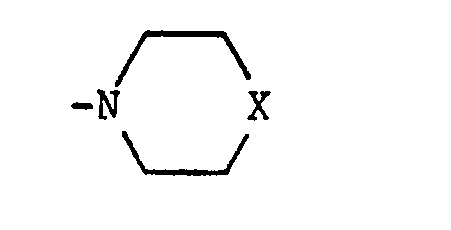
- (v)

- (i)
- (b) a 2-, 3- or 4-pyridinyl group optionally substituted with a group of the formula
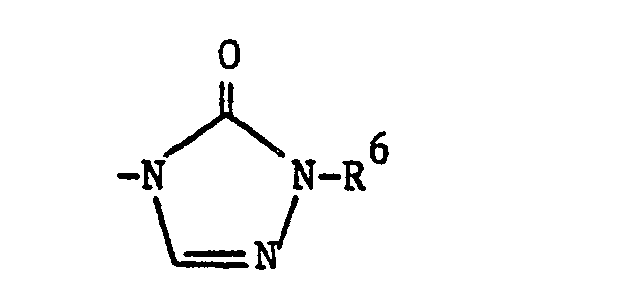
- C3 and C4 alkyl and alkoxy groups and C4 alkanoyl groups may be straight or branched chain. "Halo" means F, Cl, Br or I. The preferred haloalkyl groups are 3-chloroprop-1-yl and 2,2,2-trifluoroethyl.
- When R is a substituted phenyl group this includes, for example, 4-fluorophenyl, 4-chlorophenyl, 4-bromophenyl, 4-iodophenyl, 4-trifluoromethylphenyl, 2-fluorophenyl, 2-chlorophenyl, 2,4-dichlorophenyl, 2,4-difluorophenyl, 2-chloro-4-fluorophenyl, 2-fluoro-4-chlorophenyl, 2,5-difluorophenyl, 2,4,6-trifluorophenyl and 4-bromo-2,5-difluorophenyl.
- Preferably, R is either a phenyl group substituted by 1 to 3 halo (preferably F or Cl) substituents or a 5-chloropyridin-2-yl group.
- More preferably, R is phenyl substituted by 1 or 2 halo substituents.
- Most preferably, R is 2,4-dichlorophenyl or 2,4-difluorophenyl.
- Preferably, R1 is either (a) a phenyl group, para-substituted by one of the following groups:-
- (i)

- (ii)

- (iii) -N = CH-N(CH3)2
- (iv)
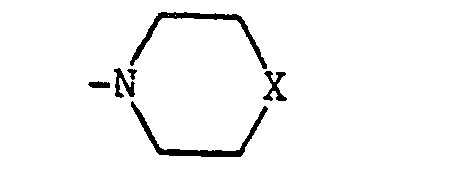
- (v)


- Most preferably, R1 is either
-



- The invention further provides a pharmaceutical composition comprising a compound of the formula (I) or a pharmaceutically acceptable salt thereof, together with a pharmaceutically acceptable diluent or carrier.
- The invention yet further provides a compound of the formula (I) or a pharmaceutically acceptable salt thereof, for use as a medicament.
- The invention also provides the use of a compound of the formula (I) or of a pharmaceutically acceptable salt thereof, for the manufacture of an antifungal agent.
- The invention further provides an antifungal composition for agricultural (including horticultural) use, comprising a compound of the formula (I) or an agriculturally acceptable salt thereof, together with an agriculturally acceptable diluent or carrier.
- The invention yet further provides a method of treating an animal (including a human being), plant or seed to cure or prevent a fungal infection, which comprises treating said animal, plant or seed, or the locus of said plant or seed, with an effective amount of a compound of the formula (I) or with, as appropriate, a pharmaceutically or agriculturally acceptable salt thereof.
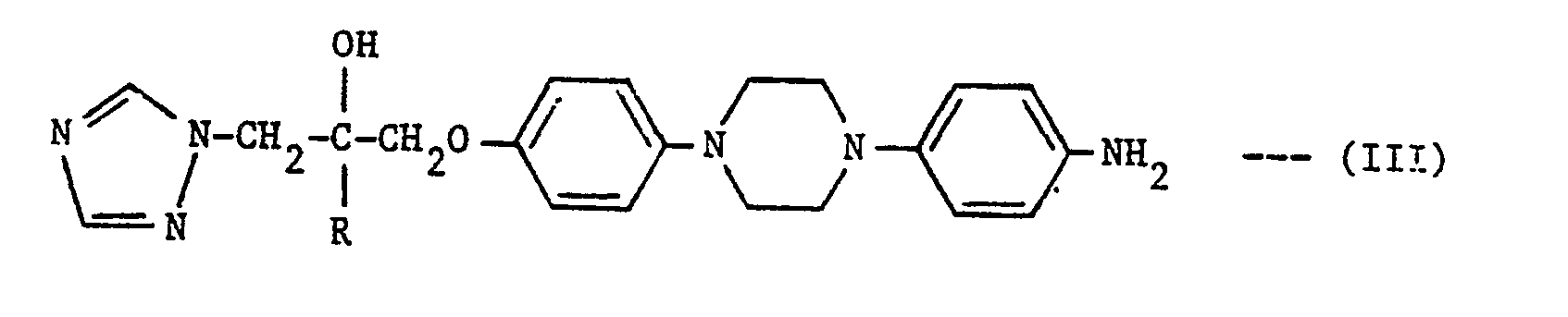
- The compounds of the formula (I) in which R1 is a phenyl group, para-substituted by one of the following groups:-


- To prepare compounds in which R1 is

- To prepare compounds in which R1 is

- To prepare compounds where R1 is

- To prepare compounds in which R1 is

- To prepare compounds in which R1 is

- To prepare compounds in which R1 is
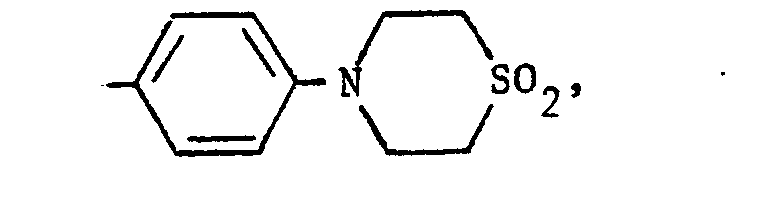
- To prepare compounds in which R1 is

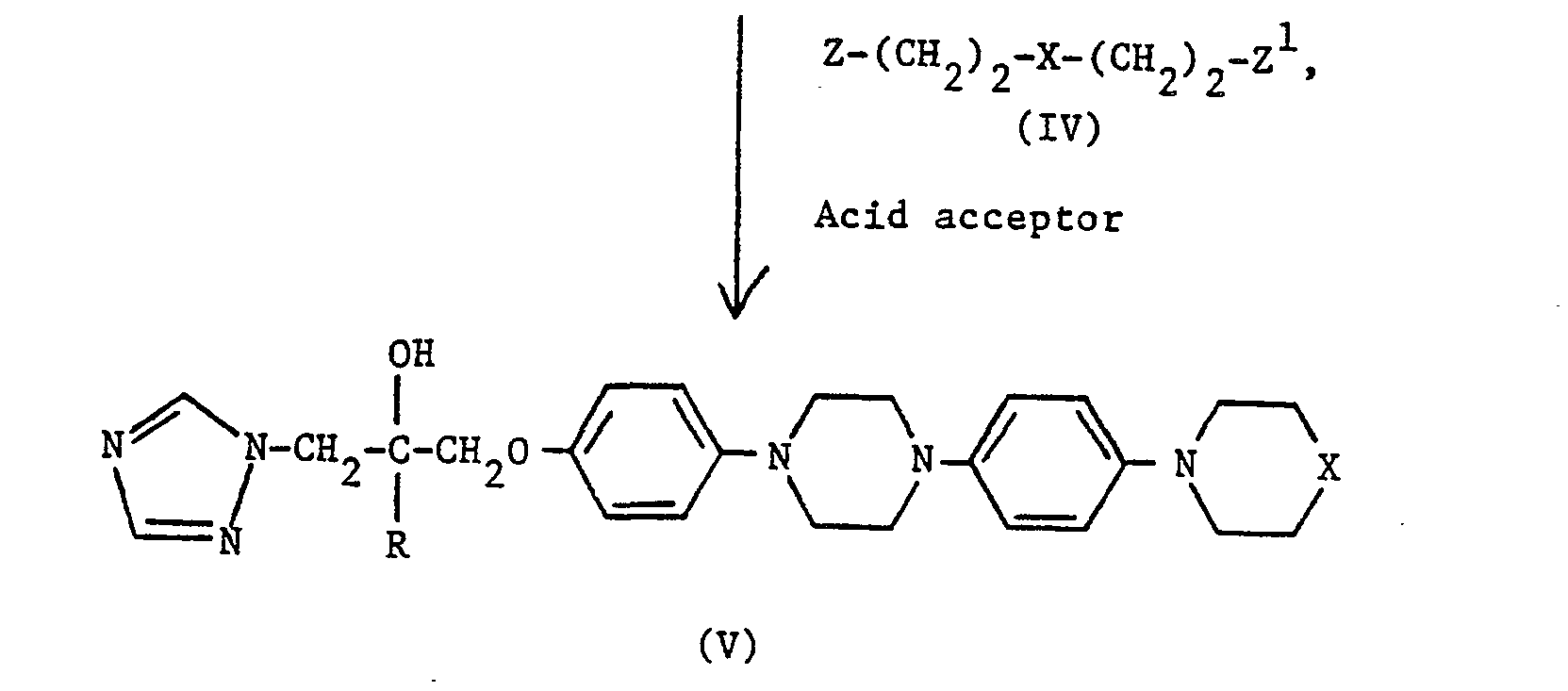
- Z and Z1 are leaving groups, e.g. Cl, Br or methanesulphonyloxy. Z and Z1 are preferably Cl. Where X is NH or N-(C1-C4 alkyl), the reagents of formula (IV) are conveniently used in acid addition salt form, e.g. as the hydrochloride. The reaction is typically carried out at up to, and preferably at the reflux temperature in a suitable organic solvent, e.g. ethanol, and in the presence of an acid acceptor such as potassium carbonate.
- To prepare compounds (V) in which X is N-(C2-C4 alkanoyl), compound (V) where X is NH, is acylated with a C2-C4 alkanoyl chloride or bromide, or with an acid anhydride of the formula (C2-C4 alkanoyl)20. The reaction is typically carried out at from 0°C to room temperature in a suitable organic solvent, e.g. methylene chloride, and in the presence of a suitable acid acceptor, e.g. pyridine.
- To prepare compounds (V) in which X is N-CHO, compound (V), where X is NH, is typically formylated with acetic-formic anhydride by conventional methods.
- To prepare compounds in which R1 is

- To prepare compounds in which R1 is

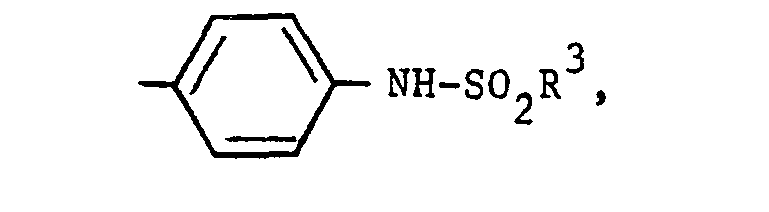
- To prepare compounds in which R1 is


- To prepare compounds in which R1 is


- The compounds where R1 is

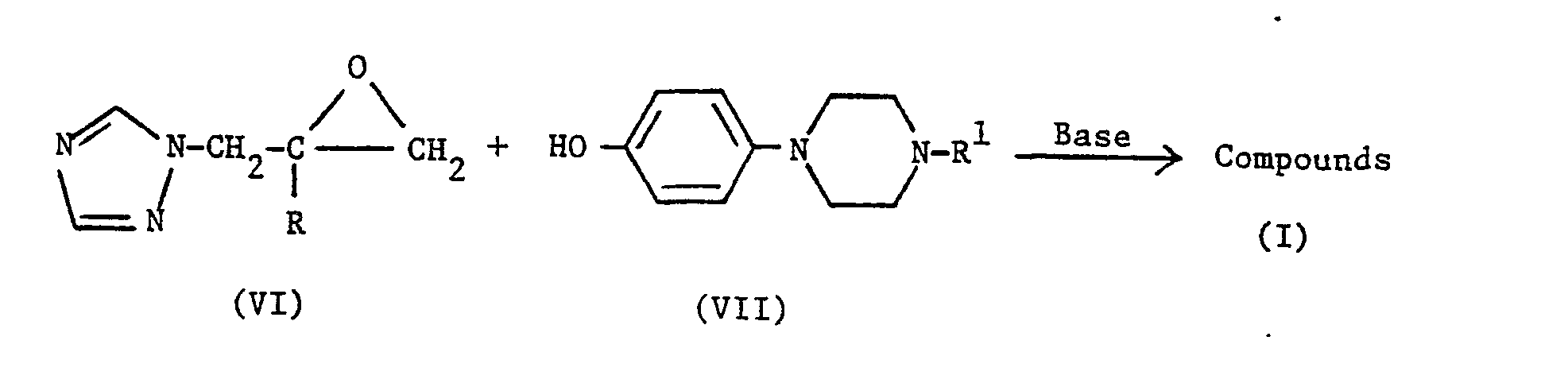
- The reaction is typically carried out at from 50 ° C to the reflux temperature, preferably at between 60-100°C, in a suitable organic solvent, e.g. dimethylformamide, in the presence of a suitable base, e.g. sodium hydride or cesium carbonate. The starting materials of the formula (VI) are known compounds (see e.g. EP-A-44605, EP-A-69442 and EP-A-0106515). The starting materials of formula (VII) are either known compounds (see J. Med. Chem., 27, 894 [1984], or are preparable by analogous methods thereto) or can be prepared conventionally, e.g. as described in the following Preparations section.
- The starting materials of the formulae (II) and (III) can be prepared by the conventional techniques described in the following Preparations section.
- All compounds can be isolated and purified by conventional methods.
- Where the compounds contain one or more chiral centres, then the invention includes both the resolved and unresolved forms, including diastereomers.
- Pharmaceutically acceptable acid addition salts of the compounds of the formula (I) include those formed from strong acids which form non-toxic acid addition salts, such as hydrochloric, hydrobromic, sulphuric and methanesulphonic acids. Such salts are also useful for agricultural use.
- The salts may be obtained by conventional procedures, e.g. by mixing solutions containing approximately equimolar amounts of the free base and desired acid, and the required salt is collected by filtration, if insoluble, or by evaporation of the solvent.
- The compounds of the formula (I) and their salts are antifungal agents, useful in the curative or prophylactic treatment of fungal infections in animals, including humans. For example, they are useful in treating topical fungal infections in man caused by, among other organisms, species of Candida, Trichophyton, Microsporum or Epidermophyton, or in mucosal infections caused by Candida albicans (e.g. thrush and vaginal candidiasis). They can also be used in the treatment of systemic fungal infections caused by, for example, Candida albicans, Cryptococcus neoformans, Aspergillus flavus, Aspergillus fumigatus, Coccidioides, Paracoccidioides, Histoplasma or Blastomyces.
- The in vitro evaluation of the antifungal activity of the compounds can be performed by determining the minimum inhibitory concentration (m.i.c.), which is the concentration of the test compounds, in a suitable medium, at which growth of the particular micro-organism fails to occur. In practice, a series of agar plates, each having the test compound incorporated at a particular concentration is inoculated with a standard culture of, for example, Candida albicans and each plate is then incubated for 48 hours at 37° C. The plates are then examined for the presence or absence of growth of the fungus and the appropriate m.i.c. value is noted. Other micro-organisms used in such tests can include Aspergillus fumigatus, Trichophyton spp, Microsporum spp, Epidermophyton floccosum, Coccidioides immitis and Torulopsis glabrata.
- The in vivo evaluation of the compounds can be carried out at a series of dose levels by intraperitoneal or intravenous injection or by oral administration, to mice which are inoculated with, e.g., a strain of Candida albicans or Aspergillus fumigatus. Activity is based on the survival of a treated group of mice after the death of an untreated group of mice. The dose level at which the compound provides 50% protection against the lethal effect of the infection (PDso) is noted.
- For human use, the antifungal compounds of the formula (I) and their salts can be administered alone, but will generally be administered in admixture with a pharmaceutical carrier selected with regard to the intended route of administration and standard pharmaceutical practice. For example, they can be administered orally in the form of tablets containing such excipients as starch or lactose, or in capsules or ovules either alone or in admixture with excipients, or in the form of elixirs or suspensions containing flavouring or colouring agents. They can be injected parenterally, for example, intravenously, intramuscularly or subcutaneously. For parenteral administration, they are best used in the form of a sterile-aqueous solution which may contain other substances, for example, enough salts or glucose to make the solution isotonic with blood.
- For oral and parenteral administration to human patients, the daily dosage level of the antifungal compounds of the formula (1) and their salts will be from 0.01 to 20 mg/kg (in single or divided doses) when administered by either the oral or parenteral route. Thus tablets or capsules of the compounds will contain from 5 mg to 0.5 g of active compound for administration singly or two or more at a time as appropriate. The physician in any event will determine the actual dosage which will be most suitable for an individual patient and it will vary with the age, weight and response of the particular patient. The above dosages are exemplary of the average case; there can, of course, be individual instances where higher or lower dosage ranges are merited, and such are within the scope of this invention.
- Alternatively, the antifungal compounds of formula (I) can be administered in the form of a suppository or pessary, or they may be applied topically in the form of a lotion, solution, cream, ointment or dusting powder. For example, they can be incorporated into a cream consisting of an aqueous emulsion of polyethylene glycols or liquid paraffin; or they can be incorporated, at a concentration between 1 and 10%, into an ointment consisting of a white wax or white soft paraffin base together with such stabilizers and preservatives as may be required.
- The compounds of the formula (I) and their salts also have activity against a variety of plant pathogenic fungi, including for example various rusts, mildews and moulds, and the compounds are thus useful for treating plants and seeds to eradicate or prevent such diseases.
- The in vitro evaluation of the activity of the compounds against plant fungi can be determined by measuring their minimum inhibitory concentrations in the same way as previously described except that the plates are incubated at 30 ° C for 48 hours or longer before being examined for the presence or absence of growth.
- Micro-organisms used in such tests include Cochliobolus carbonum, Pyricularia oryzae, Glomerella cingulata, Penicillium digitatum, Botrytis cinerea and Rhizoctonia solani.
- For agricultural and horticultural purposes the compounds and their agriculturally acceptable salts are preferably used in the form of a composition formulated as appropriate to the particular use and purpose desired. Thus the compounds may be applied in the form of dusting powders, or granules, seed dressings, aqueous solutions, dispersions or emulsions, dips, sprays, aerosols or smokes. Compositions may also be supplied in the form of dispersible powders, granules or grains, or concentrates for dilution prior to use. Such compositions may contain such conventional carriers, diluents or adjuvants as are known and acceptable in agriculture and horticulture and they are manufactured in accordance with conventional procedures. The compositions typically contain from 0.01 to 95 wt. %, preferably 0.01 to 1 wt. %, of the active ingredient. The compositions may also incorporate other active ingredients, for example, compounds having herbicidal or insecticidal activity or a further fungicide. The compounds and compositions. can be applied in a number of ways, for example they can be applied directly to the plant foliage, stems, branches, seeds or roots or to the soil or other growing medium, and they may be used not only to eradicate disease, but also prophylactically to protect the plants or seeds from attack.
- For field use, likely application rates of the active ingredient are from 5 to 500 g/10 ares.
- The following Examples, in which all the temperatures are in C, illustrate the invention:-
-


-


-


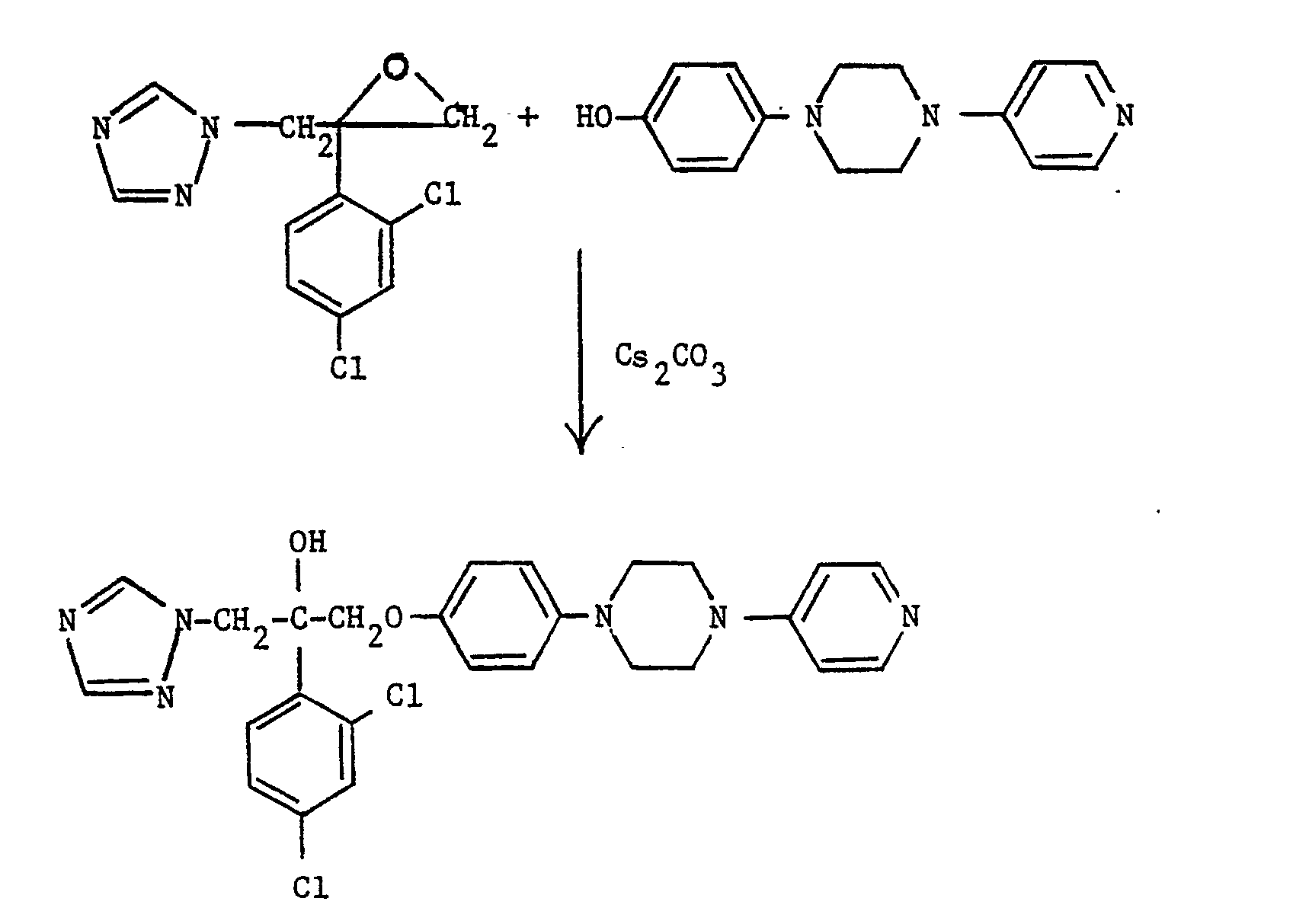
- The title compound, m.p. 177-9°, was prepared similarly to the procedure of Example 3 starting from the same aniline derivative and allyl chloroformate.

-

-

-


-

-


-


-


-


-


-


-


-


-

-


-

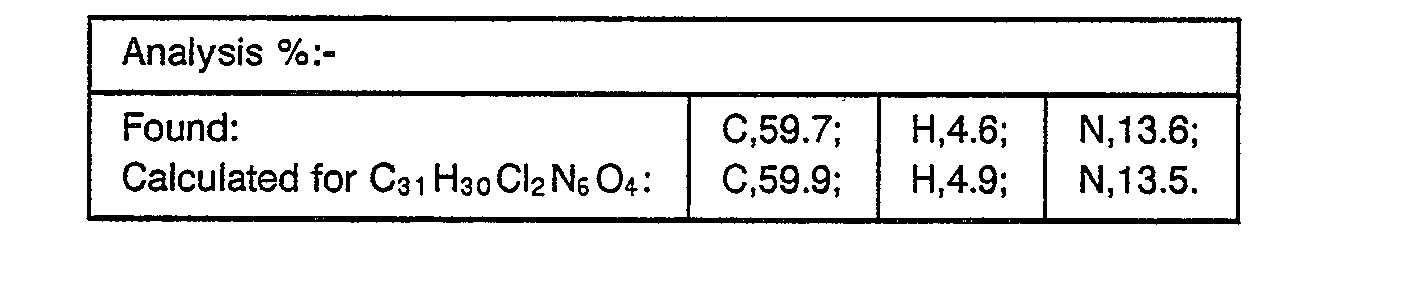
- A mixture of 3-(4-[4-(4-aminophenyl)piperazin-1-yl]phenoxy)-2-(2,4-dichlorophenyl)-1-(1H-1,2,4-triazol-1-yl)propan-2-ol (see Preparation 1) (0.265 g, 0.49 mmole), divinyl sulphone (0.2 g, 1.6 mmole) and ethanol (20 ml) was heated under reflux for 7 hours. After cooling, the precipitate was removed by filtration and purified by flash chromatography on silica gel eluting with ethyl acetate to yield, after collection and evaporation of appropriate fractions, the desired product, m.p. 91-92 (0.203 g, 59%).

-

-
-

-

-


- δ = 0.9 (t, 3H); 1.4 (d, 3H); 1.8 (m, 2H); 3.2 (m, 4H); 3.75 (m, 4H); 4.3 (q, 1 H); 4.45 (m, 2H); 5.1 (m, 2H); 6.78 (d, 1 H); 6.85 (d, 2H); 6.95 (d, 2H); 7.25 (d, 1 H); 7.4 (s, 1 H); 7.6 (s, 1 H); 7.75 (d, 2H); 7.95 (s, 1 H); 8.05 (s, 1 H); 8.15 (s, 1H) ppm.
- The title compound, m.p. 144-5°, was prepared similarly to the procedure of Example 24 starting from the same epoxide and 2-(2-butyl)-4-(5-[4-(4-hydroxyphenyl)piperazin-1-yl]pyridin-2-yl)-1,2,4-triazolin-3-one (see Preparation 6). In the second flash chromatography purification stage the eluent was ethyl acetate (96)-:methanol (4) with final trituration being unnecessary.

-


- The following Preparations, in which all temperatures are in °C, illustrate the preparation of the novel starting materials used in the previous Examples:-
-

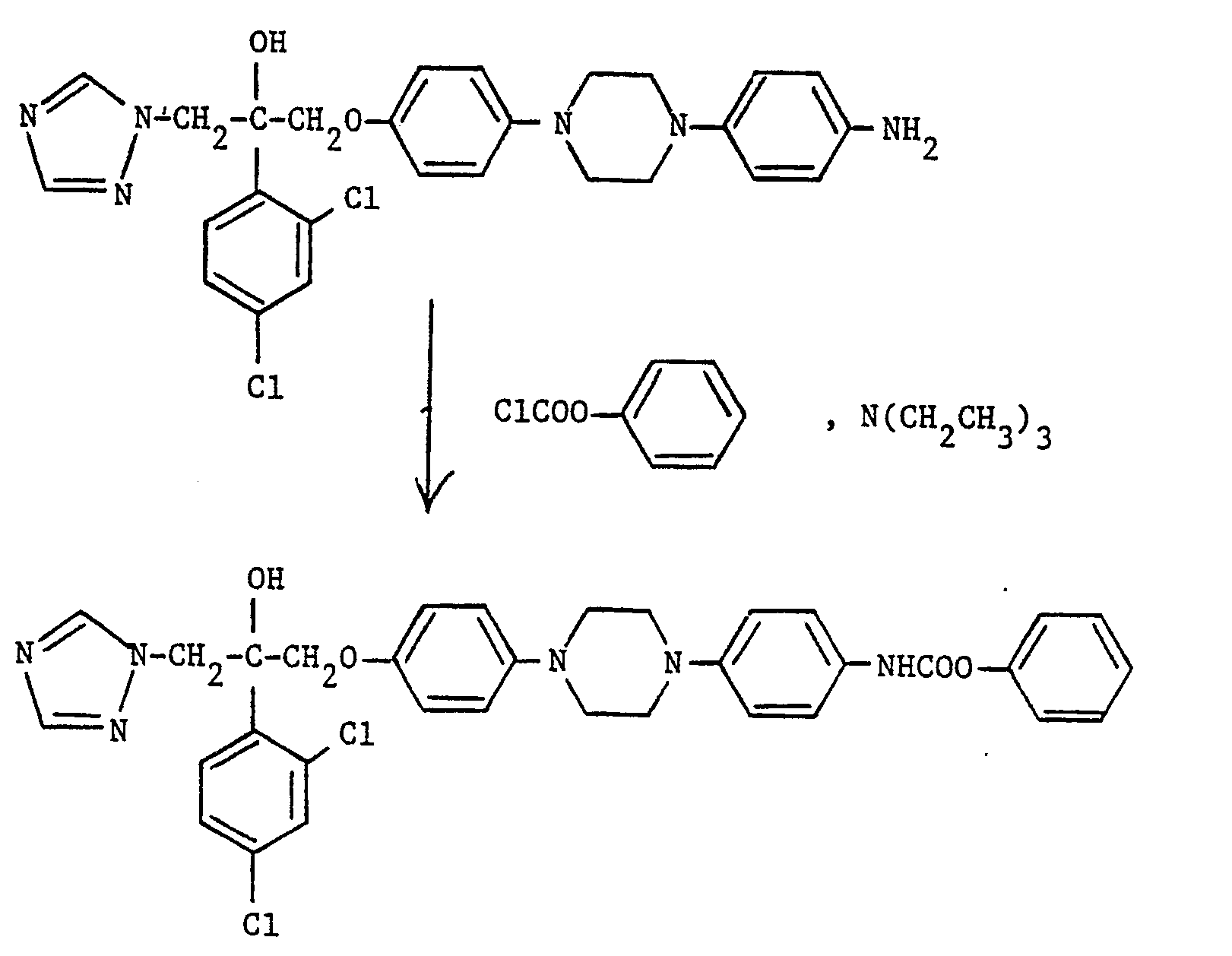
- A stirred mixture of 2-(2,4-dichlorophenyl)-2-(1H-1,2,4-triazol-1-ylmethyl)oxirane (40 g, 0.11 mmole), 4-(4-[4-nitrophenyl]piperazin-1-yl)phenol (see EP-0228125) (35 g, 0.12 mmole) and cesium carbonate (100 g, 0.3 mmole) in DMF (500 ml) was heated at 120° for 18 hours. The mixture was cooled, diluted with methylene chloride (500 ml) and the insoluble inorganic material removed by filtration. The filtrate was concentrated under reduced pressure and the residue partitioned between methylene chloride (800 ml) and water (200 ml). The organic phase was separated, washed with water (200 ml) and dried over magnesium sulphate. After concentration under reduced pressure, the residue was purified by flash chromatography on silica gel eluting with methylene chloride (90);methanol (1):0.88 ammonia solution (0.1) to yield, after collection and evaporation of appropriate fractions, the title compound as a viscous oil, (26.6 g, 46%), which was used directly in the next stage.
- The product of part (i) (3.0 g, 5.2 mmole) in acetic acid (50 ml) was hydrogenated over 5% palladium on charcoal (0.3 g) at 25 p.s.i. (172 kPa) for 4 hours. The resulting mixture was filtered, the filtrate concentrated under reduced pressure and the residue partitioned between aqueous sodium carbonate and methylene chloride. The organic phase was separated and the aqueous phase further extracted with methylene chloride. The combined organic extracts were dried over magnesium sulphate and evaporated under reduced pressure to provide a foam. Trituration with petroleum ether (40-60°) yielded the desired product, m.p. 120° (2.8 g, 98%), which was used without further purification.
-
-
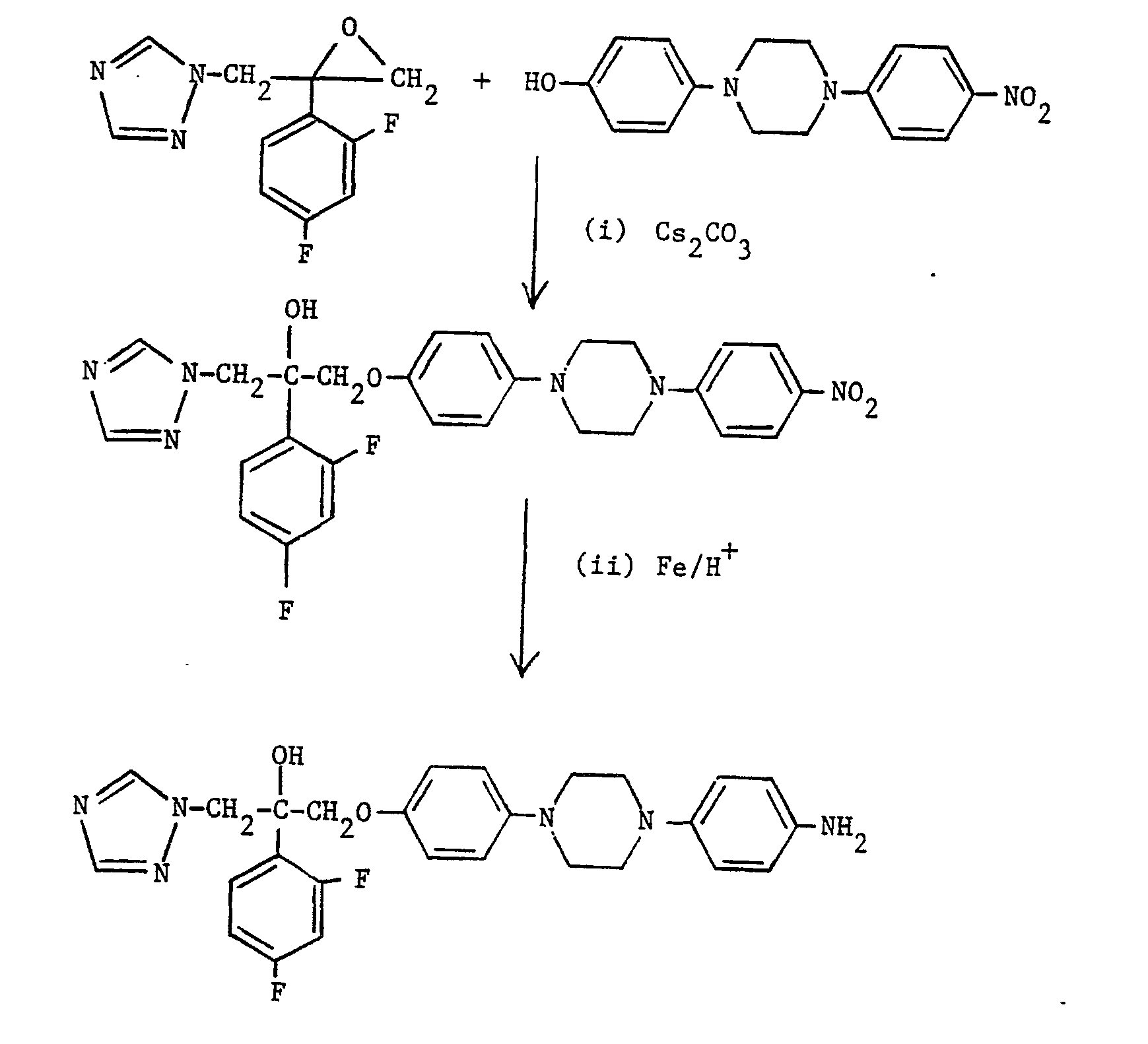
- A mixture of 2-(2,4-difluorophenyl)-2-(1 H-1,2,4-triazol-1-ylmethyl)oxirane (3.3 g, 13.9 mmole), 4-(4-[4-nitrophenyl]piperazin-1-yl)phenol (3.0 g, 10 mmole) and cesium carbonate (4.8 g, 14.7 mmole) in DMF (20 ml) was heated at 80° overnight. After cooling, the solvent was removed by concentration under reduced pressure and the residue was partitioned between ethyl acetate and water. The organic phase was separated, washed with brine and dried over magnesium sulphate. The solution was concentrated under reduced pressure and purified by flash chromatography on silica gel eluting with ethyl acetate (10):hexane (1) to yield, after collection and evaporation of appropriate fractions, the desired product, m.p. 187-189` (0.9 g, 17%).

- A mixture of the product of part (i) (0.98 g, 1.8 mmole) and iron powder (0.31 g, 5.5 mmole) in 50% aqueous ethanol (60 ml) was heated to 90' and then a solution of concentrated hydrochloric acid (0.025 ml) in ethanol (0.5 ml) was cautiously added. Heating was continued for 0.75 hour, the mixture neutralised by the addition of solid sodium bicarbonate and the hot solution filtered to remove insoluble material. The filtrate was concentrated under reduced pressure and the residue purified by flash chromatography on silica gel eluting with methylene chloride (20):methanol (1):0.88 ammonia solution (0.2) to yield, after collection and evaporation of appropriate fractions, the desired product, m.p. 199-200* (0.54 g, 59%).

-

- A mixture of 1-(4-methoxyphenyl)piperazine dihydrochloride (2.64 g, 10 mmole), 4-bromopyridine hydrochloride (4 g, 20 mmole) and potassium carbonate (4.2 g, 30 mmole) in DMF (30 ml) was heated at 90° for 72 hours. The resulting mixture was cooled, partitioned between water and toluene, the aqueous phase separated and re-extracted with toluene. The combined organic extracts were washed with water, dried over magnesium sulphate and concentrated under reduced pressure to yield, after trituration with ether, a solid (0.9 g). This solid was purified by flash chromatography on silica gel eluting with methylene chloride (95):methanol (5):0.88 ammonia solution (4) to yield, after collection and evaporation of appropriate fractions and recrystallisation from ethyl acetate, the desired product, m.p. 183-184° (0.77 g, 28%).

- A mixture of the product of part (i) (0.7 g, 2.6 mmole) and 48% hydrobromic acid (10 ml) was heated under reflux under a nitrogen atmosphere overnight. The hydrobromic acid was removed by concentration under reduced pressure, the residue dissolved in water and the solution obtained was basified with aqueous sodium bicarbonate solution. The resulting precipitate was removed by filtration and washed with methylene chloride to yield the desired product, m.p. 275-276 (0.276 g, 41%).

-
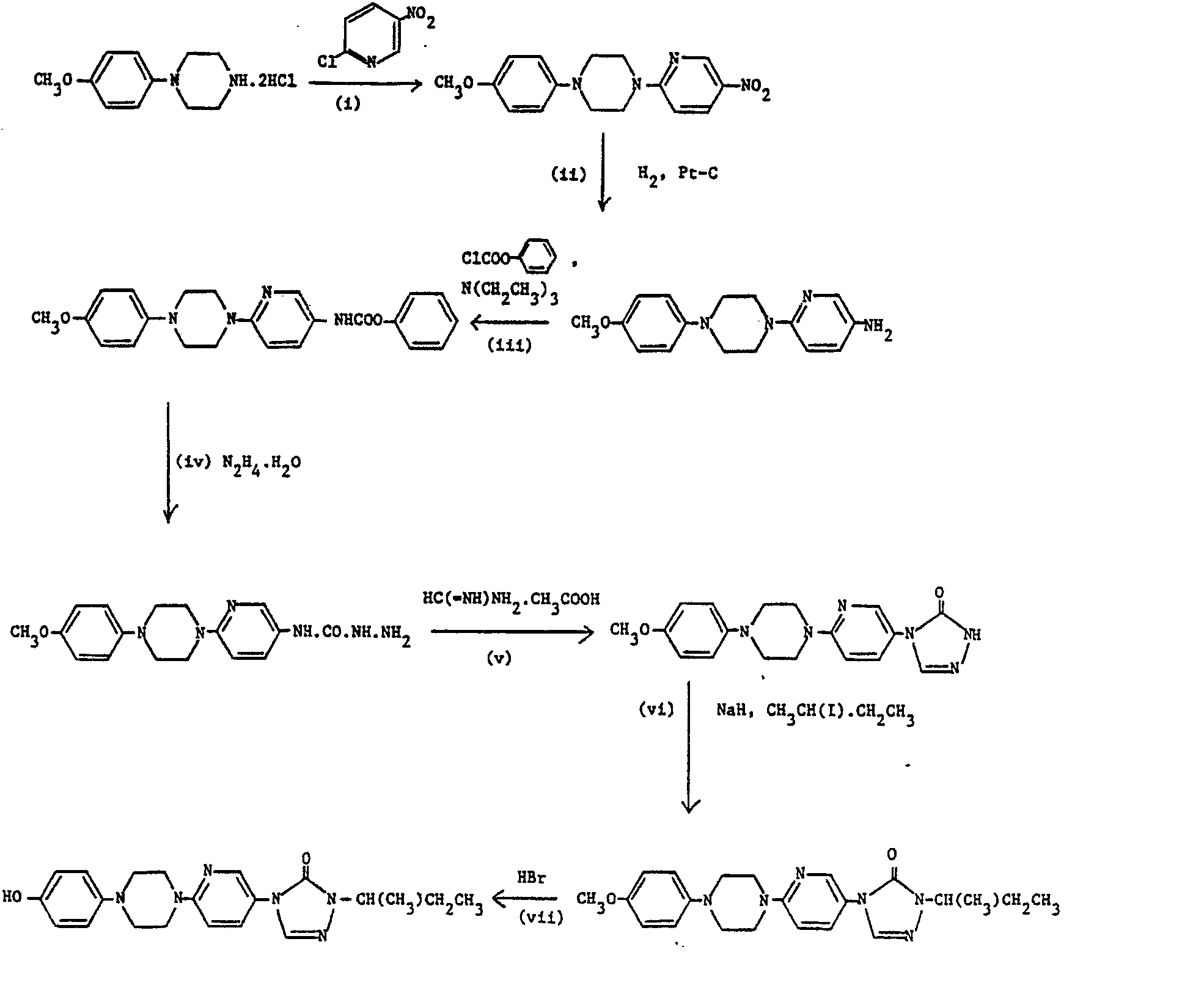
- A mixture of 1-(4-methoxyphenyl)piperazine dihydrochloride (5.30 g, 20 mmole), 2-chloro-5-nitropyridine (3.2 g, 20 mmole) and potassium carbonate (4.14 g, 30 mmole) in DMF (20 ml) was heated at 120' for 66 hours. The reaction mixture was cooled, diluted with water and the resulting precipitate collected by filtration. To this solid was added methanol (200 ml) and the mixture was heated under reflux for 0.17 hour. After cooling, the solid was collected by filtration and dried to yield the desired product, m.p. 165-6° (4.0 g, 64%), which was used without further purification.
- A suspension of the product of part (i) (4.0 g, 12 mmole) in ethanol (150 ml) was hydrogenated at 45 p.s.i. (310 kPa) over 5% platinum on carbon (0.1 g) for 5 hours. After this time an additional portion of the catalyst (0.1 g) was added and hydrogenation was continued at room temperature for a further 48 hours. The catalyst was removed by filtration and the filtrate concentrated under reduced pressure. The dark residue was purified by flash chromatography on silica gel eluting wth ethyl acetate (97):methanol (3) to yield, after collection and evaporation of appropriate fractions, the desired product, m.p. 134-135' (1.2 g, 33%), which was used without further purification.
- To a mixture of the product of part (ii) (1.2 g, 4.2 mmole) and triethylamine (0.5 g, 5 mmole) in methylene chloride (20 mi) was added, dropwise, phenyl chloroformate (0.8 g, 5.1 mmole) and the resulting mixture was stirred at room temperature for 20 hours. The reaction was quenched by the addition of water, the aqueous phase separated and re-extracted with methylene chloride. The combined organic extracts were washed with aqueous sodium bicarbonate solution then water, dried over magnesium sulphate and concentrated under reduced pressure to provide a solid. Trituration of this solid material with ethanol yielded the desired product, m.p. 197-198- (1.4 g, 83%), which was used without further purification.
- A mixture of the product of part (iii) (2.8 g, 6.9 mmole) and hydrazine hydrate (7.5 ml, 150 mmole) in 1,4-dioxane (50 ml) was heated under reflux for 1.5 hours. The cooled mixture was filtered to provide a solid which was washed with ether to yield the desired product, m.p. 280-282° (2.0 g, 85%), which was used without further purification .
- A mixture of the product of part (iv) (2.0 g, 5.8 mmole) and formamidine acetate (1.0 g, 10 mmole) in dimethyl sulphoxide (25 ml) was heated at 100° for 2 hours. After cooling, the mixture was poured into water (250 ml) and the resulting precipitate was collected by filtration and dried in vacuo to yield the desired product, m.p. 260-261 ° (1.7 g, 83%), which was used without further purification.
- To a solution of the product of part (v) (1.7 g, 4.8 mmole) in dimethyl sulphoxide (25 ml) (heating required to facilitate dissolution) was added, cautiously, sodium hydride (60% dispersion in oil, 0.40 g, 10 mmole) and the mixture was stirred at room temperature for 0.3 hour. After this time, 2-iodobutane (3.6 g, 20 mmole) was added, dropwise, and the mixture was heated at 60-70 for 1.2 hours. The resulting dark solution was poured into water and the solid removed by filtration. Purification of this material by flash chromatography on silica gel eluting with ethyl acetate (90):hexane (10) yielded, after collection and evaporation of appropriate fractions, a semi-solid. Trituration of this material with ether yielded the desired product as a solid, m.p. 172-173 (0.55 g, 28%), which was used without further purification.
- A mixture of the product of part (vi) (0.48 g, 1.17 mmole) and 48% hydrobromic acid was heated under reflux for 6.5 hours. After this time the hydrobromic acid was removed by concentration under reduced pressure and the residue basified by the addition of aqueous sodium bicarbonate solution. The resulting mixture was extracted with methylene chloride, the organic extracts washed with water, dried over magnesium sulphate and concentrated under reduced pressure. The residue was purified by flash chromatography on silica gel eluting with methylene chloride (95):methanol (5):0.88 ammonia solution (0.8) to yield, after collection and evaporation of appropriate fractions, the desired product, m.p. 195-196° (0.287 g, 62%), which was used without further purification.
- The title compound, m.p. 186-8` , was prepared similarly to the procedure of Preparation 5(i) starting from the same piperazine and 5-bromo-2-nitropyridine. The product obtained was used without further purification.
- A suspension of the product of part (i) (0.65 g, 2.0 mmole) in ethyl acetate (30 ml) was hydrogenated over 5% platinum on carbon (25 mg) at 45 p.s.i. (310 kPa) and at 50 for 12 hours, followed by 45 hours at room temperature. The resulting mixture was filtered to remove the catalyst, concentrated under reduced pressure and the residue triturated with ether to yield the desired product, m.p. 182-188` (0.28 g, 50%), which was used without further purification.
- The title compound, m.p. 130-2., was prepared similarly to the procedure of Preparation 5(iii) starting from the product of part (ii). The crude material obtained was purified by flash chromatography on silica gel eluting with ethyl acetate (60):hexane (40). The product obtained after collection and evaporation of appropriate fractions, was used without further purification.
- The title compound, m.p. 260-3°, was prepared similarly to the procedure of Preparation 5(iv) starting from the product of part (iii). The product obtained was used wthout further purification.
- The title compound, m.p. 268-71°, was prepared similarly to the procedure of Preparation 5(v) starting from the product of part (iv). The product obtained was used without further purification.
- The title compound, m.p. 139-140°, was prepared similarly to the procedure of Preparation 5(vi) starting from the product of part (v). The eluent used in the flash chromatography stage was ethyl acetate (1):hexane (1). The product obtained was used without further purification.
- The title compound, m.p. 144-5°, was prepared similarly to the procedure of Preparation 5(vii) starting from the product of part (vi). Flash chromatography was unnecessary and the product obtained was used without further purification.
Claims (12)
1. A compound of the formula:-

where R is either
or a pharmaceutically or agriculturally acceptable salt thereof.
(a) a phenyl group optionally substituted with 1 to 3 substituents each selected independently from halo and CF3; or
(b) a 5-chloropyridin-2-yl group; and R1 is either
(a) a phenyl group, para-substituted by a group selected from the following:-(i)

where R2 is selected from C1-C4 alkyl, C3-C7 cycloalkyl, 2-chloropyridin-3-yl, C1-C4 alkoxy, allyloxy and (C1-C4 alkyl)amino; (ii)

where either R3 is selected from C1-C4 alkyl, halo-(C1-C4 alkyl) and di-(C1-C4 alkyl)amino and R4 is H or methyl; or R3 and R4 taken together constitute a C3 or C4 alkylene group; (iii) -N = CH-N(C1-C4 alkyl)2; (iv)
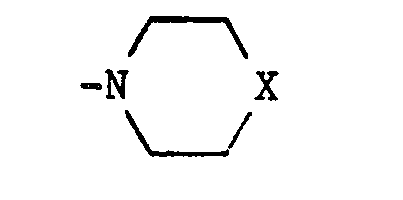
where X is O, SO2 or N-R5, where R5 is H, C1-C4- alkyl or C1-C4- alkanoyl; and (v)
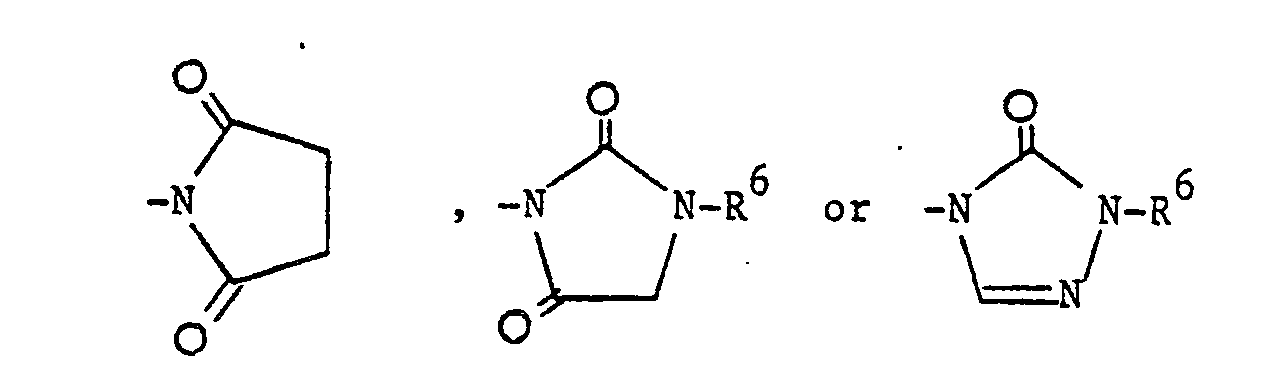
where R6 is C1-C4 alkyl; or
(b) a 2-, 3- or 4-pyridinyl group optionally substituted with a group of the formula:

where R6 is C1-C4 alkyl;
or a pharmaceutically or agriculturally acceptable salt thereof.
2. A compound of the formula (I) as claimed in claim 1 wherein R is phenyl substituted by 1 or 2 halo substituents.
3. A compound of the formula (I) as claimed in claim 1 or 2 wherein R is 2,4-dichlorophenyl or 2,4-difluorophenyl.
4. A compound of the formula (I) as claimed in claim 1, 2 or 3 wherein R1 is either:-(a) a phenyl group, para-substituted by a group selected from the following:-(i)

where R2 is methyl, 2-chloropyridin-3-yl, methoxy, ethoxy, allyloxy or but-1-ylamino; (ii)

where R4 is H and R3 is methyl, ethyl, prop-2-yl, 3-chloroprop-1-yl, 2,2,2-trifluoroethyl or N,N-dimethylamino; or R4 is methyl and R3 is methyl; or R3 and R4 are taken together and constitute a propylene group; (iii) -N=CH-N(CH3)2; (iv)

where X is S02 or NR5, where R5 is H or acetyl; and (v)
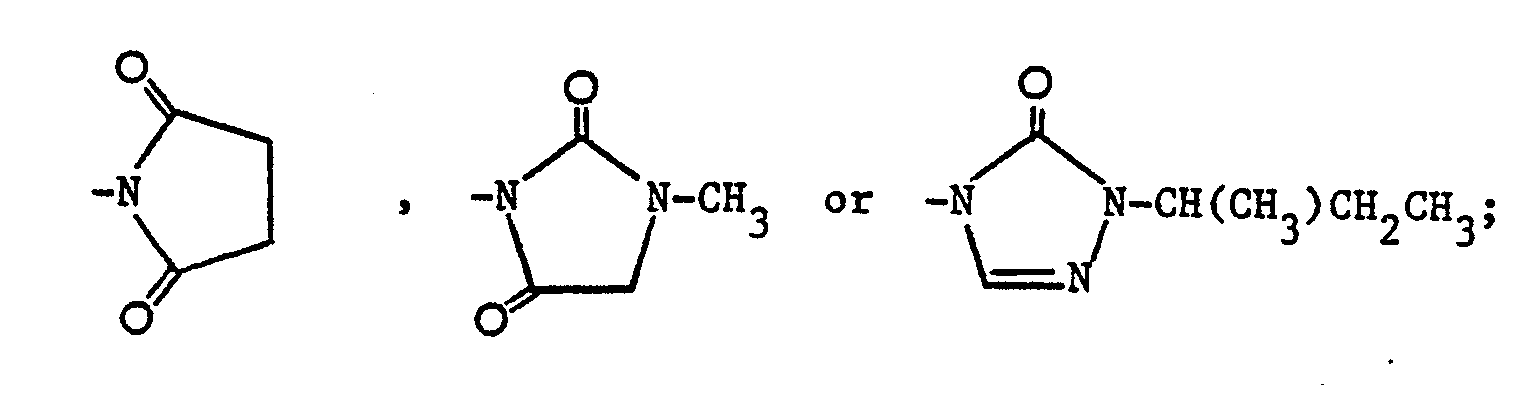
or (b)

or

5. A compound of the formula (I) as claimed in claim 1, 2, 3 or 4 wherein R1 is either:-

6. A compound of the formula:-

wherein R8 is -N02, -NH2 or

and R is as defined in claim 1.
7. A pharmaceutical antifungal composition comprising a compound of the formula (I), or a pharmaceutically acceptable salt thereof, as claimed in any one of claims 1 to 5, together with a pharmaceutically acceptable diluent or carrier.
8. An agricultural composition for fungicidal use comprising a compound of the formula (I), or an agriculturally acceptable salt thereof, as claimed in any one of claims 1 to 5, together with an agriculturally acceptable diluent or carrier.
9. A compound of the formula (I), or a pharmaceutically acceptable salt or composition thereof, as claimed in any one of claims 1 to 5 and 7 respectively, for use as a medicament.
10. The use of a compound of the formula (I), or of a pharmaceutically acceptable salt or composition thereof, as claimed in any one of claims 1 to 5 and 7 respectively, for the manufacture of an antifungal agent.
11. A method of treating a plant or seed to cure or prevent a fungal infection, which comprises administering to said plant or seed, or to the locus of said plant or seed, an effective amount of a compound of the formula (I), or of an agriculturally acceptable salt or composition thereof, as claimed in any one of claims 1 to 5 and 8 respectively.
Applications Claiming Priority (2)
| Application Number | Priority Date | Filing Date | Title |
|---|---|---|---|
| GB8817315 | 1988-07-20 | ||
| GB888817315A GB8817315D0 (en) | 1988-07-20 | 1988-07-20 | Triazole antifungal agents |
Publications (1)
| Publication Number | Publication Date |
|---|---|
| EP0352946A1 true EP0352946A1 (en) | 1990-01-31 |
Family
ID=10640810
Family Applications (1)
| Application Number | Title | Priority Date | Filing Date |
|---|---|---|---|
| EP89307167A Withdrawn EP0352946A1 (en) | 1988-07-20 | 1989-07-14 | Triazole antifungal agents |
Country Status (6)
| Country | Link |
|---|---|
| EP (1) | EP0352946A1 (en) |
| JP (1) | JPH0278670A (en) |
| DK (1) | DK353989A (en) |
| FI (1) | FI893491L (en) |
| GB (1) | GB8817315D0 (en) |
| PT (1) | PT91206A (en) |
Cited By (11)
| Publication number | Priority date | Publication date | Assignee | Title |
|---|---|---|---|---|
| WO1997028128A1 (en) * | 1996-02-02 | 1997-08-07 | Zeneca Limited | Heterocyclic compounds useful as pharmaceutical agents |
| US6093718A (en) * | 1996-08-14 | 2000-07-25 | Zeneca Limited | Substituted pyrimidine derivatives and their pharmaceutical use |
| US6225309B1 (en) | 1994-09-26 | 2001-05-01 | Zeneca Limited | Aminoheterocyclic derivatives as antithrombotic or anticoagulant agents |
| US6300330B1 (en) | 1996-11-08 | 2001-10-09 | Zeneca Limited | Heterocycle derivatives which inhibit factor Xa |
| US6391880B1 (en) | 1997-02-13 | 2002-05-21 | Zeneca Limited | Heterocyclic compounds useful as oxido-squalene cyclase inhibitors |
| US6440972B1 (en) | 1997-02-13 | 2002-08-27 | Zeneca Limited | Heterocyclic compounds useful as oxido-squalene cyclase inhibitors |
| US6486154B1 (en) | 1997-07-29 | 2002-11-26 | Zeneca Limited | (Hetero) aryl-sulfonamide derivatives, their preparation and their use as factor XA inhibitors |
| US6723723B1 (en) | 1999-02-11 | 2004-04-20 | Astrazeneca | Heterocyclic derivatives as inhibitors of factor Xa |
| US7622486B2 (en) | 2004-09-23 | 2009-11-24 | Reddy Us Therapeutics, Inc. | Pyridine compounds, process for their preparation and compositions containing them |
| CN102234267A (en) * | 2010-04-21 | 2011-11-09 | 中国科学院上海药物研究所 | Novel triazole antifungal compounds, and medicinal composition, preparation method and application thereof |
| CN106231901A (en) * | 2014-04-15 | 2016-12-14 | 美国陶氏益农公司 | Metal enzyme inhibitor compound as antifungal |
Families Citing this family (1)
| Publication number | Priority date | Publication date | Assignee | Title |
|---|---|---|---|---|
| DE10251513A1 (en) | 2002-11-04 | 2004-05-19 | Basf Ag | Compounds with 5-membered heterocycle linked by amino- or phosphino-methyl to a benzene ring with an ortho-hydroxy, alkoxy, thiol or amino group, used as multidentate ligands in olefin polymerization catalysts |
Citations (3)
| Publication number | Priority date | Publication date | Assignee | Title |
|---|---|---|---|---|
| EP0118138A1 (en) * | 1983-02-28 | 1984-09-12 | Janssen Pharmaceutica N.V. | ((4-(4-(4-Phenyl-1-piperazinyl)phenoxymethyl)-1,3-dioxolan-2-yl)methyl)-1H-imidazoles and 1H-1,2,4-triazoles |
| EP0152596A1 (en) * | 1984-02-10 | 1985-08-28 | LUDWIG HEUMANN & CO GMBH | 1,3-Dioxolanyl derivatives, method for their preparation, their use and medicine containing these compounds |
| EP0237963A2 (en) * | 1986-03-21 | 1987-09-23 | Hoechst Aktiengesellschaft | 2-Azolylmethyl-2-aryl-1,3-dioxolanes and their salts, processes for their preparation, compositions containing them and their use |
-
1988
- 1988-07-20 GB GB888817315A patent/GB8817315D0/en active Pending
-
1989
- 1989-07-14 EP EP89307167A patent/EP0352946A1/en not_active Withdrawn
- 1989-07-18 PT PT91206A patent/PT91206A/en not_active Application Discontinuation
- 1989-07-18 DK DK353989A patent/DK353989A/en not_active Application Discontinuation
- 1989-07-19 FI FI893491A patent/FI893491L/en not_active IP Right Cessation
- 1989-07-20 JP JP1188685A patent/JPH0278670A/en active Pending
Patent Citations (3)
| Publication number | Priority date | Publication date | Assignee | Title |
|---|---|---|---|---|
| EP0118138A1 (en) * | 1983-02-28 | 1984-09-12 | Janssen Pharmaceutica N.V. | ((4-(4-(4-Phenyl-1-piperazinyl)phenoxymethyl)-1,3-dioxolan-2-yl)methyl)-1H-imidazoles and 1H-1,2,4-triazoles |
| EP0152596A1 (en) * | 1984-02-10 | 1985-08-28 | LUDWIG HEUMANN & CO GMBH | 1,3-Dioxolanyl derivatives, method for their preparation, their use and medicine containing these compounds |
| EP0237963A2 (en) * | 1986-03-21 | 1987-09-23 | Hoechst Aktiengesellschaft | 2-Azolylmethyl-2-aryl-1,3-dioxolanes and their salts, processes for their preparation, compositions containing them and their use |
Cited By (15)
| Publication number | Priority date | Publication date | Assignee | Title |
|---|---|---|---|---|
| US6730672B2 (en) | 1994-09-26 | 2004-05-04 | Zeneca Limited | Aminoheterocyclic derivatives as antithrombotic or anticoagulant agents |
| US6225309B1 (en) | 1994-09-26 | 2001-05-01 | Zeneca Limited | Aminoheterocyclic derivatives as antithrombotic or anticoagulant agents |
| WO1997028128A1 (en) * | 1996-02-02 | 1997-08-07 | Zeneca Limited | Heterocyclic compounds useful as pharmaceutical agents |
| US6313127B1 (en) | 1996-02-02 | 2001-11-06 | Zeneca Limited | Heterocyclic compounds useful as pharmaceutical agents |
| US6093718A (en) * | 1996-08-14 | 2000-07-25 | Zeneca Limited | Substituted pyrimidine derivatives and their pharmaceutical use |
| US6300330B1 (en) | 1996-11-08 | 2001-10-09 | Zeneca Limited | Heterocycle derivatives which inhibit factor Xa |
| US6936610B2 (en) | 1996-11-08 | 2005-08-30 | Astrazeneca Uk Limited | Heterocyclic derivatives |
| US6440972B1 (en) | 1997-02-13 | 2002-08-27 | Zeneca Limited | Heterocyclic compounds useful as oxido-squalene cyclase inhibitors |
| US6391880B1 (en) | 1997-02-13 | 2002-05-21 | Zeneca Limited | Heterocyclic compounds useful as oxido-squalene cyclase inhibitors |
| US6486154B1 (en) | 1997-07-29 | 2002-11-26 | Zeneca Limited | (Hetero) aryl-sulfonamide derivatives, their preparation and their use as factor XA inhibitors |
| US6723723B1 (en) | 1999-02-11 | 2004-04-20 | Astrazeneca | Heterocyclic derivatives as inhibitors of factor Xa |
| US7622486B2 (en) | 2004-09-23 | 2009-11-24 | Reddy Us Therapeutics, Inc. | Pyridine compounds, process for their preparation and compositions containing them |
| CN102234267A (en) * | 2010-04-21 | 2011-11-09 | 中国科学院上海药物研究所 | Novel triazole antifungal compounds, and medicinal composition, preparation method and application thereof |
| CN106231901A (en) * | 2014-04-15 | 2016-12-14 | 美国陶氏益农公司 | Metal enzyme inhibitor compound as antifungal |
| US10167300B2 (en) | 2014-04-15 | 2019-01-01 | Dow Agrosciences Llc | Metalloenzyme inhibitor compounds as fungicides |
Also Published As
| Publication number | Publication date |
|---|---|
| GB8817315D0 (en) | 1988-08-24 |
| JPH0278670A (en) | 1990-03-19 |
| PT91206A (en) | 1990-02-08 |
| DK353989D0 (en) | 1989-07-18 |
| FI893491A7 (en) | 1990-01-21 |
| FI893491A0 (en) | 1989-07-19 |
| DK353989A (en) | 1990-05-01 |
| FI893491L (en) | 1990-01-21 |
Similar Documents
| Publication | Publication Date | Title |
|---|---|---|
| IE57003B1 (en) | Alpha,alpha-disubstituted 1h-azole ethanols and their use as fungicidal agents or as pharmaceuticals | |
| EP0097469B1 (en) | Triazole antifungal agents | |
| EP0352946A1 (en) | Triazole antifungal agents | |
| CA1306253C (en) | Triazole antifungal agents | |
| CA1238909A (en) | Antifungal 2-heterocyclyl-1,3-bis-triazolyl- propan-2-ols | |
| US5023258A (en) | Triazole antifungal agents | |
| US4366152A (en) | Combatting fungi with metal salt complexes of 1-phenyl-2-(1,2,4-triazol-1-yl)-ethanes | |
| IE56055B1 (en) | Triazole antifungal agents | |
| EP0115400B1 (en) | Triazole antifungal agents | |
| DK159205B (en) | BIS (TRIAZOL) ALKANOL COMPOUNDS, APPLICATION OF THESE, PHARMACEUTICAL PREPARATIONS AND AGRICULTURAL FUNGICIDS CONTAINING THESE AND PROCEDURES FOR TREATING PLANTS OR SEEDS WHICH HAVE A FUNGI INFECTION | |
| EP0091309B1 (en) | Triazole antifungal agents | |
| US5389663A (en) | 1-(1h-1,2,4-triazole-yl)-2-propanol compounds | |
| EP0100193B1 (en) | Triazole anti-fungal agents | |
| EP0136063B1 (en) | Triazole antifungal agents | |
| US4466974A (en) | Bistriazole antifungal agents | |
| EP0115939B1 (en) | Triazole antifungal agents | |
| JPS6025427B2 (en) | Acylated imidazolyl-O,N-acetal, its production method and sterilizing composition | |
| US4738962A (en) | Piperazinylmethyl-1,2,4-triazolylmethyl-carbinol fungicides | |
| US4965277A (en) | Allylaminoethylazoles | |
| DK163876B (en) | ANALOGY PROCEDURE FOR PREPARING 1-HETEROCYCLIC SUBSTITUTED 1- (5-CHLORPYRID-2-YL) -1-HALOGEN-2- (1,2,4-TRIAZOL-1-YL) ETHANE COMPOUNDS OR PHARMACEUTICAL PHARMACEUTICS |
Legal Events
| Date | Code | Title | Description |
|---|---|---|---|
| PUAI | Public reference made under article 153(3) epc to a published international application that has entered the european phase |
Free format text: ORIGINAL CODE: 0009012 |
|
| 17P | Request for examination filed |
Effective date: 19890804 |
|
| AK | Designated contracting states |
Kind code of ref document: A1 Designated state(s): AT BE CH DE ES FR GB GR IT LI LU NL SE |
|
| 17Q | First examination report despatched |
Effective date: 19920511 |
|
| STAA | Information on the status of an ep patent application or granted ep patent |
Free format text: STATUS: THE APPLICATION IS DEEMED TO BE WITHDRAWN |
|
| 18D | Application deemed to be withdrawn |
Effective date: 19930423 |