EP0340677A2 - Gabapentin monohydrate and a process for producing the same - Google Patents
Gabapentin monohydrate and a process for producing the same Download PDFInfo
- Publication number
- EP0340677A2 EP0340677A2 EP89107795A EP89107795A EP0340677A2 EP 0340677 A2 EP0340677 A2 EP 0340677A2 EP 89107795 A EP89107795 A EP 89107795A EP 89107795 A EP89107795 A EP 89107795A EP 0340677 A2 EP0340677 A2 EP 0340677A2
- Authority
- EP
- European Patent Office
- Prior art keywords
- slurry
- gabapentin
- monohydrate
- process according
- gabapentin monohydrate
- Prior art date
- Legal status (The legal status is an assumption and is not a legal conclusion. Google has not performed a legal analysis and makes no representation as to the accuracy of the status listed.)
- Granted
Links
Classifications
-
- C—CHEMISTRY; METALLURGY
- C07—ORGANIC CHEMISTRY
- C07C—ACYCLIC OR CARBOCYCLIC COMPOUNDS
- C07C229/00—Compounds containing amino and carboxyl groups bound to the same carbon skeleton
- C07C229/02—Compounds containing amino and carboxyl groups bound to the same carbon skeleton having amino and carboxyl groups bound to acyclic carbon atoms of the same carbon skeleton
- C07C229/28—Compounds containing amino and carboxyl groups bound to the same carbon skeleton having amino and carboxyl groups bound to acyclic carbon atoms of the same carbon skeleton the carbon skeleton being saturated and containing rings
-
- A—HUMAN NECESSITIES
- A61—MEDICAL OR VETERINARY SCIENCE; HYGIENE
- A61P—SPECIFIC THERAPEUTIC ACTIVITY OF CHEMICAL COMPOUNDS OR MEDICINAL PREPARATIONS
- A61P25/00—Drugs for disorders of the nervous system
-
- A—HUMAN NECESSITIES
- A61—MEDICAL OR VETERINARY SCIENCE; HYGIENE
- A61P—SPECIFIC THERAPEUTIC ACTIVITY OF CHEMICAL COMPOUNDS OR MEDICINAL PREPARATIONS
- A61P25/00—Drugs for disorders of the nervous system
- A61P25/08—Antiepileptics; Anticonvulsants
-
- C—CHEMISTRY; METALLURGY
- C07—ORGANIC CHEMISTRY
- C07C—ACYCLIC OR CARBOCYCLIC COMPOUNDS
- C07C2601/00—Systems containing only non-condensed rings
- C07C2601/12—Systems containing only non-condensed rings with a six-membered ring
- C07C2601/14—The ring being saturated
Definitions
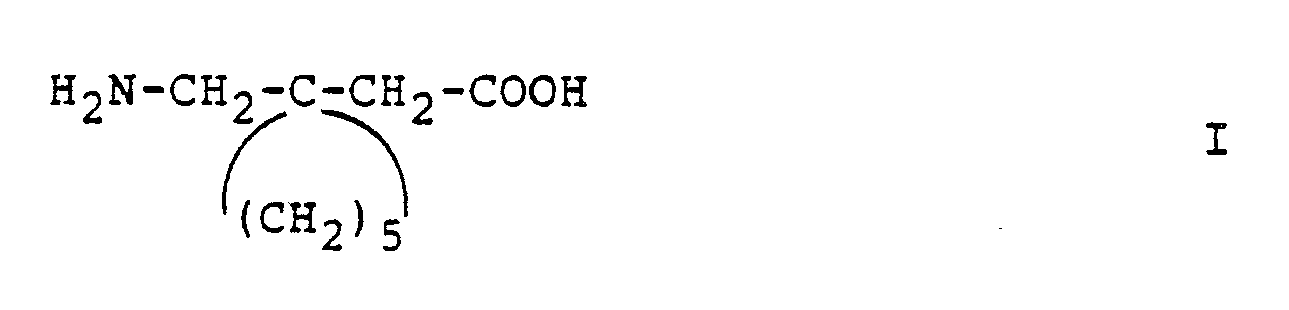
- Gabapentin is a generic term used to identify the chemical compound (1-aminomethyl)-1-cyclohexaneacetic acid. It is useful in therapy of certain cerebral disorders such as certain forms of epilepsy, faintness attacks, hypokinesia and cranial traumas.
- United States Patents 4,024,175 and 4,087,544 cover the compound and its uses. They also disclose an acid salt, i.e. gabapentin ⁇ hydrochloride hydrate in a ratio of 4:4:1 and a sodium salt of gabapentin hydrate in a ratio of 2:1. These patents are hereby incorporated by reference.
- the present invention provides crystalline gabapentin monohydrate, a novel, highly pure substance of reasonable bulk density suitable for formulation in the desired forms such as capsules or tablets. Its properties are those sought in a pharmaceutical product.
- the present invention provides both a small scale and a large scale method for producing gabapentin monohydrate.
- This form, the hydrate of the free amino acid has the advantage of being less expensive to produce than the known form of gabapentin.
- the process has the advantage of having barely detectable residues of solvents such as 2-propanol. No detectable methanol or ethanol residuals remain. Also, the process for producing the hydrate provides an extra purification step even if one goes on to produce the anhydrous material.
- the hydrate saves 12-13% of the total yield of gabapentin by eliminating the losses confronted in the final recrystallization.
- the hydrate also saves the cost of solvents, man hours, and utilities used in the final recrystallization.
- the product is a very pretty crystal which is stable at ambient temperatures (20-25°C).
- the instant invention is a novel form of gabapentin, crystalline gabapentin monohydrate with the following unique X-ray diffraction properties. Spacing 'd' Relative Intensities 14.255 99 7.196 99 5.438 4 4.848 99 4.575 7 4.291 7 3.633 99 3.376 21 3.220 9 2.903 28 2.771 23 2.356 7 2.344 12
- Crystalline gabapentin monohydrate has a density within the range of 0.35 to 0.9 g/cm3. The observed is 0.35 to 0.49 g/cm3 + or - .02. The crystals are obtained in a highly pure state. They are of a reasonable bulk density. The term reasonable means having a density above 0.4 g/cm3. These characteristics readily lend themselves to pharmaceutical formulating operations.
- the present invention also provides a process for producing gabapentin monohydrate on a small scale. This process is for the preparation of a compound of formula which comprises:
- Useful acid salts are hydrobromide, sulphate, methane sulfonate, hydrochloride and the like.
- the preferred acid salt in step (a) is the hydrochloride.
- step (b) the chloride ion is tested for by using a silver nitrate solution, but other analytical methods for chloride can be used by one skilled in the art.
- the product is tested by thin layer chromatography.
- step (c) the fractions are concentrated on a rotovap with about 72-77 hPa (29-31 inches) vacuum at a temperature of from about 25° to about 50°C to a volume of about three times the theoretical volume yield of 1:1 hydrate.
- step (d) the alcohol is 2-propanol and the suspension is cooled for from about 8 to about 20 hours.
- the present invention further provides a process for the large scale production of gabapentin hydrate (1:1) which comprises:
- a process for the preparation of a compound of formula which comprises:
- Useful acid salts include but are not limited to hydrobromide, sulphate, methanesulfonate, hydrochloride and the like.
- the preferred salt is the hydrochloride and in a preferred ratio is 4:4:1.
- the preferred acid salt of (1-aminomethyl)-cyclohexaneacetic acid is the monohydrochloride hydrate in a ratio of 4:4:1.
- step (b) the eluate is concentrated in a glass-lined still at about 72-77 hPa (29-31 inches) of vacuum at a temperature of from about 25°C to about 50°C to produce a slurry.
- step (c) the slurry is cooled to about 25° to about 45°C for about 1 to 3 hours and the alcohol added is 2-propanol.
- Preferred process conditions for step (d) include the slurry is cooled to about -10°C to about 0°C for about 12 to 16 hours.
- Preferred process conditions for step (e) include the precipitate is dried in vacuo at about 25-35°C for about 8 to 24 hours.
- the gabapentin monohydrate provides an extra purification step and can be used to produce the anhydrous material claimed in the United States Patents incorporated by reference.
- the present invention further provides a process for the large scale production of essentially anhydrous gabapentin of the same crystal structure produced by the methods cited in the United States Patents incorporated by reference.
- This process for the preparation of the compound of formula comprises:
- step (a) the gabapentin monohydrate is dissolved in methanol in a ratio of 0.141 Kg of gabapentin monohydrate to 1.00 Kg of anhydrous methanol in a temperature range of about 50°C to about 60°C.
- step (b) the solution is diluted with anhydrous 2-propanol in the ratio of 1 Kg of anhydrous 2-propanol to 1 Kg anhydrous methanol and the solution is chilled to 20°C to 25°C for two hours and then to -8°C to -10°C for sixteen to twenty hours.
- Preferred process conditions in step (c) include the gabapentin is dried in vacuo at about 25°C to 45°C for about eight to forty-eight hours.
- the compound of formula (II) has only extremely low toxicity, it can be administered enterally or parenterally within wide dosage ranges in liquid or solid form.
- injection solution water is preferably employed which contains the usual additives for injection solutions, such as stabilising agents, solubilising agents and/or buffers.
- Additives of this kind include, for example, tartrate and citrate buffers, ethanol, complex-forming agents (such as ethylenediamine-tetraacetic acid and the nontoxic salts thereof), as well as high molecular weight polymers (such as liquid polyethylene oxide) for viscosity regulation.
- complex-forming agents such as ethylenediamine-tetraacetic acid and the nontoxic salts thereof
- high molecular weight polymers such as liquid polyethylene oxide
- Solid carrier materials include, for example, starch, lactose, mannitol, methyl cellulose, talc, highly dispersed silicic acids, high molecular weight fatty acids (such as stearic acid), gelatine, agaragar, calcium phosphate, magnesium stearate, animal and vegetable fats and solid high molecular weight polymers (such as polyethylene glycol); compositions suitable for oral administration can, if desired, also contain flavoring and/or sweetening agents.
- the individual dosage for the compounds according to the present invention can be from 100 to 3000 mg/day for an adult, preferably from 600 to 2400 mg/day, and most preferably the dosage is about 1200 mg/day or as deemed necessary by a skilled physician.
- the present invention also provides pharamaceutical compositions of the compound in admixture with a solid or liquid pharmaceutical diluent or carrier.
- gabapentin monohydrate The preparation of gabapentin monohydrate is illustrated by the following nonlimiting examples.
- An ion exchange column is by filling a glass column with 380 mL of Amberlite® IRA-68. The resin is rinsed with a dilute ammonia solution, 140 mL ammonium hydroxide in 3 L water, followed by deionized water to a neutral pH, (about 2 L).
- a 1 N solution of (1-aminomethyl)-cyclohexaneacetic acid hydrochloride is prepared by dissolving 64.6 g of (1-aminomethyl)-cyclohexaneacetic acid hydrochloride hydrate (4:4:1) in 310 mL of deionized water. This solution is filtered through a filter to remove any insoluble material or extracted with an organic solvent such as dichloromethane.
- the solution is poured onto the column and drained to the top level of the resin.
- the column is eluted using deionized water at approximately 15 mL/min. Fractions of about 200-250 mL are collected. The first four fractions, about 1 L total, contain all of the product (TLC). Chloride is tested for using a silver nitrate solution. No chloride is usually detected in any of the fractions collected.
- the first four fractions are concentrated on a rotovap with about 29-31 inches vacuum and the temperature ⁇ 40°C to a slurry, about 150 mL. This is mixed with 288 mL 2-proponal and the suspension is cooled in a refrigerator overnight. The white crystalline (1-aminomethyl)-cyclohexaneacetic acid hydrate (1:1) is filtered off, washed with cold 2-propanol, and dried in vacuo to yield 42.93 g.
- An ion exchange column (60 inch bed height, 15 inch radius) is charged with 250 L of filtered water followed by 700 L (504 Kg wet) Amberlite® IRA-68 resin.
- the resin is backwashed with 2000 L of filtered deionized water.
- the resin is treated with 3700 L of filtered deionized water that has been mixed with 60.6 Kg of concentrated hydrochloric acid.
- the acid treatment is repeated with fresh acid.
- the resin is washed with 6400 L of filtered deionized water.
- the resin is treated with 1770 L of a 4% solution of sodium hydroxide.
- the resin is washed with 3200 L of deionized water.
- the resin is treated with 3700 L of filtered deionized water that has been mixed with 60.6 Kg of concentrated hydrochloric acid. The acid treatment is repeated with fresh acid. The resin is washed with 6400 L of filtered deionized water. The resin is treated with 1770 L of a 4% solution of sodium hydroxide. The resin is washed with 3200 L of deionized water.
- the resin is treated with 3700 L of filtered deionized water that has been mixed with 60.6 Kg of concentrated hydrochloric acid. The acid treatment is repeated with fresh acid. The resin is washed with 6400 L of filtered deionized water. The resin is treated with a solution of 105 Kg of 28% ammonium hydroxide in 1700 L of deionized water. The resin is washed with 6400 L of deionized water.
- a solution of 122 Kg (57.5 moles) of 1-(aminomethyl)-cyclohexaneacetic acid monohydrochloride hydrate (4:4:1) in 472 Kg of deionized water is filtered to remove any insoluble material or extracted with an organic solvent such as dichloromethane and then is applied to the top of the ion exchange column and eluted with 3750 Kg of deionized water.
- the presence of chloride ion is tested for using silver nitrate solution and the product is tested for by using thin layer chromatography.
- the eluate is concentrated in a 500 gallon glass-lined still at about 72-77 hPa (29-31 inches) of vacuum and wall temperature of ⁇ 50°C.
- a total of 3500 Kg of water is removed.
- the resulting slurry is cooled to about 18-20°C and 248.5 Kg of 2-propanol is added.
- the slurry is cooled at -12 - -8°C for 16 hours, centrifuged and washed with 2-propanol.
- the precipitate is dried in vacuo about 72-77 hPa (29-31 inches) at 25-30°C to yield 86 Kg of 1-(aminomethyl)-cyclohexaneacetic acid hydrate (1:1).
- a slurry of 179 Kg of 1-(aminomethyl)-cyclohexaneacetic acid monohydrate and 1266 Kg of anhydrous methanol is heated to 60°C to give a complete solution.
- the solution is diluted with 1266 Kg of anhydrous 2-propanol and the solution is cooled to 20°C to 25°C for two hours and then is cooled to -8°C to -10°C for twenty hours.
- the resulting slurry is centrifuged and the precipitate is dried in vacuo at 35°C for forty-eight hours to yield 145 Kg of white, crystalline 1-(aminomethyl)-cyclohexaneacetic acid.
Landscapes
- Chemical & Material Sciences (AREA)
- Organic Chemistry (AREA)
- Health & Medical Sciences (AREA)
- Medicinal Chemistry (AREA)
- General Health & Medical Sciences (AREA)
- Neurology (AREA)
- Neurosurgery (AREA)
- Bioinformatics & Cheminformatics (AREA)
- Chemical Kinetics & Catalysis (AREA)
- General Chemical & Material Sciences (AREA)
- Engineering & Computer Science (AREA)
- Nuclear Medicine, Radiotherapy & Molecular Imaging (AREA)
- Veterinary Medicine (AREA)
- Pharmacology & Pharmacy (AREA)
- Life Sciences & Earth Sciences (AREA)
- Animal Behavior & Ethology (AREA)
- Biomedical Technology (AREA)
- Public Health (AREA)
- Pain & Pain Management (AREA)
- Organic Low-Molecular-Weight Compounds And Preparation Thereof (AREA)
- Acyclic And Carbocyclic Compounds In Medicinal Compositions (AREA)
- Medicines Containing Antibodies Or Antigens For Use As Internal Diagnostic Agents (AREA)
Abstract
Description
- Gabapentin is a generic term used to identify the chemical compound (1-aminomethyl)-1-cyclohexaneacetic acid.

- The patents describe various processes for the preparation of this and similar compounds of general formula
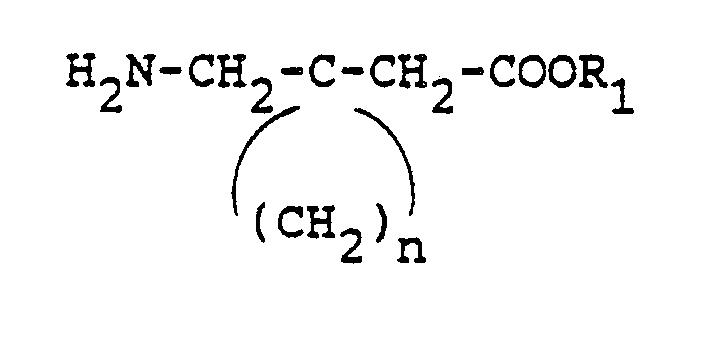
- All examples of the syntheses end in an isocyanate or urethane that can easily be converted into the desired (1-aminomethyl)-1-cyclohexaneacetic acid by acidic hydrolysis (preferred) to give an acid or basic hydrolysis to give a basic salt or followed by acidification to give an acid salt.
- The present invention provides crystalline gabapentin monohydrate, a novel, highly pure substance of reasonable bulk density suitable for formulation in the desired forms such as capsules or tablets. Its properties are those sought in a pharmaceutical product. The present invention provides both a small scale and a large scale method for producing gabapentin monohydrate. This form, the hydrate of the free amino acid, has the advantage of being less expensive to produce than the known form of gabapentin. The process has the advantage of having barely detectable residues of solvents such as 2-propanol. No detectable methanol or ethanol residuals remain. Also, the process for producing the hydrate provides an extra purification step even if one goes on to produce the anhydrous material. The hydrate saves 12-13% of the total yield of gabapentin by eliminating the losses confronted in the final recrystallization. The hydrate also saves the cost of solvents, man hours, and utilities used in the final recrystallization. The product is a very pretty crystal which is stable at ambient temperatures (20-25°C).
- The instant invention is a novel form of gabapentin, crystalline gabapentin monohydrate with the following unique X-ray diffraction properties.
Spacing 'd' Relative Intensities 14.255 99 7.196 99 5.438 4 4.848 99 4.575 7 4.291 7 3.633 99 3.376 21 3.220 9 2.903 28 2.771 23 2.356 7 2.344 12 - Crystalline gabapentin monohydrate has a density within the range of 0.35 to 0.9 g/cm³. The observed is 0.35 to 0.49 g/cm³ + or - .02. The crystals are obtained in a highly pure state. They are of a reasonable bulk density. The term reasonable means having a density above 0.4 g/cm³. These characteristics readily lend themselves to pharmaceutical formulating operations.
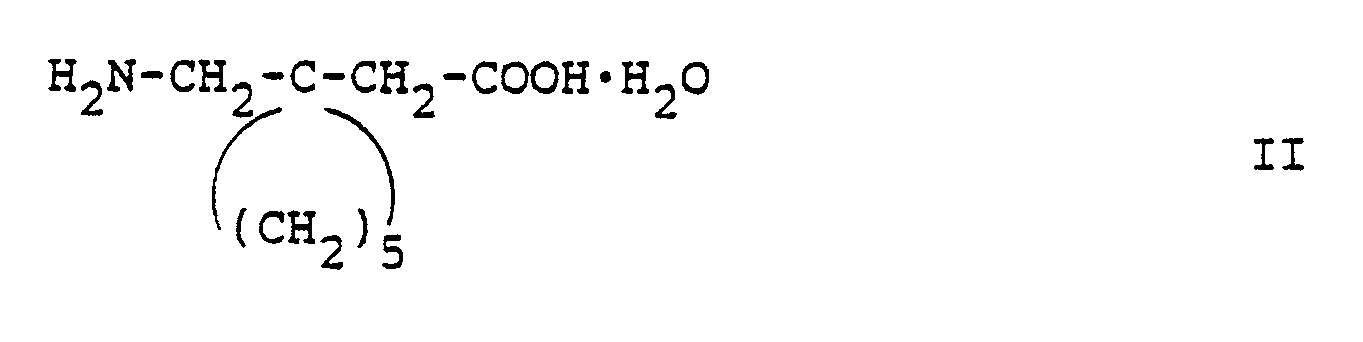
- The present invention also provides a process for producing gabapentin monohydrate on a small scale. This process is for the preparation of a compound of formula
- (a) pouring a 1 N solution of an acid salt of (1-aminomethyl)-cyclohexaneacetic acid onto an ion exchange column in the basic form and eluting that column with deionized water;
- (b) collecting and testing fractions from step (a) for ion and product;
- (c) concentrating the fractions containing product from step (b) to a slurry;
- (d) mixing the slurry from step (c) with alcohol to produce a suspension and after cooling;
- (e) filtering off the desired product, washing it with cold alcohol and drying it in vacuo.
- Useful acid salts are hydrobromide, sulphate, methane sulfonate, hydrochloride and the like. The preferred acid salt in step (a) is the hydrochloride.
- Preferably in step (b) the chloride ion is tested for by using a silver nitrate solution, but other analytical methods for chloride can be used by one skilled in the art. The product is tested by thin layer chromatography.
- Preferably in step (c) the fractions are concentrated on a rotovap with about 72-77 hPa (29-31 inches) vacuum at a temperature of from about 25° to about 50°C to a volume of about three times the theoretical volume yield of 1:1 hydrate.
- Preferably in step (d) the alcohol is 2-propanol and the suspension is cooled for from about 8 to about 20 hours.
- The present invention further provides a process for the large scale production of gabapentin hydrate (1:1) which comprises:
- A process for the preparation of a compound of formula

- (a) pouring a solution of an acid salt of (1-aminomethyl)-cyclohexaneacetic acid in deionized water onto an ion exchange column in the basic form and eluting the column with deionized water;
- (b) concentrating the eluate producing a slurry;
- (c) cooling and adding alcohol to the slurry from step (b);
- (d) cooling and centrifuging the slurry from step (c); and
- (e) drying the precipitate of the desired product.
- Useful acid salts include but are not limited to hydrobromide, sulphate, methanesulfonate, hydrochloride and the like. The preferred salt is the hydrochloride and in a preferred ratio is 4:4:1.
- The preferred acid salt of (1-aminomethyl)-cyclohexaneacetic acid is the monohydrochloride hydrate in a ratio of 4:4:1.
- Preferred process conditions in step (b) the eluate is concentrated in a glass-lined still at about 72-77 hPa (29-31 inches) of vacuum at a temperature of from about 25°C to about 50°C to produce a slurry.
- Preferred process conditions in step (c) the slurry is cooled to about 25° to about 45°C for about 1 to 3 hours and the alcohol added is 2-propanol.
- Preferred process conditions for step (d) include the slurry is cooled to about -10°C to about 0°C for about 12 to 16 hours.
- Preferred process conditions for step (e) include the precipitate is dried in vacuo at about 25-35°C for about 8 to 24 hours.
- The gabapentin monohydrate provides an extra purification step and can be used to produce the anhydrous material claimed in the United States Patents incorporated by reference.
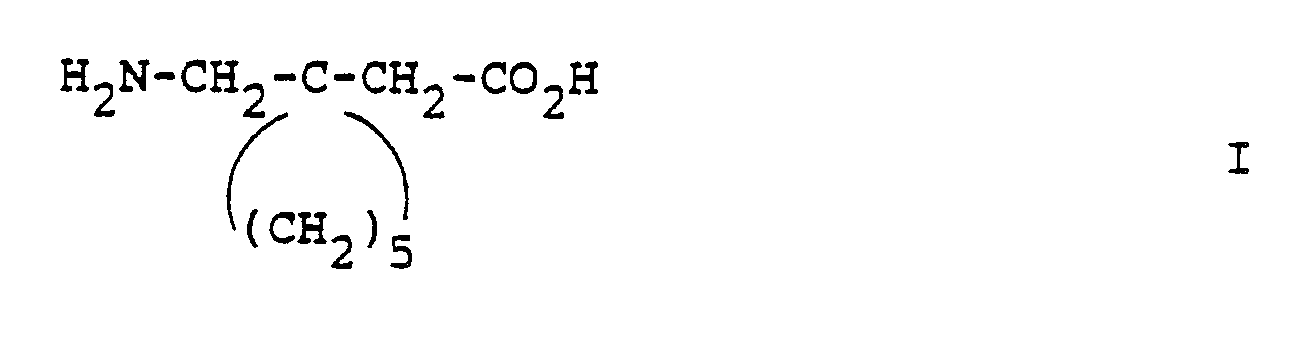
- The present invention further provides a process for the large scale production of essentially anhydrous gabapentin of the same crystal structure produced by the methods cited in the United States Patents incorporated by reference. This process for the preparation of the compound of formula
- (a) dissolving pure gabapentin monohydrate in methanol at 50°C to 60°C;
- (b) diluting with 2-propanol and cooling to 0°C to -10°C the solution from step (a) resulting in a slurry;
- (c) centrifuging the slurry from step (b) and drying the precipitate of gabapentin.
- Preferred process conditions in step (a) the gabapentin monohydrate is dissolved in methanol in a ratio of 0.141 Kg of gabapentin monohydrate to 1.00 Kg of anhydrous methanol in a temperature range of about 50°C to about 60°C.
- Preferred process conditions in step (b) the solution is diluted with anhydrous 2-propanol in the ratio of 1 Kg of anhydrous 2-propanol to 1 Kg anhydrous methanol and the solution is chilled to 20°C to 25°C for two hours and then to -8°C to -10°C for sixteen to twenty hours.
- Preferred process conditions in step (c) include the gabapentin is dried in vacuo at about 25°C to 45°C for about eight to forty-eight hours.
- Since the compound of formula (II) has only extremely low toxicity, it can be administered enterally or parenterally within wide dosage ranges in liquid or solid form. As injection solution, water is preferably employed which contains the usual additives for injection solutions, such as stabilising agents, solubilising agents and/or buffers.
- Additives of this kind include, for example, tartrate and citrate buffers, ethanol, complex-forming agents (such as ethylenediamine-tetraacetic acid and the nontoxic salts thereof), as well as high molecular weight polymers (such as liquid polyethylene oxide) for viscosity regulation. Solid carrier materials include, for example, starch, lactose, mannitol, methyl cellulose, talc, highly dispersed silicic acids, high molecular weight fatty acids (such as stearic acid), gelatine, agaragar, calcium phosphate, magnesium stearate, animal and vegetable fats and solid high molecular weight polymers (such as polyethylene glycol); compositions suitable for oral administration can, if desired, also contain flavoring and/or sweetening agents.
- The individual dosage for the compounds according to the present invention can be from 100 to 3000 mg/day for an adult, preferably from 600 to 2400 mg/day, and most preferably the dosage is about 1200 mg/day or as deemed necessary by a skilled physician.
- Thus, the present invention also provides pharamaceutical compositions of the compound in admixture with a solid or liquid pharmaceutical diluent or carrier.
- The preparation of gabapentin monohydrate is illustrated by the following nonlimiting examples.
- An ion exchange column is by filling a glass column with 380 mL of Amberlite® IRA-68. The resin is rinsed with a dilute ammonia solution, 140 mL ammonium hydroxide in 3 L water, followed by deionized water to a neutral pH, (about 2 L). A 1 N solution of (1-aminomethyl)-cyclohexaneacetic acid hydrochloride is prepared by dissolving 64.6 g of (1-aminomethyl)-cyclohexaneacetic acid hydrochloride hydrate (4:4:1) in 310 mL of deionized water. This solution is filtered through a filter to remove any insoluble material or extracted with an organic solvent such as dichloromethane.
- The solution is poured onto the column and drained to the top level of the resin. The column is eluted using deionized water at approximately 15 mL/min. Fractions of about 200-250 mL are collected. The first four fractions, about 1 L total, contain all of the product (TLC). Chloride is tested for using a silver nitrate solution. No chloride is usually detected in any of the fractions collected.
- The first four fractions are concentrated on a rotovap with about 29-31 inches vacuum and the temperature < 40°C to a slurry, about 150 mL. This is mixed with 288 mL 2-proponal and the suspension is cooled in a refrigerator overnight. The white crystalline (1-aminomethyl)-cyclohexaneacetic acid hydrate (1:1) is filtered off, washed with cold 2-propanol, and dried in vacuo to yield 42.93 g.
- Analytical data:
HPLC: 89.27% w/w against dry analytical standard H₂O: 9.68% ± 0.5 mp 156-156.7°C (dec) CL⁻: 8.6 ppm - An ion exchange column (60 inch bed height, 15 inch radius) is charged with 250 L of filtered water followed by 700 L (504 Kg wet) Amberlite® IRA-68 resin. The resin is backwashed with 2000 L of filtered deionized water. The resin is treated with 3700 L of filtered deionized water that has been mixed with 60.6 Kg of concentrated hydrochloric acid. The acid treatment is repeated with fresh acid. The resin is washed with 6400 L of filtered deionized water. The resin is treated with 1770 L of a 4% solution of sodium hydroxide. The resin is washed with 3200 L of deionized water.
- The resin is treated with 3700 L of filtered deionized water that has been mixed with 60.6 Kg of concentrated hydrochloric acid. The acid treatment is repeated with fresh acid. The resin is washed with 6400 L of filtered deionized water. The resin is treated with 1770 L of a 4% solution of sodium hydroxide. The resin is washed with 3200 L of deionized water.
- The resin is treated with 3700 L of filtered deionized water that has been mixed with 60.6 Kg of concentrated hydrochloric acid. The acid treatment is repeated with fresh acid. The resin is washed with 6400 L of filtered deionized water. The resin is treated with a solution of 105 Kg of 28% ammonium hydroxide in 1700 L of deionized water. The resin is washed with 6400 L of deionized water.
- A solution of 122 Kg (57.5 moles) of 1-(aminomethyl)-cyclohexaneacetic acid monohydrochloride hydrate (4:4:1) in 472 Kg of deionized water is filtered to remove any insoluble material or extracted with an organic solvent such as dichloromethane and then is applied to the top of the ion exchange column and eluted with 3750 Kg of deionized water. The presence of chloride ion is tested for using silver nitrate solution and the product is tested for by using thin layer chromatography. The eluate is concentrated in a 500 gallon glass-lined still at about 72-77 hPa (29-31 inches) of vacuum and wall temperature of < 50°C. A total of 3500 Kg of water is removed. The resulting slurry is cooled to about 18-20°C and 248.5 Kg of 2-propanol is added. The slurry is cooled at -12 - -8°C for 16 hours, centrifuged and washed with 2-propanol. The precipitate is dried in vacuo about 72-77 hPa (29-31 inches) at 25-30°C to yield 86 Kg of 1-(aminomethyl)-cyclohexaneacetic acid hydrate (1:1).
- Analytical data:
HPLC: 89.4 w/w against dry reference standard
H₂O (Karl Fischer): 9.69% ± 0.5
mp 156-156.7°C (dec)
CL⁻: 30 ppm
Since this is a hydrate and does melt with decomposition, the melting point range can start as low as 154°C and can end as high as 162°C. - A slurry of 179 Kg of 1-(aminomethyl)-cyclohexaneacetic acid monohydrate and 1266 Kg of anhydrous methanol is heated to 60°C to give a complete solution. The solution is diluted with 1266 Kg of anhydrous 2-propanol and the solution is cooled to 20°C to 25°C for two hours and then is cooled to -8°C to -10°C for twenty hours. The resulting slurry is centrifuged and the precipitate is dried in vacuo at 35°C for forty-eight hours to yield 145 Kg of white, crystalline 1-(aminomethyl)-cyclohexaneacetic acid.
- Analytical data:
HPLC: 100.6% w/w against dry analytical standard
H₂O: 0.09%
CH₃OH: 0.01%
(CH₃)₂CHOH: 0.01%
CL⁻: 22 ppm
Melting point: 161.7 - 162.6°C (dec.)
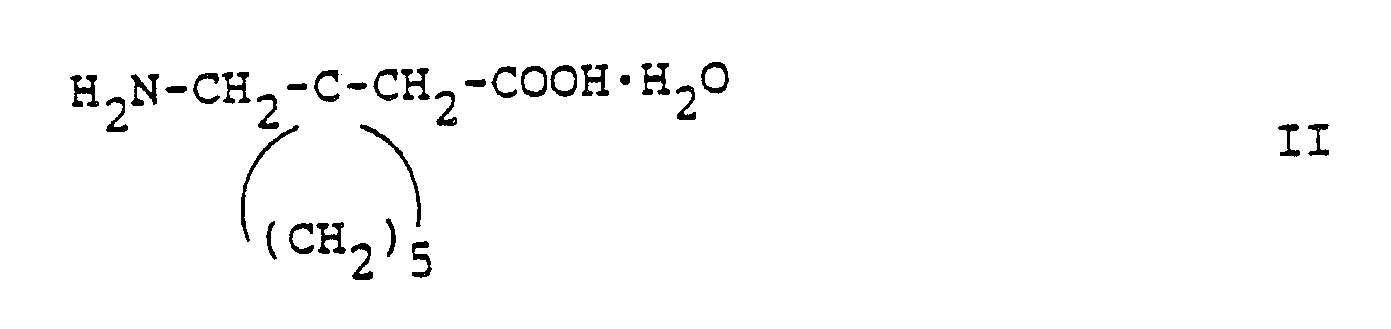
Claims (12)

Priority Applications (1)
| Application Number | Priority Date | Filing Date | Title |
|---|---|---|---|
| AT89107795T ATE101116T1 (en) | 1988-05-02 | 1989-04-28 | GABAPENTIN MONOHYDRATE AND PROCESS FOR PRODUCTION THEREOF. |
Applications Claiming Priority (2)
| Application Number | Priority Date | Filing Date | Title |
|---|---|---|---|
| US188819 | 1988-05-02 | ||
| US07/188,819 US4894476A (en) | 1988-05-02 | 1988-05-02 | Gabapentin monohydrate and a process for producing the same |
Publications (3)
| Publication Number | Publication Date |
|---|---|
| EP0340677A2 true EP0340677A2 (en) | 1989-11-08 |
| EP0340677A3 EP0340677A3 (en) | 1990-12-27 |
| EP0340677B1 EP0340677B1 (en) | 1994-02-02 |
Family
ID=22694659
Family Applications (1)
| Application Number | Title | Priority Date | Filing Date |
|---|---|---|---|
| EP89107795A Expired - Lifetime EP0340677B1 (en) | 1988-05-02 | 1989-04-28 | Gabapentin monohydrate and a process for producing the same |
Country Status (12)
| Country | Link |
|---|---|
| US (1) | US4894476A (en) |
| EP (1) | EP0340677B1 (en) |
| JP (1) | JP2619951B2 (en) |
| AT (1) | ATE101116T1 (en) |
| AU (1) | AU624130B2 (en) |
| CA (1) | CA1306755C (en) |
| DE (1) | DE68912819T2 (en) |
| DK (1) | DK175400B1 (en) |
| ES (1) | ES2061774T3 (en) |
| FI (1) | FI892067L (en) |
| HK (1) | HK1000798A1 (en) |
| IE (1) | IE62958B1 (en) |
Cited By (9)
| Publication number | Priority date | Publication date | Assignee | Title |
|---|---|---|---|---|
| EP0458751A1 (en) * | 1990-05-25 | 1991-11-27 | Warner-Lambert Company | Delivery system for cyclic amino acids with improved taste, texture and compressibility |
| WO1997033858A1 (en) * | 1996-03-14 | 1997-09-18 | Warner-Lambert Company | Novel substituted cyclic amino acids as pharmaceutical agents |
| WO2000058268A1 (en) * | 1999-03-26 | 2000-10-05 | Bioindustria Laboratorio Italiano Medicinali S.P.A. | A process for the preparation of gabapentin |
| WO2000064857A1 (en) * | 1999-04-26 | 2000-11-02 | Medichem S.A. | Process for producing gabapentine of pharmaceutical grade |
| US6521787B1 (en) | 1998-05-25 | 2003-02-18 | Medichem, S.A. | Non-hydrated gabapentine polymorph, production process and utilization for producing pharmaceutical grade gabapentine |
| WO2003089403A1 (en) * | 2002-04-16 | 2003-10-30 | Taro Pharmaceutical Industries Ltd. | Process for preparing gabapentin |
| WO2004046084A1 (en) * | 2002-11-18 | 2004-06-03 | Nicholas Piramal India Limited | Improved process for preparation of gabapentin |
| WO2004106281A1 (en) * | 2003-05-30 | 2004-12-09 | Ranbaxy Laboratories Limited | Crystalline gabapentin |
| US7098362B2 (en) | 2004-07-20 | 2006-08-29 | Sandoz Ag | Processes for the preparation of gabapentin |
Families Citing this family (42)
| Publication number | Priority date | Publication date | Assignee | Title |
|---|---|---|---|---|
| DE3928182A1 (en) * | 1989-08-25 | 1991-02-28 | Goedecke Ag | METHOD FOR PRODUCING GABAPENTIN |
| DE3928184A1 (en) * | 1989-08-25 | 1991-02-28 | Goedecke Ag | METHOD FOR PRODUCING CYCLIC AMINO ACID DERIVATIVES AND INTERMEDIATE PRODUCTS |
| DE3928183A1 (en) * | 1989-08-25 | 1991-02-28 | Goedecke Ag | LACTAM-FREE CYCLIC AMINO ACIDS |
| PH27359A (en) * | 1989-08-25 | 1993-06-21 | Warner Lambert Co | Process for cyclic amino acid anticonvulsant compounds |
| US6372792B1 (en) | 1996-04-26 | 2002-04-16 | Guy Chouinard | Method for treating anxiety, anxiety disorders and insomnia |
| US6255526B1 (en) | 1996-12-24 | 2001-07-03 | Teva Pharmaceutical Industries Ltd. | Preparation of gabapentin |
| US6294690B1 (en) | 1997-10-07 | 2001-09-25 | Warner-Lambert Company | Process for preparing a cyclic amino acid anticonvulsant compound |
| ITMI981535A1 (en) * | 1998-07-03 | 2000-01-03 | Zambon Spa | PROCESS FOR THE PREPARATION OF GABAPENTINA |
| HU225502B1 (en) * | 1998-12-29 | 2007-01-29 | Richter Gedeon Vegyeszet | Process for producing 1-(amino-metyl)-cyclohexene-acetic-acid and intermediates |
| DK1169060T3 (en) * | 1999-04-09 | 2006-01-16 | Euro Celtique Sa | Sodium channel blocker preparations and their use |
| US6294198B1 (en) | 1999-08-24 | 2001-09-25 | Purepac Pharmaceutical Co. | Pharmaceutical tablet formulation containing gabapentin with improved physical and chemical characteristics and method of making the same |
| US6333352B1 (en) | 2000-04-05 | 2001-12-25 | Mimicking Man Manually, Inc. | Method of treating benign positional vertigo |
| EP1384473A1 (en) * | 2000-06-16 | 2004-01-28 | Teva Pharmaceutical Industries Ltd. | Stable gabapentin containing more than 20 ppm of chlorine ion |
| DK1289364T3 (en) * | 2000-06-16 | 2004-04-13 | Teva Pharma | Stable gapapentin containing more than 20 ppm chlorine ions |
| PL363155A1 (en) * | 2000-06-16 | 2004-11-15 | Teva Pharmaceutical Industries, Ltd. | Stable gabapentin having ph within a controlled range |
| ITMI20011132A1 (en) | 2001-05-29 | 2002-11-29 | Procos Spa | PROCEDURE FOR THE PREPARATION OF 1-AMINOMETHYL-1-CYCLOHEXANACETIC ACID |
| ATE317280T1 (en) * | 2001-09-03 | 2006-02-15 | Newron Pharm Spa | PHARMACEUTICAL COMPOSITION CONTAINING GABAPENTIN OR ITS ANALOGUE AND AN ALPHA-AMINOAMIDE AND ANALGESIC USE OF THIS COMPOSITION |
| US6800782B2 (en) * | 2001-10-09 | 2004-10-05 | Warner-Lambert Co. | Anhydrous crystalline forms of gabapentin |
| TWI312285B (en) | 2001-10-25 | 2009-07-21 | Depomed Inc | Methods of treatment using a gastric retained gabapentin dosage |
| US20060159743A1 (en) * | 2001-10-25 | 2006-07-20 | Depomed, Inc. | Methods of treating non-nociceptive pain states with gastric retentive gabapentin |
| US20070184104A1 (en) * | 2001-10-25 | 2007-08-09 | Depomed, Inc. | Gastric retentive gabapentin dosage forms and methods for using same |
| US7612112B2 (en) | 2001-10-25 | 2009-11-03 | Depomed, Inc. | Methods of treatment using a gastric retained gabapentin dosage |
| US20030119908A1 (en) * | 2001-12-21 | 2003-06-26 | Zambon Group S.P.A. | Stable gabapentin compositions |
| US6682759B2 (en) | 2002-02-01 | 2004-01-27 | Depomed, Inc. | Manufacture of oral dosage forms delivering both immediate-release and sustained-release drugs |
| EP1487460A2 (en) | 2002-02-28 | 2004-12-22 | A & D Bioscience, Inc. | Glycuronamides, glycosides and orthoester glycosides of fluoxetine, analogs and uses thereof |
| US20050107310A1 (en) * | 2002-03-19 | 2005-05-19 | Holick Michael F. | Carboxylic acid glycuronides, glycosamides and glycosides of quinolones, penicillins, analogs, and uses thereof |
| WO2003086475A1 (en) * | 2002-04-12 | 2003-10-23 | A & D Bioscience, Inc. | Conjugates comprising cancer cell specific ligands, a sugar and diagnostic agents, and uses thereof |
| EP1549323A2 (en) * | 2002-05-07 | 2005-07-06 | A & D Bioscience, Inc. | Conjugates comprising central nervous system active drug |
| US20050215487A1 (en) * | 2002-06-27 | 2005-09-29 | Holick Michael F | Conjugates comprising an nsaid and a sugar and uses thereof |
| WO2004091278A2 (en) * | 2003-04-11 | 2004-10-28 | Transform Pharmaceuticals, Inc. | Gabapentin compositions |
| US7439387B2 (en) * | 2003-04-21 | 2008-10-21 | Matrix Laboratories Ltd. | Process for the preparation of Gabapentin form-II |
| US20070043236A1 (en) * | 2003-05-19 | 2007-02-22 | Chandiran Thakashina M | Process for preparation of gabapentin |
| US20050013863A1 (en) | 2003-07-18 | 2005-01-20 | Depomed, Inc., A Corporation Of The State Of California | Dual drug dosage forms with improved separation of drugs |
| US20050187295A1 (en) * | 2004-02-19 | 2005-08-25 | Surendra Kalyan | Processes for the preparation of gabapentin |
| ITMI20040579A1 (en) * | 2004-03-25 | 2004-06-25 | Zambon Spa | GABAPENTINA PREPARATION PROCESS |
| MX2007002713A (en) * | 2004-09-10 | 2007-05-23 | Newron Pharm Spa | (halobenzyloxy) benzylamino-propanamides as sodium and/or calcium channel selective modulators. |
| ITMI20042418A1 (en) * | 2004-12-17 | 2005-03-17 | Zambon Spa | GABAPENTINA PURIFICATION PROCESS |
| US7071356B1 (en) * | 2005-12-01 | 2006-07-04 | Isp Investments Inc. | Process for the preparation of 1-(aminomethyl) cyclohexaneacetic acid |
| US20090176882A1 (en) | 2008-12-09 | 2009-07-09 | Depomed, Inc. | Gastric retentive gabapentin dosage forms and methods for using same |
| WO2009139470A1 (en) * | 2008-05-16 | 2009-11-19 | 学校法人聖マリアンナ医科大学 | Pharmaceutical composition for treatment of fibromyalgia |
| US8431739B2 (en) | 2010-06-14 | 2013-04-30 | Divi's Laboratories, Ltd. | Process for the preparation of gabapentin |
| EP2923694B1 (en) | 2014-03-27 | 2018-11-14 | Sanovel Ilac Sanayi ve Ticaret A.S. | Oral liquid pharmaceutical solution of gabapentin |
Family Cites Families (5)
| Publication number | Priority date | Publication date | Assignee | Title |
|---|---|---|---|---|
| US4087544A (en) * | 1974-12-21 | 1978-05-02 | Warner-Lambert Company | Treatment of cranial dysfunctions using novel cyclic amino acids |
| DE2460891C2 (en) * | 1974-12-21 | 1982-09-23 | Gödecke AG, 1000 Berlin | 1-aminomethyl-1-cycloalkaneacetic acids and their esters, processes for their preparation and medicaments containing these compounds |
| US4014175A (en) * | 1975-05-05 | 1977-03-29 | Brink Douglas F | Cable and pipe laying machine |
| US4087594A (en) * | 1977-03-21 | 1978-05-02 | Gte Laboratories, Incorporated | Reactivation of primary electrochemical cells |
| PH27359A (en) * | 1989-08-25 | 1993-06-21 | Warner Lambert Co | Process for cyclic amino acid anticonvulsant compounds |
-
1988
- 1988-05-02 US US07/188,819 patent/US4894476A/en not_active Expired - Lifetime
-
1989
- 1989-04-10 IE IE114289A patent/IE62958B1/en not_active IP Right Cessation
- 1989-04-11 AU AU32678/89A patent/AU624130B2/en not_active Expired
- 1989-04-11 CA CA000596341A patent/CA1306755C/en not_active Expired - Fee Related
- 1989-04-28 EP EP89107795A patent/EP0340677B1/en not_active Expired - Lifetime
- 1989-04-28 AT AT89107795T patent/ATE101116T1/en not_active IP Right Cessation
- 1989-04-28 DE DE68912819T patent/DE68912819T2/en not_active Expired - Lifetime
- 1989-04-28 ES ES89107795T patent/ES2061774T3/en not_active Expired - Lifetime
- 1989-04-28 FI FI892067A patent/FI892067L/en not_active IP Right Cessation
- 1989-05-01 JP JP1109264A patent/JP2619951B2/en not_active Expired - Fee Related
- 1989-05-01 DK DK198902126A patent/DK175400B1/en not_active IP Right Cessation
-
1997
- 1997-12-10 HK HK97102376A patent/HK1000798A1/en not_active IP Right Cessation
Cited By (13)
| Publication number | Priority date | Publication date | Assignee | Title |
|---|---|---|---|---|
| EP0458751A1 (en) * | 1990-05-25 | 1991-11-27 | Warner-Lambert Company | Delivery system for cyclic amino acids with improved taste, texture and compressibility |
| WO1997033858A1 (en) * | 1996-03-14 | 1997-09-18 | Warner-Lambert Company | Novel substituted cyclic amino acids as pharmaceutical agents |
| US6103932A (en) * | 1996-03-14 | 2000-08-15 | Warner-Lambert Company | Substituted cyclic amino acids as pharmaceutical agents |
| US6521787B1 (en) | 1998-05-25 | 2003-02-18 | Medichem, S.A. | Non-hydrated gabapentine polymorph, production process and utilization for producing pharmaceutical grade gabapentine |
| WO2000058268A1 (en) * | 1999-03-26 | 2000-10-05 | Bioindustria Laboratorio Italiano Medicinali S.P.A. | A process for the preparation of gabapentin |
| US6576790B1 (en) | 1999-03-26 | 2003-06-10 | Bioindustria Laboratorio Italiano Medicinali S.P.A. | Process for the preparation of gabapentin |
| ES2164527A1 (en) * | 1999-04-26 | 2002-02-16 | Medichen S A | Process for the preparation of anhydrous, pharmaceutical grade gabapentin |
| WO2000064857A1 (en) * | 1999-04-26 | 2000-11-02 | Medichem S.A. | Process for producing gabapentine of pharmaceutical grade |
| WO2003089403A1 (en) * | 2002-04-16 | 2003-10-30 | Taro Pharmaceutical Industries Ltd. | Process for preparing gabapentin |
| WO2004046084A1 (en) * | 2002-11-18 | 2004-06-03 | Nicholas Piramal India Limited | Improved process for preparation of gabapentin |
| US7196216B2 (en) | 2002-11-18 | 2007-03-27 | Nicholas Piramal India Limited | Process for preparation of Gabapentin |
| WO2004106281A1 (en) * | 2003-05-30 | 2004-12-09 | Ranbaxy Laboratories Limited | Crystalline gabapentin |
| US7098362B2 (en) | 2004-07-20 | 2006-08-29 | Sandoz Ag | Processes for the preparation of gabapentin |
Also Published As
| Publication number | Publication date |
|---|---|
| DE68912819D1 (en) | 1994-03-17 |
| IE62958B1 (en) | 1995-03-08 |
| EP0340677B1 (en) | 1994-02-02 |
| JPH0211546A (en) | 1990-01-16 |
| DK212689D0 (en) | 1989-05-01 |
| FI892067A0 (en) | 1989-04-28 |
| AU624130B2 (en) | 1992-06-04 |
| DE68912819T2 (en) | 1994-05-19 |
| ATE101116T1 (en) | 1994-02-15 |
| US4894476A (en) | 1990-01-16 |
| DK175400B1 (en) | 2004-09-27 |
| FI892067A7 (en) | 1989-11-03 |
| FI892067L (en) | 1989-11-03 |
| CA1306755C (en) | 1992-08-25 |
| HK1000798A1 (en) | 1998-05-01 |
| DK212689A (en) | 1989-11-03 |
| ES2061774T3 (en) | 1994-12-16 |
| IE891142L (en) | 1989-11-02 |
| JP2619951B2 (en) | 1997-06-11 |
| EP0340677A3 (en) | 1990-12-27 |
| AU3267889A (en) | 1989-11-02 |
Similar Documents
| Publication | Publication Date | Title |
|---|---|---|
| EP0340677B1 (en) | Gabapentin monohydrate and a process for producing the same | |
| HK1000798B (en) | Gabapentin monohydrate and a process for producing the same | |
| US4960931A (en) | Gabapentin mohohydrate and a process for producing the same | |
| SU820659A3 (en) | Method of preparing 4-amino-5-alkylsulfonyl-o-anisamide derivatives,their salts,oxides,left-and right-rotational isomers (their variations) | |
| US5354760A (en) | Crystalline Tiagabine monohydrate, its preparation and use | |
| HUE026673T2 (en) | Agomelatine hydrobromide hydrate and preparation thereof | |
| SU845789A3 (en) | Method of preparing d-7-/alpha-(4-oxy-6-methylnicotineamido)-alpha-(4-oxyphenyl)-acetamido/-3-(1-methyltetrazol-5-yl) thiomethyl-3-cephem-4-carboxylic acid | |
| US3936495A (en) | Purification process | |
| US4914222A (en) | Crystalline salts of L or (S)-3-(3,4-dihydroxyphenyl)-2-methylalanine esters and process | |
| US4077951A (en) | L-pyroglutamyl-L-prolinamide | |
| AU2020224678B2 (en) | Solid polymorphs of a FLNA-binding compound and its hydrochloride salts | |
| US4219641A (en) | Process for preparing erythromycin succinate | |
| EP0600460A1 (en) | Process for the preparation of 6(S)-5,6,7,8-tetrahydrofolic acid | |
| EP0433848B1 (en) | Crystalline magnesium valproate and a method for the preparation thereof | |
| CA1232614A (en) | Crystalline salts of l or (s)-3-(3,4-dihydroxyphenyl) -2-methylalanine esters and process | |
| CA2436265A1 (en) | 3-(3-amidinophenyl)-5-[({[1-(1-iminoethyl)-4-piperidyl]methyl}amino)methyl]benzoic acid dihydrochloride and process for preparing the same | |
| JPS606958B2 (en) | Antibiotic purification method | |
| US4670578A (en) | Process for crystalline salts of L or (S)-3-(3,4-dihydroxyphenyl)-2-methylalanine esters | |
| DK175127B1 (en) | New crystalline gabapentin mono:hydrate | |
| DE3743111A1 (en) | DIERYTHROMYCINE AND DICHOLINE SALTS OF (3S (Z)) - 2 - (((1- (2-AMINO-4-THIAZOLYL) -2 - ((2,2-DIMETHYL-4-OXO-1- (SULFOOXY) -3 -AZETIDINYL) -AMINO) -2-OXOAETHYLIDEN) -AMINO) -OXY) -ACetic acid | |
| JP2917495B2 (en) | Method for producing optically active 1,2-propanediamine | |
| US2837510A (en) | Process for preparing dihydrodesoxystreptomycin | |
| JP2712669B2 (en) | Preparation of optically active 1,2-propanediamine | |
| US2697095A (en) | Penicillin salts of glycine-diphenylamides | |
| US2744117A (en) | Process for preparing the choline ester |
Legal Events
| Date | Code | Title | Description |
|---|---|---|---|
| PUAI | Public reference made under article 153(3) epc to a published international application that has entered the european phase |
Free format text: ORIGINAL CODE: 0009012 |
|
| 17P | Request for examination filed |
Effective date: 19890428 |
|
| AK | Designated contracting states |
Kind code of ref document: A2 Designated state(s): AT BE CH DE ES FR GB LI LU NL SE |
|
| PUAL | Search report despatched |
Free format text: ORIGINAL CODE: 0009013 |
|
| AK | Designated contracting states |
Kind code of ref document: A3 Designated state(s): AT BE CH DE ES FR GB LI LU NL SE |
|
| 17Q | First examination report despatched |
Effective date: 19930129 |
|
| GRAA | (expected) grant |
Free format text: ORIGINAL CODE: 0009210 |
|
| AK | Designated contracting states |
Kind code of ref document: B1 Designated state(s): AT BE CH DE ES FR GB LI LU NL SE |
|
| REF | Corresponds to: |
Ref document number: 101116 Country of ref document: AT Date of ref document: 19940215 Kind code of ref document: T |
|
| REF | Corresponds to: |
Ref document number: 68912819 Country of ref document: DE Date of ref document: 19940317 |
|
| ET | Fr: translation filed | ||
| EPTA | Lu: last paid annual fee | ||
| PLBE | No opposition filed within time limit |
Free format text: ORIGINAL CODE: 0009261 |
|
| STAA | Information on the status of an ep patent application or granted ep patent |
Free format text: STATUS: NO OPPOSITION FILED WITHIN TIME LIMIT |
|
| REG | Reference to a national code |
Ref country code: ES Ref legal event code: FG2A Ref document number: 2061774 Country of ref document: ES Kind code of ref document: T3 |
|
| 26N | No opposition filed | ||
| EAL | Se: european patent in force in sweden |
Ref document number: 89107795.0 |
|
| REG | Reference to a national code |
Ref country code: GB Ref legal event code: IF02 |
|
| PGFP | Annual fee paid to national office [announced via postgrant information from national office to epo] |
Ref country code: GB Payment date: 20080317 Year of fee payment: 20 |
|
| PGFP | Annual fee paid to national office [announced via postgrant information from national office to epo] |
Ref country code: CH Payment date: 20080425 Year of fee payment: 20 Ref country code: DE Payment date: 20080430 Year of fee payment: 20 Ref country code: LU Payment date: 20080508 Year of fee payment: 20 Ref country code: ES Payment date: 20080414 Year of fee payment: 20 |
|
| PGFP | Annual fee paid to national office [announced via postgrant information from national office to epo] |
Ref country code: AT Payment date: 20080318 Year of fee payment: 20 |
|
| PGFP | Annual fee paid to national office [announced via postgrant information from national office to epo] |
Ref country code: BE Payment date: 20080507 Year of fee payment: 20 |
|
| PGFP | Annual fee paid to national office [announced via postgrant information from national office to epo] |
Ref country code: SE Payment date: 20080404 Year of fee payment: 20 Ref country code: NL Payment date: 20080325 Year of fee payment: 20 |
|
| PGFP | Annual fee paid to national office [announced via postgrant information from national office to epo] |
Ref country code: FR Payment date: 20080403 Year of fee payment: 20 |
|
| BE20 | Be: patent expired |
Owner name: *WARNER-LAMBERT CY Effective date: 20090428 |
|
| REG | Reference to a national code |
Ref country code: CH Ref legal event code: PL |
|
| REG | Reference to a national code |
Ref country code: GB Ref legal event code: PE20 Expiry date: 20090427 |
|
| PG25 | Lapsed in a contracting state [announced via postgrant information from national office to epo] |
Ref country code: NL Free format text: LAPSE BECAUSE OF EXPIRATION OF PROTECTION Effective date: 20090428 |
|
| EUG | Se: european patent has lapsed | ||
| REG | Reference to a national code |
Ref country code: ES Ref legal event code: FD2A Effective date: 20090429 |
|
| NLV7 | Nl: ceased due to reaching the maximum lifetime of a patent |
Effective date: 20090428 |
|
| PG25 | Lapsed in a contracting state [announced via postgrant information from national office to epo] |
Ref country code: ES Free format text: LAPSE BECAUSE OF EXPIRATION OF PROTECTION Effective date: 20090429 |
|
| PG25 | Lapsed in a contracting state [announced via postgrant information from national office to epo] |
Ref country code: GB Free format text: LAPSE BECAUSE OF EXPIRATION OF PROTECTION Effective date: 20090427 |