EP0085893A2 - Pyridobenzodiazepinones, process for their preparation and pharmaceutical compositions containing them - Google Patents
Pyridobenzodiazepinones, process for their preparation and pharmaceutical compositions containing them Download PDFInfo
- Publication number
- EP0085893A2 EP0085893A2 EP83100679A EP83100679A EP0085893A2 EP 0085893 A2 EP0085893 A2 EP 0085893A2 EP 83100679 A EP83100679 A EP 83100679A EP 83100679 A EP83100679 A EP 83100679A EP 0085893 A2 EP0085893 A2 EP 0085893A2
- Authority
- EP
- European Patent Office
- Prior art keywords
- methyl
- dihydro
- pyrido
- benzodiazepin
- general formula
- Prior art date
- Legal status (The legal status is an assumption and is not a legal conclusion. Google has not performed a legal analysis and makes no representation as to the accuracy of the status listed.)
- Granted
Links
Classifications
-
- C—CHEMISTRY; METALLURGY
- C07—ORGANIC CHEMISTRY
- C07D—HETEROCYCLIC COMPOUNDS
- C07D471/00—Heterocyclic compounds containing nitrogen atoms as the only ring hetero atoms in the condensed system, at least one ring being a six-membered ring with one nitrogen atom, not provided for by groups C07D451/00 - C07D463/00
- C07D471/02—Heterocyclic compounds containing nitrogen atoms as the only ring hetero atoms in the condensed system, at least one ring being a six-membered ring with one nitrogen atom, not provided for by groups C07D451/00 - C07D463/00 in which the condensed system contains two hetero rings
- C07D471/04—Ortho-condensed systems
-
- A—HUMAN NECESSITIES
- A61—MEDICAL OR VETERINARY SCIENCE; HYGIENE
- A61P—SPECIFIC THERAPEUTIC ACTIVITY OF CHEMICAL COMPOUNDS OR MEDICINAL PREPARATIONS
- A61P1/00—Drugs for disorders of the alimentary tract or the digestive system
-
- A—HUMAN NECESSITIES
- A61—MEDICAL OR VETERINARY SCIENCE; HYGIENE
- A61P—SPECIFIC THERAPEUTIC ACTIVITY OF CHEMICAL COMPOUNDS OR MEDICINAL PREPARATIONS
- A61P1/00—Drugs for disorders of the alimentary tract or the digestive system
- A61P1/04—Drugs for disorders of the alimentary tract or the digestive system for ulcers, gastritis or reflux esophagitis, e.g. antacids, inhibitors of acid secretion, mucosal protectants
-
- A—HUMAN NECESSITIES
- A61—MEDICAL OR VETERINARY SCIENCE; HYGIENE
- A61P—SPECIFIC THERAPEUTIC ACTIVITY OF CHEMICAL COMPOUNDS OR MEDICINAL PREPARATIONS
- A61P25/00—Drugs for disorders of the nervous system
- A61P25/02—Drugs for disorders of the nervous system for peripheral neuropathies
Definitions
- the compounds of the general formula I can also be present in the form of their physiologically tolerable salts.
- suitable acids have been found to be hydrochloric acid, hydrobromic acid, sulfuric acid, methylsulfuric acid, phosphoric acid, tartaric acid, fumaric acid, citric acid, maleic acid, succinic acid, gluconic acid, malic acid, p-toluenesulfonic acid, methanesulfonic acid or amidosulfonic acid.
- the invention further relates to medicaments which contain one or more pyridobenzodiazepinones of the general formula I or their physiologically tolerable salts.
- the compounds of the general formula I can be incorporated in a manner known per se into the customary pharmaceutical preparation forms, for example in solutions, suppositories, tablets, dragées, capsules or tea preparations.
- the daily dose is generally between 0.01 and 5, preferably 0.02 and 2.5, in particular 0.05 and 1.0 mg / kg body weight, optionally in the form of several, preferably 1 to 3, individual doses in order to achieve the desired results is administered.
- the substituted pyridobenzodiazepinones of the general formula I and their acid addition salts have valuable properties which make them commercially usable, in particular they are characterized by an excellent gastric and intestinal protective action in warm-blooded animals; for example, they inhibit the formation of stomach ulcers. Furthermore, due to their low toxicity and the absence of significant side effects, they have a favorable therapeutic range.
- the excellent effectiveness of the substituted pyridobenzodiazepinones of general formula I and their pharmacological, i.e. Biologically compatible acid addition salts enable their use in human and also in veterinary medicine, whereby they are used for the treatment and prophylaxis of diseases which are based on diseases of the stomach or intestine. For example, they can be used to treat acute and chronic ventricular and duodenal ulcers, gastritis and hyperacid irritable stomach in humans and animals.
- the pharmaceutical preparations can also include one or more pharmacologically active constituents of other groups of medicaments, such as antacids, for example aluminum hydroxide, magnesium aluminate; Secretion inhibitors, such as H 2 blockers, for example cimetidine, ranitidine; Gastric and intestinal therapeutic agents, for example metoclopramide, bromopride, tiapride; Tranquilizers, such as benzodiazepines, for example diazepam, oxazepam; Antispasmodics, eg bidamiverine, camylofin; Anticholinergics, for example oxyphencyclimine, phencarbamide; Glucocorticoids such as prednisolone, fluocortolone, betamethasone; non-
- antacids for example aluminum hydroxide, magnesium aluminate
- Secretion inhibitors such as H 2 blockers, for example cimetidine, ranitidine
- the reaction is carried out without or preferably in the presence of inert solvents, e.g. of water, toluene or alcohols, e.g. Methanol, ethanol or isopropanol, but most preferably in the presence of aprotic polar solvents e.g. of tetrahydrofuran, 1,4-dioxane, acetonitrile, N, N-dimethylformamide, dimethyl sulfoxide, hexamethylphosphoric triamide, or of mixtures thereof and at temperatures between 0 ° C. and the boiling point of the reaction mixture, preferably between 40 and 100 ° C.
- additional inorganic or organic bases e.g.
- alkali or alkaline earth metal hydroxides, alcoholates or carbonates for example of sodium hydroxide, sodium methoxide, potassium tert-butoxide, sodium carbonate, potassium carbonate; of tertiary amines, e.g. of triethylamine, ethyldiisopropylamine, N, N-dimethylaniline or of pyridine; and the reaction in the presence of an excess of a compound of general formula II.
- the reaction is preferably carried out in inert organic solvents, for example in aromatic hydrocarbons such as toluene, xylene, in ethers such as diisopropyl ether, tetrahydrofuran or dioxane, in ketones such as 3-pentanone, in chlorinated aliphatic hydrocarbons such as 1,2-dichloroethane or in other solvents, such as acetonitrile or dimethylformamide or in mixtures thereof, optionally in the presence of tertiary organic bases, such as pyridine, and at temperatures up to the boiling point of the reaction mixture, preferably at temperatures between +30 and + 100 ° C.
- aromatic hydrocarbons such as toluene, xylene
- ethers such as diisopropyl ether, tetrahydrofuran or dioxane
- ketones such as 3-pentanone
- chlorinated aliphatic hydrocarbons such as 1,2-dichloroethane or in
- Bases of the general formula I obtained in this way can then be converted into their acid addition salts or acid addition salts obtained into the free bases or other pharmacologically acceptable acid addition salts.
- Some of the pyridobenzodiazepinones of the general formula I according to the invention contain one or two asymmetric carbon atoms in the side chain -CO-XR. These compounds can therefore exist in two diastereomeric cis and trans forms or in each case as enantiomeric (+) and (-) forms.
- the invention includes the individual isomers as well as their mixtures. The respective diastereomers can be separated on the basis of the different physico-chemical properties, for example by fractional recrystallization from suitable solvents, by high pressure liquid chromatography or gas chromatography processes. Only one diastereomer is obtained if the syntheses described above are carried out with only one diastereomer of the general formula II or IIa.
- racemates of the compounds of the general formula I can be cleaved by known processes, for example using an optically active acid, such as (+) - or (-) - tartaric acid, or a derivative thereof, such as (+) - or ( -) - Diacetyltartaric acid, (+) - or (-) - monomethyl tartrate or (+) - camphorsulfonic acid.
- an optically active acid such as (+) - or (-) - tartaric acid, or a derivative thereof, such as (+) - or ( -) - Diacetyltartaric acid, (+) - or (-) - monomethyl tartrate or (+) - camphorsulfonic acid.
- the racemate of a compound of the general formula I is reacted with one of the optically active acids given above in an equimolar amount in a solvent, and the crystalline optically active salts obtained are separated using their different solubilities.
- This reaction can be carried out in any type of solvent as long as it has a sufficient difference in the solubility of the salts.
- Methanol, ethanol or mixtures thereof are preferably used, for example in a volume ratio of 50:50.
- each of the optically active salts is dissolved in water, neutralized with a base such as sodium carbonate or potassium carbonate, and the corresponding free compound is thus obtained in the (+) or (-) form.
- the reaction is carried out in inert organic solvents, for example aromatic hydrocarbons, such as toluene, chlorobenzene or xylene; open-chain or cyclic ethers, such as diisopropyl ether, tetrahydrofuran or dioxane; open-chain or cyclic aliphatic ketones, for example 3-pentanone; chlorinated aliphatic hydrocarbons, such as 1,2-dichloroethane or other solvents, such as acetonitrile or dimethylformamide or in mixtures thereof and preferably in the presence of tertiary organic bases, preferably pyridine, and at temperatures up to at most the boiling point of the solvent or solvent mixture used, preferably between + 30 and + 80 ° C, carried out.
- aromatic hydrocarbons such as toluene, chlorobenzene or xylene
- open-chain or cyclic ethers such as diisopropyl ether, tetrahydrofuran or di
- Halogenated carbonic acid derivatives of the general formula III are known.
- Chlorocarbonic acid derivatives of the general formula IV and isocyanates of the general formula IVa are known or can be obtained analogously to processes known from the literature (see, for example, IW Mathison et al., J. Pharm. Sci. 62, 158 [1963]; H. Hopff and H. Ohlinger, Angew. Chem. 61, 183 [1949]; W. Siefken, Liebigs Ann. Chem. 562, 75 [1949]; Houben-Weyl VIII, 117; Ullmann V, 72; LC Raiford and K. Alexander, J. Org. Chem. 5, 306 [1940]; HH Saunders and RJ Slocombe, Chem. Rev.
- the new compounds of the general formula I have valuable pharmacological properties; in particular, they have antiulcerogenic and gastric acid secretion-inhibiting effects, as well as beneficial effects on various other diseases of the gastrointestinal tract, among which the irritable colon is particularly emphasized.
- Oxotremorin a specific agonist on muscarinic receptors, creates gastric mucosal lesions in rats and increases salivary secretion. This experimental model was chosen in order to be able to recognize a selective effect of an antimuscarinic substance on the stomach.
- a dose-response curve was created with at least three doses for each symptom.
- the dose of oxotremorine was chosen, which had triggered the symptom to be influenced in 90 to 100% of the animals in the preliminary tests.
- Each antimuscarinic substance was administered intravenously in evenly graduated doses 15 minutes before the oxotremorine administration.
- Control groups received the appropriate amount of solvent and suspending agent instead of the test substance.
- the test for influencing the oxotremorine-induced saliva secretion was carried out blind, i.e. the examiner did not know how the animals were pretreated.
- ED 50 values were determined using the method of LITCHFIELD and WILCOXON (J. Pharmacol. Exp. Ther. 96, 99, 1949).
- the organ homogenates were diluted in the following way:
- the incubation of the organ homogenates was carried out at a certain concentration of radioligand and a series of concentrations of nonradioactive test substances in Eppendorf-Zentrifu g enrschreibchen at 30 ° C. The incubation period was 45 minutes.
- the radioligand was 0.3 molar n 3 H - N -Methylscopolamin (3 H-NMS) was used. After the incubation had ended by centrifugation at 14,000 g, the radioactivity in the pellet was determined. It represents the sum of the specific and non-specific binding of 3 H-NMS.
- the proportion of non-specific binding was defined as the radioactivity that was bound in the presence of 1 ⁇ molar quinuclidinyl benzilate.
- IC 50 values of the unlabelled test substances were determined graphically. They represent the concentration of the test substance at which the specific binding of 3 H-NMS to the muscarinic receptors in the various organs was inhibited by 50%.
- aqueous ammonia (volume ratio 800: 200: 5) purified by column chromatography. The residue remaining after evaporation of the eluates of interest was recrystallized from ethanol. 1.5 g (19% of theory) of colorless crystals of 5,11-dihydro-11 - [[(4-methyl-1-piperazinyl) amino] carbonyl] -6H-pyrido [2,3-b] - [1,4] benzodiazepin-6-one hydrochloride hydrate of mp 219-221 ° C (Z.). The salt was dissolved in a little water, made alkaline with the calculated amount of 10% sodium hydroxide solution and evaporated in vacuo at a bath temperature of 40 ° C.
- the mixture After warming to room temperature, the mixture is mixed with 500 cm 3 of ethanol and inoculated with a sample of 5,11-dihydro-11 - [[(4-methyl-1-piperazinyl) amino] carbonyl] -6H-pyrido [2, 3-b] [1,4] benzodiazepin-6-one hydrochloride hydrate (from previous approaches!).
- the mixture is stirred until the hydrochloride has completely precipitated (about 1 hour), and the precipitate is filtered off and washed with 200 cm 3 of ethanol. It is recrystallized from 700 cm 3 of a boiling hot mixture of ethanol and methanol (80:20 v / v) using 3 g of activated carbon.
- the initially obtained yield of the desired product of 44 g can by evaporating the mother liquors to about 200 cm 3 by a further 28 g of the same purity. It is dried in vacuo at 140 ° C. and then left open in the air overnight to form the monohydrate.
- a 10% slime is made from potato starch by heating.
- the active substance, milk sugar and the remaining potato starch are mixed and granulated with the above mucus through a sieve with a mesh size of 1.5 mm.
- the granules are dried at 45 ° C., rubbed again through the above sieve, mixed with magnesium stearate and pressed into tablets. Tablet weight: 220 mg
- the tablets produced according to Example I are coated by a known method with a casing which consists essentially of sugar and talc.
- the finished coated tablets are polished with the help of beeswax.
- the active substance and sodium chloride are in dist. Dissolved water and then made up to the given volume. The solution is sterile filtered and filled into 1 ml ampoules. Sterilization: 20 minutes at 120 ° C.
- the finely powdered active substance is suspended in the molten suppository mass, which has been cooled to 40 ° C.
- the mass is poured out at 37 ° C. into slightly pre-cooled suppository molds.
- Suppository weight 1.7 g
- the active substance and sodium cyclamate are dissolved in approx. 70 ml of water and glycerin is added.
- the p-hydroxybenzoic acid ester, anise oil and menthol are dissolved in ethanol and this solution is added to the aqueous solution with stirring. Finally, make up to 100 ml with water and filter free of suspended particles.
Landscapes
- Chemical & Material Sciences (AREA)
- Organic Chemistry (AREA)
- Health & Medical Sciences (AREA)
- General Health & Medical Sciences (AREA)
- Pharmacology & Pharmacy (AREA)
- Veterinary Medicine (AREA)
- Public Health (AREA)
- Chemical Kinetics & Catalysis (AREA)
- General Chemical & Material Sciences (AREA)
- Medicinal Chemistry (AREA)
- Nuclear Medicine, Radiotherapy & Molecular Imaging (AREA)
- Bioinformatics & Cheminformatics (AREA)
- Engineering & Computer Science (AREA)
- Life Sciences & Earth Sciences (AREA)
- Animal Behavior & Ethology (AREA)
- Neurology (AREA)
- Biomedical Technology (AREA)
- Neurosurgery (AREA)
- Nitrogen Condensed Heterocyclic Rings (AREA)
- Pharmaceuticals Containing Other Organic And Inorganic Compounds (AREA)
- Plural Heterocyclic Compounds (AREA)
- Nitrogen And Oxygen Or Sulfur-Condensed Heterocyclic Ring Systems (AREA)
- Acyclic And Carbocyclic Compounds In Medicinal Compositions (AREA)
Abstract
Beschrieben werden neue Pyridobenzodiazepinone der allgemeinen Formel

- X ein Sauerstoffatom, die Gruppen -NH- oder -NCH3-und
- R eine gegebenenfalls durch eine Methylgruppe substitu ierte 1-Methyl-4-piperidinyl- oder 4-Methyl-1-piperazinyl- gruppe, eine 3a- oder 3ß-Tropanyl-Gruppe bedeuten, und deren verträgliche Säureadditionssalze, des weiteren Verfahren zur Herstellung dieser Verbindungen und diese Verbindungen enthaltende Arzneimittel sowie die neuen Zwischenprodukte zu ihrer Herstellung.
- X is an oxygen atom, the groups -NH- or -NCH 3 - and
- R is a 1-methyl-4-piperidinyl or 4-methyl-1-piperazinyl group which is optionally substituted by a methyl group, a 3a or 3β-tropanyl group, and their tolerable acid addition salts, and the further process for the preparation of these compounds and drugs containing these compounds and the new intermediates for their manufacture.
Die Verbindungen der Formel besitzen antiulcerogene und magensäuresekretionshemmende Wirkungen ohne die sonst bei anticholinerg wirkenden Stoffen auftretenden Nebenwirkungen, wie Mundtrockenheit und Mydriasis.The compounds of the formula have antiulcerogenic and gastric acid secretion-inhibiting effects without the side effects which otherwise occur with substances having an anticholinergic action, such as dry mouth and mydriasis.
Description
In den US-Patentschriften 3.660.380, 3.691.159, 4.213.984, 4.213.985 und 4.210.648 werden bereits Pyridobenzodiazepinone mit ulcus-hemmenden und sekretionshemmenden Eigenschaften beschrieben.US Pat. Nos. 3,660,380, 3,691,159, 4,213,984, 4,213,985 and 4,210,648 already describe pyridobenzodiazepinones with ulcer-inhibiting and secretion-inhibiting properties.
Es wurde nun gefunden, daß die neuen Pyridobenzodiazepinone mit neuartigen Aminoacylresten gegenüber den oben erwähnten Verbindungen interessante und überlegene pharmakologische Eigenschaften aufweisen.It has now been found that the new pyridobenzodiazepinones with novel aminoacyl radicals have interesting and superior pharmacological properties compared to the compounds mentioned above.
Gegenstand der vorliegenden Erfindung sind somit die neuen Pyridobenzodiazepinone der allgemeinen Formel I,

- X das Sauerstoffatom, die -NH- oder -NCH3-Gruppe und
- R einen gegebenenfalls durch eine Methylgruppe substituierten 1-Methyl-4-piperidinyl-, 4-Methyl-1-piperazinyl-, 3α-oder 3β-Tropanyl-Rest bedeuten,
sowie ihre Säureadditionssalze.The present invention thus relates to the new pyridobenzodiazepinones of the general formula I
- X represents the oxygen atom, the -NH or -NCH 3 group and
- R is a 1-methyl-4-piperidinyl, 4-methyl-1-piperazinyl, 3α or 3β-tropanyl radical which is optionally substituted by a methyl group,
as well as their acid addition salts.
Die Verbindungen der allgemeinen Formel I können nach Umsetzung mit anorganischen oder organischen Säuren auch in Form ihrer physiologisch verträglichen Salze vorliegen. Als Säuren haben sich beispielsweise Salzsäure, Bromwasserstoffsäure, Schwefelsäure, Methylschwefelsäure, Phosphorsäure, Weinsäure, Fumarsäure, Zitronensäure, Maleinsäure, Bernsteinsäure, Gluconsäure, Äpfelsäure, p-Toluolsulfonsäure, Methansulfonsäure oder Amidosulfonsäure als geeignet erwiesen.After reaction with inorganic or organic acids, the compounds of the general formula I can also be present in the form of their physiologically tolerable salts. Examples of suitable acids have been found to be hydrochloric acid, hydrobromic acid, sulfuric acid, methylsulfuric acid, phosphoric acid, tartaric acid, fumaric acid, citric acid, maleic acid, succinic acid, gluconic acid, malic acid, p-toluenesulfonic acid, methanesulfonic acid or amidosulfonic acid.
Zur Erläuterung des Erfindungsgegenstandes seien als Beispiele folgende Verbindungen genannt:
- 5,11-Dihydro-11-[[(1-methyl-4-piperidinyl)oxy]carbonyl]-6H-pyrido[2,3-b][1,4]benzodiazepin-6-on,
- cis-5,11-Dihydro-11-[[(1,2-dimethyl-4-piperidinyl)oxy]carbonyl]-6H-pyrido[2,3-b][1,4]benzodiazepin-6-on,
- trans-5,11-Dihydro-11-[[(1,2-dimethyl-4-piperidinyl)oxy]carbonyl]-6H-pyrido[2,3-b][1,4]benzodiazepin-6-on,
- cis-5,11-Dihydro-11-[[(1,3-dimethyl-4-piperidinyl)oxy]carbony1]-6H-pyrido[2,3-b][1,4]benzodiazepin-6-on,
- trans-5,11-Dihydro-11-[[(1,3-dimethyl-4-piperidinyl)oxy]carbonyl]-6H-pyrido[2,3-b][1,4]benzodiazepin-6-on,
- 5,11-Dihydro-5-[[(1-methyl-4-piperidinyl)amino]carbonyl]-6H-pyrido[2,3-b][1,4]benzodiazepin-6-on,
- cis-5,11-Dihydro-11-[[(1,2-dimethyl-4-piperidinyl)amino]carbonyl]-6H-pyrido[2,3-b][1,4]benzodiazepin-6-on,
- trans-5,11-Dihydro-11-[[(1,2-dimethyl-4-piperidinyl)amino]-carbonyl]-6H-pyrido[2,3-b][1,4]benzodiazepin-6-on,
- cis-5,11-Dihydro-11-[[(1,3-dimethyl-4-piperidinyl)amino]carbonyl]-6H-pyrido[2,3-b][1,4]benzodiazepin-6-on,
- trans-5,11-Dihydro-11-[[(1,3-dimethyl-4-piperidinyl)amino]carbonyl]-6H-pyrido[2,3-b][1,4]benzodiazepin-6-on,
- 5,11-Dihydro-11-[[(4-methyl-1-piperazinyl)-amino]carbonyl]-6H-pyrido[2,3-b][1,4]benzodiazepin-6-on,
- 5,11-Dihydro-11-[[(3,4-dimethyl-1-piperazinyl)-amino]carbonyl]-6H-pyrido[2,3-b][1,4]benzodiazepin-6-on,
- 5,11-Dihydro-11-[[(2,4-dimethyl-1-piperazinyl)amino]carbonyl]-6H-pyrido[2,3-b][1,4]benzodiazepin-6-on,
- 5,11-Dihydro-11-[[(4-methyl-1-piperazinyl)oxy]carbonyl]-6H-pyrido[2,3-b][1,4]benzodiazepin-6-on,
- 5,11-Dihydro-11-[[(3,4-dimethyl-1-piperazinyl)oxy]carbonyl]-6H-pyrido[2,3-b][1,4]benzodiazepin-6-on,
- 5,11-Dihydro-11-[[(2,4-dimethyl-1-piperazinyl)oxy]carbonyl]-6H-pyrido[2,3-b][1,4]benzodiazepin-6-on,
- endo-5,11-Dihydro-11-[[(8-methyl-8-azabicyclo[3,2,1]oct-3-yl)-oxy]-carbonyl]-6H-pyrido[2,3-b][1,4]benzodiazepin-6-on,
- exo-5,11-Dihydro-11-[[(8-methyl-8-azabicyclo[3,2,1]oct-3-yl)-oxy]-carbonyl]-6H-pyrido[2,3-b][1,4]benzodiazepin-6-on,
- endo-5,11-Dihydro-11-[[(8-methyl-8-azabicyclo[3,2,1]oct-3-yl)-oxy]carbonyl]-6H-pyrido[2,3-b][1,4]benzodiazepin-6-on,
- exo-5,11-Dihydro-11-[[(8-methyl-8-azabicyclo[3,2,1]oct-3-yl)-amino]carbonyyl]-6H-pyrido[2,3-b][1,4]benzodiazepin-6-on,
- 5,11-Dihydro-11-[[N-methyl-N-(1-methyl-4-piperidinyl)amino]-carbonyl]-6H-pyrido[2,3-b][1,4]benzodiazepin-6-on,
- cis-5,11-Dihydro-11-[[N-methyl-N-(1,2-dimethyl-4-piperidinyl)-amino]carbonyl]-6H-pyrido[2,3-b][1,4]benzodiazepin-6-on,
- trans-5,11-Dihydro-11-[[N-methyl-N-(1,2-dimethyl-4-piperidinyl)-amino]carbonyl]-6H-pyrido[2,3-b][1,4]benzodiazepin-6-on,
- cis-5,11-Dihydro-11-//N-methyl-N-(1,3-dimethyl-4-piperidinyl)-amino]carbonyl]-6H-pyrido[2,3-b][1,4]benzodiazepin-6-on,
- trans-5,11-Dihydro-11-[[N-methyl-N-(1,3-dimethyl-4-piperidinyl)-amino]carbonyl]-6H-pyrido[2,3-b][1,4]benzodiazepin-6-on,
- 5,11-Dihydro-11-[[N-methyl-(4-methyl-1-piperazinyl)amino]carbonyl]-6H-pyrido[2,3-b][1,4]benzodiazepin-6-on,
- 5,11-Dihydro-11-[[N-methyl-(3,4-dimethyl-1-piperazinyl)amino]-carbony]-6H-pyrido[2,3-b][1,4]benzodiazepin-6-on,
- 5,11-Dihydro-11-[[N-methyl-(2,4-dimethyl-3-piperazinyl)amino]-carbonyl]-6H-pyrido[2,3-b][1,4]benzodiazepin-6-on.
- 5,11-dihydro-11 - [[(1-methyl-4-piperidinyl) oxy] carbonyl] -6H-pyrido [2,3-b] [1,4] benzodiazepin-6-one,
- cis-5,11-dihydro-11 - [[(1,2-dimethyl-4-piperidinyl) oxy] carbonyl] -6H-pyrido [2,3-b] [1,4] benzodiazepin-6-one,
- trans-5,11-dihydro-11 - [[(1,2-dimethyl-4-piperidinyl) oxy] carbonyl] -6H-pyrido [2,3-b] [1,4] benzodiazepin-6-one,
- cis-5,11-dihydro-11 - [[(1,3-dimethyl-4-piperidinyl) oxy] carbony1] -6H-pyrido [2,3-b] [1,4] benzodiazepin-6-one,
- trans-5,11-dihydro-11 - [[(1,3-dimethyl-4-piperidinyl) oxy] carbonyl] -6H-pyrido [2,3-b] [1,4] benzodiazepin-6-one,
- 5,11-dihydro-5 - [[(1-methyl-4-piperidinyl) amino] carbonyl] -6H-pyrido [2,3-b] [1,4] benzodiazepin-6-one,
- cis-5,11-dihydro-11 - [[(1,2-dimethyl-4-piperidinyl) amino] carbonyl] -6H-pyrido [2,3-b] [1,4] benzodiazepin-6-one,
- trans-5,11-dihydro-11 - [[(1,2-dimethyl-4-piperidinyl) amino] carbonyl] -6H-pyrido [2,3-b] [1,4] benzodiazepin-6-one,
- cis-5,11-dihydro-11 - [[(1,3-dimethyl-4-piperidinyl) amino] carbonyl] -6H-pyrido [2,3-b] [1,4] benzodiazepin-6-one,
- trans-5,11-dihydro-11 - [[(1,3-dimethyl-4-piperidinyl) amino] carbonyl] -6H-pyrido [2,3-b] [1,4] benzodiazepin-6-one,
- 5,11-dihydro-11 - [[(4-methyl-1-piperazinyl) amino] carbonyl] -6H-pyrido [2,3-b] [1,4] benzodiazepin-6-one,
- 5,11-dihydro-11 - [[(3,4-dimethyl-1-piperazinyl) amino] carbonyl] -6H-pyrido [2,3-b] [1,4] benzodiazepin-6-one,
- 5,11-dihydro-11 - [[(2,4-dimethyl-1-piperazinyl) amino] carbonyl] -6H-pyrido [2,3-b] [1,4] benzodiazepin-6-one,
- 5,11-dihydro-11 - [[(4-methyl-1-piperazinyl) oxy] carbonyl] -6H-pyrido [2,3-b] [1,4] benzodiazepin-6-one,
- 5,11-dihydro-11 - [[(3,4-dimethyl-1-piperazinyl) oxy] carbonyl] -6H-pyrido [2,3-b] [1,4] benzodiazepin-6-one,
- 5,11-dihydro-11 - [[(2,4-dimethyl-1-piperazinyl) oxy] carbonyl] -6H-pyrido [2,3-b] [1,4] benzodiazepin-6-one,
- endo-5,11-dihydro-11 - [[(8-methyl-8-azabicyclo [3,2,1] oct-3-yl) -oxy] -carbonyl] -6H-pyrido [2,3-b] [1,4] benzodiazepin-6-one,
- exo-5,11-dihydro-11 - [[(8-methyl-8-azabicyclo [3,2,1] oct-3-yl) oxy] carbonyl] -6H-pyrido [2,3-b] [1,4] benzodiazepin-6-one,
- endo-5,11-dihydro-11 - [[(8-methyl-8-azabicyclo [3,2,1] oct-3-yl) -oxy] carbonyl] -6H-pyrido [2,3-b] [ 1,4] benzodiazepin-6-one,
- exo-5,11-dihydro-11 - [[(8-methyl-8-azabicyclo [3,2,1] oct-3-yl) amino] carbonyyl] -6H-pyrido [2,3-b] [ 1,4] benzodiazepin-6-one,
- 5,11-Dihydro-11 - [[N-methyl-N- (1-methyl-4-piperidinyl) amino] carbonyl] -6H-pyrido [2,3-b] [1,4] benzodiazepine-6- on,
- cis-5,11-dihydro-11 - [[N-methyl-N- (1,2-dimethyl-4-piperidinyl) amino] carbonyl] -6H-pyrido [2,3-b] [1,4] benzodiazepin-6-one,
- trans-5,11-dihydro-11 - [[N-methyl-N- (1,2-dimethyl-4-piperidinyl) amino] carbonyl] -6H-pyrido [2,3-b] [1,4] benzodiazepin-6-one,
- cis-5,11-dihydro-11 - // N-methyl-N- (1,3-dimethyl-4-piperidinyl) amino] carbonyl] -6H-pyrido [2,3-b] [1,4] benzodiazepin-6-one,
- trans-5,11-dihydro-11 - [[N-methyl-N- (1,3-dimethyl-4-piperidinyl) amino] carbonyl] -6H-pyrido [2,3-b] [1,4] benzodiazepin-6-one,
- 5,11-dihydro-11 - [[N-methyl- (4-methyl-1-piperazinyl) amino] carbonyl] -6H-pyrido [2,3-b] [1,4] benzodiazepin-6-one,
- 5,11-dihydro-11 - [[N-methyl- (3,4-dimethyl-1-piperazinyl) amino] carbony] -6H-pyrido [2,3-b] [1,4] benzodiazepine-6- on,
- 5,11-Dihydro-11 - [[N-methyl- (2,4-dimethyl-3-piperazinyl) amino] carbonyl] -6H-pyrido [2,3-b] [1,4] benzodiazepine-6- on.
Gegenstand der'Erfindung sind darüber hinaus die als Zwischenprodukte verwendeten Pyridobenzodiazepinone der allgemeinen Formel Ia,

- Y ein Halogenatom, bevorzugt das Brom- oder Chloratom, oder den Rest OR1 bedeutet, wobei R1 einen gegebenenfalls halogensubstituierten Alkylrest mit 1 bis 5 Kohlenstoffatomen, einen gegebenenfalls durch Halogen oder Nitro substituierten Phenylrest oder einen Aralkylrest mit 7 bis 15 Kohlenstoffatomen darstellt.
- R1 besitzt somit beispielsweise die Bedeutung der Methyl-, Ethyl-, n-Butyl-, Isobutyl-, Benzyl-, 9-Fluorenylmethyl-, Phenyl-, 4-Nitrophenyl-, 2,2,2-Trichlorethyl-, 2,4,5-Trichlorphenyl- oder 2,2,2-Trichlor-tert.butyl-Gruppe.
- Y represents a halogen atom, preferably the bromine or chlorine atom, or the radical OR 1 , where R 1 represents an optionally halogen-substituted alkyl radical having 1 to 5 carbon atoms, a phenyl radical optionally substituted by halogen or nitro or an aralkyl radical having 7 to 15 carbon atoms.
- R 1 thus has, for example, the meaning of methyl, ethyl, n-butyl, isobutyl, benzyl, 9-fluorenylmethyl, phenyl, 4-nitrophenyl, 2,2,2-trichloroethyl, 2,4 , 5-trichlorophenyl or 2,2,2-trichloro-tert-butyl group.
Ein weiterer Gegenstand der Erfindung sind Arzneimittel, die ein oder mehrere Pyridobenzodiazepinone der allgemeinen Formel I bzw. deren physiologisch verträgliche Salze enthalten.The invention further relates to medicaments which contain one or more pyridobenzodiazepinones of the general formula I or their physiologically tolerable salts.
Die Verbindungen der allgemeinen Formel I lassen sich hierzu in an sich bekannter Weise in die üblichen pharmazeutischen Zubereitungsformen, z.B. in Lösungen, Suppositorien, Tabletten, Dragees, Kapseln oder Teezubereitungen einarbeiten. Die Tagesdosis liegt im allgemeinen zwischen 0,01 und 5, vorzugsweise 0,02 und 2,5, insbesondere 0,05 und 1,0 mg/kg Körpergewicht, die gegebenenfalls in Form mehrerer, vorzugsweise 1 bis 3 Einzelgaben zur Erzielung der gewünschten Ergebnisse verabreicht wird. Die substituierten Pyridobenzodiazepinone der allgemeinen Formel I und ihre Säureadditionssalze besitzen wertvolle Eigenschaften, die sie gewerblich verwertbar machen, insbesondere sind sie durch eine ausgezeichnete Magen- und Darmschutzwirkung bei Warmblütern gekennzeichnet; sie hemmen z.B. die Bildung von Magengeschwüren. Ferner weisen sie, bedingt durch eine geringe Toxizität und das Fehlen wesentlicher Nebenwirkungen eine günstige therapeutische Breite auf.For this purpose, the compounds of the general formula I can be incorporated in a manner known per se into the customary pharmaceutical preparation forms, for example in solutions, suppositories, tablets, dragées, capsules or tea preparations. The daily dose is generally between 0.01 and 5, preferably 0.02 and 2.5, in particular 0.05 and 1.0 mg / kg body weight, optionally in the form of several, preferably 1 to 3, individual doses in order to achieve the desired results is administered. The substituted pyridobenzodiazepinones of the general formula I and their acid addition salts have valuable properties which make them commercially usable, in particular they are characterized by an excellent gastric and intestinal protective action in warm-blooded animals; for example, they inhibit the formation of stomach ulcers. Furthermore, due to their low toxicity and the absence of significant side effects, they have a favorable therapeutic range.
Die ausgezeichnete Wirksamkeit der substituierten Pyridobenzodiazepinone der allgemeinen Formel I und ihrer pharmakologisch, d.h. biologisch verträglichen Säureadditionssalze ermöglicht ihren Einsatz in der Human- und auch in der Veterinärmedizin, wobei sie zur Behandlung und Prophylaxe von Krankheiten, die auf Erkrankungen des Magens oder Darms beruhen, verwendet werden. Beispielsweise können mit ihnen akute und chronische Ulcera ventriculi und duodeni, Gastritis und hyperacider Reizmagen bei Mensch und Tier behandelt werden.The excellent effectiveness of the substituted pyridobenzodiazepinones of general formula I and their pharmacological, i.e. Biologically compatible acid addition salts enable their use in human and also in veterinary medicine, whereby they are used for the treatment and prophylaxis of diseases which are based on diseases of the stomach or intestine. For example, they can be used to treat acute and chronic ventricular and duodenal ulcers, gastritis and hyperacid irritable stomach in humans and animals.
Sollen die erfindungsgemäßen substituierten Pyridobenzodiazepinone der allgemeinen Formel I und/oder ihre pharmakologisch verträglichen Säureadditionssalze zur Behandlung der angegebenen Krankheiten.eingesetzt werden, so können die pharmazeutischen .Zubereitungen auch einen oder mehrere pharmakologisch aktive Bestandteile anderer Arzneimittelgruppen, wie Antacida, beispielsweise Aluminiumhydroxid, Miagnesiumaluminat; Sekretionshemmer, wie H2-Blocker, z.B. Cimetidin, Ranitidin; Magen- und Darmtherapeutika, z.B. Metoclopramid, Bromoprid, Tiaprid; Tranquilizer, wie Benzodiazepine, beispielsweise Diazepam, Oxazepam; Spasmolytika, z.B. Bietamiverin, Camylofin; Anticholinergica, z.B. Oxyphencyclimin, Phencarbamid; Glucocorticoide, wie Prednisolon, Fluocortolon, Betamethason; nichtsteroidale Antiphlogistika, wie Arylessigsäuren und -propionsäuren, Heteroarylessigsäuren und -propionsäuren, Benzothiazincarboxamiddioxide, Pyrazolidindione, Chinazolinone, z.B. Ibuprofen, Naproxen, Diclofenac, Fenbufen, Flurbiprofen, Indometacin, Lonazolac, Sudoxicam, Piroxicam, Phenylbutazon, Bumadizon-Calcium, Proquazon; Lokalanaesthetika, beispielsweise Tetracain, Procain; gegebenenfalls auch Fermente, Vitamine, Aminosäuren etc. enthalten.If the substituted pyridobenzodiazepinones according to the invention of the general formula I and / or their pharmacologically tolerated acid addition salts are to be used for the treatment of the diseases indicated, the pharmaceutical preparations can also include one or more pharmacologically active constituents of other groups of medicaments, such as antacids, for example aluminum hydroxide, magnesium aluminate; Secretion inhibitors, such as H 2 blockers, for example cimetidine, ranitidine; Gastric and intestinal therapeutic agents, for example metoclopramide, bromopride, tiapride; Tranquilizers, such as benzodiazepines, for example diazepam, oxazepam; Antispasmodics, eg bidamiverine, camylofin; Anticholinergics, for example oxyphencyclimine, phencarbamide; Glucocorticoids such as prednisolone, fluocortolone, betamethasone; non-steroidal anti-inflammatory drugs, such as arylacetic and propionic acids, heteroarylacetic and propionic acids, benzothiazine carboxamide dioxides, pyrazolidinediones, quinazolinones, for example ibuprofen, naproxen, diclofenac, fenbufen, flurbiprofen, indomethacin, lonazamolac, sudox Piroxicam, phenylbutazone, bumadizone calcium, procazone; Local anesthetics, for example tetracaine, procaine; optionally also contain ferments, vitamins, amino acids etc.
Erfindungsgemäß erhält man die neuen Pyridobenzodiazepinone der allgemeinen Formel I nach folgenden Verfahren:
- a) Umsetzung eines Pyridobenzodiazepinons der allgemeinen Formel Ia,

- Y ein Halogenatom, bevorzugt das Brom- oder Chloratom, oder den Rest OR1 bedeutet, wobei R1 einen gegebenenfalls halogensubstituierten Alkylrest mit 1 bis 5 Kohlenstoffatomen, einen gegebenenfalls durch Halogen oder Nitro substituierten Phenylrest oder einen Aralkylrest mit 7 bis 15 Kohlenstoffatomen darstellt, werden mit Verbindungen der allgemeinen Formel II

- X und R die eingangs angegebenen Bedeutungen haben, umgesetzt.
- Y ein Halogenatom, bevorzugt das Brom- oder Chloratom, oder den Rest OR1 bedeutet, wobei R1 einen gegebenenfalls halogensubstituierten Alkylrest mit 1 bis 5 Kohlenstoffatomen, einen gegebenenfalls durch Halogen oder Nitro substituierten Phenylrest oder einen Aralkylrest mit 7 bis 15 Kohlenstoffatomen darstellt, werden mit Verbindungen der allgemeinen Formel II
- a) reaction of a pyridobenzodiazepinone of the general formula Ia,
- Y represents a halogen atom, preferably the bromine or chlorine atom, or the radical OR 1 , where R 1 represents an optionally halogen-substituted alkyl radical with 1 to 5 carbon atoms, an optionally substituted by halogen or nitro phenyl radical or an aralkyl radical with 7 to 15 carbon atoms with compounds of the general formula II
- X and R have the meanings given above, implemented.
- Y represents a halogen atom, preferably the bromine or chlorine atom, or the radical OR 1 , where R 1 represents an optionally halogen-substituted alkyl radical with 1 to 5 carbon atoms, an optionally substituted by halogen or nitro phenyl radical or an aralkyl radical with 7 to 15 carbon atoms with compounds of the general formula II
Die Umsetzung wird ohne oder bevorzugt in Gegenwart inerter Lösungsmittel, z.B. von Wasser, Toluol oder von Alkoholen, wie z.B. Methanol, Ethanol oder Isopropanol, ganz bevorzugt jedoch in Gegenwart aprotischer polarer Lösungsmittel, z.B. von Tetrahydrofuran, 1,4-Dioxan, Acetonitril, N,N-Dimethylformamid, Dimethylsulfoxid, Hexamethylphosphorsäuretriamid, oder von Gemischen davon und bei Temperaturen zwischen 0°C und dem Siedepunkt des Reaktionsgemisches, bevorzugt zwischen 40 und 100 C durchgeführt. Bewährt hat sich die Verwendung zusätzlicher anorganischer oder organischer Basen, z.B. von Alkali- oder Erdalkalihydroxiden, -alkoholaten oder -carbonaten, etwa von Natriumhydroxid, Natriummethanolat, Kalium-tert.butanolat, Natriumcarbonat, Kaliumcarbonat; von tertiären Aminen, z.B. von Triethylamin, Ethyldiisopropylamin, N,N-Dimethylanilin oder von Pyridin; sowie die Umsetzung in Gegenwart eines Überschusses einer Verbindung der allgemeinen Formel II.The reaction is carried out without or preferably in the presence of inert solvents, e.g. of water, toluene or alcohols, e.g. Methanol, ethanol or isopropanol, but most preferably in the presence of aprotic polar solvents e.g. of tetrahydrofuran, 1,4-dioxane, acetonitrile, N, N-dimethylformamide, dimethyl sulfoxide, hexamethylphosphoric triamide, or of mixtures thereof and at temperatures between 0 ° C. and the boiling point of the reaction mixture, preferably between 40 and 100 ° C. The use of additional inorganic or organic bases, e.g. of alkali or alkaline earth metal hydroxides, alcoholates or carbonates, for example of sodium hydroxide, sodium methoxide, potassium tert-butoxide, sodium carbonate, potassium carbonate; of tertiary amines, e.g. of triethylamine, ethyldiisopropylamine, N, N-dimethylaniline or of pyridine; and the reaction in the presence of an excess of a compound of general formula II.
Die Umsetzung kann jedoch auch mit einer Metallverbindung der allgemeinen Formel IIa,

- M ein Alkalimetallatom oder 1 Äquivalent eines Erdalkalimetallatoms bedeutet, durchgeführt werden. Dabei lassen sich Metallverbindungen der allgemeinen Formel IIa aus II durch Umsetzung mit Alkali- oder Erdalkalimetallen, etwa mit Natrium, Kalium oder Barium, oder mit Alkali- oder Erdalkalihydriden, etwa mit Natrium-, Kalium- oder Calciumhydrid, oder durch Reaktion mit Alkali- oder Erdalkaliorganylen, z.B. mit n-Butyl-lithium oder Phenyllithium, in situ leicht herstellen.
- M represents an alkali metal atom or 1 equivalent of an alkaline earth metal atom. Metal compounds of the general formula IIa from II can be reacted with alkali or alkaline earth metals, for example with sodium, potassium or barium, or with alkali or alkaline earth metal hydrides, for example with sodium, potassium or calcium hydride, or by reaction with alkali or Easily prepare alkaline earth alkanylene, for example with n-butyl lithium or phenyllithium, in situ.
b) Umsetzung von 5,11-Dihydro-6H-pyrido[2,3-b][1,4]benzodi- azepin-6-on mit einem Chlorkohlensäurederivat der allgemeinen Formel IV,


- R und X wie oben definiert sind.
- R and X are as defined above.
Die Umsetzung wird vorzugsweise in inerten organischen Lösungsmitteln, beispielsweise in aromatischen Kohlenwasserstoffen wie Toluol, Xylol, in Äthern wie Diisopropyläther, Tetrahydrofuran oder Dioxan, in Ketonen wie 3-Pentanon, in chlorierten aliphatischen Kohlenwasserstoffen, wie 1,2-Dichlorethan oder in anderen Lösungsmitteln, wie Acetonitril oder Dimethylformamid oder in Gemischen davon, gegebenenfalls in Gegenwart tertiärer organischer Basen, wie Pyridin, und bei Temperaturen bis zum Siedepunkt des Reaktionsgemisches, bevorzugt bei Temperaturen zwischen +30 und +100°C, durchgeführt.The reaction is preferably carried out in inert organic solvents, for example in aromatic hydrocarbons such as toluene, xylene, in ethers such as diisopropyl ether, tetrahydrofuran or dioxane, in ketones such as 3-pentanone, in chlorinated aliphatic hydrocarbons such as 1,2-dichloroethane or in other solvents, such as acetonitrile or dimethylformamide or in mixtures thereof, optionally in the presence of tertiary organic bases, such as pyridine, and at temperatures up to the boiling point of the reaction mixture, preferably at temperatures between +30 and + 100 ° C.
.So erhaltene Basen der allgemeinen Formel I können anschließend in ihre Säureadditionssalze oder erhaltene Säureadditionssalze in die freien Basen oder andere pharmakologisch verträgliche Säureadditionssalze übergeführt werden.Bases of the general formula I obtained in this way can then be converted into their acid addition salts or acid addition salts obtained into the free bases or other pharmacologically acceptable acid addition salts.
Ein Teil der erfindungsgemäßen Pyridobenzodiazepinone der allgemeinen Formel I enthält ein oder zwei asymmetrische Kohlenstoffatome in der Seitenkette -CO-X-R. Diese Verbindungen können deshalb in zwei diastereomeren cis- und trans-Formen oder jeweils als enantiomere (+)- und (-)-Formen auftreten. Die Erfindung umfaßt die einzelnen Isomeren ebenso wie ihre Gemische. Die Trennung der jeweiligen Diastereomeren gelingt auf Grund der unterschiedlichen physiko-chemischen Eigenschaften, z.B. durch fraktioniertes Umkristallisieren aus geeigneten Lösungsmitteln, durch Hochdruckflüssigkeitschromatographie oder gaschromatographische Verfahren. Jeweils nur ein Diastereomeres wird erhalten, wenn man die oben beschriebenen Synthesen mit nur einem Diastereomeren der allgemeinen Formel II bzw. IIa durchführt.Some of the pyridobenzodiazepinones of the general formula I according to the invention contain one or two asymmetric carbon atoms in the side chain -CO-XR. These compounds can therefore exist in two diastereomeric cis and trans forms or in each case as enantiomeric (+) and (-) forms. The invention includes the individual isomers as well as their mixtures. The respective diastereomers can be separated on the basis of the different physico-chemical properties, for example by fractional recrystallization from suitable solvents, by high pressure liquid chromatography or gas chromatography processes. Only one diastereomer is obtained if the syntheses described above are carried out with only one diastereomer of the general formula II or IIa.
Die Spaltung evtl. Razemate der Verbindungen der allgemeinen Formel I kann nach bekannten Verfahren durchgeführt werden, beispielsweise unter Verwendung einer optisch aktiven Säure, wie (+)- oder (-)-Weinsäure, oder eines Derivats davon, wie (+)- oder (-)-Diacetylweinsäure, (+)- oder (-)-Monomethyl- tartrat oder (+)-Camphersulfonsäure.Any racemates of the compounds of the general formula I can be cleaved by known processes, for example using an optically active acid, such as (+) - or (-) - tartaric acid, or a derivative thereof, such as (+) - or ( -) - Diacetyltartaric acid, (+) - or (-) - monomethyl tartrate or (+) - camphorsulfonic acid.
Nach einem üblichen Verfahren zur Isomerentrennung wird das Razemat einer Verbindung der allgemeinen Formel I mit einer der vorstehend angegebenen optisch aktiven Säuren in äquimolarer Menge in einem Lösungsmittel umgesetzt und die erhaltenen kristallinen optisch aktiven Salze werden unter Ausnutzung ihrer verschiedenen Löslichkeit getrennt. Diese Umsetzung kann in jeder Art von Lösungsmittel durchgeführt werden, solange dieses einen ausreichenden Unterschied in der Löslichkeit der Salze aufweist. Vorzugsweise werden Methanol, Ethanol oder deren Gemische, beispielsweise im Volumenverhältnis 50 : 50, verwendet. Sodann wird jedes der optisch aktiven Salze in Wasser gelöst, mit einer Base, wie Natriumcarbonat oder Kaliumcarbonat, neutralisiert und dadurch die entsprechende freie Verbindung in der (+)- oder (-)-Form erhalten.According to a conventional method for isomer separation, the racemate of a compound of the general formula I is reacted with one of the optically active acids given above in an equimolar amount in a solvent, and the crystalline optically active salts obtained are separated using their different solubilities. This reaction can be carried out in any type of solvent as long as it has a sufficient difference in the solubility of the salts. Methanol, ethanol or mixtures thereof are preferably used, for example in a volume ratio of 50:50. Then each of the optically active salts is dissolved in water, neutralized with a base such as sodium carbonate or potassium carbonate, and the corresponding free compound is thus obtained in the (+) or (-) form.
Jeweils nur ein Enantiomeres wird auch dadurch erhalten, daß man die oben beschriebenen Synthesen mit nur einem Enantiomeren der allgemeinen Formel II bzw. IIa durchführt.Only one enantiomer is obtained by carrying out the syntheses described above with only one enantiomer of the general formula II or IIa.
Die als Zwischenprodukte erforderlichen neuen Verbindungen der allgemeinen Formel Ia erhält man erfindungsgemäß durch Umsetzung des literaturbekannten 5,11-Dihydro-6H-pyrido[2,3-b][1,4]-benzodiazepin-6-on (siehe US-Patent 3.406.168) mit einem Halogenkohlensäurederivat der allgemeinen Formel III,

- Hal das Brom- oder Chloratom, bevorzugt das Chloratom, bedeutet und Y die oben angegebenen Bedeutungen hat.
- Hal is the bromine or chlorine atom, preferably the chlorine atom, and Y has the meanings given above.
Die Reaktion wird in inerten organischen Lösungsmitteln, beispielsweise aromatischen Kohlenwasserstoffen, wie Toluol, Chlorbenzol oder Xylol; offenkettigen oder cyclischen Ethern, wie Diisopropylether, Tetrahydrofuran oder Dioxan; offenkettigen oder cyclischen aliphutischen Ketonen, beispielsweise 3-Pentanon; chlorierten aliphatischen Kohlenwasserstoffen, wie 1,2-Dichlorethan oder anderen Lösungsmitteln, wie Acetonitril oder Dimethylformamid oder in Gemischen davon und bevorzugt in Gegenwart tertiärer organischer Basen, bevorzugt von Pyridin, und bei Temperaturen bis höchstens zum Siedepunkt des verwendeten Lösungsmittels oder Lösungsmittelgemisches, bevorzugt zwischen +30 und +80°C, durchgeführt.The reaction is carried out in inert organic solvents, for example aromatic hydrocarbons, such as toluene, chlorobenzene or xylene; open-chain or cyclic ethers, such as diisopropyl ether, tetrahydrofuran or dioxane; open-chain or cyclic aliphatic ketones, for example 3-pentanone; chlorinated aliphatic hydrocarbons, such as 1,2-dichloroethane or other solvents, such as acetonitrile or dimethylformamide or in mixtures thereof and preferably in the presence of tertiary organic bases, preferably pyridine, and at temperatures up to at most the boiling point of the solvent or solvent mixture used, preferably between + 30 and + 80 ° C, carried out.
Die Ausgangsverbindungen der allgemeinen Formel II sind bekannt oder können in Analogie zu literaturbekannten Verfahren bereitet werden. Beispielsweise erhält man 1-Hydroxy-4-methyl-piperazin nach S.M. Riba, A.S. Issa und Y. A. Beltagy, Pharmazie 33, 711 (1978) durch Umsetzung von Bis[N-(2-Chlor-ethyl)]methylamin mit Hydroxylaminhydrochlorid in wäßrig-ethanolischer Lösung und in Gegenwart von Kaliumcarbonat, 3α-Aminotropan und 3α-Methylaminotropan nach S. Archer u.a., J. Amer. Chem. Soc. 79, 4194-4198 (1957); 3ß-Aminotropan nach R. Willstätter u.a., Ber. dtsch. chem. Ges. 31, 1202 (1898); Pseudotropin nach J. J. Tufariello u.a., J. Amer. Chem. Soc. 101, 2435-2442 (1979).The starting compounds of the general formula II are known or can be prepared analogously to processes known from the literature. For example, 1-hydroxy-4-methyl-piperazine according to SM Riba, AS Issa and YA Beltagy, Pharmazie 33, 711 (1978) is obtained by reacting bis [N- (2-chloroethyl)] methylamine with hydroxylamine hydrochloride in aqueous ethanolic solution and in the presence of potassium carbonate, 3α-aminotropan and 3α-methylaminotropan according to S. Archer et al., J. Amer. Chem. Soc. 79, 4194-4198 (1957); 3ß-aminotropan according to R. Willstätter et al., Ber. German chem. Ges. 31, 1202 (1898); Pseudotropin after JJ Tufariello et al., J. Amer. Chem. Soc. 101: 2435-2442 (1979).
Halogenkohlensäurederivate der allgemeinen Formel III sind bekannt.Halogenated carbonic acid derivatives of the general formula III are known.
Chlorkohlensäurederivate der allgemeinen Formel IV und Isocyanate der allgemeinen Formel IVa sind bekannt oder können in Analogie zu literaturbekannten Verfahren erhalten werden (siehe beispielsweise I. W. Mathison u.a., J. Pharm. Sci. 62, 158 [1963]; H. Hopff und H. Ohlinger, Angew. Chem. 61, 183 [1949]; W. Siefken, Liebigs Ann. Chem. 562, 75 [1949]; Houben-Weyl VIII, 117; Ullmann V, 72; L. C. Raiford und K. Alexander, J. Org. Chem. 5, 306 [1940]; H. H. Saunders und R. J. Slocombe, Chem. Rev. 43, 203 [1948]; R. J. Slocombe, E. E. Hardy, J. H. Saunders und R. L. Jenkins, J. Amer. chem. Soc. 72, 1888 [1950]; H. Habad und A. G. Zeiler, Chem. Rev. 73, 75 [1973]).Chlorocarbonic acid derivatives of the general formula IV and isocyanates of the general formula IVa are known or can be obtained analogously to processes known from the literature (see, for example, IW Mathison et al., J. Pharm. Sci. 62, 158 [1963]; H. Hopff and H. Ohlinger, Angew. Chem. 61, 183 [1949]; W. Siefken, Liebigs Ann. Chem. 562, 75 [1949]; Houben-Weyl VIII, 117; Ullmann V, 72; LC Raiford and K. Alexander, J. Org. Chem. 5, 306 [1940]; HH Saunders and RJ Slocombe, Chem. Rev. 43, 203 [1948]; RJ Slocombe, EE Hardy, JH Saunders and RL Jenkins, J. Amer. Chem. Soc. 72, 1888 [ 1950]; H. Habad and AG Zeiler, Chem. Rev. 73, 75 [1973]).
Wie bereits oben erwähnt, weisen die neuen Verbindungen der allgemeinen Formel I wertvolle pharmakologische Eigenschaften auf; insbesondere besitzen sie antiulcerogene und magensäuresekretionshemmende Wirkungen, sowie günstige Effekte auf verschiedene andere Erkrankungen des Magen-Darm-Traktes, unter denen das Colon irritabile besonders hervorgehoben sei.As already mentioned above, the new compounds of the general formula I have valuable pharmacological properties; in particular, they have antiulcerogenic and gastric acid secretion-inhibiting effects, as well as beneficial effects on various other diseases of the gastrointestinal tract, among which the irritable colon is particularly emphasized.
Eine günstige Relation zwischen antiulcerogenen und antisekretorischen Wirkungen einerseits und den vor allem bei Therapeutika mit anticholinerger Wirkkomponente auftretenden unerwünschten Wirkungen auf die Pupillenweite und Tränen- und Speichelsekretion andererseits ist für die therapeutische Verwendung der Substanzen von besonderer Wichtigkeit. Die folgenden Versuche zeigen, daß die erfindungsgemäßen Verbindungen diesbezüglich überraschend günstige Relationen aufweisen.A favorable relationship between antiulcerogenic and antisecretory effects on the one hand and the undesirable effects on the pupil width and tear and saliva secretion which occur especially in the case of therapeutics with an anticholinergic active component is of particular importance for the therapeutic use of the substances. The following experiments show that the compounds according to the invention have surprisingly favorable relations in this regard.
Oxotremorin, ein spezifischer Agonist an muscarinischen Rezeptoren, erzeugt bei Ratten Läsionen der Magenschleimhaut und steigert die Speichelsekretion. Dieses Versuchsmodell wurde gewählt, um eine selektive Wirkung einer antimuscarinischen Substanz auf den Magen erkennen zu können.Oxotremorin, a specific agonist on muscarinic receptors, creates gastric mucosal lesions in rats and increases salivary secretion. This experimental model was chosen in order to be able to recognize a selective effect of an antimuscarinic substance on the stomach.
Verwendet wurden 10 weibliche Albino-Ratten (Stamm Crl:COBS-CD (SD) BR) pro Behandlungsgruppe mit einem Körpergewicht von 120 bis 150 g, die bei freiem Zugang zu Trinkwasser 24 Stunden vor Versuchsbeginn ohne Nahrung waren.10 female albino rats (strain Crl: COBS-CD (SD) BR) were used per treatment group with a body weight of 120 to 150 g, who were free of food 24 hours before the start of the experiment with free access to drinking water.
Um in Vorversuchen die muscarinische Wirkung von Oxotremorin auf jedes der untersuchten Symptome zu ermitteln, wurde mit jeweils mindestens drei Dosen für jedes Symptom eine Dosis-Wirkungskurve erstellt.In order to determine the muscarinic effect of oxotremorine on each of the symptoms examined in preliminary experiments, a dose-response curve was created with at least three doses for each symptom.
Bei der Prüfung antimuscarinischer Substanzen wurde die Oxotremorin-Dosis gewählt, die in den Vorversuchen das zu beeinflussende Symptom bei 90 bis 100 % der Tiere ausgelöst hatte.

Jede antimuscarinische Substanz wurde in gleichmäßig abgestuften Dosierungen 15 Minuten vor der Oxotremorin-Gabe intravenös verabreicht. Kontrollgruppen erhielten an Stelle der Prüfsubstanz das Lösungs- und Suspensionsmittel in entsprechender Menge.Each antimuscarinic substance was administered intravenously in evenly graduated doses 15 minutes before the oxotremorine administration. Control groups received the appropriate amount of solvent and suspending agent instead of the test substance.
Unmittelbar nach Oxotremorin-Gabe wurden die Tiere in einem Glaskäfig für 15 Minuten beobachtet.Immediately after oxotremorine administration, the animals were observed in a glass cage for 15 minutes.
Die Prüfung auf Beeinflussung der Oxotremorin-induzierten Speichelsekretion wurde blind durchgeführt, d.h. der Untersucher wußte nicht, wie die Tiere vorbehandelt waren.The test for influencing the oxotremorine-induced saliva secretion was carried out blind, i.e. the examiner did not know how the animals were pretreated.
Die Ergebnisse wurden als prozentuale Hemmung des Oxotremorin-Effektes (Prozentsatz der Tiere ohne das entsprechende Symptom) ausgedrückt. ED50-Werte wurden nach der Methode von LITCHFIELD und WILCOXON (J. Pharmacol. Exp. Ther. 96, 99, 1949) ermittelt.The results were expressed as a percentage inhibition of the oxotremorine effect (percentage of animals without the corresponding symptom). ED 50 values were determined using the method of LITCHFIELD and WILCOXON (J. Pharmacol. Exp. Ther. 96, 99, 1949).
Die Effekte auf Schleimhaut-Läsionen des Magens wurden folgendermaßen bewertet:
- Die-Magenschleimhaut-Läsionen wurden erzeugt durch intravenöse Injektion von 0,62 mg/kg Oxotremorin 30 Minuten nach oraler Gabe von 1 mg/kg Neostigmin (Cholinesterase-Hemmer). 60 Minuten nach Neostigmin-Gabe wurden die Tiere getötet, die Mägen entnommen, -geöffnet und auf Vorhandensein von Schleimhaut-Läsionen geprüft. Die schützende Wirkung der Prüfsubstanzen wurde als prozentuale Hemmung (Prozentsatz der Tiere ohne Läsionen ausgedrückt. ED50- bzw. ED70-Werte wurden nach der Methode von LITCHFIELD und WILCOXON (s.o.) ermittelt.
- The gastric mucosal lesions were generated by intravenous injection of 0.62 mg / kg oxotremorine 30 minutes after oral administration of 1 mg / kg neostigmine (cholinesterase inhibitor). The animals were sacrificed 60 minutes after neostigmine administration, the stomachs were removed, opened and checked for the presence of mucosal lesions. The protective effect of the test substances was expressed as a percentage inhibition (percentage of animals without lesions. ED 50 and ED 70 values were determined using the method of LITCHFIELD and WILCOXON (see above).
Mydriasis .Mydriasis.
Der Effekt von Testsubstanzen auf die Pupillenweite von Ratten wurde folgendermaßen untersucht:
- Die Substanzen wurden an Gruppen von jeweils 10 Tieren in wenigstens 3 gleichmäßig abgestuften Dosierungen intravenös appliziert. Die Pupillenweite wurde anschließend 10 Minuten lang auf evtl. Veränderungen (Auftreten von Mydriasis oder Miosis) beobachtet, und zwar wiederum blind, d.h. dem jeweiligen Untersucher war die Vorbehandlung der Tiere unbekannt. Es wurde der Prozentsatz der Versuchstiere ermittelt, bei denen eine Mydriasis auftrat. ED50-Werte wurden wiederum nach LITCHFIELD und WILCOXON (s.o.) bestimmt.
- The substances were administered intravenously to groups of 10 animals each in at least 3 uniformly graduated doses. The pupil size was then observed for 10 minutes for any changes (occurrence of mydriasis or miosis), again blind, ie the pretreatment of the animals was unknown to the respective examiner. The percentage of animals in which mydriasis occurred was determined. ED 50 values were again determined according to LITCHFIELD and WILCOXON (see above).
Als Organspender dienten männliche Sprague-Dawley-Ratten mit 180-220 g Körpergewicht. Nach Entnahme von Herz, Magen und Großhirnrinde wurden alle weiteren Schritte im eiskalten Hepes-HCl-Puffer (pH 7,4; 100 m molar NaCl, 10 m molar MgCl2) vorgenommen. Die glatte Muskulatur des Magenfundus wurde von der Magenschleimhaut freipräpariert und vorhomogenisiert. Das Gesamtherz wurde mit einer Schere zerkleinert. Alle Organe wurden abschließend in einem Potter homogenisiert.Male Sprague-Dawley rats with a body weight of 180-220 g served as organ donors. After the heart, stomach and cerebral cortex were removed, all further steps were carried out in the ice-cold Hepes-HCl buffer (pH 7.4; 100 m molar NaCl, 10 m molar MgCl 2 ). The smooth muscles of the gastric fundus were dissected from the gastric mucosa and pre-homogenized. The entire heart was crushed with scissors. Finally, all organs were homogenized in a Potter.
Für den Bindungstest wurden die Organhomogenate in folgender Weise verdünnt:

Die Inkubation der Organhomogenate erfolgte bei einer bestimmten Konzentration des Radioliganden und einer Konzentrationsreihe der nichtradioaktiven Testsubstanzen im Eppen- dorf-Zentrifugenröhrchen bei 30°C. Die Inkubationsdauer be-, trug 45 Minuten. Als Radioligand wurde 0,3 n molar 3 H-N-Methylscopolamin (3H-NMS) verwendet. Nach Beendigung der Inkubation durch Zentrifügation bei 14 000 g wurde die Radioaktivität im Pellet bestimmt. Sie repräsentiert die Summe von spezifischer und unspezifischer Bindung von 3H-NMS. Der Anteil der unspezifischen Bindung wurde definiert als jene Radioaktivität, die in Anwesenheit von 1 µ molar Chinuclidinylbenzilat gebunden wurde. Es wurden immer Vierfachbestimmungen vorgenommen. Die IC50-Werte der nichtmarkierten Testsubstanzen wurden graphisch bestimmt. Sie repräsentieren jene Konzentration der Testsubstanz, bei welcher die spezifische Bindung von 3H-NMS an die muscarinischen Rezeptoren in den verschiedenen Organen um 50 % gehrmmt wurde.The incubation of the organ homogenates was carried out at a certain concentration of radioligand and a series of concentrations of nonradioactive test substances in Eppendorf-Zentrifu g enröhrchen at 30 ° C. The incubation period was 45 minutes. The radioligand was 0.3 molar n 3 H - N -Methylscopolamin (3 H-NMS) was used. After the incubation had ended by centrifugation at 14,000 g, the radioactivity in the pellet was determined. It represents the sum of the specific and non-specific binding of 3 H-NMS. The proportion of non-specific binding was defined as the radioactivity that was bound in the presence of 1 μ molar quinuclidinyl benzilate. Quadruple determinations were always made. The IC 50 values of the unlabelled test substances were determined graphically. They represent the concentration of the test substance at which the specific binding of 3 H-NMS to the muscarinic receptors in the various organs was inhibited by 50%.
Nach den vorstehenden Angaben wurden beispielsweise die folgenden Verbindungen untersucht:
- A = 5,11-Dihydro-11-[[(1-methyl-4-piperidinyl)oxy]carbony]-6H-pyrido[2,3-b][1,4]benzodiazepin-6-on,
- B = 5,11-Dihydro-11-[[(1-methyl-4-piperidinyl)amino]carbonyl]-6H-pyrido[2,3-b][1,4]benzodiazepin-6-on und
- C = 5,11-Dihydro-11-[[(4-methyl-1-piperazinyl)amino]carbonyl]-6H-pyrido[2,3-b][1,4]benzodiazepin-6-on.

- A = 5,11-dihydro-11 - [[(1-methyl-4-piperidinyl) oxy] carbony] -6H-pyrido [2,3-b] [1,4] benzodiazepin-6-one,
- B = 5,11-dihydro-11 - [[(1-methyl-4-piperidinyl) amino] carbonyl] -6H-pyrido [2,3-b] [1,4] benzodiazepin-6-one and
- C = 5,11-Dihydro-11 - [[(4-methyl-1-piperazinyl) amino] carbonyl] -6H-pyrido [2,3-b] [1,4] benzodiazepin-6-one.
Die Angaben in der vorstehenden Tabelle beweisen, daß die genannten Verbindungen generell eine hohe Affinität zu muscarinischen Rezeptoren besitzen. Darüber hinaus kann man den Daten entnehmen, daß die neuen Verbindungen der allgemeinen Formel I zwischen muscarinischen Rezeptoren verschiedener Gewebe unterscheiden. Dies folgt aus den beträchtlich niedrigeren IC50-Werten bei Untersuchung an Präparaten aus der Großhirnrinde gegenüber solchen aus der glatten Muskulatur von Magen und Herz.The information in the table above shows that the compounds mentioned generally have a high affinity for muscarinic receptors. In addition, it can be seen from the data that the new compounds of the general formula I differentiate between muscarinic receptors from different tissues. This follows from the considerably lower IC 50 values when examined on preparations from the cerebral cortex compared to those from the smooth muscles of the stomach and heart.
Aus den pharmakologischen Daten der vorstehenden Tabelle ergibt sich - in völliger übereinstimmung mit den Rezeptor-Bindungs-Studien -, daß die Entstehung Oxotremorin-induzierter Magenschleimhat-Läsionen durch die genannten Verbindungen bereits bei Dosierungen gehemmt wird, bei denen noch keine Einschränkung der Speichelsekretion und keine Mydriasis beobachtet wird.From the pharmacological data in the table above it follows - in complete agreement with the receptor binding studies - that the formation of oxotremorine-induced gastric mucous membrane lesions is inhibited by the compounds mentioned already at doses at which there is still no restriction on salivary secretion and none Mydriasis is observed.
Die folgenden Beispiele dienen zur näheren Erläuterung der Erfindung. "F." bedeutet "Schmelzpunkt", "Z." bedeutet "Zersetzung".The following examples serve to explain the invention in more detail. "F." means "melting point", "Z." means "decomposition".
3,6 g (0,013 Mol) 11-Chlorcarbonyl-5,11-dihydro-6H-pyrido[2,3-b]-[1,4]benzodiazepin-6-on und 1,4 g (0,013 Mol) Natriumcarbonat wurden in 80 ml wasserfreiem Ethanol zusammen mit 1,75 g (0,016 Mol) 4-Amino-1-methyl-piperidin 3 Stunden unter Rückfluß gekocht. Es wurde heiß filtriert, das Filtrat wurde abgekühlt und die auskristallisierte Substanz abgenutscht. Das erhaltene Rohprodukt wurde aus wasserfreiem Ethanol umkristallisiert. Farblose Kristalle vom F. 144-147°C. Ausbeute: 73 % der Theorie.3.6 g (0.013 mol) of 11-chlorocarbonyl-5,11-dihydro-6H-pyrido [2,3-b] - [1,4] benzodiazepin-6-one and 1.4 g (0.013 mol) of sodium carbonate were added boiled in 80 ml of anhydrous ethanol together with 1.75 g (0.016 mol) of 4-amino-1-methyl-piperidine under reflux for 3 hours. It was filtered hot, the filtrate was cooled and the crystallized substance was filtered off with suction. The crude product obtained was recrystallized from anhydrous ethanol. Colorless crystals with a melting point of 144-147 ° C. Yield: 73% of theory.
Entsprechend erhielt man:
- cis-5,11-Dihydro-11-[[1,2-dimethyl-4-piperidinyl)amino]carbonyl]-6H-pyrido[2,3-b][1,4]benzodiazepin-6-on,
- trans-5,11-Dihydro-11-[[1,2-dimethyl-4-piperidinyl)amino]carbonyl]-6H-pyrido[2,3-b][1,4]benzodiazepin-6-on,
- cis-5,11-Dihydro-11-[[1,3-dimethyl-4-piperidinyl)amino]carbonyl]-6H-pyrido[2,3-b][1,4]benzodiazepin-6-on,
- trans-5,11-Dihydro-11-[[1,3-dimethyl-4-piperidinyl)amino]carbonyl]-6H-pyrido[2,3-b][1,4]benzodiazepin-6-on,
- endo-5,11-Dihydro-11-[[(8-methyl-8-azabicycio[3,,2,1]oct-3-yl)-amino]carbonyl]-6H-pyrido[2,3-b][1,4]benzodiazepin-6-on, F. 220-222°C (Ethanol);
- exo-5,11-Dihydro-11-[[(8-methyl-8-azabicyclo[3,2,1]oct-3-yl)-amino]carbony]-6H-pyrido[2,3-b][1,4]benzodiazepin-6-on, F. 237-239°C (Methanol).
- cis-5,11-dihydro-11 - [[1,2-dimethyl-4-piperidinyl) amino] carbonyl] -6H-pyrido [2,3-b] [1,4] benzodiazepin-6-one,
- trans-5,11-dihydro-11 - [[1,2-dimethyl-4-piperidinyl) amino] carbonyl] -6H-pyrido [2,3-b] [1,4] benzodiazepin-6-one,
- cis-5,11-dihydro-11 - [[1,3-dimethyl-4-piperidinyl) amino] carbonyl] -6H-pyrido [2,3-b] [1,4] benzodiazepin-6-one,
- trans-5,11-dihydro-11 - [[1,3-dimethyl-4-piperidinyl) amino] carbonyl] -6H-pyrido [2,3-b] [1,4] benzodiazepin-6-one,
- endo-5,11-dihydro-11 - [[(8-methyl-8-azabicycio [3,, 2,1] oct-3-yl) amino] carbonyl] -6H-pyrido [2,3-b] [1,4] benzodiazepin-6-one, mp 220-222 ° C (ethanol);
- exo-5,11-dihydro-11 - [[(8-methyl-8-azabicyclo [3,2,1] oct-3-yl) amino] carbony] -6H-pyrido [2,3-b] [ 1,4] benzodiazepin-6-one, mp 237-239 ° C (methanol).
5,11-Dihydro-11-[[N-methyl-N-(1-methyl-4-piperidinyl)amino]-carbonyl]-6H-pyrido[2,3-b][1,4]benzodiazepin-6-on5,11-Dihydro-11 - [[N-methyl-N- (1-methyl-4-piperidinyl) amino] carbonyl] -6H-pyrido [2,3-b] [1,4] benzodiazepine-6- on
4,3 g (0,015 Mol) 4-Chlorcarbonyl-5,11-dihydro-6H-pyrido[2,3-b]-[1,4]benzodiazepin-6-on, 1,6 g (0,015 Mol) Natriumcarbonat und 2,56 g (0,02 Mol) 1-Methyl-4-methylamino-piperidin wurden in 150 ml wasserfreiem Ethanol 2 1/2 Stunden unter Rückfluß gerührt. Es wurde heiß filtriert, das Filtrat im Vakuum eingedampft und der Rückstand aus Essigsäureethylester und anschließend aus Acetonitril umkristallisiert. Farblose Kristalle vom F. 230,5 - 232,0°C. Ausbeute: 54 % der Theorie.4.3 g (0.015 mol) of 4-chlorocarbonyl-5,11-dihydro-6H-pyrido [2,3-b] - [1,4] benzodiazepin-6-one, 1.6 g (0.015 mol) of sodium carbonate and 2.56 g (0.02 mol) of 1-methyl-4-methylamino-piperidine were stirred in 150 ml of anhydrous ethanol under reflux for 2 1/2 hours. It was filtered hot, the filtrate was evaporated in vacuo and the residue was recrystallized from ethyl acetate and then from acetonitrile. Colorless crystals with a melting point of 230.5 - 232.0 ° C. Yield: 54% of theory.
Entsprechend erhielt man:
- cis-5,n-Dihydro-11-[[N-methyl-N-(1,2-dimethyl-4-piperidinyl)-amin]carbonyl]-6H-pyrido[2,3-b][1 ,4]benzodiazepin-6-on,
- trans-5,11-Dihydro-11-[[N-methyl-N-(1,2-dimethyl-4-piperidinyl)-amino]carbonyl]-6H-pyrido[2,3-b][1,4-]benzodiazepin-6-on,
- cis- 5,11-Dihydro-11-[[N-methyl-N-(1,3-dimethyl-4-piperidinyl)-amino]carbonyl]-6H-pyrido[2,3-b][1,4]benzodiazepin-6-on,
- trans-5,11-Dihydro-11-[[N-methyl-N-(1,3-dimethyl-4-piperidinyl)-amino]carbonyl]-6H-pyrido[2,3-b][1,4]benzodiazepin-6-on,
- endo-5,11-Dihydro-11-[[N-methyl-N-(8-methyl-8-azabicyclo[3,2,1]-oct-3-yl)amino]carbony]-6H-pyrido[2,3-b][1,4]benzodiazepin-6-on, F. 277-279°C (Ethanol),
- exo-5,11-Dihydro-11-[[N-Methyl-N-(8-methyl-8-azabicyclo[3,2,1]-oct-3-yl)amino]carbonyl]-6H-pyrido[2,3-b][1,4]benzodiazepin-6-on,
- 5,11-Dihydro-11-[[N-methyl-N-(4-methyl-1-piperazinyl)amino]carbonyl]-6H-pyrido[2,3-b][1,4]benzodiazepin-6-on, F. 278-279°C.
- cis-5, n-dihydro-11 - [[N-methyl-N- (1,2-dimethyl-4-piperidinyl) amine] carbonyl] -6H-pyrido [2,3-b] [1,4] benzodiazepin-6-one,
- trans-5,11-dihydro-11 - [[N-methyl-N- (1,2-dimethyl-4-piperidinyl) amino] carbonyl] -6H-pyrido [2,3-b] [1,4- ] benzodiazepin-6-one,
- cis- 5,11-dihydro-11 - [[N-methyl-N- (1,3-dimethyl-4-piperidinyl) amino] carbonyl] -6H-pyrido [2,3-b] [1,4] benzodiazepin-6-one,
- trans-5,11-dihydro-11 - [[N-methyl-N- (1,3-dimethyl-4-piperidinyl) amino] carbonyl] -6H-pyrido [2,3-b] [1,4] benzodiazepin-6-one,
- endo-5,11-dihydro-11 - [[N-methyl-N- (8-methyl-8-azabicyclo [3,2,1] oct-3-yl) amino] carbony] -6H-pyrido [2 , 3-b] [1,4] benzodiazepin-6-one, mp 277-279 ° C (ethanol),
- exo-5,11-dihydro-11 - [[N-methyl-N- (8-methyl-8-azabicyclo [3,2,1] oct-3-yl) amino] carbonyl] -6H-pyrido [2 , 3-b] [1,4] benzodiazepin-6-one,
- 5,11-Dihydro-11 - [[N-methyl-N- (4-methyl-1-piperazinyl) amino] carbonyl] -6H-pyrido [2,3-b] [1,4] benzodiazepin-6-one , Mp 278-279 ° C.
Die Mischung aus 5,5 g (0,0201 Mol) 11-Chlorcarbonyl-5,11-di- hydro-6H-pyrido[2,3-b][1,4]benzodiazepin-6-on, 6,9 g (0,06 Mol) 1-Amino-4-methylpiperazin und 150 ml wasserfreiem Dioxan wurde 30 Minuten auf dem Dampfbad erwärmt, die erhaltene trübe Reaktionsmischung noch heiß mit 2 g Aktivkohle versetzt, filtriert und das erhaltene Filtrat im Vakuum eingeengt. Der Rückstand wurde an 300 g Kieselgel unter Verwendung einer Mischung aus Dichlormethan, Methanol und konz. wäßrigem Ammoniak (Volumenverhältnis 800:200:5) säulenchromatographisch gereinigt. Der nach dem Eindampfen der interessierenden Eluate verbleibende Rückstand wurde aus Ethanol umkristallisiert. Man erhält 1,5 g (19 % der Theorie) an farblosen Kristallen von 5,11-Dihydro-11-[[(4-methyl-1-piperazinyl)amino]carbonyl]-6H-pyrido[2,3-b]-[1,4]benzodiazepin-6-on-hydrochlorid-hydrat vom F. 219-221°C (Z.). Das Salz wurde in wenig Wasser gelöst, mit der beirechneten Menge 10%iger Natronlauge alkalisch gestellt und bei einer Badtemperatur von 40°C im Vakuum eingedampft. Der verbleibende Rückstand wurde in trockenem Tetrahydrofuran aufgenommen und filtriert, das Filtrat abermals im Vakuum vom Lösungsmittel befreit. Nach dem Umkristallisieren aus Essigsäureethylester erhielt man die gewünschte wasserlösliche, farblose Base in Form farbloser Kristalle vom F. 213 - 215°C (Z.).The mixture of 5.5 g (0.0201 mol) of 11-chlorocarbonyl-5,11-di-hydro-6H-pyrido [2,3-b] [1,4] benzodiazepin-6-one, 6.9 g (0.06 mol) 1-amino-4-methylpiperazine and 150 ml of anhydrous dioxane were heated on the steam bath for 30 minutes, 2 g of activated carbon were added to the cloudy reaction mixture while hot, the mixture was filtered and the filtrate obtained was concentrated in vacuo. The residue was washed on 300 g of silica gel using a mixture of dichloromethane, methanol and conc. aqueous ammonia (volume ratio 800: 200: 5) purified by column chromatography. The residue remaining after evaporation of the eluates of interest was recrystallized from ethanol. 1.5 g (19% of theory) of colorless crystals of 5,11-dihydro-11 - [[(4-methyl-1-piperazinyl) amino] carbonyl] -6H-pyrido [2,3-b] - [1,4] benzodiazepin-6-one hydrochloride hydrate of mp 219-221 ° C (Z.). The salt was dissolved in a little water, made alkaline with the calculated amount of 10% sodium hydroxide solution and evaporated in vacuo at a bath temperature of 40 ° C. The remaining residue was taken up in dry tetrahydrofuran and filtered, and the filtrate was again freed from the solvent in vacuo. After recrystallization from ethyl acetate, the desired water-soluble, colorless base was obtained in the form of colorless crystals of melting point 213-215 ° C. (T.).
Entsprechend erhielt man:
- 5,11-Dihydro-11-[[(3,4-dimethyl-1-piperazinyl)amino]carbony]-6H-pyrido[2,3-b][1,4]benzodiazepin-6-on,
- 5,11-Dihydro-11-[[(2,4-dimethyl-1-piperazinyl)amino]carbonyl]-6H-pyrido[2,3-b][1,4]benzodiazepin-6-on,
- endo-5,11-Dihydro-11-[[N-methyl-N-(8-methyl-8-azabicyclo[3,2,1]-oct-3-yl)amino]carbonyl]-6H-pyrido[2,3-b][1,4]benzodiazepin-6- on,
- 5,11-Dihydro-11-[[N-methyl-N-(1-methyl-4-piperidinyl)amino]-carbonyl/-6E-pyridoL2,3-b//1,4/benzodiazepin-6-on, F. 230,5-232°C (Acetonitril).
- 5,11-Dihydro-11-[[N-methyl-N-(3,4-dimethyl-1-piperazinyl)amino]-carbonyl]-6H-pyrido[2,3-b][1,4]benzodiazepin-6-on,
- 5,11-Dihydro-11-[[N-methyl-N-(2,4-dimethyl-1-piperazinyl)amino]-carbonyl]-6H-pyrido[2,3-b][1,4]benzodiazepin-6-on
- 5,11-dihydro-11 - [[(3,4-dimethyl-1-piperazinyl) amino] carbony] -6H-pyrido [2,3-b] [1,4] benzodiazepin-6-one,
- 5,11-dihydro-11 - [[(2,4-dimethyl-1-piperazinyl) amino] carbonyl] -6H-pyrido [2,3-b] [1,4] benzodiazepin-6-one,
- endo-5,11-dihydro-11 - [[N-methyl-N- (8-methyl-8-azabicyclo [3,2,1] oct-3-yl) amino] carbonyl] -6H-pyrido [2 , 3-b] [1,4] benzodiazepin-6-one,
- 5,11-dihydro-11 - [[N-methyl-N- (1-methyl-4-piperidinyl) amino] carbonyl / -6E-pyridoL2,3-b // 1,4 / benzodiazepin-6-one, F. 230.5-232 ° C (acetonitrile).
- 5,11-dihydro-11 - [[N-methyl-N- (3,4-dimethyl-1-piperazinyl) amino] carbonyl] -6H-pyrido [2,3-b] [1,4] benzodiazepine 6-one,
- 5,11-dihydro-11 - [[N-methyl-N- (2,4-dimethyl-1-piperazinyl) amino] carbonyl] -6H-pyrido [2,3-b] [1,4] benzodiazepine 6-one
4,1 g (0,015 Mol) 11-Chlorcarbonyl-5,11-dihydro-6H-pyrido-[2,3-b][1,4]benzodiazepin-6-on wurden mit 3,45 g (0,03 Mol) 1-Methyl-4-piperidinol in 50 ml Chlorbenzol zwei Stunden unter Rückfluß erhitzt. Nach dem Abkühlen wurde die Reaktionslösung durch Zugabe von 200 ml Essigsäureethylester verdünnt und anschließend mit 15 prozentiger Salzsäure erschöpfend extrahiert. Man neutralisierte die vereinigten Extrakte mit Kaliumcarbonat, extrahierte mehrmals mit Chloroform und engte die vereinigten Chloroformauszüge im Vakuum zur Trockne ein. Der Rückstand wurde an Kieselgel unter Verwendung von Essigsäureethylester/Methanol (Volumenverhältnis = 1:1) zum Eluieren säulenchromatographisch gereinigt. Man erhielt farblose Kristalle vom F. 247-248°C in einer Ausbeute von 4,0 g (76 % der Theorie).4.1 g (0.015 mol) of 11-chlorocarbonyl - 5,11-dihydro-6H-pyrido [2,3-b] [1,4] benzodiazepin-6-one were mixed with 3.45 g (0.03 mol ) 1-Methyl-4-piperidinol in 50 ml chlorobenzene heated under reflux for two hours. After cooling, the reaction solution was diluted by adding 200 ml of ethyl acetate and then extracted exhaustively with 15 percent hydrochloric acid. The combined extracts were neutralized with potassium carbonate, extracted several times with chloroform and the combined was concentrated Chloroform extracts in a vacuum to dry. The residue was purified by column chromatography on silica gel using ethyl acetate / methanol (volume ratio = 1: 1) to elute. Colorless crystals of mp 247-248 ° C. were obtained in a yield of 4.0 g (76% of theory).
Entsprechend erhielt man:
- cis-5,11-Dihydro-11-[[(1,2-dimethyl-4-piperidinyl)oxy]carbonyl]-6H-pyrido[2,3-b][1,4]benzodiazepin-6-on,
- trans-5,11-Dihydro-11-[[(1,2-dimethyl-4-piperidinyl)oxy]carbonyl]-6H-pyrido]2,3-b][1,4]benzodiazepin-6-on,
- cis-5,11-Dihydro-11-[[(1,3-dimethyl-4-piperidinyl)oxy]carbonyl]-6H-pyrido[2,3-b][1,4]benzodiazepin-6-on,
- trans-5,11-Dihydro-11-[[(1,3-dimethyl-4-piperidinyl)oxy]carbonyl]-6H-pyrido[2,3-b][1,4]benzodiazepin-6-on,
- 5,11-Dihydro-11-[[(4-methyl-1-piperazinyl)oxy]carbonyl]-6H-pyrido[2,3-b][1,4/benzodiazepin-6-on,
- 5,11-Dihydro-11-[[(3,4-dimethyl-1-piperazinyl)oxy]carbonyl]-6H-pyrido[2,3-b][1,4]benzodiazepin-6-on,
- 5,11-Dihydro-11-[[(2,4-dimethyl-1-piperazinyl)oxy]carbonyl]-6H-pyrido[2,3-b][1,4]benzodiazepin-6-on,
- endo-5,11-Dihydro-11-[[(8-methyl-8-azabicyclo[3,2,1]oct-3-yl)-oxy]carbonyl]-6H-pyrido[2,3-b][1,4]benzodiazepin-6-on, F. 200°C (Essigsäureethylester)
- exo-5,11-Dihydro-11-[[(8-methyl-8-azabicyclo[3,2,1]oct-3-yl)-oxy]carbonyl]-6H-pyrido[2,3-b][1,4]benzodiazepin-6-on
- cis-5,11-dihydro-11 - [[(1,2-dimethyl-4-piperidinyl) oxy] carbonyl] -6H-pyrido [2,3-b] [1,4] benzodiazepin-6-one,
- trans-5,11-dihydro-11 - [[(1,2-dimethyl-4-piperidinyl) oxy] carbonyl] -6H-pyrido] 2,3-b] [1,4] benzodiazepin-6-one,
- cis-5,11-dihydro-11 - [[(1,3-dimethyl-4-piperidinyl) oxy] carbonyl] -6H-pyrido [2,3-b] [1,4] benzodiazepin-6-one,
- trans-5,11-dihydro-11 - [[(1,3-dimethyl-4-piperidinyl) oxy] carbonyl] -6H-pyrido [2,3-b] [1,4] benzodiazepin-6-one,
- 5,11-dihydro-11 - [[(4-methyl-1-piperazinyl) oxy] carbonyl] -6H-pyrido [2,3-b] [1,4 / benzodiazepin-6-one,
- 5,11-dihydro-11 - [[(3,4-dimethyl-1-piperazinyl) oxy] carbonyl] -6H-pyrido [2,3-b] [1,4] benzodiazepin-6-one,
- 5,11-dihydro-11 - [[(2,4-dimethyl-1-piperazinyl) oxy] carbonyl] -6H-pyrido [2,3-b] [1,4] benzodiazepin-6-one,
- endo-5,11-dihydro-11 - [[(8-methyl-8-azabicyclo [3,2,1] oct-3-yl) -oxy] carbonyl] -6H-pyrido [2,3-b] [ 1,4] benzodiazepin-6-one, mp 200 ° C (ethyl acetate)
- exo-5,11-dihydro-11 - [[(8-methyl-8-azabicyclo [3,2,1] oct-3-yl) -oxy] carbonyl] -6H-pyrido [2,3-b] [ 1,4] benzodiazepin-6-one
In eine Mischung, bestehend aus 22,5 ml einer 20 prozentigen Lösung von Phosgen in Toluol, 100 ml Dioxan und 4,75 g (0,045 Mol) wasserfreiem Natriumcarbonat wurden unter äußerer Kühlung mit Eis 4,9 g (0,0425) Mol) 1-Methyl-4-piperidinol zugetropft. Man rührte noch 60 Minuten bei Zimmertemperatur, trug dann 9,0 g (0,0428 Mol) 5,11-Dihydro-6H-pyrido[2,3-b][1,4]benzo- diazepin-6-on in die Reaktionsmischung ein und kochte anschliessend 4 Stunden unter Rückfluß. Man filtrierte, dampfte das Fil- trat im Vakuum ein und reinigte das erhaltene Rohprodukt säulenchromatographisch an 500 g Kieselgel unter Verwendung von Essigsäureethylester/Methanol (Volumenverhältnis 10:2) zum Eluieren. Nach dem Umkristallisieren aus Essigsäureethylester schmolzen die farblosen Kristalle bei 247-248°C und waren nach Mischschmelzpunkt, Dünnschichtchromatogramm und IR-Spektrum identisch mit einem nach Beispiel 4 hergestellten Präparat.In a mixture consisting of 22.5 ml of a 20 percent solution of phosgene in toluene, 100 ml of dioxane and 4.75 g (0.045 mol) of anhydrous sodium carbonate were 4.9 g (0.0425) mol with external cooling with ice. 1-Methyl-4-piperidinol added dropwise. The mixture was stirred for a further 60 minutes at room temperature, then 9.0 g (0.0428 mol) of 5,11-dihydro-6H-pyrido [2,3-b] [1,4] benzodiazepin-6-one were introduced into the Reaction mixture and then boiled under reflux for 4 hours. The mixture was filtered, the filtrate was evaporated in vacuo and the crude product obtained was purified by column chromatography on 500 g of silica gel using ethyl acetate / methanol (volume ratio 10: 2) to elute. After recrystallization from ethyl acetate, the colorless crystals melted at 247-248 ° C and were identical to a preparation prepared according to Example 4 in terms of mixed melting point, thin-layer chromatogram and IR spectrum.
Ausbeute: 5,8 g (39 % der Theorie).Yield: 5.8 g (39% of theory).
Entsprechend erhielt man:
- 5,11-Dihydro-11-[[(4-methyl-1-piperazinyl)oxy]carbonyl]-6H-pyrido[2,3-b][1,4]benzodiazepin-6-on,;
- endo-5,11-Dihydro-11-[[(8-methyl-8-azabicyclo[3,2,1]oct-3-yl)-oxy]carbonyl]-6H-pyrido[2,3-b][1,4]benzodiazepin-6-on, F. 200°C (Essigsäureethylester)
- 5,11-dihydro-11 - [[(4-methyl-1-piperazinyl) oxy] carbonyl] -6H-pyrido [2,3-b] [1,4] benzodiazepin-6-one ,;
- endo-5,11-dihydro-11 - [[(8-methyl-8-azabicyclo [3,2,1] oct-3-yl) -oxy] carbonyl] -6H-pyrido [2,3-b] [ 1,4] benzodiazepin-6-one, mp 200 ° C (ethyl acetate)
11-Chlorcarbonyl-5,11-dihydro-6H-pyrido[2,3-b][1,4]benzodiazepin-6-on11-chlorocarbonyl-5,11-dihydro-6H-pyrido [2,3-b] [1,4] benzodiazepin-6-one
Zu 300 ml (0,6 Mol) einer 20%igen Phosgenlösung in Toluol wurden bei Zimmertemperatur innerhalb von 2 Stunden 42 g (0,2 Mol) 5,11-Dihydro-6H-pyrido[2,3-b][1,4]benzodiazepin-6-on, gelöst in einer Mischung aus 1,5 1 trockenem Dioxan und 24 ml wasserfreiem Pyridin, zugetropft. Man rührte die Mischung zwei weitere Stunden bei 60°C, filtrierte über Aktivkohle und rührte das Filtrat in 6 1 Eiswasser ein. Der ausgefallene schmierige Niederschlag wurde durch Zusatz von Ether zur Kristallisation gebracht, abgenutscht und mehrfach in Essigsäureethylester aufgeschlämmt. Nach dem Umkristallisieren aus Acetonitril schmolzen die farblosen Kristalle bei 260-261°c.To 300 ml (0.6 mol) of a 20% phosgene solution in toluene 42 g (0.2 mol) of 5,11-dihydro-6H-pyrido [2,3-b] [1,4] benzodiazepin-6-one dissolved in a mixture of 1.5 l at room temperature within 2 hours dry dioxane and 24 ml of anhydrous pyridine, added dropwise. The mixture was stirred at 60 ° C. for a further two hours, filtered through activated carbon and the filtrate was stirred into 6 l of ice water. The precipitated, greasy precipitate was brought to crystallization by adding ether, filtered off with suction and slurried several times in ethyl acetate. After recrystallization from acetonitrile, the colorless crystals melted at 260-261 ° c.
Ausbeute: 33 g (52 % der Theorie).Yield: 33 g (52% of theory).
aus 5,11-Dihydro-6H-pyrido[2,3-b][1,4]benzodiazepin-6-on und Chlorkohlensäuremethylester in Dioxan/Toluol-Gemisch das 5,11-Dihydro-11-methoxycarbonyl-6H-pyrido[2,3-b][1,4]benzodi- azepin-6-on vom F. 266-267oC (Z.) (aus 1,2-Dichlorethan);from 5,11-dihydro-6H-pyrido [2,3-b] [1,4] benzodiazepin-6-one and chlorinated carbonate in a dioxane / toluene mixture the 5,11-dihydro-11-methoxycarbonyl-6H-pyrido [ 2,3-b] [1,4] benzodiazepin-6-one, mp 266-267 o C (Z.) (from 1,2-dichloroethane);
aus 5,11-Dihydro-6H-pyrido[2,3-b][1,4]benzodiazepin-6-on und Chlorkohlensäurebenzylester in Dioxan/Toluol-Gemisch das 11-Benzyloxycarbonyl-5,11-dihydro-6H-pyrido[2,3-b][1,4]benzodi- azepin-6-on;from 5,11-dihydro-6H-pyrido [2,3-b] [1,4] benzodiazepin-6-one and benzyl chlorocarbonate in a dioxane / toluene mixture the 11-benzyloxycarbonyl-5,11-dihydro-6H-pyrido [ 2,3-b] [1,4] benzodiazepin-6-one;
aus 5,11-Dihydro-6H-pyrido[2,3-b][1,4]benzodiazepin-6-on und Chlorkohlensäurephenylester in Dioxan/Toluol-Gemisch das 5,11-Dihydro-11-phenyloxycarbonyl-6H-pyrido[2,3-b][1,4]benzo- diazepin-6-on.from 5,11-dihydro-6H-pyrido [2,3-b] [1,4] benzodiazepin-6-one and chlorocarbonic acid phenyl ester in dioxane / toluene mixture the 5,11-dihydro-11-phenyloxycarbonyl-6H-pyrido [ 2,3-b] [1,4] benzodiazepin-6-one.
1 g 5,11-Dihydro-11-[[(4-methyl-1-piperazinyl)-amino]carbonyl]-6H-pyrido[2,3-b][1,4]benzodiazepin-6-on wurde in wenig Ethanol gelöst mit ethanolischer Salzsäure versetzt. Es wurde weitgehend eingeengt und mit Aceton versetzt und der Nieder- schlag aus Ethanol umkristallisiert. Es wurden O,8 g 5,11- Dihydro-11-[[(4-methyl-1-piperazinyl)amino]carbonyl]-6H- pyrido[2,3-b][1,4]benzodiazepin-6-on-hydrochlorid-hydrat erhalten; F. 219-221°C (Z.).1 g of 5,11-dihydro-11 - [[(4-methyl-1-piperazinyl) amino] carbonyl] -6H-pyrido [2,3-b] [1,4] benzodiazepin-6-one was added in a little Ethanol dissolved in ethanolic hydrochloric acid. It was largely concentrated and acetone was added, and the precipitate was recrystallized from ethanol. There were 0.8 g of 5,11-dihydro-11 - [[(4-methyl-1-piperazinyl) amino] carbonyl] -6H-pyrido [2,3-b] [1,4] benzodiazepin-6-one -hydrochloride hydrate obtained; M. 219-221 ° C (Z.).
Analog wurden erhalten:
- 5,11-Dihydro-11-[[(4-methyl-1-pinerazinyl)amino]carbonyl]-6H-pyrido[2,3-b][1,4]benzodiazepin-6-on-hydrobromid-hydrat; F. 212-213°C (Z.);
- 5,11-Dihydro-11-[[(4-methyl-1-piperazinyl)amino]carbonyl]- 6H-pyrido[2,3-b][1,4]benzodiazepin-6-on-maleinat-hydrat; F. 152-153°C (Z.);
- 5,11-Dihydro-11-[[(4-methyl-1-piperazinyl)amino]carbonyl]-6H-pyrido[2,3-b][1,4]benzodiazepin-6-on-hemifumarat-hydrat; F. 159-160°C (Z.);
- 5,11-Dihydro-11-[[(4-methyl-1-pinerazinyl)amino]carbonyl]-6H-pyrido[2,3-b][1,4]benzodiazepin-6-on-citrat; F. 131-133°C (Z.);
- 5,11-Dihydro-11-[[(4-methyl-1-piperazinyl)amino]carbonyl]-6H-pyrido[2,3-b][1,4]benzodiazepin-6-on-methansulfonat; F. 239-240°C (Z.);
- 5,11-Dihydro-11-[[(4-methyl-1-piperazinyl)amino]carbonyl]-6H-pyrido[2,3-b][1,4]benzodiazepin-6-on-sulfat-hydrat, i F. 192-193°C (Z.);
- 5,11-Dihydro-11-[[(4-methyl-1-piperazinyl)amino]carbonyl]-6H-pyrido[2,3-b][1,4]benzodiazepin-6-on-hemitartrat-dihydrat, F. 165-166°C (Z.);
- 5,11-Dihydro-11[[(4-methyl-1-piperazinyl)amino]carbonyl]-6H-pyrido[2,3-b][1,4]benzodiazepin-6-on-phosphat-dihydrat, F. 280-281°C (Z.).
- 5,11-dihydro-11 - [[(4-methyl-1-pinerazinyl) amino] carbonyl] -6H-pyrido [2,3-b] [1,4] benzodiazepin-6-one hydrobromide hydrate; F. 212-213 ° C ( Z. ) ;
- 5,11-dihydro-11 - [[(4-methyl-1-piperazinyl) amino] carbonyl] - 6H-pyrido [2,3-b] [1,4] benzodiazepin-6-one maleate hydrate; Mp 152-153 ° C (Z.);
- 5,11-dihydro-11 - [[(4-methyl-1-piperazinyl) amino] carbonyl] -6H-pyrido [2,3-b] [1,4] benzodiazepin-6-one hemifumarate hydrate; Mp 159-160 ° C (Z.);
- 5,11-dihydro-11 - [[(4-methyl-1-pinerazinyl) amino] carbonyl] -6H-pyrido [2,3-b] [1,4] benzodiazepin-6-one citrate; F. 131-133 ° C (Z.);
- 5,11-dihydro-11 - [[(4-methyl-1-piperazinyl) amino] carbonyl] -6H-pyrido [2,3-b] [1,4] benzodiazepin-6-one methanesulfonate; F. 239-240 ° C (Z.);
- 5,11-dihydro-11 - [[(4-methyl-1-piperazinyl) amino] carbonyl] -6H-pyrido [2,3-b] [1,4] benzodiazepin-6-one sulfate hydrate, i F. 192-193 ° C ( Z. );
- 5,11-dihydro-11 - [[(4-methyl-1-piperazinyl) amino] carbonyl] -6H-pyrido [2,3-b] [1,4] benzodiazepin-6-one hemitartrate dihydrate, F 165-166 ° C (Z.);
- 5,11-dihydro-11 [[(4-methyl-1-piperazinyl) amino] carbonyl] -6H-pyrido [2,3-b] [1,4] benzodiazepin-6-one phosphate dihydrate, F. 280-281 ° C (Z.).
Zu der Suspension von 73,5 g (0,269 Mol) 11-Chlorcarbonyl-5,11-dihydro-6H-pyrido[2,3-b][1,4]benzodiazepin-6-on in 200 cm3 Di-methylformamid tropft man unter Rühren innerhalb von etwa i1 Stunde die Lösung von 31,7 g (0,275 Mol) 1-Amino-4-methylpiperazin in 50 cm3 Dimethylformamid. Durch äußere Kühlung mit Eis oder Eiswasser reguliert man die Reaktionstemperatur auf nicht viel oberhalb 0°C, maximal 5°C, ein und hält anschließend noch 1 Stunde bei dieser Temperatur. Nach dem Erwärmen auf Zimmertemperatur versetzt man die Mischung mit 500 cm3 Ethanol und impft mit einer Probe von 5,11-Dihydro-11-[[(4-methyl-1-piperazinyl)amino]carbonyl]-6H-pyrido[2,3-b] [1,4]benzodiazepin-6-on-hydrochlorid-hydrat (aus früheren Ansätzen!) an. Man rührt bis zur vollständigen Ausfällung des Hydrochlorids (ca. 1 Stunde), nutscht den Niederschlag ab und wäscht ihn mit 200 cm3 Ethanol aus. Man kristallisiert aus 700 cm3 einer siedendheißen Mischung von Ethanol und Methanol (80 : 20 v/v) unter Verwendung von 3 g Aktivkohle um. Die zunächst erhaltene Ausbeute an gewünschtem Produkt von 44 g kann durch Eindampfen der Mutterlaugen auf ca. 200 cm3 um weitere 28 g gleicher Reinheit gesteigert werden. Man trocknet im Vakuum bei 140°C und läßt anschließend über Nacht offen an der Luft stehen zwecks Bildung des Monohydrats.To the suspension of 73.5 g (0.269 mol) of 11-chlorocarbonyl-5,11-dihydro-6H-pyrido [2,3-b] [1,4] benzodiazepin-6-one in 200 cm 3 D i-methylformamide the solution of 31.7 g (0.275 mol) of 1-amino-4-methylpiperazine in 50 cm 3 of dimethylformamide is added dropwise with stirring over the course of about 1 hour. External cooling with ice or ice water regulates the reaction temperature to not much above 0 ° C, maximum 5 ° C, and then keeps it at this temperature for 1 hour. After warming to room temperature, the mixture is mixed with 500 cm 3 of ethanol and inoculated with a sample of 5,11-dihydro-11 - [[(4-methyl-1-piperazinyl) amino] carbonyl] -6H-pyrido [2, 3-b] [1,4] benzodiazepin-6-one hydrochloride hydrate (from previous approaches!). The mixture is stirred until the hydrochloride has completely precipitated (about 1 hour), and the precipitate is filtered off and washed with 200 cm 3 of ethanol. It is recrystallized from 700 cm 3 of a boiling hot mixture of ethanol and methanol (80:20 v / v) using 3 g of activated carbon. The initially obtained yield of the desired product of 44 g can by evaporating the mother liquors to about 200 cm 3 by a further 28 g of the same purity. It is dried in vacuo at 140 ° C. and then left open in the air overnight to form the monohydrate.
F. 219-221°C (Z.), Gesamtausbeute: 72,0 g (66 % der Theorie).F. 219-221 ° C (Z.), total yield: 72.0 g (66% of theory).
Im folgenden wird die Herstellung pharmazeutischer Anwendungsformen anhand einiger Beispiele beschrieben:The production of pharmaceutical forms of application is described below using a few examples:
Zusammensetzung:
- 1 Tablette enthält:

- 1 tablet contains:
Aus Kartoffelstärke wird durch Erwärmen ein 10%iger Schleim hergestellt. Die Wirksubstanz, Milchzucker und die restliche Kartoffelstärke werden gemischt und mit obigem Schleim durch ein Sieb der Maschenweite 1,5 mm granuliert. Das Granulat wird bei 45°C getrocknet, nochmals durch obiges Sieb gerieben, mit Magnesiumstearat vermischt und zu Tabletten verpreßt. Tablettengewicht: 220 mgA 10% slime is made from potato starch by heating. The active substance, milk sugar and the remaining potato starch are mixed and granulated with the above mucus through a sieve with a mesh size of 1.5 mm. The granules are dried at 45 ° C., rubbed again through the above sieve, mixed with magnesium stearate and pressed into tablets. Tablet weight: 220 mg
Stempel: 9 mmStamp: 9 mm
Die nach Beispiel I hergestellten Tabletten werden nach bekanntem Verfahren mit einer Hülle überzogen, die im wesentlichen aus Zucker und Talkum besteht. Die fertigen Dragees werden mit Hilfe von Bienenwachs poliert.The tablets produced according to Example I are coated by a known method with a casing which consists essentially of sugar and talc. The finished coated tablets are polished with the help of beeswax.
Drageegewicht: 300 mgDrage weight: 300 mg
Zusammensetzung:
- 1 Ampulle enthält:

- 1 ampoule contains:
Die Wirksubstanz und Natriumchlorid werden in dest. Wasser gelöst und anschließend auf das gegebene Volumen aufgefüllt. Die Lösung wird sterilfiltriert und in 1ml-Ampullen abgefüllt. Sterilisation: 20 Minuten bei 120°C.The active substance and sodium chloride are in dist. Dissolved water and then made up to the given volume. The solution is sterile filtered and filled into 1 ml ampoules. Sterilization: 20 minutes at 120 ° C.
Zusammensetzung:
- 1 Zäpfchen enthält:

- 1 suppository contains:
Die feinpulverisierte Wirksubstanz wird in der geschmolzenen und auf 40°C abgekühlten Zäpfchenmasse suspendiert. Man gießt die Masse bei 370C in leicht vorgekühlte Zäpfchenformen aus. Zäpfchengewicht: 1,7 gThe finely powdered active substance is suspended in the molten suppository mass, which has been cooled to 40 ° C. The mass is poured out at 37 ° C. into slightly pre-cooled suppository molds. Suppository weight: 1.7 g
Zusammensetzung:
- 100 ml Tropflösung enthalten:

- 100 ml drip solution contain:
Die Wirksubstanz und Natriumcyclamat werden in ca. 70 ml Wasser gelöst und Glycerin zugefügt. Man löst die p-Hydroxybenzoesäureester, Anisöl sowie Menthol in Ethanol und fügt diese Lösung unter Rühren der wäßrigen Lösung zu. Abschließend wird mit Wasser auf 100 ml aufgefüllt und schwebeteilchenfrei filtriert.The active substance and sodium cyclamate are dissolved in approx. 70 ml of water and glycerin is added. The p-hydroxybenzoic acid ester, anise oil and menthol are dissolved in ethanol and this solution is added to the aqueous solution with stirring. Finally, make up to 100 ml with water and filter free of suspended particles.
Claims (5)

und ihre physiologisch verträglichen Säureadditionssalze mit anorganischen oder organischen Säuren.2. pyridobenzodiazepinones of the general formula I according to claim 1, in which
and their physiologically acceptable acid addition salts with inorganic or organic acids.

von deren diastereomeren und enantioeren Formen und von ihren Säureadditionssalzen mit anorganischen oder organischen Säuren, dadurch gekennzeichnet, daß
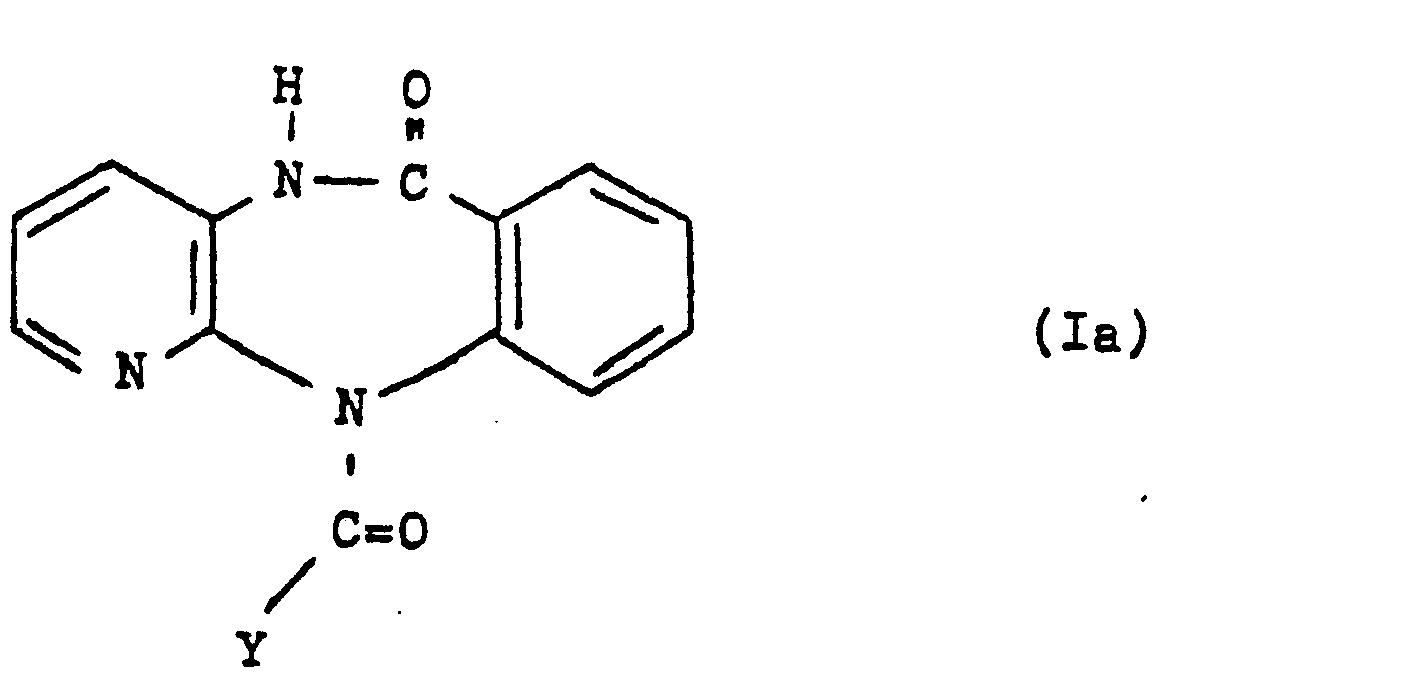


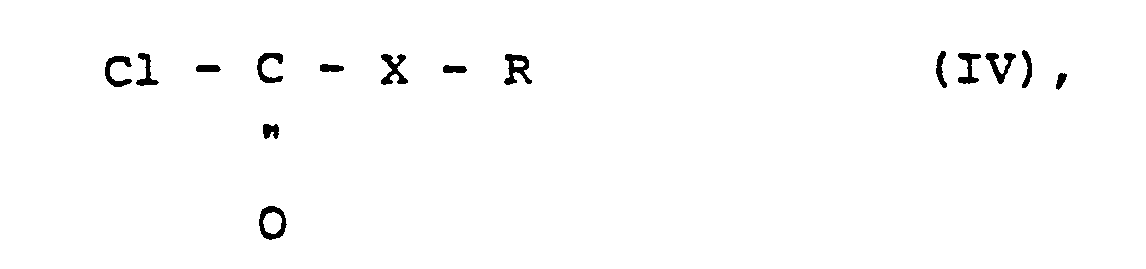


of their diastereomeric and enantiomeric forms and of their acid addition salts with inorganic or organic acids, characterized in that
Priority Applications (1)
| Application Number | Priority Date | Filing Date | Title |
|---|---|---|---|
| AT83100679T ATE19777T1 (en) | 1982-02-09 | 1983-01-26 | PYRIDOBENZODIAZEPINONES, PROCESSES FOR THEIR PREPARATION AND PHARMACEUTICALS CONTAINING THESE COMPOUNDS. |
Applications Claiming Priority (2)
| Application Number | Priority Date | Filing Date | Title |
|---|---|---|---|
| DE3204401 | 1982-02-09 | ||
| DE19823204401 DE3204401A1 (en) | 1982-02-09 | 1982-02-09 | PYRIDOBENZODIAZEPINONE, METHOD FOR THE PRODUCTION THEREOF AND MEDICINAL PRODUCTS CONTAINING THESE COMPOUNDS |
Publications (3)
| Publication Number | Publication Date |
|---|---|
| EP0085893A2 true EP0085893A2 (en) | 1983-08-17 |
| EP0085893A3 EP0085893A3 (en) | 1984-03-21 |
| EP0085893B1 EP0085893B1 (en) | 1986-05-14 |
Family
ID=6155156
Family Applications (1)
| Application Number | Title | Priority Date | Filing Date |
|---|---|---|---|
| EP83100679A Expired EP0085893B1 (en) | 1982-02-09 | 1983-01-26 | Pyridobenzodiazepinones, process for their preparation and pharmaceutical compositions containing them |
Country Status (10)
| Country | Link |
|---|---|
| US (1) | US4424222A (en) |
| EP (1) | EP0085893B1 (en) |
| JP (1) | JPS58148883A (en) |
| AT (1) | ATE19777T1 (en) |
| AU (1) | AU556962B2 (en) |
| DE (2) | DE3204401A1 (en) |
| ES (2) | ES519605A0 (en) |
| NZ (1) | NZ203216A (en) |
| PH (1) | PH24504A (en) |
| ZA (1) | ZA83857B (en) |
Cited By (1)
| Publication number | Priority date | Publication date | Assignee | Title |
|---|---|---|---|---|
| EP0213293A3 (en) * | 1985-06-27 | 1988-06-08 | Dr. Karl Thomae Gmbh | 11-substituted 5,11-dihydro-6h-pyridoû2,3-b¨û1,4¨benzodiazepin-6-ones, process for their preparation and medicaments containing them |
Families Citing this family (4)
| Publication number | Priority date | Publication date | Assignee | Title |
|---|---|---|---|---|
| DE3643666A1 (en) * | 1986-12-20 | 1988-06-30 | Thomae Gmbh Dr K | NEW CONDENSED DIAZEPINONE, METHOD FOR THE PRODUCTION THEREOF, AND MEDICINAL PRODUCTS CONTAINING THESE COMPOUNDS |
| DE3820347A1 (en) * | 1988-06-15 | 1989-12-21 | Thomae Gmbh Dr K | USE OF 11-SUBSTITUTED 5,11-DIHYDRO-6H-PYRIDO (2,3-B) (1,4) BENZODIAZEPIN-6-ONEN FOR THE TREATMENT OF BRADYCARDIES AND BRADYARRHYTHMIES IN THE HUMAN AND VETERINARY MEDICINE |
| CA2573673A1 (en) | 2004-07-16 | 2006-01-26 | Proteosys Ag | Muscarinic antagonists with parp and sir modulating activity as cytoprotective agents |
| WO2010081823A1 (en) | 2009-01-13 | 2010-07-22 | Proteosys Ag | Pirenzepine as otoprotective agent |
Family Cites Families (3)
| Publication number | Priority date | Publication date | Assignee | Title |
|---|---|---|---|---|
| DE1795183B1 (en) | 1968-08-20 | 1972-07-20 | Thomae Gmbh Dr K | 5,11-dihydro-6H-pyrido [2,3-b] [1,4] benzodiazepin-6-one derivatives and drugs |
| DE2644121A1 (en) * | 1976-09-30 | 1978-04-06 | Thomae Gmbh Dr K | NEW PYRIDOBENZODIAZEPINONE, METHOD FOR THE PRODUCTION THEREOF AND MEDICINAL PRODUCTS CONTAINING IT |
| DE2724434A1 (en) * | 1977-05-31 | 1979-02-22 | Thomae Gmbh Dr K | NEW, 11-POSITION SUBSTITUTED 5,11-DIHYDRO-6H-PYRIDO SQUARE CLAMP ON 2.3-B SQUARE CLAMP ON SQUARE CLAMP ON 1.4 SQUARED CLAMP ON BENZODIAZEPIN-6-ONE, METHOD FOR THEIR PRODUCTION AND THESE CONNECTIONS DRUG |
-
1982
- 1982-02-09 DE DE19823204401 patent/DE3204401A1/en not_active Withdrawn
-
1983
- 1983-01-26 AT AT83100679T patent/ATE19777T1/en active
- 1983-01-26 DE DE8383100679T patent/DE3363450D1/en not_active Expired
- 1983-01-26 EP EP83100679A patent/EP0085893B1/en not_active Expired
- 1983-01-31 US US06/462,183 patent/US4424222A/en not_active Expired - Fee Related
- 1983-02-07 PH PH28500A patent/PH24504A/en unknown
- 1983-02-08 ES ES519605A patent/ES519605A0/en active Granted
- 1983-02-08 ZA ZA83857A patent/ZA83857B/en unknown
- 1983-02-08 AU AU11231/83A patent/AU556962B2/en not_active Ceased
- 1983-02-08 JP JP58019521A patent/JPS58148883A/en active Granted
- 1983-02-08 NZ NZ203216A patent/NZ203216A/en unknown
- 1983-10-19 ES ES526556A patent/ES8405794A1/en not_active Expired
Cited By (1)
| Publication number | Priority date | Publication date | Assignee | Title |
|---|---|---|---|---|
| EP0213293A3 (en) * | 1985-06-27 | 1988-06-08 | Dr. Karl Thomae Gmbh | 11-substituted 5,11-dihydro-6h-pyridoû2,3-b¨û1,4¨benzodiazepin-6-ones, process for their preparation and medicaments containing them |
Also Published As
| Publication number | Publication date |
|---|---|
| ES526556A0 (en) | 1984-06-16 |
| ATE19777T1 (en) | 1986-05-15 |
| DE3363450D1 (en) | 1986-06-19 |
| JPH0373550B2 (en) | 1991-11-22 |
| JPS58148883A (en) | 1983-09-05 |
| ES8405794A1 (en) | 1984-06-16 |
| DE3204401A1 (en) | 1983-08-11 |
| EP0085893A3 (en) | 1984-03-21 |
| US4424222A (en) | 1984-01-03 |
| NZ203216A (en) | 1985-09-13 |
| AU1123183A (en) | 1983-08-18 |
| EP0085893B1 (en) | 1986-05-14 |
| ZA83857B (en) | 1984-10-31 |
| ES8403482A1 (en) | 1984-03-16 |
| ES519605A0 (en) | 1984-03-16 |
| AU556962B2 (en) | 1986-11-27 |
| PH24504A (en) | 1990-07-18 |
Similar Documents
| Publication | Publication Date | Title |
|---|---|---|
| EP0149840B1 (en) | Substituted 5,11-dihydro-6H-dibenz[b,e]azepin-6-ones, method for their preparation and these compounds containing medicines | |
| DD300105A5 (en) | New R (-) 3-quinuliclidinol derivatives | |
| EP0085899B1 (en) | Pyridobenzodiazepinones, process for their preparation and pharmaceutical compositions containing them | |
| EP0085892B1 (en) | Substituted benzodiazepinones, process for their preparation and medicines containing them | |
| EP0044989A1 (en) | 5-Subsituted 5,10-dihydro-11H-dibenzo(b,e)(1,4)diazepin-11-ones, process for preparing them and medicaments containing them | |
| CH637653A5 (en) | 5,11-DIHYDRO-6H-PYRIDO (2,3-B) (1,4) BENZODIAZEPINE-6-ONE SUBSTITUTED IN 11-POSITION, METHOD FOR THE PRODUCTION THEREOF AND MEDICINAL PRODUCTS CONTAINING THESE COMPOUNDS. | |
| EP0085893B1 (en) | Pyridobenzodiazepinones, process for their preparation and pharmaceutical compositions containing them | |
| EP0213293B1 (en) | 11-Substituted 5,11-dihydro-6H-pyrido[2,3-b][1,4]benzodiazepin-6-ones, process for their preparation and medicaments containing them | |
| EP0254955A2 (en) | Substituted pyrido[2,3-b][1,4]benzodiazepin-6-ones, process for their preparation and medicaments containing these compounds | |
| EP0086981B1 (en) | Substituted thienobenzodiazepinones, process for their preparation and medicines containing these compounds | |
| EP0086982A1 (en) | Substituted thienobenzodiazepinones, process for preparing them and medicines containing them | |
| EP0330756B1 (en) | Thienotricyclics for the treatment of bronchial diseases | |
| EP0086980B1 (en) | Substituted dibenzodiazepinones, process for their preparation and medicines containing these compounds | |
| EP0369286A2 (en) | Dibenzozepine derivatives for treating acute and chronic obstructive diseases of the respiratory tract | |
| DE2724478A1 (en) | NEW, 11-POSITION SUBSTITUTED 5,11-DIHYDRO-6H-PYRIDO SQUARE CLAMP ON 2.3 SQUARE BRACKET TO SQUARE BRACKET ON 1.4 SQUARE BRACKET TO BENZODIAZEPIN-6-ONE, THE PROCESS FOR THEIR PRODUCTION AND THESE JOINTS DRUG | |
| EP0346745A1 (en) | Condensed diazepinones, processes for their preparation and pharmaceutical preparations containing them | |
| AT390062B (en) | METHOD FOR PRODUCING NEW TRIFLUORMETHYL SUBSTITUTED TETRACYCLIC CHINAZOLINONES AND THEIR ACID ADDITION SALTS | |
| DE3523002A1 (en) | NEW 5,11-DIHYDRO-6H-PYRIDO (2,3-B) (1,4) BENZODIAZEPINE-6-ONE SUBSTITUTED IN 11-POSITION, METHOD FOR THE PRODUCTION THEREOF AND MEDICINAL PRODUCTS CONTAINING THESE COMPOUNDS | |
| DD284014A5 (en) | METHOD FOR PRODUCING CONDENSED DIAZEPINONES | |
| DD284015A5 (en) | METHOD FOR PRODUCING CONDENSED DIAZEPINONES | |
| DE3611097A1 (en) | Novel 11-substituted 5,11-dihydro-6H-pyrido[2,3-b][1,4]benzo-diazepin-6-one, processes for its preparation and medicaments containing this compound | |
| DE3800986A1 (en) | Novel 4-substituted 4,9-dihydro-10H-thieno-[3,4b][1,5]benzo-diazepin-10-ones, process for their preparation and medicaments containing these compounds |
Legal Events
| Date | Code | Title | Description |
|---|---|---|---|
| PUAI | Public reference made under article 153(3) epc to a published international application that has entered the european phase |
Free format text: ORIGINAL CODE: 0009012 |
|
| AK | Designated contracting states |
Designated state(s): AT BE CH DE FR GB IT LI LU NL SE |
|
| PUAL | Search report despatched |
Free format text: ORIGINAL CODE: 0009013 |
|
| AK | Designated contracting states |
Designated state(s): AT BE CH DE FR GB IT LI LU NL SE |
|
| 17P | Request for examination filed |
Effective date: 19840419 |
|
| GRAA | (expected) grant |
Free format text: ORIGINAL CODE: 0009210 |
|
| AK | Designated contracting states |
Kind code of ref document: B1 Designated state(s): AT BE CH DE FR GB IT LI LU NL SE |
|
| REF | Corresponds to: |
Ref document number: 19777 Country of ref document: AT Date of ref document: 19860515 Kind code of ref document: T |
|
| REF | Corresponds to: |
Ref document number: 3363450 Country of ref document: DE Date of ref document: 19860619 |
|
| ITF | It: translation for a ep patent filed | ||
| ET | Fr: translation filed | ||
| PLBE | No opposition filed within time limit |
Free format text: ORIGINAL CODE: 0009261 |
|
| STAA | Information on the status of an ep patent application or granted ep patent |
Free format text: STATUS: NO OPPOSITION FILED WITHIN TIME LIMIT |
|
| 26N | No opposition filed | ||
| PGFP | Annual fee paid to national office [announced via postgrant information from national office to epo] |
Ref country code: LU Payment date: 19911127 Year of fee payment: 10 Ref country code: FR Payment date: 19911127 Year of fee payment: 10 |
|
| PGFP | Annual fee paid to national office [announced via postgrant information from national office to epo] |
Ref country code: SE Payment date: 19911209 Year of fee payment: 10 |
|
| PGFP | Annual fee paid to national office [announced via postgrant information from national office to epo] |
Ref country code: AT Payment date: 19920103 Year of fee payment: 10 |
|
| PGFP | Annual fee paid to national office [announced via postgrant information from national office to epo] |
Ref country code: BE Payment date: 19920114 Year of fee payment: 10 |
|
| PGFP | Annual fee paid to national office [announced via postgrant information from national office to epo] |
Ref country code: GB Payment date: 19920117 Year of fee payment: 10 |
|
| ITTA | It: last paid annual fee | ||
| PGFP | Annual fee paid to national office [announced via postgrant information from national office to epo] |
Ref country code: NL Payment date: 19920131 Year of fee payment: 10 |
|
| PGFP | Annual fee paid to national office [announced via postgrant information from national office to epo] |
Ref country code: DE Payment date: 19920208 Year of fee payment: 10 |
|
| PGFP | Annual fee paid to national office [announced via postgrant information from national office to epo] |
Ref country code: CH Payment date: 19920226 Year of fee payment: 10 |
|
| EPTA | Lu: last paid annual fee | ||
| PG25 | Lapsed in a contracting state [announced via postgrant information from national office to epo] |
Ref country code: GB Effective date: 19930126 Ref country code: LU Free format text: LAPSE BECAUSE OF NON-PAYMENT OF DUE FEES Effective date: 19930126 Ref country code: AT Effective date: 19930126 |
|
| PG25 | Lapsed in a contracting state [announced via postgrant information from national office to epo] |
Ref country code: SE Effective date: 19930127 |
|
| PG25 | Lapsed in a contracting state [announced via postgrant information from national office to epo] |
Ref country code: BE Effective date: 19930131 Ref country code: LI Effective date: 19930131 Ref country code: CH Effective date: 19930131 |
|
| BERE | Be: lapsed |
Owner name: DR. KARL THOMAE G.M.B.H. Effective date: 19930131 |
|
| PG25 | Lapsed in a contracting state [announced via postgrant information from national office to epo] |
Ref country code: NL Effective date: 19930801 |
|
| NLV4 | Nl: lapsed or anulled due to non-payment of the annual fee | ||
| GBPC | Gb: european patent ceased through non-payment of renewal fee |
Effective date: 19930126 |
|
| PG25 | Lapsed in a contracting state [announced via postgrant information from national office to epo] |
Ref country code: FR Effective date: 19930930 |
|
| REG | Reference to a national code |
Ref country code: CH Ref legal event code: PL |
|
| PG25 | Lapsed in a contracting state [announced via postgrant information from national office to epo] |
Ref country code: DE Effective date: 19931001 |
|
| REG | Reference to a national code |
Ref country code: FR Ref legal event code: ST |
|
| EUG | Se: european patent has lapsed |
Ref document number: 83100679.6 Effective date: 19930810 |