EP0007293B1 - 2,6-dimethyl-4-(2,3-dichlorophenyl)-1,4-dihydropyridine-3,5-dicarboxylic acid-3-methyl ester-5-ethyl ester having hypotensive properties, process for its preparation and pharmaceutical preparations containing it - Google Patents
2,6-dimethyl-4-(2,3-dichlorophenyl)-1,4-dihydropyridine-3,5-dicarboxylic acid-3-methyl ester-5-ethyl ester having hypotensive properties, process for its preparation and pharmaceutical preparations containing it Download PDFInfo
- Publication number
- EP0007293B1 EP0007293B1 EP79850057A EP79850057A EP0007293B1 EP 0007293 B1 EP0007293 B1 EP 0007293B1 EP 79850057 A EP79850057 A EP 79850057A EP 79850057 A EP79850057 A EP 79850057A EP 0007293 B1 EP0007293 B1 EP 0007293B1
- Authority
- EP
- European Patent Office
- Prior art keywords
- sub
- compound
- formula
- reacted
- formation
- Prior art date
- Legal status (The legal status is an assumption and is not a legal conclusion. Google has not performed a legal analysis and makes no representation as to the accuracy of the status listed.)
- Expired
Links
- 0 COC(C=C*N)=[O+] Chemical compound COC(C=C*N)=[O+] 0.000 description 5
- YWYIINBFAVBPAE-ZZXKWVIFSA-N C/C(/CCN)=C\C#[O] Chemical compound C/C(/CCN)=C\C#[O] YWYIINBFAVBPAE-ZZXKWVIFSA-N 0.000 description 1
- WNUWTCGCSOOIQV-UHFFFAOYSA-N CO[NH+](NN=O)[O-] Chemical compound CO[NH+](NN=O)[O-] WNUWTCGCSOOIQV-UHFFFAOYSA-N 0.000 description 1
- NVLHGZIXTRYOKT-UHFFFAOYSA-N Cc1cccc(Cl)c1C Chemical compound Cc1cccc(Cl)c1C NVLHGZIXTRYOKT-UHFFFAOYSA-N 0.000 description 1
- LLMLNAVBOAMOEE-UHFFFAOYSA-N O=Cc1cccc(Cl)c1Cl Chemical compound O=Cc1cccc(Cl)c1Cl LLMLNAVBOAMOEE-UHFFFAOYSA-N 0.000 description 1
Classifications
-
- C—CHEMISTRY; METALLURGY
- C07—ORGANIC CHEMISTRY
- C07D—HETEROCYCLIC COMPOUNDS
- C07D211/00—Heterocyclic compounds containing hydrogenated pyridine rings, not condensed with other rings
- C07D211/04—Heterocyclic compounds containing hydrogenated pyridine rings, not condensed with other rings with only hydrogen or carbon atoms directly attached to the ring nitrogen atom
- C07D211/80—Heterocyclic compounds containing hydrogenated pyridine rings, not condensed with other rings with only hydrogen or carbon atoms directly attached to the ring nitrogen atom having two double bonds between ring members or between ring members and non-ring members
- C07D211/84—Heterocyclic compounds containing hydrogenated pyridine rings, not condensed with other rings with only hydrogen or carbon atoms directly attached to the ring nitrogen atom having two double bonds between ring members or between ring members and non-ring members with hetero atoms or with carbon atoms having three bonds to hetero atoms, with at the most one bond to halogen directly attached to ring carbon atoms
- C07D211/90—Carbon atoms having three bonds to hetero atoms with at the most one bond to halogen
-
- A—HUMAN NECESSITIES
- A61—MEDICAL OR VETERINARY SCIENCE; HYGIENE
- A61P—SPECIFIC THERAPEUTIC ACTIVITY OF CHEMICAL COMPOUNDS OR MEDICINAL PREPARATIONS
- A61P9/00—Drugs for disorders of the cardiovascular system
- A61P9/08—Vasodilators for multiple indications
-
- A—HUMAN NECESSITIES
- A61—MEDICAL OR VETERINARY SCIENCE; HYGIENE
- A61P—SPECIFIC THERAPEUTIC ACTIVITY OF CHEMICAL COMPOUNDS OR MEDICINAL PREPARATIONS
- A61P9/00—Drugs for disorders of the cardiovascular system
- A61P9/12—Antihypertensives
Definitions
- the present invention relates to a new compound having valuable antihypertensive properties, process for its preparation, method for lowering blood pressure in mammals including man, and pharmaceutical preparations containing said compound.
- the object of the present invention is to obtain a new antihypertensive agent, which lower blood pressure in the peripheral vessels in lower doses than it lower blood pressure in the heart vessels, by selective dilation of peripheral blood vessels.
- German Patent Specification S/N 2,629,892 that compounds of the similar structure possess cardiovascular properties. According to the main concept of said patent specification symmetric compounds with regard to the 3,5-dicarboxylic acid ester functions are disclosed.
- Agents which relax vascular smooth muscle may be used for treatment of arterial hypertension since such patients suffer from elevated peripheral resistance to blood flow.
- Compounds which interfere with vascular smooth muscle activity have been used clinically for several years. However, their usefulness has often been limited due to insufficient efficacy and/or due to adverse effects.
- Side effects outside the cardiovascular system have often been connected with properties of the agent not relevant to the smooth muscle relaxant effect.
- the vasodilating agents have also exerted a negative effect on the contractility of the heart.
- the substance is intended to be administered orally or parenterally for acute and chronic treatment of above mentioned cardiovascular disorders.
- the new compound is obtained according to methods known per se.
- the new compounds may, depending on the choice of starting materials and process, be present as optical antipodes or racemate, or, if it contains at least two asymmetric carbon atoms, be present as an isomer mixture (racemate mixture).
- the isomer mixture (racemate mixture) obtained may, depending on physical-chemical differences of the components, be separated into the two stereoisomeric (diastereomeric) pure racemates e.g. by means of chromatography and/or fractional crystallization.
- the racemate obtained can be separated according to known methods, e.g., by means of recrystallization from an optically active solvent, by means of microorganisms, or by a reaction with optically active acids forming salts of the compound, and separating the salts thus obtained, e.g. by means of the different solubility of the diastereomeric salts, from which the antipodes may be set free by the action of a suitable agent.
- suitable optically active acids are e.g. the L- and D-forms of tartaric acid, di-o-tolyltartaric acid, malic acid, mandelic acid, camphorsulfonic acid or quinic acid.
- the more active part of the two antipodes is isolated.
- the starting materials are known or may, if they are novel, be obtained according to processes known per se.
- the compound of the invention is usually administered orally, or rectally in the form of a pharmaceutical preparation, which contains the active component as free base in combination with a pharmaceutically acceptable carrier.
- the carrier may be a solid, semi-solid or liquid diluent or a capsule.
- the amount of active compound is between 0.1 and 99% by weight of the preparation, suitably between 0.5 and 20% by weight in preparations for injection and between 2 and 50% by weight in preparations for oral administration.
- the compound may be mixed with a solid, pulverulent carrier, as e.g., with lactose, saccharose, sorbitol, mannitol, starch, such as potatoe starch, corn starch, amylopectin, cellulose derivatives or gelatine, as well as with an antifriction agent such as magnesium stearate, calcium stearate, polyethyleneglycol waxes or the like, and be pressed into tablets.
- a solid, pulverulent carrier as e.g., with lactose, saccharose, sorbitol, mannitol, starch, such as potatoe starch, corn starch, amylopectin, cellulose derivatives or gelatine, as well as with an antifriction agent such as magnesium stearate, calcium stearate, polyethyleneglycol waxes or the like, and be pressed into tablets.
- the above prepared core may be coated with concentrated solution of sugar, which solution may contain, e.g., gum arabicum, gelatine, talc, titandioxide or the like.
- the tablets may be coated with a laquer dissolved in an easily volatile organic solvent or mixture of solvents.
- a dye may be added in order to easily distinguish between tablets with different active compounds or with different amounts of the active compound present.
- soft gelatine capsules which consist of gelatine and, e.g., glycerine, or in the preparation of similar closed capsules, the active compound is mixed with a vegetable oil.
- Hard gelatine capsules may contain granules of the active compound in combination with a solid, pulverulent carrier as lactose, saccharose, sorbitol, mannitol, starch (as, e.g., potatoe starch, corn starch or amylopectin), cellulose derivatives or gelatine.
- Dosage units for rectal administration may be prepared in the form of suppositories, which contain the active substance in a mixture with a neutral fat base, or they may be prepared in the form of gelatine-rectal capsules which contain the active substance in a mixture of vegetable oil or paraffin oil.
- Liquid preparations for oral administration may be present in the form of sirups or suspensions, e.g. solutions containing from about 0.2% by weight to about 20% by weight of the active substance described, glycerol and propylene glycol. If desired, such liquid preparations may contain colouring agents, flavouring agents, saccharine and carboxymethylcellulose as a thickening agent.
- the granules are sieved so that the particle size wanted is obtained. Under certain circumstances powder has to be removed.
- the cleaned tablet punching machine is provided with a certain set of punches and dies, whereupon the suitable adjustment for the weight of the tablets and the degree of compression is tested out.
- the weight of the tablet is decisive for the size of the dose in each tablet and is calculated starting from the amount of therapeutic agent in the granules.
- the degree of compression affects the size of the tablet, its strength and its ability of disintegrate in water. Especially with regard to the two later properties the choice of compression pressure (0.5 to 5 ton) means something of a compromise.
- the right adjustment is set, the preparation of tablets is started and is carried out with a rate of 20.000 to 200.000 tablets per hour. The pressing of the tablets requires different times and depends on the size of the batch.
- the tablets are freed from adhering pulver in a specific apparatus and are then stored in closed packages until they are delivered.
- the tablets are usually packed by machines having an electronic counting device.
- the different types of packages consist of glass or plastic gallipots but also boxes, tubes and specific dosage adapted packages.
- the daily dose of the active substance varies and is dependent on the type of administration, but as a general rule it is 100 to 1000 mg/day of active substance at peroral administration.
- a syrup containing 2% (weight per volume) of active substance was prepared from the following ingredients:
- the antihypertensive effect of the compound was tested in conscious, unrestrained spontaneously hypertensive rats (SHR) of the Okamoto strain.
- the animals had been prepared by prior implantation of indwelling catheters in the abdominal aorta via the femoral artery.
- Mean arterial blood pressure (MABP) and heart rate was continuously monitored.
- MABP Mean arterial blood pressure
- the compound under study was administered by oral intubation at 2 hour intervals, suspended in methocel solution (5 mvkg bodyweight).
- the cumulated doses were 1, 5 and 25 Umoles/kg bodyweight.
- the antihypertensive response i.e. the BP reduction to each dose, was expressed as a percentage of the initial control BP level and plotted against the dose on a logarithmic scale. The dose which would give 20 per cent BP reduction was then determined by interpolation. The results are shown in table I.
- the specificity towards smooth muscle relaxation was examined as follows: The isolated portal vein preparation of Wistar rats was mounted in an organ bath together with a paced isolated papillary heart muscle preparation of the same animal. The integrated contractile activity of the portal vein smooth muscle and the peak force amplitude of the papillary, myocardial, preparation were recorded. The respective activities during a 30 min control period were set as 100 per cent and the ensuing activities under the influence of the agent under study were expressed as a percentage thereof. The agent was administered at 10 min intervals and the potency for vasodilation(-Iog ED so of portal vein) and that of myocardial depression (-log ED 50 of papillary muscle) were determined by interpolation from the concentration-effect relationships determined in each experiment.
- the compound of the invention was compared with Nifedipin 12,6-dimethyl-4-(2-nitrophenyl)-1,4-dihydropyridine-3,5-dicarboxylic acid-3,5-dimethylester).
Landscapes
- Chemical & Material Sciences (AREA)
- Organic Chemistry (AREA)
- Health & Medical Sciences (AREA)
- Life Sciences & Earth Sciences (AREA)
- General Health & Medical Sciences (AREA)
- Cardiology (AREA)
- Chemical Kinetics & Catalysis (AREA)
- General Chemical & Material Sciences (AREA)
- Medicinal Chemistry (AREA)
- Nuclear Medicine, Radiotherapy & Molecular Imaging (AREA)
- Bioinformatics & Cheminformatics (AREA)
- Pharmacology & Pharmacy (AREA)
- Engineering & Computer Science (AREA)
- Animal Behavior & Ethology (AREA)
- Heart & Thoracic Surgery (AREA)
- Public Health (AREA)
- Veterinary Medicine (AREA)
- Hydrogenated Pyridines (AREA)
- Pharmaceuticals Containing Other Organic And Inorganic Compounds (AREA)
- Organic Low-Molecular-Weight Compounds And Preparation Thereof (AREA)
- Pyridine Compounds (AREA)
- Steroid Compounds (AREA)
- Medicines Containing Material From Animals Or Micro-Organisms (AREA)
- Peptides Or Proteins (AREA)
- Plural Heterocyclic Compounds (AREA)
Abstract
Description
- The present invention relates to a new compound having valuable antihypertensive properties, process for its preparation, method for lowering blood pressure in mammals including man, and pharmaceutical preparations containing said compound.
- The object of the present invention is to obtain a new antihypertensive agent, which lower blood pressure in the peripheral vessels in lower doses than it lower blood pressure in the heart vessels, by selective dilation of peripheral blood vessels.
- Compounds of the formula

- In the US Patent Specification S/N 3,799,936 it has been shown that asymmetric 2,6-dimethyl-4(substituted phenyl)-1,4-dihydropyridine-3,5-dicarboxylates possess cardiovascular properties. This US Patent Specification corresponds mainly to the German Patent Specifications 2,117,572 and 2,117,573 with regard to the compounds disclosed.
- It is further known from German Patent Specification S/N 2,629,892 that compounds of the similar structure possess cardiovascular properties. According to the main concept of said patent specification symmetric compounds with regard to the 3,5-dicarboxylic acid ester functions are disclosed.
- Agents which relax vascular smooth muscle may be used for treatment of arterial hypertension since such patients suffer from elevated peripheral resistance to blood flow. Compounds which interfere with vascular smooth muscle activity have been used clinically for several years. However, their usefulness has often been limited due to insufficient efficacy and/or due to adverse effects. Side effects (outside the cardiovascular system) have often been connected with properties of the agent not relevant to the smooth muscle relaxant effect. Sometimes the vasodilating agents have also exerted a negative effect on the contractility of the heart.
- It appears that the development of specific smooth muscle relaxants devoid of adverse effects, can offer a therapeutic advantage in arterial hypertension and for treatment of ischaemic heart disease and of the acutely failing heart. Furthermore, such agents can also be useful in treatment of other conditions with excessive activation of smooth muscle of the visceral type.
- It has now surprisingly been shown that the compound of the formula I
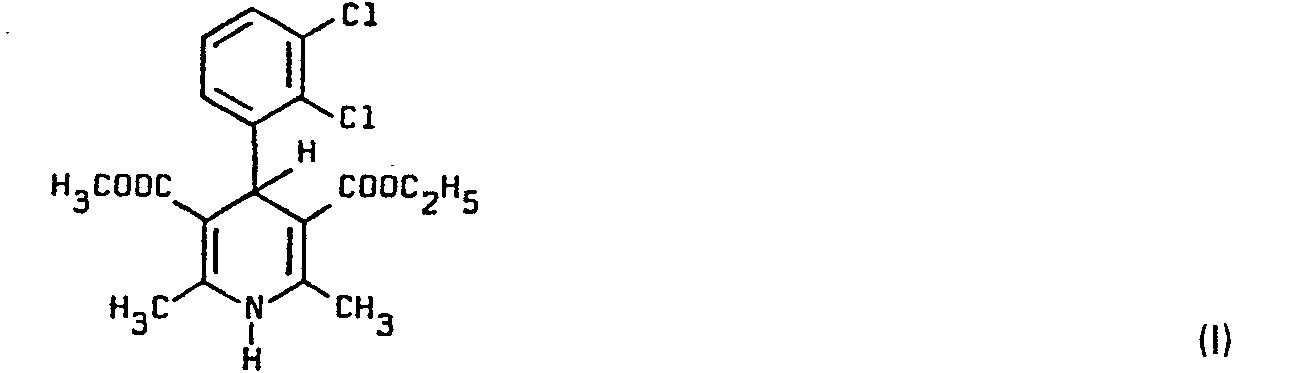
- The substance is intended to be administered orally or parenterally for acute and chronic treatment of above mentioned cardiovascular disorders.
- The biological effects of the new compound have been tested, and the different tests carried out will be shown and explained below.
- The new compound is obtained according to methods known per se. Thus,
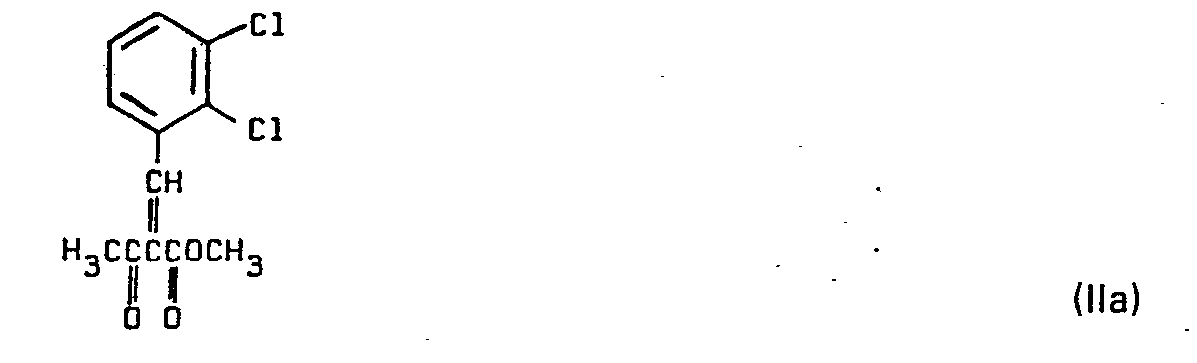
- a1) a compound of formula Ila

- a2) a compound of formula IIb


- b1) a compound of formula IV


- b2) a compound of formula IV above is reacted with the compounds of formulas Vb and Vlb


- c') a compound of formula Ila is reacted with a compound of the formula Via

- c2) a compound of formula Ilb is reacted with a compound of formula Vlb

- d) a compound of formula IV above is reacted with the compounds of the formulas Va and Vb above, in the presence of ammonia to the formation of a compound of the formula I.
- The new compounds may, depending on the choice of starting materials and process, be present as optical antipodes or racemate, or, if it contains at least two asymmetric carbon atoms, be present as an isomer mixture (racemate mixture).
- The isomer mixture (racemate mixture) obtained may, depending on physical-chemical differences of the components, be separated into the two stereoisomeric (diastereomeric) pure racemates e.g. by means of chromatography and/or fractional crystallization.
- The racemate obtained can be separated according to known methods, e.g., by means of recrystallization from an optically active solvent, by means of microorganisms, or by a reaction with optically active acids forming salts of the compound, and separating the salts thus obtained, e.g. by means of the different solubility of the diastereomeric salts, from which the antipodes may be set free by the action of a suitable agent. Suitably useable optically active acids are e.g. the L- and D-forms of tartaric acid, di-o-tolyltartaric acid, malic acid, mandelic acid, camphorsulfonic acid or quinic acid. Preferably the more active part of the two antipodes is isolated.
- The starting materials are known or may, if they are novel, be obtained according to processes known per se.
- In clinical use the compound of the invention is usually administered orally, or rectally in the form of a pharmaceutical preparation, which contains the active component as free base in combination with a pharmaceutically acceptable carrier.
- Thus the mentioning of the new compound of the invention is here related to the free amine base even if the compound is generally or specifically described, provided that the context in which such expressions are used, e.g., in the example with this broad meaning should not correspond. The carrier may be a solid, semi-solid or liquid diluent or a capsule. These pharmaceutical preparations are a further object of the invention.
- Usually the amount of active compound is between 0.1 and 99% by weight of the preparation, suitably between 0.5 and 20% by weight in preparations for injection and between 2 and 50% by weight in preparations for oral administration.
- In the preparation of pharmaceutical preparations containing the compounds of the present invention in the form of dosage units for oral administration the compound may be mixed with a solid, pulverulent carrier, as e.g., with lactose, saccharose, sorbitol, mannitol, starch, such as potatoe starch, corn starch, amylopectin, cellulose derivatives or gelatine, as well as with an antifriction agent such as magnesium stearate, calcium stearate, polyethyleneglycol waxes or the like, and be pressed into tablets. If coated tablets are wanted, the above prepared core may be coated with concentrated solution of sugar, which solution may contain, e.g., gum arabicum, gelatine, talc, titandioxide or the like. Furthermore, the tablets may be coated with a laquer dissolved in an easily volatile organic solvent or mixture of solvents. To this coating a dye may be added in order to easily distinguish between tablets with different active compounds or with different amounts of the active compound present.
- In the preparation of soft gelatine capsules (pearl-shaped, closed capsules), which consist of gelatine and, e.g., glycerine, or in the preparation of similar closed capsules, the active compound is mixed with a vegetable oil. Hard gelatine capsules may contain granules of the active compound in combination with a solid, pulverulent carrier as lactose, saccharose, sorbitol, mannitol, starch (as, e.g., potatoe starch, corn starch or amylopectin), cellulose derivatives or gelatine.
- Dosage units for rectal administration may be prepared in the form of suppositories, which contain the active substance in a mixture with a neutral fat base, or they may be prepared in the form of gelatine-rectal capsules which contain the active substance in a mixture of vegetable oil or paraffin oil.
- Liquid preparations for oral administration may be present in the form of sirups or suspensions, e.g. solutions containing from about 0.2% by weight to about 20% by weight of the active substance described, glycerol and propylene glycol. If desired, such liquid preparations may contain colouring agents, flavouring agents, saccharine and carboxymethylcellulose as a thickening agent.
- The preparation of pharmaceutical tablets for peroral use is carried out in accordance with the following method:
- The solid substances included are ground or sieved to a certain particle size. The binding agent is homogenized and suspended in a certain amount of solvent. The therapeutic compound and necessary auxiliary agents are mixed with continuous and constant mixing with the binding agent solution and are moistened so that the solution is uniformly divided in the mass without overmoistening any parts. The amount of solvent is usually so adapted that the mass obtains a consistency reminding of wet snow. The moistening of the pulverulent mixture with the binding agent solution causes the particles to gather together slightly to aggregates and the real granulating process is carried out in such a way that the mass is pressed through a sieve in the form of a net of stainless steel having a mesh size of about 1 mm. The mass is then placed in thin layers on a tray to be dried in a drying cabinet. This drying takes place during 10 hours and has to be standardized carefully as the damp degree of the granulate is of outmost importance for the following process and for the feature of the tablets. Drying in a fluid bed may possibly be used. In this case the mass is not put on a tray but is poured into a container having a net bottom.
- After the drying step the granules are sieved so that the particle size wanted is obtained. Under certain circumstances powder has to be removed.
- To the so called final mixture, disintegrating, antifriction agents and antiadhesive agents are added. After this mixture the mass shall have its right composition for the tabletting step.
- The cleaned tablet punching machine is provided with a certain set of punches and dies, whereupon the suitable adjustment for the weight of the tablets and the degree of compression is tested out. The weight of the tablet is decisive for the size of the dose in each tablet and is calculated starting from the amount of therapeutic agent in the granules. The degree of compression affects the size of the tablet, its strength and its ability of disintegrate in water. Especially with regard to the two later properties the choice of compression pressure (0.5 to 5 ton) means something of a compromise. When the right adjustment is set, the preparation of tablets is started and is carried out with a rate of 20.000 to 200.000 tablets per hour. The pressing of the tablets requires different times and depends on the size of the batch.
- The tablets are freed from adhering pulver in a specific apparatus and are then stored in closed packages until they are delivered.
- Many tablets, especially those which are rough or bitter, are coated with a coating. This means that they are coated with a layer of sugar or some other suitable coating.
- The tablets are usually packed by machines having an electronic counting device. The different types of packages consist of glass or plastic gallipots but also boxes, tubes and specific dosage adapted packages.
- The daily dose of the active substance varies and is dependent on the type of administration, but as a general rule it is 100 to 1000 mg/day of active substance at peroral administration.
- The following illustrates the principle and the adaptation of invention, however, without being limited thereto. Temperature is given in degree Celsius.
- Preparation of 2,6-dimethyl-4-(2,3-dichlorophenyl)-1,4-dihydropyridine-3,5-dicarboxylic acid-3-methylester-5-ethylester.
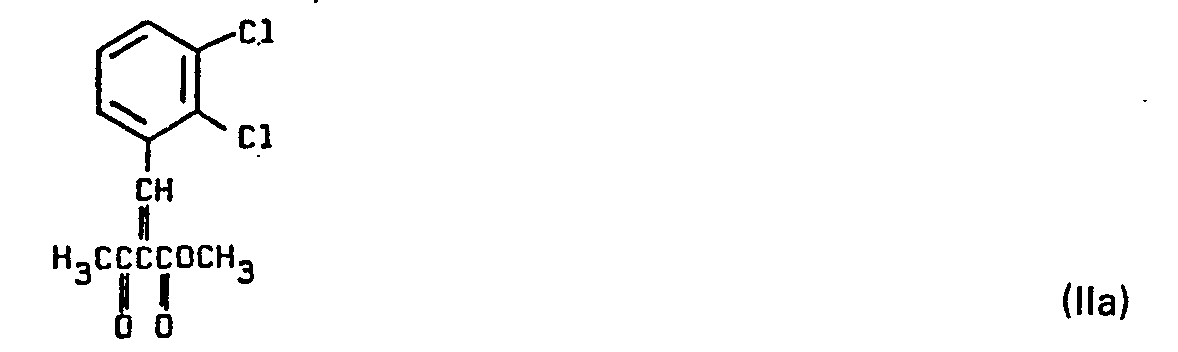
- 2.87 g of 2,3-dichlorobenzylideneacetylacetic acid-methylester and 1.3 g of 3-aminocrotonic acid ethylester were dissolved in 10 mls of t.-butanol. The reaction mixture was allowed to stand at ambient temperature for 4 days, whereupon the t.-butanol was evaporated and the residue was dissolved and was stirred with a small amount of isopropylether, whereby the compound crystallized. After recrystallization from isopropylether pure 2,6-dimethyl-4-(2,3-dichlorophenyl)-1,4-dihydropyridine-3,5-dicarboxylic acid-3-methylester-5-ethylester was obtained. M.p. 145°C. Yield 75%.
- 5.74 g of 2,3-dichlorobenzylideneacetylacetic acid methylester, 2.6 g of ethylacetoacetate and 2.8 mls of conc. NH3 were dissolved in 25 mls tert.-butanol. The reaction mixture was allowed to stand at ambient temperature for 5 days, whereupon the tert.-butanol was evaporated and the residue was dissolved in isopropylether. After cooling the compound crystallized and after recrystallization from isopropylether pure 2,6-dimethyl-4-(2,3-dichlorophenyl)-1,4-dihydropyridine-3,5-dicarboxylic acid-3-methylester-5-ethylester was obtained. M.p. 145°C. Yield 59%.
- A syrup containing 2% (weight per volume) of active substance was prepared from the following ingredients:

- Sugar, saccharine and the active substance were dissolved in 60 g of warm water. After cooling, a glycerine and solution of flavouring agents dissolved in ethanol were added. To the mixture water was then added to 100 ml.
- The antihypertensive effect of the compound was tested in conscious, unrestrained spontaneously hypertensive rats (SHR) of the Okamoto strain. The animals had been prepared by prior implantation of indwelling catheters in the abdominal aorta via the femoral artery. Mean arterial blood pressure (MABP) and heart rate was continuously monitored. After a 2 hour control period the compound under study was administered by oral intubation at 2 hour intervals, suspended in methocel solution (5 mvkg bodyweight). The cumulated doses were 1, 5 and 25 Umoles/kg bodyweight. The antihypertensive response, i.e. the BP reduction to each dose, was expressed as a percentage of the initial control BP level and plotted against the dose on a logarithmic scale. The dose which would give 20 per cent BP reduction was then determined by interpolation. The results are shown in table I.
- The specificity towards smooth muscle relaxation was examined as follows: The isolated portal vein preparation of Wistar rats was mounted in an organ bath together with a paced isolated papillary heart muscle preparation of the same animal. The integrated contractile activity of the portal vein smooth muscle and the peak force amplitude of the papillary, myocardial, preparation were recorded. The respective activities during a 30 min control period were set as 100 per cent and the ensuing activities under the influence of the agent under study were expressed as a percentage thereof. The agent was administered at 10 min intervals and the potency for vasodilation(-Iog EDso of portal vein) and that of myocardial depression (-log ED50 of papillary muscle) were determined by interpolation from the concentration-effect relationships determined in each experiment. A "separation" value was determined for each compound by averaging the differences of the -log ED50 values for vasodilatation and myocardial depression respectively, obtained in the experiments. This logarithmic separation value was transformed into numeric format and entered into table I.
- The compound of the invention was compared with Nifedipin 12,6-dimethyl-4-(2-nitrophenyl)-1,4-dihydropyridine-3,5-dicarboxylic acid-3,5-dimethylester).
-

Claims (11)
- Claims for the Contracting States: BE, GH, DE, FR, GB, IT, LU, NL, SE
- 1. A compound of formula I

- 2. Pharmaceutical preparation, which comprises as an active ingredient a therapeutically effective dose of a antihypertensive compound having vascular smooth muscle relaxing properties which compound has the formula I
-

- 3. A pharmaceutical preparation according to claim 2 wherein the compound of the formula I comprises 0.1 to 99% by weight of the preparation.
- Claims for the Contracting State: AT
- 1. A process for preparing a compound of the formula I
 a') a compound of formula II a
 a2) a compound of formula IIb

- 2. A process for preparing a compound of formula I defined in claim 1, characterized in thatb1) a compound of formula IV


 b2) a compound of formula IV above is reacted with the compounds of formula Vb and IIIb

- 3. A process for preparing a compound of formula I, defined in claim 1, characterized in thatc1) a compound of formula Ila
 c2) a compound of formula IIb

- 4. A process for preparing a compound of formula I, defined in claim 1, characterized in that a compound of formula IV


- 5. A process according to claim 2, wherein 2,6-dimethyl-4-(2,3-dichlorophenyl)-1,4-dihydropyridine-3,5-dicarboxylic acid-3-methylester-5-ethylester is prepared by reacting 2,3-dichlorobenz- aldehyde, 3-aminocrotonic acid ethylester and acetylacetic acid methylester.
Priority Applications (1)
| Application Number | Priority Date | Filing Date | Title |
|---|---|---|---|
| AT79850057T ATE1237T1 (en) | 1978-06-30 | 1979-06-12 | HYPOTENSIVE 2,6DIMETHYL-4-(2,3-DICHLOROPHENYL)-1,4-DIHYDROPYRIDINE |
Applications Claiming Priority (2)
| Application Number | Priority Date | Filing Date | Title |
|---|---|---|---|
| SE7807404 | 1978-06-30 | ||
| SE7807404A SE429652B (en) | 1978-06-30 | 1978-06-30 | 2,6-dimethyl-4- (2,3-dichlorophenyl) -1,4-dihydropyridine-3,5-dicarboxylic acid 3-methyl 5-ethyl ester |
Publications (2)
| Publication Number | Publication Date |
|---|---|
| EP0007293A1 EP0007293A1 (en) | 1980-01-23 |
| EP0007293B1 true EP0007293B1 (en) | 1982-06-23 |
Family
ID=20335348
Family Applications (1)
| Application Number | Title | Priority Date | Filing Date |
|---|---|---|---|
| EP79850057A Expired EP0007293B1 (en) | 1978-06-30 | 1979-06-12 | 2,6-dimethyl-4-(2,3-dichlorophenyl)-1,4-dihydropyridine-3,5-dicarboxylic acid-3-methyl ester-5-ethyl ester having hypotensive properties, process for its preparation and pharmaceutical preparations containing it |
Country Status (24)
| Country | Link |
|---|---|
| US (1) | US4264611A (en) |
| EP (1) | EP0007293B1 (en) |
| JP (1) | JPS559083A (en) |
| AT (1) | ATE1237T1 (en) |
| AU (1) | AU529116B2 (en) |
| BG (1) | BG61420B2 (en) |
| CA (1) | CA1117530A (en) |
| CS (1) | CS241021B2 (en) |
| CY (1) | CY1299A (en) |
| DD (1) | DD144667A5 (en) |
| DE (1) | DE2963150D1 (en) |
| DK (1) | DK148978C (en) |
| FI (1) | FI70573C (en) |
| HK (1) | HK60585A (en) |
| HU (1) | HU178568B (en) |
| IE (1) | IE48650B1 (en) |
| LU (2) | LU88666I2 (en) |
| NL (2) | NL930054I2 (en) |
| NO (3) | NO151965C (en) |
| NZ (1) | NZ190809A (en) |
| SE (1) | SE429652B (en) |
| SG (1) | SG26085G (en) |
| SU (2) | SU856380A3 (en) |
| ZA (1) | ZA792804B (en) |
Families Citing this family (61)
| Publication number | Priority date | Publication date | Assignee | Title |
|---|---|---|---|---|
| DE2935451A1 (en) * | 1979-09-01 | 1981-03-19 | Bayer Ag, 5090 Leverkusen | OPTICALLY ACTIVE 1,4-DIHYDROPYRIDINE, METHOD FOR THE PRODUCTION THEREOF AND THEIR USE AS A MEDICINAL PRODUCT |
| SE7910521L (en) * | 1979-12-20 | 1981-06-21 | Haessle Ab | NEW 2-METHYL-6-SUBSTITUTED-4- (2,3-DISUBSTITUTED PHENYL) -1,4-DIHYDROPYRIDINE-3,5-DIESTERS WITH HYPOTHESIVE PROPERTIES, AND PROCEDURES FOR THEIR PREPARATION AND PHARMACEUTICAL PREPARATION |
| IL68604A0 (en) * | 1982-05-21 | 1983-09-30 | Haessle Ab | Processes for preparing therapeutically active dihydropyridines and intermediates for the processes |
| US4656181A (en) * | 1982-11-24 | 1987-04-07 | Cermol S.A. | Esters of 1,4-dihydropyridines, processes for the preparation of the new esters, and medicaments containing the same |
| DE3307422A1 (en) * | 1983-03-03 | 1984-09-06 | Bayer Ag, 5090 Leverkusen | LIQUID PREPARATIONS OF DIHYDROPYRIDINES, A METHOD FOR THE PRODUCTION THEREOF AND THEIR USE IN THE FIGHT AGAINST DISEASES |
| AU561213B2 (en) * | 1983-06-02 | 1987-04-30 | Teijin Limited | 1, 4-dihydropyridine derivative |
| DE3339236A1 (en) * | 1983-10-28 | 1985-05-09 | Bayer Ag | PREPARATION OF MEDICINAL PRODUCTS |
| DE4342196A1 (en) * | 1993-12-10 | 1995-06-14 | Bayer Ag | New 4-phenyl-substituted 1,4-dihydropyridines |
| IE57810B1 (en) * | 1984-03-27 | 1993-04-21 | Delagrange Lab | 1,4-dihydropyridine derivatives,their preparation and their use |
| FI852359L (en) * | 1984-06-27 | 1985-12-28 | Hoffmann La Roche | DIHYDROPYRIDINDERIVAT. |
| US4757071A (en) * | 1984-12-14 | 1988-07-12 | Nisshin Flour Milling Co., Ltd. | 1,4-dihydropyridine derivatives, and pharmaceutical compositions containing same, useful for treating cardiovascular diseases |
| DE3447170A1 (en) * | 1984-12-22 | 1986-07-03 | Bayer Ag, 5090 Leverkusen | MIXTURE OF DIFFERENT DIHYDROPYRIDINE, METHOD FOR THE PRODUCTION THEREOF AND THEIR USE IN MEDICINAL PRODUCTS |
| DE3447169A1 (en) * | 1984-12-22 | 1986-07-03 | Bayer Ag, 5090 Leverkusen | OPTICALLY ACTIVE NITRODIHYDROPYRIDINE, METHOD FOR THE PRODUCTION AND THEIR USE IN MEDICINAL PRODUCTS |
| NZ220022A (en) * | 1986-04-22 | 1990-04-26 | Byk Gulden Lomberg Chem Fab | 1,4-dihydropyridine derivatives and pharmaceutical compositions |
| US4920225A (en) * | 1986-12-22 | 1990-04-24 | Laboratoires Syntex S.A. | Resolution of 1,4-dihydropyridine derivatives |
| JPS63255071A (en) * | 1987-04-14 | 1988-10-21 | 株式会社 岡田吾作郎商店 | Magnet built-in health rod |
| AT391269B (en) * | 1988-12-30 | 1990-09-10 | Burghart Kurt | PHARMACEUTICAL PREPARATION |
| US5310917A (en) * | 1991-09-13 | 1994-05-10 | Merck & Co., Inc. | Process for the preparation of 4-substituted-1,4-dihydropydrines |
| EP0661971A1 (en) * | 1991-12-02 | 1995-07-12 | Sepracor, Inc. | Methods and compositions for treating hypertension, angina, and other disorders using optically pure s(-) felodipine |
| US5834496A (en) * | 1991-12-02 | 1998-11-10 | Sepracor, Inc. | Methods for treating hypertension using optically pure S(-) felodipine |
| DE59410255D1 (en) | 1993-12-10 | 2003-04-17 | Bayer Ag | Phenyl-substituted 1,4-dihydropyridines with cerebral activity |
| DE4430639A1 (en) * | 1994-08-29 | 1996-03-07 | Bayer Ag | Use of 5-substituted pyridine and hexahydroquinoline-3-carboxylic acid derivatives |
| TW483763B (en) * | 1994-09-02 | 2002-04-21 | Astra Ab | Pharmaceutical composition comprising of ramipril and dihydropyridine compound |
| US5977369A (en) * | 1995-12-28 | 1999-11-02 | Napp Technologies, Inc. | Process to prepare dihydropyridine and derivatives thereof |
| SE9600086D0 (en) * | 1996-01-10 | 1996-01-10 | Astra Ab | New manufacturing process |
| IT1283793B1 (en) * | 1996-08-23 | 1998-04-30 | Lusochimica Spa | DIHYDROPYRIDINE PREPARATION PROCESS |
| EP1108710A4 (en) * | 1998-07-23 | 2001-11-21 | Chen Ing Jun | Guaiacoxypropanolamines with alpha/beta-adrenergic blocking activity |
| US6555139B2 (en) | 1999-06-28 | 2003-04-29 | Wockhardt Europe Limited | Preparation of micron-size pharmaceutical particles by microfluidization |
| US6569456B2 (en) | 2000-01-13 | 2003-05-27 | Osmotica Corp. | Osmotic device containing diltiazem and an ACE inhibitor or diuretic |
| BR0109991A (en) * | 2000-04-11 | 2003-05-27 | Sankyo Co | Pharmaceutical Composition |
| US6653481B2 (en) * | 2000-12-29 | 2003-11-25 | Synthon Bv | Process for making amlodipine |
| CA2477088A1 (en) | 2002-02-22 | 2003-10-02 | New River Pharmaceuticals Inc. | Active agent delivery systems and methods for protecting and administering active agents |
| BR0313593A (en) | 2002-08-19 | 2005-07-12 | Pfizer Prod Inc | Combination therapy for hyperproliferative diseases |
| CN1812983A (en) * | 2003-05-30 | 2006-08-02 | 兰贝克赛实验室有限公司 | Substituted pyrrole derivatives and their use as hmg-co inhibitors |
| US20050037063A1 (en) * | 2003-07-21 | 2005-02-17 | Bolton Anthony E. | Combined therapies |
| KR20070054644A (en) * | 2004-07-26 | 2007-05-29 | 액테리온 파마슈티칼 리미티드 | Treatment of Pulmonary Hypertension by Inhaled Iloprost with Particulate Formulation |
| US7741317B2 (en) | 2005-10-21 | 2010-06-22 | Bristol-Myers Squibb Company | LXR modulators |
| EP2351569B1 (en) | 2005-10-26 | 2012-08-22 | Asahi Kasei Pharma Corporation | Fasudil in combination therapies for the treatment of pulmonary arterial hypertension |
| EP2111863B1 (en) | 2005-10-26 | 2012-03-28 | Asahi Kasei Pharma Corporation | Fasudil in combination with bosentan for the treament of pulmonary arterial hypertension |
| SG166829A1 (en) * | 2005-11-08 | 2010-12-29 | Ranbaxy Lab Ltd | Process for (3r, 5r)-7-[2-(4-fluorophenyl)-5-isopropyl-3-phenyl-4- [(4-hydroxy methyl phenyl amino) carbonyl]-pyrrol-1-yl]-3, 5-dihydroxy-heptanoic acid hemi calcium salt |
| US7888376B2 (en) | 2005-11-23 | 2011-02-15 | Bristol-Myers Squibb Company | Heterocyclic CETP inhibitors |
| TW200736245A (en) * | 2005-11-29 | 2007-10-01 | Sankyo Co | Acid addition salts of optically active dihydropyridine derivatives |
| TW200806648A (en) * | 2005-11-29 | 2008-02-01 | Sankyo Co | Acid addition salts of dihydropyridine derivatives |
| US7919506B2 (en) | 2006-03-10 | 2011-04-05 | Pfizer Inc. | Dibenzyl amine compounds and derivatives |
| AR059838A1 (en) * | 2006-03-14 | 2008-04-30 | Ranbaxy Lab Ltd | FORMULATIONS FOR STABILIZING DOSES OF STATIN |
| CL2007002044A1 (en) * | 2006-07-14 | 2008-06-13 | Ranbaxy Lab Ltd | CRYSTALLINE POLYMORPH OF HEMICALCIC ACID SALT (3R, 5R) -7- [2- (4-FLUOROPHENYL) -5-ISOPROPIL-3-PHENYL-4 - [(4-HYDROXIMETHYLPHENYLAMINE) CARBON]] -PIRROL-1-IL] -3,5-DIHYDROXIHEPTANOIC; PHARMACEUTICAL COMPOSITION; AND USE FOR THE TREATMENT OF DIABETES, ENF |
| ATE547394T1 (en) | 2006-12-01 | 2012-03-15 | Bristol Myers Squibb Co | N-((3-BENZYL)-2,2-(BIS-PHENYL)-PROPANE-1- AMINE DERIVATIVES AS CETP INHIBITORS FOR THE TREATMENT OF ATHEROSCLERosis AND CARDIOVASCULAR DISEASES |
| WO2009032286A2 (en) | 2007-09-06 | 2009-03-12 | Nektar Therapeutics Al, Corporation | Oligomer-calcium channel blocker conjugates |
| JP2011503085A (en) * | 2007-11-07 | 2011-01-27 | ジヤンセン・フアーマシユーチカ・ナームローゼ・フエンノートシヤツプ | Combined therapy including angiotensin converting enzyme inhibitor and vasopressin receptor antagonist |
| WO2012037665A1 (en) | 2010-09-24 | 2012-03-29 | Oral Delivery Technology Ltd. | Nitric oxide releasing amino acid ester for treatment of pulmonary hypertension and other respiratory conditions |
| WO2012123966A1 (en) | 2011-03-04 | 2012-09-20 | Arch Pharmalabs Limited | Process for the preparation of 4 -substituted -1, 4-dihydropyridines |
| CN102827068A (en) * | 2011-06-17 | 2012-12-19 | 张锐豪 | Preparation method of 4-(2,3-dichlorophenyl)-2,6-dimethyl-1,4-dihydro-5-methoxy-carbonyl-3-pyridinecarboxylic acid |
| JP5898770B2 (en) | 2011-08-26 | 2016-04-06 | ウォックハート リミテッド | Method for treating cardiovascular disease |
| CA2909442A1 (en) | 2013-04-17 | 2014-10-23 | Pfizer Inc. | N-piperidin-3-ylbenzamide derivatives for treating cardiovascular diseases |
| CN104177286A (en) * | 2014-08-11 | 2014-12-03 | 广东东阳光药业有限公司 | A kind of preparation method of dipine medicine |
| WO2016055901A1 (en) | 2014-10-08 | 2016-04-14 | Pfizer Inc. | Substituted amide compounds |
| KR101824982B1 (en) | 2015-10-07 | 2018-02-02 | 엘지전자 주식회사 | Vehicle and control method for the same |
| CN107952483B (en) * | 2017-12-18 | 2020-07-28 | 万华化学集团股份有限公司 | Catalyst, reactor using the same, and method for preparing β -phenethyl alcohol |
| CN108840819B (en) * | 2018-04-02 | 2021-07-30 | 常州瑞明药业有限公司 | A kind of preparation method of felodipine |
| WO2019241519A1 (en) | 2018-06-14 | 2019-12-19 | Astrazeneca Uk Limited | Methods for lowering blood pressure with a dihydropyridine-type calcium channel blocker pharmaceutical composition |
| HUE069590T2 (en) | 2019-01-18 | 2025-03-28 | Astrazeneca Ab | PCSK9 inhibitor 6'-[[(1s,3s)-3-[[5-(difluoromethoxy)-2-pyrimidinyl]amino]cyclopentyl]amino][1(2h),3'-bipyridin]-2-one and methods for its use |
Family Cites Families (7)
| Publication number | Priority date | Publication date | Assignee | Title |
|---|---|---|---|---|
| US3441648A (en) * | 1967-02-07 | 1969-04-29 | Smithkline Corp | Compositions and methods for lowering blood pressure with 1,4-dihydropyridines |
| DE1670824C3 (en) * | 1967-03-20 | 1978-08-03 | Bayer Ag, 5090 Leverkusen | 1,4-Dihydropyridine-33-dicarboxylic acid alkyl ester |
| DE2117573C3 (en) * | 1971-04-10 | 1978-07-27 | Bayer Ag, 5090 Leverkusen | Process for the preparation of asymmetrical 1,4-dihydropyridine-3,5dicarboxylic acid esters, and their use as medicaments |
| DE2117572C3 (en) * | 1971-04-10 | 1980-03-20 | Bayer Ag, 5090 Leverkusen | Asymmetrical 1,4-dihydropyridine ^ -dicarboxylic acid esters, process for their preparation and their use as pharmaceuticals |
| DE2117571C3 (en) * | 1971-04-10 | 1979-10-11 | Bayer Ag, 5090 Leverkusen | Asymmetrical 1,4-dihydropyridine-33-dicarboxylic acid esters, process for their preparation and their use as pharmaceuticals |
| DE2210672C3 (en) * | 1972-03-06 | 1980-03-20 | Bayer Ag, 5090 Leverkusen | N-substituted asymmetrical 1 ^ -dihydropyridine-S ^ -dicarboxylic acid esters, process for their preparation and their use as medicaments |
| GB1552911A (en) * | 1975-07-02 | 1979-09-19 | Fujisawa Pharmaceutical Co | 1,4 dihydropyridine derivatives and the preparation thereof |
-
1978
- 1978-06-30 SE SE7807404A patent/SE429652B/en unknown
-
1979
- 1979-06-06 ZA ZA792804A patent/ZA792804B/en unknown
- 1979-06-12 CY CY1299A patent/CY1299A/en unknown
- 1979-06-12 AT AT79850057T patent/ATE1237T1/en active
- 1979-06-12 LU LU88666C patent/LU88666I2/en unknown
- 1979-06-12 DE DE7979850057T patent/DE2963150D1/en not_active Expired
- 1979-06-12 EP EP79850057A patent/EP0007293B1/en not_active Expired
- 1979-06-19 US US06/050,083 patent/US4264611A/en not_active Expired - Lifetime
- 1979-06-22 AU AU48316/79A patent/AU529116B2/en not_active Expired
- 1979-06-22 NO NO792112A patent/NO151965C/en unknown
- 1979-06-25 NZ NZ190809A patent/NZ190809A/en unknown
- 1979-06-28 DD DD79213967A patent/DD144667A5/en unknown
- 1979-06-28 CA CA000330762A patent/CA1117530A/en not_active Expired
- 1979-06-29 FI FI792058A patent/FI70573C/en not_active IP Right Cessation
- 1979-06-29 HU HU79HE788A patent/HU178568B/en unknown
- 1979-06-29 CS CS794585A patent/CS241021B2/en unknown
- 1979-06-29 DK DK275079A patent/DK148978C/en active
- 1979-06-29 SU SU792781817A patent/SU856380A3/en active
- 1979-06-30 JP JP8206279A patent/JPS559083A/en active Granted
- 1979-08-08 IE IE1217/79A patent/IE48650B1/en not_active IP Right Cessation
-
1980
- 1980-05-15 SU SU802921246A patent/SU915799A3/en active
-
1985
- 1985-04-06 SG SG260/85A patent/SG26085G/en unknown
- 1985-08-15 HK HK605/85A patent/HK60585A/en not_active IP Right Cessation
-
1993
- 1993-06-10 NL NL930054C patent/NL930054I2/en unknown
- 1993-06-16 LU LU88306C patent/LU88306I2/en unknown
-
1994
- 1994-02-25 BG BG098595A patent/BG61420B2/en unknown
- 1994-06-29 NL NL940012C patent/NL940012I1/en unknown
- 1994-12-21 NO NO1994026C patent/NO1994026I1/en unknown
-
1996
- 1996-06-24 NO NO1996006C patent/NO1996006I1/en unknown
Also Published As
Similar Documents
| Publication | Publication Date | Title |
|---|---|---|
| EP0007293B1 (en) | 2,6-dimethyl-4-(2,3-dichlorophenyl)-1,4-dihydropyridine-3,5-dicarboxylic acid-3-methyl ester-5-ethyl ester having hypotensive properties, process for its preparation and pharmaceutical preparations containing it | |
| EP0244944B1 (en) | Salts of amlodipine | |
| EP0031801A2 (en) | 6-Substituted 4-(2',3'-dichlorophenyl)-2-methyl-1,4-dihydropyridine-3,5-dicarboxylic acid diesters having hypotensive properties as well as process for their preparation and pharmaceutical preparations containing same | |
| JPH0625251A (en) | Intermediate for the preparation of pyrazoloquinolines with alkylated pyrazole ring | |
| RU2330843C2 (en) | Amlodipine gentisate and its obtaining method | |
| KR900006116B1 (en) | Process for preparing new dihydropyridine | |
| CA1205471A (en) | Dihydropyridines | |
| EP0249174B1 (en) | 1,4-dihydropyridine derivatives, processes for their preparation and pharmaceutical compositions containing same | |
| EP0160451B1 (en) | Dihydropyridine-3,5-dicarboxylic acid ester derivative isomers, their preparation, and pharmaceutical compositions containing them | |
| CS241038B2 (en) | Process for the preparation of 2,6-dimethyl-4- (2,3-dichlorophenyl) -1,4-dihydropyridine-3,5-dicarboxylic acid 3-methyl-5-ethyl ester \ t | |
| CS208734B2 (en) | Method of making the new amines | |
| EP1102746A1 (en) | Substituted phenylamidines with antithrombotic action | |
| FR2502619A1 (en) | 1 (2H) -ISOQUINOLONE DERIVATIVES AND THEIR THERAPEUTIC USES, IN PARTICULAR IN THE TREATMENT OF ULCERES | |
| JPS5852286A (en) | Novel dihydropyridine compound | |
| SE442298B (en) | 2, 3-dimethyl-4-(2, 3-dichlorphenyl)-1, 4-dihydropyridin-3, 5-dicarboxioxygen-3-methylester-5-ethylester in optically active form. | |
| HU199139B (en) | Process for producing 1,4-dihydropyridine derivatives and pharmaceutical compositions comprising such compounds as active ingredient | |
| FR2539739A1 (en) | New naphthylpyridazine derivatives active on the central nervous system, process for the preparation of these derivatives and medicaments containing them | |
| CS200500B2 (en) | Process for preparing isobutylestere of 2,6-dimethyl-3-methoxycarbonyl-4-/2'-nitrophenyl/-1,4-dihydropyridin-5-carboxylic acid | |
| JPH0510343B2 (en) |
Legal Events
| Date | Code | Title | Description |
|---|---|---|---|
| PUAI | Public reference made under article 153(3) epc to a published international application that has entered the european phase |
Free format text: ORIGINAL CODE: 0009012 |
|
| AK | Designated contracting states |
Kind code of ref document: A1 Designated state(s): AT BE CH DE FR GB IT LU NL SE |
|
| 17P | Request for examination filed | ||
| R17P | Request for examination filed (corrected) | ||
| ITF | It: translation for a ep patent filed | ||
| GRAA | (expected) grant |
Free format text: ORIGINAL CODE: 0009210 |
|
| AK | Designated contracting states |
Kind code of ref document: B1 Designated state(s): AT BE CH DE FR GB IT LU NL SE |
|
| REF | Corresponds to: |
Ref document number: 1237 Country of ref document: AT Date of ref document: 19820715 Kind code of ref document: T |
|
| REF | Corresponds to: |
Ref document number: 2963150 Country of ref document: DE Date of ref document: 19820812 |
|
| REG | Reference to a national code |
Ref country code: AT Ref legal event code: UEP Ref document number: 79850057 Country of ref document: AT Kind code of ref document: T |
|
| PLBI | Opposition filed |
Free format text: ORIGINAL CODE: 0009260 |
|
| 26 | Opposition filed |
Opponent name: BAYER AG, LEVERKUSEN ZENTRALBEREICH PATENTE, MARKE Effective date: 19830316 |
|
| PLBN | Opposition rejected |
Free format text: ORIGINAL CODE: 0009273 |
|
| 27O | Opposition rejected |
Effective date: 19850329 |
|
| NLR2 | Nl: decision of opposition | ||
| ITTA | It: last paid annual fee | ||
| ET1 | Fr: translation filed ** revision of the translation of the patent or the claims | ||
| REG | Reference to a national code |
Ref country code: FR Ref legal event code: CC Free format text: FRCC 92C0502, 920626 |
|
| MEDD | It: supplementary protection certificate for pharmaceutical products: granted |
Free format text: CCP 278, 19920513; AKTIEBOLAGET HASSLE |
|
| REG | Reference to a national code |
Ref country code: FR Ref legal event code: CB Free format text: FRCB 92C0502, 790612 |
|
| REG | Reference to a national code |
Ref country code: FR Ref legal event code: CL |
|
| CCPA | Be: application for a complementary protection certificate |
Free format text: 093C0061 |
|
| REG | Reference to a national code |
Ref country code: NL Ref legal event code: AC1 Free format text: NLAC1 930054, 930610 |
|
| REG | Reference to a national code |
Ref country code: GB Ref legal event code: CTFF Free format text: GBCTFFSPC/GB93/134, 930630 |
|
| REG | Reference to a national code |
Ref country code: GB Ref legal event code: CTFG Free format text: GBCTFGSPC/GB93/134, 940114, EXPIRES:20030120 |
|
| REG | Reference to a national code |
Ref country code: NL Ref legal event code: KC1 Free format text: NLKC1 930054, 990612, EXPIRES:20021228 |
|
| REG | Reference to a national code |
Ref country code: SE Ref legal event code: SPCF Free format text: 79850057 |
|
| REG | Reference to a national code |
Ref country code: SE Ref legal event code: SPCF Free format text: 79850057 |
|
| EPTA | Lu: last paid annual fee | ||
| REG | Reference to a national code |
Ref country code: NL Ref legal event code: AC1 Free format text: NLAC1 940012, 940629 |
|
| CCPV | Be: grant of a complementary protection certificate |
Free format text: 093C0061, EXPIRES 20030121 |
|
| REG | Reference to a national code |
Ref country code: SE Ref legal event code: SPCG Free format text: 79850057, EXPIRES: 20030204 |
|
| EAL | Se: european patent in force in sweden |
Ref document number: 79850057.5 |
|
| CCPA | Be: application for a complementary protection certificate |
Free format text: 095C0001 |
|
| REG | Reference to a national code |
Ref country code: AT Ref legal event code: ESZA Ref document number: 79850057 Country of ref document: AT Kind code of ref document: T Free format text: SZ53/94, 941130 |
|
| REG | Reference to a national code |
Ref country code: FR Ref legal event code: CP Free format text: PRODUCT NAME: FELODIPINE DANS UNE MATRICE GELIFIEE; SUCCINATE DE METOPROLOL EN MICROGRANULE; NAT. REGISTRATION NO/DATE: NL 19 659 19941114; FIRST REGISTRATION: DK - 8678 19921230 Spc suppl protection certif: 95C0012 Filing date: 19950510 |
|
| CCPV | Be: grant of a complementary protection certificate |
Free format text: 095C0001, EXPIRES 20040612 |
|
| REG | Reference to a national code |
Ref country code: AT Ref legal event code: ESZA Ref document number: 79850057 Country of ref document: AT Kind code of ref document: T Free format text: SZ 2/95, 950313 |
|
| REG | Reference to a national code |
Ref country code: LU Ref legal event code: CCP Free format text: LUCCP 88666, EXPIRES:20040612 |
|
| REG | Reference to a national code |
Ref country code: CH Ref legal event code: SPCF Free format text: CHSPCFIKS 49166/880630, 960227 |
|
| PLBO | Opposition rejected |
Free format text: ORIGINAL CODE: EPIDOS REJO |
|
| PLAE | Information related to rejection of opposition modified |
Free format text: ORIGINAL CODE: 0009299REJO |
|
| PLBM | Termination of opposition procedure: date of legal effect published |
Free format text: ORIGINAL CODE: 0009276 |
|
| STAA | Information on the status of an ep patent application or granted ep patent |
Free format text: STATUS: OPPOSITION PROCEDURE CLOSED |
|
| 27C | Opposition proceedings terminated |
Effective date: 19850329 |
|
| D27O | Information related to the rejection of opposition deleted | ||
| NLR2 | Nl: decision of opposition | ||
| REG | Reference to a national code |
Ref country code: CH Ref legal event code: SPCG Free format text: IKS-NR. 49166/880630, 960227 |
|
| PGFP | Annual fee paid to national office [announced via postgrant information from national office to epo] |
Ref country code: GB Payment date: 19980603 Year of fee payment: 20 |
|
| PGFP | Annual fee paid to national office [announced via postgrant information from national office to epo] |
Ref country code: FR Payment date: 19980609 Year of fee payment: 20 |
|
| PG25 | Lapsed in a contracting state [announced via postgrant information from national office to epo] |
Ref country code: SE Free format text: LAPSE BECAUSE OF NON-PAYMENT OF DUE FEES Effective date: 19980613 |
|
| PGFP | Annual fee paid to national office [announced via postgrant information from national office to epo] |
Ref country code: AT Payment date: 19980615 Year of fee payment: 20 |
|
| PGFP | Annual fee paid to national office [announced via postgrant information from national office to epo] |
Ref country code: SE Payment date: 19980616 Year of fee payment: 20 |
|
| PGFP | Annual fee paid to national office [announced via postgrant information from national office to epo] |
Ref country code: DE Payment date: 19980622 Year of fee payment: 20 |
|
| PGFP | Annual fee paid to national office [announced via postgrant information from national office to epo] |
Ref country code: LU Payment date: 19980629 Year of fee payment: 20 Ref country code: NL Payment date: 19980629 Year of fee payment: 20 |
|
| PGFP | Annual fee paid to national office [announced via postgrant information from national office to epo] |
Ref country code: CH Payment date: 19980702 Year of fee payment: 20 |
|
| PGFP | Annual fee paid to national office [announced via postgrant information from national office to epo] |
Ref country code: BE Payment date: 19980813 Year of fee payment: 20 |
|
| REG | Reference to a national code |
Ref country code: FR Ref legal event code: CR Free format text: FRCR 95C0012, 950510 |
|
| REG | Reference to a national code |
Ref country code: NL Ref legal event code: BC1 Free format text: NLBC1 940012 |
|
| REG | Reference to a national code |
Ref country code: FR Ref legal event code: CP |
|
| REG | Reference to a national code |
Ref country code: CH Ref legal event code: SPCG Free format text: IKS-NR. 52238/930826, 960227, EXPIRES: 20040611 Ref country code: CH Ref legal event code: SPCC Free format text: IKS-NR. 52238/930826, 960227 |
|
| BE20 | Be: patent expired |
Free format text: 19990612 A.B. *HASSLE |
|
| REG | Reference to a national code |
Ref country code: NL Ref legal event code: BC1 Free format text: NLBC1 940012 |
|
| REG | Reference to a national code |
Ref country code: AT Ref legal event code: EEZF Ref document number: 79850057 Country of ref document: AT Kind code of ref document: T Free format text: SZ 53/1994, 19941130, EXPIRES:20030121 |
|
| PG25 | Lapsed in a contracting state [announced via postgrant information from national office to epo] |
Ref country code: GB Free format text: LAPSE BECAUSE OF NON-PAYMENT OF DUE FEES Effective date: 19990611 Ref country code: CH Free format text: LAPSE BECAUSE OF EXPIRATION OF PROTECTION Effective date: 19990611 |
|
| PG25 | Lapsed in a contracting state [announced via postgrant information from national office to epo] |
Ref country code: AT Free format text: LAPSE BECAUSE OF EXPIRATION OF PROTECTION Effective date: 19990612 Ref country code: LU Free format text: LAPSE BECAUSE OF EXPIRATION OF PROTECTION Effective date: 19990612 Ref country code: NL Free format text: LAPSE BECAUSE OF EXPIRATION OF PROTECTION Effective date: 19990612 |
|
| REG | Reference to a national code |
Ref country code: CH Ref legal event code: PL |
|
| REG | Reference to a national code |
Ref country code: GB Ref legal event code: PE20 Effective date: 19990611 Ref country code: GB Ref legal event code: CTFE Free format text: GBCTFESPC/GB93/134, 19990612, EXPIRES: 20030120 |
|
| NLV7 | Nl: ceased due to reaching the maximum lifetime of a patent |
Effective date: 19990612 |
|
| REG | Reference to a national code |
Ref country code: AT Ref legal event code: ESZZ Ref document number: 79850057 Country of ref document: AT Kind code of ref document: T Spc suppl protection certif: SZ 2/95 Filing date: 19950313 |
|
| REG | Reference to a national code |
Ref country code: FR Ref legal event code: CX Free format text: FRCX 95C0012, 19950510 |
|
| REG | Reference to a national code |
Ref country code: BE Ref legal event code: CCRE Free format text: PRODUCT NAME: FELODIPINE Extension date: 20030121 |
|
| REG | Reference to a national code |
Ref country code: GB Ref legal event code: SPCE Spc suppl protection certif: SPC/GB93/134 Expiry date: 20030120 |
|
| PG25 | Lapsed in a contracting state [announced via postgrant information from national office to epo] |
Ref country code: DE Free format text: THE PATENT HAS BEEN ANNULLED BY A DECISION OF A NATIONAL AUTHORITY Effective date: 20040528 |
|
| REG | Reference to a national code |
Ref country code: BE Ref legal event code: CCRE Free format text: PRODUCT NAME: FELODIPINE, METOPOLOL SUCCINATE; NAT. REGISTRATION NO/DATE: 122 IS 160 F 3 / 19921230; FIRST REGISTRATION: DK 8678 19921230 Spc suppl protection certif: 95C0001 Filing date: 19950217 Expiry date: 19990612 Extension date: 20040612 |