DE69731385T2 - OXA ACIDS AND RELATED COMPOUNDS FOR TREATING SKIN DISORDER - Google Patents
OXA ACIDS AND RELATED COMPOUNDS FOR TREATING SKIN DISORDER Download PDFInfo
- Publication number
- DE69731385T2 DE69731385T2 DE69731385T DE69731385T DE69731385T2 DE 69731385 T2 DE69731385 T2 DE 69731385T2 DE 69731385 T DE69731385 T DE 69731385T DE 69731385 T DE69731385 T DE 69731385T DE 69731385 T2 DE69731385 T2 DE 69731385T2
- Authority
- DE
- Germany
- Prior art keywords
- acid
- weight
- composition according
- weight percent
- composition
- Prior art date
- Legal status (The legal status is an assumption and is not a legal conclusion. Google has not performed a legal analysis and makes no representation as to the accuracy of the status listed.)
- Expired - Lifetime
Links
Classifications
-
- A—HUMAN NECESSITIES
- A61—MEDICAL OR VETERINARY SCIENCE; HYGIENE
- A61Q—SPECIFIC USE OF COSMETICS OR SIMILAR TOILETRY PREPARATIONS
- A61Q19/00—Preparations for care of the skin
- A61Q19/08—Anti-ageing preparations
-
- A—HUMAN NECESSITIES
- A61—MEDICAL OR VETERINARY SCIENCE; HYGIENE
- A61K—PREPARATIONS FOR MEDICAL, DENTAL OR TOILETRY PURPOSES
- A61K31/00—Medicinal preparations containing organic active ingredients
- A61K31/16—Amides, e.g. hydroxamic acids
-
- A—HUMAN NECESSITIES
- A61—MEDICAL OR VETERINARY SCIENCE; HYGIENE
- A61K—PREPARATIONS FOR MEDICAL, DENTAL OR TOILETRY PURPOSES
- A61K31/00—Medicinal preparations containing organic active ingredients
- A61K31/185—Acids; Anhydrides, halides or salts thereof, e.g. sulfur acids, imidic, hydrazonic or hydroximic acids
- A61K31/19—Carboxylic acids, e.g. valproic acid
-
- A—HUMAN NECESSITIES
- A61—MEDICAL OR VETERINARY SCIENCE; HYGIENE
- A61K—PREPARATIONS FOR MEDICAL, DENTAL OR TOILETRY PURPOSES
- A61K31/00—Medicinal preparations containing organic active ingredients
- A61K31/185—Acids; Anhydrides, halides or salts thereof, e.g. sulfur acids, imidic, hydrazonic or hydroximic acids
- A61K31/19—Carboxylic acids, e.g. valproic acid
- A61K31/192—Carboxylic acids, e.g. valproic acid having aromatic groups, e.g. sulindac, 2-aryl-propionic acids, ethacrynic acid
-
- A—HUMAN NECESSITIES
- A61—MEDICAL OR VETERINARY SCIENCE; HYGIENE
- A61K—PREPARATIONS FOR MEDICAL, DENTAL OR TOILETRY PURPOSES
- A61K31/00—Medicinal preparations containing organic active ingredients
- A61K31/185—Acids; Anhydrides, halides or salts thereof, e.g. sulfur acids, imidic, hydrazonic or hydroximic acids
- A61K31/19—Carboxylic acids, e.g. valproic acid
- A61K31/195—Carboxylic acids, e.g. valproic acid having an amino group
-
- A—HUMAN NECESSITIES
- A61—MEDICAL OR VETERINARY SCIENCE; HYGIENE
- A61K—PREPARATIONS FOR MEDICAL, DENTAL OR TOILETRY PURPOSES
- A61K31/00—Medicinal preparations containing organic active ingredients
- A61K31/185—Acids; Anhydrides, halides or salts thereof, e.g. sulfur acids, imidic, hydrazonic or hydroximic acids
- A61K31/19—Carboxylic acids, e.g. valproic acid
- A61K31/195—Carboxylic acids, e.g. valproic acid having an amino group
- A61K31/197—Carboxylic acids, e.g. valproic acid having an amino group the amino and the carboxyl groups being attached to the same acyclic carbon chain, e.g. gamma-aminobutyric acid [GABA], beta-alanine, epsilon-aminocaproic acid or pantothenic acid
- A61K31/198—Alpha-amino acids, e.g. alanine or edetic acid [EDTA]
-
- A—HUMAN NECESSITIES
- A61—MEDICAL OR VETERINARY SCIENCE; HYGIENE
- A61K—PREPARATIONS FOR MEDICAL, DENTAL OR TOILETRY PURPOSES
- A61K31/00—Medicinal preparations containing organic active ingredients
- A61K31/185—Acids; Anhydrides, halides or salts thereof, e.g. sulfur acids, imidic, hydrazonic or hydroximic acids
- A61K31/19—Carboxylic acids, e.g. valproic acid
- A61K31/20—Carboxylic acids, e.g. valproic acid having a carboxyl group bound to a chain of seven or more carbon atoms, e.g. stearic, palmitic, arachidic acids
-
- A—HUMAN NECESSITIES
- A61—MEDICAL OR VETERINARY SCIENCE; HYGIENE
- A61K—PREPARATIONS FOR MEDICAL, DENTAL OR TOILETRY PURPOSES
- A61K31/00—Medicinal preparations containing organic active ingredients
- A61K31/21—Esters, e.g. nitroglycerine, selenocyanates
- A61K31/215—Esters, e.g. nitroglycerine, selenocyanates of carboxylic acids
- A61K31/22—Esters, e.g. nitroglycerine, selenocyanates of carboxylic acids of acyclic acids, e.g. pravastatin
-
- A—HUMAN NECESSITIES
- A61—MEDICAL OR VETERINARY SCIENCE; HYGIENE
- A61K—PREPARATIONS FOR MEDICAL, DENTAL OR TOILETRY PURPOSES
- A61K45/00—Medicinal preparations containing active ingredients not provided for in groups A61K31/00 - A61K41/00
- A61K45/06—Mixtures of active ingredients without chemical characterisation, e.g. antiphlogistics and cardiaca
-
- A—HUMAN NECESSITIES
- A61—MEDICAL OR VETERINARY SCIENCE; HYGIENE
- A61K—PREPARATIONS FOR MEDICAL, DENTAL OR TOILETRY PURPOSES
- A61K8/00—Cosmetics or similar toiletry preparations
- A61K8/18—Cosmetics or similar toiletry preparations characterised by the composition
- A61K8/30—Cosmetics or similar toiletry preparations characterised by the composition containing organic compounds
- A61K8/33—Cosmetics or similar toiletry preparations characterised by the composition containing organic compounds containing oxygen
- A61K8/36—Carboxylic acids; Salts or anhydrides thereof
- A61K8/365—Hydroxycarboxylic acids; Ketocarboxylic acids
-
- A—HUMAN NECESSITIES
- A61—MEDICAL OR VETERINARY SCIENCE; HYGIENE
- A61K—PREPARATIONS FOR MEDICAL, DENTAL OR TOILETRY PURPOSES
- A61K8/00—Cosmetics or similar toiletry preparations
- A61K8/18—Cosmetics or similar toiletry preparations characterised by the composition
- A61K8/30—Cosmetics or similar toiletry preparations characterised by the composition containing organic compounds
- A61K8/33—Cosmetics or similar toiletry preparations characterised by the composition containing organic compounds containing oxygen
- A61K8/37—Esters of carboxylic acids
-
- A—HUMAN NECESSITIES
- A61—MEDICAL OR VETERINARY SCIENCE; HYGIENE
- A61K—PREPARATIONS FOR MEDICAL, DENTAL OR TOILETRY PURPOSES
- A61K8/00—Cosmetics or similar toiletry preparations
- A61K8/18—Cosmetics or similar toiletry preparations characterised by the composition
- A61K8/30—Cosmetics or similar toiletry preparations characterised by the composition containing organic compounds
- A61K8/40—Cosmetics or similar toiletry preparations characterised by the composition containing organic compounds containing nitrogen
- A61K8/42—Amides
-
- A—HUMAN NECESSITIES
- A61—MEDICAL OR VETERINARY SCIENCE; HYGIENE
- A61K—PREPARATIONS FOR MEDICAL, DENTAL OR TOILETRY PURPOSES
- A61K8/00—Cosmetics or similar toiletry preparations
- A61K8/18—Cosmetics or similar toiletry preparations characterised by the composition
- A61K8/30—Cosmetics or similar toiletry preparations characterised by the composition containing organic compounds
- A61K8/40—Cosmetics or similar toiletry preparations characterised by the composition containing organic compounds containing nitrogen
- A61K8/44—Aminocarboxylic acids or derivatives thereof, e.g. aminocarboxylic acids containing sulfur; Salts; Esters or N-acylated derivatives thereof
-
- A—HUMAN NECESSITIES
- A61—MEDICAL OR VETERINARY SCIENCE; HYGIENE
- A61K—PREPARATIONS FOR MEDICAL, DENTAL OR TOILETRY PURPOSES
- A61K8/00—Cosmetics or similar toiletry preparations
- A61K8/18—Cosmetics or similar toiletry preparations characterised by the composition
- A61K8/30—Cosmetics or similar toiletry preparations characterised by the composition containing organic compounds
- A61K8/46—Cosmetics or similar toiletry preparations characterised by the composition containing organic compounds containing sulfur
-
- A—HUMAN NECESSITIES
- A61—MEDICAL OR VETERINARY SCIENCE; HYGIENE
- A61P—SPECIFIC THERAPEUTIC ACTIVITY OF CHEMICAL COMPOUNDS OR MEDICINAL PREPARATIONS
- A61P17/00—Drugs for dermatological disorders
-
- A—HUMAN NECESSITIES
- A61—MEDICAL OR VETERINARY SCIENCE; HYGIENE
- A61P—SPECIFIC THERAPEUTIC ACTIVITY OF CHEMICAL COMPOUNDS OR MEDICINAL PREPARATIONS
- A61P17/00—Drugs for dermatological disorders
- A61P17/04—Antipruritics
-
- A—HUMAN NECESSITIES
- A61—MEDICAL OR VETERINARY SCIENCE; HYGIENE
- A61P—SPECIFIC THERAPEUTIC ACTIVITY OF CHEMICAL COMPOUNDS OR MEDICINAL PREPARATIONS
- A61P17/00—Drugs for dermatological disorders
- A61P17/06—Antipsoriatics
-
- A—HUMAN NECESSITIES
- A61—MEDICAL OR VETERINARY SCIENCE; HYGIENE
- A61P—SPECIFIC THERAPEUTIC ACTIVITY OF CHEMICAL COMPOUNDS OR MEDICINAL PREPARATIONS
- A61P17/00—Drugs for dermatological disorders
- A61P17/10—Anti-acne agents
-
- A—HUMAN NECESSITIES
- A61—MEDICAL OR VETERINARY SCIENCE; HYGIENE
- A61P—SPECIFIC THERAPEUTIC ACTIVITY OF CHEMICAL COMPOUNDS OR MEDICINAL PREPARATIONS
- A61P17/00—Drugs for dermatological disorders
- A61P17/12—Keratolytics, e.g. wart or anti-corn preparations
-
- A—HUMAN NECESSITIES
- A61—MEDICAL OR VETERINARY SCIENCE; HYGIENE
- A61Q—SPECIFIC USE OF COSMETICS OR SIMILAR TOILETRY PREPARATIONS
- A61Q19/00—Preparations for care of the skin
-
- A—HUMAN NECESSITIES
- A61—MEDICAL OR VETERINARY SCIENCE; HYGIENE
- A61Q—SPECIFIC USE OF COSMETICS OR SIMILAR TOILETRY PREPARATIONS
- A61Q19/00—Preparations for care of the skin
- A61Q19/007—Preparations for dry skin
-
- A—HUMAN NECESSITIES
- A61—MEDICAL OR VETERINARY SCIENCE; HYGIENE
- A61Q—SPECIFIC USE OF COSMETICS OR SIMILAR TOILETRY PREPARATIONS
- A61Q5/00—Preparations for care of the hair
- A61Q5/006—Antidandruff preparations
-
- A—HUMAN NECESSITIES
- A61—MEDICAL OR VETERINARY SCIENCE; HYGIENE
- A61K—PREPARATIONS FOR MEDICAL, DENTAL OR TOILETRY PURPOSES
- A61K2800/00—Properties of cosmetic compositions or active ingredients thereof or formulation aids used therein and process related aspects
- A61K2800/20—Chemical, physico-chemical or functional or structural properties of the composition as a whole
- A61K2800/24—Thermal properties
- A61K2800/244—Endothermic; Cooling; Cooling sensation
-
- A—HUMAN NECESSITIES
- A61—MEDICAL OR VETERINARY SCIENCE; HYGIENE
- A61K—PREPARATIONS FOR MEDICAL, DENTAL OR TOILETRY PURPOSES
- A61K2800/00—Properties of cosmetic compositions or active ingredients thereof or formulation aids used therein and process related aspects
- A61K2800/20—Chemical, physico-chemical or functional or structural properties of the composition as a whole
- A61K2800/28—Rubbing or scrubbing compositions; Peeling or abrasive compositions; Containing exfoliants
-
- A—HUMAN NECESSITIES
- A61—MEDICAL OR VETERINARY SCIENCE; HYGIENE
- A61Q—SPECIFIC USE OF COSMETICS OR SIMILAR TOILETRY PREPARATIONS
- A61Q19/00—Preparations for care of the skin
- A61Q19/02—Preparations for care of the skin for chemically bleaching or whitening the skin
-
- A—HUMAN NECESSITIES
- A61—MEDICAL OR VETERINARY SCIENCE; HYGIENE
- A61Q—SPECIFIC USE OF COSMETICS OR SIMILAR TOILETRY PREPARATIONS
- A61Q5/00—Preparations for care of the hair
- A61Q5/12—Preparations containing hair conditioners
Landscapes
- Health & Medical Sciences (AREA)
- Life Sciences & Earth Sciences (AREA)
- Veterinary Medicine (AREA)
- Public Health (AREA)
- General Health & Medical Sciences (AREA)
- Animal Behavior & Ethology (AREA)
- Epidemiology (AREA)
- Chemical & Material Sciences (AREA)
- Pharmacology & Pharmacy (AREA)
- Medicinal Chemistry (AREA)
- Dermatology (AREA)
- Birds (AREA)
- Emergency Medicine (AREA)
- Bioinformatics & Cheminformatics (AREA)
- Chemical Kinetics & Catalysis (AREA)
- General Chemical & Material Sciences (AREA)
- Organic Chemistry (AREA)
- Nuclear Medicine, Radiotherapy & Molecular Imaging (AREA)
- Engineering & Computer Science (AREA)
- Gerontology & Geriatric Medicine (AREA)
- Acyclic And Carbocyclic Compounds In Medicinal Compositions (AREA)
- Cosmetics (AREA)
- Medicinal Preparation (AREA)
- Organic Low-Molecular-Weight Compounds And Preparation Thereof (AREA)
- Pharmaceuticals Containing Other Organic And Inorganic Compounds (AREA)
Description
Verwandte PatentanmeldungRelated Patent Application
Diese Patentanmeldung ist eine Teilfortsetzung der anhängigen Anmeldung mit der Seriennummer 08/658,089, die am 4. Juni 1996 eingereicht wurde.These Patent Application is a continuation-in-part of pending application Serial No. 08 / 658,089, filed on 4 June 1996.
HINTERGRUND DER ERFINDUNGBACKGROUND OF THE INVENTION
I. Gebiet der ErfindungI. Field of the Invention
Die vorliegende Erfindung betrifft eine neue Klasse von Verbindungen zur Verwendung als Wirkstoffsubstanzen für die topische Behandlung von Hauterkrankungen, auf Zusammensetzungen, die diese Verbindungen enthalten, und auf Methoden zur Behandlung von Hauterkrankungen unter Verwendung dieser Verbindungen und Zusammensetzungen.The The present invention relates to a new class of compounds for use as active substance substances for the topical treatment of Skin diseases, on compositions containing these compounds contain, and methods of treatment of skin diseases using these compounds and compositions.
Die Verbindungen der Klasse beinhalten die der Formel (I):The Compounds of the class include those of the formula (I):

Wobei R4 ist (CR5R6-CR7R8-X1)n-CR9R10R11; n ist eine ganze Zahl von 1 bis 18; R1, R2, R3, R5, R6, R7, R8, R9, R10 und R11 sind unabhängig voneinander Wasserstoff- oder Nicht-Wasserstoffsubstituenten, wobei die bevorzugten Nicht-Wasserstoffsubstituenten Alkyle, Alkenyle, Oxa-Alkyle, Aralkyle und Aryle umfassen; und wobei X, X1, Y und Z unabhängig voneinander O, NH oder S sind, wobei bevorzugte Verbindungen jene umfassen, in denen X, X1, Y und Z jeweils Sauerstoff und R1, R2, R3, R5, R6, R7, R8, R9, R10 und R11 jeweils Wasserstoff sind.Wherein R 4 is (CR 5 R 6 -CR 7 R 8 -X 1 ) n -CR 9 R 10 R 11 ; n is an integer from 1 to 18; R 1 , R 2 , R 3 , R 5 , R 6 , R 7 , R 8 , R 9 , R 10 and R 11 are independently hydrogen or non-hydrogen substituents, the preferred non-hydrogen substituents being alkyls, alkenyls, oxa Include alkyls, aralkyls and aryls; and wherein X, X 1 , Y and Z are independently O, NH or S, preferred compounds comprising those in which X, X 1 , Y and Z are each oxygen and R 1 , R 2 , R 3 , R 5 , R 6 , R 7 , R 8 , R 9 , R 10 and R 11 are each hydrogen.
II. Stand der TechnikII. State of the art
Die dermale Verwendung von α-Hydroxysäuren mit einer reinen Kohlenstoff-Hauptkette ist in U.S.-Patent Nr. 5,091,171 beschrieben. Kosmetische Zusammensetzungen unter Verwendung von 2-Hydroxyalkensäure sind beispielsweise offenbart in U.S.-Patent Nr. 5,108,751. Solche Verbindungen müssen eine unsubstituierte α-Hydroxygruppe auf einer Kohlenstoff-Hauptkette aufweisen und werden offenbar dazu benützt, wohltuende Wirkungen auf die Haut zu übertragen. Der Trend geht allerdings weg von der Verwendung solcher α-Hydroxysäuren, da diese niedrige operative pH-Bereiche erfordern, die bei den gebräuchlichsten Formen, also Glykol- und Milchsäuren, bekanntermaßen Hautreizungen hervorrufen.The dermal use of α-hydroxy acids with a pure carbon backbone is described in U.S. Patent No. 5,091,171. Cosmetic compositions using 2-hydroxyalkenoic acid are disclosed, for example in U.S. Patent No. 5,108,751. Such connections must have one unsubstituted α-hydroxy group on a carbon backbone and appear to do so used, soothing To transmit effects on the skin. However, the trend is away from the use of such α-hydroxy acids, since These require low operating pH ranges, those of the most common Forms, ie glycolic and lactic acids, known Cause skin irritation.
Topische Formulierungen, die Dicarbonsäuren mit geraden Nur-Kohlenstoff-Hauptketten umfassen, wurden als Ersatz für α-Hydroxysäuren vorgeschlagen. Beispielsweise ist in den U.S.-Patenten Nr. 4,292,326, 4,386,104 und 5,385,943 die Verwendung von Dicarbonsäuren mit 7 bis 13 Kohlenstoffatomen für verschiedene Hautindikationen beschrieben. Gleichermaßen wird in US-Patent Nr. 4,885,282 festgestellt, dass eine Dicarbonsäureverbindung mit 4 bis 18 Kohlenstoffen für die Behandlung von Hautkrankheiten geeignet ist.topical Formulations containing dicarboxylic acids with straight carbon-only backbones have been proposed as a replacement for α-hydroxy acids. For example, in U.S. Patent Nos. 4,292,326, 4,386,104 and 5,385,943 disclose the use of dicarboxylic acids having 7 to 13 carbon atoms for different Skin indications described. Similarly, U.S. Patent No. 4,885,282 found that a dicarboxylic acid compound with 4 to 18 Carbons for the treatment of skin diseases is suitable.
Das Problem bei der Verwendung dieser Dicarbonsäuren ist deren inhärente Unlöslichkeit in wässrigen Lösungen. Solche Lösungen machen den Hauptanteil kosmetischer Abgabesysteme aus. Zudem sind Dicarbonsäuren mit reinen Kohlenstoff-Hauptketten bei Raumtemperatur fest, die Arbeit mit ihnen ist sehr schwierig und wenn eine Lösung erreicht wird, ist das Ergebnis eine ästhetisch für die kosmetische Verwendung unbefriedigende Mischung.The Problem with the use of these dicarboxylic acids is their inherent insolubility in aqueous Solutions. Such solutions make up the majority of cosmetic delivery systems. In addition are dicarboxylic acids with pure carbon home chains at room temperature, the Working with them is very difficult and when a solution is reached The result is an aesthetic one for the cosmetic use unsatisfactory mixture.
Es besteht deshalb Bedarf nach einer Verbindung oder Klasse von Verbindungen, die als milde, exfoliative Wirkstoffe für die topische Behandlung der Haut verwendet werden können.It There is therefore a need for a connection or class of connections, as mild, exfoliative agents for topical treatment of Skin can be used.
Es besteht zudem Bedarf nach einer milden, exfoliativen, topischen Zusammensetzung, die eine wasserlösliche Verbindung enthält, die sich zur Herstellung ästhetisch akzeptabler kosmetischer oder dermatologischer Produkte eignet.It There is also a need for a mild, exfoliative, topical A composition containing a water-soluble compound which aesthetically pleasing to the production acceptable cosmetic or dermatological products.
ZUSAMMENFASSUNG DER ERFINDUNGSUMMARY OF THE INVENTION
Es ist ein Ziel der vorliegenden Erfindung, eine wasserlösliche Verbindung oder Klasse solcher Verbindungen aufzuzeigen, die zu ästhetisch akzeptablen, milden, exfoliativen Zusammensetzungen für die topische Anwendung verarbeitet werden können.It It is an object of the present invention to provide a water-soluble compound or class of such compounds that are too aesthetic acceptable, mild, exfoliative compositions for the topical Application can be processed.
Es ist ein weiteres Ziel der vorliegenden Erfindung, topische Zusammensetzungen mit solchen wasserlöslichen Verbindungen zu schalten, die mehrere Hauptpflegevorteile aufweisen.It Another object of the present invention is topical compositions with such water-soluble To switch connections that have several main care benefits.
Es ist ein weiteres Ziel der vorliegenden Erfindung, eine neue dermatologische und kosmetische Verwendung für Oxa-Säuren zu schaffen.It Another object of the present invention is a new dermatological and cosmetic use for Oxa acids to accomplish.
Dieses und andere Ziele werden aus der folgenden Offenbarung evident.This and other objects will become evident from the following disclosure.
DETAILLIERTE BESCHREIBUNG DER ERFINDUNGDETAILED DESCRIPTION THE INVENTION
Die für diese Erfindung verwendete Grundverbindung ist eine Verbindung der folgenden Formel (I):The for this The basic compound used in the invention is a compound of the following Formula (I):

Wobei R4 ist (CR5R6-CR7R8-X1)n-CR9R10R11; n ist eine Ganzzahl von 1 bis 18; R1, R2, R3, R5, R6, R7, R8, R9, R10 und R11 sind unabhängig voneinander Wasserstoff- oder Nichtwasserstoff-Substituenten.Wherein R 4 is (CR 5 R 6 -CR 7 R 8 -X 1 ) n -CR 9 R 10 R 11 ; n is an integer from 1 to 18; R 1 , R 2 , R 3 , R 5 , R 6 , R 7 , R 8 , R 9 , R 10 and R 11 are independently hydrogen or non-hydrogen substituents.
X, X1, Y und Z sind unabhängig voneinander O, NH oder S. Bevorzugt sind Verbindungen, in denen X, X1, Y und Z sämtlich Sauerstoff sind. Meistbevorzugt sind Verbindungen, in denen X, X1, Y und Z jeweils Sauerstoff sind und R1, R2, R3, R5, R6, R7, R8, R9, R10 und R11 jeweils Wasserstoff sind.X, X 1 , Y and Z are independently O, NH or S. Preferred are compounds in which X, X 1 , Y and Z are all oxygen. Most preferred are compounds in which X, X 1 , Y and Z are each oxygen and R 1 , R 2 , R 3 , R 5 , R 6 , R 7 , R 8 , R 9 , R 10 and R 11 are each hydrogen ,
Die bevorzugten Nichtwasserstoff-Substituenten umfassen Alkyle, Alkenyle, Oxa-Alkyle, Aralkyle und Aryle. Beispiele solcher Nichtwasserstoff-Substituenten sind Methyl, Ethyl, Propyl, Isopropyl, Butyl, Isobutyl, Hexyl, Heptyl, Octyl, Nonyl, Dodecanyl, Methoxy, Ethoxy, Propoxy, Butoxy, Cyclohexenyl, Hydroxymethyl, Hydroxyethyl, Hydroxypropyl, Cyclobutyl und Cyclohexanyl.The preferred non-hydrogen substituents include alkyls, alkenyls, Oxa-alkyls, aralkyls and aryls. Examples of such non-hydrogen substituents are Methyl, ethyl, propyl, isopropyl, butyl, isobutyl, hexyl, heptyl, Octyl, nonyl, dodecanyl, methoxy, ethoxy, propoxy, butoxy, cyclohexenyl, Hydroxymethyl, hydroxyethyl, hydroxypropyl, cyclobutyl and cyclohexanyl.
Beispielhafte Verbindungen der Formel (I) umfassen 3,6-Dioxaheptansäure (CH3-O-CH2-CH2-O-CH2-COOH); 7,7-Dimethyl-3,6-dioxaheptansäure ((CH3)2CH-O-CH2-O-CH2-COOH); 3,6,-Dioxaheptansäureethylester (CH3-O-CH2-CH2-O-CH2-COOC2H5); 3,6-Dioxaheptansäureamin (CH3-O-CH2-CH2-O-CH2-CONH2); 3,6-Dioxaheptansäuredodecylester (CH3-O-CH2-CH2-O-CH2-COOC12H25); 2-Phenyl-3,6-dioxaheptansäure (CH3-O-CH2-CH2-O-CH(Phe)-COOH); 2-Benzyl-3,6-dioxaheptansäure (CH3-O-CH2-CH2-O-CH(CH2Phe)-COOH); 2-Methyl-3,6-dioxaheptansäure (CH3-O-CH2-CH2-O-CH(CH3)-COOH); 3-Amino-6-oxaheptansäure (CH3-O-CH2-CH2-NH-CH2-COOH); 3,6,9-trioxadecansäure (CH3-O-CH2-CH2-O-CH2-CH2-O-CH2-COOH); 2-Phenyl-3,6,9-trioxadecansäure (CH2-O-CH2-CH2-O-CH2-CH2-O-CH(Phe)-COOH); 2-Benzyl-3,6,9-trioxadecansäure (CH3-O-CH2-CH2-O-CH2-CH2-O-CH(CH2-Phe)-COOH); 2-Decyl-3,6,9-trioxadecansäure (CH3-O-CH2-CH2-O-CH2-CH2-O-CH(CH10H21)-COOH); 3,6,9,12-tetraoxatridecansäure (CH3-O-CH2-CH2-O-CH2-CH2-O-CH2-CH2-O-CH2-COOH); 3,6,9,12,15-Pentaoxahexadecansäure (CH3-O-CH2-CH2-O-CH2-CH2-O-CH2-CH2-O-CH2-CH2-O-CH2-COOH); 2-Methyl-3,6-9-trioxadecansäure (CH3-O-CH2-CH2-O- CH2-CH2-O-CH(CH3)-COOH; 10,10-Dimethyl-3,6,9-trioxadecansäure ((CH3)2-CH-O-CH2-CH2-O-CH2-CH2-O-CH2-COOH; 2-Ethyl-3,6,9,12-tetraoxatridecansäure (CH3-O-CH2-CH2-O-CH2-CH2-O-CH2-CH2-O-CH(C2H5)-COOH); 10-Phenyl-3,6,9-trioxadecansäure (Phe-Ch2-O-CH2-CH2-O-CH2-CH2-O-CH2-COOH); 3,6,9-Trioxadecansäureethylester (CH3-O-CH2-CH2-O-CH2-CH2-O-CH2-COOC2H5); 3,6,9-Triaminodecansäure (CH3-NH-CH2-CH2-NH-CH2-CH2-NH-CH2-COOH); 3,6,9,12-Tetraaminotridecansäure (CH3-NH-CH2-CH2-NH-CH2-CH2-NH-CH2-CH2-NH-CH2-COOH); 9-Amino-3,6-dioxadecansäure (CH3-NH-CH2-CH2-O-CH2-CH2-O-CH2-COOH); 6,9-Diamino-3-oxadecandäure (CH3-NH-CH2-CH2-NH-CH2-CH2-O-CH2-COOH); 3,6,9-Trithiodecansäure (CH3-S-CH2-CH2-S-CH2-CH2-S-CH2-COOH); 9,12-Dithio-3,6-dioxatridecansäure (CH3-S-CH2-CH2-S-CH2-CH2-O-CH2-CH2-O-CH2-COOH); 9-Amino-3,6-dioxadecansäuremonoamid (CH3-NH-CH2-CH2-O-CH2-CH2-O-CH2-CONH2); 3,6,9-Trioxadecansäuremonoamid (CH3-O-CH2-CH2-O-CH2-CH2-O-CH2-CONH2) 10-10-Dimethyl-3,6,9-trioxadecansäureamid ((CH3)2CH-O-CH2-CH2-O-CH2-CH2-O-CH2-CONH2); 10,10-Dimethyl-3,6,9-trioxadecansäureethylester ((CH3)2CH-O-CH2-CH2-O-CH2-CH2-O-CH2-COOC2H5); 10,10-Dimethyl-3,6,9-trioxadecansäureheptadecanylester ((CH3)2CH-O-CH2-CH2-O-CH2-CH2-O-CH2-COOC17H35); und 10,10-Dimethyl-3,6,9-trioxadecansäure ((CH3)2CH-O-CH2-CH2-O-CH2-CH2-O-CH(CH3)-COOH).Exemplary compounds of formula (I) include 3,6-dioxaheptanoic acid (CH 3 -O-CH 2 -CH 2 -O-CH 2 -COOH); 7,7-dimethyl-3,6-dioxaheptanoic acid ((CH 3 ) 2 CH-O-CH 2 -O-CH 2 -COOH); 3,6-dioxaheptanoic acid ethyl ester (CH 3 -O-CH 2 -CH 2 -O-CH 2 -COOC 2 H 5 ); 3,6-dioxaheptanoic acid amine (CH 3 -O-CH 2 -CH 2 -O-CH 2 -CONH 2 ); 3,6-dioxaheptanoic acid dodecyl ester (CH 3 -O-CH 2 -CH 2 -O-CH 2 -COOC 12 H 25 ); 2-phenyl-3,6-dioxaheptanoic acid (CH 3 -O-CH 2 -CH 2 -O-CH (Phe) -COOH); 2-Benzyl-3,6-dioxaheptanoic acid (CH 3 -O-CH 2 -CH 2 -O-CH (CH 2 Phe) -COOH); 2-methyl-3,6-dioxaheptanoic acid (CH 3 -O-CH 2 -CH 2 -O-CH (CH 3 ) -COOH); 3-amino-6-oxaheptanoic acid (CH 3 -O-CH 2 -CH 2 -NH-CH 2 -COOH); 3,6,9-trioxadecanoic acid (CH 3 -O-CH 2 -CH 2 -O-CH 2 -CH 2 -O-CH 2 -COOH); 2-phenyl-3,6,9-trioxadecanoic acid (CH 2 -O-CH 2 -CH 2 -O-CH 2 -CH 2 -O-CH (Phe) -COOH); 2-Benzyl-3,6,9-trioxadecanoic acid (CH 3 -O-CH 2 -CH 2 -O-CH 2 -CH 2 -O-CH (CH 2 -Phe) -COOH); 2-decyl-3,6,9-trioxadecanoic acid (CH 3 -O-CH 2 -CH 2 -O-CH 2 -CH 2 -O-CH (CH 10 H 21 ) -COOH); 3,6,9,12-tetraoxatridecanoic acid (CH 3 -O-CH 2 -CH 2 -O-CH 2 -CH 2 -O-CH 2 -CH 2 -O-CH 2 -COOH); 3,6,9,12,15-Pentaoxahexadecanoic acid (CH 3 -O-CH 2 -CH 2 -O-CH 2 -CH 2 -O-CH 2 -CH 2 -O-CH 2 -CH 2 -O-CH 2 -COOH); 2-methyl-3,6-9-trioxadecanoic acid (CH 3 -O-CH 2 -CH 2 -O- CH 2 -CH 2 -O-CH (CH 3 ) -COOH; 10,10-dimethyl-3,6 , 9-trioxadecanoic ((CH 3 ) 2 -CH-O-CH 2 -CH 2 -O-CH 2 -CH 2 -O-CH 2 -COOH; 2-ethyl-3,6,9,12-tetraoxatridecanoic acid (CH 3 -O -CH 2 -CH 2 -O-CH 2 -CH 2 -O-CH 2 -CH 2 -O-CH (C 2 H 5 ) -COOH); 10-phenyl-3,6,9-trioxadecanoic acid (Phe- Ch 2 -O-CH 2 -CH 2 -O-CH 2 -CH 2 -O-CH 2 -COOH); 3,6,9-Trioxadecanoic acid ethyl ester (CH 3 -O-CH 2 -CH 2 -O-CH 2 -CH 2 -O-CH 2 -COOC 2 H 5 ); 3,6,9-triaminodecanoic acid (CH 3 -NH-CH 2 -CH 2 -NH-CH 2 -CH 2 -NH-CH 2 -COOH); 3,6,9,12-tetraaminotridecanoic acid (CH 3 -NH-CH 2 -CH 2 -NH-CH 2 -CH 2 -NH-CH 2 -CH 2 -NH-CH 2 -COOH); 9-amino-3 , 6-dioxadecanoic acid (CH 3 -NH-CH 2 -CH 2 -O-CH 2 -CH 2 -O-CH 2 -COOH); 6,9-diamino-3-oxadecanic acid (CH 3 -NH-CH 2 - CH 2 -NH-CH 2 -CH 2 -O-CH 2 -COOH); 3,6,9-trithiodecanoic acid (CH 3 -S-CH 2 -CH 2 -S-CH 2 -CH 2 -S-CH 2 9.12 dithio-3,6-dioxatridinoic acid (CH 3 -S-CH 2 -CH 2 -S-CH 2 -CH 2 -O-CH 2 -CH 2 -O-CH 2 -COOH) 9-amino-3,6-dioxadecanoic acid monoamide (CH 3 -NH-CH 2 -CH 2 -O-CH 2 -CH 2 -O-CH 2 -CONH 2 ); 3,6,9-trioxadecanoic acid monoamide (CH 3 -) O-CH 2 -CH 2 -O-CH 2 -CH 2 -O-CH 2 -CONH 2 ) 10 -10-dimethyl-3,6,9-trioxadecanoic acid amide ((CH 3 ) 2 CH-O-CH 2 -CH 2 -O -CH 2 -CH 2 -O-CH 2 -CONH 2 ); Ethyl 10,10-dimethyl-3,6,9-trioxadecanoate ((CH 3 ) 2 CH-O-CH 2 -CH 2 -O-CH 2 -CH 2 -O-CH 2 -COOC 2 H 5 ); 10,10-dimethyl-3,6,9-trioxadecanoic acid heptadecanoyl ester ((CH 3 ) 2 CH-O-CH 2 -CH 2 -O-CH 2 -CH 2 -O-CH 2 -COOC 17 H 35 ); and 10,10-dimethyl-3,6,9-trioxadecanoic acid ((CH 3 ) 2 CH-O-CH 2 -CH 2 -O-CH 2 -CH 2 -O-CH (CH 3 ) -COOH).
Verbindungen der Formel (I) sind in US-Patent Nr. 5,017,675 und 5,319,004, die beide der Hoechst AG erteilt wurden, als Zwischenprodukte beschrieben, die sich gut für die Herstellung von Härtungsmitteln und Härtern für Epoxydharze eignen. In der Veröffentlichten Deutschen Patentanmeldung Nr. DE-A-29 36 123 wird die Herstellung solcher Epoxydharz-Zwischenverbindungen beschrieben. Solche Verbindungen sind für kommerzielle Zwecke von der Hoechst AG lieferbar.links of the formula (I) are disclosed in U.S. Patent Nos. 5,017,675 and 5,319,004, which are incorporated herein by reference both issued to Hoechst AG, described as intermediates, which is good for the production of curing agents and hardeners for epoxy resins suitable. In the published German Patent Application No. DE-A-29 36 123 is the production such epoxy resin intermediates described. Such compounds are for commercial purposes available from Hoechst AG.
Verbindungen der Formel I können durch gewöhnliche chemische Reaktionen, die einschlägigen Fachleuten gut bekannt sind, auch aus handelsüblichen Polyaminen, Polyolen und Polythiolen zubereitet werden, etwa durch Amidierung, katalytische Oxidation, Veresterung und andere gut bekannte synthetische Protokolle der organischen Chemie, wie sie in Lehrbüchern der organischen Chemie beschrieben sind, etwa in March, Advanced Organic Chemistry: Reactions, Mechanisms, and Structure, 3rd ed., John Wiley Interscience (1985) und Carey et al., Advanced Organic Chemistry, 3rd ed., Teil A und B, Plenum Press, New York (1990).Compounds of formula I can also be prepared from commercial polyamines, polyols and polythiols by ordinary chemical reactions well known to those skilled in the art such as amidation, catalytic oxidation, esterification and other well-known synthetic protocols of organic chemistry, as taught in textbooks of organic chemistry are described, for instance in March, Advanced organic Chemistry: Reactions, Mechanisms, and Structure, 3rd ed, John Wiley Interscience (1985) and Carey et al, Advanced organic Chemistry, 3rd ed, Parts A and... B, Plenum Press, New York (1990).
Die für die topischen Zusammensetzungen dieser Erfindung nützlichen Oxasäure-Verbindungen können auch in Form von Derivaten vorliegen, die mittels hydrolytischer Enzyme in der Haut, wie Glykosidasen, Phosphatasen, Esterasen und Amidasen, in eine Säureform zurück konvertiert werden. Beispiele geeigneter Derivate umfassen Ester der Formel-I-Verbindungen mit aliphatischen Alkoholen, Kohlehydraten, Amiden, Lactonen und Anhydriden.The for the Also useful in topical compositions of this invention are oxalic acid compounds in the form of derivatives obtained by hydrolytic enzymes in the skin, such as glycosidases, phosphatases, esterases and amidases, into an acid form back be converted. Examples of suitable derivatives include esters Formula I compounds with aliphatic alcohols, carbohydrates, Amides, lactones and anhydrides.
Gemäß Definition in diesem Dokument werden alle Verbindungen der Formel (I) und Derivate derselben zusammenfassend als "Oxa-Säuren" und/oder "Oxa-Verbindungen" und/oder "Oxa-Säureverbindungen" bezeichnet.According to definition in this document are all compounds of formula (I) and derivatives together referred to as "oxa acids" and / or "oxa compounds" and / or "oxa acid compounds".
Eine "topische Anwendung" bezieht sich auf ein Verschmieren oder Auflegen direkt auf die Hautoberfläche. Eine "topische Verbindung" bezieht sich auf eine Zusammensetzung, die für das direkte Auflegen auf oder Verschmieren auf der Hautoberfläche vorgesehen ist. Eine "wirksame Menge" bezeichnet eine Menge einer Verbindung oder einer Zusammensetzung, die ausreicht, eine positive Änderung (z. B. Normalisierung einer Desquamation) in behandlungsbedürftigen Hauterscheinungen herbeizuführen, wie beispielsweise bei jenen, die von einer abnormalen Desquamation begleitet, verstärkt oder einer solchen zugeschrieben werden. Ein "physiologisch verträgliches Vehikel" oder ein "geeignetes topisches Vehikel" bezieht sich auf Arzneimittel, Kosmetika, Medikamente oder Beistoffe, die zur Verwendung im direkten Kontakt mit menschlichem Gewebe ohne unzuträgliche Toxizität geeignet sind. Alle Prozentangaben beziehen sich auf Gewichtsprozente auf Basis des Gesamtgewichts der topischen Zusammensetzung.A "topical application" refers to smearing or laying directly on the skin surface. A "topical compound" refers to a composition for direct laying on or smearing on the skin surface provided is. An "effective Quantity " an amount of a compound or composition that is sufficient a positive change (eg normalization of desquamation) in need of treatment Skin symptoms, such as those that are characterized by abnormal desquamation accompanied, reinforced or to be attributed to such. A "physiologically acceptable vehicle" or a "suitable topical Vehicle "refers refers to medicines, cosmetics, medicines or co-formulants that for use in direct contact with human tissue without unwholesome toxicity are suitable. All percentages are by weight based on the total weight of the topical composition.
Gemäß der Erfindung werden Oxa-Verbindungen als Wirkstoffe in topischen Anwendungen zur Behandlung unterschiedlicher Hauterscheinungen eingesetzt, die eine abnormale Desquamation begleiten oder verstärken oder einer solchen zugeschrieben werden. Zu solchen abnormalen Erscheinungen gehören trockene Haut, Ichthyose, palmare und plantare Hyperkeratosen, Kopfschuppen, Lichen simplex chronicus, Dariers-Erkrankung, Keratosen, Lentigines, Altersflecken, Melasmen, Haut mit Schönheitsfehlern, Akne, Psoriasis, Ekzeme, Pruritis, entzündliche Dermatosen, Striae distensae (Dehnungsstreifen), Warzen und Schwielen, ohne allerdings auf diese beschränkt zu sein.According to the invention Oxa compounds are used as active ingredients in topical applications used to treat various skin conditions, the Accompany or reinforce or attribute to an abnormal desquamation become. Such abnormal manifestations include dry skin, ichthyosis, palmar and plantar hyperkeratosis, dandruff, lichen simplex Chronicus, Dariers disease, Keratosis, Lentigines, Age spots, Melasms, skin with blemishes, Acne, psoriasis, eczema, pruritis, inflammatory dermatoses, striae distensae (stretch marks), warts and calluses, but without limited to these to be.
Die Verbindungen stellen sich unerwarteter und überraschender Weise als nützliche Wirkstoffe in topischen Präparaten für die Behandlung von Anzeichen einer Hautalterung heraus, und zwar sowohl was die Lichtalterung wie auch was die intrinsische Alterung betrifft, einschließlich Hautfalten, wie beispielsweise die Falten im Augenbereich oder die "Krähenfüße" oder feiner Fältchen im Mundbereich, unregelmäßige Pigmentierung, Blässe, Verlust der Hautgeschmeidigkeit und Elastizität.The compounds unexpectedly and surprisingly appear to be useful agents in to preparations for the treatment of signs of skin aging, both as regards photoaging and intrinsic aging, including skin folds such as wrinkles in the eye area or crow's feet or fine wrinkles in the mouth area, irregular pigmentation, paleness, Loss of skin smoothness and elasticity.
Oxa-Verbindungen und solche enthaltende topische Verbindungen sind ebenfalls nützlich für die Behandlung von Störungen im Zusammenhang mit Nägeln, Kutikula und Haaren, wie beispielsweise eingewachsene Haare, Follikulitis und Pseudofollikulitis barbae. Die vorliegenden Verbindungen erweichen auch das Haar und unterstützen die Beseitigung von Haareinwachsungen, was die Verbindungen der Formel (I) für Rasierzusammensetzungen anwendbar macht.Oxa compounds and topical compounds containing such are also useful for the treatment of disorders in the context of nails, Cuticle and hair, such as ingrown hairs, folliculitis and pseudofolliculitis barbae. The present compounds soften also the hair and support the elimination of hair ingrowths what the connections of the Formula (I) for Makes shaving compositions applicable.
Die Oxa-Verbindungen können in die Zusammensetzungen als freie Säuren oder als entsprechende Salze eingefügt werden, abgeleitet durch Neutralisierung mit organischen oder anorganischen Basen, wie Triethanolamin, Arginin, Lysin, Kaliumhydroxid, Natriumhydroxid, Lithiumhydroxid, Ammoniakhydrat.The Oxa compounds can in the compositions as free acids or as corresponding salts added be derived by neutralization with organic or inorganic Bases such as triethanolamine, arginine, lysine, potassium hydroxide, sodium hydroxide, Lithium hydroxide, ammonia hydrate.
Bei Verwendung in Kombination mit einem physiologisch verträglichen Vehikel zur Schaffung einer topischen Zusammensetzung kann die wirksame Menge der Oxa- Säureverbindung im Bereich von etwa 0,1% bis etwa 95% sein. Sowohl die wirksame Menge wie die Frequenz der Aufbringung variiert innerhalb dieser Bandbreite je nach der behandelten Hautstörung, dem Alter und dem körperlichen Zustand der behandelten Person, der Schwere der Störung, der Behandlungsdauer, der Art gleichzeitiger Behandlungen, der spezifischen zur Anwendung kommenden Verbindung oder Zusammensetzung, dem benützten Vehikel zur Abgabe der Verbindung oder Zusammensetzung und anderer ähnlicher Faktoren im Rahmen der Kenntnisse und Erfahrung einschlägiger Fachpersonen.at Use in combination with a physiologically acceptable Vehicle for creating a topical composition may be the most effective Amount of oxa-acid compound in the range of about 0.1% to about 95%. Both the effective Quantity as the frequency of application varies within this range depending on the treated skin disorder, the age and the physical Condition of the treated person, the severity of the disorder, the Duration of treatment, the type of concurrent treatments, the specific used compound or composition, the vehicle used for delivery of the compound or composition and other similar Factors within the knowledge and experience of relevant professionals.
Es hat sich herausgestellt, dass die Wirksamkeit der Oxa-Verbindungen für die Behandlung von Hautstörungen vom pH-Wert der Zusammensetzung abhängig ist. Es ist davon auszugehen, dass ein pH-Wert der Zusammensetzung im sauren Bereich pH < 7,0, vorzugsweise pH < 5,0, meistbevorzugt im pH-Bereich zwischen 3,5 und 4,0 wünschenswert ist. Der pH-Wert der Zusammensetzung kann durch Beigabe wasserlöslicher Salze eingestellt werden, die durch starke Basen (z. B. KOH, NaOH, NHOH) und schwache Säuren (z. B. Phosphorsäure, Essigsäure, Milchsäure, Kohlensäure) gebildet werden. Beispiele solcher Salze umfassen Kaliumbiphosphat, Natriumphosphat, Natriumacetat, Natriumlactat und ähnliche. Andere Methoden, die sich zur Einstellung des pH-Werts topischer Zusammensetzungen eignen, sind Fachpersonen bekannt.It It has been shown that the effectiveness of oxa compounds for the Treatment of skin disorders depends on the pH of the composition. It is assumed, a pH of the composition in the acidic range is pH <7.0, preferably pH <5.0, most preferred in the pH range between 3.5 and 4.0 is desirable. The pH the composition can be adjusted by adding water-soluble salts, strong bases (eg KOH, NaOH, NHOH) and weak acids (eg. Phosphoric acid, Acetic acid, Lactic acid, Carbonic acid) be formed. Examples of such salts include potassium biphosphate, Sodium phosphate, sodium acetate, sodium lactate and the like. Other methods for adjusting the pH of topical Compositions are known to those skilled in the art.
Zusammensetzungen der vorliegenden Erfindung haben eindeutige Vorteile gegenüber α-Hydroxysäure-Formulierungen, darunter auch die überlegene Milde. Formulierungen, welche α-Hydroxysäuren enthalten, wie beispielsweise Glykol- und Milchsäuren, können bei einigen Personen erhebliche Unannehmlichkeiten und bei anderen Symptome schwerer Hautreizungen nach Gesichtsanwendung auslösen. Obwohl sie signifikant sanfter zur Haut als Glykolsäureformulierungen sind, sind die Oxa-Säure-Zusammensetzungen der vorliegenden Erfindung hochwirksam in der Normalisierung der Desquamation des oberen Stratum comeum, einer Wirkung, die für die Besserung der oben aufgelisteten Hautstörungen nötig ist.compositions of the present invention have clear advantages over α-hydroxy acid formulations, including the superior one Mildly. Formulations containing α-hydroxy acids, such as glycol and Lactic acids, can considerable inconvenience in some people and others Symptoms of severe skin irritation after facial use. Even though they are significantly gentler to the skin than glycolic acid formulations are the oxa acid compositions of the present invention highly effective in the normalization of Desquamation of the upper stratum comeum, an effect necessary for recovery the above-listed skin disorders is necessary.
Die topischen Zusammensetzungen der vorliegenden Erfindung besitzen auch Vorteile gegenüber Zusammensetzungen, die Dicarbonsäuren enthalten, darunter eine bessere Wasserlöslichkeit und überlegene desquamatorische Wirkung auf das Stratum comeum. Oxa-Säuren lösen sich leicht in Wasser auf Konzentrationen von mindestens 20 bis 30% Gewichtsprozent und ermöglichen deshalb eine viel größere Bandbreite in der Zusammensetzungsflexibilität. Dicarbonsäuren mit moderaten bis großen Kettenlängen, die gerade, reine Kohlenstoff-Hauptketten haben, sind in Wasser und anderen ästhetisch akzeptablen Vehikeln praktisch unlöslich. Dies beschränkt erheblich die Auswahl der Vermittlungsvehikel für die Dicarbonsäuren. Die desquamatorische Wirkung solcher Dicarbonsäuren ist ebenfalls fraglich. Beispielsweise ist in Tests festgestellt worden, dass Formulierungen mit 5% bis 10% Dodecandisäure keine normalisierende Wirkung auf die Stratum-corneum-Desquamation ausüben, die über diejenige ihres Vehikels alleine hinausgeht.The have topical compositions of the present invention also advantages over Compositions containing dicarboxylic acids including better water solubility and superior desquamatory Effect on the stratum comeum. Oxa acids easily dissolve in water Concentrations of at least 20 to 30% by weight and allow therefore a much wider bandwidth in compositional flexibility. With dicarboxylic acids moderate to large Chain lengths, which have straight, pure carbon home chains are in water and others aesthetically acceptable vehicles practically insoluble. This limits significantly the choice of mediation vehicles for the dicarboxylic acids. The desquamatorische effect of such dicarboxylic acids is also questionable. For example, it has been found in tests that formulations with 5% to 10% dodecanedioic acid no normalizing effect on the stratum corneum desquamation exercise, the above that of their vehicle goes out alone.
Einige spezifische Beispiele von Vehikeln, die als geeignet für die Verwendung mit den Oxa-Säuren erachtet wurden, umfassen:
- (1)(a) etwa 2 Gewichtsprozent bis etwa 10 Gewichtsprozent Glycerin, (b) etwa 1 Gewichtsprozent bis etwa 10 Gewichtsprozent Propylenglykol, (c) etwa 0,1 Gewichtsprozent bis etwa 2 Gewichtsprozent Hydroxyethylcellulose, (d) etwa 0,1 Gewichtsprozent bis etwa 1 Gewichtsprozent Imidazolidilyl-Harnstoff und (e) etwa 0,01 Gewichtsprozent bis etwa 2 Gewichtsprozent Dinatrium-EDTE;
- (2)(a) etwa 1 Gewichtsprozent bis etwa 10 Gewichtsprozent Glycerin, (b) etwa 1 Gewichtsprozent bis etwa 10 Gewichtsprozent Propylenglykol, (c) etwa 1 Gewichtsprozent bis etwa 10 Gewichtsprozent Octylpalmitat, (d) etwa 1 Gewichtsprozent bis etwa 10 Gewichtsprozent Myristylmyristat, (e) etwa 1 Gewichtsprozent bis etwa 6 Gewichtsprozent Cetearylalkohol/Ceteareth-20, (f) etwa 0,5 Gewichtsprozent bis etwa 6 Gewichtsprozent Glycerylmonostearat, (g) etwa 0,1 Gewichtsprozent bis etwa 2 Gewichtsprozent Hydroxyethylcellulose, (h) etwa 0,1 Gewichtsprozent bis etwa 1 Gewichtsprozent Imidazolidilyl-Harnstoff, etwa 0,05 Gewichtsprozent bis etwa 0,5 Gewichtsprozent Methylparaben und (j) etwa 0,01 Gewichtsprozent bis etwa 2 Gewichtsprozent Dinatrium-EDTE; und
- (3)(a) etwa 2 Gewichtsprozent bis etwa 10 Gewichtsprozent Glycerin, (b) etwa 1 Gewichtsprozent bis etwa 10 Gewichtsprozent Octylpalmitat, (c) etwa 1 Gewichtsprozent bis etwa 10 Gewichtsprozent Myristylmyristat, (d) etwa 1 Gewichtsprozent bis etwa 7 Gewichtsprozent Cetearylalkohol/Ceteareth-20, (e) etwa 1 Gewichtsprozent bis etwa 10 Gewichtsprozent Propylenglykol, (f) etwa 1 Gewichtsprozent bis etwa 6 Gewichtsprozent Glycerylmonostearat, (g) etwa 0,1 Gewichtsprozent bis etwa 2 Gewichtsprozent Hydroxyethylcellulose, (h) etwa 0,1 Gewichtsprozent bis etwa 1 Gewichtsprozent Imidazolidilyl-Harnstoff, (i) etwa 0,05 Gewichtsprozent bis etwa 0,5 Gewichtsprozent Methylparaben und (j) etwa 0,01 Gewichtsprozent bis etwa 2 Gewichtsprozent Dinatrium-EDTE.
- (1) (a) about 2 weight percent to about 10 weight percent glycerol, (b) about 1 weight percent to about 10 weight percent propylene glycol, (c) about 0.1 weight percent to about 2 weight percent hydroxyethyl cellulose, (d) about 0.1 weight percent to about 1 weight percent imidazolidilyl urea and (e) about 0.01 weight percent to about 2 weight percent disodium EDTA;
- (2) (a) about 1 weight percent to about 10 weight percent glycerol, (b) about 1 weight percent to about 10 weight percent propylene glycol, (c) about 1 weight percent to about 10 weight percent octyl palmit (d) about 1 weight percent to about 10 weight percent myristyl myristate, (e) about 1 weight percent to about 6 weight percent cetearyl alcohol / ceteareth-20, (f) about 0.5 weight percent to about 6 weight percent glyceryl monostearate, (g) about 0, (I) about 0.1% to about 1% imidazolidilyl urea, about 0.05% to about 0.5% methyl paraben, and (j) about 0.01% to about 2% disodium by weight -EDTE; and
- (3) (a) about 2 weight percent to about 10 weight percent glycerol, (b) about 1 weight percent to about 10 weight percent octyl palmitate, (c) about 1 weight percent to about 10 weight percent myristyl myristate, (d) about 1 weight percent to about 7 weight percent cetearyl alcohol (C) about 1 weight percent to about 10 weight percent propylene glycol, (f) about 1 weight percent to about 6 weight percent glyceryl monostearate, (g) about 0.1 weight percent to about 2 weight percent hydroxyethyl cellulose, (h) about 0.1 (I) from about 0.05 weight percent to about 0.5 weight percent methylparaben, and (j) from about 0.01 weight percent to about 2 weight percent disodium EDTA.
Die topischen Zusammensetzungen der vorliegenden Erfindung können als Lotionen ausgeführt sein. Eine erste oder grundlegendere Lotion umfasst etwa 0,1 bis etwa 90%, vorzugsweise etwa 1 bis etwa 50% und meistbevorzugt etwa 5 bis etwa 20% der Oxa-Säure, und den Rest Wasser. Eine zweite Lotion hat etwa 0,1 bis etwa 90 Gewichtsprozent, vorzugsweise von etwa 1 bis etwa 50 Gewichtsprozent und meistbevorzugt etwa 5 bis etwa 20 Gewichtsprozent der Oxa-Säure, etwa 0,5 bis etwa 50 Gewichtsprozent eines Erweichungsmittels, etwa 0,1 bis etwa 30 Gewichtsprozent eines Emulgators und den Rest Wasser. Die zweite Lotion kann auch bis etwa 10 Gewichtsprozent eines Konservierungsmittels enthalten, etwa 0,1 bis etwa 3 Gewichtsprozent eines Duftstoffes und bis zu etwa 5 Gewichtsprozent eines Farbstoffes oder eines Pigments.The topical compositions of the present invention may be described as Lotions performed be. A first or more basic lotion comprises about 0.1 to about 90%, preferably about 1 to about 50%, and most preferably about 5 to about 20% of the oxa acid, and the rest of the water. A second lotion has about 0.1 to about 90 Percent by weight, preferably from about 1 to about 50 weight percent and most preferably from about 5 to about 20 weight percent of the oxa acid, such as From about 0.5 to about 50 weight percent of a softening agent, about 0.1 to about 30% by weight of an emulsifier and the remainder water. The second lotion may also contain up to about 10% by weight of a preservative contain about 0.1 to about 3 weight percent of a fragrance and up to about 5% by weight of a dye or pigment.
Die topische Zusammensetzung der Erfindung kann auch als Creme formuliert sein. Eine erste oder grundlegendere Creme hat etwa 0,1 bis etwa 95%, vorzugsweise etwa 1 bis etwa 50% und meistbevorzugt etwa 5 bis etwa 20% der Oxa-Säure, etwa 0,5 bis etwa 50% eines Erweichungsmittels, etwa 0,1 bis etwa 6% eines Verdickungsmittels und den Rest Wasser. Eine zweite, bevorzugte Creme umfasst etwa 0,1 bis etwa 90 Gewichtsprozent, vorzugsweise etwa 1 bis etwa 50 Gewichtsprozent und meistbevorzugt etwa 5 bis etwa 20 Gewichtsprozent der Oxa-Säure, etwa 0,5 bis etwa 50 Gewichtsprozent eines Erweichungsmittels, etwa 0,1 bis etwa 30 Gewichtsprozent eines Emulgators, etwa 0,1 bis etwa 6 Gewichtsprozent eines Verdickungsmittels und den Rest Wasser.The topical composition of the invention may also be formulated as a cream be. A first or more basic cream has about 0.1 to about 95%, preferably about 1 to about 50%, and most preferably about 5 to about 20% of the oxa acid, from about 0.5 to about 50% of a softening agent, about 0.1 to about 6% of a thickening agent and the rest of water. A second, preferred cream includes from about 0.1 to about 90 weight percent, preferably about 1 to about 50 weight percent, and most preferably about 5 to about 20% by weight of the oxa acid, from about 0.5 to about 50 weight percent of a softening agent, such as 0.1 to about 30 weight percent of an emulsifier, about 0.1 to about 6 weight percent of a thickening agent and the balance water.
Die Oxa-Säure kann mit den meisten herkömmlichen Erweichungsmitteln kombiniert werden, einschließlich Mineralöl, Rohvaseline, Paraffin, Ceresin, Ozokerit, mikrokristallinem Wachs, Perhydrosqualen, Dimethylpolysiloxanen, Methylphenylpolysiloxanen, Silikon-Glykol-Copolymeren, Triglyceridestern, acetylierten Monoglyceriden, ethoxylierten Glyceriden, Fettsäure-Alkylestern, Fettsäuren und -akoholen, Lanolin und Lanolin-Derivaten, mehrwertigen Alkoholestern, Sterolen, Bienenwachsderivaten, mehrwertigen Alkoholen und Polyethern und Amiden von Fettsäuren. Andere geeignete Erweichungsmittel sind erwähnt in Sagarin, Cosmetics, Science und Technology, 2nd Ed., vol. 1, S. 32–43 (1972).The oxa acid may be combined with most conventional softening agents including mineral oil, petrolatum, paraffin, ceresin, ozokerite, microcrystalline wax, perhydrosqualene, dimethylpolysiloxanes, methylphenylpolysiloxanes, silicone glycol copolymers, triglyceride esters, acetylated monoglycerides, ethoxylated glycerides, fatty acid alkyl esters , Fatty acids and alcohols, lanolin and lanolin derivatives, polyhydric alcohol esters, sterols, beeswax derivatives, polyhydric alcohols and polyethers and amides of fatty acids. Other suitable emollients are mentioned in Sagarin, Cosmetics, Science and Technology, 2 nd ed., Vol. 1, pp. 32-43 (1972).
Die Emulgatoren können kationisch, anionisch, nichtionisch oder amphoterisch oder eine Kombination davon sein. Nichtionische Emulgatoren sind bevorzugt. Exemplarische nichtionische Emulgatoren sind handelsübliche Sorbitane, alkoxylierte Fettalkohole und Alkylpolyglykoside. Anionische Emulgatoren können Seifen, Alkylsulfate, Monoalkyl- und Dialkylphosphate, Alkylsulfonate und Acylisothionate umfassen. Andere geeignete Emulgatoren sind in McCutcheon, Detergents and Emulsifiers, North American Edition, S. 317–324 erwähnt.The Emulsifiers can cationic, anionic, nonionic or amphoteric or a Combination of it. Nonionic emulsifiers are preferred. Exemplary nonionic emulsifiers are commercial sorbitans, alkoxylated fatty alcohols and alkyl polyglycosides. Anionic emulsifiers can Soaps, alkyl sulfates, monoalkyl and dialkyl phosphates, alkyl sulfonates and acylisothionates. Other suitable emulsifiers are in McCutcheon, Detergents and Emulsifiers, North American Edition, Pp. 317-324 mentioned.
Die zur Verwendung mit den gegenwärtigen Zusammensetzungen geeigneten Konservierungsmittel umfassen Alkanole, insbesondere Ethanol- und Benzylalkohol, Parabene, Sorbate, Harnstoffderivate und Isothiazolinone.The for use with the current ones Compositions of suitable preservatives include alkanols, especially ethanol and benzyl alcohol, parabens, sorbates, urea derivatives and isothiazolinones.
Zwar können solche Lotionen oder Cremes unter Einsatz herkömmlicher, Fachpersonen bekannter Homogenisierungsverfahren hergestellt werden, es ist jedoch auch möglich, ein Mikrofluidisierungsverfahren zu benützen, welches das gemeinsame Mischen der wässrigen Phase und der Ölphase solcher Cremes und Lotionen in einem Hochdruck-Homogenisator einschließt, der die Größe der Emulsionspartikel dramatisch bis etwa 1/400 der Größe jener reduziert, wie sie in Lotionen und Cremes vorhanden sind, die ohne Hochdruckanwendung zubereitet werden. Die Mikrofluidisierung ermöglicht die Zubereitung eleganter, stabiler Cremes und Lotionen, die wirksame Mengen einer Oxa-Säure enthalten, ohne Verwendung traditioneller Emulgatoren und oberflächenaktiver Mittel.Though can such lotions or creams using conventional, well-known homogenization methods However, it is also possible to use a microfluidization method use, which involves mixing the aqueous phase and the oil phase together Creams and lotions in a high-pressure homogenizer, the the size of the emulsion particles dramatically to about 1/400 the size of those reduced, as they are present in lotions and creams, without High pressure application to be prepared. Microfluidization enables the Preparation of elegant, stable creams and lotions that are effective Amounts of an oxa acid contained, without use of traditional emulsifiers and surface-active Medium.
Die topischen Zusammensetzungen der Erfindung können auch als Mikroemulsion formuliert sein. Ein erstes, grundlegendes Mikroemulsionssystem umfasst etwa 0,1 bis etwa 50 Gewichtsprozent, vorzugsweise etwa 1 bis etwa 30 Gewichtsprozent und meistbevorzugt etwa 5 bis etwa 20 Gewichtsprozent der Oxa-Säure; etwa 0,5 bis etwa 20 Gewichtsprozent eines Kohlenwasserstoffs; etwa 0,5 bis etwa 20 Gewichtsprozent eines Öls und den Rest Wasser. Ein zweites, bevorzugteres Mikroemulsionssystem umfasst etwa 1 bis etwa 20 Gewichtsprozent der Oxa-Säure, etwa 0,5 bis etwa 15 Gewichtsprozent eines Kohlenwasserstoffs, etwa 1 bis etwa 15 Gewichtsprozent eines Öls, etwa 0,1 bis etwa 10 Gewichtsprozent eines Fettalkohols, bis zu 30 Gewichtsprozent eines nichtionischen oberflächenaktiven Mittels und den Rest Wasser.The topical compositions of the invention may also be used as a microemulsion be formulated. A first, basic microemulsion system includes from about 0.1 to about 50 weight percent, preferably about 1 to about 30 weight percent, and most preferably about 5 to about 20% by weight of the oxa acid; approximately From 0.5% to about 20% by weight of a hydrocarbon; about 0.5 to about 20% by weight of an oil and the balance water. One the second, more preferred microemulsion system comprises about 1 to about 20% by weight of the oxa acid, from about 0.5 to about 15 weight percent of a hydrocarbon, such as From 1 to about 15 weight percent of an oil, from about 0.1 to about 10 weight percent of a fatty alcohol, up to 30% by weight of a nonionic surfactants Means and the rest of water.
Die topischen Zusammensetzungen der vorliegenden Erfindung können als Öl-in-Wasser- oder Wasser-in-Öl-Emulsionen, Gels, Lotionen, Salben, Sticks, Sprays, Bänder oder Pflaster formuliert sein. Die Zusammensetzungen der Erfindung können auch in Form einer Mehrphasenemulsion vorliegen, wie etwa als Wasser-in-Öl-in-Wasser-Emulsion, wie in US-Patent Nr. 4,254,105 offenbart. Die Zusammensetzungen der Erfindung können auch als Dreifachemulsionen des Öl-in-Wasser-Silikon-Fluidtyps formuliert sein, wie in US-Patent Nr. 4,960,764 offenbart.The topical compositions of the present invention may be used as oil-in-water or water-in-oil emulsions, Gels, lotions, ointments, sticks, sprays, tapes or patches formulated be. The compositions of the invention may also be in the form of a multi-phase emulsion such as a water-in-oil-in-water emulsion, as disclosed in U.S. Patent No. 4,254,105. The compositions of the invention also as triple emulsions of the oil in water silicone fluid type formulated as disclosed in U.S. Patent No. 4,960,764.
Die Zusammensetzungen der Erfindung können auch als liposomale Formulierung hergestellt sein, beispielsweise gemäß den Methoden, wie sie in Mezei, J. Pharmaceut. Pharmacol., Bd. 34, S. 473–474 (1982) beschrieben sind, oder als Modifikationen hiervon. In solchen Zusammensetzungen können Tröpfchen der Oxa-Säure-Lösung innerhalb der liposomalen Bläschen eingeschlossen sein, wobei die Haut des Liposoms ein Phospholipid oder anderes geeignetes Lipid ist (z. B. Hautlipid). Um eine topische Zusammensetzung zu schaffen, können die Liposome dann zu jedem der oben beschriebenen Trägersysteme hinzugefügt werden, beispielsweise gemäß den Zubereitungsarten, Nutzungsweisen und Zusammensetzungen der topischen Liposome, wie sie in Mezei, Topics in Pharmaceutical Sciences, Breimer et al. Hrsg., S. 345–358, Elsevier Science Publishers BV, New York (1985) beschrieben werden, das dieser Schrift durch Bezugnahme einverleibt ist, oder gemäß dem Umkehrphasenverdampfungsverfahren, wie es in Szoka et al., Proc. Nat. Acad. Sciences, Bd. 75, S. 4194–4198 (1978) und Diploses et. al., J. Soc. Cosmetic Chemists, Bd. 43, S. 93–100 (1992) beschrieben ist. Lösungen der Oxa-Säuren können auch in polymeren Bläschen eingeschlossen sein, mit einer Haut bestehend aus einem geeigneten polymeren Material, wie etwa Gelatine, vernetzte Gelatine, Polyamid, Poylacrylate und Ähnliche zur Bildung eines Bläschens, das dann in die topische Zusammensetzung integriert wird.The Compositions of the invention may also be used as a liposomal formulation be prepared, for example, according to the methods as described in Mezei, J. Pharmaceut. Pharmacol., Vol. 34, pp. 473-474 (1982), or as modifications thereof. In such compositions, droplets of the oxa acid solution within the liposomal vesicles be enclosed, wherein the skin of the liposome is a phospholipid or other suitable lipid (eg skin lipid). To a topical Can create composition the liposomes then to each of the carrier systems described above added be, for example, according to the preparation, Uses and compositions of topical liposomes, such as in Mezei, Topics in Pharmaceutical Sciences, Breimer et al. Ed., Pp. 345-358, Elsevier Science Publishers BV, New York (1985), incorporated by reference, or according to the reverse phase evaporation method, as described in Szoka et al., Proc. Nat. Acad. Sciences, Vol. 75, pp. 4194-4198 (1978) and Dipless et. al., J. Soc. Cosmetic Chemists, Vol. 43, pp. 93-100 (1992) is described. solutions the oxa acids can also in polymeric bubbles be enclosed, with a skin consisting of a suitable polymeric material, such as gelatin, crosslinked gelatin, polyamide, polyacrylates and similar to form a bubble, which is then integrated into the topical composition.
Die Zusammensetzungen der Erfindung können eine Oxa-Säure-Verbindung als einzigen Wirkstoff enthalten, oder können die Oxa-Säure-Verbindung in Kombination mit anderen kosmetischen und pharmazeutischen Wirkstoffen und Trägerstoffen verwenden. Geeignete andere kosmetische und pharmazeutische Mittel enthalten, ohne darauf beschränkt zu sein, Fungizide, Vitamine, Sonnenschutzmittel, Retinoide, antiallergene Mittel, Depigmentierungsmittel, Entzündungshemmer, Anästhetika, Oberflächenmittel, Feuchthaltemittel, Abblätterungsmittel, Stabilisatoren, Konservierungsmittel, Antiseptika, Verdickungsmittel, Schmiermittel, Benetzungsmittel, Chelatbildner und Hautdurchdringungsverstärker sowie die oben erörterten Emulgatoren, Erweichungsmittel, Duftstoffe und Farbstoffe.The Compositions of the invention may be an oxa-acid compound contain as the only active ingredient, or may be the oxa acid compound in combination with other cosmetic and pharmaceutical agents and carriers use. Containing suitable other cosmetic and pharmaceutical agents, without limitation to be fungicides, vitamins, sunscreens, retinoids, antiallergic agents, Depigmenting agents, anti-inflammatories, anesthetics, Surfactants, Humectants, exfoliating agents, Stabilizers, preservatives, antiseptics, thickeners, Lubricants, wetting agents, chelating agents and skin permeation enhancers as well those discussed above Emulsifiers, emollients, fragrances and dyes.
Beispiele geeigneter Verdickungsmittel sind Xanthan-Gummi, Xanthan-Gummi-Sole-tolerante Hydroxypropylcellulose, Hydroxyethylcellulose, Carbopol und Gummiarabikum, Sepigel 305 (erhältlich bei Seppic Co., France), Vee-Gummi oder Magnesium-Aluminiumsilikat.Examples suitable thickeners are xanthan gum, xanthan gum brine tolerant hydroxypropyl cellulose, Hydroxyethylcellulose, Carbopol and gum arabic, Sepigel 305 (available from Seppic Co., France), Vee gum or magnesium aluminosilicate.
In topischen Zusammensetzungen sind Oxa-Disäuren auch kompatibel mit Benetzungsmitteln, wie etwa Harnstoff, PCA, Aminosäuren, bestimmten Polyolen und anderen Verbindungen mit hygroskopischen Eigenschaften, und ihre Nützlichkeit kann mit diesen erhöht werden.In topical compositions are oxa diacids also compatible with wetting agents, such as urea, PCA, amino acids, certain polyols and other compounds with hygroscopic Properties, and their usefulness can be increased with these become.
Topische Zusammensetzungen können auch so gebildet werden, dass sie etwa 0,1 bis etwa 90 Gewichtsprozent, vorzugsweise etwa 1 bis etwa 50 Gewichtsprozent und meistbevorzugt etwa 5 bis etwa 20 Gewichtsprozent der Oxa-Säure enthalten, in Kombination mit einem keratolytischen Mittel, wie Salicylsäure und Benzoylperoxid, und Hautaufhellungsmitteln, wie Kojisäurebenzochinon, Lakritzederivate, Ascorbinsäure und deren Derivate (z. B. Magnesiumascorbylphosphat) und Glycerhetinsäure und deren Derivate.topical Compositions can also be formed to be about 0.1 to about 90 weight percent, preferably about 1 to about 50 weight percent, and most preferably from about 5 to about 20 weight percent of the oxa acid, in combination with a keratolytic agent such as salicylic acid and benzoyl peroxide, and Skin lightening agents, such as kojic acid benzoquinone, licorice derivatives, ascorbic acid and their derivatives (eg, magnesium ascorbyl phosphate) and glycerophosphinic acid and their derivatives.
Etwa 0,1 bis etwa 90 Gewichtsprozent, vorzugsweise etwa 1 bis etwa 50 Gewichtsprozent und meistbevorzugt etwa 5 bis etwa 20 Gewichtsprozent der Oxa-Säure können dazu verwendet werden, eine topische Formulierung in Kombination mit organischen und anorganischen Sonnenschutzmitteln zu bilden, wie Titandioxid, Zinkoxid, Benzylidencampher, Anthranilaten, Butylmethoxydibenzoylmethan, Naphtholsulfonaten und Zimtsäurederivaten. Von diesen sind Butylmethoxydibenzoylmethan und Zimtsäurederivate bevorzugt.Approximately From 0.1 to about 90 weight percent, preferably from about 1 to about 50 Weight percent, and most preferably about 5 to about 20 weight percent the oxa acid can be used to a topical formulation in combination to form with organic and inorganic sunscreens, such as titanium dioxide, zinc oxide, benzylidene camphor, anthranilates, butylmethoxydibenzoylmethane, Naphtholsulfonates and cinnamic acid derivatives. Of these, butyl methoxydibenzoylmethane and cinnamic acid derivatives prefers.
Topische Zusammensetzungen der Erfindung können auch etwa 0,1 bis etwa 90%, vorzugsweise etwa 1 bis etwa 50% und meistbevorzugt etwa 5 bis etwa 20% der Oxa-Säuren enthalten, co-formuliert mit (i) Retinoiden wie Retinol, Retinolsäure, Retinylpalmitat, Retinylpropionat, Retinylacetat, Isotretinoin sowie synthetischen Retinoidnachahmern; (ii) hormonalen Verbindungen wie Östriol, Östradiol, Östron oder konjugierten Östrogenen; (iii) α-Hydroxysäuren oder Polyhydroxy-α-Hydroxysäure wie Glykolsäure, Milchsäure, Weinsäure, Gulonsäure und andere Carbonsäuren und deren monomere, polymere, zyklische oder azyklische Derivate; (iv) Alpha-Ketosäuren wie Pyruvinsäure, 2-Oxopropansäure, 2-Oxobutansäure, 2-Oxopentansäure und Ähnliche.topical Compositions of the invention may also be about 0.1 to about 90%, preferably about 1 to about 50%, and most preferably about 5% to about 20% of the oxa acids co-formulated with (i) retinoids such as retinol, retinoic acid, retinyl palmitate, Retinyl propionate, retinyl acetate, isotretinoin and synthetic Retinoidnachahmern; (ii) hormonal compounds such as estriol, estradiol, estrone or conjugated estrogens; (iii) α-hydroxy acids or Polyhydroxy-α-hydroxy acid such as Glycolic acid, Lactic acid, Tartaric acid, gulonic acid and other carboxylic acids and their monomeric, polymeric, cyclic or acyclic derivatives; (Iv) Alpha-keto acids like pyruvic acid, 2-oxopropanoic acid, 2-oxobutanoic acid, 2-oxopentanoic acid and the like.
Von etwa 0,1 bis etwa 90 Gewichtsprozent, vorzugsweise etwa 1 bis etwa 50 Gewichtsprozent und meistbevorzugt etwa 5 bis etwa 20 Gewichtsprozent der Oxa-Säuren können auch für zusätzlichen Nutzen in topischen Formulierungen verwendet werden, die ein oder mehrere der folgenden Bestandteile enthalten:
- (i) Vitamine einschließlich beispielsweise Enzym-Cofaktoren, wie Vitamin B6, Vitamin B12, Vitamin D3, 1,25-Dihydroxy-Vitamin D3, Vitamin B1, Vitamin B2, Vitamin K, die Vitamin E, Tocotrienole und ihre Derivate, Nikotinsäure und ihre Ester, Pantothensäure und ihre Ester, Panthenol, Folsäure und ihre Derivate, Cholin, Carnitin und Substanzen ohne formellen Vitaminstatus oder "Pseudovitamine" wie Vitamin F oder Cis,cis-Linolsäure, Vitamin M oder Pteroylglutaminsäure, Vitamin B10 und B11, Sesamsamenfaktor, Termitin, Penicin, Insectin, Hypomycin und Mycoin, Vitamin L oder Anthranilsäure, Vitamin L2 oder Adenylthiomethyl-Pentose, Myoinositol oder Cis-1,2,3,5-trans-4-6-cyclohexanhexol und dessen Ester, insbesondere Phytinsäure, Lätril- oder 1-Mandelnitril-beta-Glucuronsäure, Amygdalin, Vitamin B15 oder panmiktische Säure, Vitamin B13 oder Orotsäure, Vitamin H3 oder Procainhydrochlorid, Vitamin U oder Methyl-Sulfoniumsalze von Methionin und Pyrrolochinolinchinon;
- (ii) Fungizide einschließlich beispielsweise Clotrimazol, Ketoconazol, Miconazol, Naftifin, Tolnaftat, Amphotericin B, Nystatin, 5-Fluorocytosin, Griseofulvin, Haloprogin, von denen Tolnaftat, Haloprogin und Miconazol meistbevorzugt sind;
- (iii) Selbstbräunungsmittel, wie beispielsweise Dihydroxyaceton und Lawson, von denen Dihydroxyaceton meistbevorzugt ist;
- (iv) Antimykobakterielle Mittel, wie Erythromycin, Tetracyclin und verwandte Verbindungen, insbesondere Doxycyclin und Methacyclin, Cephalosporine, Penicilline, Macrolide, Peptidverbindungen, wie Novobiocin, Vancomycin, Oleandomycin-Paromomycin, Leukomycin, Amphomycin mit Macrolidmolekülen, Chinolonderivate und andere Verbindungen, die in die bakterielle Zellwandsynthese, die Membranfunktion, den RNA-Metabolismus, die Purin-, Pyrimidin- und Proteinsynthese, Respiration oder Phosphorylierung eingreifen;
- (v) Topische Analgetika, wie Lidocain, Benzocain, Butacain, Tetracain, Nelkenöl und Eugenol, von denen Benzocain und Lidocain am meisten bevorzugt sind;
- (vi) Lipidverbindungen, die für die Schutzfunktion der Haut notwendig sind, beispielsweise Ceramide, essenzielle Fettsäuren und deren Ester, insbesondere Glyceride, ω-Hydroxyfettsäuren und deren Ester, abgeleitet mit Alkanolen durch Carbonhydroxyl oder mit anderen Fettsäuren am Omega-Hydroxyl, wobei der letztere Typ am meisten bevorzugt ist, mit Phospholipiden, Cholesterol und deren Estern, wie Cholesteryl-Hemisuccinat und Cholesterylphospat, von denen Cholesterolphospat und essenzielle Fettsäuren am meisten bevorzugt sind, Phytosterole, Cholestanol und deren Derivative. Die Lipidverbindungen können zu einer topischen Zusammensetzung entweder als singuläre Molekulareinheiten oder als komplexe Mischung von Lipiden hinzugefügt werden, die von synthetischen, tierischen oder pflanzlichen Quellen abgeleitet sind;
- (vii) Antiallergene Mittel und H1 und/oder H2 Antihistamine wie Diphenylhydramin, Clemizol, Antazolin, Thenaldin, Phenyltoloxamincitrat, trizyklische antiallergene Mittel wie Ketotifen, Dithiaden und 3-Thienylsulfid von Thiaden, H2-Rezeptorblocker, insbesondere Burimamid, Metiamid und Cimetidien, Cromolinsäure und deren Salze;
- (viii) die Oxa-Disäuren können mit topischen, entzündungshemmenden Mitteln verwendet werden, die die Entzündung reduzieren können. Diese entzündungshemmenden Mittel werden in Konzentrationen von etwa 0,025 bis 10 Gewichtsprozent, vorzugsweise 0,5–1 Gewichtsprozent verwendet, wobei die Konzentration des entzündungshemmenden Mittels je nach Potenz der benützten Mittel auf- oder abwärts angepasst werden kann. Beispiele steroider entzündungshemmender Mittel, die mit Oxa-Säuren verwendet werden, umfassen Hydrokortison, Hydroxytriamcilon, Alpha-Methyldexamethason, Dexamethasonphosphat, Beclamethasondipropionat, Hydrokortisonvalerat, Hydrokortisoncyclopentylpropionat, Prednisolon und Mischungen davon, wobei Prednisolon und Hydrokortison am meisten bevorzugt sind; und
- (ix) nichtsteroide entzündungshemmende Mittel können ebenfalls verwendet werden, wie bei Rainsford, Antiinflammatory and Anti-Rheumatic Drugs, Bd. I–III, CRC Press, Boca Raton, Florida (1985) beschrieben, und spezifische Beispiele geeigneter NSAIDs einschließlich beispielsweise Oxicame (z. B. Piroxicam, Isoxicam), Fenaminsäure-Derivate, Meclofenaminsäure-Derivate (z. B. Natrium-Meclofenamat), Flufenaminsäure-Derivate, Mefenaminsäure-Derivate, Propionsäureester, wie Ibuprofen, Naproxen, Benoxaprofen, Flubiprofen, Ketoprofen, Suprofen, von denen Ibuprofen meist bevorzugt ist; Pyrazolidindione, von denen Phenylbutazon meist bevorzugt ist; Essigsäurederivate, wie Diclofenac, Fenclofenac, Indomethacin, Sulindac, von denen Indomethacin meist bevorzugt ist; Salicylsäurederivate, wie beispielsweise Aspirin, Disalacid, und Benorylat, von denen Aspirin und Disalacid meist bevorzugt sind.
- (i) vitamins including, for example, enzyme cofactors such as vitamin B6, vitamin B12, vitamin D3, 1,25-dihydroxy vitamin D3, vitamin B1, vitamin B2, vitamin K, vitamin E, tocotrienols and their derivatives, nicotinic acid and theirs Esters, pantothenic acid and its esters, panthenol, folic acid and its derivatives, choline, carnitine and substances without formal vitamin status or "pseudovitamins" such as vitamin F or cis, cis-linoleic acid, vitamin M or pteroylglutamic acid, vitamins B10 and B11, sesame seed factor, termitin, Penicin, insectin, hypomycin and mycoin, vitamin L or anthranilic acid, vitamin L2 or adenylthiomethyl-pentose, myo-inositol or cis-1,2,3,5-trans-4-6-cyclohexanhexol and its esters, especially phytic acid, levetril or 1 -Mandelonitrile-beta-glucuronic acid, amygdalin, vitamin B15 or panic acid, vitamin B13 or orotic acid, vitamin H3 or procaine hydrochloride, vitamin U or methyl sulfonium salts of methionine and pyrroloquinoline quinone;
- (ii) fungicides including, for example, clotrimazole, ketoconazole, miconazole, naftifine, tolnaftate, amphotericin B, nystatin, 5-fluorocytosine, griseofulvin, haloprogin, of which tolnaftate, haloprogin and miconazole are most preferred;
- (iii) self-tanning agents, such as dihydroxyacetone and Lawson, of which dihydroxyacetone is most preferred;
- (iv) antimycobacterial agents such as erythromycin, tetracycline and related compounds, especially doxycycline and methacycline, cephalosporins, penicillins, macrolides, peptide compounds such as novobiocin, vancomycin, oleandomycin-paromomycin, leucomycin, amphomycin with macrolide molecules, quinolone derivatives, and other compounds known in the art bacterial cell wall synthesis, membrane function, RNA metabolism, purine, pyrimidine and protein synthesis, respiration or phosphorylation;
- (v) topical analgesics such as lidocaine, benzocaine, butacaine, tetracaine, clove oil and eugenol, of which benzocaine and lidocaine are most preferred;
- (vi) Lipid compounds necessary for the protective function of the skin, for example ceramides, essential fatty acids and their esters, especially glycerides, ω-hydroxy fatty acids and their esters derived with alkanols by carbon hydroxyl or with other fatty acids on the omega-hydroxyl, the latter The most preferred type with phospholipids, cholesterol and their esters, such as cholesteryl hemisuccinate and cholesteryl phosphate, of which cholesterol phosphate and essential fatty acids are most preferred, phytosterols, cholestanol and their derivatives. The lipid compounds may be added to a topical composition either as singular molecular units or as a complex mixture of lipids derived from synthetic, animal or vegetable sources;
- (vii) antiallergic agents and H1 and / or H2 antihistamines such as diphenylhydramine, clemizole, antazoline, thenaldin, phenyltoloxamine citrate, tricyclic antiallergenic agents such as ketotifen, dithiads and 3-thienylsulfide of thiads, H2 receptor blockers, especially burimamide, metiamide and cimetidiene, cromolinic acid and their salts;
- (viii) the oxa-diacids can be used with topical anti-inflammatory agents that can reduce inflammation. These anti-inflammatory agents are used in concentrations of about 0.025 to 10% by weight, preferably 0.5-1% by weight, the concentration of the anti-inflammatory agent being able to be adjusted upwards or downwards depending on the potency of the agents used. Examples of steroidal anti-inflammatory agents used with oxa acids include hydrocortisone, hydroxytriamilcone, alpha-methyldexamethasone, dexamethasone phosphate, beclamethasone dipropionate, hydrocortisone valerate, hydrocortisone cyclopentylpropionate, prednisolone, and mixtures thereof, with prednisolone and hydrocortisone being most preferred; and
- (ix) nonsteroidal antiinflammatory agents may also be used as described in Rainsford, Antiinflammatory and Anti-Rheumatic Drugs, Vol. I-III, CRC Press, Boca Raton, Florida (1985), and specific examples of suitable NSAIDs including, for example, oxicams (e.g. B. piroxicam, isoxicam), fenamic acid derivatives, meclofenamic acid derivatives (eg sodium meclofenamate), flufenamine acid derivatives, mefenamic acid derivatives, propionic acid esters such as ibuprofen, naproxen, benoxaprofen, flubiprofen, ketoprofen, suprofen, of which ibuprofen is most preferred; Pyrazolidinediones, of which phenylbutazone is most preferred; Acetic acid derivatives such as diclofenac, fenclofenac, indomethacin, sulindac, of which indomethacin is most preferred; Salicylic acid derivatives, such as aspirin, disalacid, and benorylate, of which aspirin and disalacid are most preferred.
Die Zusammensetzungen der vorliegenden Erfindung können auch sichere entzündungshemmende Produkte natürlichen Ursprungs enthalten, die entzündungshemmende Wirkung gezeigt haben, wie beispielsweise Aloe-Vera-Extrakte, Extrakte des Genus Rubis (Rubia Cordifolia), Extrakte des Genus Commiphom (Commiphora Mukul), Weidenrinde, Kamillenblüten, Arnikablüten, Schwarzwurz-Wurzel, Bockshornkleesamen und ähnliche in Fachkreisen bekannte Produkte.The Compositions of the present invention may also contain safe anti-inflammatory products natural Contain origin, the anti-inflammatory Have shown effect, such as aloe vera extracts, extracts of the genus Rubis (Rubia cordifolia), extracts of the genus Commiphom (Commiphora Mukul), willow bark, chamomile flowers, Arnica flowers, Comfrey root, fenugreek seeds and the like known in the art Products.
Topische Zusammensetzungen der Erfindung können etwa 0,1 bis etwa 90 Gewichtsprozent, vorzugsweise etwa 1 bis etwa 50 Gewichtsprozent und meistbevorzugt etwa 5 bis etwa 20 Gewichtsprozent der Oxa-Säuren in Kombination mit Antioxidantien mit phenolischen Hydroxyfunktionen enthalten, wie beispielsweise Gallussäure-Derivate (z. B. Propylgallat), Bioflavonoide (z. B. Quercetin, Rutin, Daidzein, Genistein), Ferulasäurederivate (z. B. Ethylferulat, Natriumferulat), 6-Hydroxy-2,5,7,tetramethylchroman-2-carbonsäure. Die Zusammensetzungen können auch wirksame Konzentrationen wasserlöslicher Antioxidantien enthalten, wie Harnsäure, Reduktinsäure, Tannin, Rosmarinsäure und Catechine.topical Compositions of the invention may be about 0.1 to about 90 weight percent, preferably about 1 to about 50 weight percent, and most preferably from about 5 to about 20 weight percent of the oxa acids in combination with antioxidants containing phenolic hydroxy functions, such as Gallic acid derivatives (eg propyl gallate), bioflavonoids (eg quercetin, rutin, daidzein, Genistein), ferulic acid derivatives (eg, ethyl ferulate, sodium ferulate), 6-hydroxy-2,5,7, tetramethylchroman-2-carboxylic acid. The Compositions can also contain effective concentrations of water-soluble antioxidants, such as Uric acid, reductic, Tannin, rosmarinic acid and catechins.
Ebenfalls vorteilhaft ist eine Coformulierung von etwa 0,1 bis etwa 90 Gewichtsprozent, vorzugsweise von etwa 1 bis etwa 50 Gewichtsprozent und meistbevorzugt etwa 5 bis etwa 20 Gewichtsprozent der Oxa-Säuren mit Stickoxidsynthasehemmern, welche Hautrötung, Vasodilatation und Entzündungsreaktionen mindern, insbesondere in Reaktion auf elektromagnetische und ionisierende Strahlung oder auf die Wirkung chemisch oder biochemisch aggressiver Verbindungen. Die Stickoxidsynthasehemmer können in Konzentrationen von etwa 0,05 bis 10 Gewichtsprozent, meistbevorzugt von 1 bis 3 Gewichtsprozent, beigefügt werden, und ausgewählt aus der Gruppe bestehend aus Guanidinderivaten, insbesondere Monoaminoguanidin und Methylguanidin, L-Argininderivativen, insbesondere NG-Nitro-L-Arginin und dessen Estern, NG-Monomethyl-L-Arginin, 2-Iminopipperidinen und anderen 2-Iminoazaheterozyklen.Also advantageous is a coformulation of from about 0.1 to about 90 weight percent, preferably from about 1 to about 50 weight percent, and most preferably from about 5 to about 20 weight percent of the oxa acids with nitric oxide synthase inhibitors, which reduce redness, vasodilation, and inflammatory responses, particularly in response electromagnetic and ionizing radiation or the action of chemically or biochemically aggressive compounds. The nitric oxide synthase inhibitors may be added in concentrations of about 0.05 to 10% by weight, most preferably 1 to 3% by weight, and selected from the group consisting of guanidine derivatives, especially monoaminoguanidine and methylguanidine, L-arginine derivatives, especially N G nitro-L- Arginine and its esters, N G -monomethyl-L-arginine, 2-iminopiperidines and other 2-iminoazaheterocycles.
Andere mögliche Antioxidantien, welche die Zusammensetzung enthalten kann, sind jene mit einer oder mehreren Thiolfunktionen (-SH) in reduzierter oder nichtreduzierter Form, wie Glutathion, Liponsäure, Thioglykolsäure und andere Sulfhydryl-Verbindungen. Die Anteile an Sulfhydryl-Antioxidantien dürfen für den kosmetischen Gebrauch der Zusammensetzungen 0,5 Gewichtsprozent nicht übersteigen, können aber für pharmazeutischen Gebrauch je nach Wirksamkeitsnotwendigkeiten höher sein. Die Zusammensetzung kann auch anorganische Antioxidantien enthalten, wie Sulfate, Bisulfite, Metabisulfit oder andere anorganische Salze und Säuren, die Schwefel im Oxidationszustand +4 enthalten. Der bevorzugte Anteil anorganischer schwefelhaltiger Antioxidantien beträgt etwa 0,01 bis etwa 0,5 Gewichtsprozent, wobei ein Anteil zwischen etwa 0,1 und etwa 0,4 Gewichtsprozent meist bevorzugt ist.Other possible Antioxidants, which may contain the composition are those with one or more thiol functions (-SH) in reduced or non-reduced form, such as glutathione, lipoic acid, thioglycolic acid and other sulfhydryl compounds. The proportions of sulfhydryl antioxidants allowed to for the cosmetic Use of the compositions should not exceed 0.5% by weight, can but for pharmaceutical Use be higher depending on efficacy needs. The composition may also contain inorganic antioxidants, such as sulfates, bisulfites, Metabisulfite or other inorganic salts and acids, which Sulfur in the oxidation state +4 included. The preferred proportion inorganic sulfur-containing antioxidants is about 0.01 to about 0.5 weight percent, with a proportion of between about 0.1 and about 0.4 weight percent is most preferred.
Zusammensetzungen der Erfindung können auch von etwa 0,1 bis etwa 90 Gewichtsprozent, vorzugsweise von etwa 1 bis etwa 50 Gewichtsprozent und meistbevorzugt etwa 5 bis etwa 20 Gewichtsprozent der Oxa-Disäuren enthalten, coformuliert mit etwa 0,025 bis 5 Gewichtsprozent, bevorzugt mit 0,5–2 Gewichtsprozent und meist bevorzugt mit 0,5–1 Gewichtsprozent von Verbindungen, die als Elektronen-Spin-Traps bekannt sind, wie Nitrone, N-Tertbutyl-nitron und α-(4-Pyridyl-1-oxid)-N-tertbutylnitron oder andere Verbindungen, von denen bekannt ist, dass sie freie Radikale mit Halblebenszeiten von mehr als einer Minute bilden.compositions of the invention also from about 0.1 to about 90 weight percent, preferably from from about 1 to about 50 weight percent, and most preferably from about 5 to about contain about 20% by weight of the oxa diacids, coformulated at about 0.025 to 5 weight percent, preferably 0.5-2 weight percent and most preferably with 0.5-1 Weight percent of compounds called electron spin traps known as Nitrone, N-tert-butyl-nitron and α- (4-pyridyl-1-oxide) -N-tert-butylnitrone or other compounds known to be free Form radicals with half life times of more than one minute.
Von etwa 0,1 bis etwa 90 Gewichtsprozent, vorzugsweise von etwa 1 bis etwa 50 Gewichtsprozent und meistbevorzugt von etwa 5 bis etwa 20 Gewichtsprozent der Oxa-Säuren können auch in Zusammensetzungen verwendet werden, die Insekten-abschreckende Mittel enthalten, wie aliphatische, zyklische oder aromatische Amide, Citronellaöl, Terpineol, Cieol, Neemöl und Terephthalsäure und ihre Ester. Andere geeignete Insekten-abschreckende Mittel finden sich im Technical Bulletin Nr. 1549 des US-amerikanischen Landwirtschaftsministeriums oder in dessen Handbüchern Nr. 69, 340 und 461.From from about 0.1 to about 90 weight percent, preferably from about 1 to about about 50 weight percent, and most preferably from about 5 to about 20 Weight percent of oxa acids can also be used in compositions that are insect-deterrent Contain agents such as aliphatic, cyclic or aromatic amides, citronella, Terpineol, cieol, neem oil and terephthalic acid and their esters. Find other suitable insect repelling agents in Technical Bulletin No. 1549 of the US Department of Agriculture or in his manuals No. 69, 340 and 461.
Die Oxa-Säure-haltigen topischen Zusammensetzungen der vorliegenden Erfindung können auch hautkühlende Verbindungen enthalten, wie beispielsweise Menthol, Menthylglycerol, asymmetrische Carbonate, Thiocarbonate und Urethane, N-substituierte Carboxamide, Harnstoffe oder Phosphinoxide, wie in J. Cosmet. Chem., Bd. 29, S. 185 (1978) beschrieben, Menthyllactat und Menthonglycerinacetal.The containing oxa acid topical compositions of the present invention may also include skin cooling compounds such as menthol, menthylglycerol, asymmetric Carbonates, thiocarbonates and urethanes, N-substituted carboxamides, Ureas or phosphine oxides as described in J. Cosmet. Chem., Vol. 29, P. 185 (1978), menthyl lactate and menthone glycerin acetal.
Die allgemeine Wirkung und hautschonende Milde der vorliegenden topischen Zusammensetzungen kann auch durch die Neutralisierung auf pH 3,5 bis 7,0 und meistbevorzugt von pH 3,7 bis 5,6 mit einer oder mehreren amphoteren und pseudoamphoteren Verbindungen verstärkt werden, wie beispielsweise Glycin, Alanin, Valin, Serin, Thionin, Methionin, Leucin, Asparagin, Histidin, Glutaminsäure, Glutamin, Lysin, Cystin, Cystein, Tryptophan, Serin, Phenylalanin, Citrullin, Kreatin, Prolin, 3- oder 4-Hydroxyprolin, 5-Hydroxylysin, Ornithin und seine Derivate, 3-Aminopropionsäure und andere Aminocarbonsäuren, Canavanin, Canalin, Homoarginin, Taurin, Aminoaldonsäuren und Aminozucker, Aminouronsäure, Aminoaldansäure, deacetylierte Hyaluronsäure, Hyalobiuronsäure, Chondrosin, desulfiertes Heparin, Neuramin- oder Sialsäure, Methioninsulfon, Glycylglycin, Chondroitin, D,L-Sphingosin, Sphingomyelin, Ophidin, Glucagon, Homocarnosin, Phosphatidylserin, Cocoamphoglycin, Phosphatidylethanolamin, Cysteinsulfinsäure, Glutathion, amphotere anorganische Oxide, Polyamidoamine, Polyamidoamin-basierte Dendrimere, Natriumhydroxymethylglycinat und Polyethylenamin.The overall effect and skin-friendly mildness of the present topical compositions can also be enhanced by neutralization to pH 3.5 to 7.0, and most preferably from pH 3.7 to 5.6 with one or more amphoteric and pseudoamphotic compounds, such as glycine, alanine, valine, serine, thionin, methionine, Leucine, asparagine, histidine, glutamic acid, glutamine, lysine, cystine, cysteine, tryptophan, serine, phenylalanine, citrulline, creatine, proline, 3- or 4-hydroxyproline, 5-hydroxylysine, ornithine and its derivatives, 3-aminopropionic acid and other aminocarboxylic acids , Canavanine, canalin, homoarginine, taurine, aminoaldonic acids and amino sugars, aminouronic acid, aminoaldanic acid, deacetylated hyaluronic acid, hyaloburonic acid, chondrosine, desulfated heparin, neuraminic or sialic acid, methionine sulfone, glycylglycine, chondroitin, D, L-sphingosine, sphingomyelin, ophidine, glucagon, Homocarnosine, phosphatidylserine, cocoamphoglycine, phosphatidylethanolamine, cysteinesulfinic acid, glutathione, amphoteric inorganic oxides, polyamidoamines, polyamidoamine base dendrimers, sodium hydroxymethylglycinate and polyethyleneamine.
Die Nützlichkeit und Milde der vorliegenden topischen Zusammensetzungen kann auch durch bestimmte Chelatbildner verstärkt werden, die in den Zusammensetzungen in Anteilen von etwa 0,01 bis etwa 25 Gewichtsprozent, vorzugsweise von etwa 0,5 bis 10 Gewichtsprozent und meistbevorzugt von etwa 1 bis etwa 5 Gewichtsprozent integriert sind. Geeignete Beispiele für Chelatbildner sind jene mit hoher Affinität für Zink-, Calcium-, Magnesium-, Eisen- und/oder Kupferionen, wie beispielsweise Ethylen-diamin-tetra-essigsäure, (Ethylendioxy)-diethylen-dinitrilo-tetra-essigsäure, Salicylaldoxim, Chinolinol, Diaminocyclohexan-tetra-essigsäure, Diethylen-triaminopenta-essigsäure, Dimethylglyoxim, Benzoinoxim, Triethylentetramin, Deferrioxamin oder Mischungen derselben.The usefulness and mildness of the present topical compositions may also be reinforced by certain chelating agents present in the compositions at levels of from about 0.01 to about 25 percent by weight, preferably from about 0.5 to 10 weight percent, and most preferably from about 1 to about 5 weight percent are integrated. Suitable examples for chelating agents are those with high affinity for zinc, calcium, Magnesium, iron and / or copper ions, such as, for example, ethylenediaminetetraacetic acid, (ethylenedioxy) -diethylenetinitrilo-tetraacetic acid, salicylaldoxime, Quinolinol, diaminocyclohexane-tetra-acetic acid, diethylenetriaminopentaacetic acid, dimethylglyoxime, Benzoinoxime, triethylenetetramine, deferroxamine or mixtures thereof.
Die vorliegende Erfindung umfasst auch Verfahren, mit denen diese Verbindungen zur Bekämpfung der erwähnten Hautstörungen verwendet werden können. Zu solchen Verfahren gehört die topische Aufbringung einer wirksamen Menge einer oder mehrerer Verbindungen der Formel (I) auf die betroffenen Hautstellen, normalerweise ein- oder zweimal täglich. Zu solchen Verfahren gehört auch die topische Aufbringung einer wirksamen Menge einer oder mehrerer Verbindungen der Formel (I) in einem physiologisch verträglichen Vehikel auf die betroffenen Hautstellen, normalerweise ein- oder zweimal täglich. Die Verfahren der vorliegenden Erfindung umfassen die topische Aufbringung der Verbindungen der Formel (I) in Konzentrationen von bis zu 100%, wenn solche Verbindungen eine Flüssigkeit bei Umgebungstemperatur (z. B. 3,6,9-Trioxaundecan-Dioic-Acid) sind und wenn die Oxa-Verbindungen beispielsweise für Hautpeelings oder für Haarerweichungen benützt werden.The The present invention also encompasses methods of making these compounds to combat the mentioned skin disorders can be used. To such procedures belongs the topical application of an effective amount of one or more Compounds of formula (I) on the affected skin, normally once or twice a day. To such procedures belongs also the topical application of an effective amount of one or more Compounds of formula (I) in a physiologically acceptable Vehicle on the affected skin, usually one or twice daily. The methods of the present invention include topical application the compounds of the formula (I) in concentrations of up to 100%, if such compounds are a liquid at ambient temperature (e.g., 3,6,9-trioxaundecane dioic acid) and when the oxa compounds are used, for example, for skin peeling or for hair softening.
Die folgenden Beispiele sind für die vorliegende Erfindung illustrativ und haben in Bezug auf diese keinen einschränkenden Charakter.The following examples are for the present invention illustrative and have reference to this not restrictive Character.
BEISPIELEEXAMPLES
Die Zusammensetzungen der vorliegenden Erfindung werden allgemein zu Lotionen, Cremes oder Gels für die topische Aufbringung verarbeitet.The Compositions of the present invention generally become Lotions, creams or gels for processed the topical application.
BEISPIEL 1EXAMPLE 1
Herstellung der topischen Oxa-Säuren-ZusammensetzungenProduction of the topical Oxa-acids compositions
In einem geeigneten Gefäß werden Wasser, Glycerin, Propylenglykol Na2EDTE und 3,6,9-Trioxadecansäure eingebracht und gemischt. Ammoniakhydrat wird dem Gefäß schrittweise so zugegeben, dass der pH-Wert in den gewünschten Bereich eingestellt wird. Diese pH-eingestellte Phase wird dann auf 170–175°F erhitzt. Als nächstes wird unter Rühren Hydroxyethylcellulose beigemengt, bis zum Abschluss der Phase A Gleichförmigkeit erzielt ist.In a suitable vessel, water, glycerol, propylene glycol Na 2 EDTE and 3,6,9-trioxadecanoic acid are introduced and mixed. Ammonia hydrate is gradually added to the vessel so that the pH is adjusted to the desired range. This pH adjusted phase is then heated to 170-175 ° F. Next, hydroxyethyl cellulose is added with stirring until uniformity is achieved at the completion of phase A.
Für die Lotion und Creme wird Phase B in ein geeignetes zweites Gefäß gefüllt, kombiniert und auf 170–175°F erhitzt. Die Phase B wird sodann unter ausreichender Mischung erneut auf 170–175°F der Phase A hinzugefügt. Die Charge wird dann auf 120°F abgekühlt, dann wird die Phase C zur Charge hinzugefügt und bis zur Gleichmäßigkeit gemischt.For the lotion and cream, phase B is filled into a suitable second vessel, combined and heated to 170-175 ° F. Phase B is then re-dissolved with sufficient mixing 170-175 ° F of phase A added. The batch is then set to 120 ° F cooled, then phase C is added to the batch and until uniform mixed.


Alle Zahlen sind als prozentuale Anteile am Gesamtgewicht der Zusammensetzung ausgedrückt, ausgenommen pH-Bereich und Q. S. für den Ausgleich mit Wasser.All Numbers are expressed as percentages of the total weight of the composition expressed except pH range and Q. S. for compensation with water.
Fachleute erkennen nach der Lektüre der Offenbarung andere mögliche Vehikel als Lotionen, Cremes oder Gels.professionals recognize after reading the revelation other possible Vehicles as lotions, creams or gels.
Die mikroskopische Normalisierung der Desquamation des Stratum comeum oder die makroskopische Exfoliation der Epidermis sind Voraussetzungen für die Milderung der Hautstörungen, für die die vorliegenden Oxa-Säure-Verbindungen und Zusammensetzungen vorgesehen sind. Das folgende Beispiel demonstriert unter anderem die ausgezeichnete desquamatorische Wirkung auf das Stratum comeum durch die vorliegenden Oxa-Säure-Zusammensetzungen.The microscopic normalization of the desquamation of the stratum comeum or the macroscopic exfoliation of the epidermis are prerequisites for the Mitigation of skin disorders, for the the instant oxa acid compounds and compositions are provided. The following example demonstrates among other things the excellent desquamatorische effect on the Stratum comeum by the present oxa acid compositions.
BEISPIEL 2EXAMPLE 2
Creme für hyperpigmentierte FleckenCream for hyperpigmented stains
In
diesem Beispiel wird eine Creme dargestellt, die präpariert
und dazu verwendet werden kann, das Erscheinen von Hyperpigmentierungsflecken
auf der Haut der Hand zu verringern.
Alle Zahlen sind als Prozentanteile des Gesamtgewichts der Zusammensetzungen angegeben, ausgenommen die pH-Werte.All Numbers are expressed as percentages of the total weight of the compositions indicated, except the pH values.
BEISPIEL 3EXAMPLE 3
Creme für trockene Haut, Ichthyose und HyperkeratoseCream for dry Skin, ichthyosis and hyperkeratosis
In
diesem Beispiel wird eine Silikon-Creme dargestellt, die präpariert
und dazu verwendet werden kann, trockene Haut, Ichthyosis und Hyperkeratose
gemäß der vorliegenden
Erfindung zu behandeln.
Alle Zahlen sind als Prozentanteile des Gesamtgewichts der Zusammensetzung angegeben, ausgenommen die pH-Werte.All Numbers are expressed as percentages of the total weight of the composition indicated, except the pH values.
BEISPIEL 4EXAMPLE 4
Silikon-GelSilicone Gel
In
diesem Beispiel wird eine Wasser-in-Silikon-Gel-Zusammensetzung
dargestellt.
Alle Zahlen sind als Prozentanteile des Gesamtgewichts der Zusammensetzung angegeben, ausgenommen die pH-Werte.All numbers are given as percentages of the total weight of the composition take the pH values.
BEISPIEL 5EXAMPLE 5
Creme für Akne, Schönheitsfehler und AltersfleckenCream for acne, beauty mistake and age spots
In
diesem Beispiel ist eine Gesichtscreme dargestellt, die zur Behandlung
von Akne, Schönheitsfehlern
und Altersflecken verwendet werden kann.
Alle Zahlen sind als Prozentanteile des Gesamtgewichts der Zusammensetzung angegeben, ausgenommen die pH-Werte.All Numbers are expressed as percentages of the total weight of the composition indicated, except the pH values.
Claims (50)
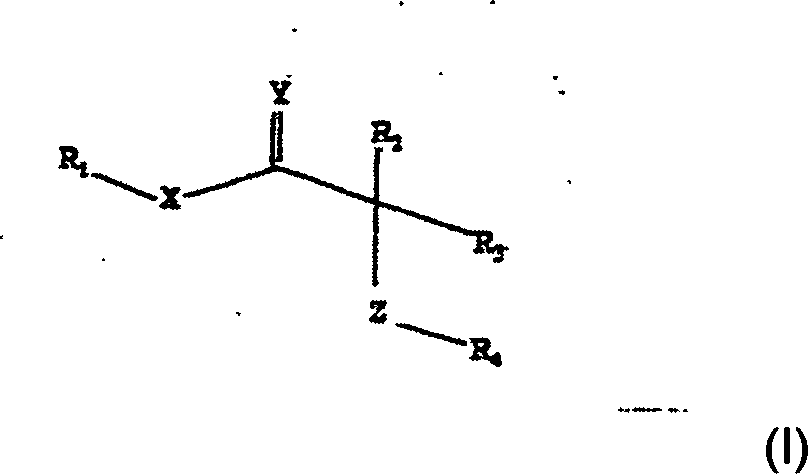

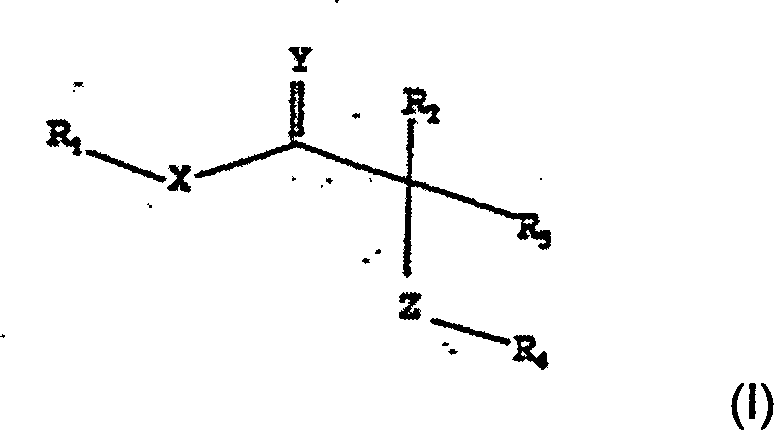

Applications Claiming Priority (3)
| Application Number | Priority Date | Filing Date | Title |
|---|---|---|---|
| US658089 | 1996-06-04 | ||
| US08/658,089 US5847003A (en) | 1996-06-04 | 1996-06-04 | Oxa acids and related compounds for treating skin conditions |
| PCT/US1997/009281 WO1997046231A1 (en) | 1996-06-04 | 1997-06-02 | Oxa acids and related compounds for treating skin conditions |
Publications (2)
| Publication Number | Publication Date |
|---|---|
| DE69731385D1 DE69731385D1 (en) | 2004-12-02 |
| DE69731385T2 true DE69731385T2 (en) | 2006-02-02 |
Family
ID=24639855
Family Applications (1)
| Application Number | Title | Priority Date | Filing Date |
|---|---|---|---|
| DE69731385T Expired - Lifetime DE69731385T2 (en) | 1996-06-04 | 1997-06-02 | OXA ACIDS AND RELATED COMPOUNDS FOR TREATING SKIN DISORDER |
Country Status (10)
| Country | Link |
|---|---|
| US (5) | US5847003A (en) |
| EP (1) | EP0910362B1 (en) |
| JP (2) | JPH1072334A (en) |
| CN (1) | CN1110302C (en) |
| AR (1) | AR008384A1 (en) |
| AT (1) | ATE280577T1 (en) |
| BR (1) | BR9709427B1 (en) |
| CA (1) | CA2256582C (en) |
| DE (1) | DE69731385T2 (en) |
| WO (1) | WO1997046231A1 (en) |
Families Citing this family (122)
| Publication number | Priority date | Publication date | Assignee | Title |
|---|---|---|---|---|
| US5874463A (en) * | 1994-10-24 | 1999-02-23 | Ancira; Margaret | Hydroxy-kojic acid skin peel |
| FR2730930B1 (en) * | 1995-02-27 | 1997-04-04 | Oreal | USE OF NO-SYNTHASE INHIBITORS TO REDUCE THE IRRITANT SKIN EFFECT OF PRODUCTS USED IN THE COSMETIC OR PHARMACEUTICAL FIELD |
| US5932229A (en) * | 1996-04-25 | 1999-08-03 | Avon Products, Inc. | Oxa diacids and related compounds for treating skin conditions |
| US5965618A (en) * | 1997-11-17 | 1999-10-12 | Perricone; Nicholas V. | Treatment of scar tissue using lipoic acid |
| DE69932922T2 (en) * | 1998-02-13 | 2007-05-03 | Buck, Carol J. | USE OF ALKANIC ACID-CONTAINING COMPOSITIONS FOR THE TREATMENT OF NAIL PLUG DISEASES |
| AU3002299A (en) * | 1998-03-16 | 1999-10-11 | Procter & Gamble Company, The | Methods for regulating skin appearance |
| US6136339A (en) * | 1998-08-21 | 2000-10-24 | Gardiner; Paul T. | Food supplements and methods comprising lipoic acid and creatine |
| US6607716B1 (en) | 1998-09-29 | 2003-08-19 | Tech Labs, Inc. | Pediculicidal compositions, a kit, and methods of use |
| US6521237B2 (en) * | 1998-11-12 | 2003-02-18 | Johnson & Johnson Consumer Companies, Inc. | Skin care composition |
| US7396526B1 (en) | 1998-11-12 | 2008-07-08 | Johnson & Johnson Consumer Companies, Inc. | Skin care composition |
| US6765019B1 (en) * | 1999-05-06 | 2004-07-20 | University Of Kentucky Research Foundation | Permeable, water soluble, non-irritating prodrugs of chemotherapeutic agents with oxaalkanoic acids |
| US6242491B1 (en) * | 1999-06-25 | 2001-06-05 | Rima Kaddurah-Daouk | Use of creatine or creatine compounds for skin preservation |
| US6696078B1 (en) * | 1999-07-21 | 2004-02-24 | Edwin J. Masters | System and methods for local intradermal treatment |
| US6309662B1 (en) | 1999-09-23 | 2001-10-30 | Janet Buchanan | Use of anti-inflammatory drugs for treatment of dermatological conditions |
| US6358517B1 (en) | 1999-10-22 | 2002-03-19 | Unilever Home & Personal Care Usa, Division Of Conopco | Cosmetic compositions containing resveratrol and retinoids |
| US6277362B1 (en) | 1999-10-26 | 2001-08-21 | Isw, Inc. | After shave treatment preparation |
| US20030072724A1 (en) * | 1999-12-16 | 2003-04-17 | Maibach Howard I. | Topical pharmaceutical composition to treat hyperpigmentation of the skin |
| US6562370B2 (en) * | 1999-12-16 | 2003-05-13 | Dermatrends, Inc. | Transdermal administration of steroid drugs using hydroxide-releasing agents as permeation enhancers |
| US6562368B2 (en) | 1999-12-16 | 2003-05-13 | Dermatrends, Inc. | Transdermal administration of oxybutynin using hydroxide-releasing agents as permeation enhancers |
| US6565879B1 (en) | 1999-12-16 | 2003-05-20 | Dermatrends, Inc. | Topical and transdermal administration of peptidyl drugs with hydroxide-releasing agents as skin permeation enhancers |
| US6562369B2 (en) * | 1999-12-16 | 2003-05-13 | Dermatrends, Inc. | Transdermal administration of androgenic drugs hydroxide-releasing agents as permeation enhancers |
| US6582724B2 (en) * | 1999-12-16 | 2003-06-24 | Dermatrends, Inc. | Dual enhancer composition for topical and transdermal drug delivery |
| US6586000B2 (en) * | 1999-12-16 | 2003-07-01 | Dermatrends, Inc. | Hydroxide-releasing agents as skin permeation enhancers |
| US6645520B2 (en) | 1999-12-16 | 2003-11-11 | Dermatrends, Inc. | Transdermal administration of nonsteroidal anti-inflammatory drugs using hydroxide-releasing agents as permeation enhancers |
| US20030104041A1 (en) * | 1999-12-16 | 2003-06-05 | Tsung-Min Hsu | Transdermal and topical administration of drugs using basic permeation enhancers |
| US6673363B2 (en) * | 1999-12-16 | 2004-01-06 | Dermatrends, Inc. | Transdermal and topical administration of local anesthetic agents using basic enhancers |
| US6558695B2 (en) * | 1999-12-16 | 2003-05-06 | Dermatrends, Inc. | Topical and transdermal administration of peptidyl drugs using hydroxide releasing agents as permeation enhancers |
| ATE407676T1 (en) * | 2000-02-28 | 2008-09-15 | Univ British Columbia | TOPOISOMERASE INHIBITORS FOR THE TREATMENT OF SURGICAL ADHESIONS |
| FR2811567B1 (en) * | 2000-07-13 | 2003-01-17 | Oreal | COMPOSITION, ESPECIALLY COSMETIC, COMPRISING DHEA AND / OR A PRECURSOR OR DERIVATIVE THEREOF, IN ASSOCIATION WITH AT LEAST ONE NO-SYNTHASE INHIBITOR |
| FR2812812B1 (en) * | 2000-08-08 | 2002-10-11 | Philippe Gorny | MEDICINE INTENDED IN PARTICULAR TO COMBAT SEXUAL DYSFUNCTIONS |
| KR100878667B1 (en) * | 2000-08-08 | 2009-01-13 | 다이이찌 세이야꾸 가부시기가이샤 | Super Absorbent Solid Formulations |
| US20040213754A1 (en) * | 2000-10-02 | 2004-10-28 | Cole Curtis A. | Method for cleansing sensitive skin using an alkanolamine |
| KR20020027198A (en) * | 2000-10-02 | 2002-04-13 | 차알스 제이. 메츠 | Method for reduction of inflammation and erythema |
| US20030095991A1 (en) * | 2000-10-02 | 2003-05-22 | Curtis Cole | Treatment for skin |
| US20040067245A1 (en) | 2000-12-20 | 2004-04-08 | Harish Mahalingam | Cosmetic compositions and methods for using same to improve the aesthetic appearance of skin |
| US6565864B2 (en) | 2000-12-28 | 2003-05-20 | Unilever Home & Personal Care Usa, A Division Of Conopco, Inc. | Skin care product containing retinoids and phytoestrogens in a dual compartment package |
| EP1234572B1 (en) * | 2001-02-26 | 2013-10-30 | Mibelle AG Cosmetics | Skin treatment compositions containing isoflavone aglycones |
| DE10111046A1 (en) * | 2001-03-06 | 2002-09-12 | Beiersdorf Ag | Cosmetic or dermatological preparations for treating or preventing pigmentation disorders, e.g. freckles or liver spots, containing active agent combination of alpha-lipoic acid and UV-A or UV-B absorber |
| DE10111040A1 (en) * | 2001-03-06 | 2002-09-12 | Beiersdorf Ag | Use of combinations of alpha-lipoic acid and ultraviolet absorbers for treating inflammatory skin disorders or protecting sensitive dry skin |
| WO2002096374A2 (en) | 2001-05-31 | 2002-12-05 | Upsher-Smith Laboratories, Inc. | Dermatological compositions and methods comprising alpha-hydroxy acids or derivatives |
| US6419940B1 (en) * | 2001-08-14 | 2002-07-16 | Denver Blanton | Denver's sting stopper |
| US6514508B1 (en) * | 2001-08-24 | 2003-02-04 | Jeffrey Rose | Itch reducing device and method |
| US6641824B2 (en) * | 2001-11-09 | 2003-11-04 | Avon Products, Inc. | Skin treatment using a new retinoid |
| US20050238730A1 (en) * | 2001-11-21 | 2005-10-27 | Agnes Le Fur | Compositions comprising an ethanolamine derivative and organic metal salts |
| WO2003070161A2 (en) * | 2001-12-19 | 2003-08-28 | Alwyn Company, Inc. | Emulsified skin care composition containing salicylic acid, lanolin oil, and propylene glycol |
| US20030180250A1 (en) * | 2002-03-22 | 2003-09-25 | Council Of Scientific And Industrial Research | Compositions and complexes containing a macromolecular compound as potential anti-inflammatory agents |
| US6835385B2 (en) | 2002-06-14 | 2004-12-28 | Carol J. Buck | Compositions and methods for softening, thinning and removing hyperkeratotic tissue |
| US6858215B2 (en) | 2002-06-14 | 2005-02-22 | Carol J. Buck | Compositions and methods for softening, thinning and removing hyperkeratotic tissue |
| WO2004000259A1 (en) * | 2002-06-21 | 2003-12-31 | Dermatrends, Inc. | Topical administration of pharmacologically active bases for skin lightening |
| KR20040043703A (en) * | 2002-11-16 | 2004-05-27 | (주)라렌드몽드 | Retinoid containing chemical peeling agent |
| US7060303B2 (en) * | 2002-12-31 | 2006-06-13 | Avon Products, Inc. | Use of purslane to treat facial wrinkles |
| AU2003294366B2 (en) | 2002-12-31 | 2009-11-05 | Bsn Medical Gmbh | Wound dressing |
| US6866856B2 (en) * | 2002-12-31 | 2005-03-15 | Avon Products, Inc. | Compositions and delivery methods for the treatment of wrinkles, fine lines and hyperhidrosis |
| WO2004105719A2 (en) * | 2003-05-23 | 2004-12-09 | Ninapharm (S.A.R.L) | Product for epidermal protection |
| US7085154B2 (en) * | 2003-06-03 | 2006-08-01 | Samsung Electronics Co., Ltd. | Device and method for pulse width control in a phase change memory device |
| US7531711B2 (en) | 2003-09-17 | 2009-05-12 | Ossur Hf | Wound dressing and method for manufacturing the same |
| ES2564294T3 (en) | 2003-09-17 | 2016-03-21 | Bsn Medical Gmbh | Wound dressing and manufacturing procedure |
| US7205006B2 (en) * | 2003-09-25 | 2007-04-17 | Prime Pharmaceutical Corporation | Mahonia aquifolium extract, extraction process and pharmaceutical composition containing the same |
| US7504385B2 (en) * | 2003-12-17 | 2009-03-17 | Avon Products, Inc. | si-RNA-mediated gene silencing technology to inhibit tyrosinase and reduce pigmentation |
| EP1747033A1 (en) | 2004-04-30 | 2007-01-31 | Burrell E. Clawson | Apparatus and methods for isolating human body areas for localized cooling |
| US20060040002A1 (en) * | 2004-08-17 | 2006-02-23 | Boitano Suzanne M | Anti-itch composition |
| US7618662B2 (en) * | 2004-12-22 | 2009-11-17 | Avon Products, Inc | Use of natural plant extracts in cosmetic compositions |
| US7410658B2 (en) * | 2004-12-22 | 2008-08-12 | Avon Products, Inc. | Use of Alisma orientale in cosmetics and compositions thereof |
| US7351745B2 (en) | 2004-12-22 | 2008-04-01 | Avon Products, Inc | Compositions and methods of their use for improving the condition and appearance of skin |
| US7514092B2 (en) * | 2004-12-22 | 2009-04-07 | Avon Products, Inc. | Compositions and methods of their use for improving the condition and appearance of skin |
| US8221766B2 (en) * | 2004-12-22 | 2012-07-17 | Avon Products, Inc. | Use of plant extracts to prevent and/or reduce the signs of subjective discomfort and/or irritation in the topical application of cosmetic products |
| US7161056B2 (en) * | 2005-01-28 | 2007-01-09 | Ossur Hf | Wound dressing and method for manufacturing the same |
| US20060235370A1 (en) * | 2005-04-04 | 2006-10-19 | Oblong John E | Method of regulating mammalian keratinous tissue |
| CA2612408A1 (en) * | 2005-06-15 | 2006-12-28 | Apollo Pharmaceutical, Inc. | Pharmaceutical composition comprising a mahonia aquifolium extract for the treatment of psoriasis |
| US20070027153A1 (en) * | 2005-07-27 | 2007-02-01 | Reeth Kevin M | Topical skin-protectant and anti-pruritic compositions |
| US20070027152A1 (en) * | 2005-07-27 | 2007-02-01 | Clark Kathleen L | Topical anti-pruritic compositions and methods of action of same |
| US7989554B2 (en) * | 2006-01-10 | 2011-08-02 | Enzon Pharmaceuticals, Inc. | Reacting polyalkylene oxide with base, tertiary alkyl haloacetate, then acid to prepare polyalkylene oxide carboxylic acid |
| FR2908307B1 (en) * | 2006-11-10 | 2009-05-01 | Oreal | COSMETIC COMPOSITION COMPRISING AN ALKYL PHOSPHATE AND A FATTY ALCOHOL ETHER AND POLYETHYLENE GLYCOL, METHODS AND USES. |
| CN101583369B (en) * | 2006-11-15 | 2015-03-11 | 关节炎缓痛补充剂有限公司 | Topical formulation and uses thereof |
| US20080220026A1 (en) * | 2007-03-06 | 2008-09-11 | Prithwiraj Maitra | Mesoporous material compositions and methods of their use for improving the appearance of biological surfaces |
| US7642062B2 (en) | 2006-12-29 | 2010-01-05 | Avon Products Inc. | Compositions and methods of their use for improving the condition and appearance of skin |
| US8586012B2 (en) | 2007-06-06 | 2013-11-19 | Solise LLC | Body wash with sunscreen system and method |
| US20080311058A1 (en) * | 2007-06-18 | 2008-12-18 | Connopco, Inc., D/B/A Unilever | Stable high internal phase emulsions and compositions comprising the same |
| WO2009002913A1 (en) * | 2007-06-22 | 2008-12-31 | Avicena Group, Inc. | Use of creatine compounds to treat dermatitis |
| RS52576B (en) * | 2007-11-07 | 2013-04-30 | Gojko DUNKIĆ | CHEMICAL PREPARATION FOR THE SUCCESSFUL REMOVAL OF BENIG LESIONS AND THE PROCEDURE OF ITS APPLICATION ON THE SKIN OF THE FACE, HEAD AND BODY |
| ES2336995B1 (en) | 2008-10-13 | 2011-02-09 | Lipotec, S.A. | COSMETIC OR DERMOPHARMACEUTICAL COMPOSITION FOR SKIN CARE, HAIR LEATHER AND NAILS. |
| US8299127B2 (en) * | 2009-03-11 | 2012-10-30 | Conopco, Inc. | Method and composition for evenly applying water soluble actives |
| US8173108B2 (en) | 2009-11-04 | 2012-05-08 | Conopco, Inc. | Sunscreen composition |
| US8206691B2 (en) | 2009-11-04 | 2012-06-26 | Conopco, Inc. | Sunscreen composition with fatty acid alkanolamides |
| US8329149B2 (en) | 2009-12-30 | 2012-12-11 | Avon Products, Inc. | Topical lightening composition and uses thereof |
| WO2012002950A1 (en) | 2010-06-30 | 2012-01-05 | Avon Products, Inc. | Use of tiliacora triandra in cosmetics and compositions thereof |
| PL2588593T3 (en) | 2010-06-30 | 2018-01-31 | Avon Prod Inc | Compositions and methods of stimulating MAGP-1 to improve the appearance of the skin |
| US8821839B2 (en) | 2010-10-22 | 2014-09-02 | Conopco, Inc. | Compositions and methods for imparting a sunless tan with a vicinal diamine |
| US8398959B2 (en) | 2010-12-06 | 2013-03-19 | Conopco, Inc. | Compositions and methods for imparting a sunless tan with functionalized adjuvants |
| EP2723452A2 (en) | 2011-06-22 | 2014-04-30 | Vyome Biosciences Pvt Ltd | Conjugate-based antifungal and antibacterial prodrugs |
| EP2760546B1 (en) | 2011-09-26 | 2017-09-20 | Unilever Plc. | Hair composition |
| US8961942B2 (en) | 2011-12-13 | 2015-02-24 | Conopco, Inc. | Sunless tanning compositions with adjuvants comprising sulfur comprising moieties |
| US9259343B2 (en) | 2012-07-06 | 2016-02-16 | Newman Technologies LLC | Device for mitigating plantar fasciitis |
| CN104487539A (en) * | 2012-07-26 | 2015-04-01 | 阿米利尔股份公司 | Esters for drilling emulsions and metal working fluids |
| MX2015016675A (en) | 2013-06-04 | 2016-07-15 | Vyome Biosciences Pvt Ltd | Coated particles and compositions comprising same. |
| ES2539520B1 (en) * | 2013-12-30 | 2016-06-06 | Laboratorios Viñas S.A. | Topical application pharmaceutical composition in the form of a micronized suspension and corresponding method and uses |
| US9642787B2 (en) | 2014-04-25 | 2017-05-09 | The Procter & Gamble Company | Method of inhibiting copper deposition on hair |
| US9642788B2 (en) | 2014-04-25 | 2017-05-09 | The Procter & Gamble Company | Shampoo composition comprising gel matrix and histidine |
| US9586063B2 (en) | 2014-04-25 | 2017-03-07 | The Procter & Gamble Company | Method of inhibiting copper deposition on hair |
| MX390018B (en) | 2015-10-30 | 2025-03-20 | Leo Pharma As | ISOTRETINOIN FORMULATIONS AND THEIR USES AND METHODS. |
| WO2017139457A1 (en) * | 2016-02-11 | 2017-08-17 | Ohio University | Compositions and methods for inhibiting uvb -irradiation damage by targeting constitutive nitric oxide synthases (cnos) |
| WO2017175522A1 (en) | 2016-04-05 | 2017-10-12 | 株式会社Moresco | Oxa acid compound |
| US11246816B2 (en) | 2016-06-30 | 2022-02-15 | The Procter And Gamble Company | Shampoo compositions comprising a chelant |
| US20180000715A1 (en) | 2016-06-30 | 2018-01-04 | The Procter & Gamble Company | Hair Care Compositions For Calcium Chelation |
| US20180000705A1 (en) * | 2016-06-30 | 2018-01-04 | The Procter & Gamble Company | Shampoo Compositions Comprising a Chelant |
| US20180000706A1 (en) | 2016-06-30 | 2018-01-04 | The Procter & Gamble Company | Conditioner Composition Comprising a Chelant |
| US11786447B2 (en) | 2016-06-30 | 2023-10-17 | The Procter & Gamble Company | Conditioner composition comprising a chelant |
| BE1025004B1 (en) | 2017-02-24 | 2018-09-24 | Oystershell Nv | PELTABLE NAIL POLISH |
| WO2018202832A1 (en) | 2017-05-05 | 2018-11-08 | Firmenich Sa | Organic hydroperoxide reduction in perfumery raw materials and food raw materials |
| US11197841B2 (en) | 2019-07-23 | 2021-12-14 | Johnson & Johnson Surgical Vision, Inc. | Compositions and methods for treating the eye |
| US10966948B2 (en) | 2019-07-23 | 2021-04-06 | Johnson & Johnson Surgical Vision, Inc. | Compositions and methods for treating the eye |
| JP7374986B2 (en) | 2018-07-27 | 2023-11-07 | ジョンソン・アンド・ジョンソン・サージカル・ビジョン・インコーポレイテッド | Compositions and methods for treating the eye |
| US20200030226A1 (en) | 2018-07-27 | 2020-01-30 | Johnson & Johnson Consumer Inc. | Botanical and bacterial extracts displaying retinol-like activity |
| EP3613834A1 (en) | 2018-08-24 | 2020-02-26 | The Procter & Gamble Company | Treatment compositions comprising low levels of an oligoamine |
| EP3613835A1 (en) | 2018-08-24 | 2020-02-26 | The Procter & Gamble Company | Treatment compositions comprising a surfactant system and an oligoamine |
| WO2020260199A1 (en) | 2019-06-24 | 2020-12-30 | Rossana Castellana | Formulations for odontological and dermatological use containing trichloroacetate salts and hydroxyacids |
| US11969454B2 (en) | 2019-11-19 | 2024-04-30 | Johnson & Johnson Surgical Vision, Inc. | Compositions and methods for treating the eye |
| US20230346664A1 (en) * | 2022-04-28 | 2023-11-02 | L'oreal | Compositions suitable as setters |
| NL2035417B9 (en) | 2022-07-19 | 2024-10-09 | Coty Inc | Cosmetic composition |
| NL2035921B1 (en) | 2023-05-05 | 2025-01-27 | Coty Inc | Cosmetic composition |
| WO2024233405A1 (en) | 2023-05-05 | 2024-11-14 | Coty Inc. | Compositions and methods comprising a lotus flower extract blend and/or constituents thereof for treating skin |
| NL2039435B1 (en) | 2023-12-22 | 2025-08-25 | Coty Inc | Cosmetic composition |
Family Cites Families (29)
| Publication number | Priority date | Publication date | Assignee | Title |
|---|---|---|---|---|
| US3342858A (en) * | 1964-08-20 | 1967-09-19 | Allied Chem | Preparation of alkoxy-alkanoic acids by the oxidation of alkoxy-alkanols |
| DE2404047A1 (en) * | 1974-01-29 | 1975-08-14 | Henkel & Cie Gmbh | SKIN CARE AND SKIN PROTECTION PRODUCTS WITH A CONTENT OF SKIN MOISTURIZERS |
| GB1541463A (en) * | 1975-10-11 | 1979-02-28 | Lion Dentifrice Co Ltd | Process for prparing a multiple emulsion having a dispersing form of water-phase/oil-phase/water-phase |
| DE2714564C2 (en) * | 1977-04-01 | 1986-01-02 | Chemische Werke Hüls AG, 4370 Marl | Process for the preparation of cyclic diesters of undecanedioic acid |
| US4386104A (en) * | 1977-04-19 | 1983-05-31 | Nazzaro Porro Marcella | Process for the treatment of acne |
| IT1114950B (en) * | 1977-12-30 | 1986-02-03 | Porro Marcella | COMPOSITIONS FOR ACNE TREATMENT AND THERAPY |
| DE2936123C2 (en) * | 1979-09-07 | 1987-04-09 | Hoechst Ag, 6230 Frankfurt | Process for the preparation of alkoxyacetic acids |
| US4721579A (en) * | 1980-08-15 | 1988-01-26 | Basf Corporation | Sodium carboxymethyl derivatives of polyoxyalkylene glycols, their production, and use in functional fluids |
| US4766153A (en) * | 1986-04-30 | 1988-08-23 | Sandoz Ltd. | Alkyl polyoxyalkylene carboxylate esters and skin care compositions containing the same |
| DE3640708C2 (en) * | 1986-11-28 | 1995-05-18 | Schering Ag | Improved pharmaceuticals containing metals |
| US5091171B2 (en) * | 1986-12-23 | 1997-07-15 | Tristrata Inc | Amphoteric compositions and polymeric forms of alpha hydroxyacids and their therapeutic use |
| US4960764A (en) * | 1987-03-06 | 1990-10-02 | Richardson-Vicks Inc. | Oil-in-water-in-silicone emulsion compositions |
| US4885282A (en) * | 1987-07-02 | 1989-12-05 | Thornfeldt Carl R | Treatment of hyperhidrosis, ichthyosis and wrinkling |
| DE3811081A1 (en) * | 1988-03-30 | 1989-10-12 | Schering Ag | USE OF TOPIC APPLICABLE PREPARATIONS FOR THE TREATMENT OF AGING SKIN |
| US5008443A (en) * | 1988-11-14 | 1991-04-16 | Olin Corporation | Process for the preparation of nitramine-containing homopolymers and co-polymers |
| US4916206A (en) * | 1988-11-14 | 1990-04-10 | Olin Corporation | Nitramine-containing homopolymers and co-polymers and a process for the preparation thereof |
| DE3901279A1 (en) * | 1989-01-18 | 1990-07-19 | Hoechst Ag | USE OF POLYAMIDOAMINES AS HARDENERS FOR EPOXY RESINS AND CONTAINABLE MIXTURES CONTAINING THEM |
| DE3903663C1 (en) * | 1989-02-08 | 1990-09-27 | Huels Ag, 4370 Marl, De | |
| US5087440A (en) * | 1989-07-31 | 1992-02-11 | Salutar, Inc. | Heterocyclic derivatives of DTPA used for magnetic resonance imaging |
| JPH03109498A (en) * | 1989-09-25 | 1991-05-09 | Kanebo Ltd | Cleaning agent composition having low stimulating property |
| GB9003201D0 (en) * | 1990-02-13 | 1990-04-11 | Unilever Plc | Cosmetic composition |
| DE4206392A1 (en) * | 1992-02-29 | 1993-09-02 | Hoechst Ag | CURING AGENT FOR EPOXY RESINS |
| US5505948A (en) * | 1993-06-01 | 1996-04-09 | Dermatology Home Products, Inc. | Home skin peel composition for producing healthy and attractive skin |
| JP3376687B2 (en) * | 1994-05-24 | 2003-02-10 | 味の素株式会社 | Detergent composition |
| US5464929A (en) * | 1995-03-06 | 1995-11-07 | Ethicon, Inc. | Absorbable polyoxaesters |
| US5639897A (en) * | 1995-12-07 | 1997-06-17 | O'lenick, Jr.; Anthony J. | Amido ether amine amphoteric surfactants |
| JP2000512663A (en) * | 1996-02-21 | 2000-09-26 | ジボーダン―ルール(アンテルナシヨナル)ソシエテ アノニム | Fragrance precursor |
| US5834513A (en) * | 1996-04-25 | 1998-11-10 | Avon Products, Inc. | Oxa diacids and related compounds for treating skin conditions |
| JP3109498B2 (en) | 1998-11-10 | 2000-11-13 | 日本電気株式会社 | Radio wave detection method and radio wave detection device |
-
1996
- 1996-06-04 US US08/658,089 patent/US5847003A/en not_active Expired - Lifetime
- 1996-12-11 JP JP8346482A patent/JPH1072334A/en not_active Withdrawn
-
1997
- 1997-06-02 CA CA002256582A patent/CA2256582C/en not_active Expired - Lifetime
- 1997-06-02 DE DE69731385T patent/DE69731385T2/en not_active Expired - Lifetime
- 1997-06-02 BR BRPI9709427-7A patent/BR9709427B1/en not_active IP Right Cessation
- 1997-06-02 US US08/863,502 patent/US6069169A/en not_active Expired - Lifetime
- 1997-06-02 WO PCT/US1997/009281 patent/WO1997046231A1/en not_active Ceased
- 1997-06-02 AT AT97927863T patent/ATE280577T1/en not_active IP Right Cessation
- 1997-06-02 CN CN97195278A patent/CN1110302C/en not_active Expired - Lifetime
- 1997-06-02 JP JP10500710A patent/JP2000511900A/en active Pending
- 1997-06-02 EP EP97927863A patent/EP0910362B1/en not_active Expired - Lifetime
- 1997-06-03 AR ARP970102399A patent/AR008384A1/en active IP Right Grant
-
1998
- 1998-09-14 US US09/152,574 patent/US6071962A/en not_active Expired - Lifetime
-
2000
- 2000-05-08 US US09/566,556 patent/US6333356B1/en not_active Expired - Lifetime
-
2001
- 2001-09-21 US US09/957,923 patent/US6534543B2/en not_active Expired - Lifetime
Also Published As
| Publication number | Publication date |
|---|---|
| DE69731385D1 (en) | 2004-12-02 |
| BR9709427B1 (en) | 2009-05-05 |
| BR9709427A (en) | 2000-01-11 |
| AR008384A1 (en) | 2000-01-19 |
| CN1110302C (en) | 2003-06-04 |
| CA2256582C (en) | 2008-08-12 |
| HK1020167A1 (en) | 2000-03-31 |
| US5847003A (en) | 1998-12-08 |
| CA2256582A1 (en) | 1997-12-11 |
| ATE280577T1 (en) | 2004-11-15 |
| US6534543B2 (en) | 2003-03-18 |
| JPH1072334A (en) | 1998-03-17 |
| US6069169A (en) | 2000-05-30 |
| EP0910362B1 (en) | 2004-10-27 |
| EP0910362A1 (en) | 1999-04-28 |
| WO1997046231A1 (en) | 1997-12-11 |
| US6333356B1 (en) | 2001-12-25 |
| EP0910362A4 (en) | 1999-12-22 |
| CN1221342A (en) | 1999-06-30 |
| US20020040056A1 (en) | 2002-04-04 |
| US6071962A (en) | 2000-06-06 |
| JP2000511900A (en) | 2000-09-12 |
Similar Documents
| Publication | Publication Date | Title |
|---|---|---|
| DE69731385T2 (en) | OXA ACIDS AND RELATED COMPOUNDS FOR TREATING SKIN DISORDER | |
| DE69730604T2 (en) | OXADIC ACIDS AND RELATED COMPOUNDS FOR THE TREATMENT OF SKIN DISORDER | |
| US5932229A (en) | Oxa diacids and related compounds for treating skin conditions | |
| DE69831017T2 (en) | PREPARATIONS FOR TOPICAL USE CONTAINING ASCORBYL PHOSPHORYL CHOLESTEROL | |
| DE60310731T2 (en) | NEW MOLECULES DERIVED FROM NORAPORPHIN | |
| DE112007001469B4 (en) | Collagen synthesis promoter containing zinc pyrrolidone carboxylate as its active ingredient | |
| US5922335A (en) | Uses for ascorbyl-phosphoryl-cholesterol in topical compositions | |
| CA2397183C (en) | Method of treating cellulite using perilla oil | |
| US20100034758A1 (en) | Peptides Modified with Triterpenoids and Small Organic Molecules: Synthesis and use in Cosmeceuticals | |
| JP2008247905A (en) | COMPOSITION CONTAINING RETINOID AND beta-AMINOISOBUTYRIC ACID DERIVATIVE | |
| EP1338269B1 (en) | Use of creatinine and/or creatinine derivatives for whitening the skin and alleviating of pigmentation disorders | |
| JPH10212231A (en) | Oxa-diacid for treating dermal state and related compound | |
| TW580493B (en) | Oxa diacids and related compounds for treating skin conditions | |
| HK1020167B (en) | Oxa acids and related compounds for treating skin conditions | |
| MXPA98010267A (en) | Oxa acids and derivative compounds for the treatment of transtornes of the p |
Legal Events
| Date | Code | Title | Description |
|---|---|---|---|
| 8364 | No opposition during term of opposition |