DE60032022T2 - DIAMIDINE COMPOUNDS AS DNA NON-BILATIN BINDER - Google Patents
DIAMIDINE COMPOUNDS AS DNA NON-BILATIN BINDER Download PDFInfo
- Publication number
- DE60032022T2 DE60032022T2 DE60032022T DE60032022T DE60032022T2 DE 60032022 T2 DE60032022 T2 DE 60032022T2 DE 60032022 T DE60032022 T DE 60032022T DE 60032022 T DE60032022 T DE 60032022T DE 60032022 T2 DE60032022 T2 DE 60032022T2
- Authority
- DE
- Germany
- Prior art keywords
- group
- lower alkyl
- independently selected
- aryl
- aminoalkyl
- Prior art date
- Legal status (The legal status is an assumption and is not a legal conclusion. Google has not performed a legal analysis and makes no representation as to the accuracy of the status listed.)
- Expired - Fee Related
Links
- 0 Cc(c(*)c1)c(*)c(N)c1NC Chemical compound Cc(c(*)c1)c(*)c(N)c1NC 0.000 description 5
Classifications
-
- C—CHEMISTRY; METALLURGY
- C07—ORGANIC CHEMISTRY
- C07D—HETEROCYCLIC COMPOUNDS
- C07D207/00—Heterocyclic compounds containing five-membered rings not condensed with other rings, with one nitrogen atom as the only ring hetero atom
- C07D207/02—Heterocyclic compounds containing five-membered rings not condensed with other rings, with one nitrogen atom as the only ring hetero atom with only hydrogen or carbon atoms directly attached to the ring nitrogen atom
- C07D207/30—Heterocyclic compounds containing five-membered rings not condensed with other rings, with one nitrogen atom as the only ring hetero atom with only hydrogen or carbon atoms directly attached to the ring nitrogen atom having two double bonds between ring members or between ring members and non-ring members
- C07D207/34—Heterocyclic compounds containing five-membered rings not condensed with other rings, with one nitrogen atom as the only ring hetero atom with only hydrogen or carbon atoms directly attached to the ring nitrogen atom having two double bonds between ring members or between ring members and non-ring members with hetero atoms or with carbon atoms having three bonds to hetero atoms with at the most one bond to halogen, e.g. ester or nitrile radicals, directly attached to ring carbon atoms
- C07D207/36—Oxygen or sulfur atoms
- C07D207/40—2,5-Pyrrolidine-diones
- C07D207/416—2,5-Pyrrolidine-diones with hetero atoms or with carbon atoms having three bonds to hetero atoms with at the most one bond to halogen, e.g. ester or nitrile radicals, directly attached to other ring carbon atoms
-
- A—HUMAN NECESSITIES
- A61—MEDICAL OR VETERINARY SCIENCE; HYGIENE
- A61P—SPECIFIC THERAPEUTIC ACTIVITY OF CHEMICAL COMPOUNDS OR MEDICINAL PREPARATIONS
- A61P31/00—Antiinfectives, i.e. antibiotics, antiseptics, chemotherapeutics
- A61P31/04—Antibacterial agents
-
- A—HUMAN NECESSITIES
- A61—MEDICAL OR VETERINARY SCIENCE; HYGIENE
- A61P—SPECIFIC THERAPEUTIC ACTIVITY OF CHEMICAL COMPOUNDS OR MEDICINAL PREPARATIONS
- A61P35/00—Antineoplastic agents
-
- A—HUMAN NECESSITIES
- A61—MEDICAL OR VETERINARY SCIENCE; HYGIENE
- A61P—SPECIFIC THERAPEUTIC ACTIVITY OF CHEMICAL COMPOUNDS OR MEDICINAL PREPARATIONS
- A61P43/00—Drugs for specific purposes, not provided for in groups A61P1/00-A61P41/00
-
- C—CHEMISTRY; METALLURGY
- C07—ORGANIC CHEMISTRY
- C07D—HETEROCYCLIC COMPOUNDS
- C07D307/00—Heterocyclic compounds containing five-membered rings having one oxygen atom as the only ring hetero atom
- C07D307/02—Heterocyclic compounds containing five-membered rings having one oxygen atom as the only ring hetero atom not condensed with other rings
- C07D307/34—Heterocyclic compounds containing five-membered rings having one oxygen atom as the only ring hetero atom not condensed with other rings having two or three double bonds between ring members or between ring members and non-ring members
- C07D307/38—Heterocyclic compounds containing five-membered rings having one oxygen atom as the only ring hetero atom not condensed with other rings having two or three double bonds between ring members or between ring members and non-ring members with substituted hydrocarbon radicals attached to ring carbon atoms
- C07D307/54—Radicals substituted by carbon atoms having three bonds to hetero atoms with at the most one bond to halogen, e.g. ester or nitrile radicals
-
- C—CHEMISTRY; METALLURGY
- C07—ORGANIC CHEMISTRY
- C07D—HETEROCYCLIC COMPOUNDS
- C07D405/00—Heterocyclic compounds containing both one or more hetero rings having oxygen atoms as the only ring hetero atoms, and one or more rings having nitrogen as the only ring hetero atom
- C07D405/02—Heterocyclic compounds containing both one or more hetero rings having oxygen atoms as the only ring hetero atoms, and one or more rings having nitrogen as the only ring hetero atom containing two hetero rings
- C07D405/04—Heterocyclic compounds containing both one or more hetero rings having oxygen atoms as the only ring hetero atoms, and one or more rings having nitrogen as the only ring hetero atom containing two hetero rings directly linked by a ring-member-to-ring-member bond
-
- C—CHEMISTRY; METALLURGY
- C07—ORGANIC CHEMISTRY
- C07D—HETEROCYCLIC COMPOUNDS
- C07D405/00—Heterocyclic compounds containing both one or more hetero rings having oxygen atoms as the only ring hetero atoms, and one or more rings having nitrogen as the only ring hetero atom
- C07D405/14—Heterocyclic compounds containing both one or more hetero rings having oxygen atoms as the only ring hetero atoms, and one or more rings having nitrogen as the only ring hetero atom containing three or more hetero rings
-
- C—CHEMISTRY; METALLURGY
- C12—BIOCHEMISTRY; BEER; SPIRITS; WINE; VINEGAR; MICROBIOLOGY; ENZYMOLOGY; MUTATION OR GENETIC ENGINEERING
- C12Q—MEASURING OR TESTING PROCESSES INVOLVING ENZYMES, NUCLEIC ACIDS OR MICROORGANISMS; COMPOSITIONS OR TEST PAPERS THEREFOR; PROCESSES OF PREPARING SUCH COMPOSITIONS; CONDITION-RESPONSIVE CONTROL IN MICROBIOLOGICAL OR ENZYMOLOGICAL PROCESSES
- C12Q1/00—Measuring or testing processes involving enzymes, nucleic acids or microorganisms; Compositions therefor; Processes of preparing such compositions
- C12Q1/68—Measuring or testing processes involving enzymes, nucleic acids or microorganisms; Compositions therefor; Processes of preparing such compositions involving nucleic acids
- C12Q1/6813—Hybridisation assays
- C12Q1/6816—Hybridisation assays characterised by the detection means
Landscapes
- Chemical & Material Sciences (AREA)
- Organic Chemistry (AREA)
- Health & Medical Sciences (AREA)
- Life Sciences & Earth Sciences (AREA)
- Engineering & Computer Science (AREA)
- General Health & Medical Sciences (AREA)
- Proteomics, Peptides & Aminoacids (AREA)
- Wood Science & Technology (AREA)
- Zoology (AREA)
- Nuclear Medicine, Radiotherapy & Molecular Imaging (AREA)
- Animal Behavior & Ethology (AREA)
- Medicinal Chemistry (AREA)
- Public Health (AREA)
- Veterinary Medicine (AREA)
- Pharmacology & Pharmacy (AREA)
- Bioinformatics & Cheminformatics (AREA)
- General Chemical & Material Sciences (AREA)
- Chemical Kinetics & Catalysis (AREA)
- Physics & Mathematics (AREA)
- Analytical Chemistry (AREA)
- Microbiology (AREA)
- Molecular Biology (AREA)
- Biotechnology (AREA)
- Biophysics (AREA)
- Biochemistry (AREA)
- Immunology (AREA)
- General Engineering & Computer Science (AREA)
- Genetics & Genomics (AREA)
- Communicable Diseases (AREA)
- Oncology (AREA)
- Pharmaceuticals Containing Other Organic And Inorganic Compounds (AREA)
- Plural Heterocyclic Compounds (AREA)
- Measuring Or Testing Involving Enzymes Or Micro-Organisms (AREA)
- Medicines That Contain Protein Lipid Enzymes And Other Medicines (AREA)
Description
Feststellung einer BundesförderungDetermination of a federal subsidy
Diese Erfindung erfolgte mit Unterstützung der Regierung der Vereinigten Staaten unter der Bewilligungsnummer AI-33363 durch die National Institutes of Health. Die US-Regierung hat bestimmte Rechte an dieser Erfindung.These Invention was done with support the Government of the United States under the permit number AI-33363 by the National Institutes of Health. The US government has certain rights to this invention.
Gebiet der ErfindungTerritory of invention
Die vorliegende Erfindung betrifft neue Verbindungen, die gemischte Sequenzen erkennen (das heißt GC- ebenso wie AT-Basenpaare) und spezifisch an die kleine Furche (minor groove) der DNA durch Dimer-Bildung binden.The The present invention relates to novel compounds which are mixed Recognize sequences (ie GC- as well as AT base pairs) and specifically to the minor groove (minor groove) of the DNA by dimer formation.
Hintergrund der Erfindungbackground the invention
Die Entwicklung und Entdeckung von Molekülen, die die Genexpression in Zellen in einer erwünschten und vorhersehbaren Weise regulieren, ist ein zentrales Ziel der Forschung an der Grenzfläche der Chemie und der Biologie. Siehe beispielsweise Schreiber, S. L., Bioorg. Med. Chem. 6, 1127–1152 (1998); C. Denison und T. Kodadek, Chem. Biol. 5, R129–R145 (1998); A. G. Papavassiliou, Molecular Medicine Today, 358–366 (1998); R. E. Bremer, et al., Chem. Biol. 5, 119–133 (1998); J. Gottesfeld et al., Nature 387, 202–205 (1997); H. Iida, Current Opinion Biotechnology 10, 29–33 (1999). Das Entwicklungsgebiet der "chemischen Genetik" erfordert Moleküle, die die notwendige Selektivität aufweisen, um Ziel- bzw. Targetgene zu erkennen. Siehe beispielsweise S. Schreiber, oben, und Schreiber, S., FASEB J. 11, p.M1 (1997).The Development and discovery of molecules that regulate gene expression in cells in a desired and predictable regulation is a central goal of research at the interface chemistry and biology. See, for example, Schreiber, p. L., Bioorg. Med. Chem. 6, 1127-1152 (1998); C. Denison and T. Kodadek, Chem. Biol. 5, R129-R145 (1998); A.G. Papavassiliou, Molecular Medicine Today, 358-366 (1998); R.E. Bremer, et al., Chem. Biol. 5, 119-133 (1998); J. God field et al., Nature 387, 202-205 (1997); H. Iida, Current Opinion Biotechnology 10, 29-33 (1999). The development area of "chemical Genetics "requires molecules the necessary selectivity have to recognize target or target genes. See for example S. Schreiber, supra, and Schreiber, S., FASEB J. 11, p.M1 (1997).
Es zeigte sich, dass eine Anzahl aromatischer Diamidine an die kleine Furche der DNA bindet und eine nützliche antimikrobielle Wirkung zeigt. Verschiedene Hypothesen der Art und Weise der antimikrobiellen Wirkung der Arylamidine wurden vorgeschlagen. Es existieren jedoch zunehmend Beweisanzeichen, dass diese Verbindungen durch eine Komplexbildung mit DNA und eine anschließende selektive Hemmung von DNA-abhängigen mikrobiellen Enzymen funktionieren. Eine Intervention der Transkriptionskontrolle zeigte sich und scheint als plausible Wirkart für strukturell unterschiedliche Binder an die kleine Furche. B. P. Das, et al., J. Med. Chem. 20, 531–536 (1977); D. W. Boykin, et al., J. Med. Chem., 36, 912–916 (1995); A. Kumar et al., Eur. J. Med. Chem. 31, 767–773 (1996); R. J. Lombardy, et al., J Med. Chem. 31, 912–916 (1996); R. R. Tidwell. et al., Antimicrob. Agents Chemother. 37, 1713–1716 (1993); R. R. Tid well und C. A. Bell, "Pentamidine and Related Compounds in Treatment of Pneumocystis carinii Infection", Pneumocystis carinii, (Marcel Decker; New York, 561–583 (1993)); D. Henderson und L. H. Hurley, Nature Med. 1, 525–527 (1995); J. Mote, Jr., et al., J. Mol. Biol. 226, 725–737 (1994); und D. W. Boykin, et al., J. Med. Chem. 41, 124–129 (1998).It showed that a number of aromatic diamidines on the small Furrow of DNA binds and a useful shows antimicrobial activity. Different hypotheses of the type and The mode of antimicrobial action of arylamidines has been proposed. However, there are increasing signs of evidence that these compounds by a complex formation with DNA and a subsequent selective Inhibition of DNA-dependent microbial enzymes work. An intervention of transcriptional control showed and seems to be a plausible mode of action for structurally different ones Binder to the little furrow. B. P. Das, et al., J. Med. Chem. 20, 531-536 (1977); Boykin, D., et al., J. Med. Chem., 36, 912-916 (1995); Kumar et al., Eur. J. Med. Chem. 31, 767-773 (1996); R. J. Lombardy, et al., J Med. Chem. 31, 912-916 (1996); R. R. Tidwell. et al., Antimicrob. Agents Chemother. 37, 1713-1716 (1993); R. R. Tid well and C.A. Bell, "Pentamidine and Related Compounds in Treatment of Pneumocystis carinii Infection ", Pneumocystis carinii, (Marcel Decker; New York, 561-583 (1993)); D. Henderson and L.H. Hurley, Nature Med. 1, 525-527 (1995); J. Mote, Jr., et al., J. Mol. Biol. 226, 725-737 (1994); and D.W. Boykin, et al., J. Med. Chem. 41, 124-129 (1998).
Organische Kationen, die an die kleine Furche der DNA binden, weisen ebenfalls biologische Aktivitäten bzw. Wirksamkeiten auf, die sich von einer antiopportunistischen Infektion bis Antikrebseigenschaften bewegen. Sie beispielsweise C. Bailly, Advances in DNA Sequence-Specific Agents, Band 3, Seiten 97–156 (L. H. Hurley, Hrsg., JAI Press Inc., London, UK, 1998); J. A. Mountzouris und L. H. Hurley, Bioorganic Chemistry, Nucleic Acids, Seiten 288–323, (S. M. Hecht, Hrsg., Oxford Univ. Press, New York, 1996); E. Hildebrant et al., J. Euk. Microbiol. 45, 112 (1998); und K. Hopkins et al., J. Med. Chem. 41, 3872 (1998). Derartige Verbindungen haben eine Vielzahl fundamentaler Informationen über die Nukleinsäureerkennungseigenschaften bereitgestellt und sie sind nach wie vor bedeutende Modelle in der Studie von Nukleinsäurekomplexen.organic Cations that bind to the minor groove of DNA also show biological activities or efficacies that differ from an anti-opportunist Move infection to anti-cancer properties. For example C. Bailly, Advances in DNA Sequence-Specific Agents, Volume 3, pp 97-156 (L.H. Hurley, ed., JAI Press Inc., London, UK, 1998); J. A. Mountzouris and L.H. Hurley, Bioorganic Chemistry, Nucleic Acids, pp. 288-323, (S. M. Hecht, ed., Oxford Univ. Press, New York, 1996); E. Hildebrant et al., J. Euk. Microbiol. 45, 112 (1998); and K. Hopkins et al. J. Med. Chem. 41, 3872 (1998). Such compounds have a Much fundamental information about nucleic acid recognition properties provided and they are still significant models in the Study of nucleic acid complexes.
Die
kleine Furche der DNA und die AT-Sequenzerkennungseigenschaften
von Molekülen
dieser Reihe wurden für
mehr als 30 Jahre umfassend sondiert. Siehe beispielsweise C. Zimmer
und U. Wahnert, Prog. Biophys. Mol. Biol. 47, 31 (1986); B. H. Geierstanger
und D. E. Wemmer, Annu. Rev. Biophys. Biomol. Struct. 24, 463 (1995);
W. D. Wilson, Nucleic Acids in Chemistry and Biology, Kapitel 8
(G. M. Blackburn und M. J. Gait, Hrsg., IRL Press, Oxford, U.K.,
1996). Die Verbindung Netropsin (siehe
Eines der frühen Erkennungsprinzipien für AT-Sequenzen war die Tatsache, dass die kleine Furche in AT enger als in GC-Regionen ist und dass es vielleicht das überraschendste Merkmal des Dimerkomplexes ist, dass die kleine Furche in B-Form-DNA leicht zu einer Breite, die für die Dimerbindung erforderlich ist, expandieren kann. Die Expansion der Furche ermöglicht nicht nur, dass das Dimer bindet, sondern stellt ebenfalls eine Erkennung beider Stränge in der Duplex durch komplementäre Strangerkennung durch die beiden Moleküle des Dimers bereit. Ein Ersetzen der Pyrrol-Gruppe in Distamycin durch Imidazol ergab eine verbesserte GC-Erkennungsspezifität mit Dimer-Komplexen, und gegenwärtige Design-Bestrebungen in diesem System haben einen hohen Erfolgsgrad erreicht. Siehe beispielsweise C. L. Kielkopf, et al., Nature Struct. Biol. 5, 104 (1998); S. White et al., Nature 391, 468 (1998); C. L. Kielkopf et al., Science 282, 111 (1998); S. E. Swalley et al., J. Am. Chem. Soc. 121, 1113 (1999); und D. M. Herman et al., J. Am. Chem. Soc. 121, 1121 (1999). Mit dem kürzlichen Einbau von Hydroxypyrolgruppen als Erkennungseinheit können AT- und TA- ebenso wie GC- und CG-Basenpaare nunmehr effektiv in DNA-Sequenzen durch Pyrrol-Imidazol-Polyamide, die mit Distamycin verwandt sind, unterschieden werden.One the early one Detection principles for AT sequences was the fact that the minor groove in AT is narrower than in GC regions and that it is perhaps the most surprising Characteristic of the dimer complex is that the small furrow is in B-form DNA easy to a width for the dimer bond is required, can expand. The expansion the furrow allows not only does the dimer bind, but it also provides one Recognition of both strands in the duplex by complementary Stranger recognition by the two molecules of the dimer ready. A replacement the pyrrole group in distamycin by imidazole gave improved GC recognition specificity with dimer complexes, and present ones Design aspirations in this system have a high degree of success reached. See, for example, C.L. Kielkopf, et al., Nature Struct. Biol. 5, 104 (1998); White, et al., Nature 391, 468 (1998); C. Kielkopf et al., Science 282, 111 (1998); S.E. Swalley et al., J. Am. Chem. Soc. 121, 1113 (1999); and D.M. Herman et al., J. At the. Chem. Soc. 121, 1121 (1999). With the recent incorporation of hydroxypyrene groups as a recognition unit AT and TA as well as GC and CG base pairs are now effective in DNA sequences by pyrrole-imidazole polyamides containing distamycin are differentiated.
Das
Pyrrol-Imidazol-Polyamidsystem ist das einzige der wohlbekannten
Kleine-Furche-Bindungsmotive,
von denen sich herausgestellt hat, dass sie die stapelförmige Dimer-Erkennungseinheit
bildet. Sogar Netropsin, das erste Bindungsmittel an die kleine
Furche, das strukturell ausführlich
charakterisiert wurde, und ein dikationischer Verwandter des Monokations
Distamycin (
Kürzliche
Beweisanzeichen legen nahe, dass einige monokationische Cyanin-Farbstoffe
einen Array von gestapelten Dimeren in der kleinen Furche der DNA
bilden können.
Siehe J. L. Seifert et al., J. Am. Chem. Soc. (im Druck, 1999).
Es existieren jedoch andere monokationische Kleine-Furche-Mittel, wie
beispielsweise Hoechst 33258 (siehe
Kationische Phenylamidingruppen, die durch einen Furanring (Furamidin) gebunden sind und verwandte Verbindungen binden als Monomere an AT-Sequenzen der DNA. Ein unsymmetrisches Derivat (DB293), bei dem einer der Phenylringe von Furamidin durch ein Benzimidazol ersetzt wurde, erwies sich als an GC-enthaltende Stellen an der DNA stärker bindend als an reine AT-Sequenzen. DB293 bindet in der kleinen Furche an spezifische GC-enthaltende Sequenzen von DNA in einer in hohem Maße kooperativen Art und Weise als stapelförmiges Dimer (L. Wang et al., Proceedings of the National Academy of Sciences, Band 97, 12 (2000)).cationic Phenylamidine groups bound by a furan ring (furamidine) and related compounds bind as monomers to AT sequences the DNA. An asymmetric derivative (DB293) in which one of the Phenyl rings of furamidine was replaced by a benzimidazole, proved to be more strongly binding to the DNA at GC-containing sites as at pure AT sequences. DB293 binds in the minor groove specific GC-containing sequences of DNA in a highly cooperative manner Fashion as a stacked one Dimer (L. Wang et al., Proceedings of the National Academy of Sciences, Vol. 97, 12 (2000)).
Zusammenfassung der ErfindungSummary the invention
Die vorliegende Erfindung basiert auf der überraschenden Entdeckung einer neuen Klasse organischer Dikationen durch die Erfinder auf Grundlage eines nicht-fusionierten aromatischen Systems, das selektiv gemischte DNA-Sequenzen (das heißt AT- ebenso wie GC-Basenpaare) in einer Art und Weise erkennt, die für die Verbindungsstruktur sehr empfindlich ist. Diese sind die ersten Nicht-Peptid-Verbindungen, die eine gemischte Sequenzerkennungsfähigkeit aufweisen, und das Ergebnis ist besonders viel versprechend, weil ähnliche Verbindungen leicht in Zellen eindringen können und eine im Allgemeinen niedrige Toxizität aufweisen. Siehe K. Hopkins et al., J. Med. Chem. 41, 3872–3878 (1998). Ein überraschendes Element dieser Entdeckung ist, dass die Erkennung durch eine in hohem Maße kooperative Dimer-Bildung an der DNA-Bindungsstelle eintritt, ein Prozess, von dem vorhergesagt wurde, dass er für Dikationen nicht eintritt. Die Reihe von Verbindungen stellt ein synthetisch zugängliches neues Motiv für eine spezielle Erkennung einer DNA und die Kontrolle der Genexpression bereit. Derartige Verbindungen finden demgemäß Verwendung in zahlreichen Therapien und Behandlungen, einschließlich der Behandlung und Vorbeugung von opportunistischen Infektionen, Krebs und anderen Erkrankungen der Zellproliferation und Störungen genetischen Ursprungs (das heißt Erkrankun gen, die durch Mutationen von DNA und dergleichen verursacht sind). Zusätzlich fluoreszieren bestimmte der vorliegenden Verbindungen und sind somit zum Nachweis bestimmter spezifischer Sequenzen, die von den Verbindungen der Erfindung erkannt werden von Nutzen.The present invention is based on the surprising discovery of a new class of organic dications by the inventors based on a non-fused aromatic system which selectively recognizes mixed DNA sequences (ie, AT as well as GC base pairs) in a manner that is very sensitive to the connection structure. These are the first non-peptide compounds that have mixed sequence recognition capability, and the result is particularly promising because similar compounds can easily invade cells and have generally low toxicity. See K. Hopkins et al., J. Med. Chem. 41, 3872-3878 (1998). A surprising element of this discovery is that recognition occurs through highly cooperative dimer formation at the DNA binding site, a process that was predicted not to occur for dications. The series of compounds provides a synthetically accessible new motif for specific recognition of DNA and control of gene expression. Such compounds are accordingly used in numerous therapies and treatments including treatment and prevention of opportunistic infections, cancer and other diseases of cell proliferation and disorders of genetic origin (that is, diseases caused by mutations of DNA and the like). In addition, certain of the subject compounds fluoresce and are thus useful for the detection of certain specific sequences recognized by the compounds of the invention.
Demgemäß ist ein
erster Aspekt der vorliegenden Erfindung eine Verbindung nach Formel
I: 
X aus der Gruppe
ausgewählt
ist, die aus O, S und NH besteht;
Y CH oder N ist;
A CH
oder N ist;
B aus der Gruppe ausgewählt ist, die aus NH, O oder
S besteht;
R1 aus der Gruppe ausgewählt ist,
die aus H, Niederalkyl, Halogen, Oxyalkyl, Oxyaryl und Oxyarylalkyl
besteht;
R2 und R9 jeweils
unabhängig
aus der Gruppe ausgewählt
sind, die aus H, H2, Hydroxy, Niederalkyl,
Cycloalkyl, Aryl, Alkylaryl, Alkoxyalkyl, Hydroxycycloalkyl. Alkoxycycloalkoxy,
Hydroxyalkyl, Aminoalkyl und Alkylaminoalkyl besteht; und
R3, R4, R13 und
R14 jeweils unabhängig aus der Gruppe ausgewählt sind,
die aus H, Niederalkyl, Alkoxyalkyl, Cycloalkyl, Aryl, Alkylaryl,
Hydroxyalkyl, Aminoalkyl und Alkylaminoalkyl besteht, oder R3 und R4 zusammen oder
R13 und R14 zusammen
ein C2-C10-Alkyl,
Hydroxyalkyl, oder Alkylen repräsentieren,
oder R3 und R4 zusammen
oder R13 und R14 zusammen
Folgendes sind: 
n eine Zahl von
1 bis 3 ist, und R10 H oder -CONHR11NR15R16 ist,
wobei R11 niederes Alkyl und R15 und
R16 jeweils unabhängig aus der Gruppe ausgewählt sind,
die aus H und niederem Alkyl besteht;
L aus der Gruppe ausgewählt ist,
die aus Folgendem besteht: 
und wobei die Verbindung nach Formel
I Misch-Sequenz-DNA in der kleinen Furche in einer Dimer-Bildung bindet.Accordingly, a first aspect of the present invention is a compound of formula I:
X is selected from the group consisting of O, S and NH;
Y is CH or N;
A is CH or N;
B is selected from the group consisting of NH, O or S;
R 1 is selected from the group consisting of H, lower alkyl, halo, oxyalkyl, oxyaryl and oxyarylalkyl;
R 2 and R 9 are each independently selected from the group consisting of H, H 2 , hydroxy, lower alkyl, cycloalkyl, aryl, alkylaryl, alkoxyalkyl, hydroxycycloalkyl. Alkoxycycloalkoxy, hydroxyalkyl, aminoalkyl and alkylaminoalkyl; and
R 3 , R 4 , R 13 and R 14 are each independently selected from the group consisting of H, lower alkyl, alkoxyalkyl, cycloalkyl, aryl, alkylaryl, hydroxyalkyl, aminoalkyl and alkylaminoalkyl, or R 3 and R 4 together or R 13 and R 14 together represent a C 2 -C 10 alkyl, hydroxyalkyl, or alkylene, or R 3 and R 4 together or R 13 and R 14 together are:
n is a number from 1 to 3, and R 10 is H or -CONHR 11 NR 15 R 16 , wherein R 11 is lower alkyl and R 15 and R 16 are each independently selected from the group consisting of H and lower alkyl;
L is selected from the group consisting of:
and wherein the compound of Formula I binds mixed sequence DNA in the minor groove in a dimer formation.
In
einer bevorzugten Ausführungsform
weist die Verbindung Formel I auf, wobei L Folgendes ist: 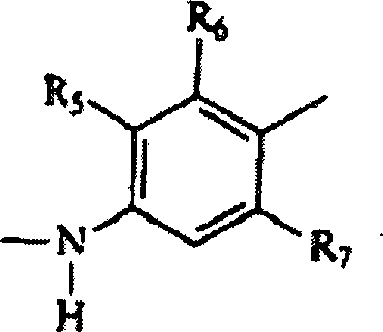
Ein
zweiter Aspekt der Erfindung ist ein Verfahren zum selektiven Binden
von Misch-Sequenz-DNA, die
ein in Berührung
bringen einer Proben-DNA mit einer Verbindung nach Formel 
X aus
der Gruppe ausgewählt
ist, die aus O, S und NH besteht;
Y CH oder N ist;
A CH
oder N ist;
B aus der Gruppe ausgewählt ist, die aus NH, O oder
S besteht;
R1 aus der Gruppe ausgewählt ist,
die aus H, Niederalkyl, Halogen, Oxyalkyl, Oxyaryl und Oxyarylalkyl
besteht;
R2 und R9 jeweils
unabhängig
aus der Gruppe ausgewählt
sind, die aus H, H2, Hydroxy, niederem Alkyl,
Cycloalkyl, Aryl, Alkylaryl, Alkoxyalkyl, Hydroxycycloalkyl. Alkoxycycloalkoxy,
Hydroxyalkyl, Aminoalkyl und Alkylaminoalkyl besteht; und
R3, R4, R13 und
R14 jeweils unabhängig aus der Gruppe ausgewählt sind,
die aus H, niederem Alkyl, Alkoxyalkyl, Cycloalkyl, Aryl, Alkylaryl,
Hydroxyalkyl, Aminoalkyl und Alkylaminoalkyl besteht, oder R3 und R4 zusammen oder
R13 und R14 zusammen
ein C2-C10-Alkyl,
Hydroxyalkyl oder Alkylen repräsentieren,
oder R3 und R4 zusammen
oder R13 und R14 zusammen
Folgendes sind: 
n eine Zahl von
1 bis 3 ist, und R10 H oder -CONHR11NR15R16 ist,
wobei R11 niederes Alkyl ist und R15 und R16 jeweils
unabhängig
aus der Gruppe ausgewählt
sind, die aus H und niederem Alkyl besteht;
L aus der Gruppe
ausgewählt
ist, die aus Folgendem besteht: 
X is selected from the group consisting of O, S and NH;
Y is CH or N;
A is CH or N;
B is selected from the group consisting of NH, O or S;
R 1 is selected from the group consisting of H, lower alkyl, halo, oxyalkyl, oxyaryl and oxyarylalkyl;
R 2 and R 9 are each independently selected from the group consisting of H, H 2 , hydroxy, lower alkyl, cycloalkyl, aryl, alkylaryl, alkoxyalkyl, hydroxycycloalkyl. Alkoxycycloalkoxy, hydroxyalkyl, aminoalkyl and alkylaminoalkyl; and
R 3 , R 4 , R 13 and R 14 are each independently selected from the group consisting of H, lower alkyl, alkoxyalkyl, cycloalkyl, aryl, alkylaryl, hydroxyalkyl, aminoalkyl and alkylaminoalkyl, or R 3 and R 4 together or R 13 and R 14 together represent a C 2 -C 10 alkyl, hydroxyalkyl or alkylene, or R 3 and R 4 together or R 13 and R 14 together are:
n is a number from 1 to 3, and R 10 is H or -CONHR 11 NR 15 R 16 , wherein R 11 is lower alkyl and each of R 15 and R 16 is independently selected from the group consisting of H and lower alkyl ;
L is selected from the group consisting of:
In
einer bevorzugten Ausführungsform
des zweiten Aspekts ist L: 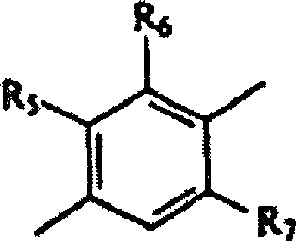
In
einer weiteren bevorzugten Ausführungsform
des zweiten Aspekts ist L: 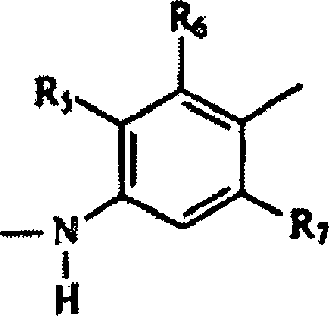
Ein
dritter Aspekt der vorliegenden Erfindung ist ein Verfahren zum
Nachweisen von Misch-DNA-Sequenzen,
das das In-Berührung
bringen einer DNA-Probe mit einer fluoreszierenden Verbindung nach
Formel: 
X aus
der Gruppe ausgewählt
ist, die aus O, S und NH besteht;
Y CH oder N ist;
A CH
oder N ist;
B aus der Gruppe ausgewählt ist, die aus NH, O oder
S besteht;
R1 aus der Gruppe ausgewählt ist,
die aus H, Niederalkyl, Halogen, Oxyalkyl, Oxyaryl und Oxyarylalkyl
besteht;
R2 und R9 jeweils
unabhängig
aus der Gruppe ausgewählt
sind, die aus H, H2, Hydroxy, Niederalkyl,
Cycloalkyl, Aryl, Alkylaryl, Alkoxyalkyl, Hydroxycycloalkyl, Alkoxycycloalkoxy,
Hydroxyalkyl, Aminoalkyl und Alkylaminoalkyl besteht; und
R3, R4, R13 und
R14 jeweils unabhängig aus der Gruppe ausgewählt sind,
die aus H, Niederalkyl, Alkoxyalkyl, Cycloalkyl, Aryl, Alkylaryl,
Hydroxyalkyl, Aminoalkyl und Alkylaminoalkyl besteht, oder R3 und R4 zusammen oder
R13 und R14 zusammen
ein C2-C10-Alkyl,
Hydroxyalkyl oder Alkylen repräsentieren,
oder R3 und R4 zusammen
oder R13 und R14 zusammen
Folgendes sind: 
n eine Zahl von
1 bis 3 ist, und R10 H oder -CONHR11NR15R16 ist,
wobei R11 niederes Alkyl ist und R15 und R16 jeweils
unabhängig
aus der Gruppe ausgewählt
sind, die aus H und niederem Alkyl besteht;
L aus der Gruppe
ausgewählt
ist, die aus Folgendem besteht: 
X is selected from the group consisting of O, S and NH;
Y is CH or N;
A is CH or N;
B is selected from the group consisting of NH, O or S;
R 1 is selected from the group consisting of H, lower alkyl, halo, oxyalkyl, oxyaryl and oxyarylalkyl;
R 2 and R 9 are each independently selected from the group consisting of H, H 2 , hydroxy, lower alkyl, cycloalkyl, aryl, alkylaryl, alkoxyalkyl, hydroxycycloalkyl, alkoxycycloalkoxy, hydroxyalkyl, aminoalkyl and alkylaminoalkyl; and
R 3 , R 4 , R 13 and R 14 are each independently selected from the group consisting of H, lower alkyl, alkoxyalkyl, cycloalkyl, aryl, alkylaryl, hydroxyalkyl, aminoalkyl and alkylaminoalkyl, or R 3 and R 4 together or R 13 and R 14 together represent a C 2 -C 10 alkyl, hydroxyalkyl or alkylene, or R 3 and R 4 together or R 13 and R 14 together are:
n is a number from 1 to 3, and R 10 is H or -CONHR 11 NR 15 R 16 , wherein R 11 is lower alkyl and each of R 15 and R 16 is independently selected from the group consisting of H and lower alkyl ;
L is selected from the group consisting of:
In
einer bevorzugten Ausführungsform
des dritten Aspekts ist L: 
Ein
vierter Aspekt der Erfindung ist eine pharmazeutische Zubereitung,
die eine Verbindung nach Formel 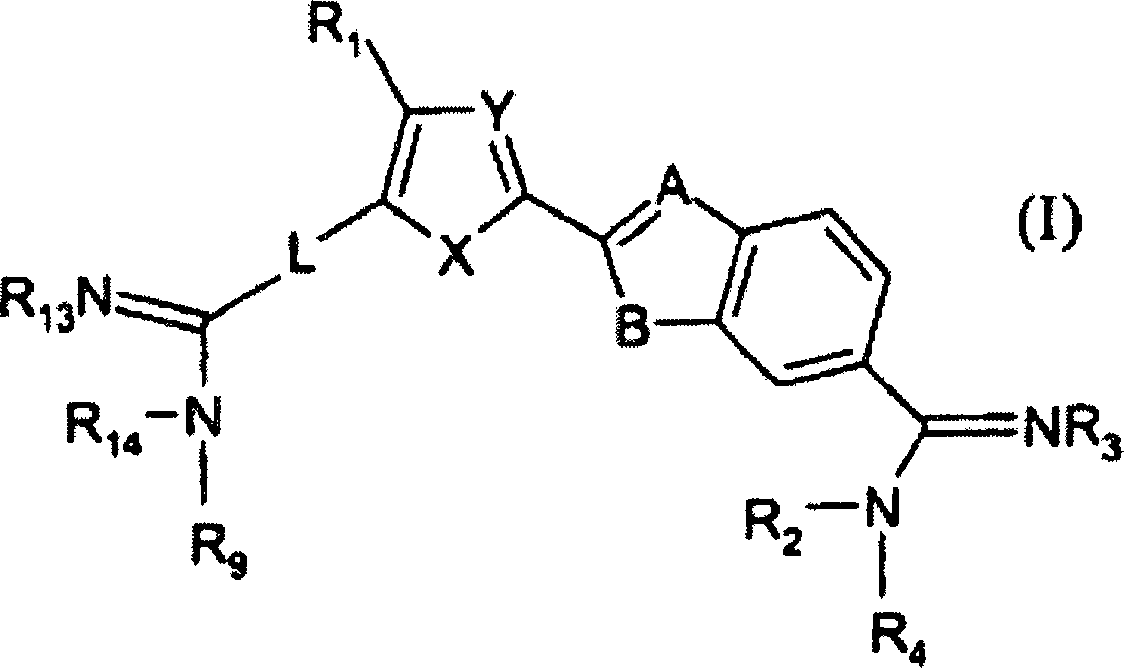
X aus
der Gruppe ausgewählt
ist, die aus O, S und NH besteht;
Y CH oder N ist;
A CH
oder N ist;
B aus der Gruppe ausgewählt ist, die aus NH, O oder
S besteht;
R1 aus der Gruppe ausgewählt ist,
die aus H, Niederalkyl, Halogen, Oxyalkyl, Oxyaryl und Oxyarylalkyl
besteht;
R2 und R9 jeweils
unabhängig
aus der Gruppe ausgewählt
sind, die aus H, H2, Hydroxy, Niederalkyl,
Cycloalkyl, Aryl, Alkylaryl, Alkoxyalkyl, Hydroxycycloalkyl, Alkoxycycloalkoxy,
Hydroxyalkyl, Aminoalkyl und Alkylaminoalkyl besteht; und
R3, R4, R13 und
R14 jeweils unabhängig aus der Gruppe ausgewählt sind,
die aus H, Niederalkyl, Alkoxyalkyl, Cycloalkyl, Aryl, Alkylaryl,
Hydroxyalkyl, Aminoalkyl und Alkylaminoalkyl besteht, oder R3 und R4 zusammen oder
R13 und R14 zusammen
ein C2-C10-Alkyl,
Hydroxyalkyl oder Alkylen repräsentieren,
oder R3 und R4 zusammen
oder R13 und R14 zusammen
Folgendes sind: 
n eine Zahl von
1 bis 3 ist, und R10 H oder -CONHR11NR15R16 ist,
wobei R11 niederes Alkyl ist und R15 und R16 jeweils
unabhängig
aus der Gruppe ausgewählt
sind, die aus H und Niederalkyl besteht;
L aus der Gruppe ausgewählt ist,
die aus Folgendem besteht: 
X is selected from the group consisting of O, S and NH;
Y is CH or N;
A is CH or N;
B is selected from the group consisting of NH, O or S;
R 1 is selected from the group consisting of H, lower alkyl, halo, oxyalkyl, oxyaryl and oxyarylalkyl;
R 2 and R 9 are each independently selected from the group consisting of H, H 2 , hydroxy, lower alkyl, cycloalkyl, aryl, alkylaryl, alkoxyalkyl, hydroxycycloalkyl, alkoxycycloalkoxy, hydroxyalkyl, aminoalkyl and alkylaminoalkyl; and
R 3 , R 4 , R 13 and R 14 are each independently selected from the group consisting of H, lower alkyl, alkoxyalkyl, cycloalkyl, aryl, alkylaryl, hydroxyalkyl, aminoalkyl and alkylaminoalkyl, or R 3 and R 4 together or R 13 and R 14 together represent a C 2 -C 10 alkyl, hydroxyalkyl or alkylene, or R 3 and R 4 together or R 13 and R 14 together are:
n is a number from 1 to 3, and R 10 is H or -CONHR 11 NR 15 R 16 , wherein R 11 is lower alkyl and R 15 and R 16 are each independently selected from the group consisting of H and lower alkyl;
L is selected from the group consisting of:
In
einer bevorzugten Ausführungsform
des dritten Aspekts ist L: 
Ein
fünfter
Aspekt der Erfindung schließt
Verfahren zum Kontrollieren der Genexpression, Verfahren zur Behandlung
von Krebs und anderer Störungen
der Zellproliferation und Verfahren zur Behandlung von Störungen genetischen
Ursprungs (das heißt
wo der Erkrankungszustand durch eine Genmutation oder -mutationen
verursacht wird) ein, umfassend die Verwendung einer Verbindung
nach Formel: 
X aus der Gruppe
ausgewählt
ist, die aus O, S und NH besteht;
Y CH oder N ist;
A CH
oder N ist;
B aus der Gruppe ausgewählt ist, die aus NH, O oder
S besteht;
R1 aus der Gruppe ausgewählt ist,
die aus H, Niederalkyl, Halogen, Oxyalkyl, Oxyaryl und Oxyarylalkyl
besteht;
R2 und R9 jeweils
unabhängig
aus der Gruppe ausgewählt
sind, die aus H, Hydroxy, Niederalkyl, Cycloalkyl, Aryl, Alkylaryl,
Alkoxyalkyl, Hydroxycycloalkyl, Alkoxycycloalkoxy, Hydroxyalkyl,
Aminoalkyl und Alkylaminoalkyl besteht; und
R3,
R4, R13 und R14 jeweils unabhängig aus der Gruppe ausgewählt sind,
die aus H, Niederalkyl, Alkoxyalkyl, Cycloalkyl, Aryl, Alkylaryl,
Hydroxyalkyl, Aminoalkyl und Alkylaminoalkyl besteht, oder R3 und R4 zusammen oder
R13 und R14 zusammen
ein C2-C10-Alkyl,
Hydroxyalkyl oder Alkylen repräsentieren,
oder R3 und R4 zusammen
oder R13 und R14 zusammen
Folgendes sind: 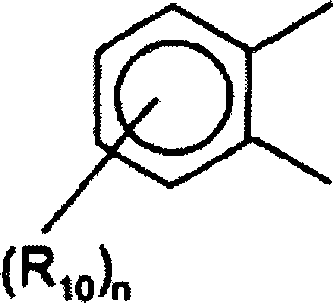
n eine Zahl von
1 bis 3 ist, und R10 H oder -CONHR11NR15R16 ist,
wobei R11 niederes Alkyl ist und R15 und R16 jeweils
unabhängig
aus der Gruppe ausgewählt
sind, die aus H und niederem Alkyl besteht;
L aus der Gruppe
ausgewählt
ist, die aus Folgendem besteht: 
X is selected from the group consisting of O, S and NH;
Y is CH or N;
A is CH or N;
B is selected from the group consisting of NH, O or S;
R 1 is selected from the group consisting of H, lower alkyl, halo, oxyalkyl, oxyaryl and oxyarylalkyl;
R 2 and R 9 are each independently selected from the group consisting of H, hydroxy, lower alkyl, cycloalkyl, aryl, alkylaryl, alkoxyalkyl, hydroxycycloalkyl, alkoxycycloalkoxy, hydroxyalkyl, aminoalkyl and alkylaminoalkyl; and
R 3 , R 4 , R 13 and R 14 are each independently selected from the group consisting of H, lower alkyl, alkoxyalkyl, cycloalkyl, aryl, alkylaryl, hydroxyalkyl, aminoalkyl and alkylaminoalkyl, or R 3 and R 4 together or R 13 and R 14 together represent a C 2 -C 10 alkyl, hydroxyalkyl or alkylene, or R 3 and R 4 together or R 13 and R 14 together are:
n is a number from 1 to 3, and R 10 is H or -CONHR 11 NR 15 R 16 , wherein R 11 is lower alkyl and each of R 15 and R 16 is independently selected from the group consisting of H and lower alkyl ;
L is selected from the group consisting of:
Der
sechste Aspekt der Erfindung ist die Verwendung einer Verbindung
nach Formel: 
X aus der Gruppe
ausgewählt
ist, die aus O, S und NH besteht;
Y CH oder N ist;
A CH
oder N ist;
B aus der Gruppe ausgewählt ist, die aus NH, O oder
S besteht;
R1 aus der Gruppe ausgewählt ist,
die aus H, Niederalkyl, Halogen, Oxyalkyl, Oxyaryl und Oxyarylalkyl
besteht;
R2 und R9 jeweils
unabhängig
aus der Gruppe ausgewählt
sind, die aus H, Hydroxy, niederem Alkyl, Cycloalkyl, Aryl, Alkylaryl,
Alkoxyalkyl, Hydroxycycloalkyl, Alkoxycycloalkoxy, Hydroxyalkyl,
Aminoalkyl und Alkylaminoalkyl besteht; und
R3,
R4, R13 und R14 jeweils unabhängig aus der Gruppe ausgewählt sind,
die aus H, niederem Alkyl, Alkoxyalkyl, Cycloalkyl, Aryl, Alkylaryl,
Hydroxyalkyl, Aminoalkyl und Alkylaminoalkyl besteht, oder R3 und R4 zusammen oder
R13 und R14 zusammen
ein C2-C10-Alkyl,
Hydroxyalkyl oder Alkylen repräsentieren,
oder R3 und R4 zusammen
oder R13 und R14 zusammen
Folgendes sind: 
n eine Zahl von
1 bis 3 ist, und R10 H oder -CONHR11NR15R16 ist,
wobei R11 niederes Alkyl ist und R15 und R16 jeweils
unabhängig
aus der Gruppe ausgewählt
sind, die aus H und niederem Alkyl besteht;
L aus der Gruppe
ausgewählt
ist, die aus Folgendem besteht: 
X is selected from the group consisting of O, S and NH;
Y is CH or N;
A is CH or N;
B is selected from the group consisting of NH, O or S;
R 1 is selected from the group consisting of H, lower alkyl, halo, oxyalkyl, oxyaryl and oxyarylalkyl;
R 2 and R 9 are each independently selected from the group consisting of H, hydroxy, lower alkyl, cycloalkyl, aryl, alkylaryl, alkoxyalkyl, hydroxycycloalkyl, alkoxycycloalkoxy, hydroxyalkyl, aminoalkyl and alkylaminoalkyl; and
R 3 , R 4 , R 13 and R 14 are each independently selected from the group consisting of H, lower alkyl, alkoxyalkyl, cycloalkyl, aryl, alkylaryl, hydroxyalkyl, aminoalkyl and alkylaminoalkyl, or R 3 and R 4 together or R 13 and R 14 together represent a C 2 -C 10 alkyl, hydroxyalkyl or alkylene, or R 3 and R 4 together or R 13 and R 14 together are:
n is a number from 1 to 3, and R 10 is H or -CONHR 11 NR 15 R 16 , wherein R 11 is lower alkyl and each of R 15 and R 16 is independently selected from the group consisting of H and lower alkyl ;
L is selected from the group consisting of:
Ein
letzter Aspekt der Erfindung ist die Verwendung einer Verbindung
nach Formel: 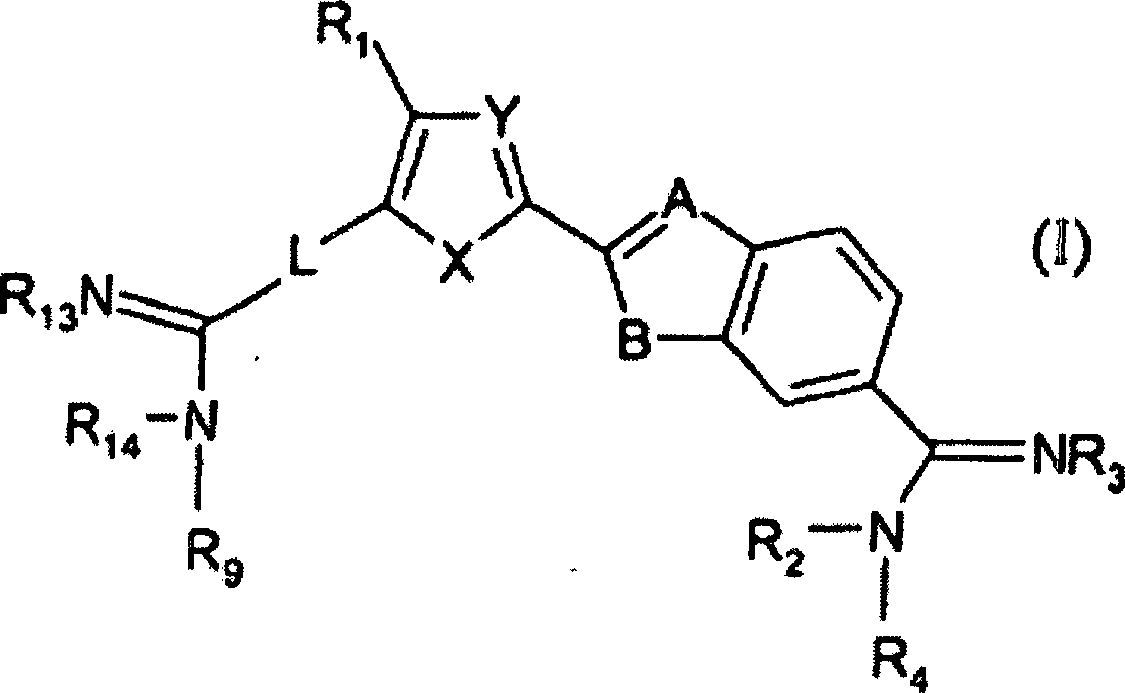
X aus der Gruppe
ausgewählt
ist, die aus O, S und NH besteht;
Y CH oder N ist;
A CH
oder N ist;
B aus der Gruppe ausgewählt ist, die aus NH, O oder
S besteht;
R1 aus der Gruppe ausgewählt ist,
die aus H, Niederalkyl, Halogen, Oxyalkyl, Oxyaryl und Oxyarylalkyl
besteht;
R2 und R9 jeweils
unabhängig
aus der Gruppe ausgewählt
sind, die aus Aryl, Alkylaryl, Alkoxyalkyl, Hydroxyalkyl und Aminoalkyl
besteht; und
R3, R4,
R13 und R14 jeweils
unabhängig
aus der Gruppe ausgewählt
sind, die aus Alkoxyalkyl, Aryl, Alkylaryl, Hydroxyalkyl und Aminoalkyl
besteht, oder R3 und R4 zusammen
oder R13 und R14 zusammen
ein C2-C10-Alkyl, Hydroxyalkyl
oder Alkylen repräsentieren,
oder R3 und R4 zusammen
oder R13 und R14 zusammen
Folgendes sind: 
n eine Zahl von
1 bis 3 ist, und R10 H oder -CONHR11NR15R16 ist,
wobei R11 niederes Alkyl ist und R15 und R16 jeweils
unabhängig
aus der Gruppe ausgewählt
sind, die aus H und niederem Alkyl besteht;
L aus der Gruppe
ausgewählt
ist, die aus Folgendem besteht: 
X is selected from the group consisting of O, S and NH;
Y is CH or N;
A is CH or N;
B is selected from the group consisting of NH, O or S;
R 1 is selected from the group consisting of H, lower alkyl, halo, oxyalkyl, oxyaryl and oxyarylalkyl;
R 2 and R 9 are each independently selected from the group consisting of aryl, alkylaryl, alkoxyalkyl, hydroxyalkyl and aminoalkyl; and
R 3 , R 4 , R 13 and R 14 are each independently selected from the group consisting of alkoxyalkyl, aryl, alkylaryl, hydroxyalkyl and aminoalkyl, or R 3 and R 4 together or R 13 and R 14 together represent a C 2 - C 10 alkyl, hydroxyalkyl or alkylene, or R 3 and R 4 together or R 13 and R 14 together are the following:
n is a number from 1 to 3, and R 10 is H or -CONHR 11 NR 15 R 16 , wherein R 11 is lower alkyl and each of R 15 and R 16 is independently selected from the group consisting of H and lower alkyl ;
L is selected from the group consisting of:
Das Vorstehende und andere Aspekte der vorliegenden Erfindung sind in der unten angegebenen Beschreibung detailliert erklärt.The The foregoing and other aspects of the present invention are in the description given below explained in detail.
Kurze Beschreibung der ZeichnungenShort description of drawings
Ausführliche Beschreibung bevorzugter AusführungsformenDetailed description more preferred embodiments
Die vorliegende Erfindung wird nunmehr vollständiger hierin nachstehend unter Bezugnahme auf die begleitenden Zeichnungen beschrieben werden, in denen bevorzugte Ausführungsformen der Erfindung dargestellt sind. Die Erfindung soll jedoch auch in unterschiedlichen Formen verkörpert werden und sollte nicht als die Ausführungsformen, die hierin dargelegt sind, einschränkend aufgefasst werden. Vielmehr werden diese Ausführungsformen bereitgestellt, sodass diese Offenbarung umfassend und vollständig ist und den Umfang der Erfindung für den Fachmann auf dem Gebiet vollständig vermitteln wird.The The present invention will now be more fully described hereinafter With reference to the accompanying drawings, in which preferred embodiments the invention are shown. However, the invention is also intended in embodied in different forms and should not be considered as the embodiments set forth herein are restrictive be understood. Rather, these embodiments are provided so that this disclosure is comprehensive and complete and the scope of the Invention for will fully convey the art in the field.
Soweit nichts anderes definiert ist, weisen alle technischen und wissenschaftlichen Begriffe, die hierin verwendet wurden, dieselbe Bedeutung auf, wie sie üblicherweise vom Fachmann auf dem Gebiet, zu dem die Erfindung gehört, verstanden werden. Alle Veröffentlichungen, Patentanmel dungen, Patente und andere Referenzen, die hierin erwähnt sind, sind durch Bezugnahme in ihrer Gesamtheit mit aufgenommen.So far nothing else is defined, all technical and scientific Terms used herein have the same meaning as they usually understood by those skilled in the art to which the invention belongs become. All publications, Patent applications, patents and other references mentioned herein are incorporated by reference in their entirety.
Die Nukleotidsequenzen sind hierin lediglich einsträngig angegeben, in der 5'- zu 3'-Richtung von links nach rechts. Nukleotide sind hierin in der von der IUPAC-IUB Biochemical Nomenclature Commission gemäß 37 CFR § 1.822 empfohlenen Weise und etablierter Benutzung repräsentiert (siehe beispielsweise PatentIn User Manual, 99–102 (November 1990) (U.S. Patent and Trademark Office).The Nucleotide sequences are indicated herein as single stranded, in the 5 'to 3' direction from left to right right. Nucleotides are described herein by IUPAC-IUB Biochemical Nomenclature Commission according to 37 CFR § 1.822 recommended Manner and established use (see for example Patent In User Manual, 99-102 (November 1990) (U.S. Patent and Trademark Office).
Bestimmte Aufgaben, Vorteile und neue Elemente der Erfindung sind in der folgenden Beschreibung dargelegt und werden für den Fachmann auf dem Gebiet nach Überprüfung des Nachfolgenden offensichtlich werden oder kann durch Ausübung der Erfindung erlernt werden.Certain Objects, advantages and novel elements of the invention are as follows Described and described to those skilled in the art after checking the The following will be obvious or may be exercised by exercising Invention can be learned.
Wie hierin verwendet, betrifft der Begriff „Alkyl" C1-C10-, einschließlich linearer, verzweigtkettiger oder cyclischer, gesättigter oder ungesättigter (das heißt Alkenyl- und Alkinyl-)Kohlenwasserstoffketten, einschließlich beispielsweise Methyl-, Ethyl-, Propyl-, Isopropyl-, Butyl-, Isobutyl-, tert-Butyl-, Pentyl-, Hexyl-, Octyl-, Ethenyl-, Propenyl-, Butenyl-, Pentenyl-, Hexenyl-, Octenyl-, Butadienyl-, Propinyl-, Butinyl-, Pentinyl-, Hexinyl-, Heptinyl- und Allenylgruppen. Wie hierin verwendet, betrifft der Begriff „Acyl" eine organische Säuregruppe, wobei das -OH der Carboxylgruppe durch einen anderen Substituenten ersetzt wurde (das heißt wie hier durch RCO- repräsentiert wird, wobei R eine Alkyl- oder eine Arylgruppe ist). Als solches schließt der Begriff „Acyl" speziell Arylacylgruppen ein. Spezielle Beispiele für Acylgruppen schließen Acetyl und Benzoyl ein. Wie hierin verwendet, betrifft der Begriff „Aryl" 5- und 6-gliedrige Kohlenwasserstoff- und heterocyclische aromatische Ringe. Spezielle Beispiele für Arylgruppen schließen ein, sind jedoch nicht beschränkt auf, Cyclopentadienyl, Phenyl, Furan, Thiophen, Pyrrol, Pyran, Pyridin, Imidazol, Isothiazol, Isoxazol, Pyrazol, Pyrazin, Pyrimidin und dergleichen. Der Begriff „Alkoxyl", wie hierin verwendet, betrifft C1-C10- einschließlich linear, verzweigtkettig oder cyclisch, gesättigte oder ungesättigte Oxo-Kohlenwasserstoffketten, einschließlich beispielsweise Methoxy, Ethoxy, Propoxy, Isopropoxy, Butoxy, t-Butoxy und Pentoxy. Der Begriff „Aryloxyl", wie hierin verwendet, betrifft Phenyloxyl oder Hexyloxyl und Alkyl, Halo oder Alkoxyl, substituiertes Phenyloxyl oder Hexyloxyl. Wie hierin verwendet, schließen die Begriffe „substituiertes Alkyl" und „substituiertes Aryl" Alkyl- und Arylgruppen, wie hierin definiert, ein, bei denen ein oder mehrere Atome oder funktionelle Gruppen der Aryl- oder Alkylgruppe durch ein anderes Atom oder funktionelle Gruppe ersetzt wurden, einschließlich bei spielsweise Halogen, Aryl, Alkyl, Alkoxy, Hydroxy, Nitro, Amino, Alkylamino, Dialkylamino, Sulfat und Mercapto. Die Begriffe „Halo", „Halogenid" oder „Halogen", wie hierin verwendet, betreffen Fluor-, Chlor-, Brom- und Iodgruppen.As used herein, the term "alkyl" refers to C 1 -C 10 - including linear, branched chain, or cyclic, saturated or unsaturated (that is, alkenyl and alkynyl) hydrocarbon chains including, for example, methyl, ethyl, propyl, isopropyl, butyl, isobutyl, tert-butyl, pentyl, hexyl, octyl, Ethenyl, propenyl, butenyl, pentenyl, hexenyl, octenyl, butadienyl, propynyl, butynyl, pentynyl, hexynyl, heptynyl and allenyl groups. As used herein, the term "acyl" refers to an organic acid group wherein the -OH of the carboxyl group has been replaced by another substituent (that is, as represented by RCO-, where R is an alkyl or an aryl group) The term "acyl" specifically includes arylacyl groups. Specific examples of acyl groups include acetyl and benzoyl. As used herein, the term "aryl" refers to 5- and 6-membered hydrocarbon and heterocyclic aromatic rings Specific examples of aryl groups include, but are not limited to, cyclopentadienyl, phenyl, furan, thiophene, pyrrole, pyran, pyridine, Imidazole, isothiazole, isoxazole, pyrazole, pyrazine, pyrimidine and the like The term "alkoxyl" as used herein refers to C 1 -C 10 - including linear, branched or cyclic, saturated or unsaturated oxo hydrocarbon chains including, for example, methoxy, ethoxy , Propoxy, isopropoxy, butoxy, t-butoxy and pentoxy. The term "aryloxyl" as used herein refers to phenyloxyl or hexyloxyl and alkyl, halo or alkoxyl, substituted phenyloxyl or hexyloxy As used herein, the terms "substituted alkyl" and "substituted aryl" include alkyl and aryl groups as defined herein in which one or more atoms or functional groups of the aryl or alkyl group have been replaced by another atom or functional group including, for example, halogen, aryl, alkyl, alkoxy, hydroxy, nitro, amino, alkylamino, dialkylamino, sulfate and Mercapto The terms "halo", "halide" or "halogen" as used herein refer to fluoro, chloro, bromo and iodo groups.
Wie hierin verwendet, betrifft der Begriff „Misch-DNA-Sequenz" eine DNA-Sequenz, die GC-Basenpaare und AT-Basenpaare umfasst.As As used herein, the term "mixed DNA sequence" refers to a DNA sequence, the GC base pairs and AT base pairs.
Verbindungen
der Formel I der vorliegenden Erfindung (hierin nachstehend als „aktive
Verbindungen" bezeichnet)
sind beim Binden von Misch-Sequenzen von DNA von Nutzen, das heißt GC- ebenso
wie AT-Basenpaare. Unerwarteterweise binden die aktiven Bestandteile
an die kleine Furche der DNA an spezifischen GC-enthaltenden Sequenzen
in einer in hohem Maße
kooperativen Art und Weise als gestapelte Dimere. Wegen der Fähigkeit
der Verbindungen der vorliegenden Erfindung an spezifische und gemischte
DNA-Sequenzen zu binden sind diese beim Kontrollieren einer Genexpression
beispielsweise durch Stören
der Gentranskription von Nutzen. Demgemäß können die aktiven bzw. wirksamen
Verbindungen pharmazeutische Anwendungen bei der Behandlung opportunistischer
Infektionen, wie beispielsweise Pneumocystis carinii, bei der Behandlung
von Krebs oder anderen Proliferationsstörungen und bei der Behandlung
von genetischen Störungen finden,
die beispielsweise von Mutationen in speziellen Genen verursacht
sind (beispielsweise cystische Fibrose, adulte polycystische Krankheit,
Huntington's Disease,
myotonische Dystrophie, Neurofibromatose, etc.). Weil darüber hinaus
bestimmte Verbindungen der vorliegenden Erfindung fluoreszieren
(das heißt
DB293, dargestellt in
Die wirksamen Verbindungen der vorliegenden Erfindung können durch die in K. Hopkins et. Al., J. Med. Chem. 41, 3872–3878 (1998) dargestellten Verfahren hergestellt werden. Die aktiven Verbindungen der vorliegenden Erfindung können ebenfalls durch die in R. Kada et al., Collect. Czech, Chem. Comm. 38, 1700–1704 (1973) dargelegten Verfahren hergestellt werden, modifiziert wie unten beschrieben, wobei die Offenbarung hiervon ebenfalls in ihrer Gesamtheit mit aufgenommen ist. Zusätzlich können die wirksamen Verbindungen als pharmazeutisch verträgliche Salze verabreicht werden. Derartige Salze schließen Gluconat-, Lactat-, Acetat-, Tartrat-, Citrat-, Phosphat-, Borat-, Nitrat-, Sulfat- und Hydrochloridsalze ein. Die Salze der vorliegenden Erfindung können im Allgemeinen durch Umsetzen von zwei Äquivalenten der Basen-Verbindung mit der erwünschten Säure in Lösung hergestellt werden. Nachdem die Reaktion abgeschlossen ist, werden die Salze aus der Lösung durch Zusatz einer geeigneten Menge eines Lösungsmittels, in dem das Salz unlöslich ist, kristallisiert.The effective compounds of the present invention can by in K. Hopkins et. Al., J. Med. Chem. 41, 3872-3878 (1998) produced methods are produced. The active compounds of the present invention also by the methods described in R. Kada et al., Collect. Czech, Chem. Comm. 38, 1700-1704 (1973), modified as described below, the disclosure of which is also in its Entity is included. Additionally, the effective compounds as pharmaceutically acceptable Salts are administered. Such salts include gluconate, lactate, acetate, Tartrate, citrate, phosphate, borate, nitrate, sulfate and hydrochloride salts one. The salts of the present invention can generally be reacted by reaction of two equivalents the base connection with the desired Acid in solution getting produced. After the reaction is completed, the Salts from the solution by adding a suitable amount of a solvent in which the salt insoluble is crystallized.
Wie oben erwähnt, sind die Verfahren der vorliegenden Erfindung zum Behandeln opportunistischer mikrobieller Infektionen, wie beispielsweise P. carinii und Giardia lamblia, von Nutzen. Die Verbindungen können ebenfalls bei der Behandlung von Pilzinfektionen, wie beispielsweise Candida albicans, Cryptococcus neoformans, Aspergillus fumigatus, Fusarium solani und Kombinationen hiervon, von Nutzen sein. Die Verfahren der Erfindung sind ebenfalls zur Behandlung dieser Zustände von Nutzen insofern als sie deren Beginn, Wachstum und Ausbreitung eines solchen Zustandes hemmen, eine Regression des Zustandes verursachen, den Zustand heilen oder in anderer Weise das allgemeine Wohlbefinden eines Subjektes, das von dem Zustand befallen ist und einem Risiko hiervon unterliegt, zu verbessern.As mentioned above, are the methods of the present invention for treating opportunistic microbial Infections, such as P. carinii and Giardia lamblia, useful. The connections can also in the treatment of fungal infections, such as Candida albicans, Cryptococcus neoformans, Aspergillus fumigatus, Fusarium solani and combinations thereof. The Methods of the invention are also useful for treating these conditions Benefit insofar as they determine their onset, growth and spread inhibit such state, cause a regression of the state that Condition heal or otherwise the overall well-being a subject afflicted with the condition and a risk is subject to improve.
Die Verbindungen der vorliegenden Erfindung sind nicht nur in Verfahren zur Behandlung von Infektionen und anderen Störungen sondern auch in Verfahren der Hemmung von Enzymen, wie beispielsweise der Topoisomerase, von Nutzen.The Compounds of the present invention are not only in process for the treatment of infections and other disorders but also in procedures the inhibition of enzymes, such as topoisomerase, of Use.
Die durch die Verfahren der vorliegenden Erfindung zu behandelnden Subjekte sind typischerweise Menschen, obwohl die Verfahren der vorliegenden Erfindung mit irgendeinem bekannten Subjekt durchgeführt werden können, die dem Fachmann auf dem Gebiet bekannt sind.The subjects to be treated by the methods of the present invention are typically people, although the methods of the present Invention can be performed with any known subject can, those skilled in the art are known.
Wie oben erwähnt, stellt die vorliegende Erfindung pharmazeutische Formulierungen, die die vorher erwähnten aktiven Verbindungen oder pharmazeutisch akzeptable Salze hiervon umfassen, in pharmazeutisch akzeptablen Trägern zur oralen, intravenösen oder Aerosol-Verabreichung bereit, wie hierin nachstehend ausführlicher diskutiert wird. Ebenfalls stellt die vorliegende Erfindung solche Verbindungen oder Salze hiervon bereit, die lyophilisiert wurden und die zur Bildung pharmazeutisch akzeptabler Formulierungen zur Verabreichung wiederhergestellt bzw. rekonstituiert werden können, wie durch intravenöse oder intramuskuläre Injektion.As mentioned above, the present invention provides pharmaceutical formulations, the ones mentioned before active compounds or pharmaceutically acceptable salts thereof in pharmaceutically acceptable carriers for oral, intravenous or Aerosol administration as discussed in more detail hereinafter. Also the present invention provides such compounds or salts prepared thereof, which have been lyophilized and which are to be formed pharmaceutically recovered from acceptable formulations for administration or can be reconstituted, as by intravenous or intramuscular Injection.
Die therapeutisch wirksame Dosis irgendeiner spezifischen Verbindung, deren Verwendung im Umfang der vorliegenden Erfindung liegt, wird ein wenig von Verbindung zu Verbindung variieren und von Patient zu Patient und wird vom Zustand des Patienten und dem Verabreichungsweg abhängig sein. Als allgemeiner Vorschlag wird eine Dosis von ungefähr 0,1 bis ungefähr 50 mg/kg eine therapeutische Wirksamkeit aufweisen, wobei alle Gewichte auf Grundlage des Ge wichts der aktiven Verbindung berechnet werden, einschließlich der Fälle, bei denen ein Salz verwendet wird. Toxizitätsbedenken in höheren Konzentrationen können intravenöse Dosierungen auf niedrigere Konzentrationen beschränken, wie beispielsweise bis zu ungefähr 10 mg/kg, wobei alle Gewichte auf Grundlage des Gewichts der aktiven Base berechnet werden, einschließlich der Fälle, in denen ein Salz verwendet wird. Eine Dosierung von ungefähr 10 mg/kg bis ungefähr 50 mg/kg kann zur oralen Verabreichung verwendet werden. Typischerweise kann eine Dosierung von ungefähr 0,5 mg/kg bis 5 mg/kg zur intramuskulären Injektion verwendet werden. Bevorzugte Dosen sind 1 μmol/kg bis 50 μmol/kg und besonders bevorzugt 22 μmol/kg und 33 μmol/kg der Verbindung zur intravenösen oder oralen Verabreichung. Die Dauer der Behandlung ist üblicherweise einmal täglich für eine Zeitspanne von zwei bis drei Wochen oder bis der Zustand im Wesentlichen kontrolliert wird. Niedrigere Dosen, die weniger häufig gegeben werden, können prophylaktisch verwendet werden, um die Inzidenz des Wiederauftretens der Infektion zu verhindern oder zu reduzieren.The therapeutically effective dose of any specific compound, the use of which is within the scope of the present invention is vary a little from connection to connection and from patient to Patient and will depend on the condition of the patient and the route of administration dependent be. As a general suggestion, a dose of about 0.1 to approximately 50 mg / kg have a therapeutic efficacy, all weights calculated on the basis of the weight of the active compound, including the cases, where a salt is used. Toxicity concerns in higher concentrations can intravenous dosages to lower concentrations, such as to to about 10 mg / kg, all weights being based on the weight of the active Base can be calculated, including cases in which a salt is used becomes. A dosage of about 10 mg / kg to about 50 mg / kg can be used for oral administration. typically, can be a dosage of about 0.5 mg / kg to 5 mg / kg for intramuscular injection. Preferred doses are 1 μmol / kg up to 50 μmol / kg and more preferably 22 .mu.mol / kg and 33 μmol / kg the connection to the intravenous or oral administration. The duration of treatment is usually once a day for one Time span of two to three weeks or until the condition substantially is controlled. Lower doses, given less frequently can be prophylactic used to estimate the incidence of recurrence of the infection to prevent or reduce.
Gemäß des vorliegenden Verfahrens können pharmazeutisch aktive Verbindungen, wie hierin beschrieben, oder pharmazeutisch akzeptable Salze hiervon oral als Feststoff oder als Flüssigkeit verabreicht werden oder können intramuskulär oder intravenös als Lösung, Suspension oder Emulsion verabreicht werden. Alternativ können die Verbindungen oder Salze durch Inhalation, intravenös oder intramuskulär als liposomale Suspensionen verabreicht werden. Wenn sie durch Inhalation der aktiven Verbindung oder des Salzes verabreicht werden, sollten sie in Form einer Vielzahl von festen Partikeln oder Tröpfchen mit einer Teilchengröße von ungefähr 0,5 bis ungefähr 5 μm und vorzugsweise von ungefähr 1 bis ungefähr 2 μm vorliegen.According to the present Can process pharmaceutically active compounds as described herein, or pharmaceutically acceptable salts thereof, orally as a solid or as a liquid be administered or can intramuscularly or intravenously as a solution, Suspension or emulsion. Alternatively, the Compounds or salts by inhalation, intravenously or intramuscularly as liposomal Suspensions are administered. If they are due to inhalation of the active Compound or salt, they should be in the form a plurality of solid particles or droplets having a particle size of about 0.5 to approximately 5 μm and preferably about 1 to about 2 microns are present.
Die vorliegende Erfindung stellt ebenfalls eine pharmazeutische Zusammensetzung bereit, die zur intravenösen oder intramuskulären Injektion geeignet ist. Die pharmazeutische Zusammensetzung umfasst eine Verbindung der Formel (I) wie hierin beschrieben oder ein pharmazeutisch verträgliches Salz hiervon in irgendeinem pharmazeutisch verträglichen Träger. Wenn eine Lösung erwünscht ist, ist Wasser der Träger der Wahl bezüglich der wasserlöslichen Verbindungen oder Salze. Bezüglich der wasserunlöslichen Verbindungen oder Salze kann ein organischer Trägerstoff, wie beispielsweise Glycerol, Propylenglycol, Polyethylenglycol oder Gemische hiervon geeignet sein. Im letzteren Fall kann der organische Träger eine beträchtliche Menge an Wasser enthalten. Die Lösung kann in jedem Fall danach in einer geeigneten Art und Weise sterilisiert werden, die auf dem technischen Gebiet bekannt ist, und typischerweise durch Filtration durch einen 0,22 μm Filter. Im Anschluss an die Sterilisation kann die Lösung in geeigneten Behältern dispensiert werden, wie beispielsweise entpyrogenisierten Glas-Vials. Das Dispensieren wird vorzugsweise durch ein aseptisches Verfahren durchgeführt. Sterilisierte Verschlüsse können dann auf den Vials angeordnet werden und, falls erwünscht, können die Vial-Inhaltsstoffe lyophilisiert bzw. gefriergetrocknet werden.The The present invention also provides a pharmaceutical composition ready for intravenous or intramuscular Injection is suitable. The pharmaceutical composition comprises a compound of formula (I) as described herein or a pharmaceutical compatible Salt thereof in any pharmaceutically acceptable carrier. If a solution is desired, water is the carrier the choice regarding the water-soluble Compounds or salts. In terms of the water-insoluble Compounds or salts may be an organic carrier, such as Glycerol, propylene glycol, polyethylene glycol or mixtures thereof be suitable. In the latter case, the organic carrier may be a considerable Amount of water included. The solution can be sterilized in any case thereafter in a suitable manner which is well known in the technical field, and typically by filtration through a 0.22 μm filter. Following the Sterilization can be the solution in suitable containers be dispensed, such as depyrogenated glass vials. Dispensing is preferably by an aseptic procedure carried out. Sterilized closures can then placed on the vials and, if desired, the Vial ingredients be lyophilized or freeze-dried.
Zusätzlich zu den Verbindungen nach Formel (I) oder deren Salzen können die pharmazeutischen Zusammensetzungen weitere Additive, wie beispielsweise Additive zur pH-Einstellung, aufweisen. Insbesondere schließen nützliche Mittel zur pH-Einstellung Säuren, wie beispielsweise Salzsäure, Basen oder Puffer, wie beispielsweise Natriumlactat, Natriumacetat, Natriumphosphat, Natriumcitrat, Natriumborat oder Natriumgluconat, ein. Weiterhin können die Zusammensetzungen mikrobielle Konservierungsmittel enthalten. Nützliche mikrobielle Konservierungsmittel schließen Methylparaben, Propylparaben, und Benzylalkohol ein. Das mikrobielle Konservierungsmittel wird typischerweise verwendet, wenn die Zubereitung in einem Vial angeordnet wird, das zur Multi-Dosisanwendung vorgesehen ist. Die pharmazeutischen Zusammensetzungen können natürlich wie angezeigt unter Verwendung von Techniken lyophilisiert werden, die in der Technik wohl bekannt sind.In addition to the compounds of formula (I) or salts thereof, the pharmaceutical compositions may contain other additives such as pH adjusting additives. In particular, useful pH adjusting agents include acids such as hydrochloric acid, bases or buffers such as sodium lactate, sodium acetate, sodium phosphate, sodium citrate, sodium borate or sodium gluconate. Furthermore, the compositions may contain microbial preservatives. helpful Microbial preservatives include methylparaben, propylparaben, and benzyl alcohol. The microbial preservative is typically used when the preparation is placed in a vial intended for multi-dose use. Of course, as indicated, the pharmaceutical compositions may be lyophilized using techniques well known in the art.
Gemäß eines noch weiteren Aspekts der vorliegenden Erfindung ist eine injizierbare, stabile, sterile Zusammensetzung vorgesehen, die eine Verbindung nach Formel (I) oder ein Salz hiervon in Einzeldosis-Form in einem versiegelten Behälter umfasst. Die Verbindung oder das Salz wird in Form eine Lyophilisats bereitgestellt, das dazu in der Lage ist, mit einem geeigneten pharmazeutisch verträglichen Träger zur Bildung einer flüssigen Zusammensetzung, die zur Injektion hiervon in ein Subjekt geeignet ist, wiederhergestellt zu werden. Die Einzeldosisform umfasst typischerweise ungefähr 10 mg bis ungefähr 10 g der Verbindung oder des Salzes. Wenn die Verbindung oder das Salz im Wesentlichen wasserunlöslich sind, kann eine ausreichende Menge an Emulgator, der physiologisch akzeptabel ist, in einer ausreichenden Menge verwendet werden, um die Verbindung oder das Salz in einem wässrigen Träger zu emulgieren. Ein derartig nützlicher Emulgator ist Phosphatidylcholin.According to one Still another aspect of the present invention is an injectable, Stable, sterile composition provided a connection according to formula (I) or a salt thereof in single dose form in one sealed container includes. The compound or salt is provided in the form of a lyophilizate, which is capable of doing so with a suitable pharmaceutically acceptable carrier to form a liquid Composition suitable for injection thereof into a subject is to be restored. The unit dosage form typically includes approximately 10 mg to about 10 g of the compound or salt. If the connection or the Salt essentially insoluble in water are, can be a sufficient amount of emulsifier, the physiological is acceptable to be used in sufficient quantity to emulsify the compound or salt in an aqueous carrier. Such a thing more useful Emulsifier is phosphatidylcholine.
Weitere pharmazeutische Zusammensetzungen können aus den wasserunlöslichen Verbindungen, die hierin offenbart sind, oder deren Salzen hergestellt werden, wie beispielsweise Emulsionen auf wässriger Basis. In einem derartigen Fall enthält die Zusammensetzung eine ausreichende Menge eines pharmazeutisch verträglichen Emulgators, um die erwünschte Menge der Ver bindung oder des Salzes hiervon zu emulgieren. Besonders nützliche Emulgatoren schließen Phosphatidylcholine und Lecithin ein.Further Pharmaceutical compositions can be made from the water-insoluble ones Compounds disclosed herein or salts thereof such as aqueous based emulsions. In such a Case contains the composition is a sufficient amount of a pharmaceutically acceptable Emulsifier to the desired To emulsify the amount of Ver connection or the salt thereof. Especially useful Close emulsifiers Phosphatidylcholines and lecithin.
Weiterhin stellt die vorliegende Erfindung liposomale Zubereitungen der hierin offenbarten Verbindungen und deren Salz bereit. Die Technologie der Bildung liposomaler Suspensionen ist in der Technik wohl bekannt. Wenn die Verbindung oder das Salz hiervon ein wasserlösliches Salz ist, können unter Verwendung einer konventionellen Liposomentechnologie dieselben Lipid-Vesikeln eingebaut werden. In einem solchen Fall wird aufgrund der Wasserlöslichkeit der Verbindung oder des Salzes die Verbindung oder das Salz im Wesentlichen innerhalb des hydrophilen Zentrums oder des Kerns der Liposomen eingefangen sein. Die Lipidschicht, die verwendet wird, kann irgendeine konventionelle Zusammensetzung aufweisen oder kann entweder Cholesterin enthalten oder kann cholesterinfrei sein. Wenn die Verbindung oder das Salz von Interesse wasserunlöslich ist, kann das Salz erneut unter Verwendung konventioneller Liposomenbildungstechnologie im Wesentlichen innerhalb der hydrophoben lipiden Bilayer bzw. Doppelschicht eingefangen sein, die die Struktur der Liposomen bildet. In jedem Fall können die Liposomen, die erzeugt werden, in ihrer Größe reduziert werden, wie durch Verwendung von Standardultraschall und Homogenisierungstechniken.Farther The present invention provides liposomal preparations herein disclosed compounds and their salt ready. The technology The formation of liposomal suspensions is well known in the art. When the compound or salt thereof is a water-soluble Salt is, can same using conventional liposome technology Incorporated lipid vesicles become. In such a case, due to the water solubility the compound or salt is essentially the compound or salt within the hydrophilic center or core of the liposomes be caught. The lipid layer used may be any have conventional composition or can be either cholesterol contain or can be cholesterol free. If the connection or the salt of interest is water insoluble Again, the salt can be reused using conventional liposome formation technology essentially within the hydrophobic lipid bilayer or bilayer which forms the structure of the liposomes. In each Case can the liposomes that are produced are reduced in size as through Use of standard ultrasound and homogenization techniques.
Selbstverständlich können die liposomalen Zubereitungen, die die hierin offenbarten Verbindungen oder deren Salze enthalten, lyophilisiert werden, um ein Lyophilisat zu erzeugen, das mit einem pharmazeutisch verträglichen Träger rekonstituiert werden kann, wie beispielsweise Wasser, um eine liposomale Suspension zu regenerieren.Of course, the liposomal preparations containing the compounds or compounds disclosed herein their salts are lyophilized to be a lyophilisate which can be reconstituted with a pharmaceutically acceptable carrier, such as water, to regenerate a liposomal suspension.
Pharmazeutische Zubereitungen werden ebenfalls bereitgestellt, die zur Verabreichung als Aerosol durch Inhalation geeignet sind. Diese Formulierungen umfassen eine Lösung oder Suspension einer erwünschten Verbindung, die hierin beschrieben ist, oder eines Salzes hiervon, oder eine Vielzahl von festen Teilchen der Verbindung oder des Salzes. Die erwünschte Formulierung kann in einer kleinen Kammer angeordnet und vernebelt werden. Eine Vernebelung kann durch Druckluft oder durch Ultraschallenergie erreicht werden, um eine Vielzahl von Flüssigkeitströpfchen oder festen Teilchen zu bilden, die die Verbindungen oder Salze umfassen. Die Flüssigkeitströpfchen oder festen Teilchen sollten eine Teilchengröße im Bereich von ungefähr 0,5 bis ungefähr 10 μm aufweisen, besonders bevorzugt von ungefähr 0,5 bis ungefähr 5 μm. Die festen Teilchen können durch Verarbeiten der festen Verbindung oder eines Salzes hiervon in irgendeiner bekannten Art und Weise, wie beispielsweise durch Mikronisierung gewonnen wer den. Am meisten bevorzugt ist die Größe der festen Teilchen oder Tröpfchen von ungefähr 1 bis ungefähr 2 μm. In dieser Hinsicht sind kommerzielle Vernebler verfügbar, um diesen Zweck zu erreichen. Die Verbindungen können über eine Aerosolsuspension von einatembaren Teilchen in einer Art und Weise verabreicht werden, die in US-Patent Nr. 5,628,984 dargelegt ist, dessen Offenbarung durch diese Bezugnahme in seiner Gesamtheit hierin mit aufgenommen ist.pharmaceutical Preparations are also provided for administration are suitable as an aerosol by inhalation. These formulations include a solution or suspension of a desired one Compound described herein or a salt thereof, or a plurality of solid particles of the compound or salt. The desired Formulation can be arranged in a small chamber and atomised become. Nebulization can be by compressed air or by ultrasonic energy be reached to a variety of liquid droplets or solid particles to form, which include the compounds or salts. The liquid droplets or solid particles should have a particle size in the range of about 0.5 to approximately 10 μm, more preferably of about 0.5 to about 5 μm. The solid particles can by processing the solid compound or a salt thereof in any known manner, such as by Micronization won who the. Most preferred is the size of the solid Particles or droplets of about 1 to about 2 μm. In In this regard, commercial nebulizers are available to accomplish this purpose. The connections can via a Aerosol suspension of respirable particles in a manner disclosed in U.S. Patent No. 5,628,984, its disclosure by this reference in its entirety herein is included.
Vorzugsweise wird die Formulierung, wenn die pharmazeutische Formulierung, die zur Verabreichung als Aerosol geeignet ist, in Form einer Flüssigkeit vorliegt, eine wasserlösliche Verbindung oder ein Salz hiervon in einem Träger umfassen, der Wasser umfasst. Ein Tensid kann vorliegen, das die Oberflächenspannung der Formulierung ausreichend senkt, sodass Tröpfchen innerhalb eines erwünschten Größenbereichs gebildet werden, wenn sie einer Vernebelung unterworfen werden.Preferably, when the pharmaceutical formulation suitable for aerosol administration is in the form of a liquid, the formulation will comprise a water-soluble compound or salt thereof in a carrier comprising water. A surfactant may be present which lowers the surface tension of the formulation sufficiently to form droplets within a desired size range when subjected to nebulization.
Wie angezeigt, stellt die vorliegende Erfindung sowohl wasserlösliche als auch wasserunlösliche Verbindungen und Salze hiervon bereit. Wie in der vorliegenden Beschreibung verwendet, bedeutet der Begriff „wasserlöslich" irgendeine Zusammensetzung, die in Wasser in einer Menge von ungefähr 50 mg/ml oder mehr löslich ist. Ebenso wie in der vorliegenden Beschreibung verwendet, bedeutet der Begriff „wasserunlöslich" irgendeine Zusammensetzung, die eine Löslichkeit in Wasser von weniger als ungefähr 20 mg/ml aufweist. Für bestimmte Anwendungen können wasserlösliche Verbindungen oder Salze erwünscht sein, wohingegen für andere Anwendungen wasserunlösliche Verbindungen oder Salze des gleichen erwünscht sein können.As indicated, the present invention provides both water-soluble and also water-insoluble Compounds and salts thereof ready. As in the present description When used, the term "water-soluble" means any composition that is disclosed in U.S. Pat Water in an amount of about 50 mg / ml or more soluble is. As used in the present specification, means the term "water-insoluble" means any composition, the one solubility in water of less than about 20 mg / ml. For certain Applications can water-soluble Compounds or salts desired while for others Applications water-insoluble Compounds or salts of the same may be desired.
Die folgenden Beispiele werden bereitgestellt, um die vorliegende Erfindung zu veranschaulichen und sollten nicht als Einschränkung aufgefasst werden.The The following examples are provided to illustrate the present invention and should not be construed as a limitation become.
BEISPIEL 1EXAMPLE 1
Synthese von Verbindungen der Formel ISynthesis of Compounds of the formula I
2-[5(6)-Nitro-2-benzimidazoyl]-5-(4-nitrophenyl)furan
wurde gemäß eines
modifizierten Literaturverfahrens hergestellt (R. Kada et al., Collect.
Czech. Chem. Comm. 38, 1700–1704
(1973)) durch Reaktion von 5-(4-Nitrophenyl)furfural (10 mmol) mit
4-Nitro-1,2-phenylendiamin (10 mmol) in einem Gemisch von DMF (25 ml)
und Nitrobenzol (5 ml) bei 150°C
für 22
Stunden (unter Stickstoff). Ein Abkühlen auf Raumtemperatur ergab einen
suspendierten Feststoff, der mit MeOH (30 ml) verdünnt wurde,
gesammelt und letztendlich gut mit Ether gespült wurde. Ausbeute: 2,56 g,
73%, Schmelzpunkt 350–351°C nachgewiesen;
Literaturschmelzpunkt 348–350°C).
1H NMR (DMSO-d6):
7,51 (d, J = 3,7 Hz, 1H), 7,57 (d, J = 3,7 Hz, 1H), 7,78 (d, J =
8,9 Hz, 1H), 7,94 (s, 1H), 8,14 (dd, J = 8,9, 2,2 Hz), 8,17 (d,
J = 8,8 Hz, 2H), 8,36 (d, J = 9,1 Hz, 2H), 8,47 (d, J = 1,7 Hz,
1H) (Benzimidazol NH nicht beobachtet).2- [5 (6) -nitro-2-benzimidazoyl] -5- (4-nitrophenyl) furan was prepared according to a modified literature procedure (R. Kada et al., Collect. Czech Chem. Comm. 38, 1700-1704 (1973)) by reaction of 5- (4-nitrophenyl) furfural (10 mmol) with 4-nitro-1,2-phenylenediamine (10 mmol) in a mixture of DMF (25 ml) and nitrobenzene (5 ml) at 150 ° C for 22 hours (under nitrogen). Cooling to room temperature gave a suspended solid, which was diluted with MeOH (30 mL), collected, and finally rinsed well with ether. Yield: 2.56 g, 73%, melting point 350-351 ° C detected; Literature melting point 348-350 ° C).
1 H NMR (DMSO-d 6 ): 7.51 (d, J = 3.7 Hz, 1H), 7.57 (d, J = 3.7 Hz, 1H), 7.78 (d, J = 8.9 Hz, 1H), 7.94 (s, 1H), 8.14 (dd, J = 8.9, 2.2 Hz), 8.17 (d, J = 8.8 Hz, 2H) , 8.36 (d, J = 9.1Hz, 2H), 8.47 (d, J = 1.7Hz, 1H) (benzimidazole NH not observed).
2-[5(6)-Amino-2-benzimidazoyl]-5-(4-aminophenyl)furan.2- [5 (6) -amino-2-benzimidazoyl] -5- (4-aminophenyl) furan.
Einer Suspension von 2-[5(6)-Nitro-2-benzimidazoyl]-5-(4-nitrophenyl)furan (2,63 g, 7,5 mmol) in EtOH (100 ml) wurde Zinn (II)-chlorid-dihydrat (16,0 g, 71 mmol) zugesetzt, und das Gemisch wurde unter Stickstoff unter heftigem Rühren für 3 Stunden unter Rückflusskühlung erhitzt, um eine Lösung zu ergeben. Nach Rühren bei Raumtemperatur über Nacht wurde die Lösung durch Zusatz von wässriger NaOH basisch gemacht, und die Feststoffe wurden mit EtOAc extrahiert. Nach Trocknen (Na2SO4) und Filtrieren wurde das Lösungsmittel im Vakuum entfernt und der Rückstand in EtOH gelöst. Diese Lösung wurde dann mit Wasser verdünnt, sodass sich ein grün-gelber Feststoff ergab, der gesammelt und in einem Exsikkator (P2O5) getrocknet wurde. Ausbeute: 0,95 g, 44%; Schmelzpunkt 161–165°C nachgewiesen. Im Gegensatz zum Bis-Nitroderivat war das 1H-NMR dieses Bis-Amins recht komplex, was darauf hinweist, dass es als Gemisch zweier möglicher Tautomere existiert. Das 1H-NMR des Hydrochloridsalzes, hergestellt durch Lösen einer Probe der freien Base in HCl/EtOH, gefolgt von einer Konzentration, war weniger komplex (DMSO-d6, D2O): 7,17 (d, J = 8,6 Hz, 2H), 7,21 (d, J = 3,7 Hz, 1H), 7,30 (dd, J = 8,7, 1,9 Hz, 1H), 7,63 (d, J = 1,9 Hz, 1H), 7,74 (d, J = 8,6 Hz, 1H), 7,78 (d, J = 3,8 Hz, 1H), 7,94 (d, J = 8,6 Hz, 2H).A suspension of 2- [5 (6) -nitro-2-benzimidazoyl] -5- (4-nitrophenyl) furan (2.63 g, 7.5 mmol) in EtOH (100 ml) became stannous chloride dihydrate (16.0 g, 71 mmol), and the mixture was refluxed under nitrogen with vigorous stirring for 3 hours to give a solution. After stirring at room temperature overnight, the solution was basified by addition of aqueous NaOH and the solids were extracted with EtOAc. After drying (Na 2 SO 4 ) and filtration, the solvent was removed in vacuo and the residue was dissolved in EtOH. This solution was then diluted with water to give a green-yellow solid which was collected and dried in a desiccator (P 2 O 5 ). Yield: 0.95 g, 44%; Melting point 161-165 ° C detected. In contrast to the bis-nitro derivative, the 1 H NMR of this bis-amine was rather complex, indicating that it exists as a mixture of two possible tautomers. The 1 H-NMR of the hydrochloride salt, prepared by dissolving a sample of the free base in HCl / EtOH followed by concentration, was less complex (DMSO-d 6 , D 2 O): 7.17 (d, J = 8, 6 Hz, 2H), 7.21 (d, J = 3.7 Hz, 1H), 7.30 (dd, J = 8.7, 1.9 Hz, 1H), 7.63 (d, J = 1.9 Hz, 1H), 7.74 (d, J = 8.6 Hz, 1H), 7.78 (d, J = 3.8 Hz, 1H), 7.94 (d, J = 8, 6 Hz, 2H).
2-[5(6)-Guanidino-2-benzimidazoyl]-5-(4-guanidinophenyl)furan.2- [5 (6) -guanidino-2-benzimidazoyl] -5- (4-guanidinophenyl) furan.
Einer gekühlten Lösung von 2-[5(6)-Amino-2-benzimidazoyl]-5-(4-aminophenyl)furan (0,363 g, 1,25 mmol) und 1,3-Bis(tert-butoxycarbonyl)-2-methyl-2-thiopseudourea (0,755 g, 2,60 mmol) in wasserfreiem DMF (25 ml) wurde Triethylamin (0,78 g, 7,71 mmol), gefolgt von Quecksilber(II)-chlorid (0,78 g, 2,87 mmol), zugesetzt, und die sich ergebende Suspension wurde bei Umgebungstemperatur für 3 Tage gerührt. Nach Verdünnen mit CH2Cl2 und Filtrieren über Celite wurde die dunkle Lösung mit gesättigter Na2CO3-Lösung, mit Wasser (3 mal) und letztlich mit Salzlösung gut gewaschen. Nach dem Trocknen (Na2SO4) wurde das Lösungsmittel im Vakuum entfernt und das verbleibende Öl wurde mit MeOH verdünnt, sodass sich BOC-geschütztes Bis-Guanidin als blassgrüner Feststoff in zwei Ausbeuten (0,58 g) ergab. Das Pro dukt wurde durch erneutes Ausfällen aus CH2Cl2/MeOH aufgereinigt, um nach teilweiser Konzentration einen flaumig blassgrünen Feststoff (0,42 g, 43%), Schmelzpunkt > 400°C nachgewiesen, mit einer Eintrübung > 300°C ergaben.A cooled solution of 2- [5 (6) -amino-2-benzimidazoyl] -5- (4-aminophenyl) furan (0.363 g, 1.25 mmol) and 1,3-bis (tert-butoxycarbonyl) -2- Methyl 2-thiopseudourea (0.755 g, 2.60 mmol) in anhydrous DMF (25 mL) was triethylamine (0.78 g, 7.71 mmol) followed by mercury (II) chloride (0.78 g, 2 , 87 mmol), and the resulting suspension was stirred at ambient temperature for 3 days. After dilution with CH 2 Cl 2 and filtration through Celite, the dark solution was washed well with saturated Na 2 CO 3 solution, with water (3 times), and finally with brine. After drying (Na 2 SO 4 ), the solvent was removed in vacuo and the residual oil was diluted with MeOH to give BOC-protected bis-guanidine as a pale green solid in two crops (0.58 g). The product was purified by renewed precipitation from CH 2 Cl 2 / MeOH to give, after partial concentration, a fluffy pale green solid (0.42 g, 43%), mp> 400 ° C, with turbidity> 300 ° C.
Zum
Entschützen
wurde eine Lösung
des geschützten
Bis-Guanidin in CHCl3 (12 ml) und EtOH (10 ml)
mit wasserfreien HCl bei 0–5°C gesättigt und
für 2 Tage
bei Raumtemperatur rühren
gelassen, so dass sich eine orangefarbige Suspension ergab. Nach
Entfernen der Lösungsmittel
im Vakuum wurde der Feststoff in heißem EtOH (60 ml) aufgenommen,
eine kleine Menge unlöslichen
Materials wurde abfiltriert und das Lösungsmittel erneut entfernt.
Nach Zerreiben mit Ether wurde der gelbe Feststoff gesammelt und
im Vakuum für 3
Tage bei 50–60°C getrocknet.
Ausbeute: 0,24 g, 92% (40% gesamt, ausgehend von Bis-Amin).
1H-NMR (DMSO-d6):
7,24 (d, J = 8,6 Hz, 1H), 7,33 (d, J = 3,6 Hz, 1H), 7,38 (d, J =
8,6 Hz, 2H), 7,51 (br s, 3H), 7,57 (s, 1H), 7,64 (br s, 3H), 7,68
(offensichtlich s, 1H), 7,74 (d, J = 8,6 Hz, 1H), 8,05 (d, J = 8,5
Hz, 2H), 10,05 (br s, 1H), 10,19 (br s, 1H). FABMS (Thioglycerol):
m/z 375 (100). FABHRMS: Berechnet für C19H18N8O(MH+): 375,
1682. Gefunden: 375, 1670. Anal. Berechnet für C19H18N8O·3HCl·2H2O: C 43,90; H 4,85; N 21,56; Cl 20,46. Gefunden:
C 43,68; H 4,47; N 20,68; Cl 20,46.For deprotection, a solution of the protected bis-guanidine in CHCl 3 (12 mL) and EtOH (10 mL) was saturated with anhydrous HCl at 0-5 ° C and allowed to stir for 2 days at room temperature to give an orange suspension. After removal of the solvents in vacuo, the solid was dissolved in hot EtOH (60 mL), a small amount of insoluble material was filtered off and the solvent was removed again. After trituration with ether, the yellow solid was collected and dried in vacuo for 3 days at 50-60 ° C. Yield: 0.24 g, 92% (40% total, starting from bis-amine).
1 H-NMR (DMSO-d 6 ): 7.24 (d, J = 8.6 Hz, 1H), 7.33 (d, J = 3.6 Hz, 1H), 7.38 (d, J = 8.6 Hz, 2H), 7.51 (br s, 3H), 7.57 (s, 1H), 7.64 (br s, 3H), 7.68 (obviously s, 1H), 7, 74 (d, J = 8.6 Hz, 1H), 8.05 (d, J = 8.5 Hz, 2H), 10.05 (br s, 1H), 10.19 (br s, 1H). FABMS (thioglycerol): m / z 375 (100). FABHRMS: Calculated for C 19 H 18 N 8 O (MH +): 375, 1682. Found: 375, 1670. Anal. Calculated for C 19 H 18 N 8 O · 3HCl · 2H 2 O: C 43.90; H, 4.85; N 21.56; Cl 20,46. Found: C 43.68; H 4,47; N, 20.68; Cl 20,46.
1-[(5-Brombenzo[b]furan-2-yl]-3-dimethylaminopropanhydrochlorid.1 - [(5-bromobenzo [b] furan-2-yl] -3-dimethylaminopropanhydrochlorid.
Ein
Gemisch von 2-Acetyl-5-brombenzo[b]furan (23,9 g, 0,1 mol), Dimethylaminhydrochlorid
(8,15 g, 0,1 mol), Paraformaldehyd (3,6 g) und 2 ml 35%iger Salzsäure in 150
ml Ethanol wurde unter Rückflusskühlung für 20 Stunden
(eine Dünnschichtchromatographie
folgte) erhitzt. Das Lösungsmittelvolumen
wurde unter reduziertem Druck auf 50 ml reduziert und ein Gemisch
aus Aceton:Ether (1:2) wurde zugesetzt, und der sich ergebende Feststoff
wurde filtriert, mit Ether gewaschen und bei 45°C in einem Vakuumofen für 24 Stunden getrocknet,
um 23,0 g (69%) zu ergeben, Schmelzpunkt 185–187°C nachgewiesen.
1H-NMR (DMSO-d6):
8,07 (d, J = 2,0 Hz, 1H), 7,91 (s, 1H), 7,70 (d, J = 8,8 Hz, 1H),
7,66 (dd, J = 2,0 Hz, J = 8,8 Hz, 1H), 3,58 (t, J = 7,2, 2H), 3,41
(t, J = 7,2, 2H), 2,78 (s, 6H). 13C-NMR
(DMSO-d6): 186,7, 153,7, 152,2, 131,2, 128,8,
126,0, 116,2, 114,3, 113,5, 51,0, 42,2, 33,3.A mixture of 2-acetyl-5-bromobenzo [b] furan (23.9 g, 0.1 mol), dimethylamine hydrochloride (8.15 g, 0.1 mol), paraformaldehyde (3.6 g) and 2 ml of 35 % hydrochloric acid in 150 ml of ethanol was heated at reflux for 20 hours (followed by thin layer chromatography). The volume of solvent was reduced to 50 ml under reduced pressure and a mixture of acetone: ether (1: 2) was added and the resulting solid was filtered, washed with ether and dried at 45 ° C in a vacuum oven for 24 hours To give 23.0 g (69%), melting point 185-187 ° C detected.
1 H-NMR (DMSO-d 6 ): 8.07 (d, J = 2.0 Hz, 1H), 7.91 (s, 1H), 7.70 (d, J = 8.8 Hz, 1H ), 7.66 (dd, J = 2.0 Hz, J = 8.8 Hz, 1H), 3.58 (t, J = 7.2, 2H), 3.41 (t, J = 7, 2, 2H), 2.78 (s, 6H). 13 C-NMR (DMSO-d 6 ): 186.7, 153.7, 152.2, 131.2, 128.8, 126.0, 116.2, 114.3, 113.5, 51.0 , 42.2, 33.3.
Das Vorhandensein einer kleinen Menge (ca. 5%) des entsprechenden Eliminationsprodukts (Vinylketon) war aus dem 1H-NMR ersichtlich; das Produkt wurde direkt im nächsten Schritt ohne weitere Aufreinigung verwendet.The presence of a small amount (about 5%) of the corresponding elimination product (vinyl ketone) was evident from 1 H NMR; the product was used directly in the next step without further purification.
1-[(5-Brombenzo[b]furan-2-yl]-4-(4-bromphenyl)butan-1,4-dion.1 - [(5-bromobenzo [b] furan-2-yl] -4- (4-bromophenyl) butane-1,4-dione.
Ein
Gemisch der obigen Mannich-Base (16,6 g, 0,05 mol), 3-Benzyl-5-(2-hydroxyethyl)-4-methylthiazoliumchloridkatalysator
(0,68, 0,0025 mol), Triethylamin (15,15 g, 0,15 mol) und 4-Brombenzaldehyd (9,25
g, 0,05 mol) in 180 ml Dioxan wurden unter Rückflusskühlung für 12 Stunden (unter Stickstoff)
erhitzt. Das Lösungsmittel
wurde unter reduziertem Druck entfernt und der Rückstand wurde mit Wasser behandelt.
Das sich ergebende Gummimaterial wurde mit 150 ml Chloroform extrahiert.
Die organische Schicht wurde über
MgSO4 getrocknet und das Lösungsmittel
wurde unter reduziertem Druck entfernt. Der Rückstand wurde mit EtOH:Ether
(1:1) behandelt, der Feststoff, der verblieb, wurde filtriert, mit
Ether gewaschen und getrocknet, sodass sich 7,4 g (34%); Schmelzpunkt
176–177°C) ergaben.
1H-NMR (DMSO-d6):
8,03 (dd, J = 0,4 und 1,5 Hz, 1H), 7,91 (d, J = 8,4 Hz, 2H), 7,82
(d, J = 0,4, 1H) 7,72 (d, J = 8,4 Hz, 2H), 7,68 (d, J = 8,8, 1H)
7,64 (dd, J = 1,5 und 8,8 Hz, 1H), 3,40–3,45 (m, 2H), 3,37–3,33 (m,
2H). 13C-NMR (DMSO-d6):
197,3, 188,9, 153,5, 152,7, 135,2, 131,5, 130,7, 129,6, 128,8, 127,0,
125,7, 115,9, 114,1, 112,4, 32,3, 32,0. MS m/e 436 (M+).
Anal. Berechnet für
C18H12Br2O3: C 49,57; H 2,77:
Gefunden: C 49,49; H 2,74.A mixture of the above Mannich base (16.6 g, 0.05 mol), 3-benzyl-5- (2-hydroxyethyl) -4-methylthiazolium chloride catalyst (0.68, 0.0025 mol), triethylamine (15.15 g, 0.15 mol) and 4-bromobenzaldehyde (9.25 g, 0.05 mol) in 180 ml of dioxane were heated at reflux for 12 hours (under nitrogen). The solvent was removed under reduced pressure and the residue was treated with water. The resulting gum material was extracted with 150 ml of chloroform. The organic layer was dried over MgSO 4 and the solvent was removed under reduced pressure. The residue was treated with EtOH: ether (1: 1), the solid which remained was filtered, washed with ether and dried to give 7.4 g (34%); Melting point 176-177 ° C).
1 H-NMR (DMSO-d 6 ): 8.03 (dd, J = 0.4 and 1.5 Hz, 1H), 7.91 (d, J = 8.4 Hz, 2H), 7.82 (d, J = 0.4, 1H) 7.72 (d, J = 8.4 Hz, 2H), 7.68 (d, J = 8.8, 1H) 7.64 (dd, J = 1 , 5 and 8.8 Hz, 1H), 3.40-3.45 (m, 2H), 3.37-3.33 (m, 2H). 13 C-NMR (DMSO-d 6 ): 197.3, 188.9, 153.5, 152.7, 135.2, 131.5, 130.7, 129.6, 128.8, 127.0 , 125.7, 115.9, 114.1, 112.4, 32.3, 32.0. MS m / e 436 (M + ). Anal. Calcd for C 18 H 12 Br 2 O 3: C 49.57; H, 2.77: Found: C, 49.49; H 2,74.
2-[(5-Brombenzo[b]furan-2-yl]-5-(4-bromphenyl)furan.2 - [(5-bromobenzo [b] furan-2-yl] -5- (4-bromophenyl) furan.
Eine
Lösung
aus dem obigen Diketon (8,72 g, 0,02 mol) in 150 ml CHCl3:MeOH (1:1) wurde mit HCl-Gas gesättigt, bei
Raumtemperatur für
1 Stunde gerührt
(eine Dünnschichtchromatographie
folgte). Das Lösungsmittel
wurde unter reduziertem Druck entfernt, und der Rückstand
wurde mit 200 ml 10% wässriger NaHCO3 gerührt,
filtriert, mit Wasser gewaschen und getrocknet und aus Ether umkristallisiert:
CH2Cl2 (4:1), sodass
sich ein weißer
Feststoff zu 7,1 g (85%) ergab, Schmelzpunkt 204–206°C.
1H-NMR
(DMSO-d6): 7,86 (d, J = 2,0, 1H), 7,76 (d,
J = 8,4 Hz, 2H), 7,65 (d, J = 8,4, 2H) 7,58 (d, J = 8,4 Hz, 1H),
7,45 (dd, J = 2,0 und 8,4 Hz, 1H) 7,23 (s, 1H), 7,17 (d, J = 4,0
Hz, 1H), 7,11 (d, J = 4,0 Hz, 1H), 13C-NMR (DMSO-d6): 152,9, 152,7, 148,0, 144,1, 131,6, 130,4,
128,4, 127,0, 125,5, 123,3, 120,9, 115,5, 112,7, 111,2, 108,6, 101,1.
MS m/e 436 (M+). Anal. Berechnet für C18H12Br2O3: C 49,57; H 2,77. Gefunden: C 49,49; H
2,74.A solution of the above diketone (8.72 g, 0.02 mol) in 150 mL of CHCl 3 : MeOH (1: 1) was saturated with HCl gas, stirred at room temperature for 1 hour (thin layer chromatography followed). The solvent was removed under reduced pressure and the residue was stirred with 200 mL of 10% aqueous NaHCO 3 , filtered, washed with water and dried and recrystallized from ether: CH 2 Cl 2 (4: 1) to give a white solid 7.1 g (85%) gave, m.p. 204-206 ° C.
1 H-NMR (DMSO-d 6 ): 7.86 (d, J = 2.0, 1H), 7.76 (d, J = 8.4 Hz, 2H), 7.65 (d, J = 8.4, 2H) 7.58 (d, J = 8.4 Hz, 1H), 7.45 (dd, J = 2.0 and 8.4 Hz, 1H) 7.23 (s, 1H), 7.17 (d, J = 4.0Hz, 1H), 7.11 (d, J = 4.0Hz, 1H), 13 C-NMR (DMSO-d 6 ): 152.9, 152.7 , 148.0, 144.1, 131.6, 130.4, 128.4, 127.0, 125.5, 123.3, 120.9, 115.5, 112.7, 111.2, 108 , 6, 101, 1. MS m / e 436 (M + ). Anal. Calculated for C 18 H 12 Br 2 O 3: C 49.57; H 2,77. Found: C 49.49; H 2,74.
2-[(5-Cyanobenzo[b]furan-2-yl]-5-(4-cyanophenyl)furan.2 - [(5-cyanobenzo [b] furan-2-yl] -5- (4-cyanophenyl) furan.
Ein
Gemisch der obigen Dibromverbindung (8,36 g, 0,02 mol) und CuCN
(5,34 g, 0,06 mol) in 60 ml N-Methyl-2-pyrolidinon wurde unter Rückflusskühlung für 4 Stunden
(unter Stickstoff) erhitzt, abgekühlt, mit Wasser verdünnt und
mi 200 ml 10% wässriger
NaCN für
3 Stunden gerührt.
Der Feststoff wurde filtriert, mit Wasser gewaschen und getrocknet.
Das rohe Produkt wurde in CHCl3:MeOH (1:1)
gelöst
und über
neutralem Aluminiumoxid chromatographiert, um einen blassgelben
Feststoff zu 4,35 g (70%), Schmelzpunkt 247–248°C zu ergeben.
1H-NMR
(DMSO-d6): 8,18 (d, J = 1,6, 1H)), 7,98
(d, J = 8,0 Hz, 2H), 7,88 (d, J = 8,0, 2H), 7,81 (d, J = 8,4 Hz, 1H),
7,73 (dd, J = 1,6 und 8,4 Hz, 1H), 7,41 (s, 1H), 7,38 (d, 1H, J
= 3,6 Hz), 7,21 (d, 1H, J = 3,6 Hz). 13C-NMR (DMSO-d6): 155,6, 152,4, 148,4, 144,7, 132,9, 132,6,
128,8, 128,3, 126,1, 124,1, 118,6, 118,3, 112,3, 111,9, 111,2, 106,4,
101,9. MS m/e 310 (M+). Anal. Berechnet
für C20H10N2O2: C 77,41; H 3,25; N 9,02. Gefunden: C 77,41;
H 3,26; N 8,95.A mixture of the above dibromo compound (8.36 g, 0.02 mol) and CuCN (5.34 g, 0.06 mol) in 60 mL of N-methyl-2-pyrolidinone was heated under reflux for 4 hours (under nitrogen) , cooled, diluted with water and stirred with 200 ml of 10% aqueous NaCN for 3 hours. The solid was filtered, washed with water and dried. The crude product was dissolved in CHCl 3 : MeOH (1: 1) and chromatographed over neutral alumina to give a pale yellow solid to 4.35 g (70%), mp 247-248 ° C to surrender.
1 H-NMR (DMSO-d 6 ): 8.18 (d, J = 1.6, 1H)), 7.98 (d, J = 8.0 Hz, 2H), 7.88 (d, J = 8.0, 2H), 7.81 (d, J = 8.4 Hz, 1H), 7.73 (dd, J = 1.6 and 8.4 Hz, 1H), 7.41 (s, 1H), 7.38 (d, 1H, J = 3.6 Hz), 7.21 (d, 1H, J = 3.6 Hz). 13 C-NMR (DMSO-d 6 ): 155.6, 152.4, 148.4, 144.7, 132.9, 132.6, 128.8, 128.3, 126.1, 124.1 , 118.6, 118.3, 112.3, 111.9, 111.2, 106.4, 101.9. MS m / e 310 (M + ). Anal. Calculated for C 20 H 10 N 2 O 2 : C, 77.41; H 3,25; N 9.02. Found: C 77.41; H 3,26; N 8.95.
2-[(5-Amidinobenzo[b]furan-2-yl]-5-(4-amidinophenyl)furandihydrochlorid.2 - [(5-amidinobenzo [b] furan-2-yl] -5- (4-amidinophenyl) furan dihydrochloride.
Die obige Dicyanoverbindung (3,1 g, 0,01 mol) in 70 ml Ethanol wurde mit wasserfreiem HCl-Gas bei 0–5°C gesättigt und danach bei Raumtemperatur für 8 Tage gerührt (überwacht durch IR- und Dünnschichtchromatographie). Ether wurde dem Gemisch zugesetzt, und das gelbe Imidatesterdihydrochlorid wurde filtriert und mit Ether gewaschen. Der Feststoff wurde zu 50°C in einem Vakuum über 24 Stunden getrocknet, sodass sich 4,3 g (93%) ergab. Der Feststoff wurde direkt im nächsten Schritt ohne weitere Aufreinigung verwendet.The above dicyano compound (3.1 g, 0.01 mol) in 70 ml of ethanol with anhydrous HCl gas saturated at 0-5 ° C and then at room temperature for Stirred for 8 days (supervised by IR and thin layer chromatography). Ether was added to the mixture and the yellow imidate ester dihydrochloride was filtered and washed with ether. The solid became too 50 ° C in a vacuum over Dried for 24 hours to yield 4.3 g (93%). The solid was right in the next Step used without further purification.
Eine
Suspension eines Imidatesterdihydrochlorids (1,43 g, 0,003 mol)
in 20 ml Ethanol wurde mit Ammoniakgas gesättigt, für 24 Stunden gerührt und
das Lösungsmittel
wurde unter reduziertem Druck entfernt. Der Feststoff wurde in Wasser
suspendiert, und der pH wurde auf 9 eingestellt und der gebrochen
weiße
Feststoff wurde filtriert. Der Feststoff wurde in HCl gesättigtem
Ethanol gerührt
und das gelbe Salz wurde filtriert und in einem Vakuumofen bei 75°C für 24 Stunden
getrocknet, sodass sich 0,7 g ergaben (68%), Schmelzpunkt 320°C nachgewiesen.
1H-NMR (DMSO-d6/D2O): 8,20 (d, J = 1,2, 1H), 8,01 (d, J =
8,0 Hz, 2H), 7,74 (d, J = 8,0, 2H), 7,82 (d, J = 8,4 Hz, 1H), 7,78
(dd, J = 1,2 und 8,4 Hz, 1H) 7,47 (s, 1H), 7,37 (d, 1H, J = 3,6
Hz), 7,20 (d, 1H, J = 3,6 Hz), 13C-NMR (DMSO-d6): 165,7, 164,8, 156,7, 152,8, 148,6, 145,0,
134,0, 128,9, 128,7, 126,4, 124,9, 123,9, 123,3, 122,0, 112,1, 111,8,
111,2, 102,5. FABMS m/e 345 (M+ + 1). Anal.
Berechnet für C20H16N4O2·2HCl·0,5H2O: C 56,36; H 4,49; N 13,14. Gefunden: C
56,73; H 4,71; N 12,71.A suspension of an imidate ester dihydrochloride (1.43 g, 0.003 mol) in 20 ml of ethanol was saturated with ammonia gas, stirred for 24 hours, and the solvent was removed under reduced pressure. The solid was suspended in water and the pH was adjusted to 9 and the off-white solid was filtered. The solid was stirred in HCl saturated ethanol and the yellow salt was filtered and dried in a vacuum oven at 75 ° C for 24 hours to give 0.7 g (68%), melting point 320 ° C.
1 H-NMR (DMSO-d 6 / D 2 O): 8.20 (d, J = 1.2, 1H), 8.01 (d, J = 8.0 Hz, 2H), 7.74 ( d, J = 8.0, 2H), 7.82 (d, J = 8.4 Hz, 1H), 7.78 (dd, J = 1.2 and 8.4 Hz, 1H) 7.47 ( s, 1H), 7.37 (d, 1H, J = 3.6 Hz), 7.20 (d, 1H, J = 3.6 Hz), 13 C-NMR (DMSO-d 6 ): 165, 7, 164.8, 156.7, 152.8, 148.6, 145.0, 134.0, 128.9, 128.7, 126.4, 124.9, 123.9, 123.3, 122.0, 112.1, 111.8, 111.2, 102.5. FABMS m / e 345 (M + + 1). Anal. Calculated for C 20 H 16 N 4 O 2 .2HCl. 0.5H 2 O: C, 56.36; H 4:49; N 13,14. Found: C 56.73; H 4.71; N 12,71.
BEISPIEL 2EXAMPLE 2
DNA-Fingerabdrucks-StudienDNA fingerprinting studies
Um
die DNA-Erkennungseigenschaften einer Reihe von Analoga von Furamidin
(dargestellt in
Die
Ergebnisse mit den symmetrischen Verbindungen Furamidin und Bisbenzimidazol
DB270 sind wie für
AT-spezifische Bindungsmittel an die kleine Furche erwartet und
stimmen mit Beo bachtungen bezüglich weiterer
Furanderivate und verwandter Verbindungen überein. Mit der asymmetrischen
Verbindung DB293 (
Eine
quantitative Analyse der Footprinting-Daten zeigt, dass der C50-Wert, das heißt die Arzneistoffkonzentration,
die für
ein halbmaximales Footprinting erforderlich ist, an der ATGA-Stelle
signifikant niedriger als an der benachbarten ATTA-Stelle ist, was
darauf hinweist, dass DB293 die Seite, die ein GC-Basenpaar einschließt, gegenüber der
Seite bevorzugt, die nur AT-Basenpaare
enthält.
Die differentiellen Spaltungs-Plots zeigen, dass sowohl DB270 als
auch DB293 in ähnlicher
Weise an Orte binden, die ausschließlich aus AT-Basenpaaren zusammengesetzt
sind (
BEISPIEL 3EXAMPLE 3
Thermische SchmelzexperimenteThermal melting experiments
Um
die Komplexe dieser Verbindungen ausführlicher bei GC-reichen Sequenzen
zu untersuchen, wurde ein Haarnadel-Duplexmodell, das die 93–104 Basensequenzregion
aus dem 265mer pBS-Restiktionsfragment enthielt, synthetisiert und
ist als Oligo2 in
Thermische Schmelzexperimente wurden mit einem Cary 4 Spektrophotometer durchgeführt, das an einen Mikrocomputer angeschlossen war. Ein Thermistor, der in einer Referenzküvette fixiert war, wurde zur Uberwachung der Temperatur verwendet. Die Oligomere wurden zu 1 ml Puffer (0,01 M MES und 0,001 M EDTA) Quarz-Zellen mit 1 cm Weglänge und reduziertem Volumen hinzugefügt, und die Konzentration wurde durch Messen der Extinktion bei 260 nm bestimmt. Experimente wurden im Allgemeinen bei einer Konzentration von 2 × 10⁻⁶ M für Haarnadel Oligo2 und 3 × 10⁻⁶ für Haarnadel Oligo2-1 durchgeführt. Die Tm-Experimente für die Komplexe wurden als Funktion des Verhältnisses durchgeführt.Thermal melt experiments were performed with a Cary 4 spectrophotometer connected to a microcomputer. A thermistor fixed in a reference cuvette was used to monitor the temperature. The oligomers were added to 1 ml buffer (0.01 M MES and 0.001 M EDTA) quartz cells of 1 cm path length and reduced volume, and the concentration was determined by measuring the absorbance at 260 nm. Experiments were generally performed at a concentration of 2x10 -6 M for hairpin Oligo2 and 3x10 -6 for hairpin Oligo2-1. The Tm experiments for the complexes were performed as a function of the ratio.
Die
Tm-Bestimmungen von Oligo2 bei Titration mit DB293 ergaben eine
bis zu 30°C-Zunahme
in der Tm und sanken nicht ab, bis ein Verhältnis von 4:1 DB293:Haarnadelduplex
erreicht worden war. Das hohe Verhältnis von DB293 zu Oligomerduplex
war für
eine Duplex von nur 13 Basenpaaren überraschend. Um die Natur des
Komplexes besser zu verstehen, wurde das geteilte Oligo2 in zwei ähnliche
Haarnadelduplexe unterteilt, nämlich
Oligo2-1 und Oligo2-2 (
BEISPIEL 4EXAMPLE 4
Oberflächenplasmon-ResonanzexperimenteSurface plasmon resonance experiments
Um die quantitative Vergleichs-Analyse dieser Verbindungen mit DNA ausführlicher durch Verwendung einer Oberflächenplasmon-Resonanz durchzuführen, wurden 5'-Biotin-markierte Analoga von Oligo2-1 und Oligo2-2 an einem BIAcore Vier-Kanal-Streptavidin-beschichteten Sensorchip wie folgt immobilisiert: Die Immobilisierung der DNA und der Oberflächenplasmon-Resonanz-(SPR)-Bindungsstudien: 5'-Biotin-markierte Haarnadeln wurden mit HPLC-Aufreinigung (Midland Co) bezogen. Proben der DNA in MES10-Puffer (0,01 M MES und 0,001 M EDTA mit 0,1 M NaCl) in 50 nM Konzentration wurden auf einen BIAcore SA (Streptavidin) Chip durch Direktfluss zu 5 μl/min in einem BIAcore 2000 SPR-Gerät aufgebracht. Nahe zu die gesamte Menge an Oligo1, Oligo2-1 und Oligo2-2 wurden auf der Oberfläche des SA-Chips immobilisiert. Eine Steady-State-Analyse wurde mit mehrfachen Injektionen unterschiedlicher Konzentrationen jeder Verbindung über der SA-Oberfläche in einer Strömungsgeschwindigkeit von 20 μl/min bei 25°C durchgeführt.Around quantitative comparative analysis of these compounds with DNA in more detail by using a surface plasmon resonance perform, were 5'-biotin labeled Analogues of oligo2-1 and oligo2-2 on a BIAcore four-channel streptavidin-coated Sensor chip immobilized as follows: The immobilization of the DNA and Surface Plasmon Resonance (SPR) Binding Studies: 5'-biotin-labeled hairpins were with HPLC purification (Midland Co). Samples of the DNA in MES10 buffer (0.01 M MES and 0.001 M EDTA with 0.1 M NaCl) in 50 nM concentration were added a BIAcore SA (streptavidin) chip by direct flow to 5 μl / min in a BIAcore 2000 SPR device applied. Close to the total amount of Oligo1, Oligo2-1 and Oligo2-2 were on the surface immobilized the SA chip. A steady-state analysis was more different with multiple injections Concentrations of each compound above the SA surface in one flow rate of 20 μl / min at 25 ° C carried out.
Oligo1
wurde als Kontrollsequenz immobilisiert und eine Durchflusszelle
wurde als unmodifizierte Referenz belassen. Die Bindungsergebnisse
aus den SPR-Experimenten wurden entweder an ein einseitiges Modell
(K2 = 0) oder an ein zweiseitiges Modell
angepasst: r = (K1·Cfrei +
2·K1·K2·Cfrei 2)/(1 + K1·Cfrei + 2·K1·K2·Cfrei 2), wobei r die
Mol an gebundener Verbindung pro Mol DNA Haarnadelduplex repräsentiert,
K1 und K2 makroskopische
Bindungskonstanten sind und Cfrei die freie
Verbindungskonzentration im Gleichgewicht mit dem Komplex ist. Die
freie Verbindung wird durch die Konzentration in der Durchflusslösung fixiert.
Die Bindung aller Furanderivate an Oligo1 wird durch das einseitige
Modell am besten angepasst, während
die Bindung von DB293 an Oligo2-1 und Oligo2-2 das zweiseitige Modell
erfordert und K2 erwies sich als viel größer als
K1, wie es für Interaktionen mit einer sehr
großen
positiven Kooperativität
erwartet wurde. Die Oligos1 und Oligos2-1 sind in
Die
Bindung aller Furanverbindungen an Oligo1 ist ähnlich, und eine Sättigung
wird bei einem 1:1-Verhältnis
erreicht, wie es aus Ergebnissen mit mehreren Bindungskationen der
kleinen Furche mit DNA-Duplexen erwartet wurde, die eine AATT-Sequenz
enthalten. Die Ergebnisse für
die DB293-Bindung an Oligo2-1 und Oligo2-2 sind jedoch von den Ergebnissen
mit den symmetrischen Verbindungen dramatisch verschieden und sind
auch von den mit Oligo1 und DB293 erzielten Ergebnissen dramatisch
verschieden. Scatchard-Plots für die
Bindung von DB293 und DB270 sind in
Wie
in den Footprinting-Experimenten mit AT-Stellen (
BEISPIEL 5EXAMPLE 5
Strukturelle Studien von Furanderivatenstructural Studies of furan derivatives
Strukturelle
Studien von mehreren Furanderivaten mit Oligomeren, die die AATT-Sequenz
von Oligo1 enthielten, einschließlich von Röntgenstrukturen von Furamidin
und Alkylderivaten haben in klarer Weise einen klassischen 1:1 Kleine-Furche-Bindungskomplex
gezeigt, bei dem die Amidingruppen mit den Kanten von A- und T-Basen
auf der Ebene der Furche in der AATT-Stelle interagieren. Siehe C. A. Laughton,
Biochemistry 35, 5655 (1996) und S. Neidle, Biopolymers 44, 105
(1997). Dies ist der Komplextyp, der aus den experimentellen Ergebnissen
der Furane von
In
den Protonen-NMR-Titrationen der Oligomerduplex mit DB293, wurden
nur zwei DNA-Spezies
in einem molaren 1:1-Verhältnis
nachgewiesen. Die beiden Spezies sind in klarer Weise mit 2D COSY-Spektren in
Aus
diesen Ergebnissen ist klar, dass alle drei Furanderivate von
Das Vorangehende veranschaulicht die vorliegende Erfindung und soll diese nicht einschränken. Die Erfindung ist durch die nachfolgenden Ansprüche definiert, wobei Äquivalente der Ansprüche mit eingeschlossen sind.The The foregoing illustrates the present invention and is intended to be do not restrict these. The invention is defined by the following claims, wherein equivalents the claims are included.
Claims (13)


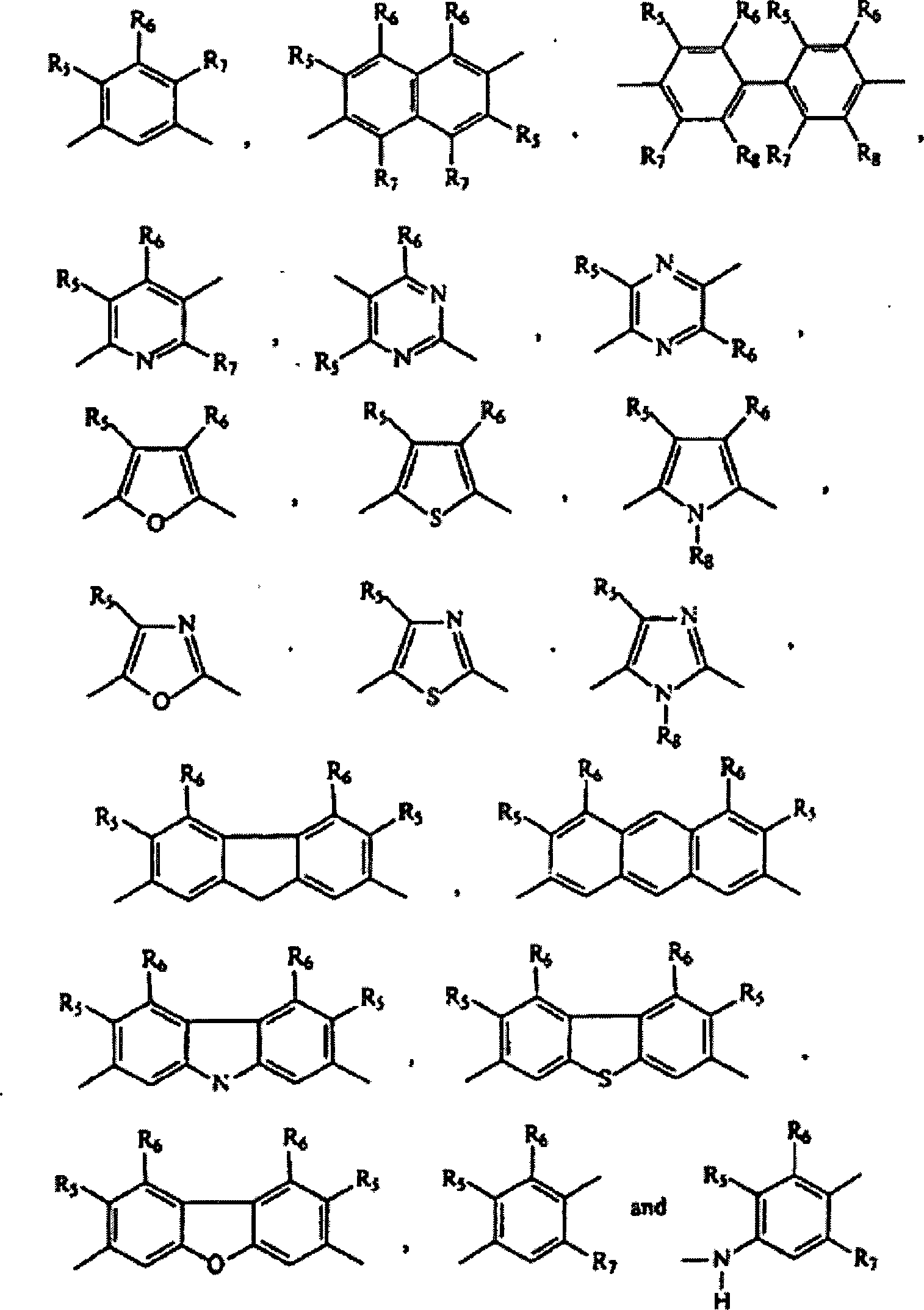


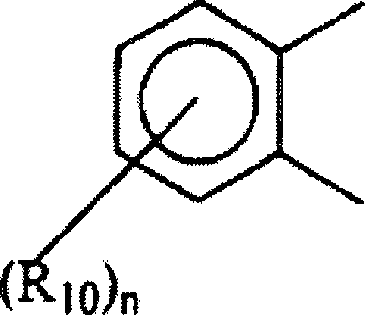


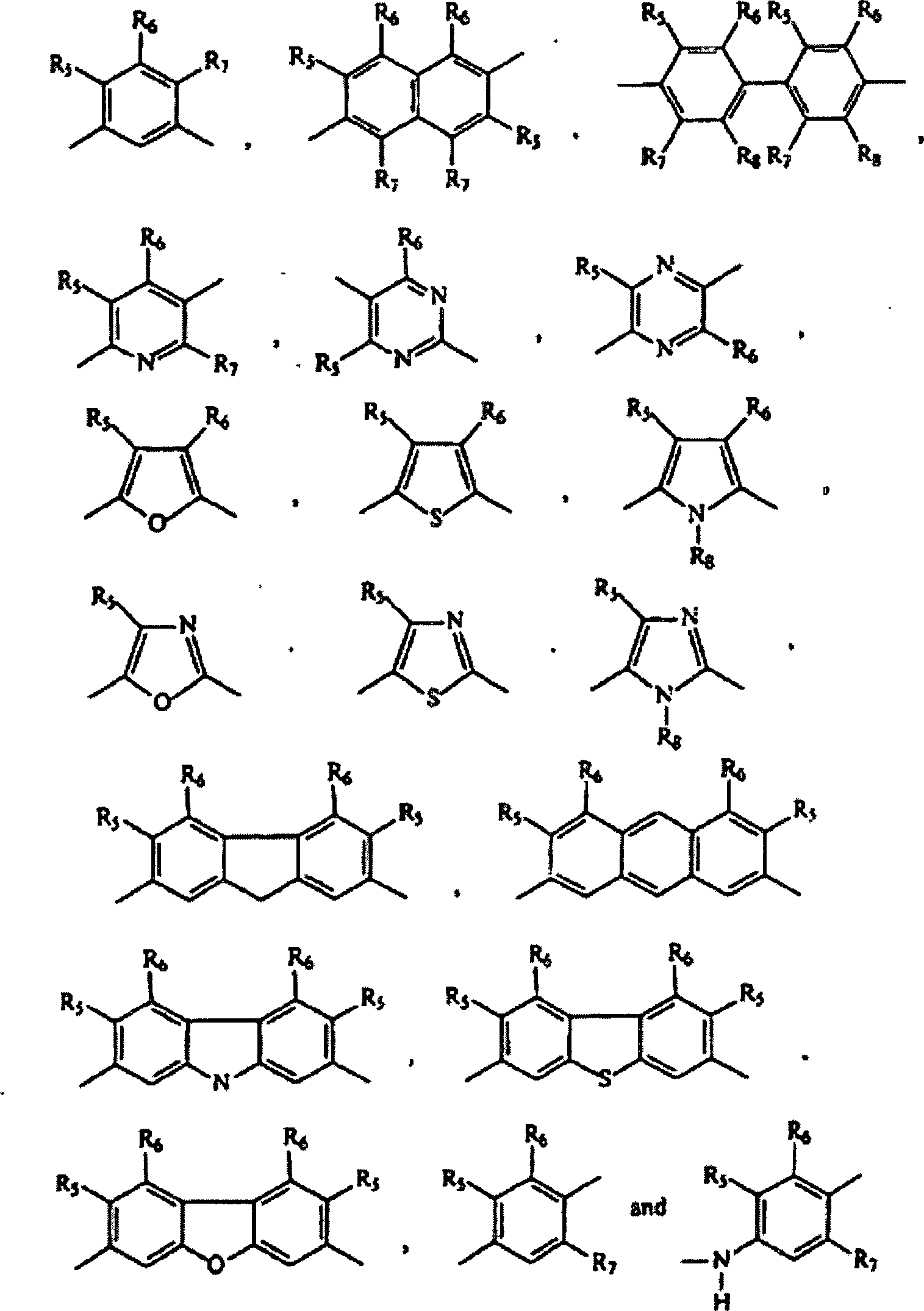
Applications Claiming Priority (3)
| Application Number | Priority Date | Filing Date | Title |
|---|---|---|---|
| US17286399P | 1999-12-20 | 1999-12-20 | |
| US172863P | 1999-12-20 | ||
| PCT/US2000/034794 WO2001046175A1 (en) | 1999-12-20 | 2000-12-20 | Diamidine compounds as dna minor groove binders |
Publications (2)
| Publication Number | Publication Date |
|---|---|
| DE60032022D1 DE60032022D1 (en) | 2007-01-04 |
| DE60032022T2 true DE60032022T2 (en) | 2007-05-16 |
Family
ID=22629529
Family Applications (1)
| Application Number | Title | Priority Date | Filing Date |
|---|---|---|---|
| DE60032022T Expired - Fee Related DE60032022T2 (en) | 1999-12-20 | 2000-12-20 | DIAMIDINE COMPOUNDS AS DNA NON-BILATIN BINDER |
Country Status (11)
| Country | Link |
|---|---|
| US (3) | US6613787B2 (en) |
| EP (1) | EP1244651B1 (en) |
| JP (1) | JP2003519623A (en) |
| AU (2) | AU781375B2 (en) |
| BR (1) | BR0016565A (en) |
| CA (1) | CA2392150A1 (en) |
| DE (1) | DE60032022T2 (en) |
| ES (1) | ES2276713T3 (en) |
| MX (1) | MXPA02005937A (en) |
| NZ (1) | NZ519209A (en) |
| WO (1) | WO2001046175A1 (en) |
Families Citing this family (24)
| Publication number | Priority date | Publication date | Assignee | Title |
|---|---|---|---|---|
| DE60032022T2 (en) * | 1999-12-20 | 2007-05-16 | The University Of North Carolina At Chapel Hill | DIAMIDINE COMPOUNDS AS DNA NON-BILATIN BINDER |
| EP1837024A3 (en) * | 2001-01-13 | 2007-11-14 | University Of North Carolina At Chapel Hill | Compounds, methods and compositions useful for the treatment of bovine viral diarrhea virus (BVDV) infection and hepatitis C virus (HCV) infection |
| ES2295316T3 (en) * | 2001-01-13 | 2008-04-16 | University Of North Carolina At Chapel Hill | USEFUL COMPOUNDS, METHODS AND COMPOSITIONS FOR THE TREATMENT OF VIRUS VIRUS VIRUS INFECTION (BVDV) AND VIRUS INFECTION OF HEPATITIS C (HCV). |
| US7163955B2 (en) | 2001-01-13 | 2007-01-16 | The University Of North Carolina At Chapel Hill | Compounds, methods and compositions useful for the treatment of bovine viral diarrhea virus (BVDV) infection and hepatitis C virus (HCV) infection |
| EP1565458A4 (en) * | 2002-11-27 | 2010-06-02 | Univ North Carolina | DATEIC AZOIC ANALOGUES OF 2,5-DIARYLFURAN AS ANTIPROTOZOA AGENTS |
| BRPI0409777A (en) * | 2003-04-30 | 2006-05-30 | Pharmacia Corp | compounds having a bicyclically fused moiety for attachment to the minor groove of dnadf |
| US7262223B2 (en) | 2004-01-23 | 2007-08-28 | Neurochem (International) Limited | Amidine derivatives for treating amyloidosis |
| ITTO20040125A1 (en) * | 2004-03-01 | 2004-06-01 | Rotta Research Lab | NEW HETEROCYCLIC AMIDINS INHIBITIVE THE PRODUCTION OF NITROGEN OXIDE (NO) FOR ANTI-INFLAMMATORY AND ANALGESIC ACTIVITY |
| GB0404574D0 (en) * | 2004-03-01 | 2004-04-07 | Spirogen Ltd | Amino acids |
| WO2005086754A2 (en) * | 2004-03-08 | 2005-09-22 | Georgia State University Research Foundation, Inc. | Dicationic compounds for activity against trichomonas vaginalis |
| US7994225B2 (en) * | 2004-03-17 | 2011-08-09 | Rempex Pharmaceuticals, Inc. | Bacterial efflux pump inhibitors for the treatment of ophthalmic and otic infections |
| WO2005089738A2 (en) * | 2004-03-17 | 2005-09-29 | Mpex Pharmaceuticals, Inc. | Use and administration of bacterial efflux pump inhibitors |
| US20100249175A1 (en) * | 2005-12-02 | 2010-09-30 | Wilson W David | Dicationic compounds which selectively recognize G-quadruplex DNA |
| US7759062B2 (en) * | 2006-06-09 | 2010-07-20 | Third Wave Technologies, Inc. | T-structure invasive cleavage assays, consistent nucleic acid dispensing, and low level target nucleic acid detection |
| GB0619325D0 (en) * | 2006-09-30 | 2006-11-08 | Univ Strathclyde | New compounds |
| WO2009051796A2 (en) * | 2007-10-17 | 2009-04-23 | The University Of North Carolina At Chapel Hill | 2,5-diaryl selenophene compounds, aza 2,5-diaryl thiophene compounds, and their prodrugs as antiprotozoal agents |
| IN2014MN02175A (en) | 2012-04-30 | 2015-08-28 | Ucl Business Plc | |
| BR112014027143B1 (en) | 2012-04-30 | 2020-06-09 | Medimmune Ltd | pyrrolobenzodiazepines |
| GB201506658D0 (en) | 2015-04-20 | 2015-06-03 | Cellcentric Ltd | Pharmaceutical compounds |
| GB201506660D0 (en) | 2015-04-20 | 2015-06-03 | Cellcentric Ltd | Pharmaceutical compounds |
| JP6688318B2 (en) | 2015-05-01 | 2020-04-28 | ジェン−プローブ・インコーポレーテッド | Multiple entry cleavage assay |
| US11043305B1 (en) | 2018-02-02 | 2021-06-22 | Immuneering Corporation | Systems and methods for rapid gene set enrichment analysis |
| CN111362834B (en) * | 2020-02-26 | 2021-04-02 | 湖南大学 | Antibacterial amidine oligomer with drug resistance and preparation method and application thereof |
| KR102460579B1 (en) * | 2020-06-26 | 2022-10-31 | 선문대학교 산학협력단 | Composition for treating, alleviating or preventing brain cancer comprising HBC and furamidine |
Family Cites Families (8)
| Publication number | Priority date | Publication date | Assignee | Title |
|---|---|---|---|---|
| US4397851A (en) * | 1981-12-22 | 1983-08-09 | Merck & Co., Inc. | 2,3-Dihalo-2,3-(disubstituted) propanoate antimicrobial compounds |
| IL111011A0 (en) * | 1993-09-22 | 1994-11-28 | Wellcome Found | Bisbenzimidazole compounds, their preparation and pharmaceutical compositions containing them |
| US5723288A (en) | 1994-05-06 | 1998-03-03 | The University Of North Carolina At Chapel Hill | Method of fluorescent detection of nucleic acids and cytoskeleton elements using bis-dicationic aryl furans, and kits useful therefor |
| US5667975A (en) | 1994-05-06 | 1997-09-16 | The University Of North Carolina | Method of fluorescent detection of nucleic acids and cytoskeleton elements using bis-dicationic aryl furans |
| WO1997012613A1 (en) * | 1995-10-05 | 1997-04-10 | Warner-Lambert Company | Method for treating and preventing inflammation and atherosclerosis |
| JP2002524503A (en) * | 1998-09-17 | 2002-08-06 | ザ・ユニヴァーシティ・オヴ・ノース・キャロライナ・アト・チャペル・ヒル | Antifungal activity of dicationic molecules |
| DE60032022T2 (en) * | 1999-12-20 | 2007-05-16 | The University Of North Carolina At Chapel Hill | DIAMIDINE COMPOUNDS AS DNA NON-BILATIN BINDER |
| ES2295316T3 (en) * | 2001-01-13 | 2008-04-16 | University Of North Carolina At Chapel Hill | USEFUL COMPOUNDS, METHODS AND COMPOSITIONS FOR THE TREATMENT OF VIRUS VIRUS VIRUS INFECTION (BVDV) AND VIRUS INFECTION OF HEPATITIS C (HCV). |
-
2000
- 2000-12-20 DE DE60032022T patent/DE60032022T2/en not_active Expired - Fee Related
- 2000-12-20 NZ NZ519209A patent/NZ519209A/en unknown
- 2000-12-20 CA CA002392150A patent/CA2392150A1/en not_active Abandoned
- 2000-12-20 AU AU25874/01A patent/AU781375B2/en not_active Ceased
- 2000-12-20 ES ES00989364T patent/ES2276713T3/en not_active Expired - Lifetime
- 2000-12-20 BR BR0016565-4A patent/BR0016565A/en not_active Application Discontinuation
- 2000-12-20 WO PCT/US2000/034794 patent/WO2001046175A1/en not_active Ceased
- 2000-12-20 EP EP00989364A patent/EP1244651B1/en not_active Expired - Lifetime
- 2000-12-20 MX MXPA02005937A patent/MXPA02005937A/en unknown
- 2000-12-20 US US09/745,004 patent/US6613787B2/en not_active Expired - Fee Related
- 2000-12-20 JP JP2001547085A patent/JP2003519623A/en active Pending
-
2003
- 2003-09-02 US US10/653,677 patent/US6867227B2/en not_active Expired - Fee Related
-
2005
- 2005-01-14 US US11/035,627 patent/US7160914B2/en not_active Expired - Fee Related
- 2005-08-19 AU AU2005203740A patent/AU2005203740B2/en not_active Ceased
Also Published As
| Publication number | Publication date |
|---|---|
| AU781375B2 (en) | 2005-05-19 |
| MXPA02005937A (en) | 2004-08-12 |
| BR0016565A (en) | 2002-09-17 |
| US20020123634A1 (en) | 2002-09-05 |
| US7160914B2 (en) | 2007-01-09 |
| US6867227B2 (en) | 2005-03-15 |
| NZ519209A (en) | 2003-11-28 |
| US20040053981A1 (en) | 2004-03-18 |
| EP1244651A1 (en) | 2002-10-02 |
| EP1244651B1 (en) | 2006-11-22 |
| CA2392150A1 (en) | 2001-06-28 |
| ES2276713T3 (en) | 2007-07-01 |
| DE60032022D1 (en) | 2007-01-04 |
| JP2003519623A (en) | 2003-06-24 |
| AU2005203740A1 (en) | 2005-09-15 |
| US20050158785A1 (en) | 2005-07-21 |
| WO2001046175A1 (en) | 2001-06-28 |
| AU2005203740B2 (en) | 2007-08-23 |
| HK1050358A1 (en) | 2003-06-20 |
| AU2587401A (en) | 2001-07-03 |
| US6613787B2 (en) | 2003-09-02 |
Similar Documents
| Publication | Publication Date | Title |
|---|---|---|
| DE60032022T2 (en) | DIAMIDINE COMPOUNDS AS DNA NON-BILATIN BINDER | |
| DE69823344T2 (en) | SUBSTITUTED BENZIMIDAZOLE DERIVATIVES AND THEIR USE FOR THE TREATMENT OF RETROVIRAL INFECTIONS | |
| DE69907476T2 (en) | DIBENZOTHIOPHENE DERIVATIVES AND THEIR USE | |
| EP1073653B1 (en) | Novel 2-heterocyclically substituted dihydropyrimidines | |
| DE60319255T2 (en) | Pyrimido compounds with antiproliferative activity | |
| DE69411625T2 (en) | Benzofuranyl and thiophenylalkane carboxylic acid derivatives | |
| DE2823987C2 (en) | ||
| EP0588762A1 (en) | Use of pyrimidine derivatives as inhibitors of proteinkinase C and antitumor drugs | |
| EP1127052A1 (en) | Substituted 2-phenylbenzimidazoles, the production thereof and their use | |
| Yang et al. | Fluorescent imaging of Au3+ in living cells with two new high selective Au3+ probes | |
| CN105801496B (en) | Trifluoroacetyl hydrazine compound, preparation method thereof and application thereof in pharmacy | |
| DE69706690T2 (en) | ACRYLOYL-SUBSTITUTED DISTAMYCIN DERIVATIVES, METHODS FOR THE PRODUCTION THEREOF AND THEIR USE AS ANTITUMOR AND ANTIVIRAL AGENTS | |
| DE69802777T2 (en) | 2,4-bis (4-amidino) phenylfurans as anti-pneumocystis carinii agents | |
| EP0290915A2 (en) | Flavone-3-carboxylic-acid compounds, and process, intermediates for their preparation and medicines containing these compounds | |
| DE10163426A1 (en) | New 1-(substituted methylene)-1H-indene derivatives, are Ras protein modulators useful for treating tumor or inflammatory diseases | |
| EP1754704A1 (en) | Diamidine compounds as DNA minor groove binders | |
| DE3875820T2 (en) | AROMATIC HETEROCYCLIC CARBONIC ACID AMIDE COMBINATIONS, METHOD FOR THE PRODUCTION AND MEDICINAL PRODUCTS CONTAINING THE SAME. | |
| DE19624154A1 (en) | Ring-fused dihydropyrans, process for their preparation and their use | |
| Strekowski et al. | Molecular basis for anticancer drug amplification. Interaction of phleomycin amplifiers with DNA | |
| HK1050358B (en) | Diamidine compounds as dna minor groove binders | |
| DE2015071A1 (en) | Anti-protozoal nitrothienylthiazoles |
Legal Events
| Date | Code | Title | Description |
|---|---|---|---|
| 8364 | No opposition during term of opposition | ||
| 8339 | Ceased/non-payment of the annual fee |