DE112018000957T5 - Sub-PRB resource allocation for Pusch in still improved MTC - Google Patents
Sub-PRB resource allocation for Pusch in still improved MTC Download PDFInfo
- Publication number
- DE112018000957T5 DE112018000957T5 DE112018000957.2T DE112018000957T DE112018000957T5 DE 112018000957 T5 DE112018000957 T5 DE 112018000957T5 DE 112018000957 T DE112018000957 T DE 112018000957T DE 112018000957 T5 DE112018000957 T5 DE 112018000957T5
- Authority
- DE
- Germany
- Prior art keywords
- pusch
- prb
- tone
- partial
- partial prb
- Prior art date
- Legal status (The legal status is an assumption and is not a legal conclusion. Google has not performed a legal analysis and makes no representation as to the accuracy of the status listed.)
- Pending
Links
- 238000013468 resource allocation Methods 0.000 title claims description 59
- 230000036961 partial effect Effects 0.000 claims abstract description 202
- 230000005540 biological transmission Effects 0.000 claims abstract description 60
- 238000000034 method Methods 0.000 claims abstract description 52
- 230000011664 signaling Effects 0.000 claims abstract description 36
- 238000013507 mapping Methods 0.000 claims description 88
- 238000012545 processing Methods 0.000 claims description 76
- 230000015654 memory Effects 0.000 claims description 52
- 238000004891 communication Methods 0.000 claims description 48
- 101150071746 Pbsn gene Proteins 0.000 claims description 23
- 230000008569 process Effects 0.000 claims description 22
- 230000010363 phase shift Effects 0.000 claims description 10
- 230000004044 response Effects 0.000 claims description 9
- 239000000969 carrier Substances 0.000 claims description 7
- 230000001419 dependent effect Effects 0.000 claims description 7
- 238000013500 data storage Methods 0.000 claims description 6
- 230000000670 limiting effect Effects 0.000 claims description 5
- 230000008859 change Effects 0.000 claims description 4
- PCHJSUWPFVWCPO-UHFFFAOYSA-N gold Chemical group [Au] PCHJSUWPFVWCPO-UHFFFAOYSA-N 0.000 claims description 3
- 239000010410 layer Substances 0.000 description 44
- 230000006870 function Effects 0.000 description 25
- 238000007726 management method Methods 0.000 description 17
- 238000013461 design Methods 0.000 description 11
- 238000006243 chemical reaction Methods 0.000 description 6
- 230000001351 cycling effect Effects 0.000 description 6
- 238000001514 detection method Methods 0.000 description 5
- 238000005516 engineering process Methods 0.000 description 4
- 238000012360 testing method Methods 0.000 description 4
- 125000004122 cyclic group Chemical group 0.000 description 3
- 238000001914 filtration Methods 0.000 description 3
- 230000006872 improvement Effects 0.000 description 3
- 230000007246 mechanism Effects 0.000 description 3
- 230000002093 peripheral effect Effects 0.000 description 3
- 238000013439 planning Methods 0.000 description 3
- 230000003595 spectral effect Effects 0.000 description 3
- 230000006978 adaptation Effects 0.000 description 2
- 238000004364 calculation method Methods 0.000 description 2
- ARUVKPQLZAKDPS-UHFFFAOYSA-L copper(II) sulfate Chemical compound [Cu+2].[O-][S+2]([O-])([O-])[O-] ARUVKPQLZAKDPS-UHFFFAOYSA-L 0.000 description 2
- 238000005265 energy consumption Methods 0.000 description 2
- 230000007774 longterm Effects 0.000 description 2
- 238000012986 modification Methods 0.000 description 2
- 230000004048 modification Effects 0.000 description 2
- 238000012913 prioritisation Methods 0.000 description 2
- 230000002829 reductive effect Effects 0.000 description 2
- 230000003068 static effect Effects 0.000 description 2
- 239000000758 substrate Substances 0.000 description 2
- 239000013598 vector Substances 0.000 description 2
- BUHVIAUBTBOHAG-FOYDDCNASA-N (2r,3r,4s,5r)-2-[6-[[2-(3,5-dimethoxyphenyl)-2-(2-methylphenyl)ethyl]amino]purin-9-yl]-5-(hydroxymethyl)oxolane-3,4-diol Chemical compound COC1=CC(OC)=CC(C(CNC=2C=3N=CN(C=3N=CN=2)[C@H]2[C@@H]([C@H](O)[C@@H](CO)O2)O)C=2C(=CC=CC=2)C)=C1 BUHVIAUBTBOHAG-FOYDDCNASA-N 0.000 description 1
- 101001051799 Aedes aegypti Molybdenum cofactor sulfurase 3 Proteins 0.000 description 1
- 102100029516 Basic salivary proline-rich protein 1 Human genes 0.000 description 1
- RYGMFSIKBFXOCR-UHFFFAOYSA-N Copper Chemical compound [Cu] RYGMFSIKBFXOCR-UHFFFAOYSA-N 0.000 description 1
- 101001125486 Homo sapiens Basic salivary proline-rich protein 1 Proteins 0.000 description 1
- 241000204801 Muraenidae Species 0.000 description 1
- 230000001133 acceleration Effects 0.000 description 1
- 238000013475 authorization Methods 0.000 description 1
- 230000006399 behavior Effects 0.000 description 1
- 230000008901 benefit Effects 0.000 description 1
- 239000003990 capacitor Substances 0.000 description 1
- 230000010267 cellular communication Effects 0.000 description 1
- 230000001413 cellular effect Effects 0.000 description 1
- 239000002131 composite material Substances 0.000 description 1
- 229910052802 copper Inorganic materials 0.000 description 1
- 239000010949 copper Substances 0.000 description 1
- 238000012937 correction Methods 0.000 description 1
- 230000008878 coupling Effects 0.000 description 1
- 238000010168 coupling process Methods 0.000 description 1
- 238000005859 coupling reaction Methods 0.000 description 1
- 238000011161 development Methods 0.000 description 1
- 230000018109 developmental process Effects 0.000 description 1
- 230000000694 effects Effects 0.000 description 1
- 230000007613 environmental effect Effects 0.000 description 1
- 238000005755 formation reaction Methods 0.000 description 1
- 230000007274 generation of a signal involved in cell-cell signaling Effects 0.000 description 1
- 238000005259 measurement Methods 0.000 description 1
- 238000010295 mobile communication Methods 0.000 description 1
- 238000012544 monitoring process Methods 0.000 description 1
- 230000006855 networking Effects 0.000 description 1
- 230000003287 optical effect Effects 0.000 description 1
- 230000008520 organization Effects 0.000 description 1
- 230000000737 periodic effect Effects 0.000 description 1
- 230000000717 retained effect Effects 0.000 description 1
- 230000011218 segmentation Effects 0.000 description 1
- 239000002356 single layer Substances 0.000 description 1
- 238000006467 substitution reaction Methods 0.000 description 1
- 230000001360 synchronised effect Effects 0.000 description 1
- 238000012546 transfer Methods 0.000 description 1
- CSRZQMIRAZTJOY-UHFFFAOYSA-N trimethylsilyl iodide Substances C[Si](C)(C)I CSRZQMIRAZTJOY-UHFFFAOYSA-N 0.000 description 1
Images


Classifications
-
- H—ELECTRICITY
- H04—ELECTRIC COMMUNICATION TECHNIQUE
- H04W—WIRELESS COMMUNICATION NETWORKS
- H04W72/00—Local resource management
- H04W72/20—Control channels or signalling for resource management
- H04W72/23—Control channels or signalling for resource management in the downlink direction of a wireless link, i.e. towards a terminal
-
- H—ELECTRICITY
- H04—ELECTRIC COMMUNICATION TECHNIQUE
- H04L—TRANSMISSION OF DIGITAL INFORMATION, e.g. TELEGRAPHIC COMMUNICATION
- H04L5/00—Arrangements affording multiple use of the transmission path
- H04L5/003—Arrangements for allocating sub-channels of the transmission path
- H04L5/0044—Allocation of payload; Allocation of data channels, e.g. PDSCH or PUSCH
-
- H—ELECTRICITY
- H04—ELECTRIC COMMUNICATION TECHNIQUE
- H04L—TRANSMISSION OF DIGITAL INFORMATION, e.g. TELEGRAPHIC COMMUNICATION
- H04L5/00—Arrangements affording multiple use of the transmission path
- H04L5/0001—Arrangements for dividing the transmission path
- H04L5/0003—Two-dimensional division
- H04L5/0005—Time-frequency
- H04L5/0007—Time-frequency the frequencies being orthogonal, e.g. OFDM(A) or DMT
- H04L5/001—Time-frequency the frequencies being orthogonal, e.g. OFDM(A) or DMT the frequencies being arranged in component carriers
-
- H—ELECTRICITY
- H04—ELECTRIC COMMUNICATION TECHNIQUE
- H04L—TRANSMISSION OF DIGITAL INFORMATION, e.g. TELEGRAPHIC COMMUNICATION
- H04L5/00—Arrangements affording multiple use of the transmission path
- H04L5/003—Arrangements for allocating sub-channels of the transmission path
- H04L5/0042—Intra-user or intra-terminal allocation
-
- H—ELECTRICITY
- H04—ELECTRIC COMMUNICATION TECHNIQUE
- H04L—TRANSMISSION OF DIGITAL INFORMATION, e.g. TELEGRAPHIC COMMUNICATION
- H04L5/00—Arrangements affording multiple use of the transmission path
- H04L5/0091—Signalling for the administration of the divided path, e.g. signalling of configuration information
-
- H—ELECTRICITY
- H04—ELECTRIC COMMUNICATION TECHNIQUE
- H04L—TRANSMISSION OF DIGITAL INFORMATION, e.g. TELEGRAPHIC COMMUNICATION
- H04L5/00—Arrangements affording multiple use of the transmission path
- H04L5/0091—Signalling for the administration of the divided path, e.g. signalling of configuration information
- H04L5/0094—Indication of how sub-channels of the path are allocated
-
- H—ELECTRICITY
- H04—ELECTRIC COMMUNICATION TECHNIQUE
- H04L—TRANSMISSION OF DIGITAL INFORMATION, e.g. TELEGRAPHIC COMMUNICATION
- H04L5/00—Arrangements affording multiple use of the transmission path
- H04L5/14—Two-way operation using the same type of signal, i.e. duplex
- H04L5/1469—Two-way operation using the same type of signal, i.e. duplex using time-sharing
-
- H—ELECTRICITY
- H04—ELECTRIC COMMUNICATION TECHNIQUE
- H04W—WIRELESS COMMUNICATION NETWORKS
- H04W72/00—Local resource management
- H04W72/04—Wireless resource allocation
-
- H—ELECTRICITY
- H04—ELECTRIC COMMUNICATION TECHNIQUE
- H04W—WIRELESS COMMUNICATION NETWORKS
- H04W72/00—Local resource management
- H04W72/50—Allocation or scheduling criteria for wireless resources
- H04W72/51—Allocation or scheduling criteria for wireless resources based on terminal or device properties
-
- H—ELECTRICITY
- H04—ELECTRIC COMMUNICATION TECHNIQUE
- H04L—TRANSMISSION OF DIGITAL INFORMATION, e.g. TELEGRAPHIC COMMUNICATION
- H04L5/00—Arrangements affording multiple use of the transmission path
- H04L5/0001—Arrangements for dividing the transmission path
- H04L5/0003—Two-dimensional division
- H04L5/0005—Time-frequency
- H04L5/0007—Time-frequency the frequencies being orthogonal, e.g. OFDM(A) or DMT
Landscapes
- Engineering & Computer Science (AREA)
- Signal Processing (AREA)
- Computer Networks & Wireless Communication (AREA)
- Mobile Radio Communication Systems (AREA)
Abstract
Es sind Systeme und Verfahren zum Freigeben einer Teil-PRB-Zuordnung für ein efeMTC UE beschrieben. Das efeMTC UE sendet an einen eNB oder gNB eine Unterstützung für eine Teil-PRB PUSCH-Sendung in einem Kapazitätsinformationselement einer RRC-Nachricht. Die RRC-Nachricht wird nach Sendung von Nachricht 3 der RACH Prozedur gesendet. Das efeMTC UE empfängt semi-statistische dedizierte RRC-Signalisierung, die eine Teil-PRB-Konfiguration beinhaltet, die von einer Teil-PRB maximale PUSCH-Kanalbandbreite, einem CE-Modus, einem RL, der für den PUSCH konfiguriert ist und einer TDD-Konfiguration und einer Teil-PRB PUSCH-Sendungszuordnung abhängig ist. Das efeMTC UE sendet eine Teil-PRB PUSCH-Sendung auf der Teil-PRB PUSCH-Sendungszuordnung.

Description
PRIORITÄTSANSPRUCHCLAIM OF PRIORITY
Diese Anmeldung beansprucht den Prioritätsvorteil gegenüber der vorläufigen US Patentanmeldung Seriennr.
TECHNISCHES GEBIETTECHNICAL AREA
Ausführungsformen betreffen Funkzugangsnetzwerke (Radio Access Networks, RANs). Einige Ausführungsformen beziehen sich auf UEs mit Maschinentypkommunikation (Machine Type Communication, MTC) in Mobil- und drahtlosen Lokalnetzwerk (Wireless Local Area Network, WLAN) Netzwerken, aufweisend Third Generation Partnership Project Long Term Evolution (3GPP LTE) Netzwerke und LTE advanced (LTE-A) Netzwerke wie auch Legacy-Netzwerke, Netzwerke der 4. Generation (
HINTERGRUNDBACKGROUND
Die Verwendung von 3GPP LTE Systemen (aufweisend LTE und LTE-A Systeme) hat sowohl aufgrund einer Zunahme in den Arten von Benutzergeräten (UEs), die Netzwerkressourcen verwenden, als auch der Datenmenge und Bandbreite, die von verschiedenen Anwendungen, wie Videostreaming, verwendet werden, die auf diesen UEs laufen, zugenommen. Insbesondere verwenden sowohl typische UEs, wie Mobiltelefone und Internet-der-Dinge (Internet of Things, IoT) UEs derzeit 3GPP LTE Systeme. Letztgenannte UEs, die Maschinentypkommunikation (MTC) UEs aufweisen können, stellen besondere Herausforderungen dar, da solche UEs typischerweise kostengünstige Vorrichtungen sind, die einen geringen Energieverbrauch haben und somit kleinere Batterien und kleinere Kommunikationsreichweiten haben. Beispiele für solche UEs weisen Sensoren (die z.B. Umweltbedingungen erfassen) oder Mikrosteuerungen in Geräten oder Verkaufsautomaten auf. Es wird erwartet, dass die Anzahl von MTC UEs in Verwendung massiv sein wird, was zu einer Weiterentwicklung führt, da Netzwerke versuchen, den unterschiedlichen Anforderungen der verschiedenen Arten von UEs gerecht zu werden. Arbeit ist im Laufen, um Verbesserungen einzuführen, um einen noch geringeren Energieverbrauch zu erzielen und Netzwerkressourcen effizient zu nutzen.The use of 3GPP LTE systems (including LTE and LTE-A systems) has been due to both an increase in the types of user devices (UEs) that use network resources and the amount of data and bandwidth used by various applications, such as video streaming running on these UEs increased. In particular, both typical UEs such as mobile phones and Internet of Things (IoT) UEs currently use 3GPP LTE systems. The latter UEs, which can have machine type communication (MTC) UEs, pose particular challenges since such UEs are typically low-cost devices that have low energy consumption and thus have smaller batteries and smaller communication ranges. Examples of such UEs include sensors (which, for example, record environmental conditions) or microcontrollers in devices or vending machines. The number of MTC UEs in use is expected to be massive, leading to further development as networks try to meet the different requirements of the different types of UEs. Work is in progress to introduce improvements to reduce energy consumption and use network resources efficiently.
Figurenlistelist of figures
In dem Figuren, die nicht unbedingt im Maßstab gezeichnet sind, können gleiche Bezugszeichen gleiche Komponenten in verschiedenen Ansichten beschreiben. Gleiche Bezugszeichen mit verschiedenen Buchstabensuffixen können verschiedene Fälle gleicher Komponenten darstellen. Die Figuren zeigen im Allgemeinen verschiedene, im vorliegenden Dokument besprochene Ausführungsformen als Beispiel und nicht zur Einschränkung.
-
1 zeigt ein UE gemäß einigen Ausführungsformen. -
2 zeigt eine Basisstation oder einen Infrastrukturgerät-Funkkopf gemäß einigen Ausführungsformen. -
3 zeigt einen Millimeterwellen-Kommunikationsschaltkreis gemäß einigen Ausführungsformen. -
4 ist eine Darstellung von Protokollfunktionen gemäß einigen Ausführungsformen. -
5 ist eine Darstellung von Protokollentitäten gemäß einigen Ausführungsformen. -
6 zeigt eine Architektur eines Systems eines Netzwerks gemäß einigen Ausführungsformen. -
7 zeigt eine Verbindungserrichtung gemäß einigen Ausführungsformen.
-
1 shows a UE according to some embodiments. -
2 shows a base station or infrastructure device radio head according to some embodiments. -
3 shows a millimeter-wave communication circuit according to some embodiments. -
4 FIG. 13 is an illustration of protocol functions according to some embodiments. FIG. -
5 FIG. 13 is an illustration of protocol entities according to some embodiments. FIG. -
6 FIG. 10 illustrates an architecture of a system of a network according to some embodiments. FIG. -
7 FIG. 12 shows a connection establishment according to some embodiments. FIG.
AUSFÜHRLICHE BESCHREIBUNGDETAILED DESCRIPTION
Die folgende Beschreibung und die Zeichnungen zeigen ausreichend spezifische Ausführungsformen, um Fachleuten eine Durchführung zu ermöglichen. Andere Ausführungsformen können strukturelle, logische, elektrische, verfahrenstechnische und andere Änderungen aufweisen. Abschnitte und Merkmale einiger Ausführungsformen können in anderen Ausführungsformen aufgewiesen sein oder jene in diesen ersetzen. Ausführungsformen, die in den Ansprüchen angegeben sind, umfassen alle verfügbaren Äquivalente dieser Ansprüche.The following description and drawings show sufficiently specific embodiments to enable those skilled in the art to practice. Other embodiments may include structural, logical, electrical, procedural and other changes. Portions and features of some embodiments may be exhibited or substituted for in other embodiments. Embodiments set forth in the claims include all available equivalents of these claims.
In einigen Aspekten kann der Anwendungsprozessor
In einigen Aspekten kann Basisbandprozessor
In einigen Aspekten kann Anwendungsprozessor
In einigen Aspekten kann Basisbandprozessor
In einigen Aspekten kann Speicher
In einigen Aspekten kann der Energiemanagementschaltkreis
In einigen Aspekten kann Energie-T-Schaltkreis 230 elektrische Energie bereitstellen, die von einem Netzwerkkabel abgezogen wird, um dem Basisstation-Funkkopf
In einigen Aspekten kann Netzwerksteuerung
In einigen Aspekten kann Satellitennavigationsempfänger
In einigen Aspekten kann Benutzerschnittstelle
Ein Funkfrontendmodul kann ein Millimeterwellen-Funkfrontendmodul (RFEM) und eine oder mehrere Sub-Millimeterwellenfunkfrequenz integrierte Schaltungen (RFIC) aufweisen. In Diesem Aspekt können die eine oder mehrere Sub-Millimeterwelle RFICs physisch von einem Millimeterwelle RFEM getrennt sein. Die RFICs können eine Verbindung zu einer oder mehreren Antennen aufweisen. Das RFEM kann mit mehreren Antennen verbunden sein. Alternativ können sowohl Millimeterwellen- als auch Sub-Millimeterwellenfunkfunktionen in demselben physischen Funkfrontendmodul implementiert sein. Somit kann das RFEM sowohl Millimeterwellenantennen als auch Sub-Millimeterwellenantennen beinhalten.A radio front end module may include a millimeter wave radio front end module (RFEM) and one or more sub-millimeter wave radio frequency integrated circuits (RFIC). In this aspect, the one or more sub-millimeter-wave RFICs may be physically separated from a millimeter-wave RFEM. The RFICs may be connected to one or more antennas. The RFEM can be connected to several antennas. Alternatively, both millimeter wave and sub-millimeter wave radio functions may be implemented in the same physical radio front end module. Thus, the RFEM may include both millimeter wave antennas and sub-millimeter wave antennas.
Millimeterwellen-Kommunikationsschaltkreis
Millimeterwellen-Kommunikationsschaltkreis
Millimeterwellen-Kommunikationsschaltkreis
Millimeterwellen-Kommunikationsschaltkreis
In einem Aspekt der Offenbarung kann Protokollverarbeitungsschaltkreis
Der Sendeschaltkreis kann einen oder mehrere von Digital/Analog-Wandlern (Digital to Analog Converters, DACs), analogem Basisbandschaltkreis, Aufwärtswandlungsschaltkreis und Filterungs- und Verstärkungsschaltkreis aufweisen. In einem anderen Aspekt kann der Sendeschaltkreis einen digitalen Sendeschaltkreis und Ausgangsschaltkreis aufweisen.The transmit circuit may include one or more of Digital to Analog Converters (DACs), analog baseband circuitry, up-conversion circuitry, and filtering and amplifying circuitry. In another aspect, the transmit circuitry may include a digital transmit circuit and output circuitry.
Der Funkfrequenzschaltkreis kann eine oder mehrere Instanzen von Funkkettenschaltkreis aufweisen, der in einigen Aspekten einen oder mehrere Filter, Leistungsverstärker, rauscharme Verstärker, programmierbare Phasenverschieber und Energieversorgungen aufweisen kann. Der Funkfrequenzschaltkreis kann in einigen Aspekten einen Energiekombinations- und -teilungsschaltkreis aufweisen. In einigen Aspekten kann der Energiekombinations- und -teilungsschaltkreis zweiseitig gerichtet arbeiten, sodass derselbe physische Schaltkreis konfiguriert sein kann, als Energieteiler zu dienen, wenn die Vorrichtung sendet, und als Energiekombinierer, wenn die Vorrichtung empfängt. In einigen Aspekten kann der Energiekombinations- und -teilungsschaltkreis einen oder mehrere von vollständig oder teilweise getrennten Schaltkreisen aufweisen, um eine Energieteilung durchzuführen, wenn die Vorrichtung sendet, und eine Energiekombination, wenn die Vorrichtung empfängt. In einigen Aspekten kann der Energiekombinations- und - teilungsschaltkreis einen passiven Schaltkreis aufweisen, der einen oder mehrere Zweiweg-Energieteiler/-kombinierer aufweist, die in einem Baum angeordnet sind. In einigen Aspekten kann der Energiekombinations- und - teilungsschaltkreis einen aktiven Schaltkreis aufweisen, der Verstärkerschaltungen aufweist.The radio frequency circuit may include one or more instances of radio chain circuitry, which in some aspects may include one or more filters, power amplifiers, low noise amplifiers, programmable phase shifters, and power supplies. The radio frequency circuit may include an energy combining and dividing circuit in some aspects. In some aspects, the power combining and dividing circuit may operate bidirectionally, such that the same physical circuit may be configured to serve as an energy divider when the device is transmitting, and as an energy combiner when the device is receiving. In some aspects, the energy combining and dividing circuit may include one or more of fully or partially separate circuits for performing energy sharing when the device is transmitting, and energy combining when the device is receiving. In some aspects, the energy combining and dividing circuit may comprise a passive circuit having one or more two-way energy splitters / combiners arranged in a tree. In some aspects, the energy combining and dividing circuit may include an active circuit having amplifier circuits.
In einigen Aspekten kann der Funkfrequenzschaltkreis mit dem Sendeschaltkreis und Empfangsschaltkreis über eine oder mehrere Funkkettenschnittstellen oder eine kombinierte Funkkettenschnittstelle verbunden sein. In einigen Aspekten können eine oder mehrere Funkkettenschnittstellen eine oder mehrere Schnittstellen für eines oder mehrere von Empfangs- oder Sendesignalen bereitstellen, die jeweils mit einer einzelnen Antennenstruktur verknüpft sind, die eine oder mehrere Antennen aufweisen kann.In some aspects, the radio frequency circuit may be connected to the transmit circuit and receive circuitry via one or more radio chain interfaces or a combined radio chain interface. In some aspects, one or more radio chain interfaces may provide one or more interfaces for one or more of receive or transmit signals, each associated with a single antenna structure that may include one or more antennas.
In einigen Aspekten kann die kombinierte Funkkettenschnittstelle eine einzelne Schnittstelle für eines oder mehrere von Empfangs- oder Sendesignalen bereitstellen, die jeweils mit einer Gruppe von Antennenstrukturen verknüpft sind, die eine oder mehrere Antennen aufweisen.In some aspects, the combined radio chain interface can provide a single interface for one or more of receive or transmit signals, each associated with a group of antenna structures that include one or more antennas.
Der Empfangsschaltkreis kann einen oder mehrere vom parallelen Empfangsschaltkreis und/oder einen oder mehrere vom kombinierten Empfangsschaltkreis aufweisen. In einigen Aspekten können der eine oder die mehreren vom parallelen Empfangsschaltkreis und der eine oder die mehreren vom kombinierten Empfangsschaltkreis einen oder mehrere Zwischenfrequenz-(Intermediate Frequency, IF) Abwärtswandlungsschaltkreis, IF-Verarbeitungsschaltkreis, Basisbandabwärtswandlungsschaltkreis, Basisbandverarbeitungsschaltkreis und Analog/Digital-Wandler (Analog-todigital Converter, ADC) Schaltkreis aufweisen.The receiving circuit may comprise one or more of the parallel receiving circuit and / or one or more of the combined receiving circuit. In some aspects, the one or more of the receive parallel circuit and one or more of the combined receive circuitry may include one or more intermediate frequency (IF) down-conversion circuitry, IF processing circuitry, baseband down-conversion circuitry, baseband processing circuitry, and analog-to-digital converters (analogue to digital). todigital converter, ADC) circuit.
In einem Aspekt kann der RF Schaltkreis einen oder mehrere von jedem von IF-Schnittstellenschaltkreis, Filterungsschaltkreis, Aufwärtswandlungs- und Abwärtswandlungsschaltkreis, Synthesizerschaltkreis, Filterungs- und Verstärkungsschaltkreis, Energiekombinations- und - teilungsschaltkreis und Funkkettenschaltkreis aufweisen.In one aspect, the RF circuit may include one or more of each of IF interface circuitry, filtering circuitry, up-conversion and down-conversion circuitry, synthesizer circuitry, filtering and amplifying circuitry, power combining and dividing circuitry, and radio chain circuitry.
In einem Aspekt kann der Basisbandprozessor ein oder mehrere digitale Basisbandsysteme aufweisen. In einem Aspekt können das eine oder die mehreren digitalen Basisbandteilsysteme über ein Zwischenverbindungsteilsystem mit einem oder mehreren eines CPU-Teilsystems, Audioteilsystems und Schnittstellenteilsystems verbunden sein. In einem Aspekt können das eine oder die mehreren digitalen Basisbandteilsysteme über ein anderes Zwischenverbindungsteilsystem an eines oder mehrere von jedem der digitalem Basisbandschnittstelle und dem Mischsignalbasisbandteilsystem gekoppelt sein. In einem Aspekt können die Zwischenverbindungsteilsysteme jeweils eine oder mehrere von jeder von Punkt-zu-Punkt-Verbindungen und Netzwerk-auf-Chip- (Network-on-Chip, NOC) Strukturen aufweisen.In one aspect, the baseband processor may include one or more digital baseband systems. In one aspect, the one or more digital baseband subsystems may be connected via an interconnect subsystem to one or more of a CPU subsystem, audio subsystem, and interface subsystem. In one aspect, the one or more digital baseband subsystems may be coupled to one or more of each of the baseband digital interface and the composite signal baseband subsystem via another interconnect subsystem. In one aspect, the Interconnect subsystems each include one or more of each of point-to-point links and network-on-chip (NOC) structures.
In einem Aspekt kann ein Audioteilsystem einen oder mehrere von einem digitalen Signalverarbeitungsschaltkreis, Pufferspeicher, Programmspeicher, Sprachverarbeitungsbeschleunigungsschaltkreis, Datenwandlerschaltkreis wie Analog/Digital- und Digital/Analog-Wandlerschaltkreis und analogen Schaltkreis, der einen oder mehrere von Verstärkern und Filtern aufweist, aufweisen. In einem Aspekt kann ein Mischsignalbasisbandteilsystem eines oder mehrere von einer IF-Schnittstelle, einem analogen IF-Teilsystem, einem Abwärtswandler und Aufwärtswandlerteilsystem, einem analogen Basisbandteilsystem, einem Datenwandlerteilsystem, Synthesizer und Steuerteilsystem aufweisen.In one aspect, an audio subsystem may include one or more of a digital signal processing circuit, buffer memory, program memory, speech processing acceleration circuit, data converter circuit such as analog / digital and digital / analog converter circuit, and analog circuitry that includes one or more of amplifiers and filters. In one aspect, a mixed signal baseband subsystem may include one or more of an IF interface, an analog IF subsystem, a buck converter and boost converter subsystem, an analog baseband subsystem, a data converter subsystem, synthesizer and control subsystem.
Ein Basisbandverarbeitungsteilsystem kann eines oder mehrere von jedem von DSP-Teilsystemen, Zwischenverbindungsteilsystemen, Boot-Laderteilsystem, gemeinsamen Speicherteilsystem, digitalem I/O-Teilsystem, digitalem Basisbandschnittstellenteilsystem und Audioteilsystem aufweisen. In einem beispielhaften Aspekt kann das Basisbandverarbeitungsteilsystem eines oder mehrere von jedem von einem Beschleunigerteilsystem, Pufferspeicher, Zwischenverbindungsteilsystem, Audioteilsystem, gemeinsamen Speicherteilsystem, digitalem I/O-Teilsystem, Steuerungsteilsystem und digitalem Basisbandschnittstellenteilsystem aufweisen.A baseband processing subsystem may include one or more of each of DSP subsystems, interconnect subsystems, boot loader subsystem, shared memory subsystem, digital I / O subsystem, digital baseband interface subsystem, and audio subsystem. In an exemplary aspect, the baseband processing subsystem may include one or more of each of an accelerator subsystem, buffer memory, interconnect subsystem, audio subsystem, shared memory subsystem, digital I / O subsystem, control subsystem, and digital baseband interface subsystem.
In einem Aspekt kann das Boot-Lader-Teilsystem einen digitalen Logikschaltkreis aufweisen, der konfiguriert ist, eine Konfiguration des Programmspeichers und eines Laufzustands, der mit jedem des einen oder der mehreren DSP-Teilsysteme verknüpft ist, durchzuführen. Die Konfiguration des Programmspeichers jedes des einen oder der mehreren DSP-Teilsysteme kann ein Laden eines ausführbaren Programmcodes von einem Datenspeicher extern zum Basisbandverarbeitungsteilsystem aufweisen. Die Konfiguration des Laufzustands in Verknüpfung mit jedem des einen oder der mehreren DSP-Teilsysteme kann einen oder mehrere der Schritte aufweisen: Einstellen des Zustands von mindestens einem DSP-Kern, der in jedem des einen oder der mehreren DSP-Teilsysteme enthalten sein kann, auf einen Zustand, in dem er nicht läuft, Einstellen des Zustands von mindestens einem DSP-Kern, der in jedem des einen oder der mehreren DSP-Teilsysteme enthalten sein kann, auf einen Zustand, in dem er beginnt, einen Programmcode auszuführen, mit Start bei einer vordefinierten Speicherstelle.In one aspect, the boot loader subsystem may include a digital logic circuit configured to perform a configuration of the program memory and a running state associated with each of the one or more DSP subsystems. The configuration of the program memory of each of the one or more DSP subsystems may include loading an executable program code from a data store external to the baseband processing subsystem. The configuration of the running state associated with each of the one or more DSP subsystems may include one or more of: adjusting the state of at least one DSP core that may be included in each of the one or more DSP subsystems a state in which it is not running, setting the state of at least one DSP core, which may be included in each of the one or more DSP subsystems, to a state in which it starts to execute a program code, with start at a predefined storage location.
In einem Aspekt kann das gemeinsame Speicherteilsystem einen oder mehrere von einem Nur-Lese-Speicher (Read-Only Memory, ROM), statischen Direktzugangsspeicher (SRAM), eingebettetem Direktzugangsspeicher (eDRAM) und nicht flüchtigem Direktzugangsspeicher (NVRAM) aufweisen. In einem Aspekt kann das digitale I/O-Teilsystem eines oder mehrere von seriellen Schnittstellen, wie I2C, SPI oder andere 1-, 2- oder 3-drahtige serielle Schnittstellen, parallelen Schnittstellen, wie Allzweck-Eingang-Ausgang (General Purpose Input-Output, GPIO), Registerzugangsschnittstellen und Direktspeicherzugang (DMA) aufweisen. In einem Aspekt kann eine Registerzugangsschnittstelle, die in einem digitalen I/O-Teilsystem implementiert ist, einem Mikroprozessorkern extern vom Basisbandverarbeitungsteilsystem (
In einem Aspekt kann das Steuerungsteilsystem eines oder mehrere von jedem von Steuer- und Statusregistern und Steuerungszustandsmaschinen aufweisen. In einem Aspekt kann auf die Steuer- und Statusregister über eine Registerschnittstelle zugegriffen werden und eines mehrere der folgenden können bereitgestellt sein: Starten und Stoppen des Betriebs von Steuerungszustandsmaschinen, Rücksetzen von Steuerungszustandsmaschinen auf einen vorgegebenen Zustand, Konfigurieren optionaler Verarbeitungsmerkmale, Konfigurieren der Erzeugung von Unterbrechungen und Berichten des Betriebsstatus. In einem Aspekt kann jede der einen oder mehreren Steuerungszustandsmaschinen die Betriebssequenz des einen oder der mehreren Beschleunigerteilsysteme steuern.In one aspect, the control subsystem may include one or more of each of control and status registers and control state machines. In one aspect, the control and status registers may be accessed via a register interface and one of the following may be provided: start and stop the operation of control state machines, reset control state machines to a predetermined state, configure optional processing features, configure generation of interrupts, and Report the operational status. In one aspect, each of the one or more control state machines may control the operating sequence of the one or more accelerator subsystems.
In einem Aspekt kann das DSP-Teilsystem eines oder mehrere von jedem von einem DSP-Kernteilsystem, lokalen Speicher, Direktspeicherzugangsteilsystem, Beschleunigerteilsystem, externen Schnittstellenteilsystem, Energiemanagementeinheit und Zwischenverbindungsteilsystem aufweisen. In einem Aspekt kann der lokale Speicher einen oder mehrere von jedem von Nur-Lese-Speicher, statischem Direktzugangsspeicher oder eingebettetem dynamischen Direktzugangsspeicher aufweisen. In einem Aspekt kann das Direktspeicherzugangsteilsystem Register bereitstellen und einen Zustandsmaschinenschaltkreis steuern, der ausgebildet ist, Datenblöcke zwischen Speicherstellen zu übertragen, die Speicherstellen intern und extern zum digitalen Signalprozessorteilsystem aufweisen. In einem Aspekt kann das externe Schnittstellenteilsystem einen Zugriff durch ein Mikroprozessorsystem extern zum DSP-Teilsystem auf einen oder mehrere von Speicher, Steuerregister und Statusregister bereitstellen, die im DSP-Teilsystem implementiert sein können. In einem Aspekt kann das externe Schnittstellenteilsystem eine Übertragung von Daten zwischen lokalem Speicher und Datenspeicher extern zum DSP-Teilsystem unter der Steuerung eines oder mehrerer des DMA-Teilsystems und DSP-Kernteilsystems bereitstellen.In one aspect, the DSP subsystem may include one or more of each of a DSP core subsystem, local memory, direct memory access subsystem, accelerator subsystem, external interface subsystem, power management unit, and interconnect subsystem. In one aspect the local storage comprises one or more of each of read only memory, static random access memory, or embedded dynamic random access memory. In one aspect, the direct memory access subsystem may provide registers and control a state machine circuit configured to transfer blocks of data between memory locations having memory locations internal and external to the digital signal processor subsystem. In one aspect, the external interface subsystem may provide access by a microprocessor system external to the DSP subsystem to one or more of memory, control registers, and status registers that may be implemented in the DSP subsystem. In one aspect, the external interface subsystem may provide for transferring data between local memory and data memory external to the DSP subsystem under the control of one or more of the DMA subsystem and DSP core subsystem.
Gemäß einigen Aspekten können die Protokollschichten einen oder mehrere Dienstzugangspunkte aufweisen, die eine Kommunikation zwischen zwei oder mehr Protokollschichten bereitstellen können. Gemäß einigen Aspekten kann die PHY
Gemäß einigen Aspekten kann eine Instanz von PHY
Gemäß einigen Aspekten kann eine Instanz von MAC
Gemäß einigen Aspekten kann eine Instanz von RLC
Gemäß einigen Aspekten kann eine Instanz von PDCP
Gemäß einigen Aspekten kann eine Instanz von SDAP
Gemäß einigen Aspekten kann die RRC-Entität
Gemäß einigen Aspekten kann gNB 580 als eine oder mehrere von einer dedizierten physischen Vorrichtung, wie einer Makrozelle, einer Femtozelle oder einer anderen geeigneten Vorrichtung, implementiert sein oder kann in einem alternativen Aspekt als eine oder mehrere Software-Entitäten implementiert sein, die auf Servercomputern als Teil eines virtuellen Netzwerks laufen, das als Cloud-Funkzugangsnetzwerk (CRAN) bezeichnet wird.In some aspects,
Gemäß einigen Aspekten können eine oder mehrere Protokollentitäten, die in einem oder mehreren von UE
Gemäß einigen Aspekten können UE PHY
Das UE und der gNB können unter Verwendung einer Funk-Framestruktur kommunizieren, die eine vorbestimmte Dauer und Wiederholungen in einer periodischen Weise mit einem Wiederholungsintervall gleich der vorbestimmten Dauer hat. Der Funkframe kann in zwei oder mehr Teilframes geteilt sein. In einem Aspekt kann jeder Teilframe von einer vorbestimmten Dauer sein, die ungleich sein kann. In einem alternativen Aspekt können Teilframes von einer Dauer sein, die dynamisch bestimmt wird und zwischen aufeinanderfolgenden Wiederholungen der Funkframes variiert. In einem Aspekt eines Frequenzduplexens (Frequency Division Duplexing, FDD), wird die Downlink-Funk-Framestruktur durch eine Basisstation zu einer oder Vorrichtungen gesendet und die Uplink-Funk-Framestruktur wird durch eine Kombination aus einer oder mehreren Vorrichtungen zu einer Basisstation gesendet. Die Funkframes können eine Dauer von 10 ms haben. Die Funkframes können in Slots von jeweils einer Dauer von 0,5 ms geteilt und von 0 bis 19 nummeriert sein. Zusätzlich kann jedes Paar benachbarter Slots, die mit 2i und 2i+1 nummeriert sind, wobei i eine ganze Zahl ist, als ein Teilframe bezeichnet werden. Jeder Teilframe kann eine Kombination aus einer oder mehreren von Downlink-Steuerinformationen, Downlink-Dateninformationen, Uplink-Steuerinformationen und Uplink-Dateninformationen aufweisen. Die Kombination von Informationstypen und Richtung kann für jeden Teilframe unabhängig gewählt werden.The UE and the gNB may communicate using a radio frame structure having a predetermined duration and repetitions in a periodic manner having a repetition interval equal to the predetermined duration. The radio frame may be divided into two or more subframes. In one aspect, each subframe may be of a predetermined duration, which may be unequal. In an alternative aspect, subframes may be of a duration that is determined dynamically and varies between successive repetitions of the radio frames. In one aspect of Frequency Division Duplexing (FDD), the downlink radio frame structure is transmitted by a base station to one or devices and the uplink radio frame structure is sent to a base station by a combination of one or more devices. The radio frames can have a duration of 10 ms. The radio frames can be divided into slots each having a duration of 0.5 ms and numbered from 0 to 19. In addition, each pair of adjacent slots numbered 2i and 2i + 1, where i is an integer, may be referred to as a subframe. Each subframe may include a combination of one or more of downlink control information, downlink data information, uplink control information, and uplink data information. The combination of information types and direction can be chosen independently for each subframe.
Gemäß einigen Aspekten können der Downlink-Frame und Uplink-Frame eine Dauer von 10 ms haben und der Uplink-Frame kann mit einem Zeitvorsprung in Bezug auf den Downlink-Frame gesendet werden. Gemäß einigen Aspekten können der Downlink-Frame und Uplink-Frame jeweils in zwei oder mehr Teilframes geteilt sein, die eine Dauer von 1 ms haben können. Gemäß einigen Aspekten kann jeder Teilframe aus einem oder mehreren Slots bestehen. In einigen Aspekten können die Zeitintervalle in Einheiten von Ts dargestellt werden. Gemäß einigen Aspekten kann Ts als 1/(30.720 × 1000) Sekunden definiert sein. Gemäß einigen Aspekten kann ein Funkframe mit einer Dauer von 30.720.Ts, definiert sein und ein Slot kann mit einer Dauer von 15.360.Ts definiert sein. Gemäß einigen Aspekten kann Ts definiert sein als

wo Δfmax = 480×103 und Nf = 4.096. Gemäß einigen Aspekten kann E, die Anzahl von Slots basierend auf einem Numerologieparameter bestimmt werden, der sich auf einen Frequenzabstand zwischen Teilträgern eines Mehrfachträgersignals beziehen kann, das zur Sendung verwendet wird. where Δf max = 480 × 10 3 and Nf = 4,096. In some aspects, E, the number of slots may be determined based on a numerology parameter that may refer to a frequency spacing between subcarriers of a multi-carrier signal used for transmission.
Konstellationsdesigns eines Einzelträgermodulationsschemas, das gesendet oder empfangen werden kann, können 2 Punkte beinhalten, bekannt als binäre Phasenumtastung (Binary Phase Shift Keying, BPSK), 4 Punkte, bekannt als Quadraturphasenumtastung (Quadrature Phase Shift Keying (QPSK), 16 Punkte, bekannt als Quadraturamplitudenmodulation (QAM) mit 16 Punkten (16QAM oder QAM16) oder Modulationskonstellationen höherer Ordnung, die zum Beispiel 64, 256 oder 1024 Punkte aufweisen. In den Konstellationen sind die binären Codes Punkten der Konstellation unter Verwendung eines Schemas zugewiesen, sodass die unmittelbar benachbarten Punkte, das heißt, Paare von Punkten, die durch die minimale Euklidische Distanz voneinander getrennt sind, einen zugewiesenen Code haben, der sich um eine Binärstelle unterscheidet. Zum Beispiel hat der einem Punkt zugewiesene Code
Alternativ können die Konstellationspunkte in einem quadratischen Gitter angeordnet sein und können so angeordnet sein, dass eine gleiche Distanz auf der phasengleichen und Quadratureben zwischen jedem Paar unmittelbar benachbarter Konstellationspunkte vorliegt. In einem Aspekt können die Konstellationspunkte so gewählt werden, dass eine vorbestimmte maximale Distanz vom Ursprung der phasengleichen und Quadraturebene eines der zulässigen Konstellationspunkte vorliegt, wobei die maximale Distanz durch einen Kreis dargestellt ist. In einem Aspekt kann der Satz zulässiger Konstellationspunkte jene ausschließen, die in quadratische Regionen an den Ecken eines quadratischen Gitters fallen würden. Die Konstellationspunkte sind auf orthogonalen phasengleichen und Quadraturachsen dargestellt, die jeweils Amplituden von Sinuskurven bei der Trägerfrequenz darstellen und in Phase voneinander um 90 Grad getrennt sind. In einem Aspekt sind die Konstellationspunkte in zwei oder mehr Sätzen von Konstellationspunkten gruppiert, wobei die Punkte jedes Satzes angeordnet sind, eine gleiche Distanz zum Ursprung der phasengleichen und Quadraturebene zu haben, und auf einem Satz von Kreisen liegen, die am Ursprung zentriert sind.Alternatively, the constellation points may be arranged in a square grid and may be arranged such that there is an equal distance on the in-phase and quadratic planes between each pair of immediately adjacent constellation points. In one aspect, the constellation points may be selected to have a predetermined maximum distance from the origin of the in-phase and quadrature planes of one of the allowable constellation points, the maximum distance being represented by a circle. In one aspect, the set of allowable constellation points may exclude those that would fall into quadratic regions at the corners of a square grid. The constellation points are shown on orthogonal in-phase and quadrature axes, each representing amplitudes of sinusoids at the carrier frequency and separated in phase by 90 degrees. In one aspect, the constellation points are grouped into two or more sets of constellation points, the points of each set being arranged to have an equal distance to the origin of the in-phase and quadrature planes, and lying on a set of circles centered at the origin.
Zum Erzeugen von Mehrfachträger-Basisbandsignalen zur Sendung können Daten in einen Codierer eingegeben werden, um codierte Daten zu erzeugen. Der Codierer kann eine Kombination von einem oder mehreren von Fehlererfassung, Fehlerkorrektur, Ratenabstimmung und Verschachtelung aufweisen. Der Codierer kann ferner einen Verwürfelungsschritt aufweisen. In einem Aspekt können codierte Daten in einen Modulationsmapper eingegeben werden, um komplexwertige Modulationssymbole zu erzeugen. Der Modulationsmapper kann Gruppen, die eine oder mehrere binäre Stellen enthalten, ausgewählt aus den codierten Daten, auf komplexwertige Modulationssymbole gemäß einer oder mehreren Mappingtabellen abbilden. In einem Aspekt können komplexwertige Modulationssymbole in den Schichtenmapper eingegeben werden, um auf einen oder mehrere schichtengemappte Modulationssymbolstreams abgebildet zu werden. Mit Darstellung eines Stream von Modulationssymbolen 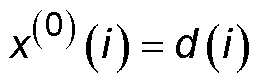
und das Schichtmapping für zwei Schichten kann ausgedrückt werden als:


Schichtmapping kann gleichermaßen für mehr als zwei Schichten dargestellt sein.Layer mapping can also be shown for more than two layers.
In einem Aspekt können ein oder mehrere Streams von schichtengemappten Symbolen in den Vorcodierer eingegeben werden, der einen oder mehrere Streams vorcodierter Symbole erzeugt. In einer Darstellung des einen oder der mehreren Streams schichtengemappter Symbole als einen Block von Vektoren:

wo i einen Sequenznummernindex im Bereich 

wo i einen Sequenznummernindex im Bereich 
In einem Aspekt kann jeder Stream vorcodierter Symbole in einen Ressourcenmapper eingegeben werden, der einen Stream von ressourcengemappten Symbolen erzeugt. Der Ressourcenmapper kann vorcodierte Symbole auf Frequenzdomänenteilträger und Zeitdomänensymbole gemäß einem Mapping abbilden, das angrenzendes Blockmapping, zufälliges Mapping oder spärliches („sparse“) Mapping gemäß einem Mappingcode aufweisen kann.In one aspect, each stream of precoded symbols may be input to a resource mapper that generates a stream of resource mapped symbols. The resource mapper may map precoded symbols to frequency domain subcarriers and time domain symbols according to a mapping that may include contiguous block mapping, random mapping, or sparse mapping according to a mapping code.
In einem Aspekt können die ressourcengemappten Symbole in den Mehrfachträgergenerator eingegeben werden, der ein Zeitdomänenbasisbandsymbol erzeugt. Mehrfachträgergenerator kann Zeitdomänensymbole unter Verwendung von zum Beispiel einer inversen diskreten Fourier-Transformation (DFT), die allgemein als inverse schnelle Fourier-Transformation (FFT) implementiert wird, oder einer Filterbank, die ein oder mehrere Filter aufweist, erzeugen. In einem Aspekt, wo ressourcengemappte Symbole 
Wo pT(t) eine Prototypfilterfunktion ist, Tsym die Startzeit der Symbolperiode ist, τk ein vom Teilträger abhängiger Zeitversatz ist, und fk die Frequenz von Teilträger k ist. Prototypfunktionen pT(t) können zum Beispiel rechteckige Zeitdomänenpulse, Gauß'sche Zeitdomänenpulse oder jede andere geeignete Funktion sein.Where p T (t) is a prototype filter function, T sym is the start time of the symbol period, τ k is a time offset dependent on the subcarrier, and f k is the frequency of subcarrier k. Prototype functions p T (t) can be, for example, rectangular time domain pulses, Gaussian time domain pulses or any other suitable function.
In einigen Aspekten kann eine Teilkomponente eines gesendeten Signals, die aus einem Teilträger in der Frequenzdomäne und einem Symbolintervall in der Zeitdomäne besteht, als ein Ressourcenelement bezeichnet werden. Ressourcenelemente können in Gitterform dargestellt werden. In einigen Aspekten können Ressourcenelemente in rechteckige Ressourcenblöcke (RBs) gruppiert werden, die aus 12 Teilträgern in der Frequenzdomäne und den P Symbole in der Zeitdomäne bestehen, wo P der Anzahl von Symbolen entsprechen kann, die in einem Slot enthalten sind und 6, 7 oder jede andere geeignete Anzahl von Symbolen sein kann. In einigen alternativen Aspekten können Ressourcenelemente in Ressourcenblöcke gruppiert werden, die aus 12 Teilträgern in der Frequenzdomäne und einem Symbol in der Zeitdomäne bestehen. Jedes Ressourcenelement 05 kann als (k, 1) indiziert sein, wo k die Indexnummer eines Teilträger im Bereich 0 bis N.M-1 ist, wo N die Anzahl von Teilträgern in einem Ressourcenblock ist und M die Anzahl von Ressourcenblöcken ist, die einen Komponententräger in der Frequenzdomäne überspannen.In some aspects, a subcomponent of a transmitted signal consisting of a subcarrier in the frequency domain and a symbol interval in the time domain may be referred to as a resource element. Resource elements can be displayed in grid form. In some aspects, resource elements may be grouped into rectangular resource blocks (RBs) consisting of 12 subcarriers in the frequency domain and the P symbols in the time domain, where P may correspond to the number of symbols contained in a slot and 6, 7 or any other suitable number of symbols can be. In some alternative aspects, resource elements may be grouped into resource blocks consisting of 12 sub-carriers in the frequency domain and one symbol in the time domain. Each resource element 05 may be indexed as (k, 1) where k is the index number of a subcarrier in the range 0 to NM-1, where N is the number of subcarriers in a resource block and M is the number of resource blocks containing a component carrier in span the frequency domain.
In einigen Aspekten kann ein Codieren des zu sendenden Signals einen oder mehrere physische Codierungsprozesse aufweisen, die zum Bereitstellen einer Codierung für einen physischen Kanal verwendet werden können, die Daten oder Steuerinformationen codieren kann. Codierung kann auch Multiplexen und Verschachteln aufweisen, wodurch kombinierte codierte Informationen durch Kombinieren von Informationen aus einer oder mehreren Quellen erzeugt werden, die eine oder mehrere von Dateninformationen und Steuerinformationen aufweisen können und die durch einen oder mehrere physische Codierungsprozesse codiert wurden. Die kombinierten codierten Informationen können einem Verwürfler eingegeben werden, der verwürfelte codierte Informationen erzeugen kann. Ein physischer Codierungsprozess kann eines oder mehrere von CRC-Anhang, Codeblocksegmentierung, Kanalcodierung, Ratenabstimmung und Codeblockverkettung aufweisen. Ein Codierer, der zum Codieren von Daten gemäß einem Faltungscode und einem Tail-Biting-Faltungscode verwendet werden kann.In some aspects, encoding the signal to be transmitted may include one or more physical encoding processes that may be used to provide coding for a physical channel that may encode data or control information. Encoding may also include multiplexing and interleaving, whereby combined encoded information is generated by combining information from one or more sources, which may include one or more of data information and control information, encoded by one or more physical encoding processes. The combined coded information may be input to a scrambler, who may generate scrambled coded information. A physical encoding process may include one or more of CRC attachment, code block segmentation, channel encoding, rate matching, and code block chaining. An encoder that can be used to encode data according to a convolutional code and a tail-biting convolutional code.
Eine MAC-Entität, die zum Implementieren von Mediumzugangssteuerungsschichtfunktionen verwendet werden kann, kann eines oder mehrere von einer Steuerung, einer logischen Kanalpriorisierungseinheit, einem Kanalmultiplexer & -demultiplexer, einer PDU-Filtereinheit, Direktzugangsprotokollentität, hybriden automatischen Wiederholungsanfrageprotokoll- (HARQ) Datenentität und HARQ-Rundfunkentität aufweisen. Gemäß einigen Aspekten kann eine höhere Schicht Steuer- und Statusnachrichten mit Steuerung über Managementdienstzugangspunkt austauschen. Gemäß einigen Aspekten können MAC-Dienstdateneinheiten (Service Data Units, SDU), die einem oder mehreren logischen Kanäle entsprechen, mit der MAC-Entität über einen oder mehrere Dienstzugangspunkte (SAP) ausgetauscht werden. Gemäß einigen Aspekten kann eine PHY SDU, die einem oder mehreren Transportkanälen entspricht, mit einer physischen Schichtentität über einen oder mehrere SAPs ausgetauscht werden. Gemäß einigen Aspekten kann die logische Kanalpriorisierungseinheit eine Priorisierung unter einem oder mehreren logischen Kanälen durchführen, die Speicherparameter und Zustandsinformationen entsprechend jedem des einen oder der mehreren logischen Kanäle aufweisen kann, die initialisiert werden können, wenn ein logischer Kanal errichtet wird. Gemäß einigen Aspekten kann die logische Kanalpriorisierungseinheit mit einem Satz von Parametern für jeden von einem oder mehreren logischen Kanälen konfiguriert sein, wobei jeder Satz Parameter aufweist, die eines oder mehrere von einer priorisierten Bitrate (PBR) und einer Bucketgrößendauer (Bucket Size Duration, BSD) aufweisen können.A MAC entity that may be used to implement medium access control layer functions may include one or more of a controller, a logical channel prioritizer, a channel multiplexer & demultiplexer, a PDU filter unit, direct access protocol entity, hybrid automatic repeat request protocol (HARQ) data entity, and HARQ. Broadcasting entity. In some aspects, a higher layer may exchange control and status messages with management service access point control. In some aspects, MAC service data units (SDU) corresponding to one or more logical channels may be exchanged with the MAC entity via one or more service access points (SAP). In some aspects, a PHY SDU corresponding to one or more transport channels may be exchanged with a physical layer entity via one or more SAPs. In some aspects, the logical channel prioritization unit may perform prioritization among one or more logical channels, which may include storage parameters and state information corresponding to each of the one or more logical channels that may be initialized when establishing a logical channel. In some aspects, the logical channel prioritizer may be configured with a set of parameters for each of one or more logical channels, each set having parameters that include one or more of a prioritized bit rate (PBR) and a bucket size duration (BSD). can have.
Gemäß einigen Aspekten kann der Multiplexer & Demultiplexer MAC PDUs erzeugen, die eines oder mehrere von MAC-SDUs oder Teil-MAC-SDUs, die einem oder mehreren logischen Kanälen entsprechen, einem MAC-Header, der einen oder mehrere MAC-Teilheader aufweisen kann, einem oder mehreren MAC-Steuerelemente und Auffülldaten aufweisen können. Gemäß einigen Aspekten kann der Multiplexer & Demultiplexer eine oder mehrere MAC-SDUs oder Teil-MAC-SDUs aufweisen, die in einer empfangenen MAC PDU enthalten sind, entsprechend einem oder mehreren logischen Kanälen, und kann die eine oder mehreren MAC-SDUs oder Teil-MAC-SDUs einer höheren Schicht über einen oder mehrere Dienstzugangspunkte angeben. Gemäß einigen Aspekten kann die HARQ-Entität und Rundfunk-HARQ-Entität einen oder mehrere parallele HARQ-Prozesse aufweisen, von welchen jeder mit einer HARQ-Kennung verknüpft sein kann, und die einer von einem Empfangs- oder Sende-HARQ-Prozess sein können.In some aspects, the multiplexer & demultiplexer may generate MAC PDUs that include one or more of MAC SDUs or partial MAC SDUs that correspond to one or more logical channels, a MAC header that may include one or more MAC sub-headers, one or more MAC controls and padding data. In some aspects, the multiplexer & demultiplexer may include one or more MAC SDUs or sub-MAC SDUs included in a received MAC PDU corresponding to one or more logical channels, and may include the one or more MAC SDUs or partial MAC SDUs. Specify a higher layer MAC SDUs via one or more service access points. In some aspects, the HARQ entity and broadcast HARQ entity may have one or more parallel HARQ processes, each of which may be associated with a HARQ identifier, and which may be one of a receive or transmit HARQ process ,
Gemäß einigen Aspekten kann ein Sende-HARQ-Prozess einen Transportblock (TB), der durch die PHY gemäß einer spezifizierten Redundanzversion (RV) codiert wird, durch Auswählen einer MAC-PDU zur Sendung erzeugen. Gemäß einigen Aspekten kann ein Sende-HARQ-Prozess, der in einer Rundfunk-HARQ-Entität aufgewiesen ist, einen selben TB in aufeinanderfolgenden Sendeintervallen mit einer vorbestimmten Anzahl von Wiederholungen erneut senden. Gemäß einigen Aspekten kann ein Sende-HARQ-Prozess, der in einer HARQ-Entität aufgewiesen ist, basierend darauf, ob eine positive Bestätigung oder eine negative Bestätigung für eine vorherige Sendung empfangen wurde, bestimmen, ob ein zuvor gesendeter TB erneut zu senden ist oder ein neuer TB zu einer Sendezeit zu senden ist.In some aspects, a transmit HARQ process may generate a transport block (TB) encoded by the PHY according to a specified redundancy version (RV) by selecting a MAC PDU for transmission. In some aspects, a transmit HARQ process, embodied in a broadcast HARQ entity, may retransmit a same TB at successive transmission intervals with a predetermined number of repetitions. In some aspects, a transmit HARQ process that is embodied in a HARQ entity may determine whether a previously sent TB is to be retransmitted, based on whether a positive acknowledgment or a negative acknowledgment was received for a previous broadcast a new TB is to be sent at a broadcast time.
Gemäß einigen Aspekten können einem Empfangs-HARQ-Prozess codierte Daten bereitgestellt werden, die einem oder mehreren empfangenen TBs entsprechen und die mit einer oder mehreren einer neuen Datenangabe (New Data Indication, NDI) und eine Redundanzversion (RV) verknüpft sein können, und der Empfangs-HARQ-Prozess kann bestimmen, ob ein solcher empfangener codierter Datenblock einer erneuten Sendung eines zuvor empfangenen TB oder eines nicht zuvor empfangenen TB entspricht. Gemäß einigen Aspekten kann ein Empfangs-HARQ-Prozess einen Puffer aufweisen, der als ein Speicher oder eine andere geeignete Datenspeichervorrichtung implementiert sein kann, und kann zum Speichern von Daten basierend auf zuvor empfangenen Daten für einen TB verwendet werden. Gemäß einigen Aspekten kann ein Empfangs-HARQ-Prozess versuchen, einen TB zu decodieren, wobei die Decodierung auf empfangenen Daten für den TB basiert und zusätzlich auf den gespeicherten Daten basieren kann, die auf zuvor empfangenen Daten für den TB basieren.In some aspects, a receive HARQ process may be provided with encoded data that corresponds to one or more received TBs and that may be associated with one or more new data indication (NDI) and a redundancy version (RV), and Receive HARQ process may determine whether such received coded data block corresponds to retransmission of a previously received TB or TB not previously received. In some aspects, a receive HARQ process may include a buffer that may be implemented as a memory or other suitable data storage device, and may be used to store data based on previously received data for a TB. In some aspects, a receive HARQ process may attempt to decode a TB, wherein the decoding is based on received data for the TB and may additionally be based on the stored data based on previously received data for the TB.
In einigen Ausführungsformen kann jedes der UEs
Die UEs
In dieser Ausführungsform können die UEs
Das UE
Das RAN
Jeder der RAN-Knoten
Gemäß einigen Ausführungsformen können die UEs
Der gemeinsame physische Downlink-Kanal (PDSCH) kann Benutzerdaten und Signalisierung höherer Schicht zu den UEs
Einige Ausführungsformen können Konzepte für Ressourcenzuordnung für Steuerkanalinformationen verwenden, die eine Erweiterung der oben beschriebenen Konzepte sind. Zum Beispiel können einige Ausführungsformen einen verstärkten physischen Downlink-Steuerkanal (Enhanced Physical Downlink Control Channel, EPDCCH) verwenden, der PDSCH-Ressourcen zur Sendung von Steuerinformationen verwendet. Der EPDCCH kann unter Verwendung eines oder mehrerer der verstärkten Steuerkanalelemente (Enhanced Control Channel Elements, ECCEs) gesendet werden. Ähnlich wie oben kann jedes ECCE neun Sätzen von vier physischen Ressourcenelementen entsprechen, die als verstärkte Ressourcenelementgruppen (EREGs) bekannt sind. Ein ECCE kann in einigen Situationen andere Zahlen von EREGs haben.Some embodiments may use control channel information resource allocation concepts that are an extension of the concepts described above. For example, some embodiments may use an enhanced physical downlink control channel (EPDCCH) that uses PDSCH resources to transmit control information. The EPDCCH can be broadcast using one or more of the Enhanced Control Channel Elements (ECCEs). Similar to the above, each ECCE can correspond to nine sets of four physical resource elements known as enhanced resource element groups (EREGs). An ECCE can have different numbers of EREGs in some situations.
Das RAN
In dieser Ausführungsform weist das CN
Der S-GW
Das P-GW
Das P-GW
Die Komponenten von
Anweisungen können Software, ein Programm, eine Anwendung, ein Applet, eine App oder einen anderen ausführbaren Code aufweisen, um mindestens einen der Prozessoren zu veranlassen, eine oder mehrere der hier besprochenen Methodologien auszuführen. Die Anweisungen können vollständig oder teilweise in mindestens einem der Prozessoren (z.B. im Cache-Speicher des Prozessors), Speicher/Datenspeichervorrichtungen oder einer geeigneten Kombination davon liegen. In einigen Ausführungsformen können die Anweisungen auf einem greifbaren, nicht flüchtigen, lesbaren Medium der Kommunikationsvorrichtung liegen, das ein einzelnes Medium oder mehrere Medien aufweisen kann. Ferner kann ein Teil der Anweisungen von einer Kombination der peripheren Vorrichtungen oder den Datenbanken
Wie oben, werden derzeit Änderungen am Netzwerk untersucht, um Netzwerkressourcen effizienter zu nutzen. Im bestehenden LTE-Standard ist die minimale Uplink- oder Downlink-Ressourcenzuordnung, die für Nicht-Schmalband (NB)-IoT UEs verwendet werden kann, 1 physischer Ressourcenblock (PRB). Zur Verbesserung der Spektraleffizienz des PUSCH für efeMTC kann Teil-PRB-Zuordnung (d.h. Ressourcenzuordnung kleiner als 1 PRB) unterstützt werden. Es kann daher wünschenswert sein, Ressourcen für Uplink-Datensendung (auf einem gemeinsamen physischen Uplink-Kanal (PUSCH)) MTC UEs mit einer kleineren Granularität als 1 PRB über eine Systembandbreite oder mindestens eine Bandbreite, die den MTC UEs zur Verfügung steht, zuzuordnen. Diese Bandbreite kann signifikant größer sein als jene, die NB-IoT UEs zur Verfügung steht, und kann somit auf Schwierigkeiten bei Teil-PRB-Zuordnung stoßen, die im Design einer NB-IoT UE Teil-PRB-Zuordnung nicht vorgesehen sind, nicht nur in der Auswahl und Angabe der gewünschten Ressource, sondern auch in anderen Kommunikationsdetails, wie Ausdehnung des zulässigen Modulationsschemas und der Redundanzversion, Transportblockgröße, Wiederholungswert, Downlink-Steuerinformationen/Uplink-Steuerinformationen (DCI/UCI) und RAR-Design, Demodulationsreferenzsignal (DMRS) und Kollisionsbewältigung und Frequenzhopping.As above, changes to the network are being investigated to make more efficient use of network resources. In the existing LTE standard, the minimum uplink or downlink resource allocation that can be used for non-narrowband (NB) -IoT UEs is 1 physical resource block (PRB). To improve the spectral efficiency of the PUSCH for efeMTC, partial PRB allocation (i.e., resource allocation less than 1 PRB) can be supported. It may therefore be desirable to allocate resources for uplink data transmission (on a common physical uplink channel (PUSCH)) MTC UEs having a granularity less than 1 PRB over a system bandwidth or at least a bandwidth available to the MTC UEs. This bandwidth may be significantly greater than that available to NB-IoT UEs, and thus may encounter difficulties with partial PRB allocation, not just in the design of an NB-IoT UE partial PRB allocation in the selection and indication of the desired resource, but also in other communication details such as expansion of the allowed modulation scheme and the redundancy version, transport block size, repetition value, downlink control information / uplink control information (DCI / UCI) and RAR design, demodulation reference signal (DMRS) and Collision management and frequency hopping.
Es kann wünschenswert sein, eine Teil-PRB-Zuordnung für einen PUSCH zu unterstützen, um die Spektraleffizienz des PUSCH zu erhöhen. Im Speziellen kann es wünschenswert sein, eine Einzeltonzuordnung für PUSCH-Sendungen mit einem Teilträgerabstand von 3,75kHz und eine Einzeltonzuordnung und Mehrfachtonzuordnung mit 2, 3, 4, 6 oder 12 Teilträgern mit einem Teilträgerabstand von 15kHz zu unterstützen.It may be desirable to support partial PRB mapping for a PUSCH to increase the spectral efficiency of the PUSCH. In particular, it may be desirable to support a single tone assignment for PUSCH programs with a subcarrier spacing of 3.75 kHz and a single tone assignment and multiple tone assignment with 2, 3, 4, 6 or 12 subcarriers with a subcarrier spacing of 15 kHz.
Die Unterstützung einer Teil-PRB-Zuordnung für den PUSCH kann semi-statisch über RRC-Signalisierung konfiguriert sein. Die Konfiguration kann von der UE-Kapazität abhängig sein.
Die Verbindungserrichtung, die in
Der gNB
Das UE
Die RRC-Verbindungsanfrage kann in einigen Ausführungsformen die UE-Identität (z.B. TMSI), UE-Kapazitäten und eine Verbindungserrichtungsursache aufweisen. In einigen Ausführungsformen können die UE-Kapazitätsinformationen in einem Kapazitätsinformationselement in einer separaten RRC-Nachricht in einem PUSCH bereitgestellt sein. Das UE
Der gNB
Nach Empfang der Kapazitätsinformationen kann eine dedizierte RRC-Signalisierung vom gNB
Danach kann der gNB
In einer Ausführungsform, wo die Konfiguration der Teil-PRB-Zuordnung von der UE-Kapazität abhängt, kann vor der Errichtung der RRC-Verbindung, da der eNB die UE-Kapazität noch nicht kennt, die Teil-PRB-Zuordnung nicht unterstützt werden, z.B. für Msg3. In einigen Ausführungsformen kann es andererseits möglich sein, eine Teil-PRB-Zuordnung für RACH-Nachricht 3 für UEs im RRC_VERBUNDEN Modus zu unterstützen, falls zum Beispiel der gNB
In einer Ausführungsform kann die Konfiguration einer Teil-PRB-Zuordnung gemeinsam mit anderen Merkmalen konfiguriert werden, wie maximale Kanal-BW. Wenn zum Beispiel die maximale PUSCH Kanal-BW mit 5 MHz konfiguriert ist, kann die Teil-PRB-Zuordnung nicht freigegeben werden. In einer Ausführungsform kann die Teil-PRB-Zuordnung sowohl im CE-Modus A (keine Wiederholung oder geringe Anzahl von Wiederholungen) als auch im CE-Modus B (große Anzahl von Wiederholungen) unterstützt werden oder kann nur in nur einem von CE-Modus A oder CE-Modus B unterstützt werden. Zum Beispiel kann eine Teil-PRB-Zuordnung nur für CE-Modus B unterstützt werden, da eine Teil-PRB-Zuordnung erlaubt, dass mehr UEs gemultiplext werden, wenn größere RLs verwendet werden, was zu einer Verbesserung der Systemkapazität beitragen kann. Zusätzlich steigt bei einer Teil-PRB-Zuordnung die Leistungsspektraldichte (Power Spectral Density, PSD) der PUSCH-Sendung, was zur Verbesserung der Reichweite beitragen kann. Überdies kann in einigen Ausführungsformen die Teil-PRB-Zuordnung nur unterstützt werden, wenn die beim UE konfigurierten RLs groß sind, z.B. wenn der Minimalwert eines RL in RRC-konfigurierten RL-Werten größer als eine vordefinierte ganze Zahl X ist, z.B. X=128. Teil-PRB-Zuordnung kann zusätzlich von Rmax im UE-Suchraum abhängig sein, unter der Annahme, dass die Reichweiten in UL und DL nahezu dieselben sind, oder kann vom PRACH-Wiederholungswert abhängen.In one embodiment, the configuration of a partial PRB assignment may be configured along with other features, such as maximum channel BW. For example, if the maximum PUSCH channel BW is configured at 5 MHz, the partial PRB assignment can not be released. In one embodiment, the partial PRB assignment may be supported in either CE mode A (no repeat or small number of iterations) as well as CE mode B (large number of iterations), or may only be in one of CE mode A or CE mode B are supported. For example, a partial PRB assignment may be supported only for CE mode B, as a partial PRB assignment allows more UEs to be multiplexed when using larger RLs, which may contribute to an improvement in system capacity. In addition, with a partial PRB assignment, the Power Spectral Density (PSD) of the PUSCH transmission increases, which can contribute to the improvement of the range. Moreover, in some embodiments, the partial PRB mapping may be supported only if the RLs configured at the UE are large, eg, if the minimum value of an RL in RRC configured RL values is greater than a predefined integer X, eg X = 128 , Part-PRB mapping may additionally be dependent on R max in the UE search space, assuming that the ranges in UL and DL are nearly the same, or may depend on the PRACH repeat value.
efeMTC kann einen PUSCH-Teilträgerabstand von 15 kHz und 3,75 kHz unterstützen. Mit einem 3,75 kHz Teilträgerabstand, wie in Rel-13 NB-IoT Sendungen definiert, kann ein 2 ms langer Slot definiert werden. Jeder Slot kann 7 Symbole enthalten. Jedes Symbol kann eine Länge eines zyklischen Präfixes (Cyclic Prefix, CP) von 8,33 µs und eine Schutzperiode von 75 µs nach den 7 Symbolen und seinen CPs haben. Alternativ kann efeMTC nur einen PUSCH-Teilträgerabstand von 15 kHz unterstützen.efeMTC can support a PUSCH sub-carrier spacing of 15 kHz and 3.75 kHz. With a 3.75 kHz subcarrier spacing as defined in Rel-13 NB-IoT broadcasts, a 2 ms long slot can be defined. Each slot can contain 7 symbols. Each symbol may have a cyclic prefix (CP) length of 8.33 μs and a 75 μs protection period after the 7 symbols and its CPs. Alternatively, efeMTC can only support a PUSCH subcarrier spacing of 15 kHz.
efeMTC kann eine PUSCH-Zuordnung mit 1, 2, 3, 4, 6, und/oder 12 Tönen unterstützen. Die Ressourceneinheit (RU) für diese Töne kann wie folgt definiert werden, wobei jede RU aus X ms besteht:efeMTC can support a PUSCH assignment with 1, 2, 3, 4, 6, and / or 12 tones. The resource unit (RU) for these tones can be defined as follows, where each RU consists of X ms:
X=1 für 12 Töne mit einem Teilträgerabstand von 15 kHz;X = 1 for 12 tones with a subcarrier spacing of 15 kHz;
X=2 für 6 Töne mit einem Teilträgerabstand von 15 kHz, falls 6-Tonzuordnung unterstützt wird;X = 2 for 6 tones with a subcarrier spacing of 15 kHz if 6-tone assignment is supported;
X=4 für 3 Töne mit einem Teilträgerabstand von 15 kHz, falls 3-Tonzuordnung unterstützt wird;X = 4 for 3 tones with a sub-carrier spacing of 15 kHz, if 3-tone assignment is supported;
X=8 für einen Einzelton mit einem Teilträgerabstand von 15 kHz, falls ein Einzelton unterstützt wird;X = 8 for a single tone with a subcarrier spacing of 15 kHz if a single tone is supported;
X=32 für einen Einzelton mit einem Teilträgerabstand von 3,75 kHz, falls ein Teilträgerabstand von 3,75 kHz unterstützt wird.X = 32 for a single tone with a sub-carrier spacing of 3.75 kHz, if a sub-carrier spacing of 3.75 kHz is supported.
In einigen Ausführungsform können zusätzliche Zuordnungen wie 2-Ton- und/oder 4-Tonzuordnungen für efeMTC unterstützt werden, mit X=4 oder 6 für 2 Töne und X=3 für 4 Töne mit einem Teilträgerabstand von 15 kHz. Die Ressourcenzuordnung kann durch bis zu 6 Bits zur Teilträgerangabe und 3 Bits zur Angabe der Anzahl von RUs im DCI-Format N0 angegeben werden. Die 3 Bits zur Angabe der Anzahl von RUs kann für efeMTC wiederverwendet werden, wo {0, 1, 2, 3, 4, 5, 6, 7} entsprechend {1, 2, 3, 4, 5, 6, 8, 10} RUs angeben kann.In some embodiments, additional mappings such as 2-tone and / or 4-tone mappings may be supported for efeMTC, where X = 4 or 6 for 2 tones and X = 3 for 4 tones with a sub-carrier spacing of 15 kHz. The resource allocation can be specified by up to 6 bits for subcarrier specification and 3 bits to indicate the number of RUs in DCI format N0. The 3 bits indicating the number of RUs can be reused for efeMTC, where {0, 1, 2, 3, 4, 5, 6, 7} corresponding to {1, 2, 3, 4, 5, 6, 8, 10 } Can specify RUs.
Die Angabe einer Teil-PRB-Zuordnung kann auf verschiedene Weisen angegeben werden. In einer ersten Alternative kann 1 Bit als ein Teil-PRB-Flag verwendet werden. Dieses kann hinzugefügt werden um anzugeben, ob die Zuordnung eine Teil-PRB-Zuordnung oder Zuordnung in Einheiten von PRBs ist. Falls das Bit die Ressourcenzuordnung in Einheiten von PRB angibt, kann die Ressourcenzuordnungsmethode Rel-14 feMTC folgen. Falls das Bit die Teil-PRB-Zuordnung angibt, kann die Ressourcenzuordnung durch NB-Index + PRB in einer NB + Teilträger Angabe innerhalb des PRB angegeben sein. Der NB-Index kann über


Eine PRB-Angabe innerhalb des NB kann auf zahlreiche Weisen angegeben werden. In einer ersten Ausführungsform (R1) kann der PRB explizit über 3 Bits angegeben sein. In einer zweiten Ausführungsform (R2) kann eine implizite Angabe verwendet werden. In diesem Fall kann immer ein vordefinierter oder RRC-konfigurierter PRB, wie entweder der Start- oder Ende-PRB des NB verwendet werden. In einer dritten Ausführungsform (R3) kann 1 Bit zur Angabe verwendet werden, ob der PRB der Start- oder Ende-PRB des NB ist. Alternativ können N Kandidat-PRBs vordefiniert sein und

Es kann eine Reihe von Methoden für die Teilträgerangabe verwendet werden. In einer ersten Ausführungsform (
In einer zweiten Ausführungsform (
In einer dritten Ausführungsform (
In einer vierten Ausführungsform (
In einer fünften Ausführungsform (
Im CE-Modus B (falls Teil-PRB für diesen CE-Modus unterstützt wird), kann N 1 sein, zur Angabe von Teilträgerzuordnungen entsprechend Isc in Tabelle 1 für einen Teilträgerabstand von 15 kHz, wo Isc aus einem vordefinierten/konfigurierten Satz ist, der ein beliebiger Teilsatz von {0, 1, .., 17} mit 2 Elementen sein kann (z.B. {12, 13}, {0, 12}, {0, 16}, {12, 16} usw.), und zur Angabe eines Einzeltons ausgewählt aus einem vordefinierten/konfigurierten Satz für einen Teilträgerabstand von 3,75 kHz, wo der vordefinierte Satz ein beliebiger Teilsatz von {0, 1, ..., 47} mit 2 Elementen sein kann, z.B. {0, 24} oder {0, 47}. Als ein anderes Beispiel kann N 2 sein, zur Angabe von Teilträgerzuordnungen entsprechend Isc in Tabelle 1 für einen Teilträgerabstand von 15 kHz, wo Isc aus einem vordefinierten/konfigurierten Satz ist, der ein beliebiger Teilsatz von {0, 1, .., 17} mit 4 Elementen (z.B. {12, 13, 14, 15} oder {0, 12, 16, reserviert}) sein kann, und zur Angabe eines Einzeltons, ausgewählt aus einem vordefinierten/konfigurierten Satz von 4 Werten für einen Teilträgerabstand von 3,75 kHz, wo der Satz von 4 Werten ein beliebiger Teilsatz von {0, 1, ..., 47} mit 32 Elementen sein kann, z.B. {0, 1, ..., 31}.
Tabelle 1. Zugeordnete Teilträger für NPUSCH mit einem Teilträgerabstand von 15kHz, innerhalb 1 PRB. Isc ist die Teilträgerangabe in DCI.
Die PRB-Angabe kann stattdessen über eine zweite Alternative angegeben werden. Es gibt


Falls die 11 Zustände nicht zur PRB-Angabe verwendet werden, können die Zustände zur Teilträgerangabe verwendet werden. In einem Beispiel können die 11 Zustände zur Angabe eines Teilsatzes von Teilträgerzuordnungen entsprechend Isc 0-17 in Tabelle 1 verwendet werden. In einem Beispiel können die 11 Zustände zur Angabe des Satzes oder Teilsatzes von Teilträgerzuordnungen entsprechend Isc 12-17 in Tabelle 1 verwendet werden. In einem anderen Beispiel können die 11 Zustände zur Angabe der Teilträgerzuordnungen entsprechend Isc 12-17 in Tabelle 1 und fünf Teilträgerzuordnungen entsprechend Isc aus Satz {0, 1, ..., 11} verwendet werden, z.B. Isc ∈ {0, 2, 4, 6, 8}. Alternativ können die oben stehenden Ausführungsformen
In einer Ausführungsform können die 11 Zustände zur Angabe von 5 Zuordnungen mit 2 Tönen, z.B. {0,1}, {2,3}, {4,5}, {6,7}, {8,9}, und auch 6 Zuordnungen entsprechend Isc 12-17 in Tabelle 1 verwendet werden. In einer anderen Ausführungsform können die 11 Zustände zur Angabe der Zuordnungen mit Teilträgern {0,1,2,3}, {4,5,6,7} oder {8,9,10,11} und der Teilträgerzuordnungen entsprechend Isc 12-17 in Tabelle 1 verwendet werden. In einer anderen Ausführungsform können die 11 Zustände zur Angabe von Teilsätzen mit N1 Ressourcenzuordnungen von Teilträgerzuordnungen entsprechend Isc 12-17 in Tabelle 1 und Teilsätzen mit N2 Ressourcenzuordnungen von Zuordnungen {0,1,2,3}, {4,5,6,7}, {8,9,10,11}, {0,1}, {2,3}, {4,5}, {6,7}, {8,9}, {10,11} verwendet werden, wo N1+N2=11. Zum Beispiel können wir N1=6 und N2=5 zur Angabe von Isc 12-17 in Tabelle 1 und Teilträgerzuordnung von {0,1,2,3}, {4,5,6,7}, {8,9,10,11}, {0,1}, {2,3} haben.In one embodiment, the 11 states can be used to specify 5 assignments with 2 tones, for example {0.1}, {2.3}, {4.5}, {6.7}, {8.9}, and also 6 Assignments according to I sc 12-17 in Table 1 can be used. In another embodiment, the 11 states for specifying the assignments with subcarriers {0,1,2,3}, {4,5,6,7} or {8,9,10,11} and the subcarrier assignments can correspond to I sc 12 -17 in Table 1 can be used. In another embodiment, the 11 states for specifying subsets with N1 resource assignments of subcarrier assignments corresponding to I sc 12-17 in Table 1 and subsets with N2 resource assignments of assignments {0,1,2,3}, {4,5,6, 7}, {8,9,10,11}, {0,1}, {2,3}, {4,5}, {6,7}, {8,9}, {10,11} where N1 + N2 = 11. For example, we can use N1 = 6 and N2 = 5 to specify I sc 12-17 in Table 1 and subcarrier assignment of {0,1,2,3}, {4,5,6,7}, {8,9, 10,11}, {0,1}, {2,3}.
Die PRB-Angabe kann stattdessen über eine dritte Alternative angegeben werden. In dieser Methode kann 1 Bit als ein Teil-PRB-Flag zur Angabe hinzugefügt werden, falls die Zuordnung eine Teil-PRB-Zuordnung oder Zuordnung in Einheiten von PRBs ist. Falls das Bit die Ressourcenzuordnung in Einheiten von PRB angibt, kann die Ressourcenzuordnungsmethode Rel-14 feMTC folgen. Falls das Bit eine Teil-PRB-Zuordnung angibt, kann die Ressourcenzuordnung durch NB-Index + Teilträgerangabe innerhalb des NB angeben werden. Es gibt insgesamt 72 Teilträger mit einem Teilträgerabstand von 15 kHz und 288 Teilträger mit einem Teilträgerabstand von 3,75 kHz in einem NB.The PRB specification can instead be specified using a third alternative. In this method, 1 bit can be added as a partial PRB flag to indicate if the mapping is a partial PRB mapping or mapping in units of PRBs. If the bit indicates the resource allocation in units of PRB, the resource allocation method Rel-14 feMTC can follow. If the bit indicates a partial PRB allocation, the resource allocation can be specified by NB index + subcarrier specification within the NB. There are a total of 72 subcarriers with a subcarrier spacing of 15 kHz and 288 subcarriers with a subcarrier spacing of 3.75 kHz in a NB.
N Bits können für die Teilträgerangabe verwendet werden. Für eine Angabe einer Zuordnung mit einem Teilträgerabstand von 3,75 kHz können 9 Bits zur Angabe eines Tonindex von {0, 1, ..., 287} verwendet werden. Weniger Bits können stattdessen durch Begrenzen des möglichen Tonindex verwendet werden. Zum Beispiel kann N=7 zum Angeben des Tonindex von {0, 1, ..., 127} verwendet werden oder N=6 kann zum Angeben des Tonindex von {0, ..., 65} verwendet werden.N bits can be used for the subcarrier specification. For an indication of assignment with a subcarrier distance of 3.75 kHz, 9 bits can be used to specify a tone index of {0, 1, ..., 287}. Fewer bits can instead be used by limiting the possible tone index. For example, N = 7 may be used to indicate the tone index of {0, 1, ..., 127}, or N = 6 may be used to indicate the tone index of {0, ..., 65}.
In einer anderen Ausführungsform können für eine Angabe einer Zuordnung mit einem Teilträgerabstand von 15 kHz 7 Bits für eine Angabe von Einzelton-, 3-Ton- und 6-Tonzuordnungen mit einem Teilträgerabstand von 15 kHz verwendet werden, um eine Einzeltonzuordnung mit Tonindex von {0, 1, .., 71}, 3-Tonzuordnungen mit {3x, 3x+1, 3x+2}, wo x∈ {0, 1, ..., 23}, und 6-Tonzuordnungen mit {6x, 6x+1, ..., 6x+5}, wo x∈ {0, 1, ..., 11} abzudecken. In einer anderen Ausführungsform können 8 Bits zur Angabe von Einzelton-, 3-Ton- und 6-Tonzuordnungen mit einem Teilträgerabstand von 15 kHz verwendet werden, um eine Einzeltonzuordnung mit Tonindex von{0, 1, .., 71}, 3-Tonzuordnungen mit {x, x+1, x+2}, wo x∈ {0, 1, ..., 69} und 6-Tonzuordnungen mit {x, x+1, ..., x+5}, wo x∈ {0, 1, ..., 66} abzudecken. Es können auch weniger Bits verwendet werden, indem die Anzahl möglicher Zuordnungen eingeschränkt wird. Zum Beispiel, N=6 zur Angabe einer Einzeltonzuordnung mit Tonindex von {0, 1, .., 35}, 3-Tonzuordnungen mit {3x, 3x+1, 3x+2}, wo x∈ {0, 1, ..., 11}, und 6-Tonzuordnungen mit {6x, 6x+1, ..., 6x+5}, wo x∈ {0, 1, ..., 11}. In another embodiment, for specifying an assignment with a subcarrier spacing of 15 kHz, 7 bits can be used for specifying single-tone, 3-tone and 6-tone assignments with a subcarrier spacing of 15 kHz to achieve a single-tone assignment with a tone index of {0 , 1, .., 71}, 3-tone assignments with {3x, 3x + 1, 3x + 2}, where x∈ {0, 1, ..., 23}, and 6-tone assignments with {6x, 6x + 1, ..., 6x + 5}, where x∈ to cover {0, 1, ..., 11}. In another embodiment, 8 bits for specifying single-tone, 3-tone and 6-tone assignments with a subcarrier spacing of 15 kHz can be used to produce a single-tone assignment with a tone index of {0, 1, .., 71}, 3-tone assignments with {x, x + 1, x + 2}, where x∈ {0, 1, ..., 69} and 6-tone assignments with {x, x + 1, ..., x + 5}, where x ∈ {0, 1, ..., 66}. Fewer bits can also be used by limiting the number of possible assignments. For example, N = 6 for specifying a single-tone assignment with a tone index of {0, 1, .., 35}, 3-tone assignments with {3x, 3x + 1, 3x + 2}, where x∈ {0, 1, .. ., 11}, and 6-tone assignments with {6x, 6x + 1, ..., 6x + 5}, where x∈ {0, 1, ..., 11}.
Die PRB-Angabe kann stattdessen über eine vierten Alternative angegeben werden. In dieser Methode kann 1 Bit als Teil-PRB-Flag zur Angabe hinzugefügt werden, falls die Zuordnung eine Teil-PRB-Zuordnung oder Zuordnung in Einheiten von PRBs ist. Falls das Bit die Ressourcenzuordnung in Einheiten von PRB angibt, kann die Ressourcenzuordnungsmethode Rel-14 feMTC folgen. Falls das Bit die Teil-PRB-Zuordnung angibt, kann die Ressourcenzuordnung durch Teilträgerangabe innerhalb der gesamten System-BW angegeben werden. Es ist zu beachten, dass mit dieser Methode die Anzahl von verwendeten Bits ziemlich groß sein kann. Zum Beispiel gibt es bei einer System-BW von 10MHz 600 Teilträger mit einem Teilträgerabstand von 15 kHz und 2400 Teilträger mit einem Teilträgerabstand von 3,75 kHz. Falls gewünscht ist, eine Einzeltonzuordnung mit voller Flexibilität anzugeben, können 10 und 12 Bits für einen Teilträgerabstand von 10 bzw. 12 Bits verwendet werden.Instead, the PRB indication can be given via a fourth alternative. In this method, 1 bit may be added as a partial PRB flag if the mapping is a partial PRB mapping or assignment in units of PRBs. If the bit indicates the resource allocation in units of PRB, then the resource allocation method Rel-14 can follow feMTC. If the bit indicates the partial PRB mapping, the resource allocation may be specified by subcarrier within the entire system BW. It should be noted that with this method, the number of bits used can be quite large. For example, with a system BW of 10 MHz, there are 600 subcarriers with a subcarrier spacing of 15 kHz and 2400 subcarriers with a subcarrier spacing of 3.75 kHz. If it is desired to specify a single-tone mapping with full flexibility, 10 and 12 bits can be used for a sub-carrier spacing of 10 and 12 bits, respectively.
In einer anderen Ausführungsform können

Die PRB-Angabe kann stattdessen über eine fünfte Alternative angegeben werden. In dieser Methode kann die Teil-PRB-Zuordnung RRC sein, der so konfiguriert ist, dass, wenn eine Teil-PRB-Zuordnung freigegeben ist, das UE nur bis zu 1 PRB-Zuordnung unterstützen kann. Dann kann das 1-Bit Teil-PRB-Flag in den ersten vier oben stehenden Alternatives entfernt werden, während die anderen Bits für die oben genannten Angabenalternativen weiterhin verwendet werden können.Instead, the PRB statement can be specified via a fifth alternative. In this method, the partial PRB mapping may be RRC configured so that when a partial PRB mapping is enabled, the UE can only support up to 1 PRB mapping. Then, the 1-bit partial PRB flag in the first four alternatives above can be removed, while the other bits for the above-mentioned alternative indications can still be used.
Es ist zu beachten, dass, wie in der Folge dargelegt, ein 1 Bit im Redundanzversions- (RV) Feld neu interpretiert werden kann, z.B., um zur Ressourcenzuordnung im Fall eines CE-Modus A verwendet zu werden. Durch Neuinterpretation des Bits und Auswählen geeigneter Alternativen wie zuvor, kann die Größe von DCI dieselbe sein wie Rel-13 eMTC.It should be noted that, as explained below, a 1 bit in the redundancy version (RV) field can be reinterpreted, e.g. to be used for resource allocation in the case of CE mode A. By reinterpreting the bit and choosing appropriate alternatives as before, the size of DCI can be the same as Rel-13 eMTC.
Es ist auch zu beachten, dass die Anzahl von Bits, die für PRB und Teilträgerangabe in Alternativen 1-3 verwendet wird, unter der Annahme, dass NB 6 PRBs hat, berechnet werden kann. In einigen Ausführungsformen kann der NB neudefiniert werden, um X PRBs zu haben, wobei sich X von Rel-13 eMTC unterscheidet, z.B. X=3. Dann ist die Anzahl von Bits, die für PRB und Teilträgerangabe verwendet wird, entsprechend zu skalieren.It should also be noted that the number of bits used for PRB and subcarrier specification in alternatives 1-3 can be calculated assuming that NB has 6 PRBs. In some embodiments, the NB can be redefined to have X PRBs, where X is different from Rel-13 eMTC, e.g. X = 3rd Then the number of bits used for PRB and subcarrier specification must be scaled accordingly.
Neben den oben genannten Methoden zur Angabe der Teilträgerangabe können Y Bits zur Ressourcenzuweisung verwendet werden, z.B. Y=3, wie in Rel-13 NB-IoT, um die Anzahl von Ressourceneinheiten von {1, 2, 3, 4, 5, 6, 8 und 10} anzugeben. Alternativ kann eine andere Anzahl von Bits für CE-Modus A und CE-Modus B verwendet werden, z.B. Y=3 für CE-Modus A und Y=1 für CE-Modus B, oder Y=2 für CE-Modus A und Y=0 für CE-Modus B.In addition to the above-mentioned subcarrier specification methods, Y bits may be used for resource allocation, e.g. Y = 3, as in Rel-13 NB-IoT, to indicate the number of resource units of {1, 2, 3, 4, 5, 6, 8 and 10}. Alternatively, a different number of bits may be used for CE mode A and CE mode B, e.g. Y = 3 for CE mode A and Y = 1 for CE mode B, or Y = 2 for CE mode A and Y = 0 for CE mode B.
Es können alle Kombinationen der oben genannten Methoden möglich sein. Einige Beispiele sind in der Folge für Fälle bereitgestellt, wo Teil-PRB-Zuordnung nur für CE-Modus B, 3-Ton- und 6-Ton-Teil-PRB-Zuordnungen und Teilträgerabstand von 15 kHz unterstützt wird.All combinations of the above methods can be possible. Some examples are provided below for cases where partial PRB assignment is only supported for CE mode B, 3-tone and 6-tone partial PRB assignments and subcarrier spacing of 15 kHz.
In einem ersten Beispiel, wenn Teil-PRB-Zuordnung nur für CE-Modus B und UEs mit maximal 1,4 MHz PUSCH BW unterstützt wird. Die Ressourcenzuordnung kann über ein 1-Flag Bit zur Angabe einer Teil-PRB-Zuordnung oder nicht angegeben werden,

In einem zweiten Beispiel kann Teil-PRB-Zuordnung nur für CE-Modus B und UEs mit einer maximalen 1,4 MHz PUSCH BW unterstützt werden. Die Ressourcenzuordnung kann über 1-Flag Bit zur Angabe einer Teil-PRB-Zuordnung oder nicht angegeben werden,

In einem dritten Beispiel kann eine Teil-PRB-Zuordnung nur für CE-Modus B und UEs mit einer maximalen 1,4 MHz PUSCH BW unterstützt werden. Die Ressourcenzuordnung kann über 1-Flag Bit zur Angabe einer Teil-PRB-Zuordnung oder nicht angegeben werden,

In Hinblick auf Modulation können verschiedene Ausführungsformen verwendet werden. In einer Ausführungsform, wenn die Ressourcenzuordnung nicht kleiner als 1 PRB ist, kann das MCS-Feld als in Rel-13 eMTC interpretiert werden. Zum Beispiel kann im CE-Modus B nur QPSK verwendet werden. Wenn die zugeordnete Ressource kleiner als 1 PRB ist, kann nur QPSK für Mehrfachtonsendung unterstützt werden. Für eine Einzeltonsendung, wie Rel-13 NB-IoT, können phasenrotierte Versionen von BPSK und QPSK (π/2 BPSK und π/4 QPSK) unterstützt werden, um PAPR zu verringern. Tabelle 16.5.1.2-1 in TS 36.213 (unten wiedergegeben), kann zur Einzeltonsendung-MCS-Bestimmung verwendet werden.
Tabelle 16.5.1.2-1: 
In einer anderen Ausführungsform verwendet die Modulation zur 1-PRB-Zuordnung und Teil-PRB-Zuordnung mit mehreren Tönen immer QPSK, während eine Modulation zur Einzeltonsendung basierend auf Tabelle 16.5.1.2-1 in TS 36.213 bestimmt wird. Die Ressourcenzuordnung für mehrere PRBs kann Rel-13 eMTC folgen.In another embodiment, the modulation for 1-PRB assignment and partial PRB assignment with multiple tones always uses QPSK, while modulation for single-tone transmission is determined based on Table 16.5.1.2-1 in TS 36.213. Resource allocation for multiple PRBs can follow Rel-13 eMTC.
Die Redundanzversion (RV) für Ressourcenzuordnung ≥ 1 PRB folgt Rel-13 eMTC. Für einen PUSCH mit < 1 PRB-Zuordnung kann die unterstützte RV Rel-13 eMTC mit 4 RVs folgen. Alternativ kann die RV Rel-13 NB-IoT folgen, d.h. nur zwei RVs können verwendet werden, z.B. RV0 und RV2. Die Anzahl von RVs, die für PUSCH mit 1 PRB-Zuordnung und für PUSCH mit < 1 PRB-Zuordnung unterstützt werden, können unterschiedlich sein. The redundancy version (RV) for resource allocation ≥ 1 PRB follows Rel-13 eMTC. For a PUSCH with <1 PRB assignment, the supported RV Rel-13 eMTC with 4 RVs can follow. Alternatively, the RV Rel-13 NB-IoT can follow, ie only two RVs can be used, e.g. RV0 and RV2. The number of RVs that are supported for PUSCH with 1 PRB assignment and for PUSCH with <1 PRB assignment can be different.
Die Wahl des Zyklierens der RVs kann aufweisen, dass die RV pro Teilframe oder pro RU geändert wird, z.B. 1 ms für 12-Ton PUSCH, 2 ms für 6-Ton PUSCH, 4 ms für 3-Ton PUSCH oder 8 ms für Einzelton-PUSCH (falls unterstützt) oder alle (Anzahl von RUs * Anzahl von ms pro RU). Alternativ kann die RV alle Z*NRU RUs geändert werden, wo Z = min{4, Wiederholungen/N}, wo N die Anzahl unterstützter RVs ist, NRU die Anzahl zugeordneter RUs für die PUSCH-Sendung ist und die Anzahl von Wiederholungen wie in der UL-Genehmigung angegeben ist.The choice of cycling the RVs can have the RV changed per partial frame or per RU, for example 1 ms for 12-tone PUSCH, 2 ms for 6-tone PUSCH, 4 ms for 3-tone PUSCH or 8 ms for single-tone PUSCH (if supported) or all (number of RUs * number of ms per RU). Alternatively, the RV can be changed every Z * N RU RUs where Z = min {4, repetitions / N}, where N is the number of supported RVs, N RU is the number of assigned RUs for the PUSCH broadcast and the number of repetitions as stated in the UL approval.
Alternativ kann in jedem Zyklus einer RV jeder Teilframe (oder NB-Slot, falls zur Unterstützung eines kleineren Teilträgerabstands eingeführt) in den zugeordneten Ressourcen der Reihe nach Z Mal wiederholt werden. In einer Ausführungsform Z = min{M, Wiederholung/N}, wo M und N eine ganze Zahl ist, z.B. M=4, N=2 oder N = 4. Dies kann für alle Teil-PRB-Zuordnungen gelten oder nur für Mehrfachton-Teil-PRB-Zuordnungen. In einigen Beispielen können M und N verschiedene Werte für FDD und TDD haben, z.B. M=4 für FDD und M=5 für TDD. In einer Ausführungsform ist Z = 1. Dies kann für alle Teil-PRB-Zuordnungen oder nur eine Einzeltonsendung gelten.Alternatively, in each cycle of an RV, each subframe (or NB slot, if introduced to support a smaller subcarrier spacing) in the associated resources may be repeated in turn Z times. In one embodiment, Z = min {M, repeat / N}, where M and N is an integer, e.g. M = 4, N = 2, or N = 4. This may apply to all partial PRB assignments, or only to multi-tone partial PRB assignments. In some examples, M and N may have different values for FDD and TDD, e.g. M = 4 for FDD and M = 5 for TDD. In one embodiment, Z = 1. This may apply to all partial PRB assignments or just a single consignment.
Alternativ kann die RV pro 4 Teilframes oder 4 RUs oder 4 (Anzahl von RUs * Anzahl von SFs pro RU) in FDD und 5 Teilframes oder 5 RUs oder 5 (Anzahl von RUs * Anzahl von SFs pro RU) in TDD geändert werden. Es ist zu beachten, dass in verschiedenen CE-Modi, PUSCHs mit unterschiedlicher Anzahl von RB/Teilträgerzuordnungen verschiedene RV-Zykliermethoden verwenden können. In einer Ausführungsform kann für einen PUSCH mit einer Zuordnung nicht kleiner als 1 PRB das Zyklieren von RV Rel-13 eMTC folgen, d.h. der ersten RV-Zykliermethode oben für CE-Modus A und der letzten RV-Zykliermethode oben für CE-Modus B. Für einen PUSCH mit einer Zuordnung von kleiner als 1 PRB kann die 2. RV-Zykliermethode verwendet werden.
Tabelle 2. Transportblockgrößen- (TBS) Tabelle für PUSCH
In einigen Ausführungsformen kann die TBS-Tabelle für einen PUSCH mit einer Teil-PRB-Zuordnung Rel-13 NB-IoT TBS-Tabelle 2 oben folgen. Alternativ kann Tabelle 3 verwendet werden, falls das UE eine größere PUSCH TBS unterstützen kann. Zum Beispiel, falls CE-Modus A Teil-PRB-Zuordnung unterstützt, kann eine größere TBS unterstützt werden, abhängig von der UE-Kapazität.
Tabelle 3. Transportblockgrößen- (TBS) Tabelle für PUSCH
In einer anderen Ausführungsform kann die unterstützte RU kleiner als jene von Rel-13 NB-IoT sein. Zum Beispiel kann in verschiedenen Ausführungsformen nur IRU <= X unterstützt werden, z.B. X= 0, 1 oder 3. In diesem Fall kann die TBS-Tabelle 2 punktiert sein, aber nur die Spalten entsprechend IRU <= X aufweisen. In einer Ausführungsform kann die unterstützte RU zwischen CE-Modus A und CE-Modus B unterschiedlich sein. Zum Beispiel IRU ≤ Xa für CE-Modus A und nur IRU = Xb für CE-Modus B, wo Xa 3 sein kann und Xb 0, 1, 2 oder 3 sein kann. In einigen Ausführungsformen kann der Satz einer unterstützten Anzahl von RUs vordefiniert oder RRCkonfiguriert sein.In another embodiment, the supported RU may be smaller than that of Rel-13 NB-IoT. For example, in various embodiments, only I RU <= X may be supported, eg, X = 0, 1, or 3. In this case, the TBS table 2 may be punctured but only have the columns corresponding to I RU <= X. In one embodiment, the supported RU may be different between CE mode A and CE mode B. For example, I RU ≤ X a for CE mode A and only I RU = X b for CE mode B, where X a can be 3 and
In Hinblick auf den RL für Teil-PRB-Zuordnung (die Anzahl von PUSCH Wiederholungen) kann in einer Ausführungsform der unterstützte RL für Teil-PRB-Zuordnung derselbe sein wie Rel-13 NB-IoT, d.h. 1, 2, 4, 8, 16, 32, 64 und 128, angegeben durch 3 Bits in DCI. Alternativ können größere RLs unterstützt werden. Die Angabe kann Rel-13 eMTC folgen, wo RRC einen Teilsatz von Kandidat-RLs konfiguriert und DCI einen der Kandidaten auswählt. In dieser Ausführungsform kann das UE annehmen, dass die Gesamtsendungsdauer, die durch die Anzahl von RUs, multipliziert mit der Anzahl von Teilframes pro RU, multipliziert mit der Anzahl von Wiederholungen, berechnet wird, die maximale Gesamtanzahl von (gültigen) Sendungsteilframes für CE-Modus A und CE-Modus B nicht überschreiten kann. Falls die geplante Gesamtsendungsdauer mehr als die maximale Gesamtanzahl gültiger Sendungsteilframes ist (32 für CE-Modus A und 2048 für CE-Modus B), kann das UE dies als einen Fehlerfall ansehen und diese Sendung fallenlassen.Regarding the RL for partial PRB assignment (the number of PUSCH repetitions), in one embodiment the supported RL for partial PRB assignment can be the same as Rel-13 NB-IoT, i.e. 1, 2, 4, 8, 16, 32, 64 and 128, indicated by 3 bits in DCI. Alternatively, larger RLs can be supported. The specification can follow Rel-13 eMTC, where RRC configures a subset of candidate RLs and DCI selects one of the candidates. In this embodiment, the UE may assume that the total broadcast duration calculated by the number of RUs multiplied by the number of subframes per RU multiplied by the number of repetitions, the maximum total number of (valid) broadcast subframes for CE mode A and CE mode B cannot exceed. If the planned total broadcast duration is more than the maximum total number of valid broadcast subframes (32 for CE mode A and 2048 for CE mode B), the UE can regard this as an error case and drop this broadcast.
In einer anderen Ausführungsform kann der RL in Bezug auf die Anzahl von RUs herunterskaliert werden. Zum Beispiel kann die RRC-Benachrichtigung den möglichen Satz von RLs mit dem möglichem Wert innerhalb des Satzes konfigurieren, der durch R bezeichnet ist. Wenn Teil-PRB freigegeben ist und eine geplante Anzahl von RU NRU ist, kann der RL durch

Zur Verringerung der Anzahl von Bits, die für den RL verwendet werden, kann in einem Beispiel die RRC-Signalisierung 8 mögliche Werte für CE-Modus B konfigurieren. In diesem Fall jedoch, wenn Teil-PRB-Zuordnung freigegeben ist, können in einigen Ausführungsformen nur die größten 4 Werte verwendet werden und der RL kann in einer Ausführungsform als der RL oder in einer anderen Ausführungsform als RL/NRU interpretiert werden, wo der RL der Wert ist, der durch RRC-Signalisierung konfiguriert wird. Alternativ kann die RRC-Signalisierung separat einen Satz von RLs für Teil-PRB-Zuordnung konfigurieren, wenn diese freigegeben ist. Die Werte können aus den RLs ausgewählt werden, die in Rel-13 NB-IoT unterstützt werden.To reduce the number of bits used for the RL, in one example, the RRC signaling may configure 8 possible values for CE mode B. In this case, however, if partial PRB assignment is enabled, in some embodiments only the largest 4 values may be used and the RL may be interpreted as the RL in one embodiment or RL / N RU in another embodiment where the RL is the value configured by RRC signaling. Alternatively, the RRC signaling may separately configure a set of RLs for partial PRB assignment when enabled. The values can be selected from the RLs supported in Rel-13 NB-IoT.
Das DCI-Design kann übrigens DCI-Format 6-0A oder 6-0B oder N0 als Basislinie verwenden. Ein neues DCI-Format kann eingeführt werden, möglicherweise mit mehr Bits in Ressourcenzuordnungsfeldern verglichen mit DCI-Format 6-0A/ 6-0B/N0. Die Ressourcenzuordnungsfelder, MCS, RL und/oder RV-Felder können abhängig von den oben genannten Designs geändert werden.Incidentally, the DCI design can use DCI format 6-0A or 6-0B or N0 as the baseline. A new DCI format can be introduced, possibly with more bits in resource allocation fields compared to DCI format 6-0A / 6-0B / N0. The resource allocation fields, MCS, RL and / or RV fields may be changed depending on the above designs.
Zum Beispiel kann ein neues DCI-Format eingeführt werden, wo eines von mehreren der folgenden Felder aufgewiesen sein kann. Ein Flag kann für eine Teil-PRB-Zuordnung verwendet werden - 1 Bit, wo Wert 0 eine Ressourcenzuordnung von nicht kleiner als 1 PRB angibt und Wert 1 eine Teil-PRB-Zuordnung angibt. Eine Ressourcenblockzuweisung


Die DCI können auch eine Ressourceneinheitszuteilung angeben - Y Bits zur Angabe einer Anzahl von RUs NRU. Zum Beispiel, Y=3, um Rel-13 NB-IoT zu folgen, Y=2, um NRU von {1, 2, 3, 4} zu unterstützen, Y=1, um NRU von {1, 2} zu unterstützen oder Y=0 für den Fall, dass NRU immer 1 ist.The DCI can also specify a resource unit allocation - Y bits to indicate a number of RUs N RU . For example, Y = 3 to follow Rel-13 NB-IoT, Y = 2 to support N RU from {1, 2, 3, 4}, Y = 1 to follow N RU from {1, 2} to support or Y = 0 if N RU is always 1.
Die DCI können also die Wiederholungsanzahl angeben - R Bits zur Angabe der Wiederholungsanzahl. Zum Beispiel, R=3, um Rel-13 NB-IoT zu folgen, R=2, um einen RL aus 4 möglichen RLs auszuwählen, die durch RRC-Signalisierung konfiguriert sind, oder R=1, um einen RL aus 2 möglichen RLs auszuwählen, die durch RRC-Signalisierung konfiguriert sind.The DCI can therefore specify the number of repetitions - R bits for specifying the number of repetitions. For example, R = 3 to follow Rel-13 NB-IoT, R = 2 to select an RL from 4 possible RLs configured by RRC signaling, or R = 1 to choose an RL from 2 possible RLs to select that are configured by RRC signaling.
Die DCI können auch 1 Bit zur Angabe der HARQ Prozessanzahl verwenden, 1 Bit als einen neuen Datenindikator (neue Sendung oder erneute Sendung), 2 Bits als eine DCI-Teilframewiederholungsanzahl. Ferner kann eine Redundanzversion als - 0 (in einer CE-Modus B Ausführungsform), 1 Bit (in Ausführungsform , die NB-IoT wiederverwenden) oder 2 Bits (in Ausführungsform, die eMTC CE-Modus A wiederverwenden) angegeben sein. Es ist zu beachten, dass die oben genannte Anzahl von Bits nur einige Beispiele sind, während andere ganze Zahlen nicht ausgeschlossen sind. Die oben genannte Anzahl von Bits kann für CE-Modus A und CE-Modus B unterschiedlich sein: zum Beispiel, X=0, Z=3 und Y=2 für CE-Modus A und X=0, Z=3 und Y=0 oder 1 für CE-Modus B.The DCI can also use 1 bit to specify the HARQ process count, 1 bit as a new data indicator (new broadcast or retransmission), 2 bits as a DCI partial frame repeat count. Further, a redundancy version may be indicated as -0 (in a CE mode B embodiment), 1 bit (in the embodiment reusing NB IoT), or 2 bits (in embodiment reusing eMTC CE mode A). It should be noted that the above number of bits are only a few examples, while other integers are not excluded. The above number of bits may be different for CE mode A and CE mode B: for example, X = 0, Z = 3 and Y = 2 for CE mode A and X = 0, Z = 3 and Y = 0 or 1 for CE mode B.
Das DMRS-Design für eine Teil-PRB-Zuordnung in Rel-13 NB-IoT kann verwendet werden. Im Speziellen kann eine DMRS-Sequenz mit Länge 6 und Länge 3 für eine 6-Ton- bzw. 3-Ton-PUSCH-Sendung an derselben Symbolstelle wie LTE DMRS für PUSCH eingeführt werden. Für einen Einzelton-PUSCH kann ein DMRS mit einer Länge von 16 auf das 4. Symbol in jedem Slot innerhalb einer Dauer von 8 ms und auf das 5. Symbol in jedem 2 ms-NB-Slot innerhalb einer Dauer von 32 ms für einen Teilträgerabstand von 15 kHz bzw. 3,75 kHz abgebildet werden. Die LTE Goldsequenz kann für ein Einzelton-DMRS verwendet werden.The DMRS design for partial PRB mapping in Rel-13 NB-IoT can be used. Specifically, a 6-length and 3-length DMRS sequence for a 6-tone or 3-tone PUSCH broadcast may be introduced at the same symbol location as LTE DMRS for PUSCH. For a single-tone PUSCH, a 16-length DMRS can be placed on the 4th symbol in each slot for a duration of 8 ms and on the 5th symbol in every 2 ms NB slot within a 32-ms duration for a sub-carrier spacing of 15 kHz and 3.75 kHz, respectively. The LTE gold sequence can be used for a single-tone DMRS.
Für 2-Ton- und 4-Ton-PUSCH-Sendung kann eine DMRS-Sequenz mit einer Länge 2 und Länge 4 eingeführt werden. In einer Ausführungsform kann die Sequenz von einer 3-Ton-, 6-Ton- oder 12-Ton-DMRS-Sequenz punktiert sein. Alternativ können neue Sequenzen definiert werden, z.B.:

wo α die zyklische Verschiebung mit 0≤α≤2 für 2-Ton-basiertes DMRS und 0≤α≤4 für 4-Ton-basiertes DMRS definiert, N die Länge der DMRS-Sequenz ist und ∅(n) durch eine vordefinierte Tabelle mit verschiedenen Kombinationen von {1, -1, 3, -3} bestimmt werden kann. Die ausgewählten Kombinationen können eine geringe Kreuzkorrelation und gute Eigenkorrelationseigenschaften haben. Zum Beispiel kann für eine 4-Tonzuordnung ein Teilsatz von ∅(n), aufgelistet in Tabelle 4, verwendet werden, wo die ausgewählten Reihen eine geringe Kreuzkorrelation und gute Eigenkorrelationseigenschaften haben. Eine ähnliche Methode kann für 2-Ton DMRS verwendet werden.
Tabelle 4. Beispiel einer Definition von ∅(n)
In einer anderen Ausführungsform kann das Einzelton-DMRS noch immer eine Zadoff-Chu (ZC) Sequenz mit Länge 13 mit einer zyklischen Erweiterung auf 16 verwenden. Das Mapping des Einzelton-DMRS kann der oben stehenden Ausführungsform folgen.In another embodiment, the single-tone DMRS can still use a 13-length Zadoff-Chu (ZC) sequence with a cyclic expansion to 16. The mapping of the single-tone DMRS can follow the above embodiment.
In einer Ausführungsform kann die DMRS-Dichte erhöht werden. Zum Beispiel kann die Dichte von DMRS um das N-Fache erhöht sein, z.B. N=2. Für N=2 kann das DMRS in beliebigen 4 Symbolen von 14 Symbolen pro Teilframe liegen, z.B. Symbole 0, 3, 7, 10. Das dichtere DMRS kann nur bei Teil-PRB-Zuordnung angewendet werden oder kann sowohl bei Teil-PRB-Zuordnung als auch PRB-Zuordnung in Einheiten von 1 PRB angewendet werden. Als ein anderes Beispiel kann das dichtere DMRS nur bei einer Einzeltonsendung oder nur bei einer Mehrfachtonsendung oder bei beiden angewendet werden. Das dichtere DMRS kann bei einem PUSCH mit einer Zuordnung von nicht mehr als X Tönen angewendet werden oder alternativ mit einer Zuordnung von nicht weniger als Y Tönen.In one embodiment, the DMRS density can be increased. For example, the density of DMRS can be increased N times, e.g. N =. 2 For N = 2, the DMRS can be in any 4 symbols out of 14 symbols per subframe,
Die Verwendung eines dichteren DMRS kann durch höhere Schichtsignalisierung konfiguriert oder durch die DCI angegeben sein. Alternativ kann die Verwendung eines dichteren DMRS implizit angegeben sein, abhängig von der Anzahl von RUs und/oder Anzahl von Wiederholungen und/oder der Anzahl geplanter Teilträger/PRBs. Zum Beispiel kann das dichtere DMRS nur verwendet werden, wenn die geplante Anzahl von Wiederholungen nicht kleiner als R ist, wo R vordefiniert oder konfiguriert sein kann (z.B. durch höhere Schichtsignalisierung). Als ein anderes Beispiel kann das dichtere DMRS verwendet werden, wenn die gesamte geplante Sendungsdauer nicht länger als T ist, wo die gesamte Sendungsdauer durch die Anzahl von Teilframes pro RU * Anzahl zugeordneter RUs * Anzahl von Wiederholungen berechnet werden kann. Der Parameter T kann vordefiniert sein, z.B. T=1024 oder 1536, oder durch höhere Schichtsignalisierung signalisiert werden.The use of a denser DMRS can be configured by higher layer signaling or specified by the DCI. Alternatively, the use of a denser DMRS may be implicitly specified, depending on the number of RUs and / or the number of repetitions and / or the number of scheduled sub-carriers / PRBs. For example, the denser DMRS can only be used if the scheduled number of iterations is not less than R, where R can be predefined or configured (e.g., by higher layer signaling). As another example, the denser DMRS may be used if the total scheduled transmission duration is not longer than T, where the total transmission duration may be calculated by the number of subframes per RU * number of assigned RUs * number of repeats. The parameter T may be predefined, e.g. T = 1024 or 1536, or be signaled by higher layer signaling.
Die Direktzugangsreaktion (RAR) kann auch für Teil-PRB-Zuordnungen eingestellt werden. In einer Ausführungsform kann die Teil-PRB-Zuordnung nur für einen PUSCH unterstützt werden, der durch einen MPDCCH geplant wird. Alternativ kann die RAR-Nachricht 3 eine Teil-PRB-Zuordnung unterstützen. Somit kann das RAR-Design modifiziert werden, um eine Teil-PRB-Zuordnung unter Verwendung einer RAR-Nachricht 3 zu unterstützen. Es ist zu beachten, dass, wenn das UE anfänglich auf das Netzwerk zugreift, die RRC-Verbindung nicht errichtet wurde und eNB nicht wissen kann, ob das UE die Kapazität hat, eine Teil-PRB-Zuordnung zu unterstützen. Daher kann in einem Beispiel der eNB nur eine Teil-PRB-Zuordnung für RAR Msg 3 konfigurieren, wenn die UE im RRC_VERBUNDEN Modus ist. Alternativ kann der eNB die Teil-PRB-Zuordnung für UEs konfigurieren, die bereits mit dem Netzwerk verbunden sind und ihre Kapazität zur Unterstützung einer Teil-PRB-Zuordnung angegeben haben.The direct access reaction (RAR) can also be set for partial PRB assignments. In one embodiment, the partial PRB mapping may be supported only for a PUSCH scheduled by an MPDCCH. Alternatively, the
Tabelle zeigt den RAR-Genehmigungsinhalt für Rel-13 eMTC UEs, der in TS 36.213 definiert ist. Zur Verlängerung der RAR-Genehmigung zur Unterstützung einer Teil-PRB-Zuordnung kann eine Anzahl von Modifizierungen in Betracht gezogen werden. 1 Bit kann zur Angabe des Teilträgerabstands verwendet werden, z.B. 0 für 3,75 kHz und 1 für 15 kHz, falls beide Numerologien unterstützt werden. Falls nur 15 kHz unterstützt werden, kann dieses Feld nicht verwendet werden. 1 Bit kann zur Angabe verwendet werden, falls die Ressourcenzuordnung eine Teil-PRB-Zuordnung oder eine Ressourcenzuordnung in Einheiten von1 PRB ist.
Tabelle 5. Direktzugangsreaktion Genehmigungsinhaltsfeldgröße 

Für Msg3 PUSCH-Ressourcenzuordnung kann eine Ressourcenzuordnung in Einheiten von 1 PRB das Rel-13 eMTC Design sein. Für Teil-PRB-Ressourcenzuordnung kann eine Reihe von Methoden in Betracht gezogen werden. In einer ersten Ausführungsform kann eine Teil-PRB-Zuordnung für Msg3 nur unterstützt werden, wenn der entsprechende detektierte PRACH von einem PRACH-Reichweitenverstärkungspegel 2 oder 3 ist.For Msg3 PUSCH resource allocation, a resource allocation in units of 1 PRB can be the Rel-13 eMTC design. For partial PRB resource allocation, a number of methods can be considered. In a first embodiment, a partial PRB assignment for Msg3 can only be supported if the corresponding detected PRACH is from a PRACH
In einer zweiten Ausführungsform kann dieselbe Anzahl von Bits für eine Msg3 PUSCH-Ressourcenzuordnung durch Neuinterpretation für eine Teil-PRB-Zuordnung verwendet werden. Zum Beispiel können mit 4 Bits im CE-Modus A die N1 Einzeltonzuordnungen, N2 Zwei-Tonzuordnungen, N3 Drei-Tonzuordnungen, N4 Vier-Tonzuordnungen und N6 Sechs-Tonzuordnungen, mit N1 + N2 +N3 + N4 + N6 = 16, angegeben sein, wo N1, N2, N3, N4, und N6 ganze Zahlen von {0, 1, ..., 16}, z.B. {N1=0, N2=0, N3=0, N4=0, N6=12} für eine Ressourcenzuordnung von {6x, 6x+1, ..., 6x+5}, mit x=0, 1, ..., 11, und {N1=0, N2=0, N3=12, N4=0, N6=4} für eine Ressourcenzuordnung von {3x, 3x+1, 3x+2}, mit x=0, 1, ..., 11 und {6x, 6x+1, ..., 6x+5} mit x=0, 1, 2, 3 sein können. Als ein anderes Beispiel kann {N1=0, N2=6, N3=0, N4=3, N6=2} für eine Ressourcenzuordnung von {2x, 2x+1} mit x=0, 1, ..., 5, {4x, 4x+1, 4x+2, 4x+3}, mit x=0, 1, 2, und {6x, 6x+1, ..., 6x+5} mit x=0, 1 verwendet werden. Ebenso kann der Satz von möglichen Ressourcenzuordnungen für CE-Modus B beschränkt sein, 3 Bits für eine Ressourcenzuordnungsangabe zu haben. In einem anderen Beispiel, mit einem 3,75 kHz Teilträgerabstand und Einzeltonzuordnung, können 4 Bits im CE-Modus A einen Teilträgerindex von {0, 1, ..., 15} angeben, während 3 Bits im CE-Modus B einen Teilträgerindex von {0, 1, ..., 7} angegeben können.In a second embodiment, the same number of bits can be used for Msg3 PUSCH resource allocation by reinterpretation for partial PRB allocation. For example, 4 bits in CE mode A can indicate N1 single-tone assignments, N2 two-tone assignments, N3 three-tone assignments, N4 four-tone assignments and N6 six-tone assignments, with N1 + N2 + N3 + N4 + N6 = 16 , where N1, N2, N3, N4, and N6 are integers of {0, 1, ..., 16}, e.g. {N1 = 0, N2 = 0, N3 = 0, N4 = 0, N6 = 12} for a resource allocation of {6x, 6x + 1, ..., 6x + 5}, with x = 0, 1, .. ., 11, and {N1 = 0, N2 = 0, N3 = 12, N4 = 0, N6 = 4} for a resource allocation of {3x, 3x + 1, 3x + 2}, with x = 0, 1,. .., 11 and {6x, 6x + 1, ..., 6x + 5} with x = 0, 1, 2, 3. As another example, {N1 = 0, N2 = 6, N3 = 0, N4 = 3, N6 = 2} for a resource allocation of {2x, 2x + 1} with x = 0, 1, ..., 5, {4x, 4x + 1, 4x + 2, 4x + 3}, with x = 0, 1, 2, and {6x, 6x + 1, ..., 6x + 5} with x = 0, 1. Likewise, the set of possible resource allocations for CE mode B can be limited to have 3 bits for a resource allocation indication. In another example, with a 3.75 kHz subcarrier spacing and single tone assignment, 4 bits in CE mode A can indicate a subcarrier index of {0, 1, ..., 15}, while 3 bits in CE mode B can indicate a subcarrier index of {0, 1, ..., 7} can be specified.
Alternativ können zusätzliche Bits in einer dritten Ausführungsform hinzugefügt werden, wo die oben besprochenen Ressourcenzuordnungsmethoden verwendet werden können. In einer vierten Ausführungsform kann die Anzahl von Bits für eine Ressourcenzuordnungsmethode im MPDCCH zur Unterstützung einer Teil-PRB-Zuordnung durch M bezeichnet sein. In diesem Fall kann ein vordefinierter Wert, z.B. 0, für M-4 MSB Bits für eine Ressourcenzuordnung von Msg 3 im CE-Modus A, und für M-3 MSB Bits für eine Ressourcenzuordnung von Msg 3 im CE-Modus B angenommen werden.Alternatively, additional bits may be added in a third embodiment where the resource allocation methods discussed above can be used. In a fourth embodiment, the number of bits for a resource allocation method in MPDCCH to support partial PRB allocation may be designated by M. In this case a predefined value, e.g. 0, for M-4 MSB bits for a resource allocation of
Y Bits können in der RAR-Genehmigung für eine Angabe der Anzahl von Ressourceneinheiten verwendet werden, z.B. Y=3 für CE-Modus A und Y=1 für CE-Modus B. Die RAR kann auch eine MCS/TBS-Angabe für Msg 3 mit Teil-PRB-Zuordnung enthalten. In einer Ausführungsform kann dieselbe Anzahl von Bits im MCS/TBS-Feld in Rel-13 eMTC für eine RAR-Genehmigung verwendet werden, die eine Teil-PRB-Zuordnung von Msg 3 unterstützt. Für CE-Modus A kann TBS aus MCS-Indizes von 0 bis 7 durch Nachschlagen in der TBS-Tabelle bestimmt werden, die für Teil-PRB-Zuordnung von Rel-15 efeMTC UEs verwendet wird. Für CE-Modus B kann TBS direkt aus TBS-Indizes von 0 bis 3 durch Naschlagen in der TBS-Tabelle angegeben werden, die für eine Teil-PRB-Zuordnung von Rel-15 efeMTC UEs verwendet wird. Alternativ kann eine größere Anzahl von Bits zur MCS/TBS-Angabe verwendet werden.Y bits may be used in the RAR grant for an indication of the number of resource units, eg Y = 3 for CE mode A and Y = 1 for CE mode B. The RAR may also have an MCS / TBS indication for
In Hinsicht auf die Uplink-Steuerinformationen (UCI) kann in einigen Ausführungsformen eine Teil-PRB-Zuordnung für eine PUSCH-Sendung mit den UCI nicht unterstützt werden. Zum Beispiel, falls eine Teil-PRB-Zuordnung für eine PUSCH-Sendung angegeben ist, kann die PUSCH-Sendung immer fallengelassen werden, wenn eine PUCCH-Sendung mit der PUSCH-Sendung überlappt, unabhängig von der Anzahl von Wiederholungen, die für die PUCCH-Sendung verwendet wird.With respect to the uplink control information (UCI), in some embodiments, a partial PRB assignment may not be supported for PUSCH transmission with the UCI. For example, if a partial PRB assignment is specified for a PUSCH transmission, the PUSCH transmission may always be dropped if a PUCCH transmission overlaps with the PUSCH transmission, regardless of the number of repetitions that the PUCCH transmits -Sendung is used.
In einer anderen Ausführungsform kann, ob ein Huckepack der UCI in der PUSCH-Sendung ausgeführt wird oder die PUSCH-Sendung für die PUCCH-Sendung fallengelassen wird, den Rel-13 eMTC-Regeln folgen, wenn eine Teil-PRB-Zuordnung für die PUSCH-Sendung verwendet wird. Zum Beispiel können die UCI in der PUSCH-Sendung Huckepack genommen werden, wenn eine Mehrfachton-PUSCH-Sendung geplant ist, während ein Huckepack für eine Einzelton-PUSCH-Sendung vermieden wird. Alternativ können sowohl Mehrfachton- als auch Einzelton-PUSCH-Sendungen einen Huckepack von UCI unterstützen. Wenn ein Huckepack von UCI in der PUSCH-Sendung erlaubt ist, kann das UCI RE-Mapping für Teil-PRB-Zuordnung gestaltet sein.In another embodiment, whether piggybacking the UCI on the PUSCH broadcast or dropping the PUSCH broadcast for the PUCCH broadcast may follow the Rel-13 eMTC rules if a partial PRB assignment for the PUSCH Broadcast is used. For example, the UCI in the PUSCH program can be piggybacked if a multi-tone PUSCH program is planned while piggybacking for a single-tone PUSCH program is avoided. Alternatively, both multi-tone and single-tone PUSCH programs can support a piggyback from UCI. If a piggyback from UCI is allowed in the PUSCH shipment, the UCI RE mapping can be designed for partial PRB assignment.
Für eine Mehrfachton-PUSCH-Sendung kann das UCI-Mapping von LTE erweitert werden. Zu einem Zeitpunkt eines ersten Mappings kann das Mapping von 1 Teilframe zu 1 RU erweitert werden. Zum Beispiel können die CQI/PMI Ressourcen am Beginn von UL-SCH Datenressourcen platziert und der Reihe nach auf alle Symbole innerhalb von RU auf einem Teilträger abgebildet werden, bevor auf dem nächsten Teilträger fortgefahren wird. Die UL-SCH-Daten können um CQI/PMI ratenabgestimmt sein. A/N-Ressourcen können auf Symbole neben RSs innerhalb der RU abgebildet sein. Die UL-SCH-Daten können auf diesen REs punktiert sein oder alternativ um diese REs ratenabgestimmt sein. RI-Symbole können neben A/N-Symbolpositionen platziert sein, unabhängig davon, ob A/N tatsächlich vorhanden ist oder nicht. Die UL-SCH-Daten können wieder um RI ratenabgestimmt sein.For a multi-tone PUSCH broadcast, the UCI mapping can be extended by LTE. At a time of a first mapping, the mapping can be extended from 1 subframe to 1 RU. For example, the CQI / PMI resources may be placed at the beginning of UL-SCH data resources and mapped in sequence to all symbols within RU on a subcarrier before proceeding to the next subcarrier. The UL-SCH data may be rate-adjusted to CQI / PMI. A / N resources can be mapped to icons next to RSs within the RU. The UL-SCH data may be punctured on these REs or alternatively rate-coordinated with these REs. RI symbols can be placed next to A / N symbol positions, regardless of whether A / N actually exists or not. The UL-SCH data may again be rate tuned to RI.
Für eine Einzelton-PUSCH-Sendung, falls Huckepack von UCI in einer Einzelton-PUSCH-Sendung unterstützt wird, kann das UCI-Mapping eine von verschiedenen Ausführungsformen sein. In einer Ausführungsform können CQI/PMI als erste abgebildet werden. In einer anderen Ausführungsform kann A/N auf Symbole neben RSs abgebildet werden. Die UL-SCH-Daten/CQI/PMI können auf den REs für die A/N punktiert oder um REs für die A/N ratenabgestimmt sein. Alternativ kann A/N auf den Teilframe abgebildet werden, der die UL-SCH-Daten ohne CQI/PMI trägt. In einer anderen Ausführungsform können die RI neben A/N platziert werden. RI kann in jedem Teilframe vorhanden sein oder nur in dem Teilframe ohne CQI/PMI. Die UL-SCH Daten/CQI/PMI können auf den REs für die RI punktiert sein oder um die REs für die RI ratenabgestimmt sein.For a single tone PUSCH broadcast, if UCI piggyback is supported in a single tone PUSCH broadcast, the UCI mapping may be one of several embodiments. In one embodiment, CQI / PMI may be mapped first. In another embodiment, A / N may be mapped to symbols in addition to RSs. The UL-SCH data / CQI / PMI may be punctured on the REs for the A / N or rate-coordinated with REs for the A / N. Alternatively, A / N can be mapped to the subframe carrying UL-SCH data without CQI / PMI. In another embodiment, the RI's can be placed next to A / N. RI can be present in each subframe or only in the subframe without CQI / PMI. The UL-SCH data / CQI / PMI may be punctuated on the REs for the RI or rate-matched to the REs for the RI.
Die Auswirkung von Teil-PRB-Zuordnungen auf TDD-Systeme kann unterschiedlich sein. In einer Ausführungsform kann eine Teil-PRB-Zuordnung nur für FDD unterstützt werden. In einer anderen Ausführungsform kann die Unterstützung einer Teil-PRB-Zuordnung von der Anzahl von Teilträgern für die Teil-PRB-Zuordnungen und/oder den TDD-Konfigurationen abhängen. Zum Beispiel kann in einer Ausführungsform nur eine Mehrfachton-Teil-PRB-Zuordnung für TDD unterstützt werden. In einer anderen Ausführungsform können nur gewisse TDD-Konfigurationen, z.B. TDD-Konfigurationen 0, 1, 3, 4, und/oder 6 Teil-PRB-Zuordnung unterstützen. In einer anderen Ausführungsform können verschiedene TDD-Konfigurationen verschiedene Teil-PRB-Zuordnungen unterstützen. Zum Beispiel können TDD-Konfigurationen 0, 1 und/oder 6 3-Ton- und 6-Tonzuordnungen unterstützen, TDD-Konfigurationen 3 und/oder 4 können 6-Tonzuordnung unterstützen und TDD-Konfiguration 2 kann 6-Tonzuordnung unterstützen.The effect of partial PRB assignments on TDD systems can vary. In one embodiment, partial PRB mapping can only be supported for FDD. In another embodiment, support for a partial PRB assignment may depend on the number of subcarriers for the partial PRB assignments and / or the TDD configurations. For example, in one embodiment, only multiple tone part PRB mapping can be supported for TDD. In another embodiment, only certain TDD configurations, e.g.
Bezüglich einer Kollisionsbewältigung und Frequenzneuabstimmung können dieselben Regeln für Kollisionsbewältigung für eine PUSCH-Sendung mit nicht weniger als 1 PRB-Zuordnung bei einer Teil-PRB PUSCH-Sendung angewendet werden. Das heißt, dass für eine Kollision mit dem Klangreferenzsignal (Sounding Reference Signal, SRS), falls eine Teil-PRB PUSCH-Sendung im CE-Modus A unterstützt wird, das letzte Symbol der PUSCH-Sendung mit Teil-PRB-Zuordnung herum ratenabgestimmt werden kann, falls die PUSCH-Sendung mit der zellspezifischen SRS BW kollidiert. Alternativ kann das letzte Symbol einer Teil-PRB PUSCH-Sendung punktiert werden. Das SRS kann immer fallengelassen werden, falls eine Neuabstimmung für eine Teil-PRB PUSCH-Sendung aufgrund der SRS-Sendung verwendet wird.With respect to collision management and frequency re-tuning, the same collision management rules can be applied to a PUSCH transmission with no less than 1 PRB assignment on a partial PRB PUSCH transmission. That is, for collision with the Sounding Reference Signal (SRS), if a partial PRB PUSCH transmission is supported in CE mode A, the last symbol of the PUSCH transmission is partially rate tuned with partial PRB assignment can, if the PUSCH transmission collides with the cell-specific SRS BW. Alternatively, the last symbol of a partial PRB PUSCH transmission may be punctured. The SRS may always be dropped if a re-vote is used for a partial PRB PUSCH transmission due to the SRS broadcast.
Im CE-Modus B kann das letzte Symbol einer Teil-PRB PUSCH-Sendung punktiert werden, falls die PUSCH-Sendung mit dem zellspezifischen SRS kollidiert. Dies kann eine Kombination auf Symbolebene erlauben. Alternativ kann das letzte Symbol einer Teil-PRB PUSCH-Sendung herum ratenabgestimmt werden, falls die PUSCH-Sendung mit dem zellspezifischen SRS kollidiert. In CE mode B, the last symbol of a partial PRB PUSCH transmission can be punctured if the PUSCH transmission collides with the cell-specific SRS. This may allow a combination at the symbol level. Alternatively, the last symbol of a partial PRB PUSCH transmission may be rate tuned if the PUSCH transmission conflicts with the cell specific SRS.
Laut dem (f)eMTC-Design kann das UE ein Senden einer Teil-PRB PUSCH-Sendung zum nächsten verfügbaren UL-Teilframe verschieben, falls in einem ungültigen UL-Teilframe. Das UE kann eine Teil-PRB PUSCH-Sendung in Teilframes fallen lassen, die aufgrund einer UE-spezifischen Konfiguration oder eines Verhaltens wie eines Messspalts nicht verfügbar sind. Alternativ kann das UE die Teil-PRB PUSCH-Sendung in ungültigen UL-Teilframes fallenlassen. Das UE kann die Teil-PRB PUSCH-Sendung in Teilframes verschieben, die aufgrund einer UE-spezifischen Konfiguration oder eines Messspalts nicht verfügbar sind. Wenn die Teil-PRB PUSCH-Sendung mit PRACH-Ressourcen oder einer PUCCH-Sendung kollidiert, kann die Teil-PRB PUSCH-Sendung in den kollidierenden Teilframes fallengelassen werden. Alternativ kann die Teil-PRB PUSCH-Sendung in kollidierenden Teilframes verschoben werden.According to the (f) eMTC design, the UE may postpone sending a partial PRB PUSCH transmission to the next available UL subframe if in an invalid UL subframe. The UE may drop a partial PRB PUSCH broadcast into sub-frames that are unavailable due to a UE-specific configuration or behavior such as a measurement gap. Alternatively, the UE may drop the partial PRB PUSCH broadcast into invalid UL subframes. The UE may shift the sub-PRB PUSCH broadcast to sub-frames that are not available due to a UE-specific configuration or a metering gap. If the partial PRB PUSCH transmission conflicts with PRACH resources or a PUCCH transmission, the partial PRB PUSCH transmission may be dropped in the colliding partial frames. Alternatively, the partial PRB PUSCH transmission may be shifted in colliding subframes.
Für Frequenzneuabstimmung können dieselben Neuabstimmungsregeln für eine PUSCH-Sendung mit nicht weniger als 1 PRB-Zuordnung in (f)eMTC bei einer Teil-PRB PUSCH-Sendung angewendet werden. Im Speziellen können für UEs, die 2 Symbole zur Neuabstimmung verwenden, das letzte Symbol eines früheren Teilframes und ein erstes Symbol des letzteren Teilframe punktiert sein, wenn das UE von einer PUSCH-Sendung zu einer PUSCH NB/WB-Sendung neuabstimmt. Wenn das UE von einer PUCCH-Sendung zu einer PUSCH NB/WB-Sendung neuabstimmt, können das letzte Symbol im früheren Teilframe und das erste Symbol im letzteren Teilframe als die Schutzperiode verwendet werden, falls die PUCCH-Sendung ein verkürztes PUCCH-Format verwendet. Andernfalls können die ersten zwei Symbole des letzteren Teilframes als die Schutzperiode verwendet werden. Wenn das UE von einer PUSCH-Sendung zu einer PUCCH NB/WB-Sendung neuabstimmt, können die letzten zwei Symbole des früheren Teilframes punktiert sein.For frequency re-tuning, the same re-tuning rules can be applied to a PUSCH program with no less than 1 PRB assignment in (f) eMTC for a partial PRB PUSCH program. In particular, for UEs that use 2 symbols for re-tuning, the last symbol of an earlier subframe and a first symbol of the latter subframe can be punctured when the UE re-tunes from a PUSCH program to a PUSCH NB / WB program. When the UE re-tunes from a PUCCH broadcast to a PUSCH NB / WB broadcast, the last symbol in the previous subframe and the first symbol in the latter subframe can be used as the guard period if the PUCCH broadcast uses a shortened PUCCH format. Otherwise, the first two symbols of the latter subframe can be used as the guard period. When the UE re-tunes from a PUSCH broadcast to a PUCCH NB / WB broadcast, the last two symbols of the previous subframe may be dotted.
Für UEs, die nur 1 Symbol zur Neuabstimmung verwenden, kann das letzte Symbol des früheren Teilframes punktiert werden, wenn das UE von einer PUSCH-Sendung auf eine PUSCH NB/WB-Sendung neuabstimmt. Für ein UE, das von einer PUCCH-Sendung auf eine PUSCH NB/WB-Sendung neuabstimmt, kann das letzte Symbol im früheren Teilframe als die Schutzperiode verwendet werden, falls die PUCCH-Sendung ein verkürztes PUCCH-Format verwendet. Andernfalls kann das erste Symbol des letzteren Teilframes als die Schutzperiode verwendet werden. Für ein UE, das von einer PUSCH-Sendung auf eine PUCCH NB/WB-Sendung neuabstimmt, kann das letzte Symbol des früheren Teilframes punktiert sein.For UEs that use only 1 symbol for retune, the last symbol of the former subframe may be punctured if the UE re-tunes from a PUSCH transmission to a PUSCH NB / WB transmission. For a UE that re-tunes from a PUCCH broadcast to a PUSCH NB / WB broadcast, the last symbol in the earlier split frame may be used as the guard period if the PUCCH broadcast uses a truncated PUCCH format. Otherwise, the first symbol of the latter subframe may be used as the guard period. For a UE that re-tunes from a PUSCH broadcast to a PUCCH NB / WB broadcast, the last symbol of the former subframe may be punctured.
Es können verschiedene Frequenzhoppingdesigns für eine PUSCH-Sendung mit einer Teil-PRB-Zuordnung in Betracht gezogen werden. In einer Option kann Frequenzhopping für Teil-PRB-Zuordnung nicht unterstützt werden.Various frequency hopping designs may be considered for a PUSCH broadcast with a partial PRB mapping. In one option, frequency hopping for partial PRB assignment can not be supported.
In einer zweiten Option kann Frequenzhopping dem Rel-13 eMTC-Frequenzhoppingmechanismus folgen. Zum Beispiel kann eine Freigabe/Sperre von Frequenzhopping über eine UE-spezifische höhere Schicht (z.B. dedizierte RRC) Signalisierung spezifiziert sein. Ferner kann UEs eine Angabe im CE-Modus A bereitgestellt werden, ob Frequenzhopping zu verwenden ist oder nicht (sobald durch die höhere Schichtkonfiguration freigegeben). Die Angabe kann auf dynamische Weise über die DCI erfolgen, die die DL-Zuweisung oder UL-Genehmigung angeben. Eine Zelle, die spezifisch für Frequenzhopping konfiguriert ist, kann im Sinne von NBs und Umschlag angegeben sein, der am Ende der LTE-Bandränder angewendet wird. Zum Beispiel, falls der anfängliche NB NB0 ist, kann der NB mit Frequenzhopping durch NB1 = (NB0 + Frequenzhopping_Versatz) Modulo N_NB gegeben sein, wo der Frequenzhopping_Versatz ein zellspezifischer Frequenzhoppingversatz sein kann und N_NB die Anzahl von 6-PRB NBs in der LTE-System-BW sein kann. Wenn Frequenzhopping angewendet werden kann, können dieselben Frequenzdomänenressourcen für eine bestimmte (konfigurierte) Anzahl von Teilframes beibehalten werden, als „FH-Intervall“ bezeichnet.In a second option, frequency hopping may follow the Rel-13 eMTC frequency hopping mechanism. For example, enabling / disabling of frequency hopping may be specified via a UE-specific higher layer (e.g., dedicated RRC) signaling. Further, UEs may be provided an indication in CE mode A whether frequency hopping is to be used or not (once enabled by the higher layer configuration). The indication can be made dynamically via the DCI indicating DL assignment or UL approval. A cell that is specifically configured for frequency hopping may be specified in terms of NBs and Envelope applied at the end of the LTE band margins. For example, if the initial NB is NB0, the NB may be with frequency hopping by NB1 = (NB0 + frequency hopping offset) modulo N_NB, where the frequency hopping offset may be a cell-specific frequency hopping offset and N_NB is the number of 6-PRB NBs in the LTE system -BW can be. If frequency hopping can be applied, the same frequency domain resources can be maintained for a given (configured) number of subframes, referred to as the "FH Interval."
Das oben genannte Frequenzhoppingintervall kann basierend auf verschiedenen Methoden bestimmt werden. Das Frequenzhoppingintervall kann jeder Wert sein, der durch höhere Schichtsignalisierung konfiguriert ist. Alternativ kann das Frequenzhoppingintervall das maximale {konfigurierte Frequenzhoppingintervall durch höhere Schichtsignalisierung, SFs pro RU} sein. Mit anderen Worten, das Frequenzhoppingintervall kann mindestens die Anzahl von SFs pro RU sein. Mit dieser Option können die Frequenzdomänenressourcen über eine RU beibehalten werden. Alternativ kann es an der eNB-Planung liegen sicherzustellen, dass das Frequenzhoppingintervall nicht kleiner als SFs pro RU ist. Falls das UE zufällig ein konfiguriertes Frequenzhoppingintervall kleiner als SFs pro RU hat, kann das UE dies entweder als eine Fehler ansehen und die PUSCH-Sendung fallen lassen, oder kein Frequenzhopping für die PUSCH-Sendung anwenden.The above frequency hopping interval can be determined based on various methods. The frequency hopping interval may be any value configured by higher layer signaling. Alternatively, the frequency hopping interval may be the maximum {configured frequency hopping interval through higher layer signaling, SFs per RU}. In other words, the frequency hopping interval may be at least the number of SFs per RU. This option allows frequency domain resources to be retained via an RU. Alternatively, it may be up to the eNB planning to ensure that the frequency hopping interval is not less than SFs per RU. If the UE happens to have a configured frequency hopping interval less than SFs per RU, the UE may either view this as a failure and drop the PUSCH transmission, or apply frequency hopping to the PUSCH transmission.
In einer dritten Option für Frequenzhopping kann das Frequenzhopping auf dem Rel-13 eMTC-Frequenzhoppingmechanismus beruhen. An der Spitze dieses Mechanismus kann eine andere Frequenzhoppinggranularität verwendet werden - in Einheiten von PRB/Teilträger. Andere Konfigurationen, z.B. eine Frequenzhoppingintervallkonfiguration, kann Option 2 folgen. In a third option for frequency hopping, frequency hopping may be based on the Rel-13 eMTC frequency hopping mechanism. At the top of this mechanism another frequency hopping granularity can be used - in units of PRB / subcarrier. Other configurations, eg a frequency hopping interval configuration, may follow option 2.
Die Frequenzhoppinggranularität in der dritten Option kann in Einheiten eines Teilträgers sein. Zum Beispiel kann der Referenzteilträger (bezeichnet als SC0) vordefiniert/konfiguriert sein (z.B. der startende Teilträger, der für die PUSCH-Sendung zugeordnet ist) und der Teilträger, wo der Referenzteilträger SC0 einem Frequenzhopping unterzogen wurde, kann durch SC1=(SC0+FH_Versatz) Modulo N_SC bestimmt werden, wo N_SC die Anzahl von Teilträgern im System ist. Die anderen zugeordneten Teilträger können an denselben Stellen in Bezug auf den Referenzteilträger vor und nach Frequenzhopping gehalten werden. Falls die zugeordneten Ressourcen über die zwei Ränder der System-BW fragmentiert werden, kann die PUSCH-Sendung fallengelassen werden oder es kann kein Frequenzhopping angewendet werden.The frequency hopping granularity in the third option can be in units of a subcarrier. For example, the reference subcarrier (referred to as SC0) can be predefined / configured (e.g. the starting subcarrier that is assigned for the PUSCH broadcast) and the subcarrier where the reference subcarrier SC0 has been frequency-hopped can be SC1 = (SC0 + FH_Verse ) Modulo N_SC can be determined where N_SC is the number of subcarriers in the system. The other assigned subcarriers can be held at the same locations with respect to the reference subcarrier before and after frequency hopping. If the allocated resources are fragmented over the two edges of the system BW, the PUSCH program can be dropped or frequency hopping cannot be used.
Alternativ kann der Frequenzhopping_Versatz in der dritten Option in Einheiten von NB bleiben und der NB, der einem Frequenzhopping unterzogen wurde, noch immer durch NB1 = (NB0 + Frequenzhopping_Versatz) Modulo N_NB gegeben sein. Innerhalb des NB mit Hopping, d.h. NB1, können der (die) Teilträger mit Hopping (N_SC_NB - SC_Index(Indizes)) sein, wo N_SC_NB die Anzahl von Teilträgern im NB ist und SC_ Index(Indizes) der (die) Teilträgerindex(indizes) innerhalb von NB0 vor Frequenzhopping ist.Alternatively, the frequency hopping offset in units of NB can remain in the third option and the NB that has been frequency hopped can still be given by NB1 = (NB0 + frequency hopping offset) modulo N_NB. Within the NB with hopping, i.e. NB1, may be the sub-carrier (s) with hopping (N_SC_NB - SC_Index (indices)), where N_SC_NB is the number of sub-carriers in the NB and SC_ Index (indices) is the sub-carrier index (s) within NB0 before frequency hopping.
Die Frequenzhoppinggranularität kann in Einheiten von PRB anstatt in Einheiten von Teilträgern sein. Der (die) zugeordnete(n) Teilträger innerhalb des PRB kann (können) dieselben sein oder kann (können) (N_SC_PRB-SC_ Index(Indizes)) sein, wo N_SC_PRB die Anzahl von Teilträgern innerhalb des PRB ist und SC_Index(Indizes) der (die) Teilträgerindex(Indizes) innerhalb des PRB vor Frequenzhopping ist (sind).The frequency hopping granularity may be in units of PRB rather than in units of subcarriers. The associated sub-carrier (s) within the PRB may be the same or may be (N_SC_PRB-SC_ indexes) where N_SC_PRB is the number of sub-carriers within the PRB and SC_Index (indices) (sub) sub index (indices) within the PRB before frequency hopping is (are).
In diesem Fall können für die Bestimmung des PRB mit Frequenzhopping verschiedene Methoden in Betracht gezogen werden. Zum Beispiel kann der Referenz-PRB (bezeichnet als PRB0) vordefiniert/konfiguriert sein und der PRB wo der Referenz-PRB0 einem Frequenzhopping unterzogen wurde, kann durch PRB1=(PRB0+FH_Versatz) Modulo N_PRB bestimmt sein, wo N_PRB die Anzahl von PRBs im System ist. Falls die zugeordneten Ressourcen über die zwei Ränder der System-BW fragmentiert werden, kann die PUSCH-Sendung fallengelassen werden oder kein Frequenzhopping angewendet werden. Alternativ kann Frequenzhopping_Versatz in Einheiten von NB bleiben und der NB mit Hopping noch immer durch NB1 = (NB0 + Frequenzhopping_Versatz) Modulo N_NB gegeben sein. In diesem Fall kann innerhalb des NB mit Frequenzhopping, NB1, der Teilträger mit Frequenzhopping (N_PRB_NB - PRB_Index) sein, wo N_PRB_NB die Anzahl von PRBs im NB ist und PRB_Index der PRB-Index innerhalb NB0 vor Frequenzhopping ist.In this case, different methods can be considered for determining the PRB with frequency hopping. For example, the reference PRB (referred to as PRB0) can be predefined / configured and the PRB where the reference PRB0 has been frequency hopped can be determined by PRB1 = (PRB0 + FH_Verse) modulo N_PRB where N_PRB is the number of PRBs in the System is. If the allocated resources are fragmented over the two edges of the system BW, the PUSCH program can be dropped or no frequency hopping can be used. Alternatively, frequency hopping offset can be left in units of NB and the NB with hopping can still be given by NB1 = (NB0 + frequency hopping offset) modulo N_NB. In this case, within the NB with frequency hopping, NB1, can be the subcarrier with frequency hopping (N_PRB_NB - PRB_Index), where N_PRB_NB is the number of PRBs in the NB and PRB_Index is the PRB index within NB0 before frequency hopping.
BeispieleExamples
Beispiel 1 ist ein Apparat eines noch weiter verstärkten Maschinentypkommunikationsbenutzergeräts (efeMTC UE), der Apparat aufweisend: einen Verarbeitungsschaltkreis, angeordnet zum: Codieren, zur Sendung an einen von einem evolved NodeB (eNB) oder einem NodeB der nächsten Generation (gNB) einer Unterstützung für eine Sendung eines physischen Teilressourcenblock- (PRB) physischen Uplink-gemeinsamen Kanals (PUSCH) in einem Kapazitätsinformationselement einer Funkressourcensteuerungs- (RRC) Nachricht; Decodieren, aus dem einen des eNB oder des gNB, einer dedizierten RRC-Signalisierung, die eine Teil-PRB-Konfiguration beinhaltet; Decodieren, aus dem einen des eNB oder des gNB, einer Zuordnung für eine PUSCH-Sendung; Bestimmen, dass die Zuordnung eine Teil-PRB-Zuordnung ist; und Codieren, zur Sendung an den einen des eNB oder des gNB, der PUSCH-Sendung auf der Teil-PRB-Zuordnung; und einen Speicher, der konfiguriert ist, die Teil-PRB-Konfiguration zu speichern.Example 1 is an apparatus of an even more enhanced machine type communication user device (efeMTC UE), the apparatus comprising: a processing circuit arranged for: encoding, for sending to one of an evolved NodeB (eNB) or a next generation NodeB (gNB) support for a physical sub-resource block (PRB) physical uplink shared channel (PUSCH) broadcast in a capacity information element of a radio resource control (RRC) message; Decoding from one of the eNB or the gNB, a dedicated RRC signaling that includes a partial PRB configuration; Decoding, from one of the eNB or the gNB, an assignment for a PUSCH program; Determining that the mapping is a partial PRB mapping; and coding, for transmission to one of the eNB or the gNB, of the PUSCH transmission on the partial PRB assignment; and a memory configured to store the partial PRB configuration.
Beispiel 2 weist den Gegenstand von Beispiel 1 auf, wobei: der Verarbeitungsschaltkreis ferner zum Decodieren semi-statistischer RRC-Signalisierung angeordnet ist, die die Teil-PRB-Konfiguration aufweist, und die Teil-PRB-Konfiguration von mindestens einem von einer maximalen PUSCH-Kanalbandbreite, einem Reichweitenverstärkungs- (CE) Modus, einem minimalen Wiederholungswert (RL), der für den PUSCH konfiguriert ist, oder einer Zeitduplex- (TDD) Konfiguration abhängig ist.Example 2 comprises the subject matter of Example 1, wherein: the processing circuitry is further arranged to decode semi-random RRC signaling having the partial PRB configuration and the partial PRB configuration to be at least one of a maximum PUSCH Channel bandwidth, a range boost (CE) mode, a minimum repetition value (RL) configured for the PUSCH, or a time division duplex (TDD) configuration.
Beispiel 3 weist den Gegenstand von Beispiel 2 auf, wobei der Verarbeitungsschaltkreis ferner angeordnet ist zum: Bestimmen aus der dedizierten RRC-Signalisierung, dass die Teil-PRB-Zuordnung nicht verfügbar ist, wenn die maximale PUSCH-Kanalbandbreite größer als eine vorbestimmte Bandbreite ist.Example 3 includes the subject matter of Example 2, wherein the processing circuitry is further arranged to: determine from the dedicated RRC signaling that the partial PRB assignment is unavailable when the maximum PUSCH channel bandwidth is greater than a predetermined bandwidth.
Beispiel 4 weist den Gegenstand von Beispielen 2-3 auf, wobei der Verarbeitungsschaltkreis ferner angeordnet ist zum: Bestimmen aus der dedizierten RRC-Signalisierung, dass die Teil-PRB-Zuordnung nicht verfügbar ist, wenn das efeMTC UE im Reichweitenverstärkungs- (CE) Modus A ist. Example 4 is the subject of Examples 2-3, and the processing circuitry is further arranged to: determine from the dedicated RRC signaling that the partial PRB assignment is not available when the efeMTC UE is in range enhancement (CE) mode A is.
Beispiel 5 weist den Gegenstand von Beispielen 2-4 auf, wobei der Verarbeitungsschaltkreis ferner angeordnet ist zum: Bestimmen aus der dedizierten RRC-Signalisierung, dass die Teil-PRB-Zuordnung nicht verfügbar ist, wenn der minimale RL kleiner als ein vorbestimmter Wert ist.Example 5 is the subject of Examples 2-4, and the processing circuitry is further arranged to: determine from the dedicated RRC signaling that the partial PRB assignment is not available if the minimum RL is less than a predetermined value.
Beispiel 6 weist den Gegenstand von Beispielen 1-5 auf, wobei der Verarbeitungsschaltkreis ferner angeordnet ist zum: Begrenzen einer Unterstützung einer Teil-PRB-Zuordnung zu einem PUSCH außer einem PUSCH, der zum Befördern von Nachricht 3 eines Direktzugangskanal-(RACH) Prozesses verwendet wird.Example 6 is the subject of Examples 1-5, and the processing circuitry is further arranged to: limit support for partial PRB mapping to a PUSCH other than a PUSCH used to carry
Beispiel 7 weist den Gegenstand von Beispielen 1-6 auf, wobei der Verarbeitungsschaltkreis ferner angeordnet ist zum: Bestimmen, dass die Zuordnung die Teil-PRB-Zuordnung ist, aus einem 1-Bit Flag in der Zuordnung in Downlink-Steuerinformationen (DCI).Example 7 is the subject of Examples 1-6, wherein the processing circuitry is further arranged to: determine that the mapping is the partial PRB mapping from a 1-bit flag in the mapping in downlink control information (DCI).
Beispiel 8 weist den Gegenstand von Beispielen 1-7 auf, wobei der Verarbeitungsschaltkreis ferner angeordnet ist zum: Bestimmen, aus der Zuordnung, einer Schmalband- (NB) Ressourcenzuordnung aus einem NB-Index, einem PRB in einem NB, der durch den NB-Index angegeben ist, und einer Teilträgerangabe.Example 8 is the subject of Examples 1-7, and the processing circuitry is further arranged to: determine, from the allocation, a narrowband (NB) resource allocation from an NB index, a PRB in an NB that is determined by the NB- Index is specified, and a subcarrier information.
Beispiel 9 weist den Gegenstand von Beispiel 8 auf, wobei der Verarbeitungsschaltkreis ferner angeordnet ist zum: Bestimmen des PRB aus einem von: 3 Bits in der Zuordnung, wobei die 3 Bits konfiguriert sind, eine explizite Angabe des PRB im NB bereitzustellen, einem vordefinierten oder RRC-konfigurierten PRB des NB, einem einzelnen Bit zur Angabe, ob der PRB ein Start- oder End-PRB des NB ist, oder mehreren Bits zur Angabe, welcher von N Kandidat-PRBs des NB der PRB ist.Example 9 includes the subject matter of Example 8, wherein the processing circuitry is further arranged to: determine the PRB from one of: 3 bits in the association, the 3 bits being configured to provide an explicit indication of the PRB in the NB, a predefined or RRC configured PRB of the NB, a single bit to indicate whether the PRB is a start or end PRB of the NB, or multiple bits to indicate which of N candidate PRBs of the NB is the PRB.
Beispiel 10 weist den Gegenstand von Beispielen 8-9 auf, wobei der Verarbeitungsschaltkreis ferner angeordnet ist zum: Bestimmen der Teilträgerangabe aus: wenn andere Teilträgerabstände als ein 15 kHz Teilträgerabstand nicht unterstützt sind: 5 Bits zur Angabe eines ersten Satzes zugeordneter Teilträger, 3 Bits zur Angabe eines zweiten Satzes zugeordneter Teilträger wenn 3-, 6- und 12-Tonzuordnungen unterstützt werden, einem reservierten Isc-Eintrag zur Angabe von 2 oder 4 Tönen, oder 2 Bits zur Angabe eines dritten Satzes zugeordneter Teilträger, wenn 3-oder 6-Tonzuordnungen unterstützt werden und 12-Tonzuordnungen nicht unterstützt werden, 6 Bits, wenn ein 3,75kHz und 15kHz Teilträgerabstand unterstützt werden, und einer Anzahl von Bits, die von einem Reichweitenverstärkungs- (CE) Modus des efeMTC UE abhängig ist.Example 10 includes the subject matter of Examples 8-9, wherein the processing circuitry is further arranged to: determine the subcarrier indication: if subcarrier spacings other than a 15kHz subcarrier distance are not supported: 5 bits to indicate a first set of associated subcarriers, 3 bits to Designating a second set of associated sub-carriers when supporting 3, 6 and 12-tone assignments, a reserved Isc entry for indicating 2 or 4 tones, or 2 bits indicating a third set of associated sub-carriers when 3 or 6-tone assignments and 12-tone mappings are not supported, 6 bits when a 3.75kHz and 15kHz subcarrier spacing are supported, and a number of bits dependent on a range enhancement (CE) mode of the efeMTC UE.
Beispiel 11 weist den Gegenstand von Beispielen 1-10 auf, wobei der Verarbeitungsschaltkreis ferner angeordnet ist zum: Begrenzen einer Modulation auf Quadraturphasenumtastung (QPSK) für einen Mehrfachton-PUSCH und π/2 binäre Phasenumtastung (BPSK) und π/4 QPSK für a Einzelton-PUSCH.Example 11 is the subject of Examples 1-10, and the processing circuitry is further arranged to: limit modulation to quadrature phase shift keying (QPSK) for a multi-tone PUSCH and π / 2 binary phase shift keying (BPSK) and π / 4 QPSK for a single tone -PUSCH.
Beispiel 12 weist den Gegenstand von Beispielen 1-11 auf, wobei der Verarbeitungsschaltkreis ferner angeordnet ist zum: Unterstützen einer anderen Anzahl von Redundanzversionen (RVs) für Teil-PRB-Zuordnung als für eine Nicht-Teil-PRB-Zuordnung, und Ändern der RV, die für Teil-PRB-Zuordnung pro Teilframe, Ressourceneinheit (RU) oder Satz von RUs unterstützt wird.Example 12 includes the subject matter of Examples 1-11, wherein the processing circuitry is further arranged to: support a different number of redundancy versions (RVs) for partial PRB assignment than for non-partial PRB allocation, and change the RV Supported for partial PRB assignment per subframe, resource unit (RU), or set of RUs.
Beispiel 13 weist den Gegenstand von Beispielen 1-12 auf, wobei der Verarbeitungsschaltkreis ferner angeordnet ist zum: Unterstützen von 4 Redundanzversionen (RVs) für Teil-PRB-Zuordnung und für eine Nicht-Teil-PRB-Zuordnung.Example 13 is the subject of Examples 1-12, and the processing circuitry is further arranged to: Support 4 redundancy versions (RVs) for partial PRB mapping and for non-partial PRB mapping.
Beispiel 14 weist den Gegenstand von Beispielen 1-13 auf, wobei der Verarbeitungsschaltkreis ferner angeordnet ist zum: Unterstützen einer Transportblockgröße (TBS) für den PUSCH, die gleich oder größer als eine TBS ist, die für einen Schmalband-Internet-der-Dinge- (NB-IoT) PUSCH unterstützt wird.Example 14 is the subject of Examples 1-13, and the processing circuitry is further arranged to: support a transport block size (TBS) for the PUSCH that is equal to or larger than a TBS used for a narrowband Internet of Things (NB-IoT) PUSCH is supported.
Beispiel 15 weist den Gegenstand von Beispielen 1-14 auf, wobei: die Teil-PRB-Zuordnung in einem MTC physischen Downlink-Steuerkanal (MPDCCH) bereitgestellt ist, der gemäß Downlink-Steuerinformations- (DCI) Format 6-0A für Reichweitenverstärkungs- (CE) Modus A und 6-0B für CE-Modus B gebildet ist.Example 15 includes the subject matter of Examples 1-14, wherein: the partial PRB assignment is provided in an MTC physical downlink control channel (MPDCCH), which is configured according to downlink control information (DCI) format 6-0A for range enhancement (DCI). CE) mode A and 6-0B for CE mode B is formed.
Beispiel 16 weist den Gegenstand von Beispielen 1-15 auf, wobei der Verarbeitungsschaltkreis ferner angeordnet ist zum: Bestimmen, aus einer höheren Schichtsignalisierung oder einem Downlink-Steuerinformations- (DCI) Format, ob ein dichteres Demodulationsreferenzsignal (DMRS) für Teil-PRB-Zuordnung als für PRB-Zuordnung zu verwenden ist.Example 16 is the subject of Examples 1-15, and the processing circuitry is further arranged to: determine, from a higher layer signaling or a downlink control information (DCI) format, whether a denser demodulation reference signal (DMRS) for partial PRB mapping than to use for PRB mapping.
Beispiel 17 weist den Gegenstand von Beispiel 16 auf, wobei der Verarbeitungsschaltkreis ferner angeordnet ist zum: Verwenden des dichteren DMRS, wenn eine gesamte geplante Dauer des PUSCH nicht kleiner als eine vorbestimmte Zeitspanne ist, die durch höhere Schichtsignalisierung konfiguriert ist, Verwenden einer 3-Ton- und 6-Ton-Schmalband-Internet-der-Dinge- (NB-IoT) DMRS-Sequenz für einen 3-Ton- bzw. 6-Ton PUSCH, Verwenden einer Goldsequenz für einen Einzelton-PUSCH, Verwenden einer Länge 2 und 4 DMRS-Sequenz für einen 2-Ton- bzw. 4-Ton-PUSCH, wobei die Länge 2 und 4 DMRS-Sequenz von einer 3-Ton-, 6-Ton- oder 12-Ton DMRS-Sequenz punktiert ist oder eine neue Sequenz definiert ist. Example 17 includes the subject matter of Example 16, wherein the processing circuitry is further arranged to: use the denser DMRS if a total scheduled duration of the PUSCH is not less than a predetermined period of time configured by higher layer signaling using a 3-tone and 6-Tone Narrowband Internet of Things (NB-IoT) DMRS Sequence for a 3-tone or 6-Tone PUSCH, Using a Gold Sequence for a Single-Tone PUSCH, Using a Length of 2 and 4 DMRS sequence for a 2-tone or 4-tone PUSCH, wherein the length 2 and 4 DMRS sequence is punctured by a 3-tone, 6-tone or 12-tone DMRS sequence or a new sequence is defined.
Beispiel 18 weist den Gegenstand von Beispielen 1-17 auf, wobei der Verarbeitungsschaltkreis ferner angeordnet ist zum: Decodieren einer Direktzugangsreaktion (RAR), die höchstens ein einzelnes Bit das einen Teilträgerabstand angibt, ein einzelnes Bit, das angibt, ob die Ressourcenzuordnung die Teil-PRB-Zuordnung, eine Neuinterpretation eines Ressourcenzuordnungsfelds für eine Teil-PRB-Zuordnung, eine Reichweitenverstärkungs- (CE) Modus-abhängige Anzahl von Bits, die eine Anzahl von Ressourceneinheiten angeben, und eine Modulations- und Codierungsschema- (MCS) und Transportblockgrößen- (TBS) Angabe für Direktzugangskanal Nachricht 3 ist, aufweist.Example 18 is the subject of Examples 1-17, and the processing circuitry is further arranged to: decode a direct access response (RAR) that is at most a single bit indicating a subcarrier spacing, a single bit indicating whether the resource allocation is the partial PRB mapping, a reinterpretation of a resource mapping field for partial PRB mapping, a range gain (CE) mode dependent number of bits indicating a number of resource units, and a modulation and coding scheme (MCS) and transport block size ( TBS) Specification for direct
Beispiel 19 weist den Gegenstand von Beispielen 1-18 auf, wobei der Verarbeitungsschaltkreis ferner angeordnet ist zum: Bestimmen, dass Teil-PRB-Zuordnung für eine PUSCH-Sendung nicht unterstützt wird, die Uplink-Steuerinformationen (UCI) aufweist; und Fallenlassen eines PUSCH, der mit einem physischen Uplink-Steuerkanal (PUCCH) überlappt, unabhängig von einer Anzahl von Wiederholungen, die für den PUCCH verwendet werden.Example 19 includes the subject matter of Examples 1-18, wherein the processing circuitry is further arranged to: determine that sub-PRB allocation is not supported for a PUSCH broadcast having uplink control information (UCI); and dropping a PUSCH overlapping a physical uplink control channel (PUCCH) regardless of a number of repeats used for the PUCCH.
Beispiel 20 weist den Gegenstand von Beispielen 1-19 auf, wobei der Verarbeitungsschaltkreis ferner angeordnet ist zum: Bestimmen, ob Teil-PRB-Zuordnung für eine PUSCH-Sendung unterstützt wird, die Uplink-Steuerinformationen (UCI) aufweist; und Huckepack-Nehmen der UCI im PUSCH, wenn der PUSCH ein Mehrfachton-PUSCH ist, und Fallenlassen des PUSCH, wenn der PUSCH ein Einzelton-PUSCH ist.Example 20 is the subject of Examples 1-19, and the processing circuitry is further arranged to: determine whether partial PRB mapping is supported for a PUSCH broadcast that has uplink control information (UCI); and piggybacking the UCI in the PUSCH when the PUSCH is a multi-tone PUSCH and dropping the PUSCH when the PUSCH is a single tone PUSCH.
Beispiel 21 weist den Gegenstand von Beispielen 1-20 auf, wobei der Verarbeitungsschaltkreis ferner angeordnet ist zum: Bestimmen eines Reichweitenverstärkungs- (CE) Modus des UE; Bestimmen, ob der PUSCH mit einem zellspezifischen Klangreferenzsignal (SRS) kollidiert; und, wenn das UE im CE-Modus A oder B ist und bestimmt wird, dass es mit dem zellspezifischen SRS kollidiert, Ratenabstimmung um ein oder Punktieren von einem letzten Symbol des PUSCH, der mit dem zellspezifischen SRS kollidiert.Example 21 is the subject of Examples 1-20, and the processing circuitry is further arranged to: determine a range enhancement (CE) mode of the UE; Determining whether the PUSCH collides with a cell-specific sound reference signal (SRS); and, if the UE is in CE mode A or B and is determined to collide with the cell-specific SRS, rate match by one or puncture a last symbol of the PUSCH that collides with the cell-specific SRS.
Beispiel 22 weist den Gegenstand von Beispielen 1-21 auf, wobei der Verarbeitungsschaltkreis ferner angeordnet ist zum: Begrenzen einer Unterstützung auf einen 15 kHz Teilträgerabstand für einen Mehrfachton-PUSCH, Unterstützen auf einen 3,75 kHz oder 15 kHz Teilträgerabstand für einen Einzelton-PUSCH.Example 22 includes the subject matter of Examples 1-21, wherein the processing circuitry is further arranged to: limit support to a 15 kHz sub-carrier spacing for a multi-tone PUSCH, supporting a 3.75 kHz or 15 kHz sub-carrier spacing for a single-tone PUSCH ,
Beispiel 23 weist den Gegenstand von Beispielen 1-22 auf, wobei der Verarbeitungsschaltkreis ferner angeordnet ist zum: Konfigurieren von Frequenzhopping für die PUSCH-Sendung auf der Teil-PRB-Zuordnung, um einem verstärkten Maschinentypkommunikations- (MTC) Frequenzhopping zu folgen.Example 23 is the subject of Examples 1-22, and the processing circuitry is further arranged to: Configure frequency hopping for the PUSCH broadcast on the partial PRB map to follow enhanced machine type communication (MTC) frequency hopping.
Beispiel 24 weist den Gegenstand von Beispiel 23 auf, wobei der Verarbeitungsschaltkreis ferner angeordnet ist zum: Bestimmen, wenn das UE im Reichweitenverstärkungs- (CE) Modus A ist, ob Frequenzhopping zu verwenden ist, basierend auf einer Uplink-Genehmigung oder Downlink-Steuerinformationen (DCI).Example 24 is the subject of Example 23, and the processing circuitry is further arranged to: when the UE is in Range Enhancement (CE) Mode A, whether to use frequency hopping based on uplink approval or downlink control information ( DCI).
Beispiel 25 weist den Gegenstand von Beispielen 1-24 auf, wobei der Verarbeitungsschaltkreis ferner angeordnet ist zum: Konfigurieren von Frequenzhopping für die PUSCH-Sendung auf der Teil-PRB-Zuordnung, um einem verstärkten Maschinentypkommunikations- (MTC) Frequenzhopping mit verstärkter Granularität in Einheiten von Teilträgern zu folgen.Example 25 is the subject of Examples 1-24, and the processing circuitry is further arranged to: configure frequency hopping for the PUSCH broadcast on the partial PRB mapping to enhanced machine type communication (MTC) frequency hopping with increased granularity in units to follow from subcarriers.
Beispiel 26 weist den Gegenstand von Beispielen 1-25 auf, wobei: der Verarbeitungsschaltkreis einen Basisbandprozessor aufweist, der zum Codieren von Sendungen zum, und Decodieren von Sendungen von dem einen von dem eNB oder dem gNB konfiguriert ist.Example 26 is the subject of Examples 1-25, wherein: the processing circuitry includes a baseband processor configured to encode programs for and decode programs from the one of the eNB or the gNB.
Beispiel 27 ist ein Apparat eines evolved NodeB (eNB), der Apparat aufweisend: einen Speicher; Verarbeitungsschaltkreis, angeordnet zum: Bestimmen, ob eine Angabe, ob ein noch weiter verstärktes Maschinentypkommunikations-Benutzergerät (efeMTC UE) eine Sendung eines physischen Teilressourcenblock- (PRB) physischen gemeinsamen Uplink-Kanals (PUSCH) unterstützt, im Speicher gespeichert ist; Decodieren, aus dem efeMTC UE, einer Direktzugangskanal- (RACH) Nachricht 3 auf einer PRB-Zuordnung in Antwort auf eine Bestimmung, dass die Angabe nicht im Speicher gespeichert ist; Bestimmen, dass das efeMTC UE die Teil-PRB PUSCH-Sendung unterstützt, aus einem Kapazitätsinformationselement einer Funkressourcensteuerungs- (RRC) Nachricht, die vom efeMTC UE nach Sendung der RACH-Nachricht 3 empfangen wird, wobei das Kapazitätsinformationselement im Speicher als die Angabe gespeichert ist; Codieren, für eine Sendung an das efeMTC UE nach Empfang des Kapazitätsinformationselements, einer Teil-PRB-Zuordnung für eine PUSCH-Sendung; und Decodieren, aus dem efeMTC UE, der PUSCH-Sendung auf der Teil-PRB-Zuordnung.Example 27 is an apparatus of an evolved NodeB (eNB), the apparatus comprising: a memory; Processing circuitry arranged to: determine whether an indication of whether an enhanced machine type communication user device (efeMTC UE) supports a broadcast partial uplink physical channel (PRB) physical uplink channel (PUSCH) is stored in memory; Decoding, from the efeMTC UE, a direct access channel (RACH)
Beispiel 28 weist den Gegenstand von Beispiel 27 auf, wobei: der Verarbeitungsschaltkreis ferner angeordnet ist, eine semi-statistische RRC-Signalisierung zu codieren, die eine Teil-PRB-Konfiguration aufweist, vor Empfang der PUSCH-Sendung, und die Teil-PRB-Konfiguration von mindestens einer von einer maximalen PUSCH-Kanalbandbreite, einem Reichweitenverstärkungs- (CE) Modus, einem minimalen Wiederholungswert (RL), der für den PUSCH konfiguriert ist, oder einer Zeitduplex- (TDD) Konfiguration abhängig ist.Example 28 includes the subject matter of Example 27, wherein: the processing circuitry is further arranged to encode a semi-statistical RRC signaling having a partial PRB configuration prior to receipt of the PUSCH transmission, and the partial PRB signaling Configuration of at least one of a maximum PUSCH channel bandwidth, a range gain (CE) mode, a minimum repetition value (RL) configured for the PUSCH, or a time division duplex (TDD) configuration.
Beispiel 29 weist den Gegenstand von Beispiel 28 auf, wobei: die Teil-PRB-Zuordnung nicht verfügbar ist, wenn mindestens eine der maximalen PUSCH-Kanalbandbreite größer als eine vorbestimmte Bandbreite ist, die efeMTC UE im Reichweitenverstärkungs- (CE) Modus A ist oder der minimale RL kleiner als ein vorbestimmter Wert ist.Example 29 is the subject of Example 28, wherein: the partial PRB mapping is not available if at least one of the maximum PUSCH channel bandwidth is greater than a predetermined bandwidth, which is efeMTC UE in Range Enhancement (CE) mode A or the minimum RL is less than a predetermined value.
Beispiel 30 weist den Gegenstand von Beispielen 27-29 auf, wobei mindestens eines von: der Verarbeitungsschaltkreis ist konfiguriert, eine Schmalband- (NB) Ressourcenzuordnung aus einem NB-Index, einem PRB in einem NB, der durch den NB-Index angegeben ist, und einer Teilträgerangabe anzugeben oder die Teil-PRB-Zuordnung ist durch ein 1-Bit Flag angegeben.Example 30 is the subject of Examples 27-29, wherein at least one of: the processing circuitry is configured to narrow band (NB) resource allocation from an NB index, a PRB in an NB indicated by the NB index, and to specify a subcarrier or the partial PRB assignment is specified by a 1-bit flag.
Beispiel 31 ist ein computerlesbares Datenspeichermedium, das Anweisungen zur Ausführung durch einen oder mehrere Prozessoren eines noch weiter verstärkten Maschinentypkommunikationsbenutzergeräts (efeMTC UE) speichert, wobei der eine oder die mehreren Prozessoren konfiguriert sind, das efeMTC UE zu konfigurieren, um, wenn die Anweisungen ausgeführt werden, eine Unterstützung durch NodeB der nächsten Generation (gNB) für eine Sendung eines physischen Teilressourcenblock- (PRB) physischen Uplink-gemeinsamen Kanals (PUSCH) in einem Kapazitätsinformationselement einer Funkressourcensteuerungs- (RRC) Nachricht zu senden; von dem einen des eNB oder des gNB semi-statistische dedizierte RRC-Signalisierung zu empfangen, die eine Teil-PRB-Konfiguration beinhaltet, die von einer maximalen Teil-PUSCH-Kanalbandbreite, einem Reichweitenverstärkungs- (CE) Modus, einem minimalen Wiederholungswert (RL), der für den PUSCH konfiguriert ist, oder einer Zeitduplex- (TDD) Konfiguration abhängig ist; eine Teil-PRB PUSCH-Sendungszuordnung zu empfangen; und eine Teil-PRB PUSCH-Sendung auf der Teil-PRB PUSCH-Sendungszuordnung zu senden.Example 31 is a computer-readable data storage medium storing instructions for execution by one or more processors of a further enhanced machine-type communications user equipment (efeMTC UE), wherein the one or more processors are configured to configure the efeMTC UE to perform the instructions to send next-generation NodeB (gNB) support for a physical sub-resource block (PRB) physical uplink shared channel (PUSCH) broadcast in a capacity information element of a Radio Resource Control (RRC) message; receive from the one of the eNB or the gNB semi-statistic dedicated RRC signaling including a partial PRB configuration consisting of a maximum sub-PUSCH channel bandwidth, a range boost (CE) mode, a minimum repetition value (RL ) that is configured for PUSCH or a time division duplex (TDD) configuration; receive a partial PRB PUSCH transmission assignment; and send a partial PRB PUSCH transmission on the partial PRB PUSCH transmission map.
Beispiel 32 weist den Gegenstand von Beispiel 31 auf, wobei die Anweisungen, wenn ausgeführt, ferner das efeMTC UE konfigurieren zu mindestens einem von: Bestimmen, dass die Teil-PRB-Zuordnung nicht verfügbar ist, wenn die maximale PUSCH-Kanalbandbreite größer als eine vorbestimmte Bandbreite ist, das efeMTC UE im Reichweitenverstärkungs-(CE) Modus A ist oder der minimale RL kleiner als ein vorbestimmter Wert ist, oder Begrenzen einer Modulation auf Quadraturphasenumtastung (QPSK) für einen Mehrfachton-PUSCH und π/2 binäre Phasenumtastung (BPSK) und π/4 QPSK für einen Einzelton-PUSCH.Example 32 includes the subject matter of example 31, wherein the instructions, when executed, further configure the efeMTC UE to be at least one of: determining that the partial PRB assignment is unavailable if the maximum PUSCH channel bandwidth is greater than a predetermined one Bandwidth is that efeMTC UE is in range gain (CE) mode A or the minimum RL is less than a predetermined value, or limiting modulation to quadrature phase shift keying (QPSK) for a multi-tone PUSCH and π / 2 binary phase shift keying (BPSK) and π / 4 QPSK for a single-tone PUSCH.
Beispiel 33 ist mindestens ein maschinenlesbares Medium, das Anweisungen aufweist, die, wenn durch einen Verarbeitungsschaltkreis ausgeführt, den Verarbeitungsschaltkreis veranlassen, Operationen zum Implementieren eines von Beispielen 1-32 auszuführen.Example 33 is at least one machine-readable medium having instructions that, when executed by a processing circuit, cause the processing circuitry to perform operations to implement one of Examples 1-32.
Beispiel 34 ist ein Apparat, aufweisend Mittel zum Implementieren eines von Beispielen 1-32.Example 34 is an apparatus comprising means for implementing one of Examples 1-32.
Beispiel 35 ist ein System zum Implementieren eines von Beispielen 1-32.Example 35 is a system for implementing one of Examples 1-32.
Beispiel 36 ist ein Verfahren zum Implementieren eines von Beispielen 1-32.Example 36 is a method of implementing one of Examples 1-32.
Obwohl eine Ausführungsform unter Bezugnahme auf spezifische beispielhafte Ausführungsformen beschrieben wurde, ist offensichtlich, dass verschiedenen Modifizierungen und Änderungen an diesen Ausführungsformen vorgenommen werden können, ohne vom weiteren Umfang der vorliegenden Offenbarung abzuweichen. Daher sind die Beschreibung und Zeichnungen in einem veranschaulichenden und nicht einschränkenden Sinn zu verstehen. Die beiliegenden Zeichnungen, die einen Teil davon bilden, zeigen, zur Veranschaulichung und nicht Einschränkung, spezifische Ausführungsformen, in welchen der Gegenstand in die Praxis umgesetzt werden kann. Die gezeigten Ausführungsformen sind in ausreichendem Detail beschrieben, um Fachleuten zu ermöglichen, die hier offenbarten Lehren in die Praxis umzusetzen. Es können andere Ausführungsformen verwendet und davon abgeleitet werden, wie strukturelle und logische Substitutionen, und Änderungen können vorgenommen werden, ohne vom Umfang dieser Offenbarung abzuweichen. Diese ausführliche Beschreibung ist daher nicht in einem einschränkenden Sinnauszulegen und der Umfang verschiedener Ausführungsformen ist nur durch die beiliegenden Ansprüche definiert, gemeinsam mit dem vollen Bereich von Äquivalenten, zu welchen solche Ansprüche berechtigt sind.Although one embodiment has been described with reference to specific exemplary embodiments, it is apparent that various modifications and changes can be made in these embodiments without departing from the broader scope of the present disclosure. Therefore, the description and drawings are to be regarded in an illustrative rather than a restrictive sense. The accompanying drawings, which form a part hereof, illustrate, by way of illustration and not limitation, specific embodiments in which the subject matter may be practiced. The embodiments shown are described in sufficient detail to enable those skilled in the art to practice the teachings disclosed herein. Others can Embodiments are used and derived from such as structural and logical substitutions, and changes can be made without departing from the scope of this disclosure. This detailed description is, therefore, not to be taken in a limiting sense, and the scope of various embodiments is defined only by the appended claims, along with the full range of equivalents to which such claims are entitled.
Die Zusammenfassung der Offenbarung ist in Einklang mit 37 C.F.R. §1.72(b), der eine Zusammenfassung verlangt, die einem Leser ermöglicht, rasch die Art der technischen Offenbarung zu erfassen. Sie wird mit dem Verständnis unterbreitet, dass sie nicht für eine Interpretation oder Einschränkung des Umfangs oder der Bedeutung der Ansprüche verwendet wird. Zusätzlich ist in der vorangehenden ausführlichen Beschreibung erkennbar, dass verschiedene Merkmale in einer einzelnen Ausführungsform zur Straffung der Offenbarung zusammengefasst sind. Dieses Offenbarungsverfahren ist nicht so auszulegen, dass es eine Absicht wiederspiegelt, dass die beanspruchten Ausführungsformen mehr Merkmale erfordern als ausdrücklich in jedem Anspruch angegeben. Vielmehr, wie die folgenden Ansprüche zeigen, liegt der erfinderische Gegenstand in weniger als allen Merkmalen einer einzigen offenbarten Ausführungsform. Somit sind die folgenden Ansprüche hiermit in die ausführliche Beschreibung eingegliedert, wobei jeder Anspruch für sich als eine separate Ausführungsform steht.The summary of the disclosure is in accordance with 37 C.F.R. §1.72 (b), which requires a summary that allows a reader to quickly grasp the nature of the technical disclosure. It is made with the understanding that it will not be used to interpret or limit the scope or meaning of the claims. In addition, in the foregoing detailed description, it can be seen that various features are summarized in a single embodiment to streamline the disclosure. This disclosure method should not be construed to reflect an intention that the claimed embodiments require more features than expressly stated in each claim. Rather, as the following claims demonstrate, the inventive subject matter lies in less than all features of a single disclosed embodiment. Thus, the following claims are hereby incorporated into the detailed description, with each claim standing on its own as a separate embodiment.
ZITATE ENTHALTEN IN DER BESCHREIBUNG QUOTES INCLUDE IN THE DESCRIPTION
Diese Liste der vom Anmelder aufgeführten Dokumente wurde automatisiert erzeugt und ist ausschließlich zur besseren Information des Lesers aufgenommen. Die Liste ist nicht Bestandteil der deutschen Patent- bzw. Gebrauchsmusteranmeldung. Das DPMA übernimmt keinerlei Haftung für etwaige Fehler oder Auslassungen.This list of documents listed by the applicant has been generated automatically and is only included for the better information of the reader. The list is not part of the German patent or utility model application. The DPMA assumes no liability for any errors or omissions.
Zitierte PatentliteraturCited patent literature
- US 62/476393 [0001]US 62/476393 [0001]
- US 62/502368 [0001]US 62/502368 [0001]
- US 62/543719 [0001]US 62/543719 [0001]
- US 62/562803 [0001]US 62/562803 [0001]
- US 62/586745 [0001]US 62/586745 [0001]
Claims (32)
Applications Claiming Priority (11)
| Application Number | Priority Date | Filing Date | Title |
|---|---|---|---|
| US201762476393P | 2017-03-24 | 2017-03-24 | |
| US62/476,393 | 2017-03-24 | ||
| US201762502368P | 2017-05-05 | 2017-05-05 | |
| US62/502,368 | 2017-05-05 | ||
| US201762543719P | 2017-08-10 | 2017-08-10 | |
| US62/543,719 | 2017-08-10 | ||
| US201762562803P | 2017-09-25 | 2017-09-25 | |
| US62/562,803 | 2017-09-25 | ||
| US201762586745P | 2017-11-15 | 2017-11-15 | |
| US62/586,745 | 2017-11-15 | ||
| PCT/US2018/023467 WO2018175521A1 (en) | 2017-03-24 | 2018-03-21 | Sub-prb resource allocation for pusch in even further enhanced mtc |
Publications (1)
| Publication Number | Publication Date |
|---|---|
| DE112018000957T5 true DE112018000957T5 (en) | 2019-12-12 |
Family
ID=63585718
Family Applications (1)
| Application Number | Title | Priority Date | Filing Date |
|---|---|---|---|
| DE112018000957.2T Pending DE112018000957T5 (en) | 2017-03-24 | 2018-03-21 | Sub-PRB resource allocation for Pusch in still improved MTC |
Country Status (4)
| Country | Link |
|---|---|
| US (1) | US10925082B2 (en) |
| CN (1) | CN110771235B (en) |
| DE (1) | DE112018000957T5 (en) |
| WO (1) | WO2018175521A1 (en) |
Families Citing this family (39)
| Publication number | Priority date | Publication date | Assignee | Title |
|---|---|---|---|---|
| WO2017131459A1 (en) * | 2016-01-29 | 2017-08-03 | 성균관대학교 산학협력단 | Random access method considering coverage level and subcarrier spacing configuration and/or multi-tone configuration in internet of things environment |
| JP7085723B2 (en) * | 2016-02-02 | 2022-06-17 | シャープ株式会社 | Terminal device and communication method |
| US10454657B2 (en) | 2017-02-28 | 2019-10-22 | Qualcomm Incorporated | Narrowband time-division duplex frame structure for narrowband communications |
| DE112018000957T5 (en) | 2017-03-24 | 2019-12-12 | Intel IP Corporation | Sub-PRB resource allocation for Pusch in still improved MTC |
| WO2019027262A1 (en) | 2017-08-02 | 2019-02-07 | Samsung Electronics Co., Ltd. | Method, equipment for receiving scheduling information, terminal, base station and method for transmitting information. |
| WO2019028816A1 (en) * | 2017-08-11 | 2019-02-14 | Qualcomm Incorporated | SWITCH BETWEEN SUB PRB AND NORMAL PRB ALLOCATIONS FOR eMTC |
| CN111373708B (en) * | 2017-11-17 | 2023-07-14 | 上海诺基亚贝尔股份有限公司 | Resource allocation method for sub-PRB uplink transmission |
| CN116260564A (en) * | 2018-02-01 | 2023-06-13 | 瑞典爱立信有限公司 | System and method for selecting subcarriers for sub-PRB transmission |
| WO2019193243A1 (en) * | 2018-04-05 | 2019-10-10 | Nokia Technologies Oy | Transmission of a short contention resolution identifier |
| WO2019192008A1 (en) * | 2018-04-05 | 2019-10-10 | 华为技术有限公司 | Information sending method, information receiving method, and device |
| CN110474726A (en) * | 2018-05-10 | 2019-11-19 | 夏普株式会社 | The method and user equipment executed by user equipment |
| CN112088570B (en) * | 2018-05-11 | 2022-12-27 | 华为技术有限公司 | Information transmission method, equipment and storage medium |
| US11082279B2 (en) | 2018-09-27 | 2021-08-03 | At&T Intellectual Property I, L.P. | Facilitation of reduction of peak to average power ratio for 5G or other next generation network |
| US10659270B2 (en) | 2018-10-10 | 2020-05-19 | At&T Intellectual Property I, L.P. | Mapping reference signals in wireless communication systems to avoid repetition |
| KR20200050812A (en) | 2018-11-02 | 2020-05-12 | 삼성전자주식회사 | Method and apparatus for transmitting and receiving data and feedback in wirelss communication system |
| US11418992B2 (en) * | 2018-11-02 | 2022-08-16 | At&T Intellectual Property I, L.P. | Generation of demodulation reference signals in advanced networks |
| CN111586854B (en) * | 2019-02-15 | 2024-03-08 | 大唐移动通信设备有限公司 | Transmission method, terminal and network equipment of physical uplink shared channel |
| CN113924806B (en) * | 2019-03-28 | 2024-07-30 | 苹果公司 | Indication of the number of repetitions of DCI Format 3/3A for EMTC |
| CN112020149B (en) * | 2019-05-29 | 2022-10-25 | 成都鼎桥通信技术有限公司 | Method and equipment for avoiding PUSCH (physical uplink shared channel) and PUCCH (physical uplink control channel) collision |
| US11317413B2 (en) * | 2019-06-11 | 2022-04-26 | Qualcomm Incorporated | Data packet grouping for traffic awareness in new radio |
| JP7362321B2 (en) * | 2019-07-04 | 2023-10-17 | 株式会社東芝 | Information processing device, information processing method, and information processing system |
| CN114391291B (en) * | 2019-10-17 | 2024-11-22 | 华为技术有限公司 | Communication method and communication device |
| WO2021090980A1 (en) | 2019-11-06 | 2021-05-14 | Telefonaktiebolaget Lm Ericsson (Publ) | Method and access network node for scheduling transmission for terminal device |
| US11792802B2 (en) * | 2020-01-10 | 2023-10-17 | Qualcomm Incorporated | Uplink shared channel feedback piggybacking |
| AU2020429220B2 (en) * | 2020-02-14 | 2023-11-16 | Huawei Technologies Co., Ltd. | Configuration information indication method and apparatus |
| US12446027B2 (en) | 2020-04-01 | 2025-10-14 | Telefonaktiebolaget Lm Ericsson (Publ) | PUSCH resource allocation with multiple TRPs |
| EP4150803B1 (en) * | 2020-05-13 | 2025-02-19 | QUALCOMM Incorporated | Demodulation reference signal enhancements for control channel repetitions |
| WO2021230530A1 (en) * | 2020-05-13 | 2021-11-18 | Samsung Electronics Co., Ltd. | Method and system for optimal resource management in a network |
| JPWO2021229777A1 (en) * | 2020-05-14 | 2021-11-18 | ||
| US20230155779A1 (en) * | 2020-06-08 | 2023-05-18 | Qualcomm Incorporated | Flexible resource element (re) mapping and power control of demodulation reference signal (dmrs) in sub-resource block (rb) physical uplink shared channel (pusch) for coverage enhancement |
| JP7627743B2 (en) | 2020-08-06 | 2025-02-06 | アップル インコーポレイテッド | SYSTEM AND METHOD FOR PROVIDING RANDOM ACCESS CHANNEL (RACH) SIGNALING TO A USER EQUIPMENT (UE) DURING INACTIVE DIRECT TRANSMISSION - Patent application |
| WO2022027455A1 (en) | 2020-08-06 | 2022-02-10 | Apple Inc. | Inactive direct transmission from user equipment (ue) via random access channel (rach) procedure |
| KR20220046984A (en) * | 2020-10-08 | 2022-04-15 | 삼성전자주식회사 | Method and apparatus for transmission and reception using narrowband in communications system |
| KR20220049222A (en) * | 2020-10-14 | 2022-04-21 | 삼성전자주식회사 | A method and an apparatus for transmitting uplink channel in wirelss communication system |
| CN112039626B (en) * | 2020-11-04 | 2021-02-05 | 电子科技大学 | A Random Phase Modulation Method Dependent on Communication Distance |
| US20230362905A1 (en) * | 2020-11-12 | 2023-11-09 | Qualcomm Incorporated | Indication of sub-physical resource block with frequency-domain resource allocation field |
| US11812465B2 (en) * | 2021-02-05 | 2023-11-07 | Qualcomm Incorporated | Mixed mode operation in low power frequency hopping |
| CN115412969A (en) * | 2021-05-26 | 2022-11-29 | 华为技术有限公司 | Method for transmitting and receiving data and communication device |
| JP2023023409A (en) * | 2021-08-05 | 2023-02-16 | 株式会社デンソー | User equipment and communication control method |
Family Cites Families (16)
| Publication number | Priority date | Publication date | Assignee | Title |
|---|---|---|---|---|
| KR101592924B1 (en) * | 2009-02-03 | 2016-02-11 | 삼성전자주식회사 | Method and Apparatus for transmitting/receiving physical channels for random access in wireless communication systems with multiple relay nodes |
| US8861424B2 (en) | 2009-07-06 | 2014-10-14 | Qualcomm Incorporated | Downlink control channel for relay resource allocation |
| EP3937570B1 (en) * | 2011-12-22 | 2024-01-31 | InterDigital Patent Holdings, Inc. | Resource grant cancellation |
| CA2859961C (en) * | 2011-12-23 | 2017-05-16 | Blackberry Limited | A method implemented in an enodeb base station |
| EP3185615B1 (en) * | 2012-10-05 | 2018-12-12 | Interdigital Patent Holdings, Inc. | Method and apparatus for enhancing coverage of machine type communication (mtc) devices |
| WO2015017999A1 (en) | 2013-08-07 | 2015-02-12 | 华为技术有限公司 | Information sending and receiving method and device |
| EP3084986B1 (en) * | 2013-12-18 | 2019-03-06 | LG Electronics Inc. | A method and apparatus for wireless communication of machine type communication |
| CN104811220B (en) | 2014-01-29 | 2018-05-04 | 上海诺基亚贝尔股份有限公司 | Frequency-hopping method and relevant device for the MTC device of coverage enhancement |
| CN105451155B (en) * | 2014-09-26 | 2020-10-27 | 中兴通讯股份有限公司 | A channel and signal transmission method and corresponding terminal and base station |
| WO2016099057A1 (en) | 2014-12-16 | 2016-06-23 | 엘지전자 주식회사 | Method and mtc device for transmitting dmrs for uplink data demodulation |
| US10050818B2 (en) * | 2015-01-12 | 2018-08-14 | Lg Electronics Inc. | Method for transmitting DMRS for narrow band transmission, and MTC device |
| US10292143B2 (en) * | 2015-04-09 | 2019-05-14 | Intel IP Corporation | Methods, apparatuses, and systems for enhancement of evolved physical downlink control channel for machine type communications |
| US10778384B2 (en) * | 2016-12-20 | 2020-09-15 | Verizon Patent And Licensing Inc. | System and method for improved capacity using channel multiplexing |
| CN108633024B (en) * | 2017-03-23 | 2023-07-11 | 夏普株式会社 | User equipment, base station and related methods |
| DE112018000957T5 (en) | 2017-03-24 | 2019-12-12 | Intel IP Corporation | Sub-PRB resource allocation for Pusch in still improved MTC |
| US10531442B2 (en) * | 2017-03-24 | 2020-01-07 | Kt Corporation | Method and apparatus for transmitting and receiving uplink data channel on basis of sub-physical resource block for MTC terminal |
-
2018
- 2018-03-21 DE DE112018000957.2T patent/DE112018000957T5/en active Pending
- 2018-03-21 US US16/488,200 patent/US10925082B2/en not_active Expired - Fee Related
- 2018-03-21 CN CN201880020865.0A patent/CN110771235B/en active Active
- 2018-03-21 WO PCT/US2018/023467 patent/WO2018175521A1/en not_active Ceased
Also Published As
| Publication number | Publication date |
|---|---|
| CN110771235B (en) | 2023-09-12 |
| US10925082B2 (en) | 2021-02-16 |
| WO2018175521A1 (en) | 2018-09-27 |
| CN110771235A (en) | 2020-02-07 |
| US20200068608A1 (en) | 2020-02-27 |
Similar Documents
| Publication | Publication Date | Title |
|---|---|---|
| DE112018000957T5 (en) | Sub-PRB resource allocation for Pusch in still improved MTC | |
| US12289732B2 (en) | Early termination signal and HARQ-ACK feedback for PUSCH | |
| DE112018000160T5 (en) | NEW RADIO (NR) FREQUENCY DOMAIN RESOURCE ALLOCATION TECHNIQUES | |
| DE112018000222T5 (en) | Generation and assignment of RS (reference signal) sequence and precoder allocation for NR (new radio) | |
| DE202020005739U1 (en) | Device and system for transmitting and receiving a Physical Uplink Shared Channel (PUSCH) in a wireless communication system | |
| DE112018000166T5 (en) | CONFIGURATION OF "GRANTLESS UPLINK" TRANSMISSIONS FOR A USER EQUIPMENT | |
| DE112018000204T5 (en) | Physical Short Duration and Long Term Neufunk Uplink Control Channel Design (Short Term and Long Term NR-PUCCH) | |
| DE112018001571T5 (en) | CODEBLOCK SEGMENTATION AND DYNAMIC CRC SIZE ADJUSTMENT FOR NO | |
| DE112018000358T5 (en) | TECHNIQUES FOR IMPROVED BEAM MANAGEMENT | |
| DE112018000164T5 (en) | SYSTEM AND METHOD FOR PHASE NOISE COMPENSATION | |
| DE112018000470T5 (en) | DEVICE AND METHOD FOR ENABLING A CROSS-TRANSMISSION TIME INTERVAL (TTI) SWITCHING AND HYBRID AUTOMATIC REPEAT REQUEST (HARQ) OPERATION IN A NEW RADIO NETWORK | |
| US20200280981A1 (en) | Method and apparatus for managing resource pool in wireless communication system | |
| DE112018000238T5 (en) | HYBRID AUTOMATIC REPEAT CONFIRMATION BUNDLING FOR COMMUNICATION SYSTEMS | |
| DE112018001537T5 (en) | Time determination techniques for 5g radio access network cells | |
| DE112017004245T5 (en) | UE CONFIGURED TO SUPPORT UP TO TWO HARQ PROCESSES IN NB-IOT | |
| DE202018006299U1 (en) | Node for determining a shipment block size | |
| DE112011104684T5 (en) | Assignment of resources for PUCCH format 1B with channel selection in an LTE-A TDD system | |
| DE112015006876T5 (en) | Pusch uplink without authorization | |
| DE112017003821T5 (en) | Support of frequency hopping with different number of physical resource blocks in different frequency ranges | |
| DE112018000244T5 (en) | SYNCHRONIZATION SIGNAL TRANSMISSION TECHNIQUES | |
| DE112018000167T5 (en) | CHANNEL DESIGN FOR AN IMPROVED MACHINE TYPE COMMUNICATION IN AN UNLICENSED SPECTRUM SYSTEM (eMTC-U) | |
| DE112015006838T5 (en) | Administrative aspects of receiving beam formation | |
| DE112017005725T5 (en) | MEASURE CROSSLINK ERROR IN A DYNAMIC TIME DIVISION DUPLEX (TDD) NEW RADIO (NR) SYSTEM | |
| DE112017002348T5 (en) | DOUBLE JET TRANSMISSION AND ACK / NACK FEEDBACK MECHANISM FOR PUCCH | |
| DE112017005125T5 (en) | Systems and methods for optimizing the reporting of physical capacity parameters in a telecommunications network |
Legal Events
| Date | Code | Title | Description |
|---|---|---|---|
| R082 | Change of representative |
Representative=s name: WITHERS & ROGERS LLP, DE |
|
| R081 | Change of applicant/patentee |
Owner name: APPLE INC., CUPERTINO, US Free format text: FORMER OWNER: INTEL IP CORPORATION, SANTA CLARA, CALIF., US Owner name: APPLE INC., CUPERTINO, US Free format text: FORMER OWNER: INTEL IP CORPORATION, SANTA CLARA, CA, US |
|
| R082 | Change of representative |
Representative=s name: WITHERS & ROGERS LLP, DE |
|
| R012 | Request for examination validly filed |