DE10325094B4 - Preparations for the oil and water repellent finishing of fabrics and their use - Google Patents
Preparations for the oil and water repellent finishing of fabrics and their use Download PDFInfo
- Publication number
- DE10325094B4 DE10325094B4 DE10325094A DE10325094A DE10325094B4 DE 10325094 B4 DE10325094 B4 DE 10325094B4 DE 10325094 A DE10325094 A DE 10325094A DE 10325094 A DE10325094 A DE 10325094A DE 10325094 B4 DE10325094 B4 DE 10325094B4
- Authority
- DE
- Germany
- Prior art keywords
- application
- component
- preparations
- meaning
- fabrics
- Prior art date
- Legal status (The legal status is an assumption and is not a legal conclusion. Google has not performed a legal analysis and makes no representation as to the accuracy of the status listed.)
- Expired - Fee Related
Links
- 238000002360 preparation method Methods 0.000 title claims abstract description 74
- XLYOFNOQVPJJNP-UHFFFAOYSA-N water Substances O XLYOFNOQVPJJNP-UHFFFAOYSA-N 0.000 title claims abstract description 46
- 239000005871 repellent Substances 0.000 title claims abstract description 18
- 239000004744 fabric Substances 0.000 title claims description 41
- 230000002940 repellent Effects 0.000 title claims description 11
- 229920001228 polyisocyanate Polymers 0.000 claims abstract description 29
- 239000005056 polyisocyanate Substances 0.000 claims abstract description 28
- 239000003960 organic solvent Substances 0.000 claims abstract description 22
- 239000007795 chemical reaction product Substances 0.000 claims abstract description 19
- 230000002209 hydrophobic effect Effects 0.000 claims abstract description 14
- YCKRFDGAMUMZLT-UHFFFAOYSA-N Fluorine atom Chemical compound [F] YCKRFDGAMUMZLT-UHFFFAOYSA-N 0.000 claims abstract description 4
- 239000003795 chemical substances by application Substances 0.000 claims abstract description 4
- 239000011737 fluorine Substances 0.000 claims abstract description 4
- 229910052731 fluorine Inorganic materials 0.000 claims abstract description 4
- 239000000203 mixture Substances 0.000 claims description 25
- 239000004753 textile Substances 0.000 claims description 25
- 150000001875 compounds Chemical class 0.000 claims description 15
- 239000003995 emulsifying agent Substances 0.000 claims description 12
- 238000000034 method Methods 0.000 claims description 12
- 230000008569 process Effects 0.000 claims description 6
- 238000005507 spraying Methods 0.000 claims description 6
- 239000001993 wax Substances 0.000 claims description 4
- 229910052739 hydrogen Inorganic materials 0.000 claims description 3
- 238000007598 dipping method Methods 0.000 claims description 2
- 230000035622 drinking Effects 0.000 claims 1
- 239000000463 material Substances 0.000 abstract description 2
- 239000000839 emulsion Substances 0.000 description 27
- 239000003921 oil Substances 0.000 description 20
- 229920000642 polymer Polymers 0.000 description 20
- -1 Paraffins Polymers 0.000 description 17
- 238000012360 testing method Methods 0.000 description 17
- 239000002904 solvent Substances 0.000 description 16
- JMMWKPVZQRWMSS-UHFFFAOYSA-N isopropyl acetate Chemical compound CC(C)OC(C)=O JMMWKPVZQRWMSS-UHFFFAOYSA-N 0.000 description 15
- 238000004519 manufacturing process Methods 0.000 description 12
- 230000000694 effects Effects 0.000 description 11
- 239000003054 catalyst Substances 0.000 description 10
- 239000000758 substrate Substances 0.000 description 10
- 238000009736 wetting Methods 0.000 description 10
- XEKOWRVHYACXOJ-UHFFFAOYSA-N Ethyl acetate Chemical compound CCOC(C)=O XEKOWRVHYACXOJ-UHFFFAOYSA-N 0.000 description 9
- 150000001412 amines Chemical class 0.000 description 9
- 150000001735 carboxylic acids Chemical class 0.000 description 9
- GWYFCOCPABKNJV-UHFFFAOYSA-N isovaleric acid Chemical compound CC(C)CC(O)=O GWYFCOCPABKNJV-UHFFFAOYSA-N 0.000 description 9
- 238000005406 washing Methods 0.000 description 9
- LYCAIKOWRPUZTN-UHFFFAOYSA-N Ethylene glycol Chemical compound OCCO LYCAIKOWRPUZTN-UHFFFAOYSA-N 0.000 description 8
- DNIAPMSPPWPWGF-UHFFFAOYSA-N Propylene glycol Chemical compound CC(O)CO DNIAPMSPPWPWGF-UHFFFAOYSA-N 0.000 description 8
- 239000012948 isocyanate Substances 0.000 description 8
- 150000003973 alkyl amines Chemical class 0.000 description 7
- 239000002981 blocking agent Substances 0.000 description 7
- DKPFZGUDAPQIHT-UHFFFAOYSA-N butyl acetate Chemical compound CCCCOC(C)=O DKPFZGUDAPQIHT-UHFFFAOYSA-N 0.000 description 7
- 229940011051 isopropyl acetate Drugs 0.000 description 7
- QTBSBXVTEAMEQO-UHFFFAOYSA-N Acetic acid Chemical compound CC(O)=O QTBSBXVTEAMEQO-UHFFFAOYSA-N 0.000 description 6
- PEDCQBHIVMGVHV-UHFFFAOYSA-N Glycerine Chemical compound OCC(O)CO PEDCQBHIVMGVHV-UHFFFAOYSA-N 0.000 description 6
- 230000000903 blocking effect Effects 0.000 description 6
- 238000006243 chemical reaction Methods 0.000 description 6
- GJRQTCIYDGXPES-UHFFFAOYSA-N isobutyl acetate Chemical compound CC(C)COC(C)=O GJRQTCIYDGXPES-UHFFFAOYSA-N 0.000 description 6
- 239000000047 product Substances 0.000 description 6
- YKYONYBAUNKHLG-UHFFFAOYSA-N propyl acetate Chemical compound CCCOC(C)=O YKYONYBAUNKHLG-UHFFFAOYSA-N 0.000 description 6
- 239000000126 substance Substances 0.000 description 6
- UPMLOUAZCHDJJD-UHFFFAOYSA-N 4,4'-Diphenylmethane Diisocyanate Chemical compound C1=CC(N=C=O)=CC=C1CC1=CC=C(N=C=O)C=C1 UPMLOUAZCHDJJD-UHFFFAOYSA-N 0.000 description 5
- 230000015572 biosynthetic process Effects 0.000 description 5
- 238000004140 cleaning Methods 0.000 description 5
- 238000004945 emulsification Methods 0.000 description 5
- 229930195733 hydrocarbon Natural products 0.000 description 5
- 150000002430 hydrocarbons Chemical class 0.000 description 5
- 239000004814 polyurethane Substances 0.000 description 5
- 229920002635 polyurethane Polymers 0.000 description 5
- 239000007921 spray Substances 0.000 description 5
- 238000007655 standard test method Methods 0.000 description 5
- 239000013638 trimer Substances 0.000 description 5
- ARXKVVRQIIOZGF-UHFFFAOYSA-N 1,2,4-butanetriol Chemical compound OCCC(O)CO ARXKVVRQIIOZGF-UHFFFAOYSA-N 0.000 description 4
- NLXLAEXVIDQMFP-UHFFFAOYSA-N Ammonia chloride Chemical compound [NH4+].[Cl-] NLXLAEXVIDQMFP-UHFFFAOYSA-N 0.000 description 4
- 229920000742 Cotton Polymers 0.000 description 4
- 125000000217 alkyl group Chemical group 0.000 description 4
- 125000004432 carbon atom Chemical group C* 0.000 description 4
- 229920001577 copolymer Polymers 0.000 description 4
- UKMSUNONTOPOIO-UHFFFAOYSA-N docosanoic acid Chemical compound CCCCCCCCCCCCCCCCCCCCCC(O)=O UKMSUNONTOPOIO-UHFFFAOYSA-N 0.000 description 4
- 238000001035 drying Methods 0.000 description 4
- 238000007720 emulsion polymerization reaction Methods 0.000 description 4
- 238000009472 formulation Methods 0.000 description 4
- 238000010438 heat treatment Methods 0.000 description 4
- DCAYPVUWAIABOU-UHFFFAOYSA-N hexadecane Chemical compound CCCCCCCCCCCCCCCC DCAYPVUWAIABOU-UHFFFAOYSA-N 0.000 description 4
- 238000002329 infrared spectrum Methods 0.000 description 4
- 150000002513 isocyanates Chemical class 0.000 description 4
- 239000007788 liquid Substances 0.000 description 4
- 239000000178 monomer Substances 0.000 description 4
- 239000002245 particle Substances 0.000 description 4
- 239000007787 solid Substances 0.000 description 4
- 150000005846 sugar alcohols Polymers 0.000 description 4
- 238000003786 synthesis reaction Methods 0.000 description 4
- 150000003673 urethanes Chemical class 0.000 description 4
- JOYRKODLDBILNP-UHFFFAOYSA-N Ethyl urethane Chemical compound CCOC(N)=O JOYRKODLDBILNP-UHFFFAOYSA-N 0.000 description 3
- IAYPIBMASNFSPL-UHFFFAOYSA-N Ethylene oxide Chemical group C1CO1 IAYPIBMASNFSPL-UHFFFAOYSA-N 0.000 description 3
- WSFSSNUMVMOOMR-UHFFFAOYSA-N Formaldehyde Chemical compound O=C WSFSSNUMVMOOMR-UHFFFAOYSA-N 0.000 description 3
- 239000005057 Hexamethylene diisocyanate Substances 0.000 description 3
- IMNFDUFMRHMDMM-UHFFFAOYSA-N N-Heptane Chemical compound CCCCCCC IMNFDUFMRHMDMM-UHFFFAOYSA-N 0.000 description 3
- CNCOEDDPFOAUMB-UHFFFAOYSA-N N-Methylolacrylamide Chemical compound OCNC(=O)C=C CNCOEDDPFOAUMB-UHFFFAOYSA-N 0.000 description 3
- 239000013543 active substance Substances 0.000 description 3
- 229940072049 amyl acetate Drugs 0.000 description 3
- PGMYKACGEOXYJE-UHFFFAOYSA-N anhydrous amyl acetate Natural products CCCCCOC(C)=O PGMYKACGEOXYJE-UHFFFAOYSA-N 0.000 description 3
- 238000011156 evaluation Methods 0.000 description 3
- 239000000835 fiber Substances 0.000 description 3
- MNWFXJYAOYHMED-UHFFFAOYSA-M heptanoate Chemical compound CCCCCCC([O-])=O MNWFXJYAOYHMED-UHFFFAOYSA-M 0.000 description 3
- RRAMGCGOFNQTLD-UHFFFAOYSA-N hexamethylene diisocyanate Chemical compound O=C=NCCCCCCN=C=O RRAMGCGOFNQTLD-UHFFFAOYSA-N 0.000 description 3
- 239000011261 inert gas Substances 0.000 description 3
- IPCSVZSSVZVIGE-UHFFFAOYSA-N palmitic acid group Chemical group C(CCCCCCCCCCCCCCC)(=O)O IPCSVZSSVZVIGE-UHFFFAOYSA-N 0.000 description 3
- 229920000728 polyester Polymers 0.000 description 3
- 238000010992 reflux Methods 0.000 description 3
- 239000000243 solution Substances 0.000 description 3
- 238000003756 stirring Methods 0.000 description 3
- 229920002994 synthetic fiber Polymers 0.000 description 3
- OVBFMUAFNIIQAL-UHFFFAOYSA-N 1,4-diisocyanatobutane Chemical compound O=C=NCCCCN=C=O OVBFMUAFNIIQAL-UHFFFAOYSA-N 0.000 description 2
- IBUPNDMHIOTKBL-UHFFFAOYSA-N 1,5-diaminopentan-2-ol Chemical compound NCCCC(O)CN IBUPNDMHIOTKBL-UHFFFAOYSA-N 0.000 description 2
- OEPOKWHJYJXUGD-UHFFFAOYSA-N 2-(3-phenylmethoxyphenyl)-1,3-thiazole-4-carbaldehyde Chemical compound O=CC1=CSC(C=2C=C(OCC=3C=CC=CC=3)C=CC=2)=N1 OEPOKWHJYJXUGD-UHFFFAOYSA-N 0.000 description 2
- 125000000022 2-aminoethyl group Chemical group [H]C([*])([H])C([H])([H])N([H])[H] 0.000 description 2
- RXFCIXRFAJRBSG-UHFFFAOYSA-N 3,2,3-tetramine Chemical compound NCCCNCCNCCCN RXFCIXRFAJRBSG-UHFFFAOYSA-N 0.000 description 2
- QCAHUFWKIQLBNB-UHFFFAOYSA-N 3-(3-methoxypropoxy)propan-1-ol Chemical compound COCCCOCCCO QCAHUFWKIQLBNB-UHFFFAOYSA-N 0.000 description 2
- 235000021357 Behenic acid Nutrition 0.000 description 2
- 239000004215 Carbon black (E152) Substances 0.000 description 2
- SNRUBQQJIBEYMU-UHFFFAOYSA-N Dodecane Natural products CCCCCCCCCCCC SNRUBQQJIBEYMU-UHFFFAOYSA-N 0.000 description 2
- 239000005058 Isophorone diisocyanate Substances 0.000 description 2
- UEEJHVSXFDXPFK-UHFFFAOYSA-N N-dimethylaminoethanol Chemical compound CN(C)CCO UEEJHVSXFDXPFK-UHFFFAOYSA-N 0.000 description 2
- 229920003171 Poly (ethylene oxide) Polymers 0.000 description 2
- GOOHAUXETOMSMM-UHFFFAOYSA-N Propylene oxide Chemical group CC1CO1 GOOHAUXETOMSMM-UHFFFAOYSA-N 0.000 description 2
- 235000021355 Stearic acid Nutrition 0.000 description 2
- QAOWNCQODCNURD-UHFFFAOYSA-N Sulfuric acid Chemical compound OS(O)(=O)=O QAOWNCQODCNURD-UHFFFAOYSA-N 0.000 description 2
- GSEJCLTVZPLZKY-UHFFFAOYSA-N Triethanolamine Chemical compound OCCN(CCO)CCO GSEJCLTVZPLZKY-UHFFFAOYSA-N 0.000 description 2
- SLINHMUFWFWBMU-UHFFFAOYSA-N Triisopropanolamine Chemical compound CC(O)CN(CC(C)O)CC(C)O SLINHMUFWFWBMU-UHFFFAOYSA-N 0.000 description 2
- ZJCCRDAZUWHFQH-UHFFFAOYSA-N Trimethylolpropane Chemical compound CCC(CO)(CO)CO ZJCCRDAZUWHFQH-UHFFFAOYSA-N 0.000 description 2
- XSQUKJJJFZCRTK-UHFFFAOYSA-N Urea Chemical compound NC(N)=O XSQUKJJJFZCRTK-UHFFFAOYSA-N 0.000 description 2
- CQQXCSFSYHAZOO-UHFFFAOYSA-L [acetyloxy(dioctyl)stannyl] acetate Chemical compound CCCCCCCC[Sn](OC(C)=O)(OC(C)=O)CCCCCCCC CQQXCSFSYHAZOO-UHFFFAOYSA-L 0.000 description 2
- UKLDJPRMSDWDSL-UHFFFAOYSA-L [dibutyl(dodecanoyloxy)stannyl] dodecanoate Chemical compound CCCCCCCCCCCC(=O)O[Sn](CCCC)(CCCC)OC(=O)CCCCCCCCCCC UKLDJPRMSDWDSL-UHFFFAOYSA-L 0.000 description 2
- XQBCVRSTVUHIGH-UHFFFAOYSA-L [dodecanoyloxy(dioctyl)stannyl] dodecanoate Chemical compound CCCCCCCCCCCC(=O)O[Sn](CCCCCCCC)(CCCCCCCC)OC(=O)CCCCCCCCCCC XQBCVRSTVUHIGH-UHFFFAOYSA-L 0.000 description 2
- 238000010521 absorption reaction Methods 0.000 description 2
- 239000002253 acid Substances 0.000 description 2
- 239000000654 additive Substances 0.000 description 2
- LHIJANUOQQMGNT-UHFFFAOYSA-N aminoethylethanolamine Chemical compound NCCNCCO LHIJANUOQQMGNT-UHFFFAOYSA-N 0.000 description 2
- 235000019270 ammonium chloride Nutrition 0.000 description 2
- 239000012736 aqueous medium Substances 0.000 description 2
- 239000008346 aqueous phase Substances 0.000 description 2
- 238000010533 azeotropic distillation Methods 0.000 description 2
- 229940116226 behenic acid Drugs 0.000 description 2
- 125000002091 cationic group Chemical group 0.000 description 2
- 229960002887 deanol Drugs 0.000 description 2
- DIOQZVSQGTUSAI-UHFFFAOYSA-N decane Chemical compound CCCCCCCCCC DIOQZVSQGTUSAI-UHFFFAOYSA-N 0.000 description 2
- 239000012975 dibutyltin dilaurate Substances 0.000 description 2
- 235000014113 dietary fatty acids Nutrition 0.000 description 2
- ZBCBWPMODOFKDW-UHFFFAOYSA-N diethanolamine Chemical compound OCCNCCO ZBCBWPMODOFKDW-UHFFFAOYSA-N 0.000 description 2
- 229940028356 diethylene glycol monobutyl ether Drugs 0.000 description 2
- 125000005442 diisocyanate group Chemical group 0.000 description 2
- LVTYICIALWPMFW-UHFFFAOYSA-N diisopropanolamine Chemical compound CC(O)CNCC(C)O LVTYICIALWPMFW-UHFFFAOYSA-N 0.000 description 2
- 229940043276 diisopropanolamine Drugs 0.000 description 2
- SZXQTJUDPRGNJN-UHFFFAOYSA-N dipropylene glycol Chemical compound OCCCOCCCO SZXQTJUDPRGNJN-UHFFFAOYSA-N 0.000 description 2
- 238000004821 distillation Methods 0.000 description 2
- 150000002148 esters Chemical class 0.000 description 2
- 238000007046 ethoxylation reaction Methods 0.000 description 2
- 229930195729 fatty acid Natural products 0.000 description 2
- 239000000194 fatty acid Substances 0.000 description 2
- 150000004665 fatty acids Chemical class 0.000 description 2
- 238000004817 gas chromatography Methods 0.000 description 2
- CYBQOEBIIKKSSY-UHFFFAOYSA-N henicosane-1,21-diamine Chemical compound NCCCCCCCCCCCCCCCCCCCCCN CYBQOEBIIKKSSY-UHFFFAOYSA-N 0.000 description 2
- 125000004435 hydrogen atom Chemical group [H]* 0.000 description 2
- 238000010409 ironing Methods 0.000 description 2
- IQPQWNKOIGAROB-UHFFFAOYSA-N isocyanate group Chemical group [N-]=C=O IQPQWNKOIGAROB-UHFFFAOYSA-N 0.000 description 2
- NIMLQBUJDJZYEJ-UHFFFAOYSA-N isophorone diisocyanate Chemical compound CC1(C)CC(N=C=O)CC(C)(CN=C=O)C1 NIMLQBUJDJZYEJ-UHFFFAOYSA-N 0.000 description 2
- 229910052751 metal Inorganic materials 0.000 description 2
- 239000002184 metal Substances 0.000 description 2
- POULHZVOKOAJMA-UHFFFAOYSA-N methyl undecanoic acid Natural products CCCCCCCCCCCC(O)=O POULHZVOKOAJMA-UHFFFAOYSA-N 0.000 description 2
- DTSDBGVDESRKKD-UHFFFAOYSA-N n'-(2-aminoethyl)propane-1,3-diamine Chemical compound NCCCNCCN DTSDBGVDESRKKD-UHFFFAOYSA-N 0.000 description 2
- 229910052757 nitrogen Inorganic materials 0.000 description 2
- 239000012299 nitrogen atmosphere Substances 0.000 description 2
- QIQXTHQIDYTFRH-UHFFFAOYSA-N octadecanoic acid Chemical compound CCCCCCCCCCCCCCCCCC(O)=O QIQXTHQIDYTFRH-UHFFFAOYSA-N 0.000 description 2
- OQCDKBAXFALNLD-UHFFFAOYSA-N octadecanoic acid Natural products CCCCCCCC(C)CCCCCCCCC(O)=O OQCDKBAXFALNLD-UHFFFAOYSA-N 0.000 description 2
- TVMXDCGIABBOFY-UHFFFAOYSA-N octane Chemical compound CCCCCCCC TVMXDCGIABBOFY-UHFFFAOYSA-N 0.000 description 2
- 239000012074 organic phase Substances 0.000 description 2
- JCGNDDUYTRNOFT-UHFFFAOYSA-N oxolane-2,4-dione Chemical compound O=C1COC(=O)C1 JCGNDDUYTRNOFT-UHFFFAOYSA-N 0.000 description 2
- WXZMFSXDPGVJKK-UHFFFAOYSA-N pentaerythritol Chemical compound OCC(CO)(CO)CO WXZMFSXDPGVJKK-UHFFFAOYSA-N 0.000 description 2
- 239000012071 phase Substances 0.000 description 2
- 238000006116 polymerization reaction Methods 0.000 description 2
- 229920006395 saturated elastomer Polymers 0.000 description 2
- 239000002689 soil Substances 0.000 description 2
- 125000004079 stearyl group Chemical group [H]C([*])([H])C([H])([H])C([H])([H])C([H])([H])C([H])([H])C([H])([H])C([H])([H])C([H])([H])C([H])([H])C([H])([H])C([H])([H])C([H])([H])C([H])([H])C([H])([H])C([H])([H])C([H])([H])C([H])([H])C([H])([H])[H] 0.000 description 2
- 239000004758 synthetic textile Substances 0.000 description 2
- 150000003512 tertiary amines Chemical class 0.000 description 2
- BGHCVCJVXZWKCC-UHFFFAOYSA-N tetradecane Chemical compound CCCCCCCCCCCCCC BGHCVCJVXZWKCC-UHFFFAOYSA-N 0.000 description 2
- DVKJHBMWWAPEIU-UHFFFAOYSA-N toluene 2,4-diisocyanate Chemical compound CC1=CC=C(N=C=O)C=C1N=C=O DVKJHBMWWAPEIU-UHFFFAOYSA-N 0.000 description 2
- IMNIMPAHZVJRPE-UHFFFAOYSA-N triethylenediamine Chemical compound C1CN2CCN1CC2 IMNIMPAHZVJRPE-UHFFFAOYSA-N 0.000 description 2
- GETQZCLCWQTVFV-UHFFFAOYSA-N trimethylamine Chemical compound CN(C)C GETQZCLCWQTVFV-UHFFFAOYSA-N 0.000 description 2
- QXJQHYBHAIHNGG-UHFFFAOYSA-N trimethylolethane Chemical compound OCC(C)(CO)CO QXJQHYBHAIHNGG-UHFFFAOYSA-N 0.000 description 2
- RSJKGSCJYJTIGS-UHFFFAOYSA-N undecane Chemical compound CCCCCCCCCCC RSJKGSCJYJTIGS-UHFFFAOYSA-N 0.000 description 2
- 230000000007 visual effect Effects 0.000 description 2
- PCHXZXKMYCGVFA-UHFFFAOYSA-N 1,3-diazetidine-2,4-dione Chemical compound O=C1NC(=O)N1 PCHXZXKMYCGVFA-UHFFFAOYSA-N 0.000 description 1
- LFSYUSUFCBOHGU-UHFFFAOYSA-N 1-isocyanato-2-[(4-isocyanatophenyl)methyl]benzene Chemical compound C1=CC(N=C=O)=CC=C1CC1=CC=CC=C1N=C=O LFSYUSUFCBOHGU-UHFFFAOYSA-N 0.000 description 1
- QWDQYHPOSSHSAW-UHFFFAOYSA-N 1-isocyanatooctadecane Chemical compound CCCCCCCCCCCCCCCCCCN=C=O QWDQYHPOSSHSAW-UHFFFAOYSA-N 0.000 description 1
- DVMSVWIURPPRBC-UHFFFAOYSA-N 2,3,3-trifluoroprop-2-enoic acid Chemical compound OC(=O)C(F)=C(F)F DVMSVWIURPPRBC-UHFFFAOYSA-N 0.000 description 1
- QLSQYTKEUVPIJA-UHFFFAOYSA-N 2-(1-aminopropan-2-ylamino)ethanol Chemical compound NCC(C)NCCO QLSQYTKEUVPIJA-UHFFFAOYSA-N 0.000 description 1
- XNWFRZJHXBZDAG-UHFFFAOYSA-N 2-METHOXYETHANOL Chemical compound COCCO XNWFRZJHXBZDAG-UHFFFAOYSA-N 0.000 description 1
- UXFQFBNBSPQBJW-UHFFFAOYSA-N 2-amino-2-methylpropane-1,3-diol Chemical compound OCC(N)(C)CO UXFQFBNBSPQBJW-UHFFFAOYSA-N 0.000 description 1
- DNTLBZRFODLVNC-UHFFFAOYSA-N 2-aminopropane-1,2-diol Chemical compound CC(N)(O)CO DNTLBZRFODLVNC-UHFFFAOYSA-N 0.000 description 1
- OMIGHNLMNHATMP-UHFFFAOYSA-N 2-hydroxyethyl prop-2-enoate Chemical compound OCCOC(=O)C=C OMIGHNLMNHATMP-UHFFFAOYSA-N 0.000 description 1
- SDXAWLJRERMRKF-UHFFFAOYSA-N 3,5-dimethyl-1h-pyrazole Chemical compound CC=1C=C(C)NN=1 SDXAWLJRERMRKF-UHFFFAOYSA-N 0.000 description 1
- JTHZUSWLNCPZLX-UHFFFAOYSA-N 6-fluoro-3-methyl-2h-indazole Chemical compound FC1=CC=C2C(C)=NNC2=C1 JTHZUSWLNCPZLX-UHFFFAOYSA-N 0.000 description 1
- NLHHRLWOUZZQLW-UHFFFAOYSA-N Acrylonitrile Chemical compound C=CC#N NLHHRLWOUZZQLW-UHFFFAOYSA-N 0.000 description 1
- 241001136792 Alle Species 0.000 description 1
- 0 C*(C)(C)N([O-])OC Chemical compound C*(C)(C)N([O-])OC 0.000 description 1
- 208000001840 Dandruff Diseases 0.000 description 1
- WQZGKKKJIJFFOK-GASJEMHNSA-N Glucose Natural products OC[C@H]1OC(O)[C@H](O)[C@@H](O)[C@@H]1O WQZGKKKJIJFFOK-GASJEMHNSA-N 0.000 description 1
- UFHFLCQGNIYNRP-UHFFFAOYSA-N Hydrogen Chemical compound [H][H] UFHFLCQGNIYNRP-UHFFFAOYSA-N 0.000 description 1
- 238000005684 Liebig rearrangement reaction Methods 0.000 description 1
- CERQOIWHTDAKMF-UHFFFAOYSA-M Methacrylate Chemical compound CC(=C)C([O-])=O CERQOIWHTDAKMF-UHFFFAOYSA-M 0.000 description 1
- SECXISVLQFMRJM-UHFFFAOYSA-N N-Methylpyrrolidone Chemical compound CN1CCCC1=O SECXISVLQFMRJM-UHFFFAOYSA-N 0.000 description 1
- 235000021314 Palmitic acid Nutrition 0.000 description 1
- CYTYCFOTNPOANT-UHFFFAOYSA-N Perchloroethylene Chemical group ClC(Cl)=C(Cl)Cl CYTYCFOTNPOANT-UHFFFAOYSA-N 0.000 description 1
- 239000004698 Polyethylene Substances 0.000 description 1
- 239000002202 Polyethylene glycol Substances 0.000 description 1
- DWAQJAXMDSEUJJ-UHFFFAOYSA-M Sodium bisulfite Chemical compound [Na+].OS([O-])=O DWAQJAXMDSEUJJ-UHFFFAOYSA-M 0.000 description 1
- NSOXQYCFHDMMGV-UHFFFAOYSA-N Tetrakis(2-hydroxypropyl)ethylenediamine Chemical compound CC(O)CN(CC(C)O)CCN(CC(C)O)CC(C)O NSOXQYCFHDMMGV-UHFFFAOYSA-N 0.000 description 1
- 239000007983 Tris buffer Substances 0.000 description 1
- NBJODVYWAQLZOC-UHFFFAOYSA-L [dibutyl(octanoyloxy)stannyl] octanoate Chemical compound CCCCCCCC(=O)O[Sn](CCCC)(CCCC)OC(=O)CCCCCCC NBJODVYWAQLZOC-UHFFFAOYSA-L 0.000 description 1
- 238000005299 abrasion Methods 0.000 description 1
- 230000002378 acidificating effect Effects 0.000 description 1
- 150000007513 acids Chemical class 0.000 description 1
- 230000009471 action Effects 0.000 description 1
- 150000001298 alcohols Chemical class 0.000 description 1
- 125000003545 alkoxy group Chemical group 0.000 description 1
- 238000007112 amidation reaction Methods 0.000 description 1
- 150000001408 amides Chemical class 0.000 description 1
- 239000012298 atmosphere Substances 0.000 description 1
- HIFVAOIJYDXIJG-UHFFFAOYSA-N benzylbenzene;isocyanic acid Chemical class N=C=O.N=C=O.C=1C=CC=CC=1CC1=CC=CC=C1 HIFVAOIJYDXIJG-UHFFFAOYSA-N 0.000 description 1
- OHJMTUPIZMNBFR-UHFFFAOYSA-N biuret Chemical compound NC(=O)NC(N)=O OHJMTUPIZMNBFR-UHFFFAOYSA-N 0.000 description 1
- 238000009835 boiling Methods 0.000 description 1
- CQEYYJKEWSMYFG-UHFFFAOYSA-N butyl acrylate Chemical compound CCCCOC(=O)C=C CQEYYJKEWSMYFG-UHFFFAOYSA-N 0.000 description 1
- 239000004202 carbamide Substances 0.000 description 1
- 150000001718 carbodiimides Chemical class 0.000 description 1
- 229910052799 carbon Inorganic materials 0.000 description 1
- 125000003178 carboxy group Chemical group [H]OC(*)=O 0.000 description 1
- QDYLMAYUEZBUFO-UHFFFAOYSA-N cetalkonium chloride Chemical compound CCCCCCCCCCCCCCCC[N+](C)(C)CC1=CC=CC=C1 QDYLMAYUEZBUFO-UHFFFAOYSA-N 0.000 description 1
- 229960000228 cetalkonium chloride Drugs 0.000 description 1
- 239000012459 cleaning agent Substances 0.000 description 1
- 239000011362 coarse particle Substances 0.000 description 1
- 239000007859 condensation product Substances 0.000 description 1
- 230000003750 conditioning effect Effects 0.000 description 1
- 238000001816 cooling Methods 0.000 description 1
- 238000007334 copolymerization reaction Methods 0.000 description 1
- 238000004132 cross linking Methods 0.000 description 1
- 125000004122 cyclic group Chemical group 0.000 description 1
- 230000006735 deficit Effects 0.000 description 1
- 230000001419 dependent effect Effects 0.000 description 1
- 230000006866 deterioration Effects 0.000 description 1
- 238000010790 dilution Methods 0.000 description 1
- 239000012895 dilution Substances 0.000 description 1
- 239000000539 dimer Substances 0.000 description 1
- 239000012153 distilled water Substances 0.000 description 1
- WNAHIZMDSQCWRP-UHFFFAOYSA-N dodecane-1-thiol Chemical compound CCCCCCCCCCCCS WNAHIZMDSQCWRP-UHFFFAOYSA-N 0.000 description 1
- 125000003438 dodecyl group Chemical group [H]C([H])([H])C([H])([H])C([H])([H])C([H])([H])C([H])([H])C([H])([H])C([H])([H])C([H])([H])C([H])([H])C([H])([H])C([H])([H])C([H])([H])* 0.000 description 1
- 230000001804 emulsifying effect Effects 0.000 description 1
- 238000005516 engineering process Methods 0.000 description 1
- 238000005886 esterification reaction Methods 0.000 description 1
- 150000002191 fatty alcohols Chemical class 0.000 description 1
- 239000012530 fluid Substances 0.000 description 1
- NBVXSUQYWXRMNV-UHFFFAOYSA-N fluoromethane Chemical compound FC NBVXSUQYWXRMNV-UHFFFAOYSA-N 0.000 description 1
- 229920002313 fluoropolymer Polymers 0.000 description 1
- 238000010528 free radical solution polymerization reaction Methods 0.000 description 1
- 239000008103 glucose Substances 0.000 description 1
- YCOZIPAWZNQLMR-UHFFFAOYSA-N heptane - octane Natural products CCCCCCCCCCCCCCC YCOZIPAWZNQLMR-UHFFFAOYSA-N 0.000 description 1
- FUZZWVXGSFPDMH-UHFFFAOYSA-N hexanoic acid Chemical compound CCCCCC(O)=O FUZZWVXGSFPDMH-UHFFFAOYSA-N 0.000 description 1
- 239000012456 homogeneous solution Substances 0.000 description 1
- 238000000265 homogenisation Methods 0.000 description 1
- 239000001257 hydrogen Substances 0.000 description 1
- 238000005470 impregnation Methods 0.000 description 1
- 230000006872 improvement Effects 0.000 description 1
- 238000001802 infusion Methods 0.000 description 1
- 239000004615 ingredient Substances 0.000 description 1
- 229910052500 inorganic mineral Chemical class 0.000 description 1
- ZFSLODLOARCGLH-UHFFFAOYSA-N isocyanuric acid Chemical compound OC1=NC(O)=NC(O)=N1 ZFSLODLOARCGLH-UHFFFAOYSA-N 0.000 description 1
- 238000011068 loading method Methods 0.000 description 1
- 230000007246 mechanism Effects 0.000 description 1
- 239000002609 medium Substances 0.000 description 1
- 239000000155 melt Substances 0.000 description 1
- 238000002844 melting Methods 0.000 description 1
- 230000008018 melting Effects 0.000 description 1
- 150000002739 metals Chemical class 0.000 description 1
- OKKJLVBELUTLKV-UHFFFAOYSA-N methanol Natural products OC OKKJLVBELUTLKV-UHFFFAOYSA-N 0.000 description 1
- CRVGTESFCCXCTH-UHFFFAOYSA-N methyl diethanolamine Chemical compound OCCN(C)CCO CRVGTESFCCXCTH-UHFFFAOYSA-N 0.000 description 1
- WHIVNJATOVLWBW-SNAWJCMRSA-N methylethyl ketone oxime Chemical compound CC\C(C)=N\O WHIVNJATOVLWBW-SNAWJCMRSA-N 0.000 description 1
- 239000011707 mineral Chemical class 0.000 description 1
- 238000002156 mixing Methods 0.000 description 1
- FDBKCXQMGWOXCF-UHFFFAOYSA-N n',n'-dioctadecylpropane-1,3-diamine Chemical compound CCCCCCCCCCCCCCCCCCN(CCCN)CCCCCCCCCCCCCCCCCC FDBKCXQMGWOXCF-UHFFFAOYSA-N 0.000 description 1
- DNTMQTKDNSEIFO-UHFFFAOYSA-N n-(hydroxymethyl)-2-methylprop-2-enamide Chemical compound CC(=C)C(=O)NCO DNTMQTKDNSEIFO-UHFFFAOYSA-N 0.000 description 1
- WQEPLUUGTLDZJY-UHFFFAOYSA-N n-Pentadecanoic acid Natural products CCCCCCCCCCCCCCC(O)=O WQEPLUUGTLDZJY-UHFFFAOYSA-N 0.000 description 1
- WHIVNJATOVLWBW-UHFFFAOYSA-N n-butan-2-ylidenehydroxylamine Chemical compound CCC(C)=NO WHIVNJATOVLWBW-UHFFFAOYSA-N 0.000 description 1
- 229940094933 n-dodecane Drugs 0.000 description 1
- NNKSAZWMTWKXLD-UHFFFAOYSA-N n-methyloctadecan-1-amine;hydrochloride Chemical class [Cl-].CCCCCCCCCCCCCCCCCC[NH2+]C NNKSAZWMTWKXLD-UHFFFAOYSA-N 0.000 description 1
- HKUFIYBZNQSHQS-UHFFFAOYSA-N n-octadecyloctadecan-1-amine Chemical compound CCCCCCCCCCCCCCCCCCNCCCCCCCCCCCCCCCCCC HKUFIYBZNQSHQS-UHFFFAOYSA-N 0.000 description 1
- 239000004745 nonwoven fabric Substances 0.000 description 1
- HMZGPNHSPWNGEP-UHFFFAOYSA-N octadecyl 2-methylprop-2-enoate Chemical compound CCCCCCCCCCCCCCCCCCOC(=O)C(C)=C HMZGPNHSPWNGEP-UHFFFAOYSA-N 0.000 description 1
- 150000007524 organic acids Chemical class 0.000 description 1
- 235000005985 organic acids Nutrition 0.000 description 1
- HXSACZWWBYWLIS-UHFFFAOYSA-N oxadiazine-4,5,6-trione Chemical compound O=C1ON=NC(=O)C1=O HXSACZWWBYWLIS-UHFFFAOYSA-N 0.000 description 1
- 125000005010 perfluoroalkyl group Chemical group 0.000 description 1
- 229920000573 polyethylene Polymers 0.000 description 1
- 229920001223 polyethylene glycol Polymers 0.000 description 1
- 229920001296 polysiloxane Polymers 0.000 description 1
- 238000010944 pre-mature reactiony Methods 0.000 description 1
- 238000012545 processing Methods 0.000 description 1
- 239000003380 propellant Substances 0.000 description 1
- 125000006239 protecting group Chemical group 0.000 description 1
- 238000000746 purification Methods 0.000 description 1
- 150000003856 quaternary ammonium compounds Chemical class 0.000 description 1
- 239000012429 reaction media Substances 0.000 description 1
- 230000009257 reactivity Effects 0.000 description 1
- 230000008929 regeneration Effects 0.000 description 1
- 238000011069 regeneration method Methods 0.000 description 1
- 238000007363 ring formation reaction Methods 0.000 description 1
- 150000003839 salts Chemical class 0.000 description 1
- 238000013341 scale-up Methods 0.000 description 1
- RMAQACBXLXPBSY-UHFFFAOYSA-N silicic acid Chemical class O[Si](O)(O)O RMAQACBXLXPBSY-UHFFFAOYSA-N 0.000 description 1
- 229920002545 silicone oil Polymers 0.000 description 1
- 239000000344 soap Substances 0.000 description 1
- 235000010267 sodium hydrogen sulphite Nutrition 0.000 description 1
- 239000007858 starting material Substances 0.000 description 1
- 239000008117 stearic acid Substances 0.000 description 1
- 238000003860 storage Methods 0.000 description 1
- 235000000346 sugar Nutrition 0.000 description 1
- 150000008163 sugars Chemical class 0.000 description 1
- 230000002195 synergetic effect Effects 0.000 description 1
- 239000012209 synthetic fiber Substances 0.000 description 1
- 125000001302 tertiary amino group Chemical group 0.000 description 1
- 238000010998 test method Methods 0.000 description 1
- 229950011008 tetrachloroethylene Drugs 0.000 description 1
- 238000007669 thermal treatment Methods 0.000 description 1
- 150000003606 tin compounds Chemical class 0.000 description 1
- 238000012549 training Methods 0.000 description 1
- LENZDBCJOHFCAS-UHFFFAOYSA-N tris Chemical compound OCC(N)(CO)CO LENZDBCJOHFCAS-UHFFFAOYSA-N 0.000 description 1
- MBYLVOKEDDQJDY-UHFFFAOYSA-N tris(2-aminoethyl)amine Chemical compound NCCN(CCN)CCN MBYLVOKEDDQJDY-UHFFFAOYSA-N 0.000 description 1
- AVWRKZWQTYIKIY-UHFFFAOYSA-N urea-1-carboxylic acid Chemical compound NC(=O)NC(O)=O AVWRKZWQTYIKIY-UHFFFAOYSA-N 0.000 description 1
- 238000005303 weighing Methods 0.000 description 1
- 210000002268 wool Anatomy 0.000 description 1
Classifications
-
- C—CHEMISTRY; METALLURGY
- C08—ORGANIC MACROMOLECULAR COMPOUNDS; THEIR PREPARATION OR CHEMICAL WORKING-UP; COMPOSITIONS BASED THEREON
- C08G—MACROMOLECULAR COMPOUNDS OBTAINED OTHERWISE THAN BY REACTIONS ONLY INVOLVING UNSATURATED CARBON-TO-CARBON BONDS
- C08G18/00—Polymeric products of isocyanates or isothiocyanates
- C08G18/06—Polymeric products of isocyanates or isothiocyanates with compounds having active hydrogen
- C08G18/28—Polymeric products of isocyanates or isothiocyanates with compounds having active hydrogen characterised by the compounds used containing active hydrogen
- C08G18/30—Low-molecular-weight compounds
- C08G18/36—Hydroxylated esters of higher fatty acids
-
- C—CHEMISTRY; METALLURGY
- C08—ORGANIC MACROMOLECULAR COMPOUNDS; THEIR PREPARATION OR CHEMICAL WORKING-UP; COMPOSITIONS BASED THEREON
- C08G—MACROMOLECULAR COMPOUNDS OBTAINED OTHERWISE THAN BY REACTIONS ONLY INVOLVING UNSATURATED CARBON-TO-CARBON BONDS
- C08G18/00—Polymeric products of isocyanates or isothiocyanates
- C08G18/06—Polymeric products of isocyanates or isothiocyanates with compounds having active hydrogen
- C08G18/28—Polymeric products of isocyanates or isothiocyanates with compounds having active hydrogen characterised by the compounds used containing active hydrogen
- C08G18/30—Low-molecular-weight compounds
- C08G18/32—Polyhydroxy compounds; Polyamines; Hydroxyamines
- C08G18/3203—Polyhydroxy compounds
- C08G18/3206—Polyhydroxy compounds aliphatic
-
- C—CHEMISTRY; METALLURGY
- C08—ORGANIC MACROMOLECULAR COMPOUNDS; THEIR PREPARATION OR CHEMICAL WORKING-UP; COMPOSITIONS BASED THEREON
- C08G—MACROMOLECULAR COMPOUNDS OBTAINED OTHERWISE THAN BY REACTIONS ONLY INVOLVING UNSATURATED CARBON-TO-CARBON BONDS
- C08G18/00—Polymeric products of isocyanates or isothiocyanates
- C08G18/06—Polymeric products of isocyanates or isothiocyanates with compounds having active hydrogen
- C08G18/28—Polymeric products of isocyanates or isothiocyanates with compounds having active hydrogen characterised by the compounds used containing active hydrogen
- C08G18/30—Low-molecular-weight compounds
- C08G18/32—Polyhydroxy compounds; Polyamines; Hydroxyamines
- C08G18/3271—Hydroxyamines
- C08G18/3278—Hydroxyamines containing at least three hydroxy groups
- C08G18/3281—Hydroxyamines containing at least three hydroxy groups containing three hydroxy groups
-
- C—CHEMISTRY; METALLURGY
- C08—ORGANIC MACROMOLECULAR COMPOUNDS; THEIR PREPARATION OR CHEMICAL WORKING-UP; COMPOSITIONS BASED THEREON
- C08G—MACROMOLECULAR COMPOUNDS OBTAINED OTHERWISE THAN BY REACTIONS ONLY INVOLVING UNSATURATED CARBON-TO-CARBON BONDS
- C08G18/00—Polymeric products of isocyanates or isothiocyanates
- C08G18/06—Polymeric products of isocyanates or isothiocyanates with compounds having active hydrogen
- C08G18/70—Polymeric products of isocyanates or isothiocyanates with compounds having active hydrogen characterised by the isocyanates or isothiocyanates used
- C08G18/71—Monoisocyanates or monoisothiocyanates
-
- C—CHEMISTRY; METALLURGY
- C08—ORGANIC MACROMOLECULAR COMPOUNDS; THEIR PREPARATION OR CHEMICAL WORKING-UP; COMPOSITIONS BASED THEREON
- C08G—MACROMOLECULAR COMPOUNDS OBTAINED OTHERWISE THAN BY REACTIONS ONLY INVOLVING UNSATURATED CARBON-TO-CARBON BONDS
- C08G18/00—Polymeric products of isocyanates or isothiocyanates
- C08G18/06—Polymeric products of isocyanates or isothiocyanates with compounds having active hydrogen
- C08G18/70—Polymeric products of isocyanates or isothiocyanates with compounds having active hydrogen characterised by the isocyanates or isothiocyanates used
- C08G18/72—Polyisocyanates or polyisothiocyanates
- C08G18/77—Polyisocyanates or polyisothiocyanates having heteroatoms in addition to the isocyanate or isothiocyanate nitrogen and oxygen or sulfur
- C08G18/78—Nitrogen
- C08G18/79—Nitrogen characterised by the polyisocyanates used, these having groups formed by oligomerisation of isocyanates or isothiocyanates
- C08G18/791—Nitrogen characterised by the polyisocyanates used, these having groups formed by oligomerisation of isocyanates or isothiocyanates containing isocyanurate groups
- C08G18/792—Nitrogen characterised by the polyisocyanates used, these having groups formed by oligomerisation of isocyanates or isothiocyanates containing isocyanurate groups formed by oligomerisation of aliphatic and/or cycloaliphatic isocyanates or isothiocyanates
-
- C—CHEMISTRY; METALLURGY
- C08—ORGANIC MACROMOLECULAR COMPOUNDS; THEIR PREPARATION OR CHEMICAL WORKING-UP; COMPOSITIONS BASED THEREON
- C08G—MACROMOLECULAR COMPOUNDS OBTAINED OTHERWISE THAN BY REACTIONS ONLY INVOLVING UNSATURATED CARBON-TO-CARBON BONDS
- C08G18/00—Polymeric products of isocyanates or isothiocyanates
- C08G18/06—Polymeric products of isocyanates or isothiocyanates with compounds having active hydrogen
- C08G18/70—Polymeric products of isocyanates or isothiocyanates with compounds having active hydrogen characterised by the isocyanates or isothiocyanates used
- C08G18/72—Polyisocyanates or polyisothiocyanates
- C08G18/80—Masked polyisocyanates
- C08G18/8003—Masked polyisocyanates masked with compounds having at least two groups containing active hydrogen
- C08G18/8006—Masked polyisocyanates masked with compounds having at least two groups containing active hydrogen with compounds of C08G18/32
- C08G18/8009—Masked polyisocyanates masked with compounds having at least two groups containing active hydrogen with compounds of C08G18/32 with compounds of C08G18/3203
- C08G18/8022—Masked polyisocyanates masked with compounds having at least two groups containing active hydrogen with compounds of C08G18/32 with compounds of C08G18/3203 with polyols having at least three hydroxy groups
- C08G18/8029—Masked aromatic polyisocyanates
-
- D—TEXTILES; PAPER
- D06—TREATMENT OF TEXTILES OR THE LIKE; LAUNDERING; FLEXIBLE MATERIALS NOT OTHERWISE PROVIDED FOR
- D06M—TREATMENT, NOT PROVIDED FOR ELSEWHERE IN CLASS D06, OF FIBRES, THREADS, YARNS, FABRICS, FEATHERS OR FIBROUS GOODS MADE FROM SUCH MATERIALS
- D06M15/00—Treating fibres, threads, yarns, fabrics, or fibrous goods made from such materials, with macromolecular compounds; Such treatment combined with mechanical treatment
- D06M15/19—Treating fibres, threads, yarns, fabrics, or fibrous goods made from such materials, with macromolecular compounds; Such treatment combined with mechanical treatment with synthetic macromolecular compounds
- D06M15/21—Macromolecular compounds obtained by reactions only involving carbon-to-carbon unsaturated bonds
- D06M15/263—Macromolecular compounds obtained by reactions only involving carbon-to-carbon unsaturated bonds of unsaturated carboxylic acids; Salts or esters thereof
- D06M15/277—Macromolecular compounds obtained by reactions only involving carbon-to-carbon unsaturated bonds of unsaturated carboxylic acids; Salts or esters thereof containing fluorine
-
- D—TEXTILES; PAPER
- D06—TREATMENT OF TEXTILES OR THE LIKE; LAUNDERING; FLEXIBLE MATERIALS NOT OTHERWISE PROVIDED FOR
- D06M—TREATMENT, NOT PROVIDED FOR ELSEWHERE IN CLASS D06, OF FIBRES, THREADS, YARNS, FABRICS, FEATHERS OR FIBROUS GOODS MADE FROM SUCH MATERIALS
- D06M15/00—Treating fibres, threads, yarns, fabrics, or fibrous goods made from such materials, with macromolecular compounds; Such treatment combined with mechanical treatment
- D06M15/19—Treating fibres, threads, yarns, fabrics, or fibrous goods made from such materials, with macromolecular compounds; Such treatment combined with mechanical treatment with synthetic macromolecular compounds
- D06M15/37—Macromolecular compounds obtained otherwise than by reactions only involving carbon-to-carbon unsaturated bonds
- D06M15/564—Polyureas, polyurethanes or other polymers having ureide or urethane links; Precondensation products forming them
-
- D—TEXTILES; PAPER
- D06—TREATMENT OF TEXTILES OR THE LIKE; LAUNDERING; FLEXIBLE MATERIALS NOT OTHERWISE PROVIDED FOR
- D06M—TREATMENT, NOT PROVIDED FOR ELSEWHERE IN CLASS D06, OF FIBRES, THREADS, YARNS, FABRICS, FEATHERS OR FIBROUS GOODS MADE FROM SUCH MATERIALS
- D06M2200/00—Functionality of the treatment composition and/or properties imparted to the textile material
- D06M2200/10—Repellency against liquids
- D06M2200/11—Oleophobic properties
-
- D—TEXTILES; PAPER
- D06—TREATMENT OF TEXTILES OR THE LIKE; LAUNDERING; FLEXIBLE MATERIALS NOT OTHERWISE PROVIDED FOR
- D06M—TREATMENT, NOT PROVIDED FOR ELSEWHERE IN CLASS D06, OF FIBRES, THREADS, YARNS, FABRICS, FEATHERS OR FIBROUS GOODS MADE FROM SUCH MATERIALS
- D06M2200/00—Functionality of the treatment composition and/or properties imparted to the textile material
- D06M2200/10—Repellency against liquids
- D06M2200/12—Hydrophobic properties
-
- D—TEXTILES; PAPER
- D06—TREATMENT OF TEXTILES OR THE LIKE; LAUNDERING; FLEXIBLE MATERIALS NOT OTHERWISE PROVIDED FOR
- D06M—TREATMENT, NOT PROVIDED FOR ELSEWHERE IN CLASS D06, OF FIBRES, THREADS, YARNS, FABRICS, FEATHERS OR FIBROUS GOODS MADE FROM SUCH MATERIALS
- D06M2200/00—Functionality of the treatment composition and/or properties imparted to the textile material
- D06M2200/50—Modified hand or grip properties; Softening compositions
Landscapes
- Chemical & Material Sciences (AREA)
- Chemical Kinetics & Catalysis (AREA)
- Health & Medical Sciences (AREA)
- Medicinal Chemistry (AREA)
- Polymers & Plastics (AREA)
- Organic Chemistry (AREA)
- Engineering & Computer Science (AREA)
- Textile Engineering (AREA)
- Treatments For Attaching Organic Compounds To Fibrous Goods (AREA)
- Agricultural Chemicals And Associated Chemicals (AREA)
- Fats And Perfumes (AREA)
- Materials For Medical Uses (AREA)
- Materials Applied To Surfaces To Minimize Adherence Of Mist Or Water (AREA)
Abstract
Description
Die Erfindung betrifft Zubereitungen (Zu) auf Basis von Wasser und/oder organischen Lösemitteln und deren Anwendung als Appretur auf Flächengebilden. Bei der Anwendung verleihen die Zubereitungen den behandelten Flächengebilden dauerhafte öl- und wasserabweisende Eigenschaften sowie weichen Warengriff.The The invention relates to preparations (to) based on water and / or organic solvents and their use as a finish on fabrics. In the application the preparations give the treated fabrics permanent oil and water repellent properties Features as well as soft fabric handle.
Es ist bekannt, dass zum Appretieren von Flächengebilden Zubereitungen auf wässriger Basis oder Lösemittelbasis aus Silikonölen, Paraffinen, Fluorcarbonpolymeren (Fluorcarbon wird im folgenden mit FC abgekürzt) und anderen Additiven verwendet werden, welche dem appretierten Flächengebilde hydrophobe Effekte verleihen, um den Beanspruchungen gegenüber Regen, Spritzwasser oder Feuchtigkeit während des Gebrauchs des Flächengebildes gerecht zu werden. So werden beispielsweise Zeltgewebe mit wässrigen Emulsionen aus Paraffinen, Metallseifen sowie Kieselsäuresalzen polyvalenter Metalle behandelt, um die textile Oberfläche undurchlässig gegenüber Regen oder Spritzwasser zu machen.It It is known that for finishing of fabrics preparations on watery Base or solvent base from silicone oils, Paraffins, fluorocarbon polymers (fluorocarbon is hereafter abbreviated FC) and other additives which have been used sheet confer hydrophobic effects to withstand the demands of rain, Splashing or moisture during the use of the fabric to meet. For example, tent fabrics with aqueous emulsions from paraffins, metal soaps and silicic acid salts of polyvalent metals treated to the textile surface impermeable across from To make rain or splashing water.
All diesen Anwendungen ist gemein, dass die Flächengebilde nach ihrer Behandlung mit den genannten Chemikalien nicht gewaschen oder durch andere Reinigungsmaßnahmen von allfälligen Verschmutzungen befreit werden können. Sofern jedoch substratabhängig Reinigungsprozesse notwendig sind, ist dabei stets eine drastische Verschlechterung der wasserabweisenden Eigenschaften festzustellen. Durch Auffrischung der Wasserabweisung mittels Nachbehandlung mit geeigneten Hydrophobiermitteln kann dieser Nachteil teilweise ausgeglichen werden, wobei meist Chemikalien auf gleicher oder ähnlicher chemischer Basis wie bei der Erstappretur Verwendung finden.Alles These applications have in common that the fabrics after their treatment not washed with the chemicals mentioned or by others cleaning measures from any Pollution can be freed. However, if substrate dependent Cleaning processes are necessary, it is always a drastic Deterioration of the water-repellent properties. By refreshing the water repellency by means of aftertreatment with suitable hydrophobizing this disadvantage can be partially compensated be, with mostly chemicals on the same or similar chemical basis as used in Erstfapretur use.
Auf den modernen Geweben, insbesondere auf solchen aus synthetischen Materialien, wird die Öl- und Wasserabweisung durch Verwendung von FC-Polymeren auf wässriger oder Lösemittelbasis erzeugt. So beschreibt beispielsweise die EP-A- 0 325 918 Zubereitungen, welche aus modifizierten, perfluoraliphatische Gruppen enthaltenden Polyurethanen bestehen und mit welchen gute Öl- und Wasserabweisung auf textilen Substraten bei gleichzeitig gutem Weichgriff sowie befriedigender Waschbeständigkeit er zielt werden kann. In der EP-A-314 944 werden Formulierungen von FC-Polymeren unter Mitverwendung von Polyethylen und modifizierten Polysiloxanen empfohlen, bei welchen ein besonders oberflächenglatter, weicher Griff hervorgehoben wird.On modern fabrics, especially those made of synthetic fabrics Materials, the oil and the Water repellency by using FC polymers on aqueous or solvent base generated. For example, EP-A-0 325 918 describes preparations, which contain modified perfluoroaliphatic groups Polyurethanes exist and with which good oil and water repellency textile substrates at the same time good soft feel and satisfying wash resistance he can be targeted. EP-A-314 944 discloses formulations of FC polymers with the concomitant use of polyethylene and modified Polysiloxanes recommended in which a particularly smoother surface, soft handle is highlighted.
Aufgrund der mit FC-Formulierungen zu erreichenden Waschbeständigkeiten von öl- und wasserabweisenden Effekten bei gleichzeitig gutem Warengriff werden heute derartige Verbindungen insbesondere für die Anwendung auf synthetischen Flächengebilden als geeignete Produkte für das zu erreichende Ziel betrachtet. Nachteilig ist bei den Zubereitungen auf FC-Polymerbasis der relativ hohe Preis, welcher durch zahlreiche, teilweise energieaufwändige Synthesestufen bedingt ist.by virtue of the wash resistances to be achieved with FC formulations from oil and water-repellent effects with a good handle Today, such compounds in particular for the application on synthetic fabrics as suitable products for considered the goal to be achieved. A disadvantage of the preparations FC polymer-based the relatively high price, which by numerous, partly energy-consuming Synthesis stages is conditional.
Trotz des insgesamt guten Gesamteffektniveaus der FC-Polymere ist zu erwähnen, dass nach Waschprozessen die öl- und wasserabweisende Wirkung aufgrund der Desorientierung der aktiven FC-Reste an den Polymermolekülen stark reduziert wird, sofern nicht durch thermische Behandlung eine Reorientierung stattfinden kann. Dies bedeutet, dass solcherart behandelte Flächengebilde nach einer Wäsche einer Hitzebehandlung bedürfen, um die gewünschten Effekte zu revitalisieren. So ist beispielsweise ein Bügeln oder mindestens ein Trocknen im Tumbler bei Temperaturen >80°C Voraussetzung für gute Regenerierung der Phobiereigenschaften.In spite of Of the overall good overall level of FC polymers, it should be noted that after washing processes the oil and water repellent effect due to the disorientation of the active FC residues on the polymer molecules is greatly reduced, unless by thermal treatment a Reorientation can take place. This means that kind of treated fabrics after a wash require heat treatment, to the desired Revitalize effects. For example, a ironing or at least one drying in tumbler at temperatures> 80 ° C Prerequisite for good regeneration the phobic properties.
Es war Aufgabe der vorliegenden Erfindung, Zubereitungen herzustellen, welche auf Flächengebilden dauerhafte öl- und wasserabweisende Eigenschaften unter guter Ausnutzung der Wirkung von FC-Polymeren, sowie weichen Warengriff erzeugen und welche wegen dieser guten Wirkungsausnutzung kommerzielle Vorteile gegenüber den gemäß des Standes der Technik bekannten Ausrüstungen mit FC-Polymeren ergeben. Gleichzeitig sollte die Zubereitung lagerstabil sein und möglichst wenig emissionsfähige Bestandteile, insbesondere keinen latent abspaltbaren Formaldehyd enthalten.It It was an object of the present invention to prepare preparations which on fabrics durable oil and water repellent Properties with good utilization of the effect of FC polymers, as well produce soft fabric handle and which because of this good effect utilization commercial advantages over according to the state the technology known equipment with FC polymers. At the same time, the preparation should be stable on storage be and possible low emission Ingredients, in particular no latent cleavable formaldehyde contain.
Des weiteren wurde an die zu entwickelnde Zubereitung die Aufgabe gestellt, auf Flächengebilden durch Nachbehandlung mit der Zubereitung eine durch Mehrfachwäschen nachlassende öl- und gegebenenfalls wasserabweisende Wirkung wieder ganz oder teilweise zu regenerieren.Of the task was set to the preparation to be developed, on fabrics by Aftertreatment with the preparation of an oil which may decrease as a result of multiple washes Regenerate water repellent effect completely or partially.
Überraschenderweise konnte die Aufgabe durch die Verwendung von Zubereitungen gelöst werden, welche neben den aus dem Stand der Technik bekannten FC-Polymeren (Komponente (1)) eine Komponente (2), gegebenenfalls ein mit einer Schutzgruppe blockiertes Polyisocyanat (Komponente (3)) sowie bei wässrigen Zubereitungen die zur Emulgierung geeigneten Emulgatoren (Komponente (4)) enthalten. Die so erhaltenen Zubereitungen zeichnen sich durch überlegene öl- und wasserabweisende Eigenschaften mit hoher Waschpermanenz aus.Surprisingly, the object could be achieved by the use of preparations which, in addition to the known from the prior art FC polymers (component (1)), a component (2), optionally blocked with a protective group polyisocyanate (component (3)) and in the case of aqueous preparations, the emulsifiers suitable for emulsification (component (4)). The get so NEN preparations are characterized by superior oil and water repellent properties with high wash permanence.
Durch die gute Ausnutzung der Wirkung der FC-Polymere wird hinsichtlich der öl- und wasserabweisenden Eigenschaften ein synergistischer Effekt ermöglicht, zu dessen Erzielung wesentlich geringere FC-Polymermengen benötigt werden, als mit herkömmlichen FC-Polymerzubereitungen.By the good utilization of the effect of the FC polymers is considered the oil and water-repellent properties allows a synergistic effect, to obtain significantly lower amounts of FC polymer needed, as with conventional FC-polymer preparations.
Der erste Gegenstand der Erfindung sind nun Zubereitungen (Zu) auf Basis von Wasser und/oder organischen Lösemitteln, gekennzeichnet durch den Gehalt folgender Einzelkomponenten:
- (1) 10 – 90 Gewichtsprozent eines fluorhaltigen öl- und wasserabweisenden Mittels,
- (2) 10 – 80
Gewichtsprozent eines hydrophoben Umsetzungsproduktes (S), erhältlich durch
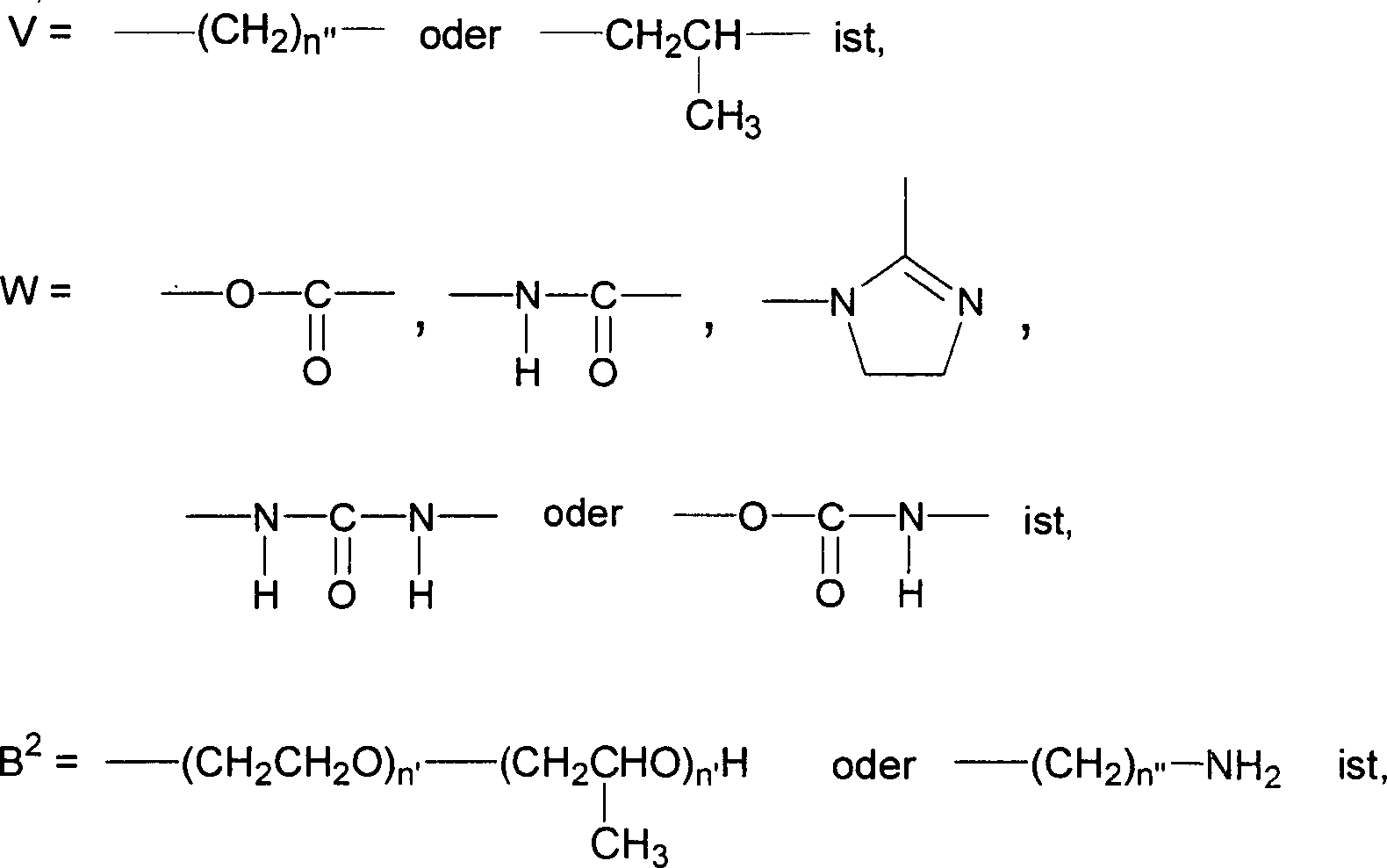
Umsetzen einer Komponente (A) der wobei R1 ein hydrophober Rest der Bedeutung -X-Y-Z oder -Z ist, in welchem X = -(CH2)n''-,
 Z = -(CH2)m'-CH3 bedeutet, R2 ein Rest der Zusammensetzung
 R3 ein hydrophober Rest der Bedeutung -X-Y-Z, -Z oder -Y-Z ist, mit der Maßgabe, dass im Falle der Bedeutung -Y-Z dann im Rest R2 n durch n'' ersetzt ist, R4 ein Rest der Bedeutung -X-Y-Z oder -(CH2)n'H ist, B1 ein hydrophober Rest der Bedeutung -V-W-Z oder -Z ist, in welchem
 B3 = ein hydrophober Rest der Bedeutung -V-W-Z, -Z oder
 ist, B4 = -V-W-Z oder
 ist, n, n', n'', m und m' ganze Zahlen der Bedeutung n = 0 – 2, n' = 0 – 4, n'' = 1 – 4, m = 3 – 11, bevorzugt 5 – 9 und m' = 12 – 26, bevorzugt 14 – 22 sind, mit einem nicht blockierten oder teilblockierten Di-, Tri- oder Polyisocyanat (IC), wobei der Anteil an freien NCO-Gruppen zwischen 1,8 und 10 pro Mol liegt und das Verhältnis der freien NCO-Gruppen zu den reaktionsfähigen Gruppen der Verbindungen der Formeln (I) und/oder (II) 1 : 1 bis 1 : 1,3 ist,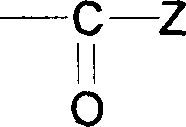
- (3) 0 – 45 Gewichtsprozent eines nicht blockierten oder blockierten Di-, Tri- oder Polyisocyanates und
- (4) gegebenenfalls übliche Emulgatoren,
- (1) 10 to 90% by weight of a fluorine-containing oil and water repellent;
- (2) 10 to 80% by weight of a hydrophobic reaction product (S) obtainable by reacting a component (A) of where R 1 is a hydrophobic radical of the meaning -XYZ or -Z, in which X = - (CH 2 ) n '' -,Z = - (CH 2 ) m ' - CH 3 , R 2 is a radical of the compositionR 3 is a hydrophobic radical of the meaning -XYZ, -Z or -YZ, with the proviso that in the case of the meaning -YZ then in the radical R 2 n is replaced by n ", R 4 is a radical of the meaning -XYZ or - (CH 2 ) n ' H, B 1 is a hydrophobic radical meaning -VWZ or -Z in whichB 3 = a hydrophobic radical of the meaning -VWZ, -Z oris, B 4 = -VWZ oris, n, n ', n'', m and m' are integers meaning n = 0-2, n '= 0-4, n''= 1-4, m = 3-11, preferably 5-9 and m '= 12-26, preferably 14-22, with an unblocked or partially blocked di-, tri- or polyisocyanate (IC), wherein the proportion of free NCO groups is between 1.8 and 10 per mole and that Ratio of the free NCO groups to the reactive groups of the compounds of the formulas (I) and / or (II) is 1: 1 to 1: 1.3,
- (3) 0-45% by weight of an unblocked or blocked di-, tri- or polyisocyanate and
- (4) optionally conventional emulsifiers,
Bei der Anwendung als Appretur auf Flächengebilden verleihen die Zubereitungen den behandelten Flächengebilden dauerhafte öl- und wasserabweisende Eigenschaften sowie weichen Warengriff.at the application as a finish on fabrics give the Preparations of the treated fabrics permanent oil and water-repellent properties as well as soft fabric handle.
Sämtliche Prozentangaben der erfindungsgemäßen Zubereitungen beziehen sich auf die Gesamtzusammensetzung der Wirksubstanzen der erfindungsgemäßen Zubereitung und sind Gewichtsprozente. Als bevorzugte Bereiche sind für die Komponente (1) ein Bereich von 20 – 80 Gewichtsprozent, besonders bevorzugt von 25 – 65 Gewichtsprozent, für die Komponente (2) 20 – 80 Gewichtsprozent, insbesondere jedoch 30 – 70 Gewichtsprozent zu nennen. Sofern die Komponente (3) zugesetzt wird, liegt deren Konzentration bevorzugt im Bereich von 1 – 35 Gewichtsprozent, insbesondere im Bereich von 5 – 35 Gewichtsprozent. Die üblichen Anwendungsmengen der gegebenenfalls vorhandenen Emulgatoren (Komponente (4)) liegen vorzugsweise zwischen 4 und 25 Gewichtsprozent, insbesondere zwischen 5 und 15 Gewichtsprozent bezogen auf die summierten Aktivgehalte der verwendeten Komponenten (1), (2) und gegebenenfalls (3).All Percentages of the preparations according to the invention refer to the total composition of the active substances of the inventive preparation and are weight percentages. Preferred ranges are for the component (1) a range of 20-80 Weight percent, more preferably from 25 to 65 weight percent, for the component (2) 20-80 Weight percent, but especially to call 30-70 weight percent. If component (3) is added, its concentration is preferably in the range of 1 to 35 Weight percent, in particular in the range of 5 to 35 weight percent. The usual Application rates of the optionally present emulsifiers (component (4)) are preferably between 4 and 25 weight percent, in particular between 5 and 15 percent by weight based on the summed active contents the components used (1), (2) and optionally (3).
Komponente (1) der Zubereitung besteht aus einem fluorhaltigen öl- und wasserabweisenden Mittel, insbesondere aus FC-Polymeren. Derartige FC-Polymere sind dem Fachmann hinreichend bekannt und sind kommerziell als gebrauchsfertige Zubereitungen erhältlich. Die Herstellung der Komponente (1) erfolgt beispielsweise nach Methoden der Emulsionspolymerisation, wie sie bei Houben-Weyl in „Methoden der organischen Chemie", Band E20, S. 218-268 und S. 1150 ff. (1987) beschrieben sind. Im allgemeinen bestehen die Zubereitungen der Komponente (1) aus Emulsionen eines linearen Polymers mit perfluorierten Alkylseitenresten und werden gewöhnlich aus Perfluoralkylreste tragenden Monomeren mit copolymerisationsfähigen, fluorfreien Monomeren unterschiedlichen Typs hergestellt. Methoden zur Herstellung solcher Emulsionscopolymerisate sind beispielsweise in DE-A-2 939 549, US-A-3,544,537 sowie DE-A-2 358 647 beschrieben.Component (1) of the preparation consists of a fluorine-containing oil and water repellent agent, in particular from FC polymers. Such FC polymers are well known to the person skilled in the art and are commercially available as ready-to-use preparations. The preparation of component (1) is carried out, for example, by methods of emulsion polymerization, as described in Houben-Weyl in "Methoden der organischen Chemie", Volume E20, pages 218-268 and pp. 1150 et seq The compositions of component (1) consist of emulsions of a linear polymer having perfluorinated alkyl side radicals and are usually prepared from perfluoroalkyl radical-carrying monomers with copolymerizable, fluorine-free monomers of different types Methods for producing such emulsion copolymers are described, for example, in DE-A-2,939,549, US Pat. A-3,544,537 and DE-A-2 358 647.
Geeignete Polymere mit perfluorierten Alkylseitenresten (Komponente (1)) werden beispielsweise durch Emulsionscopolymerisation von perfluorierte Alkylreste tragenden Monomeren, wie beispielsweise Perfluoroacrylat und/oder -methacrylat mit fluorfreien Monomeren, wie beispielsweise Butylacrylat, Stearylacrylat, Stearylmethacrylat, Acrylnitril, 2-Hydroxyethylacrylat, N-Methylolacrylamid, N-Methylolmethacrylamid oder Vinylidenchlorid erhalten. suitable Polymers with perfluorinated alkyl side radicals (component (1)) for example, by emulsion copolymerization of perfluorinated Alkyl radicals carrying monomers, such as perfluoroacrylate and / or methacrylate with fluorine-free monomers, such as Butyl acrylate, stearyl acrylate, stearyl methacrylate, acrylonitrile, 2-hydroxyethyl acrylate, N-methylolacrylamide, N-methylolmethacrylamide or vinylidene chloride receive.
Weitere marktübliche, als Komponente (1) verwendbare Mittel bestehen aus Emulsionen, welche als aktive FC-Komponente Polyurethane mit lateral angeordneten FC-Ketten aufweisen. Deren Herstellung erfolgt gewöhnlich gemäß den üblichen Methoden zur Polyurethansynthese durch Umsetzung von Diisocyanaten mit FC-gruppen enthaltenden Dialkoholen unter Zuhilfenahme von Katalysatorsystemen auf Basis organischer Zinnverbindungen und Aminen, wie beispielsweise einer Kombination von Dibutylzinndioctoat und Trimethylamin. Zur Verbesserung der Gesamteigenschaften werden häufig auch Comonomere, wie beispielsweise N-Methyldiethanolamin, in die Polyurethanpolymer kette eingebaut, um beispielsweise eine kationische Ladung des FC-Polymerkörpers zu erzeugen.Further Standard market As component (1) usable means consist of emulsions, which as an active FC component polyurethanes with laterally arranged FC chains exhibit. Their preparation is usually carried out according to the usual methods for polyurethane synthesis by reacting diisocyanates with dialcohols containing FC groups with the aid of catalyst systems based on organic tin compounds and amines, such as a combination of dibutyltin dioctoate and trimethylamine. To improve the overall properties often also comonomers, such as N-methyldiethanolamine, in the Polyurethane polymer chain incorporated, for example, a cationic Charge of the FC polymer body to create.
Bei der Herstellung der Komponente (1) können gegebenenfalls Solubilisierungsmittel, wie beispielsweise Ethylenglykol, 1,2-Propylenglykol, Dipropylenglykol, Dipropylenglykolmonomethylether, Mono- oder Diethylenglykolmonobutylether verwendet werden. In einem derartigen Fall können diese Solubilisierungsmittel in der erfindungsgemäßen Zubereitung (Zu) auch auf Basis von Wasser enthalten sein.at the preparation of component (1) may optionally contain solubilizing agents, such as ethylene glycol, 1,2-propylene glycol, dipropylene glycol, Dipropylene glycol monomethyl ether, mono- or diethylene glycol monobutyl ether be used. In such a case, these solubilizing agents may be used in the preparation according to the invention (To) also be based on water.
Die Komponente (2) besteht aus einem hydrophoben Umsetzungsprodukt (S), welches erhältlich ist durch Umsetzen einer anspruchsgemäßen Komponente (A) mit einem anspruchsgemäßen Di-, Tri- oder Polyisocyanat (IC). Die in dieser Komponente (2) als Komponente (A) eingesetzten Verbindungen der Formel (I) bestehen aus Umsetzungsprodukten von mehrwertigen Alkoholen (a1) mit Carbonsäuren (b1) oder mit Alkylisocyanaten (b2). Bevorzugte Beispiele für mehrwertige Alkohole (a1) sind Glyzerin, Trimethylolethan, Trimethylolpropan, 1,2,4-Butantriol, Pentaerythrit oder Zucker, wie zum Beispiel Glucose. Dabei sind Glyzerin, Trimethylolethan, Trimethylolpropan, 1,2,4-Butantriol und Pentaerythrit besonders bevorzugt.The Component (2) consists of a hydrophobic reaction product (S), which is available is by reacting a claimed component (A) with a claimant di-, Tri- or polyisocyanate (IC). The in this component (2) as a component (A) used compounds of formula (I) consist of reaction products of polyhydric alcohols (a1) with carboxylic acids (b1) or with alkyl isocyanates (B2). Preferred examples of polyhydric alcohols (a1) are glycerol, trimethylolethane, trimethylolpropane, 1,2,4-butanetriol, pentaerythritol or sugars, such as glucose. Here are glycerol, trimethylolethane, trimethylolpropane, 1,2,4-butanetriol and pentaerythritol particularly preferred.
Die in der Komponente (2) als Komponente (A) eingesetzten Verbindungen der Formel (II) bestehen aus Umsetzungsprodukten von Alkanolaminen (a2) und/oder Alkylaminen (a3) mit Carbonsäuren (b1) oder mit Alkylisocyanaten (b2). Beispiele für Alkanolamine (a2) sind 2-Amino-2,3-propandiol, 2-Amino-2-methyl-1,3-propandiol, Diethanolamin, Dipropanolamin, Diisopropanolamin, Ethanolpropanolamin, Triethanolamin, Triisopropanolamin, N,N,N',N'-Tetrakis(2-hydroxypropyl)ethylendiamin, Aminoethylethanolamin, Aminopropylethanolamin, Alkyltris(hydroxyethyl)propylendiamin und Alkyldihydroxyethylamin mit bevorzugt 12 – 24 Kohlenstoffatomen im Alkylrest, sowie deren Ethoxylierungsprodukte. Dabei sind Diethanolamin, Diisopropanolamin, Triethanolamin, Triisopropanolamin, Aminoethylethanolamin und Aminopropylethanolamin besonders bevorzugt.The in the component (2) used as component (A) compounds of formula (II) consist of reaction products of alkanolamines (a2) and / or alkylamines (a3) with carboxylic acids (b1) or with alkyl isocyanates (B2). examples for Alkanolamines (a2) are 2-amino-2,3-propanediol, 2-amino-2-methyl-1,3-propanediol, Diethanolamine, dipropanolamine, diisopropanolamine, ethanolpropanolamine, Triethanolamine, triisopropanolamine, N, N, N ', N'-tetrakis (2-hydroxypropyl) ethylenediamine, Aminoethylethanolamine, aminopropylethanolamine, alkyltris (hydroxyethyl) propylenediamine and alkyldihydroxyethylamine having preferably 12-24 carbon atoms in the alkyl radical, and their ethoxylation products. Diethanolamine, diisopropanolamine, Triethanolamine, triisopropanolamine, aminoethylethanolamine and aminopropylethanolamine particularly preferred.
Beispiele für Alkylamine (a3) sind Bis(aminoethyl)amin, Bis(aminopropyl)amin und deren polymere Homologe, Aminoethylaminopropylamin, Bis(aminopropyl)ethylendiamin, Tris-(aminoethyl)amin, Tris(aminopropyl)amin, Trisaminononan, Aminopropylstearylamin und Aminopropylbisstearylamin. Dabei sind Bis(aminoethyl)amin, Bis(aminopropyl)amin, Ami noethylaminopropylamin, Bis(aminopropyl)ethylendiamin und Aminopropylstearylamin besonders bevorzugt.Examples for alkylamines (a3) are bis (aminoethyl) amine, bis (aminopropyl) amine and their polymeric homologs, Aminoethylaminopropylamine, bis (aminopropyl) ethylenediamine, tris (aminoethyl) amine, Tris (aminopropyl) amine, trisaminononane, aminopropylstearylamine and Aminopropylbisstearylamin. Bis (aminoethyl) amine, bis (aminopropyl) amine, Aminoethylaminopropylamine, bis (aminopropyl) ethylenediamine and aminopropylstearylamine particularly preferred.
Zur Herstellung der Komponente (A) sind auch Mischungen der genannten ein- und mehrwertigen Alkohole (a1) mit den Alkanolaminen (a2) und mit den Alkylaminen (a3) einsetzbar.to Preparation of component (A) are also mixtures of those mentioned monohydric and polyhydric alcohols (a1) with the alkanolamines (a2) and can be used with the alkylamines (a3).
Die zur Herstellung der Komponente (A) der Formel (I) und (II) verwendeten Carbonsäuren (b1) können gesättigt, linear oder verzweigtkettig mit 9 – 31 Kohlenstoffatomen, bevorzugt mit 11 – 23 Kohlenstoffatomen im Alkylrest sein. Beispiele für die in Formel (I) und (II) verwendeten gesättigten, linearen Carbonsäuren sind Caprin-, Undecan-, Laurin-, Myristin-, Palmitin-, Stearin-, Arachin- und Behensäure. Dabei sind Laurin-, Palmitin-, Stearin- und Behensäure besonders bevorzugt.The carboxylic acids (b1) used to prepare component (A) of the formula (I) and (II) can be saturated, linear or branched chain having 9 to 31 carbon atoms, preferably having 11 to 23 carbon atoms in the alkyl radical. Examples of the saturated linear carboxylic acids used in formulas (I) and (II) are capric, undecane, lauric, myristic, palmitic, stearic, arachinic and behenic acid. There are lauric, Palmitic, stearic and behenic acid particularly preferred.
Die zur Herstellung der Komponente (A) der Formel (I) und (II) verwendeten Alkylisocyanate (b2) sind bevorzugt linear mit 9 – 31, insbesondere mit 12 – 22 Kohlenstoffatomen im Alkylrest, wie beispielsweise Stearylisocyanat.The for the preparation of the component (A) of the formula (I) and (II) used Alkylisocyanates (b2) are preferably linear with 9-31, in particular with 12 - 22 Carbon atoms in the alkyl radical, such as stearyl isocyanate.
Anstelle der unter Verwendung der mehrwertigen Alkohole (a1) oder der Alkanolamine (a2) oder der Alkylamine (a3) sowie der Carbonsäuren (b1) oder der Alkylisocyanate (b2) hergestellten Komponente (A) können zur Umsetzung mit den nicht blockierten oder teilblockierten Di-, Tri- oder Polyisocyanaten (IC) auch Komponenten mit einem aktiven Wasserstoffatom und zwei hydrophoben Resten, wie beispielsweise Guerbet-Alkohole, Bis(dodecyl)amin und bevorzugt Bis(octadecyl)amin eingesetzt werden.Instead of that using polyhydric alcohols (a1) or alkanolamines (a2) or the alkylamines (a3) and the carboxylic acids (b1) or the alkyl isocyanates (b2) prepared component (A) can be reacted with the unblocked or partially blocked di-, tri- or polyisocyanates (IC) also components with one active hydrogen and two hydrophobic radicals, such as Guerbet alcohols, bis (dodecyl) amine and preferably bis (octadecyl) amine are used.
Für die Umsetzung mit dem nicht blockierten oder teilblockierten Di-, Tri- oder Polyisocyanat (IC) können auch Mischungen beider Verbindungen der Formeln (I) und (II) Verwendung finden.For the implementation with the unblocked or partially blocked di-, tri- or polyisocyanate (IC) can also mixtures of both compounds of the formulas (I) and (II) use Find.
Sofern Verbindungen der Formeln (I) und (II) kommerziell verfügbar sind, können sie für die genannte Umsetzung direkt eingesetzt werden; eine eigene Herstellung ist dann nicht erforderlich.Provided Compounds of the formulas (I) and (II) are commercially available, can she for the above implementation are used directly; an own production is not necessary then.
Die vorstehend erläuterte Komponente (A) wird mit den anspruchsgemäßen Di-, Tri- oder Polyisocyanaten (IC) zum Produkt (S) umgesetzt. Beispiele für dabei eingesetzte, nicht blockierte oder in teilblockierte Isocyanate zu überführende Di-, Tri- oder Polyisocyanate (IC) werden in der DE-A-100 17 651, Absatz 0032 bis einschließlich 0037 beschrieben.The explained above Component (A) is with the claimed di-, tri- or polyisocyanates (IC) converted to product (S). Examples of used, unblocked or in partially blocked isocyanates to be converted di-, tri- or polyisocyanates (IC) are described in DE-A-100 17 651, paragraphs 0032 to 0037 inclusive described.
Besonders bevorzugte Di-, Tri- oder Polyisocyanate (IC) sind beispielsweise 2,4-Toluylendiisocyanat, 2,4'-Diphenylmethandiisocyanat, 4-Methylcyclohexan-1,3-diisocyanat, 4,4'-Diphenylmethandiisocyanat, die Mischungen aus monomeren Diphenylmethandiisocyanaten und höherkettigen Homologen des Diphenylmethandiisocyanates (Polymer-MDI), Tetramethylendiisocyanat, Tetramethylendiisocyanat-Trimere, Hexamethylendiisocyanat, Hexamethylendiisocyanat-Trimere, Isophorondiisocyanat, Isophorondiisocyanat-Trimere, 2,2,4- oder 2,4,4-Trimethyl-1,6-hexamethylendiisocyanat und Dimerdiisocyanat.Especially preferred di-, tri- or polyisocyanates (IC) are, for example 2,4-tolylene diisocyanate, 2,4'-diphenylmethane diisocyanate, 4-methylcyclohexane-1,3-diisocyanate, 4,4'-diphenylmethane diisocyanate, the mixtures from monomeric diphenylmethane diisocyanates and higher-chain homologues of diphenylmethane diisocyanate (Polymeric MDI), tetramethylene diisocyanate, Tetramethylene diisocyanate trimers, hexamethylene diisocyanate, hexamethylene diisocyanate trimers, Isophorone diisocyanate, isophorone diisocyanate trimers, 2,2,4- or 2,4,4-trimethyl-1,6-hexamethylene diisocyanate and dimer diisocyanate.
Die Herstellung cyclisierter Oligo- oder Polyisocyanate kann nach den bekannten Methoden der Cyclisierung gemäß W. Siefken (Liebigs Annalen der Chemie 562, Jahrgang 1949, Seiten 75 – 136) erfolgen, wobei die Oligo- oder Polyisocyanate offenkettig oder cyclisch vorliegen können. Derartige Verbindungen können aus den genannten Di-, Tri- und Polyisocyanaten durch Verknüpfung mittels Urethan-, Allophanat-, Harnstoff-, Biuret-, Uretdion-, Amid-, Isocyanurat-, Carbodiimid-, Uretonimin-, Oxadiazintrion- oder Iminoxadiazindion-Strukturen hergestellt werden. Bevorzugt werden Hexamethylendiisocyanat-Trimere, Diphenylmethandiisocyanat-Trimere und Urethane aus 2,4-Toluylendiisocyanat verwendet, welche noch über freie NCO-Gruppen verfügen.The Preparation of cyclized oligo- or polyisocyanates can according to the known methods of cyclization according to W. Siefken (Liebigs Annalen Chemie 562, born 1949, pages 75-136), the Oligo- or polyisocyanates can be open-chain or cyclic. such Connections can be made the aforementioned di-, tri- and Polyisocyanates by linkage by urethane, allophanate, urea, biuret, uretdione, amide, Isocyanurate, carbodiimide, uretonimine, oxadiazinetrione, or iminoxadiazinedione structures getting produced. Preference is given to hexamethylene diisocyanate trimers, Diphenylmethane diisocyanate trimers and urethanes from 2,4-toluene diisocyanate which is still over have free NCO groups.
Es ist auch möglich, Teilmengen der Isocyanatgruppen mit Polyalkoxymonoalkylethern unter Zuhilfenahme entsprechender Katalysatorsysteme zu Urethanen umzusetzen, um die Emulgierbarkeit der Komponente (2) in Wasser zu verbessern. Es können hierbei Polyethylenglykolmonomethylether mit 4 – 20 Ethylenoxideinheiten, optional mit zusätzlichen 2 – 6 Propylenoxydeinheiten Verwendung finden. Als Katalysatoren können die dem Fachmann bekannten Systeme auf Basis tertiärer Amine und/oder zinnorganischen Verbindungen, wie beispielsweise Dibutylzinndilaurat, Dioctylzinndilaurat oder -diacetat verwendet werden.It is possible, too, Subsets of isocyanate groups with Polyalkoxymonoalkylethern under Using appropriate catalyst systems to convert urethanes, to improve the emulsifiability of component (2) in water. It can in this case polyethylene glycol monomethyl ether with 4 to 20 ethylene oxide units, optional with additional 2 - 6 Propylene oxide units find use. As catalysts, the known systems based on tertiary amines and / or organotin Compounds such as dibutyltin dilaurate, dioctyltin dilaurate or diacetate can be used.
Alternativ zu den mittels Polyalkoxymonoalkylethern modifizierten Isocyanaten können tertiäre Alkanolamine als Zusatzstoffe Verwendung finden, um die kationische Ladung der Umsetzungsprodukte (S) und damit die selbstemulgierenden Eigenschaften ohne Beeinträchtigung der Gesamteigenschaften zu verbessern. Bevorzugt geeignet ist hierbei Dimethylaminoethanol.alternative to the modified by Polyalkoxymonoalkylethern isocyanates can tertiary Alkanolamines are used as additives to the cationic Loading the reaction products (S) and thus the self-emulsifying Properties without impairment to improve the overall properties. Preferably suitable here Dimethylaminoethanol.
Sofern für die Umsetzung zur Komponente (2) teilblockierte Di-, Tri- oder Polyisocyanate (IC) Verwendung finden, können diese mit den üblichen und bekannten Blockierungsmitteln teilblockiert sein, wie sie beispielsweise in der DE-A-100 17 651, Absatz 0042 beschrieben sind. Bevorzugt werden Natriumbisulfit oder Methylethylketoxim, insbesondere jedoch 3,5-Dimethylpyrazol für die Teilblockierung verwendet.Provided for the Reaction to component (2) partially blocked di-, tri- or polyisocyanates (IC) can find use this with the usual and known blocking agents be partially blocked, as for example in DE-A-100 17 651, paragraph 0042 are described. Prefers are sodium bisulfite or methyl ethyl ketoxime, but especially 3,5-dimethylpyrazole for uses the partial blocking.
Die Teilblockierung erfolgt durch Umsetzung der zu blockierenden Di-, Tri- oder Polyisocyanate (IC) mit dem Blockierungsmittel in der Schmelze oder in einem gegenüber Isocyanaten im wesentlichen inerten organischen Lösemittel (LM), vorzugsweise unter einer Schutzgasatmosphäre und in Gegenwart eines geeigneten Katalysators, wie es beispielsweise in der EP-A- 0 159 117 oder der DE-A-44 41 418 beschrieben wird. Das Verhältnis der freien NCO-Gruppen der zu blockierenden Di-, Tri- oder Polyisocyanate (IC) zu den reaktiven Gruppen des Blockierungsmittels liegt vorzugsweise in einem stöchiometrischen Überschuss bis zu 2 : 1, bevorzugt bis zu 3 : 1.The partial blocking is carried out by reacting the di-, tri- or polyisocyanates (IC) to be blocked with the blocking agent in the melt or in an isocyanate substantially inert organic solvent (LM), preferably under an inert gas atmosphere and in the presence of a suitable catalyst, such as It is described, for example, in EP-A-0 159 117 or DE-A-44 41 418. The ratio of the free NCO groups of the di-, tri- or polyisocyanates (IC) to be blocked to the reactive groups of the blocking agent is preferably in a stoichiometric excess up to 2: 1, preferably up to 3: 1.
Als geeignete, inerte organische Lösemittel (LM) werden bevorzugt wasserfreie Ester, wie beispielsweise Ethylacetat, n-Propylacetat, i-Propylacetat, n-Butylacetat, i-Butylacetat oder Amylacetat verwendet.When suitable, inert organic solvents (LM) are preferably anhydrous esters, such as ethyl acetate, n-propyl acetate, i-propyl acetate, n-butyl acetate, i-butyl acetate or Amyl acetate used.
Der Zusatz der Komponente (3) ist optional. Verbindungen dieses Typs werden als Booster bezeichnet. Aufgrund der Polyfunktionalität des Polyisocyanates wird eine Vernetzung mit den auf den meisten Substraten vorhandenen -OH, -COOH oder -NH2-Gruppen und nicht umgesetzten Funktionen der Komponente (2) bewirkt, wodurch die Beständigkeit gegenüber Waschprozessen deutlich verbessert und die Resistenz gegenüber Abrasion erhöht wird.The addition of component (3) is optional. Compounds of this type are called boosters. Due to the polyfunctionality of the polyisocyanate, crosslinking is effected with the -OH, -COOH or -NH 2 groups present on most substrates and unreacted functions of component (2), which significantly improves the resistance to washing processes and increases the resistance to abrasion becomes.
Die Komponente (3) kann sowohl in nicht blockierter als auch in blockierter Form zur Verwendung gelangen. Die nicht blockierten Formen der Komponente (3) werden vorwiegend bei Anwendungen aus aprotischen Medien eingesetzt, weil hierbei eine unerwünschte, vorzeitige Umsetzung der freien NCO-Gruppen mit den reaktionsfähigen aktiven Wasserstoffatomen des Anwendungsmediums vermieden wird.The Component (3) can be in both unblocked and blocked Form for use. The unblocked forms of the component (3) are mainly used in aprotic media applications, because this is an undesirable, premature reaction of the free NCO groups with the reactive active ones Hydrogen atoms of the application medium is avoided.
Die zur Herstellung der Komponente (3) geeigneten, nicht blockierten Di-, Tri- oder Polyisocyanate sowie die cyclisierten Oligo- oder Polyisocyanate sind bereits bei der Herstellung des Umsetzungsproduktes (S) in Komponente (2) beschrieben.The for the preparation of the component (3) suitable, not blocked Di-, tri- or polyisocyanates and the cyclized oligo- or Polyisocyanates are already in the preparation of the reaction product (S) in component (2).
Sofern die Komponente (3) aus Anwendungsmedien auf Flächengebilde appliziert werden soll, welche aktive Wasserstoffatome tragen, ist häufig ein Schutz der reaktionsfähigen NCO-Gruppen durch Blockierung mit geeigneten Blockierungsmitteln notwendig. In diesen Fällen erfolgt die Herstellung der Komponente (3) durch Verfahren, bei welchen die vollständige Blockierung der freien NCO-Gruppen von Di-, Tri- oder Polyisocyanaten mit einem Blockierungsagens und gegebenenfalls in einem organischen Lösemittel durchgeführt wird. Um eine vollständige Blockierung zu erzielen, wird üblicherweise ein geringer stöchiometrischer Überschuss an Blockierungsagens eingesetzt. Sofern Produkte für wässrige Anwendungen herzustellen sind, müssen die blockierten Di-, Tri- oder Polyisocyanate, gegebenenfalls gelöst in organischem Lösemittel, unter Verwendung geeigneter Emulgatoren (= Komponente (4)) in Emulsionsform übergeführt werden.Provided the component (3) can be applied from application media to fabrics which carry active hydrogen atoms is often one Protection of the reactive NCO groups by blocking with suitable blocking agents necessary. In these cases the preparation of the component (3) by processes, in which the complete Blocking of the free NCO groups of di-, tri- or polyisocyanates with a blocking agent and optionally in an organic solvent is carried out. To a complete Blocking is becoming common a low stoichiometric excess used on blocking agent. Unless products for aqueous applications have to produce the blocked di-, tri- or polyisocyanates, optionally dissolved in organic Solvents be converted into emulsion form using suitable emulsifiers (= component (4)).
Beispiele für geeignete übliche und bekannte Blockierungsmittel sind aus der DE-A-100 17 651, Absatz 0042 bekannt und bereits in der Beschreibung der Herstellung des Umsetzungsproduktes (S) in Komponente (2) aufgeführt.Examples for suitable usual and Known blocking agents are known from DE-A-100 17 651, paragraph 0042 known and already in the description of the production of Reaction product (S) in component (2) listed.
In einer besonderen Ausführungsform können als Booster auch nicht blockierte Di-, Tri- oder Polyisocyanate eingesetzt werden, deren Selbstemulgierfähigkeit in Wasser durch partielle Umsetzung der Isocyanatgruppen mit Polyalkoxymonoalkylethern unter Zuhilfenahme entsprechender Katalysatorsysteme zu Urethanen verbessert wird. Durch die Anknüpfung von hydrophilen Seitenketten an die Di-, Tri- oder Polyisocyanate wird der HLB-Wert des so hergestellten Urethanes so günstig verändert, dass die an sich wasserunlösliche Verbindung selbstemulgierende Eigenschaften bekommt. Bei den hydrophilen Seitenketten ist eine gewisse Selektion von Art und Menge des Restes vorteilhaft. Bevorzugt gelangen zwischen 4 und 20 Ethylenoxidreste zur Verwendung, optional gemeinsam mit 2 – 6 Propylenoxidresten, wobei diese auch in Blöcken innerhalb der Alkoxykette vorliegen können. Bei solchen gemischt alkoxylierten Seitenketten überwiegt jedoch der Mengenanteil an Ethylenoxyd immer denjenigen des Propylenoxyds. Als Katalysatoren für die Urethansynthese können die dem Fachmann bekannten Systeme auf Basis tertiärer Amine und/oder zinnorganischen Verbindungen, wie beispielsweise Dibutylzinndilaurat, Dioctylzinndilaurat oder -diacetat verwendet werden.In a particular embodiment can as boosters also non-blocked di-, tri- or polyisocyanates are used, their self-emulsifying ability in water by partial reaction of the isocyanate groups with Polyalkoxymonoalkylethern with the help of appropriate catalyst systems to urethanes is improved. By the connection of hydrophilic side chains to the di-, tri- or polyisocyanates the HLB value of the urethane thus produced changed so favorably that the intrinsically water-insoluble compound gets self-emulsifying properties. At the hydrophilic side chains a certain selection of the type and amount of the rest is advantageous. Preferably, between 4 and 20 ethylene oxide radicals are used, optionally together with 2 - 6 Propylene oxide radicals, which also in blocks within the alkoxy chain may be present. In such mixed alkoxylated side chains, however, the proportion predominates of ethylene oxide always that of propylene oxide. As catalysts for the Urethane synthesis can the known to those skilled systems based on tertiary amines and / or organotin compounds, such as, for example, dibutyltin dilaurate, Dioctyltin dilaurate or diacetate can be used.
Bei der Anwendung bilden die so hergestellten Urethane beim Eintrag in Wasser spontan feinteilige Emulsionen mit hoher Stabilität gegenüber Scherkräften und guter Verträglichkeit mit den anderen Komponenten einer Applikationsflotte. Wegen der Reaktivität der restlichen, nicht umgesetzten NCO-Gruppen mit Wasser sind bei diesen Spezialformen in der Applikationsflotte nur begrenzte Topfzeiten bis maximal 8 Stunden möglich.at the application form the urethanes thus produced at the entry in water spontaneously finely divided emulsions with high stability to shear forces and good compatibility with the other components of an application fleet. Because of the Reactivity the remaining, unreacted NCO groups with water are included These special forms in the application fleet only limited pot lives up to a maximum of 8 hours possible.
Der Zusatz der Komponente (3) wird insbesondere in Fällen vorgenommen, wo besonders hohe Anforderungen an die Waschbeständigkeiten der behandelten Flächengebilde gestellt werden. Vorzugsweise werden dann 5 – 35 % dieser Verbindung eingesetzt, welche für die Anwendung aus lösemittelhaltigen, wasserfreien Medien direkt und ohne Formulierungshilfsmittel eingesetzt werden kann. Sofern die Applikation aus wässrigem Medium erfolgt, gelangen vorzugsweise Emulsionen der Komponente (3) mit 15 – 35 Gewichtsprozent Feststoffanteil zum Einsatz, welche unter Verwendung von Emulgatoren (= Komponente (4)) auf Basis ethoxylierter Fettamine, optional in quaternärer Form vorliegend, und gegebenenfalls anderen Emulgierhilfsmitteln, wie beispielsweise Solubilisierungsmitteln auf Basis Ethylenglykol, 1,2-Propylenglykol, Dipropylenglykol, Dipropylenglykolmonomethylether, Mono- oder Diethylenglykolmonobutylether oder N-Methylpyrrolidon hergestellt werden. Die Emulgierung kann dabei unter Zuhilfenahme von Hochdruckhomogenisiermaschinen erfolgen.The addition of component (3) is carried out in particular in cases where particularly high demands are placed on the washing resistance of the treated fabrics. Preferably, 5-35% of this compound are then used, which can be used for the application of solvent-containing, anhydrous media directly and without formulation auxiliaries. If the application is carried out from an aqueous medium, preferably emulsions of component (3) with 15 to 35 Gewichtspro zent solids content which is present using emulsifiers (= component (4)) based on ethoxylated fatty amines, optionally present in quaternary form, and optionally other emulsifying auxiliaries, such as, for example, solubilizers based on ethylene glycol, 1,2-propylene glycol, dipropylene glycol, dipropylene glycol monomethyl ether, Mono- or diethylene glycol monobutyl ether or N-methylpyrrolidone. The emulsification can be done with the aid of Hochdruckhomogenisiermaschinen.
Die erfindungsgemäßen Zubereitungen (Zu) können auf Basis von Wasser, auf Basis von Wasser und organischen Lösemitteln sowie auf Basis von organischen Lösemitteln vorliegen.The preparations according to the invention (To) can based on water, based on water and organic solvents and based on organic solvents.
Wenn die erfindungsgemäßen Zubereitungen (Zu) auf wässriger Basis vorliegen, werden Emulgatoren (= Komponente (4)) eingesetzt. Die für die Formulierung der Komponenten (1), (2) und gegebenenfalls (3) der erfindungsgemäßen Zubereitungen eingesetzten Emulgatoren (= Komponente (4)) sind bekannt. Als Emulgatoren kommen beispielsweise Ethoxylierungsprodukte von Fettsäuren, Fettsäureamiden, Fettalkoholen, Fettaminen, letztere auch in Form ihrer Salze mit niedermolekularen organischen Säuren oder Mineralsäuren sowie quaternäre Ammoniumverbindungen, wie beispielsweise Cetylbenzyldimethylammoniumchlorid und vorzugsweise ethoxyliertes Octadecylmethylammonium chlorid in Frage. Solche Emulgatoren sind beispielsweise im „Römpp Lexikon Chemie" (10. Auflage, 2. Band, Seite 1149 und 1150) beschrieben.If the preparations according to the invention (Too) on watery Based on emulsifiers (= component (4)) are used. The for the formulation of components (1), (2) and optionally (3) the preparations according to the invention used emulsifiers (= component (4)) are known. As emulsifiers For example, ethoxylation products of fatty acids, fatty acid amides, Fatty alcohols, fatty amines, the latter also in the form of their salts low molecular weight organic acids or mineral acids as well as quaternary Ammonium compounds such as cetylbenzyldimethylammonium chloride and preferably ethoxylated octadecylmethylammonium chloride in Question. Such emulsifiers are, for example, in the "Römpp Lexikon Chemistry "(10th edition, Volume 2, pages 1149 and 1150).
Die Herstellung der Emulsionen der Komponente (1) erfolgt gewöhnlich durch Emulsionspolymerisation oder durch Polyurethansynthese. Zur Herstellung der Emulsionen der Komponenten (2) und gegebenenfalls (3) werden die bekannten Methoden zur Bildung von Sekundäremulsionen angewendet. Üblicherweise liegt die Emulgiertemperatur oberhalb des Schmelzbereiches der Wirksubstanzen der verwendeten Komponenten (2) und gegebenenfalls (3), vorzugsweise zwischen 50 und 80°C. Um möglichst feinteilige, besonders stabile Emulsionen zu erzeugen, wird häufig zunächst eine grobteilige Voremulsion hergestellt, deren Partikel anschließend unter Zuhilfenahme von Hochdruckhomogenisatoren auf die notwendige durchschnittliche Teilchengröße zwischen 0,1 und 10 Mikrometer verkleinert werden.The Preparation of the emulsions of component (1) is usually carried out by Emulsion polymerization or by polyurethane synthesis. For the production the emulsions of the components (2) and optionally (3) the known methods for the formation of secondary emulsions applied. Usually lies the emulsification temperature above the melting range of the active substances the components used (2) and optionally (3), preferably between 50 and 80 ° C. To be as possible To produce finely divided, particularly stable emulsions is often first coarse-particle pre-emulsion produced, the particles then under Use of high-pressure homogenizers on the necessary average Particle size between 0.1 and 10 microns are reduced.
Sofern gewünscht, können die als Reaktionsmedium zur Herstellung der Komponenten (2) und gegebenenfalls (3) zugefügten inerten organischen Lösemittel (LM), nach der Emulgierung zur Vermeidung emittierfähiger organischer Kohlenwasserstoffe destillativ entfernt werden.Provided desired can as the reaction medium for the preparation of components (2) and optionally (3) added inert organic solvents (LM), after emulsification to avoid emissive organic Hydrocarbons are removed by distillation.
Wenn die erfindungsgemäßen Zubereitungen (Zu) auf Basis organischer Lösemittel vorliegen, gelangen insbesondere inerte organische Lösemittel zum Einsatz, wie beispielsweise Ethylacetat, n-Propylacetat, i-Propylacetat, n-Butylacetat, i-Butylacetat oder Amylacetat und es werden keine Emulgatoren (= Komponente (4)) benötigt. In diesem Falle sind die Komponenten (1), (2) und gegebenenfalls (3) der erfindungsgemäßen Zubereitungen in den für deren Herstellung angewendeten organischen Lösemittel gelöst.If the preparations according to the invention (To) based on organic solvents are present, in particular inert organic solvents used, such as ethyl acetate, n-propyl acetate, i-propyl acetate, n-butyl acetate, i-butyl acetate or amyl acetate and there will be no Emulsifiers (= component (4)) needed. In this case are the components (1), (2) and optionally (3) of the preparations according to the invention in the for their preparation dissolved organic solvents dissolved.
Bei der Herstellung der FC-Polymere (Komponente (1)) wird in diesem Falle üblicherweise anstelle einer Emulsionspolymerisation eine dem Fachmann bekannte Lösungspolymerisation in Estern, beispielsweise i-Propylacetat oder Butylacetat oder Kohlenwasserstoffgemischen mit einem Siedebereich von etwa 100 bis 240 °C durchgeführt.at the preparation of the FC polymers (component (1)) is in this Trap usually instead of emulsion polymerization, a person skilled in the art solution in esters, for example i-propyl acetate or butyl acetate or hydrocarbon mixtures with a boiling range of about 100 to 240 ° C performed.
Die Herstellung der Komponenten (2) und gegebenenfalls (3) erfolgt in diesem Falle meist in inerten, organischen Lösemitteln (LM), wie beispielsweise Ethylacetat, n-Propylacetat, i-Propyl-acetat, n-Butylacetat, i-Butylacetat oder Amylacetat.The Preparation of components (2) and optionally (3) takes place in This case usually in inert, organic solvents (LM), such as Ethyl acetate, n-propyl acetate, i-propyl acetate, n-butyl acetate, i-butyl acetate or amyl acetate.
Für eine Anwendung der erfindungsgemäßen Zubereitungen (Zu) aus organischen Lösemitteln sollte bei der Herstellung der Komponenten (1), (2) und gegebenenfalls (3) die Auswahl der verwendeten Lösemittel so erfolgen, dass die darin gelösten Wirksubstanzen dieser Komponenten bei der weiteren Verdünnung in den Anwendungslösemitteln gelöst bleiben.For an application the preparations according to the invention (To) from organic solvents should be used in the preparation of components (1), (2) and optionally (3) the choice of solvents used should be such that the ones dissolved in it Active substances of these components in the further dilution in the application solvents solved stay.
Weiterer Gegenstand der Erfindung ist die Anwendung der erfindungsgemäßen Zubereitungen gemäß Anspruch 1 als Appretur auf Flächengebilden, insbesondere auf textilen Flächengebilden. Als solche werden beispielsweise Gewebe, Gewirke und vorverfestigte Faservliese (Nonwovens) aus nativen Fasern, wie Wolle oder Baumwolle bzw. Synthetikfasern, insbesondere PES-, PA- und Regeneratfasern oder deren Mischungen verwendet.Another The invention relates to the use of the preparations according to the invention according to claim 1 as a finish on fabrics, in particular on textile fabrics. As such, for example, woven, knitted and pre-consolidated Nonwovens made of natural fibers such as wool or cotton or synthetic fibers, in particular PES, PA and regenerated fibers or mixtures thereof used.
Der Auftrag der Appretur auf die textilen Flächengebilde erfolgt im Allgemeinen mit Auflagen von 0,1 – 5 Gewichtsprozent, vorzugsweise jedoch 0,1 – 3 Gewichtsprozent der Festsubstanz der erfindungsgemäßen Zubereitung bezogen auf das Gewicht des zu behandelnden Flächengebildes. Üblicherweise wird eine Flotte in der gewünschten Konzentration mittels einer Zwangsapplikation aus wässrigem Medium auf dem Foulard mit Flottenaufnahmen von 40 – 100 Gewichtsprozent, anschließender Vortrocknung bei 80 – 110°C und einer nachfolgenden Heißbehandlung bei 130 – 170°C während 1 – 5 Minuten vorgenommen. Die Dauer der Hitzebehandlung ist jeweils abhängig von den angewandten Temperaturen.The application of the finish to the textile fabrics is generally carried out with runs of 0.1 to 5 weight percent, but preferably 0.1 to 3 weight percent of the solid substance of the invention Preparation based on the weight of the fabric to be treated. Usually, a liquor in the desired concentration by means of a forced application of aqueous medium on the padder with liquor pick-ups of 40 - 100 weight percent, followed by predrying at 80 - 110 ° C and a subsequent heat treatment at 130 - 170 ° C for 1 - 5 minutes. The duration of the heat treatment depends on the temperatures used.
Eine weitere Auftragsmöglichkeit auf textile Flächengebilde ist durch das dem Fachmann bekannte Ausziehverfahren gegeben.A further order possibility on textile fabrics is given by the exhaust process known in the art.
Der Auftrag auf textile Flächengebilde kann ferner mittels Sprühen, durch Pinsel- oder Schwammauftrag erfolgen.Of the Application to textile fabrics can also be sprayed, done by brush or sponge job.
Bei der Anwendung auf textilen Flächengebilden können die erfindungsgemäßen Zubereitungen auch mit den in der Textilindustrie üblichen Textilhilfsmitteln kombiniert werden. Hervorzuheben sind Mittel, welche die Entknitterungseigenschaften verbessern; beispielsweise Methylolverbindungen des Dihydroxyethylenharnstoffes oder Methylolmelaminether unterschiedlichen Methylolierungsgrades. Ferner kommen als Textilhilfsmittel solche in Betracht, welche die Flammfestigkeit verbessern oder dem Flächenge bilde einen vom Kunden gewünschten Griff (z.B. Weichheit, Fülle oder Glätte etc.) verleihen. Der Warengriff kann jedoch durch geeignete Kombination der Komponenten (1) bis (3) in der gewünschten Richtung gesteuert werden, weshalb in diesen Fällen auf weitere Textilhilfsmittel verzichtet werden kann.at the application on textile fabrics can the preparations according to the invention also with the textile auxiliaries customary in the textile industry be combined. Noteworthy are agents that the Entknitterungseigenschaften improve; For example, methylol compounds of Dihydroxyethylenharnstoffes or Methylolmelaminether different degrees of methylolation. Further suitable textile auxiliaries are those which the Improve flame resistance or the Flächenge one of the customer desired Grip (e.g., softness, fullness or smoothness etc.). However, the goods handle can by suitable combination the components (1) to (3) controlled in the desired direction why in these cases can be dispensed with further textile auxiliaries.
Viele konfektionierte Artikel werden entweder im häuslichen Bereich auf Haushaltswaschmaschinen oder auf Industriewaschmaschinen gewaschen. Letzteres trifft in hohem Ausmaß auf die Berufsbekleidung von Mitgliedern der Feuerwehr, Polizei, Militär und anderen Berufszweigen zu, welche sich häufig im Freien aufhalten müssen und damit der Witterung ausgesetzt sind. Die üblicherweise öl-, wasser- und schmutzabweisend appretierten Kleidungsstücke erleiden durch die Wäsche einen Verlust dieser Eigenschaften. Häufig werden daher durch eine Nachbehandlung mit Phobiermitteln diese Eigenschaften wieder aufgefrischt und revitalisiert. Die erfindungsgemäßen Zubereitungen können für diese Anwendung Einsatz finden.Lots made-to-order items are either domestic or household based on household washing machines washed on industrial washing machines. The latter hits in high Scale up the workwear of members of the fire department, police, military and others Professions, which are often have to stay outdoors and thus exposed to the weather. The usually oil, water and dirt-repellent finished garments suffer through the laundry one Loss of these properties. Often Therefore, by a post-treatment with Phobiermitteln this Properties refreshed and revitalized. The preparations according to the invention can for this Application find application.
Die revitalisierende Behandlung der industriell gewaschenen, konfektionierten Artikel erfolgt in der Wasch- bzw. Schleudertrommel durch Aufgießen einer Flotte der erfindungsgemäßen Zubereitungen auf die schleuderfeuchten Waschartikel und anschließendes Trocknen im Tumbler. Bei Haushaltswaschmaschinen kann die Appretur mittels des üblichen Nachbehandlungsspülganges oder eines Dosierkugelsystems erfolgen.The revitalizing treatment of industrially washed, ready-made Article takes place in the washing or centrifugal drum by pouring a Liquor of the preparations according to the invention on the dehumidified laundry and subsequent drying in the tumbler. For household washing machines, the finish by means of of the usual Nachbehandlungsspülganges or a metering ball system.
Weiterer Gegenstand der Erfindung ist die Anwendung der erfindungsgemäßen Zubereitungen als Appretur auf Flächengebilden mit der Maßgabe, dass die Anwendung aus organischen Lösemitteln im Tränk- oder Tauchverfahren erfolgt.Another The invention relates to the use of the preparations according to the invention as a finish on fabrics with the proviso that the application of organic solvents in the impregnation or Dipping process takes place.
Viele Kleidungsstücke werden nicht gewaschen, sondern einer Reinigung in organischen Lösemitteln unterzogen. Ähnlich wie bei der Nachbehandlung gewaschener Artikel können auch hier durch Auffrischen mit Produkten auf Basis der erfindungsgemäßen Zubereitungen die wasserabweisenden Eigenschaften revitalisiert werden.Lots clothes are not washed but subjected to purification in organic solvents. Similar to in the after-treatment washed articles can also be refreshed here with products based on the preparations of the invention, the water-repellent Properties are revitalized.
Die revitalisierende Behandlung der in organischen Lösemitteln gereinigten, konfektionierten Artikel erfolgt in der Reinigungstrommel der Chemischreinigungsmaschinen durch Aufgießen oder Aufsprühen einer Flotte der erfindungsgemäßen Zubereitungen auf die schleuderfeuchten, gereinigten Artikel und anschließendes Entfernen der Lösemittel im Tumbler bei erhöhten Temperaturen. Dabei ist der chemische Charakter des reinigenden Agens unerheblich, d.h. die Behandlung kann sowohl auf modernen Maschinen in geschlossenen Systemen mit Perchlorethylen erfolgen oder auf solchen, welche für die Behandlung mit Lösemitteln auf Kohlenwasserstoffbasis, wie beispielsweise Isopar J geeignet sind.The revitalizing treatment of the in organic solvents purified, ready-made Article takes place in the cleaning drum of the chemical cleaning machines by infusion or spraying a liquor of the preparations according to the invention on the dehumidified, cleaned articles and subsequent removal the solvent in the tumbler at elevated Temperatures. Here is the chemical character of the cleaning agent irrelevant, i. The treatment can be done on both modern machines done in closed systems with perchlorethylene or on those which are for the treatment with solvents hydrocarbon-based, such as Isopar J suitable are.
Weiterer Gegenstand der Erfindung ist die Anwendung der erfindungsgemäßen Zubereitungen als Appretur auf Flächengebilden mit der Maßgabe, dass die Anwendung aus organischen Lösemitteln mittels Sprühmethoden erfolgt.Another The invention relates to the use of the preparations according to the invention as a finish on fabrics with the proviso that the application of organic solvents by means of spray methods he follows.
Anstelle einer revitalisierenden Behandlung textiler Flächengebilde nach Wasch- oder Reinigungsprozessen durch Auftrag der erfindungsgemäßen Zubereitungen aus kontinuierlichen, wässrigen- oder lösemittelhaltigen Flotten kann für die Anwendung im häuslichen Bereich (Consumer Care Bereich) die Applikation der erfindungsgemäßen Zubereitungen auch mittels diverser Sprühmethoden vorgenommen werden. Hierfür werden Phobiermittel, formuliert in organischen Lösemitteln und Treibgasen aus Sprühdosen oder durch Pumpmechanismen angeboten. Insbesondere für den Schuhpflegebereich ist eine erhebliche Verbesserung der Wasserabweisung und damit des Tragekomforts zu erzielen.Instead of a revitalizing treatment of textile fabrics after washing or cleaning processes by application of the preparations according to the invention from continuous, aqueous or solvent-containing liquors, application of the preparations according to the invention can also be carried out by means of various spraying methods for domestic use (consumer care). For this purpose, repellents, formulated in organic solvents and propellants from spray cans or pump Mechanisms offered. In particular, for the shoe care sector, a significant improvement in the water repellency and thus the wearing comfort can be achieved.
Die nachfolgenden Beispiele erläutern die Erfindung. Die Applikation der Appreturen auf textilen Flächengebilden erfolgte auf einem Laborfoulard der Type LFV 350/2 „RFA" mit nachfolgender Trocknung und Heißbehandlung auf einem Laborspannrahmen der Type TKF 15/M 350. Sofern Sprühapplikation durchgeführt wurde, erfolgte dies im geschlossenen Abzug durch manuellen und einseitigen Auftrag mittels Pumpspray auf das aufgespannte Flächengebilde mit anschließender Trocknung bei Raumtemperatur während 24-Stunden. Die Bestimmung der Flottenaufnahme erfolgte durch Auswiegen der appretierten Testmuster vor und nach der Applikation.The explain the following examples The invention. The application of the finishes on textile fabrics was carried out on a laboratory tuft of the type LFV 350/2 "RFA" with the following Drying and hot treatment on a laboratory clamping frame type TKF 15 / M 350. If spray application was carried out, this was done in closed deduction by manual and one-sided Application by means of pump spray on the stretched fabric with following Drying at room temperature during 24 hours. The determination of the liquor pick-up was made by weighing the finalized test pattern before and after application.
Die Prüfung der öl- und wasserabweisenden Effekte erfolgte nicht unmittelbar nach der Applikation, sondern erst nach einer Konditionierung der Substrate im Normklima während 24 Stunden, um Einflüsse auf diese Eigenschaften durch Übertrocknung zu nivellieren. Auflagemengen sowie die Bedingungen der Heißbehandlung sind gemeinsam mit den zu erzielenden Phobiereffekten in den Tabellen 3a und 3b aufgeführt.The exam the oil and water repellent effects did not occur immediately after Application, but only after a conditioning of the substrates in normal climate during 24 hours to influences on these properties by overdrying to level. Quantities and the conditions of the heat treatment are together with the phobic effects to be achieved in the tables 3a and 3b listed.
Die
Wasserabweisung wurde auf den textilen Flächengebilden sowohl mittels
Spraytest gemäß AATCC
Standard Test Method 22 als auch mittels des wesentlich stärker differenzierenden „Bundesmanntests" gemäß DIN 53
888 getestet. Die Prüfung
gemäß AATCC
Standard Test Method 22 erfolgt durch Aufsprühen von destilliertem Wasser
unter kontrollierten Bedingungen auf das zu testende textile Substrat
und anschließenden
visuellen Vergleich des Benetzungsmusters zu Bildern eines in der
Testmethode aufgeführten Beurteilungsstandards.
Die angegebenen Zahlenwerte beziehen sich dabei auf das Erscheinungsbild
der Oberfläche
nach dem Aufsprühen
des Wassers und haben folgende Bedeutung:
Beim
stärker
differenzierenden „Bundesmanntest" gemäß DIN 53
888 wird das zu testende textile Substrat der Einwirkung eines definierten
künstlichen
Regens ausgesetzt und die nach einer bestimmtem Dauer aufgenommene
Wassermenge in Prozent bestimmt und ist in den Tabellen 3a und 3b
als „Wasseraufnahme" gekennzeichnet.
Aufgrund von Erfahrungswerten haben sich bei der Beurteilung der
Wasseraufnahme bei den gängigen
Faserarten Baumwolle und Polyester folgende Bewertungsbereiche ergeben: 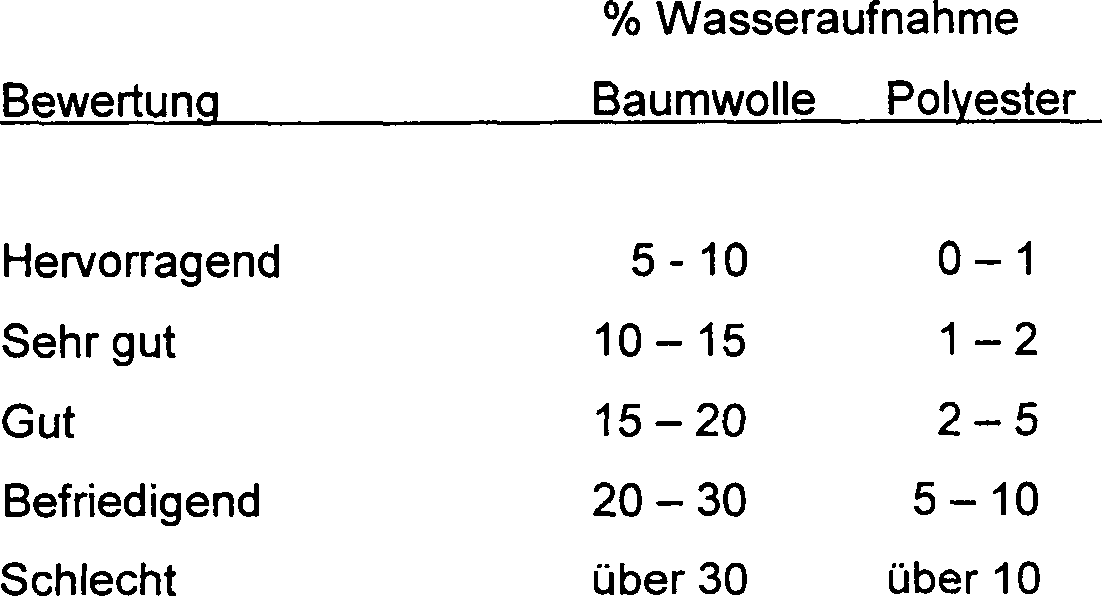
Weiterhin
wird der in Tabellen 3a und 3b als „Abperleffekt" gekennzeichnete
Wasser-Abperleffekt
zur Beurteilung herangezogen. Dieser wird durch visuellen Vergleich
der beregneten Testmuster mit in der DIN-Vorschrift aufgeführten Bildern
nach 5 Noten beurteilt, die wie folgt gekennzeichnet sind:
Die Ölabweisung
wurde gemäß AATCC
Standard Test Method 118 geprüft.
Dabei wird die Fähigkeit des
textilen Substrates beurteilt, der Benetzung durch flüssige Kohlenwasserstoffe
mit unterschiedlichen Oberflächenspannungen
zu widerstehen. Der Test liefert einen groben Index der Fähigkeit
eines Substrates, ölige Verschmutzungen
abzuweisen, wobei in der Bewertungsskala die höheren Benotungen eine bessere
Abweisung solcher Verschmutzungen, insbesondere gegen ölige Flüssigkeiten
bedeuten. Bei dem Test werden Tropfen von standardisierten Testflüssigkeiten,
bestehend aus einer ausgewählten
Serie von Kohlenwasserstoffen mit unterschiedlichen Oberflächenspannungen
nacheinander auf die Oberfläche
des zu testenden Prüfmusters
durch vorsichtiges Auftropfen appliziert und die Benetzung nach
definierter Kontaktzeit visuell beurteilt. Der Ölabweisungswert entspricht
der Testflüssigkeit
mit der höchsten
Nummer, durch welche keine Benetzung der Oberfläche verursacht wird. Die Standard-Testflüssigkeiten
haben folgende Zusammensetzung:
Mit FC-Polymeren des Standes der Technik werden zum gegenwärtigen Zeitpunkt Ölabweisungswerte von 6 erreicht; die Note 5 wird jedoch üblicherweise schon als ausgezeichneter Wert betrachtet.With FC polymers of the prior art are currently known to have oil repellency values of 6 reached; however, grade 5 is usually considered excellent Value considered.
Um die Beständigkeit der appretierten Flächengebilde gegenüber Waschprozessen zu prüfen, wurden die Testmuster gemäß EN ISO 6330:2000 bei 60°C gewaschen und getrocknet und während 1 Minute bei 120°C auf der Bügelpresse gebügelt.Around the durability the finished fabric across from To check washing processes were the test patterns according to EN ISO 6330: 2000 at 60 ° C washed and dried and while 1 minute at 120 ° C on the ironing press ironed.
Herstellung der Komponente (1)Production of the component (1)
Die
Herstellung der gemäß Tabelle
2 verwendeten FC-Polymeremulsion (= Komponente (1)), erfolgt durch
Emulsionspolymerisation entsprechend DE-A-29 39 549, Referenzbeispiel
1. Die dort genannten Verbindungen werden jedoch hinsichtlich Art
und Menge wie nachfolgend beschrieben abgeändert:
Herstellung der Komponente (2)Production of the component (2)
Komponente (A):Component (A):
Allgemeine Herstellungsvorschrift für Komponenten (A) der Formel (I) und/oder (II)General manufacturing instructions for components (A) of the formula (I) and / or (II)
Diese bezieht sich auf die Spalten 1 – 7 und 9 – 11 der Tabelle 1. In einem geeignet dimensionierten Dreihalskolben, ausgestattet mit Destillationskühler, regelbarem Rührer und Innenthermometer werden die in Tabelle 1 angegebenen Komponenten (a1, a2 oder a3) und (b1) in den dort angegebenen Mengen in Gramm unter Schutzgas und Rühren aufgeschmolzen. Anschließend wird das Gemisch auf die in Tabelle 1 angegebene Endtemperatur (T) aufgeheizt und solange weitergerührt bis kein Reaktionswasser mehr abdestilliert und die in Tabelle 1 genannte Säurezahl (SZ) erreicht ist. Bedarfsweise kann bei den Veresterungsreaktionen 0,1 Gewichtsprozent Schwefelsäure als Katalysator zugesetzt werden. Bei den Amidierungsreaktionen ist kein Zusatz von Katalysator notwendig. Das resultierende Kondensationsprodukt wird ausgegossen und nach dem Abkühlen zu Schuppen verarbeitet.These refers to columns 1-7 and 9 - 11 Table 1. In a suitably sized three-necked flask, equipped with distillation cooler, adjustable stirrer and internal thermometers become the components given in Table 1 (a1, a2 or a3) and (b1) in the amounts specified there in grams below Inert gas and stirring melted. Subsequently the mixture is brought to the final temperature (T) indicated in Table 1 heated and stirred as long until no more water of reaction distilled off and in Table 1 called acid number (SZ) is reached. If necessary, in the esterification reactions 0.1 weight percent sulfuric acid be added as a catalyst. In the amidation reactions no addition of catalyst is necessary. The resulting condensation product is poured out and processed after cooling to dandruff.
Besondere Herstellungsvorschrift für Komponenten (A) der Formel (I) und/oder (II) unter Verwendung von Alkylisocyanaten (b2) und Weiterverarbeitung zum Umsetzungsprodukte (S)Special manufacturing instructions for components (A) of the formula (I) and / or (II) using alkyl isocyanates (b2) and further processing into reaction products (S)
Diese bezieht sich auf die Spalte 12 der Tabelle 1. In einem geeignet dimensionierten Dreihalskolben, ausgestattet mit Rückflußkühler, regelbarem Rührer, Innenthermometer und Tropftrichter werden die in Tabelle 1 angegebenen Komponenten (a1) und (b2) in Gramm in Isopropylacetat (LM) vorgelegt. Anschließend werden, bezogen auf die Gesamtmenge der Komponenten, 0,05 Gewichtsprozent 1,4-Diazabicylo(2,2,2)octan als Katalysator zugesetzt und die Mischung solange bei 80°C gerührt, bis im IR-spektrum keine NCO-Bande mehr erkennbar ist. Anschließend wird dem Gemisch zur Herstellung des Umsetzungsproduktes (S) die in Tabelle 1 angegebene Mengen in Gramm von Komponente (IC) zugegeben und solange bei 80°C weitergerührt, bis im IR-spektrum keine NCO-Bande mehr erkennbar ist.These refers to column 12 of Table 1. In one suitable dimensioned three-necked flask equipped with reflux condenser, adjustable stirrer, Internal thermometer and dropping funnel are given in Table 1 Components (a1) and (b2) in grams in isopropyl acetate (LM) presented. Subsequently are based on the total amount of the components, 0.05 percent by weight Added 1,4-diazabicyclo (2,2,2) octane as catalyst and the mixture while at 80 ° C touched, until in the IR spectrum no NCO band is more recognizable. Subsequently, will the mixture for the preparation of the reaction product (S) in Table 1 given amounts in grams of component (IC) and as long as at 80 ° C further stirred, until in the IR spectrum no NCO band is more recognizable.
Umsetzungsprodukte (S) (= Komponente (2)):Reaction products (S) (= Component (2)):
Allgemeine Herstellungsvorschrift für Umsetzungsprodukte (S) aus einer Komponente (A) und nicht blockierten oder teilblockierten Di-, Tri- oder Polyisocyanaten (IC)General manufacturing instructions for reaction products (S) from a component (A) and unblocked or partially blocked Di-, tri- or polyisocyanates (IC)
Diese bezieht sich auf die Spalte 1 – 12 der Tabelle 1. In einem geeignet dimensionierten Dreihalskolben, ausgestattet mit Rückflußkühler, regelbarem Rührer, Innenthermometer und Tropftrichter werden die in Tabelle 1 angegebenen Komponenten (A) und die Komponenten (IC) in den dort angegebenen Mengen in Gramm in Isopropylacetat (LM) vorgelegt. Anschließend werden, bezogen auf die Gesamtmenge der Komponenten, 0,05 Gewichtsprozent 1,4-Diazabicylo(2,2,2)octan als Katalysator zugesetzt und die Mischung solange bei 65°C gerührt, bis im IR-spektrum keine NCO-Bande mehr erkennbar ist.These refers to column 1 - 12 Table 1. In a suitably sized three-necked flask, equipped with reflux condenser, adjustable stirrer, Internal thermometer and dropping funnel are given in Table 1 Components (A) and the components (IC) in the specified there Quantities in grams in isopropyl acetate (LM) submitted. Subsequently, based on the total amount of components, 0.05 percent by weight Added 1,4-diazabicyclo (2,2,2) octane as catalyst and the mixture while at 65 ° C touched, until in the IR spectrum no NCO band is more recognizable.
Besondere Herstellungsvorschrift für die in den Emulsionen (E) 1 und 2 eingesetzten Umsetzungsprodukte (S)Special manufacturing instructions for the Reaction products used in emulsions (E) 1 and 2 (S)
Diese bezieht sich auf die Spalten 1 und 2 der Tabelle 1. Zur Herstellung der Emulsionen (E) werden Umsetzungsprodukte (S) verwendet, bei deren Herstellung (Reaktion der Komponente (A) mit dem Isocyanat (IC)) noch die in der Tabelle 1 angegebenen Menge in Gramm Dimethylaminoethanol zugesetzt werden. Durch die Einführung tertiärer Aminogruppen werden in besonders vorteilhafter Weise die Kationogenität und damit das Aufziehverhalten auf textile Substrate sowie die selbstemulgierenden Eigenschaften der Komponente (2) in der wässrigen Emulsion (E) unter sauren Bedingungen verbessert.These refers to columns 1 and 2 of Table 1. For preparation The emulsions (E) are reaction products (S) used in their preparation (reaction of component (A) with the isocyanate (IC)) nor the amount indicated in Table 1 in grams of dimethylaminoethanol be added. By the introduction tertiary Amino groups are in a particularly advantageous manner, the cationogenicity and thus the Aufziehverhalten on textile substrates and the self-emulsifying Properties of component (2) in the aqueous emulsion (E) below acidic conditions improved.
Allgemeine Herstellungsvorschrift für Emulsionen (E) aus Komponente (2) bzw. den Umsetzungsprodukten (S)General manufacturing instructions for emulsions (E) from component (2) or the reaction products (S)
Organische Phase: In einem geeignet dimensionierten Becherglas werden die in Tabelle 1 angegebenen Mengen in Gramm von Umsetzungsprodukt (S), vorliegend im vorstehend genannten Isopropylacetat vorgelegt und unter Rühren auf 65 – 70°C aufgeheizt, bis eine klare, homogene Lösung vorliegt. Das zu verwendende Umsetzungsprodukt (S) muss gegebenenfalls vor der Anwendung bei 65 – 70°C aufgeschmolzen werden, um ein homogenes Edukt zu erhalten.organic Phase: In a suitably sized beaker, the in Table 1 in grams of reaction product (S), in the present case presented in the aforementioned isopropyl acetate and with stirring heated to 65 - 70 ° C, until a clear, homogeneous solution is present. If necessary, the reaction product (S) to be used must melted before use at 65 - 70 ° C. to obtain a homogeneous starting material.
Wässrige Phase: In einem geeignet dimensionierten Becherglas werden die in Tabelle 1 angegebenen Mengen in Gramm an Emulgatoren (Em) (= Komponente (4)) in der angegebenen Menge Wasser bei 65°C gelöst. Unter einem Schnellrührer werden beide Phasen zu einer grobteiligen Voremulsion verrührt und anschließend bei 65°C auf der Hochdruckhomogenisiermaschine bei 300 – 500 bar homogenisiert, bis eine durchschnittliche Teilchengröße zwischen 0,1 und 10 Mikrometer erreicht ist. Anschließend wird das Lösemittel (LM) auf dem Rotationsverdampfer im Vakuum durch azeotrope Destillation entfernt. Gegebenenfalls wird der pH-Wert der erhaltenen Emulsion mit Essigsäure 60 %ig auf 5 – 7 eingestellt, die erhaltene weiße Emulsion über ein Filter mit 20 Mikrometer filtriert und mit Wasser auf einen Feststoffgehalt von 20 Gewichtsprozent eingestellt.Aqueous phase: In a suitably sized beaker, the in Table 1 amounts in grams of emulsifiers (Em) (= component (4)) in the specified amount of water at 65 ° C. Be under a speed stirrer stirred both phases into a coarse pre-emulsion and subsequently at 65 ° C Homogenised on a high pressure homogenizer at 300 - 500 bar until an average particle size between 0.1 and 10 microns is reached. Subsequently is the solvent (LM) on the rotary evaporator in vacuo by azeotropic distillation away. Optionally, the pH of the resulting emulsion with acetic acid 60% on 5 - 7 set, the obtained white Emulsion over filter a filter of 20 microns and add water to one Solid content of 20 weight percent set.
Herstellung der Komponente (3)Production of the component (3)
Die Herstellung der gemäß Tabelle 2 gegebenenfalls verwendeten Boosteremulsionen (= Komponente (3)) erfolgt durch Blockierung der NCO-Gruppen eines aromatischen Diisocyanates in Isopropylacetat, anschließende Emulgierung und Hochdruckhomogenisierung und Abdestillation der Lösemittelanteile.The Production of according to table 2 optionally used booster emulsions (= component (3)) is carried out by blocking the NCO groups of an aromatic diisocyanate in isopropyl acetate, subsequent Emulsification and high pressure homogenization and distilling off the Solvent fractions.
Organische Phase: In einem geeignet dimensionierten Dreihalskolben, ausgestattet mit Rückflußkühler, regelbarem Rührer, Innenthermometer und Tropftrichter werden 125 Gramm (0,5 mol) Methylendiphenyldiisocyanat in 450 Gramm Isopropylacetat vorgelegt und unter Schutzgas mit 87,1 Gramm (1 mol) 2-Butanonoxim versetzt, wobei die Innentemperatur 70°C nicht übersteigen darf. Die Mischung wird 2 Stunden bei 65°C gerührt, bis im IR-spektrum keine NCO-Bande mehr erkennbar ist.organic Phase: Equipped in a suitably sized three-necked flask with reflux condenser, adjustable stirrer, Internal thermometer and dropping funnel are 125 grams (0.5 mol) of methylene diphenyl diisocyanate submitted in 450 grams of isopropyl acetate and under inert gas with 87.1 Grams (1 mol) of 2-butanone oxime, the internal temperature Do not exceed 70 ° C may. The mixture is stirred for 2 hours at 65 ° C until the IR spectrum no NCO band is more recognizable.
Wässrige Phase: In einem geeignet dimensionierten Becherglas werden 30 Gramm Alkyl-N,N-polyoxyethylenammoniumchlorid (Ethoquad HT 25 (AKZO)) (= Komponente (4)) in 800 Gramm Wasser bei 65°C gelöst. Unter einem Schnellrührer werden beide Phasen zu einer grobteiligen Voremulsion verrührt und anschließend bei 65°C auf der Hochdruckhomogenisiermaschine bei 500 bar homogenisiert, bis eine durchschnittliche Teilchengröße unter 10 Mikrometer erreicht ist. Anschließend wird das Lösemittel (LM) auf dem Rotationsverdampfer im Vakuum durch azeotrope Destillation entfernt. Gegebenenfalls wird der pH-Wert der erhaltenen Emulsion mit Essigsäure 60 %ig auf 5 – 7 eingestellt, die erhaltene weiße Emulsion über ein Filter mit 20 Mikrometer filtriert und mit Wasser auf einen Feststoffgehalt von 20 Gewichtsprozent eingestellt.Aqueous phase: In a suitably sized beaker, 30 grams of alkyl N, N-polyoxyethylene ammonium chloride (Ethoquad HT 25 (AKZO)) (= component (4)) in 800 grams of water 65 ° C solved. Under a fast stirrer Both phases are stirred to a coarse pre-emulsion and subsequently at 65 ° C homogenized at 500 bar on the high-pressure homogenizing machine, until an average particle size below 10 microns is reached is. Subsequently becomes the solvent (LM) on a rotary evaporator in vacuo by azeotropic distillation away. Optionally, the pH of the resulting emulsion with acetic acid 60% on 5 - 7 set, the obtained white Emulsion over filter a filter of 20 microns and add water to one Solid content of 20 weight percent set.
Herstellung der erfindungsgemäßen Zubereitungen (Zu)Preparation of the preparations according to the invention (To)
Die in der Tabelle 2 aufgeführten Zubereitungen (Zu) werden aus den Komponenten (1), (2), gegebenenfalls (3) und gegebenenfalls Wasser in den angegebenen Gewichtsverhältnissen durch einfaches Zusammenrühren bei Raumtemperatur hergestellt.The listed in Table 2 Preparations (To) are prepared from components (1), (2), if appropriate (3) and optionally water in the indicated weight ratios by simply stirring together produced at room temperature.
AppreturbeispieleAppreturbeispiele
Anwendung von Zubereitungen (Zu) auf wässriger Basis auf textilen Flächengebilden:Use of preparations (Too) on watery Basis on textile fabrics:
Ausrüstungskonditionen und Prüfergebnisse sind in den Tabellen 3a und 3b aufgeführt.equipment conditions and test results are listed in Tables 3a and 3b.
Anwendung von Zubereitungen (Zu) auf Lösemittelbasis auf textilen Flächengebilden (in den Tabellen 3a und 3b nicht aufgeführt):Use of preparations (Too) solvent based on textile fabrics (not listed in Tables 3a and 3b):
Die
Herstellung der Komponente (1) für
die Anwendung aus Lösemittel
erfolgt durch Lösungspolymerisation:
Für die Applikation
werden 3 Gramm des so erhaltenen Copolymeres (= Komponente (1))
mit 9 Gramm des in Tabelle 1 in der Spalte mit der Nummer 4 aufgeführten Umsetzungsproduktes
(S) (= Komponente (2)) in Isopropylacetat gelöst. Mittels eines Pumpzerstäubers wird
die Lösung
aus einer Distanz von etwa 30 cm auf die in Tabelle 3a und 3b beschriebenen
Baumwoll- und Polyestersubstrate aufgesprüht, bis die Oberflächen einheitlich
benetzt sind. Anschließend
wird während
24 Stunden bei Raumtemperatur getrocknet. Die behandelten Testgewebe
aus Baumwoll-Popeline zeigen eine Wasserabweisung gemäß AATCC
Standard Test Method 22 von 90 sowie eine Ölabweisung gemäß AATCC
Standard Test Method 118 von 4, die Testgewebe aus Polyester eine
Wasserabweisung von 100 sowie eine Ölabweisung von 5. 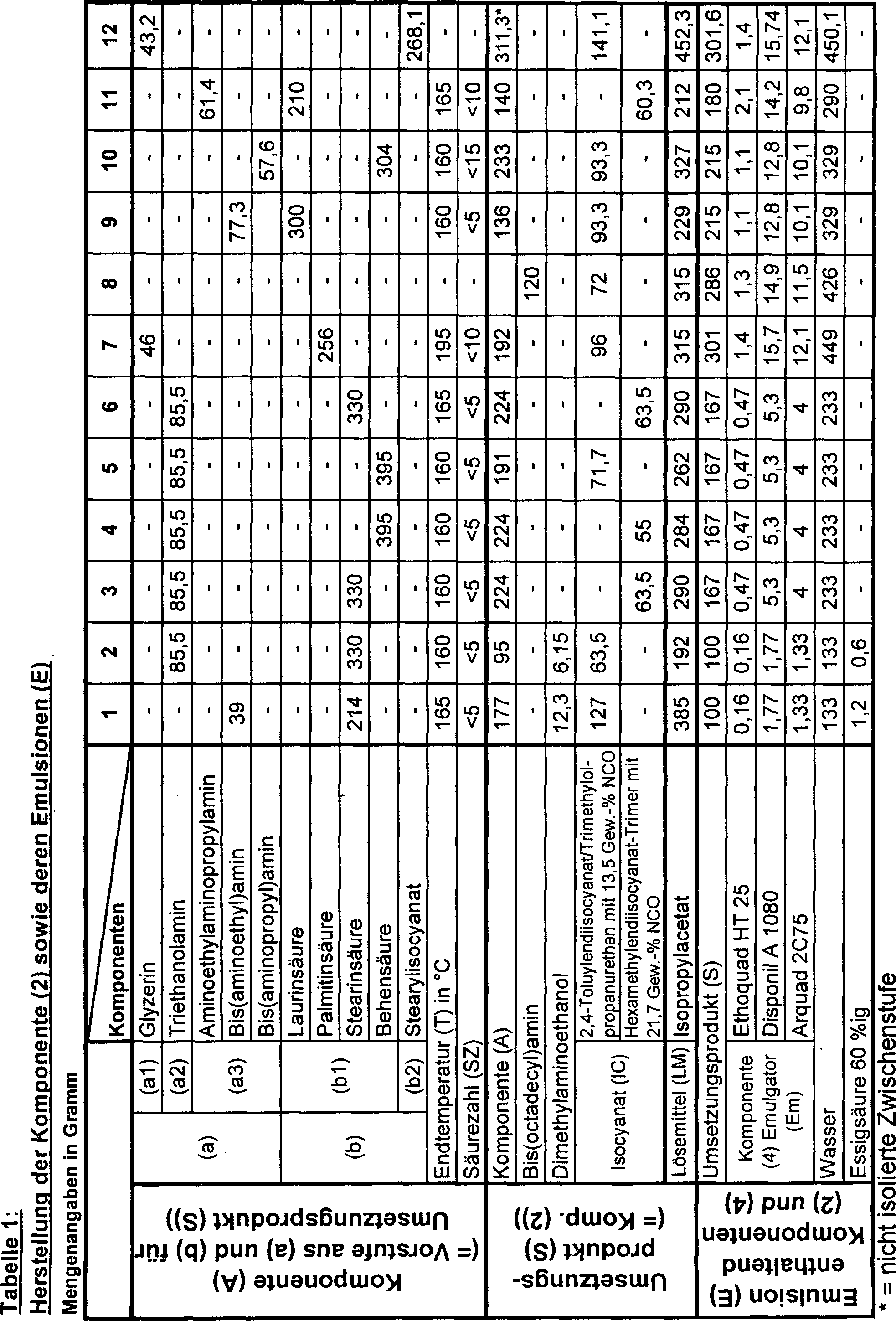
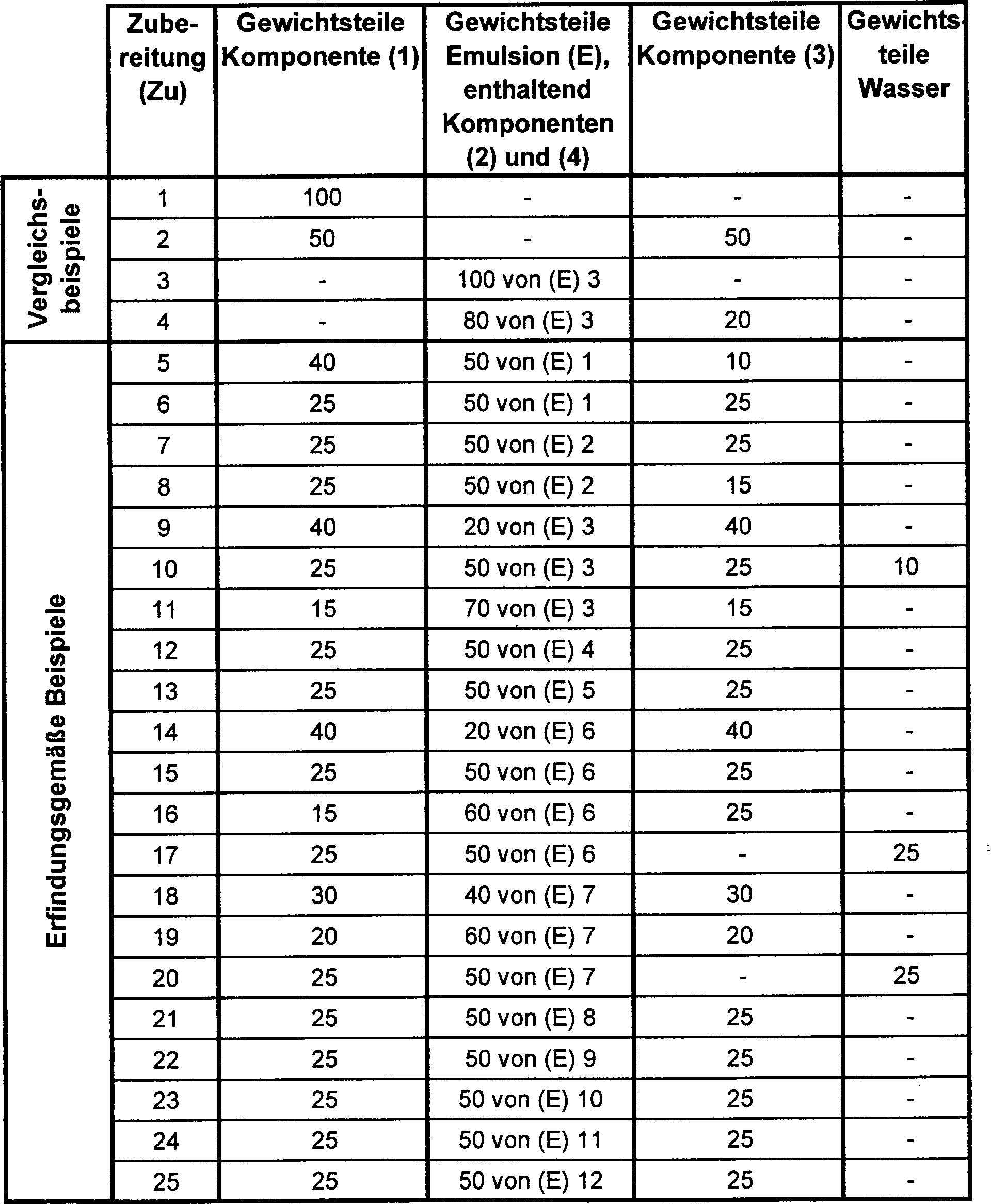
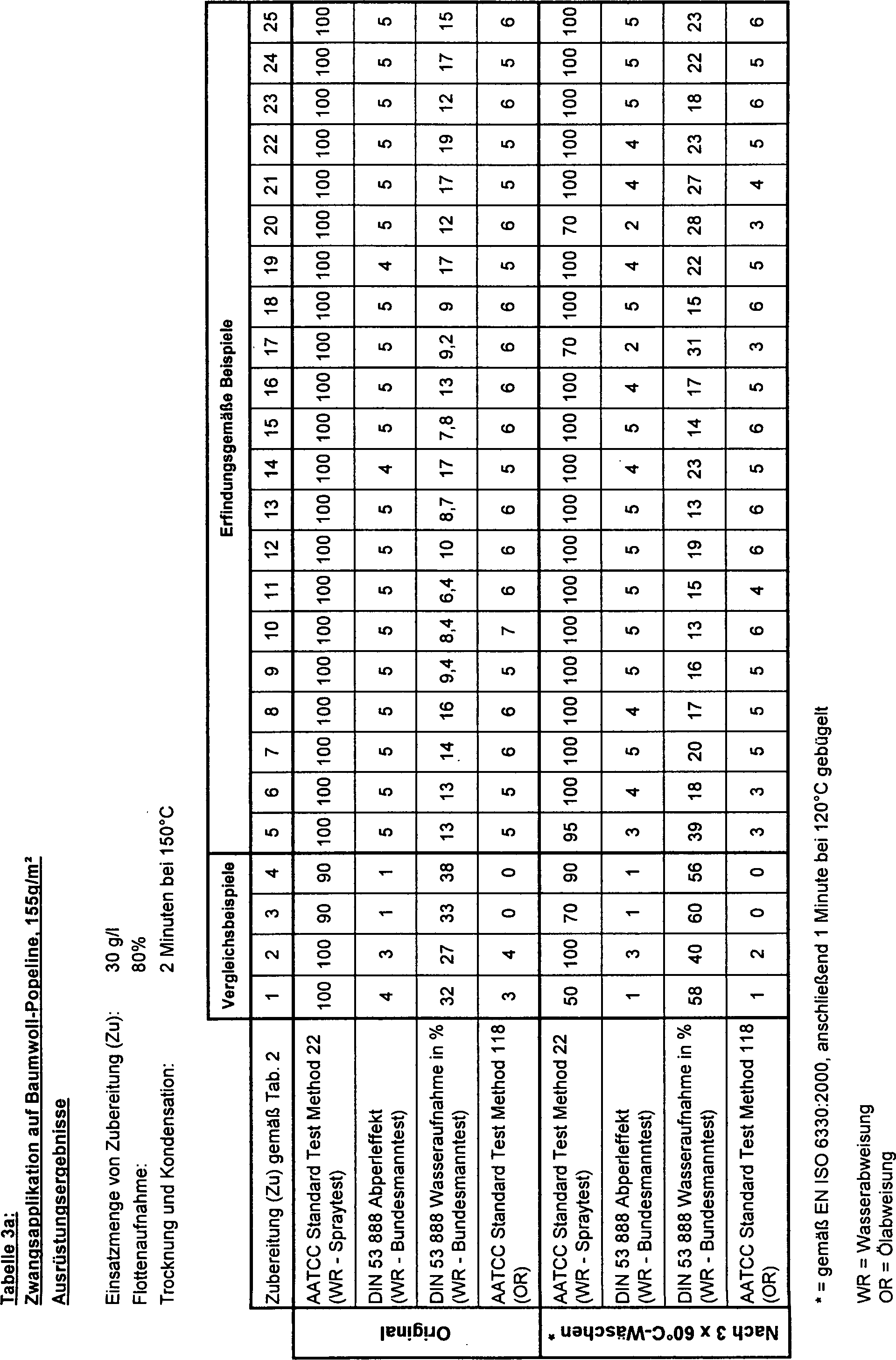

Claims (6)
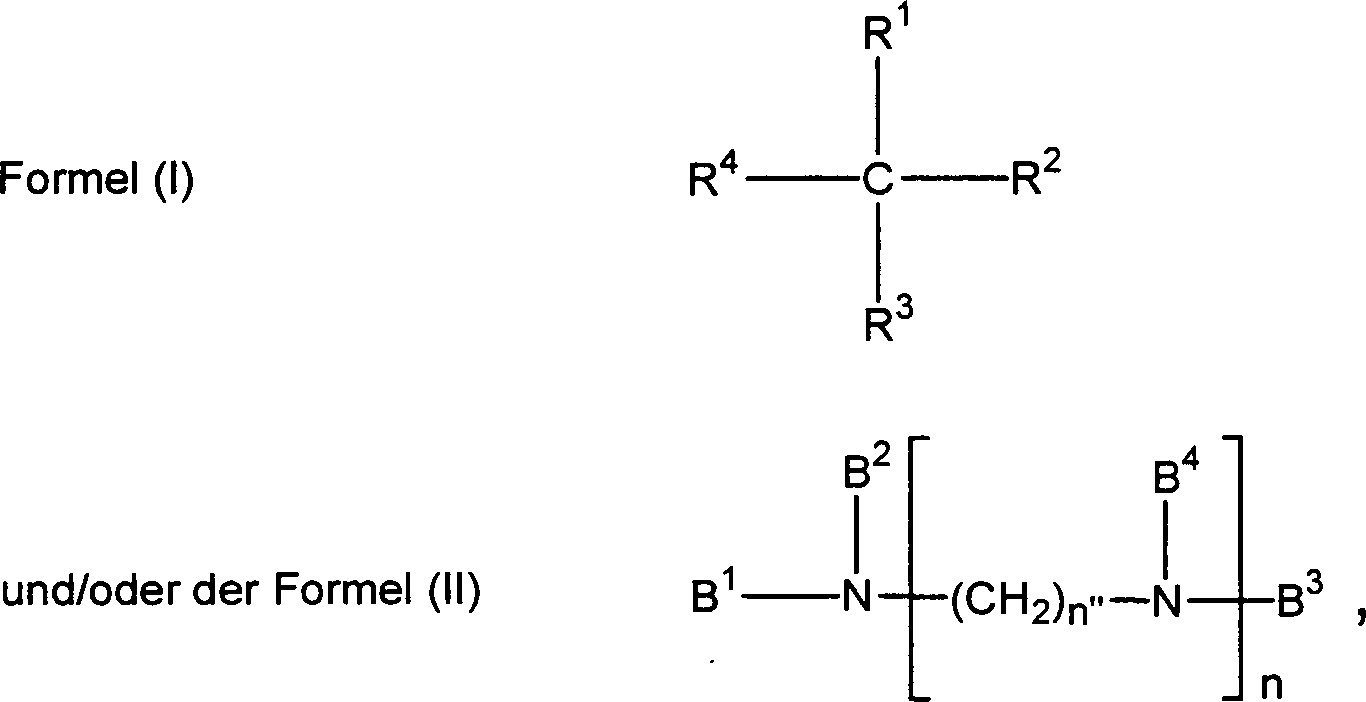


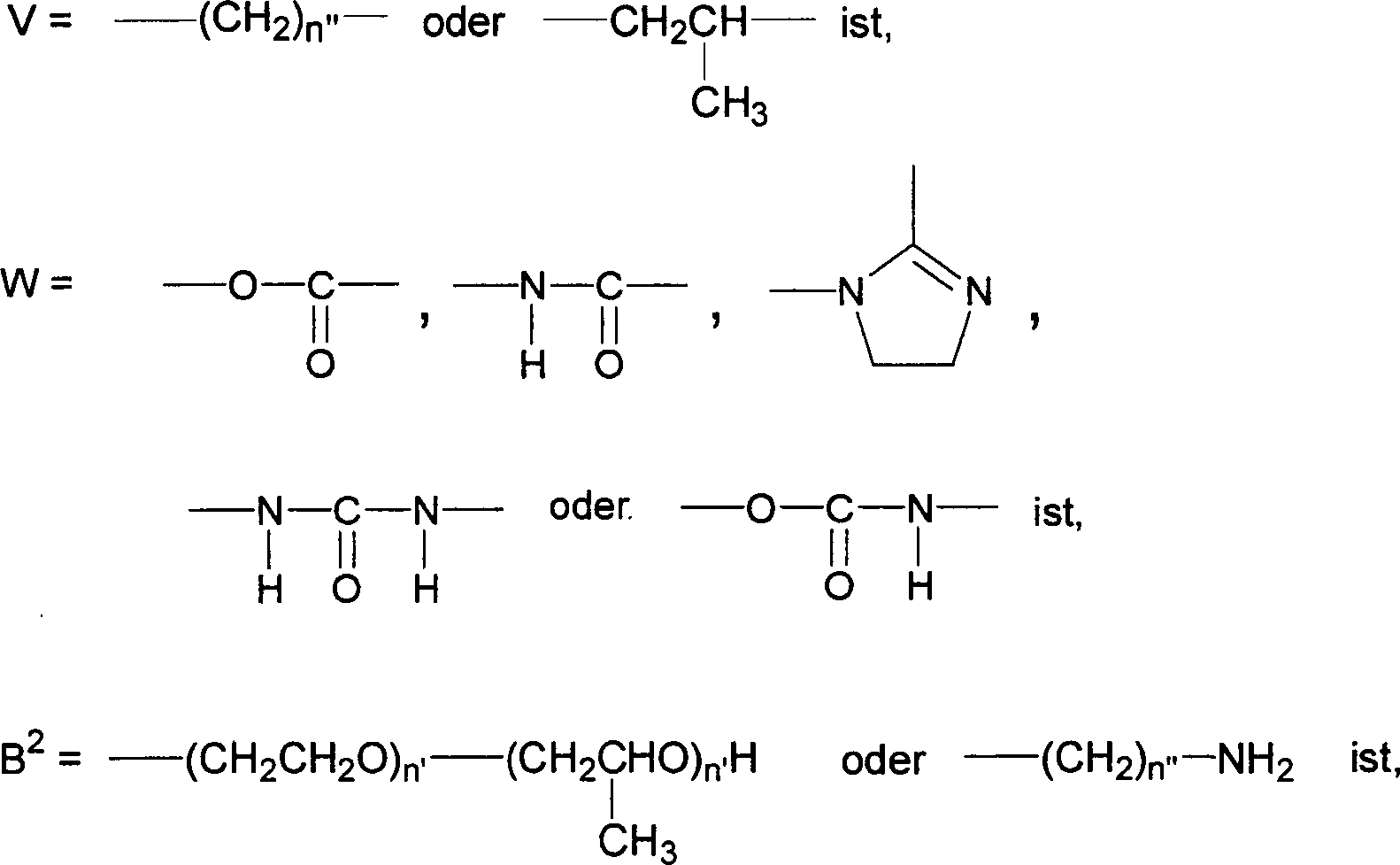


Priority Applications (8)
| Application Number | Priority Date | Filing Date | Title |
|---|---|---|---|
| DE10325094A DE10325094B4 (en) | 2003-06-03 | 2003-06-03 | Preparations for the oil and water repellent finishing of fabrics and their use |
| EP04735216A EP1629149B1 (en) | 2003-06-03 | 2004-05-28 | Preparations for making planar structures oil-repellent and water-repellent, and use thereof |
| HK06102767.1A HK1080522B (en) | 2003-06-03 | 2004-05-28 | Preparations for making planar structures oil-repellent and water-repellent, and use thereof |
| PCT/EP2004/005783 WO2004106623A1 (en) | 2003-06-03 | 2004-05-28 | Preparations for making planar structures oil-repellent and water-repellent, and use thereof |
| DE502004010112T DE502004010112D1 (en) | 2003-06-03 | 2004-05-28 | PREPARATIONS FOR THE OIL AND WATER REPELLENT EQUIPMENT OF SURFACES AND THEIR APPLICATION |
| US10/559,463 US8231802B2 (en) | 2003-06-03 | 2004-05-28 | Preparations for making planar structures oil-repellent and water-repellent, and use thereof |
| DK04735216.6T DK1629149T3 (en) | 2003-06-03 | 2004-05-28 | Preparations which make oil and water repellent surface structures as well as their use |
| AT04735216T ATE443789T1 (en) | 2003-06-03 | 2004-05-28 | PREPARATIONS FOR THE OIL AND WATER REPELLENT FINISHING OF SURFACE STRUCTURES AND THEIR APPLICATION |
Applications Claiming Priority (1)
| Application Number | Priority Date | Filing Date | Title |
|---|---|---|---|
| DE10325094A DE10325094B4 (en) | 2003-06-03 | 2003-06-03 | Preparations for the oil and water repellent finishing of fabrics and their use |
Publications (2)
| Publication Number | Publication Date |
|---|---|
| DE10325094A1 DE10325094A1 (en) | 2004-12-30 |
| DE10325094B4 true DE10325094B4 (en) | 2006-02-16 |
Family
ID=33482447
Family Applications (2)
| Application Number | Title | Priority Date | Filing Date |
|---|---|---|---|
| DE10325094A Expired - Fee Related DE10325094B4 (en) | 2003-06-03 | 2003-06-03 | Preparations for the oil and water repellent finishing of fabrics and their use |
| DE502004010112T Expired - Lifetime DE502004010112D1 (en) | 2003-06-03 | 2004-05-28 | PREPARATIONS FOR THE OIL AND WATER REPELLENT EQUIPMENT OF SURFACES AND THEIR APPLICATION |
Family Applications After (1)
| Application Number | Title | Priority Date | Filing Date |
|---|---|---|---|
| DE502004010112T Expired - Lifetime DE502004010112D1 (en) | 2003-06-03 | 2004-05-28 | PREPARATIONS FOR THE OIL AND WATER REPELLENT EQUIPMENT OF SURFACES AND THEIR APPLICATION |
Country Status (6)
| Country | Link |
|---|---|
| US (1) | US8231802B2 (en) |
| EP (1) | EP1629149B1 (en) |
| AT (1) | ATE443789T1 (en) |
| DE (2) | DE10325094B4 (en) |
| DK (1) | DK1629149T3 (en) |
| WO (1) | WO2004106623A1 (en) |
Families Citing this family (29)
| Publication number | Priority date | Publication date | Assignee | Title |
|---|---|---|---|---|
| US7396395B1 (en) * | 2007-05-08 | 2008-07-08 | Everest Textile Co., Ltd. | Composition of a water-repellent agent |
| US8286561B2 (en) | 2008-06-27 | 2012-10-16 | Ssw Holding Company, Inc. | Spill containing refrigerator shelf assembly |
| US11786036B2 (en) | 2008-06-27 | 2023-10-17 | Ssw Advanced Technologies, Llc | Spill containing refrigerator shelf assembly |
| CA2739920C (en) | 2008-10-07 | 2017-12-12 | Ross Technology Corporation | Spill-resistant surfaces having hydrophobic and oleophobic borders |
| MX394785B (en) | 2009-11-04 | 2025-03-24 | Ssw Advanced Tech Llc | COOKING EQUIPMENT SURFACES HAVING A STRUCTURE FOR SPILL CONTAINMENT AND METHODS OF MANUFACTURING THEM. |
| CA2796305A1 (en) | 2010-03-15 | 2011-09-22 | Ross Technology Corporation | Plunger and methods of producing hydrophobic surfaces |
| WO2012115986A1 (en) | 2011-02-21 | 2012-08-30 | Ross Technology Corporation | Superhydrophobic and oleophobic coatings with low voc binder systems |
| DE102011085428A1 (en) | 2011-10-28 | 2013-05-02 | Schott Ag | shelf |
| CN102504193A (en) * | 2011-11-01 | 2012-06-20 | 吴江市北厍盛源纺织品助剂厂 | Preparation method for fluorine-containing enclosed polyurethane crosslinking agent |
| CN102504121A (en) * | 2011-11-01 | 2012-06-20 | 吴江市北厍盛源纺织品助剂厂 | Preparation method of fluorine-containing water-based polyurethane film-formation crosslinking agent |
| WO2013090939A1 (en) | 2011-12-15 | 2013-06-20 | Ross Technology Corporation | Composition and coating for superhydrophobic performance |
| MX2015000119A (en) | 2012-06-25 | 2015-04-14 | Ross Technology Corp | ELASTOMERIC COATINGS WITH HYDROPHOBIC AND / OR OLEOPHOBIC PROPERTIES. |
| US9260605B2 (en) * | 2013-03-29 | 2016-02-16 | The Chemours Company Fc, Llc | Urethane based extenders for surface effect compositions |
| US10138392B2 (en) | 2013-03-29 | 2018-11-27 | The Chemours Company Fc, Llc | Non-fluorinated urethane based coatings |
| CN104418970B (en) * | 2013-09-10 | 2016-12-07 | 广东德美精细化工股份有限公司 | A kind of fluorinated acrylate emulsion of environment-friendly type water and oil repellant and preparation method and application |
| DE102013224140A1 (en) | 2013-11-26 | 2015-05-28 | Rudolf Gmbh | Finishing agents with blocked polyisocyanates |
| CN103726322B (en) * | 2013-11-29 | 2015-11-04 | 山东新力环保材料有限公司 | Flue filtering material Final finishing intumescent coating glue, preparation method and using method |
| US9845410B2 (en) | 2014-06-12 | 2017-12-19 | The Chemours Company Fc, Llc | Wax and urethane based extender blends for surface effect compositions |
| TWI686439B (en) | 2014-07-04 | 2020-03-01 | 瑞士商亞克羅瑪智財公司 | Fluorine-free water-repellent composition |
| CN107001578A (en) | 2014-09-26 | 2017-08-01 | 科慕埃弗西有限公司 | Coating based on partially fluorinated carbamate |
| CN107001553B (en) | 2014-09-26 | 2020-10-27 | 科慕埃弗西有限公司 | Sulfonated fluorinated, non-fluorinated or partially fluorinated carbamates |
| WO2016048684A1 (en) | 2014-09-26 | 2016-03-31 | The Chemours Company Fc, Llc | Method of imparting water repellency with non-fluorinated laundry treatment compositions |
| JP2017536439A (en) | 2014-09-26 | 2017-12-07 | ザ ケマーズ カンパニー エフシー リミテッド ライアビリティ カンパニー | Non-fluorinated and partially fluorinated polymers |
| JP6606179B2 (en) | 2014-09-26 | 2019-11-13 | ザ ケマーズ カンパニー エフシー リミテッド ライアビリティ カンパニー | Use of non-fluorinated or partially fluorinated urethanes in coatings |
| US10246608B2 (en) | 2014-09-26 | 2019-04-02 | The Chemours Company Fc, Llc | Non-fluorinated urethane based coatings |
| CN106700083B (en) * | 2016-11-25 | 2019-09-27 | 苏州联胜化学有限公司 | A kind of polyquaternary amine base glucose polydimethylsiloxane polyether and preparation method thereof and hand feel finishing agent |
| CN113527612A (en) * | 2020-04-13 | 2021-10-22 | 大金工业株式会社 | Polyurethane compounds |
| CN115710820B (en) * | 2022-11-15 | 2024-04-02 | 苏州联胜化学有限公司 | Water-repellent and oil-repellent finishing agent and preparation method thereof |
| WO2025172516A1 (en) * | 2024-02-16 | 2025-08-21 | Rudolf Gmbh | Compositions for treating surfaces |
Citations (2)
| Publication number | Priority date | Publication date | Assignee | Title |
|---|---|---|---|---|
| EP0429983A2 (en) * | 1989-11-29 | 1991-06-05 | Bayer Ag | Water and oil repellant composition |
| WO1999014422A1 (en) * | 1997-09-18 | 1999-03-25 | Minnesota Mining And Manufacturing Company | Fluorochemical composition comprising a blocked isocyanate extender and method of treatment of a fibrous substrate therewith |
Family Cites Families (23)
| Publication number | Priority date | Publication date | Assignee | Title |
|---|---|---|---|---|
| NL107002C (en) | 1952-06-04 | 1900-01-01 | ||
| US3486911A (en) * | 1967-08-21 | 1969-12-30 | Sun Chemical Corp | Textile treating compositions and textiles treated therewith |
| US3544537A (en) * | 1968-05-31 | 1970-12-01 | Du Pont | Poly(perfluoroalkoxy)polyfluoroalkyl acrylate-type esters and their polymers |
| JPS5235033B2 (en) * | 1972-11-24 | 1977-09-07 | ||
| JPS608068B2 (en) * | 1978-09-28 | 1985-02-28 | ダイキン工業株式会社 | Water and oil repellent |
| JPS599271A (en) | 1982-07-05 | 1984-01-18 | 旭化成株式会社 | Water- and oil-repellent fiber and its manufacturing method |
| GB8405320D0 (en) | 1984-02-29 | 1984-04-04 | Baxenden Chem | Blocked isocyanates |
| DE3737753A1 (en) * | 1987-11-06 | 1989-06-15 | Pfersee Chem Fab | AQUEOUS EQUIPMENT AND METHOD FOR SOFT HYDROPHOB / OLEOPHOB TREATMENT OF FIBER MATERIALS |
| DE3831452A1 (en) | 1988-01-29 | 1990-03-22 | Pfersee Chem Fab | USE OF MODIFIED POLYURETHANES CONTAINING PERFLUORALIPHATIC GROUPS WITH TEXTILE TOOLS FOR THE OIL- AND WATER-REPELLENT FINISHING OF TEXTILE MATERIALS |
| DE4039193A1 (en) * | 1990-12-08 | 1992-06-11 | Bayer Ag | WET-DISPERSIBLE, ELECTROLYTE-TABLE POLYETHERESTER-MODIFIED POLYURETHANIONOMERS |
| DE4134284A1 (en) | 1991-10-17 | 1993-04-22 | Bayer Ag | BLOCKED POLYISOCYANATES DISPERSABLE IN WATER, METHOD FOR THE PRODUCTION THEREOF AND THEIR USE |
| DE4441418A1 (en) | 1994-11-22 | 1996-05-23 | Bayer Ag | Process for the preparation of 3,5-dimethylpyrazole-blocked polyisocyanates |
| US6048925A (en) * | 1996-06-28 | 2000-04-11 | Xerox Corporation | Urethane isocyanate-derived resins for use in a phase change ink formulation |
| US6495624B1 (en) * | 1997-02-03 | 2002-12-17 | Cytonix Corporation | Hydrophobic coating compositions, articles coated with said compositions, and processes for manufacturing same |
| DE19715416A1 (en) * | 1997-04-14 | 1998-10-15 | Ciba Sc Pfersee Gmbh | Reaction products of isocyanates with hydroxy compounds for textile finishing |
| BR9812678A (en) * | 1997-09-29 | 2000-11-21 | Dow Chemical Co | Adduct containing polyfunctional liquid polyurethane, its use, product obtained and process for its preparation |
| DE19852621A1 (en) | 1998-11-14 | 2000-05-18 | Hansa Textilchemie Gmbh | Permanent means of finishing fibers or fiber products |
| EP1088867A1 (en) * | 1999-09-30 | 2001-04-04 | Ciba Spezialitätenchemie Pfersee GmbH | Compositions for the oil-and water repulsive finishing of textile materials |
| DE10017651A1 (en) | 2000-04-08 | 2001-10-18 | Basf Coatings Ag | Di- and polyisocyanates blocked with pyrazoles disubstituted in the 3,4-position and their use |
| DE10022246A1 (en) * | 2000-05-08 | 2001-11-15 | Basf Ag | Coating agent for the production of difficult to wet surfaces |
| US6803109B2 (en) * | 2001-03-09 | 2004-10-12 | 3M Innovative Properties Company | Water-and oil-repellency imparting urethane oligomers comprising perfluoroalkyl moieties |
| US7056846B2 (en) * | 2001-12-04 | 2006-06-06 | 3M Innovative Properties Company | Repellent fluorochemical compositions |
| DE10211549B9 (en) * | 2002-03-15 | 2004-11-25 | Rudolf Gmbh & Co. Kg Chemische Fabrik | Preparations based on water and / or organic solvents and their use as a finish on fabrics |
-
2003
- 2003-06-03 DE DE10325094A patent/DE10325094B4/en not_active Expired - Fee Related
-
2004
- 2004-05-28 DE DE502004010112T patent/DE502004010112D1/en not_active Expired - Lifetime
- 2004-05-28 WO PCT/EP2004/005783 patent/WO2004106623A1/en not_active Ceased
- 2004-05-28 US US10/559,463 patent/US8231802B2/en not_active Expired - Fee Related
- 2004-05-28 EP EP04735216A patent/EP1629149B1/en not_active Expired - Lifetime
- 2004-05-28 AT AT04735216T patent/ATE443789T1/en active
- 2004-05-28 DK DK04735216.6T patent/DK1629149T3/en active
Patent Citations (2)
| Publication number | Priority date | Publication date | Assignee | Title |
|---|---|---|---|---|
| EP0429983A2 (en) * | 1989-11-29 | 1991-06-05 | Bayer Ag | Water and oil repellant composition |
| WO1999014422A1 (en) * | 1997-09-18 | 1999-03-25 | Minnesota Mining And Manufacturing Company | Fluorochemical composition comprising a blocked isocyanate extender and method of treatment of a fibrous substrate therewith |
Also Published As
| Publication number | Publication date |
|---|---|
| EP1629149A1 (en) | 2006-03-01 |
| DE10325094A1 (en) | 2004-12-30 |
| WO2004106623A1 (en) | 2004-12-09 |
| US8231802B2 (en) | 2012-07-31 |
| DK1629149T3 (en) | 2010-02-01 |
| DE502004010112D1 (en) | 2009-11-05 |
| HK1080522A1 (en) | 2006-04-28 |
| US20060151739A1 (en) | 2006-07-13 |
| EP1629149B1 (en) | 2009-09-23 |
| ATE443789T1 (en) | 2009-10-15 |
Similar Documents
| Publication | Publication Date | Title |
|---|---|---|
| DE10325094B4 (en) | Preparations for the oil and water repellent finishing of fabrics and their use | |
| DE10211549B9 (en) | Preparations based on water and / or organic solvents and their use as a finish on fabrics | |
| DE102007020790B4 (en) | Fluorocarbon polymer-free preparations based on water and / or organic solvents and their use as a finish on fabrics and textile substrates obtained therefrom | |
| EP0196309B1 (en) | Method for obtaining wash- and cleaning-resistant textile finishes using reactive perfluoroalkyl rest-containing (co)polymers and/or precondensates | |
| EP0872503B1 (en) | Reaction products of isocyanates with hydroxy compounds for textile finishing | |
| DE60005395T2 (en) | HIGH RESISTANT OIL / WATER REPELLENT COMPOSITIONS FOR TEXTILES | |
| EP3074437B1 (en) | Finishing agent with blocked polyisocyanates | |
| EP3481887B1 (en) | Preparation as water repelling agents | |
| EP0429983B1 (en) | Water and oil repellant composition | |
| DE3002369A1 (en) | METHOD FOR DIRT AND STAIN-RESISTANT EQUIPMENT OF TEXTILE FLOORING OR TEXTILE STARTING MATERIAL AND LIQUID MEANS FOR IMPLEMENTING THE METHOD | |
| DE2434230A1 (en) | ADDUCT FOR THE TREATMENT OF TEXTILES | |
| EP0560161B1 (en) | Composition and process for the treatment of textiles | |
| EP3580254A1 (en) | Polymers for hydrophobic and oelophobic textile finishing | |
| EP1013687B1 (en) | Aqueous dispersions for textile finishing | |
| EP4298154B9 (en) | Hydrophobing agent with permanent effect | |
| EP0467083A2 (en) | Perfluoroaliphatic group-containing copolymers with urethane and siloxane units | |
| DE102015208116B3 (en) | Hydrophobie-lending compound and fluorocarbon polymer-free preparations based on water and / or organic solvents, their use as a finish on fabrics and substrates obtained thereafter |
Legal Events
| Date | Code | Title | Description |
|---|---|---|---|
| OP8 | Request for examination as to paragraph 44 patent law | ||
| 8364 | No opposition during term of opposition | ||
| R119 | Application deemed withdrawn, or ip right lapsed, due to non-payment of renewal fee |
Effective date: 20120103 |