DE102023111897A1 - splint made of different elastic materials - Google Patents
splint made of different elastic materials Download PDFInfo
- Publication number
- DE102023111897A1 DE102023111897A1 DE102023111897.8A DE102023111897A DE102023111897A1 DE 102023111897 A1 DE102023111897 A1 DE 102023111897A1 DE 102023111897 A DE102023111897 A DE 102023111897A DE 102023111897 A1 DE102023111897 A1 DE 102023111897A1
- Authority
- DE
- Germany
- Prior art keywords
- meth
- acrylate
- acrylat
- splint
- bis
- Prior art date
- Legal status (The legal status is an assumption and is not a legal conclusion. Google has not performed a legal analysis and makes no representation as to the accuracy of the status listed.)
- Pending
Links
- 239000013013 elastic material Substances 0.000 title 1
- 229920001187 thermosetting polymer Polymers 0.000 claims abstract description 54
- 238000004519 manufacturing process Methods 0.000 claims abstract description 12
- NIXOWILDQLNWCW-UHFFFAOYSA-M Acrylate Chemical compound [O-]C(=O)C=C NIXOWILDQLNWCW-UHFFFAOYSA-M 0.000 claims description 249
- 239000000203 mixture Substances 0.000 claims description 99
- ATUOYWHBWRKTHZ-UHFFFAOYSA-N Propane Chemical compound CCC ATUOYWHBWRKTHZ-UHFFFAOYSA-N 0.000 claims description 89
- -1 2-hydroxypropyl Chemical group 0.000 claims description 85
- JOYRKODLDBILNP-UHFFFAOYSA-N Ethyl urethane Chemical compound CCOC(N)=O JOYRKODLDBILNP-UHFFFAOYSA-N 0.000 claims description 46
- 239000001294 propane Substances 0.000 claims description 28
- 150000001252 acrylic acid derivatives Chemical class 0.000 claims description 18
- 239000000853 adhesive Substances 0.000 claims description 17
- 230000001070 adhesive effect Effects 0.000 claims description 17
- NLZUEZXRPGMBCV-UHFFFAOYSA-N Butylhydroxytoluene Chemical compound CC1=CC(C(C)(C)C)=C(O)C(C(C)(C)C)=C1 NLZUEZXRPGMBCV-UHFFFAOYSA-N 0.000 claims description 15
- 235000010354 butylated hydroxytoluene Nutrition 0.000 claims description 14
- ZMDDERVSCYEKPQ-UHFFFAOYSA-N Ethyl (mesitylcarbonyl)phenylphosphinate Chemical compound C=1C=CC=CC=1P(=O)(OCC)C(=O)C1=C(C)C=C(C)C=C1C ZMDDERVSCYEKPQ-UHFFFAOYSA-N 0.000 claims description 12
- QIGBRXMKCJKVMJ-UHFFFAOYSA-N Hydroquinone Chemical compound OC1=CC=C(O)C=C1 QIGBRXMKCJKVMJ-UHFFFAOYSA-N 0.000 claims description 12
- 239000006096 absorbing agent Substances 0.000 claims description 12
- IISBACLAFKSPIT-UHFFFAOYSA-N bisphenol A Chemical class C=1C=C(O)C=CC=1C(C)(C)C1=CC=C(O)C=C1 IISBACLAFKSPIT-UHFFFAOYSA-N 0.000 claims description 12
- VFHVQBAGLAREND-UHFFFAOYSA-N diphenylphosphoryl-(2,4,6-trimethylphenyl)methanone Chemical compound CC1=CC(C)=CC(C)=C1C(=O)P(=O)(C=1C=CC=CC=1)C1=CC=CC=C1 VFHVQBAGLAREND-UHFFFAOYSA-N 0.000 claims description 12
- GHLKSLMMWAKNBM-UHFFFAOYSA-N dodecane-1,12-diol Chemical compound OCCCCCCCCCCCCO GHLKSLMMWAKNBM-UHFFFAOYSA-N 0.000 claims description 12
- 125000001997 phenyl group Chemical group [H]C1=C([H])C([H])=C(*)C([H])=C1[H] 0.000 claims description 12
- 238000000034 method Methods 0.000 claims description 11
- DIOQZVSQGTUSAI-UHFFFAOYSA-N decane Chemical compound CCCCCCCCCC DIOQZVSQGTUSAI-UHFFFAOYSA-N 0.000 claims description 10
- 125000001495 ethyl group Chemical group [H]C([H])([H])C([H])([H])* 0.000 claims description 10
- 125000000113 cyclohexyl group Chemical group [H]C1([H])C([H])([H])C([H])([H])C([H])(*)C([H])([H])C1([H])[H] 0.000 claims description 9
- 230000000379 polymerizing effect Effects 0.000 claims description 9
- KGRVJHAUYBGFFP-UHFFFAOYSA-N 2,2'-Methylenebis(4-methyl-6-tert-butylphenol) Chemical compound CC(C)(C)C1=CC(C)=CC(CC=2C(=C(C=C(C)C=2)C(C)(C)C)O)=C1O KGRVJHAUYBGFFP-UHFFFAOYSA-N 0.000 claims description 8
- CERQOIWHTDAKMF-UHFFFAOYSA-M Methacrylate Chemical compound CC(=C)C([O-])=O CERQOIWHTDAKMF-UHFFFAOYSA-M 0.000 claims description 8
- 125000002947 alkylene group Chemical group 0.000 claims description 8
- 239000003086 colorant Substances 0.000 claims description 8
- 125000005647 linker group Chemical group 0.000 claims description 8
- 125000002496 methyl group Chemical group [H]C([H])([H])* 0.000 claims description 8
- WXZMFSXDPGVJKK-UHFFFAOYSA-N pentaerythritol Chemical compound OCC(CO)(CO)CO WXZMFSXDPGVJKK-UHFFFAOYSA-N 0.000 claims description 8
- DTGKSKDOIYIVQL-WEDXCCLWSA-N (+)-borneol Chemical group C1C[C@@]2(C)[C@@H](O)C[C@@H]1C2(C)C DTGKSKDOIYIVQL-WEDXCCLWSA-N 0.000 claims description 6
- NWJFTRFIHJSQHE-UHFFFAOYSA-N (2-hydroxy-3-prop-2-enoyloxypropyl) 2-methyl-2-propylhexanoate Chemical compound CC(C(=O)OCC(COC(C=C)=O)O)(CCCC)CCC NWJFTRFIHJSQHE-UHFFFAOYSA-N 0.000 claims description 6
- JQRKAXLVSDRXNM-UHFFFAOYSA-N 2-[[1,3,3-trimethyl-5-[2-(2-methylprop-2-enoyloxy)ethoxycarbonylamino]cyclohexyl]methylcarbamoyloxy]ethyl 2-methylprop-2-enoate Chemical compound CC(=C)C(=O)OCCOC(=O)NCC1(C)CC(NC(=O)OCCOC(=O)C(C)=C)CC(C)(C)C1 JQRKAXLVSDRXNM-UHFFFAOYSA-N 0.000 claims description 6
- 125000000954 2-hydroxyethyl group Chemical group [H]C([*])([H])C([H])([H])O[H] 0.000 claims description 6
- 125000004200 2-methoxyethyl group Chemical group [H]C([H])([H])OC([H])([H])C([H])([H])* 0.000 claims description 6
- BVCOHOSEBKQIQD-UHFFFAOYSA-N 2-tert-butyl-6-methoxyphenol Chemical compound COC1=CC=CC(C(C)(C)C)=C1O BVCOHOSEBKQIQD-UHFFFAOYSA-N 0.000 claims description 6
- QOXOZONBQWIKDA-UHFFFAOYSA-N 3-hydroxypropyl Chemical group [CH2]CCO QOXOZONBQWIKDA-UHFFFAOYSA-N 0.000 claims description 6
- SNRUBQQJIBEYMU-UHFFFAOYSA-N Dodecane Natural products CCCCCCCCCCCC SNRUBQQJIBEYMU-UHFFFAOYSA-N 0.000 claims description 6
- 244000028419 Styrax benzoin Species 0.000 claims description 6
- 235000000126 Styrax benzoin Nutrition 0.000 claims description 6
- 235000008411 Sumatra benzointree Nutrition 0.000 claims description 6
- GUCYFKSBFREPBC-UHFFFAOYSA-N [phenyl-(2,4,6-trimethylbenzoyl)phosphoryl]-(2,4,6-trimethylphenyl)methanone Chemical compound CC1=CC(C)=CC(C)=C1C(=O)P(=O)(C=1C=CC=CC=1)C(=O)C1=C(C)C=C(C)C=C1C GUCYFKSBFREPBC-UHFFFAOYSA-N 0.000 claims description 6
- 150000008062 acetophenones Chemical class 0.000 claims description 6
- 229960002130 benzoin Drugs 0.000 claims description 6
- 239000012965 benzophenone Substances 0.000 claims description 6
- 150000008366 benzophenones Chemical class 0.000 claims description 6
- 150000001875 compounds Chemical class 0.000 claims description 6
- FOTKYAAJKYLFFN-UHFFFAOYSA-N decane-1,10-diol Chemical compound OCCCCCCCCCCO FOTKYAAJKYLFFN-UHFFFAOYSA-N 0.000 claims description 6
- ISAOCJYIOMOJEB-UHFFFAOYSA-N desyl alcohol Natural products C=1C=CC=CC=1C(O)C(=O)C1=CC=CC=C1 ISAOCJYIOMOJEB-UHFFFAOYSA-N 0.000 claims description 6
- 125000003438 dodecyl group Chemical group [H]C([H])([H])C([H])([H])C([H])([H])C([H])([H])C([H])([H])C([H])([H])C([H])([H])C([H])([H])C([H])([H])C([H])([H])C([H])([H])C([H])([H])* 0.000 claims description 6
- 235000019382 gum benzoic Nutrition 0.000 claims description 6
- XXMIOPMDWAUFGU-UHFFFAOYSA-N hexane-1,6-diol Chemical compound OCCCCCCO XXMIOPMDWAUFGU-UHFFFAOYSA-N 0.000 claims description 6
- 125000004051 hexyl group Chemical group [H]C([H])([H])C([H])([H])C([H])([H])C([H])([H])C([H])([H])C([H])([H])* 0.000 claims description 6
- 239000003112 inhibitor Substances 0.000 claims description 6
- NWVVVBRKAWDGAB-UHFFFAOYSA-N p-methoxyphenol Chemical compound COC1=CC=C(O)C=C1 NWVVVBRKAWDGAB-UHFFFAOYSA-N 0.000 claims description 6
- 125000005328 phosphinyl group Chemical group [PH2](=O)* 0.000 claims description 6
- 229920000642 polymer Polymers 0.000 claims description 6
- XLPJNCYCZORXHG-UHFFFAOYSA-N 1-morpholin-4-ylprop-2-en-1-one Chemical compound C=CC(=O)N1CCOCC1 XLPJNCYCZORXHG-UHFFFAOYSA-N 0.000 claims description 5
- ZJCCRDAZUWHFQH-UHFFFAOYSA-N Trimethylolpropane Chemical compound CCC(CO)(CO)CO ZJCCRDAZUWHFQH-UHFFFAOYSA-N 0.000 claims description 5
- 125000001797 benzyl group Chemical group [H]C1=C([H])C([H])=C(C([H])=C1[H])C([H])([H])* 0.000 claims description 5
- 125000002704 decyl group Chemical group [H]C([H])([H])C([H])([H])C([H])([H])C([H])([H])C([H])([H])C([H])([H])C([H])([H])C([H])([H])C([H])([H])C([H])([H])* 0.000 claims description 5
- SLCVBVWXLSEKPL-UHFFFAOYSA-N neopentyl glycol Chemical compound OCC(C)(C)CO SLCVBVWXLSEKPL-UHFFFAOYSA-N 0.000 claims description 5
- 125000000732 arylene group Chemical group 0.000 claims description 4
- 206010006514 bruxism Diseases 0.000 claims description 4
- 125000004122 cyclic group Chemical group 0.000 claims description 4
- PNZXMIKHJXIPEK-UHFFFAOYSA-N cyclohexanecarboxamide Chemical compound NC(=O)C1CCCCC1 PNZXMIKHJXIPEK-UHFFFAOYSA-N 0.000 claims description 4
- 238000000227 grinding Methods 0.000 claims description 4
- 125000004435 hydrogen atom Chemical group [H]* 0.000 claims description 4
- 201000002859 sleep apnea Diseases 0.000 claims description 4
- VUZNLSBZRVZGIK-UHFFFAOYSA-N 2,2,6,6-Tetramethyl-1-piperidinol Chemical group CC1(C)CCCC(C)(C)N1O VUZNLSBZRVZGIK-UHFFFAOYSA-N 0.000 claims description 3
- 206010061274 Malocclusion Diseases 0.000 claims description 3
- QYTDEUPAUMOIOP-UHFFFAOYSA-N TEMPO Chemical group CC1(C)CCCC(C)(C)N1[O] QYTDEUPAUMOIOP-UHFFFAOYSA-N 0.000 claims description 3
- 125000006309 butyl amino group Chemical group 0.000 claims description 3
- 125000001301 ethoxy group Chemical group [H]C([H])([H])C([H])([H])O* 0.000 claims description 3
- 229910052739 hydrogen Inorganic materials 0.000 claims description 3
- 239000000178 monomer Substances 0.000 claims description 3
- 230000000903 blocking effect Effects 0.000 claims description 2
- 210000002455 dental arch Anatomy 0.000 claims description 2
- 238000012545 processing Methods 0.000 claims description 2
- 238000002560 therapeutic procedure Methods 0.000 claims description 2
- 125000002915 carbonyl group Chemical group [*:2]C([*:1])=O 0.000 claims 2
- 125000003647 acryloyl group Chemical group O=C([*])C([H])=C([H])[H] 0.000 claims 1
- MTHSVFCYNBDYFN-UHFFFAOYSA-N diethylene glycol Chemical compound OCCOCCO MTHSVFCYNBDYFN-UHFFFAOYSA-N 0.000 description 30
- LYCAIKOWRPUZTN-UHFFFAOYSA-N Ethylene glycol Chemical compound OCCO LYCAIKOWRPUZTN-UHFFFAOYSA-N 0.000 description 18
- DNIAPMSPPWPWGF-UHFFFAOYSA-N Propylene glycol Chemical compound CC(O)CO DNIAPMSPPWPWGF-UHFFFAOYSA-N 0.000 description 18
- PEDCQBHIVMGVHV-UHFFFAOYSA-N Glycerine Chemical compound OCC(O)CO PEDCQBHIVMGVHV-UHFFFAOYSA-N 0.000 description 13
- HEDRZPFGACZZDS-UHFFFAOYSA-N Chloroform Chemical compound ClC(Cl)Cl HEDRZPFGACZZDS-UHFFFAOYSA-N 0.000 description 12
- WERYXYBDKMZEQL-UHFFFAOYSA-N butane-1,4-diol Chemical compound OCCCCO WERYXYBDKMZEQL-UHFFFAOYSA-N 0.000 description 12
- UKLDJPRMSDWDSL-UHFFFAOYSA-L [dibutyl(dodecanoyloxy)stannyl] dodecanoate Chemical compound CCCCCCCCCCCC(=O)O[Sn](CCCC)(CCCC)OC(=O)CCCCCCCCCCC UKLDJPRMSDWDSL-UHFFFAOYSA-L 0.000 description 11
- PUPZLCDOIYMWBV-UHFFFAOYSA-N (+/-)-1,3-Butanediol Chemical compound CC(O)CCO PUPZLCDOIYMWBV-UHFFFAOYSA-N 0.000 description 10
- 239000012975 dibutyltin dilaurate Substances 0.000 description 10
- 229920001223 polyethylene glycol Polymers 0.000 description 9
- 238000012360 testing method Methods 0.000 description 7
- 229920001169 thermoplastic Polymers 0.000 description 7
- 239000004416 thermosoftening plastic Substances 0.000 description 7
- LCZVSXRMYJUNFX-UHFFFAOYSA-N 2-[2-(2-hydroxypropoxy)propoxy]propan-1-ol Chemical compound CC(O)COC(C)COC(C)CO LCZVSXRMYJUNFX-UHFFFAOYSA-N 0.000 description 6
- HWSSEYVMGDIFMH-UHFFFAOYSA-N 2-[2-[2-(2-methylprop-2-enoyloxy)ethoxy]ethoxy]ethyl 2-methylprop-2-enoate Chemical compound CC(=C)C(=O)OCCOCCOCCOC(=O)C(C)=C HWSSEYVMGDIFMH-UHFFFAOYSA-N 0.000 description 6
- 239000002202 Polyethylene glycol Substances 0.000 description 6
- 238000006243 chemical reaction Methods 0.000 description 6
- 150000002009 diols Chemical class 0.000 description 6
- SZXQTJUDPRGNJN-UHFFFAOYSA-N dipropylene glycol Chemical compound OCCCOCCCO SZXQTJUDPRGNJN-UHFFFAOYSA-N 0.000 description 6
- 230000008034 disappearance Effects 0.000 description 6
- 238000002329 infrared spectrum Methods 0.000 description 6
- 239000007788 liquid Substances 0.000 description 6
- RBQRWNWVPQDTJJ-UHFFFAOYSA-N methacryloyloxyethyl isocyanate Chemical compound CC(=C)C(=O)OCCN=C=O RBQRWNWVPQDTJJ-UHFFFAOYSA-N 0.000 description 6
- 125000004430 oxygen atom Chemical group O* 0.000 description 6
- 229920005862 polyol Polymers 0.000 description 6
- 150000003077 polyols Chemical class 0.000 description 6
- 229920001451 polypropylene glycol Polymers 0.000 description 6
- 239000002904 solvent Substances 0.000 description 6
- UWHCKJMYHZGTIT-UHFFFAOYSA-N tetraethylene glycol Chemical compound OCCOCCOCCOCCO UWHCKJMYHZGTIT-UHFFFAOYSA-N 0.000 description 6
- ZIBGPFATKBEMQZ-UHFFFAOYSA-N triethylene glycol Chemical compound OCCOCCOCCO ZIBGPFATKBEMQZ-UHFFFAOYSA-N 0.000 description 6
- WJIOHMVWGVGWJW-UHFFFAOYSA-N 3-methyl-n-[4-[(3-methylpyrazole-1-carbonyl)amino]butyl]pyrazole-1-carboxamide Chemical compound N1=C(C)C=CN1C(=O)NCCCCNC(=O)N1N=C(C)C=C1 WJIOHMVWGVGWJW-UHFFFAOYSA-N 0.000 description 5
- QVHMSMOUDQXMRS-UHFFFAOYSA-N PPG n4 Chemical compound CC(O)COC(C)COC(C)COC(C)CO QVHMSMOUDQXMRS-UHFFFAOYSA-N 0.000 description 5
- 235000011187 glycerol Nutrition 0.000 description 5
- NIMLQBUJDJZYEJ-UHFFFAOYSA-N isophorone diisocyanate Chemical compound CC1(C)CC(N=C=O)CC(C)(CN=C=O)C1 NIMLQBUJDJZYEJ-UHFFFAOYSA-N 0.000 description 5
- 238000006116 polymerization reaction Methods 0.000 description 5
- MEZZCSHVIGVWFI-UHFFFAOYSA-N 2,2'-Dihydroxy-4-methoxybenzophenone Chemical compound OC1=CC(OC)=CC=C1C(=O)C1=CC=CC=C1O MEZZCSHVIGVWFI-UHFFFAOYSA-N 0.000 description 4
- VQMHSKWEJGIXGA-UHFFFAOYSA-N 2-(benzotriazol-2-yl)-6-dodecyl-4-methylphenol Chemical compound CCCCCCCCCCCCC1=CC(C)=CC(N2N=C3C=CC=CC3=N2)=C1O VQMHSKWEJGIXGA-UHFFFAOYSA-N 0.000 description 4
- ZSSVCEUEVMALRD-UHFFFAOYSA-N 2-[4,6-bis(2,4-dimethylphenyl)-1,3,5-triazin-2-yl]-5-(octyloxy)phenol Chemical compound OC1=CC(OCCCCCCCC)=CC=C1C1=NC(C=2C(=CC(C)=CC=2)C)=NC(C=2C(=CC(C)=CC=2)C)=N1 ZSSVCEUEVMALRD-UHFFFAOYSA-N 0.000 description 4
- BBITXNWQALLODC-UHFFFAOYSA-N 2-[4-(4-oxo-3,1-benzoxazin-2-yl)phenyl]-3,1-benzoxazin-4-one Chemical compound C1=CC=C2C(=O)OC(C3=CC=C(C=C3)C=3OC(C4=CC=CC=C4N=3)=O)=NC2=C1 BBITXNWQALLODC-UHFFFAOYSA-N 0.000 description 4
- UWSMKYBKUPAEJQ-UHFFFAOYSA-N 5-Chloro-2-(3,5-di-tert-butyl-2-hydroxyphenyl)-2H-benzotriazole Chemical compound CC(C)(C)C1=CC(C(C)(C)C)=CC(N2N=C3C=C(Cl)C=CC3=N2)=C1O UWSMKYBKUPAEJQ-UHFFFAOYSA-N 0.000 description 4
- 239000005058 Isophorone diisocyanate Substances 0.000 description 4
- FLPKSBDJMLUTEX-UHFFFAOYSA-N bis(1,2,2,6,6-pentamethylpiperidin-4-yl) 2-butyl-2-[(3,5-ditert-butyl-4-hydroxyphenyl)methyl]propanedioate Chemical compound C1C(C)(C)N(C)C(C)(C)CC1OC(=O)C(C(=O)OC1CC(C)(C)N(C)C(C)(C)C1)(CCCC)CC1=CC(C(C)(C)C)=C(O)C(C(C)(C)C)=C1 FLPKSBDJMLUTEX-UHFFFAOYSA-N 0.000 description 4
- RSOILICUEWXSLA-UHFFFAOYSA-N bis(1,2,2,6,6-pentamethylpiperidin-4-yl) decanedioate Chemical compound C1C(C)(C)N(C)C(C)(C)CC1OC(=O)CCCCCCCCC(=O)OC1CC(C)(C)N(C)C(C)(C)C1 RSOILICUEWXSLA-UHFFFAOYSA-N 0.000 description 4
- OSIVCXJNIBEGCL-UHFFFAOYSA-N bis(2,2,6,6-tetramethyl-1-octoxypiperidin-4-yl) decanedioate Chemical compound C1C(C)(C)N(OCCCCCCCC)C(C)(C)CC1OC(=O)CCCCCCCCC(=O)OC1CC(C)(C)N(OCCCCCCCC)C(C)(C)C1 OSIVCXJNIBEGCL-UHFFFAOYSA-N 0.000 description 4
- WXNRYSGJLQFHBR-UHFFFAOYSA-N bis(2,4-dihydroxyphenyl)methanone Chemical compound OC1=CC(O)=CC=C1C(=O)C1=CC=C(O)C=C1O WXNRYSGJLQFHBR-UHFFFAOYSA-N 0.000 description 4
- SODJJEXAWOSSON-UHFFFAOYSA-N bis(2-hydroxy-4-methoxyphenyl)methanone Chemical compound OC1=CC(OC)=CC=C1C(=O)C1=CC=C(OC)C=C1O SODJJEXAWOSSON-UHFFFAOYSA-N 0.000 description 4
- FQUNFJULCYSSOP-UHFFFAOYSA-N bisoctrizole Chemical compound N1=C2C=CC=CC2=NN1C1=CC(C(C)(C)CC(C)(C)C)=CC(CC=2C(=C(C=C(C=2)C(C)(C)CC(C)(C)C)N2N=C3C=CC=CC3=N2)O)=C1O FQUNFJULCYSSOP-UHFFFAOYSA-N 0.000 description 4
- MCPKSFINULVDNX-UHFFFAOYSA-N drometrizole Chemical compound CC1=CC=C(O)C(N2N=C3C=CC=CC3=N2)=C1 MCPKSFINULVDNX-UHFFFAOYSA-N 0.000 description 4
- 238000005259 measurement Methods 0.000 description 4
- 239000000049 pigment Substances 0.000 description 4
- 238000003756 stirring Methods 0.000 description 4
- AZUYLZMQTIKGSC-UHFFFAOYSA-N 1-[6-[4-(5-chloro-6-methyl-1H-indazol-4-yl)-5-methyl-3-(1-methylindazol-5-yl)pyrazol-1-yl]-2-azaspiro[3.3]heptan-2-yl]prop-2-en-1-one Chemical compound ClC=1C(=C2C=NNC2=CC=1C)C=1C(=NN(C=1C)C1CC2(CN(C2)C(C=C)=O)C1)C=1C=C2C=NN(C2=CC=1)C AZUYLZMQTIKGSC-UHFFFAOYSA-N 0.000 description 3
- OTCWVYFQGYOYJO-UHFFFAOYSA-N 1-o-methyl 10-o-(1,2,2,6,6-pentamethylpiperidin-4-yl) decanedioate Chemical compound COC(=O)CCCCCCCCC(=O)OC1CC(C)(C)N(C)C(C)(C)C1 OTCWVYFQGYOYJO-UHFFFAOYSA-N 0.000 description 3
- WMYINDVYGQKYMI-UHFFFAOYSA-N 2-[2,2-bis(hydroxymethyl)butoxymethyl]-2-ethylpropane-1,3-diol Chemical compound CCC(CO)(CO)COCC(CC)(CO)CO WMYINDVYGQKYMI-UHFFFAOYSA-N 0.000 description 3
- TXBCBTDQIULDIA-UHFFFAOYSA-N 2-[[3-hydroxy-2,2-bis(hydroxymethyl)propoxy]methyl]-2-(hydroxymethyl)propane-1,3-diol Chemical compound OCC(CO)(CO)COCC(CO)(CO)CO TXBCBTDQIULDIA-UHFFFAOYSA-N 0.000 description 3
- VHSHLMUCYSAUQU-UHFFFAOYSA-N 2-hydroxypropyl methacrylate Chemical compound CC(O)COC(=O)C(C)=C VHSHLMUCYSAUQU-UHFFFAOYSA-N 0.000 description 3
- PMMYEEVYMWASQN-IMJSIDKUSA-N cis-4-Hydroxy-L-proline Chemical compound O[C@@H]1CN[C@H](C(O)=O)C1 PMMYEEVYMWASQN-IMJSIDKUSA-N 0.000 description 3
- 239000000463 material Substances 0.000 description 3
- 229910052757 nitrogen Inorganic materials 0.000 description 3
- 125000004433 nitrogen atom Chemical group N* 0.000 description 3
- 239000002245 particle Substances 0.000 description 3
- 150000003254 radicals Chemical class 0.000 description 3
- ATOUXIOKEJWULN-UHFFFAOYSA-N 1,6-diisocyanato-2,2,4-trimethylhexane Chemical compound O=C=NCCC(C)CC(C)(C)CN=C=O ATOUXIOKEJWULN-UHFFFAOYSA-N 0.000 description 2
- FJGQBLRYBUAASW-UHFFFAOYSA-N 2-(benzotriazol-2-yl)phenol Chemical compound OC1=CC=CC=C1N1N=C2C=CC=CC2=N1 FJGQBLRYBUAASW-UHFFFAOYSA-N 0.000 description 2
- 238000010146 3D printing Methods 0.000 description 2
- OIUQBTZLCOMNCC-UHFFFAOYSA-N ac1mi23e Chemical compound C12CCC(COC(=O)C(C)=C)C2C2CC(COC(=O)C(=C)C)C1C2 OIUQBTZLCOMNCC-UHFFFAOYSA-N 0.000 description 2
- 238000005452 bending Methods 0.000 description 2
- OCWYEMOEOGEQAN-UHFFFAOYSA-N bumetrizole Chemical compound CC(C)(C)C1=CC(C)=CC(N2N=C3C=C(Cl)C=CC3=N2)=C1O OCWYEMOEOGEQAN-UHFFFAOYSA-N 0.000 description 2
- 239000007795 chemical reaction product Substances 0.000 description 2
- 230000001055 chewing effect Effects 0.000 description 2
- 125000005442 diisocyanate group Chemical group 0.000 description 2
- 239000000975 dye Substances 0.000 description 2
- WQWLESVDQFOXPT-UXBLZVDNSA-N ethyl (e)-2-cyano-3-(4-hydroxy-3-methoxyphenyl)prop-2-enoate Chemical compound CCOC(=O)C(\C#N)=C\C1=CC=C(O)C(OC)=C1 WQWLESVDQFOXPT-UXBLZVDNSA-N 0.000 description 2
- WQWLESVDQFOXPT-UHFFFAOYSA-N ethyl 2-cyano-3-(4-hydroxy-3-methoxyphenyl)prop-2-enoate Chemical compound CCOC(=O)C(C#N)=CC1=CC=C(O)C(OC)=C1 WQWLESVDQFOXPT-UHFFFAOYSA-N 0.000 description 2
- 238000011156 evaluation Methods 0.000 description 2
- 239000012456 homogeneous solution Substances 0.000 description 2
- 210000001847 jaw Anatomy 0.000 description 2
- SYSQUGFVNFXIIT-UHFFFAOYSA-N n-[4-(1,3-benzoxazol-2-yl)phenyl]-4-nitrobenzenesulfonamide Chemical class C1=CC([N+](=O)[O-])=CC=C1S(=O)(=O)NC1=CC=C(C=2OC3=CC=CC=C3N=2)C=C1 SYSQUGFVNFXIIT-UHFFFAOYSA-N 0.000 description 2
- 238000013001 point bending Methods 0.000 description 2
- 239000000126 substance Substances 0.000 description 2
- BUHVIAUBTBOHAG-FOYDDCNASA-N (2r,3r,4s,5r)-2-[6-[[2-(3,5-dimethoxyphenyl)-2-(2-methylphenyl)ethyl]amino]purin-9-yl]-5-(hydroxymethyl)oxolane-3,4-diol Chemical compound COC1=CC(OC)=CC(C(CNC=2C=3N=CN(C=3N=CN=2)[C@H]2[C@@H]([C@H](O)[C@@H](CO)O2)O)C=2C(=CC=CC=2)C)=C1 BUHVIAUBTBOHAG-FOYDDCNASA-N 0.000 description 1
- PSGCQDPCAWOCSH-UHFFFAOYSA-N (4,7,7-trimethyl-3-bicyclo[2.2.1]heptanyl) prop-2-enoate Chemical compound C1CC2(C)C(OC(=O)C=C)CC1C2(C)C PSGCQDPCAWOCSH-UHFFFAOYSA-N 0.000 description 1
- QGLRLXLDMZCFBP-UHFFFAOYSA-N 1,6-diisocyanato-2,4,4-trimethylhexane Chemical compound O=C=NCC(C)CC(C)(C)CCN=C=O QGLRLXLDMZCFBP-UHFFFAOYSA-N 0.000 description 1
- ZMVFVKHGEPJOQV-UHFFFAOYSA-N 2-methyl-2-(1,2,2,6,6-pentamethylpiperidin-4-yl)decanedioic acid Chemical compound CN1C(C)(C)CC(C(C)(CCCCCCCC(O)=O)C(O)=O)CC1(C)C ZMVFVKHGEPJOQV-UHFFFAOYSA-N 0.000 description 1
- GNSFRPWPOGYVLO-UHFFFAOYSA-N 3-hydroxypropyl 2-methylprop-2-enoate Chemical compound CC(=C)C(=O)OCCCO GNSFRPWPOGYVLO-UHFFFAOYSA-N 0.000 description 1
- OCKGFTQIICXDQW-ZEQRLZLVSA-N 5-[(1r)-1-hydroxy-2-[4-[(2r)-2-hydroxy-2-(4-methyl-1-oxo-3h-2-benzofuran-5-yl)ethyl]piperazin-1-yl]ethyl]-4-methyl-3h-2-benzofuran-1-one Chemical compound C1=C2C(=O)OCC2=C(C)C([C@@H](O)CN2CCN(CC2)C[C@H](O)C2=CC=C3C(=O)OCC3=C2C)=C1 OCKGFTQIICXDQW-ZEQRLZLVSA-N 0.000 description 1
- OKTJSMMVPCPJKN-UHFFFAOYSA-N Carbon Chemical compound [C] OKTJSMMVPCPJKN-UHFFFAOYSA-N 0.000 description 1
- 239000004793 Polystyrene Substances 0.000 description 1
- PSGCQDPCAWOCSH-BREBYQMCSA-N [(1r,3r,4r)-4,7,7-trimethyl-3-bicyclo[2.2.1]heptanyl] prop-2-enoate Chemical compound C1C[C@@]2(C)[C@H](OC(=O)C=C)C[C@@H]1C2(C)C PSGCQDPCAWOCSH-BREBYQMCSA-N 0.000 description 1
- 229910052799 carbon Inorganic materials 0.000 description 1
- 230000000052 comparative effect Effects 0.000 description 1
- 238000005516 engineering process Methods 0.000 description 1
- 239000011888 foil Substances 0.000 description 1
- 230000003993 interaction Effects 0.000 description 1
- 238000000691 measurement method Methods 0.000 description 1
- 125000005641 methacryl group Chemical group 0.000 description 1
- 210000003205 muscle Anatomy 0.000 description 1
- 229920002223 polystyrene Polymers 0.000 description 1
- 238000007639 printing Methods 0.000 description 1
- 229920005989 resin Polymers 0.000 description 1
- 239000011347 resin Substances 0.000 description 1
- XLYOFNOQVPJJNP-UHFFFAOYSA-N water Substances O XLYOFNOQVPJJNP-UHFFFAOYSA-N 0.000 description 1
Classifications
-
- A—HUMAN NECESSITIES
- A61—MEDICAL OR VETERINARY SCIENCE; HYGIENE
- A61C—DENTISTRY; APPARATUS OR METHODS FOR ORAL OR DENTAL HYGIENE
- A61C7/00—Orthodontics, i.e. obtaining or maintaining the desired position of teeth, e.g. by straightening, evening, regulating, separating, or by correcting malocclusions
- A61C7/08—Mouthpiece-type retainers or positioners, e.g. for both the lower and upper arch
-
- B—PERFORMING OPERATIONS; TRANSPORTING
- B33—ADDITIVE MANUFACTURING TECHNOLOGY
- B33Y—ADDITIVE MANUFACTURING, i.e. MANUFACTURING OF THREE-DIMENSIONAL [3-D] OBJECTS BY ADDITIVE DEPOSITION, ADDITIVE AGGLOMERATION OR ADDITIVE LAYERING, e.g. BY 3-D PRINTING, STEREOLITHOGRAPHY OR SELECTIVE LASER SINTERING
- B33Y70/00—Materials specially adapted for additive manufacturing
-
- B—PERFORMING OPERATIONS; TRANSPORTING
- B33—ADDITIVE MANUFACTURING TECHNOLOGY
- B33Y—ADDITIVE MANUFACTURING, i.e. MANUFACTURING OF THREE-DIMENSIONAL [3-D] OBJECTS BY ADDITIVE DEPOSITION, ADDITIVE AGGLOMERATION OR ADDITIVE LAYERING, e.g. BY 3-D PRINTING, STEREOLITHOGRAPHY OR SELECTIVE LASER SINTERING
- B33Y80/00—Products made by additive manufacturing
-
- C—CHEMISTRY; METALLURGY
- C08—ORGANIC MACROMOLECULAR COMPOUNDS; THEIR PREPARATION OR CHEMICAL WORKING-UP; COMPOSITIONS BASED THEREON
- C08F—MACROMOLECULAR COMPOUNDS OBTAINED BY REACTIONS ONLY INVOLVING CARBON-TO-CARBON UNSATURATED BONDS
- C08F222/00—Copolymers of compounds having one or more unsaturated aliphatic radicals, each having only one carbon-to-carbon double bond, and at least one being terminated by a carboxyl radical and containing at least one other carboxyl radical in the molecule; Salts, anhydrides, esters, amides, imides, or nitriles thereof
- C08F222/10—Esters
- C08F222/1006—Esters of polyhydric alcohols or polyhydric phenols
- C08F222/106—Esters of polycondensation macromers
- C08F222/1065—Esters of polycondensation macromers of alcohol terminated (poly)urethanes, e.g. urethane(meth)acrylates
Landscapes
- Chemical & Material Sciences (AREA)
- Health & Medical Sciences (AREA)
- Engineering & Computer Science (AREA)
- Manufacturing & Machinery (AREA)
- Materials Engineering (AREA)
- Dentistry (AREA)
- Life Sciences & Earth Sciences (AREA)
- Polymers & Plastics (AREA)
- Organic Chemistry (AREA)
- Oral & Maxillofacial Surgery (AREA)
- Chemical Kinetics & Catalysis (AREA)
- Epidemiology (AREA)
- Medicinal Chemistry (AREA)
- Animal Behavior & Ethology (AREA)
- General Health & Medical Sciences (AREA)
- Public Health (AREA)
- Veterinary Medicine (AREA)
- Springs (AREA)
- Prostheses (AREA)
- Dental Preparations (AREA)
Abstract
Die vorliegende Erfindung betrifft eine dentale, duroplastische Schienenanordnung umfassend eine erste, äußere Schiene mit höherem Elastizitäsmodul und eine zweite, innere Schiene mit einem niedrigeren Elastiziätsmodul sowie Verfahren zur Herstellung einer solchen dentalen, duroplastischen Schienenanordnung. Solche duroplastischen Schienenanordnungen zeichnen sich durch einen hohen Tragekomfort bei gleichzeitig hoher Genauigkeit und guter Formstabilität aus.The present invention relates to a dental, thermosetting splint arrangement comprising a first, outer splint with a higher elastic modulus and a second, inner splint with a lower elastic modulus, as well as a method for producing such a dental, thermosetting splint arrangement. Such thermosetting splint arrangements are characterized by a high level of comfort while at the same time being highly precise and having good dimensional stability.
Description
Die vorliegende Erfindung betrifft eine dentale, duroplastische Schienenanordnung umfassend eine erste, äußere Schiene mit höherem Elastizitäsmodul und eine zweite, innere Schiene mit einem niedrigeren Elastiziätsmodul sowie Verfahren zur Herstellung einer solchen dentalen, duroplastischen Schienenanordnung.The present invention relates to a dental, thermosetting splint arrangement comprising a first, outer splint with a higher elastic modulus and a second, inner splint with a lower elastic modulus, as well as methods for producing such a dental, thermosetting splint arrangement.
Die Erfindung wird in den beigefügten Patentansprüchen definiert. Bevorzugte Aspekte der vorliegenden Erfindung ergeben sich überdies aus der nachfolgenden Beschreibung einschließlich der Beispiele.The invention is defined in the appended claims. Preferred aspects of the present invention will also become apparent from the following description, including the examples.
Soweit für einen erfindungsgemäßen Aspekt (Zusammensetzung, Verfahren oder Verwendung) bestimmte Ausgestaltungen als bevorzugt bezeichnet werden, gelten die entsprechenden Ausführungen jeweils auch für die anderen Aspekte der vorliegenden Erfindung, mutatis mutandis. Bevorzugte individuelle Merkmale erfindungsgemäßer Aspekte (wie in den Ansprüchen definiert und/oder in der Beschreibung offenbart) sind miteinander kombinierbar und werden vorzugsweise miteinander kombiniert, sofern sich im Einzelfall für den Fachmann aus dem vorliegenden Text nichts anderes ergibt.Insofar as certain embodiments are designated as preferred for an aspect of the invention (composition, method or use), the corresponding statements also apply to the other aspects of the present invention, mutatis mutandis. Preferred individual features of aspects of the invention (as defined in the claims and/or disclosed in the description) can be combined with one another and are preferably combined with one another, unless the person skilled in the art concludes otherwise from the present text in the individual case.
Dentale Schienen dienen als Schutzfunktion der Zähne bei Fehlbelastungen sowie zur Reduzierung der Beschwerden die durch ein nicht korrektes Zusammenspiel zwischen den Kiefergelenken und der Kaumuskulatur zu Stande kommen können. Neue Bewegungsmuster können eingestellt werden wodurch die Zahnsubstanzen geschützt und Kiefergelenksbeschwerden reduziert werden.Dental splints serve to protect the teeth from incorrect loading and to reduce the discomfort that can arise from incorrect interaction between the jaw joints and the chewing muscles. New movement patterns can be established, which protects the tooth substance and reduces jaw joint discomfort.
Dentale Schienen an sich sind seit langem bekannt. So werden z.B. thermoplastische Schienen durch Tiefziehverfahren hergestellt. Solche Schienen sind z.B. in
Auch thermoplastische zweischichtige Schienen sind bekannt. So können sie aus zweischichtigen Tiefziehfolien hergestellt werden. Diese zweischichtigen Schienen bieten den Vorteil, dass die äußere, härtere Schicht für eine ausreichende Formstabilität sorgt, während die innere, weichere Schicht einem höheren Tragekomfort dient.Thermoplastic two-layer splints are also known. They can be made from two-layer deep-drawn foils. These two-layer splints have the advantage that the outer, harder layer ensures sufficient dimensional stability, while the inner, softer layer provides greater comfort.
Solche Schienen sind z.B. in
Nachteilig an diesen thermoplastischen Schienen ist, dass durch das Tiefziehen nur eine begrenzte Genauigkeit der Schiene erreicht werden kann.The disadvantage of these thermoplastic rails is that only a limited accuracy of the rail can be achieved through deep drawing.
Mit dem fortschreitenden Einzug der digitalen Zahnheilkunde werden vermehrt auch duroplastische Schienen in generativen Fertigungsverfahren wie 3D-Druck, Stereolithographie oder DLP-Verfahren hergestellt. Diese Verfahren führen zu einer deutlich höheren Genauigkeit bei der Herstellung als konventionelle Tiefziehverfahren.With the increasing adoption of digital dentistry, thermosetting splints are increasingly being manufactured using generative manufacturing processes such as 3D printing, stereolithography or DLP processes. These processes lead to significantly higher levels of precision in production than conventional deep-drawing processes.
Beispiele für solche Schienen sind z.B. in
Nachteilig an diesen Schienen ist, dass sie einteilig hergestellt werden und sich die Vorteile von zweischichtigen, thermoplatischen Tiefziehschienen nicht übertragen lassen.The disadvantage of these splints is that they are made in one piece and the advantages of two-layer, thermoplastic deep-drawn splints cannot be transferred.
Es besteht also ein offenkundiger Bedarf an dentalen Schienen, die die Vorteile zweischichtiger thermoplastischer Schienen mit der Genauigkeit generativ hergestellter duroplastischer Schienen vereinen.There is therefore an obvious need for dental splints that combine the advantages of two-layer thermoplastic splints with the precision of additively manufactured thermosetting splints.
Ein der vorliegenden Erfindung zugrundeliegendes Ziel ist es, eine dentale Schienenanordnung bereitzustellen, die durch eine härtere, äußere Schicht und eine weichere, innere Schicht gleichzeitig Formstabilität und Tragekomfort bietet und dabei in einer höchstmöglichen Genauigkeit hergestellt werden kann.An aim underlying the present invention is to provide a dental splint arrangement which, through a harder outer layer and a softer inner layer, simultaneously offers dimensional stability and wearing comfort and can be manufactured with the highest possible accuracy.
Erfindungsgemäß wird nach einem ersten Aspekt eine dentale, duroplastische Schienenanordnung vorgeschlagen, wie sie in Anspruch 1 definiert ist, nämlich eine dentale, duroplastische Schienenanordnung umfassend
- a) eine erste duroplastische Schiene (S-A) und
- b) eine zweite duroplastische Schiene (S-B)
- a) a first thermosetting splint (SA) and
- b) a second thermosetting splint (SB)
In einer weiteren bevorzugten Ausführungsform umfasst die dentale, duroplastische Schienenanordnung zusätzlich
- c) eine Klebstoffzusammensetzung (Z-C)
- c) an adhesive composition (ZC)
Um eine gute Formstabilität auf der einen Seite und einen hohen Tragekomfort auf der anderen Seite zu gewährleisten, liegt in einer bevorzugten Ausführungsform
der Elastizitätsmodul der ersten Schiene im Bereich von 500 MPa bis 2500 MPa, bevorzugt im Bereich von 1000 MPa bis 2500 MPa, besonders bevorzugt im Bereich von 1000 MPa bis 2000 MPa,
und/oder (vorzugsweise „und“)
der Elastizitätsmodul der zweiten Schiene im Bereich von 2 MPa bis 1200 MPa, bevorzugt im Bereich von 5 MPa bis 500 MPa, besonders bevorzugt im Bereich von 5 MPa bis 250 MPa.In order to ensure good dimensional stability on the one hand and high wearing comfort on the other, a preferred embodiment
the elastic modulus of the first rail is in the range of 500 MPa to 2500 MPa, preferably in the range of 1000 MPa to 2500 MPa, particularly preferably in the range of 1000 MPa to 2000 MPa,
and/or (preferably "and")
the elastic modulus of the second rail is in the range of 2 MPa to 1200 MPa, preferably in the range of 5 MPa to 500 MPa, particularly preferably in the range of 5 MPa to 250 MPa.
Solche erfindungsgemäßen dentalen, duroplastischen Schienenanordnungen lassen sich durch Polymerisation einer ersten Zusammensetzung (Z-A) und einer zweiten Zusammensetzung (Z-B) herstellen. Vorzugsweise sind sowohl die erste Zusammensetzung (Z-A) als auch die zweite Zusammensetzung (Z-B) (Meth)acrylat-Zusammensetzungen. Dabei wird im Rahmen der vorliegenden Anmeldung unter „(meth)acryl" sowohl „methacryl“ als auch „acryl“ verstanden.Such dental, thermosetting splint arrangements according to the invention can be produced by polymerizing a first composition (Z-A) and a second composition (Z-B). Preferably, both the first composition (Z-A) and the second composition (Z-B) are (meth)acrylate compositions. In the context of the present application, "(meth)acryl" is understood to mean both "methacryl" and "acryl".
Vorzugsweise erfolgt die Herstellung einer dentalen, duroplastischen Schienenanordnungen in einem generativen Fertigungsverfahren, bevorzugt durch ein in der ISO/ASTM 52900:2015 unter „VAT Photopolymerization“ beschriebenem Verfahren, besonders bevorzugt durch Stereolithographie (SLA) oder Digital Light Processing (DLP). Dabei werden die erste Schiene (S-A) und die zweite Schiene (S-B) getrennt voneinander durch schichtweise Polymerisation einer ersten Zusammensetzung (Z-A) und einer zweiten Zusammensetzung (Z-B) hergestellt und anschließend miteinander verklebt.Preferably, the production of a dental, thermosetting splint arrangement takes place in a generative manufacturing process, preferably by a process described in ISO/ASTM 52900:2015 under “VAT Photopolymerization”, particularly preferably by stereolithography (SLA) or digital light processing (DLP). The first splint (S-A) and the second splint (S-B) are produced separately from one another by layer-by-layer polymerization of a first composition (Z-A) and a second composition (Z-B) and then bonded together.
Bevorzugt ist daher eine erfindungsgemäße dentale, duroplastische Schienenanordnung, wobei
- die erste Schiene (S-A) durch Polymerisation einer ersten Zusammensetzung (Z-A) umfassend
- Z-A-1) ein, zwei oder mehrere multifunktionelle Urethan(meth)acrylate,
- Z-A-2) ein, zwei oder mehrere monofunktionelle (Meth)acrylate,
- Z-A-3) ein, zwei oder mehrere multifunktionelle (Meth)acrylate ohne Urethangruppen,
- Z-A-4) einen Photoinitiator oder ein Photoinitiatorsystem,
- Z-A-5) ein, zwei oder mehrere Inhibitoren,
- Z-A-6) optional Farbmittel und
- Z-A-7) optional UV-Absorber erhalten wird,
- und/oder (vorzugsweise „und“)
- die zweite Schiene (S-B) durch Polymerisation einer zweiten Zusammensetzung (Z-B) umfassend
- Z-B-1) ein, zwei oder mehrere multifunktionelle Urethan(meth)acrylate,
- Z-B-2) ein, zwei oder mehrere monofunktionelle (Meth)acrylate,
- Z-B-3) ein, zwei oder mehrere multifunktionelle (Meth)acrylate ohne Urethangruppen,
- Z-B-4) einen Photoinitiator oder ein Photoinitiatorsystem,
- Z-B-5) ein, zwei oder mehrere Inhibitoren,
- Z-B-6) optional Farbmittel und
- Z-B-7) optional UV-Absorber erhalten wird.
- the first splint (SA) by polymerization of a first composition (ZA) comprising
- ZA-1) one, two or more multifunctional urethane (meth)acrylates,
- ZA-2) one, two or more monofunctional (meth)acrylates,
- ZA-3) one, two or more multifunctional (meth)acrylates without urethane groups,
- ZA-4) a photoinitiator or a photoinitiator system,
- ZA-5) one, two or more inhibitors,
- ZA-6) optional colorants and
- ZA-7) optional UV absorber is obtained,
- and/or (preferably "and")
- the second rail (SB) by polymerization of a second composition (ZB) comprising
- ZB-1) one, two or more multifunctional urethane (meth)acrylates,
- ZB-2) one, two or more monofunctional (meth)acrylates,
- ZB-3) one, two or more multifunctional (meth)acrylates without urethane groups,
- ZB-4) a photoinitiator or a photoinitiator system,
- ZB-5) one, two or more inhibitors,
- ZB-6) optional colorants and
- ZB-7) optional UV absorber is obtained.
In einer bevorzugten Ausführungsform handelt es sich um eine erfindungsgemäße dentale, duroplastische Schienenanordnung, wobei
- die erste Schiene (S-A) durch Polymerisation einer ersten Zusammensetzung (Z-A) umfassend
- Z-A-1) in einer Menge von 25 bis 75 Gew.-%, bevorzugt von 40 bis 70 Gew.-%,
- Z-A-2) in einer Menge von 1 bis 20 Gew.-%, bevorzugt von 2 bis 15 Gew.-%,
- Z-A-3) in einer Menge von 20 bis 60 Gew.-%, bevorzugt von 25 bis 50 Gew.-%,
- Z-A-4) in einer Menge von 0,1 bis 5 Gew.-%, bevorzugt von 0,5 bis 3 Gew.-%,
- Z-A-5) in einer Menge von 0,01 bis 1 Gew.-%, bevorzugt von 0,01 bis 0,1 Gew.-%,
- Z-A-6) in einer Menge von 0 bis 1 Gew.-%, bevorzugt von 0,0001 bis 0,5 Gew.-%, und
- Z-A-7) in einer Menge von 0 bis 1 Gew.-%, bevorzugt von 0,01 bis 0,5 Gew.-%, jeweils bezogen auf die Gesamtmasse der Zusammensetzung Z-A, erhalten wird,
- und/oder (vorzugsweise „und“)
- die zweite Schiene (S-B) durch Polymerisation einer zweiten Zusammensetzung (Z-B) umfassend
- Z-B-1) in einer Menge von 25 bis 75 Gew.-%, bevorzugt von 40 bis 70 Gew.-%,
- Z-B-2) in einer Menge von 20 bis 60 Gew.-%, bevorzugt von 25 bis 50 Gew.-%,
- Z-B-3) in einer Menge von 1 bis 20 Gew.-%, bevorzugt von 2 bis 15 Gew.-%,
- Z-B-4) in einer Menge von 0,1 bis 5 Gew.-%, bevorzugt von 0,5 bis 3 Gew.-%,
- Z-B-5) in einer Menge von 0,01 bis 1 Gew.-%, bevorzugt von 0,01 bis 0,1 Gew.-%,
- Z-B-6) in einer Menge von 0 bis 1 Gew.-%, bevorzugt von 0,0001 bis 0,5 Gew.-%, und
- Z-B-7) in einer Menge von 0 bis 1 Gew.-%, bevorzugt von 0,01 bis 0,5 Gew.-%, jeweils bezogen auf die Gesamtmasse der Zusammensetzung Z-B, erhalten wird.
- the first splint (SA) by polymerization of a first composition (ZA) comprising
- ZA-1) in an amount of 25 to 75 wt.%, preferably 40 to 70 wt.%,
- ZA-2) in an amount of 1 to 20 wt.%, preferably 2 to 15 wt.%,
- ZA-3) in an amount of 20 to 60 wt.%, preferably 25 to 50 wt.%,
- ZA-4) in an amount of 0.1 to 5 wt.%, preferably 0.5 to 3 wt.%,
- ZA-5) in an amount of 0.01 to 1 wt.%, preferably 0.01 to 0.1 wt.%,
- ZA-6) in an amount of 0 to 1 wt.%, preferably 0.0001 to 0.5 wt.%, and
- ZA-7) in an amount of 0 to 1 wt.%, preferably 0.01 to 0.5 wt.%, each based on the total mass of the composition ZA,
- and/or (preferably "and")
- the second rail (SB) by polymerization of a second composition (ZB) comprising
- ZB-1) in an amount of 25 to 75 wt.%, preferably 40 to 70 wt.%,
- ZB-2) in an amount of 20 to 60 wt.%, preferably 25 to 50 wt.%,
- ZB-3) in an amount of 1 to 20 wt.%, preferably 2 to 15 wt.%,
- ZB-4) in an amount of 0.1 to 5 wt.%, preferably 0.5 to 3 wt.%,
- ZB-5) in an amount of 0.01 to 1 wt.%, preferably 0.01 to 0.1 wt.%,
- ZB-6) in an amount of 0 to 1 wt.%, preferably 0.0001 to 0.5 wt.%, and
- ZB-7) in an amount of 0 to 1 wt.%, preferably 0.01 to 0.5 wt.%, in each case based on the total mass of the composition ZB.
Bevorzugt ist eine erfindungsgemäße Dentale, duroplastische Schienenanordnung, wobei
die Komponente Z-A-1 difunktionelles Urethan(meth)acrylat mit einem Molekulargewicht (MW) im Bereich von 400 bis 550 g/mol in einer Menge von 25 bis 100 Gew.-%, vorzugsweise 51 bis 100 Gew.-%, und multifunktionelles, oligomeres Urethan(meth)acrylat mit einem Molekulargewicht (MW) > 650 g/mol in einer Menge von 0 bis 75 Gew.-%, vorzugsweise 0 bis 49 Gew.-%, jeweils bezogen auf die Gesamtmasse von Z-A-1, umfasst
und/oder (vorzugsweise „und“)
die Komponente Z-A-2 ausgewählt ist aus der Gruppe bestehend aus 2-Hydroxyethyl(meth)acrylat, 2-Hydroxypropyl(meth)acrylat, 3-Hydroxypropyl(meth)acrylat, Tetrahydrofurfuryl(meth)acrylat, 4-(Meth)acryloylmorpholin, Cyclohexyl(meth)acrylat, 3,3,5-Trimethylcyclohexyl(meth)acrylat, 4-(1,1-Dimethylethyl)cyclohexyl(meth)acrylat, Isobornyl(meth)acrylat, (Octahydro-4,7-methano-1H-indenyl)methyl(meth)acrylat, Benzyl-(meth)acrylat, 2-Phenoxyethyl(meth)acrylat, 2-Ethoxyethyl(meth)acrylat, 2-(2-Ethoxyethoxy)ethyl(meth)acrylat, 2-[2-(2-Ethoxyethoxy)ethoxy]ethyl(meth)acrylat, 2-Methoxyethyl(meth)acrylat, 2-(2-Methoxyethoxy)ethyl(meth)acrylat, 2-[2-(2-Methoxyethoxy)-ethoxy]ethyl(meth)acrylat, Hexyl(meth)acrylat, 2-Ethylhexyl(meth)acrylat, Decyl(meth)-acrylat, Isodecyl(meth)acrylat, Dodecyl(meth)acrylat, 2-[[(Butylamino)carbonyl]oxy]-ethyl(meth)acrylat, 2-Hydroxy-3-(prop-2-enoyloxy)propyl 2-methyl-2-propylhexanoat, und (5-Ethyl-1,3-dioxan-5-yl)methyl(meth)acrylat,
und/oder (vorzugsweise „und“)
die Komponente Z-A-3 ausgewählt ist aus der Gruppe bestehend aus Ethylenglycoldi(meth)acrylat, Diethylenglycoldi(meth)acrylat, Triethylenglycoldi(meth)acrylat, Tetra-ethylenglycoldi(meth)acrylat, Polyethylenglycoldi(meth)acrylat, Propylenglycoldi(meth)-acrylat, Dipropylenglycoldi(meth)acrylat, Tripropylenglycoldi(meth)acrylat, Tetrapropy-lenglycoldi(meth)acrylat, Polypropylenglycoldi(meth)acrylat, 1,4-Butandioldi(meth)acrylat, 1,3-Butandioldi(meth)acrylat, 1,6-Hexandioldi(meth)acrylat, 1,10-Decandioldi(meth)-acrylat, 1,12-Dodecandioldi(meth)acrylat, 2-Hydroxypropyl-1,3-di(meth)acrylat, 3-Hydroxypropyl-1,2-di(meth)acrylat, Neopentylglycoldi(meth)acrylat, Trimethylolpropant-ri(meth)acrylat, Pentaerythritoldi(meth)acrylat, Pentaerythritoltri(meth)acrylat, Pentaeryth-ritoltetra(meth)acrylat, 2,2-Bis[4-[3-(meth)acryloyloxy-2-hydroxypropoxy]phenyl]propan, 2,2-Bis[4-(meth)acryloyloxyphenyl]propan, 2,2-Bis[4-(meth)acryloyloxyethoxyphenyl]-propan, 2,2-Bis[4-(meth)acryloyloxydiethoxyphenyl]propan, 2,2-Bis[4-(meth)acryloyloxy-triethoxyphenyl]propan 2,2-Bis[4-(meth)acryloyloxytetraethoxyphenyl]propan, 2,2-Bis[4-(meth)acryloyloxypentaethoxyphenyl]-propan, 2,2-Bis[4-(meth)acryloyloxydipropoxy-phenyl]propan, 2,2-Bis[4-(meth)acryloyloxyethoxyphenyl]-2-[4-(meth)acryloyloxydiethoxy-phenyl]propan, 2-[4-(Meth)acryloyloxydiethoxyphenyl]-2-[4-(meth)-acryloyloxytriethoxy-phenyl]propan, 2-[4-(Meth)acryloyloxydipropoxyphenyl]-2-[4-(meth)acryloyloxytriethoxy-phenyl]propan, 2,2-Bis[4-(meth)acryloyloxyisopropoxyphenyl]propan, ethoxyliertes Bisphenol-A-di(meth)acrylat, propoxyliertes Bisphenol-A-di(meth)acrylat und 3(4),8(9)-Bis((meth)acryloyloxymethyl)tricyclo[5.2.1.02,6]decan,
und/oder (vorzugsweise „und“)
die Komponente Z-A-4 ausgewählt ist aus der Gruppe bestehend aus alpha-Diketonen, Benzoinalkylethern, Thioxanthonen, Benzophenonen, Acetophenonen, Acylphosphinoxiden, und Acylgermanium-Verbindungen, bevorzugt ausgewählt aus der Gruppe bestehend aus 2,4,6-Trimethylbenzoyldiphenylphosphinoxid, Phenyl-bis(2,4,6-trimethylbenzoyl)phosphinoxid, Ethyl phenyl(2,4,6-trimethylbenzoyl)phosphinate (CAS 84434-11-7) und (Poly(oxy-1,2-ethanediyl),a,a',a''-1,2,3-propanetriyltris[w-[[phenyl(2,4,6-trimethylbenzoyl)phosphinyl]oxy]-Polymer) (CAS 1834525-17-5),
und/oder (vorzugsweise „und“)
die Komponente Z-A-5 ausgewählt ist aus der Gruppe bestehend aus Hydrochinon, Hydrochinonmonomethylether, 2,6-Di-tert.-butyl-4-methylphenol, tert.-Butylhydroxyanisol und 2,2,6,6-Tetramethyl-piperidin-1-oxyl,
und/oder (vorzugsweise „und“)
die Komponente Z-B-1 multifunktionelles, oligomeres Urethan(meth)acrylat mit einem Molekulargewicht (MW) > 650 g/mol in einer Menge von 25 bis 100 Gew.-%, vorzugsweise 51 bis 100 Gew.-%, und difunktionelles Urethan(meth)acrylat mit einem Molekulargewicht (MW) im Bereich von 400 bis 550 g/mol in einer Menge von 0 bis 75 Gew.-%, vorzugsweise 0 bis 49 Gew.-%, jeweils bezogen auf die Gesamtmasse von Z-B-1, umfasst
und/oder (vorzugsweise „und“)
die Komponente Z-B-2 ausgewählt ist aus der Gruppe bestehend aus 2-Hydroxyethyl(meth)acrylat, 2-Hydroxypropyl(meth)acrylat, 3-Hydroxypropyl(meth)acrylat, Tetrahydrofurfuryl(meth)acrylat, 4-(Meth)acryloylmorpholin, Cyclohexyl(meth)acrylat, 3,3,5-Trimethylcyclohexyl(meth)acrylat, 4-(1,1-Dimethylethyl)cyclohexyl(meth)acrylat, Isobornyl(meth)acrylat, (Octahydro-4,7-methano-1H-indenyl)methyl(meth)acrylat, Benzyl-(meth)acrylat, 2-Phenoxyethyl(meth)acrylat, 2-Ethoxyethyl(meth)acrylat, 2-(2-Ethoxy-ethoxy)ethyl(meth)acrylat, 2-[2-(2-Ethoxyethoxy)ethoxy]ethyl(meth)acrylat, 2-Methoxyethyl(meth)acrylat, 2-(2-Methoxyethoxy)ethyl(meth)acrylat, 2-[2-(2-Methoxyethoxy)-ethoxy]ethyl(meth)acrylat, Hexyl(meth)acrylat, 2-Ethylhexyl(meth)acrylat, Decyl(meth)acrylat, Isodecyl(meth)acrylat, Dodecyl(meth)acrylat, 2-[[(Butylamino)carbonyl]-oxy]ethyl(meth)acrylat, 2-Hydroxy-3-(prop-2-enoyloxy)propyl 2-methyl-2-propylhexanoat, und (5-Ethyl-1,3-dioxan-5-yl)methyl(meth)acrylat,
und/oder (vorzugsweise „und“)
die Komponente Z-B-3 ausgewählt ist aus der Gruppe bestehend aus Ethylenglycol-di(meth)acrylat, Diethylenglycoldi(meth)acrylat, Triethylenglycoldi(meth)acrylat, Tetra-ethylenglycoldi(meth)acrylat, Polyethylenglycoldi(meth)acrylat, Propylenglycoldi(meth)-acrylat, Dipropylenglycoldi(meth)acrylat, Tripropylenglycoldi(meth)acrylat, Tetrapropy-lenglycoldi(meth)acrylat, Polypropylenglycoldi(meth)acrylat, 1,4-Butandioldi(meth)acrylat, 1,3-Butandioldi(meth)acrylat, 1,6-Hexandioldi(meth)acrylat, 1,10-Decandioldi(meth)-acrylat, 1,12-Dodecandioldi(meth)acrylat, 2-Hydroxypropyl-1,3-di(meth)acrylat, 3-Hydroxypropyl-1,2-di(meth)acrylat, Neopentylglycoldi(meth)acrylat, Trimethylolpropant-ri(meth)acrylat, Pentaerythritoldi(meth)acrylat, Pentaerythritoltri(meth)acrylat, Pentaeryth-ritoltetra(meth)acrylat, 2,2-Bis[4-[3-(meth)acryloyloxy-2-hydroxypropoxy]phenyl]propan, 2,2-Bis[4-(meth)acryloyloxyphenyl]propan, 2,2-Bis[4-(meth)acryloyloxyethoxyphenyl]-propan, 2,2-Bis[4-(meth)acryloyloxydiethoxyphenyl]propan, 2,2-Bis[4-(meth)acryloyloxy-triethoxyphenyl]propan 2,2-Bis[4-(meth)acryloyloxytetraethoxyphenyl]propan, 2,2-Bis[4-(meth)acryloyloxypentaethoxyphenyl]-propan, 2,2-Bis[4-(meth)acryloyloxydipropoxy-phenyl]propan, 2,2-Bis[4-(meth)acryloyloxyethoxyphenyl]-2-[4-(meth)acryloyloxydiethoxy-phenyl]propan, 2-[4-(Meth)acryloyloxydiethoxyphenyl]-2-[4-(meth)-acryloyloxytriethoxy-phenyl]propan, 2-[4-(Meth)acryloyloxydipropoxyphenyl]-2-[4-(meth)acryloyloxytriethoxy-phenyl]propan, 2,2-Bis[4-(meth)acryloyloxyisopropoxyphenyl]propan, ethoxyliertes Bisphenol-A-di(meth)acrylat, propoxyliertes Bisphenol-A-di(meth)acrylat und 3(4),8(9)-Bis((meth)acryloyloxymethyl)tricyclo[5.2.1.02,6]decan,
und/oder (vorzugsweise „und“)
die Komponente Z-B-4 ausgewählt ist aus der Gruppe bestehend aus alpha-Diketonen, Benzoinalkylethern, Thioxanthonen, Benzophenonen, Acetophenonen, Acylphosphinoxiden, und Acylgermanium-Verbindungen, bevorzugt ausgewählt aus der Gruppe bestehend aus 2,4,6-Trimethylbenzoyldiphenylphosphinoxid, Phenyl-bis(2,4,6-trimethylbenzoyl)phosphinoxid, Ethyl phenyl(2,4,6-trimethylbenzoyl)phosphinate (CAS 84434-11-7) und (Poly(oxy-1,2-ethanediyl),α,α',α''-1,2,3-propanetriyltris[ω-[[phenyl(2,4,6-trimethylbenzoyl)phosphinyl]oxy]-Polymer) (CAS 1834525-17-5),
und/oder (vorzugsweise „und“)
die Komponente Z-B-5 ausgewählt ist aus der Gruppe bestehend aus Hydrochinon, Hydrochinonmonomethylether, 2,6-Di-tert.-butyl-4-methylphenol, tert.-Butylhydroxyanisol und 2,2,6,6-Tetramethyl-piperidin-1-oxyl.A dental, thermosetting splint arrangement according to the invention is preferred, wherein
the component ZA-1 comprises difunctional urethane (meth)acrylate having a molecular weight (MW) in the range from 400 to 550 g/mol in an amount of 25 to 100 wt.%, preferably 51 to 100 wt.%, and multifunctional, oligomeric urethane (meth)acrylate having a molecular weight (MW) > 650 g/mol in an amount of 0 to 75 wt.%, preferably 0 to 49 wt.%, each based on the total mass of ZA-1
and/or (preferably "and")
die Komponente ZA-2 ausgewählt ist aus der Gruppe bestehend aus 2-Hydroxyethyl(meth)acrylat, 2-Hydroxypropyl(meth)acrylat, 3-Hydroxypropyl(meth)acrylat, Tetrahydrofurfuryl(meth)acrylat, 4-(Meth)acryloylmorpholin, Cyclohexyl(meth)acrylat, 3,3,5-Trimethylcyclohexyl(meth)acrylat, 4-(1,1-Dimethylethyl)cyclohexyl(meth)acrylat, Isobornyl(meth)acrylat, (Octahydro-4,7-methano-1H-indenyl)methyl(meth)acrylat, Benzyl-(meth)acrylat, 2-Phenoxyethyl(meth)acrylat, 2-Ethoxyethyl(meth)acrylat, 2-(2-Ethoxyethoxy)ethyl(meth)acrylat, 2-[2-(2-Ethoxyethoxy)ethoxy]ethyl(meth)acrylat, 2-methoxyethyl (meth)acrylate, 2-(2-methoxyethoxy)ethyl (meth)acrylate, 2-[2-(2-methoxyethoxy)-ethoxy]ethyl (meth)acrylate, hexyl (meth)acrylate, 2-ethylhexyl (meth)acrylate, decyl (meth) acrylate, isodecyl (meth) acrylate, dodecyl (meth) acrylate, 2-[[(butylamino) carbonyl]oxy]-ethyl (meth)acrylate, 2-hydroxy-3-(prop-2-enoyloxy)propyl 2-methyl-2-propylhexanoate, and (5-ethyl-1,3-dioxan-5-yl)methyl (meth)acrylate,
and/or (preferably "and")
the component ZA-3 is selected from the group consisting of ethylene glycol di(meth)acrylate, diethylene glycol di(meth)acrylate, triethylene glycol di(meth)acrylate, tetraethylene glycol di(meth)acrylate, polyethylene glycol di(meth)acrylate, propylene glycol di(meth)acrylate, dipropylene glycol di(meth)acrylate, tripropylene glycol di(meth)acrylate, tetrapropylene glycol di(meth)acrylate, polypropylene glycol di(meth)acrylate, 1,4-butanediol di(meth)acrylate, 1,3-Butandioldi(meth)acrylat, 1,6-Hexandioldi(meth)acrylat, 1,10-Decandioldi(meth)-acrylat, 1,12-Dodecandioldi(meth)acrylat, 2-Hydroxypropyl-1,3-di(meth)acrylat, 3-Hydroxypropyl-1,2-di(meth)acrylat, Neopentylglycoldi(meth)acrylat, Trimethylolpropant-ri(meth)acrylat, Pentaerythritoldi(meth)acrylat, Pentaerythritoltri(meth)acrylat, Pentaeryth-ritoltetra(meth)acrylat, 2,2-Bis[4-[3-(meth)acryloyloxy-2-hydroxypropoxy]phenyl]propan, 2,2-Bis[4-(meth)acryloyloxyphenyl]propan, 2,2-Bis[4-(meth)acryloyloxyethoxyphenyl]-propan, 2,2-Bis[4-(meth)acryloyloxydiethoxyphenyl]propane, 2,2-Bis[4-(meth)acryloyloxy-triethoxyphenyl]propane -phenyl]propane, 2,2-bis[4-(meth)acryloyloxyethoxyphenyl]-2-[4-(meth)acryloyloxydiethoxy-phenyl]propane, 2-[4-(meth)acryloyloxydiethoxyphenyl]-2-[4-(meth)-acryloyloxytriethoxy-phenyl]propane, 2-[4-(meth)acryloyloxydipropoxyphenyl]-2-[4-(meth)acryloyloxytri ethoxy-phenyl]propane, 2,2-Bis[4-(meth)acryloyloxyisopropoxyphenyl]propane, ethoxylated bisphenol A di(meth)acrylate, propoxylated bisphenol A di(meth)acrylate and 3(4),8(9)-bis((meth)acryloyloxymethyl)tricyclo[5.2.1.0 2,6 ]decane,
and/or (preferably "and")
the component ZA-4 is selected from the group consisting of alpha-diketones, benzoin alkyl ethers, thioxanthones, benzophenones, acetophenones, acylphosphine oxides, and acylgermanium compounds, preferably selected from the group consisting of 2,4,6-trimethylbenzoyldiphenylphosphine oxide, phenyl-bis(2,4,6-trimethylbenzoyl)phosphine oxide, ethyl phenyl(2,4,6-trimethylbenzoyl)phosphinate (CAS 84434-11-7) and (poly(oxy-1,2-ethanediyl),a,a',a''-1,2,3-propanetriyltris[w-[[phenyl(2,4,6-trimethylbenzoyl)phosphinyl]oxy] polymer) (CAS 1834525-17-5),
and/or (preferably "and")
the component ZA-5 is selected from the group consisting of hydroquinone, hydroquinone monomethyl ether, 2,6-di-tert-butyl-4-methylphenol, tert-butylhydroxyanisole and 2,2,6,6-tetramethyl-piperidin-1-oxyl,
and/or (preferably "and")
the component ZB-1 comprises multifunctional, oligomeric urethane (meth)acrylate with a molecular weight (MW) > 650 g/mol in an amount of 25 to 100 wt.%, preferably 51 to 100 wt.%, and difunctional urethane (meth)acrylate with a molecular weight (MW) in the range of 400 to 550 g/mol in an amount of 0 to 75 wt.%, preferably 0 to 49 wt.%, each based on the total mass of ZB-1
and/or (preferably "and")
the component ZB-2 is selected from the group consisting of 2-hydroxyethyl (meth)acrylate, 2-hydroxypropyl (meth)acrylate, 3-hydroxypropyl (meth)acrylate, tetrahydrofurfuryl (meth)acrylate, 4-(meth)acryloylmorpholine, cyclohexyl (meth)acrylate, 3,3,5-trimethylcyclohexyl (meth)acrylate, 4-(1,1-dimethylethyl). )cyclohexyl(meth)acrylate, isobornyl(meth)acrylate, (octahydro-4,7-methano-1H-indenyl)methyl(meth)acrylate, benzyl(meth)acrylate, 2-phenoxyethyl(meth)acrylate, 2-ethoxyethyl(meth)acrylate, 2-(2-ethoxy-ethoxy)ethyl(meth)acrylate, 2-[2-(2-ethoxyethoxy)ethoxy]ethyl( meth)acrylate, 2-Methoxyethyl (meth)acrylate, 2-(2-methoxyethoxy)ethyl (meth)acrylate, 2-[2-(2-methoxyethoxy)-ethoxy]ethyl (meth)acrylate, hexyl (meth)acrylate, 2-ethylhexyl (meth)acrylate, decyl (meth)acrylate, isodecyl (meth)acrylate, dodecyl (meth)acrylate, 2-[[(butylamino)carbon yl]-oxy]ethyl (meth)acrylate, 2-hydroxy-3-(prop-2-enoyloxy)propyl 2-methyl-2-propylhexanoate, and (5-ethyl-1,3-dioxan-5-yl)methyl (meth)acrylate,
and/or (preferably "and")
die Komponente ZB-3 ausgewählt ist aus der Gruppe bestehend aus Ethylenglycol-di(meth)acrylat, Diethylenglycoldi(meth)acrylat, Triethylenglycoldi(meth)acrylat, Tetra-ethylenglycoldi(meth)acrylat, Polyethylenglycoldi(meth)acrylat, Propylenglycoldi(meth)-acrylat, Dipropylenglycoldi(meth)acrylat, Tripropylenglycoldi(meth)acrylat, Tetrapropy-lenglycoldi(meth)acrylat, Polypropylenglycoldi(meth)acrylat, 1,4-Butandioldi(meth)acrylat, 1,3-Butandioldi(meth)acrylat, 1,6-Hexandioldi(meth)acrylat, 1,10-Decandioldi(meth)-acrylat, 1,12-Dodecandioldi(meth)acrylat, 2-Hydroxypropyl-1,3-di(meth)acrylat, 3-Hydroxypropyl-1,2-di(meth)acrylat, Neopentylglycoldi(meth)acrylat, Trimethylolpropant-ri(meth)acrylat, Pentaerythritoldi(meth)acrylat, Pentaerythritoltri(meth)acrylat, Pentaeryth-ritoltetra(meth)acrylat, 2,2-Bis[4-[3-(meth)acryloyloxy-2-hydroxypropoxy]phenyl]propan, 2,2-Bis[4-(meth)acryloyloxyphenyl]propan, 2,2-Bis[4-(meth)acryloyloxyethoxyphenyl]-propan, 2,2-Bis[4-(meth)acryloyloxydiethoxyphenyl]propan, 2,2-Bis[4-(meth)acryloyloxy-triethoxyphenyl]propan 2,2-Bis[4-(meth)acryloyloxytetraethoxyphenyl]propan, 2,2-Bis[4-(meth)acryloyloxypentaethoxyphenyl]-propan, 2,2-Bis[4-(meth)acryloyloxydipropoxy-phenyl]propan, 2,2-Bis[4-(meth)acryloyloxyethoxyphenyl]-2-[4-(meth)acryloyloxydiethoxy-phenyl]propan, 2-[4-(Meth)acryloyloxydiethoxyphenyl]-2-[4-(meth)-acryloyloxytriethoxy-phenyl]propan, 2-[4-(Meth)acryloyloxydipropoxyphenyl]-2-[4-(meth)acryloyloxytriethoxy-phenyl]propan, 2,2-Bis[4-(meth)acryloyloxyisopropoxyphenyl]propan, ethoxyliertes Bisphenol-A-di(meth)acrylat, propoxyliertes Bisphenol-A-di(meth)acrylat und 3(4),8(9)-Bis((meth)acryloyloxymethyl)tricyclo[5.2.1.0 2,6 ]decan,
and/or (preferably "and")
the component ZB-4 is selected from the group consisting of alpha-diketones, benzoin alkyl ethers, thioxanthones, benzophenones, acetophenones, acylphosphine oxides, and acylgermanium compounds, preferably selected from the group consisting of 2,4,6-trimethylbenzoyldiphenylphosphine oxide, phenyl- bis(2,4,6-trimethylbenzoyl)phosphine oxide, ethyl phenyl(2,4,6-trimethylbenzoyl)phosphinate (CAS 84434-11-7) and (poly(oxy-1,2-ethanediyl),α,α',α''-1,2,3-propanetriyltris[ω-[[phenyl(2,4,6-trimethylbenzoyl)phosphinyl]oxy]- polymer) (CAS 1834525-17-5),
and/or (preferably "and")
the component ZB-5 is selected from the group consisting of hydroquinone, hydroquinone monomethyl ether, 2,6-di-tert-butyl-4-methylphenol, tert-butylhydroxyanisole and 2,2,6,6-tetramethyl-piperidin-1-oxyl.
In einer bevorzugten Ausführungsform umfasst die Komponente Z-A-1 ein Urethan(meth)acrylat ausgewählt aus der Gruppe bestehend aus 3,14-Dioxa-4,13-dioxo-5,12-diazahexadecan-1, 16-dioxydi(meth)acrylat, 7,7,9-Trimethyl-3,14-dioxa-4,13-dioxo-5,12-diazahexadecan-1,16-dioxydi(meth)acrylat, 7,9,9-Trimethyl-3,14-dioxa-4,13-dioxo-5,12-diazahexadecan-1,16-dioxydi(meth)acrylat, 1,5,5-Trimethyl-1-[(2-(meth)acryloyloxy-ethyl)carbamoylmethyl]-3-(2-(meth)acryloyloxyethyl)carbamoylcyclohexan (CAS 42405-01-6 Methacrylat; CAS 42404-50-2 Acrylat), 1,1'-[Methylenbis(4,1-phenylenimino-carbonyloxy-2,1-ethandiyl)]bis(meth)acrylat (CAS 51243-61-9 Methacrylat; CAS 69790-08-5 Acrylat), 1,1'-[Methylenbis(2,1-phenyleniminocarbonyloxy-2,1-ethandiyl)]bis(meth)-acrylat,
und/oder
umfasst die Komponente Z-B-1 ein Urethan(meth)acrylat ausgewählt aus der Gruppe bestehend aus
H2C=C(R1)-C(=O)-O-R2-O-C(=O)-NH-R3-NH-C(=O)-[O-R4-O-C(=O)-NH-R3-NH-C(=O)-]nO-R2-O-C(=O)-C(CR1)=CH2 und [H2C=C(R1)C(=O)-O-R2-O-C(=O)-NH-R3-NH-C(=O)-O-]mR5, wobei
R1 ein Wasserstoffatom oder eine Methylgruppe ist,
R2 eine geradkettige oder verzweigte C2- bis C4-Alkylengruppe ist,
R3 eine geradkettige, verzweigte und/oder cyclische C2- bis C15-Alkylen-, Arylen-, Arylalkylen- oder Alkylarylengruppe ist,
R4 eine divalente organische Linkergruppe ist,
R5 eine m-valente organische Linkergruppe ist,
n eine ganze Zahl von 0 bis 6 ist und
m eine ganze Zahl von 3 bis 6 ist.In a preferred embodiment, component ZA-1 comprises a urethane (meth)acrylate selected from the group consisting of 3,14-dioxa-4,13-dioxo-5,12-diazahexadecane-1,16-dioxydi(meth)acrylate, 7,7,9-trimethyl-3,14-dioxa-4,13-dioxo-5,12-diazahexadecane-1,16-dioxydi(meth)acrylate, 7,9,9-trimethyl-3,14-dioxa-4,13-dioxo-5,12-diazahexadecane-1,16-dioxydi(meth)acrylate, 1,5,5-trimethyl-1-[(2-(meth)acryloyloxy-ethyl)carbamoylmethyl]-3-(2-(meth)acryloyloxyethyl)carbamoylcyclohexane (CAS 42405-01-6 methacrylate; CAS 42404-50-2 acrylate), 1,1'-[methylenebis(4,1-phenyleneimino-carbonyloxy-2,1-ethanediyl)]bis(meth)acrylate (CAS 51243-61-9 methacrylate; CAS 69790-08-5 acrylate), 1,1'-[methylenebis(2,1-phenyleneiminocarbonyloxy-2,1-ethanediyl )]bis(meth)acrylate,
and/or
Component ZB-1 comprises a urethane (meth)acrylate selected from the group consisting of
H 2 C=C(R 1 )-C(=O)-OR 2 -OC(=O)-NH-R 3 -NH-C(=O)-[OR 4 -OC(=O)-NH-R 3 -NH-C(=O)-] n OR 2 -OC(=O)-C(CR 1 )=CH 2 and [H 2 C=C(R 1 )C(=O)-OR 2 -OC( =O)-NH-R 3 -NH-C(=O)-O-] m R 5 , where
R 1 is a hydrogen atom or a methyl group,
R 2 is a straight-chain or branched C2 to C4 alkylene group,
R 3 is a straight-chain, branched and/or cyclic C2 to C15 alkylene, arylene, arylalkylene or alkylarylene group,
R 4 is a divalent organic linker group,
R 5 is an m-valent organic linker group,
n is an integer from 0 to 6 and
m is an integer from 3 to 6.
In einer bevorzugten Ausführungsform ist R2 ausgewählt aus der Gruppe bestehend aus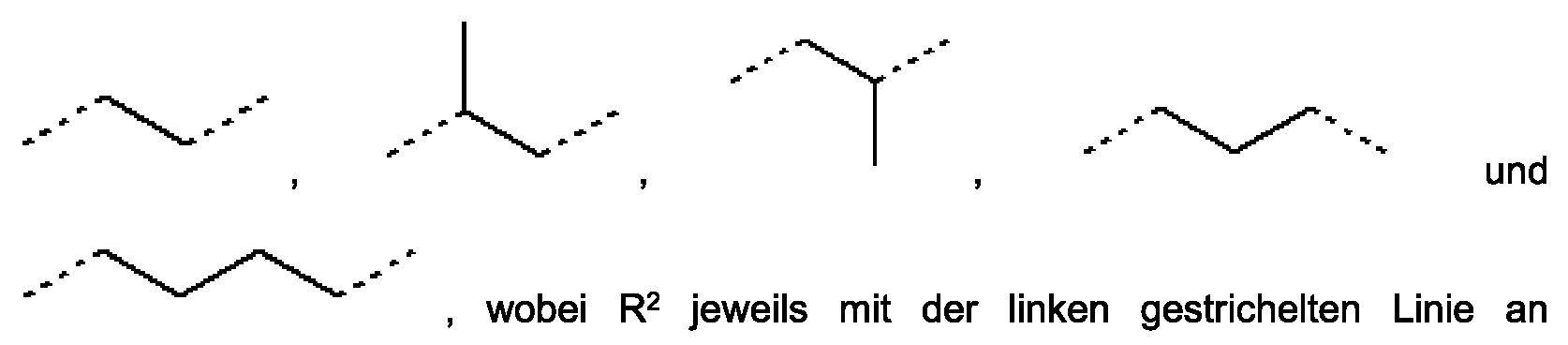
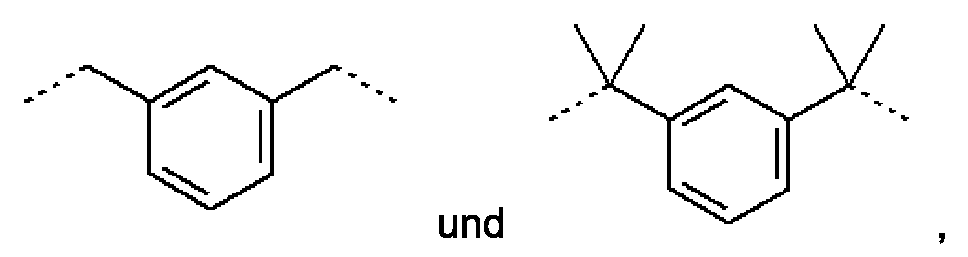
In einer bevorzugten Ausführungsform ist R3 ausgewählt aus der Gruppe bestehend aus 

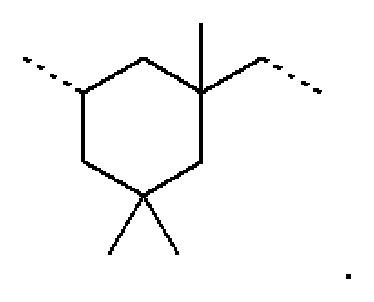
In einer besonders bevorzugten Ausführungsform ist R3 ausgewählt aus der Gruppe bestehend aus
In einer bevorzugten Ausführungsform ist R4 ein von einem Diol abgeleiteter Rest, wobei das Diol ausgewählt ist aus der Gruppe bestehend aus Ethylenglycol, Diethylenglycol, Triethylenglycol, Tetraethylenglycol, Polyethylenglycol, Propylenglycol, Dipropylenglycol, Tripropylenglycol, Tetrapropylenglycol, Polypropylenglycol, 1,3-Butandiol, 1,4-Butandiol, Poly-(1,4-butylenglycol), Neopentylglycol, 1,6-Hexandiol, 1,4-Cyclohexandiol, 1,10-Decandiol, 1,12-Dodecandiol, H[O-(CH2)5-C(=O)]aO-CH2CH2-O[C(=O)-(CH2)5-O]bH mit a = 1 bis 10 und b = 1 bis 10, H[O-(CH2)5-C(=O)]cO-CH2CH2-O-CH2CH2-O[C(=O)-(CH2)5-O]dH mit c = 1 bis 10 und d = 1 bis 10 und HO-CH2CH2O-[C=(O)-(CH2)4-C(=O)-OCH2CH2O]e-H mit e = 1 bis 10.In a preferred embodiment, R 4 is a radical derived from a diol, wherein the diol is selected from the group consisting of ethylene glycol, diethylene glycol, triethylene glycol, tetraethylene glycol, polyethylene glycol, propylene glycol, dipropylene glycol, tripropylene glycol, tetrapropylene glycol, polypropylene glycol, 1,3-butanediol, 1,4-butanediol, poly-(1,4-butylene glycol), neopentyl glycol, 1,6-hexanediol, 1,4-cyclohexanediol, 1,10-decanediol, 1,12-dodecanediol, H[O-(CH 2 ) 5 -C(=O)] a O-CH 2 CH 2 -O[C(=O)-(CH 2 ) 5 -O] b H with a = 1 to 10 and b = 1 to 10, H[O-(CH 2 ) 5 -C(=O)] c O-CH 2 CH 2 -O-CH 2 CH 2 -O[C(=O)-(CH 2 ) 5 -O] d H with c = 1 to 10 and d = 1 to 10 and HO-CH 2 CH 2 O-[C=(O)-(CH 2 ) 4 -C(=O)-OCH 2 CH 2 O] e -H with e = 1 to 10.
In einer bevorzugten Ausführungsform ist R5 ein von einem Polyol abgeleiteter Rest, wobei das Polyol ausgewählt ist aus der Gruppe bestehend Glycerol, Trimethylolpropan, Ditrimethylolpropan, Pentaerythritol und Dipentaerythritol.In a preferred embodiment, R 5 is a residue derived from a polyol, wherein the polyol is selected from the group consisting of glycerol, trimethylolpropane, ditrimethylolpropane, pentaerythritol and dipentaerythritol.
Erste duroplastische Schiene (S-A)First thermosetting splint (S-A)
Die erste duroplastische Schiene (S-A) weist vorzugsweise einen Elastizitätsmodul im Bereich von 500 MPa bis 2500 MPa, bevorzugt im Bereich von 1000 MPa bis 2500 MPa, besonders bevorzugt im Bereich von 1000 MPa bis 2000 MPa auf.The first thermosetting rail (S-A) preferably has a modulus of elasticity in the range of 500 MPa to 2500 MPa, preferably in the range of 1000 MPa to 2500 MPa, particularly preferably in the range of 1000 MPa to 2000 MPa.
Die erste duroplastische Schiene (S-A) wird durch Polymerisation einer ersten Zusammensetzung (Z-A) umfassend
- Z-A-1) ein, zwei oder mehrere multifunktionelle Urethan(meth)acrylate,
- Z-A-2) ein, zwei oder mehrere monofunktionelle (Meth)acrylate,
- Z-A-3) ein, zwei oder mehrere multifunktionelle (Meth)acrylate ohne Urethangruppen,
- Z-A-4) einen Photoinitiator oder ein Photoinitiatorsystem,
- Z-A-5) ein, zwei oder mehrere Inhibitoren,
- Z-A-6) optional Farbmittel und
- Z-A-7) optional UV-Absorber erhalten.
- ZA-1) one, two or more multifunctional urethane (meth)acrylates,
- ZA-2) one, two or more monofunctional (meth)acrylates,
- ZA-3) one, two or more multifunctional (meth)acrylates without urethane groups,
- ZA-4) a photoinitiator or a photoinitiator system,
- ZA-5) one, two or more inhibitors,
- ZA-6) optional colorants and
- ZA-7) optionally receive UV absorbers.
Vorzugsweise wird die erste Schiene (S-A) durch Polymerisation einer ersten Zusammensetzung (Z-A) umfassend
- Z-A-1) in einer Menge von 25 bis 75 Gew.-%, bevorzugt von 40 bis 70 Gew.-%,
- Z-A-2) in einer Menge von 1 bis 20 Gew.-%, bevorzugt von 2 bis 15 Gew.-%,
- Z-A-3) in einer Menge von 20 bis 60 Gew.-%, bevorzugt von 25 bis 50 Gew.-%,
- Z-A-4) in einer Menge von 0,1 bis 5 Gew.-%, bevorzugt von 0,5 bis 3 Gew.-%,
- Z-A-5) in einer Menge von 0,01 bis 1 Gew.-%, bevorzugt von 0,01 bis 0,1 Gew.-%,
- Z-A-6) in einer Menge von 0 bis 1 Gew.-%, bevorzugt von 0,0001 bis 0,5 Gew.-%, und
- Z-A-7) in einer Menge von 0 bis 1 Gew.-%, bevorzugt von 0,01 bis 0,5 Gew.-%, jeweils bezogen auf die Gesamtmasse der Zusammensetzung Z-A, erhalten.
- ZA-1) in an amount of 25 to 75 wt.%, preferably 40 to 70 wt.%,
- ZA-2) in an amount of 1 to 20 wt.%, preferably 2 to 15 wt.%,
- ZA-3) in an amount of 20 to 60 wt.%, preferably 25 to 50 wt.%,
- ZA-4) in an amount of 0.1 to 5 wt.%, preferably 0.5 to 3 wt.%,
- ZA-5) in an amount of 0.01 to 1 wt.%, preferably 0.01 to 0.1 wt.%,
- ZA-6) in an amount of 0 to 1 wt.%, preferably 0.0001 to 0.5 wt.%, and
- ZA-7) in an amount of 0 to 1 wt.%, preferably 0.01 to 0.5 wt.%, in each case based on the total mass of the composition ZA.
Die Komponente Z-A-1 liegt in einer Menge von 25 bis 75 Gew.-%, bevorzugt von 40 bis 70 Gew.-%, bezogen auf die Gesamtmasse der Zusammensetzung Z-A vor. Vorzugsweise umfasst die Komponente Z-A-1 difunktionelles Urethan(meth)acrylat mit einem Molekulargewicht (MW) im Bereich von 400 bis 550 g/mol in einer Menge von 25 bis 100 Gew.-%, vorzugsweise 51 bis 100 Gew.-%, und multifunktionelles, oligomeres Urethan(meth)acrylat mit einem Molekulargewischt (MW) > 650 g/mol in einer Menge von 0 bis 75 Gew.-%, vorzugsweise 0 bis 49 Gew.-%, jeweils bezogen auf die Gesamtmasse von Z-A-1.Component Z-A-1 is present in an amount of 25 to 75% by weight, preferably 40 to 70% by weight, based on the total mass of composition Z-A. Component Z-A-1 preferably comprises difunctional urethane (meth)acrylate with a molecular weight (MW) in the range of 400 to 550 g/mol in an amount of 25 to 100% by weight, preferably 51 to 100% by weight, and multifunctional, oligomeric urethane (meth)acrylate with a molecular weight (MW) > 650 g/mol in an amount of 0 to 75% by weight, preferably 0 to 49% by weight, in each case based on the total mass of Z-A-1.
Das difunktionelle Urethan(meth)acrylat mit einem Molekulargewicht (MW) im Bereich von 400 bis 550 g/mol umfasst dabei vorzugsweise ein Urethan(meth)acrylat ausgewählt aus der Gruppe bestehend aus 3,14-Dioxa-4,13-dioxo-5,12-diazahexadecan-1,16-dioxydi(meth)acrylat, 7,7,9-Trimethyl-3,14-dioxa-4,13-dioxo-5,12-diazahexadecan-1,16-dioxydi(meth)acrylat, 7,9,9-Trimethyl-3,14-dioxa-4,13-dioxo-5,12-diazahexadecan-1,16-dioxydi(meth)acrylat, 1,5,5-Trimethyl-1-[(2-(meth)acryloyloxyethyl)carbamoylmethyl]-3-(2-(meth)acryloyloxyethyl)carbamoylcyclohexan (CAS 42405-01-6 Methacrylat; CAS 42404-50-2 Acrylat), 1,1'-[Methylenbis(4,1-phenyleniminocarbonyloxy-2,1-ethandiyl)]bis(meth)-acrylat (CAS 51243-61-9 Methacrylat; CAS 69790-08-5 Acrylat), 1,1'-[Methylenbis(2,1-phenyleniminocarbonyloxy-2,1-ethandiyl)]bis(meth)acrylat.The difunctional urethane (meth)acrylate having a molecular weight (MW) in the range of 400 to 550 g/mol preferably comprises a urethane (meth)acrylate selected from the group consisting of 3,14-dioxa-4,13-dioxo-5,12-diazahexadecane-1,16-dioxydi(meth)acrylate, 7,7,9-trimethyl-3,14-dioxa-4,13-dioxo-5,12-diazahexadecane-1,16-dioxydi(meth)acrylate, 7,9,9-trimethyl-3,14-dioxa-4,13-dioxo-5,12-diazahexadecane-1,16-dioxydi(meth)acrylate, 1,5,5-Trimethyl-1-[(2-(meth)acryloyloxyethyl)carbamoylmethyl]-3-(2-(meth)acryloyloxyethyl)carbamoylcyclohexane (CAS 42405-01-6 methacrylate; CAS 42404-50-2 acrylate), 1,1'-[methylenebis(4,1-phenyleniminocarbonyloxy-2,1-ethanediyl)]bis (meth)-acrylate (CAS 51243-61-9 methacrylate; CAS 69790-08-5 acrylate), 1,1'-[methylenebis(2,1-phenyleneiminocarbonyloxy-2,1-ethanediyl)]bis(meth)acrylate.
Das multifunktionelle, oligomere Urethan(meth)acrylat mit einem Molekulargewischt (MW) > 650 g/mol umfasst dabei vorzugsweise ein Urethan-Monomer ausgewählt aus der Gruppe bestehend aus H2C=C(R1)-C(=O)-O-R2-O-C(=O)-NH-R3-NH-C(=O)-[O-R4-O-C(=O)-NH-R3-NH-C(=O)-]nO-R2-O-C(=O)-C(CR1)=CH2 und [H2C=C(R1)C(=O)-O-R2-O-C(=O)-NH-R3-NH-C(=O)-O-]mR5, wobei R1 ein Wasserstoffatom oder eine Methylgruppe ist,
R2 eine geradkettige oder verzweigte C2- bis C4-Alkylengruppe ist,
R3 eine geradkettige, verzweigte und/oder cyclische C2- bis C15-Alkylen-, Arylen-, Arylalkylen- oder Alkylarylengruppe ist,
R4 eine divalente organische Linkergruppe ist,
R5 eine m-valente organische Linkergruppe ist,
n eine ganze Zahl von 0 bis 6 ist und
m eine ganze Zahl von 3 bis 6 ist.The multifunctional, oligomeric urethane (meth)acrylate with a molecular weight (MW) > 650 g/mol preferably comprises a urethane monomer selected from the group consisting of H 2 C=C(R 1 )-C(=O)-OR 2 -OC(=O)-NH-R 3 -NH-C(=O)-[OR 4 -OC(=O)-NH-R 3 -NH-C(=O)-] n OR 2 -OC(=O)-C(CR 1 )=CH 2 and [H 2 C=C(R 1 )C(=O)-OR 2 -OC(=O)-NH-R 3 -NH-C(=O)-O-] m R 5 , where R 1 is a hydrogen atom or a methyl group,
R 2 is a straight-chain or branched C2 to C4 alkylene group,
R 3 is a straight-chain, branched and/or cyclic C2 to C15 alkylene, arylene, arylalkylene or alkylarylene group,
R 4 is a divalent organic linker group,
R 5 is an m-valent organic linker group,
n is an integer from 0 to 6 and
m is an integer from 3 to 6.
In einer bevorzugten Ausführungsform ist R2 ausgewählt aus der Gruppe bestehend aus

In einer bevorzugten Ausführungsform ist R3 ausgewählt aus der Gruppe bestehend aus 

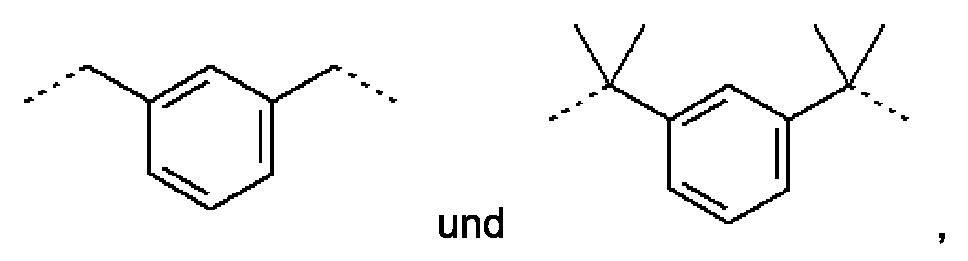
In einer besonders bevorzugten Ausführungsform ist R3 ausgewählt aus der Gruppe bestehend aus
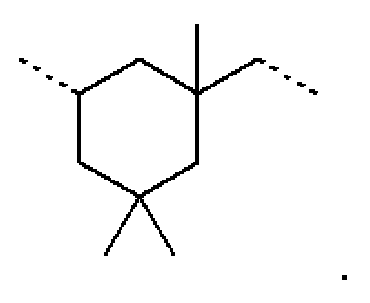
In einer bevorzugten Ausführungsform ist R4 ein von einem Diol abgeleiteter Rest, wobei das Diol ausgewählt ist aus der Gruppe bestehend aus Ethylenglycol, Diethylenglycol, Triethylenglycol, Tetraethylenglycol, Polyethylenglycol, Propylenglycol, Dipropylenglycol, Tripropylenglycol, Tetrapropylenglycol, Polypropylenglycol, 1,3-Butandiol, 1,4-Butandiol, Poly-(1,4-butylenglycol), Neopentylglycol, 1,6-Hexandiol, 1,4-Cyclohexandiol, 1,10-Decandiol, 1,12-Dodecandiol, H[O-(CH2)5-C(=O)]aO-CH2CH2-O[C(=O)-(CH2)5-O]bH mit a = 1 bis 10 und b = 1 bis 10, H[O-(CH2)5-C(=O)]cO-CH2CH2-O-CH2CH2-O[C(=O)-(CH2)5-O]dH mit c = 1 bis 10 und d = 1 bis 10 und HO-CH2CH2O-[C=(O)-(CH2)4-C(=O)-OCH2CH2O]e-H mit e = 1 bis 10.In a preferred embodiment, R 4 is a radical derived from a diol, wherein the diol is selected from the group consisting of ethylene glycol, diethylene glycol, triethylene glycol, tetraethylene glycol, polyethylene glycol, propylene glycol, dipropylene glycol, tripropylene glycol, tetrapropylene glycol, polypropylene glycol, 1,3-butanediol, 1,4-butanediol, poly-(1,4-butylene glycol), neopentyl glycol, 1,6-hexanediol, 1,4-cyclohexanediol, 1,10-decanediol, 1,12-dodecanediol, H[O-(CH 2 ) 5 -C(=O)] a O-CH 2 CH 2 -O[C(=O)-(CH 2 ) 5 -O] b H with a = 1 to 10 and b = 1 to 10, H[O-(CH 2 ) 5 -C(=O)] c O-CH 2 CH 2 -O-CH 2 CH 2 -O[C(=O)-(CH 2 ) 5 -O] d H with c = 1 to 10 and d = 1 to 10 and HO-CH 2 CH 2 O-[C=(O)-(CH 2 ) 4 -C(=O)-OCH 2 CH 2 O] e -H with e = 1 to 10.
In einer bevorzugten Ausführungsform ist R5 ein von einem Polyol abgeleiteter Rest, wobei das Polyol ausgewählt ist aus der Gruppe bestehend Glycerol, Trimethylolpropan, Ditrimethylolpropan, Pentaerythritol und Dipentaerythritol.In a preferred embodiment, R 5 is a residue derived from a polyol, wherein the polyol is selected from the group consisting of glycerol, trimethylolpropane, ditrimethylolpropane, pentaerythritol and dipentaerythritol.
Die Komponente Z-A-2 liegt in einer Menge von 1 bis 20 Gew.-%, bevorzugt von 2 bis 15 Gew.-%, bezogen auf die Gesamtmasse der Zusammensetzung Z-A vor. Vorzugsweise ist die Komponente Z-A-2 ausgewählt aus der Gruppe bestehend aus 2-Hydroxyethyl(meth)acrylat, 2-Hydroxypropyl(meth)acrylat, 3-Hydroxypropyl(meth)acrylat, Tetrahydrofurfuryl(meth)acrylat, 4-(Meth)acryloylmorpholin, Cyclohexyl(meth)acrylat, 3,3,5-Trimethylcyclohexyl(meth)acrylat, 4-(1,1-Dimethylethyl)cyclohexyl(meth)acrylat, Isobornyl(meth)acrylat, (Octahydro-4,7-methano-1H-indenyl)methyl(meth)acrylat, Benzyl-(meth)acrylat, 2-Phenoxyethyl(meth)acrylat, 2-Ethoxyethyl(meth)acrylat, 2-(2-Ethoxyethoxy)ethyl(meth)acrylat, 2-[2-(2-Ethoxyethoxy)ethoxy]ethyl(meth)acrylat, 2-Methoxyethyl(meth)acrylat, 2-(2-Methoxyethoxy)ethyl(meth)acrylat, 2-[2-(2-Methoxyethoxy)-ethoxy]ethyl(meth)acrylat, Hexyl(meth)acrylat, 2-Ethylhexyl(meth)acrylat, Decyl(meth)acrylat, Isodecyl(meth)acrylat, Dodecyl(meth)acrylat, 2-[[(Butylamino)carbonyl]-oxy]ethyl(meth)acrylat, 2-Hydroxy-3-(prop-2-enoyloxy)propyl 2-methyl-2-propylhexanoat, und (5-Ethyl-1,3-dioxan-5-yl)methyl(meth)acrylat.The component Z-A-2 is present in an amount of 1 to 20 wt.%, preferably 2 to 15 wt.%, based on the total mass of the composition Z-A. Component Z-A-2 is preferably selected from the group consisting of 2-hydroxyethyl (meth)acrylate, 2-hydroxypropyl (meth)acrylate, 3-hydroxypropyl (meth)acrylate, tetrahydrofurfuryl (meth)acrylate, 4-(meth)acryloylmorpholine, cyclohexyl (meth)acrylate, 3,3,5-trimethylcyclohexyl (meth)acrylate, 4-(1,1 -Dimethylethyl)cyclohexyl (meth)acrylate, isobornyl (meth)acrylate, (octahydro-4,7-methano-1H-indenyl)methyl (meth)acrylate, benzyl (meth)acrylate, 2-phenoxyethyl (meth)acrylate, 2-ethoxyethyl (meth)acrylate, 2-(2-ethoxyethoxy)ethyl (meth)acrylate, 2-[2-(2-ethoxyethoxy)ethoxy ]ethyl (meth)acrylate, 2-Methoxyethyl (meth)acrylate, 2-(2-methoxyethoxy)ethyl (meth)acrylate, 2-[2-(2-methoxyethoxy)-ethoxy]ethyl (meth)acrylate, hexyl (meth)acrylate, 2-ethylhexyl (meth)acrylate, decyl (meth)acrylate, isodecyl (meth)acrylate, dodecyl (meth)acrylate, 2-[[(butylamino)carbon yl]-oxy]ethyl (meth)acrylate, 2-hydroxy-3-(prop-2-enoyloxy)propyl 2-methyl-2-propylhexanoate, and (5-ethyl-1,3-dioxan-5-yl)methyl (meth)acrylate.
Die Komponente Z-A-3 liegt in einer Menge von 20 bis 60 Gew.-%, bevorzugt von 25 bis 50 Gew.-%, bezogen auf die Gesamtmasse der Zusammensetzung Z-A vor. Vorzugsweise ist die Komponente Z-A-3 ausgewählt aus der Gruppe bestehend aus Ethylenglycol-di(meth)acrylat, Diethylenglycoldi(meth)acrylat, Triethylenglycoldi(meth)acrylat, Tetra-ethylenglycoldi(meth)acrylat, Polyethylenglycoldi(meth)acrylat, Propylenglycoldi(meth)-acrylat, Dipropylenglycoldi(meth)acrylat, Tripropylenglycoldi(meth)acrylat, Tetrapropy-lenglycoldi(meth)acrylat, Polypropylenglycoldi(meth)acrylat, 1,4-Butandioldi(meth)acrylat, 1,3-Butandioldi(meth)acrylat, 1,6-Hexandioldi(meth)acrylat, 1,10-Decandioldi(meth)-acrylat, 1,12-Dodecandioldi(meth)acrylat, 2-Hydroxypropyl-1,3-di(meth)acrylat, 3-Hydroxypropyl-1,2-di(meth)acrylat, Neopentylglycoldi(meth)acrylat, Trimethylolpropant-ri(meth)acrylat, Pentaerythritoldi(meth)acrylat, Pentaerythritoltri(meth)acrylat, Pentaeryth-ritoltetra(meth)acrylat, 2,2-Bis[4-[3-(meth)acryloyloxy-2-hydroxypropoxy]phenyl]propan, 2,2-Bis[4-(meth)acryloyloxyphenyl]propan, 2,2-Bis[4-(meth)acryloyloxyethoxyphenyl]-propan, 2,2-Bis[4-(meth)acryloyloxydiethoxyphenyl]propan, 2,2-Bis[4-(meth)acryloyloxy-triethoxyphenyl]propan 2,2-Bis[4-(meth)acryloyloxytetraethoxyphenyl]propan, 2,2-Bis[4-(meth)acryloyloxypentaethoxyphenyl]-propan, 2,2-Bis[4-(meth)acryloyloxydipropoxy-phenyl]propan, 2,2-Bis[4-(meth)acryloyloxyethoxyphenyl]-2-[4-(meth)acryloyloxydiethoxy-phenyl]propan, 2-[4-(Meth)acryloyloxydiethoxyphenyl]-2-[4-(meth)-acryloyloxytriethoxy-phenyl]propan, 2-[4-(Meth)acryloyloxydipropoxyphenyl]-2-[4-(meth)acryloyloxytriethoxy-phenyl]propan, 2,2-Bis[4-(meth)acryloyloxyisopropoxyphenyl]propan, ethoxyliertes Bisphenol-A-di(meth)acrylat, propoxyliertes Bisphenol-A-di(meth)acrylat und 3(4),8(9)-Bis((meth)acryloyloxymethyl)tricyclo[5.2.1.02,6]decan.The component ZA-3 is present in an amount of 20 to 60 wt. %, preferably 25 to 50 wt. %, based on the total mass of the composition ZA. Preferably, the component ZA-3 is selected from the group consisting of ethylene glycol di(meth)acrylate, diethylene glycol di(meth)acrylate, triethylene glycol di(meth)acrylate, tetraethylene glycol di(meth)acrylate, polyethylene glycol di(meth)acrylate, propylene glycol di(meth)acrylate, dipropylene glycol di(meth)acrylate, tripropylene glycol di(meth)acrylate, tetrapropyl- lenglycol di(meth)acrylate, polypropylene glycol di(meth)acrylate, 1,4-butanediol di(meth)acrylate, 1,3-butanediol di(meth)acrylate, 1,6-hexanediol di(meth)acrylate, 1,10-decanediol di(meth) acrylate, 1,12-dodecanediol di(meth)acrylate, 2-hydroxypropyl-1,3-di(meth) acrylate, 3-hydroxypropyl-1,2-di(meth)acrylate, neopentyl glycol di(meth)acrylate, trimethylolpropane ri(meth)acrylate, pentaerythritol di(meth)acrylate, pentaerythritol tri(meth)acrylate, pentaerythritol tetra(meth)acrylate, 2,2-bis[4-[3-(meth)acryloyloxy-2-hydroxypropoxy]phenyl]propane, 2,2-Bis[4-(meth)acryloyloxyphenyl]propane, 2,2-Bis[4-(meth)acryloyloxyethoxyphenyl]propane, 2,2-Bis[4-(meth)acryloyloxydiethoxyphenyl]propane, 2,2-Bis[4-(meth)acryloyloxytriethoxyphenyl]propane 2,2-Bis[4-(meth)acryloyloxytetraethoxyphenyl]propane , 2,2-Bis[4-(meth)acryloyloxypentaethoxyphenyl]-propane, 2,2-Bis[4-(meth)acryloyloxydipropoxy-phenyl]propane, 2,2-Bis[4-(meth)acryloyloxyethoxyphenyl]-2-[4-(meth)acryloyloxydiethoxy-phenyl]propane, 2-[4-(Meth)acryloyloxydiethoxyphenyl]-2-[4-(meth)-acryloyloxytriethoxy-phenyl]propane, 2-[4-(Meth)acryloyloxydipropoxyphenyl]-2-[4-(meth)acryloyloxytriethoxy-phenyl]propane, 2,2-Bis[4-(meth)acryloyloxyisopropoxyphenyl]propane, ethoxylated bisphenol A-di(meth) acrylate, propoxylated bisphenol A di(meth)acrylate and 3(4),8(9)-bis((meth)acryloyloxymethyl)tricyclo[5.2.1.0 2,6 ]decane.
Die Komponente Z-A-4 liegt in einer Menge von 0,1 bis 5 Gew.-%, bevorzugt von 0,5 bis 3 Gew.-%, bezogen auf die Gesamtmasse der Zusammensetzung Z-A vor. Vorzugsweise ist die Komponente Z-A-4 ausgewählt aus der Gruppe bestehend aus alpha-Diketonen, Benzoinalkylethern, Thioxanthonen, Benzophenonen, Acetophenonen, Acylphosphinoxiden, und Acylgermanium-Verbindungen, bevorzugt ausgewählt aus der Gruppe bestehend aus 2,4,6-Trimethylbenzoyldiphenylphosphinoxid, Phenyl-bis(2,4,6-trimethylbenzoyl)phosphinoxid, Ethyl phenyl(2,4,6-trimethylbenzoyl)phosphinate (CAS 84434-11-7) und (Poly(oxy-1,2-ethanediyl),α,α',α''-1,2,3-propanetriyltris[ω-[[phenyl(2,4,6-trimethylbenzoyl)phosphinyl]oxy]-Polymer) (CAS 1834525-17-5).The component Z-A-4 is present in an amount of 0.1 to 5 wt.%, preferably 0.5 to 3 wt.%, based on the total mass of the composition Z-A. Preferably, component Z-A-4 is selected from the group consisting of alpha-diketones, benzoin alkyl ethers, thioxanthones, benzophenones, acetophenones, acylphosphine oxides, and acylgermanium compounds, preferably selected from the group consisting of 2,4,6-trimethylbenzoyldiphenylphosphine oxide, phenyl bis(2,4,6-trimethylbenzoyl)phosphine oxide, ethyl phenyl(2,4,6-trimethylbenzoyl)phosphinate (CAS 84434-11-7) and (poly(oxy-1,2-ethanediyl),α,α',α''-1,2,3-propanetriyltris[ω-[[phenyl(2,4,6-trimethylbenzoyl)phosphinyl]oxy] polymer) (CAS 1834525-17-5).
Die Komponente Z-A-5 liegt in einer Menge von 0,01 bis 1 Gew.-%, bevorzugt von 0,01 bis 0,1 Gew.-%, bezogen auf die Gesamtmasse der Zusammensetzung Z-A vor. Vorzugsweise ist die Komponente Z-A-5 ausgewählt aus der Gruppe bestehend aus Hydrochinon, Hydrochinonmonomethylether, 2,6-Di-tert.-butyl-4-methylphenol, tert.-Butylhydroxyanisol und 2,2,6,6-Tetramethyl-piperidin-1-oxyl.The component Z-A-5 is present in an amount of 0.01 to 1 wt. %, preferably 0.01 to 0.1 wt. %, based on the total mass of the composition Z-A. Preferably, the component Z-A-5 is selected from the group consisting of hydroquinone, hydroquinone monomethyl ether, 2,6-di-tert-butyl-4-methylphenol, tert-butylhydroxyanisole and 2,2,6,6-tetramethyl-piperidine-1-oxyl.
Optional kann die Zusammensetzung Z-A auch Farbmittel (Z-A-6) enthalten. Die Komponente Z-A-6 liegt in einer Menge von 0 bis 1 Gew.-%, bevorzugt von 0,0001 bis 0,5 Gew.-%, bezogen auf die Gesamtmasse der Zusammensetzung Z-A vor. Vorzugsweise umfasst die Komponente Z-A-6 anorganische Farbpigmente, organische Farbpigmente oder organische Farbstoffe.Optionally, the composition Z-A can also contain colorants (Z-A-6). The component Z-A-6 is present in an amount of 0 to 1% by weight, preferably 0.0001 to 0.5% by weight, based on the total mass of the composition Z-A. Preferably, the component Z-A-6 comprises inorganic color pigments, organic color pigments or organic dyes.
Optional kann die Zusammensetzung Z-A auch UV-Absorber (Z-A-7) enthalten. Die Komponente Z-A-7 liegt in einer Menge von 0 bis 1 Gew.-%, bevorzugt von 0,01 bis 0,5 Gew.-%, bezogen auf die Gesamtmasse der Zusammensetzung Z-A vor. Vorzugsweise ist die Komponente Z-A-7 ausgewählt aus der Gruppe bestehend aus 2,2'-Methylenbis[6-(2H-benzotriazol-2-yl)-4-(1,1,3,3-tetramethylbutyl)phenol] (CAS 103597-45-1), 2,2',4,4'-Tetrahydroxybenzophenon (CAS 131-55-5), 2-tert.-Butyl-6-(5-chloro-2H-benzotriazol-2-yl)-4-methylphenol (CAS 3896-11-5), 2,2'-Benzol-1,4-diylbis(4H-3,1-benzoxazin-4-on) (CAS 18600-59-4), 2-(4,6-Bis-(2,4-dimethylphenyl)-1,3,5-triazin-2-yl)-5-(octyloxy)-phenol (CAS 2725-22-6), 2-(2-Hydroxy-5-methylphenyl)benzotriazol (CAS 2440-22-4), 2-(2-Hydroxyphenyl)benzotriazol, 2-(2H-Benzotriazol-2-yl)-6-dodecyl-4-methylphenol (CAS 23328-53-2), 2-(2'-Hydroxy-3',5'-di-tert.-butylphenyl)-5-chlorobenzotriazol (CAS 3864-99-1), 2,2'-Dihydroxy-4-methoxybenzophenon (CAS 131-53-3), 2,2'-Dihydroxy-4,4'-dimethoxybenzophenon (CAS 131-54-4), Ethyl-2-cyano-3-(4-hydroxy-3-methoxyphenyl)prop-2-enoat (CAS 13373-29-0), Bis(1,2,2,6,6-pentamethyl-4-piperidyl)sebacat (CAS 41556-26-7), Methyl-1,2,2,6,6-pentamethyl-4-piperidylsebacat (CAS 82919-37-7), Bis(1-octyloxy-2,2,6,6-tetramethyl-4-piperidyl)sebacat (CAS 129757-67-1) und Bis-(1,2,2,6,6-pentamethyl-4-piperidyl)-[[3,5-bis(1,1-dimethylethyl)-4-hydroxyphenyl]methyl]-butylmalonat (CAS-Nr. 63843-89-0).Optionally, the composition Z-A can also contain UV absorbers (Z-A-7). The component Z-A-7 is present in an amount of 0 to 1 wt.%, preferably 0.01 to 0.5 wt.%, based on the total mass of the composition Z-A. Preferably, component Z-A-7 is selected from the group consisting of 2,2'-methylenebis[6-(2H-benzotriazol-2-yl)-4-(1,1,3,3-tetramethylbutyl)phenol] (CAS 103597-45-1), 2,2',4,4'-tetrahydroxybenzophenone (CAS 131-55-5), 2-tert.-butyl-6-(5-chloro-2H-benzotriazol-2-yl)-4-methylphenol (CAS 3896-11-5), 2,2'-benzene-1,4-diylbis(4H-3,1-benzoxazin-4-one) (CAS 18600-59-4), 2-(4,6-Bis-(2,4-dimethylphenyl)-1,3,5-triazin-2-yl)-5-(octyloxy)-phenol (CAS 2725-22-6), 2-(2-Hydroxy-5-methylphenyl)benzotriazole (CAS 2440-22-4), 2-(2-Hydroxyphenyl)benzotriazole, 2-(2H-Benzotri azol-2-yl)-6-dodecyl-4-methylphenol (CAS 23328-53-2), 2-(2'-hydroxy-3',5'-di-tert-butylphenyl)-5-chlorobenzotriazole (CAS 3864-99-1), 2,2'-dihydroxy-4-methoxybenzophenone (CAS 131-53-3), 2,2'-dihydroxy -4,4'-dimethoxybenzophenone (CAS 131-54-4), Ethyl-2-cyano-3-(4-hydroxy-3-methoxyphenyl)prop-2-enoat (CAS 13373-29-0), Bis(1,2,2,6,6-pentamethyl-4-piperidyl)sebacat (CAS 41556-26-7), Methyl-1,2,2,6,6-pentamethyl-4-piperidylsebacat (CAS 82919-37-7), Bis(1-octyloxy-2,2,6,6-tetramethyl-4-piperidyl)sebacat (CAS 129757-67-1) und Bis-(1,2,2,6,6-pentamethyl-4-piperidyl)-[[3,5-bis(1,1-dimethylethyl)-4-hydroxyphenyl]methyl]-butylmalonat (CAS-Nr. 63843-89-0).
Zweite duroplastische Schiene (S-B)Second thermosetting splint (S-B)
Die zweite duroplastische Schiene (S-B) weist vorzugsweise einen Elastizitätsmodul im Bereich 2 MPa bis 1200 MPa, bevorzugt im Bereich von 5 MPa bis 500 MPa, besonders bevorzugt im Bereich von 5 MPa bis 250 MPa, auf.The second thermosetting rail (S-B) preferably has a modulus of elasticity in the range of 2 MPa to 1200 MPa, preferably in the range of 5 MPa to 500 MPa, particularly preferably in the range of 5 MPa to 250 MPa.
Die zweite duroplastische Schiene (S-B) wird durch Polymerisation einer zweiten Zusammensetzung (Z-B) umfassend
- Z-B-1) ein, zwei oder mehrere multifunktionelle Urethan(meth)acrylate,
- Z-B-2) ein, zwei oder mehrere monofunktionelle (Meth)acrylate,
- Z-B-3) ein, zwei oder mehrere multifunktionelle (Meth)acrylate ohne Urethangruppen,
- Z-B-4) einen Photoinitiator oder ein Photoinitiatorsystem,
- Z-B-5) ein, zwei oder mehrere Inhibitoren,
- Z-B-6) optional Farbmittel und
- Z-B-7) optional UV-Absorber erhalten.
- ZB-1) one, two or more multifunctional urethane (meth)acrylates,
- ZB-2) one, two or more monofunctional (meth)acrylates,
- ZB-3) one, two or more multifunctional (meth)acrylates without urethane groups,
- ZB-4) a photoinitiator or a photoinitiator system,
- ZB-5) one, two or more inhibitors,
- ZB-6) optional colorants and
- ZB-7) optionally receive UV absorbers.
Vorzugsweise wird die zweite Schiene (S-B) durch Polymerisation einer zweiten Zusammensetzung (Z-B) umfassend
- Z-B-1) in einer Menge von 25 bis 75 Gew.-%, bevorzugt von 40 bis 70 Gew.-%,
- Z-B-2) in einer Menge von 20 bis 60 Gew.-%, bevorzugt von 25 bis 50 Gew.-%,
- Z-B-3) in einer Menge von 1 bis 20 Gew.-%, bevorzugt von 2 bis 15 Gew.-%,
- Z-B-4) in einer Menge von 0,1 bis 5 Gew.-%, bevorzugt von 0,5 bis 3 Gew.-%,
- Z-B-5) in einer Menge von 0,01 bis 1 Gew.-%, bevorzugt von 0,01 bis 0,1 Gew.-%,
- Z-B-6) in einer Menge von 0 bis 1 Gew.-%, bevorzugt von 0,0001 bis 0,5 Gew.-%, und
- Z-B-7) in einer Menge von 0 bis 1 Gew.-%, bevorzugt von 0,01 bis 0,5 Gew.-%, jeweils bezogen auf die Gesamtmasse der Zusammensetzung Z-B, erhalten
- ZB-1) in an amount of 25 to 75 wt.%, preferably 40 to 70 wt.%,
- ZB-2) in an amount of 20 to 60 wt.%, preferably 25 to 50 wt.%,
- ZB-3) in an amount of 1 to 20 wt.%, preferably 2 to 15 wt.%,
- ZB-4) in an amount of 0.1 to 5 wt.%, preferably 0.5 to 3 wt.%,
- ZB-5) in an amount of 0.01 to 1 wt.%, preferably 0.01 to 0.1 wt.%,
- ZB-6) in an amount of 0 to 1 wt.%, preferably 0.0001 to 0.5 wt.%, and
- ZB-7) in an amount of 0 to 1 wt.%, preferably 0.01 to 0.5 wt.%, each based on the total mass of the composition ZB,
Die Komponente Z-B-1 liegt in einer Menge von 25 bis 75 Gew.-%, bevorzugt von 40 bis 70 Gew.-%, bezogen auf die Gesamtmasse der Zusammensetzung Z-B vor. Vorzugsweise umfasst die Komponente Z-B-1 multifunktionelles, oligomeres Urethan(meth)acrylat mit einem Molekulargewicht (MW) > 650 g/mol in einer Menge von 25 bis 100 Gew.-%, vorzugsweise 51 bis 100 Gew.-%, und difunktionelles Urethan(meth)acrylat mit einem Molekulargewicht (MW) im Bereich von 400 bis 550 g/mol in einer Menge von 0 bis 75 Gew.-%, vorzugsweise 0 bis 49 Gew.-%, jeweils bezogen auf die Gesamtmasse von Z-B-1.The component Z-B-1 is present in an amount of 25 to 75 wt. %, preferably 40 to 70 wt. %, based on the total mass of the composition Z-B. Preferably, the component Z-B-1 comprises multifunctional, oligomeric urethane (meth)acrylate with a molecular weight (MW) > 650 g/mol in an amount of 25 to 100 wt. %, preferably 51 to 100 wt. %, and difunctional urethane (meth)acrylate with a molecular weight (MW) in the range of 400 to 550 g/mol in an amount of 0 to 75 wt. %, preferably 0 to 49 wt. %, in each case based on the total mass of Z-B-1.
Das multifunktionelle, oligomere Urethan(meth)acrylat mit einem Molekulargewischt (MW) > 650 g/mol umfasst dabei vorzugsweise ein Urethan-Monomer ausgewählt aus der Gruppe bestehend aus H2C=C(R1)-C(=O)-O-R2-O-C(=O)-NH-R3-NH-C(=O)-[O-R4-O-C(=O)-NH-R3-NH-C(=O)-]nO-R2-O-C(=O)-C(CR1)=CH2 und
[H2C=C(R1)C(=O)-O-R2-O-C(=O)-NH-R3-NH-C(=O)-O-]mR5, wobei
R1 ein Wasserstoffatom oder eine Methylgruppe ist,
R2 eine geradkettige oder verzweigte C2- bis C4-Alkylengruppe ist,
R3 eine geradkettige, verzweigte und/oder cyclische C2- bis C15-Alkylen-, Arylen-, Arylalkylen- oder Alkylarylengruppe ist,
R4 eine divalente organische Linkergruppe ist,
R5 eine m-valente organische Linkergruppe ist,
n eine ganze Zahl von 0 bis 6 ist und
m eine ganze Zahl von 3 bis 6 ist.The multifunctional, oligomeric urethane (meth)acrylate with a molecular weight (MW) > 650 g/mol preferably comprises a urethane monomer selected from the group consisting of H 2 C=C(R 1 )-C(=O)-OR 2 -OC(=O)-NH-R 3 -NH-C(=O)-[OR 4 -OC(=O)-NH-R 3 -NH-C(=O)-] n OR 2 -OC(=O)-C(CR 1 )=CH 2 and
[H 2 C=C(R 1 )C(=O)-OR 2 -OC(=O)-NH-R 3 -NH-C(=O)-O-] m R 5 , where
R 1 is a hydrogen atom or a methyl group,
R 2 is a straight-chain or branched C2 to C4 alkylene group,
R 3 is a straight-chain, branched and/or cyclic C2 to C15 alkylene, arylene, arylalkylene or alkylarylene group,
R 4 is a divalent organic linker group,
R 5 is an m-valent organic linker group,
n is an integer from 0 to 6 and
m is an integer from 3 to 6.
In einer bevorzugten Ausführungsform ist R2 ausgewählt aus der Gruppe bestehend aus

In einer bevorzugten Ausführungsform ist R3 ausgewählt aus der Gruppe bestehend aus


In einer besonders bevorzugten Ausführungsform ist R3 ausgewählt aus der Gruppe bestehend aus

In einer bevorzugten Ausführungsform ist R4 ein von einem Diol abgeleiteter Rest, wobei das Diol ausgewählt ist aus der Gruppe bestehend aus Ethylenglycol, Diethylenglycol, Triethylenglycol, Tetraethylenglycol, Polyethylenglycol, Propylenglycol, Dipropylenglycol, Tripropylenglycol, Tetrapropylenglycol, Polypropylenglycol, 1,3-Butandiol, 1,4-Butandiol, Poly-(1,4-butylenglycol), Neopentylglycol, 1,6-Hexandiol, 1,4-Cyclohexandiol, 1,10-Decandiol, 1,12-Dodecandiol, H[O-(CH2)5-C(=O)]aO-CH2CH2-O[C(=O)-(CH2)5-O]bH mit a = 1 bis 10 und b = 1 bis 10, H[O-(CH2)5-C(=O)]cO-CH2CH2-O-CH2CH2-O[C(=O)-(CH2)5-O]dH mit c = 1 bis 10 und d = 1 bis 10 und HO-CH2CH2O-[C=(O)-(CH2)4-C(=O)-OCH2CH2O]e-H mit e = 1 bis 10.In a preferred embodiment, R 4 is a radical derived from a diol, wherein the diol is selected from the group consisting of ethylene glycol, diethylene glycol, triethylene glycol, tetraethylene glycol, polyethylene glycol, propylene glycol, dipropylene glycol, tripropylene glycol, tetrapropylene glycol, polypropylene glycol, 1,3-butanediol, 1,4-butanediol, poly-(1,4-butylene glycol), neopentyl glycol, 1,6-hexanediol, 1,4-cyclohexanediol, 1,10-decanediol, 1,12-dodecanediol, H[O-(CH 2 ) 5 -C(=O)] a O-CH 2 CH 2 -O[C(=O)-(CH 2 ) 5 -O] b H with a = 1 to 10 and b = 1 to 10, H[O-(CH 2 ) 5 -C(=O)] c O-CH 2 CH 2 -O-CH 2 CH 2 -O[C(=O)-(CH 2 ) 5 -O] d H with c = 1 to 10 and d = 1 to 10 and HO-CH 2 CH 2 O-[C=(O)-(CH 2 ) 4 -C(=O)-OCH 2 CH 2 O] e -H with e = 1 to 10.
In einer bevorzugten Ausführungsform ist R5 ein von einem Polyol abgeleiteter Rest, wobei das Polyol ausgewählt ist aus der Gruppe bestehend Glycerol, Trimethylolpropan, Ditrimethylolpropan, Pentaerythritol und Dipentaerythritol.In a preferred embodiment, R 5 is a residue derived from a polyol, wherein the polyol is selected from the group consisting of glycerol, trimethylolpropane, ditrimethylolpropane, pentaerythritol and dipentaerythritol.
Das difunktionelles Urethan(meth)acrylat mit einem Molekulargewicht (MW) im Bereich von 400 bis 550 g/mol umfasst dabei vorzugsweise ein Urethan(meth)acrylat ausgewählt aus der Gruppe bestehend aus 3,14-Dioxa-4,13-dioxo-5,12-diazahexadecan-1,16-dioxydi(meth)acrylat, 7,7,9-Trimethyl-3,14-dioxa-4,13-dioxo-5,12-diazahexadecan-1,16-dioxydi(meth)acrylat, 7,9,9-Trimethyl-3,14-dioxa-4,13-dioxo-5,12-diazahexadecan-1,16-dioxydi(meth)acrylat, 1,5,5-Trimethyl-1-[(2-(meth)acryloyloxyethyl)carbamoylmethyl]-3-(2-(meth)acryloyloxyethyl)carbamoylcyclohexan (CAS 42405-01-6 Methacrylat; CAS 42404-50-2 Acrylat), 1,1'-[Methylenbis(4,1-phenyleniminocarbonyloxy-2,1-ethandiyl)]bis(meth)-acrylat (CAS 51243-61-9 Methacrylat; CAS 69790-08-5 Acrylat), 1,1'-[Methylenbis(2,1-phenyleniminocarbonyloxy-2, 1-ethandiyl)]bis(meth)acrylat.The difunctional urethane (meth)acrylate having a molecular weight (MW) in the range of 400 to 550 g/mol preferably comprises a urethane (meth)acrylate selected from the group consisting of 3,14-dioxa-4,13-dioxo-5,12-diazahexadecane-1,16-dioxydi(meth)acrylate, 7,7,9-trimethyl-3,14-dioxa-4,13-dioxo-5,12-diazahexadecane-1,16-dioxydi(meth)acrylate, 7,9,9-trimethyl-3,14-dioxa-4,13-dioxo-5,12-diazahexadecane-1,16-dioxydi(meth)acrylate, 1,5,5-Trimethyl-1-[(2-(meth)acryloyloxyethyl)carbamoylmethyl]-3-(2-(meth)acryloyloxyethyl)carbamoylcyclohexane (CAS 42405-01-6 methacrylate; CAS 42404-50-2 acrylate), 1,1'-[methylenebis(4,1-phenyleniminocarbonyloxy-2,1-ethanediyl)]bis (meth)-acrylate (CAS 51243-61-9 methacrylate; CAS 69790-08-5 acrylate), 1,1'-[methylenebis(2,1-phenyleneiminocarbonyloxy-2, 1-ethanediyl)]bis(meth)acrylate.
Die Komponente Z-B-2 liegt in einer Menge von 20 bis 60 Gew.-%, bevorzugt von 25 bis 50 Gew.-%, bezogen auf die Gesamtmasse der Zusammensetzung Z-B vor. Vorzugsweise ist die Komponente Z-B-2 ausgewählt aus der Gruppe bestehend aus 2-Hydroxyethyl(meth)acrylat, 2-Hydroxypropyl(meth)acrylat, 3-Hydroxypropyl(meth)acrylat, Tetrahydrofurfuryl(meth)acrylat, 4-(Meth)acryloylmorpholin, Cyclohexyl(meth)acrylat, 3,3,5-Trimethylcyclohexyl(meth)acrylat, 4-(1,1-Dimethylethyl)cyclohexyl(meth)acrylat, Isobornyl(meth)acrylat, (Octahydro-4,7-methano-1H-indenyl)methyl(meth)acrylat, Benzyl-(meth)acrylat, 2-Phenoxyethyl(meth)acrylat, 2-Ethoxyethyl(meth)acrylat, 2-(2-Ethoxy-ethoxy)ethyl(meth)acrylat, 2-[2-(2-Ethoxyethoxy)ethoxy]ethyl(meth)acrylat, 2-Methoxyethyl(meth)acrylat, 2-(2-Methoxyethoxy)ethyl(meth)acrylat, 2-[2-(2-Methoxyethoxy)-ethoxy]ethyl(meth)acrylat, Hexyl(meth)acrylat, 2-Ethylhexyl(meth)acrylat, Decyl(meth)acrylat, Isodecyl(meth)acrylat, Dodecyl(meth)acrylat, 2-[[(Butylamino)carbonyl]-oxylethyl(meth)acrylat, 2-Hydroxy-3-(prop-2-enoyloxy)propyl 2-methyl-2-propylhexanoat, und (5-Ethyl-1,3-dioxan-5-yl)methyl(meth)acrylat.The component ZB-2 is present in an amount of 20 to 60 wt.%, preferably 25 to 50 wt.%, based on the total mass of the composition ZB. Component ZB-2 is preferably selected from the group consisting of 2-hydroxyethyl (meth)acrylate, 2-hydroxypropyl (meth)acrylate, 3-hydroxypropyl (meth)acrylate, tetrahydrofurfuryl (meth)acrylate, 4-(meth)acryloylmorpholine, cyclohexyl (meth)acrylate, 3,3,5-trimethylcyclohexyl (meth)acrylate, 4-(1,1-) Dimethylethyl)cyclohexyl (meth)acrylate, isobornyl (meth)acrylate, (octahydro-4,7-methano-1H-indenyl)methyl (meth)acrylate, benzyl (meth)acrylate, 2-phenoxyethyl (meth)acrylate, 2-ethoxyethyl (meth)acrylate, 2-(2-ethoxy-ethoxy)ethyl (meth)acrylate, 2-[2-(2-ethoxyethoxy)ethoxy ]ethyl (meth)acrylate, 2-Methoxyethyl (meth)acrylate, 2-(2-methoxyethoxy)ethyl (meth)acrylate, 2-[2-(2-methoxyethoxy)-ethoxy]ethyl (meth)acrylate, hexyl (meth)acrylate, 2-ethylhexyl (meth)acrylate, decyl (meth)acrylate, isodecyl (meth)acrylate, dodecyl (meth)acrylate, 2-[[(butylamino)carbon yl]-oxylethyl (meth)acrylate, 2-hydroxy-3-(prop-2-enoyloxy)propyl 2-methyl-2-propylhexanoate, and (5-ethyl-1,3-dioxan-5-yl)methyl (meth)acrylate.
Die Komponente Z-B-3 liegt in einer Menge von 1 bis 20 Gew.-%, bevorzugt von 2 bis 15 Gew.-%, bezogen auf die Gesamtmasse der Zusammensetzung Z-B vor. Vorzugsweise ist die Komponente Z-B-3 ausgewählt aus der Gruppe bestehend aus Ethylenglycol-di(meth)acrylat, Diethylenglycoldi(meth)acrylat, Triethylenglycoldi(meth)acrylat, Tetra-ethylenglycoldi(meth)acrylat, Polyethylenglycoldi(meth)acrylat, Propylenglycoldi(meth)-acrylat, Dipropylenglycoldi(meth)acrylat, Tripropylenglycoldi(meth)acrylat, Tetrapropy-lenglycoldi(meth)acrylat, Polypropylenglycoldi(meth)acrylat, 1,4-Butandioldi(meth)acrylat, 1,3-Butandioldi(meth)acrylat, 1,6-Hexandioldi(meth)acrylat, 1,10-Decandioldi(meth)-acrylat, 1,12-Dodecandioldi(meth)acrylat, 2-Hydroxypropyl-1,3-di(meth)acrylat, 3-Hydroxypropyl-1,2-di(meth)acrylat, Neopentylglycoldi(meth)acrylat, Trimethylolpropant-ri(meth)acrylat, Pentaerythritoldi(meth)acrylat, Pentaerythritoltri(meth)acrylat, Pentaeryth-ritoltetra(meth)acrylat, 2,2-Bis[4-[3-(meth)acryloyloxy-2-hydroxypropoxy]phenyl]propan, 2,2-Bis[4-(meth)acryloyloxyphenyl]propan, 2,2-Bis[4-(meth)acryloyloxyethoxyphenyl]-propan, 2,2-Bis[4-(meth)acryloyloxydiethoxyphenyl]propan, 2,2-Bis[4-(meth)acryloyloxy-triethoxyphenyl]propan 2,2-Bis[4-(meth)acryloyloxytetraethoxyphenyl]propan, 2,2-Bis[4-(meth)acryloyloxypentaethoxyphenyl]-propan, 2,2-Bis[4-(meth)acryloyloxydipropoxy-phenyl]propan, 2,2-Bis[4-(meth)acryloyloxyethoxyphenyl]-2-[4-(meth)acryloyloxydiethoxy-phenyl]propan, 2-[4-(Meth)acryloyloxydiethoxyphenyl]-2-[4-(meth)-acryloyloxytriethoxy-phenyl]propan, 2-[4-(Meth)acryloyloxydipropoxyphenyl]-2-[4-(meth)acryloyloxytriethoxy-phenyl]propan, 2,2-Bis[4-(meth)acryloyloxyisopropoxyphenyl]propan, ethoxyliertes Bisphenol-A-di(meth)acrylat, propoxyliertes Bisphenol-A-di(meth)acrylat und 3(4),8(9)-Bis((meth)acryloyloxymethyl)tricyclo[5.2.1.02,6]decan.The component ZB-3 is present in an amount of 1 to 20 wt.%, preferably 2 to 15 wt.%, based on the total mass of the composition ZB. Preferably, component ZB-3 is selected from the group consisting of ethylene glycol di(meth)acrylate, diethylene glycol di(meth)acrylate, triethylene glycol di(meth)acrylate, tetraethylene glycol di(meth)acrylate, polyethylene glycol di(meth)acrylate, propylene glycol di(meth)acrylate, dipropylene glycol di(meth)acrylate, tripropylene glycol di(meth)acrylate, tetrapropylene glycol di(meth)acrylate, polypropylene glycol di(meth)acrylate, 1,4-butanediol di(meth)acrylate, 1,3-butanediol di(meth)acrylate, 1,6-hexanediol di(meth)acrylate, 1,10-decanediol di(meth)acrylate, 1,12-dodecanediol di(meth)acrylate, 2-hydroxypropyl-1,3-di(meth)acrylate, 3-hydroxypropyl-1,2-di(meth)acrylate, Neopentylglycoldi(meth)acrylat, Trimethylolpropant-ri(meth)acrylat, Pentaerythritoldi(meth)acrylat, Pentaerythritoltri(meth)acrylat, Pentaeryth-ritoltetra(meth)acrylat, 2,2-Bis[4-[3-(meth)acryloyloxy-2-hydroxypropoxy]phenyl]propan, 2,2-Bis[4-(meth)acryloyloxyphenyl]propan, 2,2-Bis[4-(meth)acryloyloxyethoxyphenyl]-propan, 2,2-Bis[4-(meth)acryloyloxydiethoxyphenyl]propan, 2,2-Bis[4-(meth)acryloyloxy-triethoxyphenyl]propan 2,2-Bis[4-(meth)acryloyloxytetraethoxyphenyl]propan, 2,2-Bis[4-(meth)acryloyloxypentaethoxyphenyl]-propan, 2,2-Bis[4-(meth)acryloyloxydipropoxy-phenyl]propan, 2,2-Bis[4-(meth)acryloyloxyethoxyphenyl]-2-[4-(meth)acryloyloxydiethoxy-phenyl]propan, 2-[4-(Meth)acryloyloxydiethoxyphenyl]-2-[4-(meth)-acryloyloxytriethoxy-phenyl]propan, 2-[4-(Meth)acryloyloxydipropoxyphenyl]-2-[4-(meth)acryloyloxytriethoxy-phenyl]propan, 2,2-Bis[4-(meth)acryloyloxyisopropoxyphenyl]propan, ethoxyliertes Bisphenol-A-di(meth)acrylat, propoxyliertes Bisphenol-A-di(meth)acrylat und 3(4),8(9)-Bis((meth)acryloyloxymethyl)tricyclo[5.2.1.0 2,6 ]decan.
Die Komponente Z-B-4 liegt in einer Menge von 0,1 bis 5 Gew.-%, bevorzugt von 0,5 bis 3 Gew.-%, bezogen auf die Gesamtmasse der Zusammensetzung Z-B vor. Vorzugsweise ist die Komponente Z-B-4 ausgewählt aus der Gruppe bestehend aus alpha-Diketonen, Benzoinalkylethern, Thioxanthonen, Benzophenonen, Acetophenonen, Acylphosphinoxiden, und Acylgermanium-Verbindungen, bevorzugt ausgewählt aus der Gruppe bestehend aus 2,4,6-Trimethylbenzoyldiphenylphosphinoxid, Phenyl-bis(2,4,6-trimethylbenzoyl)phosphinoxid, Ethyl phenyl(2,4,6-trimethylbenzoyl)phosphinate (CAS 84434-11-7) und (Poly(oxy-1,2-ethanediyl),α,α',α''-1,2,3-propanetriyltris[ω-[[phenyl(2,4,6-trimethylbenzoyl)phosphinyl]oxy]-Polymer) (CAS 1834525-17-5).The component Z-B-4 is present in an amount of 0.1 to 5 wt.%, preferably 0.5 to 3 wt.%, based on the total mass of the composition Z-B. Preferably, component Z-B-4 is selected from the group consisting of alpha-diketones, benzoin alkyl ethers, thioxanthones, benzophenones, acetophenones, acylphosphine oxides, and acylgermanium compounds, preferably selected from the group consisting of 2,4,6-trimethylbenzoyldiphenylphosphine oxide, phenyl-bis(2,4,6-trimethylbenzoyl)phosphine oxide, ethyl phenyl(2,4,6-trimethylbenzoyl)phosphinate (CAS 84434-11-7) and (poly(oxy-1,2-ethanediyl),α,α',α''-1,2,3-propanetriyltris[ω-[[phenyl(2,4,6-trimethylbenzoyl)phosphinyl]oxy] polymer) (CAS 1834525-17-5).
Die Komponente Z-B-5 liegt in einer Menge von 0,01 bis 1 Gew.-%, bevorzugt von 0,01 bis 0,1 Gew.-%, bezogen auf die Gesamtmasse der Zusammensetzung Z-B vor. Vorzugsweise ist die Komponente Z-B-5 ausgewählt aus der Gruppe bestehend aus Hydrochinon, Hydrochinonmonomethylether, 2,6-Di-tert.-butyl-4-methylphenol, tert.-Butylhydroxyanisol und 2,2,6,6-Tetramethyl-piperidin-1-oxyl.The component Z-B-5 is present in an amount of 0.01 to 1 wt. %, preferably 0.01 to 0.1 wt. %, based on the total mass of the composition Z-B. Preferably, the component Z-B-5 is selected from the group consisting of hydroquinone, hydroquinone monomethyl ether, 2,6-di-tert-butyl-4-methylphenol, tert-butylhydroxyanisole and 2,2,6,6-tetramethyl-piperidine-1-oxyl.
Optional kann die Zusammensetzung Z-B auch Farbmittel (Z-B-6) enthalten. Die Komponente Z-B-6 liegt in einer Menge von 0 bis 1 Gew.-%, bevorzugt von 0,0001 bis 0,5 Gew.-%, bezogen auf die Gesamtmasse der Zusammensetzung Z-B vor. Vorzugsweise umfasst die Komponente Z-B-6 anorganische Farbpigmente, organische Farbpigmente oder organische Farbstoffe.Optionally, the composition Z-B can also contain colorants (Z-B-6). The component Z-B-6 is present in an amount of 0 to 1% by weight, preferably 0.0001 to 0.5% by weight, based on the total mass of the composition Z-B. Preferably, the component Z-B-6 comprises inorganic color pigments, organic color pigments or organic dyes.
Optional kann die Zusammensetzung Z-B auch UV-Absorber (Z-B-7) enthalten. Die Komponente Z-B-7 liegt in einer Menge von 0 bis 1 Gew.-%, bevorzugt von 0,01 bis 0,5 Gew.-%, bezogen auf die Gesamtmasse der Zusammensetzung Z-B vor. Vorzugsweise ist die Komponente Z-B-7 ausgewählt aus der Gruppe bestehend aus 2,2'-Methylenbis[6-(2H-benzotriazol-2-yl)-4-(1,1,3,3-tetramethylbutyl)phenol] (CAS 103597-45-1), 2,2',4,4'-Tetrahydroxybenzophenon (CAS 131-55-5), 2-tert.-Butyl-6-(5-chloro-2H-benzotriazol-2-yl)-4-methylphenol (CAS 3896-11-5), 2,2'-Benzol-1,4-diylbis(4H-3,1-benzoxazin-4-on) (CAS 18600-59-4), 2-(4,6-Bis-(2,4-dimethylphenyl)-1,3,5-triazin-2-yl)-5-(octyloxy)-phenol (CAS 2725-22-6), 2-(2-Hydroxy-5-methylphenyl)benzotriazol (CAS 2440-22-4), 2-(2-Hydroxyphenyl)benzotriazol, 2-(2H-Benzotriazol-2-yl)-6-dodecyl-4-methylphenol (CAS 23328-53-2), 2-(2'-Hydroxy-3',5'-di-tert.-butylphenyl)-5-chlorobenzotriazol (CAS 3864-99-1), 2,2'-Dihydroxy-4-methoxybenzophenon (CAS 131-53-3), 2,2'-Dihydroxy-4,4'-dimethoxybenzophenon (CAS 131-54-4), Ethyl-2-cyano-3-(4-hydroxy-3-methoxyphenyl)prop-2-enoat (CAS 13373-29-0), Bis(1,2,2,6,6-pentamethyl-4-piperidyl)sebacat (CAS 41556-26-7), Methyl-1,2,2,6,6-pentamethyl-4-piperidylsebacat (CAS 82919-37-7), Bis(1-octyloxy-2,2,6,6-tetramethyl-4-piperidyl)sebacat (CAS 129757-67-1) und Bis-(1,2,2,6,6-pentamethyl-4-piperidyl)-[[3,5-bis(1,1-dimethylethyl)-4-hydroxyphenyl]methyl]-butylmalonat (CAS-Nr. 63843-89-0).Optionally, the composition ZB can also contain UV absorbers (ZB-7). The component ZB-7 is present in an amount of 0 to 1 wt.%, preferably 0.01 to 0.5 wt.%, based on the total mass of the composition ZB. Preferably, component ZB-7 is selected from the group consisting of 2,2'-methylenebis[6-(2H-benzotriazol-2-yl)-4-(1,1,3,3-tetramethylbutyl)phenol] (CAS 103597-45-1), 2,2',4,4'-tetrahydroxybenzophenone (CAS 131-55-5), 2-tert.-butyl-6-(5-chloro-2H-benzotriazol-2-yl)-4-methylphenol (CAS 3896-11-5), 2,2'-benzene-1,4-diylbis(4H-3,1-benzoxazin-4-one) (CAS 18600-59-4), 2-(4,6-Bis-(2,4-dimethylphenyl)-1,3,5-triazin-2-yl)-5-(octyloxy)-phenol (CAS 2725-22-6), 2-(2-Hydroxy-5-methylphenyl)benzotriazole (CAS 2440-22-4), 2-(2-Hydroxyphenyl)benzotriazole, 2-(2H-Benzotri azol-2-yl)-6-dodecyl-4-methylphenol (CAS 23328-53-2), 2-(2'-hydroxy-3',5'-di-tert-butylphenyl)-5-chlorobenzotriazole (CAS 3864-99-1), 2,2'-dihydroxy-4-methoxybenzophenone (CAS 131-53-3), 2,2'-dihydroxy -4,4'- dimethoxybenzophenone (CAS 131-54-4), ethyl 2-cyano-3-(4-hydroxy-3-methoxyphenyl)prop-2-enoate (CAS 13373-29-0), bis(1,2,2,6,6-pentamethyl-4-piperidyl) sebacate (CAS 41556-26-7), methyl 1,2,2,6,6-pentamethyl-4 -piperidyl sebacate (CAS 82919-37-7), bis(1-octyloxy-2,2,6,6-tetramethyl-4-piperidyl) sebacate (CAS 129757-67-1) and bis-(1,2,2,6,6-pentamethyl-4-piperidyl)-[[3,5-bis(1,1-dimethylethyl)-4-hydroxyphenyl]methyl]-butylmal onat (CAS No. 63843-89-0).
Klebstoffzusammensetzung (Z-C)adhesive composition (Z-C)
Als Klebstoffzusammensetzungen Z-C sind prinzipiell alle Klebstoffzusammensetzungen geeignet, die chemisch kompatibel mit den (Meth)acrylat-Zusammensetzungen Z-A und Z-B sind und die in der Lage sind die erste Schiene (S-A) und die zweite Schiene (S-B) zuverlässig und dauerhaft zu verkleben.In principle, all adhesive compositions that are chemically compatible with the (meth)acrylate compositions Z-A and Z-B and that are capable of reliably and permanently bonding the first rail (S-A) and the second rail (S-B) are suitable as adhesive compositions Z-C.
Vorzugsweise handelt es sich bei der Klebstoffzusammensetzungen Z-C ebenfalls um eine (Meth)acrylat-Zusammensetzungen. Bevorzugt handelt es sich bei der Klebstoffzusammensetzungen Z-C um die erste Zusammensetzung (Z-A) oder die zweite Zusammensetzung (Z-B).The adhesive composition Z-C is preferably also a (meth)acrylate composition. The adhesive composition Z-C is preferably the first composition (Z-A) or the second composition (Z-B).
Vorteilhafterweise wird die Klebstoffzusammensetzung Z-C nach der Herstellung der ersten duroplastischen Schiene (S-A) und der zweiten duroplastischen Schiene (S-B) auf die Innenseite (S-A-IS) der ersten Schiene und/oder auf die Außenseite (S-B-AS) der zweiten Schiene aufgetragen. Anschließend werden die erste und zweite Schiene verklebt und dann zusammen nachpolymerisiert. Auf diese Weise ist ein zuverlässiger und dauerhafter Verbund der beiden Schienen gewährleistet.Advantageously, the adhesive composition Z-C is applied to the inside (S-A-IS) of the first rail and/or to the outside (S-B-AS) of the second rail after the first thermosetting rail (S-A) and the second thermosetting rail (S-B) have been produced. The first and second rails are then glued together and then post-polymerized together. This ensures a reliable and permanent bond between the two rails.
Wenn es sich bei der Klebstoffzusammensetzungen Z-C wie beschrieben um die Zusammensetzung Z-A oder Z-B handelt, so gelten für die Klebstoffzusammensetzungen Z-C die im Rahmen dieser Anmeldung für die Zusammensetzungen Z-A oder Z-B gemachten Aussagen und vorteilhaften Ausgestaltungen entsprechend.If the adhesive composition Z-C is the composition Z-A or Z-B as described, the statements and advantageous embodiments made in this application for the compositions Z-A or Z-B apply accordingly to the adhesive compositions Z-C.
In einer weiteren vorteilhaften Ausgestaltung weisen bei einer erfindungsgemäßen dentalen, duroplastischen Schienenanordnung die erste Schiene (S-A) ein oder mehrere erste Positionierungsmittel (P-A) und die zweite Schiene (S-B) ein oder mehrere entsprechende zweite Positionierungsmittel (P-B) auf. Auf diese Weise lassen sich erste und zweite Schiene in der korrekten Relation zu einander kombinieren und verkleben.In a further advantageous embodiment, in a dental, thermosetting splint arrangement according to the invention, the first splint (S-A) has one or more first positioning means (P-A) and the second splint (S-B) has one or more corresponding second positioning means (P-B). In this way, the first and second splints can be combined and bonded in the correct relation to one another.
Erfindungsgemäß wird nach einem weiteren Aspekt ein Verfahren zur Herstellung einer dentale, duroplastische Schienenanordnung vorgeschlagen, wie es in Anspruch 12 definiert ist, nämlich einAccording to a further aspect of the invention, a method for producing a dental, thermosetting splint arrangement is proposed as defined in claim 12, namely a
Verfahren zur Herstellung einer dentalen, duroplastischen Schienenanordnung, mit den folgenden Schritten
- i) Herstellen oder Bereitstellen einer ersten Zusammensetzung (Z-A) umfassend die Bestandteile Z-A-1, Z-A-2, Z-A-3, Z-A-4, Z-A-5, optional Z-A-6 und optional Z-A-7,
- ii) Bereitstellen eines ersten Datensatzes (D-A),
- iii) Herstellen einer ersten Schiene (S-A) in einer Form entsprechend des ersten Datensatzes (D-A) durch Polymerisation der ersten Zusammensetzung (Z-A),
- iv) Herstellen oder Bereitstellen einer zweiten Zusammensetzung (Z-B) umfassend die Bestandteile Z-B-1, Z-B-2, Z-B-3, Z-B-4, Z-B-5, optional Z-B-6 und optional Z-B-7,
- v) Bereitstellen eines zweiten Datensatzes (D-B),
- vi) Herstellen einer zweiten Schiene (S-B) in einer Form entsprechend des zweiten Datensatzes (D-B) durch Polymerisation der zweiten Zusammensetzung (Z-B), und
- vii) Kombinieren der ersten Schiene (S-A) und der zweiten Schiene (S-B) zu einer Schienenanordnung, bevorzugt durch Verkleben der ersten Schiene (S-A) und der zweiten Schiene (S-B) mit einer Klebstoffzusammensetzung (Z-C).
- i) producing or providing a first composition (ZA) comprising the components ZA-1, ZA-2, ZA-3, ZA-4, ZA-5, optionally ZA-6 and optionally ZA-7,
- ii) providing a first data set (DA),
- iii) producing a first splint (SA) in a shape corresponding to the first data set (DA) by polymerising the first composition (ZA),
- iv) producing or providing a second composition (ZB) comprising the components ZB-1, ZB-2, ZB-3, ZB-4, ZB-5, optionally ZB-6 and optionally ZB-7,
- v) providing a second data set (DB),
- vi) producing a second splint (SB) in a shape corresponding to the second data set (DB) by polymerising the second composition (ZB), and
- vii) combining the first rail (SA) and the second rail (SB) to form a rail arrangement, preferably by bonding the first rail (SA) and the second rail (SB) with an adhesive composition (ZC).
In einer bevorzugten Ausgestaltung handelt es sich um ein Verfahren zur Herstellung einer dentalen, duroplastischen Schienenanordnung wobei
- der erste Datensatz (D-A) einen ersten Teildatensatz (D-A-IS) umfasst, der der Innenseite (S-A-IS) der ersten Schiene (S-A) entspricht, und einen zweiten Teildatensatz (D-A-AS) umfasst, der der Außenseite (S-A-AS) der ersten Schiene (S-A) entspricht, und
- der zweite Datensatz (D-B) einen dritten Teildatensatz (D-B-IS) umfasst, der der Innenseite (S-B-IS) der zweiten Schiene (S-B) entspricht, und einen vierten Teildatensatz (D-B-AS) umfasst, der der Außenseite (S-B-AS) der zweiten Schiene (S-B) entspricht, und
- wobei der dritte Teildatensatz (D-B-IS) der äußeren Form Zahnbogens entspricht.
- the first data set (DA) comprises a first partial data set (DA-IS) corresponding to the inside (SA-IS) of the first rail (SA) and a second partial data set (DA-AS) corresponding to the outside (SA-AS) of the first rail (SA), and
- the second data set (DB) comprises a third partial data set (DB-IS) corresponding to the inside (SB-IS) of the second rail (SB) and a fourth partial data set (DB-AS) corresponding to the outside (SB-AS) of the second rail (SB), and
- The third partial data set (DB-IS) corresponds to the external shape of the dental arch.
In einer weiteren bevorzugten Ausgestaltung handelt es sich um ein Verfahren zur Herstellung einer dentalen, duroplastischen Schienenanordnung wobei
- der vierte Teildatensatz (D-B-AS) durch Addition einer Wandstärke (W-B) im Bereich von 0,2 bis 2 mm zum dritten Teildatensatz (D-B-IS) generiert wird und der erste Teildatensatz (D-A-IS) dem vierten Teildatensatz (D-B-AS) entspricht und der
- zweite Teildatensatz (D-A-AS) durch Addition einer Wandstärke (W-A) im Bereich von 0,2 bis 2 mm zum ersten Teildatensatz (D-A-IS) generiert wird oder
- der vierte Teildatensatz (D-B-AS) durch Addition einer Wandstärke (W-B) im Bereich von 0,2 bis 2 mm zum dritten Teildatensatz (D-B-IS) generiert wird und der zweite Teildatensatz (D-A-AS) durch Addition einer Gesamtwandstärke (W-AB) im Bereich von 0,5 bis 4 mm zum dritten Teildatensatz (D-B-IS) generiert wird und der vierte Teildatensatz (D-B-AS) dem ersten Teildatensatz (D-A-IS) entspricht oder
- der zweite Teildatensatz (D-A-AS) durch Addition einer Gesamtwandstärke (W-AB) im Bereich von 0,5 bis 4 mm zum dritten Teildatensatz (D-B-IS) generiert wird und der erste Teildatensatz (D-A-IS) durch Subtraktion einer Wandstärke (W-A) im Bereich von 0,2 bis 2 mm vom zweiten Teildatensatz (D-A-AS) generiert wird und der vierte Teildatensatz (D-B-AS) dem ersten Teildatensatz (D-A-IS) entspricht oder
- der vierte Teildatensatz (D-B-AS) durch Ausblocken in einer Wandstärke (W-B) im Bereich von 0,2 bis 2 mm generiert wird und der erste Teildatensatz (D-A-IS) dem vierten Teildatensatz (D-B-AS) entspricht und der zweite Teildatensatz (D-A-AS) durch Modellierung in einer Wandstärke (W-A) im Bereich von 0,2 bis 2 mm generiert wird.
- the fourth partial data set (DB-AS) is generated by adding a wall thickness (WB) in the range of 0.2 to 2 mm to the third partial data set (DB-IS) and the first partial data set (DA-IS) corresponds to the fourth partial data set (DB-AS) and the
- second partial data set (DA-AS) is generated by adding a wall thickness (WA) in the range of 0.2 to 2 mm to the first partial data set (DA-IS) or
- the fourth partial data set (DB-AS) is generated by adding a wall thickness (WB) in the range of 0.2 to 2 mm to the third partial data set (DB-IS) and the second partial data set (DA-AS) is generated by adding a total wall thickness (W-AB) in the range of 0.5 to 4 mm to the third partial data set (DB-IS) and the fourth partial data set (DB-AS) corresponds to the first partial data set (DA-IS) or
- the second partial data set (DA-AS) is generated by adding a total wall thickness (W-AB) in the range of 0.5 to 4 mm to the third partial data set (DB-IS) and the first partial data set (DA-IS) is generated by subtracting a wall thickness (WA) in the range of 0.2 to 2 mm from the second partial data set (DA-AS) and the fourth partial data set (DB-AS) corresponds to the first partial data set (DA-IS) or
- the fourth partial data set (DB-AS) is generated by blocking out in a wall thickness (WB) in the range of 0.2 to 2 mm and the first partial data set (DA-IS) corresponds to the fourth partial data set (DB-AS) and the second partial data set (DA-AS) is generated by modelling in a wall thickness (WA) in the range of 0.2 to 2 mm.
Erfindungsgemäß ist auch eine erfindungsgemäße dentale, duroplastische Schienenanordnung zur Anwendung in einem therapeutischen Verfahren zur Behandlung von Zahnfehlstellungen, Knirschen, Bruxismus oder Schlafapnoe-Syndrom.Also according to the invention is a dental, thermosetting splint arrangement according to the invention for use in a therapeutic method for treating malocclusion, grinding, bruxism or sleep apnea syndrome.
Erfindungsgemäß ist auch die Verwendung einer erfindungsgemäßen dentalen, duroplastischen Schienenanordnung zur Behandlung von Zahnfehlstellungen, Knirschen, Bruxismus oder Schlafapnoe-Syndrom.The invention also relates to the use of a dental, thermosetting splint arrangement according to the invention for the treatment of malocclusions, grinding, bruxism or sleep apnea syndrome.
Ausführungsbeispiele:Examples of implementation:
Die Ziele und Vorteile dieser Offenbarung werden durch die folgenden Beispiele weiter veranschaulicht, aber die spezifischen Materialien und deren Mengen, die in diesen Beispielen genannt werden, sowie andere Bedingungen und Details sollten nicht so ausgelegt werden, dass sie diese Offenbarung unangemessen einschränken.The objects and advantages of this disclosure are further illustrated by the following examples, but the specific materials and amounts thereof recited in these examples, as well as other conditions and details, should not be construed to unduly limit this disclosure.
Die in den Beispielen verwendeten Materialien werden im Folgenden zusammengefasst.
Messmethoden:Measurement methods:
3-Punkt-Biegefestigkeit (BF): Die Biegefestigkeiten wurden angepasst an ISO 4049:2009 bestimmt. Aus den Druckharzen wurden mittels 3D-Druck (SolFlex350, W2P Engineering GmbH; Wellenlänge 385 nm, Leistung 8.3 mW/cm2, Pixelgröße 50 µm, Schichtstärke 50 µm) Prüfkörper mit der Abmessung 40 mm x 5 mm x 5 mm hergestellt und mit einem Otoflash (VOCO GmbH) mit 2x2000 Blitzen nachbelichtet. Die Bestimmung der Biegefestigkeit erfolgt bei einer Vorschubgeschwindigkeit von 1 mm/min an einer Zwick-Universalprüfmaschine (Zwick GmbH & Co. KG, Ulm).3-point bending strength (BF): The bending strengths were determined in accordance with ISO 4049:2009. Test specimens measuring 40 mm x 5 mm x 5 mm were produced from the printing resins using 3D printing (SolFlex350, W2P Engineering GmbH; wavelength 385 nm, power 8.3 mW/cm 2 , pixel size 50 µm, layer thickness 50 µm) and post-exposed with an Otoflash (VOCO GmbH) with 2x2000 flashes. The bending strength is determined at a feed rate of 1 mm/min on a Zwick universal testing machine (Zwick GmbH & Co. KG, Ulm).
Elastizitäsmodul (E-Modul): Der Elastizitätsmodul wurde analog der Berechnung in 
Viskosität: Gemessen wurde standardmäßig an einem Rheometer der Firma Anton Paar des Typs Physica MCR 301 mit einer 50 mm-Messplatte (Platte/Platte), 0.5 mm Spaltabstand und 1 g Substanz. Vor der Messung wird die Platte auf eine Temperatur von 25 °C temperiert. Die Messdauer beträgt 30 s bei einer Scherrate von 10/s.Viscosity: Measurements were made using a standard rheometer from Anton Paar, type Physica MCR 301, with a 50 mm measuring plate (plate/plate), 0.5 mm gap distance and 1 g of substance. Before the measurement, the plate is heated to a temperature of 25 °C. The measurement lasts 30 s at a shear rate of 10/s.
Molekulargewicht (MW): Das Molekulargewicht wurde mit Hilfe einer GPC (Agilent Technologies 1260 Infinity) bestimmt. Das System besteht aus einer Vorsäule (Länge 50 mm, Durchmesser 8 mm, Partikelgröße 5 µm) und zwei Hauptsäulen (I: Länge 300 mm, Durchmesser 8 mm, Partikelgröße 5 µm, 50 A; II: Länge 300 mm, Durchmesser 8 mm, Partikelgröße 5 µm, 100 A). Als Laufmittel wird THF verwendet. Als Standard wird Polystyrol verwendet.Molecular weight (MW): The molecular weight was determined using a GPC (Agilent Technologies 1260 Infinity). The system consists of a pre-column (length 50 mm, diameter 8 mm, particle size 5 µm) and two main columns (I: length 300 mm, diameter 8 mm, particle size 5 µm, 50 A; II: length 300 mm, diameter 8 mm, particle size 5 µm, 100 A). THF is used as the mobile phase. Polystyrene is used as the standard.
Beispiel 1a:Example 1a:
63.08 g (0.3 mol) TMDI wurden in 400 ml Chloroform gelöst. Anschließend wurden 21.2 g (0.2 mol) Diethylenglycol, 200 mg Dibutylzinndilaurat und 100 mg BHT zugegeben. Es wurde unter Rühren für 2 Stunden auf 55 °C erwärmt. Es wurde auf Raumtemperatur abgekühlt und es wurden 31.0 g (0.2 mol) 2-Isocyanatoethylmethacrylat. Anschließend wurde für weitere 6 Stunden auf 55 °C erwärmt. Als Reaktionskontrolle wurde das Verschwinden der NCO-Bande bei ca. 2270 cm-1 im IR-Spektrum beobachtet. Anschließend wurde das Lösungsmittel im Vakuum entfernt. Es wurde eine schwach gelbe Flüssigkeit erhalten. Das mittlere Molekulargewicht betrug 1150 g/mol.63.08 g (0.3 mol) of TMDI were dissolved in 400 ml of chloroform. Then 21.2 g (0.2 mol) of diethylene glycol, 200 mg of dibutyltin dilaurate and 100 mg of BHT were added. The mixture was heated to 55 °C for 2 hours with stirring. It was cooled to room temperature and 31.0 g (0.2 mol) of 2-isocyanatoethyl methacrylate were added. The mixture was then heated to 55 °C for a further 6 hours. As a reaction control, the disappearance of the NCO band at approx. 2270 cm -1 in the IR spectrum was observed. The solvent was then removed in vacuo. A pale yellow liquid was obtained. The average molecular weight was 1150 g/mol.
Beispiel 1b:Example 1b:
66.7 g (0.3 mol) IPDI wurden in 400 ml Chloroform gelöst. Anschließend wurden 21.2 g (0.2 mol) Diethylenglycol, 200 mg Dibutylzinndilaurat und 100 mg BHT zugegeben. Es wurde unter Rühren für 2 Stunden auf 55 °C erwärmt. Es wurde auf Raumtemperatur abgekühlt und es wurden 31.0 g (0.2 mol) 2-Isocyanatoethylmethacrylat. Anschließend wurde für weitere 6 Stunden auf 55 °C erwärmt. Als Reaktionskontrolle wurde das Verschwinden der NCO-Bande bei ca. 2270 cm-1 im IR-Spektrum beobachtet. Anschließend wurde das Lösungsmittel im Vakuum entfernt. Es wurde eine schwach gelbe Flüssigkeit erhalten. Das mittlere Molekulargewicht betrug 1190 g/mol.66.7 g (0.3 mol) of IPDI were dissolved in 400 ml of chloroform. Then 21.2 g (0.2 mol) of diethylene glycol, 200 mg of dibutyltin dilaurate and 100 mg of BHT were added. The mixture was heated to 55 °C for 2 hours with stirring. It was cooled to room temperature and 31.0 g (0.2 mol) of 2-isocyanatoethyl methacrylate were added. Then the mixture was heated to 55 °C for a further 6 hours. As a reaction control the disappearance of the NCO band at about 2270 cm -1 was observed in the IR spectrum. The solvent was then removed in vacuo. A pale yellow liquid was obtained. The average molecular weight was 1190 g/mol.
Beispiel 1c:Example 1c:
63.08 g (0.3 mol) TMDI wurden in 400 ml Chloroform gelöst. Anschließend wurden 26.5 g (0.25 mol) Diethylenglycol, 200 mg Dibutylzinndilaurat und 100 mg BHT zugegeben. Es wurde unter Rühren für 2 Stunden auf 55 °C erwärmt. Es wurde auf Raumtemperatur abgekühlt und es wurden 15.5 g (0.1 mol) 2-Isocyanatoethylmethacrylat. Anschließend wurde für weitere 6 Stunden auf 55 °C erwärmt. Als Reaktionskontrolle wurde das Verschwinden der NCO-Bande bei ca. 2270 cm-1 im IR-Spektrum beobachtet. Anschließend wurde das Lösungsmittel im Vakuum entfernt. Es wurde eine schwach gelbe Flüssigkeit erhalten. Das mittlere Molekulargewicht betrug 2100 g/mol.63.08 g (0.3 mol) of TMDI were dissolved in 400 ml of chloroform. Then 26.5 g (0.25 mol) of diethylene glycol, 200 mg of dibutyltin dilaurate and 100 mg of BHT were added. The mixture was heated to 55 °C for 2 hours with stirring. It was cooled to room temperature and 15.5 g (0.1 mol) of 2-isocyanatoethyl methacrylate were added. The mixture was then heated to 55 °C for a further 6 hours. As a reaction control, the disappearance of the NCO band at approx. 2270 cm -1 in the IR spectrum was observed. The solvent was then removed in vacuo. A pale yellow liquid was obtained. The average molecular weight was 2100 g/mol.
Beispiel 1d:Example 1d:
63.08 g (0.3 mol) TMDI wurden in 400 ml Chloroform gelöst. Anschließend wurden 28.3 g (0.267 mol) Diethylenglycol, 200 mg Dibutylzinndilaurat und 100 mg BHT zugegeben. Es wurde unter Rühren für 2 Stunden auf 55 °C erwärmt. Es wurde auf Raumtemperatur abgekühlt und es wurden 10.3 g (0.067 mol) 2-Isocyanatoethylmethacrylat. Anschließend wurde für weitere 6 Stunden auf 55 °C erwärmt. Als Reaktionskontrolle wurde das Verschwinden der NCO-Bande bei ca. 2270 cm-1 im IR-Spektrum beobachtet. Anschließend wurde das Lösungsmittel im Vakuum entfernt. Es wurde eine schwach gelbe Flüssigkeit erhalten. Das mittlere Molekulargewicht betrug 3050 g/mol.63.08 g (0.3 mol) of TMDI were dissolved in 400 ml of chloroform. Then 28.3 g (0.267 mol) of diethylene glycol, 200 mg of dibutyltin dilaurate and 100 mg of BHT were added. The mixture was heated to 55 °C for 2 hours with stirring. It was cooled to room temperature and 10.3 g (0.067 mol) of 2-isocyanatoethyl methacrylate were added. The mixture was then heated to 55 °C for a further 6 hours. As a reaction control, the disappearance of the NCO band at approx. 2270 cm -1 in the IR spectrum was observed. The solvent was then removed in vacuo. A pale yellow liquid was obtained. The average molecular weight was 3050 g/mol.
Beispiel 1e:Example 1e:
100 mg Dibutylzinndilaurat wurden in 126.2 g (0.6 mol) TMDI gelöst. Anschließend wurden über 2 Stunden langsam 9.2 g (0.1 mol) wasserfreies Glycerin getropft. Die Temperatur wurde dabei zwischen 50 und 55 °C gehalten. Nach beendeter Zugabe wurde weitere 3 Stunden bei 55 °C gerührt. Der Überschuss des Diisocyanates wurde im Vakuum (0.1 mbar) bei 150 bis 170 °C abdestilliert. Das Reaktionsprodukt wurde in 400 ml Chloroform gelöst und es wurden 100 mg Dibutylzinndilaurat und 100 mg BHT zugegeben. Anschließend wurden 46.5 g (0.3 mol) 2-Isocyanatoethylmethacrylat zugegeben und für weitere 6 Stunden auf 55 °C erwärmt. Als Reaktionskontrolle wurde das Verschwinden der NCO-Bande bei ca. 2270 cm-1 im IR-Spektrum beobachtet. Anschließend wurde das Lösungsmittel im Vakuum entfernt. Es wurde eine schwach gelbe Flüssigkeit erhalten. Das mittlere Molekulargewicht betrug 1190 g/mol.100 mg of dibutyltin dilaurate were dissolved in 126.2 g (0.6 mol) of TMDI. Then 9.2 g (0.1 mol) of anhydrous glycerin were slowly added dropwise over 2 hours. The temperature was kept between 50 and 55 °C. After the addition was complete, the mixture was stirred at 55 °C for a further 3 hours. The excess diisocyanate was distilled off in a vacuum (0.1 mbar) at 150 to 170 °C. The reaction product was dissolved in 400 ml of chloroform and 100 mg of dibutyltin dilaurate and 100 mg of BHT were added. Then 46.5 g (0.3 mol) of 2-isocyanatoethyl methacrylate were added and the mixture was heated to 55 °C for a further 6 hours. As a reaction control, the disappearance of the NCO band at about 2270 cm -1 in the IR spectrum was observed. The solvent was then removed in vacuo. A pale yellow liquid was obtained. The average molecular weight was 1190 g/mol.
Beispiel 1f:Example 1f:
100 mg Dibutylzinndilaurat wurden in 133.4 g (0.6 mol) IPDI gelöst. Anschließend wurden über 2 Stunden langsam 9.2 g (0.1 mol) wasserfreies Glycerin getropft. Die Temperatur wurde dabei zwischen 50 und 55 °C gehalten. Nach beendeter Zugabe wurde weitere 3 Stunden bei 55 °C gerührt. Der Überschuss des Diisocyanates wurde im Vakuum (0.1 mbar) bei 150 bis 170 °C abdestilliert. Das Reaktionsprodukt wurde in 400 ml Chloroform gelöst und es wurden 100 mg Dibutylzinndilaurat und 100 mg BHT zugegeben. Anschließend wurden 46.5 g (0.3 mol) 2-Isocyanatoethylmethacrylat zugegeben und für weitere 6 Stunden auf 55 °C erwärmt. Als Reaktionskontrolle wurde das Verschwinden der NCO-Bande bei ca. 2270 cm-1 im IR-Spektrum beobachtet. Anschließend wurde das Lösungsmittel im Vakuum entfernt. Es wurde eine schwach gelbe Flüssigkeit erhalten. Das mittlere Molekulargewicht betrug 1220 g/mol.100 mg of dibutyltin dilaurate were dissolved in 133.4 g (0.6 mol) of IPDI. Then 9.2 g (0.1 mol) of anhydrous glycerin were slowly added dropwise over 2 hours. The temperature was kept between 50 and 55 °C. After the addition was complete, the mixture was stirred at 55 °C for a further 3 hours. The excess diisocyanate was distilled off in a vacuum (0.1 mbar) at 150 to 170 °C. The reaction product was dissolved in 400 ml of chloroform and 100 mg of dibutyltin dilaurate and 100 mg of BHT were added. Then 46.5 g (0.3 mol) of 2-isocyanatoethyl methacrylate were added and heated to 55 °C for a further 6 hours. As a reaction control, the disappearance of the NCO band at about 2270 cm -1 in the IR spectrum was observed. The solvent was then removed in vacuo. A pale yellow liquid was obtained. The average molecular weight was 1220 g/mol.
Beispiel 2A:Example 2A:
Für die Herstellung der Zusammensetzungen Z-A wurden die in Tabelle 1 aufgeführten Bestandteile jeweils in den angegebenen Mengen eingewogen und mit einem KPG-Rührwerk für 60 Minuten bei Raumtemperatur gerührt, bis eine homogene Lösung entstanden war. Tabelle 1:
Beispiel 2B:Example 2B:
Für die Herstellung der Zusammensetzungen Z-B wurden die in den Tabelle 2 und 3 aufgeführten Bestandteile jeweils in den angegebenen Mengen eingewogen und mit einem KPG-Rührwerk für 60 Minuten bei Raumtemperatur gerührt, bis eine homogene Lösung entstanden war. Tabelle 2:
Beispiel 3Example 3
Für die Herstellung der Schienen wurde bei drei Probanden die Zahnsituation durch Abformung aufgenommen (V-Posil medium, VOCO GmbH). Anschließend wurden die Abdrücke durch Einscannen (3shape E3 Desktopscanner, 3Shape A/S) in digitale Datensätze umgewandelt. Auf Basis dieser digitalen Datensätze wurden digitale Datensätze für die Schienen erstellt (exocad Dental CAD - Bite Splint Module, exocad GmbH). Dabei wurden die Datensätze so designt, dass sie Teildatensätze für innere und äußere Schiene mit jeweils einer mittleren Schichtstärke von ca. 1.5 mm aufwiesen. Außerdem wurde ein Klebespalt von 25 µm für die spätere Verklebung eingeplant. Anschließend wurden anhand dieser Teildatensätze die äußeren Teilschienen (S-A) aus den Zusammensetzungen Z-A und die inneren Teilschienen (S-B) aus den Zusammensetzungen Z-B gedruckt (SolFlex350, W2P Engineering GmbH; Wellenlänge 385 nm, Leistung 8.3 mW/cm2, Pixelgröße 50 µm, Schichtstärke 50 µm). Anschließend wurde eine dünne Schicht der jeweiligen Zusammensetzung Z-A auf die Innenseite der äußeren Teilschiene aufgetragen und innere und äußere Schiene wurden verklebt. Die endgültige Verklebung erfolgte anschließend im Rahmen der Nachbelichtung (Otoflash, VOCO GmbH, 2x2000 Blitze).To produce the splints, the dental situation of three subjects was recorded by taking impressions (V-Posil medium, VOCO GmbH). The impressions were then converted into digital data sets by scanning (3shape E3 desktop scanner, 3Shape A/S). On the basis of these digital data sets Digital data sets were created for the splints (exocad Dental CAD - Bite Splint Module, exocad GmbH). The data sets were designed in such a way that they had partial data sets for the inner and outer splints, each with an average layer thickness of approx. 1.5 mm. In addition, an adhesive gap of 25 µm was planned for later bonding. Then, based on these partial data sets, the outer partial splints (SA) from the compositions ZA and the inner partial splints (SB) from the compositions ZB were printed (SolFlex350, W2P Engineering GmbH; wavelength 385 nm, power 8.3 mW/cm 2 , pixel size 50 µm, layer thickness 50 µm). A thin layer of the respective composition ZA was then applied to the inside of the outer partial splint and the inner and outer splints were bonded. The final bonding was then carried out as part of the post-exposure (Otoflash, VOCO GmbH, 2x2000 flashes).
Für die Beurteilung des Tragekomforts trugen die Probenden die für sie jeweils passenden Schienen für einen Zeitraum von 12 Stunden (über Nacht). Anschließend erfolgte eine subjektive Bewertung nach folgenden Kriterien („--“ sehr unangenehm / „-“ unangenehm / „o“ ungewohnt / „++“ gut / „++“ sehr gut). Die Angaben in den Tabelle 4 bis 7 sind die Summe aus den drei Einzelbeurteilungen. Waren sich die drei Probanden in der Beurteilung einig, entspricht die Angabe auch den drei Einzelbeurteilungen. Gab es unterschiedliche Einzelbeurteilungen, setzten sich die drei Probenden anschließend zusammen und einigten sich auf eine Gesamtbeurteilung.To assess comfort, the test subjects wore the splints that were right for them for a period of 12 hours (overnight). A subjective assessment was then made according to the following criteria ("--" very uncomfortable / "-" uncomfortable / "o" unusual / "++" good / "++" very good). The information in Tables 4 to 7 is the sum of the three individual assessments. If the three test subjects agreed on the assessment, the information also corresponds to the three individual assessments. If there were different individual assessments, the three test subjects then sat down together and agreed on an overall assessment.
Für die Beurteilung der Genauigkeit wurden aus den Daten der Probanden Modelle aus V-Print model beige (VOCO GmbH) gemäß Herstellerangaben gedruckt (SolFlex350, W2P Engineering GmbH; Wellenlänge 385 nm, Leistung 8.3 mW/cm2, Pixelgröße 50 µm, Schichtstärke 50 µm) und nachbelichtet (Otoflash, VOCO GmbH, 2x2000 Blitze). Die Schienen wurden jeweils auf die entsprechenden Modelle aufgesetzt und die Passgenauigkeit bewertet („++“ sehr gute Passung / „+“ gute Passung / „o“ akzeptable Passung / „-“ kleinere, einzelne oder lokale Ungenauigkeiten / „--“ größere, zahlreiche oder deutliche Ungenauigkeiten).To assess the accuracy, models were printed from the test subjects' data using V-Print model beige (VOCO GmbH) according to the manufacturer's instructions (SolFlex350, W2P Engineering GmbH; wavelength 385 nm, power 8.3 mW/cm 2 , pixel size 50 µm, layer thickness 50 µm) and post-exposed (Otoflash, VOCO GmbH, 2x2000 flashes). The rails were placed on the corresponding models and the fit was assessed ("++" very good fit / "+" good fit / "o" acceptable fit / "-" small, individual or local inaccuracies / "--" large, numerous or significant inaccuracies).
Für die Beurteilung der (Form)stabilität wurden die Schienen auf die entsprechenden Modelle aufgesetzt in demineralisiertem Wasser in einem Kausimulator (CS-4.4 professional, SD Mechatronik GmbH) bei 37 °C für 5000 Zyklen jeweils im Wechsel mit einem Druck von 50 N belastet und entlastet. Anschließend wurde das Aussehen der Schiene sowie die Passgenauigkeit überprüft und bewertet („++“/ „+“ / „o“ / „-“ / „--“).To assess the (form) stability, the splints were placed on the corresponding models in demineralized water in a chewing simulator (CS-4.4 professional, SD Mechatronik GmbH) at 37 °C for 5000 cycles, each alternately loaded and unloaded with a pressure of 50 N. The appearance of the splint and the accuracy of fit were then checked and evaluated ("++" / "+" / "o" / "-" / "--").
In den Tabellen 4 bis 6 sind die getesteten Kombinationen aus innerer und äußerer Schiene sowie die Beurteilungen dargestellt. Tabelle 4:
Vergleichsbeispiel 4:Comparison example 4:
Als Vergleich wurden duroplastische Schienenanordnungen hergestellt, bei denen für die innere und die äußere Schiene jeweils die gleichen Zusammensetzungen gewählt wurden. Die Ergebnisse sind in Tabelle 7 zusammengefasst. Bei duroplastischen Schienenanordnungen, die nur aus Zusammensetzungen Z-A bestanden wurde der Tragekomfort schlechter bewertet. Dies entspricht im Wesentlichen dem Stand der Technik, bei dem eine einteilige duroplastische Schiene in einem generativen Verfahren hergestellt wird. Bei duroplastischen Schienenanordnungen, die nur aus Zusammensetzungen Z-B bestanden wurden die Schienen insgesamt als „zu weich“ wahrgenommen. Tabelle 7:
Vergleichsbeispiel 5:Comparison example 5:
Aus den Zusammensetzungen 2A-1 und 2B-1 wurden jeweils einteilige Schienen hergestellt, wobei jeweils die Gesamtdatensätze verwendet wurden. Die Beurteilungen dieser beiden Schienen entsprachen den Beurteilungen der Vergleichsbeispiele 4a und 4c.One-piece splints were made from compositions 2A-1 and 2B-1 using the entire data sets. The evaluations of these two splints were consistent with the evaluations of comparative examples 4a and 4c.
Vergleichsbeispiel 6:Comparison example 6:
Zum Vergleich wurden Schienen aus einem thermoplatischen, zweischichtigen Material (Erkoloc-pro, transparent Ø 120 mm, Stärke 3 mm, Erkodent) hergestellt. Dazu wurde auf Basis der digitalen Datensätze ein Modell für jeden Probanden hergestellt. Anschließend wurden die thermoplatischen Schienen durch Tiefziehen entsprechend der Herstellerangaben aus Erkoloc-pro hergestellt. Es ergab sich folgende Bewertung. Tragekomfort „+“, Genauigkeit „--“ und Formstabilität „+“.For comparison, splints were made from a thermoplastic, two-layer material (Erkoloc-pro, transparent Ø 120 mm, thickness 3 mm, Erkodent). For this purpose, a model was made for each test subject based on the digital data sets. The thermoplastic splints were then made from Erkoloc-pro by deep drawing according to the manufacturer's instructions. The following rating was obtained: comfort "+", accuracy "--" and dimensional stability "+".
ZITATE ENTHALTEN IN DER BESCHREIBUNGQUOTES INCLUDED IN THE DESCRIPTION
Diese Liste der vom Anmelder aufgeführten Dokumente wurde automatisiert erzeugt und ist ausschließlich zur besseren Information des Lesers aufgenommen. Die Liste ist nicht Bestandteil der deutschen Patent- bzw. Gebrauchsmusteranmeldung. Das DPMA übernimmt keinerlei Haftung für etwaige Fehler oder Auslassungen.This list of documents listed by the applicant was generated automatically and is included solely for the better information of the reader. The list is not part of the German patent or utility model application. The DPMA accepts no liability for any errors or omissions.
Zitierte PatentliteraturCited patent literature
- US 3,768,164 [0005]US 3,768,164 [0005]
- US 4,798,534 [0005]US 4,798,534 [0005]
- US 5,692,894 [0005]US 5,692,894 [0005]
- US 2005/0100853 A1 [0005]US 2005/0100853 A1 [0005]
- WO 2022/090940 A1 [0007]WO 2022/090940 A1 [0007]
- US 5,103,838 [0007]US 5,103,838 [0007]
- US 2001/0051256 A1 [0007]US 2001/0051256 A1 [0007]
- US 2009/0298006 A1 [0007]US 2009/0298006 A1 [0007]
- US 2013/0302742 A1 [0007]US 2013/0302742 A1 [0007]
- US 2016/0228215 A1 [0007]US 2016/0228215 A1 [0007]
- US 2020/0237478 [0007]US 2020/0237478 [0007]
- US 2020/0237480 A1 [0007]US 2020/0237480 A1 [0007]
- US 2020/0290262 A1 [0007]US 2020/0290262 A1 [0007]
- US 2021/0077225 A1 [0007]US 2021/0077225 A1 [0007]
- US 2021/0137643 A1 [0007]US 2021/0137643 A1 [0007]
- EP 3 536 276 A1 [0007]EP 3 536 276 A1 [0007]
- US 2020/0199268 A1 [0010]US 2020/0199268 A1 [0010]
- US 2020/0199346 A1 [0010]US 2020/0199346 A1 [0010]
- US 2022/0041777 A1 [0010]US 2022/0041777 A1 [0010]
Zitierte Nicht-PatentliteraturCited non-patent literature
- ADA Spec. No. 27:1993 (7.8.4.2) [0078]ADA Spec. No. 27:1993 (7.8.4.2) [0078]
Claims (16)
Priority Applications (2)
| Application Number | Priority Date | Filing Date | Title |
|---|---|---|---|
| DE102023111897.8A DE102023111897A1 (en) | 2023-05-08 | 2023-05-08 | splint made of different elastic materials |
| EP24174279.0A EP4461537A1 (en) | 2023-05-08 | 2024-05-06 | Aligner made of different elastic materials |
Applications Claiming Priority (1)
| Application Number | Priority Date | Filing Date | Title |
|---|---|---|---|
| DE102023111897.8A DE102023111897A1 (en) | 2023-05-08 | 2023-05-08 | splint made of different elastic materials |
Publications (1)
| Publication Number | Publication Date |
|---|---|
| DE102023111897A1 true DE102023111897A1 (en) | 2024-11-14 |
Family
ID=91027234
Family Applications (1)
| Application Number | Title | Priority Date | Filing Date |
|---|---|---|---|
| DE102023111897.8A Pending DE102023111897A1 (en) | 2023-05-08 | 2023-05-08 | splint made of different elastic materials |
Country Status (2)
| Country | Link |
|---|---|
| EP (1) | EP4461537A1 (en) |
| DE (1) | DE102023111897A1 (en) |
Citations (18)
| Publication number | Priority date | Publication date | Assignee | Title |
|---|---|---|---|---|
| US3768164A (en) | 1972-10-26 | 1973-10-30 | Great Lakes Orthodontic Labor | Method of making a dental appliance |
| US4798534A (en) | 1984-08-03 | 1989-01-17 | Great Lakes Orthodontic Laboratories Inc. | Method of making a dental appliance |
| US5103838A (en) | 1990-02-09 | 1992-04-14 | Yousif Edward N | Dental night guard |
| US5692894A (en) | 1996-04-08 | 1997-12-02 | Raintree Essix, Inc. | Thermoformed plastic dental retainer and method of construction |
| US20010051256A1 (en) | 2000-01-26 | 2001-12-13 | Elf Atochem S.A. | Thermoformable multilayer film for the protection of substrates and objects obtained |
| US20050100853A1 (en) | 2003-11-10 | 2005-05-12 | Safwat Tadros | Formable sheets for medical applications and methods of manufacture thereof |
| US20090298006A1 (en) | 2006-08-23 | 2009-12-03 | Dann Schwartz | Thermoformed dental appliance from multiple ply sheet |
| US20130302742A1 (en) | 2012-05-14 | 2013-11-14 | Align Technology, Inc. | Multilayer dental appliances and related methods and systems |
| EP3536276A1 (en) | 2005-03-07 | 2019-09-11 | Align Technology, Inc. | Multilayer dental aligner |
| US20200199346A1 (en) | 2018-12-21 | 2020-06-25 | Ivoclar Vivadent Ag | Compositions For The Production Of Fracture-Tough Dental Parts By Means Of Stereolithography |
| US20200199268A1 (en) | 2018-12-21 | 2020-06-25 | Ivoclar Vivadent Ag | Compositions For The Production Of Transparent Dental Parts By Means Of Stereolithography |
| US20200237478A1 (en) | 2019-01-30 | 2020-07-30 | Usi Corporation | Multilayer sheet structure for dental appliance |
| US20200237480A1 (en) | 2019-01-28 | 2020-07-30 | Smylio Inc. | Elastic orthodontic appliances, systems, and methods for use |
| US20200290262A1 (en) | 2019-03-15 | 2020-09-17 | Align Technology, Inc. | Thermoforming multiple aligners in parallel |
| US20210077225A1 (en) | 2019-09-16 | 2021-03-18 | Align Technology, Inc. | Durable ornamental indicia carrier |
| US20210137643A1 (en) | 2019-11-11 | 2021-05-13 | Smylio Inc. | Orthodontic appliances and materials |
| US20220041777A1 (en) | 2018-12-21 | 2022-02-10 | Kuraray Noritake Dental Inc. | Resin composition for optical shaping |
| WO2022090940A1 (en) | 2020-10-29 | 2022-05-05 | 3M Innovative Properties Company | Method of thermoforming multilayer polymer film and articles |
-
2023
- 2023-05-08 DE DE102023111897.8A patent/DE102023111897A1/en active Pending
-
2024
- 2024-05-06 EP EP24174279.0A patent/EP4461537A1/en active Pending
Patent Citations (19)
| Publication number | Priority date | Publication date | Assignee | Title |
|---|---|---|---|---|
| US3768164A (en) | 1972-10-26 | 1973-10-30 | Great Lakes Orthodontic Labor | Method of making a dental appliance |
| US4798534A (en) | 1984-08-03 | 1989-01-17 | Great Lakes Orthodontic Laboratories Inc. | Method of making a dental appliance |
| US5103838A (en) | 1990-02-09 | 1992-04-14 | Yousif Edward N | Dental night guard |
| US5692894A (en) | 1996-04-08 | 1997-12-02 | Raintree Essix, Inc. | Thermoformed plastic dental retainer and method of construction |
| US20010051256A1 (en) | 2000-01-26 | 2001-12-13 | Elf Atochem S.A. | Thermoformable multilayer film for the protection of substrates and objects obtained |
| US20050100853A1 (en) | 2003-11-10 | 2005-05-12 | Safwat Tadros | Formable sheets for medical applications and methods of manufacture thereof |
| EP3536276A1 (en) | 2005-03-07 | 2019-09-11 | Align Technology, Inc. | Multilayer dental aligner |
| US20090298006A1 (en) | 2006-08-23 | 2009-12-03 | Dann Schwartz | Thermoformed dental appliance from multiple ply sheet |
| US20160228215A1 (en) | 2012-05-14 | 2016-08-11 | Align Technology, Inc. | Multilayer dental appliances and related methods and systems |
| US20130302742A1 (en) | 2012-05-14 | 2013-11-14 | Align Technology, Inc. | Multilayer dental appliances and related methods and systems |
| US20200199346A1 (en) | 2018-12-21 | 2020-06-25 | Ivoclar Vivadent Ag | Compositions For The Production Of Fracture-Tough Dental Parts By Means Of Stereolithography |
| US20200199268A1 (en) | 2018-12-21 | 2020-06-25 | Ivoclar Vivadent Ag | Compositions For The Production Of Transparent Dental Parts By Means Of Stereolithography |
| US20220041777A1 (en) | 2018-12-21 | 2022-02-10 | Kuraray Noritake Dental Inc. | Resin composition for optical shaping |
| US20200237480A1 (en) | 2019-01-28 | 2020-07-30 | Smylio Inc. | Elastic orthodontic appliances, systems, and methods for use |
| US20200237478A1 (en) | 2019-01-30 | 2020-07-30 | Usi Corporation | Multilayer sheet structure for dental appliance |
| US20200290262A1 (en) | 2019-03-15 | 2020-09-17 | Align Technology, Inc. | Thermoforming multiple aligners in parallel |
| US20210077225A1 (en) | 2019-09-16 | 2021-03-18 | Align Technology, Inc. | Durable ornamental indicia carrier |
| US20210137643A1 (en) | 2019-11-11 | 2021-05-13 | Smylio Inc. | Orthodontic appliances and materials |
| WO2022090940A1 (en) | 2020-10-29 | 2022-05-05 | 3M Innovative Properties Company | Method of thermoforming multilayer polymer film and articles |
Non-Patent Citations (1)
| Title |
|---|
| ADA Spec. No. 27:1993 (7.8.4.2) |
Also Published As
| Publication number | Publication date |
|---|---|
| EP4461537A1 (en) | 2024-11-13 |
Similar Documents
| Publication | Publication Date | Title |
|---|---|---|
| DE3751552T2 (en) | Chain-extended urethane diacrylate and dental impression preparation. | |
| EP4085893B1 (en) | Transparent, fracture-resistant polymerisation resins for the production of dental mouldings | |
| DE68905532T2 (en) | Dental adhesive mixture. | |
| EP2436365B1 (en) | Composite material comprising a monomer with a polyalicyclic structure element | |
| EP1237525B1 (en) | Improved dental materials | |
| DE4402766C2 (en) | Use of a thermally curable composition as a dental material | |
| CN110799168B (en) | Radiation curable composition for additive manufacturing process | |
| EP0779290A1 (en) | Urethane-(meth)acrylates with cyclic carbonate groups and their use in the preparation of dental materials or lithographic printing plates | |
| EP2436366B1 (en) | Composite material comprising a monomer with a polyalicyclic structure as sealing material | |
| EP2436363A2 (en) | Compound comprising a monomer with a polyalicyclic structure element for filling and/or sealing a root canal | |
| EP0934926A1 (en) | Urethane di(meth)acrylate derivatives of 1,3-bis(1-isocyanato-1-methylethyl)benzene | |
| EP2078049B1 (en) | Materials leading to improved dental composites and dental composites made therefrom | |
| DE102019106152A1 (en) | Radiation curable composition for use in rapid prototyping or rapid manufacturing processes | |
| DE102018114690A1 (en) | Thermally effective dental composite composition | |
| DE3136484A1 (en) | "METHOD FOR PHOTOPOLYMERIZING VINYL COMPOUNDS AND PHOTOPOLYMERISABLE MATERIAL" | |
| DE102023111897A1 (en) | splint made of different elastic materials | |
| EP2436364B1 (en) | Varnish compound comprising a monomer with a polyalicyclic structure element | |
| DE102023111898A1 (en) | splint made of different elastic materials | |
| DE10208396B4 (en) | Dental materials based on substituted iminooxadiazinedione derivatives | |
| DE2513142C3 (en) | Photosensitive resin composition | |
| DE102022123585A1 (en) | Unreactive transfer splints | |
| DE102022123586A1 (en) | Opacity change in printing resins | |
| DE102023111186A1 (en) | Radically polymerizable compound and composition | |
| DE102022116577A1 (en) | Monomer mixture for producing a dental material | |
| EP4484436A1 (en) | Radical polymerisable materials for producing dental moulded bodies with low discoloration |
Legal Events
| Date | Code | Title | Description |
|---|---|---|---|
| R163 | Identified publications notified |