DE102019132536B3 - Conveyor with locking device - Google Patents
Conveyor with locking device Download PDFInfo
- Publication number
- DE102019132536B3 DE102019132536B3 DE102019132536.6A DE102019132536A DE102019132536B3 DE 102019132536 B3 DE102019132536 B3 DE 102019132536B3 DE 102019132536 A DE102019132536 A DE 102019132536A DE 102019132536 B3 DE102019132536 B3 DE 102019132536B3
- Authority
- DE
- Germany
- Prior art keywords
- locking element
- conveyor
- locking
- transporter
- latching
- Prior art date
- Legal status (The legal status is an assumption and is not a legal conclusion. Google has not performed a legal analysis and makes no representation as to the accuracy of the status listed.)
- Expired - Fee Related
Links
- 238000011010 flushing procedure Methods 0.000 claims abstract description 53
- 238000002674 endoscopic surgery Methods 0.000 claims abstract description 9
- 239000007788 liquid Substances 0.000 claims description 10
- 230000006835 compression Effects 0.000 claims description 9
- 238000007906 compression Methods 0.000 claims description 9
- 238000006073 displacement reaction Methods 0.000 claims description 6
- 238000007599 discharging Methods 0.000 claims description 2
- 238000004140 cleaning Methods 0.000 description 5
- 230000001954 sterilising effect Effects 0.000 description 5
- 230000000295 complement effect Effects 0.000 description 4
- 238000005520 cutting process Methods 0.000 description 4
- 238000004659 sterilization and disinfection Methods 0.000 description 4
- 229920001971 elastomer Polymers 0.000 description 3
- 239000000806 elastomer Substances 0.000 description 3
- 238000003780 insertion Methods 0.000 description 3
- 230000037431 insertion Effects 0.000 description 3
- 230000005540 biological transmission Effects 0.000 description 2
- 238000005253 cladding Methods 0.000 description 2
- 239000000356 contaminant Substances 0.000 description 2
- 230000002262 irrigation Effects 0.000 description 2
- 238000003973 irrigation Methods 0.000 description 2
- 230000007935 neutral effect Effects 0.000 description 2
- 238000009834 vaporization Methods 0.000 description 2
- 230000008016 vaporization Effects 0.000 description 2
- 238000002679 ablation Methods 0.000 description 1
- 238000011109 contamination Methods 0.000 description 1
- 230000008878 coupling Effects 0.000 description 1
- 238000010168 coupling process Methods 0.000 description 1
- 238000005859 coupling reaction Methods 0.000 description 1
- 230000000694 effects Effects 0.000 description 1
- 239000000835 fiber Substances 0.000 description 1
- 239000012535 impurity Substances 0.000 description 1
- 230000036512 infertility Effects 0.000 description 1
- 238000004519 manufacturing process Methods 0.000 description 1
- 239000002184 metal Substances 0.000 description 1
- 238000000034 method Methods 0.000 description 1
- 238000012986 modification Methods 0.000 description 1
- 230000004048 modification Effects 0.000 description 1
- 238000000465 moulding Methods 0.000 description 1
- 239000013307 optical fiber Substances 0.000 description 1
- 238000002271 resection Methods 0.000 description 1
- 230000000284 resting effect Effects 0.000 description 1
- 239000004575 stone Substances 0.000 description 1
- 210000003708 urethra Anatomy 0.000 description 1
- 210000001635 urinary tract Anatomy 0.000 description 1
Images



Classifications
-
- A—HUMAN NECESSITIES
- A61—MEDICAL OR VETERINARY SCIENCE; HYGIENE
- A61B—DIAGNOSIS; SURGERY; IDENTIFICATION
- A61B18/00—Surgical instruments, devices or methods for transferring non-mechanical forms of energy to or from the body
- A61B18/04—Surgical instruments, devices or methods for transferring non-mechanical forms of energy to or from the body by heating
- A61B18/12—Surgical instruments, devices or methods for transferring non-mechanical forms of energy to or from the body by heating by passing a current through the tissue to be heated, e.g. high-frequency current
- A61B18/14—Probes or electrodes therefor
- A61B18/149—Probes or electrodes therefor bow shaped or with rotatable body at cantilever end, e.g. for resectoscopes, or coagulating rollers
-
- A—HUMAN NECESSITIES
- A61—MEDICAL OR VETERINARY SCIENCE; HYGIENE
- A61B—DIAGNOSIS; SURGERY; IDENTIFICATION
- A61B1/00—Instruments for performing medical examinations of the interior of cavities or tubes of the body by visual or photographical inspection, e.g. endoscopes; Illuminating arrangements therefor
- A61B1/012—Instruments for performing medical examinations of the interior of cavities or tubes of the body by visual or photographical inspection, e.g. endoscopes; Illuminating arrangements therefor characterised by internal passages or accessories therefor
- A61B1/018—Instruments for performing medical examinations of the interior of cavities or tubes of the body by visual or photographical inspection, e.g. endoscopes; Illuminating arrangements therefor characterised by internal passages or accessories therefor for receiving instruments
-
- A—HUMAN NECESSITIES
- A61—MEDICAL OR VETERINARY SCIENCE; HYGIENE
- A61B—DIAGNOSIS; SURGERY; IDENTIFICATION
- A61B17/00—Surgical instruments, devices or methods
- A61B17/32—Surgical cutting instruments
- A61B17/320016—Endoscopic cutting instruments, e.g. arthroscopes, resectoscopes
-
- A—HUMAN NECESSITIES
- A61—MEDICAL OR VETERINARY SCIENCE; HYGIENE
- A61B—DIAGNOSIS; SURGERY; IDENTIFICATION
- A61B1/00—Instruments for performing medical examinations of the interior of cavities or tubes of the body by visual or photographical inspection, e.g. endoscopes; Illuminating arrangements therefor
- A61B1/00131—Accessories for endoscopes
- A61B1/00133—Drive units for endoscopic tools inserted through or with the endoscope
-
- A—HUMAN NECESSITIES
- A61—MEDICAL OR VETERINARY SCIENCE; HYGIENE
- A61B—DIAGNOSIS; SURGERY; IDENTIFICATION
- A61B1/00—Instruments for performing medical examinations of the interior of cavities or tubes of the body by visual or photographical inspection, e.g. endoscopes; Illuminating arrangements therefor
- A61B1/00131—Accessories for endoscopes
- A61B1/0014—Fastening element for attaching accessories to the outside of an endoscope, e.g. clips, clamps or bands
-
- A—HUMAN NECESSITIES
- A61—MEDICAL OR VETERINARY SCIENCE; HYGIENE
- A61B—DIAGNOSIS; SURGERY; IDENTIFICATION
- A61B1/00—Instruments for performing medical examinations of the interior of cavities or tubes of the body by visual or photographical inspection, e.g. endoscopes; Illuminating arrangements therefor
- A61B1/12—Instruments for performing medical examinations of the interior of cavities or tubes of the body by visual or photographical inspection, e.g. endoscopes; Illuminating arrangements therefor with cooling or rinsing arrangements
- A61B1/121—Instruments for performing medical examinations of the interior of cavities or tubes of the body by visual or photographical inspection, e.g. endoscopes; Illuminating arrangements therefor with cooling or rinsing arrangements provided with means for cleaning post-use
-
- A—HUMAN NECESSITIES
- A61—MEDICAL OR VETERINARY SCIENCE; HYGIENE
- A61B—DIAGNOSIS; SURGERY; IDENTIFICATION
- A61B1/00—Instruments for performing medical examinations of the interior of cavities or tubes of the body by visual or photographical inspection, e.g. endoscopes; Illuminating arrangements therefor
- A61B1/307—Instruments for performing medical examinations of the interior of cavities or tubes of the body by visual or photographical inspection, e.g. endoscopes; Illuminating arrangements therefor for the urinary organs, e.g. urethroscopes, cystoscopes
-
- A—HUMAN NECESSITIES
- A61—MEDICAL OR VETERINARY SCIENCE; HYGIENE
- A61B—DIAGNOSIS; SURGERY; IDENTIFICATION
- A61B18/00—Surgical instruments, devices or methods for transferring non-mechanical forms of energy to or from the body
- A61B18/04—Surgical instruments, devices or methods for transferring non-mechanical forms of energy to or from the body by heating
- A61B18/12—Surgical instruments, devices or methods for transferring non-mechanical forms of energy to or from the body by heating by passing a current through the tissue to be heated, e.g. high-frequency current
-
- A—HUMAN NECESSITIES
- A61—MEDICAL OR VETERINARY SCIENCE; HYGIENE
- A61B—DIAGNOSIS; SURGERY; IDENTIFICATION
- A61B18/00—Surgical instruments, devices or methods for transferring non-mechanical forms of energy to or from the body
- A61B18/04—Surgical instruments, devices or methods for transferring non-mechanical forms of energy to or from the body by heating
- A61B18/12—Surgical instruments, devices or methods for transferring non-mechanical forms of energy to or from the body by heating by passing a current through the tissue to be heated, e.g. high-frequency current
- A61B18/14—Probes or electrodes therefor
- A61B18/1485—Probes or electrodes therefor having a short rigid shaft for accessing the inner body through natural openings
-
- A—HUMAN NECESSITIES
- A61—MEDICAL OR VETERINARY SCIENCE; HYGIENE
- A61B—DIAGNOSIS; SURGERY; IDENTIFICATION
- A61B17/00—Surgical instruments, devices or methods
- A61B2017/00017—Electrical control of surgical instruments
- A61B2017/00137—Details of operation mode
-
- A—HUMAN NECESSITIES
- A61—MEDICAL OR VETERINARY SCIENCE; HYGIENE
- A61B—DIAGNOSIS; SURGERY; IDENTIFICATION
- A61B18/00—Surgical instruments, devices or methods for transferring non-mechanical forms of energy to or from the body
- A61B2018/00053—Mechanical features of the instrument of device
-
- A—HUMAN NECESSITIES
- A61—MEDICAL OR VETERINARY SCIENCE; HYGIENE
- A61B—DIAGNOSIS; SURGERY; IDENTIFICATION
- A61B18/00—Surgical instruments, devices or methods for transferring non-mechanical forms of energy to or from the body
- A61B2018/00315—Surgical instruments, devices or methods for transferring non-mechanical forms of energy to or from the body for treatment of particular body parts
- A61B2018/00505—Urinary tract
- A61B2018/00517—Urinary bladder or urethra
-
- A—HUMAN NECESSITIES
- A61—MEDICAL OR VETERINARY SCIENCE; HYGIENE
- A61B—DIAGNOSIS; SURGERY; IDENTIFICATION
- A61B18/00—Surgical instruments, devices or methods for transferring non-mechanical forms of energy to or from the body
- A61B2018/00571—Surgical instruments, devices or methods for transferring non-mechanical forms of energy to or from the body for achieving a particular surgical effect
- A61B2018/00601—Cutting
-
- A—HUMAN NECESSITIES
- A61—MEDICAL OR VETERINARY SCIENCE; HYGIENE
- A61B—DIAGNOSIS; SURGERY; IDENTIFICATION
- A61B18/00—Surgical instruments, devices or methods for transferring non-mechanical forms of energy to or from the body
- A61B2018/00982—Surgical instruments, devices or methods for transferring non-mechanical forms of energy to or from the body combined with or comprising means for visual or photographic inspections inside the body, e.g. endoscopes
-
- A—HUMAN NECESSITIES
- A61—MEDICAL OR VETERINARY SCIENCE; HYGIENE
- A61B—DIAGNOSIS; SURGERY; IDENTIFICATION
- A61B18/00—Surgical instruments, devices or methods for transferring non-mechanical forms of energy to or from the body
- A61B18/04—Surgical instruments, devices or methods for transferring non-mechanical forms of energy to or from the body by heating
- A61B18/12—Surgical instruments, devices or methods for transferring non-mechanical forms of energy to or from the body by heating by passing a current through the tissue to be heated, e.g. high-frequency current
- A61B18/14—Probes or electrodes therefor
- A61B2018/1405—Electrodes having a specific shape
- A61B2018/1407—Loop
-
- A—HUMAN NECESSITIES
- A61—MEDICAL OR VETERINARY SCIENCE; HYGIENE
- A61B—DIAGNOSIS; SURGERY; IDENTIFICATION
- A61B2217/00—General characteristics of surgical instruments
- A61B2217/002—Auxiliary appliance
- A61B2217/007—Auxiliary appliance with irrigation system
-
- A—HUMAN NECESSITIES
- A61—MEDICAL OR VETERINARY SCIENCE; HYGIENE
- A61B—DIAGNOSIS; SURGERY; IDENTIFICATION
- A61B2218/00—Details of surgical instruments, devices or methods for transferring non-mechanical forms of energy to or from the body
- A61B2218/001—Details of surgical instruments, devices or methods for transferring non-mechanical forms of energy to or from the body having means for irrigation and/or aspiration of substances to and/or from the surgical site
- A61B2218/002—Irrigation
Landscapes
- Health & Medical Sciences (AREA)
- Life Sciences & Earth Sciences (AREA)
- Surgery (AREA)
- Engineering & Computer Science (AREA)
- Nuclear Medicine, Radiotherapy & Molecular Imaging (AREA)
- Public Health (AREA)
- Veterinary Medicine (AREA)
- General Health & Medical Sciences (AREA)
- Animal Behavior & Ethology (AREA)
- Molecular Biology (AREA)
- Medical Informatics (AREA)
- Biomedical Technology (AREA)
- Heart & Thoracic Surgery (AREA)
- Physics & Mathematics (AREA)
- Radiology & Medical Imaging (AREA)
- Pathology (AREA)
- Biophysics (AREA)
- Optics & Photonics (AREA)
- Plasma & Fusion (AREA)
- Otolaryngology (AREA)
- Urology & Nephrology (AREA)
- Orthopedic Medicine & Surgery (AREA)
- Surgical Instruments (AREA)
Abstract
Die Erfindung betrifft einen Transporteur für ein Resektoskop für die endoskopische Chirurgie, wobei der Transporteur einen Verbindungskörper und zur Verbindung mit einer Systemkomponente in dem Verbindungskörper ein Rastsystem aufweist, das ein langgestrecktes, vorzugsweise quer zur Längsachse des Transporteurs angeordnetes Rastelement mit einer Eingriffsöffnung oder einer Eingriffsnut und ein Federelement umfasst, dadurch gekennzeichnet, dass zwischen Rastelement und Verbindungskörper ein oder mehrere, parallel zur Längsachse des Rastelements angeordnete Spülkanäle ausgebildet sind. Darüber hinaus betrifft die Erfindung ein Resektoskop zur Verwendung in der endoskopische Chirurgie, dadurch gekennzeichnet, dass es einen Transporteur gemäß einem der vorangehenden Ansprüche und vorzugsweise eine in dem Transporteur verrastete Systemkomponente umfasst.The invention relates to a conveyor for a resectoscope for endoscopic surgery comprises a spring element, characterized in that one or more flushing channels arranged parallel to the longitudinal axis of the locking element are formed between the locking element and the connecting body. In addition, the invention relates to a resectoscope for use in endoscopic surgery, characterized in that it comprises a conveyor according to one of the preceding claims and preferably a system component locked in the conveyor.
Description
Hintergrundbackground
Die Erfindung betrifft einen Transporteur der im Oberbegriff des Anspruches 1 genannten Art.The invention relates to a transporter of the type mentioned in the preamble of claim 1.
Transporteure der gattungsgemäßen Art werden in Resektoskopen vor allem in der Urologie bei chirurgischen Arbeiten in der Blase und der Urethra verwendet. Sie werden beispielsweise in Verbindung mit elektrochirurgischen Durchgangsinstrumenten zur Resektion und Vaporisation von Gewebe, zum Beispiel von Gewebe im unteren Harntrakt verwendet. Dazu umfassen die Resektoskope ein längsverschiebbares Elektrodeninstrument, das nach dem Einführen des Resektoskops mit seinem distalen Arbeitsende aus dem distalen Ende des Schaftrohres des Resektoskops hervorgeschoben werden kann.Transporters of the generic type are used in resectoscopes, especially in urology for surgical work in the bladder and urethra. They are used, for example, in connection with electrosurgical straight-through instruments for resection and vaporization of tissue, for example tissue in the lower urinary tract. For this purpose, the resectoscopes comprise a longitudinally displaceable electrode instrument which, after the insertion of the resectoscope, can be pushed out with its distal working end from the distal end of the shaft tube of the resectoscope.
Das Elektrodeninstrument ist an seinem proximalen Ende mit dem Transporteur des Resektoskops verbunden, von dem es in Längsrichtung verschoben werden kann, um die Schneidbewegung auszuführen. Der Transporteur ist üblicherweise abnehmbar am proximalen Ende des Schaftrohres des Resektoskops befestigt.The electrode instrument is connected at its proximal end to the transporter of the resectoscope, from which it can be moved in the longitudinal direction in order to carry out the cutting movement. The transporter is usually detachably attached to the proximal end of the shaft tube of the resectoscope.
Der Transporteur weist einen längsverschiebbaren Schlitten auf, mit dem das Elektrodeninstrument zur gemeinsamen Längsbewegung koppelbar ist. Die Betätigung des Transporteurs erfolgt üblicherweise durch die Finger einer Hand, die einerseits am Schlitten und andererseits an den feststehenden Teilen des Transporteurs angreifen, die mit dem Führungsrohr fest verbunden sind. Dabei kann die Bewegung des Transporteurs beispielsweise gegen eine rückstellende Feder erfolgen, die als Schenkelfeder oder Blattfeder ausgebildet sein kann. Beispielhafte Instrumente sind in der
Die Kopplung zwischen dem Transporteur und von ihm längsverschiebbaren Arbeitsinstrumenten, wie einem Elektrodeninstrument, oder anderen stationären Systemkomponenten, wie dem Schaft, erfolgt üblicherweise über Rastverbindungen. Dies ist beispielhaft in
Die Verrastung des Elektrodeninstruments erfolgt derzeit durch einen Hinterschnitt eines länglichen Rastelements in einer dafür vorgesehenen Nut in dem Instrumentenschaft. Das Rastelement ist hierfür quer zur Längsrichtung des Arbeitsinstruments und des Resektoskopschaftes in dem Transporteur angeordnet. Durch eine Einführschräge am Rastelement erzeugt der Schaft des eingeführten Arbeitsinstruments eine Kraft, die das Rastelement entlang seiner eigenen Längsachse und quer zur Längsachse des Arbeitsinstruments verschiebt. Durch einen mittels eines Federelements ausgeübten Gegendruck wird das Rastelement anschließend in seine Ausgangsstellung zurückgedrückt und der Hinterschnitt in der Rastverbindung sichergestellt. Das in der Rastverbindung verwendete Federelement kann z. B. eine Druckfeder oder ein Elastomer-Formteil sein.The electrode instrument is currently latched by an undercut of an elongated latching element in a groove provided for this purpose in the instrument shaft. For this purpose, the latching element is arranged in the transporter transversely to the longitudinal direction of the working instrument and the resectoscope shaft. By means of an insertion bevel on the locking element, the shaft of the inserted working instrument generates a force which displaces the locking element along its own longitudinal axis and transversely to the longitudinal axis of the working instrument. By means of a counter pressure exerted by means of a spring element, the locking element is then pushed back into its starting position and the undercut is ensured in the locking connection. The spring element used in the locking connection can, for. B. be a compression spring or an elastomer molding.
Um auch ohne eingerastetes Arbeitsinstrument eine definierte Ruhelage des Rastelements zu gewährleisten und eine unerwünschte Demontage zu verhindern, umfasst die Rastverbindung üblicherweise ein fest verbautes Sperrelement, das in einer Durchbrechung des Rastelements verbaut ist und ein unerwünschtes Herausfallen des Rastsystems aus dem Transporteur verhindert.In order to ensure a defined rest position of the locking element and to prevent undesired dismantling even without a locked working instrument, the locking connection usually comprises a permanently installed locking element that is built into an opening in the locking element and prevents the locking system from falling out of the conveyor.
Die Entrastung des Arbeitsinstruments oder der anderen verrasteten Systemkomponenten erfolgt durch manuelle, d.h. händisch durch das Bedienpersonal durchgeführte, Verschiebung des Rastelements quer zur Längsachse des Transporteurs. The working instrument or the other locked system components are unlocked by moving the locking element transversely to the longitudinal axis of the conveyor, i.e. by moving the locking element by hand.
Da das Rastelement bewegbar in einem Kanal innerhalb eines Verbindungskörpers des Transporteurs angeordnet ist, besteht rund um das Rastelement ein enger Spalt, der während der Reinigung und der Sterilisation nur schwer zu erreichen ist. Die Verschiebungen des Rastelements können ferner zu Verschmierungen von Verunreinigungen in diesem Spalt führen. Darüber hinaus ist der Kanal, in dem das Rastelement innerhalb des Verbindungskörpers angeordnet ist, häufig auf beiden Seiten des Transporteurs geschlossen. Auf der einen Seite wird der Kanal dabei durch eine Seitenwand des Transporteurs geschlossen, auf der anderen Seite durch das Federelement, zum Beispiel in Form eines Elastomer-Formteils, oder ein Betätigungselement. Dies erschwert die Reinigung zusätzlich und schafft weitere Hohlräume, die schwer zu reinigen sind. Auch in der für das Sperrelement vorgesehenen Durchbrechung des Rastelements können sich Verunreinigungen ansammeln. Die Verwendung eines Elastomer-Formteils als Federelement birgt zudem das Risiko, dass durch die entstehende Verformung bei der Betätigung des Rastelements Verunreinigungen in dem Federelement an Stellen eingeschlossen werden können, die schlecht oder gar nicht zu reinigen sind.Since the locking element is movably arranged in a channel within a connecting body of the conveyor, there is a narrow gap around the locking element which is difficult to reach during cleaning and sterilization. The displacements of the locking element can also lead to smearing of impurities in this gap. In addition, the channel in which the locking element is arranged within the connecting body is often closed on both sides of the conveyor. On the one hand, the channel is closed by a side wall of the conveyor, on the other hand by the spring element, for example in the form of an elastomer molded part, or an actuating element. This makes cleaning even more difficult and creates additional cavities that are difficult to clean. Contaminants can also collect in the opening in the locking element provided for the locking element. The use of an elastomer molded part as a spring element also harbors the risk that, due to the deformation that occurs when the locking element is actuated, contaminants can be trapped in the spring element in places that are difficult or impossible to clean.
Aufgabe der vorliegenden Erfindung ist es daher, einen Transporteur bereitzustellen, der leichter und zuverlässiger zu reinigen ist, insbesondere im Bereich des für die Verrastung von Arbeitsinstrumenten und anderen Systemkomponenten vorgesehenen Rastsystems.The object of the present invention is therefore to provide a conveyor that is easier and more reliable to clean, in particular in the area of the locking system provided for locking working instruments and other system components.
Beschreibungdescription
Gelöst wird diese Aufgabe durch einen Transporteur mit den Merkmalen von Anspruch 1 sowie durch ein Resektoskop mit den Merkmalen von Anspruch 14.This object is achieved by a conveyor with the features of claim 1 and by a resectoscope with the features of
Die Erfindung betrifft insbesondere in einem ersten Aspekt einen Transporteur für ein Resektoskop für die endoskopische Chirurgie, wobei der Transporteur einen Verbindungskörper und zur Verbindung mit einer Systemkomponente in dem Verbindungskörper ein Rastsystem aufweist, das ein langgestrecktes, vorzugsweise quer zur Längsachse des Transporteurs angeordnetes Rastelement mit einer Eingriffsöffnung oder einer Eingriffsnut und ein Federelement umfasst, dadurch gekennzeichnet, dass zwischen Rastelement und Verbindungskörper ein oder mehrere, parallel zur Längsachse des Rastelements angeordnete Spülkanäle ausgebildet sind.In a first aspect, the invention relates in particular to a transporter for a resectoscope for endoscopic surgery, the transporter having a connecting body and, for connection to a system component in the connecting body, a locking system which has an elongated locking element, preferably arranged transversely to the longitudinal axis of the transporter Comprises engagement opening or an engagement groove and a spring element, characterized in that one or more flushing channels arranged parallel to the longitudinal axis of the locking element are formed between the locking element and the connecting body.
In einer bevorzugten Ausführungsform betrifft die Erfindung einen Transporteur für ein Resektoskop für die endoskopische Chirurgie, wobei der Transporteur zur Steuerung der Längsverschiebung eines Arbeitsinstruments, das einen langgestreckten Schaftabschnitt aufweist, ausgebildet ist und zur Verbindung mit dem proximalen Endbereich des Arbeitsinstruments ein Rastsystem aufweist, das ein langgestrecktes, quer zur Längsachse des Transporteurs angeordnetes Rastelement mit einer seitlichen Eingriffsöffnung und ein Federelement umfasst, dadurch gekennzeichnet, dass das Rastelement ein oder mehrere, parallel zur Längsachse des Rastelements angeordnete Spülnuten aufweist.In a preferred embodiment, the invention relates to a transporter for a resectoscope for endoscopic surgery, the transporter being designed to control the longitudinal displacement of a working instrument that has an elongated shaft section and having a latching system for connection to the proximal end region of the working instrument, which has a comprises elongated latching element arranged transversely to the longitudinal axis of the conveyor with a lateral engagement opening and a spring element, characterized in that the latching element has one or more flushing grooves arranged parallel to the longitudinal axis of the latching element.
In einem verwandten Aspekt betrifft die Erfindung ein Resektoskop zur Verwendung in der endoskopischen Chirurgie, dadurch gekennzeichnet, dass es einen erfindungsgemäßen Transporteur und vorzugsweise eine in dem Transporteur verrastete Systemkomponente umfasst, besonders bevorzugt ein Arbeitsinstrument.In a related aspect, the invention relates to a resectoscope for use in endoscopic surgery, characterized in that it comprises a conveyor according to the invention and preferably a system component locked in the conveyor, particularly preferably a working instrument.
Durch die erfindungsgemäße Einlassung von Spülnuten in das Rastelement und/oder den Verbindungskörper werden in dem Transporteur von außen zugängliche Spülkanäle gebildet, welche die Reinigung und Sterilisation des Rastsystems erleichtern und verbessern. Alle Elemente des Rastsystems können während der Reinigung von Spülflüssigkeit umspült bzw. bei der Sterilisation von Sterilisationsgas erreicht werden. Die Gefahr einer andauernden Kontamination der Instrumente ist damit gegenüber dem Stand der Technik deutlich gesenkt.The inventive recessing of flushing grooves in the locking element and / or the connecting body forms flushing channels accessible from the outside in the conveyor, which facilitate and improve the cleaning and sterilization of the locking system. All elements of the locking system can be washed around by rinsing liquid during cleaning or reached by sterilizing gas during sterilization. The risk of permanent contamination of the instruments is thus significantly reduced compared to the prior art.
Das erfindungsgemäß modifizierte Rastsystem ist für Transporteure geeignet, die in der endoskopischen Chirurgie verwendet werden. Für diese Instrumente ist ein hoher Reinheitsgrad und Sterilität besonders wichtig. Die Transporteure sind in der Regel Teile eines Resektoskops, das darüber hinaus in üblicher Ausbildungsweise noch ein Schaftteil mit einem rohrartigen Schaft und eine durch den Transporteur in den Schaftteil einführbare langgestreckte Optik aufweist. Die Teile des Resektoskops können den Erfordernissen des jeweiligen Eingriffs angepasst werden und daher variieren.The locking system modified according to the invention is suitable for conveyors that are used in endoscopic surgery. A high degree of purity and sterility is particularly important for these instruments. The transporters are usually parts of a resectoscope which, in the usual design, also has a shaft part with a tubular shaft and elongated optics that can be introduced into the shaft part by the transporter. The parts of the resectoscope can be adapted to the requirements of the respective procedure and therefore vary.
Neben Transporteur, Schaftteil und Optik können die Resektoskope weitere Teile aufweisen, beispielsweise ein Leuchtmittel, wie ein Lichtleitfaserbündel, und unterschiedliche Arbeitsinstrumente (Durchgangsinstrumente), die durch den Schaft des Resektoskops zur Eingriffsstelle geführt werden und dort beispielsweise zur Manipulation von Gewebe verwendet werden können.In addition to the transporter, shaft part and optics, the resectoscopes can have other parts, for example a light source such as a fiber optic bundle, and various working instruments (straight-through instruments) that are guided through the shaft of the resectoscope to the surgical site and can be used there, for example, to manipulate tissue.
Der Transporteur weist einen Verbindungskörper auf, in dem das erfindungsgemäße Rastsystem angeordnet ist. Der Verbindungskörper grenzt somit unmittelbar an das Rastsystem an, insbesondere an das Rastelement des Rastsystem aber auch an die übrigen Komponenten des Rastsystems. Soll der Transporteur zur Längsverschiebung der verrasteten Systemkomponente ausgebildet sein, so kann der Verbindungskörper beispielsweise der Schlitten des Transporteurs sein, oder ein Teil des Schlittens.The conveyor has a connecting body in which the latching system according to the invention is arranged. The connecting body thus directly adjoins the latching system, in particular the latching element of the latching system, but also the other components of the latching system. If the conveyor is to be designed for the longitudinal displacement of the latched system component, the connecting body can be, for example, the carriage of the conveyor or a part of the carriage.
Der Transporteur ist mittels des Rastsystems zur Verbindung mit einer Systemkomponente ausgebildet. Vorzugsweise ist insbesondere der Verbindungskörper des Transporteurs zur Verbindung mit einer Systemkomponente ausgebildet. Dies bedeutet, dass die Systemkomponente mittels des Rastsystems in dem Transporteur, insbesondere dessen Verbindungskörper, lösbar gehalten werden kann.The transporter is designed to be connected to a system component by means of the locking system. In particular, the connecting body of the conveyor is preferably designed to be connected to a system component. This means that the system component can be held detachably in the transporter, in particular its connecting body, by means of the latching system.
Das Rastsystem ist zur Verrastung unterschiedlicher Teile geeignet. Die Systemkomponente kann somit jegliche Komponente (Teil) eines Resektoskops sein, die lösbar mit dem Transporteur, insbesondere dessen Verbindungskörper, verbunden werden soll. Dabei ist die Systemkomponente kein Teil des Transporteurs. Die Systemkomponente kann beispielsweise ausgewählt sein aus der Gruppe bestehend aus Arbeitsinstrument (Durchgangsinstrument), Optik, Schaftrohrsystem (z.B. Hüllrohr und/oder Innenrohr) und anderen. In einer bevorzugten Ausführungsform ist die Systemkomponente ein Arbeitsinstrument. In einer anderen Ausführungsform ist die Systemkomponente eine Optik.The locking system is suitable for locking different parts. The system component can thus be any component (part) of a resectoscope that is to be detachably connected to the transporter, in particular its connecting body. The system component is not part of the carrier. The system component can, for example, be selected from the group consisting of working instrument (straight-through instrument), optics, shaft tube system (e.g. cladding tube and / or inner tube) and others. In a preferred embodiment, the system component is a working instrument. In another embodiment, the system component is optics.
Es versteht sich entsprechend, dass der erfindungsgemäße Transporteur nicht nur ein hierin beschriebenes Rastsystem umfassen kann, sondern auch mehrere, wobei die verschiedenen Rastsysteme jeweils zur Verrastung unterschiedlicher Systemkomponenten ausgebildet und angeordnet sind. Der Transporteur kann beispielsweise ein, zwei, drei oder mehr der hierin beschriebenen Rastsysteme umfasst, vorzugsweise zwei oder mehr.It is accordingly understood that the conveyor according to the invention can include not only one latching system described herein, but also several, the different latching systems each being designed and arranged for latching different system components. The conveyor can, for example, comprise one, two, three or more of the locking systems described herein, preferably two or more.
Wie erwähnt ist die verrastbare Systemkomponente vorzugsweise ein Arbeitsinstrument. Diese sind in der Regel längsverschiebbar in einem Resektoskop angeordnet, um dem medizinischen Fachpersonal einen flexiblen Eingriff an der Eingriffsstelle zu ermöglichen. Der Transporteur kann entsprechend zur Steuerung der Längsverschiebung eines Arbeitsinstruments ausgebildet sein. Geeignete Arbeitsinstrumente, die für einen Eingriff in der endoskopischen Chirurgie verwendet werden können, sind Fachleuten bekannt. Das Arbeitsinstrument kann beispielsweise ein Elektrodeninstrument oder ein Steinfanginstrument sein, wobei das hierin beschriebene Arbeitsinstrument bevorzugt ein Elektrodeninstrument ist.As mentioned, the lockable system component is preferably a working instrument. These are usually arranged to be longitudinally displaceable in a resectoscope in order to enable the medical staff to flexibly intervene at the surgical site. The transporter can be designed accordingly to control the longitudinal displacement of a working instrument. Suitable working instruments that can be used for an intervention in endoscopic surgery are known to those skilled in the art. The working instrument can be, for example, an electrode instrument or a stone catching instrument, the working instrument described herein preferably being an electrode instrument.
Das Elektrodeninstrument weist einen langgestreckten Schaftabschnitt (Schaftteil) auf und ist als Durchgangsinstrument für ein Resektoskop ausgebildet, d.h. als Instrument, das durch ein resektoskopisches Schaftrohr in eine Körperöffnung einführbar ist. Das Elektrodeninstrument weist an seinem distalen Ende eine mit Hochfrequenzstrom beaufschlagbare Elektrode auf. Bei der Elektrode kann es sich um eine Schneidschlinge, einen Vaporisationsknopf (PlasmaButton) oder andere handelsübliche Elektroden handeln. Bevorzugt ist die Elektrode eine Schneidschlingenelektrode. Entsprechende Elektroden und Elektrodeninstrumente sind Fachleuten bekannt.The electrode instrument has an elongated shaft section (shaft part) and is designed as a through-going instrument for a resectoscope, i.e. as an instrument that can be inserted into a body opening through a resectoscopic shaft tube. At its distal end, the electrode instrument has an electrode that can be subjected to high-frequency current. The electrode can be a cutting loop, a vaporization button (plasma button) or other commercially available electrodes. The electrode is preferably a cutting loop electrode. Corresponding electrodes and electrode instruments are known to those skilled in the art.
Das Elektrodeninstrument kann ein bipolares Elektrodeninstrument sein, das die Elektrode als Teil einer Elektrodenanordnung umfasst. In diesem Falle wird das Elektrodeninstrument zum Beispiel eine zweite Elektrode im distalen Endbereich des Elektrodeninstruments umfassen, die als Neutralelektrode ausgebildet ist. Alternativ kann die zweite Elektrode (Neutralelektrode) auch an anderen Elementen des distalen Endbereichs des Resektoskops angeordnet sein. Selbstverständlich kann das Elektrodeninstrument auch als monopolares Instrument ausgebildet sein.The electrode instrument can be a bipolar electrode instrument that includes the electrode as part of an electrode assembly. In this case, the electrode instrument will, for example, comprise a second electrode in the distal end region of the electrode instrument, which is designed as a neutral electrode. Alternatively, the second electrode (neutral electrode) can also be arranged on other elements of the distal end region of the resectoscope. Of course, the electrode instrument can also be designed as a monopolar instrument.
Die Systemkomponente kann einen langgstreckten Schaftabschnitt aufweisen. Vorzugsweise ist die Längsachse der Systemkomponente parallel zur Längsachse des Resektoskopsschaftes bzw. des Transporteurs. Der proximale Endbereich der Systemkomponente kann mit dem Rastsystem verbunden sein. Es ist aber auch denkbar, eine laterale Seite der Systemkoponente mit einer am bzw. im Verbindungskörper seitlich angeordneten Eingriffsöffnung bzw. Eingriffsnut zu verbinden, d.h. zu verrasten. Bevorzugt ist aber das Rastsystem zur Verbindung mit dem proximalen Endbereich der Systemkomponente ausgebildet. In dieser Ausführungsform ist der proximale Endbereich der Systemkomponente in die Eingriffsöffnung bzw. Eingriffsnut des Rastsystems einführbar.The system component can have an elongated shaft section. The longitudinal axis of the system component is preferably parallel to the longitudinal axis of the resectoscope shaft or the conveyor. The proximal end area of the system component can be connected to the latching system. However, it is also conceivable to connect a lateral side of the system component to an engagement opening or engagement groove arranged laterally on or in the connecting body, i.e. to snap it into place. However, the latching system is preferably designed to be connected to the proximal end region of the system component. In this embodiment, the proximal end region of the system component can be introduced into the engagement opening or engagement groove of the latching system.
Ist die Systemkomponente ein Arbeitsinstrument, so kann das Arbeitsinstrument innerhalb des Schaftes des Resektoskops durch den Transporteur längsverschiebbar sein, d. h. in axialer Richtung nach distal und proximal beweglich. Zum Anschluss an das Resektoskop weist das Arbeitsinstrument den langgestreckten Schaftabschnitt auf, der zur Herstellung einer bewegungsgekoppelten Verbindung an seinem proximalen Endbereich an einem von dem Transporteur umfassten Schlitten verrastbar ist. Der Schlitten gleitet typischerweise auf einem Rohr und wird über eine Federeinheit federvorgespannt in einer Ruhestellung gehalten. So kann die Arbeitseinheit, z. B. die Elektrode, am distalen Ende auf zu schneidendes Gewebe zu- oder von diesem wegbewegt werden, ohne das gesamte Resektoskop bewegen zu müssen. Darüber hinaus ist es durch die Längsverschiebbarkeit des Arbeitsinstruments beispielsweise möglich, zwischen einer distalen Elektrode und dem Isoliereinsatz Gewebe einzuklemmen und von der Eingriffsstelle zu entfernen.If the system component is a working instrument, the working instrument can be longitudinally displaceable by the transporter within the shaft of the resectoscope, i. H. Can be moved in the axial direction distally and proximally. For connection to the resectoscope, the working instrument has the elongated shaft section, which can be locked at its proximal end region on a carriage encompassed by the conveyor to produce a movement-coupled connection. The carriage typically slides on a tube and is held in a rest position in a spring-preloaded manner via a spring unit. So the unit of work, e.g. B. the electrode, at the distal end of the tissue to be cut or moved away from it without having to move the entire resectoscope. In addition, the longitudinal displaceability of the working instrument makes it possible, for example, to pinch tissue between a distal electrode and the insulating insert and to remove it from the surgical site.
Der proximale Endbereich des Schaftabschnitts des Arbeitsinstruments ist mittels eines Rastsystems mit dem Transporteur verbunden. Das Rastsystem ist Teil des Transporteurs und vorzugsweise innerhalb des Schlittens des Transporteurs angeordnet. Auf diese Weise kann das Arbeitsinstrument nach dem Verrasten des Instruments innerhalb des Schlittens mit diesem zusammen bewegt werden.The proximal end area of the shaft section of the working instrument is connected to the conveyor by means of a latching system. The locking system is part of the conveyor and is preferably arranged within the carriage of the conveyor. In this way the working instrument can be moved together with the carriage after the instrument has been locked within the carriage.
Das Rastsystem der erfindungsgemäßen Transporteure umfasst stets ein Rastelement und ein Federelement und kann darüber hinaus optional ein Sperrelement umfassen. Das Rastsystem ist innerhalb des und an dem Transporteur so angeordnet, dass das Rastelement und optional das Sperrelement zum größten Teil, d.h. zu etwa 50% oder mehr innerhalb des Transporteurs angeordnet sind. Dazu weist der Transporteur eine entsprechende kanalförmige Aushöhlung (Kanal) auf. Diese ist mindestens auf einer Seite des Transporteurs offen, vorzugsweise auf beiden Seiten. Die Aushöhlung ist in etwa form- und größenkomplementär zu dem Rastsystem. Wie oben beschrieben, bestehen allerdings in den Randbereichen des Rastelements, des Federelements und des Sperrelements durchaus freie Spalte, die im Rahmen der Fertigung entstehen und/oder zur Gewährleistung einer freien Dreh- und Verschiebbarkeit oder anderer Funktionen des Rastsystems notwendig sind.The latching system of the conveyors according to the invention always comprises a latching element and a spring element and can also optionally comprise a locking element. The latching system is arranged within and on the conveyor in such a way that the latching element and optionally the locking element are for the most part, ie approximately 50% or more, arranged within the conveyor. For this purpose, the conveyor has a corresponding channel-shaped cavity (channel). This is open on at least one side of the conveyor, preferably on both sides. The cavity is roughly complementary in shape and size to the locking system. As described above, however, there are absolutely free gaps in the edge areas of the latching element, the spring element and the locking element, which arise in the course of production and / or to ensure free rotation and Displaceability or other functions of the locking system are necessary.
Das Rastelement ist langgestreckt und quer zur Längsachse des Transporteurs angeordnet. Das Rastelement kann einen Schaftteil aufweisen und an einem Ende einen Kopfteil, der einen größeren Durchmesser aufweist als der Schaftteil. Dieser Kopfteil kann beispielsweise zur Abstützung des Federelements dienen. Schaft- und Kopfteil weisen vorzugsweise einen im Wesentlichen runden Querschnitt, ggfs. mit Ausnehmungen für die Spülnuten, auf. Das Rastelement kann somit, mit anderen Worten, in seinem Schaftteil eine im Wesentlichen zylindrische Form, ggfs. mit Ausnehmungen für die Spülnuten und die Sperrnut aufweisen.The locking element is elongated and arranged transversely to the longitudinal axis of the conveyor. The locking element can have a shaft part and at one end a head part which has a larger diameter than the shaft part. This head part can serve, for example, to support the spring element. The shaft and head parts preferably have an essentially round cross-section, possibly with recesses for the flushing grooves. In other words, the locking element can thus have an essentially cylindrical shape in its shaft part, possibly with recesses for the flushing grooves and the locking groove.
Das Rastelement weist in seiner Mantelfläche, d.h. im Verhältnis zu seiner Längsachse seitlich (lateral), eine oder mehrere seitliche Eingriffsöffnungen und/oder eine oder mehrere seitliche Eingriffsnuten auf. Eine der Eingriffsöffnungen oder eine der Eingriffsnuten ist für die Einführung des eines Teils der Systemkomponente, vorzugsweise des proximalen Endbereichs des Arbeitsinstruments, angeordnet und geeignet.The locking element has one or more lateral engagement openings and / or one or more lateral engagement grooves in its lateral surface, i.e. laterally in relation to its longitudinal axis. One of the engagement openings or one of the engagement grooves is arranged and suitable for the introduction of part of the system component, preferably the proximal end region of the working instrument.
Die Eingriffsöffnung kann kanalartig ausgebildet sein und einen im Wesentlichen zylindrischen Innenraum aufweisen. Die Eingriffsöffnung kann den Schaftteil des Rastelements kanalartig durchspannen. Die Eingriffsöffnung kann somit an beiden Seiten des Rastelements eine Öffnung erzeugen. Alternativ kann die Eingriffsöffnung an der dem Arbeitsinstrument gegenüberliegenden Seite geschlossen sein.The engagement opening can be formed like a channel and have a substantially cylindrical interior. The engagement opening can span the shaft part of the latching element in a channel-like manner. The engagement opening can thus produce an opening on both sides of the latching element. Alternatively, the engagement opening can be closed on the side opposite the working instrument.
Die Eingriffsnut kann einen U- oder teilkreisförmigen Querschnitt aufweisen und den Schaftteil des Rastelements durchspannen. Die Nut ist vorzugsweise an beiden Enden entlang ihrer Längsrichtung offen, d.h. von einem Gas oder einer Flüssigkeit durchströmbar.The engagement groove can have a U-shaped or part-circular cross-section and span the shaft part of the latching element. The groove is preferably open at both ends along its longitudinal direction, i.e. through which a gas or a liquid can flow.
Die Eingriffsöffnung bzw. die Eingriffsnut sind quer zur Längsachse des Rastelements angeordnet.The engagement opening or the engagement groove are arranged transversely to the longitudinal axis of the locking element.
Das Rastelement kann weitere Eingriffsöffnungen aufweisen, beispielsweise für den Eingriff eines Sperrelements. Erfindungsgemäß ist es jedoch bevorzugt, dass ein Sperrelement in einer Sperrnut in der Außenwand des Rastelements angeordnet ist, wie an anderer Stelle hierin beschrieben.The latching element can have further engagement openings, for example for the engagement of a locking element. According to the invention, however, it is preferred that a locking element is arranged in a locking groove in the outer wall of the latching element, as described elsewhere herein.
Um das Einführen und automatische Einrasten der Systemkomponente, vorzugsweise des Arbeitsinstruments, in das Rastelement zu ermöglichen, kann die Eingriffsöffnung bzw. die Eingriffsnut einen teilweise trichterförmigen Eingangsbereich aufweisen, d.h. einen einseitig schrägen Eingangsbereich. In diesem Eingangsbereich ist die Eingriffsöffnung bzw. die Eingriffsnut verbreitert ausgebildet. An einer Schräge des Eingangsbereichs kann das proximale Ende des Arbeitsinstruments während des Einführens entlang gleiten und dabei das Rastelement derart seitlich, d.h. quer zur Längsachse des Transporteurs verschieben, dass das als Druckfeder ausgebildete Federelement komprimiert wird.In order to enable the system component, preferably the working instrument, to be inserted and automatically locked into the locking element, the engagement opening or the engagement groove can have a partially funnel-shaped entrance area, i.e. an entrance area that is inclined on one side. In this input area, the engagement opening or the engagement groove is designed to be widened. The proximal end of the working instrument can slide along an incline of the entrance area during insertion and thereby shift the locking element laterally, i.e. transversely to the longitudinal axis of the conveyor, in such a way that the spring element designed as a compression spring is compressed.
Die für die Systemkomponente, vorzugsweise den proximalen Endbereich des Arbeitsinstruments, vorgesehene Eingriffsöffnung oder Eingriffsnut kann darüber hinaus ein oder mehrere Rastelemente oder Nuten umfassen, die mit einem Rastelement oder einer Nut am Arbeitsinstrument eine Rastverbindung eingehen. Auf diese Weise kann ein geeigneter Hinterschnitt in der Rastverbindung sichergestellt werden.The engagement opening or engagement groove provided for the system component, preferably the proximal end region of the working instrument, can furthermore comprise one or more latching elements or grooves which enter into a latching connection with a latching element or a groove on the working instrument. In this way, a suitable undercut can be ensured in the locking connection.
Zwischen Rastelement und Verbindungskörper sind erfindungsgemäß ein oder mehrere, parallel zur Längsachse des Rastelements angeordnete Spülkanäle ausgebildet. Die Spülkanäle können entweder durch die Ausbildung von Spülnuten in der Außenwand des Rastelements oder durch Ausbildung von Spülnuten in der an das Rastelement angrenzenden Innenfläche des Verbindungskörpers ausgebildet werden. Auch eine Kombination von Spülnuten an den beiden Teilen ist denkbar und im Rahmen der Erfindung möglich. Somit weist in einer Ausführungsform das Rastelement ein oder mehrere, parallel zur Längsachse des Rastelements angeordnete Spülnuten auf. Alternativ oder zusätzlich kann der Verbindungskörper ein oder mehrere, parallel zur Längsachse des Rastelements und, vorzugsweise, angrenzend an das Rastelement angeordnete Spülnuten aufweisen. Es ist im Rahmen der Erfindung auch denkbar, in beiden Teilen Spülnuten derart auszubilden, dass jeweils eine Spülnut des Rastelements an eine Spülnut des Verbindungskörpers angrenzt.According to the invention, one or more flushing channels arranged parallel to the longitudinal axis of the locking element are formed between the locking element and the connecting body. The flushing channels can be formed either by forming flushing grooves in the outer wall of the latching element or by forming flushing grooves in the inner surface of the connecting body adjoining the latching element. A combination of flushing grooves on the two parts is also conceivable and possible within the scope of the invention. Thus, in one embodiment, the latching element has one or more flushing grooves arranged parallel to the longitudinal axis of the latching element. Alternatively or additionally, the connecting body can have one or more flushing grooves arranged parallel to the longitudinal axis of the locking element and, preferably, adjacent to the locking element. It is also conceivable within the scope of the invention to design flushing grooves in both parts in such a way that in each case a flushing groove of the locking element adjoins a flushing groove of the connecting body.
Die Spülnuten können jeweils einen teilkreisförmigen, z. B. einen halbkreisförmigen, oder einen U-förmigen Querschnitt aufweisen. Die Spülnuten sind dazu geeignet, einen Flüssigkeitskanal zu erzeugen, über den zwischen dem Rastelement und den übrigen Teilen des Transporteurs entstehende Spalten mit Spülflüssigkeit ausgespült werden können. Dazu sind die Spülnuten zur Ein- bzw. Ausleitung von Spülflüssigkeit vorzugsweise an beiden Enden des langgestreckten Rastelements bzw. des angrenzenden Verbindungskörpers offen. Die beiden Enden des Rastelements sind die entlang der Längsachse des Rastelements liegenden Enden. Innerhalb des Transporteurs sind diese Enden zu den Seiten des Transporteurs hin orientiert (lateral). Durch die Spülnuten ist entsprechend Spülflüssigkeit und/oder Gas (Sterilisationsgas) von einer lateralen Seite des Transporteurs auf die kontralaterale Seite des Transporteurs leitbar.The flushing grooves can each have a part-circular, z. B. have a semicircular, or a U-shaped cross-section. The flushing grooves are suitable for creating a liquid channel through which gaps that arise between the latching element and the other parts of the conveyor can be flushed out with flushing liquid. For this purpose, the flushing grooves for introducing and discharging flushing liquid are preferably open at both ends of the elongated latching element or the adjoining connecting body. The two ends of the locking element are the ends lying along the longitudinal axis of the locking element. Within the conveyor, these ends are oriented towards the sides of the conveyor (lateral). Through the flushing grooves, flushing liquid and / or gas (sterilization gas) can be guided from a lateral side of the conveyor to the contralateral side of the conveyor.
Das Rastelement bzw. der Verbindungskörper kann eine oder mehrere Spülnuten aufweisen, d.h. beispielsweise eine, zwei, drei, vier oder mehr Spülnuten. In einer bevorzugten Ausführungsform weist das Rastelement bzw. der Verbindungskörper, vorzugsweise das Rastelement, vier Spülnuten auf. Die Spülnuten können um die Längsachse des Rastelements herum auf seinem Umfang bzw. auf dem Innenumfang der Aushöhlung des Verbindungskörpers verteilt sein. Dabei sind alle Spülnuten bevorzugt äquidistant voneinander beabstandet. So können in einem Rastelement bzw. Verbindungskörper mit vier Spülnuten die Nuten beispielsweise bei 0°, 90°, 180° und 270° auf dessen Umfang bzw. Innenumfang der Aushöhlung angeordnet sein. Bevorzugt sind jeweils einander gegenüberliegende Paare von Spülnuten auf dem Rastelement bz.w dem Innenumfang der Aushöhlung angeordnet.The latching element or the connecting body can have one or more flushing grooves, ie for example one, two, three, four or more flushing grooves. In a preferred embodiment, the latching element or the connecting body, preferably the latching element, has four flushing grooves. The flushing grooves can be distributed around the longitudinal axis of the locking element on its circumference or on the inner circumference of the cavity of the connecting body. All flushing grooves are preferably equidistant from one another. For example, in a locking element or connecting body with four flushing grooves, the grooves can be arranged at 0 °, 90 °, 180 ° and 270 ° on its circumference or inner circumference of the cavity. Preferably, opposite pairs of flushing grooves are arranged on the locking element or the inner circumference of the cavity.
Das Rastsystem kann ferner ein langgestrecktes Sperrelement umfassen, das quer zur Längsachse des Rastelements in einer Sperrnut in der Außenwand des Rastelements angeordnet ist. Das Sperrelement verhindert in Abwesenheit des Arbeitsinstruments ein Herausfallen des Rastsystems aus dem Transporteur. Das Sperreleement weist einen langgestreckten Schaft auf, dessen eines Ende - vorzugsweise das proximale Ende - zumindest teilweise in einer Öffnung des Transporteurs bzw. des Schlittens angeordnet ist, die nicht Teil des Rastelements ist. Dieses Ende ist mit anderen Worten in einem das Rastsystem umschließenden Körper des Transporteurs angeordnet. Das andere Ende des Sperrelements - vorzugsweise das distale Ende - ist in einer Sperrnut des Rastelements angeordnet. Ein Teil des Sperrelements liegt somit in Abwesenheit des Arbeitsinstruments an einer Seitenfläche der Sperrnut an und verhindert so eine weitere Bewegung des Rastelements in Richtung der von dem Federelement ausgeübten Federkraft. Das Sperrelement kann ein von außerhalb des Verbindungskörpers zugängliches Kopfteil mit einem breiteren Durchmesser umfassen.The locking system can furthermore comprise an elongated locking element which is arranged transversely to the longitudinal axis of the locking element in a locking groove in the outer wall of the locking element. The locking element prevents the locking system from falling out of the conveyor in the absence of the working instrument. The locking element has an elongated shaft, one end of which - preferably the proximal end - is at least partially arranged in an opening of the conveyor or the carriage that is not part of the locking element. In other words, this end is arranged in a body of the conveyor that encloses the latching system. The other end of the locking element - preferably the distal end - is arranged in a locking groove of the locking element. In the absence of the working instrument, part of the locking element rests against a side surface of the locking groove and thus prevents further movement of the locking element in the direction of the spring force exerted by the spring element. The locking element can comprise a head part with a wider diameter which is accessible from outside the connecting body.
Die Sperrnut ist seitlich in dem Schaftteil des Rasteleements angeordnet. Dabei ist die Sperrnut vorzugsweise in dem Endbereich des Rastelements lokalisiert, der nicht an das Federelement angrenzt. Die Sperrnut kann einen teilkreisförmigen Querschnitt aufweisen. Sie grenzt bevorzugt an eine oder mehrere Spülnuten an und bildet mit der oder den Spülnuten einen Spülkanal. Diese durch die Spülnuten und, optional, die Sperrnut erzeugten Spülkanäle erstrecken sich vorzugsweise über die gesamte Länge des Rastelements.The locking groove is arranged laterally in the shaft part of the locking element. The locking groove is preferably located in the end region of the latching element that does not adjoin the spring element. The locking groove can have a part-circular cross-section. It preferably adjoins one or more flushing grooves and forms a flushing channel with the flushing groove or grooves. These flushing channels generated by the flushing grooves and, optionally, the locking groove preferably extend over the entire length of the locking element.
Die Sperrnut ist mindestens abschnittsweise form- und größenkomplementär zu dem Sperrelement ausgebildet und angeordnet. Dabei weist die Sperrnut jedoch in Längsrichtung des Rastelements einen größeren Durchmesser auf, als das Sperrelement breit ist, um eine gewünschte Verschiebbarkeit des Rastelements in Längsrichtung des Rastelements zu gewährleisten.The locking groove is at least partially designed and arranged to be complementary in shape and size to the locking element. In this case, however, the locking groove has a larger diameter in the longitudinal direction of the locking element than the width of the locking element, in order to ensure the desired displaceability of the locking element in the longitudinal direction of the locking element.
Das Rastsystem umfasst ferner ein Federelement. Das Federelement übt eine Federkraft in Richtung einer Außenseite, beispielsweise der einem Sperrelement abgewandten Außenseite, des Transporteurs aus. Wenn der Schaft des Arbeitsinstruments in die Eingriffsöffnung eingeführt ist, wird hierdurch zum Sicherstellen des Hinterschnitts ein Druck auf den Schaft ausgeübt (Klemmwirkung). Das Federelement ist vorzugsweise eine Druckfeder, beispielsweise eine Schraubendruckfeder oder ein elastisches Formteil. In bevorzugten Ausführungsformen ist das Federelement eine Schraubendruckfeder. Da diese keine zusätzlichen Hohlräume in dem Rastsystem erzeugt, ist das so erhaltene Rastsystem leichter und zuverlässiger zu reinigen. Es ist besonders bevorzugt, dass das Federelement, insbesondere die Schraubendruckfeder, aus Metall ist. Geeignete Federelemente sind Fachleuten bekannt.The latching system also includes a spring element. The spring element exerts a spring force in the direction of an outside of the conveyor, for example the outside facing away from a locking element. When the shaft of the working instrument is inserted into the engagement opening, this exerts pressure on the shaft to secure the undercut (clamping effect). The spring element is preferably a compression spring, for example a helical compression spring or an elastic molded part. In preferred embodiments, the spring element is a helical compression spring. Since this does not create any additional cavities in the locking system, the locking system obtained in this way is easier and more reliable to clean. It is particularly preferred that the spring element, in particular the helical compression spring, is made of metal. Suitable spring elements are known to those skilled in the art.
FigurenlisteFigure list
In den Zeichnungen sind Ausführungsbeispiele der Erfindung schematisch dargestellt. Es zeigen:
-
1 eine seitliche, schematische Schnittdarstellung eines erfindungsgemäßen Resektoskops, das einen Transporteur und ein mittels des Schlittens des Transporteurs längsverschiebbares Elektrodeninstrument aufweist; -
2 eine seitliche, schematische Schnittdarstellung eines erfindungsgemäßen Transporteurs mit einem mittels des Schlittens des Transporteurs längsverschiebbares Elektrodeninstrument; -
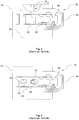
3 eine schematische Schnittdarstellung eines Teils eines Transporteurs aus dem Stand der Technik, der ein Rastsystem mit einem Rastelement, Federelement und einem Sperrelement, wobei das Rastelement keine Spülkanäle aufweist; -
4 eine um 90° gedrehte schematische Schnittdarstellung des Teils aus3 ; -
5 eine schematische Schnittdarstellung des Rastsystems eines erfindungsgemäßen Transporteurs aus Längsrichtung des Transporteurs, in der die Spülnuten des Sperrelements erkennbar sind; und -
6 eine schematische Schnittdarstellung des Rastsystems eines alternativen, erfindungsgemäßen Transporteurs aus Längsrichtung des Transporteurs.
-
1 a lateral, schematic sectional view of a resectoscope according to the invention, which has a transporter and an electrode instrument which can be longitudinally displaced by means of the carriage of the transporter; -
2 a lateral, schematic sectional view of a conveyor according to the invention with an electrode instrument that can be longitudinally displaced by means of the carriage of the conveyor; -
3 a schematic sectional view of part of a conveyor from the prior art, which has a locking system with a locking element, spring element and a locking element, wherein the locking element has no flushing channels; -
4th a schematic sectional view of the part rotated by 90 °3 ; -
5 a schematic sectional view of the locking system of a conveyor according to the invention from the longitudinal direction of the conveyor, in which the flushing grooves of the locking element can be seen; and -
6th a schematic sectional view of the locking system of an alternative conveyor according to the invention from the longitudinal direction of the conveyor.
AusführungsbeispieleEmbodiments
Weitere Vorteile, Kennzeichen und Merkmale der vorliegenden Erfindung werden bei der nachfolgenden detaillierten Beschreibung von Ausführungsbeispielen anhand der beigefügten Zeichnungen deutlich. Allerdings ist die Erfindung nicht auf diese Ausführungsbeispiele beschränkt.Further advantages, characteristics and features of the present invention will become clear in the following detailed description of exemplary embodiments with reference to the accompanying drawings. However, the invention is not restricted to these exemplary embodiments.
Das Resektoskop
Das Elektrodeninstrument
Das proximale Ende des Schaftes
Das dargestellte Resektoskop
Es ist der proximale Endbereich des Schaftabschnitts
Die Eingriffsöffnung
Der Transporteur
Die Spülnuten
An seinem außerhalb des Verbindungskörpers
Durch das Sperrelement
Im Gegensatz zu dem Transporteur
Das Entrastungselement
Darüber hinaus unterscheidet sich das in
Das Sperrelement
Obwohl die vorliegende Erfindung anhand der Ausführungsbeispiele detailliert beschrieben worden ist, ist für den Fachmann selbstverständlich, dass die Erfindung nicht auf diese Ausführungsbeispiele beschränkt ist, sondern dass vielmehr Abwandlungen in der Weise möglich sind, dass einzelne Merkmale weggelassen oder andersartige Kombinationen der vorgestellten Einzelmerkmale verwirklicht werden können, sofern der Schutzbereich der beigefügten Ansprüche nicht verlassen wird. Die vorliegende Offenbarung schließt sämtliche Kombinationen der vorgestellten Einzelmerkmale ein.Although the present invention has been described in detail on the basis of the exemplary embodiments, it is self-evident for the person skilled in the art that the invention is not limited to these exemplary embodiments, but rather that modifications are possible in such a way that individual features are omitted or other types of combinations of the individual features presented are implemented provided that the scope of protection of the appended claims is not left. The present disclosure includes all combinations of the individual features presented.
BezugszeichenlisteList of reference symbols
- 1010
- Transporteurcarrier
- 1212th
- ResektoskopResectoscope
- 1313th
- SystemkomponenteSystem component
- 1414th
- ArbeitsinstrumentWorking tool
- 1515th
- VerbindungskörperConnecting body
- 1616
- SchaftabschnittShaft section
- 1818th
- RastsystemLocking system
- 2020th
- RastelementLocking element
- 2222nd
- EingriffsöffnungEngagement opening
- 2323
- EingriffsnutEngagement groove
- 2424
- FederelementSpring element
- 2525th
- SpülkanalIrrigation channel
- 2626th
- SpülnutFlushing groove
- 2828
- Ende des RastelementsEnd of the locking element
- 3030th
- laterale Transporteurseitelateral conveyor side
- 3232
- kontralaterale Transporteurseitecontralateral carrier side
- 3434
- SperrelementLocking element
- 3636
- SperrnutLocking groove
- 3838
- AußenwandOuter wall
- 4040
- SpülkanalIrrigation channel
- 4242
- ElektrodeninstrumentElectrode instrument
- 4444
- Elektrodeelectrode
- 4646
- Schaft shaft
- 4848
- SchaftrohrsystemShaft tube system
- 5050
- OptikführungsrohrOptics guide tube
- 5252
- FührungselementGuide element
- 5454
- Optikoptics
- 5656
- GriffteilHandle part
- 5858
- GriffteilHandle part
- 6060
- FederbrückeSpring bridge
- 6262
- SchlittenSledge
- 6464
- KraftübertragungselementPower transmission element
- 6666
- EntrastungselementUnlatching element
Claims (14)
Priority Applications (5)
| Application Number | Priority Date | Filing Date | Title |
|---|---|---|---|
| DE102019132536.6A DE102019132536B3 (en) | 2019-11-29 | 2019-11-29 | Conveyor with locking device |
| EP20208106.3A EP3827775B1 (en) | 2019-11-29 | 2020-11-17 | Transporter with locking device |
| US17/100,426 US12193696B2 (en) | 2019-11-29 | 2020-11-20 | Transporter with locking device |
| JP2020193501A JP7154273B2 (en) | 2019-11-29 | 2020-11-20 | Feeder with latch mechanism |
| CN202011311498.5A CN112869866B (en) | 2019-11-29 | 2020-11-20 | Conveying device with locking mechanism |
Applications Claiming Priority (1)
| Application Number | Priority Date | Filing Date | Title |
|---|---|---|---|
| DE102019132536.6A DE102019132536B3 (en) | 2019-11-29 | 2019-11-29 | Conveyor with locking device |
Publications (1)
| Publication Number | Publication Date |
|---|---|
| DE102019132536B3 true DE102019132536B3 (en) | 2021-05-06 |
Family
ID=73455631
Family Applications (1)
| Application Number | Title | Priority Date | Filing Date |
|---|---|---|---|
| DE102019132536.6A Expired - Fee Related DE102019132536B3 (en) | 2019-11-29 | 2019-11-29 | Conveyor with locking device |
Country Status (5)
| Country | Link |
|---|---|
| US (1) | US12193696B2 (en) |
| EP (1) | EP3827775B1 (en) |
| JP (1) | JP7154273B2 (en) |
| CN (1) | CN112869866B (en) |
| DE (1) | DE102019132536B3 (en) |
Families Citing this family (1)
| Publication number | Priority date | Publication date | Assignee | Title |
|---|---|---|---|---|
| CN117694977B (en) * | 2024-02-06 | 2024-05-14 | 苏州同心医疗科技股份有限公司 | Tunneling tool |
Citations (4)
| Publication number | Priority date | Publication date | Assignee | Title |
|---|---|---|---|---|
| DE102010019781A1 (en) * | 2010-05-06 | 2011-11-10 | Olympus Winter & Ibe Gmbh | Surgical resectoscope for use by manufacturer of urological instrument, has shaft with distal end region arranged at proximate end of conveyor, flushing system producing flow of liquid in shaft, and sensor monitoring movement of electrode |
| DE102013001156A1 (en) * | 2013-01-24 | 2014-07-24 | Bowa-Electronic Gmbh & Co. Kg | Bipolar resectoscope |
| DE102011121792B4 (en) * | 2011-12-21 | 2015-07-02 | Olympus Winter & Ibe Gmbh | spacer |
| DE102015010877A1 (en) * | 2015-08-25 | 2017-03-02 | Olympus Winter & Ibe Gmbh | Transporter of a resectoscope, pivot bearing and spring unit with pivot bearing |
Family Cites Families (13)
| Publication number | Priority date | Publication date | Assignee | Title |
|---|---|---|---|---|
| JPS60113002U (en) | 1984-01-09 | 1985-07-31 | オリンパス光学工業株式会社 | resect scope |
| US4955884A (en) * | 1988-06-02 | 1990-09-11 | Circon Corporation | System for reducing drag on the movement of an electrode in a resectoscope |
| US5314406A (en) * | 1992-10-09 | 1994-05-24 | Symbiosis Corporation | Endoscopic electrosurgical suction-irrigation instrument |
| JPH10127651A (en) * | 1996-09-04 | 1998-05-19 | Olympus Optical Co Ltd | Treatment tool for operation |
| JP4229491B2 (en) * | 1997-07-16 | 2009-02-25 | オリンパス株式会社 | Surgical instrument |
| JP2003175047A (en) * | 1997-07-16 | 2003-06-24 | Olympus Optical Co Ltd | Treatment tool for surgery |
| US6358200B1 (en) | 1999-09-01 | 2002-03-19 | Circon Corporation | Continuous flow resectoscope with single tube sheath assembly and rotatable connection |
| DE10139449C1 (en) * | 2001-08-10 | 2003-04-03 | Winter & Ibe Olympus | Electrode for urological resectoscopes |
| DE10324704B4 (en) | 2003-05-30 | 2008-08-21 | Olympus Winter & Ibe Gmbh | Ureter resectoscope |
| DE102007012859B4 (en) * | 2007-03-17 | 2009-01-02 | Josef Albrecht Bohrfutterfabrik Gmbh & Co. Kg | Flushable food |
| DE102011011216B4 (en) | 2011-02-14 | 2019-08-22 | Olympus Winter & Ibe Gmbh | Resectoscope and sled and use for it |
| US20160193012A1 (en) * | 2013-08-15 | 2016-07-07 | Intuitive Surgical Operations, Inc. | Surgical instruments and methods of cleaning surgical instruments |
| DE102013022121A1 (en) * | 2013-12-18 | 2015-06-18 | Olympus Winter & Ibe Gmbh | Transporter for controlling the longitudinal displacement of an electrode |
-
2019
- 2019-11-29 DE DE102019132536.6A patent/DE102019132536B3/en not_active Expired - Fee Related
-
2020
- 2020-11-17 EP EP20208106.3A patent/EP3827775B1/en active Active
- 2020-11-20 JP JP2020193501A patent/JP7154273B2/en active Active
- 2020-11-20 US US17/100,426 patent/US12193696B2/en active Active
- 2020-11-20 CN CN202011311498.5A patent/CN112869866B/en active Active
Patent Citations (4)
| Publication number | Priority date | Publication date | Assignee | Title |
|---|---|---|---|---|
| DE102010019781A1 (en) * | 2010-05-06 | 2011-11-10 | Olympus Winter & Ibe Gmbh | Surgical resectoscope for use by manufacturer of urological instrument, has shaft with distal end region arranged at proximate end of conveyor, flushing system producing flow of liquid in shaft, and sensor monitoring movement of electrode |
| DE102011121792B4 (en) * | 2011-12-21 | 2015-07-02 | Olympus Winter & Ibe Gmbh | spacer |
| DE102013001156A1 (en) * | 2013-01-24 | 2014-07-24 | Bowa-Electronic Gmbh & Co. Kg | Bipolar resectoscope |
| DE102015010877A1 (en) * | 2015-08-25 | 2017-03-02 | Olympus Winter & Ibe Gmbh | Transporter of a resectoscope, pivot bearing and spring unit with pivot bearing |
Also Published As
| Publication number | Publication date |
|---|---|
| JP2021098000A (en) | 2021-07-01 |
| CN112869866A (en) | 2021-06-01 |
| US20210161550A1 (en) | 2021-06-03 |
| EP3827775A1 (en) | 2021-06-02 |
| US12193696B2 (en) | 2025-01-14 |
| JP7154273B2 (en) | 2022-10-17 |
| CN112869866B (en) | 2025-01-10 |
| EP3827775B1 (en) | 2022-02-23 |
Similar Documents
| Publication | Publication Date | Title |
|---|---|---|
| EP3876816B1 (en) | Endoscopic instrument | |
| DE10324704B4 (en) | Ureter resectoscope | |
| EP1523932B1 (en) | Endoscope | |
| EP2103264B1 (en) | Medical instrument | |
| EP3028623B1 (en) | Endoscopic instrument and endoscopic instrument system | |
| EP0977513B1 (en) | Medical sliding shaft instrument | |
| EP1052945B1 (en) | Tubular medical instrument | |
| DE10349825B3 (en) | Medical instrument | |
| DE102019102841A1 (en) | Detachable insulating insert for use in a resectoscope | |
| DE10358817B3 (en) | Endoscope for urethroscopy with deflection lever operated via operating rod fed through inner shaft adjacent corner edge between straight and curved sections of its outer contour | |
| EP3838205B1 (en) | Resectoscope with distal electrode guide | |
| EP4039213A1 (en) | Resectoscope and electrode instrument for a resectoscope | |
| DE102019132536B3 (en) | Conveyor with locking device | |
| DE102010054422B4 (en) | endoscope | |
| EP2340759A1 (en) | Endoscopic instrument | |
| DE10126541B4 (en) | Urological resectoscope for children | |
| EP4046583A1 (en) | Electrosurgical instrument and contact body for electrosurgical instrument | |
| WO2018229219A1 (en) | Carrier of a resectoscope and electrode instrument | |
| EP3363395A1 (en) | Probe device for resectoscope or other micro-invasive instrument | |
| EP3708103B1 (en) | Electrode instrument and resectoscope with gripping function | |
| DE102018125287A1 (en) | Resectoscope with shaft tube electrode instrument | |
| DE102015117731A1 (en) | Medical instrument | |
| DE102018122010A1 (en) | Resectoscope with actuator for power interruption | |
| DE102023119928A1 (en) | Surgical handpiece and insulating insert for a surgical handpiece | |
| DE102022129695A1 (en) | Electrosurgical hand instrument, insulating insert and electrode carrier for an electrosurgical hand instrument |
Legal Events
| Date | Code | Title | Description |
|---|---|---|---|
| R012 | Request for examination validly filed | ||
| R079 | Amendment of ipc main class |
Free format text: PREVIOUS MAIN CLASS: A61B0018000000 Ipc: A61B0018040000 |
|
| R016 | Response to examination communication | ||
| R018 | Grant decision by examination section/examining division | ||
| R020 | Patent grant now final | ||
| R119 | Application deemed withdrawn, or ip right lapsed, due to non-payment of renewal fee |