DE102007017884A1 - Novel vanilloid receptor ligands and their use in the preparation of medicines - Google Patents
Novel vanilloid receptor ligands and their use in the preparation of medicines Download PDFInfo
- Publication number
- DE102007017884A1 DE102007017884A1 DE102007017884A DE102007017884A DE102007017884A1 DE 102007017884 A1 DE102007017884 A1 DE 102007017884A1 DE 102007017884 A DE102007017884 A DE 102007017884A DE 102007017884 A DE102007017884 A DE 102007017884A DE 102007017884 A1 DE102007017884 A1 DE 102007017884A1
- Authority
- DE
- Germany
- Prior art keywords
- butyl
- group
- radical
- methyl
- phenyl
- Prior art date
- Legal status (The legal status is an assumption and is not a legal conclusion. Google has not performed a legal analysis and makes no representation as to the accuracy of the status listed.)
- Withdrawn
Links
- 239000003814 drug Substances 0.000 title claims abstract description 38
- 238000002360 preparation method Methods 0.000 title claims abstract description 35
- 229940079593 drug Drugs 0.000 title claims description 11
- 108010062740 TRPV Cation Channels Proteins 0.000 title abstract description 35
- 102000011040 TRPV Cation Channels Human genes 0.000 title abstract description 32
- 239000003446 ligand Substances 0.000 title abstract description 3
- 150000001875 compounds Chemical class 0.000 claims abstract description 164
- 238000000034 method Methods 0.000 claims abstract description 37
- 230000008569 process Effects 0.000 claims abstract description 8
- -1 heteroaryl radical Chemical class 0.000 claims description 420
- 150000003254 radicals Chemical class 0.000 claims description 148
- 239000000460 chlorine Substances 0.000 claims description 139
- 125000002496 methyl group Chemical group [H]C([H])([H])* 0.000 claims description 110
- 125000000959 isobutyl group Chemical group [H]C([H])([H])C([H])(C([H])([H])[H])C([H])([H])* 0.000 claims description 99
- 125000002914 sec-butyl group Chemical group [H]C([H])([H])C([H])([H])C([H])(*)C([H])([H])[H] 0.000 claims description 99
- 125000000999 tert-butyl group Chemical group [H]C([H])([H])C(*)(C([H])([H])[H])C([H])([H])[H] 0.000 claims description 99
- 125000001495 ethyl group Chemical group [H]C([H])([H])C([H])([H])* 0.000 claims description 97
- 125000001449 isopropyl group Chemical group [H]C([H])([H])C([H])(*)C([H])([H])[H] 0.000 claims description 93
- 229920006395 saturated elastomer Polymers 0.000 claims description 68
- 125000001424 substituent group Chemical group 0.000 claims description 65
- 125000004123 n-propyl group Chemical group [H]C([H])([H])C([H])([H])C([H])([H])* 0.000 claims description 59
- 229910052757 nitrogen Inorganic materials 0.000 claims description 59
- YKPUWZUDDOIDPM-SOFGYWHQSA-N capsaicin Chemical compound COC1=CC(CNC(=O)CCCC\C=C\C(C)C)=CC=C1O YKPUWZUDDOIDPM-SOFGYWHQSA-N 0.000 claims description 56
- 125000001997 phenyl group Chemical group [H]C1=C([H])C([H])=C(*)C([H])=C1[H] 0.000 claims description 53
- 229910052801 chlorine Inorganic materials 0.000 claims description 51
- 125000004108 n-butyl group Chemical group [H]C([H])([H])C([H])([H])C([H])([H])C([H])([H])* 0.000 claims description 51
- 208000002193 Pain Diseases 0.000 claims description 50
- YMWUJEATGCHHMB-UHFFFAOYSA-N Dichloromethane Chemical compound ClCCl YMWUJEATGCHHMB-UHFFFAOYSA-N 0.000 claims description 45
- 229910052794 bromium Inorganic materials 0.000 claims description 43
- 229910052731 fluorine Inorganic materials 0.000 claims description 42
- HBAQYPYDRFILMT-UHFFFAOYSA-N 8-[3-(1-cyclopropylpyrazol-4-yl)-1H-pyrazolo[4,3-d]pyrimidin-5-yl]-3-methyl-3,8-diazabicyclo[3.2.1]octan-2-one Chemical class C1(CC1)N1N=CC(=C1)C1=NNC2=C1N=C(N=C2)N1C2C(N(CC1CC2)C)=O HBAQYPYDRFILMT-UHFFFAOYSA-N 0.000 claims description 40
- 229910052720 vanadium Inorganic materials 0.000 claims description 40
- 125000000740 n-pentyl group Chemical group [H]C([H])([H])C([H])([H])C([H])([H])C([H])([H])C([H])([H])* 0.000 claims description 39
- 208000011117 substance-related disease Diseases 0.000 claims description 38
- 239000000203 mixture Substances 0.000 claims description 34
- 125000005842 heteroatom Chemical group 0.000 claims description 32
- 229910052740 iodine Inorganic materials 0.000 claims description 32
- 239000012429 reaction media Substances 0.000 claims description 32
- 150000003839 salts Chemical class 0.000 claims description 32
- 125000001931 aliphatic group Chemical group 0.000 claims description 30
- 208000037265 diseases, disorders, signs and symptoms Diseases 0.000 claims description 30
- 230000036407 pain Effects 0.000 claims description 29
- 238000011282 treatment Methods 0.000 claims description 29
- YZCKVEUIGOORGS-IGMARMGPSA-N Protium Chemical compound [1H] YZCKVEUIGOORGS-IGMARMGPSA-N 0.000 claims description 28
- 229960002504 capsaicin Drugs 0.000 claims description 28
- 235000017663 capsaicin Nutrition 0.000 claims description 28
- 125000002950 monocyclic group Chemical group 0.000 claims description 28
- 125000001797 benzyl group Chemical group [H]C1=C([H])C([H])=C(C([H])=C1[H])C([H])([H])* 0.000 claims description 26
- 125000004076 pyridyl group Chemical group 0.000 claims description 26
- 206010013663 drug dependence Diseases 0.000 claims description 25
- IJGRMHOSHXDMSA-UHFFFAOYSA-N Atomic nitrogen Chemical compound N#N IJGRMHOSHXDMSA-UHFFFAOYSA-N 0.000 claims description 24
- VEXZGXHMUGYJMC-UHFFFAOYSA-N Hydrochloric acid Chemical compound Cl VEXZGXHMUGYJMC-UHFFFAOYSA-N 0.000 claims description 24
- 125000000113 cyclohexyl group Chemical group [H]C1([H])C([H])([H])C([H])([H])C([H])(*)C([H])([H])C1([H])[H] 0.000 claims description 24
- 125000001511 cyclopentyl group Chemical group [H]C1([H])C([H])([H])C([H])([H])C([H])(*)C1([H])[H] 0.000 claims description 24
- 239000012453 solvate Substances 0.000 claims description 22
- 125000003161 (C1-C6) alkylene group Chemical group 0.000 claims description 21
- 125000001995 cyclobutyl group Chemical group [H]C1([H])C([H])([H])C([H])(*)C1([H])[H] 0.000 claims description 21
- 125000001559 cyclopropyl group Chemical group [H]C1([H])C([H])([H])C1([H])* 0.000 claims description 21
- KDLHZDBZIXYQEI-UHFFFAOYSA-N Palladium Chemical compound [Pd] KDLHZDBZIXYQEI-UHFFFAOYSA-N 0.000 claims description 20
- 125000000217 alkyl group Chemical group 0.000 claims description 20
- 201000010099 disease Diseases 0.000 claims description 20
- 238000002156 mixing Methods 0.000 claims description 20
- 125000003386 piperidinyl group Chemical group 0.000 claims description 20
- 125000000719 pyrrolidinyl group Chemical group 0.000 claims description 20
- 125000000391 vinyl group Chemical group [H]C([*])=C([H])[H] 0.000 claims description 19
- 208000007271 Substance Withdrawal Syndrome Diseases 0.000 claims description 18
- 125000003538 pentan-3-yl group Chemical group [H]C([H])([H])C([H])([H])C([H])(*)C([H])([H])C([H])([H])[H] 0.000 claims description 18
- 125000003373 pyrazinyl group Chemical group 0.000 claims description 18
- 125000000335 thiazolyl group Chemical group 0.000 claims description 18
- 125000001544 thienyl group Chemical group 0.000 claims description 18
- 125000003118 aryl group Chemical group 0.000 claims description 17
- 125000003725 azepanyl group Chemical group 0.000 claims description 17
- 125000002757 morpholinyl group Chemical group 0.000 claims description 17
- 125000004193 piperazinyl group Chemical group 0.000 claims description 17
- 125000004368 propenyl group Chemical group C(=CC)* 0.000 claims description 17
- 125000004974 2-butenyl group Chemical group C(C=CC)* 0.000 claims description 16
- 125000006024 2-pentenyl group Chemical group 0.000 claims description 16
- 125000004975 3-butenyl group Chemical group C(CC=C)* 0.000 claims description 16
- LFQSCWFLJHTTHZ-UHFFFAOYSA-N Ethanol Chemical compound CCO LFQSCWFLJHTTHZ-UHFFFAOYSA-N 0.000 claims description 16
- 125000004474 heteroalkylene group Chemical group 0.000 claims description 16
- 238000011321 prophylaxis Methods 0.000 claims description 16
- 239000002585 base Substances 0.000 claims description 15
- 125000005959 diazepanyl group Chemical group 0.000 claims description 15
- 125000004568 thiomorpholinyl group Chemical group 0.000 claims description 15
- 125000001280 n-hexyl group Chemical group C(CCCCC)* 0.000 claims description 14
- 125000000464 thioxo group Chemical group S=* 0.000 claims description 14
- 229910052721 tungsten Inorganic materials 0.000 claims description 14
- 125000006590 (C2-C6) alkenylene group Chemical group 0.000 claims description 13
- 206010013654 Drug abuse Diseases 0.000 claims description 13
- 206010061218 Inflammation Diseases 0.000 claims description 13
- LKJPYSCBVHEWIU-UHFFFAOYSA-N N-[4-cyano-3-(trifluoromethyl)phenyl]-3-[(4-fluorophenyl)sulfonyl]-2-hydroxy-2-methylpropanamide Chemical compound C=1C=C(C#N)C(C(F)(F)F)=CC=1NC(=O)C(O)(C)CS(=O)(=O)C1=CC=C(F)C=C1 LKJPYSCBVHEWIU-UHFFFAOYSA-N 0.000 claims description 13
- 230000000694 effects Effects 0.000 claims description 13
- 230000004054 inflammatory process Effects 0.000 claims description 13
- 125000003136 n-heptyl group Chemical group [H]C([H])([H])C([H])([H])C([H])([H])C([H])([H])C([H])([H])C([H])([H])C([H])([H])* 0.000 claims description 13
- 125000001624 naphthyl group Chemical group 0.000 claims description 13
- 208000004296 neuralgia Diseases 0.000 claims description 13
- 208000021722 neuropathic pain Diseases 0.000 claims description 13
- 125000000168 pyrrolyl group Chemical group 0.000 claims description 13
- 125000006591 (C2-C6) alkynylene group Chemical group 0.000 claims description 12
- 208000007848 Alcoholism Diseases 0.000 claims description 12
- 206010020853 Hypertonic bladder Diseases 0.000 claims description 12
- 208000009722 Overactive Urinary Bladder Diseases 0.000 claims description 12
- 229910052770 Uranium Inorganic materials 0.000 claims description 12
- 238000003556 assay Methods 0.000 claims description 12
- 125000004432 carbon atom Chemical group C* 0.000 claims description 12
- 125000004093 cyano group Chemical group *C#N 0.000 claims description 12
- 125000002541 furyl group Chemical group 0.000 claims description 12
- 125000002883 imidazolyl group Chemical group 0.000 claims description 12
- 125000001041 indolyl group Chemical group 0.000 claims description 12
- 125000000842 isoxazolyl group Chemical group 0.000 claims description 12
- 208000020629 overactive bladder Diseases 0.000 claims description 12
- 125000002971 oxazolyl group Chemical group 0.000 claims description 12
- 229910052760 oxygen Inorganic materials 0.000 claims description 12
- 125000004309 pyranyl group Chemical group O1C(C=CC=C1)* 0.000 claims description 12
- 125000003226 pyrazolyl group Chemical group 0.000 claims description 12
- 229910052717 sulfur Inorganic materials 0.000 claims description 12
- 125000001425 triazolyl group Chemical group 0.000 claims description 12
- 208000000094 Chronic Pain Diseases 0.000 claims description 11
- 108010025083 TRPV1 receptor Proteins 0.000 claims description 11
- 229910052799 carbon Inorganic materials 0.000 claims description 11
- 125000000582 cycloheptyl group Chemical group [H]C1([H])C([H])([H])C([H])([H])C([H])([H])C([H])(*)C([H])([H])C1([H])[H] 0.000 claims description 11
- 125000002632 imidazolidinyl group Chemical group 0.000 claims description 11
- 230000005764 inhibitory process Effects 0.000 claims description 11
- 125000000904 isoindolyl group Chemical group C=1(NC=C2C=CC=CC12)* 0.000 claims description 11
- 125000001972 isopentyl group Chemical group [H]C([H])([H])C([H])(C([H])([H])[H])C([H])([H])C([H])([H])* 0.000 claims description 11
- 125000003718 tetrahydrofuranyl group Chemical group 0.000 claims description 11
- 125000003507 tetrahydrothiofenyl group Chemical group 0.000 claims description 11
- 208000004454 Hyperalgesia Diseases 0.000 claims description 10
- NINIDFKCEFEMDL-UHFFFAOYSA-N Sulfur Chemical compound [S] NINIDFKCEFEMDL-UHFFFAOYSA-N 0.000 claims description 10
- 102100029613 Transient receptor potential cation channel subfamily V member 1 Human genes 0.000 claims description 10
- 239000002253 acid Substances 0.000 claims description 10
- 208000005298 acute pain Diseases 0.000 claims description 10
- QVGXLLKOCUKJST-UHFFFAOYSA-N atomic oxygen Chemical compound [O] QVGXLLKOCUKJST-UHFFFAOYSA-N 0.000 claims description 10
- 239000003638 chemical reducing agent Substances 0.000 claims description 10
- 208000035475 disorder Diseases 0.000 claims description 10
- 239000001301 oxygen Substances 0.000 claims description 10
- 239000000546 pharmaceutical excipient Substances 0.000 claims description 10
- 239000011593 sulfur Substances 0.000 claims description 10
- 125000003352 4-tert-butyl benzyl group Chemical group [H]C1=C([H])C(=C([H])C([H])=C1C([H])([H])*)C(C([H])([H])[H])(C([H])([H])[H])C([H])([H])[H] 0.000 claims description 9
- 108050004388 Transient receptor potential cation channel subfamily V member 1 Proteins 0.000 claims description 9
- 206010046543 Urinary incontinence Diseases 0.000 claims description 9
- 208000027418 Wounds and injury Diseases 0.000 claims description 9
- 125000004122 cyclic group Chemical group 0.000 claims description 9
- 239000001257 hydrogen Substances 0.000 claims description 9
- 229910052739 hydrogen Inorganic materials 0.000 claims description 9
- 208000009935 visceral pain Diseases 0.000 claims description 9
- HEDRZPFGACZZDS-UHFFFAOYSA-N Chloroform Chemical compound ClC(Cl)Cl HEDRZPFGACZZDS-UHFFFAOYSA-N 0.000 claims description 8
- 239000003054 catalyst Substances 0.000 claims description 8
- 238000011161 development Methods 0.000 claims description 8
- 238000004519 manufacturing process Methods 0.000 claims description 8
- GRVDJDISBSALJP-UHFFFAOYSA-N methyloxidanyl Chemical compound [O]C GRVDJDISBSALJP-UHFFFAOYSA-N 0.000 claims description 8
- 125000004433 nitrogen atom Chemical group N* 0.000 claims description 8
- 125000006344 nonafluoro n-butyl group Chemical group FC(F)(F)C(F)(F)C(F)(F)C(F)(F)* 0.000 claims description 8
- 125000003566 oxetanyl group Chemical group 0.000 claims description 8
- BASFCYQUMIYNBI-UHFFFAOYSA-N platinum Chemical compound [Pt] BASFCYQUMIYNBI-UHFFFAOYSA-N 0.000 claims description 8
- 210000003491 skin Anatomy 0.000 claims description 8
- 208000017520 skin disease Diseases 0.000 claims description 8
- UFHFLCQGNIYNRP-UHFFFAOYSA-N Hydrogen Chemical compound [H][H] UFHFLCQGNIYNRP-UHFFFAOYSA-N 0.000 claims description 7
- 208000019695 Migraine disease Diseases 0.000 claims description 7
- 239000000556 agonist Substances 0.000 claims description 7
- 125000000484 butyl group Chemical group [H]C([*])([H])C([H])([H])C([H])([H])C([H])([H])[H] 0.000 claims description 7
- 208000010877 cognitive disease Diseases 0.000 claims description 7
- 210000001508 eye Anatomy 0.000 claims description 7
- 239000012280 lithium aluminium hydride Substances 0.000 claims description 7
- 206010027599 migraine Diseases 0.000 claims description 7
- 230000004770 neurodegeneration Effects 0.000 claims description 7
- 208000015122 neurodegenerative disease Diseases 0.000 claims description 7
- 125000000094 2-phenylethyl group Chemical group [H]C1=C([H])C([H])=C(C([H])=C1[H])C([H])([H])C([H])([H])* 0.000 claims description 6
- 208000024827 Alzheimer disease Diseases 0.000 claims description 6
- 208000006820 Arthralgia Diseases 0.000 claims description 6
- 208000018737 Parkinson disease Diseases 0.000 claims description 6
- 206010001584 alcohol abuse Diseases 0.000 claims description 6
- 201000007930 alcohol dependence Diseases 0.000 claims description 6
- 208000025746 alcohol use disease Diseases 0.000 claims description 6
- 206010053552 allodynia Diseases 0.000 claims description 6
- 125000000596 cyclohexenyl group Chemical group C1(=CCCCC1)* 0.000 claims description 6
- 238000006073 displacement reaction Methods 0.000 claims description 6
- 210000000936 intestine Anatomy 0.000 claims description 6
- 201000006417 multiple sclerosis Diseases 0.000 claims description 6
- 210000002850 nasal mucosa Anatomy 0.000 claims description 6
- 210000005036 nerve Anatomy 0.000 claims description 6
- 229940005483 opioid analgesics Drugs 0.000 claims description 6
- 125000002098 pyridazinyl group Chemical group 0.000 claims description 6
- 125000000714 pyrimidinyl group Chemical group 0.000 claims description 6
- 239000012279 sodium borohydride Substances 0.000 claims description 6
- 229910000033 sodium borohydride Inorganic materials 0.000 claims description 6
- 229910000104 sodium hydride Inorganic materials 0.000 claims description 6
- 210000003932 urinary bladder Anatomy 0.000 claims description 6
- WKBOTKDWSSQWDR-UHFFFAOYSA-N Bromine atom Chemical group [Br] WKBOTKDWSSQWDR-UHFFFAOYSA-N 0.000 claims description 5
- 206010011224 Cough Diseases 0.000 claims description 5
- 206010012735 Diarrhoea Diseases 0.000 claims description 5
- 208000023105 Huntington disease Diseases 0.000 claims description 5
- 208000026139 Memory disease Diseases 0.000 claims description 5
- 208000003251 Pruritus Diseases 0.000 claims description 5
- 239000012298 atmosphere Substances 0.000 claims description 5
- 210000000748 cardiovascular system Anatomy 0.000 claims description 5
- 230000006378 damage Effects 0.000 claims description 5
- 206010015037 epilepsy Diseases 0.000 claims description 5
- 230000037406 food intake Effects 0.000 claims description 5
- 235000012631 food intake Nutrition 0.000 claims description 5
- 125000003187 heptyl group Chemical group [H]C([*])([H])C([H])([H])C([H])([H])C([H])([H])C([H])([H])C([H])([H])C([H])([H])[H] 0.000 claims description 5
- 125000003453 indazolyl group Chemical group N1N=C(C2=C1C=CC=C2)* 0.000 claims description 5
- 208000014674 injury Diseases 0.000 claims description 5
- 125000002183 isoquinolinyl group Chemical group C1(=NC=CC2=CC=CC=C12)* 0.000 claims description 5
- VNWKTOKETHGBQD-UHFFFAOYSA-N methane Chemical compound C VNWKTOKETHGBQD-UHFFFAOYSA-N 0.000 claims description 5
- CYQAYERJWZKYML-UHFFFAOYSA-N phosphorus pentasulfide Chemical compound S1P(S2)(=S)SP3(=S)SP1(=S)SP2(=S)S3 CYQAYERJWZKYML-UHFFFAOYSA-N 0.000 claims description 5
- 125000002943 quinolinyl group Chemical group N1=C(C=CC2=CC=CC=C12)* 0.000 claims description 5
- 125000001567 quinoxalinyl group Chemical group N1=C(C=NC2=CC=CC=C12)* 0.000 claims description 5
- RLWGDRLXZSLGHV-UHFFFAOYSA-N 1-[[4-(2-aminoethoxy)-3-methoxyphenyl]methyl]-3-[(4-tert-butylphenyl)methyl]urea Chemical compound C1=C(OCCN)C(OC)=CC(CNC(=O)NCC=2C=CC(=CC=2)C(C)(C)C)=C1 RLWGDRLXZSLGHV-UHFFFAOYSA-N 0.000 claims description 4
- OUEKLNJUMVZULZ-UHFFFAOYSA-N 2-[4-(2-aminoethoxy)-3-methoxyphenyl]-n-[3-(3,4-dimethylphenyl)propyl]acetamide;hydron;chloride Chemical compound Cl.C1=C(OCCN)C(OC)=CC(CC(=O)NCCCC=2C=C(C)C(C)=CC=2)=C1 OUEKLNJUMVZULZ-UHFFFAOYSA-N 0.000 claims description 4
- 208000032841 Bulimia Diseases 0.000 claims description 4
- 206010006550 Bulimia nervosa Diseases 0.000 claims description 4
- 206010006895 Cachexia Diseases 0.000 claims description 4
- 208000001387 Causalgia Diseases 0.000 claims description 4
- KZBUYRJDOAKODT-UHFFFAOYSA-N Chlorine Chemical compound ClCl KZBUYRJDOAKODT-UHFFFAOYSA-N 0.000 claims description 4
- 208000023890 Complex Regional Pain Syndromes Diseases 0.000 claims description 4
- IKYCZSUNGFRBJS-UHFFFAOYSA-N Euphorbia factor RL9 = U(1) = Resiniferatoxin Natural products COC1=CC(O)=CC(CC(=O)OCC=2CC3(O)C(=O)C(C)=CC3C34C(C)CC5(OC(O4)(CC=4C=CC=CC=4)OC5C3C=2)C(C)=C)=C1 IKYCZSUNGFRBJS-UHFFFAOYSA-N 0.000 claims description 4
- 206010015946 Eye irritation Diseases 0.000 claims description 4
- 208000009889 Herpes Simplex Diseases 0.000 claims description 4
- OAKJQQAXSVQMHS-UHFFFAOYSA-N Hydrazine Chemical compound NN OAKJQQAXSVQMHS-UHFFFAOYSA-N 0.000 claims description 4
- 208000035154 Hyperesthesia Diseases 0.000 claims description 4
- 206010020772 Hypertension Diseases 0.000 claims description 4
- 206010020843 Hyperthermia Diseases 0.000 claims description 4
- OPZKBPQVWDSATI-KHPPLWFESA-N N-Vanillyloleamide Chemical compound CCCCCCCC\C=C/CCCCCCCC(=O)NCC1=CC=C(O)C(OC)=C1 OPZKBPQVWDSATI-KHPPLWFESA-N 0.000 claims description 4
- QVLMCRFQGHWOPM-ZKWNWVNESA-N N-arachidonoyl vanillylamine Chemical compound CCCCC\C=C/C\C=C/C\C=C/C\C=C/CCCC(=O)NCC1=CC=C(O)C(OC)=C1 QVLMCRFQGHWOPM-ZKWNWVNESA-N 0.000 claims description 4
- 208000028389 Nerve injury Diseases 0.000 claims description 4
- 208000008589 Obesity Diseases 0.000 claims description 4
- 208000001132 Osteoporosis Diseases 0.000 claims description 4
- 206010035664 Pneumonia Diseases 0.000 claims description 4
- 208000004880 Polyuria Diseases 0.000 claims description 4
- 208000025747 Rheumatic disease Diseases 0.000 claims description 4
- 206010040880 Skin irritation Diseases 0.000 claims description 4
- KEAYESYHFKHZAL-UHFFFAOYSA-N Sodium Chemical compound [Na] KEAYESYHFKHZAL-UHFFFAOYSA-N 0.000 claims description 4
- 208000007107 Stomach Ulcer Diseases 0.000 claims description 4
- 206010047642 Vitiligo Diseases 0.000 claims description 4
- 206010052428 Wound Diseases 0.000 claims description 4
- CIUQDSCDWFSTQR-UHFFFAOYSA-N [C]1=CC=CC=C1 Chemical compound [C]1=CC=CC=C1 CIUQDSCDWFSTQR-UHFFFAOYSA-N 0.000 claims description 4
- 230000000172 allergic effect Effects 0.000 claims description 4
- 208000022531 anorexia Diseases 0.000 claims description 4
- 206010003246 arthritis Diseases 0.000 claims description 4
- 208000006673 asthma Diseases 0.000 claims description 4
- 208000010668 atopic eczema Diseases 0.000 claims description 4
- AZWXAPCAJCYGIA-UHFFFAOYSA-N bis(2-methylpropyl)alumane Chemical compound CC(C)C[AlH]CC(C)C AZWXAPCAJCYGIA-UHFFFAOYSA-N 0.000 claims description 4
- 210000000621 bronchi Anatomy 0.000 claims description 4
- 206010006451 bronchitis Diseases 0.000 claims description 4
- 230000001149 cognitive effect Effects 0.000 claims description 4
- 208000014439 complex regional pain syndrome type 2 Diseases 0.000 claims description 4
- 239000007822 coupling agent Substances 0.000 claims description 4
- 206010061428 decreased appetite Diseases 0.000 claims description 4
- 230000007812 deficiency Effects 0.000 claims description 4
- 230000035619 diuresis Effects 0.000 claims description 4
- 208000000718 duodenal ulcer Diseases 0.000 claims description 4
- 231100000013 eye irritation Toxicity 0.000 claims description 4
- 210000001035 gastrointestinal tract Anatomy 0.000 claims description 4
- 230000036031 hyperthermia Effects 0.000 claims description 4
- 208000002551 irritable bowel syndrome Diseases 0.000 claims description 4
- 230000008764 nerve damage Effects 0.000 claims description 4
- 201000001119 neuropathy Diseases 0.000 claims description 4
- 230000007823 neuropathy Effects 0.000 claims description 4
- 235000020824 obesity Nutrition 0.000 claims description 4
- OPZKBPQVWDSATI-UHFFFAOYSA-N oleoyl vanillylamide Natural products CCCCCCCCC=CCCCCCCCC(=O)NCC1=CC=C(O)C(OC)=C1 OPZKBPQVWDSATI-UHFFFAOYSA-N 0.000 claims description 4
- 229950010717 olvanil Drugs 0.000 claims description 4
- 201000008482 osteoarthritis Diseases 0.000 claims description 4
- 229910052763 palladium Inorganic materials 0.000 claims description 4
- 208000033808 peripheral neuropathy Diseases 0.000 claims description 4
- KHUXNRRPPZOJPT-UHFFFAOYSA-N phenoxy radical Chemical compound O=C1C=C[CH]C=C1 KHUXNRRPPZOJPT-UHFFFAOYSA-N 0.000 claims description 4
- 229910052697 platinum Inorganic materials 0.000 claims description 4
- NTTOTNSKUYCDAV-UHFFFAOYSA-N potassium hydride Chemical compound [KH] NTTOTNSKUYCDAV-UHFFFAOYSA-N 0.000 claims description 4
- 229910000105 potassium hydride Inorganic materials 0.000 claims description 4
- DSDNAKHZNJAGHN-UHFFFAOYSA-N resinferatoxin Natural products C1=C(O)C(OC)=CC(CC(=O)OCC=2CC3(O)C(=O)C(C)=CC3C34C(C)CC5(OC(O4)(CC=4C=CC=CC=4)OC5C3C=2)C(C)=C)=C1 DSDNAKHZNJAGHN-UHFFFAOYSA-N 0.000 claims description 4
- DSDNAKHZNJAGHN-MXTYGGKSSA-N resiniferatoxin Chemical compound C1=C(O)C(OC)=CC(CC(=O)OCC=2C[C@]3(O)C(=O)C(C)=C[C@H]3[C@@]34[C@H](C)C[C@@]5(O[C@@](O4)(CC=4C=CC=CC=4)O[C@@H]5[C@@H]3C=2)C(C)=C)=C1 DSDNAKHZNJAGHN-MXTYGGKSSA-N 0.000 claims description 4
- 229940073454 resiniferatoxin Drugs 0.000 claims description 4
- 208000023504 respiratory system disease Diseases 0.000 claims description 4
- 230000036556 skin irritation Effects 0.000 claims description 4
- 231100000475 skin irritation Toxicity 0.000 claims description 4
- 239000012312 sodium hydride Substances 0.000 claims description 4
- 230000001960 triggered effect Effects 0.000 claims description 4
- RIOQSEWOXXDEQQ-UHFFFAOYSA-N triphenylphosphine Chemical compound C1=CC=CC=C1P(C=1C=CC=CC=1)C1=CC=CC=C1 RIOQSEWOXXDEQQ-UHFFFAOYSA-N 0.000 claims description 4
- 125000002433 cyclopentenyl group Chemical group C1(=CCCC1)* 0.000 claims description 3
- 125000003831 tetrazolyl group Chemical group 0.000 claims description 3
- DGAQECJNVWCQMB-PUAWFVPOSA-M Ilexoside XXIX Chemical compound C[C@@H]1CC[C@@]2(CC[C@@]3(C(=CC[C@H]4[C@]3(CC[C@@H]5[C@@]4(CC[C@@H](C5(C)C)OS(=O)(=O)[O-])C)C)[C@@H]2[C@]1(C)O)C)C(=O)O[C@H]6[C@@H]([C@H]([C@@H]([C@H](O6)CO)O)O)O.[Na+] DGAQECJNVWCQMB-PUAWFVPOSA-M 0.000 claims description 2
- 230000007278 cognition impairment Effects 0.000 claims description 2
- MKRTXPORKIRPDG-UHFFFAOYSA-N diphenylphosphoryl azide Chemical compound C=1C=CC=CC=1P(=O)(N=[N+]=[N-])C1=CC=CC=C1 MKRTXPORKIRPDG-UHFFFAOYSA-N 0.000 claims description 2
- 125000004435 hydrogen atom Chemical group [H]* 0.000 claims description 2
- 229910052708 sodium Inorganic materials 0.000 claims description 2
- 239000011734 sodium Substances 0.000 claims description 2
- 238000002690 local anesthesia Methods 0.000 claims 2
- 101000633069 Homo sapiens Transient receptor potential cation channel subfamily V member 1 Proteins 0.000 claims 1
- 125000002023 trifluoromethyl group Chemical group FC(F)(F)* 0.000 claims 1
- 239000008194 pharmaceutical composition Substances 0.000 abstract 1
- OKKJLVBELUTLKV-UHFFFAOYSA-N Methanol Chemical compound OC OKKJLVBELUTLKV-UHFFFAOYSA-N 0.000 description 35
- FAPWRFPIFSIZLT-UHFFFAOYSA-M Sodium chloride Chemical compound [Na+].[Cl-] FAPWRFPIFSIZLT-UHFFFAOYSA-M 0.000 description 31
- WSFSSNUMVMOOMR-UHFFFAOYSA-N Formaldehyde Chemical compound O=C WSFSSNUMVMOOMR-UHFFFAOYSA-N 0.000 description 30
- VLKZOEOYAKHREP-UHFFFAOYSA-N n-Hexane Chemical compound CCCCCC VLKZOEOYAKHREP-UHFFFAOYSA-N 0.000 description 30
- 239000011541 reaction mixture Substances 0.000 description 27
- 239000000243 solution Substances 0.000 description 23
- WYURNTSHIVDZCO-UHFFFAOYSA-N Tetrahydrofuran Chemical compound C1CCOC1 WYURNTSHIVDZCO-UHFFFAOYSA-N 0.000 description 20
- 239000000126 substance Substances 0.000 description 20
- 241001465754 Metazoa Species 0.000 description 18
- 239000002904 solvent Substances 0.000 description 18
- ZMXDDKWLCZADIW-UHFFFAOYSA-N N,N-Dimethylformamide Chemical compound CN(C)C=O ZMXDDKWLCZADIW-UHFFFAOYSA-N 0.000 description 17
- WEVYAHXRMPXWCK-UHFFFAOYSA-N Acetonitrile Chemical compound CC#N WEVYAHXRMPXWCK-UHFFFAOYSA-N 0.000 description 15
- 238000007792 addition Methods 0.000 description 14
- 150000001412 amines Chemical class 0.000 description 14
- 238000006243 chemical reaction Methods 0.000 description 14
- 239000012074 organic phase Substances 0.000 description 14
- 239000011780 sodium chloride Substances 0.000 description 14
- 238000012360 testing method Methods 0.000 description 14
- 210000004027 cell Anatomy 0.000 description 13
- HEMHJVSKTPXQMS-UHFFFAOYSA-M Sodium hydroxide Chemical compound [OH-].[Na+] HEMHJVSKTPXQMS-UHFFFAOYSA-M 0.000 description 12
- 238000004440 column chromatography Methods 0.000 description 12
- RTZKZFJDLAIYFH-UHFFFAOYSA-N Diethyl ether Chemical compound CCOCC RTZKZFJDLAIYFH-UHFFFAOYSA-N 0.000 description 11
- 229910004298 SiO 2 Inorganic materials 0.000 description 11
- 238000004992 fast atom bombardment mass spectroscopy Methods 0.000 description 11
- 238000005481 NMR spectroscopy Methods 0.000 description 10
- VYPSYNLAJGMNEJ-UHFFFAOYSA-N Silicium dioxide Chemical compound O=[Si]=O VYPSYNLAJGMNEJ-UHFFFAOYSA-N 0.000 description 9
- 102000003566 TRPV1 Human genes 0.000 description 9
- 101150016206 Trpv1 gene Proteins 0.000 description 9
- 230000004941 influx Effects 0.000 description 9
- 239000007924 injection Substances 0.000 description 9
- 238000002347 injection Methods 0.000 description 9
- 239000000725 suspension Substances 0.000 description 9
- GQHTUMJGOHRCHB-UHFFFAOYSA-N 2,3,4,6,7,8,9,10-octahydropyrimido[1,2-a]azepine Chemical compound C1CCCCN2CCCN=C21 GQHTUMJGOHRCHB-UHFFFAOYSA-N 0.000 description 8
- CSNNHWWHGAXBCP-UHFFFAOYSA-L Magnesium sulfate Chemical compound [Mg+2].[O-][S+2]([O-])([O-])[O-] CSNNHWWHGAXBCP-UHFFFAOYSA-L 0.000 description 8
- 239000003480 eluent Substances 0.000 description 8
- 239000008279 sol Substances 0.000 description 8
- XLYOFNOQVPJJNP-UHFFFAOYSA-N water Substances O XLYOFNOQVPJJNP-UHFFFAOYSA-N 0.000 description 8
- 239000012071 phase Substances 0.000 description 7
- QTBSBXVTEAMEQO-UHFFFAOYSA-N Acetic acid Chemical compound CC(O)=O QTBSBXVTEAMEQO-UHFFFAOYSA-N 0.000 description 6
- 0 Cc(c(*)c1N(*)S(*)(=O)=O)c(C(*)(*2)C(O)=O)c2c1N Chemical compound Cc(c(*)c1N(*)S(*)(=O)=O)c(C(*)(*2)C(O)=O)c2c1N 0.000 description 6
- OUVXYXNWSVIOSJ-UHFFFAOYSA-N Fluo-4 Chemical compound CC1=CC=C(N(CC(O)=O)CC(O)=O)C(OCCOC=2C(=CC=C(C=2)C2=C3C=C(F)C(=O)C=C3OC3=CC(O)=C(F)C=C32)N(CC(O)=O)CC(O)=O)=C1 OUVXYXNWSVIOSJ-UHFFFAOYSA-N 0.000 description 6
- JUJWROOIHBZHMG-UHFFFAOYSA-N Pyridine Chemical compound C1=CC=NC=C1 JUJWROOIHBZHMG-UHFFFAOYSA-N 0.000 description 6
- YXFVVABEGXRONW-UHFFFAOYSA-N Toluene Chemical compound CC1=CC=CC=C1 YXFVVABEGXRONW-UHFFFAOYSA-N 0.000 description 6
- HEDRZPFGACZZDS-MICDWDOJSA-N Trichloro(2H)methane Chemical compound [2H]C(Cl)(Cl)Cl HEDRZPFGACZZDS-MICDWDOJSA-N 0.000 description 6
- ZMANZCXQSJIPKH-UHFFFAOYSA-N Triethylamine Chemical compound CCN(CC)CC ZMANZCXQSJIPKH-UHFFFAOYSA-N 0.000 description 6
- 238000004113 cell culture Methods 0.000 description 6
- 150000007513 acids Chemical class 0.000 description 5
- 239000000872 buffer Substances 0.000 description 5
- 230000002631 hypothermal effect Effects 0.000 description 5
- 238000011534 incubation Methods 0.000 description 5
- 238000005259 measurement Methods 0.000 description 5
- 239000002609 medium Substances 0.000 description 5
- 239000003068 molecular probe Substances 0.000 description 5
- 150000002825 nitriles Chemical class 0.000 description 5
- QLNJFJADRCOGBJ-UHFFFAOYSA-N propionamide Chemical compound CCC(N)=O QLNJFJADRCOGBJ-UHFFFAOYSA-N 0.000 description 5
- 238000010992 reflux Methods 0.000 description 5
- LMDZBCPBFSXMTL-UHFFFAOYSA-N 1-ethyl-3-(3-dimethylaminopropyl)carbodiimide Chemical compound CCN=C=NCCCN(C)C LMDZBCPBFSXMTL-UHFFFAOYSA-N 0.000 description 4
- RLQZIECDMISZHS-UHFFFAOYSA-N 2-phenylcyclohexa-2,5-diene-1,4-dione Chemical compound O=C1C=CC(=O)C(C=2C=CC=CC=2)=C1 RLQZIECDMISZHS-UHFFFAOYSA-N 0.000 description 4
- FPQQSJJWHUJYPU-UHFFFAOYSA-N 3-(dimethylamino)propyliminomethylidene-ethylazanium;chloride Chemical compound Cl.CCN=C=NCCCN(C)C FPQQSJJWHUJYPU-UHFFFAOYSA-N 0.000 description 4
- 108091003079 Bovine Serum Albumin Proteins 0.000 description 4
- 241000699666 Mus <mouse, genus> Species 0.000 description 4
- JGFZNNIVVJXRND-UHFFFAOYSA-N N,N-Diisopropylethylamine (DIPEA) Chemical compound CCN(C(C)C)C(C)C JGFZNNIVVJXRND-UHFFFAOYSA-N 0.000 description 4
- 241000700159 Rattus Species 0.000 description 4
- CDBYLPFSWZWCQE-UHFFFAOYSA-L Sodium Carbonate Chemical compound [Na+].[Na+].[O-]C([O-])=O CDBYLPFSWZWCQE-UHFFFAOYSA-L 0.000 description 4
- 230000003042 antagnostic effect Effects 0.000 description 4
- 230000006399 behavior Effects 0.000 description 4
- 150000001735 carboxylic acids Chemical class 0.000 description 4
- 230000001684 chronic effect Effects 0.000 description 4
- 239000012043 crude product Substances 0.000 description 4
- 239000000975 dye Substances 0.000 description 4
- 239000012894 fetal calf serum Substances 0.000 description 4
- 210000002683 foot Anatomy 0.000 description 4
- 238000007912 intraperitoneal administration Methods 0.000 description 4
- 238000011835 investigation Methods 0.000 description 4
- 229910052943 magnesium sulfate Inorganic materials 0.000 description 4
- 235000019341 magnesium sulphate Nutrition 0.000 description 4
- 230000000144 pharmacologic effect Effects 0.000 description 4
- 238000011002 quantification Methods 0.000 description 4
- 238000005160 1H NMR spectroscopy Methods 0.000 description 3
- 125000006414 CCl Chemical group ClC* 0.000 description 3
- XEKOWRVHYACXOJ-UHFFFAOYSA-N Ethyl acetate Chemical compound CCOC(C)=O XEKOWRVHYACXOJ-UHFFFAOYSA-N 0.000 description 3
- SJRJJKPEHAURKC-UHFFFAOYSA-N N-Methylmorpholine Chemical compound CN1CCOCC1 SJRJJKPEHAURKC-UHFFFAOYSA-N 0.000 description 3
- 238000011785 NMRI mouse Methods 0.000 description 3
- MUBZPKHOEPUJKR-UHFFFAOYSA-N Oxalic acid Chemical compound OC(=O)C(O)=O MUBZPKHOEPUJKR-UHFFFAOYSA-N 0.000 description 3
- FEWJPZIEWOKRBE-UHFFFAOYSA-N Tartaric acid Natural products [H+].[H+].[O-]C(=O)C(O)C(O)C([O-])=O FEWJPZIEWOKRBE-UHFFFAOYSA-N 0.000 description 3
- 230000000202 analgesic effect Effects 0.000 description 3
- 239000005557 antagonist Substances 0.000 description 3
- 239000008346 aqueous phase Substances 0.000 description 3
- 230000015572 biosynthetic process Effects 0.000 description 3
- 230000036760 body temperature Effects 0.000 description 3
- 230000037396 body weight Effects 0.000 description 3
- 239000007975 buffered saline Substances 0.000 description 3
- 239000002775 capsule Substances 0.000 description 3
- KRKNYBCHXYNGOX-UHFFFAOYSA-N citric acid Chemical compound OC(=O)CC(O)(C(O)=O)CC(O)=O KRKNYBCHXYNGOX-UHFFFAOYSA-N 0.000 description 3
- 230000001419 dependent effect Effects 0.000 description 3
- UAOMVDZJSHZZME-UHFFFAOYSA-N diisopropylamine Chemical compound CC(C)NC(C)C UAOMVDZJSHZZME-UHFFFAOYSA-N 0.000 description 3
- 238000002474 experimental method Methods 0.000 description 3
- 238000003818 flash chromatography Methods 0.000 description 3
- 238000012632 fluorescent imaging Methods 0.000 description 3
- 238000001990 intravenous administration Methods 0.000 description 3
- 230000001404 mediated effect Effects 0.000 description 3
- 239000012299 nitrogen atmosphere Substances 0.000 description 3
- 239000008188 pellet Substances 0.000 description 3
- UMJSCPRVCHMLSP-UHFFFAOYSA-N pyridine Natural products COC1=CC=CN=C1 UMJSCPRVCHMLSP-UHFFFAOYSA-N 0.000 description 3
- 239000000741 silica gel Substances 0.000 description 3
- 229910002027 silica gel Inorganic materials 0.000 description 3
- 239000011877 solvent mixture Substances 0.000 description 3
- 230000000638 stimulation Effects 0.000 description 3
- 238000003786 synthesis reaction Methods 0.000 description 3
- 239000003826 tablet Substances 0.000 description 3
- YLQBMQCUIZJEEH-UHFFFAOYSA-N tetrahydrofuran Natural products C=1C=COC=1 YLQBMQCUIZJEEH-UHFFFAOYSA-N 0.000 description 3
- 125000004973 1-butenyl group Chemical group C(=CCC)* 0.000 description 2
- FPIRBHDGWMWJEP-UHFFFAOYSA-N 1-hydroxy-7-azabenzotriazole Chemical compound C1=CN=C2N(O)N=NC2=C1 FPIRBHDGWMWJEP-UHFFFAOYSA-N 0.000 description 2
- 125000006023 1-pentenyl group Chemical group 0.000 description 2
- 125000006017 1-propenyl group Chemical group 0.000 description 2
- 125000003903 2-propenyl group Chemical group [H]C([*])([H])C([H])=C([H])[H] 0.000 description 2
- 108091006146 Channels Proteins 0.000 description 2
- KDXKERNSBIXSRK-RXMQYKEDSA-N D-lysine Chemical compound NCCCC[C@@H](N)C(O)=O KDXKERNSBIXSRK-RXMQYKEDSA-N 0.000 description 2
- FEWJPZIEWOKRBE-JCYAYHJZSA-N Dextrotartaric acid Chemical compound OC(=O)[C@H](O)[C@@H](O)C(O)=O FEWJPZIEWOKRBE-JCYAYHJZSA-N 0.000 description 2
- QOSSAOTZNIDXMA-UHFFFAOYSA-N Dicylcohexylcarbodiimide Chemical compound C1CCCCC1N=C=NC1CCCCC1 QOSSAOTZNIDXMA-UHFFFAOYSA-N 0.000 description 2
- 101100001674 Emericella variicolor andI gene Proteins 0.000 description 2
- VZCYOOQTPOCHFL-OWOJBTEDSA-N Fumaric acid Chemical compound OC(=O)\C=C\C(O)=O VZCYOOQTPOCHFL-OWOJBTEDSA-N 0.000 description 2
- AFVFQIVMOAPDHO-UHFFFAOYSA-N Methanesulfonic acid Chemical compound CS(O)(=O)=O AFVFQIVMOAPDHO-UHFFFAOYSA-N 0.000 description 2
- 241000699670 Mus sp. Species 0.000 description 2
- SECXISVLQFMRJM-UHFFFAOYSA-N N-Methylpyrrolidone Chemical compound CN1CCCC1=O SECXISVLQFMRJM-UHFFFAOYSA-N 0.000 description 2
- CTQNGGLPUBDAKN-UHFFFAOYSA-N O-Xylene Chemical group CC1=CC=CC=C1C CTQNGGLPUBDAKN-UHFFFAOYSA-N 0.000 description 2
- URLKBWYHVLBVBO-UHFFFAOYSA-N Para-Xylene Chemical group CC1=CC=C(C)C=C1 URLKBWYHVLBVBO-UHFFFAOYSA-N 0.000 description 2
- NBIIXXVUZAFLBC-UHFFFAOYSA-N Phosphoric acid Chemical compound OP(O)(O)=O NBIIXXVUZAFLBC-UHFFFAOYSA-N 0.000 description 2
- QAOWNCQODCNURD-UHFFFAOYSA-N Sulfuric acid Chemical compound OS(O)(=O)=O QAOWNCQODCNURD-UHFFFAOYSA-N 0.000 description 2
- 230000004913 activation Effects 0.000 description 2
- 239000004480 active ingredient Substances 0.000 description 2
- 230000001270 agonistic effect Effects 0.000 description 2
- 238000004458 analytical method Methods 0.000 description 2
- 230000003502 anti-nociceptive effect Effects 0.000 description 2
- 239000007864 aqueous solution Substances 0.000 description 2
- 150000005840 aryl radicals Chemical class 0.000 description 2
- 230000003115 biocidal effect Effects 0.000 description 2
- 230000033228 biological regulation Effects 0.000 description 2
- 229910002091 carbon monoxide Inorganic materials 0.000 description 2
- 239000007795 chemical reaction product Substances 0.000 description 2
- 238000001816 cooling Methods 0.000 description 2
- 125000005048 dihydroisoxazolyl group Chemical group O1N(CC=C1)* 0.000 description 2
- 239000000706 filtrate Substances 0.000 description 2
- 235000013305 food Nutrition 0.000 description 2
- 235000011389 fruit/vegetable juice Nutrition 0.000 description 2
- 239000008187 granular material Substances 0.000 description 2
- 230000002401 inhibitory effect Effects 0.000 description 2
- 239000013067 intermediate product Substances 0.000 description 2
- JVTAAEKCZFNVCJ-UHFFFAOYSA-N lactic acid Chemical compound CC(O)C(O)=O JVTAAEKCZFNVCJ-UHFFFAOYSA-N 0.000 description 2
- CFHGBZLNZZVTAY-UHFFFAOYSA-N lawesson's reagent Chemical class C1=CC(OC)=CC=C1P1(=S)SP(=S)(C=2C=CC(OC)=CC=2)S1 CFHGBZLNZZVTAY-UHFFFAOYSA-N 0.000 description 2
- 239000003589 local anesthetic agent Substances 0.000 description 2
- 229960005015 local anesthetics Drugs 0.000 description 2
- 230000006742 locomotor activity Effects 0.000 description 2
- 239000000314 lubricant Substances 0.000 description 2
- IVSZLXZYQVIEFR-UHFFFAOYSA-N m-xylene Chemical group CC1=CC=CC(C)=C1 IVSZLXZYQVIEFR-UHFFFAOYSA-N 0.000 description 2
- 238000004949 mass spectrometry Methods 0.000 description 2
- BDAGIHXWWSANSR-UHFFFAOYSA-N methanoic acid Natural products OC=O BDAGIHXWWSANSR-UHFFFAOYSA-N 0.000 description 2
- BQJCRHHNABKAKU-KBQPJGBKSA-N morphine Chemical compound O([C@H]1[C@H](C=C[C@H]23)O)C4=C5[C@@]12CCN(C)[C@@H]3CC5=CC=C4O BQJCRHHNABKAKU-KBQPJGBKSA-N 0.000 description 2
- PSHKMPUSSFXUIA-UHFFFAOYSA-N n,n-dimethylpyridin-2-amine Chemical compound CN(C)C1=CC=CC=N1 PSHKMPUSSFXUIA-UHFFFAOYSA-N 0.000 description 2
- 125000001971 neopentyl group Chemical group [H]C([*])([H])C(C([H])([H])[H])(C([H])([H])[H])C([H])([H])[H] 0.000 description 2
- 230000003040 nociceptive effect Effects 0.000 description 2
- 150000007530 organic bases Chemical class 0.000 description 2
- 229920001992 poloxamer 407 Polymers 0.000 description 2
- 239000000047 product Substances 0.000 description 2
- 238000000746 purification Methods 0.000 description 2
- 102000005962 receptors Human genes 0.000 description 2
- 108020003175 receptors Proteins 0.000 description 2
- 125000003548 sec-pentyl group Chemical group [H]C([H])([H])C([H])([H])C([H])([H])C([H])(*)C([H])([H])[H] 0.000 description 2
- 229910000029 sodium carbonate Inorganic materials 0.000 description 2
- 210000003594 spinal ganglia Anatomy 0.000 description 2
- 239000007921 spray Substances 0.000 description 2
- 238000007920 subcutaneous administration Methods 0.000 description 2
- 230000001629 suppression Effects 0.000 description 2
- 239000006188 syrup Substances 0.000 description 2
- 235000020357 syrup Nutrition 0.000 description 2
- DYHSDKLCOJIUFX-UHFFFAOYSA-N tert-butoxycarbonyl anhydride Chemical compound CC(C)(C)OC(=O)OC(=O)OC(C)(C)C DYHSDKLCOJIUFX-UHFFFAOYSA-N 0.000 description 2
- JOXIMZWYDAKGHI-UHFFFAOYSA-N toluene-4-sulfonic acid Chemical compound CC1=CC=C(S(O)(=O)=O)C=C1 JOXIMZWYDAKGHI-UHFFFAOYSA-N 0.000 description 2
- 229920002554 vinyl polymer Polymers 0.000 description 2
- QBYIENPQHBMVBV-HFEGYEGKSA-N (2R)-2-hydroxy-2-phenylacetic acid Chemical compound O[C@@H](C(O)=O)c1ccccc1.O[C@@H](C(O)=O)c1ccccc1 QBYIENPQHBMVBV-HFEGYEGKSA-N 0.000 description 1
- BUHVIAUBTBOHAG-FOYDDCNASA-N (2r,3r,4s,5r)-2-[6-[[2-(3,5-dimethoxyphenyl)-2-(2-methylphenyl)ethyl]amino]purin-9-yl]-5-(hydroxymethyl)oxolane-3,4-diol Chemical compound COC1=CC(OC)=CC(C(CNC=2C=3N=CN(C=3N=CN=2)[C@H]2[C@@H]([C@H](O)[C@@H](CO)O2)O)C=2C(=CC=CC=2)C)=C1 BUHVIAUBTBOHAG-FOYDDCNASA-N 0.000 description 1
- PFKFTWBEEFSNDU-UHFFFAOYSA-N 1,1'-Carbonyldiimidazole Substances C1=CN=CN1C(=O)N1C=CN=C1 PFKFTWBEEFSNDU-UHFFFAOYSA-N 0.000 description 1
- BDNKZNFMNDZQMI-UHFFFAOYSA-N 1,3-diisopropylcarbodiimide Chemical compound CC(C)N=C=NC(C)C BDNKZNFMNDZQMI-UHFFFAOYSA-N 0.000 description 1
- RYHBNJHYFVUHQT-UHFFFAOYSA-N 1,4-Dioxane Chemical compound C1COCCO1 RYHBNJHYFVUHQT-UHFFFAOYSA-N 0.000 description 1
- WORJRXHJTUTINR-UHFFFAOYSA-N 1,4-dioxane;hydron;chloride Chemical compound Cl.C1COCCO1 WORJRXHJTUTINR-UHFFFAOYSA-N 0.000 description 1
- 125000004972 1-butynyl group Chemical group [H]C([H])([H])C([H])([H])C#C* 0.000 description 1
- 125000006039 1-hexenyl group Chemical group 0.000 description 1
- 125000001637 1-naphthyl group Chemical group [H]C1=C([H])C([H])=C2C(*)=C([H])C([H])=C([H])C2=C1[H] 0.000 description 1
- 125000000530 1-propynyl group Chemical group [H]C([H])([H])C#C* 0.000 description 1
- ILQHXQCMTCMIIN-UHFFFAOYSA-N 2-(4-methylpiperidin-1-yl)-6-(trifluoromethyl)pyridine-3-carbonitrile Chemical compound C1CC(C)CCN1C1=NC(C(F)(F)F)=CC=C1C#N ILQHXQCMTCMIIN-UHFFFAOYSA-N 0.000 description 1
- HZHVSNCOVTXVJT-UHFFFAOYSA-N 2-[3-fluoro-4-[methyl(methylsulfonyl)amino]phenyl]-n-[[2-(4-methylpiperidin-1-yl)-4-(trifluoromethyl)phenyl]methyl]propanamide Chemical compound C=1C=C(N(C)S(C)(=O)=O)C(F)=CC=1C(C)C(=O)NCC1=CC=C(C(F)(F)F)C=C1N1CCC(C)CC1 HZHVSNCOVTXVJT-UHFFFAOYSA-N 0.000 description 1
- YJOUFWKDHSVLGQ-UHFFFAOYSA-N 2-[3-fluoro-4-[methyl(methylsulfonyl)amino]phenyl]-n-[[2-(4-methylpiperidin-1-yl)-6-(trifluoromethyl)pyridin-3-yl]methyl]propanamide Chemical compound C=1C=C(N(C)S(C)(=O)=O)C(F)=CC=1C(C)C(=O)NCC1=CC=C(C(F)(F)F)N=C1N1CCC(C)CC1 YJOUFWKDHSVLGQ-UHFFFAOYSA-N 0.000 description 1
- OLMZZDNCFDFKII-UHFFFAOYSA-N 2-[3-fluoro-4-[methylsulfonyl(propanoyl)amino]phenyl]-n-[[2-[4-(n-propanoylanilino)piperidin-1-yl]-6-(trifluoromethyl)pyridin-3-yl]methyl]propanamide Chemical compound C=1C=CC=CC=1N(C(=O)CC)C(CC1)CCN1C1=NC(C(F)(F)F)=CC=C1CNC(=O)C(C)C1=CC=C(N(C(=O)CC)S(C)(=O)=O)C(F)=C1 OLMZZDNCFDFKII-UHFFFAOYSA-N 0.000 description 1
- NIYNUUZROSTMEB-UHFFFAOYSA-N 2-[4-[acetyl(methylsulfonyl)amino]-3-fluorophenyl]-n-[[2-(4-methylpiperidin-1-yl)-6-(trifluoromethyl)pyridin-3-yl]methyl]propanamide Chemical compound C=1C=C(N(C(C)=O)S(C)(=O)=O)C(F)=CC=1C(C)C(=O)NCC1=CC=C(C(F)(F)F)N=C1N1CCC(C)CC1 NIYNUUZROSTMEB-UHFFFAOYSA-N 0.000 description 1
- LAKZDWVYQCYJPR-UHFFFAOYSA-N 2-[4-[ethyl(methylsulfonyl)amino]-3-fluorophenyl]-n-[[2-(4-methylpiperidin-1-yl)-6-(trifluoromethyl)pyridin-3-yl]methyl]propanamide Chemical compound C1=C(F)C(N(CC)S(C)(=O)=O)=CC=C1C(C)C(=O)NCC1=CC=C(C(F)(F)F)N=C1N1CCC(C)CC1 LAKZDWVYQCYJPR-UHFFFAOYSA-N 0.000 description 1
- 125000000069 2-butynyl group Chemical group [H]C([H])([H])C#CC([H])([H])* 0.000 description 1
- CDSFASYGONAHHN-UHFFFAOYSA-N 2-chloro-6-(trifluoromethyl)pyridine-3-carbonitrile Chemical compound FC(F)(F)C1=CC=C(C#N)C(Cl)=N1 CDSFASYGONAHHN-UHFFFAOYSA-N 0.000 description 1
- FNPLCOSHDUPMLZ-UHFFFAOYSA-N 2-cyclohexylsulfanyl-6-(trifluoromethyl)pyridine-3-carbonitrile Chemical compound FC(F)(F)C1=CC=C(C#N)C(SC2CCCCC2)=N1 FNPLCOSHDUPMLZ-UHFFFAOYSA-N 0.000 description 1
- 125000001622 2-naphthyl group Chemical group [H]C1=C([H])C([H])=C2C([H])=C(*)C([H])=C([H])C2=C1[H] 0.000 description 1
- 125000001494 2-propynyl group Chemical group [H]C#CC([H])([H])* 0.000 description 1
- BMYNFMYTOJXKLE-UHFFFAOYSA-N 3-azaniumyl-2-hydroxypropanoate Chemical compound NCC(O)C(O)=O BMYNFMYTOJXKLE-UHFFFAOYSA-N 0.000 description 1
- 125000000474 3-butynyl group Chemical group [H]C#CC([H])([H])C([H])([H])* 0.000 description 1
- OSWFIVFLDKOXQC-UHFFFAOYSA-N 4-(3-methoxyphenyl)aniline Chemical compound COC1=CC=CC(C=2C=CC(N)=CC=2)=C1 OSWFIVFLDKOXQC-UHFFFAOYSA-N 0.000 description 1
- WDYVUKGVKRZQNM-UHFFFAOYSA-N 6-phosphonohexylphosphonic acid Chemical compound OP(O)(=O)CCCCCCP(O)(O)=O WDYVUKGVKRZQNM-UHFFFAOYSA-N 0.000 description 1
- 206010002091 Anaesthesia Diseases 0.000 description 1
- 208000019901 Anxiety disease Diseases 0.000 description 1
- 125000006374 C2-C10 alkenyl group Chemical group 0.000 description 1
- ZAMOUSCENKQFHK-UHFFFAOYSA-N Chlorine atom Chemical compound [Cl] ZAMOUSCENKQFHK-UHFFFAOYSA-N 0.000 description 1
- 102000029816 Collagenase Human genes 0.000 description 1
- 108060005980 Collagenase Proteins 0.000 description 1
- 229910021595 Copper(I) iodide Inorganic materials 0.000 description 1
- 206010052804 Drug tolerance Diseases 0.000 description 1
- 108090000790 Enzymes Proteins 0.000 description 1
- 102000004190 Enzymes Human genes 0.000 description 1
- 230000005526 G1 to G0 transition Effects 0.000 description 1
- 241000295146 Gallionellaceae Species 0.000 description 1
- WHUUTDBJXJRKMK-UHFFFAOYSA-N Glutamic acid Natural products OC(=O)C(N)CCC(O)=O WHUUTDBJXJRKMK-UHFFFAOYSA-N 0.000 description 1
- 239000007821 HATU Substances 0.000 description 1
- 239000007756 Ham's F12 Nutrient Mixture Substances 0.000 description 1
- 206010020751 Hypersensitivity Diseases 0.000 description 1
- 206010065390 Inflammatory pain Diseases 0.000 description 1
- ONIBWKKTOPOVIA-BYPYZUCNSA-N L-Proline Chemical compound OC(=O)[C@@H]1CCCN1 ONIBWKKTOPOVIA-BYPYZUCNSA-N 0.000 description 1
- CKLJMWTZIZZHCS-REOHCLBHSA-N L-aspartic acid Chemical compound OC(=O)[C@@H](N)CC(O)=O CKLJMWTZIZZHCS-REOHCLBHSA-N 0.000 description 1
- WHUUTDBJXJRKMK-VKHMYHEASA-N L-glutamic acid Chemical compound OC(=O)[C@@H](N)CCC(O)=O WHUUTDBJXJRKMK-VKHMYHEASA-N 0.000 description 1
- ZDXPYRJPNDTMRX-VKHMYHEASA-N L-glutamine Chemical compound OC(=O)[C@@H](N)CCC(N)=O ZDXPYRJPNDTMRX-VKHMYHEASA-N 0.000 description 1
- 229930182816 L-glutamine Natural products 0.000 description 1
- 229930182821 L-proline Natural products 0.000 description 1
- 238000003820 Medium-pressure liquid chromatography Methods 0.000 description 1
- FEWJPZIEWOKRBE-XIXRPRMCSA-N Mesotartaric acid Chemical compound OC(=O)[C@@H](O)[C@@H](O)C(O)=O FEWJPZIEWOKRBE-XIXRPRMCSA-N 0.000 description 1
- 101100003131 Mus musculus Atp8b1 gene Proteins 0.000 description 1
- 150000001204 N-oxides Chemical class 0.000 description 1
- 235000008673 Persea americana Nutrition 0.000 description 1
- 240000002426 Persea americana var. drymifolia Species 0.000 description 1
- IWYDHOAUDWTVEP-UHFFFAOYSA-N R-2-phenyl-2-hydroxyacetic acid Natural products OC(=O)C(O)C1=CC=CC=C1 IWYDHOAUDWTVEP-UHFFFAOYSA-N 0.000 description 1
- PMZURENOXWZQFD-UHFFFAOYSA-L Sodium Sulfate Chemical compound [Na+].[Na+].[O-]S([O-])(=O)=O PMZURENOXWZQFD-UHFFFAOYSA-L 0.000 description 1
- KDYFGRWQOYBRFD-UHFFFAOYSA-N Succinic acid Natural products OC(=O)CCC(O)=O KDYFGRWQOYBRFD-UHFFFAOYSA-N 0.000 description 1
- 239000012317 TBTU Substances 0.000 description 1
- 102000004142 Trypsin Human genes 0.000 description 1
- 108090000631 Trypsin Proteins 0.000 description 1
- 229940122629 Vanilloid antagonist Drugs 0.000 description 1
- KWJHSJAKVYMIRO-UHFFFAOYSA-N [2-(4-methylpiperidin-1-yl)-6-(trifluoromethyl)pyridin-3-yl]methanamine Chemical compound C1CC(C)CCN1C1=NC(C(F)(F)F)=CC=C1CN KWJHSJAKVYMIRO-UHFFFAOYSA-N 0.000 description 1
- UKQFXSSBFKOLDE-UHFFFAOYSA-N [2-cyclohexylsulfanyl-6-(trifluoromethyl)pyridin-3-yl]methanamine;dihydrochloride Chemical compound Cl.Cl.NCC1=CC=C(C(F)(F)F)N=C1SC1CCCCC1 UKQFXSSBFKOLDE-UHFFFAOYSA-N 0.000 description 1
- CLZISMQKJZCZDN-UHFFFAOYSA-N [benzotriazol-1-yloxy(dimethylamino)methylidene]-dimethylazanium Chemical compound C1=CC=C2N(OC(N(C)C)=[N+](C)C)N=NC2=C1 CLZISMQKJZCZDN-UHFFFAOYSA-N 0.000 description 1
- YGCFIWIQZPHFLU-UHFFFAOYSA-N acesulfame Chemical compound CC1=CC(=O)NS(=O)(=O)O1 YGCFIWIQZPHFLU-UHFFFAOYSA-N 0.000 description 1
- 229960005164 acesulfame Drugs 0.000 description 1
- 235000011054 acetic acid Nutrition 0.000 description 1
- 230000009471 action Effects 0.000 description 1
- 230000001154 acute effect Effects 0.000 description 1
- 239000000443 aerosol Substances 0.000 description 1
- 229910052783 alkali metal Inorganic materials 0.000 description 1
- 229910052784 alkaline earth metal Inorganic materials 0.000 description 1
- 150000001345 alkine derivatives Chemical class 0.000 description 1
- 125000002947 alkylene group Chemical group 0.000 description 1
- 208000026935 allergic disease Diseases 0.000 description 1
- HSFWRNGVRCDJHI-UHFFFAOYSA-N alpha-acetylene Natural products C#C HSFWRNGVRCDJHI-UHFFFAOYSA-N 0.000 description 1
- 229910000147 aluminium phosphate Inorganic materials 0.000 description 1
- 150000003863 ammonium salts Chemical class 0.000 description 1
- 230000037005 anaesthesia Effects 0.000 description 1
- 229940035676 analgesics Drugs 0.000 description 1
- 238000010171 animal model Methods 0.000 description 1
- 239000000730 antalgic agent Substances 0.000 description 1
- 230000003574 anti-allodynic effect Effects 0.000 description 1
- 230000000843 anti-fungal effect Effects 0.000 description 1
- 230000003110 anti-inflammatory effect Effects 0.000 description 1
- 230000001857 anti-mycotic effect Effects 0.000 description 1
- 229940121375 antifungal agent Drugs 0.000 description 1
- 239000002543 antimycotic Substances 0.000 description 1
- 230000036506 anxiety Effects 0.000 description 1
- 235000003704 aspartic acid Nutrition 0.000 description 1
- 125000004603 benzisoxazolyl group Chemical group O1N=C(C2=C1C=CC=C2)* 0.000 description 1
- 125000005605 benzo group Chemical group 0.000 description 1
- 125000004541 benzoxazolyl group Chemical group O1C(=NC2=C1C=CC=C2)* 0.000 description 1
- OQFSQFPPLPISGP-UHFFFAOYSA-N beta-carboxyaspartic acid Natural products OC(=O)C(N)C(C(O)=O)C(O)=O OQFSQFPPLPISGP-UHFFFAOYSA-N 0.000 description 1
- 239000011230 binding agent Substances 0.000 description 1
- 239000008280 blood Substances 0.000 description 1
- 210000004369 blood Anatomy 0.000 description 1
- KDYFGRWQOYBRFD-NUQCWPJISA-N butanedioic acid Chemical compound O[14C](=O)CC[14C](O)=O KDYFGRWQOYBRFD-NUQCWPJISA-N 0.000 description 1
- MIOPJNTWMNEORI-UHFFFAOYSA-N camphorsulfonic acid Chemical compound C1CC2(CS(O)(=O)=O)C(=O)CC1C2(C)C MIOPJNTWMNEORI-UHFFFAOYSA-N 0.000 description 1
- 125000004623 carbolinyl group Chemical group 0.000 description 1
- BVKZGUZCCUSVTD-UHFFFAOYSA-N carbonic acid Chemical compound OC(O)=O BVKZGUZCCUSVTD-UHFFFAOYSA-N 0.000 description 1
- 150000001244 carboxylic acid anhydrides Chemical class 0.000 description 1
- 150000001732 carboxylic acid derivatives Chemical class 0.000 description 1
- 239000012876 carrier material Substances 0.000 description 1
- 230000008859 change Effects 0.000 description 1
- PBAYDYUZOSNJGU-UHFFFAOYSA-N chelidonic acid Natural products OC(=O)C1=CC(=O)C=C(C(O)=O)O1 PBAYDYUZOSNJGU-UHFFFAOYSA-N 0.000 description 1
- 239000003153 chemical reaction reagent Substances 0.000 description 1
- 239000003795 chemical substances by application Substances 0.000 description 1
- 210000004978 chinese hamster ovary cell Anatomy 0.000 description 1
- 238000004296 chiral HPLC Methods 0.000 description 1
- 238000013375 chromatographic separation Methods 0.000 description 1
- 238000004587 chromatography analysis Methods 0.000 description 1
- 235000015165 citric acid Nutrition 0.000 description 1
- 229960002424 collagenase Drugs 0.000 description 1
- 229940125904 compound 1 Drugs 0.000 description 1
- 229940125782 compound 2 Drugs 0.000 description 1
- 229940126214 compound 3 Drugs 0.000 description 1
- LSXDOTMGLUJQCM-UHFFFAOYSA-M copper(i) iodide Chemical compound I[Cu] LSXDOTMGLUJQCM-UHFFFAOYSA-M 0.000 description 1
- 230000008878 coupling Effects 0.000 description 1
- 238000010168 coupling process Methods 0.000 description 1
- 238000005859 coupling reaction Methods 0.000 description 1
- 239000006071 cream Substances 0.000 description 1
- 238000002425 crystallisation Methods 0.000 description 1
- 230000008025 crystallization Effects 0.000 description 1
- 229940109275 cyclamate Drugs 0.000 description 1
- 125000000392 cycloalkenyl group Chemical group 0.000 description 1
- 125000001162 cycloheptenyl group Chemical group C1(=CCCCCC1)* 0.000 description 1
- CMKBCTPCXZNQKX-UHFFFAOYSA-N cyclohexanethiol Chemical compound SC1CCCCC1 CMKBCTPCXZNQKX-UHFFFAOYSA-N 0.000 description 1
- HCAJEUSONLESMK-UHFFFAOYSA-N cyclohexylsulfamic acid Chemical compound OS(=O)(=O)NC1CCCCC1 HCAJEUSONLESMK-UHFFFAOYSA-N 0.000 description 1
- 230000003111 delayed effect Effects 0.000 description 1
- YNHIGQDRGKUECZ-UHFFFAOYSA-N dichloropalladium;triphenylphosphanium Chemical compound Cl[Pd]Cl.C1=CC=CC=C1[PH+](C=1C=CC=CC=1)C1=CC=CC=C1.C1=CC=CC=C1[PH+](C=1C=CC=CC=1)C1=CC=CC=C1 YNHIGQDRGKUECZ-UHFFFAOYSA-N 0.000 description 1
- IJKVHSBPTUYDLN-UHFFFAOYSA-N dihydroxy(oxo)silane Chemical compound O[Si](O)=O IJKVHSBPTUYDLN-UHFFFAOYSA-N 0.000 description 1
- 229940043279 diisopropylamine Drugs 0.000 description 1
- 239000003085 diluting agent Substances 0.000 description 1
- 125000002147 dimethylamino group Chemical group [H]C([H])([H])N(*)C([H])([H])[H] 0.000 description 1
- UXGNZZKBCMGWAZ-UHFFFAOYSA-N dimethylformamide dmf Chemical compound CN(C)C=O.CN(C)C=O UXGNZZKBCMGWAZ-UHFFFAOYSA-N 0.000 description 1
- 239000007884 disintegrant Substances 0.000 description 1
- BRLOYUJRDWZFAV-UHFFFAOYSA-N dithiaphosphetane Chemical compound C1PSS1 BRLOYUJRDWZFAV-UHFFFAOYSA-N 0.000 description 1
- 125000005411 dithiolanyl group Chemical group S1SC(CC1)* 0.000 description 1
- 239000008298 dragée Substances 0.000 description 1
- 239000006196 drop Substances 0.000 description 1
- 239000000839 emulsion Substances 0.000 description 1
- 229940088598 enzyme Drugs 0.000 description 1
- MHYCRLGKOZWVEF-UHFFFAOYSA-N ethyl acetate;hydrate Chemical compound O.CCOC(C)=O MHYCRLGKOZWVEF-UHFFFAOYSA-N 0.000 description 1
- PQVSTLUFSYVLTO-UHFFFAOYSA-N ethyl n-ethoxycarbonylcarbamate Chemical compound CCOC(=O)NC(=O)OCC PQVSTLUFSYVLTO-UHFFFAOYSA-N 0.000 description 1
- 125000002534 ethynyl group Chemical group [H]C#C* 0.000 description 1
- 238000011156 evaluation Methods 0.000 description 1
- 238000000605 extraction Methods 0.000 description 1
- 210000003414 extremity Anatomy 0.000 description 1
- 210000003195 fascia Anatomy 0.000 description 1
- 239000000945 filler Substances 0.000 description 1
- 239000000796 flavoring agent Substances 0.000 description 1
- 235000019634 flavors Nutrition 0.000 description 1
- 235000019253 formic acid Nutrition 0.000 description 1
- 238000001640 fractional crystallisation Methods 0.000 description 1
- 239000001530 fumaric acid Substances 0.000 description 1
- 235000011087 fumaric acid Nutrition 0.000 description 1
- 239000000499 gel Substances 0.000 description 1
- 239000004220 glutamic acid Substances 0.000 description 1
- 235000013922 glutamic acid Nutrition 0.000 description 1
- 239000001963 growth medium Substances 0.000 description 1
- 125000001072 heteroaryl group Chemical group 0.000 description 1
- 238000004128 high performance liquid chromatography Methods 0.000 description 1
- 210000000548 hind-foot Anatomy 0.000 description 1
- 150000004677 hydrates Chemical class 0.000 description 1
- 230000009610 hypersensitivity Effects 0.000 description 1
- 239000005457 ice water Substances 0.000 description 1
- 239000011261 inert gas Substances 0.000 description 1
- 208000015181 infectious disease Diseases 0.000 description 1
- 150000007529 inorganic bases Chemical class 0.000 description 1
- 238000007918 intramuscular administration Methods 0.000 description 1
- VQTUBCCKSQIDNK-UHFFFAOYSA-N iso-butene Natural products CC(C)=C VQTUBCCKSQIDNK-UHFFFAOYSA-N 0.000 description 1
- 238000002955 isolation Methods 0.000 description 1
- 239000004310 lactic acid Substances 0.000 description 1
- 235000014655 lactic acid Nutrition 0.000 description 1
- 239000007788 liquid Substances 0.000 description 1
- 238000004811 liquid chromatography Methods 0.000 description 1
- 239000008297 liquid dosage form Substances 0.000 description 1
- 229940040692 lithium hydroxide monohydrate Drugs 0.000 description 1
- GLXDVVHUTZTUQK-UHFFFAOYSA-M lithium hydroxide monohydrate Substances [Li+].O.[OH-] GLXDVVHUTZTUQK-UHFFFAOYSA-M 0.000 description 1
- 239000006210 lotion Substances 0.000 description 1
- 229960002510 mandelic acid Drugs 0.000 description 1
- 229910052751 metal Inorganic materials 0.000 description 1
- 239000002184 metal Substances 0.000 description 1
- 229940098779 methanesulfonic acid Drugs 0.000 description 1
- GBMDVOWEEQVZKZ-UHFFFAOYSA-N methanol;hydrate Chemical compound O.OC GBMDVOWEEQVZKZ-UHFFFAOYSA-N 0.000 description 1
- 150000007522 mineralic acids Chemical class 0.000 description 1
- 229960005181 morphine Drugs 0.000 description 1
- 210000004400 mucous membrane Anatomy 0.000 description 1
- RWXJEPNOFHNHJB-UHFFFAOYSA-N n-[1-[3-cyano-6-(trifluoromethyl)pyridin-2-yl]piperidin-4-yl]-n-phenylpropanamide Chemical compound C=1C=CC=CC=1N(C(=O)CC)C(CC1)CCN1C1=NC(C(F)(F)F)=CC=C1C#N RWXJEPNOFHNHJB-UHFFFAOYSA-N 0.000 description 1
- GFKNBOSRCCBCAO-UHFFFAOYSA-N n-[[2-cyclohexylsulfanyl-4-(trifluoromethyl)phenyl]methyl]-2-[3-fluoro-4-[methyl(methylsulfonyl)amino]phenyl]propanamide Chemical compound C=1C=C(N(C)S(C)(=O)=O)C(F)=CC=1C(C)C(=O)NCC1=CC=C(C(F)(F)F)C=C1SC1CCCCC1 GFKNBOSRCCBCAO-UHFFFAOYSA-N 0.000 description 1
- MOMGUZKXLBHXFA-UHFFFAOYSA-N n-[[2-cyclohexylsulfanyl-6-(trifluoromethyl)pyridin-3-yl]methyl]-2-[3-fluoro-4-[methyl(methylsulfonyl)amino]phenyl]propanamide Chemical compound C=1C=C(N(C)S(C)(=O)=O)C(F)=CC=1C(C)C(=O)NCC1=CC=C(C(F)(F)F)N=C1SC1CCCCC1 MOMGUZKXLBHXFA-UHFFFAOYSA-N 0.000 description 1
- ODDQJGAMVNIGOO-UHFFFAOYSA-N n-[[2-cyclohexylsulfanyl-6-(trifluoromethyl)pyridin-3-yl]methyl]-2-[4-[ethyl(methylsulfonyl)amino]-3-fluorophenyl]propanamide Chemical compound C1=C(F)C(N(CC)S(C)(=O)=O)=CC=C1C(C)C(=O)NCC1=CC=C(C(F)(F)F)N=C1SC1CCCCC1 ODDQJGAMVNIGOO-UHFFFAOYSA-N 0.000 description 1
- 238000013421 nuclear magnetic resonance imaging Methods 0.000 description 1
- 235000015097 nutrients Nutrition 0.000 description 1
- 239000002674 ointment Substances 0.000 description 1
- 150000007524 organic acids Chemical class 0.000 description 1
- 235000006408 oxalic acid Nutrition 0.000 description 1
- PIBWKRNGBLPSSY-UHFFFAOYSA-L palladium(II) chloride Chemical compound Cl[Pd]Cl PIBWKRNGBLPSSY-UHFFFAOYSA-L 0.000 description 1
- 230000035778 pathophysiological process Effects 0.000 description 1
- 230000035515 penetration Effects 0.000 description 1
- 125000002255 pentenyl group Chemical group C(=CCCC)* 0.000 description 1
- 230000002085 persistent effect Effects 0.000 description 1
- 229940124531 pharmaceutical excipient Drugs 0.000 description 1
- 239000002504 physiological saline solution Substances 0.000 description 1
- 238000013105 post hoc analysis Methods 0.000 description 1
- 125000001844 prenyl group Chemical group [H]C([*])([H])C([H])=C(C([H])([H])[H])C([H])([H])[H] 0.000 description 1
- 238000004237 preparative chromatography Methods 0.000 description 1
- 239000003755 preservative agent Substances 0.000 description 1
- 229960002429 proline Drugs 0.000 description 1
- 230000001737 promoting effect Effects 0.000 description 1
- 125000001436 propyl group Chemical group [H]C([*])([H])C([H])([H])C([H])([H])[H] 0.000 description 1
- 239000002464 receptor antagonist Substances 0.000 description 1
- 229940044551 receptor antagonist Drugs 0.000 description 1
- 238000011084 recovery Methods 0.000 description 1
- 210000000664 rectum Anatomy 0.000 description 1
- 230000009467 reduction Effects 0.000 description 1
- 238000011160 research Methods 0.000 description 1
- 230000004044 response Effects 0.000 description 1
- 230000033764 rhythmic process Effects 0.000 description 1
- 229940069575 rompun Drugs 0.000 description 1
- 235000019204 saccharin Nutrition 0.000 description 1
- CVHZOJJKTDOEJC-UHFFFAOYSA-N saccharin Chemical compound C1=CC=C2C(=O)NS(=O)(=O)C2=C1 CVHZOJJKTDOEJC-UHFFFAOYSA-N 0.000 description 1
- 229940081974 saccharin Drugs 0.000 description 1
- 239000000901 saccharin and its Na,K and Ca salt Substances 0.000 description 1
- 239000000523 sample Substances 0.000 description 1
- 239000008299 semisolid dosage form Substances 0.000 description 1
- 230000020341 sensory perception of pain Effects 0.000 description 1
- 229910052938 sodium sulfate Inorganic materials 0.000 description 1
- 235000011152 sodium sulphate Nutrition 0.000 description 1
- 239000007787 solid Substances 0.000 description 1
- 239000007909 solid dosage form Substances 0.000 description 1
- 210000001032 spinal nerve Anatomy 0.000 description 1
- 238000003860 storage Methods 0.000 description 1
- 235000021092 sugar substitutes Nutrition 0.000 description 1
- 239000010414 supernatant solution Substances 0.000 description 1
- 239000000829 suppository Substances 0.000 description 1
- 239000004094 surface-active agent Substances 0.000 description 1
- 239000003765 sweetening agent Substances 0.000 description 1
- 239000008399 tap water Substances 0.000 description 1
- 235000020679 tap water Nutrition 0.000 description 1
- 239000011975 tartaric acid Substances 0.000 description 1
- 235000002906 tartaric acid Nutrition 0.000 description 1
- 125000001412 tetrahydropyranyl group Chemical group 0.000 description 1
- 238000002560 therapeutic procedure Methods 0.000 description 1
- 125000001113 thiadiazolyl group Chemical group 0.000 description 1
- 230000000699 topical effect Effects 0.000 description 1
- VZCYOOQTPOCHFL-UHFFFAOYSA-N trans-butenedioic acid Natural products OC(=O)C=CC(O)=O VZCYOOQTPOCHFL-UHFFFAOYSA-N 0.000 description 1
- 239000012588 trypsin Substances 0.000 description 1
- 238000005303 weighing Methods 0.000 description 1
Classifications
-
- C—CHEMISTRY; METALLURGY
- C07—ORGANIC CHEMISTRY
- C07D—HETEROCYCLIC COMPOUNDS
- C07D211/00—Heterocyclic compounds containing hydrogenated pyridine rings, not condensed with other rings
- C07D211/04—Heterocyclic compounds containing hydrogenated pyridine rings, not condensed with other rings with only hydrogen or carbon atoms directly attached to the ring nitrogen atom
- C07D211/06—Heterocyclic compounds containing hydrogenated pyridine rings, not condensed with other rings with only hydrogen or carbon atoms directly attached to the ring nitrogen atom having no double bonds between ring members or between ring members and non-ring members
- C07D211/08—Heterocyclic compounds containing hydrogenated pyridine rings, not condensed with other rings with only hydrogen or carbon atoms directly attached to the ring nitrogen atom having no double bonds between ring members or between ring members and non-ring members with hydrocarbon or substituted hydrocarbon radicals directly attached to ring carbon atoms
-
- A—HUMAN NECESSITIES
- A61—MEDICAL OR VETERINARY SCIENCE; HYGIENE
- A61P—SPECIFIC THERAPEUTIC ACTIVITY OF CHEMICAL COMPOUNDS OR MEDICINAL PREPARATIONS
- A61P1/00—Drugs for disorders of the alimentary tract or the digestive system
-
- A—HUMAN NECESSITIES
- A61—MEDICAL OR VETERINARY SCIENCE; HYGIENE
- A61P—SPECIFIC THERAPEUTIC ACTIVITY OF CHEMICAL COMPOUNDS OR MEDICINAL PREPARATIONS
- A61P1/00—Drugs for disorders of the alimentary tract or the digestive system
- A61P1/04—Drugs for disorders of the alimentary tract or the digestive system for ulcers, gastritis or reflux esophagitis, e.g. antacids, inhibitors of acid secretion, mucosal protectants
-
- A—HUMAN NECESSITIES
- A61—MEDICAL OR VETERINARY SCIENCE; HYGIENE
- A61P—SPECIFIC THERAPEUTIC ACTIVITY OF CHEMICAL COMPOUNDS OR MEDICINAL PREPARATIONS
- A61P11/00—Drugs for disorders of the respiratory system
-
- A—HUMAN NECESSITIES
- A61—MEDICAL OR VETERINARY SCIENCE; HYGIENE
- A61P—SPECIFIC THERAPEUTIC ACTIVITY OF CHEMICAL COMPOUNDS OR MEDICINAL PREPARATIONS
- A61P11/00—Drugs for disorders of the respiratory system
- A61P11/02—Nasal agents, e.g. decongestants
-
- A—HUMAN NECESSITIES
- A61—MEDICAL OR VETERINARY SCIENCE; HYGIENE
- A61P—SPECIFIC THERAPEUTIC ACTIVITY OF CHEMICAL COMPOUNDS OR MEDICINAL PREPARATIONS
- A61P11/00—Drugs for disorders of the respiratory system
- A61P11/06—Antiasthmatics
-
- A—HUMAN NECESSITIES
- A61—MEDICAL OR VETERINARY SCIENCE; HYGIENE
- A61P—SPECIFIC THERAPEUTIC ACTIVITY OF CHEMICAL COMPOUNDS OR MEDICINAL PREPARATIONS
- A61P11/00—Drugs for disorders of the respiratory system
- A61P11/14—Antitussive agents
-
- A—HUMAN NECESSITIES
- A61—MEDICAL OR VETERINARY SCIENCE; HYGIENE
- A61P—SPECIFIC THERAPEUTIC ACTIVITY OF CHEMICAL COMPOUNDS OR MEDICINAL PREPARATIONS
- A61P13/00—Drugs for disorders of the urinary system
-
- A—HUMAN NECESSITIES
- A61—MEDICAL OR VETERINARY SCIENCE; HYGIENE
- A61P—SPECIFIC THERAPEUTIC ACTIVITY OF CHEMICAL COMPOUNDS OR MEDICINAL PREPARATIONS
- A61P13/00—Drugs for disorders of the urinary system
- A61P13/10—Drugs for disorders of the urinary system of the bladder
-
- A—HUMAN NECESSITIES
- A61—MEDICAL OR VETERINARY SCIENCE; HYGIENE
- A61P—SPECIFIC THERAPEUTIC ACTIVITY OF CHEMICAL COMPOUNDS OR MEDICINAL PREPARATIONS
- A61P15/00—Drugs for genital or sexual disorders; Contraceptives
-
- A—HUMAN NECESSITIES
- A61—MEDICAL OR VETERINARY SCIENCE; HYGIENE
- A61P—SPECIFIC THERAPEUTIC ACTIVITY OF CHEMICAL COMPOUNDS OR MEDICINAL PREPARATIONS
- A61P17/00—Drugs for dermatological disorders
-
- A—HUMAN NECESSITIES
- A61—MEDICAL OR VETERINARY SCIENCE; HYGIENE
- A61P—SPECIFIC THERAPEUTIC ACTIVITY OF CHEMICAL COMPOUNDS OR MEDICINAL PREPARATIONS
- A61P17/00—Drugs for dermatological disorders
- A61P17/02—Drugs for dermatological disorders for treating wounds, ulcers, burns, scars, keloids, or the like
-
- A—HUMAN NECESSITIES
- A61—MEDICAL OR VETERINARY SCIENCE; HYGIENE
- A61P—SPECIFIC THERAPEUTIC ACTIVITY OF CHEMICAL COMPOUNDS OR MEDICINAL PREPARATIONS
- A61P17/00—Drugs for dermatological disorders
- A61P17/06—Antipsoriatics
-
- A—HUMAN NECESSITIES
- A61—MEDICAL OR VETERINARY SCIENCE; HYGIENE
- A61P—SPECIFIC THERAPEUTIC ACTIVITY OF CHEMICAL COMPOUNDS OR MEDICINAL PREPARATIONS
- A61P19/00—Drugs for skeletal disorders
- A61P19/02—Drugs for skeletal disorders for joint disorders, e.g. arthritis, arthrosis
-
- A—HUMAN NECESSITIES
- A61—MEDICAL OR VETERINARY SCIENCE; HYGIENE
- A61P—SPECIFIC THERAPEUTIC ACTIVITY OF CHEMICAL COMPOUNDS OR MEDICINAL PREPARATIONS
- A61P19/00—Drugs for skeletal disorders
- A61P19/08—Drugs for skeletal disorders for bone diseases, e.g. rachitism, Paget's disease
- A61P19/10—Drugs for skeletal disorders for bone diseases, e.g. rachitism, Paget's disease for osteoporosis
-
- A—HUMAN NECESSITIES
- A61—MEDICAL OR VETERINARY SCIENCE; HYGIENE
- A61P—SPECIFIC THERAPEUTIC ACTIVITY OF CHEMICAL COMPOUNDS OR MEDICINAL PREPARATIONS
- A61P23/00—Anaesthetics
- A61P23/02—Local anaesthetics
-
- A—HUMAN NECESSITIES
- A61—MEDICAL OR VETERINARY SCIENCE; HYGIENE
- A61P—SPECIFIC THERAPEUTIC ACTIVITY OF CHEMICAL COMPOUNDS OR MEDICINAL PREPARATIONS
- A61P25/00—Drugs for disorders of the nervous system
-
- A—HUMAN NECESSITIES
- A61—MEDICAL OR VETERINARY SCIENCE; HYGIENE
- A61P—SPECIFIC THERAPEUTIC ACTIVITY OF CHEMICAL COMPOUNDS OR MEDICINAL PREPARATIONS
- A61P25/00—Drugs for disorders of the nervous system
- A61P25/06—Antimigraine agents
-
- A—HUMAN NECESSITIES
- A61—MEDICAL OR VETERINARY SCIENCE; HYGIENE
- A61P—SPECIFIC THERAPEUTIC ACTIVITY OF CHEMICAL COMPOUNDS OR MEDICINAL PREPARATIONS
- A61P25/00—Drugs for disorders of the nervous system
- A61P25/08—Antiepileptics; Anticonvulsants
-
- A—HUMAN NECESSITIES
- A61—MEDICAL OR VETERINARY SCIENCE; HYGIENE
- A61P—SPECIFIC THERAPEUTIC ACTIVITY OF CHEMICAL COMPOUNDS OR MEDICINAL PREPARATIONS
- A61P25/00—Drugs for disorders of the nervous system
- A61P25/14—Drugs for disorders of the nervous system for treating abnormal movements, e.g. chorea, dyskinesia
- A61P25/16—Anti-Parkinson drugs
-
- A—HUMAN NECESSITIES
- A61—MEDICAL OR VETERINARY SCIENCE; HYGIENE
- A61P—SPECIFIC THERAPEUTIC ACTIVITY OF CHEMICAL COMPOUNDS OR MEDICINAL PREPARATIONS
- A61P25/00—Drugs for disorders of the nervous system
- A61P25/22—Anxiolytics
-
- A—HUMAN NECESSITIES
- A61—MEDICAL OR VETERINARY SCIENCE; HYGIENE
- A61P—SPECIFIC THERAPEUTIC ACTIVITY OF CHEMICAL COMPOUNDS OR MEDICINAL PREPARATIONS
- A61P25/00—Drugs for disorders of the nervous system
- A61P25/24—Antidepressants
-
- A—HUMAN NECESSITIES
- A61—MEDICAL OR VETERINARY SCIENCE; HYGIENE
- A61P—SPECIFIC THERAPEUTIC ACTIVITY OF CHEMICAL COMPOUNDS OR MEDICINAL PREPARATIONS
- A61P25/00—Drugs for disorders of the nervous system
- A61P25/28—Drugs for disorders of the nervous system for treating neurodegenerative disorders of the central nervous system, e.g. nootropic agents, cognition enhancers, drugs for treating Alzheimer's disease or other forms of dementia
-
- A—HUMAN NECESSITIES
- A61—MEDICAL OR VETERINARY SCIENCE; HYGIENE
- A61P—SPECIFIC THERAPEUTIC ACTIVITY OF CHEMICAL COMPOUNDS OR MEDICINAL PREPARATIONS
- A61P25/00—Drugs for disorders of the nervous system
- A61P25/30—Drugs for disorders of the nervous system for treating abuse or dependence
-
- A—HUMAN NECESSITIES
- A61—MEDICAL OR VETERINARY SCIENCE; HYGIENE
- A61P—SPECIFIC THERAPEUTIC ACTIVITY OF CHEMICAL COMPOUNDS OR MEDICINAL PREPARATIONS
- A61P25/00—Drugs for disorders of the nervous system
- A61P25/30—Drugs for disorders of the nervous system for treating abuse or dependence
- A61P25/32—Alcohol-abuse
-
- A—HUMAN NECESSITIES
- A61—MEDICAL OR VETERINARY SCIENCE; HYGIENE
- A61P—SPECIFIC THERAPEUTIC ACTIVITY OF CHEMICAL COMPOUNDS OR MEDICINAL PREPARATIONS
- A61P25/00—Drugs for disorders of the nervous system
- A61P25/30—Drugs for disorders of the nervous system for treating abuse or dependence
- A61P25/36—Opioid-abuse
-
- A—HUMAN NECESSITIES
- A61—MEDICAL OR VETERINARY SCIENCE; HYGIENE
- A61P—SPECIFIC THERAPEUTIC ACTIVITY OF CHEMICAL COMPOUNDS OR MEDICINAL PREPARATIONS
- A61P27/00—Drugs for disorders of the senses
- A61P27/02—Ophthalmic agents
-
- A—HUMAN NECESSITIES
- A61—MEDICAL OR VETERINARY SCIENCE; HYGIENE
- A61P—SPECIFIC THERAPEUTIC ACTIVITY OF CHEMICAL COMPOUNDS OR MEDICINAL PREPARATIONS
- A61P29/00—Non-central analgesic, antipyretic or antiinflammatory agents, e.g. antirheumatic agents; Non-steroidal antiinflammatory drugs [NSAID]
-
- A—HUMAN NECESSITIES
- A61—MEDICAL OR VETERINARY SCIENCE; HYGIENE
- A61P—SPECIFIC THERAPEUTIC ACTIVITY OF CHEMICAL COMPOUNDS OR MEDICINAL PREPARATIONS
- A61P3/00—Drugs for disorders of the metabolism
- A61P3/04—Anorexiants; Antiobesity agents
-
- A—HUMAN NECESSITIES
- A61—MEDICAL OR VETERINARY SCIENCE; HYGIENE
- A61P—SPECIFIC THERAPEUTIC ACTIVITY OF CHEMICAL COMPOUNDS OR MEDICINAL PREPARATIONS
- A61P31/00—Antiinfectives, i.e. antibiotics, antiseptics, chemotherapeutics
- A61P31/12—Antivirals
-
- A—HUMAN NECESSITIES
- A61—MEDICAL OR VETERINARY SCIENCE; HYGIENE
- A61P—SPECIFIC THERAPEUTIC ACTIVITY OF CHEMICAL COMPOUNDS OR MEDICINAL PREPARATIONS
- A61P31/00—Antiinfectives, i.e. antibiotics, antiseptics, chemotherapeutics
- A61P31/12—Antivirals
- A61P31/20—Antivirals for DNA viruses
- A61P31/22—Antivirals for DNA viruses for herpes viruses
-
- A—HUMAN NECESSITIES
- A61—MEDICAL OR VETERINARY SCIENCE; HYGIENE
- A61P—SPECIFIC THERAPEUTIC ACTIVITY OF CHEMICAL COMPOUNDS OR MEDICINAL PREPARATIONS
- A61P37/00—Drugs for immunological or allergic disorders
- A61P37/08—Antiallergic agents
-
- A—HUMAN NECESSITIES
- A61—MEDICAL OR VETERINARY SCIENCE; HYGIENE
- A61P—SPECIFIC THERAPEUTIC ACTIVITY OF CHEMICAL COMPOUNDS OR MEDICINAL PREPARATIONS
- A61P9/00—Drugs for disorders of the cardiovascular system
-
- A—HUMAN NECESSITIES
- A61—MEDICAL OR VETERINARY SCIENCE; HYGIENE
- A61P—SPECIFIC THERAPEUTIC ACTIVITY OF CHEMICAL COMPOUNDS OR MEDICINAL PREPARATIONS
- A61P9/00—Drugs for disorders of the cardiovascular system
- A61P9/12—Antihypertensives
-
- C—CHEMISTRY; METALLURGY
- C07—ORGANIC CHEMISTRY
- C07C—ACYCLIC OR CARBOCYCLIC COMPOUNDS
- C07C311/00—Amides of sulfonic acids, i.e. compounds having singly-bound oxygen atoms of sulfo groups replaced by nitrogen atoms, not being part of nitro or nitroso groups
- C07C311/01—Sulfonamides having sulfur atoms of sulfonamide groups bound to acyclic carbon atoms
- C07C311/02—Sulfonamides having sulfur atoms of sulfonamide groups bound to acyclic carbon atoms of an acyclic saturated carbon skeleton
- C07C311/08—Sulfonamides having sulfur atoms of sulfonamide groups bound to acyclic carbon atoms of an acyclic saturated carbon skeleton having the nitrogen atom of at least one of the sulfonamide groups bound to a carbon atom of a six-membered aromatic ring
-
- C—CHEMISTRY; METALLURGY
- C07—ORGANIC CHEMISTRY
- C07C—ACYCLIC OR CARBOCYCLIC COMPOUNDS
- C07C323/00—Thiols, sulfides, hydropolysulfides or polysulfides substituted by halogen, oxygen or nitrogen atoms, or by sulfur atoms not being part of thio groups
- C07C323/23—Thiols, sulfides, hydropolysulfides or polysulfides substituted by halogen, oxygen or nitrogen atoms, or by sulfur atoms not being part of thio groups containing thio groups and nitrogen atoms, not being part of nitro or nitroso groups, bound to the same carbon skeleton
- C07C323/39—Thiols, sulfides, hydropolysulfides or polysulfides substituted by halogen, oxygen or nitrogen atoms, or by sulfur atoms not being part of thio groups containing thio groups and nitrogen atoms, not being part of nitro or nitroso groups, bound to the same carbon skeleton at least one of the nitrogen atoms being part of any of the groups, X being a hetero atom, Y being any atom
- C07C323/40—Y being a hydrogen or a carbon atom
- C07C323/41—Y being a hydrogen or an acyclic carbon atom
-
- C—CHEMISTRY; METALLURGY
- C07—ORGANIC CHEMISTRY
- C07D—HETEROCYCLIC COMPOUNDS
- C07D211/00—Heterocyclic compounds containing hydrogenated pyridine rings, not condensed with other rings
- C07D211/04—Heterocyclic compounds containing hydrogenated pyridine rings, not condensed with other rings with only hydrogen or carbon atoms directly attached to the ring nitrogen atom
- C07D211/06—Heterocyclic compounds containing hydrogenated pyridine rings, not condensed with other rings with only hydrogen or carbon atoms directly attached to the ring nitrogen atom having no double bonds between ring members or between ring members and non-ring members
- C07D211/08—Heterocyclic compounds containing hydrogenated pyridine rings, not condensed with other rings with only hydrogen or carbon atoms directly attached to the ring nitrogen atom having no double bonds between ring members or between ring members and non-ring members with hydrocarbon or substituted hydrocarbon radicals directly attached to ring carbon atoms
- C07D211/10—Heterocyclic compounds containing hydrogenated pyridine rings, not condensed with other rings with only hydrogen or carbon atoms directly attached to the ring nitrogen atom having no double bonds between ring members or between ring members and non-ring members with hydrocarbon or substituted hydrocarbon radicals directly attached to ring carbon atoms with radicals containing only carbon and hydrogen atoms attached to ring carbon atoms
- C07D211/14—Heterocyclic compounds containing hydrogenated pyridine rings, not condensed with other rings with only hydrogen or carbon atoms directly attached to the ring nitrogen atom having no double bonds between ring members or between ring members and non-ring members with hydrocarbon or substituted hydrocarbon radicals directly attached to ring carbon atoms with radicals containing only carbon and hydrogen atoms attached to ring carbon atoms with hydrocarbon or substituted hydrocarbon radicals attached to the ring nitrogen atom
-
- C—CHEMISTRY; METALLURGY
- C07—ORGANIC CHEMISTRY
- C07D—HETEROCYCLIC COMPOUNDS
- C07D213/00—Heterocyclic compounds containing six-membered rings, not condensed with other rings, with one nitrogen atom as the only ring hetero atom and three or more double bonds between ring members or between ring members and non-ring members
- C07D213/02—Heterocyclic compounds containing six-membered rings, not condensed with other rings, with one nitrogen atom as the only ring hetero atom and three or more double bonds between ring members or between ring members and non-ring members having three double bonds between ring members or between ring members and non-ring members
- C07D213/04—Heterocyclic compounds containing six-membered rings, not condensed with other rings, with one nitrogen atom as the only ring hetero atom and three or more double bonds between ring members or between ring members and non-ring members having three double bonds between ring members or between ring members and non-ring members having no bond between the ring nitrogen atom and a non-ring member or having only hydrogen or carbon atoms directly attached to the ring nitrogen atom
- C07D213/60—Heterocyclic compounds containing six-membered rings, not condensed with other rings, with one nitrogen atom as the only ring hetero atom and three or more double bonds between ring members or between ring members and non-ring members having three double bonds between ring members or between ring members and non-ring members having no bond between the ring nitrogen atom and a non-ring member or having only hydrogen or carbon atoms directly attached to the ring nitrogen atom with hetero atoms or with carbon atoms having three bonds to hetero atoms with at the most one bond to halogen, e.g. ester or nitrile radicals, directly attached to ring carbon atoms
- C07D213/62—Oxygen or sulfur atoms
- C07D213/70—Sulfur atoms
-
- C—CHEMISTRY; METALLURGY
- C07—ORGANIC CHEMISTRY
- C07D—HETEROCYCLIC COMPOUNDS
- C07D401/00—Heterocyclic compounds containing two or more hetero rings, having nitrogen atoms as the only ring hetero atoms, at least one ring being a six-membered ring with only one nitrogen atom
- C07D401/02—Heterocyclic compounds containing two or more hetero rings, having nitrogen atoms as the only ring hetero atoms, at least one ring being a six-membered ring with only one nitrogen atom containing two hetero rings
- C07D401/04—Heterocyclic compounds containing two or more hetero rings, having nitrogen atoms as the only ring hetero atoms, at least one ring being a six-membered ring with only one nitrogen atom containing two hetero rings directly linked by a ring-member-to-ring-member bond
-
- C—CHEMISTRY; METALLURGY
- C07—ORGANIC CHEMISTRY
- C07C—ACYCLIC OR CARBOCYCLIC COMPOUNDS
- C07C2601/00—Systems containing only non-condensed rings
- C07C2601/12—Systems containing only non-condensed rings with a six-membered ring
- C07C2601/14—The ring being saturated
Landscapes
- Health & Medical Sciences (AREA)
- Chemical & Material Sciences (AREA)
- Organic Chemistry (AREA)
- Life Sciences & Earth Sciences (AREA)
- Veterinary Medicine (AREA)
- Public Health (AREA)
- Chemical Kinetics & Catalysis (AREA)
- General Chemical & Material Sciences (AREA)
- Medicinal Chemistry (AREA)
- Nuclear Medicine, Radiotherapy & Molecular Imaging (AREA)
- Pharmacology & Pharmacy (AREA)
- Animal Behavior & Ethology (AREA)
- General Health & Medical Sciences (AREA)
- Engineering & Computer Science (AREA)
- Bioinformatics & Cheminformatics (AREA)
- Neurosurgery (AREA)
- Biomedical Technology (AREA)
- Neurology (AREA)
- Pulmonology (AREA)
- Psychiatry (AREA)
- Addiction (AREA)
- Pain & Pain Management (AREA)
- Physical Education & Sports Medicine (AREA)
- Rheumatology (AREA)
- Virology (AREA)
- Orthopedic Medicine & Surgery (AREA)
- Dermatology (AREA)
- Anesthesiology (AREA)
- Oncology (AREA)
- Communicable Diseases (AREA)
- Urology & Nephrology (AREA)
- Heart & Thoracic Surgery (AREA)
- Immunology (AREA)
- Cardiology (AREA)
- Obesity (AREA)
- Hospice & Palliative Care (AREA)
- Ophthalmology & Optometry (AREA)
- Psychology (AREA)
- Molecular Biology (AREA)
- Biotechnology (AREA)
Abstract
Die vorliegende Erfindung betrifft neue Vanilloid-Rezeptor-Liganden, Verfahren zu ihrer Herstellung, Arzneimittel, enthaltend diese Verbindungen, und die Verwendung dieser Verbindungen zur Herstellung von Arzneimitteln.The present invention relates to novel vanilloid receptor ligands, processes for their preparation, pharmaceutical compositions containing these compounds, and the use of these compounds for the preparation of medicaments.
Description
Die vorliegende Erfindung betrifft neue Vanilloid-Rezeptor-Liganden, Verfahren zu ihrer Herstellung, Arzneimittel enthaltend diese Verbindungen und die Verwendung dieser Verbindungen zur Herstellung von Arzneimitteln.The present invention relates to novel vanilloid receptor ligands, Process for their preparation, medicaments containing these compounds and the use of these compounds for the manufacture of medicaments.
Die Behandlung von Schmerz, insbesondere von neuropathischem Schmerz, hat in der Medizin große Bedeutung. Es besteht ein weltweiter Bedarf an wirksamen Schmerztherapien. Der dringende Handlungsbedarf für eine patientengerechte und zielorientierte Behandlung chronischer und nicht chronischer Schmerzzustände, wobei hierunter die erfolgreiche und zufriedenstellende Schmerzbehandlung für den Patienten zu verstehen ist, dokumentiert sich auch in der großen Anzahl von wissenschaftlichen Arbeiten, die auf dem Gebiet der angewandten Analgetik bzw. der Grundlagenforschung zur Nociception in letzter Zeit erschienen sind.The Treatment of pain, especially neuropathic pain, has great importance in medicine. There is a worldwide Need for effective pain therapies. The urgent need for action for a patient-oriented and goal-oriented treatment chronic and non-chronic pain conditions, wherein among them the successful and satisfactory pain treatment for the patient to understand is also documented in the large number of scientific papers that in the field of applied analgesics or basic research to the Nociception lately have appeared.
Ein geeigneter Ansatzpunkt zur Behandlung von Schmerz; insbesondere von Schmerz ausgewählt aus der Gruppe bestehend aus akutem Schmerz, chronischem Schmerz, neuropathischem Schmerz und visceralem Schmerz, besonders bevorzugt von neuropathischem Schmerz; stellt der Vanilloid-Rezeptor vom Subtyp 1 (VR1/TRPV1) dar, der häufig auch als Capsaicin-Rezeptor bezeichnet wird. Dieser Rezeptor wird u. a. durch Vanilloide wie z. B. Capsaicin, Hitze und Protonen stimuliert und spielt eine zentrale Rolle bei der Schmerzentstehung. Darüber hinaus ist er für eine Vielzahl weiterer physiologischer und pathophysiologischer Prozesse von Bedeutung wie beispielsweise Migräne; Depressionen; neurodegenerativen Erkrankungen; kognitiven Erkrankungen; Angstzuständen; Epilepsie; Husten; Diarrhöe; Pruritus; Entzündungen; Störungen des kardiovaskulären Systems; Störungen der Nahrungsaufnahme; Medikamentenabhängigkeit; Medikamentenmißbrauch und insbesondere Harninkontinenz.One Appropriate starting point for the treatment of pain; especially of pain selected from the group consisting of acute Pain, chronic pain, neuropathic pain and visceral Pain, especially preferred by neuropathic pain; provides the vanilloid receptor of subtype 1 (VR1 / TRPV1), which is common also referred to as capsaicin receptor. This receptor will u. a. by vanilloids such. B. Capsaicin, heat and protons stimulated and plays a central role in the development of pain. About that In addition, it is physiological for a variety of other and pathophysiological processes of importance such as Migraine; Depressions; neurodegenerative diseases; cognitive disorders; Anxiety; Epilepsy; To cough; diarrhea; pruritus; inflammation; disorders the cardiovascular system; Disorders of food intake; Drug addiction; drug abuse and especially urinary incontinence.
Eine Aufgabe der vorliegenden Erfindung bestand daher darin, neue Verbindungen zur Verfügung zu stellen, die sich insbesondere als pharmakologische Wirkstoffe in Arzneimitteln eignen, vorzugsweise in Arzneimitteln zur Behandlung von Störungen oder Krankheiten, die zumindest teilweise durch Vanilloid-Rezeptoren 1 (VR1/TRPV1-Rezeptoren) vermittelt werden.A It is an object of the present invention to provide novel compounds to be made available, in particular as a pharmacological Active ingredients in medicaments are suitable, preferably in medicaments for the treatment of disorders or diseases that at least partially mediated by vanilloid receptors 1 (VR1 / TRPV1 receptors) become.
Überraschenderweise wurde nun gefunden, dass die substituierten Verbindungen der nachstehend angegebenen allgemeinen Formel I eine ausgezeichnete Affinität zum Vanilloid-Rezeptor vom Subtyp 1 (VR1/TRPV1-Rezeptor) aufweisen und sich daher insbesondere zur Prophylaxe und/oder Behandlung von Störungen oder Krankheiten eignen, die zumindest teilweise durch Vanilloid-Rezeptoren 1 (VR1/TRPV1) vermittelt werden. Ebenfalls verfügen die substituierten Verbindungen der nachstehend angegebenen allgemeinen Formel I über eine antientzündliche Aktivität.Surprisingly It has now been found that the substituted compounds of the following general formula I has an excellent affinity to Have subtype 1 (VR1 / TRPV1 receptor) vanilloid receptor and Therefore, especially for the prophylaxis and / or treatment of disorders or diseases that are at least partially due to vanilloid receptors 1 (VR1 / TRPV1). Also have the substituted compounds of the general given below Formula I on an anti-inflammatory activity.
Ein
Gegenstand der vorliegenden Erfindung sind daher substituierte Verbindungen
der allgemeinen Formel I, 
X für
O, S oder N-C≡N steht;
n für 0, 1, 2, 3 oder
4 steht;
R1, R2,
R3 und R4, unabhängig
voneinander, jeweils für H; F; Cl; Br; I; -SF5;
-NO2; -CN; -NH2;
-OH; -SH; -C(=O)-NH2; -S(=O)2-NH2; -C(=O)-NH-OH; -C(=O)-OH; -C(=O)-H; -S(=O)2-OH; -NHR10; -NR11R12; -OR13; -SR14; -C(=O)-NHR15; -C(=O)-NR16R17; -S(=O)2-NHR18; -S(=O)2-NR19R20; -C(=O)-OR21; -C(=O)-R22; -S(=O)-R23; -S(=O)2-R24 oder für einen linearen oder
verzweigten, gesättigten oder ungesättigten, unsubstituierten
oder wenigstens einfach substituierten aliphatischen C1-10 Rest
stehen;
R5 für -NH2; -NHR25; -NR26R27 oder für
einen linearen oder verzweigten, gesättigten oder ungesättigten,
unsubstituierten oder wenigstens einfach substituierten aliphatischen
C1-10 Rest steht;
R6 für
-C(=O)-R28 oder für einen linearen
oder verzweigten, gesättigten oder ungesättigten,
unsubstituierten oder wenigstens einfach substituierten aliphatischen
C1-10 Rest steht;
R7 und
R8, unabhängig voneinander, jeweils
für einen Wasserstoff-Rest;
für einen linearen
oder verzweigten, gesättigten oder ungesättigten,
unsubstituierten oder wenigstens einfach substituierten aliphatischen
C1-10 Rest;
für einen unsubstituierten
oder wenigstens einfach substituierten 5- bis 14-gliedrigen Aryl-
oder Heteroaryl-Rest, der mit einem gesättigten oder ungesättigten,
unsubstituierten oder wenigstens einfach substituierten mono- oder
polyzyklischen Ringsystem kondensiert und/oder über eine
lineare oder verzweigte, unsubstituierte oder wenigstens einfach
substituierte C1-6-Alkylen-Gruppe oder C-2-6-Alkenylen-Gruppe oder C2-6-Alkinylen-Gruppe
gebunden sein kann;
oder für einen ungesättigten
oder gesättigten, unsubstituierten oder wenigstens einfach
substituierten, ggf. wenigstens ein Heteroatom als Ringglied aufweisenden
3-, 4-, 5-, 6-, 7-, 8- oder 9-gliedrigen cycloaliphatischen Rest
stehen;
mit der Maßgabe, dass R7 und
R8 nicht jeweils für einen Wasserstoff-Rest
stehen;
oder
R7 und R8 jeweils
zusammen mit dem sie verbindenden Kohlenstoffatom als Ringglied
einen gesättigten oder ungesättigten, unsubstituierten
oder wenigstens einfach substituierten 3-, 4-, 5- oder 6-gliedrigen
cycloaliphatischen Rest bilden;
T für C-R29 und
U für C-R30 und V für
N und W für C-R32 oder
T für
C-R29 und U für N und V für
C-R31 und W für C-R32 oder
T
für N und U für C-R30 und
V für C-R31 und W für
C-R32 oder
T für N und U für
N und V für C-R31 und W für
C-R32 oder
T für N und U für
C-R30 und V für N und W für
C-R32 oder
T für C-R29 und U für N und V für
N und W für C-R32 oder
T für
C-R29 und U für C-R30 und
V für C-R31 und W für
C-R32 steht;
R9 für
F; Cl; Br; I; -SF5; -NO2;
-CF3; -CN; -NH2;
-OH; -SH; -C(=O)-NH2; -S(=O)2-NH2; -C(=O)-NH-OH; -C(=O)-OH; -C(=O)-H; -S(=O)2-OH; -NHR10; -NR11R12; -OR13; -SR14; -C(=O)-NHR15; -C(=O)-NR16R17; -S(=O)2-NHR18; -S(=O)2-NR19R20; -C(=O)-OR21; -C(=O)-R22; -S(=O)-R23; -S(=O)2-R24;
für einen linearen oder
verzweigten, gesättigten oder ungesättigten, unsubstituierten
oder wenigstens einfach substituierten aliphatischen C1-10 Rest;
oder
für einen ungesättigten oder gesättigten,
unsubstituierten oder wenigstens einfach substituierten, ggf. wenigstens
ein Heteroatom als Ringglied aufweisenden 3-, 4-, 5-, 6-, 7-, 8-
oder 9-gliedrigen cycloaliphatischen Rest steht;
R10,
R11, R12, R13, R14, R15, R16, R17, R18, R19, R20, R21, R22, R23 und R24, unabhängig
voneinander, jeweils
für einen linearen oder verzweigten,
gesättigten oder ungesättigten, unsubstituierten
oder wenigstens einfach substituierten aliphatischen C1-10 Rest;
für
einen ungesättigten oder gesättigten, unsubstituierten
oder wenigstens einfach substituierten, ggf. wenigstens ein Heteroatom
als Ringglied aufweisenden 3-, 4-, 5-, 6-, 7-, 8- oder 9-gliedrigen
cycloaliphatischen Rest, der mit einem gesättigten oder
ungesättigten, unsubstituierten oder wenigstens einfach
substituierten mono- oder polyzyklischen Ringsystem kondensiert
und/oder über eine lineare oder verzweigte, unsubstituierte
oder wenigstens einfach substituierte C1-6-Alkylen-Gruppe
oder 2- bis 6-gliedrige Heteroalkylen-Gruppe gebunden sein kann;
oder
für einen unsubstituierten oder wenigstens einfach substituierten
5- bis 14-gliedrigen Aryl- oder Heteroaryl-Rest, der mit einem gesättigten
oder ungesättigten, unsubstituierten oder wenigstens einfach
substituierten mono- oder polyzyklischen Ringsystem kondensiert
und/oder über eine lineare oder verzweigte, unsubstituierte
oder wenigstens einfach substituierte C1-6-Alkylen-Gruppe
oder 2- bis 6-gliedrige Heteroalkylen-Gruppe gebunden sein kann,
stehen;
R25, R26 und
R27, unabhängig voneinander, jeweils
für einen linearen oder verzweigten, gesättigten
oder ungesättigten, unsubstituierten oder wenigstens einfach
substituierten aliphatischen C1-10 Rest
stehen;
R28 für einen linearen
oder verzweigten, gesättigten oder ungesättigten,
unsubstituierten oder wenigstens einfach substituierten aliphatischen
C1-10 Rest steht;
R29,
R30 und R31, unabhängig
voneinander, jeweils für H; F; Cl; Br; I; -SF5;
-NO2; -CF3; -CN;
-NH2; -OH; -SH; -C(=O)-NH2;
-S(=O)2-NH2; -C(=O)-NH-OH;
-C(=O)-OH; -C(=O)-H; -S(=O)2-OH; -NHR10; -NR11R12; -OR13; -SR14; -C(=O)-NHR15;
-C(=O)-NR16R17;
-S(=O)2-NHR18; -S(=O)2-NR19R20;
-C(=O)-OR21; -C(=O)-R22;
-S(=O)-R23; -S(=O)2-R24;
für einen linearen oder
verzweigten, gesättigten oder ungesättigten, unsubstituierten
oder wenigstens einfach substituierten aliphatischen C1-10 Rest;
oder
für einen unsubstituierten oder wenigstens einfach substituierten
5- bis 14-gliedrigen Aryl- oder Heteroaryl-Rest, der mit einem gesättigten
oder ungesättigten, unsubstituierten oder wenigstens einfach
substituierten mono- oder polyzyklischen Ringsystem kondensiert
und/oder über eine lineare oder verzweigte, unsubstituierte
oder wenigstens einfach substituierte C1-6-Alkylen-Gruppe
oder C-2-6-Alkenylen-Gruppe oder C2-6-Alkinylen-Gruppe gebunden sein kann,
steht;
R32 für H; F; Cl; Br;
I; -SF5; -NO2; -CF3; -CF2Cl; -CN; -NH2; -OH; -SH; -C(=O)-NH2;
-S(=O)2-NH2; -C(=O)-NH-OH; -C(=O)-OH;
-C(=O)-H; -S(=O)2-OH; -NHR33;
NR34R35; -OR36; -SR37; -C(=O)-NHR38; -C(=O)-NR39R40; -S(=O)2-NHR41; -S(=O)2-NR42R43; -C(=O)-OR44; -C(=O)-R45; -S(=O)-R46; -S(=O)2-R47; -C(=NH)-NH2; -C(=NH)-NH-R48; -N=C(NH2)2; -N=C(NHR49)(NHR50);
für einen linearen oder
verzweigten, gesättigten oder ungesättigten, unsubstituierten
oder wenigstens einfach substituierten aliphatischen C1-10 Rest;
für
einen ungesättigten oder gesättigten, unsubstituierten
oder wenigstens einfach substituierten, ggf. wenigstens ein Heteroatom
als Ringglied aufweisenden 3-, 4-, 5-, 6-, 7-, 8- oder 9-gliedrigen
cycloaliphatischen Rest, der jeweils über ein Kohlenstoffatom
im Ring des cycloaliphatischen Restes an das Grundgerüst
gebunden ist und mit einem gesättigten oder ungesättigten,
unsubstituierten oder wenigstens einfach substituierten mono- oder
polyzyklischen Ringsystem kondensiert und/oder über eine
lineare oder verzweigte, unsubstituierte oder wenigstens einfach
substituierte C1-6-Alkylen-Gruppe oder C-2-6-Alkenylen-Gruppe oder C2-6-Alkinylen-Gruppe gebunden
sein kann;
oder für einen unsubstituierten oder wenigstens
einfach substituierten 5- bis 14-gliedrigen Aryl- oder Heteroaryl-Rest,
der mit einem gesättigten oder ungesättigten,
unsubstituierten oder wenigstens einfach substituierten mono- oder
polyzyklischen Ringsystem kondensiert und/oder über eine
lineare oder verzweigte, unsubstituierte oder wenigstens einfach
substituierte C1-6-Alkylen-Gruppe oder C-2-6-Alkenylen-Gruppe oder C2-6-Alkinylen-Gruppe
gebunden sein kann, steht;
R33, R34, R35, R36, R37, R38, R39, R40, R41, R42, R43, R44, R45, R46, R47, R48, R49 und R50, unabhängig voneinander, jeweils
für
einen linearen oder verzweigten, gesättigten oder ungesättigten,
unsubstituierten oder wenigstens einfach substituierten aliphatischen
C1-10 Rest;
für einen ungesättigten
oder gesättigten, unsubstituierten oder wenigstens einfach
substituierten, ggf. wenigstens ein Heteroatom als Ringglied aufweisenden
3-, 4-, 5-, 6-, 7-, 8- oder 9-gliedrigen cycloaliphatischen Rest, der
mit einem gesättigten oder ungesättigten, unsubstituierten
oder wenigstens einfach substituierten mono- oder polyzyklischen
Ringsystem kondensiert und/oder über eine lineare oder
verzweigte, unsubstituierte oder wenigstens einfach substituierte
C1-6-Alkylen-Gruppe oder 2- bis 6-gliedrige
Heteroalkylen-Gruppe gebunden sein kann;
oder für
einen unsubstituierten oder wenigstens einfach substituierten 5-
bis 14-gliedrigen Aryl- oder Heteroaryl-Rest, der mit einem gesättigten
oder ungesättigten, unsubstituierten oder wenigstens einfach
substituierten mono- oder polyzyklischen Ringsystem kondensiert
und/oder über eine lineare oder verzweigte, unsubstituierte
oder wenigstens einfach substituierte C1-6-Alkylen- Gruppe
oder 2- bis 6-gliedrige Heteroalkylen-Gruppe gebunden sein kann,
stehen;
oder
R34 und R35 jeweils zusammen mit dem sie verbindenden
Stickstoffatom als Ringglied einen gesättigten oder ungesättigten,
unsubstituierten oder mit 1, 2, 3, 4 oder 5 Resten R51 substituierten
4-, 5-, 6-, 7-, 8- oder 9-gliedrigen, ggf. wenigstens ein weiteres
Heteroatom als Ringglied aufweisenden heterocycloaliphatischen Rest
bilden, der mit einem gesättigten oder ungesättigten,
unsubstituierten oder wenigstens einfach substituierten mono- oder
polyzyklischen Ringsystem kondensiert sein kann;
R51 für
-NHR52, -NR53R54 oder für einen linearen oder
verzweigten, gesättigten oder ungesättigten, unsubstituierten
oder wenigstens einfach substituierten aliphatischen C1-10 Rest;
R52, R53 und R54, unabhängig voneinander, jeweils
für -C(=O)-R55; für einen
linearen oder verzweigten, gesättigten oder ungesättigten,
unsubstituierten oder wenigstens einfach substituierten aliphatischen
C1-10 Rest
oder für einen
unsubstituierten oder wenigstens einfach substituierten 5- bis 14-gliedrigen
Aryl- oder Heteroaryl-Rest, der mit einem gesättigten oder
ungesättigten, unsubstituierten oder wenigstens einfach
substituierten mono- oder polyzyklischen Ringsystem kondensiert
und/oder über eine lineare oder verzweigte, unsubstituierte
oder wenigstens einfach substituierte C1-6-Alkylen-Gruppe
oder C-2-6-Alkenylen-Gruppe oder C2-6-Alkinylen-Gruppe gebunden sein kann,
stehen;
und
R55 für einen
linearen oder verzweigten, gesättigten oder ungesättigten,
unsubstituierten oder wenigstens einfach substituierten aliphatischen
C1-10 Rest steht;
jeweils ggf. in Form
eines ihrer reinen Stereoisomeren, insbesondere Enantiomeren oder
Diastereomeren, ihrer Racemate oder in Form einer Mischung von Stereoisomeren,
insbesondere der Enantiomeren und/oder Diastereomeren, in einem
beliebigen Mischungsverhältnis, oder jeweils in Form entsprechender
Salze, oder jeweils in Form entsprechender Solvate;
wobei
die
vorstehend genannten aliphatischen C1-10 Reste
ggf. jeweils mit 1, 2, 3, 4, 5, 6, 7, 8 oder 9 Substituenten unabhängig
voneinander ausgewählt aus der Gruppe bestehend aus F,
Cl, Br, I, -CN, -NO2, -OH, -NH2,
-SH, -O(C1-5-Alkyl), -S(C1-5-Alkyl),
-NH(C1-5-Alkyl), -N(C1-5-Alkyl)(C1-5-Alkyl), -C(=O)-O-C1-5-Alkyl,
-O-C(=O)-C1-5-Alkyl, -O-Phenyl, Phenyl,
-OCF3 und -SCF3 substituiert
sein können;
die vorstehend genannten 2- bis 6-gliedrigen
Heteroalkylen-Gruppen, C1-6-Alkylen-Gruppen
und C2-6-Alkenylen-Gruppen und C2-6-Alkinylen-Gruppen ggf. jeweils mit 1,
2, 3, 4, 5, 6, 7, 8 oder 9 Substituenten unabhängig voneinander
ausgewählt aus der Gruppe bestehend aus F, Cl, Br, I, -CN,
-NO2, -OH, -NH2,
-SH, -O(C1-5-Alkyl), -S(C1-5-Alkyl),
-NH(C1-5-Alkyl), -N(C1-5-Alkyl)(C1-5-Alkyl), -OCF3 und
-SCF3 substituiert sein können;
die
vorstehend genannten Heteroalkylen-Gruppen jeweils ggf. 1, 2 oder
3 Heteroatom(e) unabhängig voneinander ausgewählt
aus der Gruppe bestehend aus Sauerstoff, Schwefel und Stickstoff
(NH) als Kettenglied(er) aufweisen;
die vorstehend genannten
(hetero)cycloaliphatischen Reste ggf. jeweils mit 1, 2, 3, 4 oder
5 Substituenten unabhängig voneinander ausgewählt
aus der Gruppe bestehend aus -C1-6-Alkylen-OH,
=CH2, -O-C1-5-Alkylen-Oxetanyl,
-C1-5-Alkylen-O-C1-5-Alkylen-Oxetanyl,
-CH2-NH-C1-5-Alkyl,
-CH2-N(C1-5-Alkyl)2, -N[C(=O)-C1-5-Alkyl]-Phenyl,
-CH2-O-C1-5-Alkyl,
Oxo (=O), Thioxo (=S), F, Cl, Br, I, -CN, -CF3,
-SF5, -OH, O-C1-5-Alkyl, -O-C(=O)-C1-5-Alkyl, -NH2,
-NO2, -O-CF3, -S-CF3, -SH, -S-C1-5-Alkyl,
-C1-5-Alkyl, -C(=O)-C1-5-Alkyl,
-C(=O)-OH, -C(=O)-O-C1-5-Alkyl, -NH-C1-5-Alkyl, -N(C1-5-Alkyl)2, -NH-Phenyl, -N(C1-5-Alkyl)-Phenyl,
Cyclohexyl, Cyclopentyl, (4,5)- Dihydroisoxazolyl, Thiazolyl, (1,2,5)-Thiadiazolyl,
Thiophenyl, Phenethyl, Piperidinyl, Pyrrolidinyl, -(CH2)-Pyridinyl,
Pyridinyl, -O-Phenyl, -O-Benzyl, Phenyl und Benzyl substituiert
sein, wobei jeweils der zyklische Teil der Reste Oxetanyl, (4,5)-Dihydroisoxazolyl,
Thiazolyl, (1,2,5)-Thiadiazolyl, Thiophenyl, Phenethyl, -N[C(=O)-C1-5-Alkyl]-Phenyl, -NH-Phenyl, -N(C1-5-Alkyl)-Phenyl, -(CH2)-Pyridinyl,
Pyridinyl, -O-Phenyl, -O-Benzyl, Phenyl und Benzyl mit 1, 2, 3,
4 oder 5 Substituenten unabhängig voneinander ausgewählt
aus der Gruppe bestehend aus F, Cl, Br, -OH, -CF3,
-SF5, CN, -NO2,
-C1-5-Alkyl, -O-C1-5-Alkyl,
-O-CF3, -S-CF3,
Phenyl und -O-Benzyl substituiert sein kann,
und, sofern nicht
anders angegeben, die vorstehend genannten (hetero)cycloaliphatischen
Reste jeweils ggf. 1, 2 oder 3 (weitere) Heteroatom(e) unabhängig
voneinander ausgewählt aus der Gruppe bestehend aus Sauerstoff,
Stickstoff und Schwefel aufweisen können;
die Ringe
der vorstehend genannten mono- oder polyzyklischen Ringsysteme ggf.
jeweils mit 1, 2, 3, 4 oder 5 Substituenten unabhängig
voneinander ausgewählt aus der Gruppe bestehend aus Oxo
(=O), Thioxo (=S), F, Cl, Br, I, -CN, -CF3,
-SF5, -OH, -O-C1-5-Alkyl,
-NH2, -NO2, -O-CF3, -S-CF3, -SH, -S-C1-5-Alkyl, -C1-5-Alkyl, -C(=O)-C1-5-Alkyl, -C(=O)-OH, -C(=O)-O-C1-5-Alkyl,
-NH-C1-5-Alkyl, -N(C1-5-Alkyl)2, -O-Phenyl, -O-Benzyl, Phenyl und Benzyl
substituiert sein können, wobei jeweils der zyklische Teil
der Reste -O-Phenyl, -O-Benzyl, Phenyl und Benzyl mit 1, 2, 3, 4
oder 5 Substituenten unabhängig voneinander ausgewählt
aus der Gruppe bestehend aus F, Cl, Br, -OH, -CF3,
-SF5, -CN, -NO2,
-C1-5-Alkyl, -O-C1-5-Alkyl,
-O-CF3, -S-CF3,
Phenyl und -O-Benzyl substituiert sein kann,
und die Ringe
der vorstehend genannten mono- oder polyzyklischen Ringsysteme jeweils
5-, 6- oder 7-gliedrig sind und jeweils ggf. 1, 2, 3, 4 oder 5 Heteroatom(e)
als Ringglied(er) aufweisen können, die unabhängig
voneinander aus der Gruppe bestehend aus Sauerstoff, Stickstoff
und Schwefel ausgewählt sind;
und die vorstehend genannten
Aryl- oder Heteroaryl-Reste ggf. jeweils mit 1, 2, 3, 4 oder 5 Substituenten
unabhängig voneinander ausgewählt aus der Gruppe
bestehend aus F, Cl, Br, I, -CN, -CF3, -SF5, -OH, -O-C1-5-Alkyl,
-NH2, -NO2, -O-CF3, -S-CF3, -SH, -S-C1-5-Alkyl, -C1-5-Alkyl,
-C(=O)-OH, -C(=O)-O-C1-5-Alkyl, -NH-C1-5-Alkyl, -N(C1-5-Alkyl)2, -NH-S(=O)2-C1-5-Alkyl, -NH-C(=O)-O-C1-5-Alkyl,
-C(=O)-H, -C(=O)-C1-5-Alkyl, -C(=O)-NH2, -C(=O)-NH-C1-5-Alkyl,
-C(=O)-N-(C1-5-Alkyl)2,
-O-Phenyl, -O-Benzyl, Phenyl und Benzyl substituiert sein können,
wobei jeweils der zyklische Teil der Reste -O-Phenyl, -O-Benzyl,
Phenyl und Benzyl mit 1, 2, 3, 4 oder 5 Substituenten unabhängig
voneinander ausgewählt aus der Gruppe bestehend aus F,
Cl, Br, -OH, -CF3, -SF5, -ON,
-NO2, -C1-5-Alkyl,
-O-C1-5-Alkyl, -O-CF3,
-S-CF3, Phenyl und -O-Benzyl substituiert
sein kann,
und
die vorstehend genannten Heteroaryl-Reste
jeweils ggf. 1, 2, 3, 4 oder 5 Heteroatom(e) unabhängig
voneinander ausgewählt aus der Gruppe bestehend aus Sauerstoff,
Stickstoff und Schwefel als Ringglied(er) aufweisen.An object of the present invention are therefore substituted compounds of general formula I,
X is O, S or NC≡N;
n is 0, 1, 2, 3 or 4;
R 1 , R 2 , R 3 and R 4 , independently of each other, are each H; F; Cl; Br; I; -SF 5 ; NO 2 ; -CN; -NH 2 ; -OH; SH; -C (= O) -NH 2 ; -S (= O) 2 -NH 2 ; -C (= O) -NH-OH; -C (= O) -OH; -C (= O) -H; -S (= O) 2 -OH; -NHR 10 ; -NR 11 R 12 ; -OR 13 ; -SR 14 ; -C (= O) -NHR 15 ; -C (= O) -NR 16 R 17 ; -S (= O) 2 -NHR 18 ; -S (= O) 2 -NR 19 R 20 ; -C (= O) -OR 21 ; -C (= O) -R 22 ; -S (= O) -R 23 ; -S (= O) 2 -R 24 or a linear or branched, saturated or unsaturated, unsubstituted or at least monosubstituted aliphatic C 1-10 radical;
R 5 is -NH 2 ; -NHR 25 ; -NR 26 R 27 or is a linear or branched, saturated or unsaturated, unsubstituted or at least monosubstituted aliphatic C 1-10 radical;
R 6 is -C (= O) -R 28 or is a linear or branched, saturated or unsaturated, unsubstituted or at least monosubstituted aliphatic C 1-10 radical;
R 7 and R 8 , independently of one another, each represent a hydrogen radical;
a linear or branched, saturated or unsaturated, unsubstituted or at least monosubstituted aliphatic C 1-10 radical;
for an unsubstituted or at least monosubstituted 5- to 14-membered aryl or heteroaryl radical which condenses with a saturated or unsaturated, unsubstituted or at least monosubstituted mono- or polycyclic ring system and / or via a linear or branched, unsubstituted or at least monosubstituted C 1-6 alkylene group or C 2-6 alkenylene group or C 2-6 alkynylene group;
or are an unsaturated or saturated, unsubstituted or at least monosubstituted, optionally at least one heteroatom as a ring member having 3-, 4-, 5-, 6-, 7-, 8- or 9-membered cycloaliphatic radical;
with the proviso that R 7 and R 8 are not each a hydrogen radical;
or
R 7 and R 8 together with the carbon atom connecting them as a ring member form a saturated or unsaturated, unsubstituted or at least monosubstituted 3-, 4-, 5- or 6-membered cycloaliphatic radical;
T for CR 29 and U for CR 30 and V for N and W for CR 32 or
T for CR 29 and U for N and V for CR 31 and W for CR 32 or
T for N and U for CR 30 and V for CR 31 and W for CR 32 or
T for N and U for N and V for CR 31 and W for CR 32 or
T for N and U for CR 30 and V for N and W for CR 32 or
T for CR 29 and U for N and V for N and W for CR 32 or
T is CR 29 and U is CR 30 and V is CR 31 and W is CR 32 ;
R 9 for F; Cl; Br; I; -SF 5 ; NO 2 ; -CF 3 ; -CN; -NH 2 ; -OH; SH; -C (= O) -NH 2 ; -S (= O) 2 -NH 2 ; -C (= O) -NH-OH; -C (= O) -OH; -C (= O) -H; -S (= O) 2 -OH; -NHR 10 ; -NR 11 R 12 ; -OR 13 ; -SR 14 ; -C (= O) -NHR 15 ; -C (= O) -NR 16 R 17 ; -S (= O) 2 -NHR 18 ; -S (= O) 2 -NR 19 R 20 ; -C (= O) -OR 21 ; -C (= O) -R 22 ; -S (= O) -R 23 ; -S (= O) 2 -R 24 ;
a linear or branched, saturated or unsaturated, unsubstituted or at least monosubstituted aliphatic C 1-10 radical;
or represents an unsaturated or saturated, unsubstituted or at least monosubstituted, optionally at least one heteroatom as a ring member having 3-, 4-, 5-, 6-, 7-, 8- or 9-membered cycloaliphatic radical;
R 10 , R 11 , R 12 , R 13 , R 14 , R 15 , R 16 , R 17 , R 18 , R 19 , R 20 , R 21 , R 22 , R 23 and R 24 independently of one another, respectively
a linear or branched, saturated or unsaturated, unsubstituted or at least monosubstituted aliphatic C 1-10 radical;
is an unsaturated or saturated, unsubstituted or at least monosubstituted, optionally at least one heteroatom as a ring member having 3-, 4-, 5-, 6-, 7-, 8- or 9-membered cycloaliphatic radical having a saturated or unsaturated , unsubstituted or at least monosubstituted mono- or polycyclic ring system condensed and / or may be bonded via a linear or branched, unsubstituted or at least monosubstituted C 1-6 alkylene group or 2- to 6-membered heteroalkylene group;
or an unsubstituted or at least monosubstituted 5- to 14-membered aryl or heteroaryl radical which condenses with a saturated or unsaturated, unsubstituted or at least monosubstituted mono- or polycyclic ring system and / or via a linear or branched, unsubstituted or at least monosubstituted C 1-6 alkylene group or 2- to 6-membered heteroalkylene group may be bonded;
R 25 , R 26 and R 27 , independently of one another, each represent a linear or branched, saturated or unsaturated, unsubstituted or at least monosubstituted aliphatic C 1-10 radical;
R 28 is a linear or branched, saturated or unsaturated, unsubstituted or at least monosubstituted aliphatic C 1-10 radical;
R 29 , R 30 and R 31 are each independently H; F; Cl; Br; I; -SF 5 ; NO 2 ; -CF 3 ; -CN; -NH 2 ; -OH; SH; -C (= O) -NH 2 ; -S (= O) 2 -NH 2 ; -C (= O) -NH-OH; -C (= O) -OH; -C (= O) -H; -S (= O) 2 -OH; -NHR 10 ; -NR 11 R 12 ; -OR 13 ; -SR 14 ; -C (= O) -NHR 15 ; -C (= O) -NR 16 R 17 ; -S (= O) 2 -NHR 18 ; -S (= O) 2 -NR 19 R 20 ; -C (= O) -OR 21 ; -C (= O) -R 22 ; -S (= O) -R 23 ; -S (= O) 2 -R 24 ;
a linear or branched, saturated or unsaturated, unsubstituted or at least monosubstituted aliphatic C 1-10 radical;
or an unsubstituted or at least monosubstituted 5- to 14-membered aryl or heteroaryl radical which condenses with a saturated or unsaturated, unsubstituted or at least monosubstituted mono- or polycyclic ring system and / or via a linear or branched unsubstituted or at least monosubstituted C 1-6 alkylene group or C 2-6 alkenylene group or C 2-6 alkynylene group;
R32 for H; F; Cl; Br; I; -SF 5 ; NO 2 ; -CF 3 ; -CF 2 Cl; -CN; -NH 2 ; -OH; SH; -C (= O) -NH 2 ; -S (= O) 2 -NH 2 ; -C (= O) -NH-OH; -C (= O) -OH; -C (= O) -H; -S (= O) 2 -OH; -NHR 33 ; NR 34 R 35 ; -OR 36 ; -SR 37 ; -C (= O) -NHR 38 ; -C (= O) -NR 39 R 40 ; -S (= O) 2 -NHR 41 ; -S (= O) 2 -NR 42 R 43 ; -C (= O) -OR 44 ; -C (= O) -R 45 ; -S (= O) -R 46 ; -S (= O) 2 -R 47 ; -C (= NH) -NH 2 ; -C (= NH) -NH-R 48 ; -N = C (NH 2 ) 2 ; -N = C (NHR 49 ) (NHR 50 );
a linear or branched, saturated or unsaturated, unsubstituted or at least monosubstituted aliphatic C 1-10 radical;
for an unsaturated or saturated, unsubstituted or at least monosubstituted, optionally at least one heteroatom as a ring member having 3-, 4-, 5-, 6-, 7-, 8- or 9-membered cycloaliphatic radical, each having a carbon atom in the Ring of the cycloaliphatic radical is bonded to the skeleton and condensed with a saturated or unsaturated, unsubstituted or at least monosubstituted mono- or polycyclic ring system and / or via a linear or branched, unsubstituted or at least monosubstituted C 1-6 alkylene group or C 2-6 alkenylene group or C 2-6 alkynylene group may be bonded;
or an unsubstituted or at least monosubstituted 5- to 14-membered aryl or heteroaryl radical which condenses with a saturated or unsaturated, unsubstituted or at least monosubstituted mono- or polycyclic ring system and / or via a linear or branched, unsubstituted or at least monosubstituted C 1-6 alkylene group or C 2-6 alkenylene group or C 2-6 alkynylene group;
R 33 , R 34 , R 35 , R 36 , R 37 , R 38 , R 39 , R 40 , R 41 , R 42 , R 43 , R 44 , R 45 , R 46 , R 47 , R 48 , R 49 and R 50 , independently of each other, respectively
a linear or branched, saturated or unsaturated, unsubstituted or at least monosubstituted aliphatic C 1-10 radical;
is an unsaturated or saturated, unsubstituted or at least monosubstituted, optionally at least one heteroatom as a ring member having 3-, 4-, 5-, 6-, 7-, 8- or 9-membered cycloaliphatic radical having a saturated or unsaturated , unsubstituted or at least monosubstituted mono- or polycyclic ring system condensed and / or may be bonded via a linear or branched, unsubstituted or at least monosubstituted C 1-6 alkylene group or 2- to 6-membered heteroalkylene group;
or an unsubstituted or at least monosubstituted 5- to 14-membered aryl or heteroaryl radical which condenses with a saturated or unsaturated, unsubstituted or at least monosubstituted mono- or polycyclic ring system and / or via a linear or branched, unsubstituted or at least one singly substituted C 1-6 alkylene group or 2- to 6-membered heteroalkylene group may be bonded;
or
R 34 and R 35 , together with the nitrogen atom connecting them as a ring member, represent a saturated or unsaturated, unsubstituted or substituted by 1, 2, 3, 4 or 5 radicals R 51 4-, 5-, 6-, 7-, 8- or Form 9-membered, possibly at least one further heteroatom as ring member having heterocycloaliphatic radical which may be condensed with a saturated or unsaturated, unsubstituted or at least monosubstituted mono- or polycyclic ring system;
R 51 is -NHR 52 , -NR 53 R 54 or a linear or branched, saturated or unsaturated, unsubstituted or at least monosubstituted aliphatic C 1-10 radical;
R 52 , R 53 and R 54 , independently of one another, are each -C (= O) -R 55 ; for a linear or branched, saturated or unsaturated, unsubstituted or at least monosubstituted aliphatic C 1-10 radical
or an unsubstituted or at least monosubstituted 5- to 14-membered aryl or heteroaryl radical which condenses with a saturated or unsaturated, unsubstituted or at least monosubstituted mono- or polycyclic ring system and / or via a linear or branched, unsubstituted or at least monosubstituted C 1-6 alkylene group or C 2-6 alkenylene group or C 2-6 alkynylene group;
and
R 55 is a linear or branched, saturated or unsaturated, unsubstituted or at least monosubstituted aliphatic C 1-10 radical;
in each case optionally in the form of one of its pure stereoisomers, in particular enantiomers or diastereomers, their racemates or in the form of a mixture of stereoisomers, in particular the enantiomers and / or diastereomers, in any mixing ratio, or in each case in the form of corresponding salts, or in each case in the form of corresponding solvates;
in which
the abovementioned aliphatic C 1-10 radicals, if appropriate in each case with 1, 2, 3, 4, 5, 6, 7, 8 or 9 substituents independently of one another selected from the group consisting of F, Cl, Br, I, -CN, -NO 2 , -OH, -NH 2 , -SH, -O (C 1-5 -alkyl), -S (C 1-5 -alkyl), -NH (C 1-5 -alkyl), -N (C 1-5 -alkyl) (C 1-5 -alkyl ), -C (= O) -OC 1-5 alkyl, -OC (= O) -C 1-5 alkyl, -O-phenyl, phenyl, -OCF 3 and -SCF 3 may be substituted;
the abovementioned 2- to 6-membered heteroalkylene groups, C 1-6 -alkylene groups and C 2-6 -alkenylene groups and C 2-6 -alkynylene groups, if appropriate in each case with 1, 2, 3, 4 , 5, 6, 7, 8 or 9 substituents independently selected from the group consisting of F, Cl, Br, I, -CN, -NO 2, -OH, -NH 2, -SH, -O (C 1- 5- alkyl), -S (C 1-5 -alkyl), -NH (C 1-5 -alkyl), -N (C 1-5 -alkyl) (C 1-5 -alkyl), -OCF 3 and -SCF 3 may be substituted;
each of the above-mentioned heteroalkylene groups optionally has 1, 2 or 3 heteroatom (s) independently selected from the group consisting of oxygen, sulfur and nitrogen (NH) as chain member (s);
the abovementioned (hetero) cycloaliphatic radicals, if appropriate in each case with 1, 2, 3, 4 or 5 substituents independently of one another, selected from the group consisting of -C 1-6 -alkylene-OH, = CH 2 , -OC 1-5 - Alkylene-oxetanyl, -C 1-5 -alkylene-OC 1-5 -alkylene-oxetanyl, -CH 2 -NH-C 1-5 -alkyl, -CH 2 -N (C 1-5 -alkyl) 2 , - N [C (= O) -C 1-5 -alkyl] -phenyl, -CH 2 -OC 1-5 -alkyl, oxo (= O), thioxo (= S), F, Cl, Br, I, - CN, -CF 3 , -SF 5 , -OH, OC 1-5 alkyl, -OC (= O) -C 1-5 alkyl, -NH 2 , -NO 2 , -O-CF 3 , -S -CF 3 , -SH, -SC 1-5 alkyl, -C 1-5 alkyl, -C (= O) -C 1-5 alkyl, -C (= O) -OH, -C (= O) -OC 1-5 -alkyl, -NH-C 1-5 -alkyl, -N (C 1-5 -alkyl) 2 , -NH-phenyl, -N (C 1-5 -alkyl) -phenyl, Cyclohexyl, cyclopentyl, (4,5) -dihydroisoxazolyl, thiazolyl, (1,2,5) -thiadiazolyl, thiophenyl, phenethyl, piperidinyl, pyrrolidinyl, - (CH 2 ) -pyridinyl, pyridinyl, -O-phenyl, -O- Benzyl, phenyl and benzyl be substituted, wherein in each case the cyclic part of the radicals oxetanyl, (4,5) dihydroisoxazolyl, thiazolyl, (1,2,5) thia diazolyl, thiophenyl, phenethyl, -N [C (= O) -C 1-5 alkyl] -phenyl, -NH-phenyl, -N (C 1-5 alkyl) -phenyl, - (CH 2 ) pyridinyl , Pyridinyl, -O-phenyl, -O-benzyl, phenyl and benzyl having 1, 2, 3, 4 or 5 substituents independently selected from the group consisting of F, Cl, Br, -OH, -CF 3 , -SF 5 , CN, -NO 2 , -C 1-5 -alkyl, -OC 1-5 -alkyl, -O-CF 3 , -S-CF 3 , phenyl and -O-benzyl may be substituted,
and, unless stated otherwise, the abovementioned (hetero) cycloaliphatic radicals may each optionally have 1, 2 or 3 (further) heteroatom (s) independently selected from the group consisting of oxygen, nitrogen and sulfur;
the rings of the abovementioned mono- or polycyclic ring systems, if appropriate in each case with 1, 2, 3, 4 or 5 substituents independently of one another, selected from the group consisting of oxo (OO), thioxo (SS), F, Cl, Br, I, -CN, -CF 3 , -SF 5 , -OH, -OC 1-5 -alkyl, -NH 2 , -NO 2 , -O-CF 3 , -S-CF 3 , -SH, -SC 1 -5- alkyl, -C 1-5 -alkyl, -C (= O) -C 1-5 -alkyl, -C (= O) -OH, -C (= O) -OC 1-5 -alkyl, -NH-C 1-5 alkyl, -N (C 1-5 alkyl) 2 , -O-phenyl, -O-benzyl, phenyl and benzyl may be substituted, wherein each of the cyclic portion of the radicals -O-phenyl , -O-benzyl, phenyl and benzyl having 1, 2, 3, 4 or 5 substituents independently selected from the group consisting of F, Cl, Br, -OH, -CF 3 , -SF 5 , -CN, -NO 2 , -C 1-5 -alkyl, -OC 1-5 -alkyl, -O-CF 3 , -S-CF 3 , phenyl and -O-benzyl may be substituted,
and the rings of the abovementioned mono- or polycyclic ring systems are each 5-, 6- or 7-membered and may in each case optionally have 1, 2, 3, 4 or 5 heteroatom (s) as ring member (s) which are independent of one another selected from the group consisting of oxygen, nitrogen and sulfur;
and the abovementioned aryl or heteroaryl radicals, if appropriate in each case with 1, 2, 3, 4 or 5 substituents independently of one another, selected from the group consisting of F, Cl, Br, I, -CN, -CF 3 , -SF 5 , -OH, -OC 1-5 -alkyl, -NH 2 , -NO 2 , -O-CF 3 , -S-CF 3 , -SH, -SC 1-5 -alkyl, -C 1-5 -alkyl , -C (= O) -OH, -C (= O) -OC 1-5 -alkyl, -NH-C 1-5 -alkyl, -N (C 1-5 -alkyl) 2 , -NH-S (= O) 2 -C 1-5 -alkyl, -NH-C (= O) -OC 1-5 -alkyl, -C (= O) -H, -C (= O) -C 1-5 - Alkyl, -C (= O) -NH 2 , -C (= O) -NH-C 1-5 -alkyl, -C (= O) -N- (C 1-5 -alkyl) 2 , -O- Phenyl, -O-benzyl, phenyl and benzyl may be substituted, wherein in each case the cyclic part of the radicals -O-phenyl, -O-benzyl, phenyl and benzyl with 1, 2, 3, 4 or 5 substituents independently selected from A group consisting of F, Cl, Br, -OH, -CF 3 , -SF 5 , -ON, -NO 2 , -C 1-5 -alkyl, -OC 1-5 -alkyl, -O-CF 3 , - S-CF 3 , phenyl and -O-benzyl may be substituted,
and
the abovementioned heteroaryl radicals in each case optionally have 1, 2, 3, 4 or 5 heteroatom (s) independently of one another selected from the group consisting of oxygen, nitrogen and sulfur as ring member (s).
Der Begriff "Heteroalkylen" bezeichnet eine Alkylen-Kette, in dem ein oder mehrere C-Atome jeweils durch ein Heteroatom unabhängig voneinander ausgewählt aus der Gruppe bestehend aus Sauerstoff, Schwefel und Stickstoff (NH) ersetzt wurden. Heteroalkylen-Gruppen können bevorzugt 1, 2 oder 3 Heteroatom(e), besonders bevorzugt ein Heteroatom, unabhängig voneinander ausgewählt aus der Gruppe bestehend aus Sauerstoff, Schwefel und Stickstoff (NH) als Kettenglied(er) aufweisen. Heteroalkylen-Gruppen können bevorzugt 2- bis 6-gliedrig, besonders bevorzugt 2- oder 3-gliedrig, sein.Of the Term "heteroalkylene" refers to an alkylene chain in which a or more C atoms each independently by a heteroatom selected from the group consisting of oxygen, Sulfur and nitrogen (NH) were replaced. Heteroalkylene groups may preferably 1, 2 or 3 heteroatom (s), more preferably a heteroatom, independently selected from the group consisting of oxygen, sulfur and nitrogen (NH) as chain link (s). Heteroalkylene groups can preferably 2- to 6-membered, more preferably 2- or 3-membered, be.
Beispielhaft seien Heteroalkylen-Gruppen wie -CH2-CH2-O-CH2-, -CH2-CH(CH3)-O-CH2-, -(CH2)-O-, -(CH2)2-O-, -(CH2)3-O-, -(CH2)4-O-, -O-(CH2)-, -O-(CH2)2-, -O-(CH2)3-, -O-(CH2)4-, -C(C2H5)(H)-O-, -O-C(C2H5)(H)-, -CH2-O-CH2-, -CH2-S-CH2-, -CH2-NH-CH2-, -CH2-NH- und -CH2-CH2-NH-CH2-CH2 genannt.Exemplary are heteroalkylene groups such as -CH 2 -CH 2 -O-CH 2 -, -CH 2 -CH (CH 3 ) -O-CH 2 -, - (CH 2 ) -O-, - (CH 2 ) 2 -O-, - (CH 2 ) 3 -O-, - (CH 2 ) 4 -O-, -O- (CH 2 ) -, -O- (CH 2 ) 2 -, -O- (CH 2 ) 3 -, -O- (CH 2 ) 4 -, -C (C 2 H 5 ) (H) -O-, -OC (C 2 H 5 ) (H) -, -CH 2 -O-CH 2 - , -CH 2 -S-CH 2 -, -CH 2 -NH-CH 2 -, -CH 2 -NH- and -CH 2 -CH 2 -NH-CH 2 -CH 2 called.
Sofern einer oder mehrere der vorstehend genannten Substituenten eine lineare oder verzweigte C1-6-Alkylen-Gruppe aufweisen, kann diese bevorzugt ausgewählt werden aus der Gruppe bestehend aus -(CH2)-, -(CH2)2-, -C(H)(CH3)-, -(CH2)3-, -(CH2)4-, -(CH2)5-, -C(H)(C(H)(CH3)2)- und -C(C2H5)(H)-.If one or more of the abovementioned substituents have a linear or branched C 1-6 -alkylene group, this may preferably be selected from the group consisting of - (CH 2 ) -, - (CH 2 ) 2 -, -C ( H) (CH 3 ) -, - (CH 2 ) 3 -, - (CH 2 ) 4 -, - (CH 2 ) 5 -, -C (H) (C (H) (CH 3 ) 2 ) - and -C (C 2 H 5 ) (H) -.
Gesättigte oder ungesättigte C1-10 aliphatischen Reste können für einen C1-10-Alkyl-, C2-10-Alkenyl- oder C2-10-Alkinyl-Rest stehen. C2-10-Alkenyl-Reste weisen wenigstens eine, vorzugsweise 1, 2, 3 oder 4 C-C-Doppelbindungen und C2-10-Alkinyl-Reste wenigstens eine, vorzugsweise 1, 2, 3 oder 4 C-C-Dreifachbindungen auf.Saturated or unsaturated C 1-10 aliphatic radicals may represent a C 1-10 alkyl, C 2-10 alkenyl or C 2-10 alkynyl radical. C 2-10 alkenyl radicals have at least one, preferably 1, 2, 3 or 4 C-C double bonds and C 2-10 -alkynyl radicals have at least one, preferably 1, 2, 3 or 4 C-C triple bonds.
Bevorzugt sind C1-10-Alkyl-Reste ausgewählt aus der Gruppe bestehend aus Methyl, Ethyl, n-Propyl, Isopropyl, n-Butyl, sek-Butyl, Isobutyl, tert-Butyl, n-Pentyl, 3-Methyl-but-1-yl, 2-Pentyl, 3-Pentyl, sec-Pentyl, neo-Pentyl, 4-Methyl-pent-1-yl, (3,3)-Dimethyl-but-1-yl, n-Hexyl, n-Heptyl, 2-Heptyl, 3-Heptyl, 4-Heptyl, n-Octyl, n-Nonyl, 2-Nonyl, 3-Nonyl, 4-Nonyl, 5-Nonyl und (2,6)-Dimethyl-hept-4-yl, die ggf. mit 1, 2, 3, 4, 5, 6, 7, 8 oder 9 Substituenten unabhängig voneinander ausgewählt aus der Gruppe bestehend aus -O-Phenyl, -O-C(=O)-CH3, -O-C(=O)-C2H5, -O-C(=O)-CH(CH3)2, -O-C(=O)-C(CH3)3, -C(=O)-O-CH3, -C(=O)-O-C2H5, -C(=O)-O-CH(CH3)2, -C(=O)-O-C(CH3)3, F, Cl, Br, I, -CN, -NO2, -OH, -NH2, -SH, -O-CH3, -O-C2H5, -O-CH(CH3)2, -O-C(CH3)3, -S-CH3, -S-C2H5, -S-CH(CH3)2, -S-C(CH3)3, -NH-CH3, -NH-C2H5, -NH-C(CH3)3, -N(CH3)2, -N(C2H5)2, -N(CH3)(C2H5), -OCF3 und -SCF3 substituiert sein können.C 1-10 -alkyl radicals are preferably selected from the group consisting of methyl, ethyl, n-propyl, isopropyl, n-butyl, sec-butyl, isobutyl, tert-butyl, n-pentyl, 3-methylbutyryl 1-yl, 2-pentyl, 3-pentyl, sec-pentyl, neo-pentyl, 4-methyl-pent-1-yl, (3,3) -dimethyl-but-1-yl, n-hexyl, n- Heptyl, 2-heptyl, 3-heptyl, 4-heptyl, n-octyl, n-nonyl, 2-nonyl, 3-nonyl, 4-nonyl, 5-nonyl and (2,6) -dimethyl-hept-4 yl optionally with 1, 2, 3, 4, 5, 6, 7, 8 or 9 substituents independently selected from the group consisting of -O-phenyl, -OC (= O) -CH 3 , -OC ( = O) -C 2 H 5 , -OC (= O) -CH (CH 3 ) 2 , -OC (= O) -C (CH 3 ) 3 , -C (= O) -O-CH 3 , - C (= O) -OC 2 H 5 , -C (= O) -O-CH (CH 3 ) 2 , -C (= O) -OC (CH 3 ) 3 , F, Cl, Br, I, - CN, -NO 2 , -OH, -NH 2 , -SH, -O-CH 3 , -OC 2 H 5 , -O-CH (CH 3 ) 2 , -OC (CH 3 ) 3 , -S-CH 3 , -SC 2 H 5 , -S-CH (CH 3 ) 2 , -SC (CH 3 ) 3 , -NH-CH 3 , -NH-C 2 H 5 , -NH-C (CH 3 ) 3 , -N (CH 3 ) 2 , -N (C 2 H 5 ) 2 , -N (CH 3 ) (C 2 H 5 ), -OCF 3 and -SCF 3 may be substituted.
Ebenfalls bevorzugt sind C2-10-Alkenyl-Reste ausgewählt aus der Gruppe bestehend aus Vinyl, 1-Propenyl, 2-Propenyl, 1-Butenyl, 2-Butenyl, 3-Butenyl, 2-Methyl-propen-1-yl, 3-Methyl-but-2-en-1-yl, (3,3)-Dimethyl-but-1-enyl, 2-Methyl-buten-2-yl, 1-Pentenyl, 2-Pentenyl, 3-Pentenyl, 4-Pentenyl, 1-Hexenyl, 1-Heptenyl und 1-Octenyl, die ggf. mit 1, 2 oder 3 Substituenten unabhängig voneinander ausgewählt aus der Gruppe bestehend aus F, Cl, Br, I, -CN, -NO2, -OH, -NH2, -SH, -O-CH3, -O-C2H5, -O-CH(CH3)2, -O-C(CH3)3, -S-CH3, -S-C2H5, -S-CH(CH3)2, -S-C(CH3)3, -NH-CH3, -NH-C2H5, -NH-C(CH3)3, -N(CH3)2, -N(C2H5)2, -N(CH3)(C2H5), -OCF3 und -SCF3 substituiert sein können.Also preferred are C 2-10 alkenyl radicals selected from the group consisting of vinyl, 1-propenyl, 2-propenyl, 1-butenyl, 2-butenyl, 3-butenyl, 2-methyl-1-propylene, 3 -Methyl-but-2-en-1-yl, (3,3) -dimethyl-but-1-enyl, 2-methyl-buten-2-yl, 1-pentenyl, 2-pentenyl, 3-pentenyl, 4 Pentenyl, 1-hexenyl, 1-heptenyl and 1-octenyl optionally with 1, 2 or 3 substituents independently selected from the group consisting of F, Cl, Br, I, -CN, -NO 2 , -OH , -NH 2 , -SH, -O-CH 3 , -OC 2 H 5 , -O-CH (CH 3 ) 2 , -OC (CH 3 ) 3 , -S-CH 3 , -SC 2 H 5 , -S-CH (CH 3 ) 2 , -SC (CH 3 ) 3 , -NH-CH 3 , -NH-C 2 H 5 , -NH-C (CH 3 ) 3 , -N (CH 3 ) 2 , -N (C 2 H 5 ) 2 , -N (CH 3 ) (C 2 H 5 ), -OCF 3 and -SCF 3 may be substituted.
Weiterhin bevorzugt sind C2-10-Alkinyl-Reste ausgewählt aus der Gruppe bestehend aus (3,3)-Dimethyl-but-1-inyl, 4-Methyl-pent-1-inyl, 1-Hexinyl, Ethinyl, 1-Propinyl, 2-Propinyl, 1-Butinyl, 2-Butinyl, 3-Butinyl, 1-Pentinyl, 2-Pentinyl, 3-Pentinyl und 4-Pentinyl, die ggf. mit 1, 2 oder 3 Substituenten unabhängig voneinander ausgewählt aus der Gruppe bestehend aus F, Cl, Br, I, -CN, -NO2, -OH, -NH2, -SH, -O-CH3, -O-C2H5, -O-CH(CH3)2, -O-C(CH3)3, -S-CH3, -S-C2H5, -S-CH(CH3)2, -S-C(CH3)3, -NH- CH3, -NH-C2H5, -NH-C(CH3)3, -N(CH3)2, -N(C2H5)2, -N(CH3)(C2H5), -OCF3 und -SCF3 substituiert sein können.Also preferred are C 2-10 alkynyl radicals selected from the group consisting of (3,3) -dimethyl-but-1-ynyl, 4-methyl-pent-1-ynyl, 1-hexynyl, ethynyl, 1-propynyl , 2-propynyl, 1-butynyl, 2-butynyl, 3-butynyl, 1-pentynyl, 2-pentynyl, 3-pentynyl and 4-pentynyl, optionally with 1, 2 or 3 substituents independently selected from the group from F, Cl, Br, I, -CN, -NO 2 , -OH, -NH 2 , -SH, -O-CH 3 , -OC 2 H 5 , -O-CH (CH 3 ) 2 , -OC (CH 3) 3, -S-CH 3, -SC 2 H 5, -S-CH (CH 3) 2, -SC (CH 3) 3, -NH-CH 3, -NH-C 2 H 5, -NH-C (CH 3 ) 3 , -N (CH 3 ) 2 , -N (C 2 H 5 ) 2 , -N (CH 3 ) (C 2 H 5 ), -OCF 3 and -SCF 3 can.
Besonders bevorzugte ggf. substituierte C1-10 aliphatische Rest sind ausgewählt aus der Gruppe bestehend aus Methyl, -CF3, -CHF2, -CH2F, -CF2Cl, -CCl2F, -CCl3, -CBr3, -CH2-CN, -CH2-O-CH3, -CH2-O-CF3, -CH2-SF3, -CH2-NH2, -CH2-OH, -CH2-SH, -CH2-NH-CH3, -CH2-N(CH3)2, -CH2-N(C2H5)2, -CH2-N(CH3)(C2H5), Ethyl, -CF2-CH3, -CHF-CF2Cl, -CF2-CFCl2, -CFCl-CF2Cl, -CFCl-CFCl2, -CH2-CH2-NH2, -CH2-CH2-OH, -CH2-CH2-SH, -CH2-CH2-NH-CH3, -CH2-CH2-N(CH3)2, -CH2-CH2-N(C2H5)2, -CH2-CH2-N(CH3)(C2H5), -CH2-CF3, -C2F5, -CH2-CCl3, -CH2-CBr3, -CH2-CH2-CN, n-Propyl, -CH2-CH2-CH2-OH, -CH2-CH2-CH2-SH, -CH2-CH2-CH2-NH2, -CH2-CH2-CH2-NH-CH3, CH2-CH2-CH2-N(CH3)2, -CH2-CH2-CH2-N(C2H5)2, -CH2-CH2-CH2-N(CH3)(C2H5), -CH2-CH2-O-CH3, -CF2-CF2-CF3, -CF(CF3)2, Isopropyl, -CH2-CH2-CH2-CN, -CH2-O-CH2-CH3, -CH2-CH2-SF3, -CH2-CH2-OCF3, -CH(CH3)(O-CH3), -CH(CH3)(S-CH3), n-Butyl, CF2-CF2-CF2-CF3, -CH2-CH2-CH2-CH2-CN, -CH2-CH2-CH2-CF3, -CH2-CH2-CH2-CH2-CF3, -CH2-O-C(=O)-CH3, -CH2-O-C(=O)-C2H5, -CH2-O-C(=O)-CH(CH3)2, -CH2-O-C(=O)-C(CH3)3, -CH2-C(=O)-O-CH3, -CH2-C(=O)-O-C2H5, -CH2-C(=O)-O-C(CH3)3, -CH2-CH2-O-CH3, -CH2-CH2-O-C2H5, -CH2-CH2-O-Phenyl, -CH2-CH2-CH2-O-CH3, sek-Butyl, Isobutyl, tert-Butyl, n-Pentyl, sec-Pentyl, neo-Pentyl, n-Hexyl, Vinyl, 1-Propenyl, 2-Propenyl, 1-Butenyl, 2-Butenyl, 3-Butenyl, 2-Methyl-buten-2-yl, (1,1,2)-Trifluor-1-butenyl, 1-Pentenyl, 2-Pentenyl, 3-Pentenyl, 4-Pentenyl, -CF=CF2, -CC-=CCl2, -CH2-CF=CF2, -CH2-CCl=CCl2, -C≡C-I, -C≡C-F und -C≡C-Cl.Particularly preferred optionally substituted C 1-10 aliphatic radicals are selected from the group consisting of methyl, -CF 3 , -CHF 2 , -CH 2 F, -CF 2 Cl, -CCl 2 F, -CCl 3 , -CBr 3 , -CH 2 -CN, -CH 2 -O-CH 3 , -CH 2 -O-CF 3 , -CH 2 -SF 3 , -CH 2 -NH 2 , -CH 2 -OH, -CH 2 -SH , -CH 2 -NH-CH 3 , -CH 2 -N (CH 3 ) 2 , -CH 2 -N (C 2 H 5 ) 2 , -CH 2 -N (CH 3 ) (C 2 H 5 ), Ethyl, -CF 2 -CH 3 , -CHF-CF 2 Cl, -CF 2 -CFCl 2 , -CFCl-CF 2 Cl, -CFCl-CFCl 2 , -CH 2 -CH 2 -NH 2 , -CH 2 - CH 2 -OH, -CH 2 -CH 2 -SH, -CH 2 -CH 2 -NH-CH 3 , -CH 2 -CH 2 -N (CH 3 ) 2 , -CH 2 -CH 2 -N (C 2 H 5 ) 2 , -CH 2 -CH 2 -N (CH 3 ) (C 2 H 5 ), -CH 2 -CF 3 , -C 2 F 5 , -CH 2 -CCl 3 , -CH 2 -CBr 3 , -CH 2 -CH 2 -CN, n -propyl, -CH 2 -CH 2 -CH 2 -OH, -CH 2 -CH 2 -CH 2 -SH, -CH 2 -CH 2 -CH 2 -NH 2 , -CH 2 -CH 2 -CH 2 -NH-CH 3 , CH 2 -CH 2 -CH 2 -N (CH 3 ) 2 , -CH 2 -CH 2 -CH 2 -N (C 2 H 5 ) 2 , -CH 2 -CH 2 -CH 2 -N (CH 3 ) (C 2 H 5 ), -CH 2 -CH 2 -O-CH 3 , -CF 2 -CF 2 -CF 3 , -CF (CF 3 ) 2 , isopropyl, -CH 2 -CH 2 -CH 2 -CN, -CH 2 -O-CH 2 -CH 3 , -CH 2 -CH 2 -SF 3 , -CH 2 -CH 2 -OCF 3 , -CH (CH 3 ) (O-CH 3 ), -CH (CH 3 ) (S-CH 3 ) , n-butyl, CF 2 -CF 2 -CF 2 -CF 3 , -CH 2 -CH 2 -CH 2 -CH 2 -CN, -CH 2 -CH 2 -CH 2 -CF 3 , -CH 2 -CH 2 -CH 2 -CH 2 -CF 3 , -CH 2 -OC (= O) -CH 3 , -CH 2 -OC (= O) -C 2 H 5 , -CH 2 -OC (= O) -CH (CH 3 ) 2 , -CH 2 -OC (= O) -C (CH 3 ) 3 , -CH 2 -C (= O) -O-CH 3 , -CH 2 -C (= O) -OC 2 H 5 , -CH 2 -C (= O) -OC (CH 3 ) 3 , -CH 2 -CH 2 -O-CH 3 , -CH 2 -CH 2 -OC 2 H 5 , -CH 2 -CH 2 -O-phenyl, -CH 2 -CH 2 -CH 2 -O-CH 3 , sec-butyl, isobutyl, tert-butyl, n-pentyl, sec-pentyl, neo-pentyl, n-hexyl, vinyl, 1 Propenyl, 2-propenyl, 1-butenyl, 2-butenyl, 3-butenyl, 2-methyl-buten-2-yl, (1,1,2) -trifluoro-1-butenyl, 1-pentenyl, 2-pentenyl, 3-pentenyl, 4-pentenyl, -CF = CF 2 , -CC- = CCl 2 , -CH 2 -CF = CF 2 , -CH 2 -CCl = CCl 2 , -C≡CI, -C≡CF and - C≡C-Cl.
Sofern einer oder mehrere der vorstehend genannten Substituenten für einen (hetero)cycloaliphatischen Rest stehen, der ggf. mit einem gesättigten oder ungesättigten, unsubstituierten oder wenigstens einfach substituierten mono- oder polyzyklischen Ringsystem kondensiert sein kann, kann dieser bevorzugt ausgewählt werden aus der Gruppe bestehend aus Cyclopropyl, Cyclobutyl, Cyclopentyl, Cyclohexyl, Cycloheptyl, Cyclopentenyl, Cyclohexenyl, Cycloheptenyl, Imidazolidinyl, Tetrahydrofuranyl, Tetrahydrothiophenyl, Pyrrolidinyl, Piperidinyl, Morpholinyl, Piperazinyl, Thiomorpholinyl, Tetrahydropyranyl, Oxetanyl, (1,2,3,6)-Tetrahydropyridinyl, Azepanyl, Azocanyl, Diazepanyl, Dithiolanyl, (1,3,4,5)-Tetrahydropyrido[4,3-b]indolyl, (3,4)-Dihydro-1H-isochinolinyl, (1,3,4,9)-Tetrahydro-[b]-carbolinyl und (1,3)-Thiazolidinyl.Provided one or more of the abovementioned substituents for a (hetero) cycloaliphatic radical, optionally with a saturated or unsaturated, unsubstituted or at least monosubstituted or polycyclic monounsaturated Ring system can be condensed, this can be selected preferably are selected from the group consisting of cyclopropyl, cyclobutyl, cyclopentyl, Cyclohexyl, cycloheptyl, cyclopentenyl, cyclohexenyl, cycloheptenyl, Imidazolidinyl, tetrahydrofuranyl, tetrahydrothiophenyl, pyrrolidinyl, Piperidinyl, morpholinyl, piperazinyl, thiomorpholinyl, tetrahydropyranyl, Oxetanyl, (1,2,3,6) -tetrahydropyridinyl, azepanyl, azocanyl, diazepanyl, Dithiolanyl, (1,3,4,5) -tetrahydropyrido [4,3-b] indolyl, (3,4) -dihydro-1H-isoquinolinyl, (1,3,4,9) tetrahydro [b] carbolinyl and (1,3) thiazolidinyl.
Als geeignete (hetero)cycloaliphatische Reste, die unsubstituiert oder einfach oder mehrfach substituiert sein können, und mit einem mono- bzw. bizyklischem Ringsystem kondensiert sind, seien beispielhaft (4,5,6,7)-Tetrahydroisoxazolo[5,4-c]pyridinyl, (2,3)-Dihydro-1H-indenyl, 3-Aza-bicyclo[3.1.1]heptyl, 3-Aza-bicyclo[3.2.1]octyl, 6-Aza-bicyclo[3.3.1]heptyl, 8-Aza-bicyclo[3.2.1]octyl, Isoindolyl, Indolyl, (1,2,3,4)-Tetrahydrochinolinyl, (1,2,3,4)-Tetrahydroisochinolinyl, (2,3)-Dihydro-1H-isoindolyl, (1,2,3,4)-Tetrahydronaphthyl, (2,3)-Dihydro-benzo[1.4]dioxinyl, Benzo[1.3]dioxolyl, (1,4)-Benzodioxanyl, (2,3)-dihydrothieno[3,4-b][1,4]dioxinyl, (3,4)-Dihydro-2H-benzo[1.4]oxazinyl, Octahydro-1H-isoindolyl und Octahydro-pyrrolo[3,4-c]pyrrolyl genannt.When suitable (hetero) cycloaliphatic radicals which are unsubstituted or may be monosubstituted or polysubstituted, and with a monocyclic or bicyclic ring system are condensed, are exemplary (4,5,6,7) -tetrahydroisoxazolo [5,4-c] pyridinyl, (2,3) -dihydro-1H-indenyl, 3-azabicyclo [3.1.1] heptyl, 3-azabicyclo [3.2.1] octyl, 6-azabicyclo [3.3.1] heptyl, 8-azabicyclo [3.2.1] octyl, isoindolyl, indolyl, (1,2,3,4) -tetrahydroquinolinyl, (1,2,3,4) -tetrahydroisoquinolinyl, (2,3) -dihydro-1H-isoindolyl, (1,2,3,4) -tetrahydronaphthyl, (2,3) -dihydrobenzo [1,4] dioxinyl, Benzo [1.3] dioxolyl, (1,4) -benzodioxanyl, (2,3) -dihydrothieno [3,4-b] [1,4] dioxinyl, (3,4) dihydro-2H-benzo [1.4] oxazinyl, octahydro-1H-isoindolyl and Octahydro-pyrrolo [3,4-c] pyrrolyl called.
(Hetero)cycloaliphatische Reste können im Sinne der vorliegenden Erfindung mit einem weiteren (hetero)cycloaliphatischen Rest über ein gemeinsames Kohlenstoffatom in beiden Ringen einen spirozyklischen Rest bilden.(Hetero) cycloaliphatic For the purposes of the present invention, radicals can be used with a another (hetero) cycloaliphatic radical via a common Carbon atom in both rings form a spirocyclic residue.
Als geeignete spirozyklischer Reste seien beispielsweise ein 6-Aza-spiro[2.5]octyl-Rest, 8-Azaspiro[4.5]decyl-Rest und ein 1-Oxa-2,8-diaza-spiro[4.5]dec-2-enyl-Rest genannt.When suitable spirocyclic radicals are, for example, a 6-aza-spiro [2.5] octyl radical, 8-azaspiro [4.5] decyl radical and a 1-oxa-2,8-diaza-spiro [4.5] dec-2-enyl radical called.
Besonders bevorzugt können die (hetero)cycloaliphatischen Reste ggf. jeweils mit 1, 2, 3, 4 oder 5 Substituenten unabhängig voneinander ausgewählt aus der Gruppe bestehend aus Oxo (=O), Thioxo (=S), F, Cl, Br, I, -CN, -CF3, -SF5, -OH, -O-CH3, -O-C2H5, -O-CH(CH3)2, -O-C(CH3)3, -NH2, -NO2, -O-CF3, -S-CF3, -SH, -S-CH3, -S-C2H5, -S-CH(CH3)2, -S-C(CH3)3, Methyl, Ethyl, n-Propyl, Isopropyl, n-Butyl, sek-Butyl, Isobutyl, tert-Butyl, n-Pentyl, -C(=O)-CH3, -C(=O)-C2H5, -C(=O)-CH(CH3)2, -C(=O)-C(CH3)3, -C(=O)-OH, -C(=O)-O-CH3, -C(=O)-O-C2H5, -C(=O)-O-CH(CH3)2, -C(=O)-O-C(CH3)3, -NH-CH3, -NH-C2H5, -NH-C(CH3)3, -N(CH3)2, -N(C2H5)2, -N(CH3)(C2H5), -CH2-OH, -CH2-CH2-OH, =CH2, -CH2-O-CH2-Oxetanyl, -O-CH2-Oxetanyl, -CH2-N(CH3)2, -CH2-N(C2H5)2, -CH2-NH-CH3, -CH2-NH-C2H5, -N-[C(=O)-C2H5]-Phenyl, -N-[C(=O)-CH3]-Phenyl, -CH2-O-CH3, -CH2-O-CH2-CH3, -NH-Phenyl, -N(CH3)-Phenyl, -N(C2H5)-Phenyl, -N(C2H5)-Phenyl, -O-CH2-CH2-CH2-CH3, (4,5)-Dihydroisoxazolyl, Thiazolyl, (1,2,5)-Thiadiazolyl, Thiophenyl, Phenethyl, Cyclohexyl, Cyclopentyl, Piperidinyl, Pyrrolidinyl, -O-C(=O)-CH3, -O-C(=O)-C2H5, -O-C(=O)-C(CH3)3, -(CH2)- Pyridinyl, Pyridinyl, -O-Phenyl, -O-Benzyl, Phenyl und Benzyl substituiert sein, wobei jeweils der zyklische Teil der Reste Oxetanyl, (4,5)-Dihydroisoxazolyl, Thiazolyl, (1,2,5)-Thiadiazolyl, Thiophenyl, Phenethyl, -N-[C(=O)-C2H5]-Phenyl, -N-[C(=O)-CH3]-Phenyl, -NH-Phenyl, -N(CH3)-Phenyl, -N(C2H5)-Phenyl, -(CH2)-Pyridinyl, Pyridinyl, -O-Phenyl, -O-Benzyl, Phenyl und Benzyl mit 1, 2, 3, 4 oder 5 Substituenten unabhängig voneinander ausgewählt aus der Gruppe bestehend aus F, Cl, Br, -OH, -CF3, -SF5, -CN, -NO2, Methyl, Ethyl, n-Propyl, Isopropyl, n-Butyl, sek-Butyl, Isobutyl, tert-Butyl, -O-CH3, -O-C2H5, -O-CH(CH3)2, -O-C(CH3)3, -O-CF3, -S-CF3, Phenyl und -O-Benzyl substituiert sein kann.Particularly preferably, the (hetero) cycloaliphatic radicals may optionally each with 1, 2, 3, 4 or 5 substituents independently selected from the group consisting of oxo (= O), thioxo (= S), F, Cl, Br, I , -CN, -CF 3 , -SF 5 , -OH, -O-CH 3 , -OC 2 H 5 , -O-CH (CH 3 ) 2 , -OC (CH 3 ) 3 , -NH 2 , - NO 2 , -O-CF 3 , -S-CF 3 , -SH, -S-CH 3 , -SC 2 H 5 , -S-CH (CH 3 ) 2 , -SC (CH 3 ) 3 , methyl, Ethyl, n -propyl, isopropyl, n -butyl, sec -butyl, isobutyl, tert -butyl, n -pentyl, -C (= O) -CH 3 , -C (= O) -C 2 H 5 , -C (= O) -CH (CH 3) 2, -C (= O) -C (CH 3) 3, -C (= O) -OH, -C (= O) -O-CH 3, -C ( = O) -OC 2 H 5 , -C (= O) -O-CH (CH 3 ) 2 , -C (= O) -OC (CH 3 ) 3 , -NH-CH 3 , -NH-C 2 H 5 , -NH-C (CH 3 ) 3 , -N (CH 3 ) 2 , -N (C 2 H 5 ) 2 , -N (CH 3 ) (C 2 H 5 ), -CH 2 -OH, -CH 2 -CH 2 -OH, = CH 2 , -CH 2 -O-CH 2 -oxetanyl, -O-CH 2 -oxetanyl, -CH 2 -N (CH 3 ) 2 , -CH 2 -N (C 2 H 5 ) 2 , -CH 2 -NH-CH 3 , -CH 2 -NH-C 2 H 5 , -N- [C (= O) -C 2 H 5 ] -phenyl, -N- [C ( = O) -CH 3 ] -phenyl, -CH 2 -O-CH 3 , -CH 2 -O-CH 2 -CH 3 , -NH-phenyl, -N ( CH 3 ) -phenyl, -N (C 2 H 5 ) -phenyl, -N (C 2 H 5 ) -phenyl, -O-CH 2 -CH 2 -CH 2 -CH 3 , (4,5) -dihydroisoxazolyl , Thiazolyl, (1,2,5) thiadiazolyl, thiophenyl, phenethyl, cyclohexyl, cyclopentyl, piperidinyl, pyrrolidinyl, -OC (= O) -CH 3 , -OC (= O) -C 2 H 5 , -OC ( = O) -C (CH 3 ) 3 , - (CH 2 ) - be pyridinyl, pyridinyl, -O-phenyl, -O-benzyl, phenyl and benzyl substituted, wherein in each case the cyclic portion of the radicals oxetanyl, (4,5 ) Dihydroisoxazolyl, thiazolyl, (1,2,5) thiadiazolyl, thiophenyl, phenethyl, -N- [C (= O) -C 2 H 5 ] -phenyl, -N- [C (= O) -CH 3 ] -Phenyl, -NH-phenyl, -N (CH 3 ) -phenyl, -N (C 2 H 5 ) -phenyl, - (CH 2 ) -pyridinyl, pyridinyl, -O-phenyl, -O-benzyl, phenyl and benzyl having 1, 2, 3, 4 or 5 substituents independently selected from the group consisting of F, Cl, Br, -OH, -CF 3 , -SF 5 , -CN, -NO 2 , methyl, ethyl, n Propyl, isopropyl, n-butyl, sec-butyl, isobutyl, tert-butyl, -O-CH 3 , -OC 2 H 5 , -O-CH (CH 3 ) 2 , -OC (CH 3 ) 3 , - O-CF 3 , -S-CF 3 , phenyl and -O-benzyl substituent can be.
Sofern einer oder mehrere der vorstehend genannten Substituenten für einen Aryl-Rest stehen, kann dieser bevorzugt ausgewählt werden aus der Gruppe bestehend aus Phenyl und Naphthyl (1-Naphthyl und 2-Naphthyl).Provided one or more of the abovementioned substituents for are an aryl radical, this can be selected preferably are selected from the group consisting of phenyl and naphthyl (1-naphthyl and 2-naphthyl).
Sofern einer oder mehrere der vorstehend genannten Substituenten für einen Heteroaryl-Rest stehen, kann dieser bevorzugt ausgewählt werden aus der Gruppe bestehend aus Tetrazolyl, Thiophenyl, Furanyl, Pyrrolyl, Pyrazolyl, Pyrazinyl, Pyranyl, Triazolyl, Pyridinyl, Imidazolyl, Indolyl, Isoindolyl, Benzo[b]furanyl, Benzo[b]thiophenyl, Benzoxazolyl, Benzisoxazolyl, Thiazolyl, Oxazolyl, Isoxazolyl, Pyridazinyl, Pyrazinyl, Pyrimidinyl, Indazolyl, Chinoxalinyl, Chinolinyl und Isochinolinyl.Provided one or more of the abovementioned substituents for a heteroaryl radical, this may be selected preferably are selected from the group consisting of tetrazolyl, thiophenyl, furanyl, Pyrrolyl, pyrazolyl, pyrazinyl, pyranyl, triazolyl, pyridinyl, imidazolyl, Indolyl, isoindolyl, benzo [b] furanyl, benzo [b] thiophenyl, benzoxazolyl, Benzisoxazolyl, thiazolyl, oxazolyl, isoxazolyl, pyridazinyl, pyrazinyl, Pyrimidinyl, indazolyl, quinoxalinyl, quinolinyl and isoquinolinyl.
Als geeignete Aryl- und Heteroaryl-Reste, die unsubstituiert oder einfach oder mehrfach substituiert sein können, und mit einem mono- bzw. bizyklischem Ringsystem kondensiert sind, seien beispielhaft Isoindolyl, Indolyl, (1,2,3,4)-Tetrahydrochinolinyl, (1,2,3,4)-Tetrahydroisochinolinyl, (2,3)-Dihydro-1H-isoindolyl, (1,2,3,4)-Tetrahydronaphthyl, (2,3)-Dihydro-benzo[1.4]dioxinyl, (2,3)-Dihydrothieno[3,4-b][1,4]dioxinyl, Benzo[1.3]dioxolyl und (1,4)-Benzodioxanyl genannt.When suitable aryl and heteroaryl radicals which are unsubstituted or simple or may be substituted several times, and with a mono- or bicyclic ring system are condensed, are exemplary Isoindolyl, indolyl, (1,2,3,4) -tetrahydroquinolinyl, (1,2,3,4) -tetrahydroisoquinolinyl, (2,3) -dihydro-1H-isoindolyl, (1,2,3,4) -tetrahydronaphthyl, (2,3) -dihydro-benzo [1,4] dioxinyl, (2,3) -dihydrothieno [3,4-b] [1,4] dioxinyl, benzo [1,3] dioxolyl and (1,4) called benzodioxanyl.
Besonders bevorzugt können die Aryl- oder Heteroaryl-Reste ggf. jeweils mit 1, 2, 3, 4 oder 5 Substituenten unabhängig voneinander ausgewählt aus der Gruppe bestehend aus F, Cl, Br, I, -CN, -CF3, -SF5, -OH, -O-CH3, -O-C2H5, -O-CH(CH3)2, -O-C(CH3)3, -NH2, -NO2, -O-CF3, -S-CF3, -SH, -S-CH3, -S-C2H5, -S-CH(CH3)2, -S- C(CH3)3, Methyl, Ethyl, n-Propyl, Isopropyl, n-Butyl, sek-Butyl, Isobutyl, tert-Butyl, n-Pentyl, -C(=O)-OH, -C(=O)-O-CH3, -C(=O)-O-C2H5, -C(=O)-O-CH(CH3)2, -C(=O)-O-C(CH3)3, -NH-CH3, -NH-C2H5, -NH-C(CH3)3, -N(CH3)2, -N(C2H5)2, -N(CH3)(C2H5), -NH-S(=O)2-CH3, -NH-S(=O2)-C2H5, -NH-S(=O)2-CH(CH3)2, -NH-C(=O)-O-CH3, -NH-C(=O)-O-C2H5, -NH-C(=O)-O-C(CH3)3, -C(=O)-H, -C(=O)-CH3, -C(=O)-C2H5, -C(=O)-CH(CH3)2, -C(=O)-C(CH3)3, -C(=O)-NH2, -C(=O)-NH-CH3, -C(=O)-NH-C2H5, -C(=O)-N(CH3)2, -C(=O)-N(C2H5)2, -O-Phenyl, -O-Benzyl, Phenyl und Benzyl substituiert sein, wobei jeweils der zyklische Teil der Reste -O-Phenyl, -O-Benzyl, Phenyl und Benzyl mit 1, 2, 3, 4 oder 5 Substituenten unabhängig voneinander ausgewählt aus der Gruppe bestehend aus F, Cl, Br, -OH, -CF3, -SF5, -CN, -NO2, Methyl, Ethyl, n-Propyl, Isopropyl, n-Butyl, sek-Butyl, Isobutyl, tert-Butyl, -O-CH3, -O-C2H5, -O-CH(CH3)2, -O-C(CH3)3, -O-CF3, -S-CF3, Phenyl und -O-Benzyl substituiert sein kann.The aryl or heteroaryl radicals may, if appropriate, in each case in particular with 1, 2, 3, 4 or 5 substituents independently of one another selected from the group consisting of F, Cl, Br, I, -CN, -CF 3 , -SF 5 , -OH, -O-CH 3 , -OC 2 H 5 , -O-CH (CH 3 ) 2 , -OC (CH 3 ) 3 , -NH 2 , -NO 2 , -O-CF 3 , -S -CF 3 , -SH, -S-CH 3 , -SC 2 H 5 , -S-CH (CH 3 ) 2 , -SC (CH 3 ) 3 , methyl, ethyl, n-propyl, isopropyl, n Butyl, sec-butyl, isobutyl, tert -butyl, n -pentyl, -C (= O) -OH, -C (= O) -O-CH 3 , -C (= O) -OC 2 H 5 , -C (= O) -O-CH (CH 3 ) 2 , -C (= O) -OC (CH 3 ) 3 , -NH-CH 3 , -NH-C 2 H 5 , -NH-C (CH 3 ) 3 , -N (CH 3 ) 2 , -N (C 2 H 5 ) 2 , -N (CH 3 ) (C 2 H 5 ), -NH-S (= O) 2 -CH 3 , -NH -S (= O 2 ) -C 2 H 5 , -NH-S (= O) 2 -CH (CH 3 ) 2 , -NH-C (= O) -O-CH 3 , -NH-C (= O) -OC 2 H 5 , -NH-C (= O) -OC (CH 3 ) 3 , -C (= O) -H, -C (= O) -CH 3 , -C (= O) - C 2 H 5 , -C (= O) -CH (CH 3 ) 2 , -C (= O) -C (CH 3 ) 3 , -C (= O) -NH 2 , -C (= O) - NH-CH 3 , -C (= O) -NH-C 2 H 5 , -C (= O) -N (CH 3 ) 2 , -C (= O) -N (C 2 H 5 ) 2 , - O-phenyl, -O-benzyl, phenyl and benzyl substituted s a, where in each case the cyclic part the radicals -O-phenyl, -O-benzyl, phenyl and benzyl with 1, 2, 3, 4 or 5 substituents independently selected from the group consisting of F, Cl, Br, -OH, -CF 3 , -SF 5 , -CN, -NO 2 , methyl, ethyl, n-propyl, isopropyl, n-butyl, sec-butyl, isobutyl, tert-butyl, -O-CH 3 , -OC 2 H 5 , -O-CH (CH 3 ) 2 , -OC (CH 3 ) 3 , -O-CF 3 , -S-CF 3 , phenyl and -O-benzyl.
Sofern ein polyzyklisches Ringsystem wie beispielsweise ein bizyklisches Ringsystem vorliegt, können die verschiedenen Ringe, jeweils unabhängig voneinander, einen unterschiedlichen Sättigungsgrad aufweisen, d. h. gesättigt oder ungesättigt sein. Bevorzugt ist ein polyzyklisches Ringsystem ein bizyklisches Ringsystem.Provided a polycyclic ring system such as a bicyclic Ringsystem present, the different rings, respectively independently, a different degree of saturation have, d. H. be saturated or unsaturated. Preferably, a polycyclic ring system is a bicyclic ring system.
Beispielhaft für Aryl-Reste, die mit einem mono- bzw. polyzyklischen Ringsystem kondensiert sind, seien (1,3)-Benzodioxolyl und (1,4)-Benzodioxanyl genannt.exemplary for aryl radicals that are mono- or polycyclic Ring system are fused, (1,3) -Benzodioxolyl and (1,4) -Benzodioxanyl called.
Sofern einer oder mehrere der vorstehend genannten Substituenten ein mono- oder polyzyklisches Ringsystem aufweisen, kann dieses bevorzugt mit 1, 2, 3, 4 oder 5 Substituenten unabhängig voneinander ausgewählt aus der Gruppe bestehend aus Oxo (=O), Thioxo (=S), F, Cl, Br, I, -CN, -CF3, -SF5, -OH, -O-CH3, -O-C2H5, -O-CH(CH3)2, -O-C(CH3)3, -NH2, -NO2, -O-CF3, -S-CF3, -SH, -S-CH3, -S-C2H5, -S-CH(CH3)2, -S-C(CH3)3, Methyl, Ethyl, n-Propyl, Isopropyl, n-Butyl, sek-Butyl, Isobutyl, tert-Butyl, n-Pentyl, -C(=O)-OH, -C(=O)-O-CH3, -C(=O)-O-C2H5, -C(=O)-O-CH(CH3)2, -C(=O)-O-C(CH3)3, -NH-CH3, -NH-C2H5, -NH-C(CH3)3, -N(CH3)2, -N(C2H5)2, -N(CH3)(C2H5), -NH-C(=O)-O-CH3, -NH-C(=O)-O-C2H5, -NH-C(=O)-O-C(CH3)3, -C(=O)-H, -C(=O)-CH3, -C(=O)-C2H5, -C(=O)-CH(CH3)2, -C(=O)-C(CH3)3, -C(=O)-NH2, -C(=O)-NH-CH3, -C(=O)-NH-C2H5, -C(=O)-N(CH3)2, -C(=O)-N(C2H5)2, -O-Phenyl, -O-Benzyl, Phenyl und Benzyl substituiert sein, wobei jeweils der zyklische Teil der Reste -O-Phenyl, -O-Benzyl, Phenyl und Benzyl mit 1, 2, 3, 4 oder 5 Substituenten unabhängig voneinander ausgewählt aus der Gruppe bestehend aus F, Cl, Br, -OH, -CF3, -SF5, -CN, -NO2, Methyl, Ethyl, n-Propyl, Isopropyl, n-Butyl, sek-Butyl, Isobutyl, tert-Butyl, -O-CH3, -O-C2H5, -O-CH(CH3)2, -O-C(CH3)3, -O-CF3, -S-CF3, Phenyl und -O-Benzyl substituiert sein kann.If one or more of the abovementioned substituents have a monocyclic or polycyclic ring system, this may preferably have 1, 2, 3, 4 or 5 substituents selected independently of one another from the group consisting of oxo (OO), thioxo (SS), F, Cl, Br, I, -CN, -CF 3 , -SF 5 , -OH, -O-CH 3 , -OC 2 H 5 , -O-CH (CH 3 ) 2 , -OC (CH 3 ) 3 , -NH 2 , -NO 2 , -O-CF 3 , -S-CF 3 , -SH, -S-CH 3 , -SC 2 H 5 , -S-CH (CH 3 ) 2 , -SC ( CH 3 ) 3 , methyl, ethyl, n-propyl, isopropyl, n-butyl, sec-butyl, isobutyl, tert-butyl, n-pentyl, -C (= O) -OH, -C (= O) -O -CH 3 , -C (= O) -OC 2 H 5 , -C (= O) -O-CH (CH 3 ) 2 , -C (= O) -OC (CH 3 ) 3 , -NH-CH 3 , -NH-C 2 H 5 , -NH-C (CH 3 ) 3 , -N (CH 3 ) 2 , -N (C 2 H 5 ) 2 , -N (CH 3 ) (C 2 H 5 ) , -NH-C (= O) -O-CH 3, -NH-C (= O) -OC 2 H 5, -NH-C (= O) -O-C (CH 3) 3, -C (= O ) -H, -C (= O) -CH 3 , -C (= O) -C 2 H 5 , -C (= O) -CH (CH 3 ) 2 , -C (= O) -C (CH 3 ) 3 , -C (= O) -NH 2 , -C (= O) -NH-CH 3 , -C (= O) -NH-C 2 H 5 , -C (= O) -N (CH 3 ) 2 , -C (= O) -N (C 2 H 5 ) 2 , -O-phenyl, -O-benzyl, phenyl and benz yl be substituted, wherein in each case the cyclic part of the radicals -O-phenyl, -O-benzyl, phenyl and benzyl with 1, 2, 3, 4 or 5 substituents independently selected from the group consisting of F, Cl, Br, - OH, -CF 3 , -SF 5 , -CN, -NO 2 , methyl, ethyl, n-propyl, isopropyl, n-butyl, sec-butyl, isobutyl, tert-butyl, -O-CH 3 , -OC 2 H 5 , -O-CH (CH 3 ) 2 , -OC (CH 3 ) 3 , -O-CF 3 , -S-CF 3 , phenyl and -O-benzyl.
Bevorzugt sind C2-6-Alkenylen-Gruppen wie -CH=CH- und -CH2-CH=CH-.Preferred are C 2-6 alkenylene groups such as -CH = CH- and -CH 2 -CH = CH-.
Bevorzugt sind C2-3-Alkinylen-Gruppen wie -C≡C- und -CH2-C≡C-.Preference is given to C 2-3 -alkynylene groups such as -C≡C- and -CH 2 -C≡C-.
Bevorzugt
sind Verbindungen der vorstehend angegebenen allgemeinen Formel
I, worin
X für O steht;
n für 0, 1 oder
2 steht;
R1, R2,
R3 und R4, unabhängig
voneinander, jeweils für H; F; Cl; Br; I; -SF5;
-NO2; -CN; -NH2;
-OH; -SH; -C(=O)-NH2; -S(=O)2-NH2; -C(=O)-NH-OH; -C(=O)-OH; -C(=O)-H; -S(=O)2-OH; -NHR10; -NR11R12; -OR13; -SR14; -S(=O)-R23; -S(=O)2-R24 oder für einen Rest ausgewählt
aus der Gruppe bestehend aus Methyl, -CF3,
-CCl3, -CBr3, -CHF2, -CH2F, -CF2Cl, -CCl2F, Ethyl,
-CF2-CH3, -CH2-CF3, -C2F5, -CH2-CCl3, -CH2-CBr3, -CHF-CF2Cl, -CF2-CF2Cl, -CFCl-CF2Cl, n-Propyl, -CF2-CF2-CF3, -CF(CF3)2, Isopropyl, n-Butyl,
sek-Butyl, Isobutyl und tert-Butyl stehen;
R5 für
-NH2; -NHR25; -NR26R27; für
einen Alkyl-Rest ausgewählt aus der Gruppe bestehend aus
-CF3, -CH2-CF3, Methyl, Ethyl, n-Propyl, Isopropyl, tert-Butyl,
n-Butyl, sek-Butyl und Isobutyl steht;
R6 für
-C(=O)-R28 oder für einen Rest
ausgewählt aus der Gruppe bestehend aus Methyl, -CF3, -CCl3, -CBr3, -CHF2, -CH2F, -CF2Cl, -CCl2F, -CH2-CN, -CH2-O-CH3, -CH2-O-CF3, -CH2-SF3, Ethyl, -CF2-CH3, -CH2-CF3, -C2F5, -CH2-CCl3, -CH2-CBr3, -CHF-CF2Cl, -CF2-CF2Cl, -CFCl-CF2Cl, -CH2-CH2-CN, n-Propyl, -CF2-CF2-CF3, -CF(CF3)2, Isopropyl, -CH2-CH2-CH2-CN,
-CH2-O-CH2-CH3, -CH2-CH2-SF3, -CH2-CH2- OCF3, -CH(CH3)(O-CH3), -CH(CH3)(S-CH3), n-Butyl, -CF2-CF2-CF2-CF3,
-CH2-CH2-CH2-CH2-CN, sek-Butyl,
Isobutyl, tert-Butyl, n-Pentyl, 3-Pentyl, n-Heptyl, 4-Heptyl, n-Octyl,
n-Nonyl, 5-Nonyl, (2,6)-Dimethyl-hept-4-yl, 3-Methyl-butyl, n-Hexyl, (3,3)-Dimethylbutyl,
-CH2-CH2-O-CH3, -CH2-CH2-O-C2H5,
-CH2-CH2-CH2-O-CH3, Ethenyl,
Propenyl, 2-Butenyl, 3-Butenyl, 2-Pentenyl und 3-Pentenyl steht;
R7 und R8, unabhängig
voneinander, jeweils für einen Wasserstoff-Rest;
für
einen Alkyl-Rest ausgewählt aus der Gruppe bestehend aus
-CH2-OH, -CH2-CH2-OH, -CH2-CH2-CH2-OH, -CH2-CH2-CH2-CH2-OH, Isopropyl, n-Butyl, sek-Butyl, Isobutyl,
Methyl, Ethyl und n-Propyl;
für einen Rest ausgewählt
aus der Gruppe bestehend aus Phenyl, Naphthyl, Thiophenyl, Furanyl,
Pyrrolyl, Pyrazolyl, Pyrazinyl, Pyranyl, Triazolyl, Pyridnyl, Imidazolyl,
Indolyl, Isoindolyl, Thiazolyl, Oxazolyl, Isoxazolyl, Pyridazinyl,
Pyrazinyl, Pyrimidinyl, Indazolyl, Chinoxalinyl, Chinolinyl und
Isochinolinyl, der jeweils über eine -(CH2)-,
-(CH2)2- oder -(CH2)3-Gruppe gebunden
sein kann und/oder jeweils unsubstituiert oder ggf. mit 1, 2, 3, 4
oder 5 Substituenten unabhängig voneinander ausgewählt
aus der Gruppe bestehend aus F, Cl, Br, I, -CN, -CF3,
-SF5, -OH, -O-CH3,
-O-C2H5, -O-CH(CH3)2, -O-C(CH3)3, -NH2,
-NO2, -O-CF3, -S-CF3, -SH, -S-CH3, -S-C2H5, -S-CH(CH3)2, -S-C(CH3)3, Methyl, Ethyl,
n-Propyl, Isopropyl, n-Butyl, sek-Butyl, Isobutyl, tert-Butyl und n-Pentyl
substituiert sein kann;
oder für einen Rest ausgewählt
aus der Gruppe bestehend aus Cyclopropyl, Cyclobutyl, Cyclopentyl,
Cyclohexyl und Cycloheptyl stehen;
mit der Maßgabe,
dass R7 und R8 nicht
jeweils für einen Wasserstoff-Rest stehen;
oder
R7 und R8 jeweils
zusammen mit dem sie verbindenden Kohlenstoffatom als Ringglied
einen Rest ausgewählt aus der Gruppe bestehend aus Cyclopropyl,
Cyclobutyl, Cyclopentyl, Cyclohexyl und Cycloheptyl bilden;
T
für C-R29 und U für C-R30 und V für N und W für
C-R32 oder
T für C-R29 und U für N und V für
C-R31 und W für C-R32 oder
T
für N und U für C-R30 und
V für C-R31 und W für
C-R32 oder
T für N und U für
N und V für C-R31 und W für
C-R32 oder
T für N und U für
C-R30 und V für N und W für
C-R32 oder
T für C-R29 und U für N und V für
N und W für C-R32 oder
T für
C-R29 und U für C-R30 und
V für C-R31 und W für
C-R32 steht;
R9 für
F; Cl; Br; I; -SF5; -OR13;
-SR14; -S(=O)-R23;
-S(=O)2-R24;
für
einen Rest ausgewählt aus der Gruppe bestehend aus Methyl,
-CF3, -CCl3, -CBr3, -CHF2, -CH2F, -CF2Cl, -CCl2F, -CH2-CN, -CH2-O-CH3, -CH2-O-CF3, -CH2-SF3, Ethyl, -CF2-CH3, -CH2-CF3, -C2F5, -CH2-CCl3, -CH2-CBr3, -CHF-CF2Cl, -CF2-CF2Cl, -CFCl-CF2Cl, -CH2-CH2-CN, n-Propyl, -CF2-CF2-CF3, -CF(CF3)2, Isopropyl, -CH2-CH2-CH2-CN,
-CH2-O-CH2-CH3, -CH2-CH2-SF3, -CH2-CH2-OCF3, -CH(CH3)(O-CH3), -CH(CH3)(S-CH3), n-Butyl, -CF2-CF2-CF2-CF3,
-CH2-CH2-CH2-CH2-CN, n-Butyl,
sek-Butyl, Isobutyl, -C(CH3)2(CH2OH) und tert-Butyl;
oder für
einen Rest ausgewählt aus der Gruppe bestehend aus Cyclopropyl,
Cyclobutyl, Cyclopentyl, Cyclohexyl, Cycloheptyl, Cyclopentenyl
und Cyclohexenyl steht, der ggf. jeweils mit 1, 2, 3, 4 oder 5 Substituenten unabhängig
voneinander ausgewählt aus der Gruppe bestehend aus Oxo
(=O), Thioxo (=S), -OH, -O-CH3, -O-C2H5, -O-CH(CH3)2, -O-C(CH3)3, -O-CF3, -S-CF3, -SH, -S-CH3, -S-C2H5, -S-CH(CH3)2, -S-C(CH3)3, Methyl, Ethyl, n-Propyl, Isopropyl, n-Butyl,
sek-Butyl, Isobutyl, tert-Butyl und n-Pentyl substituiert sein kann;
R10, R11, R12, R13, R14, R21, R23 und R24, unabhängig
voneinander, jeweils für einen Rest ausgewählt
aus der Gruppe bestehend aus Methyl, -CF3,
-CCl3, -CBr3, -CHF2, -CH2F, -CF2Cl, -CCl2F, -CH2-CN, -CH2-O-CH3, -CH2-O-CF3, -CH2-SF3, Ethyl, -CF2-CH3, -CH2-CF3, -C2F5,
-CH2-CCl3, -CH2-CBr3, -CHF-CF2Cl, -CF2-CF2Cl, -CFCl-CF2Cl,
-CH2-CH2-CN, n-Propyl,
-CF2-CF2-CF3, -CF(CF3)2, Isopropyl, -CH2-CH2-CH2-CN, -CH2-O-CH2-CH3, -CH2-CH2-SF3, -CH2-CH2-OCF3, -CH(CH3)(O-CH3), -CH(CH3)(S-CH3), n-Butyl, -CF2-CF2-CF2-CF3, -CH2-CH2-CH2-CH2-CN, sek-Butyl, Isobutyl, tert-Butyl, n-Pentyl,
3-Pentyl, n-Heptyl, 4-Heptyl, n-Octyl, n-Nonyl, 5-Nonyl, (2,6)-Dimethyl-hept-4-yl,
3-Methyl-butyl, n-Hexyl, (3,3)-Dimethylbutyl, -CH2-CH2-O-CH3, -CH2-CH2-O-C2H5, -CH2-CH2-CH2-O-CH3, Ethenyl, Propenyl, 2-Butenyl, 3-Butenyl,
2-Pentenyl und 3-Pentenyl stehen;
für einen Rest ausgewählt
aus der Gruppe bestehend aus 2,3-Dihydro-1H-indenyl, Cyclopropyl,
Oxetanyl, Cyclobutyl, Cyclopentyl, Cyclohexyl, Imidazolidinyl, Tetrahydrofuranyl,
Tetrahydrothiophenyl, Pyrrolidinyl, Piperidinyl, Morpholinyl, Piperazinyl,
Azepanyl, Diazepanyl, Azocanyl und Thiomorpholinyl, der jeweils über
eine -CH2-O-, -CH2-CH2-O-, -CH2-CH2-O-CH2-, -CH2-CH(CH3)-O-CH2-, -(CH2)-, -(CH2)2- oder -(CH2)3-Gruppe gebunden
sein kann und/oder jeweils unsubstituiert oder ggf. mit 1, 2, 3,
4 oder 5 Substituenten unabhängig voneinander ausgewählt
aus der Gruppe bestehend aus Oxo (=O), Thioxo (=S), -OH, -O-CH3, -O-C2H5, -O-CH(CH3)2, -O-C(CH3)3, -O-CF3, -S-CF3, -SH, -S-CH3, -S-C2H5, -S-CH(CH3)2, -S-C(CH3)3, Methyl, Ethyl, n-Propyl,
Isopropyl, n-Butyl, sek-Butyl, Isobutyl, tert-Butyl, n-Pentyl, -C(=O)-CH3, -C(=O)-C2H5, -C(=O)-CH(CH3)2, -C(=O)-C(CH3)3, -C(=O)-OH, -C(=O)-O-CH3,
-C(=O)-O-C2H5, -C(=O)-O-CH(CH3)2 und -C(=O)-O-C(CH3)3 substituiert
sein kann;
oder für einen Rest ausgewählt
aus der Gruppe bestehend aus Phenyl, Naphthyl, Thiophenyl, Furanyl,
Pyrrolyl, Pyrazolyl, Pyrazinyl, Pyranyl, Triazolyl, Pyridinyl, Imidazolyl,
Thiazolyl, Oxazolyl und Isoxazolyl, wobei der Rest jeweils über
eine -(CH2)-, -(CH2)2- oder -(CH2)3-Gruppe gebunden sein kann und/oder jeweils
unsubstituiert oder ggf. mit 1, 2, 3, 4 oder 5 Substituenten unabhängig
voneinander ausgewählt aus der Gruppe bestehend aus F,
Cl, Br, I, -CN, -CF3, -SF5,
-OH, -O-CH3, -O-C2H5, -O-CH(CH3)2, -O-C(CH3)3, -NH2, -NO2, -O-CF3, -S-CF3, -SH, -S-CH3, -S-C2H5, -S-CH(CH3)2, -S-C(CH3)3, Methyl, Ethyl,
n-Propyl, Isopropyl, n-Butyl, sek-Butyl, Isobutyl, tert-Butyl, n-Pentyl,
-C(=O)-OH, -C(=O)-O-CH3, -C(=O)-O-C2H5, -C(=O)-O-CH(CH3)2, -C(=O)-O-C(CH3)3, -NH-CH3, -NH-C2H5, -NH-C(CH3)3, -N(CH3)2, -N(C2H5)2, -N(CH3)(C2H5),
-NH-C(=O)-O-CH3, -NH-C(=O)-O-C2H5, -NH-C(=O)-O-C(CH3)3, -C(=O)-H, -C(=O)-CH3,
-C(=O)-C2H5, -C(=O)-CH(CH3)2, -C(=O)-C(CH3)3, -C(=O)-NH2, -C(=O)-NH-CH3,
-C(=O)-NH-C2H5,
-C(=O)-N(CH3)2,
-C(=O)-N(C2H5)2, -O-Phenyl, -O-Benzyl, Phenyl und Benzyl
substituiert sein kann, stehen;
R25,
R26 und R27, unabhängig
voneinander, jeweils für einen Alkyl-Rest ausgewählt
aus der Gruppe bestehend aus -CF3, -CH2-CF3, Methyl, Ethyl,
n-Propyl, Isopropyl, tert-Butyl, n-Butyl, sek-Butyl und Isobutyl
stehen;
R28 für einen Rest
ausgewählt aus der Gruppe bestehend aus Methyl, -CF3, -CCl3, -CBr3, -CHF2, -CH2F, -CF2Cl, -CH2-CN, -CH2-O-CH3, -CH2-O-CF3, -CH2-SF3, Ethyl, -CF2-CH3, -CH2-CF3, -C2F5,
-CH2-CCl3, -CH2-CBr3, -CHF-CF2Cl, -CF2-CF2Cl, CFCl-CF2Cl,
-CH2-CH2-CN, n-Propyl,
Isopropyl, sek-Butyl, Isobutyl, tert-Butyl, n-Pentyl, 3-Pentyl,
n-Heptyl, 4-Heptyl, n-Octyl, n-Nonyl, 5-Nonyl, (2,6)-Dimethyl-hept-4-yl,
3-Methyl-butyl, n-Hexyl, (3,3)-Dimethylbutyl, Ethenyl, Propenyl,
2-Butenyl, 3-Butenyl, 2-Pentenyl und 3-Pentenyl steht;
R29, R30 und R31, unabhängig voneinander, jeweils
für H; F; Cl; Br; I; -SF5; -NO2; -CN; -NH2; -OH;
-SH; -C(=O)-NH2; -S(=O)2-NH2; -C(=O)-NH-OH; -C(=O)-OH; -C(=O)-H; -S(=O)2-OH; -NHR10; -NR11R12; -OR13; -SR14; -C(=O)-OR21; -S(=O)-R23; -S(=O)2-R24; für
einen Rest ausgewählt aus der Gruppe bestehend aus -CH2-OH, Methyl, -CF3,
-CCl3, -CBr3, -CHF2, -CH2F, -CF2Cl, -CCl2F, Ethyl,
-CF2-CH3, -CH2-CF3, -C2F5, -CH2-CCl3, -CH2-CBr3, -CHF-CF2Cl, -CF2-CF2Cl, -CFCl-CF2Cl, n-Propyl, -CF2-CF2-CF3, -CF(CF3)2, Isopropyl, n-Butyl, sek-Butyl,
Isobutyl und tert-Butyl oder für einen Phenyl-Rest stehen,
der unsubstituiert oder ggf. mit 1, 2, 3, 4 oder 5 Substituenten
unabhängig voneinander ausgewählt aus der Gruppe
bestehend aus F, Cl, Br, I, -CN, -CF3, -SF5, -OH, -O-CH3, -O-C2H5, -O-CH(CH3)2, -O-C(CH3)3, -NH2,
-NO2, -O-CF3, -S-CF3, -SH, -S-CH3, -S-C2H5, -S-CH(CH3)2, -S-C(CH3)3, Methyl, Ethyl,
n-Propyl, Isopropyl, n-Butyl, sek-Butyl, Isobutyl, tert-Butyl und n-Pentyl
substituiert sein kann;
R32 für
H; -SF5; -NO2; -CN;
-NH2; -OH; -SH; -C(=O)-NH2;
-S(=O)2-NH2; -C(=O)-NH-OH;
-C(=O)-OH; -C(=O)-H; -S(=O)2-OH; -NHR33; -NR34R35; -OR36; -SR37; -C(=O)-OR44;
-S(=O)-R46; -S(=O)2-R47; -C(=NH)-NH2; -C(=NH)-NH-R48; -N=C(NH2)2; -N=C(NHR49)(NHR50);
für einen Rest ausgewählt
aus der Gruppe bestehend aus Cyclopropyl, Cyclobutyl, Cyclopentyl,
Cyclohexyl, Cyclohexenyl, Imidazolidinyl, Tetrahydrofuranyl, Tetrahydrothiophenyl,
Pyrrolidinyl, Piperidinyl, Morpholinyl, Piperazinyl, Azepanyl, Diazepanyl,
Azocanyl und Thiomorpholinyl, der jeweils über ein Kohlenstoffatom
der Ringe der vorstehend genannten Reste oder über eine
-(CH=CH)-, -C≡C- oder -C≡C-CH2-Gruppe
an das Grundgerüst gebunden ist und unsubstituiert oder
ggf. jeweils mit 1, 2, 3, 4 oder 5 Substituenten unabhängig
voneinander ausgewählt aus der Gruppe bestehend aus -CN,
-CH2-N(CH3)2, -CH2-N(C2H5)2,
-CH2-NH-CH3, -CH2-NH-C2H5,
-N-[C(=O)-C2H5]-Phenyl,
-N-[C(=O)-CH3]-Phenyl, Oxo (=O), Thioxo
(=S), -OH, -O-CH3, -O-C2H5, -O-CH(CH3)2, -O-C(CH3)3, -O-CF3, -S-CF3, -SH, -S-CH3, -S-C2H5, -S-CH(CH3)2, -S-C(CH3)3, Methyl, Ethyl,
n-Propyl, Isopropyl, n-Butyl, sek-Butyl, Isobutyl, tert-Butyl, n-Pentyl,
-C(=O)-CH3, -C(=O)-C2H5, -C(=O)-CH(CH3)2, -C(=O)-C(CH3)3, -C(=O)-OH, -C(=O)-O-CH3,
-C(=O)-O-C2H5, -C(=O)-O-CH(CH3)2 und -C(=O)-O-C(CH3)3 substituiert
sein kann;
oder für einen Rest ausgewählt
aus der Gruppe bestehend aus (1,3)-Benzodioxolyl, (1,4)-Benzodioxanyl,
Tetrazolyl, (2,3)-Dihydrothieno[3,4-b][1,4]dioxinyl, Benzo[b]furanyl,
Phenyl, Naphthyl, Thiophenyl, Furanyl, Pyrrolyl, Pyrazolyl, Pyrazinyl,
Pyranyl, Triazolyl, Pyridnyl, Imidazolyl, Indolyl, Isoindolyl, Thiazolyl,
Oxazolyl, Isoxazolyl, Pyridazinyl, Pyrazinyl, Pyrimidinyl, Indazolyl,
Chinoxalinyl, Chinolinyl und isochinolinyl, der jeweils über eine
-(CH=CH)-, -C≡C-, -(CH2)-, -(CH2)2- oder -(CH2)3-Gruppe gebunden
sein kann und/oder jeweils unsubstituiert oder ggf. mit 1, 2, 3,
4 oder 5 Substituenten unabhängig voneinander ausgewählt
aus der Gruppe bestehend aus F, Cl, Br, I, -CN, -CF3,
-SF5, -OH, -O-CH3,
-O-C2H5, -O-CH(CH3)2, -O-C(CH3)3, -NH2,
-NO2, -O-CF3, -S-CF3, -SH, -S-CH3, -S-C2H5, -S-CH(CH3)2, -S-C(CH3)3, Methyl, Ethyl,
n-Propyl, Isopropyl, n-Butyl, sek-Butyl, Isobutyl, tert-Butyl, n-Pentyl,
-C(=O)-OH, -C(=O)-O-CH3, -C(=O)-O-C2H5, -C(=O)-O-CH(CH3)2, -C(=O)-O-C(CH3)3, -NH-CH3, -NH-C2H5, -NH-C(CH3)3, -N(CH3)2, -N(C2H5)2, -N(CH3)(C2H5),
-NH-C(=O)-O-CH3, -NH-S(=O)2-CH3, -NH-S(=O2)-C2H5, -NH-S(=O)2-CH(CH3)2, -NH- C(=O)-O-C2H5, -NH-C(=O)-O-C(CH3)3, -C(=O)-H, -C(=O)-CH3,
-C(=O)-C2H5, -C(=O)-CH(CH3)2, -C(=O)-C(CH3)3, -C(=O)-NH2, -C(=O)-NH-CH3, -C(=O)-NH-C2H5, -C(=O)-N(CH3)2, -C(=O)-N(C2H5)2,
-O-Phenyl, -O-Benzyl, Phenyl und Benzyl substituiert sein kann,
steht;
R33, R34,
R35, R36, R37, R44, R46, R47, R48, R49 und R50, unabhängig voneinander, jeweils
für
einen Rest ausgewählt aus der Gruppe bestehend aus Methyl,
-CF3, -CCl3, -CBr3, -CHF2, -CH2F, -CF2Cl, -CCl2F, -CH2-CN, -CH2-O-CH3, -CH2-O-CF3, -CH2-SF3, Ethyl, -CF2-CH3, -CH2-CF3, -C2F5, -CH2-CCl3, -CH2-CBr3, -CHF-CF2Cl, -CF2-CF2Cl, -CFCl-CF2Cl, -CH2-CH2-CN, n-Propyl, -CF2-CF2-CF3, -CF(CF3)2, Isopropyl, -CH2-CH2-CH2-CN,
-CH2-O-CH2-CH3, -CH2-CH2-SF3, -CH2-CH2-OCF3, -CH(CH3)(O-CH3), -CH(CH3)(S-CH3), n-Butyl, -CF2-CF2-CF2-CF3,
-CH2-CH2-CH2-CH2-CN, sek-Butyl,
Isobutyl, tert-Butyl, n-Pentyl, 3-Pentyl, n-Heptyl, 4-Heptyl, n-Octyl,
n-Nonyl, 5-Nonyl, (2,6)-Dimethyl-hept-4-yl, 3-Methyl-butyl, n-Hexyl,
(3,3)-Dimethylbutyl, -CH2-CH2-O-CH3, -CH2-CH2-O-C2H5,
-CH2-CH2-CH2-O-CH3, Ethenyl,
Propenyl, 2-Butenyl, 3-Butenyl, 2-Pentenyl und 3-Pentenyl;
für
einen Rest ausgewählt aus der Gruppe bestehend aus 2,3-Dihydro-1H-indenyl,
Cyclopropyl, Oxetanyl, Cyclobutyl, Cyclopentyl, Cyclohexyl, Imidazolidinyl,
Tetrahydrofuranyl, Tetrahydrothiophenyl, Pyrrolidinyl, Piperidinyl,
Morpholinyl, Piperazinyl, Azepanyl, Diazepanyl, Azocanyl und Thiomorpholinyl,
der jeweils über eine -CH2-O-,
-CH2-CH2-O-, -CH2-CH2-O-CH2-, -CH2-CH(CH3)-O-CH2-, -(CH2)-, -(CH2)2- oder -(CH2)3-Gruppe gebunden sein kann und/oder jeweils
unsubstituiert oder ggf. mit 1, 2, 3, 4 oder 5 Substituenten unabhängig
voneinander ausgewählt aus der Gruppe bestehend aus Oxo
(=O), Thioxo (=S), -OH, -O-CH3, -O-C2H5, -O-CH(CH3)2, -O-C(CH3)3, -O-CF3, -S-CF3, -SH, -S-CH3, -S-C2H5, -S-CH(CH3)2, -S-C(CH3)3, Methyl, Ethyl, n-Propyl, Isopropyl, n-Butyl,
sek-Butyl, Isobutyl, tert-Butyl, n-Pentyl, -C(=O)-CH3,
-C(=O)-C2H5, -C(=O)-CH(CH3)2, -C(=O)-C(CH3)3, -C(=O)-OH, -C(=O)-O-CH3, -C(=O)-O-C2H5, -C(=O)-O-CH(CH3)2 und -C(=O)-O-C(CH3)3 substituiert sein kann;
oder für
einen Rest ausgewählt aus der Gruppe bestehend aus Phenyl,
Naphthyl, Thiophenyl, Furanyl, Pyrrolyl, Pyrazolyl, Pyrazinyl, Pyranyl,
Triazolyl, Pyridinyl, Imidazolyl, Thiazolyl, Oxazolyl und Isoxazolyl,
wobei der Rest jeweils über eine -(CH2)-,
-(CH2)2- oder -(CH2)3-Gruppe gebunden
sein kann und/oder jeweils unsubstituiert oder ggf. mit 1, 2, 3,
4 oder 5 Substituenten unabhängig voneinander ausgewählt
aus der Gruppe bestehend aus F, Cl, Br, I, -CN, -CF3,
-SF5, -OH, -O-CH3,
-O-C2H5, -O-CH(CH3)2, -O-C(CH3)3, -NH2,
-NO2, -O-CF3, -S-CF3, -SH, -S-CH3, -S-C2H5, -S-CH(CH3)2, -S-C(CH3)3, Methyl, Ethyl,
n-Propyl, Isopropyl, n-Butyl, sek-Butyl, Isobutyl, tert-Butyl, n-Pentyl,
-C(=O)-OH, -C(=O)-O-CH3, -C(=O)-O-C2H5, -C(=O)-O-CH(CH3)2, -C(=O)-O-C(CH3)3, -NH-CH3, -NH-C2H5, -NH-C(CH3)3, -N(CH3)2, -N(C2H5)2, -N(CH3)(C2H5),
-NH-C(=O)-O-CH3, -NH-C(=O)-O-C2H5, -NH-C(=O)-O-C(CH3)3, -C(=O)-H, -C(=O)-CH3,
-C(=O)-C2H5, -C(=O)-CH(CH3)2, -C(=O)-C(CH3)3, -C(=O)-NH2, -C(=O)-NH-CH3,
-C(=O)-NH-C2H5,
-C(=O)-N(CH3)2,
-C(=O)-N(C2H5)2, -O-Phenyl, -O-Benzyl, Phenyl und Benzyl
substituiert sein kann, stehen;
oder
R34 und
R35 jeweils zusammen mit dem sie verbindenden
Stickstoffatom als Ringglied einen Rest ausgewählt aus
der Gruppe bestehend aus 3-Aza-bicyclo[3.1.1]heptyl, 6-Aza-spiro[2.5]octyl,
3-Aza-bicyclo[3.2.1]octyl, 6-Aza-bicyclo[3.3.1]heptyl, 8-Aza-bicyclo[3.2.1]octyl,
1-Oxa-2,8-diaza-spiro[4.5]dec-2-enyl, Azocanyl, Isoindolyl, Indolyl,
(1,2,3,6)-Tetrahydropyridinyl, (4,5,6,7)-Tetrahydroisoxazolo[5,4-c]pyridinyl,
Pyrrolidinyl, Piperidinyl, Piperazinyl, Morpholinyl, Azepanyl, Diazepanyl
und Thiomorpholinyl bilden, dessen heterocycloaliphatischer Anteil
jeweils unsubstituiert oder mit 1, 2, 3, 4 oder 5 Resten R51 substituiert sein kann;
R51 für -NHR52,
-NR53R54 oder für
einen Alkyl-Rest ausgewählt aus der Gruppe bestehend aus
-CF3, -CH2-CF3, Methyl, Ethyl, n-Propyl, Isopropyl, tert-Butyl,
n-Butyl, sek-Butyl und Isobutyl steht;
R52,
R53 und R54, unabhängig
voneinander, jeweils für -C(=O)-R55;
für einen Alkyl-Rest ausgewählt aus der Gruppe
bestehend aus -CF3, -CH2-CF3, Methyl, Ethyl, n-Propyl, Isopropyl, tert-Butyl,
n-Butyl, sek-Butyl und Isobutyl; oder für einen Rest ausgewählt
aus der Gruppe bestehend aus Phenyl, Naphthyl, Thiophenyl, Furanyl, Pyrrolyl,
Pyrazolyl, Pyrazinyl, Pyranyl, Triazolyl, Pyridinyl, Imidazolyl,
Thiazolyl, Oxazolyl und Isoxazolyl, wobei der Rest jeweils über
eine -(CH2)-, -(CH2)2- oder -(CH2)3-Gruppe gebunden sein kann und/oder jeweils
unsubstituiert oder ggf. mit 1, 2, 3, 4 oder 5 Substituenten unabhängig
voneinander ausgewählt aus der Gruppe bestehend aus F,
Cl, Br, I, -CN, -CF3, -SF5,
-OH, -O-CH3, -O-C2H5, -O-CH(CH3)2, -O-C(CH3)3, -NH2, -NO2, -O-CF3, -S-CF3, -SH, -S-CH3, -S-C2H5, -S-CH(CH3)2, -S-C(CH3)3, Methyl, Ethyl,
n-Propyl, Isopropyl, n-Butyl, sek-Butyl, Isobutyl, tert-Butyl, n-Pentyl,
-C(=O)-OH, -C(=O)-O-CH3, -C(=O)-O-C2H5, -C(=O)-O-CH(CH3)2, -C(=O)-O-C(CH3)3, -NH-CH3, -NH-C2H5, -NH-C(CH3)3, -N(CH3)2, -N(C2H5)2, -N(CH3)(C2H5),
-NH-C(=O)-O-CH3, -NH-C(=O)-O-C2H5, -NH-C(=O)-O-C(CH3)3, -C(=O)-H, -C(=O)-CH3,
-C(=O)-C2H5, -C(=O)-CH(CH3)2, -C(=O)-C(CH3)3, -C(=O)-NH2, -C(=O)-NH-CH3,
-C(=O)-NH-C2H5,
-C(=O)-N(CH3)2,
-C(=O)-N(C2H5)2, -O-Phenyl, -O-Benzyl, Phenyl und Benzyl
substituiert sein kann, stehen;
und
R55 für
einen Alkyl-Rest ausgewählt aus der Gruppe bestehend aus
-CF3, -CH2-CF3, Methyl, Ethyl, n-Propyl, Isopropyl, tert-Butyl,
n-Butyl, sek-Butyl und Isobutyl steht;
jeweils ggf. in Form
eines ihrer reinen Stereoisomeren, insbesondere Enantiomeren oder
Diastereomeren, ihrer Racemate oder in Form einer Mischung von Stereoisomeren,
insbesondere der Enantiomeren und/oder Diastereomeren, in einem
beliebigen Mischungsverhältnis, oder jeweils in Form entsprechender
Salze, oder jeweils in Form entsprechender Solvate.Preference is given to compounds of the abovementioned general formula I in which
X is O;
n is 0, 1 or 2;
R 1 , R 2 , R 3 and R 4 , independently of each other, are each H; F; Cl; Br; I; -SF 5 ; NO 2 ; -CN; -NH 2 ; -OH; SH; -C (= O) -NH 2 ; -S (= O) 2 -NH 2 ; -C (= O) -NH-OH; -C (= O) -OH; -C (= O) -H; -S (= O) 2 -OH; -NHR 10 ; -NR 11 R 12 ; -OR 13 ; -SR 14 ; -S (= O) -R 23 ; -S (= O) 2 -R 24 or a radical selected from the group consisting of methyl, -CF 3 , -CCl 3 , -CBr 3 , -CHF 2 , -CH 2 F, -CF 2 Cl, -CCl 2 F, ethyl, -CF 2 -CH 3 , -CH 2 -CF 3 , -C 2 F 5 , -CH 2 -CCl 3 , -CH 2 -CBr 3 , -CHF-CF 2 Cl, -CF 2 - CF 2 Cl, -CFCl-CF 2 Cl, n -propyl, -CF 2 -CF 2 -CF 3 , -CF (CF 3 ) 2 , isopropyl, n -butyl, sec -butyl, isobutyl and tert -butyl;
R 5 is -NH 2 ; -NHR 25 ; -NR 26 R 27 ; is an alkyl radical selected from the group consisting of -CF 3 , -CH 2 -CF 3 , methyl, ethyl, n-propyl, isopropyl, tert-butyl, n-butyl, sec-butyl and isobutyl;
R 6 is -C (= O) -R 28 or is a radical selected from the group consisting of methyl, -CF 3 , -CCl 3 , -CBr 3 , -CHF 2 , -CH 2 F, -CF 2 Cl, -CCl 2 F, -CH 2 -CN, -CH 2 -O-CH 3 , -CH 2 -O-CF 3 , -CH 2 -SF 3 , ethyl, -CF 2 -CH 3 , -CH 2 -CF 3 , -C 2 F 5 , -CH 2 -CCl 3 , -CH 2 -CBr 3 , -CHF-CF 2 Cl, -CF 2 -CF 2 Cl, -CFCl-CF 2 Cl, -CH 2 -CH 2 -CN, n -propyl, -CF 2 -CF 2 -CF 3 , -CF (CF 3 ) 2 , isopropyl, -CH 2 -CH 2 -CH 2 -CN, -CH 2 -O-CH 2 -CH 3 , -CH 2 -CH 2 -SF 3 , -CH 2 -CH 2 - OCF 3 , -CH (CH 3 ) (O-CH 3 ), -CH (CH 3 ) (S-CH 3 ), n -butyl , -CF 2 -CF 2 -CF 2 -CF 3 , -CH 2 -CH 2 -CH 2 -CH 2 -CN, sec-butyl, isobutyl, tert-butyl, n-pentyl, 3-pentyl, n-heptyl , 4-heptyl, n-octyl, n-nonyl, 5-nonyl, (2,6) -dimethyl-hept-4-yl, 3-methyl-butyl, n-hexyl, (3,3) -dimethylbutyl, - CH 2 -CH 2 -O-CH 3 , -CH 2 -CH 2 -OC 2 H 5 , -CH 2 -CH 2 -CH 2 -O-CH 3 , ethenyl, propenyl, 2-butenyl, 3-butenyl, 2-pentenyl and 3-pentenyl;
R 7 and R 8 , independently of one another, each represent a hydrogen radical;
for an alkyl radical selected from the group consisting of -CH 2 -OH, -CH 2 -CH 2 -OH, -CH 2 -CH 2 -CH 2 -OH, -CH 2 -CH 2 -CH 2 -CH 2 -OH, isopropyl, n-butyl, sec-butyl, isobutyl, methyl, ethyl and n-propyl;
a radical selected from the group consisting of phenyl, naphthyl, thiophenyl, furanyl, pyrrolyl, pyrazolyl, pyrazinyl, pyranyl, triazolyl, pyridyl, imidazolyl, indolyl, isoindolyl, thiazolyl, oxazolyl, isoxazolyl, pyridazinyl, pyrazinyl, pyrimidinyl, indazolyl, quinoxalinyl , Quinolinyl and isoquinolinyl, which may each be bonded via a - (CH 2 ) -, - (CH 2 ) 2 - or - (CH 2 ) 3 group and / or in each case unsubstituted or optionally with 1, 2, 3, 4 or 5 substituents independently selected from the group consisting of F, Cl, Br, I, -CN, -CF 3 , -SF 5 , -OH, -O-CH 3 , -OC 2 H 5 , -O-CH (CH 3 ) 2 , -OC (CH 3 ) 3 , -NH 2 , -NO 2 , -O-CF 3 , -S-CF 3 , -SH, -S-CH 3 , -SC 2 H 5 , - S-CH (CH 3 ) 2 , -SC (CH 3 ) 3 , methyl, ethyl, n -propyl, isopropyl, n -butyl, sec -butyl, isobutyl, tert -butyl and n-pentyl may be substituted;
or a group selected from the group consisting of cyclopropyl, cyclobutyl, cyclopentyl, cyclohexyl and cycloheptyl;
with the proviso that R 7 and R 8 are not each a hydrogen radical;
or
R 7 and R 8 together with the carbon atom connecting them as ring member form a radical selected from the group consisting of cyclopropyl, cyclobutyl, cyclopentyl, cyclohexyl and cycloheptyl;
T for CR 29 and U for CR 30 and V for N and W for CR 32 or
T for CR 29 and U for N and V for CR 31 and W for CR 32 or
T for N and U for CR 30 and V for CR 31 and W for CR 32 or
T for N and U for N and V for CR 31 and W for CR 32 or
T for N and U for CR 30 and V for N and W for CR 32 or
T for CR 29 and U for N and V for N and W for CR 32 or
T is CR 29 and U is CR 30 and V is CR 31 and W is CR 32 ;
R 9 for F; Cl; Br; I; -SF 5 ; -OR 13 ; -SR 14 ; -S (= O) -R 23 ; -S (= O) 2 -R 24 ;
a radical selected from the group consisting of methyl, -CF 3 , -CCl 3 , -CBr 3 , -CHF 2 , -CH 2 F, -CF 2 Cl, -CCl 2 F, -CH 2 -CN, -CH 2 -O-CH 3 , -CH 2 -O-CF 3 , -CH 2 -SF 3 , ethyl, -CF 2 -CH 3 , -CH 2 -CF 3 , -C 2 F 5 , -CH 2 -CCl 3 , -CH 2 -CBr 3 , -CHF-CF 2 Cl, -CF 2 -CF 2 Cl, -CFCl-CF 2 Cl, -CH 2 -CH 2 -CN, n -propyl, -CF 2 -CF 2 -CF 3 , -CF (CF 3 ) 2 , isopropyl, -CH 2 -CH 2 -CH 2 -CN, -CH 2 -O-CH 2 -CH 3 , -CH 2 -CH 2 -SF 3 , -CH 2 -CH 2 -OCF 3 , -CH (CH 3 ) (O-CH 3 ), -CH (CH 3 ) (S-CH 3 ), n -butyl, -CF 2 -CF 2 -CF 2 -CF 3 , -CH 2 -CH 2 -CH 2 -CH 2 -CN, n -butyl, sec -butyl, isobutyl, -C (CH 3 ) 2 (CH 2 OH) and tert -butyl;
or is a radical selected from the group consisting of cyclopropyl, cyclobutyl, cyclopentyl, cyclohexyl, cycloheptyl, cyclopentenyl and cyclohexenyl, which is optionally in each case with 1, 2, 3, 4 or 5 substituents independently of one another selected from the group consisting of oxo ( = O), thioxo (= S), -OH, -O-CH 3 , -OC 2 H 5 , -O-CH (CH 3 ) 2 , -OC (CH 3 ) 3 , -O-CF 3 , - S-CF 3 , -SH, -S-CH 3 , -SC 2 H 5 , -S-CH (CH 3 ) 2 , -SC (CH 3 ) 3 , methyl, ethyl, n-propyl, isopropyl, n- Butyl, sec-butyl, isobutyl, tert-butyl and n-pentyl may be substituted;
R 10 , R 11 , R 12 , R 13 , R 14 , R 21 , R 23 and R 24 are each independently a radical selected from the group consisting of methyl, -CF 3 , -CCl 3 , -CBr 3 , -CHF 2 , -CH 2 F, -CF 2 Cl, -CCl 2 F, -CH 2 -CN, -CH 2 -O-CH 3 , -CH 2 -O-CF 3 , -CH 2 -SF 3 , Ethyl, -CF 2 -CH 3 , -CH 2 -CF 3 , -C 2 F 5 , -CH 2 -CCl 3 , -CH 2 -CBr 3 , -CHF-CF 2 Cl, -CF 2 -CF 2 Cl, -CFCl-CF 2 Cl, -CH 2 -CH 2 -CN, n -propyl, -CF 2 -CF 2 -CF 3 , -CF (CF 3 ) 2 , isopropyl, -CH 2 -CH 2 -CH 2 -CN, -CH 2 -O-CH 2 -CH 3 , -CH 2 -CH 2 -SF 3 , -CH 2 -CH 2 -OCF 3 , -CH (CH 3 ) (O-CH 3 ), CH (CH 3 ) (S-CH 3 ), n-butyl, -CF 2 -CF 2 -CF 2 -CF 3 , -CH 2 -CH 2 -CH 2 -CH 2 -CN, sec-butyl, isobutyl, tert-butyl, n-pentyl, 3-pentyl, n-heptyl, 4-heptyl, n-octyl, n-nonyl, 5-nonyl, (2,6) -dimethyl-hept-4-yl, 3-methyl butyl, n-hexyl, (3,3) -dimethylbutyl, -CH 2 -CH 2 -O-CH 3 , -CH 2 -CH 2 -OC 2 H 5 , -CH 2 -CH 2 -CH 2 -O- CH 3 , ethenyl, propenyl, 2-butenyl, 3-butenyl, 2-pentenyl and 3-pentenyl;
a radical selected from the group consisting of 2,3-dihydro-1H-indenyl, cyclopropyl, oxetanyl, cyclobutyl, cyclopentyl, cyclohexyl, imidazolidinyl, tetrahydrofuranyl, tetrahydrothiophenyl, pyrrolidinyl, piperidinyl, morpholinyl, piperazinyl, azepanyl, diazepanyl, azocanyl and thiomorpholinyl each containing a -CH 2 -O-, -CH 2 -CH 2 -O-, -CH 2 -CH 2 -O-CH 2 -, -CH 2 -CH (CH 3 ) -O-CH 2 - , - (CH 2 ) -, - (CH 2 ) 2 - or - (CH 2 ) 3 group and / or in each case unsubstituted or optionally with 1, 2, 3, 4 or 5 substituents independently selected from the group consisting of oxo (= O), thioxo (= S), -OH, -O-CH 3 , -OC 2 H 5 , -O-CH (CH 3 ) 2 , -OC (CH 3 ) 3 , - O-CF 3 , -S-CF 3 , -SH, -S-CH 3 , -SC 2 H 5 , -S-CH (CH 3 ) 2 , -SC (CH 3 ) 3 , methyl, ethyl, n- Propyl, isopropyl, n-butyl, sec-butyl, isobutyl, tert-butyl, n-pentyl, -C (= O) -CH 3 , -C (= O) -C 2 H 5 , -C (= O) -CH (CH 3 ) 2 , -C (= O) -C (CH 3 ) 3 , -C (= O) -OH, -C (= O) -O-CH 3 , -C (= O) - OC 2 H 5 , -C (= O) -O-CH (CH 3 ) 2 and -C (= O) -OC (CH 3 ) 3 may be substituted;
or a radical selected from the group consisting of phenyl, naphthyl, thiophenyl, furanyl, pyrrolyl, pyrazolyl, pyrazinyl, pyranyl, triazolyl, pyridinyl, imidazolyl, thiazolyl, oxazolyl and isoxazolyl, where the radical is in each case via a - (CH 2 ) - , - (CH 2 ) 2 - or - (CH 2 ) 3 group may be bonded and / or each unsubstituted or optionally with 1, 2, 3, 4 or 5 substituents independently selected from the group consisting of F, Cl , Br, I, -CN, -CF 3 , -SF 5 , -OH, -O-CH 3 , -OC 2 H 5 , -O-CH (CH 3 ) 2 , -OC (CH 3 ) 3 , - NH 2 , -NO 2 , -O-CF 3 , -S-CF 3 , -SH, -S-CH 3 , -SC 2 H 5 , -S-CH (CH 3 ) 2 , -SC (CH 3 ) 3 , methyl, ethyl, n -propyl, isopropyl, n -butyl, sec -butyl, isobutyl, tert -butyl, n -pentyl, -C (= O) -OH, -C (= O) -O-CH 3 , -C (= O) -OC 2 H 5 , -C (= O) -O-CH (CH 3 ) 2 , -C (= O) -OC (CH 3 ) 3 , -NH-CH 3 , - NH-C 2 H 5 , -NH-C (CH 3 ) 3 , -N (CH 3 ) 2 , -N (C 2 H 5 ) 2 , -N (CH 3 ) (C 2 H 5 ), -NH -C (= O) -O-CH 3, -NH-C (= O) -OC 2 H 5, -NH-C (= O) -OC (CH 3) 3, -C (= O) -H , -C (= O) -CH 3 , -C (= O) -C 2 H 5 , -C (= O) -CH (CH 3 ) 2 , -C (= O) -C (CH 3 ) 3 , -C (= O) -NH 2 , -C (= O) -NH-CH 3 , -C (= O) -NH-C 2 H 5 , -C (= O) -N (CH 3 ) 2 , -C (= O) -N (C 2 H 5 ) 2 , -O-phenyl, -O-benzyl, phenyl and benzyl may be substituted;
R 25 , R 26 and R 27 are each independently an alkyl radical selected from the group consisting of -CF 3 , -CH 2 -CF 3 , methyl, ethyl, n-propyl, isopropyl, tert-butyl, n Butyl, sec-butyl and isobutyl;
R 28 is a radical selected from the group consisting of methyl, -CF 3 , -CCl 3 , -CBr 3 , -CHF 2 , -CH 2 F, -CF 2 Cl, -CH 2 -CN, -CH 2 -O -CH 3 , -CH 2 -O-CF 3 , -CH 2 -SF 3 , ethyl, -CF 2 -CH 3 , -CH 2 -CF 3 , -C 2 F 5 , -CH 2 -CCl 3 , - CH 2 -CBr 3 , -CHF-CF 2 Cl, -CF 2 -CF 2 Cl, CFCl-CF 2 Cl, -CH 2 -CH 2 -CN, n-propyl, isopropyl, sec-butyl, isobutyl, tert-butyl, n-pentyl, 3-pentyl, n-heptyl, 4-heptyl, n-octyl, n-nonyl, 5-nonyl, (2,6) -dimethyl-hept-4-yl, 3-methyl-butyl, n-hexyl, (3 3) -dimethylbutyl, ethenyl, propenyl, 2-butenyl, 3-butenyl, 2-pentenyl and 3-pentenyl;
R 29 , R 30 and R 31 are each independently H; F; Cl; Br; I; -SF 5 ; NO 2 ; -CN; -NH 2 ; -OH; SH; -C (= O) -NH 2 ; -S (= O) 2 -NH 2 ; -C (= O) -NH-OH; -C (= O) -OH; -C (= O) -H; -S (= O) 2 -OH; -NHR 10 ; -NR 11 R 12 ; -OR 13 ; -SR 14 ; -C (= O) -OR 21 ; -S (= O) -R 23 ; -S (= O) 2 -R 24 ; a radical selected from the group consisting of -CH 2 -OH, methyl, -CF 3 , -CCl 3 , -CBr 3 , -CHF 2 , -CH 2 F, -CF 2 Cl, -CCl 2 F, ethyl, -CF 2 -CH 3 , -CH 2 -CF 3 , -C 2 F 5 , -CH 2 -CCl 3 , -CH 2 -CBr 3 , -CHF-CF 2 Cl, -CF 2 -CF 2 Cl, - CFCl-CF 2 Cl, n -propyl, -CF 2 -CF 2 -CF 3 , -CF (CF 3 ) 2 , isopropyl, n-butyl, sec-butyl, isobutyl and tert-butyl, or a phenyl radical which is unsubstituted or optionally substituted by 1, 2, 3, 4 or 5 substituents independently of one another selected from the group consisting of F, Cl, Br, I, -CN, -CF 3 , -SF 5 , -OH, -O- CH 3 , -OC 2 H 5 , -O-CH (CH 3 ) 2 , -OC (CH 3 ) 3 , -NH 2 , -NO 2 , -O-CF 3 , -S-CF 3 , -SH, -S-CH 3 , -SC 2 H 5 , -S-CH (CH 3 ) 2 , -SC (CH 3 ) 3 , methyl, ethyl, n-propyl, isopropyl, n-butyl, sec-butyl, isobutyl, tert-butyl and n-pentyl may be substituted;
R32 for H; -SF 5 ; NO 2 ; -CN; -NH 2 ; -OH; SH; -C (= O) -NH 2 ; -S (= O) 2 -NH 2 ; -C (= O) -NH-OH; -C (= O) -OH; -C (= O) -H; -S (= O) 2 -OH; -NHR 33 ; -NR 34 R 35 ; -OR 36 ; -SR 37 ; -C (= O) -OR 44 ; -S (= O) -R 46 ; -S (= O) 2 -R 47 ; -C (= NH) -NH 2 ; -C (= NH) -NH-R 48 ; -N = C (NH 2 ) 2 ; -N = C (NHR 49 ) (NHR 50 );
a radical selected from the group consisting of cyclopropyl, cyclobutyl, cyclopentyl, cyclohexyl, cyclohexenyl, imidazolidinyl, tetrahydrofuranyl, tetrahydrothiophenyl, pyrrolidinyl, piperidinyl, morpholinyl, piperazinyl, azepanyl, diazepanyl, azocanyl and thiomorpholinyl each having one carbon atom of the rings of the above mentioned radicals or via a - (CH = CH) -, -C≡C- or -C≡C-CH 2 group is bonded to the skeleton and unsubstituted or optionally in each case with 1, 2, 3, 4 or 5 substituents independently selected from the group consisting of -CN, -CH 2 -N (CH 3 ) 2 , -CH 2 -N (C 2 H 5 ) 2 , -CH 2 -NH-CH 3 , -CH 2 -NH- C 2 H 5 , -N- [C (= O) -C 2 H 5 ] -phenyl, -N- [C (= O) -CH 3 ] -phenyl, oxo (= O), thioxo (= S) , -OH, -O-CH 3 , -OC 2 H 5 , -O-CH (CH 3 ) 2 , -OC (CH 3 ) 3 , -O-CF 3 , -S-CF 3 , -SH, - S-CH 3 , -SC 2 H 5 , -S-CH (CH 3 ) 2 , -SC (CH 3 ) 3 , methyl, ethyl, n-propyl, isopropyl, n-butyl, sec-butyl, isobutyl, tert Butyl, n-pentyl, -C (= O) -CH 3 , -C (= O) -C 2 H 5 , -C (= O) -CH (CH 3 ) 2 , -C (= O) -C (CH 3 ) 3 , -C (= O) -OH, -C (= O) - O-CH 3 , -C (= O) -OC 2 H 5 , -C (= O) -O-CH (CH 3 ) 2 and -C (= O) -OC (CH 3 ) 3 may be substituted;
or a group selected from the group consisting of (1,3) -benzodioxolyl, (1,4) -benzodioxanyl, tetrazolyl, (2,3) -dihydrothieno [3,4-b] [1,4] dioxinyl, benzo [b] furanyl, phenyl, naphthyl, thiophenyl, furanyl, pyrrolyl, pyrazolyl, pyrazinyl, pyranyl, triazolyl, pyridyl, imidazolyl, indolyl, isoindolyl, thiazolyl, oxazolyl, isoxazolyl, pyridazinyl, pyrazinyl, pyrimidinyl, indazolyl, quinoxalinyl, quinolinyl and isoquinolinyl which may each be bonded via one - (CH = CH) -, -C≡C-, - (CH 2 ) -, - (CH 2 ) 2 - or - (CH 2 ) 3 group and / or in each case unsubstituted or optionally with 1, 2, 3, 4 or 5 substituents independently of one another selected from the group consisting of F, Cl, Br, I, -CN, -CF 3 , -SF 5 , -OH, -O-CH 3 , -OC 2 H 5 , -O-CH (CH 3 ) 2 , -OC (CH 3 ) 3 , -NH 2 , -NO 2 , -O-CF 3 , -S-CF 3 , -SH, -S- CH 3 , -SC 2 H 5 , -S-CH (CH 3 ) 2 , -SC (CH 3 ) 3 , methyl, ethyl, n-propyl, isopropyl, n-butyl, sec-butyl, isobutyl, tert-butyl , n-pentyl, -C (= O) -OH, -C (= O) -O-CH 3, -C (= O) -OC 2 H 5 , -C (= O) -O-CH (CH 3 ) 2 , -C (= O) -OC (CH 3 ) 3 , -NH-CH 3 , -NH-C 2 H 5 , -NH -C (CH 3 ) 3 , -N (CH 3 ) 2 , -N (C 2 H 5 ) 2 , -N (CH 3 ) (C 2 H 5 ), -NH-C (= O) -O- CH 3 , -NH-S (= O) 2 -CH 3 , -NH-S (= O 2 ) -C 2 H 5 , -NH-S (= O) 2 -CH (CH 3 ) 2 , -NH -C (= O) -OC 2 H 5 , -NH-C (= O) -OC (CH 3 ) 3 , -C (= O) -H, -C (= O) -CH 3 , -C ( = O) -C 2 H 5 , -C (= O) -CH (CH 3 ) 2 , -C (= O) -C (CH 3 ) 3 , -C (= O) -NH 2 , -C ( = O) -NH-CH 3 , -C (= O) -NH-C 2 H 5 , -C (= O) -N (CH 3 ) 2 , -C (= O) -N (C 2 H 5 ) 2 , -O-phenyl, -O-benzyl, phenyl and benzyl may be substituted;
R 33, R 34, R 35, R 36, R 37, R 44, R 46, R 47, R 48, R 49 and R 50, mutually independently, in each case
a radical selected from the group consisting of methyl, -CF 3 , -CCl 3 , -CBr 3 , -CHF 2 , -CH 2 F, -CF 2 Cl, -CCl 2 F, -CH 2 -CN, -CH 2 -O-CH 3 , -CH 2 -O-CF 3 , -CH 2 -SF 3 , ethyl, -CF 2 -CH 3 , -CH 2 -CF 3 , -C 2 F 5 , -CH 2 -CCl 3 , -CH 2 -CBr 3 , -CHF-CF 2 Cl, -CF 2 -CF 2 Cl, -CFCl-CF 2 Cl, -CH 2 -CH 2 -CN, n -propyl, -CF 2 -CF 2 -CF 3 , -CF (CF 3 ) 2 , isopropyl, -CH 2 -CH 2 -CH 2 -CN, -CH 2 -O-CH 2 -CH 3 , -CH 2 -CH 2 -SF 3 , -CH 2 -CH 2 -OCF 3 , -CH (CH 3 ) (O-CH 3 ), -CH (CH 3 ) (S-CH 3 ), n -butyl, -CF 2 -CF 2 -CF 2 -CF 3 , -CH 2 -CH 2 -CH 2 -CH 2 -CN, sec-butyl, isobutyl, tert-butyl, n-pentyl, 3-pentyl, n-heptyl, 4-heptyl, n-octyl, n-nonyl, 5-nonyl, (2,6) -dimethyl-hept-4-yl, 3-methyl-butyl, n-hexyl, (3,3) -dimethylbutyl, -CH 2 -CH 2 -O-CH 3 , -CH 2 -CH 2 -OC 2 H 5 , -CH 2 -CH 2 -CH 2 -O-CH 3 , ethenyl, propenyl, 2-butenyl, 3-butenyl, 2-pentenyl and 3-pentenyl;
a radical selected from the group consisting of 2,3-dihydro-1H-indenyl, cyclopropyl, oxetanyl, cyclobutyl, cyclopentyl, cyclohexyl, imidazolidinyl, tetrahydrofuranyl, tetrahydrothiophenyl, pyrrolidinyl, piperidinyl, morpholinyl, piperazinyl, azepanyl, diazepanyl, azocanyl and thiomorpholinyl each containing a -CH 2 -O-, -CH 2 -CH 2 -O-, -CH 2 -CH 2 -O-CH 2 -, -CH 2 -CH (CH 3 ) -O-CH 2 - , - (CH 2 ) -, - (CH 2 ) 2 - or - (CH 2 ) 3 group and / or in each case unsubstituted or optionally with 1, 2, 3, 4 or 5 substituents independently selected from the group consisting of oxo (= O), thioxo (= S), -OH, -O-CH 3 , -OC 2 H 5 , -O-CH (CH 3 ) 2 , -OC (CH 3 ) 3 , - O-CF 3 , -S-CF 3 , -SH, -S-CH 3 , -SC 2 H 5 , -S-CH (CH 3 ) 2 , -SC (CH 3 ) 3 , methyl, ethyl, n- Propyl, isopropyl, n-butyl, sec-butyl, isobutyl, tert-butyl, n-pentyl, -C (= O) -CH 3 , -C (= O) -C 2 H 5 , -C (= O) -CH (CH 3 ) 2 , -C (= O) -C (CH 3 ) 3 , -C (= O) -OH, -C (= O) -O-CH 3 , -C (= O) - OC 2 H 5 , -C (= O) -O-CH (CH 3 ) 2 and -C (= O) -OC (CH 3 ) 3 may be substituted;
or a radical selected from the group consisting of phenyl, naphthyl, thiophenyl, furanyl, pyrrolyl, pyrazolyl, pyrazinyl, pyranyl, triazolyl, pyridinyl, imidazolyl, thiazolyl, oxazolyl and isoxazolyl, where the radical is in each case via a - (CH 2 ) - , - (CH 2 ) 2 - or - (CH 2 ) 3 group may be bonded and / or each unsubstituted or optionally with 1, 2, 3, 4 or 5 substituents independently selected from the group consisting of F, Cl , Br, I, -CN, -CF 3 , -SF 5 , -OH, -O-CH 3 , -OC 2 H 5 , -O-CH (CH 3 ) 2 , -OC (CH 3 ) 3 , - NH 2 , -NO 2 , -O-CF 3 , -S-CF 3 , -SH, -S-CH 3 , -SC 2 H 5 , -S-CH (CH 3 ) 2 , -SC (CH 3 ) 3 , methyl, ethyl, n -propyl, isopropyl, n -butyl, sec -butyl, isobutyl, tert -butyl, n -pentyl, -C (= O) -OH, -C (= O) -O-CH 3 , -C (= O) -OC 2 H 5 , -C (= O) -O-CH (CH 3 ) 2 , -C (= O) -OC (CH 3 ) 3 , -NH-CH 3 , - NH-C 2 H 5 , -NH-C (CH 3 ) 3 , -N (CH 3 ) 2 , -N (C 2 H 5 ) 2 , -N (CH 3 ) (C 2 H 5 ), -NH -C (= O) -O-CH 3, -NH-C (= O) -OC 2 H 5, -NH-C (= O) -OC (CH 3) 3, -C (= O) -H , -C (= O) -CH 3 , -C (= O) -C 2 H 5 , -C (= O) -CH (CH 3 ) 2 , -C (= O) -C (CH 3 ) 3 , -C (= O) -NH 2 , -C (= O) -NH-CH 3 , -C (= O) -NH-C 2 H 5 , -C (= O) -N (CH 3 ) 2 , -C (= O) -N (C 2 H 5 ) 2 , -O-phenyl, -O-benzyl, phenyl and benzyl may be substituted;
or
R 34 and R 35 together with the nitrogen atom connecting them as ring member a radical selected from the group consisting of 3-azabicyclo [3.1.1] heptyl, 6-aza-spiro [2.5] octyl, 3-azabicyclo [ 3.2.1] octyl, 6-azabicyclo [3.3.1] heptyl, 8-azabicyclo [3.2.1] octyl, 1-oxa-2,8-diaza-spiro [4.5] dec-2-enyl, Azocanyl, isoindolyl, indolyl, (1,2,3,6) -tetrahydropyridinyl, (4,5,6,7) -tetrahydroisoxazolo [5,4-c] pyridinyl, pyrrolidinyl, piperidinyl, piperazinyl, morpholinyl, azepanyl, diazepanyl and Thiomorpholinyl form whose heterocycloaliphatic moiety each unsubstituted or may be substituted by 1, 2, 3, 4 or 5 radicals R 51 ;
R 51 is -NHR 52 , -NR 53 R 54 or an alkyl radical selected from the group consisting of -CF 3 , -CH 2 -CF 3 , methyl, ethyl, n-propyl, isopropyl, tert-butyl, n Butyl, sec-butyl and isobutyl;
R 52 , R 53 and R 54 , independently of one another, are each -C (= O) -R 55 ; for an alkyl radical selected from the group consisting of -CF 3 , -CH 2 -CF 3 , methyl, ethyl, n-propyl, isopropyl, tert-butyl, n-butyl, sec-butyl and isobutyl; or a radical selected from the group consisting of phenyl, naphthyl, thiophenyl, furanyl, pyrrolyl, pyrazolyl, pyrazinyl, pyranyl, triazolyl, pyridinyl, imidazolyl, thiazolyl, oxazolyl and isoxazolyl, where the radical is in each case via a - (CH 2 ) - , - (CH 2 ) 2 - or - (CH 2 ) 3 group may be bonded and / or each unsubstituted or optionally with 1, 2, 3, 4 or 5 substituents independently selected from the group consisting of F, Cl , Br, I, -CN, -CF 3 , -SF 5 , -OH, -O-CH 3 , -OC 2 H 5 , -O-CH (CH 3 ) 2 , -OC (CH 3 ) 3 , - NH 2 , -NO 2 , -O-CF 3 , -S-CF 3 , -SH, -S-CH 3 , -SC 2 H 5 , -S-CH (CH 3 ) 2 , -SC (CH 3 ) 3 , methyl, ethyl, n -propyl, isopropyl, n -butyl, sec -butyl, isobutyl, tert -butyl, n -pentyl, -C (= O) -OH, -C (= O) -O-CH 3 , -C (= O) -OC 2 H 5 , -C (= O) -O-CH (CH 3 ) 2 , -C (= O) -OC (CH 3 ) 3 , -NH-CH 3 , - NH-C 2 H 5 , -NH-C (CH 3 ) 3 , -N (CH 3 ) 2 , -N (C 2 H 5 ) 2 , -N (CH 3 ) (C 2 H 5 ), -NH -C (= O) -O-CH 3, -NH-C (= O) -OC 2 H 5, -NH-C (= O) -OC (CH 3) 3, -C (= O) -H , -C (= O) -CH 3 , -C (= O) -C 2 H 5 , -C (= O) -CH (CH 3 ) 2 , -C (= O) -C (CH 3 ) 3 , -C (= O) -NH 2 , -C (= O) -NH-CH 3 , -C (= O) -NH-C 2 H 5 , -C (= O) -N (CH 3 ) 2 , -C (= O) -N (C 2 H 5 ) 2 , -O-phenyl, -O-benzyl, phenyl and benzyl may be substituted;
and
R 55 is an alkyl radical selected from the group consisting of -CF 3 , -CH 2 -CF 3 , methyl, ethyl, n -propyl, isopropyl, tert -butyl, n -butyl, sec -butyl and isobutyl;
in each case optionally in the form of one of its pure stereoisomers, in particular enantiomers or diastereomers, their racemates or in the form of a mixture of stereoisomers, in particular the enantiomers and / or diastereomers, in any mixing ratio, or in each case in the form of corresponding salts, or in each case in the form of corresponding solvates.
Besonders
bevorzugt sind Verbindungen der allgemeinen Formel Ia, 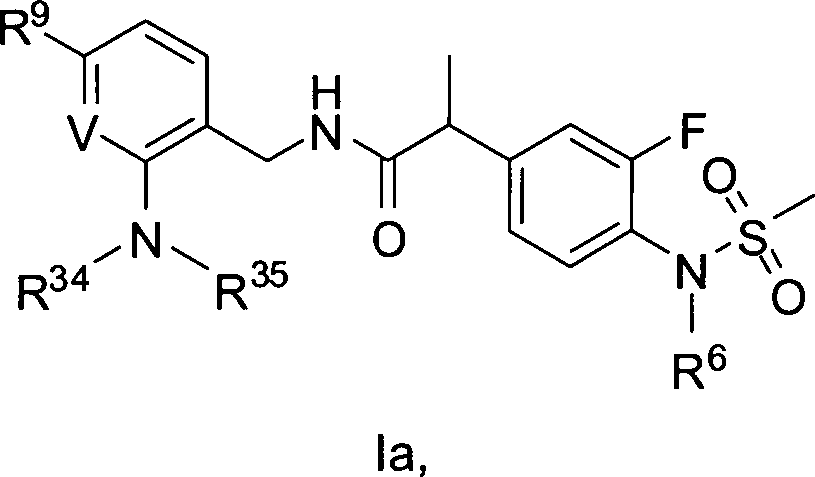
V für
N oder CH steht;
R6 für -C(=O)-R28 oder für einen Rest ausgewählt
aus der Gruppe bestehend aus Methyl, -CH2-CN,
Ethyl, -CH2-CH2-CN,
n-Propyl, -CH2-CH2-CH2-CN, n-Butyl, -CH2-CH2-CH2-CH2-CN,
sek-Butyl, Isobutyl, tert-Butyl, n-Pentyl, 3-Pentyl, n-Heptyl, Ethenyl,
Propenyl, 2-Butenyl, 3-Butenyl, 2-Pentenyl und 3-Pentenyl steht;
R9 für F; Cl; Br; I; -SF5;
-O-CF3; -O-CCl3;
-O-CBr3; -O-CHF2;
-O-CH2F; -O-CF2Cl;
-O-CCl2F; -O-CF2-CH3; -S-CF3; -S-CCl3; -S-CBr3; -S-CHF2; -S-CH2F; -S-CF2Cl; -S-CCl2F; -S-CF2-CH3; oder für
einen Rest ausgewählt aus der Gruppe bestehend aus Methyl,
-CF3, -CHF2, -CH2F, Ethyl, n-Propyl, Isopropyl, n-Butyl,
sek-Butyl, Isobutyl, -C(CH3)2(CH2OH) und tert-Butyl steht;
R28 für einen Rest ausgewählt
aus der Gruppe bestehend aus Methyl, Ethyl, n-Propyl, Isopropyl,
sek-Butyl, Isobutyl, tert-Butyl, n-Pentyl, 3-Pentyl, n-Heptyl, 4-Heptyl,
n-Octyl, n-Nonyl, 5-Nonyl, (2,6)-Dimethyl-hept-4-yl, 3-Methyl-butyl,
n-Hexyl, (3,3)-Dimethylbutyl, Ethenyl, Propenyl, 2-Butenyl, 3-Butenyl,
2-Pentenyl und 3-Pentenyl steht;
R34 und
R35, unabhängig voneinander, jeweils
für
einen Rest ausgewählt aus der Gruppe bestehend aus Methyl,
-CH2-O-CH3, Ethyl,
n-Propyl, n-Butyl, sek-Butyl, Isobutyl, tert-Butyl, n-Pentyl, 3-Pentyl,
n-Hexyl, (3,3)-Dimethylbutyl, -CH2-CH2-O-CH3, -CH2-CH2-O-C2H5 und -CH2-CH2-CH2-O-CH3 stehen;
für einen Rest ausgewählt
aus der Gruppe bestehend aus 2,3-Dihydro-1H-indenyl, Cyclopropyl,
Oxetanyl, Cyclobutyl, Cyclopentyl, Cyclohexyl, Imidazolidinyl, Tetrahydrofuranyl,
Tetrahydrothiophenyl, Pyrrolidinyl, Piperidinyl, Morpholinyl, Piperazinyl,
Azepanyl, Diazepanyl, Azocanyl und Thiomorpholinyl, der jeweils
ggf. mit 1, 2, 3, 4 oder 5 Substituenten unabhängig voneinander
ausgewählt aus der Gruppe bestehend aus Methyl, Ethyl, n-Propyl,
Isopropyl, n-Butyl, sek-Butyl, Isobutyl, tert-Butyl, n-Pentyl substituiert
sein kann, stehen;
oder
R34 und
R35 jeweils zusammen mit dem sie verbindenden
Stickstoffatom als Ringglied einen Rest ausgewählt aus
der Gruppe bestehend aus 3-Aza-bicyclo[3.1.1]heptyl, 6-Aza-spiro[2.5]octyl,
3-Aza-bicyclo[3.2.1]octyl, 6-Aza-bicyclo[3.3.1]heptyl, 8-Aza-bicyclo[3.2.1]octyl,
1-Oxa-2,8-diaza-spiro[4.5]dec-2-enyl, Azocanyl, Isoindolyl, Indolyl,
(1,2,3,6)-Tetrahydropyridinyl, (4,5,6,7)-Tetrahydroisoxazolo[5,4-c]pyridinyl,
Pyrrolidinyl, Piperidinyl, Piperazinyl, Morpholinyl, Azepanyl, Diazepanyl
und Thiomorpholinyl bilden, dessen heterocycloaliphatischer Anteil
jeweils unsubstituiert oder mit 1, 2, 3, 4 oder 5 Resten R51 substituiert sein kann;
R51 für -NHR52,
-NR53R54 oder für
einen Alkyl-Rest ausgewählt aus der Gruppe bestehend aus
-CF3, -CH2-CF3, Methyl, Ethyl, n-Propyl, Isopropyl, tert-Butyl,
n-Butyl, sek-Butyl und Isobutyl steht;
R52,
R53 und R54, unabhängig
voneinander, jeweils für -C(=O)-R55;
für einen Alkyl-Rest ausgewählt aus der Gruppe
bestehend aus -CF3, -CH2-CF3, Methyl, Ethyl, n-Propyl, Isopropyl, tert-Butyl,
n-Butyl, sek-Butyl und Isobutyl;
oder für einen Rest
ausgewählt aus der Gruppe bestehend aus Phenyl und Naphthyl,
wobei der Rest jeweils über eine -(CH2)-,
-(CH2)2- oder -(CH2)3-Gruppe gebunden
sein kann und/oder jeweils unsubstituiert oder ggf. mit 1, 2, 3,
4 oder 5 Substituenten unabhängig voneinander ausgewählt
aus der Gruppe bestehend aus F, Cl, Br, I, -CN, -CF3,
-O-CH3, -O-C2H5, -O-CH(CH3)2, -O-C(CH3)3, Methyl, Ethyl, n-Propyl, Isopropyl, n-Butyl,
sek-Butyl, Isobutyl, tert-Butyl und n-Pentyl substituiert sein kann,
stehen;
und
R55 für einen
Alkyl-Rest ausgewählt aus der Gruppe bestehend aus -CF3, -CH2-CF3, Methyl, Ethyl, n-Propyl, Isopropyl, tert-Butyl,
n-Butyl, sek-Butyl und Isobutyl steht;
jeweils ggf. in Form
eines ihrer reinen Stereoisomeren, insbesondere Enantiomeren oder
Diastereomeren, ihrer Racemate oder in Form einer Mischung von Stereoisomeren,
insbesondere der Enantiomeren und/oder Diastereomeren, in einem
beliebigen Mischungsverhältnis, oder jeweils in Form entsprechender
Salze, oder jeweils in Form entsprechender Solvate.Particular preference is given to compounds of the general formula Ia,
V is N or CH;
R 6 is -C (= O) -R 28 or a radical selected from the group consisting of methyl, -CH 2 -CN, ethyl, -CH 2 -CH 2 -CN, n-propyl, -CH 2 -CH 2 -CH 2 -CN, n -butyl, -CH 2 -CH 2 -CH 2 -CH 2 -CN, sec-butyl, isobutyl, tert-butyl, n-pentyl, 3-pentyl, n-heptyl, ethenyl, Propenyl, 2-butenyl, 3-butenyl, 2-pentenyl and 3-pentenyl;
R 9 for F; Cl; Br; I; -SF 5 ; -O-CF 3 ; -O-CCl 3 ; -O-CBr 3 ; -O-CHF 2 ; -O-CH 2 F; -O-CF 2 Cl; -O-CCl 2 F; -O-CF 2 -CH 3 ; -S-CF 3 ; -S-CCl 3 ; -S-CBr 3 ; -S-CHF 2 ; -S-CH 2 F; -S-CF 2 Cl; -S-CCl 2 F; -S-CF 2 -CH 3 ; or for a rest selected from the A group consisting of methyl, -CF 3 , -CHF 2 , -CH 2 F, ethyl, n-propyl, isopropyl, n-butyl, sec-butyl, isobutyl, -C (CH 3 ) 2 (CH 2 OH) and tert Butyl stands;
R 28 is a radical selected from the group consisting of methyl, ethyl, n-propyl, isopropyl, sec-butyl, isobutyl, tert-butyl, n-pentyl, 3-pentyl, n-heptyl, 4-heptyl, n-octyl , n-nonyl, 5-nonyl, (2,6) -dimethyl-hept-4-yl, 3-methyl-butyl, n-hexyl, (3,3) -dimethylbutyl, ethenyl, propenyl, 2-butenyl, 3 Butenyl, 2-pentenyl and 3-pentenyl;
R 34 and R 35 , independently of each other, respectively
a radical selected from the group consisting of methyl, -CH 2 -O-CH 3 , ethyl, n-propyl, n-butyl, sec-butyl, isobutyl, tert-butyl, n-pentyl, 3-pentyl, n- Hexyl, (3,3) -dimethylbutyl, -CH 2 -CH 2 -O-CH 3 , -CH 2 -CH 2 -OC 2 H 5 and -CH 2 -CH 2 -CH 2 -O-CH 3 ;
a radical selected from the group consisting of 2,3-dihydro-1H-indenyl, cyclopropyl, oxetanyl, cyclobutyl, cyclopentyl, cyclohexyl, imidazolidinyl, tetrahydrofuranyl, tetrahydrothiophenyl, pyrrolidinyl, piperidinyl, morpholinyl, piperazinyl, azepanyl, diazepanyl, azocanyl and thiomorpholinyl each optionally with 1, 2, 3, 4 or 5 substituents independently selected from the group consisting of methyl, ethyl, n-propyl, isopropyl, n-butyl, sec-butyl, isobutyl, tert-butyl, n- Pentyl may be substituted;
or
R 34 and R 35 together with the nitrogen atom connecting them as ring member a radical selected from the group consisting of 3-azabicyclo [3.1.1] heptyl, 6-aza-spiro [2.5] octyl, 3-azabicyclo [ 3.2.1] octyl, 6-azabicyclo [3.3.1] heptyl, 8-azabicyclo [3.2.1] octyl, 1-oxa-2,8-diaza-spiro [4.5] dec-2-enyl, Azocanyl, isoindolyl, indolyl, (1,2,3,6) -tetrahydropyridinyl, (4,5,6,7) -tetrahydroisoxazolo [5,4-c] pyridinyl, pyrrolidinyl, piperidinyl, piperazinyl, morpholinyl, azepanyl, diazepanyl and Thiomorpholinyl form whose heterocycloaliphatic moiety each unsubstituted or may be substituted by 1, 2, 3, 4 or 5 radicals R 51 ;
R 51 is -NHR 52 , -NR 53 R 54 or an alkyl radical selected from the group consisting of -CF 3 , -CH 2 -CF 3 , methyl, ethyl, n-propyl, isopropyl, tert-butyl, n Butyl, sec-butyl and isobutyl;
R 52 , R 53 and R 54 , independently of one another, are each -C (= O) -R 55 ; for an alkyl radical selected from the group consisting of -CF 3 , -CH 2 -CF 3 , methyl, ethyl, n-propyl, isopropyl, tert-butyl, n-butyl, sec-butyl and isobutyl;
or a radical selected from the group consisting of phenyl and naphthyl, where the radical may each be bonded via a - (CH 2 ) -, - (CH 2 ) 2 - or - (CH 2 ) 3 group and / or in each case unsubstituted or optionally with 1, 2, 3, 4 or 5 substituents independently of one another selected from the group consisting of F, Cl, Br, I, -CN, -CF 3 , -O-CH 3 , -OC 2 H 5 , -O-CH (CH 3 ) 2 , -OC (CH 3 ) 3 , methyl, ethyl, n-propyl, isopropyl, n-butyl, sec-butyl, isobutyl, tert-butyl and n-pentyl ;
and
R 55 is an alkyl radical selected from the group consisting of -CF 3 , -CH 2 -CF 3 , methyl, ethyl, n -propyl, isopropyl, tert -butyl, n -butyl, sec -butyl and isobutyl;
in each case optionally in the form of one of its pure stereoisomers, in particular enantiomers or diastereomers, their racemates or in the form of a mixture of stereoisomers, in particular the enantiomers and / or diastereomers, in any mixing ratio, or in each case in the form of corresponding salts, or in each case in the form of corresponding solvates.
Ganz
besonders bevorzugt sind Verbindungen der vorstehend angegebenen
allgemeinen Formel Ia,
R6 für
-C(=O)-R28 oder für einen Rest
ausgewählt aus der Gruppe bestehend aus Methyl, -CH2-CN, Ethyl, -CH2-CH2-CN, n-Propyl, -CH2-CH2-CH2-CN, n-Butyl,
-CH2-CH2-CH2-CH2-CN, sek-Butyl,
Isobutyl, tert-Butyl und n-Pentyl steht;
R9 für
-SF5; -O-CF3; -CF3; -CHF2; -CH2F; -C(CH3)2(CH2OH) oder tert-Butyl
steht;
R28 für einen Rest
ausgewählt aus der Gruppe bestehend aus Methyl, Ethyl,
n-Propyl, Isopropyl, sek-Butyl, Isobutyl, tert-Butyl, Ethenyl und
Propenyl steht;
R34 und R35 jeweils
zusammen mit dem sie verbindenden Stickstoffatom als Ringglied einen
Rest ausgewählt aus der Gruppe bestehend Pyrrolidinyl,
Piperidinyl, Piperazinyl, Morpholinyl und Azepanyl bilden, dessen
heterocycloaliphatischer Anteil jeweils unsubstituiert oder mit
1, 2, 3, 4 oder 5 Resten R51 substituiert
sein kann;
R51 für -NHR52, -NR53R54 oder für einen Alkyl-Rest ausgewählt
aus der Gruppe bestehend aus Methyl, Ethyl, n-Propyl, Isopropyl,
tert-Butyl, n-Butyl, sek-Butyl und Isobutyl steht;
R52, R53 und R54, unabhängig voneinander, jeweils
für -C(=O)-R55; für einen
Alkyl-Rest ausgewählt aus der Gruppe bestehend aus Methyl,
Ethyl, n-Propyl, Isopropyl, tert-Butyl, n-Butyl, sek-Butyl und Isobutyl;
oder
für Phenyl-Rest stehen, wobei der Rest mit 1, 2, 3, 4 oder
5 Substituenten unabhängig voneinander ausgewählt
aus der Gruppe bestehend aus F, Cl, Br, Methyl, Ethyl, n-Propyl
und Isopropyl sein kann, stehen;
und R55 für
einen Alkyl-Rest ausgewählt aus der Gruppe bestehend aus
Methyl, Ethyl, n-Propyl, Isopropyl, tert-Butyl, n-Butyl, sek-Butyl
und Isobutyl steht;
jeweils ggf. in Form eines ihrer reinen
Stereoisomeren, insbesondere Enantiomeren oder Diastereomeren, ihrer
Racemate oder in Form einer Mischung von Stereoisomeren, insbesondere
der Enantiomeren und/oder Diastereomeren, in einem beliebigen Mischungsverhältnis,
oder jeweils in Form entsprechender Salze, oder jeweils in Form
entsprechender Solvate.Very particular preference is given to compounds of the abovementioned general formula Ia,
R 6 is -C (= O) -R 28 or a radical selected from the group consisting of methyl, -CH 2 -CN, ethyl, -CH 2 -CH 2 -CN, n-propyl, -CH 2 -CH 2 is -CH 2 -CN, n -butyl, -CH 2 -CH 2 -CH 2 -CH 2 -CN, sec -butyl, isobutyl, tert -butyl and n -pentyl;
R 9 for -SF 5 ; -O-CF 3 ; -CF 3 ; -CHF 2 ; -CH 2 F; -C (CH 3 ) 2 (CH 2 OH) or tert -butyl;
R 28 is a radical selected from the group consisting of methyl, ethyl, n-propyl, isopropyl, sec-butyl, isobutyl, tert-butyl, ethenyl and propenyl;
R 34 and R 35 together with the nitrogen atom connecting them as ring member form a radical selected from the group consisting of pyrrolidinyl, piperidinyl, piperazinyl, morpholinyl and azepanyl whose heterocycloaliphatic moiety is unsubstituted or substituted by 1, 2, 3, 4 or 5 radicals R 51 may be substituted;
R 51 is -NHR 52 , -NR 53 R 54 or an alkyl radical selected from the group consisting of methyl, ethyl, n-propyl, isopropyl, tert -butyl, n -butyl, sec -butyl and isobutyl;
R 52 , R 53 and R 54 , independently of one another, are each -C (= O) -R 55 ; for an alkyl radical selected from the group consisting of methyl, ethyl, n-propyl, isopropyl, tert-butyl, n-butyl, sec-butyl and isobutyl;
or are phenyl radical, the radical having 1, 2, 3, 4 or 5 substituents independently of one another selected from the group consisting of F, Cl, Br, methyl, ethyl, n-propyl and isopropyl may be;
and R 55 is an alkyl radical selected from the group consisting of methyl, ethyl, n -propyl, isopropyl, tert -butyl, n -butyl, sec -butyl and isobutyl;
in each case optionally in the form of one of its pure stereoisomers, in particular enantiomers or diastereomers, their racemates or in the form of a mixture of stereoisomers, in particular the enantiomers and / or di astereomers, in any mixing ratio, or in each case in the form of corresponding salts, or in each case in the form of corresponding solvates.
Besonders
bevorzugt sind Verbindungen der allgemeinen Formel Ib, 
R6 für
-C(=O)-R28 oder für einen Rest
ausgewählt aus der Gruppe bestehend aus Methyl, -CH2-CN, Ethyl, -CH2-CH2-CN, n-Propyl, -CH2-CH2-CH2-CN, n-Butyl,
-CH2-CH2-CH2-CH2-CN, sek-Butyl,
Isobutyl, tert-Butyl, n-Pentyl, 3-Pentyl, n-Heptyl, Ethenyl, Propenyl,
2-Butenyl, 3-Butenyl, 2-Pentenyl und 3-Pentenyl steht;
R9 für F; Cl; Br; I; -SF5;
-O-CF3; -O-CCl3;
-O-CBr3; -O-CHF2;
-O-CH2F; -O-CF2Cl;
-O-CCl2F; -O-CF2-CH3; -S-CF3; -S-CCl3; -S-CBr3; -S-CHF2; -S-CH2F; -S-CF2Cl; -S-CCl2F; -S-CF2-CH3; oder für
einen Rest ausgewählt aus der Gruppe bestehend aus Methyl,
-CF3, -CHF2, -CH2F, Ethyl, n-Propyl, Isopropyl, n-Butyl,
sek-Butyl, Isobutyl, -C(CH3)2(CH2OH) und tert-Butyl steht;
R28 für einen Rest ausgewählt
aus der Gruppe bestehend aus Methyl, Ethyl, n-Propyl, Isopropyl,
sek-Butyl, Isobutyl, tert-Butyl, n-Pentyl, 3-Pentyl, n-Heptyl, 4-Heptyl,
n-Octyl, n-Nonyl, 5-Nonyl, (2,6)-Dimethyl-hept-4-yl, 3-Methyl-butyl,
n-Hexyl, (3,3)-Dimethylbutyl, Ethenyl, Propenyl, 2-Butenyl, 3-Butenyl,
2-Pentenyl und 3-Pentenyl steht;
und
R37 für
einen Rest ausgewählt aus der Gruppe bestehend aus Methyl,
-CH2-O-CH3, Ethyl,
n-Propyl, n-Butyl, sek-Butyl, Isobutyl, tert-Butyl, n-Pentyl, 3-Pentyl,
n-Hexyl, (3,3)-Dimethylbutyl, -CH2-CH2-O-CH3, -CH2-CH2-O-C2H5 und -CH2- CH2-CH2-O-CH3 stehen;
oder für einen Rest
ausgewählt aus der Gruppe bestehend aus 2,3-Dihydro-1H-indenyl,
Cyclopropyl, Oxetanyl, Cyclobutyl, Cyclopentyl, Cyclohexyl, Imidazolidinyl,
Tetrahydrofuranyl, Tetrahydrothiophenyl, Pyrrolidinyl, Piperidinyl,
Morpholinyl, Piperazinyl, Azepanyl, Diazepanyl, Azocanyl und Thiomorpholinyl,
der jeweils ggf. mit 1, 2, 3, 4 oder 5 Substituenten unabhängig
voneinander ausgewählt aus der Gruppe bestehend aus Methyl, Ethyl,
n-Propyl, Isopropyl, n-Butyl, sek-Butyl, Isobutyl, tert-Butyl, n-Pentyl
substituiert sein kann, steht;
jeweils ggf. in Form eines ihrer
reinen Stereoisomeren, insbesondere Enantiomeren oder Diastereomeren,
ihrer Racemate oder in Form einer Mischung von Stereoisomeren, insbesondere
der Enantiomeren und/oder Diastereomeren, in einem beliebigen Mischungsverhältnis,
oder jeweils in Form entsprechender Salze, oder jeweils in Form
entsprechender Solvate.Particular preference is given to compounds of the general formula Ib
R 6 is -C (= O) -R 28 or a radical selected from the group consisting of methyl, -CH 2 -CN, ethyl, -CH 2 -CH 2 -CN, n-propyl, -CH 2 -CH 2 -CH 2 -CN, n -butyl, -CH 2 -CH 2 -CH 2 -CH 2 -CN, sec-butyl, isobutyl, tert-butyl, n-pentyl, 3-pentyl, n-heptyl, ethenyl, Propenyl, 2-butenyl, 3-butenyl, 2-pentenyl and 3-pentenyl;
R 9 for F; Cl; Br; I; -SF 5 ; -O-CF 3 ; -O-CCl 3 ; -O-CBr 3 ; -O-CHF 2 ; -O-CH 2 F; -O-CF 2 Cl; -O-CCl 2 F; -O-CF 2 -CH 3 ; -S-CF 3 ; -S-CCl 3 ; -S-CBr 3 ; -S-CHF 2 ; -S-CH 2 F; -S-CF 2 Cl; -S-CCl 2 F; -S-CF 2 -CH 3 ; or a radical selected from the group consisting of methyl, -CF 3 , -CHF 2 , -CH 2 F, ethyl, n-propyl, isopropyl, n-butyl, sec-butyl, isobutyl, -C (CH 3 ) 2 (CH 2 OH) and tert-butyl;
R 28 is a radical selected from the group consisting of methyl, ethyl, n-propyl, isopropyl, sec-butyl, isobutyl, tert-butyl, n-pentyl, 3-pentyl, n-heptyl, 4-heptyl, n-octyl , n-nonyl, 5-nonyl, (2,6) -dimethyl-hept-4-yl, 3-methyl-butyl, n-hexyl, (3,3) -dimethylbutyl, ethenyl, propenyl, 2-butenyl, 3 Butenyl, 2-pentenyl and 3-pentenyl;
and
R 37 is a radical selected from the group consisting of methyl, -CH 2 -O-CH 3 , ethyl, n-propyl, n-butyl, sec-butyl, isobutyl, tert-butyl, n-pentyl, 3-pentyl, n-hexyl, (3,3) -Dimethylbutyl, -CH 2 -CH 2 -O-CH 3, -CH 2 -CH 2 -OC 2 H 5 and -CH 2 - CH 2 -CH 2 -O-CH 3 stand;
or is selected from the group consisting of 2,3-dihydro-1H-indenyl, cyclopropyl, oxetanyl, cyclobutyl, cyclopentyl, cyclohexyl, imidazolidinyl, tetrahydrofuranyl, tetrahydrothiophenyl, pyrrolidinyl, piperidinyl, morpholinyl, piperazinyl, azepanyl, diazepanyl, azocanyl and Thiomorpholinyl, each optionally with 1, 2, 3, 4 or 5 substituents independently selected from the group consisting of methyl, ethyl, n-propyl, isopropyl, n-butyl, sec-butyl, isobutyl, tert-butyl, n -Pentyl can be substituted;
in each case optionally in the form of one of its pure stereoisomers, in particular enantiomers or diastereomers, their racemates or in the form of a mixture of stereoisomers, in particular the enantiomers and / or diastereomers, in any mixing ratio, or in each case in the form of corresponding salts, or in each case in the form of corresponding solvates.
Ganz
besonders bevorzugt sind Verbindungen der vorstehend angegebenen
allgemeinen Formel Ib,
worin
R6 für
-C(=O)-R28 oder für einen Rest
ausgewählt aus der Gruppe bestehend aus Methyl, -CH2-CN, Ethyl, -CH2-CH2-CN, n-Propyl, -CH2-CH2-CH2-CN, n-Butyl,
-CH2-CH2-CH2-CH2-CN, sek-Butyl,
Isobutyl, tert-Butyl und n-Pentyl steht;
R9 für
-SF5; -O-CF3; -CF3; -CHF2; -CH2F; -C(CH3)2(CH2OH) oder tert-Butyl
steht;
R28 für einen Rest
ausgewählt aus der Gruppe bestehend aus Methyl, Ethyl,
n-Propyl, Isopropyl, sek-Butyl, Isobutyl, tert-Butyl, Ethenyl und
Propenyl steht;
und
R37 für
einen Rest ausgewählt aus der Gruppe bestehend aus Cyclopropyl,
Cyclobutyl, Cyclopentyl, Cyclohexyl und Cycloheptyl, der jeweils
ggf. mit 1, 2, 3, 4 oder 5 Substituenten unabhängig voneinander
ausgewählt aus der Gruppe bestehend aus Methyl, Ethyl,
n-Propyl, Isopropyl, n-Butyl, sek-Butyl, Isobutyl, tert-Butyl, n-Pentyl substituiert
sein kann, steht;
jeweils ggf. in Form eines ihrer reinen Stereoisomeren,
insbesondere Enantiomeren oder Diastereomeren, ihrer Racemate oder
in Form einer Mischung von Stereoisomeren, insbesondere der Enantiomeren
und/oder Diastereomeren, in einem beliebigen Mischungsverhältnis,
oder jeweils in Form entsprechender Salze, oder jeweils in Form
entsprechender Solvate.Very particular preference is given to compounds of the abovementioned general formula Ib,
wherein
R 6 is -C (= O) -R 28 or a radical selected from the group consisting of methyl, -CH 2 -CN, ethyl, -CH 2 -CH 2 -CN, n-propyl, -CH 2 -CH 2 is -CH 2 -CN, n -butyl, -CH 2 -CH 2 -CH 2 -CH 2 -CN, sec -butyl, isobutyl, tert -butyl and n -pentyl;
R 9 for -SF 5 ; -O-CF 3 ; -CF 3 ; -CHF 2 ; -CH 2 F; -C (CH 3 ) 2 (CH 2 OH) or tert -butyl;
R 28 is a radical selected from the group consisting of methyl, ethyl, n-propyl, isopropyl, sec-butyl, isobutyl, tert-butyl, ethenyl and propenyl;
and
R 37 is a radical selected from the group consisting of cyclopropyl, cyclobutyl, cyclopentyl, cyclohexyl and cycloheptyl, each optionally with 1, 2, 3, 4 or 5 substituents independently selected from the group consisting of methyl, ethyl, n- Propyl, isopropyl, n-butyl, sec-butyl, isobutyl, tert-butyl, n-pentyl may be substituted;
in each case optionally in the form of one of its pure stereoisomers, in particular enantiomers or diastereomers, their racemates or in the form of a mixture of stereoisomers, in particular the enantiomers and / or diastereomers, in any mixing ratio, or in each case in the form of corresponding salts, or in each case in the form of corresponding solvates.
Ein
weiterer bevorzugter Gegenstand der vorliegenden Erfindung sind
Verbindungen der allgemeinen Formel I', I'' und I''' 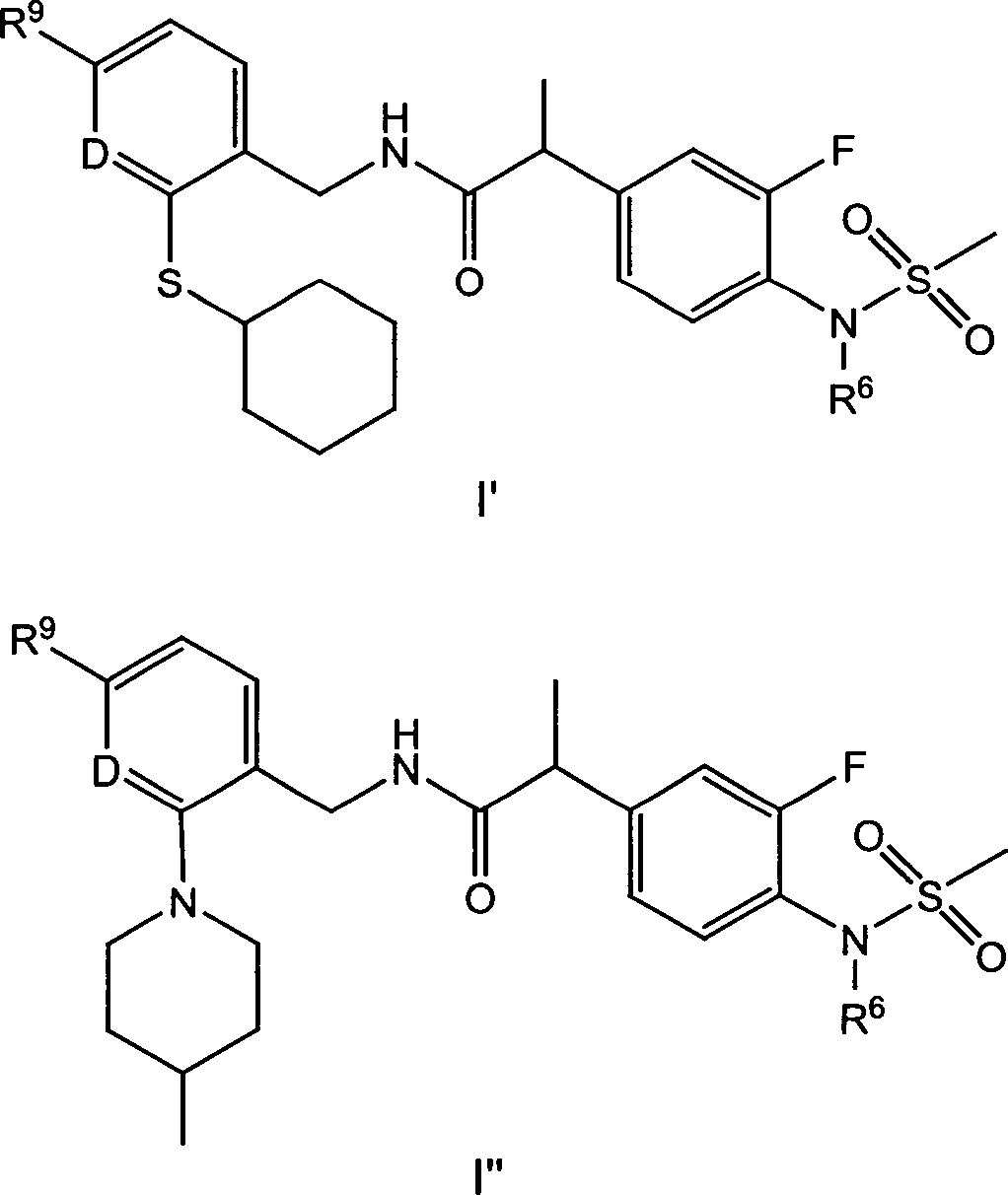

D für
N oder CH steht
R9 für CF3 oder für tert-Butyl steht
R6 für Methyl, Ethyl, -C(=O)-CH3 oder -C(=O)-CH2CH3 steht,
jeweils ggf. in Form eines
ihrer reinen Stereoisomeren, insbesondere Enantiomeren oder Diastereomeren,
ihrer Racemate oder in Form einer Mischung von Stereoisomeren, insbesondere
der Enantiomeren und/oder Diastereomeren, in einem beliebigen Mischungsverhältnis,
oder jeweils in Form entsprechender Salze, oder jeweils in Form
entsprechender Solvate.Another preferred subject of the present invention are compounds of the general formula I ', I "and I'''
D stands for N or CH
R 9 is CF 3 or tert-butyl
R 6 is methyl, ethyl, -C (= O) -CH 3 or -C (= O) -CH 2 CH 3 ,
in each case optionally in the form of one of its pure stereoisomers, in particular enantiomers or diastereomers, their racemates or in the form of a mixture of stereoisomers, in particular the enantiomers and / or diastereomers, in any mixing ratio, or in each case in the form of corresponding salts, or in each case in the form of corresponding solvates.
Noch weiter bevorzugt sind Verbindungen der allgemeinen Formeln I, Ia, Ib, I', I'' und I''' ausgewählt aus der Gruppe bestehend aus
- [1] N-(2-Fluor-4-(1-oxo-1-((2-(4-(N-phenylpropionamido)piperidin-1-yl)-6-(trifluormethyl)pyridin-3-yl)methylamino)propan-2-yl)phenyl)-N-(methylsulfonyl)propionamid,
- [2] 2-(3-Fluor-4-(N-(methylsulfonyl)acetamido)phenyl)-N-((2-(4-methylpiperidin-1-yl)-6-(trifluormethyl)pyridin-3-yl)methyl)propanamid,
- [3] 2-(3-Fluor-4-(N-methylmethylsulfonamido)phenyl)-N-((2-(4-methylpiperidin-1-yl)-6-(trifluormethyl)pyridin-3-yl)methyl)propanamid,
- [4] N-(4-tert-Butylbenzyl)-2-(3-fluor-4-(N-methyimethylsulfonamido)phenyl)propanamid,
- [5] (S)-N-(4-tert-Butylbenzyl)-2-(3-fluor-4-(N-methylmethylsulfonamido)phenyl)propanamid,
- [6] (S)-N-(4-tert-Butylbenzyl)-2-(4-(N-ethylmethylsulfonamido)-3-fluorphenyl)propanamid,
- [7] N-((2-(Cyclohexylthio)-6-(trifluormethyl)pyridin-3-yl)methyl)-2-(3-fluor-4-(N-methylmethylsulfonamido)phenyl)propanamid,
- [8] N-((2-(Cyclohexylthio)-6-(trifluormethyl)pyridin-3-yl)methyl)-2-(4-(N-ethylmethylsulfonamido)-3-fluorphenyl)propanamid,
- [9] 2-(4-(N-Ethylmethylsulfonamido)-3-fluorphenyl)-N-((2-(4-methylpiperidin-1-yl)-6-(trifluormethyl)pyridin-3-yl)methyl)propanamid,
- [10] N-((6-tert-butyl-2-(4-methylpiperidin-1-yl)pyridin-3-yl)methyl)-2-(3-fluor-4-(N-methylmethylsulfonamido)phenyl)propanamid,
- [11] N-((6-tert-Butyl-2-(cyclohexylthio)pyridin-3-yl)methyl)-2-(3-fluor-4-(N-methylmethylsulfonamido)phenyl)propanamid,
- [12] 2-(3-Fluor-4-(N-methylmethylsulfonamido)phenyl)-N-(2-(4-methylpiperidin-1-yl)-4-(trifluormethyl)benzyl)propanamid,
- [13] N-(2-(Cyclohexylthio)-4-(trifluormethyl)benzyl)-2-(3-fluor-4-(N-methylmethylsulfonamido)phenyl)propanamid,
- [14] N-(4-tert-Butyl-2-(4-methylpiperidin-1-yl)benzyl)-2-(3-fluor-4-(N-methylmethylsulfonamido)phenyl)propanamid und
- [15] N-(4-tert-Butyl-2-(cyclohexylthio)benzyl)-2-(3-fluor-4-(N-methylmethylsulfonamido)phenyl)propanamid,
- [1] N- (2-Fluoro-4- (1-oxo-1 - ((2- (4- (N-phenylpropionamido) piperidin-1-yl) -6- (trifluoromethyl) pyridin-3-yl) methylamino ) propan-2-yl) phenyl) -N- (methylsulfonyl) propionamide,
- [2] 2- (3-Fluoro-4- (N- (methylsulfonyl) acetamido) phenyl) -N - ((2- (4-methylpiperidin-1-yl) -6- (trifluoromethyl) pyridin-3-yl) methyl) propanamide,
- [3] 2- (3-Fluoro-4- (N-methylmethylsulfonamido) phenyl) -N - ((2- (4-methylpiperidin-1-yl) -6- (trifluoromethyl) pyridin-3-yl) methyl) propanamide .
- [4] N- (4-tert-butylbenzyl) -2- (3-fluoro-4- (N-methyl-sulfonamido) -phenyl) -propanamide,
- [5] (S) -N- (4-tert-butylbenzyl) -2- (3-fluoro-4- (N-methylmethylsulfonamido) phenyl) propanamide,
- [6] (S) -N- (4-tert-butylbenzyl) -2- (4- (N-ethylmethylsulfonamido) -3-fluorophenyl) propanamide
- [7] N - ((2- (Cyclohexylthio) -6- (trifluoromethyl) pyridin-3-yl) methyl) -2- (3-fluoro-4- (N-methylmethylsulfonamine do) phenyl) propanamide,
- [8] N - ((2- (cyclohexylthio) -6- (trifluoromethyl) pyridin-3-yl) methyl) -2- (4- (N-ethylmethylsulfonamido) -3-fluorophenyl) propanamide
- [9] 2- (4- (N -ethylmethylsulfonamido) -3-fluorophenyl) -N - ((2- (4-methylpiperidin-1-yl) -6- (trifluoromethyl) pyridin-3-yl) methyl) propanamide
- [10] N - ((6-tert-butyl-2- (4-methylpiperidin-1-yl) pyridin-3-yl) methyl) -2- (3-fluoro-4- (N-methylmethylsulfonamido) phenyl) propanamide .
- [11] N - ((6-tert-butyl-2- (cyclohexylthio) pyridin-3-yl) methyl) -2- (3-fluoro-4- (N-methylmethylsulfonamido) phenyl) propanamide
- [12] 2- (3-Fluoro-4- (N-methylmethylsulfonamido) phenyl) -N- (2- (4-methylpiperidin-1-yl) -4- (trifluoromethyl) benzyl) propanamide
- [13] N- (2- (cyclohexylthio) -4- (trifluoromethyl) benzyl) -2- (3-fluoro-4- (N-methylmethylsulfonamido) phenyl) propanamide
- [14] N- (4-tert-butyl-2- (4-methylpiperidin-1-yl) benzyl) -2- (3-fluoro-4- (N-methylmethylsulphonamido) phenyl) propanamide and
- [15] N- (4-tert-butyl-2- (cyclohexylthio) benzyl) -2- (3-fluoro-4- (N-methylmethylsulfonamido) phenyl) propanamide
Weiterhin können erfindungsgemäße Verbindungen der allgemeinen Formeln I, Ia, Ib, I', I'' und I''' bevorzugt sein, die im FLIPR-Assay mit CHO K1-Zellen, die mit dem menschlichen VR1-Gen transfiziert wurden, in einer Konzentration kleiner 2000 nM, bevorzugt kleiner 1000 nM, besonders bevorzugt kleiner 300 nM, ganz besonders bevorzugt kleiner 100 nM, noch weiter bevorzugt kleiner 75 nM, darüber hinaus bevorzugt kleiner 50 nM, am weitesten bevorzugt kleiner 10 nM, eine 50-prozentige Verdrängung von Capsaicin bewirken, dass in einer Konzentration von 100 nM vorliegt.Farther may be compounds of the invention of the general formulas I, Ia, Ib, I ', I' 'and I' '', in the FLIPR assay using CHO K1 cells linked to the human VR1 gene transfected, in a concentration less than 2000 nM, preferred less than 1000 nM, more preferably less than 300 nM, especially preferably less than 100 nM, even more preferably less than 75 nM, above In addition, preferably less than 50 nM, most preferably less than 10 nM, cause a 50 percent displacement of capsaicin, that is present in a concentration of 100 nM.
Dabei wird Im FLIPR-Assay der Ca2 +-Einstrom mit Hilfe eines Ca2+-sensitiven Farbstoffs (Typ Fluo-4, Molecular Probes Europe BV, Leiden Niederlande) im Fluorescent Imaging Plate Reader (FLIPR, Molecular Devices, Sunnyvale, USA) quantifiziert, wie untenstehend beschrieben.In the FLIPR assay, the Ca 2+ influx by means of a Ca 2+ -sensitive dye (type Fluo-4, Molecular Probes Europe BV, Leiden Netherlands) in the Fluorescent Imaging Plate Reader (FLIPR, Molecular Devices, Sunnyvale, USA) quantified as described below.
Ein
weiterer Gegenstand der vorliegenden Erfindung ist ein Verfahren
zur Herstellung von Verbindungen der vorstehend angegebenen allgemeinen
Formeln I, Ia, Ib, I', I'' und I''' gemäß dem
wenigstens eine Verbindung der allgemeinen Formel II, 
zu
wenigstens einer Verbindung der allgemeinen Formel III, 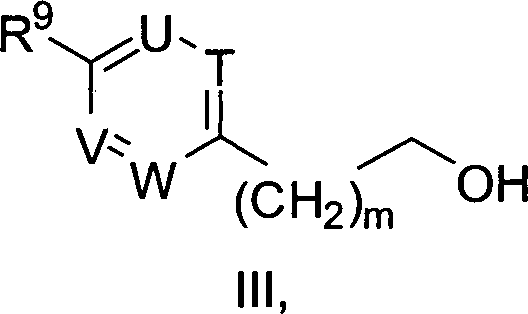
und wenigstens eine Verbindung der allgemeinen
Formel III in einem Reaktionsmedium in Gegenwart von Diphenylphosphorylazid
oder in Gegenwart von HN3 zu wenigstens
einer Verbindung der allgemeinen Formel IV, 
und wenigstens eine Verbindung der allgemeinen
Formel IV in einem Reaktionsmedium in Gegenwart wenigstens eines
Reduktionsmittels, vorzugsweise in Gegenwart wenigstens eines Reduktionsmittels
ausgewählt aus der Gruppe bestehend aus Natriumhydrid,
Kaliumhydrid, Lithiumaluminiumhydrid, Natriumborhydrid und Di(isobutyl)aluminiumhydrid
oder
in einem Reaktionsmedium in Gegenwart eines Katalysators, vorzugsweise
in Gegenwart eines Katalysators basierend auf Platin oder Palladium,
besonders bevorzugt in Gegenwart von Palladium auf Kohle, und in
Gegenwart von Wasserstoff oder in Gegenwart von Hydrazin
oder
in einem Reaktionsmedium in Gegenwart von Triphenylphosphin
zu
wenigstens einer Verbindung der allgemeinen Formel V, 
oder wenigstens eine Verbindung der allgemeinen
Formel VI, 
in Gegenwart
wenigstens eines Katalysators, vorzugsweise in Gegenwart wenigstens
eines Katalysators basierend auf Palladium oder Platin, besonders
bevorzugt in Gegenwart von Palladium auf Kohle, unter einer Wasserstoffatmosphäre,
ggf. in Gegenwart wenigstens einer Säure, vorzugsweise
in Gegenwart von Salzsäure,
oder in Gegenwart wenigstens
eines Reduktionsmittels ausgewählt aus der Gruppe bestehend
aus BH3·S(CH3)2, Lithiumaluminiumhydrid und Natriumborhydrid,
ggf. in Gegenwart von NiCl2,
zu wenigstens
einer Verbindung der allgemeinen Formel V, ggf. in Form eines entsprechenden
Salzes, vorzugsweise in Form eines entsprechenden Hydrochlorids,
umgesetzt wird und diese ggf. gereinigt und/oder isoliert wird,
und
wenigstens eine Verbindung der allgemeinen Formel V mit wenigstens
einer Verbindung der allgemeinen Formel VII, 
oder mit wenigstens
einer Verbindung der allgemeinen Formel VIII, 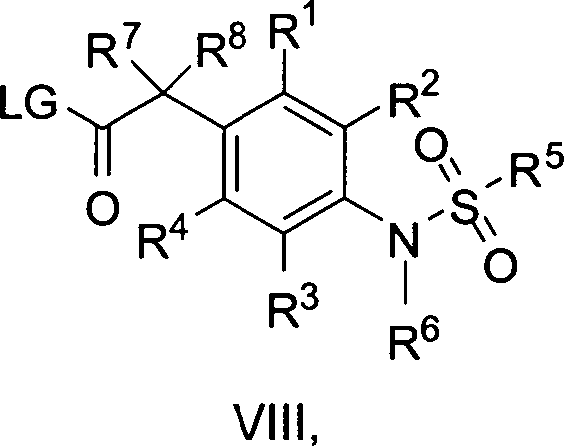

und
ggf. wenigstens eine Verbindung der allgemeinen Formel Ih in einem
Reaktionsmedium mit wenigstens einer Verbindung der allgemeinen
Formel IX, 

und
ggf. wenigstens eine Verbindung der allgemeinen Formel Io, 
to at least one compound of general formula III,
and at least one compound of general formula III in a reaction medium in the presence of diphenylphosphoryl azide or in the presence of HN 3 to at least one compound of general formula IV,
and at least one compound of general formula IV in a reaction medium in the presence of at least one reducing agent, preferably in the presence of at least one reducing agent selected from the group consisting of sodium hydride, potassium hydride, lithium aluminum hydride, sodium borohydride and di (isobutyl) aluminum hydride
or in a reaction medium in the presence of a catalyst, preferably in the presence of a catalyst based on platinum or palladium, more preferably in the presence of palladium on carbon, and in the presence of hydrogen or in the presence of hydrazine
or in a reaction medium in the presence of triphenylphosphine
to at least one compound of the general formula V,
or at least one compound of general formula VI,
in the presence of at least one catalyst, preferably in the presence of at least one catalyst based on palladium or platinum, more preferably in the presence of palladium on carbon, under a hydrogen atmosphere, if appropriate in the presence of at least one acid, preferably in the presence of hydrochloric acid,
or in the presence of at least one reducing agent selected from the group consisting of BH 3 .S (CH 3 ) 2 , lithium aluminum hydride and sodium borohydride, if appropriate in the presence of NiCl 2 ,
to at least one compound of general formula V, if appropriate in the form of a corresponding salt, preferably in the form of a corresponding hydrochloride, is reacted and this is optionally purified and / or isolated,
and at least one compound of general formula V with at least one compound of general formula VII,
or with at least one compound of general formula VIII,
and optionally at least one compound of the general formula Ih in a reaction medium with at least one compound of the general formula IX,
and optionally at least one compound of general formula Io,
Ein
weiterer Gegenstand der vorliegenden Erfindung ist ein Verfahren
zur Herstellung von Verbindungen der vorstehend angegebenen allgemeinen
Formeln I, Ia, Ib, I', I'' und I''' gemäß dem
wenigstens eine Verbindung der allgemeinen Formel X, 

oder mit wenigstens
einer Verbindung der allgemeinen Formel VIII, 

und
ggf. wenigstens eine Verbindung der allgemeinen Formel Im in einem
Reaktionsmedium mit wenigstens einer Verbindung der allgemeinen
Formel IX, 

und ggf. wenigstens eine
Verbindung der allgemeinen Formel Ip, 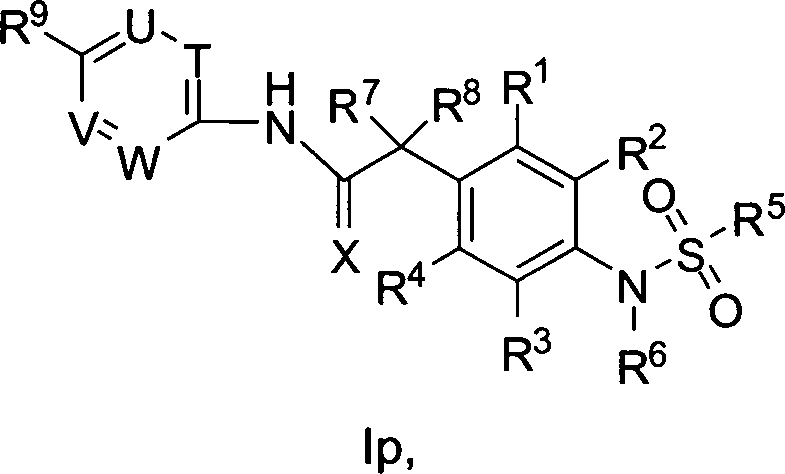
or with at least one compound of general formula VIII,
and optionally at least one compound of the general formula Im in a reaction medium with at least one compound of the general formula IX,
and optionally at least one compound of general formula Ip,
Die Umsetzung von Verbindungen der vorstehend angegebenen allgemeinen Formeln V bzw. X mit Carbonsäuren der vorstehend angegebenen allgemeinen Formel VII zu Verbindungen der vorstehend angegebenen allgemeinen Formeln Ih bzw. Im erfolgt vorzugsweise in einem Reaktionsmedium ausgewählt aus der Gruppe bestehend aus Diethylether, Tetrahydrofuran, Acetonitril, Methanol, Ethanol, (1,2)-Dichlorethan, Dimethylformamid, Dichlormethan und entsprechenden Mischungen, ggf. in Gegenwart wenigstens eines Kupplungsreagenzes, vorzugsweise ausgewählt aus der Gruppe bestehend aus 1-Benzotriazolyloxy-tris-(dimethylamino)phosphonium hexafluorphosphat (BOP), Dicyclohexylcarbodiimid (DCC), N'-(3-Dimethylaminopropyl)-N-ethylcarbodiimid (EDCI), Diisoproylcarbodiimid, 1,1'-Carbonyl-diimidazol (CDI), N-[(Dimethyamino)-1H-1,2,3-triazolo[4,5-b]pyridino-1-ylmethylen]-N-methylmethanaminium hexafluorphosphat N-oxid (HATU), O-(Benzotriazol-1-yl)-N,N,N',N'-tetramethyluroniom hexafluorphosphat (HBTU), O-(Benzotriazol-1-yl)-N,N,N',N'-tetramethyluronium-tetrafluorborat (TBTU) und 1-Hydroxy-7-azabenzotriazol (HOAt), ggf. in Gegenwart wenigstens einer organischen Base, vorzugsweise ausgewählt aus der Gruppe bestehend aus Triethylamin, Pyridin, Dimethylaminopyridin, N-Methylmorpholin und Diisopropylethylamin, vorzugsweise bei Temperaturen von –70°C bis 100°C.The Reaction of compounds of the above general Formulas V and X with carboxylic acids of the above general formula VII to compounds of the above general formulas Ih or Im is preferably carried out in a reaction medium selected from the group consisting of diethyl ether, tetrahydrofuran, Acetonitrile, methanol, ethanol, (1,2) -dichloroethane, dimethylformamide, Dichloromethane and corresponding mixtures, optionally in the presence at least a coupling reagent, preferably selected from A group consisting of 1-benzotriazolyloxy-tris (dimethylamino) phosphonium hexafluorophosphate (BOP), dicyclohexylcarbodiimide (DCC), N '- (3-dimethylaminopropyl) -N-ethylcarbodiimide (EDCI), diisoproylcarbodiimide, 1,1'-carbonyldiimidazole (CDI), N - [(dimethylamino) -1H-1,2,3-triazolo [4,5-b] pyridino-1-ylmethylene] -N- methylmethanaminium hexafluorophosphate N-oxide (HATU), O- (benzotriazol-1-yl) -N, N, N ', N'-tetramethyluroniom hexafluorophosphate (HBTU), O- (benzotriazol-1-yl) -N, N, N ', N'-tetramethyluronium tetrafluoroborate (TBTU) and 1-hydroxy-7-azabenzotriazole (HOAt), optionally in the presence at least one organic base, preferably selected from the group consisting of triethylamine, pyridine, dimethylaminopyridine, N-methylmorpholine and diisopropylethylamine, preferably at temperatures from -70 ° C to 100 ° C.
Alternativ erfolgt die Umsetzung von Verbindungen vorstehend angegebenen allgemeinen Formeln V bzw. X mit Carbonsäurederivaten der vorstehend angegebenen allgemeinen Formel VIII, worin LG für eine Abgangsgruppe, bevorzugt für ein Chlor- oder Bromatom, steht, zu Verbindungen der vorstehend angegebenen allgemeinen Formeln Ih bzw. Im in einem Reaktionsmedium vorzugsweise ausgewählt aus der Gruppe bestehend aus Diethylether, Tetrahydrofuran, Acetonitril, Methanol, Ethanol, Dimethylformamid, Dichlormethan und entsprechenden Mischungen, ggf. in Gegenwart einer organischen oder anorganischen Base, vorzugsweise ausgewählt aus der Gruppe bestehend aus Triethylamin, Dimethylaminopyridin, Pyridin und Diisopropylamin, bei Temperaturen von –70°C bis 100°C.alternative the reaction of compounds described above is general Formulas V and X with carboxylic acid derivatives of the above given general formula VIII, wherein LG for a Leaving group, preferably a chlorine or bromine atom, to compounds of the general formulas given above Ih and Im are preferably selected in a reaction medium from the group consisting of diethyl ether, tetrahydrofuran, acetonitrile, Methanol, ethanol, dimethylformamide, dichloromethane and corresponding mixtures, optionally in the presence of an organic or inorganic base, preferably selected from the group consisting of triethylamine, dimethylaminopyridine, Pyridine and diisopropylamine, at temperatures of -70 ° C up to 100 ° C.
Die Umsetzung von Verbindungen der allgemeinen Formeln Ih bzw. Im zu Verbindungen der allgemeinen Formeln Ik bzw. In erfolgt vorzugsweise in einem Reaktionsmedium ausgewählt aus der Gruppe bestehend aus Toluol, para-Xylol, ortho-Xylol, meta-Xylol, Acetonitril, Dichlormethan, Dimethylformamid und Mischungen der vorstehend genannten Reaktionsmedien, unter Zusatz eines Dithiaphosphetans, besonders bevorzugt unter Zusatz von 2,4-Bis(4-methoxyphenyl)-1,3,2,4-dithiadiphosphetan-2,4-disulfide (Lawesson-Reagenz), oder unter Zusatz von Phosphorpentasulfid, bei Temperaturen von 50 bis 150°C.The Reaction of compounds of the general formulas Ih or Im to Compounds of the general formulas Ik or In are preferably carried out in a reaction medium selected from the group consisting from toluene, para-xylene, ortho-xylene, meta-xylene, acetonitrile, dichloromethane, Dimethylformamide and mixtures of the above-mentioned reaction media, with the addition of a dithiaphosphetane, more preferably below Addition of 2,4-bis (4-methoxyphenyl) -1,3,2,4-dithiadiphosphetane-2,4-disulfides (Lawesson's reagent), or with the addition of phosphorus pentasulfide Temperatures from 50 to 150 ° C.
Die Verbindungen der vorstehend angegebenen Formeln II, III, IV, V, VI, VIII, IX und X sind jeweils am Markt käuflich erhältlich und können auch nach üblichen, dem Fachmann bekannten Verfahren hergestellt werden.The Compounds of the formulas II, III, IV, V indicated above, VI, VIII, IX and X are each commercially available and can also by customary, known in the art Process are produced.
Die
Synthese von Verbindungen der allgemeinen Formel VII kann der Druckschrift „4-(Methylsulfonylamino)phenyl
analogues as vanilloid antagonist showing excellent analgesic activity
and the pharmaceutical compositions comprising the same" von J.
W. Lee et al. [
Die vorstehend beschriebenen Umsetzungen können jeweils unter den üblichen dem Fachmann geläufigen Bedingungen, beispielsweise in Hinblick auf Druck oder Reihenfolge der Zugabe der Komponenten durchgeführt werden. Ggf. kann die unter den jeweiligen Bedingungen optimale Verfahrensführung vom Fachmann durch einfache Vorversuche ermittelt werden. Die nach den vorstehend beschriebenen Umsetzungen erhaltenen Zwischen- und Endprodukte können jeweils, falls gewünscht und/oder erforderlich, nach üblichen, dem Fachmann bekannten Methoden gereinigt und/oder isoliert werden. Geeignete Reinigungsverfahren sind beispielsweise Extraktionsverfahren und chromatographische Verfahren wie Säulenchromatographie oder präparative Chromatographie. Sämtliche der vorstehend beschriebenen Verfahrensschritte sowie jeweils auch die Reinigung und/oder Isolierung von Zwischen- oder Endprodukten können teilweise oder vollständig unter einer Inertgasatmosphäre, vorzugsweise unter Stickstoffatmosphäre, durchgeführt werden.The reactions described above may in each case be carried out under the customary conditions known to the person skilled in the art, for example with regard to pressure or sequence of addition of the components. Possibly. can the optimal process under the respective conditions of the subject be determined by simple preliminary tests. The intermediate and end products obtained according to the above-described reactions can each be purified and / or isolated, if desired and / or required, by customary methods known to those skilled in the art. Suitable purification methods are, for example, extraction methods and chromatographic methods, such as column chromatography or preparative chromatography. All of the above-described process steps and in each case also the purification and / or isolation of intermediate or end products can be carried out partially or completely under an inert gas atmosphere, preferably under a nitrogen atmosphere.
Bevorzugte Verbindungen der allgemeinen Formeln I, Ia, Ib, I', I'' und I''' können jeweils als (S)-Enantiomer vorliegen. Beispielhaft ist im Folgenden das (S)-Enantiomer von Verbindungen der allgemeinen Formel Ia angeben.preferred Compounds of the general formulas I, Ia, Ib, I ', I' 'and I' '' each may be present as (S) -enantiomer. exemplary is hereinafter the (S) -enantiomer of compounds of the general Specify formula Ia.

Die erfindungsgemäßen substituierten Verbindungen der vorstehend genannten allgemeinen Formeln I, Ia, Ib, I', I'' und I''' – im Folgenden nur als Verbindungen der allgemeinen Formel I – bezeichnet, sowie entsprechende Stereoisomere können sowohl in Form ihrer freien Basen, ihrer freien Säuren wie auch in Form entsprechender Salze, insbesondere physiologisch verträglicher Salze, isoliert werden.The substituted compounds according to the invention the abovementioned general formulas I, Ia, Ib, I ', I' ' and I '' '- in the following only as compounds of the general Formula I - denotes, as well as corresponding stereoisomers can be both in the form of their free bases, their free ones Acids as well as in the form of corresponding salts, in particular physiologically acceptable salts.
Die freien Basen der jeweiligen erfindungsgemäßen substituierten Verbindungen der vorstehend genannten allgemeinen Formel I sowie entsprechender Stereoisomere; können beispielsweise durch Umsetzung mit einer anorganischen oder organischen Säure, vorzugsweise mit Salzsäure, Bromwasserstoffsäure, Schwefelsäure, Phosphorsäure, Methansulfonsäure, p-Toluolsulfonsäure, Kohlensäure, Ameisensäure, Essigsäure, Oxasäure, Bernsteinsäure, Weinsäure, Mandelsäure, Fumarsäure, Milchsäure, Zitronensäure, Glutaminsäure oder Asparaginsäure, in die entsprechenden Salze, vorzugsweise physiologisch verträglichen Salze, überführt werden. Die freien Basen der jeweiligen substituierten Verbindungen der vorstehend genannten allgemeinen Formel I und entsprechender Stereoisomere können ebenfalls mit der freien Säure oder einem Salz eines Zuckerersatzstoffes, wie z. B. Saccharin, Cyclamat oder Acesulfam, in die entsprechenden physiologisch verträglichen Salze überführt werden.The free bases of the respective invention substituted compounds of the aforementioned general Formula I and corresponding stereoisomers; for example by reaction with an inorganic or organic acid, preferably with hydrochloric acid, hydrobromic acid, sulfuric acid, Phosphoric acid, methanesulfonic acid, p-toluenesulfonic acid, Carbonic acid, formic acid, acetic acid, Oxalic acid, succinic acid, tartaric acid, Mandelic acid, fumaric acid, lactic acid, Citric acid, glutamic acid or aspartic acid, in the corresponding salts, preferably physiologically acceptable Salts are transferred. The free bases of respective substituted compounds of the above general formula I and corresponding stereoisomers also with the free acid or a salt of a sugar substitute, such as As saccharin, cyclamate or acesulfame, in the corresponding physiologically acceptable salts become.
Entsprechend können die freien Säuren der substituierten Verbindungen der vorstehend genannten allgemeinen Formel I und entsprechender Stereoisomere durch Umsetzung mit einer geeigneten Base in die entsprechenden physiologisch verträglichen Salze überführt werden. Beispielhaft seien die Alkalimetallsalze, Erdalkalimetallsalze oder Ammoniumsalze [NHxR4-x]+, worin x = 0, 1, 2, 3 oder 4 ist und R für einen linearen oder verzweigten C1-4-Alkyl-Rest steht, genannt.Accordingly, the free acids of the substituted compounds of the abovementioned general formula I and corresponding stereoisomers can be converted by reaction with a suitable base into the corresponding physiologically tolerable salts. By way of example, the alkali metal salts, alkaline earth metal salts or ammonium salts [NH x R 4-x ] + , wherein x = 0, 1, 2, 3 or 4 and R is a linear or branched C 1-4 alkyl radical may be mentioned.
Die erfindungsgemäßen substituierten Verbindungen der vorstehend genannten allgemeinen Formel I und entsprechender Stereoisomere können ggf., ebenso wie die entsprechenden Säuren, die entsprechenden Basen oder Salze dieser Verbindungen, nach üblichem, dem Fachmann bekannten Methoden auch in Form ihrer Solvate, vorzugsweise in Form ihrer Hydrate, erhalten werden.The substituted compounds according to the invention the above general formula I and the like If necessary, stereoisomers, as well as the corresponding Acids, the corresponding bases or salts of these compounds, in the form of customary methods known to the person skilled in the art their solvates, preferably in the form of their hydrates.
Sofern die erfindungsgemäßen substituierten Verbindungen der vorstehend genannten allgemeinen Formel I nach ihrer Herstellung in Form einer Mischung ihrer Stereoisomeren, vorzugsweise in Form ihrer Racemate oder anderer Mischungen ihrer verschiedenen Enantiomeren und/oder Diastereomeren erhalten werden, können diese nach üblichen, dem Fachmann bekannten Verfahren getrennt und ggf. isoliert werden. Beispielhaft seien chromatographische Trennverfahren, insbesondere Flüssigkeitschromatographie-Verfahren unter Normaldruck oder unter erhöhtem Druck, bevorzugt MPLC- und HPLC-Verfahren, sowie Verfahren der fraktionierten Kristallisation genannt. Dabei können insbesondere einzelne Enantiomeren, z. B. mittels HPLC an chiraler stationärer Phase oder mittels Kristallisation mit chiralen Säuren, etwa (+)-Weinsäure, (–)-Weinsäure oder (+)-10-Camphersulfonsäure, gebildete diastereomere Salze voneinander getrennt werden.Provided the substituted compounds of the invention the abovementioned general formula I after its preparation in the form of a mixture of their stereoisomers, preferably in the form their racemates or other mixtures of their different enantiomers and / or diastereomers, these can be prepared according to customary the method known to those skilled in the art are separated and optionally isolated. Examples include chromatographic separation methods, in particular Liquid chromatography method under normal pressure or under elevated pressure, preferably MPLC and HPLC methods, and methods of fractional crystallization called. there in particular individual enantiomers, eg. B. by means HPLC on a chiral stationary phase or by crystallization with chiral acids, such as (+) - tartaric acid, (-) - tartaric acid or (+) - 10-camphorsulfonic acid, diastereomers formed Salts are separated.
Die erfindungsgemäßen substituierten Verbindungen der vorstehend genannten allgemeinen Formel I und entsprechende Stereoisomere sowie jeweils die entsprechenden Säuren, Basen, Salze und Solvate sind toxikologisch unbedenklich und eignen sich daher als pharmazeutische Wirkstoffe in Arzneimitteln.The substituted compounds according to the invention of the abovementioned general formula I and corresponding stereoisomers and in each case the corresponding acids, bases, salts and solvates are toxicologically harmless and are therefore suitable as pharmaceutical active ingredients in medicaments.
Ein weiterer Gegenstand der vorliegenden Erfindung ist daher ein Arzneimittel enthaltend wenigstens eine erfindungsgemäße Verbindung der vorstehend angegebenen allgemeinen Formel I, jeweils ggf. in Form eines ihrer reinen Stereoisomeren, insbesondere Enantiomeren oder Diastereomeren, ihrer Racemate oder in Form einer Mischung von Stereoisomeren, insbesondere der Enantiomeren und/oder Diastereomeren, in einem beliebigen Mischungsverhältnis, oder jeweils in Form eines entsprechenden Salzes, oder jeweils in Form eines entsprechenden Solvates, sowie ggf. einen oder mehrere pharmazeutisch verträgliche Hilfsstoffe.One Another object of the present invention is therefore a pharmaceutical containing at least one compound of the invention the abovementioned general formula I, in each case optionally in Form of one of its pure stereoisomers, especially enantiomers or diastereomers, their racemates or in the form of a mixture stereoisomers, in particular the enantiomers and / or diastereomers, in any mixing ratio, or in each case Form of a corresponding salt, or in each case in the form of a corresponding salt Solvates, and optionally one or more pharmaceutically acceptable Excipients.
Diese erfindungsgemäßen Arzneimittel eignen sich insbesondere zur Vanilloid-Rezeptor 1-(VR1/TRPV1)-Regulation, vorzugsweise zur Vanilloid-Rezeptor 1-(VR1/TRPV1)-Hemmung und/oder zur Vanilloid-Rezeptor 1(VR1/TRPV1)-Stimulation.These Medicaments according to the invention are particularly suitable for vanilloid receptor 1- (VR1 / TRPV1) regulation, preferably for Vanilloid Receptor 1- (VR1 / TRPV1) Inhibition and / or the Vanilloid Receptor 1 (VR1 / TRPV1) stimulation.
Ebenfalls bevorzugt eignen sich die erfindungsgemäßen Arzneimittel zur Prophylaxe und/oder Behandlung von Störungen oder Krankheiten, die zumindest teilweise durch Vanilloid-Rezeptoren 1 vermittelt werden.Also The medicaments according to the invention are preferably suitable for the prophylaxis and / or treatment of disorders or diseases, which are at least partially mediated by vanilloid receptors 1.
Bevorzugt eignet sich das erfindungsgemäße Arzneimittel zur Behandlung und/oder Prophylaxe von einer oder mehreren Erkrankungen ausgewählt aus der Gruppe bestehend aus Schmerz ausgewählt aus der Gruppe bestehend aus akutem Schmerz, chronischem Schmerz, neuropathischem Schmerz und visceralem Schmerz; Gelenkschmerz; Hyperalgesie; Allodynie; Kausalgie; Migräne; Depressionen; Nervenleiden; Nervenverletzungen; neurodegenerativen Erkrankungen, vorzugsweise ausgewählt aus der Gruppe bestehend aus Multipler Sklerose, Morbus Alzheimer, Morbus Parkinson und Morbus Huntington; kognitiven Dysfunktionen, vorzugsweise kognitiven Mangelzuständen, besonders bevorzugt Gedächtnisstörungen; Epilepsie; Atemwegserkrankungen, vorzugsweise ausgewählt aus der Gruppe bestehend aus Asthma, Bronchitis und Lungenentzündung; Husten; Harninkontinenz; einer überaktiven Blase (overactive bladder, OAB); Erkrankungen und/oder Verletzungen des Magen-Darm-Trakts; Zwölffingerdarmgeschwüren; Magengeschwüren; Reizdarmsyndrom; Schlaganfällen; Augenreizungen; Hautreizungen; neurotischen Hauterkrankungen; allergischen Hautkrankheiten; Psiorasis; Vitiligo; Herpes simplex; Entzündungen, vorzugsweise Entzündungen des Darmes, der Augen, der Blase, der Haut oder der Nasenschleimhaut; Diarrhöe; Pruritus; Osteoporose; Arthritis; Osteoarthritis; rheumatischen Erkrankungen; Störungen der Nahrungsaufnahme, vorzugsweise ausgewählt aus der Gruppe bestehend aus Bulimie, Kachexie, Anorexie und Fettleibigkeit; Medikamentenabhängigkeit; Medikamentenmißbrauch; Entzugserscheinungen bei Medikamentenabhängigkeit; Toleranzentwicklung gegenüber Medikamenten, vorzugsweise gegenüber natürlichen oder synthetischen Opioiden; Drogenabhängigkeit; Drogenmißbrauch; Entzugserscheinungen bei Drogenabhängigkeit; Alkoholabhängigkeit; Alkoholmissbrauch und Entzugserscheinungen bei Alkoholabhängigkeit; zur Diurese; zur Antinatriurese; zur Beeinflussung des kardiovaskulären Systems; zur Vigilanzsteigerung; zur Behandlung von Wunden und/oder Verbrennungen; zur Behandlung von durchtrennten Nerven; zur Libidosteigerung; zur Modulation der Bewegungsaktivität; zur Anxiolyse; zur Lokalanästhesie und/oder zur Hemmung unerwünschter Nebenwirkungen, vorzugsweise ausgewählt aus der Gruppe bestehend aus Hyperthermie, Bluthochdruck und Verengung der Bronchien, ausgelöst durch die Verabreichung von Vanilloid-Rezeptor 1 (VR1/TRPV1-Rezeptoren)-Agonisten, vorzugsweise ausgewählt aus der Gruppe bestehend aus Capsaicin, Resiniferatoxin, Olvanil, Arvanil, SDZ-249665, SDZ-249482, Nuvanil und Capsavanil.Prefers the drug according to the invention is suitable for the treatment and / or prophylaxis of one or more diseases selected from the group consisting of pain selected from the group consisting of acute pain, chronic pain, neuropathic pain and visceral pain; Joint pain; hyperalgesia; allodynia; causalgia; Migraine; Depressions; Neuropathy; Nerve injuries; neurodegenerative diseases, preferably selected from the group consisting of multiple sclerosis, Alzheimer's disease, Parkinson's disease and Huntington's disease; cognitive Dysfunctions, preferably cognitive deficiencies, particularly preferred memory disorders; Epilepsy; Respiratory diseases, preferably selected from the group consisting of asthma, bronchitis and pneumonia; To cough; urinary incontinence; an overactive bladder (overactive bladder, OAB); Diseases and / or injuries of the gastrointestinal tract; Duodenal ulcers; Stomach ulcers; Irritable bowel syndrome; Stroke; Eye irritation; Skin irritation; neurotic skin diseases; allergic skin diseases; Psiorasis; vitiligo; Herpes simplex; Inflammation, preferably inflammation intestines, eyes, bladder, skin or nasal mucosa; diarrhea; pruritus; Osteoporosis; Arthritis; osteoarthritis; rheumatic diseases; Disorders of food intake, preferably selected from the group consisting of bulimia, Cachexia, anorexia and obesity; Drug addiction; Drug abuse; Withdrawal symptoms in drug dependence; development of tolerance towards medicines, preferably opposite natural or synthetic opioids; Drug addiction; Drug abuse; Withdrawal symptoms in drug addiction; Alcohol dependency; Alcohol abuse and withdrawal symptoms in alcohol dependence; for diuresis; for antinatriuresis; for influencing the cardiovascular system; for vigilance increase; for the treatment of wounds and / or burns; for treatment of severed nerves; for libido increase; for the modulation of Locomotor activity; to anxiolysis; for local anesthetics and / or for the inhibition of unwanted side effects, preferably selected from the group consisting of hyperthermia, hypertension and constriction of the bronchi, triggered by the administration of vanilloid receptor 1 (VR1 / TRPV1 receptor) agonists, preferably selected from the group consisting of capsaicin, resiniferatoxin, olvanil, Arvanil, SDZ-249665, SDZ-249482, Nuvanil and Capsavanil.
Besonders bevorzugt eignet sich das erfindungsgemäße Arzneimittel zur Behandlung und/oder Prophylaxe von einer oder mehreren Erkrankungen ausgewählt aus der Gruppe bestehend aus Schmerz, vorzugsweise von Schmerz ausgewählt aus der Gruppe bestehend aus akutem Schmerz, chronischem Schmerz, neuropathischem Schmerz und visceralem Schmerz; Gelenkschmerz; Migräne; Depressionen; neurodegenerativen Erkrankungen, vorzugsweise ausgewählt aus der Gruppe bestehend aus Multipler Sklerose, Morbus Alzheimer, Morbus Parkinson und Morbus Huntington; kognitiven Dysfunktionen, vorzugsweise kognitiven Mangelzuständen, besonders bevorzugt Gedächtnisstörungen; Entzündungen, vorzugsweise Entzündungen des Darmes, der Augen, der Blase, der Haut oder der Nasenschleimhaut; Harninkontinenz; einer überaktiven Blase (overactive bladder, OAB); Medikamentenabhängigkeit; Medikamentenmißbrauch; Entzugserscheinungen bei Medikamentenabhängigkeit; Toleranzentwicklung gegenüber Medikamenten, vorzugsweise Toleranzentwicklung gegenüber natürlichen oder synthetischen Opioiden; Drogenabhängigkeit; Drogenmißbrauch; Entzugserscheinungen bei Drogenabhängigkeit; Alkoholabhängigkeit; Alkoholmissbrauch und Entzugserscheinungen bei Alkoholabhängigkeit.Especially The medicament according to the invention is preferably suitable for the treatment and / or prophylaxis of one or more diseases selected from the group consisting of pain, preferably of pain selected from the group consisting of acute Pain, chronic pain, neuropathic pain and visceral Pain; Joint pain; Migraine; Depressions; neurodegenerative Diseases, preferably selected from the group from multiple sclerosis, Alzheimer's disease, Parkinson's disease and Morbus Huntington; cognitive dysfunctions, preferably cognitive deficiencies, particularly preferred memory disorders; inflammation, preferably inflammation of the intestine, the eyes, the bladder, the skin or nasal mucosa; urinary incontinence; an overactive bladder (overactive bladder, OAB); Drug addiction; Drug abuse; Withdrawal symptoms in drug dependence; development of tolerance towards drugs, preferably tolerance development against natural or synthetic opioids; Drug addiction; Drug abuse; withdrawal symptoms in drug addiction; Alcohol dependency; alcohol abuse and withdrawal symptoms in alcohol dependence.
Ganz besonders bevorzugt eignet sich das erfindungsgemäße Arzneimittel zur Behandlung und/oder Prophylaxe von Schmerz, vorzugsweise von Schmerz ausgewählt aus der Gruppe bestehend aus akutem Schmerz, chronischem Schmerz, neuropathischem Schmerz und visceralem Schmerz, und/oder Harninkontinenz.With very particular preference the medicament according to the invention is suitable for the treatment and / or Prophylaxis of pain, preferably pain selected from the group consisting of acute pain, chronic pain, neuropathic pain and visceral pain, and / or urinary incontinence.
Ein weiterer Gegenstand der vorliegenden Erfindung ist die Verwendung wenigstens einer erfindungsgemäßen Verbindung sowie ggf. eines oder mehrerer pharmazeutisch verträglicher Hilfsstoffe zur Herstellung eines Arzneimittels zur Vanilloid-Rezeptor 1-(VR1/TRPV1)-Regulation, vorzugsweise zur Vanilloid-Rezeptor 1-(VR1 /TRPV1)-Hemmung und/oder zur Vanilloid-Rezeptor 1(VR1/TRPV1)-Stimulation.One Another object of the present invention is the use at least one compound of the invention and optionally one or more pharmaceutically acceptable Excipients for the manufacture of a drug for the vanilloid receptor 1- (VR1 / TRPV1) regulation, preferably to the vanilloid receptor 1- (VR1 / TRPV1) inhibition and / or for vanilloid receptor 1 (VR1 / TRPV1) stimulation.
Bevorzugt ist die Verwendung wenigstens einer erfindungsgemäßen substituierten Verbindung sowie ggf. eines oder mehrerer pharmazeutisch verträglicher Hilfsstoffe zur Herstellung eines Arzneimittels zur Prophylaxe und/oder Behandlung von Störungen oder Krankheiten, die zumindest teilweise durch Vanilloid-Rezeptoren 1 vermittelt werden.Prefers is the use of at least one invention substituted compound and optionally one or more pharmaceutically compatible excipients for the manufacture of a medicament for the prophylaxis and / or treatment of disorders or diseases, at least partially mediated by vanilloid receptors 1 become.
Besonders bevorzugt ist die Verwendung wenigstens einer erfindungsgemäßen Verbindung sowie ggf. eines oder mehrerer pharmazeutisch verträglicher Hilfsstoffe zur Herstellung eines Arzneimittels zur Behandlung und/oder Prophylaxe von einer oder mehreren Erkrankungen ausgewählt aus der Gruppe bestehend aus Schmerz, vorzugsweise von Schmerz ausgewählt aus der Gruppe bestehend aus akutem Schmerz, chronischem Schmerz, neuropathischem Schmerz und visceralem Schmerz und Gelenkschmerz.Especially preferred is the use of at least one inventive Compound and optionally one or more pharmaceutically acceptable Excipients for the manufacture of a medicament for the treatment and / or Prophylaxis selected from one or more diseases selected from the group consisting of pain, preferably pain from the group consisting of acute pain, chronic pain, neuropathic pain and visceral pain and joint pain.
Besonders bevorzugt ist die Verwendung wenigstens einer erfindungsgemäßen Verbindung sowie ggf. eines oder mehrerer pharmazeutisch verträglicher Hilfsstoffe zur Herstellung eines Arzneimittels zur Behandlung und/oder Prophylaxe von einer oder mehreren Erkrankungen ausgewählt aus der Gruppe bestehend aus Hyperalgesie; Allodynie; Kausalgie; Migräne; Depressionen; Nervenleiden; Nervenverletzungen; neurodegenerativen Erkrankungen, vorzugsweise ausgewählt aus der Gruppe bestehend aus Multipler Sklerose, Morbus Alzheimer, Morbus Parkinson und Morbus Huntington; kognitiven Dysfunktionen, vorzugsweise kognitiven Mangelzuständen, besonders bevorzugt Gedächtnisstörungen; Epilepsie; Atemwegserkrankungen, vorzugsweise ausgewählt aus der Gruppe bestehend aus Asthma, Bronchitis und Lungenentzündung; Husten; Harninkontinenz; einer überaktiven Blase (overactive bladder, OAB); Erkrankungen und/oder Verletzungen des Magen-Darm-Trakts; Zwölffingerdarmgeschwüren; Magengeschwüren; Reizdarmsyndrom; Schlaganfällen; Augenreizungen; Hautreizungen; neurotischen Hauterkrankungen; allergischen Hautkrankheiten; Psiorasis; Vitiligo; Herpes simplex; Entzündungen, vorzugsweise Entzündungen des Darmes, der Augen, der Blase, der Haut oder der Nasenschleimhaut; Diarrhöe; Pruritus; Osteoporose; Arthritis; Osteoarthritis; rheumatischen Erkrankungen; Störungen der Nahrungsaufnahme, vorzugsweise ausgewählt aus der Gruppe bestehend aus Bulimie, Kachexie, Anorexie und Fettleibigkeit; Medikamentenabhängigkeit; Medikamentenmißbrauch; Entzugserscheinungen bei Medikamentenabhängigkeit; Toleranzentwicklung gegenüber Medikamenten, vorzugsweise gegenüber natürlichen oder synthetischen Opioiden; Drogenabhängigkeit; Drogenmißbrauch; Entzugserscheinungen bei Drogenabhängigkeit; Alkoholabhängigkeit; Alkoholmissbrauch und Entzugserscheinungen bei Alkoholabhängigkeit; zur Diurese; zur Antinatriurese; zur Beeinflussung des kardiovaskulären Systems; zur Vigilanzsteigerung; zur Behandlung von Wunden und/oder Verbrennungen; zur Behandlung von durchtrennten Nerven; zur Libidosteigerung; zur Modulation der Bewegungsaktivität; zur Anxiolyse; zur Lokalanästhesie und/oder zur Hemmung unerwünschter Nebenwirkungen, vorzugsweise ausgewählt aus der Gruppe bestehend aus Hyperthermie, Bluthochdruck und Verengung der Bronchien, ausgelöst durch die Verabreichung von Vanilloid-Rezeptor 1 (VR1/TRPV1-Rezeptoren)-Agonisten, vorzugsweise ausgewählt aus der Gruppe bestehend aus Capsaicin, Resiniferatoxin, Olvanil, Arvanil, SDZ-249665, SDZ-249482, Nuvanil und Capsavanil.Especially preferred is the use of at least one inventive Compound and optionally one or more pharmaceutically acceptable Excipients for the manufacture of a medicament for the treatment and / or Prophylaxis selected from one or more diseases from the group consisting of hyperalgesia; allodynia; causalgia; Migraine; Depressions; Neuropathy; Nerve injuries; neurodegenerative diseases, preferably selected from the group consisting of multiple sclerosis, Alzheimer's disease, Parkinson's disease and Huntington's disease; cognitive dysfunctions, preferably cognitive deficiencies, more preferred Memory problems; Epilepsy; Respiratory diseases, preferably selected from the group consisting of asthma, Bronchitis and pneumonia; To cough; urinary incontinence; an overactive bladder (overactive bladder, OAB); diseases and / or injuries to the gastrointestinal tract; Duodenal ulcers; Stomach ulcers; Irritable bowel syndrome; Stroke; Eye irritation; Skin irritation; neurotic skin diseases; allergic Skin diseases; Psiorasis; vitiligo; Herpes simplex; inflammation, preferably inflammation of the intestine, the eyes, the bladder, the skin or nasal mucosa; diarrhea; pruritus; Osteoporosis; Arthritis; osteoarthritis; rheumatic diseases; Disorders of food intake, preferably selected from the group consisting of bulimia, cachexia, anorexia and obesity; Drug addiction; Drug abuse; Withdrawal symptoms in drug dependence; development of tolerance towards medicines, preferably opposite natural or synthetic opioids; Drug addiction; Drug abuse; Withdrawal symptoms in drug addiction; Alcohol dependency; Alcohol abuse and withdrawal symptoms in alcohol dependence; for diuresis; for antinatriuresis; for influencing the cardiovascular system; for vigilance increase; for the treatment of wounds and / or burns; for treatment of severed nerves; for libido increase; for the modulation of Locomotor activity; to anxiolysis; for local anesthetics and / or for the inhibition of unwanted side effects, preferably selected from the group consisting of hyperthermia, hypertension and constriction of the bronchi, triggered by the administration of vanilloid receptor 1 (VR1 / TRPV1 receptor) agonists, preferably selected from the group consisting of capsaicin, resiniferatoxin, Olvanil, Arvanil, SDZ-249665, SDZ-249482, Nuvanil and Capsavanil.
Ganz besonders bevorzugt ist die Verwendung wenigstens einer erfindungsgemäßen substituierten Verbindung sowie ggf. eines oder mehrerer pharmazeutisch verträglicher Hilfsstoffe zur Herstellung eines Arzneimittels zur Behandlung und/oder Prophylaxe von einer oder mehreren Erkrankungen ausgewählt aus der Gruppe bestehend aus Schmerz, vorzugsweise von Schmerz ausgewählt aus der Gruppe bestehend aus akutem Schmerz, chronischem Schmerz, neuropathischem Schmerz und visceralem Schmerz; Gelenkschmerz; Migräne; Depressionen; neurodegenerativen Erkrankungen, vorzugsweise ausgewählt aus der Gruppe bestehend aus Multipler Sklerose, Morbus Alzheimer, Morbus Parkinson und Morbus Huntington; kognitiven Dysfunktionen, vorzugsweise kognitiven Mangelzuständen, besonders bevorzugt Gedächtnisstörungen; Entzündungen, vorzugsweise Entzündungen des Darmes, der Augen, der Blase, der Haut oder der Nasenschleimhaut; Harninkontinenz; einer überaktiven Blase (overactive bladder, OAB); Medikamentenabhängigkeit; Medikamentenmißbrauch; Entzugserscheinungen bei Medikamentenabhängigkeit; Toleranzentwicklung gegenüber Medikamenten, vorzugsweise Toleranzentwicklung gegenüber natürlichen oder synthetischen Opioiden; Drogenabhängigkeit; Drogenmißbrauch; Entzugserscheinungen bei Drogenabhängigkeit; Alkoholabhängigkeit; Alkoholmissbrauch und Entzugserscheinungen bei Alkoholabhängigkeit.Very particularly preferred is the use of at least one substituted compound according to the invention and optionally one or more pharmaceutically acceptable excipients for the manufacture of a medicament for the treatment and / or prophylaxis of one or more diseases selected from the group consisting of pain, preferably pain selected from the group consisting of acute pain, chronic pain, neuropathic pain and visceral pain; Joint pain; Migraine; Depressions; neurodegenerative diseases, preferably selected from the group consisting of multiple sclerosis, Alzheimer's disease, Parkinson's disease and Huntington's disease; cognitive dysfunctions, preferably cognitive deficits, particularly preferred memory disorders; Inflammation, preferably inflammation of the intestine, eyes, bladder, skin or nasal mucosa; urinary incontinence; an overactive bladder (overactive bladder, OAB); Drug addiction; Drug abuse; Withdrawal symptoms in drug dependence; Development of tolerance to drugs, preferably development of tolerance to natural or synthetic opioids; Drug addiction; Drug abuse; Withdrawal symptoms in drug addiction; alcohol Dependent ness; Alcohol abuse and withdrawal symptoms in alcohol dependence.
Noch weiter bevorzugt ist die Verwendung wenigstens einer erfindungsgemäßen substituierten Verbindung sowie ggf. eines oder mehrerer pharmazeutisch verträglicher Hilfsstoffe zur Herstellung eines Arzneimittels zur Behandlung und/oder Prophylaxe von Schmerz, vorzugsweise ausgewählt aus der Gruppe bestehend aus akutem Schmerz, chronischem Schmerz, neuropathischem Schmerz und visceralem Schmerz, und/oder Harninkontinenz.Yet more preferred is the use of at least one inventive substituted compound and optionally one or more pharmaceutically compatible excipients for the manufacture of a medicament for the treatment and / or prophylaxis of pain, preferably selected from the group consisting of acute pain, chronic pain, neuropathic pain and visceral pain, and / or urinary incontinence.
Das erfindungsgemäße Arzneimittel eignet sich zur Verabreichung an Erwachsene und Kinder einschließlich Kleinkindern und Säuglingen.The Medicaments according to the invention are suitable for Administration to adults and children, including infants and infants.
Das erfindungsgemäße Arzneimittel kann als flüssige, halbfeste oder feste Arzneiform, beispielsweise in Form von Injektionslösungen, Tropfen, Säften, Sirupen, Sprays, Suspensionen, Tabletten, Patches, Kapseln, Pflastern, Zäpfchen, Salben, Cremes, Lotionen, Gelen, Emulsionen, Aerosolen oder in multipartikulärer Form, beispielsweise in Form von Pellets oder Granulaten, ggf. zu Tabletten verpresst, in Kapseln abgefüllt oder in einer Flüssigkeit suspendiert, vorliegen und als solche auch verabreicht werden.The Medicaments according to the invention can be used as liquid, semi-solid or solid dosage form, for example in the form of injection solutions, Drops, juices, syrups, sprays, suspensions, tablets, Patches, capsules, patches, suppositories, ointments, creams, Lotions, gels, emulsions, aerosols or in multiparticulate form, for example in the form of pellets or granules, possibly to tablets compressed, filled in capsules or in a liquid suspended, present and administered as such.
Neben wenigstens einer substituierten Verbindung der vorstehend angegebenen allgemeinen Formel I, ggf. in Form eines ihrer reinen Stereoisomeren, insbesondere Enantiomeren oder Diastereomeren, ihres Racemates oder in Form von Mischungen der Stereoisomeren, insbesondere der Enantiomeren oder Diastereomeren, in einem beliebigen Mischungsverhältnis, oder ggf. in Form eines entsprechenden Salzes oder jeweils in Form eines entsprechendes Solvates, enthält das erfindungsgemäße Arzneimittel üblicherweise weitere physiologisch verträgliche pharmazeutische Hilfsstoffe, die beispielsweise ausgewählt werden können aus der Gruppe bestehend aus Trägermaterialien, Füllstoffen, Lösungsmitteln, Verdünnungsmitteln, oberflächenaktiven Stoffen, Farbstoffen, Konservierungsstoffen, Sprengmitteln, Gleitmitteln, Schmiermitteln, Aromen und Bindemitteln.Next at least one substituted compound of the above general formula I, if appropriate in the form of one of its pure stereoisomers, in particular enantiomers or diastereomers, their racemates or in the form of mixtures of the stereoisomers, in particular the enantiomers or diastereomers, in any mixing ratio, or optionally in the form of a corresponding salt or in each case in the form a corresponding solvate, contains the inventive Medicaments usually further physiologically compatible pharmaceutical excipients selected, for example can be selected from the group consisting of carrier materials, Fillers, solvents, diluents, surfactants, dyes, preservatives, Disintegrants, lubricants, lubricants, flavors and binders.
Die Auswahl der physiologisch verträglichen Hilfsstoffe sowie die einzusetzenden Mengen derselben hängt davon ab, ob das Arzneimittel oral, subkutan, parenteral, intravenös, intraperitoneal, intradermal, intramuskulär, intranasal, buccal, rectal oder örtlich, zum Beispiel auf Infektionen an der Haut, der Schleimhäute und an den Augen, appliziert werden soll. Für die orale Applikation eignen sich bevorzugt Zubereitungen in Form von Tabletten, Dragees, Kapseln, Granulaten, Pellets, Tropfen, Säften und Sirupen, für die parenterale, topische und inhalative Applikation Lösungen, Suspensionen, leicht rekonstituierbare Trockenzubereitungen sowie Sprays. Die in dem erfindungsgemäßen Arzneimittel zum Einsatz kommenden erfindungsgemäßen substituierten Verbindungen in einem Depot in gelöster Form oder in einem Pflaster, gegebenenfalls unter Zusatz von die Hautpenetration fördernden Mitteln, sind geeignete perkutane Applikationszubereitungen. Oral oder perkutan anwendbare Zubereitungsformen können die jeweilige erfindungsgemäße substituierte Verbindung auch verzögert freisetzen.The Selection of physiologically compatible excipients as well the quantities to be used depends on whether the drug is oral, subcutaneous, parenteral, intravenous, intraperitoneal, intradermal, intramuscular, intranasal, buccal, rectal or local, for example to infections on the skin, mucous membranes and on the eyes shall be. For oral administration are preferred Preparations in the form of tablets, dragees, capsules, granules, Pellets, drops, juices and syrups, for the parenteral, topical and inhalative application solutions, Suspensions, easily reconstitutable dry preparations as well Sprays. The drugs in the invention used substituted according to the invention Connections in a repository in dissolved form or in one Plasters, optionally with the addition of skin penetration promoting Agents are suitable percutaneous application preparations. Orally or percutaneously applicable preparation forms, the respective substituted compound of the invention also release delayed.
Die
Herstellung der erfindungsgemäßen Arzneimittel
erfolgt mit Hilfe von üblichen, aus dem Stande der Technik
bekannten Mitteln, Vorrichtungen, Methoden und Verfahren, wie sie
beispielsweise in
Pharmakologische MethodenPharmacological methods
I. Funktionelle Untersuchung am Vanilloid-Rezeptor 1 (VRI/TRPV1-Rezeptor)I. Functional study on the vanilloid receptor 1 (VRI / TRPV1 receptor)
Die agonistische bzw. antagonistische Wirkung der zu untersuchenden Substanzen am Vanilloid-Rezeptor 1 (VR1/TRPV1) der Spezies Ratte kann mit folgendem Assay bestimmt werden. Gemäß diesem Assay wird der Ca2+-Einstrom durch den Rezeptorkanal mit Hilfe eines Ca2+-sensitiven Farbstoffs (Typ Fluo-4, Molecular Probes Europe BV, Leiden Niederlande) im Fluorescent Imaging Plate Reader (FLIPR, Molecular Devices, Sunnyvale, USA) quantifiziert.The agonistic or antagonistic action of the substances to be tested on the vanilloid receptor 1 (VR1 / TRPV1) of the rat species can be determined by the following assay. According to this assay, Ca 2+ influx through the receptor channel is monitored using a Ca 2+ -sensitive dye (Fluo-4 type, Molecular Probes Europe BV, Leiden Netherlands) in the Fluorescent Imaging Plate Reader (FLIPR, Molecular Devices, Sunnyvale, USA ).
Methode:Method:
- Komplett-Medium: 50 ml HAMS F12 Nutrient Mixture (Gibco Invitrogen GmbH, Karlsruhe, Deutschland) mit 10 Vol-% FCS (fetal calf serum, Gibco Invitrogen GmbH, Karlsruhe, Deutschland, hitzeinaktiviert); 2 mM L-Glutamin (Sigma, München, Deutschland); 1 Gew-% AA-Lösung (Antibiotika/Antimykotika-Lösung, PAA, Pasching, Österreich) und 25 ng/ml Medium NGF (2.5 S, Gibco Invitrogen GmbH, Karlsruhe, Deutschland)Complete medium: 50 ml HAMS F12 Nutrient Mixture (Gibco Invitrogen GmbH, Karlsruhe, Germany) with 10% by volume FCS (fetal calf serum, Gibco Invitrogen GmbH, Karlsruhe, Germany, heat-inactivated); 2 mM L-glutamine (Sigma, Munich, Germany); 1% by weight AA solution (antibiotic / antifungal solution, PAA, Pasching, Austria) and 25 ng / ml medium NGF (2.5 S, Gibco Invitrogen GmbH, Karlsruhe, Germany)
Zellkultur-Platte: Poly-D-Lysin-beschichtete, schwarze 96-Loch-Platten mit klarem Boden (96 well black/clear plate, BD Biosciences, Heidelberg, Deutschland) werden zusätzlich mit Laminin (Gibco Invitrogen GmbH, Karlsruhe, Deutschland) beschichtet, indem Laminin auf eine Konzentration 100 μg/mL mit PBS (Ca-Mg-free PBS, Gibco Invitrogen GmbH, Karlsruhe, Deutschland) verdünnt wird. Es werden Aliquots mit einer Konzentration von 100 μg/mL an Laminin entnommen und bei –20°C gelagert. Die Aliquots werden mit PBS im Verhältnis 1:10 auf 10 μg/mL Laminin verdünnt und jeweils 50 μL der Lösung in eine Vertiefung der Zellkultur-Platte pipettiert. Die Zellkultur-Platten werden mindestens zwei Stunden bei 37°C inkubiert, die überstehende Lösung abgesaugt und die Vertiefungen werden jeweils zweimal mit PBS gewaschen. Die beschichteten Zellkultur-Platten werden mit überstehendem PBS aufbewahrt und dieses erst direkt vor der Aufgabe der Zellen entfernt.Cell culture plate: Poly-D-lysine coated black 96-well plates with clear bottom (96 well black / clear plate, BD Biosciences, Heidelberg, Germany) are additionally coated with laminin (Gibco Invitrogen GmbH, Karlsruhe, Germany) by adding laminin to a concentration of 100 μg / mL with PBS (Ca-Mg-free PBS, Gibco Invitrogen GmbH, Karlsruhe, Germany) is diluted. There will be aliquots with a concentration taken from 100 μg / mL of laminin and at -20 ° C. stored. The aliquots are diluted 1:10 with PBS diluted to 10 μg / mL laminin and 50 μL each the solution is pipetted into a well of the cell culture plate. The cell culture plates are left at 37 ° C for at least two hours incubated, the supernatant solution aspirated and each well is washed twice with PBS. The coated cell culture plates are stored with overhanging PBS and this first removed just before the task of cells.
Präparation der Zellen:Preparation of the cells:
Enthaupteten Ratten wird die Wirbelsäule entnommen und diese direkt in kalten, d. h. in einem Eisbad befindlichen, HBSS-Puffer (Hank's buffered saline solution, Gibco Invitrogen GmbH, Karlsruhe, Deutschland) versetzt mit 1 Vol-% (Volumenprozent) einer AA-Lösung (Antibiotika/Antimykotika-Lösung, PAA, Pasching, Österreich) gelegt. Die Wirbelsäule wird längs durchtrennt und zusammen mit Fascien dem Wirbelkanal entnommen. Anschließend werden die Dorsalwurzelganglien (DRGs; dorsal root ganglia) entnommen und wiederum in kaltem HBSS-Puffer versetzt mit 1 Vol-% einer AA-Lösung aufbewahrt. Die vollständig von Blutresten und Spinalnerven befreiten DRGs werden jeweils in 500 μL kalte Collagenase Typ 2 (PAA, Pasching, Österreich) überführt und 35 Minuten bei 37°C inkubiert. Nach Zugabe von 2.5 Vol-% Trypsin (PAA, Pasching, Österreich) wird weitere 10 Minuten bei 37°C inkubiert. Nach der vollständigen Inkubation wird die Enzymlösung vorsichtig ab pipettiert und die zurückgebliebenen DRGs werden jeweils mit 500 μL Komplett-Medium versetzt. Die DRGs werden jeweils mehrfach suspendiert, mittels einer Spritze durch Kanülen Nr. 1, Nr. 12 und Nr. 16 gezogen und in 50 mL Falcon-Röhrchen überführt und dieses mit Komplett-Medium auf 15 mL aufgefüllt. Der Inhalt jedes Falcon-Röhrchen wird jeweils durch einen 70 μm Falcon-Filtereinsatz filtriert und 10 Minuten bei 1200 Umdrehungen und Raumtemperatur zentrifugiert. Das resultierende Pellet wird jeweils in 250 μL Komplett-Medium aufgenommen und die Zellzahl ermittelt.beheaded Rats are taken from the spine and these directly in cold, d. H. in an ice bath, HBSS buffer (Hank's buffered saline solution, Gibco Invitrogen GmbH, Karlsruhe, Germany) with 1% by volume (by volume) of an AA solution (antibiotic / antimycotic solution, PAA, Pasching, Austria). The spine is severed longitudinally and along with fascia the vertebral canal taken. Then the dorsal root ganglia become (DRGs, dorsal root ganglia) and again in cold HBSS buffer stored with 1% by volume of an AA solution. The complete DRGs freed from blood debris and spinal nerves are respectively in 500 μL cold collagenase type 2 (PAA, Pasching, Austria) transferred and incubated at 37 ° C for 35 minutes. After adding 2.5 Vol-% trypsin (PAA, Pasching, Austria) will be more Incubated at 37 ° C for 10 minutes. After the complete Incubation, the enzyme solution is carefully pipetted off and the lagged DRGs are each using 500 μL Complete medium offset. The DRGs are suspended several times, by means of a syringe through needles no. 1, no. 12 and no. 16 and transferred to 50 mL Falcon tubes and make up to 15 mL with complete medium. Of the Content of each Falcon tube is each through a 70 microns Falcon filter cartridge filtered and 10 minutes at 1200 revolutions and room temperature centrifuged. The resulting pellet becomes each taken in 250 μL complete medium and the cell count determined.
Die Anzahl der Zellen in der Suspension wird auf 3 mal 105 pro mL eingestellt und jeweils 150 μL dieser Suspension in eine Vertiefung der wie vorstehend beschrieben beschichteten Zellkultur-Platten gegeben. Im Brutschrank werden die Platten bei 37°C, 5 Vol-% CO2 und 95% relativer Luftfeuchtigkeit zwei bis drei Tage stehen gelassen.The number of cells in the suspension is adjusted to 3 × 10 5 per mL and in each case 150 μL of this suspension are added to a well of the cell culture plates coated as described above. In the incubator, the plates are allowed to stand at 37 ° C, 5 vol% CO 2 and 95% relative humidity for two to three days.
Anschließend werden die Zellen mit 2 μM Fluo-4 und 0.01 Vol-% Pluronic F127 (Molecular Probes Europe BV, Leiden Niederlande) in HBSS-Puffer (Hank's buffered saline solution, Gibco Invitrogen GmbH, Karlsruhe, Deutschland) für 30 min bei 37°C beladen, 3 × mit HBSS-Puffer gewaschen und nach einer weiteren Inkubation von 15 Minuten bei Raumtemperatur zur Ca2+-Messung im FLIPR-Assay eingesetzt. Die Ca2+-abhängige Fluoreszenz wird dabei vor und nach Zugabe von Substanzen gemessen (λex = 488 nm, λem = 540 nm). Die Quantifizierung erfolgt durch die Messung der höchsten Fluoreszenzintensität (FC, Fluorescence Counts) über die Zeit.Subsequently, the cells are incubated with 2 μM Fluo-4 and 0.01% by volume Pluronic F127 (Molecular Probes Europe BV, Leiden Netherlands) in HBSS buffer (Hanks buffered saline solution, Gibco Invitrogen GmbH, Karlsruhe, Germany) for 30 min at 37 ° C, washed 3 times with HBSS buffer and after a further 15 minutes incubation at room temperature for Ca 2+ measurement in the FLIPR assay. The Ca 2+ -dependent fluorescence is measured before and after the addition of substances (λex = 488 nm, λem = 540 nm). Quantification is done by measuring the highest fluorescence intensity (FC, fluorescence counts) over time.
FLIPR-Assay:FLIPR Assay:
Das FLIPR-Protokoll besteht aus 2 Substanzzugaben. Zunächst werden die zu testenden Verbindungen (10 μM) auf die Zellen pipettiert und der Ca2+-Einstrom mit der Kontrolle (Capsaicin 10 μM) verglichen. Daraus ergibt sich die Angabe in % Aktivierung bezogen auf das Ca2+-Signal nach Zugabe von 10 μM Capsaicin (CP). Nach 5 Minuten Inkubation werden 100 nM Capsaicin appliziert und ebenfalls der Einstrom von Ca2+ ermittelt.The FLIPR protocol consists of 2 substance additions. First the compounds to be tested (10 μM) are pipetted onto the cells and the Ca 2+ influx is compared with the control (capsaicin 10 μM). This gives the indication in% activation based on the Ca 2+ signal after addition of 10 μM capsaicin (CP). After 5 minutes of incubation, 100 nM capsaicin are administered and also the influx of Ca 2+ is determined.
Desensitisierende Agonisten und Antagonisten führen zu einer Unterdrückung des Ca2+-Einstroms. Es werden % Inhibierung im Vergleich zu der maximal erreichbaren Inhibierung mit 10 μM Capsaicin berechnet.Desensitising agonists and antagonists lead to a suppression of Ca 2+ influx. % Inhibition is calculated in comparison with the maximum achievable inhibition with 10 μM capsaicin.
Es werden Dreifach-Bestimmungen (n = 3) durchgeführt und diese in mindestens 3 unabhängigen Experimenten wiederholt (N = 4).It triple determinations (n = 3) are performed and these repeated in at least 3 independent experiments (N = 4).
Ausgehend
von der prozentualen Verdrängung durch unterschiedliche
Konzentrationen der zu prüfenden Verbindungen der allgemeinen
Formel I wurden IC50 Hemmkonzentrationen
berechnet, die eine 50-prozentige Verdrängung von Capsaicin
bewirken. Durch Umrechnung mittels der Cheng-Prusoff-Beziehung wurden
Ki-Werte für die Prüfsubstanzen
erhalten (
II. Funktionelle Untersuchungen am Vanilloid Rezeptor (VR1)II. Functional investigations on the vanilloid Receptor (VR1)
Die agonistische bzw. antagonistische Wirkung der zu untersuchenden Substanzen auf Vanilloid Rezeptor (VR1) kann auch mit dem folgenden Assay bestimmt werden. Gemäß diesem Assay wird der Ca2+-Einstrom durch den Kanal mit Hilfe eines Ca2+-sensitiven Farbstoffs (Typ Fluo-4, Molecular Probes, Europe BV, Leiden, Niederlande) im Fluorescent Imaging Plate Reader (FLIPR, Molecular Devices, Sunnyvale, USA) quantifiziert.The agonistic or antagonistic effect of the substances to be examined on vanilloid receptor (VR1) can also be determined by the following assay. According to this assay, Ca 2+ influx through the channel is monitored using a Ca 2+ -sensitive dye (Fluo-4 type, Molecular Probes, Europe BV, Leiden, The Netherlands) in the Fluorescent Imaging Plate Reader (FLIPR, Molecular Devices, Sunnyvale , USA).
Methode:Method:
Chinese Hamster Ovary Zellen (CHO K1-Zellen, European Collection of Cell Cultures (ECACC) Großbritannien) werden stabil mit dem VR1-Gen transfiziert. Für funktionelle Untersuchungen werden diese Zellen auf Poly-D-Lysin-beschichtete, schwarze 96-Loch-Platten mit klarem Boden (BD Biosciences, Heidelberg, Deutschland) in einer Dichte von 25.000 Zellen/Loch ausplattiert. Über Nacht werden die Zellen bei 37°C und 5% CO2 in einem Kulturmedium (Nutrient Mixture 'am's F12, 10 Vol-% FCS (Fetal calf serum), 18 μg/ml L-Prolin) inkubiert. Am folgenden Tag werden die Zellen mit Fluo-4 (Fluo-4 2 μM, Pluronic F127 0.01 Vol-%, Molecular Probes in HBSS (Hank's buffered saline solution), Gibco Invitrogen GmbH, Karlsruhe, Deutschland) für 30 Minuten bei 37°C inkubiert. Anschließend werden die Platten 3 mal mit HBSS-Puffer gewaschen und nach einer weiteren Inkubation von 15 Minuten bei Raumtemperatur zur Ca2+-Messung im FLIPR eingesetzt. Die Ca2+-abhängige Fluoreszenz wird dabei vor und nach Zugabe der zu untersuchenden Substanzen gemessen (Wellenlänge λex = 488 nm, λem = 540 nm). Die Quantifizierung erfolgt durch die Messung der höchsten Fluoreszenzintensität (FC, Fluorescence Counts) über die Zeit.Chinese hamster ovary cells (CHO K1 cells, European Collection of Cell Cultures (ECACC) Great Britain) are stably transfected with the VR1 gene. For functional studies, these cells are plated on poly-D-lysine-coated black 96-well clear bottom plates (BD Biosciences, Heidelberg, Germany) at a density of 25,000 cells / well. Overnight, the cells are incubated at 37 ° C and 5% CO 2 in culture medium (Nutrient Mixture 's F12, 10% by volume FCS (Fetal calf serum), 18 μg / ml L-proline). The following day the cells are incubated with Fluo-4 (Fluo-4 2 μM, Pluronic F127 0.01% by volume, Molecular Probes in HBSS (Hank's buffered saline solution), Gibco Invitrogen GmbH, Karlsruhe, Germany) for 30 minutes at 37 ° C incubated. Subsequently, the plates are washed 3 times with HBSS buffer and after a further incubation of 15 minutes at room temperature for Ca 2+ measurement in the FLIPR used. The Ca 2+ -dependent fluorescence is measured before and after the addition of the substances to be examined (wavelength λ ex = 488 nm, λ em = 540 nm). Quantification is done by measuring the highest fluorescence intensity (FC, fluorescence counts) over time.
FLIPR-Assay:FLIPR Assay:
Das FLIPR-Protokoll besteht aus 2 Substanzzugaben. Zunächst werden die zu testenden Substanzen (10 μM) auf die Zellen pipettiert und der Ca2+-Einstrom mit der Kontrolle (Capsaicin 10 μM) verglichen (% Aktivierung bezogen auf das Ca2+-Signal nach Zugabe von 10 μM Capsaicin). Nach 5 Minuten Inkubation werden 100 nM Capsaicin appliziert und ebenfalls der Einstrom von Ca2+ ermittelt.The FLIPR protocol consists of 2 substance additions. The substances to be tested (10 μM) are first pipetted onto the cells and the Ca 2+ influx is compared with the control (capsaicin 10 μM) (% activation based on the Ca 2+ signal after addition of 10 μM capsaicin). After 5 minutes of incubation, 100 nM capsaicin are administered and also the influx of Ca 2+ is determined.
Desensitisierende Agonisten und Antagonisten führten zu einer Unterdrückung des Ca2+-Einstroms. Es werden % Inhibierung im Vergleich zu der maximal erreichbaren Inhibierung mit 10 μM Capsaicin berechnet.Desensitising agonists and antagonists led to a suppression of Ca 2+ influx. % Inhibition is calculated in comparison with the maximum achievable inhibition with 10 μM capsaicin.
Ausgehend
von der prozentualen Verdrängung durch unterschiedliche
Konzentrationen der zu prüfenden Verbindungen der allgemeinen
Formel I wurden IC50 Hemmkonzentrationen
berechnet, die eine 50-prozentige Verdrängung von Capsaicin
bewirken. Durch Umrechnung mittels der Cheng-Prusoff-Beziehung wurden
Ki-Werte für die Prüfsubstanzen
erhalten (
III. Formalin-Test an der MausIII. Formalin test on the mouse
Die Untersuchung zur Bestimmung der antinociceptiven Wirkung der erfindungsgemäßen Verbindungen wird im Formalin-Test an männlichen Mäusen (NMRI, 20 bis 30 g Körpergewicht, Iffa, Credo, Belgien) durchgeführt.The Investigation to determine the antinociceptive effect of the invention Compounds are in the formalin test on male mice (NMRI, 20 to 30 g body weight, Iffa, Credo, Belgium).
Im
Formalin-Test werden gemäß
Die erfindungsgemäßen Verbindungen werden in der zweiten Phase des Formalin-Tests untersucht, um Aussagen über Substanzwirkungen auf chronisch/entzündlichen Schmerz zu erhalten.The Compounds according to the invention are in the second Phase of the formalin test studied to give statements about substance effects to get chronic / inflammatory pain.
In Abhängigkeit von der Applikationsart der erfindungsgemäßen Verbindungen wird der Applikationszeitpunkt der erfindungsgemäßen Verbindungen vor der Formalin-Injektion gewählt. Die intravenöse Applikation von 10 mg/kg Körpergewicht der Testsubstanzen erfolgt 5 Minuten vor der Formalin-Injektion. Diese erfolgt durch eine einmalige subkutane Formalin-Injektion (20 μL, 1%-ige wässrige Lösung) in die dorsale Seite der rechten Hinterpfote, so dass bei frei beweglichen Versuchstieren eine nociceptive Reaktion induziert wird, die sich in deutlichem Lecken und Beißen der betreffenden Pfote äußert.In Dependence on the mode of administration of the invention Compounds becomes the application time of the invention Compounds selected before formalin injection. Intravenous Application of 10 mg / kg body weight of the test substances takes place 5 minutes before the formalin injection. This is done by a single subcutaneous formalin injection (20 μL, 1% aqueous solution) in the dorsal side of the right Hind paw, so that in freely movable experimental animals a nociceptive Reaction is induced, resulting in significant licking and biting the paw concerned.
Anschließend wird für einen Untersuchungszeitraum von drei Minuten in der zweiten (späten) Phase des Formalin-Tests (21 bis 24 Minuten nach der Formalin-Injektion) das nociceptive Verhalten durch Beobachtung der Tiere kontinuierlich erfasst. Die Quantifizierung des Schmerzverhaltens erfolgt durch Summation der Sekunden, in denen die Tiere in dem Untersuchungszeitraum ein Lecken und Beißen der betroffenen Pfote zeigen.Subsequently will be in for a study period of three minutes the second (late) phase of the formalin test (21 to 24 Minutes after formalin injection) the nociceptive behavior Observation of the animals continuously recorded. The quantification the pain behavior is done by summing the seconds in which the animals lick and bite during the study period show the affected paw.
Der Vergleich erfolgt jeweils mit Kontrolltieren, die anstelle der erfindungsgemäßen Verbindungen Vehikel (0.9%-ige wässrige Natriumchlorid-Lsg.) vor Formalinapplikation erhalten. Basierend auf der Quantifizierung des Schmerzverhaltens wird die Substanzwirkung im Formalin-Test als Änderung gegen die entsprechende Kontrolle in Prozent ermittelt.Of the Comparison is carried out in each case with control animals, instead of the invention Compounds Vehicle (0.9% aqueous sodium chloride solution) obtained before formalin application. Based on the quantification the pain behavior becomes the substance effect in the formalin test as change against the corresponding control in percent determined.
Nach Injektion von Substanzen, die im Formalin-Test antinociceptiv wirksam sind, werden die beschriebenen Verhaltensweisen der Tiere, d. h. Lecken und Beißen, reduziert bzw. aufgehoben.To Injection of substances that are antinociceptive in the formalin test are the described behaviors of the animals, i. H. Licking and biting, reduced or canceled.
IV. Untersuchung auf analgetische Wirksamkeit im Writhing-TestIV. Examination for analgesic efficacy in the writhing test
Die
Untersuchung der erfindungsgemäßen Verbindungen
der allgemeinen Formel I auf analgetische Wirksamkeit wurde im Phenylchinon-induzierten
Writhing an der Maus, modifiziert nach
Dazu wurden männliche NMRI-Mäuse mit einem Gewicht von 25 bis 30 g verwendet. Gruppen von 10 Tieren pro Verbindungsdosis erhielten 10 Minuten nach intravenöser Gabe der zu untersuchenden Verbindungen 0,3 ml/Maus einer 0.02%igen wässrigen Lösung von Phenylchinon (Phenylbenzochinon, Fa. Sigma, Deisenhofen, Deutschland; Herstellung der Lösung unter Zusatz von 5 Gew.-% Ethanol und Aufbewahrung im Wasserbad bei 45°C) intraperitoneal appliziert. Die Tiere wurden einzeln in Beobachtungskäfige gesetzt. Mit Hilfe eines Drucktastenzählers wurde die Anzahl der schmerzinduzierten Streckbewegungen (sogenannte Writhingreaktionen = Durchdrücken des Körpers mit Abstrecken der Hinterextremitäten) 5 bis 20 Minuten nach der Phenylchinon-Gabe ausgezählt. Als Kontrolle wurden Tiere mit geführt, die nur physiologische Kochsalzlösung erhalten hatten. Alle Verbindungen wurden in der Standarddosierung von 10 mg/kg getestet.To were weighted male NMRI mice used from 25 to 30 g. Groups of 10 animals per compound dose received 10 minutes after intravenous administration of the to be examined Compounds 0.3 ml / mouse of a 0.02% aqueous solution of phenylquinone (phenylbenzoquinone, Sigma, Deisenhofen, Germany; Preparation of the solution with the addition of 5 wt .-% ethanol and storage in a water bath at 45 ° C) intraperitoneally applied. The animals were individually housed in observation cages set. With the help of a pushbutton counter the number was the pain-induced stretching movements (so-called writhing reactions = Pushing through the body with stretching of the hind extremities) 5 to 20 minutes after the phenylquinone dose. As control animals were led, which only physiological Saline. All connections were tested at the standard dosage of 10 mg / kg.
V. Hypothermie Assay an der MausV. Hypothermia Assay on the Mouse
Methodenbeschreibung:Methods Description:
Der Hypothermie Assay wird in männlichen NMRI Mäusen (Gewicht 25–35 Gramm, Züchter IFFA CREDO, Brüssel, Belgien) durchgeführt. Die Tiere wurden unter standardisierten Bedingungen gehalten: Licht/Dunkel Rhythmus (6:00 bis 18:00 Uhr Licht-; 18:00 bis 6:00 Uhr Dunkelphase), Raumtemperatur 19–22°C, relative Luftfeuchte 35–70%, 15 Raumluftwechsel pro Stunde, Luftbewegung < 0.2 m/sec. Die Tiere erhielten Standardfutter (ssniff R/M-Haltung, ssniff Spezialdiäten GmbH, Soest, Germany) und Leitungswasser. Wasser und Futter wurden während des Versuches entzogen. Alle Tiere wurden nur einmal im Versuch eingesetzt. Die Tiere hatten eine Eingewöhnungsphase von mindestens 5 Tagen.Of the Hypothermia assay is used in male NMRI mice (Weight 25-35 grams, breeder IFFA CREDO, Brussels, Belgium). The animals were under standardized Conditions held: light / dark rhythm (6:00 to 18:00 Light-; 6:00 pm to 6:00 am dark phase), room temperature 19-22 ° C, relative humidity 35-70%, 15 room air changes per hour, Air movement <0.2 m / sec. The animals were fed standard food (ssniff R / M attitude, ssniff Spezialdiäten GmbH, Soest, Germany) and tap water. Water and food were removed during the experiment. All animals were used only once in the experiment. The animals had a settling-in period of at least 5 days.
Die akute Applikation von Capsaicin (VR-1 Agonist) führt zu einem Abfall der Körperkerntemperatur in Ratten und Mäusen über eine Stimulation von Wärmesensoren. Nur spezifisch wirkende VR-1-rezeptor Antagonisten können die Capsaicin induzierte Hypothermie antagonisieren. Eine durch Morphin induzierte Hypothermie dagegen wird nicht von VR-1 Antagonisten antagonisiert. Dieses Modell ist daher geeignet, Substanzen mit VR-1 antagonistischen Eigenschaften über die Wirkung auf die Körpertemperatur zu identifizieren.The acute application of capsaicin (VR-1 agonist) leads to a decrease in body core temperature in rats and mice a stimulation of thermal sensors. Only specific acting VR-1 receptor antagonists can induce capsaicin Antagonize hypothermia. Morphine-induced hypothermia whereas antagonists are not antagonized by VR-1. This model is therefore suitable to use substances with VR-1 antagonistic properties to identify the effect on body temperature.
Für die Messung der Körperkerntemperatur wurde ein digitales Thermometer (Thermalert TH-5, physitemp, Clifton NJ, USA) benutzt. Der Messfühler wird dabei in das Rektum der Tiere eingeführt.For the measurement of the body core temperature, a digital thermometer (Thermalert TH-5, phy sitemp, Clifton NJ, USA). The probe is inserted into the rectum of the animals.
Als individueller Basiswert wird bei jedem Tier 2 mal im Abstand von ca. einer halben Stunde die Körpertemperatur gemessen. Anschließend erhält eine Gruppe von Tieren (n = 6 bis 10) eine intraperitoneale (i. p.) Applikation von Capsaicin 3 mg/kg und Vehikel (Kontrollgruppe). Eine andere Gruppe von Tieren erhält die zu testende Substanz ( i. v. oder p. o.) und zusätzlich Capsaicin (3 mg/kg) i. p. Die Applikation der Testsubstanz erfolgt i. v. 10 min bzw. p. o. 15 Minuten vor Capsaicin. Anschließend wird 7,5/15 und 30 min nach Capsaicin (i. v. + i. p.) bzw. 15/30/60/90/120 min (p. o. + i. p.) nach Capsaicin die Körpertemperatur gemessen. Zusätzlich wird eine Tiergruppe nur mit der Testsubstanz behandelt sowie eine Gruppe nur mit Vehikel. Die Auswertung bzw. Darstellung der Messwerte erfolgt als Mittelwert +/– S.E.M. der absoluten Werte als Grafik. Die antagonistische Wirkung wird berechnet als Prozent Reduktion der Capsaicin-induzierten Hypothermie.When individual base value is 2 times in each animal at a distance of about half an hour the body temperature measured. Subsequently, a group of animals (n = 6 to 10) an intraperitoneal (i.p.) application of capsaicin 3 mg / kg and vehicle (control group). Another group of animals receives the substance to be tested (i.v. or p.o.) and additionally capsaicin (3 mg / kg) i. p. The application of Test substance is i. v. 10 min or p. o. 15 minutes before capsaicin. Subsequently, 7.5 / 15 and 30 min after capsaicin (i. v. + i. p.) or 15/30/60/90/120 min (p.o. + i.p.) after capsaicin the body temperature measured. In addition will an animal group treated only with the test substance and a group only with vehicle. The evaluation or presentation of the measured values takes place as mean +/- S.E.M. the absolute values as a graphic. The antagonistic effect is calculated as a percent reduction Capsaicin-induced hypothermia.
VI. Neuropathischer Schmerz an der MausVI. Neuropathic pain in the mouse
Die
Untersuchung auf Wirksamkeit im neuropathischen Schmerz wurde im
Bennett-Modell (chronic constriction injury;
NMRI Mäuse mit einem Gewicht von 16–18 g werden unter Ketavet-Rompun-Narkose mit drei losen Ligaturen des rechten nervus ischiaticus versehen. Die Tiere entwickeln an der vom Geschädigten Nerv innervierten Pfote eine Überempfindlichkeit, die nach einer Erholungsphase von einer Woche über etwa drei Wochen mittels einer 4°C kalten Metallplatte quantifiziert wird (Kälte-Allodynie). Die Tiere werden für einen Zeitraum von 2 min. auf dieser Platte beobachtet und die Anzahl der Wegziehreaktionen der geschädigten Pfote wird gemessen. Bezogen auf den Vorwert vor Substanzapplikation wird die Substanzwirkung über einen bestimmten Zeitraum an verschiedenen Zeitpunkten (z. B. 15, 30, 45, 60 min. nach Applikation) bestimmt und die resultierend Fläche unter der Kurve (AUC) und/oder die Hemmung der Kälte-Allodynie zu den einzelnen Messpunkten in Prozent Wirkung zur Vehikelkontrolle (AUC) bzw. zum Ausgangswert (Einzelmesspunkte) ausgedrückt. Die Gruppengröße beträgt n = 10, die Signifikanz einer anti-allodynischen Wirkung (* = p < 0.05) wird anhand einer Varianzanalyse mit wiederholter Messung und einer post hoc Analyse nach Bonferroni bestimmt.NMRI Mice weighing 16-18 g are under Ketavet-Rompun anesthesia with three loose ligatures of the right nerve ischiaticus. The animals develop at the one of the injured party Nerve paw hypersensitivity, which after a recovery period of one week for about three weeks is quantified by means of a 4 ° C cold metal plate (Cold allodynia). The animals will be for one Period of 2 min. observed on this plate and the number the pull-out reactions of the injured paw are measured. Based on the pre-value before substance application, the substance effect is about a certain period of time at different times (eg 15, 30, 45, 60 min. after application) and the resulting Area under the curve (AUC) and / or the inhibition of cold allodynia to the individual measuring points in percent effect for vehicle control (AUC) or to the output value (single measurement points). The group size is n = 10, the Significance of an anti-allodynic effect (* = p <0.05) is based on a variance analysis with repeated measurement and a post hoc Analysis according to Bonferroni determined.
Im Folgenden wird die Erfindung mit Hilfe einiger Beispiele erläutert. Diese Erläuterungen sind lediglich beispielhaft und schränken den allgemeinen Erfindungsgedanken nicht ein.in the The invention will be explained below with the aid of a few examples. These explanations are merely exemplary and limited the general concept of the invention is not a.
Beispiele:Examples:
Die Ausbeuten der hergestellten Verbindungen wurden nicht optimiert.The Yields of the compounds prepared were not optimized.
Alle Temperaturen sind unkorrigiert.All Temperatures are uncorrected.
Die Angabe „Äquivalente" bedeutet Stoffmengenäquivalente, „RT" Raumtemperatur, „M" und „N" sind Konzentrationsangaben in mol/l, „aq." wäßrig, „ges." gesättigt, „Lsg." Lösung,The Indication "equivalents" means equivalent molar amounts, "RT" Room temperature, "M" and "N" are concentrations in mol / l, "aq." aqueous, "ges." saturated, "sol." solution,
Weitere Abkürzungen:Further abbreviations:
-
- DMFDMF
- N,N-DimethylformamidN, N-dimethylformamide
- EDCIEDCI
- N-Ethyl-N'-(3-dimethylaminopropyl)-carbodiimid HydrochloridN-ethyl-N '- (3-dimethylaminopropyl) carbodiimide hydrochloride
- EEEE
- Essigsäureethylesterethyl acetate
- H2OH 2 O
- Wasserwater
- MeOHMeOH
- Methanolmethanol
Die eingesetzten Chemikalien und Lösungsmittel wurden kommerziell bei den herkömmlichen Anbietern (Acros, Avocado, Aldrich, Bachem, Fluka, Lancaster, Maybridge, Merck, Sigma, TCI, Oakwood etc.) bezogen oder nach den üblichen dem Fachmann bekannten Methoden synthetisiert.The used chemicals and solvents became commercial traditional suppliers (Acros, Avocado, Aldrich, Bachem, Fluka, Lancaster, Maybridge, Merck, Sigma, TCI, Oakwood etc.) or according to the usual known in the art Methods synthesized.
Als stationäre Phase für die Säulenchromathographie wurde Kieselgel 60 (0.0–0–0.063 mm) der Firma E. Merck, Darmstadt, eingesetzt.When stationary phase for column chromathography Silica gel 60 (0.0-0-0.063 mm) from E. Merck, Darmstadt.
Die dünnschicht-chromatographischen Untersuchungen wurden mit HPTLC-Fertigplatten, Kieselgel 60 F 254, der Firma E. Merck, Darmstadt, durchgeführt.The Thin-layer chromatographic investigations were carried out with HPTLC precast sheets, Kieselgel 60 F 254, from E. Merck, Darmstadt, Germany carried out.
Die Mischungsverhältnisse von Lösungsmitteln, Laufmitteln oder für chromatographische Untersuchungen sind stets in Volumen/Volumen angegeben.The mixing ratios of solvents, eluents or for chromatographic Untersu tions are always given in volume / volume.
Die Analytik erfolgte durch Massenspektroskopie und NMR.The Analysis was carried out by mass spectroscopy and NMR.
1. Allgemeine Vorschrift zur Darstellung von Aminen der allgemeinen Formel V-A1. General rule for Preparation of amines of the general formula V-A
Die Darstellung von Aminen der allgemeinen Formel V-A erfolgt wie im nachfolgenden Schema 1 dargestellt.The Preparation of amines of the general formula V-A takes place as in Scheme 1 below.

Stufe 1: Darstellung von Nitrilen der allgemeinen Formel VI-BStage 1: Preparation of nitriles of general formula VI-B
Methode A:Method A:
Verbindungen der allgemeinen Formel VI-A (1 Äquivalent), worin R9, U, T und V die vorstehend genannte Bedeutung haben und m für 0, 1, 2 oder 3 steht, werden mit einem Amin der allgemeinen Formel HNR34R35 (6 Äquivalente) 48 Stunden bei RT gerührt. Die Reaktionsmischung wird mit 1 N Salzsäure versetzt und mehrfach mit EE extrahiert. Die wässrige Phase wird mit NaCl gesättigt und anschließend wiederum mit EE extrahiert. Die vereinigten organischen Phasen werden mit 1 N Salzsäure und mit ges. aq. NaCl-Lsg. gewaschen, über MgSO4 getrocknet und das Lösungsmittel wurde im Vakuum entfernt.Compounds of the general formula VI-A (1 equivalent) in which R 9 , U, T and V have the abovementioned meaning and m is 0, 1, 2 or 3, are reacted with an amine of the general formula HNR 34 R 35 ( 6 equivalents) for 48 hours at RT. The reaction mixture is mixed with 1 N hydrochloric acid and extracted several times with EA. The aqueous phase is saturated with NaCl and then extracted again with EA. The combined organic phases are washed with 1 N hydrochloric acid and with sat. aq. NaCl sol. washed, dried over MgSO 4 and the solvent was removed in vacuo.
Methode B:Method B:
Verbindungen der allgemeinen Formel VI-A (1 Äquivalent), worin R9, U, T und V die vorstehend genannte Bedeutung haben und m für 0, 1, 2 oder 3 steht, werden mit einem Amin der allgemeinen Formel HNR34R35 (2 Äquivalente) und DBU [1,8-Diazabicyclo[5.4.0]undec-7-en] (2 Äquivalente) in Acetonitril (7 ml pro mmol der Verbindung der Formel VI-A) 12 Stunden bei RT gerührt. Die Reaktionsmischung wird mehrfach mit EE extrahiert. Die vereinigten organischen Phasen werden mit ges. aq. NaCl-Lsg. gewaschen, über MgSO4 getrocknet und das Lösungsmittel wurde im Vakuum entfernt. Der Rückstand wird jeweils durch Säulenchromatographie (SiO2, verschiedene Mischungen Hexan/EE) gereinigt.Compounds of the general formula VI-A (1 equivalent) in which R 9 , U, T and V have the abovementioned meaning and m is 0, 1, 2 or 3, are reacted with an amine of the general formula HNR 34 R 35 ( 2 equivalents) and DBU [1,8-diazabicyclo [5.4.0] undec-7-ene] (2 equivalents) in acetonitrile (7 ml per mmol of the compound of formula VI-A) for 12 hours at RT. The reaction mixture is extracted several times with EA. The combined organic phases are washed with sat. aq. NaCl sol. washed, dried over MgSO 4 and the solvent was removed in vacuo. The residue is purified in each case by column chromatography (SiO 2 , various mixtures of hexane / EA).
Die
folgenden Verbindungen wurden gemäß Methode B.
hergestellt. 6-(Trifluormethyl)-2-(4-methylpiperidin-1-yl)pyridin-3-carbonitril 
- 1H NMR (300 MHz, CDCl3) δ 7.87 (d, 1H, J = 7.8 Hz), 6.95 (d, 1H, J = 7.8 Hz), 4.53 (m, 2H), 3.05 (m, 2H), 1.78 (m, 2H), 1.64 (m, 1H), 1.29 (m, 2H), 1.00 (d, 3H, J = 6.6 Hz); IR (pur) 2926, 2852, 2218, 1590, 1497, 1456, 1324, 1237, 1186, 1147, 1082, 963 cm–1; MS (FAB) m/z 270 (M+H)

- 1 H NMR (300 MHz, CDCl 3) δ 7.87 (d, 1H, J = 7.8 Hz), 6.95 (d, 1H, J = 7.8 Hz), 4:53 (m, 2H), 3:05 (m, 2H), 1.78 (m, 2H), 1.64 (m, 1H), 1.29 (m, 2H), 1.00 (d, 3H, J = 6.6 Hz); IR (neat) 2926, 2852, 2218, 1590, 1497, 1456, 1324, 1237, 1186, 1147, 1082, 963 cm -1 ; MS (FAB) m / z 270 (M + H)
- 1H NMR (300 MHz, CDCl3) δ 7.85 (d, 1H, J = 7.8 Hz), 7.41 (m, 3H), 7.11 (m, 2H), 6.95 (d, 2H, J = 7.8 Hz), 4.96 (m, 1H), 4.61 (m, 2H), 3.14 (m, 2H), 1.96 (m, 4H), 1.46 (m, 2H), 1.03 (t, 3H, J = 7.5 Hz); MS (FAB) m/z 403 (M+H) 1 H NMR (300 MHz, CDCl 3) δ 7.85 (d, 1H, J = 7.8 Hz), 7:41 (m, 3H), 7.11 (m, 2H), 6.95 (d, 2H, J = 7.8 Hz), 4.96 (m, 1H), 4.61 (m, 2H), 3.14 (m, 2H), 1.96 (m, 4H), 1.46 (m, 2H), 1.03 (t, 3H, J = 7.5 Hz); MS (FAB) m / z 403 (M + H)
Stufe 2:Level 2:
Methode 1Method 1
Verbindungen der allgemeinen Formel VI-B (5 mmol), worin R9, R34, R35, U, T und V die vorstehend genannte Bedeutung haben und m für 0, 1, 2 oder 3 steht, Palladium auf Kohle (10%, 500 mg) und konzentrierte Salzsäure (3 mL) werden in MeOH (30 mL) gelöst und 6 Stunden bei RT einer Wasserstoffatmosphäre ausgesetzt. Die Reaktionsmischung wird über Celite filtriert und das Filtrat wird im Vakuum eingeengt. Der Rückstand wird mittels Flashchromatographie (SiO2, EE) gereinigt.Compounds of the general formula VI-B (5 mmol) in which R 9 , R 34 , R 35 , U, T and V have the abovementioned meaning and m is 0, 1, 2 or 3, palladium on carbon (10%) , 500 mg) and concentrated hydrochloric acid (3 mL) are dissolved in MeOH (30 mL) and exposed to a hydrogen atmosphere at RT for 6 h. The reaction mixture is filtered through Celite and the filtrate is concentrated in vacuo. The residue is purified by means of flash chromatography (SiO 2 , EE).
Methode 2:Method 2:
Verbindungen der allgemeinen Formel VI-B (2 mmol), worin R9, R34, R35, U, T und V die vorstehend genannte Bedeutung haben und m für 0, 1, 2 oder 3 steht, werden in THF (10 mL, 10 mL) gelöst und BH3·S(CH3)2 [2.0 M in THF, 3 mL, 3 Äquivalent] wird hinzu gegeben. Die Reaktionsmischung wird 8 Stunden zum Rückfluss erhitzt, aq. HCl (2 N) wird hinzu gegeben und die Reaktionsmischung wird erneut für 30 Minuten zum Rückfluss erhitzt. Die Reaktionsmischung wird mit aq. Natriumhydroxid-Lösung (2N) versetzt und mit EE gewaschen. Die vereinigten organischen Phasen werden mit ges. aq. NaCl-Lösung gewaschen und über Magnesiumsulfat getrocknet. Das Lösungsmittel wird im Vakuum entfernt und der Rückstand säulenchromatographisch (SiO2, verschiedene Mischung aus Dichlormethan und Methanol als Laufmittel) gereinigt.Compounds of the general formula VI-B (2 mmol) in which R 9 , R 34 , R 35 , U, T and V have the abovementioned meaning and m is 0, 1, 2 or 3 are dissolved in THF (10 mL , 10 mL) and BH 3 .S (CH 3 ) 2 [2.0 M in THF, 3 mL, 3 equiv] is added. The reaction mixture is refluxed for 8 hours, aq. HCl (2N) is added, and the reaction mixture is reheated to reflux for 30 minutes. The reaction mixture is treated with aq. Sodium hydroxide solution (2N) and washed with EA. The combined organic phases are washed with sat. aq. NaCl solution and dried over magnesium sulfate. The solvent is removed in vacuo and the residue is purified by column chromatography (SiO 2 , various mixture of dichloromethane and methanol as eluent).
Die
folgenden Verbindungen wurden gemäß Methode 2.
erhalten. (6-(Trifluormethyl)-2-(4-methylpiperidin-1-yl)pyridin-3-yl)methanamin 
- 1H NMR (300 MHz, CDCl3) δ 7.89 (d, 1H, J = 7.8 Hz), 7.33 (d, 1H, J = 7.8 Hz), 3.88 (s, 2H), 3.39 (m, 2H), 2.83 (m, 2H), 1.75 (m, 2H), 1.55 (m, 1H), 1.38 (m, 2H), 1.00 (d, 3H, J = 6.6 Hz); MS (FAB) m/z 274 (M+H)

- 1H NMR (300 MHz, CDCl3) δ 7.83 (d, 1H, J = 7.5 Hz), 7.45 (m, 2H), 7.35 (m, 3H), 7.26 (d, 1H, J = 8.1 Hz), 4.15 (q, 2H, J = 7.2 Hz), 4.03 (s, 2H), 3.47 (m, 2H), 3.08 (m, 2H), 2.69 (m, 2H), 2.10 (m, 2H), 1.21 (t, 3H, J = 7.2 Hz); MS (FAB) m/z 408 (M+H)
- 1 H NMR (300 MHz, CDCl 3) δ 7.89 (d, 1H, J = 7.8 Hz), 7:33 (d, 1H, J = 7.8 Hz), 3.88 (s, 2H), 3:39 (m, 2H), 2.83 (m, 2H), 1.75 (m, 2H), 1.55 (m, 1H), 1.38 (m, 2H), 1.00 (d, 3H, J = 6.6 Hz); MS (FAB) m / z 274 (M + H)
- 1 H NMR (300 MHz, CDCl 3) δ 7.83 (d, 1H, J = 7.5 Hz), 7:45 (m, 2H), 7:35 (m, 3H), 7.26 (d, 1H, J = 8.1 Hz), 4.15 (q, 2H, J = 7.2 Hz), 4.03 (s, 2H), 3.47 (m, 2H), 3.08 (m, 2H), 2.69 (m, 2H), 2.10 (m, 2H), 1.21 (t, 3H, J = 7.2 Hz); MS (FAB) m / z 408 (M + H)
2. Allgemeine Vorschrift zur Darstellung von Aminen der allgemeinen Formel V-E2. General rule for Preparation of amines of the general formula V-E
Die
Darstellung von Aminen der allgemeinen Formel V-E erfolgt wie im
nachfolgenden Schema 2 dargestellt. 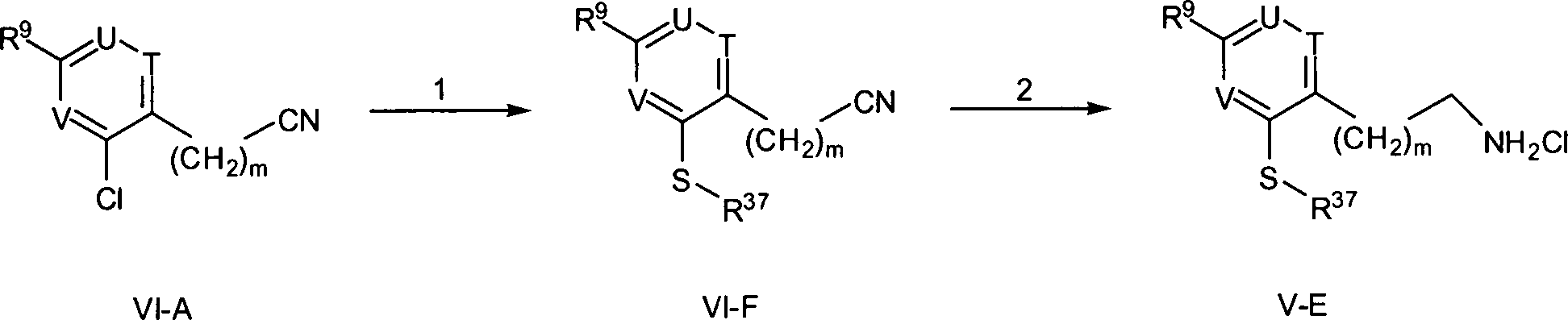
Stufe 1:Step 1:
Synthese von 2-(Cyclohexylthio)-6-(trifluormethyl)nicotinnitrilSynthesis of 2- (cyclohexylthio) -6- (trifluoromethyl) nicotinonitrile
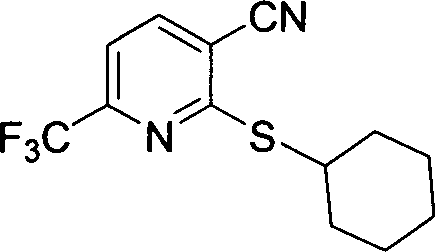
1.3 Äquivalente
NaH (4.9 g, 0.124 mol) wurden unter Stickstoff-Atmosphäre
in 50 ml DMF gelöst. Nach Zugabe von 1.2 Äquivalenten
Cyclohexanthiol (14.2 ml, 0.116 mol) wurde bei Raumtemperatur 1,5
h gerührt. Die entstandene Suspension wurde auf 10°C
abgekühlt und tropfenweise 1 Äquivalent 2-Chlor-6-(trifluormethyl)nicotinnitril
(20 g, 0.096 mol) in 50 ml DMF zugefügt und 2 h bei Raumtemperatur
gerührt. Das Reaktionsgemisch wurde mit ges. aq. NH4Cl-Lsg. gequencht, mit 1 l Wasser verdünnt
und mehrfach mit EE (3 × 200 ml) extrahiert. Die vereinigten
organischen Phasen wurden mit ges. aq. NaCl-Lsg. gewaschen, über
MgSO4 getrocknet und im Vakuum eingeengt.
Die säulenchromatographische Reinigung (Slilicagel. 100–200
mesh, Eluent: 2% EE in Hexan) erbrachte 26 g (93.8%) Produkt.
1H NMR (300 MHz, CDCl3) δ 7.94
(d ,1H, J = 7.9 Hz), 7.34 (d, 1H, J = 7.9 Hz), 4.00 (m, 1H), 1.90-2.14
(m, 2H), 1.42-1.88 (m, 8H)
IR (neat) 2930, 2854, 2232, 1643,
1573, 1447, 1334, 1245, 1186, 1149, 1107, 851 cm–1
MS
(FAB ) m/z 287 (M+H)1.3 equivalents of NaH (4.9 g, 0.124 mol) were dissolved under nitrogen atmosphere in 50 ml of DMF. After addition of 1.2 equivalents of cyclohexanethiol (14.2 ml, 0.116 mol) was stirred at room temperature for 1.5 h. The resulting suspension was cooled to 10 ° C and added dropwise 1 equivalent of 2-chloro-6- (trifluoromethyl) nicotinonitrile (20 g, 0.096 mol) in 50 ml of DMF and stirred for 2 h at room temperature. The reaction mixture was washed with sat. aq. NH 4 Cl solution. quenched, diluted with 1 L of water and extracted several times with EA (3 × 200 mL). The combined organic phases were washed with sat. aq. NaCl sol. washed, dried over MgSO 4 and concentrated in vacuo. Column chromatography (silica gel, 100-200 mesh, eluent: 2% EA in hexane) afforded 26 g (93.8%) of product.
1 H NMR (300 MHz, CDCl 3) δ 7.94 (d, 1H, J = 7.9 Hz), 7:34 (d, 1H, J = 7.9 Hz), 4.00 (m, 1H), 1.90-2.14 (m, 2H) , 1.42-1.88 (m, 8H)
IR (neat) 2930, 2854, 2232, 1643, 1573, 1447, 1334, 1245, 1186, 1149, 1107, 851 cm -1
MS (FAB) m / z 287 (M + H)
Stufe 2:Level 2:
Synthese von (2-(Cyclohexylthio)-6-(trifluormethyl)pyridin-3-yl)methanamin dihydrochloridSynthesis of (2- (cyclohexylthio) -6- (trifluoromethyl) pyridin-3-yl) methanamine dihydrochloride
Das
Nitril (26 g, 0.091 mol) wurde unter Stickstoff-Atmosphäre
in 600 ml THF gelöst und auf 5°C abgekühlt.
Tropfenweise wurde BH3-DMS (13.78 g, 0.182
mol) zugefügt und 20 h unter Rückfluß gekocht.
Nach Abkühlung auf 5°C wurde der Reaktionsansatz
mit 100 ml MeOH gequencht und 15 Minuten bei Raumtemperatur gerührt.
Dann wurde Di-tert.Butyl-dicarbonat (29.7 g, 0.136 mol) zugegeben
und 30 min bei Raumtemperatur gerührt. Nach Entfernen des
Lösungsmittels im Vakuum wurde das Rohprodukt säulenchromatographisch
(Silicagel. 100–200 mesh, Eluent: 10% EE in Hexan) gereinigt
und 23.4 g (66%) Produkt erhalten. Das Rohprodukt wurde in 120 ml
ges. HCl-Dioxan-Lsg. gelöst und 6 h bei Raumtemperatur
gerührt. Nach Entfernen des Lösungsmittels im
Vakuum wurde der Feststoff mit 10% EE in Hexan (2 × 100
ml) gewaschen und abfiltriert.
Ausbeute: 17 g (88.8%)
1H NMR (DMSO-d6,
400 MHz): δ 8.8 (s, 2H), 8.05 (d, 1H), 7.76 (d, 1H), 4.01
(s, 1H), 3.86-3.93 (m, 1H), 2.02-2.08 (m, 2H), 1.71-1.74 (m, 2H),
1.40-1.60 (m, 6H).The nitrile (26 g, 0.091 mol) was dissolved in 600 ml of THF under a nitrogen atmosphere and cooled to 5 ° C. BH 3 -DMS (13.78 g, 0.182 mol) was added dropwise and refluxed for 20 h. After cooling to 5 ° C, the reaction mixture was quenched with 100 ml of MeOH and stirred for 15 minutes at room temperature. Then, di-tert-butyl dicarbonate (29.7 g, 0.136 mol) was added and stirred at room temperature for 30 min. After removal of the solvent in vacuo, the crude product was purified by column chromatography (silica gel, 100-200 mesh, eluent: 10% EA in hexane) to give 23.4 g (66%) of product. The crude product was sat. In 120 ml. HCl-dioxane soln. dissolved and stirred for 6 h at room temperature. After removing the solvent in vacuo, the solid was washed with 10% EA in hexane (2 x 100 mL) and filtered off.
Yield: 17 g (88.8%)
1 H NMR (DMSO-d 6 , 400 MHz): δ 8.8 (s, 2H), 8.05 (d, 1H), 7.76 (d, 1H), 4.01 (s, 1H), 3.86-3.93 (m, 1H) , 2.02-2.08 (m, 2H), 1.71-1.74 (m, 2H), 1.40-1.60 (m, 6H).
3. Allgemeine Vorschrift zur Darstellung von Aminen der allgemeinen Formel V-B3. General rule for Preparation of amines of the general formula V-B
Die Darstellung von Aminen der allgemeinen Formel V-B erfolgt wie im nachfolgenden Schema 3 dargestellt.The Preparation of amines of the general formula V-B takes place as in Scheme 3 below.

Stufe 1: Darstellung von Nitrilen der allgemeinen Formel VI-CStage 1: Preparation of nitriles of general formula VI-C
Verbindungen der allgemeinen Formel VI-A (1 Äquivalent), worin R9, U, T und V die vorstehend genannte Bedeutung haben und m für 0, 1, 2 oder 3 steht, werden mit einem Alkohol der allgemeinen Formel HO-R36 (3.5 Äquivalente) und DBU [1,8-Diaza-bicyclo[5.4.0]undec-7-en] (3.5 Äquivalente) in Acetonitril (7 ml pro mmol der Verbindung der Formel VI-A) 12 Stunden bei RT gerührt. Die Reaktionsmischung wird mehrfach mit EE extrahiert. Die vereinigten organischen Phasen werden mit ges. aq. NaCl-Lsg. gewaschen, über MgSO4 getrocknet und das Lösungsmittel wurde im Vakuum entfernt. Der Rückstand wird jeweils durch Säulenchromatographie (SiO2, verschiedene Mischungen Hexan/EE) gereinigt.Compounds of the general formula VI-A (1 equivalent) in which R 9 , U, T and V have the abovementioned meaning and m is 0, 1, 2 or 3, are reacted with an alcohol of the general formula HO-R 36 ( 3.5 equivalents) and DBU [1,8-diazabicyclo [5.4.0] undec-7-ene (3.5 equivalents) in acetonitrile (7 ml per mmol of the compound of formula VI-A) for 12 hours at RT. The reaction mixture is extracted several times with EA. The combined organic phases are washed with sat. aq. NaCl sol. washed, dried over MgSO 4 and the solvent was removed in vacuo. The residue is purified in each case by column chromatography (SiO 2 , various mixtures of hexane / EA).
Methode 2:Method 2:
Verbindungen der allgemeinen Formel VI-C (2 mmol), worin R9, R36, U, T und V die vorstehend genannte Bedeutung haben und m für 0, 1, 2 oder 3 steht, werden in THF (10 mL, 10 mL) gelöst und BH3·S(CH3)2 [2.0 M in THF, 3 mL, 3 Äquivalent] wird hinzu gegeben. Die Reaktionsmischung wird 8 Stunden zum Rückfluss erhitzt, aq. HCl (2 N) wird hinzu gegeben und die Reaktionsmischung wird erneut für 30 Minuten zum Rückfluss erhitzt. Die Reaktionsmischung wird mit aq. Natriumhydroxid-Lösung (2 N) versetzt und mit EE gewaschen. Die vereinigten organischen Phasen werden mit ges. aq. NaCl-Lösung gewaschen und über Magnesiumsulfat getrocknet. Das Lösungsmittel wird im Vakuum entfernt und der Rückstand säulenchromatographisch (SiO2, verschiedene Mischung aus Dichlormethan und Methanol als Laufmittel) gereinigt.Compounds of the general formula VI-C (2 mmol), wherein R 9 , R 36 , U, T and V have the abovementioned meaning and m is 0, 1, 2 or 3, are dissolved in THF (10 mL, 10 mL ) and BH 3 .S (CH 3 ) 2 [2.0 M in THF, 3 mL, 3 equiv] is added. The reaction mixture is refluxed for 8 hours, aq. HCl (2N) is added, and the reaction mixture is reheated to reflux for 30 minutes. The reaction mixture is treated with aq. Sodium hydroxide solution (2 N) and washed with EA. The combined organic phases are washed with sat. aq. NaCl solution and dried over magnesium sulfate. The solvent is removed in vacuo and the residue is purified by column chromatography (SiO 2 , various mixture of dichloromethane and methanol as eluent).
Methode 3:Method 3:
Verbindungen der allgemeinen Formel VI-C (1.5 mmol), worin R9, R36, U, T und V die vorstehend genannte Bedeutung haben und m für 0, 1, 2 oder 3 steht, werden in Diethylether (3 mL) gelöst und bei 0°C wird eine Suspension von Lithiumaluminiumhydrid (3 mmol) in Ether (5 mL) langsam zu getropft. Die Reaktionsmischung wird 4 Stunden zum Rückfluss erhitzt und bei 0°C wird langsam Methanol und anschließend 1 N aq. NaOH-Lösung zu getropft. Die Reaktionsmischung wird mit Methanol verdünnt und über Celite filtriert. Das Lösungsmittel wird im Vakuum entfernt und der Rückstand säulenchromatographisch (SiO2, verschiedene Mischung aus Dichlormethan und Methanol als Laufmittel) gereinigt.Compounds of general formula VI-C (1.5 mmol), wherein R 9 , R 36 , U, T and V have the abovementioned meaning and m is 0, 1, 2 or 3, are dissolved in diethyl ether (3 mL) and at 0 ° C, a suspension of lithium aluminum hydride (3 mmol) in ether (5 mL) is slowly added dropwise. The reaction mixture is heated to reflux for 4 hours and at 0 ° C is slowly added dropwise methanol and then 1 N aq. NaOH solution. The reaction mixture is diluted with methanol and filtered through Celite. The Lö The solvent is removed in vacuo and the residue purified by column chromatography (SiO 2 , various mixture of dichloromethane and methanol as eluent).
4. Allgemeine Vorschrift zur Darstellung von Aminen der allgemeinen Formel V-C4. General rule for Preparation of amines of the general formula V-C
Die Darstellung von Aminen der allgemeinen Formel V-C erfolgt wie im nachfolgenden Schema 4 dargestellt.The Preparation of amines of the general formula V-C takes place as in Scheme 4 below.

Stufe 1: Darstellung von Nitrilen der allgemeinen Formel VI-DStage 1: Preparation of nitriles of general formula VI-D
Verbindungen der allgemeinen Formel VI-A (1 Äquivalent), worin R9, U, T und V die vorstehend genannte Bedeutung haben und m für 0, 1, 2 oder 3 steht, werden mit Bis(triphenylphosphin)palladium-dichlorid (7 Mol-%) und Kupfer(I)iodid (14 Mol-%) in 1-Methyl-2-pyrrolidinon (7 mL pro mmol Verbindung der allgemeinen Formel VI-A) gelöst. Nach 10 Minuten werden das Alkin der allgemeinen Formel HC≡C-R32 (3.5 Äquivalente) und N,N-Diisopropylethylamin (2 Äquivalente) zugegeben und die Reaktionsmischung wird 12 h bei einer Temperatur zwischen 90 und 110°C gerührt. Die Reaktionsmischung wird über Celite filtriert und mehrfach mit EE extrahiert. Die vereinigten organischen Phasen werden mit ges. aq. NaCl-Lsg. gewaschen, über MgSO4 getrocknet und das Lösungsmittel wurde im Vakuum entfernt. Der Rückstand wird jeweils durch Säulenchromatographie (SiO2, verschiedene Mischungen Hexan/EE) gereinigt.Compounds of the general formula VI-A (1 equivalent), wherein R 9 , U, T and V have the abovementioned meaning and m is 0, 1, 2 or 3, are reacted with bis (triphenylphosphine) palladium dichloride (7 mol %) and copper (I) iodide (14 mol%) in 1-methyl-2-pyrrolidinone (7 mL per mmol of compound of general formula VI-A). After 10 minutes, the alkyne of general formula HC≡CR 32 (3.5 equivalents) and N, N-diisopropylethylamine (2 equivalents) are added and the reaction mixture is stirred for 12 hours at a temperature between 90 and 110 ° C. The reaction mixture is filtered through Celite and extracted several times with EA. The combined organic phases are washed with sat. aq. NaCl sol. washed, dried over MgSO 4 and the solvent was removed in vacuo. The residue is purified in each case by column chromatography (SiO 2 , various mixtures of hexane / EA).
5. Allgemeine Vorschrift zur Darstellung von Aminen der allgemeinen Formel V-D5. General rule for Preparation of amines of the general formula V-D
Die Darstellung von Aminen der allgemeinen Formel V-D erfolgt wie im nachfolgenden Schema 5 dargestellt.The Preparation of amines of the general formula V-D takes place as in Scheme 5 below.

Stufe 1: Darstellung von Nitrilen der allgemeinen Formel VI-EStage 1: Preparation of nitriles of general formula VI-E
Verbindungen der allgemeinen Formel VI-A (1 Äquivalent), worin R9, U, T und V die vorstehend genannte Bedeutung haben und m für 0, 1, 2 oder 3 steht, werden mit Palladiumdichlorid (5 mol-%) und einer Verbindung der allgemeinen Formel R32-B(OH)2 (2 Äquivalente), worin R32 für Aryl, Heteroaryl oder Cycloalkenyl steht, in einem Lösungsmittelgemisch aus Toluol/Dioxan/2 N aq. Natriumcarbonat-Lösung (20 ml pro 1 mmol Verbindungen der allgemeinen Formel VI-A) gerührt. Die Reaktionsmischung wird 12 h unter Rückfluss erhitzt und über Celite filtriert. Die vereinigten organischen Phasen werden über Magnesiumsulfat getrocknet und das Lösungsmittel im Vakuum entfernt. Der Rückstand wird säulenchromatographisch (SiO2, verschiedene Lösungsmittelgemische von Hexan und EE) gereinigt.Compounds of the general formula VI-A (1 equivalent), wherein R 9 , U, T and V have the abovementioned meaning and m is 0, 1, 2 or 3, are reacted with palladium dichloride (5 mol%) and a compound of the general formula R 32 -B (OH) 2 (2 equivalents), wherein R 32 is aryl, heteroaryl or cycloalkenyl, in a solvent mixture of toluene / dioxane / 2 N aq. Sodium carbonate solution (20 ml per 1 mmol of compounds of general formula VI-A). The reaction mixture is heated at reflux for 12 h and filtered through Celite. The combined organic phases are dried over magnesium sulfate and the solvent removed in vacuo. The residue is purified by column chromatography (SiO 2 , various solvent mixtures of hexane and EA).
Stufe 2:Level 2:
Methode 1Method 1
Verbindungen der allgemeinen Formel VI-E (5 mmol), worin R9, R32, U, T und V die vorstehend genannte Bedeutung haben und m für 0, 1, 2 oder 3 steht, Palladium auf Kohle (10%, 500 mg) und konzentrierte Salzsäure (3 mL) werden in MeOH (30 mL) gelöst und 6 Stunden bei RT einer Wasserstoffatmosphäre ausgesetzt. Die Reaktionsmischung wird über Celite filtriert und das Filtrat wird im Vakuum eingeengt. Der Rückstand wird mittels Flashchromatographie (SiO2, EE) gereinigt.Compounds of general formula VI-E (5 mmol), wherein R 9 , R 32 , U, T and V have the abovementioned meaning and m is 0, 1, 2 or 3, palladium on carbon (10%, 500 mg and concentrated hydrochloric acid (3 mL) are dissolved in MeOH (30 mL) and exposed to a hydrogen atmosphere at RT for 6 hours. The reaction mixture is filtered through Celite and the filtrate is concentrated in vacuo. The residue is purified by means of flash chromatography (SiO 2 , EE).
Methode 2:Method 2:
Verbindungen der allgemeinen Formel VI-E (2 mmol), worin R9, R32, U, T und V die vorstehend genannte Bedeutung haben und m für 0, 1, 2 oder 3 steht, werden in THF (10 mL, 10 mL) gelöst und BH3·S(CH3)2 [2.0 M in THF, 3 mL, 3 Äquivalent] wird hinzu gegeben. Die Reaktionsmischung wird 8 Stunden zum Rückfluss erhitzt, aq. HCl (2 N) wird hinzu gegeben und die Reaktionsmischung wird erneut für 30 Minuten zum Rückfluss erhitzt. Die Reaktionsmischung wird mit aq. Natriumhydroxid-Lösung (2N) versetzt und mit EE gewaschen. Die vereinigten organischen Phasen werden mit ges. aq. NaCl-Lösung gewaschen und über Magnesiumsulfat getrocknet. Das Lösungsmittel wird im Vakuum entfernt und der Rückstand säulenchromatographisch (SiO2, verschiedene Mischung aus Dichlormethan und Methanol als Laufmittel) gereinigt.Compounds of the general formula VI-E (2 mmol), wherein R 9 , R 32 , U, T and V have the abovementioned meaning and m is 0, 1, 2 or 3, are dissolved in THF (10 mL, 10 mL ) and BH 3 .S (CH 3 ) 2 [2.0 M in THF, 3 mL, 3 equiv] is added. The reaction mixture is refluxed for 8 hours, aq. HCl (2N) is added, and the reaction mixture is reheated to reflux for 30 minutes. The reaction mixture is treated with aq. Sodium hydroxide solution (2N) and washed with EA. The combined organic phases are washed with sat. aq. NaCl solution and dried over magnesium sulfate. The solvent is removed in vacuo and the residue is purified by column chromatography (SiO 2 , various mixture of dichloromethane and methanol as eluent).
6. Allgemeine Vorschrift zur Darstellung von Carbonsäuren der allgemeinen Formel VIIa6. General rule for Preparation of carboxylic acids of the general formula VIIa
Die Darstellung von Carbonsäuren der allgemeinen Formel VIIa erfolgt wie im nachfolgenden Schema 6 dargestellt.The Preparation of carboxylic acids of the general formula VIIa takes place as shown in the following scheme 6.

Stufe 1:Step 1:
Verbindungen der allgemeinen Formel XI (7 mmol), worin R1, R2, R3 und R4 die vorstehend genannte Bedeutung haben und R für einen linearen oder verzweigten C1-6-Alkyl-Rest steht, werden mit Verbindungen der allgemeinen Formel Cl-S(=O)2-R5 (8 mmol), worin R5 die vorstehend genannte Bedeutung hat, 10 min bei 0°C und anschließend 3 Stunden bei Raumtemperatur in Pyridin (10 mL) gerührt. Die Reaktionsmischung wird in Dichlormethan und aq. HCl (1 N) aufgenommen, die organische Phase wird abgetrennt und das Lösungsmittel im Vakuum entfernt. Der Rückstand wird jeweils aus Dichlormethan/Hexan-Mischungen kristallisiert.Compounds of the general formula XI (7 mmol), in which R 1 , R 2 , R 3 and R 4 have the abovementioned meaning and R is a linear or branched C 1-6 -alkyl radical, are reacted with compounds of the general formula Cl-S (= O) 2 -R 5 (8 mmol), wherein R 5 has the abovementioned meaning, stirred for 10 min at 0 ° C and then for 3 hours at room temperature in pyridine (10 mL). The reaction mixture is taken up in dichloromethane and aq. HCl (1 N), the organic phase is separated off and the solvent is removed in vacuo. The residue is crystallized in each case from dichloromethane / hexane mixtures.
Stufe 2:Level 2:
Zu einer Suspension von 1.25 Äquivalenten NaH (60-%ig) in DMF wurde 1 Äquivalent der Verbindungen der allgemeinen Formel XII, worin R1, R2, R3, R4 und R5 die vorstehend genannte Bedeutung haben und R für einen linearen oder verzweigten C1-6-Alkyl-Rest steht, zugegeben und die Suspension wurde 30 Minuten bei Raumtemperatur gerührt. Zu dieser Reaktionsmischung wurden 3.5 Äquivalente einer Verbindung der allgemeinen Formel R6-I, worin R6 für einen linearen oder verzweigten C1-6-Alkyl-Rest steht, portionsweise zugegeben und die Suspension wurde 1.5 h bei 100°C gerührt und langsam auf Raumtemperatur abgekühlt. Nach Zugabe von Wasser wurde das Reaktionsgemisch zweifach mit EE extrahiert, die vereinigten organischen Phasen mehrfach mit ges. aq. NaCl-Lsg. gewaschen, über MgSO4 getrocknet und eingeengt. Das Rohprodukt wurde direkt im nächsten Schritt weiter verarbeitet.To a suspension of 1.25 equivalents of NaH (60%) in DMF was 1 equivalent of the compounds of general formula XII, wherein R 1 , R 2 , R 3 , R 4 and R 5 have the abovementioned meaning and R is a linear or branched C 1-6 alkyl radical, and the suspension was stirred for 30 minutes at room temperature. To this reaction mixture, 3.5 equivalents of a compound of the general formula R 6 -I, wherein R 6 is a linear or branched C 1-6 alkyl radical added in portions and the suspension was stirred for 1.5 h at 100 ° C and slowly Room temperature cooled. After addition of water, the reaction mixture was extracted twice with EA, the combined organic phases repeatedly with sat. aq. NaCl sol. washed, dried over MgSO 4 and concentrated. The crude product was processed further directly in the next step.
Stufe 3:Level 3:
Verbindungen der allgemeinen Formel XIII (5 mmol), worin R1, R2, R3, R4, R5 und R6 die vorstehend genannte Bedeutung haben und R für einen linearen oder verzweigten C1-6-Alkyl-Rest steht, werden mit Lithiumhydroxid Monohydrat (15 mmol) in einem Lösungsmittel-Gemisch aus Wasser und Tetrahydrofuran (1:2, 24 mL) 4 Stunden bei 40°C gerührt. Die Reaktionsmischung wird in Dichlormethan und Wasser aufgenommen, mit aq. Salzsäure (1 N) versetzt und mehrfach mit Dichlormethan extrahiert. Die vereinigten organischen Phasen werden mit ges. aq. NaCl-Lösung gewaschen und über Natriumsulfat getrocknet. Das Lösungsmittel wird im Vakuum entfernt und der Rückstand aus Ethylacetat/Hexan-Mischungen kristallisiert.Compounds of the general formula XIII (5 mmol) in which R 1 , R 2 , R 3 , R 4 , R 5 and R 6 have the abovementioned meaning and R is a linear or branched C 1-6 -alkyl radical, are stirred with lithium hydroxide monohydrate (15 mmol) in a solvent mixture of water and tetrahydrofuran (1: 2, 24 mL) at 40 ° C for 4 hours. The reaction mixture is taken up in dichloromethane and water, treated with aq. Hydrochloric acid (1 N) and extracted several times with dichloromethane. The combined organic phases are washed with sat. aq. NaCl solution and dried over sodium sulfate. The solvent is removed in vacuo and the residue is crystallized from ethyl acetate / hexane mixtures.
7. Allgemeine Vorschrift zur Umsetzung von Aminen der allgemeinen Formeln V oder X mit Carbonsäuren der allgemeinen Formel VII7. General rule for Reaction of amines of the general formulas V or X with carboxylic acids of general formula VII
Die Säure der allgemeinen Formel VII (1 Äquivalent), das Amin der allgemeinen Formeln V oder X (1.2 Äquivalente) und EDCI (1.2 Äquivalente) werden in DMF (10 mmol Säure in 20 ml) 12 Stunden bei RT gerührt und anschließend Wasser dazugegeben. Die Reaktionsmischung wird mehrfach mit EE extrahiert, die wässrige Phase wird mit NaCl gesättigt und anschließend wieder mit EE extrahiert. Die vereinigten organischen Phasen werden mit 1 N Salzsäure und ges. aq. NaCl-Lsg. gewaschen, über MgSO4 getrocknet und das Lösungsmittel wird im Vakuum entfernt. Der Rückstand wird mittels Flashchromatographie (SiO2, EE/Hexan 1:2) gereinigt.The acid of general formula VII (1 equivalent), the amine of general formulas V or X (1.2 equivalents) and EDCI (1.2 equivalents) are stirred in DMF (10 mmol acid in 20 ml) for 12 hours at RT and then water is added. The reaction mixture is extracted several times with EA, the aqueous phase is saturated with NaCl and then extracted again with EA. The combined organic phases are washed with 1 N hydrochloric acid and sat. aq. NaCl sol. washed, dried over MgSO 4 and the solvent is removed in vacuo. The residue is purified by flash chromatography (SiO 2 , EA / hexane 1: 2).
Die folgenden Beispielverbindungen wurden gemäß der vorstehend genannten allgemeinen Vorschrift erhalten.The The following example compounds were prepared according to the obtained above general rule.
Beispielverbindung 3:Example compound 3:
2-(3-Fluor-4-(N-methylmethylsulfonamido)phenyl)-N-((2-(4-methylpiperidin-1-yl)-6-(trifluormethyl)pyridin-3-yl)methyl)propanamid 
- 1H NMR (300 MHz, CDCl3) δ 7.47 (d, 1H, J = 7.8 Hz), 7.38 (dd, 1H, J = 8.1, 8.1 Hz), 7.21 (d, 1H, J = 7.8 Hz), 7.07-7.14 (m. 2H), 6.31 (bt, 1H), 4.47 (d, 2H, J = 5.7 Hz), 3.57 (q, 1H, J = 6.9 Hz), 3.23-3.55 (m, 5H), 3.95 (s, 3H), 2.81 (m, 2H), 1.73 (m, 2H) 1.52 (d, 3H, J = 6.9 Hz), 1.17-1.34 (m, 3H), 0.98 (d, 3H, J = 6.3 Hz) IR (KBr) 3245, 2923, 1651, 1508, 1443, 1330, 1222, 1159, 1111 cm–1 MS (FAB) m/z 531 (M+H) 1 H NMR (300 MHz, CDCl 3) δ 7:47 (d, 1H, J = 7.8 Hz), 7:38 (dd, 1H, J = 8.1, 8.1 Hz), 7.21 (d, 1H, J = 7.8 Hz), 7:07 -7.14 (m.2H), 6.31 (bt, 1H), 4.47 (d, 2H, J = 5.7 Hz), 3.57 (q, 1H, J = 6.9 Hz), 3.23-3.55 (m, 5H), 3.95 ( s, 3H), 2.81 (m, 2H), 1.73 (m, 2H) 1.52 (d, 3H, J = 6.9 Hz), 1.17-1.34 (m, 3H), 0.98 (d, 3H, J = 6.3 Hz) IR (KBr) 3245, 2923, 1651, 1508, 1443, 1330, 1222, 1159, 1111 cm -1 MS (FAB) m / z 531 (M + H)
[Bitte ergänzen Sie Daten für die weiteren Beispielverbindungen.][Please complete data for the other example compounds.]
8. Allgemeine Vorschrift zur Darstellung von Verbindungen der allgemeinen Formel I, worin R6 für -C(=O)-R28 steht8. General procedure for the preparation of compounds of general formula I, wherein R 6 is -C (= O) -R 28
1 Äquivalent einer Verbindung der allgemeinen Formel I, worin R6 für Wasserstoff steht, und 1 Äquivalent des entsprechenden frisch destillierten Carbonsäureanhydrids der allgemeinen Formel R28-C(=O)-O-C(=O)-R28 wurden in wenig Dichlormethan gelöst und mit einigen Tropfen H2SO4 versetzt und 2 h bei 100°C gerührt. Nach dem Abkühlen auf Raumtemperatur wurde das Reaktionsgemisch auf Eiswasser gegossen und die wässrige Phase zweimal mit Dichlormethan extrahiert. Die vereinigten organischen Phasen wurden mit Sodalösung entsäuert, mit Wasser gewaschen und über MgSO4 getrocknet. Nach Entfernen des Lösungsmittels im Vakuum wurde das Rohprodukt säulenchromatographisch (Silicagel: mesh 100–200, Eluent: 15% EE in Hexan) gereinigt.1 equivalent of a compound of general formula I in which R 6 is hydrogen and 1 equivalent of the corresponding freshly distilled carboxylic acid anhydride of general formula R 28 -C (= O) -OC (= O) -R 28 were dissolved in a little dichloromethane and mixed with a few drops of H 2 SO 4 and stirred at 100 ° C for 2 h. After cooling to room temperature, the reaction mixture was poured onto ice-water poured and the aqueous phase extracted twice with dichloromethane. The combined organic phases were deacidified with sodium carbonate solution, washed with water and dried over MgSO 4 . After removal of the solvent in vacuo, the crude product was purified by column chromatography (silica gel: mesh 100-200, eluent: 15% EA in hexane).
Beispielverbindung 1:Example compound 1:
N-(2-Fluor-4-(1-oxo-1-((2-(4-(N-phenylpropionamido)piperidin-1-yl)-6-(trifluormethyl)pyridin-3-yl)methylamino)propan-2-yl)phenyl)-N-(methylsulfonyl)propionamid 
- 1H NMR (300 MHz, CDCl3) δ 7.29-7.44 (m, 5H), 7.10-7.19 (m, 5H), 6.24 (bt, 1H), 4.78 (m, 1H), 4.38 (d, 2H, J = 5.1 Hz), 3.50 (q, 1H, J = 6.9 Hz), 3.46 (s, 3H), 3.35-3.39 (m, 2H), 2.97-3.04 (m, 2H), 1.89-1.96 (m, 4H) 1.45-1.65 (m, 9H), 0.99-1.10 (m, 6H) IR (KBr) 2934, 1716, 1644, 1592, 1504, 1415, 1361, 1277, 1160, 963, 915, 732 cm–1 MS (FAB) m/z 706 (M+H) 1 H NMR (300 MHz, CDCl 3) δ 7:29 to 7:44 (m, 5H), 7:10 to 7:19 (m, 5H), 6.24 (bt, 1H), 4.78 (m, 1H), 4:38 (d, 2H, J = 5.1 Hz), 3.50 (q, 1H, J = 6.9 Hz), 3.46 (s, 3H), 3.35-3.39 (m, 2H), 2.97-3.04 (m, 2H), 1.89-1.96 (m, 4H) 1.45-1.65 (m, 9H), 0.99-1.10 (m, 6H) IR (KBr) 2934, 1716, 1644, 1592, 1504, 1415, 1361, 1277, 1160, 963, 915, 732 cm -1 MS (FAB ) m / z 706 (M + H)
Beispielverbindung 2:Example compound 2:
2-(3-Fluor-4-(N-(methylsulfonyl)acetamido)phenyl)-N-((2-(4-methylpiperidin-1-yl)-6-(trifluormethyl)pyridin-3-yl)methyl)propanamid 
- 1H NMR (300 MHz, CDCl3) δ 7.42 (d, 1H, J = 7.8 Hz), 7.31 (dd, 1H, J = 8.1, 8.1 Hz), 7.17-7.25 (m, 3H), 6.37 (bt, 1H), 4.46 (m, 2H), 3.57 (q, 1H, J = 6.9 Hz), 3.43 (s, 3H), 3.31 (m, 2H), 2.82 (m, 2H), 1.98 (s, 3H), 1.72 (m, 2H) 1.54 (d, 3H, J = 7.2 Hz), 1.21-1.29 (m, 3H), 0.96 (d, 3H, J = 6.6 Hz) IR (KBr) 3265, 2933, 1652, 1519, 1433, 1327, 1223, 1161, 1105 cm–1 MS (FAB) m/z 559 (M+H) 1 H NMR (300 MHz, CDCl 3) δ 7:42 (d, 1H, J = 7.8 Hz), 7.31 (dd, 1H, J = 8.1, 8.1 Hz), 7:17 to 7:25 (m, 3H), 6:37 (bt, 1H), 4.46 (m, 2H), 3.57 (q, 1H, J = 6.9 Hz), 3.43 (s, 3H), 3.31 (m, 2H), 2.82 (m, 2H), 1.98 (s, 3H), 1.72 (m, 2H) 1.54 (d, 3H, J = 7.2 Hz), 1.21-1.29 (m, 3H), 0.96 (d, 3H, J = 6.6 Hz) IR (KBr) 3265, 2933, 1652, 1519, 1433, 1327, 1223, 1161, 1105 cm -1 MS (FAB) m / z 559 (M + H)
Die
weiteren Beispielverbindungen wurden nach den vorstehend beschriebenen
Methoden erhalten.
In
der nachfolgenden Tabelle 1. sind die gemessenen Werte aus der Massenspektrometrie
für die weiteren Beispielverbindungen angegeben.
Pharmakologische DatenPharmacological data
Die Affinität der erfindungsgemäßen Verbindungen für den Vanilloid-Rezeptor 1 (VR1/TRPV1-Rezeptor) wurde wie vorstehend beschrieben bestimmt (Pharmakologische Methoden 1 bzw. II).The Affinity of the compounds of the invention for the vanilloid receptor 1 (VR1 / TRPV1 receptor) determined as described above (Pharmacological Methods 1 or II).
Die
erfindungsgemäßen Verbindungen der vorstehend
angegebenen Formel I weisen eine ausgezeichnet Affinität
zum VR1/TRPV1-Rezeptor auf (Tabelle 2.). Tabelle 2.
- ne bedeutet jeweils „no effect", d. h. es wurde keine Reaktion beobachtet.
- ne means no effect, ie no reaction was observed.
Der Wert nach dem Zeichen „@" gibt die Konzentration an, bei der die Hemmung (in Prozent) jeweils bestimmt wurde.Of the Value after the character "@" indicates the concentration at the inhibition (in percent) was determined in each case.
ZITATE ENTHALTEN IN DER BESCHREIBUNGQUOTES INCLUDE IN THE DESCRIPTION
Diese Liste der vom Anmelder aufgeführten Dokumente wurde automatisiert erzeugt und ist ausschließlich zur besseren Information des Lesers aufgenommen. Die Liste ist nicht Bestandteil der deutschen Patent- bzw. Gebrauchsmusteranmeldung. Das DPMA übernimmt keinerlei Haftung für etwaige Fehler oder Auslassungen.This list The documents listed by the applicant have been automated generated and is solely for better information recorded by the reader. The list is not part of the German Patent or utility model application. The DPMA takes over no liability for any errors or omissions.
Zitierte PatentliteraturCited patent literature
- - WO 2005/003084 A1 [0044] WO 2005/003084 A1 [0044]
Zitierte Nicht-PatentliteraturCited non-patent literature
- - „Remington's Pharmaceutical Sciences", Herausgeber A.R. Gennaro, 17. Auflage, Mack Publishing Company, Esston, Pa, 1985, insbesondere in Teil 8, Kapitel 76 bis 93 [0069] - "Remington's Pharmaceutical Sciences", Editor AR Gennaro, 17th Edition, Mack Publishing Company, Esston, Pa, 1985, especially in Part 8, Chapters 76-93 [0069]
- - Cheng, Prusoff; Biochem. Pharmacol. 22, 3099-3108, 1973 [0078] - Cheng, Prusoff; Biochem. Pharmacol. 22, 3099-3108, 1973 [0078]
- - Cheng, Prusoff; Biochem. Pharmacol. 22, 3099-3108, 1973 [0083] - Cheng, Prusoff; Biochem. Pharmacol. 22, 3099-3108, 1973 [0083]
- - D. Dubuisson et al., Pain 1977, 4, 161-174 [0085] Dubuisson et al., Pain 1977, 4, 161-174 [0085]
- - T. J. Coderre et al., Pain 1993, 52, 259-285 [0085] TJ Coderre et al., Pain 1993, 52, 259-285 [0085]
- - I.C. Hendershot und J. Forsaith (1959) J. Pharmacol. Exp. Ther. 125, 237-240 [0091] IC Hendershot and J. Forsaith (1959) J. Pharmacol. Exp. Ther. 125, 237-240 [0091]
- - Gennett und Xie, 1988, Pain 33: 87-107 [0097] Gennett and Xie, 1988, Pain 33: 87-107 [0097]
Claims (19)


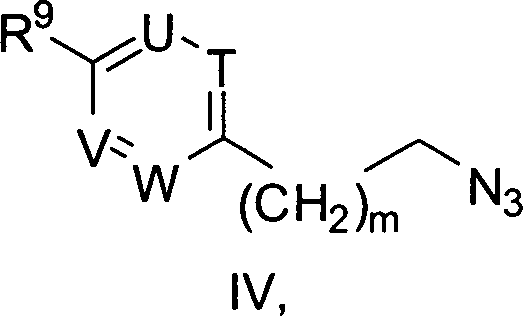
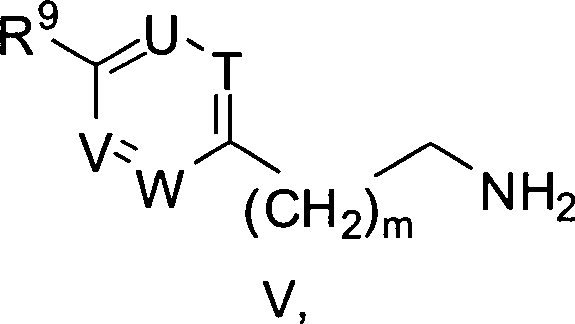


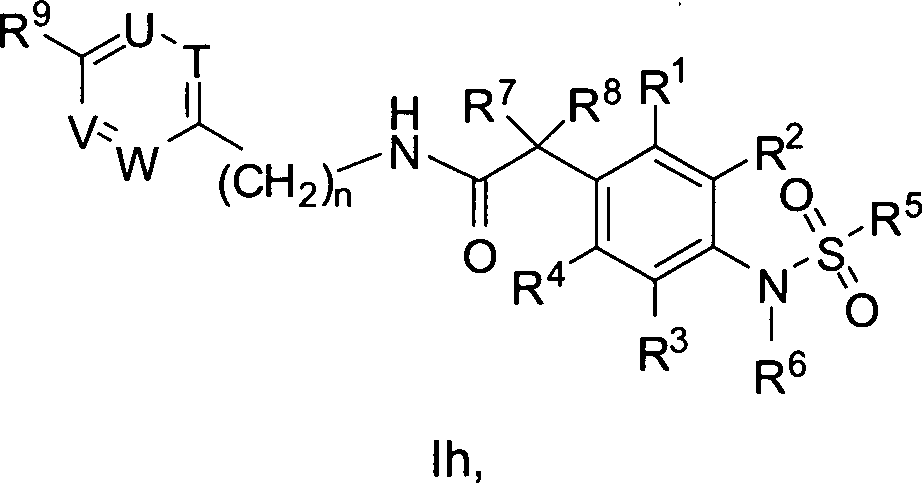


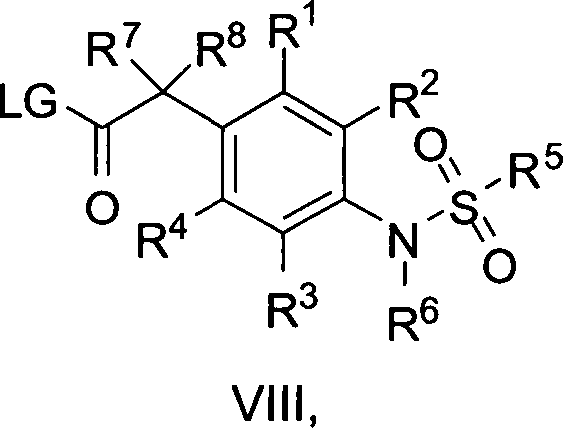


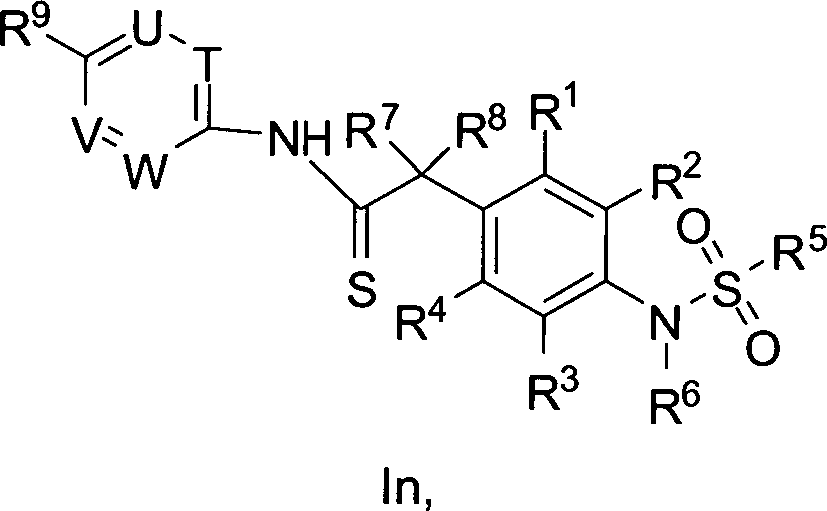

Priority Applications (7)
| Application Number | Priority Date | Filing Date | Title |
|---|---|---|---|
| DE102007017884A DE102007017884A1 (en) | 2007-04-13 | 2007-04-13 | Novel vanilloid receptor ligands and their use in the preparation of medicines |
| EP08735181.3A EP2146959B1 (en) | 2007-04-13 | 2008-04-11 | Vanilloid receptor ligands and the use thereof for the production of pharmaceuticals |
| PCT/EP2008/002884 WO2008125296A1 (en) | 2007-04-13 | 2008-04-11 | Vanilloid receptor ligands and the use thereof for the production of pharmaceuticals |
| ES08735181T ES2420965T3 (en) | 2007-04-13 | 2008-04-11 | Vanilloid receptor ligands and their use for the production of medicines |
| PL08735181T PL2146959T3 (en) | 2007-04-13 | 2008-04-11 | Vanilloid receptor ligands and the use thereof for the production of pharmaceuticals |
| US12/081,174 US8252816B2 (en) | 2007-04-13 | 2008-04-11 | Vanilloid receptor ligand compounds, pharmaceutical compositions containing them, a method of producing them and the use thereof to treat pain and various other conditions |
| US13/557,663 US8642623B2 (en) | 2007-04-13 | 2012-07-25 | Vanilloid receptor ligand compounds, pharmaceutical compositions containing them, a method of producing them and the use thereof to treat pain and various other conditions |
Applications Claiming Priority (1)
| Application Number | Priority Date | Filing Date | Title |
|---|---|---|---|
| DE102007017884A DE102007017884A1 (en) | 2007-04-13 | 2007-04-13 | Novel vanilloid receptor ligands and their use in the preparation of medicines |
Publications (1)
| Publication Number | Publication Date |
|---|---|
| DE102007017884A1 true DE102007017884A1 (en) | 2008-10-16 |
Family
ID=39433764
Family Applications (1)
| Application Number | Title | Priority Date | Filing Date |
|---|---|---|---|
| DE102007017884A Withdrawn DE102007017884A1 (en) | 2007-04-13 | 2007-04-13 | Novel vanilloid receptor ligands and their use in the preparation of medicines |
Country Status (6)
| Country | Link |
|---|---|
| US (2) | US8252816B2 (en) |
| EP (1) | EP2146959B1 (en) |
| DE (1) | DE102007017884A1 (en) |
| ES (1) | ES2420965T3 (en) |
| PL (1) | PL2146959T3 (en) |
| WO (1) | WO2008125296A1 (en) |
Families Citing this family (18)
| Publication number | Priority date | Publication date | Assignee | Title |
|---|---|---|---|---|
| EP2083624A4 (en) * | 2006-10-18 | 2010-06-16 | Merck Sharp & Dohme | 2-HYDROXY-2-PHENYL / THIOPHENYLPROPIONAMIDES AS ANDROGEN RECEPTOR MODULATORS |
| US8247436B2 (en) | 2010-03-19 | 2012-08-21 | Novartis Ag | Pyridine and pyrazine derivative for the treatment of CF |
| US9526648B2 (en) | 2010-06-13 | 2016-12-27 | Synerz Medical, Inc. | Intragastric device for treating obesity |
| US8628554B2 (en) | 2010-06-13 | 2014-01-14 | Virender K. Sharma | Intragastric device for treating obesity |
| US10420665B2 (en) | 2010-06-13 | 2019-09-24 | W. L. Gore & Associates, Inc. | Intragastric device for treating obesity |
| US10010439B2 (en) | 2010-06-13 | 2018-07-03 | Synerz Medical, Inc. | Intragastric device for treating obesity |
| WO2011160206A1 (en) | 2010-06-23 | 2011-12-29 | Morin Ryan D | Biomarkers for non-hodgkin lymphomas and uses thereof |
| US9175331B2 (en) | 2010-09-10 | 2015-11-03 | Epizyme, Inc. | Inhibitors of human EZH2, and methods of use thereof |
| AU2011298987B2 (en) | 2010-09-10 | 2017-09-28 | Epizyme, Inc. | Inhibitors of human EZH2, and methods of use thereof |
| JO3438B1 (en) | 2011-04-13 | 2019-10-20 | Epizyme Inc | Aryl- or heteroaryl-substituted benzene compounds |
| TWI598336B (en) | 2011-04-13 | 2017-09-11 | 雅酶股份有限公司 | Substituted benzene compounds |
| BR112014025508B1 (en) | 2012-04-13 | 2020-11-17 | Eisai R&D Management Co., Ltd. | salt form of a human ezh2 histone methyltransferase inhibitor |
| JP6461803B2 (en) | 2012-10-15 | 2019-01-30 | エピザイム,インコーポレイティド | Substituted benzene compounds |
| EA038869B1 (en) | 2013-10-16 | 2021-10-29 | Эпизим, Инк. | Crystalline forms of n-((4,6-dimethyl-2-oxo-1,2-dihydropyridin-3-yl)methyl)-5-(ethyl(tetrahydro-2h-pyran-4-yl)amino)-4-methyl-4'-(morpholinomethyl)-[1,1'-biphenyl]-3-carboxamide hydrochloride, pharmaceutical compositions thereof and methods of use thereof |
| EP3130589A1 (en) | 2015-08-13 | 2017-02-15 | Grünenthal GmbH | Heterocyclic aza compounds |
| EP3130590A1 (en) | 2015-08-13 | 2017-02-15 | Grünenthal GmbH | Aromatic aza compounds as vr1/trpv1 ligands |
| US10779980B2 (en) | 2016-04-27 | 2020-09-22 | Synerz Medical, Inc. | Intragastric device for treating obesity |
| RU2755206C1 (en) | 2020-05-20 | 2021-09-14 | Федеральное государственное бюджетное учреждение науки Тихоокеанский институт биоорганической химии им. Г.Б. Елякова Дальневосточного отделения Российской академии наук (ТИБОХ ДВО РАН) | Agent with prolonged analgesic action and medicinal product based thereon |
Citations (1)
| Publication number | Priority date | Publication date | Assignee | Title |
|---|---|---|---|---|
| WO2005003084A1 (en) | 2003-07-02 | 2005-01-13 | Grunenthal Gmbh | 4-(methyl sulfonyl amino) phenyl analogues as vanilloid antagonist showing excellent analgesic activity and the pharmaceutical compositions comprising the same |
Family Cites Families (4)
| Publication number | Priority date | Publication date | Assignee | Title |
|---|---|---|---|---|
| WO2006101318A1 (en) | 2005-03-19 | 2006-09-28 | Amorepacific Corporation | Novel compounds, isomer thereof, or pharmaceutically acceptable salts thereof as vanilloid receptor antagonist; and pharmaceutical compositions containing the same |
| DE102005023943A1 (en) | 2005-05-20 | 2006-11-23 | Grünenthal GmbH | Pentafluorosulfanyl-substituted compound and its use for the preparation of medicaments |
| US8710233B2 (en) * | 2005-10-19 | 2014-04-29 | Gruenenthal Gmbh | Vanilloid receptor ligands and use thereof for the production of pharmaceutical preparations |
| AU2007277519B2 (en) * | 2006-07-27 | 2011-12-22 | Amorepacific Corporation | Novel compounds, isomer thereof, or pharmaceutically acceptable salts thereof as vanilloid receptor antagonist; and pharmaceutical compositions containing the same |
-
2007
- 2007-04-13 DE DE102007017884A patent/DE102007017884A1/en not_active Withdrawn
-
2008
- 2008-04-11 PL PL08735181T patent/PL2146959T3/en unknown
- 2008-04-11 ES ES08735181T patent/ES2420965T3/en active Active
- 2008-04-11 WO PCT/EP2008/002884 patent/WO2008125296A1/en not_active Ceased
- 2008-04-11 EP EP08735181.3A patent/EP2146959B1/en not_active Not-in-force
- 2008-04-11 US US12/081,174 patent/US8252816B2/en not_active Expired - Fee Related
-
2012
- 2012-07-25 US US13/557,663 patent/US8642623B2/en not_active Expired - Fee Related
Patent Citations (1)
| Publication number | Priority date | Publication date | Assignee | Title |
|---|---|---|---|---|
| WO2005003084A1 (en) | 2003-07-02 | 2005-01-13 | Grunenthal Gmbh | 4-(methyl sulfonyl amino) phenyl analogues as vanilloid antagonist showing excellent analgesic activity and the pharmaceutical compositions comprising the same |
Non-Patent Citations (6)
| Title |
|---|
| "Remington's Pharmaceutical Sciences", Herausgeber A.R. Gennaro, 17. Auflage, Mack Publishing Company, Esston, Pa, 1985, insbesondere in Teil 8, Kapitel 76 bis 93 |
| Cheng, Prusoff; Biochem. Pharmacol. 22, 3099-3108, 1973 |
| D. Dubuisson et al., Pain 1977, 4, 161-174 |
| Gennett und Xie, 1988, Pain 33: 87-107 |
| I.C. Hendershot und J. Forsaith (1959) J. Pharmacol. Exp. Ther. 125, 237-240 |
| T. J. Coderre et al., Pain 1993, 52, 259-285 |
Also Published As
| Publication number | Publication date |
|---|---|
| WO2008125296A1 (en) | 2008-10-23 |
| ES2420965T3 (en) | 2013-08-28 |
| EP2146959B1 (en) | 2013-06-19 |
| US8252816B2 (en) | 2012-08-28 |
| US20120302602A1 (en) | 2012-11-29 |
| PL2146959T3 (en) | 2013-09-30 |
| US20080269289A1 (en) | 2008-10-30 |
| US8642623B2 (en) | 2014-02-04 |
| EP2146959A1 (en) | 2010-01-27 |
Similar Documents
| Publication | Publication Date | Title |
|---|---|---|
| EP2146959B1 (en) | Vanilloid receptor ligands and the use thereof for the production of pharmaceuticals | |
| DE102007018151A1 (en) | Novel vanilloid receptor ligands and their use in the preparation of medicines | |
| EP1888541B1 (en) | Benzo(d)isoxazol-3-yl-amine compounds and their use as vanilloid receptor ligands | |
| EP1940821B1 (en) | Novel vanilloid receptor ligands and their use for producing medicaments | |
| EP1891004B1 (en) | Pentafluorosulphanyl-substituted compound and its use for producing medicaments | |
| DE102007018149A1 (en) | Novel vanilloid receptor ligands and their use in the preparation of medicines | |
| DE102004044884A1 (en) | Substituted bicyclic imidazo-3-yl-amine compounds | |
| WO2008125342A2 (en) | Novel vanilloid receptor ligands and the use thereof for the production of pharmaceuticals | |
| EP1869038B1 (en) | Substituted 5,6,7,8-tetrahydro-imidazo[1,2-a]pyridin-2-ylamine compounds and their use for producing drugs | |
| EP1893620B1 (en) | Substituted spiro compounds and their use for producing pain-relief drugs | |
| DE102005018191A1 (en) | Substituted cyclic urea derivatives and their use for the preparation of medicaments | |
| EP1778622A1 (en) | Para-alkyl-substituted n-(4-hydroxy-3-methoxy-benzyl) cinnamamides and the use thereof for producing drugs | |
| WO2008125295A2 (en) | Novel vanilloid receptor ligands, and their use for the production of pharmaceuticals | |
| DE102005050408A1 (en) | Novel vanilloid receptor ligands and their use in the preparation of medicines | |
| EP2137178A2 (en) | Novel vanilloid receptor ligands and the use thereof for the production of pharmaceuticals | |
| DE102005023944A1 (en) | Substituted benzo-fused cycloheptanone derivatives and their use for the preparation of medicaments |
Legal Events
| Date | Code | Title | Description |
|---|---|---|---|
| OR8 | Request for search as to paragraph 43 lit. 1 sentence 1 patent law | ||
| 8130 | Withdrawal | ||
| 8165 | Unexamined publication of following application revoked | ||
| R082 | Change of representative |