DE102004034266A1 - Phyllosilicate-containing polysiloxane compositions - Google Patents
Phyllosilicate-containing polysiloxane compositions Download PDFInfo
- Publication number
- DE102004034266A1 DE102004034266A1 DE200410034266 DE102004034266A DE102004034266A1 DE 102004034266 A1 DE102004034266 A1 DE 102004034266A1 DE 200410034266 DE200410034266 DE 200410034266 DE 102004034266 A DE102004034266 A DE 102004034266A DE 102004034266 A1 DE102004034266 A1 DE 102004034266A1
- Authority
- DE
- Germany
- Prior art keywords
- groups
- group
- composition according
- carbon atoms
- optionally
- Prior art date
- Legal status (The legal status is an assumption and is not a legal conclusion. Google has not performed a legal analysis and makes no representation as to the accuracy of the status listed.)
- Ceased
Links
- -1 polysiloxane Polymers 0.000 title claims abstract description 261
- 239000000203 mixture Substances 0.000 title claims abstract description 176
- 229920001296 polysiloxane Polymers 0.000 title claims abstract description 107
- 229910052615 phyllosilicate Inorganic materials 0.000 title claims description 17
- 238000002360 preparation method Methods 0.000 claims abstract description 17
- 238000000034 method Methods 0.000 claims abstract description 15
- 239000000758 substrate Substances 0.000 claims abstract description 15
- BPQQTUXANYXVAA-UHFFFAOYSA-N Orthosilicate Chemical compound [O-][Si]([O-])([O-])[O-] BPQQTUXANYXVAA-UHFFFAOYSA-N 0.000 claims abstract description 14
- 230000008569 process Effects 0.000 claims abstract description 9
- 150000001875 compounds Chemical class 0.000 claims description 95
- 125000004432 carbon atom Chemical group C* 0.000 claims description 70
- 125000002924 primary amino group Chemical group [H]N([H])* 0.000 claims description 64
- 125000004122 cyclic group Chemical group 0.000 claims description 62
- 125000002887 hydroxy group Chemical group [H]O* 0.000 claims description 50
- 229920006395 saturated elastomer Polymers 0.000 claims description 49
- 239000004215 Carbon black (E152) Substances 0.000 claims description 46
- 229930195733 hydrocarbon Natural products 0.000 claims description 46
- XUIMIQQOPSSXEZ-UHFFFAOYSA-N Silicon Chemical group [Si] XUIMIQQOPSSXEZ-UHFFFAOYSA-N 0.000 claims description 44
- 239000003599 detergent Substances 0.000 claims description 43
- 238000009472 formulation Methods 0.000 claims description 43
- 125000001424 substituent group Chemical group 0.000 claims description 42
- QGZKDVFQNNGYKY-UHFFFAOYSA-O Ammonium Chemical compound [NH4+] QGZKDVFQNNGYKY-UHFFFAOYSA-O 0.000 claims description 41
- 125000003545 alkoxy group Chemical group 0.000 claims description 41
- 229910052760 oxygen Inorganic materials 0.000 claims description 37
- 239000001301 oxygen Substances 0.000 claims description 34
- 229920000570 polyether Polymers 0.000 claims description 32
- 125000000217 alkyl group Chemical group 0.000 claims description 31
- 239000004721 Polyphenylene oxide Substances 0.000 claims description 30
- QVGXLLKOCUKJST-UHFFFAOYSA-N atomic oxygen Chemical compound [O] QVGXLLKOCUKJST-UHFFFAOYSA-N 0.000 claims description 28
- 239000007788 liquid Substances 0.000 claims description 24
- XLYOFNOQVPJJNP-UHFFFAOYSA-N water Chemical compound O XLYOFNOQVPJJNP-UHFFFAOYSA-N 0.000 claims description 24
- 229910052757 nitrogen Inorganic materials 0.000 claims description 23
- 125000004433 nitrogen atom Chemical group N* 0.000 claims description 23
- 239000004094 surface-active agent Substances 0.000 claims description 23
- 239000004753 textile Substances 0.000 claims description 23
- 229910052799 carbon Inorganic materials 0.000 claims description 22
- IJGRMHOSHXDMSA-UHFFFAOYSA-N Atomic nitrogen Chemical compound N#N IJGRMHOSHXDMSA-UHFFFAOYSA-N 0.000 claims description 20
- OKTJSMMVPCPJKN-UHFFFAOYSA-N Carbon Chemical compound [C] OKTJSMMVPCPJKN-UHFFFAOYSA-N 0.000 claims description 18
- 150000003839 salts Chemical class 0.000 claims description 18
- SVPXDRXYRYOSEX-UHFFFAOYSA-N bentoquatam Chemical compound O.O=[Si]=O.O=[Al]O[Al]=O SVPXDRXYRYOSEX-UHFFFAOYSA-N 0.000 claims description 17
- 229920001577 copolymer Polymers 0.000 claims description 17
- 239000000839 emulsion Substances 0.000 claims description 17
- 239000000835 fiber Substances 0.000 claims description 17
- 239000002253 acid Substances 0.000 claims description 16
- 239000000440 bentonite Substances 0.000 claims description 16
- 229910000278 bentonite Inorganic materials 0.000 claims description 16
- 125000002496 methyl group Chemical group [H]C([H])([H])* 0.000 claims description 16
- 229910052739 hydrogen Inorganic materials 0.000 claims description 15
- 239000000463 material Substances 0.000 claims description 15
- 150000004760 silicates Chemical class 0.000 claims description 15
- 238000005406 washing Methods 0.000 claims description 15
- 125000004663 dialkyl amino group Chemical group 0.000 claims description 14
- 125000000623 heterocyclic group Chemical group 0.000 claims description 14
- 125000004435 hydrogen atom Chemical class [H]* 0.000 claims description 14
- 238000006116 polymerization reaction Methods 0.000 claims description 13
- 239000003945 anionic surfactant Substances 0.000 claims description 12
- 150000002430 hydrocarbons Chemical group 0.000 claims description 12
- 239000001257 hydrogen Substances 0.000 claims description 12
- 229910052710 silicon Inorganic materials 0.000 claims description 12
- 239000000126 substance Substances 0.000 claims description 12
- 230000015572 biosynthetic process Effects 0.000 claims description 11
- 235000013870 dimethyl polysiloxane Nutrition 0.000 claims description 11
- 229910052736 halogen Inorganic materials 0.000 claims description 11
- 150000002367 halogens Chemical class 0.000 claims description 11
- 229920000435 poly(dimethylsiloxane) Polymers 0.000 claims description 11
- 125000004469 siloxy group Chemical group [SiH3]O* 0.000 claims description 11
- 125000003118 aryl group Chemical group 0.000 claims description 10
- 150000001720 carbohydrates Chemical class 0.000 claims description 10
- 239000003795 chemical substances by application Substances 0.000 claims description 10
- 125000001495 ethyl group Chemical group [H]C([H])([H])C([H])([H])* 0.000 claims description 10
- 125000001997 phenyl group Chemical group [H]C1=C([H])C([H])=C(*)C([H])=C1[H] 0.000 claims description 10
- 239000002537 cosmetic Substances 0.000 claims description 9
- 239000000243 solution Substances 0.000 claims description 9
- 125000000484 butyl group Chemical group [H]C([*])([H])C([H])([H])C([H])([H])C([H])([H])[H] 0.000 claims description 8
- 239000003093 cationic surfactant Substances 0.000 claims description 8
- 239000004205 dimethyl polysiloxane Substances 0.000 claims description 8
- 239000002736 nonionic surfactant Substances 0.000 claims description 8
- 125000003342 alkenyl group Chemical group 0.000 claims description 7
- 125000003282 alkyl amino group Chemical group 0.000 claims description 7
- 125000002091 cationic group Chemical group 0.000 claims description 7
- 239000002657 fibrous material Substances 0.000 claims description 7
- QJGQUHMNIGDVPM-UHFFFAOYSA-N nitrogen group Chemical group [N] QJGQUHMNIGDVPM-UHFFFAOYSA-N 0.000 claims description 7
- 125000000129 anionic group Chemical group 0.000 claims description 6
- KWIUHFFTVRNATP-UHFFFAOYSA-N glycine betaine Chemical compound C[N+](C)(C)CC([O-])=O KWIUHFFTVRNATP-UHFFFAOYSA-N 0.000 claims description 6
- 125000001769 aryl amino group Chemical group 0.000 claims description 5
- 210000004209 hair Anatomy 0.000 claims description 5
- 239000004530 micro-emulsion Substances 0.000 claims description 5
- 229920005573 silicon-containing polymer Polymers 0.000 claims description 5
- IAYPIBMASNFSPL-UHFFFAOYSA-N Ethylene oxide Chemical compound C1CO1 IAYPIBMASNFSPL-UHFFFAOYSA-N 0.000 claims description 4
- 125000002877 alkyl aryl group Chemical group 0.000 claims description 4
- 238000000576 coating method Methods 0.000 claims description 4
- 229940094522 laponite Drugs 0.000 claims description 4
- XCOBTUNSZUJCDH-UHFFFAOYSA-B lithium magnesium sodium silicate Chemical compound [Li+].[Li+].[OH-].[OH-].[OH-].[OH-].[OH-].[OH-].[OH-].[OH-].[OH-].[OH-].[OH-].[OH-].[Na+].[Na+].[Mg+2].[Mg+2].[Mg+2].[Mg+2].[Mg+2].[Mg+2].[Mg+2].[Mg+2].[Mg+2].[Mg+2].[Mg+2].[Mg+2].[Mg+2].[Mg+2].[Mg+2].[Mg+2].O1[Si](O2)([O-])O[Si]3([O-])O[Si]1([O-])O[Si]2([O-])O3.O1[Si](O2)([O-])O[Si]3([O-])O[Si]1([O-])O[Si]2([O-])O3.O1[Si](O2)([O-])O[Si]3([O-])O[Si]1([O-])O[Si]2([O-])O3.O1[Si](O2)([O-])O[Si]3([O-])O[Si]1([O-])O[Si]2([O-])O3.O1[Si](O2)([O-])O[Si]3([O-])O[Si]1([O-])O[Si]2([O-])O3.O1[Si](O2)([O-])O[Si]3([O-])O[Si]1([O-])O[Si]2([O-])O3 XCOBTUNSZUJCDH-UHFFFAOYSA-B 0.000 claims description 4
- 239000004014 plasticizer Substances 0.000 claims description 4
- 238000004381 surface treatment Methods 0.000 claims description 4
- 125000004423 acyloxy group Chemical group 0.000 claims description 3
- 229960003237 betaine Drugs 0.000 claims description 3
- 239000000470 constituent Substances 0.000 claims description 3
- 239000002979 fabric softener Substances 0.000 claims description 3
- 125000001153 fluoro group Chemical group F* 0.000 claims description 3
- KWLMIXQRALPRBC-UHFFFAOYSA-L hectorite Chemical compound [Li+].[OH-].[OH-].[Na+].[Mg+2].O1[Si]2([O-])O[Si]1([O-])O[Si]([O-])(O1)O[Si]1([O-])O2 KWLMIXQRALPRBC-UHFFFAOYSA-L 0.000 claims description 3
- 229910000271 hectorite Inorganic materials 0.000 claims description 3
- 150000007524 organic acids Chemical class 0.000 claims description 3
- 239000000546 pharmaceutical excipient Substances 0.000 claims description 3
- 229920006294 polydialkylsiloxane Polymers 0.000 claims description 3
- 239000005995 Aluminium silicate Substances 0.000 claims description 2
- GOOHAUXETOMSMM-UHFFFAOYSA-N Propylene oxide Chemical compound CC1CO1 GOOHAUXETOMSMM-UHFFFAOYSA-N 0.000 claims description 2
- 239000004113 Sepiolite Substances 0.000 claims description 2
- 235000012211 aluminium silicate Nutrition 0.000 claims description 2
- 125000003710 aryl alkyl group Chemical group 0.000 claims description 2
- VNSBYDPZHCQWNB-UHFFFAOYSA-N calcium;aluminum;dioxido(oxo)silane;sodium;hydrate Chemical compound O.[Na].[Al].[Ca+2].[O-][Si]([O-])=O VNSBYDPZHCQWNB-UHFFFAOYSA-N 0.000 claims description 2
- 125000006165 cyclic alkyl group Chemical group 0.000 claims description 2
- GUJOJGAPFQRJSV-UHFFFAOYSA-N dialuminum;dioxosilane;oxygen(2-);hydrate Chemical compound O.[O-2].[O-2].[O-2].[Al+3].[Al+3].O=[Si]=O.O=[Si]=O.O=[Si]=O.O=[Si]=O GUJOJGAPFQRJSV-UHFFFAOYSA-N 0.000 claims description 2
- VILAVOFMIJHSJA-UHFFFAOYSA-N dicarbon monoxide Chemical group [C]=C=O VILAVOFMIJHSJA-UHFFFAOYSA-N 0.000 claims description 2
- 125000005843 halogen group Chemical group 0.000 claims description 2
- 229910052900 illite Inorganic materials 0.000 claims description 2
- 238000010409 ironing Methods 0.000 claims description 2
- NLYAJNPCOHFWQQ-UHFFFAOYSA-N kaolin Chemical compound O.O.O=[Al]O[Si](=O)O[Si](=O)O[Al]=O NLYAJNPCOHFWQQ-UHFFFAOYSA-N 0.000 claims description 2
- 239000010445 mica Substances 0.000 claims description 2
- 229910052618 mica group Inorganic materials 0.000 claims description 2
- 229910052901 montmorillonite Inorganic materials 0.000 claims description 2
- VGIBGUSAECPPNB-UHFFFAOYSA-L nonaaluminum;magnesium;tripotassium;1,3-dioxido-2,4,5-trioxa-1,3-disilabicyclo[1.1.1]pentane;iron(2+);oxygen(2-);fluoride;hydroxide Chemical compound [OH-].[O-2].[O-2].[O-2].[O-2].[O-2].[F-].[Mg+2].[Al+3].[Al+3].[Al+3].[Al+3].[Al+3].[Al+3].[Al+3].[Al+3].[Al+3].[K+].[K+].[K+].[Fe+2].O1[Si]2([O-])O[Si]1([O-])O2.O1[Si]2([O-])O[Si]1([O-])O2.O1[Si]2([O-])O[Si]1([O-])O2.O1[Si]2([O-])O[Si]1([O-])O2.O1[Si]2([O-])O[Si]1([O-])O2.O1[Si]2([O-])O[Si]1([O-])O2.O1[Si]2([O-])O[Si]1([O-])O2 VGIBGUSAECPPNB-UHFFFAOYSA-L 0.000 claims description 2
- 125000004430 oxygen atom Chemical group O* 0.000 claims description 2
- 229910052625 palygorskite Inorganic materials 0.000 claims description 2
- 229910052903 pyrophyllite Inorganic materials 0.000 claims description 2
- 229910000275 saponite Inorganic materials 0.000 claims description 2
- 229910000276 sauconite Inorganic materials 0.000 claims description 2
- 229910052624 sepiolite Inorganic materials 0.000 claims description 2
- 235000019355 sepiolite Nutrition 0.000 claims description 2
- 229920002994 synthetic fiber Polymers 0.000 claims description 2
- 239000012209 synthetic fiber Substances 0.000 claims description 2
- 239000000454 talc Substances 0.000 claims description 2
- 229910052623 talc Inorganic materials 0.000 claims description 2
- 229910052720 vanadium Inorganic materials 0.000 claims description 2
- 229910052902 vermiculite Inorganic materials 0.000 claims description 2
- 239000010455 vermiculite Substances 0.000 claims description 2
- 235000019354 vermiculite Nutrition 0.000 claims description 2
- 239000011248 coating agent Substances 0.000 claims 1
- 239000012439 solid excipient Substances 0.000 claims 1
- 230000037303 wrinkles Effects 0.000 claims 1
- 150000003254 radicals Chemical class 0.000 description 60
- KPUWHANPEXNPJT-UHFFFAOYSA-N disiloxane Chemical class [SiH3]O[SiH3] KPUWHANPEXNPJT-UHFFFAOYSA-N 0.000 description 31
- 238000006243 chemical reaction Methods 0.000 description 26
- 235000012216 bentonite Nutrition 0.000 description 25
- 230000006870 function Effects 0.000 description 24
- 235000014113 dietary fatty acids Nutrition 0.000 description 23
- 239000000194 fatty acid Substances 0.000 description 23
- 229930195729 fatty acid Natural products 0.000 description 23
- 150000004665 fatty acids Chemical class 0.000 description 23
- 239000000178 monomer Substances 0.000 description 21
- 235000002639 sodium chloride Nutrition 0.000 description 21
- KFZMGEQAYNKOFK-UHFFFAOYSA-N Isopropanol Chemical compound CC(C)O KFZMGEQAYNKOFK-UHFFFAOYSA-N 0.000 description 18
- RAXXELZNTBOGNW-UHFFFAOYSA-N imidazole Natural products C1=CNC=N1 RAXXELZNTBOGNW-UHFFFAOYSA-N 0.000 description 18
- 150000001412 amines Chemical class 0.000 description 17
- 239000007787 solid Substances 0.000 description 17
- XEEYBQQBJWHFJM-UHFFFAOYSA-N Iron Chemical compound [Fe] XEEYBQQBJWHFJM-UHFFFAOYSA-N 0.000 description 15
- OKKJLVBELUTLKV-UHFFFAOYSA-N Methanol Chemical compound OC OKKJLVBELUTLKV-UHFFFAOYSA-N 0.000 description 15
- 125000003277 amino group Chemical group 0.000 description 15
- LFQSCWFLJHTTHZ-UHFFFAOYSA-N Ethanol Chemical compound CCO LFQSCWFLJHTTHZ-UHFFFAOYSA-N 0.000 description 13
- QLAJNZSPVITUCQ-UHFFFAOYSA-N 1,3,2-dioxathietane 2,2-dioxide Chemical compound O=S1(=O)OCO1 QLAJNZSPVITUCQ-UHFFFAOYSA-N 0.000 description 11
- 238000005481 NMR spectroscopy Methods 0.000 description 11
- 125000002947 alkylene group Chemical group 0.000 description 11
- 150000004985 diamines Chemical class 0.000 description 10
- 239000003921 oil Substances 0.000 description 10
- 239000003760 tallow Substances 0.000 description 10
- QTBSBXVTEAMEQO-UHFFFAOYSA-N Acetic acid Chemical compound CC(O)=O QTBSBXVTEAMEQO-UHFFFAOYSA-N 0.000 description 9
- 150000002148 esters Chemical class 0.000 description 9
- 125000004193 piperazinyl group Chemical group 0.000 description 9
- 229920000642 polymer Polymers 0.000 description 9
- 125000001453 quaternary ammonium group Chemical group 0.000 description 9
- 125000001302 tertiary amino group Chemical group 0.000 description 9
- LYCAIKOWRPUZTN-UHFFFAOYSA-N Ethylene glycol Chemical compound OCCO LYCAIKOWRPUZTN-UHFFFAOYSA-N 0.000 description 8
- DNIAPMSPPWPWGF-UHFFFAOYSA-N Propylene glycol Chemical compound CC(O)CO DNIAPMSPPWPWGF-UHFFFAOYSA-N 0.000 description 8
- POULHZVOKOAJMA-UHFFFAOYSA-N dodecanoic acid Chemical compound CCCCCCCCCCCC(O)=O POULHZVOKOAJMA-UHFFFAOYSA-N 0.000 description 8
- 150000002894 organic compounds Chemical class 0.000 description 8
- 239000000969 carrier Substances 0.000 description 7
- 150000002118 epoxides Chemical class 0.000 description 7
- IPCSVZSSVZVIGE-UHFFFAOYSA-N hexadecanoic acid Chemical compound CCCCCCCCCCCCCCCC(O)=O IPCSVZSSVZVIGE-UHFFFAOYSA-N 0.000 description 7
- YPFDHNVEDLHUCE-UHFFFAOYSA-N propane-1,3-diol Chemical compound OCCCO YPFDHNVEDLHUCE-UHFFFAOYSA-N 0.000 description 7
- 239000012048 reactive intermediate Substances 0.000 description 7
- GVNVAWHJIKLAGL-UHFFFAOYSA-N 2-(cyclohexen-1-yl)cyclohexan-1-one Chemical compound O=C1CCCCC1C1=CCCCC1 GVNVAWHJIKLAGL-UHFFFAOYSA-N 0.000 description 6
- PUAQLLVFLMYYJJ-UHFFFAOYSA-N 2-aminopropiophenone Chemical compound CC(N)C(=O)C1=CC=CC=C1 PUAQLLVFLMYYJJ-UHFFFAOYSA-N 0.000 description 6
- 101150065749 Churc1 gene Proteins 0.000 description 6
- MYMOFIZGZYHOMD-UHFFFAOYSA-N Dioxygen Chemical compound O=O MYMOFIZGZYHOMD-UHFFFAOYSA-N 0.000 description 6
- 102100038239 Protein Churchill Human genes 0.000 description 6
- 150000001408 amides Chemical group 0.000 description 6
- MTHSVFCYNBDYFN-UHFFFAOYSA-N diethylene glycol Chemical compound OCCOCCO MTHSVFCYNBDYFN-UHFFFAOYSA-N 0.000 description 6
- 239000004744 fabric Substances 0.000 description 6
- 125000004051 hexyl group Chemical group [H]C([H])([H])C([H])([H])C([H])([H])C([H])([H])C([H])([H])C([H])([H])* 0.000 description 6
- 238000010348 incorporation Methods 0.000 description 6
- 125000000956 methoxy group Chemical group [H]C([H])([H])O* 0.000 description 6
- 239000002245 particle Substances 0.000 description 6
- 239000000047 product Substances 0.000 description 6
- 125000001436 propyl group Chemical group [H]C([*])([H])C([H])([H])C([H])([H])[H] 0.000 description 6
- 238000003756 stirring Methods 0.000 description 6
- 229920001059 synthetic polymer Polymers 0.000 description 6
- GAWIXWVDTYZWAW-UHFFFAOYSA-N C[CH]O Chemical group C[CH]O GAWIXWVDTYZWAW-UHFFFAOYSA-N 0.000 description 5
- 229920001661 Chitosan Polymers 0.000 description 5
- BRLQWZUYTZBJKN-UHFFFAOYSA-N Epichlorohydrin Chemical compound ClCC1CO1 BRLQWZUYTZBJKN-UHFFFAOYSA-N 0.000 description 5
- PEDCQBHIVMGVHV-UHFFFAOYSA-N Glycerine Chemical compound OCC(O)CO PEDCQBHIVMGVHV-UHFFFAOYSA-N 0.000 description 5
- 229910018540 Si C Inorganic materials 0.000 description 5
- 150000007513 acids Chemical class 0.000 description 5
- 150000001298 alcohols Chemical class 0.000 description 5
- 230000029936 alkylation Effects 0.000 description 5
- 238000005804 alkylation reaction Methods 0.000 description 5
- 150000001450 anions Chemical class 0.000 description 5
- 150000001768 cations Chemical class 0.000 description 5
- 238000010276 construction Methods 0.000 description 5
- 238000001816 cooling Methods 0.000 description 5
- 230000000694 effects Effects 0.000 description 5
- 238000006459 hydrosilylation reaction Methods 0.000 description 5
- 230000006872 improvement Effects 0.000 description 5
- 239000004615 ingredient Substances 0.000 description 5
- 238000004519 manufacturing process Methods 0.000 description 5
- 239000011159 matrix material Substances 0.000 description 5
- 229920005615 natural polymer Polymers 0.000 description 5
- 239000003960 organic solvent Substances 0.000 description 5
- 229920000233 poly(alkylene oxides) Polymers 0.000 description 5
- 150000003856 quaternary ammonium compounds Chemical class 0.000 description 5
- 238000005956 quaternization reaction Methods 0.000 description 5
- 150000003335 secondary amines Chemical class 0.000 description 5
- 125000000467 secondary amino group Chemical group [H]N([*:1])[*:2] 0.000 description 5
- 229910010271 silicon carbide Inorganic materials 0.000 description 5
- 239000002904 solvent Substances 0.000 description 5
- 239000003381 stabilizer Substances 0.000 description 5
- 239000007858 starting material Substances 0.000 description 5
- 235000013162 Cocos nucifera Nutrition 0.000 description 4
- 244000060011 Cocos nucifera Species 0.000 description 4
- 229920000742 Cotton Polymers 0.000 description 4
- ROSDSFDQCJNGOL-UHFFFAOYSA-N Dimethylamine Chemical compound CNC ROSDSFDQCJNGOL-UHFFFAOYSA-N 0.000 description 4
- LRHPLDYGYMQRHN-UHFFFAOYSA-N N-Butanol Chemical compound CCCCO LRHPLDYGYMQRHN-UHFFFAOYSA-N 0.000 description 4
- GLUUGHFHXGJENI-UHFFFAOYSA-N Piperazine Chemical compound C1CNCCN1 GLUUGHFHXGJENI-UHFFFAOYSA-N 0.000 description 4
- 229920002873 Polyethylenimine Polymers 0.000 description 4
- 229910008051 Si-OH Inorganic materials 0.000 description 4
- 229910006358 Si—OH Inorganic materials 0.000 description 4
- CDBYLPFSWZWCQE-UHFFFAOYSA-L Sodium Carbonate Chemical compound [Na+].[Na+].[O-]C([O-])=O CDBYLPFSWZWCQE-UHFFFAOYSA-L 0.000 description 4
- XSQUKJJJFZCRTK-UHFFFAOYSA-N Urea Chemical compound NC(N)=O XSQUKJJJFZCRTK-UHFFFAOYSA-N 0.000 description 4
- 125000004103 aminoalkyl group Chemical group 0.000 description 4
- 150000001732 carboxylic acid derivatives Chemical group 0.000 description 4
- 150000002009 diols Chemical class 0.000 description 4
- 238000009826 distribution Methods 0.000 description 4
- 150000002334 glycols Chemical class 0.000 description 4
- 125000002768 hydroxyalkyl group Chemical group 0.000 description 4
- 238000004898 kneading Methods 0.000 description 4
- ZQPPMHVWECSIRJ-KTKRTIGZSA-N oleic acid Chemical compound CCCCCCCC\C=C/CCCCCCCC(O)=O ZQPPMHVWECSIRJ-KTKRTIGZSA-N 0.000 description 4
- 235000003441 saturated fatty acids Nutrition 0.000 description 4
- 150000004671 saturated fatty acids Chemical class 0.000 description 4
- 150000003512 tertiary amines Chemical class 0.000 description 4
- 238000012360 testing method Methods 0.000 description 4
- 235000021122 unsaturated fatty acids Nutrition 0.000 description 4
- 150000004670 unsaturated fatty acids Chemical class 0.000 description 4
- WRIDQFICGBMAFQ-UHFFFAOYSA-N (E)-8-Octadecenoic acid Natural products CCCCCCCCCC=CCCCCCCC(O)=O WRIDQFICGBMAFQ-UHFFFAOYSA-N 0.000 description 3
- ZWEHNKRNPOVVGH-UHFFFAOYSA-N 2-Butanone Chemical compound CCC(C)=O ZWEHNKRNPOVVGH-UHFFFAOYSA-N 0.000 description 3
- LQJBNNIYVWPHFW-UHFFFAOYSA-N 20:1omega9c fatty acid Natural products CCCCCCCCCCC=CCCCCCCCC(O)=O LQJBNNIYVWPHFW-UHFFFAOYSA-N 0.000 description 3
- QSBYPNXLFMSGKH-UHFFFAOYSA-N 9-Heptadecensaeure Natural products CCCCCCCC=CCCCCCCCC(O)=O QSBYPNXLFMSGKH-UHFFFAOYSA-N 0.000 description 3
- CSCPPACGZOOCGX-UHFFFAOYSA-N Acetone Chemical compound CC(C)=O CSCPPACGZOOCGX-UHFFFAOYSA-N 0.000 description 3
- 229920002134 Carboxymethyl cellulose Polymers 0.000 description 3
- XEKOWRVHYACXOJ-UHFFFAOYSA-N Ethyl acetate Chemical compound CCOC(C)=O XEKOWRVHYACXOJ-UHFFFAOYSA-N 0.000 description 3
- UFHFLCQGNIYNRP-UHFFFAOYSA-N Hydrogen Chemical compound [H][H] UFHFLCQGNIYNRP-UHFFFAOYSA-N 0.000 description 3
- 239000005639 Lauric acid Substances 0.000 description 3
- 239000005642 Oleic acid Substances 0.000 description 3
- ZQPPMHVWECSIRJ-UHFFFAOYSA-N Oleic acid Natural products CCCCCCCCC=CCCCCCCCC(O)=O ZQPPMHVWECSIRJ-UHFFFAOYSA-N 0.000 description 3
- 235000021314 Palmitic acid Nutrition 0.000 description 3
- WTKZEGDFNFYCGP-UHFFFAOYSA-N Pyrazole Chemical compound C=1C=NNC=1 WTKZEGDFNFYCGP-UHFFFAOYSA-N 0.000 description 3
- 235000021355 Stearic acid Nutrition 0.000 description 3
- 239000000654 additive Substances 0.000 description 3
- 125000004450 alkenylene group Chemical group 0.000 description 3
- 125000004419 alkynylene group Chemical group 0.000 description 3
- 229920013822 aminosilicone Polymers 0.000 description 3
- 238000009835 boiling Methods 0.000 description 3
- 239000001768 carboxy methyl cellulose Substances 0.000 description 3
- 235000010948 carboxy methyl cellulose Nutrition 0.000 description 3
- 239000008112 carboxymethyl-cellulose Substances 0.000 description 3
- 150000001805 chlorine compounds Chemical class 0.000 description 3
- 239000006071 cream Substances 0.000 description 3
- 238000001035 drying Methods 0.000 description 3
- 150000002170 ethers Chemical class 0.000 description 3
- 125000000524 functional group Chemical group 0.000 description 3
- 239000008187 granular material Substances 0.000 description 3
- 150000004820 halides Chemical class 0.000 description 3
- 125000002883 imidazolyl group Chemical group 0.000 description 3
- QXJSBBXBKPUZAA-UHFFFAOYSA-N isooleic acid Natural products CCCCCCCC=CCCCCCCCCC(O)=O QXJSBBXBKPUZAA-UHFFFAOYSA-N 0.000 description 3
- 150000002596 lactones Chemical class 0.000 description 3
- WQEPLUUGTLDZJY-UHFFFAOYSA-N n-Pentadecanoic acid Natural products CCCCCCCCCCCCCCC(O)=O WQEPLUUGTLDZJY-UHFFFAOYSA-N 0.000 description 3
- QIQXTHQIDYTFRH-UHFFFAOYSA-N octadecanoic acid Chemical compound CCCCCCCCCCCCCCCCCC(O)=O QIQXTHQIDYTFRH-UHFFFAOYSA-N 0.000 description 3
- OQCDKBAXFALNLD-UHFFFAOYSA-N octadecanoic acid Natural products CCCCCCCC(C)CCCCCCCCC(O)=O OQCDKBAXFALNLD-UHFFFAOYSA-N 0.000 description 3
- 235000021313 oleic acid Nutrition 0.000 description 3
- 235000011837 pasties Nutrition 0.000 description 3
- 239000002243 precursor Substances 0.000 description 3
- 239000008117 stearic acid Substances 0.000 description 3
- TUNFSRHWOTWDNC-HKGQFRNVSA-N tetradecanoic acid Chemical compound CCCCCCCCCCCCC[14C](O)=O TUNFSRHWOTWDNC-HKGQFRNVSA-N 0.000 description 3
- 238000001665 trituration Methods 0.000 description 3
- JCZPMGDSEAFWDY-SQOUGZDYSA-N (2r,3s,4r,5r)-2,3,4,5,6-pentahydroxyhexanamide Chemical compound NC(=O)[C@H](O)[C@@H](O)[C@H](O)[C@H](O)CO JCZPMGDSEAFWDY-SQOUGZDYSA-N 0.000 description 2
- DNIAPMSPPWPWGF-GSVOUGTGSA-N (R)-(-)-Propylene glycol Chemical compound C[C@@H](O)CO DNIAPMSPPWPWGF-GSVOUGTGSA-N 0.000 description 2
- RXYPXQSKLGGKOL-UHFFFAOYSA-N 1,4-dimethylpiperazine Chemical compound CN1CCN(C)CC1 RXYPXQSKLGGKOL-UHFFFAOYSA-N 0.000 description 2
- CUVLMZNMSPJDON-UHFFFAOYSA-N 1-(1-butoxypropan-2-yloxy)propan-2-ol Chemical compound CCCCOCC(C)OCC(C)O CUVLMZNMSPJDON-UHFFFAOYSA-N 0.000 description 2
- PVOAHINGSUIXLS-UHFFFAOYSA-N 1-Methylpiperazine Chemical compound CN1CCNCC1 PVOAHINGSUIXLS-UHFFFAOYSA-N 0.000 description 2
- AZUYLZMQTIKGSC-UHFFFAOYSA-N 1-[6-[4-(5-chloro-6-methyl-1H-indazol-4-yl)-5-methyl-3-(1-methylindazol-5-yl)pyrazol-1-yl]-2-azaspiro[3.3]heptan-2-yl]prop-2-en-1-one Chemical compound ClC=1C(=C2C=NNC2=CC=1C)C=1C(=NN(C=1C)C1CC2(CN(C2)C(C=C)=O)C1)C=1C=C2C=NN(C2=CC=1)C AZUYLZMQTIKGSC-UHFFFAOYSA-N 0.000 description 2
- RWNUSVWFHDHRCJ-UHFFFAOYSA-N 1-butoxypropan-2-ol Chemical compound CCCCOCC(C)O RWNUSVWFHDHRCJ-UHFFFAOYSA-N 0.000 description 2
- ARXJGSRGQADJSQ-UHFFFAOYSA-N 1-methoxypropan-2-ol Chemical compound COCC(C)O ARXJGSRGQADJSQ-UHFFFAOYSA-N 0.000 description 2
- COBPKKZHLDDMTB-UHFFFAOYSA-N 2-[2-(2-butoxyethoxy)ethoxy]ethanol Chemical compound CCCCOCCOCCOCCO COBPKKZHLDDMTB-UHFFFAOYSA-N 0.000 description 2
- JDSQBDGCMUXRBM-UHFFFAOYSA-N 2-[2-(2-butoxypropoxy)propoxy]propan-1-ol Chemical compound CCCCOC(C)COC(C)COC(C)CO JDSQBDGCMUXRBM-UHFFFAOYSA-N 0.000 description 2
- WAEVWDZKMBQDEJ-UHFFFAOYSA-N 2-[2-(2-methoxypropoxy)propoxy]propan-1-ol Chemical compound COC(C)COC(C)COC(C)CO WAEVWDZKMBQDEJ-UHFFFAOYSA-N 0.000 description 2
- POAOYUHQDCAZBD-UHFFFAOYSA-N 2-butoxyethanol Chemical compound CCCCOCCO POAOYUHQDCAZBD-UHFFFAOYSA-N 0.000 description 2
- QEYMMOKECZBKAC-UHFFFAOYSA-N 3-chloropropanoic acid Chemical compound OC(=O)CCCl QEYMMOKECZBKAC-UHFFFAOYSA-N 0.000 description 2
- YEJRWHAVMIAJKC-UHFFFAOYSA-N 4-Butyrolactone Chemical compound O=C1CCCO1 YEJRWHAVMIAJKC-UHFFFAOYSA-N 0.000 description 2
- QTBSBXVTEAMEQO-UHFFFAOYSA-M Acetate Chemical compound CC([O-])=O QTBSBXVTEAMEQO-UHFFFAOYSA-M 0.000 description 2
- QGZKDVFQNNGYKY-UHFFFAOYSA-N Ammonia Chemical compound N QGZKDVFQNNGYKY-UHFFFAOYSA-N 0.000 description 2
- PHOQVHQSTUBQQK-SQOUGZDYSA-N D-glucono-1,5-lactone Chemical compound OC[C@H]1OC(=O)[C@H](O)[C@@H](O)[C@@H]1O PHOQVHQSTUBQQK-SQOUGZDYSA-N 0.000 description 2
- RTZKZFJDLAIYFH-UHFFFAOYSA-N Diethyl ether Chemical compound CCOCC RTZKZFJDLAIYFH-UHFFFAOYSA-N 0.000 description 2
- 239000004593 Epoxy Substances 0.000 description 2
- 241000871495 Heeria argentea Species 0.000 description 2
- YNAVUWVOSKDBBP-UHFFFAOYSA-N Morpholine Chemical compound C1COCCN1 YNAVUWVOSKDBBP-UHFFFAOYSA-N 0.000 description 2
- MBBZMMPHUWSWHV-BDVNFPICSA-N N-methylglucamine Chemical compound CNC[C@H](O)[C@@H](O)[C@H](O)[C@H](O)CO MBBZMMPHUWSWHV-BDVNFPICSA-N 0.000 description 2
- NQRYJNQNLNOLGT-UHFFFAOYSA-N Piperidine Chemical compound C1CCNCC1 NQRYJNQNLNOLGT-UHFFFAOYSA-N 0.000 description 2
- 229920003171 Poly (ethylene oxide) Polymers 0.000 description 2
- WCUXLLCKKVVCTQ-UHFFFAOYSA-M Potassium chloride Chemical compound [Cl-].[K+] WCUXLLCKKVVCTQ-UHFFFAOYSA-M 0.000 description 2
- 229910004298 SiO 2 Inorganic materials 0.000 description 2
- FAPWRFPIFSIZLT-UHFFFAOYSA-M Sodium chloride Chemical compound [Na+].[Cl-] FAPWRFPIFSIZLT-UHFFFAOYSA-M 0.000 description 2
- 229920002125 Sokalan® Polymers 0.000 description 2
- WYURNTSHIVDZCO-UHFFFAOYSA-N Tetrahydrofuran Chemical compound C1CCOC1 WYURNTSHIVDZCO-UHFFFAOYSA-N 0.000 description 2
- GWEVSGVZZGPLCZ-UHFFFAOYSA-N Titan oxide Chemical compound O=[Ti]=O GWEVSGVZZGPLCZ-UHFFFAOYSA-N 0.000 description 2
- XLOMVQKBTHCTTD-UHFFFAOYSA-N Zinc monoxide Chemical compound [Zn]=O XLOMVQKBTHCTTD-UHFFFAOYSA-N 0.000 description 2
- 150000001336 alkenes Chemical class 0.000 description 2
- 229910000323 aluminium silicate Inorganic materials 0.000 description 2
- 239000002585 base Substances 0.000 description 2
- 230000008901 benefit Effects 0.000 description 2
- 125000001797 benzyl group Chemical group [H]C1=C([H])C([H])=C(C([H])=C1[H])C([H])([H])* 0.000 description 2
- WERYXYBDKMZEQL-UHFFFAOYSA-N butane-1,4-diol Chemical compound OCCCCO WERYXYBDKMZEQL-UHFFFAOYSA-N 0.000 description 2
- 239000004202 carbamide Substances 0.000 description 2
- 150000007942 carboxylates Chemical class 0.000 description 2
- 150000001735 carboxylic acids Chemical class 0.000 description 2
- 239000003054 catalyst Substances 0.000 description 2
- 239000007795 chemical reaction product Substances 0.000 description 2
- 239000004927 clay Substances 0.000 description 2
- 239000000084 colloidal system Substances 0.000 description 2
- 125000005265 dialkylamine group Chemical group 0.000 description 2
- 125000004427 diamine group Chemical group 0.000 description 2
- JQVDAXLFBXTEQA-UHFFFAOYSA-N dibutylamine Chemical compound CCCCNCCCC JQVDAXLFBXTEQA-UHFFFAOYSA-N 0.000 description 2
- ZBCBWPMODOFKDW-UHFFFAOYSA-N diethanolamine Chemical compound OCCNCCO ZBCBWPMODOFKDW-UHFFFAOYSA-N 0.000 description 2
- 229940028356 diethylene glycol monobutyl ether Drugs 0.000 description 2
- IUNMPGNGSSIWFP-UHFFFAOYSA-N dimethylaminopropylamine Chemical compound CN(C)CCCN IUNMPGNGSSIWFP-UHFFFAOYSA-N 0.000 description 2
- FFGSPQDSOUPWGY-UHFFFAOYSA-M dodecyl-ethyl-dimethylazanium;bromide Chemical compound [Br-].CCCCCCCCCCCC[N+](C)(C)CC FFGSPQDSOUPWGY-UHFFFAOYSA-M 0.000 description 2
- 125000003700 epoxy group Chemical group 0.000 description 2
- 238000002474 experimental method Methods 0.000 description 2
- 239000000945 filler Substances 0.000 description 2
- 235000011187 glycerol Nutrition 0.000 description 2
- 238000000227 grinding Methods 0.000 description 2
- 238000010438 heat treatment Methods 0.000 description 2
- NAQMVNRVTILPCV-UHFFFAOYSA-N hexane-1,6-diamine Chemical compound NCCCCCCN NAQMVNRVTILPCV-UHFFFAOYSA-N 0.000 description 2
- 230000003993 interaction Effects 0.000 description 2
- GKQPCPXONLDCMU-CCEZHUSRSA-N lacidipine Chemical compound CCOC(=O)C1=C(C)NC(C)=C(C(=O)OCC)C1C1=CC=CC=C1\C=C\C(=O)OC(C)(C)C GKQPCPXONLDCMU-CCEZHUSRSA-N 0.000 description 2
- 238000002844 melting Methods 0.000 description 2
- 230000008018 melting Effects 0.000 description 2
- TXXWBTOATXBWDR-UHFFFAOYSA-N n,n,n',n'-tetramethylhexane-1,6-diamine Chemical compound CN(C)CCCCCCN(C)C TXXWBTOATXBWDR-UHFFFAOYSA-N 0.000 description 2
- JCGNDDUYTRNOFT-UHFFFAOYSA-N oxolane-2,4-dione Chemical compound O=C1COC(=O)C1 JCGNDDUYTRNOFT-UHFFFAOYSA-N 0.000 description 2
- 238000005191 phase separation Methods 0.000 description 2
- 229920000172 poly(styrenesulfonic acid) Polymers 0.000 description 2
- 239000004584 polyacrylic acid Substances 0.000 description 2
- 229920001451 polypropylene glycol Polymers 0.000 description 2
- 229940005642 polystyrene sulfonic acid Drugs 0.000 description 2
- 239000000843 powder Substances 0.000 description 2
- 238000002203 pretreatment Methods 0.000 description 2
- BDERNNFJNOPAEC-UHFFFAOYSA-N propan-1-ol Chemical compound CCCO BDERNNFJNOPAEC-UHFFFAOYSA-N 0.000 description 2
- 235000013772 propylene glycol Nutrition 0.000 description 2
- 125000003226 pyrazolyl group Chemical group 0.000 description 2
- 238000010992 reflux Methods 0.000 description 2
- 238000000518 rheometry Methods 0.000 description 2
- FZHAPNGMFPVSLP-UHFFFAOYSA-N silanamine Chemical class [SiH3]N FZHAPNGMFPVSLP-UHFFFAOYSA-N 0.000 description 2
- 229920002545 silicone oil Polymers 0.000 description 2
- 239000011734 sodium Substances 0.000 description 2
- 229910000029 sodium carbonate Inorganic materials 0.000 description 2
- 125000006850 spacer group Chemical group 0.000 description 2
- 230000008961 swelling Effects 0.000 description 2
- 238000003786 synthesis reaction Methods 0.000 description 2
- 239000002562 thickening agent Substances 0.000 description 2
- 125000005270 trialkylamine group Chemical group 0.000 description 2
- ZIBGPFATKBEMQZ-UHFFFAOYSA-N triethylene glycol Chemical compound OCCOCCOCCO ZIBGPFATKBEMQZ-UHFFFAOYSA-N 0.000 description 2
- DNIAPMSPPWPWGF-VKHMYHEASA-N (+)-propylene glycol Chemical compound C[C@H](O)CO DNIAPMSPPWPWGF-VKHMYHEASA-N 0.000 description 1
- PKZAONOGTLNBAN-AEMFEHSMSA-N (2R,3S,4R,5R)-2,3,4,5,6-pentahydroxy-1-[2-methyl-6-[(2R,3S,4R,5R)-2,3,4,5,6-pentahydroxyhexanoyl]-1,4,5,6-tetrazabicyclo[2.1.1]hexan-5-yl]hexan-1-one Chemical compound CC1CN2N(N1N2C(=O)[C@@H]([C@H]([C@@H]([C@@H](CO)O)O)O)O)C(=O)[C@@H]([C@H]([C@@H]([C@@H](CO)O)O)O)O PKZAONOGTLNBAN-AEMFEHSMSA-N 0.000 description 1
- SLAYUFJIIRJDEL-TWOHWVPZSA-N (2R,3S,4R,5R)-2,3,4,5,6-pentahydroxy-1-[6-[(2R,3S,4R,5R)-2,3,4,5,6-pentahydroxyhexanoyl]-1,4,5,6-tetrazabicyclo[2.1.1]hexan-5-yl]hexan-1-one Chemical compound O=C([C@H](O)[C@@H](O)[C@H](O)[C@H](O)CO)N1N2CCN1N2C(=O)[C@H](O)[C@@H](O)[C@H](O)[C@H](O)CO SLAYUFJIIRJDEL-TWOHWVPZSA-N 0.000 description 1
- FGTYSOKIIXUKKW-MOQFVYMESA-N (2R,3S,4R,5R)-2,3,4,5,6-pentahydroxy-1-[7-[(2R,3S,4R,5R)-2,3,4,5,6-pentahydroxyhexanoyl]-1,5,6,7-tetrazabicyclo[3.1.1]heptan-6-yl]hexan-1-one Chemical compound O=C([C@H](O)[C@@H](O)[C@H](O)[C@H](O)CO)N1N2CCCN1N2C(=O)[C@H](O)[C@@H](O)[C@H](O)[C@H](O)CO FGTYSOKIIXUKKW-MOQFVYMESA-N 0.000 description 1
- CIOXZGOUEYHNBF-UHFFFAOYSA-N (carboxymethoxy)succinic acid Chemical class OC(=O)COC(C(O)=O)CC(O)=O CIOXZGOUEYHNBF-UHFFFAOYSA-N 0.000 description 1
- ZZHIDJWUJRKHGX-UHFFFAOYSA-N 1,4-bis(chloromethyl)benzene Chemical compound ClCC1=CC=C(CCl)C=C1 ZZHIDJWUJRKHGX-UHFFFAOYSA-N 0.000 description 1
- OVISMSJCKCDOPU-UHFFFAOYSA-N 1,6-dichlorohexane Chemical compound ClCCCCCCCl OVISMSJCKCDOPU-UHFFFAOYSA-N 0.000 description 1
- YSBMERLGBOUDLD-UHFFFAOYSA-N 1-[6-(2-hydroxypropylamino)hexylamino]propan-2-ol Chemical compound CC(O)CNCCCCCCNCC(C)O YSBMERLGBOUDLD-UHFFFAOYSA-N 0.000 description 1
- DURPTKYDGMDSBL-UHFFFAOYSA-N 1-butoxybutane Chemical class CCCCOCCCC DURPTKYDGMDSBL-UHFFFAOYSA-N 0.000 description 1
- OMNGRPHPKWAMSY-UHFFFAOYSA-N 1-chloroprop-1-yne Chemical compound CC#CCl OMNGRPHPKWAMSY-UHFFFAOYSA-N 0.000 description 1
- BMVXCPBXGZKUPN-UHFFFAOYSA-N 1-hexanamine Chemical compound CCCCCCN BMVXCPBXGZKUPN-UHFFFAOYSA-N 0.000 description 1
- FRPZMMHWLSIFAZ-UHFFFAOYSA-N 10-undecenoic acid Chemical compound OC(=O)CCCCCCCCC=C FRPZMMHWLSIFAZ-UHFFFAOYSA-N 0.000 description 1
- 238000005160 1H NMR spectroscopy Methods 0.000 description 1
- WCOXQTXVACYMLM-UHFFFAOYSA-N 2,3-bis(12-hydroxyoctadecanoyloxy)propyl 12-hydroxyoctadecanoate Chemical compound CCCCCCC(O)CCCCCCCCCCC(=O)OCC(OC(=O)CCCCCCCCCCC(O)CCCCCC)COC(=O)CCCCCCCCCCC(O)CCCCCC WCOXQTXVACYMLM-UHFFFAOYSA-N 0.000 description 1
- STMDPCBYJCIZOD-UHFFFAOYSA-N 2-(2,4-dinitroanilino)-4-methylpentanoic acid Chemical compound CC(C)CC(C(O)=O)NC1=CC=C([N+]([O-])=O)C=C1[N+]([O-])=O STMDPCBYJCIZOD-UHFFFAOYSA-N 0.000 description 1
- CUDYYMUUJHLCGZ-UHFFFAOYSA-N 2-(2-methoxypropoxy)propan-1-ol Chemical compound COC(C)COC(C)CO CUDYYMUUJHLCGZ-UHFFFAOYSA-N 0.000 description 1
- SEFYJVFBMNOLBK-UHFFFAOYSA-N 2-[2-[2-(oxiran-2-ylmethoxy)ethoxy]ethoxymethyl]oxirane Chemical compound C1OC1COCCOCCOCC1CO1 SEFYJVFBMNOLBK-UHFFFAOYSA-N 0.000 description 1
- LRKJBUYVTSALAA-UHFFFAOYSA-N 2-[6-(2-hydroxyethylamino)hexylamino]ethanol Chemical compound OCCNCCCCCCNCCO LRKJBUYVTSALAA-UHFFFAOYSA-N 0.000 description 1
- KUAUJXBLDYVELT-UHFFFAOYSA-N 2-[[2,2-dimethyl-3-(oxiran-2-ylmethoxy)propoxy]methyl]oxirane Chemical compound C1OC1COCC(C)(C)COCC1CO1 KUAUJXBLDYVELT-UHFFFAOYSA-N 0.000 description 1
- WOYWLLHHWAMFCB-UHFFFAOYSA-N 2-ethylhexyl acetate Chemical compound CCCCC(CC)COC(C)=O WOYWLLHHWAMFCB-UHFFFAOYSA-N 0.000 description 1
- MZWXWSVCNSPBLH-UHFFFAOYSA-N 3-(3-aminopropyl-methoxy-methylsilyl)oxypropan-1-amine Chemical compound NCCC[Si](C)(OC)OCCCN MZWXWSVCNSPBLH-UHFFFAOYSA-N 0.000 description 1
- QCAHUFWKIQLBNB-UHFFFAOYSA-N 3-(3-methoxypropoxy)propan-1-ol Chemical compound COCCCOCCCO QCAHUFWKIQLBNB-UHFFFAOYSA-N 0.000 description 1
- HBEMYXWYRXKRQI-UHFFFAOYSA-N 3-(8-methoxyoctoxy)propyl-methyl-bis(trimethylsilyloxy)silane Chemical compound COCCCCCCCCOCCC[Si](C)(O[Si](C)(C)C)O[Si](C)(C)C HBEMYXWYRXKRQI-UHFFFAOYSA-N 0.000 description 1
- KDHWOCLBMVSZPG-UHFFFAOYSA-N 3-imidazol-1-ylpropan-1-amine Chemical compound NCCCN1C=CN=C1 KDHWOCLBMVSZPG-UHFFFAOYSA-N 0.000 description 1
- XAYDWGMOPRHLEP-UHFFFAOYSA-N 6-ethenyl-7-oxabicyclo[4.1.0]heptane Chemical compound C1CCCC2OC21C=C XAYDWGMOPRHLEP-UHFFFAOYSA-N 0.000 description 1
- NIXOWILDQLNWCW-UHFFFAOYSA-M Acrylate Chemical compound [O-]C(=O)C=C NIXOWILDQLNWCW-UHFFFAOYSA-M 0.000 description 1
- OSDWBNJEKMUWAV-UHFFFAOYSA-N Allyl chloride Chemical compound ClCC=C OSDWBNJEKMUWAV-UHFFFAOYSA-N 0.000 description 1
- NLXLAEXVIDQMFP-UHFFFAOYSA-N Ammonium chloride Substances [NH4+].[Cl-] NLXLAEXVIDQMFP-UHFFFAOYSA-N 0.000 description 1
- LSNNMFCWUKXFEE-UHFFFAOYSA-M Bisulfite Chemical compound OS([O-])=O LSNNMFCWUKXFEE-UHFFFAOYSA-M 0.000 description 1
- CPELXLSAUQHCOX-UHFFFAOYSA-M Bromide Chemical compound [Br-] CPELXLSAUQHCOX-UHFFFAOYSA-M 0.000 description 1
- DKPFZGUDAPQIHT-UHFFFAOYSA-N Butyl acetate Natural products CCCCOC(C)=O DKPFZGUDAPQIHT-UHFFFAOYSA-N 0.000 description 1
- 0 CCCICCC[C@]1C(*)*(CN(C)C)*(*)*(C)C1* Chemical compound CCCICCC[C@]1C(*)*(CN(C)C)*(*)*(C)C1* 0.000 description 1
- VEXZGXHMUGYJMC-UHFFFAOYSA-M Chloride anion Chemical compound [Cl-] VEXZGXHMUGYJMC-UHFFFAOYSA-M 0.000 description 1
- RKWGIWYCVPQPMF-UHFFFAOYSA-N Chloropropamide Chemical compound CCCNC(=O)NS(=O)(=O)C1=CC=C(Cl)C=C1 RKWGIWYCVPQPMF-UHFFFAOYSA-N 0.000 description 1
- FBPFZTCFMRRESA-FSIIMWSLSA-N D-Glucitol Natural products OC[C@H](O)[C@H](O)[C@@H](O)[C@H](O)CO FBPFZTCFMRRESA-FSIIMWSLSA-N 0.000 description 1
- FBPFZTCFMRRESA-JGWLITMVSA-N D-glucitol Chemical compound OC[C@H](O)[C@@H](O)[C@H](O)[C@H](O)CO FBPFZTCFMRRESA-JGWLITMVSA-N 0.000 description 1
- MHZGKXUYDGKKIU-UHFFFAOYSA-N Decylamine Chemical compound CCCCCCCCCCN MHZGKXUYDGKKIU-UHFFFAOYSA-N 0.000 description 1
- RPNUMPOLZDHAAY-UHFFFAOYSA-N Diethylenetriamine Chemical compound NCCNCCN RPNUMPOLZDHAAY-UHFFFAOYSA-N 0.000 description 1
- 102000004190 Enzymes Human genes 0.000 description 1
- 108090000790 Enzymes Proteins 0.000 description 1
- 229920002907 Guar gum Polymers 0.000 description 1
- OAKJQQAXSVQMHS-UHFFFAOYSA-N Hydrazine Chemical class NN OAKJQQAXSVQMHS-UHFFFAOYSA-N 0.000 description 1
- 238000004566 IR spectroscopy Methods 0.000 description 1
- KWYHDKDOAIKMQN-UHFFFAOYSA-N N,N,N',N'-tetramethylethylenediamine Chemical compound CN(C)CCN(C)C KWYHDKDOAIKMQN-UHFFFAOYSA-N 0.000 description 1
- OPKOKAMJFNKNAS-UHFFFAOYSA-N N-methylethanolamine Chemical compound CNCCO OPKOKAMJFNKNAS-UHFFFAOYSA-N 0.000 description 1
- 150000001204 N-oxides Chemical class 0.000 description 1
- REYJJPSVUYRZGE-UHFFFAOYSA-N Octadecylamine Chemical class CCCCCCCCCCCCCCCCCCN REYJJPSVUYRZGE-UHFFFAOYSA-N 0.000 description 1
- 229910019142 PO4 Inorganic materials 0.000 description 1
- 241000282372 Panthera onca Species 0.000 description 1
- RVGRUAULSDPKGF-UHFFFAOYSA-N Poloxamer Chemical compound C1CO1.CC1CO1 RVGRUAULSDPKGF-UHFFFAOYSA-N 0.000 description 1
- 239000004698 Polyethylene Substances 0.000 description 1
- 229920000388 Polyphosphate Polymers 0.000 description 1
- 229920005830 Polyurethane Foam Polymers 0.000 description 1
- XBDQKXXYIPTUBI-UHFFFAOYSA-M Propionate Chemical compound CCC([O-])=O XBDQKXXYIPTUBI-UHFFFAOYSA-M 0.000 description 1
- 229910008072 Si-N-Si Inorganic materials 0.000 description 1
- BLRPTPMANUNPDV-UHFFFAOYSA-N Silane Chemical compound [SiH4] BLRPTPMANUNPDV-UHFFFAOYSA-N 0.000 description 1
- PMZURENOXWZQFD-UHFFFAOYSA-L Sodium Sulfate Chemical compound [Na+].[Na+].[O-]S([O-])(=O)=O PMZURENOXWZQFD-UHFFFAOYSA-L 0.000 description 1
- VMHLLURERBWHNL-UHFFFAOYSA-M Sodium acetate Chemical group [Na+].CC([O-])=O VMHLLURERBWHNL-UHFFFAOYSA-M 0.000 description 1
- 229920002472 Starch Polymers 0.000 description 1
- UWHCKJMYHZGTIT-UHFFFAOYSA-N Tetraethylene glycol, Natural products OCCOCCOCCOCCO UWHCKJMYHZGTIT-UHFFFAOYSA-N 0.000 description 1
- RTAQQCXQSZGOHL-UHFFFAOYSA-N Titanium Chemical compound [Ti] RTAQQCXQSZGOHL-UHFFFAOYSA-N 0.000 description 1
- 229920004482 WACKER® Polymers 0.000 description 1
- HCHKCACWOHOZIP-UHFFFAOYSA-N Zinc Chemical compound [Zn] HCHKCACWOHOZIP-UHFFFAOYSA-N 0.000 description 1
- QCWXUUIWCKQGHC-UHFFFAOYSA-N Zirconium Chemical compound [Zr] QCWXUUIWCKQGHC-UHFFFAOYSA-N 0.000 description 1
- 125000002777 acetyl group Chemical group [H]C([H])([H])C(*)=O 0.000 description 1
- 125000003668 acetyloxy group Chemical group [H]C([H])([H])C(=O)O[*] 0.000 description 1
- 230000009471 action Effects 0.000 description 1
- 125000002252 acyl group Chemical group 0.000 description 1
- 230000000996 additive effect Effects 0.000 description 1
- 238000007605 air drying Methods 0.000 description 1
- 125000001931 aliphatic group Chemical group 0.000 description 1
- 229910052783 alkali metal Inorganic materials 0.000 description 1
- 150000001345 alkine derivatives Chemical class 0.000 description 1
- 125000005370 alkoxysilyl group Chemical group 0.000 description 1
- 125000006177 alkyl benzyl group Chemical group 0.000 description 1
- 150000001350 alkyl halides Chemical class 0.000 description 1
- 150000008051 alkyl sulfates Chemical class 0.000 description 1
- 230000002152 alkylating effect Effects 0.000 description 1
- 125000000304 alkynyl group Chemical group 0.000 description 1
- BHELZAPQIKSEDF-UHFFFAOYSA-N allyl bromide Chemical compound BrCC=C BHELZAPQIKSEDF-UHFFFAOYSA-N 0.000 description 1
- 229910052782 aluminium Inorganic materials 0.000 description 1
- 125000003368 amide group Chemical group 0.000 description 1
- 150000001414 amino alcohols Chemical class 0.000 description 1
- 229910021529 ammonia Inorganic materials 0.000 description 1
- 150000003868 ammonium compounds Chemical class 0.000 description 1
- 238000004458 analytical method Methods 0.000 description 1
- 150000008064 anhydrides Chemical class 0.000 description 1
- 229910052787 antimony Inorganic materials 0.000 description 1
- WATWJIUSRGPENY-UHFFFAOYSA-N antimony atom Chemical compound [Sb] WATWJIUSRGPENY-UHFFFAOYSA-N 0.000 description 1
- 239000012736 aqueous medium Substances 0.000 description 1
- 239000007864 aqueous solution Substances 0.000 description 1
- 150000004982 aromatic amines Chemical class 0.000 description 1
- 150000005840 aryl radicals Chemical class 0.000 description 1
- 150000001555 benzenes Chemical class 0.000 description 1
- 210000001772 blood platelet Anatomy 0.000 description 1
- 150000001649 bromium compounds Chemical class 0.000 description 1
- 229910052791 calcium Inorganic materials 0.000 description 1
- KHAVLLBUVKBTBG-UHFFFAOYSA-N caproleic acid Natural products OC(=O)CCCCCCCC=C KHAVLLBUVKBTBG-UHFFFAOYSA-N 0.000 description 1
- 125000001951 carbamoylamino group Chemical group C(N)(=O)N* 0.000 description 1
- 150000001721 carbon Chemical group 0.000 description 1
- 150000004649 carbonic acid derivatives Chemical class 0.000 description 1
- 125000003178 carboxy group Chemical group [H]OC(*)=O 0.000 description 1
- 239000000679 carrageenan Substances 0.000 description 1
- 235000010418 carrageenan Nutrition 0.000 description 1
- 229920001525 carrageenan Polymers 0.000 description 1
- 229940113118 carrageenan Drugs 0.000 description 1
- 238000005341 cation exchange Methods 0.000 description 1
- 229920003118 cationic copolymer Polymers 0.000 description 1
- 239000001913 cellulose Substances 0.000 description 1
- 229920002678 cellulose Polymers 0.000 description 1
- 230000008859 change Effects 0.000 description 1
- 239000002738 chelating agent Substances 0.000 description 1
- 229910052729 chemical element Inorganic materials 0.000 description 1
- JCKYGMPEJWAADB-UHFFFAOYSA-N chlorambucil Chemical compound OC(=O)CCCC1=CC=C(N(CCCl)CCCl)C=C1 JCKYGMPEJWAADB-UHFFFAOYSA-N 0.000 description 1
- 229960004630 chlorambucil Drugs 0.000 description 1
- 238000005660 chlorination reaction Methods 0.000 description 1
- FOCAUTSVDIKZOP-UHFFFAOYSA-N chloroacetic acid Chemical compound OC(=O)CCl FOCAUTSVDIKZOP-UHFFFAOYSA-N 0.000 description 1
- 229940106681 chloroacetic acid Drugs 0.000 description 1
- 238000005354 coacervation Methods 0.000 description 1
- 238000005345 coagulation Methods 0.000 description 1
- 230000015271 coagulation Effects 0.000 description 1
- 230000000052 comparative effect Effects 0.000 description 1
- 230000000536 complexating effect Effects 0.000 description 1
- 239000007822 coupling agent Substances 0.000 description 1
- 125000004093 cyano group Chemical group *C#N 0.000 description 1
- 125000004966 cyanoalkyl group Chemical group 0.000 description 1
- 125000000753 cycloalkyl group Chemical group 0.000 description 1
- 125000000113 cyclohexyl group Chemical group [H]C1([H])C([H])([H])C([H])([H])C([H])(*)C([H])([H])C1([H])[H] 0.000 description 1
- 125000002933 cyclohexyloxy group Chemical group C1(CCCCC1)O* 0.000 description 1
- GHVNFZFCNZKVNT-UHFFFAOYSA-N decanoic acid Chemical compound CCCCCCCCCC(O)=O GHVNFZFCNZKVNT-UHFFFAOYSA-N 0.000 description 1
- 239000008367 deionised water Substances 0.000 description 1
- 229910021641 deionized water Inorganic materials 0.000 description 1
- 239000002274 desiccant Substances 0.000 description 1
- 230000006866 deterioration Effects 0.000 description 1
- 150000008050 dialkyl sulfates Chemical class 0.000 description 1
- XRWMGCFJVKDVMD-UHFFFAOYSA-M didodecyl(dimethyl)azanium;bromide Chemical compound [Br-].CCCCCCCCCCCC[N+](C)(C)CCCCCCCCCCCC XRWMGCFJVKDVMD-UHFFFAOYSA-M 0.000 description 1
- HPNMFZURTQLUMO-UHFFFAOYSA-N diethylamine Chemical compound CCNCC HPNMFZURTQLUMO-UHFFFAOYSA-N 0.000 description 1
- VAYGXNSJCAHWJZ-UHFFFAOYSA-N dimethyl sulfate Chemical compound COS(=O)(=O)OC VAYGXNSJCAHWJZ-UHFFFAOYSA-N 0.000 description 1
- IQDGSYLLQPDQDV-UHFFFAOYSA-N dimethylazanium;chloride Chemical compound Cl.CNC IQDGSYLLQPDQDV-UHFFFAOYSA-N 0.000 description 1
- SZXQTJUDPRGNJN-UHFFFAOYSA-N dipropylene glycol Chemical compound OCCCOCCCO SZXQTJUDPRGNJN-UHFFFAOYSA-N 0.000 description 1
- 238000002845 discoloration Methods 0.000 description 1
- POULHZVOKOAJMA-UHFFFAOYSA-M dodecanoate Chemical compound CCCCCCCCCCCC([O-])=O POULHZVOKOAJMA-UHFFFAOYSA-M 0.000 description 1
- JRBPAEWTRLWTQC-UHFFFAOYSA-N dodecylamine Chemical compound CCCCCCCCCCCCN JRBPAEWTRLWTQC-UHFFFAOYSA-N 0.000 description 1
- 239000002552 dosage form Substances 0.000 description 1
- 239000000975 dye Substances 0.000 description 1
- 229920001971 elastomer Polymers 0.000 description 1
- 239000000806 elastomer Substances 0.000 description 1
- 238000005516 engineering process Methods 0.000 description 1
- 239000003623 enhancer Substances 0.000 description 1
- 150000002085 enols Chemical class 0.000 description 1
- 239000003822 epoxy resin Substances 0.000 description 1
- 238000011067 equilibration Methods 0.000 description 1
- 125000004185 ester group Chemical group 0.000 description 1
- 230000032050 esterification Effects 0.000 description 1
- 238000005886 esterification reaction Methods 0.000 description 1
- SISDIULSGIQDKQ-UHFFFAOYSA-N ethenamine;n-ethenylformamide Chemical compound NC=C.C=CNC=O SISDIULSGIQDKQ-UHFFFAOYSA-N 0.000 description 1
- 125000001301 ethoxy group Chemical group [H]C([H])([H])C([H])([H])O* 0.000 description 1
- 238000011156 evaluation Methods 0.000 description 1
- 150000002191 fatty alcohols Chemical class 0.000 description 1
- 238000001914 filtration Methods 0.000 description 1
- 239000003205 fragrance Substances 0.000 description 1
- 235000012209 glucono delta-lactone Nutrition 0.000 description 1
- 239000000182 glucono-delta-lactone Substances 0.000 description 1
- 229960003681 gluconolactone Drugs 0.000 description 1
- 150000004676 glycans Chemical class 0.000 description 1
- 239000000665 guar gum Substances 0.000 description 1
- 235000010417 guar gum Nutrition 0.000 description 1
- 229960002154 guar gum Drugs 0.000 description 1
- 125000001188 haloalkyl group Chemical group 0.000 description 1
- LNEPOXFFQSENCJ-UHFFFAOYSA-N haloperidol Chemical compound C1CC(O)(C=2C=CC(Cl)=CC=2)CCN1CCCC(=O)C1=CC=C(F)C=C1 LNEPOXFFQSENCJ-UHFFFAOYSA-N 0.000 description 1
- XXMIOPMDWAUFGU-UHFFFAOYSA-N hexane-1,6-diol Chemical compound OCCCCCCO XXMIOPMDWAUFGU-UHFFFAOYSA-N 0.000 description 1
- FUZZWVXGSFPDMH-UHFFFAOYSA-M hexanoate Chemical compound CCCCCC([O-])=O FUZZWVXGSFPDMH-UHFFFAOYSA-M 0.000 description 1
- 238000000265 homogenisation Methods 0.000 description 1
- 230000007062 hydrolysis Effects 0.000 description 1
- 238000006460 hydrolysis reaction Methods 0.000 description 1
- WGCNASOHLSPBMP-UHFFFAOYSA-N hydroxyacetaldehyde Natural products OCC=O WGCNASOHLSPBMP-UHFFFAOYSA-N 0.000 description 1
- MTNDZQHUAFNZQY-UHFFFAOYSA-N imidazoline Chemical compound C1CN=CN1 MTNDZQHUAFNZQY-UHFFFAOYSA-N 0.000 description 1
- 239000000543 intermediate Substances 0.000 description 1
- 238000005342 ion exchange Methods 0.000 description 1
- 150000002500 ions Chemical class 0.000 description 1
- 229910052742 iron Inorganic materials 0.000 description 1
- 230000001788 irregular Effects 0.000 description 1
- 125000001449 isopropyl group Chemical group [H]C([H])([H])C([H])(*)C([H])([H])[H] 0.000 description 1
- 150000002576 ketones Chemical class 0.000 description 1
- KBUZAJFRQCPULI-UHFFFAOYSA-N lead;1h-pyrazole Chemical compound [Pb].C=1C=NNC=1 KBUZAJFRQCPULI-UHFFFAOYSA-N 0.000 description 1
- 229920005684 linear copolymer Polymers 0.000 description 1
- 125000005647 linker group Chemical group 0.000 description 1
- 239000006210 lotion Substances 0.000 description 1
- 229910052749 magnesium Inorganic materials 0.000 description 1
- 230000014759 maintenance of location Effects 0.000 description 1
- 230000013011 mating Effects 0.000 description 1
- 230000007246 mechanism Effects 0.000 description 1
- 229910052751 metal Inorganic materials 0.000 description 1
- 239000002184 metal Substances 0.000 description 1
- 229910044991 metal oxide Inorganic materials 0.000 description 1
- 150000004706 metal oxides Chemical class 0.000 description 1
- CERQOIWHTDAKMF-UHFFFAOYSA-M methacrylate group Chemical group C(C(=C)C)(=O)[O-] CERQOIWHTDAKMF-UHFFFAOYSA-M 0.000 description 1
- 125000005528 methosulfate group Chemical group 0.000 description 1
- 238000003801 milling Methods 0.000 description 1
- 239000002480 mineral oil Substances 0.000 description 1
- 150000007522 mineralic acids Chemical class 0.000 description 1
- 238000002156 mixing Methods 0.000 description 1
- 230000004048 modification Effects 0.000 description 1
- 238000012986 modification Methods 0.000 description 1
- DILRJUIACXKSQE-UHFFFAOYSA-N n',n'-dimethylethane-1,2-diamine Chemical compound CN(C)CCN DILRJUIACXKSQE-UHFFFAOYSA-N 0.000 description 1
- VEAZEPMQWHPHAG-UHFFFAOYSA-N n,n,n',n'-tetramethylbutane-1,4-diamine Chemical compound CN(C)CCCCN(C)C VEAZEPMQWHPHAG-UHFFFAOYSA-N 0.000 description 1
- GBCKRQRXNXQQPW-UHFFFAOYSA-N n,n-dimethylprop-2-en-1-amine Chemical compound CN(C)CC=C GBCKRQRXNXQQPW-UHFFFAOYSA-N 0.000 description 1
- 229920005690 natural copolymer Polymers 0.000 description 1
- 230000007935 neutral effect Effects 0.000 description 1
- 230000003472 neutralizing effect Effects 0.000 description 1
- MGFYIUFZLHCRTH-UHFFFAOYSA-N nitrilotriacetic acid Chemical class OC(=O)CN(CC(O)=O)CC(O)=O MGFYIUFZLHCRTH-UHFFFAOYSA-N 0.000 description 1
- 150000002828 nitro derivatives Chemical class 0.000 description 1
- 125000000449 nitro group Chemical group [O-][N+](*)=O 0.000 description 1
- LYGJENNIWJXYER-UHFFFAOYSA-N nitromethane Chemical compound C[N+]([O-])=O LYGJENNIWJXYER-UHFFFAOYSA-N 0.000 description 1
- FJDUDHYHRVPMJZ-UHFFFAOYSA-N nonan-1-amine Chemical compound CCCCCCCCCN FJDUDHYHRVPMJZ-UHFFFAOYSA-N 0.000 description 1
- 239000004745 nonwoven fabric Substances 0.000 description 1
- SBOJXQVPLKSXOG-UHFFFAOYSA-N o-amino-hydroxylamine Chemical compound NON SBOJXQVPLKSXOG-UHFFFAOYSA-N 0.000 description 1
- QIQXTHQIDYTFRH-UHFFFAOYSA-M octadecanoate Chemical compound CCCCCCCCCCCCCCCCCC([O-])=O QIQXTHQIDYTFRH-UHFFFAOYSA-M 0.000 description 1
- IOQPZZOEVPZRBK-UHFFFAOYSA-N octan-1-amine Chemical compound CCCCCCCCN IOQPZZOEVPZRBK-UHFFFAOYSA-N 0.000 description 1
- WWZKQHOCKIZLMA-UHFFFAOYSA-M octanoate Chemical compound CCCCCCCC([O-])=O WWZKQHOCKIZLMA-UHFFFAOYSA-M 0.000 description 1
- 229940049964 oleate Drugs 0.000 description 1
- 230000003287 optical effect Effects 0.000 description 1
- 235000005985 organic acids Nutrition 0.000 description 1
- 150000002891 organic anions Chemical class 0.000 description 1
- 150000001282 organosilanes Chemical class 0.000 description 1
- 239000003973 paint Substances 0.000 description 1
- WXZMFSXDPGVJKK-UHFFFAOYSA-N pentaerythritol Chemical compound OCC(CO)(CO)CO WXZMFSXDPGVJKK-UHFFFAOYSA-N 0.000 description 1
- 239000010452 phosphate Substances 0.000 description 1
- NBIIXXVUZAFLBC-UHFFFAOYSA-K phosphate Chemical compound [O-]P([O-])([O-])=O NBIIXXVUZAFLBC-UHFFFAOYSA-K 0.000 description 1
- 239000003495 polar organic solvent Substances 0.000 description 1
- 229920002006 poly(N-vinylimidazole) polymer Polymers 0.000 description 1
- 229920002401 polyacrylamide Polymers 0.000 description 1
- 229920001515 polyalkylene glycol Polymers 0.000 description 1
- 229920000768 polyamine Polymers 0.000 description 1
- 229920000647 polyepoxide Polymers 0.000 description 1
- 229920000573 polyethylene Polymers 0.000 description 1
- 229920001223 polyethylene glycol Polymers 0.000 description 1
- 229920005862 polyol Polymers 0.000 description 1
- 150000003077 polyols Chemical class 0.000 description 1
- 239000001205 polyphosphate Substances 0.000 description 1
- 235000011176 polyphosphates Nutrition 0.000 description 1
- 229920001282 polysaccharide Polymers 0.000 description 1
- 239000005017 polysaccharide Substances 0.000 description 1
- 229920000166 polytrimethylene carbonate Polymers 0.000 description 1
- 229920002635 polyurethane Polymers 0.000 description 1
- 239000004814 polyurethane Substances 0.000 description 1
- 229920002717 polyvinylpyridine Polymers 0.000 description 1
- 229920000036 polyvinylpyrrolidone Polymers 0.000 description 1
- 239000001267 polyvinylpyrrolidone Substances 0.000 description 1
- 235000013855 polyvinylpyrrolidone Nutrition 0.000 description 1
- 229910052700 potassium Inorganic materials 0.000 description 1
- 239000001103 potassium chloride Substances 0.000 description 1
- 235000011164 potassium chloride Nutrition 0.000 description 1
- 230000002265 prevention Effects 0.000 description 1
- 239000011164 primary particle Substances 0.000 description 1
- YDELXAFUTFIRRH-UHFFFAOYSA-N prop-2-ynyl 3-chloropropanoate Chemical compound ClCCC(=O)OCC#C YDELXAFUTFIRRH-UHFFFAOYSA-N 0.000 description 1
- 150000003217 pyrazoles Chemical class 0.000 description 1
- 239000002994 raw material Substances 0.000 description 1
- 239000000376 reactant Substances 0.000 description 1
- 230000009257 reactivity Effects 0.000 description 1
- 230000009467 reduction Effects 0.000 description 1
- 230000002787 reinforcement Effects 0.000 description 1
- 230000000630 rising effect Effects 0.000 description 1
- 238000004062 sedimentation Methods 0.000 description 1
- 238000000926 separation method Methods 0.000 description 1
- 210000002966 serum Anatomy 0.000 description 1
- 239000010420 shell particle Substances 0.000 description 1
- 238000007873 sieving Methods 0.000 description 1
- 229910000077 silane Inorganic materials 0.000 description 1
- SCPYDCQAZCOKTP-UHFFFAOYSA-N silanol Chemical compound [SiH3]O SCPYDCQAZCOKTP-UHFFFAOYSA-N 0.000 description 1
- RMAQACBXLXPBSY-UHFFFAOYSA-N silicic acid Chemical compound O[Si](O)(O)O RMAQACBXLXPBSY-UHFFFAOYSA-N 0.000 description 1
- 239000010703 silicon Substances 0.000 description 1
- 235000012239 silicon dioxide Nutrition 0.000 description 1
- 229910021647 smectite Inorganic materials 0.000 description 1
- 229910052708 sodium Inorganic materials 0.000 description 1
- 239000001632 sodium acetate Substances 0.000 description 1
- 235000017281 sodium acetate Nutrition 0.000 description 1
- 235000017550 sodium carbonate Nutrition 0.000 description 1
- 239000011780 sodium chloride Substances 0.000 description 1
- 229910052938 sodium sulfate Inorganic materials 0.000 description 1
- 235000011152 sodium sulphate Nutrition 0.000 description 1
- 239000002689 soil Substances 0.000 description 1
- 239000011343 solid material Substances 0.000 description 1
- 239000008247 solid mixture Substances 0.000 description 1
- 239000000600 sorbitol Substances 0.000 description 1
- 241000894007 species Species 0.000 description 1
- 238000001694 spray drying Methods 0.000 description 1
- 230000006641 stabilisation Effects 0.000 description 1
- 238000011105 stabilization Methods 0.000 description 1
- 238000010561 standard procedure Methods 0.000 description 1
- 239000008107 starch Substances 0.000 description 1
- 235000019698 starch Nutrition 0.000 description 1
- 229940124530 sulfonamide Drugs 0.000 description 1
- 150000003456 sulfonamides Chemical class 0.000 description 1
- 150000003460 sulfonic acids Chemical class 0.000 description 1
- 229910052717 sulfur Inorganic materials 0.000 description 1
- 125000004434 sulfur atom Chemical group 0.000 description 1
- 150000003467 sulfuric acid derivatives Chemical class 0.000 description 1
- 230000000475 sunscreen effect Effects 0.000 description 1
- 239000000516 sunscreening agent Substances 0.000 description 1
- 239000013589 supplement Substances 0.000 description 1
- TUNFSRHWOTWDNC-UHFFFAOYSA-N tetradecanoic acid Chemical compound CCCCCCCCCCCCCC(O)=O TUNFSRHWOTWDNC-UHFFFAOYSA-N 0.000 description 1
- YLQBMQCUIZJEEH-UHFFFAOYSA-N tetrahydrofuran Natural products C=1C=COC=1 YLQBMQCUIZJEEH-UHFFFAOYSA-N 0.000 description 1
- 230000008719 thickening Effects 0.000 description 1
- 125000004001 thioalkyl group Chemical group 0.000 description 1
- 125000003396 thiol group Chemical group [H]S* 0.000 description 1
- UMGDCJDMYOKAJW-UHFFFAOYSA-N thiourea group Chemical group NC(=S)N UMGDCJDMYOKAJW-UHFFFAOYSA-N 0.000 description 1
- 239000010936 titanium Substances 0.000 description 1
- 229910052719 titanium Inorganic materials 0.000 description 1
- 239000004408 titanium dioxide Substances 0.000 description 1
- 238000012546 transfer Methods 0.000 description 1
- 230000009466 transformation Effects 0.000 description 1
- 238000000844 transformation Methods 0.000 description 1
- 229940057400 trihydroxystearin Drugs 0.000 description 1
- GETQZCLCWQTVFV-UHFFFAOYSA-N trimethylamine Chemical compound CN(C)C GETQZCLCWQTVFV-UHFFFAOYSA-N 0.000 description 1
- 229910052721 tungsten Inorganic materials 0.000 description 1
- 229960002703 undecylenic acid Drugs 0.000 description 1
- 238000011144 upstream manufacturing Methods 0.000 description 1
- 125000000391 vinyl group Chemical group [H]C([*])=C([H])[H] 0.000 description 1
- 229920002554 vinyl polymer Polymers 0.000 description 1
- 239000010457 zeolite Substances 0.000 description 1
- 229910052725 zinc Inorganic materials 0.000 description 1
- 239000011701 zinc Substances 0.000 description 1
- 239000011787 zinc oxide Substances 0.000 description 1
- UHVMMEOXYDMDKI-JKYCWFKZSA-L zinc;1-(5-cyanopyridin-2-yl)-3-[(1s,2s)-2-(6-fluoro-2-hydroxy-3-propanoylphenyl)cyclopropyl]urea;diacetate Chemical compound [Zn+2].CC([O-])=O.CC([O-])=O.CCC(=O)C1=CC=C(F)C([C@H]2[C@H](C2)NC(=O)NC=2N=CC(=CC=2)C#N)=C1O UHVMMEOXYDMDKI-JKYCWFKZSA-L 0.000 description 1
- 229910052726 zirconium Inorganic materials 0.000 description 1
Classifications
-
- D—TEXTILES; PAPER
- D06—TREATMENT OF TEXTILES OR THE LIKE; LAUNDERING; FLEXIBLE MATERIALS NOT OTHERWISE PROVIDED FOR
- D06M—TREATMENT, NOT PROVIDED FOR ELSEWHERE IN CLASS D06, OF FIBRES, THREADS, YARNS, FABRICS, FEATHERS OR FIBROUS GOODS MADE FROM SUCH MATERIALS
- D06M15/00—Treating fibres, threads, yarns, fabrics, or fibrous goods made from such materials, with macromolecular compounds; Such treatment combined with mechanical treatment
- D06M15/19—Treating fibres, threads, yarns, fabrics, or fibrous goods made from such materials, with macromolecular compounds; Such treatment combined with mechanical treatment with synthetic macromolecular compounds
- D06M15/37—Macromolecular compounds obtained otherwise than by reactions only involving carbon-to-carbon unsaturated bonds
- D06M15/643—Macromolecular compounds obtained otherwise than by reactions only involving carbon-to-carbon unsaturated bonds containing silicon in the main chain
-
- A—HUMAN NECESSITIES
- A61—MEDICAL OR VETERINARY SCIENCE; HYGIENE
- A61K—PREPARATIONS FOR MEDICAL, DENTAL OR TOILETRY PURPOSES
- A61K8/00—Cosmetics or similar toiletry preparations
- A61K8/18—Cosmetics or similar toiletry preparations characterised by the composition
- A61K8/19—Cosmetics or similar toiletry preparations characterised by the composition containing inorganic ingredients
- A61K8/25—Silicon; Compounds thereof
-
- A—HUMAN NECESSITIES
- A61—MEDICAL OR VETERINARY SCIENCE; HYGIENE
- A61K—PREPARATIONS FOR MEDICAL, DENTAL OR TOILETRY PURPOSES
- A61K8/00—Cosmetics or similar toiletry preparations
- A61K8/18—Cosmetics or similar toiletry preparations characterised by the composition
- A61K8/72—Cosmetics or similar toiletry preparations characterised by the composition containing organic macromolecular compounds
- A61K8/84—Cosmetics or similar toiletry preparations characterised by the composition containing organic macromolecular compounds obtained by reactions otherwise than those involving only carbon-carbon unsaturated bonds
- A61K8/89—Polysiloxanes
- A61K8/891—Polysiloxanes saturated, e.g. dimethicone, phenyl trimethicone, C24-C28 methicone or stearyl dimethicone
- A61K8/893—Polysiloxanes saturated, e.g. dimethicone, phenyl trimethicone, C24-C28 methicone or stearyl dimethicone modified by an alkoxy or aryloxy group, e.g. behenoxy dimethicone or stearoxy dimethicone
-
- A—HUMAN NECESSITIES
- A61—MEDICAL OR VETERINARY SCIENCE; HYGIENE
- A61K—PREPARATIONS FOR MEDICAL, DENTAL OR TOILETRY PURPOSES
- A61K8/00—Cosmetics or similar toiletry preparations
- A61K8/18—Cosmetics or similar toiletry preparations characterised by the composition
- A61K8/72—Cosmetics or similar toiletry preparations characterised by the composition containing organic macromolecular compounds
- A61K8/84—Cosmetics or similar toiletry preparations characterised by the composition containing organic macromolecular compounds obtained by reactions otherwise than those involving only carbon-carbon unsaturated bonds
- A61K8/89—Polysiloxanes
- A61K8/896—Polysiloxanes containing atoms other than silicon, carbon, oxygen and hydrogen, e.g. dimethicone copolyol phosphate
- A61K8/898—Polysiloxanes containing atoms other than silicon, carbon, oxygen and hydrogen, e.g. dimethicone copolyol phosphate containing nitrogen, e.g. amodimethicone, trimethyl silyl amodimethicone or dimethicone propyl PG-betaine
-
- A—HUMAN NECESSITIES
- A61—MEDICAL OR VETERINARY SCIENCE; HYGIENE
- A61Q—SPECIFIC USE OF COSMETICS OR SIMILAR TOILETRY PREPARATIONS
- A61Q19/00—Preparations for care of the skin
-
- C—CHEMISTRY; METALLURGY
- C08—ORGANIC MACROMOLECULAR COMPOUNDS; THEIR PREPARATION OR CHEMICAL WORKING-UP; COMPOSITIONS BASED THEREON
- C08L—COMPOSITIONS OF MACROMOLECULAR COMPOUNDS
- C08L83/00—Compositions of macromolecular compounds obtained by reactions forming in the main chain of the macromolecule a linkage containing silicon with or without sulfur, nitrogen, oxygen or carbon only; Compositions of derivatives of such polymers
- C08L83/04—Polysiloxanes
- C08L83/06—Polysiloxanes containing silicon bound to oxygen-containing groups
-
- C—CHEMISTRY; METALLURGY
- C11—ANIMAL OR VEGETABLE OILS, FATS, FATTY SUBSTANCES OR WAXES; FATTY ACIDS THEREFROM; DETERGENTS; CANDLES
- C11D—DETERGENT COMPOSITIONS; USE OF SINGLE SUBSTANCES AS DETERGENTS; SOAP OR SOAP-MAKING; RESIN SOAPS; RECOVERY OF GLYCEROL
- C11D3/00—Other compounding ingredients of detergent compositions covered in group C11D1/00
- C11D3/02—Inorganic compounds ; Elemental compounds
- C11D3/12—Water-insoluble compounds
- C11D3/124—Silicon containing, e.g. silica, silex, quartz or glass beads
- C11D3/1246—Silicates, e.g. diatomaceous earth
- C11D3/1253—Layer silicates, e.g. talcum, kaolin, clay, bentonite, smectite, montmorillonite, hectorite or attapulgite
-
- C—CHEMISTRY; METALLURGY
- C11—ANIMAL OR VEGETABLE OILS, FATS, FATTY SUBSTANCES OR WAXES; FATTY ACIDS THEREFROM; DETERGENTS; CANDLES
- C11D—DETERGENT COMPOSITIONS; USE OF SINGLE SUBSTANCES AS DETERGENTS; SOAP OR SOAP-MAKING; RESIN SOAPS; RECOVERY OF GLYCEROL
- C11D3/00—Other compounding ingredients of detergent compositions covered in group C11D1/00
- C11D3/16—Organic compounds
- C11D3/37—Polymers
- C11D3/3703—Macromolecular compounds obtained otherwise than by reactions only involving carbon-to-carbon unsaturated bonds
- C11D3/373—Macromolecular compounds obtained otherwise than by reactions only involving carbon-to-carbon unsaturated bonds containing silicones
-
- C—CHEMISTRY; METALLURGY
- C11—ANIMAL OR VEGETABLE OILS, FATS, FATTY SUBSTANCES OR WAXES; FATTY ACIDS THEREFROM; DETERGENTS; CANDLES
- C11D—DETERGENT COMPOSITIONS; USE OF SINGLE SUBSTANCES AS DETERGENTS; SOAP OR SOAP-MAKING; RESIN SOAPS; RECOVERY OF GLYCEROL
- C11D3/00—Other compounding ingredients of detergent compositions covered in group C11D1/00
- C11D3/16—Organic compounds
- C11D3/37—Polymers
- C11D3/3703—Macromolecular compounds obtained otherwise than by reactions only involving carbon-to-carbon unsaturated bonds
- C11D3/373—Macromolecular compounds obtained otherwise than by reactions only involving carbon-to-carbon unsaturated bonds containing silicones
- C11D3/3742—Nitrogen containing silicones
-
- D—TEXTILES; PAPER
- D06—TREATMENT OF TEXTILES OR THE LIKE; LAUNDERING; FLEXIBLE MATERIALS NOT OTHERWISE PROVIDED FOR
- D06M—TREATMENT, NOT PROVIDED FOR ELSEWHERE IN CLASS D06, OF FIBRES, THREADS, YARNS, FABRICS, FEATHERS OR FIBROUS GOODS MADE FROM SUCH MATERIALS
- D06M11/00—Treating fibres, threads, yarns, fabrics or fibrous goods made from such materials, with inorganic substances or complexes thereof; Such treatment combined with mechanical treatment, e.g. mercerising
- D06M11/77—Treating fibres, threads, yarns, fabrics or fibrous goods made from such materials, with inorganic substances or complexes thereof; Such treatment combined with mechanical treatment, e.g. mercerising with silicon or compounds thereof
- D06M11/79—Treating fibres, threads, yarns, fabrics or fibrous goods made from such materials, with inorganic substances or complexes thereof; Such treatment combined with mechanical treatment, e.g. mercerising with silicon or compounds thereof with silicon dioxide, silicic acids or their salts
-
- D—TEXTILES; PAPER
- D06—TREATMENT OF TEXTILES OR THE LIKE; LAUNDERING; FLEXIBLE MATERIALS NOT OTHERWISE PROVIDED FOR
- D06M—TREATMENT, NOT PROVIDED FOR ELSEWHERE IN CLASS D06, OF FIBRES, THREADS, YARNS, FABRICS, FEATHERS OR FIBROUS GOODS MADE FROM SUCH MATERIALS
- D06M15/00—Treating fibres, threads, yarns, fabrics, or fibrous goods made from such materials, with macromolecular compounds; Such treatment combined with mechanical treatment
- D06M15/19—Treating fibres, threads, yarns, fabrics, or fibrous goods made from such materials, with macromolecular compounds; Such treatment combined with mechanical treatment with synthetic macromolecular compounds
- D06M15/37—Macromolecular compounds obtained otherwise than by reactions only involving carbon-to-carbon unsaturated bonds
- D06M15/643—Macromolecular compounds obtained otherwise than by reactions only involving carbon-to-carbon unsaturated bonds containing silicon in the main chain
- D06M15/6436—Macromolecular compounds obtained otherwise than by reactions only involving carbon-to-carbon unsaturated bonds containing silicon in the main chain containing amino groups
-
- A—HUMAN NECESSITIES
- A61—MEDICAL OR VETERINARY SCIENCE; HYGIENE
- A61K—PREPARATIONS FOR MEDICAL, DENTAL OR TOILETRY PURPOSES
- A61K2800/00—Properties of cosmetic compositions or active ingredients thereof or formulation aids used therein and process related aspects
- A61K2800/40—Chemical, physico-chemical or functional or structural properties of particular ingredients
- A61K2800/59—Mixtures
- A61K2800/594—Mixtures of polymers
-
- C—CHEMISTRY; METALLURGY
- C08—ORGANIC MACROMOLECULAR COMPOUNDS; THEIR PREPARATION OR CHEMICAL WORKING-UP; COMPOSITIONS BASED THEREON
- C08K—Use of inorganic or non-macromolecular organic substances as compounding ingredients
- C08K3/00—Use of inorganic substances as compounding ingredients
- C08K3/34—Silicon-containing compounds
- C08K3/346—Clay
-
- C—CHEMISTRY; METALLURGY
- C08—ORGANIC MACROMOLECULAR COMPOUNDS; THEIR PREPARATION OR CHEMICAL WORKING-UP; COMPOSITIONS BASED THEREON
- C08L—COMPOSITIONS OF MACROMOLECULAR COMPOUNDS
- C08L83/00—Compositions of macromolecular compounds obtained by reactions forming in the main chain of the macromolecule a linkage containing silicon with or without sulfur, nitrogen, oxygen or carbon only; Compositions of derivatives of such polymers
- C08L83/04—Polysiloxanes
- C08L83/08—Polysiloxanes containing silicon bound to organic groups containing atoms other than carbon, hydrogen and oxygen
Landscapes
- Chemical & Material Sciences (AREA)
- Life Sciences & Earth Sciences (AREA)
- Health & Medical Sciences (AREA)
- Engineering & Computer Science (AREA)
- Chemical Kinetics & Catalysis (AREA)
- Public Health (AREA)
- Organic Chemistry (AREA)
- Veterinary Medicine (AREA)
- General Health & Medical Sciences (AREA)
- Animal Behavior & Ethology (AREA)
- Wood Science & Technology (AREA)
- Birds (AREA)
- Epidemiology (AREA)
- Oil, Petroleum & Natural Gas (AREA)
- Textile Engineering (AREA)
- Inorganic Chemistry (AREA)
- Polymers & Plastics (AREA)
- Medicinal Chemistry (AREA)
- Dermatology (AREA)
- Detergent Compositions (AREA)
- Cosmetics (AREA)
- Silicon Polymers (AREA)
Abstract
Die Erfindung betrifft Schichtsilikat-enthaltende Polysiloxan-Zusammensetzungen, Verfahren zu ihrer Herstellung sowie ihre Verwendung zur Behandlung von Substraten.The Invention relates to layered silicate-containing polysiloxane compositions, Process for their preparation and their use for treatment of substrates.
Description
Die Erfindung betrifft Schichtsilikat-enthaltende Polysiloxan-Zusammmensetzungen, Verfahren zur ihrer Herstellung sowie ihre Verwendung zur Behandlung von Substraten, insbesondere zur Behandlung von Textilien und anderen natürlichen und synthetischen faserartigen Materialien, in Lacken, Anstrichen und Beschichtungen harter Oberflächen, in Reinigern und kosmetischen Produkten.The Invention relates to layered silicate-containing polysiloxane compositions, Process for their preparation and their use for treatment of substrates, in particular for the treatment of textiles and others natural and synthetic fibrous materials, in paints, coatings and coatings of hard surfaces, in cleaners and cosmetic products.
Unmodifizierte natürliche und synthetische Schichtsilikate, wie z.B. Bentonite, Hectorite und Laponite werden weithin als Verdicker in wässrigen Systemen eingesetzt (RHEOX GmbH, Rheologie-Handbuch 1999, S. 6; Rockwood Specialties Inc., technische Informationsschrift „Laponite the performance enhancer", S.2).unmodified natural and synthetic layered silicates, such as e.g. Bentonite, hectorite and Laponite are widely used as thickeners in aqueous systems (RHEOX GmbH, Rheology Manual 1999, p. 6; Rockwood Specialties Inc., technical bulletin "Laponite the performance enhancer ", p.2).
Durch
Austausch von Metallkationen gegen langkettig alkylsubstituierete
quaternäre
Ammoniumionen können
organomodifizierte Schichtsilikate gewonnen werden (RHEOX GmbH,
Rheologie-Handbuch 1999, S. 18). Diese werden hauptsächlich zur
Erreichung einer verdickenden Wirkung in verschiedenartigen organischen
Systemen eingesetzt (
Weitere
Anwendungsfelder dieser Materialien sind die Entfernung von Verschmutzungen
oder unerwünschten
Verfärbungen
(
Es
ist weiterhin festgestellt worden, dass sich dieser Typ organomodifizierter
Schichtsilikate zur Erzielung eines Textilweichgriffs während der
Wäsche
in Anwesenheit anionischer Detergenzien eignet, wobei jedoch auf
eine gleichbleibende Waschleistung zu achten ist (
Werden
die quaternären
Ammoniumverbindungen als Modifizierungsagenzien für Tone durch
Polyvinylpyridin (
Zusammensetzungen
aus verschiedenen Metalloxiden mit verschiedenartigen Silikonen
sind ebenfalls bekannt. Die Modifizierung von z.B. Titandioxid-
bzw. Zinkoxidoberflächen
mit PDMS (Polydimethylsiloxan) führt
zu Rohstoffen für
Sonnenschutzcremes (
In
großem
Umfang werden silan- bzw. siloxanbehandelte hochdisperse Kieselsäuren als
Füllstoffe
und Verstärker
in Elastomermassen eingesetzt (
Gemäß
Emulsionen
auf Basis von Kieselsäure-Kern-Siloxan-Schale-Teilchen
sind ebenfalls beschrieben worden (
Nach
Vorbehandlung mit Silikonen können
Alumosilikate als kompatible Füllstoffe
in Polyethylenen eingearbeitet werden (
Eine
signifikante Verbesserung der Ölverträglichkeit
von Tonen gegenüber
dem System Ton/Alkylquat („Alkylquat"=quaternäre Organoammoniumgruppen-enthaltende
Alkylverbindung) soll durch eine Zweifachbeladung erreicht werden
können.
Es erfolgt zunächst
eine Beladung mit einem bei Raumtemperatur festen organischen Material
und dann anschließend
mit einem bei Raumtemperatur flüssigen
Silikon (
Bentonit
und Silikone sind Bestandteil von Hautschutzremes. Eine spezifische
gemeinsame Behandlung erfolgt gemäß
In
Waschmitteln stellen adäquat
formulierte Siloxane bzw. Kombinationen aus Siloxanen und Alkylquats
(
In den WO 02/10256, WO 02/10257 und WO 02/10259 werden fortschrittliche Silikonquats beansprucht, die ein Weichmachen von Textilien während des Waschprozesses mit anionischen Waschmittelsystemen ermöglichen. Die US Offenlegungsschrift 2002-0103094 behandelt die Verwendung der genannten Silikonmaterialien in Textilpflegeformulierungen.In WO 02/10256, WO 02/10257 and WO 02/10259 are advanced Silicone quats claimed that soften textiles during the Allow washing process with anionic detergent systems. US Patent Publication 2002-0103094 deals with use the said silicone materials in textile care formulations.
Eine
weitere deutliche Verbesserung der weichmachenden Wirkung aus Waschmitteln
heraus kann durch Verwendung komplexerer Systeme unter Einschluß der genannten
fortschrittlichen Silikonquats und/oder von speziellen Aminosiloxanen
erreicht werden (WO 2004-046452; unveröffentlichte DE-Anmeldung 10
2004 018392.9. Hierbei werden die Aminosilikone und/oder Silikonquats
mit mindestens einem N-freien Siloxan, beispielsweise PDMS oder
Polyethersiloxan, einem kohlenwasserstoffbasierten Quat, Wasser
und ggf. weiteren Zusatzstoffen, wie Koazervatbildnern und Salzen
kombiniert. Ein wichtiger Vorteil dieser Lösungen liegt darin, dass die
fortschrittlichen Textilweichmacher vom Typ Aminosiloxan (unver-öffentlichte
DE-Anmeldung 10 2004 018392.9 und Silikonquat (unveröffentlichte
DE-Anmeldung 103 16 662.9; WO 2004-042136 sowie die Anmeldungen WO 2004-041912,
WO 03/078504,
Obwohl besonders die letztgenannten Vorschläge gemäß (WO 2004-046452; unveröffentlichte DE-Anmeldung 10 2004 018392.9 bereits gangbare Lösungen für das Problem darstellen, den durch die Verwendung von Silikonen grundsätzlich mög-lichen, weichen Griff von textilen Materialien unmittelbar während des Waschprozesses mit auf anionischen Tensiden beruhenden modernen Voll- und Fein-waschmittelsystemen zu erreichen, ist eine weitere Verbesserung der Leistungsfähigkeit der vorstehend beschriebenen Siloxansysteme hinsichtlich der erreichbaren Weichheit der behandelten Fasern, insbesondere bei gleichbleibender oder verbesserter Substantivität (Haftung der Siloxansysteme auf der Faser), der Flexibilität bei der Formulierung der Siloxansysteme und der Darreichungsform insbesondere in Richtung auf eine Verringerung der notwendigen Einsatzmengen und der Materialkosten sehr wünschenswert.Even though especially the latter proposals according to (WO 2004-046452, unpublished DE application 10 2004 018392.9 already present viable solutions to the problem that by the use of silicones basically possible, soft grip of textile materials immediately during the washing process based on anionic surfactants modern full and fine detergent systems Achieve is a further improvement in performance the siloxane systems described above in terms of achievable Softness of the treated fibers, especially at constant or improved substantivity (Liability of the siloxane systems on the fiber), flexibility in the Formulation of the siloxane systems and the dosage form in particular towards a reduction of the necessary quantities and the material costs are very desirable.
Es ist somit eine Aufgabe der Erfindung, Systeme insbesondere zur Behandlung von Textilien und anderen natürlichen und synthetischen faserartigen Materialien wie z.B. Papierfasern und Haaren bereitzustellen, die derartigen Materialien bzw. Substraten, bevorzugt Textilmaterialien, eine silikontypische Weichheit, eine verbesserte Elastizität und verringerte Knitterneigung insbesondere in Gegenwart von anionischen Tensiden oder anderen anionischen oberflächenaktiven Mitteln zur Faservorbehandlung verleiht, die z.B. bei der Verwendung in Waschmittelsystemen und bei der Ausrüstung vorbehandelter Fasern anwesend sind. Gleichzeitig sollten die Systeme über eine hohe Substantivität auf den Substratoberflächen verfügen.It is therefore an object of the invention, systems in particular for the treatment of textiles and other natural and synthetic fibrous materials such as e.g. paper fibers and hairs that comprise such materials or substrates, preferably textile materials, a silicone-typical softness, a improved elasticity and reduced crease tendency especially in the presence of anionic Surfactants or other anionic surfactants for fiber pretreatment confers, e.g. when used in detergent systems and at the equipment pretreated fibers are present. At the same time, the systems should have one high substantivity on the substrate surfaces feature.
Es ist eine weitere Aufgabe der Erfindung, die Verwendung dieser Systeme als Bestandteil separater Weichmachersysteme nach der Durchführung der Wäsche von Fasern, als Bestandteil von Weichmachersystemen für Vliese, wie Papier und Textilien, als Bestandteil von Systemen zur textilen Erstausrüstung, als Bügelhilfe und Mittel zur Verhinderung bzw. Rückgängigmachung von Textilverknitterungen sowie als Bestandteil von kosmetischen Systemen zur Behandlung von Haaren und Haut zu beschreiben.It is a further object of the invention to use these systems as a component of separate softening systems after performing the washing of fibers, as a component of softening systems for nonwovens, such as paper and textiles, as a component of original textiles systems, as ironing aid and prevention means or reversal of textile creases and as an ingredient describe cosmetic systems for the treatment of hair and skin.
Eine weitere Aufgabe der Erfindung besteht in der Bereitstellung von Systemen auf Polysiloxanbasis, die durch einfaches Variieren der Zusammensetzungsverhältnisse der enthaltenden Komponenten flexibel auf die Art der zu behandelnden Substrate und die Behandlungsbedingungen eingestellt werden können. Ferner sollten es die Systeme ermöglichen, die zur Erzielung der gewünschten Eigenschaften der zu behandelnden Substrate erforderlichen Mengen und/oder die Verwendung teurer Polysiloxan-Komponenten, wie z.B. der Siloxanquats zu reduzieren, ohne dass eine Verschlechterung der gewünschten Eigenschaften der zu behandelnden Substrate eintritt.A Another object of the invention is to provide Polysiloxane-based systems that by simply varying the composition ratios the components containing flexible on the nature of the treated Substrates and the treatment conditions can be adjusted. Furthermore, should it allow the systems to achieve the desired Characteristics of the substrates to be treated required amounts and / or the use of expensive polysiloxane components, e.g. to reduce the siloxane quats without causing deterioration the desired Characteristics of the substrates to be treated occurs.
Es wurde überraschend gefunden, dass mit bestimmten Komponenten modifizierte Schichtsilikate die vorstehende Aufgabe lösen können und preiswerte und gleichwohl äußerst wirksame Mittel zur Behandlung bestimmter Materialien, wie insbesondere Fasermaterialien darstellen.It was surprising found that with certain components modified phyllosilicates solve the above task can and inexpensive and yet extremely effective Agent for the treatment of certain materials, in particular fiber materials represent.
Die vorliegende Erfindung stellt Schichtsilikate-enthaltende Zusammensetzungen bereit, die enthalten:
- a) mindestens eine stickstofffreie Polysiloxan-Verbindung,
- b) mindestens eine Polyamino- und/oder Polyammonium-Polysiloxan-Verbindung b1) und/oder mindestens eine Amino- und/oder Ammonium-Polysiloxan-Verbindung b2),
- c) wahlweise ein oder mehrere silikonfreie Tenside,
- d) wahlweise einen oder mehrere Koazervatphasenbildner,
- e) wahlweise eine oder mehrere Trägersubstanzen,
- f) mindestens ein Schichtsilikat.
- a) at least one nitrogen-free polysiloxane compound,
- b) at least one polyamino and / or polyammonium polysiloxane compound b1) and / or at least one amino and / or ammonium polysiloxane compound b2),
- c) optionally one or more silicone-free surfactants,
- d) optionally one or more coacervate phase formers,
- e) optionally one or more carrier substances,
- f) at least one layered silicate.
In einer bevorzugten Ausführungsform der Erfindung werden die Schichtsilikate f) ausgewählt aus der Gruppe, die aus natürlichen und synthetischen Schichtsilikaten besteht.In a preferred embodiment According to the invention, the layered silicates f) are selected from the group made of natural and synthetic phyllosilicates.
Bei den erfindungsgemäß verwendeten Schichtsilikaten handelt es sich vorzugsweise um natürliche Schichtsilikate. Besonders bevorzugt sind hoch quellfähige Schichtsilikate vom Smektit-Typ, wie Bentonit, Montmorillonit, Hectorit, Saponit, Beidellit und Sauconit. Ebenfalls bevorzugt sind auch weniger quellfähige, Schicht- bzw. Lamellenstrukturen aufweisende Silikate, wie Vermiculit, Illit, Glimmer, Pyrophyllit, Kaolin, Talk und Hermite, wie Sepiolith und Palygorskit.at the invention used Phyllosilicates are preferably natural phyllosilicates. Particularly preferred are highly swellable smectite-type phyllosilicates, such as bentonite, montmorillonite, hectorite, saponite, beidellite and sauconite. Also preferred are less swellable, layer or lamellar structures containing silicates such as vermiculite, illite, mica, pyrophyllite, Kaolin, talc and hermite, such as sepiolite and palygorskite.
Die Quellfähigkeit wird u.a., wie bekannt, von den Kationen wie z.B. die der Ele mente Na, K, Ca, Mg, Al der Silikate bestimmt, wobei zweckmäßig Na-aktivierte Bentonite bevorzugt werden. Die Partikelgröße dieser Schichtsilikate, gemessen durch Trockensiebung, liegt für 98 Gew.% zweckmäßig bei unter 200 μm, bevorzugter bei unter 75 μm noch bevorzugter bei unter 53 μm. Die Schichtsilikate weisen Oberflächen nach BET von 0,2 bis 20 m2/g und einen pH-Bereich von 4,2 bis 10, einen Trockenver lust von 2 bis 12 Gew.% und eine Kapazität für Kationenaustausch von 10 bis 100 mval/100 g. Die Primärpartikel können in der Formulierung als trockne oder dispergierte Pulver, als Granulat oder Tablette vorliegen.The swelling capacity is, among other things, as known, determined by the cations such as the ele ments Na, K, Ca, Mg, Al of the silicates, with expediently Na-activated bentonites are preferred. The particle size of these layered silicates, measured by dry sieving, is expediently below 200 .mu.m for 98% by weight, more preferably below 75 .mu.m, even more preferably below 53 .mu.m. The layered silicates have BET surface areas of from 0.2 to 20 m 2 / g and a pH range of from 4.2 to 10, a dry loss of from 2 to 12% by weight, and a cation exchange capacity of from 10 to 100 meq / 100 G. The primary particles may be present in the formulation as dry or dispersed powders, as granules or tablets.
In einer weiteren bevorzugten Ausführungsform der Erfindung werden die Schichtsilikate aus synthetischen Schichtsilikaten vom Smektittyp ausgewählt, die aus Laponite® (Rockwood), Lucentit® (UniCoOp), Fluorohectorit® (Cornine2), und Fluoroglimmer, wie z.B. die SOMASIF®-Materialien (UniCoOp) besteht.In a further preferred embodiment of the invention, the layer silicates of synthetic phyllosilicates are selected from smectite, consisting of Laponite ® (Rockwood), Lucentit ® (UNICOOP), fluorohectorite ® (Cornine2) and Fluoroglimmer, such as SOMASIF ® materials (UNICOOP) consists.
Erfindungsgemäß beträgt das mengenmäßige Verhältnis
Schichtsilikat
f): ∑[stickstofffreie
Polysiloxan-Verbindung a)] + [mindestens eine Polyamino- und/oder
Polyammonium-Polysiloxan-Verbindung b1) und/oder mindestens eine
Amino- und/oder Ammonium-Polysiloxan-Verbindung b2)] 10000 : 1 bis
10 : 90, bevorzugt 99.99 bis 10 Gew.-% zu 0.01 bis 90 Gew.-%, bevorzugter
99 bis 50 Gew.-% zu 1 bis 50 Gew.-%, besonders bevorzugt 99 bis
70 Gew.-% zu 1 bis 30 Gew.-%, speziell 99 bis 80 Gew.-% zu 1 bis
20 Gew.-% und ganz speziell 95 bis 80 Gew.-% zu 5 bis 20 Gew.-%.According to the invention, the quantitative ratio
Phyllosilicate f): Σ [nitrogen-free polysiloxane compound a)] + [at least one polyamino and / or polyammonium polysiloxane compound b1) and / or at least one amino and / or ammonium polysiloxane compound b2)] 10000: 1 to 10: 90, preferably 99.99 to 10 wt .-% to 0.01 to 90 wt .-%, more preferably 99 to 50 wt .-% to 1 to 50 wt .-%, particularly preferably 99 to 70 wt .-% to 1 to 30 wt .-%, especially 99 to 80 wt .-% to 1 to 20 wt .-% and especially 95 to 80 wt .-% to 5 to 20 wt .-%.
In der erfindungsgemäßen Zusammensetzung beträgt das Gewichtsverhältnis der Komponente a) zur Komponente b) 99 : 1 bis 5 : 99, bevorzugter 90 : 20 bis 10 : 80, besonders bevorzugt 90 : 30 bis 10 : 70.In the composition of the invention is the weight ratio component a) to component b) 99: 1 to 5: 99, more preferably 90:20 to 10:80, more preferably 90:30 to 10:70.
Die wahlweise vorhandene Trägersubstanzen der Komponente e) werden bevorzugt aus festen Trägersubstanzen e1) und/oder flüssigen Trägersubstanzen e2), ausgewählt, die weiter unten genauer beschrieben sind.The optionally available vehicles Component e) are preferably from solid carriers e1) and / or liquid excipients e2), selected, which are described in more detail below.
Die erfindungsgemäße Formulierung enthält bevorzugt 0 bis 1500, bevorzugter 0 bis 1000, noch bevorzugter 0 bis 500, noch bevorzugter 0 bis 300 und am meisten bevorzugt 0 bis 150 Gewichtsteile der wahlweise vorhandenen Komponenten c), d) und e), bezogen auf 100 Gewichtsteile der Komponenten a) und b).The formulation according to the invention preferably contains 0 to 1500, more preferably 0 to 1000, still be preferably 0 to 500, more preferably 0 to 300 and most preferably 0 to 150 parts by weight of optional components c), d) and e), based on 100 parts by weight of components a) and b).
Die Komponente c) wird bevorzugt in Mengen von 0 bis 70, bevorzugter 0 bis 50 und besonders bevorzugt 0 bis 30 Gewichtsteilen je 100 Gewichtsteile der Gesamtmenge der Komponenten a) und b) zugesetzt. Falls die Komponente c) in der erfindungsgemäßen Formulierung vorliegt, ist sie in Mengen von > 0 Gewichtsteilen, bevorzugt > 0,1 Gewichtsteilen je 100 Gewichtsteile der Gesamtmenge der Komponenten a) und b) enthalten.The Component c) is preferably used in amounts of from 0 to 70, more preferably 0 to 50 and more preferably 0 to 30 parts by weight per 100 Parts by weight of the total amount of components a) and b) added. If component c) is present in the formulation according to the invention, it is in quantities of> 0 Parts by weight, preferably> 0.1 Parts by weight per 100 parts by weight of the total amount of the components a) and b).
Die Komponente d) wird bevorzugt in Mengen von 0 bis 10, bevorzugter 0 bis 3, besonders bevorzugt 0 bis 1,5 und am meisten bevorzugt von 0 bis 0,9 Gewichtsteilen je 100 Gewichtsteile der Gesamtmenge der Komponenten a) und b) zugesetzt. Falls die Komponente d) in der erfindungsgemäßen Formulierung vorliegt, ist sie in Mengen von > 0 bevorzugt > 0,01 Gewichtsteilen, bevorzugt maximal bis 1 Gewichtsteil je 100 Gewichtsteile der Gesamtmenge der Komponenten a) und b) enthalten.The Component d) is preferably used in amounts of from 0 to 10, more preferably 0 to 3, more preferably 0 to 1.5 and most preferably from 0 to 0.9 parts by weight per 100 parts by weight of the total amount the components a) and b) added. If component d) in the formulation according to the invention is present, it is in quantities of> 0 preferably> 0.01 parts by weight, preferably up to 1 part by weight per 100 parts by weight of the total amount of components a) and b).
Die Komponente e1) wird bevorzugt in Mengen von 0 bis 710, bevorzugter 0 bis 300 und besonders bevorzugt von 0 bis 100 Gewichtsteilen je 100 Gewichtsteile der Gesamtmenge der Komponenten a) und b) zugesetzt. Falls die Komponente e1) in der erfindungsgemäßen Formulierung vorliegt, ist sie in Mengen von > 0 Gewichtsteilen, bevorzugt > 5 Gewichtsteilen je 100 Gewichtsteile der Gesamtmenge der Komponenten a) und b) enthalten.The Component e1) is preferably used in amounts of 0 to 710, more preferably 0 to 300, and more preferably from 0 to 100 parts by weight each 100 parts by weight of the total amount of components a) and b) added. If component e1) is present in the formulation according to the invention, it is in quantities of> 0 Parts by weight, preferably> 5 Parts by weight per 100 parts by weight of the total amount of components a) and b).
Die Komponente e2) wird bevorzugt in Mengen von 0 bis 710, bevorzugter 0 bis 300 und besonders bevorzugt von 0 bis 100 Gewichtsteilen je 100 Gewichtsteile der Gesamtmenge der Komponenten a) und b) zugesetzt. Falls die Komponente e2) in der erfindungsgemäßen Formulierung vorliegt, ist sie in Mengen von > 0 Gewichtsteilen, bevorzugt > 5 Gewichtsteilen je 100 Gewichtsteile der Gesamtmenge der Komponenten a) und b) enthalten.The Component e2) is preferably used in amounts of 0 to 710, more preferably 0 to 300, and more preferably from 0 to 100 parts by weight each 100 parts by weight of the total amount of components a) and b) added. If component e2) is present in the formulation according to the invention, it is in quantities of> 0 Parts by weight, preferably> 5 Parts by weight per 100 parts by weight of the total amount of components a) and b).
Die Komponente e), d.h. die Komponente e1) und/oder e2) wird bevorzugt in Mengen von 0 bis 1420, bevorzugter 0 bis 600 und besonders bevorzugt von 0 bis 200 Gewichtsteilen je 100 Gewichtsteile der Gesamtmenge der Komponenten a) und b) zugesetzt.The Component e), i. the component e1) and / or e2) is preferred in amounts of 0 to 1420, more preferably 0 to 600, and more preferably from 0 to 200 parts by weight per 100 parts by weight of the total amount the components a) and b) added.
Die Komponente a) der erfindungsgemäßen Formulierung stellt eine stickstofffreie Polysiloxan-Verbindung dar. Dabei handelt es sich bevorzugt um geradkettige, cyclische, verzweigte oder partiell vernetzte Polyorganosiloxane.The Component a) of the formulation according to the invention represents a nitrogen-free polysiloxane compound. It acts it is preferably straight-chain, cyclic, branched or partially crosslinked polyorganosiloxanes.
Bevorzugt
handelt es sich bei der Komponente a) um ein geradkettiges, cyclisches,
verzweigtes oder partiell vernetztes Polydiorganosiloxan handelt,
das aus Siloxy-Einheiten
aufgebaut ist, die aus der Gruppe ausgewählt werden, die besteht aus: 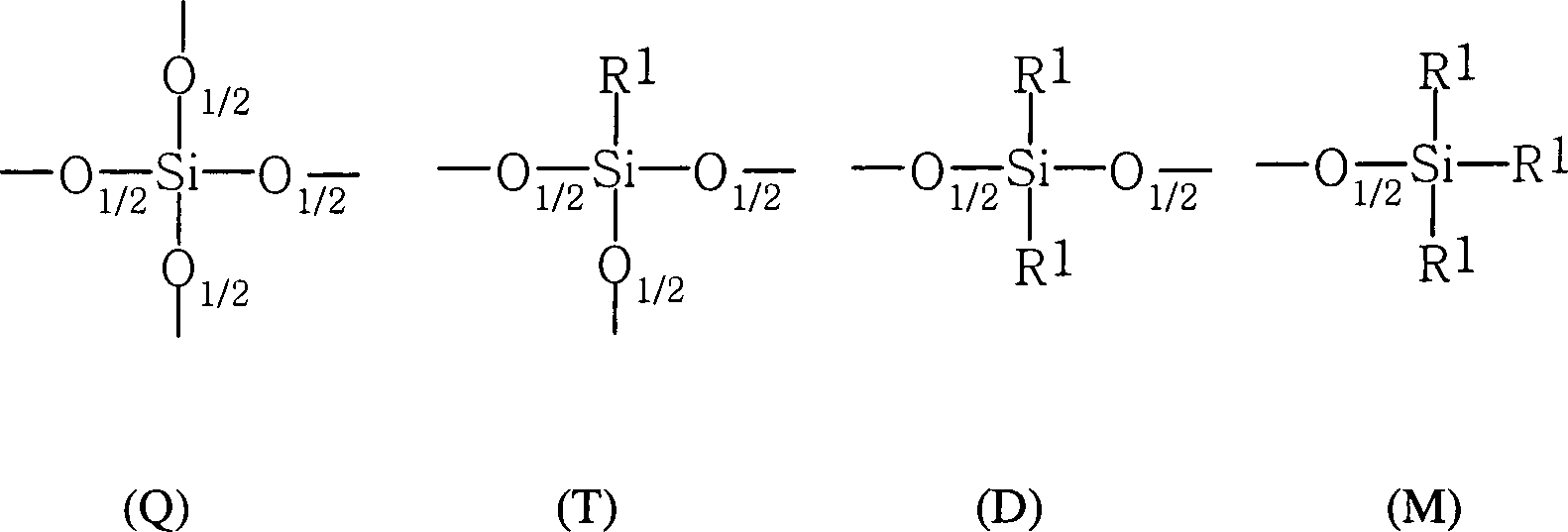
- – geradkettigen, cyclischen oder verzweigten, gesättigten, ungesättigten oder aromatischen Kohlenwasserstoffresten mit bis zu 200 Kohlenstoffatomen, die gegebenenfalls eine oder mehrere Gruppen, ausgewählt aus -O-, -C(O)- und -C(S)- enthalten können, und gegebenenfalls durch einen oder mehrere Substituenten ausgewählt aus Hydroxy, Alkoxy mit bis zu 20 Kohlenstoffatomen und Polyethergruppen-enthaltenden Kohlenwasserstoffresten, die über Kohlenstoff oder Sauerstoff an das Siliziumatom gebunden sind, substituiert sein können,
- – Hydroxy,
- – Alkoxy mit bis zu 20 Kohlenstoffatomen,
- – Polyethergruppen-enthaltenden Kohlenwasserstoffresten, die über Kohlenstoff oder Sauerstoff an das Siliziumatom gebunden sind, oder
- – zwei Substituenten R1 aus verschiedenen der genannten Siloxyeinheiten bilden gemeinsam einen geradkettigen, verzweigten oder cyclischen Alkandiylrest mit 2 bis 12 Kohlenstoffatomen zwischen zwei Siliziumatomen.
- Straight-chain, cyclic or branched, saturated, unsaturated or aromatic hydrocarbon radicals having up to 200 carbon atoms, which may optionally contain one or more groups selected from -O-, -C (O) - and -C (S) -, and optionally may be substituted by one or more substituents selected from hydroxy, alkoxy having up to 20 carbon atoms and polyether group-containing hydrocarbon radicals which are bonded to the silicon atom via carbon or oxygen,
- - hydroxy,
- Alkoxy of up to 20 carbon atoms,
- Polyether group-containing hydrocarbon radicals bonded to the silicon atom via carbon or oxygen, or
- - Two substituents R 1 from different siloxanes mentioned together form a straight-chain, branched or cyclic alkanediyl radical having 2 to 12 carbon atoms between two silicon atoms.
Besonder bevorzugt wird der Substituent R1 aus der Gruppe ausgewählt, die besteht aus: Methyl, Ethyl, Butyl, Phenyl, gegebenenfalls endständig veretherte oder veresterte Poly(ethylenoxy)alkyl- und Co-poly(ethylenoxy)(propylenoxy)alkyl-Gruppen.More preferably, the substituent R 1 is selected from the group consisting of: methyl, ethyl, butyl, phenyl, optionally terminally etherified or esterified poly (ethyleneoxy) alkyl and co-poly (ethyleneoxy) (propyleneoxy) alkyl groups.
In einer bevorzugten Ausführungsform der Erfindung ist die Komponente a) ein geradkettiges, cyclisches, verzweigtes oder partiell vernetztes Polydialkylsiloxan, insbesondere ein Polydimethylsiloxan.In a preferred embodiment of the invention, the component a) is a straight-chain, cyclic, branched or partially crosslinked polydialkylsiloxane, in particular a polydimethylsiloxane.
Bevorzugter besitzt die Komponente a) eine Viskosität im Bereich von 100 bis 50.000.000 mPa.s bei 20 °C bei einem Schergeschwindigkeitsgefälle von D = 1 s-1.More preferably, component a) has a viscosity in the range of 100 to 50,000,000 mPa.s at 20 ° C at a shear rate gradient of D = 1 s -1 .
In einer bevorzugten Ausführungsform der Erfindung ist die Komponente a), dadurch gekennzeichnet, dass die Komponente a) ein molares Verhältnis von Hydroxy- und Alkoxy-haltigen Siliziumatomen zu nicht-hydroxy- oder alkoxyhaltigen endständigen Sili-ziumatomen von weniger als 30 % als aufweist.In a preferred embodiment the invention is the component a), characterized in that the component a) a molar ratio of hydroxyl and alkoxy-containing Silicon atoms to non-hydroxy or alkoxy-containing terminal silicon atoms of less than 30% than.
Bevorzugt wird die Komponente a) ausgewählt aus der Gruppe, die besteht aus:
- – α,ω-dihydroxyterminierten Polydimethylsiloxanen,
- – Silikonpolymeren
der Formeln (II) und (III) und Mischungen davon, worin R1, wie oben definiert ist und bevorzugt jeweils unabhängig voneinander ausgewählt wird aus der Gruppe, die besteht aus: linearen, verzweigten oder cyclischen Alkylgruppen mit 1 bis 22 Kohlenstoffatomen; linearen, verzweigten oder cyclischen Alkenylgruppen mit 2 bis 22 Kohlenstoffatomen, Phenyl-, Alkylarylgruppen mit 7 bis 20 Kohlenstoffatomen, Arylalkylgruppen mit 7 bis 20 Kohlenstoffatomen, einer Poly-(ethylenoxid-propylenoxid)-Copolymergruppe der allgemeinen Formel (IV):

- Α, ω-dihydroxy-terminated polydimethylsiloxanes,
- Silicone polymers of the formulas (II) and (III) and mixtures thereof, wherein R 1 is as defined above and preferably each independently selected from the group consisting of: linear, branched or cyclic alkyl groups having 1 to 22 carbon atoms; linear, branched or cyclic alkenyl groups having 2 to 22 carbon atoms, phenyl, alkylaryl groups having 7 to 20 carbon atoms, arylalkyl groups having 7 to 20 carbon atoms, a poly (ethylene oxide-propylene oxide) copolymer group of the general formula (IV):
Bevorzugt beträgt die Menge der Komponente a) 0,3 Gew.-% bis 99 Gew.-%, bevorzugt von 1,2 Gew.-% bis 90 Gew.-%, noch bevorzugter von 1,8 Gew.-% bis 80 Gew.-%, und am meisten bevorzugt von 5 Gew.-% bis 70 Gew.-% bezogen auf die Gesamtmenge der Zusammensetzung.Prefers is the amount of component a) 0.3 wt .-% to 99 wt .-%, preferably from 1.2 wt% to 90 wt%, more preferably from 1.8 wt% to 80 wt .-%, and most preferably from 5 wt .-% to 70 wt .-% based on the total amount of the composition.
Bei den Polysiloxan-Verbindungen gemäß Komponente a), die funktionelle Gruppen aufweisen, handelt es sich beispielsweise um α,ω-dihydroxyterminierte Polydimethylsiloxane.at the polysiloxane compounds according to component a) having functional groups are, for example to α, ω-dihydroxy-terminated Polydimethylsiloxanes.
Beispiele der Polysiloxan-Verbindungen gemäß der Definition der Komponente a) sind zum Beispiel beschrieben in "Silicone Surfactants", Hrsg: R. M. Hill, Surfactant Science Series, Bd. 86, Marcel Dekker, Inc., 1999.Examples the polysiloxane compounds as defined of component a) are described, for example, in "Silicone Surfactants", ed. R.M. Hill, Surfactant Science Series, Vol. 86, Marcel Dekker, Inc., 1999.
Beispiele der stickstofffreien Silikonpolymere der Formel (III) sind die sogenannten Silikontenside, wie Silwet® Verbindungen von OSi Specialties Middlebury, Connecticut, USA, oder Tegostab von Goldschmidt, Essen oder die SF PU-Schaumstabilisatortypen von GE Bayer Silicones GmbH & Co KG, Leverkusen, bezogen werden können.Examples of the nitrogen-free silicone polymers of formula (III) are the so-called silicone surfactants such as Silwet ® compounds from OSi Specialties Middlebury, Connecticut, USA, or Tegostab from Goldschmidt, Essen or SF PU foam stabilizer types of GE Bayer Silicones GmbH & Co KG, Leverkusen, can be obtained.
Weitere Beispiele der Verbindungen der Formeln (II) und (III) sind Polydimethylsiloxanöle z.B. der Firma GE Bayer Silicones GmbH & Co. KG der Baysilone M-Reihe oder Silikonöle der 200-er-Reihe von Dow Corning.Further Examples of the compounds of formulas (II) and (III) are polydimethylsiloxane oils, e.g. GE Bayer Silicones GmbH & Co. KG of the Baysilone M series or silicone oils of the 200 series from Dow Corning.
Die bevorzugte Menge der Komponente a) in der Formulierung, bezogen auf die Gesamtmenge der Formulierung beträgt 5 bis 99, bevorzugt 10 bis 80, bevorzugter 10 bis 40 Gew.-%.The preferred amount of component a) in the formulation, based to the total amount of the formulation is 5 to 99, preferably 10 to 80, more preferably 10 to 40 wt .-%.
Bei der erfindungsgemäß verwendeten Komponente b) handelt es sich um mindestens eine Polyamino- und/oder Polyammonium-Polysiloxan-Verbindung b1) und/oder mindestens eine Amino- und/oder Ammonium-Polysiloxan-Verbindung b2). Die Polyamino- und/oder Polyammonium-Polysiloxan-Verbindung b1) ist eine Copolymer-Verbindung, die in der Polymerhauptkette Amino- und/oder Ammonium-Wiederholungseinheiten und Polysiloxan-Wiederholungseinheiten aufweist. Die Aminoeinheiten enthalten sekundäre und/oder tertiäre Stickstoffatome (2 oder 3 organische Reste am neutralen Stickstoffatom). Die Ammonium-Einheiten enthalten sekundäre, tertiäre und/oder quartäre positive geladene Stickstoffatome (2, 3, oder 4 organische Reste am Stickstoff). Als Amino- und/oder Ammonium-Wiederholungseinheiten können auch über zwei Stickstoffatome in die Polymerkette eingebundene heterocyclische Reste dienen.at the invention used Component b) is at least one polyamino and / or Polyammonium-polysiloxane compound b1) and / or at least one Amino and / or ammonium polysiloxane compound b2). The polyamino and / or polyammonium-polysiloxane compound b1) is a copolymer compound described in the polymer backbone amino and / or ammonium repeating units and polysiloxane repeating units. The amino units contain secondary and / or tertiary Nitrogen atoms (2 or 3 organic radicals on the neutral nitrogen atom). The ammonium units contain secondary, tertiary and / or quaternary positive charged nitrogen atoms (2, 3, or 4 organic radicals on the nitrogen). As amino and / or ammonium repeat units can also over two Nitrogen atoms embedded in the polymer chain heterocyclic Serve remains.
Im Unterschied dazu handelt es sich bei der Komponente b2) um Polysiloxan-Verbindungen, die in den Seitengruppen der Polyorganosiloxanhauptkette Aminound/oder Ammoniumgruppen enthalten. D.h., dass sich die Amino- und/oder Ammoniumgruppen nicht in der Hauptkette aus Polyorganosiloxan-Wiederholungseinheiten befinden.in the In contrast, the component b2) is polysiloxane compounds which in the side groups of the polyorganosiloxane main chain aminound / or Contain ammonium groups. That is, the amino and / or ammonium groups not in the backbone of polyorganosiloxane repeat units are located.
Der
Unterschied kann wie folgt veranschaulicht werden: Polyamino-
und/oder Polyammonium-Polysiloxan-Verbindung b1): 

Die Komponenten b1) und b2) dienen in der erfindungsgemäßen Formulierung hauptsächlich als Substantivität-gebende Komponente.The Components b1) and b2) are used in the formulation according to the invention mainly as a substantive-giving Component.
Die Komponenten b1) und b2) können in der erfindungsgemäßen Formulierung allein oder gemeinsam vorliegen. In einer bevorzugten Ausführungsform liegt die Komponente b1) jedoch allein, ohne die Komponente b2) in der erfindungsgemäßen Formulierung vor. In einer ebenfalls bevorzugten Ausführungsform liegen sowohl Komponente b1) als auch Komponente b2) nebeneinander vor.The Components b1) and b2) can in the formulation of the invention alone or jointly. In a preferred embodiment however, component b1) is alone, without component b2) in the formulation of the invention in front. In a likewise preferred embodiment are both component b1) as well as component b2) side by side.
Die Komponenten b1) oder b2) können in beliebigen Verhältnissen zueinander gemeinsam vorliegen.The Components b1) or b2) can in any proportions exist together.
Bei
der Polyamino- und/oder Polyammonium-Polysiloxan-Verbindung b1)
handelt es sich bevorzugt um Polysiloxan-Verbindungen, die mindestens
eine Einheit der Formel (I) enthalten:
-NR-,
-N+R2
einem gesättigten oder ungesättigten
diaminofunktionellen Heterocyclus der Formeln: 


wobei Q
nicht an ein Carbonylkohlenstoffatom bindet,
V mindestens ein
Bestandteil ist, der aus der Gruppe ausgewählt wird, die aus V1, V2 und V3 besteht, worin
V2 ausgewählt wird
aus zweiwertigen, geradkettigen, cyclischen oder verzweigten, gesättigten,
ungesättigten oder
aromatischen Kohlenwasserstoffresten mit bis zu 1000 Kohlenstoffatomen
(wobei die Kohlenstoffatome des unten definierten Polysiloxanrestes
Z2 nicht mitgezählt werden), die gegebenenfalls
eine oder mehrere Gruppen, ausgewählt aus
-O-, -CONH-,
-CONR2-, worin R2 Wasserstoff,
einen einwertigen, geradkettigen, cyclischen oder verzweigten, gesättigten, ungesättigten
oder aromatischen Kohlenwasserstoffrest mit bis zu 100 Kohlenstoffatomen
darstellt, der eine oder mehrere Gruppen ausgewählt aus -O-, -NH-, -C(O)- und
-C(S)- enthalten kann, und der gegebenenfalls durch eine oder mehrere
Substituenten, ausgewählt
aus der Gruppe, die besteht aus einer Hydroxylgruppe, einer gegebenenfalls
substituierten, bevorzugt ein oder mehrere Stickstoffatome enthaltenden
heterocyclischen Gruppe, Amino, Alkylamino, Dialkylamino, Ammonium,
Polyetherresten und Polyetheresterresten substituiert sein kann,
wobei wenn mehrere Gruppen -CONR2 vorliegen,
diese gleich oder verschieden sein können,
-C(O)- und -C(S)-
enthalten kann,
der Rest V2 gegebenenfalls
durch eine oder mehrere Hydroxylgruppen substituiert sein kann,
und
der Rest V2 mindestens eine Gruppe
-Z2- der Formel 
R1 gleich
oder verschieden sein kann und aus der Gruppe ausgewählt wird,
die besteht aus: linearen, verzweigten, cyclischen C1 bis
C22-Alkyl, C1 bis
C22-Alkenyl,
Fluor-(C1-C10)-alkyl
und C6-C10-Aryl,
und
n1 = 20 bis 1000 bedeutet,
V1 ausgewählt
wird aus zweiwertigen, geradkettigen, cyclischen oder verzweigten,
gesättigten,
ungesättigten oder
aromatischen Kohlenwasserstoffresten mit bis zu 1000 Kohlenstoffatomen,
die gegebenenfalls eine oder mehrere Gruppen, ausgewählt aus
-O-,
-CONH-,
-CONR2-, worin R2 wie
oben definiert ist, wobei die Gruppen R2 in
den Gruppen V1 und V2 gleich
oder verschieden sein können,
-C(O)-,
-C(S)- und -Z1- enthalten kann, worin -Z1- eine Gruppe der Formel 
R1 wie oben definiert ist, wobei die Gruppen
R1 in den Gruppen V1 und
V2 gleich oder verschieden sein können, und
n2 = 0 bis 19 bedeutet,
und der Rest
V1 gegebenenfalls durch eine oder mehrere
Hydroxylgruppen substituiert sein kann, und
V3 einen
drei- oder höherwertigen,
geradkettigen, cyclischen oder verzweigten, gesättigten, ungesättigten
oder aromatischen Kohlenwasserstoffrest mit bis zu 1000 Kohlenstoffatomen
darstellt, der gegebenenfalls eine oder mehrere Gruppen, ausgewählt aus
-O-,
-CONH-, -CONR2-, worin R2 wie
oben definiert ist, -C(O)-, -C(S)-, -Z1-,
das wie oben definiert ist, -Z2- das wie
oben definiert ist, und Z3, worin Z3 eine drei- oder höherwertige Organopolysiloxaneinheit
ist, enthalten kann, und
der gegebenenfalls durch eine oder
mehrere Hydroxylgruppen substituiert sein kann, wobei in der genannten Polysiloxan-Verbindung
jeweils eine oder mehrere Grup-pen V1, eine
oder mehrere Gruppen V2 und/oder eine oder
mehrere Gruppen V3 vorliegen können,
mit
der Maßgabe,
- – dass die genannte Polysiloxan-Verbindung mindestens eine Gruppe V1, V2 oder V3 enthält, die mindestens eine Gruppe -Z1-, -Z2- oder Z3 enthält, und
- – dass die drei- und vierwertigen Reste Q entweder der Verzweigung der aus Q und V gebildeten Hauptkette dienen, so dass die Valenzen, die nicht der Bindung in der Hauptkette dienen, weitere aus -[Q-V]-Einheiten gebildete Verzweigungen tragen, oder die drei- und vierwertigen Reste Q sättigen sich mit Resten V3 innerhalb einer linearen Hauptkette ohne Bildung einer Verzweigung ab,
-NO-,
-N + R 2
a saturated or unsaturated diaminofunctional heterocycle of the formulas:
where Q does not bind to a carbonyl carbon atom,
V is at least one member selected from the group consisting of V 1 , V 2 and V 3 , wherein
V 2 is selected from divalent, straight-chain, cyclic or branched, saturated, unsaturated or aromatic hydrocarbon radicals having up to 1000 carbon atoms (excluding the carbon atoms of the polysiloxane radical Z 2 defined below), optionally one or more groups selected from
-O-, -CONH-,
-CONR 2 -, in which R 2 is hydrogen, a monovalent, straight-chain, cyclic or branched, saturated, unsaturated or aromatic hydrocarbon radical having up to 100 carbon atoms and having one or more groups selected from -O-, -NH-, -C ( O) - and -C (S) - and optionally substituted by one or more substituents selected from the group consisting of a hydroxyl group, an optionally substituted, preferably one or more nitrogen atoms-containing heterocyclic group, amino, alkylamino, Dialkylamino, ammonium, polyether radicals and polyether radicals may be substituted, wherein when several groups -CONR 2 are present, they may be the same or different,
-C (O) - and -C (S) - may contain
the radical V 2 may optionally be substituted by one or more hydroxyl groups, and
the radical V 2 is at least one group -Z 2 - of the formula
R 1 may be the same or different and is selected from the group consisting of: linear, branched, cyclic C 1 to C 22 alkyl, C 1 to C 22 alkenyl, fluoro (C 1 to C 10 ) alkyl and C 6 -C 10 aryl, and
n 1 = 20 to 1000 means
V 1 is selected from divalent, straight-chain, cyclic or branched, saturated, unsaturated or aromatic hydrocarbon radicals having up to 1000 carbon atoms, optionally one or more groups selected from
-O-, -CONH-,
-CONR 2 -, wherein R 2 is as defined above, wherein the groups R 2 in the groups V 1 and V 2 may be the same or different,
-C (O) -, -C (S) - and -Z 1 - may contain, wherein -Z 1 - a group of the formula
R 1 is as defined above, wherein the groups R 1 in the groups V 1 and V 2 may be the same or different, and
n 2 = 0 to 19 means
and the radical V 1 may optionally be substituted by one or more hydroxyl groups, and
V 3 is a trivalent or higher, straight-chain, cyclic or branched, saturated, unsaturated or aromatic hydrocarbon radical having up to 1000 carbon atoms, optionally one or more groups selected from
-O-, -CONH-, -CONR 2 -, wherein R 2 is as defined above, -C (O) -, -C (S) -, -Z 1 -, which is as defined above, -Z 2 - which is as defined above, and Z 3 , wherein Z 3 is a tri- or higher organopolysiloxane unit may contain, and
which may optionally be substituted by one or more hydroxyl groups, it being possible for one or more groups V 1 , one or more groups V 2 and / or one or more groups V 3 to be present in said polysiloxane compound,
with the proviso
- - That said polysiloxane compound contains at least one group V 1 , V 2 or V 3 , which contains at least one group -Z 1 -, -Z 2 - or Z 3 , and
- - That the trivalent and tetravalent radicals Q serve either the branching of the main chain formed from Q and V, so that the valencies, which do not serve the bond in the main chain, carry further branches formed from - [QV] units, or the three and tetravalent radicals Q saturate with radicals V 3 within a linear main chain without formation of a branch,
Die Polysiloxan-Verbindungen, die mindestens eine Einheit der Formel (I) enthalten, werden durch monofunktionelle Gruppen -Q-R und/oder -V-R terminiert. Diese ergeben sich durch Absättigung einer der beiden Bindungsstellen von Q oder V durch eine einwertige Gruppe R oder Wasserstoff, die wie oben definiert ist.The Polysiloxane compounds containing at least one unit of the formula (I) are represented by monofunctional groups -Q-R and / or -V-R terminates. These result from saturation of one of the two binding sites of Q or V by a monovalent group R or hydrogen, the as defined above.
Die Polysiloxan-Verbindungen, die mindestens eine Einheit der Formel (I) enthalten, im Sinne der Erfindung sollen auch den Fall einschließen, wo nur eine Einheit -[Q-V]- vorliegt, so dass auch Verbindungen der Formeln R-V-[Q-V]-R bzw. R-[Q-V]-Q-R, worin R auch durch H ersetzt sein kann, umfasst sind.The Polysiloxane compounds containing at least one unit of the formula (I), within the meaning of the invention should also include the case where only one unit - [Q-V] - is present, so that also compounds of the formulas R-V- [Q-V] -R and R- [Q-V] -Q-R, respectively wherein R can also be replaced by H, are included.
Geeignete
Polyamino- und/oder Polyammonium-Polysiloxan-Verbindung b1) sind
z. B. beschrieben in der noch unveröffentlichten DE-Anmeldung 103
16 662.9; der WO 2004-042136 der WO 2004-041912, WO 03/078504,
Bei
den Polysiloxan-Verbindungen, die mindestens eine Einheit der Formel
(I) enthalten, handelt sich zum Beispiel um lineare Polysiloxancopolymere
der allgemeinen Formel (I'):
V mindestens eine Gruppe V1 und mindestens eine Gruppe V2 darstellt,
worin
V1 und V2 wie oben
definiert sind. Zusätzlich
kann V auch drei- oder höherwertige,
besonders dreiwertige Reste V3 darstellen.
In diesem Fall liegen auch drei- oder vierwertige Einheiten Q, wie
oben defniert vor, und die Absättigung
der drei- oder höherwertigen
Reste V3 und der drei- oder vierwertige Einheiten Q erfolgt ausschließlich untereinander
innerhalb der linearen Hauptkette unter Ausbildung cyclischer Strukturen,
wie weiter unten eingehender erläutert.
Dieser Fall ist jedoch weniger bevorzugt.The polysiloxane compounds which comprise at least one unit of the formula (I) are, for example, linear polysiloxane copolymers of the general formula (I '):
V represents at least one group V 1 and at least one group V 2 ,
wherein V 1 and V 2 are as defined above. In addition, V can also represent trivalent or higher valency, especially trivalent radicals V 3 . In this case, there are also trivalent or tetravalent units Q, as defined above, and the saturation of the trivalent or more valent residues V3 and the trivalent or tetravalent units Q takes place exclusively within the linear main chain to form cyclic structures, as described below explained in more detail. However, this case is less preferred.
In
einer bevorzugten Ausführungsform
der Polyamino- und/oder Polyammonium-Polysiloxancopolymere b1) der Formeln
(I) oder (I') wird
Q daher aus der Gruppe ausgewählt,
die besteht aus:
-NR-,
-N+R2
einem gesättigten oder ungesättigten
diaminofunktionellen Heterocyclus der Formeln: 


-NO-,
-N + R 2
a saturated or unsaturated diaminofunctional heterocycle of the formulas:
In den allgemeinen Formeln (I) bzw. (I') kann das molare Verhältnis der Gruppen V1 und V2 in den Polysiloxan-Verbindungen V2/V1 an sich einen beliebigen Wert annehmen. Erfindungsgemäß ist somit auch der Fall eingeschlossen, bei dem die Polysiloxanverbindung der Formeln (I) oder (I') nur V2-Einheiten enthält, die Polysiloxanverbindung also die Formel -[Q-V2]- aufweist. Auch der Fall, bei dem die Polysiloxanverbindung nur V1-Einheiten enthält, ist erfindungsgemäß umfasst. In diesem Fall müssen die V1-Einheiten jedoch Z1-Siloxaneinheiten enthalten.In the general formulas (I) and (I '), the molar ratio of the groups V 1 and V 2 in the polysiloxane compounds V 2 / V 1 per se assume any value. The invention thus also includes the case in which the polysiloxane compound of the formulas (I) or (I ') contains only V 2 units, ie the polysiloxane compound has the formula - [QV 2 ] -. The case in which the polysiloxane compound contains only V 1 units is also included in the invention. In this case, however, the V 1 units must contain Z 1 siloxane units.
In einer bevorzugten Ausführungsform der Erfindung enthält die Polysiloxanverbindung der Formeln (I) oder (I') jedoch sowohl V2 als auch V1-Einheiten.However, in a preferred embodiment of the invention, the polysiloxane compound of formulas (I) or (I ') contains both V 2 and V 1 units.
In
einer weiteren bevorzugten Ausführungsform
der vorliegenden Erfindung beträgt
das molare Verhältnis
der Gruppen V1 und V2 in
den Polysiloxan-Verbindungen der allgemeinen Formeln (I) bzw. (I'):
Derartige
lineare Amin- bzw. Tetraorgano-Ammonium-Verbindungen sind z.B. beschrieben
worden in der WO 02/10257, WO 02/10259,
In
einer weiteren Ausführungsform
der linearen Polysiloxanverbindungen der Formel (I) bzw. (I') ist V2/V1 ungleich 1, bevorzugt ist V2/V1 < 1,
bevorzugter < 0,9,
noch bevorzugter erfüllt
V2/V1 die Beziehung
Die Gruppe R wird bevorzugt ausgewählt aus den Gruppen R2.The group R is preferably selected from the groups R 2 .
In
einer bevorzugten Ausführungsform
der Erfindung ist Q ein zweiwertiger Rest und wird in den Formeln
(I) oder (I') aus
der Gruppe ausgewählt,
die besteht aus:
-NR-,
-N+R2
einer quaternierten Imidazoleinheit
der Struktur 


t von 2 bis 10
ist,
R wie oben definiert, bevorzugt R2 ist,
R2 wie oben definiert ist, und die Bedeutung
von
R2 von der Bedeutung der obigen
Gruppe R2 gleich oder verschieden sein kann,
R3 die Bedeutung von R2 aufweist,
wobei R2 und R3 gleich
oder verschieden sein können,
oder
R2 und R3 gemeinsam
mit dem positiv geladenen Stickstoffatom einen fünf- bis siebengliedrigen Heterocyclus bilden,
der gegebenenfalls zusätzlich
ein oder mehrere Stickstoff-, Sauerstoff- und/oder Schwefelatome
aufweisen kann,
R5, R6,
R7 gleich oder verschieden sein können und
aus der Gruppe ausgewählt
werden, die besteht aus: H, Halogen, Hydroxylgruppe, Nitrogruppe,
Cyanogruppe, Thiolgruppe, Carboxylgruppe, Alkylgruppe, Monohydroxyalkylgruppe,
Polyhydroxyalkylgruppe, Thioalkylgruppe, Cyanoalkylgruppe, Alkoxygruppe,
Acylgruppe, Acetyloxygruppe, Cycloalkylgruppe, Arylgruppe, Alkylarylgruppe,
und Gruppen des Typs -NHRW, in denen RW = H, Alkylgruppe, Monohydroxyalkylgruppe,
Polyhydroxyalkylgruppe, Acetylgruppe, Ureidogruppe bedeuten, und
jeweils zwei der benachbarten Reste R5,
R6 und R7 mit den
sie an den Heterocyclus bindenden Kohlenstoffatomen aromatische
Fünf- bis
Siebenringe bilden können,
und
R8 die Bedeutung von R2 aufweist,
wobei R8 und R2 gleich
oder verschieden sein können.In a preferred embodiment of the invention, Q is a bivalent radical and is selected in the formulas (I) or (I ') from the group consisting of:
-NO-,
-N + R 2
a quaternized imidazole moiety of the structure
t is from 2 to 10,
R as defined above, preferably R 2, R 2 is as defined above, and the meaning of
R 2 may be the same or different from the meaning of the above group R 2 ,
R 3 has the meaning of R 2 , wherein R 2 and R 3 may be the same or different, or
R 2 and R 3 together with the positively charged nitrogen atom form a five- to seven-membered heterocycle which may optionally additionally have one or more nitrogen, oxygen and / or sulfur atoms,
R 5 , R 6 , R 7 may be the same or different and are selected from the group consisting of: H, halogen, hydroxyl group, nitro group, cyano group, thiol group, carboxyl group, alkyl group, monohyd and hydroxyalkyl group, polyhydroxyalkyl group, thioalkyl group, cyanoalkyl group, alkoxy group, acyl group, acetyloxy group, cycloalkyl group, aryl group, alkylaryl group, and groups of the type -NHR W in which R represents W, H, alkyl group, monohydroxyalkyl group, polyhydroxyalkyl group, acetyl group, ureido group, and each two of adjacent radicals R 5 , R 6 and R 7 with which they can form aromatic five- to seven- membered carbon atoms on the heterocycle, and
R 8 has the meaning of R 2 , wherein R 8 and R 2 may be the same or different.
Im
Falle, dass Q einen dreiwertigen Rest der Formeln 


In
einer bevorzugten Ausführungsform
der Polysiloxanverbindungen der Formel (I) bzw. (I') als Komponente
b1) stellt V2 eine Gruppe der Formel
In
der vorstehend erwähnten
Ausführungsform
kann das erfindungsgemäße lineare
Polysiloxancopolymer die folgenden Wiederholungseinheiten aufweisen:
-[V2*-Z2-V2*-Q]-
bevorzugt zusammen mit -[V1-Q]-.In the above-mentioned embodiment, the linear polysiloxane copolymer of the present invention may have the following repeating units:
- [V 2 * -Z 2 -V 2 * -Q] - preferably together with - [V 1 -Q] -.
Das molare Verhältnis der Wiederholungseinheiten -[V2*-Z2-V2*-Q]- zu -[V1-Q]-, also das Verhältnis V2/V1 kann, wie vorstehend erwähnt, 1 betragen, ist in einer Ausführungsform jedoch bevorzugt ungleich 1, bevorzugter < 0,9, noch bevorzugter < 0,8, noch bevorzugter < 0,3. In den Fällen V2/N1 < 1 enthalten die genannten linearen Polysiloxancopolymere -[Q-V]- zwingend Blöcke, die mehr als eine -[V1-Q]-Einheit, miteinander verknüpft enthalten.The molar ratio of repeating units - [V 2 * -Z 2 -V 2 * -Q] - to - [V 1 -Q] -, that is, the ratio V 2 / V 1 can be 1 , as mentioned above, is in however, preferably not equal to 1, more preferably <0.9, even more preferably <0.8, even more preferably <0.3. In cases V 2 / N 1 <1, said linear polysiloxane copolymers - [QV] - necessarily contain blocks which contain more than one - [V 1 -Q] unit linked together.
Wie weiter unten im Zusammenhang mit dem Verfahren zur Herstellung der vorstehend beschriebenen linearen Polysiloxancopolymere noch ausführlich erläutert wird, können die blockartigen Sequenzen, die mehr als eine -[V1-Q]-Einheit miteinander verknüpft aufweisen, je nach Herstellweise regelmäßig mit den V2-Q-Einheiten oder unregelmäßig mit den V2-Q-Einheiten verbunden werden.As will be explained in detail below in connection with the process for the preparation of the above-described linear polysiloxane copolymers, the block-like sequences which have more than one - [V 1 -Q] moiety linked to each other regularly with the V 2 depending on the preparation -Q units or irregularly connected to the V 2 -Q units.
Dies
meint folgendes:
Bei der regelmäßigen Verbindung, bei der beispielsweise
ein der Gruppe -Q-[V1-Q]x-
entsprechendes Präpolymer
mit V2 entsprechenden Monomer-Einheiten
im molaren Verhältnis
1:1 umgesetzt wird, lassen sich die linearen Polysiloxancopolymere
wie folgt darstellen:
In the regular compound in which, for example, a prepolymer corresponding to the group -Q- [V 1 -Q] x - is reacted with monomer units corresponding to V 2 in a molar ratio of 1: 1, the linear polysiloxane copolymers can be prepared as follows:
x kann dabei 2 bis 2000 sein und ist der Mittelwert der Verteilung. Die durch die Formel -{V2-Q-[V1-Q]x-}- dargestellten linearen Polysiloxancopolymere sind dadurch gekennzeichnet, dass sie im wesentlichen keine miteinander verknüpften -V2-Q-Einheiten aufweisen, oder mit anderen Worten, sind zwei -V2-Q-Einheiten stets durch mindestens eine -V1-Q-Einheit unterbrochen.x can be 2 to 2000 and is the mean of the distribution. The linear polysiloxane copolymers represented by the formula - {V 2 -Q- [V 1 -Q] x -) are characterized by having substantially no interlinked -V 2 -Q units, or in other words two -V 2 -Q units are always interrupted by at least one -V 1 -Q unit.
Bei
der unregelmäßigen Verbindung,
bei der beispielsweise Q-Einheiten entsprechende Monomere mit V1 entsprechenden Monomer-Einheiten und V2 entsprechenden Monomer-Einheiten im Verhältnis Q/(V1 + V2), mit beispielsweise
V2/V1 < 1, bevorzugt < 0,5, von 1:1 umgesetzt
wird, lassen sich die linearen Polysiloxancopolymere wie folgt darstellen:
In
einer bevorzugten Ausführungsform
der erfindungsgemäß verwendeten
Polysiloxanverbindung der Formel (I) bzw. (I') als Komponente b1) wird die Gruppe
V1 ausgewählt aus zweiwertigen, geradkettigen,
cyclischen oder verzweigten, gesättigten,
ungesättigten
oder aromatischen Kohlenwasserstoffresten mit bis zu 600 bevorzugt
bis zu 400 Kohlenstoffatomen, die gegebenenfalls eine oder mehrere
Gruppen, ausgewählt
aus -O-, -CONH-, -CONR2-, worin R2 wie oben definiert ist,, -C(O)-, -C(S)-
und -Z1- enthalten kann, worin -Z1- eine Gruppe der Formel 
R1 wie oben defniert ist und bevorzugt C1-C18-Alkyl ist,
das gegebenenfalls mit einem oder mehreren Fluoratomen substituiert
sein kann, oder Phenyl ist, und n2 wie oben
definiert ist.In a preferred embodiment of the polysiloxane compound of the formula (I) or (I ') used as component b1) according to the invention, the group V 1 is preferably selected from bivalent, straight-chain, cyclic or branched, saturated, unsaturated or aromatic hydrocarbon radicals of up to 600 to 400 carbon atoms, optionally containing one or more groups selected from -O-, -CONH-, -CONR 2 -, wherein R 2 is as defined above, -C (O) -, -C (S) - and - Z 1 - may contain, wherein -Z 1 - a group of the formula
R 1 is as defined above and is preferably C 1 -C 18 alkyl, which may optionally be substituted by one or more fluorine atoms, or is phenyl, and n 2 is as defined above.
In
einer weiteren bevorzugten Ausführungsform
der Polysiloxan-Verbindungen der Formel (I) bzw. (I') als Komponente
b1) wird die Gruppe Q ausgewählt
aus: 


In
einer weiteren bevorzugten Ausführungsform
der linearen Polysiloxanverbindungen der Formel (I') als Komponente
b1) der vorliegenden Erfindung erfüllt das molare Verhältnis V2/V1 die Beziehung
Bevorzugt
sind in den Formeln (I) und (I'):
R1 = C1 bis C18 Alkyl, insbesondere Methyl, Ethyl, 3,3,3-Trifluorpropyl
und Phenyl,
n1 = 20 bis 400, besonders
bevorzugt 20 bis 300, speziell 20 bis 200. In einer weiteren bevorzugten
Ausführungsform
ist n1 zwischen 20 und 50 oder zwischen
80 und 200. Die Zahl n1 ist die mittlere
Polymerisationsgrad aus Mn der Diorganosiloxy-Einheiten
in der Gruppe Z2.
n2 =
0 bis 15, besonders bevorzugt 0 bis 10, speziell 0 bis 5, spezieller
0. Die Zahl n2 ist die mittlere Polymerisationsgrad
aus Mn der Diorganosiloxy-Einheiten in der
Gruppe Z1.Preference is given in the formulas (I) and (I '):
R 1 = C 1 to C 18 alkyl, in particular methyl, ethyl, 3,3,3-trifluoropropyl and phenyl,
n 1 = 20 to 400, particularly preferably 20 to 300, especially 20 to 200. In a further preferred embodiment, n 1 is between 20 and 50 or between 80 and 200. The number n 1 is the average degree of polymerization of M n of the diorganosiloxy Units in group Z 2 .
n 2 = 0 to 15, more preferably 0 to 10, especially 0 to 5, more particularly 0. The number n 2 is the average degree of polymerization of M n of the diorganosiloxy units in the group Z 1 .
V2* = ein zweiwertiger geradkettiger, cyclischer
oder verzweigter, gesättigter,
ungesättigter
C3 bis C16 Kohlenwasserstoffrest
oder aromatischer C8 bis C22 Kohlenwasserstoffrest
ist, der gegebenenfalls eine oder mehrere Gruppen, ausgewählt aus
-O-, -CONH-CONR2-,, -C(O)-, -C(S)- enthalten
kann und durch eine oder mehrere OH-Gruppe substituiert sein kann,
worin R2 wie oben definiert ist. 


Besonders
bevorzugt steht
V2* für einen
zweiwertigen geradkettigen, cyclischen oder verzweigten, gesättigten,
ungesättigten
oder aromatischen Kohlenwasserstoffrest mit bis zu 16 Kohlenstoffatomen,
der eine oder mehrere Gruppen, ausgewählt aus -O-, -CONH-, -CONR2-, worin R2 wie
oben definiert ist, -C(O)-, -C(S)- enthalten kann und mit einer
oder mehreren Hydroxylgruppen substituiert sein kann. Noch bevorzugter
wird -V2*- ausgewählt aus Gruppen der Formeln: 

-CH=CHCH2-, -CH=CHCH2CH2-,
-CH2CH2CH2OC(O)CH2-, -CH2CH2CH2OC(O)CH2CH2-,
R2 steht bevorzugt für: H,
-CH3,
-CH2CH3, -(CH2)2CH3,
-(CH2)3CH3, -(CH2)3CH3, -CH2CH2OH, 
R4 =
geradkettiger, cyclischer oder verzweigter C1 bis
C18 Kohlenwasserstoffrest, der durch eine
oder mehrere Gruppen, ausgewählt
aus -O-, -NH-, -C(O)-, und -C(S)- enthalten kann und durch eine
oder mehrere OH-Gruppen substituiert sein kann, speziell unsubstituierte
C5 bis C17-Kohlenwasserstoffreste,
die sich von den entsprechenden Fettsäuren ableiten oder aber hydroxylierte
C3 bis C17-Reste,
die auf hydroxylierte Carbonsäuren, speziell
Saccharidcarbonsäuren
zurückgeführt werden
können
und ganz speziell 
V 2 * is a divalent straight, cyclic or branched, saturated, unsaturated or aromatic hydrocarbon radical having up to 16 carbon atoms and having one or more groups selected from -O-, -CONH-, -CONR 2 -, wherein R 2 is as above is defined, -C (O) -, -C (S) - may contain and may be substituted with one or more hydroxyl groups. Even more preferably, -V 2 * - is selected from groups of the formulas:
-CH = CHCH 2 -, -CH = CHCH 2 CH 2 -,
-CH 2 CH 2 CH 2 OC (O) CH 2 -, -CH 2 CH 2 CH 2 OC (O) CH 2 CH 2 -,
R 2 preferably represents: H,
-CH 3 , -CH 2 CH 3 , - (CH 2 ) 2 CH 3 , - (CH 2 ) 3 CH 3 , - (CH 2 ) 3 CH 3 , -CH 2 CH 2 OH,
R 4 = straight-chain, cyclic or branched C 1 to C 18 hydrocarbon radical which may contain one or more groups selected from -O-, -NH-, -C (O) -, and -C (S) - and by one or more OH groups may be substituted, especially unsubstituted C 5 to C 17 hydrocarbon radicals derived from the corresponding fatty acids or hydroxylated C 3 to C 17 radicals which may be attributed to hydroxylated carboxylic acids, especially saccharide carboxylic acids, and all specially
Weiterhin
steht R2 bevorzugt für: 
-R9-,
worin R9 einen zweiwertigen, gesättigten
oder einfach oder mehrfach ungesättigten,
geradkettigen oder verzweigten Kohlenwasserstoffrest mit zwei bis
25 Kohlenstoffatomen darstellt,
-(CH2)uC(O)O-[(CH2CH2O)q-(CH2CH(CH3)O)r]-C(O)(CH2)u-
-(CH2)UC(O)O-R9-O-C(O)(CH2)u-, worin R9 wie
zuvor definiert ist,
-(CH2)u-R10-(CH2)u-, worin R10 eine aromatische Gruppe ist,
-[CH2CH2O]q-[CH2CH(CH3)O]r-CH2CH2-,
-CH(CH3)CH2O[CH2CH2O]q-[CH2CH(CH3)O]r-CH2CH(CH3)-
-CH2CH(OH)CH2-,
-CH2CH(OH)(CH2)2CH(OH)CH2-,
-CH2CH(OH)CH2OCH2CH(OH)CH2OCH2CH(OH)CH2- und
-CH2CH(OH)CH2O-[CH2CH2O]q-[CH2CH(CH3)O]r-CH2CH(OH)CH2-
worin
u von 1 bis 3 ist,
q
und r von 0 bis 200, bevorzugt von 0 bis 100, bevorzugter von 0
bis 70
und besonders bevorzugt 0 bis 40 ist, und
q + r > 0 ist.Furthermore, R 2 is preferably:
R 9 -, in which R 9 represents a divalent, saturated or mono- or polyunsaturated, straight-chain or branched hydrocarbon radical having from 2 to 25 carbon atoms,
- (CH 2 ) u C (O) O - [(CH 2 CH 2 O) q - (CH 2 CH (CH 3 ) O) r ] -C (O) (CH 2 ) u -
- (CH 2 ) U C (O) OR 9 -OC (O) (CH 2 ) u -, wherein R 9 is as defined above ,
- (CH 2 ) u -R 10 - (CH 2 ) u -, where R 10 is an aromatic group,
- [CH 2 CH 2 O] q - [CH 2 CH (CH 3 ) O] r -CH 2 CH 2 -,
-CH (CH 3 ) CH 2 O [CH 2 CH 2 O] q - [CH 2 CH (CH 3 ) O] r -CH 2 CH (CH 3 ) -
-CH 2 CH (OH) CH 2 -,
-CH 2 CH (OH) (CH 2 ) 2 CH (OH) CH 2 -,
-CH 2 CH (OH) CH 2 OCH 2 CH (OH) CH 2 OCH 2 CH (OH) CH 2 - and
-CH 2 CH (OH) CH 2 O- [CH 2 CH 2 O] q - [CH 2 CH (CH 3 ) O] r -CH 2 CH (OH) CH 2 -
wherein
u is from 1 to 3,
q and r are from 0 to 200, preferably from 0 to 100, more preferably from 0 to 70
and more preferably 0 to 40, and
q + r> 0.
Bevorzugte
Varianten von V1 sind Strukturen der Formel:
-CH2C(O)O-[CH2CH2O]q-[CH2CH(CH3)O]r-C(O)CH2-,
-CH2CH2C(O)O-[CH2CH2O]q-[CH2CH(CH3)O]r-C(O)CH2CH2-,
-CH2CH2CH2C(O)O-[CH2CH2O]q-[CH2CH(CH3)O]r-C(O)CH2CH2CH2-,
veresterte
Alkylen-, Alkenylen, Alkinyleneinheiten, speziell der Strukturen
-CH2C(O)O-[CH2]o-OC(O)CH2-,
-CH2CH2C(O)O-[CH2]o-OC(O)CH2CH2-,
-CH2CH2CH2C(O)O-[CH2]o-OC(O)CH2CH2CH2
-CH2C(O)O-CH2C≡CCH2-OC(O)CH2-,
-CH2CH2C(O)O-CH2C≡CCH2-OC(O)CH2CH2-,
-CH2CH2CH2C(O)O-CH2C≡CCH2-OC(O)CH2CH2CH2-,
-CH2C(O)O-CH2CH=CHCH2-OC(O)CH2-,
-CH2CH2C(O)O-CH2CH=CHCH2-OC(O)CH2CH2-,
-CH2CH2CH2C(O)O-CH2CH=CHCH2-OC(O)CH2CH2CH2-,
Alkylen-,
Alkenylen-, Alkinylen- und Aryleinheiten, speziell der Strukturen:
-[CH2]o-
mit o =
2 bis 6,
-CH2C≡CCH2-,
-CH2CH=CHCH2-, -CH(CH3)CH2CH2-, 
Polyalkylenoxideinheiten,
speziell der Strukturen
-[CH2CH2O]q-[CH2CH(CH;)O]r-CH2CH2-,
-CH(CH3)CH2O[CH2CH2O]q-[CH2CH(CH3)O]r-CH2CH(CH3)-
mit
mono-, di- oder polyhydroxyfunktionelle
Einheiten, speziell der Strukturen
-CH2CH(OH)CH2-, -CH2CH(OH)(CH2)2CH(OH)CH2-,
-CH2CH(OH)CH2OCH2CH(OH)CH2OCH2CH(OH)CH2-,
-CH2CH(OH)CH2O-[CH2CH2O]q-[CH2CH(CH3)O]r-CH2CH(OH)CH2-
mit
q = 0 bis 200,
r =
0 bis 200Preferred variants of V 1 are structures of the formula:
-CH 2 C (O) O- [CH 2 CH 2 O] q - [CH 2 CH (CH 3 ) O] r -C (O) CH 2 -,
-CH 2 CH 2 C (O) O- [CH 2 CH 2 O] q - [CH 2 CH (CH 3 ) O] r -C (O) CH 2 CH 2 -,
-CH 2 CH 2 CH 2 C (O) O- [CH 2 CH 2 O] q - [CH 2 CH (CH 3 ) O] r -C (O) CH 2 CH 2 CH 2 -,
esterified alkylene, alkenylene, alkynylene units, especially the structures
-CH 2 C (O) O- [CH 2 ] o -OC (O) CH 2 -,
-CH 2 CH 2 C (O) O- [CH 2 ] o -OC (O) CH 2 CH 2 -,
-CH 2 CH 2 CH 2 C (O) O- [CH 2 ] o -OC (O) CH 2 CH 2 CH 2
-CH 2 C (O) O-CH 2 C≡CCH 2 -OC (O) CH 2 -,
-CH 2 CH 2 C (O) O-CH 2 C≡CCH 2 -OC (O) CH 2 CH 2 -,
-CH 2 CH 2 CH 2 C (O) O-CH 2 C≡CCH 2 -OC (O) CH 2 CH 2 CH 2 -,
-CH 2 C (O) O-CH 2 CH = CHCH 2 -OC (O) CH 2 -,
-CH 2 CH 2 C (O) O-CH 2 CH = CHCH 2 -OC (O) CH 2 CH 2 -,
-CH 2 CH 2 CH 2 C (O) O-CH 2 CH = CHCH 2 -OC (O) CH 2 CH 2 CH 2 -,
Alkylene, alkenylene, alkynylene and aryl units, especially the structures:
- [CH 2 ] o -
with o = 2 to 6,
-CH 2 C≡CCH 2 -, -CH 2 CH = CHCH 2 -, -CH (CH 3 ) CH 2 CH 2 -,
Polyalkylene oxide units, especially the structures
- [CH 2 CH 2 O] q - [CH 2 CH (CH;) O] r -CH 2 CH 2 -,
-CH (CH 3 ) CH 2 O [CH 2 CH 2 O] q - [CH 2 CH (CH 3 ) O] r -CH 2 CH (CH 3 ) -
With
mono-, di- or polyhydroxy-functional units, especially the structures
-CH 2 CH (OH) CH 2 -, -CH 2 CH (OH) (CH 2 ) 2 CH (OH) CH 2 -,
-CH 2 CH (OH) CH 2 OCH 2 CH (OH) CH 2 OCH 2 CH (OH) CH 2 -,
-CH 2 CH (OH) CH 2 O- [CH 2 CH 2 O] q - [CH 2 CH (CH 3 ) O] r -CH 2 CH (OH) CH 2 -
With
q = 0 to 200,
r = 0 to 200
Bevorzugt sind q = 1 bis 50, insbesondere 2 bis 50, speziell 1 bis 20, ganz speziell 1 bis 10, sowie 1 oder 2, r = 0 bis 100, insbesondere 0 bis 50, speziell 0 bis 20, ganz speziell 0 bis 10, sowie 0 oder 1 oder 2.Prefers q = 1 to 50, in particular 2 to 50, especially 1 to 20, completely especially 1 to 10, and 1 or 2, r = 0 to 100, in particular 0 to 50, especially 0 to 20, especially 0 to 10, as well as 0 or 1 or 2.
Die linearen Polysiloxane der Formeln (I) bzw. (I') können beispielsweise durch ein Verfahren hergestellt werden, worin
- a) mindestens eine Aminverbindung, ausgewählt aus einer Diamin-Verbindung und/oder einer primären oder sekundären Monoaminverbindung, mit mindestens zwei difunktionellen, zur Reaktion mit den Aminofunktionen der Amin-Verbindung befähigten organischen Verbindungen umgesetzt werden, wobei das molare Verhältnis der organischen Verbindungen so gewählt wird, dass das gewünschte Verhältnis V2/V1 erhalten wird,
- b) mindestens zwei Mol einer Aminverbindung, ausgewählt aus einer Diamin-Verbindung und/oder einer primären oder sekundären Monoaminverbindung, mit einem Mol einer difunktionellen, zur Reaktion mit den Aminofunktionen der Aminverbindung befähigten organischen Verbindung unter Bildung einer Diaminverbindung (Monomer) umgesetzt wird, die anschließend mit mindestens einer Aminverbindung, ausgewählt aus einer Diamin-Verbindung und/oder einer primären oder sekundären Monoaminverbindung, und mindestens einer weiteren difunktionellen zur Reaktion mit den Aminofunktionen der Aminverbindungen befähigten organischen Verbindung umgesetzt wird,
- c) eine Aminverbindung, ausgewählt aus einer Diamin-Verbindung und/oder einer primären oder sekundären Monoaminverbindung, mit einer difunktionellen, zur Reaktion mit den Aminofunktionen der Aminverbindungen befähigten organischen Verbindung unter Bildung einer Diaminverbindung (aminoterminiertes Oligomer) umgesetzt wird, die anschließend mit mindestens einer difunktionellen zur Reaktion mit den Aminofunktionen der Diamin-Verbindungen befähigten organischen Verbindung umgesetzt wird,
- d) eine Aminverbindung, ausgewählt aus einer Diamin-Verbindung und/oder einer primären oder sekundären Monoaminverbindung, mit einer difunktionellen, zur Reaktion mit den Aminofunktionen der Aminverbindung befähigten organischen Verbindung unter Bildung einer difunktionellen, zur Reaktion mit Aminofunktionen befähigten Verbindung (difunktionelles Oligomer) umgesetzt wird, die anschließend mit mindestens einer Aminverbindung, ausgewählt aus einer Diamin-Verbindung und/oder einer primären oder sekundären Monoaminverbindung, und mindestens einer weiteren zur Reaktion mit Aminofunktionen befähigten Verbindung umgesetzt wird, wobei gegebenenfalls monofunktionelle, bevorzugt tertiäre Monoamine oder geeignete, zur Kettenfortpflanzung nicht befähigte Monoamine und/oder monofunktionelle, zur Reaktion mit Aminofunktionen befähigten Verbindungen als Kettenabbruch-mittel hinzugesetzt werden können, und die Stöchiometrie der Aminofunktionen und der zur Reak-tion mit Aminofunktionen befähigten funk-tionellen Gruppen in der letzten Stufe der Umsetzung stets etwa 1:1 beträgt, und wobei gegebenenfalls vorhandene Aminofunktionen protoniert oder quaterniert werden können.
- a) at least one amine compound selected from a diamine compound and / or a primary or secondary monoamine compound are reacted with at least two difunctional, capable of reacting with the amino functions of the amine compound organic compounds, wherein the molar ratio of the organic compounds chosen so is that the desired ratio V 2 / V 1 is obtained,
- b) at least two moles of an amine compound selected from a diamine compound and / or a primary or secondary monoamine compound is reacted with one mole of a difunctional organic compound capable of reacting with the amino functions of the amine compound to form a diamine compound (monomer) subsequently reacted with at least one amine compound selected from a diamine compound and / or a primary or secondary monoamine compound, and at least one further difunctional organic compound capable of reacting with the amino functions of the amine compounds,
- c) reacting an amine compound selected from a diamine compound and / or a primary or secondary monoamine compound with a difunctional organic compound capable of reacting with the amino functions of the amine compounds to form a diamine compound (amino terminated oligomer) which is subsequently reacted with at least one difunctional organic compound capable of reacting with the amino functions of the diamine compounds is reacted,
- d) reacting an amine compound selected from a diamine compound and / or a primary or secondary monoamine compound with a difunctional organic compound capable of reacting with the amino functions of the amine compound to form a difunctional compound capable of reacting with amino functions (difunctional oligomer) which is subsequently reacted with at least one amine compound selected from a diamine compound and / or a primary or secondary monoamine compound, and at least one other compound capable of reacting with amino functions, optionally unsubstituted monofunctional, preferably tertiary monoamines or suitable chain propagation agents capable of mono-amines and / or monofunctional compounds capable of reacting with amino functions can be added as chain-terminating agents and the stoichiometry of the amino functions and of the reaction with amino functions b In the last stage of the reaction, functional groups are always about 1: 1, and any amino functions which may be present can be protonated or quaternized.
Die
Variante a), worin mindestens eine Diamin-Verbindung, ausgewählt aus
einer Diamin-Verbindung und/oder einer primären oder sekundären Monoaminverbindung,
mit mindestens zwei difunktionellen, zur Reaktion mit den Aminofunktionen
der Aminverbindung befähigten
organischen Verbindungen umgesetzt werden, wobei das molare Verhältnis der
organischen Verbindungen so gewählt
wird, dass das gewünschte
Verhältnis
V2/V1 wie z.B. < 0,5 erfüllt wird,
lässt sich
somit schematisch beispielsweise wie folgt darstellen:
und -[N]- ein primäres oder
sekundäres
zur Kettenfortpflanzung geeignetes Monoamin darstellt,The variant a), wherein at least one diamine compound selected from a diamine compound and / or a primary or secondary monoamine compound, with at least two difunctional, capable of reacting with the amino functions of the amine compound capable of organic compounds are reacted, wherein the molar ratio of organic compounds is chosen so that the desired ratio V 2 / V 1 is satisfied, for example, <0.5, can thus be represented schematically as follows, for example:
and - [N] - is a primary or secondary monoamine suitable for chain propagation,
Aus den -[N-N]- und/oder -[N]-Einheiten wird dabei mindestens eine höheralkylierte Amin- oder eine quaternäre Ammonium-Einheit Q gebildet, wobei bei der Polymerisation gebildete sekundäre oder tertiäre Aminofunktionen gegebenenfalls nach der Polymerisation in einem separaten Schritt protoniert oder quaterniert werden können. Bevorzugt ist die Bildung quarternärer Ammoniumeinheiten.Out The - [N-N] - and / or - [N] units is thereby at least one higher alkylated Amine or a quaternary Ammonium unit Q formed, wherein formed during the polymerization secondary or tertiary Amino functions optionally after the polymerization in one separate step can be protonated or quaternized. Prefers is the education quaternary Ammonium units.
Bevorzugte Beispiele von -[N-N]- sind wie unten noch ausführlicher beschrieben wird: Piperazin und Imidazol, bevorzugte Diamin-Einheiten -[N-V1-N]- schließen beispielsweise ein: Polymethylendiamine, wie Tetramethyl-Hexamethylendiamin, α,ω-diaminoterminierte Polyether, wie z.B. Jeffamine, etc.Preferred examples of - [NN] - are as further described below: piperazine and imidazole, preferred diamine units - [NV 1 -N] - include, for example: polymethylenediamines such as tetramethyl-hexamethylenediamine, α, ω-diaminoterminated polyethers, such as Jeffamine, etc.
Bevorzugte Diamin-Einheiten -[N-V2*-Z2-V2*-N]- schließen beispielsweise Umsetzungprodukte von α,ω-Dihydrogenpolydialkylsiloxane mit Allylaminen ein. Bevorzugte Beispiele von -[N]- sind wie unten noch ausführlicher beschrieben z.B. Dimethylamin.Preferred diamine units - [NV 2 * -Z 2 -V 2 * -N] - include, for example, reaction products of α, ω-dihydrogenpolydialkylsiloxanes with allylamines. Preferred examples of - [N] - are as described in more detail below, for example, dimethylamine.
Die Verwendung von Diaminen -[N-N]- ist an sich bevorzugt. Bevorzugte -[V1]-Monomere schließen beispielweise Epichlorhydrin, Bis-Chloralkylester, Bisepoxide oder Bisacrylate. Es können bevorzugt auch Mischungen der genannten -[V1]-Monomere, wie z.B. Mischungen aus Epichlorhydrin, Bis-Chloralkylester oder Bisepoxiden umgesetzt werden.The use of diamines - [NN] - is preferred per se. Preferred - [V 1 ] monomers include, for example, epichlorohydrin, bis-chloroalkyl esters, bisepoxides or bisacrylates. It is also possible to react mixtures of said - [V 1 ] monomers, for example mixtures of epichlorohydrin, bis-chloroalkyl esters or bisepoxides.
Bevorzugte -[V2]-Monomere sind Monomere der Formel -[V2*-Z2-V2*]-, worin Z2 wie oben definiert ist, und -[V2*] eine funktionalisierte der Wiederholungseinheit V2* entsprechende Gruppe darstellt. Bevorzugte -[V2]-Monomere zur Bildung der V2-Wiederholungseinheiten sind insbesondere α,ω-diepoxyterminierte Polydialkylsiloxane.Preferred - [V 2 ] monomers are monomers of the formula - [V 2 * -Z 2 -V 2 *] -, wherein Z 2 is as defined above, and - [V 2 *] is a functionalized one of the repeat unit V 2 * Group represents. Preferred - [V 2 ] monomers for forming the V 2 repeating units are, in particular, α, ω-diepoxy-terminated polydialkylsiloxanes.
Variante b) lässt sich sowohl mit Diaminen, -[N-N]-, als auch geeigneten Monoaminen -[N]- durchführen und lässt sich schematisch beispielsweise wie folgt darstellen:variant b) leaves with both diamines, - [N-N] -, and suitable monoamines - [N] - perform and lets schematically represent, for example, as follows:
Variante b1)Variant b1)
Schritt 1): 2 -[N-N]- + -[V2]- oder -[V1]- → -[N-N-V1-N-N]- oder -[N-N-V2-N-N]-Step 1): 2 - [NN] - + - [V 2 ] - or - [V 1 ] - → - [NNV 1 -NN] - or - [NNV 2 -NN] -
Schritt 2.1): -[N-N-V2-N-N]- + -[V1]- + -[N-N]- →,Step 2.1): - [NNV 2 -NN] - + - [V 1 ] - + - [NN] - →,
Schritt
2.2): -[N-N-V1-N-N]- + -[V2]-
+ -[N-N]- →,
wobei
die Stöchiometrie
V2/V1 wie gewünscht eingestellt
wird.Step 2.2): - [NNV 1 -NN] - + - [V 2 ] - + - [NN] - →,
wherein the stoichiometry V 2 / V 1 is adjusted as desired.
Bezüglich der bevorzugt verwendeten Monomer-Einheiten -[N-N]-, -[V1]- und -[V2]- gilt das für Schritt a) Gesagte.With regard to the preferably used monomer units - [NN] -, - [V 1 ] - and - [V 2 ] - the statements made for step a) apply.
Variante b2)Variant b2)
Schritt 1): 2 -[N]- + -[V2]- oder -[V1]- → -[N-V1-N]- oder -[N-V2-N]-Step 1): 2 - [N] - + - [V 2 ] - or - [V 1 ] - → - [NV 1 -N] - or - [NV 2 -N] -
Schritt 2.1): -[N-V2-N]- + -[V1]- + -[N]- →,Step 2.1): - [NV 2 -N] - + - [V 1 ] - + - [N] - →,
Schritt
2.2): -[N-V1-N]- + -[V2]-
+ -[N]- →,
wobei
diese Variante wie oben erwähnt
nur mit primären
oder sekundären
Monoaminen durchführbar
ist und wobei bezüglich
der bevorzugt verwendeten Monomer-Einheiten -[N]-, -[V1]-
und -[V2]- das für Schritt a) Gesagte gilt.Step 2.2): - [NV 1 -N] - + - [V 2 ] - + - [N] - →,
where this variant, as mentioned above, can only be carried out with primary or secondary monoamines and with respect to the preferably used monomer units - [N] -, - [V 1 ] - and - [V 2 ] - the statements made for step a) apply.
Die Variante c) lässt sich schematisch beispielsweise wie folgt darstellen:The Variant c) leaves schematically represent, for example, as follows:
Variante c1)Variant c1)
Schritt 1): -[N-N]- + -[V1]- → -[N-N-(V1-N-N)x]-Step 1): - [NN] - + - [V 1 ] - → - [NN- (V 1 -NN) x ] -
Schritt
2): -[N-N-(V1-N-N)x]-
+ -[V2]- →
wobei bezüglich der
bevorzugt verwendeten Monomer-Einheiten -[N-N]-, -[V1]- und -[V2]-
das für
Schritt a) Gesagte gilt.Step 2): - [NN- (V 1 -NN) x ] - + - [V 2 ] →
wherein with respect to the monomer units preferably used - [NN] -, - [V 1 ] - and - [V 2 ] - that said for step a) applies.
Variante c2)Variant c2)
Schritt 1): -[N]- + -[V1]- → -[N-(V1-N)x]-Step 1): - [N] - + - [V 1 ] - → - [N- (V 1 -N) x] -
Schritt
2): -[N-(V1-N)x]-
+ -[V2]- →
wobei bezüglich der
bevorzugt verwendeten Monomer-Einheiten -[N]-, -[V1]und
-[V2]- das für Schritt a) Gesagte gilt.Step 2): - [N- (V 1 -N) x ] - + - [V 2 ] →
wherein with respect to the monomer units preferably used - [N] -, - [V 1 ] and - [V 2 ] - the statements made for step a) applies.
Variante d) lässt sich schematisch beispielsweise wie folgt darstellen:variant d) leaves schematically represent, for example, as follows:
Variante d1)Variant d1)
Schritt 1): -[V1]- + -[N-N]- → -[V1-(N-N-V1)x]-Step 1): - [V 1 ] - + - [NN] - → - [V 1 - (NNV 1 ) x ] -
Schritt
2): -[V1-(N-N-V1)x]- + -[V2]- + -[N]-
oder -[N-N]- →
wobei
bezüglich
der bevorzugt verwendeten Monomer-Einheiten -[N-N]-, -[V1]- und -[V2]- das
für Schritt
a) Gesagte gilt.Step 2): - [V 1 - (NNV 1 ) x ] - + - [V 2 ] - + - [N] - or - [NN] - →
wherein with respect to the monomer units preferably used - [NN] -, - [V 1 ] - and - [V 2 ] - that said for step a) applies.
Variante d2)Variant d2)
Schritt 1): -[V1]- + -[N]- → -[V1-(N-V1)x]-Step 1): - [V 1 ] - + - [N] - → - [V 1 - (NV 1 ) x] -
Schritt
2): -[V1-(N-V1)x]- + -[V2]- + -[N]-
oder -[N-N]- →
wobei
bezüglich
der bevorzugt verwendeten Monomer-Einheiten -[N]-, -[N-N]-, -[V1]- und -[V2]- das
für Schritt a)
Gesagte gilt.Step 2): - [V 1 - (NV 1 ) x ] - + - [V 2 ] - + - [N] - or - [NN] - →
wherein with respect to the preferably used monomer units - [N] -, - [NN] -, - [V 1 ] - and - [V 2 ] - the statements made for step a).
Für alle oben schematisch dargestellten Varianten gilt, dass auch Mischungen von Monoaminen -[N]- und Diaminen -[N-N]- eingesetzt werden können.For all above schematically shown variants that also mixtures of Monoamines - [N] - and diamines - [N-N] - can be used.
Besonders bevorzugt werden die funktionellen Gruppen der difunktionellen, zur Reaktion mit Aminofunktionen befähigten Verbindungen ausgewählt aus der Gruppe, die besteht aus Epoxygruppen und Halogenalkylgruppen.Especially preference is given to the functional groups of the difunctional, compounds capable of reacting with amino functions selected from the group consisting of epoxy groups and haloalkyl groups.
Als
Ausgangspunkt für
die Synthesen der erfindungsgemäßen verwendeten
Polysiloxancopolymere der Formeln (I) und (I') sind α,ω-Si-H-funktionalisierte Siloxane
der allgemeinen Struktur 
Die Herstellung der Vorstufen der Strukturelemente V2* und Q kann z. B. auf zwei Wegen erfolgen.The preparation of the precursors of the structural elements V 2 * and Q may, for. B. done in two ways.
Einerseits ist es möglich, zunächst tertiäre Aminofunktionen tragende ungesättigte Strukturen, beispielsweise N,N-Dimethylallylamin, durch Hydrosilylierung direkt an das Siloxan in α,ω-Stellung zu binden. Dieser Prozeß ist allgemein bekannt (B. Marciniec, Comprehensive Handbook on Hydrosilylation, Pergamon Press, Oxford 1992, S. 122-124).On the one hand Is it possible, first tertiary Amino functions bearing unsaturated Structures, for example N, N-dimethylallylamine, by hydrosilylation directly to the siloxane in α, ω-position to bind. This process is well known (B. Marciniec, Comprehensive Handbook on Hydrosilylation, Pergamon Press, Oxford 1992, pp. 122-124).
Andererseits ist bevorzugt, durch Hydrosilylierung zunächst reaktive α,ω-funktionalisierte Zwischenprodukte zu erzeugen, welche nachfolgend in α,ω-ditertiäre Aminostrukturen oder direkt in die erfindungsgemäßen quartären Ammoniumstrukturen umgewandelt werden können. Geeignete Ausgangsstoffe zur Erzeugung reaktiver Zwischenstufen sind beispielsweise halogenierte Alkene oder Alkine, speziell Allylchlorid, Allylbromid, Chlorpropin und Chlorbutin, ungesättigte Halogencarbonsäureester, speziell Chloressigsäureallylester, Chloressigsäurepropargylester, 3-Chlorpropionsäureallylester und 3-Chlorpropionsäurepropargylester und epoxyfunktionelle Alkene, beispielsweise Vinylcyclohexenoxid und Allylglycidether. Die allgemeine Durchführung von Hydrosilylierungen mit Vertretern der genannten Stoffgruppen ist ebenfalls bekannt (B. Marci niec, Comprehensive Handbook on Hydrosilylation, Pergamon Press, Oxford 1992, S. 116-121, 127-130, 134-137, 151-155).on the other hand is preferred by hydrosilylation initially reactive α, ω-functionalized To produce intermediates, which are described below in α, ω-ditertiary amino structures or directly into the quaternary ammonium structures according to the invention can be converted. Suitable starting materials for generating reactive intermediates are, for example, halogenated alkenes or alkynes, especially allyl chloride, Allyl bromide, chloropropyne and chlorobutine, unsaturated halocarboxylic acid esters, especially chloroacetic allyl ester, Chloressigsäurepropargylester, 3-chloropropionate and 3-chloropropionic acid propargyl ester and epoxy-functional alkenes, for example vinylcyclohexene oxide and allyl glycidyl ether. The general implementation of hydrosilylations with representatives of the mentioned groups of substances is also known (B. Marci niec, Comprehensive Handbook on Hydrosilylation, Pergamon Press, Oxford 1992, pp. 116-121, 127-130, 134-137, 151-155).
In
einem nachfolgenden Schritt können
die reaktiven Zwischenstufen dann mit sekundäre Aminofunktionen tragenden
Verbindungen zur Reaktion gebracht werden. Geeignete Vertreter sind
N,N-Dialkylamine, beispielsweise Dimethylamin, Diethylamin, Dibutylamin,
Diethanolamin und N-Methylglucamin, cyclische sekundäre Amine,
beispielsweise Morpholin und Piperidin, sekundäre Aminofunktionen tragende
Aminoamide, beispielsweise die Umsetzungsprodukte von Diethylentriamin
oder Dipropylentriamin mit Lactonen, wie γ-Butyrolacton, Gluconsäure-δ-lacton und
Glucopyranosylarabonsäurelacton
(
Als
Partner für
die in einer Ausführungsform
bevorzugt eingesetzten Epoxidderivate eignen sich besonders die
genannten sekundär-tertiären Diamine,
sowie auch Imidazol und Pyrazol. Auf diese Weise können die
Alkylierungen regioselektiv und ohne zusätzlichen Aufwand an die Wasserstoffatome
tragenden Stickstoffatome dirigiert werden. Zur Absicherung einer
quantitativen Umwandlung der reaktiven Gruppierungen in tertiäre Aminostrukturen
werden die Amine in einem Verhältnis
von
1 ≤ F
sekundäre
Aminogruppen : reaktive Gruppen ≤ 10,
bevorzugt 1 bis 3, speziell 1 bis 2, ganz speziell 1 eingesetzt.
Aminüberschüsse müssen gegebenenfalls
entfernt werden.Particularly suitable as partners for the epoxide derivatives preferably used in one embodiment are the aforementioned secondary-tertiary diamines, as well as imidazole and pyrazole. In this way, the alkylations can be directed regioselectively and without additional expense to the nitrogen atoms carrying hydrogen atoms. To ensure a quantitative conversion of the reactive groups into tertiary amino structures, the amines are used in a ratio of
1 ≤ F secondary amino groups: reactive groups ≤ 10, preferably 1 to 3, especially 1 to 2, especially 1 used. If necessary, excess amine must be removed.
Die Anbindung der vorstehend beschriebenen α,ω-ditertiären Aminosiloxane an V1 entsprechenden Monomer-Einheiten -[V1]- oder eine Präpolymereinheit -[V1-(Q-V1)x]- führt zur Ausbildung von weiteren höher alkylierten Aminoeinheiten oder quarternären Ammoniumeinheiten und kann wiederum auf zwei vorteilhaften Wegen erfolgen.The attachment of the above-described α, ω-ditertiary aminosiloxanes to monomer units corresponding to V 1 - [V 1 ] - or a prepolymer unit - [V 1 - (QV 1 ) x ] leads to the formation of further highly alkylated amino units or quaternary ammonium units and again can be done in two advantageous ways.
Einerseits ist es bevorzugt, separat ein stark hydrophiles, polyquaternäres, difunktionelles Vorkondensat -[V1-(Q-V1)x]- zu erzeugen, welches zu einem geeigneten Zeitpunkt mit den α,ω-ditertiären Aminosiloxanen vereinigt wird und zum Polyamino- bzw. polyquaternären Siloxancopolymeren reagiert.On the one hand, it is preferred to separately produce a highly hydrophilic, polyquaternary, difunctional precondensate - [V 1 - (QV 1 ) x ] -, which is combined at an appropriate time with the α, ω-ditertiary aminosiloxanes and the polyamino or reacted polyquaternary siloxane copolymers.
Die Herstellung hoch geladener, difunktioneller Präpolymere unterschiedlicher Kettenlänge -[V1-(Q-V1)x]- ist beispielhaft in WO 99/14300 (Beispiele 1 bis 7, Tabelle 11) beschrieben. In Abhängigkeit vom molaren Verhältnis von V1 und dem Q zugrunde liegenden Amin kann entweder ein dem Wesen nach durch Aminogruppen terminiertes oder ein durch andere Reaktivgruppen terminiertes Präpolymer erzeugt werden.The preparation of highly charged, difunctional prepolymers of different chain length - [V 1 - (QV 1 ) x ] - is described by way of example in WO 99/14300 (Examples 1 to 7, Table 11). Depending on the molar ratio of V 1 and the amine underlying Q, either a substantially amino-terminated or a prepolymer terminated by other reactive groups can be produced.
Für den Fall der Anbindung eines durch Aminogruppen terminierten Präpolymer -[N-(V1-N)x]- an die Aminfunktion einer α,ω-ditertiären Aminosiloxanstruktur kann beispielsweise ein der Wiederholungseinheit V1 entsprechendes, alkylierendes bzw. quaternierendes, difunktionelles Monomer -[V1]-, ausgewählt beispielsweise aus Bisepoxiden, Epichlorhydin, Bishalogenalkyl-Verbindungen, verwendet werden. Es braucht dabei nicht erwähnt zu werden, das unterschiedliche Gruppen V1 im Präpolymer und im Verbindungsglied zwischen Präpolymer und α,ω-ditertiärer Aminosiloxanstruktur resultieren können.In the case of the connection of a prepolymer terminated by amino groups - [N- (V 1 -N) x ] - to the amine function of an α, ω-ditertiary aminosiloxane structure, for example, an alkylating or quaternizing, difunctional monomer corresponding to repeating unit V 1 , [V 1 ] - selected from, for example, bisepoxides, epichlorohydrin, bishalogenalkyl compounds. It need not be mentioned that different groups V 1 in the prepolymer and in the link between the prepolymer and α, ω-ditertiary Aminosiloxanstruktur can result.
Für den Fall eines durch Reaktivgruppen terminierten Präpolymers, wie -[V1-(Q-V1)x]- kann eine direkte Anbindung an die Aminfunktion der α,ω-ditertiären Aminosiloxanstruktur ohne weiteren Linker erfolgen, da bei der Präpolymersynthese bereits ein Überschuß der V1 erzeugenden Komponente eingesetzt wurde.In the case of a prepolymer terminated by reactive groups, such as - [V 1 - (QV 1 ) x ] - a direct connection to the amine function of the α, ω-ditertiary Aminosiloxanstruktur can be done without further linker, since in the prepolymer already an excess of V 1 generating component was used.
Alternativ zur separaten Herstellung eines Vorkondensates -[V1-(Q-V1)x]- kann der Aufbau hoch geladener Blöcke parallel zum Einbau in das Copolymere erfolgen. Dies bedeutet, dass das α,ω-ditertiäre Aminosiloxan mit den Startkomponenten zum Aufbau von -[V1-(Q-V1)x]-, d.h. beispielsweise -[V1]- und Mono- oder Diamine der oben erwähnten Bedeutung -[N]- und/oder -[N-N-]- gemeinsam vorgelegt und zur Reaktion gebracht wird.As an alternative to the separate production of a precondensate - [V 1 - (QV 1 ) x ] - the construction of highly charged blocks can take place parallel to the incorporation into the copolymer. This means that the α, ω-ditertiary Aminosiloxan with the starting components for the construction of - [V 1 - (QV 1 ) x ] -, ie, for example - [V 1 ] - and mono- or diamines of the meaning mentioned above - [N ] - and / or - [NN -] - submitted and reacted together.
Schließlich ist es möglich, das α,ω-ditertiäre Aminosiloxan mit langkettiger Siloxaneinheit Z2 oder kurzkettiger Siloxaneinheit Z1 bzw. das α,ω-difunktionelle Siloxan -[N-V2*-Z2-V2*-N]- oder -[N-V1-N]- in die vorgelegten Komponenten zum Aufbau von -[V1-(Q-V1)x]- über einen Zeitraum schrittweise zu dosieren oder aber umgekehrt diese Komponenten dem α,ω-ditertiären Aminosiloxan bzw. α,ω-difunktionellen Siloxan schrittweise hinzuzufügen.Finally, it is possible to use the α, ω-ditertiary aminosiloxane with long-chain siloxane unit Z 2 or short-chain siloxane unit Z 1 or the α, ω-difunctional siloxane - [NV 2 * -Z 2 -V 2 * -N] - or - [ NV 1 -N] - in the submitted components for the construction of - [V 1 - (QV 1 ) x ] - over a period of time to meter or vice versa these components the α, ω-ditertiary Aminosiloxan or α, ω-difunctional Add siloxane gradually.
Eine vorgelagerte Bereitstellung von durch Aminogruppen terminierten Präpolymeren, wie z.B. -[N-(V1-N)x]- eröffnet die Möglichkeit, direkt mit geeigneten reaktiven Zwischenstufen, beispielsweise Epoxyderivaten, die Copolymerenbildung auszuführen.An upstream provision of prepolymers terminated by amino groups, such as, for example, [N- (V 1 -N) x ], offers the possibility of carrying out the copolymer formation directly with suitable reactive intermediates, for example epoxy derivatives.
Es ist ebenfalls bevorzugt, die reaktiven Zwischenstufen und die Startkomponenten für den Aufbau von -[V1-(Q-V1)x]- gemeinsam vorzulegen und anschließend zur Reaktion zu bringen.It is also preferred to co-prime the reactive intermediates and starting components for the construction of - [V 1 - (QV 1 ) x ] - and then to react.
Schließlich ist möglich, die reaktiven Zwischenstufen in die vorgelegten Komponenten zum Aufbau von -[V1-(Q-V1)x]- über einen Zeitraum schrittweise zu dosieren oder aber umgekehrt diese Komponenten der reaktiven Zwischenstufe schrittweise hinzuzufügen.Finally, it is possible to gradually meter the reactive intermediates into the components presented to build up [V 1 - (QV 1 ) x ] over a period of time or, conversely, to incrementally add these components to the reactive intermediate.
Unabhängig von der Wahl eines der vorstehend beschriebenen Reaktionswege und der damit eng verbundenen Frage, ob Aminoeinheiten zunächst das Siloxan oder aber das Präpolymer terminieren, wird die Gesamtstöchiometrie so gewählt, dass die Summe der Aminofunktionen und der mit ihnen reaktionsfähigen Gruppen etwa 1:1 beträgt.Independent of the choice of one of the above-described reaction paths and the closely related question, whether amino units initially the Siloxane or the prepolymer terminate, the total stoichiometry chosen so that the sum of the amino functions and the groups reactive with them is about 1: 1.
Im Rahmen der Erfindung ist es möglich, von dieser bevorzugten Gesamtstöchiometrie abzuweichen. Es werden dann allerdings Produkte erhalten, die nicht mehr die anvisierte Länge des hoch geladenen, hydrophilen Blocks -[V1-(Q-V1)x]- aufweisen und zusätzlich einen Überschuß einer nicht abreagierten Startkomponenten hinterlassen.Within the scope of the invention, it is possible to deviate from this preferred overall stoichiometry. However, products are then obtained which no longer have the intended length of the highly charged, hydrophilic block - [V 1 - (QV 1 ) x ] - and additionally leave an excess of unreacted starting components.
Neben der vorstehend behandelten Gesamtstöchiometrie der Reaktion ist für das Eigenschaftsbild der Produkte die Wahl der die Wiederholungseinheit V1 bildenden Komponente(n) von großer Bedeutung.In addition to the overall stoichiometry of the reaction discussed above, the choice of the component (s) forming the repeating unit V 1 is of great importance for the property profile of the products.
Geeignete
difunktionelle, den Wiederholungseinheiten V1 zugrunde
liegenden Monomere -[V1]- sind z.B. die
Halogencarbonsäureester
der Polyalkylenoxiddiole. Bevorzugte Ausgangsmaterialien für deren
Synthese sind niedermolekulare, oligomere und polymere Alkylenoxide
der allgemeinen Zusammensetzung
Die Veresterung der Alkylenoxide erfolgt in an sich bekannter Weise (Organikum, Organisch-chemisches Grundpraktikum, 17. Auflage, VEB Deutscher Verlag der Wissenschaften, Berlin 1988, S. 402-408) durch Reaktion mit den C2- bis C4-Halogencarbonsäuren, deren Anhydriden oder Säurechloriden. Bevorzugt werden die Säurechloride der Chloressigsäure und 3-Chlorpropionsäure eingesetzt und die Reaktion in Abwesenheit von Lösungsmitteln durchgeführt.The esterification of the alkylene oxides takes place in a manner known per se (Organikum, Organic Chemistry Basic Practical, 17th Edition, VEB Deutscher Verlag der Wissenschaften, Berlin 1988, pp. 402-408) by reaction with the C 2 - to C 4 -halocarboxylic acids, their anhydrides or acid chlorides. The acid chlorides of chloroacetic acid and 3-chloropropionic acid are preferably used and the reaction is carried out in the absence of solvents.
In analoger Weise können Alkandiole, Alkendiole und Alkindiole in die entsprechenden reaktiven Esterderivate überführt werden. Bespielhafte Alkohole sind 1,4-Butandiol, 1,6-Hexandiol, 1,4-But(2-)enol und 1,4-But(2-)inol.In analogous way Alkanediols, alkenediols and alkynediols in the corresponding reactive Ester derivatives are transferred. Exemplary alcohols are 1,4-butanediol, 1,6-hexanediol, 1,4-but (2) enol and 1,4-but (2) inol.
Die Einführung von Alkylen-, Alkenylen-, Alkinylen- und Aryleinheiten erfolgt vorzugsweise ausgehend von den entsprechenden Halogeniden, speziell Chloriden und Bromiden. Beispielhafte Vertreter sind 1,6-Dichlorhexan, 1,4-Dichlorbut-(2)-en, 1,4-Dichlorbut(2)-in und 1,4-Bis(chlormethyl)benzol.The introduction Alkylene, alkenylene, alkynylene and aryl units are preferably used starting from the corresponding halides, especially chlorides and bromides. Exemplary representatives are 1,6-dichlorohexane, 1,4-dichlorobut- (2) -ene, 1,4-dichlorobut (2) -in and 1,4-bis (chloromethyl) benzene.
Polyalkylenoxideinheiten
können
ebenfalls über
die α,ω-Dihalogenverbindungen
eingeführt
werden. Diese sind aus den oligomeren und polymeren Alkylenoxiden
der allgemeinen Zusammensetzung
Mono-, di- oder polyhydroxyfunktionelle Einheiten als Gruppe V1 können ausgehend von Epoxidderivaten eingeführt werden.Mono-, di- or polyhydroxy-functional units as group V 1 can be introduced starting from epoxide derivatives.
Kommerzielle Beispiele sind 1-Chlor-2,3-epoxypropan, der Glycerol-1,3-bisglycidylether und Diethylenglykoldiglycidylether und Neopentylglykol-diglycidylether.commercial Examples are 1-chloro-2,3-epoxypropane, the glycerol-1,3-bisglycidyl ether and diethylene glycol diglycidyl ether and neopentyl glycol diglycidyl ether.
Soweit nicht kommerziell verfügbar, können die gewünschten Diepoxide beispielsweise durch Reaktion der entsprechenden Diole mit 1-Chlor-2,3-Epoxypropan unter alkalischen Bedingungen synthetisiert werden.So far not commercially available, can the desired Diepoxides, for example, by reaction of the corresponding diols synthesized with 1-chloro-2,3-epoxypropane under alkaline conditions become.
Es liegt im Rahmen der Erfindung, in die Struktur von V1 Siloxanketten Z1 einzuführen. Hieraus ergibt sich u.a. die Möglichkeit, verschieden lange Siloxanketten für den Aufbau des Gesamtmoleküls zu verwenden. Es ist eine bevorzugte Variante, in V1 Siloxanketten Z1 des Kettenlängenbereichs n2 = 0 bis 19, bevorzugt 0 bis 15, besonders bevorzugt 0 bis 10, speziell 0 bis 5, spezieller 0, einzubauen. Geeignete Startmaterialien zum Einbau sind z.B. die entsprechenden α,ω-Diepoxide oder α,ω-Bis-(mono-halogencarbonsäure)-ester-Strukturen.It is within the scope of the invention to introduce into the structure of V 1 siloxane chains Z 1 . This results, inter alia, in the possibility of using different lengths of siloxane chains for the construction of the total molecule. It is a preferred variant to incorporate into V 1 siloxane chains Z 1 of the chain length range n 2 = 0 to 19, preferably 0 to 15, particularly preferably 0 to 10, especially 0 to 5, more particularly 0. Suitable starting materials for incorporation are, for example, the corresponding α, ω-diepoxides or α, ω-bis (mono-halocarboxylic acid) ester structures.
Bei der Umsetzung von Epoxiden mit primären oder sekundären Aminen ist darauf zu achten, dass für Alkylierungen von tertiären Aminogruppen ein mol H+ pro mol Epoxid/tertiäres Amin zuzusetzen wird.When reacting epoxides with primary or secondary amines, care must be taken to add one mole of H + per mole of epoxide / tertiary amine for alkylations of tertiary amino groups.
Die Wahl geeigneter Amine als Ausgangskomponenten für die Bildung von Q in der Wiederholungseinheit -[V1-(Q-V1)x]- bestimmt ebenfalls in hohem Maße die Molekülstruktur. Die Verwendung ditertiärer Amine (entsprechend -[N-N]-), beispielsweise N,N,N',N'-Tetramethylethylendiamin, N,N,N',N'-Tetramethyltetramethylendiamin, N,N,N',N'-Tetramethylhexamethylendiamin, N,N'-Dimethylpiperazin, führt zu Produkten, in denen jedes Stickstoffatom der Wiederholungseinheit quaterniert ist.The choice of suitable amines as starting components for the formation of Q in the repeat unit - [V 1 - (QV 1 ) x ] - also determines the molecular structure to a large extent. The use of ditertiary amines (corresponding to - [NN] -), for example N, N, N ', N'-tetramethylethylenediamine, N, N, N', N'-tetramethyltetramethylenediamine, N, N, N ', N'-tetramethylhexamethylenediamine, N, N'-dimethylpiperazine results in products in which each nitrogen atom of the repeat unit is quaternized.
Die Verwendung von sekundär-tertiären Diaminen, beispielsweise N-Methylpiperazin, öffnet den Weg zu Wiederholungseinheiten -[V1-(Q-V1)x]-, in denen tertiäre und quartäre Amin- bzw. Ammoniumstrukturen im Verhältnis 1 : 1 vorliegen. Eine teilweise oder vollständige nachträgliche Quaternierung verbliebener tertiärer Aminostrukturen stellt eine bevorzugte Variante zur Einstellung einer gewünschten hohen Dichte der quartären Ammoniumgruppen dar. Die entsprechenden aromatischen Amine Imidazol bzw. Pyrazol führen zu Produkten mit einer delokalisierten Ladung.The use of secondary tertiary diamines, for example N-methylpiperazine, opens the way to repeat units - [V 1 - (QV 1 ) x ] - in which tertiary and quaternary amine or ammonium structures are present in the ratio 1: 1. A partial or complete subsequent quaternization of remaining tertiary amino structures is a preferred variant for setting a desired high density of the quaternary ammonium groups. The corresponding aromatic amines imidazole or pyrazole lead to products with a delocalized charge.
Bei Einsatz von primär-tertiären Diaminen, beispielsweise N,N-Dimethylpropylendiamin und 1-(3-Aminopropyl)imidazol, speziell in Kombination mit Diepoxiden, können kammartige Strukturen aufgebaut werden, für die der Quaternierungsgrad während einer abschließenden Alkylierung wählbar ist. Grundsätzlich können die Alkylierungen auch zu Quaternierungsgraden von durchschnittlich weniger als einer quartären Ammo niumgruppe pro Wiederholungseinheit -[V1-(Q-V1)x]- eingestellt werden. Es ist jedoch bevorzugt, mindestens ein Stickstoffatom pro Wiederholungseinheit zu quaternieren. Ausgehend von disekundären Aminen, beispielsweise Piperazin, N,N'-Bis(2-hydroxyethyl)-hexamethylendiamin, N,N'-Bis(2-hydroxypropyl)hexamethylen-diamin, können grundsätzlich auch Wiederholungseinheiten -[V1-(Q-V1)x]- mit einem durchschnittlichen Gehalt von weniger als einer quartären Ammoniumgruppe synthetisiert werden. Die disekundären Amine liefern hierbei zunächst polytertiär aminomodifizierte Siloxancopolymere oder aber Präpolymere, die in einer abschließenden Reaktion teilweise oder vollständig zu -[V1-(Q-V1)x]- quaterniert werden können. Es ist aber auch in dieser Variante bevorzugt, wenigstens ein Stickstoffatom pro Wiederholungseinheit zu quaternieren.When using primary tertiary diamines, for example N, N-dimethylpropylenediamine and 1- (3-aminopropyl) imidazole, especially in combination with diepoxides, comb-like structures can be built up for which the degree of quaternization during a final alkylation is selectable. In principle, the alkylations can also be set to quaternization levels of on average less than one quaternary ammonium group per repeat unit - [V 1 - (QV 1 ) x ] -. However, it is preferred to quaternize at least one nitrogen atom per repeat unit. Starting from disecondary amines, for example piperazine, N, N'-bis (2-hydroxyethyl) hexamethylenediamine, N, N'-bis (2-hydroxypropyl) hexamethylenediamine, it is also possible in principle to use repeat units - [V 1 - (QV 1 ) x ] - are synthesized with an average content of less than one quaternary ammonium group. The disecondary amines initially provide polytertiary amino-modified siloxane copolymers or prepolymers which can be partially or completely quaternized in a final reaction to give - [V 1 - (QV 1 ) x ] -. However, it is also preferred in this variant to quaternize at least one nitrogen atom per repeat unit.
Als geeignete Quaternierungsagenzien kommen die allgemein bekannten Stoffgruppen wie Alkylhalogenide, Halogencarbonsäureester, Epoxidderivate in Gegenwart von H+-Säurekationen und Dialkylsulfaten, speziell Dimethylsulfat, in Betracht.Suitable quaternizing agents are the well-known substance groups such as alkyl halides, halocarboxylic acid esters, epoxide derivatives in the presence of H + acid cations and dialkyl sulfates, especially dimethyl sulfate.
Die Hersstellung nicht kommerziell verfügbarer disekundärer Amine erfolgt in einer bevorzugten Ausführungsform ausgehend von den entsprechenden diprimären Aminen, beispielsweise Hexamethylendiamin durch Alkylierung mit Epoxiden, wie z.B. Ethylenoxid, Propylenoxid, Isopropylglycidether unter Ausnutzung der unterschiedlichen Reaktionsgeschwindigkeiten primärer und sekundärer Amine.The preparation of non-commercially available disekunderen amines is carried out in a preferred off starting form the corresponding diprimary amines, for example hexamethylenediamine by alkylation with epoxides, such as ethylene oxide, propylene oxide, Isopropylglycidether taking advantage of the different reaction rates of primary and secondary amines.
Es war bereits dargelegt worden, dass im Rahmen der Erfindung die Möglichkeit besteht, Siloxanketten Z1 in die Struktur von V1 einzuführen. Als geeignete Startmaterialien wurden exemplarisch die reaktiven Zwischenstufen α,ω-Diepoxide und α,ω-Bqis-(monohalogencarbonsäure)-ester benannt.It has already been stated that within the scope of the invention it is possible to introduce siloxane chains Z 1 into the structure of V 1 . As suitable starting materials, the reactive intermediates α, ω-diepoxides and α, ω-Bqis (monohalocarboxylic acid) esters have been named by way of example.
Als die aus den Ammoniumgruppen resultierenden positiven Ladungen neutralisierende Anionen A- kommen bevorzugt die während der Quaternierung gebildeten Ionen, wie Halogenidionen, speziell Chlorid und Bromid, Alkylsulfate, speziell Methosulfat, Carboxylate, speziell Acetat, Propionat, Octanoat, Decanoat, Dodecanoat, Tetradecanoat, Hexadecanoat, Octadecanoat, Oleat, Sufonate, speziell Tolylsulfonat in Betracht. Jedoch können durch Ionenaustausch auch andere Anionen eingeführt werden. Zu nennen sind beispielsweise organische Anionen, wie Polyethercarboxylate und Polyethersullfate.When neutralizing the positive charges resulting from the ammonium groups Anions A- are preferably those formed during quaternization Ions, such as halide ions, especially chloride and bromide, alkyl sulfates, especially methosulfate, carboxylates, especially acetate, propionate, octanoate, Decanoate, dodecanoate, tetradecanoate, hexadecanoate, octadecanoate, Oleate, Sufonate, especially Tolylsulfonat into consideration. However, through Ion exchange also other anions are introduced. To call are for example, organic anions, such as polyether carboxylates and Polyethersullfate.
Die Quaternierungsreaktionen werden bevorzugt in Wasser, polaren organischen Lösemitteln oder Mischungen beider genannter Komponenten ausgeführt. Geeignet sind z.B. Alkohole, speziell Methanol, Ethanol, i-Propanol und n-Butanol, Glykole, wie Ethylenglykol, Diethylenglykol, Triethylenglykol, die Methyl-, Ethyl- und Butylether der genannten Glykole, 1,2-Propylenglykol und 1,3-Propylenglykol, Ketone, wie Aceton und Methylethylketon, Ester, wie Ethylacetat, Butylacetat und 2-Ethyl-hexylacetat, Ether, wie Tetrahydrofuran und Nitroverbindungen, wie Nitromethan. Die Wahl des Lösungsmittels richtet sich wesentlich nach der Löslichkeit der Reaktionspartner, der angestrebten Reaktionstemperatur und einer gegebenfalls vorhandenen, die Umsetzung störenden Reaktivität.The Quaternization reactions are preferred in water, polar organic solvents or mixtures of both said components. Suitable are e.g. Alcohols, especially methanol, ethanol, i-propanol and n-butanol, Glycols, such as ethylene glycol, diethylene glycol, triethylene glycol, the Methyl, ethyl and butyl ethers of said glycols, 1,2-propylene glycol and 1,3-propylene glycol, ketones such as acetone and methyl ethyl ketone, Esters, such as ethyl acetate, butyl acetate and 2-ethylhexyl acetate, ethers, such as tetrahydrofuran and nitro compounds, such as nitromethane. The Choice of solvent depends essentially on the solubility of the reactants, the desired reaction temperature and any existing, the implementation disturbing Reactivity.
Die Reaktionen werden im Bereich von 20 °C bis 130 °C, vorzugsweise 40 °C bis 100 °C ausgeführt.The Reactions are carried out in the range of 20 ° C to 130 ° C, preferably 40 ° C to 100 ° C.
Um die Bildung von gelartigen, nicht vollständig löslichen, linearen Polyorganosiloxanpolymeren zu vermeiden, wird das Molgewicht zweckmäßig nach oben begrenzt. Eine Begrenzung des Molekulargewichtes wird durch die sich bei der Reaktion zwischen Epoxiden, und im Reaktionssystem gegebenenfalls vorhandenem Wasser bzw. Alkohol entstehende Endstoppung oder alternativ durch die zusätzliche Verwendung von tertiaren Aminen, wie Trialkylaminen oder monofunktionellen gegenüber Aminogruppen reaktive Verbindungen bewirkt.Around the formation of gelatinous, not completely soluble, linear polyorganosiloxane polymers To avoid the molecular weight is expediently limited upwards. A Limiting the molecular weight is due to the reaction between epoxides, and optionally present in the reaction system Water or alcohol resulting stop-stop or alternatively by the extra Use of tertiary amines, such as trialkylamines or monofunctional across from Amino groups causes reactive compounds.
D.h., die Polyorganosiloxanpolymere können neben den naturgemäß aus der Umsetzung der monomeren Ausgangsmaterialien resultierenden terminalen Gruppen auch aus monofunktionellen Kettenabbruchsmitteln, wie Trialkylaminen etc. und z.B. daraus resultierende Ammonium-, Amino-, Ether- oder Hydroxy-Endgruppen aufweisen. Sämtliche Fälle der Endstoppung sollen von der vorstehend erwähnten Defnition -Q-R und/oder -V-R, worin Q, V und R wie oben definiert ist und R durch Wasserstoff ersetzt sein kann, umfasst sein.that is, the polyorganosiloxane polymers can besides the nature of the Reaction of the monomeric starting materials resulting terminal Groups also from monofunctional chain terminators, such as trialkylamines etc. and e.g. resulting ammonium, amino, ether or Having hydroxy end groups. All Cases of Endstop should be of the above-mentioned definition -Q-R and / or -V-R, wherein Q, V and R are as defined above and R is hydrogen may be replaced.
Die
erfindungsgemäß als Komponente
b1) verwendeten Polysiloxane der allgemeinen Formel (I) können auch
Verzweigungseinheiten V3 enthalten. Dabei
handelt es sich μm
V3 einen drei- oder höherwertigen, geradkettigen,
cyclischen oder verzweigten, gesättigten,
ungesättigten
oder aromatischen Kohlenwasserstoffrest mit bis zu 1000 Kohlenstoffatomen
darstellt, der gegebenenfalls eine oder mehrere Gruppen, ausgewählt aus
-O-,
-CONH-, -CONR2-,
worin R2 wie
oben definiert ist, -C(O)-, -C(S)-, -Z1-,
das wie oben definiert ist,
-Z2- das
wie oben definiert ist, und Z3, worin Z3 eine drei- oder höherwertige Organopolysiloxaneinheit
ist, enthalten kann. Die Verzweigungseinheit V3 kann
silikonfrei sein. Beispiele hiervon schließen ein: 

-O-, -CONH-, -CONR 2 -,
wherein R 2 is as defined above, -C (O) -, -C (S) -, -Z 1 -, which is as defined above,
-Z 2 - which is as defined above, and Z 3 , wherein Z 3 is a tri- or higher organopolysiloxane unit may contain. The branching unit V 3 may be silicone-free. Examples of these include:
Die
Verzweigungseinheit V3 kann eine drei- oder
höherwertige
Organopolysiloxaneinheit enthalten, wie zum Beispiel: 

Ein
Beispiel einer Z3-enthaltenden Verzweigungseinheit
V3 ist zum Beispiel: 
Die verwendeten Polyamino- und/oder Polyammonium-Polysiloxan-Verbindungen b1) können bei 25°C fest oder flüssig sein. Für den Fall, dass sie bei 25°C flüssig sind, liegen die Viskositäten der genannten Polysiloxane b1) bevorzugt zwischen 500 bis 50.000.000 mPa.s bei 25°C, bevorzugt 1000 bis 2.500.000 mPa.s bei 20 °C und bei einem Schergeschwindigkeitsgefälle von D = 1 s-1. Sie können Schmelzpunkte bis 250 °C haben, sind aber wasserlöslich, oder dispergierbar. Ihre Löslichkeit ist bevorzugt mehr als 1 g/l bei 20 °C.The polyamino and / or polyammonium-polysiloxane compounds b1) used may be solid or liquid at 25 ° C. In the event that they are liquid at 25 ° C, the viscosities of said polysiloxanes b1) are preferably between 500 to 50,000,000 mPa.s at 25 ° C, preferably 1000 to 2,500,000 mPa.s at 20 ° C and at a shear rate gradient of D = 1 s -1 . They may have melting points up to 250 ° C but are water soluble or dispersible. Their solubility is preferably more than 1 g / l at 20 ° C.
Als Komponente b2) können ein oder mehrere eine Amino- und/oder- Ammonium-Polysiloxan-Verbindungen b2) verwendet werden. Diese enthalten, wie vorstehend dargelegt, Amino- oder Ammoniumgruppen nur in den Seitengruppen. Bevorzugt handelt es sich bei den Amino- und/oder Ammonium-Polysiloxan-Verbindungen b2) um in den Seitengruppen primäre und/oder sekundäre und/oder tertiäre Aminogruppen tragenden Polysiloxane, worin die Aminogruppen gegebenenfalls protoniert bzw. quarterniert sind, und die gegebenenfalls zusätzliche hydrophile Gruppen enthalten können. Bevorzugt sind die genannten Amino- bzw. Ammoniumgruppen über Kohlenstoff an das Siloxangerüst gebunden. Die genannten Amino- und/oder Ammonium-Polysiloxan-Verbindungen b2) sind bevorzugt Polyalkylsiloxane mit Aminoalkyl- oder Aminoarylsiloxaneinheiten. Die Aminoalkyleinheiten können sowohl an die difunktionellen, trifunktionellen Einheiten oder den monofunktionellen Endgruppen gebunden sein sowie Bestandteil anderer sauerstoff-haltiger Seitengruppen, insbesondere von Polyetherseitengruppen sein.When Component b2) can one or more amino and / or ammonium polysiloxane compounds b2) are used. These contain, as stated above, Amino or ammonium groups only in the side groups. Prefers these are the amino and / or ammonium polysiloxane compounds b2) to be primary in the page groups and / or secondary and / or tertiary Amines carrying polysiloxanes, wherein the amino groups optionally protonated or quaternized, and optionally additional may contain hydrophilic groups. The amino or ammonium groups mentioned are preferred over carbon to the siloxane framework bound. The said amino and / or ammonium polysiloxane compounds b2) are preferably polyalkylsiloxanes with aminoalkyl or aminoarylsiloxane units. The Aminoalkyl units can both to the difunctional, trifunctional units or the be bound to monofunctional end groups and part of others oxygen-containing side groups, in particular of polyether side groups be.
Bei den gegebenenfalls vorhandenen zusätzlichen hydrophilieren Gruppen handelt es sich bevorzugt um solche, die sich von Polyalkylenoxiden und Sacchariden abgeleiten.at the optional additional hydrophilic groups these are preferably those derived from polyalkylene oxides and saccharides derived.
Bei
den genannten Aminopolysiloxanen handelt es sich um lineare oder
verzweigte Polysiloxane, die aus Siloxy-Einheiten aufgebaut sind,
die aus der Gruppe ausgewählt
werden, die besteht aus: 
Bevorzugt werden die Substituenten R11 aus der Gruppe ausgewählt, die besteht aus:
- a1) einem geradkettigen, cyclischen
oder verzweigten, gesättigten,
ungesättigten
oder aromatischen Kohlenwasserstoffrest mit bis zu 200 Kohlenstoffatomen,
der gegebenenfalls eine oder mehrere Gruppen, ausgewählt aus
-O-,
-NR2-, worin R2 Wasserstoff,
einen einwertigen, geradkettigen, cyclischen oder verzweigten, gesättigten, ungesättigten
oder aromatischen Kohlenwasserstoffrest mit bis zu 100 Kohlenstoffatomen
darstellt, der eine oder mehrere Gruppen ausgewählt aus -O-, -NH-, -C(O)- und
-C(S)- enthalten kann, und der gegebenenfalls durch eine oder mehrere
Substituenten, ausgewählt
aus der Gruppe, die besteht aus einer Hydroxylgruppe, einer- gegebenenfalls
substituierten, bevorzugt ein oder mehrere Stickstoffatome enthaltenden heterocyclischen
Gruppe, Amino, Alkylamino, Dialkylamino, Ammonium, Polyetherresten
und Polyetheresterresten substituiert sein kann, wobei, wenn mehrere
Gruppen -NR2 vorliegen, diese gleich oder
verschieden sein können, enthalten können, und die genannten Kohlenwasserstoffreste gegebenenfalls durch einen oder mehrere Substituenten ausgewählt aus a11) Hydroxy, a12) Stickstoffatome enthaltenden Gruppen, a13) Halogen, a14) Polyetherresten, a15) Zuckergruppen-haltige Resten und a16)
 substituiert sein können worin R1 wie oben definiert ist, m ≥ 1, m2 = ≧ 1 und R1 zusätzlich bedeutet, a161) ein geradkettiger, cyclischer oder verzweigter, gesättigter, ungesättigter oder aromatischer Kohlenwasserstoffrest mit bis zu 200 Kohlenstoffatomen ist, der gegebenenfalls eine oder mehrere Gruppen, ausgewählt aus -O-, -NR2-, worin R2 wie oben definiert ist,
 -C(O)- und -C(S)- enthalten kann, und worin der genannte Kohlenwasserstoffrest durch eine oder mehrere Substituenten substituiert sein kann, die ausgewählt sind aus der Gruppe, die besteht aus Hydroxyl, Alkoxy mit bis zu 20 Kohlenstoffatomen, Halogen, Stickstoffatome enthaltenden Gruppen, Zuckergruppen-haltige Reste und Polyethergruppen-enthaltende Resten, a162) Hydroxy, a163) Alkoxy mit bis zu 20 Kohlenstoffatomen, a164) gegebenenfalls substituierte Polyethergruppen enthaltende Kohlenwasserstoffreste, die über Kohlenstoff oder Sauerstoff an das Siliziumatom gebunden sind, a165) oder zwei Substituenten R1 aus verschiedenen der genannten Siloxyeinheiten bilden gemeinsam einen geradkettigen, verzweigten oder cyclischen Alkandiylrest mit 2 bis 12 Kohlenstoffatomen zwischen zwei Siliziumatomen,
- a2) einem Hydroxyrest,
- a3) einem Alkoxyrest mit bis zu 20 Kohlenstoffatomen,
- a4) gegebenenfalls einem substituierte Polyethergruppen enthaltender Kohlenwasserstoffrest, der über Kohlenstoff oder Sauerstoff an das Siliziumatom gebunden sind, mit bis zu 20000 Kohlenstoffatomen, und der gegebenenfalls eine oder mehrere Amino-, Mono- oder Dialkylamino oder Arylamino-Gruppen tragen kann,
- a5) einem Saccharid-haltigen organischen Rest,
- a6) oder zwei Substituenten R11 bzw. R1 mit R11 aus verschiedenen der genannten Siloxyeinheiten bilden gemeinsam einen geradkettigen, verzweigten oder cyclischen Alkandiylrest mit 2 bis 12 Kohlenstoffatomen zwischen zwei Siliziumatomen, mit der Maßgabe, dass mindestens ein Substituent R11 je Molekül mindestens ein Stickstoffatom enthält, d.h einen stickstoffhaltigen Rest R11 darstellt.
- a1) a straight-chain, cyclic or branched, saturated, unsaturated or aromatic hydrocarbon radical having up to 200 carbon atoms and optionally one or more groups selected from -O-, -NR 2 -, in which R 2 is hydrogen, a monovalent, straight-chain, cyclic or branched, saturated, unsaturated or aromatic hydrocarbon radical having up to 100 carbon atoms, which may contain one or more groups selected from -O-, -NH-, -C (O) - and -C (S) -, and optionally by one or more substituents selected from the group consisting of a hydroxyl group, an optionally substituted, preferably one or more heterocyclic nitrogen-containing group, amino, alkylamino, dialkylamino, ammonium, polyether radicals and polyetherester radicals may be substituted, wherein, if several Group NR 2 , these may be the same or different, and the abovementioned hydrocarbon radicals are optionally substituted by one or more substituents selected from groups containing a11) hydroxyl, a12) nitrogen atoms, a13) halogen, a14) polyether groups, a15) groups containing sugar groups and a16)in which R 1 is as defined above, m ≥ 1, m 2 = ≧ 1 and R 1 additionally denotes a161) is a straight-chain, cyclic or branched, saturated, unsaturated or aromatic hydrocarbon radical having up to 200 carbon atoms, optionally containing one or more groups selected from -O-, -NR 2 -, wherein R 2 is as defined above,-C (O) - and -C (S) -, and wherein said hydrocarbon radical may be substituted by one or more substituents selected from the group consisting of hydroxyl, alkoxy of up to 20 carbon atoms, halogen Groups containing nitrogen atoms, groups containing sugar groups and groups containing polyether groups, a162) hydroxy, a163) alkoxy having up to 20 carbon atoms, a164) optionally substituted polyether group-containing hydrocarbon groups which are bonded to the silicon atom via carbon or oxygen, a165) or two substituents R 1 from different siloxanes mentioned together form a straight-chain, branched or cyclic alkanediyl radical having 2 to 12 carbon atoms between two silicon atoms,
- a2) a hydroxy radical,
- a3) an alkoxy radical having up to 20 carbon atoms,
- a4) optionally a substituted polyether group-containing hydrocarbon radical which are bonded via carbon or oxygen to the silicon atom, having up to 20,000 carbon atoms, and which may optionally bear one or more amino, mono- or dialkylamino or arylamino groups,
- a5) a saccharide-containing organic radical,
- a6) or two substituents R 11 or R 1 with R 11 from different siloxanes mentioned together form a straight-chain, branched or cyclic alkanediyl radical having 2 to 12 carbon atoms between two silicon atoms, with the proviso that at least one substituent R 11 per molecule at least contains a nitrogen atom, that is, a nitrogen-containing radical R 11 represents.
Bevorzugt
steht R11 für C1-C10-Alkyl, insbesondere Methyl, C1-C3-Alkoxy, insbesondere Methoxy oder Ethoxyreste.
Bevorzugte Reste R11, die Stickstoff aufweisen,
sind zum Beispiel: 

Entsprechende Aminopolysiloxane mit derartigen Resten R11 sind offenbart in der WO 02/10256, deren Offenbarungsgehalt zur vorliegenden Anmeldung gehört. Bevorzugt ist der stickstoffhaltige Rest R11 Aminopropyl oder Aminoethyl-aminopropyl. Weitere bevorzugte stickstoffhaltige Rest R11 werden aus der Umsetzung von Glycidyloxypropylsiloxanen mit Mono- oder Dialkylaminen gebildet. Bevorzugte Verbindungen als Komponente b2) sind daher z.B. Aminopolysiloxane, die aus der Umsetzung von Epoxyalkylsiloxanen mit Ammoniak, primären oder sekundären Aminen hervorgehen, wie die genannten aus der Umsetzung von Glycidyloxypropylsiloxanen mit Mono- oder Dialkylaminen erhaltenen. Bevorzugte Alkoxyreste für R11 sind Methoxy, Ethoxy, Propoxy, Isopropoxy, Butoxy, Hexyloxy und Cyclohexyloxy.Corresponding aminopolysiloxanes having such radicals R 11 are disclosed in WO 02/10256, the disclosure of which belongs to the present application. Preferably, the nitrogen-containing radical R 11 is aminopropyl or aminoethyl aminopropyl. Further preferred nitrogen-containing radicals R 11 are formed from the reaction of glycidyloxypropylsiloxanes with mono- or dialkylamines. Preferred compounds as component b2) are therefore, for example, aminopolysiloxanes which result from the reaction of epoxyalkylsiloxanes with ammonia, primary or secondary amines, such as those mentioned from the reaction of glycidyloxypropylsiloxanes with mono- or dialkylamines. Preferred alkoxy radicals for R 11 are methoxy, ethoxy, propoxy, isopropoxy, butoxy, hexyloxy and cyclohexyloxy.
Bevorzugte
Polyetherreste mit bis zu 20000 Kohlenstoffatomen, die gegebenenfalls
eine oder mehrere Amino-, Mono- oder Dialkylamino- oder Arylamino-Gruppen
tragen können
schließen
für R11 beispielsweise ein: 

R27 = C1 bis C22-Alkyl, bevorzugt C1 bis
C12-Alkyl, besonders bevorzugt C1 bis C8 Alkyl, speziell
Methyl, Ethyl, Propyl, Butyl, Hexyl, Ethylhexyl und v + w ≥ 1.Preferred polyether radicals having up to 20,000 carbon atoms which may optionally carry one or more amino, mono- or dialkylamino or arylamino groups include for R 11, for example:
R 27 = C 1 to C 22 alkyl, preferably C 1 to C 12 alkyl, more preferably C 1 to C 8 alkyl, especially methyl, ethyl, propyl, butyl, hexyl, ethylhexyl and v + w ≥ 1.
Saccharidhaltige
organische Reste für
R11 sind zum Beispiel: 
Die
Herstellung solcher Saccharid-haltiger Polysiloxane findet sich
z.B. in
Der mittlere Polymerisationsgrad des Polysiloxanteils der erfindungsgemäß verwendeten Aminopolysiloxane b2), der sich aus Mn ergibt, liegt zweckmäßig bei 1 bis 3000, bevorzugt bei 200 bis 1000.Of the average degree of polymerization of the polysiloxane portion of the invention used Aminopolysiloxanes b2), which results from Mn, is appropriate at 1 to 3000, preferably 200 to 1000.
Das Verhältnis der stickstofffreien Polyorganosiloxan-Einheiten zu den stickstoffhaltigen Polyorganosiloxan-Einheiten in den erfindungsgemäß verwendeten Aminopolysiloxanen b2) beträgt zweckmäßig von 1 : 1 bis 500 : 1.The relationship the nitrogen-free polyorganosiloxane units to the nitrogen-containing Polyorganosiloxane units in the aminopolysiloxanes used in the invention b2) is expedient of 1: 1 to 500: 1.
Das Verhältnis der polyether- oder saccharid-haltigen Polyorganosiloxan-Einheiten zu den übrigen Polyorganosiloxan-Einheiten kann von 0 bis 1 betragen.The relationship the polyether- or saccharide-containing polyorganosiloxane units to the rest Polyorganosiloxane units can be from 0 to 1.
Der typische Stickstoffgehalt der erfindungsgemäß verwendeten Aminopolysiloxane b2) liegt zum Beispiel zwischen 0,005 Gew.-% bis 18 Gew.-%, bevorzugt 0,02 Gew.-% bis 5 Gew.-%, besonders bevorzugt 0,02 Gew.-% bis 1,5 Gew.-%.Of the typical nitrogen content of the aminopolysiloxanes used in the invention b2) is for example between 0.005 wt .-% to 18 wt .-%, preferably 0.02 wt .-% to 5 wt .-%, particularly preferably 0.02 wt .-% to 1.5 Wt .-%.
Die verwendeten Aminopolysiloxane b2) können bei 20 °C fest oder flüssig sein. Für den Fall, dass sie bei 20 °C flüssig sind, liegen die Viskositäten der erfindungsgemäß verwendeten Aminopolysiloxane b2) bevorzugt zwischen 500 bis 500.000 mPa.s bei 20 °C, bevorzugt 1000 bis 25000 mPa.s bei 20 °C und bei einem Schergeschwindigkeitsgefälle von D = 1 s-1.The aminopolysiloxanes b2) used can be solid or liquid at 20 ° C. In the event that they are liquid at 20 ° C., the viscosities of the aminopolysiloxanes b2) used according to the invention are preferably between 500 to 500,000 mPa.s at 20 ° C., preferably 1000 to 25,000 mPa.s at 20 ° C. and at a shear rate gradient of D = 1 s -1 .
Sie können Schmelzpunkte bis 250 °C haben, sind aber wasserlöslich, oder dispergierbar. Ihre Löslichkeit ist bevorzugt mehr als 1 g/L bei 25 °C.she can Melting points up to 250 ° C but are soluble in water, or dispersible. Your solubility is preferably more than 1 g / L at 25 ° C.
Einige der vorstehend beschriebenen erfindungsgemäß verwendeten Aminopolysiloxane b2) sind zum Beispiel als Wacker Finish® WR 1100 und General Electric® SF 1923 erhältlich.Some of the inventively used Aminopolysiloxanes b2) described above are available for example as Wacker Finish ® WR 1100 and General Electric ® SF 1,923th
Die bevorzugte Menge der Komponente b), d.h. b1) + b2), bezogen auf die Gesamtmenge der erfindungsgemäßen Zusammensetzung, beträgt 1 bis 30, bevorzugt 1 bis 20 Gew.-%.The preferred amount of component b), i. b1) + b2), based on the total amount of the composition according to the invention is 1 to 30, preferably 1 to 20 wt .-%.
In einer besonders bevorzugten Ausführungsform handelt es sich bei der Komponente b2) um geradkettige, verzweigte oder cyclische Polysiloxanverbindungen, die Amino- oder Ammoniumgruppen nur in den Seitengruppen (D- oder T-Gruppen) oder am Kettenende (M-Gruppen) enthalten und worin das molare Verhältnis von Hydroxy- und Alkoxy-haltigen Siliziumatomen zu nichthydroxy- oder alkoxyhaltigen endständigen Siliziumatomen weniger als 30 % beträgt. Bevorzugt beträgt das molare Verhältnis von Hydroxy- und Alkoxy-haltigen Siliziumatomen zu nichthydroxy- oder alkoxyhaltigen endständigen Siliziumatomen weniger als 20 %, noch bevorzugter weniger als 10 %, noch bevorzugter weniger als 5 %, noch bevorzugter weniger als 1 %, noch bevorzugter 0 %.In a particularly preferred embodiment the component b2) is straight-chain, branched or cyclic polysiloxane compounds, the amino or ammonium groups only in the side groups (D or T groups) or at the end of the chain (M groups) and wherein the molar ratio of hydroxy and alkoxy-containing Silicon atoms to non-hydroxy or alkoxy-containing terminal silicon atoms less than 30%. Preferred is the molar ratio of hydroxy- and alkoxy-containing silicon atoms to nonhydroxy or alkoxy-containing terminal Silicon atoms less than 20%, more preferably less than 10 %, more preferably less than 5%, more preferably less than 1%, more preferably 0%.
Diese
Materialien sind in der noch unveröffentlichten Anmeldung
Dabei bedeutet „Hydroxy- und Alkoxy-haltige Siliziumatome" alle M-, D-, T- und Q-Gruppen, die eine Si-OH- oder Si-OR-Gruppierung aufweisen.there means "hydroxy and alkoxy-containing silicon atoms "all M, D, T and Q groups, which have an Si-OH or Si-OR grouping.
Die „nicht-hydroxy- oder nicht-alkoxyhaltigen endständigen Siliziumatome" bedeuten alle M-Gruppen, die weder eine Si-OH- noch eine SiOR-Gruppen aufweisen.The "non-hydroxy or non-alkoxy-containing terminal Silicon atoms "mean all M groups which have neither an Si-OH nor a SiOR groups.
Das genannte molare Verhältnis von hydroxy- und alkoxy-haltigen Siliziumatomen zu nicht-hydroxy- oder nicht-alkoxyhaltigen endständigen Siliziumatomen wird erfindungsgemäß zweckmäßig durch NMR-spektroskopische Methoden, bevorzugt durch 1H-NMR und 29Si-NMR, besonders bevorzugt durch 29Si-NMR bestimmt. Erfindungsgemäß ist das genannte molare Verhältnis von Hydroxy- und Alkoxy-haltigen Siliziumatomen zu nicht-hydroxy- oder nicht-alkoxyhaltigen endständigen Siliziumatomen zweckmäßig das Verhältnis der Peakintensitäten der entsprechenden Signale im 29Si-NMR.The stated molar ratio of hydroxyl- and alkoxy-containing silicon atoms to non-hydroxy- or non-alkoxy-containing terminal silicon atoms is expedient according to the invention by NMR spectroscopic methods, preferably by 1 H-NMR and 29 Si-NMR, more preferably by 29 Si. NMR determined. According to the invention, the said molar ratio of hydroxyl- and alkoxy-containing silicon atoms to non-hydroxy- or non-alkoxy-containing terminal silicon atoms is expediently the ratio of the peak intensities of the corresponding signals in 29 Si-NMR.
Das
genannte Verhältnis
wird für
den Fall = R11* statt R11 beispielsweise
für R11* = Methyl, Aminoethylaminopropyl und Methoxy
aus dem Verhältnis
der integrierten Signalintensitäten
bei –11
ppm (D-OH = (CH3)2(HO)SiO-), –13 ppm
(D-OMe = (CH3)2(CH3O)SiO-) und 7 ppm (M = (CH3)3SiO-) in CDCl3 als Lösemittel und internem Standard
bestimmt:
Bei anderen Alkoxy-Gruppierungen, wie zum Beispiel Ethoxy können entsprechend Signale im 29Si-NMR zugeordnet werden. Der Fachmann ist in der Lage, bei anders substituierten Siloxy-Einheiten die entsprechenden chemischen Verschiebungen zuzuordnen.In the case of other alkoxy groups, such as, for example, ethoxy, corresponding signals can be assigned in 29 Si-NMR. The person skilled in the art is able to assign the corresponding chemical shifts to differently substituted siloxy units.
Es ist auch möglich, ergänzend zum 29Si-NMR die 1H-NMR Methode hinzuzuziehen. Auch die IR-Methode kann ergänzend hinzugezogen werden.It is also possible to use the 1 H NMR method in addition to 29 Si NMR. The IR method can also be used as a supplement.
Erfindungsgemäß ist er weiterhin bevorzugt, dass nicht nur das molare Verhältnis von hydroxy- und alkoxy-haltigen Siliziumatomen zu nicht-hydroxy- oder nichtalkoxyhaltigen endständigen Siliziumatomen weniger als 20 % ist, sondern das molare Verhältnis aller reaktive Gruppen tragender Siliziumatome zu den nicht-reaktiven M Gruppen weniger als 20% beträgt.He is according to the invention furthermore preferred that not only the molar ratio of hydroxy- and alkoxy-containing silicon atoms to non-hydroxy or non-alkoxy-containing terminal Silicon atoms is less than 20%, but the molar ratio of all reactive groups carrying silicon atoms to the non-reactive M groups is less than 20%.
Die Grenzwertangabe 0% bedeutet in Sinne der Erfindung, dass durch geeignete Analysenmethoden, wie NMR-Spektroskopie oder Infrarotspektroskopie, keine hydroxy- und alkoxy-haltigen Siliziumatome, bevorzugt keine reaktiven Gruppen enthaltenden Siliziumatome mehr nachgewiesen werden können.The Limit value 0% means in the sense of the invention that by appropriate Analysis methods, such as NMR spectroscopy or infrared spectroscopy, no hydroxy and alkoxy-containing silicon atoms, preferably no reactive groups containing silicon atoms can be detected more.
Im Sinne der Erfindung bedeuten nicht reaktive Ketten terminierende M-Gruppen insbesondere Strukturen, die in der Umgebung einer Detergenzienformulierung nicht in der Lage sind, stabile chemische Bindungen oder Koordinationen unter Molmassenerhöhung neu zu knüpfen. In solchen nichtreaktiven Strukturen umfassen die Substituenten R1 beispielsweise Si-C- verknüpfte Alkyl, Alkenyl, Alkinyl und Arylreste, die gegebenenfalls durch N, O, S und Halogen substituiert sein können. Bevorzugt handelt es sich bei den Substituenten um C1 bis C12-Alkylreste, wie Methyl, Ethyl, Vinyl, Propyl, Iso-propyl, Butyl, Hexyl, Cyclohexyl oder Ethylcyclohexyl.For the purposes of the invention, non-reactive chain-terminating M groups mean, in particular, structures which, in the environment of a detergent formulation, are unable to re-establish stable chemical bonds or coordination with increase in molar mass. In such non-reactive structures um The substituents R 1 include, for example, Si-C-linked alkyl, alkenyl, alkynyl and aryl radicals, which may be optionally substituted by N, O, S and halogen. The substituents are preferably C 1 to C 12 -alkyl radicals, such as methyl, ethyl, vinyl, propyl, isopropyl, butyl, hexyl, cyclohexyl or ethylcyclohexyl.
Weiterhin bevorzugt sind N-haltige Aminoalkylsubstituenten, wie aminopropyl- und aminoethylaminopropylbasierte Einheiten, Imidazol- und Pyrazol-haltige Alkylsubstituenten, Einheiten, die durch Reaktion von Epoxyfunktionen oder Carbonsäurefunktionen oder Acrylat bzw. Methacrylatfunktionen mit primären, sekundären oder tertiären Mono- Di- oder Polyaminen gebildet werden können. Bei den N-haltigen Aminoalkyl-substituenten kann es sich um primäre, sekundäre, tertiäre Aminostrukturen oder quaternäre Ammoniumstrukturen handeln. Weiterhin bevorzugt sind N-haltige Amidoallcylsubstituenten, die durch Reaktion von Si-C verknüpften Amino- oder Carbonsäurefunktionen mit entsprechenden Carbonsäurederivaten bzw. Aminen zugänglich sind. Die Kombination von Amino- und Amidfunktionen in den N-haltigen Substituenten ist ebenfalls möglich.Farther preferred are N-containing aminoalkyl substituents, such as aminopropyl and aminoethylaminopropyl based units, imidazole and pyrazole containing Alkyl substituents, units, by reaction of epoxy functions or carboxylic acid functions or acrylate or methacrylate functions with primary, secondary or tertiary mono-, di- or polyamines can be formed. The N-containing aminoalkyl substituents may be primary, secondary, tertiary amino structures or quaternary Act ammonium structures. Also preferred are N-containing amidoalkyl substituents, the amino or carboxylic acid functions linked by reaction of Si-C with corresponding carboxylic acid derivatives or amines accessible are. The combination of amino and amide functions in the N-containing Substituents are also possible.
Bei den Si-C verknüpften O-haltigen Substituenten handelt es sich bevorzugt um Ester, Ether und Polyethereinheiten, speziell Polyethylenoxid und/oder Polypropylenoxid enthaltende Einheiten.at linked the Si-C O-containing substituents are preferably esters, ethers and polyether units, especially polyethylene oxide and / or polypropylene oxide containing units.
Bei den Si-C verknüpften S-haltigen Substituenten handelt es sich bevorzugt um Sulfon- amid- und Thioharnstoffeinheiten.at linked the Si-C S-containing substituents are preferably sulfonamide and thiourea units.
Bei den Si-C verknüpften halogenhaltigen Substituenten handelt es sich bevorzugt um fluorierte Einheiten, beispielsweise Trifluorpropylreste.at linked the Si-C halogen-containing substituents are preferably fluorinated Units, for example trifluoropropyl radicals.
Es liegt im Rahmen der Erfindung, dass es sich bei den Substituenten an diesen M-Gruppen um gleiche oder verschiedene chemische Strukturen handelt.It is within the scope of the invention, that it is the substituents at these M groups are the same or different chemical structures.
Im Sinne der Erfindung sind reaktive M-, D-, T- und Q-Gruppen insbesondere Strukturen, die in der Umgebung einer Detergenzienformulierung in der Lage sind, chemische Bindungen oder Koordinationen unter Molmassenerhöhung neu zu knüpfen. In solchen Strukturen sind die vorwiegenden reaktiven Einheiten die genannten Si-OH und SiOR-Einheiten und können weiterhin auch ≡SiH, Acyloxysilylgruppen, sowie Si-N-C vernüpfte Silylamine bzw. Si-N-Si verknüpfte Silazane einschließen.in the Purpose of the invention are reactive M, D, T and Q groups in particular Structures found in the environment of a detergent formulation in are able to recreate chemical bonds or coordination under molar mass increase to socialize. In such structures, the predominant reactive units are the said Si-OH and SiOR units and can furthermore also ≡SiH, Acyloxysilylgruppen, and Si-N-C connected silylamines or Si-N-Si linked Include silazanes.
Beispiele für alkoxyhaltige Siliziumeinheiten sind die Reste ≡SiOCH3, ≡SiOCH2CH3, SiOCH(CH3)2, ≡SiOCH2CH2CH2CH3 und ≡SiOC6H5. Ein Beispiel für Acyloxysilylreste ist ≡SiOC(O)CH3.Examples of alkoxy-containing silicon units are the radicals SiOCH 3 , SiO 2 CH 3 , SiOCH (CH 3 ) 2 , SiO 2 CH 2 CH 2 CH 3 and SiO 5 H 6 . An example of acyloxysilyl radicals is ≡SiOC (O) CH 3 .
Für Silylamingruppen sei beispielhaft ≡SiN(H)CH2CH=CH2, sowie für Silazaneinheiten SiN(H)Si(CH3)3 genannt.For silylamine groups, ≡SiN (H) CH 2 CH = CH 2 and, for silazane units, SiN (H) Si (CH 3 ) 3 may be mentioned by way of example.
Die vorrangige Reaktion der vorgenannten reaktiven Gruppen, die zur unerwünschten Molekulargewichtserhöhung führt, ist die Hydrolyse mit nachfolgender Knüpfung von SiOSi Bindungen. Alternativ hierzu ist es denkbar, dass in den Detergenzienformulierungen beispielsweise starke Wechselwirkungen mit nicht flüchtigen Polyhydroxyverbindungen, Polycarboxyverbindungen oder deren Salzen, Sulfonsäuren oder deren Salzen, Monoalkylsulfaten, Monoalkylethersulfaten, Carbonsäuren oder deren Salzen und Carbonaten auftreten, die zu einer unkontrollierten Reaktion oder Koordination des Aminosiloxans unter Reaktion der genannten reaktiven Gruppen, wie insbesondere der Si-OH- und SiOR-Gruppen unter Molmassenerhöhung führen. Wesentlich im Sinne der Erfindung ist nicht die An der chemischen Reaktion oder Wechselwirkung, sondern der Umstand, dass diese Transformationen zu einem Abfall der Wirkung eines Amino- und/oder Ammoniumpolysiloxans beispielsweise in einer Detergenzienmatrix, einer kosmetischen Formulierung oder einer Waschmittelformulierung über längere Zeiträume führt, wenn das molare Verhältnis von hydroxy- und alkoxy-haltigen Siliziumatomen zu nichthydroxy- oder alkoxyhaltigen endständigen Siliziumatomen mehr als 30 % beträgt. Bevorzugt enthält die Komponente b2) mit geringem Gehalt an siliciumgebunden Hydroxyl- und Alkoxygruppen die Amino- und/oder Ammoniumgruppen in den Seitengruppen oder den terminalen Gruppen einer Polysiloxanhauptkette. Besonders bevorzugt sind die genannten Seitengruppen oder terminalen Gruppen über ein Kohlenstoffatom an ein Siliziumatom gebunden.The Priority reaction of the abovementioned reactive groups used for undesirable Molecular weight increase leads, is the hydrolysis with subsequent formation of SiOSi bonds. Alternatively, it is conceivable that in the detergent formulations for example, strong interactions with nonvolatile Polyhydroxy compounds, polycarboxy compounds or their salts, sulfonic acids or their salts, monoalkyl sulfates, monoalkyl ether sulfates, carboxylic acids or their salts and carbonates occur, leading to an uncontrolled Reaction or coordination of the aminosiloxane under reaction of mentioned reactive groups, in particular the Si-OH and SiOR groups under molar mass increase to lead. Essential in the context of the invention is not the An the chemical Reaction or interaction, but the fact that these transformations for example, a decrease in the effect of an amino and / or ammonium polysiloxane in a detergent matrix, a cosmetic formulation or a detergent formulation over longer periods leads, if the molar ratio of hydroxy- and alkoxy-containing silicon atoms to nonhydroxy or alkoxy-containing terminal Silicon atoms is more than 30%. The component preferably contains b2) with a low content of silicon-bonded hydroxyl and alkoxy groups Amino and / or ammonium groups in the side groups or the terminal Groups of a polysiloxane backbone. Particularly preferred are the mentioned side groups or terminal groups via a carbon atom bonded to a silicon atom.
Die Komponente b2) kann in dieser speziellen Ausführungsform ferner auch amino- oder Ammoniumgruppen-haltige difunktionelle organische Reste R11* aufweisen, die mindestens zwei Siloxanreste verbinden.In this specific embodiment, component b2) may also contain amino- or ammonium-group-containing difunctional organic radicals R 11 * which connect at least two siloxane radicals.
Bevorzugt handelt es sich in dieser speziellen Ausführungsform bei der erfindungsgemäß verwendeten Komponente b2) um geradkettige, verzweigte oder cyclische -Amino- und/oder Ammonium-Polysiloxan-Verbindungen, die bevorzugt in den Seitengruppen primäre und/oder sekundäre und/oder tertiäre Aminogruppen tragen, worin die Aminogruppen gegebenenfalls protoniert bzw. quarterniert sind, und die gegebenenfalls zusätzliche hydrophile Gruppen enthalten können. Bevorzugt sind die genannten Amino- bzw. Ammoniumgruppen über Kohlenstoff an das Siloxangerüst gebunden. Die genannten Amino- und/oder Ammonium-Polysiloxan-Verbindungen sind bevorzugt Polyalkylsiloxane mit Aminoalkyl- oder Aminoarylsiloxaneinheiten. Die Aminoalkyleinheiten können sowohl an die difunktionellen, trifunktionellen oder den monofunktionellen Endgruppen gebunden sein sowie Bestandteil anderer sauerstoffhaltiger Seitengruppen, insbesondere von Polyetherseitengruppen sein.Preferably, in this particular embodiment, the invention is used Component b2) to straight-chain, branched or cyclic amino and / or ammonium polysiloxane compounds which preferably carry in the side groups primary and / or secondary and / or tertiary amino groups, wherein the amino groups are optionally protonated or quaternized, and which may optionally contain additional hydrophilic groups. Preferably, the said amino or ammonium groups are bonded via carbon to the siloxane skeleton. The amino and / or ammonium polysiloxane compounds mentioned are preferably polyalkylsiloxanes having aminoalkyl or aminoaryl siloxane units. The aminoalkyl moieties may be bonded to the difunctional, trifunctional or monofunctional end groups as well as be part of other oxygen-containing side groups, in particular of polyether side groups.
Bei
den gegebenenfalls vorhandenen zusätzlichen hydrophilierenden
Gruppen handelt es sich bevorzugt um solche, die sich von Polyalkylenoxiden
und Sacchariden abgeleiten. Bevorzugter ist die Komponente b2) mit
geringem Gehalt an siliciumgebunden Hydroxyl- und Alkoxygruppen
in dieser speziellen Ausführungsform
aus Siloxy-Einheiten aufgebaut, die aus der Gruppe ausgewählt werden,
die besteht aus: 
Bevorzugt wird R11* aus gegebenenfalls substituierten, geradkettigen, cyclischen oder verzweigten, gesättigten, ungesättigten oder aromatischen Kohlenwasserstoffresten ausgewählt.Preferably, R 11 * is selected from optionally substituted, straight-chain, cyclic or branched, saturated, unsaturated or aromatic hydrocarbon radicals.
Besonders bevorzugt wird R11* in der erfindungsgemäß verwendeten Komponente V2) mit geringem Gehalt an siliciumgebunden Hydroxyl- und Alkoxygruppen aus der Gruppe ausgewählt, die besteht aus:
- b1) geradkettigen, cyclischen oder verzweigten,
gesättigten,
ungesättigten
oder aromatischen Kohlenwasserstoffresten, die gegebenenfalls eine
oder mehrere Gruppen, ausgewählt
aus
-O-,
-NR2-, worin R2 Wasserstoff, einen einwertigen, geradkettigen,
cyclischen oder verzweigten, gesättigten, ungesättigten
oder aromatischen Kohlenwasserstoffrest mit bis zu 100 Kohlenstoffatomen
darstellt, der eine oder mehrere Gruppen ausgewählt aus -O-, -NH-, -C(O)-,
-C(S)- und -SO2enthalten kann, und der gegebenenfalls
durch eine oder mehrere Substituenten, ausgewählt aus der Gruppe, die besteht
aus einer Hydroxylgruppe, einer gegebenenfalls substituierten, bevorzugt
ein oder mehrere Stickstoffatome enthaltenden heterocyclischen Gruppe,
Amino, Alkylamino, Dialkylamino, Ammonium, Polyetherresten und Polyetheresterresten
substituiert sein kann, wobei wenn mehrere Gruppen -NR2-
vorliegen, diese gleich oder verschieden sein können, -C(O)-, -C(S)- und -SO2- enthalten können, und die genannten Kohlenwasserstoffreste gegebenenfalls durch einen oder mehrere Substituenten ausgewählt aus b11) Hydroxy, b12) Stickstoffatome enthaltenden Gruppen, b13) Halogen, b14) Polyetherresten, b15) Zuckergruppen-haltige Resten und b16)
 substituiert sein können, worin R1 * = R1 wie oben definiert ist m und m2 jeweils ≧ 1, und R1* zusätzlich bedeutet b161) ein geradkettiger, cyclischer oder verzweigter, gesättigter, ungesättigter oder aromatischer Kohlenwasserstoffrest mit bis zu 200 Kohlenstoffatomen ist, der gegebenenfalls eine oder mehrere Gruppen, ausgewählt aus -O-, -NR2-, worin R2 wie oben definiert ist,
 -C(O)- und -C(S)- enthalten kann, und worin der genannte Kohlenwasserstoffrest durch eine oder mehrere Substituenten substituiert sein kann, die ausgewählt sind aus der Gruppe, die besteht aus Hydroxyl, Alkoxy mit bis zu 20 Kohlenstoffatomen, Halogen, Stickstoffatome enthaltenden Gruppen, Zuckergruppen-haltige Reste und Polyethergruppen-enthaltende Resten, b162) Hydroxy, b163) Alkoxy mit bis zu 20 Kohlenstoffatomen, b164) gegebenenfalls substituierte Polyethergruppen enthaltende Kohlenwasserstoffreste, die über Kohlenstoff oder Sauerstoff an das Siliziumatom gebunden sind, b165) oder zwei Substituenten R1* aus verschiedenen der genannten Siloxyeinheiten bilden gemeinsam einen geradkettigen, verzweigten oder cyclischen Alkandiylrest mit 2 bis 12 Kohlenstoffatomen zwischen zwei Siliziumatomen,
- b2) einem Hydroxyrest,
- b3) einem Alkoxyrest mit bis zu 20 Kohlenstoffatomen,
- b4) gegebenenfalls einem substituierte Polyethergruppen enthaltender Kohlenwasserstoffrest, der über Kohlenstoff oder Sauerstoff an das Siliziumatom gebunden sind, mit bis zu 20000 Kohlenstoffatomen, und der gegebenenfalls eine oder mehrere Amino-, Mono- oder Dialkylamino, oder Arylamino-Gruppen tragen kann,
- b5) einem Saccharid-haltiger organischen Rest,
- b6) oder zwei Substituenten R11* bzw. R1* mit R11* aus verschiedenen der genannten Siloxyeinheiten bilden gemeinsam einen geradkettigen, verzweigten oder cyclischen Alkandiylrest mit 2 bis 12 Kohlenstoffatomen zwischen zwei Siliziumatomen, mit der Maßgabe, dass mindestens ein Substituent R11* je Molekül mindestens ein Stickstoffatom enthält, d.h einen stickstoffhaltigen Rest R11* darstellt.
- b1) straight-chain, cyclic or branched, saturated, unsaturated or aromatic hydrocarbon radicals which may optionally have one or more groups selected from -O-, -NR 2 -, where R 2 is hydrogen, a monovalent, straight-chain, cyclic or branched, saturated, unsaturated or aromatic hydrocarbon radical having up to 100 carbon atoms, which may contain one or more groups selected from -O-, -NH-, -C (O) -, -C (S) - and -SO 2 , and optionally by a or a plurality of substituents selected from the group consisting of a hydroxyl group, an optionally substituted, preferably one or more nitrogen atoms-containing heterocyclic group, amino, alkylamino, dialkylamino, ammonium, polyether radicals and polyether radicals may be substituted, wherein when several groups -NR 2 - be present, these may be the same or different, -C (O) -, -C (S) - and -SO 2 - may contain, and said hydrocarbon radicals optionally by one or more substituents selected from b11) hydroxy, b12) groups containing nitrogen atoms, b13) halogen, b14) polyether radicals, b15) residues containing sugar groups and b16)in which R 1 * = R 1 is as defined above m and m 2 each ≧ 1, and R 1 * additionally b161) is a straight-chain, cyclic or branched, saturated, unsaturated or aromatic hydrocarbon radical having up to 200 carbon atoms, optionally one or more groups selected from -O-, -NR 2 -, wherein R 2 is as defined above,-C (O) - and -C (S) -, and wherein said hydrocarbon radical may be substituted by one or more substituents selected from the group consisting of hydroxyl, alkoxy of up to 20 carbon atoms, halogen B162) hydroxy, b163) alkoxy having up to 20 carbon atoms, b164) optionally substituted polyether group-containing hydrocarbon radicals which are bonded to the silicon atom via carbon or oxygen, b165), or benzenes two substituents R 1 * from different of the siloxy units mentioned together form a straight-chain, branched or cyclic alkanediyl radical having 2 to 12 carbon atoms between two silicon atoms,
- b2) a hydroxy radical,
- b3) an alkoxy radical having up to 20 carbon atoms,
- b4) optionally a substituted polyether group-containing hydrocarbon radical attached via carbon or oxygen to the silicon atom having up to 20,000 carbon atoms, and which may optionally bear one or more amino, mono- or dialkylamino, or arylamino groups,
- b5) a saccharide-containing organic radical,
- b6) or two substituents R 11 * or R 1 * with R 11 * from different of said siloxy units together form a straight-chain, branched or cyclic alkanediyl radical having 2 to 12 carbon atoms between two silicon atoms, with the proviso that at least one substituent R 11 * contains at least one nitrogen atom per molecule, ie represents a nitrogen-containing radical R 11 * .
Bevorzugt steht R11* und R11* für Alkyl, insbesondere Methyl.Preferably R 11 * and R 11 * is alkyl, especially methyl.
Bevorzugte Reste R11*, die Stickstoff aufweisen, sind zum Beispiel die unter R11* genannten Reste, mit der Ausnahme, dass R11* und R1* bevorzugt nur in einem geringen Anteil vorliegen, wenn sie aus der Gruppe der Alkoxyreste b2), b3) oder sonstiger mit Wasser hydrolysierbarer Reste ausgewählt werden, und wobei diese nach der entsprechenden Austauschreaktion, die Bildung kondensationsations-fähiger Siloxyeinheiten bewirken.Preferred radicals R 11 * which contain nitrogen are, for example, the radicals mentioned under R 11 * , with the exception that R 11 * and R 1 * are preferably only present in a small proportion if they belong to the group of alkoxy radicals b 2), b3) or other water-hydrolyzable radicals, and which, after the corresponding exchange reaction, cause the formation of condensation-capable siloxy units.
Die verwendeten Aminopolysiloxane b2) mit geringem Gehalt an siliciumgebunden Hydroxyl- und Alkoxygruppen können bei 20 °C fest oder flüssig sein. Für den Fall, dass sie bei 20 °C flüssig sind, liegen die Viskositäten der erfindungsgemäß verwendeten Aminopolysiloxane zwischen 500 bis 500.000 mPa.s bei 20 °C, bevorzugt zwischen 1000 bis 100000 mPa.s bei 20 °C, besonders bevorzugt zwischen 1000 bis 25000 mPa.s bei 20 °C, speziell zwischen 1000 bis 15000 mPa.s bei 20 °C bei einem Schergeschwindigkeitsgefälle von D = 1 s-1.The aminopolysiloxanes b2) used with a low content of silicon-bonded hydroxyl and alkoxy groups can be solid or liquid at 20 ° C. In the event that they are liquid at 20 ° C., the viscosities of the aminopolysiloxanes used according to the invention are between 500 and 500,000 mPa.s at 20 ° C, preferably between 1000 to 100000 mPa.s at 20 ° C, more preferably between 1000 to 25000 mPa.s at 20 ° C, especially between 1000 to 15000 mPa.s at 20 ° C at a shear rate gradient of D = 1 s -1 .
Bei der wahlweise eingesetzten Komponente c) handelt es sich um ein oder mehrere silikonfreie, bevorzugt kationische oder nichtionogene Tenside.at the optional component c) is a or more silicone-free, preferably cationic or non-ionic Surfactants.
Bevorzugt handelt es sich in einer Ausführungsform um mindestens einen Bestandteil, der aus nicht-polymerisierten, organischen, quaternären Ammonium-Verbindungen ausgewählt wird. Bevorzugt handelt es sich um kohlenwasserstoffgruppenhaltige quaternäre Ammoniumsalzen oder Aminsalze, wobei die Kohlenwasserstoffgruppen bevorzugt 8 bis 28 Kohlenstoffatome enthalten können.Prefers this is an embodiment at least one component consisting of unpolymerized, organic, quaternary Ammonium compounds selected becomes. Preference is given to hydrocarbon groups quaternary Ammonium salts or amine salts, wherein the hydrocarbon groups preferably contain from 8 to 28 carbon atoms.
Beispiele
der Komponente c) sind Verbindungen der Typen (1)
Beispielhaft seien genannt: Dodecyl-ethyl-dimethylammoniumbromid, Didodecyl-dimethyl-ammonium bromid.exemplary may be mentioned: dodecyl-ethyl-dimethylammonium bromide, didodecyl-dimethyl-ammonium bromide.
In den kationischen Tensiden, die nur eine langkettige Kohlenwasserstoffgruppe R12 enthalten, ist die Kettenlänge der langkettigen Kohlenwasserstoffgruppe bevorzugt 12 bis 15 Kohlenstoffatome, und die kurzkettigen Reste R13, R14 und R15 sind bevorzugt Methyl und Hydroxyethyl.In the cationic surfactants containing only one long-chain hydrocarbon group R 12 , the chain length of the long-chain hydrocarbon group is preferably 12 to 15 carbon atoms, and the short-chain radicals R 13 , R 14 and R 15 are preferably methyl and hydroxyethyl.
In den kationischen Tensiden, die zwei, drei oder gar vier langkettige Kohlenwasserstoffgruppen enthalten, ist die Kettenlänge der langkettigen Kohlenwasserstoffgruppen bevorzugt von 12 bis 28 Kohlenstoffatome.In the cationic surfactants, the two, three or even four long-chain ones Contain hydrocarbon groups, the chain length is the long-chain hydrocarbon groups preferably from 12 to 28 carbon atoms.
Bevorzugte
Ester-enthaltende Tenside entsprechen dem Typ (2)
Beispielhaft
seien genannt
(Talgfettsäureoxyethyl)-timethyl-ammonium
methosulfat
(Cocosfettsäurepentaethoxy)-timethyl-ammonium
methosulfat
Di(talgfettsäureoxyethyl)-dimethyl-ammonium
chlorid
Di(talgfettsäureoxyethyl)-hydroxyethyl-methyl-ammonium
methosulfat
Di(talgfettsäure-2-oxypropyl)-dimethyl-ammonium
methosulfat
1,2-Ditalgfettsäureoxy-3-timethyl-propan-ammonium
ChloridBy way of example may be mentioned
(Tallow fatty acid oxyethyl) -timethylammonium methosulfate
(Coconut fatty acid pentaethoxy) -timethyl ammonium methosulfate
Di (tallow fatty acid oxyethyl) dimethyl ammonium chloride
Di (tallow fatty acid oxyethyl) hydroxyethyl methyl ammonium methosulfate
Di (tallow fatty acid-2-oxypropyl) -dimethylammonium methosulfate
1,2-Ditalg fatty acidoxy-3-methyl-propane-ammonium chloride
Ein
weiterer Typ bevorzugter esterhaltiger kationischer Tenside kann
durch die folgende Formel für Typ
(3)dargestellt werden:
Eine weitere Gruppe der kationischen Tenside c) sind solche vom Typ (4) der Formel R18A(CH2)2-4NR19R20 worin R18 =C6-C12-Alkyl ist;Another group of cationic surfactants c) are those of type (4) of the formula R 18 A (CH 2 ) 2-4 NR 19 R 20 wherein R 18 is C 6 -C 12 alkyl;
A ist eine zweiwertige Gruppe, die aus -NH-, -CONH-, -COO- oder -O- ausgewählt wird, oder A kann abwesend sein; R19 and R20 werden unabhängig ausgewählt aus der Gruppe, die besteht aus H, C1-C14-Alkyl oder (CH2-CH2-O(R21)) worin R21 H oder Methyl ist.A is a divalent group selected from -NH-, -CONH-, -COO- or -O-, or A may be absent; R 19 and R 20 are independently selected from the group consisting of H, C 1 -C 14 alkyl or (CH 2 -CH 2 -O (R 21 )) wherein R 21 is H or methyl.
Besonders bevorzugte Tenside dieses Typs sind Decylamin, Dodecylamin, C8-C12 -Bis(hydroxyethyl)amin, C8-C12-Bis(hydroxypropyl)amin, C8-C12-Amidopropyldimethyl-amin bzw. deren Salze.Particularly preferred surfactants of this type are decylamine, dodecylamine, C 8 -C 12 bis (hydroxyethyl) amine, C 8 -C 12 bis (hydroxypropyl) amine, C 8 -C 12 amidopropyldimethylamine or salts thereof.
Weitere Tenside schließen ein: Fettsäureamide der Formel R22C(O)N(R23)2 vom Typ (5) worin R22 eine Alkylgruppe mit 8 bis 28 Kohlenstoffatomen ist und R23 jeweils ein kurzkettiger Rest, bevorzugt ausgewählt aus Wasserstoff, C1-C6 Alkyl und Hydroxyalkyl ist. Auch C8-C28 N-Alkylpolyhydroxyfettsäureamide können verwendet werden. Typische Beispiele schließen ein: C12-C18 N-Methylglucamide (siehe WO 92/06154). Andere Zuckerderivate schließen z.B. C8-C28 N-(3-Methoxypropyl)glucamid ein. Diese weisen ebenfalls zwei oder drei kurzkettigen C1 bis C6 Kohlenwasserstoffreste auf. Die ein oder zwei langen Alkylreste pro Molekül leiten sich von Fettsäuren der Längen C8 bis C26, bevorzugt C10 bis C22, speziell C12 bis C18, ab. Bei den Fettsäuren bzw. den Schnitten der genannten Kettenlängenbereiche kann es sich ebenfalls um gesättigte Fettsäuren, ungesättigte Fettsäuren, hydroxysubstituierte Fettsäuren oder deren Mischungen handeln. Beispiele für die genannten Säuren sind Laurinsäure, Myristinsäure, Palmitinsäure, Stearinsäure, Ölsäure und Rhicinolsäure. Weitere Beispiele sind Talgfettsäure- und Cocosfettsäureschnitte. Deren Anbindung an den quaternierten Stickstoff erfolgt bevorzugt über Amidoethyl und 3-Amidopropyl-Spacer. Bevorzugt stehen für die kurzkettigen Reste Methyl, Ethyl, Propyl, Butyl, Hexyl, Phenyl und Hydroxyethyl, 2-Hydroxypropyl. Alternativ kann es sich auch um cyclische Reste, wie Imidazoliniumreste handeln, in die gegebenenfalls zusätzlich Fettalkylsubstituenten eingebaut sind. Bevorzugte Gegenionen sind Cl-, Br-, CH3OSO3 -, C2H5OSO3 -, NO3 -, HCOO- und CH3COO-.Other surfactants include fatty acid amides of the formula R 22 C (O) N (R 23 ) 2 of the type (5) wherein R 22 is an alkyl group of 8 to 28 carbon atoms and R 23 is a short chain radical, preferably selected from hydrogen, C 1 -C 6 is alkyl and hydroxyalkyl. C 8 -C 28 N-alkyl polyhydroxy fatty acid amides can also be used. Typical examples include C 12 -C 18 N-methylglucamides (see WO 92/06154). Other sugar derivatives include, for example, C 8 -C 28 N- (3-methoxypropyl) glucamide. These also have two or three short-chain C1 to C6 hydrocarbon radicals. The one or two long alkyl radicals per molecule are derived from fatty acids of lengths C8 to C26, preferably C10 to C22, especially C12 to C18. The fatty acids or sections of the chain length ranges mentioned may likewise be saturated fatty acids, unsaturated fatty acids, hydroxy-substituted fatty acids or mixtures thereof. Examples of the acids mentioned are lauric acid, myristic acid, palmitic acid, stearic acid, oleic acid and rhicinoleic acid. Further examples are tallow fatty acid and coconut fatty acid cuts. Their attachment to the quaternized nitrogen is preferably via amidoethyl and 3-amidopropyl spacer. Preferably, the short-chain radicals are methyl, ethyl, propyl, butyl, hexyl, phenyl and hydroxyethyl, 2-hydroxypropyl. Alternatively, they may also be cyclic radicals, such as imidazolinium radicals, in which optionally also fatty alkyl substituents are incorporated. Preferred counterions are Cl - , Br - , CH 3 OSO 3 - , C 2 H 5 OSO 3 - , NO 3 - , HCOO - and CH 3 COO - .
Beispielhaft
seien genannt:
(Undecylensäureamidopropyl)-trimethyl-ammonium
methosulfat
(Rhicinolsäureamidopropyl)-trimethyl-ammonium
methosulfat
1-Methyl-1-talgfettsäureamidoethyl-2-talgfettalkyl-imidazolinium
methosulfat
1-Methyl-1-oleylamidoethyl-2-oleyl-imidazolinium
methosulfat
1,1-Ethylen-bis(1-methyl-2-talgfettalkyl-imidazolinium)
methosulfat.Examples include:
(Undecylenic acid amidopropyl) trimethyl ammonium methosulfate
(Rhicinolsäureamidopropyl) -trimethyl-ammonium methosulfate
1-Methyl-1-tallow fatty acid amidoethyl-2-tallow fatty alkyl imidazolinium methosulfate
1-Methyl-1-oleylamidoethyl-2-oleyl-imidazolinium methosulfate
1,1-ethylene-bis (1-methyl-2-tallow fatty alkylimidazolinium) methosulfate.
Neben den quaternären Ammoniumverbindungen können auch Amine oder Aminsalze Verwendung finden. Hierbei handelt es sich um primäre, sekundäre oder tertiäre Amine sowie deren Salze mit anorganischen oder organischen Säuren.Next the quaternary Ammonium compounds can also find amines or amine salts use. This is it about primary, secondary or tertiary Amines and their salts with inorganic or organic acids.
Der Stickstoff ist in diesen Aminen und Aminsalzen gemäß Typ (6) durch ein oder zwei langkettige C8 bis C28-Kohlenwasserstoffreste, ein bis drei Wasserstoffatome und wahlweise ein oder zwei kurzkettige C1 bis C6 Kohlenwasserstoffreste substituiert. Die ein oder zwei langen Alkylreste pro Molekül leiten sich beispielsweise von Fettaminen oder Fettsäuren der Längen C8 bis C26, bevorzugt C10 bis C22, speziell C12 bis C18, ab. Bevorzugte Gegenionen sind Cl-, Br, CH3OSO3 -, C2H5OSO3 -, NO3 -, HCOO und CH3OOO-.The nitrogen is substituted in these amines and amine salts according to type (6) by one or two long-chain C8 to C28 hydrocarbon radicals, one to three hydrogen atoms and optionally one or two short-chain C1 to C6 hydrocarbon radicals. The one or two long alkyl radicals per molecule are derived, for example, from fatty amines or fatty acids of lengths C8 to C26, preferably C10 to C22, especially C12 to C18. Preferred counterions are Cl - , Br, CH 3 OSO 3 - , C 2 H 5 OSO 3 - , NO 3 - , HCOO and CH 3 OOO - .
Bei den Fettsäuren bzw. den Schnitten der genannten Kettenlängenbereiche kann es sich um die bereits beschriebenen gesättigten Fettsäuren, ungesättigten Fettsäuren, hydroxysubstituierten Fettsäuren oder deren Mischungen handeln. Beispiele für die genannten Säuren sind Laurinsäure, Myristinsäure, Palmitinsäure, Stearinsäure, Ölsäure und Rhicinolsäure. Weitere Beispiele sind Talgfettsäure- und Cocosfettsäureschnitte. Deren Anbindung an den Aminsalzstickstoff erfolgt bei Estern bevorzugt über Oxyethyl, 2-Oxypropyl, 1,2-Dioxypropyl- und bei Amiden bevorzugt über Amidoethyl und 3-Amidopropylspacer. Bevorzugt stehen für die kurzkettigen Reste Methyl, Ethyl, Propyl, Butyl, Hexyl, Phenyl und Hydroxyethyl, 2-Hydroxypropyl. Bevorzugte Gegenionen sind Cl-, Br-, CH3OSO3 -, C2H5OSO3 -, NO3 -, HCOO- und CH3OOO-.The fatty acids or the sections of the chain length ranges mentioned may be the already described saturated fatty acids, unsaturated fatty acids, hydroxy-substituted fatty acids or their mixtures act. Examples of the acids mentioned are lauric acid, myristic acid, palmitic acid, stearic acid, oleic acid and rhicinoleic acid. Further examples are tallow fatty acid and coconut fatty acid cuts. Their attachment to the amine salt nitrogen is preferably carried out in the case of esters via oxyethyl, 2-oxypropyl, 1,2-dioxypropyl and, in the case of amides, preferably via amidoethyl and 3-amidopropyl spacer. Preferably, the short-chain radicals are methyl, ethyl, propyl, butyl, hexyl, phenyl and hydroxyethyl, 2-hydroxypropyl. Preferred counterions are Cl - , Br - , CH 3 OSO 3 - , C 2 H 5 OSO 3 - , NO 3 - , HCOO - and CH 3 000 - .
Beispielhaft
seien genannt
Stearinsäuretriethanolaminderivat:
CH3(CH2)16C(O)OCH2CH2N+H(CH2CHOH)2 Cl-
Stearinsäureamidderivat CH3(CH2)16CONHCH2CH2N+H2CH2CH2N+H3 2Cl-
Stearinsäureamidderivat
CH3(CH2)16CONHCH2CH2N+H2CH2CH2OH Cl-
Palmitinsäureamidderivat CH3(CH2)14CONHCH2CH2CH2N+H(CH3)2 Cl-.By way of example may be mentioned
Stearinsäuretriethanolaminderivat:
CH 3 (CH 2 ) 16 C (O) OCH 2 CH 2 N + H (CH 2 CHOH) 2 Cl -
Stearic acid amide derivative CH 3 (CH 2 ) 16 CONHCH 2 CH 2 N + H 2 CH 2 CH 2 N + H 3 2Cl -
Stearic acid amide derivative CH 3 (CH 2 ) 16 CONHCH 2 CH 2 N + H 2 CH 2 CH 2 OH Cl -
Palmitic acid amide derivative CH 3 (CH 2 ) 14 CONHCH 2 CH 2 CH 2 N + H (CH 3 ) 2 Cl - .
Die
eingesetzten Fettamine können
zur Steigerung der Hydrophilie gemäß Typ (7) alkoxyliert, bevorzugt
ethoxyliert sein. 
R28 =
geradkettiger, verzweigter oder cyclischer, gesättigter oder ungesättigter
C8 bis C40 Kohlenwasserstoffrest, der durch Sauerstoff substituiert
sein kann,
q = 2 bis 200,
q1 + q2 = q
r = 0 bis 200,
r1
+ r2 = r
q : r ≥ 0.1
und
F = R28, wie oben defniert, bevorzugt
H, geradkettiger, verzweigter oder cyclischer, gesättigter
oder ungesättigter
C1 bis C18 Kohlenwasserstoffrest, der durch Sauerstoff substituiert
sein kann.The fatty amines used can be alkoxylated to increase the hydrophilicity according to type (7), preferably ethoxylated.
R 28 = straight-chain, branched or cyclic, saturated or unsaturated C 8 to C 40 hydrocarbon radical which may be substituted by oxygen,
q = 2 to 200,
q1 + q2 = q
r = 0 to 200,
r1 + r2 = r
q: r ≥ 0.1 and
F = R 28 , as defined above, preferably H, straight-chain, branched or cyclic, saturated or unsaturated C 1 to C 18 hydrocarbon radical which may be substituted by oxygen.
Ganz
speziell stehen für
R28 = geradkettiger, verzweigter oder cyclischer,
gesättigter
oder ungesättigter
C10 bis C36 Kohlenwasserstoffrest, der durch Sauerstoff substituiert
sein kann,
q = 5 bis 200,
r = 0 bis 100,
q : r ≥ 1 und
F
= H, geradkettiger, verzweigter oder cyclischer, gesättigter
oder ungesättigter
C1 bis C4 Kohlenwasserstoffrest, der durch Sauerstoff substituiert
sein kann.Especially stand for
R 28 = straight-chain, branched or cyclic, saturated or unsaturated C 10 to C 36 hydrocarbon radical which may be substituted by oxygen,
q = 5 to 200,
r = 0 to 100,
q: r≥1 and
F = H, straight-chain, branched or cyclic, saturated or unsaturated C 1 to C 4 hydrocarbon radical which may be substituted by oxygen.

Spezifisch
stehen für
R28, wie vorstehend mit
n1 = 9 bis
23,
n2 = 3 bis 23,
n3 = 0 bis 18,
n4 = 7 bis 23,
n5
= 3 bis bis 15,
q = 5 bis 150,
r = 0 bis 50,
q :
r ≥ 4 und
F
= H, CH3-, CH3CH2-, CH3CH2CH2-, (CH3)2CH-, CH3CH2CH2CH2-, CH3C(O)-.Specific to R 28 , as above with
n1 = 9 to 23,
n2 = 3 to 23,
n3 = 0 to 18,
n4 = 7 to 23,
n5 = 3 to 15,
q = 5 to 150,
r = 0 to 50,
q: r ≥ 4 and
F = H, CH 3 -, CH 3 CH 2 -, CH 3 CH 2 CH 2 -, (CH 3 ) 2 CH-, CH 3 CH 2 CH 2 CH 2 -, CH 3 C (O) -.
Nach möglicher Salzbildung mit Säuren sind Cl-, Br-, CH3OSO3 -, C2H5OSO3 -, NO3 -, HCOO- und CH3OOO- die bevorzugten Gegenionen.After possible salt formation with acids, Cl - , Br - , CH 3 OSO 3 - , C 2 H 5 OSO 3 - , NO 3 - , HCOO - and CH 3 000 - are the preferred counterions.
Ein Beispiel stellt das ethoxylierte Stearlyaminderivat CH3(CH2)17N+H[(CH2CH2O)5H]2 Cl- dar.An example is the ethoxylated stearylamine derivative CH 3 (CH 2 ) 17 N + H [(CH 2 CH 2 O) 5 H] 2 Cl - .
Es liegt im Rahmen der Erfindung, die kationischen Tenside partiell oder vollständig durch nichtionogene kohlenwasserstoffbasierte Tenside zu ersetzen.It is within the scope of the invention, the cationic surfactants partially or completely by nonionic hydrocarbon-based surfactants.
Bevorzugte nichtionogene Tenside im Sinne der Erfindung sind alkylenoxidmodifizierte geradkettige Fettalkohole, alkylenoxidmodifizierte verzweigte Alkohole, alkylenoxidmodifizierte Alkylarylderivate, alkylenoxidmodifizierte gesättigte und ungesättigte Fettsäuren, alkylenoxidmodifizierte Glyceride, alkylenoxidmodifizierte Sorbitanester, Alkylpolyglycoside, Ethylenoxid-Propylenoxid-Copolymere oder Aminoxide.preferred Nonionic surfactants in the context of the invention are alkylene oxide-modified straight-chain fatty alcohols, alkylene oxide-modified branched alcohols, alkylene oxide-modified alkylaryl derivatives, alkylene oxide-modified saturated and unsaturated fatty acids, alkylene oxide-modified Glycerides, alkylene oxide-modified sorbitan esters, alkylpolyglycosides, Ethylene oxide-propylene oxide copolymers or amine oxides.
Speziell
handelt es sich um Verbindungen der Typen (8) 
R29 =
geradkettiger, verzweigter oder cyclischer, gesättigter oder ungesättigter
C8 bis C40-Kohlenwasserstoffrest, der durch Sauerstoff substituiert
sein kann,
m = 1,5 bis 10
q = 2 bis 200,
q1 + q2
= q
r = 0 bis 200,
r1 + r2 = r
q : r ≥ 0.1 und
G
= R1, H, geradkettiger, verzweigter oder
cyclischer, gesättigter
oder ungesättigter
C1 bis C18-Kohlenwasserstoffrest, der durch Sauerstoff substituiert
sein kann.Specifically, these are compounds of the types (8)
R 29 = straight-chain, branched or cyclic, saturated or unsaturated C 8 to C 40 hydrocarbon radical which may be substituted by oxygen,
m = 1.5 to 10
q = 2 to 200,
q1 + q2 = q
r = 0 to 200,
r1 + r2 = r
q: r ≥ 0.1 and
G = R 1 , H, straight-chain, branched or cyclic, saturated or unsaturated C 1 to C 18 hydrocarbon radical which may be substituted by oxygen.
Ganz
speziell stehen für
R29 = geradkettiger, verzweigter oder cyclischer,
gesättigter
oder ungesättigter
C10 bis C36-Kohlenwasserstoffrest, der durch Sauerstoff substituiert
sein kann,
m = 1,5 bis 7
q = 5 bis 200,
r = 0 bis
100,
q : r ≥ 1
lund
G = H, geradkettiger, verzweigter oder cyclischer, gesättigter
oder ungesättigter
C1 bis C4-Kohlenwasserstoffrest, der durch Sauerstoff substituiert
sein kann.Especially stand for
R 29 = straight-chain, branched or cyclic, saturated or unsaturated C 10 to C 36 hydrocarbon radical which may be substituted by oxygen,
m = 1.5 to 7
q = 5 to 200,
r = 0 to 100,
q: r ≥ 1 lund
G = H, straight-chain, branched or cyclic, saturated or unsaturated C 1 to C 4 hydrocarbon radical which may be substituted by oxygen.
Spezifisch
stehen für
R29 
n1 = 9 bis 23,
n2
= 3 bis 23,
n3 = 0 bis 18,
n4 = 7 bis 23,
n5 = 3
bis bis 15,
m = 1.5 bis 5
q = 5 bis 150,
r = 0 bis
50,
q : r ≥ 4
und
G = H, CH3-, CH3CH2-, CH3CH2CH2-, (CH3)2CH-, CH3CH2CH2CH2-, CH3C(O)-.Specific are R 29
n1 = 9 to 23,
n2 = 3 to 23,
n3 = 0 to 18,
n4 = 7 to 23,
n5 = 3 to 15,
m = 1.5 to 5
q = 5 to 150,
r = 0 to 50,
q: r ≥ 4 and
G = H, CH 3 -, CH 3 CH 2 -, CH 3 CH 2 CH 2 -, (CH 3 ) 2 CH-, CH 3 CH 2 CH 2 CH 2 -, CH 3 C (O) -.
Weiterhin
kann es sich bevorzugt um Verbindungen der Typen (8), wie oben definiert,
(10) oder/und (11) sowie (7), wie oben definiert, und (12) handeln.
q
= 2 bis 3000,
r = 0 bis 2000,
0,05 ≤ q : r ≤ 20 und
mit K = R30, H, geradkettiger, verzweigter oder cyclischer,
gesättigter
oder ungesättigter
C1 bis C40-Kohlenwasserstoffrest, der durch Sauerstoff substituiert
sein kann, bevorzugt ist
R30 = durch
Sauerstoff substituierter, gesättigter
oder ungesättigter
C8 bis C40-Kohlenwasserstoffrest,
speziell
für die
Verbindungen (10) stehen
q = 5 bis 1000,
r = 0 bis 1000,
0,1 ≤ q : r ≤ 10 und
K
= H, geradkettiger, verzweigter oder cyclischer, gesättigter
oder ungesättigter
C1 bis C4-Kohlenwasserstoffrest, der durch Sauerstoff substituiert
sein kann.Furthermore, they may preferably be compounds of the types (8) as defined above, (10) or / and (11) and (7), as defined above, and (12).
q = 2 to 3000,
r = 0 to 2000,
0.05 ≤ q: r ≤ 20 and
with K = R 30 , H, straight-chain, branched or cyclic, saturated or unsaturated C 1 to C 40 hydrocarbon radical which may be substituted by oxygen, is preferred
R 30 = oxygen-substituted, saturated or unsaturated C 8 to C 40 hydrocarbon radical,
specifically for the compounds (10)
q = 5 to 1000,
r = 0 to 1000,
0.1 ≤ q: r ≤ 10 and
K = H, straight-chain, branched or cyclic, saturated or unsaturated C 1 to C 4 hydrocarbon radical which may be substituted by oxygen.
Bevorzugter
sind
q = 5 bis 500,
r = 0 bis 500,
0,1 ≤ q : r ≤ 10 und
N
= H, 
R31 = durch Sauerstoff substituierter, gesättigter
oder ungesättigter
C8 bis C40-Kohlenwasserstoffrest,
bevorzugt für
(12) sind
q = 2 bis 200,
q1 + q2 = q
q3 + q4 + q5
+ q6 = q
r = 0 bis 200,
r1 + r2 = r
r3 + r4 + r5
+ r6 = r
q : r ≥ 0,1
und
L = R31, H, geradkettiger, verzweigter
oder cyclischer, gesättigter
oder ungesättigter
C1 bis C18-Kohlenwasserstoffrest, der durch Sauerstoff substituiert
sein kann.More preferred are
q = 5 to 500,
r = 0 to 500,
0.1 ≤ q: r ≤ 10 and
N = H,
R 31 = oxygen-substituted, saturated or unsaturated C 8 to C 40 hydrocarbon radical, preferred for (12)
q = 2 to 200,
q1 + q2 = q
q3 + q4 + q5 + q6 = q
r = 0 to 200,
r1 + r2 = r
r3 + r4 + r5 + r6 = r
q: r≥0.1 and
L = R 31 , H, straight-chain, branched or cyclic, saturated or unsaturated C 1 to C 18 hydrocarbon radical which may be substituted by oxygen.
Ganz
speziell stehen für
R31 = durch Sauerstoff substituierter, gesättigter
oder ungesättigter
C10 bis C36-Kohlenwasserstoffrest,
q
= 5 bis 200,
r = 0 bis 100,
q : r ≥ 1 und
L = H, geradkettiger,
verzweigter oder cyclischer, gesättigter
oder ungesättigter
C 1 bis C4-Kohlenwasserstoffrest, der durch Sauerstoff substituiert
sein kann.Especially stand for
R 31 = oxygen-substituted, saturated or unsaturated C 10 to C 36 hydrocarbon radical,
q = 5 to 200,
r = 0 to 100,
q: r≥1 and
L = H, straight-chain, branched or cyclic, saturated or unsaturated C 1 to C 4 hydrocarbon radical which may be substituted by oxygen.
Spezifisch
stehen für
R31 
n6 = 8 bis bis 28,
q
= 5 bis 150,
r = 0 bis 50,
q : r ≥ 4 und
L = H, CH3-, CH3CH2-, CH3CH2CH2-, (CH3)2CH-, CH3CH2CH2CH2-, CH3C(O)-.Specific are R 31
n6 = 8 to 28,
q = 5 to 150,
r = 0 to 50,
q: r ≥ 4 and
L = H, CH 3 -, CH 3 CH 2 -, CH 3 CH 2 CH 2 -, (CH 3 ) 2 CH-, CH 3 CH 2 CH 2 CH 2 -, CH 3 C (O) -.
Weiterhin
kann es sich bevorzugt um Verbindungen der Typen (13)
Mit
R32 und R33 = gegebenenfalls
durch Sauerstoff substituierter, gesättigter oder ungesät-tigter
C8 bis C40-Kohlenwasserstoffrest,
q = 0 bis 200,
r = 2
bis 200,
2 ≤ r7
+ r8 = r und
M = R32, H, geradkettiger,
verzweigter oder cyclischer, gesättigter
oder ungesättigter
C1 bis C18-Kohlenwasserstoffrest, der durch Sauerstoff substituiert
sein kann, handeln. Ganz speziell stehen für
R32 und
R33 = durch Sauerstoff substituierter, gesättigter
oder ungesättigter
C10 bis C36-Kohlenwasserstoffrest,
q
= 5 bis 200,
r = 2 bis 100 und
M = H, geradkettiger, verzweigter
oder cyclischer, gesättigter
oder ungesättigter
C1 bis C4-Kohlenwasserstoffrest, der durch Sauerstoff substituiert
sein kann.Furthermore, it may preferably be compounds of the types (13)
With R 32 and R 33 = optionally substituted by oxygen, saturated or unsaturated C8 to C40 hydrocarbon radical,
q = 0 to 200,
r = 2 to 200,
2 ≤ r7 + r8 = r and
M = R 32 , H, straight-chain, branched or cyclic, saturated or unsaturated C 1 to C 18 hydrocarbon radical which may be substituted by oxygen. Especially stand for
R 32 and R 33 = oxygen-substituted, saturated or unsaturated C 10 to C 36 hydrocarbon radical,
q = 5 to 200,
r = 2 to 100 and
M = H, straight-chain, branched or cyclic, saturated or unsaturated C 1 to C 4 hydrocarbon radical which may be substituted by oxygen.
Spezifisch
stehen für
R32 und R33 
n6 = 8 bis bis 28,
q
= 5 bis 150,
r = 2 bis 50 und
M = H, CH3-,
CH3CH2-, CH3CH2CH2-,
(CH3)2CH-, CH3CH2CH2CH2-, CH3C(O)-.Specific are R 32 and R 33
n6 = 8 to 28,
q = 5 to 150,
r = 2 to 50 and
M = H, CH 3 -, CH 3 CH 2 -, CH 3 CH 2 CH 2 -, (CH 3 ) 2 CH-, CH 3 CH 2 CH 2 CH 2 -, CH 3 C (O) -.
Die Menge der wahlweise verwendeten Komponente c) bezogen auf die Gesamtmenge der erfindungsgemäßen Zusammensetzungen beträgt von 0 bis 30 Gew.-%, bevorzugt 0 bis 10 Gew.-%. Falls die Komponente c) in der Formulierung vorliegt, beträgt die Menge bevorzugt zwischen 0,01 Gew.-% und 15 Gew.-%, bevorzugter 1 bis 10 Gew.-%.The amount of optional component c) based on the total amount of erfin The compositions according to the invention is from 0 to 30 wt .-%, preferably 0 to 10 wt .-%. If component c) is present in the formulation, the amount is preferably between 0.01% by weight and 15% by weight, more preferably 1 to 10% by weight.
Der Anteil der nichtionogenen Vertreter, beispielsweise der Typen (8) bis (15), an der Gesamtmenge der Komponente c) kann 0 bis 100% betragen. Bevorzugt beträgt der Anteil der nichtionogenen Vertreter, beispielsweise den Typen (8) bis (15), an der Gesamtmenge der Komponente c) 0 bis 80%, bevorzugter 0 bis 60%, speziell 0 bis 50%, noch spezieller 0 bis 30%, ganz speziell 0%.Of the Proportion of non-ionic species, for example types (8) to (15), to the total amount of component c) may be 0 to 100%. Preferred is the proportion of non-ionic representatives, for example the types (8) to (15), to the total amount of the component c) 0 to 80%, more preferably 0 to 60%, especially 0 to 50%, more specifically 0 to 30%, very special 0%.
Entsprechend beträgt der Anteil der kationisch geladenen Vertreter, beispielsweise der Typen (1) bis (7), an der Gesamtmenge der Komponente c) 100 bis 0%. Bevorzugt beträgt der Anteil der kationisch geladenen Vertreter, beispielsweise den Typen (1) bis (7), an der Gesamtmenge der Komponente c) 100 bis 20%, bevorzugter 100 bis 40%, speziell 100 bis 50%, noch spezieller 100 bis 70%, ganz speziell 100%.Corresponding is the proportion of cationically charged representatives, for example the Types (1) to (7), on the total amount of component c) 100 to 0%. Preferred is the proportion of cationically charged representatives, for example the Types (1) to (7), on the total amount of component c) 100 to 20%, more preferably 100 to 40%, especially 100 to 50%, more specifically 100 to 70%, especially 100%.
Die Komponente c) in den erfindungsgemäßen Formulierungen besitzt die Funktion, die Emulgierbarkeit der Komponenten a) und/oder b) zu steuern und gegebenenfalls die Substantivität zu erhöhen.The Component c) in the formulations according to the invention the function, the emulsifiability of components a) and / or b) to control and, where appropriate, increase the substantivity.
Bei den optional einzusetzenden Koazervatbildnern gemäß Komponente d) handelt es sich zweckmäßig um kationische Copolymere, die auf natürlichen oder synthe tischen Polymerstrukturen beruhen. Darin unterscheiden sie sich von den silikonfreien kationischen Tensiden der Komponent c), die nicht auf Polymerstrukturen beruhen. Es sind ebenfalls Kombinationen natürlicher und synthetischer Polymerer möglich. Koazervatbildner meint komplexe, geladene Anionen oder Kationen, die jeweils mit einem gegensinnig geladenen Polymer oder Kolloidteilchen ein komplexes Salz mit verändertem Löslichkeitsverhalten bilden.at the optionally used coacervating agents according to component (d) it is expediently cationic Copolymers based on natural or synthetic polymer structures. Differ in it They differ from the silicone-free cationic surfactants of the component c) which are not based on polymer structures. They are also combinations naturally and synthetic polymers possible. Coacervate means complex, charged anions or cations, each with an oppositely charged polymer or colloid particles a complex salt with a change solubility form.
Der Ausdruck "Koazervatphase", wie er erfindungsgemäß verwendet wird, schließt alle Arten diskontinuierlicher Phasen ein, wie beispielsweise beschrieben in „L. Piculell & B. Lindman, Adv. Colloid Interface Sci., 41 (1992)" und in "B. Jonsson, B. Lindman, K. Holmberg, & B. Kronberb, "Surfactants and Polymers In Aqueous Solution", John Wiley & Sons, 1998". Der Mechanismus der Koazervation und deren spezifische Ausprägungen sind vollständig beschrieben in "Interfacial Forces in Aqueous Media", C.J. van Oss, Marcel Dekker, 1994, Seiten 245 bis 271. Der Ausdruck "Koazervatphase" (coacervate phase) wird in der Literatur gelegentlich auch als "komplexe Koazervatphase" (complex coacervate phase) oder als "assoziierte Phasentrennung" (associated phase separation) angesprochen.Of the Term "coacervate phase" as used in the invention will close all types of discontinuous phases, as described, for example in "L. Piculell & B. Lindman, Adv. Colloid Interface Sci., 41 (1992) "and in" B. Jonsson, B. Lindman, K. Holmberg, & B. Kronberb, "Surfactants and Polymers In Aqueous Solution ", John Wiley & Sons, 1998. "The mechanism coacervation and its specificities are fully described in "Interfacial Forces in Aqueous Media ", C.J. van Oss, Marcel Dekker, 1994, pages 245 to 271. The term "coacervate phase" (coacervate phase) is sometimes referred to in the literature as "complex coacervate phase" (complex coacervate phase) or as "associated Phase separation "(associated phase separation).
Der in der erfindungsgemäßen Formulierung wahlweise enthaltene Koazervatphasenbildner gemäß Komponente d) führt beispielsweise beim Zusammentreffen mit anionischen Tensiden oder anionischen Gruppen beliebiger anderer Komponenten beispielsweise bei der Anwendung der erfindungsgemäßen Formulierung, wie in Waschmittelformulierungen, Faserbehandlungsformulierungen oder bei der Behandlung vorbehandelter Substratoberfläche (anionische Hilfsmittel oder Schmutzpartikel), zur Bildung von Koazervatphasen.Of the in the formulation of the invention optional coacervate phase former according to component d) leads, for example when combined with anionic surfactants or anionic groups any other components, for example, in the application the formulation according to the invention, as in detergent formulations, fiber treatment formulations or in the treatment of pretreated substrate surface (anionic Aids or dirt particles), to form coacervate phases.
Diese Phasenbildung ist beispielsweise mikroskopisch unter Verwendung von Farbstoffen sichtbar.These For example, phase formation is microscopic using visible from dyes.
Der Begriff „kationisch" bezieht sich für die Substanzen gemäß d) in der Regel auf protonierte Aminoverbindungen oder aber quartäre Ammoniumverbindungen (Tetraorganoammonium-Verbindungen).Of the Term "cationic" refers to the substances according to d) in usually on protonated amino compounds or quaternary ammonium compounds (Tetraorganoammonium connections).
Natürliche Copolymere leiten sich bevorzugt von Cellulose, Stärke oder Chitosan ab. Als besonders vorteilhaft hervorzuheben sind die durch quartäre Ammoniumgruppen modifizierten Guar Gum Derivate. Diese sind als JAGUAR-Typen von der Rhone-Poulenc kommerziell erhältlich.Natural copolymers are preferably derived from cellulose, starch or chitosan. As a particularly advantageous noteworthy are those modified by quaternary ammonium groups Guar gum derivatives. These are commercially available as JAGUAR types from Rhone-Poulenc available.
Synthetische Copolymere beruhen bevorzugt auf kationischen Strukturen wie Polyvinylaminen, Polyethyleniminen und Polydimethyl-diallyl-ammoniumhalogeniden. Alternativ können kationisch modifizierte Materialien auf z.B. Basis von Polyvinylpyrrolidon, Polyacrylamid, Polymethylacrylamid, Polyvinylimidazol und Aminoalkylimidazolcopolymeren eingesetzt werden.synthetic Copolymers are preferably based on cationic structures such as polyvinylamines, Polyethyleneimines and polydimethyl diallyl ammonium halides. Alternatively you can cationically modified materials on e.g. Base of polyvinylpyrrolidone, Polyacrylamide, polymethylacrylamide, polyvinylimidazole and aminoalkylimidazole copolymers be used.
Besonders vorteilhaft innerhalb dieser Gruppe sind hochmolekulare Poly(vinylamin-vinylformamid)-Copolymere und hochmolekulare Polyethylenimine.Especially advantageous within this group are high molecular weight poly (vinylamine-vinylformamide) copolymers and high molecular weight polyethyleneimines.
Generell sind hochmolekulare natürliche oder synthetische Koazervatbildner den niedermolekularen strukturanalogen Verbindungen gegenüber vorzuziehen.As a general rule are high molecular natural or synthetic coacervators, the low molecular structure analog Compared to connections preferable.
Eine dritte Materialgruppe stellen Komplexe polykationischer und polyanionischer Verbindungen, d.h. komplexe Salze dar.A third group of materials are complexes of polycationic and polyanionic compounds, ie complex salts.
Hierbei sind Kombinationen von natürlichen Polymeren und synthetischen Polymeren bevorzugt. Spezifisch handelt es sich um Kombinationen anionischer natürlicher Polymerer mit kationischen synthetischen Polymeren. Die Paarung kationisches natürliches Polymer mit anionischem synthetischen Polymer ist ebenfalls möglich. Beispiele für bevorzugte Kombinationen sind Carboxymethylcellulose/Polyethylenimin, Carboxymethylcellulose/Polyvinylamin, Chitosan/Polystyrensulfonsäure, Chitosan/Polyacrylsäure, Chitosan/Polymethacrylsäure.in this connection are combinations of natural Polymers and synthetic polymers are preferred. Specific acts these are combinations of anionic natural polymers with cationic ones synthetic polymers. The mating cationic natural Polymer with anionic synthetic polymer is also possible. Examples for preferred Combinations are carboxymethylcellulose / polyethylenimine, carboxymethylcellulose / polyvinylamine, Chitosan / polystyrene sulfonic acid, Chitosan / polyacrylic acid, Chitosan / polymethacrylic.
Weiterhin bevorzugt sind Kombinationen von zwei entgegengesetzt geladenen natürlichen Polymeren bzw. synthetischen Polymeren. Beispiele hierfür sind die Kombinationen Carboxymethylcellulose/Chitosan, Polyethylenimin/Polyacrylsäure und Polyvinylamin/Polystyrensulfonsäure.Farther preferred are combinations of two oppositely charged ones natural Polymers or synthetic polymers. Examples are the Combinations carboxymethylcellulose / chitosan, polyethylenimine / polyacrylic acid and Polyvinylamine / polystyrene sulfonic acid.
Die polykationischen Verbindungen können in Form der Basen oder Salze einwertiger Anionen eingesetzt werden. Die polyanionischen Verbindungen können in Form der Säuren oder Salze einwertiger Kationen eingesetzt werden.The polycationic compounds can be used in the form of bases or salts of monovalent anions. The polyanionic compounds may be in the form of the acids or Salts of monovalent cations are used.
Synthetische polykationische und polyanionische Verbindungen können in Form ihrer Copolymeren eingesetzt werden, wodurch deren Ladungsdichte variabel gestaltbar ist.synthetic polycationic and polyanionic compounds can be used in Form their copolymers are used, whereby their charge density is variably configurable.
Werden die vorstehend behandelten Komplexe eingesetzt, so ist darauf zu achten, dass deren Nettoladung kationisch ist. Dies bedeutet, dass unabhängig von der konkreten Stoffpaarung ein Überschuß von Amino- bzw. Ammoniumgruppen gegenüber den anionischen Gruppen, wie Carbonsäure, Sulfonsäure, Schwefelsäurehalbestern bzw. deren Salzen, vorliegt.Become the above-treated complexes used, it is to Make sure that their net charge is cationic. This means that independently from the specific substance pairing an excess of amino or ammonium groups across from the anionic groups, such as carboxylic acid, sulfonic acid, sulfuric monoesters or their salts, is present.
Als Ergebnis der Komplexierung polykationischer mit polyanionischen Verbindungen der vorstehend beschriebenen Art steigt in gewünschter Weise das Molgewicht des Koazervatbildners.When Result of complexing polycationic with polyanionic Compounds of the type described above increases in desired The molecular weight of the coacervating agent.
Falls der Koazervatbildner d) in der erfindungsgemäßen Formulierung enthalten ist, beträgt seine bevorzugte Menge 0,001 bis 5 Gew.-%, bevorzugter 0,1 bis 1 Gew.-% bezogen auf die Gesamtmenge der Formulierung.If the coacervator d) in the formulation according to the invention is, is its preferred amount is 0.001 to 5% by weight, more preferably 0.1 to 1 Wt .-% based on the total amount of the formulation.
Bei der in der erfindungsgemäßen Formulierung verwendeten Komponente e) handelt es sich um eine oder mehrere Trägersubstanzen. Diese werden bevorzugt aus festen Trägersubstanzen e1) und/oder flüssigen Trägersubstanzen e2) ausgewählt. Dies bedeutet im Rahmen der vorliegenden Erfindung, dass die flüssigen Träger bei 40°C flüssig sind, die festen Träger bei 40 °C fest sind.at in the formulation of the invention used component e) is one or more vehicles. These are preferably made of solid carriers e1) and / or liquid excipients e2) selected. This means in the context of the present invention that the liquid carrier in 40 ° C are liquid, the solid carriers at 40 ° C are firm.
Bevorzugte flüssige Träger e2) schließen wässrige und nicht-wässrige ein, und können einschließen: Wasser allein oder organische Lösungsmittel, bevorzugt wasserlösliche organische Lösungsmittel allein und/oder Mischungen davon auch mit Wasser. Bevorzugte organische Lösungsmittel schließen ein: Monoalkohole, Diole, wie Glykol, 1,2-Propylenglykol, 1,3-Propylenglykol, Polyole, wie Glycerin, Polyether, wie Polyalkylenglykole, beispielsweise Polyethylenglykole, Polypropylenglykole und deren Ether mit Monoalkoholen, beispielsweise Propylenglykolmonobutylether, Dipropylenglykolmonobutylether, Tripropylenglykolmonobutylether, Propylenglykolmonomethylether, Di-propylenglykolmonomethylether, Tripropylenglykolmonomethylether, Ethylenglykolmonobutylether, Diethylenglykolmonobutylether, Triethylenglykolmonobutylether und Mischungen davon, auch mit Wasser. Besonders bevorzugt sind Mischungen von Lösungsmitteln, insbesondere Mischungen von aliphatischen C1-C6-Alkoholen, wie Ethanol, Propanol, Butanol, Isopropanol, und/oder Diole, wie 1,2-Propandiol oder 1,3-Propandiol; oder Mischungen davon mit Glycerin. Geeignete Alkohole schließen insbesondere C1-C4 Alkohole ein. Bevorzugt ist 1,2-Propandiol.Preferred liquid carriers e2) include aqueous and non-aqueous, and may include water alone or organic solvents, preferably water-soluble organic solvents alone and / or mixtures thereof also with water. Preferred organic solvents include monoalcohols, diols such as glycol, 1,2-propylene glycol, 1,3-propylene glycol, polyols such as glycerol, polyethers such as polyalkylene glycols, for example polyethylene glycols, polypropylene glycols and their ethers with monoalcohols, for example propylene glycol monobutyl ether, dipropylene glycol monobutyl ether, Tripropylene glycol monobutyl ether, propylene glycol monomethyl ether, di-propylene glycol monomethyl ether, tripropylene glycol monomethyl ether, ethylene glycol monobutyl ether, diethylene glycol monobutyl ether, triethylene glycol monobutyl ether and mixtures thereof, also with water. Particular preference is given to mixtures of solvents, in particular mixtures of aliphatic C 1 -C 6 -alcohols, such as ethanol, propanol, butanol, isopropanol, and / or diols, such as 1,2-propanediol or 1,3-propanediol; or mixtures thereof with glycerin. Suitable alcohols include in particular C 1 -C 4 alcohols. Preference is given to 1,2-propanediol.
Der flüssige Träger e2) ist zweckmäßig in der erfindungsgemäßen Formulierung, bezogen auf die Gesamtmenge der Formulierung in einer Menge von 0 bis 95 Gew.-%, bevorzugt 0 bis 65 Gew.-%, noch bevorzugter 0 bis 55 Gew.-% enthalten. Ist der flüssige Träger e2) in der erfindungsgemäßen Formulierung enthalten, so beträgt seine bevorzugte Menge mehr als 5, bevorzugter mehr als 10, am meisten bevorzugt mehr als 30 bis 70, bevorzugter bis 60 Gew.-%.Of the liquid carrier e2) is useful in the inventive formulation, based on the total amount of the formulation in an amount of 0 to 95% by weight, preferably 0 to 65% by weight, more preferably 0 to 55 wt .-% included. Is the liquid carrier e2) in the formulation according to the invention included, so is its preferred amount is more than 5, more preferably more than 10, most preferably more than 30 to 70, more preferably to 60 wt .-%.
Der
als Komponente e) verwendete feste Träger e1) wird bevorzugt ausgewählt aus
Verbindungen, die unter 40 °C
fest sind. Besonders bevorzugt handelt es sich um Verbindungen,
die aus der Gruppe der wasserlöslichen
Verbindungen ausgewählt
werden, die bei 20 °C
eine Löslichkeit
in Wasser von mindestens 100 Gramm/Liter aufweisen. Die festen Träger e1)
gemäß der Erfindung
schließen
definitionsgemäß keine
Schichtsilikate f) ein. Beispiele der festen Träger schließen ein:
Anorganische
oder organische Salze, Polyhydroxyverbindungen, Saccharide, Amide,
wie Harnstoff, und höhermolekulare
Polyethylenoxide. Bei den festen Trägern e1) handelt es sich bevorzugt
um Verbindungen, die keine wesentliche grenzflächenaktive Wirkung im Sinne
von Tensiden haben. Beispiele für
anorganische Salze sind Natriumchlorid, Kaliumchlorid, Natriumcarbonat,
Natriumsulfat. Ein Beispiel für
ein organisches Salz ist Natriumacetat. Beispiele für erfindungsgemäß einsetzbare
Polyhydroxyverbindungen und Saccharide sind Pentaerythrit, Sorbitol,
Glucamin, N-Methylglucamin. Erfindungsgemäß einsetzbare Amidderivate
sind beispielsweise Harnstoff und stark hydrophile, saccharidmodifizierte
Amidderivate wie Ethylendiamin-bisgluconamid, 1,3-Propylendiamin-bisgluconamid,
1,2-Propylendiamin-bisgluconamid Diethyletriaminbisgluconamid, Dipropylentriaminbisgluconamid,
N-Methyl-dipropylentriaminbisglucon-amid, N,N-Dimethyl-ethylendiamin-gluconamid
N,N-Dimethyl-propylendiamin-glucon-amid.
Die letztgenannten saccharidmodifizierten Amidderivate sind durch
regioselektive Reaktion der primären
Aminogruppen der entsprechenden Amine mit Saccharidcarbon-säurelactonen,
wie Gluconsäurelacton
oder Glucopyranosylarabinonsäurelacton,
zugäng-lich
(
Inorganic or organic salts, polyhydroxy compounds, saccharides, amides such as urea, and higher molecular weight polyethylene oxides. The solid carriers e1) are preferably compounds which have no significant surface-active action in the sense of surfactants. Examples of inorganic salts are sodium chloride, potassium chloride, sodium carbonate, sodium sulfate. An example of an organic salt is sodium acetate. Examples of polyhydroxy compounds and saccharides which can be used according to the invention are pentaerythritol, sorbitol, glucamine, N-methylglucamine. Amide derivatives which can be used according to the invention are, for example, urea and strongly hydrophilic, saccharide-modified amide derivatives such as ethylenediamine bisgluconamide, 1,3-propylenediamine bisgluconamide, 1,2-propylenediamine bisgluconamide diethyletriamine bisgluconamide, dipropylenetriamine bisgluconamide, N-methyldipropylenetriaminebisgluconamide, N, N-dimethyl ethylenediamine gluconamide N, N-dimethyl-propylenediamine gluconamide. The latter saccharide-modified amide derivatives are accessible by regioselective reaction of the primary amino groups of the corresponding amines with saccharide carboxylic acid lactones, such as gluconic acid lactone or glucopyranosylarabinonic acid lactone (
Der feste Träger e1) ist zweckmäßig in der erfindungsgemäßen Formulierung, bezogen auf die Gesamtmenge der Formulierung, in einer Menge von 0 bis 95 Gew.-%, bevorzugt 0 bis 65 Gew.-%, noch bevorzugter 0 bis 55 Gew.-% enthalten. Ist der feste Träger e1) in der erfindungsgemäßen Formulierung enthalten, so beträgt seine bevorzugte Menge mehr als 5, bevorzugter mehr als 10, am meisten bevorzugt mehr als 30 bis 70, bevorzugter bis 60 Gew.-%.Of the solid carriers e1) is useful in the inventive formulation, based on the total amount of the formulation, in an amount of 0 to 95% by weight, preferably 0 to 65% by weight, more preferably 0 to 55 wt .-% included. Is the solid carrier e1) in the formulation according to the invention included, so is its preferred amount is more than 5, more preferably more than 10, most preferably more than 30 to 70, more preferably to 60 wt .-%.
Der feste Träger e1) und der flüssige Träger e2) können in beliebigen Verhältnissen zueinander vorliegen. Die Wahl des Verhältnisses hängt davon ab, ob flüssige, pastöse oder feste Zusammensetzungen der Formulierung gewünscht werden.Of the solid carriers e1) and the liquid carrier e2) can in any proportions present to each other. The choice of the ratio depends on whether liquid, pasty or solid compositions of the formulation are desired.
Die erfindungsgemäße Formulierung kann nach Maßgabe der Anwendungsgebiete neben den vorstehend beschriebenen Komponenten a) bis e2) weitere andere Inhaltsstoffe bzw. Hilfsmittel enthalten.The inventive formulation can according to specification the areas of application in addition to the components described above a) to e2) contain other other ingredients or auxiliaries.
Bei Anwendung in Waschmitteln können z.B. sogenannte Builder, wie z.B. Zeolithe, andere Silikate, Polyphosphate, Alkalimetallzitrate, 2,2-Oxydisuccinate, -Carboxymethyloxysuccinate, Nitrilotriacetate, und Natriumcarbonat, Enzyme, Entschäumer, wie Silikonverbindungen, und Stabilisatoren anwesend sein. Die Stabilisatoren dienen beispielsweise der Stabilisierung der Komponente b), in dem sie deren Koagulation und Sedimentation verhindern. Die Stabilisatoren sind z.B. 'Gums' und andere Polysaccharide, wie zum Beispiel Carrageen Gum, andere Verdickungsmittel oder Rheologieadditive. Bevorzugt ist der Stabilisator eine kristalline Hydroxylgruppenhaltige Verbindung, wie Trihydroxystearin, ein hydriertes Öl oder ein Derivat davon.at Application in detergents can e.g. so-called builders, e.g. Zeolites, other silicates, polyphosphates, Alkali metal citrates, 2,2-oxydisuccinates, carboxymethyloxysuccinates, Nitrilotriacetates, and sodium carbonate, enzymes, defoamers, such as Silicone compounds, and stabilizers to be present. The stabilizers serve, for example, the stabilization of component b), in which they prevent their coagulation and sedimentation. The stabilizers are e.g. 'Gums' and other polysaccharides, such as carrageenan gum, other thickening agents or rheology additives. Preferably, the stabilizer is a crystalline hydroxyl group-containing Compound such as trihydroxystearin, a hydrogenated oil or a Derivative thereof.
Weitere Hilfsmittel, die insbesondere in Waschmitteln enthalten sein können, sind Kupplungsmittel, wie Hexylamin, Octylamin, Nonylamin, ihre C1-C3 sekundären oder tertiären Analoga und Alkandiole.Further Auxiliaries which may be contained in particular in detergents are Coupling agents, such as hexylamine, octylamine, nonylamine, their C1-C3 secondary or tertiary Analogs and alkanediols.
Weitere Hilfsmittel, die insbesondere in Waschmitteln enthalten sein können, sind auf den Substraten haftende Duftstoffe, Chelatisierungsmittel, andere oberflächenaktive Stoffe.Further Auxiliaries which may be contained in particular in detergents are fragrances adhering to the substrates, chelating agents, others surfactants Substances.
Die Erfindung betrifft weiterhin ein Verfahren zur Herstellung der erfindungsgemäßen Zusammensetzungen, dadurch gekennzeichnet, dass Zusammensetzungen enthaltend die Komponenten a), b) sowie gegebenenfalls c), d), und/oder e) mit dem Schichtsilikat f) verrieben, verknetet bzw. vermahlen werden, oder bei Verwendung der flüssigen Trägerkomponente e2) als Lösung, Emulsion oder Microemulsion auf das Schichtsilikat aufgetragen werden und die erhaltene Zusammensetzung gegebenenfalls getrocknet wird. Bevorzugt wird die so erhaltene Zusammensetzung zu einer üblichen Tensidzusammen setzung gegeben, um eine Waschmittelzusammensetzung zu erhalten. Die übliche Tensidzusammensetzung enthält insbesondere anionische Tenside, nichtionogene Tenside und/oder Betaintenside.The Invention further relates to a process for the preparation of the compositions according to the invention, characterized in that compositions containing the components a), b) and optionally c), d), and / or e) with the layered silicate f) are triturated, kneaded or ground, or when used the liquid support component e2) as a solution, Emulsion or microemulsion are applied to the layered silicate and the resulting composition is optionally dried. Preferably, the composition thus obtained becomes a conventional one A surfactant composition added to a detergent composition to obtain. The usual Containing surfactant composition in particular anionic surfactants, nonionic surfactants and / or Betaine.
Ein weiteres Verfahren zur Herstellung der erfnindungsgemäßen Zusammensetzungen umfasst die Stufen:
- (i) Inkontaktbringen des Schichtsilikates f) mit einer der Komponenten a) bis e),
- (ii) Inkontaktbringen der in Schritt i) erhaltenen Mischung mit den restlichen Mengen der Komponenten a) bis e).
- (i) contacting the layered silicate f) with one of the components a) to e),
- (ii) contacting the mixture obtained in step i) with the remaining amounts of components a) to e).
Die wahlweise mögliche Einarbeitung der Komponenten c), d), e1) und e2) in die erfindungsgemäße Zusammensetzung eröffnet verschiedenartige Möglichkeiten zur Herstellung.The optionally possible Incorporation of components c), d), e1) and e2) in the composition according to the invention open various possibilities for the production.
Für Zusammensetzungen, die die weiteren Komponenten a) + b) enthalten, ist ein Verreiben, Verkneten bzw. Vermahlen mit dem Schichtsilikat bevorzugt.For compositions, containing the other components a) + b) is a trituration, Kneading or grinding with the layered silicate is preferred.
Für Zusammensetzungen, die die weiteren Komponenten a) + b) + c) oder a) + b) + d) oder a) + b) + c) + d) enthalten, ist ein Verreiben, Verkneten bzw. Vermahlen mit dem Schichtsilikat f) bevorzugt.For compositions, the other components a) + b) + c) or a) + b) + d) or a) + b) + c) + d) is a trituration, kneading or grinding with the layered silicate f) preferred.
Für Zusammensetzungen, die die weiteren Komponenten a) +b) +e1) oder a) + b) + c) + e1) oder a) + b) + d) + e1) oder a) + b) + c) + d) +e1) enthalten, ist ein Verreiben, Verkneten bzw. Vermahlen mit dem Schichtsilikat bevorzugt.For compositions, the other components a) + b) + e1) or a) + b) + c) + e1) or a) + b) + d) + e1) or a) + b) + c) + d) + e1) trituration, kneading or milling with the layered silicate is preferred.
Bei Zusatz der flüssigen Komponente e2) zu den Zusammensetzungen, die die weiteren Komponenten a) + b) oder a) + b) + c) oder a) + b) + d) oder a) + b) + c) + d) oder a) + b) + e1) oder a) + b) + c) + e1) oder a) + b) + d) + e1) oder a) + b) + c) + d) +e1) enthalten, ergibt sich zusätzlich die Möglichkeit des Auftrags aus Lösung, Microemulsion oder Emulsion heraus.at Addition of liquid Component e2) to the compositions containing the other components a) + b) or a) + b) + c) or a) + b) + d) or a) + b) + c) + d) or a) + b) + e1) or a) + b) + c) + e1) or a) + b) + d) + e1) or a) + b) + c) + d) + e1), the result additionally possibility the order from solution, Microemulsion or emulsion out.
Für den Auftrag aus Lösung heraus werden generell organische Lösungsmittel e2) mit hoher Lösekraft für die Siloxankomponenten a) und b) bevorzugt. Bevorzugte Beispiele hierfür sind Alkohole, wie 2-Propanol und Glykolderivate, wie Propylenglykolmonobutylether, Dipropylenglykolmonobutylether, Tripropylenglykolmonobutylether, Propylenglykolmonomethylether, Dipropylenglykolmonomethylether, Tripropylenglykolmonomethylether, Ethylenglykolmonobutylether, Diethylenglykolmonobutylether, Triethylenglykolmonobutylether.For the mission out of solution In general, organic solvents e2) with high solubility for the siloxane components are extracted a) and b) are preferred. Preferred examples of these are alcohols, such as 2-propanol and Glycol derivatives, such as propylene glycol monobutyl ether, dipropylene glycol monobutyl ether, Tripropylene glycol monobutyl ether, propylene glycol monomethyl ether, Dipropylene glycol monomethyl ether, tripropylene glycol monomethyl ether, Ethylene glycol monobutyl ether, diethylene glycol monobutyl ether, triethylene glycol monobutyl ether.
Für den Auftrag aus Microemulsion oder Emulsion heraus sind grundsätzlich Systeme bevorzugt, die neben den Komponenten a) und b) und Wasser e2) zusätzlich noch die Komponente c) und/oder organische Lösungsmittel e2) mit hoher Lösekraft Für die Siloxankomponenten a) und b) enthalten.For the mission from microemulsion or emulsion out are basically systems preferably, in addition to the components a) and b) and water e2) additionally the component c) and / or organic solvents e2) with high solubility For the Siloxane components a) and b) included.
Wird das Schichtsilikat mit einer Lösung, Microemulsion oder Emulsion der übrigen Komponenten der erfindungsgemäßen Zusammensetzung kontaktiert, so schließt sich bevorzugt ein Trocknungsschritt an, bevor die Einarbeitung in die anionische Tenside, ggf. auch nichtionogene Tenside und Betaintenside enthaltende Matrix erfolgt. Zur Trocknung können Standardverfahren, wie einfache Lufttrocknung, Bandtrocknung und Sprühtrocknung benutzt werden.Becomes the phyllosilicate with a solution, Microemulsion or emulsion of the rest Components of the composition according to the invention contacted, so closes a drying step is preferred before incorporation in the anionic surfactants, optionally also nonionic surfactants and betaine surfactants containing matrix takes place. For drying, standard methods, such as simple air drying, belt drying and spray drying can be used.
In einer besonders bevorzugten Ausführungsform der Erfindung erfolgt eine Vormodifizierung des Schichtsilikates mit einer der in der Zusammensetzung vorhandenen Komponente. So ist es beispielsweise möglich, das Schichtsilikat zunächst mit einer bestimmten Menge der Komponente a) oder b) oder c) zu modifizieren, bevor der eigentliche Kontakt mit den übrigen Komponenten der Zusammensetzung erfolgt. Die Menge der bei der Vormodifizierung verbrauchten Komponente wird auf deren Anteil an der Zusammensetzung angerechnet.In a particularly preferred embodiment The invention is a Vormodifizierung the sheet silicate with one of the components present in the composition. So is it possible, for example, the phyllosilicate first with a certain amount of component a) or b) or c) modify before the actual contact with the remaining components the composition takes place. The amount of at the Vormodifizierung consumed component is based on their share of the composition credited.
Mit diesen verschiedenen Mischungsstrategien kann Einfluß auf die mikroskopische Verteilung der Komponenten im Gesamtsystem und somit die Produkteigenschaften genommen werden.With These different mixing strategies can influence the microscopic distribution of the components in the overall system and thus the product features are taken.
Die Erfindung betrifft weiterhin die Verwendung der erfindungsgemäßen Zusammensetzungen in kosmetischen Formulierungen, in Waschmitteln oder zur Oberflächenbehandlung von Substraten.The The invention further relates to the use of the compositions according to the invention in cosmetic formulations, in detergents or for surface treatment of substrates.
Die Erfindung betrifft weiterhin die Verwendung der erfindungsgemäßen Zusammensetzungen zur Faserbehandlung bzw. Faserausrüstung.The The invention further relates to the use of the compositions according to the invention for fiber treatment or fiber equipment.
Die Erfindung betrifft weiterhin die Verwendung der erfindungsgemäßen Zusammensetzungen zur Behandlung von Textilien und anderen natürlichen und synthetischen faserartigen Materialien, einschließlich Papier.The The invention further relates to the use of the compositions according to the invention for the treatment of textiles and other natural and synthetic fibrous Materials including Paper.
Die erfindungsgemäßen Zusammensetzungen sind besonders geeignet zur Verwendung in Gegenwart von anionischen Tensiden, insbesondere in Waschmittelformulierungen oder bei der Behandlung von vorbehandelten Fasern.The Compositions of the invention are particularly suitable for use in the presence of anionic Surfactants, especially in detergent formulations or in the Treatment of pretreated fibers.
Die Erfindung betrifft weiterhin die Verwendung der erfindungsgemäßen Zusammensetzungen als Weichmacher.The The invention further relates to the use of the compositions according to the invention as a plasticizer.
Die vorstehend beschriebenen Zusammensetzungen stellen Systeme dar, die sich zurq Behandlung von Textilien und anderen natürlichen und synthetischen faserartigen Materialien insbesondere in Gegenwart von anionischen Tensiden aus Waschmittelformulierungen oder Mitteln zur Faservorbehandlung eignen. Zu diesem Zweck können die erfindungsgemäßen Zusammensetzungen in Waschmittel direkt eingebaut oder aber separat in den laufenden Waschprozeß dosiert werden. Im Ergebnis der Anwendung der erfindungsgemäßen Zusammensetzungen während des Waschprozesses, wird den behandelten Substraten eine silikontypische Weichheit, verbesserte Elastizität und verringerte Knitterneigung verliehen.The compositions described above are systems which are useful for treating textiles and other natural and synthetic fibrous materials, especially in the presence of anionic surfactants from detergent formulations or fiber pre-treatment agents. For this purpose, the compositions according to the invention can be incorporated directly into detergents or else be metered separately into the running washing process. As a result of applying the compositions of the invention during the washing process, the treated substrates are given a silicone-typical softness, improved elasticity and reduced crease tendency.
Weiterhin können die erfindungsgemäßen Zusammensetzungen Verwendung finden als Bestandteil separater Weichmachersysteme nach der Wäsche von Fasern und Textilien. Weiterhin können die erfindungsgemäßen Zusammensetzungen Verwendung finden zur Oberflächenbehandlung von Substraten, wie natürliche und synthetische Fasern, einschließlich Papier und Textilien, als Bestandteil von Systemen zur textilen Erstausrüstung, als Bügelhilfe und Mittel zur Verhinderung bzw. Rückgängigmachung von Textilverknitterungen. Es ist weiterhin möglich, die erfindungsgemäßen Zusammensetzungen in kosmetische Systeme zur Behandlung von Haaren und Haut einzuführen.Farther can the compositions of the invention Use find as part of separate plasticizer systems the laundry of fibers and textiles. Furthermore, the compositions of the invention Use for surface treatment of substrates, like natural ones and synthetic fibers, including paper and textiles, as a component of systems for textile original equipment, as Bügelhilfe and means for preventing or reversing textile creases. It is still possible the compositions of the invention to introduce into cosmetic systems for the treatment of hair and skin.
Die erfindungsgemäßen Zusammensetzungen können in flüssiger, einschließlich pastöser oder fester Form vorliegen. Ferner können die erfindungsgemäßen Zusammensetzungen in verkapselter Form in einer flüssigen oder festen Matrix vorliegen.The Compositions of the invention can in liquid, including pasty or solid form. Furthermore, the compositions of the invention in encapsulated form in a liquid or solid matrix.
Beispiel 1 Herstellung eines Aminosiloxans mit geringem Anteil reaktiver GruppenExample 1 Preparation an aminosiloxane with a low proportion of reactive groups
1a) Herstellung eines an Aminogruppen reichen Vorproduktes1a) Production of a at amino groups rich precursor
1003,3 g (3,86 mol) Aminoethylaminopropylmethyldimethoxysilan, 1968 g eines Siloxans der Zusammensetzung M2D25 und 29,7g einer 10%igen Lösung von KOH in Methanol werden in einem Vierhalskolben miteinander bei Raumtemperatur unter Rührung vermischt. In die trübe Mischung werden 139 g (7,72 mol) deionisierten Wassers eingetropft, wobei die Temperatur auf 46 °C ansteigt. Innerhalb 3 Stunden wird die Temperatur schrittweise auf 125 °C erhöht, wobei ab 80 °C ein methanolhaltiges Destillat (363 g) abgenommen wird. Nach Rückkühlung auf 116 °C werden erneut 139 g Wasser zugesetzt und nachfolgend die Temperatur innerhalb 3 Stunden auf 150 °C erhöht, wobei 238 g Destillat anfallen. Nach erneuter Rückkühlung auf 110 °C, Zugabe von 139 g Wasser und Erhitzung auf 150 °C innerhalb 3 Stunden fallen 259 g Destillat an.1003.3 g (3.86 mol) of aminoethylaminopropylmethyldimethoxysilane, 1968 g of a siloxane of the composition M 2 D 25 and 29.7 g of a 10% solution of KOH in methanol are mixed together in a four-necked flask with stirring at room temperature. 139 g (7.72 mol) of deionized water are added dropwise to the turbid mixture, with the temperature rising to 46.degree. Within 3 hours, the temperature is gradually increased to 125 ° C, wherein from 80 ° C, a methanol-containing distillate (363 g) is removed. After cooling to 116 ° C again 139 g of water are added and then the temperature is raised within 3 hours to 150 ° C, with 238 g of distillate incurred. After renewed cooling to 110 ° C, addition of 139 g of water and heating to 150 ° C within 3 hours to produce 259 g of distillate.
Abschließend werden
die im Ölvakuum
bis 150 °C
siedenden Bestandteile entfernt (123 g).Es verblieben 2383 g eines
gelben, klaren Öls
mit dem NMR spektroskopisch ermittelten Verhältnis von:
M1.95DOH 0.025DOCH3 0.025D*7.97D36.9
mit D* = SiCH2CH2CH2NHCH2CH2NH2 Finally, the constituents boiling in an oil vacuum to 150 ° C are removed (123 g). This left 2383 g of a yellow, clear oil with the NMR spectroscopically determined ratio of:
M 1.95 D OH 0.025 D OCH3 0.025 D * 7.97 E 36.9
with D * = SiCH 2 CH 2 CH 2 NHCH 2 CH 2 NH 2
1b) Herstellung des erfindungsgemäßen Aminosiloxans1b) Preparation of the aminosiloxane according to the invention
200,6
g (47,7 mmol) des an Aminogruppen-reichen Vorproduktes
M1.95DOH 0.025DOCH3 0.025D*7.97D36.9
mit
D* = SiCH2CH2CH2NHCH2CH2NH2
gemäß Beispiel 1a legte man 101
g (152,3 mmol) eines Siloxans der Zusammensetzung M2D6.9, 6321 g D4 und 1,66
g 10%ige KOH in Ethanol in einem Vierhalskolben bei Raumtemperatur
unter Rührung
vor und erhitzte dies für
3 Stunden auf 180 °C.
Nach Rückkühlung auf
120 °C wurden
weitere 1,66 g 10%ige KOH in Ethanol zugesetzt. Anschließend wurde
der Ansatz für
weitere 3 Stunden auf 180 °C
erhitzt (die Viskosität
einer zu diesem Zeitpunkt entnommenen Probe lag bei 2940 mPa.s,
20 °C).
Es wurde bei 180 °C
Wasserstrahlvakuum angelegt, so dass D4 für 10 Minuten
am Rückfluß siedete.
In einem Wasserabscheider nahm man 60 g D4, welches eingeschlossene
Wassertropfen enthielt, ab. Diese Prozedur wurde nach 2, 4, und
6 Stunden wiederholt. Nach Rückkühlung auf
30 °C setzte
man zur Neutralisation des Katalysators 0,36 g Essigsäure zu.
Anschließend
entfernte man im Ölvakuum
alle bis 150 °C
siedenden Bestandteile.200.6 g (47.7 mmol) of the amino group-rich precursor
M 1.95 D OH 0.025 D OCH3 0.025 D * 7.97 E 36.9
with D * = SiCH 2 CH 2 CH 2 NHCH 2 CH 2 NH 2
According to Example 1a, 101 g (152.3 mmol) of a siloxane of the composition M 2 D 6.9 , 6321 g of D 4 and 1.66 g of 10% KOH in ethanol in a four-necked flask at room temperature with stirring and heated for 3 Hours at 180 ° C. After cooling to 120 ° C, an additional 1.66 g of 10% KOH in ethanol was added. Subsequently, the batch was heated for a further 3 hours at 180 ° C (the viscosity of a sample taken at this time was 2940 mPa.s, 20 ° C). It was applied at 180 ° C water jet vacuum, so that D 4 boiled for 10 minutes at reflux. In a water separator, 60 g of D4 containing trapped water drops were taken off. This procedure was repeated after 2, 4, and 6 hours. After cooling to 30 ° C., 0.36 g of acetic acid were added to neutralize the catalyst. Then removed in an oil vacuum all up to 150 ° C boiling ingredients.
Es
wurden 5957 g eines farblosen Aminosiloxans mit einer Viskosität von 4470
mPa.s (20 °C)
gewonnen, welches laut 1H- bzw. 29Si-NMR folgende Zusammensetzung aufwies:
M2D2.16D447
mit
D* = SiCH2CH2CH2NHCH2CH2NH2 There were obtained 5957 g of a colorless Aminosiloxans with a viscosity of 4470 mPa.s (20 ° C), which according to 1 H and 29 Si NMR had the following composition:
M 2 D 2.16 D 447
with D * = SiCH 2 CH 2 CH 2 NHCH 2 CH 2 NH 2
Beispiel 2Example 2
Herstellung eines Silanol- und Alkoxysilylgruppierungen enthaltenden AminosiloxansPreparation of a silanol and alkoxysilyl group-containing aminosiloxane
61,9 g (17,62 mmol) eines in Analogie zum Beispiel 1a) hergestellten an Aminogruppen reichen Vorproduktes M2D*7D41 mit D* = SiCH2CH2CH2NHCH2CH2NH2, 31,4 g (47,4 mmol) eines Siloxans der Zusammensetzung M2D6.9, 2044 g D4 und 21,5 g 10 %-ige KOH in Methanol werden in einem Vierhalskolben bei Raumtemperatur unter Rührung vorgelegt und auf 64 °C erhitzt. Mit Hilfe eines Vakuums wird das Methanol entfernt. Der Ansatz wird anschließend für 5 Stunden auf 150 °C erhitzt und nachfolgend der Katalysator durch Zugabe von 2,3 g Essigsäure neutralisiert. Anschließend entfernt man im Ölvakuum alle bis 150 °C siedenden Bestandteile (251 g).61.9 g (17.62 mmol) of an amino group-rich preproduct M 2 D * 7 D 41 prepared in analogy to Example 1a) with D * = SiCH 2 CH 2 CH 2 NHCH 2 CH 2 NH 2 , 31.4 g (47.4 mmol) of a siloxane of composition M 2 D 6.9 , 2044 g of D 4 and 21.5 g of 10% KOH in methanol are placed in a four-necked flask at room temperature with stirring and heated to 64 ° C. With the help of a vacuum, the methanol is removed. The mixture is then heated for 5 hours at 150 ° C and then neutralized the catalyst by addition of 2.3 g of acetic acid. Then removed in an oil vacuum all up to 150 ° C boiling ingredients (251 g).
Nach
Rückkühlung und
Filtration werden 1829 g eines gelblichen Öls der Viskosität 3090 mPa.s
(20 °C)
gewonnen, welches laut 1H- bzw. 29Si-NMR folgende folgende Zusammensetzung
aufwies:
M1.24DOH 0.62DOCH3 0.14D*1.1D250
mit D* = SiCH2CH2CH2NHCH2CH2NH2 After re-cooling and filtration, 1829 g of a yellowish oil with a viscosity of 3090 mPa.s (20 ° C.) were obtained which, according to 1 H or 29 Si NMR, had the following composition:
M 1.24 D OH 0.62 D OCH3 0.14 D * 1.1 D 250
with D * = SiCH 2 CH 2 CH 2 NHCH 2 CH 2 NH 2
Beispiel 3 (Herstellung des Quats gemäß WO 02/10259)Example 3 (preparation the quat according to WO 02/10259)
In
einem 1 Liter Dreihalskolben werden 24 g Wasser und 4,18g (0,048
mol tertiäre
Aminogruppen) N,N,N',N'-Tetramethyl-l,6-diaminohexan
und 3,8 g (0,012 mol primäre
Aminogruppen) eines unter dem Handelsnamen Jeffamin® ED
600 erhältlichen
Alkylenoxidderivates der Struktur
H2NCH(CH3)CH2[OCH2CH(CH3)]a(OCH2CH2)9[OCH2CH(CH3)]bNH2
mit
a + b = 3,6
bei Raumtemperatur vorgelegt. Innerhalb von 5 Minuten
werden 12,0 g (0,03 mol) Dodecansäure in Form einer 50%igen Lösung in
2-Propanol und 1,8 g (0,03 mol) Essigsäure zugesetzt. Nach Erwärmung des
Ansatzes auf 50 °C
werden innerhalb von 30 Minuten 194,1 g (0,06 mol Epoxygruppen)
eines Epoxysiloxans der durchschnittlichen Zusammensetzung 

H 2 NCH (CH 3 ) CH 2 [OCH 2 CH (CH 3 )] a (OCH 2 CH 2 ) 9 [OCH 2 CH (CH 3 )] b NH 2
with a + b = 3.6
submitted at room temperature. Within 5 minutes, 12.0 g (0.03 mol) of dodecanoic acid in the form of a 50% solution in 2-propanol and 1.8 g (0.03 mol) of acetic acid are added. After heating the batch to 50 ° C., 194.1 g (0.06 mol of epoxy groups) of an epoxysiloxane of the average composition are added over 30 minutes
Der Feststoffgehalt wird mit 2-Propanol auf 85,6 % eingestellt.Of the Solids content is adjusted to 85.6% with 2-propanol.
Beispiel 4Example 4
0,2G g des Siloxanquats gemäß Beispiel 3 werden in 100 m12-Propanol gelöst. Es werden 32,1 g eines handelsüblichen Bentonits wie MB 300 zugesetzt und die Mischung für 5 Minuten gerührt. Anschließend wird das 2-Propanol im Vakuum entfernt. Es wird ein Bentonit erhalten, welches mit ca. 0,68 % Siloxanquat beladen ist.0.2G g of Siloxanquats according to Example 3 are dissolved in 100 ml of propanol. There are 32.1 g of a commercial Bentonites like MB 300 added and the mixture for 5 minutes touched. Subsequently, will the 2-propanol removed in vacuo. It will get a bentonite, which is loaded with about 0.68% siloxane quat.
Beispiel 5Example 5
5a) Herstellung von Emulsionen5a) Preparation of emulsions
Hierzu werden zunächst das jeweilige Polydimethylsiloxan und das quaternäre Siloxancopolymere mit alternierenden Siloxan- und Kohlenwasserstoffketten ('Siloxanquat') bzw. die Aminosiloxane homogen miteinander verrührt. Anschließend wird das Dodecylethyldimethylammoniumbromid eingerührt. Im Fall von Emulsion E4 wird nachfolgend noch das Silwet L77 eingerührt. Das Wasser wird tropfenweise unter Rühren zugegeben. Abschließend erfolgt eine Homogenisierung der Emulsionen durch Behandlung mit dem Ultra Turrax bei ca. 19000 U/min.For this be first the respective polydimethylsiloxane and the quaternary siloxane copolymer with alternating siloxane and hydrocarbon chains ('siloxane quat') or the aminosiloxanes Homogeneously stirred together. Subsequently the dodecylethyldimethylammonium bromide is stirred in. in the Case of emulsion E4 is subsequently stirred nor the Silwet L77. The Water is added dropwise with stirring added. Finally Homogenization of the emulsions by treatment with the Ultra Turrax at about 19,000 rpm.
Tab.
1 Zusammensetzung der Emulsionen 
5b) Herstellung modifizierter Bentonite5b) production of modified bentonite
Die Emulsionen werden vorgelegt und der unbehandelte Bentonit bzw. für MB4 der nach Beispiel 4 vorbehandelte Bentonit. Unter Verwendung eines Pastenmischers erfolgt eine Verteilung durch Rühren bzw. Kneten der Emulsion mit den Bentonitpartikeln. Anschließend wird unter Rühren weiteres Wasser zugesetzt, so dass sich jeweils eine homogene, pastöse Masse bildet. Diese Pasten werden jeweils bei 50 °C für 20 Stunden getrocknet. Die gewonnenen grobteiligen, harten Massen bzw. Granulate werden mit einer Kaffeemühle zu rieselfähigen Pulvern mit Partikeln um 50-800 μm vermahlen. Die Partikelgröße bzw. deren Verteilung war in weiten Grenzen unkritisch.The Emulsions are presented and the untreated bentonite or for MB4 the Pre-treated bentonite according to Example 4. Using a paste mixer a distribution is done by stirring or kneading the emulsion with the bentonite particles. Subsequently, will with stirring added more water, so that in each case a homogeneous, pasty mass forms. These pastes are each dried at 50 ° C for 20 hours. The obtained coarse, hard masses or granules are with to a coffee grinder pourable Powders with particles around 50-800 μm ground. The particle size or their distribution was uncritical within wide limits.
Tab.
2 Zusammensetzung der Bentonite für die Waschversuche 
Beispiel 6Example 6
Zum Nachweis der weichmachenden Eigenschaften werden Waschversuche in einer Trommelwaschmaschine Miele Novotronic mit dem Programm 'Kurzwäsche' in der Weise ausgeführt, dass jeweils 2 kg Wäsche, bestehend aus 5 zu bewertenden Frotteelappen und einer geringfügig variierenden Menge Ballastmaterial, 20 min bei 40 °C in 10 Liter Wasser, wie in Tab. 3 angegeben, mit einer anionischen Detergenz-Zusammensetzung (Detergent Mix D* = 'Bold Granular') entsprechend 'Dash 2in1®' jedoch ohne den üblichen Bentonit gewaschen wurden. Das ausgewählte Waschmittel steht stellvertretend für ein Waschmittel mit anionischen Detergenzien. Anschließend spülte man die Wäsche 5 Mal mit klarem, kalten (15-25 °C) Wasser, trocknete die Frottelappen bei 25 °C an der Luft über 12 h bei 50 % relativer Luftfeuchte und ließ die Frottelappen durch 4 Testpersonen anhand einer Differenzskala von 0 bis 4 Punkten im Vergleichauf die mit kommerziellem 'Dash 2in1®' (enthält Bentonit) gewaschenen Frottelappen bezüglich Weichgriff beurteilen.To demonstrate the softening properties, washing tests are carried out in a Miele Novotronic drum washing machine with the 'short wash' program in such a way that in each case 2 kg of laundry are added consisting of 5 terry cloth flaps to be evaluated and a slightly varying amount of ballast material, at 40 ° C. for 20 minutes in 10 liters of water, as indicated in Table 3, with an anionic detergent composition (Detergent Mix D * = 'Bold Granular'). according to 'Dash 2in1 ® ' but were washed without the usual bentonite. The selected detergent is representative of a detergent with anionic detergents. The wash was then rinsed 5 times with clear, cold (15-25 ° C) water, dried at 25 ° C in air for 12 h at 50% relative humidity and let the terrycloths through 4 subjects using a difference scale of 0 to 4 points in the Vergleichauf with commercial 'Dash 2in1 ®' (bentonite) washed Frottelappen respect to assess softness.
Tab.
3 Zusammensetzung der Waschflotte und Bewertung der Baumwollgewebe 
Detergent Mix D* = 'Bold Granulat' vom Hersteller Procter & Gamble enthält alle Inhaltsstoffe von 'Dash 2in1®' mit Ausnahme des Bentonits.Detergent Mix D * = 'Bold Granules' from the manufacturer Procter & Gamble contains all the ingredients of 'Dash 2in1 ® ' with the exception of the bentonite.
Das Ergebnis von Waschversuch W1 zeigt, dass Bentonite, die mit Aminosiloxan-Emulsionen behandelt wurden, geeignet sind, in Verbindung mit anionischen Waschmitteln Baumwollgewebe während der Wäsche Baumwollgewebe weicher zu machen bzw. ihnen einen weicheren Griff zu verleihen als es unbehandelte Bentonite in diesen Waschmittelzusammensetzungen bewirken können (Vergleichsversuch V1). Die mit den Aminosilikonen aus Beispiel 2 behandelten Bentonite sind wirksamer als die üblichen in kommerziellen Waschmitteln vorhandenenen Bentonittypen. Die in den Aminosilikonen des Beispieles 2 vorhandenen Hydroxysiloxy –und Alkoxysiloxy-Funktionen werden in der hier gefundenen Menge und unter den genannten Bedingungen toleriert.The Result of washing test W1 shows that bentonite containing aminosiloxane emulsions have been treated, in conjunction with anionic detergents Cotton fabric during the laundry Soften cotton fabric or give it a softer feel than untreated bentonites in these laundry detergent compositions can effect (Comparative experiment V1). The with the aminosilicones from example 2 treated bentonites are more effective than the usual in commercial detergents existing bentonite types. Those in the aminosilicones of the example 2 existing hydroxysiloxy and Alkoxysiloxy functions are in the amount found here and tolerated under the conditions mentioned.
Das Ergebnis des Waschversuchs WS zeigt, dass der Bentonit MB5 enthaltend eine Emulsion mit einem Aminosiloxan ohne messbare ( d.h. < 0,3 mol % ) Hydroxysiloxy- und Alkoxysiloxy-Funktionen in Verbindung mit einer anionischen Waschmittelmatrix ähnlich gut wirken kann wie der Bentonit MB1.The Result of the washing test WS shows that the bentonite containing MB5 an aminosiloxane emulsion having no measurable (i.e., <0.3 mol%) hydroxysiloxy and alkoxysiloxy functions similarly good in conjunction with an anionic detergent matrix can act like the bentonite MB1.
Die Ergebnisse der Versuche W2, W3 und W4 zeigen, dass Zusammensetzungen die u.a. quaternäre Siloxancopolymere mit alternierenden Siloxan- und Kohlenwasserstoffketten ('Siloxan-quats') und Bentonite enthalten, Zusammensetzungen (MB2-MB4) ergeben, die in Kombination mit anionischen Waschmitteln Baumwollgewebe während der Wäsche weicher machen können bzw. ihnen einen weicheren Griff verleihen, als man ihn mit den nicht erfindungsgemäß behandelten Bentonite in Verbindung mit diesen kommerziellen Waschmittel-Zusammensetzungen erzielt. Darüber hinaus führen die Bentonit-Zusammensetzungen mit quaternären Siloxan-Copolymeren gegenüber denjenigen mit Amino-silikonen behandelten Bentoniten (MB1 u. MB5 /W1 u. W5) aus den Beispielen 1-2 zu einer stärkeren Verbesserung des Weichgriffes. Der Zusatz von weiterem Polyethersiloxan, wie in W3, bewirkt keine Ver-besserung des Weichgriffes. Die zusätzliche Vorabbehandlung des Bentonits in W4 mit einem in einem Lösemittel statt in einer Emulsion dargebotenen Siloxanquat lässt unter diesen Bedingungen keine Unterschiede zu W2 erkennen.The Results of Experiments W2, W3 and W4 show that compositions the u.a. quaternary siloxane copolymers containing alternating siloxane and hydrocarbon chains ('siloxane quats') and bentonites, Compositions (MB2-MB4) which, in combination with anionic Detergents cotton fabric during the laundry make it softer or give them a softer feel than you with the not treated according to the invention Bentonites in conjunction with these commercial detergent compositions achieved. About that lead out the bentonite compositions with quaternary siloxane copolymers over those Amino-silicones treated bentonites (MB1 and MB5 / W1 and W5) from Examples 1-2 to a greater improvement of the soft touch. The addition of further polyethersiloxane, as in W3, does not cause any Improvement of the soft grip. The additional pre-treatment of the Bentonites in W4 with one in a solvent instead of an emulsion siloxane quat recognize no differences to W2 under these conditions.
Claims (49)


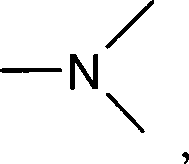


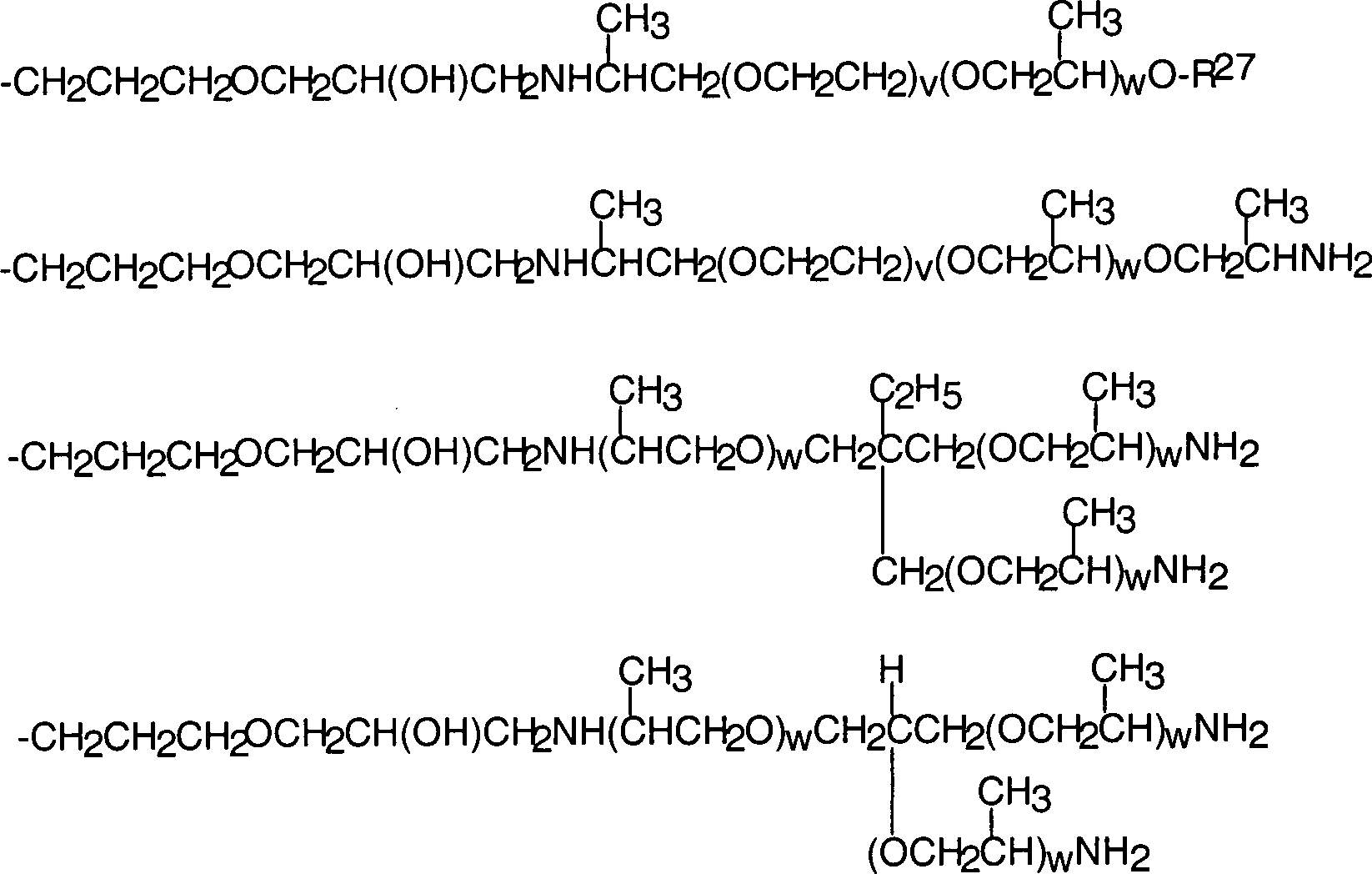

Priority Applications (3)
| Application Number | Priority Date | Filing Date | Title |
|---|---|---|---|
| DE200410034266 DE102004034266A1 (en) | 2004-07-15 | 2004-07-15 | Phyllosilicate-containing polysiloxane compositions |
| EP05769678A EP1819777A1 (en) | 2004-07-15 | 2005-07-14 | Phyllosilicate-containing polysiloxane compositions |
| PCT/EP2005/053385 WO2006005767A1 (en) | 2004-07-15 | 2005-07-14 | Phyllosilicate-containing polysiloxane compositions |
Applications Claiming Priority (1)
| Application Number | Priority Date | Filing Date | Title |
|---|---|---|---|
| DE200410034266 DE102004034266A1 (en) | 2004-07-15 | 2004-07-15 | Phyllosilicate-containing polysiloxane compositions |
Publications (1)
| Publication Number | Publication Date |
|---|---|
| DE102004034266A1 true DE102004034266A1 (en) | 2006-02-09 |
Family
ID=34973114
Family Applications (1)
| Application Number | Title | Priority Date | Filing Date |
|---|---|---|---|
| DE200410034266 Ceased DE102004034266A1 (en) | 2004-07-15 | 2004-07-15 | Phyllosilicate-containing polysiloxane compositions |
Country Status (3)
| Country | Link |
|---|---|
| EP (1) | EP1819777A1 (en) |
| DE (1) | DE102004034266A1 (en) |
| WO (1) | WO2006005767A1 (en) |
Cited By (7)
| Publication number | Priority date | Publication date | Assignee | Title |
|---|---|---|---|---|
| DE102005056864A1 (en) * | 2005-11-29 | 2007-05-31 | Rudolf Gmbh & Co. Kg Chemische Fabrik | Formulation for use in aqueous bath alone or with fluorocarbon polymer for finishing natural or synthetic fiber textile contains organopolysiloxane modified by terminal cyclic diammonium or branched triammonium and polyether groups |
| EP2184398A1 (en) * | 2008-11-11 | 2010-05-12 | Cognis IP Management GmbH | Use of silicone compounds for finishing fibers |
| US8038729B2 (en) | 2007-06-15 | 2011-10-18 | Ecolab Usa Inc. | Liquid fabric conditioner composition and method of use |
| US9506015B2 (en) | 2014-11-21 | 2016-11-29 | Ecolab Usa Inc. | Compositions to boost fabric softener performance |
| US9688945B2 (en) | 2014-11-21 | 2017-06-27 | Ecolab Usa Inc. | Compositions to boost fabric softener performance |
| US9725679B2 (en) | 2014-11-21 | 2017-08-08 | Ecolab Usa Inc. | Compositions to boost fabric softener performance |
| DE102005018315B4 (en) * | 2005-04-20 | 2017-11-16 | Rudolf Gmbh & Co. Kg Chemische Fabrik | Aqueous preparations based on carboxy-functional organopolysiloxane-polyammonium copolymers and their use on cellulosic substrates |
Families Citing this family (12)
| Publication number | Priority date | Publication date | Assignee | Title |
|---|---|---|---|---|
| WO2007030275A2 (en) | 2005-09-02 | 2007-03-15 | Emsense Corporation | A device and method for sensing electrical activity in tissue |
| US8230457B2 (en) | 2007-03-07 | 2012-07-24 | The Nielsen Company (Us), Llc. | Method and system for using coherence of biological responses as a measure of performance of a media |
| US9215996B2 (en) | 2007-03-02 | 2015-12-22 | The Nielsen Company (Us), Llc | Apparatus and method for objectively determining human response to media |
| US8473044B2 (en) * | 2007-03-07 | 2013-06-25 | The Nielsen Company (Us), Llc | Method and system for measuring and ranking a positive or negative response to audiovisual or interactive media, products or activities using physiological signals |
| US8764652B2 (en) | 2007-03-08 | 2014-07-01 | The Nielson Company (US), LLC. | Method and system for measuring and ranking an “engagement” response to audiovisual or interactive media, products, or activities using physiological signals |
| US8782681B2 (en) | 2007-03-08 | 2014-07-15 | The Nielsen Company (Us), Llc | Method and system for rating media and events in media based on physiological data |
| US9451303B2 (en) | 2012-02-27 | 2016-09-20 | The Nielsen Company (Us), Llc | Method and system for gathering and computing an audience's neurologically-based reactions in a distributed framework involving remote storage and computing |
| US9292858B2 (en) | 2012-02-27 | 2016-03-22 | The Nielsen Company (Us), Llc | Data collection system for aggregating biologically based measures in asynchronous geographically distributed public environments |
| US8989835B2 (en) | 2012-08-17 | 2015-03-24 | The Nielsen Company (Us), Llc | Systems and methods to gather and analyze electroencephalographic data |
| US9320450B2 (en) | 2013-03-14 | 2016-04-26 | The Nielsen Company (Us), Llc | Methods and apparatus to gather and analyze electroencephalographic data |
| US9622702B2 (en) | 2014-04-03 | 2017-04-18 | The Nielsen Company (Us), Llc | Methods and apparatus to gather and analyze electroencephalographic data |
| US10465457B2 (en) | 2015-08-11 | 2019-11-05 | Weatherford Technology Holdings, Llc | Tool detection and alignment for tool installation |
Citations (4)
| Publication number | Priority date | Publication date | Assignee | Title |
|---|---|---|---|---|
| WO2002010259A1 (en) * | 2000-07-27 | 2002-02-07 | Ge Bayer Silicones Gmbh & Co. Kg | Polysiloxane polymers, method for their production and the use thereof |
| WO2002010256A1 (en) * | 2000-07-27 | 2002-02-07 | Ge Bayer Silicones Gmbh & Co. Kg | Mono- or poly-quaternary polysiloxanes |
| WO2004046452A2 (en) * | 2002-11-04 | 2004-06-03 | Ge Bayer Silicones Gmbh & Co. Kg | Formulations used for the treatment of substrate surfaces |
| EP1309649B1 (en) * | 2000-07-27 | 2004-07-07 | GE Bayer Silicones GmbH & Co. KG | Polyammonium-polysiloxane compounds, methods for the production and use thereof |
Family Cites Families (12)
| Publication number | Priority date | Publication date | Assignee | Title |
|---|---|---|---|---|
| JPS5541265B2 (en) * | 1972-10-16 | 1980-10-23 | ||
| EP0197540B1 (en) * | 1985-04-10 | 1991-11-13 | Wacker-Chemie Gmbh | Use of amines for stabilizing polysiloxane fluids |
| US5017222A (en) * | 1989-12-07 | 1991-05-21 | Dow Corning Corporation | Polish containing micronized wax particles |
| US5174813A (en) * | 1991-11-07 | 1992-12-29 | Dow Corning Corporation | Polish containing derivatized amine functional organosilicon compounds |
| US5330787A (en) * | 1991-12-02 | 1994-07-19 | First Brands Corporation | Polish composition forming hydrophilic layer and spray-away polishing process |
| DE4241714A1 (en) * | 1992-12-10 | 1994-06-16 | Wacker Chemie Gmbh | Compsn. resistant to pollutants, contg. salt of organo-polysiloxane contg. basic nitrogen - organo:silicon cpd. opt. contg. basic nitrogen, swellable clay mineral and hydraulic binder, for sealing walls and linings for waste deposits |
| DE4328917A1 (en) * | 1993-08-27 | 1995-03-02 | Wacker Chemie Gmbh | Production of organopolysiloxane microemulsions |
| DE19517346A1 (en) * | 1995-05-11 | 1996-11-14 | Wacker Chemie Gmbh | Emulsions of organosilicon compounds for the hydrophobization of building materials |
| DE19605674A1 (en) * | 1996-02-15 | 1997-08-21 | Wacker Chemie Gmbh | Self-priming building material coatings |
| WO1999057154A1 (en) * | 1998-05-01 | 1999-11-11 | The Procter & Gamble Company | Fabric care compositions comprising cellulose binding domains |
| US6541438B1 (en) * | 1998-05-01 | 2003-04-01 | The Procter & Gamble Company | Laundry detergent and/or fabric care compositions comprising a modified cellulase |
| US6903061B2 (en) * | 2000-08-28 | 2005-06-07 | The Procter & Gamble Company | Fabric care and perfume compositions and systems comprising cationic silicones and methods employing same |
-
2004
- 2004-07-15 DE DE200410034266 patent/DE102004034266A1/en not_active Ceased
-
2005
- 2005-07-14 EP EP05769678A patent/EP1819777A1/en not_active Withdrawn
- 2005-07-14 WO PCT/EP2005/053385 patent/WO2006005767A1/en not_active Ceased
Patent Citations (4)
| Publication number | Priority date | Publication date | Assignee | Title |
|---|---|---|---|---|
| WO2002010259A1 (en) * | 2000-07-27 | 2002-02-07 | Ge Bayer Silicones Gmbh & Co. Kg | Polysiloxane polymers, method for their production and the use thereof |
| WO2002010256A1 (en) * | 2000-07-27 | 2002-02-07 | Ge Bayer Silicones Gmbh & Co. Kg | Mono- or poly-quaternary polysiloxanes |
| EP1309649B1 (en) * | 2000-07-27 | 2004-07-07 | GE Bayer Silicones GmbH & Co. KG | Polyammonium-polysiloxane compounds, methods for the production and use thereof |
| WO2004046452A2 (en) * | 2002-11-04 | 2004-06-03 | Ge Bayer Silicones Gmbh & Co. Kg | Formulations used for the treatment of substrate surfaces |
Cited By (13)
| Publication number | Priority date | Publication date | Assignee | Title |
|---|---|---|---|---|
| DE102005018315B4 (en) * | 2005-04-20 | 2017-11-16 | Rudolf Gmbh & Co. Kg Chemische Fabrik | Aqueous preparations based on carboxy-functional organopolysiloxane-polyammonium copolymers and their use on cellulosic substrates |
| DE102005056864B4 (en) * | 2005-11-29 | 2015-10-22 | Rudolf Gmbh & Co. Kg Chemische Fabrik | Preparations based on ammonium- and polyether-modified organopolysiloxanes and their use for the finishing of textile substrates |
| DE102005056864A1 (en) * | 2005-11-29 | 2007-05-31 | Rudolf Gmbh & Co. Kg Chemische Fabrik | Formulation for use in aqueous bath alone or with fluorocarbon polymer for finishing natural or synthetic fiber textile contains organopolysiloxane modified by terminal cyclic diammonium or branched triammonium and polyether groups |
| US10113139B2 (en) | 2007-06-15 | 2018-10-30 | Ecolab Usa Inc. | Solid fabric conditioner composition and method of use |
| US9150819B2 (en) | 2007-06-15 | 2015-10-06 | Ecolab Usa Inc. | Solid fabric conditioner composition and method of use |
| US8038729B2 (en) | 2007-06-15 | 2011-10-18 | Ecolab Usa Inc. | Liquid fabric conditioner composition and method of use |
| US10233407B2 (en) | 2007-06-15 | 2019-03-19 | Ecolab Usa Inc. | Liquid fabric conditioner composition and method of use |
| EP2184398A1 (en) * | 2008-11-11 | 2010-05-12 | Cognis IP Management GmbH | Use of silicone compounds for finishing fibers |
| US9506015B2 (en) | 2014-11-21 | 2016-11-29 | Ecolab Usa Inc. | Compositions to boost fabric softener performance |
| US9688945B2 (en) | 2014-11-21 | 2017-06-27 | Ecolab Usa Inc. | Compositions to boost fabric softener performance |
| US9725679B2 (en) | 2014-11-21 | 2017-08-08 | Ecolab Usa Inc. | Compositions to boost fabric softener performance |
| US10947481B2 (en) | 2014-11-21 | 2021-03-16 | Ecolab Usa Inc. | Compositions to boost fabric softener performance |
| US11466233B2 (en) | 2014-11-21 | 2022-10-11 | Ecolab Usa Inc. | Compositions to boost fabric softener performance |
Also Published As
| Publication number | Publication date |
|---|---|
| WO2006005767A1 (en) | 2006-01-19 |
| EP1819777A1 (en) | 2007-08-22 |
Similar Documents
| Publication | Publication Date | Title |
|---|---|---|
| DE102004034266A1 (en) | Phyllosilicate-containing polysiloxane compositions | |
| EP1627008B1 (en) | Reactive amino- and/or ammonium-polysiloxane compounds | |
| EP1565512B1 (en) | Linear polyamino and/or polyammonium polysiloxane copolymers i | |
| EP1563136B1 (en) | Linear polyamino and/or polyammonium polysiloxane copolymers ii | |
| DE10036533B4 (en) | Use of polyquaternary polysiloxanes as washable hydrophilic plasticizers | |
| EP2444447B1 (en) | Polysiloxanes with groups containing nitrogen | |
| EP1887023B1 (en) | New polysiloxanes with quaternary ammonium groups, method for their manufacture and their use as textile softeners | |
| EP1560973A2 (en) | Formulations used for the treatment of substrate surfaces | |
| EP1869108B1 (en) | Polyamino and/or polyammonium/polysiloxane copolymer compounds with polyalkylene oxide units in comb-shaped arrangement | |
| EP1487904A1 (en) | Branched polyorganosiloxane polymers | |
| EP1625180B1 (en) | Polyorganosiloxane compositions for the treatment of substrates | |
| EP2260140B1 (en) | Use of polyamino and/or polyammonium polysiloxane copolymer compounds | |
| WO2005063855A1 (en) | Alkoxy- and hydroxyl group-free amino and/or ammonium polysiloxane | |
| DE102005014312A1 (en) | Composition comprising polyamino and / or polyammonium-polysiloxane compounds on a substrate | |
| EP1595910B1 (en) | Derivatised, permanently quaternised nitrogen atoms bearing, linear or branched aminofunctional organopolysiloxanes | |
| EP1561770B1 (en) | Branched Polyorganosiloxane with quaternary Ammoniumgroups | |
| DE102004012877A1 (en) | Formulations containing amino- and/or ammonium-polysiloxane with a low content of hydroxy and alkoxy groups attached to silicon, used in detergent formulations and cosmetics or as textile softeners | |
| DE102008014762A1 (en) | Use of polyamine and/or polyammonium-polysiloxane copolymer compound for original equipment of fiber materials including cellulose, wool, cotton, silk and synthetic fibers and as textile softener in finishing of textile fabrics | |
| DE10066215B4 (en) | Use of poly-quaternary polysiloxanes as wash-resistant hydrophilic softeners of textiles |
Legal Events
| Date | Code | Title | Description |
|---|---|---|---|
| OP8 | Request for examination as to paragraph 44 patent law | ||
| 8131 | Rejection |