CN1839647B - load balancing antenna - Google Patents
load balancing antenna Download PDFInfo
- Publication number
- CN1839647B CN1839647B CN2005800005292A CN200580000529A CN1839647B CN 1839647 B CN1839647 B CN 1839647B CN 2005800005292 A CN2005800005292 A CN 2005800005292A CN 200580000529 A CN200580000529 A CN 200580000529A CN 1839647 B CN1839647 B CN 1839647B
- Authority
- CN
- China
- Prior art keywords
- beams
- real
- time
- terminal
- session
- Prior art date
- Legal status (The legal status is an assumption and is not a legal conclusion. Google has not performed a legal analysis and makes no representation as to the accuracy of the status listed.)
- Expired - Fee Related
Links
Images


Classifications
-
- H—ELECTRICITY
- H04—ELECTRIC COMMUNICATION TECHNIQUE
- H04W—WIRELESS COMMUNICATION NETWORKS
- H04W16/00—Network planning, e.g. coverage or traffic planning tools; Network deployment, e.g. resource partitioning or cells structures
- H04W16/02—Resource partitioning among network components, e.g. reuse partitioning
- H04W16/04—Traffic adaptive resource partitioning
-
- H—ELECTRICITY
- H04—ELECTRIC COMMUNICATION TECHNIQUE
- H04B—TRANSMISSION
- H04B1/00—Details of transmission systems, not covered by a single one of groups H04B3/00 - H04B13/00; Details of transmission systems not characterised by the medium used for transmission
- H04B1/69—Spread spectrum techniques
- H04B1/707—Spread spectrum techniques using direct sequence modulation
- H04B1/7097—Interference-related aspects
- H04B1/711—Interference-related aspects the interference being multi-path interference
- H04B1/7115—Constructive combining of multi-path signals, i.e. RAKE receivers
-
- H—ELECTRICITY
- H04—ELECTRIC COMMUNICATION TECHNIQUE
- H04W—WIRELESS COMMUNICATION NETWORKS
- H04W16/00—Network planning, e.g. coverage or traffic planning tools; Network deployment, e.g. resource partitioning or cells structures
- H04W16/24—Cell structures
- H04W16/28—Cell structures using beam steering
-
- H—ELECTRICITY
- H04—ELECTRIC COMMUNICATION TECHNIQUE
- H04W—WIRELESS COMMUNICATION NETWORKS
- H04W28/00—Network traffic management; Network resource management
- H04W28/16—Central resource management; Negotiation of resources or communication parameters, e.g. negotiating bandwidth or QoS [Quality of Service]
- H04W28/26—Resource reservation
Landscapes
- Engineering & Computer Science (AREA)
- Computer Networks & Wireless Communication (AREA)
- Signal Processing (AREA)
- Quality & Reliability (AREA)
- Mobile Radio Communication Systems (AREA)
Abstract
Description
技术领域 technical field
本发明的特征涉及天线。本发明的特征尤其涉及的是通过修改来自天线的波束而在保持服务质量需求的同时最大化通过网络的吞吐量。A feature of the invention relates to an antenna. In particular, features of the invention relate to maximizing throughput through the network while maintaining quality of service requirements by modifying the beams from the antennas.
背景技术 Background technique
随着对元处不在的移动服务的需求日益增长,移动运营商和供应商都在不断寻找应对这种需求的方法。移动运营商调整网络的体系结构以便他们可以快速地引入全新的更高速的技术,而供应商则致力于设计那些用于提升其无线产品容量的方法。当前的趋势表明:With the growing demand for ubiquitous mobile services, mobile operators and providers alike are constantly looking for ways to address this demand. Mobile operators are adjusting the architecture of their networks so they can quickly introduce new, higher-speed technologies, while vendors are working on ways to design those to increase the capacity of their wireless products. Current trends show that:
a.移动运营商已经着手在其蜂窝网络内部使用无线局域网(WLAN)技术来覆盖热点(例如机场、购物中心等),而在大企业内部,WLAN已经成为了提供移动服务的普遍方式。a. Mobile operators have begun to use wireless local area network (WLAN) technology within their cellular networks to cover hotspots (such as airports, shopping malls, etc.), and within large enterprises, WLAN has become a common way to provide mobile services.
b.无线供应商正在研究自适应阵列天线(也称为“智能”或自适应天线),以作为一种能够提升他们的蜂窝和WLAN产品容量的有前途的技术。“智能”天线可以包括辐射天线部件阵列,在所述阵列中,通过调整不同阵列部件的相关参数(例如振幅和相对相位),可以改变智能天线辐射图,即智能天线波束,以及这些波束的方向。由于智能天线的各个波束具有不同的载频并表示不同的物理信道,因此在这里可以互换地使用术语“波束”和“频率信道”。b. Wireless vendors are investigating adaptive array antennas (also known as "smart" or adaptive antennas) as a promising technology to increase the capacity of their cellular and WLAN products. A "smart" antenna may comprise an array of radiating antenna elements in which, by adjusting the relevant parameters (such as amplitude and relative phase) of the different array elements, the smart antenna radiation pattern, i.e., the smart antenna beams, and the direction of those beams can be varied . Since the individual beams of a smart antenna have different carrier frequencies and represent different physical channels, the terms "beam" and "frequency channel" are used interchangeably herein.
当前的这些方法是非常不方便的。它们不能动态地适应与位置和业务量特性中的至少一项相关的频率信道方向。These current methods are very inconvenient. They cannot dynamically adapt to frequency channel orientation in relation to at least one of location and traffic characteristics.
传统的分析波束形成技术通常会对智能天线的相关参数进行调整/控制,以便最小化每一个频率信道的信号噪声干扰比(SNIR)并且最大化其容量。对波束形成技术来说,流行的“最优”判据是最小均方误差(MMSE)以及最小二乘(LS)技术。这些技术使用了最优过滤理论来设计一个在收发信机上最小化天线阵列输出与本地产生的用户预期信号估计(即本地参考信号)之间的差值的递归空间滤波器。MMSE和LS技术要求收发信机具有用户预期信号的先验知识或估计。通常使用诸如周期性训练序列、面向判定的自适应等方法获取这些估计。然而,这些技术无法动态地解决业务量问题或位置。Traditional analytical beamforming techniques typically adjust/control the relevant parameters of the smart antenna in order to minimize the signal-to-noise-interference ratio (SNIR) and maximize the capacity of each frequency channel. For beamforming techniques, popular "optimal" criteria are minimum mean square error (MMSE) and least squares (LS) techniques. These techniques use optimal filtering theory to design a recursive spatial filter that minimizes the difference between the antenna array output and a locally generated estimate of the user's desired signal (ie, a local reference signal) at the transceiver. MMSE and LS techniques require the transceiver to have a priori knowledge or estimates of the user's expected signal. These estimates are typically obtained using methods such as periodic training sequences, decision-oriented adaptation, etc. However, these techniques cannot dynamically address traffic issues or locations.
发明内容 Contents of the invention
本发明的特征涉及的是在移动用户需求发生变化的时候分配波束、以便为他们提供改进的服务,由此解决传统技术中的一个或多个问题。Features of the invention relate to allocating beams to provide improved service to mobile users as their needs change, thereby addressing one or more of the problems of conventional techniques.
根据本发明的一个方面,提供了一种用于在来自阵列天线的两个或更多波束之间均衡业务量的处理,包括以下步骤:确定所述两个或更多波束所覆盖的区域中的每一个移动终端所预期的会话容量;确定所述移动终端的位置;分配所述两个或更多波束,以使所述波束服务于所述终端;以及引导所述两个或更多波束中的第一波束,以服务于所述终端,其中,所述波束中的至少一个波束服务于多个终端,这些终端的集体会话容量至少是所述波束所服务的终端所预期的总会话容量的1/N,并且其中N是波束的数量。According to an aspect of the present invention there is provided a process for equalizing traffic between two or more beams from an array antenna comprising the steps of: determining each mobile terminal's expected session capacity; determining the location of the mobile terminal; assigning the two or more beams so that the beams serve the terminal; and directing the two or more beams a first beam among the beams to serve the terminal, wherein at least one of the beams serves a plurality of terminals whose collective session capacity is at least the expected total session capacity of the terminals served by the beam 1/N of , and where N is the number of beams.
根据本发明的另一方面,提供了一种用于在来自阵列天线的两个或更多波束之间均衡业务量的系统,包括:用于确定所述两个或更多波束所覆盖的区域中的每一个移动终端所预期的会话容量的装置;用于确定所述移动终端的位置的装置;用于分配所述两个或更多波束以使所述波束服务于所述终端的装置;以及用于引导所述两个或更多波束中的第一波束以服务于所述终端的装置,其中所述波束中的至少一个波束服务于多个终端,这些终端的集体会话容量至少是所述波束所服务的终端所预期的总会话容量的1/N,并且其中N是波束的数量。According to another aspect of the present invention, there is provided a system for equalizing traffic between two or more beams from an array antenna, comprising: determining an area covered by the two or more beams means for each mobile terminal in the expected session capacity; means for determining the location of said mobile terminal; means for allocating said two or more beams so that said beams serve said terminal; and means for directing a first beam of the two or more beams to serve the terminal, wherein at least one of the beams serves a plurality of terminals having a collective session capacity of at least 1/N of the expected total session capacity of the terminals served by the beam, and where N is the number of beams.
根据本发明的另一方面,提供了一种用于在波束之间均衡业务量的系统,包括:天线,该天线具有服务于终端的波束;控制器,该控制器对所述天线进行控制,所述控制器具有:负载均衡引擎,它根据所述终端的位置以及所述终端预期的会话容量来分配所述波束。According to another aspect of the present invention, there is provided a system for balancing traffic among beams, comprising: an antenna having a beam serving a terminal; a controller controlling the antenna, The controller has a load balancing engine that allocates the beams based on the location of the terminal and the expected session capacity of the terminal.
附图说明 Description of drawings
图1显示的是依照本发明的特征、用于在波束之间均衡负载的处理。Figure 1 shows a process for balancing load among beams in accordance with features of the present invention.
图2显示的是依照本发明的特征的天线控制器的说明示例。Figure 2 shows an illustrative example of an antenna controller in accordance with features of the present invention.
图3显示的是依照本发明的特征、正被修改的波束宽度的图示。Figure 3 shows a graphical representation of the beamwidth being modified in accordance with a feature of the present invention.
图4显示的是依照本发明的特征、用于在波束之间均衡负载的处理。Figure 4 shows a process for balancing load among beams in accordance with features of the present invention.
图5和6显示的是依照本发明的特征、正被修改的波束宽度的图示。Figures 5 and 6 show graphical representations of beamwidths being modified in accordance with features of the present invention.
图7显示的是依照本发明的特征的系统体系结构的说明示例。Figure 7 shows an illustrative example of a system architecture in accordance with features of the present invention.
图8显示的是依照本发明的特征的用户数据对象的数据结构。Figure 8 shows the data structure of a user data object according to features of the present invention.
图9显示的是依照本发明的特征的信号交换。Figure 9 shows handshaking in accordance with features of the present invention.
具体实施方式 Detailed ways
本发明的特征涉及控制波束以使频率信道负载均衡。本发明的特征可以与一个或多个数据库结合使用,其中这些数据库包含了与用户服务的位置和类型有关的信息。Features of the invention relate to steering beams to load balance frequency channels. Features of the present invention may be used in conjunction with one or more databases containing information about the location and type of customer services.
本发明的特征可以使用接入点与移动终端之间的当前上行链路,其中所述接入点与移动终端将会辨别帧的起点。可以使用各种方法,包括严格同步技术(例如蓝牙、CDMA)和不严格同步的技术,后者包括在上行链路上、在802.11接入点与移动台之间进行的显性交互,其提供了相关的组帧(framing)。当在上行链路上将本发明的特征与“分组引导(packet steering)”结合使用时,至少一个优点可以包括在不降低天线系统总吞吐量的情况下降低移动台的功耗。Features of the invention may use the current uplink between the access point and the mobile terminal that will recognize the start of the frame. Various methods can be used, including strictly synchronous techniques (e.g., Bluetooth, CDMA) and techniques that are not strictly synchronous, the latter involving an explicit interaction between the 802.11 access point and the mobile station on the uplink, which provides related framing. When using features of the present invention in conjunction with "packet steering" on the uplink, at least one advantage may include reducing power consumption of the mobile station without reducing the overall throughput of the antenna system.
在下文中描述了本发明的特征,即在满足智能天线系统(WLAN或其他系统)实时服务(例如语音)需求的同时尝试提高吞吐量,其中该系统的控制器实体可以与数据库相连,所述数据库包含了与用户服务的位置和类型有关的信息。In the following the features of the present invention are described, namely attempting to increase throughput while satisfying real-time service (e.g. voice) requirements of a smart antenna system (WLAN or otherwise) where the controller entity of the system may be connected to a database Contains information about the location and type of user service.
参考图1,本发明的特征可以描述为将时间分成(步骤100)长度为T的固定帧的处理。在步骤101,该处理将每一个时间T划分到一个实时周期中,并且以一个非实时周期为结束。接着,该处理使用用户位置以及涉及其会话的相关信息(例如容量、服务类型)来选择(步骤102)波束宽度,以便在实时和非实时周期期间均衡波束的负载。Referring to Figure 1, the present invention can be characterized as the process of dividing time (step 100) into fixed frames of length T. In step 101, the process divides each time T into a real-time period and ends with a non-real-time period. Next, the process selects (step 102) the beamwidth using the user's location and relevant information related to its session (eg capacity, type of service) in order to balance the load of the beams during real-time and non-real-time periods.
本发明的各个方面可以与如下系统结合使用,其中该系统具有或者可以获取关于每个用户位置的先验知识(ri和θi)以及用户的服务类型,并且会在用户四处移动时动态更新其数据库。在这里,ri是第I个用户与阵列天线之间的距离,θi是其方位角。作为一个示例,当接收到会话建立和断开连接请求(也就是“INVITE(邀请)”或“BYE(再见)”消息)时,会话管理器(例如SIP服务器)可以向智能天线控制器提供服务类型信息。存在多种常规方法用于确定移动台的位置,但不在此处进行详细讲解。举例来说,在移动运营商的网络中,借助全球定位系统以及测距或双曲线定位算法,可以轻而易举地获得位置信息。Aspects of the invention can be used in conjunction with a system that has or can acquire prior knowledge about each user's location ( ri and θi ) and the user's service type, which is dynamically updated as the user moves around its database. Here, ri is the distance between the Ith user and the array antenna, and θi is its azimuth. As an example, a session manager (such as a SIP server) may provide services to the smart antenna controller when session establishment and disconnection requests (ie, "INVITE" or "BYE" messages) are received type information. There are various conventional methods for determining the position of a mobile station, but they are not explained in detail here. For example, in a mobile operator's network, location information can be readily obtained with the help of the Global Positioning System and odometry or hyperbolic positioning algorithms.
在这里,智能天线系统应该提供N个不同的频率信道,也就是说,它具有N个波束形成器(例如3或4个波束形成器)。波束宽度的最大可用值ωmax和最小可用值ωmin是已知的(例如,可实现诸如从ωmin=15°到ωmax=80°之类的值)。此外,该系统还应该支持两类切换(即移动台辅助切换(MAHO)或网络辅助切换(NAHO))。Here, the smart antenna system should provide N different frequency channels, that is, it has N beamformers (eg 3 or 4 beamformers). The maximum and minimum available values ω max and ω min for the beamwidth are known (eg values such as from ω min =15° to ω max =80° are achievable). In addition, the system should support two types of handovers (ie Mobile Assisted Handover (MAHO) or Network Assisted Handover (NAHO)).
WLAN或其他网络可以支持实时(例如语音)和非实时(例如尽力而为型的数据)服务中的至少一种。负载既可以是对称的,也可以是不对称的。在会话建立时间,网络还可以对实时服务实施准许控制,以便恰当地限制WLAN环境中同时进行的实时会话数量。一般来说,除了传送尽力而为型的数据业务量的会话之外,网络可以对所有会话执行许可控制。在这里,会话的等效容量可以是网络应该为会话分配以满足会话QoS需求的估计容量。A WLAN or other network may support at least one of real-time (eg, voice) and non-real-time (eg, best-effort data) services. Loads can be either symmetrical or asymmetrical. At session establishment time, the network can also implement admission control for real-time services in order to appropriately limit the number of simultaneous real-time sessions in a WLAN environment. In general, the network may perform admission control on all sessions except those carrying best-effort data traffic. Here, the equivalent capacity of the session may be an estimated capacity that the network should allocate for the session to meet the QoS requirement of the session.
图2显示了(与WLAN或其他网络结合使用的)智能天线系统的说明示例。该系统包括用于接收实时202和非实时203输入的天线控制器201。此外,该系统可以具有N个队列204~206,其中由N个并行服务器207~209为实时和非实时分组这两类客户提供支持。每个用户的分组可以保存在每个用户的移动终端上。这种将系统模拟成具有多个服务器的单个分布式队列的模型反映了这样一个事实,即分组服务的实际服务时间是媒体接入时间与其传输时间的总和。Figure 2 shows an illustrative example of a smart antenna system (used in conjunction with a WLAN or other network). The system includes an antenna controller 201 for receiving real-time 202 and non-real-time 203 inputs. In addition, the system may have N queues 204-206, wherein N parallel servers 207-209 provide support for both real-time and non-real-time packet clients. Each user's group can be saved on each user's mobile terminal. This modeling of the system as a single distributed queue with multiple servers reflects the fact that the actual service time of a packet service is the sum of the medium access time and its transmission time.
N个并行服务器207~209模拟了WLAN智能天线的N个频率信道。分组的实际服务时间等于接入信道的等待时间加上传输分组自身所需的时间。举例来说,在802.11中,只要移动台具有分组,则它的MAC层就可以发送请求“许可”的RTS(帧发送请求)以便发送其分组。每个队列中的客户代表了处于频率信道覆盖范围之内的用户群体的分组。在图2中,服务时间包含了信道接入以及分组传输所占用的时间。因此,即使在上行链路上,用户分组实际上处于分布在频率信道覆盖区域之内的移动台的缓存中,用于每一个频率信道的单个队列模型也足以满足要求。为此目的,可以使用另外的队列方法。N parallel servers 207-209 simulate N frequency channels of WLAN smart antennas. The actual service time of the packet is equal to the latency of accessing the channel plus the time required to transmit the packet itself. For example, in 802.11, whenever a mobile station has a packet, its MAC layer can send an RTS (Frame Send Request) requesting "permission" to send its packet. Clients in each queue represent a subgroup of user groups within the frequency channel coverage. In Fig. 2, the service time includes the time occupied by channel access and packet transmission. Thus, even if on the uplink user packets are actually in the mobile station's buffers distributed within the frequency channel coverage area, a single queue model for each frequency channel is sufficient. For this purpose, additional queue methods can be used.
天线控制器201使用了用户位置(211)以及诸如预期会话容量及其服务时间(212)之类、与用户会话有关的相关信息,以通过调整天线波束方向将用户群体分成N个“最大化”系统吞吐量子集,同时满足实时服务的服务质量(QoS)需求,例如实时(例如语音)分组延迟及抖动的严格限度。Antenna controller 201 uses user locations (211) and relevant information about user sessions such as expected session capacity and its service time (212) to divide the user population into N "maximized" A subset of the system throughput while meeting the quality of service (QoS) requirements of real-time services, such as tight bounds on real-time (eg, voice) packet delay and jitter.
为了满足实时服务的QoS需求,实时业务量既可以是也可以不是(虚拟地,而不一定是物理地)隔离的,并且所述业务量可以具有高于非实时业务量的优先级,或是通过调度来接收周期性服务。To meet the QoS requirements of real-time services, real-time traffic may or may not be (virtually, not necessarily physically) segregated, and said traffic may have priority over non-real-time traffic, or Receive periodic services by scheduling.
此外,为了最大化仅仅具有一类分组的排队系统的吞吐量,尽可能地保持服务器繁忙将会是有帮助的。Furthermore, to maximize the throughput of a queuing system with only one class of packets, it would be helpful to keep the server as busy as possible.
在下文中首先会就非实时服务而对天线系统控制器进行描述,然后会阐明实时服务。由于所描述的控制器的特征在于相对均衡地将用户的业务量负载分布到频率信道中,所以也可以将控制器称为“负载均衡器”或“空间负载均衡器”。In the following, the antenna system controller will first be described with respect to non-real-time services, and then real-time services will be clarified. Since the described controller is characterized by relatively evenly distributing user traffic loads to frequency channels, the controller may also be called a "load balancer" or a "spatial load balancer".
实时服务和非实时服务Real-time service and non-real-time service
空间负载均衡器Spatial Load Balancer
首先将对仅仅具有非实时服务的系统进行描述。在这里,举例来说,WLAN环境仅仅支持不具有延迟要求的非实时服务。为了“最大化”智能天线吞吐量,并且为了确保每个队列中具有一个或多个等待在每个频率信道上传输的分组的可能性相同,控制器应该在N个频率信道中划分用户群体,以使频率信道上的业务量负载相对均衡,并使所有频率信道上的波束宽度都处于天线阵列的许可范围以内。A system with only non-real-time services will be described first. Here, for example, a WLAN environment only supports non-real-time services that do not have delay requirements. In order to "maximize" smart antenna throughput, and to ensure that each queue is equally likely to have one or more packets waiting to be transmitted on each frequency channel, the controller should divide the user population among the N frequency channels, To make the traffic load on the frequency channels relatively balanced, and make the beam widths on all frequency channels within the allowable range of the antenna array.
如果进行中的会话总数为N,并且第k个会话的等效容量是Ckbps,那么控制器可以把进行中的会话分布到N个相邻区域/区段中,以便每一个区域包含大约1/N的总业务量,即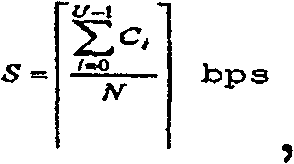

下文描述的是用于空间负载均衡器的处理。首先,均衡器开始于将相邻用户/终端打包到第一区域/区段中直至第一区域/区段的负载超出总负载的1/N或是产生的波束宽度超出ωmax为止。这显示为在由波束宽度ω0定义的弧形301中分配移动用户。Described below is the process for a spatial load balancer. First, the equalizer starts by packing adjacent users/terminals into the first region/sector until the load of the first region/sector exceeds 1/N of the total load or the resulting beamwidth exceeds ω max . This is shown as allocating mobile users in an arc 301 defined by beamwidth ω0 .
接着,空间负载均衡器继续将剩余的(即非第一区域/区段成员的)相邻用户/终端分配到第二区域/区段中,直至第二区域/区段负载超出了并未分配给第一区域的终端总负载的1/(N-1)为止。这显示为波束宽度为ω1的弧形302中的用户。Next, the spatial load balancer continues to distribute the remaining (i.e. non-members of the first area/section) adjacent users/terminals to the second area/section until the second area/section load exceeds the unallocated 1/(N-1) of the total terminal load for the first area. This is shown as users in arc 302 with beamwidth ω1.
接下来,空间负载均衡器继续将剩余的(也就是非第一和/或第二区域/区段成员)相邻用户/终端分配到第三区域/区段,直至第三区域/区段的负载超出了并未分配给第一和第二区域的终端总负载的1/(N-2)或者产生的波束宽度超出了ωmax为止。这显示为波束宽度为ω2的弧形303中的用户。Next, the spatial load balancer proceeds to assign the remaining (i.e. not members of the first and/or second zone/zone) adjacent users/terminals to the third zone/zone until the third zone/zone Until the load exceeds 1/(N-2) of the total load of terminals not allocated to the first and second areas or the resulting beamwidth exceeds ω max . This is shown as users in arc 303 with beamwidth ω2 .
上述处理将会持续进行,直至指定了所有N个区域或区段为止。The above processing will continue until all N areas or sectors are specified.
这样设定每一个波束的宽度和方向,以便使之覆盖这些区域/区段之一,而且波束方向指向该区域的方位角中心。The width and direction of each beam is set so that it covers one of these areas/sectors, and the beam is directed towards the azimuthal center of that area.
空间负载均衡器可以用不同的算法实现,这些算法根据所需要的容量和/或位置来对用户进行分类。举例来说,在这里尤其可以使用一种快速分类算法。快速分类算法依照进行中的会话的用户方位角的递减顺序创建一个进行中的会话列表。空间负载均衡器将相邻会话分配到一个区段/区域中,直至该区段的总负载超出S或者产生的波束宽度超出ωmax为止。假设第I个会话的用户位置的方位角为θi,并且第j个频率信道的波束宽度是ωj,那么空间负载均衡器的伪代码提供如下:Spatial load balancers can be implemented with different algorithms that classify users according to required capacity and/or location. For example, here in particular a fast classification algorithm can be used. The quick sort algorithm creates a list of ongoing sessions in descending order of their user azimuths. The spatial load balancer distributes adjacent sessions into a segment/region until the total load of the segment exceeds S or the resulting beamwidth exceeds ωmax . Assuming the azimuth of the user location of the i-th session is θi , and the beamwidth of the j-th frequency channel is ωj , then the pseudocode of the spatial load balancer is provided as follows:
调用快速分类算法,以便依照会话方位角θU-1,θU-2,..θ0递减的顺序创建会话列表,其中θ0≥θ1≥...≥θU。Invoke the fast sorting algorithm to create a session list in descending order of session azimuths θ U-1 , θ U-2 , .. θ 0 , where θ 0 ≥θ 1 ≥...≥θ U .
设置
for(j=L,j<N){for(j=L,j<N){
if(L!=0)L=L+1;if(L!=0)L=L+1;
for(k=L,k<U){for(k=L,k<U){
load=load+Ck;load=load+C k ;
if((ω≥ωmax)ν(load≥S))L=k;if((ω≥ω max )ν(load≥S))L=k;
break;break;
}}
if(ω≤ωmax)ωj=ω;if(ω≤ω max )ω j =ω;
else{else{
ωj=ωmax;ω j = ω max ;
L=L-1;L=L-1;
} }
load=0;load=0;
}}
首先,如果智能天线能够在(0~π)的范围中形成具有任意宽度的波束,那么所指定的相邻“负载均衡”区域/区段不应该重叠。然而,在实践中,当负载均衡算法/试探法指定了一个其波束宽度小于ωmin的区域/区段时,那么将宽度为ωmin的波束指引到这个区段的天线将会与相邻区段重叠。换句话说,如果某个区域的业务量密度很高,那么该方法可以将覆盖区域分成更窄的非重叠区段,在实践中,这种方法的实现会将多个重叠波束引导到繁忙业务量区域。First, if the smart antenna is capable of forming a beam with arbitrary width in the range (0~π), then the designated adjacent "load balancing" areas/sections should not overlap. However, in practice, when the load balancing algorithm/heuristic specifies a region/sector whose beamwidth is smaller than ω min , then the antennas directing beams of width ω min to this segments overlap. In other words, if the traffic density in an area is high, the method can divide the coverage area into narrower non-overlapping segments, and in practice, this method is implemented by directing multiple overlapping beams to the busy traffic quantity area.
其次,一旦更新了位置数据库,控制器就将会相应地更新所述分区,并且将会调整波束方向和波束宽度,以便使业务量负载近乎相等地分布在N个频率信道中。毫无疑问,当负载均衡器调整智能天线波束时,即使某些用户根本没有移动并且他们的位置没有发生变化,所述负载均衡器也可能会迫使这些用户进行切换。Second, once the location database is updated, the controller will update the partitions accordingly, and will adjust the beam directions and beam widths so that the traffic load is nearly equally distributed among the N frequency channels. There is no doubt that when the load balancer adjusts the smart antenna beams, some users may be forced to switch by the load balancer even though these users have not moved at all and their positions have not changed.
a.在支持NAHO的WLAN中,网络控制器预先向移动台发出通知,以便使它发起用于切换到目标频率信道的处理。一般来说,NAHO方案的这种提早警告特征应当会导致较低的切换延迟以及较好的性能。a. In a WLAN supporting NAHO, the network controller pre-notifies the mobile station so that it initiates the process for handover to the target frequency channel. In general, this early warning feature of the NAHO scheme should result in lower handover delay and better performance.
b.然而,在诸如IEEE 802.11这类的仅仅MAHO的环境中,负载均衡器并不是始终都在正确运作,这是因为:在负载均衡器调整波束,并且由于最后一次波束调整而引导当前服务波束(频率信道)离开并未移动的移动终端(假设是终端A)的时候,有可能出现以下这两种不同的情况:b. However, in a MAHO-only environment such as IEEE 802.11, the load balancer does not always work correctly because: The beam is adjusted at the load balancer and the current serving beam is steered due to the last beam adjustment (Frequency channel) When leaving a mobile terminal (assumed to be terminal A) that is not moving, the following two different situations may occur:
i.波束调整导致终端A处的接收信号强度降至切换阈值以下。在这种情况下,负载均衡器正确地运作,这是因为移动台的MAHO机制以标准方式检测到波束(信道)的改变,就好像移动台已经从一个波束(信道)移动到另一个波束(信道)那样,并且调用切换处理。i. Beam adjustment causes the received signal strength at terminal A to drop below the handover threshold. In this case, the load balancer works correctly because the mobile's MAHO mechanism detects the beam (channel) change in a standard way, as if the mobile had moved from one beam (channel) to another ( channel) and call the switch process.
ii.波束调整不会导致终端处的接收信号强度降至切换阈值以下。在这种情况下,由于接收质量尚可接受,因此MAHO机制不会调用切换处理。这样一来,在没有来自接入点的附加指令的情况下,终端A不会切换到相邻波束(信道),但是事实则是负载均衡器希望终端A这样做。因此,在仅仅MAHO(例如IEEE 802.11)的环境中,接入点需要一种用于指示终端A如负载均衡器所预期的那样切换到相邻波束的机制。ii. Beam adjustment does not cause the received signal strength at the terminal to drop below the handover threshold. In this case, the MAHO mechanism does not invoke the handover process since the reception quality is acceptable. This way, terminal A will not switch to an adjacent beam (channel) without additional instructions from the access point, but the fact is that the load balancer wants terminal A to do so. Therefore, in a MAHO-only (e.g. IEEE 802.11) environment, the access point needs a mechanism for instructing terminal A to switch to an adjacent beam as expected by the load balancer.
后一种情况意味着MAHO环境(例如IEEE 802.11)同样需要一种允许负载均衡器向受到波束的重新配置影响的移动台发出明确通知的NAHO能力。为了确保负载均衡器的正确操作,MAHO和NAHO方案可以如下这样使用:The latter case implies that MAHO environments (such as IEEE 802.11) also require a NAHO capability that allows the load balancer to issue explicit notifications to mobile stations affected by the reconfiguration of the beam. To ensure correct operation of the load balancer, MAHO and NAHO schemes can be used as follows:
a.接入点使用NAHO方案向那些由于最近的波束重新配置而被重新分配到不同波束的终端发出通知。a. The access point uses the NAHO scheme to notify those terminals that were reassigned to a different beam due to a recent beam reconfiguration.
b.终端在其自身跨越所述波束时继续使用MAHO进行切换。b. The terminal continues to handover using MAHO while it crosses the beam itself.
接下来的问题是接入点为它的将波束重新分配通知给那些受到影响的移动台的NAHO机制使用何种协议。由于波束重新分配的原因是对接入点进行了重新配置,因此它可以使用网络管理协议、即IP环境中的SNMP,来指示受到影响的移动台切换到新的波束/信道。关于NAHO切换协议的详细规定并不属于本公开的一部分。作为选择,也可以调用更低层的协议来执行必要的NAHO处理。NAHO处理的常规方法如下所示:The next question is which protocol the access point uses for its NAHO mechanism of notifying beam reallocations to those affected mobile stations. Since the reason for beam reassignment is the reconfiguration of the access point, it can use the network management protocol, ie SNMP in the IP environment, to instruct the affected mobile stations to switch to the new beam/channel. The detailed provisions on the NAHO handover protocol are not a part of this disclosure. Alternatively, lower layer protocols may be invoked to perform the necessary NAHO processing. The general approach to NAHO processing is as follows:
a.当负载均衡器重新配置波束时,它会向所有那些被重新分配到新波束的移动台发送SNMP SET消息,以便向它们通知其新的频率信道标识符,即SET FREQ_CHANNEL“new channel ID”。一旦接收到SET消息后,移动SNMP代理检查并更新MIB,并且促使切换到新的信道。这种方案的优点在于:a. When the load balancer reconfigures a beam, it sends an SNMP SET message to all those mobiles that were reassigned to the new beam to inform them of their new frequency channel identifier, SET FREQ_CHANNEL "new channel ID" . Upon receipt of the SET message, the mobile SNMP agent checks and updates the MIB and causes a switch to the new channel. The advantages of this approach are:
i.它使用了标准的SNMP协议来执行NAHO处理;它对移动硬件、即用于记录波束/信道标识符的寄存器具有最小的影响;它不需要任何新的协议,并且在必要时很容易被禁用。i. It uses the standard SNMP protocol to perform NAHO processing; it has minimal impact on the mobile hardware, i.e. registers used to record beam/channel identifiers; it does not require any new protocols and is easily replaced if necessary disabled.
b.它的主要缺点在于:b. Its main disadvantages are:
i.它需要正在运行的SNMP守候进程(daemon),并且需要在移动台上支持MIB。移动台上存在活动的SNMP守候进程,这会增大移动台的功耗,并且还会占用一部分(16~32MB)移动台磁盘(或PDA中的存储器)。笔记本能够很容易支持这些需求。原则上,PDA也可以为其提供支持,但是人们可以为PDA开发只占用少量存储器空间的“新的”链路层NAHO解决方案。i. It requires a running SNMP daemon and MIB support on the mobile station. There is an active SNMP waiting process on the mobile station, which will increase the power consumption of the mobile station, and will also occupy a part (16-32MB) of the mobile station disk (or memory in the PDA). Notebooks can easily support these needs. In principle, PDAs can also support it, but one can develop "new" link-layer NAHO solutions for PDAs that occupy only a small amount of memory space.
第三,无论产生的区段中的实际负载是否不同,从根本上讲,“负载均衡”方法都会将相邻用户及其会话分配到一个区段中,这样一来,即使在非连续用户分布可能导致每一个区域/区段中的负载存在少量差别的情况下,也能确保最小的可能波束宽度以及最大的可能范围扩展。Third, the "load balancing" approach essentially distributes adjacent users and their sessions into a segment regardless of the actual load in the resulting segments differing This ensures the smallest possible beamwidth and the largest possible range extension, which may result in small differences in the loading in each zone/sector.
第四,用户有可能具有若干同时进行的会话。当此类用户只具有一个接口时,即使存在着增大“均衡”误差(这样将会故意使频率信道不均衡)的风险,负载均衡算法也可以将该用户的所有会话全都分配给其中一个频率信道。Fourth, it is possible for a user to have several simultaneous sessions. When such a user has only one interface, the load-balancing algorithm can assign all of the user's sessions to one of the frequencies, even at the risk of increasing the "balancing" error (which would intentionally unbalance the frequency channels) channel.
在所有用户都具有相同的非实时会话(也就是说,所有会话的等效容量是相同的)的特殊情况下,负载均衡器可以将智能天线的覆盖区域划分成N个区域/区段,以便使每一个具有“相同”会话总数的区域、即每一个频率信道几乎都会服务于1/N的会话。更具体地说,如果正在进行中的会话总数是U,并且U=(MN+r),而且对所有的0≤k<U来说,假设第k个会话的等效容量是Ck=1,那么在负载均衡器算法的伪代码中,其结果是用于将这些会话分布到N个相邻区段中的分区,以便使这些区段中的r个区段包含M+1个会话,并且剩余的(N-r)个区段各自具有M个会话。In the special case where all users have the same non-real-time session (that is, the equivalent capacity of all sessions is the same), the load balancer can divide the coverage area of the smart antenna into N regions/sectors so that Each region with the "same" total number of sessions, ie each frequency channel will serve almost 1/N sessions. More specifically, if the total number of ongoing sessions is U, and U=(MN+r), and for all 0≤k<U, assume that the equivalent capacity of the kth session is C k =1 , then in the pseudocode of the load balancer algorithm, the result is a partition for distributing these sessions into N adjacent segments, so that r of these segments contain M+1 sessions, And the remaining (Nr) segments each have M sessions.
图3概括性提供了WLAN智能天线中的空间负载均衡器的工作情况,其中该天线具有N=3个频率信道以及U=14=4N+2个用户,其中每一个用户都具有一个正在进行中的尽力而为型的数据会话。实引出线显示的是波束宽度为ω0、ω1、ω2的频率信道的边界,而虚线描述的则是它们的方向。Figure 3 provides an overview of the operation of a spatial load balancer in a WLAN smart antenna with N=3 frequency channels and U=14=4N+2 users, each of which has an ongoing best-effort data session. The solid outgoing lines show the boundaries of the frequency channels with beamwidths ω 0 , ω 1 , ω 2 , while the dashed lines describe their directions.
所描述的空间均衡器可以在同时支持实时和非实时服务的WLAN环境中确定波束宽度。如果每一个频率信道(或波束)中正在进行的实时会话的负载并未超出它所能支持的最大实时负载,那么空间均衡器的性能是可以接受的。然而,如果实时会话负载超出了信道所能支持的最大负载,那么这些会话的QoS需求有可能无法得到满足。然后,系统可以仅仅使用实时用户/会话的位置来调整天线波束,但是也可以不使用。这种方法可以满足实时会话的QoS需求,但由于该方法可能导致在波束中非实时数据的非对称分布,因此它有可能降低非实时服务的性能(例如吞吐量、分组丢失)。在下文中描述了另一种用于处理多类服务的方法。The described spatial equalizer can determine the beamwidth in a WLAN environment supporting both real-time and non-real-time services. If the load of ongoing real-time sessions in each frequency channel (or beam) does not exceed the maximum real-time load it can support, then the performance of the spatial equalizer is acceptable. However, if the real-time session load exceeds the maximum load that the channel can support, then the QoS requirements of these sessions may not be met. Then, the system may or may not use only the real-time user/session location to adjust the antenna beams. This approach can meet the QoS requirements of real-time sessions, but it has the potential to degrade the performance of non-real-time services (eg, throughput, packet loss) because it may result in an asymmetric distribution of non-real-time data in beams. Another approach for handling multi-class services is described below.
时-空负载均衡器Time-space load balancer
时-空负载均衡器可以是空间负载均衡器的时分变体,该均衡器在实时和非实时服务之间对智能天线系统进行时间共享,由此“最大化”吞吐量并且满足实时服务的QoS需求。时-空负载均衡器将时间分成大小为T的相同的帧,其中每一个帧都包含了一个实时周期和一个非实时周期。在实时周期期间,只有具有分组的实时会话才可以进行传输。类似地,在非实时周期中,只有具有非实时服务的会话才可以发送分组。在每一个实时(或非实时)周期中,时-空均衡器的工作情况与仅支持实时(或仅支持非实时)会话的空间负载均衡器的工作情况相似。换句话说,在实时(或非实时)周期中,它会将实时(或非实时)会话分布到业务量负载相对均等的N个区域/区段中,并且还会将频率信道的波束宽度和方向修改成适合所述区域/区段。A space-time load balancer can be a time-division variant of a space load balancer that time-shares the smart antenna system between real-time and non-real-time services, thereby "maximizing" throughput and satisfying QoS for real-time services need. A time-space load balancer divides time into identical frames of size T, where each frame contains a real-time period and a non-real-time period. During a real-time period, only real-time sessions with packets can be transmitted. Similarly, in non-real-time periods, only sessions with non-real-time services may send packets. In each real-time (or non-real-time) cycle, a space-time balancer works similarly to a spatial load balancer that only supports real-time (or only non-real-time) sessions. In other words, in the real-time (or non-real-time) cycle, it will distribute the real-time (or non-real-time) sessions to N areas/sectors with relatively equal traffic load, and also divide the beamwidth and The direction is modified to suit the area/section.
帧大小T通常与最慢的实时应用在会话中产生一个分组所耗费的时间相等。举例来说,对每20ms、40ms或80ms产生一个语音分组的语音应用软件而言,在使用所述语音应用软件的环境中可以将T设定成20ms、40ms或80ms。The frame size T is usually equal to the time it takes for the slowest real-time application to generate a packet in a session. For example, for a voice application software that generates a voice packet every 20ms, 40ms or 80ms, T can be set to 20ms, 40ms or 80ms in the environment where the voice application software is used.
特别地,假设移动台和智能天线正确地辨别帧的起点(如有必要),也就是在接入点与移动台上具有一致的帧结构,那么,时-空负载均衡器将会如下运作:In particular, assuming that the mobile station and the smart antenna correctly identify the frame origin (if necessary), that is, have a consistent frame structure at the access point and the mobile station, then the space-time load balancer will work as follows:
a.在步骤401,在每一个帧的开始处、即每T秒时,它会计算两组波束宽度和方向,其中一组对应于语音实时周期(也就是只考虑实时会话),而另一组则对应于非实时周期(也就是只考虑非实时会话)。a. In step 401, at the beginning of each frame, i.e. every T seconds, it calculates two sets of beamwidths and directions, one of which corresponds to the voice real-time period (that is, only real-time sessions are considered), and the other Groups correspond to non-real-time periods (ie only non-real-time sessions are considered).
b.在步骤402,依照实时周期来调整波束。b. At step 402, the beam is adjusted according to the real-time period.
c.在步骤403,继续实时周期,直至所有移动台发送了它们的所有实时分组为止。c. At step 403, the real-time cycle continues until all mobile stations have sent all their real-time packets.
d.在步骤404,在上行链路上,系统确定在实时周期期间所有频率信道是否静默了至少一个间隔(例如(2τ+μ)秒,其中2τ是频率信道上的往返传播延迟,μ是频率信道上的实时分组的服务时间(接入与传输之和))。d. At step 404, on the uplink, the system determines whether all frequency channels have been silent for at least an interval (e.g., (2τ + μ) seconds during the real-time period, where 2τ is the round-trip propagation delay on the frequency channel and μ is the frequency The service time (sum of access and transmission) of real-time packets on the channel.
e.如果步骤404中的结果是“否”,则系统将会等待直到所述间隔过完为止。e. If the result in step 404 is "No", the system will wait until the interval elapses.
f.如果步骤404的结果是“是”,那么在步骤405,时-空负载均衡器会开始非实时周期,并且会在步骤406中将其持续到帧的末端。特别地,控制器将会重新调整天线波束宽度和方向,由此在其间均等地分布非实时会话的负载。下行链路同样可以等待过完一个间隔。但是,在下行链路上可以实现优化,这是因为一旦智能天线耗尽了实时服务缓存,控制器就可以开始转移到非实时周期。f. If the result of step 404 is "yes", then in step 405 the space-time load balancer will start a non-real time period and in step 406 it will last until the end of the frame. In particular, the controller will readjust the antenna beam width and direction, thereby distributing the load of non-real-time sessions equally among them. The downlink can also wait for an interval to elapse. However, optimization can be achieved on the downlink because once the smart antennas have exhausted the real-time service buffer, the controller can start shifting to non-real-time cycles.
在上行链路上,先前的算法要求移动台和智能天线系统正确地辨别帧的起点。否则,在上行链路上,时-空负载均衡器未必会适当地运作,这是因为用户散布在媒体中,并且在这里并没有用于帧起点或是帧内的不同周期的单个基准。然而,在下行链路上并不需要严格组帧,这是因为天线自身知道帧或是其周期的起点,并且移动台接收机会在它们收到信号时获取信号。在这里可以使用两种方法确保接入点与移动台在上行链路上具有一致的组帧结构。On the uplink, previous algorithms required the mobile station and the smart antenna system to correctly identify the start of the frame. Otherwise, on the uplink, the space-time load balancer may not work properly, since the users are spread out in the medium and there is no single reference for frame start or different periods within a frame. However, strict framing is not required on the downlink because the antenna itself knows the start of the frame, or its period, and the mobile station receivers pick up the signal as they receive it. Here, two methods can be used to ensure that the access point and the mobile station have a consistent framing structure on the uplink.
a.在接入点与移动台之间的严格同步,以及a. Strict synchronization between the access point and the mobile station, and
b.在接入点与移动台之间的显性消息传递/交互,以便通告帧起点。b. Explicit messaging/interaction between access point and mobile station to announce frame start.
严格同步技术(例如蓝牙、CDMA)自动提供了跨越接入点与移动台的一致组帧结构。然而,对802.11b WLAN来说,由于IEEE802.11b规范并未提供在接入点与移动台之间执行这种严格同步的方法,因此上行链路上的同步有可能产生问题。实际上,蓝牙主设备(类似于WLAN中的AP)并不严格同步于从设备(类似与WLAN中的移动台),并且它们既不知道各个从设备何时进行传输,也不知道各个从设备是实时(例如语音)还是非实时(例如数据)的。Strict synchronization techniques (eg, Bluetooth, CDMA) automatically provide a consistent framing structure across access points and mobile stations. However, for 802.11b WLANs, synchronization on the uplink can be problematic because the IEEE802.11b specification does not provide a method for performing this strict synchronization between the access point and the mobile station. In fact, Bluetooth masters (similar to APs in WLANs) are not strictly synchronized to slaves (similar to mobile stations in WLANs), and they neither know when each slave transmits nor know when each slave Whether it is real-time (such as voice) or non-real-time (such as data).
目前至少有两种用于解决802.11b的问题的方法。第一种解决方法是在天线系统中使用轮询机制,该机制将会确定哪一个用户有权进行传输。这种方法与802.11媒体存取控制(MAC)方案规范中规定的点协调功能(Point Coordination Function,PCF)相似。这种方法的优点是它允许无争用的语音周期,并且潜在地增加了每个频率信道上同时进行的语音会话的数量。简单地说,这种对于802.11MAC的补充为用户分组提供了具有四类优先级的方法以及一种与PCF相似的增强型轮询机制,在本说明书中将这种增强型轮询机制称为混合协调功能(HCF)。据初步的性能评估研究表明,“HCF提供了用于传递时间受限的业务量的方法,但这需要在HC(混合协调器)的范围内的所有移动台全都服从其协调”。There are currently at least two approaches for addressing the problems of 802.11b. The first solution is to use a polling mechanism in the antenna system, which will determine which users are entitled to transmit. This method is similar to the Point Coordination Function (PCF) specified in the 802.11 Media Access Control (MAC) scheme specification. The advantage of this approach is that it allows for contention-free voice cycles and potentially increases the number of simultaneous voice conversations on each frequency channel. Simply put, this supplement to 802.11MAC provides a method with four types of priority for user grouping and an enhanced polling mechanism similar to PCF. In this specification, this enhanced polling mechanism is called Hybrid coordination function (HCF). According to a preliminary performance evaluation study, "HCF provides a method for delivering time-limited traffic, but this requires all mobile stations within range of the HC (Hybrid Coordinator) to obey its coordination".
在没有严格同步的情况下,可以在接入点与移动台之间使用显性消息传递,以便在上行链路波束上提供一致的组帧结构。在该方法中,接入点周期性地发送通告消息,以便将新的帧的起点告知移动台。在具有通告消息的情况下,接入点也可以选择还将其用于向移动台告知每一个帧内的实时周期的末端(非实时周期的起点)。使用通告消息向移动台告知实时周期的末端(非实时周期的起点),可以提高系统在上行链路上的吞吐量,这是因为它将周期之间的静默时间减少了τ秒。帧通告消息的起点是一个802.11MAC_PDU,它的2个字节的控制字段是以如下方式编码的:In the absence of strict synchronization, explicit messaging can be used between the access point and the mobile station to provide a consistent framing structure on the uplink beams. In this method, the access point periodically sends announcement messages to inform the mobile station of the new frame start. With the Announce message, the access point may choose to also use it to inform the mobile station of the end of the real-time period (beginning of the non-real-time period) within each frame. Using the Announcement message to inform the mobile station of the end of the real-time period (the start of the non-real-time period) can improve the throughput of the system on the uplink because it reduces the silent time between periods by τ seconds. The starting point of the frame announcement message is an 802.11MAC_PDU whose 2-byte control field is encoded as follows:
a.对所有的帧来说,协议版本:00,a. For all frames, protocol version: 00,
b.Type(类型):01,也就是用于START(起点)/END(末端)的控制MAC_PDU,b.Type (type): 01, which is the control MAC_PDU for START (starting point)/END (end point),
c.Subtype(子类型):对START来说是0000,而对END来说则是0001,c.Subtype (subtype): 0000 for START and 0001 for END,
d.控制字段的剩余比特将被忽略。d. The remaining bits of the control field shall be ignored.
这种方法引入了可忽略的附加信令开销,并且它的START/END控制MAC_PDU则因为它们的净荷为空而不需要移动台的确认,此外,MAC_PDU的4个字节长的FCS字段将会保护其2个字节长的控制字段。This method introduces negligible additional signaling overhead, and its START/END control MAC_PDUs do not require mobile station acknowledgment because their payloads are empty. In addition, the 4-byte long FCS field of the MAC_PDU will Its 2-byte long control field is protected.
某些人还提出了一种自适应天线,这种天线对用户在其频率信道上的总的传输速率进行测量,并且对其波束宽度进行调整,以使所有频率信道(也就是覆盖区域)的波束宽度的总和保持恒定;对业务量最高的信道来说,其波束宽度将会变窄一定数量(假设是λ度),对业务量最低的信道来说,其波束宽度将会展宽相同数量(即λ度);而其他频率信道的波束宽度将会保持恒定。以下方法中的至少一种方法将会从上述自适应天线方案中区分出负载均衡智能天线,这是因为负载均衡智能天线:Some people have also proposed an adaptive antenna, which measures the total transmission rate of the user on its frequency channel, and adjusts its beam width so that all frequency channels (that is, the coverage area) The sum of the beamwidths is held constant; the channel with the highest traffic will be narrowed by a certain amount (assumed to be λ degree), and the channel with the lowest traffic will be widened by the same amount ( ie λ degrees); while the beamwidths of other frequency channels will remain constant. At least one of the following methods will differentiate the load-balancing smart antenna from the adaptive antenna scheme above because of the load-balancing smart antenna:
a.不但适应于总的业务量速率,而且还适应于用户的位置和服务类型;a. Adapt not only to the total traffic rate, but also to the user's location and service type;
b.在实时和非实时服务之间以一种周期性的方式对天线进行时间共享,由此实际分离这些服务,并且减小非实时服务对与之相应的实时服务的负面影响;b. time-sharing antennas between real-time and non-real-time services in a periodic manner, thereby effectively separating these services and reducing the negative impact of non-real-time services on their corresponding real-time services;
c.在每一个帧的每一个服务类别的周期中近乎均等地在频率信道上分布每一个服务类别(例如实时)的业务量负载,以便“公平地”提高所有用户的QoS;以及c. Distribute the traffic load of each class of service (e.g. real-time) nearly equally on the frequency channels in each class of service period of each frame in order to "fairly" improve QoS for all users; and
d.动态追踪用户的业务量和位置,而没有始终坚持连续覆盖标称的预定地理区域,但是它会周期性调整其波束,以便扫描智能天线的整个标称覆盖区域,并且收集所有那些在其内活动的用户。d. Dynamically tracks user traffic and location, rather than insisting on continuous coverage of a nominal predetermined geographic area, but periodically adjusts its beams to scan the entire nominal coverage area of a smart antenna and collects all those in its active users.
假设系统只支持相同的语音服务以及相同的尽力而为型的数据服务,图5显示了一个示范性实例,其中具有N=3个频率信道,并且在它的14个用户中,有5个用户(描述为同心环)具有语音会话,而剩余的9个用户正在使用数据会话。在帧的开始处的语音周期期间,由于所有语音会话是相同的,因此语音会话的等效容量也是一致的,换言之,对所有会话而言,Ck=1,从而得到图5,其中频率信道的波束宽度是ω0、ω1、ω2。图6显示了在帧的非实时周期期间的相同移动终端。Assuming the system supports only the same voice service as well as the same best-effort data service, Figure 5 shows an illustrative example with N=3 frequency channels and among its 14 users, 5 users (depicted as concentric rings) have voice sessions while the remaining 9 users are using data sessions. During the speech period at the beginning of the frame, since all speech sessions are the same, the equivalent capacity of the speech sessions is also consistent, in other words, C k = 1 for all sessions, resulting in Fig. 5, where the frequency channel The beamwidths of are ω 0 , ω 1 , ω 2 . Figure 6 shows the same mobile terminal during a non-real-time period of the frame.
在图5中,三个波束基本覆盖了实时移动终端。波束ω0覆盖了实时移动终端501和502(用各自周围的环表示为实时终端),波束ω1覆盖了实时终端503和504。波束ω2覆盖了实时移动终端505。In Figure 5, three beams basically cover real-time mobile terminals. Beam ω 0 covers real-time
在图6中,三个波束覆盖了所有移动终端。波束ω0覆盖了移动终端501、502、601、602和603。波束ω1覆盖了移动终端503、504、604、605以及606。波束ω2覆盖了移动终端505、607、608以及609。In Figure 6, three beams cover all mobile terminals.
为了简单起见,在图5和6的时-空均衡器实例中,将用户显示成要么具有语音服务要么具有数据服务。然而,这种情况并不是必需的,而且用户可以同时具有语音和数据服务。同时使用这两类服务的用户被计数作为语音群体(实时)的成员以及数据用户群体(非实时)的成员。此外,为了满足会话的延迟需求,尤其是实时会话的延迟需求,无论会话是实时还是非实时的,网络都可以在必要时使用许可控制策略来恰当地限制在每一个频率信道上正在进行的会话数量,但是也可以不使用。For simplicity, in the spatio-temporal equalizer examples of Figures 5 and 6, users are shown as having either voice service or data service. However, this is not required, and a user may have both voice and data services. Users using both types of services are counted as members of the voice community (real-time) and as members of the data user community (non-real-time). Furthermore, in order to meet the latency requirements of sessions, especially real-time sessions, no matter whether the session is real-time or non-real-time, the network can use the admission control strategy to appropriately limit the ongoing sessions on each frequency channel when necessary Quantity, but can also not be used.
具有分组引导(steering)功能的负载均衡器Load balancer with group steering
在无线环境中发现,减小各个移动台的功耗是非常有益的。为此目的,负载均衡器可以与上行链路波束领域中已知的分组引导方法结合使用。通过使用分组引导,在接收到来自移动台的请求发送(RTS)消息的请求并且向其授予传输权之后,负载均衡的智能天线会将点到点接收(上行链路)波束引导到移动台的位置,其中该波束是与天线阵列可以创建的波束一样窄的波束(例如15°±5°)。在接收到来自移动台的分组之后,它可以在下行链路波束上发送确认(ACK)分组,同时将上行链路波束恢复到它的由负载均衡器设定的正常波束宽度,以便它可以侦听分配到某个频率信道的所有移动台的RTS分组。在向某个移动台给予传输权之后,智能天线将会重复该处理。In a wireless environment, it has been found to be very beneficial to reduce the power consumption of individual mobile stations. For this purpose, a load balancer can be used in combination with packet steering methods known in the art of uplink beams. Using packet steering, after receiving a Request to Send (RTS) message from a mobile station and granting it the right to transmit, a load-balanced smart antenna steers a point-to-point receive (uplink) beam to the mobile station's position, where the beam is a beam as narrow as the antenna array can create (eg 15° ± 5°). After receiving a packet from a mobile station, it can send an acknowledgment (ACK) packet on the downlink beam while restoring the uplink beam to its normal beamwidth set by the load balancer so that it can detect Listen to the RTS packets of all mobile stations assigned to a certain frequency channel. After giving a mobile station the right to transmit, the smart antenna will repeat the process.
图7显示的是一个能与负载均衡的智能天线结合使用的示范性体系结构。该体系结构可以包括具有天线701以及天线控制器702的智能天线系统704。天线控制器702与网络703进行交互。网络703可以包括传送、控制和管理实体。为了简单起见,图7显示了这些与控制器702进行交互的网络部件(其中包括与SIP服务器705相连的出站SIP代理706,SIP服务器转而与简档(profile)服务器707相连)。简档服务器707与资源管理器708相连,而资源管理器与策略服务器709相连。网络703中的部件布局只是用于例示。也可以使用其他的相互关系。Figure 7 shows an exemplary architecture that can be used in conjunction with load balancing smart antennas. The architecture may include a
控制器702可以包括一个与出站SIP代理706以及数据库更新引擎711交换信息的SIP消息处理器(SMP)710。控制器702还可以包括一个与资源管理器708、SMP 710以及策略服务器709交换信息并将信息存入位置数据库712中的数据库更新引擎711。此外,控制器702还可以包括一个与位置数据库702交换信息的负载均衡(和控制)引擎713。
天线701可以包括空-时解复用器714以及空-时复用器716。这二者都可以与处理器715相连。天线701还可以包括一个与解复用器714以及处理器715相连的多信道接收机717。此外,天线701还可以包括一个与复用器714以及处理器715相连的多信道发射机719。所述多信道接收机717以及多信道发射机719可以与天线阵列718相连。
处理器715计算用户移动终端的到达方向(DOA)(或是获取用于计算所述到达方向所需要的数据),并且将它(或它们)传递到负载均衡引擎713。处理器715还可以接收来自控制器702(或多个控制器702)的负载均衡引擎的波束宽度,并且将其变换成恰当的加权矢量,以便引导来自天线701(或多个天线701)的天线波束。对每一个网络703来说,可以具有一个或多个控制器702以及一个或多个天线701。对每一个控制器702来说,其中同样可以存在一个或多个天线701。此外,每一个控制器702都可以连接到一个或多个网络703。The
控制器702获取并处理与用户的位置及其服务有关的信息,并且将这些信息转变成控制动作,以便依照运营商的策略引导天线701的波束。举例来说,负载均衡引擎713可以是一个策略执行点(PEP),其任务是使用用户位置以及服务数据来使智能天线的吞吐量最大化,也就是说,它可以实现上述时-空负载均衡方法。负载均衡(通常是控制)引擎713表示一个动态策略执行点,它可以执行任何运营商的策略。控制器702可以包括以下部件:The
a.SIP消息处理器(SMP)710,它是呼叫/会话状态处理引擎。SIP消息处理器(SMP)710接收往来于天线701的覆盖区域内的用户的信令消息拷贝,对其进行处理/过滤,以便获取(或更新)与用户及其服务和会话有关的信息,并将信息转发到数据库更新引擎711,用以更新位置数据库712中的信息;a. SIP Message Processor (SMP) 710, which is the call/session state processing engine. SIP message processor (SMP) 710 receives copies of signaling messages to and from users within the coverage area of
b.标准的(例如SQL)位置数据库712,它包含了用户位置、他们的正在进行中的会话以及这些会话上的服务类型;b. A standard (e.g. SQL)
c.负载均衡引擎713,它使用位置数据库712中的数据来实现上述时空负载均衡试探法。策略执行点可以实施由策略服务器规定的控制策略;以及c.
d.数据库更新引擎711,它依照从SIP消息处理器(SMP)710以及天线701的处理器715那里接收到的信息来初始化和更新位置数据库712。d.
控制器702被显示成与天线701相分离。作为选择,控制器702也可以与天线701集成在一起。此外,控制器702还可以与网络703中的或是介于网络703与天线701之间某处的出站SIP代理706集成在一起(例如将SIP消息处理器(SMP)710与出站SIP代理706集成在一起,并且将其剩余实体与天线710集成在一起)。通常,控制器702可以是移动通信服务器(MCS)的一个主要部分。
用户服务和会话User Services and Sessions
下文涉及与用户的服务和会话有关的信息,此外还涉及控制器702如何初始化位置数据库712、获取相关数据以及更新位置数据库712。The following relates to information related to the user's services and sessions, and also how the
用户数据对象user data object
每一个用户终端都可以由位置数据库712中的一个用户数据对象来识别,其中该数据库包含了与终端的位置以及从用户终端发起或终止于用户终端的进行中的会话和服务器有关的所有相关信息。用户数据对象801可以如图8所示包括下列属性中的一个或多个属性:Each user terminal is identifiable by a user data object in a
a.用户的SIP URL 802;a. User's
b.用户终端的IP地址803;b.
c.用户终端的MAC地址804;c.
d.用户终端的(绝对或相对于天线701的)位置(和/或方位角)805;以及d. The location (and/or azimuth) 805 (absolute or relative to the antenna 701) of the user terminal; and
e.从用户移动终端发起或是终止于该终端的进行中的会话的服务类型、SIP会话标识符(会话ID)及其相应的等效容量807。e. The service type, SIP session identifier (session ID) and its corresponding
f.可以包括或不包括如808所示的附加信息。f. Additional information as shown at 808 may or may not be included.
通常,包含用户终端的MAC地址、它的IP地址以及用户的SIPURL的三元组可用于在天线701的位置数据库712中识别和更新用户数据对象。无论用户服务和/或移动模式以及用于支持移动性的网络协议怎样,终端的MAC地址都会对其进行识别。在位置数据库712中,MAC地址可以充当一个或多个对象标识符,用于将用户服务和会话关联于移动终端的位置。SIP信令消息通过用户的URL以及IP地址来对其会话进行识别。SIP REGISTER消息的主体可以将用户URL和IP地址与他/她的终端的MAC地址相关联/映射。会话建立消息中的SIP URL可以将会话与用户相关联,但是,所述URL会由于服务移动性而并非始终将其与他/她的终端相关联。举例来说,用户可以从他/她的移动终端向位置数据库中未必出现的另一个设备(例如他/她的办公室电话)传送一个正在进行的会话。在这种情况下,SIPRE_INVITE(或UPDATE)消息中的IP地址可以表示已经将该会话传送到另一个设备,并且可以从用以表示他/她的移动终端及其正在进行的活动的用户数据对象中删除该会话。此外,它还允许数据库更新引擎711从用户数据对象中删除该会话。Typically, a triplet containing the MAC address of the user terminal, its IP address and the user's SIPURL can be used to identify and update the user data object in the
位置数据库的初始化和更新Initialization and update of the location database
用户数据对象的一个对负载均衡天线有益的属性是用户终端的位置或位置方位角。该角度可以直接测得,或者可以根据绝对位置识别信息(GPS、三角测量或双曲线位置识别信息)中确定。天线系统可以将接收到的信号与本领域已知的位置定位或是到达方向(DOA)估计算法结合使用,以获取用户(即终端)位置的方位角。如果在智能天线中使用DOA信息,那么存在三个问题:One attribute of the user data object that is useful for load balancing antennas is the location or location azimuth of the user terminal. The angle can be measured directly, or can be determined from absolute position identification information (GPS, triangulation or hyperbolic position identification information). The antenna system may use the received signals in conjunction with position location or direction of arrival (DOA) estimation algorithms known in the art to obtain the azimuth of the user's (ie, terminal's) location. If DOA information is used in smart antennas, there are three problems:
a.如何在天线系统启动时初始化位置数据库712?a. How to initialize the
b.控制器702如何确保负载均衡(控制)引擎713针对波束宽度及其角度的动态调整能在无法接受的(或不确定的)时段中不会遗漏离开系统覆盖区域之外的非活动用户/终端?b. How does the
c.如何获取位置、服务类型以及会话等效容量并且将其存入位置数据库712中?c. How to obtain the location, service type and session equivalent capacity and store them in the
为了解决第一个问题,可以初始化天线的波束宽度及其角度,以便使之在系统启动时覆盖整个区域。负载均衡(控制)引擎713将初始波束宽度分配为ωk=π/N,0≤k<N。例如,负载均衡引擎启动一个具有ω0=ω1=ω2=π/3的三波束天线,并且一旦初始化间隔期满,该引擎就将开始执行负载均衡方法。确切的初始化间隔值取决于DOA算法确定系统覆盖区域内的所有活动终端的位置所要耗费的时间。To solve the first problem, the beamwidth of the antenna and its angle can be initialized so that it covers the entire area when the system starts up. The load balancing (control)
然后,数据库更新引擎711使用其位置以及MAC地址中的至少一个来初始化用户的数据对象,同时将剩余对象设定为“空”,直至数据库更新引擎711从SIP消息处理器710那里接收到关于URL、IP地址以及会话ID和业务描述符的信息为止。数据库更新引擎711对从SIP消息处理器(SMP)710那里接收到的信息进行处理,以推导和更新用户数据对象的剩余属性。Then, the
为了解决第二个问题,即允许用户在经过一段静默时间并且再次变为活动时重新加入系统,这与第一个问题的解决方法相似,其不同之处在于后者是一个周期性处理,而前者则是一个相对很少执行的任务。换句话说,对具有N个波束的天线701来说,其负载均衡(控制)引擎713周期性(例如每Tp秒)地中止其负载均衡波束形成,并且创建宽度为ωk=π/N,0≤k<N的波束,以便扫描整个覆盖区域,并且在位置数据库中设置(或重新设置)所有活动用户。与初始化任务中一样,中止时间的长度取决于DOA算法。数据库更新周期Tp的选择中的权衡之处在于,它应该:1)远远大于时-空帧大小T,这样一来,这些更新对负载均衡器的性能所产生的影响相对而言是可以忽略的,以及2)足够小,从而确保将切断摘机用户的可能性减至最小。To solve the second problem of allowing the user to rejoin the system after a period of inactivity and becomes active again, this is a similar solution to the first problem, except that the latter is a periodic process, whereas The former is a relatively rarely performed task. In other words, for an
作为选择,在这里还可以创建另一个波束(从相同的天线阵列或另一个天线阵列中创建)来扫描所述区域,以便检查所有新的或是重新加入的移动终端。Optionally, another beam (from the same antenna array or another antenna array) can also be created here to scan the area in order to check for all new or rejoining mobile terminals.
为了解决第三个问题,数据库更新引擎711可以在从SIP消息处理器(SMP)710或是天线701的处理器715那里接收到新的地址、会话以及服务信息的时候修改数据库。To address the third problem, the
当数据库更新引擎711从SIP消息处理器(SMP)710或是基础智能天线的处理器715那里接收到数据时,数据库更新引擎711将会根据需要来处理信息(例如计算会话的等效容量),并且如果用户数据对象已经存在于数据库中,那么该引擎还会更新相应的用户数据对象。除非出现异常状态,否则对象很有可能已经存在于数据库中。不然的话,它会在数据库中创建新的用户数据对象,其标识符用于对其进行访问。所述标识符可以是“新”的用户终端的MAC地址,也可以不是。When the
如有必要,数据库更新引擎711可以除去失效的用户数据对象。举例来说,旧的对象(在过去的几分钟或几小时的时间没有后续更新)有可能不再是相关的。如果天线没有在某个延长时段中接收到来自用户移动终端的信号,那么它会认为他/她的用户数据对象失效了。关于这一点,如果用户终端损坏或者长时间(由运营商的策略规定)没有更新其注册信息,则可以认为用户数据对象失效了。If necessary, the
获取关于用户会话和服务的信息Get information about user sessions and services
控制器702保持来自SIP信令消息的并与用户、他/她的终端MAC和IP地址以及正在进行的会话和服务相关的信息。相对于IEEE802.11WLAN来说,终端通常会在能够发送信息之前首先向接入点进行注册。因此,用户数据对象的MAC地址以及位置属性通常是在其他信息之前出现在位置数据库中的。The
可以从SIP消息中获取的用户数据对象属性是:用户SIP URL、他/她的终端的IP地址以及相应的MAC地址、其正在进行的会话的“会话ID”以及他们的服务需求。作为选择,这些属性也可以从其他来源获取。MAC和IP级的URL以及终端地址可以在SIP注册消息流期间获取,而与正在进行的会话及其服务有关的信息则可以从SIP呼叫建立消息交换中推导出。SIP出站代理706处于天线701的覆盖区域中的用户的移动终端发起以及移动终止的会话的信令消息路由中。它会将往来于天线701的覆盖区域内的用户的信令消息复制到SIP消息处理器(SMP)710中。SIP消息处理器(SMP)710对这些消息进行过滤,以便获取用于传递到数据更新引擎711的必要信息。The user data object attributes that can be obtained from a SIP message are: the user SIP URL, the IP address of his/her terminal and the corresponding MAC address, the "session ID" of its ongoing session, and their service requirements. Alternatively, these attributes can also be obtained from other sources. MAC and IP-level URLs and endpoint addresses can be obtained during the SIP registration message flow, while information about ongoing sessions and their services can be deduced from the SIP call setup message exchange. The SIP
SIP消息处理器(SMP)710确保位置数据库中的用户数据对象包含了与用户的URL、IP地址以及MAC地址有关的正确的和最新的信息。SIP消息处理器(SMP)710可以通过一个或多个下列操作来执行这个及其他任务:The SIP Message Processor (SMP) 710 ensures that the user data objects in the location database contain correct and up-to-date information about the user's URL, IP address and MAC address. SIP Message Processor (SMP) 710 may perform this and other tasks by one or more of the following:
a.一旦接收到来自出站SIP代理706的SIP REGISTER消息,SIP消息处理器(SMP)710就会对所述消息进行处理,包括对报头和主体都进行处理,从而获取用户URL、其终端IP地址、其MAC地址以及注册会话ID中的至少一项。他/她的终端的注册会话ID、用户URL以及IP地址可以在SIP REGISTER报头中获得。MAC地址可以从REGISTER消息主体中获得。a. Once the SIP REGISTER message from the
b.当移动IP提供终端移动性时,用户NAI(也就是用户的本地IP地址)可以处于SIP注册消息的CONTACT字段中。特别地,在交叉设备服务移动性的情况下,在设备改变之后可以将CONTACT字段可以设定成改变后的移动终端NAI。然后,数据库更新引擎711将会了解到所述会话不再隶属于初始移动终端。b. When Mobile IP provides terminal mobility, the user NAI (that is, the user's local IP address) can be in the CONTACT field of the SIP registration message. In particular, in the case of cross-device service mobility, the CONTACT field may be set to the changed mobile terminal NAI after the device is changed. The
c.一旦接收到具有相同注册会话ID的“200”OK消息,SMP就会将MAC地址、IP地址以及URL转发到DB更新引擎。DB更新引擎使用MAC地址识别其SIP URL以及IP地址属性应当被更新的用户数据对象。c. Upon receiving a "200" OK message with the same registration session ID, the SMP forwards the MAC address, IP address and URL to the DB update engine. The DB update engine uses the MAC address to identify the user data object whose SIP URL and IP address attributes should be updated.
在下文中描述了SIP及其蕴含操作中的资源和会话管理分离。正如现有技术中已知的那样,SIP规范对资源管理和会话管理功能进行了分离。就所涉及的SIP而言,资源管理是建立会话的前提条件。在这里,在保留资源之前,请求使用一定数量的资源建立会话的请求是无法完成的,但是SIP自身并未涉及获取这些资源的处理,在这里是由最终用户来获取必要资源的。然而,其他协议也可以允许网络在保留资源的过程中发挥更活跃的作用。The separation of resource and session management in SIP and its implied operations is described below. As known in the art, the SIP specification separates resource management and session management functions. As far as SIP is concerned, resource management is a prerequisite for establishing a session. Here, the request to establish a session using a certain amount of resources cannot be completed until the resources are reserved, but SIP itself does not deal with the process of obtaining these resources, and here it is up to the end user to obtain the necessary resources. However, other protocols may allow the network to take a more active role in the process of reserving resources.
在图9中显示了用于以某个资源前提(例如电话呼叫)建立基础会话的消息流。在这里,来自天线覆盖区域内部的主叫方正在向天线覆盖区域之外的被叫方发起呼叫。In FIG. 9 the message flow for establishing a basic session with a certain resource prerequisite (eg a phone call) is shown. Here, a calling party from inside the antenna coverage area is making a call to a called party outside the antenna coverage area.
在步骤901,呼叫是以来自主叫方的INVITE消息开始的,其中在INVITE消息的主体中包含了SDP(会话描述协议)的PDU(协议数据单元)。包含在INVITE消息的主体内的SDP PDU包含会话的服务需求。SDP PDU(如SDP1所示)还包含了会话媒体信息,其中该消息会向被叫方告知主叫方终端可以支持的一个或多个服务的类型和需求。In step 901, a call is started with an INVITE message from a calling party, wherein a PDU (Protocol Data Unit) of an SDP (Session Description Protocol) is included in the body of the INVITE message. The SDP PDU contained within the body of the INVITE message contains the service requirements of the session. The SDP PDU (shown as SDP1) also includes session media information, which informs the called party of the types and requirements of one or more services that the calling party terminal can support.
接下来,在步骤902,被叫方会在处理中使用一个183会话来做出响应,其中所述会话包含了一个表示被叫方终端的性能的SDP PDU(如SDP2所示)。Next, in step 902, the called party will use a 183 session to respond during processing, wherein the session includes an SDP PDU (shown as SDP2) representing the capabilities of the called party terminal.
在步骤903和904,当接收到“183”消息之后,主叫方和被叫方将会交换PRACK以及OK消息。在确认消息之后是保留时段905,在所述周期中,主叫方和被叫方将会通过自身的装置和协议(例如RSVP等等)来保留资源。In steps 903 and 904, after receiving the "183" message, the calling party and the called party will exchange PRACK and OK messages. Following the acknowledgment message is a reservation period 905 during which the calling and called parties will reserve resources by their own devices and protocols (eg, RSVP, etc.).
当保留处理完成时,主叫方将会发送一个UPDATE消息906,该消息包含了一个用于描述在主叫方到被叫方的方向上的媒体保留的SDP PDU(如SDP3所示)。When the reservation process is completed, the calling party will send an UPDATE message 906, which includes an SDP PDU (as shown in SDP3) for describing the media reservation in the direction from the calling party to the called party.
被叫方发送一个“200”OK消息907,它包含了一个用于表明在被叫当到主叫方的方向上的媒体保留的SDP PDU(如SDP4所示)。The called party sends a "200" OK message 907, which includes an SDP PDU (shown as SDP4) for indicating media reservation in the direction of the called party to the calling party.
被叫方向主叫方发送一个振铃消息,以便向主叫方告知被叫方正在振铃。The called party sends a ringing message to the calling party to inform the calling party that the called party is ringing.
如909和910所示,在这里将会交换一对确认信号。As shown at 909 and 910, a pair of acknowledgment signals will be exchanged here.
然后,被叫方在911中指示连接了呼叫,并且主叫方会在912中进行确认,由此会话启动。最后,主叫方向被叫方发送一个ACK消息,并且会话将会在步骤913中开始进行。The called party then indicates in 911 that the call is connected, and the calling party confirms in 912, whereby the session is initiated. Finally, the calling party sends an ACK message to the called party, and the session will start in step 913 .
先前的消息流表明,SIP消息处理器(SMP)710会对消息流中的INVITE-SDP1 901、UPDATE-SDP3 906、200 OK-SDP4 907以及最终的ACK 912消息进行处理,以便获取与会话及其服务有关的信息。SIP消息处理器(SMP)710可以忽略所有那些与复制给它的各个呼叫有关的其他呼叫建立消息,也可以不忽略。SIP消息处理器710可以采用如下方式来处理每一个呼叫的INVITE 901、UPDATE 906、200 OK 907以及ACK 912消息:Previous message flows show that SIP Message Processor (SMP) 710 will process INVITE-SDP1 901, UPDATE-SDP3 906, 200 OK-SDP4 907 and final ACK 912 messages in the message flow, so as to obtain information related to the session and its Information about the service. SIP Message Processor (SMP) 710 may or may not ignore all other call setup messages related to individual calls copied to it. The
一旦接收到来自出站SIP代理706的每一个INVITE 901,SIP消息处理器(SMP)710就将会处理INVITE消息的报头,以便获取会话ID、主叫方的SIP URL以及IP地址,并且还会创建包含了这些数据中的一个或多个数据的临时数据对象。Upon receiving each INVITE 901 from the
一旦接收到来自出站SIP代理706并具有相同会话ID的UPDATE消息,SIP消息处理器(SMP)710就会从UPDATE主体内部的SDP PDU中获取媒体信息。SDP PDU媒体将会识别这个会话服务在上行链路方向上的需求。SIP消息处理器(SMP)710将这个上行链路上的会话媒体(也就是服务需要)添加到其会话ID属性与UPDATE消息的会话ID相同的临时数据对象中。Upon receiving an UPDATE message from the
一旦接收到具有相同会话ID的后续200 OK 904,SIP消息处理器(SMP)710就会从主体内部的SDP PDU中获取媒体信息,其中该信息规定了会话在下行链路上的服务需求。然后,SIP消息处理器(SMP)710会将这个下行链路会话媒体信息包含在其会话ID属性相同的临时数据对象中。Upon receiving a subsequent 200 OK 904 with the same session ID, the SIP Message Processor (SMP) 710 obtains the media information from the SDP PDU inside the subject, where the information specifies the service requirements of the session on the downlink. Then, SIP message processor (SMP) 710 will include this downlink session media information in a temporary data object whose session ID attribute is the same.
最后,当SIP消息处理器(SMP)710接收到具有相同会话ID的后续ACK时,它会将这个临时数据对象转发给数据库更新引擎711。Finally, when the SIP message processor (SMP) 710 receives a subsequent ACK with the same session ID, it will forward this temporary data object to the
相应地,数据库更新引擎711会对转发的临时数据进行处理,并且更新对应的用户数据对象801。数据库更新引擎711接收包含了URL、IP地址、会话ID以及上下行链路媒体信息中的一项或多项的临时数据对象。数据库更新引擎711会向资源管理器发送一个消息,其中包含了会话的会话ID以及上下行链路媒体信息。取决于网络资源管理方案,资源管理器要么计算等效容量并将其发送到数据库更新引擎711,要么将会话的上下行链路媒体的业务描述符发送到数据库更新引擎711,以使之自己计算等效容量。然后,数据库更新引擎711使用MAC地址、URL以及IP地址来唯一地识别和更新位置数据库中的相应用户数据对象。Correspondingly, the
上述控制系统和技术还可以应用于其他领域。此外,可以对用于WLAN的通告MAC_PDU的Type(类型)和SubType(子类型)字段的码点进行标准化,其中所述字段将会确保在负载均衡的智能天线的上行链路上执行恰当组帧。负载均衡的智能天线还可以与其他相似的天线以及常规(非负载均衡的)天线结合使用。The above control system and technology can also be applied to other fields. Furthermore, the codepoints for the Type and SubType fields of the advertised MAC_PDU for WLAN can be standardized, which will ensure proper framing on the uplink of load-balanced smart antennas . Load-balanced smart antennas can also be used in conjunction with other similar antennas as well as conventional (non-load-balanced) antennas.
分组网络中的会话许可控制Session Admission Control in Packet Networks
天线和控制系统可以在分组网络中通过选择性的会话许可来控制负载。会话(或呼叫)许可控制依照网络的业务量管理策略来判定是接受还是拒绝建立新会话的请求。由于网络支持具有不同容量需求以及QoS需求的不同类别的服务,因此许可控制策略通常会尝试在服务类别之间建立公平组块(blocking),从而确保每一个许可的会话都可以得到足够的网络资源,并且为总的网络资源池保持可接受的利用率等级。The antenna and control system can control the load through selective session admission in the packet network. Session (or call) admission control determines whether to accept or reject the request to establish a new session according to the traffic management policy of the network. Since the network supports different classes of services with different capacity requirements and QoS requirements, admission control policies usually try to establish fair blocking between service classes, so as to ensure that each admitted session can get enough network resources , and maintain an acceptable utilization level for the overall network resource pool.
已经对分组(ATM或IP)网络的业务量管理进行了很详尽地研究。存在多种许可控制、调度、流控制、修正(policing)和整形技术,并且这些技术可以与这里描述的天线负载均衡系统一起发挥作用。在这里对两种方法进行了描述。所述方法是或者使用会话的“等效容量”或者使用网络中节点的“许可区域”进行的会话许可控制。Traffic management in packet (ATM or IP) networks has been studied in great detail. Various admission control, scheduling, flow control, policing, and shaping techniques exist and can function with the antenna load balancing system described herein. Both methods are described here. The method is session admission control using either the "equivalent capacity" of the session or the "licensed area" of the nodes in the network.
使用等效容量的许可控制Admission Control Using Equivalent Capacity
对使用等效容量的许可控制来说,网络使用会话的业务描述符及其QoS需求来估计支持会话所需要的容量(也称为等效容量)。目前已经提出了多种用于推导等效容量的解析表达式。可以这样选择会话的等效容量,以便对接入接口处每一个会话具有X个分组的给定缓存大小来说,会话在接入链路上的分组丢失率不会超出在会话服务层协定上达成一致的指定值β。与实时服务的性能有关的主要QoS约束条件是分组延迟不应当超过上限T。因此,为了满足这个条件,每一个实时会话的最大缓存大小应该是
如果业务量在第i个会话上的峰值速率为Rp (i),它的平均速率是Ra (i),并且它的平均突发长度是δi -1。假设第i个会话上的业务量活动符合双态马尔可夫链模型,通过将Anick等人的结果(D.Anick、D.Mitra以及M.M.Sondhi,“Stochastic Theory of Data Handling System withMultiple Sources”,Bell System Technical Journal(BSTJ),第61卷第8期,1982年10月)与Guerin等人的简单会话业务量流动估计(R.Guerin、H.Ahmadi以及M.Naghshineh,“Equivalent Capacity and ItsApplication to Bandwidth Allocation in High-Speed Networks”,IEEEJournal on Selected Areas of Communications,第9卷第7期,1991年9月)结合使用,可以得到如下所示的用于第i个会话的等效容量C的表达式:If the peak rate of traffic on the i-th session is R p (i) , its average rate is R a (i) , and its average burst length is δ i -1 . Assuming that the traffic activity on the i-th session conforms to the two-state Markov chain model, by combining the results of Anick et al. (D. Anick, D. Mitra and MM Sondhi, "Stochastic Theory of Data Handling System with Multiple Sources", Bell System Technical Journal (BSTJ), Vol. 61, No. 8, October 1982) and Guerin et al.'s Simple Session Traffic Flow Estimation (R. Guerin, H. Ahmadi, and M. Naghshineh, "Equivalent Capacity and Its Application to Bandwidth Allocation in High-Speed Networks”, IEEE Journal on Selected Areas of Communications, Vol. 9, No. 7, September 1991), the expression for the equivalent capacity C for the i-th session can be obtained as follows:
其中α=-Ln(β),并且应该指出的是,当ρi→1时,例如对语音电话会话来说,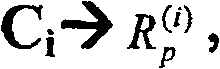
如果接入信道(链路/媒体)上的空闲容量超出了所请求会话的等效容量,即其中C是信道容量,那么网络将会准许会话建立请求。应该指出的是,在诸如802.11 WLAN之类的多接入共享媒体信道上,C表示媒体在其MAC协议的“标称”操作下具有的最大吞吐量。If the free capacity on the access channel (link/media) exceeds the equivalent capacity of the requested session, i.e. where C is the channel capacity, then the network will grant the session establishment request. It should be noted that on a multi-access shared media channel such as 802.11 WLAN, C represents the maximum throughput the medium has under the "nominal" operation of its MAC protocol.
使用许可区域的许可控制License Control Using Licensed Areas
对使用许可区域方法的许可控制来说,网络使用了许可区域“映象(maps)/曲线”作为准则,以确定在分组网络中是接受还是拒绝会话建立请求。这些映象/曲线可以保存在诸如切换节点之类的网络部件中,也可以保存在智能天线控制器中,或者还可以保存在其他地方,或是并不保存在该网络但可以从该网络进行访问。许可区域是一个它其中的点表示信道或节点所能支持的不同服务类别的同时会话的数量的映象/曲线。For admission control using the admission area method, the network uses the admission area "maps/curves" as criteria to determine whether to accept or deny session establishment requests in the packet network. These maps/curves can be stored in network elements such as switching nodes, or in smart antenna controllers, or elsewhere, or not stored in the network but can be accessed from the network access. A licensed area is a map/curve in which points represent the number of simultaneous sessions of different classes of service that a channel or node can support.
许可区域映象通常是在假设网络中存在预定数量的服务类别的情况下,通过测量、仿真或是分析以离线方式获取的。这种方法对服务类别数量有限的小型网络来说是非常有效的。The licensed area map is usually obtained offline by measurement, simulation or analysis assuming a predetermined number of service classes in the network. This approach works well for small networks with a limited number of classes of service.
例如,对只支持语音和尽力而为型的数据服务的天线系统来说,需要依据其波束宽度对各个频率信道的许可区域进行测量(或推导)。许可区域是表明系统可以支持的同时语音会话的数量与系统中存在数据业务量之间的对比关系的曲线。对使用许可区域方法的许可控制而言,使用这种许可控制的益处在于,所述许可区域反映了MAC协议的标称操作。For example, for an antenna system that only supports voice and best-effort data services, it is necessary to measure (or derive) the licensed area of each frequency channel according to its beam width. The licensed area is a curve that shows the number of simultaneous voice sessions that a system can support versus the amount of data traffic present in the system. The benefit of using admission control with the admission area approach is that the admission area reflects the nominal operation of the MAC protocol.
Claims (17)
Applications Claiming Priority (3)
| Application Number | Priority Date | Filing Date | Title |
|---|---|---|---|
| US10/885,238 | 2004-07-07 | ||
| US10/885,238 US8385937B2 (en) | 2004-07-07 | 2004-07-07 | Load equalizing antennas |
| PCT/JP2005/012876 WO2006004223A2 (en) | 2004-07-07 | 2005-07-06 | Load equalizing antennas |
Publications (2)
| Publication Number | Publication Date |
|---|---|
| CN1839647A CN1839647A (en) | 2006-09-27 |
| CN1839647B true CN1839647B (en) | 2010-04-21 |
Family
ID=35427717
Family Applications (1)
| Application Number | Title | Priority Date | Filing Date |
|---|---|---|---|
| CN2005800005292A Expired - Fee Related CN1839647B (en) | 2004-07-07 | 2005-07-06 | load balancing antenna |
Country Status (5)
| Country | Link |
|---|---|
| US (1) | US8385937B2 (en) |
| JP (1) | JP4473872B2 (en) |
| KR (1) | KR100741597B1 (en) |
| CN (1) | CN1839647B (en) |
| WO (1) | WO2006004223A2 (en) |
Families Citing this family (30)
| Publication number | Priority date | Publication date | Assignee | Title |
|---|---|---|---|---|
| KR101141649B1 (en) * | 2004-11-09 | 2012-05-17 | 엘지전자 주식회사 | method of transmitting and receiving control information for enhanced uplink data channel |
| JP4718227B2 (en) * | 2005-04-14 | 2011-07-06 | 株式会社日立製作所 | RADIO COMMUNICATION SYSTEM, RADIO RELAY APPARATUS AND RADIO COMMUNICATION TERMINAL COMPRISING THE SAME, AND COMMUNICATION LOAD ADJUSTING METHOD FOR RADIO RELAY APPARATUS |
| US8045484B2 (en) | 2005-05-20 | 2011-10-25 | Yaron Menahem Peleg | Method for problematic user detection |
| US8619816B2 (en) | 2005-05-20 | 2013-12-31 | Go Net Systems Ltd. | Method and corresponding device for improved bandwidth utilization |
| US20060262763A1 (en) * | 2005-05-20 | 2006-11-23 | Go Networks Inc. | Method and corresponding system for load balancing |
| US20060262765A1 (en) * | 2005-05-20 | 2006-11-23 | Go Networks Inc. | Method and corresponding device for maximum number of sessions restriction |
| JP5257649B2 (en) | 2005-05-24 | 2013-08-07 | 日本電気株式会社 | Switching system, switching method, and switching program between communication devices |
| US8660099B2 (en) * | 2005-09-30 | 2014-02-25 | Aruba Networks, Inc. | Call admission control within a wireless network |
| US7787470B2 (en) * | 2005-12-15 | 2010-08-31 | Intel Corporation | Dynamic quality of service (QOS) provisioning using session initiation protocol (SIP) module in wireless base stations |
| CA2636479A1 (en) * | 2006-01-10 | 2007-07-19 | Research In Motion Limited | System and method for selecting a domain in a network environment including ims |
| EP1821488B1 (en) * | 2006-02-15 | 2012-08-08 | Alcatel Lucent | Method and apparatus for providing session mobility |
| KR100823104B1 (en) * | 2006-12-01 | 2008-04-18 | 주식회사 케이엠더블유 | Method and apparatus for base station sector operation in wireless communication system |
| US20100060522A1 (en) * | 2006-12-22 | 2010-03-11 | Telefonaktiebolaget Lm Ericsson (Publ) | Antenna Arrangement |
| EP2203986A4 (en) * | 2007-10-04 | 2013-05-22 | Apple Inc | FORMATION OF SPATIAL BEAMS IN A CELL SEGMENT |
| FR2922064B1 (en) * | 2007-10-05 | 2011-04-15 | Thales Sa | METHOD FOR CONTROLLING INTELLIGENT ANTENNAS WITHIN A COMMUNICATION NETWORK |
| CN101784061B (en) * | 2009-11-19 | 2011-05-11 | 北京邮电大学 | Method and device for realizing autonomous load balancing of wireless access network |
| EP2561646B1 (en) * | 2010-04-23 | 2015-03-18 | Telefonaktiebolaget LM Ericsson (publ) | Apparatuses and methods for registering transmission capacities in a broadband access network |
| US9094837B2 (en) * | 2010-06-09 | 2015-07-28 | Microsoft Technology Licensing, Llc | Transmitting data in a wireless white space network |
| CN102752032B (en) * | 2011-04-22 | 2015-04-22 | 艾利森电话股份有限公司 | Same frequency load balance method and device thereof |
| US9026161B2 (en) | 2012-04-19 | 2015-05-05 | Raytheon Company | Phased array antenna having assignment based control and related techniques |
| KR102170254B1 (en) * | 2013-12-10 | 2020-10-26 | 삼성전자주식회사 | Adaptive beam selection apparatus and method in a wireless communication system |
| US10056931B2 (en) * | 2016-02-17 | 2018-08-21 | Autotalks Ltd | Digital remote antennas operation |
| US10880930B2 (en) * | 2016-03-11 | 2020-12-29 | Nec Corporation | Wireless LAN system, wireless LAN base station, wireless LAN terminal, and communication method |
| PH12018502243A1 (en) * | 2016-05-13 | 2019-08-19 | Ericsson Telefon Ab L M | Methods and devices for enabling reception of beam sweep transmissions |
| JP6851457B2 (en) * | 2016-07-15 | 2021-03-31 | 華為技術有限公司Huawei Technologies Co.,Ltd. | Methods and Devices for Applying for Media Transmission Permission, and Revoking Media Transmission Permission |
| CN108377538A (en) * | 2016-11-22 | 2018-08-07 | 中兴通讯股份有限公司 | A kind of method and device of distribution wave beam |
| US10736144B2 (en) | 2018-04-16 | 2020-08-04 | Autotalks Ltd | Method and apparatus for V2X multichannel operation |
| CN111698012B (en) * | 2019-03-11 | 2021-08-27 | 大唐移动通信设备有限公司 | Beam utilization rate optimization method and device |
| CN113056005B (en) | 2019-12-26 | 2025-03-25 | 北京三星通信技术研究有限公司 | Beam determination method, device, electronic device and computer readable storage medium |
| EP4342096A4 (en) * | 2021-07-17 | 2025-09-17 | Samsung Electronics Co Ltd | Method and system for dynamic beamwidth management in wireless communication systems |
Citations (3)
| Publication number | Priority date | Publication date | Assignee | Title |
|---|---|---|---|---|
| US5815116A (en) * | 1995-11-29 | 1998-09-29 | Trw Inc. | Personal beam cellular communication system |
| US5936577A (en) * | 1996-10-18 | 1999-08-10 | Kabushiki Kaisha Toshiba | Adaptive antenna |
| US6104930A (en) * | 1997-05-02 | 2000-08-15 | Nortel Networks Corporation | Floating transceiver assignment for cellular radio |
Family Cites Families (29)
| Publication number | Priority date | Publication date | Assignee | Title |
|---|---|---|---|---|
| US4659477A (en) * | 1982-08-16 | 1987-04-21 | Pedro B. Macedo | Fixation of anionic materials with a complexing agent |
| SE435739B (en) * | 1983-02-23 | 1984-10-15 | Nordiskafilt Ab | DOUBLE TEXTILE TYPE FORMATION WIRES |
| DE69626404T2 (en) * | 1995-12-07 | 2004-01-08 | Vistar Telecommunications Inc., Ottawa | WIRELESS DISTRIBUTED DATA PACKAGE TRANSFER SYSTEM |
| GB2320162C (en) * | 1996-12-06 | 2011-08-03 | Immarsat Ltd | Communication method and apparatus |
| US6301238B1 (en) * | 1997-01-28 | 2001-10-09 | Telefonaktiebolaget Lm Ericsson (Publ) | Directional-beam generative apparatus and associated method |
| US5790070A (en) * | 1997-05-05 | 1998-08-04 | Motorola, Inc. | Network and method for controlling steerable beams |
| US6195556B1 (en) * | 1997-07-15 | 2001-02-27 | Metawave Communications Corporation | System and method of determining a mobile station's position using directable beams |
| US6694154B1 (en) * | 1997-11-17 | 2004-02-17 | Ericsson Inc. | Method and apparatus for performing beam searching in a radio communication system |
| FR2773661B1 (en) * | 1998-01-12 | 2000-02-25 | Alsthom Cge Alcatel | METHOD FOR TRANSMITTING A CONTROL SIGNAL BY A BASE STATION OF A CELLULAR DIGITAL RADIO COMMUNICATION SYSTEM AND CORRESPONDING BASE STATION |
| JP3798549B2 (en) * | 1998-03-18 | 2006-07-19 | 富士通株式会社 | Multi-beam antenna system for radio base station |
| US6229486B1 (en) * | 1998-09-10 | 2001-05-08 | David James Krile | Subscriber based smart antenna |
| AU2001226986A1 (en) * | 2000-01-18 | 2001-07-31 | Nortel Networks Limited | Multi-beam antenna system for high speed data |
| GB0006464D0 (en) * | 2000-03-18 | 2000-05-10 | Ericsson Telefon Ab L M | Ip communication in a cellular telecommunications system |
| JP4363803B2 (en) * | 2000-08-02 | 2009-11-11 | パナソニック株式会社 | Method for exciting circular array antenna and radio apparatus using the method |
| US6400335B1 (en) * | 2000-08-09 | 2002-06-04 | Lucent Technologies Inc. | Dynamic load sharing system and method using a cylindrical antenna array |
| JP3910349B2 (en) * | 2000-09-19 | 2007-04-25 | 株式会社日立コミュニケーションテクノロジー | Directional antenna control method and apparatus |
| US6697644B2 (en) * | 2001-02-06 | 2004-02-24 | Kathrein-Werke Kg | Wireless link quality using location based learning |
| US7103022B2 (en) * | 2001-02-14 | 2006-09-05 | Ntt Docomo, Inc. | Communication control method and apparatus in mobile communication system |
| US20030017853A1 (en) * | 2001-07-12 | 2003-01-23 | Sarnoff Corporation | Method and apparatus for enhancing the data transmission capacity of a wireless communication system |
| US6937863B1 (en) * | 2001-08-15 | 2005-08-30 | Kathrein-Werke Kg | System and method for dynamically adjusting cell sectorization |
| DE10140532A1 (en) * | 2001-08-17 | 2003-02-27 | Siemens Ag | Method for transmitting a global pilot signal between stations of a radio communication system and station therefor |
| TW595857U (en) * | 2001-11-29 | 2004-06-21 | Us | 091219345 |
| US20030118015A1 (en) * | 2001-12-20 | 2003-06-26 | Magnus Gunnarsson | Location based notification of wlan availability via wireless communication network |
| JP2003235072A (en) * | 2002-02-06 | 2003-08-22 | Ntt Docomo Inc | Wireless resource allocation method, wireless resource allocation device, and mobile communication system |
| US20040077379A1 (en) * | 2002-06-27 | 2004-04-22 | Martin Smith | Wireless transmitter, transceiver and method |
| KR100850888B1 (en) * | 2002-06-28 | 2008-08-07 | (주)에이스안테나 | Adaptive antenna device by using GPS signal of mobile phone and beam control method thereof |
| KR100640470B1 (en) * | 2002-06-29 | 2006-10-30 | 삼성전자주식회사 | Apparatus and method for transmitting data using transmit antenna diversity scheme in packet service communication system |
| US7542440B2 (en) * | 2002-11-18 | 2009-06-02 | Samsung Electronics Co., Ltd. | Apparatus and method for providing quality of service for mixed traffic in a wireless network base station |
| US20050197060A1 (en) * | 2004-03-04 | 2005-09-08 | Hedinger Robert A. | Scalable multi-satellite spot beam architecture |
-
2004
- 2004-07-07 US US10/885,238 patent/US8385937B2/en not_active Expired - Fee Related
-
2005
- 2005-07-06 WO PCT/JP2005/012876 patent/WO2006004223A2/en not_active Ceased
- 2005-07-06 JP JP2006525563A patent/JP4473872B2/en not_active Expired - Fee Related
- 2005-07-06 KR KR1020067000790A patent/KR100741597B1/en not_active Expired - Fee Related
- 2005-07-06 CN CN2005800005292A patent/CN1839647B/en not_active Expired - Fee Related
Patent Citations (3)
| Publication number | Priority date | Publication date | Assignee | Title |
|---|---|---|---|---|
| US5815116A (en) * | 1995-11-29 | 1998-09-29 | Trw Inc. | Personal beam cellular communication system |
| US5936577A (en) * | 1996-10-18 | 1999-08-10 | Kabushiki Kaisha Toshiba | Adaptive antenna |
| US6104930A (en) * | 1997-05-02 | 2000-08-15 | Nortel Networks Corporation | Floating transceiver assignment for cellular radio |
Also Published As
| Publication number | Publication date |
|---|---|
| CN1839647A (en) | 2006-09-27 |
| WO2006004223A3 (en) | 2006-05-26 |
| KR100741597B1 (en) | 2007-07-20 |
| WO2006004223A2 (en) | 2006-01-12 |
| US20060009232A1 (en) | 2006-01-12 |
| US8385937B2 (en) | 2013-02-26 |
| JP4473872B2 (en) | 2010-06-02 |
| JP2007522688A (en) | 2007-08-09 |
| KR20060028812A (en) | 2006-04-03 |
Similar Documents
| Publication | Publication Date | Title |
|---|---|---|
| CN1839647B (en) | load balancing antenna | |
| CN114503675B (en) | Method and apparatus for data rate control in network slicing | |
| EP1117211B1 (en) | Method and system for using weighted polling lists in wireless local area networks | |
| JP4685501B2 (en) | Channel assignment method | |
| RU2391798C2 (en) | Use of resources application messages in mac with multiple carriers to achieve parity | |
| US7206610B2 (en) | Method, system and components for facilitating wireless communication in a sectored service area | |
| CN102160445B (en) | Architecture supporting network-wide downlink multiple-input multiple-output wireless communications | |
| US20020183039A1 (en) | Adaptive load and coverage management system and method | |
| TW200525940A (en) | Wireless local area network (WLAN) methods and components that utilize traffic prediction | |
| JP7516522B2 (en) | Method for adaptively configuring transmission of data flows - Patents.com | |
| JP2013070387A (en) | Traffic management employing interference management messages | |
| WO2014198197A1 (en) | Device, method and user equipment in a wireless communication system | |
| KR20230124693A (en) | Positioning setting method and electronic device | |
| WO2025049329A1 (en) | Flexible model to provision wireless communication services in primary and secondary user plane function tracking areas | |
| CN105144634A (en) | Systems and methods to achieve fairness in wireless LANs for cellular offloading | |
| CN115918044B (en) | Method and apparatus for dynamic and efficient load balancing in a mobile communication network | |
| Manzoor et al. | TiWA: Achieving tetra indicator Wi-Fi associations in software defined Wi-Fi networks | |
| KR20210055537A (en) | Method and apparatus for traffic steering for local processing | |
| Hagos | The performance of network-controlled mobile data offloading from LTE to WiFi networks | |
| US20250056320A1 (en) | Flexible model to provision wireless communication services in overlapping user plane function tracking areas | |
| Sriram et al. | On the end-to-end call acceptance and the possibility of deterministic QoS guarantees in ad hoc wireless networks | |
| Salam et al. | Dynamic resource allocation and mobile aggregator selection in mission critical MTC networks | |
| KR20070074611A (en) | System and method for performing receiver-assisted slot allocation in a multihop communication network | |
| KR20210039889A (en) | Method and apparatus for data rate control in network slices of a wireless communication system | |
| US20250220747A1 (en) | Multiple access scheme provisioning |
Legal Events
| Date | Code | Title | Description |
|---|---|---|---|
| C06 | Publication | ||
| PB01 | Publication | ||
| C10 | Entry into substantive examination | ||
| SE01 | Entry into force of request for substantive examination | ||
| C14 | Grant of patent or utility model | ||
| GR01 | Patent grant | ||
| TR01 | Transfer of patent right |
Effective date of registration: 20210811 Address after: Tokyo, Japan Patentee after: Toshiba Corp. Address before: Tokyo, Japan Patentee before: Toshiba Corp. Patentee before: Trachia Legaci Co.,Ltd. Effective date of registration: 20210811 Address after: Tokyo, Japan Patentee after: Toshiba Corp. Patentee after: Trachia Legaci Co.,Ltd. Address before: Tokyo, Japan Patentee before: Toshiba Corp. Patentee before: TELCORDIA TECH Inc. |
|
| TR01 | Transfer of patent right | ||
| CF01 | Termination of patent right due to non-payment of annual fee |
Granted publication date: 20100421 |
|
| CF01 | Termination of patent right due to non-payment of annual fee |