CN1823514B - Method and apparatus for providing network security using role-based access control - Google Patents
Method and apparatus for providing network security using role-based access control Download PDFInfo
- Publication number
- CN1823514B CN1823514B CN2004800205383A CN200480020538A CN1823514B CN 1823514 B CN1823514 B CN 1823514B CN 2004800205383 A CN2004800205383 A CN 2004800205383A CN 200480020538 A CN200480020538 A CN 200480020538A CN 1823514 B CN1823514 B CN 1823514B
- Authority
- CN
- China
- Prior art keywords
- user group
- destination
- network
- packet
- user
- Prior art date
- Legal status (The legal status is an assumption and is not a legal conclusion. Google has not performed a legal analysis and makes no representation as to the accuracy of the status listed.)
- Expired - Lifetime
Links
Images


Classifications
-
- H—ELECTRICITY
- H04—ELECTRIC COMMUNICATION TECHNIQUE
- H04L—TRANSMISSION OF DIGITAL INFORMATION, e.g. TELEGRAPHIC COMMUNICATION
- H04L63/00—Network architectures or network communication protocols for network security
- H04L63/10—Network architectures or network communication protocols for network security for controlling access to devices or network resources
- H04L63/101—Access control lists [ACL]
-
- G—PHYSICS
- G06—COMPUTING OR CALCULATING; COUNTING
- G06F—ELECTRIC DIGITAL DATA PROCESSING
- G06F21/00—Security arrangements for protecting computers, components thereof, programs or data against unauthorised activity
- G06F21/60—Protecting data
- G06F21/62—Protecting access to data via a platform, e.g. using keys or access control rules
- G06F21/6218—Protecting access to data via a platform, e.g. using keys or access control rules to a system of files or objects, e.g. local or distributed file system or database
-
- H—ELECTRICITY
- H04—ELECTRIC COMMUNICATION TECHNIQUE
- H04L—TRANSMISSION OF DIGITAL INFORMATION, e.g. TELEGRAPHIC COMMUNICATION
- H04L45/00—Routing or path finding of packets in data switching networks
- H04L45/02—Topology update or discovery
- H04L45/04—Interdomain routing, e.g. hierarchical routing
-
- H—ELECTRICITY
- H04—ELECTRIC COMMUNICATION TECHNIQUE
- H04L—TRANSMISSION OF DIGITAL INFORMATION, e.g. TELEGRAPHIC COMMUNICATION
- H04L45/00—Routing or path finding of packets in data switching networks
- H04L45/54—Organization of routing tables
-
- H—ELECTRICITY
- H04—ELECTRIC COMMUNICATION TECHNIQUE
- H04L—TRANSMISSION OF DIGITAL INFORMATION, e.g. TELEGRAPHIC COMMUNICATION
- H04L45/00—Routing or path finding of packets in data switching networks
- H04L45/74—Address processing for routing
- H04L45/745—Address table lookup; Address filtering
- H04L45/7453—Address table lookup; Address filtering using hashing
-
- H—ELECTRICITY
- H04—ELECTRIC COMMUNICATION TECHNIQUE
- H04L—TRANSMISSION OF DIGITAL INFORMATION, e.g. TELEGRAPHIC COMMUNICATION
- H04L63/00—Network architectures or network communication protocols for network security
- H04L63/08—Network architectures or network communication protocols for network security for authentication of entities
-
- H—ELECTRICITY
- H04—ELECTRIC COMMUNICATION TECHNIQUE
- H04L—TRANSMISSION OF DIGITAL INFORMATION, e.g. TELEGRAPHIC COMMUNICATION
- H04L63/00—Network architectures or network communication protocols for network security
- H04L63/10—Network architectures or network communication protocols for network security for controlling access to devices or network resources
- H04L63/105—Multiple levels of security
-
- H—ELECTRICITY
- H04—ELECTRIC COMMUNICATION TECHNIQUE
- H04L—TRANSMISSION OF DIGITAL INFORMATION, e.g. TELEGRAPHIC COMMUNICATION
- H04L63/00—Network architectures or network communication protocols for network security
- H04L63/20—Network architectures or network communication protocols for network security for managing network security; network security policies in general
-
- H—ELECTRICITY
- H04—ELECTRIC COMMUNICATION TECHNIQUE
- H04L—TRANSMISSION OF DIGITAL INFORMATION, e.g. TELEGRAPHIC COMMUNICATION
- H04L12/00—Data switching networks
- H04L12/28—Data switching networks characterised by path configuration, e.g. LAN [Local Area Networks] or WAN [Wide Area Networks]
- H04L12/46—Interconnection of networks
- H04L12/4641—Virtual LANs, VLANs, e.g. virtual private networks [VPN]
- H04L12/4645—Details on frame tagging
-
- H—ELECTRICITY
- H04—ELECTRIC COMMUNICATION TECHNIQUE
- H04L—TRANSMISSION OF DIGITAL INFORMATION, e.g. TELEGRAPHIC COMMUNICATION
- H04L12/00—Data switching networks
- H04L12/28—Data switching networks characterised by path configuration, e.g. LAN [Local Area Networks] or WAN [Wide Area Networks]
- H04L12/46—Interconnection of networks
- H04L12/4641—Virtual LANs, VLANs, e.g. virtual private networks [VPN]
- H04L12/4675—Dynamic sharing of VLAN information amongst network nodes
Landscapes
- Engineering & Computer Science (AREA)
- Computer Networks & Wireless Communication (AREA)
- Signal Processing (AREA)
- Computer Security & Cryptography (AREA)
- Computer Hardware Design (AREA)
- General Engineering & Computer Science (AREA)
- Computing Systems (AREA)
- Theoretical Computer Science (AREA)
- Health & Medical Sciences (AREA)
- Bioethics (AREA)
- General Health & Medical Sciences (AREA)
- Software Systems (AREA)
- Physics & Mathematics (AREA)
- General Physics & Mathematics (AREA)
- Databases & Information Systems (AREA)
- Data Exchanges In Wide-Area Networks (AREA)
- Computer And Data Communications (AREA)
Abstract
Description
技术领域 technical field
本发明涉及信息网络安全领域,具体地涉及用于基于用户角色来保护用户对网络的访问的方法和装置。The invention relates to the field of information network security, in particular to a method and a device for protecting a user's access to the network based on user roles.
背景技术 Background technique
诸如无线、动态主机配置协议(DHCP)、虚拟专用网络(VPN)网关等灵活的网络访问技术允许用户从多个访问或进入点访问给定的受保护网络。对于所有形式的网络来说都是这样的,所述网络包括企业网、服务提供商网络等。同时,在提供这种访问的同时提供的安全也日益受到关注。基于远程认证拨入用户服务(RADIUS)、终端访问控制器访问控制系统(TACACS)、DIAMETER协议和其他协议的技术允许用户在进入网络时被认证。Flexible network access technologies such as wireless, Dynamic Host Configuration Protocol (DHCP), virtual private network (VPN) gateways, etc. allow users to access a given protected network from multiple access or entry points. This is true for all forms of networks, including enterprise networks, service provider networks, and the like. At the same time, the security provided while providing this access is also a growing concern. Technologies based on Remote Authentication Dial-in User Service (RADIUS), Terminal Access Controller Access Control System (TACACS), DIAMETER protocol, and others allow users to be authenticated when entering a network.
已知通过这些网络的通信路径在概念上是分离的(即可被视为分离的虚拟路径),虽然它们经过的某些或所有网络设备(即物理网段)可能是相同的,因此,可例如使用访问控制列表(ACL)对它们分别进行控制。传统上,对网络用户所享有的访问的约束由ACL施行,其被用来处理数据包并从而控制这些用户的网络流量。在可扩展性和可管理性方面,传统ACL需要用户主机地址(作为给定的(多个)数据包的源;例如因特网协议(IP)地址)的映射相对固定,或者安全政策足够宽松以致允许所有可能的用户地址。Communication paths through these networks are known to be conceptually separate (i.e., viewed as separate virtual paths), although some or all of the network devices (i.e., physical network segments) they pass through may be the same, and therefore, may They are individually controlled, for example, using an access control list (ACL). Traditionally, constraints on the access enjoyed by network users are enforced by ACLs, which are used to process packets and thereby control network traffic for these users. In terms of scalability and manageability, traditional ACLs require that the mapping of user host addresses (as the source of a given (multiple) packets; e.g. Internet Protocol (IP) addresses) be relatively fixed, or that the security policy be loose enough to allow All possible user addresses.
今天的安全ACL有若干弱点。传统上,这些ACL被应用到给定接口,并且包含将安全政策直接捆绑到网络拓扑上的IP地址。因此,诸如子网的重新划分这样的网络改变会导致安全政策被再次访问。此外,还会出现这种情况,即每次用户被认证到该网络时,网络各个部分的ACL都需要更新,以添加特定于该用户的与分配给该用户的主机的源IP地址相关联的规则。这将导致独特ACL的数量大大增加,而且显著增加了必须更新这种规则的速率。Today's security ACLs have several weaknesses. Traditionally, these ACLs are applied to a given interface and contain IP addresses that tie security policies directly onto the network topology. Therefore, network changes such as resubnetting can cause security policies to be revisited. Additionally, it can arise that every time a user is authenticated to that network, the ACLs in various parts of the network need to be updated to add the user-specific rule. This would result in a large increase in the number of unique ACLs and the rate at which such rules must be updated.
在给定ACL中还存在这样的问题,即单个的IP地址表达导致大小的显著增加,其中条目数通常是源地址数乘以目的地地址数,再乘以许可数。因此,添加一个单个的IP地址可能对相当多的ACL的大小产生明显影响。There is also the problem that a single IP address representation results in a significant increase in size in a given ACL, where the number of entries is typically the number of source addresses times the number of destination addresses times the number of permissions. Therefore, adding a single IP address can have a noticeable impact on the size of quite a few ACLs.
当客户改变网络拓扑时,ACL必须被复查。由于这些ACL可能很容易就达到几百甚至几千行的长度,因此这种复查至少不能说是微不足道的。由于这种ACL的复杂性,因此所作出的改变的可信度一般不是很高,而且ACL在被放入生产环境(production environment)之前常常需要用户的广泛测试。此外,由于在发生任何改变时,使用内容可寻址存储器(CAM)来实现ACL的平台都需要一些或全部ACL被重新编辑,因此处理成本的增加可能是很严重的,与用户数呈二次方关系。复杂度的增加使出现网络故障和/或安全漏洞的机会增加。单个的ACL限制了用户管理他们的安全政策的能力。因此,在整个企业网上放置这种ACL影响了今天的网络的可管理性。由此可见,尤其是考虑到现在需要的和将来会需要的更加灵活的访问,依靠现有的基于ACL的解决方案是很困难的。When a client changes the network topology, the ACL must be reviewed. Since these ACLs can easily be hundreds or even thousands of lines long, this review is not trivial to say the least. Because of the complexity of such ACLs, the confidence that changes are made is generally not very high, and ACLs often require extensive testing by users before being put into a production environment. Furthermore, since platforms that use content-addressable memory (CAM) to implement ACLs require some or all of the ACLs to be re-edited whenever any changes occur, the increase in processing costs can be significant, quadratically proportional to the number of users party relationship. Increased complexity increases the chances of network failures and/or security breaches. Individual ACLs limit users' ability to manage their security policies. Therefore, placing such ACLs across the enterprise network impacts the manageability of today's networks. It can be seen that relying on existing ACL-based solutions is difficult, especially considering the need for more flexible access now and in the future.
因此需要这样的机制,其使得可对来自给定主机的网络流量进行高效识别。优选地,这样的手段应采用现有的ACL技术,同时减少或消除当前在添加主机时遇到的ACL成倍增加的问题。还优选地,这种手段将允许网络被很容易地重配置和增长,而不导致不成比例的管理负担或消耗过多的网络资源。There is therefore a need for a mechanism that enables efficient identification of network traffic from a given host. Preferably, such a means should adopt the existing ACL technology, while reducing or eliminating the current problem of ACL multiplication encountered when adding hosts. Also preferably, such an approach would allow the network to be easily reconfigured and grown without incurring a disproportionate administrative burden or consuming excessive network resources.
发明内容 Contents of the invention
在一个实施例中,公开了一种网络设备。该网络设备包括访问控制列表。该访问控制列表包括访问控制列表条目,其又包括用户群组字段。在另一实施例中,该网络设备包括转发表。该转发表包括多个转发表条目。在该实施例中,至少一个转发表条目包括用户群组字段。In one embodiment, a network device is disclosed. The network device includes an access control list. The access control list includes an access control list entry, which in turn includes a user group field. In another embodiment, the network device includes a forwarding table. The forwarding table includes a plurality of forwarding table entries. In this embodiment, at least one forwarding table entry includes a user group field.
在另一实施例中,公开了一种使用基于角色的访问控制来提供网络安全的方法。该方法包括将数据包的用户群组与该数据包的目的地的用户群组进行比较。In another embodiment, a method of providing network security using role-based access control is disclosed. The method includes comparing a user group of the data packet with a user group of a destination of the data packet.
在另一实施例中,公开了一种方法,其中访问控制列表被填充以目的地用户群组标识符。该目的地用户群组标识符标识目的地的目的地用户群组。在另一实施例中,公开了一种方法,其中转发表被填充以用户群组标识符。In another embodiment, a method is disclosed wherein an access control list is populated with destination user group identifiers. The destination user group identifier identifies a destination user group for the destination. In another embodiment, a method is disclosed wherein a forwarding table is populated with user group identifiers.
上面是概述,因此包含了必要的简化、概括并省略了细节;因此,本领域的技术人员将理解,该概述仅是示例性的而决非限制性的。本发明的其他方面、创造性特征和优点仅由权利要求限定,并将从下面的非限制性详细说明而变得很清楚。The foregoing is a summary, where necessary simplifications, generalizations and details have been omitted; therefore, it will be understood by those skilled in the art that this summary is exemplary only and not restrictive in any way. Other aspects, inventive features and advantages of the present invention are defined solely by the claims and will become apparent from the following non-limiting detailed description.
附图说明 Description of drawings
通过参照附图,本领域的技术人员将更好地理解本发明并明了其多种目的、特征和优点。Those skilled in the art will better understand the present invention, its various objects, features and advantages by referring to the accompanying drawings.
图1A是示出了根据本发明实施例的分层用户群组的示意图。FIG. 1A is a schematic diagram illustrating hierarchical user groups according to an embodiment of the present invention.
图1B是示出了根据本发明实施例的不相交的用户群组的集合的示意图。FIG. 1B is a schematic diagram illustrating a collection of disjoint user groups according to an embodiment of the present invention.
图2是示出了用于用户认证的体系结构的框图。Fig. 2 is a block diagram showing an architecture for user authentication.
图3是示出了根据本发明实施例的转发表的框图。FIG. 3 is a block diagram illustrating a forwarding table according to an embodiment of the present invention.
图4是示出了确定数据包的可应用许可的处理的示意图。FIG. 4 is a schematic diagram illustrating the process of determining applicable permissions for a data packet.
图5是示出了根据本发明实施例的许可矩阵的框图。FIG. 5 is a block diagram illustrating a permission matrix according to an embodiment of the present invention.
图6A是示出了根据本发明实施例的许可矩阵链示例的框图。FIG. 6A is a block diagram illustrating an example of a permission matrix chain according to an embodiment of the present invention.
图6B是示出了根据本发明实施例的许可矩阵链的另一示例的框图。FIG. 6B is a block diagram illustrating another example of a permission matrix chain according to an embodiment of the present invention.
图6C是示出了根据本发明实施例的图6A和6B中图示的许可矩阵链示例的逻辑图的框图。6C is a block diagram illustrating a logic diagram of the example permission matrix chain illustrated in FIGS. 6A and 6B according to an embodiment of the present invention.
图7是示出了根据本发明实施例的访问控制列表(ACL)的示例的框图。FIG. 7 is a block diagram showing an example of an access control list (ACL) according to an embodiment of the present invention.
图8A是示出了根据本发明实施例的主机方子网的示例的框图。FIG. 8A is a block diagram illustrating an example of a host-side subnet according to an embodiment of the present invention.
图8B是示出了以根据本发明实施例的方式操作图8A所示的主机方子网的示例的流程图。FIG. 8B is a flowchart illustrating an example of operating the host-side subnet shown in FIG. 8A in a manner according to an embodiment of the present invention.
图9A是示出了根据本发明实施例的服务器方子网的示例的框图。FIG. 9A is a block diagram illustrating an example of a server-side subnet according to an embodiment of the present invention.
图9B是示出了以根据本发明实施例的方式操作图9A所示的服务器方子网的示例的流程图。FIG. 9B is a flowchart illustrating an example of operating the server-side subnet shown in FIG. 9A in a manner according to an embodiment of the present invention.
图10是示出了根据本发明实施例的包括主机和服务器的网络体系结构的示例的框图。FIG. 10 is a block diagram illustrating an example of a network architecture including hosts and servers according to an embodiment of the present invention.
图11是根据本发明实施例,示出了数据包穿过图10所示的网络体系结构以及在其上执行的处理的示例的流程图。FIG. 11 is a flowchart illustrating an example of data packets traversing the network architecture shown in FIG. 10 and processing performed thereon, according to an embodiment of the present invention.
图12是示出了根据本发明实施例对接受基于角色的访问控制(RBAC)的数据包所执行的处理示例的流程图,其中所述数据包是所接收的第一个这种数据包。12 is a flow diagram illustrating an example of processing performed on a packet subject to role-based access control (RBAC), where the packet is the first such packet received, according to an embodiment of the present invention.
图13是示出了根据本发明实施例对后续接收到的接受基于角色的访问控制(RBAC)的数据包所执行的处理示例的流程图。FIG. 13 is a flowchart illustrating an example of processing performed on subsequently received data packets accepting role-based access control (RBAC) according to an embodiment of the present invention.
图14是示出了根据本发明实施例在数据包流过网络设备的数据路径时处理数据包的示例的流程图。FIG. 14 is a flowchart illustrating an example of processing a data packet as it flows through a data path of a network device according to an embodiment of the present invention.
在不同附图中,使用相同的标号标示类似或相同的项目。In different drawings, the same reference numerals are used to designate similar or identical items.
具体实施方式 Detailed ways
下面将提供对本发明示例的详细描述,该表述不应被理解为对发明本身的限制。相反,多种变形都可能落在所附权利要求所限定的本发明的范围内。A detailed description of examples of the present invention will be provided below, which representations should not be construed as limiting the invention itself. On the contrary, various modifications are possible within the scope of the invention as defined in the appended claims.
绪论introduction
本发明提出了一种方法和装置,其通过使用基于角色的访问控制列表(RBACL)来解决上面提到的限制,其被设计来直接解决上述问题。经网络访问许可的用户(例如具有用户标识符、服务器、因特网协议(IP)电话和其他此类网络设备的人)在传统上是基于该用户所属的(多个)群组、企业分配给该用户的(多个)角色、用户作为ISP客户所具有的(多个)特权或类似标准。应当理解,事实上,这种用户可能是具有用户标识符的人、网络设备、电信设备或需要访问通信网络的某些其他可标识设备或访问实体。RBACL通过基于生成网络流量的用户的(多个)角色来施行要被应用于该网络流量的许可,从而控制网络流量。The present invention proposes a method and apparatus to address the above-mentioned limitations by using Role-Based Access Control Lists (RBACLs), which are designed to directly address the above-mentioned problems. Users (e.g., people with user identifiers, servers, Internet Protocol (IP) phones, and other such network devices) that are granted network access have traditionally been based on the group(s) the user belongs to, the group(s) assigned to the user by the enterprise, User's role(s), privilege(s) the user has as an ISP customer, or similar criteria. It should be understood that, in fact, such a user may be a person with a user identifier, a network device, a telecommunications device, or some other identifiable device or access entity that requires access to a communication network. RBACLs control network traffic by enforcing permissions to be applied to network traffic based on the role(s) of the user generating the network traffic.
根据本发明的方法和装置使用群组来代表用户角色。用户被给予基于该用户的角色的一个或多个群组中的成员资格。每个群组可代表一个或多个角色。然后,应用许可列表来判定是否许可群组之间的通信。例如当网络实体(例如用户)被认证(例如作为经由802.1X协议或其他此类机制的用户认证的一部分)时,用户群组可被分配。因此,当实体认证时,实体被放入“用户群组”(UG)。认证可基于用户标识、网络中的服务器功能或其他此类特性。Methods and apparatus according to the present invention use groups to represent user roles. A user is given membership in one or more groups based on the user's role. Each group can represent one or more roles. Then, the permission list is applied to determine whether to permit communication between groups. Groups of users may be assigned, for example, when a network entity (eg, a user) is authenticated (eg, as part of user authentication via the 802.1X protocol or other such mechanism). Thus, when an entity authenticates, the entity is placed into a "User Group" (UG). Authentication may be based on user identification, server capabilities in the network, or other such characteristics.
然后,该信息可被用来确定对源自该实体的数据包的处置。例如,当数据包被发出到网络上时,有关源的群组的信息被插入数据包。该信息(这里也称为标签)的传送可以若干种方式实现。例如,该信息可被实现为源群组标签(指示源所属的群组的标签),但是也可采用其他方法。This information can then be used to determine the disposition of packets originating from that entity. For example, when a data packet is sent out on the network, information about the source's group is inserted into the data packet. The transfer of this information (also referred to herein as a tag) can be accomplished in several ways. For example, this information can be implemented as a source group label (a label indicating the group to which the source belongs), but other methods can also be used.
当数据包穿过网络时,源群组信息与数据包中的其他信息一起被携带。在网络的出口边缘处,目的地群组可被导出。例如,在“L3”边缘(第3层网络的边缘处的网络设备)处,可通过被完全解析的主机前缀来从网络设备的转发信息库(FIB)导出目的地群组。主机前缀通过地址解析协议(ARP)被解析。在数据包被发出到网络上时,用目的地群组对ARP响应贴标签。除了重写信息以外,FIB结果还被填充以目的地群组。一旦源和目的地群组被确定,就可使用该信息来应用许可(ACL)。The source group information is carried along with other information in the packet as the packet traverses the network. At the egress edge of the network, groups of destinations can be exported. For example, at an "L3" edge (a network device at the edge of a
本发明的主要优点包括ACL大小的成倍减少、软件ACL性能的成倍增加、网络拓扑和安全(或其他特征)政策的去耦(允许ACL在用户运动通过企业时跟随用户),以及简化的网络管理。Key advantages of the present invention include the exponential reduction in ACL size, the exponential increase in software ACL performance, the decoupling of network topology and security (or other features) policies (allowing ACLs to follow users as they move through the enterprise), and simplified network management.
在认证体系结构中的角色的实现Realization of roles in authentication architecture
图1A的示意图示出了根据本发明实施例的分层用户群组。分层用户群组(UG)类似于在面向对象编程中出现的类层次结构。每个子群组从其父群组处继承许可,并且用它自己的许可来扩展许可。用户群组层次结构100被示为包括若干用户群组,每个用户群组都依赖于其他的用户群组。用户群组层次结构100包括全部用户群组110、雇员群组120、顾问群组130、管理人员群组140和经理群组150。如图1A所示,这些群组在层次上彼此相关,其中经理群组150是管理人员群组140的子集,管理人员群组140是雇员群组120的子集,雇员群组120和顾问群组130是全部用户群组110的子集。以此方式,对不同资源的访问可基于用户所属的(多个)群组而被限制。例如,某个用户属于管理人员群组140。一般地,管理人员群组140中的用户将比雇员群组120中的用户具有对组织中的更多的计算和信息资源的访问权限,而比经理群组150中的用户更少的访问权限。很明显,一个人在用户群组层次结构100中位置越靠下,责任级别就越高,因此访问量就越大。Figure 1A is a schematic diagram illustrating hierarchical user groups according to an embodiment of the present invention. Hierarchical user groups (UGs) are similar to class hierarchies that arise in object-oriented programming. Each subgroup inherits permissions from its parent group and extends permissions with its own permissions. User group hierarchy 100 is shown as including several user groups, each user group being dependent on other user groups. User group hierarchy 100 includes all
图1B的示意图示出了根据本发明实施例的不相交的用户群组的集合。当存在不重叠的、平等的和不相关的功能时,使用不相交用户群组。在RBACL的实际实现中,分层UG可使用不相交UG来实现,而且分层管理(如果存在的话)可作为负责配置RBACL的网络管理实体的责任。这些群组包括工程群组160、销售群组170和市场群组180。当存在由所讨论的群组执行的不重叠的、平等的并且不相关的功能时,可使用这种不相交用户群组。因为这些群组中的每一个的责任都与其他群组的如此不同,因此这些群组中的每一个都被预期为具有它们自己的可被给定群组的成员访问的资源集合。因此可以预期,给定群组中的用户将维护相同的许可集合,使得他们可访问相同的资源集合,但是并不限于此情形。Figure IB is a schematic diagram illustrating a collection of disjoint user groups according to an embodiment of the invention. Disjoint user groups are used when there are non-overlapping, equal and unrelated functions. In a practical implementation of RBACL, hierarchical UGs may be implemented using disjoint UGs, and hierarchical management (if present) may be the responsibility of the network management entity responsible for configuring RBACL. These groups include
应当理解,多个群组的用户被放入同一群组是因为他们共享相同的许可。对群组的这一创建不意味着不发生用户群组之间或跨越用户群组的通信。其也不意味着在给定群组内没有许可施行。其仅仅意味着作为一个群组,用户将具有网络内的相同特权。It should be understood that users of multiple groups are put into the same group because they share the same permissions. This creation of a group does not mean that communication between or across user groups does not occur. Nor does it mean that there are no permissions to enforce within a given group. It simply means that as a group, users will have the same privileges within the network.
应当注意,基于角色的访问控制的实现代表了网络环境中的特殊问题。由于网络通信的双向本质,访问控制不但需要在用户(主机)与对象(服务器)之间应用,也需要在对象(服务器)与用户(主机)之间应用。这需要用户被群组化为一个角色,并且类似地,对象也被群组化为一个角色。此时,访问控制在群组间被严格应用。利用这样的去耦,网络设备可自由地移动通过网络和改变IP地址。整个网络拓扑可在不干扰现有RBACL所实现的安全政策的情况下改变。只要角色和许可保持不变,这样的改变就能在适当的地方,在不影响当全政策的情况下发生。从给定数据包的角度看,数据包仅仅是源自一个群组,目的地为另一个群组,其中这两个群组可以是也可以不是不同的。通过使用RBACL回答的问题是,基于源和目的地群组,数据包的运输是否是允许的。It should be noted that the implementation of role-based access control represents a special problem in the network environment. Due to the bidirectional nature of network communication, access control needs to be applied not only between users (hosts) and objects (servers), but also between objects (servers) and users (hosts). This requires users to be grouped into a role, and similarly, objects to be grouped into a role. At this time, access control is strictly applied between groups. With such decoupling, network devices are free to move across the network and change IP addresses. The entire network topology can be changed without disturbing the security policy implemented by the existing RBACL. As long as roles and permissions remain the same, such changes can be made where appropriate without affecting security policies. From the perspective of a given packet, the packet simply originates from one group and is destined for another group, where the two groups may or may not be different. The question answered by using RBACL is, based on the source and destination group, whether the transport of the data packet is allowed.
RBACL的实现一般包括若干操作。这些操作包括:An implementation of RBACL generally includes several operations. These actions include:
1.源用户群组(SUG;或用户)确定1. Determine the source user group (SUG; or user)
2.目的地用户群组(DUG;或对象)确定2. Destination user group (DUG; or object) determination
3.许可确定3. License Determination
4.许可施行4. Execution of permission
图2的框图示出了用于用户认证的体系结构。例如当用户在网络上被认证时,可进行SUG确定。下列示例例如可利用远程认证拨入用户服务器(RADIUS)协议,其提供用于多种访问的集中认证、认证和记帐。用户认证由试图登录主机200的用户发起。用户(未示出)使得主机200充当请求者,因此发送开始消息到服务器210(也称为认证器)。服务器210用请求/身份消息来响应主机200,主机200基于用户响应对该消息响应以响应/身份消息。该响应/身份消息例如可以是典型的用户名和口令的组合。服务器210将该信息传递给认证服务器220。Figure 2 is a block diagram showing the architecture for user authentication. SUG determinations may be made, for example, when a user is authenticated on the network. The following example may utilize, for example, the Remote Authentication Dial-In User Server (RADIUS) protocol, which provides centralized authentication, authentication, and accounting for multiple accesses. User authentication is initiated by a user attempting to log in to the host computer 200 . A user (not shown) causes host 200 to act as a supplicant, thus sending a start message to server 210 (also called authenticator).
认证服务器220响应以访问质询(access-challenge)。应当注意,在认证期间,在服务器210与认证服务器220之间发生多种交换,这些仅是示例性的。这些交换将依赖于所采用的认证协议而有所不同。一旦访问质询交换完成,服务器210就通过将质询从认证服务器220转发到主机200来与主机200交互。在本示例中,主机200响应以一次口令(OTP),服务器210将该口令转发到认证服务器220。假设口令被认证服务器220接受,则认证服务器220就响应以访问接受消息,该消息使得服务器210认证主机200的网络地址。The
本发明的实施例依赖于该认证处理来允许分发用户群组信息。本发明可采用例如结合图2所示的认证过程来提供将用户的群组成员资格从认证服务器220传输到入口网络访问设备的能力。在RADIUS协议中,要被传递到服务器210(并最终传递到入口交换机)的包含用户群组的供应商专用属性使用RADIUS访问接受响应。因此,当用户在网络上被认证时,进行源用户群组确定。或者,如果主机的操作系统是受信的,则用户群组可来自主机本身。如果是这种情形,则基于发出数据包的应用,每个应用可不同地对给定数据包加标签。Embodiments of the present invention rely on this authentication process to allow distribution of user group information. The present invention may employ, for example, the authentication process shown in connection with FIG. 2 to provide the ability to transfer a user's group membership from the
应当注意,在原始的IEEE802.1X规范中,当对端口进行单个有效认证时,整个端口都被认证。然后,附接到该端口的任何主机都被认为是认证过的。以相同的方式,获得源群组标签(SGT)的最简单方法就是在第一次有效认证之后将整个端口标记为认证过的。然后,初始认证所提供的群组标识符被使用和安装在入口端口中。It should be noted that in the original IEEE 802.1X specification, when a single active authentication was performed on a port, the entire port was authenticated. Any host attached to that port is then considered authenticated. In the same way, the easiest way to obtain a Source Group Tag (SGT) is to mark the entire port as authenticated after the first valid authentication. Then, the group identifier provided by the initial authentication is used and installed in the entry port.
图3的框图示出了根据本发明的转发表300。转发表300包括若干转发表条目(在图3中示为转发表条目310(1)—(N))。每个转发表条目310(1)—(N)都包括若干字段,其中的某些字段在图3中示出。所述字段有MAC地址字段(示为MAC地址字段320(1)—(N))、虚拟局域网(VLAN)标识符字段(示为VLAN标识符字段330(1)—(N))、端口标识符字段(示为端口标识符字段340(1)—(N)),以及用户群组标识符(标签)字段(示为用户群组标识符字段350(1)—(N))。Figure 3 is a block diagram showing a forwarding table 300 according to the present invention. Forwarding table 300 includes a number of forwarding table entries (shown in FIG. 3 as forwarding table entries 310(1)-(N)). Each forwarding table entry 310(1)-(N) includes several fields, some of which are shown in FIG. 3 . The fields are MAC address fields (shown as MAC address fields 320(1)-(N)), virtual local area network (VLAN) identifier fields (shown as VLAN identifier fields 330(1)-(N)), port identification identifier fields (shown as port identifier fields 340(1)-(N)), and user group identifier (label) fields (shown as user group identifier fields 350(1)-(N)).
当媒体访问控制(MAC)地址和VLAN已在给定端口上被认证时,经由RADIUS认证而获取的用户群组被分配给MAC地址/VLAN标识符组合。该信息出现在转发表300中在MAC地址字段320(1)—(N)和VLAN标识符字段330(1)—(N)中。因此,转发表300包含MAC地址/VLAN标识符组合,该组合可被用作为查找键值,并且查找的结果提供端口标识符(例如存储在端口标识符字段340(1)—(N)中合适的一个中)和用户群组标识符(例如存储在用户群组标识符字段350(1)—(N)中对应的一个中)。转发表条目310(1)—(N)中特定的一个优选地是在入口交换机上为静态的,在此情形下,删除应由所采用的认证协议触发,而不是由一般对转发表条目所采用的陈旧标准来触发。When a Media Access Control (MAC) address and VLAN have been authenticated on a given port, user groups obtained via RADIUS authentication are assigned MAC address/VLAN identifier combinations. This information appears in forwarding table 300 in MAC address fields 320(1)-(N) and VLAN identifier fields 330(1)-(N). Accordingly, forwarding table 300 contains a MAC address/VLAN identifier combination that can be used as a lookup key, and the result of the lookup provides port identifiers (e.g., stored in port identifier fields 340(1)-(N) as appropriate ) and a user group identifier (eg, stored in a corresponding one of user group identifier fields 350(1)-(N)). A specific one of the forwarding table entries 310(1)-(N) is preferably static on the ingress switch, in which case deletion should be triggered by the authentication protocol employed, rather than by a general pair of forwarding table entries. Adopted obsolete criteria to trigger.
应当注意,在一种实现中,当数据包由主机例如主机200发送时,学习查找的第二层(被提供作为维护转发表300的网络交换机中的装配功能(rigging function)的一部分)也通过在转发表中查找数据包的内容而导出数据包的用户群组标识符。或者,交换机的学习查找的第二层可被设计为从数据包本身提取用户群组标识符。该用户群组标识符被用来标记用于识别的数据包,就如同由给定的用户群组中的用户生成的那样。这样的标签这里被称为源群组标签(SGT)。该SGT被插入数据包,以在后续的数据包处理中使用。例如,SGT可被插入第二层头部,使得该信息对第三层路由器和第二层交换机可用。It should be noted that in one implementation, when a packet is sent by a host, such as host 200, a second layer of learned lookups (provided as part of the rigging function in the network switch maintaining forwarding table 300) is also passed through The content of the data packet is looked up in the forwarding table to derive the user group identifier of the data packet. Alternatively, the second layer of the switch's learned lookup can be designed to extract the user group identifier from the data packet itself. The user group identifier is used to tag the data packet for identification as it was generated by a user in the given user group. Such tags are referred to herein as source group tags (SGT). This SGT is inserted into the packet for use in subsequent packet processing. For example, an SGT may be inserted into a
注意,变量标识符“N”被用在这里所描述的图中的多个实例中,其仅指代一系列相关或类似元素的最后一个元素。该变量标识符的重复使用并不一定意味着这些元素系列的大小之间有关联,虽然这种关联可能存在。这种变量标识符的使用不需要每个元素系列与用同一变量标识符限定的另一系列具有相同数量的元素。相反,在每种使用情形下,由“N”标识的变量(或任意其他这种标识符)可与同一变量标识符的其他情形具有相同或不同的值。Note that the variable identifier "N" is used in several instances in the figures described herein to refer only to the last element of a series of related or similar elements. The repeated use of this variable identifier does not necessarily imply that there is a correlation between the sizes of these element series, although such a correlation might exist. The use of such variable identifiers does not require each series of elements to have the same number of elements as another series defined with the same variable identifier. Rather, in each instance of use, a variable identified by "N" (or any other such identifier) may have the same or a different value than other instances of the same variable identifier.
此外,关于此处所述的信号,本领域的技术人员将认识到,信号可直接从第一框传送到第二框,或者信号可在框之间被修改(例如放大、衰减、延迟、锁存、缓冲、反相、滤波或其他修改)。虽然上述实施例的信号被描述为从一个框传送到另一个,但是本发明的其他实施例可包括代替这种直接传送信号的修改后信号,只要信号的信息和/或功能性方面在框之间被传送。在某种程度上,第二框处的信号输入可被概念化为这样的信号,该信号是由于所涉及的电路的物理限制(例如某些衰减和延迟是不可避免的)而从第一框所输出的第一信号导出的。因此,如此处所使用的,从第一信号导出的第二信号包括第一信号或对第一信号的任何修改,该修改要么是由于电路限制,要么是由于通过不改变第一信号的信息和/或最终功能性方面的其他电路元件。Furthermore, with respect to the signals described herein, those skilled in the art will recognize that the signal may be passed directly from a first block to a second block, or that the signal may be modified (e.g., amplified, attenuated, delayed, locked, etc.) between blocks. storage, buffering, inversion, filtering, or other modification). While the above embodiments have described signals as being transmitted from one block to another, other embodiments of the invention may include modified signals in lieu of such direct transmission of signals, so long as the information and/or functional aspects of the signals are communicated between the blocks. is transmitted in between. To some extent, the signal input at the second block can be conceptualized as a signal that is derived from the first block due to physical limitations of the circuits involved (such as some attenuation and delay being unavoidable). The output of the first signal is derived. Thus, as used herein, a second signal derived from a first signal includes the first signal or any modification of the first signal either due to circuit limitations or by or other circuit elements in terms of final functionality.
在合适的RBACL可被应用前,还对目的地用户群组的目的地进行确定。虽然若干机制可被用来进行这种确定,但是现在讨论两种确定目标(服务器)的DUG的方法。应当理解,每一种在某些情况下都有其自身的优点。The destination of the destination user group is also determined before the appropriate RBACL can be applied. While several mechanisms can be used to make this determination, two methods of determining the DUG of a target (server) are now discussed. It should be understood that each has its own advantages in certain circumstances.
确定DUG的第一机制采用由地址解析协议(ARP)在地址解析期间提供的转发信息库(FIB)(即IP FIB)中的信息。对于涉及使用IP的网络流量的大多数情形来说,目的地用户群组可从FIB导出。在网络的出口网络的第三层(L3)的边缘,FIB将被填充以在执行ARP解析后的解析所得的主机前缀。由于ARP响应是FIB条目更新的触发并且需要在任何流量流到主机前被接收,因此ARP响应被用作为将目的地用户群组插入FIB条目的触发。A first mechanism for determining a DUG employs information in the Forwarding Information Base (FIB) (ie, the IP FIB) provided by the Address Resolution Protocol (ARP) during address resolution. For most scenarios involving network traffic using IP, the destination user group can be derived from the FIB. At the Layer 3 (L3) edge of the network's egress network, the FIB will be populated with the resolved host prefixes after performing ARP resolution. Since the ARP response is the trigger for the update of the FIB entry and needs to be received before any traffic flows to the host, the ARP response is used as the trigger for inserting the destination user group into the FIB entry.
导出目的地用户群组的确切方法依赖于平台和网络到主机的连通性。下面是用于导出目的地用户群组的三种不同的可能情况。The exact method of exporting a destination user group depends on the platform and network-to-host connectivity. Below are three different possible scenarios for exporting a destination user group.
在第一情况下,主机利用路由器被直接认证。在此情形下,主机直接连接到传统路由器(没有第二层网络(L2)交换的路由器)。当ARP响应被接收时,本地认证数据库将被查询,以获取用于目的地IP地址的对应用户群组。如果在本地认证数据库中没有找到条目,则默认目的地用户群组将被分配。In the first case, the host is directly authenticated with the router. In this scenario, the host is directly connected to a traditional router (a router without Layer 2 (L2) switching). When an ARP response is received, the local authentication database will be queried to obtain the corresponding user group for the destination IP address. If no entry is found in the local authentication database, a default destination user group will be assigned.
在第二情况下,主机利用直接连接的第二层网络(L2)交换机被直接认证。当主机利用直接连接的L2交换机认证时,路由器可在第二层网络内位于多个跳以外的地方。当ARP响应被直接连接到主机的边缘交换机接收时,数据包被上述机制之一贴以SGT标签。当ARP响应被触发ARP请求的路由器接收时,目的地用户群组将从数据包本身被取出。In the second case, the host is directly authenticated using a directly connected
在第三情况下,主机利用第三层网络(L3)交换机被直接认证。在此情形下,主机直接连接到提供认证的L3交换机和用于该主机的边缘L3接口。应当注意,术语“L3交换机”是指具有L2交换机的附加功能的路由器。当ARP响应从主机到达时,数据包被标记以来自媒体访问控制(MAC)层的SGT,VLAN学习在L2表中的查找。以此方式,L3交换机可将这种情形视为与前一情况一样。In the third case, the host is directly authenticated using a
或者,目的地用户群组可通过静态入口ACL被确定。应当理解,当将RBACL使能的网络连接到非RBACL使能的网络时,认证基础设施将不存在于非RBACL使能的网络中。以与上述的分配源用户群组类似的方式,在此情况下,目的地用户群组需要通过相同的机制被分类。通过使用入口ACL来提供目的地用户群组分类,目的地IP地址/子网可指示目的地用户群组确定要应用的正确RBACL。应当注意,出ACL也可被使用,只要DUG确定发生在RBACL施行之前。应当理解,往往最好使用出口ACL进行检查。Alternatively, the destination user group can be determined through a static ingress ACL. It should be understood that when connecting an RBACL-enabled network to a non-RBACL-enabled network, the authentication infrastructure will not exist in the non-RBACL-enabled network. In a similar manner to the distribution source user group described above, in this case, the destination user group needs to be classified by the same mechanism. By using ingress ACLs to provide destination user group classification, the destination IP address/subnet can indicate the destination user group to determine the correct RBACL to apply. It should be noted that outgoing ACLs can also be used as long as DUG determination occurs before RBACL enforcement. It should be appreciated that it is often best to use egress ACLs for inspection.
图4的示意图示出了使用上面讨论的操作来确定对给定数据包的可应用许可的处理。数据包的源用户群组(在图4中示为源用户群组(SUG)400)和目的地用户群组(示为目的地用户群组(DUG)410)被作为到许可确定处理(示为许可确定420)的输入。因此,SUG和DUG是到确定应用哪个许可的处理的输入,如上所述。许可确定420一般将采用许可列表。许可列表确定通过使用访问控制矩阵而被执行,在某些实施例中,访问控制矩阵是由源和目的地群组索引的用于提供允许的许可的列表。在这里的情形下,源用户群组和目的地用户群组被用来进行该确定。然后,许可确定420的结果在RBACL430中被检查。因此,SUG和DUG被用来确定所应用的RBACL(许可列表)。Figure 4 is a schematic diagram illustrating the process of using the operations discussed above to determine the applicable license for a given data packet. The source user group (shown as source user group (SUG) 400 in FIG. Inputs are determined 420) for the license. Thus, SUG and DUG are inputs to the process of determining which license to apply, as described above.
基于软件的许可的体系结构的示例Example Architecture for Software-Based Licensing
图5的框图根据本发明示出了许可矩阵500和许可列表510。许可矩阵500中的条目(示为许可矩阵条目520(1,1)—(N,N))中的每一个指向许可列表510中的条目(示为许可列表条目530(1)—(N))之一。许可矩阵条目(PME)520(1,1)—(N,N)中的每一个由若干源用户群组标识符540(1)—(N)之一和若干目的地用户群组标识符550(1)—(N)之一索引。很明显,源用户群组标识符540(1)—(N)中的每一个对应于许可矩阵500中的一行,而目的地用户群组标识符550(1)—(N)中的每一个对应于许可矩阵500中的一列。许可列表条目530(1)—(N)中的每一条提供一列许可,所述许可例如关于在源用户群组和目的地用户群组之间许可的网络流量种类。例如,给定源用户群组标识符为4,目的地用户群组标识符为3,则PME520(4,3)被标识。PME520(4,3)包括指向许可列表条目530(5)的指针。许可列表条目530(5)可包含如下许可列表:Figure 5 is a block diagram illustrating a
许可tcp wwwpermit tcp www
许可tcp telnetpermit tcp telnet
许可tcp ftppermit tcp ftp
许可tcp ftp-datapermit tcp ftp-data
隐含拒绝(implicit deny)implicit deny
注意,这些许可与传统ACL相比一般很少。这是因为这些许可并不被应用于经过给定接口的所有网络流量,而仅被应用于两个特定用户群组之间的流量。例如,不再需要有关允许从因特网进入的流量类型的指定(接口ACL),而仅需要指定允许从因特网进入到某些服务器的流量类型(在RBACL许可列表中)。Note that these permissions are generally minimal compared to traditional ACLs. This is because these permissions are not applied to all network traffic over a given interface, but only to traffic between two specific groups of users. For example, instead of specifying the types of traffic allowed from the Internet (interface ACLs), only the types of traffic allowed from the Internet to certain servers are required (in the RBACL permission list).
一般地,许可矩阵将被相当稀疏地填充。但是存在这种情况,其中矩阵的特定列或行可能被完全填充。如果我们将安全政策视为源和目的地群组之间的一列许可集合,则安全政策可被定义为:In general, the permission matrix will be fairly sparsely populated. But there are cases where a particular column or row of a matrix may be completely filled. If we think of a security policy as a list of permission sets between source and destination groups, a security policy can be defined as:
表1许可矩阵示例Table 1 Example of licensing matrix
图6A的框图根据本发明示出了许可矩阵链的示例。在此情况下,从许可矩阵500选出的指针指向若干许可列表(在图6A中示为许可列表600、许可列表610和许可列表620)中的一个,这些许可列表又依次指向另一个,并终止于隐含拒绝许可(示为图6A中的隐含拒绝630)。许可列表600、610和620的示例在上面的表1中给出。Figure 6A is a block diagram illustrating an example of a permission matrix chain in accordance with the present invention. In this case, a pointer selected from
因此可看出,许可列表620建立在许可列表610列出的许可之上,许可列表610又建立在许可列表600列出的许可列表之上。与典型的许可列表一样,列表终止于隐含拒绝,表明除非特别允许,否则没有许可被授权。It can thus be seen that
在图6A所示方式中,可通过以下方式来为许可矩阵500中的每个条目创建一列许可,所述方法即简单地组合许可列表(例如许可列表600、610和620以及其他此类许可列表)以获得所需的对许可矩阵500中的指向给定的许可列表群组的条目所代表的源用户群组和目的地用户群组组合的许可集合。In the manner shown in FIG. 6A, a list of permissions can be created for each entry in
理想的特征是允许网络的安全管理员为任何与特定目的地群组通信的源群组和任何与特定源群组通信的目的地群组指定许可列表。如果群组标识符是其值中没有任何语义被编码的单个标识符,则提供群组标识符的可变掩码没有什么价值。但是,为整个群组标识符提供掩码解决了上述需要。这导致了指定许可列表的分配的4种可能形式。A desirable feature would be to allow the security administrator of the network to specify an allow list for any source group communicating with a particular destination group and for any destination group communicating with a particular source group. There is little value in providing a mutable mask of group identifiers if the group identifier is a single identifier with no semantics encoded in its value. However, providing a mask for the entire group identifier addresses the need described above. This leads to 4 possible forms of assignment of the specified permission list.
SUGx DUGy 许可列表1SUGx
任何 DUGy 许可列表2Any
SUGx 任何 许可列表3SUGx any
任何 任何 许可列表4any any permission list4
应当注意,最后一个形式(任何到任何)将用ACL许可列表4填充整个矩阵。这种配置可能导致给定数据包可能需要多个许可列表被应用。理论上,矩阵指向一连串许可列表(如图6A和6B表示),其中每个许可列表被依次经过。如图所示,每个许可列表终止于隐含继续,而隐含拒绝被应用在链末端。It should be noted that the last form (any to any) will fill the entire matrix with
事实上,支持这种组合的指针结构可从许可列表本身分离,简化了指针结构并减少了许可信息的重复。下面结合图6B讨论该方法。In fact, the pointer structure supporting this combination can be separated from the permission list itself, simplifying the pointer structure and reducing duplication of permission information. This method is discussed below in connection with Figure 6B.
图6B的框图示出了这样的许可列表集合的示例,其采用分离的指针结构集合(称为链),以简化支持本发明所必需的许可列表结构集合。和以前一样,许可矩阵500中的条目是指向所需的许可列表集合的指针。但是,与图6A所示的结构不同,许可矩阵500中的给定条目指向若干指针块(在图6B中示为指针块650、655和660)之一。可以看出,指针块650指向许可列表665和指针块655。以类似方式,指针块655指向许可列表670以及指针块660。类似地,指针块660指向许可列表675,但也指向中止指针链的隐含拒绝680。很明显,使用这种方法可创建复杂的结构,允许用户通过明智地使用指针来以不同方式使用许可列表。The block diagram of FIG. 6B shows an example of such a set of permission lists, which employs a separate set of pointer structures, called chains, to simplify the set of permission list structures necessary to support the present invention. As before, entries in
在图6B所示的体系结构中,许可矩阵500的每个条目指向一个指针块,例如指针块650。指针块650指向许可列表(例如许可列表665),并且指向另一指针块(例如指针块655)或者隐含拒绝(例如隐含拒绝680)。因此,每个许可列表(例如许可列表665、670和675)对于构成了最终被实现用于许可矩阵500中的给定条目的整体许可列表的任何一个指针块都是可用的。这种结构通过对可能被实现的任意类型的许可仅需要一个这样的许可列表,允许高效地使用许可列表。因此,对每个许可集合来说,系统仅实现一个指针块集合并使得这些指针块的许可列表指针指向实现所需许可集合所必需的许可列表。由于这些许可中的每一个都可被重复使用任意次,所以这种实现所消耗的空间远小于不使用这种方法所消耗的空间。In the architecture shown in FIG. 6B , each entry of
图6C的框图根据本发明示出了图6A和6B所示的许可矩阵链示例的逻辑图。如二示例中所示,许可矩阵500的给定条目以上面讨论的方式指向若干许可列表(在图6C中示为许可列表690、692和694)中的第一个,所述若干许可列表终止于隐含拒绝696。Figure 6C is a block diagram illustrating a logic diagram of the example permission matrix chain shown in Figures 6A and 6B in accordance with the present invention. As shown in the second example, a given entry of
因此,在基于软件的实现中,可采用基于树、基于哈希表或其他此类查找结构,所述查找是对关于源和目的地用户群组的连接的匹配。查找结果是指向ACL链的指针。这些ACL以它们在链中出现的顺序被经过。这些ACL在逻辑上被视为一个被链在一起的ACL。Thus, in a software-based implementation, a tree-based, hash table-based, or other such lookup structure that matches connections with respect to source and destination user groups may be employed. The lookup result is a pointer to the ACL chain. These ACLs are traversed in the order in which they appear in the chain. These ACLs are logically regarded as a chained ACL.
在很多ACL实现中,两种手段常常被采用。一种手段是基于网络处理器(软件)的模型。这种实现类似于软件实现并可受益于该手段。另一种手段是使用基于CAM的解决方案。下文集中讨论基于CAM的实现。In many ACL implementations, two methods are often used. One approach is a network processor (software) based model. Such an implementation is similar to a software implementation and can benefit from this approach. Another means is to use a CAM-based solution. The following discussion focuses on CAM-based implementations.
使用基于角色的访问控制列表实现的基于硬件的许可体系结构的示例Example of hardware-based permission architecture implemented using role-based access control lists
基于CAM的实现提供了并行查找的优点和掩码字段的能力。并行查找提供了高的、可预测的和一致的性能。不幸的是,单个查找为设备的软件编程制造了大量麻烦,因为典型实现假设了顺序处理。A CAM-based implementation offers the benefits of parallel lookups and the ability to mask fields. Parallel lookups provide high, predictable, and consistent performance. Unfortunately, a single lookup creates a lot of headaches for software programming the device, since typical implementations assume sequential processing.
如果平台支持的群组数量很小(例如小于256),则许可矩阵的ASIC实现使用片上存储器可能是可行的。在此情况下,矩阵的输出提供了这样的标志(例如流标志),该标志然后可被用来以类似于传统的基于CAM的ACL实现的方式来执行CAM查找。If the number of groups supported by the platform is small (eg, less than 256), it may be feasible for an ASIC implementation of the permission matrix to use on-chip memory. In this case, the output of the matrix provides flags (eg, flow flags) that can then be used to perform CAM lookups in a manner similar to traditional CAM-based ACL implementations.
但是,可能的情形是要被支持的群组数将大得多,使得片上实现不可行。因此,许可确定和许可施行一般被一起实现在CAM查找自身内。使用用于RBACL查找的单个流标志,源和目的地群组可被放入CAM流说明中源和目的地网络地址(例如IP地址)处。However, it is possible that the number of groups to be supported would be much larger, making an on-chip implementation impractical. Thus, license determination and license enforcement are typically implemented together within the CAM lookup itself. Using a single flow designator for RBACL lookups, source and destination groups can be put into the CAM flow specification at the source and destination network addresses (eg, IP addresses).
图7的框图根据本发明示出了访问控制列表(ACL)的示例,并示作访问控制列表700。访问控制列表700包括若干条目(称为访问控制列表条目或ACE),其在图7中示为访问控制列表条目710(1)—(N)。ACE710(1)—(N)中的每一个都包括例如流标志(在图7中示为流标志字段720(1)—(N))、源用户群组(SUG)标识符(在图7中示为SUG字段730(1)—(N))、目的地用户群组(DUG)标识符(在图7中示为DUG字段740(1)—(N)),以及其他流说明(在图7中示为其他流说明字段750(1)—(N))。已知例如ACL700这样的ACL可使用内容可寻址存储器(CAM)来实现,更具体而言可采用三重CAM(TCAM)来实现,从而提供快速和高效的信息查找。可选的流标志(也称为ACL标志,在流标志字段720(1)—(N)中的合适的一个中被维护)被提供,以区分同一设备中的RBACL和传统接口ACL。仅采用RBACL的设备将不需要这一字段。FIG. 7 is a block diagram illustrating an example of an access control list (ACL) according to the present invention, and is shown as
采用RBACL及其操作的示例网络Example network with RBACL and its operation
图8A的框图根据本发明示出了主机方子网和认证体系结构的示例。在此体系结构中,主机800经由交换机820与子网810通信。登录到主机800的用户以与结合图2所示和所讨论的方式,经由交换机820被认证服务器830认证。因此,例如,用户登录到主机800并经由交换机820被认证服务器830认证。在该认证期间,用户的用户群组被识别并作为源群组标签(SGT)被分配给用户,该标签对应于用户的角色(例如工程、管理、市场、销售等)。Figure 8A is a block diagram illustrating an example of a host-side subnetwork and authentication architecture in accordance with the present invention. In this architecture,
更具体而言,用户可以是工程角色。主机800发起认证(例如通过IEEE802.1X协议)。在RADIUS协议下,认证服务器830向用户质询用户标识和口令的组合。在成功认证后,RADIUS访问接受向用户分配对应于工程角色的SGT“5”。More specifically, a user can be an engineering role.
用户计算机(主机800)的MAC、VLAN被插入L2表并被标记为安全MAC地址。表2示出了被填充以该信息后的第2层表。The MAC, VLAN of the user computer (host 800) is inserted into the L2 table and marked as a secure MAC address. Table 2 shows the
表2第2层表示例Table 2
图8B的流程图示出了图8A所示的主机方子网的操作示例。处理开始于主机800发起认证处理(步骤850)。接下来,从认证服务器830发出质询,以向用户质询其用户名和口令(再次以结合图2所描述的方式)(步骤855)。响应于该质询,用户提供他们的用户名和口令(步骤860)。然后,确定是否认证服务器830可认证该用户(步骤865)。如果用户不能被认证,则确定是否允许用户重新输入其用户名和口令(步骤870)。如果该信息的重新输入可接受,则处理循环到认证服务器830质询用户(步骤855)。否则(例如如果该重新输入已被允许了最多次数或根本不被允许),处理结束。The flowchart of FIG. 8B shows an example of the operation of the host-side subnet shown in FIG. 8A. Processing begins with
或者,如果用户被认证(步骤865),则用户被允许登录,并且访问接受被转发到主机800(步骤875)。此外,SGT基于用户的(多个)角色被分配(步骤880)。其与其他信息一起被用来填充交换机820所维护的第2层表(即转发表或相似构造)(步骤885)。这完成了用户登录处理。Alternatively, if the user is authenticated (step 865), the user is allowed to log in and the access acceptance is forwarded to the host 800 (step 875). Additionally, SGTs are assigned based on the user's role(s) (step 880). This is used, among other information, to populate a
注意,如这里讨论的其它图一样,图8B的流程图示出了根据本发明实施例的处理。应当理解,这里讨论的操作可由计算机系统用户或由专用硬件模块所执行的步骤直接输入的命令组成,但是优选实施例包括软件模块执行的步骤。这里所指的步骤的功能可对应于模块或模块的部分的功能。Note that, like other figures discussed herein, the flowchart of Figure 8B illustrates processing in accordance with an embodiment of the present invention. It should be understood that the operations discussed herein may consist of commands entered directly by the user of the computer system or by steps performed by dedicated hardware modules, but preferred embodiments include steps performed by software modules. The function of a step referred to herein may correspond to the function of a module or a part of a module.
这里所指的操作可以是模块(例如软件、固件或硬件模块)或模块的部分。例如,虽然所述实施例包括软件模块和/或包括手工输入的用户命令,但是各个示例模块可以是专用硬件模块。这里讨论的软件模块可包括脚本、批处理或其他可执行文件,或这些文件的组合和/或部分。软件模块可包括编码在计算机可读介质上的计算机程序或其子例程。The operations referred to herein may be modules (such as software, firmware or hardware modules) or parts of modules. For example, while the described embodiments include software modules and/or include manually entered user commands, each example module may be a dedicated hardware module. The software modules discussed herein may include script, batch or other executable files, or combinations and/or portions of these files. A software module may include a computer program or its subroutines encoded on a computer readable medium.
此外,本领域的技术人员将认识到,模块之间的边界仅是示例性的,而且可替换实施例可合并多个模块或对模块功能进行可替换的分解。例如,这里讨论的模块可被分解为子模块,以作为多个计算机进程并且可选地在多个计算机上被执行。此外,可替换实施例可组合特定模块或子模块的多个实例。此外,本领域的技术人员将认识到,在示例实施例中描述的操作仅是示例性的。操作可被合并,或者操作的功能可被分布在根据本发明的附加操作中。Furthermore, those skilled in the art will recognize that the boundaries between modules are merely exemplary and that alternative embodiments may incorporate multiple modules or provide alternative decompositions of module functionality. For example, modules discussed herein may be broken down into sub-modules to be executed as, and optionally across, multiple computer processes. Furthermore, alternative embodiments may combine multiple instances of a particular module or submodule. Furthermore, those skilled in the art will recognize that the operations described in the example embodiments are exemplary only. Operations may be combined, or the functionality of an operation may be distributed among additional operations according to the invention.
此外,这些动作可被实施在实现这些功能的电路的结构中,例如复杂指令集计算机(CISC)的微代码、被编入可编程或可擦除/可编程器件的固件、现场可编程门阵列(FPGA)的配置、门阵列或全定制专用集成电路(ASIC),等等。Furthermore, these actions can be implemented in the structure of circuits that implement these functions, such as the microcode of a Complex Instruction Set Computer (CISC), firmware programmed into a programmable or erasable/programmable device, field programmable gate array (FPGA), gate array or full custom Application Specific Integrated Circuit (ASIC), etc.
流程图的每个框可由模块(例如软件模块)或模块的部分或计算机系统用户执行。因此,上述方法、其操作和用于其的模块可在被配置为执行所述方法的操作的计算机系统上执行,并且/或者从计算机可读介质被执行。该方法可被实施在用于配置计算机系统以执行该方法的机器可读和/或计算机可读介质中。因此,软件模块可被存储在计算机系统存储器中或被传送到计算机系统存储器,以将计算机系统配置为执行模块的功能。Each block of the flowchart can be performed by a module (eg, a software module) or portion of a module or a user of a computer system. Accordingly, the above-described methods, operations thereof, and modules therefor may be performed on a computer system configured to perform the operations of the methods and/or from a computer-readable medium. The method can be embodied in a machine-readable and/or computer-readable medium for configuring a computer system to perform the method. Accordingly, a software module may be stored in or transferred to a computer system memory to configure the computer system to perform the functions of the module.
这样的计算机系统一般根据程序(一列在内部存储的指令,例如特定应有程序和/或操作系统)来处理信,并经由I/O设备产生作为结果的输出信息。计算机进程一般包括执行中(运行中)的程序或程序的部分、当前程序值和状态信息,以及操作系统用来管理进程的执行的资源。父进程可繁殖其他子进程,以帮助执行父进程的整体功能。因为父进程专门地繁殖子进程来执行父进程的整体功能的一部分,因此子进程(以及孙子进程等)所执行的功能有时可被描述为是由父进程执行的。Such computer systems typically process information according to a program (a list of instructions stored internally, such as a specific application program and/or operating system) and produce resulting output information via I/O devices. A computer process generally includes an executing (running) program or portion of a program, current program values and state information, and resources used by the operating system to manage the execution of the process. A parent process can spawn other child processes to help perform the overall function of the parent process. Because the parent process spawns the child process exclusively to perform a portion of the parent's overall function, the functions performed by the child process (and grandchildren, etc.) can sometimes be described as being performed by the parent process.
这样的计算机系统一般包括“并发”执行的多个计算机进程。通常,计算机系统包括能够交替地支持很多活动进程的单个处理单元。虽然多个进程可能显得是在并发执行,但是在任意给定时间点,仅有一个进程被所述单个处理单元实际执行。通过迅速改变进程执行,计算机系统给出并发的进程执行的表象。计算机系统在各个执行阶段的多个进程间复用计算机系统的资源的能力被成为多任务。具有多个处理单元的系统(其根据定义可支持真实的并发进程)被称为多处理系统。当多个活动进程在多任务和/或多处理环境中被执行时,这些进程通常被称为并发执行。Such computer systems generally include multiple computer processes executing "concurrently". Typically, a computer system includes a single processing unit capable of alternately supporting many active processes. Although multiple processes may appear to be executing concurrently, only one process is actually executing by the single processing unit at any given point in time. By rapidly changing process executions, computer systems give the appearance of concurrent process executions. The ability of a computer system to reuse the resources of the computer system among multiple processes at various stages of execution is called multitasking. A system with multiple processing units, which by definition can support truly concurrent processes, is called a multiprocessing system. When multiple active processes are executed in a multitasking and/or multiprocessing environment, the processes are often said to be executing concurrently.
这里描述的软件模块可被这样的计算机系统例如从计算机可读介质接收。计算机可读介质可以是永久地、可移除地或远程地耦合到计算机系统。计算机可读介质可以不排他地包括例如以下几种介质中的任意种:磁存储介质,包括盘和磁带存储介质;光存储介质,例如致密盘介质(例如CD-ROM、CD-R等)和数字视频盘存储介质;非易失性存储器存储存储器,包括基于半导体的存储器单元,例如闪存、EEPROM、EPROM、ROM或专用集成电路;易失性存储介质,包括寄存器、缓冲器或缓存、主存储器、RAM等;以及数据传输介质,包括计算机网络点到点电信以及载波传输介质。在基于UNIX的实施例中,软件模块可被实现在下述文件中,所述文件可以是设备、终端、本地或远程文件、套接字、网络连接、信号或通信或状态改变的其他简易方法(expedient)。其他新的和各种计算机可读介质可被用来存储和/或发送这里讨论的软件模块。A software module described herein may be received by such a computer system, for example, from a computer readable medium. A computer readable medium can be permanently, removably or remotely coupled to the computer system. The computer-readable medium may include, for example but not exclusively, any of the following: magnetic storage media, including disk and tape storage media; optical storage media, such as compact disk media (e.g., CD-ROM, CD-R, etc.) and Digital video disk storage media; non-volatile memory storage memory, including semiconductor-based memory units, such as flash memory, EEPROM, EPROM, ROM or application-specific integrated circuits; volatile storage media, including registers, buffers or caches, main memory , RAM, etc.; and data transmission media, including computer network point-to-point telecommunications and carrier transmission media. In a UNIX-based embodiment, a software module may be implemented in a file that may be a device, terminal, local or remote file, socket, network connection, signal, or other convenient method of communication or state change ( expedient). Other new and various computer-readable media can be used to store and/or transmit the software modules discussed herein.
图9A的框图根据本发明示出了服务器方子网的示例。在该示例中,服务器900通过交换机920耦合到子网910。交换机920还将服务器900耦合到认证服务器930,服务器930提供试图登录和访问子网910的实体的认证。在此情况下,与图8A和8B所示的用户认证形成对比,这里的处理是认证服务器930对服务器900的认证。Figure 9A is a block diagram illustrating an example of a server-side subnet according to the present invention. In this example, server 900 is coupled to subnet 910 through switch 920 . Switch 920 also couples server 900 to authentication server 930 , which provides authentication of entities attempting to log in and access subnet 910 . In this case, in contrast to the user authentication shown in FIGS. 8A and 8B , the processing here is authentication of the server 900 by the authentication server 930 .
服务器900以与用于认证用户的主机计算机(主机800)的方式类似的方式而被认证。服务器900和认证服务器930采用用来认证身份或服务器900的认证协议(例如IEEE802.1X)。服务器(服务器900)的MAC、VLAN被插入第二层表,并被标记为安全MAC地址。表3示出了被填充以该信息后的第二层表。The server 900 is authenticated in a manner similar to that used to authenticate the host computer (host 800 ) of the user. The server 900 and authentication server 930 employ an authentication protocol (eg, IEEE802.1X) for authenticating the identity or server 900 . The MAC, VLAN of the server (server 900) is inserted into the second layer table and marked as a secure MAC address. Table 3 shows the second level table after being populated with this information.
表3第2层表示例Table 3
图9B的流程图示出了图9A所示的服务器方子网的操作示例。该处理开始于服务器900发起认证处理(步骤950)。一旦认证被发起,认证服务器930就经由交换机920质询服务器900(步骤955)。作为响应,服务器900经由交换机920向认证服务器930提供认证信息。然后,认证服务器930确定是否服务器900已被正确地认证(步骤965)。如果服务器900在这次认证处理中失败,则处理进行到末尾,服务器900不被允许经由网络访问其他网络节点或被其他网络节点访问。The flowchart of Fig. 9B shows an example of the operation of the server-side subnet shown in Fig. 9A. The process begins with server 900 initiating an authentication process (step 950). Once authentication is initiated, authentication server 930 challenges server 900 via switch 920 (step 955). In response, server 900 provides authentication information to authentication server 930 via switch 920 . Authentication server 930 then determines whether server 900 has been properly authenticated (step 965). If the server 900 fails in this authentication process, the process goes to the end, and the server 900 is not allowed to access or be accessed by other network nodes via the network.
但是,如果服务器900被认证(步骤965),则通过认证服务器930转发访问接受到交换机920和服务器900,服务器900被允许访问网络。此外,群组标签(更具体而言是DGT(但是从服务器900的角度看是SGT))基于服务器900的(多个)角色在交换机920处被分配给服务器900(步骤975)。应当理解,事实上,有关用户群组是源还是目的地用户群组的问题是从所讨论的数据包的方向来看的。这与其他信息一起被用于填充交换机920的第二层表(步骤980)。However, if the server 900 is authenticated (step 965), then the access acceptance is forwarded by the authentication server 930 to the switch 920 and server 900, and the server 900 is allowed to access the network. Furthermore, group tags (more specifically DGTs (but SGTs from the perspective of server 900)) are assigned to servers 900 at switch 920 based on their role(s) 900 (step 975). It should be understood that, in fact, the question as to whether a user group is a source or a destination user group is viewed from the direction of the data packet in question. This is used, along with other information, to populate the switch 920
图10的框图示出了包括主机1005和服务器1010的网络体系结构1000的示例。在图8A和8B所示的方式中,主机1005经由交换机1020被认证服务器1015认证。交换机1020还提供主机1005到子网1025的访问。在图9A和9B的所示的方式中,服务器1010经由交换机1035被认证服务器1030认证。交换机1035还提供到(和从)子网1040的服务器1010访问。子网1025和1040经由企业核心1050而可通信地彼此耦合。子网1025经由路由器1055访问企业核心1050,类似地,子网1040经由路由器1060访问企业核心1050。The block diagram of FIG. 10 shows an example of a
图10还示出了具有内容1075的数据包1070。数据包1070被主机1005传送到交换机1020。在认证处理期间,基于认证服务器1015提供的信息,源用户群组信息以源群组标签1080的形式被交换机1020添加到数据包1070,以创建数据包1085。如图10所示,数据包1085包括内容1075和SGT1080。数据包1085经过子网1025到达路由器1055。路由器1055通过企业核心1050将数据包1085路由到路由器1060。路由器1060经由子网1040将数据包1085提供给交换机1035(从而提供给服务器1010)。交换机1035至少部分基于认证服务器1030提供给服务器1010的DUG信息,确定是否将数据包1085传递到服务器1010。应当理解,可替换地,路由器1060也可承担该确定任务并进行确定。FIG. 10 also shows
现在给出数据包1075/数据包1085经过网络体系结构1000的特定示例。认证之后,主机1005可在网络上发送数据包(例如数据包1075)。由于在本示例中,RBACL被应用于第三层网络,因此用户试图发送到他的本地子网(例如子网1025)以外的任何数据包都将经历RBACL检验。应当理解,交换机1020和1035也可采用第二层域中的RBACL(例如分别在子网1025和1040中)。但是在此情形下,可能需要进行调节,例如以类似于VLAN ACL(VACL)的形式,将RBACL基于数据包的第三层寻址。A specific example of
如果数据包1085是要从主机1005被发送到服务器1010的第一数据包,则将对目的地触发ARP处理。对数据包1085的发送开始于SUG(在此情形下值为5)从SGT1080被取出。在路由器1055中对具有数据包1085的目的地的数据包进行FIB查找指示数据包应被转发到的下一跳。该下一跳信息例如可以是用于路由器1060的MAC重写信息或用于路由器1055和路由器1060之间的路由器的重写信息。这可在示出了具有这种内容的FIB的表4中看出。If
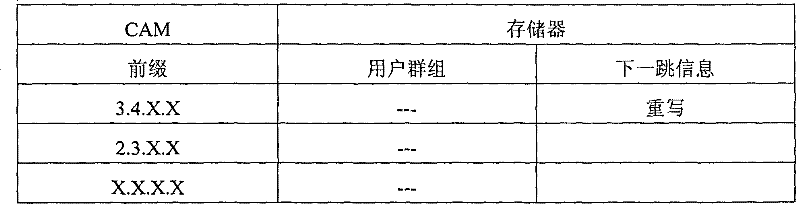
表4示例FIB(路由器1055)Table 4 Example FIB (Router 1055)
应当注意,在该示例中,前缀信息被包含在CAM中,而用户群组和下一跳信息被包含在标准存储器(例如SRAM)中。该查找是通过使用前缀来确定检验存储器中的哪个条目而被执行的。It should be noted that in this example the prefix information is contained in the CAM, while the user group and next hop information is contained in standard memory (eg SRAM). The lookup is performed by using the prefix to determine which entry in memory to check.
注意,当数据包1075(较晚数据包1085)从主机1005被发送时,数据包1075未被贴标签。在此示例中,在进入交换机1020后,数据包1075被贴以SGT1080标签(其指示用户群组为5)。该用户群组以上面讨论的方式从入口交换机(交换机1020)中的第二层表被获取。然后,该数据包Note that when packet 1075 (later packet 1085) was sent from
(现在包括SGT1080,被称为数据包1085)经由从其提供的路由和交换,通过网络体系结构1000被发送。(now including SGT 1080, referred to as packet 1085) is sent through
在出口路由器(路由器1060)处,执行FIB查找。如果FIB查找命中本地附接的子网,则搜集邻接(glean adjacency)使得为所需服务器(例如服务器1010)生成ARP请求。ARP请求从路由器1060被发送到服务器1010。然后,ARP响应从服务器1010被发送。入口L2交换机(交换机1040)将用于服务器1010的SUG(或者被网络体系结构1000的交换机/路由器(例如主机1005)用来作为被发送到服务器1010的数据包的DUG,其被设置为用户群组为6)插入ARP响应(在L2头部中)。路由器1060接收ARP响应,并用解析后的主机前缀来填充FIB。重写信息包含来自ARP响应的主机MAC地址和目的地用户群组(6)。得到的FIB的示例如下表所示At the egress router (router 1060), a FIB lookup is performed. If the FIB lookup hits a locally attached subnet, glean adjacency is gleaned such that an ARP request is generated for the desired server (eg, server 1010). An ARP request is sent from

表5ARP响应和填充后的示例FIB内容Table 5 ARP response and sample FIB content after filling
在数据包1085是从主机1005到服务器1010的后续数据包的情形下,所讨论的表应已被填充。一旦路由器1060的FIB包含被完全解析的主机前缀,则到服务器1010的下一数据包将经历访问控制。(在本示例的本发明实施例中,触发ARP解析的第一数据包被丢弃。)当后续数据包从主机1005到达路由器1060时,路由器1060已经处理了与相关的源和目的地群组有关的信息。SUG(5)从后续数据包的SGT被提取,DUG(6)通过FIB查找被发现。In the event that
此时,执行ACL查找。假设基于CAM的实现被采用,则到CAM中的查找键值包含数据包信息以及源和目的地用户群组(5和6)。在本示例中,在两个群组之间仅许可web流量(tcp端口80)。示例RBACL条目在表6中示出。At this point, an ACL lookup is performed. Assuming a CAM-based implementation is employed, a lookup key into the CAM contains packet information and source and destination user groups (5 and 6). In this example, only web traffic (tcp port 80) is allowed between the two groups. Example RBACL entries are shown in Table 6.
表6示例RBACL内容Table 6 Example RBACL content
因为在该示例中,后续数据包实际上是web流量(去往TCP端口80),因此合适的CAM条目被命中并且数据包到子网1040的传送(继而经由交换机1035到服务器1010)被许可。但是,进一步说明,如果后续数据包是Telnet数据包(去往TCP端口23),则数据包将命中CAM中的任意—任意条目,其将不许可这种传送(有效地实现了软件ACl中存在的隐含拒绝)。现在结合图11、12、13和14来提供对上文中描述的操作的更概括的讨论。Because in this example the subsequent packet is actually web traffic (to TCP port 80), the appropriate CAM entry is hit and transmission of the packet to subnet 1040 (and then to server 1010 via switch 1035) is permitted. However, to illustrate further, if the subsequent packet is a Telnet packet (to TCP port 23), the packet will hit an any-any entry in the CAM, which will not permit such transfer (effectively implementing the implicit rejection). A more general discussion of the operations described above is now provided in conjunction with FIGS. 11 , 12 , 13 and 14 .
图11的流程图示出了数据包经过例如被描述为网络体系结构1000的网络的过程的概括性示例。在此情况下,过程开始于主机1005发送数据包(例如数据包1070)(步骤1100)。于是,所发送的数据包被传送过本地交换机(例如交换机1020),其对数据包贴以源用户群组信息标签(例如SGT)(步骤1105)。然后,标签数据包(例如数据包1085)经过本地子网(例如子网1025)(步骤1110)。在经过本地子网后,数据包经过近处网络设备(例如路由器1060)(步骤1115)。此时,注意,路由器1055将数据包路由通过给定的中间网络(例如企业核心1050)(步骤1120)。在经过中间网络之后,数据包被远处网络设备(例如路由器1055)接收(步骤1125)。在远处网络设备处,基于角色的访问控制处理被执行(步骤1130)。这种处理结合图12、13和14被详细描述。The flowchart of FIG. 11 shows a generalized example of the process by which data packets travel through a network, such as that described as
然后,确定是否给定数据包已通过了被执行的RBAC处理(步骤1135)。如果数据包没能通过RBAC检验(即被执行的RBAC处理),则数据包被丢弃(步骤1140)。本领域的技术人员将很清楚,其他动作可响应于这样的结果而被执行。或者,如果给定数据包通过了RBAC检验(步骤1135),则数据包被允许经过远处网络设备(步骤1150),然后经过远处子网(例如子网1040)(步骤1160)。然后,数据包经过远处交换机(例如交换机1035)(步骤1170)。最后,数据包到达目的地服务器(例如服务器1010)(步骤1180)。Then, it is determined whether the given packet has passed RBAC processing that was performed (step 1135). If the packet fails the RBAC check (ie, RBAC processing is performed), the packet is discarded (step 1140). It will be apparent to those skilled in the art that other actions may be performed in response to such results. Alternatively, if the given packet passes the RBAC check (step 1135), the packet is allowed to pass through the remote network device (step 1150) and then through the remote subnet (eg, subnet 1040) (step 1160). The data packet then passes through a remote switch (eg, switch 1035) (step 1170). Finally, the data packet reaches the destination server (eg, server 1010) (step 1180).
图12的流程图示出了在数据包是所接收的第一个这种数据包时,网络设备例如路由器1060对该数据包执行的RBAC处理的示例。该处理开始于接收要使用本发明处理的数据包(步骤1200)。首先,数据包的SGT被提取(步骤1210)。接下来,查找被执行以确定数据包应被如何处置(步骤1220)。然后,确定是否给定数据包的目的地地址指示需要RBAC处理(步骤1230)。如果目的地地址指示不需要RBAC处理,则远处路由器根据需要对数据包执行其他处理,并合适地路由该数据包(步骤1235)。The flowchart of FIG. 12 shows an example of RBAC processing performed by a network device, such as
但是,如果数据包的目的地地址指示RBAC处理将被执行,则远处路由器发送地址解析协议(ARP)请求到目的地服务器(例如服务器1010)(步骤1240)。服务器响应以ARP响应(步骤1250)。接下来,远处交换机将对应于服务器的群组的DGT(或SGT,从服务器1010的角度看)插入ARP响应(步骤1260)。远处路由器接收该ARP响应(包括指示服务器1010的DUG的DGT(或SGT,从服务器1010的角度看))(步骤1270),并利用该信息来填充其转发信息库(FIB)(步骤1280)。如前所述,然后,远处路由器执行所需的任何其他处理,并合适地路由数据包(步骤1235)。应当注意,事实上,该路由可以包括如果RBACL指示网络设备将拒绝到给定数据包的访问则丢弃该数据包。However, if the destination address of the packet indicates that RBAC processing is to be performed, the remote router sends an Address Resolution Protocol (ARP) request to the destination server (eg, server 1010) (step 1240). The server responds with an ARP response (step 1250). Next, the remote switch inserts the DGT (or SGT, from server 1010's perspective) corresponding to the server's group into the ARP response (step 1260). The remote router receives the ARP response (including the DGT (or SGT, from the perspective of server 1010) indicating the DUG of server 1010) (step 1270) and uses this information to populate its Forwarding Information Base (FIB) (step 1280) . As before, the remote router then performs any other processing required and routes the packet appropriately (step 1235). It should be noted that, in fact, this routing may include dropping a given packet if the RBACL indicates that the network device will deny access to the packet.
图13的流程图根据本发明示出了对下述数据包执行的处理示例,该数据包是在图12的数据包之后被接收的,但仍然经历RBAC处理。与前面一样,该处理开始于接收给定数据包(步骤1300)。也与前面一样,数据包的SGT被提取(步骤1310)。查找被网络设备(例如路由器1060)执行,以确定给定数据包如何被处置(步骤1320)。然后,确定是否数据包的目的地地址指示需要RBAC处理(步骤1330)。如果数据包的目的地地址未指示需要RBAC处理,则远处网络设备在必要时执行其他处理,并合适地路由数据包(步骤1340)。The flowchart of FIG. 13 shows an example of processing performed on a packet received after the packet of FIG. 12 but still undergoing RBAC processing in accordance with the present invention. As before, the process begins with the receipt of a given data packet (step 1300). Also as before, the packet's SGT is extracted (step 1310). A lookup is performed by a network device (eg, router 1060) to determine how a given packet should be handled (step 1320). It is then determined whether the destination address of the packet indicates that RBAC processing is required (step 1330). If the packet's destination address does not indicate that RBAC processing is required, the remote network device performs other processing, if necessary, and routes the packet appropriately (step 1340).
但是,如果远处网络设备确定数据包的目的地地址指示需要RBAC处理,则远处网络设备执行转发信息库(FIB)查找,以确定DUG(步骤1350)。然后,在出口ACL处理期间,远处网络设备确定是否RBACL条目指示给定数据包应被拒绝(步骤1360)。如果RBACL条目指示数据包应被拒绝,则数据包被丢弃(步骤1370)。或者,如果RBACL条目指示数据包应被转发,则远处网络设备在必要时执行其他处理并合适地路由给定数据包(步骤1340)。However, if the remote network device determines that the packet's destination address indicates that RBAC processing is required, the remote network device performs a Forwarding Information Base (FIB) lookup to determine the DUG (step 1350). Then, during egress ACL processing, the remote network device determines whether the RBACL entry indicates that a given packet should be denied (step 1360). If the RBACL entry indicates that the packet should be rejected, then the packet is dropped (step 1370). Alternatively, if the RBACL entry indicates that the packet should be forwarded, the remote network device performs other processing as necessary and routes the given packet appropriately (step 1340).
图14的流程图示出了当给定数据包流过实现本发明的网络设备(例如路由器1060)的数据路径时,对该数据包的处理的示例。处理开始于数据包通过输入安全ACL(步骤1400)。一般地,用户创建这样的ACL,以防止造成已知威胁的数据包进入给定网络设备。接下来,网络设备的输入特征答复给定数据包(步骤1410)。网络设备的输入特征例如可包括传输控制协议(TCP)截取、服务器负载平衡、入侵检测、防火墙功能、web缓存重定向、加密/解密、输入QOS标记/管辖(policing)、基于政策的路由等。应当理解,这些特征中的大部分都专用于入口接口或覆写网络设备中可能进行的路由判决。The flowchart of FIG. 14 shows an example of the processing of a given packet as it flows through the data path of a network device (eg, router 1060) implementing the present invention. Processing begins with a packet passing an incoming security ACL (step 1400). Typically, users create such ACLs to prevent packets that pose known threats from entering a given network device. Next, the input feature of the network device replies to the given packet (step 1410). Input features of network devices may include, for example, Transmission Control Protocol (TCP) interception, server load balancing, intrusion detection, firewall functionality, web cache redirection, encryption/decryption, input QOS marking/policing, policy-based routing, and the like. It should be understood that most of these features are specific to the ingress interface or override routing decisions that may be made in the network device.
接下来,执行反向路径转发(RPF)检验(步骤1420)。在执行RPF检验时,网络设备(例如路由器1060)确定是否给定数据包在下述接口被接收,所述接口是网络设备将被预期用其来将单播数据包转发回传入数据包的源的接口。一般地,如果RPF检验成功,则路由器经由图14所示的其余动作将数据包转发到其想去的目的地。或者,如果RPF检验失败,则数据包被丢弃。Next, a Reverse Path Forwarding (RPF) check is performed (step 1420). In performing an RPF check, a network device (e.g., router 1060) determines whether a given packet was received on an interface that the network device would be expected to use to forward unicast packets back to the source of the incoming packet Interface. Generally, if the RPF check is successful, the router forwards the data packet to its intended destination via the remaining actions shown in FIG. 14 . Alternatively, if the RPF check fails, the packet is dropped.
因此,在RPF检验通过时,然后,路由器执行路由查找(步骤1430)。接下来,基于角色的ACL查找被执行(步骤1440)。此时,基于用户的SUG(如数据包的SGT所指示,或经由ACL静态分配)和服务器的DUG(通过FIB查找(从前一数据包的SGT导出)导出或静态分配)的查找被用来确定是否允许对数据包的访问。Thus, when the RPF check passes, the router then performs a route lookup (step 1430). Next, a role-based ACL lookup is performed (step 1440). At this point, a lookup based on the user's SUG (as indicated by the packet's SGT, or statically assigned via an ACL) and the server's DUG (derived via a FIB lookup (derived from the previous packet's SGT) or statically assigned) is used to determine Whether to allow access to the packet.
一旦数据包基于SUG/DUG组合而被允许访问,然后,输出特征就被应用到数据包(步骤1450)。可被实现的输出特征的示例例如包括入侵检测、流量整形、密码加密和解密、因特网协议(IP)记帐等。然后,输出安全ACL所控制的限制被应用(步骤1460)。输出安全ACL控制数据包的转发以确保在被网络设备处理后,被潜在地更改了的数据包不对网络设备的输出方的(多个)子网的安全造成威胁。以类似方式,可应用额外的输出特征(步骤1470)。Once the data packet is granted access based on the SUG/DUG combination, then an output feature is applied to the data packet (step 1450). Examples of output features that may be implemented include, for example, intrusion detection, traffic shaping, cryptographic encryption and decryption, Internet Protocol (IP) accounting, and the like. Then, the restrictions controlled by the outgoing security ACL are applied (step 1460). The output security ACL controls the forwarding of data packets to ensure that the potentially altered data packets do not pose a threat to the security of the output subnet(s) of the network device after being processed by the network device. In a similar manner, additional output features may be applied (step 1470).
本发明的优点示例Examples of advantages of the invention
以其最简单的形式,RBACL提供网络设备的群组之间的访问控制。群组分配基于所讨论的企业中的个体或设备的角色。通过将RBAC概念应用于网络,用户在若干重要方面受益。根据本发明的手段的优点包括改善了网络的可扩展性、提高了网络配置的灵活性和提高了网络的可管理性。In its simplest form, RBACLs provide access control between groups of network devices. Group assignments are based on the roles of the individuals or devices in the enterprise in question. By applying RBAC concepts to networks, users benefit in several important ways. Advantages of the approach according to the invention include improved network scalability, increased network configuration flexibility and improved network manageability.
首先,可扩展性解决了当用户被添加到网络时,资源消耗成倍增长的问题。例如,本发明通过成倍地减小ACL的大小而解决了ACL“爆炸”的问题。一般地,ACL的大小(在ACL条目(ACE)的数量方面)已从:First, scalability solves the problem of resource consumption growing exponentially as users are added to the network. For example, the present invention solves the problem of ACL "explosion" by reducing the size of the ACL exponentially. In general, the size of an ACL (in terms of the number of ACL entries (ACEs)) has changed from:
ACE数=源地址数*目的地地址数*许可数ACE number = source address number * destination address number * permission number
减少到:Reduce to:
ACE数=源群组数*目的地群组数*许可数ACE number = source group number * destination group number * license number
在三个元素(源、目的地、许可)中,许可数通常是三者中较小的。可以看出,有理由预期:Among the three elements (source, destination, license), the number of licenses is usually the smaller of the three. As can be seen, it is reasonable to expect that:
源地址数>>源群组数Number of Source Addresses>>Number of Source Groups
而且:and:
目的地地址数>>目的地群组数Number of Destination Addresses >> Number of Destination Groups
在此情形下,乘法项之一是较小的数,而另两个乘法项已被显著减小,成倍地减小了ACE数。例如,在ACL中,如果我们假设20个不同的源(客户端PC或子网)、5个不同的目的地(服务器)和它们之间的4个许可(允许web、FTP和SMTP邮件),这将创建具有400个ACE的ACL。如果我们假设源都是同一群组(这是合理的,因为源要么是群组成员,要么被隐含拒绝),而且目的地都是同一群组(在同一推理下),则使用RBACL的同一示例将仅使用4个ACE,在大小方面减小了两个数量级。In this case, one of the multiplicative terms is a small number, while the other two multiplicative terms have been significantly reduced, reducing the ACE number exponentially. For example, in an ACL, if we assume 20 different sources (client PCs or subnets), 5 different destinations (servers) and 4 permissions between them (allow web, FTP and SMTP mail), This will create an ACL with 400 ACEs. If we assume that the sources are all in the same group (which is reasonable, since the sources are either group members or are implicitly denied), and the destinations are all in the same group (under the same reasoning), then the same The example will use only 4 ACEs, a two order of magnitude reduction in size.
本发明的实现的进一步改善可扩展性的方面是RBACL许可集合可用比现有ACL有效得多的方式被重新使用。例如,假设工程群组被允许对工程web服务器群组的TCP端口80(www)访问。该许可列表由1个ACE(许可www)组成,并拒绝所有其他流量。同一许可列表可被重用于对市场web服务器群组通信的市场群组。这种重用传统ACL是不可能的。A further improved scalability aspect of the implementation of the present invention is that sets of RBACL permissions can be reused in a much more efficient manner than existing ACLs. For example, assume that the engineering group is allowed TCP port 80 (www) access to the engineering web server group. This allow list consists of 1 ACE (permit www) and denies all other traffic. The same permission list can be reused for a market group communicating to a market web server group. This reuse of traditional ACLs is not possible.
本发明的一个辅助优点是,由于与现有ACL比较,RBACL的大小被显著减小,因此大小的减小导致软件性能的显著提高,该提高与ACL大小的减小成正比。换言之,可预期与传统的ACL相比软件RBACL的性能提高(可能是成倍提高)。A secondary advantage of the present invention is that since the size of the RBACL is significantly reduced compared to existing ACLs, the reduction in size results in a significant improvement in software performance that is proportional to the reduction in ACL size. In other words, a software RBACL performance improvement (possibly a multiple) can be expected compared to traditional ACLs.
RBACL的另一主要优点是网络拓扑从安全政策去耦,为网络流量控制提供了灵活得多的手段。虽然ACL已在网络设备中存在了很长时间,但是ACL没能在整个企业中使用。目前,ACL主要布置在网络周缘上,一般是在企业和因特网之间。大多数企业中体验到的频繁改变使得ACL的实现和使用成为不可管理的命题。所述频繁的改变的一些示例包括:Another major advantage of RBACL is that network topology is decoupled from security policy, providing a much more flexible means for network traffic control. Although ACLs have existed in network devices for a long time, ACLs have not been used throughout the enterprise. Currently, ACLs are mainly deployed on the network perimeter, generally between the enterprise and the Internet. The frequent changes experienced in most enterprises make the implementation and use of ACLs an unmanageable proposition. Some examples of such frequent changes include:
1.用户不断更新网络地址(例如经由DHCP更新IP地址)1. The user constantly updates the network address (for example, updating the IP address via DHCP)
2.用户的物理移动性2. Physical mobility of users
3.子网形成(sub-netting)3. Subnet formation (sub-netting)
4.对企业网络的一般拓扑进行频繁改变4. Make frequent changes to the general topology of the enterprise network
5.频繁添加新设备/用户到网络5. Frequently add new devices/users to the network
RBACL提供的灵活性允许用户移动到网络中的任意位置,而不对安全政策造成任何不希望的影响。一旦被认证和分配给用户群组,许可就可被应用,不论用户在网络中位置如何。RBACL本身不改变,因为相关群组和安全政策保持不变。在某种意义上,用户的安全政策在网络中跟随着他们。不论用户在哪里登录或用户连接到的物理交换机/路由器如何,所应用的安全政策都保持不变。The flexibility provided by RBACL allows users to move anywhere in the network without any undesired impact on security policies. Once authenticated and assigned to a user group, permissions can be applied regardless of the user's location in the network. The RBACL itself does not change because the associated groups and security policies remain the same. In a sense, the user's security policy follows them around the network. The applied security policy remains the same regardless of where the user is logged in or the physical switch/router the user is connected to.
RBACL所提供的可管理性可能是它最大的优点。这与RBACL在可扩展性和灵活性方面提供的优点紧密相关。RBACL提供的可扩展性通过允许网络管理员查看RBACL和理解其效果(即RBACL试图达到的目标)而改善了网络管理。利用可能有几百甚或几千行长的传统ACL,精确地理解将对给定流进行什么操作几乎是不可能的。The manageability provided by RBACL is probably its greatest advantage. This is closely related to the advantages that RBACL provides in terms of scalability and flexibility. The scalability provided by RBACL improves network management by allowing network administrators to view the RBACL and understand its effects (ie, what the RBACL is trying to achieve). With traditional ACLs, which can be hundreds or even thousands of lines long, it is nearly impossible to understand exactly what will be done with a given flow.
RBACL的减小了的大小还允许RBACL被安装在整个企业网的路由器/交换机上。网络拓扑从被实现的安全政策去耦使得可将同一RBACL移动到网络中的任意位置,因为RBACL不受网络拓扑的影响。网络地址和入口/出口接口不影响RBACL的定义。这实现了整个网络上(因此是企业上)的用户移动,因为他们的许可将被施行在所有网络设备中。The reduced size of the RBACL also allows the RBACL to be installed on routers/switches throughout the enterprise network. The decoupling of the network topology from the implemented security policy makes it possible to move the same RBACL anywhere in the network, since the RBACL is not affected by the network topology. Network addresses and ingress/egress interfaces do not affect the RBACL definition. This enables the mobility of users across the network (and therefore across the enterprise) as their permissions will be enforced across all network devices.
当用户被添加到网络或新服务器被安装时,传统的ACL必须被更新,以包括新用户/设备。这涉及很高的成本,尤其是当ACL变得越来越大时。每次改变都有出现网络故障或安全漏洞的危险。该危险与ACL的大小成正比地增大。此外,随着ACL的大小增大,软件性能成正比地下降。在大组织中,当ACL需要被更新时,组织的安全小组必须评估和插入合适的条目。然后,该修改后的ACL被组织测试。最后,通过与组织的网络管理小组的协调,被修改和测试的ACL将被安装。这种处理的成本可能是巨大的。在类似情况下,使用RBACL,新服务器被简单地添加到合适的群组。ACL没有改变,而且适合于该群组的许可将被自动应用。When users are added to the network or new servers are installed, traditional ACLs must be updated to include the new users/devices. This involves a high cost, especially as ACLs get larger and larger. Every change carries the risk of a network failure or security breach. This risk increases proportionally to the size of the ACL. Furthermore, as the size of the ACL increases, software performance decreases proportionally. In large organizations, when an ACL needs to be updated, the organization's security team must evaluate and insert the appropriate entries. Then, the modified ACL is tested by the organization. Finally, in coordination with the organization's network management team, the modified and tested ACLs will be installed. The cost of such processing can be substantial. In a similar situation, using RBACL, the new server is simply added to the appropriate group. The ACL is not changed and the permissions appropriate for the group will be applied automatically.
虽然已示出和描述了本发明的具体实施例,但是本领域的技术人员将很清楚,基于这里的教导,可在不脱离本发明及其更广泛的方面的情况下作出改变和修改,因此,所附权利要求是要将所有这种改变和修改包括在本发明的真实精神和范围内。此外,虽然本发明已参照具体实施例被具体示出和描述,但是本领域的技术人员应当理解,形式和细节的上述和其他改变可在不脱离本发明的精神和范围的情况下作出。While particular embodiments of the present invention have been shown and described, it will be apparent to those skilled in the art that, based on the teachings herein, that changes and modifications may be made without departing from this invention and its broader aspects, therefore , the appended claims are intended to cover all such changes and modifications as fall within the true spirit and scope of the invention. Furthermore, while the invention has been particularly shown and described with reference to particular embodiments, it will be understood by those skilled in the art that the above and other changes in form and detail may be made without departing from the spirit and scope of the invention.
Claims (6)
Applications Claiming Priority (3)
| Application Number | Priority Date | Filing Date | Title |
|---|---|---|---|
| US10/659,614 US7530112B2 (en) | 2003-09-10 | 2003-09-10 | Method and apparatus for providing network security using role-based access control |
| US10/659,614 | 2003-09-10 | ||
| PCT/US2004/028359 WO2005027464A1 (en) | 2003-09-10 | 2004-08-31 | Method and apparatus for providing network security using role-based access control |
Publications (2)
| Publication Number | Publication Date |
|---|---|
| CN1823514A CN1823514A (en) | 2006-08-23 |
| CN1823514B true CN1823514B (en) | 2012-01-04 |
Family
ID=34226987
Family Applications (1)
| Application Number | Title | Priority Date | Filing Date |
|---|---|---|---|
| CN2004800205383A Expired - Lifetime CN1823514B (en) | 2003-09-10 | 2004-08-31 | Method and apparatus for providing network security using role-based access control |
Country Status (6)
| Country | Link |
|---|---|
| US (5) | US7530112B2 (en) |
| EP (1) | EP1678912B1 (en) |
| CN (1) | CN1823514B (en) |
| CA (1) | CA2532189C (en) |
| ES (1) | ES2574003T3 (en) |
| WO (1) | WO2005027464A1 (en) |
Families Citing this family (110)
| Publication number | Priority date | Publication date | Assignee | Title |
|---|---|---|---|---|
| US7530112B2 (en) * | 2003-09-10 | 2009-05-05 | Cisco Technology, Inc. | Method and apparatus for providing network security using role-based access control |
| US7523484B2 (en) | 2003-09-24 | 2009-04-21 | Infoexpress, Inc. | Systems and methods of controlling network access |
| US7299493B1 (en) | 2003-09-30 | 2007-11-20 | Novell, Inc. | Techniques for dynamically establishing and managing authentication and trust relationships |
| US7836490B2 (en) | 2003-10-29 | 2010-11-16 | Cisco Technology, Inc. | Method and apparatus for providing network security using security labeling |
| US7971244B1 (en) * | 2003-11-19 | 2011-06-28 | Cisco Technology, Inc. | Method of determining network penetration |
| JP4676782B2 (en) * | 2004-04-28 | 2011-04-27 | 株式会社リコー | Information processing apparatus, operation permission data generation method, operation permission data generation permission determination method, operation permission data generation program, operation permission data generation permission determination program, and recording medium |
| US8990254B2 (en) * | 2004-07-02 | 2015-03-24 | Ellie Mae, Inc. | Loan origination software system for processing mortgage loans over a distributed network |
| ATE343892T1 (en) * | 2004-08-05 | 2006-11-15 | Cit Alcatel | METHOD AND DEVICE FOR ACCESS CONTROL |
| JP2006072486A (en) * | 2004-08-31 | 2006-03-16 | Konica Minolta Business Technologies Inc | Data management device, data management system and data management method |
| US7669244B2 (en) * | 2004-10-21 | 2010-02-23 | Cisco Technology, Inc. | Method and system for generating user group permission lists |
| KR100677145B1 (en) * | 2004-10-28 | 2007-02-02 | 삼성전자주식회사 | Method and device for automatically setting network address |
| US7877796B2 (en) | 2004-11-16 | 2011-01-25 | Cisco Technology, Inc. | Method and apparatus for best effort propagation of security group information |
| US7886145B2 (en) | 2004-11-23 | 2011-02-08 | Cisco Technology, Inc. | Method and system for including security information with a packet |
| US7721323B2 (en) | 2004-11-23 | 2010-05-18 | Cisco Technology, Inc. | Method and system for including network security information in a frame |
| US7827402B2 (en) | 2004-12-01 | 2010-11-02 | Cisco Technology, Inc. | Method and apparatus for ingress filtering using security group information |
| US8245280B2 (en) * | 2005-02-11 | 2012-08-14 | Samsung Electronics Co., Ltd. | System and method for user access control to content in a network |
| US20060218394A1 (en) * | 2005-03-28 | 2006-09-28 | Yang Dung C | Organizational role-based controlled access management system |
| US20060225128A1 (en) * | 2005-04-04 | 2006-10-05 | Nokia Corporation | Measures for enhancing security in communication systems |
| US7774827B2 (en) * | 2005-06-06 | 2010-08-10 | Novell, Inc. | Techniques for providing role-based security with instance-level granularity |
| US9191396B2 (en) | 2005-09-08 | 2015-11-17 | International Business Machines Corporation | Identifying source of malicious network messages |
| CN101263504B (en) | 2005-09-16 | 2010-06-16 | 皇家飞利浦电子股份有限公司 | Cryptographic role-based access control |
| US8059647B2 (en) * | 2005-10-05 | 2011-11-15 | Nortel Networks Limited | Multicast implementation in a link state protocol controlled ethernet network |
| KR101406922B1 (en) | 2005-10-05 | 2014-06-20 | 노오텔 네트웍스 리미티드 | Provider link status bridging |
| US20070100830A1 (en) * | 2005-10-20 | 2007-05-03 | Ganesha Beedubail | Method and apparatus for access control list (ACL) binding in a data processing system |
| US7814311B2 (en) * | 2006-03-10 | 2010-10-12 | Cisco Technology, Inc. | Role aware network security enforcement |
| US20070214497A1 (en) * | 2006-03-10 | 2007-09-13 | Axalto Inc. | System and method for providing a hierarchical role-based access control |
| US7953089B1 (en) * | 2006-05-16 | 2011-05-31 | Cisco Technology, Inc. | Systems and methods for multicast switching in a private VLAN |
| US9455990B2 (en) | 2006-07-21 | 2016-09-27 | International Business Machines Corporation | System and method for role based access control in a content management system |
| US20080028445A1 (en) * | 2006-07-31 | 2008-01-31 | Fortinet, Inc. | Use of authentication information to make routing decisions |
| CN100456747C (en) * | 2006-08-02 | 2009-01-28 | 华为技术有限公司 | Implementation method and network equipment for unicast reverse path inspection |
| JP4923869B2 (en) * | 2006-08-30 | 2012-04-25 | 富士通株式会社 | Control program and control method |
| US8607058B2 (en) * | 2006-09-29 | 2013-12-10 | Intel Corporation | Port access control in a shared link environment |
| US8528102B2 (en) * | 2006-10-06 | 2013-09-03 | Broadcom Corporation | Method and system for protection of customer secrets in a secure reprogrammable system |
| US9231911B2 (en) * | 2006-10-16 | 2016-01-05 | Aruba Networks, Inc. | Per-user firewall |
| US20080148382A1 (en) | 2006-12-15 | 2008-06-19 | International Business Machines Corporation | System, method and program for managing firewalls |
| US7840708B2 (en) * | 2007-08-13 | 2010-11-23 | Cisco Technology, Inc. | Method and system for the assignment of security group information using a proxy |
| US20090077656A1 (en) * | 2007-09-14 | 2009-03-19 | Kabushiki Kaisha Toshiba | Image forming apparatus, image forming system, and control method of image forming apparatus |
| US20090328188A1 (en) * | 2008-05-01 | 2009-12-31 | Motorola, Inc. | Context-based semantic firewall for the protection of information |
| KR101398631B1 (en) * | 2008-05-30 | 2014-05-22 | 삼성전자주식회사 | Method and Apparatus of Anti-Replay Attack over Wireless Network Environment |
| US8201228B2 (en) * | 2008-09-23 | 2012-06-12 | Fujitsu Limited | System and method for securing a network |
| US8826455B2 (en) * | 2009-02-17 | 2014-09-02 | International Business Machines Corporation | Method and apparatus for automated assignment of access permissions to users |
| US7924717B2 (en) * | 2009-02-27 | 2011-04-12 | Hewlett-Packard Development Company, L.P. | Systems and methods of handling access control violations |
| US8255419B2 (en) | 2009-06-17 | 2012-08-28 | Microsoft Corporation | Exclusive scope model for role-based access control administration |
| US8782086B2 (en) * | 2009-08-27 | 2014-07-15 | Cleversafe, Inc. | Updating dispersed storage network access control information |
| WO2011030755A1 (en) * | 2009-09-10 | 2011-03-17 | 日本電気株式会社 | Role setting device, role setting method and role setting program |
| US20110202384A1 (en) * | 2010-02-17 | 2011-08-18 | Rabstejnek Wayne S | Enterprise Rendering Platform |
| CN102263774B (en) * | 2010-05-24 | 2014-04-16 | 杭州华三通信技术有限公司 | Method and device for processing source role information |
| US20230353485A1 (en) * | 2010-07-06 | 2023-11-02 | Nicira, Inc. | Packet processing for logical datapath sets |
| JP5581141B2 (en) * | 2010-07-29 | 2014-08-27 | 株式会社Pfu | Management server, communication cutoff device, information processing system, method, and program |
| US8750144B1 (en) * | 2010-10-20 | 2014-06-10 | Google Inc. | System and method for reducing required memory updates |
| US9178910B2 (en) * | 2010-12-24 | 2015-11-03 | Nec Corporation | Communication system, control apparatus, policy management apparatus, communication method, and program |
| US9767268B2 (en) | 2011-04-20 | 2017-09-19 | International Business Machines Corporation | Optimizing a compiled access control table in a content management system |
| CN102316002B (en) * | 2011-10-31 | 2014-04-30 | 华为技术有限公司 | Method and apparatus for configuration of virtual local area network |
| CN102495985B (en) * | 2011-12-13 | 2014-06-25 | 桂林电子科技大学 | Role access control method based on dynamic description logic |
| US20130326580A1 (en) * | 2012-05-09 | 2013-12-05 | Computer Security Products, Inc. | Methods and apparatus for creating and implementing security policies for resources on a network |
| TWI476627B (en) * | 2012-05-11 | 2015-03-11 | Chunghwa Telecom Co Ltd | The management system and method of network service level and function of cloud virtual desktop application |
| KR101401794B1 (en) * | 2012-06-29 | 2014-06-27 | 인텔렉추얼디스커버리 주식회사 | Method and apparatus for providing data sharing |
| CN102833227A (en) * | 2012-07-11 | 2012-12-19 | 武汉虹信通信技术有限责任公司 | Method and system for realizing access control list in wireless access controller |
| US9197498B2 (en) | 2012-08-31 | 2015-11-24 | Cisco Technology, Inc. | Method for automatically applying access control policies based on device types of networked computing devices |
| US9258208B2 (en) | 2012-10-30 | 2016-02-09 | Cisco Technology, Inc. | Multiple path availability between walkable clusters |
| US9043874B2 (en) * | 2012-11-28 | 2015-05-26 | Wal-Mart Stores, Inc. | System and method for protecting data in an enterprise environment |
| CN103051609B (en) * | 2012-12-07 | 2015-11-18 | 东软集团股份有限公司 | The virtual interactive interface method of gateway device and the NS software by its execution |
| US9019837B2 (en) | 2013-02-19 | 2015-04-28 | Cisco Technology, Inc. | Packet modification to facilitate use of network tags |
| CN103220287B (en) * | 2013-04-11 | 2016-12-28 | 汉柏科技有限公司 | Utilize the method that ACL carries out business coupling to message |
| US9191404B2 (en) * | 2013-06-05 | 2015-11-17 | Cisco Technology, Inc. | Probabilistic flow management |
| CN103581018B (en) * | 2013-07-26 | 2017-08-11 | 北京华为数字技术有限公司 | File transmitting method, router and operation exchange device |
| CN104580116B (en) * | 2013-10-25 | 2018-09-14 | 新华三技术有限公司 | A kind of management method and equipment of security strategy |
| US20150124824A1 (en) * | 2013-11-05 | 2015-05-07 | Cisco Technology, Inc. | Incast drop cause telemetry |
| CN103595711A (en) * | 2013-11-06 | 2014-02-19 | 神州数码网络(北京)有限公司 | Adjusting safety access method and exchanger |
| CN103605916A (en) * | 2013-12-06 | 2014-02-26 | 山东高速信息工程有限公司 | RBAC (Role-Based policies Access Control) accessing control model based on organization |
| US9973904B2 (en) * | 2014-09-15 | 2018-05-15 | Bank Of America Corporation | Matrix access review |
| US9917839B2 (en) * | 2014-10-17 | 2018-03-13 | Aruba Networks, Inc. | Communication model based on user role |
| US9992202B2 (en) * | 2015-02-28 | 2018-06-05 | Aruba Networks, Inc | Access control through dynamic grouping |
| US20160308725A1 (en) * | 2015-04-16 | 2016-10-20 | Nec Laboratories America, Inc. | Integrated Community And Role Discovery In Enterprise Networks |
| US9755939B2 (en) * | 2015-06-26 | 2017-09-05 | Cisco Technology, Inc. | Network wide source group tag binding propagation |
| CN106549793B (en) * | 2015-09-23 | 2020-08-07 | 华为技术有限公司 | Flow control method and device |
| US20170187700A1 (en) * | 2015-12-28 | 2017-06-29 | Paypal, Inc. | Pregenerated two-factor authentication tokens |
| US11611564B2 (en) * | 2016-02-15 | 2023-03-21 | Luigius Caramico | Methods and systems of dual-layer computer-system security |
| CN105791130A (en) * | 2016-03-16 | 2016-07-20 | 汉柏科技有限公司 | Route isolation data forwarding method and device |
| CN106506468A (en) * | 2016-10-31 | 2017-03-15 | 盛科网络(苏州)有限公司 | A kind of method that minimizing ACE entries are consumed |
| CN106533693B (en) * | 2016-11-03 | 2021-01-19 | 中车青岛四方机车车辆股份有限公司 | Access method and device of railway vehicle monitoring and overhauling system |
| TWI585600B (en) * | 2016-12-02 | 2017-06-01 | 亞洲大學 | CBR-based Negotiation RBAC Method for Enhancing Ubiquitous Resources Management |
| CN108347376B (en) * | 2017-01-24 | 2020-01-31 | 华为技术有限公司 | method, device and system for adjusting forwarding path |
| CN108418776B (en) * | 2017-02-09 | 2021-08-20 | 上海诺基亚贝尔股份有限公司 | Method and apparatus for providing secure services |
| US10673863B2 (en) | 2017-02-24 | 2020-06-02 | International Business Machines Corporation | Managing inter-object operations in a domain role-based access control (RBAC) system |
| US10397116B1 (en) * | 2017-05-05 | 2019-08-27 | Amazon Technologies, Inc. | Access control based on range-matching |
| US10958622B2 (en) | 2018-01-10 | 2021-03-23 | Cisco Technology, Inc. | Hierarchical security group identifiers |
| CN108549797A (en) * | 2018-03-26 | 2018-09-18 | 安徽笛申科技有限公司 | A kind of user and user group and the System right management method of role |
| EP3550791B1 (en) | 2018-04-03 | 2023-12-06 | Palantir Technologies Inc. | Controlling access to computer resources |
| US11212257B2 (en) | 2018-06-22 | 2021-12-28 | Aeronix, Inc. | Multi-level secure ethernet switch |
| US11483313B2 (en) * | 2018-06-28 | 2022-10-25 | Intel Corporation | Technologies for updating an access control list table without causing disruption |
| US11070458B2 (en) * | 2018-07-17 | 2021-07-20 | Cisco Technology, Inc. | Encrypted traffic analysis control mechanisms |
| US11258794B2 (en) * | 2019-01-09 | 2022-02-22 | Hewlett Packard Enterprise Development Lp | Device category based authentication |
| US10764177B2 (en) * | 2019-01-21 | 2020-09-01 | Mellanox Technologies Tlv Ltd. | Efficient implementation of complex network segmentation |
| US11704441B2 (en) | 2019-09-03 | 2023-07-18 | Palantir Technologies Inc. | Charter-based access controls for managing computer resources |
| CN113728600B (en) * | 2019-09-11 | 2023-10-24 | Oppo广东移动通信有限公司 | Access control methods, equipment and storage media |
| US11336695B2 (en) | 2019-11-15 | 2022-05-17 | Cisco Technology, Inc. | Conversation-based policy distribution |
| CN110958334B (en) * | 2019-11-25 | 2022-08-09 | 新华三半导体技术有限公司 | Message processing method and device |
| CN111049840B (en) * | 2019-12-17 | 2022-04-26 | 锐捷网络股份有限公司 | Message detection method and device |
| CN112632525A (en) * | 2020-12-30 | 2021-04-09 | 南京中孚信息技术有限公司 | Method and device for limiting user to access electronic document |
| US11677717B2 (en) * | 2021-03-22 | 2023-06-13 | Cloudflare, Inc. | Unified network service that connects multiple disparate private networks and end user client devices operating on separate networks |
| US12164676B2 (en) * | 2021-09-22 | 2024-12-10 | Ridgeline, Inc. | Enabling an action based on a permission identifier for real-time identity resolution in a distributed system |
| US20230089819A1 (en) * | 2021-09-22 | 2023-03-23 | Hewlett Packard Enterprise Development Lp | Source port-based identification of client role |
| US11936658B2 (en) | 2021-11-15 | 2024-03-19 | Bank Of America Corporation | Intelligent assignment of a network resource |
| CN114095231B (en) * | 2021-11-16 | 2023-11-17 | 锐捷网络股份有限公司 | Message filtering method, device, equipment and medium |
| US12081555B2 (en) * | 2021-12-08 | 2024-09-03 | Capital One Services, Llc | Access control systems and methods for automatically assigning roles |
| CN115174139B (en) * | 2022-05-26 | 2024-04-09 | 华为技术有限公司 | Node isolation method, switching equipment and Ethernet storage system |
| CN115277100B (en) * | 2022-06-30 | 2024-10-01 | 新华三技术有限公司合肥分公司 | Security authentication method and equipment |
| US20240015157A1 (en) * | 2022-07-07 | 2024-01-11 | Arista Networks, Inc. | Per-host access lists |
| US20240214802A1 (en) * | 2022-12-22 | 2024-06-27 | Arista Networks, Inc. | Wireless client group isolation within a network |
Citations (4)
| Publication number | Priority date | Publication date | Assignee | Title |
|---|---|---|---|---|
| CN1285571A (en) * | 1999-08-20 | 2001-02-28 | 株式会社光荣 | Method for moving character block and its recording medium and game device |
| CN1286779A (en) * | 1998-09-28 | 2001-03-07 | 索尼株式会社 | Information recording device and method thereof, measuring device and method thereof, information processing device and method thereof, information processing system and information providing medium |
| US6202066B1 (en) * | 1997-11-19 | 2001-03-13 | The United States Of America As Represented By The Secretary Of Commerce | Implementation of role/group permission association using object access type |
| CN1334519A (en) * | 2000-07-13 | 2002-02-06 | 王信 | Method and system for processing role differentiation in online games |
Family Cites Families (91)
| Publication number | Priority date | Publication date | Assignee | Title |
|---|---|---|---|---|
| US4922486A (en) * | 1988-03-31 | 1990-05-01 | American Telephone And Telegraph Company | User to network interface protocol for packet communications networks |
| US5017917A (en) * | 1988-12-30 | 1991-05-21 | At&T Bell Laboratories | Restriction of communication service accessibility among subscriber communities |
| US5113442A (en) | 1989-03-06 | 1992-05-12 | Lachman Associates, Inc. | Method and apparatus for providing access control in a secure operating system |
| US5204961A (en) | 1990-06-25 | 1993-04-20 | Digital Equipment Corporation | Computer network operating with multilevel hierarchical security with selectable common trust realms and corresponding security protocols |
| US5251205A (en) | 1990-09-04 | 1993-10-05 | Digital Equipment Corporation | Multiple protocol routing |
| EP0697662B1 (en) | 1994-08-15 | 2001-05-30 | International Business Machines Corporation | Method and system for advanced role-based access control in distributed and centralized computer systems |
| US5615264A (en) | 1995-06-08 | 1997-03-25 | Wave Systems Corp. | Encrypted data package record for use in remote transaction metered data system |
| US5941947A (en) * | 1995-08-18 | 1999-08-24 | Microsoft Corporation | System and method for controlling access to data entities in a computer network |
| JP3688830B2 (en) | 1995-11-30 | 2005-08-31 | 株式会社東芝 | Packet transfer method and packet processing apparatus |
| US5787427A (en) * | 1996-01-03 | 1998-07-28 | International Business Machines Corporation | Information handling system, method, and article of manufacture for efficient object security processing by grouping objects sharing common control access policies |
| US6272538B1 (en) * | 1996-07-30 | 2001-08-07 | Micron Technology, Inc. | Method and system for establishing a security perimeter in computer networks |
| US6023765A (en) * | 1996-12-06 | 2000-02-08 | The United States Of America As Represented By The Secretary Of Commerce | Implementation of role-based access control in multi-level secure systems |
| US5845068A (en) * | 1996-12-18 | 1998-12-01 | Sun Microsystems, Inc. | Multilevel security port methods, apparatuses, and computer program products |
| US6292900B1 (en) * | 1996-12-18 | 2001-09-18 | Sun Microsystems, Inc. | Multilevel security attribute passing methods, apparatuses, and computer program products in a stream |
| US6212558B1 (en) * | 1997-04-25 | 2001-04-03 | Anand K. Antur | Method and apparatus for configuring and managing firewalls and security devices |
| US6088659A (en) | 1997-09-11 | 2000-07-11 | Abb Power T&D Company Inc. | Automated meter reading system |
| US5968177A (en) * | 1997-10-14 | 1999-10-19 | Entrust Technologies Limited | Method and apparatus for processing administration of a secured community |
| US6014666A (en) * | 1997-10-28 | 2000-01-11 | Microsoft Corporation | Declarative and programmatic access control of component-based server applications using roles |
| US6052456A (en) * | 1997-12-23 | 2000-04-18 | Alcatel Usa Sourcing, L.P. | Graphical shelf navigator for a telecommunications switch management system |
| US6233618B1 (en) * | 1998-03-31 | 2001-05-15 | Content Advisor, Inc. | Access control of networked data |
| US6449643B1 (en) * | 1998-05-14 | 2002-09-10 | Nortel Networks Limited | Access control with just-in-time resource discovery |
| US6304973B1 (en) * | 1998-08-06 | 2001-10-16 | Cryptek Secure Communications, Llc | Multi-level security network system |
| US6292798B1 (en) * | 1998-09-09 | 2001-09-18 | International Business Machines Corporation | Method and system for controlling access to data resources and protecting computing system resources from unauthorized access |
| EP1119813A1 (en) * | 1998-09-28 | 2001-08-01 | Argus Systems Group, Inc. | Trusted compartmentalized computer operating system |
| US6405259B1 (en) * | 1998-12-08 | 2002-06-11 | International Business Machines Corporation | Data processing system and method for transmission of a network packet specifying a group identifier identifying a selected plurality of clients |
| US6219161B1 (en) * | 1999-01-25 | 2001-04-17 | Telcordia Technologies, Inc. | Optical layer survivability and security system |
| US6973057B1 (en) * | 1999-01-29 | 2005-12-06 | Telefonaktiebolaget L M Ericsson (Publ) | Public mobile data communications network |
| US7881477B2 (en) * | 1999-02-05 | 2011-02-01 | Avaya Inc. | Method for key distribution in a hierarchical multicast traffic security system for an internetwork |
| US6678827B1 (en) * | 1999-05-06 | 2004-01-13 | Watchguard Technologies, Inc. | Managing multiple network security devices from a manager device |
| US6754214B1 (en) | 1999-07-19 | 2004-06-22 | Dunti, Llc | Communication network having packetized security codes and a system for detecting security breach locations within the network |
| US6711172B1 (en) * | 1999-08-02 | 2004-03-23 | Nortel Networks Corp. | Network packet routing |
| US7072343B1 (en) * | 1999-09-27 | 2006-07-04 | Cisco Technology, Inc. | Methods and apparatus for controlling a data stream using a host agent acting on behalf of a host computer |
| US7023863B1 (en) | 1999-10-29 | 2006-04-04 | 3Com Corporation | Apparatus and method for processing encrypted packets in a computer network device |
| US7000120B1 (en) | 1999-12-23 | 2006-02-14 | Nokia Corporation | Scheme for determining transport level information in the presence of IP security encryption |
| US6985948B2 (en) | 2000-03-29 | 2006-01-10 | Fujitsu Limited | User's right information and keywords input based search query generating means method and apparatus for searching a file |
| US20020026592A1 (en) | 2000-06-16 | 2002-02-28 | Vdg, Inc. | Method for automatic permission management in role-based access control systems |
| EP1303940B1 (en) | 2000-07-14 | 2008-08-13 | Irdeto Access B.V. | Secure packet-based data broadcasting architecture |
| JP2002077213A (en) | 2000-09-05 | 2002-03-15 | Hitachi Kokusai Electric Inc | Subscriber wireless access system |
| US6823462B1 (en) * | 2000-09-07 | 2004-11-23 | International Business Machines Corporation | Virtual private network with multiple tunnels associated with one group name |
| EP1209644A1 (en) * | 2000-11-23 | 2002-05-29 | Telefonaktiebolaget L M Ericsson (Publ) | Traffic management system including a layered management structure |
| JP4183379B2 (en) | 2000-11-27 | 2008-11-19 | 富士通株式会社 | Network and edge router |
| US7032243B2 (en) * | 2000-12-15 | 2006-04-18 | Hewlett-Packard Development Company, L.P. | System and method for a group-based network access control for computer |
| US7284271B2 (en) | 2001-03-14 | 2007-10-16 | Microsoft Corporation | Authorizing a requesting entity to operate upon data structures |
| US7136374B1 (en) * | 2001-03-19 | 2006-11-14 | Juniper Networks, Inc. | Transport networks supporting virtual private networks, and configuring such networks |
| US7380271B2 (en) | 2001-07-12 | 2008-05-27 | International Business Machines Corporation | Grouped access control list actions |
| US7207062B2 (en) * | 2001-08-16 | 2007-04-17 | Lucent Technologies Inc | Method and apparatus for protecting web sites from distributed denial-of-service attacks |
| US7207061B2 (en) * | 2001-08-31 | 2007-04-17 | International Business Machines Corporation | State machine for accessing a stealth firewall |
| JP2003110609A (en) | 2001-09-28 | 2003-04-11 | Fujitsu Ltd | Communication device |
| US8713185B2 (en) | 2001-12-07 | 2014-04-29 | Rockstar Bidco, LP | Methods of establishing virtual circuits and of providing a virtual private network service through a shared network, and provider edge device for such network |
| US7591020B2 (en) * | 2002-01-18 | 2009-09-15 | Palm, Inc. | Location based security modification system and method |
| US7743415B2 (en) * | 2002-01-31 | 2010-06-22 | Riverbed Technology, Inc. | Denial of service attacks characterization |
| US7574735B2 (en) | 2002-02-13 | 2009-08-11 | Nokia Corporation | Method and network element for providing secure access to a packet data network |
| US7305704B2 (en) * | 2002-03-16 | 2007-12-04 | Trustedflow Systems, Inc. | Management of trusted flow system |
| US7185365B2 (en) * | 2002-03-27 | 2007-02-27 | Intel Corporation | Security enabled network access control |
| US20030196108A1 (en) * | 2002-04-12 | 2003-10-16 | Kung Kenneth C. | System and techniques to bind information objects to security labels |
| US8910241B2 (en) * | 2002-04-25 | 2014-12-09 | Citrix Systems, Inc. | Computer security system |
| US7284269B2 (en) * | 2002-05-29 | 2007-10-16 | Alcatel Canada Inc. | High-speed adaptive structure of elementary firewall modules |
| US7548541B2 (en) | 2002-06-04 | 2009-06-16 | Alcatel-Lucent Usa Inc. | Managing VLAN traffic in a multiport network node using customer-specific identifiers |
| US7415723B2 (en) * | 2002-06-11 | 2008-08-19 | Pandya Ashish A | Distributed network security system and a hardware processor therefor |
| US7594262B2 (en) * | 2002-09-04 | 2009-09-22 | Secure Computing Corporation | System and method for secure group communications |
| US7023963B1 (en) * | 2002-09-18 | 2006-04-04 | Adtran, Inc. | DSL line card echo canceler-based mechanism for locating telecommunication line fault |
| KR100933167B1 (en) | 2002-10-02 | 2009-12-21 | 삼성전자주식회사 | Transmission Method for Authentication and Privacy Guarantee in Tree-structured Networks |
| US7350077B2 (en) | 2002-11-26 | 2008-03-25 | Cisco Technology, Inc. | 802.11 using a compressed reassociation exchange to facilitate fast handoff |
| US7417950B2 (en) * | 2003-02-03 | 2008-08-26 | Ciena Corporation | Method and apparatus for performing data flow ingress/egress admission control in a provider network |
| US7567510B2 (en) * | 2003-02-13 | 2009-07-28 | Cisco Technology, Inc. | Security groups |
| US7434045B1 (en) * | 2003-04-21 | 2008-10-07 | Cisco Technology, Inc. | Method and apparatus for indexing an inbound security association database |
| US20040223497A1 (en) | 2003-05-08 | 2004-11-11 | Onvoy Inc. | Communications network with converged services |
| US20040268123A1 (en) * | 2003-06-27 | 2004-12-30 | Nokia Corporation | Security for protocol traversal |
| US7397922B2 (en) | 2003-06-27 | 2008-07-08 | Microsoft Corporation | Group security |
| US7519989B2 (en) * | 2003-07-17 | 2009-04-14 | Av Thenex Inc. | Token device that generates and displays one-time passwords and that couples to a computer for inputting or receiving data for generating and outputting one-time passwords and other functions |
| US7734844B2 (en) * | 2003-08-19 | 2010-06-08 | General Dynamics Advanced Information Systems, Inc. | Trusted interface unit (TIU) and method of making and using the same |
| US7530112B2 (en) | 2003-09-10 | 2009-05-05 | Cisco Technology, Inc. | Method and apparatus for providing network security using role-based access control |
| US7965653B2 (en) | 2003-09-25 | 2011-06-21 | Cisco Technology, Inc. | System and method for registering and un-registering membership in virtual local area networks |
| US7519986B2 (en) | 2003-10-01 | 2009-04-14 | Tara Chand Singhal | Method and apparatus for network security using a router based authentication system |
| US7836490B2 (en) * | 2003-10-29 | 2010-11-16 | Cisco Technology, Inc. | Method and apparatus for providing network security using security labeling |
| EP1531645A1 (en) | 2003-11-12 | 2005-05-18 | Matsushita Electric Industrial Co., Ltd. | Context transfer in a communication network comprising plural heterogeneous access networks |
| US8146148B2 (en) * | 2003-11-19 | 2012-03-27 | Cisco Technology, Inc. | Tunneled security groups |
| US7568098B2 (en) | 2003-12-02 | 2009-07-28 | Microsoft Corporation | Systems and methods for enhancing security of communication over a public network |
| US7624431B2 (en) * | 2003-12-04 | 2009-11-24 | Cisco Technology, Inc. | 802.1X authentication technique for shared media |
| US20050177717A1 (en) * | 2004-02-11 | 2005-08-11 | Grosse Eric H. | Method and apparatus for defending against denial on service attacks which employ IP source spoofing |
| US20050190758A1 (en) * | 2004-03-01 | 2005-09-01 | Cisco Technology, Inc. | Security groups for VLANs |
| US7882544B2 (en) * | 2004-07-12 | 2011-02-01 | International Business Machines Corporation | Inherited role-based access control system, method and program product |
| US7660259B1 (en) * | 2004-10-20 | 2010-02-09 | Extreme Networks, Inc. | Methods and systems for hybrid hardware- and software-base media access control (MAC) address learning |
| US7669244B2 (en) * | 2004-10-21 | 2010-02-23 | Cisco Technology, Inc. | Method and system for generating user group permission lists |
| US7877796B2 (en) | 2004-11-16 | 2011-01-25 | Cisco Technology, Inc. | Method and apparatus for best effort propagation of security group information |
| US7721323B2 (en) | 2004-11-23 | 2010-05-18 | Cisco Technology, Inc. | Method and system for including network security information in a frame |
| US7886145B2 (en) * | 2004-11-23 | 2011-02-08 | Cisco Technology, Inc. | Method and system for including security information with a packet |
| US7827402B2 (en) | 2004-12-01 | 2010-11-02 | Cisco Technology, Inc. | Method and apparatus for ingress filtering using security group information |
| US7437755B2 (en) | 2005-10-26 | 2008-10-14 | Cisco Technology, Inc. | Unified network and physical premises access control server |
| US7506102B2 (en) | 2006-03-28 | 2009-03-17 | Cisco Technology, Inc. | Method and apparatus for local access authorization of cached resources |
| US7840708B2 (en) | 2007-08-13 | 2010-11-23 | Cisco Technology, Inc. | Method and system for the assignment of security group information using a proxy |
-
2003
- 2003-09-10 US US10/659,614 patent/US7530112B2/en not_active Expired - Lifetime
-
2004
- 2004-08-31 ES ES04782780.3T patent/ES2574003T3/en not_active Expired - Lifetime
- 2004-08-31 WO PCT/US2004/028359 patent/WO2005027464A1/en not_active Ceased
- 2004-08-31 CN CN2004800205383A patent/CN1823514B/en not_active Expired - Lifetime
- 2004-08-31 CA CA2532189A patent/CA2532189C/en not_active Expired - Lifetime
- 2004-08-31 EP EP04782780.3A patent/EP1678912B1/en not_active Expired - Lifetime
-
2009
- 2009-05-05 US US12/435,870 patent/US7954163B2/en not_active Expired - Lifetime
-
2011
- 2011-05-27 US US13/118,042 patent/US8661556B2/en not_active Expired - Lifetime
-
2014
- 2014-02-24 US US14/188,227 patent/US9237158B2/en not_active Expired - Lifetime
-
2015
- 2015-11-30 US US14/954,308 patent/US9860254B2/en not_active Expired - Fee Related
Patent Citations (4)
| Publication number | Priority date | Publication date | Assignee | Title |
|---|---|---|---|---|
| US6202066B1 (en) * | 1997-11-19 | 2001-03-13 | The United States Of America As Represented By The Secretary Of Commerce | Implementation of role/group permission association using object access type |
| CN1286779A (en) * | 1998-09-28 | 2001-03-07 | 索尼株式会社 | Information recording device and method thereof, measuring device and method thereof, information processing device and method thereof, information processing system and information providing medium |
| CN1285571A (en) * | 1999-08-20 | 2001-02-28 | 株式会社光荣 | Method for moving character block and its recording medium and game device |
| CN1334519A (en) * | 2000-07-13 | 2002-02-06 | 王信 | Method and system for processing role differentiation in online games |
Also Published As
| Publication number | Publication date |
|---|---|
| CN1823514A (en) | 2006-08-23 |
| CA2532189C (en) | 2012-12-18 |
| US20140173703A1 (en) | 2014-06-19 |
| US20090217355A1 (en) | 2009-08-27 |
| US20050055573A1 (en) | 2005-03-10 |
| US7530112B2 (en) | 2009-05-05 |
| US9860254B2 (en) | 2018-01-02 |
| ES2574003T3 (en) | 2016-06-14 |
| CA2532189A1 (en) | 2005-03-24 |
| US20160255087A1 (en) | 2016-09-01 |
| EP1678912B1 (en) | 2016-04-27 |
| WO2005027464A1 (en) | 2005-03-24 |
| US9237158B2 (en) | 2016-01-12 |
| US20110231907A1 (en) | 2011-09-22 |
| US8661556B2 (en) | 2014-02-25 |
| US7954163B2 (en) | 2011-05-31 |
| EP1678912A1 (en) | 2006-07-12 |
Similar Documents
| Publication | Publication Date | Title |
|---|---|---|
| CN1823514B (en) | Method and apparatus for providing network security using role-based access control | |
| US7827402B2 (en) | Method and apparatus for ingress filtering using security group information | |
| US9407604B2 (en) | Method and apparatus for best effort propagation of security group information | |
| CN1864390B (en) | Method and apparatus for providing network security using security tokens | |
| US9009778B2 (en) | Segmented network identity management | |
| US7296291B2 (en) | Controlled information flow between communities via a firewall | |
| US8146148B2 (en) | Tunneled security groups | |
| US8561140B2 (en) | Method and system for including network security information in a frame | |
| US7447782B2 (en) | Community access control in a multi-community node | |
| US6915351B2 (en) | Community separation control in a closed multi-community node | |
| US20250055873A1 (en) | Process for enhancing network security |
Legal Events
| Date | Code | Title | Description |
|---|---|---|---|
| C06 | Publication | ||
| PB01 | Publication | ||
| C10 | Entry into substantive examination | ||
| SE01 | Entry into force of request for substantive examination | ||
| C14 | Grant of patent or utility model | ||
| GR01 | Patent grant | ||
| CX01 | Expiry of patent term |
Granted publication date: 20120104 |
|
| CX01 | Expiry of patent term |