The present application claims priority benefits of U.S. patent application serial No. 60/467029, filed 5/1/2003 as filed 35USC § 119, the entire content of which is incorporated herein by reference. This application is related to U.S. patent application Ser. Nos. ______________________________________________, filed concurrently with this application and claiming priority from U.S. patent application Ser. No. 60/467029, filed 5/1/2003.
Description of the invention
The present invention relates to compounds having formula (I) and pharmaceutically acceptable salts, prodrugs, solvates, isomers and/or hydrates thereof, which are advantageous as inhibitors of p38 kinase,
wherein,
q is an optionally substituted phenyl, pyridyl, pyridazinyl, pyrimidinyl or pyrazinyl ring;
oxygen atom O*And the bond (i) between the adjacent carbon atoms C1 is a double bond to define a carbonyl group [ C (═ O)]Wherein R is6Is C1-6Alkyl or cyclopropyl; or (ii) is a single bond, wherein when a single bond is present, the oxygen atom O*Further with radicals R6Bonded to and adjacent to the nitrogen atom and R6Together define an optionally substituted oxadiazolyl ring, the bond between C1 and the adjacent nitrogen atom being a double bond; and
R2is selected from C1-6Alkyl, amino, alkylamino, substituted alkylamino, cyclic amino, substituted cyclic amino, and C substituted with one to two amino, alkylamino, substituted alkylamino, cyclic amino and/or substituted cyclic amino groups1-6An alkyl group.
Accordingly, one aspect of the present invention is directed to compounds having formula (Ia) and pharmaceutically acceptable salts, prodrugs, solvates, isomers and/or hydrates thereof,
wherein R is6Is C1-6Alkyl or cyclopropyl, R2Q is phenyl, pyridyl, pyridazinyl, pyrimidinyl or pyrazinyl, and R is as defined above9、R10And R11Are optional substituents as defined herein for aryl and/or heteroaryl.
Another aspect of the present invention relates to compounds having formula (Ib) and pharmaceutically acceptable salts, prodrugs, solvates, isomers and/or hydrates thereof,
wherein R is2Q is phenyl, pyridyl, pyridazinyl, pyrimidinyl or pyrazinyl, and R is as defined above9、R10、R11And R13Are optional substituents as defined herein for aryl and/or heteroaryl.
According to another aspect of the present invention there is provided a method of using a compound of formula (I) for the manufacture of a medicament for modulating p38 kinase in a mammal. According to another aspect of the present invention, there is provided a pharmaceutical composition comprising at least one compound according to formula (I) and/or formula (Ia) and/or (Ib) and a pharmaceutically acceptable carrier or diluent. According to another aspect of the present invention there is provided the use of a compound according to claim 1 and/or at least one compound according to formula (I) and/or formula (Ia) and/or (Ib) and a pharmaceutically acceptable carrier or diluent in the manufacture of a pharmaceutical composition for the treatment of an inflammatory disease or disorder.
Definition of
The following are definitions of terms used in the specification and claims. Unless otherwise indicated, the definitions provided herein for a group or term apply to such group or term throughout the specification and claims, either individually or as part of another group.
The terms "alkyl" and "alk" refer to straight or branched chain alk (hydrocarbon) yl groups containing 1 to 12 carbon atoms, preferably 1 to 6 carbon atoms. Exemplary "alkyl" groups include methyl, ethyl, propyl, isopropyl, 1-methylpropyl, n-butyl, t-butyl, isobutyl, pentyl, hexyl, isohexyl, heptyl, dimethylpentyl, diethylpentyl, octyl, 2, 4-trimethylpentyl, nonyl, decyl, undecyl, dodecyl and the like. The term "C1-C4Alkyl "means a straight or branched chain alk (en) yl group having 1 to 4 carbon atoms, such as methyl, ethyl, propyl, isopropyl, n-butyl, t-butyl and isobutyl. Lower alkyl is "C1-C4Alkyl groups ". When alkyl, lower alkyl (or C)1-C4Alkyl) when used as a suffix with another specified group, e.g., "hydroxyalkyl" or hydroxy (lower alkyl), this is intended to mean an alkyl or lower alkyl (C) group containing one, two or three other specifically specified groups bonded at any point of attachment in the alkyl group's straight or branched chain1-C4Alkyl groups). As a further example, arylalkyl includes groups such as benzyl or phenethyl. When the term "substituted"When used with such groups, as in "substituted arylalkyl" or "substituted alkoxyalkyl", it is recognized that the alkyl moiety or other specified moiety, or both, may be substituted with groups selected from those appropriately enumerated herein, for example, for the alkyl moiety, the group may be selected from those enumerated below for substituted alkyl, and for other specified groups, the group may be selected from those enumerated below for that group.
"substituted alkyl" refers to an alkyl group as defined above which is substituted at any available point of attachment on the straight and/or branched chain with one or more substituents, preferably 1 to 4 substituents, more preferably 1 to 2 substituents. Exemplary substituents may include, but are not limited to, one or more of the following groups: halogen, haloalkyl (e.g. monohalo or polyhalo substituents, in the latter case forming a group such as perfluoroalkyl, including for example-CHCl2And/or CF3) Haloalkoxy (including, for example, trifluoromethoxy), cyano, nitro, alkenyl, alkynyl, cycloalkyl, heterocycle, heteroaryl, aryl, ORa、SRa、S(=O)Re、S(=O)2Re、P(=O)2Re、S(=O)2ORe、P(=O)2ORe、P(=O)(OR)2、NRbRc、NRbS(=O)2Re、NRbP(=O)2Re、S(=O)2NRbRc、P(=O)2NRbRc、C(=O)ORa、C(=O)Ra、C(=O)NRbRc、OC(=O)Ra、C(=O)ONRbRc、OC(=O)NRbRc、NRbC(=O)ORa、NRdC(=O)NRbRc、NRdS(=O)2NRbRc、NRdP(=O)2NRbRc、NRbC(=O)RaAnd/or NRbP(=O)2ReWherein R isa、Rb、Rc、RdAnd ReSelected from the group consisting of hydrogen, alkyl, alkenyl, aminoalkyl, alkylaminoalkyl, cycloalkyl (alkyl), aryl (alkyl), heterocycle (alkyl), heteroaryl (alkyl), cycloalkyl, aryl, heterocycle and/or heteroaryl, except that ReIs not hydrogen; in addition, when R isbAnd RcWhen attached to the same nitrogen atom, they may be joined together to form a cyclic amino group. R on the alkyl and/or cyclic moietya、Rb、Rc、RdAnd/or ReEach of which in turn may be optionally substituted by 1 to 3 groups, preferably up to 2 groups (0 to 2 groups), selected from lower alkyl, lower alkenyl, RfAnd by one to two RfSubstituted lower alkyl or lower alkenyl, wherein RfSelected from one or more of the following groups: cyano, halogen, halogeno C1-C4Alkyl, halo C1-C4Alkoxy, ketone (═ O) (where permitted by chemical valency), nitro, OH, O (C)1-C4Alkyl), SH, S (C)1-C4Alkyl), S (═ O) (C)1-C4Alkyl), S (═ O)2(C1-C4Alkyl), NH2、NH(C1-C4Alkyl group), N (C)1-C4Alkyl radical)2NH (cycloalkyl), NH (phenyl), phenyl, benzyl, phenoxy, benzyloxy, NHs (═ O)2(alkyl), S (═ O)2NH2、S(=O)2NH(C1-C4Alkyl), S (═ O)2N(C1-C4Alkyl radical)2、S(=O)2NH (cycloalkyl), S (═ O)2NH (phenyl), C (═ O) OH, C (═ O) O (C)1-C4Alkyl), C (═ O) H, C (═ O) (C)1-C4Alkyl), C (═ O) NH2、C(=O)NH(C1-C4Alkyl), C (═ O) N (C)1-C4Alkyl radical)2C (═ O) NH (cycloalkyl), C (═ O) NH (phenyl), C (═ O) ONH2、C(=O)ONH(C1-C4Alkyl), C (═ O) ON (C)1-C4Alkyl radical)2C (═ O) ONH (cycloalkyl), C (═ O) ONH (phenyl), NHC (═ O) OC1-C4Alkyl, N (C)1-C4Alkyl) C (═ O) O (C)1-C4Alkyl), NHC (═ O) NH2、NHC(=O)NH(C1-C4Alkyl), NHC (═ O) N (C)1-C4Alkyl radical)2NHC (═ O) NH (cycloalkyl), NHC (═ O) NH (phenyl), NHC (═ O) H and/or NHC (═ O) (C)1-C4Alkyl groups).
The term "alkenyl" refers to a straight or branched chain hydrocarbon group containing 2 to 12 carbon atoms and at least one carbon-carbon double bond. Exemplary such groups include vinyl and allyl. Lower alkenyl means alkenyl having 2 to 4 carbon atoms. "substituted alkenyl" refers to alkenyl substituted at any available point of attachment with one or more substituents, preferably 1 to 4 substituents, more preferably 1 to 2 substituents. Exemplary substituents can include, but are not limited to, alkyl, substituted alkyl, and those groups listed above as exemplary substituents for substituted alkyl.
The term "alkynyl" refers to a straight or branched chain hydrocarbon group containing 2 to 12 carbon atoms and at least one carbon-carbon triple bond. Exemplary such groups include ethynyl. "substituted alkynyl" refers to alkynyl groups substituted at any available point of attachment with one or more substituents, preferably 1 to 4 substituents, more preferably 1 to 2 substituents. Exemplary substituents include, but are not limited to, alkyl, substituted alkyl, and those listed above as exemplary substituents for substituted alkyl.
The term "alkoxy" refers to the group ORgWherein R isgSelected from alkyl, alkenyl or cycloalkyl. C1-C4Alkoxy is wherein Rg’Is C1-C4Alkyl or C3-C4Alkoxy radicals OR of cycloalkyl radicalsg’. Substituted alkoxy is alkoxy as defined above wherein at least one of the alkyl, alkenyl and/or cycloalkyl moieties is substituted by one or more, preferably 1 to 4, more preferably 1 to 2 groups selected from those listed above for substituted alkenyl.
The term "ammoniaRadical "means NH2And alkylamino refers to an amino group in which one or two hydrogen atoms are substituted with a group selected from alkyl, alkenyl, and/or cycloalkyl. Thus, alkylamino refers to the group NRhRiWherein R ishAnd RiSelected from hydrogen, alkyl, alkenyl and/or cycloalkyl, with the proviso that RhAnd RiNot all are hydrogen. "aminoalkyl" refers to an alkyl group as defined above substituted with an amino group, and "alkylaminoalkyl" refers to an alkyl group as defined above substituted with one or more alkylamino groups. Substituted alkylamino is alkylamino wherein at least one of the alkyl, alkenyl and/or cycloalkyl moieties is substituted with one or more, preferably 1 to 4, more preferably 1 to 2 groups selected from those listed as suitable herein for the listed moieties. Thus, for example, optionally substituted alkylamino refers to the group-NR ' R ", where R ' and R" are selected from hydrogen, alkyl, substituted alkyl, alkenyl, substituted alkenyl, cycloalkyl, and substituted cycloalkyl, with the proviso that R ' and R "are not both hydrogen, as is the case when the group is amino and is not optionally substituted alkylamino.
Cyclic amino refers to the group-NR 'R', where R 'and R' combine to form a monocyclic heterocycle, such as, for example, N-morpholinyl, N-piperidinyl, N-piperazinyl, and the like. "substituted cyclic amino" is a cyclic amino having one or more, preferably 1 to 4, more preferably 1 to 2 substituents selected from those listed below for substituted heterocyclyl.
The term "alkylthio" refers to the group SRgWherein R isgSelected from alkyl, alkenyl and cycloalkyl. C1-C4Alkylthio is wherein Rg’Is C1-C4Alkyl or C3-C4Alkylthio SR of cycloalkylg’. Substituted alkylthio is alkylthio wherein at least one of the alkyl, alkenyl and/or cycloalkyl moieties is substituted by one or more, preferably 1 to 4, more preferably 1 to 2 groups selected from those listed above for substituted alkenyl.
The term "aryl" isRefers to a cyclic aromatic hydrocarbon group having 1 to 3 aromatic rings, including phenyl and naphthyl. The aryl group may be fused to the second or third ring which is a heterocyclic, cycloalkyl or heteroaromatic ring, provided that the point of attachment in this case is the aryl portion of the ring system. Thus, exemplary aryl groups include
And so on.
"substituted aryl" refers to aryl substituted at any point of attachment of the aromatic ring and/or any other ring fused thereto with one or more substituents, preferably 1 to 3 substituents, more preferably 1 to 2 substituents. Exemplary substituents include, but are not limited to, alkyl, substituted alkyl, and those groups recited above for the exemplary substituents of substituted alkyl as valences permit.
The term "cycloalkyl" refers to fully saturated and partially unsaturated cyclic hydrocarbon groups containing 1 to 3 rings and 3 to 8 carbons per ring. Exemplary such groups include cyclopropyl, cyclobutyl, cyclopentyl, cyclohexyl, cycloheptyl, cyclobutenyl, cyclopentenyl, cyclohexenyl and the like. The cycloalkyl ring may have a carbon ring atom substituted with a carbonyl group (C ═ O) as described below. Cycloalkyl includes those rings having a second or third ring fused thereto, i.e., heterocycle, heteroaryl or aryl, provided that the point of attachment in this case is on the cycloalkyl portion of the ring system. The term "cycloalkyl" also includes rings having a second or third ring attached to a ring or ring system in the form of a spiro ring, wherein the spiro ring is a heterocyclic or carbocyclic ring. "substituted cycloalkyl" refers to a cycloalkyl group as defined above having one or more substituents, preferably 1 to 4 substituents, more preferably 1 to 2 substituents, on any cycloalkyl ring and at any available point of attachment on any ring fused or attached thereto as permitted by the valence state. Exemplary substituents include, but are not limited to, alkyl, substituted alkyl, and those listed above for the exemplary substituents of substituted alkyl.
Thus, as a non-limiting example of a cycloalkyl ring may include
And the like.
The terms "heterocycle", "heterocyclic" and "heterocyclo" refer to a fully saturated or partially unsaturated non-aromatic cyclic group having at least one heteroatom in at least one carbon atom-containing ring (e.g., a 4-to 7-membered monocyclic, 7-to 11-membered bicyclic, or 10-to 16-membered tricyclic ring system). Each ring of the heterocyclic group containing a heteroatom may have 1, 2, 3 or 4 heteroatoms selected from nitrogen atoms, oxygen atoms and/or sulfur atoms, where the nitrogen and/or sulfur heteroatoms may optionally be oxidized and the nitrogen heteroatoms may optionally be quaternized. The heterocycle may have a carbon ring atom substituted with a carbonyl group (C ═ O), as shown above for cycloalkyl. The heterocyclyl group may be attached to the remainder of the molecule at any nitrogen or carbon atom of the ring or ring system. In addition, a heterocyclyl group can have a second or third ring attached thereto in spiro or fused form, provided that the point of attachment is on the heterocyclyl group. The linked spirorings may be carbocyclic or heterocyclic, and the second and/or third fused rings may be cycloalkyl, aryl or heteroaryl rings. Exemplary monocyclic heterocyclic groups include azetidinyl, pyrrolidinyl, pyrazolinyl, imidazolidinyl, oxazolidinyl, piperidinyl, piperazinyl, morpholinyl, tetrahydrofuranyl, tetrahydropyranyl, thiomorpholinyl (thiomorpholinyl), and the like.
Exemplary bicyclic heterocyclic groups include indolinyl, isoindolinyl, quinuclidinyl, benzopyrrolidinyl, benzopyrazolinyl, benzimidazolyl, benzopyriperidyl, benzopyrpiperazinyl, tetrahydroisoquinolinyl, tetrahydroquinolinyl, dihydroisoindolyl, and the like.
"substituted heterocycle", "substituted heterocyclicychc" and "substituted heterocyclo" refer to a heterocycle, heterocyclo group substituted with one or more substituents, preferably 1 to 4 substituents, more preferably 1 to 2 substituents, at any available point of attachment on the heterocycle and/or any ring fused or attached to it in a spiro ring form. Exemplary substituents include, but are not limited to, alkyl, substituted alkyl, and those listed above for the exemplary substituents of substituted alkyl.
The term "heteroaryl" refers to an aromatic ring group having at least one heteroatom in at least one carbon atom-containing ring (e.g., a 5-to 6-membered monocyclic, 7-to 11-membered bicyclic, or 10-to 16-membered tricyclic ring system). Each ring of the heteroaryl group containing a heteroatom may have 1, 2, 3, or 4 heteroatoms selected from nitrogen atoms, oxygen atoms, and/or sulfur atoms, where the nitrogen and/or sulfur heteroatoms may optionally be oxidized, and the nitrogen heteroatoms may optionally be quaternized. (the term "heteroarylium" refers to a heteroaryl group bearing a quaternary nitrogen atom and a corresponding positive charge.) the heteroaryl group may be attached to the rest of the molecule at any nitrogen or carbon atom of a ring or ring system. In addition, the heteroaryl group can have a second or third carbocyclic (cycloalkyl or aryl) or heterocyclic ring fused thereto, provided that the point of attachment is on the heteroaryl group.
Exemplary monocyclic heteroaryls include pyrazolyl, imidazolyl, triazolyl, oxazolyl, furyl, thiazolyl, isoxazolyl, thiazolyl, pyridyl [ i.e.
Pyridazinyl radicals [ i.e.
Pyrimidinyl [ i.e.
Pyrazinyl [ i.e.
Triazinyl and the like. Unless a specific point of attachment is recited, for example in pyridin-2-yl, pyridazin-3-yl, it is intended that such heteroaryl groups may beBonded to the further portion at any available connection point.
Exemplary bicyclic heteroaryls include benzothiazolyl, benzoxazolyl, benzooxadiazolyl, benzothienyl, quinolinyl, benzopyranyl, indolyl, indazolyl, isoquinolinyl, benzimidazolyl, benzopyranyl, benzofuranyl, benzofurazanyl, benzopyranyl, cinnolinyl, quinoxalinyl, pyrrolopyridinyl, furopyridinyl (furylpyridinyl) (e.g., furo [2, 3-c ] pyridinyl, furo [3, 2-b ] pyridinyl, or furo [2, 3-b ] pyridinyl), triazinylaza * yl, and the like.
"substituted heteroaryl" refers to heteroaryl substituted at any available point of attachment on the heteroaryl ring and/or any ring fused thereto with one or more substituents, preferably 1 to 3 substituents, more preferably 1 to 2 substituents, as valency permits. Exemplary substituents include, but are not limited to, alkyl, substituted alkyl, and those listed above for the exemplary substituents of substituted alkyl.
When referring to an optionally substituted specifically named aryl, heteroaryl, cycloalkyl or heterocycle, the optional substituent may be chosen, as valence permits, from the group listed above for the ring species of which the specifically named group is a member. For example, "optionally substituted phenyl" includes unsubstituted phenyl rings and phenyl rings containing one or more substituents selected from those listed above for aryl groups. "optionally substituted pyridyl, pyridazinyl, pyrimidinyl and piperazinyl" includes unsubstituted pyridyl, pyridazinyl, pyrimidinyl and piperazinyl rings, as well as such rings containing one or more substituents selected from those listed above for heteroaryl.
The term "optionally substituted oxadiazolyl" as used herein is intended to refer to the group
Wherein R is
jSelected from the substituents listed above for substituted heteroaryl.
The term "quaternary nitrogen" refers to a quaternary positively charged nitrogen atom, including, for example, the positively charged nitrogen in tetraalkylammonium groups (e.g., tetramethylammonium, N-methylpyridinium), the positively charged nitrogen in protonated ammonium species (e.g., trimethylammoniumhydrogen, N-hydropyridinium), the positively charged nitrogen in amine N-oxides (e.g., N-methyl-morpholine-N-oxide, pyridine-N-oxide), and the positively charged nitrogen in N-amino-ammonium groups (e.g., N-aminopyridinium).
The term "halogen" or "halo" refers to chlorine, bromine, fluorine, and/or iodine.
The term haloalkyl refers to an alkyl group having a single halogen substituent or multiple halogen substituents forming, for example, a group such as a perfluoroalkyl group, including trichloromethyl or trifluoromethyl (CCl)3Or CF3). Halogen substituted C1-C4Alkyl means C having one or more halogen substituents1-C4An alkyl group.
The term haloalkoxy refers to an alkoxy group as defined above wherein the alkyl moiety has a single halogen substituent or multiple halogen substituents, forming, for example, a group such as trifluoromethoxy. Halogen substituted C1-C4Alkoxy means C having one or more halogen substituents1-C4An alkoxy group.
As used herein, the term "saturated" is used to refer to both fully saturated and partially saturated moieties, and conversely, "unsaturated" refers to both fully unsaturated and partially unsaturated moieties.
When a functional group is designated "protected", this means that the group is in modified form to mitigate, especially to preclude, unwanted side reactions at the protected site. Suitable protecting groups for use in the methods and compounds described herein include, but are not limited to, those described in standard textbooks such as Greene, t.w. et al, protective groups in Organic Synthesis, Wiley, n.y. (1999).
The term "selective" for the ability of a claimed compound to inhibit p38 activity as used herein means that the compound in question has greater ability to inhibit the activity of p38 than the compound does to inhibit the activity of the entire family of human protein kinases (kinemes)The activity of a number of other kinases significantly inhibited the level of activity of p38 α/β kinase, as measured in an enzyme assay. The term "significantly greater activity" includes the activity of at least one compound that inhibits the activity of p38 β 0/β 1 enzyme by a factor of about 500 or more compared to the activity of the compound to inhibit other kinases, for example, by about 25 or more other kinases, in another example, by about 50 or more other kinases, and in yet another example, by about 100 or more other kinases. Thus, according to one embodiment, a selective p38 inhibitor as defined herein will inhibit the β 2-isomer of p38 kinase, the β 3-isomer of p38 kinase and/or both the β 4 and β 5 forms of p38 kinase, and is at least 500-fold greater than it inhibits any of a number of the other kinases. Thus, for example, considering embodiments involving samples in comparison to 25 other kinases, a p38 selective compound has 500-fold greater activity in inhibiting p38 β 6/β 7 kinase as compared to any of the 25 other kinases considered alone (e.g., in a one-to-one comparison). In another embodiment of the invention, compounds are provided that have at least about 1000-fold greater p38 β 8/β 9 kinase inhibitory activity as compared to other kinases, e.g., about 25 or more, about 50 or more, and in yet another example, about 100 or more other kinases. In yet another embodiment of the invention, compounds having at least about 5000-fold greater p38 α/β kinase inhibitory activity are provided as compared to other kinases, for example as compared to about 25 or more other kinases, as compared to about 50 or more other kinases, and in another example as compared to about 100 or more other kinases. The term "highly selective" as used herein means that the compound in question has at least about 10000 times greater p38 a/β kinase enzyme inhibitory activity compared to at least 30 other kinases, more preferably at least about 50 or more other kinases. When reference is made herein to "other kinases," applicants are used to refer to kinases other than p38 α/β kinase known in the art. For example, various known kinases and kinase families other than 38 α/β kinase are well defined in WO 02/062804 and Manning, G. et al, The protein kinase supplement of The Human Genome,Science(Washington,DC,UnitedStates)(2002) 298(5600), 1912-. Wherein a specific "further kinase" may thus include, without limitation, one or more kinases selected from the following kinases and/or kinase families: CaMK1, CaMK2, CDK, DAPK, EMT, FGF, FMS, GSK3, LCK, PDGF-R, PKA, PCK, RAF, RIPK, LIMK-1, SYK, Met, PAK-4, PAK-5, ZC-1, STLK-2, DDR-2, Aurora 1, Aurora 2, Bub-1, PLK, Chk1, Chk2, HER2, JAK, RAF1, MEK1, EGF-R, RSK/RSK, IGF-R, IRAK, VEGF-R, P13K, PDK, HIPK, STKR, BRD, Wnk, NKF3, NKF4, NKF5, wekinase, Src, Abl, ILK, MK-2, CdkK-2, RIPK, StePK 36 7, Ste369634, Ste20, SteTec 7, Stetec 7, and the like. The above is an exemplary, non-limiting list of other kinases. The applicants have identified 518 protein kinases and are intended to include each of these 518 protein kinases other than p38 kinase in the definition of the term "other kinases" as used herein.
There are many enzyme assays known in the art that can be used to measure activity levels to determine selectivity. Applicants describe some enzymatic assays below, but the definition of selectivity herein is not intended to be limited to the use of these specific assays.
Unless otherwise stated, it is believed that heteroatoms with unsaturated valences have sufficient hydrogen atoms to saturate the valences, as will be appreciated by those skilled in the art.
The compounds of formula I may form salts that are also within the scope of the present invention. References herein to a compound of formula I are to be understood as including references to salts thereof unless otherwise indicated. The term "salt" as used herein means an acidic salt and/or a basic salt (basicsalt) formed with inorganic and/or organic acids and bases. In addition, when a compound of formula I contains both a basic moiety, such as, but not limited to, a pyridine or imidazole, and an acidic moiety, such as, but not limited to, a carboxylic acid, zwitterions ("inner salts") may be formed and are included within the term "salt(s)" as used herein. Pharmaceutically acceptable (i.e., non-toxic, physiologically acceptable) salts are preferred, although other salts may also be useful, for example, in isolation or purification steps used in the preparation process. For example, a salt of a compound of formula I may be formed by reacting compound I with an amount, e.g., the equivalent amount, of an acid or base in a medium, e.g., a medium in which the salt precipitates, or in an aqueous medium, followed by lyophilization.
Compounds of formula I that contain a basic moiety such as, but not limited to, an amine or pyridine or imidazole ring can form salts with various organic and inorganic acids. Exemplary acid addition salts include acetates (such as those formed with acetic acid or trihaloacetic acids such as trifluoroacetic acid), adipates, alginates, ascorbates, aspartates, benzoates, benzenesulfonates, bisulfates, borates, butyrates, citrates, camphorates, camphorsulfonates, cyclopentanepropionates, digluconates, dodecylsulfates, ethanesulfonates, fumarates, glucoheptanoates, glycerophosphates, hemisulfates, heptanoates, hexanoates, hydrochlorides, hydrobromides, hydroiodides, hydroxyethanesulfonates (e.g., 2-hydroxyethanesulfonates), lactates, maleates, methanesulfonates, naphthalenesulfonates (e.g., 2-naphthalenesulfonates), nicotinates, nitrates, oxalates, pectinates (pectinates), persulfates, phenylpropionates (e.g., 3-phenylpropionates), propionates (e.g., 3-phenylpropionates), Phosphates, picrates, pivalates, propionates, salicylates, succinates, sulfates (such as those formed with sulfuric acid), sulfonates (such as those mentioned herein), tartrates, thiocyanates, tosylates such as tosylate, undecanoate, and the like.
Compounds of formula I that contain an acidic moiety such as, but not limited to, carboxylic acids can form salts with a variety of organic and inorganic bases. Exemplary basic salts include ammonium salts, alkali metal salts such as sodium, lithium and potassium salts, alkaline earth metal salts such as calcium and magnesium salts, salts with organic bases (e.g., organic amines) such as benzathines, dicyclohexylamines, hydantoins (hydrabamines) (formed with N, N-bis (dehydroabietyl) ethylenediamine (N, N-bis (dehydroabietyl 1) ethylenediamine), N-methyl-D-glucamines, N-methyl-D-imidazolediamides, t-butyl amines, and salts with amino acids such as arginine, lysine and the like. Basic nitrogen-containing groups may be quaternized with agents such as lower alkyl halides (e.g., methyl, ethyl, propyl, and butyl chlorides, bromides, and iodides), dialkyl sulfates (e.g., dimethyl, diethyl, dibutyl, and diamyl sulfates), long chain halides (e.g., decyl, lauryl, myristyl, and stearyl chlorides, bromides, and iodides), aralkyl halides (e.g., benzyl and phenethyl bromides), and others.
Prodrugs and solvates of the compounds of the present invention are also contemplated herein. The term "prodrug" as used herein means a compound that is chemically converted by metabolic or chemical processes to produce a compound of formula I or a salt and/or solvate thereof when administered to a patient. Solvates of the compounds of formula I include, for example, hydrates.
The compounds of formula I and salts thereof may exist in their tautomeric form (for example as an amide or imidate). All such tautomeric forms are contemplated herein as part of the present invention.
All stereoisomers of the compounds of the present invention (e.g., those present due to asymmetric carbons on various substituents), including enantiomeric and diastereomeric forms, are contemplated as within the scope of the invention. Individual stereoisomers of the compounds of the invention may, for example, be substantially free of other isomers (e.g. as pure or substantially pure optical isomers having particular activity), or may be mixed, for example, as racemates or with all other or other specified stereoisomers. The chiral centers of the present invention may have the S or R configuration as defined by IUPAC 1974 Recommendations. The racemic forms can be resolved by physical methods, such as, for example, fractional crystallization, separation or crystallization of diastereomeric derivatives or separation by chiral column chromatography. The individual optical isomers may be obtained from the racemates by any suitable method, including but not limited to conventional methods, such as, for example, salt formation with an optically active acid followed by crystallization.
All configurational isomers of the compounds of the invention are contemplated, either as mixtures or in pure or substantially pure form. The definition of the compounds of the present invention includes both cis (Z) and trans (E) olefin isomers, as well as cis and trans isomers of cyclic hydrocarbons or heterocycles.
When reference is made herein to a compound of formula (I), it is intended to refer to each compound of formula (I), and each salt, prodrug, solvate, or isomer thereof, alone or in combination with other compounds of formula (I), other salts, prodrugs, solvates, or isomers of formula (I), or other compounds not of formula (I), and not limited to the manner in which the compound of formula (I), or salt, prodrug, solvate, or isomer thereof, is made or formed, e.g., whether in pure form, isolated form, crude form, or in solid or liquid form with one or more excipients or impurities, or in a pharmaceutical formulation prior to administration to a patient, or in a patient after administration, etc.
Throughout the specification, groups and substituents thereof may be selected to provide stabilizing moieties and compounds.
Alternative embodiments
Alternative classes and/or subclasses of compounds of the invention include compounds of formula (Ia), (Ib) and/or (Ic), and/or pharmaceutically acceptable salts, hydrates, isomers, prodrugs and/or solvates thereof. According to one aspect of the present invention, there is provided a compound having formula (Ia) and pharmaceutically acceptable salts, prodrugs, solvates, isomers and/or hydrates thereof:
wherein:
R6is C1-6Alkyl or cyclopropyl;
R2is selected from C1-6Alkyl, NR7R8And by a group NR7R8Substituted C1-4An alkyl group;
R7and R8Independently selected from hydrogen, C1-6Alkyl radicals andC3-6cycloalkyl, wherein the radical R7And R8Each of which is optionally further substituted by OH, O (C)1-4Alkyl), heteroaryl, heterocycle, NH2、NH(C1-4Alkyl) and/or N (C)1-4Alkyl radical)2Is substituted by one to two, or, R7And R8Together with the nitrogen atom to which they are attached form a cyclic amino group;
q is phenyl, pyridyl, pyridazinyl, pyrimidinyl or piperazinyl, and R9、R10And R11Are optional substituents for aryl and/or heteroaryl as defined herein.
According to another aspect of the present invention there is provided a compound as defined directly above, and pharmaceutically acceptable salts, prodrugs, solvates, isomers and/or hydrates thereof, wherein R is7And R8Independently selected from hydrogen, C1-6Alkyl and C3-6Cycloalkyl, wherein the radical R7And R8Each of which is optionally further substituted by OH, O (C)1-4Alkyl), imidazolyl, pyridyl, tetrahydrofuryl, NH2、NH(C1-4Alkyl group), N (C)1-4Alkyl radical)2And N-morpholinyl, or R7And R8Together with the nitrogen atom to which they are attached form a morpholinyl, piperidinyl or piperazinyl ring; and
q is phenyl or pyridyl, and R9、R10And R11Are optional substituents for aryl and/or heteroaryl as defined herein.
In another embodiment, there is provided a compound as defined directly above, wherein R is hydrogen9、R10And R11Selected from hydrogen, C1-4Alkyl, O (C)1-4Alkyl), halogen, halo C1-4Alkyl, cyano, SO2(C1-4Alkyl) and/or nitro.
In a further embodiment, there is provided a compound as defined directly above, wherein R is hydrogen2Is methyl, ethyl, propyl, butyl or NR7R8Wherein R is7Is hydrogen or C1-4Alkyl, and R8Is hydrogen, C1-4Alkyl radical, C3-6Cycloalkyl radicals substituted by OH, methoxy, pyridyl, tetrahydrofuryl, NH2、NHC1-4Alkyl, N (C)1-4Alkyl radical)2Imidazolyl and N-morpholinyl substituted C1-4An alkyl group; or, R7And R8Combined to form a morpholinyl, piperidinyl or piperazinyl group.
According to another embodiment of the present invention, there is provided a compound having the above formula (I) and/or (Ia) and/or a pharmaceutically acceptable salt, prodrug, solvate, isomer and/or hydrate thereof, wherein ring Q is a group
Wherein R is
10Is halogen, cyano or trifluoromethyl, and X is CH or N.
In yet another embodiment, compounds having formula (Ic) and pharmaceutically acceptable salts, prodrugs, solvates, isomers and/or hydrates thereof are provided,
wherein R is2Q is phenyl, pyridyl, pyridazinyl, pyrimidinyl or pyrazinyl, and R is as defined above9、R10And R11Are optional substituents for aryl and/or heteroaryl as defined herein.
In yet another embodiment, compounds are provided having the above formula (Ia) and/or (Ic), wherein R is9、R10And R11Selected from hydrogen, C1-4Alkyl, O (C)1-4Alkyl), halogen, halo C1-4Alkyl, cyano, SO2(C1-4Alkyl) and/or nitro; r2Is selected from C1-4Alkyl, N-morpholinyl, NH2And/or NR7R8Wherein R is7Is hydrogen or C1-4Alkyl and R8Is C1-4Alkyl radical, C3-6Cycloalkyl radicals substituted by OH, methoxy, pyridyl, tetrahydrofuryl, N (CH)3)2Imidazolyl-and/or N-morpholinyl-substituted C1-4An alkyl group.
Another aspect of the present invention relates to compounds having formula (Ib) and pharmaceutically acceptable salts, prodrugs, solvates, isomers and/or hydrates thereof,
wherein R is2Q is phenyl, pyridyl, pyridazinyl, pyrimidinyl or pyrazinyl, and R is as defined above9、R10、R11And R13Are optional substituents for aryl and/or heteroaryl as defined herein.
In another embodiment, there is provided a compound as defined directly above, wherein R is hydrogen13Is lower alkyl or phenyl, more preferably, wherein R13Is methyl.
In another embodiment, compounds having formula (Ib) above are provided wherein R is9、R10And R11Selected from hydrogen, C1-4Alkyl, O (C)1-4Alkyl), halogen, halo C1-4Alkyl, cyano, SO2(C1-4Alkyl) and/or nitro; r2Is selected from C1-4Alkyl, N-morpholinyl, NH2And/or NR7R8Wherein R is7Is hydrogen or C1-4Alkyl and R8Is C1-4Alkyl radical, C3-6Cycloalkyl radicals substituted by OH, methoxy, pyridyl, tetrahydrofuryl, N (CH)3)2Imidazolyl-and/or N-morpholinyl-substituted C1-4An alkyl group.
In another embodiment, there is provided a compound having the formula,
wherein R is2And R6As defined for compounds of formula (Ia) above, Q may be selected from:
wherein R is30、R31、R32、R33And R34Selected from hydrogen, halogen, cyano, trifluoromethyl, trifluoromethoxy, C1-4Alkyl, O (C)1-4Alkyl), nitro and/or SO2CH3。
In yet another embodiment, compounds are provided having the formula:
wherein R is2、R6And R13Q may be selected from the group defined for the compounds of formula (Ib) above
Wherein R is30、R31、R32、R33And R34Selected from hydrogen, halogen, cyano, trifluoromethyl, trifluoromethoxy, C1-4Alkyl, O (C)1-4Alkyl), nitro and/or SO2CH3。
In the compounds of formula (Ia), (Ib) and/or (Ic), other embodiments include those wherein R is2A lower alkyl or amino group, more preferably a methyl or amino group.
Further embodiments will be apparent to those skilled in the art upon consideration of the disclosure herein, including but not limited to the various compounds and portions thereof described in the schemes and examples below.
Practicality of use
The compounds of the invention are inhibitors of p38 kinase, especially heterotypic p38 α and p38 β. Accordingly, the compounds of formula (I) are useful for treating conditions associated with p38 kinase activity. Such conditions include diseases or disorders in which cytokine levels are modulated due to intracellular signaling through p38, particularly diseases associated with overproduction of the cytokines IL-1, IL-4, IL-8 and TNF- α. The terms "treating" or "treatment" as used herein include responsive and/or prophylactic measures to be taken against a disease state and/or symptoms thereof, e.g., measures intended to inhibit or delay the onset of a disease or disorder, to achieve a complete or partial reduction in symptoms or disease state, and/or to alleviate, reduce or cure a disease and/or symptoms thereof. When referring herein to the inhibition of "p 38 α/β kinase", this means that either or both of the p38 α and p38 β kinases are inhibited.
In view of their activity as inhibitors of p-38 α/β kinases, the compounds of formula (I) are useful in the treatment of inflammatory diseases, autoimmune diseases, destructive bone diseases, proliferative diseases, angiogenic diseases, infectious diseases, neurodegenerative diseases, viral diseases and ischemic reperfusion disorders.
More particularly, the compounds of the present invention are useful in the treatment of inflammatory diseases, including, but not limited to, arthritis (e.g., rheumatoid arthritis, lyme disease arthritis, osteoarthritis, traumatic arthritis, rubella arthritis, psoriatic arthritis, gouty arthritis, and other arthritic conditions); glomerulonephritis, pancreatitis (acute or chronic), diabetes, diabetic retinopathy, macular degeneration, conjunctivitis, aplastic anemia, thrombocytopenia, gastritis, chronic thyroiditis, chronic active hepatitis, multiple sclerosis, inflammatory bowel disease, ulcerative colitis, crohn's disease, cachexia (including cachexia secondary to infection, cancer or heart disease), periodontal disease, alzheimer's disease, parkinson's disease, keloid formation, pulmonary sarcoidosis (pulmonsygarosis), myasthenia gravis, endotoxin-induced inflammatory response, reiter's syndrome, gout, acute synovitis, diseases characterized by massive neutrophil infiltration (disease pulmonary fibrosis), ankylosing spondylitis, epidemiosis, cerebral malaria, silicosis (silicosis), bone resorption diseases, spinal fever, myalgia caused by infection, macular degeneration, conjunctivitis, aplastic anemia, thrombocytopenia, gastritis, chronic thyroiditis, chronic active hepatitis, multiple sclerosis, inflammatory bowel disease, chronic inflammatory bowel disease, myasthenia gravis, endotoxin-induced inflammatory response, reis syndrome, gout, acute synovitis, chronic synovitis, rheumatoid arthritis, osteoporosis, multiple myeloma-related bone disease, neurodegenerative diseases caused by traumatic injury, and traumatic brain injury.
The compounds of the invention may also be used to treat acute or chronic graft-versus-host reactions (e.g., pancreatic islet allografts, acute or chronic transplant rejections (e.g., kidney, liver, heart, lung, pancreas, bone marrow, cornea, small intestine, skin allografts, skin homografts, xenografts, and/or cells derived from such organs), and skin conditions including, but not limited to, scar tissue formation, eczema, atopic dermatitis, contact dermatitis, urticaria, scleroderma (schleroderma), scleroderma, and psoriasis the compounds of the present invention may also be used to treat allergies and respiratory conditions including asthma, acute respiratory distress syndrome, hay fever, allergic rhinitis, and any chronic pulmonary inflammatory disease such as chronic obstructive pulmonary disease.
In addition, the compounds of the present invention may be used to treat inflammatory diseases associated with autoimmune diseases, including, but not limited to, systemic lupus erythematosus (systemic lupus erythematosus), addison's disease, autoimmune multiglandular disease (also known as autoimmune multiglandular syndrome), and Grave's disease. The compounds of the present invention are useful for infectious diseases such as sepsis, septic shock, shigellosis and helicobacter Pylori (Heliobacter Pylori).
The compounds are useful for the treatment of viral diseases including herpes simplex type 1 (HSV-1), herpes simplex type 2 (HSV-2), cytomegalovirus, Epstein-Barr, Human Immunodeficiency Virus (HIV), acute hepatitis infections (including hepatitis A, hepatitis B and hepatitis C), HIV infections and CMV retinitis, AIDS, ARC or malignancies and herpes.
The compounds of the invention are also useful in the treatment of angiogenic disorders including solid tumors, ocular neovascularization and infantile hemangiomas.
In addition, the p38 inhibitors of the invention inhibit the expression of inducible pro-inflammatory proteins such as prostaglandin endoperoxide synthase-2 (PGHS-2), also known as cyclooxygenase-2 (COX-2). Thus, other conditions which may be treated with the compounds of the present invention include edema, analgesia and pain, such as neuromuscular pain, headache, pain caused by cancer or surgery (surgery), dental pain and arthritic pain. In view of their COX-2 inhibitory activity, the compounds of the invention are also useful in the treatment of cancers, including but not limited to epithelial cancers and adenocarcinomas.
In addition, the compounds of the present invention are useful in the treatment of ischemia, including ischemia caused by vascular occlusion, cerebral infarction, stroke, and related cerebrovascular disorders, including cerebrovascular accidents and transient ischemic attacks. Thus, the compounds are useful for the treatment of myocardial infarction, coronary artery disease, non-Q wave MI, congestive heart failure, ventricular hypertrophy, arrhythmia (cardiac arrhythmias), unstable angina, chronic stable angina, prinzmetal's angina, hypertension, intermittent claudication, asymptomatic myocardial ischemia, cardiac hypertrophy, and peripheral arterial occlusive disorder (e.g., peripheral arterial disease, critical leg ischemia, amputation prevention (prevention of amputation), and prevention of cardiovascular events such as MI, stroke, or death).
In addition, in view of their activity in treating ischemia, the compounds of the present invention may be used to treat symptoms or consequences arising from thrombosis, atherosclerosis, peripheral arterial disease, thrombotic or thromboembolic (thromboembonic) symptoms or consequences associated with and/or caused by one or more of the following: thromboembolic stroke (including those arising from atrial fibrillation or from ventricular or aortic mural thrombosis), venous thrombosis (including deep vein thrombosis), arterial thrombosis, cerebral thrombosis, pulmonary embolism, cerebral embolism, thrombophilia (e.g., Factor V Leiden and homocystinemia), coagulation syndrome (coagulation syndromes) and coagulation disorders (e.g., disseminated intravascular coagulation), restenosis (e.g., endogenously or exogenously induced concomitant arterial injury or exogenously), atrial fibrillation and ventricular dilation (including dilated cardiomyopathy and heart failure). The compounds of the invention are also useful in the treatment of symptoms or consequences of atherosclerotic diseases and disorders, such as atherosclerotic vascular disease, atherosclerotic plaque rupture, atherosclerotic plaque formation, transplant atherosclerosis and vascular remodeling atherosclerosis. The compounds of the invention may also be useful in the treatment of symptoms or consequences of thrombotic or thromboembolic disorders associated with: cancer, surgery, inflammation, systemic infection (systemic infection), artificial surfaces (e.g., stents), blood oxygenators, shunts, vascular access ports, vascular prostheses, valves, etc.), interventional cardiology (e.g., Percutaneous Transluminal Coronary Angioplasty (PTCA), immobility (immunology), drug therapy (e.g., oral contraceptives, hormone replacement therapy (hormone replacement therapy), and heparin), pregnancy and abortion, and diabetic complications, including retinopathy, nephropathy, and neuropathy.
The compounds of the invention are useful for tissue preservation, for example in connection with organ transplantation and surgical procedures. The compounds are useful for treating diseases or disorders associated with ischemic conditions in other tissues or muscles and/or for enhancing the strength or stability of tissues and muscles. For example, the compounds may be used to treat muscle cell injury and necrosis and/or to enhance athlete performance.
Other diseases and conditions that may be treated with the compounds of the present invention include irritable bowel syndrome, leukemia, CNS disorders associated with cerebral ischemia, such as cerebral infarction, cerebral edema, and the like, and disorders associated with smooth muscle cells, mesangial cells, and fibroblasts. Such diseases include renal fibrosis, hepatic fibrosis, prostatic hypertrophy and pulmonary fibrosis.
The compounds of the invention are also useful in the treatment of veterinary viral infections, such as lentivirus infections, including but not limited to equine infectious anemia virus; or a retroviral infection, including feline immunodeficiency virus, bovine immunodeficiency virus, and canine immunodeficiency virus.
When the terms "p 38-related symptoms" or "p 38-related disease or disorder" are used herein, each includes all of the symptoms identified above, as if repeated in detail, as well as any other symptoms regulated by p38 kinase activity.
The present invention thus provides a method of treating such conditions comprising administering to a patient in need of such treatment an effective amount of at least one compound of formula (I), or a pharmaceutically acceptable salt, hydrate or prodrug thereof. Methods of treating p38 kinase-associated conditions may include administering a compound of formula (I), alone or in combination with each other and/or other suitable therapeutic agents, such as anti-inflammatory agents, antibiotics, antivirals, antioxidants, cholesterol/lipid lowering agents, antineoplastics including antiproliferatives, and agents for treating ischemia.
Examples of suitable other anti-inflammatory agents which may be used with the compounds of the present invention include aspirin, nedocromil, cromolyn sodium (cromolyn), theophylline (theophylline), zileuton, zafirlukast, monteleukast, pranleukast, indomethacin, and lipoxygenase inhibitors; nonsteroidal anti-inflammatory drugs (NSAIDs) (such as ibuprofen and naproxin); TNF-alpha inhibitors (such as tenidap and rapamycin OR derivatives thereof), OR TNF-alpha antagonists (such as infliximab, Enbrel, D2E7, OR1384), cytokine modulators (such as TNF-alpha converting enzyme [ TACE ] inhibitors, interleukin-1 converting enzyme (ICE) inhibitors, interleukin-1 receptor antagonists), prednisone, dexamethasone, Enbrel *, cyclooxygenase inhibitors (i.e., COX-1 and/OR COX-2 inhibitors such as Naproxen *, Celebrex * OR Vioxx *), CTLA4-Ig agonists/antagonists (LEA29Y), CD40 ligand antagonists, IMPDH inhibitors (such as mycophenolate [ CellCept * ] and VX-497), integrin antagonists, alpha-4 beta-7 integrin antagonists, cell adhesion inhibitors, interferon gamma-7 integrin antagonists, ICAM-1, prostaglandin synthesis inhibitors, budesonide, clofazimine, CNI-1493, CD4 antagonists (e.g., priliximab), other p38 mitogen-activated protein kinase inhibitors, Protein Tyrosine Kinase (PTK) inhibitors, IKK inhibitors, therapeutics for treating irritable bowel syndrome (e.g., Zelmac *, Zelnorm *, and Maxi-K * openers (openers) such as those disclosed in U.S. patent No. 6,184,231B 1), or other NF- κ B inhibitors (e.g., prohibitin (calphostin), csids, and quinoxalines) as disclosed in U.S. patent No. 4,200,750; corticosteroids (such as beclomethasone, triamcinolone (triamcinolone), budesonide, fluticasone, flunisolide, dexamethasone, prednisone and dexamethasone); an isolated steroid; chemokine receptor modulators (including CCR1, CCR2, CCR3, CCR4 and CXCR2 receptor antagonists); secretory and cytosolic phospholipase a2 inhibitors, VLA4 antagonists, glucocorticoids, salicylates, nitric oxide and other immunosuppressive agents; and nuclear translocation inhibitors such as Deoxyspergualin (DSG).
For the treatment of pain, the compounds of the invention may be used in combination with aspirin, an NSAID or with a 5-HT 1 receptor agonist such as buspirone, sumatriptan, eletriptan or rizatriptan.
Examples of suitable antibiotics with which the compounds of the present invention may be used include β -lactams (e.g., penicillins, cephalosporins, and carbapenems); beta-lactams and lactamase inhibitors (e.g., augmentin); aminoglycosides (e.g., tobramycin and streptomycin); macrolides (e.g., erythromycin and azithromycin); quinolones (e.g., ciprofloxacin (cipro) and gatifloxacin (tequin)); peptides and deptopeptides (e.g., vancomycin, synercid, and daptomycin); metabolite antibiotics (e.g., sulfonamides and trimethoprim); polycyclic ring systems (e.g., tetracycline and rifampin); protein synthesis inhibitors (e.g., zyvox, chlorophenicol, clindamycin, etc.); and nitro antibiotics (e.g., nitrofurans (nitrofurans) and nitroimidazoles (nitroimidazole)).
Examples of suitable antiviral agents for use with the compounds of the present invention include nucleoside inhibitors, protease inhibitors and viral-assembly inhibitors (viral-assembly inhibitors).
Examples of suitable anti-osteoporosis agents for use in combination with the compounds of the present invention include alendronate, risedronate sodium, PTH fragments, raloxifene, calcitonin, RANK ligand antagonists, calcium sensing receptor antagonists (calceing receptors), TRAP inhibitors, Selective Estrogen Receptor Modulators (SERMs) and AP-1 inhibitors.
Examples of suitable antioxidants (anti-oxidants) for use in combination with the compounds of the present invention include lipid peroxidation inhibitors such as probucol, BO-653, vitamin A, vitamins E, AGI-1067 and alpha-lipoic acid.
Yet another use of the compounds of the present invention is in combination with steroidal or non-steroidal progesterone receptor agonists ("PRAs"), such as levonorgestrel, medroxyprogesterone acetate (MPA).
The compounds of the invention may also be used in combination with antidiabetics such as biguanides (e.g., metformin), glucosidase inhibitors (e.g., acarbose), insulin (including insulin secretagogues or insulin sensitizers), meglitinides (e.g., repaglinide), sulfonylureas (e.g., glimepiride, glibenclamide, and glipizide), biguanide/glibenclamide combinations (e.g., glibenclamide/metformin), thiozolidinediones (e.g., troglitazone, rosiglitazone, and pioglitazone), PPAR-alpha agonists, PPAR-gamma agonists, PPAR alpha/gamma dual agonists, SGLT2 inhibitors, inhibitors of fatty acid binding protein (aP2) such as those disclosed in US Ser. No. 09/519079, US Ser. 09/519079 filed 3.6.2000 and assigned to the present assignee, glucagon-like peptide-1 (GLP-1), Glucagon phosphorylase and dipeptidyl peptidase IV (DP4) inhibitors.
In addition, for therapeutic benefit, the compounds may be used with agents that increase cAMP or cGMP levels in cells. For example, the compounds of the invention may have advantageous effects when used in combination with phosphodiesterase inhibitors, including PDE1 inhibitors (e.g., Journal of medicinal Chemistry, Vol.40, pp.2196-2210[1997 ]]Those described in (1), PDE2 inhibitors, PDE3 inhibitors (such as revzizan, pimobendan or olprinone), PDE4 inhibitors (such as rolipram, cilomilast or pyraclostrobin (piclamilast)), PDE7 inhibitors or other PDE inhibitors such as dipyridamole, cilostazol, sildenafil, denbutyline, theophylline (1, 2-dimethyl xanthine), ARIFLOTM(i.e., cis-4-cyano-4- [3- (cyclopentyloxy) -4-methoxyphenyl)]Cyclohexane-1-carboxylic acid), arophylline (arofyline), roflumilast, C-11294A, CDC-801, BAY-19-8004, sipamphylline, SCH351591, YM-976, PD-189659, mesiopram, Pramfentrine (pumafentrine), CDC-998, IC-485, and KW-4490.
The compounds of the present invention may also be used in combination with anti-cancer strategies and chemotherapy such as paclitaxel and/or cisplatin. The compounds can be used in combination with antineoplastic agents such as paclitaxel, doxorubicin, epithilones, cisplatin and carboplatin.
In view of their usefulness in treating ischemia, the compounds of the present invention may be used in combination with agents that inhibit the F1F 0-ATPase, including efrapeptin, oligomycin, autoverin B, azide (azide), and the compounds described in U.S. patent application Ser. No. 10/315,818, filed 12/10/2001 and assigned to the present assignee; -alpha-or beta-adrenergic blockers (e.g. propranolol, nadolol, carvedilol and prazosin), or-beta-adrenergic stimulants (e.g. pranoprolol, nadolol, carvedilol and prazosin)Salbutamol, terbutaline, formoterol, salmeterol, bitolterol, pirbuterol, and fenoterol); anti-anginal agents such as nitrates, e.g., sodium nitrate, nitroglycerin, isosorbide mononitrate, isosorbide dinitrate, and nitrovasodilators; antiarrhythmic agents, including class I agents (e.g., propafenone); class II drugs (propranolol); class III agents (e.g., sotalol (sotalol), dofetilide, amiodarone, azimilide (azimilide), and ibutilide); class IV agents (e.g., diltiazem * and verapamil); k+Channel modulators such as IAch inhibitors and K+Inhibitors of the Kv1 subfamily of channel openers such as IKur inhibitors (e.g., the compounds disclosed in U.S. application serial No. 09/729,731 filed 12/5/2000); and gap junction modulating agents such as linkers; anticoagulant or antithrombotic agents including aspirin, warfarin, ximelagtran, low molecular weight heparins such as enoxaparin (lovenox), enoxaparin (enoxaparin) and dalteparin (dalteparin), antiplatelet agents such as GPIIb/GPIIIa blockers such as abciximab, eptifibatide and tirofiban, thromboxane receptor antagonists such as ifetroban, P2Y1 and P2Y12 antagonists such as clopidogrel, ticlopidine, CS-747 and aspirin/clopidogrel cocktails, and factor Xa inhibitors such as fondaparinux; and diuretics such as sodium-hydrogen exchange inhibitors, chlorothiazide, hydrochlorothiazide, flumethiazide, hydroflumethiazide, bendroflumethiazide, methylchlorothiazide, trichlorthiazide, polythiazide, benzylthiazide, ethacrynic acid, tricrynafen, chlorthalidone, furosemide, musolimine, bumetanide, triamtreene and amiloride.
In addition, the compounds of the present invention may be used in combination with lipid profile modulators (lipid profile modulators) and anti-atherosclerotic agents, including HMG-CoA reductase inhibitors (e.g., pravastatin, simvastatin, atorvastatin, fluvastatin, cerivastatin, AZ4522, itavastatin [ Nissan/Kowa ] and the like]) ZD-4522(a.k.a. rosuvastatin (rosuvastatin), atavistatin or visastatin), pravastatin (pravachol), squalene synthetase inhibitors, clofibrate (fibrates), bile acid sequestrants (e.g. cholestyramine), nicotinic acid and nicotinic acid/statin (sta)in) mixture, lipoxygenase inhibitor, ileum Na+Bile acid cotransporter inhibitors, ACAT1 inhibitors, ACAT2 inhibitors, dual ACAT1/2 inhibitors, microsomal triglyceride transport protein inhibitors (as disclosed in U.S. patents 5739135, 5712279 and 5760246), cholesterol absorption inhibitors (such as Zetia *), cholesteryl ester transfer protein inhibitors (such as CP-529414), PPAR-delta agonists, PPAR-alpha agonists, dual PPAR-alpha/delta agonists, LXR-alpha agonists, LXR-beta agonists, LXR dual alpha/beta agonists and SCAP modulators.
The combination of the compounds of the present invention and other therapeutic agents proved to have additive and synergistic effects. The combination advantageously increases the efficacy of the administration or reduces the dosage and reduces possible side effects.
When used in combination with the compounds of the present invention, the amounts of such other therapeutic agents used may be those indicated in the Physicians' Desk Reference (PDR), or otherwise determined by one of ordinary skill in the art. In the methods of the invention, these additional therapeutic agents may be administered prior to, concurrently with, or subsequent to the administration of the compounds of the invention.
The present invention also provides pharmaceutical compositions capable of treating p 38-kinase related disorders as described above, including TNF- α, IL-1, and/or IL-8 mediated disorders. The compositions of the invention may contain other therapeutic agents as described above. Pharmaceutical compositions may be formulated according to techniques such as those well known in the art of pharmaceutical formulation by employing conventional solid or liquid carriers or diluents, as well as pharmaceutical additives of a type appropriate to the mode of desired administration (e.g., excipients, binders, preservatives, stabilizers, flavoring agents, etc.).
The compounds of formula (I) may be administered by any means suitable to the condition to be treated, which may depend on the need for treatment at a particular site or the amount of drug to be delivered. For skin related diseases, topical administration is generally preferred, and for cancer or precancerous conditions, systemic treatment (systemic treatment) is preferred, although other modes of delivery are also contemplated. For example, the compound may be delivered as follows: orally, e.g. in the form of tablets, capsules, granules, powders or liquid preparations, including syrups; topical administration, such as in the form of a solution, suspension, gel, or ointment; sublingual administration; oral administration (bucally); parenteral administration, such as by subcutaneous, intravenous, intramuscular, or intrasternal (intrasternal) injection or instillation techniques (e.g., as sterile injectable aqueous or nonaqueous solutions or suspensions); nasal administration, such as by inhalation spray; topical administration, such as in the form of a cream or ointment; rectal administration, such as in the form of suppositories; or liposomally. Dosage unit formulations may be administered comprising a non-toxic pharmaceutically acceptable carrier or diluent. The compounds may be administered in a form suitable for immediate or sustained release. Immediate or sustained release may be achieved using suitable pharmaceutical compositions, or, particularly in the case of sustained release, using devices such as subcutaneous implants or osmotic pumps.
Exemplary compositions for topical administration include topical carriers such as PLASTIBASE * (mineral oil gelled with polyethylene).
Exemplary compositions for oral administration include suspensions which may contain, for example, microcrystalline cellulose for providing bulk, alginic acid or sodium alginate as a suspending agent, methylcellulose as a viscosity enhancer, and sweeteners or flavoring agents such as those known in the art; and immediate release tablets which may comprise, for example, microcrystalline cellulose, dicalcium phosphate, starch, magnesium stearate and/or lactose and/or other excipients, binders, compatibilizers, disintegrants, diluents and lubricants such as those known in the art. The compounds of the invention may also be delivered orally by sublingual and/or buccal administration, for example, in the form of shaped, compressed or lyophilized tablets. Exemplary compositions may include fast dissolving diluents such as mannitol, lactose, sucrose, and/or cyclodextrins. High molecular weight excipients, such as cellulose (AVICEL *) or polyethylene glycol (PEG), may also be included in such formulations; excipients that aid mucosal adhesion such as hydroxypropyl cellulose (HPC), hydroxypropyl methylcellulose (HPMC), sodium carboxymethyl cellulose (SCMC), and/or maleic anhydride copolymers (e.g., GANTREZ *); and controlled release agents such as polyacrylic acid copolymers (e.g., CARBOPOL934 *). Lubricants, glidants, flavoring agents, coloring agents and stabilizers may also be added for ease of manufacture and use.
Exemplary compositions for nasal aerosol or inhalation administration include solutions which may contain, for example, benzyl alcohol or other suitable preservatives, absorption promoters to enhance absorption and/or bioavailability, and/or other solubilizing or dispersing agents such as those known in the art.
Exemplary compositions for parenteral administration include injectable solutions or suspensions which may contain, for example, a suitable non-toxic parenterally acceptable diluent or solvent, such as mannitol, 1, 3-butanediol, water, Ringer's solution, isotonic sodium chloride solution, or other suitable dispersing or wetting or suspending agent, including synthetic mono-or diglycerides, and fatty acids, including oleic acid.
Exemplary compositions for rectal administration include suppositories which may contain, for example, suitable non-irritating excipients such as cocoa butter, synthetic glycerides or polyethylene glycols which are solid at ordinary temperatures but liquefy and/or dissolve in the rectal cavity to release the drug.
An effective amount of a compound of the invention can be determined by one of ordinary skill in the art and includes a typical dosage for mammals, i.e., about 0.05-100mg/kg body weight of active compound per day, which can be administered in a single dose or in separate divided doses, e.g., 1 to 4 times per day. It will be understood that the specific dose level and frequency of dosage for any particular patient may be varied depending upon a variety of factors, including the activity of the specific compound employed, the metabolic stability and length of action of that compound, the type, age, body weight, general health, sex and diet of the patient, the mode and time of administration, the rate of excretion, drug combination (combination), and the severity of the particular condition. Preferred subjects include animals, most preferably mammalian species such as humans, and domestic animals such as dogs, cats, horses, etc. Thus, when the term "patient" is used herein, the term is intended to include all subjects, most preferably mammalian species, which are affected by modulation of p38 kinase levels.
Compounds within the scope of formula (I) can be tested for activity as p38 alpha/beta enzymes and TNF-alpha inhibitors using the assays described below or variations thereof within the level of skill in the art. The compounds described in the examples herein show surprisingly advantageous activity as kinase inhibitors, in particular as inhibitors of the p38 alpha/beta enzyme.
Biological assay
production of p38 kinase
cDNAs of human p38 α, β, and γ isozymes were cloned by PCR. These cDNAs can be subcloned in pGEX expression vector (Pharmacia). The GST-p38 fusion protein was expressed in e.coli and purified from bacterial pellets (pellet) by affinity chromatography using glutathione sepharose. The p38 fusion protein was activated by incubation with constitutively active (constitutive active) MKK 6. Active p38 was isolated from MKK6 by affinity chromatography. Constitutively active MKK6 was generated according to raineaud et al (mol. cell. biol., 1247-1255 (1996)).
TNF-alpha production by LPS-stimulated PBMCs
Heparinized human whole blood was obtained from healthy volunteers. Peripheral Blood Mononuclear Cells (PBMCs) were purified from human whole blood by Ficoll-Hypaque density gradient centrifugation and treated at 5X 10⁶The suspension in the assay medium (RPMI medium containing 10% fetal bovine serum) was resuspended at a concentration of/ml. 50ul of cell suspension was incubated with 50ul of test compound (4X concentration in assay medium containing 0.2% DMSO) in 96-well tissue culture plates for 5min at room temperature. 100ul LPS (200ng/ml stock) was then added to the cell suspension and the plates were incubated at 37 ℃ for 6 hours. After incubation, the medium was collected and stored at-20 ℃. TNF-. alpha.concentration in the medium was quantified using a standard ELISA kit (Pharmingen-San Diego, Calif.). TNF-alpha concentration and IC of test compounds were calculated by linear regression analysis50Values (concentration that inhibits LPS-stimulated TNF-. alpha.production by 50%).
p38 analysis
The analysis was performed in V-bottom 96-well plates. The final assay volume was 60. mu.l, consisting of three 20. mu.l aliquots of enzyme, substrate (MBP and ATP) and assay buffer (50mM Tris pH 7.5, 10mM MgCl)250mM NaCl and 1mM DTT). Bacteria expressing activated p 3810 min were pre-incubated with test compounds before initiating the reaction with the substrate. The reaction was incubated at 25 ℃ for 45 minutes and stopped by adding 5. mu.l of 0.5M EDTA to each sample. The reaction mixture was aspirated onto a pre-wetted filter pad (filtermat) using Skatron Micro96 Cell Harvester (Skatron, Inc.) and then washed with PBS. The filter pad was then dried in a microwave oven for 1 minute, treated with Meltolex A scintillation wax (Wallac), and counted on a Microbeta scintillation counter Model 1450 (Wallac). Inhibition data were analyzed by nonlinear least squares regression using Prizm (GraphPadSoftware). The final concentration of reagent in the assay was ATP, 1 μ M; [ gamma-33P]ATP, 3 nM; MBP (Sigma, # M1891), 2. mu.g/well; p38, 10 nM; and DMSO, 0.3%.
TNF-alpha production by LPS-stimulated mice
Mice (Balb/c females, 6-8 weeks old, Harlan Labs; n: 8/treatment group) were injected intraperitoneally with 50ug/kg lipopolysaccharide (LPS; E coli strain 0111: B4, Sigma) suspended in sterile saline. After 90 minutes, by CO2;O2The mice were sedated by inhalation to obtain blood samples. According to the manufacturer's instructions (R)&DSystems, Minneapolis, MN), sera were isolated and analyzed for TNF- α concentration using a commercial ELISA assay.
Test compounds were administered orally at various times prior to LPS injection. The compounds are administered as suspensions or solutions in various carriers or solubilizers.
Abbreviations
For ease of reference, the following abbreviations are used herein, including the following preparations and examples:
ph ═ phenyl
Bz ═ benzyl
t-Bu ═ tert-butyl
Me is methyl
Et is ethyl
Pr ═ propyl radical
n-propyl or n-Pr ═ linear propyl
Iso-P, iPr, Iso-Pr ═ isopropyl
MeOH ═ methanol
EtOH ═ ethanol
EtOAc ═ ethyl acetate
Boc ═ tert-butoxycarbonyl
BOP ═ benzotriazol-1-yloxy-tris (dimethylamino) -phosphonium hexafluorophosphate
DCM ═ dichloromethane
DCE ═ 1, 2-dichloroethane
DIPEA ═ diisopropylethylamine
DMF ═ N, N-dimethylformamide
DMF-DMA ═ N, N-dimethylformamide dimethyl acetal
DMSO ═ dimethyl sulfoxide
DPPA ═ diphenylphosphoryl azide
EDC or EDCI ═ 1- (3-dimethylaminopropyl) -3-ethylcarbodiimide hydrochloride
HATU ═ O- (7-azabenzotriazol-1-yl-N, N' -tetramethyluronium hexafluorophosphate
HOBt ═ 1-hydroxybenzotriazole hydrate
IPA ═ isopropyl alcohol (isopropyl alcohol)
KOH potassium hydroxide
K2CO3Arbutine potassium carbonate
POCl3Phosphorus oxychloride
m-CPBA ═ m-chloroperbenzoic acid
NaH ═ sodium hydride
NaOH (sodium hydroxide)
p-TsOH para-toluenesulfonic acid
Pd ═ palladium
Pd/C ═ palladium on carbon
TFA ═ trifluoroacetic acid
THF ═ tetrahydrofuran
min is minutes
h or hr-hour
L is liter
mL to mL
μ L ═ microliter
g is g ═ g
mg ═ mg
mol to mol
mmol ═ mmol
meq ═ milliequivalents
RT or RT ═ room temperature
ret.t. HPLC retention time (min)
sat or sat'd ═ saturated
aq. being aqueous
TLC (thin layer chromatography)
HPLC ═ high performance liquid chromatography
RP HPLC ═ reverse phase HPLC
Prep HPLC ═ preparative reverse phase HPLC
LC/MS (high performance liquid chromatography/mass spectrometry)
MS mass spectrometry
NMR (nuclear magnetic resonance)
mp is melting point
HPLC conditions:
YMC S5 ODS 4.6X 50mm Ballistic column, flow rate 4mL/min, 4min. Linear gradient elution (initial solvent% B ═ 0; final solvent% B ═ 100), solvent A ═ 10% MeOH/90% H2O/0.2%H3PO4. Solvent B ═ 90% MeOH/10% H2O/0.2%H3PO4。
When using superscriptaWhen used, this is used to refer to the following conditions. Column: phenomenex 4.6X 30 mm; flow rate: 5 mL/min; gradient time: staying for 2min and 1 min; detection wavelength: 220 nm; starting solvent: 10% MeOH-90% H2O-0.1% TFA; and a final solvent: 90% MeOH-10% H2O-0.1%TFA。
For the oxadiazolyl examples (examples No. 82-88), HPLC retention times were determined using YMC S5 ODS 4.6mm X50 mm Ballistic chromatography column with a total gradient elution time of 4 minutes and a flow rate of 4 mL/min. The elution gradient used 100% solvent a and gradually increased to 100% solvent B over a4 minute elution time (solvent a-10% methanol/90% water/0.2% phosphoric acid, solvent B-90% methanol/10% water/0.2% phosphoric acid). The eluted product was detected using a UV detector at a wavelength of 220 nm.
Microwave chemistry: the microwave reaction was carried out using a commercially available Smith Synthesizer from Personal Chemistry. This reactor allows close control of the reaction temperature and time, and is above atmospheric pressure.
Preparation method
The preparation of formula (I) can be carried out according to the following scheme and the knowledge of a person skilled in the artA compound is provided. Variables in the schemes (e.g. Q, R2-R11) As defined in the following claims. Solvents, temperatures, pressures and other reaction conditions can be readily selected by one of ordinary skill in the art.
Scheme 1
Compounds of formula (I) having structural formula (Id) can be prepared according to scheme 1. Substituted pyrazoles (1-1) are commercially available or can be prepared according to literature procedures and/or as described herein. See, e.g., europ.j.org.chem., 17, 2913-; WO 01/46172; heterocycles, 53, 2775-2780 (2000); heterocyclic chem., 37, 175-; nippon Kagaku Kaishi, 10, 1144-; pakistan J.scientific and Industrial Research, 30, 1-4 (1987); heterocylic chem., 16, 657-; chem., 21, 1240 (1956); and Joule et al, Heterocyclic Chemistry, 3d edition, Chapter 22. Each of the above references is incorporated herein by reference to the extent that they disclose methods and/or other starting materials for preparing substituted pyrazoles (1-1) and/or reaction conditions for preparing compounds of formula (I) herein.
Hydrolysis of (1-1) affords the corresponding pyrazole acid (1-2), which can be coupled under standard amide coupling conditions with aniline (1-4) or its salt form (e.g., HCl) to afford compound (Id). Alternatively, the carboxylic acid moiety of (1-2) can be converted to the acid chloride (1-3), which is reacted directly with benzamide (1-4) in a solvent such as DCM in the presence of DIPEA (or other base) to give (Id). The benzamide compounds may be commercially available and/or may be prepared using methods described in the literature or as described in schemes 1a and 1b below.
Scheme 1a
Compounds (1-4) can be prepared as described in scheme 1a by 1) reacting 3-nitro-benzoyl chloride (1a-1) (which is commercially available or can be prepared by one skilled in the art) and amine H2N-R6In CH2Cl2The nitro intermediate (1a-2) is obtained by the reaction; and 2) reducing (1a-2) in a solvent under conditions such as hydrogen and a catalyst to obtain aniline (1-4). Its salt form can be prepared by reacting (1-4) with a suitable acid (e.g., HCl).
Scheme 1b
Alternatively, compound (1-4) can be prepared as described in scheme 1b by reacting 3-amino-benzoic acid (1b-1), which is commercially available or can be prepared by one skilled in the art, with amine H2N-R6In the presence of a coupling agent such as EDC/HOBt in a suitable solvent. Its salt form can be prepared by reacting (1-4) with a suitable acid (e.g., HCl).
Scheme 2
The compound having formula (Ie) can be prepared as shown in scheme 2. BOP coupling of aniline (1-4) with lithium acetoacetate afforded compound (2-1), which was reacted with DMF-DMA to afford compound (2-2). Compound (2-2) can then be reacted with hydrazine to give compound (Ie).
Scheme 3
R as described in C5 (appended claims) may be prepared according to scheme 32Position) with a halogen (intermediate), amino or alkylamino substituent. Compound (3-1) (e.g. C)2-ethoxymethylene-malononitrile or ethyl 2-cyano-3-ethoxyacrylate) with hydrazine to give pyrazole (3-2) in which the C4 position is substituted with an electron-withdrawing group (EWG) such as nitrile, methyl or ethyl ester. The conversion of the C5-amino group to the C5-bromo group can be achieved by reaction with tBuONO and copper (II) bromide. The ester or nitrile is hydrolyzed to the carboxylic acid, which then forms an amide bond, such as by reaction with HATU and aniline (1-4), to give compound (3-5). Substitution of the bromide can be achieved with nucleophiles (carbon, oxygen, sulfur, but especially nitrogen based nucleophiles). Reaction of compound (3-5) with a primary or secondary amine in EtOH under microwave irradiation at elevated temperature and pressure affords amino-substituted pyrazole (If).
Scheme 4
Alternatively, C5-amino substituted pyrazoles can be prepared as shown in scheme 4. Aminopyrazole (4-1) (generally prepared according to scheme 3) can be mono-or di-alkylated to give (4-2) or (4-3) by reaction with an alkyl halide (e.g., bromoethane) in the presence of a suitable base (e.g., NaH). The ester is hydrolyzed and then forms an amide bond, e.g., by coupling with the HATU of (1-4), to give the C5-alkylamino substituted pyrazole (If) or (If-1).
Scheme 5
Compounds of formula (Ig) can be prepared from commercially available compound (5-1) as shown in scheme 5. Compound (5-1) can be reacted with t-butyl carbazate in an organic solvent such as DCE in the presence of a base such as triethylamine to give compound (5-2). Compound (5-2) can be reacted with an acid such as TFA and neutralized with a base such as aqueous sodium carbonate to give compound (5-3). Formation of oxadiazole to give compound (5-4) may be achieved by heating compound (5-3) in triethyl orthoacetate and reduction of compound (5-4) with hydrogen in the presence of a suitable catalyst such as palladium on carbon in a solvent such as EtOH gives compound (5-5). Compound (5-5) can then be coupled to carboxylic acid (6) in a solvent such as DMF to afford compound (Ig). It will be appreciated from the above that in schemes 1-4 and 6-8 herein, oxadiazolyl-substituted aniline compounds of formula (5-5) can be substituted with anilines of formula (1-4) and reacted with carboxylic pyrazoles as in schemes 1, 3 and 4, and/or processed as shown in schemes 2 and 8, to give compounds of formula (I) and/or precursors thereof.
Scheme 6
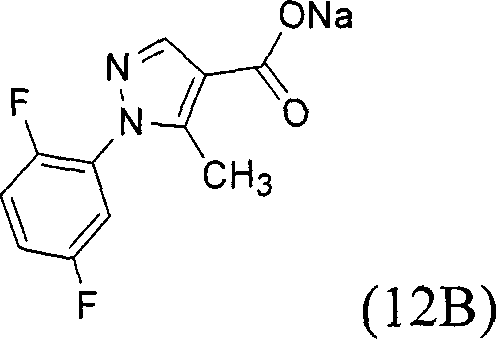
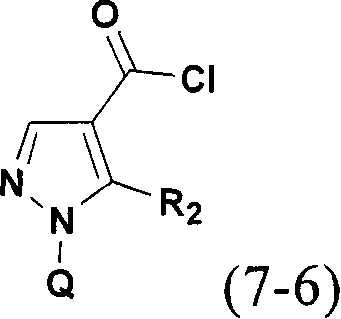
Scheme 6 shows a process for preparing compounds of formula (Ie), wherein R2Is alkyl, aminoalkyl or substituted aminoalkyl. Ethyl acetoacetate (6-1), for example ethyl 3-oxobutyrate, can be reacted with a methylamine such as dimethoxy-N-N-dimethylmethylamine (6-2) in a solvent to give intermediate compound (6-3), which when reacted with a suitable hydrazine such as, for example, phenylhydrazine, pyridylhydrazine, etc., followed by the addition of sodium hydroxide, gives the intermediate sodium salt of formula (6-4). Reaction of the sodium salt with an acid such as HCl affords the carboxylic acid of formula (6-5). The carboxylic acid can then be converted to the acid chloride after reaction with a sulfonyl chloride (see also scheme 1) in a solvent such as DCM to give compound (6-6), which can be reacted with benzamide hydrochloride (1-4) (or compound 5-5 as in scheme 5) in a solvent such as DCM in the presence of a base such as DIPEA to give the compound of formula (Ie) (see also examples 11-12 below).
Scheme 7
Scheme 7 represents an alternative to the general scheme according to scheme 6, but wherein R2The amine group which is directly attached, i.e., cyano compound 7-1, is reacted with a methylamine such as dimethoxy-N-dimethylmethylamine (6-2) in a solvent, then reacted with a suitable hydrazine such as, for example, phenylhydrazine, pyridylhydrazine, etc., in a solvent such as ethanol, followed by addition of sodium hydroxide to give the intermediate sodium salt of formula (7-2). Ammonia of Compound (7-2)The radicals may be further processed to alkylamine or substituted amine radicals R using principles known in the art2And/or compound (7-2) may be incorporated into other embodiments and methods disclosed herein. Those skilled in the art will recognize that other reagents may be suitably given regardless of whether the amine-protecting group of the amine of compound (7-2) is used.
Scheme 8
Diketene (8-1), wherein R is2aIs hydrogen, alkyl, cyclic amino, aminoalkyl (preferably wherein R is2aHydrogen), and 3-amino-N-cyclopropyl-4-methylbenzamide hydrochloride can be reacted with DIPEA in DCM at room temperature to give compound (8-3). DMF-DMA was added at room temperature and DCM was removed to give compound (8-4) in the presence of the appropriate hydrazine (QNHNH)2) Such as optionally substituted phenylhydrazines, pyridylhydrazines, and the like, in a solvent such as EtOH to provide a compound of formula (Ih) wherein R is2aAs defined above, hydrogen is preferred.
In addition, other compounds of formula (I) may be prepared using procedures generally known to those skilled in the art. In particular, the following examples provide additional methods for preparing the compounds of the present invention. The invention will now be further described by the following working examples, which are non-limiting exemplary embodiments of the invention. HPLC purification was performed on a C18 Reverse Phase (RP) column using a mixture of water MeOH and TFA as buffers. These examples are illustrative and not restrictive. Other embodiments are possible within the spirit and scope of the invention as defined by the appended claims.
Example 1
Step A: 5-amino-1-phenyl-pyrazole-4-carboxylic acid chlorides
The suspension of 5-amino-1-phenyl-pyrazole-4-carboxylic acid (1.27g, 6.24mmol) in thionyl chloride (10mL) was stirred at room temperature for 1.75 h. The mixture was concentrated under reduced pressure and dried in vacuo to give the above acid chloride 1A (1.38g, 100% yield) as a yellow solid.
And B:
to a stirred solution of 3-cyclopropylcarbamoyl-6-methylaniline (36mg, 0.19mmol) in DCM (1.5mL) and pyridine (100. mu.L) was added compound 1A (40mg, 0.15mmol) at 0 ℃. After addition, the cooling bath was removed and the solution was stirred at room temperature for 15 min. The reaction mixture was concentrated and the residue was diluted with 0.5N aqueous HCl (8 mL). The precipitate was sonicated for several minutes and filtered. With 0.5N HCl aqueous solution, saturated NaHCO3The aqueous solution, water washed the solid, and dried in vacuo to afford example 1(61mg, 90% yield) as a white solid. LC/MS: 376.13(M + H)+。
Example 2
Step A:
to a stirred suspension of 2-fluorophenylhydrazine hydrochloride (1.96g, 12.05mmol) and triethylamine (1.68mL, 12.05mmol) in anhydrous EtOH (16mL) was added (ethoxymethylene) -cyanoacetic acid ethyl ester (2.24g, 13.3mmol) in portions. The mixture was stirred for 50 min, diluted with water and extracted with EtOAc. The combined organic extracts were washed with water, brine and dried (Na)2SO4) Filtering, and reducing pressure and vacuumTo give the above compound 2A (3.06g, quantitative yield) as a pale brown solid. HPLC retention time: 1.34 min. LC/MS: 250.13(M + H)+。
And B:
a solution of ethyl-5-amino-1- (2-fluorophenyl) -pyrazole-4-carboxylate 2A (3.06g, 12.28mmol) in THF: MeOH (64mL, 1: 1) and 2.5N aqueous NaOH (31mL) was heated at 60 deg.C for 8 h. The mixture was concentrated under reduced pressure and acidified with 6N aqueous HCl at 0 ℃. The precipitated solid was collected by filtration, washed with water and DCM, and dried to give acid 2B (1.72g, 63%). Further acid 2B (160mg, 6%) was obtained from the filtrate by extraction with DCM. HPLC retention time: 0.85aAnd (3) minutes. LC/MS: 222.08(M + H)+。
And C:
a solution of carboxylic acid 2B (0.5g, 2.26mmol) in thionyl chloride (3.7mL) was stirred at room temperature for 2 h. The mixture was concentrated under reduced pressure and in vacuo to give the acid chloride 2C (624mg, 100% yield) as an orange solid. HPLC retention time: 1.11amin;LC/MS:236.11(M+H)+For the corresponding methyl ester.
Step D:
to a stirred solution of 3-methylcarbamoyl-6-methylaniline (31mg, 0.19mmol) in DCM (1.5mL) and pyridine (100. mu.L) was added 5-amino-1- (2-fluorophenyl) -pyrazole-4-carboxylic acid chloride 2C (40mg, 0.14mmol) at 0 ℃. After addition, the cooling bath was removed and the solution was stirred at room temperature for 45 minutes. The reaction mixture was concentrated and the residue was diluted with 0.5N aqueous HCl (8 mL). The precipitated solid was sonicated for several minutes and filtered. With 0.5N HCl aqueous solution, saturated NaHCO3The aqueous solution, water washed the solid, and dried in vacuo to give example 2(33mg, 65% yield) as a light brown powder. HPLC retention time: 1.20amin。LC/MS:368.16(M+H)+。
Example 3
Step A: 5-amino-1-phenyl-4-ethoxyformylpyrazole
Phenylhydrazine (21.2gm, 0.19moles), (ethoxymethylene) -cyanoacetic acid ethyl ester (35gm, 0.21moles), and anhydrous EtOH (200ml) were refluxed for 1 hour. The reaction volume was reduced by half and cooled in ice and the desired product was collected by filtration. The filtrate was further reduced in volume to 120ml, cooled and then filtered to collect additional solid. The yellow solids were combined to give compound 3A (41.6gm, 94% yield).
And B: 5-amino-phenylpyrazole-4-carboxylic acids
Compound 3A (41gm), THF (50ml), MeOH (150ml), and 3N NaOH (100ml) were combined and refluxed for 4 hours. Most of the solvent was removed by evaporation and the residue was neutralized with 1N HCl (300 ml). The product was collected by filtration as a cream coloured solid, washed and dried to give compound 3B (38gm, quantitative yield).
And C: example 3
Compound 3B (7.42gm, 36.8mmole), thionyl chloride (5.22gm, 1.2 eq.), THF (50ml) and DMF (10 drops) were briefly refluxed. The turbid reaction solution is filtered through a medium frit, evaporated and washed with waterThe residue was triturated with 9: 1 hexane: diethyl ether (30ml) to give the product as a yellow solid. It was redissolved in THF (100ml) and added slowly at 0 deg.C to a second reaction solution containing 3-amino-4-methylbenzamide (6.0gm) and pyridine (5.78gm, 2 equivalents) in THF. The reaction was allowed to stir overnight, during which time it was allowed to reach room temperature. The reaction was evaporated and the solid residue washed with 1N HCl (2X 50ml), 1N NaOH (2X 50ml) and dried to give example 3(10.2gm, 79.8% yield) above. (M + H)+350.13, HPLC retention time 1.24a。
Example 4
Step A:
ethyl (ethoxymethylene) cyanoacetate (17.2g, 101mmol) and 4-fluorophenylhydrazine hydrochloride (15g, 92mmol) were mixed in anhydrous EtOH (150mL) at room temperature, and triethylamine (13mL, 92mmol) was introduced dropwise via syringe. The mixture was stirred overnight, diluted with ether and filtered. The filtrate was diluted with EtOAc (500mL) and washed with water (100 mL. times.3), brine, Na2SO4Drying, filtration and concentration under reduced pressure gave 22.5g (98%) of compound 4A as a brown oil. HPLC retention time: 2.73min (Wide). LC/MS: 250.48(M + H)+。
And B:
a solution of compound 4A (22.5g, 90.4mmol) in anhydrous EtOH (200mL) and an aqueous solution of 3N NaOH (75mL, 226mmol) were refluxed for 2 hours. The mixture was concentrated under reduced pressure, taken up in water (200mL), washed with DCM (100 mL. times.3)And (6) washing. The aqueous layer was acidified with 6N aqueous HCl at 0 ℃ and the precipitated solid was collected by filtration, washed with water and dried to give acid 4B (11.6g, 58%). HPLC retention time: 1.92 min. LC/MS: 222.08(M + H)+。
And C: example 4
To a slurry of carboxylic acid (5.5g, 24.9mmol) in DCM was added thionyl chloride (2.35mL, 32.3 mmol). After 10min, DMF (3 drops) was added and the solution was stirred at room temperature for 2 h. The mixture was concentrated under reduced pressure to give a yellow solid. The solid was slurried in DCM (50mL) and cooled to 0 deg.C, then solid 3-methylcarbamoyl-6-methylaniline (5.11g, 31.1mmol) was added, followed by the dropwise addition of a solution of pyridine (6.0mL, 74.7mmol) in DCM (25mL) over 15 min. After the addition was complete, the cooling bath was removed and the solution was stirred at room temperature for 30 min. The reaction mixture was concentrated and the residue was treated with water (20mL) and 1N aqueous HCl (50 mL). The resulting slurry was sonicated for a few minutes, filtered, and washed with 1N aqueous HCl, water, and dried in vacuo to give about 9g of a yellow solid. The solid was triturated with hot EtOAc, hot ether, then washed with acetonitrile and decolorized with activated carbon in MeOH. The filtrate was concentrated and the resulting solid recrystallized from MeOH/acetonitrile to give example 4 above as a white solid (6.27g, 69% yield). HPLC retention time: 2.58 min. LC/MS: 368.24(M + H)+。1H NMR:(d6-DMSO,500mHz)δ9.38(s,1H),8.37(m,1H),8.11(s,1H),7.79(s,1H),7.59-7.60(dd,2H),7.59(s,1H),7.35(s,1H),7.31-7.38(dd,2H),6.42(s,2H),2.76(d,3H),2.26(s,3H)。
Examples 5 to 9
Examples 5 to 9 having the above formula wherein the variables Q and R6Having the recorded values as shown in table 1, prepared according to the procedure described in the preparation of examples 1 to 4. The starting materials are commercially available, or can be prepared by the schemes herein,or prepared using procedures known in the art.
TABLE 1
Example 10
Step A:
to ethyl acetoacetate (100g, 769mmol) was added p-TsOH (333mg, 1.75mmol) and DMF-DMA (153mL, 1150 mmol). The solution was heated at 100 ℃ for 2.5hr and then cooled to room temperature. The distillation apparatus was attached and the product was purified by fractional distillation under vacuum to give (10A) (92.7g, 66%) as a yellow oil.
And B:
to a solution of (10A) (0.424g, 2.3mmol) in EtOH (5mL) was added pyridin-2-yl-hydrazine (0.25g, 2.3 mmol). The solution was heated to 65 ℃ for 3h, then aqueous NaOH (1N, 6.9mL, 6.9mmol) was added and the reaction allowed to cool to room temperature overnight. The EtOH was evaporated and the resulting aqueous solution was acidified to approximately pH 3. The resulting precipitate was collected by filtration and air dried to give (10B) as a light brown solid (0.38g, 81%). HPLC retention time (min): 1.92, MW: 203.2, LCMS [ M + H ]]+=204.0。
And C:
to (10)B) (0.041g, 0.201mmol) in NMP (1.0mL) was added BOP (0.117g, 0.265mmol), DIPEA (0.115mL, 0.66mmol) and 3-amino-N-cyclopropyl-4-methyl-benzamide hydrochloride (0.050g, 0.22 mmol). The solution was heated to 50 ℃ and stirred overnight. The reaction was heated at 80 ℃ for a further 4 hours. The solution was cooled to room temperature and water (2mL) was added. The product was extracted with EtOAc to give a crude residue which was further purified by Prep HPLC to give (10) as an off-white solid (0.032g, 42%). HPLC retention time (min): 3.02, MW: 375.4, LCMS [ M + H ]]+=376.1。
Example 10A: another preparation of the Compound of example 10
1- (2-pyridyl) -5-methylpyrazole-4-carboxylic acid (1.6gm, 7.9mmol) and thionyl chloride (10ml) were stirred at room temperature for 1 hour. The reaction was evaporated and the residue dissolved in THF (75 ml). To this was added a solution containing 3-amino-4-methylcyclo-benzamide (1.64gm, 1.1 equiv) and THF (25ml) and the reaction was stirred at room temperature overnight. The reaction was evaporated, partitioned between 9: 1 dichloromethane: MeOH (100ml) and 1N NaOH (2X 50ml), followed by 1N HCl (2X 50ml), dried over sodium sulfate, filtered, evaporated and chromatographed (silica gel, 97.5 dichloromethane: 2.5MeOH) to give the pure product of example 10 as a white solid (233 mg).
Example 11
Step A:
5-methyl-1-phenyl-1H-pyrazole-4-carboxylic acid (0.10g, 0.495mmol) [ prepared in a similar manner to (10B) at room temperature]Dissolved in SOCl2(2 mL). After stirring at room temperature for 30min, SOCl was evaporated2Leaving the product (11A) as a white solid which can be used directlyNo further purification was used.
And B:
to a solution of compound (11A) in DCM (2mL) were added DIPEA (0.345mL, 1.98mmol) and 3-amino-N-cyclopropyl-4-methyl-benzamide hydrochloride (0.123g, 0.544 mmol). The reaction was stirred at room temperature overnight. Water (4mL) was added to stop the reaction and the aqueous phase was extracted with DCM (3X 3 mL). After evaporation, the organic residue was purified by Prep HPLC to give example (11) above as a white solid (0.139g, 75%). HPLC retention time (min): 2.87, MW: 374.5, LCMS [ M + H ]]+=375.2。
Example 11A-Another method for preparing example 11
Step A: 5-methyl-1-phenyl-1H-pyrazole-4-carboxylic acid sodium salt
A solution of ethyl 3-oxobutyrate (130.14g, 1mol) and dimethoxy-N, N-dimethylmethylamine (119.16g, 1mol) in EtOH (200mL) was stirred at 60 ℃ for 1 hour and then cooled to room temperature. Phenylhydrazine (98.33mL, 1mol) was added to the solution and the temperature was maintained at 60 ℃. After the addition was complete, the mixture was stirred at 60 ℃ for 1 h. EtOH was removed under reduced pressure and the residue was dissolved in EtOAc (1L) and then washed with 1N HCl (50mL), NaHCO3(100mL)、H2O and brine wash. The organic solvent was removed under reduced pressure and the residue was dissolved in EtOH (460 mL). An aqueous solution (100mL) of NaOH (80g) was added and the mixture was stirred at 65 ℃ for 2 hours. After cooling the solution to room temperature, the precipitate was collected by filtration and washed with isopropanol to give the above white sodium salt. Yield 81%, 1HNMR (CD3 OD): 7.94(s, 1H), 7.45-7.59(m.5H), 2.53(s, 3H).
And B: 5-methyl-1-phenyl-1H-pyrazole-4-carboxylic acid
The salt of step A (11A-2) was stirred in 1N HCl (500ml) solution for 20 minutes. The precipitate was collected by filtration and dried to give the above acid as a white solid (162g, 98% yield). 1HNMR (CDCl 3): 11.50-12.80(s, 1H), 8.12(s, 1H), 7.26-7.54(m, 5H), 2.59(s, 3H).
And C: 5-methyl-1-phenyl-1H-pyrazole-4-carbonyl chloride
To a solution of 5-methyl-1-phenyl-1H-pyrazole-4-carboxylic acid (11B-2) (20.2g, 0.1mol) in DCM (200mL) and DMF (730mg, 0.01mol) of step B was added sulfuryl chloride (8.73mL, 0.12mol) at room temperature. The mixture was stirred at 36 ℃ for 2 hours. The solution was concentrated under reduced pressure and DCM (200mL) was added to the white solid residue to form a suspension of the corresponding acid chloride described above. Yield: 98%, 1HNMR CDCl 3): 8.16(s, 1H), 7.45-7.59(m, 5H), 2.53(s, 3H).
Step D: n- (5- (Cyclopropylcarbamoyl) -2-methylphenyl) -5-methyl-1-phenyl-1H-pyrazole-4-carboxamide (example 11)
To a solution of 3-amino-N-cyclopropyl-4-methylbenzamide hydrochloride (22.6g, 0.1mol) in DCM (300mL) was added DIPEA (41.9mL, 0.24 mol). The solution was stirred for 5 minutes, then cooled to 0 ℃ and the suspension of step B was added. The mixture was stirred at room temperature for 2 hours and quenched with water (200 mL). The precipitate was collected, washed with water and DCM, then stirred in EtOH (100mL) and water (100 mL). The solid was collected and washed with 50% EtOH in water and further purified by recrystallization in 95% EtOH to afford example 11 as a white solid (95% yield).1H NMR(500MHz,DMSO)δ:0.52(d,2H,J=1.7),0.62(m,2H),2.23(s,3H),2.49(s,3H),2.80(m,1H),7.28(d,1H,J=7.7),7.50(m,5H),7.57(d,1H,J=7.7),7.76(s,1H),8.26(s,1H),8.36(s,1H),9.59(s,1H) 13C NMR(500MHz,DMSO)δ:5.59,11.43,17.90,22.94,115.19,124.41,125.20,125.60,128.31,129.18,129.97,132.25,136.08,137.09,138.58,139.27,142.10,161.51,166.81。
Example 11B-an alternative method for preparing example 11
To a mixture of 3-amino-N-cyclopropyl-4-methylbenzamide hydrochloride (22.6g, 0.1mmol) and DIPEA (19.2mL, 0.11mmol) in DCM (200mL) was added diketene (11.6mL, 0.15mmol) and the resulting solution was stirred at room temperature for 30 min. DMF-DMA (20mL, 0.15mol) was added and the solution was stirred at room temperature for 5 min. DCM was removed under reduced pressure. The residue was dissolved in EtOH (100mL) and phenylhydrazine (11.8mL, 0.12mol) was added. The solution was refluxed for 1.2 hours. The precipitate was collected at room temperature and purified by recrystallization from EtOH (100mL) to give example 11(28g) as white crystals in 76% yield.1H NMR(500MHz,DMSO)δ:0.52(d,2H,J=1.7),0.62(m,2H),2.23(s,3H),2.49(s,3H),2.80(m,1H),7.28(d,1H,J=7.7),7.50(m,5H),7.57(d,1H,J=7.7),7.76(s,1H),8.26(s,1H),8.36(s,1H),9.59(s,1H)13C NMR(500MHz,DMSO)δ:5.59,11.43,17.90,22.94,115.19,124.41,125.20,125.60,128.31,129.18,129.97,132.25,136.08,137.09,138.58,139.27,142.10,161.51,166.81。
Example 12
Step A:
to a solution of compound 10A (64.26g, 0.347mmol) (see example 10 above) in EtOH (250mL) was added 1, 5-difluorophenylhydrazine (50g, 0.347mmol) portionwise at room temperature. MonitoringThe exothermic reaction prevented the solution from boiling and the internal temperature reached 55 ℃. The reaction was then heated in an oil bath to an internal temperature of 65 ℃ and stirred overnight. Upon cooling to room temperature, EtOH was evaporated and the resulting brown solid was taken up in EtOAc (300mL) and washed with 1N HCl (150mL) and saturated NaHCO3Aqueous (150mL) wash. The two aqueous phases were back-extracted with EtOAc (50mL) in turn. The combined organic phases were washed with brine (150mL) and Na2SO4Drying, filtration, and concentration gave ester 12A as a brown solid.
And B:
ester 12A was absorbed into EtOH (160mL) and a solution of NaOH (28g, 0.694mmol) in water (35mL) was added. The solution was stirred at room temperature for 4 days. The reaction was found to be incomplete by HPLC analysis, so the temperature was brought to just below reflux (65-70 ℃) for 2-3 h. The reaction was cooled to 0 ℃ and the resulting solid was collected by filtration. The solid was washed with ice cold IPA until no more color washed out. Sodium salt 12B was obtained as an off-white solid (76.14g, 84.4% over 2 steps). Air dried and then used directly in the next step.
And C: 1- (2, 5-difluoro-phenyl) -5-methyl-1H-pyrazole-4-carboxylic acid
To a stirred solution of 1N HCl (500mL) was added sodium salt 12B (76.1g) in portions. After 1-2 hours, the product was collected by filtration and washed with ice-cold diluted HCl (0.1N) to give 1- (2, 5-difluoro-phenyl) -5-methyl-1H-pyrazole-4-carboxylic acid (12C) as a white solid (69.3g, 99.4%). HPLC retention time: 2.10 min; LCMS MH+=239.09;1HNMR(500MHz,DMSO-d6)δ12.56(s,1H),8.01(s,1H),7.60(m,2H),7.52(m,1H),2.38(s,1H)ppm。
Step D:
to a solution of compound 12C (68g, 0.285mmol) and DMF (2.1mL) in DCM (700mL) was added SOCl slowly over 10-15 min2(24.9mL, 0.343 mmol). The reaction was stirred at room temperature overnight and then refluxed for 1-2 hours. Adding SOCl2(5mL) and heating was continued for 4 hours. HPLC analysis indicated a small amount of s.m. remained. Adding SOCl2(5mL) and DMF (1mL) and heating was continued for 2-3 hours. The reaction was concentrated to give compound 12D as an off-white solid, which was used directly in the next step.
Step E: example 12
Compound 12D was suspended in DCM (1L) and 3-amino-N-cyclopropyl-4-methyl-benzamide hydrochloride (70.94g, 0.343mmol) and DIPEA (119.1mL, 0.654mmol) were added. The reaction started to be exothermic, causing the solution to boil. A white precipitate formed after stirring overnight at room temperature. Water (400ml) was added and the mixture was shaken vigorously. The solid was collected, washed with water (300mL) and DCM to give an off-white solid. The solid was dissolved in boiling EtOH (600mL), and hot water (400mL) and saturated NaHCO were added3Aqueous solution (100 mL). After cooling, the resulting precipitate was collected by filtration and washed with ice cold 1: 1 EtOH: water to give the product of example 12 as a white crystalline solid (93.36g, 79.8% over 2 steps). HPLC retention time: 2.63 minutes; LCMS MH+411.13; HRMS observed mass 411.1641 calculated mass 411.1633. Elemental analysis: c22H20N4O2F2Theoretical value: c64.38, H4.91, N13.65, F9.25 KF: < 0.1%, Cl: less than 0.05%. Experimental observations/experimental values: c64.17, H4.77, N13.64, F9.37;1H NMR(500MHz,DMSO-d6)δ9.69(s,1H),8.39(d,4.9Hz,1H),8.36(s,1H),7.80(s,1H),7.63(m,3H),7.55(m,1H),7.35(d,7.7Hz,1H)2.86(m,1H),2.42(s,3H),2.28(s,3H),0.68(m,2H),0.69(m,2H)ppm。13CNMR(500MHz,DMSO-d6)δ167.45,161.86,(159.28,154.4),(157.34,152.44),144.58,140.77,137.80,136.63,132.93,130.64,(127.51,127.43,127.31),126.30,125.16,118.77(m,2C),(117.04,116.83),115.86,23.62,18.54,11.16,6.25ppm.
examples 13 to 38
Examples 13-38 having the above formula, wherein the variable Q, R2And R6Having the recorded values as shown in table 2, were prepared as described in the preparation of examples 10 to 12. The starting materials are commercially available or can be prepared according to the schemes herein and/or using procedures known in the art.
TABLE 2
Example 39
Step A:
to a solution of lithium acetoacetate (90%, 0.066g, 0.611mmol), BOP (0.270g, 0.611mmol) and DIPEA (0.106mL, 0.611mmol) in DMF (1mL) was added 3-amino-N-cyclopropyl-4-methyl-benzamide hydrochloride (0.115g, 0.51 mmol). The solution was stirred at room temperature overnight, water (4mL) was added and the product was extracted with EtOAc. After evaporation, the organic residue was purified by flash chromatography (silica gel, 50-100% EtOAC in hexanes) to give (39A) as a white semi-solid (0.049g, 35%). HPLC retention time (min): 1.69, MW: 274.3 LCMS [ M + H ]]+=275.1。
And B:
to a solution of (39A) (0.050g, 0.18mmol) in DMF (0.5mL) was added DMF-DMA (2mL) and p-TsOH (0.005 g). The reaction was stirred at room temperature for 2 hours, then excess DMF-DMA was evaporated under reduced pressure. The resulting DMF solution of (39B) was used for the subsequent reaction without further purification.
And C:
to a solution of (39B) in crude DMF was added EtOH (1mL) and 2-methoxyphenylhydrazine (0.377g, 2.73 mmol). The solution was stirred at room temperature for 45 minutes and then heated to 60 ℃ for 1.5 hours. Purification by Prep HPLC gave example 39 above as a light brown solid (0.0085g, 12%). HPLC retention time (min): 2.79, MW: 404.5, LCMS [ M + H ]]+405.2。
Examples 40 to 51
Examples 40-51, having the formula above, wherein the variable Q has the reported value as shown in table 3, were prepared according to the procedure described for the preparation of example 39. The starting materials are commercially available or can be prepared according to the schemes herein and/or using procedures known in the art.
TABLE 3
Example 52
Step A:
to a solution of ethyl 5-amino-1-phenyl-1H-pyrazole-4-carboxylate (0.25g, 1.05mmol) and copper (II) bromide (0.281g, 1.26mmol) in acetonitrile (2mL) was added tert-butyl nitrite (0.167mL, 1.26mmol) dropwise at 0 ℃. The reaction was allowed to warm to room temperature over 2 hours and then stirred at room temperature overnight. The reaction was partitioned with EtOAC (8mL), washed with 1N aqueous HCl (2X 3mL), water (1X 3mL), brine (1X 3 mL). With MgSO4The organic phase was dried, filtered and evaporated to give (52A) as a yellow solid (0.304g, 98%, 85% AP HPLC). HPLC retention time (min): 3.62, MW: 295.13 LCMS [ M + H ]]+295.3。
And B:
to a solution of compound (52A) (0.025g, 0.085mmol) in THF (1mL) at 0 deg.C was added NaOH waterSolution (1N, 0.25mL, 0.25 mmol). The solution was allowed to warm to room temperature overnight and then heated to 50 ℃ for 3-4 hours. THF was evaporated and the aqueous solution was acidified to approximately pH 3. The resulting precipitate was collected by filtration and air dried to give (52B) as an off-white solid (0.015g, 64%). HPLC retention time (min): 2.54, LCMS [ M + H ]]+=267.1,269.1。
And C:
to a solution of (52B) (0.109g, 0.41mmol) in DMF (2mL) was added HATU (0.233g, 0.613mmol), DIPEA (0.276mL, 1.52mmol) and 3-amino-N-cyclopropyl-4-methyl-benzamide hydrochloride (0.12g, 0.530 mmol). The solution was stirred at 65 ℃ for 4 hours. After cooling to room temperature, water (8mL) was added and the resulting precipitate was collected by filtration and air dried to give 52C as a brown solid (0.112g, 63%). HPLC retention time (min): 2.92, MW: 439.3, LCMS [ M + H ]]+=439.1。
Step D:
to a solution of (52C) (0.020g, 0.455mmol) in EtOH (1mL) was added excess ethylamine (70 wt.% in H)2O, 1 mL). The solution was placed in a Personal Chemistry SmithSynthesis Microwave Reactor flask covered with a pressure cap and heated at 150 ℃ for 2h in an automatic Microwave Reactor. The solvent was evaporated and the residue was purified by Prep HPLC to give example 52(0.0098g, 53%) as an off-white solid. HPLC retention time (min): 3.59, MW: 403.5, LCMS [ M + H ]]+=404.2。
Examples 53 to 74
Examples 53-74 having the above formula, wherein the variable R2Having recorded values as shown in Table 4, by implementationPrepared by the procedure described for the preparation of example 52. The starting materials are commercially available or can be prepared according to the schemes herein and/or using procedures known in the art.
TABLE 4
Example 75
Step A:
to a solution of pyridin-2-yl-hydrazine (5.0g, 45.9mmol) in MeOH (30mL) was added 2-ethoxymethylene-malononitrile (5.5g, 50.5mmol) in several portions at room temperature. The mixture was heated to reflux for 3 hours, then cooled to-20 ℃ and stored overnight. The resulting precipitate was collected by filtration and air dried to give (75A) as a yellow solid (7.16g, 84%). HPLC retention time (min): 2.24, MW: 185.2, LCMS [ M + H ]]+=186.1。
And B:
to a solution of compound (75A) (2.0g, 10.7mmol) in DMF (10mL) at 0 deg.C was added NaH (60%, 11.9g, 11.9mmol) in portions. Stirring was continued until gas evolution ceased, at which time EtBr (0.888mL, 11.9mmol) was added dropwise. Stirring was continued for 1 hour at 0 ℃ and then the reaction was warmed to room temperature and quenched with water. The resulting precipitate was collected by filtration and air dried to give (75B) as a yellow solid (1.47g, 64%). HPLC retention time (min): 2.97, MW: 213.2, LCMS [ M + H ]]+=214.1。
And C:
a solution of (75B) (1.47g, 6.9mmol), MeOH (15mL), water (10mL), and aqueous NaOH (30N, 35mL) was heated at reflux overnight. The MeOH was acidified and the pH of the resulting solution was adjusted to between 3 and 6. The resulting precipitate was collected by filtration and air dried to give (75C) as a pale yellow solid (1.19g, 69%). HPLC retention time (min): 2.25, MW: 204.2, LCMS [ M + H ]]+=205.2。
Step D:
to a solution of (75C) (0.05g, 0.22mmol) in DMF (0.5mL) was added HATU (0.11g, 0.29mmol) and DIPEA (0.122mL, 0.7 mmol). After stirring at room temperature for 45min, 3-amino-N-cyclopropyl-4-methyl-benzamide hydrochloride (0.059g, 0.26mmol) was added. The solution was heated to 65 ℃ and stirred overnight. The reaction was heated to 85 ℃ for an additional 2 hours. Water (2mL) was added and the product was extracted with EtOAc to give a crude residue which was further purified by Prep HPLC to give (75) as a pale yellow solid (0.023g, 26%). HPLC retention time (min): 2.90, MW: 404.5, LCMS [ M + H ]]+=405.1。
Example 76
Step A: 5- (methylamino) -1-phenyl-1H-pyrazole-4-carboxylic acid ethyl ester
To a solution of ethyl 5-amino-1-phenyl-1H-pyrazole-4-carboxylate (15g, 65mmol) in DMF (100mL) was added NaH (60%, 2.85g, 71.5mmol) in portions at 0 ℃. After stirring at 0 ℃ for 1 hour, methyl iodide (4.45mL, 71.5mmol) was added dropwise. The solution was stirred at 0 ℃ for a further 2 hours and then gradually warmed to room temperature. The reaction was quenched with water, resulting in the formation of a white precipitate, which was collected by filtration and air dried. Compound 76A (11.8g) was obtained and used without further purification. HPLC retention time (min): 2.70, MW: 245.3, LCMS [ M + H ]]+=246.3。
And B: 5- (methylamino) -1-phenyl-1H-pyrazole-4-carboxylic acid
A solution of (76A) (11.8g, 48.2mmol), EtOH (50mL), water (50mL) and aqueous NaOH (3N, 48mL) was heated at reflux overnight. After cooling to 0 ℃, the solution was carefully acidified with 1N HCl. The resulting precipitate was collected by filtration and air dried to give compound (76B) as a white solid (10.4g, 69%). HPLC retention time (min): 1.99, MW: 217.2, LCMS [ M + H ]]+=218.3。
Step D: example 76
To thionyl chloride (40mL) was added (76B) (0.970g, 4.47mmol) in several portions at room temperature. After stirring at room temperature for 30min, thionyl chloride was evaporated to dryness. The residue was dissolved in DCE (8mL), 3-amino-N-cyclopropyl-4-methylbenzamide hydrochloride (1.11g, 4.91mmol) was added, followed by DIPEA (2.33mL, 13.4 mmol). The reaction was stirred at room temperature for 2 days, then quenched by the addition of water (2mL) and aqueous NaOH (1N, 2mL), resulting in the formation of a precipitate.The solution was centrifuged and the aqueous layer was removed with a pipette. An additional aliquot of water (5mL) was added, the slurry stirred for a few minutes and centrifuged again. After removal of the aqueous layer, the initial solid was collected by filtration. The solid was slurried in 10% EtOH/90% water at room temperature for 2-3 hours, then collected by filtration and air dried to give example 76 as a white solid (0.753 g). HPLC retention time (min): 2.68, MW: 389.5 LCMS [ M + H ]]+=390.2。
Examples 77 to 80
Examples 77-80 having the above formula, wherein the variable Q, R6And R8Having recorded values as shown in table 5, were prepared according to the procedures described in the preparation of examples 75 and 76. The starting materials are commercially available or can be prepared according to the protocols herein, or using procedures known in the art.
TABLE 5
Example 81
Step A:
2-chloro-3-trisA solution of fluoromethylpyridine (21g, 116mmol), hydrazine monohydrate (70mL) and EtOH (40mL) was slowly heated to 90 ℃ and held at this temperature for 3 h. After cooling to room temperature, the mixture was concentrated on a rotary evaporator to give a thick slurry. This material was dissolved in DCM (350mL) and the resulting layer was separated. The aqueous layer was extracted with additional DCM (2X 75mL) and the combined organic extracts were washed with water (4X 100mL) and brine (100 mL). After drying over anhydrous sodium sulfate, the extract was filtered and concentrated in vacuo to give 16.6g (81%) of a pale gray solid. This material was used without any further purification. HPLC retention time: 0.29 min.1H NMR:(CDCl3,400mHz)δ8.33(d,J=4.8Hz,1H),7.70(d,J=7.7Hz,1H),6.74(dd,J=7.5,5.2Hz,1H),6.26(brs,1H),4.04(s,2H)。
And B:
a mixture of ethyl acetoacetate (100mL), DMF-DMA (130mL) and p-toluenesulfonic acid (350mg) was stirred at 100 ℃ for 4 hours and then allowed to stand at room temperature for 3 days. Distillation in vacuo yielded 107g of a yellow liquid. (bp 110-. bp (literature value 265 ℃/720 mmHg).
And C:
a solution of compound 81A (16.6g, 94mmol) and compound 81B (19.1g, 103mmol) in EtOH (250mL) was heated at reflux for 5h and then cooled to room temperature. To the mixture was added an aqueous 3N NaOH solution (55mL) and the resulting solution was heated at 85 ℃ for 3.5 h. After cooling to room temperature, the EtOH was removed on a rotary evaporator and the mixture was diluted with water to a total volume of-350 mL. This mixture was extracted with a 9: 1 mixture of DCM/methanol (4X 100mL), and the combined extracts were washed with brine (150mL) and then dried over anhydrous sodium sulfate.Filtration and concentration under vacuum gave-24 g of an off-white solid. The solid was dissolved in hot diethyl ether (-350 mL) and concentrated to a volume of-75 mL. The remaining diethyl ether was decanted from the solid. This procedure was repeated 2 more times and the resulting solid was dried in vacuo to give 20.5g (81%) of compound 81C as an off-white solid. HPLC retention time: 2.13 min. LCMS (liquid Crystal display Module) [ M + H ]]+=272.5。1H NMR:(d4-MeOH,400mHz)δ8.89(d,J=4.8Hz,1H),8.48(dd,J=8.0,1.4Hz,1H),8.04(s,1H),7.87(dd,J=7.5,4.4Hz,1H),2.45(s,3H)。
Step D: example 81
To a mixture of compound 81C (10.0g, 37mmol) in DCM (70mL) was added DMF (0.29mL, 3.7mmol) and thionyl chloride (3.5mL, 48mmol) sequentially at room temperature and the resulting solution was stirred at room temperature for 3 h. Concentration in vacuo afforded 10.7g of a clear yellow oil. This material was dissolved in DCM (32mL) and added slowly to a homogeneous mixture of 3-amino-N-cyclopropyl-4-methylbenzamide hydrochloride (10.0g, 44mmol) and diisopropylamine (16mL, 92mmol) in DCM (70mL) at 0 deg.C. The resulting mixture was allowed to warm to room temperature and stirred for 16 hours. The reaction mixture was diluted with DCM (250mL), the solution was washed successively with 0.25N aqueous HCl (4X 200mL), water (150mL) and brine (150mL), then dried over anhydrous sodium sulfate, filtered, and concentrated in vacuo to give a pale yellow oil. The solid was triturated 3 times with hot diethyl ether (250mL) and the resulting solid was dried in vacuo to give 14g of an off-white solid. Recrystallization from hot MeOH/water (1: 1, 200mL) provided 12.6g (77%) of example 81 as an off-white solid. HPLC retention time: 2.76 min. LCMS (liquid Crystal display Module) [ M + H ]]+=476.4。1H NMR:(d6-DMSO,400mHz)δ9.74(s,1H),8.95(dd,J=4.6,1.0Hz,1H),8.58(dd,J=8.0,1.4Hz,1H),8.41(d,J=4.2Hz,1H),8.35(s,1H),7.91(dd,J=7.8,4.8Hz,1H),7.84(d,J=1.5Hz,1H),7.65(dd,J=7.9,16.Hz,1H),7.35(d,J=8.0Hz,1H),2.90-2.83(m,1H),2.43(s,3H),2.30(s,3H),0.72-0.63(m,2H),0.60-0.56(m,2H)。
Example 82
Step A:
to a room temperature solution of tert-butyl carbazate (2.6g, 20mmol) and triethylamine (3.1mL, 22mmol) in DCE (100mL) was added a solution of 4-methyl-3-nitrobenzoyl chloride in DCE (25mL) over 30 minutes. After the addition was complete, the resulting cloudy mixture was stirred at room temperature for 2 hours, then the mixture was washed successively with 10% aqueous citric acid (2X 75mL) and brine (100mL), and then dried over anhydrous sodium sulfate. The solution was diluted with EtOAc (100mL), filtered, and concentrated in vacuo to a volume of about 50 mL. The mixture was diluted with hexane (50mL) and sonicated for a few minutes, the resulting precipitated solid was collected by vacuum filtration and dried in vacuo to give 4.7g (74%) of compound (82A) as a white solid. HPLC tR=2.54min。1H NMR(400MHz,d6-DMSO):δ10.30(s,1H),8.86(s,1H),8.27(s,1H),7.91(d,1H),7.48(d,1H),2.41(s,3H),1.26(s,9H)。
And B:
compound 82A (4.4g, 15mmol) as a solid was added portionwise to trifluoroacetic acid (45mL) at 0 ℃ and the mixture was stirred at this temperature for 30 minutes and then at room temperature for 30 minutes. The mixture was then concentrated in vacuo and the resulting white solid was partitioned between 2N aqueous sodium carbonate (200mL) and EtOAc (200 mL). The layers were separated, the aqueous portion was extracted with additional EtOAc (5X 100mL), and the combined extracts were washed with brine (100mL) and dried over anhydrous sodium sulfateDrying, filtration, and concentration in vacuo afforded 2.96g (99%) of compound (82B) as a white solid. HPLC tR=1.05min。1H NMR(500MHz,d6-DMSO):δ10.20(br s,1H),8.42(s,1H),8.05(d,1H),7.62(d,1H),5.43(br s,2H),2.56(s,3H)。LCMS[M+H]+=196.3。
And C:
a suspension of compound 82B (2.9g, 15mmol) in triethyl orthoacetate (50mL) was heated to 100 ℃ to give a clear solution. After heating at this temperature for 2 hours, the mixture was heated to 130 ℃ for a further 1 hour, then cooled to room temperature and concentrated under vacuum (heterogeogenousy). The resulting residue was dissolved in EtOAc (250mL) and washed with water (100mL) and brine (75mL), then dried over anhydrous sodium sulfate, filtered, and concentrated in vacuo to give 3.2g of compound 82C as a pale yellow solid. HPLC tR=2.45min。1H NMR(500MHz,CDCl3):δ8.57(s,1H),8.16(d,1H),7.49(d,1H),2.66(s,3H),2.63(s,3H)。
Step D:
to a suspension of compound 82C (0.37g) in EtOH (40mL) was added 5% Pd/C (35mg), and the mixture was stirred at room temperature under a hydrogen atmosphere for 2 hours. The mixture was filtered through Celite, the resulting clear filtrate was concentrated in vacuo, and the residue was triturated with methanol. The collected solid was filtered and dried to give 220mg of compound 82D as an off-white solid. HPLC tR=1.19min。1H NMR(500MHz,d6-DMSO):δ7.23(s,1H),7.08(d,1H),7.05(d,1H),5.22(s,2H),2.53(s,3H),2.10(s,3H)。LCMS[M+H]+=190.3。
Step E: example 82
5-methyl-1-phenyl-1H-pyrazole-4-carboxylic acid (28mg, 0.14mmol), 1- [3- (dimethylamino) propyl group, was reacted at room temperature]A mixture of-3-ethylcarbodiimide hydrochloride (33mg, 0.17mmol) and 1-hydroxybenzotriazole (23mg, 0.17mmol) in anhydrous DMF (0.4mL) was reacted for 1.5 h. At this time, solid aniline (82D) was added followed by DIPEA (36. mu.L, 0.20 mmol). The resulting mixture was then heated at 60 ℃ for 16h, then the solution was diluted with water (0.4mL) and cooled to room temperature. The resulting solid was collected by vacuum filtration and dried in vacuo to give 33mg of the title compound as a brown solid. HPLC retention time: 2.78 min. LCMS MH+(m/z)374。
Examples 83 to 88
Examples 83-88 having the above formula, wherein the variables Q and R2Having the recorded values as shown in table 6, was prepared according to the procedure described in the preparation of example 82. The starting materials are commercially available or can be prepared according to the protocols herein, or using procedures known in the art.
TABLE 6