CN1286702A - Poly (vinylamine)-based superabsorbent gels and method of mfg. same - Google Patents
Poly (vinylamine)-based superabsorbent gels and method of mfg. same Download PDFInfo
- Publication number
- CN1286702A CN1286702A CN98813192A CN98813192A CN1286702A CN 1286702 A CN1286702 A CN 1286702A CN 98813192 A CN98813192 A CN 98813192A CN 98813192 A CN98813192 A CN 98813192A CN 1286702 A CN1286702 A CN 1286702A
- Authority
- CN
- China
- Prior art keywords
- polyvinylamine
- crosslinked
- acid
- mixture
- vinylamide
- Prior art date
- Legal status (The legal status is an assumption and is not a legal conclusion. Google has not performed a legal analysis and makes no representation as to the accuracy of the status listed.)
- Pending
Links
Images


Classifications
-
- A—HUMAN NECESSITIES
- A61—MEDICAL OR VETERINARY SCIENCE; HYGIENE
- A61L—METHODS OR APPARATUS FOR STERILISING MATERIALS OR OBJECTS IN GENERAL; DISINFECTION, STERILISATION OR DEODORISATION OF AIR; CHEMICAL ASPECTS OF BANDAGES, DRESSINGS, ABSORBENT PADS OR SURGICAL ARTICLES; MATERIALS FOR BANDAGES, DRESSINGS, ABSORBENT PADS OR SURGICAL ARTICLES
- A61L15/00—Chemical aspects of, or use of materials for, bandages, dressings or absorbent pads
- A61L15/16—Bandages, dressings or absorbent pads for physiological fluids such as urine or blood, e.g. sanitary towels, tampons
- A61L15/42—Use of materials characterised by their function or physical properties
- A61L15/60—Liquid-swellable gel-forming materials, e.g. super-absorbents
-
- C—CHEMISTRY; METALLURGY
- C08—ORGANIC MACROMOLECULAR COMPOUNDS; THEIR PREPARATION OR CHEMICAL WORKING-UP; COMPOSITIONS BASED THEREON
- C08F—MACROMOLECULAR COMPOUNDS OBTAINED BY REACTIONS ONLY INVOLVING CARBON-TO-CARBON UNSATURATED BONDS
- C08F8/00—Chemical modification by after-treatment
- C08F8/12—Hydrolysis
-
- B—PERFORMING OPERATIONS; TRANSPORTING
- B29—WORKING OF PLASTICS; WORKING OF SUBSTANCES IN A PLASTIC STATE IN GENERAL
- B29C—SHAPING OR JOINING OF PLASTICS; SHAPING OF MATERIAL IN A PLASTIC STATE, NOT OTHERWISE PROVIDED FOR; AFTER-TREATMENT OF THE SHAPED PRODUCTS, e.g. REPAIRING
- B29C48/00—Extrusion moulding, i.e. expressing the moulding material through a die or nozzle which imparts the desired form; Apparatus therefor
-
- C—CHEMISTRY; METALLURGY
- C08—ORGANIC MACROMOLECULAR COMPOUNDS; THEIR PREPARATION OR CHEMICAL WORKING-UP; COMPOSITIONS BASED THEREON
- C08F—MACROMOLECULAR COMPOUNDS OBTAINED BY REACTIONS ONLY INVOLVING CARBON-TO-CARBON UNSATURATED BONDS
- C08F8/00—Chemical modification by after-treatment
- C08F8/04—Reduction, e.g. hydrogenation
-
- C—CHEMISTRY; METALLURGY
- C08—ORGANIC MACROMOLECULAR COMPOUNDS; THEIR PREPARATION OR CHEMICAL WORKING-UP; COMPOSITIONS BASED THEREON
- C08F—MACROMOLECULAR COMPOUNDS OBTAINED BY REACTIONS ONLY INVOLVING CARBON-TO-CARBON UNSATURATED BONDS
- C08F2810/00—Chemical modification of a polymer
- C08F2810/20—Chemical modification of a polymer leading to a crosslinking, either explicitly or inherently
Landscapes
- Chemical & Material Sciences (AREA)
- Health & Medical Sciences (AREA)
- General Chemical & Material Sciences (AREA)
- Chemical Kinetics & Catalysis (AREA)
- Medicinal Chemistry (AREA)
- Polymers & Plastics (AREA)
- Organic Chemistry (AREA)
- Engineering & Computer Science (AREA)
- Epidemiology (AREA)
- Veterinary Medicine (AREA)
- Hematology (AREA)
- Materials Engineering (AREA)
- Mechanical Engineering (AREA)
- Life Sciences & Earth Sciences (AREA)
- Animal Behavior & Ethology (AREA)
- General Health & Medical Sciences (AREA)
- Public Health (AREA)
- Dispersion Chemistry (AREA)
- Addition Polymer Or Copolymer, Post-Treatments, Or Chemical Modifications (AREA)
- Compositions Of Macromolecular Compounds (AREA)
- Processes Of Treating Macromolecular Substances (AREA)
- Materials For Medical Uses (AREA)
- Macromolecular Compounds Obtained By Forming Nitrogen-Containing Linkages In General (AREA)
- Solid-Sorbent Or Filter-Aiding Compositions (AREA)
- Polymers With Sulfur, Phosphorus Or Metals In The Main Chain (AREA)
Abstract
Description
相关申请交义参考Related Application Cross References
本申请是未决的1997年11月19日提交的美国申请序列号08/974,119的部分继续申请。This application is a continuation-in-part of pending US Application Serial No. 08/974,119, filed November 19,1997.
发明领域field of invention
本发明涉及含有聚乙烯基胺或其盐的超吸收性凝胶,以及制造聚乙烯基胺的改进方法。本超吸收性凝胶包含聚乙烯基胺,优选与酸性超吸收性聚合物如聚丙烯酸混合的聚乙烯基胺,或者包含聚乙烯基胺的盐掺和。The present invention relates to superabsorbent gels containing polyvinylamine or salts thereof, and to an improved method of making polyvinylamine. The present superabsorbent gel comprises polyvinylamine, preferably admixed with an acidic superabsorbent polymer such as polyacrylic acid, or admixed with a salt comprising polyvinylamine.
发明背景Background of the invention
吸水性树脂广泛用于卫生用品、保健用品、揩布、保水剂、脱水剂、污泥促凝剂、一次性毛巾和浴席、一次性门垫、增稠剂、一次性宠物用废物袋、防凝结剂、各种化学药品的释放控制制。吸水性树脂可以各种化学形式得到,包括饱和的和不饱和的天然的和合成的聚合物,例如:淀粉丙烯腈接枝聚合物的水解产物、羧甲基纤维素、交联的聚丙烯酸酯、磺化聚苯乙烯、水解的聚丙烯酰胺、聚乙烯醇、聚氧化乙烯、聚乙烯基吡咯烷和聚丙烯腈。Water-absorbent resins are widely used in sanitary products, health care products, wipes, water-retaining agents, dehydrating agents, sludge coagulants, disposable towels and bath mats, disposable door mats, thickeners, disposable pet waste bags, Anticoagulant, release control system of various chemicals. Water-absorbent resins are available in various chemical forms, including saturated and unsaturated natural and synthetic polymers, for example: hydrolysates of starch-acrylonitrile grafted polymers, carboxymethylcellulose, cross-linked polyacrylates , sulfonated polystyrene, hydrolyzed polyacrylamide, polyvinyl alcohol, polyethylene oxide, polyvinylpyrrolidine and polyacrylonitrile.
这类吸水性树脂称为“超吸收性聚合物”,缩写为SAPs,一般是低交联的亲水聚合物。在Goldman等的美国专利No 5,669,894中概括地叙述了SAPs。SAPs在其化学本性方面能够有区别,但是所有SAPs,即使在中压下,也都能吸收并保持相当于其本身重量许多倍的含水液体。例如,SAPs能够吸收其自身重量100倍或更多的蒸馏水。在受限制的压力下吸收含水液体的能力是用于诸如尿布的保健制品的SAP的重要技术规格。Such water-absorbent resins are called "superabsorbent polymers", abbreviated as SAPs, and are generally low-crosslinked hydrophilic polymers. SAPs are generally described in U.S. Patent No 5,669,894 to Goldman et al. SAPs can vary in their chemical nature, but all SAPs, even at moderate pressure, are capable of absorbing and retaining many times their weight in aqueous liquid. For example, SAPs are capable of absorbing 100 times their own weight or more in distilled water. The ability to absorb aqueous liquids under constrained pressure is an important specification for SAPs used in healthcare products such as diapers.
SAPs的惊人的膨胀性能和吸收性被认为是由下述原因造成的,(a)在沿聚合物链电荷之间的静电排斥,和(b)平衡离子的渗透压。然而,已知,这种吸收性能在含有诸如盐水、尿和血等电解质的溶液的情况下会大辐度下降。在此类生理液体存在下,这些聚合物不能起有效SAPs的作用。The surprising swelling properties and absorbency of SAPs are thought to result from (a) electrostatic repulsion between charges along the polymer chain, and (b) the osmotic pressure of the balancing ions. However, it is known that such absorption performance is greatly reduced in the case of solutions containing electrolytes such as saline, urine and blood. In the presence of such physiological fluids, these polymers cannot function as effective SAPs.
对含电解质液体的吸收能力的降低,可采用一般市售的SAP即聚丙烯酸钠对去离子水和0.9wt%氯化钠(NaCl)溶液的吸收性能举例说明。聚丙烯酸钠能够吸收:在0psi下每克SAP(g/g)吸收146.2g去离子水,在0.28 psi下每克聚合物103.8g去离子水,在0.7 psi下每克聚合物34.3g去离子水。可是,相同的聚丙烯酸钠,在0psi、0.28 psi和0.7 psi下,分别仅仅能够吸收43.5g、29.7g和24.8g的0.9%NaCl水溶液。所以,SAPs对诸如尿或月经等体液的吸收能力远远低于对去离子水的吸收能力,因为这些体液含有电解质。这些吸收性能的严重下降称为“盐中毒”。The reduction in the absorption capacity of electrolyte-containing liquids can be exemplified by the absorption performance of a common commercially available SAP, namely sodium polyacrylate, on deionized water and 0.9 wt% sodium chloride (NaCl) solution. Sodium polyacrylate is capable of absorbing: 146.2 g deionized water per gram of SAP (g/g) at 0 psi, 103.8 g deionized water per gram of polymer at 0.28 psi, 34.3 g deionized water per gram of polymer at 0.7 psi water. However, the same sodium polyacrylate can only absorb 43.5g, 29.7g and 24.8g of 0.9% NaCl aqueous solution at 0psi, 0.28psi and 0.7psi respectively. Therefore, the absorption capacity of SAPs for body fluids such as urine or menses is much lower than for deionized water, because these body fluids contain electrolytes. These severe decreases in absorbency are known as "salt poisoning".
现将盐中毒作用解释如下。SAPs的吸水和保水特性是由于在聚合物结构中存在着可离解的官能基团。一般说,可离解基团是羧基,当聚合物是干燥的的情况下,大比例的羧基呈盐的形式存在,在与水接触的时候,则会离解和溶剂化。在离解状态下,聚合物链含有许多具有相同电荷的官能基团,所以它们彼此排斥。这种电荷排斥使聚合物结构膨胀,接着再吸收水分子。然而,聚合物的膨胀受到在聚合物结构中交联的限制,在聚合物中存在足够数量的交联,则会防碍聚合物的增溶。The salt poisoning effect is now explained as follows. The water absorption and retention properties of SAPs are due to the presence of dissociable functional groups in the polymer structure. Generally speaking, the dissociable groups are carboxyl groups. When the polymer is dry, a large proportion of the carboxyl groups exist in the form of salts, which will dissociate and solvate when in contact with water. In the dissociated state, the polymer chains contain many functional groups with the same charge, so they repel each other. This charge repulsion causes the polymer structure to swell, which in turn absorbs water molecules. However, the swelling of polymers is limited by the presence of crosslinks in the polymer structure, the presence of a sufficient number of crosslinks in the polymer prevents the solubilization of the polymer.
推理可得:存在相当浓度的电解质妨碍可离解官能团的离解,从而导致“盐中毒”作用。所以,诸如钠离子和氯离子之类的溶解离子对SAP凝胶有两种作用。由于在凝胶内部和外部存在平衡离子,上述离子屏蔽聚合物电荷,并且消除了渗透压的不平衡。所以,溶解离子使离子凝胶实际上转变为非离子凝胶,从而失去了溶胀性能。It can be reasoned that the existence of a considerable concentration of electrolytes hinders the dissociation of dissociable functional groups, resulting in a "salt poisoning" effect. So, dissolved ions such as sodium ions and chloride ions have two effects on the SAP gel. Due to the presence of counter ions inside and outside the gel, the above-mentioned ions shield the polymer charge and eliminate the imbalance of osmotic pressure. So, dissolving ions turns the ionic gel into a non-ionic gel in effect, losing its swelling properties.
为吸收含诸如尿等电解质的液体最普通使用的SAP是中和了的聚丙烯酸,即,含有至少50%,最多100%的中和了的羧基基团者。然而,中和了的聚丙烯酸对盐中毒是敏感的。所以,为了提供对盐中毒敏感性较低的SAP,或者必须开发不同于中和了的聚丙烯酸的SAP,或者必须对中和的聚丙烯酸进行改进或处理,以便至少部分地克服盐中毒作用。The most commonly used SAP for absorbing fluids containing electrolytes such as urine is neutralized polyacrylic acid, ie, one containing at least 50% and at most 100% neutralized carboxyl groups. However, neutralized polyacrylic acid is susceptible to salt poisoning. Therefore, to provide SAPs which are less susceptible to salt poisoning, either SAPs other than the neutralized polyacrylic acid must be developed, or the neutralized polyacrylic acid must be modified or treated to at least partially overcome the salt poisoning effect.
以前的研究人员致力于阻止盐中毒作用,从而改善SAPs的吸收诸如月经和尿之类的含有电解质的液体的性能。例如:Tanaka等的美国专利No 5,274,018公开了一种SAP组合物,其包含一种可溶胀的亲水聚合物,如聚丙烯酸,和一种可离解的表面活性剂,其用量为足以在上述聚合物上形成至少一层表面活性剂层。在另一个实施方案中,将诸如含季铵基团的和呈氢氧化物(即OH)形式的凝胶等阳离子凝胶和阴离子凝胶(即,聚丙烯酸)一起使用,以便通过离子交换从溶液中除去电解质。Previous researchers have worked to prevent the effects of salt poisoning, thereby improving the ability of SAPs to absorb electrolyte-containing fluids such as menses and urine. For example: U.S. Patent No 5,274,018 to Tanaka et al discloses a SAP composition comprising a swellable hydrophilic polymer, such as polyacrylic acid, and a dissociable surfactant in an amount sufficient to At least one surfactant layer is formed on the material. In another embodiment, cationic gels, such as those containing quaternary ammonium groups and in the hydroxide (i.e., OH) form, are used together with anionic gels (i.e., polyacrylic acid) to remove from solution by ion exchange Electrolyte is removed.
Wong的美国专利No 4,818,598公开了混合诸如DEAE(二乙胺乙基)纤维素之类的纤维状阴离子交换材料和诸如聚丙烯酸酯之类的水凝胶,以改善吸收性能。WO 96/17681公开了将诸如聚丙烯酸之类的阴离子SAP与以多糖类为基础的阳离子SAP相混合,以便克服盐中毒作用。相似地,WO 95/15163公开了,将含有至少20%呈碱(即,OH)形式的官能基团的阳离子SAP和含有至少50%呈酸形式的官能基团的阳离子交换树脂,即,非溶胀离子交换树脂相混合。WO 96/15180公开了一种吸收性材料,其包含诸如聚丙烯酸的阴离子SAP和阴离子交换树脂即非溶胀离子交换树脂。U.S. Patent No 4,818,598 to Wong discloses mixing fibrous anion exchange materials such as DEAE (diethylaminoethyl) cellulose with hydrogels such as polyacrylates to improve absorption properties. WO 96/17681 discloses mixing anionic SAPs such as polyacrylic acid with cationic SAPs based on polysaccharides in order to overcome the salt poisoning effect. Similarly, WO 95/15163 discloses combining a cationic SAP containing at least 20% of functional groups in the base (i.e. OH) form with a cation exchange resin containing at least 50% of the functional groups in the acid form, i.e. non- The swollen ion exchange resin is mixed. WO 96/15180 discloses an absorbent material comprising an anionic SAP such as polyacrylic acid and an anion exchange resin, ie a non-swellable ion exchange resin.
这些参考文献公开了力图克服盐中毒作用的一些组合。然而,希望提供一种象聚丙烯酸钠那样的、具有优良吸收和保持性的,所以,能够单独作为SAP使用的SAP。也希望将这类SAP与聚丙烯酸或者其它含酸的SAP混合,以便克服盐中毒作用。These references disclose combinations in an attempt to overcome the effects of salt poisoning. However, it is desired to provide a SAP which is excellent in absorbency and retention like sodium polyacrylate, so that it can be used alone as SAP. It is also desirable to mix such SAPs with polyacrylic acid or other acid-containing SAPs in order to overcome the salt poisoning effect.
发明概述Summary of the invention
本发明的目标是以聚乙烯基胺为基础的超吸收性凝胶。聚乙烯基胺聚合物能够与诸如聚丙烯酸的酸性吸水树脂一起使用,以便有助于克服盐中毒作用,或者能够单独使用聚乙烯基胺聚合物的盐作为SAP。聚乙烯基胺聚合物也能单独使用,作为吸收和保持酸性介质的SAP。更具体地说,用作SAP或用作SAP的一个组分的聚乙烯基胺是低交联的,和,在优选的实施方案中,其是经表面处理的,以便改善吸收性能。The object of the present invention is a superabsorbent gel based on polyvinylamine. The polyvinylamine polymer can be used together with an acidic water-absorbing resin such as polyacrylic acid to help overcome the salt poisoning effect, or a salt of the polyvinylamine polymer can be used alone as the SAP. Polyvinylamine polymers can also be used alone as SAPs for absorbing and retaining acidic media. More specifically, the polyvinylamine used as SAP or as a component of SAP is low crosslinked and, in a preferred embodiment, is surface treated to improve absorption properties.
所以,本发明的一方面是提供一种制造包含乙烯基胺单体单元的、能够采用适当的多官能乙烯基单体交联的聚乙烯基胺的改进方法。本方法使在聚乙烯基胺的聚(N-乙烯基酰胺)前体中的残余N-乙烯基酰胺的量显著降低,和,所以,除去了严格的提纯工序,或者使长的聚合反应时间得到缩短,以前这些是用来克服残余单体含量问题的。所以,本改进方法使加工时间缩短,并且使生产成本降低。Accordingly, it is an aspect of the present invention to provide an improved process for the manufacture of polyvinylamines comprising vinylamine monomer units which can be crosslinked using suitable polyfunctional vinyl monomers. The present method significantly reduces the amount of residual N-vinylamide in the poly(N-vinylamide) precursor of polyvinylamine, and, therefore, eliminates stringent purification steps, or long polymerization times shortened, previously these were used to overcome residual monomer content issues. Therefore, the improved method shortens the processing time and reduces the production cost.
本发明的另一方面是提供一种具有与诸如聚丙烯酸钠之类的常规SAP相类似的吸收性和保留性能的SAP。本SAP是通过采用足够量的诸如盐酸之类的酸中和聚乙烯基胺制造的,所谓足够量是使胺官能基团的至少约10%,即约10%~100%被中和。所制得的聚乙烯基胺盐是一种优良的吸收含水介质的SAP。Another aspect of the present invention is to provide a SAP having absorbency and retention properties similar to conventional SAPs such as sodium polyacrylate. The present SAP is made by neutralizing the polyvinylamine with an acid such as hydrochloric acid in a sufficient amount to neutralize at least about 10%, ie from about 10% to 100%, of the amine functional groups. The resulting polyvinylamine salt is an excellent SAP for absorbing aqueous media.
按照本发明的另一个重要方面,未中和的低交联的聚乙烯基胺能够单独用来吸收和保留酸性水介质。酸性水介质使低吸收性聚乙烯基胺在吸收期间转变成高吸收聚乙烯基胺盐,即,使聚合物转变成SAP。所以,聚乙烯基胺是一种用来清除泄漏酸的优良树脂,并用于救治酸类灼伤。According to another important aspect of the present invention, unneutralized, low cross-linked polyvinylamines can be used alone to absorb and retain acidic aqueous media. The acidic aqueous medium converts the low-absorbency polyvinylamine into the superabsorbent polyvinylamine salt during absorption, ie converts the polymer into SAP. Therefore, polyvinylamine is an excellent resin for cleaning up spilled acid and is used to treat acid burns.
本发明的再一个方面是提供一种克服电质解盐中毒作用的改进的SAP。尤其是,改进的SAP材料含有,诸如聚丙烯酸之类的酸性可溶胀树脂和聚乙烯基胺的混合物。Yet another aspect of the present invention is to provide an improved SAP that overcomes the poisoning effects of electrolyte salts. In particular, the improved SAP material contains a mixture of an acid swellable resin such as polyacrylic acid and polyvinylamine.
本发明的这些方面和其它方面及其优点,从下述优选实施方案的详述,能够显而易见。These and other aspects of the invention and their advantages will be apparent from the following detailed description of the preferred embodiments.
附图简述Brief description of the drawings
图1和2是一系列实验室制备的尿布芯在0.7psi负荷下的捕获(acquisition)时间(秒)对袭击(insults)次数的曲线图。Figures 1 and 2 are graphs of acquisition time (seconds) versus number of insults for a series of laboratory prepared diaper cores under a 0.7 psi load.
图3和4是一系列实验室制备的尿布芯在0.7psi负荷下捕获速率(ml/sec)对袭击次数的曲线图。Figures 3 and 4 are graphs of acquisition rate (ml/sec) versus number of assaults for a series of laboratory prepared diaper cores under a 0.7 psi load.
优选实施方案详述DETAILED DESCRIPTION OF THE PREFERRED EMBODIMENT
本发明的目标在于:(a)一种制造聚乙烯基胺的改进方法,(b)聚乙烯基胺和聚乙烯基胺盐,以及它们作为SAPs的应用,和(c)包含聚乙烯基胺和酸性吸水树脂的混合物的改性SAP材料。The object of the present invention is: (a) an improved process for the manufacture of polyvinylamine, (b) polyvinylamine and polyvinylamine salts, and their use as SAPs, and (c) polyvinylamine containing A modified SAP material that is a mixture of an acidic water-absorbing resin.
(a)制造聚乙烯基胺的改进方法(a) Improved method for producing polyvinylamine
聚乙烯基胺和由其衍生的盐是已知聚合物。例如:下述专利公开了聚乙烯基胺的合成或制造方法:美国专利No 4,798,871;美国专利No 4,843,118;和美国专利No 4,804,793。另外,美国专利No4,018,826公开了一种制备聚乙烯基胺及其盐的方法。Ford等的美国专利WO 5,491,199公开了在过渡金属催化剂存在下通过加热聚合物制备不含甲酸的聚乙烯基胺的方法。Polyvinylamine and salts derived therefrom are known polymers. For example: the following patents disclose the synthesis or manufacture of polyvinylamines: US Patent No 4,798,871; US Patent No 4,843,118; and US Patent No 4,804,793. In addition, US Patent No. 4,018,826 discloses a method for preparing polyvinylamine and salts thereof. US Patent WO 5,491,199 to Ford et al. discloses the preparation of formic acid-free polyvinylamines by heating polymers in the presence of transition metal catalysts.
一般说,上述专利公开了N-乙烯基甲酰胺的聚合物,随后进行水解。通过水解,聚N-乙烯基甲酰胺转变成聚乙烯基胺。水解能够在酸性或碱性条件下进行。在所制得的乙烯基胺上的阳离子电荷,即,电荷密度,与介质的PH有关。在低PH下,聚乙烯基胺质子化,具有高阳离子电荷密度。相反,在高PH下,聚乙烯基胺未被质子化,聚合物的阳离子电荷密谋显著降低,如果有阳离子电荷的话。In general, the above patents disclose polymers of N-vinylformamide followed by hydrolysis. By hydrolysis, poly-N-vinylformamide is converted into polyvinylamine. Hydrolysis can be performed under acidic or basic conditions. The cationic charge, ie, the charge density, on the resulting vinylamine is related to the pH of the medium. At low pH, polyvinylamine is protonated with a high cationic charge density. In contrast, at high pH, the polyvinylamine is not protonated, and the cationic charge plot of the polymer is significantly reduced, if any.
一般说,未交联的聚乙烯基胺是水溶性聚合物,它具有许多切实可行的用途,例如:在水处理、个人护理产品和离子交换树脂中。通过使聚合物交联,能使聚乙烯基胺成为不溶于水的。虽然聚乙烯基胺及其盐是众所周知的,但是迄含没有提出这类聚合物能够用作SAP。In general, uncrosslinked polyvinylamines are water-soluble polymers with many viable uses, such as in water treatment, personal care products, and ion exchange resins. Polyvinylamine can be made water insoluble by crosslinking the polymer. Although polyvinylamines and their salts are well known, it has not been suggested that such polymers can be used as SAPs.
一般说,聚乙烯基胺聚合物是通过在或者酸性或者碱性条件下使聚N-乙烯基甲酰胺水解制备的。聚乙烯基胺也能够以其它聚N-乙烯基酰胺来制备,如聚(N-乙烯基乙酰胺)、聚(N-乙烯基丙酰胺)和聚(N-乙烯基丁二酰胺)。希望聚乙烯基酰胺的水解基本上进行完全,即完成约10%~100%,优选完成约30%~100%。为了充分实现本发明的优点,至少约50%、更优选至少约90%酰胺基团水解成胺基官能团。该胺官能基聚合物能够含其它可共聚的单元,即其它单烯键不饱和单体,只要聚合物单元基本上,即,至少10%,优选至少25%是乙烯基胺单元。为了充分获得本发明的优点、聚合物含有至少50%、更优选至少75%乙烯基胺单元。Generally, polyvinylamine polymers are prepared by hydrolysis of poly-N-vinylformamide under either acidic or basic conditions. Polyvinylamine can also be prepared as other polyN-vinylamides, such as poly(N-vinylacetamide), poly(N-vinylpropionamide), and poly(N-vinylsuccinamide). It is desired that the hydrolysis of the polyvinylamide proceed substantially to completion, ie from about 10% to 100% complete, preferably from about 30% to 100% complete. To fully realize the advantages of the present invention, at least about 50%, more preferably at least about 90%, of the amide groups are hydrolyzed to amine functional groups. The amine functional polymer can contain other copolymerizable units, ie other monoethylenically unsaturated monomers, as long as the polymer units are substantially, ie at least 10%, preferably at least 25% vinylamine units. In order to fully obtain the advantages of the present invention, the polymer contains at least 50%, more preferably at least 75% vinylamine units.
如果在聚乙烯基酰胺中存在残余单体或其它杂质,水解环境能够引起交联。这使聚乙烯基胺的分子量增加,能够导致不希望的且是不可预见的凝胶形成。所以,合成聚乙烯基胺的现有方法需要,或者进行聚N-乙烯基甲酰胺的严格提纯,或者使用极长的反应时间和较高的反应温度,以保证在聚合期间全部残留的聚N-乙烯基甲酰胺单体均被消耗。If residual monomer or other impurities are present in the polyvinylamide, the hydrolytic environment can cause crosslinking. This increases the molecular weight of the polyvinylamine, which can lead to undesirable and unpredictable gel formation. Therefore, the existing methods for synthesizing polyvinylamine require either rigorous purification of polyN-vinylformamide, or the use of extremely long reaction times and high reaction temperatures to ensure that all residual polyN - Vinyl formamide monomers are all consumed.
通过从聚N-乙烯基酰胺除去残留的N-乙烯基酰胺单体的改进方法,使聚乙烯基胺的制备易于进行,并且生产成本降低。因此,根据本发明的重要特征,公开了制造聚乙烯基胺的改进方法。The preparation of polyvinylamines is facilitated and the production cost is reduced by an improved process for removing residual N-vinylamide monomers from polyN-vinylamides. Accordingly, according to an important feature of the present invention, an improved process for the manufacture of polyvinylamines is disclosed.
如前所述,N-乙烯基甲酰胺的聚合制备,随后水解,是制备聚乙烯基按的最普通方法。聚合反应能够在交联剂存在或不存在下进行,交联剂即多官能有机化合物。然而,残留的N-乙烯基甲酰胺单体或诸如醛等其它单体杂质,在水解期间能够引起交联和不希望的凝胶形成。根据本发明的一个重要特征,已经发现,通过使用适当的清除剂,从聚N-乙烯基酰胺除去残留单体和其它杂质,能够克服含有残留单体和存在其它杂质引起的。问题使用清除剂具有大大缩短加工时间和大幅度降低成本的优点,一般说,这是因为使用清除剂保证了在水解之间消耗了所有N-乙烯基酰胺单体和其它杂质。As previously mentioned, the polymerization preparation of N-vinylformamide, followed by hydrolysis, is the most common method for the preparation of polyvinyl alcohol. Polymerization can be carried out in the presence or absence of cross-linking agents, ie polyfunctional organic compounds. However, residual N-vinylformamide monomer or other monomeric impurities such as aldehydes can cause crosslinking and undesired gel formation during hydrolysis. According to an important feature of the present invention, it has been found that by removing residual monomers and other impurities from poly-N-vinylamides using suitable scavengers, the problems caused by the presence of residual monomers and other impurities can be overcome. Problems The use of scavengers has the advantage of greatly reducing processing time and cost, generally speaking, because the use of scavengers ensures that all N-vinylamide monomer and other impurities are consumed between hydrolysis.
根据本发明的一个重要特征,在水解之前,把清除剂加到聚N-乙烯基酰胺中,其用量为约0.1%~约3%,优选约0.1%~约2%,按重量计,以在聚合反应中所使用的N-乙烯基酰胺单体的重量为基准计。为了充分实现本发明的优点,清除剂加入量为约0.1wt%~约1wt%,以N-乙烯基酰胺单体的重量为基准计。According to an important feature of the present invention, before the hydrolysis, the scavenger is added to the poly N-vinylamide in an amount of about 0.1% to about 3%, preferably about 0.1% to about 2%, by weight, in the amount of The weight of N-vinylamide monomer used in the polymerization is based on the weight. In order to fully realize the advantages of the present invention, the scavenger is added in an amount of about 0.1 wt% to about 1 wt%, based on the weight of N-vinylamide monomer.
清除剂能够是在水解条件下,即,温度约25℃~约80℃,在酸或碱存在下,约4~约24hr反应时间中,能够与诸如N-乙烯基甲酰胺等N-乙烯基酰胺和其它诸如甲醛或乙醛之类的醛类杂质反应的任何化合物。一般说,清除剂能够在约20℃至约80℃下以约1min~约10min与醛反应。The scavenger can be under hydrolysis conditions, that is, a temperature of about 25°C to about 80°C, in the presence of an acid or a base, in the reaction time of about 4 to about 24hr, capable of reacting with N-vinyl such as N-vinyl formamide Any compound that reacts amides with other aldehyde impurities such as formaldehyde or acetaldehyde. Generally speaking, the scavenger is capable of reacting with the aldehyde at about 20°C to about 80°C for about 1 min to about 10 min.
清除剂的例子包括,但不限于:(a)氧化剂,如:高锰酸钾、银氨盐(ammonia silver salts)(士伦试剂)、重铬酸钾和过氧化氢;(b)还原剂,如催化氢化、氢化锂铝、硼氢化钠、乙硼烷、氢化铝、LiAlH(Ot-Bu)3(氢化三丁氧基锂铝)、LiAlH(OCH3)3(氢化三甲氧基锂铝)、锌(汞)和浓盐酸,和肼和碱;(c)格利雅试剂,如卤化芳基镁和卤化烷基镁;(d)氰化钠和氰化钾,与亚硫酸氢钠(sodiumbisulfite)在一起;(e)亚硫酸氢钠;和(f)氨衍生物,和羟胺、肼、取代肼,如苯肼,和氨基脲(semicarbazine)。优选的清除剂是还原剂,最优选的清除剂是硼氢化钠。这些清除剂具有的优点有价格不贵、大幅度减少形成聚N-乙烯基酰胺的反应时间、以及没有提纯聚N-乙烯基酰胺的必要。Examples of scavengers include, but are not limited to: (a) oxidizing agents such as: potassium permanganate, ammonia silver salts (Schlom reagent), potassium dichromate, and hydrogen peroxide; (b) reducing agents , such as catalytic hydrogenation, lithium aluminum hydride, sodium borohydride, diborane, aluminum hydride, LiAlH(Ot-Bu) 3 (tributoxylithium aluminum hydride), LiAlH(OCH 3 ) 3 (trimethoxylithium aluminum hydride ), zinc (mercury) and concentrated hydrochloric acid, and hydrazine and alkali; (c) Grignard reagents, such as arylmagnesium halides and alkylmagnesium halides; (d) sodium cyanide and potassium cyanide, and sodium bisulfite ( (e) sodium bisulfite; and (f) ammonia derivatives, and hydroxylamine, hydrazine, substituted hydrazines such as phenylhydrazine, and semicarbazine. The preferred scavenger is a reducing agent and the most preferred scavenger is sodium borohydride. These scavengers have the advantages of being inexpensive, greatly reducing the reaction time to form the polyN-vinylamide, and not having to purify the polyN-vinylamide.
为充分实现本发明的优点,清除剂是含有硼氢化钠,例如约10wt%~约15wt%,和氢氧化钠的水溶液。硼氢化钠起作用迅速、很有效并且不贵。作为一个附加的优点,氢氧化钠在随后的聚N-乙烯基酰胺的碱性水解中是有用的。在聚N-乙烯基酰胺水解之前,将聚N-乙烯基酰胺和清除剂在约25℃~约80℃维持约1min~约10min,以基本上除去所有的,即,约95%~100%残留单体和杂质。To fully realize the advantages of the present invention, the scavenger is an aqueous solution comprising sodium borohydride, eg, from about 10% to about 15% by weight, and sodium hydroxide. Sodium borohydride works quickly, is very effective, and is inexpensive. As an added advantage, sodium hydroxide is useful in the subsequent alkaline hydrolysis of poly-N-vinylamide. Prior to polyN-vinylamide hydrolysis, the polyN-vinylamide and scavenger are maintained at about 25°C to about 80°C for about 1 min to about 10 min to remove substantially all, i.e., about 95% to 100% Residual monomers and impurities.
在采用清除剂除去残留单体和其它杂质之后,使聚N-乙烯基酰胺水解。在溶液中用于水解N-乙烯基酰胺的酸或碱的量能够在广范围内变化,一般说,按下述摩尔比加入,即,酸或碱与最初形成聚合物的N-乙烯基酰胺单体含量的摩尔比为约0.05∶1至约3∶1,优选约0.3∶1至约1∶1。为了充分实现本发明的优点,酸或碱与N-乙烯基酰胺单体的摩尔比为约0.7∶1至约1∶1。After removing residual monomers and other impurities using a scavenger, the poly-N-vinylamide is hydrolyzed. The amount of acid or base used in the solution to hydrolyze N-vinylamide can vary widely, and generally speaking, it is added in the following molar ratio, that is, the acid or base is mixed with the N-vinylamide initially forming the polymer The molar ratio of monomer content is from about 0.05:1 to about 3:1, preferably from about 0.3:1 to about 1:1. To fully realize the advantages of the present invention, the molar ratio of acid or base to N-vinylamide monomer is from about 0.7:1 to about 1:1.
一般说,用适宜的酸完成水解,例如无机酸,如盐酸、氢溴酸、氢氟酸、硫酸、硝酸和磷酸等。此外,也能应用适宜的碱,例如无机碱如氢氧化钠、氨、氢氧化铵和氢氧化钾等。水解在约25℃~约100℃下进行约4~约24hr。Generally, hydrolysis is accomplished with a suitable acid, such as a mineral acid such as hydrochloric, hydrobromic, hydrofluoric, sulfuric, nitric, and phosphoric acids, and the like. In addition, suitable bases such as inorganic bases such as sodium hydroxide, ammonia, ammonium hydroxide, potassium hydroxide and the like can also be used. The hydrolysis is carried out at about 25°C to about 100°C for about 4 to about 24 hrs.
水解度能够通过酸或碱的量、反应温度和/或反应时间进行控制。一般说,酸或碱的量越大,反应温度越高、反应时间越长,水解度就越高。The degree of hydrolysis can be controlled by the amount of acid or base, reaction temperature and/or reaction time. Generally speaking, the greater the amount of acid or base, the higher the reaction temperature, the longer the reaction time, and the higher the degree of hydrolysis.
所以,本发明方法是一种制造交联或非交联聚乙烯基胺的改进方法。以下实例说明制造非交联聚乙烯基胺的改进方法。Thus, the process of the present invention is an improved process for the manufacture of crosslinked or non-crosslinked polyvinylamines. The following example illustrates an improved method of making non-crosslinked polyvinylamine.
实例1Example 1
将N-乙烯基甲酰胺(400g,5.6mol)溶解在3000g去离子水中,接着用氩气清扫所得单体溶液一小时。在单独容器中,将5g 2,2’-偶氮双(2-脒基丙烷)氢氯化物引发剂(即,V-50引发剂,得自WakoPure Chemical Industries公司(Osaka,Japan))溶解在70g去离子水中,接着用氩气清扫所得引发剂溶液1.5hr。将7g引发剂溶液加到单体溶液中,其余引发剂溶液以1hr加到单体溶液中,同时将所得反应混合物升温至约45℃。保持反应温度为约45℃约4小时。然后,将反应混合物加热至55℃,保持2hr。最后,向反应混合物中加入20g15wt%V-50水溶液,聚合反应在65℃下保持12hr,得到聚N-乙烯基甲酰胺。N-vinylformamide (400 g, 5.6 mol) was dissolved in 3000 g deionized water, and the resulting monomer solution was purged with argon for one hour. In a separate container, 5 g of 2,2'-azobis(2-amidinopropane) hydrochloride initiator (i.e., V-50 initiator, available from WakoPure Chemical Industries (Osaka, Japan)) was dissolved in 70 g of deionized water, followed by purging the resulting initiator solution with argon for 1.5 hr. 7 g of the initiator solution was added to the monomer solution and the remainder of the initiator solution was added to the monomer solution over 1 hr while the resulting reaction mixture was warmed to about 45°C. The reaction temperature was maintained at about 45°C for about 4 hours. Then, the reaction mixture was heated to 55 °C for 2 hr. Finally, 20 g of 15 wt % V-50 aqueous solution was added to the reaction mixture, and the polymerization reaction was maintained at 65° C. for 12 hours to obtain poly-N-vinylformamide.
接着,使聚N-乙烯基甲酰胺水溶液升温至约70℃,同时向聚合物溶液中加入20g 12wt%硼氢化钠溶液(在41%氢氧化钠水溶液中)。在加入清除溶液之后,向聚合物溶液中加入480g 50%氢氧化钠水溶液,在约70℃下搅拌所得溶液约8hr,使聚N-乙烯基甲酰胺水解。Next, the temperature of the aqueous solution of poly-N-vinylformamide was raised to about 70° C., while adding 20 g of 12 wt % sodium borohydride solution (in 41 % aqueous sodium hydroxide solution) to the polymer solution. After adding the purge solution, 480 g of 50% aqueous sodium hydroxide solution was added to the polymer solution and the resulting solution was stirred at about 70°C for about 8 hrs to hydrolyze the poly-N-vinylformamide.
如果需要,接着所得聚乙烯基胺溶液能够经超滤提纯。在该任选提纯步骤中,聚乙烯基胺溶液用3L去离子水稀释。然后,用100,000分子量截止切向流超滤组件超滤稀释的溶液。用25L去离子水洗涤稀释的聚合物溶液,然后浓缩至2500ml,制得4wt%不含甲酸钠的聚乙烯基胺溶液。The resulting polyvinylamine solution can then be purified by ultrafiltration, if desired. In this optional purification step, the polyvinylamine solution was diluted with 3 L of deionized water. The diluted solution was then ultrafiltered using a 100,000 molecular weight cutoff tangential flow ultrafiltration module. The diluted polymer solution was washed with 25 L of deionized water and then concentrated to 2500 ml to obtain a 4 wt % polyvinylamine solution without sodium formate.
重复实例1,但是略去使用硼氢化钠的清除步骤。在水解期间,聚N-乙烯基甲酰胺的水溶液发生凝胶。凝胺的起因是,在N-乙烯基甲酰胺单体中存在的杂质未在清除步骤中除去。Example 1 was repeated, but the cleanup step with sodium borohydride was omitted. During hydrolysis, aqueous solutions of poly-N-vinylformamide gel. The cause of the condensate is that impurities present in the N-vinylformamide monomer were not removed in the purge step.
以下实例说明,诸如硼氢化钠等清除剂减少聚乙烯基胺合成反应时间的能力。The following examples illustrate the ability of scavengers such as sodium borohydride to reduce reaction times for polyvinylamine synthesis.
实例2Example 2
在5L烧瓶中加入400g N-乙烯基甲酰胺和2970g去离子水,用氩气吹扫所得单体溶液1hr.另外,通过将5g V-50溶解在67g去离子水中,并且氩气清扫0.5hr,制备引发剂溶液。将部分引发剂溶液(7g)加到单体溶液中。以1hr的时间向单体溶液中加入其余引发剂溶液,同时将所得反应混合物加热至45℃。使反应混合物在45℃下维持2.5hr,接着加热至55℃,再保持2.5hr,最后加热至65℃,并再保持1hr。然后向反应混合物中加入20g的12%硼氢化钠在41%氢氧化钠水溶液中的溶液,随后立即加入480g的50%氢氧化钠水溶液。反应混合物迅速转变为粉红色,但是接着变为无色。水解步骤在70℃下持续另外8hr。所得聚乙烯基胺溶液,如果需要的话,能够接着经实例1所述超滤进行提纯。在硼氢化钠清除剂不存在下,还需要进行另外几小时反应,以便象实例1所述的那样使所有N-乙烯基甲酰胺单体和其它杂质进行反应。Add 400g of N-vinylformamide and 2970g of deionized water into a 5L flask, and purge the resulting monomer solution with argon for 1hr. In addition, dissolve 5g of V-50 in 67g of deionized water, and purge with argon for 0.5hr , to prepare the initiator solution. A portion of the initiator solution (7 g) was added to the monomer solution. The remainder of the initiator solution was added to the monomer solution over 1 hr while the resulting reaction mixture was heated to 45°C. The reaction mixture was maintained at 45°C for 2.5 hrs, then heated to 55°C, held for an additional 2.5 hrs, and finally heated to 65°C, and held for an additional 1 hr. A solution of 20 g of 12% sodium borohydride in 41% aqueous sodium hydroxide was then added to the reaction mixture, followed immediately by 480 g of 50% aqueous sodium hydroxide. The reaction mixture turned pink quickly, but then became colorless. The hydrolysis step was continued for another 8 hrs at 70°C. The resulting polyvinylamine solution can then be purified by ultrafiltration as described in Example 1, if desired. In the absence of sodium borohydride scavenger, several additional hours of reaction were required to react all of the N-vinylformamide monomer and other impurities as described in Example 1.
实例3Example 3
将蒸馏过的新鲜N-乙烯基甲酰胺(250g,3.5mol)和2.8g的15%V-50引发剂溶解在400g去离子水中,所得反应溶液用氩气吹扫15min。然后,将反应溶液倒在玻璃盘中,并在15mW/cm2紫外光下固化25min。聚合反应是放热反应,最后达到约100℃。所得的浓聚N-乙烯基甲酰胺溶液十分粘稠。Distilled fresh N-vinylformamide (250 g, 3.5 mol) and 2.8 g of 15% V-50 initiator were dissolved in 400 g of deionized water, and the resulting reaction solution was purged with argon for 15 min. Then, the reaction solution was poured into a glass dish and cured under 15 mW/cm 2 UV light for 25 min. The polymerization reaction is exothermic, eventually reaching about 100°C. The resulting concentrated poly-N-vinylformamide solution was very viscous.
然后,将浓聚N-乙烯基甲酰胺溶液(312g)用2升去离子水稀释,并将稀释了的聚合物溶液加热至70℃。将6g硼氢化钠溶液(为15wt%的41%氢氧化钠水溶液的溶液)滴加到加热了的聚合物溶液中,历时5min,随后加入143g 50%氢氧化钠水溶液。所得溶液在70℃下维持8hr,以便使聚N-乙烯基甲酰胺水解,然后如实例1中那样进行冷却和提纯。Then, the concentrated poly-N-vinylformamide solution (312 g) was diluted with 2 liters of deionized water, and the diluted polymer solution was heated to 70°C. 6g of sodium borohydride solution (15wt% solution of 41% sodium hydroxide aqueous solution) was added dropwise to the heated polymer solution for 5 min, followed by the addition of 143g of 50% sodium hydroxide aqueous solution. The resulting solution was maintained at 70°C for 8 hrs to hydrolyze the poly-N-vinylformamide, then cooled and purified as in Example 1.
本发明的制造聚乙烯基胺的改进方法也能应用在聚乙烯基胺衍生自,如聚N-乙烯基乙酰胺、聚N-乙烯基丙酰胺、聚N-乙烯基丁二酰胺和类似的N-乙烯基羧酸的酰胺的工艺中。The improved method for producing polyvinylamines of the present invention can also be applied to polyvinylamines derived from, for example, polyN-vinylacetamide, polyN-vinylpropionamide, polyN-vinylsuccinamide and the like In the process of amides of N-vinyl carboxylic acids.
本发明的改进的制造聚乙烯基胺的方法也能应用在制造交联聚乙烯基胺中。如上所述,SAPs交联到足以使聚合物成为不溶于水的程度。交联起着使聚乙烯基胺聚合物成为基本不溶于水的作用,且部分地起着决定聚合物吸收能力的作用。对于吸收应用来说,聚乙烯基胺为低交联了的,即,交联密度为约20%以下,优选为约10%以下,最优选为约0.01~约7%。The improved method of making polyvinylamines of the present invention can also be used in the manufacture of crosslinked polyvinylamines. As noted above, the SAPs are crosslinked to a sufficient extent to render the polymer water insoluble. Crosslinking functions to render the polyvinylamine polymer substantially water insoluble and, in part, to determine the absorbent capacity of the polymer. For absorbent applications, the polyvinylamine is low crosslinked, ie, has a crosslink density of about 20% or less, preferably about 10% or less, most preferably about 0.01 to about 7%.
在使用交联剂时,最优选包含的交联剂的量为约7wt%以下,一般为约0.1wt%~约5wt%,以单体总重量为基准计。聚乙烯基胺能够采用两种不同路线交联。一条路线是使用与N-乙烯基酰胺共聚的烯键不饱和交联单体,因此其成为了聚合物主链的一部分。然后使交联的聚N-乙烯基酰胺水解,形成交联的聚乙烯基胺。When a crosslinking agent is used, it is most preferably included in an amount of about 7 wt% or less, generally from about 0.1 wt% to about 5 wt%, based on the total weight of the monomers. Polyvinylamine can be crosslinked by two different routes. One route is to use an ethylenically unsaturated cross-linking monomer that is copolymerized with N-vinylamide, so it becomes part of the polymer backbone. The crosslinked polyN-vinylamide is then hydrolyzed to form crosslinked polyvinylamine.
交联聚乙烯基单体的例子包括但不限于,由下述通式(Ⅰ)表示的聚丙烯酸(或聚甲基丙烯酸)酯,和下述通式(Ⅱ)表示的双丙烯酰胺。
通式(Ⅰ)的化合物是由多元醇如乙二醇、丙二醇、三羟甲基丙烷、1,6-己二醇、丙三醇、季戊四醇、聚乙二醇或聚丙二醇与丙烯酸或甲基丙烯酸反应来制备的。通式(Ⅱ)的化合物通过使多亚烷基多胺如二亚乙基三胺和三亚乙基四胺与丙烯酸反应得到的。The compound of general formula (I) is composed of polyhydric alcohol such as ethylene glycol, propylene glycol, trimethylol propane, 1,6-hexanediol, glycerol, pentaerythritol, polyethylene glycol or polypropylene glycol and acrylic acid or methyl Acrylic acid reaction to prepare. Compounds of general formula (II) are obtained by reacting polyalkylenepolyamines such as diethylenetriamine and triethylenetetramine with acrylic acid.
具体的交联单体包括但不限于,1,4-丁二醇二丙烯酸酯、1,4-丁二醇二甲基丙烯酸酯、1,3-丁二醇二丙烯酸酯、1,3-丁二醇二甲基丙烯酸酯、二乙二醇二丙烯酸酯、二乙二醇二甲基丙烯酸酯、乙氧基化的双酚A二丙烯酸酯、乙氧基化双酚A二甲基丙烯酸酯、乙二醇二甲基丙烯酸酯、1,6己二醇二丙烯酸酯、1,6-己二醇二甲基丙烯酸酯、新戊二醇二甲基丙烯酸酯、聚乙二醇二丙烯酸酯、聚乙二醇二甲基丙烯酸酯、三乙二醇二丙烯酸酯、三乙二醇二甲基丙烯酸酯、三丙二醇二丙烯酸酯、四乙二醇二丙烯酸酯、四乙二醇二甲基丙烯酸酯、二季戊四醇五丙烯酸酯、季戊四醇四丙烯酸酯、季戊四醇三丙烯酸酯、三羟甲基丙烷三丙烯酸酯、三羟甲基丙烷三甲基丙烯酸酯、三(2-羟乙基)异氰脲酸酯三丙烯酸酯、三(2-羟乙基)异氰脲酸酯三甲基丙烯酸酯、多羧酸的二乙烯基酯、多羧酯的二烯丙基酯、对苯二甲酸三烯丙基酯、马来酸二烯丙基酯、富马酸二烯丙基酯、六亚甲基双马来酰亚胺、偏苯三酸三乙烯基酯、己二酸二乙烯基酯、丁二酸二烯丙基酯、乙二醇的二乙烯基醚、环戊二烯二丙烯酸酯、卤化四烯丙基胺或其混合物。诸如二乙烯基苯和二乙烯基醚之类的化合物也能用于交联聚N-乙烯基酰胺。特别优选的交联剂是N,N'-亚甲基双丙烯酰胺、N,N'-亚甲基双甲基丙烯酰胺、乙二醇二甲基丙烯酸酯和三羟甲基丙烷三丙烯酸酯。Specific crosslinking monomers include, but are not limited to, 1,4-butanediol diacrylate, 1,4-butanediol dimethacrylate, 1,3-butanediol diacrylate, 1,3- Butylene Glycol Dimethacrylate, Diethylene Glycol Diacrylate, Diethylene Glycol Dimethacrylate, Ethoxylated Bisphenol A Diacrylate, Ethoxylated Bisphenol A Dimethacrylate ester, ethylene glycol dimethacrylate, 1,6-hexanediol diacrylate, 1,6-hexanediol dimethacrylate, neopentyl glycol dimethacrylate, polyethylene glycol diacrylate ester, polyethylene glycol dimethacrylate, triethylene glycol diacrylate, triethylene glycol dimethacrylate, tripropylene glycol diacrylate, tetraethylene glycol diacrylate, tetraethylene glycol dimethyl Dipentaerythritol pentaacrylate, pentaerythritol tetraacrylate, pentaerythritol triacrylate, trimethylolpropane triacrylate, trimethylolpropane trimethacrylate, tris(2-hydroxyethyl)isocyanate Urate Triacrylate, Tris(2-Hydroxyethyl)isocyanurate Trimethacrylate, Divinyl Polycarboxylates, Diallyl Polycarboxylates, Tris(2-hydroxyethyl)isocyanurate Terephthalate Allyl ester, diallyl maleate, diallyl fumarate, hexamethylene bismaleimide, trivinyl trimellitate, divinyl adipate , diallyl succinate, divinyl ether of ethylene glycol, cyclopentadiene diacrylate, tetraallylamine halides or mixtures thereof. Compounds such as divinylbenzene and divinyl ethers can also be used to crosslink polyN-vinylamides. Particularly preferred crosslinkers are N,N'-methylenebisacrylamide, N,N'-methylenebismethacrylamide, ethylene glycol dimethacrylate and trimethylolpropane triacrylate .
以下举例说明按照本发明制备的交联了的聚乙烯基胺。The following exemplifies crosslinked polyvinylamines prepared in accordance with the present invention.
实例4Example 4
将包含N-乙烯基甲酰胺(250g)、去离子水(250g)、亚甲基双丙烯酰胺(1.09g)和V-50引发剂(0.42g)的单体混合物置于浅盘中,然后如实例3所述在紫外灯下进行聚合,直至混合物聚合成橡胶状凝胶。接着,如实例1所述,用硼氢化钠/氢氧化钠溶液处理浓聚N-乙烯基甲酰胺,形成低交联的聚乙烯基胺。在交联的聚乙烯基胺中存在的甲酸钠能够通过用丙酮/水混合物洗涤树脂或者用本领域技术人员已知的其它适宜方法除去。A monomer mixture containing N-vinylformamide (250 g), deionized water (250 g), methylenebisacrylamide (1.09 g) and V-50 initiator (0.42 g) was placed in a shallow pan, then Polymerization was carried out under UV light as described in Example 3 until the mixture polymerized into a rubbery gel. Next, as described in Example 1, the concentrated poly-N-vinylformamide was treated with a sodium borohydride/sodium hydroxide solution to form a low cross-linked polyvinylamine. The sodium formate present in the crosslinked polyvinylamine can be removed by washing the resin with an acetone/water mixture or by other suitable methods known to those skilled in the art.
聚乙烯基胺也能够在溶液中进行交联,其方法包括:将未交联的聚乙烯基胺悬浮或分散在水介质中,然后加入能够通过与聚合物的氨基反应使聚乙烯基胺交联的二或多官能化合物。这类交联剂包括,例如:多官能醛类(如戊二醛)、多官能丙烯酸酯(如丁二醇二丙烯酸酯、TMPTA)、卤代醇(如表氯醇)、二卤化物(如二溴丙烷)、二磺酸酯(如WS(O2)O-(CH2)n-OF(O)2W,其中n为1~10,和W为甲基或甲苯磺酰基)、多官能环氧化物(如乙二醇二缩水甘油醚)、多官能酯(如己二酸二甲酯)、多官能酰卤(如草酰氯)、多官能羧酸(丁二酸)、羧酸酐(如丁二酸酐)、有机钛酸酯(如杜邦公司出品的TYZOR AA)、三聚氰胺树脂(如Cytec Industries公司(Wayne,NJ)出品的CYMEL 301、CYMEL 303、CYMEL 370和CYMEL 373)、羟甲基脲(如N,N'-二羟甲基-4,5-二羟亚乙基脲)和多官能异氰酸酯(如甲苯二异氰酸酯)。交联剂还公开在Pinschmidt.Jr等的美国专利No 5,085,787中,在此引入作为参考和EP 450923。Polyvinylamine can also be crosslinked in solution by suspending or dispersing uncrosslinked polyvinylamine in an aqueous medium, and then adding Linked di- or polyfunctional compounds. Such crosslinking agents include, for example: polyfunctional aldehydes (such as glutaraldehyde), polyfunctional acrylates (such as butanediol diacrylate, TMPTA), halohydrins (such as epichlorohydrin), dihalides ( Such as dibromopropane), disulfonate (such as WS(O 2 )O-(CH 2 ) n -OF(O) 2 W, wherein n is 1-10, and W is methyl or tosyl), Multifunctional epoxides (such as ethylene glycol diglycidyl ether), polyfunctional esters (such as dimethyl adipate), polyfunctional acid halides (such as oxalyl chloride), polyfunctional carboxylic acids (succinic acid), carboxy Anhydrides (such as succinic anhydride), organic titanates (such as TYZOR AA from DuPont), melamine resins (such as CYMEL 301, CYMEL 303, CYMEL 370, and CYMEL 373 from Cytec Industries (Wayne, NJ)), hydroxyl Methylureas (such as N,N'-dimethylol-4,5-dihydroxyethyleneurea) and polyfunctional isocyanates (such as toluene diisocyanate). Crosslinkers are also disclosed in US Patent No. 5,085,787 to Pinschmidt. Jr et al., incorporated herein by reference, and EP 450923.
一般说,交联剂应该是水溶性的,并具有与聚乙烯基胺的足够的反应性,以致于使交联反应以受控的形式发生,优选在约25℃~约150℃下进行。优选的交联剂是乙二醇二缩水甘油醚(EGDGE)、水溶性的二缩水甘油醚。In general, the crosslinking agent should be water soluble and sufficiently reactive with the polyvinylamine such that the crosslinking reaction occurs in a controlled manner, preferably at a temperature of from about 25°C to about 150°C. A preferred crosslinking agent is ethylene glycol diglycidyl ether (EGDGE), a water-soluble diglycidyl ether.
以下实例说明,采用与聚合物的氨基基团起反应的多官能交联剂,所进行的本发明的不含甲酸钠的聚乙烯基胺的低交联反应。The following examples illustrate the low crosslinking reaction of the sodium formate-free polyvinylamines of the present invention with polyfunctional crosslinkers reactive with the amino groups of the polymer.
实例5Example 5
向2L 3wt%聚乙烯基胺水溶液中加入0.18g乙二醇二缩水甘油醚(EGDGE)。搅拌所得混合物,使EGDGE溶解,接着将混合物加热至约60℃,并保持1hr至发生凝胶。将凝胶加热至约80℃,并保持至约90%水分离出。接着挤出所得凝胶,并在80℃下干燥至恒重。接着,干燥的低交联的聚乙烯基胺经低温捏炼成形为能吸水或酸溶液的粒状材料。凝胶在0.1M盐酸(HCl)中吸收特征如下:0.18 g of ethylene glycol diglycidyl ether (EGDGE) was added to 2 L of 3 wt % polyvinylamine aqueous solution. The resulting mixture was stirred to dissolve the EGDGE, then the mixture was heated to about 60°C for 1 hr until gelation occurred. The gel is heated to about 80°C and held until about 90% of the water has separated. The resulting gel was then extruded and dried at 80°C to constant weight. Next, the dry low-crosslinked polyvinylamine is kneaded at low temperature to form granular materials that can absorb water or acid solutions. The absorption characteristics of the gel in 0.1M hydrochloric acid (HCl) are as follows:
AUNL1=59.3 g/gAUNL 1 =59.3 g/g
AUL2(0.28psi)=37.8 g/gAUL 2 (0.28psi)=37.8 g/g
AUL3(0.7psi)=26.4 g/gAUL 3 (0.7psi)=26.4 g/g
1.在无负荷下吸收;和1. absorption under no load; and
2.在负荷下吸收。2. Absorbs under load.
在负荷下的吸收(AUL)是SAP在外压作用下吸收液体能力的度量。AUL是通过下述方法规定的,如美国专利No 5,149,335所公开的那样,在此引入作为参考。Absorption under load (AUL) is a measure of the SAP's ability to absorb liquid under external pressure. AUL is specified by the following method, as disclosed in U.S. Patent No. 5,149,335, incorporated herein by reference.
将SAP(0.160g±0.001g)仔细散布在140μm透水筛上,该筛附着在内径为25mm的耐热有机玻璃中空圆筒的底部。样品以100g重盖板和称重的圆筒组件覆盖。这样赋于的外压为20g/cm2(0.28psi)。替代地,样品能够用250g盖板覆盖,所赋于的外压为51g/cm2(0.7psi)。将屏蔽的圆筒底部置于100mm装有25ml试验溶液(一般为0.9%盐水)的陪替氏培养皿中,使聚合物吸收1hr(或3hr)。借助于重新称量圆筒组件重量,通过所吸收的液体重量除以在接触液体之前的聚合物干重,计算AUL(在外压作用下)。如下文所述,聚乙烯基胺颗粒也能用诸如乙二醇二缩水甘油醚之类的交联剂进行表面处理,从而赋于在外压下改进的吸收性能。SAP (0.160 g ± 0.001 g) was carefully spread on a 140 μm water permeable screen attached to the bottom of a heat-resistant plexiglass hollow cylinder with an inner diameter of 25 mm. The sample is covered with a 100 g heavy cover plate and weighed cylinder assembly. The external pressure thus imparted was 20 g/cm 2 (0.28 psi). Alternatively, the sample can be covered with a 250g cover slip, imparting an external pressure of 51g/ cm2 (0.7psi). The bottom of the shielded cylinder is placed in a 100 mm Petri dish containing 25 ml of the test solution (typically 0.9% saline) and the polymer is allowed to absorb for 1 hr (or 3 hr). By reweighing the cylinder assembly, the AUL (under external pressure) is calculated by dividing the weight of the absorbed liquid by the dry weight of the polymer before exposure to the liquid. As described below, the polyvinylamine particles can also be surface treated with a crosslinking agent such as ethylene glycol diglycidyl ether to impart improved absorbency properties under external pressure.
在优选实施方案中,低交联的聚乙烯基胺经聚N-乙烯基胺表面进一步受到交联的加工步骤。已经发现,聚乙烯基胺的表面交联提高了在负荷下聚合物吸收和保留水介质的能力。In a preferred embodiment, the low crosslinking polyvinylamine is further subjected to a processing step of crosslinking via the surface of the polyN-vinylamine. It has been found that surface crosslinking of polyvinylamine increases the ability of the polymer to absorb and retain aqueous media under load.
实施表面交联的方法包括:用表面交联剂的异丙醇溶液喷洒聚乙烯基胺颗粒,主要也是仅仅使聚乙烯基胺颗粒的外表面润湿;接着,优选通过至少加热聚乙烯基胺颗粒的润湿表面,进行聚合物的表面交联和干燥。The method of carrying out the surface crosslinking comprises: spraying the polyvinylamine particles with a solution of the surface crosslinking agent in isopropanol, mainly also only the outer surface of the polyvinylamine particles is wetted; then, preferably by at least heating the polyvinylamine Wetting of the surface of the particle, surface crosslinking and drying of the polymer.
一般说,用表面交联剂的醇溶液对聚乙烯基胺颗粒进行表面处理。颗粒能够是诸如粒子、泡沫、珠、小薄片、纤维或粉末等形式。所述溶液为在适当溶剂中含有约0.01wt%~约4wt%表面交联剂,优选为约0.4wt%~约2wt%。溶液能够以微细喷雾的形式施加到自由活动的聚乙烯基胺颗粒的表面,聚乙烯基胺与表面交联剂溶液的重量份比例为约1∶0.01至约1∶0.5。表面交联剂的用量为聚乙烯基胺的0wt%~约1wt%,优选为0wt%~约0.5wt%。为了充分实现本发明的优点,表面交联剂的用量为约0.001wt%~约0.1wt%。Generally, polyvinylamine particles are surface treated with an alcoholic solution of a surface crosslinking agent. Particles can be in forms such as granules, foams, beads, flakes, fibers or powders. The solution contains about 0.01 wt% to about 4 wt% of the surface crosslinking agent in a suitable solvent, preferably about 0.4 wt% to about 2 wt%. The solution can be applied to the surface of free-running polyvinylamine particles in the form of a fine spray in a weight ratio of polyvinylamine to surface crosslinker solution of about 1:0.01 to about 1:0.5. The amount of the surface crosslinking agent is 0 wt% to about 1 wt%, preferably 0 wt% to about 0.5 wt%, of the polyvinylamine. In order to fully realize the advantages of the present invention, the surface crosslinking agent is used in an amount of about 0.001 wt% to about 0.1 wt%.
表面处理聚乙烯基胺颗粒的交联反应和干燥,通过在适宜的例如约25℃~约150℃,优选约105℃~约120℃的温度下加热表面处理聚合物来完成。然而,能够使用任何其它使交联剂反应实现聚乙烯基胺颗粒表面交联的方法,以及任何其它干燥聚乙烯基胺颗粒的方法,例如,微波能,等等。The cross-linking reaction and drying of the surface-treated polyvinylamine particles is accomplished by heating the surface-treated polymer at a suitable temperature such as from about 25°C to about 150°C, preferably from about 105°C to about 120°C. However, any other method of reacting the crosslinking agent to effect the surface crosslinking of the polyvinylamine particles, as well as any other method of drying the polyvinylamine particles, eg, microwave energy, etc., can be used.
适宜的表面交联剂包括:能够与氨基反应并使聚乙烯基胺交联的二或多官能分子。优选表面交联剂是醇或水可溶的,并具有与聚乙烯基胺的足够反应性,以便使交联以受控的形式在约25℃~约150℃下进行。Suitable surface crosslinking agents include di- or polyfunctional molecules capable of reacting with amino groups and crosslinking polyvinylamines. Preferably, the surface crosslinking agent is alcohol or water soluble and has sufficient reactivity with polyvinylamine so that crosslinking occurs in a controlled fashion at temperatures from about 25°C to about 150°C.
适宜的表面交联剂的非限制性实例包括:Non-limiting examples of suitable surface crosslinking agents include:
(a)二卤化物和二磺酸酯,例如下述通式的化合物:(a) Dihalides and disulfonates, such as compounds of the general formula:
Z-(CH2)p-Z式中p是数字2~12,和Z彼此无关是卤(优选溴)、甲苯磺酸酯、甲磺酸酯(mesylate)、或者其它烷基或芳基磺酸酯;Z-(CH 2 ) p -Z where p is a number from 2 to 12, and Z is independent of each other and is halogen (preferably bromine), tosylate, mesylate, or other alkyl or aryl sulfonates acid ester;
(b)多官能氮丙啶;(b) polyfunctional aziridines;
(c)多官能醛,例如戊二醛、三噁烷、低聚甲醛、对苯二醛、丙二醛和乙二醛,和乙缩醛及其亚硫酸氢盐(bisulfites);(c) polyfunctional aldehydes such as glutaraldehyde, trioxane, paraformaldehyde, terephthalaldehyde, malondialdehyde and glyoxal, and acetals and their bisulfites;
(d)卤代醇,如表氯醇;(d) halohydrins, such as epichlorohydrin;
(e)多官能环氧化合物,如乙二醇二缩水甘油醚、双酚A二缩水甘油醚和双酚F二缩水甘油醚;(e) multifunctional epoxy compounds such as ethylene glycol diglycidyl ether, bisphenol A diglycidyl ether and bisphenol F diglycidyl ether;
(f)多官能羧酸及其衍生的酯、酰氯和酸酐,例如含有两个至十二个碳原子的二羧酸和多羧酸,以及由其衍生的甲酯和乙酯、酰氯和酸酐,如草酸、己二酸、丁二酸、十二烷酸、丙二酸、和戊二酸、以及由其衍生的酯、酐和酰氯;(f) Polyfunctional carboxylic acids and their derived esters, acid chlorides and anhydrides, such as dicarboxylic and polycarboxylic acids containing two to twelve carbon atoms, and methyl and ethyl esters, acid chlorides and anhydrides derived therefrom , such as oxalic acid, adipic acid, succinic acid, dodecanoic acid, malonic acid, and glutaric acid, and esters, anhydrides, and acid chlorides derived therefrom;
(g)有机钛酸酯,如杜邦公司(wilmington,DE)出品的TYZOR AA;(g) organic titanate, such as TYZOR AA produced by DuPont (Wilmington, DE);
(h)三聚氰胺树脂,如Cytec Industries公司(Wayne,NJ)出品的CYMEL树脂;(h) melamine resin, such as CYMEL resin produced by Cytec Industries company (Wayne, NJ);
(i)羟甲基脲,如N,N'-二羟甲基-4,5-二羟亚乙基脲;和(i) methylol urea, such as N,N'-dimethylol-4,5-dihydroxyethylene urea; and
(j)多官能异氰酸酯,如甲苯二异氰酸酯、异佛尔酮二异氰酸酯,二甲苯二异氰酸酯和六亚甲基二异氰酸酯。(j) Polyfunctional isocyanates such as toluene diisocyanate, isophorone diisocyanate, xylene diisocyanate and hexamethylene diisocyanate.
所优选的表面交联剂是乙二醇二缩水甘油醚(EGDGE),它是一种水溶性的、在约25℃~约150℃使聚乙烯基胺交联的二缩水甘油醚。A preferred surface crosslinking agent is ethylene glycol diglycidyl ether (EGDGE), which is a water-soluble diglycidyl ether that crosslinks polyvinylamine at about 25°C to about 150°C.
以下实例6说明低交联的聚乙烯基胺的表面处理和交联。Example 6 below illustrates the surface treatment and crosslinking of low crosslinked polyvinylamines.
实例6Example 6
在350g去离子水中混合二乙烯基苯交联剂(1.085g,55wt%有效含量,在苯乙烯/乙烯基苯乙烯中)、V-50引发剂水溶液(2.541g,15%)和N-乙烯基甲酰胺(245g,3.45mol)。所得溶液用氩气清扫15min,接着在紫外光(15mW/cm2)下聚合1hr。所得凝胶经挤出、100℃下干燥和辊炼,制得低交联聚乙烯基胺颗粒。In 350 g of deionized water were mixed divinylbenzene crosslinker (1.085 g, 55 wt % active in styrene/vinyl styrene), aqueous V-50 initiator (2.541 g, 15%), and N-ethylene Dimethyl formamide (245 g, 3.45 mol). The resulting solution was purged with argon for 15 min, followed by polymerization under UV light (15 mW/cm 2 ) for 1 hr. The resulting gel was extruded, dried at 100°C and rolled to produce low-crosslinked polyvinylamine particles.
将聚N-乙烯基甲酰胺的部分颗粒(82g)分散在含有168g环己烷,112g 1-丁醇和46g粉状氢氧化钠的溶液中,使该颗粒水解。然后,在约70℃下加热所得悬浮体约6hr。接着,向该悬浮体中加入150g去离子水,并滗析出有机溶剂。然后加入丙酮使凝胶皱缩,并除去甲酸钠副产物。用水/丙酮洗涤,重复三次以上,使凝胶干燥,然后再进行辊炼。然后将所得聚乙烯基胺凝胶用不同量乙二醇二缩水甘油醚进行表面处理,并在145℃下进行干燥,完成表面交联。Part of the granules (82 g) of poly-N-vinylformamide were dispersed in a solution containing 168 g of cyclohexane, 112 g of 1-butanol and 46 g of powdered sodium hydroxide to hydrolyze the granules. The resulting suspension was then heated at about 70°C for about 6 hrs. Next, 150 g of deionized water were added to the suspension, and the organic solvent was decanted off. Acetone was then added to shrink the gel and remove the sodium formate by-product. Washing with water/acetone was repeated three more times to allow the gel to dry before rolling. Then, the obtained polyvinylamine gel was surface-treated with different amounts of ethylene glycol diglycidyl ether, and dried at 145° C. to complete surface crosslinking.
然后检验聚乙烯基胺吸收和保留0.1M盐酸的能力。
3)表面交联剂的ppm,百万分之一 3) ppm of surface crosslinking agent, parts per million
吸收数据表明,表面交联使聚乙烯基胺在负荷下的吸收显著改善,特别是在0.7psi负荷下。Absorption data showed that surface crosslinking resulted in significantly improved absorption of polyvinylamine under load, especially at 0.7 psi load.
(b)以聚乙烯基胺为基础的SAPs(b) Polyvinylamine-based SAPs
聚乙烯基胺一般不能以其中性的形式起SAP的作用,因为在聚合物上没有离子电荷。所以缺乏吸水和保水的推动力。然而,当将聚乙烯基胺转变成盐,或者与酸性吸水树脂如聚丙烯酸一起应用时,它就具有SAP的特性。当然,通过上述改进方法或者通过以前的惯用方法制备的聚乙烯基胺能够应用在以聚乙烯基胺为基础的SAP中。Polyvinylamine generally cannot function as a SAP in its neutral form because there is no ionic charge on the polymer. So there is a lack of impetus for water absorption and water retention. However, when polyvinylamine is converted into a salt, or applied together with an acidic water-absorbing resin such as polyacrylic acid, it has the characteristics of SAP. Of course, polyvinylamines prepared by the above-mentioned modified methods or by previously customary methods can be used in polyvinylamine-based SAPs.
(ⅰ)聚乙烯基胺的盐(i) Salt of polyvinylamine
如前所述,认为聚丙烯酸钠是最好的SAP,所以,在商品应用中其十分广泛地用作SAP。聚丙烯酸钠具有聚电解质性能,这是造成其在吸收应用中性能优越的原因。这些性能包括电荷密度高,电荷较接近于聚合物主链。As previously stated, sodium polyacrylate is considered the best SAP and, therefore, it is quite widely used as SAP in commercial applications. Sodium polyacrylate has polyelectrolyte properties which are responsible for its superior performance in absorbent applications. These properties include high charge densities and closer proximity of charges to the polymer backbone.
聚乙烯基胺是一种中性聚合物,和,所以不具有形成SAP所必须的聚电解质性能。然而,聚乙烯基胺盐具有形成SAP足够的聚电解质性能。形成SAP所使用的聚乙烯基胺是低交联的聚乙烯基胺,并优选为表面交联的,如上所述。Polyvinylamine is a neutral polymer, and, therefore, does not have the polyelectrolyte properties necessary to form SAP. However, polyvinylamine salts have sufficient polyelectrolyte properties to form SAP. The polyvinylamine used to form the SAP is a low crosslinked polyvinylamine, and is preferably surface crosslinked, as described above.
通过本领域已知的方法,将这种低交联的、和任选表面交联的聚乙烯基胺聚合物转变为盐。例如:通过把盐酸加到聚乙烯基胺中制备聚(乙烯基胺HCl),叙述在Pinschmidt,Jr等的美国专利No 5,085,787和G1ess.Jr等美国专利No 4,018,826中,或者通过聚N-乙烯基酰胺与盐酸进行水解反应来制备。This low crosslinked, and optionally surface crosslinked, polyvinylamine polymer is converted to a salt by methods known in the art. For example: poly(vinylamine HCl) is prepared by adding hydrochloric acid to polyvinylamine as described in Pinschmidt, Jr et al. U.S. Patent No. 5,085,787 and Gless. Jr. Amides are prepared by hydrolysis with hydrochloric acid.
然而,用作SAP的聚乙烯基胺盐并不限于盐酸盐。聚乙烯基胺能够与各种酸反应,形成用作SAP的聚乙烯基胺盐,但是优选的酸是无机酸。为了充分实现本发明的优点,所述聚乙烯基胺盐是盐酸盐。However, the polyvinylamine salt used as SAP is not limited to hydrochloride. Polyvinylamines can react with various acids to form polyvinylamine salts useful as SAPs, but the preferred acids are mineral acids. In order to fully realize the advantages of the present invention, the polyvinylamine salt is hydrochloride.
为了说明聚乙烯基胺盐作为SAP的能力,采用本领域众所周知的方法,将实例5的低交联聚乙烯基胺转变成盐酸盐。试验聚乙烯基胺盐吸收和保留去离子水和含有电解质的水介质(即,0.9wt%氯化钠水溶液)的能力。To demonstrate the ability of polyvinylamine salts to act as SAPs, the low crosslinked polyvinylamine of Example 5 was converted to the hydrochloride salt using methods well known in the art. Polyvinylamine salts were tested for their ability to absorb and retain deionized water and aqueous media containing electrolytes (ie, 0.9 wt% aqueous sodium chloride).
特别是,将如实例5制备的聚乙烯基胺样品用不同量1N盐酸(HCl)转变成盐酸盐。然后干燥所得的聚乙烯基胺盐凝胶,并评价其吸收0.9wt%NaCl水溶液的能力。所得结果总结于表2。In particular, samples of polyvinylamine prepared as in Example 5 were converted to the hydrochloride salt with varying amounts of 1N hydrochloric acid (HCl). The resulting polyvinylamine salt gel was then dried and evaluated for its ability to absorb 0.9 wt% NaCl aqueous solution. The results obtained are summarized in Table 2.
4)加入到聚乙烯基胺的HCl的mol%,以制备聚乙烯基胺所使用的N-乙烯基甲酰胺单体的mol数为基准计。 4) The mol % of HCl added to the polyvinylamine, based on the mole number of N-vinylformamide monomer used to prepare the polyvinylamine.
表2所总结的吸收结果表明,当聚乙烯基胺转变为盐酸盐时,特别在约30~约70mol%转变为盐时,在负荷下和在无负荷下的吸收性均大幅度增加。按照本发明的重要特征,在聚乙烯基胺约10~约100mol%,优选约20~约90mol%转变为盐时,其显示出SAP性能。为了充分实现本发明的优点,聚乙烯基胺转变成盐的量为约25~约75mol%,以用于制备聚乙烯基胺的N-乙烯基酰胺单体的重量为基准计。The absorption results summarized in Table 2 show that when the polyvinylamine is converted to the hydrochloride salt, especially at about 30 to about 70 mole percent conversion to the salt, there is a substantial increase in absorbency both under load and under no load. According to an important feature of the present invention, the polyvinylamine exhibits SAP properties when about 10 to about 100 mole percent, preferably about 20 to about 90 mole percent, is converted to a salt. To fully realize the advantages of the present invention, the amount of conversion of the polyvinylamine to the salt is from about 25 to about 75 mole percent, based on the weight of the N-vinylamide monomer used to prepare the polyvinylamine.
在另一个试验中,将如实例6制备的低交联聚乙烯基胺,用各种用量的在异丙醇中的乙二醇二缩水甘油醚,进行表面处理,随后进行干燥和在80℃下固化。然后,用1N HCl部分中和低交联聚乙烯基胺的表面交联颗粒(即,50mol%)。然后检验表面交联的聚乙烯基胺盐的吸收和保留0.9%NaCl水溶液的能力。结果总结于表3,说明,中和的表面交联的聚乙烯基胺在AUL方面具有改善的结果。 In another experiment, low-crosslinked polyvinylamines prepared as in Example 6 were surface treated with various amounts of ethylene glycol diglycidyl ether in isopropanol, followed by drying and drying at 80°C. Next solidify. The surface crosslinked particles of low crosslinked polyvinylamine were then partially neutralized (ie, 50 mol%) with 1N HCl. The surface crosslinked polyvinylamine salts were then examined for their ability to absorb and retain 0.9% NaCl aqueous solution. The results, summarized in Table 3, illustrate that the neutralized surface crosslinked polyvinylamine has improved results in terms of AUL.
(ⅱ)在SAPs中的聚乙烯基胺(ii) Polyvinylamine in SAPs
如上所述,游离碱形式的聚乙烯基胺,对于中性至碱性水介质来说,不起SAP作用。同样,游离酸形式的聚丙烯酸,对于中性至酸性水介质来说,也不起SAP作用。在每种情况下,聚合物的电荷密度都低,以及,所以缺少吸收和保留的主要推动力,即静电推斥。相反,部分中和的聚丙烯酸具有足够的电荷密度,广泛以其本身的形式用作SAP。同样,如上所述,聚乙烯基胺盐具有高电荷密度,是优良的SAPs。As mentioned above, polyvinylamine in the free base form does not function as a SAP for neutral to alkaline aqueous media. Likewise, polyacrylic acid in its free acid form does not function as a SAP for neutral to acidic aqueous media. In each case, the polymer has a low charge density, as well, and so lacks the main driving force for absorption and retention, electrostatic repulsion. In contrast, partially neutralized polyacrylic acid has sufficient charge density to be widely used as SAP in its own right. Also, as mentioned above, polyvinylamine salts have high charge densities and are excellent SAPs.
然而,游离碱形式的聚乙烯基胺能够用为酸性水介质的吸收剂,即介质的pH低于7,正如实例5和6所举例说明的,其中1g聚乙烯基胺分别在无负荷下吸收59.3g和51g的0.1M盐酸。酸性介质使聚乙烯基胺的氨基基团质子化,借此提供了足够的电荷密度,从而为质子化的聚乙烯基胺作为SAP创造了条件。所以,聚乙烯基胺本身能够用来吸收酸性水介质,例如,吸收泄漏酸。However, polyvinylamine in free base form can be used as an absorbent for acidic aqueous media, i.e. media with a pH below 7, as exemplified in Examples 5 and 6, where 1 g of polyvinylamine is absorbed without load, respectively. 59.3 g and 51 g of 0.1 M hydrochloric acid. The acidic medium protonates the amino groups of the polyvinylamine, thereby providing sufficient charge density for the protonated polyvinylamine to act as SAP. Therefore, polyvinylamine itself can be used to absorb acidic aqueous media, for example, to absorb spilled acid.
还已发现,游离碱形式的聚乙烯基胺聚合物是在还含有酸性吸水树脂的超吸收材料中的有用组分。例如,本发明的超吸收性材料是聚乙烯基胺和诸如聚丙烯酸之类的酸性吸水树脂的混合物。这种超吸收材料对于吸收和保留含电解质的水介质是特别有用的。It has also been found that polyvinylamine polymers in the free base form are useful components in superabsorbent materials which also contain acidic water-absorbent resins. For example, the superabsorbent material of the present invention is a mixture of polyvinylamine and an acidic water-absorbent resin such as polyacrylic acid. Such superabsorbent materials are particularly useful for absorbing and retaining aqueous media containing electrolytes.
近来,含有两种吸收组分的超吸收材料,即双组分SAP材料正作为改性的SAPs进行研究。一般说,一个组分是吸水性树脂,而第二个组分具有离子交换能力,以便从水介质中除去电解质。Recently, superabsorbent materials containing two absorbent components, ie, bicomponent SAP materials, are being investigated as modified SAPs. Generally, one component is a water-absorbent resin, and the second component has ion exchange capability to remove electrolyte from an aqueous medium.
相反,本发明的目标在于下述双组分SAP材料,其包含两种不带电荷的低交联的聚合物,其中每一种都能够溶胀并吸收含水介质。当与水接触时,这两种不带电荷的聚合物彼此中和,形成超吸收性材料。没有一种聚合物,以其不带电荷的形式,在与水接触时,其本身起SAP的作用。所以,本双组分超吸收性材料,含有两种能够以聚电解质形式起超吸收材料作用的树脂,一种是酸性树脂,而另一种是碱性树脂。对于酸性树脂来说,聚丙烯酸是一种优良选择,直到本发明,才有了合适的碱性树脂。Instead, the present invention is directed to a two-component SAP material comprising two uncharged, low cross-linked polymers, each of which is capable of swelling and absorbing aqueous media. When in contact with water, the two uncharged polymers neutralize each other to form a superabsorbent material. None of the polymers, in their uncharged form, functioned as a SAP by itself when in contact with water. Thus, the present two-component superabsorbent material comprises two resins capable of functioning as a superabsorbent material in the form of polyelectrolytes, one being an acidic resin and the other being a basic resin. Polyacrylic acid is an excellent choice for acidic resins, until the present invention, there were no suitable basic resins.
所以,按照本发明的一个重要特征,将聚乙烯基胺用作双组分SAP材料的碱性树脂。聚乙烯基胺是低交联的,优选聚乙烯基胺颗粒是表面交联的,以改善吸收特性。聚乙烯基胺和酸树脂的组合在水存在下起SAP作用,特别是在稍咸的水存在下。聚乙烯基胺能够通过本文公开的改进方法或者通过本领域已知的现有方法进行制备。能够按照上述进行交联和表面交联。Therefore, according to an important feature of the present invention, polyvinylamine is used as the basic resin for the two-component SAP material. The polyvinylamine is low crosslinked, preferably the polyvinylamine particles are surface crosslinked to improve absorption properties. The combination of polyvinylamine and acid resin acts as a SAP in the presence of water, especially brackish water. Polyvinylamines can be prepared by modified methods disclosed herein or by existing methods known in the art. Crosslinking and surface crosslinking can be performed as described above.
聚乙烯基胺是一种与酸性树脂混合的碱性树脂。酸性树脂能够是以其中和形式起SAP作用的任何树脂。酸性树脂一般含有许多羧酸、磺酸、膦酸、磷酸或硫酸部分,或者其混合物。Polyvinylamine is a basic resin mixed with an acidic resin. The acidic resin can be any resin that functions as a SAP in its neutralized form. Acidic resins generally contain numerous carboxylic, sulfonic, phosphonic, phosphoric, or sulfuric acid moieties, or mixtures thereof.
酸性树脂包括但不限于,聚丙烯酸、水解淀粉-丙烯腈接枝共聚物、淀粉-丙烯酸接枝共聚物、皂化乙酸乙烯酯-丙烯酸酯共聚物、水解丙烯腈共聚物、水解丙烯酰胺共聚物、乙烯-马来酐共聚物、异丁烯-马来酐共聚物、聚乙烯基磺酸、聚乙烯基硫酸、聚乙烯基磷酸、磺化聚苯乙烯、聚乙烯基膦酸及其混合物。优选的酸性树脂是聚丙烯酸。Acidic resins include, but are not limited to, polyacrylic acid, hydrolyzed starch-acrylonitrile graft copolymer, starch-acrylic acid graft copolymer, saponified vinyl acetate-acrylate copolymer, hydrolyzed acrylonitrile copolymer, hydrolyzed acrylamide copolymer, Ethylene-maleic anhydride copolymer, isobutylene-maleic anhydride copolymer, polyvinylsulfonic acid, polyvinylsulfuric acid, polyvinylphosphoric acid, sulfonated polystyrene, polyvinylphosphonic acid, and mixtures thereof. A preferred acidic resin is polyacrylic acid.
聚乙烯基胺以其不带电荷的即游离碱的形式存在,酸性树脂以其游离酸的形式存在。预计,例如,经加工,胺和酸官能基带电荷形式能为低百分比,即25%或以下。低百分比带电官能基对超吸收性材料的性能没有有害影响,但是带电官能基的量应当减至最少。Polyvinylamine exists in its uncharged, ie, free base form, and acid resin exists in its free acid form. It is expected, for example, that upon processing, the amine and acid functional charged forms can be at low percentages, ie, 25% or less. A low percentage of charged functional groups has no detrimental effect on the performance of the superabsorbent material, but the amount of charged functional groups should be minimized.
混合的聚乙烯基胺和酸性树脂的重量比为约5∶95至约95∶5,优选约10∶90至约90∶10。为了充分实现本发明的优点,混合树脂重量比为约30∶70至约70∶30。本双组分SAP材料是通过将酸性树脂和聚乙烯基胺颗粒简单混合而形成均匀颗粒材料来制备的。The polyvinylamine and acid resin are mixed in a weight ratio of about 5:95 to about 95:5, preferably about 10:90 to about 90:10. In order to fully realize the advantages of the present invention, the mixed resin weight ratio is about 30:70 to about 70:30. This two-component SAP material is prepared by simply mixing acidic resin and polyvinylamine particles to form a uniform granular material.
为说明本双组分SAP材料,进行了下述实验并进行了检验。To illustrate the present two-component SAP material, the following experiments were carried out and examined.
实例7Example 7
将实例5制备的粉状聚乙烯基胺和低交联聚丙烯酸(粒度210~710μm,0%中和)以重量比37%聚乙烯基胺对63%聚丙烯酸进行混合。检验所得双组分SAP对于0.9wt%NaCl水溶液的吸收特性并与聚乙烯基胺的吸收特性进行比较。结果列于表4。
表4说明,与单独聚乙烯基胺进行比较,聚乙烯基胺/聚丙烯酸共混物具有显著改善的吸收性能。Table 4 illustrates that polyvinylamine/polyacrylic acid blends have significantly improved absorption properties compared to polyvinylamine alone.
双组分SAP材料特别适用于用来吸收并保留液体,尤其是含有电介解的液体的制品。这类制品包括,例如,尿布和月经用品。Two-component SAP materials are particularly suitable for articles intended to absorb and retain liquids, especially liquids containing electrolysis. Such articles include, for example, diapers and catamenial products.
为了说明本发明的双组分SAP材料的吸收性能改进情况,制备了下述表5中所述的共混物,并试验了其在0.7psi负荷下吸收合成尿的能力。在此处和本说明书全篇中,poly(AA)(DN=70)指的是标准市售中和约70%~约80%的poly(AA),而poly(AA)(DN=0)指的是未中和的poly(AA)。 To illustrate the improved absorbency of the two-component SAP materials of the present invention, the blends described in Table 5 below were prepared and tested for their ability to absorb synthetic urine under a 0.7 psi load. Here and throughout this specification, poly(AA)(DN=70) refers to standard commercially available poly(AA) neutralizing about 70% to about 80%, while poly(AA)(DN=0) refers to is unneutralized poly(AA).
1)(a)部分中和的poly(AA)(DN=70)和(b)含有55wt%聚乙烯基胺和45wt%poly(AA)(DN=0)的混合物的共混物; 1) a blend of (a) partially neutralized poly(AA) (DN=70) and (b) a mixture containing 55 wt% polyvinylamine and 45 wt% poly(AA) (DN=0);
2)(a)部分中和的poly(AA)(DN=70)和(b)聚乙烯基胺的共混物; 2) a blend of (a) partially neutralized poly(AA) (DN=70) and (b) polyvinylamine;
3)(a)部分中和的poly(AA)(DN=70)和(b)poly(AA)(DN=0)的共混物; 3) a blend of (a) partially neutralized poly(AA) (DN=70) and (b) poly(AA) (DN=0);
4)(a)聚乙烯基胺和(b)poly(AA)(DN=0)的共混物;和 4) a blend of (a) polyvinylamine and (b) poly(AA) (DN=0); and
5)在每种混合物中(a)与(b)的重量比。 5) The weight ratio of (a) to (b) in each mixture.
表5数据表明,单独应用本发明双组分SAP(即,实例4)或者与标准SAP材料如poly(AA)(DN=70)组合应用(即,实例1时),本发明双组分SAP材料的吸收性能均有显著改善。The data in Table 5 shows that when the two-component SAP of the present invention is used alone (i.e., Example 4) or in combination with standard SAP materials such as poly(AA) (DN=70) (i.e., during Example 1), the two-component SAP of the present invention The absorption performance of the material has been significantly improved.
为了进一步说明,本双组分SAP材料与现有SAP相比,具有改善的吸收和保留液体的能力,制备了含有本双组分SAP材料的实验尿布芯,并与含有惯用SAP的实验尿布芯进行比较。具体地说,制备了如下尿布芯:To further illustrate that the present two-component SAP material has improved ability to absorb and retain liquids compared to existing SAPs, experimental diaper cores containing the present two-component SAP material were prepared and compared with experimental diaper cores containing conventional SAP. Compare. Specifically, the following diaper cores were prepared:
芯A1 52%poly(AA)(DN=70)和30%短纤Core A1 52% poly(AA)(DN=70) and 30% staple fiber
芯A2 70%poly(AA)(DN=70)和50%短纤Core A2 70% poly(AA)(DN=70) and 50% staple fiber
芯B 27.5%聚乙烯基胺,22.5%poly(AA)(DN=0)和50%短纤浆,按重量计。Core B 27.5% polyvinylamine, 22.5% poly(AA) (DN=0) and 50% fluff pulp by weight.
芯C 与芯B相同,只是聚乙烯基胺采用500ppm EGDGE进行表面交联。Core C is the same as core B except that the polyvinylamine is surface crosslinked with 500ppm EGDGE.
芯D 38.5%聚乙烯基胺,31.5%poly(AA)(DN=0)和30%短纤浆,按重量计。Core D 38.5% polyvinylamine, 31.5% poly(AA) (DN=0) and 30% fluff pulp by weight.
芯E 与芯D相同,只是聚乙烯基胺采用500ppm EGDGE进行表面交联。Core E is the same as Core D except that the polyvinylamine is surface crosslinked with 500ppm EGDGE.
通常,市售尿布含有45wt%至60wt%浆以便实现对液体的快速吸收。尿布芯A至E彼此进行比较,从而说明,采用含有本发明双组分SAP材料的尿布芯的尿布提供了改善的渗透性和吸收速率,以及改善的液体吸收和保留。Typically, commercially available diapers contain 45% to 60% by weight slurry in order to achieve rapid absorption of liquids. Diaper cores A to E are compared to each other to demonstrate that diapers employing diaper cores comprising the bicomponent SAP material of the present invention provide improved permeability and absorption rates, as well as improved liquid absorption and retention.
现有尿布一般由下述组成,顶层:由非织造材料制造,与穿戴者皮肤接触;捕获层:在顶层下面(即,隔着顶层与穿戴者皮肤相对的层);芯层:在捕获层下面;背层:在芯层下面。工业界众所周知这种结构。Existing diapers generally consist of the following, top layer: made of nonwoven material, in contact with the wearer's skin; acquisition layer: below the top layer (i.e., the layer opposite to the wearer's skin across the top layer); core layer: under the acquisition layer Below; back layer: below the core layer. Such structures are well known in the industry.
采用如下惯用实验室步骤制备芯A至E。Cores A to E were prepared using customary laboratory procedures as follows.
实验室制芯装置包括一个两室真空系统,其制成气流成网短纤浆吸收性复合基体,以便生产12cm×21cm尿布芯。该制芯装置包括:在变速实验室电机上的罗拉式刷、紧邻着刷的纤维分布筛网、在可调缓冲器上的成形筛网,以及能够供应8~15英寸水柱供应连续恒定负压真空系统。The laboratory core making unit consisted of a two chamber vacuum system which formed an airlaid fluff pulp absorbent composite matrix to produce 12 cm x 21 cm diaper cores. The core making unit consists of a roller brush on a variable speed laboratory motor, a fiber distribution screen next to the brush, a forming screen on an adjustable buffer, and a continuous constant negative pressure capable of supplying 8 to 15 inches of water column vacuum system.
所包括的制芯装置,使纤维和粒状材料经真空拉曳从可调喂料滑板、经旋转刷和分布筛网、直接到成形筛网。真空排气经成形滑板的入口再循环,借以控制操作温度和湿度。The included core making unit vacuum-draws fibrous and granular material from adjustable feed slides, through rotating brushes and distribution screens, directly onto the forming screen. Vacuum exhaust is recirculated through the inlet of the forming slide to control operating temperature and humidity.
在成形芯时,将需要量的纤维分离了的短纤浆以小块均匀分布在上室中的罗拉式刷上。在下室,将矩形织物、或顶层(21cm×12cm)置于成形筛网上。在多数情况下,上室滑盖为部分闭合,留下约1/2英寸缝隙。在均匀浆/SAP芯的情况下,在刷旋转之后,立即将SAP经缝隙撒入上室。为了得到均匀分布,在马达起动之前、将少量SAP加到短纤中。加入其余SAP所用时间随着所用短纤浆的量变化。在纤维和吸收性聚合物材料沉积之后、马达停止。将含有实验芯的缓冲装置自下室取出。接着将该未经压缩的芯置于自聚合物薄膜制的背层上,并放入压缩装置中。此时,将另一矩形织和非织造覆盖料置于芯顶上。吸收芯经液压机在约5,000psi~约10,000psi下,一般为约7,000psi下压缩给定时间,一般为5min,以便达到所要求的密度。在5min之后,从液压机取出实验室制备的吸收芯,称重,并测量厚度。When forming the core, the required amount of defiberized fluff pulp is evenly distributed in small pieces on the roller brush in the upper chamber. In the lower chamber, a rectangular fabric, or top layer (21 cm x 12 cm), was placed on the forming screen. In most cases, the upper chamber slide is partially closed, leaving a gap of about 1/2 inch. In the case of a homogeneous slurry/SAP core, the SAP was sprinkled through the slots into the upper chamber immediately after the brush rotation. In order to obtain an even distribution, a small amount of SAP was added to the staple fibers before the motor was started. The time taken to add the remaining SAP varied with the amount of fluff pulp used. After the fibers and absorbent polymer material are deposited, the motor is stopped. The buffer device containing the experimental core was removed from the lower chamber. The uncompressed core is then placed on a backing layer made from a polymer film and placed in a compression device. At this point, another rectangular woven and nonwoven cover was placed on top of the core. The absorbent core is compressed by a hydraulic press at about 5,000 psi to about 10,000 psi, typically about 7,000 psi, for a given time, typically 5 minutes, to achieve the desired density. After 5 min, the laboratory prepared absorbent core was removed from the hydraulic press, weighed, and the thickness measured.
测试芯A至芯H2和其它实验芯及商业尿布的在0.7psi负荷下的再浸湿,捕获液体时间和捕液速率。下面叙述测定诸如尿布之类的卫生用品在负荷下再浸湿和捕获的程序。这些试验借助于卫生制品在0.7psi负荷下3~5次液体单独袭击显示出0.9wt%盐水的吸收速率和液体保留。Cores A through H2 and other experimental cores and commercial diapers were tested for rewet under a 0.7 psi load, liquid capture time and capture rate. The procedure for determining rewet and capture under load of sanitary articles such as diapers is described below. These tests showed an absorption rate and fluid retention of 0.9 wt% saline with 3-5 separate challenges of liquid under a 0.7 psi load with the sanitary article.
设备:equipment:
100ml分液漏斗,其形体可供7ml/sec流速,或者等效仪器;100ml separatory funnel, the shape can be used for 7ml/sec flow rate, or equivalent equipment;
3.642kg、10cm直径的圆形重物(0.7psi),经重物中心装有2.38cm内径(ID)有机玻璃定量给料管;3. 642kg, 10cm diameter circular weight (0.7psi), equipped with 2.38cm inner diameter (ID) plexiglass dosing tube through the center of the weight;
VWR Scientific 9cm滤纸或等效材料;VWR Scientific 9cm filter paper or equivalent;
2.5kg、8cm直径圆形重物(0.7psi);2.5kg, 8cm diameter round weight (0.7psi);
数字计时器;digital timer;
电子天平(精确度0.01g);Electronic balance (accuracy 0.01g);
停表。stop watch.
步骤:step:
1.制备:1. preparation:
(a)记录待测试卫生制品重量(g),如尿布;(a) Record the weight (g) of the sanitary product to be tested, such as a diaper;
(b)将卫生制品平展置于工作台面上,例如,(b) place the hygiene article flat on the work surface, for example,
通过取走任何松紧带和/或将制品端轻拍到工作台面上;By removing any elastic and/or tapping the product end onto the work surface;
(c)将3.64kg圆形重物置于卫生制品上,有机玻璃定量给料管开口置于袭击点(即中心前方5cm)。(c) A 3.64 kg round weight is placed on the sanitary article with the opening of the plexiglass dosing tube placed at the point of attack (ie 5 cm in front of the center).
2.第一次袭击和再浸湿试验2. First Assault and Rewet Test
(a)计量100ml 0.9%NaCl溶液(即,0.9wt%氯化钠在去离子水或蒸馏水中的溶液)于分液漏斗中。将NaCl溶液以7ml/sec流速分送到重物的有机玻璃管中,并立即起动计时器。在所有NaCl溶液完全从位于有机玻璃管底部处的卫生制品表面分散时,停止计时。记录该时间,作为第一次捕获时间(sec)。(a)
(b)在经过10min之后,取走重物,进行再浸湿试验步骤:(b) After 10 minutes, remove the weight and carry out the rewetting test procedure:
(ⅰ)称量一叠10张滤纸重量,记录该值(干重)。(i) Weigh a stack of 10 filter papers and record the value (dry weight).
(ⅱ)将滤纸置于卫生制品袭击点之上。将计时器设定在2min。将2.5kg重物置于滤纸之上,并立即起动计时器。(ii) Place the filter paper above the point of attack of the sanitary product. Set the timer at 2 min. A 2.5 kg weight is placed on top of the filter paper and the timer is started immediately.
(ⅲ)在经过2min之后,取走重物,并重新称滤纸重量(湿重),从滤纸湿重减去干重,得到再浸温值。记录该值,作为第一次再润湿值(g)。(ⅲ) After 2 minutes, remove the heavy object and re-weigh the filter paper (wet weight). Subtract the dry weight from the wet weight of the filter paper to obtain the reimmersion temperature value. Record this value as the first rewet value (g).
3.第二次袭击和再润湿试验3. Second Attack and Rewet Test
(a)将3.64kg重物重新放回到前述相同位置卫生制品上。用50mlNaCl溶液重复步骤2a(记录吸收时间,作为第二次捕获时间)并采用20张滤纸重复步骤2b(ⅰ)~(ⅲ)(记录再润湿值,作为第二次润湿)。(a) The 3.64 kg weight is replaced on the sanitary article in the same position as before. Step 2a was repeated with 50 ml of NaCl solution (record the absorption time as the second capture time) and steps 2b(i)-(iii) were repeated with 20 filter papers (record the rewet value as the second wetting time).
4.第三次和其它次数袭击和再润湿试验4. Third and other attacks and rewetting tests
(a)将负荷再置回到前述相同位置尿布上。用50ml NaCl溶液重复步骤2a(记录吸收时间,作为第三次捕获时间)并用30张滤纸重复步骤2b(ⅰ)~(ⅲ)(记录再润湿值,作为第三次或随后次数的再润湿)。(a) Place the load back on the diaper in the same position as before. Repeat step 2a with 50 ml of NaCl solution (record the absorption time as the third capture time) and repeat steps 2b (i) to (iii) with 30 filter papers (record the rewetting value as the third or subsequent rewetting time wet).
图1~4说明了含有本发明双组份SAP材料的尿布的改善了的性能。Figures 1-4 illustrate the improved performance of diapers containing the bicomponent SAP material of the present invention.
图1是含有芯A1、B和C的尿布以0.9%盐水在0.7psi负荷下的捕获时间对袭击次数的曲线图。图1中,芯B和C是本发明的芯。芯A1是相比较的芯。Figure 1 is a graph of capture time versus number of assaults for diapers containing cores A1, B, and C with 0.9% saline under a 0.7 psi load. In Fig. 1, cores B and C are cores of the present invention. Core A1 is the core for comparison.
芯B和C显示出对0.9%盐水在0.7psi负荷下的优良捕获能力。芯A1捕获盐水较慢,特别是在再润湿的情况下。芯A1代表含50%SAP的标准芯,它较芯B或C具有较高的捕获时间。芯A1的捕获时间在第四次袭击之后不能再进行测定,因为捕获得很慢。Cores B and C showed excellent capture capabilities for 0.9% saline at 0.7 psi loading. Core A1 is slower to capture salt water, especially in the event of rewetting. Core A1 represents a standard core containing 50% SAP, which has a higher capture time than core B or C. The capture time of core A1 could no longer be measured after the fourth attack because the capture was very slow.
图2说明芯A2、D和E的捕获时间。图2说明,就0.7psi负荷下0.9%盐水的捕获时间而论,芯D和E,即,本发明的芯,的性能显著优于比较实验芯(芯A2)。Figure 2 illustrates the capture times for cores A2, D and E. Figure 2 illustrates that cores D and E, ie, cores of the invention, performed significantly better than the comparative experimental core (core A2) in terms of capture time for 0.9% saline at a 0.7 psi load.
图3和图4说明,本发明芯,即芯B-E,与含有poly(AA)(DN=70)的比较实验芯相比,具有较大的捕获速率。Figures 3 and 4 illustrate that the cores of the invention, cores B-E, have a greater capture rate than the comparative experimental core containing poly(AA) (DN=70).
总之,图1~4所示数据表明,本发明尿布芯在5次袭击中均保持着平衡的、基本上恒定的或者惊人缩短的捕获时间,而现有芯均表明捕获时间增加。数据还说明,随着袭击次数增加,捕获速率改善。这些结果是未预料到的,因为现有芯的表现是,随着袭击次数的增加,捕获速率下降,特别是在第一次和第二次袭击之后。本发明芯在用盐水第二次袭击之后,保持着原捕获速率(见图3)。所以说,本发明芯能够具有比第一捕获速率最多低20%的第二捕获速率,优选至少等于第一捕获速率。性能此等改善的结果是,芯具有改善的防止在涌出情况下和再润湿情况下发生泄漏的能力。In summary, the data presented in Figures 1-4 show that the diaper cores of the present invention maintained balanced, substantially constant, or surprisingly reduced capture times over 5 attacks, whereas the prior art cores showed increased capture times. The data also showed that capture rates improved as the number of attacks increased. These results were unexpected because existing cores exhibit a decrease in capture rate as the number of raids increases, especially after the first and second raids. The inventive core maintained the original capture rate after the second challenge with saline (see Figure 3). Thus, the inventive core is capable of having a second capture rate at most 20% lower than the first capture rate, preferably at least equal to the first capture rate. As a result of these improvements in performance, the core has an improved ability to prevent leakage under gush and rewet conditions.
数据表明,如果现在芯中所用的标准poly(AA)(DN=70)完全用本发明的双组分SAP材料代替,那未发现,就动力学和保留而论,液体吸收性能得到改善。The data show that if the standard poly(AA) (DN=70) currently used in cores is completely replaced by the two-component SAP material of the present invention, no improvement in the liquid absorption performance in terms of kinetics and retention is found.
通过采用本发明芯而得到的改善结果,还能够使芯的厚度减少。一般说,芯含有50%或更多短纤或浆,以便实现快速液体吸收,同时避免诸如凝胶结块等问题。含有双组分SAP材料的本发明的芯,捕获液体快得足以减轻诸如凝胶结块等问题,以及,所以芯中短纤或浆量能够减少。低密度短纤量的减少,使芯较薄,以及,因此尿布也较薄。The improved results obtained with the core of the present invention also enable a reduction in the thickness of the core. Generally speaking, the core contains 50% or more short fibers or pulp in order to achieve rapid liquid absorption while avoiding problems such as gel caking. Cores of the present invention, containing bicomponent SAP materials, capture liquid quickly enough to alleviate problems such as gel caking, and so the amount of short fibers or pulp in the core can be reduced. The reduction in the amount of low density staple fibers results in a thinner core and, therefore, a thinner diaper.
含有低达约25wt%双组分SAP材料的芯显示了优良的吸收和保留液体的能力。优选,本发明的芯含有至少50%双组分SAP材料,最优选含有至少75%双组分SAP材料。双组分SAP材料能够单独用在芯中,或者以与短纤和/或诸如poly(AA)(DN=70)等标准SAP颗粒组合的形式使用。双组分SAP材料,为了加到尿布芯中,能够与短纤和/或标准SAP颗粒混合。另外换个方式,尿布芯能够含有双组分SAP颗粒区和标准SAP颗粒区。Cores containing as little as about 25% by weight of the bicomponent SAP material exhibit excellent ability to absorb and retain liquid. Preferably, the core of the present invention comprises at least 50% bicomponent SAP material, most preferably at least 75% bicomponent SAP material. Bi-component SAP materials can be used alone in the core or in combination with staple fibers and/or standard SAP particles such as poly(AA) (DN=70). Two-component SAP materials, for incorporation into diaper cores, can be mixed with staple fibers and/or standard SAP particles. Alternatively, the diaper core can contain a bicomponent SAP particle region and a standard SAP particle region.
如前文所述,在不偏离本发明精神和范围的条件下,能够对本发明进行许多改进和变更,所以,仅仅施加所附权利要求书所示的这些限制。As hereinbefore stated, many modifications and variations can be made in the present invention without departing from the spirit and scope of the invention, so only those limitations indicated in the appended claims apply.
Claims (62)

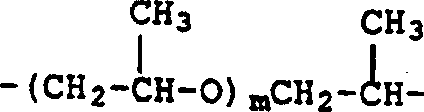
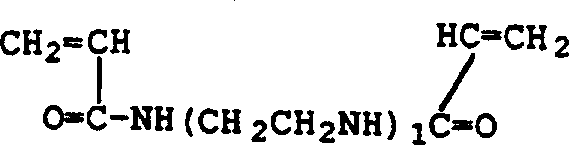
Applications Claiming Priority (4)
| Application Number | Priority Date | Filing Date | Title |
|---|---|---|---|
| US08/974,119 | 1997-11-19 | ||
| US08/974,119 US5981689A (en) | 1997-11-19 | 1997-11-19 | Poly(vinylamine)-based superabsorbent gels and method of manufacturing the same |
| US09/179,554 US6194631B1 (en) | 1997-11-19 | 1998-10-28 | Poly (vinylamine)-based superabsorbent gels and method of manufacturing the same |
| US09/179,554 | 1998-10-28 |
Publications (1)
| Publication Number | Publication Date |
|---|---|
| CN1286702A true CN1286702A (en) | 2001-03-07 |
Family
ID=26875428
Family Applications (1)
| Application Number | Title | Priority Date | Filing Date |
|---|---|---|---|
| CN98813192A Pending CN1286702A (en) | 1997-11-19 | 1998-11-11 | Poly (vinylamine)-based superabsorbent gels and method of mfg. same |
Country Status (17)
| Country | Link |
|---|---|
| US (1) | US6603055B2 (en) |
| EP (1) | EP1034194B1 (en) |
| JP (1) | JP4168161B2 (en) |
| KR (1) | KR20010032287A (en) |
| CN (1) | CN1286702A (en) |
| AT (1) | ATE318848T1 (en) |
| AU (1) | AU1396499A (en) |
| BR (1) | BR9814680A (en) |
| CA (1) | CA2310675A1 (en) |
| DE (1) | DE69833683T2 (en) |
| ES (1) | ES2259821T3 (en) |
| FI (1) | FI20001106L (en) |
| IL (1) | IL136054A0 (en) |
| MX (1) | MX243090B (en) |
| NO (1) | NO20002547L (en) |
| PL (1) | PL340545A1 (en) |
| WO (1) | WO1999025745A1 (en) |
Cited By (7)
| Publication number | Priority date | Publication date | Assignee | Title |
|---|---|---|---|---|
| CN1315941C (en) * | 2002-08-26 | 2007-05-16 | 巴斯福股份公司 | Water absorbing agent and method for the production thereof |
| CN101331161B (en) * | 2005-12-16 | 2011-07-06 | 3M创新有限公司 | Method of free radically polymerizing vinyl monomers |
| CN102203138A (en) * | 2008-11-05 | 2011-09-28 | 巴斯夫欧洲公司 | Process for hydrolyzing polymers containing vinylcarboxamide units |
| CN101203534B (en) * | 2005-06-21 | 2012-11-07 | 巴斯福股份公司 | Residual formamide in enzymatic decomposition polymers |
| CN105658681A (en) * | 2013-11-08 | 2016-06-08 | 三菱丽阳株式会社 | Method for producing vinylamine (co)polymer |
| CN109777377A (en) * | 2019-02-12 | 2019-05-21 | 西南石油大学 | A kind of shale intercalation inhibitor made of ultra-low molecular weight branched tertiary amine polyamine |
| CN113527578A (en) * | 2020-04-22 | 2021-10-22 | 北京化工大学 | Amino-functionalized polystyrene resin and preparation method and application thereof |
Families Citing this family (39)
| Publication number | Priority date | Publication date | Assignee | Title |
|---|---|---|---|---|
| US6426445B1 (en) | 1995-01-10 | 2002-07-30 | The Procter & Gamble Company | Absorbent members comprising an agglomerate of hydrogel-forming absorbent polymer and particulate hydrophilic foam |
| US6372953B1 (en) | 1995-01-10 | 2002-04-16 | The Procter & Gamble Company | Absorbent members comprising a high surface area material for absorbing body liquids |
| US6623576B2 (en) * | 1998-10-28 | 2003-09-23 | Basf Aktiengesellschaft | Continuous manufacture of superabsorbent/ion exchange sheet material |
| DE19909653A1 (en) | 1999-03-05 | 2000-09-07 | Stockhausen Chem Fab Gmbh | Powdery, crosslinked, aqueous liquids and blood-absorbing polymers, processes for their preparation and their use |
| US7147752B2 (en) | 2002-12-31 | 2006-12-12 | Kimberly-Clark Worldwide, Inc. | Hydrophilic fibers containing substantive polysiloxanes and tissue products made therefrom |
| DE602004018761D1 (en) * | 2003-03-27 | 2009-02-12 | Basf Se | PROCESS TO REDUCE THE CONTENT OF WATER SOLUBLE SALTS IN AQUEOUS VINYLAMINE POLYMER SOLUTIONS |
| US6997327B2 (en) * | 2003-09-24 | 2006-02-14 | Velcon Filters, Inc. | Salt-tolerant, water absorbing filter |
| US7872168B2 (en) | 2003-10-31 | 2011-01-18 | Kimberely-Clark Worldwide, Inc. | Stretchable absorbent article |
| US7662745B2 (en) | 2003-12-18 | 2010-02-16 | Kimberly-Clark Corporation | Stretchable absorbent composites having high permeability |
| US7811948B2 (en) | 2003-12-19 | 2010-10-12 | Kimberly-Clark Worldwide, Inc. | Tissue sheets containing multiple polysiloxanes and having regions of varying hydrophobicity |
| US7186318B2 (en) | 2003-12-19 | 2007-03-06 | Kimberly-Clark Worldwide, Inc. | Soft tissue hydrophilic tissue products containing polysiloxane and having unique absorbent properties |
| US7479578B2 (en) | 2003-12-19 | 2009-01-20 | Kimberly-Clark Worldwide, Inc. | Highly wettable—highly flexible fluff fibers and disposable absorbent products made of those |
| CN1938083B (en) * | 2004-03-31 | 2011-06-08 | 株式会社日本触媒 | An aqueous-liquid-absorbing agent and its production process |
| US20050235336A1 (en) * | 2004-04-15 | 2005-10-20 | Kenneth Ma | Data storage system and method that supports personal video recorder functionality |
| US7938813B2 (en) | 2004-06-30 | 2011-05-10 | Kimberly-Clark Worldwide, Inc. | Absorbent article having shaped absorbent core formed on a substrate |
| US8324446B2 (en) | 2004-06-30 | 2012-12-04 | Kimberly-Clark Worldwide, Inc. | Unitary absorbent core with binding agents |
| US7247215B2 (en) | 2004-06-30 | 2007-07-24 | Kimberly-Clark Worldwide, Inc. | Method of making absorbent articles having shaped absorbent cores on a substrate |
| US7772456B2 (en) | 2004-06-30 | 2010-08-10 | Kimberly-Clark Worldwide, Inc. | Stretchable absorbent composite with low superaborbent shake-out |
| US20060142719A1 (en) * | 2004-12-28 | 2006-06-29 | Kimberly-Clark Worldwide, Inc. | Evaporative disposable garment |
| US20060173432A1 (en) * | 2005-02-01 | 2006-08-03 | Laumer Jason M | Absorbent articles comprising polyamine-coated superabsorbent polymers |
| US20060173431A1 (en) * | 2005-02-01 | 2006-08-03 | Laumer Jason M | Absorbent articles comprising polyamine-coated superabsorbent polymers |
| US7291696B2 (en) * | 2005-11-04 | 2007-11-06 | General Electric Company | Composition and associated method |
| US7631768B2 (en) * | 2005-11-04 | 2009-12-15 | General Electric Company | Membrane and associated method |
| US8236884B2 (en) | 2007-03-23 | 2012-08-07 | Evonik Stockhausen, Llc | High permeability superabsorbent polymer compositions |
| US7935860B2 (en) | 2007-03-23 | 2011-05-03 | Kimberly-Clark Worldwide, Inc. | Absorbent articles comprising high permeability superabsorbent polymer compositions |
| CN101985508B (en) * | 2010-10-09 | 2012-05-30 | 内蒙古大学 | Preparation method of super absorbent resin containing plant growth regulator and dehydration Murashige and Skoog (MS) culture medium |
| US9370915B2 (en) * | 2010-12-07 | 2016-06-21 | Basf Se | Composite material |
| US9302248B2 (en) | 2013-04-10 | 2016-04-05 | Evonik Corporation | Particulate superabsorbent polymer composition having improved stability |
| US9375507B2 (en) | 2013-04-10 | 2016-06-28 | Evonik Corporation | Particulate superabsorbent polymer composition having improved stability |
| KR102092943B1 (en) | 2014-01-29 | 2020-04-14 | 삼성전자주식회사 | Composition for electrode of capacitive deionization apparatus, and electrode including same |
| JP6512591B2 (en) * | 2014-11-18 | 2019-05-15 | ハイモ株式会社 | Method for producing purified polyvinylamine |
| US10729600B2 (en) | 2015-06-30 | 2020-08-04 | The Procter & Gamble Company | Absorbent structure |
| CN108348386A (en) | 2015-11-04 | 2018-07-31 | 宝洁公司 | Absorbing structure |
| CA3004318C (en) | 2015-11-04 | 2021-06-08 | The Procter & Gamble Company | Absorbent structure comprising a heterogeneous mass |
| WO2017079599A1 (en) | 2015-11-04 | 2017-05-11 | The Procter & Gamble Company | Absorbent structure |
| US11931928B2 (en) * | 2016-12-29 | 2024-03-19 | Evonik Superabsorber Llc | Continuous strand superabsorbent polymerization |
| KR102176171B1 (en) * | 2018-08-22 | 2020-11-09 | 주식회사 동성화학 | Thermoformable melamine foams having high heat resistance and manufacturing method thereof |
| EP3840863A4 (en) * | 2018-08-24 | 2022-05-25 | Queen's University At Kingston | FORMATION OF A TREATED SWITCHABLE POLYMER AND USE THEREOF IN A FORWARD OSMOSIS SYSTEM |
| GB2613322B (en) | 2020-08-25 | 2025-03-12 | Kimberly Clark Co | Absorbent structures and methods for manufacturing absorbent structures |
Family Cites Families (21)
| Publication number | Priority date | Publication date | Assignee | Title |
|---|---|---|---|---|
| US4696296A (en) | 1984-07-23 | 1987-09-29 | Ballard Medical Products | Aspirating/ventilating apparatus |
| US4569344A (en) | 1984-07-23 | 1986-02-11 | Ballard Medical Products | Aspirating/ventilating apparatus and method |
| JPS6151007A (en) * | 1984-08-20 | 1986-03-13 | Mitsubishi Chem Ind Ltd | Production of crosslinked polyvinylamine |
| US4850350A (en) | 1986-06-23 | 1989-07-25 | Sheridan Catheter Corp. | Closed system combined suction and ventilation devices |
| US5126395A (en) * | 1990-03-08 | 1992-06-30 | Basf Aktiengesellschaft | Preparation of stable water-in-oil emulsions of hydrolyzed polymers of n-vinylamides |
| US5125893A (en) | 1990-04-16 | 1992-06-30 | Dryden Gale E | Suction catheter with wall lumen for irrigation |
| US5073164A (en) | 1990-05-02 | 1991-12-17 | Hollister William H | Suction catheter |
| US5083561B1 (en) | 1990-06-14 | 1993-05-18 | D. Russo Ronald | Tracheal suction catheter |
| US5139018A (en) | 1990-07-24 | 1992-08-18 | Superior Healthcare Group, Inc. | Patient ventilating apparatus with aspirating catheter |
| US5279549A (en) | 1991-01-04 | 1994-01-18 | Sherwood Medical Company | Closed ventilation and suction catheter system |
| JP3225550B2 (en) * | 1991-09-27 | 2001-11-05 | 三菱化学株式会社 | Method for producing water-soluble polymer |
| US5309902A (en) | 1992-10-19 | 1994-05-10 | Sherwood Medical Company | Respiratory support system and suction catheter device therefor |
| US5333606A (en) | 1992-04-24 | 1994-08-02 | Sherwood Medical Company | Method for using a respirator accessory access port and adaptor therefore |
| DK88792A (en) | 1992-07-06 | 1994-01-07 | Pharma Plast Int As | Pipe piece, especially for medical use, method of making the pipe piece and tool for use in the practice of the method |
| US5349950A (en) | 1992-10-28 | 1994-09-27 | Smiths Industries Medical Systems, Inc. | Suction catheter assemblies |
| US5269756A (en) | 1992-11-13 | 1993-12-14 | Medicpro Inc. | Irrigation apparatus and method for suction catheters |
| DE4323234A1 (en) * | 1993-07-12 | 1995-01-19 | Basf Ag | Process for the elimination of impurities containing nitrile groups from polymers |
| US5599335A (en) * | 1994-03-29 | 1997-02-04 | The Procter & Gamble Company | Absorbent members for body fluids having good wet integrity and relatively high concentrations of hydrogel-forming absorbent polymer |
| IT1267494B1 (en) * | 1994-11-10 | 1997-02-05 | P & G Spa | ABSORBENT MATERIAL, FOR EXAMPLE OF SUPER ABSORBENT TYPE, AND RELATIVE USE. |
| US6222091B1 (en) * | 1997-11-19 | 2001-04-24 | Basf Aktiengesellschaft | Multicomponent superabsorbent gel particles |
| US6072101A (en) * | 1997-11-19 | 2000-06-06 | Amcol International Corporation | Multicomponent superabsorbent gel particles |
-
1998
- 1998-11-11 CN CN98813192A patent/CN1286702A/en active Pending
- 1998-11-11 KR KR1020007005495A patent/KR20010032287A/en not_active Withdrawn
- 1998-11-11 ES ES98957789T patent/ES2259821T3/en not_active Expired - Lifetime
- 1998-11-11 AU AU13964/99A patent/AU1396499A/en not_active Abandoned
- 1998-11-11 PL PL98340545A patent/PL340545A1/en unknown
- 1998-11-11 DE DE69833683T patent/DE69833683T2/en not_active Expired - Lifetime
- 1998-11-11 BR BR9814680-7A patent/BR9814680A/en not_active IP Right Cessation
- 1998-11-11 JP JP2000521124A patent/JP4168161B2/en not_active Expired - Fee Related
- 1998-11-11 CA CA002310675A patent/CA2310675A1/en not_active Abandoned
- 1998-11-11 EP EP98957789A patent/EP1034194B1/en not_active Expired - Lifetime
- 1998-11-11 WO PCT/US1998/024007 patent/WO1999025745A1/en not_active Ceased
- 1998-11-11 AT AT98957789T patent/ATE318848T1/en not_active IP Right Cessation
- 1998-11-11 IL IL13605498A patent/IL136054A0/en unknown
-
2000
- 2000-05-10 FI FI20001106A patent/FI20001106L/en unknown
- 2000-05-18 NO NO20002547A patent/NO20002547L/en not_active Application Discontinuation
- 2000-05-19 MX MXPA00004927 patent/MX243090B/en active IP Right Grant
- 2000-12-22 US US09/746,177 patent/US6603055B2/en not_active Expired - Fee Related
Cited By (10)
| Publication number | Priority date | Publication date | Assignee | Title |
|---|---|---|---|---|
| CN1315941C (en) * | 2002-08-26 | 2007-05-16 | 巴斯福股份公司 | Water absorbing agent and method for the production thereof |
| CN101203534B (en) * | 2005-06-21 | 2012-11-07 | 巴斯福股份公司 | Residual formamide in enzymatic decomposition polymers |
| CN101331161B (en) * | 2005-12-16 | 2011-07-06 | 3M创新有限公司 | Method of free radically polymerizing vinyl monomers |
| CN102203138A (en) * | 2008-11-05 | 2011-09-28 | 巴斯夫欧洲公司 | Process for hydrolyzing polymers containing vinylcarboxamide units |
| CN102203138B (en) * | 2008-11-05 | 2013-05-01 | 巴斯夫欧洲公司 | Process for hydrolyzing polymers containing vinylcarboxamide units |
| CN105658681A (en) * | 2013-11-08 | 2016-06-08 | 三菱丽阳株式会社 | Method for producing vinylamine (co)polymer |
| CN105658681B (en) * | 2013-11-08 | 2018-05-11 | 三菱化学株式会社 | Method for producing vinylamine polymers |
| CN109777377A (en) * | 2019-02-12 | 2019-05-21 | 西南石油大学 | A kind of shale intercalation inhibitor made of ultra-low molecular weight branched tertiary amine polyamine |
| CN113527578A (en) * | 2020-04-22 | 2021-10-22 | 北京化工大学 | Amino-functionalized polystyrene resin and preparation method and application thereof |
| CN113527578B (en) * | 2020-04-22 | 2022-11-01 | 北京化工大学 | A kind of amine functionalized polystyrene resin and its preparation method and application |
Also Published As
| Publication number | Publication date |
|---|---|
| US20010007064A1 (en) | 2001-07-05 |
| FI20001106A7 (en) | 2000-06-29 |
| ES2259821T3 (en) | 2006-10-16 |
| WO1999025745A1 (en) | 1999-05-27 |
| PL340545A1 (en) | 2001-02-12 |
| DE69833683T2 (en) | 2006-09-07 |
| MXPA00004927A (en) | 2002-04-01 |
| AU1396499A (en) | 1999-06-07 |
| JP4168161B2 (en) | 2008-10-22 |
| KR20010032287A (en) | 2001-04-16 |
| EP1034194B1 (en) | 2006-03-01 |
| EP1034194A1 (en) | 2000-09-13 |
| DE69833683D1 (en) | 2006-04-27 |
| NO20002547L (en) | 2000-06-13 |
| FI20001106L (en) | 2000-06-29 |
| ATE318848T1 (en) | 2006-03-15 |
| JP2001523737A (en) | 2001-11-27 |
| IL136054A0 (en) | 2001-05-20 |
| CA2310675A1 (en) | 1999-05-27 |
| US6603055B2 (en) | 2003-08-05 |
| NO20002547D0 (en) | 2000-05-18 |
| BR9814680A (en) | 2000-10-03 |
| MX243090B (en) | 2007-01-08 |
Similar Documents
| Publication | Publication Date | Title |
|---|---|---|
| CN1286702A (en) | Poly (vinylamine)-based superabsorbent gels and method of mfg. same | |
| CN1206250C (en) | Process for prodn. of water-absorbent resin | |
| CN1064974C (en) | Process for producing improved super absorbent polymer | |
| US5981689A (en) | Poly(vinylamine)-based superabsorbent gels and method of manufacturing the same | |
| CN1174011C (en) | Water absorbent material and absorbent article using same | |
| CN1226334C (en) | Surface-treated superabsorbent polymer particles | |
| CN1292120C (en) | Polymers that can be cross-linked to form superabsorbent polymers | |
| CN1264898C (en) | Absorbent structure with improved blocking properties | |
| CN1158355C (en) | water-absorbent resin composition | |
| CN1589160A (en) | Superabsorbent polymer particles | |
| CN1286635A (en) | Multicomponent superabsorbent gel particles | |
| CN1678681A (en) | Water absorbing agent and preparation method thereof | |
| CN1291998A (en) | Method for crosslinking hydrogels with bis- and poly-2-oxazolidinones | |
| CN1784430A (en) | Water-absorbing resin and its production method | |
| CN1286707A (en) | Poly (vinylguanidine) based superabsorbent gels | |
| CN1148395A (en) | Superabsorbent polymer and its products | |
| JPH11310644A (en) | Production of water-absorbing agent | |
| WO2007126003A1 (en) | Process for production of water-absorbable resin | |
| CN1275149A (en) | Cross-linked polymer composition swelling in water and process for producing the same | |
| CN1708542A (en) | Absorbent polymer structure with increased retention capacity and permeability | |
| CN100335140C (en) | Manufacture of web superabsorbent polymer and fiber | |
| CN1287869C (en) | Absorbent structure having balanced pH profile | |
| CN1277980C (en) | Method for binding particulate, water-absorbing, acid group-containing polymers to a base material | |
| CN1890023A (en) | Water-absorbing agent, manufacture method thereof, and absorbent and absorbent article made therefrom | |
| CN101061145A (en) | Water absorbing resin particle, absorbing body using the same, and absorbent article |
Legal Events
| Date | Code | Title | Description |
|---|---|---|---|
| C06 | Publication | ||
| PB01 | Publication | ||
| C10 | Entry into substantive examination | ||
| SE01 | Entry into force of request for substantive examination | ||
| C02 | Deemed withdrawal of patent application after publication (patent law 2001) | ||
| WD01 | Invention patent application deemed withdrawn after publication |