CN1237485C - Method for covering face of news interviewee using quick face detection - Google Patents
Method for covering face of news interviewee using quick face detection Download PDFInfo
- Publication number
- CN1237485C CN1237485C CN 02147001 CN02147001A CN1237485C CN 1237485 C CN1237485 C CN 1237485C CN 02147001 CN02147001 CN 02147001 CN 02147001 A CN02147001 A CN 02147001A CN 1237485 C CN1237485 C CN 1237485C
- Authority
- CN
- China
- Prior art keywords
- face
- people
- carry out
- detected
- information
- Prior art date
- Legal status (The legal status is an assumption and is not a legal conclusion. Google has not performed a legal analysis and makes no representation as to the accuracy of the status listed.)
- Expired - Fee Related
Links
- 238000001514 detection method Methods 0.000 title claims abstract description 18
- 238000000034 method Methods 0.000 title claims abstract description 13
- 230000005484 gravity Effects 0.000 claims description 19
- 210000000056 organ Anatomy 0.000 claims description 15
- 238000000605 extraction Methods 0.000 claims description 7
- 238000007689 inspection Methods 0.000 claims description 6
- 238000012545 processing Methods 0.000 claims description 6
- 238000006243 chemical reaction Methods 0.000 claims description 2
- 239000000284 extract Substances 0.000 claims description 2
- 230000000903 blocking effect Effects 0.000 claims 1
- 238000005516 engineering process Methods 0.000 abstract description 4
- 210000004709 eyebrow Anatomy 0.000 description 7
- 210000000887 face Anatomy 0.000 description 7
- 238000010586 diagram Methods 0.000 description 6
- 239000013598 vector Substances 0.000 description 5
- 238000007781 pre-processing Methods 0.000 description 4
- 230000011218 segmentation Effects 0.000 description 4
- 230000000694 effects Effects 0.000 description 3
- 230000001815 facial effect Effects 0.000 description 2
- 238000003709 image segmentation Methods 0.000 description 2
- 238000013519 translation Methods 0.000 description 2
- 238000012795 verification Methods 0.000 description 2
- 238000004458 analytical method Methods 0.000 description 1
- 230000008602 contraction Effects 0.000 description 1
- 238000003708 edge detection Methods 0.000 description 1
- 238000002474 experimental method Methods 0.000 description 1
- 238000007429 general method Methods 0.000 description 1
- 230000010365 information processing Effects 0.000 description 1
- 238000002372 labelling Methods 0.000 description 1
- 239000011159 matrix material Substances 0.000 description 1
- 230000008054 signal transmission Effects 0.000 description 1
- 238000012360 testing method Methods 0.000 description 1
Images


Landscapes
- Image Analysis (AREA)
- Image Processing (AREA)
Abstract
一种利用快速人脸检测对新闻被采访者进行脸部遮挡的方法,包括步骤:a)检测人脸的位置和大小;b)利用肤色信息进行验证和补偿;c)利用人脸肤色直方图进行人脸跟踪;d)利用人脸的位置、区域和肤色信息进行轮廓提取和模糊处理。本发明的自动的人脸检测和遮挡技术,不用肤色信息可以达到88%的正确检测率。如果结合肤色信息,人脸几乎可以全部被覆盖。因此,本发明可以相当大地减轻工作强度,提高工作效率。
A method for occluding the face of a news interviewee by using fast face detection, comprising the steps of: a) detecting the position and size of the face; b) using skin color information to verify and compensate; c) using the face skin color histogram Carry out face tracking; d) use the position, area and skin color information of the face to extract and blur the contour. The automatic face detection and occlusion technology of the present invention can achieve a correct detection rate of 88% without using skin color information. If combined with skin color information, the face can be almost completely covered. Therefore, the present invention can greatly reduce work intensity and improve work efficiency.
Description
技术领域technical field
本发明涉及图像处理,特别涉及利用快速人脸检测对新闻被采访者进行脸部自动遮挡的方法。The invention relates to image processing, in particular to a method for automatically covering the faces of news interviewees by using fast face detection.
背景技术Background technique
在新闻采访时,为了保护被采访者的隐私权等,有时需要把被采访者的脸部图像进行遮挡处理(或图像模糊处理)。一般的做法是在人脸位置的设定一个区域,该区域内的图像按照一定的块大小求取均值,达到模糊的效果。然而,由于人脸是活动的,所以要不停地手工拖动模糊窗口区域,工作量大,而且有时由于窗口覆盖不准确而暴露了隐私,达不到理想的模糊效果,或者模糊的区域过大影响画面的质量。During news interviews, in order to protect the privacy of the interviewee, etc., it is sometimes necessary to block the interviewee's face image (or image blurring). The general method is to set an area at the position of the face, and the image in this area is averaged according to a certain block size to achieve a blurred effect. However, because the human face is active, it is necessary to manually drag the blurred window area continuously, which is a lot of work, and sometimes the privacy is exposed due to inaccurate window coverage, and the ideal blur effect cannot be achieved, or the blurred area is too large. Greatly affects the picture quality.
发明内容Contents of the invention
本发明的目的是提供一种利用人脸图像检测和跟踪技术准确地检测出人脸图像的轮廓,然后在轮廓的区域内进行模糊处理的方法。The purpose of the present invention is to provide a method for accurately detecting the contour of a human face image by using the face image detection and tracking technology, and then performing blurring processing in the contour area.
为实现上述目的,利用快速人脸检测对新闻被采访者进行脸部遮挡的方法包括步骤:In order to achieve the above-mentioned purpose, the method for carrying out face occlusion of news interviewees by using fast face detection includes steps:
a)检测人脸的位置和大小;a) Detect the position and size of the face;
b)利用肤色信息进行验证和补偿;b) use skin color information for verification and compensation;
c)利用人脸肤色直方图进行人脸跟踪;c) Utilize the face skin color histogram to carry out face tracking;
d)利用人脸的位置、区域和肤色信息进行轮廓提取和模糊处理。d) Use the position, area and skin color information of the face for contour extraction and blurring.
本发明的自动的人脸检测和遮挡技术,不用肤色信息可以达到88%的正确检测率。如果结合肤色信息,人脸几乎可以全部被覆盖。因此,本发明可以相当大地减轻工作强度,提高工作效率。The automatic face detection and occlusion technology of the present invention can achieve a correct detection rate of 88% without using skin color information. If combined with skin color information, the face can be almost completely covered. Therefore, the present invention can greatly reduce work intensity and improve work efficiency.
附图说明Description of drawings
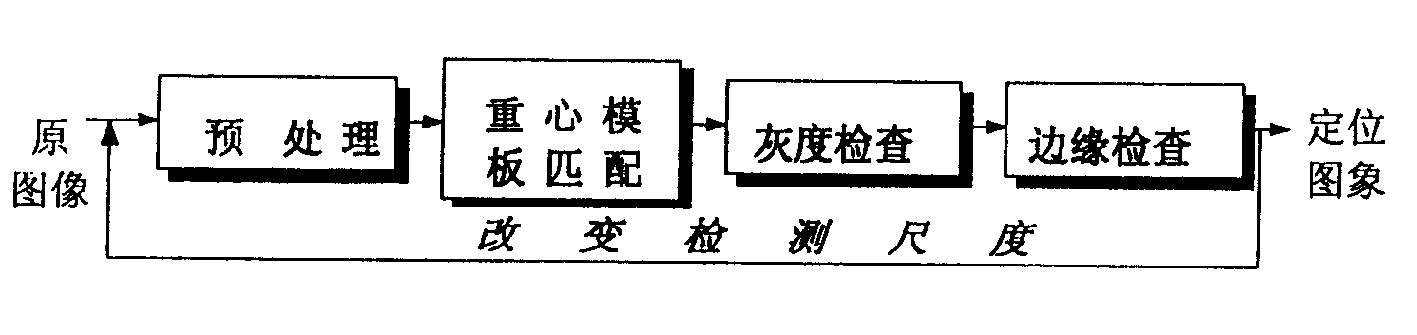
图1是人脸图像检测方法框图;Fig. 1 is a block diagram of face image detection method;
图2是人脸图像预处理框图;Fig. 2 is a block diagram of face image preprocessing;
图3是人脸原图像;Figure 3 is the original face image;
图4是人脸的Mosaic图像;Figure 4 is a Mosaic image of a face;
图5是提取Mosaic图像水平边缘图;Figure 5 is to extract the Mosaic image horizontal edge map;
图6是求取Mosiac图像的边缘的重心图;Fig. 6 is the center of gravity figure seeking the edge of Mosiac image;
图7是四类人脸重心模板;Figure 7 is a template for the center of gravity of four types of faces;
图8是人脸重心模板匹配图;Figure 8 is a face center of gravity template matching diagram;
图9是灰度特征检查图;Fig. 9 is a grayscale feature inspection map;
图10是边特征检查图;Figure 10 is a side feature inspection diagram;
图11是YUV色彩空间中的灰度信号适量图;Fig. 11 is the appropriate figure of the grayscale signal in the YUV color space;
图12是基于肤色模型的彩色图像分割,其中,图(a),(c)是含人脸的彩色视频图像,(b),(d)是肤色区域域轮廓的检测。Fig. 12 is the color image segmentation based on the skin color model, wherein, figure (a), (c) is the color video image containing human face, (b), (d) is the detection of the contour of the skin color area.
图13是用于跟踪平移和旋转人脸的肤色直方图统计的环状和带状区域;Fig. 13 is the ring-shaped and band-shaped regions for tracking the skin color histogram statistics of translation and rotation faces;
图14是用于跟踪的人脸邻域;Figure 14 is the face neighborhood used for tracking;
图15是本发明的流程图。Figure 15 is a flowchart of the present invention.
具体实施方式Detailed ways
如图1所示,人脸检测的整个框架包括4部分:预处理、重心模板匹配、灰度检查和边缘检查。输入一帧图像,当在一个规定的最大尺度下完成上述4步后,该尺度对应的人脸应该可以被检测出来,输出是人脸的位置和区域大小。然后进入循环,每一循环检测的尺度都依次缩小,直到到达最小检测尺度为止。As shown in Figure 1, the entire framework of face detection includes four parts: preprocessing, center-of-gravity template matching, grayscale inspection and edge inspection. Input a frame of image, when the above 4 steps are completed at a specified maximum scale, the face corresponding to this scale should be detected, and the output is the position and area size of the face. Then it enters the loop, and the scale of each loop detection is successively reduced until it reaches the minimum detection scale.
预处理如图2所示,包括生成Mosaic图像,提取Mosaic边和计算Mosaic重心三部分。The preprocessing is shown in Figure 2, including generating Mosaic images, extracting Mosaic edges and calculating Mosaic center of gravity.
参见图3的示例图像,预处理首先将当前帧图像转变成一定尺度下的Mosiac图像(图4),然后在Mosaic图像上提取水平边缘(图5),最后计算这些水平边缘的重心(图6)。Referring to the sample image in Figure 3, the preprocessing first converts the current frame image into a Mosiac image at a certain scale (Figure 4), then extracts horizontal edges from the Mosaic image (Figure 5), and finally calculates the center of gravity of these horizontal edges (Figure 6 ).
提取Mosaic横边的操作用于提取人脸上的器官的位置。这些器官包括双眉、双眼、鼻和嘴,它们都有一个共性,当所观察的人脸保持正直(在图像平面内的旋转角度在-5°~+5°之间)时,上述六个器官成水平平行分布,在水平方向上长度不等,但在竖直方向上宽度近似。这一特性为我们提取这六个器官的位置特征提供了便利。而且,即便正视人脸在水平面内有一定旋转角度(-45°~+45°),在垂直平面内有一定仰/俯视旋转角度(-30°~+30°),这一特性仍保持不变。The operation of extracting the horizontal edge of Mosaic is used to extract the positions of the organs on the human face. These organs include eyebrows, eyes, nose, and mouth. They all have one thing in common. When the observed face is kept upright (the rotation angle in the image plane is between -5°~+5°), the above six organs Distributed horizontally and parallel, the length in the horizontal direction is not equal, but the width in the vertical direction is similar. This feature provides convenience for us to extract the location features of these six organs. Moreover, even if there is a certain rotation angle (-45°~+45°) in the horizontal plane and a certain elevation/downward rotation angle (-30°~+30°) in the vertical plane, this feature still remains the same. Change.
参看图4所示的Mosaic图,上述六个器官落入的Mosaic单元的灰度值比较明显地低于四周单元的灰度值。如果用一种适合于提取这种特征的边缘检测器,就能用边缘表示的方法方便的定位这六个器官。这样的一个检测器就是拉普拉斯边缘检测算子。一个用于检测水平边缘的拉普拉斯算子当前Mosaic单元mosaic_image[i,j]及其上下相邻单元mosaic_image[i-1,j]、mosaic_image[i+1,j]的运算定义为:Referring to the Mosaic diagram shown in Figure 4, the gray value of the Mosaic unit where the above six organs fall is significantly lower than the gray value of the surrounding units. If an edge detector suitable for extracting such features is used, the six organs can be conveniently located by means of edge representation. One such detector is the Laplacian edge detector. A Laplacian operator used to detect horizontal edges The operation of the current Mosaic unit mosaic_image[i, j] and its upper and lower adjacent units mosaic_image[i-1, j], mosaic_image[i+1, j] is defined as:
L(i,j)=1×mosaic_image[i-1,j]L(i,j)=1×mosaic_image[i-1,j]
-2×mosaic_image[i,j]-2×mosaic_image[i,j]
+1×mosaic_image[i+1,j], +1×mosaic_image[i+1, j],
则边缘检测的结果是:Then the result of edge detection is:
这里T为一个边阈值,例如,可取T=10×Mosaic单元边长×Mosaic单元边长。所提取出的Mosaic边缘如图5中的由方格排成的线段所示,其中一个方格表示一个边缘单位。可以看到,有这样一些Mosaic线段,他们对应的是人脸上的器官。Here T is a side threshold, for example, T=10×Mosaic unit side length×Mosaic unit side length may be taken. The extracted Mosaic edge is shown as a line segment arranged by squares in Fig. 5, where one square represents one edge unit. It can be seen that there are some Mosaic line segments, which correspond to the organs on the human face.
由于一副图像上有多少个人脸,各个人脸大小尺寸进而人脸上的器官的尺寸都是未知的,所以对于原图像往往要生成多个不同单元尺度的Mosaic图以利于分别提取出大小不同的人脸的器官。而且,显而易见的是,在一般情况下,Mosaic单元的尺度越接近于人脸器官的竖直方向上的平均尺度(即宽度),提取的效果越好。Since the number of faces on an image, the size of each face and the size of the organs on the face are unknown, it is often necessary to generate multiple Mosaic maps of different unit scales for the original image to facilitate the extraction of different sizes. organs of the human face. Moreover, it is obvious that, in general, the closer the scale of the Mosaic unit is to the average scale (ie width) of the face organs in the vertical direction, the better the extraction effect will be.
为了进一步简化特征,求取每个Mosaic边缘线段的重心作为这些线段的代表。如果这样的Mosaic线段对应的是人脸上的器官的话,则这些重心点也就代表了这些器官的位置(如图6)。In order to further simplify the features, the center of gravity of each Mosaic edge line segment is obtained as the representative of these line segments. If such Mosaic line segments correspond to the organs on the human face, then these center of gravity points also represent the positions of these organs (as shown in Figure 6).
根据所提重心特点,如图7所示,可设计四类人脸重心模板:第一类人脸模板上的六个重心点对应于人脸的双眉、双眼、鼻和嘴;第二类人脸模板上有五个重心点,缺少一个对应于人脸鼻的重心点;第三类人脸模板上也只有五个重心点,缺少一个对应于人脸眉或眼的重心点;第四类人脸模板只有四个重心点对应于人脸的双眼、鼻和嘴。According to the characteristics of the proposed center of gravity, as shown in Figure 7, four types of face center-of-gravity templates can be designed: the six center-of-gravity points on the first type of face template correspond to the double eyebrows, eyes, nose and mouth of the face; the second type There are five center-of-gravity points on the face template, and there is a lack of a center-of-gravity point corresponding to the nose of the face; there are only five center-of-gravity points on the third type of face template, and there is a lack of a center-of-gravity point corresponding to the eyebrows or eyes of the face; the fourth The human-like face template has only four centroids corresponding to the eyes, nose and mouth of the human face.
所设计的人脸模板是一种动态可伸缩的人脸模板,其宽W和高H有一定的伸缩范围,在本实验中,W设定为6~14个Mosaic单元,H设定为7~23个单元;高宽比范围为3/4~5/3。模板内重心点之间的相对位置由dx1~dx4、dy1~dy4共8个参数约束。The designed face template is a dynamic and scalable face template, and its width W and height H have a certain range of expansion and contraction. In this experiment, W is set to 6-14 Mosaic units, and H is set to 7 ~23 units; the aspect ratio ranges from 3/4 to 5/3. The relative position between the center of gravity points in the template is constrained by 8 parameters including dx1~dx4, dy1~dy4.
由此可在Mosaic重心图上用人脸重心模板搜索和匹配人脸。如图8所示,具体方法是扫描图上的每一个重心点,对右下方一块矩形区域进行试探性的其他重心点的搜索并将它们与人脸重心模板上的重心点匹配以确定是否存在人脸。人脸重心模板上的重心反映了人脸各器官的在二维平面内的相对位置,是一种非固定的动态的长宽可伸缩的矩形模板。根据图像上所提取的重心用动态重心模板试探性的匹配,这一方法解决了在复杂图像上定位大小未知的人脸的问题。In this way, faces can be searched and matched on the Mosaic center-of-gravity map with the face center-of-gravity template. As shown in Figure 8, the specific method is to scan each center of gravity point on the image, search for other center of gravity points tentatively in a rectangular area on the lower right and match them with the center of gravity points on the face center of gravity template to determine whether there is human face. The center of gravity on the center-of-gravity template of the face reflects the relative positions of the various organs of the face in the two-dimensional plane, and is a non-fixed and dynamic rectangular template with scalable length and width. According to the center of gravity extracted from the image, it is tentatively matched with a dynamic center of gravity template. This method solves the problem of locating faces of unknown size on complex images.
如图9所示,在这一步系统面向Mosaic图像,利用人脸的灰度特征识别人脸的真假。将候选人脸区域按提取的重心点所对应器官分布划分为1~9这九个子区域,分别对应于1:左眼/眉区、2:右眼/眉区、3:鼻区、4:嘴区、5:鼻上区、6、8:左颊区、7、9:右颊区。各区的平均灰度的分布有这样一些规律:1、2、3、4区的平均灰度高于其他区的平均灰度;1、2、4区的平均灰度值相近。As shown in Figure 9, in this step, the system faces the Mosaic image and uses the grayscale features of the face to identify the authenticity of the face. The candidate face area is divided into nine sub-areas from 1 to 9 according to the organ distribution corresponding to the extracted center of gravity, corresponding to 1: left eye/eyebrow area, 2: right eye/eyebrow area, 3: nose area, 4: Mouth area, 5: upper nose area, 6, 8: left cheek area, 7, 9: right cheek area. The distribution of the average gray level of each area has some rules: the average gray level of
此外人脸的灰度在水平和垂直方向上的投影亦有规律。令整个脸区域向水平方向上投影,令1-5-2上脸区域、6-3-7中脸区域、8-4-9下脸区域分别向垂直水平方向上投影。可以看出,向水平方向上投影有3-4处极小值,分别对应于眉、眼、鼻及嘴部的投影;上、中、下脸向垂直方向上的投影有极大值和极小值,分别对应于鼻上眉间区、鼻及嘴部的投影。In addition, the projection of the gray scale of the face in the horizontal and vertical directions is also regular. The whole face area is projected horizontally, and the 1-5-2 upper face area, 6-3-7 middle face area, and 8-4-9 lower face area are respectively projected vertically and horizontally. It can be seen that there are 3-4 minimum values in the horizontal projection, corresponding to the projections of the eyebrows, eyes, nose and mouth; the vertical projections of the upper, middle and lower faces have maximum and extreme Small values correspond to the projections of the supranasal glabellar region, nose, and mouth, respectively.
如图10所示,对经过灰度特征检查的候选人脸区域仍作类似上一步的9区域划分。对人脸区域做像素级别的边缘提取并统计每个子区域内的横向和纵向像素点的数目,记第i个子区域内横向像素点的数目为Ei,系统将要测试如下不等式是否满足:As shown in Figure 10, the candidate face regions that have passed the grayscale feature inspection are still divided into 9 regions similar to the previous step. Perform pixel-level edge extraction on the face area and count the number of horizontal and vertical pixels in each sub-region, record the number of horizontal pixels in the i-th sub-region as Ei, and the system will test whether the following inequality is satisfied:
上式反映了人脸边缘特征的这样一些统计规律:左右眼/眉区的横向像素点数目近似相等;鼻上左右眼/眉间隔区相对于左右眼/眉区、左右面颊上半区相对于鼻区、左右面颊下半区相对于嘴区,它们的比值各小于一个临界值。The above formula reflects some statistical laws of the edge features of the face: the number of horizontal pixels in the left and right eye/eyebrow areas is approximately equal; The ratios of the nose area, left and right cheek lower half areas to the mouth area are each less than a critical value.
参见图15,本发明涉及的肤色信息处理技术包括人脸的肤色验证、检测、人脸轮廓提取、直方图统计和跟踪匹配。Referring to Fig. 15, the skin color information processing technology involved in the present invention includes face skin color verification, detection, face contour extraction, histogram statistics and tracking matching.
彩色电视的信号传递中,通常采用YUV空间来描述彩色信息。Y表示彩色的亮度。RGB空间到YUV空间的转换用矩阵表示如下:In signal transmission of color TV, YUV space is usually used to describe color information. Y represents the brightness of the color. The conversion from RGB space to YUV space is represented by a matrix as follows:
图11是YUV色彩空间中的色度信号矢量图。U和V是平面上的两个相互正交的矢量,色度信号(即U与V之和)是一个二维矢量,称之为色度信号矢量。每一种颜色对应一个色度信号矢量,它的饱和度由模值Ch表示,色调由相位角θ表示。Fig. 11 is a vector diagram of chrominance signals in YUV color space. U and V are two mutually orthogonal vectors on the plane, and the chrominance signal (that is, the sum of U and V) is a two-dimensional vector, called a chrominance signal vector. Each color corresponds to a chrominance signal vector, its saturation is represented by the modulus value Ch, and the hue is represented by the phase angle θ.
θ=tan-1(|V|/|U|)θ=tan -1 (|V|/|U|)
白色和黑色都由原点(0,0)表示,模值等于0,为任意相位角。Both white and black are represented by the origin (0, 0), and the modulus value is equal to 0, which is an arbitrary phase angle.
一般的,在YUV空间的UV平面上,人脸肤色的色调介于红与黄之间。根据对大量人脸图像的彩色分析,可以确定人脸肤色的色调θ的变化范围[θmin,θmax]。这样,采用YUV空间的相位角θ确定人脸肤色在色度信息上的分布范围。即彩色图像的象素p由RGB空间变换到YUV空间,如果满足条件:θp∈[θmin,θmax],则p是肤色点。Generally, on the UV plane of YUV space, the hue of human face skin color is between red and yellow. According to the color analysis of a large number of face images, the variation range [θ min , θ max ] of the hue θ of the skin color of the face can be determined. In this way, the phase angle θ of the YUV space is used to determine the distribution range of the skin color of the face on the chrominance information. That is, the pixel p of the color image is transformed from RGB space to YUV space. If the condition is met: θ p ∈ [θ min , θ max ], then p is a skin color point.
首先,将原图像中每点的象素值由(R,G,B)转换为对应的色调值,得到色调图像;然后,按照色调范围阈值化色调图像,得到粗略的包含人脸侯选区和背景的二值分割图,其中,白色代表人脸候选区,黑色代表背景,对二值分割图进行平滑处理;最后,通过一个区域合并与标号的算法,可以计算求出二值分割图中有多少个白色连通区域,以及每个白色连通区域的位置、面积,从而得到了肤色区域,作为人脸侯选区域。图12是对彩色图像采用基于肤色分割处理的两个实例。(b)和(d)分别是(a)和(c)的分割结果,图中的白色矩形表示的是人脸候选区,“+”是人脸候选区的中心。如果在图像上已找到人脸,并且人脸的区域属于肤色所覆盖的区域,则在对该位置的肤色区域进行模糊处理;如果没有检测出人脸,则对所有的肤色区域进行模糊处理。通过这两种策略,来实现被采访者的面部遮挡。First, the pixel value of each point in the original image is converted from (R, G, B) to the corresponding tone value to obtain the tone image; then, the tone image is thresholded according to the tone range to obtain a rough image containing the face candidate area and The binary segmentation map of the background, in which white represents the face candidate area, black represents the background, and the binary segmentation map is smoothed; finally, through an algorithm of region merging and labeling, it can be calculated that the binary segmentation map has How many white connected areas, and the position and area of each white connected area, thus obtaining the skin color area as a face candidate area. Figure 12 shows two examples of color image segmentation based on skin color. (b) and (d) are the segmentation results of (a) and (c) respectively. The white rectangle in the figure represents the face candidate area, and "+" is the center of the face candidate area. If a human face has been found on the image, and the area of the human face belongs to the area covered by the skin color, blurring is performed on the skin color area at this position; if no human face is detected, all skin color areas are blurred. Through these two strategies, the face occlusion of the interviewee is realized.
对检测到的人脸肤色区域划分成如图13的环状和带状子区域,分别对这些子区域上的图像彩色信息做色调信息的直方图。这两种直方图可以用来跟踪平移、旋转的人脸。跟踪匹配的原理如图14所示:利用上一帧已检测到的人脸位置,在下一帧图像中该位置的一个邻域里进行如图13的直方图统计,如果在某一位置处的直方图与已统计到的人脸色调信息的直方图类似,那么就判定该位置为人脸变化以后新位置。以此来实现人脸的跟踪。Divide the detected human face skin color area into ring-shaped and band-shaped sub-areas as shown in Figure 13, and make a histogram of hue information for the image color information on these sub-areas respectively. These two histograms can be used to track translation and rotation of faces. The principle of tracking and matching is shown in Figure 14: use the detected face position in the previous frame to perform histogram statistics as shown in Figure 13 in a neighborhood of the position in the next frame image, if the face at a certain position If the histogram is similar to the histogram of the counted facial tone information, then it is determined that this position is the new position after the facial change. In this way, face tracking can be realized.
Claims (5)
Priority Applications (1)
| Application Number | Priority Date | Filing Date | Title |
|---|---|---|---|
| CN 02147001 CN1237485C (en) | 2002-10-22 | 2002-10-22 | Method for covering face of news interviewee using quick face detection |
Applications Claiming Priority (1)
| Application Number | Priority Date | Filing Date | Title |
|---|---|---|---|
| CN 02147001 CN1237485C (en) | 2002-10-22 | 2002-10-22 | Method for covering face of news interviewee using quick face detection |
Publications (2)
| Publication Number | Publication Date |
|---|---|
| CN1492379A CN1492379A (en) | 2004-04-28 |
| CN1237485C true CN1237485C (en) | 2006-01-18 |
Family
ID=34232914
Family Applications (1)
| Application Number | Title | Priority Date | Filing Date |
|---|---|---|---|
| CN 02147001 Expired - Fee Related CN1237485C (en) | 2002-10-22 | 2002-10-22 | Method for covering face of news interviewee using quick face detection |
Country Status (1)
| Country | Link |
|---|---|
| CN (1) | CN1237485C (en) |
Families Citing this family (14)
| Publication number | Priority date | Publication date | Assignee | Title |
|---|---|---|---|---|
| CN100377164C (en) * | 2004-10-21 | 2008-03-26 | 佳能株式会社 | Method, device and storage medium for detecting face complexion area in image |
| JP4424364B2 (en) * | 2007-03-19 | 2010-03-03 | ソニー株式会社 | Image processing apparatus and image processing method |
| CN101409817B (en) * | 2007-10-11 | 2012-08-29 | 鸿富锦精密工业(深圳)有限公司 | Video processing method, video processing system and video apparatus |
| US8098904B2 (en) * | 2008-03-31 | 2012-01-17 | Google Inc. | Automatic face detection and identity masking in images, and applications thereof |
| US20100289912A1 (en) * | 2009-05-14 | 2010-11-18 | Sony Ericsson Mobile Communications Ab | Camera arrangement with image modification |
| CN102054159B (en) * | 2009-10-28 | 2014-05-28 | 腾讯科技(深圳)有限公司 | Method and device for tracking human faces |
| CN102511047A (en) * | 2010-05-14 | 2012-06-20 | 联发科技(新加坡)私人有限公司 | Method for eliminating subtitles of a video program, and associated video display system |
| CN101945301B (en) * | 2010-09-28 | 2012-05-09 | 彩虹集团公司 | Method for converting 2D (two-dimensional) character scene into 3D (three-dimensional) |
| CN102592141A (en) * | 2012-01-04 | 2012-07-18 | 南京理工大学常熟研究院有限公司 | Method for shielding face in dynamic image |
| CN103218600B (en) * | 2013-03-29 | 2017-05-03 | 四川长虹电器股份有限公司 | Real-time face detection algorithm |
| CN106127106A (en) * | 2016-06-13 | 2016-11-16 | 东软集团股份有限公司 | Target person lookup method and device in video |
| CN108256493A (en) * | 2018-01-26 | 2018-07-06 | 中国电子科技集团公司第三十八研究所 | A kind of traffic scene character identification system and recognition methods based on Vehicular video |
| CN109685764B (en) * | 2018-11-19 | 2020-10-30 | 深圳市维图视技术有限公司 | Product positioning method and device and terminal equipment |
| CN113192239A (en) * | 2021-03-12 | 2021-07-30 | 广州朗国电子科技有限公司 | Face recognition-based antitheft door lock recognition method, antitheft door lock and medium |
-
2002
- 2002-10-22 CN CN 02147001 patent/CN1237485C/en not_active Expired - Fee Related
Also Published As
| Publication number | Publication date |
|---|---|
| CN1492379A (en) | 2004-04-28 |
Similar Documents
| Publication | Publication Date | Title |
|---|---|---|
| CN1237485C (en) | Method for covering face of news interviewee using quick face detection | |
| JP4952625B2 (en) | Perspective transformation distortion generating document image correcting apparatus and method | |
| US8351662B2 (en) | System and method for face verification using video sequence | |
| CN103605953B (en) | Vehicle interest target detection method based on sliding window search | |
| CN107247950A (en) | A kind of ID Card Image text recognition method based on machine learning | |
| US20040264744A1 (en) | Speedup of face detection in digital images | |
| CN1207924C (en) | Method for testing face by image | |
| CN112507842A (en) | Video character recognition method and device based on key frame extraction | |
| CN113888536B (en) | Printed matter double image detection method and system based on computer vision | |
| CN109523551B (en) | Method and system for acquiring walking posture of robot | |
| CN102375985A (en) | Target detection method and device | |
| CN106096610A (en) | A kind of file and picture binary coding method based on support vector machine | |
| CN104809461A (en) | License plate recognition method and system combining sequence image super-resolution reconstruction | |
| CN101076831A (en) | Pseudoscopic image reduction of digital video | |
| CN106934806A (en) | It is a kind of based on text structure without with reference to figure fuzzy region dividing method out of focus | |
| CN107705254A (en) | A kind of urban environment appraisal procedure based on streetscape figure | |
| CN110689003A (en) | Low-illumination imaging license plate recognition method and system, computer equipment and storage medium | |
| US7218793B2 (en) | Reducing differential resolution of separations | |
| US6915022B2 (en) | Image preprocessing method capable of increasing the accuracy of face detection | |
| CN111476230B (en) | License plate positioning method for improving combination of MSER and multi-feature support vector machine | |
| CN107301421A (en) | The recognition methods of vehicle color and device | |
| CN103164843B (en) | A kind of medical image colorize method | |
| CN111583341A (en) | Pan-tilt camera displacement detection method | |
| CN119229455A (en) | A method for visual detection of magnetic ring line sequence characters | |
| US6956976B2 (en) | Reduction of differential resolution of separations |
Legal Events
| Date | Code | Title | Description |
|---|---|---|---|
| C06 | Publication | ||
| PB01 | Publication | ||
| C10 | Entry into substantive examination | ||
| SE01 | Entry into force of request for substantive examination | ||
| C14 | Grant of patent or utility model | ||
| GR01 | Patent grant | ||
| ASS | Succession or assignment of patent right |
Owner name: BEIJING DINGSOFT TECHNOLOGY CO., LTD. BEIJING XIN' Owner name: BEIJING DONGFANGJIANYU INSTITUTE OF CONCRETE SCIEN Free format text: FORMER OWNER: INST. OF COMPUTING TECHNOLOGY, CHINESE ACADEMY OF SCIENCES Effective date: 20110110 |
|
| C41 | Transfer of patent application or patent right or utility model | ||
| COR | Change of bibliographic data |
Free format text: CORRECT: ADDRESS; FROM: 100080 NO. 6, KEXUEYUAN SOUTH ROAD, ZHONGGUANCUN, BEIJING TO: 100080 ROOM 1708, 17/F, YINGU BUILDING, NO. 9, N. 4TH RING WEST ROAD, HAIDIAN DISTRICT, BEIJING |
|
| TR01 | Transfer of patent right |
Effective date of registration: 20110110 Address after: 100080 Beijing city Haidian District North Fourth Ring Road No. 9 building 17 room 1708 Silver Valley Co-patentee after: Beijing Dingsoft Technology Co.,Ltd. Patentee after: Beijing Dongfangjianyu Institute of Concrete Science & Technology Limited Compan Co-patentee after: Beijing Xinao Concrete Group Co.,Ltd. Address before: 100080 No. 6 South Road, Zhongguancun Academy of Sciences, Beijing Patentee before: Institute of Computing Technology, Chinese Academy of Sciences |
|
| CF01 | Termination of patent right due to non-payment of annual fee |
Granted publication date: 20060118 Termination date: 20181022 |
|
| CF01 | Termination of patent right due to non-payment of annual fee |