CN1220272C - Charge carrier extracting transistor - Google Patents
Charge carrier extracting transistor Download PDFInfo
- Publication number
- CN1220272C CN1220272C CNB018096719A CN01809671A CN1220272C CN 1220272 C CN1220272 C CN 1220272C CN B018096719 A CNB018096719 A CN B018096719A CN 01809671 A CN01809671 A CN 01809671A CN 1220272 C CN1220272 C CN 1220272C
- Authority
- CN
- China
- Prior art keywords
- transistor
- quantum well
- junction
- contact
- source
- Prior art date
- Legal status (The legal status is an assumption and is not a legal conclusion. Google has not performed a legal analysis and makes no representation as to the accuracy of the status listed.)
- Expired - Fee Related
Links
Classifications
-
- H—ELECTRICITY
- H10—SEMICONDUCTOR DEVICES; ELECTRIC SOLID-STATE DEVICES NOT OTHERWISE PROVIDED FOR
- H10D—INORGANIC ELECTRIC SEMICONDUCTOR DEVICES
- H10D62/00—Semiconductor bodies, or regions thereof, of devices having potential barriers
- H10D62/10—Shapes, relative sizes or dispositions of the regions of the semiconductor bodies; Shapes of the semiconductor bodies
- H10D62/17—Semiconductor regions connected to electrodes not carrying current to be rectified, amplified or switched, e.g. channel regions
- H10D62/213—Channel regions of field-effect devices
- H10D62/221—Channel regions of field-effect devices of FETs
-
- H10P10/00—
-
- H—ELECTRICITY
- H10—SEMICONDUCTOR DEVICES; ELECTRIC SOLID-STATE DEVICES NOT OTHERWISE PROVIDED FOR
- H10D—INORGANIC ELECTRIC SEMICONDUCTOR DEVICES
- H10D30/00—Field-effect transistors [FET]
- H10D30/40—FETs having zero-dimensional [0D], one-dimensional [1D] or two-dimensional [2D] charge carrier gas channels
- H10D30/47—FETs having zero-dimensional [0D], one-dimensional [1D] or two-dimensional [2D] charge carrier gas channels having 2D charge carrier gas channels, e.g. nanoribbon FETs or high electron mobility transistors [HEMT]
- H10D30/471—High electron mobility transistors [HEMT] or high hole mobility transistors [HHMT]
- H10D30/473—High electron mobility transistors [HEMT] or high hole mobility transistors [HHMT] having confinement of carriers by multiple heterojunctions, e.g. quantum well HEMT
- H10D30/4732—High electron mobility transistors [HEMT] or high hole mobility transistors [HHMT] having confinement of carriers by multiple heterojunctions, e.g. quantum well HEMT using Group III-V semiconductor material
- H10D30/4735—High electron mobility transistors [HEMT] or high hole mobility transistors [HHMT] having confinement of carriers by multiple heterojunctions, e.g. quantum well HEMT using Group III-V semiconductor material having delta-doped or planar-doped donor layers
-
- H—ELECTRICITY
- H10—SEMICONDUCTOR DEVICES; ELECTRIC SOLID-STATE DEVICES NOT OTHERWISE PROVIDED FOR
- H10D—INORGANIC ELECTRIC SEMICONDUCTOR DEVICES
- H10D30/00—Field-effect transistors [FET]
- H10D30/80—FETs having rectifying junction gate electrodes
- H10D30/87—FETs having Schottky gate electrodes, e.g. metal-semiconductor FETs [MESFET]
Landscapes
- Junction Field-Effect Transistors (AREA)
- Amplifiers (AREA)
- Insulated Gate Type Field-Effect Transistor (AREA)
- Solid State Image Pick-Up Elements (AREA)
Abstract
Description
技术领域technical field
本发明涉及提取晶体管、即、本征电导率因载流子的提取而降低的晶体管。The present invention relates to extraction transistors, ie transistors whose intrinsic conductivity is reduced by the extraction of charge carriers.
背景技术Background technique
在考虑先有技术之前,讨论一下半导体的专用术语和特性。晶体管的工作有赖于半导体材料中的电输送效应,广义来说,有三种重要的导电状态:即不饱和非本征态、饱和非本征态和本征态,这三种导电状态分别发生在低温、中温和高温。在不饱和非本征状态下,热能不足以电离所有的杂质,且载流子浓度与温度有关,因为温度升高时有更多的杂质被电离。载流子从单一种类的掺杂剂杂质、即施主或受主热激活。电导实质上是由能带中的一种载流子、即导带中的电子或价带中的空穴、但不是二者引起的。饱和非本征状态的情况类似,但它发生在较高温度下,此时实际上所有杂质都已被电离但没有足够的热能来电离大量的价带状态以形成电子-空穴对:此时载流子的浓度基本上与温度无关。Before considering the prior art, some terminology and properties of semiconductors are discussed. The operation of transistors depends on the electric transport effect in semiconductor materials. Broadly speaking, there are three important conductive states: unsaturated extrinsic state, saturated extrinsic state and intrinsic state. These three conductive states occur in Low, medium and high temperature. In the unsaturated extrinsic state, the thermal energy is insufficient to ionize all the impurities, and the carrier concentration is temperature-dependent, since more impurities are ionized as the temperature increases. Carriers are thermally activated from a single type of dopant impurity, either a donor or an acceptor. Conductance is essentially caused by one type of carrier in the energy band, either an electron in the conduction band or a hole in the valence band, but not both. The case of saturated extrinsic states is similar, but it occurs at higher temperatures, where practically all impurities are ionized but there is not enough thermal energy to ionize a large number of valence band states to form electron-hole pairs: The concentration of carriers is basically independent of temperature.
在本征状态,除了因杂质激活而产生的一种类型的载流子外,产生两种类型的载流子、即电子-空穴对的价带状态的热电离对导电有显著的贡献。电导是由两个能带中的两种载流子,即导带中的电子和价带中的空穴引起的。在此状态下导电率随温度而变,因为电子-空穴对的浓度与温度有关。在非本征状态和本征状态之间有一个中间过渡区,此时电导部分是非本征的,部分是本征的,导致一种类型的载流子多于另一种载流子,即多数载流子和少数载流子:锗(Ge)在环境温度或接近环境温度的条件下根据掺杂情况就是这样的。本征导电的开始温度取决于带隙和掺杂浓度;在低掺杂的窄能隙半导体中可以发生在远低于环境温度,甚至低达150K。In the intrinsic state, thermal ionization of the valence band state that generates two types of carriers, electron-hole pairs, in addition to one type of carriers due to impurity activation contributes significantly to conduction. Conductance is caused by two types of carriers in two energy bands, electrons in the conduction band and holes in the valence band. The conductivity in this state varies with temperature because the concentration of electron-hole pairs is temperature dependent. There is an intermediate transition region between the extrinsic state and the intrinsic state, where the conductance is partly extrinsic and partly intrinsic, resulting in more carriers of one type than the other, i.e. Majority and Minority Carriers: Germanium (Ge) is like this at or near ambient temperature depending on doping. The onset temperature of intrinsic conduction depends on the bandgap and doping concentration; it can occur well below ambient temperature, even as low as 150K, in lightly doped narrow-gap semiconductors.
环境温度下具有饱和非本征状的诸如Si和GaAs等材料虽然它们的迁移特性较差但在晶体管的应用中仍较多采用,这是因为在器件的有源区需要很低的本征载流子浓度。高纯度锗在环境温度下是本征的,按此推论,弱掺杂的Si有时也被错误地称为本征的,例如在PIN二极管中高电阻率I(″本征”)区实际上在环境温度下是非本征的。目前可用的最纯的Si其不纯度在环境温度下也比真正本征的高约一个数量级。Materials such as Si and GaAs with saturated extrinsics at ambient temperature are more commonly used in transistor applications despite their poor mobility characteristics because of the low intrinsic loading required in the active region of the device. flow rate. High-purity germanium is intrinsic at ambient temperature, and by corollary, weakly doped Si is also sometimes erroneously called intrinsic, e.g. in a PIN diode the high-resistivity I ("intrinsic") region is actually at Extrinsic at ambient temperature. The purest Si currently available also has an impurity about an order of magnitude higher than true intrinsic at ambient temperature.
窄带隙半导体,例如锑化铟(InSb),具有一些很有用的特性,例如很低的电子有效质量,很高的电子迁移率以及高的饱和速度。这些对于超高速晶体管应用具有巨大的潜在吸引力。InSb特别对于快速、极低功率耗散晶体管是一种很有希望的材料,因为它在低电场时的电子迁移率μe是GaAs的9倍,其饱和速度Vsat比GaAs高5倍,尽管GaAs在这些方面的特性比Si更好。预计InSb具有超过0.5μm的大的冲击(ballistic)平均自由程。这就提示InSb有可能适合于很低电压下的高速工作,这样功耗就很低,这对便携式及高密度的应用是十分理想的。硅,砷化钾和锑化铟在295K(环境温度)时的某些特性比较示于表1。Narrow bandgap semiconductors, such as indium antimonide (InSb), have some useful properties, such as very low electron effective mass, high electron mobility, and high saturation velocity. These are potentially attractive for ultrafast transistor applications. InSb is a promising material especially for fast, very low power dissipation transistors, because its electron mobility μe at low electric field is 9 times higher than GaAs and its saturation velocity V sat is 5 times higher than GaAs, although GaAs has better properties than Si in these respects. InSb is expected to have a large ballistic mean free path exceeding 0.5 μm. This suggests that InSb may be suitable for high-speed operation at very low voltage, so that the power consumption is very low, which is ideal for portable and high-density applications. A comparison of certain properties of silicon, potassium arsenide and indium antimonide at 295K (ambient temperature) is shown in Table 1.
表1:InSb在295K时的特性
直到最近,InSb这些在环境温度下有价值的特性未能被利用,这是由于其低带隙和必然的高本征载流子浓度(~2×1016cm-3),这比Si和GaAs分别高出6和9个数量级。这导致InSb器件在295K的环境温度或接近环境温度下的正常工作温度时具有高的漏电流,此时少数载流子的浓度比正常掺杂等级时的所需值高出很多。许多年来都认为这是阻碍InSb和其它窄带隙材料在环境温度或稍高温度下用于器件的一个根本问题。Until recently, these valuable properties of InSb at ambient temperature have not been exploited due to its low bandgap and consequently high intrinsic carrier concentration (~2×10 16 cm -3 ), which is much higher than that of Si and GaAs, respectively. 6 and 9 orders of magnitude higher. This results in high leakage currents for InSb devices at ambient temperatures of 295K or near normal operating temperatures, where the concentration of minority carriers is much higher than would be required at normal doping levels. This has been recognized for many years as a fundamental problem preventing InSb and other narrow bandgap materials from being used in devices at ambient or slightly elevated temperatures.
这个问题在美国专利5382814的发明中得到一定程度的解决:该专利公开了一种利用载流子排斥和提取现象将载流子浓度的本征成分降低到平衡水平以下的非平衡金属-绝缘体-半导体场效应晶体管(MISFET)。该MISFET是一种反偏置p+p+p-n+结构,其中p表示InSb层, p是应变的(strained)In1-xAlxSb层(带下划线的 p表示比P的带隙宽些),p-表示在环境工作温度下为本征的弱掺杂p型区,上标+表示高掺杂物浓度;这四层形成相邻层对之间的三个结,即:分别为p+p+结,p+p-结和p-n+结。器件的有源区是p-区,在作为提取接点的p-n+结处从p-区中去除少数载流子。p+p-结是一个排斥接点,它禁止重新引入这些载流子。结果,在加有偏压时在有源区少数载流子浓度下降,且多数载流子的浓度也随之下降到同等程度以保持电荷中性。这就使电子和空穴的浓度减少了相同的数量,相当于减少了导电率的本征部分(电子-空穴对),使有源区进入类似非本征状态。This problem has been solved to some extent in the invention of US Patent 5382814: this patent discloses a non-equilibrium metal-insulator- Semiconductor Field Effect Transistor (MISFET). This MISFET is a reverse biased p + p + p - n + structure, where p represents the InSb layer and p is the strained (strained) In 1-x Al x Sb layer (the underlined p represents the bandgap ratio of P wider), p- indicates a weakly doped p-type region that is intrinsic at ambient operating temperature, and the superscript + indicates a high dopant concentration; these four layers form three junctions between pairs of adjacent layers, namely: p + p + junction, p + p - junction and p - n + junction respectively. The active region of the device is the p - region, from which minority carriers are removed at the p - n + junction that acts as the extraction junction. The p + p -junction is a repulsive junction, which prohibits the reintroduction of these carriers. As a result, the minority carrier concentration drops in the active region when a bias voltage is applied, and the majority carrier concentration drops to the same extent to maintain charge neutrality. This reduces the concentration of electrons and holes by the same amount, equivalent to reducing the intrinsic part of the conductivity (electron-hole pairs), bringing the active region into an extrinsic-like state.
根据专利合作条约公开的国际专利申请WO 99/28975涉及一种类似的晶体管,它具有拉直的沟道以改善频率响应。但这些先有技术的提取器件都有一个问题,即它们的漏电流都比较高,因而增加了功率的需求并提高了工作温度。International patent application WO 99/28975 published under the Patent Cooperation Treaty relates to a similar transistor with a straightened channel to improve frequency response. A problem with these prior art extraction devices, however, is that they have relatively high leakage currents, thereby increasing power requirements and increasing operating temperatures.
发明内容Contents of the invention
本发明提供一种提取晶体管,其特征在于:The invention provides an extraction transistor, characterized in that:
a)它是一个场效应晶体管,包括源极、栅极和漏极接点,以及一个至少部分由量子阱构成的导电区;a) it is a field effect transistor comprising source, gate and drain contacts, and a conductive region at least partially formed by a quantum well;
b)当所述晶体管未加偏压且处在正常工作温度下时所述量子阱处在至少部分本征导电状态;b) said quantum well is in an at least partially intrinsically conductive state when said transistor is unbiased and at normal operating temperature;
c)它至少包括一个可偏置结,可以将该结偏置以降低所述量子阱中的本征导电并将载流子主要限制在仅对应于非本征饱和态的一种类型;以及c) it includes at least one biasable junction that can be biased to reduce intrinsic conduction in said quantum well and confine carriers primarily to only one type corresponding to an extrinsic saturation state; and
d)它包括电偏置部件,用于偏置所述可偏置结。d) It includes electrical biasing means for biasing said biasable junction.
本发明的优点在于利用按照半导体器件制造专业普通技术人员的晶体设计就能大大降低漏电流:本发明实例表明漏电流降低了一个数量级。The advantage of the present invention is that the leakage current can be greatly reduced by using the crystal design according to the semiconductor device manufacturing professional ordinary skilled person: the example of the present invention shows that the leakage current is reduced by an order of magnitude.
本发明的晶体管可以包括排斥结,用于阻止少数载流子输送到量子阱;它可以被配置为至少部分地通过在具有不同带隙的两种半导体材料之间加入异质结而在所述量子阱中排斥载流子,所述具有不同带隙的两种半导体材料的带隙都比所述量子阱的带隙宽。The transistor of the present invention may include a repulsive junction for preventing minority carrier transport to the quantum well; Carriers are repelled in the quantum well, and the band gaps of the two semiconductor materials with different band gaps are wider than that of the quantum well.
可偏置结可以是用于从量子阱中去除载流子的提取结。它可以是锑化铟和带隙比锑化铟宽的一种半导体材料之间的异质结,例如,x在0.10到0.5,最好是0.15到0.2或基本上就是0.15的锑化铟铝。The biasable junction may be an extraction junction for removing carriers from the quantum well. It can be a heterojunction between indium antimonide and a semiconductor material with a wider band gap than indium antimonide, for example, indium aluminum antimonide with an x of 0.10 to 0.5, preferably 0.15 to 0.2 or essentially 0.15 .
排斥结可以是锑化铟和带隙比锑化铟宽的一种半导体材料之间的异质结。The repulsive junction may be a heterojunction between indium antimonide and a semiconductor material having a wider bandgap than indium antimonide.
量子阱的材料可以具有小于0.4eV的带隙,可以是锑化铟。The material of the quantum well may have a band gap smaller than 0.4eV and may be indium antimonide.
在优选的实施例中,本发明的晶体管包括设置成量子阱的载流子的主要来源的δ-掺杂层。它可以具有n+- p --量子阱 二极管结构或者n+- p --量子阱- p - p +二极管结构,其中双下划线表示比单下划线更宽的带隙,而单划线则表示比没有下划线更宽的带隙。In a preferred embodiment, the transistor of the invention comprises a delta-doped layer arranged as the main source of charge carriers for the quantum well. It can have n + - p - - quantum wells Diode structure or n + -p -- quantum well- p - p + diode structure, where double underlines indicate wider band gaps than single underlines and single underlines indicate wider band gaps than no underlines.
本发明的晶体管可包括用于阻止少数载流子输送到所述量子阱的第一排斥结和用于增强这种阻止效应的宽带隙阻挡层。它可包括栅极接点,通过诸如二氧化硅或者宽带隙的半导体材料的绝缘材料与所述导电区绝缘。The transistor of the present invention may comprise a first repulsive junction for blocking minority carrier transport to said quantum well and a wide bandgap barrier layer for enhancing this blocking effect. It may comprise a gate contact insulated from said conductive region by an insulating material such as silicon dioxide or a wide bandgap semiconductor material.
另一方面,晶体管可包括直接淀积在所述导电区的表面上并在其上形成萧特基接点的栅极接点。In another aspect, the transistor may include a gate contact deposited directly on the surface of the conductive region forming a Schottky contact thereon.
在一个实施例中,所述晶体管包括源极、栅极和漏极以及衬底接点,所述可偏置结是可通过衬底接点反向偏置的pn结、以便从量子阱中提取少数载流子,而所述衬底接点直接外连到源极。所述晶体管可以是p-沟道带有p+-
n --量子阱
或者p+-
p --量子阱

另一方面,本方面提出一种获得晶体管工作的方法,其特征在于包括以下步骤:In another aspect, the present aspect proposes a method for obtaining operation of a transistor, characterized in that it comprises the following steps:
a)提供一种场效应晶体管,其中:a) providing a field effect transistor, wherein:
i)存在源极、栅极、漏极接点和衬底偏置接点以及这些电极和接点之间的pn结,所述pn结可通过所述衬底偏置接点(18)偏置以便进行少数载流子提取;i) There are source, gate, drain and substrate bias contacts and pn junctions between these electrodes and contacts, said pn junctions can be biased by said substrate bias contacts (18) for few carrier extraction;
ii)存在一个导电区,它至少部分地由量子阱构成,当所述晶体管未加偏压且在正常工作温度时所述量子阱处在至少部分本征导电状态;以及ii) there is a conductive region at least partially formed by a quantum well that is at least partially intrinsically conductive when the transistor is unbiased and at normal operating temperature; and
iii)所述pn结可以偏置以降低所述量子阱中的本征导电并将载流子主要限制在仅对应于非本征饱和态的一种类型;以及iii) the pn junction can be biased to reduce intrinsic conduction in the quantum well and confine carriers primarily to only one type corresponding to the extrinsic saturation state; and
b)偏置所述衬底偏置接点、以便将所述pn结反向偏置并且使所述衬底偏置接点被配置为:b) biasing the body bias contact so as to reverse bias the pn junction and configure the body bias contact to:
i)或者处于与所述源极接点相同的电位,或者i) is either at the same potential as said source contact, or
ii)如果这种接点与pn结的n型元件相联系,则处于相对所述源极接点为正的电位,或者ii) if such a contact is associated with an n-type element of a pn junction, is at a positive potential with respect to said source contact, or
如果这种接点与所述pn结的p型元件相联系,则处于相对所述源极接点为负的电位。If such a contact is associated with the p-type element of the pn junction, it is at a negative potential with respect to the source contact.
附图说明Description of drawings
为了更充分的理解本发明,以下将结合唯一的附图仅以实例说明本发明的实施例。For a fuller understanding of the invention, an embodiment of the invention will be described below by way of example only with reference to the only accompanying drawing.
图1是本发明的提取晶体管的示意的纵剖面图。Fig. 1 is a schematic longitudinal sectional view of an extraction transistor of the present invention.
具体实施方式Detailed ways
参阅附图,图中示出提取型耗尽型场效应晶体管(FET)10,但是如图中有一些折线、例如12所示,该图不是按比例画的。FET10包括1μm厚的
p +型In0.85Al0.15Sb衬底层14,后者具有2×10¹⁸·cm-3的高的掺杂浓度、形成在GaAs绝缘层16上并具有电偏置接点18,电偏置接点18也可以任选地重新配置在较远处。衬底层14上有一层(任选的)具有2×10¹⁸·cm-3的高掺杂浓度的20nm厚的
型In0.7Al0.3Sb阻挡层19:此处双下划线的
表示能带隙比
p +宽,而

层20上面有一层15nm厚的p-型InSb量子阱22,其掺杂浓度小于3×10¹⁶·cm-3。量子阱22顶上又覆盖有150nm厚的层24(可接受的厚度范围为100-200nm):层24基本上由掺杂浓度小于3×10¹⁶·cm-3的p-型In0.85Al0.15Sb构成;它包含超薄的硅n-型δ-掺杂层28。δ-掺杂层28用虚线表示,距量子阱22的距离在10-40nm范围内。它形成二维电子气,单位面积浓度在6×1011cm-2到2×1012cm-2的范围内,例如1×1012cm-2:电子气在量子阱22中形成,因为在能量方面这样较有利—这称之为调制掺杂,而且电子气的浓度基本上与温度无关,因为它仅仅随掺杂浓度而变。On layer 20 there is a p - type InSb quantum well 22 with a thickness of 15nm, and its doping concentration is less than 3×10 16 ·cm -3 . The top of the quantum well 22 is covered with a 150nm thick layer 24 (the acceptable thickness range is 100-200nm): the layer 24 is basically composed of p - type In 0.85 Al 0.15 with doping concentration less than 3×10 16 ·cm -3 Sb; it contains an ultrathin n-type delta-doped layer 28 of silicon. The delta-doped layer 28 is indicated by a dotted line, and the distance from the quantum well 22 is in the range of 10-40 nm. It forms a two-dimensional electron gas with a concentration per unit area in the range of 6×10 11 cm -2 to 2×10 12 cm -2 , such as 1×10 12 cm -2 : The electron gas is formed in the quantum well 22 because in This is advantageous energetically—this is called modulated doping, and the concentration of the electron gas is essentially independent of temperature, since it only varies with doping concentration.
层24上面淀积两个30nm厚的InSb外n+接点区30a和30b以及中心绝缘层32,并且30a、30b以及32的顶上覆盖有各自的金属层34a、34b和34c(统称为34)。绝缘层32可以是二氧化硅或带隙比InSb宽的半导体材料。各金属层34是电连接线,分别用作FET10的FET源极和漏极。n+接点区30a和30b之间的间隔距离在0.5到2μm范围内,例如1μm。Two 30nm thick InSb outer n + contact regions 30a and 30b and a central insulating layer 32 are deposited on layer 24, and the tops of 30a, 30b and 32 are covered with respective metal layers 34a, 34b and 34c (collectively referred to as 34) . The insulating layer 32 may be silicon dioxide or a semiconductor material with a wider band gap than InSb. Each metal layer 34 is an electrical connection, serving as the FET source and drain of FET 10, respectively. The separation distance between n + contact regions 30a and 30b is in the range of 0.5 to 2 μm, for example 1 μm.
FET10为n+- p --量子阱 二极管结构,其中当加有反向偏压时,即当源极和漏极34a和34b之一或二者相对于衬底层接点18为正偏置时,量子阱22经历载流子提取。这是因为层24和每一个34a/34b层之间的界面是一个n+ p -结,后者在反向偏置时就是一个提取接点。量子阱22中的载流子浓度因偏置而下降到大大低于无偏置时的本征值,此时载流子浓度又是基本上与温度无关,模拟了饱和非本征状态:这样,当在栅极34c上加负偏压以断开FET10时,源极34a和漏极34b之间的漏电流就很低。此时来自δ-掺杂层28的电子是量子阱22中载流子的主要来源。FET有源区、即接点层30a和30b之间的栅控导通沟道基本上处在量子阱22内。FET10的层14、19、20和24的带隙都比量子阱22的宽得多,故这些区的漏电流成分可忽略不计。FET10 is n + - p - -quantum well A diode structure in which the quantum well 22 undergoes carrier extraction when reverse biased, ie, when one or both of the source and drain electrodes 34a and 34b are positively biased with respect to the substrate layer contact 18. This is because the interface between layer 24 and each layer 34a/34b is an n + p - junction which, when reverse biased, is an extraction junction. The carrier concentration in the quantum well 22 drops to the eigenvalue greatly lower than the unbiased time due to the bias, and at this time the carrier concentration is basically independent of the temperature, simulating the saturation extrinsic state: like this , when the gate 34c is negatively biased to turn off the FET 10, the leakage current between the source 34a and the drain 34b is very low. At this time, the electrons from the delta-doped layer 28 are the main source of carriers in the quantum well 22 . The active region of the FET, ie the gated conduction channel between the contact layers 30 a and 30 b is substantially within the quantum well 22 . The bandgaps of layers 14, 19, 20 and 24 of FET 10 are all much wider than those of quantum well 22, so that the leakage current components of these regions are negligible.
载流子提取的原理在先有技术中已为人所知,并在例如欧洲专利号EP0167305和美国专利号5016073中已有说明。它涉及以大于它们被替代的速度从半导体区中去除少数载流子;这发生在少数载流子扩散到其中并通过其电位降向其中扩展的偏置的pn结24/30-即,少数载流子在此被提取,从该区中消失。这些载流子(此时为电子)在量子阱22中不能被补充,因为唯一可用的源是载流子浓度不足(微不足道)的p-层20:即,层20和22之间的 p -p-结和层19和20之间的 p +p-结都是所谓的排斥接点,能阻止少数载流子到达量子阱22。The principle of carrier extraction is known in the prior art and is described, for example, in European Patent No. EP0167305 and US Patent No. 5016073. It involves the removal of minority carriers from semiconductor regions at a rate greater than they are replaced; this occurs at a biased pn junction 24/30 into which minority carriers diffuse and propagate through their potential drop - i.e., minority Carriers are extracted here, disappearing from this region. These carriers (in this case electrons) cannot be replenished in the quantum well 22 because the only source available is the p - layer 20 with insufficient (negligible) carrier concentration: ie, the p - layer between layers 20 and 22 The p - junction and the p + p - junction between layers 19 and 20 are so-called repulsion junctions which prevent minority carriers from reaching the quantum well 22 .
在FET10中,量子阱(22)中的载流子浓度一直较低且与温度无关:这使它比先有技术的器件更适合于要求高的应用。在要求高的应用中可工作得很好,因为量子阱的载流子浓度主要决定于调制掺杂(这是与温度无关的参数),不同于电子-空穴对的热激活。在偏置条件下(即利用栅极将源-漏电流偏置到截止)FET截止状态漏极漏电流比先有技术器件低至少一个数量级。In FET 10, the carrier concentration in the quantum well (22) is consistently low and independent of temperature: this makes it more suitable for demanding applications than prior art devices. Works well in demanding applications because the carrier concentration of the quantum well is mainly determined by the modulation doping (which is a temperature-independent parameter), unlike the thermal activation of electron-hole pairs. Under biased conditions (ie, with the gate biasing the source-drain current to off) the FET off-state drain leakage current is at least an order of magnitude lower than prior art devices.
由于栅极绝缘层32的缘故,FET10是一种金属-绝缘体-半导体器件,即MISFET。也可以不要绝缘层32,使栅极34c成为对 p -层24的萧特基接点。在这种萧特基接点的情况下,当典型栅极氧化物厚度大约为30-70nm时,FET的跨导比可比拟的先有技术器件高约3-4倍。输出电导一般是可比拟的先有技术器件(美国专利号5382814和根据专利合作条约公开的国际专利申请号WO 99/28975的主题)的一半。这些特性的获得主要是FET10中宽带隙半导体材料起作用的结果:这种材料产生低的漏电流,并限制量子阱22中的载流子,从而提供良好的晶体管机能,即高增益和低输出电导。Due to the gate insulating layer 32, the FET 10 is a metal-insulator-semiconductor device, ie, a MISFET. It is also possible to omit the insulating layer 32 and make the gate 34c a Schottky contact to the p - layer 24 . In the case of this Schottky junction, the transconductance of the FET is about 3-4 times higher than a comparable prior art device when the typical gate oxide thickness is about 30-70 nm. The output conductance is generally half that of comparable prior art devices (US Patent No. 5382814 and the subject of International Patent Application No. WO 99/28975 published under the Patent Cooperation Treaty). The achievement of these characteristics is mainly the result of the wide bandgap semiconductor material in FET 10: this material produces low leakage current and confines the carriers in the quantum well 22, thereby providing good transistor performance, i.e. high gain and low output conductance.
阻挡层19也是任选的,因为没有它FET10也可用:我们的意图是想用更有效的载流子排斥来提供更低的截止态漏电流,但尚不知这种效应到底有多大意义。除了层20和22之间的排斥层外,阻挡层19在层19和20之间又提供了一个排斥层:该附加的结是在导电类型相同(p型)但带隙不同(均大于锑化铟的带隙)的两种半导体材料之间的异质结。Barrier layer 19 is also optional, since FET 10 can be used without it: our intention is to provide lower off-state leakage with more efficient carrier repulsion, but it is not known how meaningful this effect is. In addition to the repelling layer between layers 20 and 22, barrier layer 19 provides a further repelling layer between layers 19 and 20: this additional junction is between the same conductivity type (p-type) but different bandgap (both greater than antimony A heterojunction between two semiconductor materials with the bandgap of indium chloride.
FET10可工作在衬底层接点18相对于源极34a反向偏置、或接点18和电极34a处于同一电位、或这些都短接在一起。由于FET10主要是具有n-型层30a和30b的p型,所以反向偏置衬底层接点18被加上相对于源极34a的负偏压;而对于相反的层导电类型的等效FET,即等效层30a和30b的p型接点层而其它层是n-型,反向偏置衬底层接点18被加上相对于源极34a的正偏压;即衬底层接点18相对于源极34a可为正、也可为负,根据该电极是与提取pn结(24/30)的p型元件或n型元件相联系而定。FET 10 can be operated with substrate layer contact 18 reverse biased with respect to source 34a, or with contact 18 and electrode 34a at the same potential, or with these shorted together. Since FET 10 is primarily p-type with n-type layers 30a and 30b, the reverse bias substrate layer contact 18 is biased negatively with respect to source 34a; whereas for an equivalent FET of the opposite layer conductivity type, That is, the p-type contact layer of the equivalent layers 30a and 30b and the other layers are n-type, the reverse bias substrate layer contact 18 is added with a positive bias relative to the source 34a; that is, the substrate layer contact 18 is relative to the source 34a can be positive or negative, depending on whether the electrode is associated with a p-type element or an n-type element that extracts a pn junction (24/30).
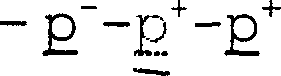
FET10是n-沟道器件,因为是电子在量子阱22中提供电导。p-沟道等效器件的制作是将FET10中的每一层14/19/20/22/24/30改变成其各自的相反的导电类型:即n+-
p-量子阱
Claims (24)


Applications Claiming Priority (2)
| Application Number | Priority Date | Filing Date | Title |
|---|---|---|---|
| GB0012017.0 | 2000-05-19 | ||
| GB0012017A GB2362506A (en) | 2000-05-19 | 2000-05-19 | Field effect transistor with an InSb quantum well and minority carrier extraction |
Publications (2)
| Publication Number | Publication Date |
|---|---|
| CN1429408A CN1429408A (en) | 2003-07-09 |
| CN1220272C true CN1220272C (en) | 2005-09-21 |
Family
ID=9891857
Family Applications (1)
| Application Number | Title | Priority Date | Filing Date |
|---|---|---|---|
| CNB018096719A Expired - Fee Related CN1220272C (en) | 2000-05-19 | 2001-05-02 | Charge carrier extracting transistor |
Country Status (10)
| Country | Link |
|---|---|
| US (1) | US6770902B2 (en) |
| EP (1) | EP1282918B1 (en) |
| JP (1) | JP4972267B2 (en) |
| KR (1) | KR100801955B1 (en) |
| CN (1) | CN1220272C (en) |
| AT (1) | ATE515801T1 (en) |
| AU (1) | AU5238601A (en) |
| CA (1) | CA2406642C (en) |
| GB (1) | GB2362506A (en) |
| WO (1) | WO2001088995A1 (en) |
Families Citing this family (33)
| Publication number | Priority date | Publication date | Assignee | Title |
|---|---|---|---|---|
| GB0206572D0 (en) | 2002-03-20 | 2002-05-01 | Qinetiq Ltd | Field effect transistors |
| US6825506B2 (en) | 2002-11-27 | 2004-11-30 | Intel Corporation | Field effect transistor and method of fabrication |
| CN100403549C (en) * | 2002-12-19 | 2008-07-16 | 松下电器产业株式会社 | Semiconductor device and holding circuit |
| JP4469139B2 (en) * | 2003-04-28 | 2010-05-26 | シャープ株式会社 | Compound semiconductor FET |
| GB0326993D0 (en) * | 2003-11-20 | 2003-12-24 | Qinetiq Ltd | Strained semiconductor devices |
| US20060086977A1 (en) | 2004-10-25 | 2006-04-27 | Uday Shah | Nonplanar device with thinned lower body portion and method of fabrication |
| US20060148182A1 (en) * | 2005-01-03 | 2006-07-06 | Suman Datta | Quantum well transistor using high dielectric constant dielectric layer |
| WO2006081262A2 (en) * | 2005-01-25 | 2006-08-03 | Moxtronics, Inc. | High-performance fet devices and methods |
| JP4474292B2 (en) * | 2005-01-28 | 2010-06-02 | トヨタ自動車株式会社 | Semiconductor device |
| US7518196B2 (en) | 2005-02-23 | 2009-04-14 | Intel Corporation | Field effect transistor with narrow bandgap source and drain regions and method of fabrication |
| EP1896361A2 (en) * | 2005-05-31 | 2008-03-12 | Mears Technologies, Inc. | Microelectromechanical systems (mems) device including a superlattice and associated methods |
| US7547637B2 (en) | 2005-06-21 | 2009-06-16 | Intel Corporation | Methods for patterning a semiconductor film |
| US9024298B2 (en) * | 2005-07-26 | 2015-05-05 | Xerox Corporation | Encapsulation layer for electronic devices |
| US20070090416A1 (en) | 2005-09-28 | 2007-04-26 | Doyle Brian S | CMOS devices with a single work function gate electrode and method of fabrication |
| US7485503B2 (en) * | 2005-11-30 | 2009-02-03 | Intel Corporation | Dielectric interface for group III-V semiconductor device |
| US8183556B2 (en) * | 2005-12-15 | 2012-05-22 | Intel Corporation | Extreme high mobility CMOS logic |
| US7534710B2 (en) * | 2005-12-22 | 2009-05-19 | International Business Machines Corporation | Coupled quantum well devices (CQWD) containing two or more direct selective contacts and methods of making same |
| US8143646B2 (en) | 2006-08-02 | 2012-03-27 | Intel Corporation | Stacking fault and twin blocking barrier for integrating III-V on Si |
| US7429747B2 (en) * | 2006-11-16 | 2008-09-30 | Intel Corporation | Sb-based CMOS devices |
| US8030664B2 (en) * | 2006-12-15 | 2011-10-04 | Samsung Led Co., Ltd. | Light emitting device |
| US7713803B2 (en) * | 2007-03-29 | 2010-05-11 | Intel Corporation | Mechanism for forming a remote delta doping layer of a quantum well structure |
| US20090218563A1 (en) * | 2008-02-28 | 2009-09-03 | Bruce Alvin Gurney | Novel fabrication of semiconductor quantum well heterostructure devices |
| US8362566B2 (en) * | 2008-06-23 | 2013-01-29 | Intel Corporation | Stress in trigate devices using complimentary gate fill materials |
| WO2010074964A2 (en) * | 2008-12-23 | 2010-07-01 | Intel Corporation | Group iii-v mosfet having metal diffusion regions |
| US8093584B2 (en) * | 2008-12-23 | 2012-01-10 | Intel Corporation | Self-aligned replacement metal gate process for QWFET devices |
| GB2469448A (en) * | 2009-04-14 | 2010-10-20 | Qinetiq Ltd | Strain Control in Semiconductor Devices |
| WO2011027577A1 (en) * | 2009-09-07 | 2011-03-10 | 住友化学株式会社 | Field effect transistor, semiconductor substrate, method for manufacturing field effect transistor, and method for producing semiconductor substrate |
| US8324661B2 (en) * | 2009-12-23 | 2012-12-04 | Intel Corporation | Quantum well transistors with remote counter doping |
| CN102194859B (en) * | 2010-03-05 | 2013-05-01 | 中国科学院微电子研究所 | High mobility Ⅲ-Ⅴ semiconductor MOS interface structure |
| CN101982731B (en) * | 2010-10-21 | 2012-05-23 | 天津大学 | Flexible film microwave strain sensor |
| CN101995235B (en) * | 2010-10-21 | 2012-07-18 | 天津大学 | Microwave diode-based dynamic strain measuring device |
| US8891573B2 (en) | 2012-05-14 | 2014-11-18 | Arizona Board Of Regents | 6.1 angstrom III-V and II-VI semiconductor platform |
| CN107968679B (en) * | 2017-11-20 | 2021-11-05 | 南京艾凯特光电科技有限公司 | Visible light communication device |
Family Cites Families (7)
| Publication number | Priority date | Publication date | Assignee | Title |
|---|---|---|---|---|
| GB8417303D0 (en) * | 1984-07-06 | 1984-08-08 | Secr Defence | Infra-red detector |
| US4860064A (en) * | 1987-10-21 | 1989-08-22 | American Telephone And Telegraph Company At&T Bell Laboratories | Transistor comprising a 2-dimensional carrier gas collector situated between emitter and gate |
| US5111255A (en) * | 1990-06-05 | 1992-05-05 | At&T Bell Laboratories | Buried channel heterojunction field effect transistor |
| JP3298637B2 (en) * | 1990-11-30 | 2002-07-02 | 横河電機株式会社 | A / D converter using AB effect element |
| GB9100351D0 (en) | 1991-01-08 | 1991-02-20 | Secr Defence | Semiconductor heterostructure device |
| JPH04372137A (en) * | 1991-06-21 | 1992-12-25 | Nec Corp | Field-effect transistor |
| GB2331841A (en) | 1997-11-28 | 1999-06-02 | Secr Defence | Field effect transistor |
-
2000
- 2000-05-19 GB GB0012017A patent/GB2362506A/en not_active Withdrawn
-
2001
- 2001-02-05 US US10/258,853 patent/US6770902B2/en not_active Expired - Fee Related
- 2001-05-02 AT AT01925702T patent/ATE515801T1/en not_active IP Right Cessation
- 2001-05-02 CN CNB018096719A patent/CN1220272C/en not_active Expired - Fee Related
- 2001-05-02 JP JP2001584494A patent/JP4972267B2/en not_active Expired - Fee Related
- 2001-05-02 CA CA2406642A patent/CA2406642C/en not_active Expired - Fee Related
- 2001-05-02 EP EP01925702A patent/EP1282918B1/en not_active Expired - Lifetime
- 2001-05-02 AU AU52386/01A patent/AU5238601A/en not_active Abandoned
- 2001-05-02 KR KR1020027015505A patent/KR100801955B1/en not_active Expired - Fee Related
- 2001-05-02 WO PCT/GB2001/001919 patent/WO2001088995A1/en not_active Ceased
Also Published As
| Publication number | Publication date |
|---|---|
| KR20030034072A (en) | 2003-05-01 |
| CN1429408A (en) | 2003-07-09 |
| JP4972267B2 (en) | 2012-07-11 |
| AU5238601A (en) | 2001-11-26 |
| GB2362506A (en) | 2001-11-21 |
| JP2003533887A (en) | 2003-11-11 |
| CA2406642C (en) | 2012-12-18 |
| GB0012017D0 (en) | 2000-07-05 |
| US6770902B2 (en) | 2004-08-03 |
| US20030080332A1 (en) | 2003-05-01 |
| KR100801955B1 (en) | 2008-02-12 |
| EP1282918B1 (en) | 2011-07-06 |
| CA2406642A1 (en) | 2001-11-22 |
| ATE515801T1 (en) | 2011-07-15 |
| HK1055352A1 (en) | 2004-01-02 |
| EP1282918A1 (en) | 2003-02-12 |
| WO2001088995A1 (en) | 2001-11-22 |
Similar Documents
| Publication | Publication Date | Title |
|---|---|---|
| CN1220272C (en) | Charge carrier extracting transistor | |
| US7435987B1 (en) | Forming a type I heterostructure in a group IV semiconductor | |
| US6744083B2 (en) | Submicron MOSFET having asymmetric channel profile | |
| US7839209B2 (en) | Tunnel field effect transistor | |
| US8637851B2 (en) | Graphene device having physical gap | |
| US9048310B2 (en) | Graphene switching device having tunable barrier | |
| Shanbhag et al. | Optimized buffer stack with carbon-doping for performance improvement of GaN HEMTs | |
| Saitoh et al. | Tunneling barrier structures in room-temperature operating silicon single-electron and single-hole transistors | |
| EP0200933A1 (en) | Heterojunction transistor having bipolar characteristics | |
| US6049097A (en) | Reliable HEMT with small parasitic resistance | |
| Lin et al. | A scaling study of excess OFF-state current in InGaAs quantum-well MOSFETs | |
| US20070029574A1 (en) | Strained semiconductor devices | |
| JP2800675B2 (en) | Tunnel transistor | |
| HK1055352B (en) | Charge carrier extracting transistor | |
| JP2001085672A (en) | Field effect type semiconductor device | |
| Jackson et al. | Junction field effect transistors for nanoelectronics | |
| EP0203493B1 (en) | Field effect transistor | |
| JPH0620142B2 (en) | Semiconductor device | |
| JP2658898B2 (en) | field effect transistor | |
| Lin et al. | P-type enhancement-mode SiGe doped-channel field-effect transistor | |
| Lee et al. | A novel triple δ-doped SiGe heterostructure field-effect transistor | |
| Son et al. | Long-channel In 0.7 Ga 0.3 As/In 0.52 Al 0.48 As quantum-well MOSFETs on InP substrate with record µ n_eff= 6960 cm²/Vs. | |
| Lin et al. | High performacne InAs/AlSb HEMT with refractory iridium Schottky gate metal | |
| Therez et al. | Real-space transfer in heterojunction structures | |
| JPH0638432B2 (en) | Semiconductor device |
Legal Events
| Date | Code | Title | Description |
|---|---|---|---|
| C06 | Publication | ||
| PB01 | Publication | ||
| C10 | Entry into substantive examination | ||
| SE01 | Entry into force of request for substantive examination | ||
| C14 | Grant of patent or utility model | ||
| GR01 | Patent grant | ||
| CF01 | Termination of patent right due to non-payment of annual fee |
Granted publication date: 20050921 Termination date: 20150502 |
|
| EXPY | Termination of patent right or utility model |