CN1166172A - Quinidine conjugates and their use in immunoassays - Google Patents
Quinidine conjugates and their use in immunoassays Download PDFInfo
- Publication number
- CN1166172A CN1166172A CN96191113A CN96191113A CN1166172A CN 1166172 A CN1166172 A CN 1166172A CN 96191113 A CN96191113 A CN 96191113A CN 96191113 A CN96191113 A CN 96191113A CN 1166172 A CN1166172 A CN 1166172A
- Authority
- CN
- China
- Prior art keywords
- quinidine
- conjugate
- reagent
- aqueous phase
- reporter
- Prior art date
- Legal status (The legal status is an assumption and is not a legal conclusion. Google has not performed a legal analysis and makes no representation as to the accuracy of the status listed.)
- Pending
Links
Images

Classifications
-
- C—CHEMISTRY; METALLURGY
- C07—ORGANIC CHEMISTRY
- C07C—ACYCLIC OR CARBOCYCLIC COMPOUNDS
- C07C271/00—Derivatives of carbamic acids, i.e. compounds containing any of the groups, the nitrogen atom not being part of nitro or nitroso groups
- C07C271/06—Esters of carbamic acids
- C07C271/08—Esters of carbamic acids having oxygen atoms of carbamate groups bound to acyclic carbon atoms
- C07C271/10—Esters of carbamic acids having oxygen atoms of carbamate groups bound to acyclic carbon atoms with the nitrogen atoms of the carbamate groups bound to hydrogen atoms or to acyclic carbon atoms
- C07C271/16—Esters of carbamic acids having oxygen atoms of carbamate groups bound to acyclic carbon atoms with the nitrogen atoms of the carbamate groups bound to hydrogen atoms or to acyclic carbon atoms to carbon atoms of hydrocarbon radicals substituted by singly-bound oxygen atoms
-
- C—CHEMISTRY; METALLURGY
- C07—ORGANIC CHEMISTRY
- C07C—ACYCLIC OR CARBOCYCLIC COMPOUNDS
- C07C217/00—Compounds containing amino and etherified hydroxy groups bound to the same carbon skeleton
- C07C217/02—Compounds containing amino and etherified hydroxy groups bound to the same carbon skeleton having etherified hydroxy groups and amino groups bound to acyclic carbon atoms of the same carbon skeleton
- C07C217/04—Compounds containing amino and etherified hydroxy groups bound to the same carbon skeleton having etherified hydroxy groups and amino groups bound to acyclic carbon atoms of the same carbon skeleton the carbon skeleton being acyclic and saturated
- C07C217/06—Compounds containing amino and etherified hydroxy groups bound to the same carbon skeleton having etherified hydroxy groups and amino groups bound to acyclic carbon atoms of the same carbon skeleton the carbon skeleton being acyclic and saturated having only one etherified hydroxy group and one amino group bound to the carbon skeleton, which is not further substituted
- C07C217/08—Compounds containing amino and etherified hydroxy groups bound to the same carbon skeleton having etherified hydroxy groups and amino groups bound to acyclic carbon atoms of the same carbon skeleton the carbon skeleton being acyclic and saturated having only one etherified hydroxy group and one amino group bound to the carbon skeleton, which is not further substituted the oxygen atom of the etherified hydroxy group being further bound to an acyclic carbon atom
-
- C—CHEMISTRY; METALLURGY
- C07—ORGANIC CHEMISTRY
- C07C—ACYCLIC OR CARBOCYCLIC COMPOUNDS
- C07C269/00—Preparation of derivatives of carbamic acid, i.e. compounds containing any of the groups, the nitrogen atom not being part of nitro or nitroso groups
- C07C269/04—Preparation of derivatives of carbamic acid, i.e. compounds containing any of the groups, the nitrogen atom not being part of nitro or nitroso groups from amines with formation of carbamate groups
-
- C—CHEMISTRY; METALLURGY
- C07—ORGANIC CHEMISTRY
- C07D—HETEROCYCLIC COMPOUNDS
- C07D453/00—Heterocyclic compounds containing quinuclidine or iso-quinuclidine ring systems, e.g. quinine alkaloids
- C07D453/02—Heterocyclic compounds containing quinuclidine or iso-quinuclidine ring systems, e.g. quinine alkaloids containing not further condensed quinuclidine ring systems
- C07D453/04—Heterocyclic compounds containing quinuclidine or iso-quinuclidine ring systems, e.g. quinine alkaloids containing not further condensed quinuclidine ring systems having a quinolyl-4, a substituted quinolyl-4 or a alkylenedioxy-quinolyl-4 radical linked through only one carbon atom, attached in position 2, e.g. quinine
-
- G—PHYSICS
- G01—MEASURING; TESTING
- G01N—INVESTIGATING OR ANALYSING MATERIALS BY DETERMINING THEIR CHEMICAL OR PHYSICAL PROPERTIES
- G01N33/00—Investigating or analysing materials by specific methods not covered by groups G01N1/00 - G01N31/00
- G01N33/48—Biological material, e.g. blood, urine; Haemocytometers
- G01N33/50—Chemical analysis of biological material, e.g. blood, urine; Testing involving biospecific ligand binding methods; Immunological testing
- G01N33/94—Chemical analysis of biological material, e.g. blood, urine; Testing involving biospecific ligand binding methods; Immunological testing involving narcotics or drugs or pharmaceuticals, neurotransmitters or associated receptors
- G01N33/9453—Cardioregulators, e.g. antihypotensives, antiarrhythmics
Landscapes
- Chemical & Material Sciences (AREA)
- Organic Chemistry (AREA)
- Health & Medical Sciences (AREA)
- Life Sciences & Earth Sciences (AREA)
- Engineering & Computer Science (AREA)
- Molecular Biology (AREA)
- Immunology (AREA)
- Biomedical Technology (AREA)
- Urology & Nephrology (AREA)
- Hematology (AREA)
- Food Science & Technology (AREA)
- Physics & Mathematics (AREA)
- Cell Biology (AREA)
- Heart & Thoracic Surgery (AREA)
- Cardiology (AREA)
- Microbiology (AREA)
- Pharmacology & Pharmacy (AREA)
- Bioinformatics & Cheminformatics (AREA)
- Medicinal Chemistry (AREA)
- Biotechnology (AREA)
- Analytical Chemistry (AREA)
- Biochemistry (AREA)
- General Health & Medical Sciences (AREA)
- General Physics & Mathematics (AREA)
- Pathology (AREA)
- Medicines Containing Antibodies Or Antigens For Use As Internal Diagnostic Agents (AREA)
- Peptides Or Proteins (AREA)
- Investigating Or Analysing Biological Materials (AREA)
- Nitrogen Condensed Heterocyclic Rings (AREA)
Abstract
Description
发明领域Field of Invention
本发明涉及奎尼定缀合物及其在对试验样品中定量的奎尼定的免疫测定中的应用,以及,更具体地,涉及用于产生抗奎尼定抗体及用于合成与报道试剂结合的缀合物的奎尼定衍生物。本发明也涉及用于合成含亲水接头的奎尼定缀合物的单保护的亲水性双胺试剂。The present invention relates to quinidine conjugates and their use in immunoassays for the quantification of quinidine in test samples, and, more particularly, to the production of anti-quinidine antibodies and to synthesis and reporting reagents Conjugated Conjugated Quinidine Derivatives. The present invention also relates to mono-protected hydrophilic diamine reagents for the synthesis of quinidine conjugates containing hydrophilic linkers.
技术背最
特殊的结合反应,如抗体-抗原相互作用,已被广泛地用于免疫测定中,以检测和/或定量分析存在于生物体液中的药物或其它令人感兴趣的化合物。这样的免疫测定已被发展用于测定多价抗原,如蛋白质,以及半抗原。Specific binding reactions, such as antibody-antigen interactions, have been widely used in immunoassays to detect and/or quantify drugs or other compounds of interest present in biological fluids. Such immunoassays have been developed for the detection of multivalent antigens, such as proteins, as well as haptens.
作为分子定义的半抗原太小,以致于将其用于动物时不能刺激抗体的产生,也就是说,半抗原本身是非免疫原性的。但是,本领域公知,通过将半抗原与合适的载体分子共价结合(缀合)而产生免疫原性。将这样的免疫原性的缀合物用于动物时,通常会引起抗体谱的产生,一些抗体抗载体天然的抗原位点(表位),而一些抗体抗结合的半抗原分子。合适的载体通常含有聚(氨基酸)片段,包括多肽,蛋白质和糖蛋白。可使用的载体的特例为钥孔血蓝素(KLH),牛血清白蛋白(BSA),γ-球蛋白和植物球蛋白(例如,南瓜籽球蛋白)。A hapten by definition as a molecule is too small to stimulate antibody production when administered to an animal, that is, the hapten itself is non-immunogenic. However, it is well known in the art that immunogenicity is produced by covalently binding (conjugating) the hapten to a suitable carrier molecule. Administration of such immunogenic conjugates to animals typically results in the production of a repertoire of antibodies, some directed against the carrier's native antigenic site (epitope), and some directed against the bound hapten molecule. Suitable carriers generally contain poly(amino acid) fragments, including polypeptides, proteins and glycoproteins. Specific examples of usable carriers are keyhole limpet hemocyanin (KLH), bovine serum albumin (BSA), gamma-globulin and plant globulin (eg, squash globulin).
各种化学物质已被用来制备产生抗-半抗原抗体所必须的免疫原性的半抗原-载体缀合物。由于天然的载体通常含有一定数量的赖氨酸残基,而后者又含有活性氨基,因此,一种特别有用的方法利用了含胺-反应性官能团的半抗原或半抗原衍生物与载体的反应。这种方法的一个重要的方面是由羧基官能化的半抗原和半抗原衍生物迅速地转化为合适的氨-反应中间体。Various chemistries have been used to prepare the immunogenic hapten-carrier conjugates necessary to generate anti-hapten antibodies. Since natural carriers usually contain a certain number of lysine residues, which in turn contain reactive amino groups, a particularly useful approach utilizes the reaction of haptens or hapten derivatives containing amine-reactive functional groups with carriers. . An important aspect of this method is the rapid conversion of carboxy-functionalized haptens and hapten derivatives into suitable ammonia-reactive intermediates.
奎尼定,本申请特别关注的半抗原,为有效的药用化合物。它作为抗心律不齐药物的价值是由于在使用这些药物治疗并发房纤颤的疟疾病人时,偶然“治愈”了他们的心律不齐而偶然发现的。
在肝和/或肾无疾病的情况下,奎尼定的生物半衰期是约6小时。部分药物无变化地由肾脏排泄,剩余部分由肝脏代谢产生无抗心律不齐活性的产物。奎尼定通过直接作用于心肌及间接作用于传导系统而影响心脏的速率和节律。奎尼定降低兴奋性,传导速度和心肌收缩力。In the absence of liver and/or kidney disease, the biological half-life of quinidine is about 6 hours. Part of the drug is excreted unchanged by the kidneys, and the rest is metabolized by the liver to produce products with no antiarrhythmic activity. Quinidine affects the rate and rhythm of the heart by acting directly on the myocardium and indirectly on the conduction system. Quinidine reduces excitability, conduction velocity and myocardial contractility.
奎尼定经常产生不需要的胃肠道副作用,该副作用多少与剂量相关。血浆药物水平的检测所提供的信息有助于在最大程度地限制不需要的副作用的同时保持适当的治疗水平。Quinidine frequently produces unwanted gastrointestinal side effects that are somewhat dose-related. Measurement of plasma drug levels provides information that helps maintain appropriate therapeutic levels while minimizing unwanted side effects.
但是,天然奎尼定不含上述的胺-反应性官能团。因此必须将其合成为合适的奎尼定衍生物。奎尼定中的C-10-C-11双键特别地提供了开始反应的位置。However, natural quinidine does not contain the aforementioned amine-reactive functional groups. It must therefore be synthesized as a suitable quinidine derivative. The C-10-C-11 double bond in quinidine specifically provides the site to initiate the reaction.
考氏等(Kobayashi et al.)(聚合物科学杂志(Journal ofPolymer Science):Polymer Letters Edition,vol.20,85-90,Functional Polymers 9。新金鸡纳生物碱衍生物不对称催化(Asymmetric Catalysis by New Cinchona AlkaloidDerivatives)。不对称诱导中C(3)取代基的作用(Effect of C(3)Substituent On Asymmetric Induction),John Wiley and Sons,Inc.,[1982])公开了在奎尼定C-11位具有有机硫基团的金鸡纳生物碱的合成。但是,并未制备出含有适于本发明目的的官能团的衍生物。Kobayashi et al. (Journal of Polymer Science: Polymer Letters Edition, vol.20, 85-90, Functional Polymers 9. Asymmetric Catalysis by New Cinchona Alkaloid Derivatives New Cinchona Alkaloid Derivatives). The role of C (3) substituents in asymmetric induction (Effect of C (3) Substituent On Asymmetric Induction), John Wiley and Sons, Inc., [1982]) disclosed that in quinidine C- Synthesis of cinchona alkaloids with an organosulfur group at position 11. However, derivatives containing functional groups suitable for the purpose of the present invention have not been prepared.
公开于1991年10月31日国际公开号为WO 91/16322的国际PCT申请和公开于1993年4月15日国际公开号为WO 93/07142的国际PCT申请公开了奎尼定和奎尼定衍生物作为不对称羟基化催化剂的用途。所公开的化合物包括作为临界控制剂的C-11位由磺酰基或磺酰基类衍生的奎尼定衍生物。同样,这些衍生物也不含有适于本发明目的的官能团。International PCT Application published as International Publication No. WO 91/16322 on October 31, 1991 and International PCT Application published as International Publication No. WO 93/07142 on April 15, 1993 disclose quinidine and quinidine Use of derivatives as catalysts for asymmetric hydroxylation. The disclosed compounds include quinidine derivatives derived from sulfonyl or sulfonyl groups at the C-11 position as criticality control agents. Likewise, these derivatives do not contain functional groups suitable for the purposes of the present invention.
特别地,尚没有参考文献提及或暗示用于奎尼定免疫测定的合成的免疫原性的缀合物或报道试剂(例如粒子试剂)的奎尼定衍生物的制备。In particular, there are no references that mention or suggest the preparation of synthetic immunogenic conjugates or quinidine derivatives of reporter reagents (eg particle reagents) for use in quinidine immunoassays.
目前需要奎尼定缀合物并将其应用于试验样品中奎尼定的定量免疫测定以及,具体地,应用于能够及时地,精确地监测奎尼定水平的产生抗-奎尼定抗体的奎尼定衍生物。There is a need for quinidine conjugates and their application to the quantitative immunoassay of quinidine in test samples and, in particular, to the production of anti-quinidine antibodies capable of timely and accurately monitoring quinidine levels. Quinidine derivatives.
发明概要Summary of Invention
本发明的一个实施方案包括结构式I的化合物,该化合物也可由内盐II表示,或离析为外盐III:
另一个实施方案为要求保护化合物和载体的免疫原性缀合物,其中载体优选聚(氨基酸)蛋白质和糖蛋白。Another embodiment is an immunogenic conjugate of the claimed compound and a carrier, wherein the carrier is preferably a poly(amino acid) protein and a glycoprotein.
另一个实施方案为要求保护的化合物和报道试剂的缀合物。报道试剂为具有可使该试剂在样品中的量被迅速地定量测定的化学或物理性质的试剂。常见的报道试剂有乳胶颗粒,萤光团,化学发光物质,发色团,放射性物质和酶。在适当定型的测定中,药物或其他令人感兴趣的化合物与报道试剂的缀合物可被用来显示样品中的药物的量和样品中报道试剂的量(快速测量)。Another embodiment is a conjugate of a claimed compound and a reporter reagent. A reporter reagent is a reagent that has chemical or physical properties that allow the amount of that reagent in a sample to be rapidly quantitatively determined. Common reporter reagents include latex particles, fluorophores, chemiluminescent substances, chromophores, radioactive substances and enzymes. In an appropriately formatted assay, a conjugate of a drug or other compound of interest with a reporter reagent can be used to indicate the amount of drug in the sample and the amount of reporter reagent in the sample (rapid measurement).
另一个实施方案为要求保护的化合物与一种报道试剂的缀合物,更特别地,其中要求保护的化合物经亲水连接与报道试剂缀合。Another embodiment is the conjugate of the claimed compound with a reporter reagent, more particularly wherein the claimed compound is conjugated to the reporter reagent via a hydrophilic linkage.
另一个实施方案为一类用于在药物和报道试剂的缀合物中导入亲水接头部分(Seqment)的单保护的亲水性二胺。Another embodiment is a class of mono-protected hydrophilic diamines for the introduction of a hydrophilic linker moiety (Seqment) in a conjugate of a drug and a reporter reagent.
本发明的另一个实施方案为测定试验样品中奎尼定的存在和/或含量的免疫测定法,其中的步骤为:Another embodiment of the invention is an immunoassay for determining the presence and/or amount of quinidine in a test sample, wherein the steps are:
(a)将含要求保护的化合物与报道试剂形成的缀合物的报道试剂,试验样品,和一种凝集试剂混合在一起,接着(a) mixing together a reporter reagent comprising a conjugate of the claimed compound and a reporter reagent, a test sample, and an agglutination reagent, followed by
(b)按已知方法进行凝集免疫测定。(b) Agglutination immunoassays are performed according to known methods.
附图的简要说明A brief description of the drawings
根据相应的附图,本发明将在下列详细描述中变得更加清楚,该附图也是本申请的一个组成部分,其中:The invention will become more apparent from the following detailed description with reference to the accompanying drawings, which form an integral part of this application, in which:
图1表示用各种QAD-1蛋白免疫原性的缀合物免疫小鼠,使之产生抗奎尼定-抗体。该图将在实施例3中更详细地讨论。Figure 1 shows the production of anti-quinidine-antibodies in mice immunized with various immunogenic conjugates of QAD-1 protein. This figure will be discussed in more detail in Example 3.
图2为浊度-抑制试验(turbity-inhibition test)数据的标示图,它表示溶液中游离的奎尼定与结合颗粒的奎尼定竞争以限制抗体的量。该图也将在实施例3中更详细地讨论。Figure 2 is a graphical representation of turbity-inhibition test data showing that free quinidine in solution competes with particle-bound quinidine to limit the amount of antibody. This figure is also discussed in more detail in Example 3.
图3表示奎尼定浊度抑制免疫测定中的标准曲线。它将在实施例6,部分B中更详细地讨论。Figure 3 represents the standard curve in the quinidine turbidity suppression immunoassay. It is discussed in more detail in Example 6, Part B.
发明的描述Description of the invention
本发明涉及奎尼定衍生物,由其制备的免疫原性的缀合物,由免疫原性的缀合物引发的抗体,针对报道试剂的奎尼定缀合物,以及它们在免疫测定中的应用。The present invention relates to quinidine derivatives, immunogenic conjugates prepared therefrom, antibodies elicited by the immunogenic conjugates, quinidine conjugates directed to reporter reagents, and their use in immunoassays Applications.
本发明最终涉及两种最终试剂,抗-奎尼定抗体和奎尼定-乳胶颗粒的制备。两种最终试剂为测定体液中奎尼定的存在与量的测量系统的组成部分。The present invention ultimately concerns the preparation of two final reagents, anti-quinidine antibodies and quinidine-latex particles. The two final reagents are part of the measurement system for determining the presence and amount of quinidine in body fluids.
在本发明中,通过C-10-C-11之间具有双键的硫羟基-官能化的羧酸的反应合成羧基-官能化的奎尼定衍生物。已知使用游离基化学可将硫羟基加到双键上。例如,使用2,2’-偶氮双(异丁腈)(AIBN)作为起始游离基源通过3-巯基丙酸(3-MPA)对奎尼定双键的加成得到称为QAD-1的衍生物。可以设想,该反应是在几个步骤中发生的。下式中,圆点表示未成对的电子而QCH=CH2表示奎尼定。1.游离基产生(起始阶段)。2.游离基由碳转移至硫,形成硫羟游离基。3.硫羟游离基加入奎尼定双键。4.游离基由碳转移至硫。
本发明的羧基-官能化的奎尼定衍生物可用载体缀合而形成免疫原。首先必需将羟基转化为胺-反应性基团。羧基-官能化反应剂向胺-反应反应剂的转化方法是本领域技术人员熟知的。形式上,羧基中的羟基由负电性的或吸电子的原子或基团取代,以使部分正电荷被诱导在羰基碳原子附近。
-Cl,-Br,-F 酰菌 酸酐或混合酐


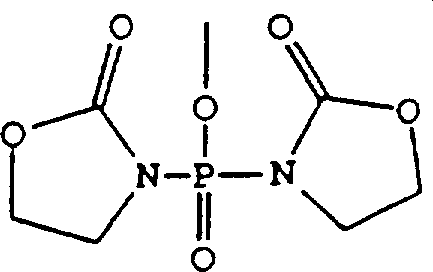


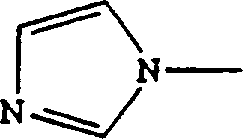


在本发明的特例中,使用二琥珀酰亚胺碳酸酯将QAD-1转化成胺-反应活性的琥珀酰亚胺基酯,然后使其与载体中的赖氨酸(胺)基团反应,得到免疫原性的缀合物(免疫原)。该免疫原可被用来使用的已知抗体生产和筛选方法诱导抗体。例如,可将免疫原注射到合适的动物宿主体内以刺激抗体的产生。既可将如此制得的抗体直接用于与半抗原或密切相关的类似物的特定的结合反应,也可首先通过任何已知的方式,如亲和层析,从动物血清中纯化。选择性地,可使用本发明的缀合物筛选从被注射的宿主中得到的免疫淋巴细胞以选择对免疫原性的缀合物有反应的细胞。然后可将其与合适的骨髓瘤细胞融合,产生可产生单克隆抗体的杂交瘤。细胞融合,选择及增殖的方法为已知方法,通常由考氏等的方法[Kohler et al.,Nature,Vol.256,495-497(1975)]修改而来。优选地,本发明的抗体为使用杂交瘤技术制备的单克隆抗体。In a particular embodiment of the invention, QAD-1 is converted to an amine-reactive succinimidyl ester using disuccinimidyl carbonate, which is then reacted with a lysine (amine) group in a carrier, An immunogenic conjugate (immunogen) is obtained. The immunogen can be used to induce antibodies using known antibody production and screening methods. For example, an immunogen can be injected into a suitable animal host to stimulate antibody production. The antibodies thus produced can either be used directly in specific binding reactions with haptens or closely related analogs, or they can first be purified from animal serum by any known means, such as affinity chromatography. Alternatively, the conjugates of the invention can be used to screen immune lymphocytes obtained from the injected host to select cells that respond to the immunogenic conjugate. These can then be fused with suitable myeloma cells to produce hybridomas that produce monoclonal antibodies. Methods for cell fusion, selection and proliferation are known methods, generally modified from the method of Kohler et al. [Kohler et al., Nature, Vol. 256, 495-497 (1975)]. Preferably, the antibodies of the invention are monoclonal antibodies produced using hybridoma technology.
使用本发明免疫原性的缀合物制备的抗-奎尼定抗体可被用于任何已知的免疫测定形式,以利用抗体和其半抗原之间的特定的结合反应,测定试验样品中游离的半抗原的存在和/或量。这样的已知免疫测定形式的例子包括同源的,异源的,竞争性的和直接的(非竞争性的)形式。The anti-quinidine antibody prepared using the immunogenic conjugate of the present invention can be used in any known immunoassay format to measure free The presence and/or amount of the hapten. Examples of such known immunoassay formats include homologous, heterologous, competitive and direct (non-competitive) formats.
本发明的方法限于所要求的化合物与报道试剂,特别是乳胶颗粒的偶合。优选的颗粒包括具有聚苯乙烯芯和已与乙二醇二异丁烯酸酯交联的聚(缩水甘油基异丁烯酸酯)壳的颗粒。这种颗粒的制备和用途已在克氏等(Craig et al.)的美国专利No.4,480,042中公开,该文献在此作为参考。这些颗粒表面的环氧基与胺,硫醇等迅速反应,这一性质可用来使各种令人感兴趣的化合物附着在乳胶颗粒上。特别地,本发明使用环氧基与存在于亲水性二胺接头中的氨基的反应。在这种连接中,应当提到的是由其他的胺-反应活性剂-如醛,琥珀酰亚胺基酯,和烯丙基或苄基卤化物官能化的乳胶颗粒也适用作本发明的报道反应剂。The method of the present invention is limited to the coupling of the claimed compound to a reporter reagent, in particular latex particles. Preferred particles include those having a polystyrene core and a poly(glycidyl methacrylate) shell that has been crosslinked with ethylene glycol dimethacrylate. The preparation and use of such particles is disclosed in U.S. Patent No. 4,480,042 to Craig et al., which is incorporated herein by reference. The epoxy groups on the surface of these particles react rapidly with amines, thiols, etc., a property that can be exploited to attach various interesting compounds to latex particles. In particular, the present invention uses the reaction of epoxy groups with amino groups present in hydrophilic diamine linkers. In this connection, it should be mentioned that latex particles functionalized with other amine-reactive agents-such as aldehydes, succinimidyl esters, and allyl or benzyl halides are also suitable for use in the present invention. Report reactants.
通过高亲水性接头(有时也称为间隔基或桥)将缀合物对的两个组分偶合,随后缀合物预定的功能为本领域技术人员已知的技术。下面是这种技术的-些例子:(a)付氏等。作为颗粒反应剂连接剂用于免疫测定的聚醚聚胺(W.A.Frey and D.M.Simons.Polyetherpolyamines as linking agents for particle reagnts useful inimmunoassays)。US 4,581,337,April 8,1986;(b)希氏等。使用于可释放配体的特定结合的测定方法(D.M.Simons,S.Y.Tseng and D.M.Obzansky.Method for Specific bindingassays using a releasable ligand)。U.S.5,332,679,DuPont,July 26,1994;(c)阿氏等。使用一种新的亲水性交联剂的单克隆抗体和葡萄球菌属内毒素A的缀合物的制备和性质。生物缀合物化学4:455-466(1993)(E.Akerblom,M.Dohlsten,C.Bryno,M.Mastej,I.Steringer,G.Hedlund,P.Lando and T.Kalland.Preparation and characterization of conjugates ofmonoclonal antibodies and staphylococcal enterotoxin A usinga new hydrphilic cross-liker.Bioconjugate Chem.4:455-466(1993);(d)胡氏等(E,Huber,D.Zdunek,C.Klein and R.Schenk)。Hapten-Biotin-Konjugate und Ihre Verwendung.EP0 451 810 Al,April 10,1991(Boehringer mannheim)。假定好的效果由两种因素的结合得到:减少空间位阻和降低存在于缀合物这种或那种组分或者其它可随后加入的反应剂中的疏水区与亲水性接头的非特异性,非共价相互作用。在本例子中,使用这样的亲水性间隔基提高奎尼定测定的精度和准确度。The coupling of the two components of the conjugate pair via a highly hydrophilic linker (also sometimes referred to as a spacer or bridge), followed by the intended function of the conjugate is a technique known to those skilled in the art. The following are some examples of this technique: (a) Fu et al. Polyetherpolyamines as linking agents for particle reagents useful immunoassays (W.A.Frey and D.M.Simons. Polyetherpolyamines as linking agents for particle reagents useful inimmunoassays). US 4,581,337, April 8, 1986; (b) Hirsch et al. A method for specific binding assays using a releasable ligand was used (D.M.Simons, S.Y.Tseng and D.M.Obzansky. U.S. 5,332,679, DuPont, July 26, 1994; (c) Arbor et al. Preparation and properties of conjugates of monoclonal antibodies and Staphylococcus endotoxin A using a novel hydrophilic crosslinker. Bioconjugate Chemistry 4: 455-466 (1993) (E.Akerblom, M.Dohlsten, C.Bryno, M.Mastej, I.Steringer, G.Hedlund, P.Lando and T.Kalland.Preparation and characterization of Conjugates of monoclonal antibodies and staphylococcal enterotoxin A using a new hydraulic cross-liker. Bioconjugate Chem. 4: 455-466 (1993); (d) Hu et al. (E, Huber, D. Zdunek, C. Klein and R. Schenk). Hapten-Biotin-Konjugate und Ihre Verwendung.EP0 451 810 Al, April 10, 1991 (Boehringermannheim).It is assumed that the good effect is obtained by the combination of two factors: reducing steric hindrance and reducing the presence of this or that in the conjugate. non-specific, non-covalent interaction of the hydrophobic region with the hydrophilic linker in this component or other reagents that can be added subsequently. In this example, the use of such a hydrophilic spacer improves the precision of the quinidine assay and accuracy.
含有氧亚乙基单元的二胺或多胺试剂特别适用于亲水性接头。一些特例为:Diamine or polyamine reagents containing oxyethylene units are particularly suitable for use in hydrophilic linkers. Some special cases are:
H2NCH2CH2OCH2CH2OCH2CH2NH2 H 2 NCH 2 CH 2 OCH 2 CH 2 OCH 2 CH 2 NH 2
1,8-二氨基-3,6-二氧杂辛烷1,8-Diamino-3,6-dioxa-octane
杜邦编码名称:DA-10:DuPont code name: DA-10:
商品名:Jeffamine EDR-148Product name: Jeffamine EDR-148
制造商或来源:Texaco Chemical Co.Manufacturer or Source: Texaco Chemical Co.
pKa(两个氨基相同):9.4pKa (two amino groups are the same): 9.4
H2NCH2CH2CH2OCH2CH2OCH2CH2CH2NH2 H 2 NCH 2 CH 2 CH 2 OCH 2 CH 2 OCH 2 CH 2 CH 2 NH 2
1,10-二氨基-4,7-二氧杂癸烷1,10-Diamino-4,7-dioxadecane
杜邦编码名称:DA-12:DuPont code name: DA-12:
制造商或来源:Tokyo Kasel,Inc.,Manufacturer or source: Tokyo Kasel, Inc.,
911N.Harborgate St.,Portland,OR911 N. Harborgate St., Portland, OR
pKa(两个氨基相同):9.98pKa (two amino groups are the same): 9.98
H2NCH2CH2OCH2CH2OCH2CH2OCH2CH2NH2 H 2 NCH 2 CH 2 OCH 2 CH 2 OCH 2 CH 2 OCH 2 CH 2 NH 2
1,11-二氨基-3,6,9-三氧杂十一碳烷1,11-Diamino-3,6,9-trioxaundecane
杜邦编码名称:DA-13DuPont code name: DA-13
商品名:Jeffamine EDR-192Product name: Jeffamine EDR-192
制造商或来源:Texaco Chemical Co.Manufacturer or Source: Texaco Chemical Co.
pKa(两个氨基相同):9.4pKa (two amino groups are the same): 9.4
H2NCH2CH2OCH2CH2OCH2CH2OCH2CH2NH2 H 2 NCH 2 CH 2 OCH 2 CH 2 OCH 2 CH 2 OCH 2 CH 2 NH 2
1,13-二氨基-4,7,10-三氧杂十三碳烷1,13-Diamino-4,7,10-trioxatridecane
杜邦编码名称:DA-15:DuPont code name: DA-15:
制造商或来源:FlukaManufacturer or source: Fluka
pKa(两个氨基相同):10.02pKa (two amino groups are the same): 10.02
在上述材料的杜邦编码名称中,“DA”表示二胺,数字表示除末端氢原子外的链中原子的数目。含氧亚乙基链的分子中固有的较低的非特异性,非共价的分子内部相互作用与它们类似物有关,表明了物理性质。例如,DA-10在室温下为液体,但它的全烃类似物,1,8-二氨基辛烷为熔点为52℃的固体。In the DuPont code designations for the above materials, "DA" indicates diamine and the number indicates the number of atoms in the chain excluding terminal hydrogen atoms. The lower non-specific, non-covalent intramolecular interactions inherent in molecules containing oxyethylene chains are associated with their analogues, indicative of physical properties. For example, DA-10 is a liquid at room temperature, but its all-hydrocarbon analog, 1,8-diaminooctane, is a solid with a melting point of 52°C.
本发明的奎尼定-亲水性间隔基-报道试剂缀合物可以几种方式制备。例如,可使用下列3步法:(a)将羧基官能化的药物衍生物(如QAD-1)转化成胺-反应活性的衍生物;(b)使胺-反应活性的药物衍生物与亲水性二胺的一个氨基偶合;以及(c)将制得的缀合物与胺-反应活性的报道试剂接触,形成所需的药物-亲水性间隔基-报道试剂缀合物。或者,选择性地,(a)使胺-反应活性报道试剂和亲水性二胺的一个氨基偶合;(b)将羧基官能化的药物衍生物转化成胺-反应活性的衍生物;以及(c)将两种试剂结合形成需要的药物-亲水性间隔基-报道试剂缀合物。本发明的方法中,羧基-官能化的QAD-1通过与二琥珀亚胺基碳酸酯反应的方式被转化成胺-反应活性的琥珀酰亚胺基酯。The quinidine-hydrophilic spacer-reporter conjugates of the invention can be prepared in several ways. For example, the following 3-step approach can be used: (a) converting a carboxyl-functionalized drug derivative (such as QAD-1) into an amine-reactive derivative; (b) combining the amine-reactive drug derivative with an coupling of one amino group of an aqueous diamine; and (c) contacting the prepared conjugate with an amine-reactive reporter to form the desired drug-hydrophilic spacer-reporter conjugate. Alternatively, (a) coupling an amine-reactive reporter reagent to an amino group of a hydrophilic diamine; (b) converting the carboxy-functionalized drug derivative to an amine-reactive derivative; and ( c) Combine the two reagents to form the desired drug-hydrophilic spacer-reporter conjugate. In the method of the present invention, carboxy-functionalized QAD-1 is converted to an amine-reactive succinimidyl ester by reaction with disuccinimidyl carbonate.
上述各个亲水性二胺的两个氨基具有相同的碱性,如pKa值反映出的,以及对各种胺-反应活性试剂具有相同的反应性。这些二胺与限量的胺-反应活性试剂的反应总是得到含两种反应物加未反应的二胺的混合物。
表1 Table 1
作为化学计量函数的理论产物分布
转化成二取代的二胺的胺-反应活性药物衍生物的量通常都丢失了。当该衍生物很昂贵或难于定量合成时,这可能是个主要问题。作为化学计量函数的药物衍生物的理论损失如表2所示:The amount of amine-reactive drug derivative converted to the disubstituted diamine is usually lost. This can be a major problem when the derivative is expensive or difficult to synthesize quantitatively. Theoretical losses of drug derivatives as a function of stoichiometry are shown in Table 2:
表2 Table 2
作为化学计量函数的药物衍生物理论损失
通过胺-反应活性药物衍生物与半保护的亲水性二胺,即,其中一个氨基预先已由适当的保护基封闭的亲水性二胺的反应可避免产生混合产物以及由此带来的有价值的药物衍生物的损失。上述保护基必须在与胺-反应活性药物衍生物的反应中使用的所有条件下保持完整,而且随后必须容易除去。在本例中,已发现叔丁氧羰基(Boc)为令人满意的保护基。已经发现一种既可提供所需要的半保护的中间体,又可避免二保护的二胺和未反应的二胺的方法。该方法包括下列连续的步骤:The generation of mixed products and the consequent Loss of valuable drug derivatives. Such protecting groups must remain intact under all the conditions used in the reaction with the amine-reactive drug derivative and must be readily removable thereafter. In this example, tert-butoxycarbonyl (Boc) has been found to be a satisfactory protecting group. A method has been found which provides the desired semi-protected intermediate while avoiding di-protected and unreacted diamines. The method comprises the following sequential steps:
(a)在氢氧化钠存在下在水/有机介质中使二叔丁基二碳酸酯(a) make di-tert-butyl dicarbonate in water/organic medium in the presence of sodium hydroxide
(‘Boc’酐)与过量亲水性二胺反应。(‘Boc’ anhydride) reacts with excess hydrophilic diamine.
(b)除去有机溶剂,使系统基本上转入水相。(b) The organic solvent is removed and the system is substantially transferred to the aqueous phase.
(c)降低水相的pH值,以确保所有剩余的氨基基本上都处于被质(c) lowering the pH of the aqueous phase to ensure that all remaining amino groups are substantially subdivided
子化的形式。childized form.
(d)使用与水不混溶的有机溶剂萃取水相,除去非碱性物质。(d) Extracting the aqueous phase with a water-immiscible organic solvent to remove non-basic substances.
(e)升高水相的pH值,以确保一半或一半以上的剩余的氨基处于(e) raising the pH of the aqueous phase to ensure that half or more of the remaining amino groups are in
未质子化的形式。Unprotonated form.
(f)将盐加入水相。(f) Salt is added to the aqueous phase.
(g)用水不混溶的有机溶剂萃取水相。(g) Extracting the aqueous phase with a water immiscible organic solvent.
(h)分离有机相。(h) separation of the organic phase.
(i)从有机相中除去溶剂,得到所需的产物。(i) Removal of the solvent from the organic phase affords the desired product.
利用半-Boc亲水性二胺中间体,由单保护的二胺合成药物-亲水性间隔基-报道试剂缀合物的方法图解如下:The method for synthesizing drug-hydrophilic spacer-reporter reagent conjugates from mono-protected diamines using half-Boc hydrophilic diamine intermediates is illustrated as follows:
(a)将羧基-官能化的药物衍生物转化成胺-反应活性衍生物。
(b)使胺-反应药物衍生物与单保护的亲水性二胺的氨基偶合。 (b) Coupling the amine-reactive drug derivative with the amino group of the monoprotected hydrophilic diamine.
(c)除去保护基。 (c) Removal of the protecting group.
(d)从胺盐释放游离胺。
(e)使如此制得的药物-亲水性接头缀合物与胺-反应活性报道试剂(这里是环氧基-官能化的乳胶颗粒)反应。步骤(d)和(e)通常在相同的反应罐中一起进行。(e) Reacting the drug-hydrophilic linker conjugate thus prepared with an amine-reactive reporter reagent (here epoxy-functionalized latex particles). Steps (d) and (e) are usually carried out together in the same reaction tank.
这里描述的药物-亲水性接头-报道试剂缀合物可用于任何已知的使用报道试剂测定试验样品中的药物,如奎尼定的存在和/或量的免疫测定形式。The drug-hydrophilic linker-reporter conjugates described herein can be used in any known immunoassay format that uses a reporter reagent to determine the presence and/or amount of a drug, such as quinidine, in a test sample.
优选的使用本发明的药物-亲水性接头-颗粒报道试剂(颗粒试剂)的免疫测定形式为颗粒增强的浊度抑制免疫测定(PETINIA)。这种免疫测定形式利用了已将药物或其他令人感兴趣的化合物附着在上面的微小乳胶颗粒(例如70nm)。例如,当用波长大于悬浮颗粒的直径(例如,340nm)的单色光观察时,该悬浮液基本上是透明的。在适宜条件下,加入对颗粒上的药物具有特异性的抗体将导致颗粒凝集。这些凝集物很大,足以散射光线,这导致悬浮液变得混浊。加入含有游离药物的样品时,游离药物与结合在颗粒上的药物竞争抗体,因而抑制凝集的速度和程度。这提供了定量样品中药物的量的基础。特别地,本发明的奎尼定-亲水性间隔基-颗粒试剂和抗-奎尼定抗体可提供一种快速,精确,准确的测定存在于生物体液中的奎尼定的量的PETINIA法。A preferred immunoassay format using the drug-hydrophilic linker-particle reporter reagent (particle reagent) of the invention is the particle enhanced turbidity inhibition immunoassay (PETINIA). This immunoassay format utilizes tiny latex particles (eg 70nm) to which drugs or other compounds of interest have been attached. For example, the suspension is substantially transparent when viewed with monochromatic light having a wavelength greater than the diameter of the suspended particles (eg, 340 nm). Under suitable conditions, the addition of antibodies specific for the drug on the particles will cause the particles to agglutinate. These agglutinates are large enough to scatter light, which causes the suspension to become cloudy. When a sample containing free drug is added, the free drug competes with the particle-bound drug for antibody, thereby inhibiting the rate and extent of agglutination. This provides the basis for quantifying the amount of drug in the sample. In particular, the quinidine-hydrophilic spacer-particle reagents and anti-quinidine antibodies of the present invention provide a rapid, precise and accurate PETINIA method for the determination of the amount of quinidine present in biological fluids .
其它可使用本发明的报道试剂的已知免疫测定形式包括直接的凝集颗粒为基础的免疫测定,酶联免疫吸附免疫测定,和萤光法免疫测定,Other known immunoassay formats for which reporter reagents of the invention may be used include direct agglutinated particle-based immunoassays, enzyme-linked immunosorbent immunoassays, and fluorometric immunoassays,
下列实施例是说明本发明的:The following examples illustrate the invention:
实施例1Example 1
奎尼定衍生物(QAD-1)的合成Synthesis of quinidine derivatives (QAD-1)
将装有磁搅拌棒,加热罩,回流冷凝器,和干燥氮气入口管和出口管的250mL二颈烧瓶用干燥氮气彻底清洗并装入13.00g(0.040mol)奎尼定(Aldrich Chemical Co.,Inc.WI),80mL氯仿(VWRScientific,Inc.,NJ),和14mL(0.16mol)3-巯基丙酸(AldrichChemical Co.,Inc.WI)。加入偶氮双(异丁腈)(660mg;Polysciences,Inc.,PA),并将该混合物回流12-15小时。之后加入另一部分偶氮双(异丁腈)(550mg)并继续回流12-15小时。A 250 mL two-necked flask equipped with a magnetic stirring bar, a heating mantle, a reflux condenser, and a dry nitrogen inlet and outlet pipe was thoroughly purged with dry nitrogen and charged with 13.00 g (0.040 mol) of quinidine (Aldrich Chemical Co., Inc. WI), 80 mL of chloroform (VWRScientific, Inc., NJ), and 14 mL (0.16 mol) of 3-mercaptopropionic acid (Aldrich Chemical Co., Inc. WI). Azobis(isobutyronitrile) (660 mg; Polysciences, Inc., PA) was added, and the mixture was refluxed for 12-15 hours. Another portion of azobis(isobutyronitrile) (550 mg) was then added and reflux was continued for 12-15 hours.
将该溶液冷却至室温,在搅拌下滴到700mL无水乙醚中。分出粘合的沉淀。将烧瓶在冰浴中冷却30分钟,然后滗析醚层。将残留物用沸腾的醚(每次500mL)萃取三次,这将使其转化成细粉状物(重量,18g)。对硫羟基含量的分析显示这时的产物含QAD-1的3-巯基丙酸(3-MPA)盐的实际的量:每mg样品0.594μmole硫羟基(=0.0594mole/100g),这相当于73mole%QAD-1内盐和23mole%QAD-1∶3-MPA外盐。The solution was cooled to room temperature and dropped into 700 mL of anhydrous diethyl ether under stirring. The cohesive precipitate was separated. The flask was cooled in an ice bath for 30 minutes, then the ether layer was decanted. The residue was extracted three times with boiling ether (500 mL each), which converted it to a fine powder (weight, 18 g). Analysis of the thiol content showed that the product at this point contained a substantial amount of 3-mercaptopropionic acid (3-MPA) salt of QAD-1: 0.594 μmole thiol (=0.0594 mole/100 g) per mg sample, which corresponds to 73 mole% QAD-1 inner salt and 23 mole% QAD-1:3-MPA outer salt.
将未纯化的产物溶于80mL氯仿,并将该溶液倒入250mL水中。将一个pH电极插入水相,温和地搅拌混合物,小心地加入固体碳酸氢钠直到pH稳定在7.0-7.2。分出氯仿层,用硫酸镁干燥,并在搅拌下滴入650mL无水乙醚中。过滤收集分离出的精细的白色固体状产物,重,15.3g。硫羟基分析显示每mg该物质的样品中含0.042μmole硫羟基。The unpurified product was dissolved in 80 mL of chloroform, and the solution was poured into 250 mL of water. A pH electrode was inserted into the aqueous phase, the mixture was stirred gently, and solid sodium bicarbonate was carefully added until the pH stabilized at 7.0-7.2. The chloroform layer was separated, dried with magnesium sulfate, and dropped into 650 mL of anhydrous ether with stirring. The product isolated as a fine white solid collected by filtration, weighing 15.3 g. Thiol analysis showed 0.042 μmole of thiol per mg of material in the sample.
将该物质在100mL乙醇中回流30分钟。(注:它不完全溶解)。然后将该混合物在冰浴中冷却2-3小时,过滤收集产物。重量,11.7g(75%理论值)。硫羟基含量为每mg样品0.030μmole硫羟基(=0.003mole/100g),对应98.7mole%QAD-1内盐和1.3mole%QAD-1∶3-MPA外盐的组合物。The material was refluxed in 100 mL of ethanol for 30 minutes. (Note: it does not completely dissolve). The mixture was then cooled in an ice bath for 2-3 hours and the product was collected by filtration. Weight, 11.7 g (75% of theory). The thiol content was 0.030 μmole thiol per mg sample (=0.003 mole/100 g), corresponding to a composition of 98.7 mole% QAD-1 inner salt and 1.3 mole% QAD-1:3-MPA outer salt.
通过将其溶于氯仿并加入含理论量的4-甲苯磺酸,可将QAD-1转化成4-甲苯磺酸外盐。QAD-1 can be converted to the 4-toluenesulfonic acid exo-salt by dissolving it in chloroform and adding the theoretical amount of 4-toluenesulfonic acid.
实施例2Example 2
奎尼定-蛋白质缀合物的制备Preparation of quinidine-protein conjugates
所使用的蛋白质为钥孔血蓝素(KLH),兔γ-球蛋白(RaIgG),南瓜籽球蛋白(PSG),和卵白蛋白(都来自Sigma ChemicalCo.,Inc.,MO)。通过在25mL150mM碳酸氢钠溶液中将蛋白质(150mg)搅拌数小时并离心除去任何不溶物(如果需要的话)而制得KLH,RaIgG和卵白蛋白溶液。通过加PSG(105mg)溶于含4M氯化钠的25mL 150mM碳酸氢钠而制得PSG溶液。The proteins used were keyhole limpet hemocyanin (KLH), rabbit gamma-globulin (RaIgG), pumpkin seed globulin (PSG), and ovalbumin (all from Sigma Chemical Co., Inc., MO). KLH, RaIgG and ovalbumin solutions were prepared by stirring the protein (150 mg) in 25 mL of 150 mM sodium bicarbonate solution for several hours and centrifuging to remove any insoluble material if necessary. A PSG solution was prepared by adding PSG (105 mg) dissolved in 25 mL of 150 mM sodium bicarbonate containing 4M sodium chloride.
QAD-1琥珀酰亚胺基酯贮存液的制备。将QAD-1(120.45mg),二琥珀酰亚胺基碳酸酯(78.83mg),3344μL无水二甲亚砜和45μL三乙胺在一个配衡管形瓶中合并。溶液的总重量为3.963g。将该溶液在室温放置1.5小时。溶液的密度通过对1000μL样品称重测定,为1.0893mg/μL。如果假定该反应是定量进行的,那么QAD-1琥珀酰亚胺基酯的浓度为(120.45×1.0893)/(430.56×3963)=7.69×10-5mmol/μL。Preparation of QAD-1 succinimidyl ester stock solution. QAD-1 (120.45 mg), disuccinimidyl carbonate (78.83 mg), 3344 μL anhydrous dimethyl sulfoxide and 45 μL triethylamine were combined in a tared vial. The total weight of the solution was 3.963 g. The solution was left at room temperature for 1.5 hours. The density of the solution was determined by weighing a 1000 μL sample and was 1.0893 mg/μL. If it is assumed that the reaction proceeds quantitatively, the concentration of QAD-1 succinimidyl ester is (120.45×1.0893)/(430.56×3963)=7.69×10 −5 mmol/µL.
缀合物合成。Conjugate synthesis.
按下面给出的量:KLH(878μL);PSG(878μL);卵白蛋白(878μL);和PaIgG(750μL),将QAD-1琥珀酰亚胺基酯贮备液加入各蛋白溶液中。将该溶液放置过夜,然后对150mM碳酸氢钠的3次变化和碳酸盐-缓冲的盐水的3次变化透析。透析结束时,各溶液的表现如下:KLH缀合物,略有混浊;γ-球蛋白缀合物,含一些沉淀;RaIgG缀合物,含很多沉淀(由于盐浓度低);卵白蛋白,透明。In the amounts given below: KLH (878 μL); PSG (878 μL); ovalbumin (878 μL); and PaIgG (750 μL), QAD-1 succinimidyl ester stock solution was added to each protein solution. The solution was left overnight and then dialyzed against 3 changes of 150 mM sodium bicarbonate and 3 changes of carbonate-buffered saline. At the end of dialysis, the solutions appeared as follows: KLH conjugate, slightly turbid; γ-globulin conjugate, with some precipitate; RaIgG conjugate, with much precipitate (due to low salt concentration); Ovalbumin, clear .
实施例3Example 3
免疫和抗体试验流程简述 Immunization and antibody test process brief
分别用三种剂量的奎尼定-KLH缀合物和奎尼定-兔γ-球蛋白缀合物和奎尼定-PSG缀合物对三批各五只的雌性BALB/c鼠注射。将各存在于合适的缀合物中的药剂在零天用完全的弗氏佐剂,在28天和56天用不完全的弗氏佐剂乳化,在开始免疫作用后42和70天采血。Three batches of five female BALB/c mice were injected with three doses of quinidine-KLH conjugate, quinidine-rabbit γ-globulin conjugate and quinidine-PSG conjugate respectively. Each agent in the appropriate conjugate was emulsified with complete Freund's adjuvant on day zero and incomplete Freund's adjuvant on days 28 and 56, and blood was collected 42 and 70 days after initiation of immunization.
通过ELISA法测定对奎尼定的小鼠IgG效价。室温下将塑料微量滴定板(Immulon II,Dynatech,Inc.,VA)用奎尼定-卵白蛋白缀合物(6mg/mL在0.1M碳酸盐中,pH 9.6),50μL/well,包被3小时并用10mM磷酸盐缓冲盐水(PBS)洗涤3次。将抗血清用含1%BSA和0.05%Tween 20(PBT)(Sigma Chemical Co.,MO)的PBS稀释并在37℃用抗原包被的板温育1小时。将该板用PBS洗涤三次,在37℃用50μL/孔用辣根过氧化物酶(Zymed Co.,Catalog no.61-6020,1∶1 000含0.05%Tween 20的PBS中)标记的抗-小鼠IgG家兔免疫球蛋白(gamma链专一)温育1小时。将各孔用PBS洗涤三次,并通过加100μL/孔过氧化物酶底物ABTS(2,2’-连氮基-二-(3-乙基苯并噻唑啉磺酸二铵盐)(Kierkegaard & Perry Co.,MD,Catalog no.50-66-1),在室温下放置20分钟,然后在405nm观察光吸收而测定小鼠IgG的存在。血清取出42天的结果(见图1)显示在两种剂量的免疫原后,所有三种缀合物都能诱导奎尼定-特异的IgG抗体的产生。(在图1中,缩写词‘NMS’表示未免疫血清,用作对照)The mouse IgG titer to quinidine was determined by ELISA method. Plastic microtiter plates (Immulon II, Dynatech, Inc., VA) were coated with quinidine-ovalbumin conjugate (6 mg/mL in 0.1 M carbonate, pH 9.6), 50 μL/well, at room temperature. 3 hours and washed 3 times with 10 mM phosphate buffered saline (PBS). Antisera were diluted with PBS containing 1% BSA and 0.05% Tween 20 (PBT) (Sigma Chemical Co., MO) and incubated with antigen-coated plates at 37°C for 1 hour. The plate was washed three times with PBS, and at 37°C, 50 μL/well of horseradish peroxidase (Zymed Co., Catalog no.61-6020, 1:1 000 in PBS containing 0.05% Tween 20) labeled anti - Mouse IgG rabbit immunoglobulin (gamma chain specific) was incubated for 1 hour. Each well was washed three times with PBS, and the peroxidase substrate ABTS (2,2'-azino-bis-(3-ethylbenzothiazoline sulfonic acid diammonium salt) (Kierkegaard & Perry Co., MD, Catalog no.50-66-1), placed at room temperature for 20 minutes, then observed the light absorption at 405nm and determined the presence of mouse IgG. The results of 42 days of serum removal (see Figure 1) showed After two doses of immunogen, all three conjugates were able to induce the production of quinidine-specific IgG antibodies. (In Figure 1, the abbreviation 'NMS' indicates non-immune serum, used as a control)
通过颗粒-增加的浊度抑制免疫测定法(PETINIA)测定小鼠血清对游离奎尼定的反应性。使用与下面实施例6所述基本相同的方法制备在其表面共价偶合着奎尼定的乳胶颗粒(奎尼定颗粒试剂;QPR)。将此奎尼定颗粒试剂(QPR)以1∶100的比例稀释在由10mM磷酸盐,pH6.9,0.4%GAFAC RE-610,4%聚乙二醇8000组成的缓冲溶液(PGP缓冲液中。将由奎尼定-KLH缀合物(70天)和奎尼定(SigmaChemical Co.,MO;0mg/mL DMSO中)免疫接种的小鼠混合抗血清稀释在PGP缓冲液中。通过在96-孔,平底微量滴定板的孔中将50μL稀释的小鼠血清(1∶200)与200μL稀释的奎尼定颗粒试剂(QPR)(1∶1000)混合而开始测定。通过将游离的奎尼定掺入稀释的预先混入抗血清的奎尼定颗粒试剂抑制奎尼定颗粒试剂的凝集。图2显示与样品中奎尼定摩尔浓度相对的透光度。该数据说明用本发明所述的奎尼定-蛋白质免疫原性的缀合物免疫化的小鼠产生了在溶液中结合游离奎尼定的抗体。The reactivity of mouse sera to free quinidine was determined by particle-increased turbidity inhibition immunoassay (PETINIA). Latex particles having quinidine covalently coupled to their surface (Quinidine Particle Reagent; QPR) were prepared using essentially the same method as described in Example 6 below. Dilute this quinidine granule reagent (QPR) at a ratio of 1:100 in a buffer solution (PGP buffer) consisting of 10 mM phosphate, pH 6.9, 0.4% GAFAC RE-610, 4% polyethylene glycol 8000 The mixed antisera of mice immunized by quinidine-KLH conjugate (70 days) and quinidine (SigmaChemical Co., MO; 0 mg/mL in DMSO) were diluted in PGP buffer. Passed in 96- Well, 50 μL of diluted mouse serum (1:200) was mixed with 200 μL of diluted quinidine particle reagent (QPR) (1:1000) in a well of a flat-bottomed microtiter plate to start the assay. The agglutination of the quinidine granule reagent mixed with antiserum in advance of being mixed into dilution is suppressed.Fig. 2 shows the transmittance relative to the molar concentration of quinidine in the sample. This data illustrates the use of quinidine according to the invention Mice immunized with quinidine-protein immunogenic conjugates produced antibodies that bound free quinidine in solution.
实施例4Example 4
单叔丁氧羰基化的亲水性二胺:Boc-DA-10的制备 Mono-tert-Butoxycarbonylated Hydrophilic Diamines: Preparation of Boc-DA-10
在一个装有机械搅拌器,温度计和滴液漏斗并在冰浴中冷却的2-升烧瓶中装入68g(0.458mole)DA-10,230mL水,460mL二噁烷和229mL 1N NaOH。搅拌混合物,直至温度低于10℃。剧烈搅拌该溶液并滴加Boc酐(50g;0.227mole),同时烧瓶内温度保持在10℃以下。加完后,使该混合物温热至室温并放置过夜。A 2-liter flask equipped with a mechanical stirrer, thermometer and dropping funnel and cooled in an ice bath was charged with 68 g (0.458 mole) of DA-10, 230 mL of water, 460 mL of dioxane and 229 mL of 1N NaOH. The mixture was stirred until the temperature was below 10 °C. The solution was vigorously stirred and Boc anhydride (50 g; 0.227 mole) was added dropwise while maintaining the temperature in the flask below 10°C. After the addition was complete, the mixture was allowed to warm to room temperature overnight.
用旋转蒸发器除去反应混合物中的大部分二噁烷,这导致了油层的分离。将该混合物用1M硫酸氢钠调至pH 7(约需730mL)并用每份100mL的乙醚萃取三次。弃去乙醚萃取液。A rotary evaporator was used to remove most of the dioxane from the reaction mixture, which resulted in the separation of the oily layer. The mixture was adjusted to
用50%氢氧化钠溶液将水相的pH值调至9.4,加入175g氯化钠(大约半饱和),并将该盐水溶液用每份100mL的氯仿萃取三次。如果需要,各次萃取后将pH再调至9.4。将氯仿萃取液合并并用硫酸镁干燥。为了这个步骤接近完全,将水浴温度升至45℃,用旋转蒸发仪尽可能完全地除去氯仿。残留物重25.74g(理论值=42.6g);产率(粗)为60.4%。通过酸滴定测得的胺含量如表4所示。The pH of the aqueous phase was adjusted to 9.4 with 50% sodium hydroxide solution, 175 g of sodium chloride (approximately half saturated) was added, and the brine solution was extracted three times with 100 mL portions of chloroform. The pH was readjusted to 9.4 after each extraction if necessary. The chloroform extracts were combined and dried over magnesium sulfate. For this step to be nearly complete, the temperature of the water bath was raised to 45 °C, and the chloroform was removed as completely as possible with a rotary evaporator. The residue weighed 25.74 g (theory=42.6 g); the yield (crude) was 60.4%. The amine content determined by acid titration is shown in Table 4.
表4 Table 4
Boc-DA-in的酸滴定(重复)
实施例5Example 5
奎尼定-亲水性接头缀合物的制备方法A.QAD-1与DA-10的直接偶合 Preparation method of quinidine-hydrophilic linker conjugate A. Direct coupling of QAD-1 and DA-10
化学计量:DSC/QAD-1摩尔比=1.10;DA-10/QAD-1摩尔比=3.00。Stoichiometry: DSC/QAD-1 molar ratio = 1.10; DA-10/QAD-1 molar ratio = 3.00.
溶液1。将QAD-1(107.65mg,0.2500mmole)和二琥珀酰亚胺基碳酸酯(DSC;70.46mg,0.2750mmole)放入4-mL管形瓶中,加入3.0mL无水DMSO,将混合物搅拌至全部溶解,然后加入三乙胺(38μL)并将该溶液在室温下放置一小时。(周期性地松开管形瓶的盖稀释压力)。Solution 1. QAD-1 (107.65 mg, 0.2500 mmole) and disuccinimidyl carbonate (DSC; 70.46 mg, 0.2750 mmole) were placed in a 4-mL vial, 3.0 mL of anhydrous DMSO was added, and the mixture was stirred to All was dissolved, then triethylamine (38 μL) was added and the solution was left at room temperature for one hour. (Periodically uncap the vial to dilute the pressure).
溶液2:将12-mL管形瓶+盖贴标签并配衡至最接近的毫克。将DA-10(111.2mg,0.7503mmole),1.25mL DMSO和一个磁搅拌棒加入管形瓶中。Solution 2: Label and tare the 12-mL vial + cap to the nearest milligram. DA-10 (111.2 mg, 0.7503 mmole), 1.25 mL DMSO and a magnetic stir bar were added to the vial.
溶液3:剧烈搅拌溶液2,仔细滴加溶液1,在加入下一滴以前均匀混合每一滴。用四批250-μL无水DMSO的等分试样漂洗管形瓶以保证完全转移,并将最终的溶液搅拌1小时。将磁搅拌棒移至管形瓶的液体水平面之上(使用磁力),用新鲜的无水DMSO(1.00mL总量)漂洗,从管形瓶中取出搅拌棒。将管形瓶和它的盖放在天平上,通过加入无水DMSO使内含物的总重量达到7.646克。假定所有的反应都是定量进行的并且单和双取代的胺的理论分布是合适的,选择反应剂的量使最终缀合物的浓度约为3×10⁻⁵mmol/μL。方法B.QAD-1与Boc-DA-10的偶合和脱保护Solution 3: With vigorous stirring of Solution 2, carefully add Solution 1 dropwise, mixing each drop evenly before adding the next drop. The vial was rinsed with four 250-μL aliquots of anhydrous DMSO to ensure complete transfer, and the final solution was stirred for 1 hour. The magnetic stir bar was moved above the liquid level of the vial (using magnetic force), rinsed with fresh anhydrous DMSO (1.00 mL total), and the stir bar was removed from the vial. The vial and its cap were placed on a balance and the total weight of the contents was brought to 7.646 grams by adding anhydrous DMSO. Assuming that all reactions proceed quantitatively and that the theoretical distribution of mono- and di-substituted amines is appropriate, the amounts of reactants are chosen such that the final conjugate concentration is approximately 3 x 10 -5 mmol/μL. Method B. Coupling and deprotection of QAD-1 with Boc-DA-10
将QAD-1(107.65mg,0.2500mmole)和三乙胺(38μL)溶于2mL氯仿中。将二琥珀酰亚胺基碳酸酯(DSC;70.46mg,0.2750mmole)溶于2mL乙腈。[注: DSC不溶于氯仿。]将QAD-1溶液滴入剧烈搅拌的DSC溶液中。加完后继续搅拌3小时,然后一次加入Boc-DA-10(62.08mg;0.2500mmol)和三乙胺(38μL)在2mL乙腈中的溶液。将合并的混合物搅拌3小时,然后减压蒸发至干。在残留物中加入10mL 1∶1的二氯甲烷/三氟乙酸,将该混合物搅拌30分钟,然后减压蒸发至干。将残留物溶于8250μL二甲亚砜。假定所有的反应都是定量进行的,选择反应剂的量使缀合物的最终浓度为3×10-5mmol/μL。QAD-1 (107.65 mg, 0.2500 mmole) and triethylamine (38 μL) were dissolved in 2 mL of chloroform. Disuccinimidyl carbonate (DSC; 70.46 mg, 0.2750 mmole) was dissolved in 2 mL of acetonitrile. [Note: DSC is not soluble in chloroform. ] Drop the QAD-1 solution into the vigorously stirred DSC solution. Stirring was continued for 3 hours after the addition was complete, then a solution of Boc-DA-10 (62.08 mg; 0.2500 mmol) and triethylamine (38 μL) in 2 mL of acetonitrile was added in one portion. The combined mixture was stirred for 3 hours, then evaporated to dryness under reduced pressure. To the residue was added 10 mL of 1:1 dichloromethane/trifluoroacetic acid, the mixture was stirred for 30 minutes, then evaporated to dryness under reduced pressure. Dissolve the residue in 8250 μL dimethyl sulfoxide. Assuming that all reactions were performed quantitatively, the amounts of reactants were chosen such that the final concentration of the conjugate was 3 x 10 -5 mmol/μL.
实施例6A.奎尼定-亲水性接头-报道试剂缀合物(奎尼定颗粒试剂;QPR);QAD-1-DA-10缀合物与环氧化物-官能化的乳胶颗粒的偶合Example 6A. Quinidine-hydrophilic linker-reporter conjugate (quinidine particle reagent; QPR); coupling of QAD-1-DA-10 conjugate to epoxide-functionalized latex particles
定义:PRM(原材料颗粒)为由用交联的聚(甲基丙烯酸缩水甘油酯)包被的聚苯乙烯核心组成的聚合物乳胶颗粒,它可按Graig等提出的U.S.专利No.4,480,042中所述的制备,该文献作为参考收编在此。GAFAC为GAFAC RE-610,从前由GAF Corporation出售,但现在从Rhone Poulenc,Collegeville,PA得到,其名称为Rhodafac RE-610。偶合缓冲液为100mM碳酸钠/碳酸氢钠,pH 9.5。洗涤缓冲液为含1%GAFAC的15mM磷酸钠,pH 7.4。贮存缓冲液为含0.5%GAFAC的15mM磷酸盐,pH 7.4。Definition: A PRM (Particulate Raw Material) is a polymer latex particle consisting of a polystyrene core coated with cross-linked poly(glycidyl methacrylate) as described in U.S. Patent No. 4,480,042 by Graig et al. described preparation, which is hereby incorporated by reference. GAFAC is GAFAC RE-610, formerly sold by GAF Corporation, but is now available from Rhone Poulenc, Collegeville, PA as Rhodafac RE-610. Coupling buffer was 100 mM sodium carbonate/sodium bicarbonate, pH 9.5. Wash buffer was 15 mM sodium phosphate with 1% GAFAC, pH 7.4. Storage buffer was 15 mM phosphate containing 0.5% GAFAC, pH 7.4.
将下列试剂顺序加入50mL试管反应器中:8.04mL去离子水,10mL偶合缓冲液,3.6mLPRM(固体含量,20.3%;颗粒大小,70nm),1.25mL 10%GAFAC,1.8mL(典型地)奎尼定-亲水接头缀合物(得自实施例5,A或B),和0.32mL 10%DA-10水溶液。将溶液的pH调至pH 9.5,并将反应试管在70℃保温18小时。通过在5℃离心2小时分出所得到的奎尼定-亲水接头颗粒试剂(Sorvall RC285,27500rpm on F28/13 rotor)。滗析上层清液,并将颗粒试剂块悬浮在25mL洗涤缓冲液中。将离心/洗涤步骤再重复两次,并将最终得到的颗粒试剂块再悬浮在25mL贮存缓冲液中。被称为QPR的该试剂含有3%的固体。B.使用奎尼定颗粒试剂(QPR)测定The following reagents were sequentially added to a 50 mL test tube reactor: 8.04 mL deionized water, 10 mL coupling buffer, 3.6 mL PRM (solids content, 20.3%; particle size, 70 nm), 1.25
定义:测定缓冲液为mM磷酸盐缓冲液,0.4%GAFAC,pH 7.0,0.002%thimerosal(乙基汞硫代水杨酸钠盐)(Aldrich Chemical Co.,Inc.WI)。颗粒测定溶液通过以1∶80比例用测定缓冲液稀释奎尼定颗粒试剂(QPR;3%固体)而制备。抗体原料溶液为使用与Kohlerand Milstein,Nature,256:495-497(1975)公开的方法基本相同的已知标准的杂交瘤技术纯化的家庭生产的抗-奎尼定单克隆抗体。抗体稀释剂为50mM磷酸盐缓冲液,75mM氯化钠,0.1%叠氮化钠,和0.05%thimerosal,pH 7.0。抗体测定溶液通过以1∶80的比例用抗体稀释剂稀释抗体原料溶液而制备。Definition: Assay buffer is mM phosphate buffer, 0.4% GAFAC, pH 7.0, 0.002% thimerosal (sodium ethylmercury thiosalicylate) (Aldrich Chemical Co., Inc. WI). The particle assay solution was prepared by diluting the quinidine particle reagent (QPR; 3% solids) with assay buffer at a ratio of 1:80. The antibody stock solution was a home-produced anti-quinidine monoclonal antibody purified using known standard hybridoma technology essentially the same as that disclosed by Kohler and Milstein, Nature, 256:495-497 (1975). Antibody diluent was 50 mM phosphate buffer, 75 mM sodium chloride, 0.1% sodium azide, and 0.05% thimerosal, pH 7.0. The antibody assay solution was prepared by diluting the antibody stock solution with antibody diluent at a ratio of 1:80.
完成测定并使用CobasB10分光光度计临床仪(RocheDiagnostics,Inc.,NJ)对奎尼定浓度作标准曲线。将5μL量的试验/校准溶液(来自E.I.du Pont de Nemours and Company,Wilmington,DE的奎尼定标准溶液,所使用的aca个别临床分析系统,也来自DuPont)加入Cobas分光光度计榈样品孔(wheel)中。将240μL颗粒测定溶液试液加入Cobas分光光度计试剂管中。将20μL抗体测定溶液试液加入Cobas分光光度计起始试剂管中。Cobas在37℃进行测定。样品首先与颗粒测定溶液混合并培养30秒钟。测量340nm处的吸收度并用作空白。然后通过加入抗体测定溶液(起始试剂)开始凝集反应。在220秒时测量终点吸收。持续读出样品产生的信号的两种吸收的差值。图3显示与校准器中游离奎尼定浓度(μg/mL)相对的终点(EP)吸收(以千分之一吸收为单位,在220秒后)。Assays were completed and a standard curve was made against quinidine concentrations using a Cobas (R) B10 Spectrophotometer Clinical Instrument (Roche Diagnostics, Inc., NJ). A 5 μL amount of test/calibration solution (quinidine standard solution from EI du Pont de Nemours and Company, Wilmington, DE, aca® individual clinical analysis system used, also from DuPont) was added to the sample well of the Cobas® spectrophotometer (wheel). Add 240 μL of particle assay solution test solution to the Cobas (R) Spectrophotometer Reagent Tube. Add 20 μL of Antibody Assay Solution Test Solution to the Cobas (R) Spectrophotometer Starter Reagent Tube. Cobas assays were performed at 37°C. Samples were first mixed with particle assay solution and incubated for 30 seconds. Absorbance at 340 nm was measured and used as blank. The agglutination reaction is then started by adding the antibody assay solution (initial reagent). Endpoint absorption was measured at 220 seconds. The difference between the two absorbances of the signal generated by the sample is continuously read. Figure 3 shows the endpoint (EP) absorption (in units per thousand absorbance, after 220 seconds) versus the free quinidine concentration (μg/mL) in the calibrator.
Claims (17)


Applications Claiming Priority (2)
| Application Number | Priority Date | Filing Date | Title |
|---|---|---|---|
| US51088695A | 1995-08-03 | 1995-08-03 | |
| US08/510,886 | 1995-08-03 |
Publications (1)
| Publication Number | Publication Date |
|---|---|
| CN1166172A true CN1166172A (en) | 1997-11-26 |
Family
ID=24032598
Family Applications (1)
| Application Number | Title | Priority Date | Filing Date |
|---|---|---|---|
| CN96191113A Pending CN1166172A (en) | 1995-08-03 | 1996-08-02 | Quinidine conjugates and their use in immunoassays |
Country Status (8)
| Country | Link |
|---|---|
| US (1) | US6140530A (en) |
| EP (2) | EP1125935A3 (en) |
| JP (1) | JPH10509984A (en) |
| CN (1) | CN1166172A (en) |
| AT (1) | ATE207919T1 (en) |
| DE (1) | DE69616493T2 (en) |
| ES (1) | ES2163648T3 (en) |
| WO (1) | WO1997006166A1 (en) |
Families Citing this family (4)
| Publication number | Priority date | Publication date | Assignee | Title |
|---|---|---|---|---|
| US6890765B2 (en) * | 2001-11-02 | 2005-05-10 | Roche Diagnostics Operations, Inc. | Particles for immunoassays and methods for treating the same |
| US6777246B2 (en) | 2001-12-18 | 2004-08-17 | Roche Diagnostics Gmbh | Tertiary amine compounds for use in immunoassays |
| TWI326214B (en) * | 2002-07-17 | 2010-06-21 | Avanir Pharmaceuticals Inc | Pharmaceutical compositions comprising dextromethorphan and quinidine for the treatment of neurological disorders |
| KR20150009549A (en) * | 2012-04-18 | 2015-01-26 | 지멘스 헬쓰케어 다이아그노스틱스 인크. | Compounds and methods for preparation of conjugate reagents |
Family Cites Families (14)
| Publication number | Priority date | Publication date | Assignee | Title |
|---|---|---|---|---|
| US4341865A (en) * | 1980-07-21 | 1982-07-27 | Abbott Laboratories | Determination of thyroxine binding globulin |
| EP0154631A4 (en) * | 1983-07-27 | 1985-11-25 | American Hospital Supply Corp | Process for selective nitrile reduction. |
| US4582789A (en) * | 1984-03-21 | 1986-04-15 | Cetus Corporation | Process for labeling nucleic acids using psoralen derivatives |
| US4617261A (en) * | 1984-03-21 | 1986-10-14 | Cetus Corporation | Process for labeling nucleic acids and hybridization probes |
| US4952569A (en) * | 1985-12-02 | 1990-08-28 | E. I. Du Pont De Nemours And Company | Estriol derivatives |
| US4822731A (en) * | 1986-01-09 | 1989-04-18 | Cetus Corporation | Process for labeling single-stranded nucleic acids and hybridizaiton probes |
| US5260461A (en) * | 1988-01-11 | 1993-11-09 | Massachusetts Institute Of Technology | Ligands for ADH: cinchona alkaloids and moderately sized organic substituents linked through a planar aromatic spacer group |
| US5126494A (en) * | 1988-01-11 | 1992-06-30 | Massachusetts Institute Of Technology | Methods for catalytic asymmetric dihydroxylation of olefins |
| JPH04504259A (en) * | 1989-03-28 | 1992-07-30 | アボツト・ラボラトリーズ | Erythromycin derivative |
| DE4219159A1 (en) * | 1992-06-11 | 1993-12-16 | Boehringer Mannheim Gmbh | Self-assembling monolayer with short chain linkers |
| US5288749A (en) * | 1991-12-20 | 1994-02-22 | Abbott Laboratories | Tertiary and secondary amines as alpha-2 antagonists and serotonin uptake inhibitors |
| DE4239815A1 (en) * | 1992-11-26 | 1994-06-01 | Boehringer Mannheim Gmbh | Improved B¶1¶¶2¶ conjugates |
| EP1808183A3 (en) * | 1993-09-08 | 2009-07-01 | La Jolla Pharmaceutical Company | Chemically-defined non-polymeric valency platform molecules and conjugates thereof |
| US5492841A (en) * | 1994-02-18 | 1996-02-20 | E. I. Du Pont De Nemours And Company | Quaternary ammonium immunogenic conjugates and immunoassay reagents |
-
1996
- 1996-08-02 CN CN96191113A patent/CN1166172A/en active Pending
- 1996-08-02 JP JP9508560A patent/JPH10509984A/en active Pending
- 1996-08-02 AT AT96927300T patent/ATE207919T1/en not_active IP Right Cessation
- 1996-08-02 EP EP01108998A patent/EP1125935A3/en not_active Withdrawn
- 1996-08-02 WO PCT/US1996/012649 patent/WO1997006166A1/en not_active Ceased
- 1996-08-02 ES ES96927300T patent/ES2163648T3/en not_active Expired - Lifetime
- 1996-08-02 EP EP96927300A patent/EP0784621B1/en not_active Expired - Lifetime
- 1996-08-02 DE DE69616493T patent/DE69616493T2/en not_active Expired - Fee Related
-
1997
- 1997-03-27 US US08/827,139 patent/US6140530A/en not_active Expired - Fee Related
Also Published As
| Publication number | Publication date |
|---|---|
| ES2163648T3 (en) | 2002-02-01 |
| WO1997006166A1 (en) | 1997-02-20 |
| EP1125935A2 (en) | 2001-08-22 |
| JPH10509984A (en) | 1998-09-29 |
| DE69616493D1 (en) | 2001-12-06 |
| EP0784621A1 (en) | 1997-07-23 |
| US6140530A (en) | 2000-10-31 |
| ATE207919T1 (en) | 2001-11-15 |
| DE69616493T2 (en) | 2002-06-27 |
| EP1125935A3 (en) | 2001-12-12 |
| EP0784621B1 (en) | 2001-10-31 |
Similar Documents
| Publication | Publication Date | Title |
|---|---|---|
| JP2731739B2 (en) | Quaternary ammonium immunogen conjugates and immunoassay reagents | |
| JP6667472B2 (en) | Hapten of risperidone and paliperidone | |
| JP6491371B2 (en) | The hapten of paliperidone | |
| CN110054694B (en) | Antibodies to aripiprazole hapten and uses thereof | |
| US3704282A (en) | Catecholamine antigens and antibodies specific therefor | |
| CN109824599B (en) | Albendazole hapten as well as preparation method and application thereof | |
| CN1166172A (en) | Quinidine conjugates and their use in immunoassays | |
| CN104610079B (en) | A kind of salbutamol hapten derivant, salbutamol artificial antigen and its preparation method and application | |
| CN1908664A (en) | Multiple cluster antigen and its preparation, wide spectrum specific multiple clone antigen and its use | |
| Jones et al. | Synthesis of LJP 993, a multivalent conjugate of the N-terminal domain of β2GPI and suppression of an anti-β2GPI immune response | |
| CN1680407A (en) | Preparation of triazoline artificial semi-antigen, antigen and antibody | |
| JP2968910B2 (en) | Antibodies against 1α, 25 (OH) 2 vitamin D3 and uses thereof | |
| CN101078725A (en) | Terbutaline conjugate and its preparation method and uses | |
| JP2000191699A (en) | Monoclonal antibody to be specifically reacted with coplanar pcb substantially not reducing antigen recognition characteristic even in 50 (v/v)% aqueous solution of organic solvent, and its measurement | |
| JPS6210070A (en) | Histamine derivatives, immunogen conjugates and antibodies raised against them | |
| CN1159186A (en) | Carbamazepine hydrazides useful in immunoassays | |
| CN103951630A (en) | Arborescence half antigen capable of directly detecting furaltadone metabolite AMOZ, arborescence antigen and application of arborescence half antigen | |
| CN114315723A (en) | Analgin residue marker hapten and artificial antigen and preparation method and application thereof | |
| AU2003217060A1 (en) | Charge-balanced chemoselective linkers | |
| CN1680406A (en) | Triazoline artificial semi-antigen, antigen, specific antibody and use thereof | |
| CN108690118A (en) | A method of it is immune for Lp-PLA2, NGAL and Derf24 enhancing | |
| JP3190729B2 (en) | Labeled hapten analog for immunoassay | |
| CN104193637A (en) | Specific clenbuterol semiantigen derivative, clenbuterol artificial antigen, preparing methods of the semiantigen derivative and the clenbuterol artificial antigen and applications of the clenbuterol artificial antigen | |
| CN1163612A (en) | Preparation of immunogens and other drug conjugates | |
| Liu et al. | Production and characterization of high affinity monoclonal antibodies to cyclic anti-depressant molecules |
Legal Events
| Date | Code | Title | Description |
|---|---|---|---|
| C06 | Publication | ||
| PB01 | Publication | ||
| C10 | Entry into substantive examination | ||
| SE01 | Entry into force of request for substantive examination | ||
| C01 | Deemed withdrawal of patent application (patent law 1993) | ||
| WD01 | Invention patent application deemed withdrawn after publication |