CN116391281A - Temperature regulation device for stack-type energy storage device or converter and fuel cell stack with such temperature regulation device - Google Patents
Temperature regulation device for stack-type energy storage device or converter and fuel cell stack with such temperature regulation device Download PDFInfo
- Publication number
- CN116391281A CN116391281A CN202180070288.8A CN202180070288A CN116391281A CN 116391281 A CN116391281 A CN 116391281A CN 202180070288 A CN202180070288 A CN 202180070288A CN 116391281 A CN116391281 A CN 116391281A
- Authority
- CN
- China
- Prior art keywords
- temperature
- tempering
- air
- fuel cell
- flow
- Prior art date
- Legal status (The legal status is an assumption and is not a legal conclusion. Google has not performed a legal analysis and makes no representation as to the accuracy of the status listed.)
- Pending
Links
Images




Classifications
-
- H—ELECTRICITY
- H01—ELECTRIC ELEMENTS
- H01M—PROCESSES OR MEANS, e.g. BATTERIES, FOR THE DIRECT CONVERSION OF CHEMICAL ENERGY INTO ELECTRICAL ENERGY
- H01M8/00—Fuel cells; Manufacture thereof
- H01M8/04—Auxiliary arrangements, e.g. for control of pressure or for circulation of fluids
- H01M8/04007—Auxiliary arrangements, e.g. for control of pressure or for circulation of fluids related to heat exchange
- H01M8/04067—Heat exchange or temperature measuring elements, thermal insulation, e.g. heat pipes, heat pumps, fins
-
- H—ELECTRICITY
- H01—ELECTRIC ELEMENTS
- H01M—PROCESSES OR MEANS, e.g. BATTERIES, FOR THE DIRECT CONVERSION OF CHEMICAL ENERGY INTO ELECTRICAL ENERGY
- H01M8/00—Fuel cells; Manufacture thereof
- H01M8/04—Auxiliary arrangements, e.g. for control of pressure or for circulation of fluids
- H01M8/04007—Auxiliary arrangements, e.g. for control of pressure or for circulation of fluids related to heat exchange
- H01M8/04067—Heat exchange or temperature measuring elements, thermal insulation, e.g. heat pipes, heat pumps, fins
- H01M8/04074—Heat exchange unit structures specially adapted for fuel cell
-
- H—ELECTRICITY
- H01—ELECTRIC ELEMENTS
- H01M—PROCESSES OR MEANS, e.g. BATTERIES, FOR THE DIRECT CONVERSION OF CHEMICAL ENERGY INTO ELECTRICAL ENERGY
- H01M10/00—Secondary cells; Manufacture thereof
- H01M10/60—Heating or cooling; Temperature control
- H01M10/61—Types of temperature control
- H01M10/617—Types of temperature control for achieving uniformity or desired distribution of temperature
-
- H—ELECTRICITY
- H01—ELECTRIC ELEMENTS
- H01M—PROCESSES OR MEANS, e.g. BATTERIES, FOR THE DIRECT CONVERSION OF CHEMICAL ENERGY INTO ELECTRICAL ENERGY
- H01M10/00—Secondary cells; Manufacture thereof
- H01M10/60—Heating or cooling; Temperature control
- H01M10/65—Means for temperature control structurally associated with the cells
- H01M10/655—Solid structures for heat exchange or heat conduction
- H01M10/6551—Surfaces specially adapted for heat dissipation or radiation, e.g. fins or coatings
-
- H—ELECTRICITY
- H01—ELECTRIC ELEMENTS
- H01M—PROCESSES OR MEANS, e.g. BATTERIES, FOR THE DIRECT CONVERSION OF CHEMICAL ENERGY INTO ELECTRICAL ENERGY
- H01M10/00—Secondary cells; Manufacture thereof
- H01M10/60—Heating or cooling; Temperature control
- H01M10/65—Means for temperature control structurally associated with the cells
- H01M10/655—Solid structures for heat exchange or heat conduction
- H01M10/6554—Rods or plates
- H01M10/6555—Rods or plates arranged between the cells
-
- H—ELECTRICITY
- H01—ELECTRIC ELEMENTS
- H01M—PROCESSES OR MEANS, e.g. BATTERIES, FOR THE DIRECT CONVERSION OF CHEMICAL ENERGY INTO ELECTRICAL ENERGY
- H01M8/00—Fuel cells; Manufacture thereof
- H01M8/02—Details
- H01M8/0202—Collectors; Separators, e.g. bipolar separators; Interconnectors
- H01M8/0258—Collectors; Separators, e.g. bipolar separators; Interconnectors characterised by the configuration of channels, e.g. by the flow field of the reactant or coolant
-
- H—ELECTRICITY
- H01—ELECTRIC ELEMENTS
- H01M—PROCESSES OR MEANS, e.g. BATTERIES, FOR THE DIRECT CONVERSION OF CHEMICAL ENERGY INTO ELECTRICAL ENERGY
- H01M8/00—Fuel cells; Manufacture thereof
- H01M8/04—Auxiliary arrangements, e.g. for control of pressure or for circulation of fluids
- H01M8/04007—Auxiliary arrangements, e.g. for control of pressure or for circulation of fluids related to heat exchange
- H01M8/04014—Heat exchange using gaseous fluids; Heat exchange by combustion of reactants
-
- H—ELECTRICITY
- H01—ELECTRIC ELEMENTS
- H01M—PROCESSES OR MEANS, e.g. BATTERIES, FOR THE DIRECT CONVERSION OF CHEMICAL ENERGY INTO ELECTRICAL ENERGY
- H01M8/00—Fuel cells; Manufacture thereof
- H01M8/24—Grouping of fuel cells, e.g. stacking of fuel cells
-
- Y—GENERAL TAGGING OF NEW TECHNOLOGICAL DEVELOPMENTS; GENERAL TAGGING OF CROSS-SECTIONAL TECHNOLOGIES SPANNING OVER SEVERAL SECTIONS OF THE IPC; TECHNICAL SUBJECTS COVERED BY FORMER USPC CROSS-REFERENCE ART COLLECTIONS [XRACs] AND DIGESTS
- Y02—TECHNOLOGIES OR APPLICATIONS FOR MITIGATION OR ADAPTATION AGAINST CLIMATE CHANGE
- Y02E—REDUCTION OF GREENHOUSE GAS [GHG] EMISSIONS, RELATED TO ENERGY GENERATION, TRANSMISSION OR DISTRIBUTION
- Y02E60/00—Enabling technologies; Technologies with a potential or indirect contribution to GHG emissions mitigation
- Y02E60/10—Energy storage using batteries
-
- Y—GENERAL TAGGING OF NEW TECHNOLOGICAL DEVELOPMENTS; GENERAL TAGGING OF CROSS-SECTIONAL TECHNOLOGIES SPANNING OVER SEVERAL SECTIONS OF THE IPC; TECHNICAL SUBJECTS COVERED BY FORMER USPC CROSS-REFERENCE ART COLLECTIONS [XRACs] AND DIGESTS
- Y02—TECHNOLOGIES OR APPLICATIONS FOR MITIGATION OR ADAPTATION AGAINST CLIMATE CHANGE
- Y02E—REDUCTION OF GREENHOUSE GAS [GHG] EMISSIONS, RELATED TO ENERGY GENERATION, TRANSMISSION OR DISTRIBUTION
- Y02E60/00—Enabling technologies; Technologies with a potential or indirect contribution to GHG emissions mitigation
- Y02E60/30—Hydrogen technology
- Y02E60/50—Fuel cells
Landscapes
- Engineering & Computer Science (AREA)
- Chemical & Material Sciences (AREA)
- Manufacturing & Machinery (AREA)
- Chemical Kinetics & Catalysis (AREA)
- Electrochemistry (AREA)
- General Chemical & Material Sciences (AREA)
- Life Sciences & Earth Sciences (AREA)
- Sustainable Development (AREA)
- Sustainable Energy (AREA)
- Combustion & Propulsion (AREA)
- Fuel Cell (AREA)
- Secondary Cells (AREA)
Abstract
Description
技术领域technical field
本发明涉及一种用于燃料电池堆的调温装置和一种包括这种调温装置的燃料电池堆。The invention relates to a temperature control device for a fuel cell stack and a fuel cell stack comprising such a temperature control device.
背景技术Background technique
燃料电池是通过燃料(例如,氢气、丙烷、天然气、甲醇)与氧气反应来产生电能的装置。在燃料电池的最简单设计中,这种电池基本上由带有用于燃料/氢气供应的通道的供应板(阳极)和用于空气/氧气供应的供应板(阴极)组成,这些板通过离子传导膜或层彼此隔离和密封。例如,氢气可作为燃料直接地供应到电池,或者氢气可通过从另一种燃料(例如,甲烷、甲醇、丙烷或其他合适的碳氢化合物、乙醚或乙醇)转化来生产。在实践中,为了增大功率,将由阳极和阴极组成的多个单元(称为电池)串联地连接以形成燃料电池堆。不同类型的燃料电池的分类一方面是基于电解质(例如,聚合物电解质膜燃料电池PEMFC)而另一方面是基于所使用的燃料(例如,直接甲醇燃料电池DMFC)。A fuel cell is a device that generates electricity by reacting fuel (eg, hydrogen, propane, natural gas, methanol) with oxygen. In the simplest design of a fuel cell, such a cell basically consists of a supply plate (anode) with channels for the fuel/hydrogen supply and a supply plate (cathode) for the air/oxygen The films or layers are isolated and sealed from each other. For example, hydrogen may be supplied directly to the cell as a fuel, or hydrogen may be produced by conversion from another fuel such as methane, methanol, propane or other suitable hydrocarbons, ether or ethanol. In practice, to increase power, a number of units consisting of anodes and cathodes, called cells, are connected in series to form a fuel cell stack. The classification of the different types of fuel cells is based on the electrolyte on the one hand (eg Polymer Electrolyte Membrane Fuel Cell PEMFC) and on the other hand the fuel used (eg Direct Methanol Fuel Cell DMFC).
为了使燃料电池堆达到其工作温度,必须在启动对应的燃料电池系统时借助加热装置(例如,电加热器、加热介质或燃烧器)加热该燃料电池堆。In order for the fuel cell stack to reach its operating temperature, it must be heated by means of a heating device (for example an electric heater, a heating medium or a burner) when the corresponding fuel cell system is started.
EP 1 703 578 A1公开了一种用于重整器燃料电池的气体动力启动系统。其包括至少一个重整器、燃料电池和布置在燃料电池外部的燃烧器,诸如低火焰高度表面燃烧器,例如具有陶瓷或金属表面的燃烧器或由诸如涂布有碳化硅的陶瓷纤维垫的纤维材料制成的表面的燃烧器,从而加热重整器和燃料电池堆。
DE 199 10 387A1描述了具有电池堆和加热装置的燃料电池。由加热装置提供的热可用于加热燃料电池堆。加热装置优选地包括加热元件,诸如催化燃烧器和/或电加热元件和/或重整器装置。DE 199 10 387 A1 describes a fuel cell with a cell stack and a heating device. The heat provided by the heating device can be used to heat the fuel cell stack. The heating means preferably comprise heating elements, such as catalytic burners and/or electric heating elements and/or reformer means.
然而,在操作期间,必须冷却燃料电池堆。否则,由于在内部发生放热反应,该燃料电池堆将加热达到燃料电池堆将快速地劣化的程度。However, during operation, the fuel cell stack must be cooled. Otherwise, the fuel cell stack will heat up to the point where the fuel cell stack will rapidly deteriorate due to exothermic reactions occurring inside.
DE 199 31 061A公开了一种具有冷却回路的燃料电池系统。散热器连接到燃料和/或氧化剂的供应管线,使得可进行对应的热交换。因此,应当可用冷却系统的废热加热燃料电池的气体流/流体流。DE 199 31 061 A discloses a fuel cell system with a cooling circuit. The radiator is connected to the fuel and/or oxidant supply lines so that a corresponding heat exchange can take place. Therefore, the gas/fluid flow of the fuel cell should be heated with the waste heat of the cooling system.
DE 10 2007 044 634 B4中描述了一种具有液体冷却的HTPEM燃料电池的实施例。An example of an HTPEM fuel cell with liquid cooling is described in
EP 1 498 967 A2描述了一种PEMFC,其中冷却空气被引导通过集成在燃料电池堆中的冷却板,其中冷却通道通向外部。US 2011 013 60 30A1描述了一种用于HT PEMFC的散热片,该散热片被设计为供应板的延伸部。WO 2011 154084A2公开了一种具有散热片的燃料电池堆,这些片中设置有附加冷却通道作为子结构。US 809 73 85B2公开了一种导热材料和散热片的组合,以冷却燃料电池堆。US 049 388 33A公开了一种布置,其中燃料电池堆由用金属制成的冷却和供应板形成。在这些板之间插置导热石墨层。US 680 88 34B2公开了一种用于聚合物电解质燃料电池的燃料电池堆。为了改善冷却,这在一个长边缘上具有散热片,该散热片由从燃料电池堆朝长边缘伸出的膨胀石墨片组成。US 59288 07A描述了一种用于具有集成密封件的PEM燃料电池的供应板。板本身由可塑性变形材料制成,例如石墨箔,通道被压制在其中。密封效果通过在组装期间被压缩的这种材料上的隆起产生的。
在燃料电池堆的情况下,挑战通常在于在燃料电池堆上实现均匀温度分布,因为在操作期间产生的热必须均匀地耗散。目前,这通常是借助集成到燃料电池堆中的附加的油或水冷却系统实现的,然而,这种冷却系统易错、复杂且昂贵。此外,燃料电池堆中需要冷却板,这代表了附加的重量和成本因子,而且通常还必须进行特殊密封。这些变体在经济上还难以与在单独的室中在燃料电池堆中的内部重整相协调,因为除了冷却板之外还将需要具有单独的供应装置的单独的重整器室。有时,使冷却空气流过燃料电池堆也具有相关联的缺点,例如因集成在燃料电池堆中的冷却通道而造成的大的空间需求、增大的重量、与电池堆中的内部重整在成本和空间方面上较差的兼容性、取决于设计或复杂性的(对性能的影响或劣化)在单独电池内的高温差、以及由于流过内部通道导致增加压力损失进而增加的风扇功率要求。In the case of fuel cell stacks, the challenge is often to achieve a uniform temperature distribution across the fuel cell stack, since the heat generated during operation must be dissipated evenly. Currently, this is usually achieved with the aid of additional oil or water cooling systems integrated into the fuel cell stack, however, such cooling systems are error-prone, complex and expensive. In addition, cooling plates are required in the fuel cell stack, which represent an additional weight and cost factor, and often require special sealing. These variants are also economically difficult to reconcile with the internal reforming in the fuel cell stack in a separate chamber, since a separate reformer chamber with a separate supply would be required in addition to the cooling plate. Flowing cooling air through the fuel cell stack also sometimes has associated disadvantages, such as a large space requirement due to the cooling channels integrated in the fuel cell stack, increased weight, integration with internal reforming in the stack Poor compatibility in terms of cost and space, high temperature differentials within individual cells depending on design or complexity (affecting or degrading performance), and increased fan power requirements due to increased pressure loss due to flow through internal channels .
发明内容Contents of the invention
本发明的目的是提供一种在设计上简单且廉价并在操作上安全且可靠的用于燃料电池堆的调温、即加热和冷却的高效装置。It is an object of the present invention to provide an efficient device for temperature regulation, ie heating and cooling, of a fuel cell stack which is simple and inexpensive in design and safe and reliable in operation.
另外的目的是提供一种用于燃料电池堆的调温的装置,该装置使得温度能够尽可能均一地分布在燃料电池堆的单独电池上。A further object is to provide a device for temperature regulation of a fuel cell stack which enables the temperature to be distributed as uniformly as possible over the individual cells of the fuel cell stack.
所述目的通过根据权利要求1所述的装置实现。在从属权利要求中表示有利的实施例。This object is achieved by a device according to
本发明涉及一种用于控制由多个电池形成的堆型能量存储装置或转换器的温度的调温装置,包括:The invention relates to a thermostat for controlling the temperature of a stack-type energy storage device or converter formed by a plurality of cells, comprising:
多个板形导热元件,其布置在电池之间,电池的调温经由板形导热元件借助热传导实现,A plurality of plate-shaped heat-conducting elements, which are arranged between the batteries, and the temperature adjustment of the batteries is realized by means of heat conduction via the plate-shaped heat-conducting elements,
多个调温肋,其布置在电池外侧来改变调温空气流的流动方向,调温肋热耦合到导热元件,并且板形调温肋的调温借助于对流通过调温空气流的冲击来实现/或经由另外的措施借助热传导来实现,A plurality of temperature-regulating ribs, which are arranged outside the battery to change the flow direction of the temperature-regulating air flow, the temperature-regulating ribs are thermally coupled to the heat-conducting element, and the temperature-regulating of the plate-shaped temperature-regulating ribs is achieved by convection through the impact of the temperature-regulating air flow achieved and/or via additional measures by means of heat conduction,
用于影响调温空气流和/或用于引导调温空气的构件,其被设计成改变调温空气流的流动方向和/或流动速度,并在结构上设计和/或布置成使得调温空气体积流可作用在调温肋中的多个调温肋上,使得电池在电池中心的大部分可被大致均匀地加热或冷却,并且其中用于影响调温空气流和/或用于引导调温空气的构件包括以下部件中的一者并优选地包括两者或更多者:Components for influencing the temperature-controlled air flow and/or for guiding the temperature-controlled air, which are designed to change the flow direction and/or flow speed of the temperature-controlled air flow and are structurally designed and/or arranged such that the temperature-controlled The air volume flow can act on several of the temperature-regulating ribs, so that a large part of the battery in the center of the battery can be heated or cooled approximately uniformly, and can be used to influence the temperature-controlling air flow and/or to guide Components for tempering air include one and preferably two or more of the following:
至少一个另外的调温肋,其形状和/或布置与其他调温肋的形状和/或布置不同,和/或at least one further temperature-regulating rib whose shape and/or arrangement differs from the shape and/or arrangement of the other temperature-regulating ribs, and/or
至少一个电阻器元件,其用于通过压降的局部分布和/或通过涡流形成来改变调温空气流,和/或at least one resistor element for varying the temperature-controlled air flow by local distribution of the pressure drop and/or by eddy current formation, and/or
至少一个调温空气引导元件,其用于与通过所述调温肋改变调温空气流的流动方向和/或流动速度相比进一步改变调温空气流的流动方向和/或流动速度,和/或at least one temperature-controlled air-guiding element for further changing the flow direction and/or flow speed of the temperature-controlled air flow compared to changing the flow direction and/or flow speed of the temperature-controlled air flow by the temperature-control ribs, and/or or
至少一个调温主体,其被设计为热交换器。At least one temperature-regulating body, which is designed as a heat exchanger.
在本发明的范围中,堆型能量存储装置或转换器被理解为燃料电池,特别是燃料电池堆、电解槽或氧化还原液流电池。Within the scope of the present invention, a stack-type energy storage device or converter is understood to be a fuel cell, in particular a fuel cell stack, an electrolyser or a redox flow battery.
在本发明的范围中,术语“调温”被理解为意指加热或冷却堆型能量存储装置或能量转换器,以便更高效地操作该堆型能量存储装置或能量转换器和/或更迅速地达到预定操作条件。Within the scope of the present invention, the term "tempering" is understood to mean heating or cooling the stack-type energy storage device or energy converter in order to operate the stack-type energy storage device or energy converter more efficiently and/or more quickly achieve the predetermined operating conditions.
电池的温度经由在堆型能量存储单元内部的电池之间的板形导热元件借助于热传导而控制。这确保了均匀且高效的温度控制。在大多数情况下,此类装置仅设置在待调温的装置的外壁上。这种布置不允许均匀调温,因为对应的装置只能从外到内调温。另外,已知为导热元件的箔布置在单独电池之间。然而,由于箔的厚度薄,这些箔也不允许高效温度控制。对于许多应用,使用难以处理的昂贵的高性能材料,例如,热解石墨,是不经济的。The temperature of the cells is controlled by heat conduction via plate-shaped heat conducting elements between the cells inside the stack-type energy storage unit. This ensures uniform and efficient temperature control. In most cases, such devices are only arranged on the outer walls of the device to be tempered. This arrangement does not allow uniform temperature regulation, since the corresponding device can only be temperature-regulated from the outside to the inside. In addition, foils known as heat conducting elements are arranged between the individual cells. However, these foils also do not allow efficient temperature control due to the thin thickness of the foils. For many applications, it is not economical to use expensive high-performance materials that are difficult to process, for example, pyrolytic graphite.
本发明的独特之处在于提供设置在电池之间的多个板形导热元件。The present invention is unique in that it provides a plurality of plate-shaped heat conducting elements arranged between the cells.
导热元件可具有大于0.9mm、或1mm、或1.2mm、并优选地大于1.4mm的厚度。例如,厚度可以是2.0mm或3.0mm。厚度越大,温度分布越好。然而,更大的厚度导致电池堆更大的长度,这在安装空间方面是不利的。对于大多数应用,3.5mm或3.75mm或4.0mm的最大厚度较为合理。The heat conducting element may have a thickness greater than 0.9 mm, or 1 mm, or 1.2 mm, and preferably greater than 1.4 mm. For example, the thickness may be 2.0mm or 3.0mm. The greater the thickness, the better the temperature distribution. However, a greater thickness leads to a greater length of the cell stack, which is disadvantageous in terms of installation space. For most applications, a maximum thickness of 3.5mm or 3.75mm or 4.0mm is reasonable.
由于导热元件的厚度,导热元件与箔相比具有更高且更高效的热导性。Due to the thickness of the heat conducting element, the heat conducting element has a higher and more efficient thermal conductivity than a foil.
另外,本发明的独特之处在于,提供布置在电池外部的多个调温肋,其中板形调温肋的调温通过借助于对流而在调温方向上施加调温空气和/或经由另外措施借助于热传导来执行,并且其中调温肋热耦合到导热元件。In addition, the present invention is unique in that it provides a plurality of temperature-regulating ribs arranged on the outside of the battery, wherein the temperature-regulation of the plate-shaped temperature-regulation ribs is performed by applying temperature-regulating air in the temperature-regulating direction by means of convection and/or via additional The measure is performed by means of heat conduction, and wherein the temperature-regulating rib is thermally coupled to the heat-conducting element.
在本发明的范围中,诸如燃料电池堆的堆型能量存储装置的第一电池可称为起始电池,而最终电池可称为末端电池。Within the scope of the present invention, the first cell of a stack-type energy storage device, such as a fuel cell stack, may be referred to as a starting cell, and the final cell may be referred to as an end cell.
调温方向优选地是调温空气流或调温空气体积流的主流动方向。调温方向可以从起始电池指向末端电池,大致平行于燃料电池堆的一个或多个侧壁并在由鼓风机装置提供的调温空气的主流动方向上。The temperature control direction is preferably the main flow direction of the temperature control air flow or temperature control air volume flow. The tempering direction may be directed from the start cell to the end cell, generally parallel to one or more side walls of the fuel cell stack and in the main flow direction of the tempering air provided by the blower means.
调温空气流或调温方向特别地受结构条件影响,所述结构条件例如在正交于例如燃料电池堆的待冷却部件的表面的维度中缺乏空间。因此,包括调温装置的燃料电池堆可以适当地集成到例如在一个维度上具有低高度的燃料电池系统中,而同时利用冷却方法的优点。因此,由于用于影响调温空气流的构件的组合和结构设计,调温装置非常紧凑。The temperature-controlled air flow or the temperature-controlled direction is influenced in particular by structural conditions, such as a lack of space in a dimension perpendicular to the surface of the component to be cooled, such as a fuel cell stack. Thus, a fuel cell stack including a temperature control device can be suitably integrated into a fuel cell system, for example, which has a low height in one dimension, while at the same time taking advantage of the cooling method. The temperature control device is thus very compact due to the combination and design of the components for influencing the temperature-controlled air flow.
如果调温肋不仅热耦合到导热元件而且还机械地连接到导热元件,则调温肋在下文中称为调温元件。If the temperature-regulating rib is not only thermally coupled to the heat-conducting element but also mechanically connected to the heat-conducting element, the temperature-regulating rib is hereinafter referred to as a temperature-regulating element.
例如,如果具有采取相同设计并从堆伸出的板的燃料电池堆要经受调温空气流,这将导致空气质量流或空气体积流的非常不均匀的分布,并且因此导致燃料电池堆的不均匀调温。尤其是,根据气体粒子的动量守恒或惯性,空气体积流的大部分将在从燃料电池堆突出的后板处流动,而空气体积流的小部分将在突出的前板处流动。因此,燃料电池堆的温度分布将是不均匀的,并且将不足以在预定的设定温度下实现燃料电池的最长的可能寿命。For example, if a fuel cell stack with plates of the same design protruding from the stack were to be subjected to a tempered air flow, this would lead to a very uneven distribution of the air mass flow or air volume flow and thus to an uneven distribution of the fuel cell stack. Temper evenly. In particular, according to the conservation of momentum or inertia of the gas particles, the majority of the air volume flow will flow at the rear plate protruding from the fuel cell stack, while a small part of the air volume flow will flow at the protruding front plate. Consequently, the temperature distribution of the fuel cell stack will be non-uniform and will not be sufficient to achieve the longest possible lifetime of the fuel cells at the predetermined set temperature.
另一方面,如果提供根据本发明的调温空气引导件,例如借助于调温通道,则空气质量流或空气体积流的分布是大致均匀的,并且在燃料电池堆内实现温度的均匀分布。使用寿命就明显地更高(多达40%),燃料电池堆的性能也明显地更高(多达5%)。另外,实现相同堆平均温度的鼓风机单元的风扇功率将更低(低了多达15%)。On the other hand, if the temperature-regulated air guide according to the invention is provided, for example by means of temperature-controlled channels, the distribution of the air mass flow or air volume flow is approximately uniform and a uniform temperature distribution is achieved within the fuel cell stack. The service life is significantly higher (up to 40%) and the performance of the fuel cell stack is significantly higher (up to 5%). Additionally, the fan power of the blower unit to achieve the same stack average temperature will be lower (up to 15% lower).
由于燃料电池系统通常比柴油发电机购买起来更昂贵,例如,因此为了实现低的总拥有成本,从采购角度看,更长的使用寿命很重要。Since fuel cell systems are generally more expensive to purchase than diesel generators, for example, a longer lifetime is important from a procurement perspective in order to achieve a low total cost of ownership.
电池的使用寿命特别地受工作温度的因素影响。例如,在高温聚合物电解质燃料电池(HT-PEM燃料电池)中,更多的磷酸在更高的温度下蒸发。例如,在升高10摄氏度时操作的电池比在降低10摄氏度时操作的电池劣化得快得多。由于燃料电池在特别地因为因低电位而已经发生劣化之后继续迅速地不成比例地劣化,所以一个或多个最坏电池限制整个燃料电池堆的寿命。The service life of the battery is particularly affected by the factor of the operating temperature. For example, in high-temperature polymer electrolyte fuel cells (HT-PEM fuel cells), more phosphoric acid evaporates at higher temperatures. For example, a battery operated at 10 degrees Celsius higher degrades much faster than a battery operated at 10 degrees Celsius lower. Since fuel cells continue to degrade rapidly and disproportionately after deterioration has occurred, particularly because of low potential, one or more of the worst cells limits the lifetime of the entire fuel cell stack.
燃料电池堆的性能也受温度分布影响。例如,HT-PEM燃料电池堆的较冷的电池因在(例如,10摄氏度)较低的温度下较低的磷酸质子传导率而将具有不成比例地较差的性能。而且,它们对阳极气体中不利于性能的组分/杂质的敏感性增大,所述组分/杂质例如一氧化碳。The performance of the fuel cell stack is also affected by the temperature distribution. For example, cooler cells of an HT-PEM fuel cell stack will have disproportionately poorer performance due to lower phosphoric acid proton conductivity at lower temperatures (eg, 10 degrees Celsius). Furthermore, they have increased susceptibility to performance detrimental components/impurities in the anode gas, such as carbon monoxide.
因此,在操作期间的良好的温度分布明显地有利于特别是燃料电池堆的使用寿命以及其功率。A good temperature distribution during operation thus significantly benefits in particular the service life of the fuel cell stack as well as its performance.
对于加热过程,温度分布是决定性的,例如在HT-PEM燃料电池的情况下,因为燃料电池堆只能在已经达到特定最低温度(例如,105摄氏度)时操作,使得水可以蒸发,以免从燃料电池排出任何磷酸液滴,或者使得通过燃料电池反应形成的产物水立即地进入气相,并且磷酸不被水稀释并且其体积增大,这可能导致其放电并将造成燃料电池的劣化。由于加热过程必须尽可能短以满足市场要求,所以在加热期间使燃料电池堆的温度尽可能均匀是有利的。加热过程所需的能量也更低而分布均匀,这将意指例如当从燃烧过程获得热时,燃料消耗更低,或者当从蓄电池获得电能时,燃料消耗更低。For the heating process, the temperature distribution is decisive, for example in the case of HT-PEM fuel cells, because the fuel cell stack can only be operated when a certain minimum temperature (for example, 105 degrees Celsius) has been reached, so that water can The cell expels any phosphoric acid droplets, or allows the product water formed by the fuel cell reaction to immediately enter the gas phase, and the phosphoric acid is not diluted with water and its volume increases, which could cause it to discharge and cause degradation of the fuel cell. Since the heating process must be as short as possible to meet market requirements, it is advantageous to have the temperature of the fuel cell stack as uniform as possible during the heating up. The energy required for the heating process is also lower and evenly distributed, which would mean, for example, lower fuel consumption when heat is obtained from a combustion process, or lower fuel consumption when electrical energy is obtained from batteries.
本发明可用在燃料电池堆上以及原电池、一次电池、电池组、二次电池、蓄电池、氧化还原液流电池、电解槽上以及类似的组件/部件,诸如微反应器、反应器、热交换器、混合器和具有堆叠式反应空间(电池)的燃烧器,以及具有分层式或堆叠式功能空间/部件(电池)的类似的设置上。因此,特别地,电池表示在燃料电池意义上的电池、电解槽、蓄电池或履行一个或多个功能的电池技术或功能的单元或空间。单独单元可以是封闭或开放系统。此类装置在本发明的范围中称为堆叠式能量存储装置或能量转换器。The invention can be used on fuel cell stacks and on primary cells, primary cells, battery packs, secondary cells, accumulators, redox flow cells, electrolyzers and similar assemblies/components such as microreactors, reactors, heat exchangers Burners, mixers and burners with stacked reaction spaces (cells), and similar setups with layered or stacked functional spaces/components (cells). Thus, in particular, a battery denotes a battery in the sense of a fuel cell, an electrolyser, an accumulator or a cell or a unit or space of battery technology or functions which fulfills one or more functions. Individual units can be closed or open systems. Such devices are referred to within the scope of the present invention as stacked energy storage devices or energy converters.
电池可包含电解质膜片、聚合物电解质、电解质膜、电解质层或电解质板、和/或例如固体电解质或液体电解质。此外,电池可包含催化剂或催化活性材料。电池可由导电和/或非导电部件形成或构造。A battery may comprise an electrolyte membrane, a polymer electrolyte, an electrolyte membrane, an electrolyte layer or plate, and/or, for example, a solid electrolyte or a liquid electrolyte. Additionally, the cells may contain catalysts or catalytically active materials. Batteries may be formed or constructed from conductive and/or non-conductive components.
在下文中,参考燃料电池堆解释本发明的有利实施例。在燃料电池堆的情况下,例如,膜片电极组件或膜片电极组件与相关联的密封元件以及相关联的导电板(例如,双极板)和/或可能的其他相关联的部件的组合可以形成电池。In the following, advantageous embodiments of the invention are explained with reference to a fuel cell stack. In the case of a fuel cell stack, for example, a membrane electrode assembly or a combination of a membrane electrode assembly with associated sealing elements and associated conductive plates (e.g. bipolar plates) and/or possibly other associated components A battery can be formed.
分配给所述装置的侧壁的多个调温肋可具有至少部分地不同尺寸的表面和/或至少部分地相同尺寸的表面,和/或调温肋具有不同尺寸的凹陷部和/或相同尺寸的凹陷部,该凹陷部设置成用于使调温空气流通过并影响调温空气流,并且该凹陷部的尺寸在调温方向上增大或减小,和/或调温肋和/或其凹陷部至少局部地界定和/或形成一个或多个调温空气通道。A plurality of temperature-regulating ribs assigned to a side wall of the device may have at least partially differently sized surfaces and/or at least partially identically sized surfaces, and/or the temperature-regulating ribs may have differently sized recesses and/or be of the same size. Recesses of dimension, which are provided for passing through and influencing the temperature-regulating air flow, and whose dimensions increase or decrease in the temperature-regulating direction, and/or temperature-regulating ribs and/or A recess or a recess thereof at least partially delimits and/or forms one or more temperature-controlled air channels.
电阻器元件可布置在两个相邻的调温肋的区域中并大致正交于调温肋,由此该电阻器元件形成为大致板形,并且优选地具有一个或多个开口或凹陷部。The resistor element can be arranged in the region of two adjacent temperature-regulating ribs and approximately perpendicular to the temperature-regulating ribs, whereby the resistor element is formed approximately plate-shaped and preferably has one or more openings or depressions .
在本发明的范围中,如果例如,电阻器元件正交地布置在两个相邻的调温肋之间并使这两个相邻的调温肋保持以预定距离分开,则电阻器元件也称为间隔物或间隔物元件。Within the scope of the invention, if, for example, the resistor element is arranged orthogonally between two adjacent temperature-regulating ribs and keeps these two adjacent temperature-regulating ribs separated by a predetermined distance, the resistor element is also Called spacers or spacer elements.
调温肋和/或调温空气引导元件可形成优选地在调温方向上逐渐缩小的调温空气通道和/或一个或多个调温空气坡道。The temperature-control ribs and/or the temperature-control air guide elements can form temperature-control air ducts and/or one or more temperature-control air ramps, which preferably taper in the temperature control direction.
一个或多个调温主体可被配置为热交换器装置,其中该热交换器装置可具有肋和/或其中该热交换器装置的肋可至少部分地是调温肋。One or more temperature-regulating bodies may be configured as a heat exchanger device, wherein the heat exchanger device may have ribs and/or wherein the ribs of the heat exchanger device may be at least partially temperature-regulating ribs.
用于影响调温空气流的构件中的一者或多者可形成在调温方向上逐渐缩小的一个(或多个)调温通道。附加地和/或替代地,还可设想,提供在调温方向上加宽的一个或多个调温通道。One or more of the components for influencing the temperature-regulated air flow can form one (or more) temperature-regulated channels that taper in the temperature-regulated direction. Additionally and/or alternatively, it is also conceivable to provide one or more temperature control channels that widen in the temperature control direction.
通过提供调温通道,调温空气可更好地用于冷却或加热,因为空气分布、温度分布和热传递明显地改善。By providing tempered channels, the tempered air can be better used for cooling or heating, since air distribution, temperature distribution and heat transfer are significantly improved.
由于使调温通道变窄或逐渐缩小,板形调温肋被均匀地流动冲击,而同时局部地减小空气边界层的厚度。As a result of the narrowing or tapering of the temperature-control channels, the plate-shaped temperature-control ribs are flow-impacted uniformly, while at the same time locally reducing the thickness of the air boundary layer.
此外,流产生装置可设置成用于形成调温空气流并用于在调温方向上作用在用于影响调温空气流的构件上。Furthermore, the flow generation device can be provided for forming a temperature-controlled air flow and for acting in the temperature-control direction on a component for influencing the temperature-controlled air flow.
另外,至少一个调温空气供应装置可设置成用于在调温方向上从电池堆的起始电池到末端电池向装置中的一个或多个施加调温空气流,和/或至少一个调温空气排出装置可设置成用于从调温装置排出调温空气,该调温空气供应装置和该调温空气排出装置是借助于调温通道的调温空气引导件的组成部分。In addition, at least one temperature-regulating air supply device may be provided for applying a temperature-regulating air flow to one or more of the devices in the temperature-conditioning direction from the starting cell to the end cell of the stack, and/or at least one temperature-regulating The air discharge device can be provided for discharging temperature-controlled air from a temperature-control device, the temperature-controlled air supply device and the temperature-controlled air discharge device being part of a temperature-controlled air guide by means of a temperature-control channel.
调温肋或调温元件可以在结构上设计成:使得调温空气引导件的流阻沿调温通道在调温方向上增大,和/或The temperature-regulating ribs or the temperature-control elements can be designed structurally such that the flow resistance of the temperature-control air guide increases in the temperature-control direction along the temperature-control channels, and/or
所有电池可以被供应具有大致相同的体积流(或质量流)的调温空气,和/或All cells can be supplied with tempered air having approximately the same volume flow (or mass flow), and/or
调温肋和/或调温元件分段地界定基本上在调温方向上延伸并且其横截面在调温方向上减小的至少一个调温通道,和/或The temperature-control rib and/or the temperature-control element sectionally delimits at least one temperature-control channel extending substantially in the temperature-control direction and whose cross-section decreases in the temperature-control direction, and/or
调温通道的横截面在调温方向上逐渐缩小,和/或The cross-section of the temperature-regulating channel tapers in the direction of the temperature-regulating direction, and/or
电阻器元件或间隔物元件布置在调温肋和/或调温元件之间并大致正交于该调温肋和/或该调温元件,使得调温肋和/或调温主体和/或调温空气引导构件的热传递表面在调温方向上变得更大,和/或The resistor element or the spacer element is arranged between the temperature-regulating ribs and/or the temperature-regulating element and is substantially orthogonal to the temperature-regulating rib and/or the temperature-regulating element, so that the temperature-regulating rib and/or the temperature-regulating body and/or The heat transfer surface of the temperature-controlled air guide component becomes larger in the direction of temperature regulation, and/or
电阻器元件布置在调温肋和/或调温元件之间,使得调温空气到调温肋和/或调温元件的流产生从调温肋和/或调温元件和/或向调温肋和/或调温元件的热传递,和/或The resistor element is arranged between the temperature-regulating ribs and/or the temperature-regulating elements, so that the flow of the temperature-regulating air to the temperature-regulating ribs and/or the heat transfer from ribs and/or tempering elements, and/or
调温主体布置在调温肋和/或调温元件上,使得因更大的热传递表面而发生从调温肋和向调温肋的更好热传递。The temperature-regulating body is arranged on the temperature-regulating rib and/or the temperature-regulating element, so that a better heat transfer from and to the temperature-regulating rib takes place due to the larger heat transfer surface.
可优选地提供间隔物元件以增加热传递。Spacer elements may preferably be provided to increase heat transfer.
一个或多个调温空气供应装置和/或一个或多个调温排出管线的横截面和/或数量可彼此匹配,使得电池堆的调温是大致均匀的,和/或调温空气到调温肋的流由控制装置基于电池堆的操作参数来自动地调节和/或控制。The cross-section and/or number of one or more tempered air supply devices and/or one or more tempered discharge lines can be matched to each other so that the tempering of the battery stack is approximately uniform and/or the tempered air to the tempering The flow of the warm ribs is automatically regulated and/or controlled by the control device based on the operating parameters of the stack.
调温通道可以横向于调温方向分段地由调温空气引导元件和/或由调温肋、电池堆的侧壁和包围电池堆的壳体界定。The temperature-control channel can be delimited in sections transversely to the temperature-control direction by the temperature-control air guide elements and/or by the temperature-control ribs, the side walls of the cell stack and the housing surrounding the cell stack.
板形导热元件可形成电池堆的密封元件。The plate-shaped heat conducting element can form a sealing element of the battery stack.
调温肋可与其他调温肋和/或与导热元件和/或与调温肋和/或与电阻器元件和/或与调温主体电绝缘。The temperature-regulating ribs can be electrically insulated from other temperature-regulating ribs and/or from the heat-conducting element and/or from the temperature-regulating ribs and/or from the resistor element and/or from the temperature-regulating body.
电绝缘体可通过诸如云母板的合适的材料或通过诸如硅树脂或非导电剂的非导电涂层制成为电绝缘的。The electrical insulator may be made electrically insulating by a suitable material such as a mica plate or by a non-conductive coating such as silicone or a non-conductive agent.
特别地,可根据本发明提供燃料电池堆。其包括串联地连接的多个燃料电池,这形成大致立方体的燃料电池堆,其中In particular, a fuel cell stack may be provided according to the invention. It includes a plurality of fuel cells connected in series, which form a roughly cuboidal fuel cell stack, wherein
至少一个侧壁或优选地两个、特别是相对的两个、或三个或四个侧壁设置有根据本发明的调温装置。At least one side wall or preferably two, in particular opposite two, or three or four side walls are provided with a temperature control device according to the invention.
调温装置可以在燃料电池堆的每一个侧壁具有一个或多个调温空气入口和一个或多个调温空气出口。The temperature control device may have one or more temperature control air inlets and one or more temperature control air outlets on each side wall of the fuel cell stack.
用于测量燃料电池堆的温度的温度传感器可以耦合到至少一个调温元件。A temperature sensor for measuring the temperature of the fuel cell stack can be coupled to the at least one temperature control element.
因此,可在燃料电池堆的所有电池上实现均匀或均一的温度分布,因为在操作期间产生的热可被均匀地耗散。目前,这通常是借助集成到电池堆中的附加的油或水冷却系统实现的,然而,这种系统易错、复杂且昂贵。此外,为此,堆中需要冷却板,这意味着附加的重量和成本因子,而且通常还必须进行特殊密封。另一方面,根据本发明的调温装置的成本效益极高、设计简单,并且不改变燃料电池堆的内部结构或仅略微改变燃料电池堆的内部结构。Thus, a homogeneous or homogeneous temperature distribution can be achieved over all cells of the fuel cell stack, since heat generated during operation can be dissipated evenly. Currently, this is usually achieved with the aid of additional oil or water cooling systems integrated into the battery stack, however, such systems are error-prone, complex and expensive. Furthermore, cooling plates are required in the stack for this, which means additional weight and cost factors, and often also special sealing is necessary. On the other hand, the temperature control device according to the invention is extremely cost-effective, has a simple design and does not change or only slightly changes the internal structure of the fuel cell stack.
此外,如果例如,在燃料电池堆上方或下方的侧表面上没有足够的安装空间用于空气供应装置、分布装置、加热装置和/或鼓风机装置,则根据本发明的调温装置允许以适当的方式使用燃料电池系统中的安装空间。因此,燃料电池系统更易安装并占用较少的空间。Furthermore, the temperature control device according to the invention allows for suitable installation of air supply devices, distribution devices, heating devices and/or blower devices if, for example, there is not enough installation space on the side surfaces above or below the fuel cell stack. way to use the installation space in the fuel cell system. Therefore, the fuel cell system is easier to install and takes up less space.
例如,加热装置可附接到燃料电池堆的壳体的侧壁。替代地,这种鼓风机可布置在距燃料电池堆的一定距离处并经由对应的管道联接到调温装置。For example, the heating device may be attached to a side wall of the housing of the fuel cell stack. Alternatively, such a blower can be arranged at a distance from the fuel cell stack and be coupled to the temperature control device via a corresponding line.
例如借助调温通道的限定的调温空气引导件实现均匀的温度分布(因空气流动而造成)。在没有这种调温空气引导件的情况下,燃料电池堆内将存在大的温差,因为主调温空气流将处在调温方向上,并且多个调温肋将没有或几乎没有空气流。特别地,气体粒子的动量在这里发挥作用。A uniform temperature distribution (due to the air flow) is achieved, for example, by means of defined temperature-controlled air guides of the temperature-controlled channel. Without such tempered air guides there would be large temperature differences within the fuel cell stack as the main tempered air flow would be in the tempering direction and the multiple tempered ribs would have little or no air flow . In particular, the momentum of the gas particles comes into play here.
调温通道可横向于调温方向由调温肋和/或电阻器元件和/或调温空气引导元件和/或由一个或多个调温主体和/或燃料电池堆的侧壁和/或包围燃料电池堆的壳体分段地界定,并且其中板形调温肋可一体地形成在板形导热元件上并形成调温元件,并且其中导热元件可布置在燃料电池堆的单独电池之间,从而将板形调温肋机械地联接到燃料电池堆,使得燃料电池堆的调温经由板形导热元件借助于热传导进行,并且板形调温肋的调温借助于对流进行。The temperature control channels can be formed transversely to the temperature control direction by temperature control ribs and/or resistor elements and/or temperature control air guide elements and/or by one or more temperature control bodies and/or side walls of the fuel cell stack and/or The casing surrounding the fuel cell stack is defined in sections, and wherein the plate-shaped temperature-regulating ribs can be integrally formed on the plate-shaped heat-conducting element to form a temperature-regulating element, and wherein the heat-conducting element can be arranged between individual cells of the fuel cell stack , so that the plate-shaped temperature-regulating ribs are mechanically coupled to the fuel cell stack, so that the temperature regulation of the fuel cell stack is performed by means of heat conduction via the plate-shaped heat-conducting element, and the temperature adjustment of the plate-shaped temperature-regulating ribs is performed by means of convection.
调温空气引导元件可由大致或基本上在调温方向上延伸或平行于调温方向延伸或相对于调温方向成锐角倾斜延伸的单独板形元件形成。这些在下文中称为纵向空气引导元件。The temperature-regulated air guide element can be formed by a separate plate-shaped element extending approximately or substantially in the temperature-control direction or parallel to the temperature-control direction or obliquely at an acute angle relative to the temperature-control direction. These are referred to below as longitudinal air guiding elements.
调温空气引导元件可由大致或基本上横向于调温方向延伸或相对于调温方向成钝角倾斜延伸的单独调温空气引导元件形成。这些在下文中称为横向空气引导元件。The temperature-controlled air guide element can be formed by individual temperature-controlled air guide elements extending approximately or substantially transversely to the temperature control direction or obliquely at an obtuse angle relative to the temperature control direction. These are referred to below as transverse air guiding elements.
调温空气引导元件可例如由诸如云母板/云母、铝、导热陶瓷、高性能聚合物或膨胀石墨或例如陶瓷纤维板、玻璃纤维板或热管的材料制成。为了满足适用于HT-PEM燃料电池的调温引导元件的高强度、低成本制造、耐高温(例如,高达250℃)还有非导电性质的要求,材料选择是有限的,材料云母板/云母被证明是合适的。The temperature-regulated air-guiding element can, for example, be made of materials such as mica plates/mica, aluminium, heat-conducting ceramics, high-performance polymers or expanded graphite or eg ceramic fiber plates, glass fiber plates or heat pipes. In order to meet the requirements of high strength, low-cost manufacturing, high temperature resistance (for example, up to 250°C) and non-conductive properties of temperature-regulated guiding elements suitable for HT-PEM fuel cells, the material options are limited, and the material mica plate/mica proved to be suitable.
调温通道可以以一件式形成或由多个单独互连或耦合的元件形成。The tempering channel may be formed in one piece or from a plurality of individually interconnected or coupled elements.
除了主要地负责调温空气分布或调温空气输送并由此负责进行调温的调温通道之外,调温肋还界定从调温通道分支出的大量的调温分布通道,该调温分布通道也在燃料电池堆的调温上发挥重要作用并是调温空气引导件的一部分。In addition to the temperature control channels, which are mainly responsible for the distribution of the temperature control air or the transport of the temperature control air and thus for the temperature control, the temperature control ribs also delimit a large number of temperature control distribution channels branching off from the temperature control channels, the temperature control distribution The channels also play an important role in the temperature regulation of the fuel cell stack and are part of the temperature-regulated air guide.
调温装置可在燃料电池堆的每一个侧壁具有带有对应的调温分布通道的一个或多个调温通道。The temperature regulation device may have one or more temperature regulation channels with corresponding temperature regulation distribution channels on each side wall of the fuel cell stack.
此外,鼓风机装置可设置成用于向调温空气引导件或通道供应空气来进行调温。Furthermore, a blower device can be provided for supplying air to the temperature-regulated air guide or channel for temperature regulation.
调温元件的板形导热元件可形成用于燃料电池堆的功能单元的密封元件。The plate-shaped heat-conducting element of the temperature control element can form a sealing element for a functional unit of the fuel cell stack.
特别地,形成正交于供应板的气体分布通道的歧管孔可由导热元件密封。为此,可以在供应板中形成腹板,该腹板确保导热元件的局部增大的压缩以实现高密封效果。In particular, the manifold holes forming the gas distribution channels orthogonal to the supply plate may be sealed by heat conducting elements. For this purpose webs can be formed in the supply plate which ensure a locally increased compression of the heat conducting element for a high sealing effect.
此外,制成调温元件的材料可耐温高达至少250℃,并且在必要时,还耐磷酸。Furthermore, the material from which the temperature control element is made can withstand temperatures up to at least 250° C. and, if necessary, also resistant to phosphoric acid.
为了提供必要密封性质,调温元件或至少其导热元件优选地由膨胀石墨制成。调温肋也可用膨胀石墨制成。In order to provide the necessary sealing properties, the temperature-regulating element, or at least its heat-conducting element, is preferably made of expanded graphite. Tempering ribs can also be made of expanded graphite.
通过附加地使用导热元件如扁平垫圈代替例如大量的密封环用于密封,可明显地减少密封元件的数量,并且因此明显地降低组装错误的可能性。石墨非常适合作为用于堆中包含的重整器室的密封材料,因为其他密封材料可能存在问题(例如,FKM作为高温弹性体可能在重整器室中结合内部甲醇重整而因甲醇而溶胀;FFKM是昂贵的;硅树脂被来自HT-PEM燃料电池MEA的磷酸分解;EPDM的耐温性对于HT-PEM燃料电池太低)。膨胀石墨还用于降低重整器室的接触电阻(硬板上的硬板将造成高电接触电阻,并且因此造成高功率损耗)。膨胀石墨在作为原材料方面和在进行处理(例如,冲压)方面都很廉价。By additionally using heat-conducting elements such as flat washers instead of, for example, numerous sealing rings for sealing, the number of sealing elements and thus the possibility of assembly errors can be significantly reduced. Graphite is well suited as a seal material for reformer chambers contained in the stack, as other seal materials can be problematic (e.g. FKM as a high temperature elastomer may swell due to methanol in the reformer chamber in conjunction with internal methanol reforming ; FFKM is expensive; silicone is decomposed by phosphoric acid from HT-PEM fuel cell MEA; temperature resistance of EPDM is too low for HT-PEM fuel cell). Expanded graphite is also used to reduce the contact resistance of the reformer chamber (a hard plate on a hard plate will cause high electrical contact resistance and thus high power loss). Expanded graphite is inexpensive both as a raw material and for processing (eg stamping).
在燃料电池堆中的重整器室中使用内部重整的情况下,导热元件或调温元件可理想地用于密封重整器室和冷却电池两者。Where internal reforming is used in the reformer chamber in a fuel cell stack, thermally conductive or temperature regulating elements may be ideal for both sealing the reformer chamber and cooling the cells.
如果导热元件由膨胀石墨制成(例如,以减小接触电阻),则通过膨胀石墨上的密封环来密封介质具有相关联的缺陷,因为两个元件(密封环和膨胀石墨两者)具有柔性特性,并且可能随时间推移发生膨胀石墨的局部塑性变形以及两个元件的蠕变或沉降。如果密封环用作密封元件,则密封环因此应当有利地不放置在膨胀石墨上,这在结构上是困难的或不可能的,尤其是与内部重整有关,因为重整器室被设计成在供应板中具有大的表面积,并且用于密封轨道的导热元件的中断将不利于热传导。If the heat-conducting element is made of expanded graphite (for example, to reduce contact resistance), sealing the medium by means of a sealing ring on the expanded graphite has associated drawbacks, since both elements (the sealing ring and the expanded graphite) have a flexible properties, and localized plastic deformation of the exfoliated graphite and creep or settlement of the two components may occur over time. If a sealing ring is used as a sealing element, the sealing ring should therefore advantageously not be placed on expanded graphite, which is structurally difficult or impossible, especially in relation to internal reforming, since the reformer chamber is designed as There is a large surface area in the supply plate and an interruption of the heat conduction element used to seal the track would be detrimental to heat conduction.
因此,导热元件或调温元件作为密封元件的附加功能与许多优点相关联。The additional function of the heat-conducting or temperature-regulating element as a sealing element is therefore associated with numerous advantages.
调温元件、调温肋和/或导热元件也可由另一种合适的导热材料形成,诸如金属或碳-聚合物化合物。在这种情况下,介质可以用例如弹性体或膨胀石墨密封。The temperature-regulating element, the temperature-regulating rib and/or the heat-conducting element can also be formed from another suitable heat-conducting material, such as a metal or a carbon-polymer compound. In this case, the media can be sealed with eg elastomers or expanded graphite.
板形调温肋可设置有调温主体以增大调温肋的表面积,以便增加对流热传递。调温主体可由另一种导热材料形成,诸如石墨、陶瓷或金属。优选地,这些调温或冷却主体可以由铝形成。The plate-shaped temperature-regulating ribs may be provided with a temperature-regulating body to increase the surface area of the temperature-regulating ribs so as to increase convective heat transfer. The temperature regulating body may be formed from another thermally conductive material, such as graphite, ceramic or metal. Preferably, these tempering or cooling bodies may be formed from aluminium.
调温主体增加从调温肋到空气的热传递。The tempering body increases heat transfer from the tempering ribs to the air.
调温主体可以例如是铝热交换器、石墨元件、热管、导热陶瓷、卡扣元件、铆钉元件、金属夹头、弹簧元件、金属夹子或金属弯曲零件。The temperature-regulating body can be, for example, an aluminum heat exchanger, a graphite element, a heat pipe, a heat-conducting ceramic, a snap-fit element, a rivet element, a metal clamp, a spring element, a metal clip or a metal bending part.
调温主体可例如通过弹簧力、粘结、夹具、螺钉或铆钉附接到或连接到调温肋。The temperature regulating body may be attached or connected to the temperature regulating rib, for example by spring force, bonding, clamps, screws or rivets.
例如,弹簧加载弯曲/压力成型钢、铜、黄铜或铝零件可以作为调温主体夹紧到调温肋。弹簧力可确保在空气传导元件与调温主体之间的良好的热传递。For example, spring-loaded bent/press-formed steel, copper, brass or aluminum parts can be clamped to the tempering ribs as the tempering body. The spring force ensures good heat transfer between the air-conducting element and the thermostat body.
在一实施例中,板形调温主体(例如,由含铜金属制成)的单独接片可交替地放置在空气引导元件的两侧上,由此通过弹簧力提供与空气引导元件的导热连接并通过弧形设计形成对空气的高热传递表面。In one embodiment, individual tabs of the plate-shaped temperature-regulating body (for example, made of copper-containing metal) can be placed alternately on both sides of the air-guiding element, thereby providing heat conduction to the air-guiding element by spring force Connect and form a high heat transfer surface to the air through a curved design.
在另一实施例中,挤出铝散热器例如可铆接、夹紧或拧紧到调温肋上作为调温主体。In another embodiment, the extruded aluminum heat sink can be riveted, clamped or screwed onto the temperature-regulating ribs as the temperature-regulating body, for example.
如果调温元件、调温肋和/或调温主体是电绝缘的,则它们可以接触在调温方向上相继布置的多个调温元件、调温肋和/或调温主体。以这种方式,可以实现在这些元件之间的热交换或均衡,使得具有良好的温度分布的燃料电池堆更高效地的调温成为可能。If the temperature control elements, temperature control ribs and/or temperature control bodies are electrically insulated, they can contact a plurality of temperature control elements, temperature control ribs and/or temperature control bodies arranged one behind the other in the temperature control direction. In this way, heat exchange or equalization between these elements can be achieved, making possible a more efficient temperature regulation of the fuel cell stack with a good temperature distribution.
间隔物或间隔物结构、特别是电阻器元件可以布置在两个相邻的调温肋之间。Spacers or spacer structures, in particular resistor elements, can be arranged between two adjacent temperature-regulating ribs.
电阻器元件或间隔物结构可设置成用于对调温肋进行定位或对准或对中,以便补偿燃料电池堆的线性膨胀和/或制造容差。如果调温肋由足够柔性并可容易地弯曲的膨胀石墨制成,则这是特别可能的。Resistor elements or spacer structures may be provided for positioning or aligning or centering the tempering ribs in order to compensate for linear expansion and/or manufacturing tolerances of the fuel cell stack. This is especially possible if the tempering ribs are made of sufficiently flexible and easily bendable expanded graphite.
电阻器元件或间隔物结构可以正交于调温肋延伸,可以用于定位和/或间隔调温肋,并且例如可以防止例如因在组装期间调温肋的不期望的弯曲或因燃料电池堆部件在操作期间的热膨胀而在相邻的调温肋之间出现大间隙。此类间隙将增大用于热传递的边界层厚度,并且因此可能负面地影响热传递。借助于间隔物结构也可避免在调温肋之间的过小的间隙。Resistor elements or spacer structures can extend perpendicular to the temperature-regulating ribs, can be used to position and/or space the temperature-regulating ribs, and can prevent, for example, undesired bending of the temperature-regulating ribs during assembly or due to fuel cell stack Thermal expansion of the components during operation creates large gaps between adjacent tempering ribs. Such gaps will increase the boundary layer thickness for heat transfer and thus may negatively affect heat transfer. Too small gaps between the temperature control ribs can also be avoided by means of the spacer structure.
如果调温肋是导电的,则间隔物结构也可用于防止在相邻的调温肋之间的电接触。If the temperature-regulating ribs are electrically conductive, the spacer structure can also be used to prevent electrical contact between adjacent temperature-regulating ribs.
电阻器元件可以布置在调温肋之间,特别是用于影响空气流。Resistor elements can be arranged between the temperature-regulating ribs, in particular for influencing the air flow.
可以使用或提供电阻器元件或间隔物结构来影响调温空气流,例如用于形成湍流。为此,间隔物结构和/或电阻器元件也可具有用于影响调温空气流的凹陷部和/或孔。Resistor elements or spacer structures may be used or provided to influence the tempered air flow, for example to create turbulence. For this purpose, the spacer structure and/or the resistor element can also have recesses and/or holes for influencing the temperature-controlled air flow.
电阻器元件或间隔物结构也可用于选择性地影响空气流的压降,使得燃料电池堆的温度分布更均匀。Resistor elements or spacer structures can also be used to selectively affect the pressure drop of the airflow, resulting in a more uniform temperature distribution of the fuel cell stack.
为此,电阻器元件或间隔物结构可例如借助于对应较小的切口或开口或距调温肋的较小的距离,局部地以特定电池为目标以在给定体积流的情况下实现与在其他电池处的切口相比更高的压降。而且,可以在给定体积流的情况下通过间隔物结构或电阻器元件(例如,通过间隔物结构或电阻器元件上的对应的小的流横截面)总体上增大在空气供应装置与空气排出装置之间的压差,以便以期望方式影响燃料电池堆的温度分布和/或使其对空气流中的容差或导致压降偏差的其他参数较不敏感。For this purpose, the resistor element or spacer structure can be locally targeted to a specific battery for a given volume flow, for example by means of a correspondingly smaller cutout or opening or a smaller distance from the temperature-regulating rib. Higher voltage drop compared to cutouts at other cells. Furthermore, it is possible to increase overall the flow rate between the air supply device and the air flow for a given volumetric flow by means of the spacer structure or resistor element (for example, by a correspondingly small flow cross-section on the spacer structure or resistor element). The pressure difference between the exhaust devices in order to influence the temperature distribution of the fuel cell stack in a desired manner and/or to make it less sensitive to tolerances in the air flow or other parameters leading to deviations in the pressure drop.
如果电阻器元件或间隔物结构与调温肋之间的距离对于限定的流横截面应当是大致恒定的(例如,即使当具有调温元件的燃料电池堆在加热期间膨胀时也是如此),形成在间隔物结构或电阻器元件上或附接到间隔物结构或电阻器元件的元件可用于维持该距离。If the distance between the resistor element or spacer structure and the temperature-regulating rib should be approximately constant for a defined flow cross-section (for example, even when the fuel cell stack with the temperature-regulating element expands during heating), forming Elements on or attached to the spacer structures or resistor elements may be used to maintain this distance.
电阻器元件或间隔物结构可以例如由云母或云母板材料或由陶瓷或玻璃纤维板形成。此外,电阻器元件或间隔物结构可以例如由金属或膨胀石墨形成,由此可以电绝缘方式涂覆这些电阻器元件或间隔物结构。The resistor elements or spacer structures may for example be formed from mica or mica plate material or from ceramic or glass fiber plates. Furthermore, resistor elements or spacer structures can be formed, for example, from metal or expanded graphite, whereby these resistor elements or spacer structures can be coated in an electrically insulating manner.
调温肋也可以具有调温主体和/或电阻器元件的功能,或者调温肋和/或电阻器元件可以一体地形成在调温肋上。The temperature regulation rib may also have the function of the temperature regulation body and/or the resistor element, or the temperature regulation rib and/or the resistor element may be integrally formed on the temperature regulation rib.
调温肋可以形成调温方向上和/或横向于调温方向延伸的多个调温通道。The temperature regulation ribs can form a plurality of temperature regulation channels extending in the temperature regulation direction and/or transversely to the temperature regulation direction.
以这种方式,取决于燃料电池堆的几何形状,可以通过提供多个调温通道来实现均匀的温度分布。In this way, depending on the geometry of the fuel cell stack, a uniform temperature distribution can be achieved by providing a plurality of temperature-regulating channels.
此外,根据本发明提供一种具有这种调温装置的燃料电池堆。这包括:Furthermore, according to the invention, a fuel cell stack having such a temperature control device is provided. This includes:
多个燃料电池,其串联地连接,这形成大致立方体的燃料电池堆,其中A plurality of fuel cells, which are connected in series, which form a roughly cubic fuel cell stack, wherein
至少一个侧壁或优选地两个、特别是相对的两个、或三个或四个侧壁设置有上文描述的调温装置。At least one side wall or preferably two, especially opposite two, or three or four side walls are provided with the above-described temperature control device.
以这种方式可以实现的优点已经在上文中基于调温装置说明并类似地应用于装备有这种调温装置的燃料电池堆。The advantages that can be achieved in this way have already been explained above based on the temperature control device and apply analogously to a fuel cell stack equipped with such a temperature control device.
附图说明Description of drawings
以下参考附图更详细地解释本发明。在附图中示出:The invention is explained in more detail below with reference to the accompanying drawings. Shown in the accompanying drawings:
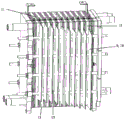
图1示出根据本发明的具有调温装置的燃料电池堆的第一实施例的示意性透视图,1 shows a schematic perspective view of a first exemplary embodiment of a fuel cell stack with a temperature control device according to the invention,
图2示出根据本发明的具有调温装置的燃料电池堆的第二实施例的示意性透视图,2 shows a schematic perspective view of a second exemplary embodiment of a fuel cell stack with a temperature control device according to the invention,
图3示出根据本发明的具有调温装置的燃料电池堆的第三实施例的示意性透视图,3 shows a schematic perspective view of a third exemplary embodiment of a fuel cell stack with a temperature control device according to the invention,
图4示出图3的根据本发明的调温装置的示意性透视图,FIG. 4 shows a schematic perspective view of the temperature control device according to the invention of FIG. 3 ,
图5示出根据本发明的具有调温装置的燃料电池堆的另外的实施例的示意性透视图,5 shows a schematic perspective view of a further exemplary embodiment of a fuel cell stack with a temperature control device according to the invention,
图6示出根据本发明的具有调温装置的燃料电池堆的另外的实施例的示意性透视图,6 shows a schematic perspective view of a further exemplary embodiment of a fuel cell stack with a temperature control device according to the invention,
图7示出根据本发明的具有调温装置的燃料电池堆的另外的实施例的示意性透视图,7 shows a schematic perspective view of a further exemplary embodiment of a fuel cell stack with a temperature control device according to the invention,
图8示出根据本发明的具有调温装置的燃料电池堆的另外的实施例的示意性透视图,8 shows a schematic perspective view of a further exemplary embodiment of a fuel cell stack with a temperature control device according to the invention,
图9示出根据本发明的具有调温装置的燃料电池堆的另外的实施例的示意性透视图,9 shows a schematic perspective view of a further exemplary embodiment of a fuel cell stack with a temperature control device according to the invention,
图10示出根据本发明的具有调温装置的燃料电池堆的另外的实施例的示意性透视图,FIG. 10 shows a schematic perspective view of a further exemplary embodiment of a fuel cell stack with a temperature control device according to the invention,
图11示出根据本发明的具有调温装置的燃料电池堆的另外的实施例的示意性透视图,11 shows a schematic perspective view of a further exemplary embodiment of a fuel cell stack with a temperature control device according to the invention,
图12示出根据本发明的具有调温装置的燃料电池堆的另外的实施例的示意性透视图,12 shows a schematic perspective view of a further exemplary embodiment of a fuel cell stack with a temperature control device according to the invention,
图13示出燃料电池堆的板形元件的示意性分解视图,并且Figure 13 shows a schematic exploded view of a plate-shaped element of a fuel cell stack, and
图14示出图13的气体分布结构的详细透视图。FIG. 14 shows a detailed perspective view of the gas distribution structure of FIG. 13 .
具体实施方式Detailed ways
在下文中,以举例方式描述燃料电池堆2,该燃料电池堆设置有根据本发明的调温装置1(图1至图3和图5至图12)。In the following, a
具有内部重整的燃料电池堆2在设计上类似于WO 2015/110545 A1中描述的燃料电池堆。在该文档(其全文在此引用)中,描述了一种用于用重整物处理进行热耦合重整的燃料电池系统。该系统包括具有阳极入口、阳极出口、阴极入口和阴极出口的燃料电池堆,以及热耦合到燃料电池堆来提供包含重整燃料的阳极流体的蒸气重整重整器,该蒸气重整重整器在阳极入口上游。燃料电池堆和重整器装置热耦合成使得燃料电池堆的废热借助热传导传递到重整器装置并至少部分地用于操作重整器装置,并且布置在重整器装置与阳极入口之间的至少一个处理装置设置成用于从阳极流体移除和/或重整未重整燃料和/或对燃料电池堆有害的物质,燃料电池堆的操作温度在140℃与230℃之间的范围内。The
燃料电池堆2被设计为HT-PEMFC(高温聚合物电解质燃料电池)。该高温燃料电池相应地在160℃至180℃和高达230℃的温度范围内操作。所需的氢气通过内部和外部重整过程从甲醇获得并在燃料电池堆中被转化为电力。The
原则上,根据本发明的调温装置1可与在开始处描述的所有类型的装置、特别是燃料电池堆一起使用。In principle, the
根据第一实施例示例,对应的燃料电池系统(未示出)包括具有阳极入口3和阳极出口4以及阴极入口5和阴极出口6的燃料电池堆2。According to the first embodiment example, a corresponding fuel cell system (not shown) comprises a
此外,提供了热耦合到燃料电池堆2来提供重整物或阳极流体的重整器装置7,该重整器装置连接在阳极入口3上游,并且提供了在电池堆外部布置在重整器装置7与阳极入口3之间的用于从重整物去除未处理燃料和有害物质的处理装置(未示出)。Furthermore, there is provided a reformer unit 7 thermally coupled to the
在下文中,作为示例,解释了“重复单元”8的结构,该结构在本例中描述了由多个电池组成的燃料电池堆2的两个电池。In the following, as an example, the structure of a "repeating unit" 8 is explained, which in this example describes two cells of a
首先,提供调温装置1的板形调温元件9。First, the plate-shaped
该调温元件9由板形调温肋10和一体地形成在其上的板形导热元件11构成。The temperature-regulating
由于导热元件11可布置在燃料电池堆2的单独电池之间,因此板形调温肋10机械地耦合到燃料电池堆2,使得经由板形导热元件11借助热传导控制燃料电池堆2的温度,并且通过借助对流使调温空气流动或作用在板形调温肋上来控制板形调温肋10的温度。Since the
重整器单元7连接到调温元件9。The reformer unit 7 is connected to a
重整器装置7集成到燃料电池堆2的供应板17中。供应板的一侧设置有用于阳极流体(或对应地用于阴极流体)的蜿蜒分布结构,称为流场。The reformer device 7 is integrated into the
重整器装置7的重整器室形成在供应板的与阳极流体的分布结构相对的一侧上。这种板在下文中称为具有重整器室的重整器单极板或具有重整器室的单极板。The reformer chambers of the reformer unit 7 are formed on the side of the supply plate opposite to the distribution structure of the anode fluid. Such plates are referred to hereinafter as reformer monopolar plates with reformer chambers or as monopolar plates with reformer chambers.
重整器室具有用于供应包含气体燃料的载气的入口和用于排出由气体燃料和载气形成的重整物的出口。重整器催化剂(未示出)布置在重整器室中并均匀地分布在整个重整器室中。例如以由材料PEEK制成的网或通道或腹板形式的屏障形成在入口或出口与重整器室之间,其防止在移动系统时重整器催化剂从重整器室逸出到入口和出口。此外,重整器室中设置如由供应板制成的长方体或腹板,以确保重整器催化剂和气体的均匀分布。这些也用于形成供应板之间的导电和导热连接并确保供应板的机械稳定性以及因此燃料电池堆的机械稳定性。The reformer chamber has an inlet for supplying a carrier gas containing a gaseous fuel and an outlet for discharging a reformate formed from the gaseous fuel and the carrier gas. A reformer catalyst (not shown) is disposed in the reformer chamber and is evenly distributed throughout the reformer chamber. A barrier, for example in the form of a mesh or channel or web made of material PEEK, is formed between the inlet or outlet and the reformer chamber, which prevents reformer catalyst from escaping from the reformer chamber to the inlet and outlet when the system is moved. exit. Furthermore, cuboids or webs, eg made of supply plates, are provided in the reformer chamber to ensure a uniform distribution of reformer catalyst and gases. These also serve to form the electrically and thermally conductive connections between the supply plates and to ensure the mechanical stability of the supply plates and thus of the fuel cell stack.
在用于阳极流体的分布器结构之后是一个或多个密封元件、气体扩散层、催化剂层和含电解膜片(膜片电极组件MEA)。The distributor structure for the anode fluid is followed by one or more sealing elements, a gas diffusion layer, a catalyst layer and an electrolytic-containing membrane (membrane electrode assembly MEA).
这之后是供应板,该供应板在两侧上设置有空间上分离的、例如蜿蜒的分布器结构。一侧具有用于阴极流体的分布器结构,而另一侧具有用于阳极流体的分布器结构。这种板在下文中称为双极板。This is followed by a supply plate, which is provided on both sides with spatially separated, for example meandering, distributor structures. One side has a distributor structure for the cathode fluid and the other side has a distributor structure for the anode fluid. Such plates are hereinafter referred to as bipolar plates.
这之后是一个或多个密封元件、气体扩散层和催化剂层以及含电解质膜片(MEA)和作为具有阴极流场的单极板的供应板17。这完成了包括调温元件9和两个电池的重复单元的构造。This is followed by one or more sealing elements, the gas diffusion layer and the catalyst layer as well as the electrolyte-containing membrane (MEA) and the
根据期望功率,通过将多个重复单元8串接在一起,可形成具有任何数量的电池的燃料电池堆2。By stringing together a number of repeating units 8, a
根据第一实施例示例(图1),调温空气引导件12包括至少调温通道15,该调温通道基本上在调温方向16上延伸并其横截面在调温方向16上呈锥形减小或逐渐缩小,使得燃料电池堆2的单独电池可大致均匀地加热或冷却。According to a first embodiment example ( FIG. 1 ), the temperature-regulated
多个板形的调温肋10被布置成大致正交于燃料电池堆2的侧壁14并热耦合到该侧壁。调温肋10具有在调温方向16上的轴向地对准的切口13。A plurality of plate-shaped temperature-regulating
板形调温引导元件10设置在调温肋的切口13中,其相对于燃料电池堆2的侧壁14以预定角度布置并对调温空气引导件12的调温通道15划界。该角度可以是例如至少25°或30°或40°或50°或最大值为70°或80°或90°并优选地最大值为60°。Plate-shaped temperature control guide
调温通道15由形成在调温空气引导元件20中的凹陷部21、燃料电池堆2的侧壁14和包围燃料电池堆的壳体(未示出)界定。壳体可设置有热绝缘层。The
为了能够最佳地耗散燃料电池堆2的热,在本发明的范围中,调温装置1设置有其调温元件9和对应的鼓风机装置(未示出)来将调温介质(优选地空气)施加到至少一个调温通道15。In order to be able to dissipate the heat of the
调温装置1具有至少一个或两个或三个或四个或五个或六个或七个或八或更多个主调温通道22。主调温通道22优选地在侧向方向上彼此等距地间隔并镜像对称地或沿护套壁或沿燃料电池堆2的侧壁14对称地布置。The
此外,提供了调温空气供应装置23,其也是调温空气引导件12的一部分。Furthermore, a temperature-controlled air supply 23 is provided, which is also part of the temperature-regulated
调温元件9也可被设计为导热密封件以密封燃料电池堆2的单个部件或功能单元或重复单元8。The
该垫圈可例如是具有足够的热导性的石墨材料或在金属燃料电池堆2的情况下是对应的金属垫圈。This gasket can be, for example, a graphite material with sufficient thermal conductivity or, in the case of a metal
在本发明的一个替代实施例中,可提出将阳极和/或阴极分布结构集成到导热元件11中或将对应的部件(例如,导热元件和阴极和/或阳极单极板)一件式形成。调温元件可例如附加地承担供应板的功能(包括燃料电池MEA的气体分布或流体供应)。In an alternative embodiment of the invention, it may be proposed to integrate the anode and/or cathode distribution structure into the
气体分布结构(流场)可被压入由可变形材料制成并具有至少一个调温肋的调温元件中(图13和图14)。这具有以下多个优点:在一方面,可在每个情况下都省去单极板或双极板,这带来了成本有点(具有通道结构的板价格高),而在另一方面,可省去密封表面,由此降低密封材料的泄漏和成本的风险。此外,存在更低的热梯度,因为热传递不需要从单极板或双极板到调温元件的热传递。因此,可实现更好的温度分布和更低的冷却能耗。此外,燃料电池堆变得更短,因为需要更少的板。同时,即使采用压入通道也能确保导热元件内的良好的热传导,这部分地是因为将通道结构压制或滚压到调温元件中与机加工相比不减少材料量(但仅将其压缩得更多)。也可省去密封件。因此,调温元件可同时地履行MEA密封件的功能。例如,由可变形材料制成的调温元件和由不可变形材料制成的板或调温元件可与膜片电极组件(MEA)相邻。此外,由可变形材料制成的两个板或调温元件可与MEA相邻,例如,从而从两侧密封MEA。另一个优点是可更便宜地生产具有压印供应通道的板,因为在平面材料中压出通道比例如从板铣出通道或通过注射成型或压缩成型生产通道更便宜。The gas distribution structure (flow field) can be pressed into a temperature-regulating element made of deformable material and having at least one temperature-regulating rib ( FIGS. 13 and 14 ). This has several advantages: on the one hand, monopolar or bipolar plates can be dispensed with in each case, which entails some cost (plates with channel structures are expensive), and on the other hand, Sealing surfaces can be dispensed with, thereby reducing the risk of leakage and cost of sealing material. In addition, there is a lower thermal gradient because heat transfer does not require heat transfer from the unipolar or bipolar plates to the temperature regulating element. As a result, better temperature distribution and lower energy consumption for cooling can be achieved. Additionally, the fuel cell stack becomes shorter because fewer plates are required. At the same time, good heat conduction in the heat-conducting element is ensured even with press-in channels, partly because pressing or rolling the channel structure into the temperature-regulating element does not reduce the amount of material compared to machining (but only compresses it. get more). The seal can also be omitted. Thus, the temperature control element can simultaneously fulfill the function of the MEA seal. For example, a temperature regulating element made of deformable material and a plate or temperature regulating element made of non-deformable material may be adjacent to a membrane electrode assembly (MEA). Furthermore, two plates or tempering elements made of deformable material can be adjacent to the MEA, for example, to seal the MEA from both sides. Another advantage is that plates with embossed supply channels can be produced more cheaply, since it is cheaper to emboss channels in a flat material than eg to mill channels from a plate or to produce channels by injection molding or compression molding.
一个或多个板可设置在电池堆中,其中通道压制在该一个或多个板中,并且其中特别地,该一个或多个板履行单极板或双极板的功能。One or more plates may be provided in the cell stack, wherein the channels are pressed into the one or more plates, and wherein in particular the one or more plates perform the function of a unipolar or bipolar plate.
在其中压制结构或通道的板、导热元件、调温肋或调温元件的材料例如可以是膨胀石墨,其作为平板获得并通过轧制、锤击、压印或压制来将结构或通道引入到其中。压印通道也可伴随冲压成形过程或通过该过程实施。材料优选地是导电的,并且可具有例如1mm至4mm、优选地1.5mm、2mm、2.5mm或3mm的材料厚度,使得可在高机械压力下压印具有超过0.2mm、优选地超过0.6mm的通道深度的通道,并且使得同时,在压印处旁边和/或对面不形成隆起或形成具有小于0.4mm、优选地小于0.1mm的高度的隆起。导热元件或调温元件的导热系数高于50W/mK,优选地高于100W/mK或高于150W/mK。该材料不一定必须包括粘结剂或塑料(例如,热塑性树脂或固化树脂),但可(与注射成型或压缩成型相反)由例如超过99%碳组成。浓度高于99%的石墨比碳塑料化合物更耐化学腐蚀和耐热,这有利于高耐用性。例如,可在低于100℃、优选地低于40℃的温度下压入通道或结构。用于压入结构或通道的压力可高于10MPa,优选地在15MPa至300MPa之间。调温元件或导热元件的材料的电阻率(在贯穿平面方向上)低于0.1ohm*cm,优选地低于0.04ohm*cm或低于0.02ohm*cm。由碳聚合物化合物制成的普通燃料电池双极板材料在该低电阻率下将非常脆、易碎且坚固,因此在低于100℃的温度下无法压印通道。因此,必须使用可变形材料,诸如常用于凸缘中的扁平垫圈的膨胀石墨。结构或通道可在一侧或两侧上压印到板中。在必要时,可对板、调温元件或导热元件进行化学或物理处理、浸渍或涂覆,以避免例如从燃料电池MEA强力吸收电解质,并且其中MEA的电阻必须低于50mOhm/cm2。在调温肋中,结构的压印可用于例如增加到空气或另一种材料的热传递。例如,金属框架可与包含压印通道的导热元件接触,该压印通道用作调温肋。金属框架或金属模制零件或导热板可例如通过夹紧附接到包含压印通道的导热元件。也可通过将材料钎焊或焊接到金属框架的内边缘来实现热接触,使得产生与调温元件或导热元件的强制和/或摩擦接合,并且可提供金属片的部分以压入可变形调温元件或导热元件中。如果重整器室与具有压印供应通道的板相邻,则可发生从MEA到重整器室的更好的热传递,因为在MEA和重整器室之间没有单极板或双极板,而例如仅导热元件。The material of the plates, heat-conducting elements, temperature-regulating ribs or temperature-regulating elements in which the structures or channels are pressed can be, for example, expanded graphite, which is obtained as a flat plate and the structures or channels are introduced by rolling, hammering, embossing or pressing into the in. Embossed channels can also be carried out with or through the stamping process. The material is preferably electrically conductive and may have a material thickness of, for example, 1 mm to 4 mm, preferably 1.5 mm, 2 mm, 2.5 mm or 3 mm, so that embossing with a thickness of more than 0.2 mm, preferably more than 0.6 mm, can be imprinted under high mechanical pressure. The depth of the channel is such that at the same time no bulge or a bulge is formed with a height of less than 0.4 mm, preferably less than 0.1 mm, next to and/or opposite the embossing. The thermal conductivity of the heat-conducting or temperature-regulating element is higher than 50 W/mK, preferably higher than 100 W/mK or higher than 150 W/mK. The material does not necessarily have to include a binder or plastic (eg thermoplastic or cured resin), but may (as opposed to injection molding or compression molding) consist of eg more than 99% carbon. Graphite in concentrations above 99% is more chemically and heat resistant than carbon plastic compounds, which contributes to high durability. For example, the channels or structures may be pressed in at a temperature below 100°C, preferably below 40°C. The pressure used to press into the structure or channel may be higher than 10 MPa, preferably between 15 MPa and 300 MPa. The resistivity (in the through-plane direction) of the material of the temperature-regulating element or heat-conducting element is lower than 0.1 ohm*cm, preferably lower than 0.04 ohm*cm or lower than 0.02 ohm*cm. Common fuel cell bipolar plate materials made of carbon polymer compounds would be very brittle, brittle and strong at this low resistivity, making it impossible to imprint channels at temperatures below 100°C. Therefore, it is necessary to use a deformable material, such as expanded graphite, which is commonly used for flat gaskets in flanges. Structures or channels can be embossed into the board on one or both sides. If necessary, the plates, temperature-regulating elements or heat-conducting elements can be chemically or physically treated, impregnated or coated in order to avoid, for example, strong absorption of electrolyte from the fuel cell MEA, and the electrical resistance of the MEA must be below 50 mOhm/cm 2 . In tempering ribs, embossing of structures can be used, for example, to increase heat transfer to air or another material. For example, a metal frame can be in contact with a thermally conductive element containing embossed channels that act as temperature-regulating ribs. A metal frame or metal molded part or heat conducting plate can be attached to the heat conducting element comprising embossed channels, for example by clamping. Thermal contact can also be achieved by brazing or welding the material to the inner edge of the metal frame so that a positive and/or frictional engagement with the temperature regulating element or heat conducting element occurs and portions of the sheet metal can be provided to press into the deformable regulating element. temperature element or heat conduction element. Better heat transfer from the MEA to the reformer chamber can occur if the reformer chamber is adjacent to a plate with imprinted supply channels because there are no unipolar plates or bipolar plates between the MEA and the reformer chamber plate, while for example only heat conducting elements.
因此,可提供燃料电池堆,该燃料电池堆的特征为一个或多个导热元件和/或调温元件由某种材料、优选地“膨胀石墨”形成。因此,该材料在低于80℃的温度下可变形。此外,该材料具有小于0.1ohm*cm的贯穿平面电阻率。特别地,用于流体供应的通道结构形成在导热元件和/或调温元件中,它们通过在可变形材料中压印而制成。Thus, a fuel cell stack can be provided which features one or more heat conducting and/or temperature regulating elements formed from a certain material, preferably "expanded graphite". Therefore, the material is deformable at temperatures below 80°C. In addition, the material has a through-plane resistivity of less than 0.1 ohm*cm. In particular, channel structures for the fluid supply are formed in the heat-conducting and/or temperature-regulating elements, which are produced by embossing in the deformable material.
为了确保去除产生的热,在堆周围提供空气流以去除系统中的余热。余热也可作为废热使用。To ensure removal of the generated heat, air flow is provided around the stack to remove excess heat from the system. The waste heat can also be used as waste heat.
燃料电池堆也可与一个或多个其他电池堆组合。例如,重整器堆可附接到燃料电池堆或与燃料电池堆支撑在一起。在这种情况下,调温装置可形成在堆的组合上或对于每个堆单独地形成。A fuel cell stack may also be combined with one or more other cell stacks. For example, the reformer stack may be attached to or supported with the fuel cell stack. In this case, the tempering device may be formed on the combination of stacks or individually for each stack.
除非另外描述,本发明的所有实施例具有相同的技术特征。单独实施例的技术特征可彼此几乎任意地组合。Unless otherwise described, all embodiments of the present invention have the same technical features. The technical features of the individual exemplary embodiments can be combined with each other almost arbitrarily.
根据第二实施例(图2),调温元件9的板形调温肋10设置有调温主体19,以用于增大调温肋10的表面积以增加对流热传递。According to a second embodiment ( FIG. 2 ), the plate-shaped temperature-regulating
根据本发明的调温装置1的第三实施例(图3),调温肋10未集成地连接到导热元件11,而是与其分离地形成。在本发明的范围中,也可提供调温空气引导元件20代替这些调温肋10。According to a third embodiment of the temperature-regulating
类似于第一实施例和第二实施例,调温肋10具有切口13,切口形成在调温方向16上逐渐缩小的调温通道。Similar to the first and second embodiments, the temperature-regulating
单独调温肋10通过横向于调温肋10延伸并大致在调温方向上延行的电阻器元件18彼此连接。电阻器元件18用作间隔物并具有用于供调温空气流通过的对应的凹陷部25。The individual temperature-regulating
这种调温装置的优点是它可容易地附接到侧壁,例如燃料电池堆的侧壁(图4)。An advantage of such a tempering device is that it can be easily attached to a side wall, such as that of a fuel cell stack (Fig. 4).
这种调温装置1的优点是在调温肋处的变窄的流横截面通过减小空气边界层来促进向片流动。An advantage of such a
在根据本发明的调温装置的另外的实施例(图5)中,调温肋10再次具有在调温方向16上逐渐缩小的切口13。另外,电阻器元件18被布置为在单独调温肋之间的间隔物,以用于间隔布置和用于改变空气流。In a further embodiment of the temperature control device according to the invention ( FIG. 5 ), the
特别地,调温肋10的边缘区域具有在调温方向16上尺寸增大的通孔24。In particular, the edge region of the temperature-
由于通孔24在调温方向上增大,尽管安装空间很小,但可实现调温肋10的最大可能表面积以用于空气排出。必须正交于相应的调温肋去除的空气越少,调温肋中的凹陷部越小,并且出流空气流的压力损失与所有调温肋具有相同尺寸的凹陷部的情况相比仅微不足道地高。此外,凹陷部的尺寸可用于体积流分布。Due to the enlargement of the through
此外,电阻器元件18设置在调温肋10之间。电阻器元件18可具有梳状设计。云母板(云母)可优选地用作材料。这些也用于减小空气边界层,特别是借助设置在电阻器元件18与调温肋10之间的窄间隙。此外,它们促成形成湍流和涡流,并且因此增大压降。更的压降有利于在整个燃料电池堆上实现更均匀的压力分布。Furthermore,
根据另一个实施例(图6),调温肋10被布置成在调温方向16上彼此偏移。鼓风机装置(未示出)首先作用于在调温方向上逐渐缩小的调温通道15.1上,并且调温空气然后沿调温肋流入在调温方向16上增大的调温通道15.2。According to another embodiment ( FIG. 6 ), the tempering
根据调温装置1(图7)的另一个实施例,对应的调温肋10设置在燃料电池堆2的相对两侧上。According to another embodiment of the temperature regulation device 1 ( FIG. 7 ), corresponding
在布置在设置有调温肋的两个侧壁之间的燃料电池堆2的一个壁上,设置有调温空气引导元件20,该调温空气引导元件相对于调温方向倾斜,使得其形成在调温方向上逐渐缩小的调温通道15。这种调温通道的技术效果大致对应于上文所示的在调温方向上逐渐缩小的调温通道15.1、15.2。On a wall of the
在根据本发明的调温装置1的另外的实施例中(图8),还提供调温肋10形成在燃料电池堆2的两个相对侧壁14上。In another embodiment of the
此外,电阻器元件18设置在调温肋10之间。它们具有延伸到形成在调温肋10之间的调温通道15中的凹陷部25。优选地,凹陷部25的直径从对应的燃料电池堆2的中心向外边缘区域增大。Furthermore,
另外,提供两个调温空气引导元件20,其大致呈屋顶状或相对于燃料电池堆2的侧壁倾斜。这些大致居中地布置成彼此间隔一定距离。提供鼓风机装置(未示出)将调温空气引入两个调温空气引导元件20之间的自由空间。调温空气然后经由对应的凹陷部25分布到形成在调温肋10之间的调温通道15中,使得燃料电池堆2的均匀温度控制再次成为可能。In addition, two temperature-regulated
根据本发明的调温装置的另外的实施例(图9),调温肋10设置在燃料电池堆2的两个相对侧14上。According to a further embodiment of the temperature control device according to the invention ( FIG. 9 ), the
两个调温空气引导元件20布置在另外的侧壁14上,从而基本上平行于该侧壁14延伸并形成调温空气供应装置23以及调温空气引导件12的一部分。The two temperature-controlled
调温空气经由两个调温空气引导元件20之间的间隔布置到达调温肋10的区域。这里,提供调温肋10对调温通道15划界,该调温通道朝燃料电池堆2的两个端部区域逐渐缩小。The temperature-controlled air reaches the region of the temperature-
此外,电阻器元件18设置成用于将调温肋10保持在一定距离处,该电阻器元件横向于调温肋10布置并在调温肋10的区域中具有用于使调温空气通过的凹陷部25。Furthermore, a
在调温装置的另一个实施例中(图10),调温肋10同样设置在燃料电池堆2的两个相对侧壁14上。In another embodiment of the temperature control device ( FIG. 10 ), the
另外,每侧设置至少一个电阻器元件18或间隔物元件来将调温肋10保持在一定距离处,其中在调温肋10的区域中,电阻器元件18中形成了对应的凹陷部25。也可提供多个此类电阻器元件18。Furthermore, at least one
电阻器元件具有在燃料电池堆的边缘区域的方向上尺寸增加的凹陷部25,并且提供调温空气引导元件,该调温空气引导元件相对于燃料电池堆2的侧壁倾斜,使得在调温空气入口的区域中,在调温空气引导元件20与燃料电池堆之间提供更大的距离,在调温空气入口的区域中,在调温空气引导元件20与燃料电池堆之间提供更大的间距,形成横向于调温方向16逐渐缩小的调温通道15,调温通道15或对应的调温空气引导件12附加地包括在调温肋之间的对应的中间空间。The resistor element has a recess 25 that increases in size in the direction of the edge region of the fuel cell stack and provides a temperature-regulating air-guiding element that is inclined with respect to the side walls of the
通过在电阻器元件18中设置不同尺寸的凹陷部21,燃料电池堆2的均匀调温再次成为可能。By providing
根据本发明的调温装置1的另外的实施例(图11),未提供单独调温肋10。基本上在燃料电池堆2的整个侧壁14上延伸的大调温主体19设置成用于接触导热元件并包括调温肋10。借助多个互连调温空气引导元件20,形成在调温方向16上逐渐缩小的轴状调温通道15,其也形成调温空气供应装置23。According to a further embodiment of the
在这种情况下,可能还必需借助导热箔将例如被设计为铝散热器的调温主体19与燃料电池堆绝缘,以便避免短路。In this case, it may also be necessary to insulate the temperature-controlling
根据本发明的调温装置1的另外的实施例(图12),提供调温肋10设置在燃料电池堆2的彼此相对的两侧14上。According to a further embodiment of the
两个调温空气引导元件20布置在另一个侧壁14上,从而基本上平行于该侧壁14延伸并形成调温空气供应装置23以及调温空气引导件12的一部分。The two temperature-controlled
当加热电池堆时,热空气流过两个调温空气引导元件。前调温空气引导元件主要用于在加热电池堆期间的热空气分布。然而,当电池堆在操作期间被冷却时,空气不流过前调温空气引导元件或仅略微但主要流过后调温空气引导元件。前调温空气引导元件主要用于分布热空气(由于端板/夹紧部件的高热容量以及在必要时在那里的散热,在边缘电池处的热需求更的高,因此边缘电池区域中的凹陷部更大)。后调温空气引导元件主要用于分布冷却空气。热空气在前调温空气引导元件前面流动。冷却空气在前调温空气引导元件与后调温空气引导元件之间流动。When heating the battery stack, hot air flows through two temperature-regulated air guide elements. The front tempering air guide element is mainly used for hot air distribution during heating of the battery stack. However, when the battery stack is cooled during operation, air does not flow through the front tempered air guide element or only slightly but mainly flows through the rear tempered air guide element. The front tempering air guide element is mainly used to distribute the hot air (due to the high heat capacity of the end plate/clamping part and the heat dissipation there if necessary, the heat demand is even higher at the edge cells, so the recess in the edge cell area department is larger). The rear temperature-regulated air guide element is mainly used to distribute the cooling air. The hot air flows in front of the front tempered air guide element. Cooling air flows between the front and rear tempered air guide elements.
此外,电阻器元件18设置成用于将调温肋10保持在一定距离处,该电阻器元件横向于调温肋10布置并在调温肋10的区域中具有用于使调温空气通过的凹陷部25,由此电阻器元件用于通过将空气带到调温肋和/或产生湍流来增加热传递。Furthermore, a
位于电池堆下方的间隔物元件或电阻器元件以及在适用时的调温肋也具有将电池堆的重量转移至壳体的功能。Spacer elements or resistor elements located below the battery stack and, where applicable, temperature-regulating ribs also have the function of transferring the weight of the battery stack to the housing.
本发明可与用于提供热能的燃烧器系统结合。这种装置包括:气化器装置,该气化器装置用于气化液体燃料,The invention can be combined with a burner system for providing thermal energy. Such apparatus includes: a gasifier apparatus for vaporizing a liquid fuel,
燃烧器空气供应装置,burner air supply,
燃烧器装置,该燃烧器装置用于燃烧包含气化燃料和燃烧器空气的燃料混合物以提供排气流,burner means for combusting a fuel mixture comprising gasification fuel and burner air to provide an exhaust gas flow,
功能装置,该功能装置用于控制排气流的热能,燃烧器装置在操作中提供燃料在气化器装置中的完全气化的热能。Functional means for controlling the thermal energy of the exhaust gas flow, the burner means in operation providing thermal energy for complete gasification of the fuel in the gasifier means.
此外,燃烧器系统包括三次空气装置和计量孔口。In addition, the burner system includes tertiary air installations and metering orifices.
三次空气装置包括具有支持PWM(脉宽调制)的径流式风扇。PWM使得能够精确地调整风扇速度,并且因此精确地调整三次空气的受控的流。传感器线提供有关当前风扇速度的信息,并且可借助逻辑检查指示风扇故障。The tertiary air unit includes a radial fan with support for PWM (Pulse Width Modulation). PWM enables precise adjustment of the fan speed and thus the controlled flow of tertiary air. Sensor lines provide information about the current fan speed and can indicate fan failure with the help of logic checks.
除了冷却燃料电池之外,三次风扇通过来自燃烧器装置的热排气(包括排气流和三次空气的热气流)加热燃料电池。风扇能够在任何操作点(不同功率水平)充分冷却燃料电池堆。In addition to cooling the fuel cell, the tertiary fan heats the fuel cell by hot exhaust gas from the burner assembly (comprising exhaust flow and hot gas flow of tertiary air). The fan is able to adequately cool the fuel cell stack at any operating point (different power levels).
燃料电池堆可由相同单元形成,其中一个单元包括例如以下部件中的每一者,A fuel cell stack may be formed from identical units, where one unit includes, for example, each of the following components,
调温元件(密封元件)、具有阳极流场的单极板(隔板)、MEA、具有阳极和阴极流场的双极板、MEA、具有阴极流场的单极板,或者Tempering element (sealing element), unipolar plate with anode flow field (separator), MEA, bipolar plate with anode and cathode flow field, MEA, unipolar plate with cathode flow field, or
调温元件(密封元件)、具有重整器室和阳极流场的重整器单极板、MEA、具有阳极和阴极流场的双极板、MEA、具有阴极流场的单极板,或者Tempering element (sealing element), reformer unipolar plate with reformer chamber and anode flow field, MEA, bipolar plate with anode and cathode flow field, MEA, unipolar plate with cathode flow field, or
调温元件(密封元件)、具有阳极流场的单极板、MEA、具有阴极流场的单极板),或者temperature control element (sealing element), unipolar plate with anode flow field, MEA, unipolar plate with cathode flow field), or
调温元件(密封元件)、具有阳极流场的单极板(隔板)、MEA、具有阳极和阴极流场的双极板、MEA、具有阳极和阴极流场的双极板、MEA、具有阴极流场的单极板,或者Temperature control element (sealing element), unipolar plate with anode flow field (separator), MEA, bipolar plate with anode and cathode flow field, MEA, bipolar plate with anode and cathode flow field, MEA, with A monopolar plate for the cathode flow field, or
调温元件、具有重整器室和阳极流场的重整器单极板、MEA、具有阳极和阴极流场的双极板、MEA、具有重整器室和阴极流场的重整器单极板,或者Tempering element, reformer monopolar plate with reformer chamber and anode flow field, MEA, bipolar plate with anode and cathode flow field, MEA, reformer monopolar plate with reformer chamber and cathode flow field plates, or
调温元件、具有重整器室和阴极流场的重整器单极板、MEA、具有阳极和阴极流场的双极板、MEA、具有阳极流场的单极板。Tempering element, reformer unipolar plate with reformer chamber and cathode flow field, MEA, bipolar plate with anode and cathode flow field, MEA, unipolar plate with anode flow field.
供应板、单极板、双极板、导热元件或调温元件可例如由碳-聚合物化合物(例如通过注射成型、压缩成型、挤压、轧制、冲压形成)、膨胀石墨、柔性含碳材料或金属制成。在适当时,这些可彼此结合和/或结合到其他部件,例如通过焊接。Supply plates, unipolar plates, bipolar plates, heat conducting or temperature regulating elements can be formed, for example, from carbon-polymer compounds (for example by injection molding, compression molding, extrusion, rolling, stamping), expanded graphite, flexible carbon material or metal. Where appropriate, these may be joined to each other and/or to other components, for example by welding.
特别地,燃料电池堆还可包含支撑元件(例如,端板)以及气体和功率连接元件还有绝缘板/箔(例如,用于电绝缘)等。In particular, the fuel cell stack may also comprise support elements (eg end plates) and gas and power connection elements as well as insulating plates/foils (eg for electrical insulation) and the like.
根据燃料电池堆的结构,调温元件可被设计为密封元件。然而,密封效果不是绝对必要的。例如,如果导热元件由金属制成,则也可使用单独密封件或密封框架。Depending on the structure of the fuel cell stack, the temperature control element can be designed as a sealing element. However, a sealing effect is not absolutely necessary. For example, if the heat conducting element is made of metal, a separate seal or sealing frame can also be used.
在普通聚合物电解质燃料电池中,由于低温,集成到堆(燃料电池堆)中的氢气生成(内部重整)通常是不可能的。然而,HT-PEM燃料电池中更高的温度多达约200℃使得可使用该过程,这主要在SOFC和MCFC领域中为人所知。In common polymer electrolyte fuel cells, hydrogen generation (internal reforming) integrated into the stack (fuel cell stack) is generally not possible due to the low temperature. However, higher temperatures up to about 200°C in HT-PEM fuel cells allow the use of this process, which is mainly known in the field of SOFCs and MCFCs.
因此,代替通常使用的冷却板,对应的重整器室(反应室)可以均匀重复顺序集成在堆叠中。Thus, instead of the commonly used cooling plates, the corresponding reformer chambers (reaction chambers) can be integrated in the stack in a uniform repeating sequence.
当燃料电池堆中发生内部重整时,燃料电池堆的良好的温度分布(例如,±5开尔文)特别明显。燃料电池堆内的不同的重整器室的温度的偏差超过5开尔文将造成相应的重整器室中的内部重整的重整器转化率的明显偏差(例如,超过10%)。假设要在燃料电池堆中实现50%的转化率,在一些重整器室中远超过±10%的转化率偏差将造成内部重整和重整器室的高度效率低下或重整器催化剂的数量必须设计得更大。The good temperature distribution (eg, ±5 Kelvin) of the fuel cell stack is particularly evident when internal reforming occurs in the fuel cell stack. A deviation of the temperature of the different reformer chambers within the fuel cell stack by more than 5 Kelvin will cause a significant deviation (eg, more than 10%) of the reformer conversion of the internal reforming in the corresponding reformer chamber. Assuming 50% conversion is to be achieved in a fuel cell stack, deviations in conversion well beyond ±10% in some reformer chambers will result in high inefficiencies in internal reforming and reformer chambers or the amount of reformer catalyst Must be designed larger.
假设要在燃料电池堆中实现超过98%的转化率以便省掉后清洁或后重整,如果对燃料电池有害的物质(诸如甲醇)被传导至电池的燃料电池阳极,则在一些重整器室中低于目标转化率超过10%将造成燃料电池堆的损坏。Assuming that over 98% conversion is to be achieved in the fuel cell stack in order to dispense with post-cleaning or post-reforming, if fuel cell detrimental species such as methanol are conducted to the cell's fuel cell anode, in some reformers More than 10% below the target conversion in the chamber will cause damage to the fuel cell stack.
因此,在不均匀温度分布的情况下,内部重整器室或重整器催化剂体积必须设计得比在燃料电池堆的温度分布均匀的情况下大得多(例如,超过50%),这对成本和/或必要的安装空间造成明显负面影响。Therefore, in the case of non-uniform temperature distribution, the internal reformer chamber or reformer catalyst volume must be designed much larger (for example, more than 50%) than in the case of a uniform temperature distribution of the fuel cell stack, which is harmful to Significantly negative impact on costs and/or required installation space.
此外,更热的重整器室将造成产品气体中的一氧化碳浓度更高,这通过使燃料电池催化剂表面中毒来负面地影响电池性能。In addition, a hotter reformer chamber will result in a higher concentration of carbon monoxide in the product gas, which negatively affects cell performance by poisoning the fuel cell catalyst surface.
在一个有利实施例中,重整器室通过集成到燃料电池堆中的入口和出口彼此连接,但在空间上与阳极和阴极端口分开,并且必须与外部密封。In an advantageous embodiment, the reformer chambers are connected to each other by inlets and outlets integrated into the fuel cell stack, but are spatially separated from the anode and cathode ports and must be sealed from the outside.
优选地,调温元件或其板形导热元件可用于密封重整器室。Preferably, the temperature control element or its plate-shaped heat conducting element can be used to seal the reformer chamber.
合适的反应促进剂用于加速其中发生的反应。在本发明的有利实施方案中,这是呈球粒或一种或多种成型体形式的铜催化剂。Suitable reaction accelerators are used to accelerate the reactions occurring therein. In an advantageous embodiment of the invention, this is a copper catalyst in the form of pellets or one or more shaped bodies.
假设通过将反应空间整合到堆中而发生热交换,上述吸热反应有助于堆的冷却。然而,仅通过这样的过程来冷却堆是不够的。因此,需要根据本发明的调温装置。The above-mentioned endothermic reactions contribute to the cooling of the stack, assuming that heat exchange takes place by integrating the reaction space into the stack. However, it is not enough to cool the stack through such a process. Therefore, a temperature regulating device according to the invention is required.
该调温装置也可用于无需内部重整的燃料电池堆。The thermostat can also be used in fuel cell stacks that do not require internal reforming.
燃料电池堆中可设置一个或多个温度传感器。这些可位于例如燃料电池堆的中心以及起始电池和最终电池上。温度传感器可以是热电偶,例如,定位在相应电池的中心附近。温度传感器可集成在导热元件中,例如它可被压入导热元件中的狭槽中。在第一电池和最后一个电池上,温度传感器也可位于外部区域中,即不在电池的中心区域中,以便能够在加热期间大致产生燃料电池堆的最低温度。One or more temperature sensors may be provided in the fuel cell stack. These can be located, for example, in the center of the fuel cell stack and on the starting and final cells. The temperature sensors may be thermocouples, for example, positioned near the center of the respective battery. The temperature sensor can be integrated in the heat conducting element, for example it can be pressed into a slot in the heat conducting element. On the first and last cell, the temperature sensors can also be located in the outer region, ie not in the central region of the cells, in order to be able to generate approximately the lowest temperature of the fuel cell stack during heating.
燃料电池堆在燃料电池操作期间的设定点温度例如可由燃料电池系统经由鼓风机装置基于燃料电池堆的中心的温度传感器或经由在燃料电池堆中和/或燃料电池堆上的多个温度传感器的测量值的均值或基于与调温元件进行热接触的温度传感器来控制。The set point temperature of the fuel cell stack during fuel cell operation can be determined, for example, by the fuel cell system via a blower arrangement based on a temperature sensor in the center of the fuel cell stack or via multiple temperature sensors in and/or on the fuel cell stack. The average of the measured values or the control is based on a temperature sensor in thermal contact with the temperature control element.
用于测量燃料电池堆的温度的热电偶可耦合到至少一个调温元件。通过热电偶,可在任何操作状态下测量燃料电池堆的温度。因此,可控制调温装置以设定燃料电池堆中的期望温度。A thermocouple for measuring the temperature of the fuel cell stack may be coupled to the at least one thermostat element. With thermocouples, the temperature of the fuel cell stack can be measured in any operating state. Thus, the thermostat can be controlled to set a desired temperature in the fuel cell stack.
为了在燃料电池操作期间在燃料电池堆(例如,具有一百个电池)内的大致均匀的温度分布,通常需要从每个单独电池到冷却空气或从加热空气到每个单独电池的大致相等的热流,尤其是在不靠近起始或最终电池定位的电池中(例如,不在前四个或最后四个电池中)。热通量的单位是瓦特。For approximately uniform temperature distribution within a fuel cell stack (e.g., with one hundred cells) during fuel cell operation, approximately equal air flow from each individual cell to cooling air or from heated air to each individual cell is generally required. Heat flow, especially in cells that are not positioned close to the starting or final cells (eg, not in the first or last four cells). The unit of heat flux is watts.
这里,假设燃料电池堆的所有电池例如因在通过所有电池的给定电流下大致相同的电位(所有电池的功率相同)而在相同条件下操作期间产生大致相同的废热。在这种情况下,在相同条件下,废热以及从单独电池耗散的热通量与平均值的差异应当小于±7%。如果由于燃料电池的功率波动较大而导致情况并非如此,则需要不同热流来实现电池的均匀温度分布(例如,超过±7%的热流偏差)。Here, it is assumed that all cells of the fuel cell stack generate approximately the same waste heat during operation under the same conditions, for example due to approximately the same potential at a given current through all cells (same power for all cells). In this case, the waste heat and the heat flux dissipated from the individual cells should differ by less than ±7% from the average value under the same conditions. If this is not the case due to large power fluctuations of the fuel cell, a different heat flow is required to achieve a uniform temperature distribution of the cell (eg, a heat flow deviation of more than ±7%).
另外,在燃料电池操作期间,燃料电池堆内(例如,歧管或流场中)的介质的空气流也可能对热流和/或温度分布产生更小影响。例如,歧管中的阴极空气从第一电池到最后一个电池或从最后一个电池升温到第一电池升温。这可通过空气输送来考虑。Additionally, air flow of the medium within the fuel cell stack (eg, in a manifold or flow field) may also have less impact on heat flow and/or temperature distribution during fuel cell operation. For example, the cathode air in the manifold warms up from the first cell to the last cell or from the last cell to the first cell. This can be accounted for by air delivery.
从燃料电池堆到在调温装置外部的空气或到不作为调温装置的部分的部件的热传递(例如,通过热辐射、对流、热传导)也可通过调温装置的空气输送来考虑,如果这有意义的话。Heat transfer (e.g. by radiation, convection, conduction) from the fuel cell stack to the air outside the thermostat or to components that are not part of the thermostat may also be considered through the air transport of the thermostat, if That makes sense.
从单独电池或到燃料电池堆的单独电池的热耗散或供应可通过相应电池与一个或多个导热元件的直接热接触或经由通过一个或多个相邻电池的热传导和/或经由部件(例如,间隔物结构、电阻器元件、散热器、调温元件、空气引导元件)间接地从或向一个或多个调温元件或调温肋进行。Heat dissipation or supply from an individual cell or to individual cells of a fuel cell stack may be through direct thermal contact of the respective cell with one or more heat conducting elements or via heat conduction through one or more adjacent cells and/or via components ( For example, spacer structures, resistor elements, heat sinks, temperature-regulating elements, air-guiding elements) indirectly from or to one or more temperature-regulating elements or ribs.
在加热燃料电池堆时,燃料电池堆的起始电池和末端电池通常需要稍高的热通量才能实现与燃料电池堆的中间相同的温度,因为位于起始电池和末端电池区域的支撑所需的部件(诸如铝端板)具有更高的热容量,这在加热电池堆时通过热传导影响燃料电池堆的外部电池的温度。When heating a fuel cell stack, the start and end cells of the stack typically require a slightly higher heat flux to achieve the same temperature as the middle of the stack because of the support required in the area of the start and end cells Components such as aluminum end plates have a higher heat capacity, which affects the temperature of the external cells of the fuel cell stack through heat conduction when heating the stack.
另一方面,在均衡工作温度下燃料电池堆的操作中,外部电池(例如,起始电池和最终电池)将必须冷却得不如(流动方向冷却空气的热通量更低)燃料电池堆的中心的电池,因为从支撑所需的部件(诸如铝端板)到空气的热传递(例如,通过对流或辐射)影响燃料电池堆的外部电池的温度。On the other hand, in the operation of the fuel cell stack at the equilibrium operating temperature, the outer cells (e.g. starting and final cells) will have to be cooled less than (lower heat flux of cooling air in flow direction) the center of the fuel cell stack cells because heat transfer (eg, by convection or radiation) from components required for support (such as aluminum end plates) to the air affects the temperature of the external cells of the fuel cell stack.
为了减少这种影响,端板可设置有面向电池的绝缘板和/或面向周围空气的绝缘材料。To reduce this effect, the end plates may be provided with insulating plates facing the cells and/or insulating material facing the surrounding air.
这些对外部电池的影响(边界效应)在操作期间冷却时的绝对值可能与在启动期间加热时的绝对值不同。These effects on the external battery (boundary effects) may not have the same absolute value when cooled during operation than when heated during start-up.
为了考虑到将必须在一方面在冷却期间并在另一方面在必要时在加热期间由不同的空气流补偿的这些边界效应,为了实现均匀温度分布,还可提供适当装置,诸如双金属形状记忆合金或电控翻板、隔板、引导元件或推动器,它们允许在加热期间与在燃料电池操作期间不同的流流到调温元件。In order to take into account these boundary effects which will have to be compensated by different air flows during cooling on the one hand and possibly during heating on the other hand, in order to achieve a homogeneous temperature distribution suitable means such as bimetal shape memory Alloy or electrically controlled flaps, baffles, guide elements or pushers that allow a different flow to the thermoregulation element during heating than during fuel cell operation.
电池堆在加热期间的热空气供应和在冷却期间的冷却空气供应可由同一鼓风机(或风扇)(例如,在鼓风机与电池堆之间的加热装置)完成。在替代实施例中,一个或多个单独鼓风机用于供应热空气并且同样地一个或多个单独鼓风机用于供应冷却空气。在另外的实施例中,来自一个或多个单独鼓风机的热空气和来自一个或多个单独鼓风机的冷却空气可在到达调温肋之前至少部分地混合。The supply of hot air to the stack during heating and the cooling air supply during cooling can be done by the same blower (or fan) (eg, a heating device between the blower and the stack). In an alternative embodiment, one or more separate blowers are used to supply hot air and likewise one or more separate blowers are used to supply cooling air. In further embodiments, the heated air from the one or more separate blowers and the cooled air from the one or more separate blowers may at least partially mix before reaching the tempering ribs.
如果经由相同的鼓风机(或风扇)在加热期间供应热空气并在电池堆的冷却期间供应冷空气而没有附加的受控元件,则在燃料电池堆操作期间的最佳温度分布出现问题,在另一方面,在燃料电池堆加热期间主要是温度分布不佳,从而导致加热时间较长,直到达到电池的启动操作的最低温度(对于燃料电池系统启动时间为负)。这样做的原因是,在冷却燃料电池堆时,电池组的各种区域的冷却要求与在加热电池组时的热要求(例如,在加热期间,在边缘电池处有特别高的热要求)不同。If there is no additional controlled element via the same blower (or fan) that supplies hot air during heating and cool air during cooling of the stack, problems arise for optimal temperature distribution during fuel cell stack operation, where otherwise On the one hand, during the heating of the fuel cell stack there is mainly a poor temperature distribution, resulting in longer heating times until reaching the minimum temperature for the start-up operation of the cells (negative for the fuel cell system start-up time). The reason for this is that when cooling the fuel cell stack, the cooling requirements of various areas of the stack are different from the thermal requirements when heating the stack (for example, during heating there are particularly high thermal requirements at the edge cells) .
使用单独的鼓风机向电池堆供应热空气的优点是,在电池组加热期间,边缘电池(例如,第一电池和最后一个电池)需要更多的加热功率,并且因此需要比电池堆的中间区域更多的热空气体积流和/或温度(由于电池堆端板的高热容量和/或端板处的高热耗散,例如由于不足的绝缘),而在燃料电池操作期间的边缘电池通常需要比电池堆的中间区域更少的散热(由于不足的绝缘),而在燃料电池操作期间的冷却期间,边缘电池通常需要比电池堆的中心区域更少的散热,并且因此,电池堆的需要更多的热的区域(例如,边缘电池)可在加热阶段期间经由供应热空气的单独的鼓风机被更强力地加热(例如,更高的温度和/或更高的热空气体积流)。用于加热电池堆的鼓风机和用于冷却电池堆的鼓风机的分离设计的另一个优点是燃料电池操作所需的冷却空气体积流不必流经加热装置,这可能造成更低的压降以及因此在燃料电池操作期间活动的一个或多个鼓风机的更低的功率需求。The advantage of using a separate blower to supply hot air to the battery stack is that during battery pack heating, the edge cells (e.g. the first and last cells) require more heating power and thus need more heat than the middle areas of the stack. Much hot air volume flow and/or temperature (due to the high heat capacity of the stack end plates and/or high heat dissipation at the end plates, e.g. The middle area of the stack dissipates less heat (due to insufficient insulation), while the edge cells typically require less heat dissipation than the central area of the stack during cooling during fuel cell operation, and therefore, the stack requires more Hot areas (eg edge cells) can be heated more intensively (eg higher temperature and/or higher hot air volume flow) during the heating phase via a separate blower supplying hot air. A further advantage of the separate design of the blower for heating the stack and the blower for cooling the stack is that the cooling air volume flow required for fuel cell operation does not have to flow through the heating device, which can result in lower pressure drops and thus in Lower power requirements for one or more blowers active during fuel cell operation.
在一种实施方式中,可提供其他调温空气引导元件、电阻器元件、穿孔板或引导板主要被供应空气以用于加热电池堆而不是用于冷却电池堆。一个或多个风扇可流动方向某些调温空气引导元件(例如在电池堆的边缘电池的区域中具有更大的凹陷部的板)以加热电池堆,并且一个或多个风扇可流动方向其他调温空气引导元件(例如在电池堆的边缘电池的区域中具有更小或同样大的凹陷部的板)以冷却电池堆。空气也可相继流过调温空气引导元件,每个调温空气引导元件旨在用于加热或冷却。例如,用于加热电池堆的空气可先流过主要用于分布热空气的调温空气引导元件,然后流过主要用于分布冷风的调温空气引导元件。例如,具有稍后的流的调温空气引导元件可比具有更早的流的调温空气引导元件具有带有更大的总横截面的凹陷部,以便尽可能小地影响具有更早的流的调温空气引导元件处的流动分布。代替具有稍后的流的调温引导元件,调温肋上的电阻器元件也可实现该功能。In one embodiment, it may be provided that further temperature-regulated air guide elements, resistor elements, perforated plates or guide plates are primarily supplied with air for heating the battery stack and not for cooling the battery stack. One or more fans may flow toward certain temperature-regulated air-guiding elements (such as plates with larger recesses in the area of edge cells of the stack) to heat the stack, and one or more fans may flow toward others Air-guiding elements, such as plates with smaller or equally large recesses in the region of the edge cells of the cell stack, are tempered to cool the cell stack. Air can also flow successively through the temperature-regulated air-guiding elements, each of which is intended for heating or cooling. For example, the air used to heat the battery stack can first flow through temperature-regulated air-guiding elements mainly for distributing hot air and then through temperature-regulated air-guiding elements mainly for distributing cold air. For example, a temperature-controlling air-guiding element with a later flow can have a recess with a larger overall cross-section than a temperature-controlling air-guiding element with an earlier flow, in order to have as little influence as possible on the air-guiding element with an earlier flow. Regulates the flow distribution at the air guide element. Instead of a temperature-controlling guide element with a later flow, a resistor element on the temperature-control rib can also fulfill this function.
如果使用相同的鼓风机(或风扇)在加热电池堆时提供热空气并在冷却电池堆时提供冷却空气(例如,以最小化鼓风机的数量),则向电池堆的某些区域供应不同的体积流也可由一个或多个受控/调节的空气引导元件(诸如翻板、阀或滑块(例如,可在彼此顶上移动的设置有不同尺寸的孔的两个穿孔板))实现。Different volume flows are supplied to certain areas of the stack if the same blower (or fan) is used to provide hot air when heating the stack and cooling air when cooling the stack (e.g. to minimize the number of blowers) It can also be realized by one or more controlled/adjusted air guiding elements such as flaps, valves or slides (eg two perforated plates provided with holes of different sizes movable on top of each other).
如果一个或多个鼓风机连接到调温装置并且热空气存在于调温装置内部(例如,当用热空气加热电池堆时或由于来自电池堆的废热),热空气流进入鼓风机会损坏鼓风机。为了防止热空气流入一个或多个鼓风机,可在一个或多个鼓风机或风扇之前或之后安装止回风门或防止热空气流入鼓风机或风扇的对应装置。替代地或支持性地,所讨论的鼓风机或风扇可以特定速度操作(形成背压和/或轻冷却空气体积流)以防止热空气流入鼓风机。这可通过连接在风扇下游的温度传感器(例如热电偶)进行监控,这样就不会超过风扇的最大允许温度,从而避免损坏风扇。特别地,当热空气和冷却空气通过单独的鼓风机分别供应到调温装置时,所描述的措施中的一者必须防止热空气流入用于向调温装置供应冷却空气的鼓风机。If one or more blowers are connected to the temperature control unit and hot air is present inside the temperature control unit (for example, when heating the battery stack with hot air or due to waste heat from the battery stack), the flow of hot air into the blower will damage the blower. In order to prevent hot air from flowing into one or more blowers, a non-return damper or corresponding device preventing hot air from flowing into the blower or fans may be installed before or after one or more blowers or fans. Alternatively or supportively, the blower or fan in question may be operated at a certain speed (creating back pressure and/or light cooling air volume flow) to prevent hot air from flowing into the blower. This can be monitored by a temperature sensor (such as a thermocouple) connected downstream of the fan so that the maximum allowable temperature of the fan is not exceeded and damage to the fan is avoided. In particular, one of the described measures must prevent hot air from flowing into the blower for supplying cooling air to the temperature control device when hot air and cooling air are supplied separately to the temperature control device by separate blowers.
在空气在调温方向上从燃料电池堆的第一电池流动到燃料电池堆的最后一个电池的过程中,在调温通道中在调温方向上流动的空气可能已经因从调温元件到流过的空气的热传递而在燃料电池堆的操作期间在某种程度上预热(例如五摄氏度)。During the process of air flowing in the temperature regulation direction from the first cell of the fuel cell stack to the last cell of the fuel cell stack, the air flowing in the temperature regulation direction in the temperature regulation channel may have been The fuel cell stack is preheated to some extent (eg, five degrees Celsius) during operation of the fuel cell stack by heat transfer from the passing air.
因此,在均衡时的燃料电池操作中,与到达在第一电池附近的调温元件相比,可能的是更热的冷却空气到达在最后一个电池附近的调温元件。因此,在加热期间,到达在最后一个电池附近的调温元件的加热空气可能比在第一电池附近的调温元件更冷(由于从调温通道中的空气到多个调温元件的热传递)。这可例如通过适当的空气引导(即通过分布体积流/质量流)或通过调温元件、调温主体和/或电阻器元件的设计来考虑和/或补偿。Thus, in fuel cell operation at equilibrium, it is possible that hotter cooling air reaches the temperature-regulating element near the last cell than reaches the temperature-control element near the first cell. Therefore, during heating, the heated air reaching the thermostating element near the last cell may be cooler than the thermostating element near the first cell (due to heat transfer from the air in the tempering channel to the multiple thermostating elements ). This can be taken into account and/or compensated, for example, by suitable air guidance (ie by distributing the volume flow/mass flow) or by designing the temperature control element, temperature control body and/or resistor element.
如果冷却空气或加热空气(调温空气)源自鼓风机单元或加热单元,则鼓风机单元或加热单元内的管道的设计会对燃料电池堆上的空气分布产生重大影响。例如,如果在鼓风机装置或加热器装置的出口处的空气流没有确切地指向燃料电池堆的调温方向,则可能是这种情况。此外,管道内的气体粒子的速度分布或流动形式(湍流、层流)也可能发挥作用。鼓风机装置或加热装置或例如阻流器或偏转器内的流引导也可能影响燃料电池堆的电池或电池堆的空气分布。If the cooling or heating air (tempered air) originates from the blower unit or the heating unit, the design of the ducts within the blower unit or the heating unit can have a significant influence on the air distribution over the fuel cell stack. This can be the case, for example, if the air flow at the outlet of the blower device or the heater device is not directed exactly in the direction of the temperature control of the fuel cell stack. In addition, the velocity distribution or flow pattern (turbulent, laminar) of the gas particles within the duct may also play a role. The air distribution of the cells of the fuel cell stack or of the cell stack can also be influenced by blower devices or heating devices or flow guidance within, for example, flow baffles or deflectors.
为确保产生的热的良好耗散,可在一个或多个侧表面上将散热器附接到堆或燃料电池堆以增大交换面积。这些散热器可例如是预制热交换器或冷却型材/冷却元件。在该变体中,调温元件可例如与燃料电池堆的一个或多个侧表面齐平,其中一个或多个大面积铝散热器与燃料电池堆热接触。铝散热器的片可作为调温肋。To ensure good dissipation of the heat generated, a heat sink can be attached to the stack or fuel cell stack on one or more side surfaces to increase the exchange area. These radiators can be, for example, prefabricated heat exchangers or cooling profiles/elements. In this variant, the tempering element may, for example, be flush with one or more side surfaces of the fuel cell stack with one or more large area aluminum heat sinks in thermal contact with the fuel cell stack. The fins of the aluminum heat sink serve as temperature-regulating ribs.
散热器可用导热箔热结合到堆或燃料电池堆。例如,以锐角逐渐缩小的弯曲铝片可用作空气管道。The heat sink may be thermally bonded to the stack or fuel cell stack with a thermally conductive foil. For example, curved aluminum sheets that taper at acute angles serve as air ducts.
特别地,导热箔和/或铝的阳极氧化这里可用于电绝缘,以便在必要时防止跨多个电池的短路。In particular, thermally conductive foils and/or anodization of aluminum can be used here for electrical insulation in order to prevent short circuits across multiple cells if necessary.
可在热交换器或散热器中设置用于传导一种或多种流体(例如,用于从该流体或向该流体的热传递)的管道和/或管路。载送流体的管线可接触或热连接到用于影响燃料电池堆的调温空气流的装置。Conduits and/or lines for conducting one or more fluids (eg, for heat transfer from or to the fluid) may be provided in the heat exchanger or radiator. The fluid-carrying lines may contact or be thermally connected to means for affecting the flow of tempered air of the fuel cell stack.
作为示例,下文列出可结合根据本发明的调温装置进行加热和冷却(或温度控制)的各种类型的燃料电池及其相应的工作温度(OT)。As an example, various types of fuel cells and their corresponding operating temperatures (OT) that can be heated and cooled (or temperature controlled) in combination with the temperature regulating device according to the present invention are listed below.
-碱性燃料电池(AFC);OT:60℃至100℃;- Alkaline Fuel Cell (AFC); OT: 60°C to 100°C;
-聚合物电解质膜燃料电池(PEMFC);OT:低温PEMFC:60℃至110℃;高温PEMFC:120℃至190℃或多达大致230℃;- Polymer Electrolyte Membrane Fuel Cells (PEMFC); OT: low temperature PEMFC: 60°C to 110°C; high temperature PEMFC: 120°C to 190°C or up to approximately 230°C;
-直接甲醇燃料电池(DMFC);OT:30℃至130℃;-Direct Methanol Fuel Cell (DMFC); OT: 30°C to 130°C;
-磷酸燃料电池(PAFC);OT:170℃至230℃;- Phosphoric acid fuel cell (PAFC); OT: 170°C to 230°C;
-熔融碳酸盐燃料电池(MCFC);OT:约650℃;- Molten Carbonate Fuel Cell (MCFC); OT: about 650°C;
-固体酸燃料电池(SOFC);OT:200℃至300℃;- Solid acid fuel cell (SOFC); OT: 200°C to 300°C;
-固体氧化物燃料电池(SOFC);OT:650℃至1000℃;- Solid Oxide Fuel Cell (SOFC); OT: 650°C to 1000°C;
调温装置可在燃料电池堆的每一侧壁有一个或多个调温空气入口和一个或多个调温空气出口。The tempering device may have one or more tempered air inlets and one or more tempered air outlets on each side wall of the fuel cell stack.
调温空气入口设置成用于将调温空气供应到调温空气引导件并特别是供应到调温通道。调温空气出口设置成用于排出调温空气。The tempered air inlet is provided for supplying tempered air to the tempered air guide and in particular to the tempered channel. A tempered air outlet is provided for discharging tempered air.
调温空气入口和调温空气出口也可由适当设计的调温元件形成。The temperature-controlled air inlet and the temperature-regulated air outlet can also be formed by suitably designed temperature-control elements.
只要技术上可行,本发明的实施例的技术特征就可彼此以任何方式组合。As long as it is technically feasible, the technical features of the embodiments of the present invention can be combined with each other in any manner.
附图标记列表List of reference signs
1 调温装置1 thermostat
2 燃料电池堆2 fuel cell stack
3 阳极入口3 Anode inlet
4 阳极出口4 Anode outlet
5 阴极入口5 Cathode inlet
6 阴极出口6 Cathode outlet
7 重整器装置7 Reformer unit
8 重复单元8 repeat units
9 调温元件9 temperature control element
10 调温肋10 tempering ribs
11 导热元件11 Heat conduction element
12 调温空气引导件12 Temperature-controlled air guide
13 切口13 cuts
14 侧壁14 side wall
15、15.1、15.2 调温通道15, 15.1, 15.2 temperature regulation channel
16 调温方向16 Temperature adjustment direction
17 供应板17 supply board
18 电阻器元件(间隔物)18 Resistor element (spacer)
19 调温主体19 temperature adjustment body
20 调温空气引导元件20 Temperature-controlled air guide element
21 凹陷部21 Depression
22 主调温通道22 main temperature regulation channel
23 调温空气供应装置23 Temperature-regulated air supply
24 通孔24 through holes
25 凹陷部。25 Depression.
Claims (15)
Applications Claiming Priority (3)
| Application Number | Priority Date | Filing Date | Title |
|---|---|---|---|
| DE102020121461.8 | 2020-08-14 | ||
| DE102020121461 | 2020-08-14 | ||
| PCT/EP2021/072090 WO2022033994A1 (en) | 2020-08-14 | 2021-08-06 | Temperature-control device for a stack-like energy store or converter, and a fuel cell stack having a temperature-control device of said type |
Publications (1)
| Publication Number | Publication Date |
|---|---|
| CN116391281A true CN116391281A (en) | 2023-07-04 |
Family
ID=77627088
Family Applications (1)
| Application Number | Title | Priority Date | Filing Date |
|---|---|---|---|
| CN202180070288.8A Pending CN116391281A (en) | 2020-08-14 | 2021-08-06 | Temperature regulation device for stack-type energy storage device or converter and fuel cell stack with such temperature regulation device |
Country Status (4)
| Country | Link |
|---|---|
| US (1) | US20230299312A1 (en) |
| EP (1) | EP4197046A1 (en) |
| CN (1) | CN116391281A (en) |
| WO (1) | WO2022033994A1 (en) |
Families Citing this family (3)
| Publication number | Priority date | Publication date | Assignee | Title |
|---|---|---|---|---|
| MX2023003968A (en) * | 2020-10-05 | 2023-04-24 | Alakai Tech Corporation | Health assessment and monitoring system and method for clean fuel electric vehicles. |
| DE102021127623A1 (en) * | 2021-10-25 | 2023-04-27 | Audi Aktiengesellschaft | Battery fire prevention system and method for preventing battery fire resulting from thermal runaway of a battery cell |
| DE102023122870A1 (en) | 2023-08-25 | 2024-06-20 | Schaeffler Technologies AG & Co. KG | Cooling module of an electrochemical system, cell stack and method for producing a cooling module |
Family Cites Families (17)
| Publication number | Priority date | Publication date | Assignee | Title |
|---|---|---|---|---|
| US4938833A (en) | 1982-09-30 | 1990-07-03 | Engelhard Corporation | Process for making film-bonded fuel cell interfaces |
| DE19542475C2 (en) | 1995-11-15 | 1999-10-28 | Ballard Power Systems | Polymer electrolyte membrane fuel cell and method for producing a distributor plate for such a cell |
| DE19910387A1 (en) | 1999-03-09 | 2000-09-21 | Siemens Ag | Fuel cell battery with heating and improved cold start performance and method for cold starting a fuel cell battery |
| DE19931061A1 (en) | 1999-07-01 | 2001-01-11 | Mannesmann Ag | Arrangement for heating / cooling a fuel cell and fuel cell system |
| US6808834B2 (en) | 2000-01-19 | 2004-10-26 | Manhattan Scientifics, Inc. | Fuel cell stack with cooling fins and use of expanded graphite in fuel cells |
| US20060105213A1 (en) * | 2003-03-05 | 2006-05-18 | Kazuhiko Otsuka | Separator, fuel cell device, and temperature control method for fuel cell device |
| CN2643491Y (en) | 2003-07-14 | 2004-09-22 | 亚太燃料电池科技股份有限公司 | Flow field structure of fuel cell |
| ES2331078T3 (en) | 2005-03-16 | 2009-12-21 | TRUMA GERATETECHNIK GMBH & CO. KG | FUEL CELL REFORMING SYSTEM WITH OUTDOOR BURNER. |
| US8097385B2 (en) | 2006-06-12 | 2012-01-17 | University Of Connecticut | Bipolar plate for fuel cell |
| DE102007044634B4 (en) | 2007-09-19 | 2009-09-10 | Zentrum für Sonnenenergie- und Wasserstoff-Forschung Baden-Württemberg Gemeinnützige Stiftung | High Temperature Polymer Electrolyte Membrane Fuel Cell (HT-PEMFC) including devices for cooling same |
| DE102009022946A1 (en) * | 2009-05-08 | 2010-11-11 | Fraunhofer-Gesellschaft zur Förderung der angewandten Forschung e.V. | A fuel cell assembly |
| US8268472B2 (en) * | 2009-09-30 | 2012-09-18 | Bright Automotive, Inc. | Battery cooling apparatus for electric vehicle |
| US20110136030A1 (en) | 2009-12-03 | 2011-06-09 | Enerfuel, Inc. | High temperature pem fuel cell with thermal management system |
| DE102010023021A1 (en) | 2010-06-08 | 2011-12-08 | Enymotion Gmbh | Fuel cell with a stack of several bipolar plates |
| CA2886646A1 (en) * | 2012-10-09 | 2014-04-17 | Nuvera Fuel Cells, Inc. | Design of bipolar plates for use in conduction-cooled electrochemical cells |
| DE102014100702B4 (en) | 2014-01-22 | 2017-06-29 | Siqens Gmbh | Fuel cell system for thermally coupled reforming with reformate treatment and method |
| DE102014211279A1 (en) * | 2014-06-12 | 2015-12-17 | Volkswagen Ag | Fuel cell stack with a decreasing line cross-section having Temperiermittelkanal |
-
2021
- 2021-08-06 CN CN202180070288.8A patent/CN116391281A/en active Pending
- 2021-08-06 US US18/041,562 patent/US20230299312A1/en active Pending
- 2021-08-06 EP EP21765574.5A patent/EP4197046A1/en active Pending
- 2021-08-06 WO PCT/EP2021/072090 patent/WO2022033994A1/en not_active Ceased
Also Published As
| Publication number | Publication date |
|---|---|
| US20230299312A1 (en) | 2023-09-21 |
| EP4197046A1 (en) | 2023-06-21 |
| WO2022033994A1 (en) | 2022-02-17 |
Similar Documents
| Publication | Publication Date | Title |
|---|---|---|
| US9123946B2 (en) | Fuel cell stack | |
| JP7542567B2 (en) | Thermal Management of Fuel Cell Units and Systems | |
| CN100367533C (en) | Cooling system for fuel cell stack | |
| US7666539B2 (en) | Heat efficient portable fuel cell systems | |
| CN116391281A (en) | Temperature regulation device for stack-type energy storage device or converter and fuel cell stack with such temperature regulation device | |
| CN104584303B (en) | Flow Field Plates for Fuel Cells | |
| US20080171255A1 (en) | Fuel cell for use in a portable fuel cell system | |
| CN106997957A (en) | The method of fuel cell module and this module of operation including heat exchanger | |
| US7749632B2 (en) | Flow shifting coolant during freeze start-up to promote stack durability and fast start-up | |
| JP5122319B2 (en) | Solid oxide fuel cell | |
| JP5109252B2 (en) | Fuel cell | |
| US7374834B2 (en) | Gas flow panels integrated with solid oxide fuel cell stacks | |
| AU2005320012B2 (en) | Fuel cell system | |
| KR100804702B1 (en) | Fuel cell stack | |
| AU2005319933C1 (en) | Multi-pipe heat exchanger apparatus and method of producing the same | |
| KR101238886B1 (en) | Fuel cell systems and stacks | |
| JP2005533359A (en) | Fuel cell stack comprising a counter-flow cooling system and a plurality of coolant accumulation ducts arranged parallel to the stack axis | |
| CN110915042B (en) | System and method for solid oxide fuel cell with staged fuel supply | |
| JP2003514354A (en) | Electrochemical fuel cell stack | |
| CN110416569B (en) | Fuel cell component with selective cooling capacity distribution | |
| JP2005183309A (en) | Fuel cell | |
| JP2018186052A (en) | Fuel cell | |
| JP2024012000A (en) | Fuel cell module and fuel cell module gas supply method | |
| JP2012204124A (en) | Fuel cell module and assembly method thereof | |
| KR20050018957A (en) | Fuel cell stack comprising a counterflowing cooling system and a plurality of coolant-collecting ducts located parallel to the axis of the stack |
Legal Events
| Date | Code | Title | Description |
|---|---|---|---|
| PB01 | Publication | ||
| PB01 | Publication | ||
| SE01 | Entry into force of request for substantive examination | ||
| SE01 | Entry into force of request for substantive examination |