CN116304520A - Construction Method of Tropospheric Height Difference Correction Model Based on Multi-source Data Fusion - Google Patents
Construction Method of Tropospheric Height Difference Correction Model Based on Multi-source Data Fusion Download PDFInfo
- Publication number
- CN116304520A CN116304520A CN202310532537.1A CN202310532537A CN116304520A CN 116304520 A CN116304520 A CN 116304520A CN 202310532537 A CN202310532537 A CN 202310532537A CN 116304520 A CN116304520 A CN 116304520A
- Authority
- CN
- China
- Prior art keywords
- data
- zwd
- source
- covariance
- height difference
- Prior art date
- Legal status (The legal status is an assumption and is not a legal conclusion. Google has not performed a legal analysis and makes no representation as to the accuracy of the status listed.)
- Pending
Links
Images

Classifications
-
- G—PHYSICS
- G06—COMPUTING OR CALCULATING; COUNTING
- G06F—ELECTRIC DIGITAL DATA PROCESSING
- G06F17/00—Digital computing or data processing equipment or methods, specially adapted for specific functions
- G06F17/10—Complex mathematical operations
- G06F17/16—Matrix or vector computation, e.g. matrix-matrix or matrix-vector multiplication, matrix factorization
-
- G—PHYSICS
- G01—MEASURING; TESTING
- G01S—RADIO DIRECTION-FINDING; RADIO NAVIGATION; DETERMINING DISTANCE OR VELOCITY BY USE OF RADIO WAVES; LOCATING OR PRESENCE-DETECTING BY USE OF THE REFLECTION OR RERADIATION OF RADIO WAVES; ANALOGOUS ARRANGEMENTS USING OTHER WAVES
- G01S19/00—Satellite radio beacon positioning systems; Determining position, velocity or attitude using signals transmitted by such systems
- G01S19/38—Determining a navigation solution using signals transmitted by a satellite radio beacon positioning system
- G01S19/39—Determining a navigation solution using signals transmitted by a satellite radio beacon positioning system the satellite radio beacon positioning system transmitting time-stamped messages, e.g. GPS [Global Positioning System], GLONASS [Global Orbiting Navigation Satellite System] or GALILEO
- G01S19/40—Correcting position, velocity or attitude
-
- G—PHYSICS
- G01—MEASURING; TESTING
- G01S—RADIO DIRECTION-FINDING; RADIO NAVIGATION; DETERMINING DISTANCE OR VELOCITY BY USE OF RADIO WAVES; LOCATING OR PRESENCE-DETECTING BY USE OF THE REFLECTION OR RERADIATION OF RADIO WAVES; ANALOGOUS ARRANGEMENTS USING OTHER WAVES
- G01S19/00—Satellite radio beacon positioning systems; Determining position, velocity or attitude using signals transmitted by such systems
- G01S19/38—Determining a navigation solution using signals transmitted by a satellite radio beacon positioning system
- G01S19/39—Determining a navigation solution using signals transmitted by a satellite radio beacon positioning system the satellite radio beacon positioning system transmitting time-stamped messages, e.g. GPS [Global Positioning System], GLONASS [Global Orbiting Navigation Satellite System] or GALILEO
- G01S19/42—Determining position
- G01S19/43—Determining position using carrier phase measurements, e.g. kinematic positioning; using long or short baseline interferometry
-
- G—PHYSICS
- G06—COMPUTING OR CALCULATING; COUNTING
- G06F—ELECTRIC DIGITAL DATA PROCESSING
- G06F17/00—Digital computing or data processing equipment or methods, specially adapted for specific functions
- G06F17/10—Complex mathematical operations
- G06F17/18—Complex mathematical operations for evaluating statistical data, e.g. average values, frequency distributions, probability functions, regression analysis
-
- Y—GENERAL TAGGING OF NEW TECHNOLOGICAL DEVELOPMENTS; GENERAL TAGGING OF CROSS-SECTIONAL TECHNOLOGIES SPANNING OVER SEVERAL SECTIONS OF THE IPC; TECHNICAL SUBJECTS COVERED BY FORMER USPC CROSS-REFERENCE ART COLLECTIONS [XRACs] AND DIGESTS
- Y02—TECHNOLOGIES OR APPLICATIONS FOR MITIGATION OR ADAPTATION AGAINST CLIMATE CHANGE
- Y02A—TECHNOLOGIES FOR ADAPTATION TO CLIMATE CHANGE
- Y02A90/00—Technologies having an indirect contribution to adaptation to climate change
- Y02A90/10—Information and communication technologies [ICT] supporting adaptation to climate change, e.g. for weather forecasting or climate simulation
Landscapes
- Engineering & Computer Science (AREA)
- Physics & Mathematics (AREA)
- General Physics & Mathematics (AREA)
- Remote Sensing (AREA)
- Radar, Positioning & Navigation (AREA)
- Mathematical Physics (AREA)
- Data Mining & Analysis (AREA)
- Computational Mathematics (AREA)
- Mathematical Analysis (AREA)
- Mathematical Optimization (AREA)
- Pure & Applied Mathematics (AREA)
- Theoretical Computer Science (AREA)
- Software Systems (AREA)
- General Engineering & Computer Science (AREA)
- Databases & Information Systems (AREA)
- Algebra (AREA)
- Computer Networks & Wireless Communication (AREA)
- Life Sciences & Earth Sciences (AREA)
- Bioinformatics & Cheminformatics (AREA)
- Bioinformatics & Computational Biology (AREA)
- Evolutionary Biology (AREA)
- Operations Research (AREA)
- Probability & Statistics with Applications (AREA)
- Computing Systems (AREA)
- Position Fixing By Use Of Radio Waves (AREA)
Abstract
The invention relates to a method for constructing a correction model of a height difference of a convection layer based on multi-source data fusion. When the height difference between the measuring stations is large, the delay change of the troposphere is complex, and the correction precision of the existing troposphere model is low. The method carries out reference conversion of time and space on data of GNSS, COSIC, radio sounding station, ECMWF and ITG models; constructing a background field by using ECMWF data, and detecting and eliminating gross error anomalies; calibrating systematic bias using the data of the GNSS; taking the medium-long term troposphere delay signal change trend as constraint, and determining multi-source data weights at different heights based on a secondary unbiased estimation method; and calculating the height reduction function of each lattice point by using bilinear interpolation, and establishing a correction model of the height difference of the flow layer. The method can correct the troposphere residual error caused by the height difference between the reference station and the mobile station so as to ensure the accurate interpolation of the troposphere delay of the network RTK and improve the position service quality of the network RTK in the region with severe elevation change.
Description
Technical Field
The invention relates to the technical field of positioning measurement, in particular to a method for constructing a correction model of a height difference of a convection layer based on multi-source data fusion.
Background
With the continuous development of global navigation satellite systems (Global Navigation Satellite System, GNSS), the advent of Real-Time Kinematic (RTK) meets the requirement of people for Real-Time high-precision positioning, and in order to overcome the defect that the positioning precision of the RTK is affected by distance, network RTK technology based on a GNSS continuous operation reference station (Continuously Operating Reference Station, cor) network has been developed. By processing GNSS pseudo-range and carrier phase observations of each CORS site in real time, error models of various types are built in the coverage area of the CORS network to correct various errors related to the distance.
However, when the height difference between the measuring stations is large, the troposphere residual error needs to be considered finely, the troposphere delay change rule is more complex in the area with severe height difference change and large topography fluctuation, and the existing troposphere model has the problem of low correction precision. The topography of China is complex, a great number of mountainous areas with high Cheng Julie variation exist in southwest areas, and when the height difference between each CORS reference station and the user mobile station is large, the troposphere residual error caused by the height difference is correspondingly large. Generally, the tropospheric delay is exponentially related to the elevation of the GNSS receiver, and even if the two points have the same longitude and latitude, when the elevation differs by 1 km, the difference between the tropospheric delays at the two points will reach the decimeter level, and the tropospheric relative delay error of 1cm will cause the baseline vector to generate an error of 3.2 cm in the vertical direction, so when the elevation difference is greater than 500 m, the positioning result obtained by the user may include a vertical direction error exceeding 10 cm, which seriously affects the accuracy of the positioning result. Therefore, studying the effect of height differences (reference station-reference station, reference station-rover) on network RTK positioning and proposing related correction methods is crucial for improving and enhancing network RTK positioning accuracy and reliability in areas of severe elevation changes.
Disclosure of Invention
The invention aims to provide a method for constructing a troposphere height difference correction model based on multi-source data fusion, which aims to solve the problem of overlarge troposphere residual caused by the height difference between stations in the positioning process.
In order to achieve the above purpose, the technical scheme adopted by the invention is as follows:
the method for constructing the correction model of the flow layer height difference based on multi-source data fusion comprises the following steps:
performing reference conversion of time and space on data of GNSS, COSIC, radio sounding station, ECMWF and ITG models;
constructing a background field by using ECMWF data, and detecting and eliminating gross error anomalies;
calibrating systematic bias using the data of the GNSS;
taking the medium-long term troposphere delay signal change trend as constraint, and determining multi-source data weights at different heights based on a secondary unbiased estimation method;
and calculating the height reduction function of each lattice point by utilizing bilinear interpolation, and establishing a multi-source data fusion-based convection layer height difference correction model in the large-height difference region.
Further, performing reference conversion of data of GNSS, COSIC, radio sounding station, ECMWF and ITG models in time and space, comprising:
uniformly converting ZWD data of the COSIC, the radiosonde, the ECMWF and the ITG model to a geodetic system;
the ZWD data of the GNSS is unified to the UTC time system.
Further, constructing a background field by using ECMWF data, detecting and rejecting gross error anomalies, including:
and detecting and eliminating gross error anomalies from the ZWD data of the radiosonde and the COSIC by using the ZWD data of the ECMWF as a background field.
Further, calibrating systematic bias using data of the GNSS includes:
the systematic bias of the ZWD data of the radiosonde is calibrated using the ZWD data of the GNSS.
Further, with the medium-long term troposphere delay signal variation trend as a constraint, determining the multi-source data weight under different elevations based on a secondary unbiased estimation method comprises the following steps:
estimating the covariance of the ZWD data of each source and the covariance between the ZWD data of different sources, each source including GNSS, COSMIC, radiosonde, ECMWF, and ITG models, the covariance of the ZWD data of each source and the covariance between the ZWD data of different sources being obtained using the following formulas:

wherein:


according to covariance and hysteresis distance Fitting out the assistant prescriptionAnd a difference function, wherein an observation covariance matrix is calculated according to the covariance function:

wherein:


obtaining a weight matrix of the multi-source data weight according to the observed value covariance matrix:

wherein:

Further, calculating a height reduction function of each lattice point by utilizing bilinear interpolation, and establishing a multi-source data fusion-based convection layer height difference correction model of the large-height difference region, wherein the method comprises the following steps:
taking ZWD data of a radio sounding station as a reference, establishing a fusion observation equation considering system differences as follows:

wherein:


wherein:

ZWD 0 is the original ZWD data;

linearizing the fusion observation equation, combining weights, and performing item shifting to obtain an error equation, namely the multi-source data fusion-based correction model for the height difference of the stratum:

wherein:


and solving to obtain fused ZWD data according to a least square method.
Compared with the prior art, the invention has the following beneficial effects:
aiming at the problems that the existing network RTK software does not consider troposphere residual errors caused by the height difference between a reference station and an mobile station, and the positioning accuracy of the network RTK in the elevation direction is low or even normal positioning service cannot be provided when the height difference between stations is overlarge, the invention provides a network RTK troposphere delay height difference correction theory and method. The method performs reference conversion of time and space on data of GNSS, COSIC, radio sounding station, ECMWF and ITG models; constructing a background field by using ECMWF data, detecting and eliminating gross error anomalies, and calibrating systematic deviation by using GNSS data; taking the medium-long term troposphere delay signal change trend as constraint, and determining multi-source data weights at different heights based on a secondary unbiased estimation method; and calculating the height reduction function of each lattice point by utilizing bilinear interpolation, establishing a multi-source data fusion-based convection layer height difference correction model in the large-height difference region, and calculating fused ZWD data. The method can correct the troposphere residual error caused by the height difference between the reference station and the mobile station by using the established troposphere height difference correction model so as to ensure the accurate interpolation of the network RTK troposphere delay and improve the position service quality of the network RTK in the region with severe elevation change.
Drawings
In order to more clearly illustrate the embodiments of the invention or the technical solutions in the prior art, the drawings that are required in the embodiments or the description of the prior art will be briefly described, it being obvious that the drawings in the following description are only some embodiments of the invention, and that other embodiments of the drawings can be obtained according to these drawings without inventive effort for a person skilled in the art.
Fig. 1 is a flow chart of the method of the present invention.
Detailed Description
In order that the invention may be readily understood, a more complete description of the invention will be rendered by reference to the appended drawings. The drawings illustrate preferred embodiments of the invention. This invention may, however, be embodied in many different forms and should not be construed as limited to the embodiments set forth herein. Rather, these embodiments are provided so that this disclosure will be thorough and complete.
It should be noted that like reference numerals and letters refer to like items, and thus once an item is defined in one embodiment, no further definition or explanation thereof is necessary in subsequent embodiments. Furthermore, the terms "comprises," "comprising," and the like, as well as any variations thereof, are intended to cover a non-exclusive inclusion, such that a process, method, system, article, or apparatus that comprises a list of steps or elements is not necessarily limited to those steps or elements that are expressly listed or inherent to such process, method, article, or apparatus.
It should also be noted that although the order of steps is referred to in the method description, in some cases it may be performed in a different order than here, and should not be construed as limiting the order of steps.
Referring to fig. 1, the invention provides a method for constructing a correction model of a height difference of a convection layer based on multi-source data fusion, which specifically comprises the following steps:
s1: reference conversion of data of GNSS, COSMIC (constellation observing system for meteorology, ionosphere and climate, meteorological, ionosphere and climate constellation observation system), radiosonde (Radio), ECMWF (European Centre for Medium-Range Weather Forecasts, mid-european weather forecast center) and ITG (Improved Tropospheric Grid, improved troposphere grid) models in time and space, comprising:
s101: ZWD (Wet Delay) data is acquired from different sources including GNSS, COSMIC, radiosonde, ECMWF and ITG models.
The ZWD data of GNSS is obtained through regional sites, the ZWD data of COSIC, radiosonde and ECMWF are obtained from respective open source websites, and the ZWD data of ITG model is further processed by the ZWD data of ECMWF.
S102: the ZWD data standards of different sources are inconsistent and have larger deviation in partial areas, so that the ZWD data of the COSIC, the radio sounding stations, the ECMWF and the ITG model are uniformly converted into a geodetic system, and the ZWD data of the GNSS are uniformly converted into a UTC time system.
S2: constructing a background field by using ECMWF data, detecting and eliminating gross error anomalies, and comprising the following steps:
the ZWD data obtained by the radio sounding and radio star masking technology have more rough differences, and the rough differences are detected and removed before the data fusion. Considering that ECMWF has the characteristics of uniform global coverage and stable precision, the ZWD data of ECMWF can be used as a background field to perform coarse difference detection and rejection of other observed data, such as detecting and rejecting coarse difference abnormality on the ZWD data of the radio sounding station and the COSIC with more coarse differences by using the ZWD data of ECMWF with uniform global coverage and stable precision as the background field.
S3: calibrating systematic bias using data of a GNSS, comprising:
the ZWD data of GNSS with high time resolution and strict data processing quality control is used for calibrating systematic deviation of data such as radiosonde.
S4: taking the medium-long term troposphere delay signal change trend as constraint, determining the multi-source data weight under different heights based on a secondary unbiased estimation method, comprising the following steps:
s401: the rigorous expression of the covariance function cannot be obtained, but covariance among ZWD data of different sources can be estimated according to the observed value. For hysteresis distance The corresponding covariance can be calculated +.>
 。
。
The method estimates covariance of ZWD data of each source and covariance between ZWD data of different sources, wherein each source comprises GNSS, COSIC, radio sounding station, ECMWF and ITG models, and the covariance of the ZWD data of each source and the covariance between the ZWD data of different sources are obtained by using the following formulas:

wherein:


s402: according to covariance and hysteresis distance Fitting out a covariance function;
s403: calculating an observation covariance matrix according to the covariance function:

wherein:


s404: obtaining a weight matrix of the multi-source data weight according to the observed value covariance matrix:

wherein:

S5: calculating a height reduction function of each lattice point by utilizing bilinear interpolation, and establishing a multi-source data fusion-based convection layer height difference correction model of a large height difference region, wherein the method comprises the following steps:
s501: taking ZWD data of the radio sounding station with highest precision as a reference, establishing a fusion observation equation considering system difference as follows:

wherein:


wherein:

ZWD 0 is the original ZWD data;

s502: linearizing the fusion observation equation, combining weights, and performing item shifting to obtain an error equation, namely the multi-source data fusion-based correction model for the height difference of the stratum:

wherein:


s503: and solving to obtain fused ZWD data according to a least square method.
The method comprises the steps of estimating covariance and covariance functions among data from different sources, estimating ZWD fusion values by a least square method, establishing a convection layer height difference correction model based on multi-source data fusion, generating ZWD products with time resolution not less than 1h and spatial resolution not less than 0.1 degree x 0.1 degree, carrying out precision assessment, and providing high-precision convection layer delay products for user positioning.
The multisource data fusion model utilizes tropospheric data of various sources and various forms to realize full comprehensive utilization of regional tropospheric information, and compared with a single data source, the multisource data fusion model is richer in data and higher in redundancy, can effectively remove rough differences in the data, improves system differences, and therefore improves accuracy and reliability of tropospheric products.
Examples
Taking observation data of P1 and N1 base stations with a certain ground height difference of about 450m for 3 days, respectively carrying out baseline P1-N1 calculation by using ZWDs obtained by a single data source and a multi-source data fusion model, wherein the baseline calculation external coincidence precision obtained by the single data source is respectively 0.59cm, 0.73cm, 0.62cm, 2.4cm, 2.1cm and 1.9cm in horizontal direction; the baseline calculated external coincidence precision obtained by the multi-source data fusion model is respectively 0.58cm, 0.72cm and 0.61cm horizontally, 1.4cm vertically, 1.5cm and 1.3cm vertically. It can be seen that the baseline resolving precision of the multi-source data fusion model is higher, and the precision improving effect in the vertical direction is obvious.
The foregoing description of the invention has been presented for purposes of illustration and description, and is not intended to be limiting. Several simple deductions, modifications or substitutions may also be made by a person skilled in the art to which the invention pertains, based on the idea of the invention.
Claims (6)
1. The method for constructing the correction model of the flow layer height difference based on multi-source data fusion is characterized by comprising the following steps of:
the method comprises the following steps:
performing reference conversion of time and space on data of GNSS, COSIC, radio sounding station, ECMWF and ITG models;
constructing a background field by using ECMWF data, and detecting and eliminating gross error anomalies;
calibrating systematic bias using the data of the GNSS;
taking the medium-long term troposphere delay signal change trend as constraint, and determining multi-source data weights at different heights based on a secondary unbiased estimation method;
and calculating the height reduction function of each lattice point by utilizing bilinear interpolation, and establishing a multi-source data fusion-based convection layer height difference correction model in the large-height difference region.
2. The method according to claim 1, characterized in that:
performing reference conversion of data of GNSS, COSIC, radio sounding station, ECMWF and ITG models in time and space, comprising:
uniformly converting ZWD data of the COSIC, the radiosonde, the ECMWF and the ITG model to a geodetic system;
the ZWD data of the GNSS is unified to the UTC time system.
3. The method according to claim 2, characterized in that:
constructing a background field by using ECMWF data, detecting and eliminating gross error anomalies, and comprising the following steps:
and detecting and eliminating gross error anomalies from the ZWD data of the radiosonde and the COSIC by using the ZWD data of the ECMWF as a background field.
4. A method according to claim 3, characterized in that:
calibrating systematic bias using data of a GNSS, comprising:
the systematic bias of the ZWD data of the radiosonde is calibrated using the ZWD data of the GNSS.
5. The method according to claim 4, wherein:
taking the medium-long term troposphere delay signal change trend as constraint, determining the multi-source data weight under different heights based on a secondary unbiased estimation method, comprising the following steps:
estimating the covariance of the ZWD data of each source and the covariance between the ZWD data of different sources, each source including GNSS, COSMIC, radiosonde, ECMWF, and ITG models, the covariance of the ZWD data of each source and the covariance between the ZWD data of different sources being obtained using the following formulas:

wherein:


according to covariance and hysteresis distance Fitting a covariance function, and calculating the covariance of the observed value according to the covariance functionMatrix:
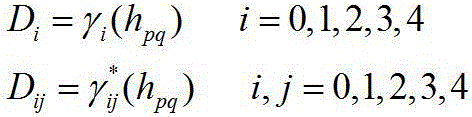
wherein:


obtaining a weight matrix of the multi-source data weight according to the observed value covariance matrix:

wherein:

6. The method according to claim 5, wherein:
calculating a height reduction function of each lattice point by utilizing bilinear interpolation, and establishing a multi-source data fusion-based convection layer height difference correction model of a large height difference region, wherein the method comprises the following steps:
taking ZWD data of a radio sounding station as a reference, establishing a fusion observation equation considering system differences as follows:

wherein:



wherein:

ZWD 0 is the original ZWD data;

linearizing the fusion observation equation, combining weights, and performing item shifting to obtain an error equation, namely the multi-source data fusion-based correction model for the height difference of the stratum:

wherein:


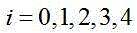


and solving to obtain fused ZWD data according to a least square method.
Priority Applications (1)
| Application Number | Priority Date | Filing Date | Title |
|---|---|---|---|
| CN202310532537.1A CN116304520A (en) | 2023-05-12 | 2023-05-12 | Construction Method of Tropospheric Height Difference Correction Model Based on Multi-source Data Fusion |
Applications Claiming Priority (1)
| Application Number | Priority Date | Filing Date | Title |
|---|---|---|---|
| CN202310532537.1A CN116304520A (en) | 2023-05-12 | 2023-05-12 | Construction Method of Tropospheric Height Difference Correction Model Based on Multi-source Data Fusion |
Publications (1)
| Publication Number | Publication Date |
|---|---|
| CN116304520A true CN116304520A (en) | 2023-06-23 |
Family
ID=86815282
Family Applications (1)
| Application Number | Title | Priority Date | Filing Date |
|---|---|---|---|
| CN202310532537.1A Pending CN116304520A (en) | 2023-05-12 | 2023-05-12 | Construction Method of Tropospheric Height Difference Correction Model Based on Multi-source Data Fusion |
Country Status (1)
| Country | Link |
|---|---|
| CN (1) | CN116304520A (en) |
Cited By (1)
| Publication number | Priority date | Publication date | Assignee | Title |
|---|---|---|---|---|
| CN118392426A (en) * | 2024-06-28 | 2024-07-26 | 江西汉唐智慧城市建设运营有限公司 | Bridge operation monitoring method, system, storage medium and computer based on GNSS |
Citations (4)
| Publication number | Priority date | Publication date | Assignee | Title |
|---|---|---|---|---|
| CN113325448A (en) * | 2021-04-21 | 2021-08-31 | 中铁第一勘察设计院集团有限公司 | Large-altitude-difference CORS network resolving method considering troposphere delay reconstruction |
| CN114502987A (en) * | 2019-08-01 | 2022-05-13 | 斯威夫特导航股份有限公司 | System and method for GNSS correction generation for gaussian process augmentation |
| US11419494B1 (en) * | 2014-05-16 | 2022-08-23 | United States Of America As Represented By The Administrator Of Nasa | Field-deployable neurological assessment tool for performance readiness and telemedicine |
| CN115061167A (en) * | 2022-07-13 | 2022-09-16 | 武汉大学 | Troposphere delay correction method suitable for short-distance large-altitude-difference RTK |
-
2023
- 2023-05-12 CN CN202310532537.1A patent/CN116304520A/en active Pending
Patent Citations (4)
| Publication number | Priority date | Publication date | Assignee | Title |
|---|---|---|---|---|
| US11419494B1 (en) * | 2014-05-16 | 2022-08-23 | United States Of America As Represented By The Administrator Of Nasa | Field-deployable neurological assessment tool for performance readiness and telemedicine |
| CN114502987A (en) * | 2019-08-01 | 2022-05-13 | 斯威夫特导航股份有限公司 | System and method for GNSS correction generation for gaussian process augmentation |
| CN113325448A (en) * | 2021-04-21 | 2021-08-31 | 中铁第一勘察设计院集团有限公司 | Large-altitude-difference CORS network resolving method considering troposphere delay reconstruction |
| CN115061167A (en) * | 2022-07-13 | 2022-09-16 | 武汉大学 | Troposphere delay correction method suitable for short-distance large-altitude-difference RTK |
Non-Patent Citations (3)
| Title |
|---|
| 刘惠清等: "景观生态学", 31 December 2008, 东北师范大学出版社, pages: 275 * |
| 姚宜斌等: "一种新的全球对流层天顶延迟模型GZTD", 《地球物理学报》, vol. 56, no. 7, pages 2 * |
| 武瑞宏等: "复杂艰险山区铁路北斗高精度服务平台的构建", 铁道标准设计, vol. 66, no. 5, pages 1 * |
Cited By (1)
| Publication number | Priority date | Publication date | Assignee | Title |
|---|---|---|---|---|
| CN118392426A (en) * | 2024-06-28 | 2024-07-26 | 江西汉唐智慧城市建设运营有限公司 | Bridge operation monitoring method, system, storage medium and computer based on GNSS |
Similar Documents
| Publication | Publication Date | Title |
|---|---|---|
| Huang et al. | Evaluation of hourly PWV products derived from ERA5 and MERRA‐2 over the Tibetan Plateau using ground‐based GNSS observations by two enhanced models | |
| Zhang et al. | GPS PPP‐derived precipitable water vapor retrieval based on Tm/Ps from multiple sources of meteorological data sets in China | |
| Xia et al. | Establishing a high-precision real-time ZTD model of China with GPS and ERA5 historical data and its application in PPP | |
| Firuzabadì et al. | GPS precision as a function of session duration and reference frame using multi-point software | |
| Li et al. | A global zenith tropospheric delay model with ERA5 and GNSS-based ZTD difference correction | |
| Zhang et al. | A real-time precipitable water vapor monitoring system using the national GNSS network of China: Method and preliminary results | |
| Quesada-Olmo et al. | Real-time high-rise building monitoring system using global navigation satellite system technology | |
| Zhao et al. | A high-precision ZTD interpolation method considering large area and height differences | |
| Zhou et al. | Absolute sea level changes along the coast of China from tide gauges, GNSS, and satellite altimetry | |
| CN115616615A (en) | A low-cost single-frequency GNSS receiver precision positioning method enhanced by PPP-B2b | |
| Zhang et al. | Implementation of ready-made hydrostatic delay products for timely GPS precipitable water vapor retrieval over complex topography: A case study in the Tibetan Plateau | |
| CN116304520A (en) | Construction Method of Tropospheric Height Difference Correction Model Based on Multi-source Data Fusion | |
| Lu et al. | Real-time high-resolution tropospheric delay mapping based on GFS forecasts and GNSS | |
| Skone et al. | Troposphere modeling in a regional GPS network | |
| CN116243343B (en) | Regional zenith troposphere delay calculation method | |
| Xu et al. | Tropospheric polynomial coefficients for real-time regional correction by Kalman filtering from multisource data | |
| Kashani et al. | On the reliability of the VCV Matrix: A case study based on GAMIT and Bernese GPS Software | |
| Charoenphon et al. | Performance assessment of weighted mean temperature models derived from AIRS and ERA5 reanalysis for calculating GPS precipitable water vapor in the Thailand region | |
| Hirt et al. | Mutual validation of GNSS height measurements and high-precision geometric-astronomical leveling | |
| CN116182795A (en) | Precise Measurement Method for General-speed Railway Profile | |
| Dehvari et al. | Assessment of ZWD field predictions using the dynamic mode decomposition method | |
| Xia et al. | Retrieval of tropospheric refractivity profiles using slant tropospheric delays derived from a single ground‐based Global Navigation Satellite System station | |
| Du et al. | Construction of a meteorological application system based on BDS ground-based augmentation network and water vapor products validation | |
| Krásná et al. | Investigation of crustal motion in Europe by analysing the European VLBI sessions | |
| CN119493139A (en) | A multi-device system error correction method for ionospheric total electron content |
Legal Events
| Date | Code | Title | Description |
|---|---|---|---|
| PB01 | Publication | ||
| PB01 | Publication | ||
| SE01 | Entry into force of request for substantive examination | ||
| SE01 | Entry into force of request for substantive examination | ||
| RJ01 | Rejection of invention patent application after publication | ||
| RJ01 | Rejection of invention patent application after publication |
Application publication date: 20230623 |