CN116286990A - Preparation method and application of cell membrane-derived nano vesicles for specifically targeting tumor and inhibiting metastasis - Google Patents
Preparation method and application of cell membrane-derived nano vesicles for specifically targeting tumor and inhibiting metastasis Download PDFInfo
- Publication number
- CN116286990A CN116286990A CN202211092874.5A CN202211092874A CN116286990A CN 116286990 A CN116286990 A CN 116286990A CN 202211092874 A CN202211092874 A CN 202211092874A CN 116286990 A CN116286990 A CN 116286990A
- Authority
- CN
- China
- Prior art keywords
- cell membrane
- nanovesicles
- tumor
- metastasis
- dox
- Prior art date
- Legal status (The legal status is an assumption and is not a legal conclusion. Google has not performed a legal analysis and makes no representation as to the accuracy of the status listed.)
- Pending
Links
Images


Classifications
-
- C—CHEMISTRY; METALLURGY
- C12—BIOCHEMISTRY; BEER; SPIRITS; WINE; VINEGAR; MICROBIOLOGY; ENZYMOLOGY; MUTATION OR GENETIC ENGINEERING
- C12N—MICROORGANISMS OR ENZYMES; COMPOSITIONS THEREOF; PROPAGATING, PRESERVING, OR MAINTAINING MICROORGANISMS; MUTATION OR GENETIC ENGINEERING; CULTURE MEDIA
- C12N15/00—Mutation or genetic engineering; DNA or RNA concerning genetic engineering, vectors, e.g. plasmids, or their isolation, preparation or purification; Use of hosts therefor
- C12N15/09—Recombinant DNA-technology
- C12N15/63—Introduction of foreign genetic material using vectors; Vectors; Use of hosts therefor; Regulation of expression
- C12N15/79—Vectors or expression systems specially adapted for eukaryotic hosts
- C12N15/85—Vectors or expression systems specially adapted for eukaryotic hosts for animal cells
- C12N15/86—Viral vectors
-
- A—HUMAN NECESSITIES
- A61—MEDICAL OR VETERINARY SCIENCE; HYGIENE
- A61K—PREPARATIONS FOR MEDICAL, DENTAL OR TOILETRY PURPOSES
- A61K31/00—Medicinal preparations containing organic active ingredients
- A61K31/70—Carbohydrates; Sugars; Derivatives thereof
- A61K31/7028—Compounds having saccharide radicals attached to non-saccharide compounds by glycosidic linkages
- A61K31/7034—Compounds having saccharide radicals attached to non-saccharide compounds by glycosidic linkages attached to a carbocyclic compound, e.g. phloridzin
- A61K31/704—Compounds having saccharide radicals attached to non-saccharide compounds by glycosidic linkages attached to a carbocyclic compound, e.g. phloridzin attached to a condensed carbocyclic ring system, e.g. sennosides, thiocolchicosides, escin, daunorubicin
-
- A—HUMAN NECESSITIES
- A61—MEDICAL OR VETERINARY SCIENCE; HYGIENE
- A61K—PREPARATIONS FOR MEDICAL, DENTAL OR TOILETRY PURPOSES
- A61K47/00—Medicinal preparations characterised by the non-active ingredients used, e.g. carriers or inert additives; Targeting or modifying agents chemically bound to the active ingredient
- A61K47/46—Ingredients of undetermined constitution or reaction products thereof, e.g. skin, bone, milk, cotton fibre, eggshell, oxgall or plant extracts
-
- A—HUMAN NECESSITIES
- A61—MEDICAL OR VETERINARY SCIENCE; HYGIENE
- A61P—SPECIFIC THERAPEUTIC ACTIVITY OF CHEMICAL COMPOUNDS OR MEDICINAL PREPARATIONS
- A61P35/00—Antineoplastic agents
-
- A—HUMAN NECESSITIES
- A61—MEDICAL OR VETERINARY SCIENCE; HYGIENE
- A61P—SPECIFIC THERAPEUTIC ACTIVITY OF CHEMICAL COMPOUNDS OR MEDICINAL PREPARATIONS
- A61P35/00—Antineoplastic agents
- A61P35/04—Antineoplastic agents specific for metastasis
-
- B—PERFORMING OPERATIONS; TRANSPORTING
- B82—NANOTECHNOLOGY
- B82Y—SPECIFIC USES OR APPLICATIONS OF NANOSTRUCTURES; MEASUREMENT OR ANALYSIS OF NANOSTRUCTURES; MANUFACTURE OR TREATMENT OF NANOSTRUCTURES
- B82Y35/00—Methods or apparatus for measurement or analysis of nanostructures
-
- C—CHEMISTRY; METALLURGY
- C07—ORGANIC CHEMISTRY
- C07K—PEPTIDES
- C07K14/00—Peptides having more than 20 amino acids; Gastrins; Somatostatins; Melanotropins; Derivatives thereof
- C07K14/435—Peptides having more than 20 amino acids; Gastrins; Somatostatins; Melanotropins; Derivatives thereof from animals; from humans
- C07K14/705—Receptors; Cell surface antigens; Cell surface determinants
- C07K14/70596—Molecules with a "CD"-designation not provided for elsewhere
-
- C—CHEMISTRY; METALLURGY
- C12—BIOCHEMISTRY; BEER; SPIRITS; WINE; VINEGAR; MICROBIOLOGY; ENZYMOLOGY; MUTATION OR GENETIC ENGINEERING
- C12N—MICROORGANISMS OR ENZYMES; COMPOSITIONS THEREOF; PROPAGATING, PRESERVING, OR MAINTAINING MICROORGANISMS; MUTATION OR GENETIC ENGINEERING; CULTURE MEDIA
- C12N5/00—Undifferentiated human, animal or plant cells, e.g. cell lines; Tissues; Cultivation or maintenance thereof; Culture media therefor
- C12N5/0006—Modification of the membrane of cells, e.g. cell decoration
-
- C—CHEMISTRY; METALLURGY
- C12—BIOCHEMISTRY; BEER; SPIRITS; WINE; VINEGAR; MICROBIOLOGY; ENZYMOLOGY; MUTATION OR GENETIC ENGINEERING
- C12N—MICROORGANISMS OR ENZYMES; COMPOSITIONS THEREOF; PROPAGATING, PRESERVING, OR MAINTAINING MICROORGANISMS; MUTATION OR GENETIC ENGINEERING; CULTURE MEDIA
- C12N5/00—Undifferentiated human, animal or plant cells, e.g. cell lines; Tissues; Cultivation or maintenance thereof; Culture media therefor
- C12N5/06—Animal cells or tissues; Human cells or tissues
- C12N5/0602—Vertebrate cells
- C12N5/0625—Epidermal cells, skin cells; Cells of the oral mucosa
-
- C—CHEMISTRY; METALLURGY
- C12—BIOCHEMISTRY; BEER; SPIRITS; WINE; VINEGAR; MICROBIOLOGY; ENZYMOLOGY; MUTATION OR GENETIC ENGINEERING
- C12N—MICROORGANISMS OR ENZYMES; COMPOSITIONS THEREOF; PROPAGATING, PRESERVING, OR MAINTAINING MICROORGANISMS; MUTATION OR GENETIC ENGINEERING; CULTURE MEDIA
- C12N5/00—Undifferentiated human, animal or plant cells, e.g. cell lines; Tissues; Cultivation or maintenance thereof; Culture media therefor
- C12N5/06—Animal cells or tissues; Human cells or tissues
- C12N5/0602—Vertebrate cells
- C12N5/0688—Cells from the lungs or the respiratory tract
-
- C—CHEMISTRY; METALLURGY
- C12—BIOCHEMISTRY; BEER; SPIRITS; WINE; VINEGAR; MICROBIOLOGY; ENZYMOLOGY; MUTATION OR GENETIC ENGINEERING
- C12N—MICROORGANISMS OR ENZYMES; COMPOSITIONS THEREOF; PROPAGATING, PRESERVING, OR MAINTAINING MICROORGANISMS; MUTATION OR GENETIC ENGINEERING; CULTURE MEDIA
- C12N2510/00—Genetically modified cells
-
- C—CHEMISTRY; METALLURGY
- C12—BIOCHEMISTRY; BEER; SPIRITS; WINE; VINEGAR; MICROBIOLOGY; ENZYMOLOGY; MUTATION OR GENETIC ENGINEERING
- C12N—MICROORGANISMS OR ENZYMES; COMPOSITIONS THEREOF; PROPAGATING, PRESERVING, OR MAINTAINING MICROORGANISMS; MUTATION OR GENETIC ENGINEERING; CULTURE MEDIA
- C12N2740/00—Reverse transcribing RNA viruses
- C12N2740/00011—Details
- C12N2740/10011—Retroviridae
- C12N2740/15011—Lentivirus, not HIV, e.g. FIV, SIV
- C12N2740/15041—Use of virus, viral particle or viral elements as a vector
- C12N2740/15043—Use of virus, viral particle or viral elements as a vector viral genome or elements thereof as genetic vector
-
- C—CHEMISTRY; METALLURGY
- C12—BIOCHEMISTRY; BEER; SPIRITS; WINE; VINEGAR; MICROBIOLOGY; ENZYMOLOGY; MUTATION OR GENETIC ENGINEERING
- C12N—MICROORGANISMS OR ENZYMES; COMPOSITIONS THEREOF; PROPAGATING, PRESERVING, OR MAINTAINING MICROORGANISMS; MUTATION OR GENETIC ENGINEERING; CULTURE MEDIA
- C12N2800/00—Nucleic acids vectors
- C12N2800/10—Plasmid DNA
- C12N2800/106—Plasmid DNA for vertebrates
- C12N2800/107—Plasmid DNA for vertebrates for mammalian
-
- Y—GENERAL TAGGING OF NEW TECHNOLOGICAL DEVELOPMENTS; GENERAL TAGGING OF CROSS-SECTIONAL TECHNOLOGIES SPANNING OVER SEVERAL SECTIONS OF THE IPC; TECHNICAL SUBJECTS COVERED BY FORMER USPC CROSS-REFERENCE ART COLLECTIONS [XRACs] AND DIGESTS
- Y02—TECHNOLOGIES OR APPLICATIONS FOR MITIGATION OR ADAPTATION AGAINST CLIMATE CHANGE
- Y02A—TECHNOLOGIES FOR ADAPTATION TO CLIMATE CHANGE
- Y02A50/00—TECHNOLOGIES FOR ADAPTATION TO CLIMATE CHANGE in human health protection, e.g. against extreme weather
- Y02A50/30—Against vector-borne diseases, e.g. mosquito-borne, fly-borne, tick-borne or waterborne diseases whose impact is exacerbated by climate change
Landscapes
- Health & Medical Sciences (AREA)
- Life Sciences & Earth Sciences (AREA)
- Chemical & Material Sciences (AREA)
- Engineering & Computer Science (AREA)
- Organic Chemistry (AREA)
- Genetics & Genomics (AREA)
- Biomedical Technology (AREA)
- General Health & Medical Sciences (AREA)
- Zoology (AREA)
- Bioinformatics & Cheminformatics (AREA)
- Wood Science & Technology (AREA)
- Biotechnology (AREA)
- General Engineering & Computer Science (AREA)
- Biochemistry (AREA)
- Medicinal Chemistry (AREA)
- Pharmacology & Pharmacy (AREA)
- Public Health (AREA)
- Microbiology (AREA)
- Veterinary Medicine (AREA)
- Animal Behavior & Ethology (AREA)
- Cell Biology (AREA)
- Molecular Biology (AREA)
- Nanotechnology (AREA)
- Nuclear Medicine, Radiotherapy & Molecular Imaging (AREA)
- General Chemical & Material Sciences (AREA)
- Chemical Kinetics & Catalysis (AREA)
- Biophysics (AREA)
- Epidemiology (AREA)
- Dermatology (AREA)
- Physics & Mathematics (AREA)
- Analytical Chemistry (AREA)
- Botany (AREA)
- Plant Pathology (AREA)
- Toxicology (AREA)
- Pulmonology (AREA)
- Crystallography & Structural Chemistry (AREA)
- Virology (AREA)
- Proteomics, Peptides & Aminoacids (AREA)
- Immunology (AREA)
- Gastroenterology & Hepatology (AREA)
Abstract
本发明公开了一种特异性靶向肿瘤和转移抑制的细胞膜来源纳米囊泡的制备方法与应用。本发明通过基因工程构建CD82过表达肺上皮细胞HBE细胞株,体外抽提细胞膜、修饰AS1411适配体及装载化疗药物多柔比星(Doxorubicin,DOX),制备工程化纳米囊泡药物递送系统。本发明制备的工程化纳米囊泡药物递送系统,通过体内体外实验证明:兼具靶向三阴性乳腺癌、抑制转移及诱导三阴性乳腺癌细胞凋亡等多重作用。本发明填补了细胞外囊泡作为药物载体的不足,为三阴性乳腺癌的临床治疗提供了新的思路和科学依据。
The invention discloses a preparation method and application of cell membrane-derived nanovesicles specifically targeting tumors and suppressing metastasis. The present invention constructs CD82-overexpressing lung epithelial cell HBE cell line through genetic engineering, extracts cell membrane in vitro, modifies AS1411 aptamer and loads chemotherapy drug Doxorubicin (Doxorubicin, DOX) to prepare an engineered nanovesicle drug delivery system. The engineered nanovesicle drug delivery system prepared by the present invention proves through in vivo and in vitro experiments that it has multiple functions such as targeting triple-negative breast cancer, inhibiting metastasis, and inducing apoptosis of triple-negative breast cancer cells. The invention fills up the shortage of extracellular vesicles as drug carriers, and provides new ideas and scientific basis for the clinical treatment of triple-negative breast cancer.
Description
技术领域technical field
本发明属于生物医药技术领域,涉及一种兼具靶向恶性乳腺癌、抑制转移及诱导恶性乳腺癌细胞凋亡等多重作用的工程化纳米囊泡。The invention belongs to the technical field of biomedicine and relates to an engineered nanovesicle with multiple functions of targeting malignant breast cancer, inhibiting metastasis and inducing apoptosis of malignant breast cancer cells.
背景技术Background technique
乳腺癌是女性最常见的恶性肿瘤之一,严重威胁女性的健康。与其他亚型相比,三阴性乳腺癌(Triple negative breast cancer,TNBC)的异质性及恶性程度较高,更容易出现转移和复发,预后更差,确诊后前5年内死亡率高达40%。由于缺乏重要的表达受体,新型的干预疗法,例如内分泌治疗、HER-2靶向治疗、免疫疗法及新辅助化疗等对其治疗作用有限,因此长期以来手术辅助化疗仍是其主要疗法。但由于缺乏化疗特异性靶向,常规的手术后辅助放化疗难以清除全部的病灶,遗留的小部分转移灶最终仍会导致肿瘤的复发。因此迫切需要寻找新的治疗靶点及治疗方案。Breast cancer is one of the most common malignant tumors in women, which seriously threatens women's health. Compared with other subtypes, triple negative breast cancer (TNBC) has higher heterogeneity and malignancy, is more prone to metastasis and recurrence, and has a worse prognosis, with a mortality rate as high as 40% within the first 5 years after diagnosis . Due to the lack of important expression receptors, new interventional therapies, such as endocrine therapy, HER-2 targeted therapy, immunotherapy and neoadjuvant chemotherapy, have limited therapeutic effects on it. Therefore, surgical adjuvant chemotherapy has been the main therapy for a long time. However, due to the lack of chemotherapy-specific targeting, conventional adjuvant radiotherapy and chemotherapy after surgery is difficult to remove all lesions, and a small number of metastatic lesions will eventually lead to tumor recurrence. Therefore, it is urgent to find new therapeutic targets and treatment options.
细胞膜来源纳米囊泡类似于外泌体(exosomes),来源于细胞,具有良好的生物相容性;且在细胞膜抽提过程中可有效将核酸等具有风险的遗传物质彻底去除;此外,相较于外泌体,抽提细胞膜,再通过超声破碎、挤压等处理,可大规模制备纳米囊泡,实现药物载体的标准化。因此,细胞膜来源的纳米囊泡未来可能代替外泌体成为新一代有潜力的药物载体。外泌体和细胞膜来源的纳米囊泡作为药物载体,由于缺乏特异靶向性是其应用的关键瓶颈。恶性肿瘤的复发转移是目前肿瘤治疗的难点,迫切需要新的治疗靶点和治疗策略。Cell membrane-derived nanovesicles are similar to exosomes, derived from cells, and have good biocompatibility; and can effectively remove risky genetic materials such as nucleic acids during cell membrane extraction; in addition, compared with From exosomes, the cell membrane is extracted, and then through ultrasonic crushing, extrusion and other treatments, nanovesicles can be prepared on a large scale to achieve the standardization of drug carriers. Therefore, nanovesicles derived from cell membranes may replace exosomes as a new generation of potential drug carriers in the future. The lack of specific targeting of exosomes and cell membrane-derived nanovesicles as drug carriers is a key bottleneck in their application. The recurrence and metastasis of malignant tumors is the difficulty of current tumor treatment, and new therapeutic targets and strategies are urgently needed.
发明内容Contents of the invention
本发明的目的在于通过制备肿瘤特异靶向和转移抑制的细胞膜来源纳米囊泡运载化疗药物,为恶性肿瘤治疗提供一个新的策略。本发明通过基因工程构建肿瘤转移抑制分子CD82过表达肺上皮细胞HBE细胞株,体外抽提细胞膜、修饰核酸适配体AS1411及装载化疗药物DOX,制备工程化纳米囊泡运载化疗药物。通过体内体外实验证明,该囊泡兼具靶向恶性肿瘤细胞、抑制转移及诱导恶性肿瘤细胞凋亡等多重功能。The purpose of the present invention is to provide a new strategy for the treatment of malignant tumors by preparing cell membrane-derived nanovesicles carrying chemotherapy drugs for tumor-specific targeting and metastasis suppression. The invention constructs HBE cell lines of lung epithelial cells overexpressing tumor metastasis inhibitory molecule CD82 through genetic engineering, extracts cell membranes in vitro, modifies nucleic acid aptamer AS1411 and loads chemotherapeutic drugs DOX, and prepares engineered nanovesicles to carry chemotherapeutic drugs. In vivo and in vitro experiments proved that the vesicles have multiple functions such as targeting malignant tumor cells, inhibiting metastasis and inducing apoptosis of malignant tumor cells.
为了实现以上目的,本发明所采用的技术方案如下:In order to achieve the above object, the technical scheme adopted in the present invention is as follows:
特异性靶向肿瘤和转移抑制的细胞膜来源纳米囊泡的制备方法,包括:A preparation method for cell membrane-derived nanovesicles specifically targeting tumors and metastasis suppression, including:
步骤1、制备富集肿瘤转移抑制分子CD82肺上皮细胞HBE细胞膜;
通过基因工程克隆人源CD82分子的全长cDNA片段,插入慢病毒表达载体pLV-EF1α-MCS-IRES Bsd上,包装慢病毒并感染细胞正常肺上皮HBE细胞,通过Blasticidin抗生素筛选获得稳定过表达CD82分子的HBE细胞株。将体外抽提的细胞膜通过超声制备成细胞膜悬液,获得过表达肿瘤转移抑制分子CD82肺上皮细胞HBE细胞膜悬液。The full-length cDNA fragment of the human CD82 molecule was cloned by genetic engineering, inserted into the lentiviral expression vector pLV-EF1α-MCS-IRES Bsd, the lentivirus was packaged and infected with normal lung epithelial HBE cells, and stable overexpression of CD82 was obtained by screening with Blasticidin antibiotics Molecular HBE cell lines. The cell membranes extracted in vitro were prepared into a cell membrane suspension by ultrasound to obtain the HBE cell membrane suspension of lung epithelial cells overexpressing the tumor metastasis inhibitory molecule CD82.
步骤2、制备特异性靶向肿瘤和转移抑制的细胞膜来源纳米囊泡;
通过化学方法合成核酸适配体AS1411并共价结合胆固醇分子,合成的AS1411适配体偶联至步骤1制备的富集转移抑制分子CD82肺上皮细胞HBE细胞膜,获得特异性靶向肿瘤和转移抑制的细胞膜悬液。通过探头超声破碎,将超声破碎后的细胞膜悬液4℃存放10-20小时,便于细胞膜的恢复;使用Avanti脂质体挤出机,推动细胞膜悬液通过200nm膜10-15次,获得直径为200nm的特异性靶向肿瘤和转移抑制的细胞膜来源纳米囊泡。The nucleic acid aptamer AS1411 was synthesized by chemical methods and covalently bound to cholesterol molecules. The synthetic AS1411 aptamer was coupled to the enriched metastasis inhibitory molecule CD82 lung epithelial cell HBE cell membrane prepared in
本发明同时提供了特异性靶向肿瘤和转移抑制的细胞膜来源纳米囊泡作为药物载体运载化疗药物的应用,所述应用为利用上述方法制备的纳米囊泡作为药物载体装载化疗药物制备特异性靶向肿瘤和转移抑制恶性乳腺癌的化疗制剂。可选的,本发明使用的化疗药物为多柔比星(Doxorubicin,DOX),药物装载方法是:按纳米囊泡和DOX的质量比为1:2,取125μL的400μg/mL DOX溶液,加入200μg偶联AS1411适配体的CD82过表达肺上皮细胞HBE细胞的细胞膜悬液,补1×PBS至250μL,即DOX终浓度为200μg/mL,混匀后,室温孵育4小时,4℃,14000g,离心30min,沉淀加入250μL1×PBS重悬,4℃,14000g,离心30min,沉淀加入250μL 1×PBS重悬,4℃储存;获得装载DOX的偶联AS1411适配体的CD82过表达HBE细胞膜;按照步骤2所述方法制备装载DOX的偶联AS1411适配体和CD82过表达的细胞膜来源载药纳米囊泡,获得特异性靶向肿瘤和转移抑制的细胞膜来源DOX载药纳米囊泡。The present invention also provides the application of cell membrane-derived nanovesicles specifically targeting tumors and metastasis inhibition as drug carriers to carry chemotherapy drugs. Chemotherapy agents for tumor and metastasis inhibition of malignant breast cancer. Optionally, the chemotherapeutic drug used in the present invention is doxorubicin (Doxorubicin, DOX), and the drug loading method is: according to the mass ratio of nanovesicles and DOX as 1:2, take 125 μL of 400 μg/mL DOX solution, add 200μg of the cell membrane suspension of CD82-overexpressed lung epithelial cells HBE cells coupled with AS1411 aptamer, add 1×PBS to 250μL, that is, the final concentration of DOX is 200μg/mL, mix well, incubate at room temperature for 4 hours, 4℃, 14000g , centrifuged for 30 minutes, the pellet was resuspended in 250
本发明的优点和有益效果:Advantages and beneficial effects of the present invention:
本发明公开了一种制备特异靶向肿瘤和转移抑制的细胞膜来源纳米囊泡的制备方法和应用,通过基因工程构建CD82过表达肺上皮细胞HBE细胞株,体外抽提细胞膜、修饰AS1411适配体,获得具有特异性靶向肿瘤和转移抑制的细胞膜来源纳米囊泡。该纳米囊泡具有特异性靶向肿瘤,和有效抑制肿瘤细胞转移的功能,可以有效克服目前恶性肿瘤治疗中缺乏针对肿瘤转移的治疗瓶颈;此外,该纳米囊泡可应用于药物载体,装载化疗药物可选的,可以有效装载化疗药物DOX,特异性靶向肿瘤可以有效提高化疗药物的治疗效果和降低化疗副作用。通过体内体外实验证明:该纳米囊泡兼具特异性靶向恶性乳腺癌、抑制转移及装载化疗药物DOX诱导恶性乳腺癌细胞凋亡等多重作用。The invention discloses a preparation method and application of cell membrane-derived nanovesicles specifically targeting tumors and metastasis inhibition, constructing CD82-overexpressing lung epithelial cell HBE cell lines through genetic engineering, extracting cell membranes in vitro, and modifying AS1411 aptamers , to obtain cell membrane-derived nanovesicles with specific tumor targeting and metastasis inhibition. The nanovesicle has the function of specifically targeting tumors and effectively inhibiting tumor cell metastasis, which can effectively overcome the lack of treatment bottleneck for tumor metastasis in the current treatment of malignant tumors; in addition, the nanovesicle can be applied to drug carriers, loaded with chemotherapy The drug is optional, it can effectively load the chemotherapy drug DOX, and specifically targeting the tumor can effectively improve the therapeutic effect of the chemotherapy drug and reduce the side effects of chemotherapy. In vivo and in vitro experiments proved that the nanovesicles have multiple functions such as specifically targeting malignant breast cancer, inhibiting metastasis, and loading chemotherapy drug DOX to induce apoptosis of malignant breast cancer cells.
附图说明Description of drawings
图1:实施例2中的CD82过表达结果,蛋白印迹实验检测HBE-WT及过表达CD82的HBE-CD82细胞系和细胞膜来源纳米囊泡的膜蛋白表达情况和外源CD82表达情况。Figure 1: The results of CD82 overexpression in Example 2, the expression of membrane proteins and the expression of exogenous CD82 in HBE-WT and HBE-CD82 cell lines overexpressing CD82 and cell membrane-derived nanovesicles by Western blot.
图2:实施例3中的核酸适配体AS1411偶联结果,(A)核酸适配体AS1411偶联细胞膜来源纳米囊泡的连接效率。(B)单个细胞膜来源纳米囊泡偶联核酸适配体AS1411的数目。(C)暗场显微镜验证细胞膜来源纳米囊泡的连接核酸适配体AS1411,胞膜来源纳米囊泡带有Dil染色,AS1411带有FAM荧光分子。Figure 2: The coupling results of nucleic acid aptamer AS1411 in Example 3, (A) the connection efficiency of nucleic acid aptamer AS1411 coupling cell membrane-derived nanovesicles. (B) The number of aptamer AS1411 coupled to nanovesicles derived from a single cell membrane. (C) Dark-field microscope verification of the nucleic acid aptamer AS1411 of the cell membrane-derived nanovesicles, the membrane-derived nanovesicles are stained with Dil, and AS1411 has FAM fluorescent molecules.
图3:实施例4中的DOX装载结果,(A)细胞膜来源纳米囊泡装载化疗药物多柔比星(Doxorubicin,DOX)的装载效率和纳米囊泡的封装效率。(B)装载DOX的纳米囊泡在PH 5.0和PH 7.4环境下的药物释放效率。Figure 3: DOX loading results in Example 4, (A) loading efficiency of cell membrane-derived nanovesicles loaded with chemotherapy drug Doxorubicin (Doxorubicin, DOX) and encapsulation efficiency of nanovesicles. (B) Drug release efficiency of DOX-loaded nanovesicles at pH 5.0 and pH 7.4.
图4:实施例5中的体外纳米囊泡靶向结果,体外荧光共聚焦显微镜检测富集CD82细胞膜来源的纳米囊泡和偶联核酸适配体AS1411的富集CD82细胞膜来源的纳米囊泡对恶性乳腺癌细胞MDA-MB-231及正常乳腺上皮细胞MCF-10A的靶向情况。比例尺=20μm。Figure 4: In vitro nanovesicle targeting results in Example 5, in vitro fluorescent confocal microscope detection of enriched CD82 cell membrane-derived nanovesicles and enriched CD82 cell membrane-derived nanovesicle pairs coupled to nucleic acid aptamer AS1411 Targeting of malignant breast cancer cell MDA-MB-231 and normal breast epithelial cell MCF-10A. Scale bar = 20 μm.
图5:实施例6中的体外纳米囊泡转移抑制结果,体外细胞穿孔迁移实验检测富集CD82的纳米囊泡对恶性乳腺癌细胞MDA-MB-231迁移的影响。比例尺=200μm。Figure 5: In vitro nanovesicle migration inhibition results in Example 6, in vitro cell perforation migration assay to detect the effect of CD82-enriched nanovesicles on the migration of malignant breast cancer cell MDA-MB-231. Scale bar = 200 μm.
图6:实施例7中的体外纳米囊泡装载DOX诱导肿瘤细胞凋亡结果,(A)体外免疫荧光蛋白剪接体Caspase3和TUNEL实验法检测纳米囊泡装载DOX处理恶性乳腺癌细胞MDA-MB-231细胞36h后,诱导细胞凋亡的情况。比例尺=20μm。(B)体外蛋白印迹实验检测纳米囊泡装载DOX处理恶性乳腺癌细胞MDA-MB-231细胞36h后,诱导细胞凋亡的情况。Figure 6: The in vitro nanovesicle loading DOX-induced tumor cell apoptosis results in Example 7, (A) in vitro immunofluorescent protein splice body Caspase3 and TUNEL assay to detect nanovesicle loading DOX treatment of malignant breast cancer cells MDA-MB- 231 cells after 36h, induced apoptosis. Scale bar = 20 μm. (B) In vitro Western blot assay was used to detect the induction of apoptosis in malignant breast cancer cells MDA-MB-231 cells treated with DOX loaded with nanovesicles for 36 h.
图7:实施例8中的小鼠体内纳米囊泡靶向肿瘤结果,(A)体内小鼠乳腺癌原位瘤模型构建及偶联核酸适配体AS1411细胞膜来源纳米囊泡靶向肿瘤细胞验证实验示意图。(B)体内小鼠乳腺癌原位瘤模型肿瘤组织情况及肿瘤肿瘤重量情况。(C)小鼠器官组织样本成像显示纳米囊泡在不同组织的分别情况,及肿瘤组织相对荧光强度统计结果。Figure 7: Results of nanovesicles targeting tumors in mice in Example 8, (A) In vivo mouse breast cancer orthotopic tumor model construction and verification of nucleic acid aptamer AS1411 cell membrane-derived nanovesicles targeting tumor cells Experimental schematic. (B) Tumor tissue and tumor weight of the mouse breast cancer orthotopic tumor model in vivo. (C) Imaging of mouse organ tissue samples shows the difference of nanovesicles in different tissues, and the statistical results of the relative fluorescence intensity of tumor tissues.
图8:实施例9中的小鼠体内纳米囊泡抑制肿瘤转移结果,(A)体内小鼠乳腺癌原位瘤模型构建及过表达CD82细胞膜来源纳米囊泡抑制肿瘤转移验证实验示意图。(B)体内小鼠乳腺癌原位瘤模型监测小鼠体重及肿瘤体积变化情况,以及两组肿瘤组织重量情况。(C)野生型和过表达CD82细胞膜来源纳米囊泡处理小鼠后肝脏转移及原发灶肿瘤组织样本图像,白色箭头示肝脏转移灶位置。(D)肝脏组织HE染色结果及转移灶数量统计,黑色箭头示转移灶位置,以及两组转移灶统计情况。Figure 8: The results of nanovesicles inhibiting tumor metastasis in mice in Example 9, (A) Schematic diagram of the establishment of an orthotopic tumor model of mouse breast cancer in vivo and the verification experiment of overexpressing CD82 cell membrane-derived nanovesicles inhibiting tumor metastasis. (B) In vivo mouse breast cancer orthotopic tumor model monitoring changes in mouse body weight and tumor volume, as well as the weight of tumor tissue in the two groups. (C) Images of liver metastases and primary tumor tissue samples after treatment with wild-type and CD82-overexpressed CD82 cell membrane-derived nanovesicles, and the white arrows indicate the location of liver metastases. (D) Results of HE staining of liver tissue and the statistics of the number of metastases, the black arrows indicate the location of metastases, and the statistics of metastases in the two groups.
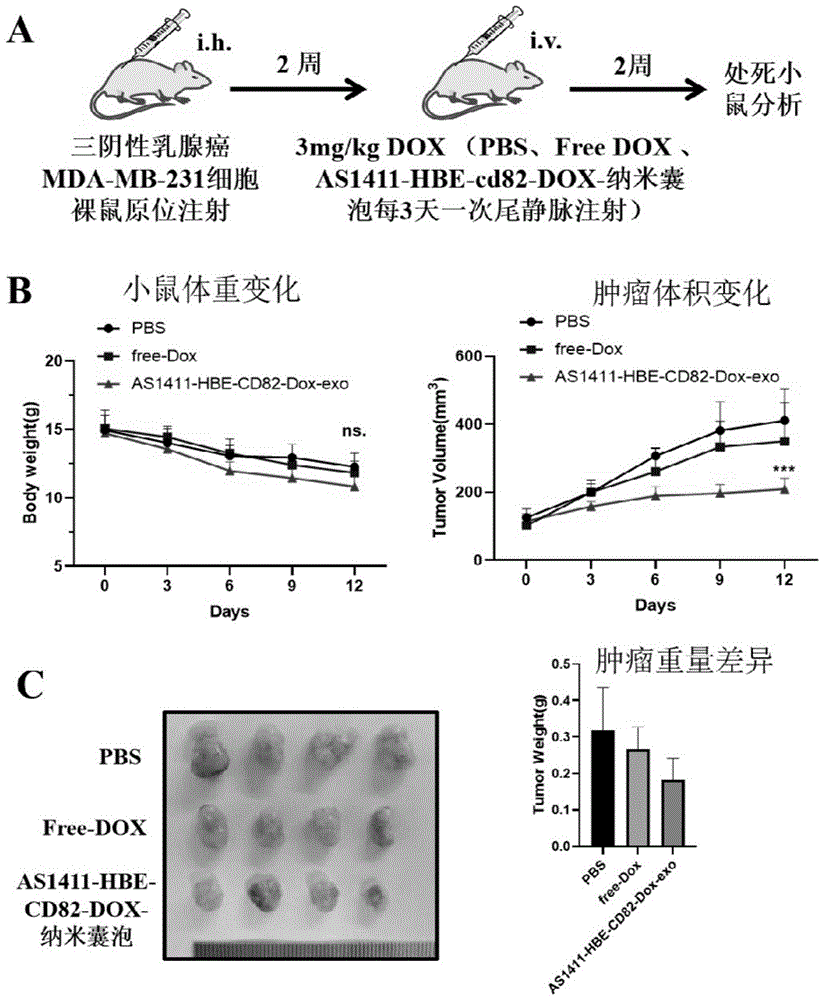
图9:实施例10中的小鼠体内纳米囊泡诱导肿瘤细胞凋亡结果,(A)体内小鼠乳腺癌原位瘤模型构建及偶联核酸适配体AS1411过表达CD82并装载DOX细胞膜来源纳米囊泡治疗肿瘤示意图。(B)治疗期间小鼠体重变化和肿瘤体积变化情况。(C)经过治疗后原位瘤组织样本图像与肿瘤重量差异情况。Figure 9: The results of tumor cell apoptosis induced by nanovesicles in mice in Example 10, (A) In vivo mouse breast cancer orthotopic tumor model construction and coupled with nucleic acid aptamer AS1411 overexpressing CD82 and loading DOX cell membrane source Schematic diagram of nanovesicle therapy for tumors. (B) Changes in body weight and tumor volume of mice during treatment. (C) The difference between the images of tumor in situ tissue samples and tumor weight after treatment.
图10:实施例8中的小鼠体内纳米囊泡靶向肿瘤结果,蛋白免疫印迹实验验证肿瘤组织凋亡相关蛋白表达情况。Figure 10: The results of nanovesicles targeting tumors in mice in Example 8, and Western blot experiments to verify the expression of apoptosis-related proteins in tumor tissues.
图11:实施例8中的小鼠体内纳米囊泡靶向肿瘤结果,体内免疫荧光蛋白剪接体Caspase3和TUNEL实验法检测偶联核酸适配体AS1411过表达CD82并装载DOX细胞膜来源纳米囊泡治疗恶性乳腺癌肿瘤组织细胞凋亡情况。比例尺=20μm。Figure 11: The results of nanovesicles targeting tumors in mice in Example 8, in vivo immunofluorescence protein splicing body Caspase3 and TUNEL assays to detect coupling nucleic acid aptamer AS1411 overexpressing CD82 and loading DOX cell membrane-derived nanovesicles for treatment Cell apoptosis in malignant breast cancer tumor tissue. Scale bar = 20 μm.
具体实施方式Detailed ways
下面通过实施例和附图对本发明作进一步具体说明:Below by embodiment and accompanying drawing, the present invention is described in further detail:
实施例1、制备转移抑制的细胞膜来源纳米囊泡Example 1. Preparation of metastasis-suppressed cell membrane-derived nanovesicles
通过基因工程方法,克隆人源肿瘤转移分子CD82的全长cDNA在正常肺上皮HBE细胞中过表达,构建CD82过表达细胞株。体外抽提野生型肺上皮细胞HBE细胞和CD82过表达肺上皮细胞HBE细胞的细胞膜,获得野生型肺上皮细胞HBE细胞膜和富集肿瘤转移抑制分子CD82肺上皮细胞HBE细胞膜悬液;通过探头超声破碎,将超声破碎后的细胞膜悬液4℃存放10-20小时,便于细胞膜的恢复;使用Avanti脂质体挤出机,推动细胞膜悬液通过200nm膜10-15次,获得直径为200nm的纳米囊泡,包括野生型和转移抑制的细胞膜来源纳米囊泡,为以下实施例提供对照和实验材料。Through genetic engineering, the full-length cDNA of human tumor metastasis molecule CD82 was cloned and overexpressed in normal lung epithelial HBE cells to construct a CD82 overexpression cell line. Extract the cell membranes of wild-type lung epithelial cells HBE cells and CD82-overexpressing lung epithelial cells HBE cells in vitro, obtain wild-type lung epithelial cell HBE cell membranes and enrich tumor metastasis inhibitory molecule CD82 lung epithelial cell HBE cell membrane suspension; use probe ultrasonic disruption , Store the cell membrane suspension after ultrasonic disruption at 4°C for 10-20 hours to facilitate the recovery of the cell membrane; use the Avanti liposome extruder to push the cell membrane suspension through the 200nm membrane for 10-15 times to obtain nanocapsules with a diameter of 200nm Vesicles, including wild-type and metastasis-suppressed cell membrane-derived nanovesicles, provide control and experimental material for the following examples.
实施例2、检测实施例1制备的转移抑制细胞膜来源纳米囊泡的CD82分子表达情况Example 2. Detecting the expression of CD82 molecules in the transfer-suppressing cell membrane-derived nanovesicles prepared in Example 1
通过蛋白质印迹技术实验,检测实施例1制备的野生型和富集CD82分子的转移抑制细胞膜来源纳米囊泡的CD82分子表达情况,以野生型HBE细胞膜及其来源的纳米囊泡为对照,结果表明过表达CD82分子高度富集于细胞膜及其来源的转移抑制纳米囊泡,见图1。By Western blot experiments, the expression of CD82 molecules in the wild-type and enriched CD82 molecules prepared in Example 1 was detected in the transfer-suppressed cell membrane-derived nanovesicles, and the wild-type HBE cell membranes and nanovesicles derived from them were used as controls. The results showed that Overexpression of CD82 molecules is highly enriched in the cell membrane and its source of metastasis-suppressing nanovesicles, as shown in Figure 1.
实施例3、制备特异靶向肿瘤和转移抑制的细胞膜来源纳米囊泡Example 3. Preparation of cell membrane-derived nanovesicles specifically targeting tumors and metastasis suppression
本发明提供偶联核酸适配体AS1411至细胞膜悬液的方法,可选的,通过胆固醇将AS1411适配体偶联至细胞膜悬液的方法为:订购生工生物工程(上海)股份有限公司合成的核酸适配体AS1411共价结合胆固醇分子,将核酸适配体AS1411偶联至野生型及过表达CD82分子的HBE细胞膜上,分别制备特异靶向肿瘤的野生型和转移抑制的细胞膜来源纳米囊泡。将订购化学合成的AS1411适配体用ddH2O稀释为10μM的工作液,分别取2.5μL,5μL,10μL,20μL工作液加入250μg细胞膜悬液中,终体积为200μL,混匀后,置于37℃水浴中15min;4℃,14000g,离心30min;沉淀加入200μL 1×PBS重悬,4℃储存,获得偶联AS1411适配体的野生型及富集CD82细胞膜悬液;将偶联AS1411适配体的野生型及富集CD82的细胞膜悬液置于盛满冰水的烧杯中,进行探头超声破碎,超声破碎后的细胞膜悬液4℃存放10-20小时,便于细胞膜的恢复;使用Avanti脂质体挤出机,推动细胞膜悬液通过200nm膜10-15次,得到约200nm的偶联AS1411适配体的野生型及富集CD82细胞膜来源的纳米囊泡。制备特异靶向肿瘤的野生型和转移抑制的细胞膜来源纳米囊泡,AS1411适配体和纳米囊泡的连接效率及单个纳米囊泡连接AS1411适配体数目,相关实验验证结果如图2所示,0.02nM的适配体AS1411连接100μg纳米囊泡,其连接效率超过95%,且单个纳米囊泡连接适配体AS1411的数量超过1000足够达到特异靶向肿瘤细胞的能力。The present invention provides a method for coupling the nucleic acid aptamer AS1411 to the cell membrane suspension. Optionally, the method for coupling the AS1411 aptamer to the cell membrane suspension through cholesterol is: order synthetic by Sangon Bioengineering (Shanghai) Co., Ltd. The nucleic acid aptamer AS1411 covalently binds cholesterol molecules, and the nucleic acid aptamer AS1411 is coupled to the wild-type and CD82-overexpressed HBE cell membranes to prepare tumor-specific wild-type and metastasis-suppressed cell membrane-derived nanocapsules, respectively. Bubble. Dilute the ordered chemically synthesized aptamer AS1411 with ddH 2 O to 10 μM working solution, add 2.5 μL, 5 μL, 10 μL, and 20 μL of working solution to 250 μg cell membrane suspension, the final volume is 200 μL, mix well, place in In a water bath at 37°C for 15 minutes; at 4°C, centrifuge at 14,000g for 30 minutes; add 200 μL of 1×PBS to the pellet to resuspend, and store at 4°C to obtain wild-type and enriched CD82 cell membrane suspensions coupled with the AS1411 aptamer; Ligand wild-type and CD82-enriched cell membrane suspensions were placed in a beaker filled with ice water, and the probe was ultrasonically disrupted. The sonicated cell membrane suspensions were stored at 4°C for 10-20 hours to facilitate the recovery of cell membranes; use Avanti lipid The extruder was used to push the cell membrane suspension through the 200nm membrane for 10-15 times to obtain about 200nm wild-type and enriched CD82 cell membrane-derived nanovesicles coupled with the AS1411 aptamer. Preparation of tumor-specific wild-type and metastasis-suppressed cell membrane-derived nanovesicles, the connection efficiency of AS1411 aptamers and nanovesicles, and the number of AS1411 aptamers connected to a single nanovesicle. The relevant experimental verification results are shown in Figure 2 , 0.02nM aptamer AS1411 was connected to 100 μg nanovesicles, and the connection efficiency was over 95%, and the number of aptamer AS1411 connected to a single nanovesicle was more than 1000, which was sufficient to specifically target tumor cells.
实施例4、制备特异靶向肿瘤和转移抑制的细胞膜来源载药纳米囊泡Example 4. Preparation of cell membrane-derived drug-loaded nanovesicles specifically targeting tumors and metastasis suppression
本发明提供制备特异靶向肿瘤和转移抑制载药纳米囊泡的方法,可选的,纳米囊泡作为良好的化疗药物载体,具有对恶性肿瘤特异靶向、抑制转移及装载化疗药物促进细胞凋亡的三重作用。装载化疗药物,可选的,本发明使用的化疗药物为多柔比星(Doxorubicin,DOX),药物装载方法是:按纳米囊泡和DOX的质量比为1;2,取的DOX溶液,分别加入200μg偶联AS1411适配体的CD82过表达肺上皮细胞HBE细胞的细胞膜悬液,补1×PBS至250μL,即DOX终浓度为200μg/mL,混匀后,室温孵育4小时,4℃,14000g,离心30min,沉淀加入250μL 1×PBS重悬,4℃,14000g,离心30min,沉淀加入250μL 1×PBS重悬,4℃储存;获得装载DOX的偶联AS1411适配体的CD82过表达HBE细胞膜;使用Avanti脂质体挤出机,将细胞膜悬液推动通过200nm膜制备偶联AS1411适配体和富集CD82分子装载DOX药物的细胞膜来源纳米囊泡。获得多功能纳米囊泡递送化疗药物辅助肿瘤治疗。DOX装载效率和纳米囊泡的包封效率检测及纳米囊泡荷载DOX在不同PH值环境下的释放效率检测,见图3。The present invention provides a method for preparing nanovesicles loaded with specifically targeted tumors and anti-metastasis drugs. Optionally, nanovesicles, as good chemotherapeutic drug carriers, have the functions of specifically targeting malignant tumors, inhibiting metastasis, and loading chemotherapeutic drugs to promote cell apoptosis. The triple role of death. Loading chemotherapy drugs, optionally, the chemotherapy drugs used in the present invention is doxorubicin (Doxorubicin, DOX), the drug loading method is: according to the mass ratio of nanovesicles and DOX is 1; 2, the DOX solution taken, respectively Add 200 μg of the cell membrane suspension of CD82-overexpressed lung epithelial cells HBE cells coupled with AS1411 aptamer, add 1×PBS to 250 μL, that is, the final concentration of DOX is 200 μg/mL, mix well, and incubate at room temperature for 4 hours at 4°C. Centrifuge at 14000g for 30min, add
实施例5、体外实验验证特异靶向肿瘤和转移抑制纳米囊泡的化疗靶向Example 5. In vitro experiments verify the chemotherapy targeting of tumor-specific and metastasis-suppressing nanovesicles
通过纳米囊泡吞噬实验,检测AS1411适配体对不同细胞的靶向能力。AS1411适配体3’端有绿色FAM荧光基团修饰,且两种细胞来源的2种纳米囊泡(HBE-CD82-Exo、AS1411-HBE-CD82-Exo)经DiI染色后,分别与恶性乳腺癌细胞MDA-MB-231及正常乳腺细胞MCF-10A在37℃培养箱中孵育60min。结果显示,连接AS1411适配体的纳米囊泡(AS1411-HBE-CD82-Exo)显著提高靶向恶性乳腺癌细胞MDA-MB-231,但对正常乳腺上皮细胞MCF-10A的靶向能力没有变化。没有适配体AS1411修饰的纳米囊泡(HBE-CD82)对MDA-MB-231及MCF-10A细胞的靶向能力没有显著差异,见图4。The targeting ability of AS1411 aptamer to different cells was detected by nanovesicle phagocytosis assay. The 3' end of the AS1411 aptamer was modified with a green FAM fluorescent group, and two kinds of nanovesicles (HBE-CD82-Exo, AS1411-HBE-CD82-Exo) from two kinds of cells were stained with DiI, respectively, with malignant breast Cancer cell MDA-MB-231 and normal breast cell MCF-10A were incubated in a 37°C incubator for 60min. The results showed that nanovesicles linked to AS1411 aptamer (AS1411-HBE-CD82-Exo) significantly improved targeting of malignant breast cancer cell MDA-MB-231, but had no change in the targeting ability of normal breast epithelial cell MCF-10A . There is no significant difference in the targeting ability of nanovesicles (HBE-CD82) without aptamer AS1411 modification to MDA-MB-231 and MCF-10A cells, as shown in Figure 4.
实施例6、体外实验验证特异靶向肿瘤和转移抑制纳米囊泡的抑制细胞迁移Example 6. In vitro experiments verify the inhibition of cell migration by specific tumor-targeting and metastasis-suppressing nanovesicles
将无血清培养的恶性乳腺癌细胞MDA-MB-231用野生型纳米囊泡和过表达转移抑制分子CD82纳米囊泡处理24小时。随后通过Transwell实验检测纳米囊泡抑制细胞迁移效果,结果表明,野生型纳米囊泡HBE-WT-Exo组与对照组迁移细胞数一致,即正常上皮细胞膜来源纳米囊泡对细胞迁移无明显影响;而过表达转移抑制分子CD82纳米囊泡HBE-CD82-Exo组迁移细胞数明显减少,证明富集CD82的纳米囊泡在体外试验中能够有效抑制恶性乳腺癌细胞MDA-MB-231的迁移,见图5。Serum-free cultured malignant breast cancer cells MDA-MB-231 were treated with wild-type nanovesicles and overexpressed metastasis suppressor molecule CD82 nanovesicles for 24 hours. The effect of nanovesicles on inhibiting cell migration was detected by Transwell assay. The results showed that the number of migrating cells in the wild-type nanovesicles HBE-WT-Exo group was consistent with that in the control group, that is, nanovesicles derived from normal epithelial cell membranes had no significant effect on cell migration. ; while the number of migrating cells in the HBE-CD82-Exo group overexpressing the metastasis inhibitory molecule CD82 nanovesicles was significantly reduced, proving that CD82-enriched nanovesicles can effectively inhibit the migration of malignant breast cancer cell MDA-MB-231 in vitro. See Figure 5.
实施例7、体外实验验证特异靶向肿瘤和转移抑制纳米囊泡装载DOX的诱导肿瘤细胞凋亡Example 7. In vitro experiments verify the specific tumor-targeting and metastasis-inhibiting nanovesicles loaded with DOX induce tumor cell apoptosis
通过TUNEL实验的检测整体细胞凋亡情况,结果表明,Free-DOX及AS1411-HBE-CD82-DOX-Exo特异靶向肿瘤和转移抑制纳米囊泡装载DOX组处理后的恶性乳腺癌细胞MDA-MB-231几乎都有绿色荧光凋亡信号,凋亡细胞比例接近100%,见图6。免疫荧光检测细胞凋亡分子Cleaved caspase-3在细胞内的表达与定位,与对照组相比,Free-DOX及AS1411-HBE-CD82-DOX-Exo组细胞内Cleaved caspase-3的表达显著上调,证明特异靶向肿瘤和转移抑制纳米囊泡装载DOX后能够在体外与游离DOX发挥相似的药效,见图6。通过蛋白印迹实验,检测细胞凋亡过程中具体蛋白水平的变化。与对照组相比,Free-DOX及AS1411-HBE-CD82-DOX-Exo组处理MDA-MB-231细胞中促凋亡相关蛋白PARP,Cleaved PARP,Caspase-3、Cleaved caspase-3表达量显著升高,同时抗凋亡相关蛋白Bcl-2的表达显著下调,显著诱导细胞凋亡,见图6。The overall cell apoptosis was detected by TUNEL experiment, and the results showed that Free-DOX and AS1411-HBE-CD82-DOX-Exo specifically targeted tumor and metastasis-inhibiting nanovesicles loaded with DOX group to treat malignant breast cancer cells MDA-MB -231 almost all have green fluorescent apoptosis signals, and the proportion of apoptotic cells is close to 100%, as shown in Figure 6. The expression and localization of the apoptosis molecule Cleaved caspase-3 were detected by immunofluorescence. Compared with the control group, the expression of Cleaved caspase-3 in the Free-DOX and AS1411-HBE-CD82-DOX-Exo groups was significantly up-regulated. It is proved that the specific tumor-targeting and metastasis-suppressing nanovesicles loaded with DOX can exert similar drug effects to free DOX in vitro, as shown in Figure 6. Western blot experiments were used to detect changes in specific protein levels during apoptosis. Compared with the control group, the expressions of pro-apoptosis-related proteins PARP, Cleaved PARP, Caspase-3, and Cleaved caspase-3 in MDA-MB-231 cells treated with Free-DOX and AS1411-HBE-CD82-DOX-Exo groups were significantly increased At the same time, the expression of anti-apoptosis-related protein Bcl-2 was significantly down-regulated, and apoptosis was significantly induced, as shown in Figure 6.
本发明提供特异靶向肿瘤和转移抑制纳米囊泡作为良好的化疗药物载体的应用,可选的,在体外实验中,纳米囊泡可特异靶向恶性乳腺癌细胞而对正常乳腺上皮细胞几乎没有靶向、显著抑制恶性乳腺癌细胞的迁移、有效诱导恶性乳腺癌细胞的凋亡。The present invention provides specific tumor-targeting and metastasis-suppressing nanovesicles as good chemotherapeutic drug carriers. Optionally, in in vitro experiments, the nanovesicles can specifically target malignant breast cancer cells and have almost no effect on normal breast epithelial cells. Target, significantly inhibit the migration of malignant breast cancer cells, and effectively induce the apoptosis of malignant breast cancer cells.
实施例8、体内小鼠实验验证特异靶向肿瘤和转移抑制纳米囊泡的肿瘤特异靶向Example 8. In vivo mouse experiments verify tumor-specific targeting and tumor-specific targeting of metastasis-suppressing nanovesicles
实验小鼠为BALB/c裸鼠(nu/nu)小鼠(4-5周龄,雌性)购自Vital River实验动物技术有限公司(中国北京),并保存在南开大学的无病原体设施中。所有动物实验均经南开大学动物保护和使用委员会批准,并根据《南开大学动物保护指南》进行处理。构建小鼠肿瘤异种移植模型,将1.5×10⁶个恶性乳腺癌细胞MDA-MB-231皮下注射到4-5周龄的雌性裸鼠第三对乳房脂肪垫中(每组n=3)。细胞注射后3周,通过尾静脉分别注射DiR标记的纳米囊泡HBE-CD82-Exo与AS1411-HBE-CD82-Exo,每只小鼠注射30μg细胞膜来源纳米囊泡(约7.5×10⁸个,体系为100μL),24小时后处死小鼠,并分离肝脏、肺、脾脏、心脏、肾脏、小肠、胃及肿瘤组织,并进行小动物器官样本荧光成像分析,检测纳米囊泡在体内不同器官的分布情况。结果表明AS1411适配体修饰后的纳米囊泡(AS1411-HBE-CD82-Exo)在小鼠荷瘤模型中能够高效靶向肿瘤组织,而没有AS1411适配体修饰的对照组纳米囊泡靶向肿瘤组织较少。在肝脏、肺、脾脏等组织中富集纳米囊泡,且在不同的纳米囊泡组中没有显著差异。即AS1411适配体修饰后的纳米囊泡可以显著提高特异靶向肿瘤组织,见图7。Experimental mice were BALB/c nude (nu/nu) mice (4-5 weeks old, female) purchased from Vital River Experimental Animal Technology Co., Ltd. (Beijing, China) and kept in the pathogen-free facility of Nankai University. All animal experiments were approved by the Animal Care and Use Committee of Nankai University and handled according to the Animal Care Guidelines of Nankai University. A mouse tumor xenograft model was constructed, and 1.5×10 6 malignant breast cancer cells MDA-MB-231 were subcutaneously injected into the third pair of mammary fat pads of 4-5 week old female nude mice (n=3 in each group). Three weeks after cell injection, DiR-labeled nanovesicles HBE-CD82-Exo and AS1411-HBE-CD82-Exo were injected through the tail vein, and each mouse was injected with 30 μg of cell membrane-derived nanovesicles (about 7.5× 10⁸ , The system was 100 μL), and the mice were sacrificed 24 hours later, and the liver, lung, spleen, heart, kidney, small intestine, stomach and tumor tissues were separated, and the fluorescence imaging analysis of small animal organ samples was performed to detect the concentration of nanovesicles in different organs in vivo. Distribution. The results showed that the AS1411 aptamer-modified nanovesicles (AS1411-HBE-CD82-Exo) could efficiently target tumor tissues in the mouse tumor-bearing model, while the control nanovesicles without AS1411 aptamer modification targeted There is less tumor tissue. Nanovesicles were enriched in tissues such as liver, lung, and spleen, and there was no significant difference among different nanovesicle groups. That is, the nanovesicles modified by the AS1411 aptamer can significantly improve the specific targeting of tumor tissues, as shown in FIG. 7 .
实施例9、体内小鼠实验验证特异靶向肿瘤和转移抑制纳米囊泡的肿瘤转移抑制能力Example 9. In vivo mouse experiments to verify the ability of tumor-specific tumor-targeting and metastasis-suppressing nanovesicles to inhibit tumor metastasis
实验小鼠为BALB/c裸鼠(nu/nu)小鼠(4-5周龄,雌性),构建小鼠肿瘤异种移植模型,将1.5×106个恶性乳腺癌细胞MDA-MB-231皮下注射到4-5周龄的雌性裸鼠第三对乳房脂肪垫中,待其肿瘤大小约400mm3后(约注射肿瘤细胞3周后),随机将其分为两组,即AS1411-HBE-WT-Exo组与AS1411-HBE-CD82-Exo组(每组n=3)。每三天分别通过尾静脉注射50μg不同的细胞膜来源纳米囊泡。每三天测量一次体重及肿瘤体积,并使用标准方程式计算:V=1/2×L×W2,其中V是肿瘤体积,L是肿瘤长度,W是肿瘤宽度。6周后处死小鼠,取主要组织,并检测分析肿瘤细胞转移情况。结果表明,两组肿瘤肝脏转移有显著差异,纳米囊泡AS1411-HBE-WT-Exo处理组的肝脏组织形成多个明显肉眼可观察到的转移灶,而纳米囊泡AS1411-HBE-CD82-Exo组的肝脏组织表面光滑,未见明显的转移灶。此外,两组肺组织都没有观察到明显肿瘤转移的情况。为进一步确定肿瘤转移情况,对肝脏组织进行HE染色,以便检测及统计转移灶的数量。结果表明,纳米囊泡AS1411-HBE-WT-Exo组的三只小鼠肝脏组织中都出现显著转移灶,而纳米囊泡AS1411-HBE-CD82-Exo组仅有一只出现了轻微的转移灶,具体转移灶数量统计表明显著差异,相关实验数据见图8。The experimental mice were BALB/c nude (nu/nu) mice (4-5 weeks old, female), and a mouse tumor xenograft model was constructed, and 1.5×10 6 malignant breast cancer cells MDA-MB-231 were subcutaneously Injected into the third pair of mammary fat pads of female nude mice at the age of 4-5 weeks, after the tumor size was about 400mm 3 (about 3 weeks after injection of tumor cells), they were randomly divided into two groups, AS1411-HBE- WT-Exo group and AS1411-HBE-CD82-Exo group (n=3 for each group). 50 μg of different cell membrane-derived nanovesicles were injected through the tail vein every three days. Body weight and tumor volume were measured every three days and calculated using the standard equation: V=1/2×L×W 2 , where V is tumor volume, L is tumor length, and W is tumor width. After 6 weeks, the mice were sacrificed, the main tissues were taken, and the tumor cell metastasis was detected and analyzed. The results showed that there were significant differences in tumor liver metastasis between the two groups. The liver tissue of the nanovesicle AS1411-HBE-WT-Exo treatment group formed multiple metastases that could be observed by the naked eye, while the nanovesicle AS1411-HBE-CD82-Exo The surface of the liver tissue in the group was smooth, and no obvious metastases were seen. In addition, no obvious tumor metastasis was observed in the lung tissues of both groups. In order to further confirm the tumor metastasis, HE staining was performed on the liver tissue to detect and count the number of metastases. The results showed that three mice in the nanovesicle AS1411-HBE-WT-Exo group had significant metastases in the liver tissue, while only one of the nanovesicle AS1411-HBE-CD82-Exo group had slight metastases. The statistics of the number of specific metastatic lesions showed significant differences, and the relevant experimental data are shown in Figure 8.
实施例10、体内小鼠实验验证特异靶向肿瘤和转移抑制纳米囊泡诱导肿瘤细胞凋亡Example 10. In vivo mouse experiments verify that tumor-specific targeting and metastasis-suppressing nanovesicles induce tumor cell apoptosis
实验小鼠为BALB/c裸鼠(nu/nu)小鼠(4-5周龄,雌性),构建小鼠肿瘤异种移植模型,将1.5×106个恶性乳腺癌细胞MDA-MB-231皮下注射到4-5周龄的雌性裸鼠第三对乳房脂肪垫中,待其肿瘤大小约100mm3后(约10天),随机将其分为三组(每组n=4)。每三天分别尾静脉注射PBS,3mg/kg Free-DOX及3mg/kg DOX相当量的特异靶向肿瘤和转移抑制纳米囊泡AS1411-HBE-CD82-DOX-Exo装载DOX,共注射五次,期间记录小鼠体重及肿瘤体积。结果显示,与对照组相比,Free-DOX组及特异靶向肿瘤和转移抑制纳米囊泡AS1411-HBE-CD82-DOX-Exo组的小鼠肿瘤体积显著减小,特异靶向肿瘤和转移抑制纳米囊泡AS1411-HBE-CD82-DOX-Exo组比Free-DOX组更加显著,表明特异靶向肿瘤和转移抑制纳米囊泡AS1411-HBE-CD82-DOX-Exo组显著诱导肿瘤细胞凋亡,装载DOX的纳米囊泡比游离DOX的治疗效果更好,相关实验结果见图9。The experimental mice were BALB/c nude (nu/nu) mice (4-5 weeks old, female), and a mouse tumor xenograft model was constructed, and 1.5×10 6 malignant breast cancer cells MDA-MB-231 were subcutaneously Injected into the third pair of mammary fat pads of female nude mice aged 4-5 weeks, and after the tumor size was about 100 mm 3 (about 10 days), they were randomly divided into three groups (n=4 in each group). PBS, 3mg/kg Free-DOX and equivalent amount of 3mg/kg DOX were injected into the tail vein every three days to specifically target tumors and to inhibit metastasis. During this period, the body weight and tumor volume of the mice were recorded. The results showed that, compared with the control group, the tumor volume of the mice in the Free-DOX group and the AS1411-HBE-CD82-DOX-Exo group that specifically targeted tumor and metastasis suppressed nanovesicles was significantly reduced, and the mice that specifically targeted tumor and suppressed metastasis The nanovesicle AS1411-HBE-CD82-DOX-Exo group was more significant than the Free-DOX group, indicating that the specific tumor targeting and metastasis inhibition nanovesicle AS1411-HBE-CD82-DOX-Exo group significantly induced tumor cell apoptosis, loading The therapeutic effect of DOX nanovesicles is better than that of free DOX, and the relevant experimental results are shown in Figure 9.
进一步,通过蛋白印迹与免疫荧光实验,从蛋白水平验证肿瘤组织内凋亡相关蛋白的具体变化。结果表明,促凋亡相关蛋白Cleaved caspase-3、Cleaved PARP及Bax在AS1411-HBE-CD82-DOX-Exo组表达量显著升高。抗凋亡相关蛋白Bcl-2的表达在AS1411-HBE-CD82-DOX-Exo组也有下调的趋势。P53的表达在AS1411-HBE-CD82-DOX-Exo组明显提高,表明显著促进了细胞凋亡,相关实验结果见图10。Further, Western blot and immunofluorescence experiments were used to verify the specific changes of apoptosis-related proteins in tumor tissue from the protein level. The results showed that the expressions of pro-apoptosis-related proteins Cleaved caspase-3, Cleaved PARP and Bax were significantly increased in the AS1411-HBE-CD82-DOX-Exo group. The expression of anti-apoptosis-related protein Bcl-2 also tended to be down-regulated in the AS1411-HBE-CD82-DOX-Exo group. The expression of P53 was significantly increased in the AS1411-HBE-CD82-DOX-Exo group, indicating that it significantly promoted cell apoptosis. The relevant experimental results are shown in Figure 10.
最后,通过TUNEL实验和免疫荧光实验验证肿瘤组织细胞凋亡情况。结果表明,AS1411-HBE-CD82-DOX-Exo组中凋亡细胞数所占比例显著高于Free-DOX组及对照组。肿瘤组织的Cleaved caspase-3的免疫荧光染色结果表明,AS1411-HBE-CD82-DOX-Exo组中Cleaved caspase-3的表达量显著提高。证明AS1411-HBE-CD82-DOX-Exo组中显著诱导肿瘤细胞的凋亡情况,见图11。Finally, the apoptosis of tumor tissue was verified by TUNEL assay and immunofluorescence assay. The results showed that the proportion of apoptotic cells in the AS1411-HBE-CD82-DOX-Exo group was significantly higher than that in the Free-DOX group and the control group. The results of immunofluorescent staining of Cleaved caspase-3 in tumor tissue showed that the expression of Cleaved caspase-3 in the AS1411-HBE-CD82-DOX-Exo group was significantly increased. It was proved that the apoptosis of tumor cells was significantly induced in the AS1411-HBE-CD82-DOX-Exo group, as shown in FIG. 11 .
综上,体外实验和小鼠体内肿瘤模型的结果表明,特异靶向肿瘤和转移抑制纳米囊泡修饰特异靶向适配体AS1411可以有效促进纳米囊泡特异靶向肿瘤细胞,富集转移抑制分子CD82的可以有效抑制肿瘤细胞的体外迁移和体内转移,荷载DOX的特异靶向肿瘤和转移抑制纳米囊泡可以有效提高肿瘤治疗效果,同时抑制肿瘤转移。虽然,上文中已经用一般性说明及具体实施方案对本发明作了详尽的描述,但在本发明基础上,可以对之作一些修改或改进,这对本领域技术人员而言是显而易见的。因此,在不偏离本发明精神的基础上所做的这些修改或改进,均属于本发明要求保护的范围。In summary, the results of in vitro experiments and tumor models in mice show that the specific targeting of tumor and metastasis inhibitory nanovesicles modified with the specific targeting aptamer AS1411 can effectively promote the specific targeting of nanovesicles to tumor cells and enrich the metastasis inhibitory molecules. CD82 can effectively inhibit the in vitro migration and in vivo metastasis of tumor cells, and the specific tumor-targeting and metastasis-inhibiting nanovesicles loaded with DOX can effectively improve the therapeutic effect of tumors and inhibit tumor metastasis at the same time. Although the present invention has been described in detail with general descriptions and specific embodiments above, it is obvious to those skilled in the art that some modifications or improvements can be made on the basis of the present invention. Therefore, the modifications or improvements made on the basis of not departing from the spirit of the present invention all belong to the protection scope of the present invention.
本发明提供特异靶向肿瘤和转移抑制纳米囊泡作为良好的化疗药物载体的应用,可选的,通过构建小鼠荷瘤模型,验证纳米囊泡在体内实验中的抗肿瘤作用,结果表明纳米囊泡可高效靶向恶性乳腺癌的肿瘤病灶、抑制恶性乳腺癌转移灶的形成、高效运载抗肿瘤药物至恶性乳腺癌肿瘤病灶抑制肿瘤生长和诱导肿瘤细胞凋亡。The present invention provides specific tumor-targeting and metastasis-inhibiting nanovesicles as good chemotherapeutic drug carriers. Optionally, by constructing a mouse tumor-bearing model, the anti-tumor effect of nanovesicles in vivo experiments is verified. The results show that nanovesicles The vesicles can efficiently target the tumor foci of malignant breast cancer, inhibit the formation of metastatic foci of malignant breast cancer, efficiently carry antitumor drugs to the tumor foci of malignant breast cancer, inhibit tumor growth and induce tumor cell apoptosis.
Claims (5)
Priority Applications (1)
| Application Number | Priority Date | Filing Date | Title |
|---|---|---|---|
| CN202211092874.5A CN116286990A (en) | 2022-09-08 | 2022-09-08 | Preparation method and application of cell membrane-derived nano vesicles for specifically targeting tumor and inhibiting metastasis |
Applications Claiming Priority (1)
| Application Number | Priority Date | Filing Date | Title |
|---|---|---|---|
| CN202211092874.5A CN116286990A (en) | 2022-09-08 | 2022-09-08 | Preparation method and application of cell membrane-derived nano vesicles for specifically targeting tumor and inhibiting metastasis |
Publications (1)
| Publication Number | Publication Date |
|---|---|
| CN116286990A true CN116286990A (en) | 2023-06-23 |
Family
ID=86782102
Family Applications (1)
| Application Number | Title | Priority Date | Filing Date |
|---|---|---|---|
| CN202211092874.5A Pending CN116286990A (en) | 2022-09-08 | 2022-09-08 | Preparation method and application of cell membrane-derived nano vesicles for specifically targeting tumor and inhibiting metastasis |
Country Status (1)
| Country | Link |
|---|---|
| CN (1) | CN116286990A (en) |
Citations (2)
| Publication number | Priority date | Publication date | Assignee | Title |
|---|---|---|---|---|
| CN106692984A (en) * | 2016-12-08 | 2017-05-24 | 武汉大学 | Tumor-targeted delivery carrier based on cell-derived micro-vacuoles, preparation method and application |
| CN111328287A (en) * | 2017-07-04 | 2020-06-23 | 库瑞瓦格股份公司 | Novel nucleic acid molecules |
-
2022
- 2022-09-08 CN CN202211092874.5A patent/CN116286990A/en active Pending
Patent Citations (2)
| Publication number | Priority date | Publication date | Assignee | Title |
|---|---|---|---|---|
| CN106692984A (en) * | 2016-12-08 | 2017-05-24 | 武汉大学 | Tumor-targeted delivery carrier based on cell-derived micro-vacuoles, preparation method and application |
| CN111328287A (en) * | 2017-07-04 | 2020-06-23 | 库瑞瓦格股份公司 | Novel nucleic acid molecules |
Non-Patent Citations (2)
| Title |
|---|
| JUN LI: "MGAT3-mediated glycosylation of tetraspanin CD82 at asparagine 157 suppresses ovarian cancer metastasis by inhibiting the integrin signaling pathway", THERANOSTICS, vol. 10, no. 14, 31 December 2020 (2020-12-31), pages 6468 * |
| YAYU WANG等: "Nucleolin-targeted Extracellular Vesicles as a Versatile Platform for Biologics Delivery to Breast Cancer", THERANOSTICS, vol. 7, no. 5, 31 December 2017 (2017-12-31), pages 1361, XP055543353, DOI: 10.7150/thno.16532 * |
Similar Documents
| Publication | Publication Date | Title |
|---|---|---|
| Jiang et al. | GRP78-targeted ferritin nanocaged ultra-high dose of doxorubicin for hepatocellular carcinoma therapy | |
| US20200197535A1 (en) | Extracellular vesicles for agent delivery | |
| CN102596177B (en) | Microvesicles derived from nucleated, mammalian cells and use thereof | |
| Ma et al. | Tumor microenvironment targeting system for glioma treatment via fusion cell membrane coating nanotechnology | |
| Xu et al. | Engineered mesenchymal stem cell-derived exosomes with high CXCR4 levels for targeted siRNA gene therapy against cancer | |
| Zhang et al. | CD44 promotes angiogenesis in myocardial infarction through regulating plasma exosome uptake and further enhancing FGFR2 signaling transduction | |
| CN109893660B (en) | Bionic nano-carrier for treating brain glioma and preparation method thereof | |
| JP2021008497A (en) | Targeted Polymerized Nanoparticles for Cancer Treatment | |
| CN108451929B (en) | A kind of recombinant lipoprotein encapsulating solid-phase core and its preparation and application | |
| Lu et al. | Engineered microparticles for treatment of murine brain metastasis by reprograming tumor microenvironment and inhibiting MAPK pathway | |
| CN115029320A (en) | Engineered exosomes, preparation method and application for tumor radiotherapy sensitization | |
| Zhao | Zeng | |
| CN102784398B (en) | Composition comprising endostatin adopted as delivery system and chemically-synthesized RNA interference molecule, and application thereof | |
| Wang et al. | Myofibroblast-targeting extracellular vesicles: a promising platform for cardiac fibrosis drug delivery | |
| CN103830739B (en) | The delivery system and application thereof that ligand polypeptide PH1 is formed | |
| WO2022160374A1 (en) | Aptamer that targets cd206-positive cells, and application thereof | |
| US11890352B2 (en) | Plectin-targeted liposomes/PARP inhibitor in the treatment of cancer | |
| CN115960838A (en) | Internal and external engineered exosome and preparation method and application thereof | |
| CN116832177A (en) | Preparation and anti-tumor application of gene therapy vectors that interfere with the expression of chemokine-like factor superfamily member 6 (CMTM6) | |
| CN116286990A (en) | Preparation method and application of cell membrane-derived nano vesicles for specifically targeting tumor and inhibiting metastasis | |
| CN113171469B (en) | Tumor therapeutic nanomedicine targeting Trop2 protein on tumor cell surface and preparation method thereof | |
| CN104884072B (en) | tissue regeneration promoter | |
| KR20180109540A (en) | A novel recombinant exosome containing hyaluronidase and use thereof | |
| Du et al. | NGR-modified nanovesicles target ALKBH5 to inhibit ovarian cancer growth and metastasis | |
| CN116236584B (en) | A polysaccharide-polypeptide conjugate for efficient delivery of siRNA |
Legal Events
| Date | Code | Title | Description |
|---|---|---|---|
| PB01 | Publication | ||
| PB01 | Publication | ||
| SE01 | Entry into force of request for substantive examination | ||
| SE01 | Entry into force of request for substantive examination |