CN116249533A - A kind of intestinal splitting type co-drug and its preparation and application - Google Patents
A kind of intestinal splitting type co-drug and its preparation and application Download PDFInfo
- Publication number
- CN116249533A CN116249533A CN202180060562.3A CN202180060562A CN116249533A CN 116249533 A CN116249533 A CN 116249533A CN 202180060562 A CN202180060562 A CN 202180060562A CN 116249533 A CN116249533 A CN 116249533A
- Authority
- CN
- China
- Prior art keywords
- group
- drug
- mmol
- methyl
- compound
- Prior art date
- Legal status (The legal status is an assumption and is not a legal conclusion. Google has not performed a legal analysis and makes no representation as to the accuracy of the status listed.)
- Granted
Links
Images


Classifications
-
- A—HUMAN NECESSITIES
- A61—MEDICAL OR VETERINARY SCIENCE; HYGIENE
- A61P—SPECIFIC THERAPEUTIC ACTIVITY OF CHEMICAL COMPOUNDS OR MEDICINAL PREPARATIONS
- A61P1/00—Drugs for disorders of the alimentary tract or the digestive system
-
- C—CHEMISTRY; METALLURGY
- C07—ORGANIC CHEMISTRY
- C07D—HETEROCYCLIC COMPOUNDS
- C07D519/00—Heterocyclic compounds containing more than one system of two or more relevant hetero rings condensed among themselves or condensed with a common carbocyclic ring system not provided for in groups C07D453/00 or C07D455/00
-
- A—HUMAN NECESSITIES
- A61—MEDICAL OR VETERINARY SCIENCE; HYGIENE
- A61K—PREPARATIONS FOR MEDICAL, DENTAL OR TOILETRY PURPOSES
- A61K31/00—Medicinal preparations containing organic active ingredients
- A61K31/33—Heterocyclic compounds
- A61K31/395—Heterocyclic compounds having nitrogen as a ring hetero atom, e.g. guanethidine or rifamycins
- A61K31/495—Heterocyclic compounds having nitrogen as a ring hetero atom, e.g. guanethidine or rifamycins having six-membered rings with two or more nitrogen atoms as the only ring heteroatoms, e.g. piperazine or tetrazines
- A61K31/505—Pyrimidines; Hydrogenated pyrimidines, e.g. trimethoprim
- A61K31/519—Pyrimidines; Hydrogenated pyrimidines, e.g. trimethoprim ortho- or peri-condensed with heterocyclic rings
-
- A—HUMAN NECESSITIES
- A61—MEDICAL OR VETERINARY SCIENCE; HYGIENE
- A61K—PREPARATIONS FOR MEDICAL, DENTAL OR TOILETRY PURPOSES
- A61K31/00—Medicinal preparations containing organic active ingredients
- A61K31/33—Heterocyclic compounds
- A61K31/395—Heterocyclic compounds having nitrogen as a ring hetero atom, e.g. guanethidine or rifamycins
- A61K31/535—Heterocyclic compounds having nitrogen as a ring hetero atom, e.g. guanethidine or rifamycins having six-membered rings with at least one nitrogen and one oxygen as the ring hetero atoms, e.g. 1,2-oxazines
- A61K31/5375—1,4-Oxazines, e.g. morpholine
- A61K31/5377—1,4-Oxazines, e.g. morpholine not condensed and containing further heterocyclic rings, e.g. timolol
-
- A—HUMAN NECESSITIES
- A61—MEDICAL OR VETERINARY SCIENCE; HYGIENE
- A61K—PREPARATIONS FOR MEDICAL, DENTAL OR TOILETRY PURPOSES
- A61K47/00—Medicinal preparations characterised by the non-active ingredients used, e.g. carriers or inert additives; Targeting or modifying agents chemically bound to the active ingredient
- A61K47/50—Medicinal preparations characterised by the non-active ingredients used, e.g. carriers or inert additives; Targeting or modifying agents chemically bound to the active ingredient the non-active ingredient being chemically bound to the active ingredient, e.g. polymer-drug conjugates
- A61K47/51—Medicinal preparations characterised by the non-active ingredients used, e.g. carriers or inert additives; Targeting or modifying agents chemically bound to the active ingredient the non-active ingredient being chemically bound to the active ingredient, e.g. polymer-drug conjugates the non-active ingredient being a modifying agent
- A61K47/54—Medicinal preparations characterised by the non-active ingredients used, e.g. carriers or inert additives; Targeting or modifying agents chemically bound to the active ingredient the non-active ingredient being chemically bound to the active ingredient, e.g. polymer-drug conjugates the non-active ingredient being a modifying agent the modifying agent being an organic compound
-
- A—HUMAN NECESSITIES
- A61—MEDICAL OR VETERINARY SCIENCE; HYGIENE
- A61K—PREPARATIONS FOR MEDICAL, DENTAL OR TOILETRY PURPOSES
- A61K47/00—Medicinal preparations characterised by the non-active ingredients used, e.g. carriers or inert additives; Targeting or modifying agents chemically bound to the active ingredient
- A61K47/50—Medicinal preparations characterised by the non-active ingredients used, e.g. carriers or inert additives; Targeting or modifying agents chemically bound to the active ingredient the non-active ingredient being chemically bound to the active ingredient, e.g. polymer-drug conjugates
- A61K47/51—Medicinal preparations characterised by the non-active ingredients used, e.g. carriers or inert additives; Targeting or modifying agents chemically bound to the active ingredient the non-active ingredient being chemically bound to the active ingredient, e.g. polymer-drug conjugates the non-active ingredient being a modifying agent
- A61K47/54—Medicinal preparations characterised by the non-active ingredients used, e.g. carriers or inert additives; Targeting or modifying agents chemically bound to the active ingredient the non-active ingredient being chemically bound to the active ingredient, e.g. polymer-drug conjugates the non-active ingredient being a modifying agent the modifying agent being an organic compound
- A61K47/549—Sugars, nucleosides, nucleotides or nucleic acids
-
- A—HUMAN NECESSITIES
- A61—MEDICAL OR VETERINARY SCIENCE; HYGIENE
- A61K—PREPARATIONS FOR MEDICAL, DENTAL OR TOILETRY PURPOSES
- A61K47/00—Medicinal preparations characterised by the non-active ingredients used, e.g. carriers or inert additives; Targeting or modifying agents chemically bound to the active ingredient
- A61K47/50—Medicinal preparations characterised by the non-active ingredients used, e.g. carriers or inert additives; Targeting or modifying agents chemically bound to the active ingredient the non-active ingredient being chemically bound to the active ingredient, e.g. polymer-drug conjugates
- A61K47/51—Medicinal preparations characterised by the non-active ingredients used, e.g. carriers or inert additives; Targeting or modifying agents chemically bound to the active ingredient the non-active ingredient being chemically bound to the active ingredient, e.g. polymer-drug conjugates the non-active ingredient being a modifying agent
- A61K47/54—Medicinal preparations characterised by the non-active ingredients used, e.g. carriers or inert additives; Targeting or modifying agents chemically bound to the active ingredient the non-active ingredient being chemically bound to the active ingredient, e.g. polymer-drug conjugates the non-active ingredient being a modifying agent the modifying agent being an organic compound
- A61K47/55—Medicinal preparations characterised by the non-active ingredients used, e.g. carriers or inert additives; Targeting or modifying agents chemically bound to the active ingredient the non-active ingredient being chemically bound to the active ingredient, e.g. polymer-drug conjugates the non-active ingredient being a modifying agent the modifying agent being an organic compound the modifying agent being also a pharmacologically or therapeutically active agent, i.e. the entire conjugate being a codrug, i.e. a dimer, oligomer or polymer of pharmacologically or therapeutically active compounds
-
- A—HUMAN NECESSITIES
- A61—MEDICAL OR VETERINARY SCIENCE; HYGIENE
- A61K—PREPARATIONS FOR MEDICAL, DENTAL OR TOILETRY PURPOSES
- A61K47/00—Medicinal preparations characterised by the non-active ingredients used, e.g. carriers or inert additives; Targeting or modifying agents chemically bound to the active ingredient
- A61K47/50—Medicinal preparations characterised by the non-active ingredients used, e.g. carriers or inert additives; Targeting or modifying agents chemically bound to the active ingredient the non-active ingredient being chemically bound to the active ingredient, e.g. polymer-drug conjugates
- A61K47/51—Medicinal preparations characterised by the non-active ingredients used, e.g. carriers or inert additives; Targeting or modifying agents chemically bound to the active ingredient the non-active ingredient being chemically bound to the active ingredient, e.g. polymer-drug conjugates the non-active ingredient being a modifying agent
- A61K47/62—Medicinal preparations characterised by the non-active ingredients used, e.g. carriers or inert additives; Targeting or modifying agents chemically bound to the active ingredient the non-active ingredient being chemically bound to the active ingredient, e.g. polymer-drug conjugates the non-active ingredient being a modifying agent the modifying agent being a protein, peptide or polyamino acid
- A61K47/65—Peptidic linkers, binders or spacers, e.g. peptidic enzyme-labile linkers
-
- A—HUMAN NECESSITIES
- A61—MEDICAL OR VETERINARY SCIENCE; HYGIENE
- A61P—SPECIFIC THERAPEUTIC ACTIVITY OF CHEMICAL COMPOUNDS OR MEDICINAL PREPARATIONS
- A61P1/00—Drugs for disorders of the alimentary tract or the digestive system
- A61P1/04—Drugs for disorders of the alimentary tract or the digestive system for ulcers, gastritis or reflux esophagitis, e.g. antacids, inhibitors of acid secretion, mucosal protectants
-
- A—HUMAN NECESSITIES
- A61—MEDICAL OR VETERINARY SCIENCE; HYGIENE
- A61P—SPECIFIC THERAPEUTIC ACTIVITY OF CHEMICAL COMPOUNDS OR MEDICINAL PREPARATIONS
- A61P29/00—Non-central analgesic, antipyretic or antiinflammatory agents, e.g. antirheumatic agents; Non-steroidal antiinflammatory drugs [NSAID]
-
- A—HUMAN NECESSITIES
- A61—MEDICAL OR VETERINARY SCIENCE; HYGIENE
- A61P—SPECIFIC THERAPEUTIC ACTIVITY OF CHEMICAL COMPOUNDS OR MEDICINAL PREPARATIONS
- A61P35/00—Antineoplastic agents
-
- A—HUMAN NECESSITIES
- A61—MEDICAL OR VETERINARY SCIENCE; HYGIENE
- A61P—SPECIFIC THERAPEUTIC ACTIVITY OF CHEMICAL COMPOUNDS OR MEDICINAL PREPARATIONS
- A61P37/00—Drugs for immunological or allergic disorders
- A61P37/02—Immunomodulators
- A61P37/06—Immunosuppressants, e.g. drugs for graft rejection
-
- C—CHEMISTRY; METALLURGY
- C07—ORGANIC CHEMISTRY
- C07D—HETEROCYCLIC COMPOUNDS
- C07D309/00—Heterocyclic compounds containing six-membered rings having one oxygen atom as the only ring hetero atom, not condensed with other rings
- C07D309/02—Heterocyclic compounds containing six-membered rings having one oxygen atom as the only ring hetero atom, not condensed with other rings having no double bonds between ring members or between ring members and non-ring members
-
- C—CHEMISTRY; METALLURGY
- C07—ORGANIC CHEMISTRY
- C07H—SUGARS; DERIVATIVES THEREOF; NUCLEOSIDES; NUCLEOTIDES; NUCLEIC ACIDS
- C07H15/00—Compounds containing hydrocarbon or substituted hydrocarbon radicals directly attached to hetero atoms of saccharide radicals
- C07H15/26—Acyclic or carbocyclic radicals, substituted by hetero rings
Landscapes
- Health & Medical Sciences (AREA)
- Chemical & Material Sciences (AREA)
- Organic Chemistry (AREA)
- Life Sciences & Earth Sciences (AREA)
- Engineering & Computer Science (AREA)
- General Health & Medical Sciences (AREA)
- Bioinformatics & Cheminformatics (AREA)
- Veterinary Medicine (AREA)
- Public Health (AREA)
- Animal Behavior & Ethology (AREA)
- Medicinal Chemistry (AREA)
- Pharmacology & Pharmacy (AREA)
- Epidemiology (AREA)
- General Chemical & Material Sciences (AREA)
- Chemical Kinetics & Catalysis (AREA)
- Nuclear Medicine, Radiotherapy & Molecular Imaging (AREA)
- Biochemistry (AREA)
- Molecular Biology (AREA)
- Immunology (AREA)
- Proteomics, Peptides & Aminoacids (AREA)
- Genetics & Genomics (AREA)
- Biotechnology (AREA)
- Transplantation (AREA)
- Pain & Pain Management (AREA)
- Rheumatology (AREA)
- Pharmaceuticals Containing Other Organic And Inorganic Compounds (AREA)
- Nitrogen Condensed Heterocyclic Rings (AREA)
- Saccharide Compounds (AREA)
- Nitrogen And Oxygen Or Sulfur-Condensed Heterocyclic Ring Systems (AREA)
- Heterocyclic Carbon Compounds Containing A Hetero Ring Having Nitrogen And Oxygen As The Only Ring Hetero Atoms (AREA)
Abstract
本发明涉及一类肠道裂解型共药(Codrug)及其制备和用途,具体地,本发明提供了一种如式I所示的共药化合物。本发明还提供了使用这类化合物治疗胃肠道自身免疫性疾病、炎症性疾病和癌症的方法;以及用于制备这类化合物的方法和中间物。The present invention relates to a class of intestinal lysing type codrug (Codrug) and its preparation and application. Specifically, the present invention provides a codrug compound represented by formula I. The present invention also provides methods of using such compounds to treat gastrointestinal autoimmune diseases, inflammatory diseases and cancers; and methods and intermediates for preparing such compounds.
Description
The invention relates to an intestinal tract splitting type co-drug compound. The invention also relates to pharmaceutical compositions comprising such compounds; methods of using such compounds for the treatment of gastrointestinal autoimmune diseases, inflammatory diseases and cancer; as well as methods and intermediates for preparing such compounds.
JAK family (JAK 1, JAK2, JAK3, TYK 2) inhibitors such as tofacitinib have been approved for the treatment of certain patients with moderate to severe active rheumatoid arthritis (rheumatoid arthritis, RA) and moderate to severe ulcerative colitis (ulcerative colitis, UC). In many clinical trials of JAK family inhibitors, numerous systemic drug exposure mediated adverse events have been reported, including severe infections, opportunistic infections, and laboratory abnormalities, such as lymphopenia, neutropenia, elevated liver enzymes, elevated lipids, and elevated serum creatinine. Currently marketed JAK inhibitors all carry a black box warning of safety risks, including serious infections, malignancies, and thrombotic risks. Therefore, the development of a new generation of safer JAK family inhibitor drugs would require limiting their systemic exposure in the treatment of localized inflammatory diseases. For example, in treating UC, the amount of JAK family inhibitor distributed in the gastrointestinal tract is increased while minimizing systemic exposure of the drug.
Berberine (Berberine) is also known as Berberine, and is an isoquinoline alkaloid extracted from plants such as Coptidis rhizoma. Berberine is a very safe drug, and has been used for over one thousand years in the application of traditional Chinese medicine. Its bioavailability is low. The traditional Chinese medicine composition is mainly used for treating gastrointestinal diseases such as diarrhea, intestinal infection and the like clinically. In recent years, the research also finds that the berberine has a certain treatment prospect in the aspect of cardiovascular diseases and glycolipid metabolism regulation. Berberine (Berberrubibine) is the major metabolite of berberine in the body. Animal model researches find that the berberine has similar therapeutic effect on ulcerative colitis as berberine. However, at present, there is no effective way in the art to improve the therapeutic effect of berberine or analogues thereof.
Chronic enteritis mainly includes both ulcerative colitis and crohn's disease. These chronic inflammatory bowel diseases have a long course, often repeated attacks, and long-term inflammation is susceptible to canceration. In recent years, the incidence of chronic enteritis has been on the rise. It is currently believed that the onset of chronic enteritis may be related to genetics, environment, immunity and microorganisms, but the exact mechanism is not clear. Clinical treatment mainly comprises aminosalicylic acid medicines, adrenoglucocorticoid medicines and immunosuppressants, but certain adverse reactions such as gastrointestinal discomfort, anaphylactic reaction and the like exist. In the previous work, the JAK inhibitor and the berberine analogue can cooperate to achieve a more excellent effect of treating the inflammatory diseases of the gastrointestinal tract. The invention designs a kind of intestinal tract cleavage type berberine analogue and JAK inhibitor co-drug compound, so that two drug molecules are released and enriched in the gastrointestinal tract, and the systemic exposure of the compound is limited. The synergistic effect of the two medicine molecules achieves better therapeutic effect and safety.
Disclosure of Invention
In one aspect, the invention provides a co-drug of a berberine analogue (preferably berberine) and a JAK family inhibitor (preferably tofacitinib, wu Pati, SHR 0302) as a second therapeutic agent via a cleavable covalent linkage, said co-drug being designed to release the JAK family inhibitor and the first therapeutic agent in the gastrointestinal tract in a targeted manner, thereby increasing the levels of the JAK family inhibitor and the first therapeutic agent at the site of gastrointestinal inflammation and minimizing systemic exposure thereof.
In a first aspect of the present invention, there is provided a co-drug compound of formula I, wherein the co-drug compound is formed by coupling a first drug molecule, a second drug molecule and a linker precursor:
D 1 -linker-D 2 ;
I
wherein,
D 1 is a first drug group; the first drug group is a structural fragment which can be connected with a linker in the first drug molecule (namely, a fragment formed by coupling or condensing the first drug molecule with a precursor of the linker and then removing the active functional group, wherein the fragment does not comprise a linker part);
D 2 is a second drug group; the second drug group is a structural fragment which can be connected with a linker in a second drug molecule; the first drug molecule and the second drug molecule are drug molecules with synergistic effect (namely, the second drug molecule is formed by coupling or condensation reaction with a precursor of a linker, and then the active functional group is removed to form a fragment which does not comprise a linker part);
Wherein the linkage may be a covalent linkage by the loss of one hydrogen atom or by other means to a linker, such as by condensation of a hydroxyl, carboxyl, amine or other reactive group;
and linker has a structure selected from the group (a), (b) or (c), wherein J 1 To a first drug group, and J2 is attached toA second drug group;
(a) 
the Glu has a structure selected from the group consisting of:

wherein the A ring is selected from the group consisting of: C6-C10 aryl, 5-10 membered heteroaryl, 3-12 membered heterocyclyl;
(b) 
wherein R is as follows 4 Selected from the group consisting of: H. c (C) 1-6 Alkyl, C of (2) 1~6 alkoxy-C 1~4 Alkylene-, C 3~12 Cycloalkyl, C 3~12 cycloalkyl-C 1~4 An alkylene group;
(c)

wherein, the B ring and the C ring are each independently selected from the group consisting of: C6-C10 aryl, 5-10 membered heteroaryl, 3-12 membered heterocyclyl;
in the above formulae (a), (b) and (c), the J 1 、J 2 Each independently is- (Y) z -and said Y is selected from the group consisting of: -NH-, -C (O) O-, -NHC (O) NH-, -ch=ch-, -NH (CH) 2 )-、-NHC(O)-、-CH 2 -、-OCH 2 CH 2 O-、-O-、-S-、-P(O) 2 O-、-S(O) 2 -、-S(O) -, -C (O) NH-, -n=n-; said Y may be substituted with one or more R, provided that each Y together form a chemically stable structure;
each L is 1 、L 2 、L 3 、L 4 、L 5 、L 6 And L 7 Each independently selected from the group consisting of: C1-C8 alkylene, C 1~6 alkylene-O-C 1~4 Alkylene (-CH) 2 -O-CH 2 -)、C 2~6 Alkenyl, C 2~6 Alkynyl, C 3~6 Cycloalkyl, C6-C10 arylene, heteroarylene of 5-10 atoms, heterocyclylene of 3-12 atoms, or a group selected from the group consisting of: -NH-, -C (O) -, -ch=ch-, -NH (CH) 2 )-、-NHC(O)-、-CH 2 -、-OCH 2 CH 2 O-、-O-、-S-、-P(O) 2 O-、-S(O) 2 -、-S(O)-、-C(O)NH-、-C(O)O-、-NHC(O)NH-、-N=N-、-C(O)NH(CH 2 ) (1-4) -NHC (O) -; provided that each L 1 、L 2 、L 3 、L 4 、L 5 、L 6 And L 7 Forming a stable divalent group;
and said Y, L 1 、L 2 、L 3 、L 4 、L 5 、L 6 And L 7 Optionally substituted with one or more R, and said R is selected from the group consisting of: H. -OH, C1-C4 alkyl, halogen, cyano, nitro, -OR 4 、C 1~6 Haloalkyl, sulfo, C0-C4 alkyl-S (O) 2 -C1-C4 alkyl, formyl, carboxyl, -COOR 4 The method comprises the steps of carrying out a first treatment on the surface of the Provided that each Y, L 1 、L 2 、L 3 、L 4 、L 5 、L 6 And L 7 Together forming a chemically stable structure;
m, n, p, q, r, s and t are each independently selected from 0, 1, 2, 3, 4, 5, 6, 7, 8, 9, 10, 11, 12, 13, 14, 15 or 16;
z is selected from the group consisting of: 0. 1, 2, 3, 4, 5, 6; preferably, z is selected from the group consisting of: 1. 2 or 3.
In another preferred embodiment, the connection comprises: the structural fragments are lost from the drug molecule to form a linking site, or linked by a coordination bond.
In another preferred embodiment, in the above formulae (a), (b) and (c), the J 1 、J 2 Each independently is- (Y) z -and said Y is selected from the group consisting of: -NH-, -C (O) O-, -NHC (O) NH-, -ch=ch-, -NH (CH) 2 )-、-NHC(O)-、-CH 2 -、-OCH 2 CH 2 O-、-O-、-S-、-P(O) 2 O-、-S(O) 2 -S (O) -, -C (O) NH-, -n=n-; said Y may be substituted with one or more R, provided that each Y together form a chemically stable structure;
each L is 1 、L 2 、L 3 、L 4 、L 5 、L 6 And L 7 Each independently selected from the group consisting of: C1-C8 alkylene, C 1~6 alkylene-O-C 1~4 Alkylene (-CH) 2 -O-CH 2 -)、C 2~6 Alkenyl, C 2~6 Alkynyl, C 3~6 Cycloalkyl, C6-C10 arylene, heteroarylene of 5-10 atoms, heterocyclylene of 3-12 atoms, or a group selected from the group consisting of: -NH-, -C (O) -, -ch=ch-, -NH (CH) 2 )-、-NHC(O)-、-CH 2 -、-OCH 2 CH 2 O-、-O-、-S-、-P(O) 2 O-、-S(O) 2 -、-S(O)-、-C(O)NH-、-C(O)O-、-NHC(O)NH-、-N=N-、-C(O)NH(CH 2 ) (1-4) -NHC (O) -; provided that each L 1 、L 2 、L 3 、L 4 、L 5 、L 6 And L 7 Forming a stable divalent group;
and is described asY、L 1 、L 2 、L 3 、L 4 、L 5 、L 6 And L 7 Optionally substituted with one or more R, and said R is selected from the group consisting of: H. -OH, C1-C4 alkyl, halogen, cyano, nitro, -OR 4 、C 1~6 Haloalkyl, sulfo, C0-C4 alkyl-S (O) 2 -C1-C4 alkyl, formyl, carboxyl, -COOR 4 The method comprises the steps of carrying out a first treatment on the surface of the Provided that each Y, L 1 、L 2 、L 3 、L 4 、L 5 、L 6 And L 7 Together forming a chemically stable structure;
and m, n, p, q, r, s and t are each independently selected from 0, 1, 2, 3, 4, 5, 6, 7 or 8.
z is selected from the group consisting of: 0. 1, 2, 3, 4, 5, 6; preferably, z is selected from the group consisting of: 1. 2 or 3.
In another preferred embodiment, in the above formulae (a), (b) and (c), the J 1 、J 2 Each independently selected from the group consisting of: -NH-, -C (O) O-, -NHC (O) NH-, -ch=ch-, -NH (CH) 2 )-、-NHC(O)-、-CH 2 -、-OCH 2 CH 2 O-、-O-、-S-、-P(O) 2 O-、-S(O) 2 -、-S(O)-、-C(O)NH-、-N=N-。
In another preferred embodiment, said J 1 And J 2 Each independently selected from the group consisting of: methylene group,

In another preferred embodiment, said J 1 Selected from the group consisting of: methylene group,
In another preferred embodiment, said J 2 Selected from the group consisting of: methylene group,

In another preferred example, the first drug molecule is berberine, berberberrubine, and analogues thereof.
In another preferred embodiment, the second drug molecule is a JAK family inhibitor and analogues thereof.
In another preferred example, the linker has the following structure:

in another preferred embodiment, the first drug molecule is a drug molecule of formula II, formula III or formula IV as follows:

wherein,
ro, rp, rq, rr, rs and Rt are each independently selected from the group consisting of: H. substituted or unsubstituted C1-C4 alkyl, substituted or unsubstituted C1-C4 alkoxy; or Ro, rp, rq, rr, rs and Rt located on two adjacent atoms together with the atom to which they are attached form a 5-7 membered heterocyclic ring; wherein the substitution means that the H atom on the group is substituted with one or more substituents selected from the group consisting of: halogen, C1-C4 alkyl, phenyl.
In another preferred embodiment, the JAK family inhibitor and analog thereof is selected from the group consisting of: tofacitinib (Tofacitinib), ruxotinib (Ruxolitinib), oxiracetinib (Ocladinib), baricitinib (Baricitinib), pefacitinib (Peficitinib), abrocitinib (Abrocitinib), non-gotinib (Filgitinib), wu Pati ni (Uplacitinib), di-high-tinib (Delgocitinib) itatinib (Iacatinib), phenanthrene Zhuo Tini (Fedratinib), decernitinib (Decernitinib), SHR-0302, AZD-4205, ASN-002, BMS-986165, PF-06700841, PF-06651600, R-348, CB-52793, ATI-501, ATI-502, NS-018, KL-130008, or deuterated derivatives of the foregoing.
In another preferred embodiment, the first drug group is selected from the group consisting of:

or the first drug group is a group formed by a drug molecule selected from the group consisting of:


in another preferred embodiment, the first drug moiety has a structure represented by the formula:

in another preferred embodiment, the second drug group is selected from the group consisting of:


in another preferred embodiment, the second drug group is selected from the group consisting of:


in another preferred embodiment, the first drug group is And the second drug group is
In another preferred embodiment, the A- (L) 7 ) p -J 2 -having a structure represented by the formula:

in another preferred embodiment, the amino acids-A (Glu) - (L) 7 ) p -J 2 -having a structure selected from the group consisting of:

in another preferred embodiment, the said- (L) 1 ) m -and- (L) 2 ) n -each independently has a structure selected from the group consisting of:
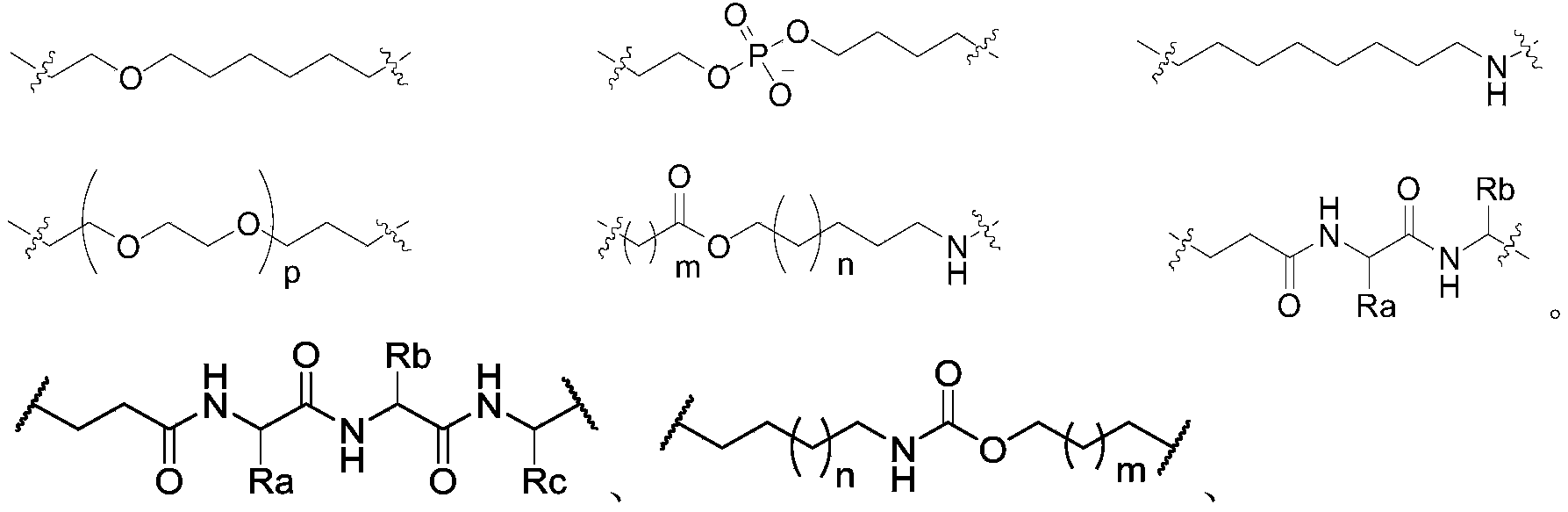

in the above-mentioned formulae, the first and second light-emitting elements,
ra, rb and Rc are each independently a group formed by the loss of one hydrogen atom of an amino acid selected from the group consisting of: glycine (Glycine), alanine (Alanine), valine (Valine), leucine (Leucine), isoleucine (Isoleucine), phenylalanine (Phenylalanine), tryptophan (Tryptophan), tyrosine (Tyrosine), aspartic acid (Aspartate), histidine (Histidine), asparagine (Asparagine), glutamic acid (Glutamate), lysine (Lysine), glutamine (Glutamine), methionine (Methionine), arginine (Arginine), serine (Serine), threonine (Threonine), cysteine (Cysteine), proline (procline).
In another preferred example, the linker is selected from the following group (a), (B) or (C):
(A) The group has-L a -structure of L-, wherein said L a Has a structure selected from the group consisting of:

and L has the structure shown below, wherein L and L are represented by the following formula a Is a linkage site of (2):

(B) Group:


(C) Group:

in another preferred embodiment, the compound is selected from the group consisting of:


in another preferred embodiment, the compound is selected from the group consisting of:


in a second aspect of the invention there is provided a pharmaceutical composition comprising a therapeutically effective amount of a compound of the first aspect of the invention or a stereoisomer or racemate thereof or a pharmaceutically acceptable salt thereof, and a pharmaceutically acceptable excipient.
In another preferred embodiment, the pharmaceutical composition is an enteric formulation.
In another preferred embodiment, the pharmaceutical composition is for use in the treatment of a disease selected from the group consisting of: inflammatory diseases of the gastrointestinal tract (e.g. ulcerative colitis, crohn's disease, colitis associated with immune checkpoint inhibitor therapy, collagenous colitis, lymphocytic colitis, colonagtis, acute/chronic gastritis, acute/chronic appendicitis), gastroenteritis caused by radiotherapy or chemotherapy, autoimmune diseases of the gastrointestinal tract (e.g. graft versus host disease, sprue, autoimmune bowel disease), peptic ulcers, irritable bowel syndrome, gastric cancer, esophageal cancer, colon cancer.
In a third aspect of the present invention there is provided the use of a precursor compound according to the first aspect of the present invention, or a pharmaceutically acceptable salt thereof, or a pharmaceutical composition according to the second aspect of the present invention, for the prevention and treatment of disorders of gastrointestinal function.
In another preferred embodiment, the disorder of gastrointestinal function is an inflammatory disorder of the gastrointestinal tract.
In another preferred embodiment, the inflammatory disease of the gastrointestinal tract is selected from the group consisting of: ulcerative colitis, crohn's disease, colitis associated with immune checkpoint inhibitor therapy.
It is understood that within the scope of the present invention, the above-described technical features of the present invention and technical features specifically described below (e.g., in the examples) may be combined with each other to constitute new or preferred technical solutions. And are limited to a space, and are not described in detail herein.
FIG. 1 shows the concentration of example 8 compound in various tissues as a function of time following oral administration of example 8 compound in mice;
FIG. 2 shows the concentration of berberrubine in various tissues as a function of time following oral administration of the compound of example 8 to mice;
FIG. 3 shows the concentration of tofacitinib in various tissues as a function of time following oral administration of the compound of example 8 to mice;
FIG. 4 shows the AUC of berrubine at various tissue levels following oral administration of the compounds of examples 1 and 8 to mice 0-24h ;
FIG. 5 shows the AUC of tofacitinib at various tissue levels following oral administration of the compounds of examples 1 and 8 in mice 0-24h ;
Figure 6 shows a graph of the change in disease index following administration of the compound of example 8 to mice in an oxazolone enema model.
The inventor has found through long-term and intensive research that JAK family inhibitors and berberine analogues are prepared into a co-drug form for administration, so that a better treatment effect can be obtained for treating gastrointestinal diseases compared with single drugs under the same dosage, and the drugs can be released directionally through the design of co-drug molecules. Based on the above findings, the inventors have completed the present invention.
Terminology
Unless defined otherwise, all technical and scientific terms used herein have the same meaning as commonly understood by one of ordinary skill in the art to which this invention belongs.
As used herein, the term "comprising" or "including" can be open, semi-closed, and closed. In other words, the term also includes "consisting essentially of …," or "consisting of ….
In this application, the term "alkyl" as part of a group or other group refers to a straight or branched hydrocarbon chain radical that is fully saturated, consisting of only carbon and hydrogen atoms, having, for example, from 1 to 12 (preferably from 1 to 8, more preferably from 1 to 6) carbon atoms, and being attached to the remainder of the molecule by a single bond, including, but not limited to, methyl, ethyl, n-propyl, isopropyl, n-butyl, isobutyl, sec-butyl, tert-butyl, n-pentyl, 2-methylbutyl, 2-dimethylpropyl, n-hexyl, heptyl, 2-methylhexyl, 3-methylhexyl, octyl, nonyl, decyl, and the like. For the purposes of the present invention, the term "C1-C6 alkyl" refers to an alkyl group containing from 1 to 6 carbon atoms.
In this application, the term "6-10 membered aromatic ring" means an aromatic ring having 6 to 10 ring atoms, which are carbon atoms, as part of a group or other group. The aromatic ring may be monocyclic or bicyclic. Such as benzene rings, naphthalene rings, and the like.
In this application, the term "5-10 membered heteroaromatic ring" as part of a group or other group means a heteroaromatic ring having 5-10 ring atoms, at least 1 (which may be 1, 2 or 3) of which are heteroatoms selected from nitrogen, oxygen and sulfur. The heteroaromatic ring may be monocyclic or bicyclic. For example, a pyrimidopyrazole ring, a pyrazinoimidazole ring, a pyridopyrazole ring, a pyridoimidazolo ring, a pyridopyrimidine ring, a pyridopyridine ring.
In the present application, the term "heterocyclyl" as part of a group or other group means a stable 3-to 20-membered non-aromatic cyclic group consisting of 3 to 14 carbon atoms and 1 to 6 heteroatoms selected from nitrogen, phosphorus, oxygen and sulfur. Unless specifically indicated otherwise in the present specification, a heterocyclyl group may be a monocyclic, bicyclic, tricyclic or more cyclic ring system, which may include fused, bridged or spiro ring systems; the nitrogen, carbon or sulfur atoms in the heterocyclyl may optionally be oxidized; the nitrogen atom may optionally be quaternized; and the heterocyclyl may be partially or fully saturated. The heterocyclic group may be attached to the remainder of the molecule via a carbon atom or a heteroatom and by a single bond. In heterocyclyl groups containing fused rings, one or more of the rings may be aryl or heteroaryl as defined below, provided that the point of attachment to the remainder of the molecule is a non-aromatic ring atom. For the purposes of the present invention, heterocyclyl groups are preferably stable 4-to 11-membered non-aromatic monocyclic rings containing 1 to 3 heteroatoms selected from nitrogen, oxygen and sulfur.
Co-drug (co-drug)
As used herein, "co-drug," "interactive drug," or "drug-loaded" are used interchangeably to refer to a drug molecule that can be metabolized in vivo to form two drug molecules with different pharmacological effects. In this context, a typical co-drug is a compound of formula I.
The co-agent may be metabolized in vivo to form a plurality of different therapeutic agents, one preferred first therapeutic agent in the present invention being a JAK family inhibitor and the second therapeutic agent being berberine or an analogue thereof.
First drug molecule
As used herein, "first therapeutic agent," "first drug molecule" may be used interchangeably to refer to the first drug molecule used in the co-drug of the present invention. After losing any active functional group on the group, the first drug molecule can form a first drug group and be connected with the connecting site of the co-drug molecule.
A preferred class of first drug molecules are JAK family inhibitors, which can be used clinically in the treatment of intestinal diseases, such as inflammatory diseases of the intestinal tract. The JAK family inhibitor may be a JAK inhibitor known in the art or a compound that has not been validated for JAK inhibitory activity.
Exemplary JAK inhibitors form a first drug group selected from the group consisting of:


second drug molecule
As used herein, "second therapeutic agent," "second drug molecule" may be used interchangeably to refer to a second drug molecule for use in the co-drug of the present invention. The second drug molecule can form a second drug group and be linked to the linkage site of the co-drug molecule after any hydrogen atom on the group is removed.
In the present invention, berberine and analogues thereof may be used as a second therapeutic agent for co-drugs, preferably a second drug molecule as shown in formula II, III or IV below:

compounds of the invention
The compound is shown in the formula I or a stereoisomer or a racemate or a pharmaceutically acceptable salt thereof.
The compounds of the present invention may contain one or more chiral carbon atoms and thus may give rise to enantiomers, diastereomers and other stereoisomeric forms. Each chiral carbon atom may be defined as (R) -or (S) -, based on stereochemistry. The present invention is intended to include all possible isomers, as well as racemates and optically pure forms thereof. The compounds of the invention may be prepared by selecting racemates, diastereomers or enantiomers as starting materials or intermediates. Optically active isomers may be prepared using chiral synthons or chiral reagents, or resolved using conventional techniques, such as crystallization and chiral chromatography.
Conventional techniques for preparing/separating individual isomers include chiral synthesis from suitable optically pure precursors, or resolution of racemates (or racemates of salts or derivatives) using, for example, chiral high performance liquid chromatography, see, for example, gerald gabiz and Martin g.schmid (eds.), chiral Separations, methods and Protocols, methods in Molecular Biology, vol.243,2004; m.stalcup, chiral Separations, annu.rev.animal.chem.3:341-63, 2010; fumigs et al (EDs.), VOGEL' S ENCYCLOPEDIA OF PRACTICAL ORGANIC CHEMISTRY.sup.TH ED, longman Scientific and Technical Ltd., essex,1991,809-816; heller, acc.chem.Res.1990,23,128.
The term "pharmaceutically acceptable salts" includes pharmaceutically acceptable acid addition salts and pharmaceutically acceptable base addition salts.
By "pharmaceutically acceptable acid addition salt" is meant a salt with an inorganic or organic acid that retains the biological effectiveness of the free base without other side effects. Inorganic acid salts include, but are not limited to, hydrochloride, hydrobromide, sulfate, nitrate, phosphate, and the like; organic acid salts include, but are not limited to, formate, acetate, 2-dichloroacetate, trifluoroacetate, propionate, hexanoate, octanoate, decanoate, undecylenate, glycolate, gluconate, lactate, sebacate, adipate, glutarate, malonate, oxalate, maleate, succinate, fumarate, tartrate, citrate, palmitate, stearate, oleate, cinnamate, laurate, malate, glutamate, pyroglutamate, aspartate, benzoate, methanesulfonate, benzenesulfonate, p-toluenesulfonate, alginate, ascorbate, salicylate, 4-aminosalicylate, naphthalenedisulfonate, and the like. These salts can be prepared by methods known in the art.
By "pharmaceutically acceptable base addition salt" is meant a salt formed with an inorganic or organic base that is capable of maintaining the bioavailability of the free acid without other side effects. Salts derived from inorganic bases include, but are not limited to, sodium, potassium, lithium, ammonium, calcium, magnesium, iron, zinc, copper, manganese, aluminum, and the like. Preferred inorganic salts are ammonium, sodium, potassium, calcium and magnesium salts. Salts derived from organic bases include, but are not limited to, the following: primary, secondary and tertiary amines, substituted amines including natural substituted amines, cyclic amines and basic ion exchange resins such as ammonia, isopropylamine, trimethylamine, diethylamine, triethylamine, tripropylamine, ethanolamine, diethanolamine, triethanolamine, dimethylethanolamine, 2-dimethylaminoethanol, 2-diethylaminoethanol, dicyclohexylamine, lysine, arginine, histidine, caffeine, procaine, choline, betaine, ethylenediamine, glucosamine, methylglucamine, theobromine, purine, piperazine, piperidine, N-ethylpiperidine, polyamine resins and the like. Preferred organic bases include isopropylamine, diethylamine, ethanolamine, trimethylamine, dicyclohexylamine, choline, and caffeine. These salts can be prepared by methods known in the art.
Preparation method
The following reaction schemes exemplify methods for preparing compounds of formula I or stereoisomers or racemates thereof, or pharmaceutically acceptable salts thereof, wherein the various groups are as described above. It is understood that in the following schemes, combinations of substituents and/or variables in the formulas are permissible only if such combinations result in stable compounds. It will also be appreciated that other formulae may be prepared by those skilled in the art of organic chemistry by the methods disclosed herein (by applying appropriately substituted starting materials and modifying the synthesis parameters as desired using methods well known to those skilled in the art) or by known methods.
In various aspects and embodiments, the invention relates to a glucuronide co-drug of tofacitinib, or a pharmaceutically acceptable salt thereof; pharmaceutical compositions containing such compounds; methods of using such compounds for treating gastrointestinal inflammatory diseases; and processes and intermediates for preparing such compounds.
The compounds described herein may contain one or more chiral centers. In such cases, depiction or naming of a particular stereoisomer means that the indicated stereocenter has the indicated stereochemistry, wherein it is understood that, unless otherwise indicated, minor amounts of other stereoisomers may also be present, provided that the utility of the depicted or named compound is not eliminated by the presence of the other stereoisomer.
In addition, as used herein, unless otherwise indicated, "compounds of the invention" and "compounds of formula I" (or similar terms) are intended to include pharmaceutically acceptable salts.
Application of
Since the co-drug compound of the present invention has excellent intestinal directional release effect, the compound of the present invention and various crystalline forms thereof, pharmaceutically acceptable inorganic or organic salts, hydrates or solvates thereof, and the pharmaceutical composition containing the compound of the present invention as a main active ingredient can be used for preventing and/or treating intestinal functional diseases, preferably inflammatory diseases of the gastrointestinal tract.
In this application, the term "pharmaceutical composition" refers to a formulation of a compound of the present invention with a medium commonly accepted in the art for delivery of biologically active compounds to a mammal (e.g., a human). The medium includes a pharmaceutically acceptable carrier. The purpose of the pharmaceutical composition is to promote the administration of organisms, facilitate the absorption of active ingredients and further exert biological activity.
In this application, the term "pharmaceutically acceptable" refers to a substance (e.g., carrier or diluent) that does not affect the biological activity or properties of the compounds of the present invention, and is relatively non-toxic, i.e., the substance can be administered to an individual without causing an adverse biological reaction or interacting in an adverse manner with any of the components contained in the composition.
In this application, the term "pharmaceutically acceptable excipient" includes, but is not limited to, any adjuvant, carrier, excipient, glidant, sweetener, diluent, preservative, dye/colorant, flavoring agent, surfactant, wetting agent, dispersing agent, suspending agent, stabilizer, isotonizing agent, solvent or emulsifier that is approved by the relevant government regulatory agency as acceptable for use in humans or livestock.
In this application, the term "tumor" includes, but is not limited to, glioma, sarcoma, melanoma, joint chondrioma, cholangioma, leukemia, gastrointestinal stromal tumor, histiocytic lymphoma, non-small cell lung cancer, pancreatic cancer, lung squamous carcinoma, lung adenocarcinoma, breast cancer, prostate cancer, liver cancer, skin cancer, epithelial cell cancer, cervical cancer, ovarian cancer, intestinal cancer, nasopharyngeal cancer, brain cancer, bone cancer, esophageal cancer, melanoma, kidney cancer, oral cancer, and the like.
In this application, the terms "prevent", "preventing" and "preventing" include the possibility of reducing the occurrence or exacerbation of a disease or condition in a patient.
In this application, the term "treatment" and other similar synonyms include the following meanings:
(i) Preventing the occurrence of a disease or disorder in a mammal, particularly when such mammal is susceptible to the disease or disorder, but has not been diagnosed as having the disease or disorder;
(ii) Inhibiting the disease or disorder, i.e., inhibiting its progression;
(iii) Alleviating a disease or condition, i.e., causing the state of the disease or condition to subside; or alternatively
(iv) Alleviating symptoms caused by the disease or condition.
In this application, the term "effective amount", "therapeutically effective amount" or "pharmaceutically effective amount" refers to an amount of at least one agent or compound that is sufficient to alleviate one or more symptoms of the disease or disorder being treated to some extent after administration. The result may be a reduction and/or alleviation of signs, symptoms, or causes of a disease, or any other desired alteration of a biological system. For example, an "effective amount" for treatment is the amount of a composition comprising a compound disclosed herein that is required to provide clinically significant relief from a disorder. Effective amounts suitable in any individual case can be determined using techniques such as a dose escalation test.
In this application, the terms "administering," "administering," and the like refer to a method capable of delivering a compound or composition to a desired site for biological action. These methods include, but are not limited to, oral routes, duodenal routes, parenteral injection (including intravenous, subcutaneous, intraperitoneal, intramuscular, intraarterial injection or infusion), topical administration, and rectal administration. Application techniques useful in the compounds and methods described herein are well known to those skilled in the art, for example, at Goodman and Gilman, the Pharmacological Basis of Therapeutics, current ed.; pergamon; and Remington's, pharmaceutical Sciences (current edition), mack Publishing co., easton, pa. In preferred embodiments, the compounds and compositions discussed herein are administered orally.
In the present application, the terms "pharmaceutical combination", "co-administration", "administration of other treatments", "administration of other therapeutic agents" and the like refer to a pharmaceutical treatment obtained by mixing or combining more than one active ingredient, which includes both fixed and non-fixed combinations of active ingredients. The term "fixed combination" refers to the simultaneous administration of at least one compound described herein and at least one synergistic agent to a patient in the form of a single entity or single dosage form. The term "ambulatory combination" refers to the simultaneous administration, co-administration, or sequential administration of at least one compound described herein and at least one synergistic formulation as separate entities to a patient at variable intervals. These also apply to cocktail therapies, for example, administration of three or more active ingredients.
Compared with the prior art, the invention has the main advantages that:
1. the co-drug compound of the present invention is not itself absorbed effectively and is capable of targeted release of both pharmacodynamic components in the intestinal tract, thus resulting in enrichment of the pharmacodynamic components at the treatment site of the gastrointestinal tract and reduced systemic drug exposure.
2. The compounds of the present invention are useful in the intestinal tract to release JAK inhibitors (e.g., tofacitinib) and berberine or analogues thereof in the synergistic treatment of autoimmune inflammatory diseases of the gastrointestinal tract.
The invention will be further illustrated with reference to specific examples. It is to be understood that these examples are illustrative of the present invention and are not intended to limit the scope of the present invention. The experimental methods, in which specific conditions are not noted in the following examples, are generally conducted under conventional conditions or under conditions recommended by the manufacturer. Percentages and parts are by weight unless otherwise indicated.
In various embodiments:
analytical method I
LCMS instrument: waters Acquity UPLC-MS, UV detector: acquiry UPLC
Chromatographic column: acquity UPLC HSS T3 1.8uM, column temperature 40 DEG C
Mobile phase: a: H2O (0.1% tfa), B: acetonitrile, gradient elution
Intermediate A (10-methoxy-9- ((methyl group), 2- (methyl group (((10-carbonyl-10- ((5- (4,7,10,10-tetramethyl-3, 8-dicarbonyl))
1-2, 9-dioxa-4, 7-diazaundec) -2- (((2S, 3R,4S,5S, 6S) -3,4, 5-triacetoxy-6- (methyl ester radical)<
Methoxycarbonyl group>) tetrahydro-2H-pyran-2-yl) oxo) phenyl) amino) decyl) oxo) carbonyl) amino) ethyl) carbamoyl) oxy
Substituted) -5, 6-dihydro- [1,3]Dioxazolo [4,5-g]Isoquinolino [3,2-a ]]Isoquinoline-7-positive ions) is prepared according to the formula
The steps shown are performed:

intermediate A-1 (2S, 3R,4S,5S, 6S) -2- (4-formyl-2-nitrophenoxy) -6- (methyl ester radical <Methoxycarbonyl group>) Fourth, fourth
Hydrogen-2H-pyran-3, 4, 5-triyl triacetate

The reaction (2 r,3r,4s,5s,6 s) -2-bromo-6- (carbomethoxy) tetrahydro-2H-pyran-3, 4, 5-triyl triacetate (300 g, 755 mmol), the reaction 4-hydroxy-3-nitrobenzaldehyde (214.6 g, 1284 mmol) and silver oxide (788 g, 3400 mmol) were added to 4 l acetonitrile under light protection and stirred for 5 hours at 25-30 ℃. LCMS monitored complete conversion of starting material. The reaction solution was filtered, and the filtrate was concentrated under reduced pressure to obtain a crude product. The crude product was diluted with ethyl acetate, filtered, and the filtrate was washed with saturated sodium bicarbonate solution and saturated brine, respectively, and the organic phase was separated and dried over anhydrous sodium sulfate. The organic phase was concentrated under reduced pressure to give the title compound (295 g, 81%) as a yellow solid.
MS(ESI):m/z=506.1[M+Na] + .
Intermediate A-2 (2S, 3R,4S,5S, 6S) -2- (4- (hydroxymethyl) -2-nitrophenoxy) -6- (methyl ester radical<Methoxycarbonyl group>)
tetrahydro-2H-pyran-3, 4, 5-triyl triacetate

Intermediate a-1 (46.5 g, 96 mmol) and 19 g of silica gel were added to 450 ml of dichloromethane and 90 ml of isopropanol. The reaction was cooled to 0℃and 5.5 g of sodium borohydride were slowly added. The reaction solution was stirred at 0℃for 2 hours. LCMS monitored complete conversion of starting material. The reaction solution was filtered, a saturated ammonium chloride solution (200 ml) was added to the filtrate, and after separation, the organic phase was washed 2 times with saturated brine (300 ml), dried over anhydrous sodium sulfate, and concentrated under reduced pressure to give a crude product. The crude product was slurried with methyl tert-butyl ether to give the title compound (340 g, 72.9%) as a white solid.
MS(ESI):m/z=508.1[M+Na] + .
Intermediate A-3 (2S, 3S,4S,5R, 6S) -2- (methyl ester group<Methoxycarbonyl group>) -6- (2-nitro-4- (4,7,10,10-tetramethyl-)
3, 8-dicarbonyl-2, 9-dioxa-4, 7-diazaundecyl) phenoxy) tetrahydro-2H-pyran-3, 4, 5-trisyl triacetate

Intermediate a-2 (150 g, 310 mmol) and triethylamine (62.4 g, 620 mmol) were added to 1.5 l dichloromethane. 4-Nitrophenyl chloride acid ester (71.6 g, 350 mmol) was dissolved in 300 ml of dichloromethane and added dropwise to the reaction solution under nitrogen protection at 0deg.C. After completion of the dropwise addition, the reaction solution was stirred at 25℃for 6 hours. LCMS monitored complete conversion of starting material. Tert-butylmethyl (2- (methylamino) ethyl) carbamate (75.8 g, 400 mmol) was added dropwise to the reaction solution of the previous step at 0 ℃. After completion of the dropwise addition, the reaction solution was stirred at 25℃for 16 hours. LCMS monitored complete conversion of starting material. The reaction solution was cooled to 0℃and 1 liter of saturated sodium bicarbonate solution was added thereto, and the organic phase was collected by separation. The organic phase was washed with saturated sodium bicarbonate solution (800 ml x 8), saturated brine (800 ml), dried over anhydrous sodium sulfate and filtered. The organic phase was concentrated under reduced pressure to give the title compound (200 g, 92%).
MS(ESI):m/z=722.2[M+Na] + .
Intermediate A-4 (2S, 3R,4S,5S, 6S) -2- (2-amino-4- (4,7,10,10-tetramethyl-3, 8-dicarbonyl-2, 9-dioxa-
4, 7-diazaUndecyl) phenoxy) -6- (methyl ester group<Methoxycarbonyl group>) tetrahydro-2H-pyran-3, 4, 5-triyl triacetate

Intermediate a-3 (200 g, 285.8 mmol) was dissolved in 2 l methanol and 550 ml water and iron powder (80 g, 1429.1 mmol) and ammonium chloride (153 g, 2858.1 mmol) were slowly added. The reaction solution was stirred at 70℃under nitrogen for 5 hours. LCMS monitored complete conversion of starting material. The reaction solution was filtered, and the cake was washed with 2 liters of ethyl acetate. The organic phase was concentrated under reduced pressure to give a crude product. To the crude product was added 2 liters of ethyl acetate and 1.5 liters of water, and the mixture was separated. The organic phase was washed 3 times with saturated brine (500 ml each time), and after separation, the organic phase was dried over anhydrous sodium sulfate and concentrated under reduced pressure to give a crude product. The crude product was purified by column chromatography (dichloromethane: methanol=40:1) to give the title compound (100 g, 52%) as a yellow oil.
MS(ESI):m/z=670.2[M+H] + .
1 HNMR(400MHz,DMSO-d 6 )δ6.83(d,J=8.2Hz,1H),6.66(s,1H),6.50(d,J=8.2Hz,1H),5.52–5.43(m,2H),5.12–5.03(m,2H),4.86(s,2H),4.68(d,J=10.0Hz,3H),3.64(s,3H),3.31–3.25(m,3H),2.79(dd,J=38.7,13.2Hz,7H),2.02(d,J=12.9Hz,9H),1.36(s,9H).
Intermediate A-5 (2S, 3R,4S,5S, 6S) -2- (2- (10-hydroxydecanoylamino) -4- (4,7,10,10-tetramethyl-3, 8-dicarbonyl)
Phenyl-2, 9-dioxa-4, 7-diazaundecyl) phenoxy) -6- (methyl ester group<Methoxycarbonyl group>) tetrahydro-2H-pyran-3, 4,5-
Tri-base triacetate

Intermediate a-4 (100 g, 150 mmol) was dissolved in N, N-dimethylformamide (600 ml), to which triethylamine (51.8 ml, 0.37 mmol) and the reactant 10-hydroxydecanoic acid (39.3 g, 210 mmol) were added, followed by slow addition of O- (7-azobenzotriazol) -N, N-tetramethylurea hexafluorophosphate (79.5 g, 210 mmol). After the addition was completed, the reaction solution was stirred at 50℃for 16 hours under nitrogen protection. The reaction was stopped and the reaction was diluted with 2 liters of ethyl acetate. The diluted reaction solution was washed with water (1.5 l×8) and brine (1.5 l×2), dried over anhydrous sodium sulfate, and concentrated under reduced pressure to give a crude product. The crude product was purified by column chromatography (dichloromethane: methanol=20:1) to give the title compound (47.0 g, 37%).
MS(ESI):m/z=862.2[M+Na] + .
Intermediate A-6 (2S, 3S,4S,5R, 6S) -2- (methyl ester group<Methoxycarbonyl group>) -6- (2- (10- ((methyl (2- (methylamino))
Ethyl) carbamoyl) oxo) decanoylamino) -4- (4,7,10,10-tetramethyl-3, 8-dicarbonyl-2, 9-dioxa-4, 7-diazadeca-n-e
Mono-alkyl) phenoxy) tetrahydro-2H-pyran-3, 4, 5-tri-yl triacetate

Intermediate a-5 (46.0 g, 57.7 mmol) and triethylamine (15.2 ml, 109.8 mmol) were dissolved in 400 ml dichloromethane and a solution of 4-nitrophenyl chloride (14.3 g, 71.2 mmol) in dichloromethane (60 ml) was added dropwise to the reaction solution at 0 ℃ under nitrogen. After the completion of the dropwise addition, the reaction solution was stirred at 25-30℃for 16 hours. LCMS monitored completion of conversion of starting material. Triethylamine (22.8 ml, 164.4 mmol) was added to the reaction solution of the previous step. N1, N2-dimethylethane-1, 2-diamine (14.5 g, 164.4 mmol) was then added dropwise to the reaction solution of the previous step at 0℃under nitrogen protection. After the completion of the dropwise addition, the mixture was stirred at 25 to 30℃for 4 hours. LCMS monitored reaction completion and reaction was diluted with dichloromethane (800 ml). The diluted organic phase was washed with saturated sodium bicarbonate solution (600 ml. Times.3) and brine (700 ml), dried over anhydrous sodium sulfate, and concentrated under reduced pressure to give the crude product. The crude product was purified by normal phase column chromatography (dichloromethane: methanol=10:1) to give the title compound (36.0 g, 68%) as a yellow oil.
MS(ESI):m/z=954.5[M+H] + .
Intermediate A-7 (2S, 3R,4S,5S, 6S) -2- (2- (10- (((2- ((chlorocarbonyl) (methyl) amino) ethyl) (methyl) aminomethyl)
Acyl) oxo) decanoylamino) -4- (4,7,10,10-tetramethyl-3, 8-dicarbonyl-2, 9-dioxa-4, 7-diazaundecyl) phenoxy
Radical) -6- (methyl ester radical<Methoxycarbonyl group>) tetrahydro-2H-pyran-3, 4, 5-triyl triacetate

Triphosgene (11.2 g, 37.7 mmol) was dissolved in a three-necked flask with 100 ml of dichloromethane, intermediate a-6 (36.0 g, 37.7 mmol) was dissolved in 300 ml of dichloromethane and added dropwise to the triphosgene dichloromethane solution at 0 ℃ under nitrogen protection. After the completion of the dropwise addition, the reaction solution was stirred at room temperature for 10 minutes, and then triethylamine (15.7 ml, 113.2 mmol) was added dropwise to the reaction solution at 0℃under nitrogen protection. After the addition was completed, the reaction solution was stirred at 25 to 30℃for 3 hours. LCMS monitored complete conversion of starting material. The reaction solution was cooled to 0℃and saturated sodium bicarbonate solution (300 ml) was added thereto, followed by separation. The organic phase was washed with saturated sodium bicarbonate solution (300 ml x 2) and saturated brine (200 ml). Drying over anhydrous sodium sulfate and concentrating under reduced pressure gave the title compound (46.0 g of crude product) which was used in the next reaction without further purification.
MS(ESI):m/z=1038.3[M+Na] + .
Intermediate A-8:10-methoxy-5, 6-dihydro- [1,3]Dioxazolo [4,5-g]Isoquinolino [3,2-a ]]Isoquinoline-7-forward separation
Sub-9-alkyds

Berberine hydrochloride (35.0 g, 94.3 mmol) was placed in a round bottom flask, heated to 180 ℃ under oil pump vacuum, cooled to room temperature after 4 hours. The crude product was slurried with ethanol, filtered, and dried to give the title compound (23.0 g, 73%) as a red solid.
MS(ESI):m/z=322.1[M] + .
Intermediate a: 10-methoxy-9- ((methyl group, 2- (methyl group (((10-carbonyl-10- ((5- (4,7,10,10-tetramethyl-3, 8-dicarbonyl))
1-2, 9-dioxa-4, 7-diazaundec) -2- (((2S, 3R,4S,5S, 6S) -3,4, 5-triacetoxy-6- (methyl ester radical)<
Methoxycarbonyl group>) tetrahydro-2H-pyran-2-yl) oxo) phenyl) amino) decyl) oxo) carbonyl) amino) ethyl) carbamoyl) oxy
Substituted) -5, 6-dihydro- [1,3]Dioxazolo [4,5-g]Isoquinolino [3,2-a ]]Isoquinoline-7-ium ions

Intermediate a-8 (9.6 g, 30.0 mmol) was dissolved in 100 ml pyridine in a three-necked flask and intermediate a-7 (46.0 g, 45.0 mmol) was dissolved in 300 ml pyridine and added dropwise to the three-necked flask at 0 ℃ under nitrogen protection. The reaction solution was stirred at 25℃for 16 hours. LCMS monitored completion of conversion of starting material. The reaction solution was concentrated under reduced pressure, and the crude product was purified by column chromatography (dichloromethane: methanol=10:1) to give a crude product as a black solid. The crude product was purified by normal phase column chromatography (dichloromethane: methanol=3:2) to give the title compound (11.0 g, 22%).
MS(ESI):m/z=601.6(M-100+H/2) + .
1 HNMR(400MHz,CDCl 3 )δ11.24–10.55(m,1H),8.45(s,2H),7.83(dd,J=35.6,27.7Hz,3H),7.42(d,J=20.4Hz,1H),7.21–6.74(m,3H),6.27(d,J=4.1Hz,0H),6.08(s,2H),5.78(s,0H),5.57–5.23(m,6H),5.06(d,J=11.4Hz,2H),4.23–3.95(m,5H),3.78(d,J=18.4Hz,3H),3.54–2.73(m,20H),2.34(t,J=23.9Hz,2H),2.09(dt,J=9.8,4.0Hz,8H),1.88–0.86(m,27H).
Intermediate B5- ((E) - (4- (((2- (4- (((3R, 4R) -1- (2-cyanoacetyl) -4-methylpiperidin-3-yl) (methyl) ammonia))
Radical) -N-methyl-7H-pyrrolo [2,3-d]Pyrimidine-7-carbon weed amido<Oxalylamino groups>) Ethyl) (methyl) carbamoyl
Oxo) methyl) phenyl) diazenyl) -2-hydroxybenzoic acid

Intermediate B-1:2-hydroxy-5- ((4- (hydroxymethyl) phenyl) diazenyl) benzoic acid

A suspension of 4-aminobenzyl alcohol (2.0 g, 16.2 mmol) in water at 0deg.C (30 ml) was treated with 3.4 ml of concentrated hydrochloric acid followed by slow addition of ice-cold NaNO 2 (1.2 g, 17.0 mmol, 8 ml) in water. After stirring at 0 ℃ for 1 hour, the above reaction solution was added to an aqueous solution (25 ml) of sodium 2-hydroxybenzoate (2.72 g, 0.35 mmol) and potassium carbonate (3.2 g, 22.7 mmol). The pH of the reaction solution was maintained at 13-14 by dropwise addition of an aqueous sodium hydroxide solution throughout the entire dropwise addition process. The mixture was stirred at room temperature for 1 hour, the pH was adjusted to 4-5 with hydrochloric acid (2N), the product precipitated, the precipitate was filtered and washed with water (50 ml) and dried in vacuo to give the title compound (4.0 g, 90%) as a red solid.
MS(ESI):m/z=272.8[M+H] + .
Intermediate B2-hydroxy-5- ((4- (4,7,10,10-tetramethyl-3, 8-dioxo-2, 9-dioxo-4, 7-diazacyclo) phenyl) bis-
Nitrogen-based) benzoic acid

Intermediate B-1 (200 mg, 0.73 mmol), diisopropylethylamine (114 mg, 0.88 mmol) was dissolved in 5 ml dichloromethane and bis (4-nitrophenyl) carbonate (268 mg, 0.88 mmol) was added. The reaction solution was stirred at room temperature for 48 hours. Tert-butylmethyl (2- (methylamino) ethyl) carbamate (165 mg, 0.88 mmol) and diisopropylethylamine (114 mg, 0.88 mmol) were added dropwise to the reaction solution of the previous step at 0 ℃. After completion of the dropwise addition, the reaction solution was stirred at 25℃for 2 hours. LCMS monitored complete conversion of starting material. The reaction solution was concentrated under reduced pressure, and reversed-phase column chromatography gave the target compound (195 mg, 55%) as a red solid.
MS(ESI):m/z=508.9[M+Na] + .
1 H NMR(400MHz,CDCl 3 )δ8.29(d,J=2.4Hz,1H),8.04(dd,J 1 =2.4Hz,J 2 =8.8Hz,1H),7.82(d,J=8.4Hz,2H),7.50(d,J=8.0Hz,2H),7.11(d,J=9.2Hz,1H),5.10(s,2H),3.35-3.32(m,4H),2.88-2.82(m,3H),2.73-2.68(m,3H),1.32(s,9H).
Intermediate C9- (((2- (13-carboxytridecanoylamino) ethyl) (methyl) carbamoyl) oxo) -10-methoxy-5, 6-
Dihydro- [1,3]Dioxazolo [4,5-g]Isoquinolino [3,2-a ]]Isoquinoline-7-ium ions

Intermediate C-1:9- (((2- ((tert-butoxycarbonyl) amino) ethyl) (methyl) carbamoyl) oxo) -10-methoxy-
5, 6-dihydro- [1,3 ]]Dioxazolo [4,5-g]Isoquinolino [3,2-a ]]Isoquinoline-7-ium ions

Tert-butyl (2- (methylamino) ethyl) carbamate (15.0 g, 86.0 mmol) was dissolved in dichloromethane (200 ml) and triphosgene (25.6 g, 86.0 mmol) followed by pyridine (20.0 g, 258 mmol) was slowly added under ice-bath. Stirring was carried out at room temperature (15 ℃ C.) for 1 hour. TLC detects complete reaction of starting material. The reaction was washed with water (200 ml) and the aqueous phase extracted with dichloromethane (100 ml x 2). The organic phases were combined, washed with saturated brine, dried over anhydrous sodium sulfate, filtered and concentrated under reduced pressure to give the intermediate. The intermediate was dissolved in pyridine (20 ml) and added to intermediate a-8 (27.7 g, 86.0 mmol) dissolved in pyridine (30 ml) under ice-bath, and the reaction was warmed to room temperature (15 ℃) and stirred for 16 hours. LCMS detected complete reaction of starting material. The reaction solution was concentrated under reduced pressure and purified by normal phase column chromatography (dichloromethane: methanol=10:1) to give the product as a yellow solid (6.5 g, 14%).
MS(ESI):m/z=522.1[M] + .
Intermediate C9- (((2-aminoethyl) (methyl) carbamoyl) oxo) -10-methoxy-5, 6-dihydro- [1,3]Dioxazolo (O) ring
[4,5-g]Isoquinolino [3,2-a ]]Isoquinoline-7-positive ion hydrochloride

Intermediate C-1 (4.5 g, 8.6 mmol) was mixed in methanolic hydrochloric acid (2 mol/l, 100 ml) and stirred overnight at room temperature (15 ℃). LCMS detects completion of the reaction. Concentration under reduced pressure gave the title compound (3.6 g, 100%) as a brown solid.
MS(ESI):m/z=422.1[M] + .
Intermediate D:9- ((4-hydroxy-benzyl) oxo) -10-methoxy-5, 6-dihydro- [1,3]Dioxazolo [4,5-g]Isoquinoline (I)
And [3,2-a ]]Isoquinoline-7-ium ions

To a solution of intermediate a-8 (300 mg, 0.93 mmol) in acetonitrile (3 ml) was added 4- (chloromethyl) phenylacetate (257 mg, 1.4 mmol) and potassium carbonate (257 mg, 1.86 mmol). The reaction was heated to 80℃and allowed to react for 16 hours. The reaction was diluted with dichloromethane (50 ml), filtered, and the filter cake was washed with water (50 ml) and purified by normal phase column chromatography (dichloromethane: methanol=10:1) to give the title compound (97 mg, 24%) as a dark red solid.
MS(ESI):m/z=428.1[M] + .
Preparation of co-drug compounds
EXAMPLE 1 9- (((2- (((10- ((2- (((2S, 3R,4S,5S, 6S) -6-carboxy-3, 4, 5-trihydroxy tetrahydro-2H-pyran-2-)
Group) oxo) -5- (((2- (4- (((3 s,4 s) -1- (2-cyanoacetyl) -4-methylpiperidin-3-yl) (methyl) amino) -N-methyl-7H-
Pyrrolo [2,3-d]Pyrimidine-7-carbon weed amido<Oxalylamino groups>) Ethyl) (methyl) carbamoyl) oxo) methyl) benzene
Radical) amino) -10-carbonyldecyl) oxo) carbonyl) (methyl) amino) ethyl) (methyl) carbamoyl) oxo) -10-methoxy-5, 6-
Dihydro- [1,3]Dioxazolo [4,5-g]Isoquinolino [3,2-a ]]Isoquinoline-7-ium ions

Examples 1 to 11: 4-Nitrophenyl 4- (((3R, 4R) -1- (2-cyanoacetyl) -4-methylpiperidin-3-yl) (methyl) ammonia
Radical) -7H-pyrrolo [2,3-d]Pyrimidine-7-carboxylic acid esters

Tofacitinib (8.9 g, 28.6 mmol) was dissolved in dichloromethane solution (140 ml) and aqueous solution of sodium hydroxide (3.4 g, 85.6 mmol) and tetrabutylammonium bromide (920 mg, 2.86 mmol) was added (48 ml). To a solution of p-nitrophenyl chloroformate (11.5 g, 57.1 mmol) in methylene chloride (48 ml) was added dropwise the above reaction solution. After completion of the dropwise addition, the reaction solution was stirred at room temperature for 4 hours. LCMS monitored complete conversion of starting material. 500 ml of methylene chloride was added for dilution, washed with saturated ammonium chloride (200 ml) and insoluble matter was filtered off with celite. The organic phase was separated from the filtrate, and then washed with 200 ml of saturated brine. The organic phase was dried over anhydrous sodium sulfate, filtered, and concentrated under reduced pressure. The crude product was slurried with dichloromethane and petroleum ether 5 times to give the title compound (16.3 g, 85%) as a yellow foamy solid.
MS(ESI):m/z=478.1[M+H] + .
Examples 1 to 10: 10-methoxy-9- ((methyl group, 2- (methyl (((10- ((5- (((methyl) 2- (methylamino) ethyl)) amino) ethyl) amino group
Formyl) oxo) methyl) -2- (((2S, 3R,4S,5S, 6S) -3,4, 5-triacetoxy-6- (methyl ester group)<Methoxycarbonyl group>) tetrahydro-2H-)
Pyran-2-yl) oxo) phenyl) amino) -10-carbonyl decyl) oxo) amino) ethyl) carbamoyl) oxo) -5, 6-dihydro
-[1,3]Dioxazolo [4,5-g]Isoquinolino [3,2-a ]]Isoquinoline-7-ium ions

To a solution of intermediate a (4.8 g, 3.7 mmol) in dichloromethane (40 ml) was added trifluoroacetic acid (10 ml) and stirred at room temperature for 1 hour. LCMS monitored reaction was complete. The reaction solution was concentrated under reduced pressure, dissolved in methylene chloride (30 ml), concentrated again under reduced pressure to remove trifluoroacetic acid as much as possible, and pumped out with an oil pump to give the title compound (4.43 g, 100%) as a yellow oil.
MS(ESI):m/z=601.4[M/2] + .
Examples 1-12:9- (((2- (((10- ((5- (((3S, 4S) -1- (2-cyanoacetyl) -4-methylpiperidine-3) s-tup)
Radical) (methyl) amino) -N-methyl-7H-pyrrolo [2,3-d]Pyrimidine-7-carbon weed amido<Oxalylamino groups>) Ethyl) (A)
Carbamoyl) oxo) methyl) -2- (((2S, 3R,4S,5S, 6S) -3,4, 5-triacetoxy-6- (methyl) radical<Methoxycarbonyl group>)
tetrahydro-2H-pyran-2-yl) oxo) phenyl) amino) -10-carbonyldecyl) oxo) carbonyl) (methyl) amino) ethyl) (methyl) ammonia
Carbamoyl) oxo) -10-methoxy-5, 6-dihydro- [1,3]Dioxazolo [4,5-g]Isoquinolino [3,2-a ]]Isoquinoline-7-ium ions

A solution of examples 1-10 (4.4 g, 3.7 mmol) in dichloromethane (100 ml) was cooled to 0deg.C, N-diisopropylethylamine (1.56 g, 12 mmol) was added, and examples 1-11 (1.76 g, 3.69 mmol) was added and stirred at room temperature for 1 hour. LCMS monitored reaction was complete. The reaction solution was diluted with 300 ml of methylene chloride, which was successively washed with water, saturated brine, and the washed organic phase was dried over anhydrous sodium sulfate and concentrated under reduced pressure. The crude product was isolated by normal phase column chromatography (eluting with 7% -9% methanol in dichloromethane) to give the title compound (2.83 g, 53%) as a yellow foamy solid.
MS(ESI):m/z=770.7[M/2] + .
EXAMPLE 1 9- (((2- (((10- ((2- (((2S, 3R,4S,5S, 6S) -6-carboxy-3, 4, 5-trihydroxy tetrahydro-2H-pyran-2-)
Group) oxo) -5- (((2- (4- (((3 s,4 s) -1- (2-cyanoacetyl) -4-methylpiperidin-3-yl) (methyl) amino) -N-methyl-7H-
Pyrrolo [2,3-d]Pyrimidine-7-carbon weed amido<Oxalylamino groups>) Ethyl) (methyl) carbamoyl) oxo) methyl) phenyl
Amino) -10-carbonyldecyl) oxo) carbonyl) (methyl) amino) ethyl) (methyl) carbamoyl) oxo) -10-methoxy-5, 6-di
Hydrogen- [1,3 ]]Dioxazolo [4,5-g]Isoquinolino [3,2-a ]]Isoquinoline-7-ium ions

A solution of examples 1-12 (163 mg, 0.105 mmol) in methanol (4 ml) was cooled to 0deg.C and aqueous potassium carbonate (1 mmol/ml, 1 ml) was added. Stirred at 0℃for 2 hours. LCMS monitored reaction was complete. The reaction solution was adjusted to pH 5 with acetic acid, and then concentrated under reduced pressure. The crude product was isolated by Prep-HPLC (acetonitrile/water gradient rinse) to give the title compound (35.7 mg, 24%) as a yellow solid.
MS(ESI):m/z=1399.5[M] + .
1 H NMR:(400MHz,CD 3 OD)δ10.06-9.59(m,1H),8.71-8.61(m,1H),8.15-7.98(m,4H),7.60-7.50(m,1H),7.26-7.17(m,1H),6.95-6.72(m,3H),6.72-6.66(m,1H),6.05(s,2H),5.05-4.90(m,4H),4.78-4.59(m,2H),4.21-4.08(m,2H),4.04(s,3H),3.96-3.35(m,18H),3.21-2.95(m,13H),2.29-1.84(m,3H),1.84-1.02(m,20H).
The following compounds were obtained by replacing the corresponding raw materials in a similar manner to example 1.

EXAMPLE 4A 9- ((5- ((E) - (4- (((2- (4- (((3S, 4S) -1- (2-cyanoacetyl) -4-methylpiperidin-3-yl)) (methyl
Group) amino) -N-methyl-7H-pyrrolo [2,3-d]Pyrimidine-7-carbon weed amido<Oxalylamino groups>) Ethyl) (methyl) amino group
Formyl) oxo) methyl) phenyl) diazenyl) -2-hydroxybenzoyl) oxo) -10-methoxy-5, 6-dihydro- [1,3]Dioxazolo (O) ring
[4,5-g]Isoquinolino [3,2-a ]]Isoquinoline-7-ium ions
EXAMPLE 4B 9- ((5- ((Z) - (4- (((2- (4- (((3S, 4S) -1- (2-cyanoacetyl) -4-methylpiperidin-3-yl)) methyl)
Amino) -N-methyl-7H-pyrrolo [2,3-d]Pyrimidine-7-carbon weed amido<Oxalylamino groups >) Ethyl) (methyl) amino methyl
Acyl) oxo) methyl) phenyl) diazenyl) -2-hydroxybenzoyl) oxo) -10-methoxy-5, 6-dihydro- [1,3]Dioxazolo (O) ring
[4,5-g]Isoquinolino [3,2-a ]]Isoquinoline-7-ium ions

Example 4-1 (E) -9- ((2-hydroxy-5- ((4- (4,7,10,10-tetramethyl-3, 8-dicarbonyl) -2, 9-dioxa-4, 7-diaza)
Heteroundecyl) phenyl) diazenyl) benzoyl) oxo) -10-methoxy-5, 6-dihydro- [1,3]Dioxazolo [4,5-g]Isoquinol
Pino [3,2-a ]]Isoquinoline-7-ium ions

Intermediate B (486 mg, 1.0 mmol), intermediate a-8 (322 mg, 1.0 mmol) and dicyclohexylcarbodiimide (247 mg, 1.2 mmol) were placed in a single vial and dichloromethane (10 ml) was added. After stirring at room temperature for 1 hour and LCMS monitoring the reaction, the reaction was filtered, concentrated under reduced pressure and the crude product was isolated by reverse phase column chromatography as a brown oil as the title compound (156 mg, 19.7%).
MS(ESI):m/z=790.1[M] + .
EXAMPLE 4A 9- ((5- ((E) - (4- (((2- (4- (((3S, 4S) -1- (2-cyanoacetyl) -4-methylpiperidin-3-yl)) methyl)
Amino) -N-methyl-7H-pyrrolo [2,3-d]Pyrimidine-7-carbon weed amido<Oxalylamino groups>) Ethyl) (methyl) amino methyl
Acyl) oxo) methyl) phenyl) diazenyl) -2-hydroxybenzoyl) oxo) -10-methoxy-5, 6-dihydro- [1,3 ]Dioxazolo (O) ring
[4,5-g]Isoquinolino [3,2-a ]]Isoquinoline-7-cation
EXAMPLE 4B 9- ((5- ((Z) - (4- (((2- (4- (((3S, 4S) -1- (2-cyanoacetyl) -4-methylpiperidin-3-yl)) methyl)
Amino) -N-methyl-7H-pyrrolo [2,3-d]Pyrimidine-7-carbon weed amido<Oxalylamino groups>) Ethyl) (methyl) amino methyl
Acyl) oxo) methyl) phenyl) diazenyl) -2-hydroxybenzoyl) oxo) -10-methoxy-5, 6-dihydro- [1,3]Dioxazolo (O) ring
[4,5-g]Isoquinolino [3,2-a ]]Isoquinoline-7-ium ions

To a solution of example 4-1 (156 mg, 0.19 mmol) in dichloromethane (2 ml) was added trifluoroacetic acid (0.4 ml) and stirred at room temperature for 20 minutes. LCMS monitored reaction was complete. The reaction mixture was concentrated under reduced pressure, and after pumping down with an oil pump, the solution was dissolved in methylene chloride (2 ml) and cooled to 0℃and N, N-diisopropylethylamine (101 mg, 0.78 mmol) was added to the mixture, and examples 1 to 11 (94 mg, 0.19 mmol) were added and the mixture was stirred at room temperature for 1 hour. LCMS monitored reaction was complete. The reaction was concentrated under reduced pressure and the crude product was isolated by Prep-HPLC (gradient rinse with acetonitrile/water (0.1% trifluoroacetic acid)) to provide the title compound 4A (6.0 mg, 3.0%) as a yellow solid; 4B (6.0 mg, 3.0%) as a yellow solid.
MS(ESI):m/z=1028.4[M] + .
Example 5:9- (((2- (5- ((E) - (4- (((2- (4- (((3R, 4R) -1- (2-cyanoacetyl) -4-methylpiperidin-3-yl)) (methyl)
Group) amino) -N-methyl-7H-pyrrolo [2,3-d]Pyrimidine-7-carbon weed amido<Oxalylamino groups>) Ethyl) (methyl) amino group
Formyl) oxo) methyl) phenyl) diazenyl) -2-hydroxybenzoamido) ethyl) (methyl) carbamoyl) oxo) -10-methoxy
Base-5, 6-dihydro- [1,3]Dioxazolo [4,5-g]Isoquinolino [3,2-a ]]Isoquinoline-7-ium ions

Example 5-1 (E) -9- (((2- (2-hydroxy-5- ((4- (4,7,10,10-tetramethyl-3, 8-dicarbonyl) -2, 9-dioxa-4, 7-dione)
Azaundecyl) phenyl) diazenyl) benzoylamino) ethyl) (methyl) carbamoyl) oxo) -10-methoxy-5, 6-di-n-methyl-2-carboxylate
Hydrogen- [1,3 ]]Dioxazolo [4,5-g]Isoquinolino [3,2-a ]]Isoquinoline-7-ium ions

Intermediate C (700 mg, 1.65 mmol), intermediate B (782 mg, 1.65 mmol) and 1- (3-dimethylaminopropyl) -3-ethylcarbodiimide hydrochloride (477 mg, 2.48 mmol) were placed in a single vial, N-dimethylformamide (5 ml) was added, and 4-dimethylaminopyridine (50 mg, 0.41 mmol) was added. Stirred at room temperature for 1 hour, diisopropylethylamine (427 mg, 3.31 mmol) was added. The reaction solution was stirred at room temperature for 5 hours. After completion of LCMS monitoring reaction, quench by addition of 1N hydrochloric acid, the reaction was directly injected and the title compound (470 mg, 32%) was isolated as a yellow solid by reverse phase preparation.
MS(ESI):m/z=890.3[M] + .
Example 5-2((E) -9- (((2- (2-hydroxy-5- ((methyl (2- (methylamino) ethyl) carbamoyl) oxy) methyl)
Phenyl) diazenyl) benzoylamino) ethyl) (methyl) carbamoyl) oxo) -10-methoxy-5, 6-dihydro- [1,3]Two (II)
Oxazolo [4,5-g]Isoquinolino [3,2-a ]]Isoquinoline-7-ium ions

To a methanol (2 ml) solution of example 5-1 (470 mg, 0.53 mmol) was added an ethyl acetate hydrochloride solution (4 mol/l, 2 ml) and stirred at room temperature for 1 hour. LCMS monitored reaction was complete. The reaction solution was concentrated under reduced pressure, dissolved in dichloromethane (10 ml), concentrated again under reduced pressure, and dried by oil pump to give the title compound (390 mg, 93.5%) as a yellow solid.
MS(ESI):m/z=790.2[M+H] + .
Example 5:9- (((2- (5- ((E) - (4- (((2- (4- (((3R, 4R) -1- (2-cyanoacetyl) -4-methylpiperidin-3-yl)) (methyl)
Group) amino) -N-methyl-7H-pyrrolo [2,3-d]Pyrimidine-7-carbon weed amido<Oxalylamino groups>) Ethyl) (methyl) amino group
Formyl) oxo) methyl) phenyl) diazenyl) -2-hydroxybenzoamido) ethyl) (methyl) carbamoyl) oxo) -10-methoxy
Base-5, 6-dihydro- [1,3]Dioxazolo [4,5-g]Isoquinolino [3,2-a ]]Isoquinoline-7-ium ions

A solution of example 5-2 (390 mg, 0.49 mmol) in dichloromethane (5 ml) was cooled to 0deg.C, N-diisopropylethylamine (254 mg, 1.97 mmol) was added, and examples 1-11 (235 mg, 0.49 mmol) was added and stirred at room temperature for 1 hour. LCMS monitored reaction was complete. The reaction solution was diluted with dichloromethane (50 ml), washed with water (50 ml), washed with saturated brine (50 ml), dried over anhydrous sodium sulfate, and concentrated under reduced pressure. The crude product was chromatographed on a normal phase column (0.1% formic acid in dichloromethane and methanol as eluent) to give the title compound (114 mg, 20%) as a yellow solid.
MS(ESI):m/z=1128.4[M+H] + .
1 H NMR:(400MHz,CD 3 OD)δ9.79-9.59(m,1H),8.59-7.87(m,7H),7.65-7.40(m,4H),7.03-6.83(m,3H),6.70-6.44(m,1H),6.08(s,2H),5.32-4.94(m,3H),3.91-3.72(m,6H),3.62-3.43(m,9H),3.35(s,3H),3.22-2.66(m,13H),2.41-2.26(m,1H),1.84-1.52(m,2H),1.36-1.26(m,4H),1.03-0.85(m,3H).
EXAMPLE 6 9- (((2- (6- (5- ((E) - (4- (((3R, 4R) -1- (2-cyanoacetyl) -4-methylpiperidine-3) s-tup-to)
Radical) (methyl) amino) -N-methyl-7H-pyrrolo [2,3-d]Pyrimidine-7-carbon weed amido<Oxalylamino groups>) Ethyl) (A)
Radical) carbamoyl) oxo) methyl) phenyl) diazenyl) -2-hydroxybenzoamido) caproamido) ethyl) (methyl) amino
Formyl) oxo) -10-methoxy-5, 6-dihydro- [1,3]Dioxazolo [4,5-g]Isoquinolino [3,2-a ]]Isoquinoline-7-ium ions

Example 6-1 methyl (E) -6- (2-hydroxy-5- ((4- (4,7,10,10-tetramethyl-3, 8-dicarbonyl) -2, 9-dioxa-4, 7-)
Diazaundecyl) phenyl) diazenyl) benzoylamino) hexanoate

Intermediate B (1900 mg, 3.9 mmol), methyl 6-aminocaproate hydrochloride (849 mg, 4.6 mmol) and diisopropylethylamine (2017 mg, 15.6 mmol) were dissolved in N, N-dimethylformamide (19 ml), O- (7-azobenzotriazol) -N, N-tetramethylurea hexafluorophosphate (2228 mg, 5.86 mmol) was added. Stirred at 30℃for 3 hours. After completion of LCMS monitoring reaction, the reaction solution was diluted with ethyl acetate (150 ml), washed 4 times with water (100 ml), 1 time with saturated brine (100 ml), dried over anhydrous sodium sulfate, filtered, and concentrated under reduced pressure. The crude product was isolated by normal phase column chromatography (petroleum ether: ethyl acetate=2:1) to give the title compound (870 mg, 36.3%) as a yellow solid.
MS(ESI):m/z=636.2[M+Na] + .
Example 6-2 (E) -6- (2-hydroxy-5- ((4- (4,7,10,10-tetramethyl-3, 8-dicarbonyl-2, 9-dioxa-4, 7-diaza)
Undecyl) phenyl) diazenyl) benzoylamino) hexanoic acid

Example 6-1 (800 mg, 1.3 mmol) was dissolved in methanol (5 ml) and water (2 ml) and lithium hydroxide monohydrate (247 mg, 6.5 mmol) was added. The reaction solution was stirred at 65℃for 1 hour. After completion of LCMS monitoring, cooled to room temperature, neutralized to pH 4-5 with dilute hydrochloric acid, extracted with 100 ml of ethyl acetate, the organic phase was washed with saturated brine, dried over anhydrous sodium sulfate, and concentrated under reduced pressure to give the title compound (784 mg, 100%) as a yellow solid.
MS(ESI):m/z=622.2[M+Na] + .
Example 6-3 (E) -9- (((2- (6- (2-hydroxy-5- ((4- (4,7,10,10-tetramethyl-3, 8-dicarbonyl) -2, 9-dioxa-4, 7-)
Diazaundecyl) phenyl) diazenyl) benzoylamino) caproamido) ethyl) (methyl) carbamoyl) oxo) -10-
Methoxy-5, 6-dihydro- [1,3 ]]Dioxazolo [4,5-g]Isoquinolino [3,2-a ]]Isoquinoline-7-ium ions

To a mixture of example 6-2 (820 mg, 1.37 mmol), intermediate C (693 mg, 1.64 mmol) and DMF (1 ml) was added O- (7-azobenzotriazol) -N, N-tetramethylurea hexafluorophosphate (780 mg, 2.05 mmol) and diisopropylethylamine (706 mg, 5.47 mmol) in sequence. After the addition was completed, the mixture was stirred at room temperature for 0.5 hours. After completion of LCMS monitoring, the reaction was diluted with dichloromethane (100 ml), washed with water (50 ml×4), brine (50 ml×2), dried over anhydrous sodium sulfate and concentrated under reduced pressure to give the crude product. The crude product was purified by column chromatography on silica gel (methanol: dichloromethane=1:12, (0.1% formic acid) to give the title compound (525 mg, 38%) as a yellow solid.
MS(ESI):m/z=1003.3[M] + .
EXAMPLE 6 9- (((2- (6- (5- ((E) - (4- (((3R, 4R) -1- (2-cyanoacetyl) -4-methylpiperidine-3) s-tup-to)
Radical) (methyl) amino) -N-methyl-7H-pyrrolo [2,3-d]Pyrimidine-7-carbon weed amido<Oxalylamino groups>) Ethyl) (A)
Radical) carbamoyl) oxo) methyl) phenyl) diazenyl) -2-hydroxybenzoamido) caproamido) ethyl) (methyl) amino
Formyl) oxo) -10-methoxy-5, 6-dihydro- [1,3]Dioxazolo (O) ring[4,5-g]Isoquinolino [3,2-a ]]Isoquinoline-7-ium ions

To a solution of examples 6-3 (525 mg, 0.52 mmol) in dichloromethane (2 ml) was added trifluoroacetic acid (0.4 ml) and the mixture was stirred at room temperature for 1 hour. LCMS monitored reaction was complete. The reaction mixture was concentrated under reduced pressure, and after pumping down the oil pump, it was dissolved in methylene chloride (2 ml), the solution was cooled to 0 ℃, and N, N-diisopropylethylamine (270 mg, 2.09 mmol) was added, and examples 1 to 11 (249 mg, 0.52 mmol) were added and stirred at room temperature for 0.5 hours. LCMS monitored reaction was complete. The reaction was concentrated under reduced pressure and the crude product was isolated by Prep-HPLC (gradient of acetonitrile/water (0.1% trifluoroacetic acid) to provide the title compound (135 mg, 21%) as a yellow solid.
MS(ESI):m/z=1241.8[M] + .
1 H NMR:(400MHz,CD 3 OD)δ9.89-9.59(m,1H),8.59-8.47(m,2H),8.37-8.31(m,1H),8.12-7.93(m,2H),7.70-7.61(m,2H),7.51-7.43(m,2H),6.75-6.73(m,1H),6.05(s,2H),5.17-4.90(m,4H),3.98(s,3H),3.79-3.25(m,14H),3.23-3.06(m,9H),2.32-2.27(m,3H),1.72-1.21(m,11H),0.99-0.87(m,4H).
Example 7:9- (((2- (14- ((4- (((2- (4- (((3R, 4R) -1- (2-cyanoacetyl) -4-methylpiperidin-3-yl)) methyl))
Amino) -N-methyl-7H-pyrrolo [2,3-d]Pyrimidine-7-carbon weed amido<Oxalylamino groups>) Ethyl) (methyl) amino methyl
Acyl) oxo) methyl) phenyl) amino) -14-carbonyl tetradecanoylamino) ethyl) (methyl) carbamoyl) oxo) -10-methoxy-
5, 6-dihydro- [1,3 ]]Dioxazolo [4,5-g]Isoquinolino [3,2-a ]]Isoquinoline-7-ium ions

Example 7-1:4- (((tert-butyldimethylsilyl) oxo) methyl) aniline

To a solution of (4-aminophenyl) methanol (5.0 g, 40.6 mmol) and imidazole (3.04 g, 44.66 mmol) in dichloromethane (70 ml) was added t-butyldimethylchlorosilane (6.12 g, 40.6 mmol) and reacted at room temperature for 1 hour. To the reaction solution was added ethyl acetate (200 ml), and the organic phase was washed with water (400 ml), dried over anhydrous sodium sulfate, and concentrated under reduced pressure. The residue was purified by normal phase column separation (petroleum ether: ethyl acetate=5:1) to give the title compound (9.3 g, 95%) as a pale yellow liquid.
MS(ESI):m/z=238.1[M+H] + .
Example 7-2- ((4- (((tert-butyldimethylsilyl) oxo) methyl) phenyl) amino) -14-carbonyl tetradecane
Acid(s)

To a solution of example 7-1 (4280 mg, 18.06 mmol) and tetra-sebacic acid (6989 mg, 27.09 mmol) in dichloromethane (43 ml) was added N, N-diisopropylethylamine (4659 mg, 36.12 mmol), cooled to 0 ℃ and stirred for 20 min. To the reaction solution was added 2- (7-azabenzotriazol) -N, N' -tetramethylurea hexafluorophosphate (10.3 g, 27.09 mmol). The reaction was warmed to room temperature and stirred for 16 hours. The reaction solution was diluted with dichloromethane (20 ml) and washed with water (40 ml), and the organic phase was dried over anhydrous sodium sulfate and concentrated under reduced pressure. The residue was purified by normal phase column chromatography (petroleum ether: ethyl acetate=1:1) to give the title compound (6.7 g, 79%) as a pale yellow solid.
MS(ESI):m/z=500.2[M+Na] + .
Example 7-3- (((2- (14- ((4- ((tert-butyldimethylsilyl) oxo) methyl) phenyl) amino) -14-carbonyl)
Tetradecanoylamino) ethyl) (methyl) carbamoyl) oxo) -10-methoxy-5, 6-dihydro- [1,3]Dioxazolo [4,5-g]Isoquinol
Pino [3,2-a ]]Isoquinoline-7-ium ions

To a solution of example 7-2 (1800 mg, 3.77 mmol) and intermediate C (1592 mg, 3.77 mmol) in dichloromethane (20 ml) was placed in a single vial, N-diisopropylethylamine (1947 mg, 15.09 mmol) was added at 0 ℃, and after stirring for 20 min, 2- (7-azabenzotriazol) -N, N' -tetramethylurea hexafluorophosphate (2870 mg, 7.55 mmol) was added. The reaction was warmed to room temperature and stirred for 40 minutes. The reaction solution was washed with water (40 ml), and the organic phase was dried over anhydrous sodium sulfate and concentrated under reduced pressure. The residue was purified by normal phase column chromatography (ethyl acetate: petroleum ether=1:1) to give the title compound (2200 mg, 66.2%) as a white solid.
MS(ESI):m/z=881.4[M] + .
Example 7-4:9- (((2- (14- ((4- (hydroxymethyl) phenyl) amino) -14-carbonyl tetradecanoylamino) ethyl) (methyl) ammonia
Carbamoyl) oxo) -10-methoxy-5, 6-dihydro- [1,3]Dioxazolo [4,5-g]Isoquinolino [3,2-a ]]Isoquinoline-7-ium ions

To tetrahydrofuran (30 ml) of example 7-3 (2100 mg, 2.38 mmol) was added hydrogen fluoride pyridine (753 mg, 9.53 mmol). The reaction was stirred at room temperature for 16 hours, LCMS monitored the end of the reaction, diluted with dichloromethane (30 ml), washed with water, dried over anhydrous sodium sulfate, and concentrated under reduced pressure to give the title compound (1360 mg, 74.3%) as a white solid.
MS(ESI):m/z=767.3[M] + .
Example 7-5:10-methoxy-9- ((methyl (2- (14-carbonyl-14- ((4- (4,7,10,10-tetramethyl-3, 8-dicarbonyl-2, 9-))
Dioxa-4, 7-diazaundecyl) phenyl) amino) tetradecanoylamino) ethyl) carbamoyl) oxo) -5, 6-dihydro-17-dioctam
[1,3]Dioxazolo [4,5-g]Isoquinolino [3,2-a ]]Isoquinoline-7-ium ions

To dichloromethane (10 ml) of examples 7-4 (675 mg, 0.88 mmol) was slowly added triethylamine (267 mg, 2.64 mmol) at 0deg.C. A solution of 4-nitrophenyl methyl chloride (265 mg, 1.32 mmol) in dichloromethane (1 ml) was slowly added dropwise, the reaction was stirred at room temperature for 1 hour, the reaction was cooled to 0℃and a solution of tert-butylmethyl (2- (methylamino) ethyl) carbamate (249 mg, 1.32 mmol) in dichloromethane (1.32 ml) was slowly added dropwise, and the reaction was stirred at room temperature for 1 hour. The reaction was washed with water (20 ml x 2), dried over anhydrous sodium sulfate and concentrated under reduced pressure. The residue was purified by column chromatography on silica gel (ethyl acetate: petroleum ether=1:1) to give the title compound (240 mg, 28%) as an orange yellow oil.
MS(ESI):m/z=981.5[M] + .
Example 7:9- (((2- (14- ((4- (((2- (4- (((3R, 4R) -1- (2-cyanoacetyl) -4-methylpiperidin-3-yl)) methyl))
Amino) -N-methyl-7H-pyrrolo [2,3-d]Pyrimidine-7-carbon weed amido<Oxalylamino groups>) Ethyl) (methyl) amino methyl
Acyl) oxo) methyl) phenyl) ammoniaPhenyl) -14-carbonyl tetradecanoylamino) ethyl) (methyl) carbamoyl) oxo) -10-methoxy-
5, 6-dihydro- [1,3 ]]Dioxazolo [4,5-g]Isoquinolino [3,2-a ]]Isoquinoline-7-ium ions

To a solution of examples 7-5 (210 mg, 0.214 mmol) in dichloromethane (2 ml) was placed a single-necked flask, trifluoroacetic acid (0.4 ml) was added, and the reaction solution was stirred at room temperature for 15 minutes. After completion of LCMS monitoring the reaction, the reaction mixture was concentrated under reduced pressure, dichloromethane (1 ml), N-diisopropylethylamine (0.1 ml, 0.64 mmol) was added, and examples 1-11 (102 mg, 0.21 mmol) were reacted at room temperature for 15 minutes. The reaction solution was concentrated under reduced pressure, added with N, N-dimethylformamide (2 ml), and directly injected, and separated by Prep-HPLC (acetonitrile/water (containing 0.1% trifluoroacetic acid) gradient rinse) to give the title compound (15.2 mg, 5.8%) as a yellow solid.
MS(ESI):m/z=1219.7[M] + .
1 HNMR(400MHz,CD 3 OD)δ10.039-9.792(m,1H),8.76-8.73(m,1H),8.53(s,1H),8.15(m,3H),7.64-7.62(m,1H),7.51-7.50(m,1H),7.46-7.44(m,1H),7.29-7.27(m,1H),6.93-6.91(m,1H),6.78-6.66(m,2H),6.082(s,2H),5.00-4.99(m,5H),4.06(s,3H),3.96-3.87(m,4H),3.68(s,3H),3.57-3.55(m,2H),3.48-3.44(m,4H),3.23-3.21(m,3H),3.08(s,2H),2.42-2.40(m,1H),2.33-2.29(t,J=8.0Hz,3H),2.25-2.17(m,3H),1.71-1.54(m,7H),1.28-1.20(m,21H),1.09-0.99(m,5H).
Example 8:9- ((5- (5- ((E) - (4- (((2- (4- (((3S, 4S) -1- (2-cyanoacetyl) -4-methylpiperidin-3-yl)) (A
Group) amino) -N-methyl-7H-pyrrolo [2,3-d]Pyrimidine-7-carbon weed amido<Oxalylamino groups>) Ethyl) (methyl) amino group
Formyl) oxo) methyl) phenyl) diazenyl) -2-hydroxybenzoamido) pentanoyl) oxo) -10-methoxy-5, 6-dihydro-17-dihydro-room-end
[1,3]Dioxazolo [4,5-g]Isoquinolino [3,2-a ]]Isoquinoline-7-ium ions

Example 8-1 methyl (E) -5- (2-hydroxy-5- ((4- (4,7,10,10-tetramethyl-3, 8-dicarbonyl) -2, 9-dioxa-4, 7-)
Diazaundecyl) phenyl) diazenyl) benzoylamino) pentanoate

To intermediate B (3.0 g, 6.17 mmol), 1-hydroxybenzotriazole (1.001 g, 7.41 mmol), a solution of dicyclohexylcarbodiimide (1.783 g, 8.64 mmol) in dichloromethane (20 ml) was stirred at 0 ℃ for 20 min, to which methyl 5-aminopentanoate hydrochloride (1.212 g, 7.41 mmol), N-diisopropylethylamine (1752 mg, 13.6 mmol) was added and the reaction was returned to room temperature for 2 h. LCMS monitored reaction was complete, the reaction was filtered and the filtrate concentrated under reduced pressure. The residue was purified by normal phase column chromatography (petroleum ether: ethyl acetate=1:1) to give the title compound (3.34 g, 91%) as a red solid.
MS(ESI):m/z=622.2[M+Na] + .
Example 8-2 (E) -5- (2-hydroxy-5- ((4- (4,7,10,10-tetramethyl-3, 8-dicarbonyl-2, 9-dioxa-4, 7-diaza)
Undecyl) phenyl) diazenyl) benzoylamino) pentanoic acid

To a solution of example 8-1 (3300 mg, 5.51 mmol) in methanol (30 ml) and water (15 ml) was added lithium hydroxide monohydrate (1157 mg, 27.5 mmol), and the mixture was heated under reflux at 65℃for 1 hour. After cooling, the reaction mixture was adjusted to pH 5 with dilute hydrochloric acid. Extraction 3 times with ethyl acetate (100 ml), drying of the organic phase over anhydrous sodium sulfate and concentration under reduced pressure gave the title compound (3000 mg, 93.1%) as an orange solid.
MS(ESI):m/z=608.2[M+Na] + .
Example 8-3 (E) -9- ((5- (2-hydroxy-5- ((4- (4,7,10,10-tetramethyl-3, 8-dicarbonyl) -2, 9-dioxa-4, 7-dione)
Azaundecyl) phenyl) diazenyl) benzoylamino) pentanoyl) oxo) -10-methoxy-5, 6-dihydro- [1,3]Dioxa (dioxan)
Azolo [4,5-g]Isoquinolino [3,2-a ]]Isoquinoline-7-ium ions

To a solution of example 8-2 (1500 mg, 2.56 mmol) in dichloromethane (20 ml) was placed in a single vial and dicyclohexylcarbodiimide (792 mg, 3.84 mmol) was added intermediate a-8 (908 mg, 2.82 mmol). The reaction solution was stirred at room temperature for 2 hours. LCMS monitored completion of the reaction, the reaction was washed 3 times with water (60 ml), and the organic phase was dried over anhydrous sodium sulfate and concentrated under reduced pressure. The residue was purified by normal phase column chromatography (dichloromethane: methanol=10:1) to give the title compound (367 mg, 16.1%) as an orange oil.
MS(ESI):m/z=889.4[M] + .
Example 8:9- ((5- (5- ((E) - (4- (((2- (4- (((3S, 4S) -1- (2-cyanoacetyl) -4-methylpiperidin-3-yl)) (A
Group) amino) -N-methyl-7H-pyrrolo [2,3-d]Pyrimidine-7-carbon weed amido<Oxalylamino groups>) Ethyl) (methyl) amino group
Formyl) oxo) methyl) phenyl) diazenyl) -2-hydroxybenzoamido) pentanoyl) oxo) -10-methoxy-5, 6-dihydro-17-dihydro-room-end
[1,3]Dioxazolo [4,5-g]Isoquinolino [3,2-a ]]Isoquinoline-7-ium ions

To dichloromethane (2.5 ml) of example 8-3 (300 mg, 0.34 mmol) was added trifluoroacetic acid (0.5 ml). The reaction was stirred at room temperature for 15 min, the solution was concentrated under reduced pressure, and N, N-dimethylformamide (2 ml), N, N-diisopropylethylamine (95.8 mg, 0.74 mmol), examples 1-11 (193 mg, 0.4 mmol) were added. The reaction was carried out at room temperature for 15 minutes. After completion of LCMS detection reaction, quenched by addition of 1N hydrochloric acid, the reaction mixture was directly injected and separated by Prep-HPLC (acetonitrile/water (0.1% trifluoroacetic acid in gradient rinse) to give the title compound (62.0 mg, 16%) as a yellow solid.
MS(ESI):m/z=1127.5[M] + .
1 H NMR(400MHz,CD 3 OD)δ9.63-9.60(m,1H),8.70-8.62(m,1H),8.39-8.35(m,1H),8.11-8.02(m,3H),7.91-7.89(m,1H),7.68-7.66(m,2H),7.59-7.56(m,2H),7.46-7.40(m,2H),7.01-6.85(m,3H),6.09(s,2H),5.18-5.16(m,2H),4.03-4.02(m,3H),3.92-3.91(m,3H),3.81-3.73(m,3H),3.65-3.59(m,2H),3.56-3.52(m,4H),3.46-3.39(m,2H),3.24-3.18(m,5H),3.17-3.16(m,3H),2.94-2.91(m,4H),2.36-2.28(m,1H),1.99-1.94(m,2H),1.91-1.86(m,2H),1.68-1.60(m,5H),0.94-0.92(m,2H).
The following compounds were obtained by substituting corresponding raw materials in a similar manner to example 8.
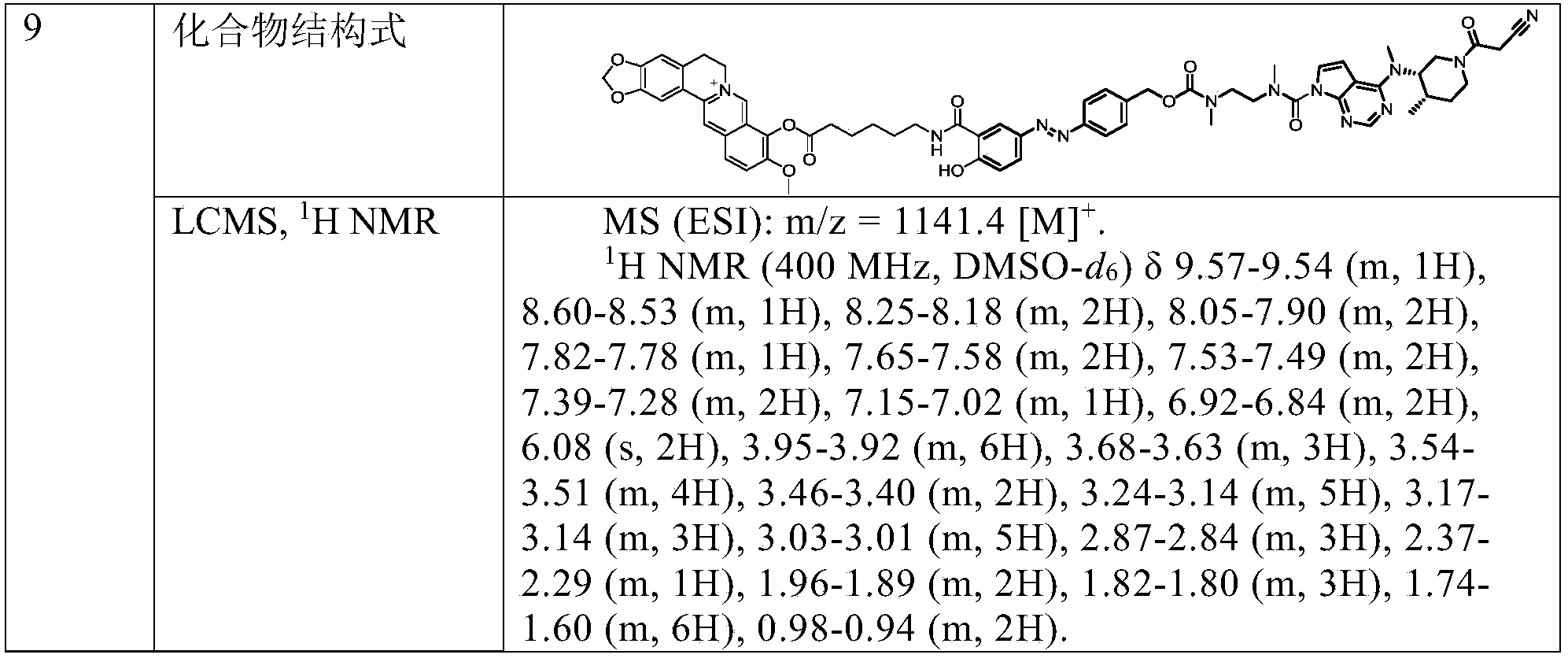
EXAMPLE 10- ((3- (2- ((E) - (4- (((2- (4- (((3R, 4R) -1- (2-cyanoacetyl) -4-methylpiperidine) -3-))
Radical) (methyl) amino) -N-methyl-7H-pyrrolo [2,3-d]Pyrimidine-7-carbon weedsAmido group<Oxalylamino groups>) Ethyl) (A)
Acyl) carbamoyl) oxo) methyl) phenyl) diazenyl) phenyl) propionyl) oxo) -10-methoxy-5, 6-dihydro- [1,3]Dioxa (dioxan)
Azolo [4,5-g]Isoquinolino [3,2-a ]]Isoquinoline-7-ium ions

Example 10-1:1-hydroxy-3, 4-dihydro-quinolin-2 (1H) -one

Hydrogen peroxide (35%, 22 ml) was added dropwise to a methanol solution (200 ml) of 1,2,3, 4-tetrahydroquinoline (10.0 g, 75 mmol) and sodium tungstate dihydrate (1.9 g, 3.7 mmol). After the completion of the dropwise addition, the mixture was stirred at room temperature overnight. The reaction was concentrated under reduced pressure, the residue was dissolved in water (200 ml) and extracted with dichloromethane (100 ml x 2). The organic phases were combined, dried over anhydrous sodium sulfate, filtered, and the filtrate was concentrated under reduced pressure to give a crude product. The crude product was slurried with dichloromethane/methanol (1:1, 100 ml) and filtered. The filter cake was dried to give the title compound (8.8 g, 72%) as a tan solid.
MS(ESI):m/z=164.1[M+H] + .
1 H NMR(CDCl 3 ,400MHz)δ9.03(br,1H),7.33(d,J=8.0Hz,1H),7.28(t,J=8.0Hz,1H),7.15(d,J=8.8Hz,1H),7.05(t,J=7.6Hz,1H),2.93(t,J=7.6Hz,2H),2.76(t,J=8.0Hz,2H).
Example 10-2:3- (2-nitrosophenyl) propionic acid

Sodium periodate (23.1 g, 107 mmol) was added to a solution of example 10-1 (8.8 g, 53 mmol) in tetrahydrofuran (120 ml) and water (30 ml) under ice-water bath cooling. Stirring at room temperature for 1 hour. The reaction solution was concentrated under reduced pressure to remove the organic solvent, the residue was diluted with water (100 ml), the pH was adjusted to weak acidity with hydrochloric acid (2M), and extracted with ethyl acetate (450 ml). The organic phases were combined, dried over anhydrous sodium sulfate, filtered and concentrated under reduced pressure. The crude product obtained was slurried with ethyl acetate (100 ml) to give the title compound (4.5 g, 46%) as a yellow solid.
MS(ESI):m/z=171.2[M+H] + .
Example 10-3 (E) -3- (2- ((4- (hydroxymethyl) phenyl) diazenyl) phenyl) propanoic acid

Example 10-2 (4.5 g, 25.1 mmol) and tetra-aminobenzyl alcohol (3.1 g, 25.1 mmol) were dissolved in dichloromethane (150 ml), acetic acid (15 ml) was added, and stirred at room temperature under nitrogen for 48 hours. LCMS monitored complete reaction of starting material. The reaction was diluted with dichloromethane (100 ml), washed sequentially with water (100 ml x 2), saturated brine (100 ml), dried over anhydrous sodium sulfate, concentrated under reduced pressure, and the residue purified by normal phase column chromatography (dichloromethane: methanol=94:6) and slurried with ethyl acetate (30 ml) to give the title compound (4.0 g, 56%) as a red solid.
MS(ESI):m/z=285.1[M+H] + .
Example 10-4 (E) -3- (2- ((4- (4,7,10,10-tetramethyl-3, 8-dicarbonyl) -2, 9-dioxa-4, 7-diazaundec)
Alkyl) phenyl) diazenyl) phenyl) propanoic acid

Example 10-3 (3.7 g, 13.0 mmol) and di (p-nitrophenyl) carbonate (4.752 g, 15.6 mmol) were mixed in dichloromethane (50 ml) and diisopropylethylamine (3.361 g, 26.0 mmol) was added dropwise with cooling in an ice-water bath. The reaction solution was stirred at room temperature for 30 minutes, and then tert-butylmethyl (2- (methylamino) ethyl) carbamate (3.184 g, 16.9 mmol) was added dropwise to the reaction solution at 0 ℃. After completion of the dropwise addition, the reaction mixture was reacted at room temperature for 1 hour and then heated to 40℃and stirred for 2 hours. LCMS monitored complete conversion of starting material. The reaction solution was diluted with dichloromethane (200 ml), washed with water (100 ml), and the organic phase was dried over anhydrous sodium sulfate and concentrated under reduced pressure. The residue was purified by normal phase column chromatography (dichloromethane: methanol=10:1) to give the title compound (1.1 g, 17%) as a yellow solid.
MS(ESI):m/z=521.1[M+Na] + .
Example 10-5 (E) -10-methoxy-9- ((3- (2- ((4- (4,7,10,10-tetramethyl-3, 8-dicarbonyl) -2, 9-dioxa-)
4, 7-diazaundecyl) phenyl) diazenyl) phenyl) propionyl) oxo) -5, 6-dihydro- [1,3]Dioxazolo [4,5-g]Isoquinol
Pino [3,2-a ]]Isoquinoline-7-ium ions

Examples 10-4 (650 mg, 1.3 mmol) and pyridine (412 mg, 5.2 mmol) were mixed in dichloromethane (30 ml) and oxalyl chloride (486 mg, 1 mmol) was added dropwise at room temperature. The reaction was stirred at room temperature for 30 min and LCMS monitored the conversion of the starting material. The reaction solution was concentrated under reduced pressure, pumped down with an oil pump and then dissolved in acetonitrile (5 ml), and added dropwise to a solution of intermediate a-8 (420 mg, 1.3 mmol) and pyridine (412 mg, 5.2 mmol) in acetonitrile (30 ml). The reaction was stirred at room temperature for 20 min and LCMS monitored complete conversion of the starting material. The reaction solution was concentrated under reduced pressure, diluted with dichloromethane (100 ml), washed with water (100 ml), diluted hydrochloric acid (1 n,100 ml), and the organic phase was dried over anhydrous sodium sulfate and concentrated under reduced pressure. The residue was purified by normal phase column chromatography (dichloromethane: methanol=92:8, 0.1% trifluoroacetic acid) to give the title compound (217 mg, 21%) as a yellow oil.
MS(ESI):m/z=803.2[M+H] + .
Example 10- ((3- (2- ((E) - (4- (((2- (4- (((3R, 4R) -1- (2-cyanoacetyl) -4-methylpiperidin-3-yl)) (methyl)
Group) amino) -N-methyl-7H-pyrrolo [2,3-d]Pyrimidine-7-carbon weed amido<Oxalylamino groups>) Ethyl) (methyl) amino group
Formyl) oxo) methyl) phenyl) diazenyl) phenyl) propionyl) oxo) -10-methoxy-5, 6-dihydro- [1,3]Dioxazolo [4,5 ]
g]Isoquinolino [3,2-a ]]Isoquinoline-7-ium ions

To a solution of examples 10-5 (217 mg, 0.27 mmol) in dichloromethane (2 ml) was added trifluoroacetic acid (0.4 ml) and the mixture was stirred at room temperature for 1 hour. LCMS monitored reaction was complete. The reaction mixture was concentrated under reduced pressure, and after pumping down the oil pump, it was dissolved in a solution of N, N-dimethylformamide (1.5 ml) and cooled to 0℃to add N, N-diisopropylethylamine (139 mg, 1.1 mmol) and examples 1 to 11 (258 mg, 0.54 mmol) and stir at room temperature for 0.5 hours. After quenching the reaction with 1N hydrochloric acid, it was directly injected and separated by Prep-HPLC (gradient of acetonitrile/water (0.1% trifluoroacetic acid) to give the title compound (63.0 mg, 22.4%) as a yellow solid.
MS(ESI):m/z=1140.4[M] + .
1 H NMR(400MHz,CD 3 OD)δ9.60-9.47(m,1H),8.72-8.67(m,1H),8.19-8.07(m,3H),7.87-7.74(m,2H),7.63-7.39(m,6H),6.99-6.51(m,4H),6.09(s,2H),5.21-5.05(m,1H),4.97-4.86(m,3H),4.00-3.71(m,8H),3.66-3.37(m,8H),3.24-3.16(m,9H),3.05-2.81(m,6H),2.40-2.26(m,1H),1.90-1.77(m,1H).
Example 11 (E) -9- ((5- (5- ((4- ((((2- (4- (1- (3- (cyanomethyl) -1- (ethylsulfonyl)) azetidin-3-yl)) p-yrazole)) -1H-pyrazole)
4-yl) -N-methyl-7H-pyrrolo [2,3-d]Pyrimidine-7-carbon weed amido<Oxalylamino groups>) Ethyl) (methyl) carbamoyl) oxy
Substituted) methyl) phenyl) diazenyl) -2-hydroxybenzoamido) pentanoyl) oxo) -10-methoxy-5, 6-dihydro- [1,3]Dioxazolo (O) ring
[4,5-g]Isoquinolino [3,2-a ]]Isoquinoline-7-ium ions

Example 8-3-A (E) -9- ((5- (2-hydroxy-5- ((4- (((methyl (2- (methylamino) ethyl) carbamoyl) oxy) methyl) benzene)
Group) diazenyl) benzoylamino) pentanoyl) oxo) -10-methoxy-5, 6-dihydro- [1,3]Dioxazolo [4,5-g]Isoquinolino
[3,2-a]Isoquinoline-7-positive ion hydrochloride

To a solution of ethyl acetate (35 ml) of examples 8-3 (7.7 g, 7.13 mmol) at 0deg.C was added ethyl acetate hydrochloride solution (4N, 70 ml) and the reaction was carried out at 25deg.C for 1 hour. After completion of LCMS monitoring the reaction, the reaction was filtered and the filter cake was rinsed with ethyl acetate to give the title compound (6.8 g, 110%) as a red solid.
MS(ESI):m/z=789.3[M] + .
Example 1-A4-Nitrophenyl 4- (1- (3- (cyanomethyl) -1- (ethylsulfonyl) azetidin-3-yl) -1H-pyrazol-4-yl) scheme
7H-pyrrolo [2,3-d]Pyrimidine-7-carboxylic acid esters

To a mixture of barytatinib (100 mg, 0.27 mmol), triethylamine (109 mg, 1.08 mmol) and dichloromethane (5 ml) was added p-nitrophenyl chloroformate (108 mg, 0.54 mmol) at room temperature. The reaction solution was stirred at room temperature for 1.5 hours. LCMS monitored complete conversion of starting material. The reaction solution was diluted with dichloromethane (50 ml), washed with water (50 ml), brine (50 ml) and the organic phase was dried over anhydrous sodium sulfate and concentrated under reduced pressure to give a crude product. The crude product was slurried with dichloromethane (5 ml), filtered, and the filter cake dried to give the title compound (100 mg, 85%) as a yellow solid.
MS(ESI):m/z=537.0[M+H] + .
Example 11 (E) -9- ((5- (5- ((4- ((((2- (4- (1- (3- (cyanomethyl) -1- (ethylsulfonyl)) azetidin-3-yl)) p-yrazole)) -1H-pyrazole)
4-yl) -N-methyl-7H-pyrrolo [2,3-d]Pyrimidine-7-carbon weed amido<Oxalylamino groups>) Ethyl) (methyl) carbamoyl) oxy
Substituted) methyl) phenyl) diazenyl) -2-hydroxybenzoamido) pentanoyl) oxo) -10-methoxy-5, 6-dihydro- [1,3]Dioxazolo (O) ring
[4,5-g]Isoquinolino [3,2-a ]]Isoquinoline-7-ium ions

To a mixture of example 8-3-a (118 mg, 0.15 mmol), N-methylmorpholine (19 mg, 0.18 mmol) and N, N-dimethylformamide (2 ml) was added example 1-a (100 mg, 0.18 mmol). Stirred at room temperature for 2 hours. LCMS monitored complete conversion of starting material. The reaction solution was quenched with hydrochloric acid (1N). The reaction was directly injected and separated by Prep-HPLC (gradient of acetonitrile/water (0.1% trifluoroacetic acid) to give the title compound (93 mg, 42%) as a yellow solid.
MS(ESI):m/z=1186.4[M] + .
1 H NMR(400MHz,CD 3 CN)δ9.37(s,1H),8.98-8.55(m,4H),8.18-8.02(m,4H),7.66-7.33(m,6H),7.04-6.88(m,3H),6.12(s,2H),5.29-5.09(m,1H),4.77-4.55(m,5H),4.28-4.22(m,3H),4.02(s,3H),3.77-3.46(m,9H),3.12-2.91(m,14H),1.34-1.31(m,5H).
The following compounds were obtained by substituting corresponding raw materials in a similar manner to example 1. The reaction solvent of preparation example 1-A may be methylene chloride, N, N-dimethylformamide or the like, and the base may be triethylamine, 2, 6-lutidine or the like. The reaction solvent of preparation example 1 may be N, N-dimethylformamide, N, N-dimethylacetamide or the like.


Biological test 1: co-drug compound (co-drug) release experiments ex vivo in mouse duodenal or colonic contents (humen content ex vivo assay).
C57BL/6 male mice (6-8 weeks old), dissected after carbon dioxide euthanasia. The duodenal and colonic segments were removed and placed in 1.5 ml centrifuge tubes while PBS solution was added. The intestinal segment is longitudinally cut, the intestinal content is released by shaking, and the mixture is inverted and uniformly mixed. Each of the above dimethyl sulfoxide solutions of the compounds of examples was prepared and 20. Mu.l of each dimethyl sulfoxide solution was placed in 1 ml of PBS solution of the duodenal or colonic contents. The mixture was repeatedly inverted and mixed and placed in a 37℃water bath. At the node of 0 hours, 1 hour, 4 hours, 16 hours, 20 hours, the above solutions were taken separately, acetonitrile was added, and the solutions were vortexed and centrifuged for 10 minutes. The supernatant was taken and 10. Mu.l of the internal standard compound (intermediate D) was added. The amounts (ng) of the example compounds, berberrubine, and tofacitinib were measured by liquid chromatography mass spectrometry and quantified by standard curve, and the results are shown in table 1. The results show that the co-drug compounds of the present invention are capable of release in the intestinal tract after administration.
Table 1 examples 1,8, 14, 16 release of berrubine, tofacitinib, SHR0302, wu Pati over time under different intestinal environments

N.D. indicates undetected
Biological test 2: co-drug Compounds in vivo pharmacokinetic experiments in mice
CD-1 mice were given the test compound orally (PO, 15 mg/kg) and blood samples and gastrointestinal tract tissue samples were taken at various time points. LC-MS/MS measures the concentration of example co-drug compounds and released tofacitinib and berberrubine in mouse plasma. Animals were aged for about 6-8 weeks at the beginning of the dosing experiment. Blood collection and tissue sample time: 0.5,1,2,4,8 and 24 hours after administration. A biological sample analysis method and a sample detection method are established.
The results are shown in FIGS. 1-5. The results show that the co-drug compound of the embodiment can release tofacitinib and berberine in the intestinal tract of a mouse, and the co-drug compound, tofacitinib and berberine are mainly limited to intestinal tissues, and only have extremely low drug exposure in blood plasma.
Biological test 3: drug efficacy experiment of Co-drug compound on oxazolone-induced mouse colitis model
C57BL/6 mice, referring to Heller et al method to establish oxazolone induced colitis model. On day 1, the skin of the mouse was shaved (2 cm. Times.2 cm) and applied with 150ul of a 3% oxazolone solution (dissolved in a 4:1 mixture of acetone and olive oil) to sensitize. Mice were randomly grouped on day 6 post sensitization. Thereafter, the administration of the corresponding example compound (120 mg/kg) was started by gavage, and the vehicle was administered to the blank group and the model group in a gavage volume of 10ml/kg body weight. The following day, 50ul of 1.2% oxazolone solution was then enemaed and the blank was injected with pure water. Subsequent intragastric administration was continued for 4 days, and disease activity index (Disease Activity Index, DAI) was recorded daily, and the results are shown in fig. 6, as compared with the model group, the example co-administered compound administration group was able to significantly improve disease activity index.
All documents mentioned in this application are incorporated by reference as if each were individually incorporated by reference. Further, it will be appreciated that various changes and modifications may be made by those skilled in the art after reading the above teachings, and such equivalents are intended to fall within the scope of the claims appended hereto.
Claims (15)
- A co-drug compound of formula I, wherein the co-drug compound is formed by coupling a first drug molecule, a second drug molecule, and a linker precursor:D 1 -linker-D 2 ;Iwherein,D 1 is a first drug group; the first drug group is a structural fragment which can be connected with a linker in a first drug molecule;D 2 is a second drug group; the second drug group is a structural fragment which can be connected with a linker in a second drug molecule; the first drug molecule and the second drug molecule are drug molecules with synergistic effect;and linker has a structure selected from the group (a), (b) or (c), wherein J 1 Is linked to a first drug group and J2 is linked to a second drug group;
 the Glu has a structure selected from the group consisting of:
 wherein the A ring is selected from the group consisting of: C6-C10 aryl, 5-10 membered heteroaryl, 3-12 membered heterocyclyl;
 Wherein R is as follows 4 Selected from the group consisting of: H. c (C) 1-6 Alkyl, C of (2) 1~6 alkoxy-C 1~4 Alkylene-, C 3~12 Is a cyclic alkyl group, C 3~12 cycloalkyl-C 1~4 An alkylene group;
 wherein, the B ring and the C ring are each independently selected from the group consisting of: C6-C10 aryl, 5-10 membered heteroaryl, 3-12 membered heterocyclyl;in the above formulae (a), (b) and (c), the J 1 、J 2 Each independently is- (Y) z -and said Y is selected from the group consisting of: -NH-, -C (O) -, -ch=ch-, -NH (CH) 2 )-、-NHC(O)-、-CH 2 -、-OCH 2 CH 2 O-、-O-、-S-、-P(O) 2 O-、-S(O) 2 -S (O) -, -C (O) NH-, -n=n-; said Y may be taken by one or more RInstead, provided that each Y together forms a chemically stable structure;each L is 1 、L 2 、L 3 、L 4 、L 5 、L 6 And L 7 Each independently selected from the group consisting of: C1-C8 alkylene, C 1~6 alkylene-O-C 1~4 Alkylene (-CH) 2 -O-CH 2 -)、C 2~6 Alkenyl, C 2~6 Alkynyl, C 3~6 Cycloalkyl, C6-C10 arylene, heteroarylene of 5-10 atoms, heterocyclylene of 3-12 atoms, or a group selected from the group consisting of: -NH-, -C (O) -, -ch=ch-, -NH (CH) 2 )-、-NHC(O)-、-CH 2 -、-OCH 2 CH 2 O-、-O-、-S-、-P(O) 2 O-、-S(O) 2 -、-S(O)-、-C(O)NH-、-N=N-、-C(O)NH(CH 2 ) (1-4) -NHC (O) -; provided that each L 1 、L 2 、L 3 、L 4 、L 5 、L 6 And L 7 Forming a stable divalent group;and said Y, L 1 、L 2 、L 3 、L 4 、L 5 、L 6 And L 7 Optionally substituted with one or more R, and said R is selected from the group consisting of: H. -OH, C1-C4 alkyl, halogen, cyano, nitro, -OR 4 、C 1~6 Haloalkyl, sulfo, formyl, carboxyl, -COOR 4 The method comprises the steps of carrying out a first treatment on the surface of the Provided that each Y, L 1 、L 2 、L 3 、L 4 、L 5 、L 6 And L 7 Together forming a chemically stable structure;m, n, p, q, r, s and t are each independently selected from 0, 1, 2, 3, 4, 5, 6, 7 or 8;z is selected from the group consisting of: 0. 1, 2, 3, 4, 5, 6; preferably, z is selected from the group consisting of: 1. 2 or 3.
 - The co-drug compound of claim 1, wherein the first drug molecule is a berberine derivative and is a drug molecule of formula II, formula III or formula IV:
 wherein,ro, rp, rq, rr, rs and Rt are each independently selected from the group consisting of: H. substituted or unsubstituted C1-C4 alkyl, substituted or unsubstituted C1-C4 alkoxy; or Ro, rp, rq, rr, rs and Rt located on two adjacent atoms together with the atom to which they are attached form a 5-7 membered heterocyclic ring; wherein the substitution means that the H atom on the group is substituted with one or more substituents selected from the group consisting of: halogen, C1-C4 alkyl, phenyl.
 - The co-drug compound of claim 1, wherein the second drug molecule is a JAK family inhibitor and analogues thereof.
- A co-drug compound according to claim 3, wherein the JAK family inhibitor and analogue thereof is selected from the group consisting of: tofacitinib (Tofacitinib), ruxotinib (Ruxolitinib), oxiracetinib (Ocladinib), baricitinib (Baricitinib), pefacitinib (Peficitinib), abrocitinib (Abrocitinib), non-gotinib (Filgitinib), wu Pati ni (Uplacitinib), di-high-tinib (Delgocitinib) itatinib (Iacatinib), phenanthrene Zhuo Tini (Fedratinib), decernitinib (Decernitinib), SHR-0302, AZD-4205, ASN-002, BMS-986165, PF-06700841, PF-06651600, R-348, CB-52793, ATI-501, ATI-502, NS-018, KL-130008, or deuterated derivatives of the foregoing.
- The co-drug compound of claim 1, wherein said first drug group is selected from the group consisting of:
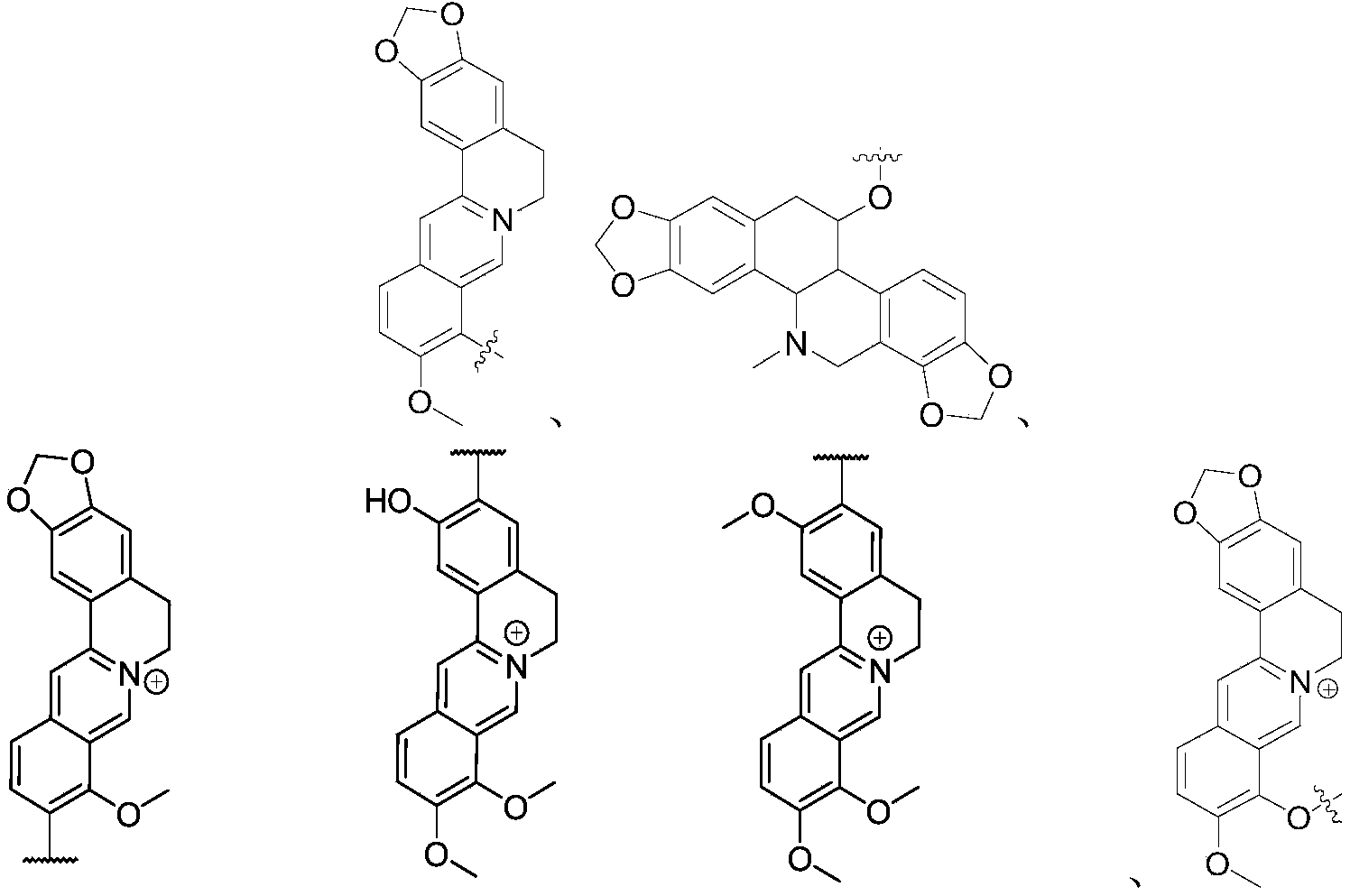 or the first drug group is a group formed by a drug molecule selected from the group consisting of:

- the co-drug compound of claim 1, wherein said first drug moiety has a structure according to the formula:
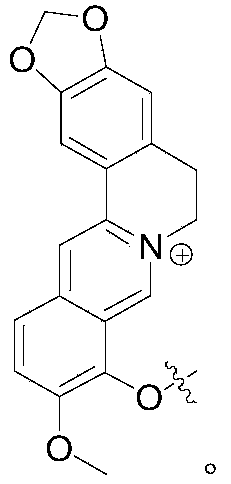
- the co-drug compound of claim 1, wherein said second drug group is selected from the group consisting of:


- the co-drug compound of claim 1, wherein said second drug group is selected from the group consisting of:

- the co-drug compound according to claim 1, wherein the linker is selected from the following group (a), (B) or (C):(A) The group has-L a -structure of L-, wherein said L a Has a structure selected from the group consisting of:
 and L has the structure shown below, wherein L and L are represented by the following formula a Is a linkage site of (2):
 (B) Group:
 (C) Group:

- a compound of formula I according to claim 1, wherein said compound is selected from the group consisting of:

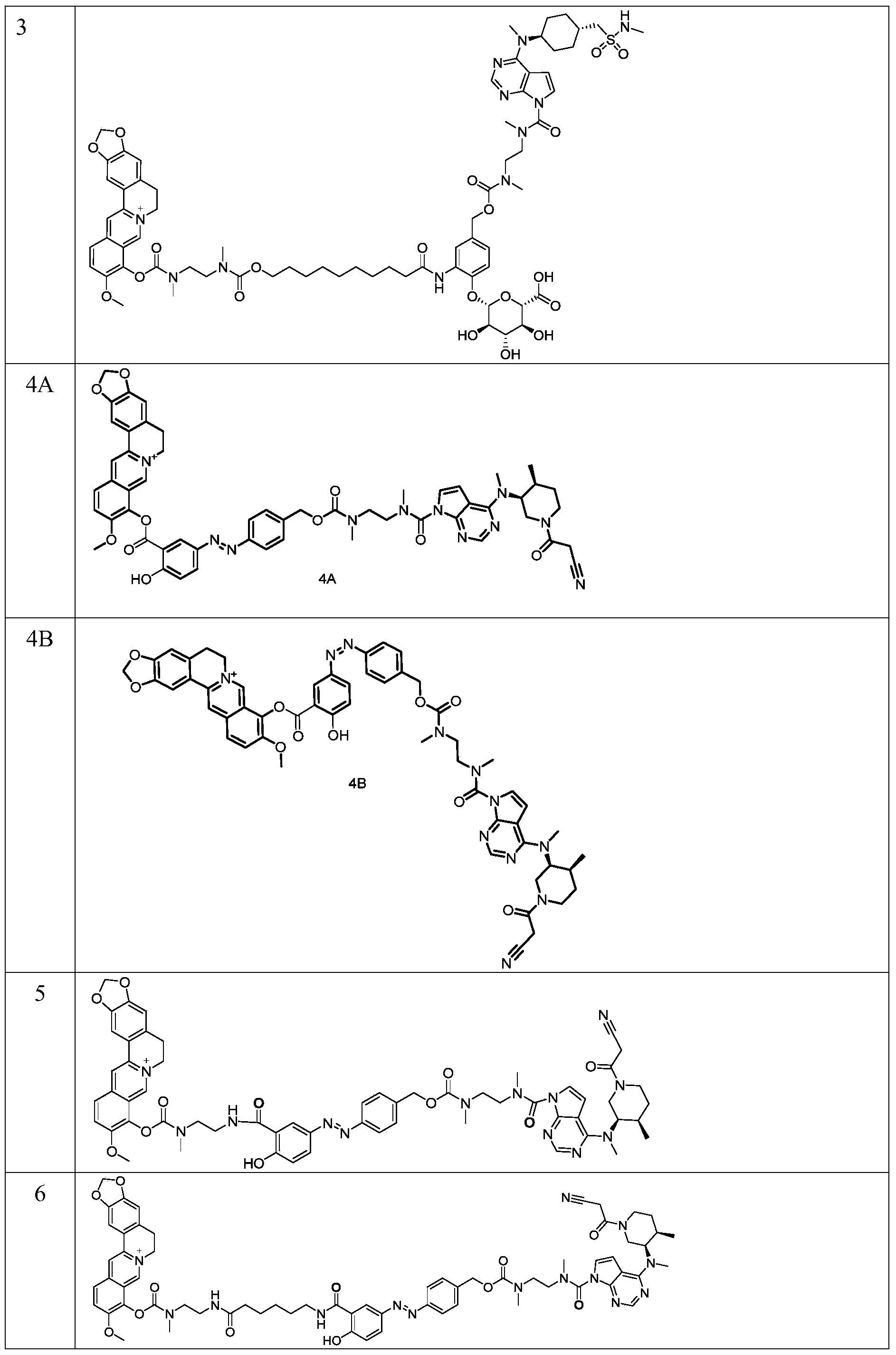


- a pharmaceutical composition comprising a therapeutically effective amount of a compound of claim 1, or a stereoisomer or racemate thereof, or a pharmaceutically acceptable salt thereof, and a pharmaceutically acceptable excipient.
- The pharmaceutical composition of claim 11, wherein the pharmaceutical composition is an enteric formulation.
- The pharmaceutical composition of claim 11, wherein the pharmaceutical composition is for use in the treatment of a disease selected from the group consisting of: inflammatory diseases of the gastrointestinal tract (e.g. ulcerative colitis, crohn's disease, colitis associated with immune checkpoint inhibitor therapy, collagenous colitis, lymphocytic colitis, colonagtis, acute/chronic gastritis, acute/chronic appendicitis), gastroenteritis caused by radiotherapy or chemotherapy, autoimmune diseases of the gastrointestinal tract (e.g. graft versus host disease, sprue, autoimmune bowel disease), peptic ulcers, irritable bowel syndrome, gastric cancer, esophageal cancer, colon cancer.
- The use of a precursor compound according to claim 1, or a pharmaceutically acceptable salt thereof, or a pharmaceutical composition according to claim 11, for the prevention and treatment of disorders of gastrointestinal function.
- The use according to claim 14, wherein the disorder of gastrointestinal function is an inflammatory disorder of the gastrointestinal tract; preferably, the inflammatory disease of the gastrointestinal tract is selected from the group consisting of: ulcerative colitis, crohn's disease, colitis associated with immune checkpoint inhibitor therapy.
Applications Claiming Priority (3)
| Application Number | Priority Date | Filing Date | Title |
|---|---|---|---|
| CN202010694145.1A CN113943312A (en) | 2020-07-17 | 2020-07-17 | Intestinal tract cracking type co-drug and preparation and application thereof |
| CN2020106941451 | 2020-07-17 | ||
| PCT/CN2021/107208 WO2022012693A1 (en) | 2020-07-17 | 2021-07-19 | Codrug that disintegrates in intestine, preparation therefor, and use thereof |
Publications (2)
| Publication Number | Publication Date |
|---|---|
| CN116249533A true CN116249533A (en) | 2023-06-09 |
| CN116249533B CN116249533B (en) | 2025-07-22 |
Family
ID=79326821
Family Applications (2)
| Application Number | Title | Priority Date | Filing Date |
|---|---|---|---|
| CN202010694145.1A Pending CN113943312A (en) | 2020-07-17 | 2020-07-17 | Intestinal tract cracking type co-drug and preparation and application thereof |
| CN202180060562.3A Active CN116249533B (en) | 2020-07-17 | 2021-07-19 | Intestinal tract cracking type co-drug and preparation and application thereof |
Family Applications Before (1)
| Application Number | Title | Priority Date | Filing Date |
|---|---|---|---|
| CN202010694145.1A Pending CN113943312A (en) | 2020-07-17 | 2020-07-17 | Intestinal tract cracking type co-drug and preparation and application thereof |
Country Status (7)
| Country | Link |
|---|---|
| US (1) | US20230271982A1 (en) |
| EP (1) | EP4186900A4 (en) |
| JP (1) | JP2023535692A (en) |
| CN (2) | CN113943312A (en) |
| AU (1) | AU2021309147B2 (en) |
| CA (1) | CA3186375A1 (en) |
| WO (1) | WO2022012693A1 (en) |
Cited By (2)
| Publication number | Priority date | Publication date | Assignee | Title |
|---|---|---|---|---|
| CN116444529A (en) * | 2023-06-16 | 2023-07-18 | 北京科翔中升医药科技有限公司 | Deuterated azetidine JAK inhibitor and application thereof |
| CN117105929A (en) * | 2023-09-06 | 2023-11-24 | 石家庄学院 | Berberine derivatives and preparation methods and applications thereof |
Citations (15)
| Publication number | Priority date | Publication date | Assignee | Title |
|---|---|---|---|---|
| WO2012083178A1 (en) * | 2010-12-17 | 2012-06-21 | Neo Oncology Inc. | Methods and devices for using isoperillyl alcohol |
| US20120252691A1 (en) * | 2010-04-21 | 2012-10-04 | Pierce Biotechnology, Inc. | Modified nucleotides methods and kits |
| CN105218548A (en) * | 2014-06-09 | 2016-01-06 | 上海海和药物研究开发有限公司 | A kind of novel heterocyclic compounds and preparation method thereof and the purposes as kinase inhibitor |
| CN105566353A (en) * | 2016-01-13 | 2016-05-11 | 北京宜生堂医药科技研究有限公司 | Compound and preparation method thereof |
| CN106085415A (en) * | 2016-07-16 | 2016-11-09 | 北京化工大学 | A kind of berberine affinity labeling probe and preparation method thereof |
| CN106146508A (en) * | 2015-03-19 | 2016-11-23 | 浙江导明医药科技有限公司 | The drug combination optimized and treatment cancer and the purposes of autoimmune disease thereof |
| US20170145044A1 (en) * | 2015-11-24 | 2017-05-25 | Theravance Biopharma R&D Ip, Llc | Prodrugs of a JAK Inhibitor Compound for Treatment of Gastrointestinal Inflammatory Disease |
| CN107613768A (en) * | 2015-02-12 | 2018-01-19 | NeOnc技术股份有限公司 | Pharmaceutical compositions comprising perillyl alcohol derivatives |
| CN108272802A (en) * | 2018-03-09 | 2018-07-13 | 华南理工大学 | A kind of combination medicine for treating ulcerative colitis |
| CN110446713A (en) * | 2018-06-06 | 2019-11-12 | 杭州澳津生物医药技术有限公司 | A kind of pyrazolidine pyrimidine derivative and its use and pharmaceutical composition |
| WO2019246603A1 (en) * | 2018-06-22 | 2019-12-26 | Ohio State Innovation Foundation | Methods and compositions for inhibition of dihydroorotate dehydrogenase |
| CN110662755A (en) * | 2017-05-23 | 2020-01-07 | 施万生物制药研发Ip有限责任公司 | Thiocarbamate prodrugs of tofacitinib |
| CN111094314A (en) * | 2018-08-15 | 2020-05-01 | 江苏豪森药业集团有限公司 | Prodrug containing glucuronide derivative JAK inhibitor and preparation method and application thereof |
| CN111358948A (en) * | 2020-03-31 | 2020-07-03 | 东南大学 | Camptothecin-berberine/indocyanine green nano-drug, preparation method and application |
| CN113727975A (en) * | 2019-05-02 | 2021-11-30 | 阿克拉瑞斯治疗股份有限公司 | Substituted pyrrolopyridines as JAK inhibitors |
Family Cites Families (3)
| Publication number | Priority date | Publication date | Assignee | Title |
|---|---|---|---|---|
| PT740650E (en) * | 1994-01-28 | 2004-10-29 | Univ Kentucky Res Found | CO-DRUGS AS A METHOD OF CONTROLLED DRUG ADMINISTRATION |
| CA2981754A1 (en) * | 2015-04-06 | 2016-10-13 | Shenzhen Hightide Biopharmaceutical, Ltd. | Conjugate compounds of ursodeoxycholic, berberine or l-carnitine, and compositions and methods thereof |
| WO2017201069A1 (en) * | 2016-05-18 | 2017-11-23 | Biotheryx, Inc. | Oxoindoline derivatives as protein function modulators |
-
2020
- 2020-07-17 CN CN202010694145.1A patent/CN113943312A/en active Pending
-
2021
- 2021-07-19 US US18/016,532 patent/US20230271982A1/en active Pending
- 2021-07-19 CN CN202180060562.3A patent/CN116249533B/en active Active
- 2021-07-19 JP JP2023503246A patent/JP2023535692A/en active Pending
- 2021-07-19 WO PCT/CN2021/107208 patent/WO2022012693A1/en not_active Ceased
- 2021-07-19 AU AU2021309147A patent/AU2021309147B2/en active Active
- 2021-07-19 CA CA3186375A patent/CA3186375A1/en active Pending
- 2021-07-19 EP EP21842552.8A patent/EP4186900A4/en active Pending
Patent Citations (16)
| Publication number | Priority date | Publication date | Assignee | Title |
|---|---|---|---|---|
| US20120252691A1 (en) * | 2010-04-21 | 2012-10-04 | Pierce Biotechnology, Inc. | Modified nucleotides methods and kits |
| JP2014507391A (en) * | 2010-12-17 | 2014-03-27 | ネオンク テクノロジーズ インク. | Method and apparatus for using isoperyl alcohol |
| WO2012083178A1 (en) * | 2010-12-17 | 2012-06-21 | Neo Oncology Inc. | Methods and devices for using isoperillyl alcohol |
| CN105218548A (en) * | 2014-06-09 | 2016-01-06 | 上海海和药物研究开发有限公司 | A kind of novel heterocyclic compounds and preparation method thereof and the purposes as kinase inhibitor |
| CN107613768A (en) * | 2015-02-12 | 2018-01-19 | NeOnc技术股份有限公司 | Pharmaceutical compositions comprising perillyl alcohol derivatives |
| CN106146508A (en) * | 2015-03-19 | 2016-11-23 | 浙江导明医药科技有限公司 | The drug combination optimized and treatment cancer and the purposes of autoimmune disease thereof |
| US20170145044A1 (en) * | 2015-11-24 | 2017-05-25 | Theravance Biopharma R&D Ip, Llc | Prodrugs of a JAK Inhibitor Compound for Treatment of Gastrointestinal Inflammatory Disease |
| CN105566353A (en) * | 2016-01-13 | 2016-05-11 | 北京宜生堂医药科技研究有限公司 | Compound and preparation method thereof |
| CN106085415A (en) * | 2016-07-16 | 2016-11-09 | 北京化工大学 | A kind of berberine affinity labeling probe and preparation method thereof |
| CN110662755A (en) * | 2017-05-23 | 2020-01-07 | 施万生物制药研发Ip有限责任公司 | Thiocarbamate prodrugs of tofacitinib |
| CN108272802A (en) * | 2018-03-09 | 2018-07-13 | 华南理工大学 | A kind of combination medicine for treating ulcerative colitis |
| CN110446713A (en) * | 2018-06-06 | 2019-11-12 | 杭州澳津生物医药技术有限公司 | A kind of pyrazolidine pyrimidine derivative and its use and pharmaceutical composition |
| WO2019246603A1 (en) * | 2018-06-22 | 2019-12-26 | Ohio State Innovation Foundation | Methods and compositions for inhibition of dihydroorotate dehydrogenase |
| CN111094314A (en) * | 2018-08-15 | 2020-05-01 | 江苏豪森药业集团有限公司 | Prodrug containing glucuronide derivative JAK inhibitor and preparation method and application thereof |
| CN113727975A (en) * | 2019-05-02 | 2021-11-30 | 阿克拉瑞斯治疗股份有限公司 | Substituted pyrrolopyridines as JAK inhibitors |
| CN111358948A (en) * | 2020-03-31 | 2020-07-03 | 东南大学 | Camptothecin-berberine/indocyanine green nano-drug, preparation method and application |
Non-Patent Citations (9)
| Title |
|---|
| AIMIE E. GARCES: "Codrug Approach for the Potential Treatment of EML4-ALK Positive Lung Cancer", 《ACS MEDICINAL CHEMISTRY LETTERS》, vol. 11, no. 3, 27 September 2019 (2019-09-27), pages 316 - 321, XP093204467, DOI: 10.1021/acsmedchemlett.9b00378 * |
| GHOSH, PRIYANKA: "Optimization of Naltrexone Diclofenac Codrugs for Sustained Drug Delivery Across Microneedle-Treated Skin", 《PHARMACEUTICAL RESEARCH》, vol. 31, no. 1, 14 August 2014 (2014-08-14), pages 148 - 159 * |
| SCOTT C. JEFFREY: "Development and Properties of β-Glucuronide Linkers for Monoclonal Antibody−Drug Conjugates", 《BIOCONJUGATE CHEMISTRY》, vol. 17, no. 3, 3 May 2006 (2006-05-03), pages 831 - 840 * |
| YU CHENG: "Mitochondria-targeting nanomedicine self-assembled from GSH-responsive paclitaxel-ss-berberine conjugate for synergetic cancer treatment with enhanced cytotoxicity", 《JOURNAL OF CONTROLLED RELEASE》, vol. 318, 9 December 2019 (2019-12-09), pages 38 - 49, XP086017725, DOI: 10.1016/j.jconrel.2019.12.011 * |
| 姜凤超: "《药物设计学》", 31 July 2016, 中国医药科技出版社, pages: 171 * |
| 孙海玲: "《现代内科疾病临床诊治》", 30 September 2017, 吉林科学技术出版社, pages: 211 * |
| 沈可欣: "恶唑酮诱导小鼠炎性肠病模型的建立", 《中国实验诊断学》, vol. 16, no. 10, 25 October 2012 (2012-10-25), pages 1804 - 1806 * |
| 马东阳: "抗瘤增效方联合吉非替尼治疗老年非小细胞肺癌患者及对炎症因子, T细胞亚群水平及血清肿瘤标志物的影响", 《 中国实验方剂学杂志》, vol. 23, no. 7, 9 January 2017 (2017-01-09), pages 173 - 178 * |
| 黄定九: "《内科理论与实践 下》", 30 April 2009, 上海科学技术出版社, pages: 1099 * |
Cited By (3)
| Publication number | Priority date | Publication date | Assignee | Title |
|---|---|---|---|---|
| CN116444529A (en) * | 2023-06-16 | 2023-07-18 | 北京科翔中升医药科技有限公司 | Deuterated azetidine JAK inhibitor and application thereof |
| CN116444529B (en) * | 2023-06-16 | 2023-12-05 | 药康众拓(江苏)医药科技有限公司 | Deuterated azetidine JAK inhibitor and application thereof |
| CN117105929A (en) * | 2023-09-06 | 2023-11-24 | 石家庄学院 | Berberine derivatives and preparation methods and applications thereof |
Also Published As
| Publication number | Publication date |
|---|---|
| CA3186375A1 (en) | 2022-01-20 |
| CN116249533B (en) | 2025-07-22 |
| AU2021309147B2 (en) | 2024-02-08 |
| WO2022012693A1 (en) | 2022-01-20 |
| EP4186900A1 (en) | 2023-05-31 |
| JP2023535692A (en) | 2023-08-21 |
| US20230271982A1 (en) | 2023-08-31 |
| AU2021309147A1 (en) | 2023-03-16 |
| EP4186900A4 (en) | 2025-04-09 |
| CN113943312A (en) | 2022-01-18 |
Similar Documents
| Publication | Publication Date | Title |
|---|---|---|
| CN114751903B (en) | Nitrogen-containing fused heterocycle SHP2 inhibitor compound, preparation method and application | |
| JP7352587B2 (en) | Pyridone-pyrimidine derivatives as KRASG12C mutein inhibitors | |
| JP6877407B2 (en) | Compounds and compositions useful for the treatment of NTRK-related disorders | |
| CN114728958B (en) | RIP1 inhibitory compounds and methods of making and using the same | |
| US11427601B1 (en) | Inhibitors of KEAP1-Nrf2 protein-protein interaction | |
| EP4265616A1 (en) | Spirocyclic compound as kras-g12c inhibitor | |
| CN101600711A (en) | Azetidine analogues of nucleosidase and phosphorylase inhibitors | |
| TWI818556B (en) | Pyridazinone compounds as PARP7 inhibitors | |
| CN117177744A (en) | CDK2 inhibitors and methods of use | |
| CN113227051A (en) | Compounds for retinal diseases | |
| JP2022550427A (en) | Compounds and uses thereof as PD-1/PD-L1 small molecule inhibitors | |
| CN116249533B (en) | Intestinal tract cracking type co-drug and preparation and application thereof | |
| TWI815210B (en) | Spiro compound, comprising pharmacuetical composition and application thereof | |
| CN112752749A (en) | Fluorovinylbenzamide compounds as PD-L1 immunomodulators | |
| CN105732643A (en) | Conjugate and preparation method thereof and application to preparation of IDO enzyme inhibitor and non-steroidal anti-inflammatory drugs | |
| CN109942665B (en) | Triptolide derivative and preparation method and application thereof | |
| WO2023116763A1 (en) | Pyridazine compound, and pharmaceutical composition and use thereof | |
| TW202216728A (en) | Thienopyridine compound, comprising pharmacuetical composition and application thereof | |
| WO2026026969A1 (en) | Compound serving as cgas inhibitor | |
| HK40067123A (en) | Thienopyrimidine compound, pharmaceutical composition comprising same, and use thereof | |
| JP2025535504A (en) | Purine compounds, compositions containing them and uses thereof | |
| HK40096016A (en) | Spirocyclic compound as kras-g12c inhibitor | |
| CN116903610A (en) | Heterocyclic condensed pyridines, pharmaceutical compositions and uses thereof | |
| CN119677744A (en) | A prodrug of a JAK kinase inhibitor | |
| HK40041288B (en) | Fluorovinylbenzamide compound as pd-l1 immunomodulator |
Legal Events
| Date | Code | Title | Description |
|---|---|---|---|
| PB01 | Publication | ||
| PB01 | Publication | ||
| SE01 | Entry into force of request for substantive examination | ||
| SE01 | Entry into force of request for substantive examination | ||
| GR01 | Patent grant | ||
| GR01 | Patent grant |