CN116234582A - Conjugates of GalNAc and saponins, therapeutic compositions comprising said conjugates and GalNAc-oligonucleotide conjugates - Google Patents
Conjugates of GalNAc and saponins, therapeutic compositions comprising said conjugates and GalNAc-oligonucleotide conjugates Download PDFInfo
- Publication number
- CN116234582A CN116234582A CN202180051254.4A CN202180051254A CN116234582A CN 116234582 A CN116234582 A CN 116234582A CN 202180051254 A CN202180051254 A CN 202180051254A CN 116234582 A CN116234582 A CN 116234582A
- Authority
- CN
- China
- Prior art keywords
- saponin
- galnac
- conjugate
- xyl
- rha
- Prior art date
- Legal status (The legal status is an assumption and is not a legal conclusion. Google has not performed a legal analysis and makes no representation as to the accuracy of the status listed.)
- Pending
Links
Images




Classifications
-
- A—HUMAN NECESSITIES
- A61—MEDICAL OR VETERINARY SCIENCE; HYGIENE
- A61K—PREPARATIONS FOR MEDICAL, DENTAL OR TOILETRY PURPOSES
- A61K47/00—Medicinal preparations characterised by the non-active ingredients used, e.g. carriers or inert additives; Targeting or modifying agents chemically bound to the active ingredient
- A61K47/50—Medicinal preparations characterised by the non-active ingredients used, e.g. carriers or inert additives; Targeting or modifying agents chemically bound to the active ingredient the non-active ingredient being chemically bound to the active ingredient, e.g. polymer-drug conjugates
- A61K47/51—Medicinal preparations characterised by the non-active ingredients used, e.g. carriers or inert additives; Targeting or modifying agents chemically bound to the active ingredient the non-active ingredient being chemically bound to the active ingredient, e.g. polymer-drug conjugates the non-active ingredient being a modifying agent
- A61K47/54—Medicinal preparations characterised by the non-active ingredients used, e.g. carriers or inert additives; Targeting or modifying agents chemically bound to the active ingredient the non-active ingredient being chemically bound to the active ingredient, e.g. polymer-drug conjugates the non-active ingredient being a modifying agent the modifying agent being an organic compound
- A61K47/549—Sugars, nucleosides, nucleotides or nucleic acids
-
- A—HUMAN NECESSITIES
- A61—MEDICAL OR VETERINARY SCIENCE; HYGIENE
- A61K—PREPARATIONS FOR MEDICAL, DENTAL OR TOILETRY PURPOSES
- A61K47/00—Medicinal preparations characterised by the non-active ingredients used, e.g. carriers or inert additives; Targeting or modifying agents chemically bound to the active ingredient
- A61K47/50—Medicinal preparations characterised by the non-active ingredients used, e.g. carriers or inert additives; Targeting or modifying agents chemically bound to the active ingredient the non-active ingredient being chemically bound to the active ingredient, e.g. polymer-drug conjugates
- A61K47/51—Medicinal preparations characterised by the non-active ingredients used, e.g. carriers or inert additives; Targeting or modifying agents chemically bound to the active ingredient the non-active ingredient being chemically bound to the active ingredient, e.g. polymer-drug conjugates the non-active ingredient being a modifying agent
- A61K47/54—Medicinal preparations characterised by the non-active ingredients used, e.g. carriers or inert additives; Targeting or modifying agents chemically bound to the active ingredient the non-active ingredient being chemically bound to the active ingredient, e.g. polymer-drug conjugates the non-active ingredient being a modifying agent the modifying agent being an organic compound
- A61K47/55—Medicinal preparations characterised by the non-active ingredients used, e.g. carriers or inert additives; Targeting or modifying agents chemically bound to the active ingredient the non-active ingredient being chemically bound to the active ingredient, e.g. polymer-drug conjugates the non-active ingredient being a modifying agent the modifying agent being an organic compound the modifying agent being also a pharmacologically or therapeutically active agent, i.e. the entire conjugate being a codrug, i.e. a dimer, oligomer or polymer of pharmacologically or therapeutically active compounds
-
- A—HUMAN NECESSITIES
- A61—MEDICAL OR VETERINARY SCIENCE; HYGIENE
- A61K—PREPARATIONS FOR MEDICAL, DENTAL OR TOILETRY PURPOSES
- A61K47/00—Medicinal preparations characterised by the non-active ingredients used, e.g. carriers or inert additives; Targeting or modifying agents chemically bound to the active ingredient
- A61K47/50—Medicinal preparations characterised by the non-active ingredients used, e.g. carriers or inert additives; Targeting or modifying agents chemically bound to the active ingredient the non-active ingredient being chemically bound to the active ingredient, e.g. polymer-drug conjugates
- A61K47/51—Medicinal preparations characterised by the non-active ingredients used, e.g. carriers or inert additives; Targeting or modifying agents chemically bound to the active ingredient the non-active ingredient being chemically bound to the active ingredient, e.g. polymer-drug conjugates the non-active ingredient being a modifying agent
- A61K47/54—Medicinal preparations characterised by the non-active ingredients used, e.g. carriers or inert additives; Targeting or modifying agents chemically bound to the active ingredient the non-active ingredient being chemically bound to the active ingredient, e.g. polymer-drug conjugates the non-active ingredient being a modifying agent the modifying agent being an organic compound
- A61K47/554—Medicinal preparations characterised by the non-active ingredients used, e.g. carriers or inert additives; Targeting or modifying agents chemically bound to the active ingredient the non-active ingredient being chemically bound to the active ingredient, e.g. polymer-drug conjugates the non-active ingredient being a modifying agent the modifying agent being an organic compound the modifying agent being a steroid plant sterol, glycyrrhetic acid, enoxolone or bile acid
-
- A—HUMAN NECESSITIES
- A61—MEDICAL OR VETERINARY SCIENCE; HYGIENE
- A61K—PREPARATIONS FOR MEDICAL, DENTAL OR TOILETRY PURPOSES
- A61K47/00—Medicinal preparations characterised by the non-active ingredients used, e.g. carriers or inert additives; Targeting or modifying agents chemically bound to the active ingredient
- A61K47/50—Medicinal preparations characterised by the non-active ingredients used, e.g. carriers or inert additives; Targeting or modifying agents chemically bound to the active ingredient the non-active ingredient being chemically bound to the active ingredient, e.g. polymer-drug conjugates
- A61K47/51—Medicinal preparations characterised by the non-active ingredients used, e.g. carriers or inert additives; Targeting or modifying agents chemically bound to the active ingredient the non-active ingredient being chemically bound to the active ingredient, e.g. polymer-drug conjugates the non-active ingredient being a modifying agent
- A61K47/68—Medicinal preparations characterised by the non-active ingredients used, e.g. carriers or inert additives; Targeting or modifying agents chemically bound to the active ingredient the non-active ingredient being chemically bound to the active ingredient, e.g. polymer-drug conjugates the non-active ingredient being a modifying agent the modifying agent being an antibody, an immunoglobulin or a fragment thereof, e.g. an Fc-fragment
- A61K47/6801—Drug-antibody or immunoglobulin conjugates defined by the pharmacologically or therapeutically active agent
-
- A—HUMAN NECESSITIES
- A61—MEDICAL OR VETERINARY SCIENCE; HYGIENE
- A61P—SPECIFIC THERAPEUTIC ACTIVITY OF CHEMICAL COMPOUNDS OR MEDICINAL PREPARATIONS
- A61P35/00—Antineoplastic agents
Landscapes
- Health & Medical Sciences (AREA)
- Life Sciences & Earth Sciences (AREA)
- Chemical & Material Sciences (AREA)
- Bioinformatics & Cheminformatics (AREA)
- Engineering & Computer Science (AREA)
- Veterinary Medicine (AREA)
- Medicinal Chemistry (AREA)
- Pharmacology & Pharmacy (AREA)
- Animal Behavior & Ethology (AREA)
- General Health & Medical Sciences (AREA)
- Public Health (AREA)
- Epidemiology (AREA)
- Biochemistry (AREA)
- Molecular Biology (AREA)
- Botany (AREA)
- Organic Chemistry (AREA)
- Nuclear Medicine, Radiotherapy & Molecular Imaging (AREA)
- General Chemical & Material Sciences (AREA)
- Chemical Kinetics & Catalysis (AREA)
- Immunology (AREA)
- Pharmaceuticals Containing Other Organic And Inorganic Compounds (AREA)
- Saccharide Compounds (AREA)
- Medicines That Contain Protein Lipid Enzymes And Other Medicines (AREA)
- Medicinal Preparation (AREA)
- Peptides Or Proteins (AREA)
Abstract
The present invention relates to a saponin conjugate comprising a saponin covalently linked to a ligand of ASGPR comprising at least one GalNAc. The invention also relates to a pharmaceutical combination comprising a first pharmaceutical composition comprising a saponin conjugate of the invention and a second pharmaceutical composition comprising a second conjugate of an effector molecule and a ligand of ASGPR, or a third conjugate of an effector molecule and a binding molecule for binding to a cell surface molecule. In addition, the present invention relates to a pharmaceutical composition comprising the saponin conjugate of the present invention and the second conjugate or the third conjugate. Furthermore, the present invention relates to a pharmaceutical combination or pharmaceutical composition of the invention for use as a medicament. The invention also relates to a pharmaceutical combination or pharmaceutical composition of the invention for use in the treatment or prevention of a disease or health problem in which the expression product involves: apoB, TTR, PCSK9, ALAS1, AT3, GO, CC5, X gene of HBV, S gene of HBV, AAT and LDH, and for use in the treatment or prevention of: cancer, infectious disease, viral infection, hypercholesterolemia, primary hyperoxaluria, hemophilia a, hemophilia B, AAT-associated liver disease, acute hepatic porphyria, TTR amyloidosis, complement-mediated disease, hepatitis b infection, or autoimmune disease. Finally, the invention relates to an in vitro or ex vivo method for transferring the second or third conjugate of the invention from outside the cell into said cell.
Description
Technical Field
The present invention relates to a saponin conjugate comprising a saponin covalently linked to a ligand of ASGPR comprising at least one GalNAc. The invention also relates to a pharmaceutical combination comprising a first pharmaceutical composition comprising a saponin conjugate of the invention and a second pharmaceutical composition comprising a second conjugate of an effector molecule and a ligand of ASGPR, or a third conjugate of an effector molecule and a binding molecule for binding to a cell surface molecule. In addition, the present invention relates to a pharmaceutical composition comprising the saponin conjugate of the present invention and the second conjugate or the third conjugate. Furthermore, the present invention relates to a pharmaceutical combination or pharmaceutical composition of the invention for use as a medicament. The invention also relates to a pharmaceutical combination or pharmaceutical composition of the invention for use in the treatment or prevention of a disease or health problem in which the expression product involves: apoB, TTR, PCSK9, ALAS1, AT3, GO, CC5, X gene of HBV, S gene of HBV, AAT and LDH, and for use in the treatment or prevention of: cancer, infectious disease, viral infection, hypercholesterolemia, primary hyperoxaluria, hemophilia a, hemophilia B, AAT-associated liver disease, acute hepatic porphyria, TTR amyloidosis, complement-mediated disease, hepatitis b infection, or autoimmune disease. Finally, the invention relates to an in vitro or ex vivo method for transferring the second or third conjugate of the invention from outside the cell into said cell.
Background
The ability to inhibit protein function, both in humans and in pathogens, is an integral part of new drug discovery. Traditional small molecule drugs and antibodies are strongly limited to a subset of available targets. The small molecules bind primarily to cofactor sites or transmitter sites, which are effective sites designed to accommodate the small molecules. Antibodies can bind a variety of proteins, but are typically limited to extracellular targets.
Oligonucleotide therapy is a relatively young and rapidly evolving field aimed at overcoming many of the problems encountered with small molecule drugs or antibody drugs by directly manipulating the gene transcription and translation pathways. The potency and versatility of oligonucleotides, particularly the prospect of repressing genes encoding classical small molecule drug "non-accessible" proteins, makes them attractive drug candidates. The first lot of oligonucleotide drugs is based on antisense technology whereby single stranded nucleic acid molecules bind their complementary mRNA targets in a sequence specific manner, triggering degradation of the duplex by the ribonuclease H system.
In 1998, andrew Fire and Craig Mello published an original paper that identified double-stranded RNA (dsRNA) as the cause of posttranscriptional gene silencing (PTGS) by caenorhabditis elegans (Caenorhabditis elegans), which phenomenon was referred to as RNA interference (RNAi). RNAi findings explain the confusing observations of gene silencing in plants and fungi and have led to a revolution in biology, ultimately suggesting that non-coding RNA is a central regulator of gene expression in multicellular organisms. Shortly thereafter, it was found that small dsrnas (typically 15-30 bp) could catalytically induce RNAi silencing in mammalian cells without eliciting a non-specific interferon response. Targeting the RNAi pathway by small dsRNA, such as small interfering RNAs (siRNA) and short hairpin RNAs (shRNA), has several theoretical advantages over antisense, which is significantly more efficient (catalytic) and produces longer inhibition of gene expression. This may translate into lower doses and lower costs and less frequent dosing. Lower exposure may also mean fewer siRNA toxicity issues.
However, before siRNA reaches its in vivo target, it faces a number of significant obstacles that hinder its way to the RNA-induced silencing complex (RISC) machinery. After siRNA enters the blood stream, it is easily degraded by endogenous nucleases and excreted by the kidneys due to its small size and highly anionic nature. In addition, siRNA must pass through tight endothelial junctions of blood vessels and diffuse through the extracellular matrix before reaching its target cells. Because siRNA has a large negative charge, it does not readily bind to or cross cell membranes and once inside a cell, it must escape from the endosome to interact with its intracellular protein targets.
Thus, the success of oligonucleotide (e.g., siRNA) therapies is strongly dependent on the efficient extracellular delivery of drugs into the cytosol. Accordingly, much attention has been focused on developing delivery systems that improve the delivery of oligonucleotides (e.g., siRNA). In addition to viral delivery, the primary method for enhancing delivery of siRNA (or other oligonucleotides) to cells employs liposomes, cell Penetrating Peptides (CPPs) and their mimics, or nanoparticles (good, matt, et al Chemical biology & drug design [ Chemical biology and drug design ]80.6 (2012): 787-809). Safety issues such as insertional mutagenesis and the possibility of immune development are believed to limit the future of viral methods.
Liposomes are the most commonly used delivery vehicles for oligonucleotides (e.g., siRNA), wherein the oligonucleotide is encapsulated within a lipid bilayer. Liposome oligonucleotide delivery suffers from several problems such as oxygen radical mediated toxicity (typical for cationic liposomes), cytotoxicity, effects on gene regulation, and inflammatory responses. Furthermore, in vivo delivery using lipids appears to target primarily the liver and spleen.
Cell penetrating peptides (CCPs), also known as protein transduction domains, are short peptides (typically <30 amino acid residues in length) with specific properties that are able to cross the cell membrane. CPP can enhance cellular uptake of an oligonucleotide by covalent attachment to the oligonucleotide or by forming a non-covalent complex with the oligonucleotide. The field of CPP-mediated oligonucleotide delivery is extremely complex because it combines challenges presented by both oligonucleotide technology and peptide technology (both fields are still far from mature) in a single drug. In addition to the problems associated with oligonucleotides, the typical challenges encountered by CPPs are related to the in vivo stability (lack) of peptide chains, which often require the use of non-natural peptide derivatives that are complex to synthesize and/or exhibit reduced cell penetrating activity.
Despite the enhanced cell delivery, overcoming endosomal entrapment is one of the major challenges in designing efficient CPPs and other transport systems (good et al).
Nanoparticles and nanocarriers are nanoscale oligonucleotide delivery systems, typically composed of a polymer, a biostabilizer, and a cell targeting ligand complexed with an oligonucleotide. An exemplary siRNA nanocarrier system is known under the name siRNA dynamic immunoconjugates. The system is based on an amphiphilic polymer linked to polyethylene glycol (PEG) and a hepatocyte-targeting ligand as biostabilizers, wherein the siRNA is covalently bound to the polymer via disulfide bonds. The targeting moiety and the PEG moiety are attached to the polymer via a maleamide linkage, forming negatively charged nanoparticles that do not bind to serum proteins. After internalization by endocytosis, the maleamide bond readily hydrolyzes upon acidification of the endosome, exposing the cationic amine groups of the polymer and inducing endosome escape via proton sponge action. Nanocarriers are also known in the form of cationic polymers, such as Polyethylenimine (PEI) (sometimes in combination with cyclodextrins), which can form electrostatic complexes with oligonucleotides (e.g., siRNA), provide protection from degradation and aid internalization. However, the high concentration of toxicity resulting from membrane disruption and apoptosis induction may limit the use of cationic polymers as therapeutic delivery agents. In addition to the complex preparation of nanoparticles and nanocarriers, their long-term stability is a major obstacle to commercial availability.
Lipoproteins that lead to cardiovascular disease, such as LDL, remnant lipoproteins and Lp (a), can be reduced by targeting apolipoproteins (ApoB) that have important roles in the production or removal of these lipoproteins using gene silencing therapies. Antisense oligonucleotide-based methods and short interfering RNA-based methods have been applied. Clinical studies have assessed the efficacy of such gene silencing therapies by targeting the apoB gene. Adverse reactions to lipid-lowering antisense oligonucleotides and siRNA therapies include injection site reactions, influenza-like symptoms and low platelet counts. The new generation of these drugs uses GalNAc conjugates to more effectively deliver the drug to hepatocytes, thereby reducing the level of the drug in plasma, potentially solving adverse effects. Although some of these delivery systems can achieve improved delivery of oligonucleotides (e.g., siRNA) to cells, endosomal escape remains a major obstacle to the use of oligonucleotide-based therapeutics (e.g., RNAi-based therapeutics). Only a very small portion of the endocytic oligonucleotide escapes into the cytoplasmic space where it can perform its intended function, while the vast majority of the endocytic oligonucleotides remain trapped in the endocytic compartment and are inactive. Recent literature suggests that the passive siRNA escape rate is <0.01% (Setten, ryan L. Et al Nature Reviews Drug Discovery [ Natural review drug discovery ]18.6 (2019): 421-446). Furthermore, the ability of cells to functionally internalize oligonucleotides to produce a target effect (e.g., knockdown) has been demonstrated to appear independent of the extent to which a large number of oligonucleotides are internalized by the cell. These observations led to the hypothesis of separate "productive" and "non-productive" free uptake pathways, although the molecular mechanisms that distinguish these pathways are still unclear (Setten, ryan l., john j. Rossi and Si-ping han. Nature Reviews Drug Discovery [ natural review drug discovery ]18.6 (2019): 421-446).
In summary, there remains an urgent need for improved oligonucleotide delivery systems that produce increased potency (e.g., target knockdown), less toxicity, and/or less off-target effects, regardless of the underlying mechanism (improved endosomal escape, increased "productive" pathway uptake, or another mechanism).
An emerging strategy requires conjugation of antisense oligonucleotides (ASOs) to receptor ligands to increase the efficacy of the oligonucleotides and distribution to selected tissues. For example, conjugation of tri-antennary N-acetylgalactosamine (GalNAc) to oligonucleotide therapeutic agents results in a 10-30 fold increase in potency in isolated hepatocytes as well as in vivo liver. GalNAc was found on damaged glycoproteins, which lost terminal sialic acid residues from their dangling oligosaccharides. The liver is protected by a very high level on the surface of hepatocytes (10 5 -10 6 On the order of cells) express trimeric asialoglycoprotein receptor (ASGPR) to clear these proteins from the systemic circulation. ASGPR specifically binds GalNAc at neutral pH for endocytosis of circulating macromolecules from blood and releases GalNAc at acidic pH (about 5-6) for load unloading in early endosomes. The free ASGPR is then recovered on the cell surface for reuse. About one third of the RNAi agents in current clinical trials are single molecule, chemically modified RNAi triggers conjugated to multivalent GalNAc ligands targeting ASGPR. The appropriate liver physiology, unique properties of ASGPR, non-toxic nature of GalNAc ligands and simplicity of GalNAc-siRNA conjugates make them an attractive method for systemic RNAi delivery to hepatocytes.
However, there remains a need for improved delivery systems that further increase the efficacy, reduce the toxicity, and/or reduce the off-target effects of ASGPR-targeted oligonucleotide systems (e.g., galNAc-oligonucleotide conjugates).
Disclosure of Invention
The first aspect of the present invention relates to a saponin conjugate comprising at least one saponin covalently linked to a ligand of an asialoglycoprotein receptor (ASGPR), wherein the ligand of the ASGPR comprises at least one N-acetylgalactosamine (GalNAc) moiety, preferably three or four GalNAc moieties, more preferably the ligand of the ASGPR comprises (GalNAc) 3 Tris or consists thereof, wherein the at least one saponin is selected from the group consisting of a monosaccharide chain triterpenoid saponin and a disaccharide chain triterpenoid saponin.
A second aspect of the invention relates to a pharmaceutical combination comprising:
-a first pharmaceutical composition comprising a saponin conjugate of the invention and optionally comprising a pharmaceutically acceptable excipient and/or a pharmaceutically acceptable diluent; and
-a second pharmaceutical composition comprising a second conjugate of an effector molecule and a ligand of ASGPR, or a third conjugate of an effector molecule and a binding molecule, and optionally comprising a pharmaceutically acceptable excipient and/or a pharmaceutically acceptable diluent, wherein the ligand of ASGPR preferably comprises at least one GalNAc moiety, preferably three or four GalNAc moieties, more preferably the ligand of ASGPR comprises (GalNAc) 3 Tris or consists of it, the binding molecule comprising a binding site for a cell surface molecule.
A third aspect of the invention relates to a pharmaceutical composition comprising:
-the saponin conjugate of the invention;
-a second conjugate of an effector molecule and a ligand of ASGPR, or a third conjugate of an effector molecule and a binding molecule, and optionally comprising a pharmaceutically acceptable excipient and/or a pharmaceutically acceptable diluent, wherein the ligand of ASGPR preferably comprises at least one GalNAc moiety, preferably three or four GalNAc moieties, more preferably the ligand of ASGPR comprises (GalNAc) 3 Tris or consists of it, the binding molecule comprising a binding site for a cell surface molecule.
A fourth aspect of the invention relates to a pharmaceutical combination according to the invention or a pharmaceutical composition according to the invention for use as a medicament.
A fifth aspect of the invention relates to a pharmaceutical combination of the invention or a pharmaceutical composition of the invention for use in the treatment or prevention of a disease or health problem in which the expression product relates to any one or more of the following genes: apoB, TTR, PCSK9, ALAS1, AT3, GO, CC5, X gene of HBV, S gene of HBV, AAT and LDH.
A sixth aspect of the invention relates to an in vitro or ex vivo method for transferring the second or third conjugate of the invention from outside a cell into said cell, preferably followed by transferring an effector molecule comprised by the second or third conjugate of the invention into the cytosol of said cell, comprising the steps of:
a) Providing a cell that expresses ASGPR on its surface and that expresses a cell surface molecule when the third conjugate is transferred into the cell, wherein the third conjugate comprises a binding molecule for binding to said cell surface molecule, the cell preferably being selected from the group consisting of a hepatocyte, a virus-infected cell and a tumor cell;
b) Providing a second conjugate or a third conjugate according to any of the present invention for transfer into the cell provided in step a);
c) Providing a saponin conjugate of the present invention;
d) Contacting the cell of step a) with the second or third conjugate of step b) and the saponin conjugate of step c) in vitro or ex vivo, thereby effecting transfer of the second or third conjugate from outside the cell into said cell, and preferably thereby effecting subsequent transfer of the second or third conjugate into the cytosol of said cell, or preferably thereby effecting subsequent transfer of at least the effector molecule comprised by the second or third conjugate into the cytosol of said cell.
Definition of the definition
The term "GalNAc" has its conventional scientific meaning and refers herein to N-acetylgalactosamine and its IUPAC name: 2- (acetylamino) -2-deoxy-D-galactose.
The term "(GalNAc) 3 Tris "has its conventional scientific meaning in the field of siRNA-based therapies, for example, and herein refers to a moiety comprising three GalNAc units, each of which is covalently bound to a hydroxy group of Tris (hydroxymethyl) aminomethane (Tris) (IUPAC name: 2-amino-2- (hydroxymethyl) propane-1, 3-diol), respectively, preferably via at least one linker. (GalNAc) 3 Tris may be present as a molecule comprising free amine, or may be further functionalized via the remaining amine binding sites, e.g., to form a package as described hereinContains (GalNAc) 3 Conjugates of Tris moieties.
The term "oligonucleotide" has its conventional scientific meaning and refers herein to a string of two or more nucleotides, i.e., an oligonucleotide is a short oligomer consisting of ribonucleotides or deoxyribonucleotides. Examples are RNA and DNA and any modified RNA or DNA, such as nucleic acid strings comprising nucleotide analogues, such as Bridging Nucleic Acids (BNA), also known as Locked Nucleic Acids (LNA) or 2'-O,4' -C-aminoethylene or 2'-O,4' -C-aminomethylene Bridging Nucleic Acids (BNA) NC ) Wherein the nucleotide is a ribonucleotide or a deoxyribonucleotide.
The term "RNAi-mediated gene targeting" has its conventional scientific meaning and refers herein to an in vivo, ex vivo, or in vitro method of affecting the function of a gene in a cell by transferring into the cell an oligonucleotide (e.g., a small double stranded RNA molecule) that targets an mRNA involved in gene transcription: for example, small double stranded RNA molecules can trigger RNAi silencing of a particular gene with high efficiency.
The term "bridging nucleic acid" (or simply "BNA") or "locked nucleic acid" (or simply "LNA") has its conventional scientific meaning and refers herein to modified RNA nucleotides. BNA is also referred to as a "constrained RNA molecule" or "inaccessible RNA molecule. BNA monomers may contain five-, six-or even seven-membered bridging structures, with "fixed" C 3 ' -internal sugar folds. The bridge is synthetically incorporated at the 2',4' -position of the ribose to provide a 2',4' -BNA monomer. BNA monomers can be incorporated into oligonucleotide polymer structures using standard phosphoramidite chemistry known in the art. BNA is a structurally rigid oligonucleotide with increased binding affinity and stability.
The term antisense oligonucleotide has its conventional scientific meaning and may be abbreviated in the specification as "AON" or "ASO".
The term "BNA-based antisense oligonucleotide" or simply "BNA-aON" has its conventional scientific meaning and refers herein to a string of antisense nucleotides, wherein at least one of said nucleotides is BNA.
The term "prion" has its conventional scientific meaning and refers herein to a proteinaceous molecule, meaning that the molecule has the physicochemical characteristics of a protein to some extent, is proteinaceous, is protein-related, contains, belongs to, consists of, resembles, or is a protein. As used in, for example, a "prion molecule" means that at least a portion of the molecule is present, which is similar to or is a protein, wherein "protein" is understood to include a chain of amino acid residues that are at least two residues in length, thus including peptides, polypeptides and proteins, and the assembly of protein or protein domains. In prion molecules, at least two amino acid residues are linked, for example, via one or more amide bonds (e.g., one or more peptide bonds). In prion molecules, the amino acid residues are natural amino acid residues and/or artificial amino acid residues, such as modified natural amino acid residues. In a preferred embodiment, the prion molecule is a molecule comprising at least two amino acid residues (preferably two to about 2.000 amino acid residues). In one embodiment, the prion is a molecule comprising from 2 to 20 (typical for peptides) amino acids. In one embodiment, the prion is a molecule comprising from 21 to 1.000 (typical for polypeptides, proteins, protein domains, such as antibodies, fab, scFv, ligands for receptors, such as EGF) amino acids. Preferably, the amino acid residues are (typically) linked via one or more peptide bonds. According to the invention, the amino acid residue is or comprises a (modified) (non) natural amino acid residue.
When referring to an effector molecule as part of, for example, a covalent conjugate, the term "effector molecule" or "effector moiety" has its conventional scientific meaning and refers herein to a molecule that can selectively bind to and modulate the biological activity of, for example, any one or more of the following target molecules: proteins, peptides, carbohydrates (e.g. glycans), (phospho) lipids, nucleic acids (e.g. DNA, RNA), enzymes. Effector molecules are, for example, molecules selected from any one or more of the following: small molecules such as drug molecules, toxins such as protein toxins, oligonucleotides such as BNA, heterologous nucleic acids or siRNA, enzymes, peptides, proteins, or any combination thereof. Thus, for example, an effector molecule or effector moiety is a molecule or moiety selected from any one or more of the following: a small molecule such as a drug molecule, a toxin such as a protein toxin, an oligonucleotide such as BNA, a heterologous nucleic acid or siRNA, an enzyme, a peptide, a protein, or any combination thereof, which molecule or moiety can selectively bind to any one or more of the following target molecules: proteins, peptides, carbohydrates (e.g., glycans), (phospho) lipids, nucleic acids (e.g., DNA, RNA), enzymes, and upon binding to the target molecule, modulate the biological activity of such one or more target molecules. Typically, effector molecules may exert biological effects within a cell (e.g., a mammalian cell, such as a human cell), such as in the cytosol of the cell. Thus, typical effector molecules are drug molecules, plasmid DNA, toxins such as those comprised by antibody-drug conjugates (ADCs), oligonucleotides such as siRNA, BNA, nucleic acids comprised by antibody-oligonucleotide conjugates (AOCs). For example, effector molecules are molecules that can act as ligands capable of increasing or decreasing (intracellular) enzymatic activity, gene expression, or cell signaling.
The term "health problem" has its conventional scientific meaning and herein refers to any condition of the body of a subject (e.g., a human patient), or a portion thereof, organs, muscles, veins, arteries, skin, limbs, blood, cells, etc., when compared to the condition of the body or portion thereof of a healthy subject, thereby impeding the proper function and/or health of the subject, e.g., impairing the normal function of the human body.
The term "GalNAc-decorated oligonucleotide drug" has its conventional scientific meaning and refers herein to an oligonucleotide for interfering with gene transcription, wherein one or more GalNAc units are coupled to the oligonucleotide, e.g., via at least one linker.
The term "locked nucleic acid" (abbreviated "LNA") has its conventional scientific meaning and refers herein to an oligonucleotide containing one or more nucleotide building blocks, wherein an additional methylene bridge immobilizes a ribose moiety in a C3 '-internal conformation (β -D-LNA) or a C2' -internal conformation (α -L-LNA), as known in the art.
The term "bridging nucleic acid NC" (abbreviated "BNA) NC ") has its conventional scientific meaning and refers herein to an oligonucleotide containing one or more nucleotide building blocks comprising additional 2'-O,4' -C-amino ethylene bridging nucleic acids with different substitutions at the N atom (where methyl groups are most commonly used so far), as is known in the art.
The term "chemically modified, metabolically stable siRNA" has its conventional scientific meaning and refers herein to an siRNA molecule comprising chemical modifications that render the modified siRNA molecule more resistant, i.e. more stable, to metabolic degradation, digestion, enzymatic cleavage, etc., than an RNA oligonucleotide consisting of naturally occurring nucleotides.
The term "saponin" has its conventional scientific meaning and refers herein to a group of amphiphilic glycosides comprising one or more hydrophilic glycosyl moieties in combination with a lipophilic aglycone core (which is sapogenin). Saponins may be naturally occurring or synthetic (i.e., non-naturally occurring). The term "saponin" includes naturally occurring saponins, derivatives of naturally occurring saponins, saponins synthesized de novo by chemical and/or biotechnological synthetic routes.
The term "saponin derivative" (also referred to as "modified saponin") has its conventional scientific meaning and refers herein to a compound corresponding to a naturally occurring saponin that has been derivatized by one or more chemical modifications, such as oxidation of a functional group, reduction of a functional group, and/or formation of a covalent bond with another molecule. Preferred modifications include derivatization of the aldehyde groups of the aglycone core; derivatization of carboxyl groups of sugar chains or derivatization of acetoxy groups of sugar chains. Typically, the saponin derivative does not have a natural counterpart, i.e. the saponin derivative is not naturally produced by, for example, plants or trees. The term "saponin derivative" includes derivatives obtained by derivatization of naturally occurring saponins, as well as derivatives synthesized de novo by chemical and/or biotechnological synthetic routes that result in compounds corresponding to naturally occurring saponins that have been derivatized by one or more chemical modifications.
The term "aglycone core structure" has its conventional scientific meaning and refers herein to the aglycone core of a saponin, which does not have one or two carbohydrate antennas or sugar chains (glycans) bound thereto. For example, saponaric acid is the aglycone glycoside core structure of SO1861, QS-7, QS-21.
The term "sugar chain" has its conventional scientific meaning and refers herein to any one of the following: glycans, carbohydrate antennas, single sugar moieties (monosaccharides) or chains comprising multiple sugar moieties (oligosaccharides, polysaccharides). The sugar chain may consist of only sugar moieties or may also contain additional moieties, such as any of the following: 4E-methoxy cinnamic acid, 4Z-methoxy cinnamic acid, and 5-O- [5-O-Ara/Api-3, 5-dihydroxy-6-methyl-octanoyl ] -3, 5-dihydroxy-6-methyl-octanoic acid, such as are present in QS-21, for example.
In the context of the sugar chain name, the term "Api/Xyl-" or "Api-or Xyl-" has its conventional scientific meaning and refers herein to a sugar chain comprising apiose (Api) moieties or comprising xylose (Xyl) moieties.
The term "antibody-drug conjugate" or "ADC" has its conventional scientific meaning and refers herein to any conjugate of an antibody (e.g., igG, fab, scFv, immunoglobulin fragment, one or more Vh domains, etc.) with any molecule that can exert a therapeutic effect when contacted with cells of a subject (e.g., a human patient), such as an active pharmaceutical ingredient, a toxin, an oligonucleotide, an enzyme, a small molecule pharmaceutical compound, etc.
The term "antibody-oligonucleotide conjugate" or "AOC" has its conventional scientific meaning and refers herein to any conjugate of an antibody (e.g., igG, fab, scFv, immunoglobulin fragment, one or more Vh domains, etc.) with any oligonucleotide molecule that can exert a therapeutic effect when contacted with a cell of a subject (e.g., a human patient), such as an oligonucleotide selected from the group consisting of natural or synthetic nucleic acid strings encompassing DNA, modified DNA, RNA, modified RNA, synthetic nucleic acids, which is presented as a single-or double-stranded molecule, such as BNA, allele-specific oligonucleotides, short or small interfering RNAs (siRNA; silent RNAs), antisense DNA, antisense RNA, etc.
The term "conjugate" has its conventional scientific meaning and refers herein to at least a first molecule covalently bound to at least a second molecule, thereby forming an assembly comprising or consisting of a covalent coupling of the first molecule and the second molecule. Typical conjugates are tris (GalNAc) 3 siRNA, ADC, AOC and SO1861-EMCH (EMCH is linked to the aldehyde group of the aglycone glycoside core structure of a saponin).
The term "moiety" has its conventional scientific meaning and refers herein to a molecule that binds, links, conjugates with, etc., another molecule, linker, assembly of molecules, etc., and thereby forms part of a larger molecule, conjugate, assembly of molecules. Typically, a moiety is a first molecule covalently bound to a second molecule, involving one or more chemical groups initially present on the first molecule and the second molecule. For example, saporin is a typical effector molecule. Saporin is a typical effector moiety in ADCs as part of antibody-drug conjugates. As part of the antibody-oligonucleotide conjugate, BNA or siRNA is a typical effector moiety in AOC.
As used in an antibody-saponin conjugate or construct, e.g., comprising a linker, the term "S" means a "stable linker" that remains intact in the endosome and in the cytosol.
As used in an antibody-saponin conjugate or construct as comprising a linker, the term "L" represents an "labile linker" that cleaves under slightly acidic conditions in the endosome.
The term "moiety" has its conventional scientific meaning and refers herein to a molecule that binds, links, conjugates with, etc., another molecule, linker, assembly of molecules, etc., and thereby forms part of a larger molecule, conjugate, assembly of molecules. Typically, a moiety is a first molecule covalently bound to a second molecule, involving one or more chemical groups initially present on the first molecule and present on the second molecule. For example, saporin is a typical molecule and is an example of an effector molecule. Saporin is a typical effector moiety in ADCs as part of antibody-drug conjugates. As part of the antibody-oligonucleotide conjugate, BNA or siRNA is a typical effector moiety in AOC.
The term "DAR" generally represents drug-to-antibody ratio and refers to the average drug and antibody ratio of a given formulation of an Antibody Drug Conjugate (ADC), and herein refers to the ratio of the amount of bound SO1861 moieties or SPT001 relative to the conjugate molecule.
The terms first, second, third and the like in the description and in the claims, are used for distinguishing between similar elements, compositions, components of a composition, or separate method steps and not necessarily for describing a sequential or chronological order. Unless otherwise indicated, the terms are interchangeable under appropriate circumstances and the embodiments of the invention can operate in other sequences than described or illustrated herein.
The embodiments of the invention described herein may be combined and interoperated unless otherwise specified.
Furthermore, although referred to as "preferred" or "e.g. (e.g. or for example)" or "particularly" etc., the various embodiments should be construed as exemplary ways in which the invention may be practiced, without limiting the scope of the invention.
The term "comprising" as used in the claims should not be interpreted as being limited to, for example, the elements or method steps listed thereafter or the ingredients of the composition; it does not exclude other elements or method steps or components of a composition. It should be construed as specifying the presence of the stated features, integers, (method) steps or components as referred to, but does not preclude the presence or addition of one or more other features, integers, steps or components, or groups thereof. Thus, the scope of the expression "a method comprising steps a and B" should not be limited to a method consisting of only steps a and B, but rather, with respect to the present invention, only steps of the method are listed as a and B, and the claims should be further interpreted as including equivalents of those method steps. Thus, the scope of expression of "a composition comprising components a and B" should not be limited to a composition consisting of only components a and B, but rather, with respect to the present invention, only components a and B of the composition are enumerated, and the claims should be further interpreted to include equivalents of those components.
In addition, reference to an element or component by the indefinite article "a" or "an" does not exclude the possibility that more than one of the element or component is present, unless the context clearly requires that there be one and only one of the elements or components. Thus, the indefinite article "a" or "an" generally means "at least one" or "one".
Drawings
Fig. 1: synthesis of trivalent GalNAc.
Fig. 2: synthesis of SO 1861-DBCO.
Fig. 3: synthesis of monovalent GalNAc-SO 1861.
Fig. 4: synthesis of trivalent GalNAc-SO 1861.
Fig. 5: synthesis of monovalent GalNAc-BNA.
Fig. 6: synthesis of trivalent GalNAc-BNA.
Fig. 7: synthesis of trivalent GalNAc-BNA.
Fig. 8A and 8B: synthesis of trivalent GalNAc.
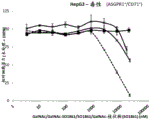
Fig. 9A and 9B: general toxicity (MTS) of GalNAc-SO1861 and trivalent GalNAc-SO1861 to HepG2 (A) and Huh7 (B) cell lines. The legend shown alongside fig. 9B also applies to fig. 9A.
Fig. 10A and 10B: cell killing assay (MTS) HepG2 (a) and Huh7 (B) cell lines. The legend shown next to fig. 10B also applies to fig. 10A.
Fig. 11A and 11B: gene expression analysis on HepG2 (A) and Huh7 (B) cell lines.
Fig. 12A and 12B: gene expression analysis on HepG2 (A) and Huh7 (B) cell lines. The legend shown alongside fig. 12B also applies to fig. 12A.
Fig. 13A and 13B: cell viability assay for HepG2 (a) and Huh7 (B) cell lines. The legend shown alongside fig. 13B also applies to fig. 13A.
Fig. 14A and 14B: gene expression analysis on HepG2 (A) and Huh7 (B) cell lines. The legend shown next to fig. 14B also applies to fig. 14A.
Fig. 15A and 15B: cell viability assay for HepG2 (a) and Huh7 (B) cell lines. The legend shown alongside fig. 15B also applies to fig. 15A.
Fig. 16A and 16B: gene expression analysis on HepG2 (A) and Huh7 (B) cell lines. The legend shown next to fig. 16B also applies to fig. 16A.
Fig. 17A and 17B: gene expression analysis on HepG2 (A) and Huh7 (B) cell lines. The legend shown next to fig. 17B also applies to fig. 17A.
Fig. 18: analysis of ApoB RNA expression in mouse primary hepatocytes.
Fig. 19: analysis of ApoB RNA expression in liver tissue of C57BL/6J mice.
Fig. 20: serum ApoB protein analysis in C57BL/6J mice. Note that the analytical values at 336 hours for the 1mg/kg ApoB No. 02 and 0.01mg/kg (GalNAc) 3-ApoB No. 03+5mg/kg (GalNAc) 3-SO861 groups were not reported.
Fig. 21: serum LDL-cholesterol (LDL-C) analysis in C57BL/6J mice.
Fig. 22: serum ALT analysis of C57BL/6J mice.
Fig. 23: cell viability assay (CTG) on primary human hepatocytes
Fig. 24: analysis of ApoB RNA expression and cell viability determination of primary human hepatocytes
Fig. 25: (GalNAc) 3-Ls-SO1861, intermediates 22, 23.
Fig. 26: (GalNAc) 3-Ls-SO1861, intermediate 24.
Fig. 27: (GalNAc) 3-Ls-BNA synthesis, intermediates 25, 26.
Fig. 28: (GalNAc) 3-Ls-BNA synthesis.
Fig. 29A: relative cell viability of cells with the following primary human hepatocytes following contact (as compared to untreated cells "un r" set at 100%): a series of concentrations of trivalent GalNAc ((GN) conjugated with SO1861 3 SPT), 10pM monoclonal antibody anti-CD 71 conjugated to saporin (CD 71-SPRN) and a series of concentrations of SO1861 with EMCH bound to aglycone aldehyde group (SPT-EMCH), 10pM CD71-SPRN and a series of concentrations (GN) 3 Combination of SPT, and 10pm cd71-SPRN and a range of concentrations of dendrimer conjugated (GN) with four SO1861 moieties covalently bound thereto (dar=4 for bound SO 1861) 3 Is ((GN) 3 -dSPT4)。
Fig. 29B: relative ApoB gene expression of the cells with the following primary human hepatocytes following contact (as compared to untreated cells "un r" set at 100%): a range of concentrations of trivalent GalNAc ((GalNAc) conjugated to antisense oligonucleotides for silencing ApoB mRNA and ApoB protein expression 3 ApoB), 300nM trivalent GalNAc ((GalNAc) conjugated with SO1861 3 SPT 001) and a series of concentrations (GalNAc) 3 -a combination of apobs. "Untr" is an untreated cell and ApoB expression is set to 100%.
Fig. 30A and 30B: cell viability of cells with the following primary human hepatocytes (a) and hepatocytes cell line Huh7 cells (B) after contact (both compared to untreated cells "un r" set to 100%): a combination of a range of concentrations of trivalent GalNAc conjugated with SO1861 (trivalent GalNAc-SPT 001), 10pM monoclonal antibody anti-CD 71 conjugated with saporin (CD 71-saporin), and a range of concentrations of the covalent conjugate trivalent GalNAc-SPT 001.
Fig. 30C: sketch of covalent trivalent GalNAc-SPT001 conjugate (dar=1 for SO 1861). "S" in the sketch is SPT001, SO1861.
Fig. 30D: sketch of an anti-CD 71 antibody-saporin conjugate (OKT-9), wherein "T" is the toxin saporin covalently attached to the heavy chain of the antibody.
Fig. 31A and 31B: relative ApoB gene expression of primary human hepatocytes (a) and hepatocytes cell line Huh7 cells (B) following contacting of the cells: a combination of a range of concentrations of trivalent GalNAc (trivalent GalNAc-ApoBBNA) conjugated with antisense oligonucleotides for silencing ApoB mRNA and ApoB protein expression, 300nM trivalent GalNAc (trivalent GalNAc-SPT 001) conjugated with SO1861 (dar=1 for bound SPT001 (SO 1861), and a range of concentrations of trivalent GalNAc-ApoBBNA.
Fig. 31C: sketch of covalent trivalent GalNAc-ApoBBNA conjugate. "A" in the sketch is the antisense oligonucleotide ApoB (ApoBBNA).
Fig. 32A and 32B: absolute ApoB protein expression of primary human hepatocytes (a) and hepatocytes cell line Huh7 cells (B) under the influence of contacting the cells with: a combination of a range of concentrations of trivalent GalNAc-ApoBBNA, 300nM of trivalent GalNAc-SPT001 and a range of concentrations of trivalent GalNAc-ApoBBNA.
Fig. 33A: dendrimers (SPT 001) 4 -NH 2 (Synthesis of molecule 15 from molecules 13 and 14).
Fig. 33B: dendrimers (SPT 001) 4 Synthesis of azide (molecule 19 from molecules 15 and 18).
Fig. 33C: dendrimers (SPT 001) 4 Synthesis of trivalent GalNAc (molecule 24 from molecules 19 and 23).
Detailed Description
The invention will be described with respect to particular embodiments, but the invention is not limited thereto but only by the claims.
The first aspect of the present invention relates to a saponin conjugate comprising at least one saponin covalently linked to a ligand of an asialoglycoprotein receptor (ASGPR), wherein the ligand of the ASGPR comprises at least one N-acetylgalactosamine (GalNAc) moiety, preferably three or four GalNAc moieties, more preferably the ligand of the ASGPR comprises (GalNAc) 3 Tris or consists thereof, wherein the at least one saponin is selected from the group consisting of a monosaccharide chain triterpenoid saponin and a disaccharide chain triterpenoid saponin.
Triterpenoid glycoside type saponins have the ability to stimulate the delivery of effector molecules from outside the target cell into the cell and subsequently into the cytosol of the cell. Saponins facilitate, for example, receptor-mediated uptake of certain effector molecules, such as protein toxins contained in ADCs. Endocytosis of toxins as part of ADCs delivers the toxins in the endosomes and/or lysosomes of target cells. Without wishing to be bound by any theory, triterpenoid saponins stimulate or mediate the subsequent release of ADC or at least toxins from the endosome or lysosome in vitro and into the cytosol of the cell. When a target cell is contacted with a toxin at too low a dose of the toxin to exert intracellular effects, co-administration of the toxin (e.g., part of the ADC) and free saponin allows the target cell to be contacted with both the ADC and the saponin, which can result in efficient toxin-mediated killing of the target cell at the same toxin dose that would be ineffective in contact with the cell in the absence of the saponin. Thus, the therapeutic window of toxins is improved under the influence of saponins. The toxin dose required for efficient and adequate target cell killing may still be accompanied by undesirable off-target effects, for example when the ADC-targeted tumor cell receptor is not a true tumor cell specific receptor, although it is expressed to some lesser extent at, for example, the surface of healthy cells, elsewhere in the patient's body, or on cells present in the same organ in which the target cells are located. Furthermore, the required dose of free saponin required to achieve a sufficient degree of toxin activation (toxin delivery in the cytosol of the target cell) may be at a level where the risk of saponin-mediated side effects is significant. When considering target (tumor) cells to be treated with a toxin, since the saponins are administered systemically and non-targeted, a relatively high saponin dose will be administered to a patient in need of toxin treatment to achieve a local saponin dose at the target cell level.
The inventors have now surprisingly found that the amount of saponin required to enhance the effect of a toxin on tumor cells can be reduced by about 100 to 1000 fold when the saponin is provided with a target cell targeting moiety such as a receptor ligand (e.g. EGF or a cytokine), an antibody, or a binding fragment or domain thereof. For tumor cells, a range of cell surface receptors are currently known to be specifically expressed on the surface of such abnormal cells. The inventors successfully conjugated saponins with antibodies and ligands for binding to tumor cell specific receptors (e.g. anti-CD 71 antibody OKT-9, trastuzumab, cetuximab, etc.). Such targeted saponin conjugates are indeed capable of stimulating a cytotoxic effect, e.g. a toxin, within the target cell, although the saponin dose is 100 to 1000 times lower than the dose required to not provide the same saponin in free form of the tumor cell targeted binding molecule. The inventors of the present invention further invented that target cell specific delivery and subsequent endocytosis of (targeted) saponins is also possible for non-abnormal cells or abnormal cells not associated with e.g. cancer (tumor cells), autoimmune diseases, virus infected cells etc. That is, the inventors surprisingly found that ASGPR provides a suitable portal for cells (e.g. hepatocytes) having the receptor for access by saponins provided with ligands of ASGPR, in particular ASGPR 1. Successfully coupling known ligands (such as monovalent GalNAc and trivalent GalNAc) to one or more (2, 4, 8, etc.) saponin molecules provides a saponin conjugate comprising an ASGPR ligand and comprising at least one saponin moiety.
Contacting cells expressing ASGPR (e.g., hepatocytes) with a saponin conjugate comprising a ligand of ASGPR surprisingly results in uptake of the saponin, as is evident when such cells are co-targeted with: such as a conjugate comprising a gene silencing nucleic acid and a binding molecule for a target cell surface molecule (e.g. CD71, ASGPR), resulting in saponin dependent gene silencing in a target cell, or a conjugate comprising such a binding molecule for a target cell and a toxin, resulting in saponin dependent cytotoxicity. Providing a saponin with a ligand for ASGPR results in an effect in target cells exerted by co-administered effector molecules such as targeted oligonucleotides or toxins (e.g., anti-CD 71 antibodies or ASGPR ligands conjugated to nucleic acids or toxins). When the target cells are contacted with effector molecules only, the degree of such effect is much less pronounced in the absence of targeted saponins, if any. Thus, the saponin conjugates of the invention improve the therapeutic efficacy of the effector molecule when considering target cells comprising ASGPR on their surface and contacting such target cells with both the saponin-ASGPR ligand of the invention and the (targeted) effector molecule. Thereby, the therapeutic window of the effector molecule is improved: has a higher therapeutic effect at the same dose under the influence of co-administration of the saponin conjugate; or similar therapeutic effects at lower doses under the influence of co-administration of the saponin conjugates. The inventors have also found that the dosage of saponin conjugate required is about 100-fold to 1000-fold lower in order to achieve a level of therapeutic effect in target ASGPR expressing cells (e.g. hepatocytes) induced by co-administered (targeted) effector molecules (e.g. ASO, siRNA, BNA, toxins such as protein toxins) when compared to the saponin dosage required to achieve a similar effect when the saponins are not provided with ligands of ASGPR.
Thus, surprisingly, the inventors now provide improved therapeutic methods using ASGPR as target receptor for the saponin-mediated delivery of effector molecules in the cytosol of ASGPR expressing cells, resulting in the effector molecules inducing similar therapeutic effects at lower doses than possible in the absence of the saponin conjugates of the invention. Thus, the present invention provides improved therapeutic uses of the stimulatory effects of saponins when considering the delivery of effector molecules into the cytosol of e.g. hepatocytes by providing the inventive saponin-ASGPR ligand conjugates. The advantages achieved by the inventors are in particular: by co-administration of the (targeted) effector molecule with the saponin, the required dose of effector molecule is lower, and by providing the saponin and the one or more saponin moieties as covalent conjugates of ligands of ASGPR (e.g. trivalent GalNAc) the required dose of saponin is lower. Surprisingly, the ligand of ASGPR can be the same in the saponin conjugate and in the targeted effector molecule conjugate, producing a highly potent effector molecule mediated effect in the target cells under the stimulatory influence of saponins. That is, a saponin conjugate and an effector molecule conjugate (both comprising a covalently linked ligand of ASGPR, such as trivalent GalNAc) can be co-administered to a target cell (e.g., a liver cell having ASGPR exposed at its surface) to efficiently obtain the desired therapeutic effect of the effector molecule, while both conjugates target the same receptor and enter the cell using the same endocytosis pathway. This surprising finding is of great benefit for hepatocyte-targeted therapies, such as therapies involving cytosolic delivery of nucleic acids (ASO, BNA, siRNA, just to name a few), because hepatocytes do express ASGPR, which is specific for hepatocytes, while there is virtually no additional hepatocyte receptor specific enough for hepatocyte-targeted therapies. Thus, the present invention opens up a new way to improve hepatocyte-directed therapies, in which effector molecules must be delivered and localized within the cell for their mode of action. The targeted saponins provided as the saponin conjugates of the present invention broaden the therapeutic window of such effector molecules and, at the same time, by providing the saponins with hepatocyte-targeted binding molecules, the therapeutic window of saponins is also improved in accordance with the present invention.
Saponin conjugate-introduction
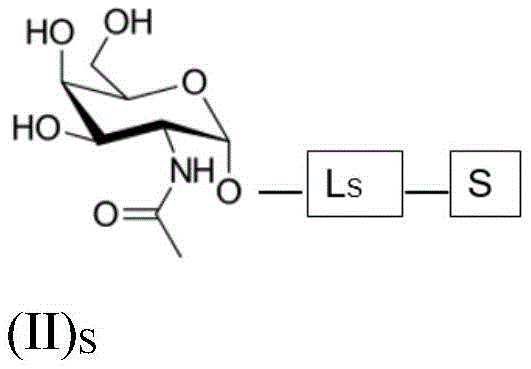
The present invention provides conjugates of saponins and ligands of asialoglycoprotein receptor (ASGPR), referred to herein as "saponin conjugates". The ASGPR ligand comprises at least one N-acetylgalactosamine (GalNAc) moiety. According to a preferred embodiment of the present invention, each GalNAc moiety binds to the remainder of the ASGPR ligand via a covalent bond with oxygen at position "1" as indicated in formula (I), or to a saponin moiety in case the ASGPR ligand consists of a single GalNAc moiety:

such as (II) S The ASGPR ligand is represented by a linker L, preferably via a saponin moiety S A single GalNAc moiety bound to saponin moiety S.
ASGPR ligands may comprise more than one GalNAc moiety, such as 2, 3, 4, 5 or 6 GalNAc moieties, preferably 3 or 4 GalNAc moieties. In such a case, it is preferable that each GalNAc moiety is covalently bound to a central bridging moiety B, preferably via a saponin moiety linker L, via oxygen at position "1", respectively S A bridge is effectively formed between the GalNAc moiety and the saponin moiety. GalNAc moieties can be bound directly to bridging moiety B, e.g. of formula (III) S As shown in:
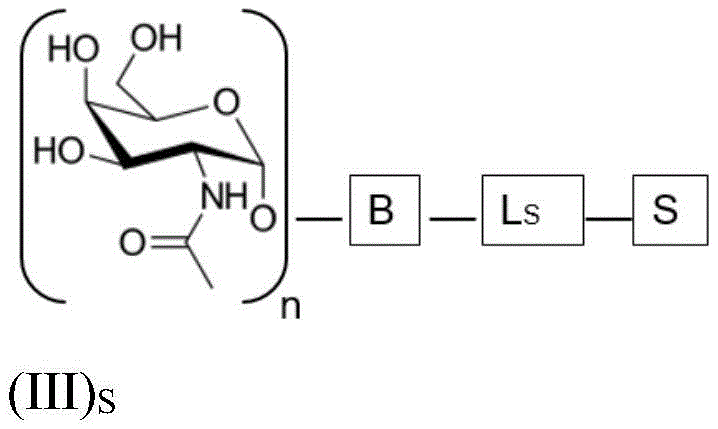
wherein n is an integer greater than or equal to 2, L S Is a saponin moiety linker, and S is a saponin moiety. More preferably, the GalNAc moiety is via a GalNAc linker L GAL Combined with bridging moiety B, e.g. of formula (IV) S As shown in:
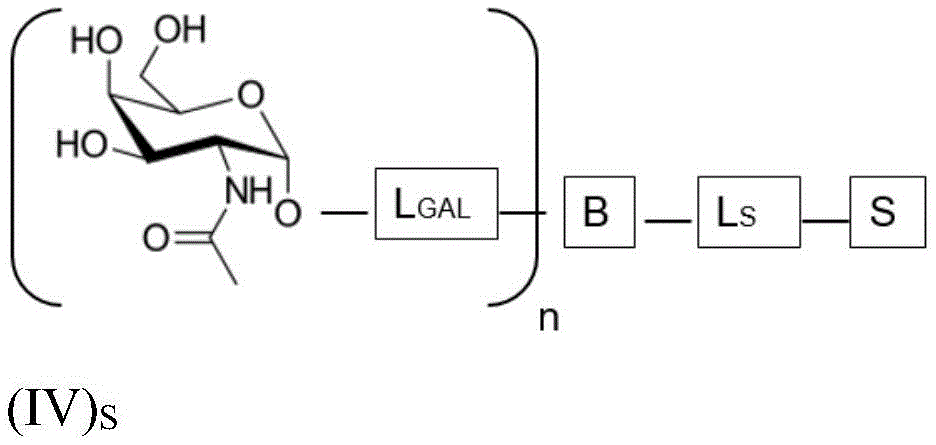
wherein n is an integer greater than or equal to 2, L S Is a saponin moiety linker, and S is a saponin moiety. Although each occurrence of L can be independently selected GAL But one skilled in the art will understand that at each occurrence L GAL In the case of representing the same moiety, the synthesis of the saponin conjugate is simplified.
Saponin conjugate-linker L S
Saponin part linker L S The expression is suitable for making saponin and the formula (II) S GalNAc or and the like of the formula (III) S And (IV) S Any chemical moiety to which bridging moiety B is covalently bound. The nature and size of the linker are not particularly limited, and the saponin is allowed to react with the compound of formula (II) S GalNAc or and the like of the formula (III) S And (IV) S Covalent bonding of bridging moiety B in (a) may be through "conventional" chemical functional groups (e.g. ester linkages) through "click chemistry" linkers typically having long chain lengths (yielding linkers E comprising e.g. more than 10 or more than 20 carbon atoms S ) To realize the method. Suitable linkers L for binding molecules to each other S And related coupling reactions are described in the handbook Hermanson, greg T.bioconjugate technologies [ bioconjugation techniques ] ]Academic press [ Academic Press ]]2013.
As will be appreciated by those skilled in the art, the saponin moiety linker L S Will typically be at least a first precursor L S1 With a second precursor L S2 Results of coupling reactions between them (e.g. "click chemistry" type), the first precursor L S1 Covalently bound to GalNAc or bridging moiety B, the second precursor L S2 Covalently bound to a saponin moiety. The principle is represented by the formula (II) S Is shown in the following reaction scheme for the compounds of (a):
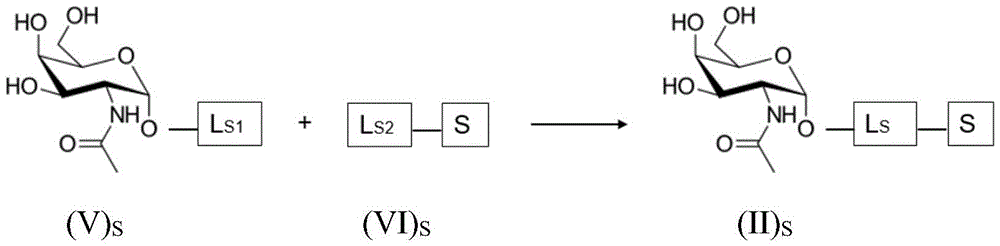
wherein L is S Is a saponin part linker, L S1 Is a soap covalently bound to GalNAc or to bridging moiety BGlycoside moiety linker L S And L is S2 Is a saponin moiety linker L covalently bound to a saponin moiety S And S is a saponin moiety.
Having (III) S The corresponding reaction scheme for the compounds of (2) is as follows:

wherein L is S Is a saponin part linker, L S1 Is a saponin moiety linker L covalently bound to GalNAc S And L is S2 Is a saponin moiety linker L covalently bound to a saponin moiety S N is an integer greater than or equal to 2, B is a bridging moiety, and S is a saponin moiety.
Having (IV) S The corresponding reaction scheme for the compounds of (2) is as follows:
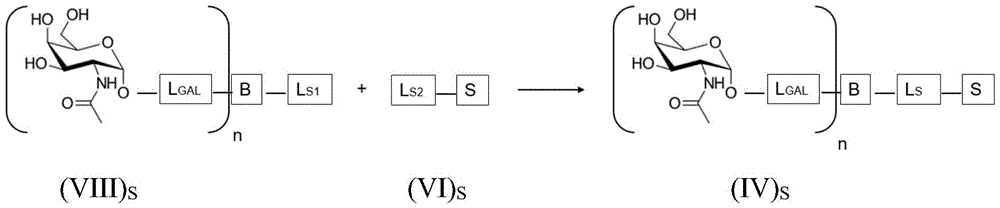
wherein L is S Is a saponin part linker, L S1 Is a saponin moiety linker L covalently bound to GalNAc S And L is S2 Is a saponin moiety linker L covalently bound to a saponin moiety S N is an integer greater than or equal to 2, B is a bridging moiety, S is a saponin moiety and L GAL Is a GalNAc linker.
Saponin part linker L S May be at least a first precursor L S1 With a second precursor L S2 As a result of the coupling reaction between the first precursor L S1 Covalently bound to GalNAc or bridging moiety B, the second precursor L S2 Covalently bound to a saponin moiety, wherein the coupling reaction is, for example, an azide-alkyne cycloaddition, thiol maleimide coupling, staudinger reaction, nucleophilic ring opening of strained heterocyclic electrophiles such as aziridine, epoxide, cyclic sulfate, aziridine (aziridinium) ion, carboxylate ion, carbonyl reactions of non-aldol type such as ureaThiourea, hydrazone, oxime ether, amide or aromatic heterocyclic formation) or addition of a carbon-carbon double bond (such as epoxidation, aziridine, dihydroxylation, sulfonyl halide addition, nitrosyl halide addition or michael addition), preferably wherein the coupling reaction is azide-alkyne cycloaddition, thiol maleimide coupling, staudinger reaction, nucleophilic ring opening of strained heterocyclic electrophiles, more preferably wherein the coupling reaction is azide-alkyne cycloaddition or thiol maleimide coupling.
According to some embodiments of the invention, the saponin moiety linker L S Comprising hydrazone and/or 1,2, 3-triazole, preferably hydrazone and 1,2, 3-triazole. Whenever 1,2, 3-triazole is mentioned in the context of the linker of the present application, this preferably means 1H-1,2, 3-triazole.
Such hydrazones are the result of, for example, coupling between a terminal hydrazide and an aldehyde-containing compound (e.g., an aldehyde-containing saponin). This hydrazide/aldehyde coupling is a "click" chemistry tool known in the art of bioconjugation and is described, for example, in Hermanson, greg t.bioconjugate technologies [ bioconjugation techniques ]. Academic press [ Academic press ], 2013.
Such 1,2, 3-triazoles are the result of, for example, coupling between azides and alkyne-containing compounds. This azide/alkyne coupling is a commonly known "click" chemistry tool in the art of bioconjugation and is described, for example, in Hermanson, greg t.bioconjugate technologies [ bioconjugation techniques ]. Academic press [ Academic press ], 2013.
Therefore, the saponin moiety linker L is preferred S Is the first precursor L S1 With a second precursor L S2 As a result of the coupling reaction between the first precursor L S1 Covalently bound to GalNAc or bridging moiety B, the first precursor L S1 Comprises an azide; the second precursor L S2 Covalently bound to a saponin moiety, the second precursor L S2 Comprising alkynes and preferably hydrazones resulting from the coupling of a hydrazide/aldehyde with the aldehyde of the saponin moiety.
Having (V) S Precursor L present in the compound of (2) S1 Examples of structures of (a) are the following azides:
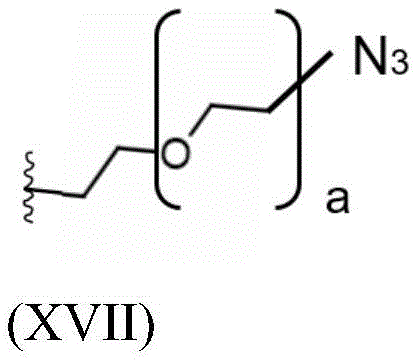
wherein a represents an integer greater than or equal to 0, preferably a represents an integer selected from 1, 2 and 3, more preferably a represents 2.
Having (VII) S Or (VIII) S Precursor L present in the compound of (2) S1 Examples of structures of (a) are the following azides:

wherein c represents an integer greater than or equal to 0, preferably c represents an integer in the range of 5-15, more preferably c represents 9.
Having (VI) S Precursor L present in the compound of (2) S2 Examples of structures of (a) are the following hydrazones:
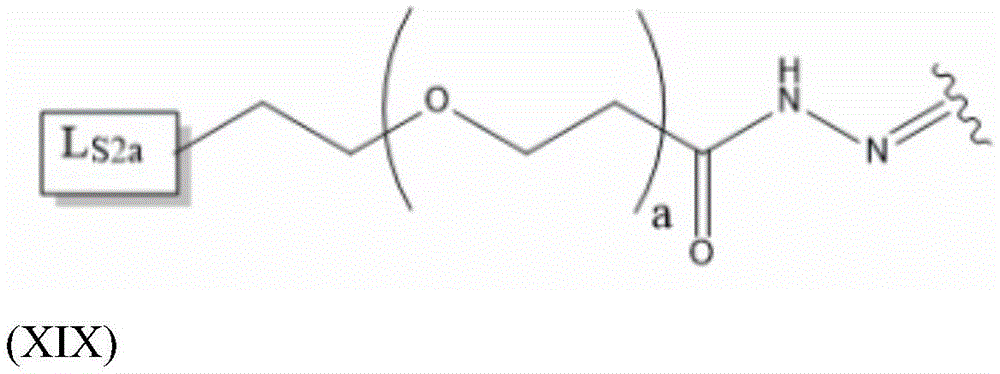
wherein a represents an integer greater than or equal to 0, preferably a represents an integer in the range of 2-6, more preferably a represents 4, and wherein L S2a Representing an alkyne-containing moiety. As will be appreciated by those of skill in the art in light of the present disclosure, the hydrazone described in formula (XIX) results from the reaction of a hydrazide with an aldehyde of the saponin moiety.
L S2a Preferably containing less than 20 carbon atoms, more preferably L S2a Represents a moiety according to formula (XX):
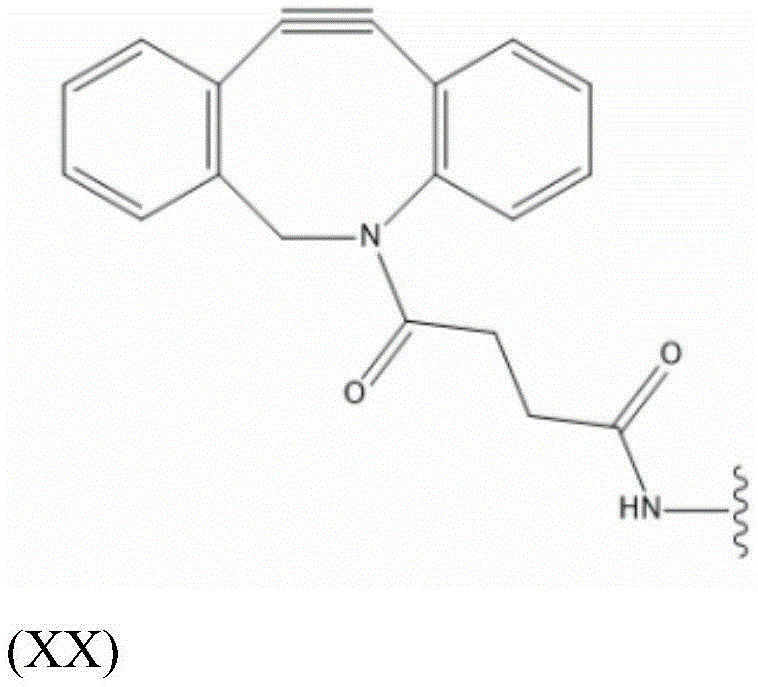
thus, in some embodiments, the saponin conjugates are of formula (II) as described herein S 、(III) S Or (IV) S Wherein the saponin moiety is at linker L S Is provided with (V) S 、(VII) S Or (VIII) S The compounds of formula (VI) S Results of a coupling reaction between compounds of (1) wherein the first precursor L S1 Is an azide, for example an azide of formula (XVII) or (XVIII), and wherein the second precursor L S2 Is composed of alkyne-containing part L S2a (e.g., alkynes having the formula (XX)) and hydrazones produced from the reaction of a hydrazide with an aldehyde of a saponin moiety.
Saponin conjugate-saponins
Aspects of the invention relate to a saponin conjugate comprising at least one saponin covalently linked to a ligand of an asialoglycoprotein receptor (ASGPR), wherein the ligand of the ASGPR comprises at least one N-acetylgalactosamine (GalNAc) moiety, preferably three or four GalNAc moieties, more preferably the ligand of the ASGPR comprises (GalNAc) 3 Tris or consists thereof, wherein the at least one saponin is selected from the group consisting of a monosaccharide chain triterpenoid saponin and a disaccharide chain triterpenoid saponin.
One embodiment is a saponin conjugate of the invention, wherein the saponin comprises a aglycone core structure selected from the group consisting of:
2 alpha-hydroxy oleanolic acid,
16 alpha-hydroxy oleanolic acid,
Hederagenin (23-hydroxy oleanolic acid),
16 alpha, 23-dihydroxyoleanolic acid,
The silk-stone bamboo sapogenin,
Soap scum acid,
Escin-21 (2-methylbut-2-enoate) -22-acetate,
23-oxo-yucygenin C-21, 22-bis (2-methylbut-2-enoate),
23-oxo-yucygenin C-21 (2-methylbut-2-enoate) -16, 22-diacetate,
Digitalis sapogenin,
3,16,28-Trihydroxyolean-12-ene,
Carnation acid,
and
The derivatives thereof,
preferably, the sapogenins comprise a aglycone core structure selected from the group consisting of saponaric acid and serrulaspin or a derivative thereof, more preferably, the sapogenins core structure is saponaric acid or a derivative thereof. Such preferred aglycones comprise an aldehyde group at the C-23 atom or derivative thereof as otherwise described herein. Without wishing to be bound by any theory, such aldehyde groups contribute to the endosomal escape enhancing activity of triterpenoid glycosides comprising aglycones selected from group C (especially saponaric acid and sericin).
One embodiment is a saponin conjugate of the present invention, wherein at least one of the saponins is a monosaccharide chain triterpene saponin belonging to the 12, 13-dehydrooleanane type having an aldehyde group at position C-23 and optionally comprising a glucuronic acid group in a carbohydrate substituent at the C-3 beta-OH group of the saponin, preferably a disaccharide chain triterpene saponin belonging to the 12, 13-dehydrooleanane type having an aldehyde group at position C-23 and comprising a glucuronic acid group in a carbohydrate substituent at the C-3 beta-OH group of the saponin.
One embodiment is a saponin conjugate of the present invention, wherein at least one saponin comprises a first sugar chain, the first sugar chain being associated with C of the aglycone core structure of the at least one saponin 3 Atoms or C 28 Atomic bond, preferably with C 3 Atomic binding, and/or wherein the at least one saponin comprises a second sugar chain, the second sugar chain being associated with C of the aglycone core structure of the at least one saponin 28 The atom-binding, preferably, the saponin comprises a first sugar chain and a second sugar chain. Thus, when the saponin conjugate of the present invention comprises a saponin having two glycans (sugar chains), the first sugar chain is bound at position C of the aglycone core structure 3 At a position C where the second sugar chain is bound to the aglycone core structure 28 Where it is located.
One embodiment is a saponin conjugate of the invention, wherein
Saponins comprise a sugar chain bound to the aglycone core structure, which sugar chain is selected from group a:
GlcA-
Glc-、
Gal-、
Rha-(1→2)-Ara-、
Gal-(1→2)-[Xyl-(1→3)]-GlcA-、
Glc-(1→2)-[Glc-(1→4)]-GlcA-、
Glc-(1→2)-Ara-(1→3)-[Gal-(1→2)]-GlcA-、
Xyl-(1→2)-Ara-(1→3)-[Gal-(1→2)]-GlcA-、
Glc-(1→3)-Gal-(1→2)-[Xyl-(1→3)]-Glc-(1→4)-Gal-、
Rha-(1→2)-Gal-(1→3)-[Glc-(1→2)]-GlcA-、
Ara-(1→4)-Rha-(1→2)-Glc-(1→2)-Rha-(1→2)-GlcA-、
Ara-(1→4)-Fuc-(1→2)-Glc-(1→2)-Rha-(1→2)-GlcA-、
Ara-(1→4)-Rha-(1→2)-Gal-(1→2)-Rha-(1→2)-GlcA-、
Ara-(1→4)-Fuc-(1→2)-Gal-(1→2)-Rha-(1→2)-GlcA-、
Ara-(1→4)-Rha-(1→2)-Glc-(1→2)-Fuc-(1→2)-GlcA-、
Ara-(1→4)-Fuc-(1→2)-Glc-(1→2)-Fuc-(1→2)-GlcA-、
Ara-(1→4)-Rha-(1→2)-Gal-(1→2)-Fuc-(1→2)-GlcA-、
Ara-(1→4)-Fuc-(1→2)-Gal-(1→2)-Fuc-(1→2)-GlcA-、
Xyl-(1→4)-Rha-(1→2)-Glc-(1→2)-Rha-(1→2)-GlcA-、
Xyl-(1→4)-Fuc-(1→2)-Glc-(1→2)-Rha-(1→2)-GlcA-、
Xyl-(1→4)-Rha-(1→2)-Gal-(1→2)-Rha-(1→2)-GlcA-、
Xyl-(1→4)-Fuc-(1→2)-Gal-(1→2)-Rha-(1→2)-GlcA-、
Xyl-(1→4)-Rha-(1→2)-Glc-(1→2)-Fuc-(1→2)-GlcA-、
Xyl-(1→4)-Fuc-(1→2)-Glc-(1→2)-Fuc-(1→2)-GlcA-、
Xyl-(1→4)-Rha-(1→2)-Gal-(1→2)-Fuc-(1→2)-GlcA-、
xyl- (1.fwdarw.4) -Fuc- (1.fwdarw.2) -Gal- (1.fwdarw.2) -Fuc- (1.fwdarw.2) -GlcA-, and
the derivatives thereof,
or (b)
Saponins comprise a sugar chain bound to the aglycone core structure, which sugar chain is selected from group B:
Glc-;
Gal-;
Rha-(1→2)-[Xyl-(1→4)]-Rha-;
Rha-(1→2)-[Ara-(1→3)-Xyl-(1→4)]-Rha-;
Ara-;
Xyl-;
xyl- (1.fwdarw.4) -Rha- (1.fwdarw.2) - [ R1- (. Fwdarw.4) ] -Fuc-, wherein R1 is 4E-methoxy cinnamic acid;
xyl- (1- > 4) -Rha- (1- > 2) - [ R2- (-4) ] -Fuc-, wherein R2 is 4Z-methoxy cinnamic acid;
Xyl-(1→4)-[Gal-(1→3)]-Rha-(1→2)-4-OAc-Fuc-;
Xyl- (1.fwdarw.4) - [ Glc- (1.fwdarw.3) ] -Rha- (1.fwdarw.2) -3, 4-di-OAc-Fuc-;
xyl- (1.fwdarw.4) - [ Glc- (1.fwdarw.3) ] -Rha- (1.fwdarw.2) - [ R3- (. Fwdarw.4) ] -3-OAc-Fuc-, wherein R3 is 4E-methoxy cinnamic acid;
Glc-(1→3)-Xyl-(1→4)-[Glc-(1→3)]-Rha-(1→2)-4-OAc-Fuc-;
Glc-(1→3)-Xyl-(1→4)-Rha-(1→2)-4-OAc-Fuc-;
(Ara-or Xyl-) (1→3) - (Ara-or Xyl-) (1→4) - (Rha-or Fuc-) (1→2) - [4-OAc- (Rha-or Fuc-) (1→4) ] - (Rha-or Fuc-);
Xyl-(1→3)-Xyl-(1→4)-Rha-(1→2)-[Qui-(1→4)]-Fuc-;
Api-(1→3)-Xyl-(1→4)-[Glc-(1→3)]-Rha-(1→2)-Fuc-;
Xyl-(1→4)-[Gal-(1→3)]-Rha-(1→2)-Fuc-;
Xyl-(1→4)-[Glc-(1→3)]-Rha-(1→2)-Fuc-;
Ara/Xyl-(1→4)-Rha/Fuc-(1→4)-[Glc/Gal-(1→2)]-Fuc-;
api- (1→3) -Xyl- (1→4) - [ Glc- (1→3) ] -Rha- (1→2) - [ R4- (→4) ] -Fuc-, wherein R4 is 5-O- [5-O-Ara/Api-3, 5-dihydroxy-6-methyl-octanoyl ] -3, 5-dihydroxy-6-methyl-octanoic acid;
api- (1→3) -Xyl- (1→4) -Rha- (1→2) - [ R5- (→4) ] -Fuc-, wherein R5 is 5-O- [5-O-Ara/Api-3, 5-dihydroxy-6-methyl-octanoyl ] -3, 5-dihydroxy-6-methyl-octanoic acid;
Api-(1→3)-Xyl-(1→4)-Rha-(1→2)-[Rha-(1→3)]-4-OAc-Fuc-;
Api-(1→3)-Xyl-(1→4)-[Glc-(1→3)]-Rha-(1→2)-[Rha-(1→3)]-4-OAc-Fuc-;
6-OAc-Glc-(1→3)-Xyl-(1→4)-Rha-(1→2)-[3-OAc-Rha-(1→3)]-Fuc-;
Glc-(1→3)-Xyl-(1→4)-Rha-(1→2)-[3-OAc--Rha-(1→3)]-Fuc-;
Xyl-(1→3)-Xyl-(1→4)-Rha-(1→2)-[Qui-(1→4)]-Fuc-;
Glc-(1→3)-[Xyl-(1→4)]-Rha-(1→2)-[Qui-(1→4)]-Fuc-;
Glc-(1→3)-Xyl-(1→4)-Rha-(1→2)-[Xyl-(1→3)-4-OAc-Qui-(1→4)]-Fuc-;
xyl- (1.fwdarw.3) -Xyl- (1.fwdarw.4) -Rha- (1.fwdarw.2) - [3, 4-di-OAc-Qui- (1.fwdarw.4) ] -Fuc-;
Glc-(1→3)-[Xyl-(1→4)]-Rha-(1→2)-Fuc-;
6-OAc-Glc-(1→3)-[Xyl-(1→4)]-Rha-(1→2)-Fuc-;
Glc-(1→3)-[Xyl-(1→3)-Xyl-(1→4)]-Rha-(1→2)-Fuc-;
Xyl-(1→3)-Xyl-(1→4)-Rha-(1→2)-[Xyl-(1→3)-4-OAc-Qui-(1→4)]-Fuc-;
Api/Xyl-(1→3)-Xyl-(1→4)-[Glc-(1→3)]-Rha-(1→2)-[Rha-(1→3)]-4OAc-Fuc-;
Api-(1→3)-Xyl-(1→4)-[Glc-(1→3)]-Rha-(1→2)-[Rha-(1→3)]-4OAc-Fuc-;
Api/Xyl- (1→3) -Xyl- (1→4) - [ Glc- (1→3) ] -Rha- (1→2) - [ R6- (→4) ] -Fuc-, wherein R6 is 5-O- [5-O-Rha- (1→2) -Ara/Api-3, 5-dihydroxy-6-methyl-octanoyl ] -3, 5-dihydroxy-6-methyl-octanoic acid;
Api/Xyl- (1→3) -Xyl- (1→4) - [ Glc- (1→3) ] -Rha- (1→2) - [ R7- (→4) ] -Fuc-, wherein R7 is 5-O- [5-O-Ara/Api-3, 5-dihydroxy-6-methyl-octanoyl ] -3, 5-dihydroxy-6-methyl-octanoic acid;
Api/Xyl- (1→3) -Xyl- (1→4) - [ Glc- (1→3) ] -Rha- (1→2) - [ R8- (→4) ] -Fuc-, wherein R8 is 5-O- [5-O-Ara/Api-3, 5-dihydroxy-6-methyl-octanoyl ] -3, 5-dihydroxy-6-methyl-octanoic acid;
Api- (1→3) -Xyl- (1→4) -Rha- (1→2) - [ R9- (→4) ] -Fuc-, wherein R9 is 5-O- [5-O-Ara/Api-3, 5-dihydroxy-6-methyl-octanoyl ] -3, 5-dihydroxy-6-methyl-octanoic acid;
xyl- (1- > 3) -Xyl- (1- > 4) -Rha- (1- > 2) - [ R10- (. Fwdarw.4) ] -Fuc-, wherein R10 is 5-O- [5-O-Ara/Api-3, 5-dihydroxy-6-methyl-octanoyl ] -3, 5-dihydroxy-6-methyl-octanoic acid;
api- (1→3) -Xyl- (1→4) -Rha- (1→2) - [ R11- (→3) ] -Fuc-, wherein R11 is 5-O- [5-O-Ara/Api-3, 5-dihydroxy-6-methyl-octanoyl ] -3, 5-dihydroxy-6-methyl-octanoic acid;
xyl- (1- > 3) -Xyl- (1- > 4) -Rha- (1- > 2) - [ R12- (. Fwdarw.3) ] -Fuc-, wherein R12 is 5-O- [5-O-Ara/Api-3, 5-dihydroxy-6-methyl-octanoyl ] -3, 5-dihydroxy-6-methyl-octanoic acid;
glc- (1→3) - [ Glc- (1→6) ] -Gal-; and
The derivatives thereof,
or (b)
Saponins are disaccharide chain triterpene glycosides comprising a first sugar chain selected from group a bound to the aglycone core structure and comprising a second sugar chain selected from group B bound to the aglycone core structure. Thus, when the saponin conjugate of the present invention comprises a saponin having two glycans (sugar chains), the first sugar chain is bound at position C of the aglycone core structure 3 At a position C where the second sugar chain is bound to the aglycone core structure 28 Where it is located.
Without wishing to be bound by any theory, the presence of aldehyde groups or derivatives thereof in the aglycone core structure (also referred to herein as "aglycone") is beneficial in that such saponins, when co-located with (effector) molecules in cells, in the endosomes of said cells, stimulate and/or enhance the ability of the endosomes of these (effector) molecules to escape. Thus, it is preferred that the saponin conjugates of the present invention comprise a saponin having an aglycone with an aldehyde group. In the presence of soap scum acidAnd in the silk-carnation sapogenin, aldehyde group is in aglycone C 23 At the atom.
One embodiment is a saponin conjugate of the present invention, wherein the saponin is selected from the group consisting of: quillaja (Quillaja) bark saponin, dipsacus asperosaponin B, bupleuroside A, bupleuroside D, bolbophyllosaponin A, phytolacca esculenta, esculentogenin, equisqualis saponin salt, AS6.2, NP-005236, AMA-1, AMR, alpha-hederagenin, NP-012672, NP-017777, NP-017778, NP-017774, NP-018110, NP-017772, NP-018109, NP-017888, NP-017889, NP-018108, SA1641, AE X55, NP-017674, NP-017810, AG1, NP-003881, NP-017676, NP-017677, NP-017706 NP-017705, NP-017773, NP-017775, SA1657, AG2, SO1861, GE1741, SO1542, SO1584, SO1658, SO1674, SO1832, SO1862, SO1904, QS-7, QS1861, QS-7api, QS1862, QS-17, QS-18, QS-21A-apio, QS-21A-xylo, QS-21B-apio, QS-21B-xylo, beta-escin, escin Ia, tea seed saponin I, tea seed saponin J, assam saponin F, digitonin, primordic acid 1 and AS64R, stereoisomers thereof, derivatives thereof, and combinations thereof, preferably the saponin is selected from the group consisting of: QS-21, a QS-21 derivative, SO1861, a SO1861 derivative, SA1641, a SA1641 derivative, GE1741, a GE1741 derivative, and combinations thereof, more preferably the saponin is selected from the group consisting of: QS-21 derivatives, SO1861 derivatives, and combinations thereof, most preferably the saponin is a SO1861 derivative.
Such triterpenoid glycoside-type saponins are able to enhance endosomal escape of (effector) molecules present in endosomes (or lysosomes) of cells when such saponins are co-located with the (effector) molecules within the cells. The inventors established that when the conjugates of the invention comprise saponins, the endosomal escape enhancing activity of these saponins is about 100 to 1000 fold stronger when the saponins are contacted with cells. When such cells are contacted with the (effector) molecule and the saponin at a concentration of the saponin that is 100-1000 times higher than the concentration of the same saponin comprised by the saponin conjugate of the present invention that is required to achieve the same degree of extracellular delivery of the (effector) molecule into the endosome and eventually into the cytosol of said cells, the free saponin is capable of stimulating the delivery of the (effector) molecule in the cytosol of the cells. Saponins exhibiting such endosomal escape enhancing activity, as well as saponins having a high structural similarity to those having established the cytosolic delivery capacity of the enhancing (effector) molecule, are listed in table A1. When the saponin is part of a saponin conjugate of the invention, the effectiveness of targeted delivery of the saponin into the endosome of the cell is thus about 100 to 1000 times higher on the cell after binding of the ligand of ASGPR to the cell surface binding site on the target cell and after endocytosis, compared to contacting the same cell with a free, non-targeted saponin (which does not provide a ligand for ASGPR binding to the ASGPR of the target cell).
In an embodiment, the saponin conjugate comprises at least one saponin, wherein the saponin is a derivative, wherein
i. The aglycone core structure of the saponin comprises a derivatized aldehyde group;
the sugar chain of the saponin (preferably selected from group a sugar chains) comprises a derivatized carboxyl group;
the sugar chain of the saponin, preferably selected from group B, comprises a derivatized acetoxy (Me (CO) O-) group; or (b)
Any combination of derivatizations (i), (ii) and/or (iii) is present.
Exemplary derivatization of aldehyde groups of the aglycone core structure (i) includes reduction to alcohols, such as primary alcohols; conversion to hydrazone; conversion to the hemiacetal; is converted into acetal; oxidizing to carboxyl; conversion to an imine; conversion to oxime; conversion to beta-hydroxyketone; or to an ketene, preferably reduced to an alcohol, such as a primary alcohol; or to hydrazone.
In an embodiment, the saponin is a derivative wherein the aglycone core structure comprises an aldehyde group which has been derivatized by:
reduction to alcohols, such as primary alcohols; or (b)
-conversion to a compound of formula R b HC=NNHR a Hydrazones of (2); preferably into a compound of formula R b HC=NNH(CO)R a Hydrazones of (2)
Wherein R is a Is a compound containing less than 20 carbon atoms, preferably less than 10 carbon atomsA group of atoms, and R b Is the remainder of the saponins. Preferably, R a Is an N-alkylated maleimide. In a particular embodiment, the aldehyde group has been converted to a hydrazone bond by reaction with: n-epsilon-maleimidocaaproic acid hydrazide (EMCH), N- [ beta-maleimidopropionic acid]Hydrazide (BMPH), or N- [ kappa-maleimido undecanoic acid]Hydrazide (KMUH).
Exemplary derivatization of carboxyl groups of sugar chains (ii) includes: reduction to alcohols, such as primary alcohols; conversion to an amide; conversion to esters; conversion to amines, such as primary or secondary amines; or decarboxylated, preferably reduced to an alcohol, such as a primary alcohol; conversion to an amide; or to an ester; more preferably to an amide.
Preferably the derivatised carboxyl group is part of a glucuronic acid moiety, and preferably the sugar chain is selected from group a.
In an embodiment, the saponin is a derivative wherein the sugar chain (preferably a sugar chain selected from group a) comprises a carboxyl group (preferably of the glucuronic acid moiety) that has been derivatized by:
reduction to alcohols, such as primary alcohols;
-conversion to a compound of formula R a NH(CO)R b Is an amide of (a); or (b)
-conversion to a compound of formula R a O(CO)R b Esters of (2)
Wherein R is a Is a group containing less than 20 carbon atoms, preferably less than 10 carbon atoms, and R b Is the remainder of the saponins. Preferably, R a Is an N-alkylated maleimide or diol. In particular embodiments, the carboxyl group has been derivatized by conversion to an amide bond by reaction with 2-amino-2-methyl-1, 3-propanediol (AMPD) or N- (2-aminoethyl) maleimide (AEM).
Exemplary derivatizations of the acetoxy groups of the sugar chains (iii) include: conversion to an alcohol, such as a secondary alcohol, by deacetylation, optionally followed by conversion of the resulting alcohol to an ether; esters or ketones; preferably to alcohols, such as secondary alcohols, by deacetylation.
Preferably, the derivatized acetoxy group is part of a sugar chain selected from group B.
In an embodiment, the saponin is a derivative wherein the sugar chain (preferably a sugar chain selected from group B) comprises an acetoxy group that has been derivatized by:
conversion to alcohols, such as secondary alcohols, by deacetylation; or (b)
Conversion by deacetylation to an alcohol, such as a secondary alcohol, followed by conversion of the resulting alcohol to a compound of formula R a OR b Ethers of the formula R a (CO)OR b Or an ester of formula R a (CO)R b Ketone of (2)
Wherein R is a Is a group containing less than 20 carbon atoms, preferably less than 10 carbon atoms, and R b Is the remainder of the saponins. Preferably, R a Is an N-alkylated maleimide or diol.
Thus, in an embodiment, the saponin is a derivative, wherein:
the aglycone core structure comprises aldehyde groups which have been derivatised by:
-reduction to an alcohol;
-conversion to hydrazone bonds by reaction with N-epsilon-maleimidocaaproic acid hydrazide (EMCH);
-conversion to hydrazone bonds by reaction with N- [ β -maleimidopropionic acid ] hydrazide (BMPH); or (b)
-conversion to hydrazone bonds by reaction with N- [ kappa-maleimido undecanoic acid ] hydrazide (KMUH);
selecting a group a sugar chain comprising a carboxyl group, preferably a carboxyl group of a glucuronic acid moiety, which has been derivatised by conversion to an amide bond by reaction with 2-amino-2-methyl-1, 3-propanediol (AMPD) or N- (2-aminoethyl) maleimide (AEM);
the sugar chain selected from group B comprises an acetoxy group (Me (CO) O-), which has been derivatized by conversion to a hydroxyl group (HO-); or (b)
There are any combinations of derivatizations (i), (ii) and/or (iii).
One embodiment is a saponin conjugate of the invention wherein the saponin is a saponin derivative, wherein
i. The saponin derivative comprises a aglycone core structure comprising a derivatized aldehyde group;
the saponin derivative comprises a sugar chain, preferably selected from group a, comprising a derivatized carboxyl group;
the saponin derivative comprises a sugar chain, preferably selected from group B, comprising a derivatized acetoxy (Me (CO) O-) group; or (b)
The saponin derivative comprises any combination of derivatizations i, ii, and iii, preferably any combination of derivatizations of two of i, ii, and iii.
One embodiment is a saponin conjugate of the present invention, wherein the saponin is any one or more of the following: SO1861, SA1657, GE1741, SA1641, QS-21A, QS-21A-api, QS-21A-xyl, QS-21B, QS-21B-api, QS-21B-xyl, QS-7-api, QS-17-xyl, QS1861, QS1862, sapogenin, a saponin set, QS-18, quil-A, gyp1, silk-bamboo saponin A, AG1, AG2, SO1542, SO1584, SO1658, SO1674, SO1832, SO1904, stereoisomers thereof, derivatives thereof, and combinations thereof, preferably the saponin is selected from the group consisting of: QS-21, a QS-21 derivative, SO1861, a SO1861 derivative, SA1641, a SA1641 derivative, GE1741, a GE1741 derivative, and combinations thereof, more preferably the saponin is selected from the group consisting of: QS-21 derivatives, SO1861 derivatives, and combinations thereof, most preferably the saponin is a SO1861 derivative.
One embodiment is the saponin conjugate of the present invention, wherein the saponin is a saponin derivative of a saponaric acid saponin or a silk diabolo sapogenin saponin according to the present invention, and is represented by molecule 1:

wherein the method comprises the steps of
A 1 Represents hydrogen, monosaccharides or linear or branched oligosaccharides, preferably A 1 Represents a sugar chain selected from group A, more preferably A 1 Represents a sugar chain selected from group A and A 1 Comprising or consisting of glucuronic acid moieties;
A 2 represents hydrogen, monosaccharides or linear or branched oligosaccharides, preferably A 2 Represents a sugar chain selected from group B, more preferably A 2 Represents a sugar chain selected from group B and A 2 Comprising at least one acetoxy (Me (CO) O-) group, such as one, two, three or four acetoxy groups,
wherein A is 1 And A 2 At least one of which is not hydrogen, preferably A 1 And A 2 Are oligosaccharide chains;
and R is hydrogen in sericin or hydroxyl in saponaric acid;
wherein the saponin derivative corresponds to the saponin represented by molecule 1, wherein at least one, preferably one or two, more preferably one of the following derivatizations is present:
i. position C of saponaric acid or serrulate sapogenin 23 The aldehyde groups at which have been derivatized;
when A 1 Represents a sugar chain selected from group A and A 1 When comprising or consisting of glucuronic acid moieties, A 1 Has been derivatized with carboxyl groups of glucuronic acid moieties; and
when A 2 Represents a sugar chain selected from group B and A 2 When at least one acetoxy group is included, A 2 One or more (preferably all) of the acetoxy groups of one sugar moiety or two or more sugar moieties have been derivatized.
One embodiment is a saponin conjugate of the invention, wherein A 1 Represents a sugar chain selected from group A and comprises or consists of a glucuronic acid moiety, and wherein A 1 Has been derivatized with carboxyl groups of glucuronic acid moieties, and/or wherein A 2 Represents a sugar chain selected from group B and A 2 Comprises at least one acetoxy group, and wherein A 2 Has been derivatized with at least one acetoxy group.
One example is the saponin conjugate of the present invention, wherein the saponin represented by molecule 1 is a disaccharide chain triterpenoid saponin.
One embodiment is a saponin conjugate of the present invention, wherein the saponin derivative corresponds to the saponin represented by molecule 1, wherein at least one, preferably one or two, more preferably one of the following derivatizations is present:
i. position C of saponaric acid or serrulate sapogenin 23 The aldehyde groups at this site have been derivatized by:
-reduction to an alcohol;
-converting to a hydrazone bond by reaction with N-epsilon-maleimidocaproyl hydrazide (EMCH) to provide a saponin-Ald-EMCH, such as SO1861-Ald-EMCH or QS-21-Ald-EMCH, wherein the maleimide group of the EMCH is optionally derivatized by forming a thioether bond with mercaptoethanol;
-converting to a hydrazone bond by reaction with N- [ β -maleimidopropionic acid ] hydrazide (BMPH), wherein the maleimide group of BMPH is optionally derivatized by forming a thioether bond with mercaptoethanol; or (b)
-converting to a hydrazone bond by reaction with N- [ kappa-maleimido undecanoic acid ] hydrazide (KMUH), wherein the maleimide group of KMUH is optionally derivatized by forming a thioether bond with mercaptoethanol;
when A 1 Represents a sugar chain selected from group A and A 1 When comprising or consisting of glucuronic acid moieties, A 1 The carboxyl group of the glucuronic acid moiety of (a) has been derivatized by reaction with 2-amino-2-methyl-1, 3-propanediol (AMPD) or N- (2-aminoethyl) maleimide (AEM) to an amide bond, to provide a saponin-Glu-AMPD (e.g., QS-21-Glu-AMPD or SO 1861-Glu-AMPD) or a saponin-Glu-AEM (e.g., QS-21-Glu-AEM or SO 1861-Glu-AEM); and
when A 2 Represents a sugar chain selected from group B and A 2 When at least one acetoxy group is included, A 2 One or more, preferably all, of the acetoxy groups of one sugar moiety or two or more sugar moieties have been derivatized by deacetylation to hydroxyl groups (HO-).
One embodiment is a saponin conjugate of the invention, wherein A 1 Is Gal- (1- > 2) - [ Xyl- (1- > 3)]-GlcA and/or A 2 Is Glc- (1.fwdarw.3) -Xyl- (1.fwdarw.4) -Rha- (1.fwdarw.2) - [ Xyl- (1.fwdarw.3) -4-OAc-Qui- (1.fwdarw.4)]-Fuc, preferablyThe saponin represented by molecule 1 is 3-O-beta-D-galactopyranosyl- (1.fwdarw.2) - [ beta-D-xylopyranosyl- (1.fwdarw.3) ]-beta-D-glucuronopyranosyl soap pinoic acid 28-O-beta-D-glucopyranosyl- (1.fwdarw.3) -beta-D-xylopyranosyl- (1.fwdarw.4) -alpha-L-rhamnopyranosyl- (1.fwdarw.2) - [ beta-D-xylopyranosyl- (1.fwdarw.3) -4 OAc-beta-D-quiniopyranosyl- (1.fwdarw.4)]-beta-D-fucopyranoside, more preferably the saponin is any one or more of the following: SO1861, GE1741, SA1641 and QS-21, or derivatives thereof, most preferably SO1861 or derivatives thereof.
One embodiment is a saponin conjugate of the invention wherein the saponin is a saponin derivative, wherein
i. The saponin derivative comprises a aglycone core structure comprising an aldehyde group which has been derivatised by:
-reduction to an alcohol;
-converting to a hydrazone bond by reaction with N-epsilon-maleimidocaproyl hydrazide (EMCH) to provide a saponin-Ald-EMCH, such as SO1861-Ald-EMCH or QS-21-Ald-EMCH, wherein the maleimide group of the EMCH is optionally derivatized by forming a thioether bond with mercaptoethanol;
-converting to a hydrazone bond by reaction with N- [ β -maleimidopropionic acid ] hydrazide (BMPH), wherein the maleimide group of BMPH is optionally derivatized by forming a thioether bond with mercaptoethanol; or (b)
-converting to a hydrazone bond by reaction with N- [ kappa-maleimido undecanoic acid ] hydrazide (KMUH), wherein the maleimide group of KMUH is optionally derivatized by forming a thioether bond with mercaptoethanol;
The saponin derivative comprises a sugar chain, preferably selected from group a, comprising a carboxyl group, preferably a carboxyl group of a glucuronic acid moiety, which has been derivatised by conversion to an amide bond by reaction with 2-amino-2-methyl-1, 3-propanediol (AMPD) or N- (2-aminoethyl) maleimide (AEM), thereby providing a saponin-Glu-AMPD (such as QS-21-Glu-AMPD or SO 1861-Glu-AMPD) or a saponin-Glu-AEM (such as QS-21-Glu-AEM or SO 1861-Glu-AEM);
the saponin derivative comprises a sugar chain, preferably selected from group B, comprising an acetoxy (Me (CO) O-) group that has been derivatized by deacetylation to a hydroxyl group (HO-); or (b)
The saponin derivative comprises any combination of derivatizations i, ii, and iii, preferably any combination of derivatizations of two of i, ii, and iii;
preferably, the saponin derivative comprises a aglycone core structure, wherein the aglycone core structure comprises an aldehyde group that has been derivatized by conversion to a hydrazone bond by reaction with an EMCH, wherein the maleimide group of the EMCH is optionally derivatized by formation of a thioether bond with mercaptoethanol.
One embodiment is a saponin conjugate of the invention wherein the saponin is a saponin derivative, wherein
i. The saponin derivative comprises a aglycone core structure comprising an aldehyde group that has been derivatised by reaction with N-epsilon-maleimidocaaproic acid hydrazide (EMCH) to a hydrazone bond, thereby providing a saponin-Ald-EMCH, such as SO1861-Ald-EMCH or QS-21-Ald-EMCH;
the saponin derivative comprises a sugar chain, preferably selected from group a, comprising a carboxyl group, preferably a carboxyl group of a glucuronic acid moiety, which has been derivatised by conversion to an amide bond by reaction with N- (2-aminoethyl) maleimide (AEM), thereby providing a saponin-Glu-AEM (such as QS-21-Glu-AEM or SO 1861-Glu-AEM); or (b)
The saponin derivative comprises a combination of derivatizations i.and ii.
One embodiment is a saponin conjugate of the present invention, wherein the saponin derivative comprises a aglycone core structure, wherein the aglycone core structure comprises an aldehyde group, and wherein the saponin derivative comprises a sugar chain, preferably a sugar chain selected from group a, comprising a carboxyl group, preferably a carboxyl group of a glucuronic acid moiety, which glucuronic acid moiety has been derivatized by conversion to an amide bond by reaction with N- (2-aminoethyl) maleimide (AEM).
One embodiment is a saponin conjugate of the present invention, wherein the saponin derivative is represented by molecule 2:
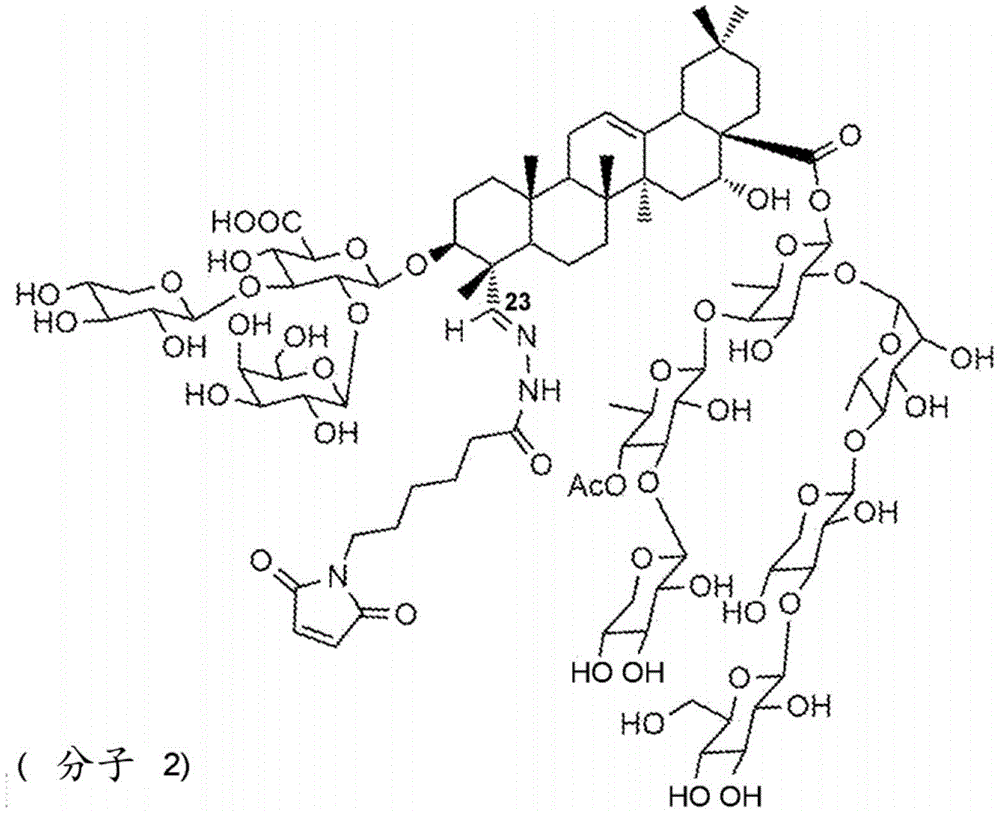
or wherein the saponin derivative is represented by molecule 3:
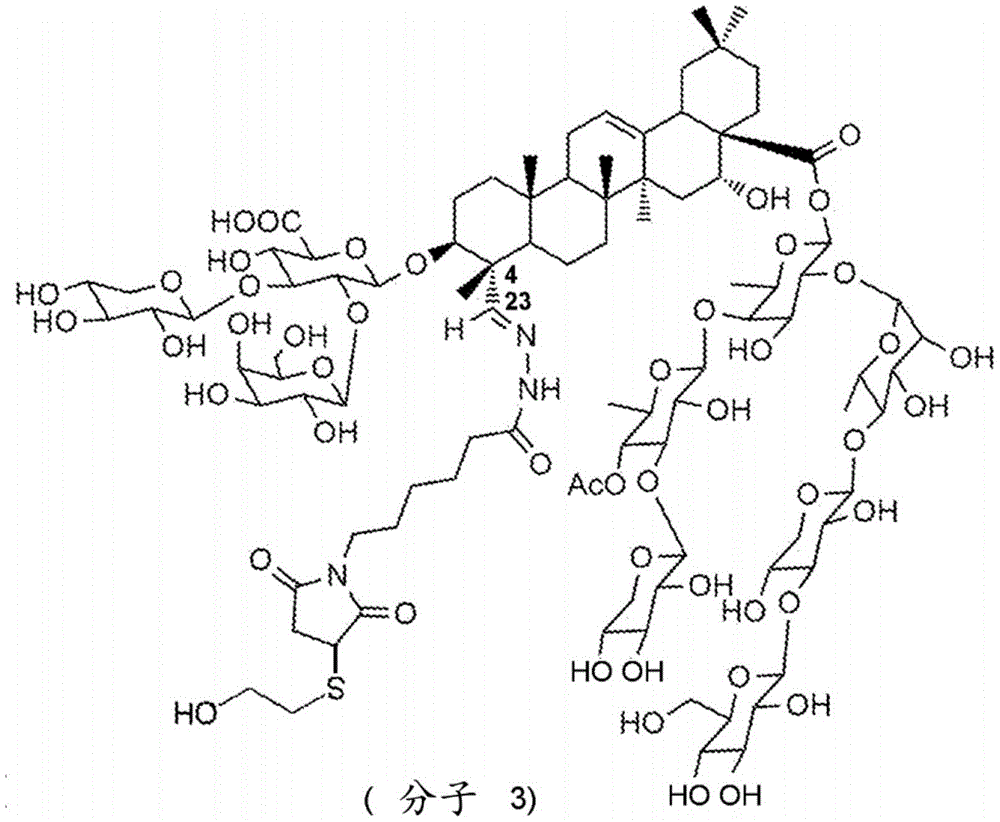
one embodiment is a saponin conjugate of the present invention, wherein at least one of the saponins and the ligand of ASGPR are covalently linked directly or via at least one linker.
One embodiment is a saponin conjugate of the present invention, wherein the GalNAc moiety is preferably via a saponin linker L s Combined with saponin S, as shown in formula (II) S Is represented by:
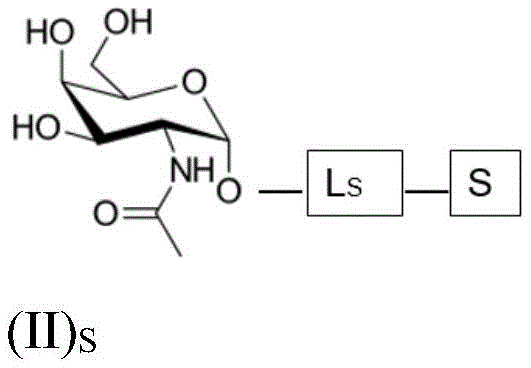
one embodiment is a saponin conjugate of the present invention, wherein each GalNAc moiety is covalently bound to a central bridging moiety B, preferably via a saponin moiety linker L, via oxygen at position "1" of the GalNAc moiety, respectively S Effectively forming a bridge between the GalNAc moiety and the saponin moiety, as in formula (III) S As shown in:
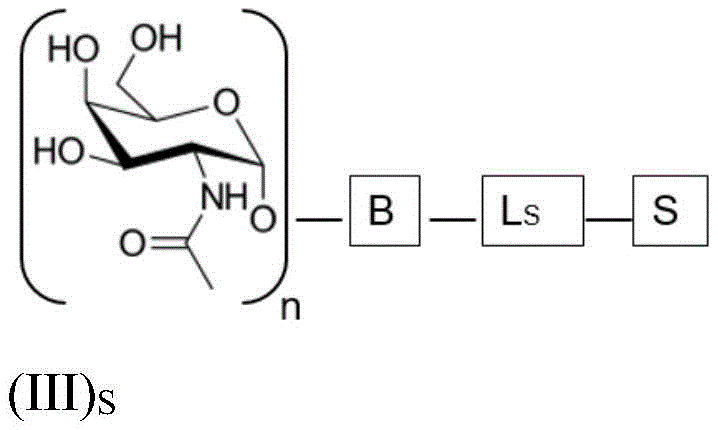
wherein n is an integer greater than or equal to 2, preferably n is 3, L S Is a saponin moiety linker, and S is the saponin moiety.
One embodiment is a saponin conjugate of the present invention, wherein the GalNAc moiety is via a GalNAc linker L GAL Combined with bridging moiety B, e.g. of formula (IV) S As shown in:
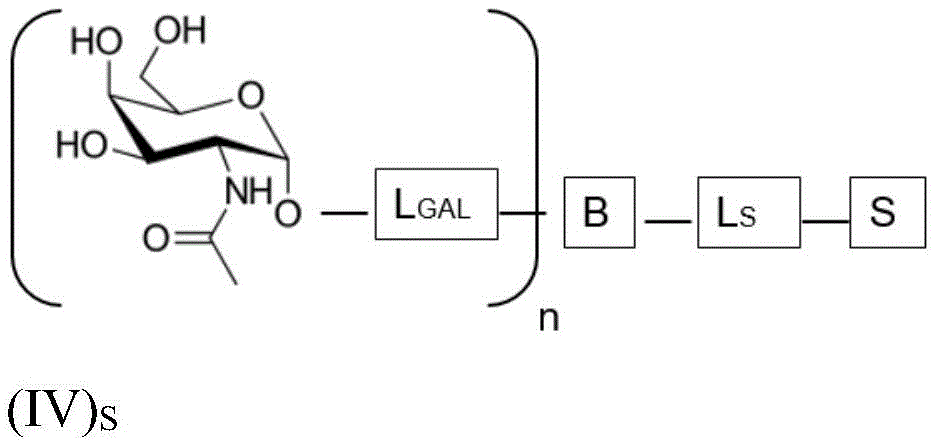
wherein n is an integer greater than or equal to 2, preferably n is 3, L S Is a saponin moiety linker, and S is the saponin moiety.
One embodiment is a saponin conjugate of the present invention, wherein the saponin moiety linker Ls represents a moiety suitable for use in associating a saponin with a compound of formula (II) S GalNAc or and the like of the formula (III) S And (IV) S Any chemical moiety to which bridging moiety B is covalently bound.
One embodiment is a saponin conjugate of the present invention, wherein the saponin moiety is linked to linker L S Is at least a first precursor L S1 With a second precursor L S2 As a result of the coupling reaction between the first precursor L S1 Covalently bound to GalNAc or bridging moiety B, the second precursor L S2 Covalently bound to a saponin moiety, wherein L S1 Is a saponin moiety linker L covalently bound to GalNAc or to the bridging moiety B S And L is S2 Is a saponin moiety linker L covalently bonded to the saponin moiety S Is a precursor of (a).
One embodiment is a saponin conjugate of the present invention, wherein the saponin moiety is linked to linker L S Is at least a first precursor L S1 With a second precursor L S2 As a result of the coupling reaction between the first precursor L S1 Covalently bound to GalNAc or bridging moiety B, the second precursor L S2 Covalently bound to a saponin moiety, wherein the coupling reaction is selected from the group consisting of: azide-alkyne cycloaddition, thiol maleimide coupling, staudinger reaction, nucleophilic ring opening of strained heterocyclic electrophiles, carbonyl reactions other than aldol type, addition of carbon-carbon double bonds, preferably wherein the coupling reaction is azide-alkyne cycloaddition, thiol maleimide coupling, staudinger reaction, nucleophilic ring opening of strained heterocyclic electrophiles, more preferably wherein the coupling reaction is azide-alkyne cycloaddition or thiol maleimide coupling.
One embodiment is a saponin conjugate of the present invention, wherein the saponin moiety is linked to linker L S Is the first precursor L S1 With a second precursor L S2 The coupling reaction betweenAs a result, the first precursor L S1 Covalently bound to GalNAc or bridging moiety B, the first precursor L S1 Comprises an azide; the second precursor L S2 Covalently bound to a saponin moiety, the second precursor L S2 Comprising alkynes and preferably hydrazones resulting from the coupling of a hydrazide/aldehyde with the aldehyde of the saponin moiety.
One embodiment is a saponin conjugate of the present invention, wherein precursor L S1 Is an azide having the following formula (XVII):

wherein a represents an integer greater than or equal to 0, preferably a represents an integer selected from 1, 2 and 3, more preferably a represents 2, or
Wherein the precursor L S1 Comprises an azide of formula (XVIII):
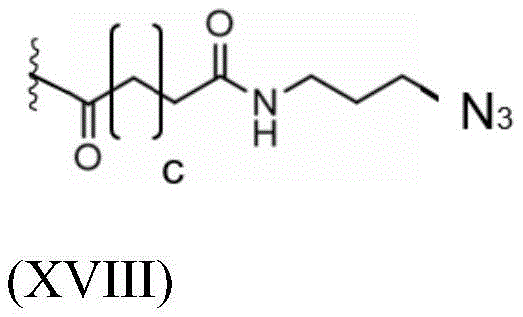
wherein c represents an integer greater than or equal to 0, preferably c represents an integer in the range of 5-15, more preferably c represents 9.
One embodiment is a saponin conjugate of the present invention, wherein precursor L S2 Comprises hydrazones of the following formula (XIX):
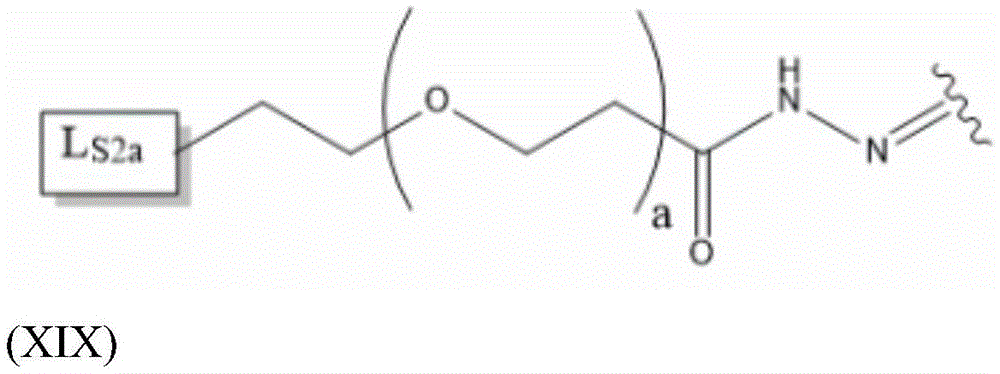
wherein a represents an integer greater than or equal to 0, preferably a represents an integer in the range of 2-6, more preferably a represents 4, and wherein L S2a Representing an alkyne-containing moiety.
One embodiment is a saponin conjugate of the invention, wherein L S2a Containing less than 20 carbon atoms, preferably L S2a Represents a moiety according to formula (XX):
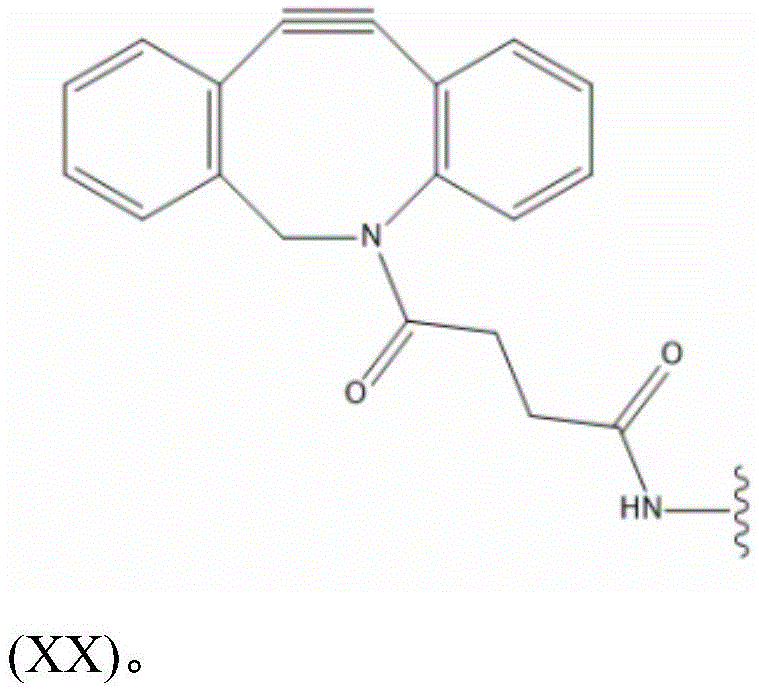
one embodiment is a saponin conjugate of the present invention, wherein the bridging moiety is a compound having the formula (XV):

wherein the oxygen atom of the compound having the formula (XV) is bonded to GalNAc or a GalNAc linker L GAL Is bound to, and the nitrogen atom of the compound having the formula (XV) is bonded to the saponin moiety linker L S And (5) combining.
One embodiment is a saponin conjugate of the invention, wherein L GAL Represents any chemical moiety suitable for covalently binding GalNAc to bridging moiety B.
One embodiment is a saponin conjugate of the invention, wherein L GAL Containing 2 to 25 carbon atoms, preferably 7 to 15 carbon atoms, more preferably 11 carbon atoms, and wherein L GAL Comprising at least one, preferably two amide moieties.
One embodiment is a saponin conjugate of the invention, wherein L GAL Is a compound according to formula (XVI):
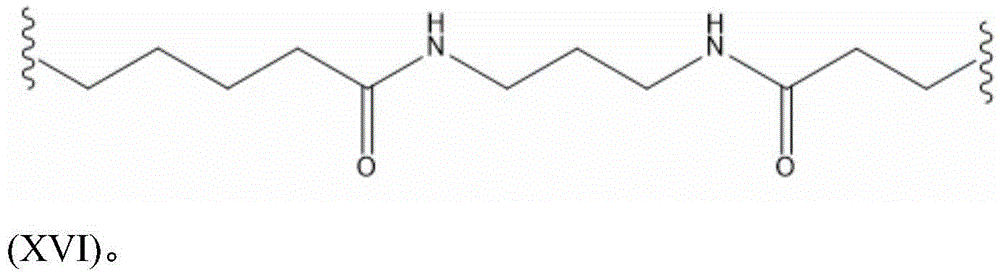
one example is the saponin conjugate of the present invention, wherein the ligand of ASGPR is represented by molecule I' (GalNAc) 3 Tris:
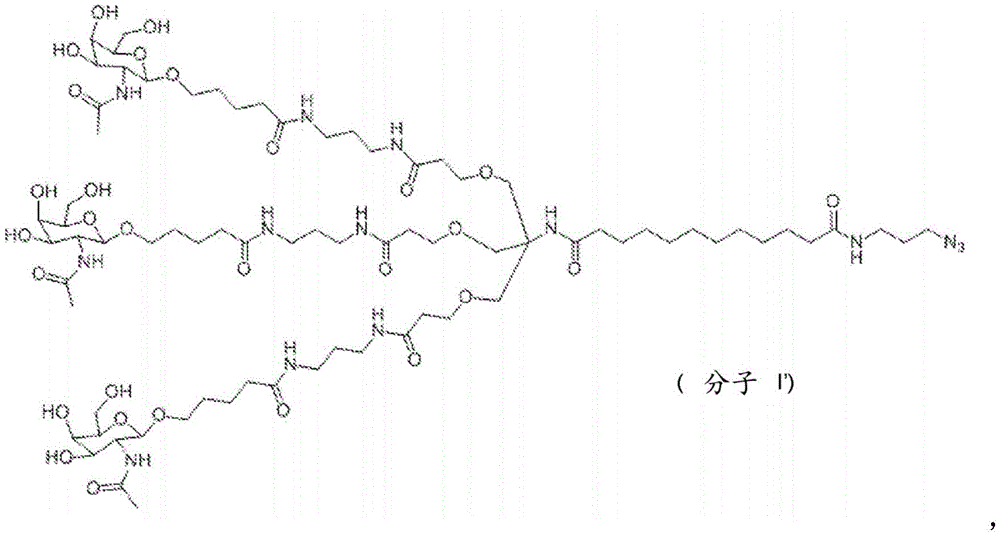
Or wherein the ligand of the ASGPR is a single GalNAc represented by molecule II':
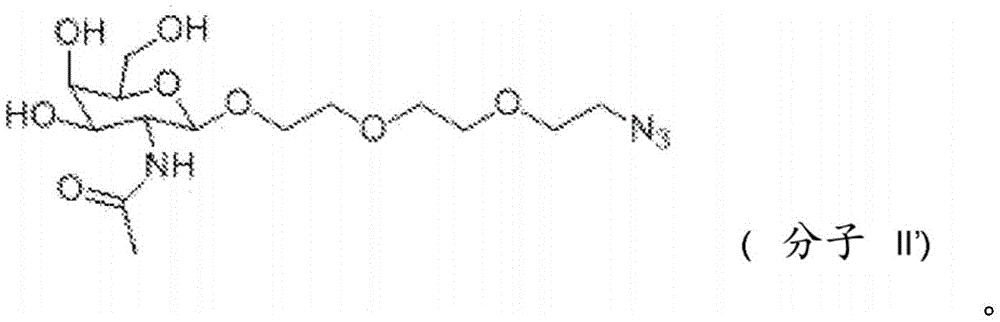
one embodiment is a saponin conjugate of the present invention, wherein at least one saponin is covalently bound to molecule I ' or molecule II ' of the present invention via a linker represented by molecule III ':
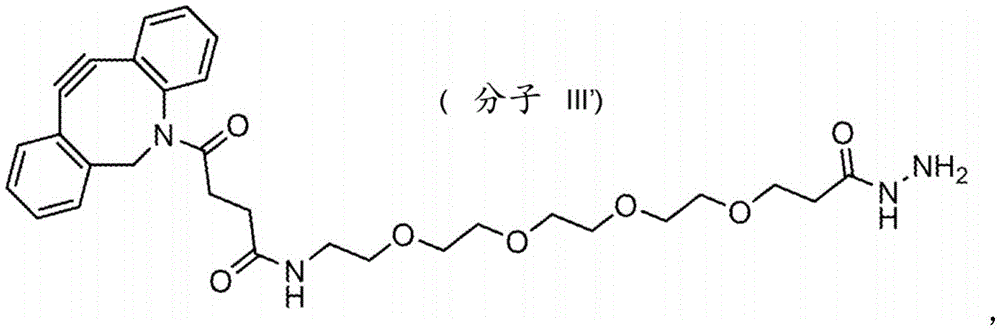
Wherein the hydrazide moiety of molecule III ' forms a covalent hydrazone bond with the aldehyde group in the saponin, and wherein the dibenzocyclooctyne group forms a covalent bond with the azide group of molecule I ' or molecule II '.
One embodiment is a saponin conjugate of the present invention, wherein at least one saponin is covalently bound to a ligand of ASGPR via at least one cleavable linker.
One embodiment is a saponin conjugate of the invention, wherein the cleavable linker is subjected to cleavage under acidic, reducing, enzymatic and/or light-induced conditions, and preferably the cleavable linker comprises a cleavable bond selected from the group consisting of: hydrazone bonds and hydrazide bonds that undergo cleavage under acidic conditions, and/or bonds that are susceptible to proteolysis (e.g., proteolysis by cathepsin B), and/or bonds that are susceptible to cleavage under reducing conditions, such as disulfide bonds.
One embodiment is a saponin conjugate of the invention wherein the cleavable linker is subjected to in vivo cleavage under acidic conditions (e.g. as present in endosomes and/or lysosomes of mammalian cells, preferably human cells), preferably the cleavable linker is subjected to in vivo cleavage at a pH of 4.0-6.5, and more preferably at a pH of less than or equal to 5.5.
One embodiment is a saponin conjugate of the present invention, wherein the conjugate comprises 1, 2, 3, 4, 5, 6, 8, 10, 16, 32, 64, 128, or 1-100 saponin moieties, or any number of saponin moieties therebetween, such as 7, 9, 12 saponin moieties.
Those skilled in the art will appreciate that if the saponins contained in the saponin conjugates of the present invention are of formula (II) as described herein S 、(III) S Or (IV) S Wherein the saponin moiety is at linker L S Is the first precursor L S1 With a second precursor L S2 As a result of the coupling reaction between the first precursor L S1 Covalently bound to GalNAc or a bridging moiety, the second precursor L S2 Covalently bound to a saponin moiety, the second precursor L S2 Comprising hydrazones resulting from aldehyde coupling of a hydrazide/aldehyde with a saponin moiety, as described herein, meaning that the aldehyde group has been occupied by a linker, such that suitable saponin derivatives are those in which the saponin is derivatized by (ii) a carboxyl group of a sugar chain as described herein and/or (iii) an acetoxy group of a sugar chain as described herein.
Effector molecule conjugates-introduction
Certain pharmaceutical combinations and certain pharmaceutical compositions of the invention comprise a second conjugate of an effector molecule and a ligand for an asialoglycoprotein receptor (ASGPR), referred to herein as an "effector molecule conjugate". When an effector molecule binds to the remainder of the effector molecule conjugate, it is referred to herein as an "effector moiety". The ASGPR ligand comprises at least one N-acetylgalactosamine (GalNAc) moiety. According to a preferred embodiment of the present invention, each GalNAc moiety binds to the remainder of the ASGPR ligand via a covalent bond with oxygen at position "1" as indicated in formula (I), or to an effector moiety in case the ASGPR ligand consists of a single GalNAc moiety:

Such as (II) E The ASGPR ligand is composed of a single GalNAc moiety bound to an effector moiety E, preferably via an effector moiety linker L E 。

ASGPR ligands may comprise more than one GalNAc moiety, such as 2, 3, 4, 5 or 6 GalNAc moieties, preferably 3 or 4 GalNAc moieties.In such a case, it is preferred that each GalNAc moiety is covalently bound to a central bridging moiety B, preferably via an effector moiety linker L, via oxygen at position "1", respectively E A bridge is effectively formed between the GalNAc moiety and the effector moiety. GalNAc moieties can be bound directly to bridging moiety B, e.g. of formula (III) E As shown in:

wherein n is an integer greater than or equal to 2, L E Is an effector moiety linker, and E is an effector moiety. More preferably, the GalNAc moiety is via a GalNAc linker L GAL Combined with bridging moiety B, e.g. of formula (IV) E As shown in:
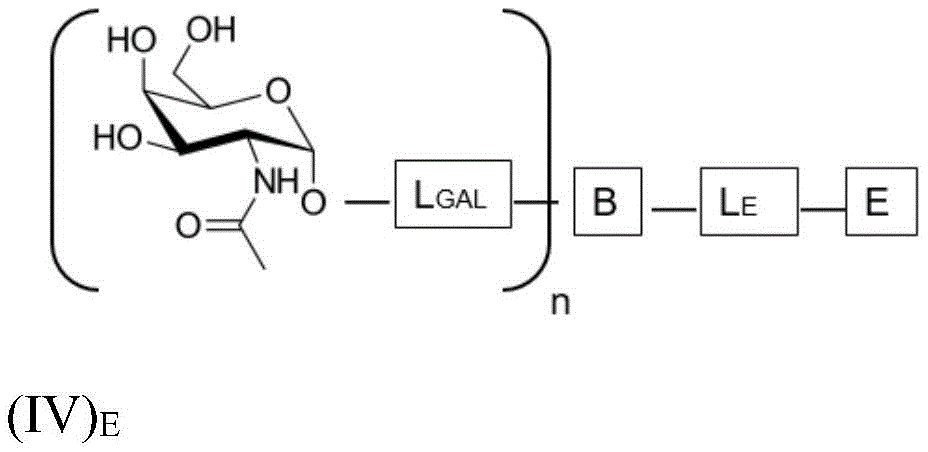
wherein n is an integer greater than or equal to 2, L E Is an effector moiety linker, and E is an effector moiety. Although each occurrence of L can be independently selected GAL But one skilled in the art will understand that at each occurrence L GAL In the case of representing the same moiety, the synthesis of the conjugate is simplified.
Effector molecule conjugate-linker L E
Effector moiety linker L E Representing a suitable compound for bringing effector moieties into association with a compound of formula (II) E GalNAc or and the like of the formula (III) E And (IV) E Any chemical moiety to which bridging moiety B is covalently bound. The nature and size of the linker is not particularly limited and the effector molecule is allowed to react with the compound of formula (II) E GalNAc or and the like of the formula (III) E And (IV) E Covalent binding of bridging moiety B in (a) may be achieved by "conventional" chemical functional groups (e.g. ether linkages) and by "click chemistry" linkers typically having long chain lengths (yielding linkers E comprising e.g. more than 10 or more than 20 carbon atoms) L ) To realize the method. Suitable effectorsPart of the joint L E And related coupling reactions are described in the handbook Hermanson, greg T.bioconjugate technologies [ bioconjugation techniques ]]Academic press [ Academic Press ]]2013.
As will be appreciated by those skilled in the art, effector moiety linker L E Will typically be at least a first precursor L E1 With a second precursor L E2 Results of coupling reactions between them (e.g. "click chemistry" type), the first precursor L E1 Covalently bound to GalNAc or bridging moiety B, the second precursor L E2 Covalently bound to an effector moiety. This principle is demonstrated in the following reaction scheme for compounds having formula (II):
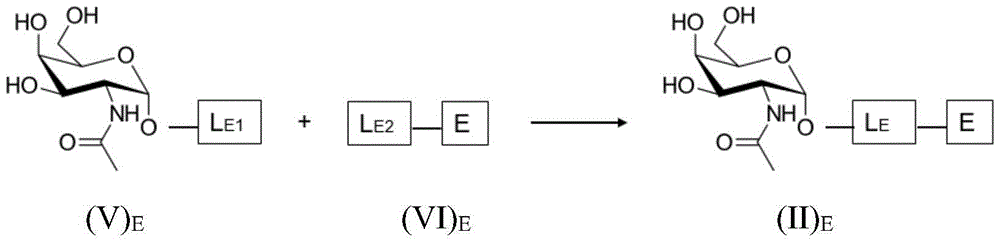
Wherein L is E Is an effector moiety linker, L E1 Effector moiety linker L covalently bound to GalNAc E And L is E2 An effector moiety linker L covalently attached to the effector moiety E And E is an effector moiety.
The corresponding reaction scheme for the compounds of formula (III) is as follows:

wherein L is E Is an effector moiety linker, L E1 Effector moiety linker L covalently bound to GalNAc E And L is E2 An effector moiety linker L covalently attached to the effector moiety E N is an integer greater than or equal to 2, and E is an effector moiety.
Having (IV) E The corresponding reaction scheme for the compounds of (2) is as follows:
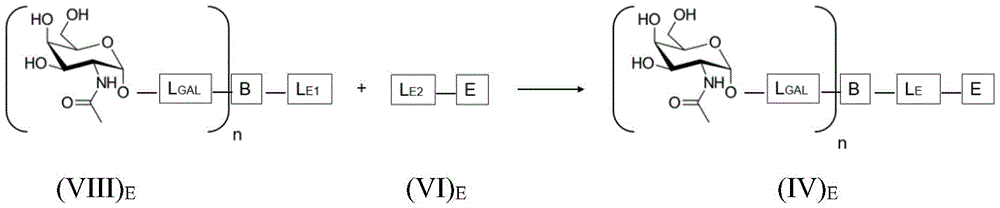
wherein L is E Is an effector moiety linker, L E1 Effector moiety linker L covalently bound to GalNAc E And L is E2 An effector moiety linker L covalently attached to the effector moiety E N is an integer greater than or equal to 2, E is an effector moiety, and L GAL Is a GalNAc linker and B is a bridging moiety.
Effector moiety linker L E May be at least a first precursor L E1 With a second precursor L E2 As a result of the coupling reaction between the first precursor L E1 Covalently bound to GalNAc or a bridging moiety, the second precursor L E2 Covalently bound to an effector moiety, wherein the coupling reaction is, for example, an azide-alkyne cycloaddition, thiol maleimide coupling, a staudinger reaction, nucleophilic ring opening of strained heterocyclic electrophiles (e.g., aziridine, epoxide, cyclic sulfate, aziridine ion, carboxylate ion), carbonyl reactions of non-aldol type (e.g., urea, thiourea, hydrazone, oxime ether, amide or aromatic heterocyclic formation), or addition of carbon-carbon double bonds (e.g., epoxidation, aziridine, dihydroxylation, sulfonyl halide addition, nitrosyl halide addition, or michael addition), preferably wherein the coupling reaction is an azide-alkyne cycloaddition, thiol maleimide coupling, staudinger reaction, nucleophilic ring opening of strained heterocyclic electrophiles, more preferably wherein the coupling reaction is an azide-alkyne cycloaddition or thiol maleimide coupling.
According to some embodiments of the invention, effector moiety linker L E Comprising a succinimide thioether moiety. Such succinimide sulfides are the result of, for example, coupling of an N-substituted maleimide with a thiol-maleimide between a thiol-or thiol-containing compound. This thiol maleimide coupling is a commonly known "click" chemistry tool in the field of bioconjugation and is described, for example, in Hermann, greg T.bioconjugate techniques]Academic press [ Academic Press ]]2013 page 289. Therefore, effector moiety linker L is preferred E Is the first precursor L E1 With a second precursor L E2 The result of the coupling reaction between the first precursorBody L E1 Covalently bound to GalNAc or a bridging moiety, the first precursor L E1 Comprising an N-substituted maleimide; the second precursor L E2 Covalently bound to an effector moiety, the second precursor L E2 Comprising a thiol or precursor thereof. Suitable thiol precursors are disulfides, which can be cleaved (e.g. in situ) via reduction to the corresponding thiol.
Exist in a compound (V) E 、(VII) E Or (VIII) E Precursor L in the compound of (2) E1 The preferred structure of (a) is the following terminal N-substituted maleimide:
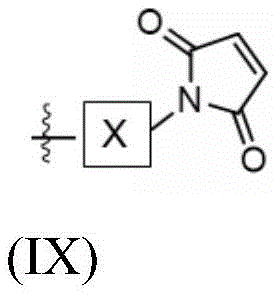
wherein X represents any linker suitable for covalently binding the terminal N-substituted maleimide to GalNAc or bridging moiety B. As will be appreciated by those skilled in the art, X may be the result of a coupling reaction between a first moiety covalently bound to GalNAc or bridging moiety and a second moiety covalently bound to maleimide. X may comprise hydrazone and/or 1,2, 3-triazole. Whenever 1,2, 3-triazole is mentioned in the context of the linker of the present application, this preferably means 1H-1,2, 3-triazole.
Exist in a compound (V) E 、(VII) E Or (VIII) E Precursor L in the compound of (2) E1 Examples of structures of (a) are the following terminal N-substituted maleimides:
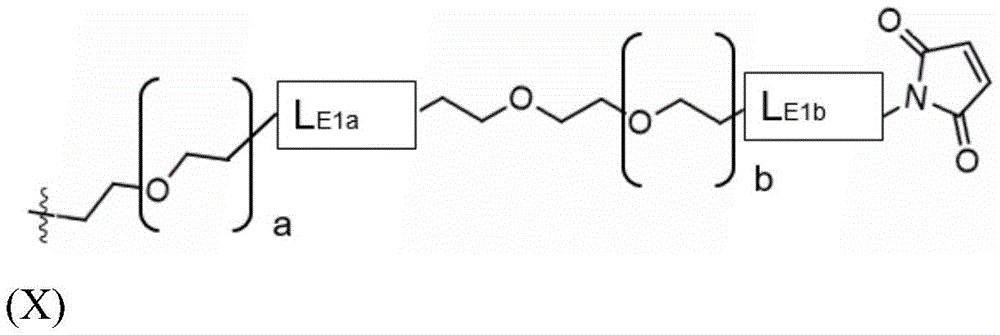
wherein a and b each independently represent an integer greater than or equal to 0, preferably a and b each independently represent an integer selected from 0, 1,2 and 3, more preferably a and b represent 2, and wherein L E1a Represents hydrazone and/or 1,2, 3-triazole, preferably 1,2, 3-triazole, and wherein L E1b Represents hydrazone and/or 1,2, 3-triazole, preferably hydrazone;
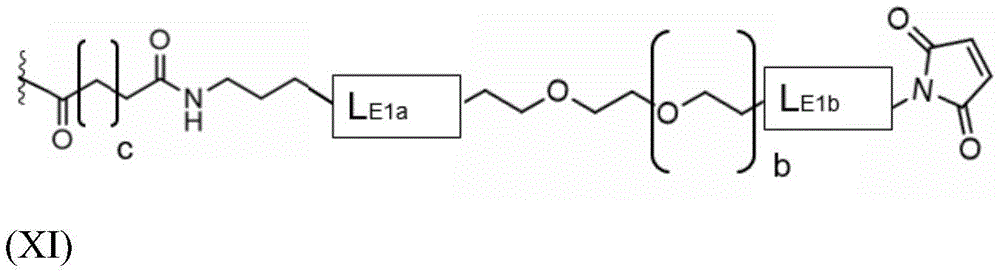
wherein b and c each independently represent an integer greater than or equal to 0, preferably b represents an integer selected from 0, 1,2 and 3 and c represents an integer in the range of 5-15, more preferably b represents 2 and c represents 9, wherein L E1a Represents hydrazone and/or 1,2, 3-triazole, preferably 1,2, 3-triazole, and wherein L E1b Represents hydrazone and/or 1,2, 3-triazole, preferably hydrazone;
and

Wherein c represents an integer greater than or equal to 0, preferably c represents an integer in the range of 5-15, more preferably c represents 9, wherein L E1c Represents hydrazone and/or 1,2, 3-triazole, preferably 1,2, 3-triazole.
L E1a 、L E1b And L E1c Each preferably contains less than 20 carbon atoms, more preferably L E1a 、L E1b And L E1c Each independently represents a moiety according to formula (XIII), (XIV) or (XV), preferably L E1a Is a 1,2, 3-triazole of the formula (XIII), L E1b Is a hydrazone of formula (XIV), and L E1c Is a 1,2, 3-triazole having the formula (XV):
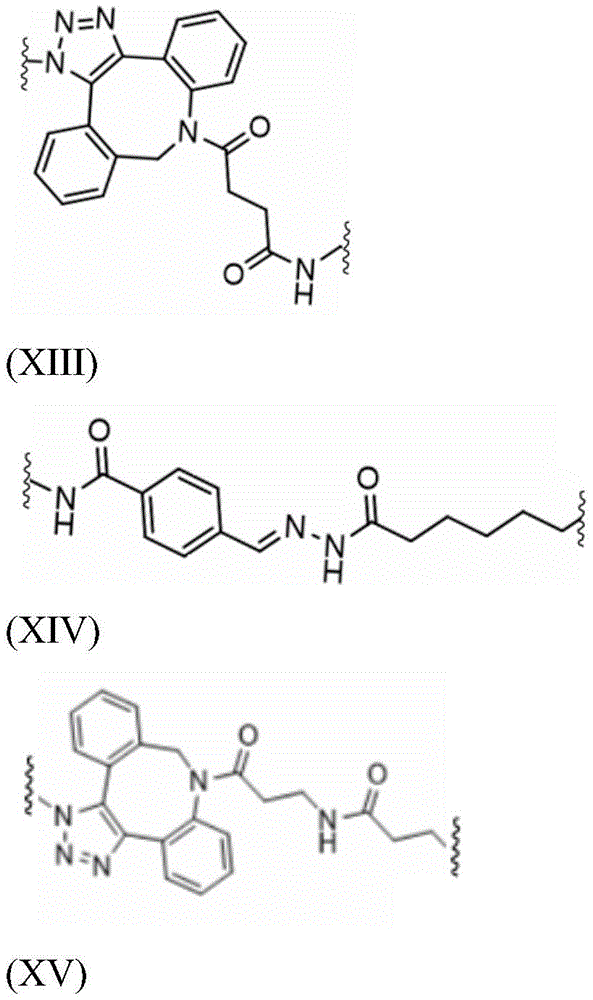
thus, in some embodiments, the effector molecule conjugate is of formula (II) as described herein E 、(III) E Or (IV) E Wherein the effector moiety linker L E Is provided with (V) E 、(VII) E Or (VIII) E The compounds of formula (VI) E Results of a coupling reaction between compounds of (1) wherein the first precursor L E1 Is a terminal N-substituted maleimide of formula (X), (XI) or (XII), wherein L E1a Is, for example, a 1,2, 3-triazole of the formula (XIII), L E1b Is, for example, a hydrazone of the formula (XIV), and L E1c Is, for example, a 1,2, 3-triazole of the formula (XV).
Effector molecule conjugate-effector moiety
Aspects of the invention relate to a pharmaceutical combination comprising:
-a first pharmaceutical composition comprising a saponin conjugate of the invention and optionally comprising a pharmaceutically acceptable excipient and/or a pharmaceutically acceptable diluent; and
-a second pharmaceutical composition comprising a second conjugate of an effector molecule and a ligand of ASGPR, or a third conjugate of an effector molecule and a binding molecule, and optionally comprising a pharmaceutically acceptable excipient and/or a pharmaceutically acceptable diluent, wherein the ligand of ASGPR preferably comprises at least one GalNAc moiety, preferably three or four GalNAc moieties, more preferably the ligand of ASGPR comprises (GalNAc) 3 Tris or consists of it, the binding molecule comprising a binding site for a cell surface molecule.
Aspects of the present invention relate to a pharmaceutical composition comprising:
-the saponin conjugate of the invention;
-a second conjugate of an effector molecule and a ligand of ASGPR, or a third conjugate of an effector molecule and a binding molecule, and optionally comprising a pharmaceutically acceptable excipient and/or a pharmaceutically acceptable diluent, wherein the ligand of ASGPR preferably comprises at least one GalNAc moiety, preferably three or four GalNAc moieties, more preferably the ligand of ASGPR comprises (GalNAc) 3 Tris or consists of it, the binding molecule comprising a binding site for a cell surface molecule.
One embodiment is a pharmaceutical combination of the invention or a pharmaceutical composition of the invention, wherein the effector molecule comprises or consists of at least one of the following: a small molecule (e.g., a drug molecule), a toxin (e.g., a protein toxin), an oligonucleotide (e.g., BNA), a heterologous nucleic acid or siRNA, an enzyme, a peptide, a protein, or any combination thereof, preferably the effector molecule is a toxin, an enzyme, or an oligonucleotide.
One embodiment is a pharmaceutical combination of the invention or a pharmaceutical composition of the invention, wherein the ligand of ASGPR comprises (GalNAc) 3 Tris or (GalNAc) 3 Tris, and/or wherein the ligand and effector molecule of ASGPR are conjugated via a covalent bond, preferably via at least one linker.
One embodiment is a pharmaceutical combination of the invention or a pharmaceutical composition of the invention, wherein the effector molecule is an oligonucleotide selected from any one or more of the following: short interfering RNA (siRNA), short hairpin RNA (shRNA), anti-hairpin microRNA (miRNA), single-stranded RNA, aptamer RNA, double-stranded RNA (dsRNA), anti-microRNA (anti-miRNA, anti-miR), antisense oligonucleotide (ASO), DNA, antisense DNA, locked Nucleic Acid (LNA), bridged Nucleic Acid (BNA), 2'-O,4' -aminoethylene Bridged Nucleic Acid (BNA) NC ) BNA-based siRNA, and BNA-based antisense oligonucleotide (BNA-aON).
One embodiment is a pharmaceutical combination of the invention or a pharmaceutical composition of the invention, wherein the effector molecule is an oligonucleotide selected from any one or more of the following: anti-miRNA, BNA-AON or siRNA, such as BNa-based siRNA, selected from chemically modified siRNA, metabolically stable siRNA, and chemically modified metabolically stable siRNA.
One example is a pharmaceutical combination of the invention or a pharmaceutical composition of the invention, wherein the effector molecule is an oligonucleotide capable of silencing any of the following genes, e.g. when present in a mammalian cell: apolipoprotein B (apoB), HSP27, thyroxine Transporter (TTR), proprotein convertase subtilisin/kexin type 9 (PCSK 9), deltA-Aminolevulinate synthase 1 (ALAS 1), antithrombin 3 (AT 3), glycolate Oxidase (GO), complement component C5 (CC 5), the X gene of Hepatitis B Virus (HBV), the S gene of HBV, alpha-1 antitrypsin (AAT) and Lactate Dehydrogenase (LDH), and/or oligonucleotides capable of targeting aberrant mirnas, for example, when present in mammalian cells.
Despite advances in the implementation of lifestyle changes and drug therapies for prophylaxis, cardiovascular disease remains a significant cause of overall life loss [ b.g. nordestgaard et al Advances in lipid-lowering therapy through gene-silencing technologies [ progress of lipid lowering therapy by gene silencing techniques ], nature Reviews-Cardiology [ natural review-Cardiology ], V15,2018, 5 months, pages 261-272 ]. Even after optimal lifestyle intervention, antihypertensive treatment, high dose statin therapy and after treatment with a new class of lipid lowering therapies such as the cholesterol absorption inhibitor ezetimibe, the PCSK9 inhibitor ibrutinib You Shan and becosalicarbazemab, the lipid lowering fibrate, the cholesterol ester transporter inhibitor ansipp and the anti-inflammatory agent canumab, there is a considerable risk of residual cardiovascular disease. Methods of therapy under development, in particular antisense oligonucleotide inhibition or small interfering RNA (siRNA) -based approaches employ gene silencing techniques through mRNA degradation. While small molecule lipid lowering agents are administered orally, gene silencing drugs are typically subcutaneously injected. Gene silencing techniques inhibit gene expression in the nucleus or cytoplasm to reduce protein production, resulting in reduced plasma lipoprotein levels in grams. The antisense oligonucleotides and siRNAs were formulated to achieve a much higher concentration in hepatocytes than in plasma. Gene silencing therapies target proteins in plasma and in cells.
LDL is most likely to cause atherosclerosis by deposition of intimal cholesterol. A prerequisite for Myocardial Infarction (MI) or ischemic stroke events is the development of atherosclerosis in the coronary arteries and other arteries. Atherosclerotic plaque initiation occurs through the penetration of LDL and remnant lipoproteins from plasma into the intima of the artery, facilitated by blood pressure gradients. Atherosclerotic plaque progression may occur if the levels of LDL and remnant lipoproteins in the plasma remain elevated for an extended period of time. Endothelial dysfunction leads to increased flux of these lipoproteins into the inner membrane, which can further enhance the progression of atherosclerosis. Plaque rupture leading to MI or ischemic stroke typically occurs at unstable atherosclerotic plaque sites with persistent local inflammation and no fibrous cap. Following plaque rupture, activated platelets and fibrin form a thrombus, the size of which can progress further if high levels of Lp (a) inhibit fibrinolysis by its homology to plasminogen. Finally, the substantial reduction of LDL and remnant lipoproteins in plasma can stabilize plaque by reducing plaque size and local inflammation. The gene silencing technique makes use of the central laws of molecular biology: the DNA is transcribed into mRNA and the mRNA is translated into protein. If the DNA sequence of a gene is known to affect the level of lipoprotein fraction responsible for cardiovascular disease, single-stranded RNA (antisense oligonucleotides) or double-stranded RNA (siRNA) can be synthesized that will bind to and inactivate the mRNA product of the gene, thereby effectively shutting down or silencing the gene. One challenge of antisense oligonucleotide or siRNA based gene silencing approaches is potential off-target or adverse reactions that are minimized by preferentially delivering drug to hepatocytes and thereby maintaining low drug concentrations in the rest of the body. Currently, the best way to selectively deliver antisense oligonucleotides or siRNA to hepatocytes is to attach these drugs or their delivery systems to an N-acetylgalactosamine (GalNAc) moiety, which facilitates selective uptake into hepatocytes via asialoglycoprotein receptors. Such gene silencing drugs with conjugated GalNAc moieties would greatly increase drug efficacy, reduce drug levels in plasma, and offer the hope of reducing adverse effects.
Lipid-lowering gene silencing therapies were evaluated in phase II and phase III trials. In addition to silencing apolipoprotein B genes, the genes ANGPTL3, APOC3, LPA and PCSK9, which are active in several lipoprotein pathways, are also targets for gene silencing therapies. An example of lipoprotein gene silencing therapy is mipramine (Mipomersen), an antisense oligonucleotide that binds directly to an mRNA sequence encoding apoB protein, which is the major protein carried on LDL, remnant lipoproteins and Lp (a).
Part of the invention is a pharmaceutical combination of the invention or a pharmaceutical composition of the invention, wherein the effector molecule is an oligonucleotide (preferably an siRNA, such as a BNA-based siRNA), or an antisense oligonucleotide (such as a BNA-based antisense oligonucleotide, e.g. a 2'-O,4' -aminoethylene bridged nucleic acid-based AON), preferably capable of silencing a gene apolipoprotein B (apoB) when present in a mammalian cell.
One embodiment is a pharmaceutical combination of the invention or a pharmaceutical composition of the invention, wherein the effector molecule is an oligonucleotide, e.g. capable of targeting mRNA involved in the expression of any of the following proteins when present in a mammalian cell: apoB, HSP27, TTR, PCSK9, ALAS1, AT3, GO, CC5, expression products of the X gene of HBV, expression products of the S gene of HBV, AAT and LDH, or are capable of antagonizing or restoring miRNA function, such as inhibiting oncogenic miRNA (onco-miR) or repressing expression of onco-miR, for example, when present in mammalian cells.
Part of the invention is a pharmaceutical combination of the invention or a pharmaceutical composition of the invention, wherein the effector molecule is an oligonucleotide (preferably an siRNA, such as a BNA-based siRNA), or an antisense oligonucleotide (such as a BNA-based antisense oligonucleotide, e.g. a 2'-O,4' -aminoethylene bridged nucleic acid-based AON), preferably when present in a mammalian cell, is capable of targeting mRNA involved in the expression of the protein apoB. That is, the binding of the oligonucleotide comprised by the conjugate comprising the effector moiety to apoB mRNA results in silencing of the expression of protein apolipoprotein B.
The inventors now surprisingly established improved and effective apoB gene silencing by treatment with a combination of BNA-AON with a ligand of ASGPR (here tri GalNAc) and a conjugate of saponin. Saponins (here exemplified by SO 1861) are known to have activity in promoting endosomal escape of molecules that are taken up into the endosome, for example via receptor-mediated cells. After treatment with a therapeutic combination of an AON conjugate comprising GalNAc and a saponin conjugate comprising GalNAc, gene silencing of apoB results in reduced mRNA levels of apoB protein expression, reduced plasma apoB levels, and reduced LDL plasma levels. The gene silencing effect is evident 72 hours after a single administration of the combination of the two conjugates, and even more than 10 days later (e.g., after 14 days).
One embodiment is a pharmaceutical combination of the invention or a pharmaceutical composition of the invention, wherein the effector molecule is or comprises a toxin comprising at least one moietyA molecule selected from any one or more of the following: peptides, proteins, enzymes (such as urease and Cre recombinase), prions, ribosome inactivating proteins, and/or bacterial toxins, plant toxins, more preferably selected from any one or more of the following: viral toxins, such as apoptotic proteins; bacterial toxins, such as shiga toxin, shiga-like toxin, pseudomonas aeruginosa (Pseudomonas aeruginosa) exotoxin (PE) or exotoxin a of PE, full length or truncated Diphtheria Toxin (DT), cholera toxin; mycotoxins, such as α -sarcin; phytotoxins, including the a-chain of ribosome inactivating proteins and type 2 ribosome inactivating proteins, such as carnation toxin protein (e.g. carnation toxin protein-30 or carnation toxin protein-32), saporin (e.g. saporin-S3 or saporin-S6), deltoid ribosome inactivating proteins or deimmunized derivatives of deltoid ribosome inactivating proteins, shiga-like toxin a, pokeweed antiviral protein, ricin a-chain, boea zebra root toxin a-chain, abrin a-chain, boea zebra root toxin a-chain, mistletoe lectin a-chain; or an animal or human toxin, such as frog ribonuclease, or granzyme B or angiogenic protein from human, or any fragment or derivative thereof; preferably, the protein toxin is carnation toxin and/or saporin, and/or comprises or consists of at least one of the following: ribosome-targeting toxins, extension factor-targeting toxins, tubulin-targeting toxins, DNA-targeting toxins and RNA-targeting toxins, more preferably any one or more of the following: enmei, pa Shu Tuo, maytansinoid derivative DM1, maytansinoid derivative DM4, monomethyl auristatin E (MMAE, vitamin E), monomethyl auristatin F (MMAF, mo Futing (mafostatin)), calicheamicin, N-acetyl-gamma-calicheamicin, pyrrolobenzodiazepine  (PBD) dimer, benzodiazepine +.>
 CC-1065 analog, docamicin, doxorubicin, paclitaxel, docetaxel, cisplatin, cyclophosphamide, etoposide, docetaxel, 5-fluorouracil (5-FU), mitoxantrone, tubulysin, indolinone benzodiazepine>
 AZ13599185, candidiasis, rhizobia, methotrexate, anthracyclines, camptothecin analogues, SN-38, DX-8951f, escitalopram mesylate, truncated forms of pseudomonas aeruginosa exotoxin (PE 38), docamicin derivatives, amanitine, alpha-amanitine, splice inhibitor (splicostatin), telavastatin, ozantine, tesselline, ambastatin (ambersstatin) 269 and grommet (soravtane), or derivatives thereof.
Conjugate-bridging moiety B
Exists in the formula (III) described herein S Or (IV) S Is of formula (III) E Or (IV) E Bridging moiety B in the effector molecule conjugate of (2) represents a linker L suitable for covalent binding of 2 or more, preferably 3 or 4, more preferably 3 GalNAc moieties and a saponin moiety S Or effector moiety linker L E Any portion of (2).
According to a preferred embodiment, the bridging moiety B is a compound having formula (XV):

Wherein the oxygen atom of the compound of formula (XV) and GalNAc (corresponding to the compound of formula (III) S Or (III) E Compounds of (2) or with GalNAc linker L GAL (corresponding to the formula (IV) S Or (IV) E A compound of formula (XV) and having a nitrogen atom of the compound of formula (XV) bonded to the saponin moiety linker L S Or effector moiety linker L E And (5) combining.
Those skilled in the art will appreciate that having the formula (III) S 、(III) E 、(IV) S Or (IV) E Wherein the bridging moiety B is a compound of formula (XV) corresponds to a compound wherein the ASGPR ligand consists of (GalNAc) 3 Tris-composed effector molecule conjugates.
Conjugate-linker L GAL
GalNAc linker L GAL Represents a compound suitable for use in the reaction of GalNAc with the formula (IV) S Or (IV) E Any chemical moiety to which the bridging moiety of (a) is covalently bound. The characteristics and size of the joint are not particularly limited.
According to the examples, galNAc linker L GAL Each containing from 2 to 25 carbon atoms, preferably from 7 to 15 carbon atoms, more preferably 11 carbon atoms. Preferably GalNAc linker L GAL Comprising at least one, preferably two amide moieties. Particularly preferred GalNAc linker L GAL Is a compound according to formula (XVI):
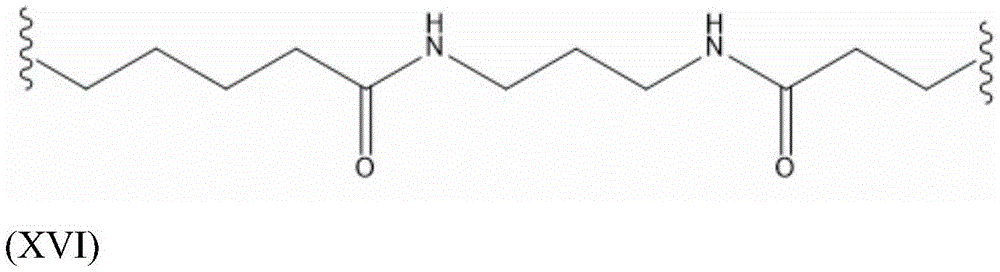
one example is a pharmaceutical combination according to the invention or a pharmaceutical composition according to the invention, wherein the binding molecule comprising a binding site for a cell surface molecule comprised by the third conjugate is a ligand for a cell surface molecule or an antibody comprising a binding site for a cell surface molecule or at least one domain or fragment thereof comprising the binding site.
One embodiment is a pharmaceutical combination of the invention or a pharmaceutical composition of the invention, wherein the third conjugate is any one or more of the following: antibody-toxin conjugates, receptor-ligand-toxin conjugates, antibody-drug conjugates, receptor-ligand-drug conjugates, antibody-nucleic acid conjugates, or receptor-ligand-nucleic acid conjugates.
One embodiment is a pharmaceutical combination of the invention or a pharmaceutical composition of the invention, wherein the binding molecule comprised by the third conjugate comprising a binding site for a cell surface molecule is capable of binding to any one of the following cell surface molecules: CD71, CA125, epCAM (17-1A), CD52, CEA, CD44V6, FAP, EGF-IR, integrin, aggrecan-1, angiogenin α -V beta-3, HER2, EGFR, CD20, CD22, folate receptor 1, CD146, CD56, CD19, CD138, CD27L receptor, PSMA, canag, integrin- α V, CA6, CD33, mesothelin, cripto, CD3, CD30, CD239, CD70, CD123, CD352, DLL3, CD25, ephrin A4, MUC1, trop2, CEACAM5, CEACAM6, HER3, CD74, PTK7, notch3, FGF2, C4.4A, FLT3, CD38, FGFR3, CD7, PD-L1, CTLA4, CD52, PDGFRA, VEGFR1, VEGFR2, asialoglycoprotein receptor (ASP), preferably any of the following: HER2, CD71, ASGPR and EGFR, more preferably CD71.
One embodiment is a pharmaceutical combination of the invention or a pharmaceutical composition of the invention, wherein the binding molecule comprising a binding site for a cell surface molecule comprised by the third conjugate is or comprises any one of the following: antibodies, preferably monoclonal antibodies such as human monoclonal antibodies, igG, molecules comprising or consisting of: single domain antibodies, at least one V HH Domain, preferably camel V H Variable heavy chain neoantigen receptor (V) NAR ) Domains, fab, scFv, fv, dAb, F (ab) 2 and Fcab fragments.
Aspects of the invention relate to the pharmaceutical combination of the invention or the pharmaceutical composition of the invention for use as a medicament.
Aspects of the invention relate to a pharmaceutical combination of the invention or a pharmaceutical composition of the invention for use in the treatment or prevention of a disease or health problem in which the expression product relates to any one or more of the following genes: apoB, TTR, PCSK9, ALAS1, AT3, GO, CC5, X gene of HBV, S gene of HBV, AAT and LDH.
Part of the present invention is a pharmaceutical combination according to the invention or a pharmaceutical composition according to the invention for use in the treatment or prevention of a disease or health problem in which the expression product relates to the gene apoB. The expression product of apoB gene is lipoprotein apolipoprotein B (apoB) present as part of LDL, remnant lipoproteins and Lp (a). Typically, the disease is a cardiovascular disease, typically associated with the accumulation and presence of atherosclerotic plaques involving one or more of the following: LDL, lp (a) and remnant lipoproteins comprising ApoB. The inventors now surprisingly established improved and effective apoB gene silencing by treatment with a combination of BNA-AON with a ligand of ASGPR (here tri GalNAc) and a conjugate of saponin. Saponins (here exemplified by SO 1861) are known to have activity in promoting endosomal escape of molecules that are taken up into the endosome, for example via receptor-mediated cells. After treatment with a therapeutic combination of an AON conjugate comprising GalNAc and a saponin conjugate comprising GalNAc, gene silencing of apoB results in reduced mRNA levels of apoB protein expression, reduced plasma apoB protein levels, and reduced LDL plasma levels. The gene silencing effect is evident 72 hours after a single administration of the combination of the two conjugates, and even more than 10 days later (e.g., after 14 days).
One embodiment is a pharmaceutical combination of the invention or a pharmaceutical composition of the invention, or a pharmaceutical combination or a pharmaceutical composition for use in the invention, for use in the treatment or prevention of: cancer, infectious disease, viral infection, hypercholesterolemia, primary hyperoxaluria, hemophilia a, hemophilia B, AAT-associated liver disease, acute hepatic porphyria, TTR-mediated amyloidosis, hereditary TTR amyloidosis (hATTR), complement-mediated disease, hepatitis b infection, or autoimmune disease.
One embodiment is a pharmaceutical combination for use in the present invention or a pharmaceutical composition for use in the present invention, wherein the saponin is a saponin derivative, preferably a QS-21 derivative or a SO1861 derivative according to the present invention.
Aspects of the invention relate to an in vitro or ex vivo method for transferring a second or third conjugate of the invention from outside a cell into said cell, preferably subsequently transferring an effector molecule comprised by the second or third conjugate according to the invention into the cytosol of said cell, comprising the steps of:
a) Providing a cell that expresses ASGPR on its surface and that expresses a cell surface molecule when the third conjugate is transferred into the cell, wherein the third conjugate comprises a binding molecule for binding to said cell surface molecule, the cell preferably being selected from the group consisting of a hepatocyte, a virus-infected cell and a tumor cell;
b) Providing a second conjugate or a third conjugate according to the invention for transfer into the cell provided in step a);
c) Providing a saponin conjugate of the present invention;
d) Contacting the cell of step a) with the second or third conjugate of step b) and the saponin conjugate of step c) in vitro or ex vivo, thereby effecting transfer of the second or third conjugate from outside the cell into said cell, and preferably thereby effecting subsequent transfer of the second or third conjugate into the cytosol of said cell, or preferably thereby effecting subsequent transfer of at least the effector molecule comprised by the second or third conjugate into the cytosol of said cell.
While the invention has been described in terms of several embodiments, it is contemplated that alternatives, modifications, permutations and equivalents thereof will become apparent to those of ordinary skill in the art upon reading of the specification and study of the drawings. The invention is not in any way limited to the embodiments shown. Changes may be made without departing from the scope as defined in the following claims.
The invention has been described above with reference to a number of exemplary embodiments. Modifications are possible and are included within the scope of protection as defined in the appended claims. The invention is further illustrated by the following examples, which should not be construed as limiting the invention in any way.
Examples and exemplary embodiments
EXAMPLE 1 CD71-saporin+4000 nM trivalent GalNAc-L-SO1861
Trivalent GalNAc is a targeting ligand that recognizes and binds to ASGPR1 receptor on hepatocytes. Trivalent GalNAc was produced (FIGS. 1 and 8) and SO1861-EMCH was conjugated to trivalent GalNAc (labile in a similar manner as described for underivatized SO1861 in FIGS. 2 and 4, where SPT001 is synonymous with SO 1861), DAR was 1 for bound SO1861 (trivalent GalNAc-SO 1861). SO1861-EMCH means asLower SO1861, wherein the aldehyde group is derivatized by reaction with N- ε -maleimidocaaproic acid hydrazide (EMCH) to a hydrazone bond, to provide SO1861-Ald-EMCH. "trivalent GalNAc" as described in FIGS. 1 and 8 is a typical (GalNAc) suitable for coupling with effector molecules or with saponins 3 Tris conjugate. As a control, SO1861-EMCH was also conjugated (labile) to monovalent GalNAc (FIG. 3), DAR was 1 for bound SO1861 (GalNAc-SO 1861). HepG2 (ASGPR 1) + ;CD71 + Table A3) and Huh7 (ASGPR 1) +/- ;CD71 + Table A3) cells were treated with a range of concentrations of trivalent GalNAc-L-SO1861 ((GalNAc) 3-SO 1861) and GalNAc-L-SO1861 (GalNAc-SO 1861) in the presence and absence of 10pM CD 71-saporin (CD 71-targeting monoclonal antibody OKT-9 conjugated to the protein toxin saporin). Cell treatment in the absence of CD 71-saporin showed that trivalent GalNAc-L-SO1861 ((GalNAc) 3-SO 1861) (or trivalent GalNAc) as a single compound was not toxic at up to 15000nM (FIG. 9).
HepG2 and Huh7 cells were also treated with a combination of CD 71-saporin in a concentration range with a fixed concentration of trivalent GalNAc-SO1861 of 1000nM or 4000nM (dar=1 for bound SO 1861). Targeted protein toxin-mediated cell killing of ASGPR1/CD71 expressing cells (HepG 2 and Huh 7) was determined. This revealed that strong cell killing of low concentrations of CD 71-saporin in both cell lines (ic50=1 pM), whereas equivalent concentrations of CD 71-saporin (CD 71-SPRN), CD 71-saporin+1000 nM trivalent GalNAc ((GalNAc) 3) or CD 71-saporin+4000 nM trivalent GalNAc ((GalNAc) 3-SPT) can induce cell killing in both cells only at high concentrations of CD 71-saporin (ic50=100 pM) (fig. 10).
All of these demonstrate that the combination of trivalent GalNAc-SO1861 ((GalNAc) 3-SPT) with low concentrations of CD 71-saporin (CD 71-SPRN) effectively induces cell killing in ASGPR1/CD71 expressing cells. Thus, trivalent GalNAc-SO1861 effectively induces endosomal escape of protein toxins in ASGPR1 expressing cells.
EXAMPLE 2 trivalent GalNAc-L/S-BNA+SO1861-EMCH
Binding HSP27BNA with trivalent GalNAcIs combined (FIGS. 6-7) and HepG2 (ASGPR 1) is treated with a concentration range of trivalent GalNAc-L-HSP27BNA (unstable conjugation, FIG. 6) or a combination of trivalent GalNAc-S-HSP27BNA (stable conjugation, FIG. 7) with a fixed concentration of SO1861-EMCH of 4000nM + ) Cells or Huh7 (ASPGR 1) +/- ). HSP27 gene silencing in HepG2 and Huh7 cells was determined. Only in combination with 4000nm so1861-EMCH, effective gene silencing was observed in both HepG2 and Huh7 cells in the following cases: low concentrations of trivalent GalNAc-L-HSP27BNA (also known as (GalNAc) 3-L-HSP 27) (HepG 2: ic50=0.1 nM; huh7: ic50=3 nM) or trivalent GalNAc-S-HSP27BNA (also known as (GalNAc) 3-S-HSP 27) (HepG 2: ic50=0.1 nM; huh7: ic50=3 nM), while equivalent concentrations of trivalent GalNAc-L-HSP27BNA (HepG 2/Huh7: IC50>2000 nM) or trivalent GalNAc-S-HSP27BNA (HepG 2/Huh7: IC50>2000 nM) showed no gene silencing activity in HepG2 and Huh7 cell lines (fig. 11).
Next, apoBBNA was conjugated with trivalent GalNAc in a similar manner (FIGS. 6-7), and HepG2 (ASGPR 1) was treated as follows + ) Cells or Huh7 (ASPGR 1) +/- ): trivalent GalNAc-L-ApoBBNA (also referred to as (GalNAc) 3-L-ApoB) (unstable conjugation, FIG. 6, FIG. 12, FIG. 13) or trivalent GalNAc-S-ApoBBNA (also referred to as (GalNAc) 3-S-ApoB) (stable conjugation, FIG. 7, FIG. 14, FIG. 15) or trivalent GalNAc-L-ApoB in a concentration range Scrambling BNA (also known as (GalNAc) 3-L-ApoB (scrambling)) or trivalent GalNAc-S-ApoB Scrambling BNA (also known as (GalNAc) 3-L-ApoB (scrambling)) (where scrambled ApoBBNA is an antisense scrambling oligomer sequence that does not bind to ApoB mRNA; off-target control BNA) was combined with a fixed concentration of SO1861-EMCH (also known as SPT-EMCH) of 4000 nM. HepG2 (ASGPR 1 was identified + ) Cells or Huh7 (ASPGR 1) +/- ) ApoB gene silencing in (a) is disclosed. Only in combination with 4000nm so1861-EMCH, effective gene silencing was observed in HepG2 cells in the following cases: low concentrations of trivalent GalNAc-L-ApoBBNA (ic50=10 nM) or trivalent GalNAc-S-ApoBBNA (ic50=10 nM), whereas equivalent concentrations of trivalent GalNAc-L-ApoBBNA (IC 50)>2000 nM) or trivalent GalNAc-S-ApoBBNA (IC 50)>2000 nM) showed no gene silencing activity in HepG2 cells (fig. 12, fig. 14). These treatments did not affect the viability of both cell lines (fig. 13, 15). "L" isRefers to an "labile" linker, which indicates that the linker is cleaved in the cell (i.e., at a pH that is apparent as in endosomes and lysosomes). In contrast, "S" refers to a "stable" linker, which indicates that the linker is not cleaved in the cell (i.e., at a pH that is apparent as in endosomes and lysosomes). Thus, a conjugate comprising an labile bond between any two molecules that form or are comprised by the conjugate will be cleaved at a position in the labile linker, thereby dissociating the two linked or bound molecules. One example is cleavage of hydrazone bonds under acidic conditions as evident in endosomes and lysosomes of mammalian cells (e.g., human cells).
All of these demonstrate that SO1861-EMCH can enhance endosomal escape of trivalent GalNAc-L-BNA or trivalent GalNAc-S-BNA and target gene silencing of two independent gene targets. Gene silencing in HepG2 cells was more efficient than Huh7 cells, indicating that higher levels of ASGPR1 expression at the plasma membrane of the cells helped to increase uptake of GalNAc-BNA conjugates.
Example 3 trivalent GalNAc-L/S-BNA+trivalent GalNAc-L-SO1861
SO1861-EMCH was conjugated to trivalent GalNAc (labile in a similar manner as described for underivatized SO1861 (also referred to as SPT 001) in fig. 2 and 4), dar=1 for bound SO1861 (referred to as trivalent GalNAc-SO1861, or (GalNAc) 3-SO1861, or (GN) 3-SPT). HepG2 (ASGPR 1) was treated as follows + ) Cells or Huh7 (ASPGR 1) +/- ) And (3) cells: trivalent GalNAc-L-ApoBBNA (unstable conjugation, FIG. 16), trivalent GalNAc-S-ApoBBNA (stable conjugation (FIG. 17)) or scrambled off-target control conjugate (trivalent GalNAc-L-ApoB) in a concentration range Scrambling BNA or trivalent GalNAc-S-ApoB Scrambling BNA) with a fixed concentration of trivalent GalNAc-L-SO1861 of 4000nM (dar=1 for bound SO 1861). HepG2 (ASGPR 1 was identified + ) Cells and Huh7 (ASPGR 1) +/- ) ApoB gene silencing of cells. Only in combination with 4000nM of trivalent GalNAc-L-SO1861 ((GN) 3-SPT) was the case in HepG2 cells (ASGPR 1) + ) Effective gene silencing was observed: low concentrations of trivalent GalNAc-L-ApoBBNA (ic50=50 nM) or trivalent GalNAc-S-ApoBBNA (ic50=50 nM). Two kinds of combined treatmentIn Huh7 cells (ASGPR 1) +/- ) Shows reduced effective gene silencing (trivalent GalNAc-L-ApoBBNA: IC50 = 700nM; trivalent GalNAc-S-ApoBBNA: IC50 = 700 nM). Equivalent concentrations of trivalent GalNAc-L-ApoBBNA (HepG 2/Huh7: IC50>1000 nM) or trivalent GalNAc-S-ApoBBNA (HepG 2/Huh7: IC50>1000 nM) showed no gene silencing activity in HepG2 and Huh7 cell lines, 4000nM trivalent GalNAc-L-SO1861 did not induce/enhance scrambled trivalent GalNAc-L-ApoB either Scrambling BNA+(HepG2/Huh7:IC50>1000 nM) or scrambled trivalent GalNAc-S-ApoB Scrambling BNA(HepG2/Huh7:IC50>1000 nM) (FIG. 16). T (T)
All of these demonstrate that when combined with trivalent GalNAc-L-SO1861 ((GN) 3-SPT), very low concentrations of trivalent GalNAc-L-HSP27BNA or trivalent GalNAc-S-HSP27BNA effectively induce gene silencing in ASGPR1 expressing cells and again a stronger effect is seen in cells with higher ASGPR1 expression.
Example 4 potency of 3-BNA (GalNAc) 3-SO1861 in Primary mouse hepatocytes
Conjugation of (GalNAc) 3 to a linker ("Ls") with SO1861-EMCH revealed (GalNAc) 3-SO1861, dar=1 for bound SO1861 (fig. 25, 26). Next, BNA targeting the murine ApoB sequence (more specifically, apoB accession No. 02BNA NC Or ApoB number 02 or thiol 13-ApoB BNA) to the linker ("Ls") revealing (GalNAc) 3-ApoB number 02, dar=1 for bound SO1861 (fig. 27, 28).
Primary mouse hepatocytes were treated with either ApoB No. 02BNA alone, or (GalNAc) 3-ApoB No. 02, or (GalNAc) 3-ApoB No. 02+2000nM SO1861-EMCH, or (GalNAc) 3-ApoB No. 02+250nM (GalNAc) 3-SO1861 in the concentration ranges, and ApoB RNA expression was determined by qPCR after 72 hours incubation (FIG. 18). Effective downregulation of ApoB mRNA expression (i.e., inhibition of gene expression) was observed at low concentrations of (GalNAc) 3-ApoB numbered 02BNA only in combination with 2000nM of SO1861-EMCH or in combination with 250nM (GalNAc) 3-SO 1861; the IC50 was about 0.03nM when combined with 2000nM SO1861-EMCH and about 0.2nM when combined with 250nM (GalNAc) 3-SO 1861. ApoB RNA downregulation was reduced by about 100-667 fold when treated with ApoBBNA No. 02 alone (ApoB No. 02: IC50=20 nM), while (GalNAc) 3-ApoB No. 02 (IC 50 is about 2 nM), the reduction was about 10-67 fold.
This suggests that very low concentrations of (GalNAc) 3-ApoB numbered 02BNA, in combination with (GalNAc) 3-SO1861 or SO1861-EMCH, were effective in inducing downregulation of ApoB RNA (i.e., gene silencing) in murine primary hepatocytes.
Example 5 in vivo efficacy of (GalNAc) 3-BNA+ (GalNAc) 3-SO1861 in C57BL/6J mice
C57BL/6J mice were treated as described and dosed according to table A5. Conjugates (GalNAc) 3-ApoB No. 02 and (GalNAc) 3-SO1861 used in this study were produced as described in FIGS. 25-28. Clinical observations were recorded and different biomarkers of efficacy and tolerability were analyzed.
As shown in fig. 19, after 24 hours, apoB RNA levels (i.e., gene expression) were not significantly reduced in animals treated with 0.1mg/kg ApoB No. 02BNA (ApoB No. 02) compared to vehicle-dosed groups (n=5 animals), and were reduced by approximately 15% and 21% in groups dosed with 1mg/kg or 2mg/kg ApoB No. 02BNA, respectively (all n=3 animals/group). Likewise, 1mg/kg of (GalNAc) 3-ApoB No. 02 (corresponding to 0.58mg/kg of ApoB No. 02 BNA) reduced ApoB expression by about 53% (n=3 animals) compared to vehicle control after 24 hours, whereas 0.1mg/kg of (GalNAc) 3-ApoB No. 02 alone showed no significant reduction (n=3) compared to vehicle. In contrast, apoB expression was readily reduced by about 69% after 24 hours when 0.1mg/kg (GalNAc) 3-ApoB number 02 was co-administered with 5mg/kg (GalNAc) 3-SO1861 compared to vehicle (n=2 animals); whereas 0.01mg/kg (GalNAc) 3-ApoB No. 02 still showed a small 16% decrease (n=2 animals) when co-administered with 5mg/kg (GalNAc) 3-SO1861. After 72 hours, the highest dose of ApoB No. 02BNA administered (2 mg/kg) showed a maximum reduction of 39% (n=3 animals) compared to vehicle (n=5 animals), whereas 1mg/kg (GalNAc) 3-ApoB No. 02 resulted in a 68% reduction of ApoB expression (n=3 animals). Again, when co-administered with 5mg/kg (GalNAc) 3-SO1861, a 10-fold lower dose of 0.1mg/kg (GalNAc) 3-ApoB No. 02 resulted in an even 82% decrease in ApoB expression levels (n=3 animals), whereas 0.1mg/kg (GalNAc) 3-ApoB No. 02 alone showed only a 12% decrease (n=3 animals). The effect was durable and after 336 hours, apoB expression levels were reduced by 30% for 2mg/kg ApoB No. 2bna (n=2 animals) and 25% for 1mg/kg (GalNAc) 3-ApoB No. 02. The co-administered group with a 10-fold decrease in payload (i.e., 0.1mg/kg (GalNAc) 3-ApoB numbered 02+5mg/kg (GalNAc) 3-SO 1861) still showed a 25% decrease and thus constituted a 10-fold improvement in payload decrease based on administration of reduced ApoB expression.
As shown in fig. 20, apoB RNA down-regulation (shown in fig. 19) converts well to ApoB protein levels. After 24 hours, apoB protein levels were most significantly reduced by about 50% for the co-administered group of 1mg/kg (GalNAc) 3-ApoB number 02 (n=8 animals) and also for 10-fold lower (GalNAc) 3-ApoB number 02+5mg/kg (GalNAc) 3-SO1861 (i.e., 0.1mg/kg (GalNAc) 3-ApoB number 02+5mg/kg (GalNAc) 3-SO 1861) (n=8 animals) compared to the control (n=14 animals). After 72 hours, although all treatment groups showed a decrease in ApoB protein compared to vehicle controls, the most pronounced effect was observed only when 0.1mg/kg (GalNAc) 3-ApoB number 02 was co-administered with 5mg/kg (GalNAc) 3-SO1861, which resulted in an ApoB decrease of about 90% (n=5 animals). After 72 hours post-dose, when co-administered with 5mg/kg (GalNAc) 3-SO1861 (n=4 animals), even 0.01mg/kg (GalNAc) 3-ApoB number 02 reduced ApoB protein by about 25%, whereas a 10-fold higher dose of 0.1mg/kg (GalNAc) 3-ApoB number 02 alone reduced ApoB protein by 35% (n=5 animals). Likewise, the effect was durable and reduced ApoB protein was still observed for all the treatment groups analyzed at 336 hours (all n=2 animals/group; samples from groups 1mg/kg ApoB number 02 and 0.01mg/kg (GalNAc) 3-ApoB number 02+5mg/kg (GalNAc) 3-SO861 at 336 hours were not analyzed). Also here, the co-administration group of 1mg/kg (GalNAc) 3-ApoB No. 02 and 0.1mg/kg (GalNAc) 3-ApoB No. 02+5mg/kg (GalNAc) 3-SO1861, which was a 10-fold lower dose, showed similar persistence (23% decrease in ApoB protein after 336 hours).
As shown in fig. 21, the observed down-regulation of ApoB protein (shown in fig. 20) converts well to LDL-cholesterol (LDL-C) levels. After 24 hours, LDL-C levels in animals treated with 0.1, 1 or 2mg/kg ApoB numbered 02BNA (n=3 animals/group) were not significantly reduced compared to vehicle (n=6 animals). The targeted (GalNAc) 3-ApoB No. 02 at a dose of 1mg/kg had reduced LDL-C to an average of 2.7mg/dl (n=3 animals), i.e. 53% within 24 hours, compared to vehicle and ApoB No. 02BNA group. It has been observed that when co-administered with 5mg/kg (GalNAc) 3-SO1861, a 10-fold lower dose of 0.1mg/kg (GalNAc) 3-ApoB No. 02 has reduced LDL-C to an average of 2.7mg/dl (n=3 animals), i.e. 53%, within 24 hours, whereas the group of 0.01mg/kg (GalNAc) 3-ApoB No. 02+5mg/kg (GalNAc) 3-SO1861 has too great a variation to conclude (n=2 animals). After 72 hours, the highest dose of ApoB No. 02BNA (2 mg/kg) showed a 50% decrease in LDL-C (n=3 animals) compared to vehicle (n=6 animals), while the case of 1mg/kg (GalNAc) 3-ApoB No. 02 was 72% decrease (n=3 animals), and the case of 0.1mg/kg (GalNAc) 3-ApoB No. 02+5mg/kg (GalNAc) 3-SO1861, which was a 10-fold lower dose, was even 78% (n=3 animals); whereas 0.01mg/kg (GalNAc) 3-ApoB No. 02+5mg/kg (GalNAc) 3-SO1861 was reduced by 13% (n=2 animals). The effect was durable and after 336 hours, LDL-C levels were reduced by 40% for 2mg/kg ApoB No. 02bna and by 48% for the co-administered group of 1mg/kg (GalNAc) 3-ApoB No. 02 and for 0.1mg/kg (GalNAc) 3-ApoB No. 02+5mg/kg (GalNAc) 3-SO1861, showing a 10-fold improvement in the payload based on LDL-C reduction administration.
In summary, this suggests that only in combination with 5mg/kg (GalNAc) 3-SO1861, very low concentrations of trivalent GalNAc ApoB numbered 02BNA ((GalNAc) 3-ApoB numbered 02 BNA) effectively induced ApoB RNA down-regulation (i.e. gene silencing) and all potent "downstream" biomarkers (such as ApoB protein and LDL-cholesterol) in the liver of C57BL/6J mice.
Example 5 (GalNAc) 3-BNA+ (GalNAc) 3-SO1861 in vivo tolerability in C57BL/6J mice
Conjugates (GalNAc) 3-ApoB No. 02 and (GalNAc) 3-SO1861 used in this study were produced as described in FIGS. 25-28.
During the course of the study, all treatments, doses and dose regimens as described in table A5 were well tolerated and did not show treatment specific adverse reaction findings or any specific clinical observations indicating intolerance of the conjugate. The treated mice gained weight comparable to mice receiving vehicle. Serum ALT levels were determined and the results are shown in fig. 22. ALT levels in vehicle mice ranged on average from 47 to 61U/L/group (n=6 animals for vehicle) during the study period. ALT levels in the different dose groups increased transiently at different time points, sometimes with each animal mutated/group large, and no specific compound or dose relationship was shown (all groups were n=3 at 24 hours and 72 hours, respectively, except 0.01mg/kg (GalNAc) 3-ApoB numbered 02+5mg/kg (GalNAc) 3-SO1861 (where both time points were n=2)). Notably, after 336 hours, ALT levels returned to baseline and were comparable to vehicle controls for all dosing groups (all groups were n=2).
In summary, this suggests that ApoB No. 02, (GalNAc) 3-ApoB No. 02, and (GalNAc) 3-SO1861 (alone or in combination with (GalNAc) 3-ApoB No. 02) have good tolerability in the doses and dosage regimen applied, and in particular, co-administration of (GalNAc) 3-SO1861 with (GalNAc) 3-ApoB No. 02 has no immediate tolerability problems in the C57BL/6J mouse model, while exhibiting high efficacy.
EXAMPLE 6 (GalNAc) 3-SO 1861+10pMCD71-saporin and (GalNAc) 3-BNA+250nM (GalNAc) 3-SO1861
SO1861-EMCH was conjugated to trivalent GalNAc ((GalNAc) 3) (labile in a similar manner as described for underivatized SO1861 in fig. 2 and 4), dar=1 for bound SO1861 (referred to as (GalNAc) 3-SO 1861). SO1861-EMCH refers to SO1861 in which the aldehyde group is derivatized by reaction with N- ε -maleimidocaaproic acid hydrazide (EMCH) to a hydrazone bond, thereby providing SO1861-Ald-EMCH. "trivalent GalNAc" as described in FIGS. 1 and 8 is a typical (GalNAc) suitable for coupling with effector molecules or with saponins 3 Tris conjugate. In the presence and absence of 10pM (non-effective concentration) CD 71-saporinIn the case of white (CD 71-targeting monoclonal antibody OKT-9 conjugated to the protein toxin saporin), primary human hepatocytes were treated with a concentration range of SO1861 (underivatized) or (GalNAc) 3-SO1861 (FIG. 23). This revealed that CD 71-saporin-mediated efficient cell killing of primary human hepatocytes was effective at SO1861 ic50=200 nM, whereas targeted (GalNAc) 3-SO1861 was already effective at much lower concentrations (SO 1861 ic50=10 nM) (fig. 23). All of these reveal that in order to demonstrate enhanced potency, ASGPR1 receptor mediated, conjugated acid sensitive cleavable (EMCH) SO1861 requires a reduced amount of SO1861 for delivery.
Next, apoB BNA (SEQ ID NO: 2) was conjugated with trivalent GalNAc ((GalNAc) 3) to produce (GalNAc) 3-ApoBBNA (fig. 6), and the modulation of ApoB RNA expression was tested on primary human hepatocytes (fig. 24A) and cell viability (fig. 24B) in combination with 2000nM SO1861-EMCH or 250nM (GalNAc) 3-SO 1861. This reveals that (GalNAc) 3-ApoBBNA alone was not able to efficiently reduce ApoB RNA expression (IC 50>1000 nM) (fig. 24A), and no effect on cell viability was observed (fig. 24B). However, (GalNAc) 3-ApoBBNA +2000nM so1861-EMCH was highly potent and showed strong downregulation of ApoB RNA expression at low concentrations of (GalNAc) 3-ApoBBNA (ic50=8 nM; fig. 24A) and decreased cell viability was observed at ic50=600 nM (fig. 24B). (GalNAc) 3-apobbna+250nM (GalNAc) 3-SO1861 also showed strong downregulation of ApoB RNA at low concentrations of (GalNAc) 3-ApoBBNA (ic50=15 nM; fig. 24A) without significantly affecting cell viability (fig. 24B). Interestingly, in the (GalNAc) 3-ApoBBNA+250nM (GalNAc) 3-SO1861 combination, above 100nM (GalNAc) 3-ApoBBNA, competition of (GalNAc) 3 conjugates for binding to the ASGPR1 receptor was observed, limiting the optimal concentration of both conjugates into the cell, thus allowing for a reversion of ApoB RNA down-regulation.
EXAMPLE 7 trivalent GalNAc-L-SO1861, trivalent GalNAc- (L-SO 1861) 4, SO1861-EMCH at a concentration of the CD71-saporin+ series
Trivalent GalNAc was produced (fig. 1 and 8) and SO1861-EMCH was conjugated to trivalent GalNAc (labile in a similar manner as described for underivatized SO1861 in fig. 2 and 4, where SPT and SPT001 are synonymous with SO 1861), for bound SO1861 (trivalent GalNAc-SO1861; (GN) 3-SPT), dar=1, or by first reacting SO1861-EMCH with a dendrimer (trivalent GalNAc-dendrimer (SO 1861) 4; (GN) 3-dSPT4; fig. 33C) coupling, DAR 4. Again, SO1861-EMCH refers to SO1861 in which the aldehyde group is derivatized by conversion to a hydrazone bond by reaction with N- ε -maleimidocaaproic acid hydrazide (EMCH), thereby providing SO1861-Ald-EMCH. "trivalent GalNAc" as described in FIGS. 1 and 8 is a typical (GalNAc) suitable for coupling with effector molecules or with saponins 3 Tris conjugate. As a control, SO1861-EMCH was also conjugated (labile) to monovalent GalNAc (fig. 3), dar=1 for bound SO1861, or dar=4 for bound SO1861 (using dendrites) (GalNAc-SO 1861 and GalNAc- (SO 1861) 4). Primary hepatocytes express receptors at high density-allowing targeting. Primary hepatocytes (ASGPR 1) highly expressing ASGPR1 were treated with a range of concentrations of trivalent GalNAc-L-SO1861, SO1861-EMCH, trivalent GalNAc- (SO 1861) 4 in the presence of 10pm CD 71-saporin (CD 71-targeting monoclonal antibody OKT-9 conjugated to the protein toxin saporin) + ). Cell treatment in the absence of CD 71-saporin showed that trivalent GalNAc-L-SO1861 as a single compound was not toxic up to at least 1.000nM (FIG. 29A; relative cell viability). Cell viability of cells treated with the combination of anti-CD 71 MoAb-saporin ("MoAb" =monoclonal antibody) and GalNAc conjugated to SO1861 (dar=1 for bound SO1861, or dar=4 for bound SO 1861) was about 100-fold lower compared to cell viability of cells treated with the combination of anti-CD 71 MoAb-saporin (CD 71-SPRN) and SO1861-EMCH (SPT-EMCH) (fig. 29A).
All of these indicate trivalent GalNAc-SO1861 and trivalent GalNAc- (SO 1861) 4 The combination with low concentrations of CD 71-saporin is effective in inducing cell killing in ASGPR1/CD71 expressing cells. Thus, trivalent GalNAc-SO1861 effectively induces endosomal escape of protein toxins in ASGPR1 expressing cells. Thus, both SPT001 and GalNAc-targeted SPT001 (dar=1 for bound SO 1861) increase the potency of industry standard GalNAc-targeted ASOs; when considering the cell viability of hepatocytes, SO1861-EMCH is about 10-fold, and (GN) 3-SPT and (GN) 3-dSPT4 are each about 100 times.
Example 8 trivalent GalNAc+trivalent GalNAc-L-SO1861 conjugated to ApoB antisense oligonucleotide
Trivalent GalNAc (FIGS. 1 and 8) was produced and SO1861-EMCH was conjugated to trivalent GalNAc (labile in a similar manner as described for underivatized SO1861 in FIGS. 2 and 4, where SPT and SPT001 are synonymous with SO 1861), DAR was 1 (trivalent GalNAc-SO1861; (GalNAc) 3-SPT001; FIG. 30C). Again, SO1861-EMCH refers to SO1861 in which the aldehyde group is derivatized by conversion to a hydrazone bond by reaction with N- ε -maleimidocaaproic acid hydrazide (EMCH), thereby providing SO1861-Ald-EMCH. Furthermore, covalent conjugates of trivalent GalNAc coupled to both the ApoB antisense BNA oligonucleotide ApoBBNA (SEQ ID NO: 2) and a dendrimer comprising four covalently coupled SO1861-EMCH were prepared. For an overview of the preparation of conjugates, see also the following "Synthesis of trivalent GalNAc-SO1861 and GalNAc-SO1861 (FIGS. 2, 4)" section and "Synthesis of trivalent GalNAc-BNA oligomer (FIGS. 6, 7)" section and "Synthesis of trivalent GalNAc-S-ApoB (or HSP 27) BNA oligomer" section and "Synthesis of trivalent GalNAc-L-ApoB (or HSP 27) BNA oligomer" section and "dendrimer (-L-SO 1861) 4 -a synthetic "moiety of trivalent GalNAc.
Primary hepatocytes (ASGPR 1) highly expressing ASGPR1 were treated with a range of concentrations of trivalent GalNAc-ApoBBNA ((GalNAc) 3-ApoB) in the presence or absence of 300nM of trivalent GalNAc-SO1861 ((GalNAc) 3-SPT 001) + ) (FIG. 29B). Cell treatment in the absence of (GalNAc) 3-SPT001 showed that trivalent GalNAc-L-SO1861 was highly effective in reducing ApoB gene expression in primary hepatocytes compared to ApoB gene expression in cells treated with (GalNAc) 3-ApoB alone (FIG. 29B).
All of these indicate trivalent GalNAc-SO1861 AND (GalNAc) 3 The combination of ApoB is effective to induce silencing of ApoB gene expression in ASGPR1 expressing cells. Thus, trivalent GalNAc-SO1861 effectively induces endosomal escape of BNA in ASGPR1 expressing cells.
Example 9 trivalent GalNAc conjugated to SO1861, or a range of concentrations of the conjugate trivalent GalNAc- (L-SO 1861) in the presence of fixed doses of OKT-9 anti-CD 71 monoclonal antibody
Trivalent GalNAc was produced (fig. 1 and 8) and SO1861-EMCH was conjugated to trivalent GalNAc (labile, in a similar manner as described for underivatized SO1861 in fig. 2 and 4, where SPT and SPT001 are synonymous with SO 1861), dar=1 for bound SO1861 (trivalent GalNAc-SO1861, (GalNAc) 3-SPT001; fig. 30C). Again, SO1861-EMCH refers to SO1861 in which the aldehyde group is derivatized by conversion to a hydrazone bond by reaction with N- ε -maleimidocaaproic acid hydrazide (EMCH), thereby providing SO1861-Ald-EMCH. For an overview of the preparation of conjugates, see also the following "synthesis of trivalent GalNAc-SO1861 and GalNAc-SO 1861" (FIGS. 2, 4) sections.
Primary hepatocytes (ASGPR 1) highly expressing ASGPR1 were treated with a range of concentrations of trivalent GalNAc-SO1861 (trivalent GalNAc-SPT 001) in the presence or absence of 10pm CD 71-saporin (CD 71-targeting monoclonal antibody OKT-9 conjugated with the protein toxin saporin; fig. 30D) + ) And hepatocytes of the cell line Huh7 (ASGPR 1 +/- ). Cell treatment in the absence of CD 71-saporin showed that trivalent GalNAc-L-SO1861 as a single compound was not toxic up to at least 1.000nM (FIGS. 30A, 30B; relative cell viability). Cell viability of cells treated with a combination of anti-CD 71 MoAb-saporin and low nM dose GalNAc conjugated to SO1861 (dar=1 for bound SO 1861; trivalent GalNAc-SPT 001) was highly effective in killing primary hepatocytes compared to cell viability of Huh7 cells treated with the same dose of anti-CD 71 MoAb-saporin in combination with the same dose of trivalent GalNAc-SPT001 (fig. 30A and 30B).
All of these demonstrate that low doses of trivalent GalNAc-SO1861 in combination with low concentrations of CD 71-saporin are effective in inducing cell killing in ASGPR1 expressing cells. Thus, trivalent GalNAc-SO1861 effectively induces endosomal escape of protein toxins in ASGPR1 expressing cells. Thus, low nM trivalent GalNAc-SPT001 enhances cytoplasmic delivery of low pM CD71 MoAb-saporin in primary hepatocytes; and hepatocytes lacking ASGPR1 expression were unresponsive at low nM concentrations of trivalent GalNAc-SPT 001.
EXAMPLE 10 trivalent GalNAc+trivalent GalNAc-L-SO1861 conjugated to ApoB antisense oligonucleotide
As described in example 8, trivalent GalNAc was produced and SO1861-EMCH was conjugated with trivalent GalNAc, dar=1 for bound SO1861 (trivalent GalNAc-SO1861, (GalNAc) 3-SPT001; fig. 30C). In addition, conjugates of trivalent GalNAc and ApoB antisense BNA oligonucleotide ApoBBNA (SEQ ID NO: 2) were prepared (FIG. 31C). For an overview of the preparation of conjugates, see also the following "Synthesis of trivalent GalNAc-SO1861 and GalNAc-SO1861 (FIGS. 2, 4)" part and "Synthesis of trivalent GalNAc-BNA oligomer (FIGS. 6, 7)" part and "Synthesis of trivalent GalNAc-S-ApoB (or HSP 27) BNA oligomer" and "Synthesis of trivalent GalNAc-L-ApoB (or HSP 27) BNA oligomer" part and "dendrimer (-L-SO 1861) 4 Trivalent GalNAc and dendrimer (-L-SO 1861) 8 Synthesis of trivalent GalNAc "part" and "dendrimer (-L-SO 1861) 4 -synthesis of trivalent GalNAc.
Primary hepatocytes (ASGPR 1) highly expressing ASGPR1 were treated with a range of concentrations of trivalent GalNAc-ApoBBNA (trivalent GalNAc-ApoBBNA) in the presence or absence of 300nM of trivalent GalNAc-SO1861 (trivalent GalNAc-SPT 001) + ) And hepatocytes of the cell line Huh7 (ASGPR 1 +/- ) (FIGS. 31A and 31B). Cell treatment in the absence of trivalent GalNAc-SPT001 showed that trivalent GalNAc-SPT001 was highly effective (about 100-fold more potent) in reducing ApoB mRNA expression in primary hepatocytes compared to ApoB mRNA expression in primary hepatocytes treated with trivalent GalNAc-ApoBBNA alone (FIG. 31A). None of trivalent GalNAc-ApoBBNA, or a combination of trivalent GalNAc-ApoBBNA and trivalent GalNAc-SPT001 induced a decrease in ApoB mRNA expression in these hepatocytes.
All of these demonstrate that the combination of trivalent GalNAc-SPT001 with trivalent GalNAc-ApoBBNA effectively induces silencing of ApoB mRNA expression in ASGPR1 expressing cells. Thus, trivalent GalNAc-SPT001 effectively induces endosomal escape of BNA in ASGPR1 expressing cells.
Treating a height with a range of concentrations of trivalent GalNAc-ApoBBNA (trivalent GalNAc-ApoBBNA) in the presence or absence of 300nM of trivalent GalNAc-SO1861 (trivalent GalNAc-SPT 001)Primary hepatocytes expressing ASGPR1 (ASGPR 1) + ) And hepatocytes of the cell line Huh7 (ASGPR 1 +/- ) (FIGS. 32A and 32B), and ApoB protein expression was assessed and compared. Cell treatment in the absence of trivalent GalNAc-SPT001 showed that trivalent GalNAc-SPT001 was highly effective (more than 1000-fold higher) in reducing apoB protein expression in primary hepatocytes compared to apoB protein expression in primary hepatocytes treated with trivalent GalNAc-ApoBBNA alone (FIG. 32A). None of trivalent GalNAc-ApoBBNA, or a combination of trivalent GalNAc-ApoBBNA and trivalent GalNAc-SPT001 induced a decrease in ApoB protein expression in these hepatocytes (FIG. 32B).
All of these demonstrate that the combination of trivalent GalNAc-SPT001 with trivalent GalNAc-ApoBBNA effectively induces silencing of ApoB protein expression in ASGPR1 expressing cells. Thus, trivalent GalNAc-SPT001 effectively induces endosomal escape of BNA in ASGPR1 expressing cells. Thus, low nM trivalent GalNAc-ApoBBNA+trivalent GalNAc-SPT001 can enhance apoBBNA endosomal escape and cytoplasmic delivery in primary hepatocytes, resulting in silencing of ApoB mRNA; low nM trivalent GalNAc-apobbna+trivalent GalNAc-SPT001 can enhance ApoBBNA endosomal escape and cytoplasmic delivery in primary hepatocytes, resulting in ApoB protein attenuation; when ApoB expression is considered, cells with low ASGPR1 expression do not respond to therapy.
Materials and methods
Abbreviations (abbreviations)
AEM N- (2-aminoethyl) maleimide trifluoroacetate salt
AMPD 2-amino-2-methyl-1, 3-propanediol
BOP (benzotriazol-1-yloxy) tris (dimethylamino) hexafluorophosphate
DIPEA N, N-diisopropylethylamine
DMF N, N-dimethylformamide
EDCI.HCl 3- ((ethylimino) methyleneamino) -N, N-dimethylpropan-1-ammonium chloride
EMCH. TFA N- (epsilon-maleimidocaprooic acid) hydrazide, trifluoroacetate salt
HATU 1- [ bis (dimethylamino) methylene ] -1H-1,2, 3-triazolo [4,5-b ] pyridinium 3-oxide hexafluorophosphate
min
NMM 4-methylmorpholine
r.t. retention time
TCEP tris (2-carboxyethyl) phosphine hydrochloride
Temp temperature
TFA trifluoroacetic acid
Analysis method
LC-MS method 1
The device comprises: waters IClass; binary (bin.) pump: UPIBSM, SM: UPISMFTN with SO; UPCMA, PDA: UPPDATC,210-320nm, SQD: the mass range of ACQ-SQD2 ESI depends on the molecular weight of the product:
neg or neg/pos in the range of 1500-2400 or 2000-3000; ELSD: air pressure 40psi, drift tube temperature: 50 ℃; column: acquity C18, 50X 2.1mm,1.7 μm temperature: 60 ℃, flow rate: 0.6mL/min, linear gradient depending on polarity of the product:
A t 0 =2%A,t 5.0min =50%A,t 6.0min =98%A
B t 0 =2%A,t 5.0min =98%A,t 6.0min =98%A
post run time: 1.0min, eluent A: acetonitrile, eluent B: 10mM ammonium bicarbonate in water (ph=9.5).
LC-MS method 2
The device comprises: waters IClass; binary pump: UPIBSM, SM: UPISMFTN with SO; UPCMA, PDA: UPPDATC,210-320nm, SQD: the mass range of ACQ-SQD2 ESI depends on the molecular weight of the product: pos/neg 100-800 or neg 2000-3000; ELSD: air pressure 40psi, drift tube temperature: 50 ℃; column: waters XSelect TM CSH C18, 50X 2.1mm,2.5 μm, temperature: 25 ℃, flow rate: 0.5mL/min, gradient: t is t 0min =5%A,t 2.0min =98%A,t 2.7min =98%a, post run time: 0.3min, eluent a: acetonitrile, eluent B: 10mM ammonium bicarbonate in water (ph=9.5).
LC-MS method 3
The device comprises: waters IClass; binary pump: UPIBSM, SM: UPISMFTN with SO; UPCMA, PDA: UPPDATC,210-320nm, SQD: the mass range of ACQ-SQD2 ESI depends on the molecular weight of the pos/neg product 105-800, 500-1200 or 1500-2500; ELSD: air pressure 40psi, drift tube temperature: 50 ℃; column: waters XSelect TM CSH C18, 50X 2.1mm,2.5 μm, temperature: 40 ℃, flow rate: 0.5mL/min, gradient: t is t 0min =5%A,t 2.0min =98%A,t 2.7min =98%a, post run time: 0.3min, eluent a: 0.1% formic acid in acetonitrile, eluent B: 0.1% formic acid in water.
LC-MS method 4
The device comprises: waters IClass; binary pump: UPIBSM, SM: UPISMFTN with SO; UPCMA, PDA: UPPDATC,210-320nm, SQD: the mass range of ACQ-SQD2 ESI depends on the molecular weight of the product: pos/neg 100-800 or neg 2000-3000; ELSD: air pressure 40psi, drift tube temperature: 50 ℃, column: waters Acquity Shield RP18, 50×2.1mm,1.7 μm, temperature: 25 ℃, flow rate: 0.5mL/min, gradient: t is t 0min =5%A,t 2.0min =98%A,t 2.7min =98%a, post run time: 0.3min, eluent a: acetonitrile, eluent B: 10mM ammonium bicarbonate in water (ph=9.5).
LC-MS method 5
The device comprises: waters IClass; binary pump: UPIBSM, SM: UPISMFTN with SO; UPCMA, PDA: UPPDATC,210-320nm, SQD: ACQ-SQD2 ESI, mass range: pos/neg 1500-2500; ELSD: air pressure 40psi, drift tube temperature: 50 ℃; column: waters XSelect TM CSH C18, 50X 2.1mm,2.5 μm, temperature: 25 ℃, flow rate: 0.6mL/min, gradient: t is t 0min =5%A,t 1.3min =98%A,t 1.7min =98%a, post run time: 0.3min, eluent a: acetonitrile, eluent B: 10mM ammonium bicarbonate in water (ph=9.5).
Preparation method
Preparation MP-LC method 1
Instrument type: reveleris TM Preparing MPLC; column: waters XSelect TM CSH C18 (145X 25mm,10 μm); flow rate: 40mL/min; column temperature: room temperature; eluent A:10 mM ammonium bicarbonate in water (ph=9.0); eluent B:99% acetonitrile + 1%10mm ammonium bicarbonate in water; gradient:
A t 0min =5%B,t 1min =5%B,t 2min =10%B,t 17min =50%B,t 18min =100%B,t 23min =100%B
A t 0min =5%B,t 1min =5%B,t 2min =20%B,t 17min =60%B,t 18min =100%B,t 23min =100%B
the method comprises the steps of carrying out a first treatment on the surface of the And (3) detecting UV: 210. 235, 254nm and ELSD.
Preparation MP-LC method 2
Instrument type: reveleris TM Preparing MPLC; column: phenomenex LUNAC18 (3) (150X 25mm,10 μm); flow rate: 40mL/min; column temperature: room temperature; eluent A: 0.1% (v/v) formic acid in water, eluent B: 0.1% (v/v) formic acid in acetonitrile; gradient:
A t 0min =5%B,t 1min =5%B,t 2min =20%B,t 17min =60%B,t 18min =100%B,t 23min =100%B
B t 0min =2%B,t 1min =2%B,t 2min =2%B,t 17min =30%B,t 18min =100%B,t 23min =100%B
C t 0min =5%B,t 1min =5%B,t 2min =10%B,t 17min =50%B,t 18min =100%B,t 23min =100%B
D t 0min =5%B,t 1min =5%B,t 2min =5%B,t 17min =40%B,t 18min =100%B,t 23min =100%B
the method comprises the steps of carrying out a first treatment on the surface of the And (3) detecting UV: 210. 235, 254nm and ELSD.
Preparation LC-MS method 3
MS instrument type: agilent Technologies G6130B Quadrapol; HPLC instrument type: agilent Technologies 1290 preparative LC; column: waters XSelect TM CSH (C18, 150X 19mm,10 μm); flow rate: 25ml/min; column temperature: room temperature; eluent A:100% acetonitrile; eluent B: 10mM ammonium bicarbonate in water, ph=9.0; gradient:
A t 0 =20%A,t 2.5min =20%A,t 11min =60%A,t 13min =100%A,t 17min =100%A
B t 0 =5%A,t 2.5min =5%A,t 11min =40%A,t 13min =100%A,t 17min =100%A
The method comprises the steps of carrying out a first treatment on the surface of the And (3) detection: DAD (210 nm); and (3) detection: MSD (ESI pos/neg) mass range: 100-800; DAD-based fraction collection.
Preparation LC-MS method 4
MS instrument type: agilent Technologies G6130B Quadrapol; HPLC instrument type: agilent Technologies 1290 preparative LC; column: waters XBridge Protein (C4, 150X 19mm,10 μm); flow rate: 25ml/min; column temperature: room temperature; eluent A:100% acetonitrile; eluent B: 10mM ammonium bicarbonate in water, ph=9.0; gradient:
A t 0 =2%A,t 2.5min =2%A,t 11min =30%A,t 13min =100%A,t 17min =100%A
B t 0 =10%A,t 2.5min =10%A,t 11min =50%A,t 13min =100%A,t 17min =100%A
C t 0 =5%A,t 2.5min =5%A,t 11min =40%A,t 13min =100%A,t 17min =100%A
the method comprises the steps of carrying out a first treatment on the surface of the And (3) detection: DAD (210 nm); and (3) detection: MSD (ESI pos/neg) mass range: 100-800; DAD-based fraction collection
Preparative LC-MS method 1.
MS instrument type: agilent Technologies G6130B Quadrapol; HPLC instrument type: agilent Technologies 1290 preparative LC; column: waters XBridge Protein (C4, 150X 19mm,10 μm); flow rate: 25ml/min; column temperature: room temperature; eluent A:100% acetonitrile; eluent B: 10mM ammonium bicarbonate in water, ph=9.0; gradient:
A t 0 =2%A,t 2.5min =2%A,t 11min =30%A,t 13min =100%A,t 17min =100%A
B t 0 =10%A,t 2.5min =10%A,t 11min =50%A,t 13min =100%A,t 17min =100%A
the method comprises the steps of carrying out a first treatment on the surface of the And (3) detection: DAD (210 nm); and (3) detection: MSD (ESI pos/neg) mass range: 100-800; DAD-based fraction collection
Preparative MP-LC method 1.
Instrument type: reveleris TM Preparing MPLC; column: phenomenex LUNAC18 (3) (150X 25mm,10 μm); flow rate: 40mL/min; column temperature: room temperature; eluent A: 0.1% (v/v) formic acid in water, eluent B: 0.1% (v/v) formic acid in acetonitrile; gradient:
A t 0min =2%B,t 1min =2%B,t 2min =2%B,t 17min =30%B,t 18min =100%B,t 23min =100%B
B t 0min =5%B,t 1min =5%B,t 2min =5%B,t 17min =40%B,t 18min =100%B,t 23min =100%B
C t 0min =5%B,t 1min =5%B,t 2min =10%B,t 17min =50%B,t 18min =100%B,t 23min =100%B
The method comprises the steps of carrying out a first treatment on the surface of the And (3) detecting UV: 210. 235, 254nm and ELSD.
Flash chromatography
Grace Reveleris  C-815 is fast; solvent delivery system: a 3 piston pump with an automatic starting function, 4 independent channels, at most 4 solvents are operated at a time, and when the solvents are exhausted, the pipelines are automatically switched; maximum pump flow rate 250mL/min;
 maximum pressure 50 bar (725 psi); and (3) detection: UV 200-400nm, up to 4 UV signal combinations and scanning of the entire UV range, ELSD; column size: 4-330g on the instrument, 750g to 3000g luer with optional stent.
Synthesis of SO1861-EMCH (SO 1861-EMCH is also called SO 1861-Ald-EMCH)
To SO1861 (121 mg,0.065 mmol) and EMCH. TFA (110 mg,0.325 mmol) were added methanol (extra dry, 3.00 mL) and TFA (0.020mL, 0.260 mmol). The reaction mixture was stirred at room temperature. After 1.5 hours, the reaction mixture was subjected to preparative MP-LC. Fractions corresponding to the product were immediately combined together, frozen and lyophilized overnight to give the title compound as a white fluffy solid (120 mg, 90%). The purity based on LC-MS was 96%.
LRMS(m/z):2069[M-1] 1-
LC-MS r.t.(min):1.08 4
SO 1861-EMCH-mercaptoethanol (SO 1861-EMCH (blocking))
To SO1861-EMCH (0.1 mg,48 nmol) was added 200. Mu.L mercaptoethanol (18 mg, 230. Mu. Mol), and the solution was shaken on a thermo Mixer C (Ai Bende Co. (Eppendorf)) at 800rpm for 1h at room temperature. After shaking for 1h, the solution was diluted with methanol and thoroughly dialyzed against methanol using regenerated cellulose membrane tube (Spectra/Por 7) with MWCO of 1kDa for 4h. After dialysis, an aliquot is removed and analyzed via MALDI-TOF-MS.
MALDI-TOF-MS (RP mode): m/z 2193Da ([ M+K)] + SO 1861-EMCH-mercaptoethanol), M/z 2185Da ([ M+K)] + SO 1861-EMCH-mercaptoethanol), M/z 2170Da ([ M+Na)] + SO 1861-EMCH-mercaptoethanol).
Synthesis of trivalent GalNAc-azides
Intermediate 1:
1-azido-17, 17-bis ((3- (tert-butoxy) -3-oxopropoxy) methyl) -15-oxo-3,6,9,12,19-pentaoxa-16-azabehenyl-22-oic acid tert-butyl ester
To di-tert-butyl 3,3' - ((2-amino-2- ((3- (tert-butoxy) -3-oxopropoxy) methyl) propane-1, 3-diyl) bis (oxy)) dipropionate (1.27 g,2.51 mmol) was added a solution of N-hydroxysuccinimide ester of 3-azido (peg 4) propionic acid (977 mg,2.51 mol) in DMF (10 mL). Next, DIPEA (657. Mu.L, 3.77 mmol) was added and the reaction mixture was stirred at room temperature overnight. The reaction mixture was evaporated in vacuo and the residue was dissolved in ethyl acetate (100 mL). The resulting solution was washed with a 0.5N potassium hydrogen sulfate solution (2X 100 mL) and brine (100 mL), and dried over Na 2 SO 4 Dried, filtered and evaporated in vacuo. The residue was purified by flash chromatography (DCM-10% methanol in DCM (v/v) gradient 100:0 l to 0:100) to give the title compound (1.27 g, 65%) as a colorless oil. The purity based on LC-MS was 100% (ELSD).
LRMS(m/z):780[M+1] 1+
LC-MS r.t.(min):2.10 2
Intermediate 2:
1-azido-17, 17-bis ((2-carboxyethoxy) methyl) -15-oxo-3,6,9,12,19-pentaoxa-16-azabehenyl-22-oic acid
To a solution of tert-butyl 1-azido-17, 17-bis ((3- (tert-butoxy) -3-oxopropoxy) methyl) -15-oxo-3,6,9,12,19-pentaoxa-16-azabehenyl-22-carboxylate (1.27 g,1.63 mmol) in DCM (5.0 mL) was added TFA (5.0 mL,65 mmol). The reaction mixture was stirred at room temperature. After 1.5 hours, the reaction mixture was evaporated in vacuo and co-evaporated with toluene (3×10 mL) and DCM (3×10 mL) to give the crude title product as a colourless oil.
LRMS(m/z):611[M+1] 1+
Intermediate 3:
(10- (1-azido-3, 6,9, 12-tetraoxapentadecane-15-amido) -10- (13, 13-dimethyl-5, 11-dioxo-2, 12-dioxa-6, 10-diazatetradecyl) -5, 15-dioxo-8, 12-dioxa-4, 16-diazanonadecane-1, 19-diyl) dicarbamic acid di-tert-butyl ester
1-azido-17, 17-bis ((2-carboxyethoxy) methyl) -15-oxo-3,6,9,12,19-pentaoxa-16-azabehenyl-22-acid (997 mg,1.63 mmol), oxyma Pure (1.04 g,7.35 mmol) and EDCI.HCl (1.17 g,6.12 mmol) were dissolved in DMF (10.0 mL). Next, DIPEA (1.99 mL,11.4 mmol) was added followed by a solution of N-BOC-1, 3-propanediamine (1.07 g,6.12 mmol) in DMF (10.0 mL) directly. The reaction mixture was stirred at room temperature overnight. The reaction mixture was evaporated in vacuo and the residue was dissolved in ethyl acetate (100 mL). The resulting solution was washed with 0.5N potassium hydrogen sulfate solution (100 mL), saturated sodium hydrogen carbonate solution (2X 100 mL) and brine (100 mL), and dried over Na 2 SO 4 Dried, filtered and evaporated in vacuo. The residue was purified by flash chromatography (DCM-10% methanol in DCM (v/v) gradient 0:100 l to 100:0, hold at 100:0 until eluting the product) to give the title compound as a pale yellow viscous oil (1.16 g, 66%). LC-MS 99% (ELSD).
LRMS(m/z):1080[M+1] 1+
LC-MS r.t.(min):1.51 3
Intermediate 4:
synthesis of 3,3' - ((2- ((3- ((3-aminopropyl) amino) -3-oxopropoxy) methyl) -2- (1-azido-3, 6,9, 12-tetraoxapentadecane-15-amido) propane-1, 3-diyl) bis (oxy)) bis (N- (3-aminopropyl) propionamide) tris (2, 2-trifluoroacetate)
To a solution of di-tert-butyl (10- (1-azido-3, 6,9, 12-tetraoxapentadecane-15-amido) -10- (13, 13-dimethyl-5, 11-dioxo-2, 12-dioxa-6, 10-diazatetradecyl) -5, 15-dioxo-8, 12-dioxa-4, 16-diazanonadecane-1, 19-diyl) dicarbamate (1.16 g,1.08 mmol) in DCM (10 mL) was added TFA (10 mL,131 mmol). The reaction mixture was stirred at room temperature. After 2 hours, the reaction mixture was evaporated in vacuo, co-evaporated with toluene (3×10 mL) and DCM (3×10 mL) to give the crude title product as a pale yellow viscous oil.
LRMS(m/z):260[M+3] 3+ ,390[M+2] 2+ ,780[M+1] 1+ ,
Intermediate 5:
(2R, 3R,4R,5R, 6R) -5-acetamido-2- (acetoxymethyl) -6- ((5- ((2, 5-dioxopyrrolidin-1-yl) oxy) -5-oxopentyl) oxy) tetrahydro-2H-pyran-3, 4-diyldiacetate
5- (((2R, 3R,4R,5R, 6R) -3-acetamido-4, 5-diacetoxy-6- (acetoxymethyl) tetrahydro-2H-pyran-2-yl) oxy) pentanoic acid (according to J.Am. Chem Soc. [ American society of chemistry)]Obtained as 2014,136,16958-16961, 3.00g,6.70 mmol) and N-hydroxysuccinimide (926 mg,8.05 mmol) were dissolved in DCM (50 mL). Next, EDCI. HCl (1.54 g,8.05 mmol) and 4- (dimethylamino) pyridine (82 mg,0.67 mmol) were added and the reaction mixture was stirred at room temperature overnight. The reaction mixture was diluted with DCM, and the resulting solution was washed with 0.5N potassium hydrogen sulfate solution (150 mL), saturated sodium bicarbonate solution (150 mL) and brine (150 mL), and dried over Na 2 SO 4 Dried, filtered and evaporated in vacuo to give the title compound as a white foam (3.60 g, 99%). The purity based on LC-MS was 99% (ELSD).
LRMS(m/z):545[M+1] 1+
LC-MS r.t.(min):1.07 3
Intermediate 6:
[ (3R, 6R) -3, 4-bis (acetyloxy) -6- {4- [ (3- {3- [2- (1-azido-3, 6,9, 12-tetraoxapentadecane-15-amido) -3- (2- { [3- (5- { [ (2R, 5R) -4, 5-bis (acetyloxy) -6- [ (acetyloxy) methyl ] -3-acetamidooxy-2-yl ] oxy } pentanamido) propyl ] carbamoyl } ethoxy) -2- [ (2- { [3- (5- { [ (2R, 5R) -4, 5-bis (acetyloxy) -6- [ (acetyloxy) methyl ] -3-acetamidooxy-2-yl ] oxy } pentanamido) propyl ] carbamoyl } ethoxy) methyl ] propoxy ] propionyl } propyl) carbamoyl ] butoxy } -5-acetamidooxy-2-yl ] methyl acetate
3,3' - ((2- ((3- ((3-aminopropyl) amino) -3-oxopropoxy) methyl) -2- (1-azido-3, 6,9, 12-tetraoxapentadecane-15-amido) propane-1, 3-diyl) bis (oxy)) bis (N- (3-aminopropyl) propanamide) (1.21 g,1.08 mmol) was dissolved in a mixture of DMF (10 mL) and DIPEA (1.69 mL,9.70 mmol). Next, (2 r,3r,4r,5r,6 r) -5-acetamido-2- (acetoxymethyl) -6- ((5- ((2, 5-dioxopyrrolidin-1-yl) oxy) -5-oxopentyl) oxy) tetrahydro-2H-pyran-3, 4-diyldiacetate (2.20 g,4.04 mmol) was added and the reaction mixture stirred at room temperature over the weekend. Next, the reaction mixture was evaporated in vacuo and the residue was purified by flash chromatography (DCM-30% methanol in DCM (v/v) gradient 0:100 l to 100:0) to give the title compound as a pale yellow foam (1.84 g, 83%). LC-MS 95% (ELSD).
LRMS(m/z):2068[M+1] 1+
LC-MS r.t.(min):1.18 3
Intermediate 7:
trivalent GalNAc-azides
[ (3R, 6R) -3, 4-bis (acetoxy) -6- {4- [ (3- {3- [2- (1-azido-3, 6,9, 12-tetraoxapentadecane-15-amido) -3- (2- { [3- (5- { [ (2R, 5R) -4, 5-bis (acetoxy) -6- [ (acetoxy) methyl)]-3-acetamido oxacyclohex-2-yl ]Oxy } pentanamido) propyl]Carbamoyl } ethoxy) -2- [ (2- { [3- (5- { [ (2R, 5R) -4, 5-bis (acetoxy) -6- [ (acetoxy) methyl)]-3-acetamido oxacyclohex-2-yl]Oxy } pentanamido) propyl]Carbamoyl } ethoxy) methyl]Propoxy group]Propionamido } propyl) carbamoyl]Butoxy } -5-acetamido oxazin-2-yl]Methyl acetate (300 mg,0.145 mmol) was dissolved in a mixture of triethylamine (2.00 mL,14.4 mmol), methanol (2.00 mL), and water (2.00 mL), and the reaction mixture was taken upStirring was carried out at room temperature. After 2 hours, the reaction mixture was evaporated in vacuo. The residue was purified by preparative MP-LC. Will correspond to the product 2B Fractions were immediately combined together, frozen and lyophilized overnight to give the title compound as a white solid (164 mg, 67%). Purity based on LC-MS was 97%.
LRMS(m/z):1688[M-1] 1-
LC-MS r.t.(min):1.99 1A
Synthesis of trivalent GalNAc-SO1861 and GalNAc-SO1861 (FIGS. 2, 4)
Intermediate 8:
SO1861-NH 2
SO 1861-azide (6.89 mg, 3.20. Mu. Mol) was dissolved in a mixture of 32mM potassium carbonate (150. Mu.L, 4.80. Mu. Mol) and acetonitrile (150. Mu.L). After that, a 1.0M solution of trimethylphosphine in THF (32. Mu.L, 32. Mu. Mol) was directly added, and the resulting mixture was shaken for 1min and allowed to stand at room temperature. After 30min, the reaction mixture was subjected to preparative MP-LC. Fractions corresponding to the product were immediately combined together, frozen and lyophilized overnight to give the title compound (5.30 mg, 78%) as a white fluffy solid. The purity based on LC-MS was 94%.
LRMS(m/z):1062[M-2] 2-
LC-MS r.t.(min):2.51 1B
Intermediate 9:
SO1861-DBCO
to SO 1861-amine (48.6 mg, 22.9. Mu. Mol) and DBCO-NHS (13.0 mg, 32.4. Mu. Mol) were added a solution of DIPEA (5.98. Mu.L, 34.3. Mu. Mol) and DMF (2.0 mL). The reaction mixture was shaken for 1min and allowed to stand at room temperature. After 4 hours, the reaction mixture was diluted with a solution of 50mM sodium bicarbonate (1.00 mL, 50. Mu. Mol). The resulting mixture was shaken for 1min and allowed to stand at room temperature. After 30min, the reaction mixture was subjected to preparative MP-LC. Will correspond to the product 1B Fractions were immediately combined, frozen and lyophilized overnight to give the title compound as a white fluffy solid (16.9 mg, 31%). The purity based on LC-MS was 94%.
LRMS(m/z):2412[M-1] 1-
LC-MS r.t.(min):2.45 1B
Synthesis of SO 1861-L-trivalent GalNAc
SO1861-DBCO (7.50 mg, 3.11. Mu. Mol) and trivalent GalNAc-azide (5.31 mg, 3.14. Mu. Mol) were dissolved in a mixture of water/acetonitrile (2:1, v/v,0.90 mL). The reaction mixture was shaken for 1min and allowed to stand at room temperature. After 2 hours, the reaction mixture was subjected to preparative LC-MS. Will correspond to the product 3B Fractions were immediately combined, frozen and lyophilized overnight to give the title compound as a white fluffy solid (9.60 mg, 75%). Purity based on LC-MS was 99%.
LRMS(m/z):2050[M-2] 2-
LC-MS r.t.(min):2.04 1B
Synthesis of SO1861-L-GalNAc
SO1861-DBCO (1.75 mg, 0.73. Mu. Mol) and GalNAc-PEG 3-azide (0.82 mg, 2.18. Mu. Mol) were dissolved in a mixture of water/acetonitrile (1:1, v/v,1.00 mL). The reaction mixture was shaken for 1min and allowed to stand at room temperature. After 2 hours, the reaction mixture was subjected to preparative LC-MS. Will correspond to the product 3B Fractions were immediately combined, frozen and lyophilized overnight to give the title compound as a white fluffy solid (1.63 mg, 81%). The purity based on LC-MS was 100%.
LRMS(m/z):2790[M-1] 1-
LC-MS r.t.(min):2.15 1B
Synthesis of trivalent GalNAc-BNA oligomer (FIGS. 6, 7)
Intermediate 10:
4- { 2-azatricyclo [10.4.0.0 ] 4,9 ]Hexadeca-1 (12), 4 (9), 5,7,13,15-hexen-10-yn-2-yl } -N- [2- (2- {2- [2- ({ 4- [ (E) - { [6- (2, 5-dioxo-2, 5-dihydro-1H-pyrrol-1-yl) hexanamide group)]Imino } methyl group]Phenyl } carboxamide) ethoxy]Ethoxy } ethoxy) ethyl]-4-oxobutanamide
4- { 2-azatricyclo [10.4.0.0 ] 4,9 ]Hexadecan-1 (12), 4 (9), 5,7,13,15-hexen-10-yn-2-yl2- [2- (2- {2- [ (4-formylphenyl) carboxamido ] amino acid)]Ethoxy } ethoxy) ethoxy]Ethyl } -4-oxobutanamide (25.0 mg, 40.9. Mu. Mol) and EMCH. TFA (20.8 mg, 61.3. Mu. Mol) were dissolved in methanol (extra dry, 2.00 mL). Next, TFA (9.39. Mu.L, 123. Mu. Mol) was added. The reaction mixture was shaken for 1min and allowed to stand overnight in the room. The reaction mixture was subjected to preparative MP-LC. Will correspond to the product 1B Fractions were immediately combined, frozen and lyophilized overnight to give the title compound (16.2 mg, 48%) as a white solid. Purity based on LC-MS was 91%.
LRMS(m/z):410.2[M+2] 2+
LC-MS r.t.(min):1.41 2
Intermediate 11:
trivalent GalNAc-L-maleimide
Trivalent GalNAc-azide (20.3 mg, 12.0. Mu. Mol) and 4- { 2-azatricyclo [10.4.0.0 ] 4,9 ]Hexadeca-1 (12), 4 (9), 5,7,13,15-hexen-10-yn-2-yl } -N- [2- (2- {2- [2- ({ 4- [ (E) - { [6- (2, 5-dioxo-2, 5-dihydro-1H-pyrrol-1-yl) hexanamide group)]Imino } methyl group]Phenyl } carboxamide) ethoxy]Ethoxy } ethoxy) ethyl]-4-oxobutanamide (11.8 mg, 14.4. Mu. Mol) is dissolved in a mixture of water/acetonitrile (2:1, v/v,0.90 mL). The reaction mixture was shaken for 1min and allowed to stand at room temperature. After 2 hours, the reaction mixture was subjected to preparative MP-LC. Will correspond to the product 2C Fractions were immediately combined together, frozen and lyophilized overnight to give the title compound (25.6 mg, 85%) as a white solid. The purity based on LC-MS was 88%.
LRMS(m/z):2101[M-405] 1- ,2304[M-202] 1- ,2507[M-1] 1-
LC-MS r.t.(min):1.90 1B (isomer induced double peaks)
Intermediate 12:
trivalent GalNAc-S-maleimide
Trivalent GalNAc-azide (20.3 mg, 12.0. Mu. Mol) and DBCO-maleimide (10.3 mg, 24.0. Mu. Mol) were dissolved in water/acetonitrile (2:1, v/v,0.90 mL) Is a mixture of (a) and (b). The reaction mixture was shaken for 1min and allowed to stand at room temperature. After 2 hours, the reaction mixture was subjected to preparative MP-LC. Will correspond to the product 2D Fractions were immediately combined together, frozen and lyophilized overnight to give the title compound (22.2 mg, 87%) as a white solid. Purity was 85% based on LC-MS. Contains 10% hydrolyzed maleimide.
LRMS(m/z):2115[M-1] 1-
LC-MS r.t.(min):1.60 1B (isomer induced double peaks)
Synthesis of trivalent GalNAc-S-ApoB (or HSP 27) BNA oligomer
To ApoB BNA oligo disulfide (5.00 mg, 0.686. Mu. Mol) was added a solution of 20mM ammonium bicarbonate with 2.5mM TCEP (1.00 mL, 2.5. Mu. Mol). The reaction mixture was shaken for 1min and allowed to stand at room temperature. After 1 hour, the reaction mixture was filtered (5000 Xg for 30min, 2X 0.50 mL) by using a centrifugal filter with a molecular weight cut-off of 3000 Da. Next, the residue solution was washed twice with a solution of 20mM ammonium bicarbonate with 2.5mM TCEP (0.50 mL), each time filtered under the same conditions as described above. As follows, the residue solution was diluted with 20mM ammonium bicarbonate/acetonitrile (3:1, v/v,1.00 mL) and the resulting solution was directly added to trivalent GalNAc-S-maleimide (3.02 mg, 1.43. Mu. Mol). The reaction mixture was shaken for 1min and allowed to stand at room temperature. After 1.5 hours, the reaction mixture was subjected to preparative LC-MS. Will correspond to the product 4A Fractions were immediately combined, frozen and lyophilized overnight to give the title compound (6.75 mg, quantitative) as a white fluffy solid. The purity based on LC-MS was 94% (very broad peak).
LRMS(m/z):2318[M-4] 4-
LC-MS r.t.(min):1.65 1A
Synthesis of BNA oligomer scrambled by trivalent GalNAc-S-ApoB (or HSP 27)
To ApoB scrambled BNA oligo disulphide (5.00 mg, 0.688. Mu. Mol) was added a solution of 20mM ammonium bicarbonate with 2.5mM TCEP (1.00 mL, 2.5. Mu. Mol). The reaction mixture was shaken for 1min and allowed to stand at room temperature. After the time period of 1 hour, the time period,the reaction mixture was filtered (5000 Xg for 30min, 2X 0.50 mL) by using a centrifugal filter with a molecular weight cut-off of 3000 Da. Next, the residue solution was washed twice with a solution of 20mM ammonium bicarbonate with 2.5mM TCEP (0.50 mL), each time filtered under the same conditions as described above. As follows, the residue solution was diluted with 20mM ammonium bicarbonate/acetonitrile (3:1, v/v,1.00 mL), and the resulting solution was directly added to trivalent GalNAc-S-maleimide (3.09 mg, 1.46. Mu. Mol). The reaction mixture was shaken for 1min and allowed to stand at room temperature. After 1.5 hours, the reaction mixture was subjected to preparative LC-MS. Will correspond to the product 4A Fractions were immediately combined, frozen and lyophilized overnight to give the title compound as a white fluffy solid (5.91 mg, 93%). The purity based on LC-MS was 88% (very broad peak).
LRMS(m/z):2311[M-4] 4-
LC-MS r.t.(min):1.60 1A
Synthesis of trivalent GalNAc-L-ApoB (or HSP 27) BNA oligomer
To ApoB BNA oligo disulfide (5.00 mg, 0.686. Mu. Mol) was added a solution of 20mM ammonium bicarbonate with 2.5mM TCEP (1.00 mL, 2.5. Mu. Mol). The reaction mixture was shaken for 1min and allowed to stand at room temperature. After 1 hour, the reaction mixture was filtered (5000 Xg for 30min, 2X 0.50 mL) by using a centrifugal filter with a molecular weight cut-off of 3000 Da. Next, the residue solution was washed twice with a solution of 20mM ammonium bicarbonate with 2.5mM TCEP (0.50 mL), each time filtered under the same conditions as described above. As follows, the residue solution was diluted with 20mM ammonium bicarbonate/acetonitrile (3:1, v/v,1.00 mL), and the resulting solution was directly added to trivalent GalNAc-L-maleimide (3.63 mg, 1.45. Mu. Mol). The reaction mixture was shaken for 1min and allowed to stand at room temperature. After 1.5 hours, the reaction mixture was subjected to preparative LC-MS. Will correspond to the product 4A Fractions were immediately combined, frozen and lyophilized overnight to give the title compound (6.68 mg, quantitative) as a white fluffy solid. The purity based on LC-MS was 99% (very broad peak).
LRMS(m/z):2416[M-4] 4-
LC-MS r.t.(min):1.97 1A
Synthesis of BNA oligomer scrambled by trivalent GalNAc-L-ApoB (or HSP 27)
To ApoB scrambled BNA oligo disulphide (5.00 mg, 0.688. Mu. Mol) was added a solution of 20mM ammonium bicarbonate with 2.5mM TCEP (1.00 mL, 2.5. Mu. Mol). The reaction mixture was shaken for 1min and allowed to stand at room temperature. After 1 hour, the reaction mixture was filtered (5000 Xg for 30min, 2X 0.50 mL) by using a centrifugal filter with a molecular weight cut-off of 3000 Da. Next, the residue solution was washed twice with a solution of 20mM ammonium bicarbonate with 2.5mM TCEP (0.50 mL), each time filtered under the same conditions as described above. As follows, the residue solution was diluted with 20mM ammonium bicarbonate/acetonitrile (3:1, v/v,1.00 mL) and the resulting solution was directly added to trivalent GalNAc-L-maleimide (3.68 mg, 1.47. Mu. Mol). The reaction mixture was shaken for 1min and allowed to stand at room temperature. After 1.5 hours, the reaction mixture was subjected to preparative LC-MS. Will correspond to the product 4A Fractions were immediately combined together, frozen and lyophilized overnight to give the title compound as a white fluffy solid (4.71 mg, 71%). The purity based on LC-MS was 96% (very broad peak).
LRMS(m/z):2409[M-4] 4-
LC-MS r.t.(min):1.93 1A
Dendrimer (-L-SO 1861) 4 Trivalent GalNAc and dendrimer (-L-SO 1861) 8 Synthesis of trivalent GalNAc
Intermediate 13:
Trivalent GalNAc-amine formate
Trivalent GalNAc-azide (36.5 mg, 21.6. Mu. Mol) was dissolved in a solution of potassium carbonate (5.97 mg, 43.2. Mu. Mol) in water (1.00 mL) and acetonitrile (1.00 mL). Next, a 1.0M solution of trimethylphosphine in THF (216. Mu.L, 216. Mu. Mol) was added, and the resulting mixture was shaken for 1min and allowed to stand at room temperature. After 45min, the reaction mixture was evaporated in vacuo and the residue was dissolved in water/acetonitrile (9:1, v/v,1 mL). The resulting solution was directly subjected to preparative MP-LC. Will correspond to the product 2B Immediate mixing of fractionsAnd together, frozen and lyophilized overnight to give the title compound as a white solid (36.1 mg, 98%). The purity based on LC-MS was 100%.
LRMS(m/z):1662[M-1] 1-
LC-MS r.t.(min):1.62 1A
Intermediate 14:
trivalent GalNAc-DBCO
Trivalent GalNAc-amine formate (17.4 mg, 10.2. Mu. Mol) and DBCO-NHS (6.14 mg, 15.3. Mu. Mol) were dissolved in NMM (2.24. Mu.L, 20.3. Mu. Mol) in DMF (0.50 mL). The reaction mixture was shaken for 1min and allowed to stand at room temperature. After 2 hours, the reaction mixture was evaporated in vacuo and the residue was dissolved in water/acetonitrile (8:2, v/v,1 mL). The resulting solution was directly subjected to preparative MP-LC. Will correspond to the product 2C Fractions were immediately combined together, frozen and lyophilized overnight to give the title compound (14.2 mg, 72%) as a white solid. The purity based on LC-MS was 96%.
LRMS(m/z):1950[M-1] 1
LC-MS r.t.(min):1.86 1B
Intermediate 15:
dendrimer (-L-SO 1861) 8 Azide compounds
Dendritic substance (-L-SO 1861) 8 -amine (19.6 mg, 1.08. Mu. Mol) and 2, 5-dioxopyrrolidin-1-yl-1-azido-3, 6,9, 12-tetraoxapentadecane-15-oic acid ester (4.17 mg, 10.8. Mu. Mol) were dissolved in DMF (1.50 mL). Next, DIPEA (1.87. Mu.L, 10.8. Mu. Mol) was added, and the mixture was shaken for 1min and allowed to stand at room temperature overnight. The reaction mixture was subjected to preparative LC-MS. Will correspond to the product 4B Fractions were immediately combined, frozen and lyophilized overnight to give the title compound (11.7 mg, 59%) as a white fluffy solid. The purity based on LC-MS was 92% (very broad peak).
LRMS(m/z):2316[M-8] 8- ,2647[M-7] 7-
LC-MS r.t.(min):4.29 1A
Dendrimer (-L-SO)1861) 4 Synthesis of trivalent GalNAc
Dendritic substance (-L-SO 1861) 4 Azide (2.50 mg, 0.266. Mu. Mol) and trivalent GalNAc-DBCO (1.56 mg, 0.799. Mu. Mol) are dissolved in a mixture of water/acetonitrile (3:1, v/v,1.00 mL). The reaction mixture was shaken for 1min and allowed to stand at room temperature. After 2 hours, the reaction mixture was subjected to preparative LC-MS. Will correspond to the product 4B Fractions were immediately combined, frozen and lyophilized overnight to give the title compound (2.74 mg, 91%) as a white fluffy solid. The purity based on LC-MS was 86% (very broad peak).
LRMS(m/z):2832[M-4] 4-
LC-MS r.t.(min):4.07 1A
Dendrimer (-L-SO 1861) 8 Synthesis of trivalent GalNAc
Dendritic substance (-L-SO 1861) 8 Azide (2.50 mg, 0.135. Mu. Mol) and trivalent GalNAc-DBCO (0.79 mg, 0.405. Mu. Mol) are dissolved in a mixture of water/acetonitrile (3:1, v/v,1.00 mL). The reaction mixture was shaken for 1min and allowed to stand at room temperature. After 2 hours, the reaction mixture was subjected to preparative LC-MS. Will correspond to the product 4B Fractions were immediately combined, frozen and lyophilized overnight to give the title compound (2.03 mg, 74%) as a white fluffy solid. The purity based on LC-MS was 100% (very broad peak).
LRMS(m/z):2559[M-8] 8- ,2925[M-7] 7-
LC-MS r.t.(min):4.18 1A
Dendrimer (-L-SO 1861) 4 -L-BNA oligomer-trivalent GalNAc and dendrimer (-L-SO 1861) 8 Synthesis of L-BNA oligomer-trivalent GalNAc
Intermediate 16:
trivalent GalNAc-thioacetate
Trivalent GalNAc-amine formate (18.7 mg, 11.0. Mu. Mol) and 4-nitrophenyl 3- (acetylthio) propionate (5.90 mg, 21.9. Mu. Mol) were dissolved in a solution of NMM (2.41. Mu.L, 21.9. Mu. Mol) in DMF (0.50 mL). The reaction mixture was shaken for 1min and allowed to stand at room temperature. At 2 hoursAfter this time, the reaction mixture was evaporated in vacuo and the residue was dissolved in a mixture of 0.1% formic acid in water and 0.1% formic acid in acetonitrile (9:1, v/v,1 mL). The resulting solution was directly subjected to preparative MP-LC. Will correspond to the product 2B Fractions were immediately combined, frozen and lyophilized overnight to give the title compound as a white solid (13.0 mg, 66%). The purity based on LC-MS was 100%.
LRMS(m/z):1749[M-43] 1- ,1792[M-1] 1
LC-MS r.t.(min):1.24 1B
Intermediate 17:
DBCO-TCO-trivalent GalNAc
Trivalent GalNAc-thioacetate (13.0 mg, 7.25. Mu. Mol) was dissolved in methanol (0.50 mL). Next, 1M sodium hydroxide solution (7.98. Mu.L, 7.98. Mu. Mol) was added. The reaction mixture was shaken for 1min and allowed to stand at room temperature. After 30min, the reaction mixture was added to a solution of freshly prepared trifunctional linker (Ls-t) (i.e., as an example of a saponin moiety linker Ls) (7.39 mg, 6.13. Mu. Mol) in 20mM ammonium bicarbonate/acetonitrile (3:1, v/v,2.00 mL).
The trifunctional linker has IUPAC name: 5,8,11,18,21,24,27-heptaoxa-2,14,30-triazatriacontanoic acid, 14- [16- (11, 12-didehydrodibenzo [ b, f ] azacine-5 (6H) -yl) -13, 16-dioxo-3, 6, 9-trioxa-12-azahexadeca-1-yl ] -33- (2, 5-dihydro-2, 5-dioxo-1H-pyrrol-1-yl) -15, 31-dioxo-, (1R, 4E) -4-cycloocten-1-yl ester. The trifunctional linker has the following formula (XXI):

the resulting mixture was shaken for 1min and allowed to stand at room temperature. After 2 hours, the reaction mixture was subjected to preparative MP-LC. Will correspond to the product 2A Fractions were immediately combined together, frozen and lyophilized overnight to give the title compound as a white solid (3.83 mg, 21%). The purity based on LC-MS was 89%.
LRMS(m/z):2409[M-546] 1- ,2955[M-1] 1-
LC-MS r.t.(min):2.66 1B
Intermediate 18:
Methyltetrazine-L-ApoB BNA oligomers
To ApoB BNA oligo disulfide (5.00 mg, 0.686. Mu. Mol) was added a solution of 20mM ammonium bicarbonate with 2.5mM TCEP (1.00 mL, 2.5. Mu. Mol). The reaction mixture was shaken for 1min and allowed to stand at room temperature. After 1 hour, the reaction mixture was filtered (5000 Xg for 30min, 2X 0.50 mL) by using a centrifugal filter with a molecular weight cut-off of 3000 Da. Next, the residue solution was washed twice with a solution of 20mM ammonium bicarbonate with 2.5mM TCEP (0.50 mL), each time filtered under the same conditions as described above. As follows, the residue solution was diluted with 20mM ammonium bicarbonate (1.50 mL) and the resulting mixture was added directly to a solution of (E) -1- (4- ((2- (6- (2, 5-dioxo-2, 5-dihydro-1H-pyrrol-1-yl) hydrazino) methyl) benzamide) -N- (4- (6-methyl-1, 2,4, 5-tetrazin-3-yl) benzyl) -3,6,9, 12-tetraoxapentadecane-15-amide (1.36 mg,1.73 μmol) in acetonitrile (0.5 mL). The reaction mixture was shaken for 1min and allowed to stand at room temperature. After 30min, the reaction mixture was frozen and lyophilized overnight to give the crude title product as a pink fluffy solid. To the crude product was added a solution of 20mM ammonium bicarbonate (1.50 mL) and the resulting suspension was filtered through a 0.45 μm syringe filter. The filtrate was lyophilized overnight to give the title product as a pink fluffy solid (5.44 mg, quantitative). The purity based on LC-MS was 90% (very broad peak).
LRMS(m/z):2648[M-3] 3-
LC-MS r.t.(min):0.62 4
Intermediate 19:
methyl tetrazine-L-ApoB scrambled BNA oligomers
To ApoB scrambled BNA oligo disulphide (5.00 mg, 0.688. Mu. Mol) was added a solution of 20mM ammonium bicarbonate with 2.5mM TCEP (1.00 mL, 2.5. Mu. Mol). The reaction mixture was shaken for 1min and allowed to stand at room temperature. After 1 hour, the reaction mixture was filtered (5000 Xg for 30min, 2X 0.50 mL) by using a centrifugal filter with a molecular weight cut-off of 3000 Da. Next, the residue solution was washed twice with a solution of 20mM ammonium bicarbonate with 2.5mM TCEP (0.50 mL), each time filtered under the same conditions as described above. As follows, the residue solution was diluted with 20mM ammonium bicarbonate (1.50 mL) and the resulting mixture was added directly to a solution of (E) -1- (4- ((2- (6- (2, 5-dioxo-2, 5-dihydro-1H-pyrrol-1-yl) hydrazino) methyl) benzamide) -N- (4- (6-methyl-1, 2,4, 5-tetrazin-3-yl) benzyl) -3,6,9, 12-tetraoxapentadecane-15-amide (1.34 mg,1.70 μmol) in acetonitrile (0.5 mL). The reaction mixture was shaken for 1min and allowed to stand at room temperature. After 30min, the reaction mixture was frozen and lyophilized overnight to give the crude title product as a pink fluffy solid. To the crude product was added a solution of 20mM ammonium bicarbonate (1.50 mL) and the resulting suspension was filtered through a 0.45 μm syringe filter. The filtrate was lyophilized overnight to give the title product as a pink fluffy solid (5.48 mg, quantitative). The purity based on LC-MS was 84% (very broad peak).
LRMS(m/z):2639[M-3] 3-
LC-MS r.t.(min):0.58 4
Intermediate 20:
DBCO-L-ApoB BNA oligomer-trivalent GalNAc
To methyltetrazine-L-ApoB BNA oligomer (5.44 mg, 0.684. Mu. Mol) and DBCO-TCO-trivalent GalNAc (2.03 mg, 0.687. Mu. Mol) was added 20mM ammonium bicarbonate/acetonitrile (3:1, v/v,1.00 mL). The reaction mixture was shaken for 1min and allowed to stand at room temperature. After 2 hours, the reaction mixture was subjected to preparative LC-MS. Will correspond to the product 4C Fractions were immediately combined, frozen and lyophilized overnight to give the title compound as a white fluffy solid (2.87 mg, 39%). LC-MS shows a plurality of broad peaks with correct m/z values.
LRMS(m/z):2175[M-5] 5- ,2718[M-6] 4-
LC-MS r.t.(min):2.60-3.00 1A
Intermediate 21:
DBCO-L-ApoB scrambled BNA oligomer-trivalent GalNAc
To methyl tetrazine-L-ApoB scrambled BNA oligomer (5.48 mg, 0.692. Mu. Mol) and DBCO-TCO-trivalent GalNAc (1.80 mg, 0.609. Mu. Mol) was added 20mM ammonium bicarbonate/acetonitrile (3:1, v/v,1.00 mL). The reaction mixture was shaken for 1min and allowed to stand at room temperature. After 2 hours, the reaction mixture was subjected to preparative LC-MS. Will correspond to the product 4C Fractions were immediately combined, frozen and lyophilized overnight to give the title compound as a white fluffy solid (2.15 mg, 33%). LC-MS shows a plurality of broad peaks with correct m/z values.
LRMS(m/z):2169[M-5] 5- ,2711[M-6] 4-
LC-MS r.t.(min):2.58-3.20 1A
Synthesis of trivalent linker-L-SPT 001- (blocked TCO) -trivalent GalNAc
Intermediate 22 (FIG. 25)
Trivalent GalNAc-thiols
Trivalent GalNAc-thioacetate (16.2 mg, 9.02. Mu. Mol) was dissolved in methanol (500. Mu.L). Next, a 1.00M solution of sodium hydroxide (11.0. Mu.L, 11.0. Mu. Mol) was added. The reaction mixture was shaken for 1min and allowed to stand at room temperature. After 30min, the reaction mixture was subjected to preparative MP-LC. Will correspond to the product 1A Fractions were immediately combined, frozen and lyophilized overnight to give the title compound as a white solid (13.1 mg, 83%). Purity based on LC-MS was 98%.
LRMS(m/z):1748[M-H] 1-
LC-MS r.t.(min):1.78 1A
Intermediate 23: (FIG. 25)
DBCO-TCO-trivalent GalNAc
The trifunctional adapter (15.0 mg, 12.4. Mu. Mol) was dissolved in acetonitrile (0.50 mL). Next, a solution of 20mM ammonium bicarbonate (1.50 mL) was added and the resulting solution was transferred directly to trivalent GalNAc-thiol (22.7 mg, 13.0. Mu. Mol). The reaction mixture was shaken for 1min and allowed to stand at room temperature. After 1 hour, the reaction mixture was frozen and lyophilized overnight to give the crude title product as a white solid. The purity based on LC-MS was 84%.
LRMS(m/z):2409[M-546] 1- ,2955[M-1] 1-
LC-MS r.t.(min):2.63 1B
Intermediate 24 (fig. 26):
n- (2-hydroxyethyl) -2- (4- (6-methyl-1, 2,4, 5-tetrazin-3-yl) phenyl) acetamide
To a solution of methyltetrazine-NHS ester (30.0 mg, 91.7. Mu. Mol) in DMF (1.00 mL) was added ethanolamine (11.1. Mu.L, 0.184 mmol) and triethylamine (25.5. Mu.L, 0.183 mmol). The reaction mixture was shaken for 1min and allowed to stand at room temperature. After 1 hour, the reaction mixture was subjected to preparative MP-LC. Will correspond to the product 1B Fractions were immediately combined, frozen and lyophilized overnight to give the title compound as a purple solid (19.2 mg, 77%). The purity based on LC-MS was 89%.
LRMS(m/z):274[M+1] 1+
LC-MS r.t.(min):0.85 2
Trivalent linker-L-SPT 001- (blocked TCO) -trivalent GalNAc
To a solution of DBCO-TCO-trivalent GalNAc (36.8 mg, 12.5. Mu. Mol) in DMF (2.0 mL) was added SO 1861-L-azide (26.8 mg, 12.5. Mu. Mol). The reaction mixture was shaken for 1min and allowed to stand at room temperature. After 30min, N- (2-hydroxyethyl) -2- (4- (6-methyl-1, 2,4, 5-tetrazin-3-yl) phenyl) acetamide (4.08 mg, 14.9. Mu. Mol) was added. The reaction mixture was shaken for 1min and allowed to stand at room temperature. After 30min, the reaction mixture was subjected to preparative MP-LC. Will correspond to the product 1C The fractions were immediately combined, frozen and lyophilized overnight to give the title compound as a white fluffy solid (37.3 mg, 56%). The purity based on LC-MS was 96% (double peak caused by regioisomer).
LRMS(m/z):2676[M-2] 2-
LC-MS r.t.(min):2.23 1B
Synthesis of trivalent linker- (blocked DBCO) -BNA oligomer-trivalent GalNAc
Intermediate 25 (fig. 27):
Methyltetrazine-BNA oligomers
To thiol-13-ApoB BNA oligo disulfide (20 mg, 4.17. Mu. Mol) was added a solution of 20mM ammonium bicarbonate with 5.0mM TCEP (2.00 mL, 10.0. Mu. Mol). The reaction mixture was shaken for 1min and allowed to stand at room temperature. After 1 hour, the reaction mixture was filtered (5000 Xg for 30min, 4X 0.50 mL) by using a centrifugal filter with a molecular weight cut-off of 3000 Da. Next, the residue solution was diluted with 20mM ammonium bicarbonate (3.00 mL) and the resulting mixture was added directly to a solution of (E) -1- (4- ((2- (6- (2, 5-dioxo-2, 5-dihydro-1H-pyrrol-1-yl) hydrazino) methyl) benzamide) -N- (4- (6-methyl-1, 2,4, 5-tetrazin-3-yl) benzyl) -,6,9, 12-tetraoxapentadecane-15-amide (7.22 mg, 9.16. Mu. Mol) in acetonitrile (1.0 mL). The reaction mixture was shaken for 1min and allowed to stand at room temperature. After 1 hour, the reaction mixture was frozen and lyophilized overnight to give the crude title product as a pink fluffy solid. To the crude product was added 20mM ammonium bicarbonate/acetonitrile (2:1, v/v,2.00 mL) and the resulting solution was subjected to preparative LC-MS. Will correspond to the product 1A The fractions were immediately combined together, frozen and lyophilized overnight to give the title compound as a pink fluffy solid (20.3 mg, 89%). The purity based on LC-MS was 93% (broad peak).
LRMS(m/z):1817[M-3] 3-
LC-MS r.t.(min):0.59 3
Intermediate 26 (fig. 27):
(blocked DBCO) -TCO-trivalent GalNAc
A solution of 1-azido-3, 6, 9-trioxaundecan-11-ol (2.17 mg, 9.88. Mu. Mol) in DMF (0.50 mL) was added to DBCO-TCO-trivalent GalNAc (14.6 mg, 4.94. Mu. Mol). The reaction mixture was shaken for 1min and allowed to stand at room temperature. After 2 hours, the reaction mixture was subjected to preparative MP-LC. Will correspond to the product 1C Fractions were immediately combined together, frozen and lyophilized overnight to give the title compound (10.00 mg) as a white solid64%). Purity based on LC-MS was 98%.
LRMS (m/z): 1750[ fragment ]
LC-MS r.t.(min):2.33 1B
Trivalent linker- (blocked DBCO) -BNA oligomer-trivalent GalNAc
(blocked DBCO) -TCO-trivalent GalNAc (10.0 mg, 3.15. Mu. Mol) and methyltetrazine-BNA oligomer (10.0 mg, 1.83. Mu. Mol) were dissolved in 20mM ammonium bicarbonate/acetonitrile (3:1, v/v,1.00 mL). The reaction mixture was shaken for 1min and allowed to stand at room temperature. After 3 hours, the reaction mixture was frozen and lyophilized overnight. The crude product was dissolved in 20mM ammonium bicarbonate (1 mL) and the resulting solution was directly subjected to preparative LC-MS. Will correspond to the product 1B Fractions were immediately combined, frozen and lyophilized overnight to give the title compound as a white fluffy solid (11.3 mg, 72%). The purity based on LC-MS was 95% (multiple (broad) peaks due to regioisomers).
LRMS(m/z):2149[M-4] 4- ,2866[M-3] 3-
LC-MS r.t.(min):2.92 1A
Dendrimer (-L-SO 1861) 4 Amine (molecule 15)
N, N' - ((9S, 19S) -14- (6-aminocaproyl) -1-mercapto-9- (3-mercaptopropionamido) -3,10,18-trioxo-4,11,14,17-tetraazaditridec-19, 23-diyl) bis (3-mercaptopropionamide) formate (2.73 mg, 3.13. Mu. Mol) was dissolved in 20mM NH 4 HCO 3 With 0.5mM TCEP/acetonitrile (3:1, v/v,3.00 mL). Next, SO1861-EMCH (29.2 mg,0.014 mmol) was added and the reaction mixture was stirred at room temperature. After 1.5 hours, the reaction mixture was subjected to preparative LC-MS. Will correspond to the product 3B Fractions were immediately combined, frozen and lyophilized overnight to give the title compound as a white fluffy solid (12.3 mg, 43%). Purity based on LC-MS was 97%.
LRMS(m/z):1517[M-6] 6- ,1821[M-5] 5- ,2276[M-4] 4-
LC-MS r.t.(min):4.39 5A
Dendrimer (-L-SO 1861) 4 Trivalent GalNAc (FIGS. 33A-33C) and dendrimer (-L-SO 1861) 8 Synthesis of trivalent GalNAc
Dendrimer (-L-SO 1861) 4 Azide (molecule 19)
Based on dendrites (SPT 001) 4 -NH 2 (molecule 15, FIG. 33B) Synthesis of dendrimer (-L-SO 1861) 4 Azides, azido-PEG with DIPEA as base in DMF 4 -NHS ester (molecule 18) treating the amine dendrimer.
Trivalent GalNAc-amine formate (molecule 22 in FIG. 33C)
Trivalent GalNAc-azide (36.5 mg, 21.6. Mu. Mol, molecule 21 in FIG. 33C) was dissolved in a solution of potassium carbonate (5.97 mg, 43.2. Mu. Mol) in water (1.00 mL) and acetonitrile (1.00 mL). Next, a 1.0M solution of trimethylphosphine in THF (216. Mu.L, 216. Mu. Mol) was added, and the resulting mixture was shaken for 1min and allowed to stand at room temperature. After 45min, the reaction mixture was evaporated in vacuo and the residue was dissolved in water/acetonitrile (9:1, v/v,1 mL). The resulting solution was directly subjected to preparative MP-LC. Will correspond to the product 2B Fractions were immediately combined, frozen and lyophilized overnight to give the title compound as a white solid (36.1 mg, 98%). The purity based on LC-MS was 100%.
LRMS(m/z):1662[M-1] 1-
LC-MS r.t.(min):1.62 1A
Trivalent GalNAc-DBCO (molecule 23 in FIG. 33C)
Trivalent GalNAc-amine formate (17.4 mg, 10.2. Mu. Mol; molecule 22) and DBCO-NHS (6.14 mg, 15.3. Mu. Mol; molecule 10 in FIG. 33C) were dissolved in a solution of NMM (2.24. Mu.L, 20.3. Mu. Mol) in DMF (0.50 mL). The reaction mixture was shaken for 1min and allowed to stand at room temperature. After 2 hours, the reaction mixture was evaporated in vacuo and the residue was dissolved in water/acetonitrile (8:2, v/v,1 mL). The resulting solution was directly subjected to preparative MP-LC. Will correspond to the product 2C Fractions were immediately combined together, frozen and lyophilized overnight to give the title compound (14.2 mg, 72%) as a white solid. The purity based on LC-MS was 96%.
LRMS(m/z):1950[M-1] 1
LC-MS r.t.(min):1.86 1B
Dendrimer (-L-SO 1861) 8 Azide compounds
Dendrimer (-L-SO 1861) 8-amine (19.6 mg, 1.08. Mu. Mol) and 2, 5-dioxopyrrolidin-1-yl-1-azido-3, 6,9, 12-tetraoxapentadecane-15-carboxylate (4.17 mg, 10.8. Mu. Mol) were dissolved in DMF (1.50 mL). Next, DIPEA (1.87. Mu.L, 10.8. Mu. Mol) was added, and the mixture was shaken for 1min and allowed to stand at room temperature overnight. The reaction mixture was subjected to preparative LC-MS. Will correspond to the product 4B Fractions were immediately combined, frozen and lyophilized overnight to give the title compound (11.7 mg, 59%) as a white fluffy solid. The purity based on LC-MS was 92% (very broad peak).
LRMS(m/z):2316[M-8] 8- 2647[M-7] 7-
LC-MS r.t.(min):4.29 1A
Dendrimer (-L-SO 1861) 4 Synthesis of trivalent GalNAc (molecule 24 in FIG. 33C)
Dendritic substance (-L-SO 1861) 4 Azide (2.50 mg, 0.266. Mu. Mol; synthesis of molecule 19 depicted in FIGS. 33A-33C, FIG. 33C) and trivalent GalNAc-DBCO (1.56 mg, 0.799. Mu. Mol; molecule 23 in FIG. 33C) are dissolved in a mixture of water/acetonitrile (3:1, v/v,1.00 mL). The reaction mixture was shaken for 1min and allowed to stand at room temperature. After 2 hours, the reaction mixture was subjected to preparative LC-MS. Will correspond to the product 4B Fractions were immediately combined, frozen and lyophilized overnight to give the title compound (2.74 mg, 91%) as a white fluffy solid. The purity based on LC-MS was 86% (very broad peak).
LRMS(m/z):2832[M-4] 4-
LC-MS r.t.(min):4.07 1A
Dendrimer (-L-SO 1861) 8 Synthesis of trivalent GalNAc
Dendritic substance (-L-SO 1861) 8 Azide (2.50 mg, 0.135. Mu. Mol) and trivalent GalNAc-DBCO (0.79 mg, 0.405. Mu. Mol; molecule 23 in FIG. 33C) are dissolved in a mixture of water/acetonitrile (3:1, v/v,1.00 mL).The reaction mixture was shaken for 1min and allowed to stand at room temperature. After 2 hours, the reaction mixture was subjected to preparative LC-MS. Will correspond to the product 4B Fractions were immediately combined, frozen and lyophilized overnight to give the title compound (2.03 mg, 74%) as a white fluffy solid. The purity based on LC-MS was 100% (very broad peak).
LRMS(m/z):2559[M-8] 8- ,2925[M-7] 7-
LC-MS r.t.(min):4.18 1A
Synthesis of anti-CD 71-saporin
Custom CD71 mab-saporin conjugates were produced and purchased from advanced targeting systems company (Advanced Targeting Systems) (san diego, california). CD71 monoclonal antibodies were purchased from InVivoMab, anti-human CD71 (OKT-9), bioXcell corporation.
HSP27BNA, apoB and ApoB Scrambling ApoB numbering 02 oligomer sequences
HSP27(5'-GGCacagccagtgGCG-3')[SEQ ID NO:1](according to Zhang et al (2011) [ Y Zhang, Z Qu, S Kim, V Shi, B Liao1, P Kraft, R Bandaru, Y Wu, LM Greenberger and ID Horak, down-modulation of cancer targets using Locked Nucleic Acid (LNA) -based antisense oligonucleotides without transfection [ use of Locked Nucleic Acid (LNA) -based antisense oligonucleotides to Down-regulate cancer targets without transfection ]Gene Therapy](2011)18,326-333]Is BNA, more particularly BNA, is the antisense BNA (HSP 27) NC Having an oligomeric nucleic acid sequence 5'-GGCacagccagtgGCG-3'), apoB (5'-GCCTCagtctgcttcGCACC-3') [ SEQ ID NO:2]And ApoB Scrambling (5'-GGCCTctctacaccgCTCGT-3')[SEQ ID NO:3]And murine and human sequence compatible ApoB No. 02 (5'-GCattggtatTCA-3') [ SEQ ID NO:12 ]]BNA NC The oligomers were ordered from biosynthesis company (Bio-Synthesis Inc) (Lewis ville, texas), containing a 5' -thiol C6 linker in which BNA bases are uppercase and the backbone is a complete phosphorothioate.
RNA isolation and Gene expression analysis from human cell cultures
RNA from cells was isolated and analyzed according to standard protocols (Biorad). The qPCR primers used are indicated in table A2.
The primers used in table a2.Qpcr are shown below:
| gene | Primer(s) | Sequence (5 '-3') |
| HSP27 | Forward direction | GCAGTCCAACGAGATCACCA[SEQ ID NO:4] |
| Reverse direction | TAAGGCTTTACTTGGCGGCA[SEQ ID NO:5] | |
| ApoB | Forward direction | AGGGTCCGGGAATCTGATGA[SEQ ID NO:6] |
| Reverse direction | TGGGCACGTTGTCTTTCAGAG[SEQ ID NO:7] | |
| HBMS | Forward direction | CACCCACACACAGCCTACTT[SEQ ID NO:8] |
| Reverse direction | GTACCCACGCGAATCACTCT[SEQ ID NO:9] | |
| GUSB | Forward direction | GAAAATACGTGGTTGGAGAGCT[SEQ ID NO:10] |
| Reverse direction | CCGAGTGAAGATCCCCTTTTTA[SEQ ID NO:11] |
Cell viability assay (MTS)
After treatment, the cells were incubated at 37 ℃ for 72 hours, then passed through a cell titer according to the manufacturer's instructions (CellTiter Single solution cell proliferation assay, MTS assay by Promega, promega) determines cell viability. Briefly, MTS solution was diluted 20-fold in DMEM without phenol Red (PAN-Biotech GmbH) supplemented with 10% FBS. Cells were washed once with 200 μl PBS per well, and then 100 μl of diluted MTS solution was added per well. The plates were incubated at 37℃for approximately 20-30 minutes. Subsequently, OD at 492nm was measured on a Multiskan FC plate reader (Semer technologies Co., ltd.) of Semer technologies Co., thermo Scientific. For quantification, the background signal of "medium only" wells was subtracted from all other wells, and then the percent cell viability of the treated/untreated cells was calculated by dividing the background corrected signal of the treated wells by the background corrected signal of the untreated wells (x 100).
Cell viability assay (CTG)
After treatment, the cells were incubated at 37deg.CIncubate for 72 hours and then @ according to manufacturer's instructions 2.0 cell viability assay, promega) cell viability was determined by CTG assay. Briefly, the cell plates were first equilibrated to room temperature for 30 minutes. Next, 120. Mu.L of CTG solution was added to each well containing 120. Mu.L of the treatment medium. The plates were briefly mixed (10 seconds, 600 rpm) and incubated at room temperature for approximately 10 minutes in the dark. Subsequently, the luminescence signal was measured on a Spectramax ID5 plate reader (molecular instruments company (Molecular Devices)). For quantification, the background signal of "medium only" wells was subtracted from all other wells, and then the percent cell viability of the treated/untreated cells was calculated by dividing the background corrected signal of the treated wells by the background corrected signal of the untreated wells (x 100).
FACS analysis
For each cell line, cells were inoculated at appropriate density into DMEM (PAN-Biotech GmbH) supplemented with 10% fetal bovine serum (PAN-Biotech GmbH) and 1% penicillin/streptomycin (PAN-Biotech GmbH) in T75 flasks and incubated for 72-96 hours (5% CO) 2 37 c) until 90% confluence is achieved. Next, cells were trypsinized (Tryple Express, ji Buke Semer technologies (Gibco Thermo Scientific)) into single cells, transferred to 15mL falcon tubes and centrifuged (1,400 rpm,3 min). The supernatant was discarded while the cell pellet was submerged. 500.000 cells were transferred to round bottom FACS tubes and plated with 3mL cold DPBS (Mg-free 2+ And Ca 2+ 2% fbs). Cells were centrifuged at 1800rpm at 4℃for 3min and resuspended in 200. Mu.L cold DPBS (Mg-free) 2+ And Ca 2+ 2% FBS) or 200. Mu.L antibody solution (in 195. Mu.L cold DPBS (Mg-free) 2+ And Ca 2+ 2% fbs) containing 5 μl of antibody). Transferrin receptors were stained with PE anti-human CD71 (accession number 334106, biolegend (bioleged)), and PE mouse IgG2a, kappa isotype control FC (accession number 400212, biolegend) was used as its matched isotype control. ASGPR1 receptor was stained with PE anti-human ASGPR1 (accession No. 130-122-963, miltenyi, meter-day and Welsh Co., ltd.)PE mouse IgG1, isotype control (accession No. 130-113-762, meitian and Geneva Co.) was used and was used as its matched isotype control. The samples were incubated at 4℃for 30min. Thereafter using cold DPBS (Mg-free 2+ And Ca 2+ Cells were washed 2 times with 2% fbs and used at room temperature in DPBS (Mg-free 2+ And Ca 2+ 2% pfa solution in 2% fbs) for 20min. Cells were washed 1 time with cold DPBS and resuspended in 1000 μl cold DPBS for FACS analysis. Samples were analyzed using the Cube 8 flow cytometer system (cisseneck) from cisseneck and FCS Express 7 study software. The results of FACS analysis are summarized in table A3.
Table A3. Expression levels of cell membrane receptor of ASPGR1 and CD71 in HepG2 and Huh7 cells
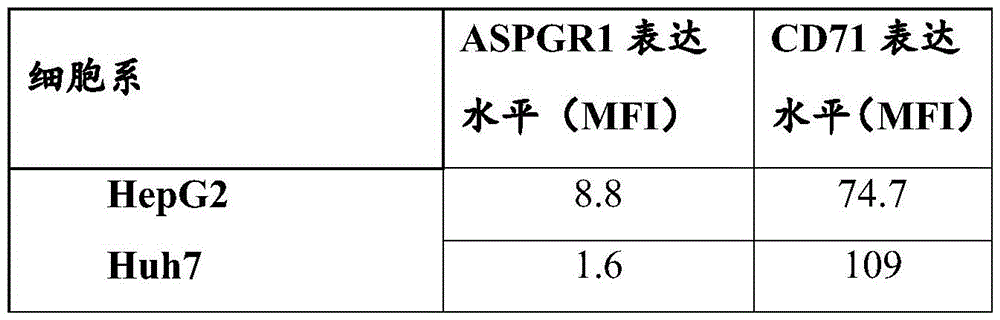
Treatment of primary hepatocytes in mice
Cryopreserved primary mouse hepatocytes (primacy cell culture technique limited (PRIMACYT Cell Culture Technology GmbH), germany) were thawed in hepatocyte thawing medium (HTM, primacy cell culture technique limited, germany) and washed 1 time with hepatocyte washing medium (HWM, primacy cell culture technique limited, germany). The cells were grown at approximately 0.275x10 6 Individual cells/ml were resuspended in hepatocyte plating medium (HPM Cryo, primacy cell culture technologies limited, germany). Cells were seeded onto collagen I coated plates at a density of 88.000 cells/well or 26.400 cells/well for 48 or 96 well plates (Greiner bione). Cells were pre-incubated at 37 ℃ for 4-6 hours before starting the treatment to allow cells to attach to the cell culture plates. 315 μl or 108 μl of assay medium (MHM, PRIMACYT cell culture technologies Co., ltd., germany) was substituted for the plating medium, followed by the addition of the conjugate from a 10-fold concentrated stock solution in PBS. Plates were incubated at 37 ℃ for 72 hours and harvested for gene expression and cell viability analysis.
Human primary hepatocyte treatment
Cryopreserved primary human hepatocytes (cytobiotechnology limited (Cytes Biotechnologies s.l.), spanish) were thawed in hepatocyte thawing medium (cytobiotechnology limited, spanish). Cells were resuspended in hepatocyte plating medium (cell biotechnology limited, spain). Cells were seeded onto collagen I coated plates at a density of 215.600 cells/well or 66.600 cells/well for 48 or 96 well plates (Greiner bione). Cells were pre-incubated at 37 ℃ for 4-6 hours before starting the treatment to allow cells to attach to the cell culture plates. The plating medium was replaced with 315 μl or 108 μl of maintenance medium (cell biotechnology Co., ltd., spain) followed by the addition of conjugate from a 10-fold concentrated stock solution in PBS. Plates were incubated at 37 ℃ for 72 hours and harvested for gene expression and cell viability analysis.
RNA isolation and Gene expression analysis from Primary mice and human hepatocytes
According to the manufacturer's instructions, use TRI The solution (Sesamer technologies) isolated RNA from cells. Use of iScript using standard protocols TM The cDNA synthesis kit (Berle Corp.) was converted to cDNA. Quantitative real-time PCR assay (qRT-PCR) was used, using iTaq TM General->
 Green supersubstitre (Berle Corp.) and Light Cycler 480 (Roche diagnostics Inc. (Roche Diagnostics), luo Teke Lez City (Rotkreuz), switzerland), the levels of ApoB expression and the levels of specific hepatocyte housekeeping genes were determined using the specific DNA primers listed in Table A4. Analysis was performed by the delta Ct method to determine ApoB expression relative to 2 hepatocyte-specific housekeeping control mrnas. Each analytical reaction was performed in triplicate.
Table a4 primers used in qPCR analysis of mouse primary hepatocytes
| |
Forward direction | GCTAACACTAAGAACCAGAAGATC[SEQ ID NO:13] |
| Reverse direction | TGTCCGTCTAAGGATCCTGC[SEQ ID NO:14] | |
| Mm PPIA | Forward direction | GCGGCAGGTCCATCTACG[SEQ ID NO:15] |
| Reverse direction | GCCATCCAGCCATTCAGTC[SEQ ID NO:16] | |
| Mm SDHA | Forward direction | GAGGAAGCACACCCTCTCAT[SEQ ID NO:17] |
| Reverse direction | GGAGCGGATAGCAGGAGGTA[SEQ ID NO:18] |
In vivo tolerability and efficacy of trivalent GalNAc-conjugates in C57BL/6J model
Dose administration and lifetime. The treatment groups were dosed with 8C 57BL/6J male mice per group and 14C 57BL/6J male mice per group (up to about 6-7 weeks and dosing about 8-9 weeks) in the vehicle control group. The compound formulated according to table A5 in PBS or PBS alone (vehicle) was administered in the tail vein (intravenous, iv) at 5ml/kg, the dose volume corresponding to the individual body weight. Where applicable, trivalent GalNAc-SO1861-EMCH was co-administered in tail vein (iv) at 5ml/kg immediately after the trivalent GalNAc-ApoB conjugate. Animals were weighed weekly and 2-3 clinical observations were made daily for the first 48 hours and at least once daily thereafter until the end of the study.
Sampling of serum, liver and kidney tissue. Blood was sampled before (before) and 24 hours, 72 hours, 196 hours and 336 hours after dosing, and serum was generated from the collected blood for biomarker analysis using standard procedures. At the time points after 24 hours and 72 hours dosing, 6 animals out of the 3 animals/time point/treatment group and vehicle control group were sacrificed to collect terminal bleeding and liver, kidney and mesenteric lymph node tissue for further analysis. At the end of the 336 hour study, the remaining 2 animals (4 in the control group) were sacrificed per group. Half of the liver and one kidney were frozen and used for tissue RNA analysis.
Table A5.In vivo tolerability and efficacy of trivalent GalNAc-conjugatesDesign of experiment

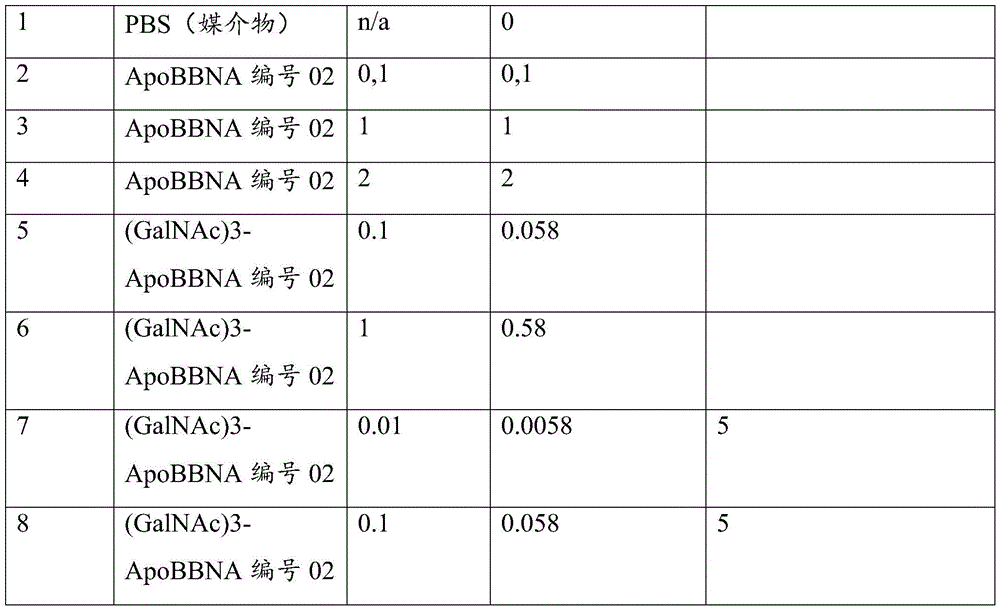
Biomarker RNA analysis in liver tissue
According to the manufacturer's instructions, use Reagents (Semer technologies) mRNA was isolated from frozen liver tissue. Use of iScript TM The cDNA synthesis kit (Berle Corp.) was converted to cDNA. Quantitative real-time PCR assay (qRT-PCR) was used, using iTaq TM General->
 Green supersubstitude (Berle Corp.) and Light Cycler 480 (Roche diagnostics Inc., luo Teke Lez, switzerland) were used to determine the level of ApoB expression and the level of a particular liver housekeeping gene using the specific DNA primers set forth in Table A5. Analysis was performed by the delta Ct method to determine ApoB expression relative to 2 liver-specific housekeeping control mrnas. Each analytical reaction was performed in triplicate.
Table A6 primers used in qPCR analysis of liver tissue
| |
Forward direction | GCTAACACTAAGAACCAGAAGATC[SEQ ID NO:13] |
| Reverse direction | TGTCCGTCTAAGGATCCTGC[SEQ ID NO:14] | |
| Mm RSP17 | Forward direction | GTGCGAGGAGATCGCCATTA[SEQ ID NO:19] |
| Reverse direction | ATCCGCTTCATCAGATGCGT[SEQ ID NO:20] | |
| Mm SDHA | Forward direction | GAGGAAGCACACCCTCTCAT[SEQ ID NO:17] |
| Reverse direction | GGAGCGGATAGCAGGAGGTA[SEQ ID NO:18] |
Biomarker analysis of ApoB proteins
ApoB protein levels in mouse serum were determined using an ApoB ELISA (ab 230932, ai Bokang company (Abcam), cambridge City (Cambridge), UK) according to the manufacturer's instructions. Note that samples from groups 1mg/kg of ApoB No. 02 and 0.01mg/kg (GalNAc) 3-ApoB No. 03+5mg/kg (GalNAc) 3-SO861 at 336 hours were not analyzed.
Biomarker analysis of cholesterol
LDL-cholesterol in mouse serum was measured photometrically according to the manufacturer's instructions using the LDL-cholesterol specific two-step AU480 assay kit from Beckman Coulter, respectively.
Biomarker analysis of cholesterol
Serum alanine Aminotransferase (ALT) levels were measured using an AU480 assay kit (photometry) from beckmann coulter, according to the manufacturer's instructions.
Sequence listing
<110> sapromil technologies inc (Sapreme Technologies b.v.)
<120> conjugates of GalNAc and saponins, therapeutic compositions comprising said conjugates and GalNAc-oligonucleotide conjugates
<130> P6093957PCT
<150> NL 2025899
<151> 2020-06-24
<160> 20
<170> patent In version 3.5
<210> 1
<211> 16
<212> DNA
<213> Artificial sequence (Artificial Sequence)
<220>
<223> antisense BNA (HSP 27) oligomer nucleic acid sequence
<400> 1
ggcacagcca gtggcg 16
<210> 2
<211> 20
<212> DNA
<213> Artificial sequence (Artificial Sequence)
<220>
<223> APOB BNA oligomer
<400> 2
<210> 3
<211> 20
<212> DNA
<213> Artificial sequence (Artificial Sequence)
<220>
<223> APOB scrambled BNA oligomers
<400> 3
<210> 4
<211> 20
<212> DNA
<213> Artificial sequence (Artificial Sequence)
<220>
<223> HSP27 primer Forward sequences
<400> 4
<210> 5
<211> 20
<212> DNA
<213> Artificial sequence (Artificial Sequence)
<220>
<223> HSP27 primer reverse sequence
<400> 5
<210> 6
<211> 20
<212> DNA
<213> Artificial sequence (Artificial Sequence)
<220>
<223> ApoB primer Forward sequence
<400> 6
<210> 7
<211> 21
<212> DNA
<213> Artificial sequence (Artificial Sequence)
<220>
<223> ApoB primer reverse sequence
<400> 7
tgggcacgtt gtctttcaga g 21
<210> 8
<211> 20
<212> DNA
<213> Artificial sequence (Artificial Sequence)
<220>
<223> HBMS primer Forward sequence
<400> 8
<210> 9
<211> 20
<212> DNA
<213> Artificial sequence (Artificial Sequence)
<220>
<223> HBMS primer reverse sequence
<400> 9
<210> 10
<211> 22
<212> DNA
<213> Artificial sequence (Artificial Sequence)
<220>
<223> GUSB primer Forward sequence
<400> 10
<210> 11
<211> 22
<212> DNA
<213> Artificial sequence (Artificial Sequence)
<220>
<223> GUSB primer reverse sequence
<400> 11
ccgagtgaag atcccctttt ta 22
<210> 12
<211> 13
<212> DNA
<213> Artificial sequence (Artificial Sequence)
<220>
<223> ApoB number 02
<400> 12
<210> 13
<211> 24
<212> DNA
<213> Artificial sequence (Artificial Sequence)
<220>
<223> ApoB accession number 02 Forward primer
<400> 13
gctaacacta agaaccagaa gatc 24
<210> 14
<211> 20
<212> DNA
<213> Artificial sequence (Artificial Sequence)
<220>
<223> ApoB accession number 02 reverse primer
<400> 14
<210> 15
<211> 18
<212> DNA
<213> Artificial sequence (Artificial Sequence)
<220>
<223> Mm PPIA Forward primer
<400> 15
gcggcaggtc catctacg 18
<210> 16
<211> 19
<212> DNA
<213> Artificial sequence (Artificial Sequence)
<220>
<223> Mm PPIA reverse primer
<400> 16
gccatccagc cattcagtc 19
<210> 17
<211> 20
<212> DNA
<213> Artificial sequence (Artificial Sequence)
<220>
<223> Mm SDHA Forward primer
<400> 17
<210> 18
<211> 20
<212> DNA
<213> Artificial sequence (Artificial Sequence)
<220>
<223> Mm SDHA reverse primer
<400> 18
ggagcggata gcaggaggta 20
<210> 19
<211> 20
<212> DNA
<213> Artificial sequence (Artificial Sequence)
<220>
<223> Mm RSP17 Forward primer
<400> 19
<210> 20
<211> 20
<212> DNA
<213> Artificial sequence (Artificial Sequence)
<220>
<223> Mm RSP17 reverse primer
<400> 20
Claims (57)
1. A saponin conjugate comprising at least one saponin covalently linked to a ligand of an asialoglycoprotein receptor (ASGPR), wherein the ligand of the ASGPR comprises at least one N-acetylgalactosamine (GalNAc) moiety, preferably three or four GalNAc moieties, more preferably the ligand of the ASGPR comprises (GalNAc) 3 Tris or consists thereof, wherein the at least one saponin is selected from the group consisting of a monosaccharide chain triterpenoid saponin and a disaccharide chain triterpenoid saponin.
2. The saponin conjugate of claim 1, wherein the saponin comprises a aglycone core structure selected from the group consisting of:
2 alpha-hydroxy oleanolic acid,
16 alpha-hydroxy oleanolic acid,
Hederagenin (23-hydroxy oleanolic acid),
16 alpha, 23-dihydroxyoleanolic acid,
The silk-stone bamboo sapogenin,
Soap scum acid,
Escin-21 (2-methylbut-2-enoate) -22-acetate,
23-oxo-yucygenin C-21, 22-bis (2-methylbut-2-enoate),
23-oxo-yucygenin C-21 (2-methylbut-2-enoate) -16, 22-diacetate,
Digitalis sapogenin,
3,16,28-Trihydroxyolean-12-ene,
Carnation acid,
And
The derivatives thereof,
preferably, the sapogenins comprise a aglycone core structure selected from the group consisting of saponaric acid and serrulaspin or a derivative thereof, more preferably, the sapogenins core structure is saponaric acid or a derivative thereof.
3. The saponin conjugate of claim 1 or 2, wherein
The saponin comprises a sugar chain bound to the aglycone core structure, the sugar chain being selected from group a:
GlcA-、
Glc-、
Gal-、
Rha-(1→2)-Ara-、
Gal-(1→2)-[Xyl-(1→3)]-GlcA-、
Glc-(1→2)-[Glc-(1→4)]-GlcA-、
Glc-(1→2)-Ara-(1→3)-[Gal-(1→2)]-GlcA-、
Xyl-(1→2)-Ara-(1→3)-[Gal-(1→2)]-GlcA-、
Glc-(1→3)-Gal-(1→2)-[Xyl-(1→3)]-Glc-(1→4)-Gal-、
Rha-(1→2)-Gal-(1→3)-[Glc-(1→2)]-GlcA-、
Ara-(1→4)-Rha-(1→2)-Glc-(1→2)-Rha-(1→2)-GlcA-、
Ara-(1→4)-Fuc-(1→2)-Glc-(1→2)-Rha-(1→2)-GlcA-、
Ara-(1→4)-Rha-(1→2)-Gal-(1→2)-Rha-(1→2)-GlcA-、
Ara-(1→4)-Fuc-(1→2)-Gal-(1→2)-Rha-(1→2)-GlcA-、
Ara-(1→4)-Rha-(1→2)-Glc-(1→2)-Fuc-(1→2)-GlcA-、
Ara-(1→4)-Fuc-(1→2)-Glc-(1→2)-Fuc-(1→2)-GlcA-、
Ara-(1→4)-Rha-(1→2)-Gal-(1→2)-Fuc-(1→2)-GlcA-、
Ara-(1→4)-Fuc-(1→2)-Gal-(1→2)-Fuc-(1→2)-GlcA-、
Xyl-(1→4)-Rha-(1→2)-Glc-(1→2)-Rha-(1→2)-GlcA-、
Xyl-(1→4)-Fuc-(1→2)-Glc-(1→2)-Rha-(1→2)-GlcA-、
Xyl-(1→4)-Rha-(1→2)-Gal-(1→2)-Rha-(1→2)-GlcA-、
Xyl-(1→4)-Fuc-(1→2)-Gal-(1→2)-Rha-(1→2)-GlcA-、
Xyl-(1→4)-Rha-(1→2)-Glc-(1→2)-Fuc-(1→2)-GlcA-、
Xyl-(1→4)-Fuc-(1→2)-Glc-(1→2)-Fuc-(1→2)-GlcA-、
Xyl-(1→4)-Rha-(1→2)-Gal-(1→2)-Fuc-(1→2)-GlcA-、
xyl- (1.fwdarw.4) -Fuc- (1.fwdarw.2) -Gal- (1.fwdarw.2) -Fuc- (1.fwdarw.2) -GlcA-, and
the derivatives thereof,
or (b)
The saponin comprises a sugar chain bound to the aglycone core structure, the sugar chain being selected from group B:
Glc-;
Gal-;
Rha-(1→2)-[Xyl-(1→4)]-Rha-;
Rha-(1→2)-[Ara-(1→3)-Xyl-(1→4)]-Rha-;
Ara-;
Xyl-;
xyl- (1.fwdarw.4) -Rha- (1.fwdarw.2) - [ R1- (. Fwdarw.4) ] -Fuc-, wherein R1 is 4E-methoxy cinnamic acid;
xyl- (1- > 4) -Rha- (1- > 2) - [ R2- (-4) ] -Fuc-, wherein R2 is 4Z-methoxy cinnamic acid;
Xyl-(1→4)-[Gal-(1→3)]-Rha-(1→2)-4-OAc-Fuc-;
xyl- (1.fwdarw.4) - [ Glc- (1.fwdarw.3) ] -Rha- (1.fwdarw.2) -3, 4-di-OAc-Fuc-;
Xyl- (1.fwdarw.4) - [ Glc- (1.fwdarw.3) ] -Rha- (1.fwdarw.2) - [ R3- (. Fwdarw.4) ] -3-OAc-Fuc-, wherein R3 is 4E-methoxy cinnamic acid;
Glc-(1→3)-Xyl-(1→4)-[Glc-(1→3)]-Rha-(1→2)-4-OAc-Fuc-;
Glc-(1→3)-Xyl-(1→4)-Rha-(1→2)-4-OAc-Fuc-;
(Ara-or Xyl-) (1→3) - (Ara-or Xyl-) (1→4) - (Rha-or Fuc-) (1→2) - [4-OAc- (Rha-or Fuc-) (1→4) ] - (Rha-or Fuc-);
Xyl-(1→3)-Xyl-(1→4)-Rha-(1→2)-[Qui-(1→4)]-Fuc-;
Api-(1→3)-Xyl-(1→4)-[Glc-(1→3)]-Rha-(1→2)-Fuc-;
Xyl-(1→4)-[Gal-(1→3)]-Rha-(1→2)-Fuc-;
Xyl-(1→4)-[Glc-(1→3)]-Rha-(1→2)-Fuc-;
Ara/Xyl-(1→4)-Rha/Fuc-(1→4)-[Glc/Gal-(1→2)]-Fuc-;
api- (1→3) -Xyl- (1→4) - [ Glc- (1→3) ] -Rha- (1→2) - [ R4- (→4) ] -Fuc-, wherein R4 is 5-O- [5-O-Ara/Api-3, 5-dihydroxy-6-methyl-octanoyl ] -3, 5-dihydroxy-6-methyl-octanoic acid;
api- (1→3) -Xyl- (1→4) -Rha- (1→2) - [ R5- (→4) ] -Fuc-, wherein R5 is 5-O- [5-O-Ara/Api-3, 5-dihydroxy-6-methyl-octanoyl ] -3, 5-dihydroxy-6-methyl-octanoic acid;
Api-(1→3)-Xyl-(1→4)-Rha-(1→2)-[Rha-(1→3)]-4-OAc-Fuc-;
Api-(1→3)-Xyl-(1→4)-[Glc-(1→3)]-Rha-(1→2)-[Rha-(1→3)]-4-OAc-Fuc-;
6-OAc-Glc-(1→3)-Xyl-(1→4)-Rha-(1→2)-[3-OAc-Rha-(1→3)]-Fuc-;
Glc-(1→3)-Xyl-(1→4)-Rha-(1→2)-[3-OAc--Rha-(1→3)]-Fuc-;
Xyl-(1→3)-Xyl-(1→4)-Rha-(1→2)-[Qui-(1→4)]-Fuc-;
Glc-(1→3)-[Xyl-(1→4)]-Rha-(1→2)-[Qui-(1→4)]-Fuc-;
Glc-(1→3)-Xyl-(1→4)-Rha-(1→2)-[Xyl-(1→3)-4-OAc-Qui-(1→4)]-Fuc-;
xyl- (1.fwdarw.3) -Xyl- (1.fwdarw.4) -Rha- (1.fwdarw.2) - [3, 4-di-OAc-Qui- (1.fwdarw.4) ] -Fuc-;
Glc-(1→3)-[Xyl-(1→4)]-Rha-(1→2)-Fuc-;
6-OAc-Glc-(1→3)-[Xyl-(1→4)]-Rha-(1→2)-Fuc-;
Glc-(1→3)-[Xyl-(1→3)-Xyl-(1→4)]-Rha-(1→2)-Fuc-;
Xyl-(1→3)-Xyl-(1→4)-Rha-(1→2)-[Xyl-(1→3)-4-OAc-Qui-(1→4)]-Fuc-;
Api/Xyl-(1→3)-Xyl-(1→4)-[Glc-(1→3)]-Rha-(1→2)-[Rha-(1→3)]-4OAc-Fuc-;
Api-(1→3)-Xyl-(1→4)-[Glc-(1→3)]-Rha-(1→2)-[Rha-(1→3)]-4OAc-Fuc-;
Api/Xyl- (1→3) -Xyl- (1→4) - [ Glc- (1→3) ] -Rha- (1→2) - [ R6- (→4) ] -Fuc-, wherein R6 is 5-O- [5-O-Rha- (1→2) -Ara/Api-3, 5-dihydroxy-6-methyl-octanoyl ] -3, 5-dihydroxy-6-methyl-octanoic acid;
Api/Xyl- (1→3) -Xyl- (1→4) - [ Glc- (1→3) ] -Rha- (1→2) - [ R7- (→4) ] -Fuc-, wherein R7 is 5-O- [5-O-Ara/Api-3, 5-dihydroxy-6-methyl-octanoyl ] -3, 5-dihydroxy-6-methyl-octanoic acid;
Api/Xyl- (1→3) -Xyl- (1→4) - [ Glc- (1→3) ] -Rha- (1→2) - [ R8- (→4) ] -Fuc-, wherein R8 is 5-O- [5-O-Ara/Api-3, 5-dihydroxy-6-methyl-octanoyl ] -3, 5-dihydroxy-6-methyl-octanoic acid;
Api- (1→3) -Xyl- (1→4) -Rha- (1→2) - [ R9- (→4) ] -Fuc-, wherein R9 is 5-O- [5-O-Ara/Api-3, 5-dihydroxy-6-methyl-octanoyl ] -3, 5-dihydroxy-6-methyl-octanoic acid;
xyl- (1- > 3) -Xyl- (1- > 4) -Rha- (1- > 2) - [ R10- (. Fwdarw.4) ] -Fuc-, wherein R10 is 5-O- [5-O-Ara/Api-3, 5-dihydroxy-6-methyl-octanoyl ] -3, 5-dihydroxy-6-methyl-octanoic acid;
api- (1→3) -Xyl- (1→4) -Rha- (1→2) - [ R11- (→3) ] -Fuc-, wherein R11 is 5-O- [5-O-Ara/Api-3, 5-dihydroxy-6-methyl-octanoyl ] -3, 5-dihydroxy-6-methyl-octanoic acid;
xyl- (1- > 3) -Xyl- (1- > 4) -Rha- (1- > 2) - [ R12- (. Fwdarw.3) ] -Fuc-, wherein R12 is 5-O- [5-O-Ara/Api-3, 5-dihydroxy-6-methyl-octanoyl ] -3, 5-dihydroxy-6-methyl-octanoic acid;
glc- (1→3) - [ Glc- (1→6) ] -Gal-; and
The derivatives thereof,
or (b)
The saponin is a disaccharide chain triterpene glycoside comprising a first sugar chain selected from group a bound to the aglycone core structure and comprising a second sugar chain selected from group B bound to the aglycone core structure.
4. The saponin conjugate of any one of claims 1-3, wherein the saponin is selected from the group consisting of: quillaja saponaria saponins, dipsacus asperoides saponin B, bupleuroside A, bupleuroside D, lonicera macranthoides saponin A, esculentoside salt, AS6.2, NP-005236, AMA-1, AMR, alpha-hederagenin, NP-012672, NP-017777, NP-017778, NP-017774, NP-018110, NP-017772, NP-018109, NP-017888, NP-017889, NP-018108, SA1641, AE X55, NP-017674, NP-017810, AG1, NP-003881, NP-017676, NP-017677, NP-017706, NP-017705, and pharmaceutical compositions containing the same NP-017773, NP-017775, SA1657, AG2, SO1861, GE1741, SO1542, SO1584, SO1658, SO1674, SO1832, SO1862, SO1904, QS-7, QS1861, QS-7api, QS1862, QS-17, QS-18, QS-21A-apio, QS-21A-xylo, QS-21B-apio, QS-21B-xylo, beta-escin, escin Ia, tea seed saponin I, tea seed saponin J, assam saponin F, digitonin, prim acid 1 and AS64R, stereoisomers thereof, derivatives thereof, and combinations thereof, preferably the saponin is selected from the group consisting of: QS-21, a QS-21 derivative, SO1861, a SO1861 derivative, SA1641, a SA1641 derivative, GE1741, a GE1741 derivative, and combinations thereof, more preferably the saponin is selected from the group consisting of: QS-21 derivatives, SO1861 derivatives, and combinations thereof, most preferably the saponin is a SO1861 derivative.
5. The saponin conjugate of claim 3 or 4, wherein the saponin is a saponin derivative, wherein
i. The saponin derivative comprises a aglycone core structure comprising a derivatized aldehyde group;
the saponin derivative comprises a sugar chain, preferably a sugar chain selected from group a as defined in claim 3, the sugar chain comprising a derivatized carboxyl group;
the saponin derivative comprises a sugar chain, preferably a sugar chain selected from group B as defined in claim 3, comprising a derivatized acetoxy (Me (CO) O-) group; or (b)
The saponin derivative comprises any combination of derivatizations i, ii, and iii, preferably any combination of derivatizations of two of i, ii, and iii.
6. The saponin conjugate of any one of claims 1-5, wherein the saponin is any one or more of: SO1861, SA1657, GE1741, SA1641, QS-21A, QS-21A-api, QS-21A-xyl, QS-21B, QS-21B-api, QS-21B-xyl, QS-7-api, QS-17-xyl, QS1861, QS1862, sapogenin, a saponin set, QS-18, quil-A, gyp1, silk-bamboo saponin A, AG1, AG2, SO1542, SO1584, SO1658, SO1674, SO1832, SO1904, stereoisomers thereof, derivatives thereof, and combinations thereof, preferably the saponin is selected from the group consisting of: QS-21, a QS-21 derivative, SO1861, a SO1861 derivative, SA1641, a SA1641 derivative, GE1741, a GE1741 derivative, and combinations thereof, more preferably the saponin is selected from the group consisting of: QS-21 derivatives, SO1861 derivatives, and combinations thereof, most preferably the saponin is a SO1861 derivative.
7. The saponin conjugate of any one of claims 1-6, wherein the saponin is a saponin derivative of a saponaric acid saponin or a silk caryophyllus sapogenin saponin of claim 2 and is represented by molecule 1:
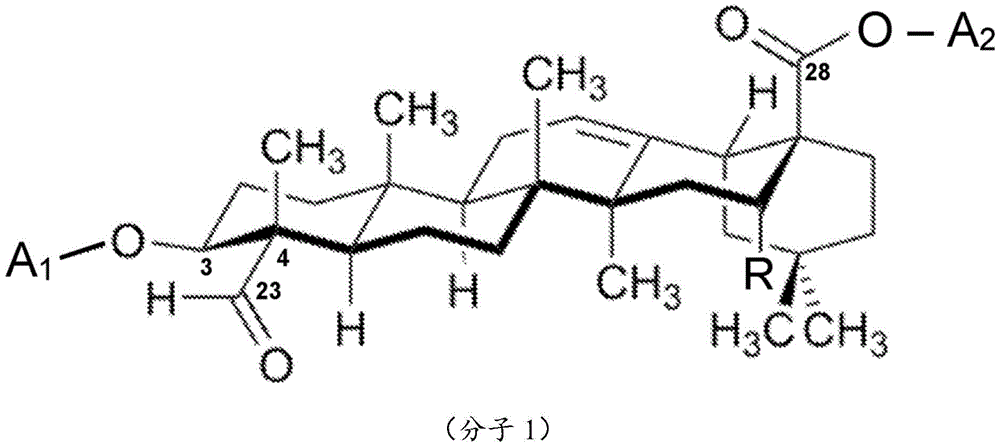
wherein the method comprises the steps of
A 1 Represents hydrogen, monosaccharides or linear or branched oligosaccharides, preferably A 1 Represents a sugar chain selected from group A as defined in claim 3, more preferably A 1 Represents a sugar chain selected from group A as defined in claim 3 and A 1 Comprising or consisting of glucuronic acid moieties;
A 2 represents hydrogen, monosaccharides or linear or branched oligosaccharides, preferably A 2 Represents a sugar chain selected from group B as defined in claim 3, more preferably A 2 Represents a sugar chain selected from group B as defined in claim 3 and A 2 Comprising at least one acetoxy (Me (CO) O-) group, such as one, two, three or four acetoxy groups,
wherein A is 1 And A 2 At least one of which is not hydrogen, preferably A 1 And A 2 Are oligosaccharide chains;
and R is hydrogen in sericin or hydroxyl in saponaric acid;
wherein the saponin derivative corresponds to the saponin represented by molecule 1, wherein at least one, preferably one or two, more preferably one of the following derivatizations is present:
i. The position C of saponaric acid or silk-carnation sapogenin 23 The aldehyde groups at which have been derivatized;
when A 1 Represents a sugar chain selected from group A as defined in claim 3 and A 1 When comprising or consisting of glucuronic acid moieties, A 1 Has been derivatized with carboxyl groups of glucuronic acid moieties; and
When A 2 Represents a sugar chain selected from group B as defined in claim 3 and A 2 When at least one acetoxy group is included, A 2 One or more, preferably all, of the acetoxy groups of one sugar moiety or two or more sugar moieties have been substitutedAnd (5) derivatization.
8. The saponin conjugate of claim 7, wherein a 1 Represents a sugar chain selected from group A as defined in claim 3 and comprises or consists of glucuronic acid moieties, and wherein A 1 Has been derivatized with carboxyl groups of glucuronic acid moieties, and/or wherein A 2 Represents a sugar chain selected from group B as defined in claim 3 and A 2 Comprises at least one acetoxy group, and wherein A 2 Has been derivatized with at least one acetoxy group.
9. The saponin conjugate of claim 7 or 8, wherein the saponin represented by molecule 1 is a disaccharide chain triterpenoid saponin.
10. The saponin conjugate of any one of claims 7-9, wherein the saponin derivative corresponds to the saponin represented by molecule 1, wherein at least one, preferably one or two, more preferably one of the following derivatizations is present:
i. The position C of saponaric acid or silk-carnation sapogenin 23 The aldehyde groups at this site have been derivatized by:
-reduction to an alcohol;
-conversion to hydrazone bond by reaction with N-epsilon-maleimidocaaproic acid hydrazide (EMCH) to provide saponins
-an aldemch, such as SO 1861-aldemch or QS-21-aldemch, wherein the maleimide group of the EMCH is optionally derivatized by forming a thioether bond with mercaptoethanol;
-converting to a hydrazone bond by reaction with N- [ β -maleimidopropionic acid ] hydrazide (BMPH), wherein the maleimide group of BMPH is optionally derivatized by forming a thioether bond with mercaptoethanol; or (b)
-converting to a hydrazone bond by reaction with N- [ kappa-maleimido undecanoic acid ] hydrazide (KMUH), wherein the maleimide group of KMUH is optionally derivatized by forming a thioether bond with mercaptoethanol;
when A 1 The representation being selected from the group of claims3 and A 1 When comprising or consisting of glucuronic acid moieties, A 1 Has been derivatized by reaction with 2-amino-2-methyl-1, 3-propanediol (AMPD) or N- (2-aminoethyl) maleimide (AEM) to an amide bond, thereby providing a saponin-Glu-AMPD such as QS-21-Glu-AMPD or SO1861-Glu-AMPD, or a saponin-Glu-AEM such as QS-21-Glu-AEM or SO1861-Glu-AEM; and
When A 2 Represents a sugar chain selected from group B as defined in claim 3 and A 2 When at least one acetoxy group is included, A 2 One or more, preferably all, of the acetoxy groups of one sugar moiety or two or more sugar moieties have been derivatized by deacetylation to hydroxyl groups (HO-).
11. The saponin conjugate of any one of claims 7-10, wherein a 1 Is Gal- (1- > 2) - [ Xyl- (1- > 3)]-GlcA and/or A 2 Is Glc- (1.fwdarw.3) -Xyl- (1.fwdarw.4) -Rha- (1.fwdarw.2) - [ Xyl- (1.fwdarw.3) -4-OAc-Qui- (1.fwdarw.4)]-Fuc, preferably the saponin represented by molecule 1 is 3-O-beta-D-galactopyranosyl- (1.fwdarw.2) - [ beta-D-xylopyranosyl- (1.fwdarw.3)]-beta-D-glucuronopyranosyl soap pinoic acid 28-O-beta-D-glucopyranosyl- (1.fwdarw.3) -beta-D-xylopyranosyl- (1.fwdarw.4) -alpha-L-rhamnopyranosyl- (1.fwdarw.2) - [ beta-D-xylopyranosyl- (1.fwdarw.3) -4 OAc-beta-D-quiniopyranosyl- (1.fwdarw.4)]-beta-D-fucopyranoside, more preferably the saponin is any one or more of the following: SO1861, GE1741, SA1641 and QS-21, or derivatives thereof, most preferably SO1861 or derivatives thereof.
12. The saponin conjugate of any one of claims 5-11, wherein the saponin is a saponin derivative, wherein
i. The saponin derivative comprises a aglycone core structure comprising an aldehyde group which has been derivatised by:
-reduction to an alcohol;
-converting to a hydrazone bond by reaction with N-epsilon-maleimidocaproyl hydrazide (EMCH) to provide a saponin-Ald-EMCH, such as SO1861-Ald-EMCH or QS-21-Ald-EMCH, wherein the maleimide group of the EMCH is optionally derivatized by forming a thioether bond with mercaptoethanol;
-converting to a hydrazone bond by reaction with N- [ β -maleimidopropionic acid ] hydrazide (BMPH), wherein the maleimide group of BMPH is optionally derivatized by forming a thioether bond with mercaptoethanol; or (b)
-converting to a hydrazone bond by reaction with N- [ kappa-maleimido undecanoic acid ] hydrazide (KMUH), wherein the maleimide group of KMUH is optionally derivatized by forming a thioether bond with mercaptoethanol;
the saponin derivative comprises a sugar chain, preferably selected from group a as defined in claim 3, comprising a carboxyl group, preferably a carboxyl group of a glucuronic acid moiety, which has been derivatised by reaction with 2-amino-2-methyl-1, 3-propanediol (AMPD) or N- (2-aminoethyl) maleimide (AEM) to an amide bond, thereby providing a saponin-Glu-AMPD such as QS-21-Glu-AMPD or SO1861-Glu-AMPD, or a saponin-Glu-AEM such as QS-21-Glu-AEM or SO1861-Glu-AEM;
The saponin derivative comprises a sugar chain, preferably a sugar chain selected from group B as defined in claim 3, comprising an acetoxy (Me (CO) O-) group that has been derivatized by deacetylation to a hydroxyl group (HO-); or (b)
The saponin derivative comprises any combination of derivatizations i, ii, and iii, preferably any combination of derivatizations of two of i, ii, and iii;
preferably, the saponin derivative comprises a aglycone core structure, wherein the aglycone core structure comprises an aldehyde group that has been derivatized by conversion to a hydrazone bond by reaction with an EMCH, wherein the maleimide group of the EMCH is optionally derivatized by formation of a thioether bond with mercaptoethanol.
13. The saponin conjugate of claim 12, wherein the saponin is a saponin derivative, wherein
i. The saponin derivative comprises a aglycone core structure comprising an aldehyde group that has been derivatised by reaction with N-epsilon-maleimidocaaproic acid hydrazide (EMCH) to a hydrazone bond, thereby providing a saponin-Ald-EMCH, such as SO1861-Ald-EMCH or QS-21-Ald-EMCH;
the saponin derivative comprises a sugar chain, preferably selected from group a as defined in claim 3, comprising a carboxyl group, preferably a carboxyl group of a glucuronic acid moiety, which has been derivatized by conversion to an amide bond by reaction with N- (2-aminoethyl) maleimide (AEM), thereby providing a saponin-Glu-AEM, such as QS-21-Glu-AEM or SO1861-Glu-AEM; or (b)
The saponin derivative comprises a combination of derivatizations i.and ii.
14. The saponin conjugate of claim 12, wherein the saponin derivative comprises a aglycone core structure, wherein the aglycone core structure comprises an aldehyde group and wherein the saponin derivative comprises a sugar chain, preferably a sugar chain selected from group a as defined in claim 3, the sugar chain comprising a carboxyl group, preferably a carboxyl group of a glucuronic acid moiety, the glucuronic acid moiety having been derivatized by conversion to an amide bond by reaction with N- (2-aminoethyl) maleimide (AEM).
15. The saponin conjugate of any one of claims 1-12, wherein the saponin is a saponin derivative represented by molecule 2:
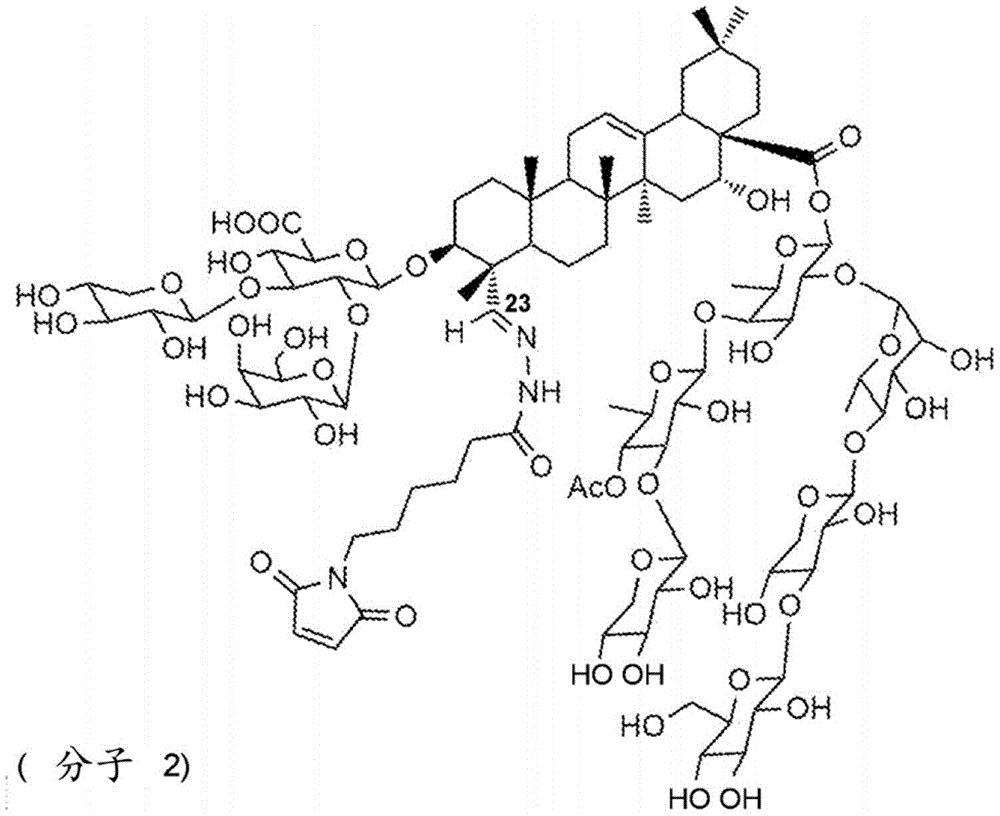
or wherein the saponin is a saponin derivative represented by molecule 3:
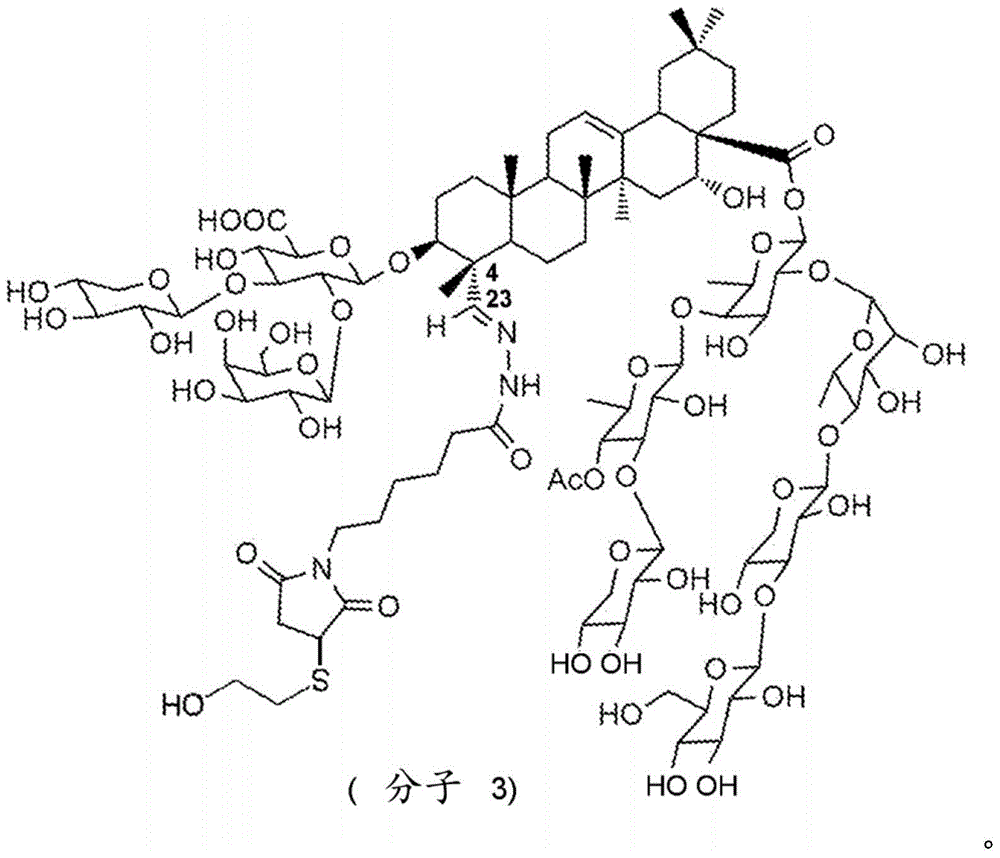
16. the saponin conjugate of any one of claims 1-15, wherein the at least one saponin and the ligand of the ASGPR are covalently linked directly or via at least one linker.
17. The saponin conjugate of any one of claims 1-16, wherein the GalNAc moiety is preferably via a saponin linker L s Is combined with the saponin S as shown in formula (II) S As shown in:
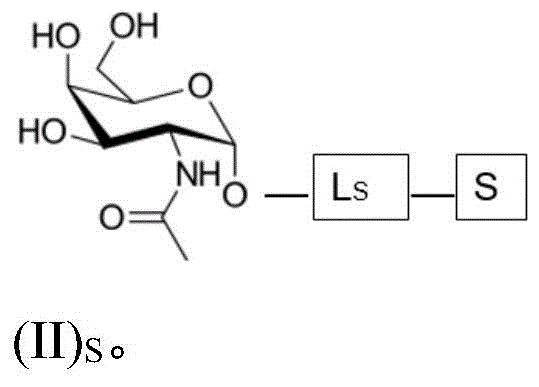
18. the saponin conjugate of any one of claims 1-16, wherein the GalNAc moieties are each covalently bound to a central bridging moiety B, preferably via a saponin moiety linker L, via oxygen at position "1" of the GalNAc moiety, respectively S Effectively forming a bridge between the GalNAc moiety and the saponin moiety, as in formula (III) S As shown in:

wherein n is an integer greater than or equal to 2, preferably n is 3, L S Is a saponin moiety linker, and S is the saponin moiety.
19. The saponin conjugate of claim 18, wherein the GalNAc moiety is via a GalNAc linker L GAL Combined with the bridging portion B, e.g. of formula (IV) S As shown in:

wherein n is an integer greater than or equal to 2, preferably n is 3, L S Is a saponin moiety linker, and S is the saponin moiety.
20. The saponin conjugate of any one of claims 17-19Wherein the saponin fraction linker Ls represents a moiety suitable for use in reacting a saponin with a compound of formula (II) S GalNAc or and the like of the formula (III) S And (IV) S Any chemical moiety to which the bridging moiety B is covalently bound.
21. The saponin conjugate of any one of claims 17-20, wherein the saponin moiety linker L S Is at least a first precursor L S1 With a second precursor L S2 As a result of the coupling reaction between the first precursor L S1 Covalently bound to GalNAc or the bridging moiety B, the second precursor L S2 Covalently bound to the saponin moiety, wherein L S1 Is covalently bound to GalNAc or to the bridging moiety B S And L is S2 Is the saponin moiety linker L covalently bound to the saponin moiety S Is a precursor of (a).
22. The saponin conjugate of any one of claims 17-21, wherein the saponin moiety linker L S Is at least a first precursor L S1 With a second precursor L S2 As a result of the coupling reaction between the first precursor L S1 Covalently bound to GalNAc or the bridging moiety B, the second precursor L S2 Covalently bound to the saponin moiety, wherein the coupling reaction is selected from the group consisting of: azide-alkyne cycloaddition, thiol maleimide coupling, staudinger reaction, nucleophilic ring opening of strained heterocyclic electrophiles, carbonyl reactions other than aldol type, addition of carbon-carbon double bonds, preferably wherein the coupling reaction is azide-alkyne cycloaddition, thiol maleimide coupling, staudinger reaction, nucleophilic ring opening of strained heterocyclic electrophiles, more preferably wherein the coupling reaction is azide-alkyne cycloaddition or thiol maleimide coupling.
23. The saponin conjugate of any one of claims 17-22, wherein the saponin moiety linker L S Is the first precursor L S1 With a second precursor L S2 As a result of the coupling reaction between the first precursor L S1 Covalently bound to GalNAc or the bridging moiety B, the first precursor L S1 Comprises an azide; the second precursor L S2 Covalently bound to the saponin moiety, the second precursor L S2 Comprising alkynes and preferably hydrazones resulting from the coupling of a hydrazide/aldehyde with the aldehyde of the saponin moiety.
24. The saponin conjugate of any one of claims 21-23, wherein the precursor L S1 Is an azide having the following formula (XVII):
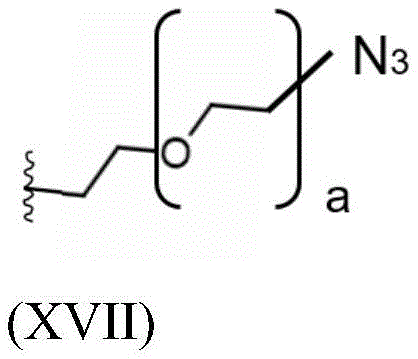
wherein a represents an integer greater than or equal to 0, preferably a represents an integer selected from 1, 2 and 3, more preferably a represents 2, or
Wherein the precursor L S1 Comprises an azide of formula (XVIII):

wherein c represents an integer greater than or equal to 0, preferably c represents an integer in the range of 5-15, more preferably c represents 9.
25. The saponin conjugate of any one of claims 21-24, wherein the precursor L S2 Comprises hydrazones of the following formula (XIX):
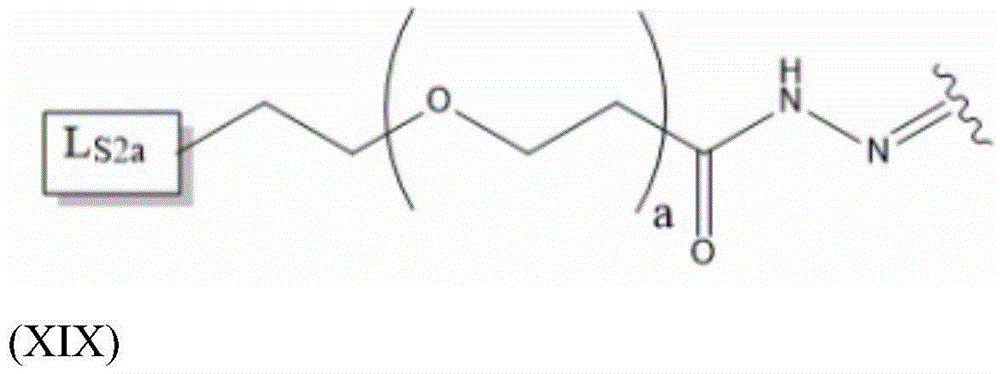
wherein a represents an integer greater than or equal to 0, preferably a represents an integer in the range of 2-6, more preferably a represents 4, and wherein L S2a Representing an alkyne-containing moiety.
26. As claimed in claim 25The saponin conjugate, wherein L S2a Containing less than 20 carbon atoms, preferably L S2a Represents a moiety according to formula (XX):

27. The saponin conjugate of any one of claims 18-26, wherein the bridging moiety is a compound having the formula (XV):

wherein the oxygen atom of the compound having the formula (XV) is bonded to GalNAc or the GalNAc linker L GAL Is bound to the saponin moiety linker L, and the nitrogen atom of the compound having the formula (XV) S And (5) combining.
28. The saponin conjugate of any one of claims 19-27, wherein L GAL Represents any chemical moiety suitable for covalently binding GalNAc to the bridging moiety B.
29. The saponin conjugate of any one of claims 19-28, wherein L GAL Containing 2 to 25 carbon atoms, preferably 7 to 15 carbon atoms, more preferably 11 carbon atoms, and wherein L GAL Comprising at least one, preferably two amide moieties.
30. The saponin conjugate of any one of claims 19-29, wherein L GAL Is a compound according to formula (XVI):
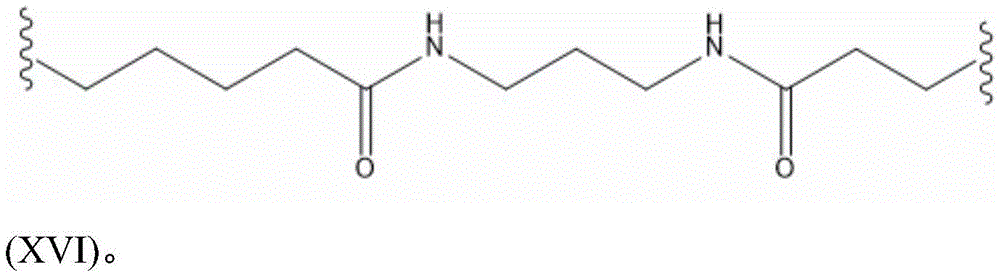
31. as claimed inThe saponin conjugate of any one of claims 17-30, wherein the ligand of ASGPR is represented by molecule I' (GalNAc) 3 Tris:
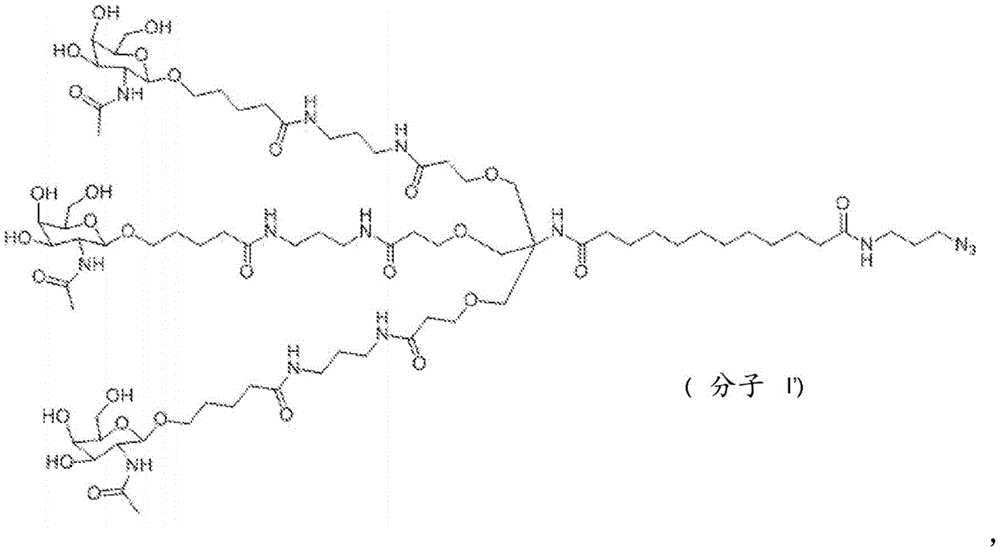
Or wherein the ligand of the ASGPR is a single GalNAc represented by molecule II':

32. the saponin conjugate of any one of claims 1-31, wherein the at least one saponin is covalently bound to the molecule I ' or the molecule II ' of claim 31 via a linker represented by molecule III ':
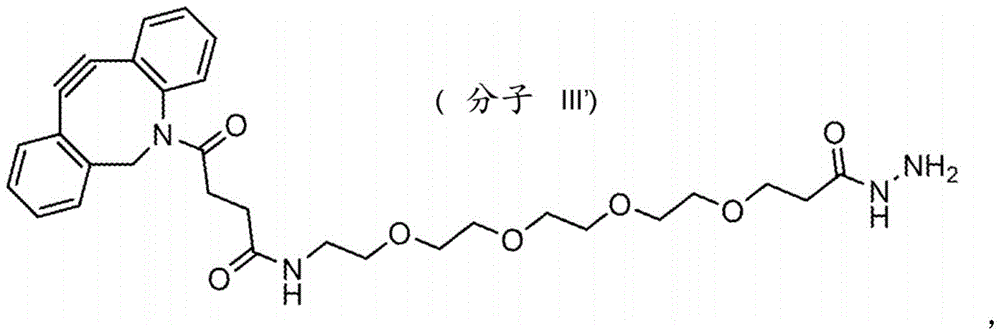
Wherein the hydrazide moiety of molecule III ' forms a covalent hydrazone bond with the aldehyde group in the saponin, and wherein the dibenzocyclooctyne group forms a covalent bond with the azide group of molecule I ' or molecule II '.
33. The saponin conjugate of any one of claims 1-32, wherein the at least one saponin is covalently bound to the ligand of the ASGPR via at least one cleavable linker.
34. The saponin conjugate of claim 33, wherein the cleavable linker is subject to cleavage under acidic, reducing, enzymatic, and/or light-induced conditions, and preferably the cleavable linker comprises a cleavable bond selected from the group consisting of: hydrazone bonds and hydrazide bonds that undergo cleavage under acidic conditions, and/or bonds that are susceptible to proteolysis, e.g., by cathepsin B, and/or bonds that are susceptible to cleavage under reducing conditions, such as disulfide bonds.
35. The saponin conjugate of claim 33 or 34, wherein the cleavable linker is subject to in vivo cleavage under acidic conditions, such as, for example, in endosomes and/or lysosomes present in mammalian cells, preferably human cells, preferably the cleavable linker is subject to in vivo cleavage at a pH of 4.0-6.5, and more preferably at a pH of less than or equal to 5.5.
36. The saponin conjugate of any one of claims 1-35, wherein the conjugate comprises 1, 2, 3, 4, 5, 6, 8, 10, 16, 32, 64, 128, or 1-100 saponin moieties, or any number of saponin moieties therebetween, such as 7, 9, 12 saponin moieties.
37. A pharmaceutical combination comprising:
-a first pharmaceutical composition comprising the saponin conjugate of any one of claims 1-36 and optionally comprising a pharmaceutically acceptable excipient and/or a pharmaceutically acceptable diluent; and
-a second pharmaceutical composition comprising a second conjugate of an effector molecule and a ligand of ASGPR, or a third conjugate of an effector molecule and a binding molecule, and optionally comprising a pharmaceutically acceptable excipient and/or a pharmaceutically acceptable diluent, wherein the ligand of ASGPR preferably comprises at least one GalNAc moiety, preferably three or four GalNAc moieties, more preferably the ligand of ASGPR comprises (GalNAc) 3 Tris or consists of it, the binding molecule comprising a binding site for a cell surface molecule.
38. A pharmaceutical composition comprising:
-the saponin conjugate of any one of claims 1-36;
-a second conjugate of an effector molecule and a ligand of ASGPR, or a third conjugate of an effector molecule and a binding molecule, and optionally comprising a pharmaceuticalA pharmaceutically acceptable excipient and/or a pharmaceutically acceptable diluent, wherein the ligand of the ASGPR preferably comprises at least one GalNAc moiety, preferably three or four GalNAc moieties, more preferably the ligand of the ASGPR comprises (GalNAc) 3 Tris or consists of it, the binding molecule comprising a binding site for a cell surface molecule.
39. The pharmaceutical combination of claim 37 or the pharmaceutical composition of claim 38, wherein the effector molecule comprises or consists of at least one of: a small molecule such as a drug molecule, a toxin such as a protein toxin, an oligonucleotide such as BNA, a heterologous nucleic acid or siRNA, an enzyme, a peptide, a protein, or any combination thereof, preferably the effector molecule is a toxin, an enzyme or an oligonucleotide.
40. The pharmaceutical combination of claim 37 or 39 or the pharmaceutical composition of claim 38 or 39, wherein the ligand of ASGPR comprises (GalNAc) 3 Tris or (GalNAc) 3 Tris, and/or wherein the ligand of ASGPR and the effector molecule are conjugated via a covalent bond, preferably via at least one linker.
41. The pharmaceutical combination of any one of claims 37 or 39-40 or the pharmaceutical composition of any one of claims 38-40, wherein the effector molecule is an oligonucleotide selected from any one or more of: short interfering RNA (siRNA), short hairpin RNA (shRNA), anti-hairpin microRNA (miRNA), single-stranded RNA, aptamer RNA, double-stranded RNA (dsRNA), anti-microRNA (anti-miRNA, anti-miR), antisense oligonucleotide (ASO), DNA, antisense DNA, locked Nucleic Acid (LNA), bridged Nucleic Acid (BNA), 2'-O,4' -aminoethylene Bridged Nucleic Acid (BNA) NC ) BNA-based siRNA, and BNA-based antisense oligonucleotide (BNA-aON).
42. The pharmaceutical combination of any one of claims 37 or 39-41 or the pharmaceutical composition of any one of claims 38-41, wherein the effector molecule is an oligonucleotide selected from any one or more of: anti-miRNA, BNA-AON or siRNA, such as BNa-based siRNA, selected from chemically modified siRNA, metabolically stable siRNA, and chemically modified metabolically stable siRNA.
43. The pharmaceutical combination of any one of claims 37 or 39-42 or the pharmaceutical composition of any one of claims 38-42, wherein the effector molecule is an oligonucleotide capable of silencing any one of the following genes, e.g., when present in a mammalian cell: apolipoprotein B (apoB), HSP27, thyroxine Transporter (TTR), proprotein convertase subtilisin/kexin type 9 (PCSK 9), deltA-Aminolevulinate synthase 1 (ALAS 1), antithrombin 3 (AT 3), glycolate Oxidase (GO), complement component C5 (CC 5), the X gene of Hepatitis B Virus (HBV), the S gene of HBV, alpha-1 antitrypsin (AAT) and Lactate Dehydrogenase (LDH), and/or oligonucleotides capable of targeting aberrant mirnas, for example, when present in mammalian cells.
44. The pharmaceutical combination according to any one of claims 37 or 39-43 or the pharmaceutical composition according to any one of claims 38-43, wherein the effector molecule is an oligonucleotide, preferably an siRNA such as a BNA-based siRNA, or an antisense oligonucleotide such as a BNA-based antisense oligonucleotide, e.g. an AON based on a 2'-O,4' -amino ethylene bridged nucleic acid, preferably capable of silencing a gene apolipoprotein B (apoB) when present in a mammalian cell.
45. The pharmaceutical combination of any one of claims 37 or 39-44 or the pharmaceutical composition of any one of claims 38-44, wherein the effector molecule is an oligonucleotide capable of targeting mRNA involved in the expression of any one of the following proteins, e.g. when present in a mammalian cell: apoB, HSP27, TTR, PCSK9, ALAS1, AT3, GO, CC5, expression products of the X gene of HBV, expression products of the S gene of HBV, AAT and LDH, or are capable of antagonizing or restoring miRNA function, such as inhibiting oncogenic miRNA (onco-miR) or repressing expression of onco-miR, for example, when present in mammalian cells.
46. The pharmaceutical combination according to any one of claims 37 or 39-45 or the pharmaceutical composition according to any one of claims 38-45, wherein the effector molecule is an oligonucleotide, preferably an siRNA such as a BNA-based siRNA, or an antisense oligonucleotide such as a BNA-based antisense oligonucleotide, e.g. an AON based on a 2'-O,4' -amino ethylene bridged nucleic acid, preferably capable of targeting mRNA involved in the expression of protein apoB when present in a mammalian cell.
47. The pharmaceutical combination of any one of claims 37 or 39-46 or the pharmaceutical composition of any one of claims 38-46, wherein the effector molecule is or comprises a toxin comprising or consisting of at least one molecule selected from any one or more of the following: peptides, proteins, enzymes such as urease and Cre recombinase, prions, ribosome inactivating proteins, and/or bacterial toxins, plant toxins, more preferably selected from any one or more of the following: viral toxins, such as apoptotic proteins; bacterial toxins, such as shiga toxin, shiga-like toxin, pseudomonas aeruginosa exotoxin (PE) or exotoxin a of PE, full length or truncated Diphtheria Toxin (DT), cholera toxin; mycotoxins, such as α -sarcin; a plant toxin, including the a-chain of ribosome inactivating proteins and type 2 ribosome inactivating proteins, such as carnosine toxic proteins, e.g. carnosine toxic protein-30 or carnosine toxic protein-32; saporin, such as saporin-S3 or saporin-S6; the delumniform ribosome inactivating protein or the deimmunized derivative of the delumniform ribosome inactivating protein is the delumniform ribosome inactivating protein, shiga-like toxin A, pokeweed antiviral protein, ricin A chain, capsule radixin A chain, abrin A chain, capsule radixin A chain, mistletoe lectin A chain; or an animal or human toxin, such as frog ribonuclease, or granzyme B or angiogenic protein from human, or any fragment or derivative thereof; preferably, the protein toxin is carnation toxin protein and/or saporin White, and/or comprises or consists of at least one of: ribosome-targeting toxins, extension factor-targeting toxins, tubulin-targeting toxins, DNA-targeting toxins and RNA-targeting toxins, more preferably any one or more of the following: enmei, pa Shu Tuo, maytansinoid derivative DM1, maytansinoid derivative DM4, monomethyl auristatin E (MMAE, vitamin D), monomethyl auristatin F (MMAF, mo Futing), calicheamicin, N-acetyl-gamma-calicheamicin, pyrrolobenzodiazepine (PBD) dimer, benzodiazepine +.>
 CC-1065 analog, docamicin, doxorubicin, paclitaxel, docetaxel, cisplatin, cyclophosphamide, etoposide, docetaxel, 5-fluorouracil (5-FU), mitoxantrone, tubulysin, indoline benzodiazepine>
 AZ13599185, candidiasis, rhizobiacin, methotrexate, anthracyclines, camptothecin analogues, SN-38, DX-8951f, escitalopram mesylate, truncated forms of pseudomonas aeruginosa exotoxin (PE 38), docamicin derivatives, amanitine, alpha-amanitine, splice inhibitors, telavancin, ozunamicin, teslin, ambastatin 269 and grommet, or derivatives thereof.
48. The pharmaceutical combination of any one of claims 37 or 39-47 or the pharmaceutical composition of any one of claims 38-47, wherein the binding molecule comprising a binding site for a cell surface molecule comprised by the third conjugate is a ligand for a cell surface molecule or an antibody comprising a binding site for a cell surface molecule or at least one domain or fragment thereof comprising the binding site.
49. The pharmaceutical combination of any one of claims 37 or 39-48 or the pharmaceutical composition of any one of claims 38-48, wherein the third conjugate is any one or more of: antibody-toxin conjugates, receptor-ligand-toxin conjugates, antibody-drug conjugates, receptor-ligand-drug conjugates, antibody-nucleic acid conjugates, or receptor-ligand-nucleic acid conjugates.
50. The pharmaceutical combination of any one of claims 37 or 39-49 or the pharmaceutical composition of any one of claims 38-49, wherein the binding molecule comprising a binding site for a cell surface molecule comprised by the third conjugate is capable of binding to any one of the following cell surface molecules: CD71, CA125, epCAM (17-1A), CD52, CEA, CD44V6, FAP, EGF-IR, integrin, aggrecan-1, angiogenin α -V beta-3, HER2, EGFR, CD20, CD22, folate receptor 1, CD146, CD56, CD19, CD138, CD27L receptor, PSMA, canag, integrin- α V, CA6, CD33, mesothelin, cripto, CD3, CD30, CD239, CD70, CD123, CD352, DLL3, CD25, ephrin A4, MUC1, trop2, CEACAM5, CEACAM6, HER3, CD74, PTK7, notch3, FGF2, C4.4A, FLT3, CD38, FGFR3, CD7, PD-L1, CTLA4, CD52, PDGFRA, VEGFR1, VEGFR2, asialoglycoprotein receptor (ASP), preferably any of the following: HER2, CD71, ASGPR and EGFR, more preferably CD71.
51. The pharmaceutical combination of any one of claims 37 or 39-50 or the pharmaceutical composition of any one of claims 38-50, wherein the binding molecule comprising a binding site for a cell surface molecule comprised by the third conjugate is or comprises any one of: antibodies, preferably monoclonal antibodies such as human monoclonal antibodies, igG, molecules comprising or consisting of: single domain antibodies, at least one V HH Domain, preferably camel V H Variable heavy chain neoantigen receptor (V) NAR ) Domains, fab, scFv, fv, dAb, F (ab) 2 and Fcab fragments.
52. A pharmaceutical combination according to any one of claims 37, 39-51 or a pharmaceutical composition according to any one of claims 38-51 for use as a medicament.
53. A pharmaceutical combination according to any one of claims 37, 39-51 or a pharmaceutical composition according to any one of claims 38-51 for use in the treatment or prevention of a disease or health problem in which the expression product involves any one or more of the following genes: apoB, TTR, PCSK9, ALAS1, AT3, GO, CC5, X gene of HBV, S gene of HBV, AAT and LDH.
54. A pharmaceutical combination according to any one of claims 37, 39-51 or 53 or a pharmaceutical composition according to any one of claims 38-51 or 53 for use in the treatment or prevention of a disease or health problem in which the expression product involves the gene apoB.
55. A pharmaceutical combination according to any one of claims 37, 39-51 or a pharmaceutical composition according to any one of claims 38-51, or a pharmaceutical combination or composition for use according to claim 53, for use in the treatment or prevention of: cancer, infectious disease, viral infection, hypercholesterolemia, primary hyperoxaluria, hemophilia a, hemophilia B, AAT-associated liver disease, acute hepatic porphyria, TTR-mediated amyloidosis, hereditary TTR amyloidosis (hATTR), complement-mediated disease, hepatitis b infection, or autoimmune disease.
56. A pharmaceutical combination for use according to claim 53, 54 or 55 or a pharmaceutical composition for use according to claim 53, 54 or 55, wherein the saponin is a saponin derivative, preferably a QS-21 derivative or a SO1861 derivative according to any one of claims 4 to 15.
57. An in vitro or ex vivo method for transferring the second or third conjugate according to any one of claims 37-51 from outside the cell into the cell, preferably subsequently transferring the effector molecule comprised by the second or third conjugate according to any one of claims 37-51 into the cytosol of the cell, comprising the steps of:
a) Providing a cell that expresses ASGPR on its surface and that expresses a cell surface molecule when the third conjugate is transferred into the cell, wherein the third conjugate comprises a binding molecule for binding to said cell surface molecule, the cell preferably being selected from the group consisting of a hepatocyte, a virus-infected cell and a tumor cell;
b) Providing a second conjugate or a third conjugate according to any one of claims 37-51 for transfer into the cell provided in step a);
c) Providing a saponin conjugate of any one of claims 1-36;
d) Contacting the cell of step a) with the second or third conjugate of step b) and the saponin conjugate of step c) in vitro or ex vivo, thereby effecting transfer of the second or third conjugate from outside the cell into said cell, and preferably thereby effecting subsequent transfer of the second or third conjugate into the cytosol of said cell, or preferably thereby effecting subsequent transfer of at least the effector molecule comprised by the second or third conjugate into the cytosol of said cell.
Priority Applications (1)
| Application Number | Priority Date | Filing Date | Title |
|---|---|---|---|
| CN202510833809.0A CN120586078A (en) | 2020-06-24 | 2021-06-18 | Conjugate of GalNAc and saponin, therapeutic composition comprising the conjugate and GalNAc-oligonucleotide conjugate |
Applications Claiming Priority (5)
| Application Number | Priority Date | Filing Date | Title |
|---|---|---|---|
| NL2025899 | 2020-06-24 | ||
| NL2025899 | 2020-06-24 | ||
| NL2026442 | 2020-09-10 | ||
| NL2026442 | 2020-09-10 | ||
| PCT/NL2021/050384 WO2021261992A1 (en) | 2020-06-24 | 2021-06-18 | Conjugate of galnac and saponin, therapeutic composition comprising said conjugate and a galnac-oligonucleotide conjugate |
Related Child Applications (1)
| Application Number | Title | Priority Date | Filing Date |
|---|---|---|---|
| CN202510833809.0A Division CN120586078A (en) | 2020-06-24 | 2021-06-18 | Conjugate of GalNAc and saponin, therapeutic composition comprising the conjugate and GalNAc-oligonucleotide conjugate |
Publications (1)
| Publication Number | Publication Date |
|---|---|
| CN116234582A true CN116234582A (en) | 2023-06-06 |
Family
ID=85176234
Family Applications (2)
| Application Number | Title | Priority Date | Filing Date |
|---|---|---|---|
| CN202510833809.0A Pending CN120586078A (en) | 2020-06-24 | 2021-06-18 | Conjugate of GalNAc and saponin, therapeutic composition comprising the conjugate and GalNAc-oligonucleotide conjugate |
| CN202180051254.4A Pending CN116234582A (en) | 2020-06-24 | 2021-06-18 | Conjugates of GalNAc and saponins, therapeutic compositions comprising said conjugates and GalNAc-oligonucleotide conjugates |
Family Applications Before (1)
| Application Number | Title | Priority Date | Filing Date |
|---|---|---|---|
| CN202510833809.0A Pending CN120586078A (en) | 2020-06-24 | 2021-06-18 | Conjugate of GalNAc and saponin, therapeutic composition comprising the conjugate and GalNAc-oligonucleotide conjugate |
Country Status (10)
| Country | Link |
|---|---|
| US (1) | US20230263897A1 (en) |
| EP (2) | EP4438125A3 (en) |
| JP (1) | JP2023532040A (en) |
| KR (1) | KR20230043114A (en) |
| CN (2) | CN120586078A (en) |
| AU (1) | AU2021295358B2 (en) |
| CA (1) | CA3183885A1 (en) |
| ES (1) | ES3002193T3 (en) |
| IL (1) | IL299357A (en) |
| MX (1) | MX2023000092A (en) |
Cited By (4)
| Publication number | Priority date | Publication date | Assignee | Title |
|---|---|---|---|---|
| CN114072503A (en) * | 2019-07-02 | 2022-02-18 | 阿尔戈诺特Rna有限公司 | Apolipoprotein B antagonists |
| CN116655715A (en) * | 2023-07-27 | 2023-08-29 | 北京炫景瑞医药科技有限公司 | A kind of GalNAc derivative, conjugate, composition and their use |
| CN116854754A (en) * | 2023-09-01 | 2023-10-10 | 北京悦康科创医药科技股份有限公司 | A GalNAc compound containing a ribose ring or a derivative structure thereof and an oligonucleotide conjugate thereof |
| WO2025016444A1 (en) * | 2023-07-20 | 2025-01-23 | Shanghai Argo Biopharmaceutical Co., Ltd. | Compositions and methods for inhibiting expression of pd-l1 |
Families Citing this family (1)
| Publication number | Priority date | Publication date | Assignee | Title |
|---|---|---|---|---|
| WO2025090612A1 (en) * | 2023-10-27 | 2025-05-01 | Wisconsin Alumni Research Foundation | Lipid nanoparticles formed by lipidoids for efficient delivery of nucleotide drugs and biologics |
Citations (2)
| Publication number | Priority date | Publication date | Assignee | Title |
|---|---|---|---|---|
| CN105378082A (en) * | 2013-05-01 | 2016-03-02 | Isis制药公司 | Compositions and methods |
| WO2020126600A1 (en) * | 2018-12-21 | 2020-06-25 | Sapreme Technologies B.V. | Antibody-drug conjugate with improved therapeutic window |
Family Cites Families (7)
| Publication number | Priority date | Publication date | Assignee | Title |
|---|---|---|---|---|
| AU2003275954A1 (en) * | 2002-11-08 | 2004-06-07 | Danmarks Fodevareforskning | Preparation of chemically well-defined carbohydrate dendrimer conjugates |
| ES2395818T3 (en) * | 2004-07-13 | 2013-02-15 | Charite - Universitatsmedizin Berlin | Composition comprising a pharmacologically active agent coupled to a specific target cell component, and a saponin |
| WO2008007941A1 (en) * | 2006-07-10 | 2008-01-17 | Vereniging Voor Christelijk Wetenschappelijk Onderwijs | Gainac specific binding molecules and uses thereof |
| WO2011054811A1 (en) * | 2009-11-03 | 2011-05-12 | Santaris Pharma A/S | Rna antagonists targeting hsp27 combination therapy |
| AR100516A1 (en) * | 2014-05-19 | 2016-10-12 | Pfizer | COMPOUNDS OF 6,8-DIOXABICICLO [3.2.1] OCTANO-2,3-DIOL REPLACED AS ADDRESS AGENTS TO ASGPR |
| CA2961993A1 (en) * | 2014-10-10 | 2016-04-14 | F. Hoffmann-La Roche Ag | Galnac phosphoramidites, nucleic acid conjugates thereof and their use |
| EP3514240A1 (en) * | 2018-01-18 | 2019-07-24 | Freie Universität Berlin | Novel uses of a saponin and method for its isolation |
-
2021
- 2021-06-18 EP EP24190153.7A patent/EP4438125A3/en active Pending
- 2021-06-18 ES ES21734241T patent/ES3002193T3/en active Active
- 2021-06-18 CN CN202510833809.0A patent/CN120586078A/en active Pending
- 2021-06-18 CN CN202180051254.4A patent/CN116234582A/en active Pending
- 2021-06-18 KR KR1020237002660A patent/KR20230043114A/en active Pending
- 2021-06-18 CA CA3183885A patent/CA3183885A1/en active Pending
- 2021-06-18 AU AU2021295358A patent/AU2021295358B2/en active Active
- 2021-06-18 JP JP2022580236A patent/JP2023532040A/en active Pending
- 2021-06-18 MX MX2023000092A patent/MX2023000092A/en unknown
- 2021-06-18 IL IL299357A patent/IL299357A/en unknown
- 2021-06-18 EP EP21734241.9A patent/EP4171641B1/en active Active
- 2021-06-18 US US18/012,769 patent/US20230263897A1/en active Pending
Patent Citations (3)
| Publication number | Priority date | Publication date | Assignee | Title |
|---|---|---|---|---|
| CN105378082A (en) * | 2013-05-01 | 2016-03-02 | Isis制药公司 | Compositions and methods |
| WO2020126600A1 (en) * | 2018-12-21 | 2020-06-25 | Sapreme Technologies B.V. | Antibody-drug conjugate with improved therapeutic window |
| CN113453722A (en) * | 2018-12-21 | 2021-09-28 | 萨普雷米科技有限公司 | Improved cell-targeted binding molecules |
Non-Patent Citations (8)
Cited By (6)
| Publication number | Priority date | Publication date | Assignee | Title |
|---|---|---|---|---|
| CN114072503A (en) * | 2019-07-02 | 2022-02-18 | 阿尔戈诺特Rna有限公司 | Apolipoprotein B antagonists |
| WO2025016444A1 (en) * | 2023-07-20 | 2025-01-23 | Shanghai Argo Biopharmaceutical Co., Ltd. | Compositions and methods for inhibiting expression of pd-l1 |
| CN116655715A (en) * | 2023-07-27 | 2023-08-29 | 北京炫景瑞医药科技有限公司 | A kind of GalNAc derivative, conjugate, composition and their use |
| CN116655715B (en) * | 2023-07-27 | 2023-10-20 | 北京炫景瑞医药科技有限公司 | GalNAc derivative, conjugate, composition and application thereof |
| CN116854754A (en) * | 2023-09-01 | 2023-10-10 | 北京悦康科创医药科技股份有限公司 | A GalNAc compound containing a ribose ring or a derivative structure thereof and an oligonucleotide conjugate thereof |
| CN116854754B (en) * | 2023-09-01 | 2023-12-12 | 北京悦康科创医药科技股份有限公司 | GalNAc compound containing ribose ring or derivative structure thereof and oligonucleotide conjugate thereof |
Also Published As
| Publication number | Publication date |
|---|---|
| EP4171641B1 (en) | 2024-10-30 |
| JP2023532040A (en) | 2023-07-26 |
| EP4171641A1 (en) | 2023-05-03 |
| AU2021295358A9 (en) | 2023-06-29 |
| EP4438125A2 (en) | 2024-10-02 |
| US20230263897A1 (en) | 2023-08-24 |
| EP4438125A3 (en) | 2024-12-25 |
| ES3002193T3 (en) | 2025-03-06 |
| CN120586078A (en) | 2025-09-05 |
| CA3183885A1 (en) | 2021-12-30 |
| MX2023000092A (en) | 2023-04-20 |
| AU2021295358A1 (en) | 2023-02-16 |
| KR20230043114A (en) | 2023-03-30 |
| IL299357A (en) | 2023-02-01 |
| AU2021295358B2 (en) | 2026-01-22 |
| EP4171641C0 (en) | 2024-10-30 |
Similar Documents
| Publication | Publication Date | Title |
|---|---|---|
| AU2021295358B2 (en) | Conjugate of galnac and saponin, therapeutic composition comprising said conjugate and a galnac-oligonucleotide conjugate | |
| EP4355369B1 (en) | Conjugate of saponin, oligonucleotide and galnac | |
| WO2022055351A1 (en) | Conjugate of saponin, oligonucleotide and galnac | |
| WO2021261992A1 (en) | Conjugate of galnac and saponin, therapeutic composition comprising said conjugate and a galnac-oligonucleotide conjugate | |
| EP4171643B1 (en) | Therapeutic combination of galnac-oligonucleotide conjugate and saponin, and uses thereof | |
| EP4210760B1 (en) | Conjugate of saponin, oligonucleotide and galnac | |
| HK40116734A (en) | Conjugate of galnac and saponin, therapeutic composition comprising said conjugate and a galnac oligonucleotide conjugate | |
| CN117881427A (en) | Conjugates of saponin, oligonucleotides and GALNAC | |
| HK40124033A (en) | Conjugate of saponin, oligonucleotide and galnac | |
| HK40110483B (en) | Conjugate of saponin, oligonucleotide and galnac | |
| HK40110483A (en) | Conjugate of saponin, oligonucleotide and galnac | |
| HK40091234A (en) | Conjugate of saponin, oligonucleotide and galnac | |
| HK40091234B (en) | Conjugate of saponin, oligonucleotide and galnac |
Legal Events
| Date | Code | Title | Description |
|---|---|---|---|
| PB01 | Publication | ||
| PB01 | Publication | ||
| SE01 | Entry into force of request for substantive examination | ||
| SE01 | Entry into force of request for substantive examination | ||
| CB02 | Change of applicant information |
Country or region after: Netherlands Address after: Utrecht Applicant after: Saprami Technology Co.,Ltd. Address before: Holland Bilthoven Applicant before: Saprami Technology Co.,Ltd. Country or region before: Netherlands |
|
| CB02 | Change of applicant information |