CN116018413A - Bioelectronic devices with programmable aptamers - Google Patents
Bioelectronic devices with programmable aptamers Download PDFInfo
- Publication number
- CN116018413A CN116018413A CN202180044691.3A CN202180044691A CN116018413A CN 116018413 A CN116018413 A CN 116018413A CN 202180044691 A CN202180044691 A CN 202180044691A CN 116018413 A CN116018413 A CN 116018413A
- Authority
- CN
- China
- Prior art keywords
- electrode
- protein
- linker
- aptamer
- polypeptide
- Prior art date
- Legal status (The legal status is an assumption and is not a legal conclusion. Google has not performed a legal analysis and makes no representation as to the accuracy of the status listed.)
- Pending
Links
Images






Classifications
-
- G—PHYSICS
- G01—MEASURING; TESTING
- G01N—INVESTIGATING OR ANALYSING MATERIALS BY DETERMINING THEIR CHEMICAL OR PHYSICAL PROPERTIES
- G01N33/00—Investigating or analysing materials by specific methods not covered by groups G01N1/00 - G01N31/00
- G01N33/48—Biological material, e.g. blood, urine; Haemocytometers
- G01N33/483—Physical analysis of biological material
- G01N33/487—Physical analysis of biological material of liquid biological material
- G01N33/48707—Physical analysis of biological material of liquid biological material by electrical means
- G01N33/48721—Investigating individual macromolecules, e.g. by translocation through nanopores
-
- C—CHEMISTRY; METALLURGY
- C12—BIOCHEMISTRY; BEER; SPIRITS; WINE; VINEGAR; MICROBIOLOGY; ENZYMOLOGY; MUTATION OR GENETIC ENGINEERING
- C12Q—MEASURING OR TESTING PROCESSES INVOLVING ENZYMES, NUCLEIC ACIDS OR MICROORGANISMS; COMPOSITIONS OR TEST PAPERS THEREFOR; PROCESSES OF PREPARING SUCH COMPOSITIONS; CONDITION-RESPONSIVE CONTROL IN MICROBIOLOGICAL OR ENZYMOLOGICAL PROCESSES
- C12Q1/00—Measuring or testing processes involving enzymes, nucleic acids or microorganisms; Compositions therefor; Processes of preparing such compositions
- C12Q1/001—Enzyme electrodes
- C12Q1/005—Enzyme electrodes involving specific analytes or enzymes
-
- G—PHYSICS
- G01—MEASURING; TESTING
- G01N—INVESTIGATING OR ANALYSING MATERIALS BY DETERMINING THEIR CHEMICAL OR PHYSICAL PROPERTIES
- G01N27/00—Investigating or analysing materials by the use of electric, electrochemical, or magnetic means
- G01N27/26—Investigating or analysing materials by the use of electric, electrochemical, or magnetic means by investigating electrochemical variables; by using electrolysis or electrophoresis
- G01N27/28—Electrolytic cell components
- G01N27/30—Electrodes, e.g. test electrodes; Half-cells
- G01N27/327—Biochemical electrodes, e.g. electrical or mechanical details for in vitro measurements
- G01N27/3271—Amperometric enzyme electrodes for analytes in body fluids, e.g. glucose in blood
- G01N27/3273—Devices therefor, e.g. test element readers, circuitry
-
- G—PHYSICS
- G01—MEASURING; TESTING
- G01N—INVESTIGATING OR ANALYSING MATERIALS BY DETERMINING THEIR CHEMICAL OR PHYSICAL PROPERTIES
- G01N33/00—Investigating or analysing materials by specific methods not covered by groups G01N1/00 - G01N31/00
- G01N33/48—Biological material, e.g. blood, urine; Haemocytometers
- G01N33/50—Chemical analysis of biological material, e.g. blood, urine; Testing involving biospecific ligand binding methods; Immunological testing
- G01N33/53—Immunoassay; Biospecific binding assay; Materials therefor
- G01N33/543—Immunoassay; Biospecific binding assay; Materials therefor with an insoluble carrier for immobilising immunochemicals
- G01N33/54366—Apparatus specially adapted for solid-phase testing
- G01N33/54373—Apparatus specially adapted for solid-phase testing involving physiochemical end-point determination, e.g. wave-guides, FETS, gratings
- G01N33/5438—Electrodes
Landscapes
- Health & Medical Sciences (AREA)
- Life Sciences & Earth Sciences (AREA)
- Chemical & Material Sciences (AREA)
- Engineering & Computer Science (AREA)
- Physics & Mathematics (AREA)
- Immunology (AREA)
- Biomedical Technology (AREA)
- Molecular Biology (AREA)
- Organic Chemistry (AREA)
- Biochemistry (AREA)
- General Health & Medical Sciences (AREA)
- Analytical Chemistry (AREA)
- Hematology (AREA)
- General Physics & Mathematics (AREA)
- Pathology (AREA)
- Biophysics (AREA)
- Proteomics, Peptides & Aminoacids (AREA)
- Zoology (AREA)
- Wood Science & Technology (AREA)
- Urology & Nephrology (AREA)
- Microbiology (AREA)
- Biotechnology (AREA)
- Medicinal Chemistry (AREA)
- Food Science & Technology (AREA)
- Genetics & Genomics (AREA)
- General Engineering & Computer Science (AREA)
- Bioinformatics & Cheminformatics (AREA)
- Nanotechnology (AREA)
- Spectroscopy & Molecular Physics (AREA)
- Electrochemistry (AREA)
- Chemical Kinetics & Catalysis (AREA)
- Cell Biology (AREA)
- Measuring Or Testing Involving Enzymes Or Micro-Organisms (AREA)
- Peptides Or Proteins (AREA)
- Investigating Or Analysing Biological Materials (AREA)
- Enzymes And Modification Thereof (AREA)
Abstract
本公开提供了与生物电子装置相关的装置、系统和方法。特别地,本公开提供了生物电子装置和制造生物电子装置的方法,所述装置包括具有可重复基序和增强的导电特性的可调节适配子多肽。本公开的生物电子装置和方法可用于多种应用,包括蛋白质活性的直接测量(例如,当对生物聚合物进行测序时)。

The present disclosure provides devices, systems and methods related to bioelectronic devices. In particular, the present disclosure provides bioelectronic devices and methods of making bioelectronic devices comprising tunable aptamer polypeptides having repeatable motifs and enhanced conductive properties. The bioelectronic devices and methods of the present disclosure can be used in a variety of applications, including direct measurement of protein activity (eg, when sequencing biopolymers).
Description
政府支持governmental support
本发明是在国家卫生研究院颁发的R21 HG010522下借助政府支持进行的。政府拥有本发明的某些权利。This invention was made with government support under R21 HG010522 awarded by the National Institutes of Health. The government has certain rights in this invention.
相关申请related application
本申请要求2020年5月29日提交的美国临时专利申请号63/032,266和2020年12月15日提交的美国临时专利申请号63/125,674的优先权和权益,这两个临时专利申请都出于所有目的以全文引用的方式并入本文中。This application claims priority and benefit to U.S. Provisional Patent Application No. 63/032,266, filed May 29, 2020, and U.S. Provisional Patent Application No. 63/125,674, filed December 15, 2020, both of which It is hereby incorporated by reference in its entirety for all purposes.
技术领域technical field
本公开提供了与生物电子装置相关的装置、系统和方法。特别地,本公开提供了生物电子装置和制造生物电子装置的方法,所述装置包括具有可重复基序和增强的导电特性的可调节适配子多肽。本公开的生物电子装置和方法可用于多种应用,包括蛋白质活性的直接测量(例如,当对生物聚合物进行测序时)。The present disclosure provides devices, systems and methods related to bioelectronic devices. In particular, the present disclosure provides bioelectronic devices and methods of making bioelectronic devices comprising tunable aptamer polypeptides with repeatable motifs and enhanced conductive properties. The bioelectronic devices and methods of the present disclosure can be used in a variety of applications, including direct measurement of protein activity (eg, when sequencing biopolymers).
背景技术Background technique
当与强化学键接触时,蛋白质会成为出色的电子导体。在一些情况下,对于超过例如5nm的距离,它们在每单位距离传输电流的电阻比传统分子线的情况要小。这种特性的一个重要方面是折叠成具有疏水核心的结构,所述疏水核心由亲水外部包围。因此,分离的肽可以是绝缘体。先前的教义已经利用了α螺旋作为连接臂将酶连接至电路中。然而,分离的肽序列不导电,如小肽的断裂连接测量所示。举例来说,在断裂连接处检查的肽序列包括折叠成α螺旋的肽,并且这些肽展现出电流随距离的快速衰减,每半纳米距离减少十倍。因此,它们起到绝缘体的作用并且不能用作分子线。因此,对生物电子装置和构建此类装置的方法存在需要,所述装置包括功能性蛋白质分子线(例如,具有由亲水外部包围的疏水核心的完全折叠多肽),所述分子线可以符合生物电子装置内一定范围的长度并且可以通过任何所需的功能化进行精确控制。When in contact with strong chemical bonds, proteins become excellent electron conductors. In some cases, they have less resistance to transport current per unit distance than is the case with conventional molecular wires for distances beyond, for example, 5 nm. An important aspect of this property is folding into structures with a hydrophobic core surrounded by a hydrophilic exterior. Thus, isolated peptides can be insulators. Previous teachings have utilized alpha helices as tethers to link enzymes into circuits. However, the isolated peptide sequences were not conductive, as shown by break junction measurements of small peptides. As an example, the peptide sequences examined at broken junctions included peptides that folded into alpha helices, and these peptides exhibited a rapid decay of current with distance, decreasing by a factor of ten for every half-nanometer distance. Therefore, they function as insulators and cannot be used as molecular wires. Accordingly, there is a need for bioelectronic devices and methods of constructing such devices that include functional protein molecular wires (e.g., fully folded polypeptides with a hydrophobic core surrounded by a hydrophilic exterior) that can conform to biological There is a range of lengths within the electronics and can be precisely controlled by any desired functionalization.
发明内容Contents of the invention
本公开的实施方案包括一种生物电子装置,所述装置包括由间隙隔开的第一电极和第二电极,经由连接子连接至所述第一电极和所述第二电极的蛋白质,以及偶联至所述蛋白质,从而稳定所述间隙内的所述蛋白质的至少一个适配子多肽。Embodiments of the present disclosure include a bioelectronic device comprising a first electrode and a second electrode separated by a gap, a protein connected to the first electrode and the second electrode via a linker, and a coupling electrode. at least one aptamer polypeptide that is linked to the protein, thereby stabilizing the protein within the gap.
在一些实施方案中,至少一个适配子多肽包含两个适配子多肽,每个适配子多肽在蛋白质上的不同位置处偶联至蛋白质。In some embodiments, at least one aptamer polypeptide comprises two aptamer polypeptides, each aptamer polypeptide coupled to the protein at a different position on the protein.
在一些实施方案中,至少一个适配子多肽包含疏水核心。在一些实施方案中,至少一个适配子多肽包含亲水外部。在一些实施方案中,至少一个适配子多肽能够折叠成稳定构象。In some embodiments, at least one aptamer polypeptide comprises a hydrophobic core. In some embodiments, at least one aptamer polypeptide comprises a hydrophilic exterior. In some embodiments, at least one aptamer polypeptide is capable of folding into a stable conformation.
在一些实施方案中,至少一个适配子多肽包含至少一个可重复基序。在一些实施方案中,可重复基序的数目可基于第一电极与第二电极之间的间隙大小来调节。在一些实施方案中,至少一个可重复基序包含α-螺旋和/或β-片层。在一些实施方案中,至少一个可重复基序包含至少两个α-螺旋。在一些实施方案中,至少一个可重复基序包含β-桶。In some embodiments, at least one aptamer polypeptide comprises at least one repeatable motif. In some implementations, the number of repeatable motifs can be adjusted based on the size of the gap between the first electrode and the second electrode. In some embodiments, at least one repeatable motif comprises an alpha-helix and/or a beta-sheet. In some embodiments, at least one repeatable motif comprises at least two α-helices. In some embodiments, at least one repeatable motif comprises a β-barrel.
在一些实施方案中,至少一个适配子多肽包含至少一个位于其疏水核心内的芳香族氨基酸。在一些实施方案中,至少一个适配子多肽包含至少一个位于其疏水核心内的从非芳香族氨基酸成为芳香族氨基酸的氨基酸取代。在一些实施方案中,至少一个芳香族氨基酸是酪氨酸、色氨酸或苯丙氨酸。In some embodiments, at least one aptamer polypeptide comprises at least one aromatic amino acid within its hydrophobic core. In some embodiments, at least one aptamer polypeptide comprises at least one amino acid substitution within its hydrophobic core from a non-aromatic amino acid to an aromatic amino acid. In some embodiments, at least one aromatic amino acid is tyrosine, tryptophan, or phenylalanine.
在一些实施方案中,至少一个适配子多肽包含C端和/或N端半胱氨酸残基。In some embodiments, at least one aptamer polypeptide comprises a C-terminal and/or N-terminal cysteine residue.
在一些实施方案中,至少一个适配子多肽直接偶联至第一电极和第二电极中的至少一者。In some embodiments, at least one aptamer polypeptide is coupled directly to at least one of the first electrode and the second electrode.
在一些实施方案中,至少一个适配子多肽经由连接子偶联至第一电极和第二电极中的至少一者。在一些实施方案中,连接子选自由生物素-链霉亲和素连接子、spytag-spycatcher连接子、halotag连接子、硫醇化连接子、硫醇化TPR连接子和硫醇化CTPR连接子组成的组。In some embodiments, at least one aptamer polypeptide is coupled to at least one of the first electrode and the second electrode via a linker. In some embodiments, the linker is selected from the group consisting of a biotin-streptavidin linker, a spytag-spycatcher linker, a halotag linker, a thiolated linker, a thiolated TPR linker, and a thiolated CTPR linker .
在一些实施方案中,至少一个适配子多肽直接偶联至蛋白质。In some embodiments, at least one aptamer polypeptide is coupled directly to the protein.
在一些实施方案中,至少一个适配子多肽经由连接子偶联至蛋白质电极。在一些实施方案中,连接子选自由生物素-链霉亲和素连接子、spytag-spycatcher连接子、halotag连接子、硫醇化连接子、硫醇化TPR连接子和硫醇化CTPR连接子组成的组。In some embodiments, at least one aptamer polypeptide is coupled to the protein electrode via a linker. In some embodiments, the linker is selected from the group consisting of a biotin-streptavidin linker, a spytag-spycatcher linker, a halotag linker, a thiolated linker, a thiolated TPR linker, and a thiolated CTPR linker .
在一些实施方案中,至少一个适配子多肽包含共有三十四肽重复(CTPR)适配子多肽。在一些实施方案中,CTPR选自由CTPR1、CTPR2、CTPR3、CTPR4、CTPR5、CTPR6、CTPR7、CTPR8、CTPR9、CTPR10、CTPR11、CTPR12、CTPR13、CTPR14、CTPR15、CTPR16、CTPR17、CTPR18、CTPR19、CTPR20及其任何衍生物或变体组成的组。In some embodiments, at least one aptamer polypeptide comprises a consensus thirtytetracoseptide repeat (CTPR) aptamer polypeptide. In some embodiments, the CTPR is selected from the group consisting of CTPR1, CTPR2, CTPR3, CTPR4, CTPR5, CTPR6, CTPR7, CTPR8, CTPR9, CTPR10, CTPR11, CTPR12, CTPR13, CTPR14, CTPR15, CTPR16, CTPR17, CTPR18, CTPR19, CTPR20, and Any group consisting of derivatives or variants.
在一些实施方案中,装置包括两个CTPR适配子多肽,并且这两个CTPR适配子多肽大小相同。在一些实施方案中,装置包括两个CTPR适配子多肽,并且每个CTPR适配子多肽大小不同。In some embodiments, the device includes two CTPR aptamer polypeptides, and the two CTPR aptamer polypeptides are the same size. In some embodiments, the device includes two CTPR aptamer polypeptides, and each CTPR aptamer polypeptide is a different size.
在一些实施方案中,适配子多肽的存在降低当第一电极与第二电极之间的间隙增加时的电导衰减。In some embodiments, the presence of the aptamer polypeptide reduces conductance decay when the gap between the first electrode and the second electrode is increased.
在一些实施方案中,蛋白质选自由聚合酶、核酸酶、蛋白酶体、糖肽酶、糖苷酶、激酶和核酸内切酶组成的组。In some embodiments, the protein is selected from the group consisting of polymerases, nucleases, proteasomes, glycopeptidases, glycosidases, kinases, and endonucleases.
在一些实施方案中,连接子和/或至少一个适配子多肽偶联至蛋白质的非活性区。In some embodiments, a linker and/or at least one aptamer polypeptide is coupled to an inactive region of a protein.
在一些实施方案中,蛋白质以及第一电极和第二电极是生物素化的,并且连接子包含链霉亲和素分子,所述链霉亲和素分子包含至少两个生物素结合位点。In some embodiments, the protein and the first and second electrodes are biotinylated, and the linker comprises a streptavidin molecule comprising at least two biotin binding sites.
在一些实施方案中,连接子包含独特的负电荷。在一些实施方案中,通过添加偶联至连接子的谷氨酸部分、天冬氨酸部分或它们的组合来赋予独特的负电荷。在一些实施方案中,独特的负电荷增加通过蛋白质的电导。In some embodiments, the linker comprises a unique negative charge. In some embodiments, the unique negative charge is imparted by the addition of a glutamic acid moiety, an aspartic acid moiety, or a combination thereof coupled to the linker. In some embodiments, the unique negative charge increases conductance through the protein.
在一些实施方案中,连接子包含独特的正电荷。在一些实施方案中,通过添加偶联至连接子的精氨酸部分、组氨酸部分、赖氨酸部分或它们的组合来赋予独特的正电荷。在一些实施方案中,独特的正电荷增加或减小通过蛋白质的电导。In some embodiments, a linker comprises a unique positive charge. In some embodiments, the unique positive charge is imparted by the addition of an arginine moiety, a histidine moiety, a lysine moiety, or a combination thereof coupled to a linker. In some embodiments, a unique positive charge increases or decreases conductance through the protein.
在一些实施方案中,第一电极和/或第二电极包含金、钯、铂、银、铜或它们的任何合金。In some embodiments, the first electrode and/or the second electrode comprise gold, palladium, platinum, silver, copper, or any alloys thereof.
在一些实施方案中,装置包括至少部分地覆盖第一电极和/或第二电极的表面的介电层。In some embodiments, the device includes a dielectric layer at least partially covering the surface of the first electrode and/or the second electrode.
在一些实施方案中,第一电极和第二电极定位成使得在两个电极之间形成约1nm至约50nm的间隙。In some embodiments, the first electrode and the second electrode are positioned such that a gap of about 1 nm to about 50 nm is formed between the two electrodes.
本公开的实施方案还包括一种系统,所述系统包括多个本文所描述的装置。Embodiments of the present disclosure also include a system comprising a plurality of devices described herein.
本公开的实施方案还包括一种使用本文所描述的装置中的任一者测量通过蛋白质的电子电导的方法。Embodiments of the present disclosure also include a method of measuring electron conductance through a protein using any of the devices described herein.
本公开的实施方案还包括一种用于蛋白质活性的直接电测量的方法。根据这些实施方案,所述方法包括将能够与蛋白质相互作用的分析物引入本文所描述的生物电子装置中的任一者,在第一电极与第二电极之间施加100mV或更低的偏压,以及观察当所述分析物与所述蛋白质相互作用时发生的在所述第一电极与所述第二电极之间的电流波动。Embodiments of the present disclosure also include a method for direct electrical measurement of protein activity. According to these embodiments, the method comprises introducing an analyte capable of interacting with a protein into any of the bioelectronic devices described herein, applying a bias voltage of 100 mV or less between the first electrode and the second electrode , and observing current fluctuations between the first electrode and the second electrode that occur when the analyte interacts with the protein.
在一些实施方案中,分析物是选自由DNA分子、RNA分子、肽、多肽和聚糖组成的组的生物聚合物。In some embodiments, the analyte is a biopolymer selected from the group consisting of DNA molecules, RNA molecules, peptides, polypeptides, and glycans.
附图说明Description of drawings
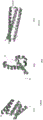
图1:根据本公开的一个实施方案,共有三十四肽重复(CTPR)蛋白质(SEQ IDNO.1)的结构的代表图。Figure 1: A representation of the structure of a consensus thirty tetracosopeptide repeat (CTPR) protein (SEQ ID NO. 1 ), according to one embodiment of the present disclosure.
图2:根据本公开的一个实施方案,具有不同长度的三个CTPR多肽(例如,适配子多肽)的结构的代表图。Figure 2: A representation of the structures of three CTPR polypeptides (eg, aptamer polypeptides) of different lengths, according to one embodiment of the present disclosure.
图3:根据本公开的一个实施方案,包含螺旋束的三个合成适配子多肽的结构的代表图。Figure 3: A representation of the structure of three synthetic aptamer polypeptides comprising a helical bundle, according to one embodiment of the present disclosure.
图4:根据本公开的一个实施方案,包含在任一端与SpyCatcher肽缀合的CTPR多肽的适配子多肽构型的代表图。Figure 4: Representative drawing of an aptamer polypeptide configuration comprising a CTPR polypeptide conjugated to a SpyCatcher peptide at either end, according to one embodiment of the present disclosure.
图5:根据本公开的一个实施方案,包含键结有SpyTag的SpyCatcher封端的CTPR多肽的适配子多肽构型的结构的代表图。Figure 5: A representation of the structure of an aptamer polypeptide configuration comprising a SpyCatcher-capped CTPR polypeptide bound to a SpyTag, according to one embodiment of the present disclosure.
图6:根据本公开的一个实施方案,借助于SpyCatcher封端的CTPR多肽臂和SpyTag功能化电极桥接一对电极的聚合酶Φ29的代表图。Figure 6: Representation of polymerase Φ29 bridging a pair of electrodes by means of SpyCatcher capped CTPR polypeptide arms and SpyTag functionalized electrodes according to one embodiment of the present disclosure.
图7:根据本公开的一个实施方案,用作适配子多肽的β-桶蛋白的代表图。Figure 7: Representative diagram of β-barrel proteins used as aptamer polypeptides according to one embodiment of the present disclosure.
图8:根据本公开的一个实施方案,包含CTPR8多肽的适配子多肽构型的结构的代表图,其中半胱氨酸被工程化至N端和C端作为金属电极的化学锚。Figure 8: A representation of the structure of an aptamer polypeptide configuration comprising a CTPR8 polypeptide in which cysteines are engineered to the N-terminus and C-terminus as chemical anchors for metal electrodes, according to one embodiment of the present disclosure.
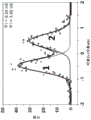
图9:根据本公开的一个实施方案,在包括半胱氨酸封端的CTPR8适配子多肽线的生物电子装置中测量的电导分布的代表图。Figure 9: Representative graph of conductance distribution measured in a bioelectronic device comprising a cysteine-terminated CTPR8 aptamer polypeptide line, according to one embodiment of the present disclosure.
图10:根据本公开的一个实施方案,展示电导分布对电极间隙大小的依赖性的代表图。(Z0是约2.5nm的设定点间隙。)Figure 10: Representative graph showing the dependence of conductance distribution on electrode gap size, according to one embodiment of the present disclosure. ( Z0 is a set point gap of about 2.5nm.)
图11A-11B:根据本公开的一个实施方案,测量峰1(A)和峰2(B)的电导对比电极间隙大小的代表图。11A-11B : Representative plots of conductance versus electrode gap size measured for Peak 1 (A) and Peak 2 (B), according to one embodiment of the present disclosure.
图12:示出在包括CTPR4、CTPR8或CTPR16分子线(黑色正方形)的生物电子装置中测量的电导的代表图。线条是与-0.2nS/nm的电导线性下降的拟合。空心正方形示出了一系列寡聚(对亚苯基亚乙炔)(OPE)分子线的测量电导的数据。电导随长度的下降是-2nS/nm(减少十倍)。数据从图9中电导分布的第二个峰得出。Figure 12: Representative graph showing conductance measured in a bioelectronic device comprising CTPR4, CTPR8 or CTPR16 molecular wires (black squares). Lines are fits with a linear drop in conductance of -0.2 nS/nm. The open squares show data for the measured conductance of a series of oligo(p-phenyleneethynylene) (OPE) molecular wires. The decrease in conductance with length is -2nS/nm (decrease by a factor of ten). Data are taken from the second peak of the conductance distribution in Figure 9.
图13:示出包含CTPR8线的生物电子装置的电导作为表面电位(对比正常氢电极标度)的函数的代表图。参考图9,下方曲线对应于电导分布中的峰1,并且上方曲线对应于峰2。与其它蛋白质导体所观察到的一样,NHE标度上的电导峰值在约300mV处。Figure 13: Representative graph showing the conductance of a bioelectronic device comprising a CTPR8 wire as a function of surface potential (vs normal hydrogen electrode scale). Referring to FIG. 9 , the lower curve corresponds to peak 1 and the upper curve corresponds to peak 2 in the conductance distribution. The conductance peak on the NHE scale is at about 300 mV as observed for other protein conductors.
图14:示出增加适配子多肽的酪氨酸含量的突变的代表图。野生型CTPR4的晶体结构示于左侧,其中酪氨酸残基突出显示。色氨酸4(W4)突变为酪氨酸(Y)并且天冬氨酸31(D31)突变为Y的突变体的结构示于右侧。(突变的残基以红色示出。)Figure 14: Representative graph showing mutations that increase the tyrosine content of aptamer polypeptides. The crystal structure of wild-type CTPR4 is shown on the left with tyrosine residues highlighted. The structure of a mutant in which tryptophan 4 (W4) is mutated to tyrosine (Y) and aspartate 31 (D31) is mutated to Y is shown on the right. (Mutated residues are shown in red.)
图15:根据本公开的一个实施方案,对于包括CTPR20适配子多肽线的生物电子装置,测量的电导分布作为电极间隙大小的函数的代表图。Figure 15: Representative plot of measured conductance distribution as a function of electrode gap size for a bioelectronic device comprising a CTPR20 aptamer polypeptide line, according to one embodiment of the present disclosure.
图16:根据本公开的一个实施方案,对于包括CTPR适配子多肽线(正方形)或寡聚亚苯基亚乙炔(OPE)线(圆形)的生物电子装置,对应于两种特异性接触的峰值电导的自然对数对比距离的代表图。(OPE的数据仅针对远程跳跃模式示出。)Figure 16: Corresponding to two specific contacts for a bioelectronic device comprising CTPR aptamer polypeptide lines (squares) or oligophenylene ethynylene (OPE) lines (circles), according to one embodiment of the present disclosure Representative plot of the natural logarithm of the peak conductance versus distance. (Data for OPE are shown for long-range skip mode only.)
图17:根据本公开的一个实施方案,自组装的生物电子电路的代表图,其中CTPR分子线用于跨越间隙大小以测量酶波动。Figure 17: Representative diagram of a self-assembled bioelectronic circuit in which CTPR molecular wires are used to measure enzyme fluctuations across the gap size, according to one embodiment of the present disclosure.
图18:对于展现出与本公开的CTPR适配子多肽线相似的特性的几种蛋白质,相对于距离测量的电导的代表图。Figure 18: Representative graph of conductance measured versus distance for several proteins exhibiting similar properties to the CTPR aptamer polypeptide lines of the present disclosure.
图19:示出几种蛋白质的电导随电子注入能量变化的代表图,显示常见的机制可能是远程导电的原因,并且除了本公开的CTPR适配子多肽线之外,许多蛋白质也可以用作分子线。Figure 19: Representative graphs showing the conductance of several proteins as a function of electron injection energy, showing that common mechanisms may be responsible for long-range conduction and that many proteins can be used in addition to the CTPR aptamer polypeptide lines of the present disclosure. molecular line.
图20A-20D:根据本公开的一个实施方案,对于示出当酪氨酸含量增加时电导显著增加的野生型(C)和W4Y/D31Y突变体(D),测量的电导分布的代表图。野生型(WT)的螺旋-转角-螺旋基序的序列示于(A)中,并且W4Y D31Y突变体的序列示于(B)中。酪氨酸以黄色标记,蓝色箭头指向额外的酪氨酸。Figures 20A-20D: Representative graphs of measured conductance distributions for wild-type (C) and W4Y/D31Y mutant (D) showing a significant increase in conductance as tyrosine content increases, according to one embodiment of the present disclosure. The sequence of the helix-turn-helix motif of the wild type (WT) is shown in (A) and that of the W4Y D31Y mutant is shown in (B). Tyrosines are marked in yellow and blue arrows point to additional tyrosines.
具体实施方式Detailed ways
在以下详细描述中,参考了构成其一部分的附图,并且在附图中通过可以实践的说明性实施方案示出。应了解,在不脱离范围的情况下,可以利用其它实施方案并且可以作出结构或逻辑改变。因此,以下详细描述不以限制性意义呈现,并且实施方案的范围由随附权利要求书及其等效物界定。In the following detailed description, reference is made to the accompanying drawings, which form a part hereof, and in which are shown by way of illustrative embodiments that may be practiced. It is to be understood that other embodiments may be utilized and structural or logical changes may be made without departing from the scope. Accordingly, the following detailed description is not presented in a limiting sense, and the scope of the embodiments is defined by the appended claims and their equivalents.
可以按可有助于理解实施方案的方式将各种操作依次描述为多个离散操作;然而,描述的顺序不应解释为暗示这些操作是依赖于顺序的。Various operations may be described as multiple discrete operations in turn, in a manner that may be helpful in understanding the embodiments; however, the order of description should not be construed as to imply that these operations are order dependent.
除非另有注释,否则根据常规用法使用技术术语。分子生物学中常用术语的定义可见于Benjamin Lewin,Genes IX,Jones andBartlet出版,2008(ISBN 0763752223);Kendrew等(编),The Encyclopedia of Molecular Biology,Blackwell Science Ltd.出版,1994(ISBN0632021829);和Robert A.Meyers(编),Molecular Biology andBiotechnology:a Comprehensive Desk Reference,VCH Publishers,Inc.出版,1995(ISBN 9780471185710);以及其它类似的参考文献。Unless otherwise noted, technical terms are used according to conventional usage. Definitions of terms commonly used in molecular biology can be found in Benjamin Lewin, Genes IX, Jones and Bartlet Publishing, 2008 (ISBN 0763752223); Kendrew et al (eds), The Encyclopedia of Molecular Biology, Blackwell Science Ltd. Publishing, 1994 (ISBN 0632021829); and Robert A. Meyers (ed.), Molecular Biology and Biotechnology: a Comprehensive Desk Reference, published by VCH Publishers, Inc., 1995 (ISBN 9780471185710); and other similar references.
下文描述了用于本公开的实践或测试的适合方法和材料。此类方法和材料仅仅是说明性的并且不旨在具有限制性。可以使用与本文所描述的那些类似或等效的其它方法和材料。举例来说,本公开所属领域中众所周知的常规方法在各种通用和更具体的参考文献中描述,包括例如Sambrook等,Molecular Cloning:A LaboratoryManual,第2版,ColdSpring Harbor Laboratory Press,1989;Sambrook等,Molecular Cloning:A LaboratoryManual,第3版,Cold Spring Harbor Press,2001;Ausubel等,Current Protocols inMolecular Biology,Greene Publishing Associates,1992(和2000年的增补);Ausubel等,Short Protocols in Molecular Biology:A Compendium of Methods fromCurrentProtocols inMolecularBiology,第4版,Wiley&Sons,1999;Harlow和Lane,Antibodies:A Laboratory Manual,Cold Spring Harbor Laboratory Press,1990;以及Harlow和Lane,Using Antibodies:ALaboratoryManual,Cold SpringHarborLaboratoryPress,1999。另外,材料、方法和实施例仅仅是说明性的并且不旨在具有限制性。Suitable methods and materials are described below for use in the practice or testing of the present disclosure. Such methods and materials are illustrative only and not intended to be limiting. Other methods and materials similar or equivalent to those described herein can be used. By way of example, conventional methods well known in the art to which this disclosure pertains are described in various general and more specific references, including, for example, Sambrook et al., Molecular Cloning: A Laboratory Manual, 2nd Ed., Cold Spring Harbor Laboratory Press, 1989; Sambrook et al. , Molecular Cloning: A Laboratory Manual, 3rd Edition, Cold Spring Harbor Press, 2001; Ausubel et al., Current Protocols in Molecular Biology, Greene Publishing Associates, 1992 (and 2000 supplement); Ausubel et al., Short Protocols in Molecular Biology: A Compendium of Methods from Current Protocols in Molecular Biology, 4th Edition, Wiley & Sons, 1999; Harlow and Lane, Antibodies: A Laboratory Manual, Cold Spring Harbor Laboratory Press, 1990; and Harlow and Lane, Using Antibodies: A Laboratory Manual, Cold Spring Harbor Laboratory Press, 1999. In addition, the materials, methods, and examples are illustrative only and not intended to be limiting.
本章节中使用的章节标题和本文的全部公开内容仅用于组织目的并且不旨在具有限制性。The section headings used in this section and the entire disclosure herein are for organizational purposes only and are not intended to be limiting.
1.定义1. Definition
为了便于查看本公开的各种实施方案,下文提供了对特定术语的以下解释。如本文所定义和使用的所有定义应理解为高于字典定义、以引用的方式并入的文档中的定义和/或所定义术语的普通含义。To facilitate viewing the various embodiments of the present disclosure, the following explanations of certain terms are provided below. All definitions, as defined and used herein, should be understood to supersede dictionary definitions, definitions in documents incorporated by reference, and/or ordinary meanings of the defined terms.
如本文在说明书和权利要求书中所用的不定冠词“一个”和“一种”,除非明确指明相反,否则应理解为意指“至少一个/种”。The indefinite articles "a" and "an" as used herein in the specification and claims are to be understood to mean "at least one" unless expressly stated to the contrary.
如本文在说明书和权利要求书中所用的短语“和/或”应理解为意指这样联合的元件中的“任一者或两者”,即,在一些情况下联合存在并且在其它情况下分开存在的元件。用“和/或”列出的多个元件应以相同的方式解释,即,“一个或多个”这样联合的元件。除了以“和/或”子句特别标识的元件之外,可以任选地存在其它元件,无论与那些特别标识的元件相关还是不相关。因此,作为非限制性实例,对“A和/或B”的提及,当与诸如“包含”之类的开放式语言结合使用时,在一个实施方案中,可以指代仅A(任选地包括除B之外的元件);在另一个实施方案中,仅B(任选地包括除A之外的元件);在又一个实施方案中,A和B两者(任选地包括其它元件);等等。As used herein in the specification and claims, the phrase "and/or" should be understood to mean "either or both" of such conjoint elements that, in some instances, exist in conjunction and in other instances Elements that exist separately. Multiple elements listed with "and/or" should be construed in the same fashion, ie, "one or more" of such conjoint elements. Other elements may optionally be present other than the elements specifically identified by the "and/or" clause, whether related or unrelated to those elements specifically identified. Thus, as a non-limiting example, a reference to "A and/or B," when used in conjunction with open-ended language such as "comprising," may, in one embodiment, refer to only A (optionally optionally including elements other than B); in another embodiment only B (optionally including elements other than A); in yet another embodiment both A and B (optionally including other component); etc.
如本文在说明书和权利要求书中所用的“或”应理解为具有与如上文所定义的“和/或”相同的含义。举例来说,当分隔清单中的项目时,“或”或者“和/或”应解释为包容性的,即,包括许多或一列元件中的至少一者,但还包括多于一者,以及任选地包括额外的未列出项目。只有明确指明相反的术语,诸如“仅一个”或“恰好一个”,或者当在权利要求书中使用时,“由......组成”将指代包括许多或一列元件中的恰好一个元件。一般来说,当前面有排他性术语,诸如“任一个”、“一个”、“仅一个”或“恰好一个”时,如本文所用的术语“或”仅应解释为指示排他性替代方案(即,“一个或另一个但不是两个”)。当在权利要求书中使用时,“基本上由……组成”应具有其在专利法领域中使用的一般含义。"Or" as used herein in the specification and claims should be understood to have the same meaning as "and/or" as defined above. For example, when separating items in a list, "or" or "and/or" should be construed as inclusive, i.e. including at least one of a number or list of elements, but also including more than one, and Optionally include additional items not listed. Terms such as "only one" or "exactly one" or "consisting of" when used in a claim will mean comprising exactly one of a plurality or list of elements only if the contrary is expressly indicated element. In general, the term "or" as used herein when preceded by an exclusive term such as "either", "an", "exactly one", or "exactly one" should only be construed as indicating an exclusive alternative (i.e., "one or the other but not both"). When used in the claims, "consisting essentially of" shall have its ordinary meaning as used in the field of patent law.
如本文在说明书和权利要求书中使用的短语“至少一个”在提及一个或多个元件的清单时,应理解为意指选自元件清单中的任何一个或多个元件的至少一个元件,但不一定包括在元件清单内具体列出的每一个元件中的至少一者,并且不排除元件清单中的元件的任何组合。这个定义还允许可以任选地存在除了在短语“至少一个”所指的元件清单内特别标识的元件之外的元件,无论与那些特别标识的元件相关还是不相关。因此,作为非限制性实例,“A和B中的至少一者”(或等效地“A或B中的至少一者”,或等效地“A和/或B中的至少一者”)在一个实施方案中可以指代至少一个,任选地包括多于一个A,而不存在B(并且任选地包括除B之外的元件);在另一个实施方案中指代至少一个,任选地包括多于一个B,而不存在A(并且任选地包括除A之外的元件);在又一个实施方案中指代至少一个,任选地包括多于一个A,和至少一个,任选地包括多于一个B(并且任选地包括其它元件);等等。As used herein in the specification and claims, the phrase "at least one" when referring to a list of one or more elements should be understood to mean at least one element selected from any one or more elements in the list of elements, However, at least one of each element specifically listed in the element list is not necessarily included, and any combination of elements in the element list is not excluded. This definition also allows that elements may optionally be present other than the elements specifically identified within the list of elements to which the phrase "at least one" refers, whether related or unrelated to those elements specifically identified. Thus, by way of non-limiting example, "at least one of A and B" (or equivalently "at least one of A or B", or equivalently "at least one of A and/or B" ) in one embodiment may refer to at least one, optionally including more than one A, in the absence of B (and optionally including elements other than B); in another embodiment refer to at least one, any Optionally includes more than one B without A (and optionally includes elements other than A); in yet another embodiment refers to at least one, optionally including more than one A, and at least one, any optionally including more than one B (and optionally including other elements); and so on.
在权利要求书以及上述说明书中,所有过渡性短语,诸如“包含”、“包括”、“携带”、“具有”、“含有”、“涉及”、“持有”、“由……组成”等应理解为开放式的,即,意指包括但不限于。如美国专利局专利审查程序手册第2111.03节所阐述,只有过渡性短语“由……组成”和“基本上由……组成”应分别为封闭式或半封闭式过渡性短语。In the claims as well as the above description, all transitional phrases such as "comprises", "comprises", "carries", "has", "contains", "relates to", "has", "consists of" etc. should be understood as open-ended, ie, meant to include, but not be limited to. As set forth in Section 2111.03 of the USPTO Manual of Patent Examining Procedures, only the transitional phrases "consisting of" and "consisting essentially of" shall be closed or semi-closed transitional phrases, respectively.
如本文所用的“生物样品”一般是指从受试者获得的含有基因组DNA、RNA(诸如mRNA)、蛋白质或它们的组合的生物样本。实例包括但不限于唾液、外周血、尿液、组织活检体、手术样本和尸检材料。在实施方案中,生物样品是体液,诸如血液,或其成分,诸如血浆或血清。A "biological sample" as used herein generally refers to a biological sample obtained from a subject that contains genomic DNA, RNA (such as mRNA), protein, or combinations thereof. Examples include, but are not limited to, saliva, peripheral blood, urine, tissue biopsies, surgical samples, and autopsy material. In embodiments, the biological sample is a bodily fluid, such as blood, or a component thereof, such as plasma or serum.
如本文所用的“生物聚合物”一般是指聚合物(例如,由活生物体产生或合成产生)。生物聚合物含有共价键结形成较大结构的单体单元。生物聚合物主要分为三类,根据使用的单体单元和形成的生物聚合物的结构进行分类:多核苷酸(RNA和DNA),它们是由13个或更多个核苷酸单体组成的长聚合物;多肽,它们是氨基酸的短聚合物;和多糖,它们通常是线性键结的聚合碳水化合物结构。生物聚合物的其它实例包括橡胶、木栓质、黑色素和木质素。As used herein, "biopolymer" generally refers to a polymer (eg, produced by a living organism or produced synthetically). Biopolymers contain monomer units that are covalently bonded to form larger structures. There are three main classes of biopolymers, classified according to the monomer units used and the structure of the biopolymer formed: Polynucleotides (RNA and DNA), which are composed of 13 or more nucleotide monomers polypeptides, which are short polymers of amino acids; and polysaccharides, which are typically linearly linked polymeric carbohydrate structures. Other examples of biopolymers include rubber, suberin, melanin, and lignin.
如本文所用的“分离的”生物组分(诸如核酸分子、蛋白质或细胞)已经基本上从这种组分天然存在的生物体细胞或生物体本身中的其它生物组分,诸如其它染色体和染色体外DNA和RNA、蛋白质和细胞中分离或纯化出。已“分离”的核酸分子和蛋白质可以理解为已通过标准纯化方法纯化。这个术语还涵盖通过在宿主细胞中重组表达制备的核酸分子和蛋白质以及化学合成的核酸分子和蛋白质。As used herein, an "isolated" biological component (such as a nucleic acid molecule, protein or cell) has been substantially separated from other biological components, such as other chromosomes and chromosomal Separate or purify extra DNA and RNA, proteins and cells. Nucleic acid molecules and proteins that have been "isolated" are understood to have been purified by standard purification methods. The term also encompasses nucleic acid molecules and proteins produced by recombinant expression in host cells as well as chemically synthesized nucleic acid molecules and proteins.
如本文所用的“修饰”、“化学修饰”或“经化学修饰”一般是指涉及改变分子的化学成分或结构的许多不同过程中的任一者。举例来说,可以对聚合酶进行化学修饰以与第一电极和第二电极形成化学键。在一个实例中,经化学修饰的电极是一种电极,其表面经过化学转化以改变电极的特性,诸如其物理、化学、电化学、光学、电学和/或传输特性。如本文所提供,化学修饰还可以涉及对聚合酶进行化学改变,以使其与结合至电极的连接子(例如,SypCatcher/SpyTag、生物素/链霉亲和素、HaloTag等)相容。在其它实施方案中,可以经由蛋白质合成产生修饰。举例来说,当从编码蛋白质和修饰(例如,连接子)的多核苷酸合成时,聚合酶可以设计成包含一个或多个修饰(例如,连接子)。As used herein, "modification," "chemical modification," or "chemically modified" generally refers to any of a number of different processes that involve changing the chemical composition or structure of a molecule. For example, the polymerase can be chemically modified to form a chemical bond with the first electrode and the second electrode. In one example, a chemically modified electrode is an electrode whose surface has been chemically transformed to change the properties of the electrode, such as its physical, chemical, electrochemical, optical, electrical and/or transport properties. As provided herein, chemical modification can also involve chemically altering the polymerase to make it compatible with the linker (eg, SypCatcher/SpyTag, Biotin/Streptavidin, HaloTag, etc.) that binds to the electrode. In other embodiments, modifications can be produced via protein synthesis. For example, when synthesizing from a polynucleotide encoding a protein and a modification (eg, a linker), a polymerase can be designed to include one or more modifications (eg, a linker).
如本文所用的“接触”和“进行接触”可以包括以直接物理缔合的方式放置,包括固体和液体两种形式。“进行接触”可以包括两种不同物质之间的特定化学接触(例如,共价键,或与特定氨基酸残基具有特定配体相互作用的非共价键)。As used herein, "contacting" and "bringing into contact" may include placing in direct physical association, including both solid and liquid forms. "Bringing into contact" can include a specific chemical contact (eg, a covalent bond, or a non-covalent bond with a specific ligand interaction with a specific amino acid residue) between two different substances.
如本文所用的“互补性”或“互补的”一般是指核酸通过传统的沃森-克里克(Watson-Crick)碱基配对或其它非传统类型与另一核酸序列形成一个或多个氢键的能力。互补性百分比指示核酸分子中可以与第二核酸序列形成氢键(例如,沃森-克里克碱基配对)的残基百分比(例如,10个中有5、6、7、8、9、10个为50%、60%、70%、80%、90%和100%互补)。“完全互补”一般指示核酸序列的所有连续残基将与第二核酸序列中相同数目的连续残基形成氢键。如本文所用的“基本上互补”是指在8、9、10、11、12、13、14、15、16、17、18、19、20、21、22、23、24、25、30、35、40、45、50个或更多个核苷酸的区域内至少60%、65%、70%、75%、80%、85%、90%、95%、97%、98%、99%或100%的互补程度,或指代在严格条件下杂交的两个核酸。As used herein, "complementarity" or "complementary" generally means that a nucleic acid forms one or more hydrogen atoms with another nucleic acid sequence through conventional Watson-Crick base pairing or other non-traditional types. key capabilities. The percent complementarity indicates the percentage of residues in a nucleic acid molecule that can form hydrogen bonds (e.g., Watson-Crick base pairing) with a second nucleic acid sequence (e.g., 5, 6, 7, 8, 9, 10 out of 10). 10 are 50%, 60%, 70%, 80%, 90% and 100% complementary). "Perfectly complementary" generally indicates that all contiguous residues of a nucleic acid sequence will hydrogen bond with the same number of contiguous residues in a second nucleic acid sequence. "Substantially complementary" as used herein refers to the range of At least 60%, 65%, 70%, 75%, 80%, 85%, 90%, 95%, 97%, 98%, 99% in a region of 35, 40, 45, 50 or more nucleotides The degree of complementarity, % or 100%, or refers to the hybridization of two nucleic acids under stringent conditions.
如本文所用的“电流流”一般是指随时间产生的电流信号,诸如从本公开的生物电子装置产生的电流信号。As used herein, "current flow" generally refers to a current signal generated over time, such as a current signal generated from a bioelectronic device of the present disclosure.
如本文所用的“标记”一般是指能够例如通过ELISA、分光光度法、流式细胞术或显微术检测的剂。举例来说,标记可以(间接或直接)连接至核酸分子或蛋白质,从而允许检测核酸分子或蛋白质。标记的实例包括但不限于放射性同位素、酶底物、辅因子、配体、化学发光剂、荧光团、半抗原、酶和它们的组合。标记方法和选择适于各种目的的标记的指南在例如Sambrook等(Molecular Cloning:ALaboratory Manual,Cold Spring Harbor,NewYork,1989)和Ausubel等(In Current Protocols in Molecular Biology,John Wiley&Sons,New York,1998)中论述。A "label" as used herein generally refers to an agent capable of detection, eg, by ELISA, spectrophotometry, flow cytometry, or microscopy. For example, a label can be attached (indirectly or directly) to a nucleic acid molecule or protein, thereby allowing detection of the nucleic acid molecule or protein. Examples of labels include, but are not limited to, radioisotopes, enzyme substrates, cofactors, ligands, chemiluminescent agents, fluorophores, haptens, enzymes, and combinations thereof. Labeling methods and guidelines for selecting markers suitable for various purposes are found, for example, in Sambrook et al. (Molecular Cloning: A Laboratory Manual, Cold Spring Harbor, New York, 1989) and Ausubel et al. ) are discussed.
如本文所用的术语“连接子”或“连接的”意指直接或间接接合在一起。举例来说,第一部分可以共价或非共价(例如,静电)连接至第二部分。这包括但不限于将一个分子共价键结至另一个分子、将一个分子非共价键结(例如,静电键结)至另一个分子、将一个分子通过氢键结非共价键结至另一个分子、将一个分子通过范德华力(van der Waals force)非共价键结至另一个分子,以及此类偶联的任何和所有组合。间接连接是可能的,诸如通过使用“连接子”(位于两个部分之间的分子或原子团)。在若干实施方案中,连接的组分以化学或物理方式缔合,使得这些组分不能自由地彼此分散。举例来说,两种组分可以彼此共价结合,使得两种组分不能单独分散或扩散。在若干实施方案中,连接的组分以化学或物理方式缔合,使得这些组分不能自由地彼此分散。举例来说,两种组分可以彼此共价结合,使得两种组分不能单独分散或扩散。The term "linker" or "linked" as used herein means directly or indirectly joined together. For example, a first moiety can be covalently or non-covalently (eg, electrostatically) linked to a second moiety. This includes, but is not limited to, covalently bonding one molecule to another, non-covalently bonding (e.g., electrostatically) bonding one molecule to another, non-covalently bonding one molecule to Another molecule, non-covalent bonding of one molecule to another by van der Waals forces, and any and all combinations of such couplings. Indirect linkages are possible, such as through the use of "linkers" (molecules or groups of atoms positioned between two moieties). In several embodiments, linked components are chemically or physically associated such that the components cannot freely disperse with each other. For example, two components can be covalently bound to each other such that the two components cannot disperse or diffuse independently. In several embodiments, linked components are chemically or physically associated such that the components cannot freely disperse with each other. For example, two components can be covalently bound to each other such that the two components cannot disperse or diffuse independently.
如本文所用的术语“非天然存在”和“工程化”可互换地指示人工参与。当涉及核酸分子或多肽时,这些术语一般指示核酸分子或多肽至少基本上不含与它们在自然界中天然相关的以及在自然界中发现的至少一种其它组分。As used herein, the terms "non-naturally occurring" and "engineered" refer interchangeably to human intervention. These terms, when referring to nucleic acid molecules or polypeptides, generally indicate that the nucleic acid molecules or polypeptides are at least substantially free of at least one other component with which they are naturally associated in nature and as found in nature.
如本文所用的“核酸”一般是指脱氧核糖核苷酸或核糖核苷酸聚合物,所述聚合物可以包括以类似于天然存在的核苷酸的方式与核酸分子杂交的天然核苷酸类似物。在一个实例中,核酸分子是单链(ss)DNA或RNA分子,诸如探针或引物。在另一个实例中,核酸分子是双链(ds)核酸。在另一个实例中,核酸是经修饰的DNA或RNA分子,诸如异种核酸(XNA)。术语“核苷酸”一般是指碱基-糖-磷酸组合并且包括核糖核苷三磷酸ATP、UTP、CTG、GTP和脱氧核糖核苷三磷酸,诸如dATP、dCTP、dITP、dUTP、dGTP、dTTP或其衍生物。As used herein, "nucleic acid" generally refers to deoxyribonucleotide or ribonucleotide polymers, which may include natural nucleotides that hybridize to nucleic acid molecules in a manner similar to naturally occurring nucleotides. thing. In one example, the nucleic acid molecule is a single-stranded (ss) DNA or RNA molecule, such as a probe or primer. In another example, the nucleic acid molecule is a double-stranded (ds) nucleic acid. In another example, the nucleic acid is a modified DNA or RNA molecule, such as xenogenic nucleic acid (XNA). The term "nucleotide" generally refers to a base-sugar-phosphate combination and includes ribonucleoside triphosphates ATP, UTP, CTG, GTP and deoxyribonucleoside triphosphates such as dATP, dCTP, dITP, dUTP, dGTP, dTTP or its derivatives.
如本文所用的“多肽”、“肽”和“蛋白质”一般是指其中单体是通过酰胺键接合在一起的氨基酸残基的聚合物。当氨基酸是α-氨基酸时,可以使用L-光学异构体或D-光学异构体,L-异构体在自然界中是优选的。术语多肽特别旨在涵盖天然存在的蛋白质,以及重组或合成产生的那些蛋白质。如本文所用的基本上纯化的多肽是指基本上不含其它蛋白质、脂质、碳水化合物或与其天然相关的其它材料的多肽。在一个实施方案中,多肽至少50%,例如至少80%不含其它蛋白质、脂质、碳水化合物或与其天然相关的其它材料。在另一个实施方案中,多肽至少90%不含其它蛋白质、脂质、碳水化合物或与其天然相关的其它材料。在又一个实施方案中,多肽至少95%不含其它蛋白质、脂质、碳水化合物或与其天然相关的其它材料。"Polypeptide", "peptide" and "protein" as used herein generally refer to a polymer in which the monomers are amino acid residues joined together by amide bonds. When the amino acid is an α-amino acid, either the L-optical isomer or the D-optical isomer may be used, the L-isomer being preferred in nature. The term polypeptide is specifically intended to cover naturally occurring proteins, as well as those produced recombinantly or synthetically. A substantially purified polypeptide as used herein refers to a polypeptide that is substantially free of other proteins, lipids, carbohydrates, or other materials with which it is naturally associated. In one embodiment, the polypeptide is at least 50%, such as at least 80%, free of other proteins, lipids, carbohydrates or other materials with which it is naturally associated. In another embodiment, the polypeptide is at least 90% free of other proteins, lipids, carbohydrates, or other materials with which it is naturally associated. In yet another embodiment, the polypeptide is at least 95% free of other proteins, lipids, carbohydrates, or other materials with which it is naturally associated.
提供功能上相似的氨基酸的保守氨基酸取代表是本领域普通技术人员所熟知的。以下六组是被视为相互保守取代的氨基酸的实例:1)丙氨酸(A)、丝氨酸(S)、苏氨酸(T);2)天冬氨酸(D)、谷氨酸(E);3)天冬酰胺(N)、谷氨酰胺(Q);4)精氨酸(R)、赖氨酸(K);5)异亮氨酸(I)、亮氨酸(L)、蛋氨酸(M)、缬氨酸(V);以及6)苯丙氨酸(F)、酪氨酸(Y)、色氨酸(W)。Conservative amino acid substitution tables providing functionally similar amino acids are well known to those of ordinary skill in the art. The following six groups are examples of amino acids that are considered mutually conservative substitutions: 1) alanine (A), serine (S), threonine (T); 2) aspartic acid (D), glutamic acid ( E); 3) asparagine (N), glutamine (Q); 4) arginine (R), lysine (K); 5) isoleucine (I), leucine (L ), methionine (M), valine (V); and 6) phenylalanine (F), tyrosine (Y), tryptophan (W).
非保守氨基酸取代可能由以下项的变化引起:(a)取代区域中氨基酸主链的结构;(b)氨基酸的电荷或疏水性;或(c)氨基酸侧链的体积。一般预期会对蛋白质特性产生最大变化的取代是那些取代,其中:(a)亲水残基取代(或被取代成)疏水残基;(b)脯氨酸取代(或被取代成)任何其它残基;(c)具有大侧链的残基,例如苯丙氨酸,取代(或被取代成)不具有侧链的残基,例如甘氨酸;或(d)具有正电侧链的残基,例如赖氨酰基、精氨酰基或组氨酰基,取代(或被取代成)电负性残基,例如谷氨酰基或天冬氨酰基。变体氨基酸序列可以例如与天然氨基酸序列80%、90%或甚至95%或98%相同。用于确定同一性百分比的程序和算法可以在NCBI网站上找到。Non-conservative amino acid substitutions may result from changes in: (a) the structure of the amino acid backbone in the region of the substitution; (b) the charge or hydrophobicity of the amino acid; or (c) the bulk of the amino acid side chain. Substitutions generally expected to produce the greatest change in protein properties are those in which: (a) a hydrophilic residue is substituted for (or replaced by) a hydrophobic residue; (b) a proline is substituted for (or replaced by) any other residues; (c) residues with large side chains, such as phenylalanine, substituted for (or replaced by) residues without side chains, such as glycine; or (d) residues with positively charged side chains , such as lysyl, arginyl or histidyl, replacing (or being substituted by) an electronegative residue such as glutamyl or aspartyl. A variant amino acid sequence may, for example, be 80%, 90% or even 95% or 98% identical to a native amino acid sequence. The procedures and algorithms used to determine percent identity can be found on the NCBI website.
如本文所用的“探针”一般是指核苷酸的短序列,诸如长度为至少8个、至少10个、至少15个、至少20个或至少21个核苷酸,它可以用于通过分子杂交检测互补序列的存在。在特定实例中,寡核苷酸探针包括允许检测寡核苷酸探针:靶序列杂交复合物的标记。实验室标准和值可以基于已知或确定的群体值来设置,并且可以按图表或表格的格式提供,从而允许比较测量的、实验确定的值。A "probe" as used herein generally refers to a short sequence of nucleotides, such as at least 8, at least 10, at least 15, at least 20, or at least 21 nucleotides in length, which can be used to Hybridization detects the presence of complementary sequences. In certain examples, the oligonucleotide probe includes a label that allows detection of the oligonucleotide probe:target hybridization complex. Laboratory standards and values can be set based on known or established population values and can be provided in a graphical or tabular format, allowing comparison of measured, experimentally determined values.
如本文所用的“引物”一般是指短核酸分子,例如,长度为10-100个,诸如长度为5、6、7、8、9、10、11、12个或更多个核苷酸的DNA寡核苷酸。引物可以通过核酸杂交粘接至互补的靶核酸链,以在引物与靶核酸链之间形成杂交体。引物可以用于扩增核酸序列,诸如通过PCR或本领域中已知的其它核酸扩增方法。A "primer" as used herein generally refers to a short nucleic acid molecule, for example, 10-100, such as 5, 6, 7, 8, 9, 10, 11, 12 or more nucleotides in length. DNA oligonucleotides. A primer can bind to a complementary target nucleic acid strand by nucleic acid hybridization to form a hybrid between the primer and target nucleic acid strand. Primers can be used to amplify nucleic acid sequences, such as by PCR or other nucleic acid amplification methods known in the art.
如本文所用的术语“纯化的”不需要绝对纯度;相反,它旨在作为相对术语。因此,举例来说,纯化的蛋白质制剂是其中所指的蛋白质比细胞内其自然环境中的蛋白质更纯的制剂。举例来说,将蛋白质制剂纯化为使得蛋白质占制剂总蛋白质含量的至少50%。类似地,纯化的寡核苷酸制剂是其中寡核苷酸比在包括寡核苷酸的复杂混合物的环境中更纯的制剂。化合物的纯度可以例如通过高效液相色谱法(HPLC)或其它常规方法来确定。The term "purified" as used herein does not require absolute purity; rather, it is intended as a relative term. Thus, for example, a purified preparation of protein is one in which the protein in question is purer than the protein in its natural environment within the cell. For example, a protein preparation is purified such that the protein comprises at least 50% of the total protein content of the preparation. Similarly, a purified oligonucleotide preparation is one in which the oligonucleotides are purer than in an environment comprising a complex mixture of oligonucleotides. The purity of a compound can be determined, for example, by high performance liquid chromatography (HPLC) or other conventional methods.
如本文所用的“重组”一般是指重组核酸或蛋白质,它具有非天然存在的序列或具有通过两个以其它方式分开的序列区段的人工组合而产生的序列。这种人工组合通常通过化学合成或通过人工操作核酸的分离区段(例如,通过基因工程技术)来完成。术语重组包括仅通过添加、取代或缺失天然核酸分子或蛋白质的一部分而改变的核酸和蛋白质。As used herein, "recombinant" generally refers to a recombinant nucleic acid or protein having a non-naturally occurring sequence or having a sequence produced by the artificial combination of two otherwise separated segments of sequence. Such artificial combinations are typically accomplished by chemical synthesis or by the artificial manipulation of isolated segments of nucleic acid (eg, by genetic engineering techniques). The term recombinant includes nucleic acids and proteins that are altered only by adding, substituting or deleting a portion of a native nucleic acid molecule or protein.
如本文所用的术语“受试者”包括人类和非人类动物。“患者”和“受试者”在本文中可互换使用。The term "subject" as used herein includes both human and non-human animals. "Patient" and "subject" are used interchangeably herein.
如本文所用的术语“基本同一性”或“基本上相同”一般是指核酸或其片段,当与另一核酸(或其互补链)在适当的核苷酸插入或缺失下最佳比对时,是指核苷酸序列具有至少约95%序列同一性,如通过任何众所周知的序列同一性算法,诸如FASTA、BLAST或Gap来测量,如下文所论述。在某些情况下,与参考核酸分子具有基本同一性的核酸分子可以编码具有与参考核酸分子所编码的多肽相同或基本上相似的氨基酸序列的多肽。As used herein, the term "substantial identity" or "substantially identical" generally refers to a nucleic acid or fragment thereof when optimally aligned with another nucleic acid (or its complementary strand) under appropriate nucleotide insertions or deletions , means that the nucleotide sequences have at least about 95% sequence identity, as measured by any well-known sequence identity algorithm, such as FASTA, BLAST or Gap, as discussed below. In some cases, a nucleic acid molecule having substantial identity to a reference nucleic acid molecule can encode a polypeptide having an amino acid sequence identical or substantially similar to the polypeptide encoded by the reference nucleic acid molecule.
当应用于多肽时,术语“基本相似性”或“基本上相似”是指两个肽序列在最佳比对时,诸如通过程序GAP或BESTFIT使用默认空位权重进行最佳比对时,共享至少95%的序列同一性,甚至更优选至少98%或99%的序列同一性。优选地,不相同的残基位置因保守氨基酸取代而不同。“保守氨基酸取代”是其中一个氨基酸残基被另一个具有相似化学特性(例如,电荷或疏水性)的侧链(R基团)的氨基酸残基取代。一般来说,保守氨基酸取代基本上不会改变蛋白质的功能特性。在两个或更多个氨基酸序列因保守取代而彼此不同的情况下,可以向上调节序列同一性百分比或相似性程度以针对取代的保守性质来校正。作出这种调节的手段是本领域技术人员所熟知的。参见例如Pearson(1994)Methods Mol.Biol.24:307-331,以引用的方式并入本文中。具有化学特性相似的侧链的氨基酸组的实例包括(1)脂肪族侧链:甘氨酸、丙氨酸、缬氨酸、亮氨酸和异亮氨酸;(2)脂肪族羟基侧链:丝氨酸和苏氨酸;(3)含酰胺侧链:天冬酰胺和谷氨酰胺;(4)芳香族侧链:苯丙氨酸、酪氨酸和色氨酸;(5)碱性侧链:赖氨酸、精氨酸和组氨酸;(6)酸性侧链:天冬氨酸和谷氨酸;以及(7)含硫侧链是半胱氨酸和蛋氨酸。优选的保守氨基酸取代组是:缬氨酸-亮氨酸-异亮氨酸、苯丙氨酸-酪氨酸、赖氨酸-精氨酸、丙氨酸-缬氨酸、谷氨酸-天冬氨酸以及天冬酰胺-谷氨酰胺。或者,保守置换是在Gonnet等(1992)Science 256:1443-1445(以引用的方式并入本文中)所公开的PAM250对数似然矩阵中具有正值的任何变化。“适度保守”置换是在PAM250对数似然矩阵中具有非负值的任何变化。When applied to polypeptides, the term "substantial similarity" or "substantially similar" means that two peptide sequences share at least 95% sequence identity, even more preferably at least 98% or 99% sequence identity. Preferably, residue positions that are not identical differ by conservative amino acid substitutions. A "conservative amino acid substitution" is one in which one amino acid residue is replaced by another amino acid residue that has a side chain (R group) with similar chemical properties (eg, charge or hydrophobicity). In general, conservative amino acid substitutions do not substantially alter the functional properties of the protein. Where two or more amino acid sequences differ from each other by conservative substitutions, the percent sequence identity or degree of similarity can be adjusted upwards to correct for the conservative nature of the substitutions. Means for making such adjustments are well known to those skilled in the art. See, eg, Pearson (1994) Methods Mol. Biol. 24:307-331, incorporated herein by reference. Examples of groups of amino acids having side chains with similar chemical properties include (1) aliphatic side chains: glycine, alanine, valine, leucine, and isoleucine; (2) aliphatic hydroxyl side chains: serine and threonine; (3) amide-containing side chains: asparagine and glutamine; (4) aromatic side chains: phenylalanine, tyrosine, and tryptophan; (5) basic side chains: Lysine, arginine, and histidine; (6) acidic side chains: aspartic acid and glutamic acid; and (7) sulfur-containing side chains are cysteine and methionine. Preferred conservative amino acid substitution groups are: valine-leucine-isoleucine, phenylalanine-tyrosine, lysine-arginine, alanine-valine, glutamic acid- Aspartic Acid and Asparagine-Glutamine. Alternatively, a conservative substitution is any change with a positive value in the PAM250 log-likelihood matrix disclosed by Gonnet et al. (1992) Science 256:1443-1445 (incorporated herein by reference). A "moderately conservative" permutation is any change that has a non-negative value in the PAM250 log-likelihood matrix.
通常使用序列分析软件来测量多肽的序列相似性,也称作序列同一性。蛋白质分析软件使用分配给各种取代、缺失和其它修饰(包括保守氨基酸取代)的相似性度量来匹配相似序列。举例来说,GCG软件含有诸如Gap和Bestfit的程序,这些程序可以在默认参数下使用以确定密切相关的多肽,诸如来自不同物种的生物体的同源多肽之间,或野生型蛋白质与其突变体之间的序列同源性或序列同一性。参见例如GCG 6.1版。多肽序列也可以使用FASTA使用默认或推荐参数进行比较,FASTA是GCG 6.1版中的一个程序。FASTA(例如,FASTA2和FASTA3)提供了查询序列与搜索序列之间的最佳重叠区的比对和序列同一性百分比(Pearson(2000),同上)。当将本发明的序列与含有来自不同生物体的大量序列的数据库进行比较时,另一个优选的算法是使用默认参数的计算机程序BLAST,尤其BLASTP或TBLASTN。参见例如Altschul等(1990)J.Mol.Biol.215:403-410和Altschul等(1997)Nucleic Acids Res.25:3389-402,各自以引用的方式并入本文中。Sequence analysis software is often used to measure sequence similarity, also referred to as sequence identity, of polypeptides. Protein analysis software matches similar sequences using similarity measures assigned to various substitutions, deletions, and other modifications, including conservative amino acid substitutions. For example, GCG software includes programs such as Gap and Bestfit that can be used with default parameters to determine closely related polypeptides, such as between homologous polypeptides from organisms of different species, or between wild-type proteins and their mutants sequence homology or sequence identity. See e.g. GCG version 6.1. Peptide sequences can also be compared using default or recommended parameters using FASTA, a program included in GCG version 6.1. FASTA (eg, FASTA2 and FASTA3) provides alignments and percent sequence identities of the regions of optimal overlap between query and search sequences (Pearson (2000), supra). Another preferred algorithm when comparing a sequence of the invention to a database containing a large number of sequences from different organisms is the computer program BLAST, especially BLASTP or TBLASTN, using default parameters. See, eg, Altschul et al. (1990) J. Mol. Biol. 215:403-410 and Altschul et al. (1997) Nucleic Acids Res. 25:3389-402, each incorporated herein by reference.
如本文所用的“变体”一般是指通过氨基酸的插入、缺失或保守取代而在氨基酸序列上不同,但保留至少一种生物活性的肽或多肽。“SNP”是指具有单核苷酸多态性的变体。“生物活性”的代表性实例包括被特定抗体结合或促进免疫反应的能力。变体在本文中还用于描述其氨基酸序列与参考蛋白质的氨基酸序列基本上相同并保留至少一种生物活性的蛋白质。氨基酸的保守取代,即,用具有相似特性(例如,带电区域的亲水性、程度和分布)的不同氨基酸置换氨基酸,在本领域中通常被认为涉及微小变化。这些微小变化可以部分地通过考虑氨基酸的亲水指数来鉴定,如本领域中所理解的。Kyte等,J.Mol.Biol.157:105-132(1982)。氨基酸的亲水指数是基于其疏水性和电荷的考虑。在本领域中已知具有相似亲水指数的氨基酸可以被取代并且仍然保留蛋白质功能。在一个方面,具有±2的亲水指数的氨基酸被取代。氨基酸的亲水性还可以用于揭示会产生保留生物功能的蛋白质的取代。在肽的情形中氨基酸的亲水性的考虑允许计算那种肽的最大局部平均亲水性,已报道这是一种与抗原性和免疫原性密切相关的有用度量。具有相似亲水性值的氨基酸的取代可以产生保留生物活性,例如免疫原性的肽,如本领域中所理解的。可以使用具有在±2内的亲水性值的氨基酸彼此进行取代。氨基酸的疏水性指数和亲水性值两者都受那种氨基酸的特定侧链影响。与那个观察结果一致,与生物功能相容的氨基酸取代应理解为依赖于氨基酸的相对相似性,特别是那些氨基酸的侧链的相对相似性,如通过疏水性、亲水性、电荷、大小和其它特性所揭示的。A "variant" as used herein generally refers to a peptide or polypeptide that differs in amino acid sequence by insertion, deletion or conservative substitution of amino acids, but retains at least one biological activity. "SNP" refers to a variant having a single nucleotide polymorphism. Representative examples of "biological activity" include the ability to be bound by a particular antibody or to promote an immune response. A variant is also used herein to describe a protein whose amino acid sequence is substantially identical to that of a reference protein and which retains at least one biological activity. Conservative substitution of amino acids, ie, replacement of an amino acid with a different amino acid having similar properties (eg, hydrophilicity, degree and distribution of charged regions), is generally recognized in the art as involving minor changes. These minor changes can be identified in part by considering the hydropathic index of amino acids, as understood in the art. Kyte et al., J. Mol. Biol. 157:105-132 (1982). The hydropathic index of an amino acid is based on considerations of its hydrophobicity and charge. It is known in the art that amino acids with similar hydropathic indices can be substituted and still retain protein function. In one aspect, amino acids with a hydropathic index of ±2 are substituted. The hydrophilicity of amino acids can also be used to reveal substitutions that result in proteins that retain biological function. Consideration of the hydrophilicity of amino acids in the case of a peptide allows the calculation of the maximum local average hydrophilicity of that peptide, which has been reported to be a useful measure closely related to antigenicity and immunogenicity. Substitution of amino acids with similar hydrophilicity values can result in peptides that retain biological activity, eg, immunogenicity, as understood in the art. Amino acids having hydrophilicity values within ±2 can be used to substitute for each other. Both the Hydrophobicity Index and the Hydrophilicity value of an amino acid are influenced by the particular side chain of that amino acid. Consistent with that observation, amino acid substitutions compatible with biological function should be understood to be dependent on the relative similarity of the amino acids, particularly the relative similarity of the side chains of those amino acids, as measured by hydrophobicity, hydrophilicity, charge, size and Other properties revealed.
如本文所用的“暂停”一般是指电流流的一段,其中测量电流的波动间插有相邻特征的持续时间约两倍的较慢特征。通常,在核苷酸已经并入模板序列中之前和之后观察到暂停,并且相对于电流的相邻脉冲的暂停持续时间随着核苷酸三磷酸的浓度降低而增加。A "pause" as used herein generally refers to a period of current flow in which fluctuations in the measured current are interspersed with slower features about twice the duration of adjacent features. In general, pauses are observed before and after a nucleotide has been incorporated into the template sequence, and the duration of the pause relative to adjacent pulses of current increases as the concentration of nucleotide triphosphates decreases.
如本文所用的“聚合酶”一般是指合成长链聚合物或核酸的酶。DNA聚合酶和RNA聚合酶用于分别通过使用碱基配对相互作用拷贝DNA模板链或通过半梯复制拷贝RNA来组装DNA和RNA分子。"Polymerase" as used herein generally refers to an enzyme that synthesizes long chains of polymers or nucleic acids. DNA polymerases and RNA polymerases are used to assemble DNA and RNA molecules, respectively, by copying DNA template strands using base-pairing interactions or copying RNA by half-ladder replication.
除非另有定义,否则本文使用的所有技术和科学术语都具有与本领域普通技术人员通常理解的含义相同的含义。在冲突的情况下,以本文献(包括定义)为准。尽管与本文所描述的那些方法和材料类似或等效的方法和材料可以用于本公开的实践或测试中,但下文描述了优选的方法和材料。本文中提及的所有出版物、专利申请、专利和其它参考文献都以全文引用的方式并入。本文所公开的材料、方法和实施例仅仅是说明性的并且不旨在具有限制性。Unless defined otherwise, all technical and scientific terms used herein have the same meaning as commonly understood by one of ordinary skill in the art. In case of conflict, the present document, including definitions, will control. Although methods and materials similar or equivalent to those described herein can be used in the practice or testing of the present disclosure, the preferred methods and materials are described below. All publications, patent applications, patents, and other references mentioned herein are incorporated by reference in their entirety. The materials, methods, and examples disclosed herein are illustrative only and not intended to be limiting.
如本文所指出,所公开的实施方案仅出于说明性目的而呈现并且不是限制性的。其它实施方案是可能的并且被本公开所覆盖,这将从本文所含的教义中显而易见。因此,本公开的广度和范围不应受上述实施方案中的任一者所限制,而应仅根据本公开所支持的权利要求及其等效物来界定。此外,本公开的实施方案可以包括方法、组合物、系统和设备/装置,它们可以进一步包括来自任何其它所公开的方法、组合物、系统和装置的任何和所有元件,包括对应于检测蛋白质活性的任何和所有元件。换句话说,来自一个或另一个所公开的实施方案的元件可以与来自其它所公开的实施方案的元件互换。此外,可以通过将本文所公开的一个和/或另一个特征与在以引用的方式并入的材料中公开的方法、组合物、系统和装置以及它们的一个或多个特征组合来实现一些其它实施方案。另外,所公开的实施方案的一个或多个特征/元件可以被去除,并且仍然产生可授予专利的主题(并且因此产生本公开的另外更多的实施方案)。此外,一些实施方案对应于与现有技术的教义相比,具体地缺少一个和/或另一个元件、结构和/或步骤(如适用)的方法、组合物、系统和装置,并且因此表示可授予专利的主题并且可与现有技术教义区分开(即,针对此类实施方案的权利要求可以含有负面限制,以指出缺少现有技术教义的一个或多个特征)。As noted herein, the disclosed embodiments are presented for purposes of illustration only and are not limiting. Other implementations are possible and covered by this disclosure, as will be apparent from the teachings contained herein. Thus, the breadth and scope of the present disclosure should not be limited by any of the above-described embodiments, but should be defined only in accordance with the claims and their equivalents to which this disclosure supports. In addition, embodiments of the present disclosure may include methods, compositions, systems, and devices/devices, which may further include any and all elements from any other disclosed methods, compositions, systems, and devices, including those corresponding to detection of protein activity. Any and all elements of . In other words, elements from one or another disclosed embodiment may be interchanged with elements from other disclosed embodiments. Furthermore, some other features may be achieved by combining one and/or another feature disclosed herein with methods, compositions, systems and devices disclosed in materials incorporated by reference and one or more features thereof implementation plan. Additionally, one or more features/elements of a disclosed embodiment may be removed and still result in patentable subject matter (and thus additional further embodiments of the present disclosure). Furthermore, some embodiments correspond to methods, compositions, systems and devices that are specifically lacking one and/or another element, structure and/or step (as applicable) compared to the teachings of the prior art, and thus represent possible Patentable subject matter is also distinguishable from prior art teachings (ie, claims to such embodiments may contain negative limitations pointing out the absence of one or more features of prior art teachings).
2.生物电子装置和系统2. Bioelectronic devices and systems
本公开的实施方案包括与生物电子装置相关的装置、系统和方法。特别地,本公开提供了生物电子装置和制造生物电子装置的方法,所述装置包括具有可重复基序和增强的导电特性的可调节适配子多肽。本公开的生物电子装置和方法可用于多种应用,包括蛋白质活性的直接测量(例如,当对生物聚合物进行测序时)。Embodiments of the present disclosure include devices, systems and methods related to bioelectronic devices. In particular, the present disclosure provides bioelectronic devices and methods of making bioelectronic devices comprising tunable aptamer polypeptides with repeatable motifs and enhanced conductive properties. The bioelectronic devices and methods of the present disclosure can be used in a variety of applications, including direct measurement of protein activity (eg, when sequencing biopolymers).
在一些实施方案中,本公开的实施方案包括包含适配子多肽的分子线,所述适配子多肽具有精确控制的长度和功能化以用于生物电子电路中。如本文进一步公开,适配子多肽可以包括展现出适用于生物电子电路中的某些特征或特性的任何蛋白质、多肽或肽。在实施方案中,适配子多肽是折叠成稳定构象以便将水从内部区域排除(例如,包括亲水外部和疏水内部或核心区域)的多肽或蛋白质。在一些实施方案中,适配子多肽包含在蛋白质上的第一地点或位置处的第一反应基团和在蛋白质上的第二地点或位置处的第二反应基团。在一些实施方案中,第一反应基团键结至电子电路中的一个元件并且第二反应基团键结至电子电路中的第二元件,以使得电流可以经由蛋白质在第一电路元件与第二电路元件之间通过。在一些实施方案中,第一反应元件和/或第二反应元件缀合至促进蛋白质与电子电路中的至少一个元件之间的连接的连接子。In some embodiments, embodiments of the present disclosure include molecular wires comprising aptamer polypeptides of precisely controlled length and functionalization for use in bioelectronic circuits. As further disclosed herein, an aptamer polypeptide may include any protein, polypeptide or peptide that exhibits certain characteristics or properties suitable for use in bioelectronic circuits. In embodiments, an aptamer polypeptide is a polypeptide or protein that folds into a stable conformation to exclude water from an interior region (eg, comprising a hydrophilic exterior and a hydrophobic interior or core region). In some embodiments, an aptamer polypeptide comprises a first reactive group at a first site or position on the protein and a second reactive group at a second site or position on the protein. In some embodiments, the first reactive group is bonded to one element in the electronic circuit and the second reactive group is bonded to a second element in the electronic circuit such that electrical current can flow between the first circuit element and the second element in the electronic circuit. pass between two circuit elements. In some embodiments, the first responsive element and/or the second responsive element is conjugated to a linker that facilitates attachment between the protein and at least one element in the electronic circuit.
在实施方案中,使用适配子多肽或蛋白质稳定待定位在生物电子电路内(例如,在两个电极之间)的所关注蛋白质(例如,聚合酶)(参见例如图17)。在一些实施方案中,适配子多肽具有长轴或是棒状的,其中可用的连接点以与蛋白质的最长尺寸相似或相等的距离分开(参见例如图2)。此类几何形状通常在由两个或更多个α螺旋束和/或两个或更多个β-片层(例如,允许蛋白质长度可工程化的可重复蛋白质基序)组成的蛋白质中实现。可以使用包含一个或多个β-桶基序的蛋白质来提供另一种这样的几何形状。一般来说,适配子多肽或蛋白质对pH、盐度和温度的变化是稳定的,并且可以通过本领域中众所周知的方式在诸如大肠杆菌的细菌中容易地表达。在一些实施方案中,适配子多肽或蛋白质不太容易发生蛋白水解性裂解。In embodiments, an aptamer polypeptide or protein is used to stabilize a protein of interest (eg, a polymerase) to be positioned within a bioelectronic circuit (eg, between two electrodes) (see, eg, FIG. 17 ). In some embodiments, aptamer polypeptides have a long axis or are rod-shaped, with available attachment points separated by a similar or equal distance to the longest dimension of the protein (see, eg, Figure 2). Such geometries are often achieved in proteins consisting of two or more α-helical bundles and/or two or more β-sheets (e.g., repeatable protein motifs that allow protein length to be engineered) . Another such geometry can be provided using proteins comprising one or more β-barrel motifs. In general, aptamer polypeptides or proteins are stable to changes in pH, salinity and temperature and can be readily expressed in bacteria such as E. coli by means well known in the art. In some embodiments, the aptamer polypeptide or protein is less prone to proteolytic cleavage.
一种示例性适配子多肽是共有三十四肽重复(CTPR)蛋白质。举例来说,CTPR3示于图1中,并且具有三个可重复基序。基本单元由经由连接子序列102连接的A螺旋101组成。连接子允许B螺旋103折叠回到A螺旋上,在此它通过疏水相互作用保持。在图1中所示的蛋白质(CTPR3)的情况下,这种基本基序重复三次:连接子104连接至A螺旋2105,所述A螺旋2经由连接子106连接至B螺旋2107,从而完成第二个重复。第三个重复由螺旋109和111以及连接子108和110形成。所述结构经由112连接至溶剂化螺旋113。在这个示例性结构中,N端和C端相隔5nm,允许这个结构在这种距离上传输足够的电荷。An exemplary aptamer polypeptide is a consensus thirty tetracosopeptide repeat (CTPR) protein. For example, CTPR3 is shown in Figure 1 and has three repeatable motifs. The basic unit consists of A
CTPR3的氨基酸序列示于图1的底部(GAMDPGNSAEAWYNLG NAYYKQGDYDEAIEYYQKALELDPNNAEAWYNLGNAYYKQGD YDEAIEYYQKALELDPNNAEAWYNLGNAYYKQGDYDEAIEYYQKALELDPNNAEAKQNLGNAKQKQG(SEQ ID NO:1))。必要时,N端序列115可以包括HIS标签,例如,用于最终产物的纯化。A螺旋1的序列以粗体型110示出,继之以B螺旋1117的序列。A螺旋2和A螺旋3是118和120,而B螺旋2和B螺旋3是119和121。溶剂化螺旋表示为122。另外,N端和C端可容易地用于并入反应位点,包括但不限于半胱氨酸残基(参见例如图8)。在一些实施方案中,可以使用非典型氨基酸,包括但不限于用于点击化学反应的叠氮基。在其它实施方案中,并入了诸如SpyTag或Avitag的反应性肽序列(参见例如图5、6和17)。在一些实施方案中,整个SpyCatcher序列可以包含在所关注的适配子多肽或蛋白质的两端。这些和其它构型可以包含本领域中可用和已知的各种连接子,包括但不限于生物素-链霉亲和素连接子、spytag-spycatcher连接子、halotag连接子、硫醇化连接子、硫醇化TPR连接子和硫醇化CTPR连接子。The amino acid sequence of CTPR3 is shown at the bottom of Figure 1 (GAMDPGNSAEAWYNLG NAYYKQGDYDEAIEYYQKALELDPNNAEAWYNLGNAYYKQGDYDEAIEYYQKALELDPNNAEAWYNLGNAYYKQGDYDEAIEYYQKALELDPNNAEAKQNLGNAKQKQG (SEQ ID NO: 1)). The N-terminal sequence 115 can include a HIS tag if necessary, eg, for purification of the final product. The sequence of the
在一些实施方案中,CTPR适配子多肽容易被克隆并且可表达为具有任何期望长度的一系列聚合物。在一些实施方案中,CTPR适配子多肽容易被克隆并且可表达为长达并包括CTPR20的一系列聚合物。在一些实施方案中,CTPR适配子多肽容易被克隆并且可表达为CTPR20或更大的一系列聚合物。举例来说,在一些实施方案中,CTPR适配子多肽是CTPR1、CTPR2、CTPR3、CTPR4、CTPR5、CTPR6、CTPR7、CTPR8、CTPR9、CTPR10、CTPR11、CTPR12、CTPR13、CTPR14、CTPR15、CTPR16、CTPR17、CTPR18、CTPR19或CTPR20,及其任何衍生物或变体(参见例如图2)。举例来说,CTPR20当在N端和C端(图2中分别为201和202)功能化时,构成了能够在18nm距离上传输电荷的分子线。In some embodiments, CTPR aptamer polypeptides are readily cloned and can be expressed as a series of polymers of any desired length. In some embodiments, CTPR aptamer polypeptides are readily cloned and can be expressed as a series of polymers up to and including CTPR20. In some embodiments, CTPR aptamer polypeptides are readily cloned and can be expressed as a series of polymers of CTPR20 or larger. For example, in some embodiments, the CTPR aptamer polypeptide is CTPR1, CTPR2, CTPR3, CTPR4, CTPR5, CTPR6, CTPR7, CTPR8, CTPR9, CTPR10, CTPR11, CTPR12, CTPR13, CTPR14, CTPR15, CTPR16, CTPR17, CTPR18, CTPR19 or CTPR20, and any derivatives or variants thereof (see eg Figure 2). For example, CTPR20, when functionalized at the N- and C-termini (201 and 202 in Figure 2, respectively), constitutes molecular wires capable of transporting charge over a distance of 18 nm.
除了基于CTPR的分子线之外,许多其它螺旋束蛋白和多肽也可以用作分子线。图3提供了三种合成螺旋束蛋白的实例。举例来说,在蛋白质301(RSC PDB参考1NA3)中,N端和C端相隔3.9nm。对于蛋白质302(RSC PDB参考2KIS),N端和C端相隔3.8nm。并且对于蛋白质303(RSC PDB参考6EGC),N端和C端紧靠在一起,但通过在环304(标记为“X”)中插入具有反应性基团(例如,叠氮基)的非典型氨基酸,具有诸如此类折叠的蛋白质仍然可以用作分子线。In addition to CTPR-based molecular wires, many other helical bundle proteins and polypeptides can also be used as molecular wires. Figure 3 provides examples of three synthetic helix bundle proteins. For example, in protein 301 (RSC PDB reference 1NA3), the N- and C-termini are separated by 3.9 nm. For protein 302 (RSC PDB reference 2KIS), the N- and C-termini are separated by 3.8 nm. And for protein 303 (RSC PDB reference 6EGC), the N-terminus and C-terminus are close together, but by inserting a non-canonical Amino acids, proteins with folds like these can still be used as molecular wires.
如本文进一步公开,用于制造功能化分子线的一种通用方法是使用能够连接至适配子多肽的连接子。举例来说,可以使用融合蛋白捕获构建体,所述构建体在表达适配子多肽(例如,CTPR蛋白)的DNA序列的每一端包括用于连接子的基因,诸如用于SpyCatcher蛋白的基因。图4图解了后续的蛋白质序列。构建体以Spycatcher序列401开始,所述序列包括用于蛋白质纯化的HIS标签。螺旋封端序列402连接至N重复,所述N重复包含经由QGD连接子404连接至B螺旋405的A螺旋403。连接子406连接至溶剂化螺旋并且最后连接至SpyCatcher序列408的重复。As further disclosed herein, one general method for making functionalized molecular wires is to use linkers capable of ligation to aptamer polypeptides. For example, a fusion protein capture construct can be used that includes a gene for a linker, such as a gene for a SpyCatcher protein, at each end of a DNA sequence that expresses an adapter polypeptide (eg, a CTPR protein). Figure 4 illustrates the subsequent protein sequence. The construct starts with
图5示出了具有CTPR3蛋白的此种复合物的结构。第一SpyCat cher蛋白501在其N端连结至CTPR3蛋白502。第二SpyCatcher503连结至CTPR3蛋白的C端。还示出了与SpyCatcher蛋白形成异肽键的SpyTag 504和505。以诸如半胱氨酸506、507的反应性基团封端,SpyTag可以连接至电极或其它蛋白质。Figure 5 shows the structure of this complex with CTPR3 protein. The
图6提供了包含CTRP适配子多肽和SpyCatcher/SpyTag连接子的生物电子电路的实例。在此,两个电极601、602通过自组装复合物连接在一起。在本实例中,聚合酶Φ29603在其N端604用SpyTag序列(SEQ ID NO:2,AHIVMVDAYKPTK)功能化。在所述实例中,聚合酶也在Try 521605位点处使用非典型叠氮基功能化氨基酸进行功能化,第二SpyTag 605通过点击化学偶联至所述氨基酸。使用这个连接点,因为C端靠近酶的活性位点并且不能用于连接至电极。将功能化聚合酶Φ29与SpyCatcher-CTPR3复合物606、607(如图5中所示)一起温育,并且使用尺寸排阻色谱法选择包含连接至两个CTPR3臂的聚合酶的所需反应产物。电极用半胱氨酸封端的SpyTag608、609功能化,其中半胱氨酸610、611结合至金属电极。然后将CTPR3功能化聚合酶与功能化电极一起温育,形成桥接复合物。在一些实施方案中,在电极之间通过的电流的跃变指示成功形成所需的桥。Figure 6 provides an example of a bioelectronic circuit comprising a CTRP adapter polypeptide and a SpyCatcher/SpyTag linker. Here, two
在一些实施方案中,单个结构元件,诸如β-桶也可以包围疏水核心,并且因此也可以用作分子线。在β-桶构型中,β-片层折叠成圆柱体,其中疏水残基向内并且亲水残基向外。一个实例是图7中所示的合成蛋白质RSC PDB结构6CZJ。在这些示例性结构中,N端和C端(分别为701和702)可以位于β-桶的同一端。然而,在桶的另一端的环703中包括反应性肽序列或非典型叠氮基修饰氨基酸允许远程电流传输(对于图7中所示的结构为3.3nm)。根据这些实施方案,包含CTPR20适配子多肽的生物电子电路可以跨越接近40nm的电极间隙,并且易于功能化,由此大大简化含有任何所关注蛋白质的生物电子装置的构建。In some embodiments, a single structural element, such as a β-barrel, can also surround a hydrophobic core, and thus also serve as a molecular wire. In the β-barrel configuration, the β-sheet is folded into a cylinder with the hydrophobic residues facing inward and the hydrophilic residues facing outward. An example is the synthetic protein RSC PDB structure 6CZJ shown in Figure 7. In these exemplary structures, the N-terminus and C-terminus (701 and 702, respectively) can be located at the same end of the β-barrel. However, the inclusion of reactive peptide sequences or atypical azido-modified amino acids in
如图8中所展示,使用CTPR8直接测量CTPR8线的电导率,所述CTPR8被工程化为具有如SEQ ID NO:3所公开的序列(MSYYHHHHHHSCSDYDIPTTENLYFQGAMGSAEAWYNLGNAY YKQGDYDEAIEYYQKALELDPRSAEAWYNLGNAYYKQGDYDEAIEYYQKALELDPRSAEAWYNLGNAYYKQGDYDEAIEYYQKALELDPRSAEAWYNLGNAYYKQGDYDEAIEYYQKLELDPRSAEAWYNLGNAYYKQGDYDEAIEYYQKALELDPRSAEAWYNLGNAYYKQGDYDEAIEYYQKALELDPRSAEAWYNLGNAYYKQGDYDEAIEYYQKALELDPRSAEAWYNLGNAYYKQGDYDEAIEYYQKALELDPRSAEAKQNLGNAKQKQGSCS)。参考SEQ ID NO:3,插入的半胱氨酸以粗体(C)示出并且可以用于纯化的HIS标签以斜体(HHHHHH)示出。图8示出了这个分子的代表性结构。As shown in Figure 8, the conductivity of the CTPR8 line was directly measured using CTPR8 engineered to have the sequence disclosed as SEQ ID NO: 3 (MSYYHHHHHHSCSDYDIPTTENLYFQGAMGSAEAWYNLGNAYYKQGDYDEAIEYYQKALELDPRSAEAWYNLGNAYYKQGDYDEAIEYYQKALELDPRSAEAWY NLGNAYYKQGDYDEAIEYYQKALELDPRSAEAWYNLGNAYYKQGDYDEAIEYYQKLELDPRSAEAWYNLGNAYYKQGDYDEAIEYYQKALELDPRSAEAWYNLGNAYYKQGDYDEAIEYYQKALELDPRSAEAWYNLGNAYYKQGDYDEAIEYYQKALELDPRSAEAW YNLGNAYYKQGDYDEAIEYYQKALELDPRSAEAKQNLGNAKQKQGSCS). Referring to SEQ ID NO:3, the inserted cysteine is shown in bold (C) and the HIS tag that can be used for purification is shown in italics (HHHHHH). Figure 8 shows a representative structure of this molecule.
使用具有Pd探针和Pd衬底的扫描隧道显微镜测量这个分子线的电导率,这在缓冲电解质中操作。图9示出了测量的电导分布。存在两个峰,标记为“1”和“2”。峰1在约0.3nS处达到最大值。峰2在约3nS处达到最大值。这种分布类似于对结合至电极上的表位的抗体所观察到的分布,其中使用由相同抗体制成的Fab片段显示峰1反映了一种特异性相互作用(即,表位-抗体相互作用)和一种非特异性相互作用(即,探针上的肽与抗体表面之间的氢键结相互作用)。峰2反映了两种特异性相互作用(即,两个抗体头中的每一者处的表位抗体)。结果是,随着沿分子接触不同点,峰1的值随着电极间隙的大小而变化,而峰2随着间隙的变化保持恒定值。如图10中所示,在这种情况下观察到相同的特征。随着间隙从设定点间隙Z0(约2.5nm)增至Z0+2nm(约4.5nm),峰2的值不变。相比之下,峰1的值显著降低。图11汇总了来自3次运行的统计数据。可以看出,随着电极间隙增大,峰1的电导显著降低,而电极间隙不会显著改变峰2的电导。The conductivity of this molecular wire was measured using a scanning tunneling microscope with a Pd probe and a Pd substrate, operating in a buffered electrolyte. Figure 9 shows the measured conductance distribution. There are two peaks, labeled "1" and "2".
在一些实施方案中,图8中所示的半胱氨酸封端的分子可以充当测量电极间隙的有效大小的标尺。如图10中所展示,随着电极间隙变大,接触频率降低,并且当间隙接近8nm时,电导完全丧失(对于这个示例性分子)。因此,电极之间的间隙可以通过将装置暴露于连续较短的CTPR分子来确定(即,可以跨越间隙的分子的最小长度由发出信号的最长CTPR分子给出)。这是一种用于校准分子电子装置的稳固方法,因为局部结合几何形状可能无法适应由电子显微镜确定的完整间隙大小。In some embodiments, the cysteine-terminated molecules shown in Figure 8 can serve as a ruler for measuring the effective size of the electrode gap. As shown in Figure 10, as the electrode gap becomes larger, the contact frequency decreases and conductance is completely lost (for this exemplary molecule) as the gap approaches 8 nm. Thus, the gap between electrodes can be determined by exposing the device to successively shorter CTPR molecules (ie, the minimum length of a molecule that can span the gap is given by the longest CTPR molecule that signals). This is a robust method for calibrating molecular electronic devices, since local binding geometries may not accommodate the full gap size determined by electron microscopy.
本公开的CTPR适配子多肽在结构上相当稳固并且可以适应氨基酸序列的显著改变。如本文所描述,芳香族残基(例如,酪氨酸、色氨酸和苯丙氨酸)对于电导率可能很重要。举例来说,可以通过将额外的芳香族残基插入螺旋结构内部来显著增加CTPR分子线的电导。这种修饰残基的相同能力允许改变面向流体的残基。因此,这些线也可以充当传感器。举例来说,通过将谷氨酸残基放置在螺旋的外部,产生单分子pH传感器,因为谷氨酸残基在低pH下被去质子化。The CTPR aptamer polypeptides of the present disclosure are quite structurally robust and can accommodate significant changes in amino acid sequence. As described herein, aromatic residues (eg, tyrosine, tryptophan, and phenylalanine) may be important for conductivity. For example, the conductance of CTPR molecular wires can be significantly increased by inserting additional aromatic residues inside the helical structure. This same ability to modify residues allows for changes in fluid-facing residues. Therefore, these wires can also act as sensors. For example, by placing glutamic acid residues on the outside of the helix, unimolecular pH sensors are created because glutamic acid residues are deprotonated at low pH.
根据这些实施方案,本公开还提供了一种分子传感器装置,所述装置包括具有适配子多肽的分子线,所述适配子多肽具有一个或多个可重复基序(例如,共有三十四肽重复),其中芳香族氨基酸含量已增加以便增加分子的电导率。在一些实施方案中,本公开提供了一种用于确定电极间隙大小的方法,所述方法包括将间隙暴露于一系列长度递减的半胱氨酸封端的CTPR分子线。在一些实施方案中,本公开的分子传感器包括由折叠蛋白桥接的第一电极和第二电极,所述折叠蛋白在每一端呈现电极结合位点并且含有对暴露于靶分子作出反应而经历化学变化的表面残基。According to these embodiments, the present disclosure also provides a molecular sensor device comprising a molecular wire having an aptamer polypeptide having one or more repeatable motifs (e.g., a total of thirty tetrapeptide repeat) in which the aromatic amino acid content has been increased in order to increase the conductivity of the molecule. In some embodiments, the present disclosure provides a method for determining the size of an electrode gap comprising exposing the gap to a series of cysteine-terminated CTPR molecular wires of decreasing length. In some embodiments, the molecular sensors of the present disclosure include a first electrode and a second electrode bridged by a folded protein that presents an electrode binding site at each end and contains an electrode that undergoes a chemical change in response to exposure to a target molecule. surface residues.
参考图12,生物电子装置是用三种不同的CTPR适配子多肽构建的,所述适配子多肽是用N端和C端的半胱氨酸合成的。图12包括示出在包括CTPR4、CTPR8或CTPR16分子线(黑色正方形)的生物电子装置中测量的电导的代表图。线条是与-0.2nS/nm的电导线性下降的拟合。空心正方形示出了一系列寡聚(对亚苯基亚乙炔)(OPE)分子线的测量电导的数据。电导随长度的下降是-2nS/nm(减少十倍)。(数据从图9中电导分布的第二个峰得出。)作为间隙距离(Z)的函数进行测量并且重复三次。峰1的峰值电导由以下拟合:CTPR4:Ln(G)=-0.67-0.12Z;CTPR8:Ln(G)=-0.76±0.08-(0.18±0.02)Z;以及CTPR16:Ln(G)=-0.80±0.04-(0.14±0.02)Z。峰2的峰值电导由以下拟合:CTPR4:Ln(G)=1.30±0.10-(0.0115±0.03)Z;CTPR8:Ln(G)=1.03±0.10-(0.0096±0.03)Z;以及CTPR16:Ln(G)=0.11±0.10-(0.0087±0.02)Z。峰2电导与间隙大小无关(在测量误差内),从而得到以下三种分子的电导值:CTPR4:3.7±0.3nS;CTPR8:2.8±0.05nS;以及CTPR16:1.1±0.1nS。绘制这些值相对于图12中分子的晶体长度的图。为作比较,还示出了一系列寡聚(对亚苯基亚乙炔)(OPE)分子线的电导(空心正方形)。OPE广泛用作分子线,但可以看出,电流随距离的衰减比CTPR线显著更大(例如,10倍)。OPE线具有较小的接触电阻,并且在约7nm长度后它们的电阻会变得更大。对于超过5nm的距离,本公开的CTPR线展现出增强的电导。Referring to FIG. 12, a bioelectronic device was constructed using three different CTPR aptamer polypeptides synthesized with N-terminal and C-terminal cysteines. 12 includes representative graphs showing conductance measured in bioelectronic devices including CTPR4, CTPR8, or CTPR16 molecular wires (black squares). Lines are fits with a linear drop in conductance of -0.2 nS/nm. The open squares show data for the measured conductance of a series of oligo(p-phenyleneethynylene) (OPE) molecular wires. The decrease in conductance with length is -2nS/nm (decrease by a factor of ten). (Data are taken from the second peak of the conductance profile in Figure 9.) Measurements were taken as a function of gap distance (Z) and repeated in triplicate. The peak conductance of
先前已经测量了一系列蛋白质的电导对电子能量的依赖性(参见例如Zhang,B.,W.Song,J.Brown,R.Nemanich和S.Lindsay,Electronic Conductance Resonance in Non-Redox-Active Proteins.Journal ofthe American Chemical Society,2020.142(13):第6432-6438页),当电极在正常氢电极(NHE)标度上在+300mV处平衡时,所有这些都显示出电导共振。本公开的CTPR适配子多肽展现出相似的特征。举例来说,图13包括示出包含CTPR8分子线的生物电子装置的电导作为表面电位(对比正常氢电极标度)的函数的代表图。参考图9,下方曲线对应于电导分布中的峰1,并且上方曲线对应于峰2。与其它蛋白质导体所观察到的一样,NHE标度上的电导峰值在约300mV处。图13展示了CTPR8蛋白(具有N端和C端半胱氨酸连接)作为电极电位的函数的测量电导。在300mV处的峰值很明显。因此,电导由与其它蛋白质相同的机制介导,这可能是经由与酪氨酸残基的电子态共振。这指示了通过富集蛋白质的酪氨酸含量可以进一步增强电导。举例来说,图14包括示出增加适配子多肽的酪氨酸含量的突变的代表图。野生型CTPR4的晶体结构示于左侧,其中酪氨酸残基突出显示。色氨酸4(W4)突变为酪氨酸(Y)并且天冬氨酸31(D31)突变为Y的突变体的结构示于右侧。(突变的残基以红色示出。)图14显示了酪氨酸含量的显著增加在不改变CTPR结构的情况下是可能的。The dependence of the conductance of a range of proteins on electron energy has been previously measured (see e.g. Zhang, B., W. Song, J. Brown, R. Nemanich and S. Lindsay, Electronic Conductance Resonance in Non-Redox-Active Proteins. Journal of the American Chemical Society, 2020.142(13): pp. 6432-6438), all of which exhibit conductance resonance when the electrodes are equilibrated at +300mV on the normal hydrogen electrode (NHE) scale. The CTPR aptamer polypeptides of the disclosure exhibit similar characteristics. For example, FIG. 13 includes representative graphs showing the conductance of a bioelectronic device comprising a CTPR8 molecular wire as a function of surface potential (vs. normal hydrogen electrode scale). Referring to FIG. 9 , the lower curve corresponds to peak 1 and the upper curve corresponds to peak 2 in the conductance distribution. The conductance peak on the NHE scale is at about 300 mV as observed for other protein conductors. Figure 13 shows the measured conductance of CTPR8 protein (with N-terminal and C-terminal cysteine linkages) as a function of electrode potential. A peak at 300mV is evident. Thus, conductance is mediated by the same mechanism as other proteins, possibly via electronic state resonance with tyrosine residues. This indicates that conductance can be further enhanced by enriching the tyrosine content of the protein. For example, Figure 14 includes representative graphs showing mutations that increase the tyrosine content of aptamer polypeptides. The crystal structure of wild-type CTPR4 is shown on the left with tyrosine residues highlighted. The structure of a mutant in which tryptophan 4 (W4) is mutated to tyrosine (Y) and aspartate 31 (D31) is mutated to Y is shown on the right. (Mutated residues are shown in red.) Figure 14 shows that a dramatic increase in tyrosine content is possible without altering the CTPR structure.
参考图15,CTPR线是用并入如图8中针对CTPR8所示的N端和C端800的半胱氨酸合成的,但具有不同数目的可重复基序。在本实例中,合成了CTPR4、CTPR8、CTPR12、CTPR16和CTPR20分子线。基于晶体学分析,这些构型的长度为约4nm、6nm、12nm、16nm和20nm。电导是这些CTPR构型中的每一者的测量值,对单个分子使用重复测量来提取所有可能的接触几何形状的电导分布。图15给出了一组测量分布的实例。这些数据示出了测量给定电导的频率对比电导的对数。这些特定数据对应于CTPR20。在扫描隧道显微镜中进行测量。设定点Z0是通过在100mV偏压下控制4pA电流而获得的初始间隙(约2.5nm或更大)。然后按每个分布所示的量撤回探针。举例来说,在图15中的底部迹线801中,不撤回探针,因此距离恰好为Z0。在顶部迹线802中,将探针撤回6nm,因此距离为Z0+6nm。为清楚起见,示出了分布在垂直方向上任意移位。在给定的探针距离处,记录电流-电压曲线,直至探针捕捉到分子,如非零电流所指示,并且随后的电流电压曲线用于计算接触的每个分子的分子电导。正如在许多类似实验中观察到的,在分布中观察到两个峰803和804。较大电导803处的峰值对应于两种特异性化学接触(N端和C端半胱氨酸-图8中的800),因此导电路径长度相似。较低电导804处的峰值对应于分子上某一点处的一种特异性接触和一种非特异性接触。由于这个第二接触点将具有较长的传导路径,因此间隙越大,其峰值随着间隙增加而迁移至较小的值。Referring to Figure 15, CTPR lines were synthesized with cysteines incorporated at the N-terminus and C-
作为分子长度的函数的电流衰减的测量说明了包含本公开的适配子多肽的生物电子装置比常规分子线具有大得多的效用和功效。举例来说,图16示出了(圆形901)对应于较大峰803(图15)的电导的自然对数如何随距离而下降。然而,注意到,在20nm距离处电导仍为0.8nS,902,这对于分子电子组件和电路仍然是有用且有效的电导。衰减常数0.1nm-1非常小,对应于10nm的衰减长度。为作比较,正方形903示出了寡聚(对亚苯基亚乙炔OPE)的数据,这是当前技术的分子线的一个实例。20ns处的接触电导(零长度电导)904比CTPR线(5.8nS)的接触电导905高得多。然而,大得多的衰减常数0.29nm-1意味着包含CTPR适配子多肽的分子线在大于7.5nm的距离处优于OPE寡聚物,906。Measurements of current decay as a function of molecular length demonstrate that bioelectronic devices comprising the aptamer polypeptides of the present disclosure have much greater utility and power than conventional molecular wires. For example, Figure 16 shows (circle 901) how the natural logarithm of the conductance corresponding to the larger peak 803 (Figure 15) falls off with distance. Note, however, that the conductance is still 0.8 nS,902 at a distance of 20 nm, which is still a useful and effective conductance for molecular electronic components and circuits. The decay constant 0.1 nm −1 is very small, corresponding to a decay length of 10 nm. For comparison, square 903 shows data for oligo(p-phenylene acetylene OPE), an example of a current state of the art molecular line. The contact conductance (zero length conductance) 904 at 20ns is much higher than the
参考图17,本公开的实施方案还包括使用基于CTPR的分子线作为所关注的蛋白质与两个电极之间的连接的方法。举例来说,CTPR线1101(以CTPR8示出,但可以使用其它长度)用将N端区域偶联至电极1102的N端半胱氨酸1103表达。C端区域用Avitag表达,生物素化1104用Bir-A酶表达。这种生物素化C端用于捕获链霉亲和素1105。然后用双生物素化聚合酶1106桥接两个链霉亲和素分子之间的间隙(参见例如Zhang,B.,H.Deng,S.Mukherjee,W.Song,X.Wang和S.Lindsay,Engineering an Enzyme for Direct ElectricalMonitoringofActivity.ACS Nano,2020.14:第1630-1638页)。Referring to FIG. 17, embodiments of the present disclosure also include a method of using a CTPR-based molecular wire as a connection between a protein of interest and two electrodes. For example, CTPR line 1101 (shown as CTPR8, but other lengths can be used) is expressed with an N-
图18包括IgG抗体1201、Fab片段1202和IgE抗体1203的电导对数随距离衰减的代表性数据(参见例如Zhang,B.;Lindsay,S.,Electronic Decay Length in a ProteinMolecule.Nano letters 2019,19,4017-4022)。线条是与指数衰减的拟合,全部具有约10nm的衰减长度,类似于用本公开的CTPR分子线观察到的结果。然而,在这种情况下,通过进行一种特异性接触(例如,与连接至电极的表位)和一种与蛋白质上的某个其它点的非特异性接触来进行测量。还示出了用表位功能化底物和仅用巯基乙醇(MCE)功能化以促进与IgG分子非特异性接触的第二电极获得的数据1204。这些数据证明了长衰减长度不依赖于所使用的特定类型的接触。Figure 18 includes representative data of the conductance logarithm decay with distance for
另外,图19示出了通过Zhang,B.,W.Song,J.Brown,R.Nemanich和S.Lindsay,Electronic Conductance Resonance in Non-Redox-Active Proteins.Journal of theAmerican Chemical Society,2020.142(13):第6432-6438页中所描述的技术得到的许多蛋白质作为电子注入能量(基于正常氢电极-NHE标度)的函数的测量电导值。如所示,1301对应于链霉亲和素的数据;1302对应于链霉亲和素与聚合酶的复合物;1303对应IgE分子;全部使用不同的金属作为电极进行测量。另外,1304对应于通过改变钯电极相对于参考电极的电位测量的链霉亲和素数据;并且1305包括早先对于CTPR8所呈现的数据,但在此处再现以显示共同的共振是所有这些蛋白质的电子特性的原因。总之,这些数据证明了许多不同的蛋白质可以用作适配子多肽来产生分子线;并且,当经过修饰以将电极连接至所关注的蛋白质时,这些适配子多肽可以充当连接元件,如本文进一步描述。特别地,在基于蛋白质的分子线中最有效地传输电荷的能级与在通过这些线连接至电极的蛋白质传感器中最有效地传输电荷的能级很好地匹配。对于由例如DNA或简单的有机聚合物(诸如寡聚亚苯基亚乙炔)组成的线,情况并非如此。In addition, Figure 19 shows that by Zhang, B., W.Song, J.Brown, R.Nemanich and S.Lindsay, Electronic Conductance Resonance in Non-Redox-Active Proteins.Journal of the American Chemical Society, 2020.142(13) : Measured conductance values for a number of proteins as a function of electron injection energy (based on normal hydrogen electrode - NHE scale) derived from the technique described on pages 6432-6438. As indicated, 1301 corresponds to the data for streptavidin; 1302 corresponds to the complex of streptavidin and polymerase; 1303 corresponds to the IgE molecule; all measured using different metals as electrodes. Additionally, 1304 corresponds to the streptavidin data measured by varying the potential of the palladium electrode relative to the reference electrode; and 1305 includes data presented earlier for CTPR8 but reproduced here to show that the common resonance is common to all of these proteins due to electronic properties. Taken together, these data demonstrate that many different proteins can be used as aptamer polypeptides to generate molecular wires; and, when modified to attach electrodes to proteins of interest, these aptamer polypeptides can serve as linking elements, as described herein described further. In particular, the energy levels that transport charge most efficiently in protein-based molecular wires matched well with those in protein sensors connected to electrodes by these wires. This is not the case for threads composed of eg DNA or simple organic polymers such as oligophenylene acetylenes.
参考图20A-20D,表达了基于CTPR8的分子线的突变体,其中酪氨酸含量通过添加两个额外的酪氨酸(W4Y、D31Y)而增加。野生型(WT)的螺旋-转角-螺旋基序的序列示于图20A中,并且W4Y、D31Y突变体的序列示于图20B中。(酪氨酸以黄色标记,蓝色箭头指向额外的酪氨酸。)测量的电导分布示于图20C-20D中。举例来说,图20C示出了在约2.5nm的电极间隙处测量的野生型CTPR8的分布。分布1401中的第二个峰对应于与两个特定位点(N端和C端半胱氨酸)的连接,并且对应的峰值电导为3.63nS。图20D示出了W4Y/D31Y突变体的对应分布。第二个峰1402增至4.68nS。这表示电导相对于通过选择用于电极的金属组合或使用表面电荷来改变电子注入能量可以获得的电导的增加而显著增加。Referring to Figures 20A-20D, mutants of CTPR8-based molecular lines were expressed in which the tyrosine content was increased by adding two additional tyrosines (W4Y, D31Y). The sequence of the helix-turn-helix motif of the wild type (WT) is shown in Figure 20A and the sequence of the W4Y, D31Y mutants is shown in Figure 20B. (Tyrosine is marked in yellow, with blue arrows pointing to additional tyrosine.) Measured conductance profiles are shown in Figures 20C-20D. For example, Figure 20C shows the distribution of wild-type CTPR8 measured at an electrode gap of approximately 2.5 nm. The second peak in
根据上文所描述的各种实施方案,本公开的生物电子装置和系统一般包括第一电极和第二电极,它们被配置为与待分析的样品(例如,生物聚合物样品)接触。在一些实施方案中,诸如当电极是平面时,第一电极和/或第二电极不需要介电层。在其它实施方案中,第一电极和/或第二电极可以具有介电层。在一些实施方案中,第一电极和/或第二电极包含选自金、银、铜、铂、钯和钌的金属(或它们的任何合金)。在一些实施方案中,金属是钯。在一些实施方案中,本公开的方法包括在第一电极与第二电极之间施加100mV或更小的偏压。本领域普通技术人员基于本公开将认识到,根据本文所描述的各种方法,本公开的生物电子装置和系统可以用于通过类似技术对DNA和RNA聚合物进行测序(例如,使用依赖于RNA的RNA聚合酶和四种带有独特电荷的不同核糖核苷酸对RNA聚合物进行测序)。According to the various embodiments described above, the bioelectronic devices and systems of the present disclosure generally include first and second electrodes configured to contact a sample (eg, a biopolymer sample) to be analyzed. In some embodiments, such as when the electrodes are planar, the first electrode and/or the second electrode do not require a dielectric layer. In other embodiments, the first electrode and/or the second electrode may have a dielectric layer. In some embodiments, the first electrode and/or the second electrode comprises a metal (or any alloy thereof) selected from gold, silver, copper, platinum, palladium, and ruthenium. In some embodiments, the metal is palladium. In some embodiments, the methods of the present disclosure include applying a bias voltage of 100 mV or less between the first electrode and the second electrode. Those of ordinary skill in the art will recognize, based on this disclosure, that the bioelectronic devices and systems of the present disclosure can be used to sequence DNA and RNA polymers by similar techniques according to the various methods described herein (e.g., using RNA-dependent RNA polymerase and four different ribonucleotides with unique charges to sequence the RNA polymer).
在一些实施方案中,第一电极与第二电极之间的间隙具有约1.0nm至约50.0nm的宽度。在一些实施方案中,第一电极与第二电极之间的间隙具有约1.0nm至约40.0nm的宽度。在一些实施方案中,第一电极与第二电极之间的间隙具有约1.0nm至约30.0nm的宽度。在一些实施方案中,第一电极与第二电极之间的间隙具有约1.0nm至约20.0nm的宽度。在一些实施方案中,间隙具有约1.0nm至约10.0nm的宽度。在一些实施方案中,间隙具有约1.0nm至约7.5nm的宽度。在一些实施方案中,间隙具有约1.0nm至约5.0nm的宽度。在一些实施方案中,间隙具有约4.0nm至约5.0nm的宽度。如本文所提供,本公开的生物电子装置和系统包括在第一电极与第二电极之间的间隙内稳定所关注的蛋白质的一个或多个适配子多肽。In some embodiments, the gap between the first electrode and the second electrode has a width of about 1.0 nm to about 50.0 nm. In some embodiments, the gap between the first electrode and the second electrode has a width of about 1.0 nm to about 40.0 nm. In some embodiments, the gap between the first electrode and the second electrode has a width of about 1.0 nm to about 30.0 nm. In some embodiments, the gap between the first electrode and the second electrode has a width of about 1.0 nm to about 20.0 nm. In some embodiments, the gap has a width of about 1.0 nm to about 10.0 nm. In some embodiments, the gap has a width of about 1.0 nm to about 7.5 nm. In some embodiments, the gap has a width of about 1.0 nm to about 5.0 nm. In some embodiments, the gap has a width of about 4.0 nm to about 5.0 nm. As provided herein, the bioelectronic devices and systems of the present disclosure include one or more aptamer polypeptides that stabilize a protein of interest within the gap between a first electrode and a second electrode.
在一些实施方案中,所关注的蛋白质可以包括但不限于聚合酶、核酸酶、蛋白酶体、糖肽酶、糖苷酶、激酶和核酸内切酶。在一些实施方案中,所关注的蛋白质是聚合酶。在一些实施方案中,聚合酶可以在一个实施方案中连接至一个电极,并且在另一个实施方案中连接至两个电极。聚合酶可以直接或间接连接至一个或多个电极。在一些实施方案中,聚合酶经由连接子连接至一个或多个电极,所述连接子包括但不限于生物素-链霉亲和素连接子、SpyTag-SpyCatcher连接子、halotag连接子和硫醇化CTPR连接子。在一些实施方案中,聚合酶经由与连接至电极的配体相互作用而间接连接至电极。在一些实施方案中,聚合酶被修饰为合并配体结合位点。在一些实施方案中,聚合酶是生物素化聚合酶。在一些实施方案中,聚合酶包含Avitag。在一些实施方案中,聚合酶是生物素化聚合酶并且经由链霉亲和素连接至电极。在一些实施方案中,聚合酶被修饰为合并允许其它化学基团点击化学连接至电极的氨基酸残基(例如,4-叠氮基-L-苯丙氨酸)。在一些实施方案中,聚合酶的外切核酸酶活性被禁用。在一些实施方案中,连接子连接至聚合酶的非活性区。当聚合酶连接至两个电极时,当聚合酶经历开放至封闭的构象变化时,两个连接点不能相对于彼此移动。许多聚合酶的晶体结构当前以开放和封闭两种形式可用(参见例如www.rcsb.org)。In some embodiments, proteins of interest may include, but are not limited to, polymerases, nucleases, proteasomes, glycopeptidases, glycosidases, kinases, and endonucleases. In some embodiments, the protein of interest is a polymerase. In some embodiments, a polymerase can be attached to one electrode in one embodiment, and to both electrodes in another embodiment. A polymerase can be directly or indirectly linked to one or more electrodes. In some embodiments, the polymerase is linked to one or more electrodes via linkers including, but not limited to, biotin-streptavidin linkers, SpyTag-SpyCatcher linkers, halotag linkers, and thiolated CTPR linker. In some embodiments, the polymerase is indirectly attached to the electrode via interaction with a ligand attached to the electrode. In some embodiments, the polymerase is modified to incorporate a ligand binding site. In some embodiments, the polymerase is a biotinylated polymerase. In some embodiments, the polymerase comprises Avitag. In some embodiments, the polymerase is a biotinylated polymerase and is linked to the electrode via streptavidin. In some embodiments, the polymerase is modified to incorporate amino acid residues that allow click chemistry attachment of other chemical groups to the electrode (eg, 4-azido-L-phenylalanine). In some embodiments, the exonuclease activity of the polymerase is disabled. In some embodiments, a linker is attached to an inactive region of a polymerase. When a polymerase is attached to two electrodes, the two attachment points cannot move relative to each other as the polymerase undergoes an open-to-closed conformational change. Crystal structures of many polymerases are currently available in both open and closed forms (see eg www.rcsb.org).
根据这些实施方案,本公开还提供了生物电子装置和系统,其中改变所关注的蛋白质上的电荷以调节蛋白质复合物(例如,所关注的蛋白质和对应的连接子)的总电导。举例来说,在配置有铂电极的生物电子装置中给定蛋白质复合物的电导可以通过改变蛋白质复合物的电荷(例如,使电位迁移)来调节(例如,增加)以与金电极所提供的电导相似。因此,本公开的实施方案包括一种生物电子装置,所述装置包括由间隙隔开的第一电极和第二电极,以及经由包含独特电荷的连接子连接至所述第一电极和所述第二电极的蛋白质(例如,聚合酶)。在一些实施方案中,独特的电荷以增强生物电子装置的功能(例如,生物聚合物的测序)的方式调节通过蛋白质的电导。According to these embodiments, the present disclosure also provides bioelectronic devices and systems in which the charge on a protein of interest is altered to modulate the overall conductance of a protein complex (eg, a protein of interest and a corresponding linker). For example, the conductance of a given protein complex in a bioelectronic device configured with a platinum electrode can be adjusted (e.g., increased) by changing the charge of the protein complex (e.g., shifting the potential) to match that provided by the gold electrode. Conductance is similar. Accordingly, embodiments of the present disclosure include a bioelectronic device comprising a first electrode and a second electrode separated by a gap, and connected to the first electrode and the second electrode via a linker comprising a unique charge. The protein (eg, polymerase) of the second electrode. In some embodiments, unique charges modulate conductance through proteins in a manner that enhances the functionality of bioelectronic devices (eg, sequencing of biopolymers).
在一些实施方案中,用于产生本公开的生物电子装置的连接子包括肽或多肽。在一些实施方案中,连接子包含链霉亲和素。在一些实施方案中,连接子包含已修饰为具有正电荷或负电荷(例如,具有聚谷氨酸)的链霉亲和素。在一些实施方案中,所关注的蛋白质是生物素化的。在一些实施方案中,连接子包含独特的负电荷。在一些实施方案中,通过添加偶联至链霉亲和素的谷氨酸部分、天冬氨酸部分或它们的组合(包括衍生物、变体和聚合物)来赋予独特的负电荷。在一些实施方案中,独特的负电荷增加通过蛋白质的电导。在一些实施方案中,连接子包含独特的正电荷。在一些实施方案中,通过添加偶联至链霉亲和素的精氨酸部分、组氨酸部分、赖氨酸部分或它们的组合(包括衍生物、变体和聚合物)来赋予独特的正电荷。在一些实施方案中,独特的正电荷增加或减小通过蛋白质的电导。In some embodiments, linkers used to create bioelectronic devices of the present disclosure include peptides or polypeptides. In some embodiments, the linker comprises streptavidin. In some embodiments, the linker comprises streptavidin that has been modified to have a positive or negative charge (eg, with polyglutamic acid). In some embodiments, the protein of interest is biotinylated. In some embodiments, the linker comprises a unique negative charge. In some embodiments, the unique negative charge is imparted by the addition of a glutamic acid moiety, an aspartic acid moiety, or combinations thereof (including derivatives, variants, and polymers) coupled to streptavidin. In some embodiments, the unique negative charge increases conductance through the protein. In some embodiments, a linker comprises a unique positive charge. In some embodiments, the unique identity is conferred by adding an arginine moiety, histidine moiety, lysine moiety, or combinations thereof (including derivatives, variants, and polymers) coupled to streptavidin. positive charge. In some embodiments, a unique positive charge increases or decreases conductance through the protein.
电导的电荷调节赋予几个优点,包括但不限于使用电极增加复合物的电导,这些电极的静止电位使它们远离电导对比电位曲线的峰值。使用金或金-钯电极组合可以获得峰值电导,但金在许多半导体工艺中作为电极材料具有各种限制。因此,使用其它金属(诸如Pt或Pd或其它贵金属)可能是有利的,但这样做会导致信号减弱。因此,如本文所提供,可以通过改变蛋白质复合物的电荷(例如,使用修饰的链霉亲和素作为连接子)来恢复或增强信号。虽然这种效应适用于链霉亲和素连接子分子,但它也可以很容易地应用于用作连接头/连接子的任何其它类型的蛋白质分子,如本领域普通技术人员基于本公开将认识到的那样。Charge modulation of conductance confers several advantages, including but not limited to increasing the conductance of the complex using electrodes whose resting potential places them away from the peak of the conductance versus potential curve. Peak conductance can be achieved using gold or gold-palladium electrode combinations, but gold has various limitations as an electrode material in many semiconductor processes. Therefore, it may be advantageous to use other metals such as Pt or Pd or other noble metals, but doing so will result in a weakened signal. Thus, as provided herein, the signal can be restored or enhanced by altering the charge of the protein complex (eg, using modified streptavidin as a linker). While this effect applies to streptavidin linker molecules, it can also be readily applied to any other type of protein molecule used as a linker/linker, as one of ordinary skill in the art will recognize based on this disclosure. as it arrived.
正如本领域普通技术人员在受益于本公开的教义后将容易认识到和了解的,本文所描述的方法可以与感测酶(例如,聚合酶)的开放和封闭状态的持续时间的任何生物电子装置一起使用。示例性装置包括但不限于美国专利号10,422,787和PCT申请号PCT/US2019/032707中公开的生物电子装置和系统,两者都以全文并出于所有目的以引用的方式并入本文中。As will be readily appreciated and appreciated by those of ordinary skill in the art having the benefit of the teachings of this disclosure, the methods described herein can be used with any bioelectronic device that senses the duration of the open and closed states of an enzyme (e.g., a polymerase). device used together. Exemplary devices include, but are not limited to, the bioelectronic devices and systems disclosed in US Patent No. 10,422,787 and PCT Application No. PCT/US2019/032707, both of which are incorporated herein by reference in their entirety and for all purposes.
根据这些实施方案,本公开的装置和系统包括一种生物电子装置,所述装置包括由间隙隔开的第一电极和第二电极,经由连接子连接至所述第一电极和所述第二电极的蛋白质,以及偶联至所述蛋白质,从而稳定所述间隙内的所述蛋白质的至少一个适配子多肽。在一些实施方案中,生物电子装置包括偶联至蛋白质和至少一个电极的单个适配子多肽。在一些实施方案中,生物电子装置包括偶联至蛋白质和两个电极的两个适配子多肽。在一些实施方案中,生物电子装置包括偶联至两个电极的两个以上适配子多肽。如本文进一步描述,蛋白质和适配子多肽相对于第一电极和第二电极的精确构型可以变化。特定生物电子装置中使用的精确构型取决于多种因素,包括但不限于特定的所关注蛋白质、连接子的存在/不存在、电极之间的间隙大小、所需的电导量等。According to these embodiments, the disclosed devices and systems include a bioelectronic device comprising a first electrode and a second electrode separated by a gap, connected to the first electrode and the second electrode via a linker. A protein of the electrode, and at least one aptamer polypeptide coupled to the protein, thereby stabilizing the protein within the gap. In some embodiments, a bioelectronic device includes a single aptamer polypeptide coupled to a protein and at least one electrode. In some embodiments, a bioelectronic device includes two aptamer polypeptides coupled to a protein and two electrodes. In some embodiments, the bioelectronic device includes more than two aptamer polypeptides coupled to two electrodes. As described further herein, the precise configuration of the protein and aptamer polypeptide relative to the first and second electrodes can vary. The precise configuration used in a particular bioelectronic device depends on a variety of factors including, but not limited to, the particular protein of interest, the presence/absence of linkers, the size of the gap between electrodes, the amount of conductance required, and the like.
在一些实施方案中,适配子多肽包含疏水核心。在一些实施方案中,适配子多肽包含亲水外部。在一些实施方案中,适配子多肽能够折叠成稳定的构象,使得疏水核心面向多肽的内部并且亲水外部面向多肽的外部。In some embodiments, the aptamer polypeptide comprises a hydrophobic core. In some embodiments, an aptamer polypeptide comprises a hydrophilic exterior. In some embodiments, the aptamer polypeptide is capable of folding into a stable conformation such that the hydrophobic core faces the interior of the polypeptide and the hydrophilic exterior faces the exterior of the polypeptide.
在一些实施方案中,一个或多个适配子多肽包含可重复基序,使得一个或多个适配子多肽的大小或长度可以基于电极间隙的大小和/或所关注的蛋白质等因素进行调节或工程化。在一些实施方案中,可重复基序的数目可基于第一电极与第二电极之间的间隙大小来调节。在一些实施方案中,至少一个可重复基序包含α-螺旋和/或β-片层,以及它们的任何组合。在一些实施方案中,可重复基序包括至少两个或更多个α-螺旋。在一些实施方案中,可重复基序包括至少两个或更多个β-片层。在一些实施方案中,可重复基序包括一个或多个β-桶。In some embodiments, the one or more aptamer polypeptides comprise a repeatable motif such that the size or length of the one or more aptamer polypeptides can be adjusted based on factors such as the size of the electrode gap and/or the protein of interest or engineered. In some implementations, the number of repeatable motifs can be adjusted based on the size of the gap between the first electrode and the second electrode. In some embodiments, at least one repeatable motif comprises an alpha-helix and/or a beta-sheet, and any combination thereof. In some embodiments, the repeatable motif comprises at least two or more α-helices. In some embodiments, the repeatable motif comprises at least two or more β-sheets. In some embodiments, the repeatable motif comprises one or more β-barrels.
在一些实施方案中,适配子多肽包括至少一个位于其疏水核心内的芳香族氨基酸。在一些实施方案中,适配子多肽包括至少一个位于其疏水核心内的从非芳香族氨基酸成为芳香族氨基酸的氨基酸取代。在一些实施方案中,适配子多肽包括芳香族氨基酸对位于其疏水核心内的非芳香族氨基酸的至少一个氨基酸取代。在一些实施方案中,至少一个芳香族氨基酸是酪氨酸、色氨酸或苯丙氨酸。在一些实施方案中,调节适配子多肽的疏水核心内的芳香族氨基酸的数目会改变生物电子装置的电导。In some embodiments, an aptamer polypeptide includes at least one aromatic amino acid within its hydrophobic core. In some embodiments, the aptamer polypeptide includes at least one amino acid substitution within its hydrophobic core from a non-aromatic amino acid to an aromatic amino acid. In some embodiments, the aptamer polypeptide includes at least one amino acid substitution of an aromatic amino acid for a non-aromatic amino acid located within its hydrophobic core. In some embodiments, at least one aromatic amino acid is tyrosine, tryptophan, or phenylalanine. In some embodiments, modulating the number of aromatic amino acids within the hydrophobic core of the aptamer polypeptide alters the conductance of the bioelectronic device.
在一些实施方案中,可以对适配子多肽上的一个或多个氨基酸残基进行功能化。在一些实施方案中,适配子多肽包含C端和/或N端半胱氨酸残基。在一些实施方案中,适配子多肽直接偶联至第一电极和第二电极中的至少一者。在一些实施方案中,适配子多肽经由连接子偶联至第一电极和第二电极中的至少一者。在一些实施方案中,连接子选自由生物素-链霉亲和素连接子、SpyTag-SpyCatcher连接子、halotag连接子和硫醇化CTPR连接子组成的组。在一些实施方案中,适配子多肽直接偶联至蛋白质。在一些实施方案中,适配子多肽经由连接子偶联至蛋白质电极。在一些实施方案中,连接子选自由生物素-链霉亲和素连接子、SpyTag-SpyCatcher连接子、halotag连接子和硫醇化CTPR连接子组成的组。In some embodiments, one or more amino acid residues on an aptamer polypeptide can be functionalized. In some embodiments, the aptamer polypeptides comprise C-terminal and/or N-terminal cysteine residues. In some embodiments, the aptamer polypeptide is directly coupled to at least one of the first electrode and the second electrode. In some embodiments, the aptamer polypeptide is coupled to at least one of the first electrode and the second electrode via a linker. In some embodiments, the linker is selected from the group consisting of a biotin-streptavidin linker, a SpyTag-SpyCatcher linker, a halotag linker, and a thiolated CTPR linker. In some embodiments, aptamer polypeptides are coupled directly to proteins. In some embodiments, the aptamer polypeptide is coupled to the protein electrode via a linker. In some embodiments, the linker is selected from the group consisting of a biotin-streptavidin linker, a SpyTag-SpyCatcher linker, a halotag linker, and a thiolated CTPR linker.
在一些实施方案中,生物电子装置中适配子多肽的存在降低当第一电极与第二电极之间的间隙增加时的电导衰减。如本领域普通技术人员基于本公开将认识到,许多不同的多肽和蛋白质在本文所描述的生物电子装置的情形中可以用作适配子多肽。一般来说,适配子多肽包含疏水核心、亲水外部、至少一个可重复基序以促进大小调节,并且可以形成稳定的构象。在一些实施方案中,适配子多肽包含共有三十四肽重复(CTPR)适配子多肽。在一些实施方案中,CTPR选自由CTPR1、CTPR2、CTPR3、CTPR4、CTPR5、CTPR6、CTPR7、CTPR8、CTPR9、CTPR10、CTPR11、CTPR12、CTPR13、CTPR14、CTPR15、CTPR16、CTPR17、CTPR18、CTPR19、CTPR20及其任何衍生物或变体组成的组。在一些实施方案中,装置包括两个CTPR适配子多肽,并且这两个CTPR适配子多肽大小相同。在一些实施方案中,装置包括两个CTPR适配子多肽,并且每个CTPR适配子多肽大小不同。在一些实施方案中,连接子和/或至少一个适配子多肽偶联至所关注蛋白质的非活性区。In some embodiments, the presence of the aptamer polypeptide in the bioelectronic device reduces conductance decay when the gap between the first electrode and the second electrode increases. As one of ordinary skill in the art will recognize based on this disclosure, many different polypeptides and proteins can be used as aptamer polypeptides in the context of the bioelectronic devices described herein. In general, aptamer polypeptides contain a hydrophobic core, a hydrophilic exterior, at least one repeatable motif to facilitate size regulation, and can form a stable conformation. In some embodiments, the aptamer polypeptide comprises a consensus thirtytetracoseptide repeat (CTPR) aptamer polypeptide. In some embodiments, the CTPR is selected from the group consisting of CTPR1, CTPR2, CTPR3, CTPR4, CTPR5, CTPR6, CTPR7, CTPR8, CTPR9, CTPR10, CTPR11, CTPR12, CTPR13, CTPR14, CTPR15, CTPR16, CTPR17, CTPR18, CTPR19, CTPR20, and Any group consisting of derivatives or variants. In some embodiments, the device includes two CTPR aptamer polypeptides, and the two CTPR aptamer polypeptides are the same size. In some embodiments, the device includes two CTPR aptamer polypeptides, and each CTPR aptamer polypeptide is a different size. In some embodiments, a linker and/or at least one aptamer polypeptide is coupled to an inactive region of a protein of interest.
在一些实施方案中,连接子包含独特的负电荷。在一些实施方案中,通过添加偶联至连接子的谷氨酸部分、天冬氨酸部分或它们的组合来赋予独特的负电荷。在一些实施方案中,独特的负电荷增加通过蛋白质的电导。在一些实施方案中,连接子包含独特的正电荷。在一些实施方案中,通过添加偶联至连接子的精氨酸部分、组氨酸部分、赖氨酸部分或它们的组合来赋予独特的正电荷。在一些实施方案中,独特的正电荷增加或减小通过蛋白质的电导。In some embodiments, the linker comprises a unique negative charge. In some embodiments, the unique negative charge is imparted by the addition of a glutamic acid moiety, an aspartic acid moiety, or a combination thereof coupled to the linker. In some embodiments, the unique negative charge increases conductance through the protein. In some embodiments, a linker comprises a unique positive charge. In some embodiments, the unique positive charge is imparted by the addition of an arginine moiety, a histidine moiety, a lysine moiety, or a combination thereof coupled to a linker. In some embodiments, a unique positive charge increases or decreases conductance through the protein.
本公开的实施方案还包括一种系统,所述系统包括多个本文所描述的装置。在一些实施方案中,本公开的系统用于蛋白质活性的直接电测量。根据这些实施方案,所述系统包括本文所描述的生物电子装置中的任一者、用于引入能够与蛋白质相互作用的分析物的工具、用于在第一电极与第二电极之间施加100mV或更低的偏压的工具,以及用于监测化学实体与蛋白质相互作用时发生的波动的工具。Embodiments of the present disclosure also include a system comprising a plurality of devices described herein. In some embodiments, the systems of the present disclosure are used for direct electrical measurement of protein activity. According to these embodiments, the system includes any one of the bioelectronic devices described herein, means for introducing an analyte capable of interacting with the protein, for applying 100 mV between the first electrode and the second electrode or lower bias voltages, and tools for monitoring fluctuations that occur when chemical entities interact with proteins.
本公开的实施方案还包括一种阵列,所述阵列包括多个本文所描述的生物电子装置中的任一者。在一些实施方案中,所述阵列包括用于引入能够与蛋白质相互作用的分析物的工具、用于在第一电极与第二电极之间施加100mV或更低的偏压的工具,以及用于监测化学实体与蛋白质相互作用时发生的波动的工具。如本领域普通技术人员基于本公开将了解,阵列可以按多种方式配置。Embodiments of the present disclosure also include an array comprising any of a plurality of bioelectronic devices described herein. In some embodiments, the array includes means for introducing an analyte capable of interacting with the protein, means for applying a bias voltage of 100 mV or less between the first electrode and the second electrode, and means for A tool for monitoring fluctuations that occur when chemical entities interact with proteins. As one of ordinary skill in the art will appreciate based on this disclosure, the array can be configured in a variety of ways.
本公开的实施方案还包括一种用于蛋白质活性的直接电测量的方法。根据这些实施方案,所述方法包括将能够与蛋白质相互作用的分析物引入本文所描述的生物电子装置中的任一者,在第一电极与第二电极之间施加100mV或更低的偏压,以及观察当所述分析物与所述蛋白质相互作用时发生的在所述第一电极与所述第二电极之间的电流波动。在一些实施方案中,分析物是生物聚合物,诸如但不限于DNA分子、RNA分子、肽、多肽或聚糖。Embodiments of the present disclosure also include a method for direct electrical measurement of protein activity. According to these embodiments, the method comprises introducing an analyte capable of interacting with a protein into any of the bioelectronic devices described herein, applying a bias voltage of 100 mV or less between the first electrode and the second electrode , and observing current fluctuations between the first electrode and the second electrode that occur when the analyte interacts with the protein. In some embodiments, the analyte is a biopolymer, such as, but not limited to, a DNA molecule, RNA molecule, peptide, polypeptide, or glycan.
3.使用方法3. How to use
本公开的实施方案还包括使用本文所描述的装置和系统中的任一者测量通过蛋白质的电子电导的方法。根据这些实施方案,本公开包括用于蛋白质活性的直接电测量的方法。在一些实施方案中,所述方法包括将能够与蛋白质相互作用的分析物引入本文所描述的生物电子装置中的任一者,在第一电极与第二电极之间施加100mV或更低的偏压,以及观察当所述分析物与所述蛋白质相互作用时发生的在所述第一电极与所述第二电极之间的电流波动。在一些实施方案中,分析物是选自由DNA分子、RNA分子、肽、多肽和聚糖组成的组的生物聚合物。在一些实施方案中,本公开的方法包括使用本文所描述的装置和系统对生物聚合物进行测序。在一些实施方案中,本公开包括使用生物电子装置对多核苷酸进行测序的方法,所述装置基于互补核苷酸多磷酸单体并入模板多核苷酸中时的电流波动获得聚合酶活性的生物电子标志。Embodiments of the present disclosure also include methods of measuring electronic conductance through proteins using any of the devices and systems described herein. According to these embodiments, the present disclosure includes methods for direct electrical measurement of protein activity. In some embodiments, the method includes introducing an analyte capable of interacting with a protein into any of the bioelectronic devices described herein, applying a bias of 100 mV or less between the first electrode and the second electrode. pressure, and observing current fluctuations between the first electrode and the second electrode that occur when the analyte interacts with the protein. In some embodiments, the analyte is a biopolymer selected from the group consisting of DNA molecules, RNA molecules, peptides, polypeptides, and glycans. In some embodiments, the methods of the present disclosure include sequencing biopolymers using the devices and systems described herein. In some embodiments, the present disclosure includes methods for sequencing polynucleotides using a bioelectronic device that obtains a measure of polymerase activity based on current fluctuations when complementary nucleotide polyphosphate monomers are incorporated into a template polynucleotide. Bio electronics sign.
如本文进一步描述,本公开的装置、系统和方法可以用于生成所关注的酶的生物电子标志,所述标志可以用于确定任何生物聚合物(例如,多核苷酸)的序列。在一些实施方案中,所关注的酶可以是聚合酶,并且当聚合酶将核苷酸单体添加至模板多核苷酸链时,聚合酶的生物电子标志的各个方面可以用于确定那个模板多核苷酸的序列。举例来说,聚合酶活性的生物电子标志可以基于在将每个互补核苷酸单体并入模板多核苷酸中时的电流波动。在一些实施方案中,用于生成生物电子标志的生物电子装置包括使用本公开的适配子多肽在功能上偶联至第一电极和第二电极的聚合酶。术语“核苷酸”一般是指碱基-糖-磷酸组合,并且包括核糖核苷三磷酸ATP、UTP、CTG、GTP和脱氧核糖核苷三磷酸,诸如dATP、dCTP、dITP、dUTP、dGTP、dTTP或其衍生物。As described further herein, the devices, systems, and methods of the present disclosure can be used to generate bioelectronic signatures of enzymes of interest that can be used to determine the sequence of any biopolymer (eg, polynucleotide). In some embodiments, the enzyme of interest may be a polymerase, and when the polymerase adds nucleotide monomers to a template polynucleotide chain, various aspects of the polymerase's bioelectronic signature can be used to determine which template polynucleotide sequence of nucleotides. For example, a bioelectronic signature of polymerase activity can be based on current fluctuations upon incorporation of each complementary nucleotide monomer into a template polynucleotide. In some embodiments, a bioelectronic device for generating a bioelectronic marker includes a polymerase functionally coupled to a first electrode and a second electrode using an aptamer polypeptide of the present disclosure. The term "nucleotide" generally refers to a base-sugar-phosphate combination and includes ribonucleoside triphosphates ATP, UTP, CTG, GTP and deoxyribonucleoside triphosphates such as dATP, dCTP, dITP, dUTP, dGTP, dTTP or a derivative thereof.
正如本领域普通技术人员在受益于本公开的教义后将容易认识到和了解的,本文所描述的方法可以与感测酶(例如,聚合酶)的开放和封闭状态的持续时间的任何生物电子装置一起使用。示例性装置包括但不限于美国专利号10,422,787和PCT申请号PCT/US2019/032707中公开的生物电子装置和系统,两者都以全文并出于所有目的以引用的方式并入本文中。另外,本领域普通技术人员基于本公开将容易认识到和了解,前述实施方案同样适用于(并包括)用rNTP替代dNTP并使用RNA聚合酶对RNA进行测序。As will be readily appreciated and appreciated by those of ordinary skill in the art having the benefit of the teachings of this disclosure, the methods described herein can be used with any bioelectronic device that senses the duration of the open and closed states of an enzyme (e.g., a polymerase). device used together. Exemplary devices include, but are not limited to, the bioelectronic devices and systems disclosed in US Patent No. 10,422,787 and PCT Application No. PCT/US2019/032707, both of which are incorporated herein by reference in their entirety and for all purposes. Additionally, those of ordinary skill in the art will readily recognize and understand based on this disclosure that the foregoing embodiments are equally applicable to (and include) substituting rNTPs for dNTPs and using RNA polymerase to sequence RNA.
此外,本领域普通技术人员将容易认识到和了解,本文所描述的方法可以与涉及生物聚合物测序的其它方法结合使用。特别地,以全文引用的方式并入本文中的PCT申请号PCT/US21/19428中公开的各种实施方案描述了当DNA聚合酶主动扩展模板时产生的电流波动的解释,以及信号特征(例如,生物电子标志)可以如何根据并入的核苷酸而解释,并且因此这些信号可以如何读取模板的序列。这种方法利用了随时间变化的信号特征。举例来说,聚合酶保持低电流状态的时间反映了溶液中核苷酸三磷酸的浓度。如果特定核苷酸三磷酸的浓度很低,那么聚合酶必须保持开放更长的时间才能捕获正确的核苷酸,并且由于聚合酶的开放构象对应于较低的电流,因此与开放状态相关的电流下降持续时间更长。另外,以全文引用的方式并入本文中的PCT申请号PCT/US20/38740中公开的各种实施方案描述了碱基堆积聚合速率常数差异如何反映在封闭状态(高电流状态)中,因此这些状态的持续时间也可以用作并入四个核苷酸中的哪一个的指示。可能希望能够使用信号的幅度作为对确定序列的又一额外贡献。此外,以全文引用的方式并入本文中的PCT申请号PCT/US21/17583中公开的各种实施方案描述了利用规定的电位使所关注的蛋白质(例如,聚合酶)的电导最大化的方法,所述方法可以用作制造增强型生物电子装置用于直接测量蛋白质活性的基础。另外,以全文引用的方式并入本文中的PCT申请号PCT/US21/30239中公开的各种实施方案描述了使用生物电子装置对多核苷酸进行测序的方法,所述装置基于具有独特电荷的互补核苷酸多磷酸单体并入模板多核苷酸中时的电流波动获得聚合酶活性的生物电子标志。Furthermore, those of ordinary skill in the art will readily recognize and understand that the methods described herein can be used in conjunction with other methods involving sequencing of biopolymers. In particular, various embodiments disclosed in PCT Application No. PCT/US21/19428, which is incorporated herein by reference in its entirety, describe the interpretation of current fluctuations generated when a DNA polymerase actively extends a template, as well as signal features such as , bioelectronic markers) can be interpreted in terms of incorporated nucleotides, and thus how these signals can read the sequence of the template. This approach takes advantage of time-varying signal features. For example, the time the polymerase remains in the low current state reflects the concentration of nucleotide triphosphates in solution. If the concentration of a specific nucleotide triphosphate is low, the polymerase has to remain open longer to capture the correct nucleotide, and since the open conformation of the polymerase corresponds to a lower current, the open state is associated with The current drop lasts longer. Additionally, various embodiments disclosed in PCT Application No. PCT/US20/38740, which is hereby incorporated by reference in its entirety, describe how differences in base stacking polymerization rate constants are reflected in the closed state (high current state), so these The duration of the state can also be used as an indication of which of the four nucleotides is incorporated. It may be desirable to be able to use the magnitude of the signal as yet an additional contribution to determining the sequence. In addition, various embodiments disclosed in PCT Application No. PCT/US21/17583, which is incorporated herein by reference in its entirety, describe methods for maximizing the conductance of a protein of interest (e.g., a polymerase) using a defined potential , the method can be used as the basis for fabricating enhanced bioelectronic devices for direct measurement of protein activity. Additionally, various embodiments disclosed in PCT Application No. PCT/US21/30239, incorporated herein by reference in its entirety, describe methods for sequencing polynucleotides using bioelectronic devices based on uniquely charged Current fluctuations upon incorporation of complementary nucleotide polyphosphate monomers into a template polynucleotide yield a bioelectronic signature of polymerase activity.
虽然本文已经说明和描述了某些实施方案,但本领域普通技术人员将了解,在不脱离范围的情况下可以用计划达成相同目的的多种替代和/或等效的实施方案或实施来代替所示出和描述的实施方案。本领域技术人员将容易了解,实施方案可以按非常广泛的各种方式来实施。本申请旨在涵盖本文所论述的实施方案的任何修改或变更。因此,显然希望实施方案仅由权利要求及其等效物限制。While certain embodiments have been illustrated and described herein, it will be appreciated by those of ordinary skill in the art that various alternative and/or equivalent embodiments or implementations intended to serve the same purpose may be substituted without departing from the scope Embodiment shown and described. Those skilled in the art will readily appreciate that the embodiments may be implemented in a wide variety of ways. This application is intended to cover any adaptations or variations of the embodiments discussed herein. Therefore, it is manifestly intended that the embodiments be limited only by the claims and the equivalents thereof.
序列.以下序列在本公开中被提及和/或根据本文所公开的各种实施方案使用。Sequences. The following sequences are referred to in this disclosure and/or used according to various embodiments disclosed herein.
GAMDPGNSAEAWYNLGNAYYKQGDYDEAIEYYQKALELDPNNAEAWYNLGNAYYKQGDYDEAIEYYQKALELDPNNAEAWYNLGNAYYKQGDYDEAIEYYQKALELDPNNAEAKQNLGNAKQKQG(SEQ ID NO:1)。还参见图1。GAMDPGNSAEAWYNLGNAYYKQGDYDEAIEYYQKALELDPNNAEAWYNLGNAYYKQGDYDEAIEYYQKALELDPNNAEAWYNLGNAYYKQGDYDEAIEYYQKALELDPNNAEAKQNLGNAKQKQG (SEQ ID NO: 1). See also Figure 1.
AHIVMVDAYKPTK(SEQ ID NO:2)。AHIVMVDAYKPTK (SEQ ID NO: 2).
MSYYHHHHHHSCSDYDIPTTENLYFQGAMGSAEAWYNLGNAYYKQGDYDEAIEYYQKALELDPRSAEAWYNLGNAYYKQGDYDEAIEYYQKALELDPRSAEAWYNLGNAYYKQGDYDEAIEYYQKALELDPRSAEAWYNLGNAYYKQGDYDEAIEYYQKLELDPRSAEAWYNLGNAYYKQGDYDEAIEYYQKALELDPRSAEAWYNLGNAYYKQGDYDEAIEYYQKALELDPRSAEAWYNLGNAYYKQGDYDEAIEYYQKALELDPRSAEAWYNLGNAYYKQGDYDEAIEYYQKALELDPRSAEAKQNLGNAKQKQGSCS(SEQ ID NO:3)。MSYYHHHHHHSCSDYDIPTTENLYFQGAMGSAEAWYNLGNAYYKQGDYDEAIEYYQKALELDPRSAEAWYNLGNAYYKQGDYDEAIEYYQKALELDPRSAEAWYNLGNAYYKQGDYDEAIEYYQKALELDPRSAEAWYNLGNAYYKQGDYDEAIEYYQKLELD PRSAEAWYNLGNAYYKQGDYDEAIEYYQKALELDPRSAEAWYNLGNAYYKQGDYDEAIEYYQKALELDPRSAEAWYNLGNAYYKQGDYDEAIEYYQKALELDPRSAEAWYNLGNAYYKQGDYDEAIEYYQKALELDPRSAEAKQNLGNAKQKQGSCS (SEQ ID NO: 3 ).
GSAEAWYNLGNAYYQGDYDEAIEYYQKALELDPRSAEAWYNLGNAYYKQGDYDEAIEYYQKALELDPRS(SEQ ID NO:4)。GSAEAWYNLGNAYYQGDYDEAIEYYQKALELDPRSAEAWYNLGNAYYKQGDYDEAIEYYQKALELDPRS (SEQ ID NO: 4).
GSAEAYYNLGNAYYQGDYDEAIEYYQKALELYPRSAEAWYNLGNAYYKQGDYDEAIEYYQKALELDPRS(SEQ ID NO:5)。GSAEAYYNLGNAYYQGDYDEAIEYYQKALELYPRSAEAWYNLGNAYYKQGDYDEAIEYYQKALELDPRS (SEQ ID NO: 5).
序列表sequence listing
<110> 代表亚利桑那大学的亚利桑那校董事会<110> Arizona Regents on behalf of the University of Arizona
<120> 具有可编程适配子的生物电子装置<120> Bioelectronic devices with programmable aptamers
<130> RAX-38885.601<130> RAX-38885.601
<150> US 63/125,674<150> US 63/125,674
<151> 2020-12-15<151> 2020-12-15
<150> US 63/032,266<150> US 63/032,266
<151> 2020-05-29<151> 2020-05-29
<160> 5<160> 5
<170> PatentIn version 3.5<170> PatentIn version 3.5
<210> 1<210> 1
<211> 125<211> 125
<212> PRT<212> PRT
<213> 人工序列(Artificial sequence)<213> Artificial sequence
<220><220>
<223> 合成<223> Synthesis
<400> 1<400> 1
Gly Ala Met Asp Pro Gly Asn Ser Ala Glu Ala Trp Tyr Asn Leu GlyGly Ala Met Asp Pro Gly Asn Ser Ala Glu Ala Trp Tyr Asn Leu Gly
1 5 10 151 5 10 15
Asn Ala Tyr Tyr Lys Gln Gly Asp Tyr Asp Glu Ala Ile Glu Tyr TyrAsn Ala Tyr Tyr Lys Gln Gly Asp Tyr Asp Glu Ala Ile Glu Tyr Tyr
20 25 3020 25 30
Gln Lys Ala Leu Glu Leu Asp Pro Asn Asn Ala Glu Ala Trp Tyr AsnGln Lys Ala Leu Glu Leu Asp Pro Asn Asn Ala Glu Ala Trp Tyr Asn
35 40 4535 40 45
Leu Gly Asn Ala Tyr Tyr Lys Gln Gly Asp Tyr Asp Glu Ala Ile GluLeu Gly Asn Ala Tyr Tyr Lys Gln Gly Asp Tyr Asp Glu Ala Ile Glu
50 55 6050 55 60
Tyr Tyr Gln Lys Ala Leu Glu Leu Asp Pro Asn Asn Ala Glu Ala TrpTyr Tyr Gln Lys Ala Leu Glu Leu Asp Pro Asn Asn Ala Glu Ala Trp
65 70 75 8065 70 75 80
Tyr Asn Leu Gly Asn Ala Tyr Tyr Lys Gln Gly Asp Tyr Asp Glu AlaTyr Asn Leu Gly Asn Ala Tyr Tyr Lys Gln Gly Asp Tyr Asp Glu Ala
85 90 9585 90 95
Ile Glu Tyr Tyr Gln Lys Ala Leu Glu Leu Asp Pro Asn Asn Ala GluIle Glu Tyr Tyr Gln Lys Ala Leu Glu Leu Asp Pro Asn Asn Ala Glu
100 105 110100 105 110
Ala Lys Gln Asn Leu Gly Asn Ala Lys Gln Lys Gln GlyAla Lys Gln Asn Leu Gly Asn Ala Lys Gln Lys Gln Gly
115 120 125115 120 125
<210> 2<210> 2
<211> 13<211> 13
<212> PRT<212> PRT
<213> 人工序列(Artificial sequence)<213> Artificial sequence
<220><220>
<223> 合成<223> Synthesis
<400> 2<400> 2
Ala His Ile Val Met Val Asp Ala Tyr Lys Pro Thr LysAla His Ile Val Met Val Asp Ala Tyr Lys Pro Thr Lys
1 5 101 5 10
<210> 3<210> 3
<211> 320<211> 320
<212> PRT<212> PRT
<213> 人工序列(Artificial sequence)<213> Artificial sequence
<220><220>
<223> 合成<223> Synthesis
<220><220>
<221> MISC_FEATURE<221> MISC_FEATURE
<222> (5)..(10)<222> (5)..(10)
<223> HIS标签<223> HIS tag
<220><220>
<221> MISC_FEATURE<221> MISC_FEATURE
<222> (12)..(12)<222> (12)..(12)
<223> 插入的半胱氨酸<223> Inserted cysteine
<220><220>
<221> MISC_FEATURE<221> MISC_FEATURE
<222> (319)..(319)<222> (319)..(319)
<223> 插入的半胱氨酸<223> Inserted cysteine
<400> 3<400> 3
Met Ser Tyr Tyr His His His His His His Ser Cys Ser Asp Tyr AspMet Ser Tyr Tyr His His His His His His His Ser Cys Ser Asp Tyr Asp
1 5 10 151 5 10 15
Ile Pro Thr Thr Glu Asn Leu Tyr Phe Gln Gly Ala Met Gly Ser AlaIle Pro Thr Thr Glu Asn Leu Tyr Phe Gln Gly Ala Met Gly Ser Ala
20 25 3020 25 30
Glu Ala Trp Tyr Asn Leu Gly Asn Ala Tyr Tyr Lys Gln Gly Asp TyrGlu Ala Trp Tyr Asn Leu Gly Asn Ala Tyr Tyr Lys Gln Gly Asp Tyr
35 40 4535 40 45
Asp Glu Ala Ile Glu Tyr Tyr Gln Lys Ala Leu Glu Leu Asp Pro ArgAsp Glu Ala Ile Glu Tyr Tyr Gln Lys Ala Leu Glu Leu Asp Pro Arg
50 55 6050 55 60
Ser Ala Glu Ala Trp Tyr Asn Leu Gly Asn Ala Tyr Tyr Lys Gln GlySer Ala Glu Ala Trp Tyr Asn Leu Gly Asn Ala Tyr Tyr Lys Gln Gly
65 70 75 8065 70 75 80
Asp Tyr Asp Glu Ala Ile Glu Tyr Tyr Gln Lys Ala Leu Glu Leu AspAsp Tyr Asp Glu Ala Ile Glu Tyr Tyr Gln Lys Ala Leu Glu Leu Asp
85 90 9585 90 95
Pro Arg Ser Ala Glu Ala Trp Tyr Asn Leu Gly Asn Ala Tyr Tyr LysPro Arg Ser Ala Glu Ala Trp Tyr Asn Leu Gly Asn Ala Tyr Tyr Lys
100 105 110100 105 110
Gln Gly Asp Tyr Asp Glu Ala Ile Glu Tyr Tyr Gln Lys Ala Leu GluGln Gly Asp Tyr Asp Glu Ala Ile Glu Tyr Tyr Gln Lys Ala Leu Glu
115 120 125115 120 125
Leu Asp Pro Arg Ser Ala Glu Ala Trp Tyr Asn Leu Gly Asn Ala TyrLeu Asp Pro Arg Ser Ala Glu Ala Trp Tyr Asn Leu Gly Asn Ala Tyr
130 135 140130 135 140
Tyr Lys Gln Gly Asp Tyr Asp Glu Ala Ile Glu Tyr Tyr Gln Lys LeuTyr Lys Gln Gly Asp Tyr Asp Glu Ala Ile Glu Tyr Tyr Gln Lys Leu
145 150 155 160145 150 155 160
Glu Leu Asp Pro Arg Ser Ala Glu Ala Trp Tyr Asn Leu Gly Asn AlaGlu Leu Asp Pro Arg Ser Ala Glu Ala Trp Tyr Asn Leu Gly Asn Ala
165 170 175165 170 175
Tyr Tyr Lys Gln Gly Asp Tyr Asp Glu Ala Ile Glu Tyr Tyr Gln LysTyr Tyr Lys Gln Gly Asp Tyr Asp Glu Ala Ile Glu Tyr Tyr Gln Lys
180 185 190180 185 190
Ala Leu Glu Leu Asp Pro Arg Ser Ala Glu Ala Trp Tyr Asn Leu GlyAla Leu Glu Leu Asp Pro Arg Ser Ala Glu Ala Trp Tyr Asn Leu Gly
195 200 205195 200 205
Asn Ala Tyr Tyr Lys Gln Gly Asp Tyr Asp Glu Ala Ile Glu Tyr TyrAsn Ala Tyr Tyr Lys Gln Gly Asp Tyr Asp Glu Ala Ile Glu Tyr Tyr
210 215 220210 215 220
Gln Lys Ala Leu Glu Leu Asp Pro Arg Ser Ala Glu Ala Trp Tyr AsnGln Lys Ala Leu Glu Leu Asp Pro Arg Ser Ala Glu Ala Trp Tyr Asn
225 230 235 240225 230 235 240
Leu Gly Asn Ala Tyr Tyr Lys Gln Gly Asp Tyr Asp Glu Ala Ile GluLeu Gly Asn Ala Tyr Tyr Lys Gln Gly Asp Tyr Asp Glu Ala Ile Glu
245 250 255245 250 255
Tyr Tyr Gln Lys Ala Leu Glu Leu Asp Pro Arg Ser Ala Glu Ala TrpTyr Tyr Gln Lys Ala Leu Glu Leu Asp Pro Arg Ser Ala Glu Ala Trp
260 265 270260 265 270
Tyr Asn Leu Gly Asn Ala Tyr Tyr Lys Gln Gly Asp Tyr Asp Glu AlaTyr Asn Leu Gly Asn Ala Tyr Tyr Lys Gln Gly Asp Tyr Asp Glu Ala
275 280 285275 280 285
Ile Glu Tyr Tyr Gln Lys Ala Leu Glu Leu Asp Pro Arg Ser Ala GluIle Glu Tyr Tyr Gln Lys Ala Leu Glu Leu Asp Pro Arg Ser Ala Glu
290 295 300290 295 300
Ala Lys Gln Asn Leu Gly Asn Ala Lys Gln Lys Gln Gly Ser Cys SerAla Lys Gln Asn Leu Gly Asn Ala Lys Gln Lys Gln Gly Ser Cys Ser
305 310 315 320305 310 315 320
<210> 4<210> 4
<211> 69<211> 69
<212> PRT<212> PRT
<213> 人工序列(Artificial sequence)<213> Artificial sequence
<220><220>
<223> 合成<223> Synthesis
<400> 4<400> 4
Gly Ser Ala Glu Ala Trp Tyr Asn Leu Gly Asn Ala Tyr Tyr Gln GlyGly Ser Ala Glu Ala Trp Tyr Asn Leu Gly Asn Ala Tyr Tyr Gln Gly
1 5 10 151 5 10 15
Asp Tyr Asp Glu Ala Ile Glu Tyr Tyr Gln Lys Ala Leu Glu Leu AspAsp Tyr Asp Glu Ala Ile Glu Tyr Tyr Gln Lys Ala Leu Glu Leu Asp
20 25 3020 25 30
Pro Arg Ser Ala Glu Ala Trp Tyr Asn Leu Gly Asn Ala Tyr Tyr LysPro Arg Ser Ala Glu Ala Trp Tyr Asn Leu Gly Asn Ala Tyr Tyr Lys
35 40 4535 40 45
Gln Gly Asp Tyr Asp Glu Ala Ile Glu Tyr Tyr Gln Lys Ala Leu GluGln Gly Asp Tyr Asp Glu Ala Ile Glu Tyr Tyr Gln Lys Ala Leu Glu
50 55 6050 55 60
Leu Asp Pro Arg SerLeu Asp Pro Arg Ser
6565
<210> 5<210> 5
<211> 68<211> 68
<212> PRT<212> PRT
<213> 人工序列(Artificial sequence)<213> Artificial sequence
<220><220>
<223> 合成<223> Synthesis
<400> 5<400> 5
Gly Ser Ala Glu Ala Tyr Tyr Asn Leu Gly Asn Ala Tyr Tyr Gln GlyGly Ser Ala Glu Ala Tyr Tyr Asn Leu Gly Asn Ala Tyr Tyr Gln Gly
1 5 10 151 5 10 15
Asp Tyr Asp Glu Ala Ile Glu Tyr Tyr Gln Lys Ala Leu Glu Leu TyrAsp Tyr Asp Glu Ala Ile Glu Tyr Tyr Gln Lys Ala Leu Glu Leu Tyr
20 25 3020 25 30
Pro Arg Ser Ala Glu Ala Trp Tyr Asn Leu Gly Asn Ala Tyr Tyr LysPro Arg Ser Ala Glu Ala Trp Tyr Asn Leu Gly Asn Ala Tyr Tyr Lys
35 40 4535 40 45
Gln Gly Asp Tyr Asp Glu Ala Ile Glu Tyr Tyr Gln Lys Ala Leu GluGln Gly Asp Tyr Asp Glu Ala Ile Glu Tyr Tyr Gln Lys Ala Leu Glu
50 55 6050 55 60
Leu Asp Pro ArgLeu Asp Pro Arg
6565
Claims (39)
Applications Claiming Priority (5)
| Application Number | Priority Date | Filing Date | Title |
|---|---|---|---|
| US202063032266P | 2020-05-29 | 2020-05-29 | |
| US63/032,266 | 2020-05-29 | ||
| US202063125674P | 2020-12-15 | 2020-12-15 | |
| US63/125,674 | 2020-12-15 | ||
| PCT/US2021/034698 WO2021243113A1 (en) | 2020-05-29 | 2021-05-28 | Bioelectronic devices with programmable adaptors |
Publications (1)
| Publication Number | Publication Date |
|---|---|
| CN116018413A true CN116018413A (en) | 2023-04-25 |
Family
ID=78705951
Family Applications (1)
| Application Number | Title | Priority Date | Filing Date |
|---|---|---|---|
| CN202180044691.3A Pending CN116018413A (en) | 2020-05-29 | 2021-05-28 | Bioelectronic devices with programmable aptamers |
Country Status (4)
| Country | Link |
|---|---|
| US (1) | US12276653B2 (en) |
| EP (1) | EP4158063A4 (en) |
| CN (1) | CN116018413A (en) |
| WO (1) | WO2021243113A1 (en) |
Families Citing this family (4)
| Publication number | Priority date | Publication date | Assignee | Title |
|---|---|---|---|---|
| KR20210045361A (en) | 2018-05-17 | 2021-04-26 | 레커그니션 어낼러틱스 엘엘씨 | Apparatus, system and method for direct electrical measurement of enzyme activity |
| EP4269604A3 (en) | 2019-01-30 | 2024-03-20 | Arizona Board of Regents on behalf of Arizona State University | Bioelectronic circuits, systems and methods for preparing and using them |
| US12509720B2 (en) * | 2020-04-30 | 2025-12-30 | Arizona Board Of Regents On Behalf Of Arizona State University | Methods for sequencing biopolymers |
| WO2025054506A1 (en) * | 2023-09-08 | 2025-03-13 | Arizona Board Of Regents On Behalf Of Arizona State University | Ohmic contacts for bioelectronic devices and systems |
Citations (3)
| Publication number | Priority date | Publication date | Assignee | Title |
|---|---|---|---|---|
| US20190094175A1 (en) * | 2016-01-14 | 2019-03-28 | Roswell Biotechnologies, Inc. | Molecular sensors and related methods |
| WO2019222527A1 (en) * | 2018-05-17 | 2019-11-21 | Stuart Lindsay | Device, system and method for direct electrical measurement of enzyme activity |
| US20200157595A1 (en) * | 2017-04-25 | 2020-05-21 | Roswell Biotechnologies, Inc. | Enzymatic circuits for molecular sensors |
Family Cites Families (90)
| Publication number | Priority date | Publication date | Assignee | Title |
|---|---|---|---|---|
| US5198543A (en) | 1989-03-24 | 1993-03-30 | Consejo Superior Investigaciones Cientificas | PHI29 DNA polymerase |
| US7015047B2 (en) | 2001-01-26 | 2006-03-21 | Aviva Biosciences Corporation | Microdevices having a preferential axis of magnetization and uses thereof |
| US6824974B2 (en) | 2001-06-11 | 2004-11-30 | Genorx, Inc. | Electronic detection of biological molecules using thin layers |
| AU2002365119A1 (en) | 2001-07-30 | 2003-09-04 | Meso Scale Technologies, Llc. | Assay electrodes having immobilized lipid/protein layers and methods of making and using the same |
| WO2003016337A1 (en) | 2001-08-07 | 2003-02-27 | Medestea Internazionale S.R.L. | Isolated polypeptides based on the neutralizing epitope of the p17 protein of hiv useful as vaccines, and neutralizing anti-p17 antibodies which specifically recognize said neutralizing epitope |
| US7632671B2 (en) | 2001-11-29 | 2009-12-15 | Sun-Wing Tong | Molecular detection and assay by electrobiochip micro-array |
| KR101214179B1 (en) | 2003-08-06 | 2013-01-10 | 더 프록터 앤드 갬블 컴퍼니 | Bridged element for detection of a target substance |
| US7462452B2 (en) | 2004-04-30 | 2008-12-09 | Pacific Biosciences Of California, Inc. | Field-switch sequencing |
| US7385295B2 (en) | 2004-06-24 | 2008-06-10 | California Institute Of Technology | Fabrication of nano-gap electrode arrays by the construction and selective chemical etching of nano-crosswire stacks |
| KR100849384B1 (en) | 2005-10-21 | 2008-07-31 | 한국생명공학연구원 | A method for fabricating nanogap and nanogap sensor |
| WO2007102839A2 (en) | 2005-10-27 | 2007-09-13 | Applera Corporation | Optoelectronic separation of biomolecules |
| US9395352B2 (en) | 2007-04-06 | 2016-07-19 | Arizona Board Of Regents On Behalf Of Arizona State University | Devices and methods for target molecule characterization |
| AT505495A1 (en) | 2007-07-04 | 2009-01-15 | Arc Austrian Res Centers Gmbh | METHOD FOR IDENTIFYING AND QUANTIFYING ORGANIC AND BIOCHEMICAL SUBSTANCES |
| US8865179B2 (en) | 2008-01-26 | 2014-10-21 | Swey-Shen Alexchen | Aptameric IgE peptides in a protein scaffold as an allergy vaccine |
| WO2009117522A2 (en) | 2008-03-18 | 2009-09-24 | Reinhart, Kevin | Nanopore and carbon nanotube based dna sequencer and a serial recognition sequencer |
| WO2009117517A2 (en) | 2008-03-18 | 2009-09-24 | Arizona Board Of Regents Acting For And On Behalf Of Arizona State University | Nanopore and carbon nanotube based dna sequencer |
| EP2304444A4 (en) | 2008-06-19 | 2012-04-25 | Agency Science Tech & Res | MODULATORS OF THE INTERACTION BETWEEN STAT3 AND SP1 |
| US8968540B2 (en) | 2008-10-06 | 2015-03-03 | Arizona Board Of Regents, A Body Corporate Of The State Of Arizona Acting For And On Behalf Of Arizona State University | Trans-base tunnel reader for sequencing |
| US8669079B2 (en) | 2008-11-12 | 2014-03-11 | Cara Therapeutics, Inc. | Methods for genetic analysis of textiles made of Gossypium barbadense and Gossypium hirsutum cotton |
| US8715981B2 (en) | 2009-01-27 | 2014-05-06 | Purdue Research Foundation | Electrochemical biosensor |
| US9376713B2 (en) | 2009-09-23 | 2016-06-28 | The Board Of Trustees Of The University Of Illinois | Label free detection of nucleic acid amplification |
| WO2011097171A1 (en) | 2010-02-02 | 2011-08-11 | Arizona Board Of Regents | Controlled tunnel gap device for sequencing polymers |
| US9353412B2 (en) | 2010-06-18 | 2016-05-31 | Illumina, Inc. | Conformational probes and methods for sequencing nucleic acids |
| WO2013038272A2 (en) | 2011-09-13 | 2013-03-21 | Uti Limited Partnership | Streptavidin mutein exhibiting reversible binding for biotin and streptavidin binding peptide tagged proteins |
| WO2013056241A2 (en) | 2011-10-14 | 2013-04-18 | Pacific Biosciences Of California, Inc. | Real-time redox sequencing |
| US10139417B2 (en) | 2012-02-01 | 2018-11-27 | Arizona Board Of Regents On Behalf Of Arizona State University | Systems, apparatuses and methods for reading an amino acid sequence |
| US20150142327A1 (en) | 2012-03-28 | 2015-05-21 | Arizona Board Of Regents On Behalf Of Arizona State University | Method for improving the accuracy of chemical identification in a recognition-tunneling junction |
| US20130302901A1 (en) | 2012-04-04 | 2013-11-14 | Stuart Lindsay | Electrodes for Sensing Chemical Composition |
| JP6456816B2 (en) | 2012-04-09 | 2019-01-23 | ザ・トラスティーズ・オブ・コランビア・ユニバーシティー・イン・ザ・シティー・オブ・ニューヨーク | Method for preparing nanopores and uses thereof |
| WO2013180819A1 (en) | 2012-06-01 | 2013-12-05 | Arizona Board Of Regents Acting For And On Behalf Of Arizona State University | System, method and device for analysis of carbohydrates |
| EP2861998B1 (en) | 2012-06-18 | 2020-07-22 | Electronic Biosciences Inc. | Cell-free assay device and methods of use |
| US20150119259A1 (en) | 2012-06-20 | 2015-04-30 | Jingyue Ju | Nucleic acid sequencing by nanopore detection of tag molecules |
| EP2900830B1 (en) | 2012-09-27 | 2016-11-09 | Technische Universiteit Eindhoven | Switchable reporter enzymes for homogenous antibody detection |
| EP2906720A4 (en) | 2012-10-10 | 2016-06-01 | Univ Arizona | SYSTEMS AND DEVICES FOR DETECTING MOLECULES AND METHOD FOR THE PRODUCTION THEREOF |
| US9605309B2 (en) | 2012-11-09 | 2017-03-28 | Genia Technologies, Inc. | Nucleic acid sequencing using tags |
| WO2014138253A1 (en) | 2013-03-05 | 2014-09-12 | Arizona Board Of Regents, Acting For And On Behalf Of Arizona State University | Translocation of a polymer through a nanopore |
| EP2971180A4 (en) | 2013-03-13 | 2016-11-23 | Univ Arizona State | SYSTEMS, DEVICES AND METHODS FOR TRANSLOCATION CONTROL |
| US9708656B2 (en) | 2013-05-06 | 2017-07-18 | Pacific Biosciences Of California, Inc. | Real-time electronic sequencing |
| US9766248B2 (en) | 2013-05-23 | 2017-09-19 | Arizona Board of Regents of behalf of Arizona State University | Chemistry, systems and methods of translocation of a polymer through a nanopore |
| US20160108002A1 (en) | 2013-05-30 | 2016-04-21 | Arizona Board Of Regents Acting For And On Behalf Of Arizona State University | Universal reader molecule for recognition tunneling |
| TW201502276A (en) | 2013-07-09 | 2015-01-16 | Univ Nat Chiao Tung | Sequencing method for label-free single molecular nucleic acid |
| US9981997B2 (en) | 2013-10-31 | 2018-05-29 | Arizona Board Of Regents On Behalf Of Arizona State University | Chemical reagents for attaching affinity molecules on surfaces |
| WO2015126963A1 (en) | 2014-02-18 | 2015-08-27 | Arizona Board Of Regents Acting For And On Behalf Of Arizona State University | A three arm y-shaped bisbiotin ligand |
| EP3107865A4 (en) | 2014-02-21 | 2017-10-18 | Northeastern University | Fluorescence-based analysis of biopolymers using nanopores |
| US20170016852A1 (en) | 2014-02-25 | 2017-01-19 | Arizona Board Of Regents Acting For And On Behalf Of Arizona State University | Methods, apparatuses, and systems for stabilizing nano-electronic devices in contact with solutions |
| US10336713B2 (en) | 2014-02-27 | 2019-07-02 | Arizona Board Of Regents, Acting For And On Behalf Of, Arizona State University | Triazole-based reader molecules and methods for synthesizing and use thereof |
| WO2015161119A1 (en) | 2014-04-16 | 2015-10-22 | Arizona Board Of Regents Acting For And On Behalf Of Arizona State University | Digital protein sensing chip and methods for detection of low concentrations of molecules |
| WO2015171930A1 (en) | 2014-05-07 | 2015-11-12 | Arizona Board Of Regents Acting For And On Behalf Of Arizona State University | Linker molecule for multiplex recognition by atomic force microscopy (afm) |
| WO2015170784A1 (en) | 2014-05-08 | 2015-11-12 | Osaka University | Nanogap electrodes with dissimilar materials |
| WO2015187670A2 (en) | 2014-06-03 | 2015-12-10 | Illumina, Inc. | Compositions, systems, and methods for detecting events using tethers anchored to or adjacent to nanopores |
| CN104359946B (en) | 2014-10-23 | 2017-05-31 | 北京大学 | It is a kind of that device is sequenced to the monomolecular nucleic acid of electrode based on nanometer |
| US20160177383A1 (en) | 2014-12-16 | 2016-06-23 | Arizona Board Of Regents On Behalf Of Arizona State University | Nanochannel with integrated tunnel gap |
| US20160194698A1 (en) | 2014-12-16 | 2016-07-07 | Arizona Board Of Regents On Behalf Of Arizona State University | Systems, apparatuses and methods for reading polymer sequence |
| US20180051316A1 (en) | 2014-12-18 | 2018-02-22 | The Regents Of The University Of California | Detection of nucleic acid polymerase conformational changes using a nanotube |
| EP3259386B1 (en) | 2015-02-16 | 2019-09-04 | The Regents of The University of Michigan | Systems and methods for performing immunoassays |
| WO2016135877A1 (en) | 2015-02-25 | 2016-09-01 | 三菱電機株式会社 | Injector system for cyclotron and operation method for drift tube linear accelerator |
| TWI534426B (en) | 2015-03-27 | 2016-05-21 | 國立清華大學 | A method for biological detection |
| JP6487251B2 (en) | 2015-03-30 | 2019-03-20 | シーシーアイホールディングス株式会社 | Biosensor |
| JP7079092B2 (en) | 2015-04-03 | 2022-06-01 | アボット・ラボラトリーズ | Devices and methods for sample analysis |
| CN107873060B (en) | 2015-05-12 | 2021-10-15 | 亿明达股份有限公司 | Field-effect devices and methods for sequencing nucleic acids |
| WO2016206593A1 (en) | 2015-06-23 | 2016-12-29 | 深圳华大基因研究院 | Micro-porous electrode and method for analysis of chemical substances |
| CA3021580A1 (en) | 2015-06-25 | 2016-12-29 | Barry L. Merriman | Biomolecular sensors and methods |
| CN108139345B (en) | 2015-08-06 | 2021-04-20 | 加利福尼亚太平洋生物科学股份有限公司 | System and method for selectively addressing sparsely arranged electronic measurement devices |
| WO2017084998A1 (en) | 2015-11-16 | 2017-05-26 | Qiagen Instruments Ag | Calibration probe and method for calibrating an electronic device |
| US10422787B2 (en) | 2015-12-11 | 2019-09-24 | Arizona Board Of Regents On Behalf Of Arizona State University | System and method for single molecule detection |
| US10379102B2 (en) | 2015-12-11 | 2019-08-13 | Arizona Board Of Regents On Behalf Of Arizona State University | System and method for single molecule detection |
| KR20250022239A (en) | 2016-01-28 | 2025-02-14 | 로스웰 엠이 아이엔씨. | Massively parallel dna sequencing apparatus |
| JP7280590B2 (en) | 2016-01-28 | 2023-05-24 | ロズウェル バイオテクノロジーズ,インコーポレイテッド | Methods and apparatus for measuring analytes using large-scale molecular electronics sensor arrays |
| KR20240170584A (en) | 2016-02-09 | 2024-12-03 | 로스웰 엠이 아이엔씨. | Electronic label-free dna and genome sequencing |
| US10597767B2 (en) | 2016-02-22 | 2020-03-24 | Roswell Biotechnologies, Inc. | Nanoparticle fabrication |
| CA3023577A1 (en) | 2016-04-27 | 2017-11-02 | Quantum Biosystems Inc. | Systems and methods for measurement and sequencing of bio-molecules |
| US9829456B1 (en) | 2016-07-26 | 2017-11-28 | Roswell Biotechnologies, Inc. | Method of making a multi-electrode structure usable in molecular sensing devices |
| CN109844513A (en) | 2016-08-01 | 2019-06-04 | 罗斯韦尔生物技术股份有限公司 | Modified nucleotide triphosphoric acid for molecular electronic sensor |
| CN106244712B (en) | 2016-08-31 | 2019-11-19 | 北京大学 | DNA sequencing methods |
| KR102622275B1 (en) | 2017-01-10 | 2024-01-05 | 로스웰 바이오테크놀로지스 인코포레이티드 | Methods and systems for DNA data storage |
| US10508296B2 (en) | 2017-04-25 | 2019-12-17 | Roswell Biotechnologies, Inc. | Enzymatic circuits for molecular sensors |
| CN110651182B (en) | 2017-05-09 | 2022-12-30 | 罗斯威尔生命技术公司 | Bonded probe circuit for molecular sensors |
| US11905552B2 (en) | 2017-08-04 | 2024-02-20 | Keck Graduate Institute Of Applied Life Sciences | Immobilized RNPs for sequence-specific nucleic acid capture and digital detection |
| CN111373049A (en) | 2017-08-30 | 2020-07-03 | 罗斯威尔生命技术公司 | Progressive enzyme molecular electronic sensor for DNA data storage |
| US11131646B2 (en) | 2017-11-03 | 2021-09-28 | Robert Bosch Gmbh | Electrochemical sequencing of DNA using an edge electrode |
| US20190234902A1 (en) | 2018-01-26 | 2019-08-01 | Ndsu Research Foundation | Method for detecting analytes using dielectrophoresis related applications |
| GB2573323A (en) | 2018-05-03 | 2019-11-06 | Mursia Ltd | Biosensor method and system |
| WO2019217600A1 (en) | 2018-05-09 | 2019-11-14 | Stuart Lindsay | Method for electronic detection and quantification of antibodies |
| EP4269604A3 (en) | 2019-01-30 | 2024-03-20 | Arizona Board of Regents on behalf of Arizona State University | Bioelectronic circuits, systems and methods for preparing and using them |
| JP2022535746A (en) | 2019-05-27 | 2022-08-10 | ユニバーサル シーケンシング テクノロジー コーポレイション | Methods of identifying constituents in nucleic acid sequences |
| CN113924371A (en) | 2019-06-20 | 2022-01-11 | 代表亚利桑那大学的亚利桑那校董事会 | Direct electrical read-out of nucleic acid sequences |
| MX2022009877A (en) | 2020-02-12 | 2022-08-22 | Univ Arizona State | Electronic conductance in bioelectronic devices and systems. |
| EP4110951A4 (en) | 2020-02-28 | 2024-03-20 | Arizona Board of Regents on behalf of Arizona State University | METHOD FOR SEQUENCING BIOPOLYMERS |
| US12509720B2 (en) | 2020-04-30 | 2025-12-30 | Arizona Board Of Regents On Behalf Of Arizona State University | Methods for sequencing biopolymers |
| US20220252542A1 (en) | 2020-09-02 | 2022-08-11 | Roswell Biotechnologies, Inc. | Single molecule nanoparticle nanowire for molecular electronic sensing |
-
2021
- 2021-05-28 CN CN202180044691.3A patent/CN116018413A/en active Pending
- 2021-05-28 WO PCT/US2021/034698 patent/WO2021243113A1/en not_active Ceased
- 2021-05-28 US US17/333,087 patent/US12276653B2/en active Active
- 2021-05-28 EP EP21812518.5A patent/EP4158063A4/en active Pending
Patent Citations (3)
| Publication number | Priority date | Publication date | Assignee | Title |
|---|---|---|---|---|
| US20190094175A1 (en) * | 2016-01-14 | 2019-03-28 | Roswell Biotechnologies, Inc. | Molecular sensors and related methods |
| US20200157595A1 (en) * | 2017-04-25 | 2020-05-21 | Roswell Biotechnologies, Inc. | Enzymatic circuits for molecular sensors |
| WO2019222527A1 (en) * | 2018-05-17 | 2019-11-21 | Stuart Lindsay | Device, system and method for direct electrical measurement of enzyme activity |
Non-Patent Citations (1)
| Title |
|---|
| BINTIAN ZHANG 等: ""Engineering an Enzyme for Direct Electrical Monitoring of Activity"", ACS NANO, vol. 14, no. 2, 25 February 2020 (2020-02-25), pages 1360 - 1368, XP055736319, DOI: 10.1021/acsnano.9b06875 * |
Also Published As
| Publication number | Publication date |
|---|---|
| US20210372986A1 (en) | 2021-12-02 |
| WO2021243113A1 (en) | 2021-12-02 |
| EP4158063A4 (en) | 2024-05-29 |
| US12276653B2 (en) | 2025-04-15 |
| EP4158063A1 (en) | 2023-04-05 |
Similar Documents
| Publication | Publication Date | Title |
|---|---|---|
| CN116018413A (en) | Bioelectronic devices with programmable aptamers | |
| US11268123B2 (en) | Enzymatic circuits for molecular sensors | |
| US10913966B2 (en) | Enzymatic circuits for molecular sensors | |
| KR102083695B1 (en) | Mutant lysenin pores | |
| US12509720B2 (en) | Methods for sequencing biopolymers | |
| US20220389502A1 (en) | Methods for sequencing biopolymers | |
| CN110267974A (en) | Modified nanopores, compositions containing the same and uses thereof | |
| JP2016538835A (en) | Modified enzyme | |
| CA3140279A1 (en) | Direct electrical readout of nucleic acid sequences | |
| CN115552030A (en) | Single molecule electron sequence detector and method of use | |
| WO2025054506A1 (en) | Ohmic contacts for bioelectronic devices and systems |
Legal Events
| Date | Code | Title | Description |
|---|---|---|---|
| PB01 | Publication | ||
| PB01 | Publication | ||
| SE01 | Entry into force of request for substantive examination | ||
| SE01 | Entry into force of request for substantive examination |