CN115925724A - A kind of adenine compound with anti-inflammatory effect and its preparation method and application - Google Patents
A kind of adenine compound with anti-inflammatory effect and its preparation method and application Download PDFInfo
- Publication number
- CN115925724A CN115925724A CN202211435211.9A CN202211435211A CN115925724A CN 115925724 A CN115925724 A CN 115925724A CN 202211435211 A CN202211435211 A CN 202211435211A CN 115925724 A CN115925724 A CN 115925724A
- Authority
- CN
- China
- Prior art keywords
- compound
- methanol
- dichloromethane
- water
- elution
- Prior art date
- Legal status (The legal status is an assumption and is not a legal conclusion. Google has not performed a legal analysis and makes no representation as to the accuracy of the status listed.)
- Granted
Links
Images


Landscapes
- Pharmaceuticals Containing Other Organic And Inorganic Compounds (AREA)
Abstract
The invention discloses an adenine compound with an anti-inflammatory effect and a preparation method and application thereof, belonging to the field of pharmacy. The structure of the compound is shown as a formula I. The compound provided by the invention shows remarkable inhibitory activity on the generation of TNF-alpha induced by lipopolysaccharide, has excellent anti-inflammatory effect, and provides a new choice for preparing anti-inflammatory drugs clinically.
Description
Technical Field
The invention belongs to the field of pharmacy, and particularly relates to an adenine compound with an anti-inflammatory effect, and a preparation method and application thereof.
Background
Inflammation is closely related to the occurrence and development of most diseases, including coronary heart disease, atherosclerosis, diabetes, tumors, etc., and has become a hallmark feature of various diseases in human beings. Inflammatory factors such as tumor necrosis factor-alpha (TNF-alpha), interleukin-6 (IL-6), interleukin-1 beta (IL-1 beta) and the like play an important role in the development process of inflammation. Research shows that TNF-alpha is an important target for treating autoimmune diseases including Rheumatoid Arthritis (RA), ankylosing Spondylitis (AS), psoriasis (PS) and the like. The development of more medicaments with anti-inflammatory effect has important significance.
Ligusticum wallichii is the dried rhizome of Ligusticum striatum DC (same name Ligusticum chuanxiong) which is a famous-area medicine in the perennial herb of Ligusticum of Umbelliferae. It is pungent and warm in nature, enters liver, gallbladder and pericardium channels, and has effects of dispelling pathogenic wind, relieving pain, promoting blood circulation and activating qi-flowing. Due to its remarkable effects of promoting blood circulation and removing blood stasis, it has become one of the most important and commonly used drugs in clinical practice. Phthalide and alkaloid in the ligusticum wallichii attract people to pay attention because of having remarkable biological activity. Phthalide has significant activity of resisting platelet aggregation, anticoagulation, vasodilatation and relaxing uterine smooth muscle, while another important component alkaloid mainly comprises pyrazine, carboline, adenine and the like, and has significant activity of resisting platelet aggregation, resisting cerebral ischemia reperfusion injury and the like.
Adenine is an important natural alkaloid and has been used as a scaffold for the synthesis of many pharmaceutical compounds, such as fludarabine, cladribine, adefovir and tenofovir. However, adenine compounds extracted from cnidium officinale Makino, which are naturally derived and have excellent anti-inflammatory effects, have been rarely reported.
Disclosure of Invention
In order to solve the above problems, the present invention aims to provide a novel adenine compound with anti-inflammatory effect, and a preparation method and application thereof.
The invention provides a compound shown as a formula I, an enantiomer, a pharmaceutically acceptable salt, a solvate, a prodrug, a metabolite or a crystal form thereof:

wherein R is a Is selected from Or an amino group; />
R b Selected from hydrogen or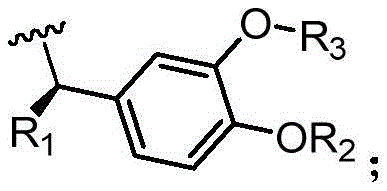
R 1 ~R 3 Each independently selected from hydrogen, halogen, hydroxy, C 1-6 Alkoxy radical, C 1-6 Alkyl, amino.
Further, the structure of the compound is shown as formula II-1, II-2 or II-3:

wherein R is 1 ~R 3 Each independently selected from hydrogen, halogen, hydroxy, C 1-6 Alkoxy radical, C 1-6 Alkyl, amino; preferably, said R is 1 Is C 1-3 Alkyl or hydrogen; r is 2 Is C 1-3 Alkyl or hydrogen; r 3 Is C 1-3 Alkyl or hydrogen.
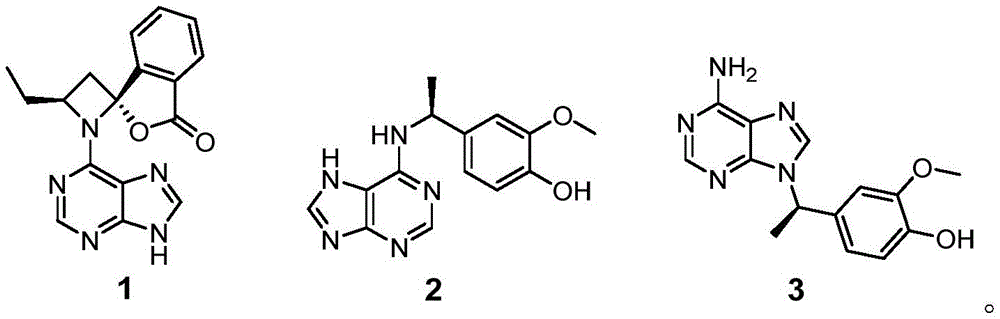
Further, the structure of the compound is selected from:
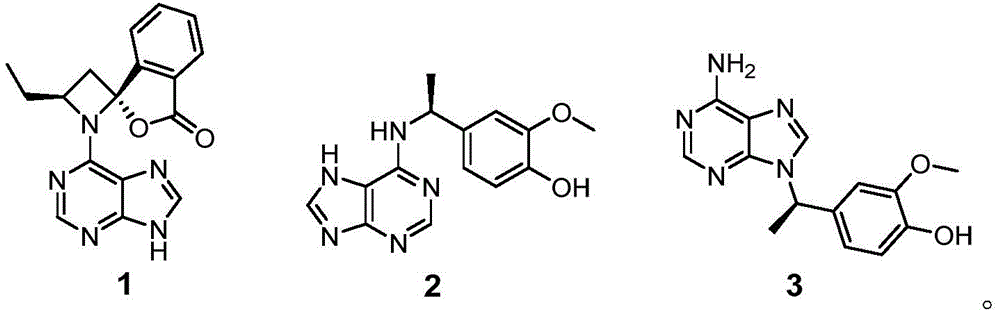
further, the structures of the compounds and their enantiomers are selected from:


the present invention also provides a process for preparing the above compound, comprising the steps of:
a. decocting rhizoma Ligustici Chuanxiong with water, concentrating the water extract to obtain extract, adding water for suspension, and extracting with n-butanol to obtain n-butanol extract part and water part;
b. b, taking the n-butanol extraction part obtained in the step a, separating by using D101 macroporous adsorption resin, performing gradient elution by using 0%, 10%, 30%, 50%, 70% and 95% ethanol water solution, and concentrating to obtain 6 elution parts;
c. b, collecting the elution parts of the 30% ethanol aqueous solution obtained in the step b, enriching alkaloid by using ion exchange resin, performing gradient elution by using pure water, 75% ethanol aqueous solution and 75% ammonia water ethanol in sequence, and concentrating to obtain 3 elution parts; wherein the 75% ammonia ethanol represents a 75% ethanol aqueous solution containing 2mol/L ammonia;
d. c, taking the 75% ammonia water ethanol elution part obtained in the step c, performing gradient elution by adopting silica gel column chromatography and taking a dichloromethane/methanol mixed solvent as an eluent, and detecting and combining similar components by utilizing TLC (thin layer chromatography) to obtain 9 fractions F1-F9; in the dichloromethane/methanol mixed solvent, the volume ratio of dichloromethane to methanol is (100);
e. taking the F6 obtained in the step d, separating the F6 by adopting reverse phase medium pressure liquid chromatography, carrying out gradient elution by taking 10-100% methanol solution as an eluent, inspecting through thin-layer chromatography, combining similar fractions, and concentrating under reduced pressure to obtain 9 eluted parts F6-a-F6-i;
f. taking the F6-c obtained in the step e, and carrying out isocratic elution by using a reverse phase Sephadex LH-20 column and 85% methanol water solution to obtain 7 parts of F6-c-1-F6-c-7;
g. f6-c-3 obtained in the step F is taken to be purified by gel column chromatography, preparative thin-layer chromatography and reverse-phase semi-preparative liquid chromatography (water) in sequence to obtain a compound 1; the eluent of the gel column chromatography is a dichloromethane/methanol mixed solvent with the volume ratio of 1;
h. f6-c-4 obtained in the step F is subjected to silica gel column chromatography, and 8 sub-fractions F6-c-4 a-F6-c-4 h are obtained by separation with a dichloromethane/methanol mixed solvent as an eluent; in the dichloromethane/methanol mixed solvent, the volume ratio of dichloromethane to methanol is 80-1;
i. taking the F6-c-4e obtained in the step h, and performing reversed-phase semi-preparative liquid chromatography, separation and purification to obtain a compound 2 and a compound 3; the eluent for the reversed phase semi-preparative liquid chromatography is 40% aqueous methanol.
Further, in the step a, the weight-volume ratio of the ligusticum wallichii medicinal material to water is 1.
Further, in step b, the gradient elution conditions are as follows:

in step c, the gradient elution conditions are as follows:

in step d, the conditions of gradient elution are as follows:

in step e, the conditions of gradient elution are as follows:


in step h, the conditions of gradient elution are as follows:

the invention also provides application of the compound, the enantiomer, the pharmaceutically acceptable salt, the solvate, the prodrug, the metabolite or the crystal form in preparation of medicaments with anti-inflammatory effects.
Further, the drug is a drug that inhibits lipopolysaccharide-induced inflammation.
The invention also provides a pharmaceutical preparation with anti-inflammatory effect, which is prepared by taking the compound, the enantiomer, the pharmaceutically acceptable salt, the solvate, the prodrug, the metabolite or the crystal form of the compound as an active ingredient and adding pharmaceutically commonly used auxiliary materials or auxiliary ingredients.
The compounds of the present invention may be used in combination with each other, or alternatively in combination with any other active agent. If more than two compounds are used, the compounds may be administered to the subject simultaneously, separately or sequentially.
Definitions of terms used in connection with the present invention: the initial definitions provided herein for a group or term apply to that group or term throughout the specification unless otherwise indicated; for terms not specifically defined herein, the meanings that would be given to them by a person skilled in the art are to be given in light of the disclosure and the context.
Minimum content of carbon atoms in hydrocarbon groupThe values and maximum values being represented by prefixes, e.g. prefix C a~b Alkyl represents any alkyl group containing from "a" to "b" carbon atoms. E.g. C 1~6 Alkyl refers to a straight or branched chain alkyl group containing 1 to 6 carbon atoms.
Halogen is fluorine, chlorine, bromine or iodine.
Stereoisomers refer to compounds having the same molecular formula in which atoms or groups of atoms are attached to each other in the same order, but in a different spatial arrangement.
Enantiomers (referred to simply as enantiomers) refer to stereoisomers that are not superimposable but physical and mirror images of each other, and the enantiomers all have optical helicity, one of which is levorotatory and one of which is dextrorotatory, so that the enantiomers are also referred to as optical isomers.
Experimental results show that the compound provided by the invention shows remarkable inhibitory activity on the generation of TNF-alpha induced by lipopolysaccharide, has excellent anti-inflammatory effect, and provides a new choice for preparing anti-inflammatory drugs clinically.
Obviously, many modifications, substitutions, and variations are possible in light of the above teachings of the invention, without departing from the basic technical spirit of the invention, as defined by the following claims.
The present invention will be described in further detail with reference to the following examples. This should not be understood as limiting the scope of the above-described subject matter of the present invention to the following examples. All the technologies realized based on the above contents of the present invention belong to the scope of the present invention.
Drawings
FIG. 1 is a mass spectrum of a target compound 1 of the present invention.
FIG. 2 is an infrared spectrum of a target compound 1 of the present invention.
FIG. 3 is a hydrogen spectrum of Compound 1, object of the present invention.
FIG. 4 is a carbon spectrum of the object compound 1 of the present invention.
FIG. 5 is a mass spectrum of Compound 2, object of the present invention.
FIG. 6 is an infrared spectrum of a target compound 2 of the present invention.
FIG. 7 is a hydrogen spectrum of Compound No. 2, object of the present invention.
FIG. 8 is a carbon spectrum of Compound No. 2, object of the present invention.
FIG. 9 is a single crystal diagram of Compound 2, object of the present invention.
FIG. 10 is a mass spectrum of Compound No. 3, object of the present invention.
FIG. 11 is an infrared spectrum of a target compound 3 of the present invention.
FIG. 12 is a hydrogen spectrum of Compound No. 3, object of the present invention.
FIG. 13 is a carbon spectrum of Compound No. 3, object of the present invention.
FIG. 14 shows a compound of interest according to the present invention 1 H- 1 H COSY and HMBC signal plots.
FIG. 15 is an ECD diagram of a target compound of the present invention.
FIG. 16 is a graph showing the effect of the objective compounds of the present invention on inhibition of LPS-induced release of inflammatory factors from RAW264.7 cells: wherein the abscissa represents different groups, and the ordinate represents the content of inflammatory factors (ng/mL).
Detailed Description
Unless otherwise specified, the raw materials and equipment used in the embodiment of the present invention are known products and obtained by purchasing commercially available products.
Example 1: preparation and identification of target Compounds 1 to 3
1. Experimental Material
1) Medicinal materials
Rhizoma Ligustici Chuanxiong decoction pieces are provided by Sichuan New Green pharmaceutical science and technology development GmbH, and are identified as rhizome of Umbelliferae perennial herbaceous plant rhizoma Ligustici Chuanxiong Ligusticum chuanxinong Hort by professor Ligusi of Chengdu Chinese medicinal university pharmaceutical institute (sample No.: LC-20161030).
2) Reagents and fillers
Column chromatography silica gel, 200-300 mesh (reagent grade), qingdao ocean silica gel desiccant factory;
d101 macroporous adsorption resin, chengdu Kelong chemical reagent factory;
sephadex LH-20, 40-70 μm, amersham Pharmacia, sweden;
type 732 cation exchange resin, hebei Huawei resin works; column Zorbax SB-C18 (250X 9.4mm,5 μm), CHICALPAK AD-H column (4.6X 250mm,5 μm);
n-butanol, 95% ethanol, dichloromethane, methanol, ammonia water, and other analytical reagents, to Doucholong Chemicals, inc.;
chromatographic methanol, 4L/bottle, sigma, USA.
3) Main instrument
Medium-pressure liquid chromatograph: b chi Gradient Former B-687, rp C 18 ,43-60μm;
Alltech 426 semi-preparative high performance liquid chromatograph (ottai science, usa);
agilent 1220 semi-preparative high performance liquid chromatograph (Agilent usa);
agilent 6230LC/TOF high resolution mass spectrometer (Agilent, USA);
waters Synapt G2 HDMS high resolution mass spectrometer (wawter technologies, usa);
bruker TIMS-TOF-MS high resolution mass spectrometer (Bruker, USA);
Bruker-AVIIIHD-600 NMR spectrometer (Bruker, USA);
bruker D8 QUEST single crystal diffractometer (Bruker, USA);
agilent Cary 600FT-IR Infrared Spectroscopy (Agilent Inc. of America);
BP211D one tenth ten thousand electronic balance (Sartorius, switzerland);
r-210 rotary evaporator (BUCHI, switzerland);
model DZG-6050 vacuum drying oven (Shanghai Sen).
2. Process for producing object Compounds 1 to 3
(1) And decocting dried rhizoma Ligustici Chuanxiong with water for 3 times to obtain water extract. In the process, the weight volume ratio of the ligusticum wallichii medicinal material to water is 1; the weight volume ratio of the water extract to the water is 3.
Evaporating and concentrating the water extract to obtain extract, suspending the extract with water, extracting with n-butanol to obtain n-butanol extraction part and water part, and concentrating the n-butanol extraction part to obtain n-butanol extract. In the process, the weight volume ratio of the n-butyl alcohol extract to the n-butyl alcohol is 9-60 kg/L.
(2) Separating n-butanol extract with D101 macroporous adsorbent resin, gradient eluting with 0%, 10%, 30%, 50%, 70%, and 95% ethanol water solution, and concentrating to obtain 6 eluates (see Table 1);
(3) taking the elution part of the 30% ethanol water solution to perform alkaloid enrichment by using ion exchange resin, performing gradient elution by using pure water, 75% ethanol water solution and 75% ammonia water ethanol (75% ethanol water solution containing 2mol/L ammonia water) in sequence, and recovering a solvent to obtain 3 elution parts (shown in table 2);
(4) the 75% ammonia-ethanol eluted fraction was subjected to silica gel column chromatography, eluted with dichloromethane-methanol (100: 1 to 0: 1) (see table 3), and the similar fractions were combined by Thin Layer Chromatography (TLC) detection to obtain 9 fractions (F1 to F9); f6, separating the eluate by reverse phase medium pressure liquid chromatography, carrying out gradient elution with methanol solution (10% -100%) (see table 4), inspecting by thin layer chromatography, combining similar fractions, and concentrating under reduced pressure to obtain 9 eluted parts (F6-a-F6-i); the F6-c adopts a reversed phase Sephadex LH-20 column, and 7 parts (F6-c-1-F6-c-7) are obtained after isocratic elution by 85 percent methanol water solution; sequentially subjecting F6-c-3 to gel column chromatography LH-20 (CH) 2 Cl 2 MeOH, 1) 2 Cl 2 MeOH, 9); f6-c-4 through silica gel (CH) 2 Cl 2 MeOH,80, 1-1) column chromatography, 8 subfractions (F6-c-4 a-F6-c-4 h) were obtained by separation (see table 5), and compounds 2 and 3 were obtained by reverse phase semi-preparative liquid chromatography (40% methanol in water) of F6-c-4e by separation and purification.
TABLE 1 elution conditions for macroporous adsorbent resins

TABLE 2 elution conditions of cation exchange resin

TABLE 3 elution conditions for silica gel column chromatography
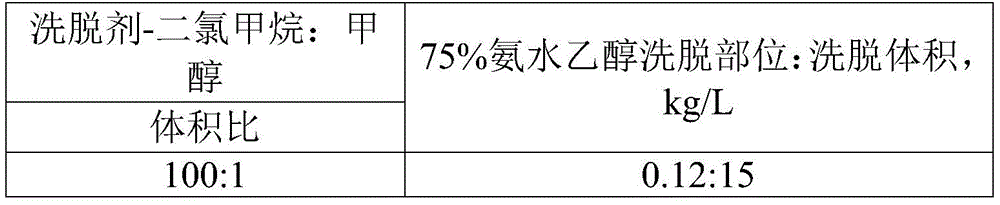

TABLE 4 elution conditions for medium pressure chromatography

TABLE 5 elution conditions for silica gel column chromatography

3. Identification of Compounds of interest 1 to 3
The results of the structural tests are shown in FIGS. 1-15 and Table 6.
HR-ESI-MS data (m/z 308.1127, [ M ] +Na)] + ,calcd for C 14 H 15 N 5 O 2 Na, 308.1123) shows that the molecular formula of the compound 2 is C 14 H 15 N 5 O 2 . Process for preparation of Compound 2 1 H NMR and 13 c NMR data indicate that it is also an adenine analog comprising a C-7 substituted 4-ethyl-2-methoxyphenol fragment [ delta ] H 7.03 (1H, s, H-2 '), 6.88 (1H, d, J =7.8Hz, H-6 '), 6.75 (1H, d, J =7.8Hz, H-5 '), 5.43 (1H, m, H-7 '), and 1.60 (3H, d, J =7.2Hz, H-8 '); delta C 149.0,146.7,136.8,119.7,116.2,112,51.0 and 23.1]And a methoxy [ delta ] H 3.84(3H,s,OMe-3′);δ C 56.4]. HMBC related signals H-2' are correlated to C-1', C-3', C-4' and C-7'; OMe-3 and neck-3'; h-6' and C-1', C-2', C-4', C-7'; h3-8' with C-1' and C-7' and 1 H- 1 the presence of the above structure is confirmed by the H COSY related signals H-5'/H-6' and H-7 '/H-8'. Although no HMBC related signal was observed for H-7'/C-6, it was suggested that fragments of adenine and 4-ethyl-2-methoxyphenol must be attached through C-6-N-10-C-7' based on the molecular formula of the compound and the chemical shifts of C-6 and C-7 '. This mode of attachment was further verified by X-ray single crystal diffraction analysis. Since the optical rotation of Compound 2 was zero, the compound was resolved on a Daicel Chiralpak AD-H column. As with Compound 1, the absolute configuration of 2 was determined by calculating ECD, and the experimental ECD spectra of (+) -2 and (-) -2 were consistent with the calculated ECD spectra of (7 'R) -2 and (7' S) -2, respectively. Thus, compounds (+) -2 and (-) -2 are (+) - (7 'R) -liguadienine B and (-) - (7' S) -liguadienine B, respectively.
The spectroscopic data for compound 3 was very similar to that for compound 2. HR-ESI-MS data of 3 shows that the molecular formula is the same as 2 (m/z 308.1106[ M ] +Na)] + ,calcd for C 14 H 15 N 5 O 2 Na, 308.1123), indicating that they are isomers. Comparing 3 and 2 1 H and 13 c NMR data showed that 3 is also a hybrid, consisting of adenine and 4-ethyl-2-methoxyphenol as in Compound 2. Process for preparation of Compound 3 13 C-4, C-5, C-6, C-7 'and C-8' chemical shifts are shifted by Δ δ compared to the same signal of 2, respectively C -0.9, +1.4, +2.6, -3.7, +4.4 and-1.9 ppm. Thus, compound 3 differs from compound 2 in the position of the attachment between the two groups. According to the signals related to HMBC of H-7 'and C-4, C-8, C-1', C-2', C-6' and C-8', the adenine fragment and the 4-ethyl-2-methoxyphenol fragment of the compound 3 are connected through N-9-C-7'. The specific optical rotation of 3 and the ECD spectrum showed that it was also a racemic mixture, and the absolute configurations of (+) -3 and (-) -3 were determined by ECD calculation to be 7'R and 7' S, respectively. Thus, compounds (+) -3 and (-) -3 are (+) - (7 'R) -liguadenine C and (-) - (7' S) -liguadenine C, respectively.
Thus, the chemical structures of the target compounds 1 to 3 of the present invention were determined as follows:

the structures of compounds 1 to 3 and their enantiomers are shown below. Wherein (+) -1 and (-) -1, (+) -2 and (-) -2, (+) -3 and (-) -3 are enantiomers of each other.

TABLE 6 of Compounds 1 to 3 1 H- (600 MHz) and 13 c- (150 MHz) NMR data (CD) 3 OD)


X-ray single crystal diffraction analysis
X-single crystal: bruker D8 Quest single crystal diffractometer measurements, data are as follows:



Example 2: cell test for anti-inflammatory Effect of target Compounds 1 to 3
(1) Experimental materials:
(1) medicine
The test compound was prepared in 50mmol/L stock solution in DMSO and stored at 4 ℃.
(2) Cells
RAW264.7 cell line was purchased from Shanghai cell bank of Chinese academy of sciences. The cells were cultured in DMEM medium containing 10% Fetal Bovine Serum (FBS), 100U/mL penicillin and 100. Mu.g/mL streptomycin.
(3) Reagent
Dimethyl sulfoxide (DMSO), cell culture grade, 100 ml/vial, solarbio;
DMEM high-glucose medium, 8120501, seimer feishell biochemicals (beijing) ltd;
newborn bovine serum 20090301, hangzhou biotechnology ltd in Zhejiang;
trypsin, beijing solibao science and technology ltd;
PBS phosphate buffer, monatin biotechnology ltd;
penicillin-streptomycin solution (100X), C0222, shanghai bi yunnan biotechnology company;
cell cryopreservation solution, C0210, shanghai bi yuntian biotechnology;
(LPS for short), SIGMA-ALDRICH, USA;
TNF-alpha kit, S19BG8J1L1, wuhanyireiter Biotech, inc.;
(4) laboratory apparatus
Series II Water Jacket CO 2 Incubator (Thermo Scientific corporation);
allegra X-12R centrifuge (Beckman Coulter);
AL104 electronic balance (Mettler Toled, switzerland);
multiskan MK3 microplate reader (Thermo, usa);
clean bench (Sujing group Suzhou Antai air technology, inc.);
cell culture plates (96 wells) (kang ning life science (wu jiang) ltd.).
(2) The experimental method comprises the following steps:
logarithmic phase-grown RAW264.7 cells were gently pipetted in DMEM medium containing 10% Fetal Bovine Serum (FBS), 100U/mL penicillin and 100. Mu.g/mL streptomycin, followed by 2X 10 cells per well 6 The individual cells were seeded in 24-well plates, 1mL per well, placed at 37 ℃ C. -%, CO 2 And culturing in an incubator with 95% air. After 24h, the blank control group, the model group (the liquid medicine contains LPS with the concentration of 1 μ g/ml), and the administration group (the liquid medicine contains LPS with the concentration of 1 μ g/ml) were respectively addedTest compound at 50, 25, 12.5, 6.25 μ M) and the loaded 24-well plate was placed in CO 2 The culture is carried out in an incubator for 24h at the temperature of 37 ℃. After 24h, the supernatant from each well was aspirated, centrifuged at 1000 Xg for 20min to remove particulate matter, and the TNF-. Alpha.content of each sample was determined according to the kit instructions.
(3) Experimental results and evaluation:
through cell experiments, it can be seen that under different concentration conditions, all compounds except (+) -2 show significant inhibitory activity on lipopolysaccharide-induced TNF-alpha production at 6.25-50 μ M, wherein (+) -3 has the highest inhibitory activity and is better than the enantiomer (-) -3 (see figure 16).
The experimental results show that the compound has excellent anti-inflammatory effect, and provides a new choice for clinically preparing anti-inflammatory drugs.
Claims (10)







Priority Applications (1)
| Application Number | Priority Date | Filing Date | Title |
|---|---|---|---|
| CN202211435211.9A CN115925724B (en) | 2022-11-16 | 2022-11-16 | Adenine compound with anti-inflammatory effect and preparation method and application thereof |
Applications Claiming Priority (1)
| Application Number | Priority Date | Filing Date | Title |
|---|---|---|---|
| CN202211435211.9A CN115925724B (en) | 2022-11-16 | 2022-11-16 | Adenine compound with anti-inflammatory effect and preparation method and application thereof |
Publications (2)
| Publication Number | Publication Date |
|---|---|
| CN115925724A true CN115925724A (en) | 2023-04-07 |
| CN115925724B CN115925724B (en) | 2024-09-06 |
Family
ID=86549669
Family Applications (1)
| Application Number | Title | Priority Date | Filing Date |
|---|---|---|---|
| CN202211435211.9A Active CN115925724B (en) | 2022-11-16 | 2022-11-16 | Adenine compound with anti-inflammatory effect and preparation method and application thereof |
Country Status (1)
| Country | Link |
|---|---|
| CN (1) | CN115925724B (en) |
Citations (3)
| Publication number | Priority date | Publication date | Assignee | Title |
|---|---|---|---|---|
| US3936454A (en) * | 1973-08-14 | 1976-02-03 | Warner-Lambert Company | 5-Amino-4-chloro-6-(substituted amino)-pyrimidines |
| JPH10231297A (en) * | 1997-02-20 | 1998-09-02 | Japan Energy Corp | Novel adenine-1-N-oxide derivative and pharmaceutical use thereof |
| CN101906106A (en) * | 2003-09-18 | 2010-12-08 | 康福玛医药公司 | New heterogeneous ring compound as the HSP90-inhibitor |
-
2022
- 2022-11-16 CN CN202211435211.9A patent/CN115925724B/en active Active
Patent Citations (3)
| Publication number | Priority date | Publication date | Assignee | Title |
|---|---|---|---|---|
| US3936454A (en) * | 1973-08-14 | 1976-02-03 | Warner-Lambert Company | 5-Amino-4-chloro-6-(substituted amino)-pyrimidines |
| JPH10231297A (en) * | 1997-02-20 | 1998-09-02 | Japan Energy Corp | Novel adenine-1-N-oxide derivative and pharmaceutical use thereof |
| CN101906106A (en) * | 2003-09-18 | 2010-12-08 | 康福玛医药公司 | New heterogeneous ring compound as the HSP90-inhibitor |
Non-Patent Citations (2)
| Title |
|---|
| HONG-YU MA,等: "Two New Constituents from Artemisia capillaris Thunb.", 《MOLECULES》, vol. 13, 5 February 2008 (2008-02-05), pages 267 - 271 * |
| JOANNA WIORKIEWICZ-KUCZERA,等: "Ab Initio Study of the Vibrational Spectra of N9-H and N7-H Adenine and 9-Methyladenine", 《J. AM. CHEM. SOC.》, vol. 112, 31 December 1990 (1990-12-31), pages 5324 - 5340 * |
Also Published As
| Publication number | Publication date |
|---|---|
| CN115925724B (en) | 2024-09-06 |
Similar Documents
| Publication | Publication Date | Title |
|---|---|---|
| KR102532345B1 (en) | Method for Separating 8 Ingredients in Traditional Chinese Medicine Composition | |
| CN109824568B (en) | Two indole neoalkaloids in purslane and their extraction and separation methods and applications | |
| Zhang et al. | New Securinega alkaloids with anti-HIV activity from Flueggea virosa | |
| CN110563781A (en) | Preparation method of albizzia bark neolignan monomer compound | |
| Zhan et al. | Sesquiterpenoids from the whole plants of Chloranthus holostegius and their anti‐inflammatory activities | |
| Xia et al. | 13, 13a-seco-protoberberines from the tubers of Corydalis yanhusuo and their anti-inflammatory activity | |
| Sui et al. | Dimeric 9, 10-dihydrophenanthrene derivatives from Bletilla striata and their atropisomeric nature | |
| CN105131008B (en) | Preparation method and application of isopentenyl flavonoid compound with anti-liver cancer activity | |
| CN115925724B (en) | Adenine compound with anti-inflammatory effect and preparation method and application thereof | |
| CN113264828B (en) | Benzoic acid compound in purslane and extraction and separation method thereof | |
| CN115160335A (en) | A kind of phthalide dimer and its preparation method and application | |
| CN114989084A (en) | Extraction and separation method of a tetrahydroisoquinoline alkaloid in purslane and its application | |
| CN113968862A (en) | Two new alkaloids in purslane and their extraction and separation methods | |
| CN113321618A (en) | Three alkaloid compounds in purslane and extraction and separation method thereof | |
| CN114262294B (en) | A kind of phenylisoquinoline alkaloid compound and its preparation method and application | |
| CN112812085B (en) | A pair of compounds A and B extracted from Cornus officinale and their preparation methods and applications | |
| Zhang et al. | Phenolic acid derivatives from Ligusticum chuanxiong | |
| Feng et al. | A pair of new enantiomeric hybrid phthalide–adenines with a rare 5-oxa-1-azaspiro [3, 4] octane moiety and two pairs of new enantiomeric hybrid paraethyl phenol–adenines from Ligusticum chuanxiong | |
| CN107141305A (en) | A novel crone-type diterpenoid isolated from Scutellaria baicalensis and its use in the preparation of anti-HIV drugs | |
| CN113264829A (en) | Four lignans in purslane and extraction and separation method thereof | |
| CN106361731A (en) | Bibenzyl compound, preparation method thereof, and application thereof in preparation of antitumor medicines | |
| CN120794990A (en) | Three high isoflavone compounds and preparation method and application thereof | |
| CN119899148B (en) | Two alkaloid compounds in narcissus root, and preparation method and application thereof | |
| CN113307817A (en) | Pyrrole alkaloid compound in purslane and extraction and separation method thereof | |
| CN118702655B (en) | A furan carboxylic acid compound from purslane and its extraction and separation method and use |
Legal Events
| Date | Code | Title | Description |
|---|---|---|---|
| PB01 | Publication | ||
| PB01 | Publication | ||
| SE01 | Entry into force of request for substantive examination | ||
| SE01 | Entry into force of request for substantive examination | ||
| GR01 | Patent grant | ||
| GR01 | Patent grant |