CN115850408A - Polypeptide, fusion type polymer protein and application thereof - Google Patents
Polypeptide, fusion type polymer protein and application thereof Download PDFInfo
- Publication number
- CN115850408A CN115850408A CN202211064221.6A CN202211064221A CN115850408A CN 115850408 A CN115850408 A CN 115850408A CN 202211064221 A CN202211064221 A CN 202211064221A CN 115850408 A CN115850408 A CN 115850408A
- Authority
- CN
- China
- Prior art keywords
- polypeptide
- substitution mutation
- optionally
- amino acid
- acid sequence
- Prior art date
- Legal status (The legal status is an assumption and is not a legal conclusion. Google has not performed a legal analysis and makes no representation as to the accuracy of the status listed.)
- Pending
Links
Images


Classifications
-
- C—CHEMISTRY; METALLURGY
- C07—ORGANIC CHEMISTRY
- C07K—PEPTIDES
- C07K14/00—Peptides having more than 20 amino acids; Gastrins; Somatostatins; Melanotropins; Derivatives thereof
- C07K14/195—Peptides having more than 20 amino acids; Gastrins; Somatostatins; Melanotropins; Derivatives thereof from bacteria
- C07K14/305—Peptides having more than 20 amino acids; Gastrins; Somatostatins; Melanotropins; Derivatives thereof from bacteria from Micrococcaceae (F)
- C07K14/31—Peptides having more than 20 amino acids; Gastrins; Somatostatins; Melanotropins; Derivatives thereof from bacteria from Micrococcaceae (F) from Staphylococcus (G)
-
- B—PERFORMING OPERATIONS; TRANSPORTING
- B01—PHYSICAL OR CHEMICAL PROCESSES OR APPARATUS IN GENERAL
- B01D—SEPARATION
- B01D15/00—Separating processes involving the treatment of liquids with solid sorbents; Apparatus therefor
- B01D15/08—Selective adsorption, e.g. chromatography
- B01D15/26—Selective adsorption, e.g. chromatography characterised by the separation mechanism
- B01D15/38—Selective adsorption, e.g. chromatography characterised by the separation mechanism involving specific interaction not covered by one or more of groups B01D15/265 and B01D15/30 - B01D15/36, e.g. affinity, ligand exchange or chiral chromatography
- B01D15/3804—Affinity chromatography
- B01D15/3809—Affinity chromatography of the antigen-antibody type, e.g. protein A, G or L chromatography
-
- B—PERFORMING OPERATIONS; TRANSPORTING
- B01—PHYSICAL OR CHEMICAL PROCESSES OR APPARATUS IN GENERAL
- B01J—CHEMICAL OR PHYSICAL PROCESSES, e.g. CATALYSIS OR COLLOID CHEMISTRY; THEIR RELEVANT APPARATUS
- B01J20/00—Solid sorbent compositions or filter aid compositions; Sorbents for chromatography; Processes for preparing, regenerating or reactivating thereof
- B01J20/22—Solid sorbent compositions or filter aid compositions; Sorbents for chromatography; Processes for preparing, regenerating or reactivating thereof comprising organic material
- B01J20/24—Naturally occurring macromolecular compounds, e.g. humic acids or their derivatives
-
- B—PERFORMING OPERATIONS; TRANSPORTING
- B01—PHYSICAL OR CHEMICAL PROCESSES OR APPARATUS IN GENERAL
- B01J—CHEMICAL OR PHYSICAL PROCESSES, e.g. CATALYSIS OR COLLOID CHEMISTRY; THEIR RELEVANT APPARATUS
- B01J20/00—Solid sorbent compositions or filter aid compositions; Sorbents for chromatography; Processes for preparing, regenerating or reactivating thereof
- B01J20/281—Sorbents specially adapted for preparative, analytical or investigative chromatography
- B01J20/286—Phases chemically bonded to a substrate, e.g. to silica or to polymers
-
- B—PERFORMING OPERATIONS; TRANSPORTING
- B01—PHYSICAL OR CHEMICAL PROCESSES OR APPARATUS IN GENERAL
- B01J—CHEMICAL OR PHYSICAL PROCESSES, e.g. CATALYSIS OR COLLOID CHEMISTRY; THEIR RELEVANT APPARATUS
- B01J20/00—Solid sorbent compositions or filter aid compositions; Sorbents for chromatography; Processes for preparing, regenerating or reactivating thereof
- B01J20/30—Processes for preparing, regenerating, or reactivating
- B01J20/32—Impregnating or coating ; Solid sorbent compositions obtained from processes involving impregnating or coating
- B01J20/3202—Impregnating or coating ; Solid sorbent compositions obtained from processes involving impregnating or coating characterised by the carrier, support or substrate used for impregnation or coating
- B01J20/3206—Organic carriers, supports or substrates
- B01J20/3208—Polymeric carriers, supports or substrates
- B01J20/3212—Polymeric carriers, supports or substrates consisting of a polymer obtained by reactions otherwise than involving only carbon to carbon unsaturated bonds
-
- B—PERFORMING OPERATIONS; TRANSPORTING
- B01—PHYSICAL OR CHEMICAL PROCESSES OR APPARATUS IN GENERAL
- B01J—CHEMICAL OR PHYSICAL PROCESSES, e.g. CATALYSIS OR COLLOID CHEMISTRY; THEIR RELEVANT APPARATUS
- B01J20/00—Solid sorbent compositions or filter aid compositions; Sorbents for chromatography; Processes for preparing, regenerating or reactivating thereof
- B01J20/30—Processes for preparing, regenerating, or reactivating
- B01J20/32—Impregnating or coating ; Solid sorbent compositions obtained from processes involving impregnating or coating
- B01J20/3214—Impregnating or coating ; Solid sorbent compositions obtained from processes involving impregnating or coating characterised by the method for obtaining this coating or impregnating
- B01J20/3217—Resulting in a chemical bond between the coating or impregnating layer and the carrier, support or substrate, e.g. a covalent bond
- B01J20/3219—Resulting in a chemical bond between the coating or impregnating layer and the carrier, support or substrate, e.g. a covalent bond involving a particular spacer or linking group, e.g. for attaching an active group
-
- B—PERFORMING OPERATIONS; TRANSPORTING
- B01—PHYSICAL OR CHEMICAL PROCESSES OR APPARATUS IN GENERAL
- B01J—CHEMICAL OR PHYSICAL PROCESSES, e.g. CATALYSIS OR COLLOID CHEMISTRY; THEIR RELEVANT APPARATUS
- B01J20/00—Solid sorbent compositions or filter aid compositions; Sorbents for chromatography; Processes for preparing, regenerating or reactivating thereof
- B01J20/30—Processes for preparing, regenerating, or reactivating
- B01J20/32—Impregnating or coating ; Solid sorbent compositions obtained from processes involving impregnating or coating
- B01J20/3231—Impregnating or coating ; Solid sorbent compositions obtained from processes involving impregnating or coating characterised by the coating or impregnating layer
- B01J20/3242—Layers with a functional group, e.g. an affinity material, a ligand, a reactant or a complexing group
- B01J20/3268—Macromolecular compounds
- B01J20/3272—Polymers obtained by reactions otherwise than involving only carbon to carbon unsaturated bonds
- B01J20/3274—Proteins, nucleic acids, polysaccharides, antibodies or antigens
-
- B—PERFORMING OPERATIONS; TRANSPORTING
- B01—PHYSICAL OR CHEMICAL PROCESSES OR APPARATUS IN GENERAL
- B01J—CHEMICAL OR PHYSICAL PROCESSES, e.g. CATALYSIS OR COLLOID CHEMISTRY; THEIR RELEVANT APPARATUS
- B01J20/00—Solid sorbent compositions or filter aid compositions; Sorbents for chromatography; Processes for preparing, regenerating or reactivating thereof
- B01J20/30—Processes for preparing, regenerating, or reactivating
- B01J20/32—Impregnating or coating ; Solid sorbent compositions obtained from processes involving impregnating or coating
- B01J20/3291—Characterised by the shape of the carrier, the coating or the obtained coated product
- B01J20/3293—Coatings on a core, the core being particle or fiber shaped, e.g. encapsulated particles, coated fibers
-
- C—CHEMISTRY; METALLURGY
- C07—ORGANIC CHEMISTRY
- C07K—PEPTIDES
- C07K1/00—General methods for the preparation of peptides, i.e. processes for the organic chemical preparation of peptides or proteins of any length
- C07K1/14—Extraction; Separation; Purification
- C07K1/16—Extraction; Separation; Purification by chromatography
- C07K1/22—Affinity chromatography or related techniques based upon selective absorption processes
-
- A—HUMAN NECESSITIES
- A61—MEDICAL OR VETERINARY SCIENCE; HYGIENE
- A61K—PREPARATIONS FOR MEDICAL, DENTAL OR TOILETRY PURPOSES
- A61K35/00—Medicinal preparations containing materials or reaction products thereof with undetermined constitution
- A61K35/12—Materials from mammals; Compositions comprising non-specified tissues or cells; Compositions comprising non-embryonic stem cells; Genetically modified cells
- A61K35/28—Bone marrow; Haematopoietic stem cells; Mesenchymal stem cells of any origin, e.g. adipose-derived stem cells
-
- B—PERFORMING OPERATIONS; TRANSPORTING
- B01—PHYSICAL OR CHEMICAL PROCESSES OR APPARATUS IN GENERAL
- B01D—SEPARATION
- B01D15/00—Separating processes involving the treatment of liquids with solid sorbents; Apparatus therefor
- B01D15/08—Selective adsorption, e.g. chromatography
- B01D15/26—Selective adsorption, e.g. chromatography characterised by the separation mechanism
- B01D15/38—Selective adsorption, e.g. chromatography characterised by the separation mechanism involving specific interaction not covered by one or more of groups B01D15/265 and B01D15/30 - B01D15/36, e.g. affinity, ligand exchange or chiral chromatography
- B01D15/3804—Affinity chromatography
-
- C—CHEMISTRY; METALLURGY
- C07—ORGANIC CHEMISTRY
- C07K—PEPTIDES
- C07K17/00—Carrier-bound or immobilised peptides; Preparation thereof
- C07K17/02—Peptides being immobilised on, or in, an organic carrier
-
- C—CHEMISTRY; METALLURGY
- C07—ORGANIC CHEMISTRY
- C07K—PEPTIDES
- C07K2319/00—Fusion polypeptide
-
- C—CHEMISTRY; METALLURGY
- C07—ORGANIC CHEMISTRY
- C07K—PEPTIDES
- C07K2319/00—Fusion polypeptide
- C07K2319/70—Fusion polypeptide containing domain for protein-protein interaction
- C07K2319/705—Fusion polypeptide containing domain for protein-protein interaction containing a protein-A fusion
Landscapes
- Chemical & Material Sciences (AREA)
- Organic Chemistry (AREA)
- Analytical Chemistry (AREA)
- Health & Medical Sciences (AREA)
- Chemical Kinetics & Catalysis (AREA)
- Molecular Biology (AREA)
- Life Sciences & Earth Sciences (AREA)
- Biochemistry (AREA)
- General Health & Medical Sciences (AREA)
- Medicinal Chemistry (AREA)
- Genetics & Genomics (AREA)
- Proteomics, Peptides & Aminoacids (AREA)
- Biophysics (AREA)
- Gastroenterology & Hepatology (AREA)
- Immunology (AREA)
- Peptides Or Proteins (AREA)
- Micro-Organisms Or Cultivation Processes Thereof (AREA)
- Preparation Of Compounds By Using Micro-Organisms (AREA)
Abstract
本发明涉及蛋白质生物功能技术领域,具体涉及一种多肽、融合型多聚体蛋白质及其用途,多肽选自:(1)、与SEQ ID NO.1所示的蛋白A的天然C结构域相比,在选自第16位、第25位、第29位、第49位和第58位中至少一个位置具有取代突变;第16位取代突变为亮氨或缬氨酸;第25位取代突变为赖氨酸、精氨酸、组氨酸或色氨酸;第29位取代突变为丙氨酸、亮氨酸或苏氨酸;第49位取代突变为精氨酸或组氨酸;第58位取代突变为甘氨酸、异亮氨酸或丙氨酸;(2)、与(1)中的多肽具有至少80%以上同源性并保留第16位、第25位、第29位、第49位和第58位中至少一个位置取代突变的多肽;多肽具有高碱耐受性和高载量。
The present invention relates to the technical field of protein biological functions, in particular to a polypeptide, a fusion multimeric protein and its application. Ratio, there is a substitution mutation at least one position selected from the 16th, 25th, 29th, 49th and 58th positions; the 16th substitution mutation is leucine or valine; the 25th substitution mutation It is lysine, arginine, histidine or tryptophan; the 29th substitution mutation is alanine, leucine or threonine; the 49th substitution mutation is arginine or histidine; The 58-position substitution mutation is glycine, isoleucine or alanine; (2), having at least 80% homology with the polypeptide in (1) and retaining the 16th, 25th, 29th, and 29th positions A polypeptide in which at least one of positions 49 and 58 is substituted; the polypeptide has high alkali tolerance and high loading capacity.
Description
技术领域Technical Field
本发明涉及蛋白质生物功能技术领域,具体涉及一种多肽、融合型多聚体蛋白质及其用途。The present invention relates to the technical field of protein biological functions, and in particular to a polypeptide, a fusion-type multimeric protein and uses thereof.
背景技术Background Art
截至2022年2月,FDA累计批准109款抗体药物,全球抗体药物市场连续8年保持10%以上的增速,2021年首次突破2000亿美元,相比2020年增长16.5%。抗体的分离在抗体药物的生产中至关重要,蛋白A亲和纯化是抗体分离纯化的关键步骤,目前蛋白A填料对碱性条件比较敏感,洗脱条件过于苛刻,市场对抗体纯化规模的不断扩大,对其载量和耐碱性等的性能要求越来越高。As of February 2022, the FDA has approved a total of 109 antibody drugs. The global antibody drug market has maintained a growth rate of more than 10% for eight consecutive years, and exceeded US$200 billion for the first time in 2021, an increase of 16.5% compared to 2020. Antibody separation is crucial in the production of antibody drugs. Protein A affinity purification is a key step in antibody separation and purification. At present, protein A fillers are sensitive to alkaline conditions, and the elution conditions are too harsh. The market continues to expand the scale of antibody purification, and its performance requirements such as loading capacity and alkaline resistance are getting higher and higher.
金黄色葡萄球菌蛋白A(Staphylococal Protein A,SPA),简称蛋白A,是金黄色葡萄球菌的一种细胞壁蛋白质。1983年SPA基因被Duggleby等克隆并在大肠杆菌中表达(Duggleby,C.J and Jones,SA:cloning and expression of the Staphylococcusaureus protein A gene in Escheric hia coli.Nucl Acids Res.11(1983)3065-3076;Lofdahl,S.,Guss,B.,et al;Gene for Staphylococcal proteinA.Proc.Natl.Acid.Sci.USA 80(1983)697-701)。SPA蛋白分子由E、D、A、B和C五个高度同源的结构域和X结构域共六个结构域组成。由于SPA上的E、D、A、B和C五个高度同源的结构域都具有与IgG结合的能力,且都可以与大多数哺乳动物IgG的Fc和Fab区结合(Jansson B,Uhlén M,Nygren PA.All individual domains of staphylococcal protein A show Fabbinding.FEMS Immunol Med Microbiol.1998Jan;20(1):69-78.),因此,SPA作为抗体纯化的一种亲和配基偶联到固相载体上,被广泛应用于抗体的分离纯化。Staphylococcal protein A (SPA), also known as protein A, is a cell wall protein of Staphylococcus aureus. In 1983, the SPA gene was cloned by Duggleby et al. and expressed in Escherichia coli (Duggleby, C.J and Jones, SA: cloning and expression of the Staphylococcusaureus protein A gene in Escherichia coli. Nucl Acids Res. 11 (1983) 3065-3076; Lofdahl, S., Guss, B., et al; Gene for Staphylococcal protein A. Proc. Natl. Acid. Sci. USA 80 (1983) 697-701). The SPA protein molecule consists of six domains, including five highly homologous domains E, D, A, B and C and the X domain. Since the five highly homologous domains E, D, A, B and C on SPA all have the ability to bind to IgG and can bind to the Fc and Fab regions of most mammalian IgG (Jansson B, Uhlén M, Nygren PA. All individual domains of staphylococcal protein A show Fabbinding. FEMS Immunol Med Microbiol. 1998 Jan; 20(1): 69-78.), SPA is coupled to a solid phase carrier as an affinity ligand for antibody purification and is widely used in the separation and purification of antibodies.
由于在抗体生产过程中,样品中含有脂类、核酸、蛋白质、多糖、细胞碎片等杂质或被病毒细菌污染,此类杂质在纯化抗体的过程中可能被蛋白A亲和填料非特异性吸附,进而污染填料,另外蛋白A层析柱也需要定期原位清洗(Clean In Place,CIP)。为了提高蛋白A填料的使用寿命,保证填料使用过程中的柱效,所以需要对填料进行洗杂和重生。目前使用最广泛的方案是用0.1-1M的NaOH进行层析柱原位清洗。然而,天然蛋白A不能耐受浓度高于0.1M的NaOH(Garshasb,Rigi,Samira,et al.A comprehensive review onstaphylococcal protein A(SpA):Its production and applications.[J].Biotechnology&Applied Biochemistry,2019.),基因工程的发展使得重组蛋白A的耐碱性逐渐提高,但是工业生产制备抗体药物时消耗量大,使用寿命有限导致生产成本增加,因此更高载量,更高耐碱的蛋白A填料是抗体生产厂家追求的必然趋势,也是填料生产企业发展的方向。During the antibody production process, the sample contains impurities such as lipids, nucleic acids, proteins, polysaccharides, cell fragments, or is contaminated by viruses and bacteria. Such impurities may be non-specifically adsorbed by the protein A affinity filler during the purification of the antibody, thereby contaminating the filler. In addition, the protein A chromatography column also needs to be cleaned in place (CIP) regularly. In order to increase the service life of the protein A filler and ensure the column efficiency during the use of the filler, the filler needs to be washed and regenerated. The most widely used solution is to use 0.1-1M NaOH for in-situ cleaning of the chromatography column. However, natural protein A cannot tolerate NaOH concentrations higher than 0.1M (Garshasb, Rigi, Samira, et al. A comprehensive review on staphylococcal protein A (SpA): Its production and applications. [J]. Biotechnology & Applied Biochemistry, 2019.). The development of genetic engineering has gradually improved the alkali resistance of recombinant protein A. However, the industrial production of antibody drugs consumes a large amount of material and has a limited service life, which leads to increased production costs. Therefore, protein A fillers with higher loading capacity and higher alkali resistance are the inevitable trend pursued by antibody manufacturers and are also the development direction of filler manufacturers.
抗体一般是由Fab和Fc结构域组成,抗体Fab区与SPA的相互作用会严重影响洗脱pH值,导致需要更低的pH值才能实现IgG的解离和洗脱,SPA分子的B结构域29位甘氨酸替换为丙氨酸获得的B结构域突变体,几乎不与Fab区发生相互作用,B结构域23位的天冬酰胺被苏氨酸取代时,B结构域突变体的耐碱性明显提高(Amritkar V,Adat S,Tejwani V,etal.Engineering Staphylococcal Protein A for high-throughput affinitypurification of monoclonal antibodies[J].Biotechnology advances,2020:107632.)。然而,改造后的SPA分子仍然难以满足目前对SPA分子更高载量,更高耐碱的需求。Antibodies are generally composed of Fab and Fc domains. The interaction between the Fab region of the antibody and SPA will seriously affect the elution pH value, resulting in the need for a lower pH value to achieve the dissociation and elution of IgG. The B domain mutant obtained by replacing the glycine at position 29 of the B domain of the SPA molecule with alanine hardly interacts with the Fab region. When the asparagine at position 23 of the B domain is replaced by threonine, the alkali resistance of the B domain mutant is significantly improved (Amritkar V, Adat S, Tejwani V, et al. Engineering Staphylococcal Protein A for high-throughput affinity purification of monoclonal antibodies [J]. Biotechnology advances, 2020: 107632.). However, the modified SPA molecules still cannot meet the current demand for higher loading capacity and higher alkali resistance of SPA molecules.
发明内容Summary of the invention
因此,本发明要解决的技术问题在于提供一种多肽、融合型多聚体蛋白质及其用途,获得的融合型多聚体蛋白质具有更高的载量,更高耐碱性。Therefore, the technical problem to be solved by the present invention is to provide a polypeptide, a fusion multimeric protein and uses thereof, wherein the obtained fusion multimeric protein has a higher loading capacity and higher alkali resistance.
为此,本发明提供了如下的技术方案:To this end, the present invention provides the following technical solutions:
一种多肽,所述多肽选自:A polypeptide selected from the group consisting of:
(1)、与SEQ ID NO.1所示的蛋白A的天然C结构域相比,所述多肽在选自第16位、第25位、第29位、第49位和第58位中的至少一个位置上具有取代突变;(1) Compared with the native C domain of protein A shown in SEQ ID NO.1, the polypeptide has a substitution mutation at at least one position selected from the group consisting of position 16, position 25, position 29, position 49 and position 58;
所述第16位取代突变为亮氨酸或者缬氨酸;The substitution mutation at position 16 is leucine or valine;
所述第25位取代突变为赖氨酸或者精氨酸或者组氨酸或者色氨酸;The substitution mutation at position 25 is lysine, arginine, histidine or tryptophan;
所述第29位取代突变为丙氨酸或者亮氨酸或者苏氨酸;The substitution mutation at position 29 is alanine, leucine or threonine;
所述第49位取代突变为精氨酸或者组氨酸;The substitution mutation at position 49 is arginine or histidine;
所述第58位取代突变为甘氨酸或者异亮氨酸或者丙氨酸;The substitution mutation at position 58 is glycine, isoleucine or alanine;
(2)、与(1)中所述的多肽具有至少80%以上同源性并保留了所述的第16位、第25位、第29位、第49位和第58位中的至少一个位置上的取代突变的多肽。(2) A polypeptide having at least 80% homology with the polypeptide described in (1) and retaining the substitution mutation at at least one of positions 16, 25, 29, 49 and 58.
可选的,所述第16位取代突变为亮氨酸;和/或Optionally, the substitution mutation at position 16 is to leucine; and/or
所述第25位取代突变为赖氨酸;和/或The substitution mutation at position 25 is to lysine; and/or
所述第29为取代突变为丙氨酸;和/或The 29th position is substituted with alanine; and/or
所述第49位取代突变为精氨酸;和/或The substitution mutation at position 49 is arginine; and/or
所述第58位取代突变为甘氨酸。The substitution mutation at position 58 is to glycine.
可选的,第58位具有所述的取代突变,并在选自所述的第16位、第25位、第29位和第49位中至少一个位置上具有所述的取代突变;或Optionally, the 58th position has the substitution mutation, and at least one of the 16th, 25th, 29th and 49th positions has the substitution mutation; or
所述多肽在第49位具有所述的取代突变,并在选自所述的第16位、第25位、第29位和第58位中至少一个位置上具有所述的取代突变;或The polypeptide has the substitution mutation at position 49 and the substitution mutation at at least one position selected from the group consisting of position 16, position 25, position 29 and position 58; or
所述多肽在第29位具有所述的取代突变,并在选自所述的第16位、第25位、第49位和第58位中至少一个位置上具有所述的取代突变;或The polypeptide has the substitution mutation at position 29 and the substitution mutation at at least one position selected from the group consisting of position 16, position 25, position 49 and position 58; or
所述多肽在第25位具有所述的取代突变,并在选自所述的第16位、第29位、第49位和第58位中至少一个位置上具有所述的取代突变;或The polypeptide has the substitution mutation at position 25 and the substitution mutation at at least one position selected from the group consisting of position 16, position 29, position 49 and position 58; or
所述多肽在第16位具有所述的取代突变,并在选自所述的第25位、第29位、第49位和第58位中至少一个位置上具有所述的取代突变;The polypeptide has the substitution mutation at position 16, and has the substitution mutation at at least one position selected from the group consisting of position 25, position 29, position 49 and position 58;
可选的,所述的多肽在第16位、第25位、第29位、第49位和第58位的位置上具有取代突变;或Optionally, the polypeptide has substitution mutations at positions 16, 25, 29, 49 and 58; or
可选的,所述的多肽在第16位、第25位、第49位和第58位的位置上具有取代突变;或Optionally, the polypeptide has substitution mutations at positions 16, 25, 49 and 58; or
可选的,所述的多肽在第49位和第58位的位置上具有取代突变;或Optionally, the polypeptide has substitution mutations at positions 49 and 58; or
可选的,所述的多肽在第29位、第49位和第58位的位置上具有取代突变;或Optionally, the polypeptide has substitution mutations at positions 29, 49 and 58; or
可选的,所述的多肽在第16位、第25位和第29位的位置上具有取代突变;或Optionally, the polypeptide has substitution mutations at positions 16, 25 and 29; or
可选的,所述的多肽在第16位和第25位的位置上具有取代突变;或Optionally, the polypeptide has substitution mutations at positions 16 and 25; or
可选的,所述的多肽在第49位的位置上具有取代突变;或Optionally, the polypeptide has a substitution mutation at position 49; or
可选的,所述的多肽在第25位的位置上具有取代突变。Optionally, the polypeptide has a substitution mutation at position 25.
一种融合型多聚体蛋白质,包括由所述的多肽融合形成的。A fusion multimeric protein, comprising a fusion of the polypeptides described above.
所述的融合型多聚体蛋白质,还包括多肽B和/或多肽Zmb;The fusion multimeric protein further comprises polypeptide B and/or polypeptide Zmb;
所述多肽B,选自:The polypeptide B is selected from:
a、具有如SEQ ID NO.2所示的氨基酸序列;a, having the amino acid sequence shown in SEQ ID NO.2;
b、具有与a中如SEQ ID NO.2所示的氨基酸序列具有至少80%以上同源性的氨基酸序列;b. an amino acid sequence having at least 80% homology with the amino acid sequence shown in SEQ ID NO.2 in a;
所述多肽Zmb,选自:The polypeptide Zmb is selected from:
c、在a中如SEQ ID NO.2所示的氨基酸序列中至少一个位置插入氨基酸序列ML;所述氨基酸序列ML的氨基酸序列如SEQ ID NO.3所示;c. Inserting the amino acid sequence ML into at least one position of the amino acid sequence shown in SEQ ID NO.2 in a; the amino acid sequence of the amino acid sequence ML is shown in SEQ ID NO.3;
d、在b中所述的氨基酸序列中至少一个位置插入氨基酸序列ML;d. inserting the amino acid sequence ML into at least one position of the amino acid sequence described in b;
可选的,所述的多肽Zmb的氨基酸序列如SEQ ID NO.4所示。Optionally, the amino acid sequence of the polypeptide Zmb is shown in SEQ ID NO.4.
所述的融合型多聚体蛋白质,所述的多肽记为多肽Cm;所述融合型多聚体蛋白质包括至少1条所述的多肽Cm,和/或至少1条所述的多肽Zmb;The fusion multimeric protein, the polypeptide is denoted as polypeptide Cm; the fusion multimeric protein comprises at least one polypeptide Cm, and/or at least one polypeptide Zmb;
可选的,所述融合型多聚体蛋白质包括1-6条所述的多肽Cm,和/或1-4条所述的多肽Zmb;Optionally, the fusion multimeric protein comprises the polypeptide Cm described in items 1-6, and/or the polypeptide Zmb described in items 1-4;
可选的,所述融合型多聚体蛋白质包括4条所述的多肽Cm,和/或2条所述的多肽Zmb。Optionally, the fusion multimeric protein comprises 4 of the polypeptides Cm, and/or 2 of the polypeptides Zmb.
所述的融合型多聚体蛋白质,还包括至少一条功能性多肽FLD,选自:The fusion multimeric protein further comprises at least one functional polypeptide FLD selected from:
A、具有如SEQ ID NO.5所示的氨基酸序列;A, having the amino acid sequence shown in SEQ ID NO.5;
B、具有与A中如SEQ ID NO.5所示的氨基酸序列具有至少80%以上同源性的氨基酸序列;B, an amino acid sequence having at least 80% homology with the amino acid sequence shown in SEQ ID NO.5 in A;
可选的,所述的功能性多肽FLD位于多肽Cm和多肽Zmb之间;Optionally, the functional polypeptide FLD is located between the polypeptide Cm and the polypeptide Zmb;
可选的,所述的融合型多聚体蛋白质从N端到C端依次包括4个多肽Cm、1个功能性多肽FLD和2个多肽Zmb。Optionally, the fusion multimeric protein includes four polypeptides Cm, one functional polypeptide FLD and two polypeptides Zmb from the N-terminus to the C-terminus.
生物材料,包括如下任意一种:Biological materials, including any of the following:
1)编码所述的多肽或所述的融合型多聚体蛋白质的核酸分子;可选的,所述核酸分子为DNA或RNA;1) A nucleic acid molecule encoding the polypeptide or the fusion multimeric protein; optionally, the nucleic acid molecule is DNA or RNA;
2)表达所述的多肽或所述的融合型多聚体蛋白质的表达盒、重组载体、重组微生物或转基因细胞系;2) an expression cassette, a recombinant vector, a recombinant microorganism or a transgenic cell line expressing the polypeptide or the fusion multimeric protein;
3)含1)所述的核酸分子的表达盒、重组载体、重组微生物或转基因细胞系;3) An expression cassette, recombinant vector, recombinant microorganism or transgenic cell line containing the nucleic acid molecule described in 1);
4)含2)或3)中所述的表达盒的重组载体、重组微生物或转基因细胞系;4) A recombinant vector, recombinant microorganism or transgenic cell line containing the expression cassette described in 2) or 3);
5)含2)或3)或4)中所述的重组载体的宿主细胞;5) A host cell containing the recombinant vector described in 2) or 3) or 4);
可选的,所述重组载体为由大肠杆菌表达载体pET-30a(+)构建而成;Optionally, the recombinant vector is constructed from the Escherichia coli expression vector pET-30a(+);
可选的,所述宿主细胞为大肠杆菌,可选的,所述大肠杆菌为大肠杆菌BL21(DE3)。Optionally, the host cell is Escherichia coli, and optionally, the Escherichia coli is Escherichia coli BL21 (DE3).
所述的多肽或所述的融合型多聚体蛋白质在抗体检测、分离或纯化中的应用。The use of the polypeptide or the fusion multimeric protein in antibody detection, separation or purification.
一种亲和层析介质,包括所述的融合型多聚体蛋白质和亲和层析介质载体;An affinity chromatography medium, comprising the fusion-type multimeric protein and an affinity chromatography medium carrier;
可选的,所述亲和层析介质载体包括琼脂糖凝胶、葡聚糖、纤维素、带羟基的高分子聚合物或硅胶。Optionally, the affinity chromatography medium carrier includes agarose gel, dextran, cellulose, a high molecular polymer with hydroxyl groups or silica gel.
本发明技术方案,具有如下优点:The technical solution of the present invention has the following advantages:
1、本发明提供的一种多肽,所述多肽选自:(1)、与SEQ ID NO.1所示的蛋白A的天然C结构域相比,所述多肽在选自第16位、第25位、第29位、第49位和第58位中的至少一个位置上具有取代突变;所述第16位取代突变为亮氨酸或者缬氨酸;所述第25位取代突变为赖氨酸或者精氨酸或者组氨酸或者色氨酸;所述第29为取代突变为丙氨酸或者亮氨酸或者苏氨酸;所述第49位取代突变为精氨酸或者组氨酸;所述第58位取代突变为甘氨酸或者异亮氨酸或者丙氨酸;(2)、与(1)中所述的多肽具有至少80%以上同源性并保留了所述的第16位、第25位、第29位、第49位和第58位中的至少一个位置上的取代突变的多肽;采用多肽具有高碱耐受性和高载量,使得采用该多肽制备的融合型多聚体蛋白质具有更高的载量,更高耐碱性。1. A polypeptide provided by the present invention, wherein the polypeptide is selected from: (1) compared with the native C domain of protein A shown in SEQ ID NO.1, the polypeptide has a substitution mutation at at least one position selected from the group consisting of position 16, position 25, position 29, position 49 and position 58; the substitution mutation at position 16 is leucine or valine; the substitution mutation at position 25 is lysine, arginine, histidine or tryptophan; the substitution mutation at position 29 is alanine, leucine or threonine; the substitution mutation at position 49 is arginine or histidine; the substitution mutation at position 58 is glycine, isoleucine or alanine; (2) a polypeptide having at least 80% homology with the polypeptide described in (1) and retaining the substitution mutation at at least one position selected from the group consisting of position 16, position 25, position 29, position 49 and position 58; the polypeptide has high alkali tolerance and high loading capacity, so that the fusion multimeric protein prepared by using the polypeptide has higher loading capacity and higher alkali resistance.
2、本发明提供的融合型多聚体蛋白质,包括由所述的多肽融合形成的,具有更高的载量,更高耐碱性。2. The fusion multimeric protein provided by the present invention, including that formed by the fusion of the above polypeptides, has a higher loading capacity and higher alkali resistance.
3、本发明提供的融合型多聚体蛋白质,还包括多肽Zmb,多肽Zmb的氨基酸序列如SEQ ID NO.4所示,实验结果显示所述的多肽Zmb结构域制备填料纯化抗体时,洗脱缓冲液的pH值由3.3提高至4.3。3. The fusion multimeric protein provided by the present invention further includes a polypeptide Zmb, the amino acid sequence of which is shown in SEQ ID NO.4. Experimental results show that when the polypeptide Zmb domain is used to prepare filler for purifying antibodies, the pH value of the elution buffer increases from 3.3 to 4.3.
4、本发明提供的融合型多聚体蛋白质,还包括至少一条功能性多肽FLD,所述FLD的插入使得融合型多聚体蛋白质三维结构的空间位阻效应降低,从而使其能够重新结合IgG,进而提高融合型多聚体蛋白质的整体载量。4. The fusion multimeric protein provided by the present invention further includes at least one functional polypeptide FLD. The insertion of the FLD reduces the steric hindrance effect of the three-dimensional structure of the fusion multimeric protein, thereby enabling it to rebind with IgG, thereby increasing the overall loading capacity of the fusion multimeric protein.
5、本发明提供的亲和层析介质,包括所述的融合型多聚体蛋白质和亲和层析介质载体;所述的融合型多聚体蛋白质可以与层析介质载体偶联成为亲和层析介质用于抗体的检测、分离或纯化。5. The affinity chromatography medium provided by the present invention comprises the fusion-type multimeric protein and an affinity chromatography medium carrier; the fusion-type multimeric protein can be coupled with the chromatography medium carrier to form an affinity chromatography medium for antibody detection, separation or purification.
附图说明BRIEF DESCRIPTION OF THE DRAWINGS
为了更清楚地说明本发明具体实施方式或现有技术中的技术方案,下面将对具体实施方式或现有技术描述中所需要使用的附图作简单地介绍,显而易见地,下面描述中的附图是本发明的一些实施方式,对于本领域普通技术人员来讲,在不付出创造性劳动的前提下,还可以根据这些附图获得其他的附图。In order to more clearly illustrate the specific implementation methods of the present invention or the technical solutions in the prior art, the drawings required for use in the specific implementation methods or the description of the prior art will be briefly introduced below. Obviously, the drawings described below are some implementation methods of the present invention. For ordinary technicians in this field, other drawings can be obtained based on these drawings without paying creative work.
图1是本发明实施例5中BL21-pET30a-CmZmb菌液SDS-PAGE凝胶电泳结果;图中,泳道1为乳糖诱导前;泳道2为乳糖诱导后;泳道3为裂解液上清1;泳道4为裂解液上清2;泳道5为裂解液上清3;泳道6为洗脱液1;泳道7为洗脱液2;泳道8为蛋白marker(由陕西普罗安蒂生物科技发展有限公司提供,货号:10225-1);Figure 1 is the SDS-PAGE gel electrophoresis result of BL21-pET30a-CmZmb bacterial solution in Example 5 of the present invention; in the figure,
图2是本发明实施例5中BL21-pET30a-CmZmb菌液的纯化蛋白结果;图中,泳道1为裂解液上清2;泳道2为流穿液;泳道3为淋洗液;泳道4为4%B液洗脱杂质;泳道5为8%B液洗脱杂质;泳道6为40%B液洗脱目标蛋白;泳道7为100%B液洗脱目标蛋白。Figure 2 is the protein purification result of BL21-pET30a-CmZmb bacterial solution in Example 5 of the present invention; in the figure,
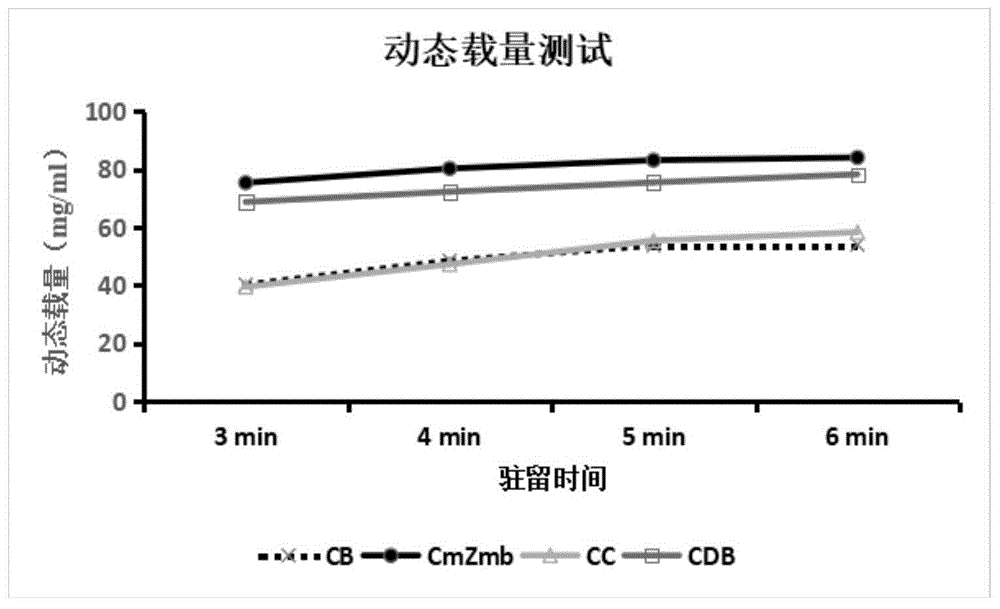
图3是本发明实验例1中融合型多聚体蛋白质动态载量测试结果;FIG3 is a dynamic loading capacity test result of the fusion multimeric protein in Experimental Example 1 of the present invention;
图4是本发明实验例2中融合型多聚体蛋白质耐碱性动态载量测试结果。FIG. 4 is a dynamic loading capacity test result of alkaline resistance of fusion multimeric protein in Experimental Example 2 of the present invention.
具体实施方式DETAILED DESCRIPTION
提供下述实施例是为了更好地进一步理解本发明,并不局限于所述最佳实施方式,不对本发明的内容和保护范围构成限制,任何人在本发明的启示下或是将本发明与其他现有技术的特征进行组合而得出的任何与本发明相同或相近似的产品,均落在本发明的保护范围之内。The following examples are provided for a better understanding of the present invention, but are not intended to limit the best mode of implementation, nor to limit the content and protection scope of the present invention. Any product identical or similar to the present invention obtained by anyone under the inspiration of the present invention or by combining the features of the present invention with other prior arts shall fall within the protection scope of the present invention.
实施例中未注明具体实验步骤或条件者,按照本领域内的文献所描述的常规实验步骤的操作或条件即可进行。所用试剂或仪器未注明生产厂商者,均为可以通过市购获得的常规试剂产品。If no specific experimental steps or conditions are specified in the examples, the conventional experimental steps or conditions described in the literature in the field can be used. If no manufacturer is specified for the reagents or instruments used, they are all conventional reagent products that can be purchased commercially.
下述实施例中的多肽、融合型多聚体蛋白质的编码基因由南京金斯瑞生物科技有限公司合成。The genes encoding the polypeptides and fusion multimeric proteins in the following examples were synthesized by Nanjing GenScript Biotechnology Co., Ltd.
在本发明中,氨基酸残基可以为下列简写符号:赖氨酸(K)、甘氨酸(G)、丙氨酸(A)、精氨酸(R)、谷氨酸(E)、异亮氨酸(I)、亮氨酸(L)。In the present invention, the amino acid residues may be represented by the following abbreviated symbols: lysine (K), glycine (G), alanine (A), arginine (R), glutamic acid (E), isoleucine (I), leucine (L).
实施例1多肽CmExample 1 Polypeptide Cm
1、为了探索多肽Cm的耐碱性的方案,本实施例设计了一系列的多肽Cm,所述多肽具体如下:1. In order to explore the alkali resistance of polypeptide Cm, this embodiment designs a series of polypeptides Cm, and the specific polypeptides are as follows:
多肽C(天然):氨基酸序列如SEQ ID NO.1所示。Polypeptide C (native): the amino acid sequence is shown in SEQ ID NO.1.
多肽Cm(K58G):与SEQ ID NO.1所示的蛋白A的天然C结构域相比,所述多肽仅在第58位赖氨酸(K)取代突变为甘氨酸(G)。Polypeptide Cm(K58G): Compared with the native C domain of protein A shown in SEQ ID NO.1, the polypeptide has only a substitution mutation of lysine (K) at position 58 to glycine (G).
多肽Cm(K49R):与SEQ ID NO.1所示的蛋白A的天然C结构域相比,所述多肽仅在第49位的赖氨酸(K)取代突变为精氨酸(R)。Polypeptide Cm(K49R): Compared with the native C domain of protein A shown in SEQ ID NO.1, the polypeptide has only lysine (K) at position 49 substituted with arginine (R).
多肽Cm(G29A):与SEQ ID NO.1所示的蛋白A的天然C结构域相比,所述多肽仅在第29位甘氨酸(G)取代突变为丙氨酸(A)。Polypeptide Cm(G29A): Compared with the native C domain of protein A shown in SEQ ID NO.1, the polypeptide has only glycine (G) substituted with alanine (A) at position 29.
多肽Cm(E25K):与SEQ ID NO.1所示的蛋白A的天然C结构域相比,所述多肽仅在第25位的谷氨酸(E)取代突变为赖氨酸(K)。Polypeptide Cm(E25K): Compared with the native C domain of protein A shown in SEQ ID NO.1, the polypeptide has only the substitution mutation of glutamic acid (E) at position 25 to lysine (K).
多肽Cm(I16L):与SEQ ID NO.1所示的蛋白A的天然C结构域相比,所述多肽仅在第16位的异亮氨酸(I)取代突变为亮氨酸(L)。Polypeptide Cm(I16L): Compared with the native C domain of protein A shown in SEQ ID NO.1, the polypeptide has only the isoleucine (I) at position 16 replaced by leucine (L).
多肽Cm(K58G,K49R,G29A,E25K,I16L):与SEQ ID NO.1所示的蛋白A的天然C结构域相比,所述多肽为:Polypeptide Cm (K58G, K49R, G29A, E25K, I16L): Compared with the native C domain of protein A shown in SEQ ID NO.1, the polypeptide is:
在第58位赖氨酸(K)取代突变为甘氨酸(G);Lysine (K) was mutated to glycine (G) at position 58;
在第49位的赖氨酸(K)取代突变为精氨酸(R);The lysine (K) at position 49 was mutated to arginine (R);
在第29位甘氨酸(G)取代突变为丙氨酸(A);glycine (G) substituted with alanine (A) at position 29;
在第25位的谷氨酸(E)取代突变为赖氨酸(K);Glutamic acid (E) substitution mutation to lysine (K) at position 25;
在第16位的异亮氨酸(I)取代突变为亮氨酸(L)。The isoleucine (I) at position 16 was mutated to leucine (L).
多肽Cm(K58G,K49R,E25K,I16L):与SEQ ID NO.1所示的蛋白A的天然C结构域相比,所述多肽为:Polypeptide Cm (K58G, K49R, E25K, I16L): Compared with the native C domain of protein A shown in SEQ ID NO.1, the polypeptide is:
在第58位赖氨酸(K)取代突变为甘氨酸(G);Lysine (K) was mutated to glycine (G) at position 58;
在第49位的赖氨酸(K)取代突变为精氨酸(R);The lysine (K) at position 49 was mutated to arginine (R);
在第25位的谷氨酸(E)取代突变为赖氨酸(K);Glutamic acid (E) substitution mutation to lysine (K) at position 25;
在第16位的异亮氨酸(I)取代突变为亮氨酸(L)。The isoleucine (I) at position 16 was mutated to leucine (L).
多肽Cm(K58G,K49R):与SEQ ID NO.1所示的蛋白A的天然C结构域相比,所述多肽为:Polypeptide Cm (K58G, K49R): Compared with the native C domain of protein A shown in SEQ ID NO.1, the polypeptide is:
在第58位赖氨酸(K)取代突变为甘氨酸(G);Lysine (K) was mutated to glycine (G) at position 58;
在第49位的赖氨酸(K)取代突变为精氨酸(R)。The lysine (K) at position 49 was mutated to arginine (R).
多肽Cm(K58G,K49R,G29A):与SEQ ID NO.1所示的蛋白A的天然C结构域相比,所述多肽为:Polypeptide Cm (K58G, K49R, G29A): Compared with the native C domain of protein A shown in SEQ ID NO.1, the polypeptide is:
在第58位赖氨酸(K)取代突变为甘氨酸(G);Lysine (K) was mutated to glycine (G) at position 58;
在第49位的赖氨酸(K)取代突变为精氨酸(R);The lysine (K) at position 49 was mutated to arginine (R);
在第29位甘氨酸(G)取代突变为丙氨酸(A)。At position 29, glycine (G) was mutated to alanine (A).
多肽Cm(G29A,E25K,I16L):与SEQ ID NO.1所示的蛋白A的天然C结构域相比,所述多肽为:Polypeptide Cm (G29A, E25K, I16L): Compared with the native C domain of protein A shown in SEQ ID NO.1, the polypeptide is:
在第29位甘氨酸(G)取代突变为丙氨酸(A);glycine (G) substituted with alanine (A) at position 29;
在第25位的谷氨酸(E)取代突变为赖氨酸(K);Glutamic acid (E) substitution mutation to lysine (K) at position 25;
在第16位的异亮氨酸(I)取代突变为亮氨酸(L)。The isoleucine (I) at position 16 was mutated to leucine (L).
多肽Cm(E25K,I16L):与SEQ ID NO.1所示的蛋白A的天然C结构域相比,所述多肽为:Polypeptide Cm (E25K, I16L): Compared with the native C domain of protein A shown in SEQ ID NO.1, the polypeptide is:
在第25位的谷氨酸(E)取代突变为赖氨酸(K);Glutamic acid (E) substitution mutation to lysine (K) at position 25;
在第16位的异亮氨酸(I)取代突变为亮氨酸(L);Isoleucine (I) substituted with leucine (L) at position 16;
进一步的,上述多肽Cm中涉及的第16位的取代突变还可以为缬氨酸;Furthermore, the substitution mutation at position 16 in the above polypeptide Cm may also be valine;
涉及第25位的取代突变还可以为精氨酸或者组氨酸或者色氨酸;The substitution mutation involving position 25 may also be arginine, histidine or tryptophan;
涉及第29位的取代突变为亮氨酸或者苏氨酸;involving substitution mutation at position 29 to leucine or threonine;
涉及第49位的取代突变为组氨酸;involving a substitution mutation at position 49 to histidine;
涉及第58位的取代突变为异亮氨酸或者丙氨酸。The substitution mutation at position 58 is to isoleucine or alanine.
实施例2Example 2
本实施例设计了多肽Zmb,所述多肽Zmb如下:In this embodiment, a polypeptide Zmb is designed, and the polypeptide Zmb is as follows:
多肽B:其氨基酸序列如SEQ ID NO.2所示;Polypeptide B: its amino acid sequence is shown in SEQ ID NO.2;
多肽Zmb:在如SEQ ID NO.2所示的氨基酸序列中的第20位和第21位氨基酸之间插入氨基酸序列ML,所述氨基酸序列ML的氨基酸序列如SEQ ID NO.3所示,即多肽Zmb的氨基酸序列如SEQ ID NO.4所示。Polypeptide Zmb: The amino acid sequence ML is inserted between the 20th and 21st amino acids in the amino acid sequence shown in SEQ ID NO.2, and the amino acid sequence of the amino acid sequence ML is shown in SEQ ID NO.3, that is, the amino acid sequence of the polypeptide Zmb is shown in SEQ ID NO.4.
实施例3Example 3
本实施例设计了功能性多肽FLD,所述功能性多肽FLD的氨基酸序列如SEQ IDNO.5所示。In this example, a functional polypeptide FLD is designed, and the amino acid sequence of the functional polypeptide FLD is shown in SEQ ID NO.5.
实施例4融合型多聚体蛋白质Example 4 Fusion multimeric protein
本实施例利用实施例1-3的多肽设计了一系列的融合型多聚体蛋白质,具体如下:This example uses the polypeptides of Examples 1-3 to design a series of fusion multimeric proteins, as follows:
CC:从N端到C端依次由6个多肽C(天然)融合而成的氨基酸序列,即排列方式为:C-C-C-C-C-C。CC: An amino acid sequence composed of 6 polypeptide C (natural) fused from N-terminus to C-terminus, that is, the arrangement is: C-C-C-C-C-C.
CmCm(K58G):从N端到C端依次由6个多肽Cm(K58G)融合而成的氨基酸序列。CmCm(K58G): An amino acid sequence composed of 6 polypeptides Cm(K58G) fused in sequence from N-terminus to C-terminus.
CmCm(K49R):从N端到C端依次由6个多肽Cm(K49R)融合而成的氨基酸序列。CmCm(K49R): An amino acid sequence formed by the fusion of six polypeptides Cm(K49R) from N-terminus to C-terminus.
CmCm(G29A):从N端到C端依次由6个多肽Cm(G29A)融合而成的氨基酸序列。CmCm(G29A): An amino acid sequence composed of 6 polypeptides Cm(G29A) fused in sequence from N-terminus to C-terminus.
CmCm(E25K):从N端到C端依次由6个多肽Cm(E25K)融合而成的氨基酸序列。CmCm(E25K): An amino acid sequence composed of 6 polypeptides Cm(E25K) fused in sequence from N-terminus to C-terminus.
CmCm(I16L):从N端到C端依次由6个多肽Cm(I16L)融合而成的氨基酸序列。CmCm(I16L): An amino acid sequence composed of 6 polypeptides Cm(I16L) fused in sequence from N-terminus to C-terminus.
CmCm(K58G,K49R,G29A,E25K,I16L):从N端到C端依次由6个多肽Cm(K58G,K49R,G29A,E25K,I16L)融合而成的氨基酸序列。CmCm (K58G, K49R, G29A, E25K, I16L): an amino acid sequence composed of 6 polypeptides Cm (K58G, K49R, G29A, E25K, I16L) fused from N-terminus to C-terminus.
CmCm(K58G,K49R,E25K,I16L):从N端到C端依次由6个多肽Cm(K58G,K49R,E25K,I16L)融合而成的氨基酸序列。CmCm (K58G, K49R, E25K, I16L): An amino acid sequence formed by the fusion of six polypeptides Cm (K58G, K49R, E25K, I16L) from N-terminus to C-terminus.
CmCm(K58G,K49R):从N端到C端依次由6个多肽Cm(K58G,K49R)融合而成的氨基酸序列。CmCm(K58G, K49R): An amino acid sequence formed by the fusion of six polypeptides Cm(K58G, K49R) from N-terminus to C-terminus.
CmCm(K58G,K49R,G29A):从N端到C端依次由6个多肽Cm(K58G,K49R,G29A)融合而成的氨基酸序列。CmCm (K58G, K49R, G29A): An amino acid sequence formed by the fusion of six polypeptides Cm (K58G, K49R, G29A) from N-terminus to C-terminus.
CmCm(G29A,E25K,I16L):从N端到C端依次由6个多肽Cm(G29A,E25K,I16L)融合而成的氨基酸序列。CmCm (G29A, E25K, I16L): An amino acid sequence formed by the fusion of six polypeptides Cm (G29A, E25K, I16L) from N-terminus to C-terminus.
CmCm(E25K,I16L):从N端到C端依次由6个多肽Cm(E25K,I16L)融合而成的氨基酸序列。CmCm(E25K, I16L): An amino acid sequence formed by the fusion of six polypeptides Cm(E25K, I16L) from N-terminus to C-terminus.
CDB:从N端到C端依次由4个多肽C(天然)、1个功能性多肽FLD、2个多肽B融合而成的氨基酸序列,排列方式为:C-C-C-C-FLD-B-B。CDB: An amino acid sequence composed of 4 polypeptides C (natural), 1 functional polypeptide FLD, and 2 polypeptides B from N-terminus to C-terminus, arranged as follows: C-C-C-C-FLD-B-B.
CB:从N端到C端依次由4个多肽C(天然)、2个多肽B融合而成的氨基酸序列,排列方式为:C-C-C-C-B-B。CB: An amino acid sequence composed of 4 polypeptides C (natural) and 2 polypeptides B from N-terminus to C-terminus, arranged in the following manner: C-C-C-C-B-B.
CmZmb:从N端到C端依次由4个多肽Cm、1个功能性多肽FLD、2个多肽Zmb融合而成的氨基酸序列,排列方式为:Cm-Cm-Cm-Cm-FLD-Zmb-Zmb。其氨基酸序列如SEQ ID NO.6所示,其基因序列如SEQ ID NO.7所示。CmZmb: An amino acid sequence composed of 4 polypeptides Cm, 1 functional polypeptide FLD, and 2 polypeptides Zmb fused from N-terminus to C-terminus, arranged in the following manner: Cm-Cm-Cm-Cm-FLD-Zmb-Zmb. Its amino acid sequence is shown in SEQ ID NO.6, and its gene sequence is shown in SEQ ID NO.7.
进一步的,上述融合型多聚体蛋白质中多肽Cm涉及的第16位的取代突变还可以为缬氨酸;Furthermore, the substitution mutation at position 16 involved in the polypeptide Cm in the above-mentioned fusion multimeric protein may also be valine;
涉及第25位的取代突变还可以为精氨酸或者组氨酸或者色氨酸;The substitution mutation involving position 25 may also be arginine, histidine or tryptophan;
涉及第29位的取代突变为亮氨酸或者苏氨酸;involving substitution mutation at position 29 to leucine or threonine;
涉及第49位的取代突变为组氨酸;involving a substitution mutation at position 49 to histidine;
涉及第58位的取代突变为异亮氨酸或者丙氨酸。The substitution mutation at position 58 is to isoleucine or alanine.
实施例5融合型多聚体蛋白质的制备Example 5 Preparation of fusion multimeric protein
本实施例将实施例4中设计的融合型多聚体蛋白质进行制备,制备的流程如下:In this example, the fusion multimeric protein designed in Example 4 was prepared, and the preparation process was as follows:
(1)重组载体的构建(1) Construction of recombinant vector
将融合型多聚体蛋白质的编码基因和表达载体pET-30a(+)经过NdeI(购自生工生物工程(上海)有限公司,B600120)和HindIII(购自生工生物工程(上海)有限公司,B600184)双酶切切,回收相应片段后连接(DNA凝胶回收试剂盒,购自上海碧云天生物技术有限公司,D0056),连接产物与大肠杆菌TOP10感受态细胞混匀,冰上放置30min,水浴锅42℃热激90s,冰上放置3min进行转化,加入100μl室温LB液体培养基,在摇床中37℃,220转震荡培养60分钟,将菌液混匀后涂至卡那霉素(购自生工生物工程(上海)有限公司,A506636)抗性平板上平板倒置,37℃培养过夜,筛选具有卡那霉素抗性的转化子,从而筛选得到表达融合型多聚体蛋白质的重组载体,如筛选得到的表达融合型多聚体蛋白质CmZmb的重组载体命名为pET-30a-CmZmb,以此类推命名其他融合型多聚体蛋白质的重组载体;The coding gene of the fusion multimeric protein and the expression vector pET-30a(+) were double-digested with NdeI (purchased from Sangon Biotech (Shanghai) Co., Ltd., B600120) and HindIII (purchased from Sangon Biotech (Shanghai) Co., Ltd., B600184), and the corresponding fragments were recovered and ligated (DNA gel recovery kit, purchased from Shanghai Biotech Co., Ltd., D0056). The ligation product was mixed with Escherichia coli TOP10 competent cells, placed on ice for 30 minutes, heat-shocked in a water bath at 42°C for 90 seconds, and placed on ice for 3 minutes for transformation. 100 μl of room temperature LB liquid medium was added, and the mixture was cultured in a shaker at 37°C and 220 rpm for 60 minutes. The bacterial solution was mixed and then applied to a kanamycin (purchased from Sangon Biotech (Shanghai) Co., Ltd., A506636) resistance plate. The plate was inverted and cultured at 37°C overnight to screen transformants with kanamycin resistance, thereby screening a recombinant vector expressing a fusion-type multimeric protein. For example, the recombinant vector expressing a fusion-type multimeric protein CmZmb obtained by screening was named pET-30a-CmZmb, and other recombinant vectors of fusion-type multimeric proteins were named by analogy;
(2)重组菌的构建(2) Construction of recombinant bacteria
新鲜BL21(DE3)菌液冰浴30min,4℃,1000g离心10min,沉淀用0.1mol/L MgCl2-CaCl2(80mmol MgCl2和80mmol CaCl2,MgCl2和CaCl2购自国药集团化学试剂有限公司,分析纯,其余化学试剂纯度相同)重悬,4℃,1000g离心10min,然后0.1mol/L CaCl2溶液重悬制备BL21(DE3)感受态细胞,将步骤(1)中筛选的重组载体(如pET-30a-CmZmb)转化至大肠杆菌BL21(DE3)的感受态细胞中,在含有卡那霉素的LB平板上筛选转化子,经测序验证正确为重组转化子,如命名为BL21-pET30a-CmZmb,以此类推命名其他融合型多聚体蛋白质的重组转化子。Fresh BL21(DE3) bacterial solution was placed in an ice bath for 30 min, centrifuged at 4°C and 1000 g for 10 min, and the precipitate was resuspended in 0.1 mol/L MgCl2 - CaCl2 (80 mmol MgCl2 and 80 mmol CaCl2 , MgCl2 and CaCl2 were purchased from Sinopharm Chemical Reagent Co., Ltd., analytical grade, and the purity of other chemical reagents was the same), centrifuged at 4°C and 1000 g for 10 min, and then resuspended in 0.1 mol/L CaCl2 solution to prepare BL21(DE3) competent cells. The recombinant vector (such as pET-30a-CmZmb) selected in step (1) was transformed into competent cells of Escherichia coli BL21(DE3), and transformants were selected on LB plates containing kanamycin. The transformants were confirmed to be recombinant transformants by sequencing, and were named BL21-pET30a-CmZmb. The recombinant transformants of other fusion-type multimeric proteins were named similarly.
(3)重组菌的发酵(3) Fermentation of recombinant bacteria
将测序正确的重组转化子(如BL21-pET30a-CmZmb),接种于LB培养基中,接种量0.5%(体积百分比),于37℃培养过夜至OD600达到0.8,加入终浓度为10g/L的乳糖诱导,3~5小时后离心收菌;The correctly sequenced recombinant transformant (such as BL21-pET30a-CmZmb) was inoculated into LB medium at an inoculum size of 0.5% (volume percentage), cultured overnight at 37°C until OD600 reached 0.8, and induced by adding lactose at a final concentration of 10 g/L. After 3 to 5 hours, the bacteria were collected by centrifugation;
取40μl菌液(分别为乳糖诱导前的菌液,乳糖诱导后的菌液)加10μl的5×上样缓冲液(由陕西普罗安蒂生物科技发展有限公司提供,货号:10137-1),沸水煮5min,上样20μl进行SDS-PAGE凝胶电泳,结果见图1,可以看到,将乳糖诱导的BL21-pET30a-CmZmb菌液在44kD的位置出现一条新的蛋白条带(见图1泳道2),未经乳糖诱导的BL21-pET30a-CmZmb菌液不出现此带或此带颜色较浅(见图1泳道1)证明融合型多聚体蛋白质CmZmb已在BL21-pET30a-CmZmb中诱导表达,同样的,实施例4中的其他的融合型多聚体蛋白质也成功的诱导表达。Take 40 μl of bacterial solution (the bacterial solution before lactose induction and the bacterial solution after lactose induction, respectively) and add 10 μl of 5× loading buffer (provided by Shaanxi Proanti Biotechnology Development Co., Ltd., item number: 10137-1), boil in boiling water for 5 minutes, load 20 μl for SDS-PAGE gel electrophoresis, the results are shown in Figure 1, it can be seen that the BL21-pET30a-CmZmb bacterial solution induced by lactose has a new protein band at the position of 44kD (see
(4)纯化(4) Purification
在含20mM PB(用5.8018g/L的十二水合磷酸氢二钠水溶液,以及0.5928g/L二水合磷酸二氢钠的水溶液配制,缓冲溶液的配制方式都是标准方式)溶液中,加入分析纯氯化钠至浓度为11.688g/L,用酸碱水溶液调pH至pH7.4,得到缓冲液A液。将上述步骤(3)中收集的菌液用缓冲液A液按照重量比1:10悬浮,裂解时间分别为20min、30min、40min,超声破碎,室温离心后收集上清液,得裂解液上清1、2、3。同时将裂解液上清2采用镍柱亲和纯化(按照下述的裂解液上清2(裂解时间30min)进行镍柱亲和纯化操作至40%B液洗脱,收集洗脱液,将得到的洗脱液分为两份,即为洗脱液1和洗脱液2)。经SDS-PAGE电泳检测表明,结果见图1中泳道3-7(采用3种裂解时间的样品显示结果无差异,见图1中泳道3-5,泳道3的裂解液上清1对应裂解时间20min,泳道4的裂解液上清2对应裂解时间30min,泳道5的裂解液上清3对应裂解时间40min,洗脱液1和洗脱液2结果显示无明显差异见图1中泳道6-7),融合型多聚体蛋白质大部分表达于大肠杆菌胞周质,沉淀中表达量较少。In a solution containing 20 mM PB (prepared with 5.8018 g/L of sodium hydrogen phosphate dodecahydrate aqueous solution and 0.5928 g/L of sodium dihydrogen phosphate dihydrate aqueous solution, the preparation method of the buffer solution is standard), add analytical grade sodium chloride to a concentration of 11.688 g/L, and adjust the pH to pH 7.4 with an acid-base aqueous solution to obtain buffer A. The bacterial liquid collected in the above step (3) was suspended in buffer A at a weight ratio of 1:10, and the lysis time was 20 min, 30 min, and 40 min, respectively. Ultrasonic disruption was performed, and the supernatant was collected after centrifugation at room temperature to obtain
将裂解液上清2(裂解时间30min)进行镍柱亲和纯化,具体的纯化步骤:调整纯化仪(
实施例6亲和层析介质的制备Example 6 Preparation of affinity chromatography medium
本实施例提供了亲和层析介质的制备,如下:This example provides the preparation of affinity chromatography media, as follows:
将实施例5得到的融合型多聚体蛋白质分别制备亲和层析介质,具体步骤如下:取琼脂糖凝胶4FF(西安蓝晓科技新材料股份有限公司)100g,加入2-30mL(在本实施例中选择15ml)溴化氰,-10℃~10℃(在本实施例中选择0℃)反应15-30min(在本实施例中选择反应22min),加2-50mL(在本实施例中选择25ml)三乙胺,-10℃~10℃(在本实施例中选择0℃)反应15-60min(在本实施例中选择反应35min),用丙酮清洗;用纯水溶解融合型多聚体蛋白质0.2~2g(在本实施例中选择1g),加入上述琼脂糖凝胶4FF中,调pH=7~11(在本实施例中选择pH=8),0~20℃(在本实施例中选择10℃)反应过夜,加pH=7~11的0.1-10%(体积百分比,在本实施例中5%)乙醇胺溶液,0~40℃(在本实施例中选择20℃)反应过夜,得到亲和层析介质。制备好的亲和层析介质保存至20%(体积百分比)的乙醇溶液中。The fusion multimeric protein obtained in Example 5 was used to prepare affinity chromatography media, and the specific steps were as follows: 100 g of Sepharose 4FF (Xi'an Lanxiao Technology New Materials Co., Ltd.) was added with 2-30 mL (15 ml in this example) of cyanogen bromide, and the mixture was reacted at -10°C to 10°C (0°C in this example) for 15-30 min (22 min in this example), and 2-50 mL (25 ml in this example) of triethylamine was added, and the mixture was reacted at -10°C to 10°C (0°C in this example) for 15-6 0min (selected to react for 35min in this embodiment), washed with acetone; 0.2-2g (selected to react for 1g in this embodiment) of fusion-type multimeric protein was dissolved in pure water, added to the above-mentioned agarose gel 4FF, adjusted to pH=7-11 (selected to react for 8 in this embodiment), reacted at 0-20°C (selected to react for 10°C in this embodiment) overnight, added with 0.1-10% (volume percentage, 5% in this embodiment) ethanolamine solution at pH=7-11, reacted at 0-40°C (selected to react for 20°C in this embodiment) overnight, and obtained affinity chromatography medium. The prepared affinity chromatography medium was stored in a 20% (volume percentage) ethanol solution.
实验例1融合型多聚体蛋白质填料动态载量测试Experimental Example 1 Dynamic loading capacity test of fusion polymer protein filler
使用
流动相A1:含20mm的PB,0.15M的NaCl的混合液,pH 7.4;Mobile phase A1: a mixture containing 20 mM PB and 0.15 M NaCl, pH 7.4;
流动相B1:0.1M柠檬酸-柠檬酸钠缓冲液,pH3.3;Mobile phase B1: 0.1 M citric acid-sodium citrate buffer, pH 3.3;
动态载量=(VA×C0)/VC(mg/ml gel)Dynamic binding capacity = ( VA × C0 ) / VC (mg/ml gel)
C0为样品中目标蛋白的浓度;VA为穿透曲线中目标样品浓度达到5%C0时上样的总体积;VC为总的柱床体积(参见刘莹,曾建成,于淼,等.一种亲和层析填料动态载量的测定方法:CN 114280208 A[P].) C0 is the concentration of the target protein in the sample; VA is the total volume of the sample loaded when the target sample concentration reaches 5% C0 in the breakthrough curve; VC is the total column bed volume (see Liu Ying, Zeng Jiancheng, Yu Miao, et al. A method for determining the dynamic loading capacity of affinity chromatography fillers: CN 114280208 A[P].)
将CmZmb、CC、CDB和CB(CC、CDB和CB中的多肽C均为多肽C(天然))制备的填料按照上述方法检测动态载量,结果如图3所示,CmZmb制备填料的动态载量高于CC、CDB和CB制备的填料。The dynamic loading capacity of the fillers prepared with CmZmb, CC, CDB and CB (the polypeptide C in CC, CDB and CB is polypeptide C (natural)) was tested according to the above method. The results are shown in Figure 3. The dynamic loading capacity of the filler prepared with CmZmb is higher than that of the fillers prepared with CC, CDB and CB.
按照上述方法实施,洗脱缓冲液pH4.3(即流动相B1为pH4.3)时,CmZmb、CC、CDB和CB的洗脱效率分别是86.6%、56.8%、87.9%和62.3%,CmZmb制备的亲和层析介质用pH4.3的缓冲液洗脱目的蛋白的效率与其他亲和层析介质相比相对较高。According to the above method, when the pH of the elution buffer is 4.3 (i.e., the mobile phase B1 is pH 4.3), the elution efficiencies of CmZmb, CC, CDB and CB are 86.6%, 56.8%, 87.9% and 62.3%, respectively. The efficiency of the affinity chromatography medium prepared by CmZmb in eluting the target protein using a pH 4.3 buffer is relatively higher than that of other affinity chromatography media.
实验例2融合型多聚体蛋白质填料耐碱性测试Experimental Example 2 Alkali resistance test of fusion polymer protein filler
使用
仅由多肽C(天然)或多肽Cm制备融合型多聚体蛋白质的耐碱性测试结果如下表,部分见图4。The results of the alkaline resistance test of the fusion multimeric protein prepared only from polypeptide C (native) or polypeptide Cm are shown in the following table, and some of them are shown in Figure 4.
表1、融合型多聚体蛋白质制备的填料耐碱性测试结果Table 1. Alkali resistance test results of fillers prepared with fusion multimeric proteins


2、CmZmb、CC、CDB和CB制备的填料耐碱性测试结果见图4,由图中可以看到,CmZmb制备的填料耐碱性测试中动态载量百分比高于CC、CDB和CB。2. The alkali resistance test results of fillers prepared by CmZmb, CC, CDB and CB are shown in Figure 4. It can be seen from the figure that the dynamic loading percentage of the filler prepared by CmZmb in the alkali resistance test is higher than that of CC, CDB and CB.
显然,上述实施例仅仅是为清楚地说明所作的举例,而并非对实施方式的限定。对于所属领域的普通技术人员来说,在上述说明的基础上还可以做出其它不同形式的变化或变动。这里无需也无法对所有的实施方式予以穷举。而由此所引伸出的显而易见的变化或变动仍处于本发明创造的保护范围之中。Obviously, the above embodiments are merely examples for the purpose of clear explanation, and are not intended to limit the implementation methods. For those skilled in the art, other different forms of changes or modifications can be made based on the above description. It is not necessary and impossible to list all the implementation methods here. The obvious changes or modifications derived therefrom are still within the scope of protection of the present invention.
Claims (10)
Priority Applications (5)
| Application Number | Priority Date | Filing Date | Title |
|---|---|---|---|
| CN202211064221.6A CN115850408A (en) | 2022-09-01 | 2022-09-01 | Polypeptide, fusion type polymer protein and application thereof |
| PCT/CN2022/140536 WO2024045430A1 (en) | 2022-09-01 | 2022-12-21 | Polypeptide, fused polymer protein and use thereof |
| JP2023566720A JP7701987B2 (en) | 2022-09-01 | 2022-12-21 | Polypeptides, fusion multimeric proteins and uses thereof |
| EP22940501.4A EP4353739A4 (en) | 2022-09-01 | 2022-12-21 | POLYPEPTIDE, FUSION PROTEIN AND USE OF THEM |
| US18/557,208 US20250188134A1 (en) | 2022-09-01 | 2022-12-21 | Polypeptide, fusion-type multimeric protein and uses thereof |
Applications Claiming Priority (1)
| Application Number | Priority Date | Filing Date | Title |
|---|---|---|---|
| CN202211064221.6A CN115850408A (en) | 2022-09-01 | 2022-09-01 | Polypeptide, fusion type polymer protein and application thereof |
Publications (1)
| Publication Number | Publication Date |
|---|---|
| CN115850408A true CN115850408A (en) | 2023-03-28 |
Family
ID=85660708
Family Applications (1)
| Application Number | Title | Priority Date | Filing Date |
|---|---|---|---|
| CN202211064221.6A Pending CN115850408A (en) | 2022-09-01 | 2022-09-01 | Polypeptide, fusion type polymer protein and application thereof |
Country Status (5)
| Country | Link |
|---|---|
| US (1) | US20250188134A1 (en) |
| EP (1) | EP4353739A4 (en) |
| JP (1) | JP7701987B2 (en) |
| CN (1) | CN115850408A (en) |
| WO (1) | WO2024045430A1 (en) |
Citations (3)
| Publication number | Priority date | Publication date | Assignee | Title |
|---|---|---|---|---|
| CN109071612A (en) * | 2016-05-11 | 2018-12-21 | 通用电气医疗集团生物工艺研发股份公司 | mutant immunoglobulin binding polypeptide |
| CN112639099A (en) * | 2018-08-24 | 2021-04-09 | Jsr株式会社 | Immunoglobulin-binding protein and affinity carrier using same |
| CN114149495A (en) * | 2021-12-17 | 2022-03-08 | 博格隆(上海)生物技术有限公司 | Mutant protein A Domain C and uses thereof |
Family Cites Families (13)
| Publication number | Priority date | Publication date | Assignee | Title |
|---|---|---|---|---|
| JP2006304633A (en) * | 2005-04-26 | 2006-11-09 | Apro Life Science Institute Inc | Immunoglobulin binding protein |
| US9403883B2 (en) * | 2009-03-24 | 2016-08-02 | Kaneka Corporation | Protein having affinity for immunoglobulin, and immunoglobulin-binding affinity ligand |
| CN103443120B (en) * | 2011-03-25 | 2016-08-31 | 株式会社钟化 | Novel Immunoglobulin Binding Polypeptides |
| EP2690173B1 (en) * | 2011-03-25 | 2019-07-03 | Kaneka Corporation | Protein for affinity-separation matrix |
| SG10201604554WA (en) * | 2011-06-08 | 2016-07-28 | Emd Millipore Corp | Chromatography matrices including novel staphylococcus aureus protein a based ligands |
| WO2015005859A1 (en) * | 2013-07-10 | 2015-01-15 | Ge Healthcare Bio-Sciences Ab | Mutated immunoglobulin-binding polypeptides |
| KR20170115535A (en) * | 2015-02-05 | 2017-10-17 | 미쯔비시 케미컬 주식회사 | A protein having affinity for immunoglobulin, an affinity separator using the same, a column for liquid chromatography |
| WO2016152946A1 (en) * | 2015-03-26 | 2016-09-29 | Jsr株式会社 | Immunoglobulin-binding protein and affinity carrier using same |
| CN107849088A (en) * | 2015-07-22 | 2018-03-27 | 株式会社钟化 | Purification method of antibody-like protein |
| US11708390B2 (en) * | 2016-05-11 | 2023-07-25 | Cytiva Bioprocess R&D Ab | Method of storing a separation matrix |
| US10654887B2 (en) * | 2016-05-11 | 2020-05-19 | Ge Healthcare Bio-Process R&D Ab | Separation matrix |
| CA3136398A1 (en) * | 2019-04-10 | 2020-10-15 | Chugai Seiyaku Kabushiki Kaisha | Method for purifying fc region-modified antibody |
| CN114280208B (en) | 2021-11-03 | 2024-05-24 | 鼎康(武汉)生物医药有限公司 | A method for determining the dynamic loading capacity of affinity chromatography filler |
-
2022
- 2022-09-01 CN CN202211064221.6A patent/CN115850408A/en active Pending
- 2022-12-21 WO PCT/CN2022/140536 patent/WO2024045430A1/en not_active Ceased
- 2022-12-21 EP EP22940501.4A patent/EP4353739A4/en active Pending
- 2022-12-21 US US18/557,208 patent/US20250188134A1/en active Pending
- 2022-12-21 JP JP2023566720A patent/JP7701987B2/en active Active
Patent Citations (3)
| Publication number | Priority date | Publication date | Assignee | Title |
|---|---|---|---|---|
| CN109071612A (en) * | 2016-05-11 | 2018-12-21 | 通用电气医疗集团生物工艺研发股份公司 | mutant immunoglobulin binding polypeptide |
| CN112639099A (en) * | 2018-08-24 | 2021-04-09 | Jsr株式会社 | Immunoglobulin-binding protein and affinity carrier using same |
| CN114149495A (en) * | 2021-12-17 | 2022-03-08 | 博格隆(上海)生物技术有限公司 | Mutant protein A Domain C and uses thereof |
Also Published As
| Publication number | Publication date |
|---|---|
| EP4353739A1 (en) | 2024-04-17 |
| WO2024045430A1 (en) | 2024-03-07 |
| US20250188134A1 (en) | 2025-06-12 |
| JP7701987B2 (en) | 2025-07-02 |
| JP2024535163A (en) | 2024-09-30 |
| EP4353739A4 (en) | 2026-01-07 |
Similar Documents
| Publication | Publication Date | Title |
|---|---|---|
| CN113278052B (en) | Preparation method of recombinant Protein A and affinity chromatography medium | |
| WO2012083425A1 (en) | Novel alkali-resistant variants of protein a and their use in affinity chromatography | |
| JP7689746B2 (en) | Binding proteins for the enzyme acid alpha-glucosidase (GAA) and uses thereof | |
| US20250154208A1 (en) | Domain c of mutated protein a, and application thereof | |
| KR20210122788A (en) | Immunoglobulin Binding Proteins for Affinity Purification | |
| CN113512099B (en) | Staphylococcus protein A, purification preparation method and application thereof | |
| CN115850408A (en) | Polypeptide, fusion type polymer protein and application thereof | |
| CN106543274B (en) | A kind of derivative of protein A domain Z with specific binding effect on antibody and application thereof | |
| CN114957415A (en) | Streptavidin mutant and application thereof, product, gene, recombinant plasmid and genetically engineered bacterium | |
| CN118742559A (en) | B domain and Z domain mutants of protein A and their applications | |
| CN112210013A (en) | Base Tolerant Affinity Chromatography Ligands | |
| EP4634208A1 (en) | New ligands for affinity chromatography | |
| CN114591407B (en) | Alkali-resistant protein A variants and uses thereof | |
| JP4481260B2 (en) | Antibody binding peptide | |
| JP2023119563A (en) | Method for purifying adeno-associated virus-binding protein | |
| CN118667037B (en) | Fusion protein ELP-EBP for binding endotoxin, preparation method thereof and method for removing endotoxin in aqueous solution | |
| CN119080892A (en) | Mutated protein A domain and its application | |
| KR102637595B1 (en) | Immunoglobulin-binding protein variant with increased alkali-tolerance and use thereof | |
| CN108753797A (en) | A kind of antrodia immune modulator ACA1 and its encoding gene and application | |
| CN121045359A (en) | Human albumin binding peptide 4F1 and method for purifying human albumin | |
| CN119161429A (en) | Mutant protein A and its application in affinity chromatography | |
| CN104945488A (en) | Polypeptide having immunoglobulin binding capacity | |
| WO2025262100A1 (en) | New ligands for the purification of antibodies via affinity chromatography | |
| CN118530317A (en) | Structural domain mutant of protein A, affinity chromatography medium prepared from structural domain mutant and application of structural domain mutant | |
| CN111196842A (en) | Expression and purification method of non-transmembrane structural domain of outer membrane transport channel protein |
Legal Events
| Date | Code | Title | Description |
|---|---|---|---|
| PB01 | Publication | ||
| PB01 | Publication | ||
| SE01 | Entry into force of request for substantive examination | ||
| SE01 | Entry into force of request for substantive examination |