CN115644840A - Vital sign detection method based on millimeter wave radar - Google Patents
Vital sign detection method based on millimeter wave radar Download PDFInfo
- Publication number
- CN115644840A CN115644840A CN202211014558.6A CN202211014558A CN115644840A CN 115644840 A CN115644840 A CN 115644840A CN 202211014558 A CN202211014558 A CN 202211014558A CN 115644840 A CN115644840 A CN 115644840A
- Authority
- CN
- China
- Prior art keywords
- frequency
- matrix
- signal
- chest wall
- wall displacement
- Prior art date
- Legal status (The legal status is an assumption and is not a legal conclusion. Google has not performed a legal analysis and makes no representation as to the accuracy of the status listed.)
- Granted
Links
Images


Landscapes
- Radar Systems Or Details Thereof (AREA)
Abstract
Description
技术领域technical field
本发明属于雷达设备的技术领域,具体涉及一种基于毫米波雷达的生命体征检测方法。The invention belongs to the technical field of radar equipment, and in particular relates to a method for detecting vital signs based on millimeter wave radar.
背景技术Background technique
目前,现有技术中用于日常身体检测、医疗、睡眠呼吸间歇患者的睡眠监测、疲劳驾驶的预警、灾后救援等领域的生命体征检测技术中包括有毫米波雷达。现有采用毫米波雷达检测生命体征的方法,通常包括发出雷达波检测距离、根据雷达回波的距离-速度/角度谱判断是否为人体、对人体的回拨提取心跳和呼吸三大过程。At present, millimeter-wave radar is used in the vital sign detection technology in the fields of daily body detection, medical treatment, sleep monitoring of patients with sleep apnea, fatigue driving warning, post-disaster rescue and other fields in the existing technology. Existing methods for detecting vital signs using millimeter-wave radar usually include sending out radar waves to detect the distance, judging whether it is a human body based on the distance-velocity/angle spectrum of the radar echo, and extracting heartbeat and breathing from the callback of the human body.
但是,现有的毫米波雷达检测生命体征的方法,其检测精度低,没有对雷达回波进行良好的去噪、信号筛选、信号重构处理,导致经常漏判或错判,无法高效表征检测到的人体目标的生命体征强弱状态。另一方面,现有的检测方法在提取呼吸和心跳体征过程的算法的计算量过大,难以进行快速反应也不利于提升检测精度。However, the existing methods for detecting vital signs with millimeter-wave radar have low detection accuracy, and have not performed good denoising, signal screening, and signal reconstruction processing on radar echoes, resulting in frequent missed or wrong judgments, and cannot efficiently represent and detect The strength and weakness of the vital signs of the human target. On the other hand, the existing detection methods in the process of extracting respiratory and heartbeat signs require too much calculation, which makes it difficult to respond quickly and is not conducive to improving detection accuracy.
发明内容Contents of the invention
为了克服现有技术存在的一个或者多个缺陷与不足,本发明的目的在于提供一种基于毫米波雷达的生命体征检测方法,用于提升毫米波雷达设备在生命体征检测过程中的检测精度。In order to overcome one or more defects and deficiencies in the prior art, the object of the present invention is to provide a method for detecting vital signs based on millimeter-wave radar, which is used to improve the detection accuracy of millimeter-wave radar equipment in the process of detecting vital signs.
为了达到上述目的,本发明采用以下的技术方案。In order to achieve the above object, the present invention adopts the following technical solutions.
一种基于毫米波雷达的生命体征检测方法,包括步骤如下:A method for detecting vital signs based on millimeter-wave radar, comprising the following steps:
使用毫米波雷达的天线发射线性调频连续波FMCW,然后毫米波雷达获取回波,对回波信号进行混频后获取原始数据,并将原始数据的每一帧分别组成包含快时间维度和慢时间维度的第一矩阵;The antenna of the millimeter wave radar is used to transmit the linear frequency modulation continuous wave FMCW, and then the millimeter wave radar obtains the echo, mixes the echo signal to obtain the original data, and composes each frame of the original data including the fast time dimension and the slow time the first matrix of dimension;
对第一矩阵进行一维快速傅里叶变换,使不同距离的回波信号分离,得到对应的第二矩阵;接着对第二矩阵进行滤除静止杂波操作,先使用窗口将第二矩阵转换为第三矩阵,然后使用均值对第三矩阵进行运算得到第四矩阵,从而完成静止滤波操作;Perform one-dimensional fast Fourier transform on the first matrix to separate the echo signals at different distances to obtain the corresponding second matrix; then perform the operation of filtering out static clutter on the second matrix, first use the window to convert the second matrix is the third matrix, and then use the mean value to operate on the third matrix to obtain the fourth matrix, thereby completing the static filtering operation;
对第四矩阵进行一维恒虚警检测CFAR操作,从中判断存在人体目标的距离单元;然后对存在人体目标的距离单元提取相位信号,使用extended-DACM 算法进行解缠操作获得解缠后的相位信号;Perform one-dimensional constant false alarm detection CFAR operation on the fourth matrix to judge the range unit with human target; then extract the phase signal from the range unit with human target, and use the extended-DACM algorithm to perform unwrapping operation to obtain the unwrapped phase Signal;
从解缠后的相位信号中判断人体目标的生命体征;对存在生命体征的人体目标的距离单元提取相应胸壁位移信号,然后利用迭代调整时间窗算法调整得到调整后的胸壁位移信号;Judging the vital signs of the human target from the unwrapped phase signal; extracting the corresponding chest wall displacement signal from the distance unit of the human target with vital signs, and then using the iterative adjustment time window algorithm to adjust to obtain the adjusted chest wall displacement signal;
从调整后的胸壁位移信号中重构胸壁位移-时间信号,再从重构的胸壁位移 -时间信号中获取准确的人体目标的生命体征。The chest wall displacement-time signal is reconstructed from the adjusted chest wall displacement signal, and the accurate vital signs of the human target are obtained from the reconstructed chest wall displacement-time signal.
优选地,发射线性调频连续波FMCW的具体过程为:Preferably, the specific process of transmitting chirp frequency modulated continuous wave FMCW is:
用单发单收或单发多收的毫米波雷达,向需要进行生命体征检测的空间内发射线性调频连续波FMCW,发射信号在单个啁啾时间内xT(t)波形如下式:Use the millimeter-wave radar with single-send and single-receive or single-send and multiple-receive to transmit linear frequency-modulated continuous wave FMCW into the space where vital signs detection is required. The waveform of the transmitted signal x T (t) within a single chirp time is as follows:

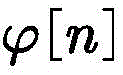
其中,t代表时刻,A是发射信号的幅度,fs是发射信号的起始频率,B是发射信号的工作带宽,Tc是发射信号中单个啁啾所占用的时长,φ(t)是线性调频连续波的相位噪音。Among them, t represents the moment, A is the amplitude of the transmitted signal, f s is the starting frequency of the transmitted signal, B is the working bandwidth of the transmitted signal, T c is the time length occupied by a single chirp in the transmitted signal, φ(t) is Phase noise of a chirp continuous wave.
进一步地,对回波信号进行混频获取原始数据的过程为:Further, the process of mixing the echo signal to obtain the original data is:
获取到的回波信号xR(t)如下式所示:The acquired echo signal x R (t) is shown in the following formula:
xR(t)=αxT(t-td)x R (t) = αx T (tt d )
将回波信号xR(t)和线性调频连续波的发射信号xT(t)混频,得到所需的中频信号xIF(t)的过程如下式所示:The process of mixing the echo signal x R (t) and the transmission signal x T (t) of the linear frequency modulation continuous wave to obtain the required intermediate frequency signal x IF (t) is shown in the following formula:
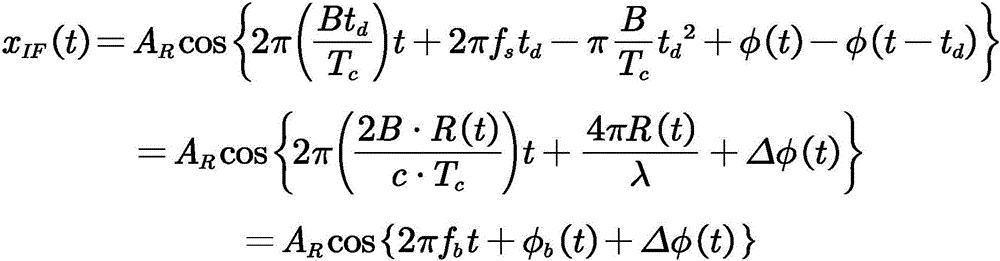
其中,c是光速,λ是波长,AR是毫米波雷达的天线接收到回波时的接收信号功率;Among them, c is the speed of light, λ is the wavelength, AR is the received signal power when the antenna of the millimeter wave radar receives the echo;
对中频信号xIF(t)进行模数转换,得到原始数据;将原始数据的每一帧分别组成包含快时间维度和慢时间维度的第一矩阵,记为M[m,n],m表示快时间维度下单个啁啾对应的采样点数,n表示慢时间维度下每一帧原始数据对应的啁啾的总数。Carry out analog-to-digital conversion to the intermediate frequency signal x IF (t) to obtain the original data; each frame of the original data is respectively composed of the first matrix including the fast time dimension and the slow time dimension, denoted as M[m, n], m represents The number of sampling points corresponding to a single chirp in the fast time dimension, and n represents the total number of chirps corresponding to each frame of raw data in the slow time dimension.
进一步地,对第一矩阵进行一维快速傅里叶变换的过程为:Further, the process of performing one-dimensional fast Fourier transform on the first matrix is:
对第一矩阵M[m,n]按列进行快速傅里叶变换,将第一矩阵M[m,n]经过快速傅里叶变换变换后得到的矩阵记为第二矩阵RP[m,n]。Fast Fourier transform is performed on the first matrix M[m, n] column by column, and the matrix obtained after the first matrix M[m, n] undergoes fast Fourier transform transformation is recorded as the second matrix RP[m, n ].
进一步地,对第二矩阵进行滤除静止杂波操作的过程为:Further, the process of filtering the static clutter operation on the second matrix is:
计算第二矩阵RP[m,n]中每一行各自的均值,然后将每一行的均值取出组成第一向量,每个第一向量的维度与每帧第二矩阵RP[m,n]相对应的为m;然后使用窗口来滤除静止杂波;将窗口大小设定为k,窗口作用在k个第一向量上,使 k个第一向量组成m*k维的第三矩阵;将第三矩阵每一行的每个数值,都减去该行全部数值的均值,得到滤除静止杂波后的第四矩阵RS[m,k]。Calculate the mean value of each row in the second matrix RP[m, n], and then take the mean value of each row to form the first vector, and the dimension of each first vector corresponds to the second matrix RP[m, n] of each frame is m; then use the window to filter out static clutter; the window size is set to k, and the window acts on the k first vectors, so that the k first vectors form a third matrix of m*k dimensions; the second Each value in each row of the three matrices is subtracted from the mean value of all the values in the row to obtain the fourth matrix RS[m, k] after filtering out static clutter.
进一步地,对存在人体目标的距离单元使用extended-DACM算法进行解缠操作的过程为:Further, the process of using the extended-DACM algorithm to unwrap the distance cells with human targets is as follows:
提取距离单元对应的第四矩阵RS[m,k]中的虚部I(t)、实部Q(t)两路信号,使用extended-DACM算法分别对虚部I(t)、实部Q(t)两路信号进行相位解缠,得到没有出现相位模糊的相位信号。Extract the two signals of imaginary part I(t) and real part Q(t) in the fourth matrix RS[m,k] corresponding to the distance unit, and use the extended-DACM algorithm to respectively analyze the imaginary part I(t) and real part Q (t) Phase unwrapping is performed on the two signals to obtain a phase signal without phase ambiguity.
进一步地,对解缠后的相位信号对人体目标的生命体征进行检测的过程为:Further, the process of detecting the vital signs of the human target from the unwrapped phase signal is:
从解缠后的相位信号中选择判断活体检测的总帧数s,将这s帧对应经过展开的相位信号的频率值组成1*s维的向量矩阵H;Select the total number of frames s for judging liveness detection from the unwrapped phase signal, and form a 1*s-dimensional vector matrix H with the frequency values of the s frames corresponding to the expanded phase signal;
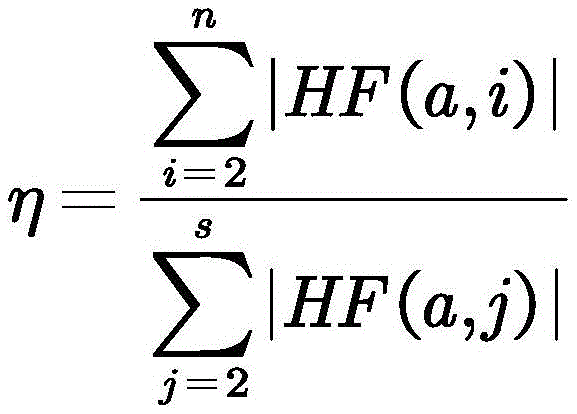
对向量矩阵H进行快速傅里叶变换得到第五矩阵HF[1,s],计算设定的频率范围内的频谱能量占全频段总能量的比例,判断设定的频率范围内的频谱能量占全频段总能量的比例是否超过预设的比例阈值,设定的频率范围内的频谱能量占全频段总能量的比例的计算公式如下:Perform fast Fourier transform on the vector matrix H to obtain the fifth matrix HF[1,s], calculate the proportion of the spectrum energy in the set frequency range to the total energy of the whole frequency band, and judge the proportion of the spectrum energy in the set frequency range Whether the proportion of the total energy of the whole frequency band exceeds the preset proportion threshold, the formula for calculating the proportion of the spectrum energy within the set frequency range to the total energy of the whole frequency band is as follows:

其中,i、j均分别表示第几帧,a对应进行一维恒虚警检测CFAR后第四矩阵RS[m,k]中存在人体目标的行数,此处的n是在设定的频率范围内进行快速傅里叶变换的点数;Among them, i and j respectively represent the number of frames, and a corresponds to the number of rows of human targets in the fourth matrix RS[m,k] after performing one-dimensional constant false alarm detection CFAR, where n is the set frequency The number of points for fast Fourier transform within the range;
计算向量矩阵H的方差,判断该方差是否超过预设的方差阈值;Calculate the variance of the vector matrix H, and judge whether the variance exceeds the preset variance threshold;
若设定的频率范围内的频谱能量占全频段总能量的比例、向量矩阵H的方差同时超过比例阈值、方差阈值,则判定人体目标存在生命体征,然后提取存在生命体征的人体目标的距离单元。If the ratio of the spectrum energy in the set frequency range to the total energy of the whole frequency band and the variance of the vector matrix H exceed the ratio threshold and the variance threshold at the same time, it is determined that the human target has vital signs, and then the distance unit of the human target with vital signs is extracted .
进一步地,利用迭代调整时间窗算法调整的胸壁位移信号的过程为:Further, the process of using the iterative adjustment time window algorithm to adjust the chest wall displacement signal is:
解缠后的相位信号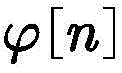

从胸壁位移信号R[n]中取出一段设定时长的数据,以时间窗N进行快速傅里叶变换,将进行快速傅里叶变换后所得胸壁位移频谱的幅度最大值所在频点的频率作为呼吸主频率fb1,将进行快速傅里叶变换后所得胸壁位移频谱在设定频率内幅度最大值所在点的频率作为心跳主频率fh;Take out a set period of data from the chest wall displacement signal R[n], perform fast Fourier transform with the time window N, and use the frequency of the frequency point where the maximum amplitude of the chest wall displacement spectrum obtained after the fast Fourier transform is taken as Breathing main frequency f b1 , take the frequency at the point where the amplitude maximum value of the chest wall displacement spectrum obtained after fast Fourier transform is within the set frequency as the main heartbeat frequency f h ;
从胸壁位移频谱中获取呼吸主频率fb1、呼吸主频率幅度|A1|、呼吸的二倍频fb2;Obtain the main frequency of respiration f b1 , the amplitude of main frequency of respiration |A1|, and the double frequency f b2 of respiration from the chest wall displacement spectrum;
判断呼吸主频率fb1是否为呼吸的二倍频fb2的一半,同时判断呼吸主频率幅度是否大于上次迭代时的呼吸主频率幅度,即判断是否|A1|>|A1′|;若不同时满足

进一步地,重构胸壁位移-时间信号的过程为:Further, the process of reconstructing the chest wall displacement-time signal is:
由呼吸引起的胸壁位移-时间信号为如下公式:The chest wall displacement-time signal caused by respiration is given by the following formula:

其中,ω1、ω2、ω3分别是呼吸的主频、二倍频、三倍频,A1、A2、A3分别是呼吸主频、二倍频、三倍频各自对应的幅值;Among them, ω 1 , ω 2 , and ω 3 are the main frequency, double frequency, and triple frequency of breathing respectively, and A 1 , A 2 , and A 3 are the corresponding amplitudes of the main breathing frequency, double frequency, and triple frequency value;
对调整后的胸壁位移频谱,有先验条件:呼吸主频率的幅度峰值是其二倍频幅度峰值的约3.5倍、呼吸主频率的幅度峰值是其三倍频幅度峰值的约10倍,根据先验条件求以下公式的根:For the adjusted chest wall displacement spectrum, there are a priori conditions: the peak amplitude of the main frequency of breathing is about 3.5 times the peak amplitude of its double frequency, and the peak amplitude of the main frequency of breathing is about 10 times the peak amplitude of its triple frequency. According to The prior condition finds the root of the following formula:
A3x3+A2x2+A1x-H(t)=0A 3 x 3 +A 2 x 2 +A 1 xH(t)=0
对上式求解符合先验条件的根,将根代入上式,获取重构后的胸壁位移-时间信号。Solve the root of the above formula that meets the prior condition, and substitute the root into the above formula to obtain the reconstructed chest wall displacement-time signal.
进一步地,从重构后的胸壁位移-时间信号获得生命体征的过程为:Further, the process of obtaining vital signs from the reconstructed chest wall displacement-time signal is:
重构后的胸壁位移-时间信号中,设定其幅值最大处的频率为呼吸频率fb,在设定频率范围内的幅值最大处为心跳频率fh;In the reconstructed chest wall displacement-time signal, the frequency at the maximum amplitude is set as the respiratory frequency f b , and the maximum amplitude within the set frequency range is the heartbeat frequency f h ;
分别计算每分钟的呼吸、心跳各自的次数,得到相应人体目标的生命体征,具体如下式:Calculate the number of breaths and heartbeats per minute respectively, and obtain the vital signs of the corresponding human target, as follows:
HB=60×fb HB=60×f b
HB=60×fh HB=60×f h
其中,HB为每分钟的呼吸次数,HR为每分钟的心跳次数。Among them, HB is the number of breaths per minute, and HR is the number of heartbeats per minute.
本发明技术方案与现有技术相比,具有如下有益效果:Compared with the prior art, the technical solution of the present invention has the following beneficial effects:
本发明相比现有技术,通过对雷达回波进行良好的去噪、信号筛选、信号重构处理,同时高效表征检测到的人体目标的生命体征强弱状态,避免了漏判或错判,提高了检测精度;本发明相关的运算量小,避免了现有技术在提取呼吸和心跳体征过程因大计算量造成难以进行快速反应的问题,增加了测量的可靠性。Compared with the prior art, the present invention performs good denoising, signal screening, and signal reconstruction processing on radar echoes, and at the same time efficiently characterizes the strength and weakness of the detected vital signs of human targets, avoiding missed or wrong judgments, The detection accuracy is improved; the calculation amount related to the present invention is small, which avoids the problem that it is difficult to respond quickly due to the large calculation amount in the process of extracting breathing and heartbeat signs in the prior art, and increases the reliability of measurement.
附图说明Description of drawings
图1为本发明其中一种基于毫米波雷达的生命体征检测方法的大致流程示意图;FIG. 1 is a schematic flow diagram of one of the millimeter-wave radar-based vital sign detection methods of the present invention;
图2为图1中原始的胸壁位移频谱图;Fig. 2 is the original chest wall displacement spectrogram in Fig. 1;
图3为图1中迭代调整时间窗后的胸壁位移频谱图;Fig. 3 is the chest wall displacement spectrogram after iteratively adjusting the time window in Fig. 1;
图4为图1中重构后的胸壁位移频谱图。Fig. 4 is the reconstructed chest wall displacement spectrogram in Fig. 1 .
具体实施方式Detailed ways
为了使本发明的目的、技术方案及其优点更加清楚明白,以下结合附图及其实施例,对本发明进行进一步详细说明。应当理解,此处所描述的具体实施例仅仅用以解释本发明,并不用于限定本发明。In order to make the object, technical solution and advantages of the present invention clearer, the present invention will be further described in detail below in conjunction with the accompanying drawings and the embodiments thereof. It should be understood that the specific embodiments described here are only used to explain the present invention, not to limit the present invention.
实施例Example
如图1至图4所示,本实施例的一种基于毫米波雷达的生命体征检测方法,包括步骤如下:As shown in Figures 1 to 4, a method for detecting vital signs based on millimeter-wave radar in this embodiment includes the following steps:
S1、使用毫米波雷达的天线发射线性调频连续波FMCW,然后毫米波雷达获取回波;S1. Use the antenna of the millimeter wave radar to transmit the linear frequency modulation continuous wave FMCW, and then the millimeter wave radar obtains the echo;
本实施例优选设定毫米波雷达天线正面对准需要进行检测的空间区域的情况下,毫米波雷达天线与待测目标人体的胸壁处于同一个水平面上,本实施例优选的毫米波雷达的天线与人体的距离最优选为一米左右,收发信号时雷达天线不进行移动;In this embodiment, it is preferable to set the millimeter-wave radar antenna to be aligned with the space area that needs to be detected. The millimeter-wave radar antenna and the chest wall of the target human body to be measured are on the same horizontal plane. The distance from the human body is most preferably about one meter, and the radar antenna does not move when sending and receiving signals;
本实施例优选发射线性调频连续波FMCW时,采用单发单收或单发多收的毫米波雷达,向需要进行生命体征检测的空间内发射线性调频连续波FMCW,发射信号在单个啁啾时间内xT(t)波形如下式:In this embodiment, when the linear frequency modulated continuous wave FMCW is preferably transmitted, a millimeter-wave radar with single transmission and single reception or single transmission and multiple reception is used to transmit linear frequency modulation continuous wave FMCW into the space where vital signs detection is required, and the transmitted signal is within a single chirp time. The inner x T (t) waveform is as follows:

其中,t代表时刻,A是发射信号的幅度,fs是发射信号的起始频率,B是发射信号的工作带宽,Tc是发射信号中单个啁啾(chirp)所占用的时长,φ(t)是线性调频连续波的相位噪音;Among them, t represents the moment, A is the amplitude of the transmitted signal, f s is the starting frequency of the transmitted signal, B is the working bandwidth of the transmitted signal, Tc is the time length occupied by a single chirp in the transmitted signal, φ( t) is the phase noise of the chirp continuous wave;
S2、对步骤S1获取到的回波进行预处理;具体过程如下:S2. Preprocessing the echo obtained in step S1; the specific process is as follows:
先行构建回波信号;获取到的回波信号xR(t)如下式所示:Construct the echo signal in advance; the obtained echo signal x R (t) is shown in the following formula:
xR(t)=αxT(t-td)x R (t) = αx T (tt d )
回波信号xR(t)相比于发射线性调频连续波的信号xT(t),会产生幅度变化尺度α、时移td的差异,时移td与待测目标的径向距离R(t)相关,具体关系如下式所示:Compared with the signal x T (t) of the transmitted linear frequency modulation continuous wave, the echo signal x R (t) will produce a difference in the amplitude change scale α, time shift t d , and the radial distance between the time shift t d and the target to be measured R(t) is related, and the specific relationship is shown in the following formula:

将回波信号xR(t)和线性调频连续波的发射信号xT(t)混频,得到所需的中频信号xIF(t)的过程如下式所示:The process of mixing the echo signal x R (t) and the transmission signal x T (t) of the linear frequency modulation continuous wave to obtain the required intermediate frequency signal x IF (t) is shown in the following formula:

其中,c是光速,λ是波长,AR是毫米波雷达的天线接收到回波时的接收信号功率,可见频率

对中频信号xIF(t)进行模数转换,得到在全部工作周期(每一帧)内中频信号的频率值的原始数据;将原始数据的每一帧分别组成包含快时间维度和慢时间维度的第一矩阵,记为M[m,n],m表示快时间维度下单个啁啾对应的采样点数,n表示慢时间维度下每一帧原始数据对应的啁啾的总数,由此可见,第一矩阵M[m,n]表示一帧的原始数据,每一列包含了在一个啁啾中m个采样点对应的中频信号的频率值,总共包含了n列,而全部工作周期的原始数据则包含了多帧,对应多个第一矩阵,本实施例优选设定原始数据总共有k帧;Perform analog-to-digital conversion on the intermediate frequency signal x IF (t) to obtain the original data of the frequency value of the intermediate frequency signal in the entire working cycle (each frame); each frame of the original data is composed of fast time dimension and slow time dimension The first matrix of , denoted as M[m, n], m represents the number of sampling points corresponding to a single chirp in the fast time dimension, and n represents the total number of chirps corresponding to each frame of raw data in the slow time dimension. It can be seen that, The first matrix M[m, n] represents the original data of one frame, and each column contains the frequency value of the intermediate frequency signal corresponding to m sampling points in a chirp, including n columns in total, and the original data of the entire duty cycle It contains multiple frames, corresponding to multiple first matrices, and the present embodiment preferably sets the original data to have k frames in total;
S3、对步骤S2得到的全部第一矩阵M[m,n]分别进行一维快速傅里叶变换;具体包括:S3. Perform one-dimensional fast Fourier transform on all the first matrices M[m,n] obtained in step S2; specifically include:
对第一矩阵M[m,n]按列进行FFT,从而从考察频率转换到考察距离;将第一矩阵M[m,n]经过FFT变换后得到的矩阵记为第二矩阵RP[m,n],第二矩阵 RP[m,n]中每一行会对应不同的距离,习惯上将第二矩阵RP[m,n]中的每一行称为一个距离单元;Carry out FFT on the first matrix M[m,n] by column, so as to convert from the investigation frequency to the investigation distance; the matrix obtained after the first matrix M[m,n] undergoes FFT transformation is recorded as the second matrix RP[m, n], each row in the second matrix RP[m,n] corresponds to a different distance, and it is customary to call each row in the second matrix RP[m,n] a distance unit;
S4、对步骤S3得到的第二矩阵RP[m,n]全部进行滤除静止杂波操作;具体包括:S4, the second matrix RP[m,n] obtained in step S3 is all filtered out static clutter operations; specifically include:
S41、计算第二矩阵RP[m,n]中每一行各自的均值,然后将每一行的均值取出组成第一向量,每个第一向量的维度与每帧第二矩阵RP[m,n]相对应的为m;S41. Calculate the mean value of each row in the second matrix RP[m,n], and then take the mean value of each row to form the first vector, and the dimension of each first vector is the same as the second matrix RP[m,n] of each frame Corresponding to m;
S42、使用窗口来滤除静止杂波;将窗口大小设定为k,窗口作用在k个第一向量上,使k个第一向量组成m*k维的第三矩阵;S42. Use a window to filter out static clutter; set the window size to k, and the window acts on the k first vectors, so that the k first vectors form a third matrix of m*k dimensions;
S43、将第三矩阵每一行的每个数值,都减去该行全部数值的均值,得到滤除静止杂波后的第四矩阵RS[m,k];S43. Subtract the mean value of all values in the row from each value in each row of the third matrix to obtain the fourth matrix RS[m,k] after filtering static clutter;
S5、对步骤S4得到的第四矩阵RS[m,k]进行一维恒虚警检测CFAR操作;具体包括:S5. Perform one-dimensional constant false alarm detection CFAR operation on the fourth matrix RS[m,k] obtained in step S4; specifically include:
利用单元平均恒虚警检测器(ca-cfar)对第四矩阵RS[m,k]的每一列均分别进行处理,每处理一列后得到一个同样为m维的检测门限,然后比较检测门限每个维度的数值与对应一列的每个维度的数值的大小;若是对应一列的数值大于检测门限的数值,则判定在该维度上为存在人体目标,然后提取与该维度对应的第二矩阵RP[m,n]中的那一行距离单元;若是对应一列的数值小于检测门限的数值,则判定在该维度上不存在人体目标;Use the unit average CFAR detector (ca-cfar) to process each column of the fourth matrix RS[m,k] separately, and obtain a detection threshold that is also m-dimensional after each column is processed, and then compare the detection threshold with each The numerical value of each dimension and the magnitude of the numerical value of each dimension corresponding to a column; If the numerical value corresponding to a column is greater than the numerical value of the detection threshold, it is determined that there is a human body target on this dimension, and then the second matrix RP corresponding to this dimension is extracted[ The row of distance units in m,n]; if the value corresponding to a column is less than the value of the detection threshold, it is determined that there is no human target in this dimension;
S6、在步骤S5提取到存在人体目标的距离单元后,从该距离单元对应的第四矩阵RS[m,k]中提取对应的相位信号,然后对提取到的相位信号进行相位解缠,得到没有相位模糊问题的相位信号;具体包括:S6. After extracting the distance unit with human target in step S5, extract the corresponding phase signal from the fourth matrix RS[m,k] corresponding to the distance unit, and then perform phase unwrapping on the extracted phase signal to obtain Phase signals without phase ambiguity issues; specifics include:
提取距离单元对应的第四矩阵RS[m,k]中的虚部I(t)、实部Q(t)两路信号,使用extended-DACM算法分别对虚部I(t)、实部Q(t)两路信号进行相位解缠,得到没有出现相位模糊的相位信号;Extract the two signals of imaginary part I(t) and real part Q(t) in the fourth matrix RS[m,k] corresponding to the distance unit, and use the extended-DACM algorithm to respectively analyze the imaginary part I(t) and real part Q (t) Phase unwrapping is performed on the two signals to obtain a phase signal without phase ambiguity;
extended-DACM算法的过程原理如下:The process principle of the extended-DACM algorithm is as follows:
通常来说,对距离单元通过虚部I(t)、实部Q(t)两路信号的反正切解调可得到相位

但是反正切解调得到的相位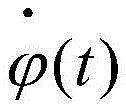

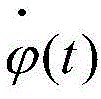



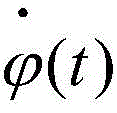

其中,Δt是啁啾的周期,对ω[n]通过累计近似积分,得到的就是解缠后的相位信号

其中,此处的n表示对应存在人体目标的总帧数,k表示在n中的第几帧;Wherein, n here represents the total number of frames corresponding to the presence of human targets, and k represents the number of frames in n;
S7、根据步骤S6得到解缠后的相位信号对人体目标的生命体征进行检测,判断对应的距离单元是否存在生命体征;具体包括:S7. Detect the vital signs of the human target according to the unwrapped phase signal obtained in step S6, and judge whether there are vital signs in the corresponding distance unit; specifically include:
S71、从解缠后的相位信号中选择判断活体检测的总帧数s,将这s帧对应经过展开的相位信号的频率值组成1*s维的向量矩阵H;S71. Select the total frame number s for judging the live body detection from the unwrapped phase signal, and form a 1*s-dimensional vector matrix H with the frequency values of the s frames corresponding to the expanded phase signal;
S72、对向量矩阵H进行FFT得到第五矩阵HF[1,s],计算设定的频率范围内的频谱能量占全频段总能量的比例,判断设定的频率范围内的频谱能量占全频段总能量的比例是否超过预设的比例阈值,设定的频率范围内的频谱能量占全频段总能量的比例的计算公式如下:S72. Perform FFT on the vector matrix H to obtain the fifth matrix HF[1, s], calculate the ratio of the spectrum energy in the set frequency range to the total energy of the whole frequency band, and determine the proportion of the spectrum energy in the set frequency range to the whole frequency band Whether the proportion of the total energy exceeds the preset proportion threshold, the formula for calculating the proportion of the spectrum energy within the set frequency range to the total energy of the entire frequency band is as follows:
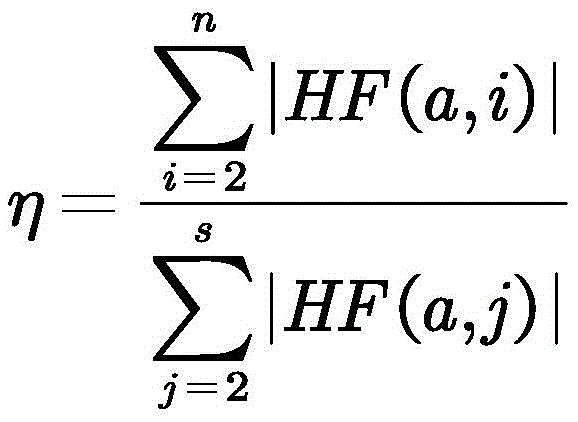
其中,i、j均分别表示第几帧,a对应步骤S5进行一维CFAR后第四矩阵 RS[m,k]中存在人体目标的行数,此处的n是在设定的频率范围内进行FFT的点数,本实施例优选设定的频率范围为0-2Hz;Among them, i and j respectively represent the number of frames, and a corresponds to the number of rows of human targets in the fourth matrix RS[m,k] after performing one-dimensional CFAR in step S5, where n is within the set frequency range For the number of points for FFT, the frequency range preferably set in this embodiment is 0-2Hz;
S73、计算向量矩阵H的方差,判断该方差是否超过预设的方差阈值;S73. Calculate the variance of the vector matrix H, and judge whether the variance exceeds a preset variance threshold;
S74、若设定的频率范围内的频谱能量占全频段总能量的比例、向量矩阵H 的方差同时超过比例阈值、方差阈值,则判定人体目标存在生命体征,然后提取存在生命体征的人体目标的距离单元;S74. If the ratio of the spectrum energy within the set frequency range to the total energy of the entire frequency band and the variance of the vector matrix H exceed the ratio threshold and the variance threshold at the same time, it is determined that the human target has vital signs, and then the human target with vital signs is extracted. distance unit;
S8、从步骤S7所提取到存在生命体征的人体目标的距离单元中,进一步提取胸壁位移信号;具体为:针对解缠后的相位信号

S9、利用迭代调整时间窗算法提高呼吸主频率fb1的准确度、胸壁位移信号的信噪比,得到调整后的胸壁位移信号;具体包括:S9. Using the iterative adjustment time window algorithm to improve the accuracy of the main breathing frequency f b1 and the signal-to-noise ratio of the chest wall displacement signal, and obtain the adjusted chest wall displacement signal; specifically including:
S91、从胸壁位移信号R[n]中取出一段设定时长的数据,以时间窗N进行 FFT,得到如图2所示的胸壁位移频谱,将进行FFT后所得胸壁位移频谱的幅度最大值所在频点的频率作为呼吸主频率fb1,将进行FFT后所得胸壁位移频谱在1-3Hz频率内幅度最大值所在点的频率作为心跳主频率fh;S91. Take a period of data from the chest wall displacement signal R[n], and perform FFT with the time window N to obtain the chest wall displacement spectrum as shown in Figure 2. The maximum amplitude of the chest wall displacement spectrum obtained after FFT is located The frequency of the frequency point is used as the main frequency of breathing f b1 , and the frequency of the point where the amplitude maximum value of the chest wall displacement spectrum obtained after FFT is obtained within the frequency range of 1-3 Hz is used as the main frequency of heartbeat f h ;
S92、在步骤S91以时间窗N进行FFT得到胸壁位移频谱后,从胸壁位移频谱中获取呼吸主频率fb1、呼吸主频率幅度|A1|、呼吸的二倍频fb2;S92. After performing FFT with the time window N in step S91 to obtain the chest wall displacement spectrum, obtain the main frequency of respiration f b1 , the amplitude of main frequency of respiration |A1|, and the double frequency f b2 of respiration from the frequency spectrum of chest wall displacement;
S93、由于进行FFT可能会因频谱泄露导致误差,因此完成FFT后需要判断呼吸主频率fb1是否为呼吸的二倍频fb2的一半,同时判断呼吸主频率幅度是否大于上次迭代时的呼吸主频率幅度,即|A1|>|A1′|;S93. Since performing FFT may cause errors due to spectrum leakage, it is necessary to judge whether the main frequency f b1 of the breath is half of the double frequency f b2 of the breath after the FFT is completed, and at the same time determine whether the main frequency of the breath is larger than the breath in the last iteration Main frequency amplitude, namely |A1|>|A1′|;
S94、若不同时满足

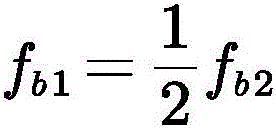
对同时满足
S10、从步骤S9得到调整后的胸壁位移频谱中重构胸壁位移-时间信号;具体包括:S10. Reconstructing the chest wall displacement-time signal from the adjusted chest wall displacement spectrum obtained in step S9; specifically including:
由呼吸引起的胸壁位移-时间信号可近似为如下公式:The chest wall displacement-time signal caused by respiration can be approximated by the following formula:

其中,ω1、ω2、ω3分别是呼吸的主频、二倍频、三倍频,A1、A2、A3分别是呼吸主频、二倍频、三倍频各自对应的幅值,其中幅值满足
对于调整后的胸壁位移频谱,通过先验条件可以知道,呼吸主频率的幅度峰值是其二倍频幅度峰值的约3.5倍、呼吸主频率的幅度峰值是其三倍频幅度峰值的约10倍,根据该先验条件求以下公式的根:For the adjusted chest wall displacement spectrum, it can be known from prior conditions that the peak amplitude of the main frequency of breathing is about 3.5 times the peak amplitude of its double frequency, and the peak amplitude of the main frequency of breathing is about 10 times the peak amplitude of its triple frequency , find the root of the following formula according to the prior condition:
A3x3+A2x2+A1x-H(t)=0A 3 x 3 +A 2 x 2 +A 1 xH(t)=0
对上式求解符合先验条件的根,将根代入从而获取重构后的胸壁位移-时间信号,即上式满足先验条件的H(t)为重构后的胸壁位移-时间信号,对比图3和图4所示可知,重构后的胸壁位移-时间信号能有效抑制倍频并提高信噪比;Solve the root that meets the prior condition for the above formula, and substitute the root to obtain the reconstructed chest wall displacement-time signal, that is, H(t) that meets the prior condition in the above formula is the reconstructed chest wall displacement-time signal. As shown in Figure 3 and Figure 4, it can be seen that the reconstructed chest wall displacement-time signal can effectively suppress frequency multiplication and improve the signal-to-noise ratio;
S11、在步骤S10重构的胸壁位移-时间信号中提取出人体目标的生命体征;具体包括:S11. Extracting the vital signs of the human target from the chest wall displacement-time signal reconstructed in step S10; specifically including:
重构后的胸壁位移-时间信号中,其幅值最大处的频率为呼吸频率fb,在1-3Hz频率范围内的幅值最大处为心跳频率fh;In the reconstructed chest wall displacement-time signal, the frequency at the maximum amplitude is the respiratory frequency f b , and the maximum amplitude within the frequency range of 1-3 Hz is the heartbeat frequency f h ;
分别计算每分钟的呼吸、心跳各自的次数,得到最终相应的人体目标的生命体征,具体如下式:Calculate the number of breaths and heartbeats per minute respectively to obtain the final corresponding vital signs of the human body target, as follows:
HB=60×fb HB=60×f b
HR=60×fh HR=60×f h
其中,HB为每分钟的呼吸次数,HR为每分钟的心跳次数。Among them, HB is the number of breaths per minute, and HR is the number of heartbeats per minute.
本实施例的基于毫米波雷达的生命体征检测方法与现有技术相比,其有益效果在于:Compared with the prior art, the method for detecting vital signs based on millimeter-wave radar in this embodiment has the following beneficial effects:
本实施例通过对雷达回波进行良好的去噪、信号筛选、信号重构处理,同时高效表征检测到的人体目标的生命体征强弱状态,避免了漏判或错判,提高了检测精度;本实施例相关的计算过程运算量小,避免了现有技术在提取呼吸和心跳体征过程因大计算量造成难以进行快速反应的问题,增加了测量的可靠性。In this embodiment, by performing good denoising, signal screening, and signal reconstruction processing on radar echoes, and at the same time efficiently representing the strength and weakness of the detected vital signs of human targets, missed or wrong judgments are avoided, and detection accuracy is improved; The calculation process related to this embodiment has a small amount of calculation, which avoids the problem that it is difficult to respond quickly due to the large amount of calculation in the process of extracting respiratory and heartbeat signs in the prior art, and increases the reliability of measurement.
上述实施例为本发明较佳的实施方式,但本发明的实施方式并不受上述实施例的限制,其他的任何未背离本发明的精神实质与原理下所作的改变、修饰、替代、组合、简化,均应为等效的置换方式,都包含在本发明的保护范围之内。The above-mentioned embodiment is a preferred embodiment of the present invention, but the embodiment of the present invention is not limited by the above-mentioned embodiment, and any other changes, modifications, substitutions, combinations, Simplifications should be equivalent replacement methods, and all are included in the protection scope of the present invention.
Claims (10)




Priority Applications (1)
| Application Number | Priority Date | Filing Date | Title |
|---|---|---|---|
| CN202211014558.6A CN115644840B (en) | 2022-08-23 | 2022-08-23 | Vital sign detection method based on millimeter wave radar |
Applications Claiming Priority (1)
| Application Number | Priority Date | Filing Date | Title |
|---|---|---|---|
| CN202211014558.6A CN115644840B (en) | 2022-08-23 | 2022-08-23 | Vital sign detection method based on millimeter wave radar |
Publications (2)
| Publication Number | Publication Date |
|---|---|
| CN115644840A true CN115644840A (en) | 2023-01-31 |
| CN115644840B CN115644840B (en) | 2025-08-01 |
Family
ID=84984182
Family Applications (1)
| Application Number | Title | Priority Date | Filing Date |
|---|---|---|---|
| CN202211014558.6A Active CN115644840B (en) | 2022-08-23 | 2022-08-23 | Vital sign detection method based on millimeter wave radar |
Country Status (1)
| Country | Link |
|---|---|
| CN (1) | CN115644840B (en) |
Cited By (10)
| Publication number | Priority date | Publication date | Assignee | Title |
|---|---|---|---|---|
| CN116602646A (en) * | 2023-04-03 | 2023-08-18 | 华南理工大学 | Human body breathing information extraction method, device, equipment and medium based on radar |
| CN116609748A (en) * | 2023-04-28 | 2023-08-18 | 上海福宇龙汽车科技有限公司 | Vehicle-mounted living body detection method based on UWB radar |
| CN116643247A (en) * | 2023-07-25 | 2023-08-25 | 南京航空航天大学 | A method and device for suppressing clutter in live body detection in a cabin |
| CN117031464A (en) * | 2023-07-25 | 2023-11-10 | 南京航空航天大学 | A method and device for distinguishing interference between moving living objects and moving targets in a cabin |
| CN117148309A (en) * | 2023-11-01 | 2023-12-01 | 德心智能科技(常州)有限公司 | Millimeter wave radar human sensing method and system applied to community grid inspection |
| CN117148308A (en) * | 2023-10-30 | 2023-12-01 | 南京航空航天大学 | A method and system for detecting radar obstruction of vital signs in a cabin |
| CN117310650A (en) * | 2023-11-28 | 2023-12-29 | 上海孛璞半导体技术有限公司 | Data processing method and device based on FMCW radar |
| CN119485160A (en) * | 2024-11-04 | 2025-02-18 | 内蒙古大学 | A wireless signal segmentation method and system for real-time state perception |
| CN119632537A (en) * | 2025-02-19 | 2025-03-18 | 北京清雷科技有限公司 | A wireless vital sign monitoring method, device, system, equipment and storage medium |
| CN120491016A (en) * | 2025-07-16 | 2025-08-15 | 山东大学 | Millimeter wave radar human body behavior recognition system and method based on global pixel characteristics |
Citations (2)
| Publication number | Priority date | Publication date | Assignee | Title |
|---|---|---|---|---|
| US20130030257A1 (en) * | 2010-05-14 | 2013-01-31 | Kai Medical, Inc. | Systems and methods for non-contact multiparameter vital signs monitoring, apnea therapy, apnea diagnosis, and snore therapy |
| CN113440120A (en) * | 2021-06-17 | 2021-09-28 | 北京航空航天大学 | Millimeter wave radar-based method for detecting respiration and heartbeat of person |
-
2022
- 2022-08-23 CN CN202211014558.6A patent/CN115644840B/en active Active
Patent Citations (2)
| Publication number | Priority date | Publication date | Assignee | Title |
|---|---|---|---|---|
| US20130030257A1 (en) * | 2010-05-14 | 2013-01-31 | Kai Medical, Inc. | Systems and methods for non-contact multiparameter vital signs monitoring, apnea therapy, apnea diagnosis, and snore therapy |
| CN113440120A (en) * | 2021-06-17 | 2021-09-28 | 北京航空航天大学 | Millimeter wave radar-based method for detecting respiration and heartbeat of person |
Non-Patent Citations (1)
| Title |
|---|
| 周早丽: "基于LFMCW毫米波雷达的目标检测方法研究", 中国优秀硕士学位论文全文数据库 (信息科技辑), 28 February 2021 (2021-02-28), pages 135 - 644 * |
Cited By (16)
| Publication number | Priority date | Publication date | Assignee | Title |
|---|---|---|---|---|
| CN116602646A (en) * | 2023-04-03 | 2023-08-18 | 华南理工大学 | Human body breathing information extraction method, device, equipment and medium based on radar |
| CN116609748A (en) * | 2023-04-28 | 2023-08-18 | 上海福宇龙汽车科技有限公司 | Vehicle-mounted living body detection method based on UWB radar |
| CN116643247A (en) * | 2023-07-25 | 2023-08-25 | 南京航空航天大学 | A method and device for suppressing clutter in live body detection in a cabin |
| CN116643247B (en) * | 2023-07-25 | 2023-10-27 | 南京航空航天大学 | Method and device for in-cabin living body detection clutter suppression |
| CN117031464A (en) * | 2023-07-25 | 2023-11-10 | 南京航空航天大学 | A method and device for distinguishing interference between moving living objects and moving targets in a cabin |
| CN117148308B (en) * | 2023-10-30 | 2024-02-02 | 南京航空航天大学 | Method and system for detecting shielding of vital sign radar in cabin |
| CN117148308A (en) * | 2023-10-30 | 2023-12-01 | 南京航空航天大学 | A method and system for detecting radar obstruction of vital signs in a cabin |
| CN117148309B (en) * | 2023-11-01 | 2024-01-30 | 德心智能科技(常州)有限公司 | Millimeter wave radar human sensing method and system applied to community grid inspection |
| CN117148309A (en) * | 2023-11-01 | 2023-12-01 | 德心智能科技(常州)有限公司 | Millimeter wave radar human sensing method and system applied to community grid inspection |
| CN117310650A (en) * | 2023-11-28 | 2023-12-29 | 上海孛璞半导体技术有限公司 | Data processing method and device based on FMCW radar |
| CN117310650B (en) * | 2023-11-28 | 2024-03-01 | 上海孛璞半导体技术有限公司 | Data processing method and device based on FMCW radar |
| CN119485160A (en) * | 2024-11-04 | 2025-02-18 | 内蒙古大学 | A wireless signal segmentation method and system for real-time state perception |
| CN119485160B (en) * | 2024-11-04 | 2025-09-02 | 内蒙古大学 | A wireless signal segmentation method and system for real-time state perception |
| CN119632537A (en) * | 2025-02-19 | 2025-03-18 | 北京清雷科技有限公司 | A wireless vital sign monitoring method, device, system, equipment and storage medium |
| CN119632537B (en) * | 2025-02-19 | 2025-05-06 | 北京清雷科技有限公司 | Wireless sign monitoring method, device, system, equipment and storage medium |
| CN120491016A (en) * | 2025-07-16 | 2025-08-15 | 山东大学 | Millimeter wave radar human body behavior recognition system and method based on global pixel characteristics |
Also Published As
| Publication number | Publication date |
|---|---|
| CN115644840B (en) | 2025-08-01 |
Similar Documents
| Publication | Publication Date | Title |
|---|---|---|
| CN115644840A (en) | Vital sign detection method based on millimeter wave radar | |
| CN110584631B (en) | Static human heartbeat and respiration signal extraction method based on FMCW radar | |
| US12102420B2 (en) | Direct RF signal processing for heart-rate monitoring using UWB impulse radar | |
| WO2022104868A1 (en) | Millimeter wave radar-based non-contact real-time vital sign monitoring system and method | |
| US20250204777A1 (en) | Radar cardiography: a precise cardiac data reconstruction method | |
| US11412937B2 (en) | Multi-person vital signs monitoring using millimeter wave (mm-wave) signals | |
| CN112220464B (en) | A human breathing and heartbeat signal detection method and system based on UWB radar | |
| CN113854992A (en) | Non-contact type accurate heart rate detection method based on 77GHz millimeter radar | |
| CN110464320A (en) | Multiple target human heart rate and respiratory rate measuring system and method | |
| CN115399747A (en) | A method for monitoring vital signs of multiple people based on millimeter wave radar | |
| CN113116342A (en) | Life signal monitoring method based on millimeter wave radar | |
| CN114847911A (en) | Multi-person vital sign monitoring method based on millimeter wave radar | |
| US20250387037A1 (en) | Non-contact real-time monitoring system of physiological signs based on millimeter-wave radar | |
| CN113951856A (en) | Frequency spectrum estimation method based on Doppler radar heartbeat detection | |
| CN111856455A (en) | Multi-target heart rate and respiration measuring method and system matched with different radar bandwidths | |
| CN117838083A (en) | A rapid and accurate detection method of vital signs based on millimeter wave radar | |
| CN117442179A (en) | Monitoring method of breathing and heart rate of multiple people based on millimeter wave radar | |
| CN110161491A (en) | A kind of ranging and respiratory rate estimation method for faint life entity | |
| Chen et al. | A novel scheme for suppression of human motion effects in non-contact heart rate detection | |
| Zhao et al. | Multi-target vital signs remote monitoring using mmWave FMCW radar | |
| Sameera et al. | Heart rate detection using single-channel Doppler radar system | |
| Rong et al. | Novel respiration-free heartbeat detection algorithm using millimeter-wave radar | |
| Hu et al. | Using FMCW millimeter-wave radar to realize the detection of vital signs | |
| WO2024121835A1 (en) | System and method for non-contact people localization and vital signs monitoring via fmcw radar | |
| CN115590488A (en) | Method, system, equipment and storage medium for monitoring driving state of driver |
Legal Events
| Date | Code | Title | Description |
|---|---|---|---|
| PB01 | Publication | ||
| PB01 | Publication | ||
| SE01 | Entry into force of request for substantive examination | ||
| SE01 | Entry into force of request for substantive examination | ||
| GR01 | Patent grant | ||
| GR01 | Patent grant |