CN115577574B - A method, device, equipment and readable storage medium for calculating the position of diversion railings - Google Patents
A method, device, equipment and readable storage medium for calculating the position of diversion railings Download PDFInfo
- Publication number
- CN115577574B CN115577574B CN202211568614.0A CN202211568614A CN115577574B CN 115577574 B CN115577574 B CN 115577574B CN 202211568614 A CN202211568614 A CN 202211568614A CN 115577574 B CN115577574 B CN 115577574B
- Authority
- CN
- China
- Prior art keywords
- information
- pedestrian
- diversion
- subway station
- determining
- Prior art date
- Legal status (The legal status is an assumption and is not a legal conclusion. Google has not performed a legal analysis and makes no representation as to the accuracy of the status listed.)
- Active
Links
Images


Classifications
-
- G—PHYSICS
- G06—COMPUTING OR CALCULATING; COUNTING
- G06F—ELECTRIC DIGITAL DATA PROCESSING
- G06F30/00—Computer-aided design [CAD]
- G06F30/20—Design optimisation, verification or simulation
Landscapes
- Engineering & Computer Science (AREA)
- Physics & Mathematics (AREA)
- Theoretical Computer Science (AREA)
- Computer Hardware Design (AREA)
- Evolutionary Computation (AREA)
- Geometry (AREA)
- General Engineering & Computer Science (AREA)
- General Physics & Mathematics (AREA)
- Management, Administration, Business Operations System, And Electronic Commerce (AREA)
Abstract
本发明提供了一种导流栏杆位置计算方法、装置、设备及可读存储介质,涉及行人仿真模拟领域技术领域,所述方法包括获取第一信息和第二信息,第一信息包括地铁车站的空间结构,第二信息包括至少一个行人的起点坐标信息和每个行人对应的目的地坐标信息;将第一信息和第二信息发送至行人流仿真模型进行计算,得到第三信息,第三信息包括每个行人运动的加速度;根据第三信息进行计算,得到第四信息,第四信息包括每个行人每一时刻的位置坐标信息;根据第四信息确定导流栏杆的位置信息,本发明可以直观的找出地铁站内的瓶颈位置,使导流栏杆不仅局限于布置在电梯口,还可以布置在其他的人流量较大的位置,使导流栏杆的放置位置更全面合理。
The present invention provides a method, device, device and readable storage medium for calculating the position of a diversion railing, and relates to the technical field of pedestrian simulation. The method includes obtaining first information and second information, and the first information includes subway station information. Spatial structure, the second information includes the starting point coordinate information of at least one pedestrian and the destination coordinate information corresponding to each pedestrian; the first information and the second information are sent to the pedestrian flow simulation model for calculation to obtain the third information, the third information Including the acceleration of each pedestrian's movement; calculate according to the third information to obtain the fourth information, the fourth information includes the position coordinate information of each pedestrian at each moment; determine the position information of the diversion railing according to the fourth information, the present invention can Intuitively find out the bottleneck position in the subway station, so that the diversion railings are not only limited to the elevator entrance, but also can be arranged in other places with a large flow of people, so that the placement of the diversion railings is more comprehensive and reasonable.
Description
技术领域technical field
本发明涉及行人仿真模拟领域,具体而言,涉及一种导流栏杆位置计算方法、装置、设备及可读存储介质。The present invention relates to the field of pedestrian simulation, in particular to a method, device, equipment and readable storage medium for calculating the position of a diversion railing.
背景技术Background technique
地铁使用过程中存在人流量较大、线路复杂等现象,在地铁换乘时,由于双向行人流交汇时非常容易引起冲突,发生拥堵现象,影响乘客在地铁站换乘的速度,降低地铁站的换乘效率。这种问题加大了地铁运营的危险性,除此之外,地铁站内一旦出现大量乘客聚集,可能增加疫情条件下病毒传播的风险,盗窃现象发生概率也可能随之增长,在现有技术中缓解乘客拥堵的最常见方法是人工布设导流栏杆来调节乘客的移动,但是这种方法存在效率低、成本高的问题,因此亟需一种导流栏杆位置计算方法,可以使布设的导流栏杆高效的缓解乘客拥堵。During the use of the subway, there are phenomena such as large flow of people and complicated lines. When the subway transfers, it is very easy to cause conflicts and congestion when the two-way pedestrian flow meets, which affects the speed of passengers transferring at the subway station and reduces the traffic at the subway station. transfer efficiency. This kind of problem increases the risk of subway operation. In addition, once a large number of passengers gather in a subway station, the risk of virus transmission under epidemic conditions may increase, and the probability of theft may also increase accordingly. In the existing technology The most common way to alleviate passenger congestion is to manually arrange diversion railings to adjust the movement of passengers, but this method has the problems of low efficiency and high cost. Therefore, there is an urgent need for a method for calculating the position of diversion railings, which can make the deployed diversion rails Railings effectively relieve passenger congestion.
发明内容Contents of the invention
本发明的目的在于提供一种导流栏杆位置计算方法、装置、设备及可读存储介质,以改善上述问题。The object of the present invention is to provide a method, device, equipment and readable storage medium for calculating the position of a diversion railing, so as to improve the above problems.
为了实现上述目的,本申请实施例提供了如下技术方案:In order to achieve the above purpose, the embodiment of the present application provides the following technical solutions:
一方面,本申请实施例提供了一种导流栏杆位置计算方法,所述方法包括:On the one hand, an embodiment of the present application provides a method for calculating the position of a diversion railing, the method comprising:
获取第一信息和第二信息,所述第一信息包括地铁车站的空间结构,所述第二信息包括至少一个行人的起点坐标信息和每个行人对应的目的地坐标信息;Acquiring first information and second information, the first information includes the spatial structure of the subway station, and the second information includes at least one pedestrian's starting point coordinate information and each pedestrian's corresponding destination coordinate information;
将所述第一信息和所述第二信息发送至行人流仿真模型进行计算,得到第三信息,所述第三信息包括每个行人运动的加速度,所述行人流仿真模型用于模拟地铁站日常运营每个行人由起点至目的地的行走轨迹;Send the first information and the second information to the pedestrian flow simulation model for calculation to obtain the third information, the third information includes the acceleration of each pedestrian movement, and the pedestrian flow simulation model is used to simulate the subway station Daily operation of the walking trajectory of each pedestrian from the starting point to the destination;
根据所述第三信息进行计算,得到第四信息,所述第四信息包括每个行人每一时刻的位置坐标信息;performing calculations based on the third information to obtain fourth information, the fourth information including position coordinate information of each pedestrian at each moment;
根据所述第四信息确定导流栏杆的位置信息。Determine the position information of the diversion railing according to the fourth information.
第二方面,本申请实施例提供了一种导流栏杆位置计算装置,所述装置包括:In the second aspect, an embodiment of the present application provides a device for calculating the position of a diversion railing, the device comprising:
第一获取模块,用于获取第一信息和第二信息,所述第一信息包括地铁车站的空间结构,所述第二信息包括至少一个行人的起点坐标信息和每个行人对应的目的地坐标信息;The first acquisition module is used to acquire first information and second information, the first information includes the spatial structure of the subway station, and the second information includes the starting coordinate information of at least one pedestrian and the corresponding destination coordinates of each pedestrian information;
第一处理模块,用于将所述第一信息和所述第二信息发送至行人流仿真模型进行计算,得到第三信息,所述第三信息包括每个行人运动的加速度,所述行人流仿真模型用于模拟地铁站日常运营每个行人由起点至目的地的行走轨迹;The first processing module is configured to send the first information and the second information to a pedestrian flow simulation model for calculation to obtain third information, the third information including the acceleration of each pedestrian movement, the pedestrian flow The simulation model is used to simulate the walking trajectory of each pedestrian from the starting point to the destination in the daily operation of the subway station;
第二处理模块,用于根据所述第三信息进行计算,得到第四信息,所述第四信息包括每个行人每一时刻的位置坐标信息;The second processing module is configured to perform calculations based on the third information to obtain fourth information, where the fourth information includes position coordinate information of each pedestrian at each moment;
确定模块,用于根据所述第四信息确定导流栏杆的位置信息。A determining module, configured to determine the position information of the diversion railing according to the fourth information.
第三方面,本申请实施例提供了一种导流栏杆位置计算设备,所述设备包括存储器和处理器。存储器用于存储计算机程序;处理器用于执行所述计算机程序时实现上述导流栏杆位置计算方法的步骤。In a third aspect, an embodiment of the present application provides a device for calculating a position of a diversion rail, and the device includes a memory and a processor. The memory is used to store the computer program; the processor is used to implement the steps of the above method for calculating the position of the diversion railing when executing the computer program.
第四方面,本申请实施例提供了一种可读存储介质,所述可读存储介质上存储有计算机程序,所述计算机程序被处理器执行时实现上述导流栏杆位置计算方法的步骤。In a fourth aspect, the embodiment of the present application provides a readable storage medium, on which a computer program is stored, and when the computer program is executed by a processor, the steps of the above method for calculating the position of the diversion railing are implemented.
本发明的有益效果为:The beneficial effects of the present invention are:
1、本发明通过行人流仿真模型计算出每个行人在地铁中运动的加速度,并根据每个行人在地铁中运动的加速度计算出每个行人每一时刻的位置坐标,根据每个行人每一时刻的位置坐标直观的找出地铁站内的瓶颈位置,即导流栏杆的布置位置,使导流栏杆不仅局限于布置在电梯口,还可以布置在其他的人流量较大的位置,使导流栏杆的放置位置更全面合理。1. The present invention calculates the acceleration of each pedestrian moving in the subway through the pedestrian flow simulation model, and calculates the position coordinates of each pedestrian at each moment according to the acceleration of each pedestrian moving in the subway. The location coordinates of the time can intuitively find out the bottleneck position in the subway station, that is, the layout position of the diversion railing, so that the diversion railing is not only limited to the elevator entrance, but also can be arranged in other places with a large flow of people, so that the diversion The placement of the railings is more comprehensive and reasonable.
2、本发明选择了行人密度作为适应度函数,得到导流栏杆最优的布局方案,能够有效的提高行人的通过效率,缓解地铁车站高峰期的拥堵,避免疫情条件下病毒传播的风险以及盗窃现象发生概率,同时降低乘客换乘过程中的时间成本。2. The present invention selects the pedestrian density as the fitness function to obtain the optimal layout scheme of the diversion railings, which can effectively improve the passing efficiency of pedestrians, alleviate the congestion of subway stations during peak hours, and avoid the risk of virus transmission and theft under epidemic conditions The occurrence probability of the phenomenon, and at the same time reduce the time cost in the passenger transfer process.
本发明的其他特征和优点将在随后的说明书阐述,并且,部分地从说明书中变得显而易见,或者通过实施本发明实施例了解。本发明的目的和其他优点可通过在所写的说明书、权利要求书、以及附图中所特别指出的结构来实现和获得。Additional features and advantages of the invention will be set forth in the description which follows, and in part will be apparent from the description, or may be learned by practice of the invention. The objectives and other advantages of the invention may be realized and attained by the structure particularly pointed out in the written description and claims hereof as well as the appended drawings.
附图说明Description of drawings
为了更清楚地说明本发明实施例的技术方案,下面将对实施例中所需要使用的附图作简单地介绍,应当理解,以下附图仅示出了本发明的某些实施例,因此不应被看作是对范围的限定,对于本领域普通技术人员来讲,在不付出创造性劳动的前提下,还可以根据这些附图获得其他相关的附图。In order to illustrate the technical solutions of the embodiments of the present invention more clearly, the accompanying drawings used in the embodiments will be briefly introduced below. It should be understood that the following drawings only show some embodiments of the present invention, and thus It should be regarded as a limitation on the scope, and those skilled in the art can also obtain other related drawings based on these drawings without creative work.
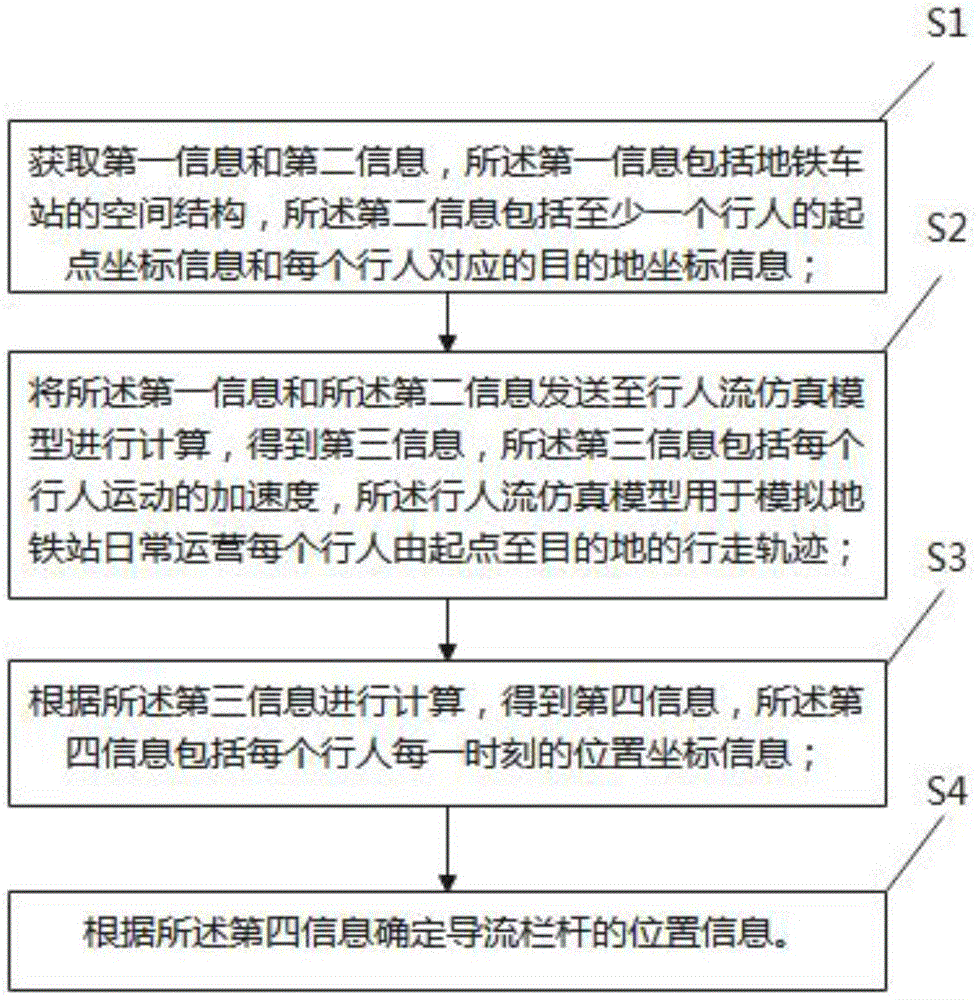
图1为本发明实施例中所述的导流栏杆位置计算方法流程示意图。FIG. 1 is a schematic flowchart of a method for calculating the position of a diversion railing described in an embodiment of the present invention.
图2为本发明实施例中所述的导流栏杆位置计算装置结构示意图。Fig. 2 is a schematic structural diagram of the device for calculating the position of the diversion railing described in the embodiment of the present invention.
图3为本发明实施例中所述的导流栏杆位置计算设备结构示意图。Fig. 3 is a schematic structural diagram of the device for calculating the position of the diversion railing described in the embodiment of the present invention.
图中标注:901、第一获取模块;902、第一处理模块;903、第二处理模块;904、确定模块;905、第二获取模块;906、第三处理模块;907、第四处理模块;908、第五处理模块;909、第六处理模块;910、第七处理模块;911、第八处理模块;9021、划分单元;9022、第一处理单元;9023、第一计算单元;9024、第二处理单元;9041、第三处理单元;9042、第四处理单元;9043、第五处理单元;90241、第二计算单元;90242、第三计算单元;90243、第四计算单元;800、导流栏杆位置计算设备;801、处理器;802、存储器;803、多媒体组件;804、I/O接口;805、通信组件。Note in the figure: 901, the first acquisition module; 902, the first processing module; 903, the second processing module; 904, the determination module; 905, the second acquisition module; 906, the third processing module; 907, the
具体实施方式Detailed ways
为使本发明实施例的目的、技术方案和优点更加清楚,下面将结合本发明实施例中的附图,对本发明实施例中的技术方案进行清楚、完整地描述,显然,所描述的实施例是本发明一部分实施例,而不是全部的实施例。通常在此处附图中描述和示出的本发明实施例的组件可以以各种不同的配置来布置和设计。因此,以下对在附图中提供的本发明的实施例的详细描述并非旨在限制要求保护的本发明的范围,而是仅仅表示本发明的选定实施例。基于本发明中的实施例,本领域普通技术人员在没有作出创造性劳动前提下所获得的所有其他实施例,都属于本发明保护的范围。In order to make the purpose, technical solutions and advantages of the embodiments of the present invention clearer, the technical solutions in the embodiments of the present invention will be clearly and completely described below in conjunction with the drawings in the embodiments of the present invention. Obviously, the described embodiments It is a part of embodiments of the present invention, but not all embodiments. The components of the embodiments of the invention generally described and illustrated in the figures herein may be arranged and designed in a variety of different configurations. Accordingly, the following detailed description of the embodiments of the invention provided in the accompanying drawings is not intended to limit the scope of the claimed invention, but merely represents selected embodiments of the invention. Based on the embodiments of the present invention, all other embodiments obtained by persons of ordinary skill in the art without creative efforts fall within the protection scope of the present invention.
应注意到:相似的标号和字母在下面的附图中表示类似项,因此,一旦某一项在一个附图中被定义,则在随后的附图中不需要对其进行进一步定义和解释。同时,在本发明的描述中,术语“第一”、“第二”等仅用于区分描述,而不能理解为指示或暗示相对重要性。It should be noted that like numerals and letters denote similar items in the following figures, therefore, once an item is defined in one figure, it does not require further definition and explanation in subsequent figures. Meanwhile, in the description of the present invention, the terms "first", "second", etc. are only used to distinguish descriptions, and cannot be understood as indicating or implying relative importance.
实施例1:Example 1:
本实施例提供了一种导流栏杆位置计算方法,可以理解的是,在本实施例中可以铺设一个场景,例如:地铁车站在高峰期时,需要布置导流栏杆引导行人移动以缓解拥堵的场景。This embodiment provides a method for calculating the position of diversion railings. It can be understood that a scene can be laid in this embodiment. For example, when a subway station is in peak hours, it is necessary to arrange diversion railings to guide pedestrians to move to alleviate congestion. Scenes.
参见图1,图中示出了本方法包括步骤S1、步骤S2、步骤S3和步骤S4。Referring to Fig. 1, the figure shows that the method includes step S1, step S2, step S3 and step S4.
步骤S1、获取第一信息和第二信息,所述第一信息包括地铁车站的空间结构,所述第二信息包括至少一个行人的起点坐标信息和每个行人对应的目的地坐标信息;Step S1, acquiring first information and second information, the first information includes the spatial structure of the subway station, and the second information includes the starting point coordinate information of at least one pedestrian and the destination coordinate information corresponding to each pedestrian;
可以理解的是,地铁车站的空间结构可以是任意一实际地铁车站的空间结构。It can be understood that the spatial structure of the subway station may be any spatial structure of an actual subway station.
步骤S2、将所述第一信息和所述第二信息发送至行人流仿真模型进行计算,得到第三信息,所述第三信息包括每个行人运动的加速度,所述行人流仿真模型用于模拟地铁站日常运营每个行人由起点至目的地的行走轨迹;Step S2, send the first information and the second information to the pedestrian flow simulation model for calculation, and obtain the third information, the third information includes the acceleration of each pedestrian movement, and the pedestrian flow simulation model is used for Simulate the walking trajectory of each pedestrian from the starting point to the destination in the daily operation of the subway station;
需要说明的是,在本步骤中将第一信息和第二信息导入行人流仿真模型对地铁站日常运营每个行人由起点至目的地的行走轨迹进行模拟,其中,还包括按照参照物的比例关系设置墙壁、地面。参照地铁车站的空间结构图设置自助售票机、安检闸机、扶梯等地铁站基础运行设施,设置仿真人数、仿真时间及行人位置速度等。It should be noted that in this step, the first information and the second information are imported into the pedestrian flow simulation model to simulate the walking trajectory of each pedestrian from the starting point to the destination in the daily operation of the subway station, which also includes the proportion of the reference object The relation sets the walls and the ground. Refer to the spatial structure diagram of the subway station to set up the basic operation facilities of the subway station, such as self-service ticket vending machines, security gates, escalators, etc., and set the number of people to be simulated, the simulation time, and the position and speed of pedestrians.
可以理解的是,所述步骤S2中还包括步骤S21、步骤S22、步骤S23和步骤S24,其中具体为:It can be understood that the step S2 also includes step S21, step S22, step S23 and step S24, specifically:
步骤S21、利用矩形网格法对所述地铁车站的空间结构进行网格划分,得到网格划分后的地铁车站的空间结构;Step S21, using the rectangular grid method to perform grid division on the spatial structure of the subway station, and obtain the spatial structure of the subway station after grid division;
可以理解的是,将整个地铁车站作为模拟场景,将整个模拟场景划分为m×n个小网格,得到网格划分后的地铁车站的空间结构。It can be understood that the entire subway station is used as the simulation scene, and the whole simulation scene is divided into m×n small grids to obtain the spatial structure of the subway station after grid division.
步骤S22、根据所述第二信息在所述网格划分后的地铁车站的空间结构确定至少一个节点信息,所述节点信息包括地铁车站内不同房间之间的连接节点;Step S22, determining at least one node information in the spatial structure of the subway station after grid division according to the second information, the node information including connection nodes between different rooms in the subway station;
可以理解的是,在整个地铁车站中包括多个房间,例如站台、站厅、厕所等,在每个不同的房间之间设置一个节点,用于表示可以由该节点通往与之相连的另一个房间。It can be understood that there are multiple rooms in the entire subway station, such as platform, station hall, toilet, etc., and a node is set between each different room, which is used to indicate that the node can lead to another room connected to it. one room.
步骤S23、计算房间内每个的网格的中心点与房间对应的连接节点之间的欧氏距离,得到行人行走的期望方向;Step S23, calculating the Euclidean distance between the center point of each grid in the room and the corresponding connection node in the room, to obtain the expected direction of pedestrian walking;
可以理解的是,通过计算一个房间内每个网格的中心点至该房间对应的连接节点之间的欧式距离,可以得到一个房间内每个网格对应的网格值,首先计算行人所在位置位于哪一个网格,然后比较该网格周围八个方向的网格值,选择其中最小的网格值对应的网格作为行人下一步运动的期望方向,需要说明的是,对于墙壁和障碍物所在的网格点其网格值设置的欧氏距离为无穷大。It can be understood that by calculating the Euclidean distance between the center point of each grid in a room and the corresponding connection node in the room, the grid value corresponding to each grid in a room can be obtained. First, calculate the position of the pedestrian Which grid is located, and then compare the grid values of the eight directions around the grid, and select the grid corresponding to the smallest grid value as the expected direction of the pedestrian's next movement. It should be noted that for walls and obstacles The Euclidean distance of the grid value setting of the grid point where it is located is infinite.
步骤S24、根据所述行人行走的期望方向,得到所述第三信息。Step S24. Obtain the third information according to the expected walking direction of the pedestrian.
可以理解的是,所述步骤S24中还包括步骤S241、步骤S242和步骤S243,其中具体为:It can be understood that the step S24 also includes step S241, step S242 and step S243, specifically:
步骤S241、根据预设的第一行人流仿真模型函数和所述行人行走的期望方向进行计算得到行人的自驱力,根据预设的第二行人流仿真模型函数进行计算得到行人与行人之间的作用力,根据预设的第三行人流仿真模型函数进行计算得到行人与障碍物之间的作用力;Step S241: Calculate according to the preset first pedestrian flow simulation model function and the expected direction of pedestrian walking to obtain the self-driving force of pedestrians, and calculate according to the preset second pedestrian flow simulation model function to obtain the distance between pedestrians and pedestrians. The force is calculated according to the preset third pedestrian flow simulation model function to obtain the force between pedestrians and obstacles;
可以理解的是,自驱力是模型中最显著的力,决定着行人是否以期望速度向目的地运动,如果没有干扰,行人将会以一定的速度朝期望方向前进,由于必要的减速或躲避行为,实际速度与期望速度的差通过一定的松弛时间来修正,以接近实际速度,预设的第一行人流仿真模型函数具体为:It can be understood that the self-propelled force is the most significant force in the model, which determines whether the pedestrian moves towards the destination at the desired speed. If there is no interference, the pedestrian will move toward the desired direction at a certain speed, due to the necessary deceleration or avoidance Behavior, the difference between the actual speed and the expected speed is corrected by a certain slack time to get close to the actual speed. The preset first pedestrian flow simulation model function is specifically:
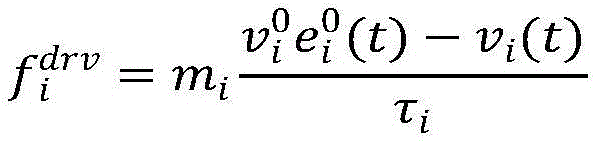
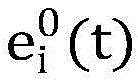
上式中,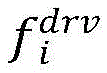

人与人之间的作用力指行人表现出一定的连接行为。例如,家人、朋友或旅游团经常成群结队地搬家。此外,行人有时会被橱窗展示、景点、特殊表演(街头艺术家)或一些不寻常的地方吸引,人与人之间的作用力的计算公式即预设的第二行人流仿真模型函数为:Interpersonal forces refer to pedestrians showing certain connection behaviors. For example, family, friends or tourist groups often move in groups. In addition, pedestrians are sometimes attracted by window displays, scenic spots, special performances (street artists) or some unusual places. The formula for calculating the force between people, that is, the preset second pedestrian flow simulation model function is:

上式中,Ai表示排斥力的作用强度,Bi表示距离影响参数,rij表示行人i与行人j的半径之和,dij表示行人i与行人j的中心点之间的距离,nij表示行人j的中心点指向行人i中心点的单位向量,K表示接触排斥力的作用强度,k表示摩擦力的作用强度,
人与障碍物之间的作用力指的是行人与边界保持一定距离,以避免受伤的风险。边界越近,行人越感到不舒服。这种效应可以用一种斥力来描述,因此人与障碍物之间的作用力可以用预设的第三行人流仿真模型函数进行计算,其中具体为:The force between the person and the obstacle refers to the pedestrian keeping a certain distance from the boundary to avoid the risk of injury. The closer the border, the more uncomfortable it is for pedestrians. This effect can be described by a repulsive force, so the force between the person and the obstacle can be calculated using the preset third pedestrian flow simulation model function, which is specifically:
fiw=Aiexp[(ri-diw)/Bi]niw+Kg(ri-diw)niw-kg(ri-diw)(vi·tiw)tiw f iw =A i exp[(r i -d iw )/B i ]n iw +Kg(r i -d iw )n iw -kg(r i -d iw )(v i ·t iw )t iw
上式中,Ai表示排斥力的作用强度,Bi表示距离影响参数,ri表示行人i的半径,diw表示表示行人i与障碍物w的中心点之间的距离,niw表示表示障碍物w的中心点指向行人i中心点的单位向量,tiw表示摩擦力方向,K表示接触排斥力的作用强度,k表示摩擦力的作用强度,vi表示行人i的实际速度。In the above formula, A i represents the strength of repulsive force, B i represents the distance influence parameter, r i represents the radius of pedestrian i, d iw represents the distance between pedestrian i and the center point of obstacle w, and n iw represents The center point of the obstacle w points to the unit vector of the center point of the pedestrian i, t iw represents the direction of the friction force, K represents the strength of the contact repulsion force, k represents the strength of the friction force, and v i represents the actual speed of the pedestrian i.
步骤S243、根据所述行人在运动中受到的合力进行计算,得到每个所述行人运动的加速度。Step S243 , calculating according to the resultant force experienced by the pedestrians during the movement, to obtain the acceleration of each pedestrian movement.
可以理解的是,根据牛顿第二定律可以计算得到每个行人在运动中对应的加速度。It can be understood that, according to Newton's second law, the corresponding acceleration of each pedestrian in motion can be calculated.
步骤S3、根据所述第三信息进行计算,得到第四信息,所述第四信息包括每个行人每一时刻的位置坐标信息;Step S3, performing calculations based on the third information to obtain fourth information, the fourth information including the position coordinate information of each pedestrian at each moment;
可以理解的是,根据每个行人对应的加速度和每个行人的初始设置的速度,即可计算得到在每一时刻每个行人的位置坐标。It can be understood that, according to the acceleration corresponding to each pedestrian and the initially set speed of each pedestrian, the position coordinates of each pedestrian at each moment can be calculated.
步骤S4、根据所述第四信息确定导流栏杆的位置信息。Step S4. Determine the position information of the diversion railing according to the fourth information.
可以理解的是,所述步骤S4中还包括步骤S41、步骤S42和步骤S43,其中具体为:It can be understood that the step S4 also includes step S41, step S42 and step S43, specifically:
步骤S41、利用泰森多边形法对每个所述行人每一时刻的位置坐标信息进行处理,得到至少一个泰森多边形;Step S41, using the Thiessen polygon method to process the position coordinate information of each pedestrian at each moment to obtain at least one Thiessen polygon;
可以理解的是,利用泰森多边形法将每一个行人对应的位置坐标看作一个基站,再根据相邻的两个基站得到至少一个泰森多边形,其中利用泰森多边形对基站进行处理得到泰森多边形为本领域技术人员所熟知的技术,故不在此赘述。It can be understood that, using the Thiessen polygon method, the position coordinates corresponding to each pedestrian are regarded as a base station, and then at least one Thiessen polygon is obtained according to two adjacent base stations, wherein the Thiessen polygon is used to process the base station to obtain the Thiessen polygon. Polygon is a technology well known to those skilled in the art, so it will not be repeated here.
步骤S42、利用密度函数对每个所述泰森多边形进行计算,得到每个所述泰森多边形对应的密度;Step S42, using a density function to calculate each of the Thiessen polygons to obtain the density corresponding to each of the Thiessen polygons;
可以理解的是,利用密度函数对每个所述泰森多边形进行计算得到每个所述泰森多边形对应的密度,具体计算公式为:It can be understood that each Thiessen polygon is calculated using a density function to obtain the density corresponding to each Thiessen polygon, and the specific calculation formula is:
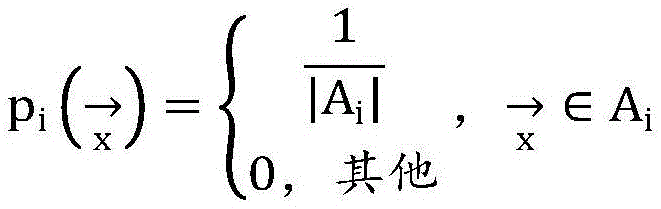
上式中,Ai表示第i个泰森多边形的面积,

步骤S43、根据每个所述泰森多边形对应的密度确定导流栏杆的位置信息。Step S43: Determine the position information of the diversion railing according to the density corresponding to each Thiessen polygon.
可以理解的是,根据每个泰森多边形对应的密度即可判断在地铁车站中对应位置的行人密度,根据不同的行人密度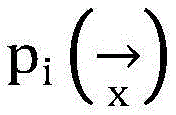


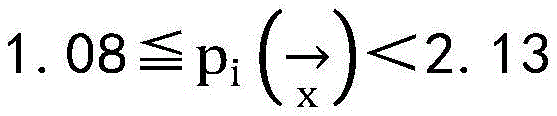
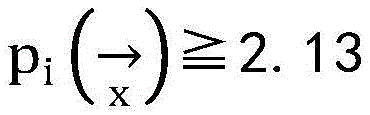
可以理解的是,所述步骤S4后还包括步骤S5、步骤S6和步骤S7,其中具体为:It can be understood that step S5, step S6 and step S7 are also included after step S4, specifically:
步骤S5、获取第一参数信息、第二参数信息和第三参数信息,所述第一参数信息用于决定该路径是否使用导流栏杆,所述第二参数信息用于决定该路径导流栏杆的摆放方向,所述第三参数信息用于决定该路径导流栏杆的对数;Step S5, acquiring first parameter information, second parameter information and third parameter information, the first parameter information is used to determine whether the path uses diversion railings, and the second parameter information is used to determine the path diversion railings The placement direction, the third parameter information is used to determine the logarithm of the path diversion railing;
可以理解的是,通过编码机制将在拥堵区域的导流栏杆布局方案抽象为三个参数(B,D,N),其中B的取值为0或1,决定这段路径是否使用导流栏杆;D的取值为-1,0,1,决定这段路径导流栏杆的摆放方向,当取0时导流栏杆平行路径方向设置,当取-1时向左设置,当取1时向右设置,N决定这段路径使用的导流栏杆的对数。It is understandable that the layout scheme of diversion railings in congested areas is abstracted into three parameters (B, D, N) through the coding mechanism, where the value of B is 0 or 1, which determines whether to use diversion railings in this section of the path ; The value of D is -1, 0, 1, which determines the placement direction of the diversion railing in this section of the path. When it is set to 0, the direction of the diversion railing is set parallel to the path. When it is set to -1, it is set to the left. When it is set to 1 Set to the right, N determines the logarithm of diversion railings used for this section of the path.
步骤S6、根据所述第一参数信息、所述参数信息和所述第三参数信息得到对应的导流栏杆布局方案;Step S6, obtaining a corresponding guide railing layout scheme according to the first parameter information, the parameter information and the third parameter information;
可以理解的是,根据三个参数即可直观的得到导流栏杆对应的布局方案。It can be understood that the layout scheme corresponding to the diversion railing can be obtained intuitively according to the three parameters.
步骤S7、根据所述导流栏杆布局方案在需要设置所述导流栏杆处进行布局。Step S7 , according to the layout plan of the diversion railings, the layout is carried out at the places where the diversion railings need to be set.
可以理解的是,所述步骤S7后还包括步骤S8、步骤S9、步骤S10和步骤S11,其中具体为:It can be understood that after the step S7, it also includes step S8, step S9, step S10 and step S11, specifically:
步骤S8、根据所述导流栏杆布局方案对所述行人流仿真模型进行更新,得到更新后的行人流仿真模型;Step S8, updating the pedestrian flow simulation model according to the layout scheme of the diversion railings, to obtain an updated pedestrian flow simulation model;
步骤S9、将所述第一信息和所述第二信息发送至所述更新后的行人流仿真模型进行计算得到每个行人运动的加速度;Step S9, sending the first information and the second information to the updated pedestrian flow simulation model for calculation to obtain the acceleration of each pedestrian movement;
步骤S10、根据每个所述行人运动的加速度进行计算,得到地铁车站的人平均密度;Step S10, calculate according to the acceleration of each pedestrian's movement, and obtain the average density of people in the subway station;
步骤S11、通过所述地铁车站的人平均密度判断所述导流栏杆布局方案是否为最优布局方案。Step S11, judging whether the layout scheme of the diversion railings is the optimal layout scheme according to the average population density of the subway station.
在本实施例中,将50个不同的导流栏杆布局方案添加至地铁站结构模型中,形成不同的行人流仿真模型的场景,再采用相同人数的行人进行输入,进行模拟仿真行人在地铁车站中的运动,通过泰森多边形法计算行人平均密度作为适应度,评价每一组导流栏杆布局的性能,选择其中适应度最好即人平均密度最小对应的导流栏杆布局方案作为父代,再将这些方案进行随机突变和交叉操作,生成新的导流栏杆布局方案并导入行人流仿真模型的场景进行模拟仿真,计算适应度,选择具有更小的人平均密度对应的导流栏杆布局方案作为下一代的父代,重复上述操作,不断迭代直至适应度即人平均密度趋于稳定的一个值时,结束迭代,得到最优的导流栏杆布局方案,其中,选择行人密度作为适应度函数,得出最优的护栏布局方案,能够最大限度提高行人的通行效率,降低乘客换乘过程中的时间成本。In this embodiment, 50 different diversion railing layout schemes are added to the subway station structure model to form different scenes of pedestrian flow simulation models. In the movement, the average density of pedestrians is calculated by the Thiessen polygon method as the fitness, and the performance of each group of diversion railing layout is evaluated, and the diversion railing layout scheme with the best fitness, that is, the smallest average density of people is selected as the parent. Then carry out random mutation and crossover operations on these plans to generate a new diversion railing layout plan and import it into the scene of the pedestrian flow simulation model for simulation, calculate the fitness, and select the diversion railing layout plan corresponding to the smaller average density of people As the parent of the next generation, repeat the above operations and iterate continuously until the fitness, that is, the average density of people tends to a stable value, and then end the iteration to obtain the optimal diversion railing layout scheme. Among them, the pedestrian density is selected as the fitness function , to obtain the optimal guardrail layout scheme, which can maximize the efficiency of pedestrian traffic and reduce the time cost of passengers in the transfer process.
实施例2:Example 2:
如图2所示,本实施例提供了一种导流栏杆位置计算装置,所述装置包括第一获取模块901、第一处理模块902、第二处理模块903和确定模块904。As shown in FIG. 2 , this embodiment provides a device for calculating the position of a diversion railing, which includes a
第一获取模块901,用于获取第一信息和第二信息,所述第一信息包括地铁车站的空间结构,所述第二信息包括至少一个行人的起点坐标信息和每个行人对应的目的地坐标信息;The
第一处理模块902,用于将所述第一信息和所述第二信息发送至行人流仿真模型进行计算,得到第三信息,所述第三信息包括每个行人运动的加速度,所述行人流仿真模型用于模拟地铁站日常运营每个行人由起点至目的地的行走轨迹;The
第二处理模块903,用于根据所述第三信息进行计算,得到第四信息,所述第四信息包括每个行人每一时刻的位置坐标信息;The
确定模块904,用于根据所述第四信息确定导流栏杆的位置信息。The
在本公开的一种具体实施方式中,所述第一处理模块902包括划分单元9021、第一处理单元9022、第一计算单元9023和第二处理单元9024,其中具体为:In a specific implementation manner of the present disclosure, the
划分单元9021,用于利用矩形网格法对所述地铁车站的空间结构进行网格划分,得到网格划分后的地铁车站的空间结构;The
第一处理单元9022,用于根据所述第二信息在所述网格划分后的地铁车站的空间结构确定至少一个节点信息,所述节点信息包括地铁车站内不同房间之间的连接节点;The
第一计算单元9023,用于计算房间内每个的网格的中心点与房间对应的连接节点之间的欧氏距离,得到行人行走的期望方向;The
第二处理单元9024,用于根据所述行人行走的期望方向,得到所述第三信息。The
在本公开的一种具体实施方式中,所述第二处理单元9024包括第二计算单元90241、第三计算单元90242和第四计算单元90243,其中具体为:In a specific implementation manner of the present disclosure, the
第二计算单元90241,用于根据预设的第一行人流仿真模型函数和所述行人行走的期望方向进行计算得到行人的自驱力,根据预设的第二行人流仿真模型函数进行计算得到行人与行人之间的作用力,根据预设的第三行人流仿真模型函数进行计算得到行人与障碍物之间的作用力;The
第三计算单元90242,用于根据所述行人的自驱力、所述行人与行人之间的作用力和所述行人与障碍物之间的作用力进行计算得到行人在运动中受到的合力;The
第四计算单元90243,用于根据所述行人在运动中受到的合力进行计算,得到每个所述行人运动的加速度。The
在本公开的一种具体实施方式中,所述确定模块904包括第三处理单元9041、第四处理单元9042和第五处理单元9043,其中具体为:In a specific implementation manner of the present disclosure, the
第三处理单元9041,用于利用泰森多边形法对每个所述行人每一时刻的位置坐标信息进行处理,得到至少一个泰森多边形;The
第四处理单元9042,用于利用密度函数对每个所述泰森多边形进行计算,得到每个所述泰森多边形对应的密度;The
第五处理单元9043,用于根据每个所述泰森多边形对应的密度确定导流栏杆的位置信息。The
在本公开的一种具体实施方式中,所述确定模块904后还包括第二获取模块905、第三处理模块906和第四处理模块907,其中具体为:In a specific implementation manner of the present disclosure, the
第二获取模块905,用于获取第一参数信息、第二参数信息和第三参数信息,所述第一参数信息用于决定该路径是否使用导流栏杆,所述第二参数信息用于决定该路径导流栏杆的摆放方向,所述第三参数信息用于决定该路径导流栏杆的对数;The second obtaining
第三处理模块906,用于根据所述第一参数信息、所述参数信息和所述第三参数信息得到对应的导流栏杆布局方案;The
第四处理模块907,用于根据所述导流栏杆布局方案在需要设置所述导流栏杆处进行布局。The
在本公开的一种具体实施方式中,所述第四处理模块907后还包括第五处理模块908、第六处理模块909、第七处理模块910和第八处理模块911,其中具体为:In a specific implementation manner of the present disclosure, the
第五处理模块908,用于根据所述导流栏杆布局方案对所述行人流仿真模型进行更新,得到更新后的行人流仿真模型;The
第六处理模块909,用于将所述第一信息和所述第二信息发送至所述更新后的行人流仿真模型进行计算得到每个行人运动的加速度;The
第七处理模块910,用于根据每个所述行人运动的加速度进行计算,得到地铁车站的人平均密度;The
第八处理模块911,用于通过所述地铁车站的人平均密度判断所述导流栏杆布局方案是否为最优布局方案。The
需要说明的是,关于上述实施例中的装置,其中各个模块执行操作的具体方式已经在有关该方法的实施例中进行了详细描述,此处将不做详细阐述说明。It should be noted that, with regard to the apparatus in the above embodiments, the specific manner in which each module executes operations has been described in detail in the embodiments related to the method, and will not be described in detail here.
实施例3:Example 3:
相应于上面的方法实施例,本实施例中还提供了一种导流栏杆位置计算设备,下文描述的一种导流栏杆位置计算设备与上文描述的一种导流栏杆位置计算方法可相互对应参照。Corresponding to the above method embodiment, this embodiment also provides a device for calculating the position of the diversion railing. The device for calculating the position of the diversion railing described below and the method for calculating the position of the diversion railing described above can be used for each other. Corresponding reference.
图3是根据示例性实施例示出的一种导流栏杆位置计算设备800的框图。如图3所示,该导流栏杆位置计算设备800可以包括:处理器801,存储器802。该导流栏杆位置计算设备800还可以包括多媒体组件803,I/O接口804,以及通信组件805中的一者或多者。Fig. 3 is a block diagram of a
其中,处理器801用于控制该导流栏杆位置计算设备800的整体操作,以完成上述的导流栏杆位置计算方法中的全部或部分步骤。存储器802用于存储各种类型的数据以支持在该导流栏杆位置计算设备800的操作,这些数据例如可以包括用于在该导流栏杆位置计算设备800上操作的任何应用程序或方法的指令,以及应用程序相关的数据,例如联系人数据、收发的消息、图片、音频、视频等等。该存储器802可以由任何类型的易失性或非易失性存储设备或者它们的组合实现,例如静态随机存取存储器(Static Random AccessMemory,简称SRAM),电可擦除可编程只读存储器(Electrically Erasable ProgrammableRead-Only Memory,简称EEPROM),可擦除可编程只读存储器(Erasable ProgrammableRead-Only Memory,简称EPROM),可编程只读存储器(Programmable Read-Only Memory,简称PROM),只读存储器(Read-Only Memory,简称ROM),磁存储器,快闪存储器,磁盘或光盘。多媒体组件803可以包括屏幕和音频组件。其中屏幕例如可以是触摸屏,音频组件用于输出和/或输入音频信号。例如,音频组件可以包括一个麦克风,麦克风用于接收外部音频信号。所接收的音频信号可以被进一步存储在存储器802或通过通信组件805发送。音频组件还包括至少一个扬声器,用于输出音频信号。I/O接口804为处理器801和其他接口模块之间提供接口,上述其他接口模块可以是键盘,鼠标,按钮等。这些按钮可以是虚拟按钮或者实体按钮。通信组件805用于该导流栏杆位置计算设备800与其他设备之间进行有线或无线通信。无线通信,例如Wi-Fi,蓝牙,近场通信(Near FieldCommunication,简称NFC),2G、3G或4G,或它们中的一种或几种的组合,因此相应的该通信组件805可以包括:Wi-Fi模块,蓝牙模块,NFC模块。Wherein, the
在一示例性实施例中,导流栏杆位置计算设备800可以被一个或多个应用专用集成电路(Application Specific Integrated Circuit,简称ASIC)、数字信号处理器(DigitalSignal Processor,简称DSP)、数字信号处理设备(Digital Signal ProcessingDevice,简称DSPD)、可编程逻辑器件(Programmable Logic Device,简称PLD)、现场可编程门阵列(Field Programmable Gate Array,简称FPGA)、控制器、微控制器、微处理器或其他电子元件实现,用于执行上述的导流栏杆位置计算方法。In an exemplary embodiment, the diversion rail
在另一示例性实施例中,还提供了一种包括程序指令的计算机可读存储介质,该程序指令被处理器执行时实现上述的导流栏杆位置计算方法的步骤。例如,该计算机可读存储介质可以为上述包括程序指令的存储器802,上述程序指令可由导流栏杆位置计算设备800的处理器801执行以完成上述的导流栏杆位置计算方法。In another exemplary embodiment, a computer-readable storage medium including program instructions is also provided, and when the program instructions are executed by a processor, the steps of the above-mentioned method for calculating the position of the diversion railing are realized. For example, the computer-readable storage medium can be the above-mentioned
实施例4:Example 4:
相应于上面的方法实施例,本实施例中还提供了一种可读存储介质,下文描述的一种可读存储介质与上文描述的一种导流栏杆位置计算方法可相互对应参照。Corresponding to the above method embodiment, a readable storage medium is also provided in this embodiment, and a readable storage medium described below and a method for calculating the position of a diversion rail described above can be referred to in correspondence.
一种可读存储介质,可读存储介质上存储有计算机程序,计算机程序被处理器执行时实现上述方法实施例的导流栏杆位置计算方法的步骤。A readable storage medium, on which a computer program is stored, and when the computer program is executed by a processor, the steps of the method for calculating the position of the diversion railing in the above method embodiment are realized.
该可读存储介质具体可以为U盘、移动硬盘、只读存储器(Read-Only Memory,ROM)、随机存取存储器(Random Access Memory,RAM)、磁碟或者光盘等各种可存储程序代码的可读存储介质。Specifically, the readable storage medium may be a USB flash drive, a mobile hard disk, a read-only memory (Read-Only Memory, ROM), a random access memory (Random Access Memory, RAM), a magnetic disk or an optical disk, and the like that can store program codes. readable storage media.
以上所述仅为本发明的优选实施例而已,并不用于限制本发明,对于本领域的技术人员来说,本发明可以有各种更改和变化。凡在本发明的精神和原则之内,所作的任何修改、等同替换、改进等,均应包含在本发明的保护范围之内。The above descriptions are only preferred embodiments of the present invention, and are not intended to limit the present invention. For those skilled in the art, the present invention may have various modifications and changes. Any modifications, equivalent replacements, improvements, etc. made within the spirit and principles of the present invention shall be included within the protection scope of the present invention.
以上所述,仅为本发明的具体实施方式,但本发明的保护范围并不局限于此,任何熟悉本技术领域的技术人员在本发明揭露的技术范围内,可轻易想到变化或替换,都应涵盖在本发明的保护范围之内。因此,本发明的保护范围应以权利要求的保护范围为准。The above is only a specific embodiment of the present invention, but the scope of protection of the present invention is not limited thereto. Anyone skilled in the art can easily think of changes or substitutions within the technical scope disclosed in the present invention. Should be covered within the protection scope of the present invention. Therefore, the protection scope of the present invention should be based on the protection scope of the claims.
Claims (6)
Priority Applications (1)
| Application Number | Priority Date | Filing Date | Title |
|---|---|---|---|
| CN202211568614.0A CN115577574B (en) | 2022-12-08 | 2022-12-08 | A method, device, equipment and readable storage medium for calculating the position of diversion railings |
Applications Claiming Priority (1)
| Application Number | Priority Date | Filing Date | Title |
|---|---|---|---|
| CN202211568614.0A CN115577574B (en) | 2022-12-08 | 2022-12-08 | A method, device, equipment and readable storage medium for calculating the position of diversion railings |
Publications (2)
| Publication Number | Publication Date |
|---|---|
| CN115577574A CN115577574A (en) | 2023-01-06 |
| CN115577574B true CN115577574B (en) | 2023-03-10 |
Family
ID=84590598
Family Applications (1)
| Application Number | Title | Priority Date | Filing Date |
|---|---|---|---|
| CN202211568614.0A Active CN115577574B (en) | 2022-12-08 | 2022-12-08 | A method, device, equipment and readable storage medium for calculating the position of diversion railings |
Country Status (1)
| Country | Link |
|---|---|
| CN (1) | CN115577574B (en) |
Families Citing this family (4)
| Publication number | Priority date | Publication date | Assignee | Title |
|---|---|---|---|---|
| CN117311188B (en) * | 2023-09-26 | 2024-03-12 | 青岛理工大学 | Control method, system and equipment for crowd diversion railings in fixed places |
| CN117590766B (en) * | 2024-01-19 | 2024-05-28 | 青岛理工大学 | Control method and device for angle adjustment of channel inlet guide rail |
| CN118587626B (en) * | 2024-05-22 | 2025-06-27 | 天津维金旋转门有限公司 | A method, device, equipment and medium for setting a one-way revolving door |
| CN119617587B (en) * | 2024-10-28 | 2025-10-28 | 北京市政路桥股份有限公司 | Energy-saving control method and system for ventilation air conditioning system of subway station |
Citations (7)
| Publication number | Priority date | Publication date | Assignee | Title |
|---|---|---|---|---|
| CN205426807U (en) * | 2015-12-14 | 2016-08-03 | 陕西众森电能科技有限公司 | Solar cell detecting system |
| CN109978243A (en) * | 2019-03-12 | 2019-07-05 | 北京百度网讯科技有限公司 | Track of vehicle planing method, device, computer equipment, computer storage medium |
| WO2021097759A1 (en) * | 2019-11-21 | 2021-05-27 | Beijing Didi Infinity Technology And Development Co., Ltd. | Systems and methods for traffic control based on vehicle trajectory data |
| CN112965596A (en) * | 2021-03-03 | 2021-06-15 | 武汉理工大学 | Subway station direction sign aassessment optimizing system based on VR |
| CN114067559A (en) * | 2021-09-27 | 2022-02-18 | 北京交通大学 | Confluence optimization control method for merging special lane for automatic vehicle into common lane |
| CN114862070A (en) * | 2022-07-07 | 2022-08-05 | 西南交通大学 | Method, device, device and storage medium for predicting bottleneck of crowd evacuation ability |
| CN114880856A (en) * | 2022-05-13 | 2022-08-09 | 东南大学 | Simulation software effect evaluation method based on pedestrian flow bottleneck experiment |
-
2022
- 2022-12-08 CN CN202211568614.0A patent/CN115577574B/en active Active
Patent Citations (7)
| Publication number | Priority date | Publication date | Assignee | Title |
|---|---|---|---|---|
| CN205426807U (en) * | 2015-12-14 | 2016-08-03 | 陕西众森电能科技有限公司 | Solar cell detecting system |
| CN109978243A (en) * | 2019-03-12 | 2019-07-05 | 北京百度网讯科技有限公司 | Track of vehicle planing method, device, computer equipment, computer storage medium |
| WO2021097759A1 (en) * | 2019-11-21 | 2021-05-27 | Beijing Didi Infinity Technology And Development Co., Ltd. | Systems and methods for traffic control based on vehicle trajectory data |
| CN112965596A (en) * | 2021-03-03 | 2021-06-15 | 武汉理工大学 | Subway station direction sign aassessment optimizing system based on VR |
| CN114067559A (en) * | 2021-09-27 | 2022-02-18 | 北京交通大学 | Confluence optimization control method for merging special lane for automatic vehicle into common lane |
| CN114880856A (en) * | 2022-05-13 | 2022-08-09 | 东南大学 | Simulation software effect evaluation method based on pedestrian flow bottleneck experiment |
| CN114862070A (en) * | 2022-07-07 | 2022-08-05 | 西南交通大学 | Method, device, device and storage medium for predicting bottleneck of crowd evacuation ability |
Non-Patent Citations (8)
| Title |
|---|
| 一个基于基站轨迹数据的城市移动模式可视分析系统;李致昊等;《计算机辅助设计与图形学学报》;20180115(第01期);全文 * |
| 上海市轨道交通车站客流控制方法及问题研究;刘金博;《交通世界》;20200925(第27期);全文 * |
| 城市公园小型演出退场人流轨迹研究――以上海城市草坪音乐会为例;董楠楠等;《现代城市研究》;20191115(第11期);全文 * |
| 基于Agent模型的城市轨道交通车站人群聚集风险的分析;林铭等;《城市轨道交通研究》;20180810(第08期);全文 * |
| 基于NOMAD模型的交通枢纽行人仿真研究;张蕊等;《交通运输系统工程与信息》;20110415(第02期);全文 * |
| 客运安全风险点及控制措施研究;郭筱桢;《科技创新与应用》;20150528(第15期);全文 * |
| 电容法粉尘浓度测量研究及有限元仿真;王泽民等;《计算机与数字工程》;20160320(第03期);全文 * |
| 轨道交通行人流运动建模及仿真;丁青艳等;《交通运输系统工程与信息》;20111015(第05期);全文 * |
Also Published As
| Publication number | Publication date |
|---|---|
| CN115577574A (en) | 2023-01-06 |
Similar Documents
| Publication | Publication Date | Title |
|---|---|---|
| CN115577574B (en) | A method, device, equipment and readable storage medium for calculating the position of diversion railings | |
| Wiering et al. | Simulation and optimization of traffic in a city | |
| Loscos et al. | Intuitive crowd behavior in dense urban environments using local laws | |
| US8894413B2 (en) | Architecture, method, and program for generating realistic vehicular mobility patterns | |
| CN105808852A (en) | Indoor pedestrian microscopic simulation method based on cellular automaton | |
| Ding et al. | Simulation-based optimization of emergency evacuation strategy in ultra-high-rise buildings | |
| CN102646166A (en) | A method for indoor emergency evacuation simulation of complex buildings | |
| Alidmat et al. | Simulation of crowd evacuation in asymmetrical exit layout based on improved dynamic parameters model | |
| CN107066723B (en) | Bus passenger getting-on and getting-off behavior simulation method based on social force model | |
| CN114048917B (en) | Crowd evacuation path recommending method and system based on position | |
| Ma et al. | Modeling pedestrian space in complex building for efficient pedestrian traffic simulation | |
| KR101868695B1 (en) | Method for controlling mobile robot unit based on bayesian network learning | |
| CN114862070B (en) | Method, device, equipment and storage medium for predicting crowd evacuation capacity bottleneck | |
| CN114065348B (en) | Crowd emergency evacuation method, system, terminal and storage medium | |
| CN108596368A (en) | A kind of multiple exit evacuation method based on predicted time | |
| KR20220083975A (en) | Trajectory planning methods, devices, instruments, storage media and program products | |
| CN118568470B (en) | Vehicle trajectory prediction method, system and device based on adaptive edge generation | |
| CN101567017A (en) | Urban-evacuation simulation method based on multi-resolution images | |
| CN105701555A (en) | Method and system for dividing road network | |
| CN112733241A (en) | Public place guardrail layout optimization method based on self-adaptive differential evolution algorithm | |
| Cheng et al. | A modified particle swarm optimization-based human behavior modeling for emergency evacuation simulation system | |
| Fu et al. | Optimal traffic management to ensure emergency evacuation compliance | |
| CN118780059B (en) | A heuristic micro-evacuation modeling method and simulation system based on pedestrian vision | |
| Li et al. | Improved social force model based on navigation points for crowd emergent evacuation | |
| CN115659613A (en) | Evaluation method and system for spatial scene layout design |
Legal Events
| Date | Code | Title | Description |
|---|---|---|---|
| PB01 | Publication | ||
| PB01 | Publication | ||
| SE01 | Entry into force of request for substantive examination | ||
| SE01 | Entry into force of request for substantive examination | ||
| GR01 | Patent grant | ||
| GR01 | Patent grant |