CN115379812A - Fiducial mark device - Google Patents
Fiducial mark device Download PDFInfo
- Publication number
- CN115379812A CN115379812A CN202180027263.XA CN202180027263A CN115379812A CN 115379812 A CN115379812 A CN 115379812A CN 202180027263 A CN202180027263 A CN 202180027263A CN 115379812 A CN115379812 A CN 115379812A
- Authority
- CN
- China
- Prior art keywords
- fiducial marker
- surgical
- marker device
- data
- patient
- Prior art date
- Legal status (The legal status is an assumption and is not a legal conclusion. Google has not performed a legal analysis and makes no representation as to the accuracy of the status listed.)
- Pending
Links
Images




Classifications
-
- A—HUMAN NECESSITIES
- A61—MEDICAL OR VETERINARY SCIENCE; HYGIENE
- A61B—DIAGNOSIS; SURGERY; IDENTIFICATION
- A61B90/00—Instruments, implements or accessories specially adapted for surgery or diagnosis and not covered by any of the groups A61B1/00 - A61B50/00, e.g. for luxation treatment or for protecting wound edges
- A61B90/90—Identification means for patients or instruments, e.g. tags
- A61B90/98—Identification means for patients or instruments, e.g. tags using electromagnetic means, e.g. transponders
-
- A—HUMAN NECESSITIES
- A61—MEDICAL OR VETERINARY SCIENCE; HYGIENE
- A61B—DIAGNOSIS; SURGERY; IDENTIFICATION
- A61B34/00—Computer-aided surgery; Manipulators or robots specially adapted for use in surgery
- A61B34/10—Computer-aided planning, simulation or modelling of surgical operations
-
- A—HUMAN NECESSITIES
- A61—MEDICAL OR VETERINARY SCIENCE; HYGIENE
- A61B—DIAGNOSIS; SURGERY; IDENTIFICATION
- A61B34/00—Computer-aided surgery; Manipulators or robots specially adapted for use in surgery
- A61B34/20—Surgical navigation systems; Devices for tracking or guiding surgical instruments, e.g. for frameless stereotaxis
-
- A—HUMAN NECESSITIES
- A61—MEDICAL OR VETERINARY SCIENCE; HYGIENE
- A61B—DIAGNOSIS; SURGERY; IDENTIFICATION
- A61B34/00—Computer-aided surgery; Manipulators or robots specially adapted for use in surgery
- A61B34/30—Surgical robots
-
- A—HUMAN NECESSITIES
- A61—MEDICAL OR VETERINARY SCIENCE; HYGIENE
- A61B—DIAGNOSIS; SURGERY; IDENTIFICATION
- A61B34/00—Computer-aided surgery; Manipulators or robots specially adapted for use in surgery
- A61B34/30—Surgical robots
- A61B34/32—Surgical robots operating autonomously
-
- A—HUMAN NECESSITIES
- A61—MEDICAL OR VETERINARY SCIENCE; HYGIENE
- A61B—DIAGNOSIS; SURGERY; IDENTIFICATION
- A61B90/00—Instruments, implements or accessories specially adapted for surgery or diagnosis and not covered by any of the groups A61B1/00 - A61B50/00, e.g. for luxation treatment or for protecting wound edges
- A61B90/39—Markers, e.g. radio-opaque or breast lesions markers
-
- A—HUMAN NECESSITIES
- A61—MEDICAL OR VETERINARY SCIENCE; HYGIENE
- A61B—DIAGNOSIS; SURGERY; IDENTIFICATION
- A61B90/00—Instruments, implements or accessories specially adapted for surgery or diagnosis and not covered by any of the groups A61B1/00 - A61B50/00, e.g. for luxation treatment or for protecting wound edges
- A61B90/90—Identification means for patients or instruments, e.g. tags
- A61B90/94—Identification means for patients or instruments, e.g. tags coded with symbols, e.g. text
-
- G—PHYSICS
- G16—INFORMATION AND COMMUNICATION TECHNOLOGY [ICT] SPECIALLY ADAPTED FOR SPECIFIC APPLICATION FIELDS
- G16H—HEALTHCARE INFORMATICS, i.e. INFORMATION AND COMMUNICATION TECHNOLOGY [ICT] SPECIALLY ADAPTED FOR THE HANDLING OR PROCESSING OF MEDICAL OR HEALTHCARE DATA
- G16H20/00—ICT specially adapted for therapies or health-improving plans, e.g. for handling prescriptions, for steering therapy or for monitoring patient compliance
- G16H20/40—ICT specially adapted for therapies or health-improving plans, e.g. for handling prescriptions, for steering therapy or for monitoring patient compliance relating to mechanical, radiation or invasive therapies, e.g. surgery, laser therapy, dialysis or acupuncture
-
- G—PHYSICS
- G16—INFORMATION AND COMMUNICATION TECHNOLOGY [ICT] SPECIALLY ADAPTED FOR SPECIFIC APPLICATION FIELDS
- G16H—HEALTHCARE INFORMATICS, i.e. INFORMATION AND COMMUNICATION TECHNOLOGY [ICT] SPECIALLY ADAPTED FOR THE HANDLING OR PROCESSING OF MEDICAL OR HEALTHCARE DATA
- G16H40/00—ICT specially adapted for the management or administration of healthcare resources or facilities; ICT specially adapted for the management or operation of medical equipment or devices
- G16H40/60—ICT specially adapted for the management or administration of healthcare resources or facilities; ICT specially adapted for the management or operation of medical equipment or devices for the operation of medical equipment or devices
- G16H40/63—ICT specially adapted for the management or administration of healthcare resources or facilities; ICT specially adapted for the management or operation of medical equipment or devices for the operation of medical equipment or devices for local operation
-
- A—HUMAN NECESSITIES
- A61—MEDICAL OR VETERINARY SCIENCE; HYGIENE
- A61B—DIAGNOSIS; SURGERY; IDENTIFICATION
- A61B17/00—Surgical instruments, devices or methods
- A61B2017/00831—Material properties
- A61B2017/00942—Material properties hydrophilic
-
- A—HUMAN NECESSITIES
- A61—MEDICAL OR VETERINARY SCIENCE; HYGIENE
- A61B—DIAGNOSIS; SURGERY; IDENTIFICATION
- A61B34/00—Computer-aided surgery; Manipulators or robots specially adapted for use in surgery
- A61B34/10—Computer-aided planning, simulation or modelling of surgical operations
- A61B2034/101—Computer-aided simulation of surgical operations
- A61B2034/102—Modelling of surgical devices, implants or prosthesis
- A61B2034/104—Modelling the effect of the tool, e.g. the effect of an implanted prosthesis or for predicting the effect of ablation or burring
-
- A—HUMAN NECESSITIES
- A61—MEDICAL OR VETERINARY SCIENCE; HYGIENE
- A61B—DIAGNOSIS; SURGERY; IDENTIFICATION
- A61B34/00—Computer-aided surgery; Manipulators or robots specially adapted for use in surgery
- A61B34/10—Computer-aided planning, simulation or modelling of surgical operations
- A61B2034/101—Computer-aided simulation of surgical operations
- A61B2034/105—Modelling of the patient, e.g. for ligaments or bones
-
- A—HUMAN NECESSITIES
- A61—MEDICAL OR VETERINARY SCIENCE; HYGIENE
- A61B—DIAGNOSIS; SURGERY; IDENTIFICATION
- A61B34/00—Computer-aided surgery; Manipulators or robots specially adapted for use in surgery
- A61B34/20—Surgical navigation systems; Devices for tracking or guiding surgical instruments, e.g. for frameless stereotaxis
- A61B2034/2046—Tracking techniques
- A61B2034/2051—Electromagnetic tracking systems
-
- A—HUMAN NECESSITIES
- A61—MEDICAL OR VETERINARY SCIENCE; HYGIENE
- A61B—DIAGNOSIS; SURGERY; IDENTIFICATION
- A61B34/00—Computer-aided surgery; Manipulators or robots specially adapted for use in surgery
- A61B34/20—Surgical navigation systems; Devices for tracking or guiding surgical instruments, e.g. for frameless stereotaxis
- A61B2034/2046—Tracking techniques
- A61B2034/2055—Optical tracking systems
-
- A—HUMAN NECESSITIES
- A61—MEDICAL OR VETERINARY SCIENCE; HYGIENE
- A61B—DIAGNOSIS; SURGERY; IDENTIFICATION
- A61B34/00—Computer-aided surgery; Manipulators or robots specially adapted for use in surgery
- A61B34/20—Surgical navigation systems; Devices for tracking or guiding surgical instruments, e.g. for frameless stereotaxis
- A61B2034/2046—Tracking techniques
- A61B2034/2065—Tracking using image or pattern recognition
-
- A—HUMAN NECESSITIES
- A61—MEDICAL OR VETERINARY SCIENCE; HYGIENE
- A61B—DIAGNOSIS; SURGERY; IDENTIFICATION
- A61B34/00—Computer-aided surgery; Manipulators or robots specially adapted for use in surgery
- A61B34/25—User interfaces for surgical systems
- A61B2034/252—User interfaces for surgical systems indicating steps of a surgical procedure
-
- A—HUMAN NECESSITIES
- A61—MEDICAL OR VETERINARY SCIENCE; HYGIENE
- A61B—DIAGNOSIS; SURGERY; IDENTIFICATION
- A61B34/00—Computer-aided surgery; Manipulators or robots specially adapted for use in surgery
- A61B34/25—User interfaces for surgical systems
- A61B2034/256—User interfaces for surgical systems having a database of accessory information, e.g. including context sensitive help or scientific articles
-
- A—HUMAN NECESSITIES
- A61—MEDICAL OR VETERINARY SCIENCE; HYGIENE
- A61B—DIAGNOSIS; SURGERY; IDENTIFICATION
- A61B90/00—Instruments, implements or accessories specially adapted for surgery or diagnosis and not covered by any of the groups A61B1/00 - A61B50/00, e.g. for luxation treatment or for protecting wound edges
- A61B90/06—Measuring instruments not otherwise provided for
- A61B2090/061—Measuring instruments not otherwise provided for for measuring dimensions, e.g. length
-
- A—HUMAN NECESSITIES
- A61—MEDICAL OR VETERINARY SCIENCE; HYGIENE
- A61B—DIAGNOSIS; SURGERY; IDENTIFICATION
- A61B90/00—Instruments, implements or accessories specially adapted for surgery or diagnosis and not covered by any of the groups A61B1/00 - A61B50/00, e.g. for luxation treatment or for protecting wound edges
- A61B90/36—Image-producing devices or illumination devices not otherwise provided for
- A61B90/37—Surgical systems with images on a monitor during operation
- A61B2090/372—Details of monitor hardware
-
- A—HUMAN NECESSITIES
- A61—MEDICAL OR VETERINARY SCIENCE; HYGIENE
- A61B—DIAGNOSIS; SURGERY; IDENTIFICATION
- A61B90/00—Instruments, implements or accessories specially adapted for surgery or diagnosis and not covered by any of the groups A61B1/00 - A61B50/00, e.g. for luxation treatment or for protecting wound edges
- A61B90/39—Markers, e.g. radio-opaque or breast lesions markers
- A61B2090/3904—Markers, e.g. radio-opaque or breast lesions markers specially adapted for marking specified tissue
- A61B2090/3916—Bone tissue
-
- A—HUMAN NECESSITIES
- A61—MEDICAL OR VETERINARY SCIENCE; HYGIENE
- A61B—DIAGNOSIS; SURGERY; IDENTIFICATION
- A61B90/00—Instruments, implements or accessories specially adapted for surgery or diagnosis and not covered by any of the groups A61B1/00 - A61B50/00, e.g. for luxation treatment or for protecting wound edges
- A61B90/39—Markers, e.g. radio-opaque or breast lesions markers
- A61B2090/3937—Visible markers
-
- A—HUMAN NECESSITIES
- A61—MEDICAL OR VETERINARY SCIENCE; HYGIENE
- A61B—DIAGNOSIS; SURGERY; IDENTIFICATION
- A61B90/00—Instruments, implements or accessories specially adapted for surgery or diagnosis and not covered by any of the groups A61B1/00 - A61B50/00, e.g. for luxation treatment or for protecting wound edges
- A61B90/39—Markers, e.g. radio-opaque or breast lesions markers
- A61B2090/3937—Visible markers
- A61B2090/395—Visible markers with marking agent for marking skin or other tissue
-
- A—HUMAN NECESSITIES
- A61—MEDICAL OR VETERINARY SCIENCE; HYGIENE
- A61B—DIAGNOSIS; SURGERY; IDENTIFICATION
- A61B90/00—Instruments, implements or accessories specially adapted for surgery or diagnosis and not covered by any of the groups A61B1/00 - A61B50/00, e.g. for luxation treatment or for protecting wound edges
- A61B90/39—Markers, e.g. radio-opaque or breast lesions markers
- A61B2090/397—Markers, e.g. radio-opaque or breast lesions markers electromagnetic other than visible, e.g. microwave
-
- A—HUMAN NECESSITIES
- A61—MEDICAL OR VETERINARY SCIENCE; HYGIENE
- A61B—DIAGNOSIS; SURGERY; IDENTIFICATION
- A61B90/00—Instruments, implements or accessories specially adapted for surgery or diagnosis and not covered by any of the groups A61B1/00 - A61B50/00, e.g. for luxation treatment or for protecting wound edges
- A61B90/39—Markers, e.g. radio-opaque or breast lesions markers
- A61B2090/3983—Reference marker arrangements for use with image guided surgery
-
- A—HUMAN NECESSITIES
- A61—MEDICAL OR VETERINARY SCIENCE; HYGIENE
- A61B—DIAGNOSIS; SURGERY; IDENTIFICATION
- A61B90/00—Instruments, implements or accessories specially adapted for surgery or diagnosis and not covered by any of the groups A61B1/00 - A61B50/00, e.g. for luxation treatment or for protecting wound edges
- A61B90/39—Markers, e.g. radio-opaque or breast lesions markers
- A61B2090/3987—Applicators for implanting markers
-
- A—HUMAN NECESSITIES
- A61—MEDICAL OR VETERINARY SCIENCE; HYGIENE
- A61B—DIAGNOSIS; SURGERY; IDENTIFICATION
- A61B90/00—Instruments, implements or accessories specially adapted for surgery or diagnosis and not covered by any of the groups A61B1/00 - A61B50/00, e.g. for luxation treatment or for protecting wound edges
- A61B90/39—Markers, e.g. radio-opaque or breast lesions markers
- A61B2090/3991—Markers, e.g. radio-opaque or breast lesions markers having specific anchoring means to fixate the marker to the tissue, e.g. hooks
-
- A—HUMAN NECESSITIES
- A61—MEDICAL OR VETERINARY SCIENCE; HYGIENE
- A61B—DIAGNOSIS; SURGERY; IDENTIFICATION
- A61B90/00—Instruments, implements or accessories specially adapted for surgery or diagnosis and not covered by any of the groups A61B1/00 - A61B50/00, e.g. for luxation treatment or for protecting wound edges
- A61B90/39—Markers, e.g. radio-opaque or breast lesions markers
- A61B2090/3995—Multi-modality markers
-
- A—HUMAN NECESSITIES
- A61—MEDICAL OR VETERINARY SCIENCE; HYGIENE
- A61B—DIAGNOSIS; SURGERY; IDENTIFICATION
- A61B90/00—Instruments, implements or accessories specially adapted for surgery or diagnosis and not covered by any of the groups A61B1/00 - A61B50/00, e.g. for luxation treatment or for protecting wound edges
- A61B90/50—Supports for surgical instruments, e.g. articulated arms
- A61B2090/502—Headgear, e.g. helmet, spectacles
-
- G—PHYSICS
- G06—COMPUTING OR CALCULATING; COUNTING
- G06N—COMPUTING ARRANGEMENTS BASED ON SPECIFIC COMPUTATIONAL MODELS
- G06N3/00—Computing arrangements based on biological models
- G06N3/02—Neural networks
- G06N3/04—Architecture, e.g. interconnection topology
- G06N3/044—Recurrent networks, e.g. Hopfield networks
-
- Y—GENERAL TAGGING OF NEW TECHNOLOGICAL DEVELOPMENTS; GENERAL TAGGING OF CROSS-SECTIONAL TECHNOLOGIES SPANNING OVER SEVERAL SECTIONS OF THE IPC; TECHNICAL SUBJECTS COVERED BY FORMER USPC CROSS-REFERENCE ART COLLECTIONS [XRACs] AND DIGESTS
- Y02—TECHNOLOGIES OR APPLICATIONS FOR MITIGATION OR ADAPTATION AGAINST CLIMATE CHANGE
- Y02A—TECHNOLOGIES FOR ADAPTATION TO CLIMATE CHANGE
- Y02A90/00—Technologies having an indirect contribution to adaptation to climate change
- Y02A90/10—Information and communication technologies [ICT] supporting adaptation to climate change, e.g. for weather forecasting or climate simulation
Landscapes
- Health & Medical Sciences (AREA)
- Surgery (AREA)
- Life Sciences & Earth Sciences (AREA)
- Engineering & Computer Science (AREA)
- Public Health (AREA)
- General Health & Medical Sciences (AREA)
- Biomedical Technology (AREA)
- Medical Informatics (AREA)
- Nuclear Medicine, Radiotherapy & Molecular Imaging (AREA)
- Veterinary Medicine (AREA)
- Animal Behavior & Ethology (AREA)
- Molecular Biology (AREA)
- Heart & Thoracic Surgery (AREA)
- Robotics (AREA)
- Oral & Maxillofacial Surgery (AREA)
- Pathology (AREA)
- Epidemiology (AREA)
- Primary Health Care (AREA)
- Electromagnetism (AREA)
- Urology & Nephrology (AREA)
- Physics & Mathematics (AREA)
- Business, Economics & Management (AREA)
- General Business, Economics & Management (AREA)
- Surgical Instruments (AREA)
Abstract
本发明公开了有助于改进手术环境中的跟踪的基准标记装置和系统。在一个示例中,该技术包括基准标记装置,所述基准标记装置具有有源层和背衬层,其中,背衬层包括信标或印刷视觉图案。粘合剂层包括粘合剂材料,以在和与解剖结构相关联的流体接触时促进基准标记装置的粘附。在另一示例中,基准标记印章笔包括主体和设置在所述主体的内腔内并联接到滑块的轴。所述滑块被推进以移动所述轴从而使材料经由在所述主体的尖端中的切口或从所述轴的尖端伸出的压花特征沉积在解剖结构上。在又一示例中,基准标记可变形施加器组件被构造成沉积可表示基准标记的图案。
The present invention discloses fiducial marker devices and systems that facilitate improved tracking in a surgical environment. In one example, the technique includes a fiducial marking device having an active layer and a backing layer, wherein the backing layer includes a beacon or a printed visual pattern. The adhesive layer includes an adhesive material to facilitate adhesion of the fiducial marker device when in contact with fluid associated with the anatomy. In another example, a fiducial marker stamp pen includes a body and a shaft disposed within a lumen of the body and coupled to a slider. The slider is advanced to move the shaft to deposit material on the anatomy via cutouts in the tip of the body or embossed features protruding from the tip of the shaft. In yet another example, the fiducial marker deformable applicator assembly is configured to deposit a pattern representative of the fiducial marker.
Description
本申请要求2020年4月20日提交的美国临时申请序列号63/012,526的权益,该临时申请的内容以全文引用的方式并入本文中。This application claims the benefit of U.S. Provisional Application Serial No. 63/012,526, filed April 20, 2020, the contents of which are hereby incorporated by reference in their entirety.
技术领域technical field
本公开总体上涉及与计算机辅助手术系统有关的方法、系统和装置,所述计算机辅助手术系统包括一起工作以增强手术流程的各种硬件和软件部件。所公开的技术可以应用于例如肩、髋和膝关节置换术,以及其它外科手术,如关节镜手术、脊柱手术、颌面手术、肩袖手术、韧带修复和置换手术。The present disclosure generally relates to methods, systems, and apparatus related to computer-assisted surgery systems that include various hardware and software components that work together to enhance surgical procedures. The disclosed technology can be applied, for example, to shoulder, hip and knee replacements, as well as other surgical procedures such as arthroscopic surgery, spinal surgery, maxillofacial surgery, rotator cuff surgery, ligament repair and replacement surgery.
背景技术Background technique
使用增强现实(AR)和/或机器人的关节镜程序通常涉及关节镜、程序所需的手术器械、跟踪系统、机器人(如适用)和显示器,该显示器可以是传统关节镜塔或头戴式显示器(HMD)。跟踪系统跟踪关节镜、手术器械、骨、机器人(如适用)的位置,并且潜在地还跟踪HMD的位置。在骨科和一些运动医学程序中,跟踪借助于红外相机来实现,所述红外相机跟踪例如附接到关节镜、骨和手术器械的基准标记。Arthroscopy procedures using augmented reality (AR) and/or robotics typically involve the arthroscope, the surgical instruments required for the procedure, a tracking system, a robot (if applicable), and a display, which can be a traditional arthroscopic tower or a head-mounted display (HMD). The tracking system tracks the position of the arthroscope, surgical instrument, bone, robot (if applicable), and potentially also the HMD. In orthopedics and some sports medicine procedures, tracking is accomplished with the aid of infrared cameras that track fiducial markers attached to arthroscopes, bones, and surgical instruments, for example.
相对于解剖跟踪的手术工作流包括将可由跟踪系统识别的基准标记附接到骨中或其它解剖结构中,然后配准骨的轮廓,使得系统知道基准标记的位置。通常,配准步骤涉及外科医生在骨表面上移动接触探针的“随机游走(random walk)”。在已知骨的位置之后,它们可以与从患者的术前计算机断层扫描(CT)或磁共振成像(MRI)扫描和外科医生的手术计划生成的三维(3D)骨模型匹配。然后,显示器可以示出术前扫描或三维(3D)骨模型和待切除的或者另外是手术程序的一部分的骨的突出区域的覆盖。The surgical workflow with respect to anatomical tracking includes attaching fiducial markers recognizable by the tracking system into the bone or other anatomical structure, and then registering the outline of the bone so that the system knows the location of the fiducial markers. Typically, the registration step involves a "random walk" in which the surgeon moves a contact probe over the bone surface. After the location of the bones is known, they can be matched to a three-dimensional (3D) bone model generated from the patient's preoperative computed tomography (CT) or magnetic resonance imaging (MRI) scan and the surgeon's surgical plan. The display may then show a pre-operative scan or a three-dimensional (3D) bone model and an overlay of prominent areas of bone to be resected or otherwise part of the surgical procedure.
用于骨跟踪的现有技术现状是在骨中钻孔,并将基准标记组件放置在钻孔内,这产生比手术严格需要更多的骨损伤。在关节镜手术中,在关节内部几乎没有操纵的空间,并且用于插入跟踪器的可接近位置很少。此外,许多基准标记容易受到“视线”问题的影响,这些问题使得跟踪装置在变模糊时无效。更进一步,当外科医生在手术程序期间使关节通过其运动范围时,从骨突出的跟踪器可能潜在地阻碍外科医生在关节中操纵或损害敏感解剖结构。The current state of the art for bone tracking is to drill a hole in the bone and place a fiducial marker assembly within the drill hole, which creates more bone damage than is strictly necessary for surgery. In arthroscopic surgery, there is little room to maneuver inside the joint, and there are few accessible locations for inserting trackers. Additionally, many fiducial markers are susceptible to "line-of-sight" problems that render tracking devices ineffective when blurred. Still further, trackers protruding from the bone could potentially hinder the surgeon from manipulating the joint or damage sensitive anatomy as the surgeon moves the joint through its range of motion during the surgical procedure.
发明内容Contents of the invention
示出了更高效地促进在手术环境中的跟踪的基准标记装置、系统和其方法。根据一些实施例,公开了一种基准标记装置,包括:第一部分,所述第一部分包括一个或多个信标或顶表面,所述顶表面包括印刷视觉图案,所述印刷视觉图案包括具有不同反射特性的多个形状。在这些实施例中,所述基准标记装置包括第二部分,所述第二部分包括粘合剂材料,其中所述第二部分具有涂布或包埋有所述粘合剂材料以在所述第二部分接触与患者的解剖结构相关联的流体时促进所述基准标记装置的粘合的组合物。A fiducial marker device, system, and method thereof that more efficiently facilitate tracking in a surgical environment are shown. According to some embodiments, a fiducial marking device is disclosed that includes a first portion that includes one or more beacons or a top surface that includes a printed vision pattern that includes different Multiple shapes for reflection properties. In these embodiments, the fiducial marking device includes a second portion comprising an adhesive material, wherein the second portion has a coating or embedding of the adhesive material to provide The second portion is a composition that promotes adhesion of the fiducial marker device when in contact with fluid associated with the patient's anatomy.
根据一些实施例,所述第一部分的至少一部分与所述第二部分的至少另一部分成一体。替代地,在其它实施例中,所述第一部分包括背衬层,并且所述第二部分包括联接到所述背衬层的粘合剂层。According to some embodiments, at least a part of said first part is integral with at least another part of said second part. Alternatively, in other embodiments, the first portion includes a backing layer, and the second portion includes an adhesive layer coupled to the backing layer.
根据一些实施例,所述一个或多个信标包括被配置成促进深度确定的多个无源电磁(EM)或射频(RF)信标的阵列。According to some embodiments, the one or more beacons include an array of multiple passive electromagnetic (EM) or radio frequency (RF) beacons configured to facilitate depth determination.
根据一些实施例,所述一个或多个信标包括RF识别(RFID)嵌件。According to some embodiments, the one or more beacons include an RF identification (RFID) insert.
根据一些实施例,所述第一部分还包括抓握突片,所述抓握突片延伸超出所述第一部分和所述第二部分的交界部。According to some embodiments, the first portion further includes a grip tab extending beyond the interface of the first portion and the second portion.
根据一些实施例,所述粘合剂材料包括凝血酶、纤维蛋白原、合成手术粘合剂或凝血因子XIII中的一种或多种。According to some embodiments, the adhesive material includes one or more of thrombin, fibrinogen, synthetic surgical adhesive, or factor XIII.
根据一些实施例,所述第一部分和第二部分是预滚压和干燥的。According to some embodiments, the first and second parts are pre-rolled and dried.
根据一些实施例,所述组合物包括多个纤维、羊毛状物或海绵中的一种或多种。According to some embodiments, the composition includes one or more of a plurality of fibers, wool, or sponge.
根据一些实施例,所述第一部分和所述第二部分是柔性的,并且被构造成当粘附到所述解剖结构时符合所述解剖结构的轮廓,以促进深度确定。According to some embodiments, the first portion and the second portion are flexible and configured to conform to the contours of the anatomy when adhered to the anatomy to facilitate depth determination.
根据一些实施例,所述第一部分或所述第二部分中的一个或多个还包括胶原、合成材料、共聚乳酸-乙醇酸(PLG)或PLG酸(PLGA)中的一种或多种。According to some embodiments, one or more of the first part or the second part further comprises one or more of collagen, synthetic material, polylactic-glycolic acid (PLG) or PLG acid (PLGA).
根据一些实施例,公开了一种用于在关节镜程序期间利用基准标记来促进跟踪的方法。在这些实施例中,所述方法包括将基准标记装置与手术工具接合并将所述基准标记装置引入到套管中。将所述套管插入到接近所述解剖结构的开口中;当所述基准标记装置接触所述解剖结构上的期望位置时,用所述手术工具释放所述基准标记装置,以便将所述基准标记装置在所述期望位置处固定到解剖结构。从所述套管移除所述手术工具,从所述开口移除所述套管。According to some embodiments, a method for utilizing fiducial markers to facilitate tracking during an arthroscopic procedure is disclosed. In these embodiments, the method includes engaging a fiducial marker device with a surgical tool and introducing the fiducial marker device into the cannula. inserting the cannula into an opening proximate to the anatomical structure; releasing the fiducial marking device with the surgical tool when the fiducial marking device contacts a desired location on the anatomical structure so that the fiducial marking device A marking device is secured to the anatomy at said desired location. The surgical tool is removed from the cannula, and the cannula is removed from the opening.
根据一些实施例,所述方法包括用关节镜抓握器抓握所述基准标记装置的抓握突片以接合所述基准标记装置。将所述基准标记装置在所述期望位置处粘附到解剖结构以固定所述基准标记装置。另外,当所述基准标记装置接触所述解剖结构上的期望位置时,用所述关节镜抓握器释放所述抓握突片。According to some embodiments, the method includes grasping a grasping tab of the fiducial marker device with an arthroscopic grasper to engage the fiducial marker device. Adhering the fiducial marker device to an anatomical structure at the desired location secures the fiducial marker device. Additionally, the grasping tab is released with the arthroscopic grasper when the fiducial marker device contacts a desired location on the anatomy.
根据一些实施例,所述方法包括在所述关节镜程序期间识别所述基准标记装置。使所述基准标记装置的畸变相互关联以确定所述基准标记装置的多个部分的深度。在这些实施例中,所述基准标记装置是柔性的,并且当所述基准标记装置粘附到所述解剖结构的期望位置时,所述基准标记装置与所述解剖结构的期望位置的形状一致。基于所述多个部分的确定深度确定所述解剖结构的拓扑。According to some embodiments, the method includes identifying the fiducial marker device during the arthroscopic procedure. The distortion of the fiducial marker is correlated to determine depths of portions of the fiducial marker. In these embodiments, the fiducial marker device is flexible and conforms to the shape of the desired location of the anatomical structure when the fiducial marker device is adhered to the desired location of the anatomical structure . A topology of the anatomy is determined based on the determined depths of the plurality of portions.
根据一些实施例,所述拓扑经由计算机辅助手术系统确定,所述计算机辅助手术系统包括跟踪系统,所述跟踪系统被配置成在所述关节镜程序期间识别所述基准标记装置。According to some embodiments, the topology is determined via a computer assisted surgery system comprising a tracking system configured to identify the fiducial marker device during the arthroscopic procedure.
附图说明Description of drawings
并入本说明书中且形成本说明书的一部分的附图说明本公开的实施例,且连同书面描述一起用于解释本发明的原理、特性和特征。在附图中:The accompanying drawings, which are incorporated in and form a part of this specification, illustrate embodiments of the disclosure and, together with the written description, serve to explain the principles, nature and characteristics of the invention. In the attached picture:
图1示出了根据实施例的包括示例性计算机辅助手术系统(CASS)的手术室。FIG. 1 illustrates an operating room including an exemplary computer-assisted surgery system (CASS), according to an embodiment.
图2示出了根据一些实施例的电磁传感器装置的示例。Figure 2 shows an example of an electromagnetic sensor arrangement according to some embodiments.
图3A示出了根据一些实施例的具有三个垂直线圈的电磁传感器装置的替代性示例。Figure 3A shows an alternative example of an electromagnetic sensor device with three vertical coils, according to some embodiments.
图3B示出了根据一些实施例的具有两个不平行固定线圈的电磁传感器装置的替代性示例。Figure 3B shows an alternative example of an electromagnetic sensor device with two non-parallel fixed coils, according to some embodiments.
图3C示出了根据一些实施例的具有两个不平行分离线圈的电磁传感器装置的替代性示例。Figure 3C shows an alternative example of an electromagnetic sensor device with two non-parallel separated coils, according to some embodiments.
图4示出了根据一些实施例的电磁传感器装置和患者骨的示例。Figure 4 illustrates an example of an electromagnetic sensor device and a patient's bone, according to some embodiments.
图5A示出了根据实施例的手术计算机提供给CASS的其它部件的说明性控制指令。5A shows illustrative control instructions provided by the surgical computer to other components of the CASS, according to an embodiment.
图5B示出了根据实施例的CASS的部件提供给手术计算机的说明性控制指令。Figure 5B shows illustrative control instructions provided to a surgical computer by components of a CASS in accordance with an embodiment.
图5C示出了根据实施例的手术计算机通过网络连接到手术数据服务器的说明性实施方式。Figure 5C shows an illustrative implementation of a surgical computer connected to a surgical data server over a network, according to an embodiment.
图6示出了根据实施例的手术患者护理系统和说明性数据源。FIG. 6 shows a surgical patient care system and illustrative data sources, according to an embodiment.
图7A示出了根据实施例的用于确定术前手术计划的示例性流程图。FIG. 7A shows an exemplary flowchart for determining a preoperative surgical plan, according to an embodiment.
图7B示出了根据实施例的用于确定护理期,包括术前、术中和术后动作的示例性流程图。Figure 7B shows an exemplary flowchart for determining a period of care, including pre-operative, intra-operative, and post-operative actions, according to an embodiment.
图7C示出了根据实施例的说明性图形用户界面,包括描绘植入物放置的图像。Figure 7C shows an illustrative graphical user interface including an image depicting implant placement, according to an embodiment.
图8A-B分别示出了根据实施例的具有视觉图案的说明性双层基准标记和说明性粘合剂层组合物。8A-B show an illustrative two-layer fiducial marker having a visual pattern and an illustrative adhesive layer composition, respectively, according to an embodiment.
图9A-B示出了根据实施例的具有嵌入式信标的说明性双层基准标记。9A-B show illustrative two-layer fiducial markers with embedded beacons, according to an embodiment.
图10示出了根据实施例的用于基准标记固定的说明性方法的流程图。10 shows a flowchart of an illustrative method for fiducial marker fixation, according to an embodiment.
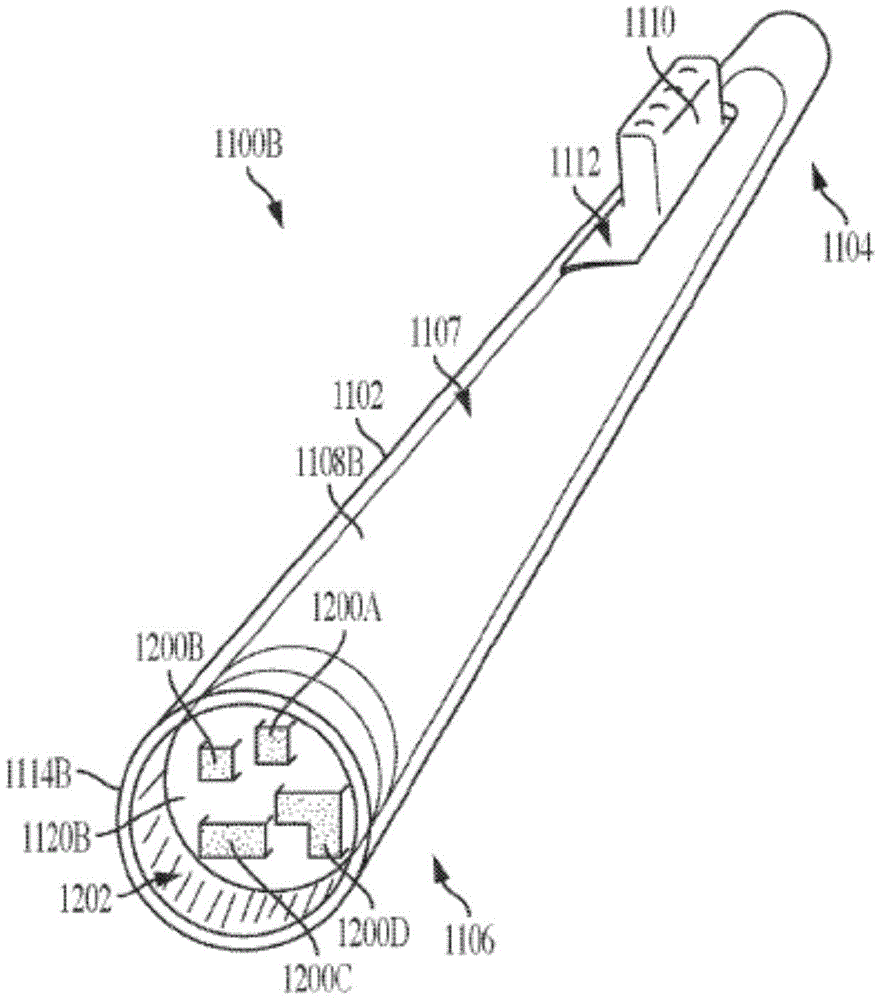
图11示出了根据实施例的基于模具的基准标记印章笔。Figure 11 illustrates a die-based fiducial marker stamp pen according to an embodiment.
图12示出了根据实施例的说明性预装墨水的基准标记印章笔。Figure 12 shows an illustrative pre-inked fiducial marker stamp pen according to an embodiment.
图13A示出了根据实施例的包括可选视觉图案的说明性基准标记印章笔。13A shows an illustrative fiducial marker stamp pen including selectable visual patterns, according to an embodiment.
图13B示出了根据实施例的图13A的基准标记印章笔的截面图。13B illustrates a cross-sectional view of the fiducial marker stamp pen of FIG. 13A , according to an embodiment.
图13C示出了根据实施例的图13A的基准标记印章笔,其中施加器尖端伸出。13C illustrates the fiducial marker stamp pen of FIG. 13A with the applicator tip extended, according to an embodiment.
图14示出了根据实施例的说明性基准标记可变形施加器组件。14 shows an illustrative fiducial marker deformable applicator assembly, according to an embodiment.
图15A示出了根据实施例的不具有畸变的基准标记。Figure 15A shows a fiducial marker without distortion, according to an embodiment.
图15B示出了根据实施例的具有正径向畸变的基准标记。Figure 15B shows a fiducial marker with positive radial distortion, according to an embodiment.
图15C示出了根据实施例的具有负径向畸变的基准标记。Figure 15C shows a fiducial marker with negative radial distortion, according to an embodiment.
具体实施方式Detailed ways
本公开不限于所描述的特定系统、装置和方法,因为其可以变化。描述中使用的术语仅用于描述特定版本或实施例的目的,而不旨在限制范围。This disclosure is not limited to the particular systems, apparatus and methods described, as these may vary. The terminology used in the description is for the purpose of describing a particular version or embodiment only, and is not intended to limit the scope.
如本文件中所使用,除非上下文另外明确规定,否则单数形式“一个”、“一种”和“该/所述”包括复数指代。除非另有定义,否则本文所使用的所有科技术语具有与本领域普通技术人员通常所理解的相同含义。本公开中的任何内容均不应被解释为承认本公开中描述的实施例由于在前发明而无权把本公开的日期提前。如本文件中所使用,术语“包括”意指“包括但不限于”。As used in this document, the singular forms "a", "an" and "the/said" include plural referents unless the context clearly dictates otherwise. Unless defined otherwise, all technical and scientific terms used herein have the same meaning as commonly understood by one of ordinary skill in the art. Nothing in this disclosure should be construed as an admission that the embodiments described in this disclosure are not entitled to antedate the date of this disclosure by virtue of prior invention. As used in this document, the term "including" means "including but not limited to".
定义definition
出于本公开的目的,术语“植入物”用于指代制造成置换或增强生物结构的假体装置或结构。例如,在全髋关节置换程序中,使用假体髋臼杯(植入物)来置换或增强患者的磨损或损坏的髋臼。虽然术语“植入物”通常被认为表示人造结构(与移植形成对比),但是出于本说明书的目的,植入物可包括移植以置换或增强生物结构的生物组织或材料。For the purposes of this disclosure, the term "implant" is used to refer to a prosthetic device or structure manufactured to replace or augment a biological structure. For example, during a total hip replacement procedure, a prosthetic acetabular cup (implant) is used to replace or augment a patient's worn or damaged acetabulum. While the term "implant" is generally taken to mean a man-made structure (as opposed to a graft), for purposes of this specification, an implant may include biological tissue or material that is grafted to replace or augment a biological structure.
出于本公开的目的,术语“实时”用于指代事件发生或可操作系统接收到输入时即时执行的计算或操作。然而,术语“实时”的使用并不旨在排除在输入和响应之间引起某些延迟的操作,只要延迟是机器的性能特性引起的意外结果即可。For the purposes of this disclosure, the term "real-time" is used to refer to computations or operations that are performed as soon as an event occurs or as input is received by the operating system. However, use of the term "real-time" is not intended to exclude operations that induce some delay between input and response, so long as the delay is an unintended consequence of the performance characteristics of the machine.
尽管本公开中的许多内容涉及按特定职衔或角色的外科医生或其他医疗专业人员,但本公开中的任何内容都不旨在限于特定的职衔或职能。外科医生或医疗专业人员可以包括任何医生、护士、医疗专业人员或技师。这些术语或职衔中的任何一个都可以与本文公开的系统的用户互换使用,除非另有明确规定。例如,在一些实施例中,对外科医生的提及也可以适用于技师或护士。Although much of this disclosure refers to a surgeon or other medical professional in a particular title or role, nothing in this disclosure is intended to be limited to a particular title or function. A surgeon or medical professional may include any doctor, nurse, medical professional or technician. Any of these terms or titles may be used interchangeably with users of the systems disclosed herein, unless expressly stated otherwise. For example, in some embodiments, a reference to a physician may also apply to a technician or nurse.
本文所公开的系统、方法和装置特别好地适合于利用手术导航系统(例如
CASS生态系统概述Overview of the CASS Ecosystem
图1提供了根据一些实施例的示例计算机辅助手术系统(CASS)100的图示。如以下各节中进一步详细所述,CASS使用计算机,机器人和成像技术来帮助外科医生执行骨科手术程序,例如全膝关节置换术(TKA)或全髋关节置换术(THA)。例如,手术导航系统可以帮助外科医生以高精度定位患者的解剖结构、引导手术器械以及植入医疗装置。诸如CASS 100的手术导航系统经常采用各种形式的计算技术来执行各种各样的标准和微创手术程序和技术。而且,这些系统允许外科医生更准确地计划、跟踪和导航相对于患者身体的器械和植入物的位置,以及进行术前和术中身体成像。FIG. 1 provides an illustration of an example computer-assisted surgery system (CASS) 100 in accordance with some embodiments. As described in further detail in the following sections, CASS uses computers, robotics, and imaging to assist surgeons in performing orthopedic procedures such as total knee arthroplasty (TKA) or total hip arthroplasty (THA). For example, surgical navigation systems help surgeons locate patient anatomy, guide surgical instruments, and implant medical devices with high precision. Surgical navigation systems such as CASS 100 often employ various forms of computing technology to perform a wide variety of standard and minimally invasive surgical procedures and techniques. Moreover, these systems allow surgeons to more accurately plan, track, and navigate the position of instruments and implants relative to the patient's body, as well as perform preoperative and intraoperative body imaging.
执行器平台105在手术期间相对于患者定位手术工具。执行器平台105的确切部件将根据所采用的实施例而变化。例如,对于膝手术,执行器平台105可以包括在其使用期间保持手术工具或器械的末端执行器105B。末端执行器105B可以是外科医生使用的手持式装置或器械(例如
执行器平台105可以包括用于在手术期间定位患者的肢体的肢体定位器105C。肢体定位器105C的一个示例是SMITH AND NEPHEW SPIDER2系统。肢体定位器105C可以由外科医生手动操作,或者替代地,基于从手术计算机150(以下描述)接收到的指令来改变肢体位置。尽管在图1中示出了一个肢体定位器105C,但在一些实施例中可以有多个装置。作为示例,在手术台T的每一侧可以有一个肢体定位器105C,或者在手术台T的一侧可以有两个装置。肢体定位器105C可以直接安装到手术台T,在手术台T的旁边位于地板平台(未示出)上,安装在杆上,或安装在手术室的墙壁或天花板上。在一些实施例中,肢体定位器105C可以以非常规方式使用,例如牵开器或特定的骨保持器。作为示例,肢体定位器105C可以包括脚踝靴、软组织夹、骨夹或软组织牵开器匙,例如钩形、弯曲或成角的刀片。在一些实施例中,肢体定位器105C可以包括缝线保持器以辅助闭合伤口。The
执行器平台105可以包括工具,如螺丝刀,指示轴线或平面的光或激光,水准仪,销驱动器,销拔出器,平面检查器,指示器,指状件,或它们的某种组合。
切除设备110(图1中未示出)使用例如机械、超声或激光技术执行骨或组织切除。切除设备110的示例包括钻孔装置、去毛刺装置、振荡锯切装置、振动冲击装置、扩孔器、超声骨切割装置、射频消融装置、往复运动装置(例如锉刀或拉刀),以及激光消融系统。在一些实施例中,切除设备110在手术期间由外科医生保持和操作。在其他实施例中,执行器平台105可以用于在使用期间保持切除设备110。Resection device 110 (not shown in FIG. 1 ) performs bone or tissue resection using, for example, mechanical, ultrasonic or laser techniques. Examples of
执行器平台105还可以包括切割引导件或夹具105D,其用于引导在手术期间用于切除组织的锯或钻。这样的切割引导件105D可以一体地形成为执行器平台105或机器人臂105A的一部分,或者切割引导件可以是可以配合地和/或可移除地附接到执行器平台105或机器人臂105A的独立结构。可以由CASS 100控制执行器平台105或机器人臂105A,以根据术前或术中制定的手术计划将切割引导件或夹具105D定位在患者的解剖结构附近,使得切割引导件或夹具将根据手术计划产生精确的骨切割。The implement
跟踪系统115使用一个或多个传感器来收集定位患者的解剖结构和手术器械的实时位置数据。例如,对于TKA程序,跟踪系统可以在程序期间提供末端执行器105B的位置和取向。除了位置数据之外,来自跟踪系统115的数据还可以用于推断解剖结构/器械的速度/加速度,其可以用于工具控制。在一些实施例中,跟踪系统115可以使用附接到末端执行器105B的跟踪器阵列来确定末端执行器105B的位置和取向。可以基于跟踪系统115的位置和取向以及跟踪系统115和末端执行器105B之间的三维空间中的已知关系来推断末端执行器105B的位置。在本发明的各种实施例中可以使用各种类型的跟踪系统,包括但不限于红外(IR)跟踪系统、电磁(EM)跟踪系统、基于视频或图像的跟踪系统以及超声配准和跟踪系统。使用由跟踪系统115提供的数据,手术计算机150可以检测对象并防止碰撞。例如,手术计算机150可以防止机器人臂105A和/或末端执行器105B与软组织碰撞。
任何合适的跟踪系统都可以用于跟踪手术室中的手术对象和患者解剖结构。例如,可以在阵列中使用红外和可见光摄像头的组合。各种照明源(例如红外LED光源)可以照亮场景,从而可以进行三维成像。在一些实施例中,这可以包括立体,三视,四视等成像。除了在一些实施例中固定到推车的摄像头阵列之外,还可以在整个手术室中放置附加摄像头。例如,操作者/外科医生穿戴的手持式工具或头戴件可以包括将图像传回中央处理器以将那些图像与摄像头阵列获取的图像相关的成像功能。这可以为使用多个视角进行建模的环境提供更鲁棒的图像。此外,一些成像装置可以在场景上具有合适的分辨率或具有合适的视角以拾取存储在快速响应(QR)代码或条形码中的信息。这有助于识别未用系统手动配准的特定对象。在一些实施例中,摄像头可以安装在机器人臂105A上。Any suitable tracking system may be used to track surgical objects and patient anatomy in the operating room. For example, a combination of infrared and visible light cameras can be used in the array. Various illumination sources, such as infrared LED sources, can illuminate the scene, allowing three-dimensional imaging. In some embodiments, this may include stereoscopic, tri-look, quad-look, etc. imaging. In addition to the camera array affixed to the cart in some embodiments, additional cameras may be placed throughout the operating room. For example, a handheld tool or headgear worn by the operator/surgeon may include imaging functionality to communicate images back to the central processor to correlate those images with images captured by the camera array. This can provide more robust images for environments modeled using multiple viewpoints. Additionally, some imaging devices may have suitable resolution on the scene or have suitable viewing angles to pick up information stored in Quick Response (QR) codes or barcodes. This helps identify specific objects that were not manually registered with the system. In some embodiments, a camera may be mounted on the
如本文所论述的,尽管大多数跟踪和/或导航技术利用基于图像的跟踪系统(例如,IR跟踪系统、基于视频或图像的跟踪系统等等)。然而,基于电磁(EM)的跟踪系统由于各种原因变得越来越常见。例如,标准光学跟踪器的植入需要组织切除(例如,向下到皮质)以及后续钻孔和驱动皮质销。另外,由于光学跟踪器需要与跟踪系统的直达视线,因此此类跟踪器的放置可能需要远离手术部位以确保它们不限制外科医生或医疗专业人员的移动。As discussed herein, though, most tracking and/or navigation techniques utilize image-based tracking systems (eg, IR tracking systems, video or image-based tracking systems, etc.). However, electromagnetic (EM) based tracking systems are becoming more and more common for various reasons. For example, implantation of standard optical trackers requires tissue excision (eg, down to the cortex) and subsequent drilling and driving of cortical pins. Additionally, since optical trackers require a direct line-of-sight to the tracking system, placement of such trackers may need to be far from the surgical site to ensure they do not restrict the movement of the surgeon or medical professional.
通常,基于EM的跟踪装置包括一个或多个线圈和参考场发生器。一个或多个线圈可(例如,经由有线或无线电源)通电。一旦通电,线圈就产生可(例如,由参考场发生器或附加装置)以允许确定一个或多个线圈的位置和取向的方式检测和测量的电磁场。如所属领域的普通技术人员应理解的,例如图2中所示的单个线圈限于检测五(5)个总自由度(DOF)。例如,传感器200能够跟踪/确定X、Y或Z方向上的移动,以及围绕Y轴202或Z轴201的旋转。然而,由于线圈的电磁特性,不可能正确地跟踪围绕X轴线的旋转运动。Typically, an EM-based tracking device includes one or more coils and a reference field generator. One or more coils may be energized (eg, via a wired or wireless power source). Once energized, the coils generate an electromagnetic field that can be detected and measured (eg, by a reference field generator or additional device) in a manner that allows the position and orientation of one or more coils to be determined. As will be understood by one of ordinary skill in the art, a single coil such as that shown in FIG. 2 is limited to detecting five (5) total degrees of freedom (DOF). For example, sensor 200 is capable of tracking/determining movement in X, Y, or Z directions, as well as rotation about Y-
因此,在大多数电磁跟踪应用中,诸如图3A中所示的三线圈系统用于实现在可使刚性主体在三维空间中移动的所有六个自由度中的跟踪(即,前/后310、上/下320、左/右330、滚动340、俯仰350和偏航360)。然而,包括两个额外线圈及其定位的90°偏移角可能要求跟踪装置大得多。替代地,如本领域的技术人员所知,少于三个完整的线圈可用于跟踪所有6DOF。在一些基于EM的跟踪装置中,两个线圈可以彼此固定,例如图3B中所示的。由于两个线圈301B、302B彼此刚性地固定,不完全平行,并且具有相对于彼此已知的位置,因此可以使用此布置确定第六自由度303B。Therefore, in most electromagnetic tracking applications, a three-coil system such as that shown in FIG. /down 320, left/right 330,
尽管使用两个固定线圈(例如,301B、302B)允许在6DOF中使用基于EM的跟踪,但由于附加线圈,传感器装置的直径比单个线圈大得多。因此,在手术环境中使用基于EM的跟踪系统的实际应用可能需要组织切除并对患者骨的一部分进行钻孔以允许插入EM跟踪器。替代地,在一些实施例中,可以仅使用销(例如,不需要钻孔或切除大量骨)将单个线圈或5DOFEM跟踪装置植入/插入患者骨中。Although the use of two stationary coils (eg, 301B, 302B) allows the use of EM-based tracking in 6DOF, the diameter of the sensor device is much larger than a single coil due to the additional coils. Therefore, a practical application of using an EM-based tracking system in a surgical setting may require tissue resection and drilling of a portion of the patient's bone to allow insertion of an EM tracker. Alternatively, in some embodiments, a single coil or 5DOFEM tracking device may be implanted/inserted into the patient's bone using only pins (eg, without the need to drill holes or remove large amounts of bone).
因此,如本文所述,需要一种解决方案,该解决方案可以将EM跟踪系统的使用限于小到足以使用小直径针或销(即,不需要在骨中制造新切口或大直径开口)插入/嵌入的装置。因此,在一些实施例中,未附接到第一传感器且因此具有小直径的第二5DOF传感器可用于跟踪所有6DOF。现在参考图3C,在一些实施例中,两个5DOF EM传感器(例如,301C和302C)可以在不同位置处以不同角取向(例如,角303C是非零的)插入到患者中(例如,患者骨中)。Therefore, as described herein, there is a need for a solution that can limit the use of EM tracking systems to small enough to be inserted using small diameter needles or pins (i.e., that do not require new incisions or large diameter openings to be made in the bone). /embedded device. Therefore, in some embodiments, a second 5DOF sensor that is not attached to the first sensor and thus has a small diameter can be used to track all 6DOF. Referring now to FIG. 3C , in some embodiments, two 5DOF EM sensors (e.g., 301C and 302C) can be inserted into a patient (e.g., in a patient's bone) at different locations with different angular orientations (e.g.,
现在参考图4,示出了使用在大多数OR中典型的标准中空针405将第一5DOF EM传感器401和第二5DOF EM传感器402插入到患者骨403中的示例实施例。在另一实施例中,第一传感器401和第二传感器402可具有“α”404的角度偏移。在一些实施例中,偏移角“α”404可能需要大于预定值(例如,0.50°、0.75°等的最小角)。在一些实施例中,此最小值可以在手术计划期间由CASS确定并提供给外科医生或医学专业人员。在一些实施例中,最小值可以基于一个或多个因素,例如,跟踪系统的定向准确度、第一EM传感器与第二EM传感器之间的距离。场发生器的位置、场检测器的位置、EM传感器的类型、EM传感器的质量、患者解剖结构等等。Referring now to FIG. 4 , an example embodiment is shown in which a first
因此,如本文所论述的,在一些实施例中,销/针(例如,套管安装针等)可用于插入一个或多个EM传感器。通常,销/针将是一次性部件,而传感器本身可以是可重复使用的。然而,应理解,这仅是一个可能系统,并且可使用销/针和/或EM传感器是独立的一次性使用的或可重复使用的各种其它系统。在另一实施例中,EM传感器可(例如,使用鲁尔锁配件等)固定到安装针/销,这可以允许快速组装和拆卸。在另外的实施例中,EM传感器可以利用允许传感器最小地侵入放置的替代套筒和/或锚定系统。Accordingly, as discussed herein, in some embodiments, a pin/needle (eg, cannula mount needle, etc.) may be used to insert one or more EM sensors. Typically, the pins/needles will be disposable components, while the sensor itself can be reusable. However, it should be understood that this is only one possible system and that a variety of other systems could be used where the pin/needle and/or EM sensor is self-contained single use or reusable. In another embodiment, the EM sensor can be secured (eg, using a luer lock fitting, etc.) to a mounting pin/pin, which can allow for quick assembly and disassembly. In further embodiments, the EM sensor may utilize alternative sleeves and/or anchoring systems that allow for minimally invasive placement of the sensor.
在另一实施例中,上述系统可以允许多传感器导航系统,其可以检测和校正困扰电磁跟踪系统的场畸变。应理解,场畸变可以由参考场内的任何铁磁性材料的移动引起。因此,如本领域的普通技术人员所知,典型OR具有大量可造成干扰的装置(例如,手术台、LCD显示器、照明设备、成像系统、手术仪器等)。此外,众所周知,场畸变难以检测。使用多个EM传感器使得系统能够准确地检测场畸变,和/或警示用户当前位置测量值可能不准确。因为传感器(例如,经由销/针)牢固地固定到骨解剖结构,所以传感器位置(X、Y、Z)的相对测量可用于检测场畸变。作为非限制性示例,在一些实施例中,在EM传感器固定到骨之后,两个传感器之间的相对距离是已知的并且应当保持恒定。因此,此距离的任何改变都可以指示存在场畸变。In another embodiment, the system described above may allow for a multi-sensor navigation system that can detect and correct field distortions that plague electromagnetic tracking systems. It will be appreciated that field distortion may be caused by movement of any ferromagnetic material within the reference field. Thus, as known to those of ordinary skill in the art, a typical OR has a large number of interfering devices (eg, operating tables, LCD monitors, lighting, imaging systems, surgical instruments, etc.). Furthermore, field distortion is notoriously difficult to detect. Using multiple EM sensors enables the system to accurately detect field distortions, and/or alert the user that current location measurements may be inaccurate. Because the sensor is securely fixed (eg, via a pin/needle) to the bony anatomy, relative measurements of sensor position (X, Y, Z) can be used to detect field distortions. As a non-limiting example, in some embodiments, after the EM sensor is secured to the bone, the relative distance between the two sensors is known and should remain constant. Therefore, any change in this distance can indicate the presence of field distortion.
在一些实施例中,外科医生可以在术前或术中用系统手动配准特定对象。例如,通过与用户界面交互,外科医生可以识别工具或骨结构的起始位置。通过跟踪与该工具或骨结构相关的基准标记,或者通过使用其他常规图像跟踪方式,处理器可以在工具或骨在三维模型中移动通过环境时对其进行跟踪。In some embodiments, a surgeon may manually register specific objects with the system preoperatively or intraoperatively. For example, by interacting with the user interface, the surgeon can identify the starting position of tools or bone structures. By tracking fiducial markers associated with the tool or bone structure, or by using other conventional image tracking means, the processor can track the tool or bone as it moves through the environment in the three-dimensional model.
在一些实施例中,诸如在手术室中识别个人、重要工具或骨的基准标记的某些标记物可以包括可以由与跟踪系统关联的摄像头或摄像头阵列拾取的被动或主动标识。例如,红外LED可以闪烁图案,所述图案将唯一的标识传达给该图案的来源,从而提供动态识别标记。类似地,一维或二维光学代码(条形码、QR代码等)可以固定到手术室的对象以提供基于图像分析可以发生的被动识别。如果这些代码非对称地放置在对象上,则它们也可以用于通过将标识的位置与图像中的对象的范围进行比较来确定对象的取向。例如,可以将QR码放置在工具托盘的角部中,从而允许跟踪该托盘的方向和标识。其他跟踪方式将在全文中进行说明。例如,在一些实施例中,外科医生和其他人员可以穿戴增强现实头戴件以提供附加的摄像头角度和跟踪能力。In some embodiments, certain markers such as fiducial markers identifying individuals, vital tools, or bones in an operating room may include passive or active markers that may be picked up by a camera or camera array associated with the tracking system. For example, an infrared LED can flash a pattern that conveys a unique identification to the source of the pattern, thereby providing a dynamic identification mark. Similarly, one-dimensional or two-dimensional optical codes (barcodes, QR codes, etc.) can be affixed to objects in the operating room to provide passive identification that can occur based on image analysis. If these codes are placed asymmetrically on the object, they can also be used to determine the object's orientation by comparing the identified location to the extent of the object in the image. For example, a QR code could be placed in the corner of a tool tray, allowing the orientation and identification of the tray to be tracked. Other tracking methods will be explained throughout. For example, in some embodiments, surgeons and others may wear augmented reality headsets to provide additional camera angles and tracking capabilities.
除了光学跟踪外,还可以通过配准对象的物理性质并将其与可以跟踪的对象(例如固定到工具或骨的基准标记)关联来跟踪对象的某些特征。例如,外科医生可以执行手动配准过程,由此被跟踪工具和被跟踪骨可以相对于彼此被操纵。通过将工具的尖端撞击骨的表面,可以为该骨标绘三维表面,所述三维表面与相对于该基准标记的参考系的位置和取向关联。通过光学跟踪与该骨关联的基准标记的位置和取向(姿态),可以通过外推法在环境中跟踪该表面的模型。In addition to optical tracking, certain features of objects can also be tracked by registering their physical properties and associating them with objects that can be tracked, such as fiducial markers fixed to tools or bones. For example, a surgeon can perform a manual registration process whereby the tracked tool and tracked bone can be manipulated relative to each other. By striking the tip of the tool against the surface of the bone, a three-dimensional surface can be mapped for the bone, which is associated with a position and orientation relative to the reference frame of the fiducial marker. By optically tracking the position and orientation (pose) of fiducial markers associated with the bone, the model of the surface can be tracked in the environment by extrapolation.
将CASS 100配准到患者的相关解剖结构的配准过程还可以涉及使用解剖学标志,例如骨或软骨上的标志。例如,CASS 100可以包括相关骨或关节的3D模型,并且外科医生可以使用连接到CASS的探针在术中收集有关患者实际骨上的骨标志的位置的数据。骨标志可以包括例如内踝和外踝,股骨近端和胫骨远端的端部,以及髋关节的中心。CASS 100可以将外科医生用探针收集的骨标志的位置数据与3D模型中相同标志的位置数据进行比较和配准。替代地,CASS 100可以通过使用由外科医生使用CASS探针或其他手段收集的骨标志和骨表面的位置数据来构建没有术前图像数据的骨或关节的3D模型。配准过程还可以包括确定关节的各个轴线。例如,对于TKA,外科医生可以使用CASS 100来确定股骨和胫骨的解剖和机械轴。外科医生和CASS 100可以通过在螺旋方向上移动患者的腿部(即,环转)来识别髋关节的中心,以便CASS可以确定髋关节中心的位置。The registration process of registering the CASS 100 to the patient's relevant anatomy may also involve the use of anatomical landmarks, such as those on bone or cartilage. For example, CASS 100 may include a 3D model of the relevant bone or joint, and the surgeon may use a probe attached to the CASS to collect data intraoperatively about the location of bony landmarks on the patient's actual bone. Bone landmarks may include, for example, the medial and lateral malleolus, the ends of the proximal femur and distal tibia, and the center of the hip joint. The CASS 100 can compare and register the positional data of the bone landmarks collected by the surgeon with the probe to the positional data of the same landmarks in the 3D model. Alternatively, CASS 100 may construct a 3D model of a bone or joint without preoperative image data by using bone landmarks and location data of bone surfaces collected by the surgeon using a CASS probe or other means. The registration process may also include determining the various axes of the joint. For example, for TKA, a surgeon may use CASS 100 to determine the anatomical and mechanical axes of the femur and tibia. The surgeon and CASS 100 can identify the center of the hip joint by moving the patient's leg in a helical direction (ie, in a circle) so that the CASS can determine the location of the center of the hip joint.
组织导航系统120(图1中未示出)为外科医生提供手术区域周围的患者的骨、软骨、肌肉、神经和/或血管组织的术中实时可视化。可以用于组织导航的系统的示例包括荧光成像系统和超声系统。Tissue navigation system 120 (not shown in FIG. 1 ) provides the surgeon with intraoperative real-time visualization of the patient's bone, cartilage, muscle, nerve, and/or vascular tissue surrounding the surgical field. Examples of systems that can be used for tissue navigation include fluoroscopic imaging systems and ultrasound systems.
显示器125提供图形用户界面(GUI),其显示由组织导航系统120收集的图像以及与手术有关的其他信息。例如,在一个实施例中,显示器125覆盖术前或术中收集的从各种模态(例如,CT、MRI、X射线、荧光、超声等)收集的图像信息以为外科医生提供患者的解剖结构的各种视图以及实时状况。显示器125可以包括例如一个或多个计算机监视器。作为显示器125的替代或补充,手术人员中的一个或多个人员可以穿戴增强现实(AR)头戴式装置(HMD)。例如,在图1中,外科医生111穿戴AR HMD 155,其可以例如将术前图像数据覆盖在患者上或提供手术计划建议。在以下各节中详细描述了AR HMD 155在手术程序中的各种示例性使用。
手术计算机150向CASS 100的各种部件提供控制指令,从那些部件收集数据,并为手术期间所需的各种数据提供一般处理。在一些实施例中,手术计算机150是通用计算机。在其他实施例中,手术计算机150可以是使用多个中央处理单元(CPU)或图形处理单元(GPU)来执行处理的并行计算平台。在一些实施例中,手术计算机150通过一个或多个计算机网络(例如,互联网)连接到远程服务器。远程服务器可以用于例如数据的存储或计算密集型处理任务的执行。
可以使用本领域中公知的各种技术来将手术计算机150连接到CASS 100的其他部件。而且,计算机可以使用多种技术来连接到手术计算机150。例如,末端执行器105B可以通过有线(即,串行)连接而连接到手术计算机150。跟踪系统115、组织导航系统120和显示器125可以类似地使用有线连接来连接到手术计算机150。替代地,跟踪系统115、组织导航系统120和显示器125可以使用无线技术连接到手术计算机150,所述无线技术例如但不限于Wi-Fi、蓝牙、近场通信(NFC)或ZigBee。
动力冲击和髋臼扩孔器装置Dynamic Impact and Acetabular Reamer Devices
以上关于图1描述的CASS设计的灵活性的一部分在于可以根据需要向CASS 100添加额外的或替代的装置以支持特定的手术程序。例如,在髋手术的情况下,CASS 100可以包括动力冲击装置。冲击装置设计成重复施加外科医生可以用来执行诸如植入物对准的活动的冲击力。例如,在全髋关节置换术(THA)中,外科医生通常会使用冲击装置将假体髋臼杯插入到植入宿主的髋臼中。尽管冲击装置本质上可以是手动的(例如,由外科医生用槌敲击冲击器来操作),但是动力冲击装置通常在手术环境中更容易且更快速地使用。动力冲击装置可以例如使用附接到该装置的电池来供电。各种附接件可以连接至动力冲击装置以允许在手术期间根据需要以各种方式来引导冲击力。同样,在髋手术的情况下,CASS 100可以包括动力的、机器人控制的末端执行器,以使髋臼扩孔以容纳髋臼杯植入物。Part of the flexibility of the CASS design described above with respect to FIG. 1 is that additional or alternative devices can be added to the CASS 100 as needed to support a particular surgical procedure. For example, in the case of hip surgery, CASS 100 may include a powered impact device. The impact device is designed to repeatedly apply impact forces that a surgeon can use to perform activities such as implant alignment. For example, in total hip arthroplasty (THA), the surgeon will typically use an impact device to insert a prosthetic acetabular cup into the acetabulum of the implanted host. While percussion devices may be manual in nature (eg, operated by a surgeon striking the impactor with a mallet), powered percussion devices are generally easier and quicker to use in a surgical setting. The powered impact device may be powered, for example, using a battery attached to the device. Various attachments can be connected to the powered impact device to allow the impact force to be directed in various ways as desired during surgery. Also, in the case of hip surgery, the CASS 100 may include a powered, robotically controlled end effector to ream the acetabulum to accommodate the acetabular cup implant.
在机器人辅助THA中,可以使用CT或其他图像数据、解剖标志的识别、附着到患者骨的跟踪器阵列以及一个或多个摄像头将患者的解剖结构配准到CASS 100。可以使用夹具和/或骨针将跟踪器阵列安装在髂嵴上,并且可以在外部通过皮肤或在内部(后外侧或前外侧)通过为了执行THA而制造的切口来安装这样的跟踪器阵列。对于THA,CASS 100可以利用插入股骨近端的一个或多个股骨皮质螺钉作为检查点以帮助配准过程。CASS 100还可以使用插入骨盆中的一个或多个检查点螺钉作为附加检查点以帮助配准过程。股骨跟踪器阵列可以固定或安装在股骨皮质螺钉中。CASS 100可以采用以下步骤,其中使用外科医生精确地放置在显示器125上为外科医生所识别的股骨近端和骨盆的关键区域上的探针进行验证。跟踪器可以位于机器人臂105A或末端执行器105B上以将臂和/或末端执行器配准到CASS 100。验证步骤还可以利用股骨近端检查点和远端检查点。CASS 100可以利用颜色提示或其他提示来通知外科医生有关骨和机器人臂105A或末端执行器105B的配准过程已在一定程度的精度上(例如,在1mm内)被验证。In robot-assisted THA, the patient's anatomy may be registered to the CASS 100 using CT or other image data, identification of anatomical landmarks, an array of trackers attached to the patient's bones, and one or more cameras. Tracker arrays can be mounted on the iliac crest using clamps and/or bone pins, and can be mounted externally through the skin or internally (posterolaterally or anterolaterally) through an incision made to perform THA. For THA, the CASS 100 may utilize one or more cortical femoral screws inserted into the proximal femur as a checkpoint to aid in the registration process. The CASS 100 can also use one or more checkpoint screws inserted into the pelvis as additional checkpoints to aid in the registration process. The femoral tracker array can be fixed or mounted in the femoral cortical screw. CASS 100 may employ a procedure in which verification is performed using a probe placed by the surgeon precisely on
对于THA,CASS 100可以包括使用股骨阵列的拉刀跟踪选择,以允许外科医生在术中获取拉刀的位置和取向并计算患者的髋长度和偏移值。根据提供的有关患者髋关节的信息以及在完成拉刀跟踪后计划的植入物位置和取向的信息,外科医生可以对手术计划进行修改或调整。For THA, CASS 100 may include a broach tracking option using the femoral array to allow the surgeon to capture the broach location and orientation intraoperatively and calculate the patient's hip length and offset values. Based on the information provided about the patient's hip joint and the planned implant position and orientation after completion of the broach tracking, the surgeon can make modifications or adjustments to the surgical plan.
对于机器人辅助THA,CASS 100可以包括连接或附接到机器人臂105A或末端执行器105B的一个或多个动力扩孔器,其根据手术计划准备骨盆骨以接收髋臼植入物。机器人臂105A和/或末端执行器105B可以通知外科医生和/或控制扩孔器的动力,以确保根据手术计划切除(扩孔)髋臼。例如,如果外科医生根据手术计划试图在要切除的骨的边界之外切除骨,则CASS 100可以切断扩孔器的电源或指示外科医生切断扩孔器的电源。CASS 100可以为外科医生提供选择以关闭或脱离扩孔器的机器人控制。与使用不同颜色的手术计划相比,显示器125可以示出正被切除(扩孔)的骨的进度。外科医生可以查看正被切除(扩孔)的骨的显示以根据手术计划引导扩孔器完成扩孔。CASS 100可以向外科医生提供视觉或听觉提示以警告外科医生正在进行不符合手术计划的切除。For robot-assisted THA, the CASS 100 may include one or more powered reamers connected or attached to the
在扩孔之后,CASS 100可以采用附接到或连接到机器人臂105A或末端执行器105B的手动或动力冲击器以将试验植入物和最终植入物冲击到髋臼中。机器人臂105A和/或末端执行器105B可以用于引导冲击器以根据手术计划将试验植入物和最终植入物冲击到髋臼中。CASS 100可以使试验植入物和最终植入物相对于骨的位置和取向被显示以告知外科医生如何将试验植入物和最终植入物的取向和位置与手术计划进行比较,显示器125可以在外科医生操纵腿部和髋部时显示植入物的位置和取向。如果外科医生对初始植入物位置和取向不满意,则通过准备新的手术计划,CASS 100可以为外科医生提供重新计划以及重做扩孔和植入物冲击的选择。After reaming, the CASS 100 may employ a manual or powered impactor attached or connected to the
术前,CASS 100可以基于髋关节的三维模型和患者特定的其他信息(例如腿骨的机械和解剖轴,上髁轴,股骨颈轴,股骨和髋的尺寸(例如,长度),髋关节的中线轴,髋关节的ASIS轴,以及诸如小转子标志,远侧标志和髋关节旋转中心的解剖学标志的位置)来制定拟议的手术计划。CASS制定的手术计划可以根据髋关节的三维模型和患者特定的其他信息提供建议的最佳植入物尺寸以及植入物的位置和取向。CASS制定的手术计划可以包括有关偏移值、倾斜度和前倾值、旋转中心、杯尺寸、中度值、上下配合度、股骨柄尺寸和长度的建议细节。Preoperatively, CASS 100 can be based on a three-dimensional model of the hip joint and other patient-specific information (e.g., mechanical and anatomical axes of the leg bone, epicondylar axis, femoral neck axis, femur and hip dimensions (e.g., length), hip joint The midline axis, the ASIS axis of the hip, and the location of anatomical landmarks such as the lesser trochanter landmark, the distal landmark, and the hip center of rotation) to develop a proposed surgical plan. The surgical plan developed by CASS can provide suggested optimal implant size and implant position and orientation based on the 3D model of the hip joint and other patient-specific information. Surgical plans developed by CASS can include suggested details regarding offset values, inclination and anteversion values, center of rotation, cup size, midpoint, superior-inferior fit, stem size and length.
对于THA,可以在术前和术中查看CASS制定的手术计划,而外科医生可以在术前或术中修改CASS制定的手术计划。CASS制定的手术计划可以显示计划的髋关节切除,并根据计划的切除将计划的植入物叠加到髋关节上。CASS 100可以为外科医生提供不同手术流程的选择,所述选择将根据外科医生的喜好显示给外科医生。例如,外科医生可以基于被检查和获取的解剖标志的数量和类型和/或在配准过程中使用的跟踪器阵列的位置和数量,从不同的工作流程进行选择。For THA, the surgical plan made by CASS can be viewed before and during the operation, and the surgeon can modify the surgical plan made by CASS before or during the operation. The surgical plan developed by CASS can show the planned hip resection and superimpose the planned implant on the hip based on the planned resection. CASS 100 can provide the surgeon with a choice of different surgical procedures that will be displayed to the surgeon according to the surgeon's preference. For example, a surgeon may choose from different workflows based on the number and type of anatomical landmarks examined and acquired and/or the location and number of tracker arrays used in the registration process.
根据一些实施例,与CASS 100一起使用的动力冲击装置可以以各种不同的设置来操作。在一些实施例中,外科医生通过手动开关或动力冲击装置上的其他物理机构来调整设置。在其他实施例中,可以使用数字接口,所述数字接口允许例如经由动力冲击装置上的触摸屏进行设置输入。这样的数字接口可以允许可用设置基于例如连接到电力附接装置的附接件的类型而变化。在一些实施例中,可以通过与CASS 100内的机器人或其他计算机系统通信来改变设置,而不是调整动力冲击装置本身上的设置。可以使用例如动力冲击装置上的蓝牙或Wi-Fi联网模块来建立这样的连接。在另一实施例中,冲击装置和端部件可以包含允许冲击装置知道什么端部件(杯冲击器,拉刀手柄等)被附接的特征而外科医生不需要采取任何动作,并相应地调整设置。这可以例如通过QR码、条形码、RFID标签或其他方法来实现。According to some embodiments, a powered impact device for use with CASS 100 may operate in a variety of different settings. In some embodiments, the surgeon adjusts the settings via a manual switch or other physical mechanism on the powered percussion device. In other embodiments, a digital interface may be used that allows setting input, eg, via a touch screen on the powered impact device. Such a digital interface may allow available settings to vary based on, for example, the type of attachment connected to the power attachment device. In some embodiments, the settings may be changed by communicating with a robot or other computer system within the CASS 100 rather than adjusting settings on the powered impact device itself. Such a connection may be established using, for example, a Bluetooth or Wi-Fi networking module on the powered impact device. In another embodiment, the impact device and end piece may incorporate features that allow the impact device to know what end piece (cup impactor, broach handle, etc.) is attached without the surgeon needing to take any action, and adjust the settings accordingly . This can eg be achieved by QR codes, barcodes, RFID tags or other methods.
可以使用的设置的示例包括杯冲击设置(例如,单向,指定频率范围,指定力和/或能量范围);拉刀冲击设置(例如,双向/在指定频率范围内振荡,指定力和/或能量范围);股骨头冲击设置(例如,以指定力或能量进行单向/单次打击);以及干冲击设置(例如,在指定频率下以指定力或能量进行的单向)。另外,在一些实施例中,动力冲击装置包括与髋臼内衬冲击有关的设置(例如,以指定力或能量进行的单向/单次打击)。对于每种类型的内衬(例如,聚合、陶瓷、黑晶(oxinium)或其他材料),可能会有多种设置。此外,动力冲击装置可以基于术前测试/成像/知识和/或外科医生的术中评估来提供针对不同骨质量的设置。在一些实施例中,动力冲击装置可以具有双重功能。例如,动力冲击装置不仅可以提供往复运动以提供冲击力,而且可以为拉刀或锉刀提供往复运动。Examples of settings that can be used include cup impact settings (e.g., unidirectional, specified frequency range, specified force and/or energy range); broach impact settings (e.g., bidirectional/oscillating within a specified frequency range, specified force and/or energy range); femoral head impact settings (eg, unidirectional/single blow at specified force or energy); and dry impact settings (eg, unidirectional at specified force or energy at specified frequency). Additionally, in some embodiments, the powered impact device includes settings related to impacting the acetabular liner (eg, single direction/single blow at a specified force or energy). For each type of lining (for example, polymeric, ceramic, oxinium, or other material), there may be multiple settings. Additionally, the powered percussion device can provide settings for different bone qualities based on pre-operative testing/imaging/knowledge and/or the surgeon's intra-operative evaluation. In some embodiments, the powered impact device may serve dual functions. For example, a power impact device can provide reciprocating motion not only to provide impact force, but also to provide reciprocating motion for broaches or files.
在一些实施例中,动力冲击装置包括反馈传感器,该反馈传感器在器械使用期间收集数据,并将数据发送到计算装置,例如装置内的控制器或手术计算机150。该计算装置然后可以记录数据以供以后分析和使用。可以收集的数据的示例包括但不限于声波、每种器械的预定共振频率、来自患者骨的反作用力或回弹能量、装置相对于配准的骨解剖结构的成像(例如,荧光、CT、超声、MRI等)的位置,和/或骨上的外部应变计。In some embodiments, the powered percussion device includes a feedback sensor that collects data during use of the instrument and sends the data to a computing device, such as a controller or
一旦收集到数据,计算装置就可以实时或接近实时地执行一种或多种算法以帮助外科医生执行手术程序。例如,在一些实施例中,计算装置使用所收集的数据来导出诸如正确的最终拉刀尺寸(股骨)的信息;当干完全就位(股骨侧)时;或当杯对于THA就位(深度和/或取向)时。一旦知道该信息,其可以显示以供外科医生查看,或者其可以用于激活触觉或其他反馈机构以指导手术程序。Once the data is collected, the computing device may execute one or more algorithms in real-time or near real-time to assist the surgeon in performing the surgical procedure. For example, in some embodiments, the computing device uses the collected data to derive information such as the correct final broach size (femur); when the stem is fully in place (femoral side); or when the cup is in place for the THA (depth and/or orientation). Once this information is known, it can be displayed for the surgeon to review, or it can be used to activate tactile or other feedback mechanisms to guide surgical procedures.
此外,从前述算法导出的数据可以用于驱动装置的操作。例如,在用动力冲击装置插入假体髋臼杯期间,装置可以自动伸出冲击头(例如,末端执行器),将植入物移动到适当的位置,或者一旦植入物完全就位就关闭装置的电源。在一个实施例中,导出的信息可以用于自动调整骨质量的设置,其中动力冲击装置应使用较少的动力来减轻股骨/髋臼/骨盆骨折或周围组织的损伤。Furthermore, the data derived from the aforementioned algorithms can be used for the operation of the drive device. For example, during insertion of a prosthetic acetabular cup with a powered percussion device, the device can automatically extend the percussion head (e.g., end effector), move the implant into place, or close once the implant is fully seated power to the device. In one embodiment, the derived information can be used to automatically adjust bone mass settings where the powered percussion device should use less power to mitigate damage to femoral/acetabular/pelvic fractures or surrounding tissue.
机器人臂robot arm
在一些实施例中,CASS 100包括机器人臂105A,所述机器人臂用作稳定和保持手术程序期间使用的各种器械的接口。例如,在髋手术的情况下,这些器械可以包括但不限于牵开器、矢状或往复锯、扩孔器手柄、杯冲击器、拉刀手柄和干插入器。机器人臂105A可以具有多个自由度(类似Spider装置),并且具有锁定到位的能力(例如,通过按下按钮、语音激活、外科医生从机器人臂移开手或其他方法)。In some embodiments, CASS 100 includes a
在一些实施例中,机器人臂105A的移动可以通过使用内置在机器人臂系统中的控制面板来实现。例如,显示屏可以包括一个或多个输入源,例如指导机器人臂105A移动的物理按钮或具有一个或多个图标的用户界面。外科医生或其他保健专业人员可以在执行手术程序期间与一个或多个输入源接合以定位机器人臂105A。In some embodiments, movement of the
附接或集成到机器人臂105A中的工具或末端执行器105B可以包括但不限于去毛刺装置、手术刀、切割装置、牵开器、关节张紧装置等。在使用末端执行器105B的实施例中,末端执行器可以定位在机器人臂105A的端部处,使得在机器人臂系统内执行任何马达控制操作。在使用工具的实施例中,工具可以固定在机器人臂105A的远端处,但是马达控制操作可以位于工具本身内。Tools or end
机器人臂105A可在内部被机动化以稳定机器人臂,从而防止其跌落并撞击患者、手术台、手术人员等,并允许外科医生移动机器人臂而不必完全支撑其重量。在外科医生移动机器人臂105A的同时,机器人臂可提供一些阻力以防止机器人臂移动太快或一次激活太多自由度。机器人臂105A的位置和锁定状态可以例如通过控制器或手术计算机150来跟踪。The
在一些实施例中,机器人臂105A可以用手(例如,由外科医生)或用内部马达移动到其理想位置和取向以进行正在执行的任务。在一些实施例中,机器人臂105A可以能够以“自由”模式操作,允许外科医生将臂定位在期望的位置而不受限制。在自由模式下,如上所述,仍可以跟踪机器人臂105A的位置和取向。在一个实施例中,在由手术计算机150跟踪的手术计划的指定部分期间,当来自用户(例如,外科医生)的输入时,可以选择性地释放一定的自由度。其中机器人臂105A通过液压或马达在内部提供动力或通过类似的手段提供对外部手动运动的阻力的设计可以被描述为动力机器人臂,而在没有动力反馈的情况下被手动操纵但是可以被手动或自动锁定在适当位置的臂可以被描述为被动机器人臂。In some embodiments, the
机器人臂105A或末端执行器105B可以包括触发器或其他装置以控制锯或钻的动力。外科医生对触发器或其他装置的接合可以使机器人臂105A或末端执行器105B从机动对准模式过渡到锯或钻被接合并通电的模式。另外,CASS 100可以包括脚踏板(未示出),所述脚踏板在被激活时使系统执行某些功能。例如,外科医生可以激活脚踏板以指示CASS 100将机器人臂105A或末端执行器105B置于自动模式,所述自动模式将机器人臂或末端执行器相对于患者的解剖结构置于适当的位置,以便执行必要的切除。CASS 100还可以将机器人臂105A或末端执行器105B置于协作模式,所述协作模式允许外科医生手动操纵机器人臂或末端执行器并将其定位在特定位置。协作模式可以配置成允许外科医生在限制其他方向上的运动的同时向内侧或外侧移动机器人臂105A或末端执行器105B。如所讨论的,机器人臂105A或末端执行器105B可以包括切割装置(锯、钻和磨刀)或将引导切割装置的切割引导件或夹具105D。在其他实施例中,机器人臂105A或机器人控制的末端执行器105B的运动可以完全由CASS 100控制,而无需任何外科医生或其他医疗专业人员的帮助或输入,或仅需很少的帮助或输入。在另外的其他实施例中,外科医生或其他医疗专业人员可以使用与机器人臂或机器人控制的末端执行器装置分离的控制机构,例如使用操纵杆或交互式监视器或显示控制装置,来远程控制机器人臂105A或机器人控制的末端执行器105B的运动。The
以下示例描述了在髋手术的情况下使用机器人装置;然而,应当理解,机器人臂在涉及膝、肩等的手术程序中可能还有其他应用。在2019年8月28日提交的、标题为“机器人辅助韧带移植物放置和张紧(Robotic Assisted Ligament Graft Placement andTensioning)”的WIPO公开号WO 2020/047051中描述了在形成前十字韧带(ACL)移植隧道的情况下使用机器人臂的一个示例,该文献的全部内容通过引用并入本文中。The following examples describe the use of a robotic device in the context of hip surgery; however, it should be understood that there may be other applications of the robotic arm in surgical procedures involving the knee, shoulder, and the like. In WIPO Publication No. WO 2020/047051, filed 28 August 2019, entitled "Robotic Assisted Ligament Graft Placement and Tensioning", the process of forming anterior cruciate ligament (ACL) An example of the use of a robotic arm in the case of a transplant tunnel, which is incorporated herein by reference in its entirety.
机器人臂105A可以用于保持牵开器。例如在一个实施例中,外科医生可以将机器人臂105A移动到期望位置。此时,机器人臂105A可以锁定到位。在一些实施例中,机器人臂105A被提供有关于患者位置的数据,使得如果患者移动,则机器人臂可以相应地调节牵开器位置。在一些实施例中,可以使用多个机器人臂,由此允许保持多个牵开器或同时执行一个以上的动作(例如,牵开器保持和扩孔)。The
机器人臂105A还可以用于在制造股骨颈切口时帮助稳定外科医生的手。在该应用中,对机器人臂105A的控制可以施加某些限制以防止发生软组织损伤。例如,在一个实施例中,手术计算机150在机器人臂105A操作时跟踪其位置。如果跟踪的位置接近预测到组织损伤的区域,则可以向机器人臂105A发送命令以使其停止。替代地,在由手术计算机150自动控制机器人臂105A的情况下,手术计算机可以确保不向机器人臂提供导致其进入可能发生软组织损伤的区域的任何指令。手术计算机150可以对外科医生施加某些限制以防止外科医生扩孔到髋臼内侧壁中太深或以不正确的角度或取向扩孔。The
在一些实施例中,机器人臂105A可以用于在杯冲击期间将杯冲击器保持在期望的角度或取向。当已达到最终位置时,机器人臂105A可以防止任何进一步的就位以防止损坏骨盆。In some embodiments, the
外科医生可以使用机器人臂105A将拉刀手柄定位在期望位置,并允许外科医生以期望取向将拉刀冲击到股骨管中。在一些实施例中,一旦手术计算机150接收到拉刀已完全就位的反馈,机器人臂105A可以限制手柄以防止拉刀进一步前进。The surgeon may use the
机器人臂105A还可以用于表面重修应用。例如,机器人臂105A可以在使用传统器械的同时稳定外科医生,并提供某些约束或限制以允许适当地放置植入部件(例如,导丝放置、倒角切割器、套筒切割器、平面切割器等)。在仅使用磨刀的情况下,机器人臂105A可以使外科医生的手持件稳定并且可以对手持件施加限制以防止外科医生违反手术计划而移除非期望的骨。The
机器人臂105A可以是被动臂。作为示例,机器人臂105A可以是可从Brainlab AG获得的CIRQ机器人臂。CIRQ是德国慕尼黑Olof-Palme-Str.981829,Brainlab AG的注册商标。在一个特定实施例中,机器人臂105A是智能握持臂,如在授予Krinninger等人的美国专利申请第15/525,585号,授予Nowatschin等人的美国专利申请第15/561,042号,授予Nowatschin等人的美国专利第15/561,048号以及授予Nowatschin等人的美国专利第10,342,636号中所公开,上述每个专利的全部内容通过引用并入本文。The
手术程序数据的生成和收集Generation and collection of surgical procedure data
医疗专业人员为治疗临床状况而提供的各种服务统称为“护理期”。对于特定的外科手术,护理期可以包括三个阶段:术前、术中和术后。在每个阶段期间,都会收集或生成可用于分析护理期的数据,以便了解程序的各个特征并识别可用于例如在训练模型中以最少的人工干预即可做出决策的模式。在护理期收集的数据可以作为完整数据集存储在手术计算机150或手术数据服务器180处。因此,对于每个护理期,存在一个数据集,所述数据集包括关于患者术前集体收集的所有数据,由CASS 100术中收集或存储的所有数据,以及由患者或由监控患者的医疗专业人员提供的任何术后数据。The various services provided by healthcare professionals to treat a clinical condition are collectively referred to as a "period of care." For a particular surgical procedure, a period of care can include three phases: preoperative, intraoperative, and postoperative. During each phase, data is collected or generated that can be used to analyze the care session in order to understand the individual characteristics of the program and identify patterns that can be used, for example, to make decisions with minimal human intervention in the trained model. Data collected during a care session may be stored as a complete data set at
如进一步详细解释,在护理期中收集的数据可以用于增强手术程序的执行或提供对手术程序和患者结果的整体理解。例如,在一些实施例中,在护理期中收集的数据可以用于生成手术计划。在一个实施例中,在手术期间收集数据时,在术中完善高级的术前计划。以该方式,当通过CASS 100的部件收集新数据时,可以将手术计划视为实时或近实时动态变化。在其他实施例中,可以使用术前图像或其他输入数据来术前制定在手术期间简单执行的鲁棒计划。在该情况下,由CASS 100在手术期间收集的数据可用于提出建议,以确保外科医生处于术前手术计划之内。例如,如果外科医生不确定如何实现某些规定的切割或植入物对准,则可以向手术计算机150查询以得到建议。在另外的其他实施例中,可以组合术前和术中计划方案,使得可以在手术程序期间根据需要或期望动态修改完善的术前计划。在一些实施例中,患者解剖结构的基于生物力学的模型贡献模拟数据以在制定术前、术中和术后/康复程序中由CASS 100考虑以优化患者的植入物性能结果。As explained in further detail, the data collected during the care session can be used to enhance the performance of the surgical procedure or provide an overall understanding of the surgical procedure and patient outcome. For example, in some embodiments, data collected during a nursing session can be used to generate a surgical plan. In one embodiment, advanced preoperative planning is refined intraoperatively while data is collected during surgery. In this manner, the surgical plan can be viewed as dynamically changing in real-time or near real-time as new data is collected by the components of CASS 100 . In other embodiments, preoperative images or other input data may be used to preoperatively develop a robust plan that is simply executed during surgery. In this case, the data collected by the CASS 100 during surgery can be used to make recommendations to ensure that the surgeon is within the preoperative surgical plan. For example, if the surgeon is unsure how to achieve certain prescribed cuts or implant alignments, he may query
除了改变手术程序本身之外,在护理期中收集的数据还可以用作其他手术辅助程序的输入。例如,在一些实施例中,可以使用护理期数据来设计植入物。在2011年8月15日提交的、标题为“用于骨科手术的参数优化的系统和方法(Systems and Methods forOptimizing Parameters for Orthopaedic Procedures)”的美国专利申请第13/814,531号;2012年7月20日提交的、标题为“用于优化植入物与解剖结构的配合的系统和方法(Systems and Methods for Optimizing Fit of an Implant to Anatomy)”的美国专利申请第14/232,958号;以及2008年9月19日提交的、标题为“用于提高性能的手术调节植入物(Operatively Tuning Implants for Increased Performance)”的美国专利申请第12/234,444号中描述了用于设计、尺寸确定和配合植入物的示例数据驱动技术,上述专利的每一个的全部内容在此通过引用并入本专利申请。In addition to changing the surgical procedure itself, the data collected during the nursing session can be used as input for other surgical-assisted procedures. For example, in some embodiments, period of care data may be used to design implants. U.S. Patent Application No. 13/814,531, entitled "Systems and Methods for Optimizing Parameters for Orthopedic Procedures," filed Aug. 15, 2011; Jul. 20, 2012 U.S. Patent Application No. 14/232,958, titled "Systems and Methods for Optimizing Fit of an Implant to Anatomy," filed on 18 September 2008; U.S. Patent Application Serial No. 12/234,444, entitled "Operatively Tuning Implants for Increased Performance," filed on March 19, describes methods for designing, sizing, and fitting implants. Example data-driven techniques for objects, the entire contents of each of the above-mentioned patents are hereby incorporated by reference into this patent application.
此外,数据可用于教育、培训或研究目的。例如,使用下面在图5C中描述的基于网络的方案,其他医生或学生可以在允许他们选择性地查看从CASS 100各个部件收集的数据的界面中远程地查看手术。在手术程序之后,可以使用类似的界面来“回放”手术以进行培训或其他教育目的,或找出手术中任何问题或并发症的根源。In addition, data may be used for educational, training or research purposes. For example, using the web-based solution described below in FIG. 5C , other physicians or students can view procedures remotely in an interface that allows them to selectively view data collected from various components of CASS 100 . After a surgical procedure, a similar interface can be used to "play back" the procedure for training or other educational purposes, or to find the source of any problems or complications during the procedure.
术前阶段期获取的数据通常包括手术之前收集或生成的所有信息。因此,例如,可以从患者录入表或电子病历(EMR)获取有关患者的信息。可以收集的患者信息的示例包括但不限于患者人口统计学、诊断、病史、病历记录、生命体征、病史信息、过敏和实验室检查结果。术前数据还可以包括与感兴趣的解剖区域有关的图像。这些图像可以例如使用磁共振成像(MRI)、计算机断层摄影(CT)、X射线、超声或本领域已知的任何其他方式来获取。术前数据还可以包括从患者获取的生活质量数据。例如,在一个实施例中,术前患者使用移动应用程序(“app”)来回答关于他们当前生活质量的问卷。在一些实施例中,CASS100所使用的术前数据包括关于患者的人口统计学、人体测量学、文化或其他特定特征,其可以与活动水平和特定患者活动相符合以为患者定制手术计划。例如,某些文化或人口统计学的人可能更愿意使用每天蹲便的厕所。Data acquired during the preoperative phase typically includes all information collected or generated prior to surgery. Thus, for example, information about a patient can be obtained from a patient entry form or from an electronic medical record (EMR). Examples of patient information that may be collected include, but are not limited to, patient demographics, diagnoses, medical history, medical records, vital signs, medical history information, allergies, and laboratory test results. Preoperative data may also include images related to anatomical regions of interest. These images may be acquired, for example, using magnetic resonance imaging (MRI), computed tomography (CT), X-ray, ultrasound, or any other means known in the art. Preoperative data may also include quality of life data obtained from the patient. For example, in one embodiment, preoperative patients use a mobile application ("app") to answer a questionnaire about their current quality of life. In some embodiments, preoperative data used by CASS 100 includes demographic, anthropometric, cultural, or other specific characteristics about the patient, which can be aligned with activity levels and specific patient activities to tailor a surgical plan for the patient. For example, people from certain cultures or demographics may prefer to use toilets that squat every day.
图5A和5B提供了可在护理期的术中阶段期间获取的数据的示例。这些示例基于以上参考图1描述的CASS 100的各种部件;然而,应当理解,可以基于手术期间使用的设备的类型及其使用来使用其他类型的数据。5A and 5B provide examples of data that may be acquired during the intraoperative phase of the care session. These examples are based on the various components of the CASS 100 described above with reference to FIG. 1; however, it should be understood that other types of data may be used based on the type of equipment used and its use during the procedure.
图5A示出了根据一些实施例的手术计算机150提供给CASS 100的其他部件的一些控制指令的示例。注意,图5A的示例假定执行器平台105的部件均由手术计算机150直接控制。在其中部件由外科医生111手动控制的实施例中,可以在显示器125或AR HMD 155上提供指令以指示外科医生111如何移动部件。FIG. 5A illustrates an example of some control commands provided by
包括在执行器平台105中的各种部件由手术计算机150控制,所述手术计算机提供位置指令,所述位置指令指示该部件在坐标系内移动的位置。在一些实施例中,手术计算机150向执行器平台105提供指令,所述指令定义当执行器平台105的部件偏离手术计划时如何反应。这些命令在图5A中作为“触觉”命令被参考。例如,末端执行器105B可以提供力以抵抗在计划切除的区域之外的运动。执行器平台105可以使用的其他命令包括振动和音频提示。The various components included in the
在一些实施例中,机器人臂105A的末端执行器105B与切割引导件105D可操作地联接。响应于手术场景的解剖模型,机器人臂105A可以将末端执行器105B和切割引导件105D移动到适当位置以匹配根据手术计划要进行的股骨或胫骨切割的位置。这可以减少错误的可能性,从而允许视觉系统和利用该视觉系统的处理器实施手术计划,以将切割引导件105D放置在相对于胫骨或股骨的精确位置和取向以将切割引导件的切槽与要根据手术计划执行的切割对准。然后,外科医生可以使用任何合适的工具,例如振动或旋转锯或钻,以完美的放置和取向来执行切割(或钻孔),原因是该工具在机械上受到切割引导件105D的特征限制。在一些实施例中,切割引导件105D可以包括一个或多个销孔,在使用切割引导件执行患者组织的切除之前,外科医生使用所述钉孔来将切割引导件钻进和拧紧或钉扎到适当的位置。这可以释放机器人臂105A或确保切割引导件105D完全固定而不相对于要切除的骨移动。例如,该程序可以用于在全膝关节置换术期间制造股骨的第一远侧切口。在一些实施例中,在关节置换术是髋关节置换术的情况下,切割引导件105D可以固定到股骨头或髋臼以用于相应的髋关节置换术切除。应当理解,利用精确切口的任何关节置换术都可以以该方式使用机器人臂105A和/或切割引导件105D。In some embodiments, the
切除设备110提供有多种命令来执行骨或组织操作。与执行器平台105一样,位置信息可以被提供给切除设备110以指定在执行切除时应将其定位在何处。提供给切除设备110的其他命令可以取决于切除设备的类型。例如,对于机械或超声切除工具,命令可以指定工具的速度和频率。对于射频消融(RFA)和其他激光消融工具,这些命令可以指定强度和脉冲持续时间。
CASS 100的一些部件不需要由手术计算机150直接控制;而是,手术计算机150仅需要激活部件,所述部件然后在本地执行软件以指定收集数据并将其提供给手术计算机150的方式。在图5A的示例中,有两个部件以该方式操作:跟踪系统115和组织导航系统120。Some components of CASS 100 need not be directly controlled by
手术计算机150向显示器125提供外科医生111在手术期间所需的任何可视化。对于监视器,手术计算机150可以使用本领域已知的技术来提供用于显示图像、GUI等的指令。显示器125可以包括手术计划的工作流程的各个部分。例如,在配准过程期间,显示器125可以显示术前构建的3D骨模型,并在外科医生使用探针收集患者身上的解剖学标志的位置时示出探针的位置。显示器125可以包括关于手术目标区域的信息。例如,结合TKA,显示器125可以示出股骨和胫骨的机械和解剖轴。显示器125可以基于手术计划示出膝关节的内翻和外翻角,并且CASS 100可以示出如果对手术计划进行预期的修正将如何影响这样的角。因此,显示器125是交互式接口,其可以动态地更新和显示对手术计划的改变将如何影响程序以及安装在骨上的植入物的最终位置和取向。
随着工作流程进行到骨切割或切除的准备,显示器125可以在执行任何切割之前示出计划的或推荐的骨切割。外科医生111可以操纵图像显示以提供目标区域的不同解剖视角,并且可以具有基于患者的术中评估来改变或修正计划的骨切割的选择。显示器125可以示出如果执行计划的骨切割将如何将选定植入物安装在骨上。如果外科医生111选择改变先前计划的骨切割,则显示器125可以示出经修正的骨切割将如何改变安装在骨上时的植入物的位置和取向。As the workflow progresses to preparation for bone cuts or resections,
显示器125可以向外科医生111提供关于患者,计划的外科手术和植入物的各种数据和信息。可以显示各种患者特定的信息,包括有关患者健康的实时数据,例如心率、血压等。显示器125还可以包括关于手术目标区域(包括标志的位置)的解剖结构的信息、解剖结构的当前状态(例如,是否进行了任何切除,计划和执行的骨切割的深度和角度)以及随着手术计划的进展解剖结构的未来状态。显示器125还可以提供或示出关于手术目标区域的附加信息。对于TKA,显示器125可以提供关于股骨和胫骨之间的间隙(例如,间隙平衡)以及如果执行计划的手术计划将如何改变这样的间隙的信息。对于TKA,显示器125可以提供关于膝关节的附加相关信息,例如关于关节的张力(例如,韧带松弛)的数据以及关于关节的旋转和对准的信息。显示器125可以示出当膝关节屈曲时计划的植入物的定位和位置将如何影响患者。显示器125可以示出不同植入物的使用或不同尺寸的相同植入物的使用将如何影响手术计划,并预览这样的植入物将如何定位在骨上。CASS 100可以在TKA或THA中为每个计划的骨切除术提供这样的信息。在TKA中,CASS 100可以为一个或多个计划的骨切除术提供机器人控制。例如,CASS 100只能为初始股骨远端切割提供机器人控制,并且外科医生111可以使用常规手段(例如4合1切割引导件或夹具105D)手动执行其他切除(前、后和倒角切割)。
显示器125可以采用不同的颜色来通知外科医生手术计划的状态。例如,可以以第一颜色显示未切除的骨,可以以第二颜色显示切除的骨,并且可以以第三颜色显示计划的切除。植入物可以叠加在显示器125中的骨上,并且植入物颜色可以改变或对应于不同类型或尺寸的植入物。The
显示器125上示出的信息和选项可以根据所执行的手术程序的类型而变化。此外,外科医生111可以请求或选择与他或她的手术计划偏好匹配或一致的特定手术流程显示。例如,对于通常在TKA中在股骨切割之前执行胫骨切割的外科医生111,显示器125和关联的工作流程可以适于考虑该偏好。外科医生111还可以预先选择从标准手术工作流程显示中包括或删除某些步骤。例如,如果外科医生111使用切除测量来最终确定植入计划,但在最终确定植入计划时不分析韧带间隙平衡,则可以将手术流程显示组织为模块,并且外科医生可以根据外科医生的喜好或特定手术的情况选择要显示的模块和提供模块的顺序。例如,涉及韧带和间隙平衡的模块可以包括切除前和切除后的韧带/间隙平衡,并且外科医生111可以根据在进行骨切除术之前或之后(或之前和之后)是否执行这种韧带和间隙平衡来选择将哪些模块包括在其默认手术计划工作流程中。The information and options shown on
对于更专业的显示设备,例如AR HMD,手术计算机150可以使用设备支持的数据格式来提供图像、文本等。例如,如果显示器125是诸如Microsoft HoloLensTM或Magic LeapOneTM的全息设备,则手术计算机150可以使用HoloLens应用程序接口(API)来发送命令,所述命令指定显示在外科医生111的视野中的全息图的位置和内容。For more specialized display devices, such as AR HMDs,
在一些实施例中,可以将一个或多个手术计划模型结合到CASS 100中,并在提供给外科医生111的手术计划的制定中使用。术语“手术计划模型”是指模拟各种情况下的解剖结构的生物力学性能以确定执行切割和其他手术活动的最佳方式的软件。例如,对于膝关节置换手术,手术计划模型可以测量功能活动的参数,例如深屈膝、步态等,并选择膝上的切割位置以优化植入物放置。手术计划模型的一个示例是来自SMITH AND NEPHEW公司的LIFEMODTM仿真软件。在一些实施例中,手术计算机150包括允许在手术期间完全执行手术计划模型的计算架构(例如,基于GPU的并行处理环境)。在其他实施例中,手术计算机150可以通过网络连接到允许这种执行的远程计算机,例如手术数据服务器180(参见图5C)。作为对手术计划模型的完全执行的替代,在一些实施例中,导出一组传递函数,其将由模型获取的数学运算简化为一个或多个预测方程。然后,不同于在手术期间执行完全模拟,而是使用预测方程。在2019年8月19日提交的、标题为“患者特定手术方法和系统(Patient SpecificSurgical Method and System)”的WIPO公开号2020/037308中描述了关于传递函数的使用的更多细节,该文献的全部内容通过引用并入本文。In some embodiments, one or more surgical planning models may be incorporated into CASS 100 and used in developing the surgical plan provided to surgeon 111 . The term "surgical planning model" refers to software that simulates the biomechanical properties of anatomical structures in various situations to determine the best way to perform cutting and other surgical activities. For example, for knee replacement surgery, the surgical planning model can measure parameters of functional activity, such as deep knee flexion, gait, etc., and select cut locations above the knee to optimize implant placement. An example of a surgical planning model is the LIFEMOD ™ simulation software from the company SMITH AND NEPHEW. In some embodiments,
图5B示出了可以从CASS 100的各个部件提供给手术计算机150的一些类型的数据的示例。在一些实施例中,部件可以在手术期间实时或接近实时地将数据流传输到手术计算机150。在其他实施例中,部件可以使数据排队并且以设定的间隔(例如,每秒)将其发送到手术计算机150。可以使用本领域中已知的任何格式来传送数据。因此,在一些实施例中,所有部件均以通用格式将数据传输至手术计算机150。在其他实施例中,每个部件可以使用不同的数据格式,并且手术计算机150配置有能够转换数据的一个或多个软件应用。FIG. 5B shows an example of some types of data that may be provided to
通常,手术计算机150可以用作收集CASS数据的中心点。数据的确切内容将取决于来源。例如,执行器平台105的每个部件向手术计算机150提供测量位置。因此,通过将测量位置与手术计算机150最初指定的位置(参见图5B)进行比较,手术计算机可以识别手术期间发生的偏差。In general,
切除设备110可以根据所用设备的类型将各种类型的数据发送到手术计算机150。可以发送的示例性数据类型包括测量的扭矩、音频签名和测量的位移值。类似地,跟踪技术115可以根据所采用的跟踪方法来提供不同类型的数据。示例性跟踪数据类型包括被跟踪项(例如,解剖结构、工具等)、超声图像以及表面或标志收集点或轴的位置值。当系统操作时,组织导航系统120向手术计算机150提供解剖位置、形状等。
尽管显示器125通常用于输出数据以呈现给用户,但它也可以向手术计算机150提供数据。例如,对于将监视器用作显示器125的一部分的实施例,外科医生111可以与GUI交互以提供输入,所述输入被发送到手术计算机150以进行进一步处理。对于AR应用,可以将HMD的测量位置和位移发送到手术计算机150,使得其可以根据需要更新所呈现的视图。Although
在护理期的术后阶段期间,可以收集各种类型的数据以量化由于手术而导致的患者状况的总体改善或恶化。数据可以采取例如患者通过问卷调查报告的自我报告信息的形式。例如,在进行膝关节置换手术的情况下,可以使用牛津(Oxford)膝评分问卷来测量功能状态,并且可以通过EQ5D-5L问卷来测量术后生活质量。在髋关节置换手术的情况下的其他示例可以包括牛津髋评分、哈里斯(Harris)髋评分和WOMAC(西安大略和麦克马斯特大学骨关节炎指数)。这样的问卷可以例如由医护专业人员直接在临床环境中进行管理,或者使用允许患者直接回答问题的移动应用进行管理。在一些实施例中,可以为患者配备收集与手术有关的数据的一个或多个可穿戴设备。例如,在进行膝手术之后,可以为患者配备膝支架,所述膝支架包括用于监测膝位置、柔韧性等的传感器。可以收集该信息并将其传输到患者的移动装置以供外科医生查看以评估手术的结果并解决任何问题。在一些实施例中,一个或多个摄像头可以在术后指定的活动期间获取并记录患者的身体部位的运动。可以将该运动获取与生物力学模型进行比较以更好地了解患者关节的功能,并且更好地预测康复进展并确定可能需要的任何修正。During the post-operative phase of the care period, various types of data may be collected to quantify the overall improvement or deterioration in the patient's condition as a result of the procedure. Data may take the form of, for example, self-reported information reported by patients through questionnaires. For example, in the case of knee replacement surgery, functional status can be measured using the Oxford Knee Score questionnaire, and postoperative quality of life can be measured by the EQ5D-5L questionnaire. Other examples in the context of hip replacement surgery may include the Oxford Hip Score, Harris Hip Score, and WOMAC (Western Ontario and McMaster Universities Osteoarthritis Index). Such questionnaires can be administered, for example, by healthcare professionals directly in a clinical setting, or using mobile applications that allow patients to answer questions directly. In some embodiments, a patient may be equipped with one or more wearable devices that collect data related to the procedure. For example, following knee surgery, a patient may be fitted with a knee brace that includes sensors for monitoring knee position, flexibility, and the like. This information can be collected and transmitted to the patient's mobile device for review by the surgeon to assess the outcome of the procedure and resolve any issues. In some embodiments, one or more cameras may capture and record the movement of the patient's body parts during designated activities postoperatively. This motion acquisition can be compared to a biomechanical model to better understand the function of the patient's joint and to better predict rehabilitation progress and identify any corrections that may be needed.
护理期的术后阶段可以在患者的整个生命周期中持续进行。例如,在一些实施例中,手术计算机150或包括CASS 100的其他部件可以在执行手术之后继续接收和收集与手术程序有关的数据。该数据可以包括例如图像、问题答案、“正常”患者数据(例如,血型、血压、状况、药物等)、生物测定数据(例如,步态等),以及有关特定问题(例如,膝或髋关节疼痛)的客观和主观数据。该数据可以由患者或患者的医师明确地提供给手术计算机150或其他CASS部件。替代地或附加地,手术计算机150或其他CASS部件可以监测患者的EMR并在其可用时检索相关信息。患者康复的该纵向视图允许手术计算机150或其他CASS部件提供对患者结果的更客观分析以测量和跟踪给定程序的成功与否。例如,可以通过对护理期中收集的各种数据项进行回归分析,将患者在手术程序后很长时间所经历的状况与手术联系起来。通过对具有相似程序和/或相似解剖结构的患者组进行分析,可以进一步增强该分析。The post-operative phase of the care period can continue throughout the life of the patient. For example, in some embodiments,
在一些实施例中,在中心位置收集数据以提供更容易的分析和使用。在一些情况下,可以从各种CASS部件手动收集数据。例如,可以将便携式存储设备(例如,USB棒)附接到手术计算机150,以便检索在手术期间收集的数据。然后可以将数据例如经由台式计算机传输到集中式存储装置。替代地,在一些实施例中,手术计算机150经由网络175直接连接到集中式存储装置,如图5C中所示。In some embodiments, data is collected at a central location to provide easier analysis and use. In some cases, data can be collected manually from various CASS components. For example, a portable storage device (eg, a USB stick) can be attached to
图5C示出了“基于云的”实施方式,其中手术计算机150经由网络175连接到手术数据服务器180。该网络175可以是例如私有内联网或因特网。除了来自手术计算机150的数据之外,其他来源也可以将相关数据传输到手术数据服务器180。图5C的示例示出了3个附加数据源:患者160、医疗保健专业人员165和EMR数据库170。因此,患者160可以例如使用移动应用将术前和术后数据发送到手术数据服务器180。医疗保健专业人员165包括外科医生和他或她的职员以及与患者160一起工作的任何其他专业人员(例如,私人医生,康复专家等)。还应当注意的是,EMR数据库170可以用于术前和术后数据。例如,假设患者160已给予足够的许可,则手术数据服务器180可以收集患者术前的EMR。然后,手术数据服务器180可以继续监测EMR以进行手术后的任何更新。FIG. 5C shows a "cloud-based" embodiment in which
在手术数据服务器180处,护理期数据库185用于存储在患者的护理期中收集的各种数据。护理期数据库185可以使用本领域中已知的任何技术来实现。例如,在一些实施例中,可以使用基于SQL的数据库,其中所有各种数据项都以允许它们容易地并入行和列的两个SQL集合中的方式结构化。然而,在其他实施例中,可以采用No-SQL数据库来允许非结构化数据,同时提供快速处理和响应查询的能力。如本领域中所理解的,术语“No-SQL”用于定义在其设计中不相关的一类数据库。各种类型的No-SQL数据库通常可以根据其基础数据模型进行分组。这些分组可以包括使用基于列的数据模型(例如,Cassandra)、基于文档的数据模型(例如,MongoDB)、基于键值的数据模型(例如,Redis)和/或基于图形的数据模型(例如Allego)的数据库。可以使用任何类型的No-SQL数据库来实现本文所述的各种实施例,并且在一些实施例中,不同类型的数据库可以支持护理期数据库185。At the
可以使用本领域中已知的任何数据格式和传输技术在各种数据源和手术数据服务器180之间传输数据。应当注意的是,图5C中所示的架构允许从数据源到手术数据服务器180的传输,以及由数据源从手术数据服务器180检索数据。例如,如下面详细解释的,在一些实施例中,手术计算机150可以使用来自过去手术、机器学习模型等的数据来帮助指导手术程序。Data may be transferred between the various data sources and
在一些实施例中,手术计算机150或手术数据服务器180可以执行去标识过程以确保存储在护理期数据库185中的数据满足健康保险流通与责任法案(HIPAA)标准或法律规定的其他要求。HIPAA提供了去标识期间必须从数据删除的某些标识列表。前述的去标识过程可以在传输到护理期数据库185以进行存储的数据中扫描这些标识。例如,在一个实施例中,手术计算机150在刚开始将特定数据项或一组数据项传输到手术数据服务器180之前执行去识别过程。在一些实施例中,唯一标识被分配给来自特定护理期的数据以便在必要时重新识别数据。In some embodiments,
尽管图5A–5C讨论了在单个护理期的情况下的数据收集,但是应当理解,一般概念可以扩展到多个护理期的数据收集。例如,每次使用CASS 100进行手术时可以在整个护理期中收集手术数据,并将其存储在手术计算机150或手术数据服务器180处。如下面进一步详细解释,护理期数据的鲁棒数据库允许生成优化值、测量结果、距离或其他参数以及与手术程序有关的其他建议。在一些实施例中,以允许在手术程序期间快速检索相关信息的方式在数据库或其他存储介质中索引各种数据集。例如,在一个实施例中,可以使用以患者为中心的一组索引,以便可以容易地提取与特定患者或与特定患者相似的一组患者的数据。该概念可以类似地应用于外科医生、植入物特性、CASS部件型式等。Although FIGS. 5A-5C discuss data collection in the context of a single care session, it should be understood that the general concept can be extended to data collection for multiple care sessions. For example, surgical data may be collected and stored at
管理护理期数据的更多细节在2018年12月21日提交的、标题为“提供护理期的方法和系统(Methods and Systems for Providing an Episode of Care)”的美国专利申请第62/783,858号中进行了描述,其全部内容通过引用并入本文。Further details on managing episodes of care data are in U.S. Patent Application Serial No. 62/783,858, filed December 21, 2018, entitled "Methods and Systems for Providing an Episode of Care" described, the entire contents of which are incorporated herein by reference.
开放与封闭数字生态系统Open and closed digital ecosystems
在一些实施例中,CASS 100被设计成用作独立或“封闭”数字生态系统。CASS 100的每个部件专门设计成在封闭生态系统中使用,并且数字生态系统外部的装置通常无法访问数据。例如,在一些实施例中,每个部件包括实现用于诸如通信、存储、安全等的活动的专有协议的软件或固件。对于想要控制CASS 100的所有部件以确保满足某些兼容性、安全性和可靠性标准的公司而言,封闭数字生态系统的概念可能是理想的。例如,CASS 100可以设计成使得除非获得公司的认证,否则不能将新部件与CASS一起使用。In some embodiments, CASS 100 is designed to function as an independent or "closed" digital ecosystem. Each component of the CASS 100 is specifically designed to be used in a closed ecosystem, and devices outside the digital ecosystem typically cannot access the data. For example, in some embodiments, each component includes software or firmware implementing proprietary protocols for activities such as communications, storage, security, and the like. The concept of a closed digital ecosystem could be ideal for companies that want to control all parts of the CASS 100 to ensure certain compatibility, security and reliability standards are met. For example, CASS 100 may be designed such that new components cannot be used with CASS unless certified by the company.
在其他实施例中,CASS 100被设计成用作“开放”数字生态系统。在这些实施例中,部件可以由各种不同的公司根据诸如通信、存储和安全性的活动的标准来生产。因此,通过使用这些标准,任何公司都可以自由地构建CASS平台的独立、合规部件。可以使用公共可用的应用编程接口(API)和开放的、可共享的数据格式在部件之间传输数据。In other embodiments, CASS 100 is designed to function as an "open" digital ecosystem. In these embodiments, components may be produced by various companies according to standards for activities such as communications, storage, and security. Therefore, by using these standards, any company is free to build independent, compliant components of the CASS platform. Data can be transferred between components using publicly available application programming interfaces (APIs) and open, shareable data formats.
为了说明可以用CASS 100执行的一种类型的推荐,下面公开了一种用于优化手术参数的技术。在本文中术语“优化”是指基于某些指定的标准选择最佳的参数。在极端情况下,优化可以指基于来自整个护理期的数据(包括任何术前数据,给定时间点的CASS数据状态,以及术后目标)选择最佳参数。而且,可以使用历史数据来执行优化,例如在涉及例如相同外科医生、具有与当前患者相似的身体特性的过去患者等的过去手术期间生成的数据。To illustrate one type of recommendation that can be performed with CASS 100, a technique for optimizing surgical parameters is disclosed below. In this context the term "optimization" refers to the selection of the best parameters based on some specified criteria. In extreme cases, optimization can refer to selecting optimal parameters based on data from the entire period of care, including any pre-operative data, the status of the CASS data at a given point in time, and post-operative goals. Also, optimization may be performed using historical data, such as data generated during past procedures involving, for example, the same surgeon, past patients with similar physical characteristics as the current patient, and the like.
优化的参数可以取决于要对其进行手术的患者解剖结构的部分。例如,对于膝手术,手术参数可以包括股骨和胫骨部件的定位信息,包括但不限于旋转对准(例如,内翻/外翻旋转、外旋、股骨部件的屈曲旋转、胫骨部件的后倾角),切除深度(例如内翻膝,外翻膝),以及植入物的类型、大小和位置。定位信息还可以包括用于组合植入物的手术参数,例如整体肢体对准,组合胫股过度伸展和组合胫股切除。CASS 100可以针对给定的TKA股骨植入物优化参数的其他示例包括以下:The optimized parameters may depend on the portion of the patient's anatomy to be operated on. For example, for knee surgery, surgical parameters may include positioning information of the femoral and tibial components, including but not limited to rotational alignment (e.g., varus/valgus rotation, external rotation, flexion rotation of the femoral component, posterior tilt of the tibial component) , depth of resection (e.g. genu varus, genu valgus), and type, size, and location of the implant. Positioning information may also include surgical parameters for the combined implant, such as global limb alignment, combined tibiofemoral hyperextension, and combined tibiofemoral resection. Other examples of parameters that the CASS 100 can optimize for a given TKA femoral implant include the following:
CASS 100可以为给定的TKA胫骨植入物优化的参数的其他示例包括以下:Other examples of parameters that the CASS 100 can optimize for a given TKA tibial implant include the following:
对于髋手术,手术参数可以包括股骨颈切除位置和角度、杯倾斜角、杯前倾角、杯深度、股骨柄设计、股骨柄尺寸、股骨柄在管内的适合度、股骨偏移、腿长以及植入物的股骨型式。For hip surgery, surgical parameters may include femoral neck resection location and angle, cup inclination, cup anteversion, cup depth, stem design, stem size, stem fit within the canal, femoral offset, leg length, and implant placement. The femoral type of the entry.
肩参数可以包括但不限于肱骨切除深度/角度、肱骨干型式、肱骨偏移、关节盂型式和倾斜度,以及反向肩参数,例如肱骨切除深度/角度、肱骨干型式、关节盂倾斜度/型式、盂球方位、盂球偏移和偏移方向。Shoulder parameters may include, but are not limited to, humeral resection depth/angle, humeral shaft type, humeral offset, glenoid type and slope, and reverse shoulder parameters such as humeral resection depth/angle, humeral shaft type, glenoid slope/ Type, glenosphere orientation, glenosphere offset and offset direction.
存在用于优化手术参数的各种常规技术。然而,这些技术通常需要大量的计算,因此,通常需要在术前确定参数。结果,外科医生基于在手术期间可能出现的问题来修改优化参数的能力受到限制。而且,常规的优化技术通常以“黑匣子”方式操作,很少或没有关于推荐参数值的解释。因此,如果外科医生决定偏离建议的参数值,则外科医生通常会在没有完全理解该偏离对其余手术流程的影响或偏离对患者手术后生活质量的影响的情况下这样做。Various conventional techniques exist for optimizing surgical parameters. However, these techniques are often computationally intensive and, therefore, parameters usually need to be determined preoperatively. As a result, the surgeon's ability to modify optimization parameters based on problems that may arise during surgery is limited. Furthermore, conventional optimization techniques often operate in a "black box" fashion with little or no explanation as to recommended parameter values. Therefore, if a surgeon decides to deviate from recommended parameter values, the surgeon will often do so without fully understanding the impact of that deviation on the rest of the surgical process or the impact of the deviation on the patient's postoperative quality of life.
手术患者护理系统Surgical Patient Care Systems
使用手术患者护理系统620可以将优化的一般概念扩展到整个护理期,所述手术患者护理系统使用手术数据以及来自患者605和医疗保健专业人员630的其他数据来优化结果和患者满意度,如图6中所示。The general concept of optimization can be extended to the entire period of care using a surgical
常规地,术前诊断,术前手术计划,术中执行既定计划以及术后全关节置换术的管理都基于个人经验,已发表的文献和外科医生的培训知识库(最终,个体外科医生的部落知识及其对等“网络”和期刊出版物)以及他们利用指导和视觉提示对“平衡”进行准确的术中触觉辨别以及对平面切除进行准确的手动执行的本能。该现有的知识库和执行方式在为需要护理的患者提供的结果优化方面受到限制。例如,在以下方面存在限制:准确诊断患者以进行适当的,微创的既定护理;使动态的患者,医疗经济和外科医生的偏好与患者期望的结果保持一致;执行手术计划以使骨正确对准和保持平衡等;以及从具有难以调和到整体患者框架中的不同偏差的断开连接源接收数据。因此,更精确地模拟解剖反应并指导手术计划的数据驱动工具可以改善现有方法。Routinely, preoperative diagnosis, preoperative surgical planning, intraoperative execution of established plans, and postoperative management of total joint arthroplasty are based on personal experience, the published literature, and the surgeon's training knowledge base (ultimately, the individual surgeon's tribe knowledge and its equivalent "networks" and journal publications) and their instinct to use guidance and visual cues for accurate intraoperative tactile discrimination of "balance" and accurate manual execution of planar resections. This existing knowledge base and implementation is limited in optimizing outcomes for patients in need of care. For example, there are limitations in: accurately diagnosing patients for appropriate, minimally invasive intended care; aligning dynamic patient, medical economics, and surgeon preferences with patient desired outcomes; executing surgical planning to properly align bone calibration and balance, etc.; and receiving data from disconnected sources with different deviations that are difficult to reconcile into the overall patient frame. Therefore, data-driven tools that more accurately model anatomical responses and guide surgical planning could improve existing methods.
手术患者护理系统620设计成利用患者特定数据、外科医生数据、医疗机构数据和历史结果数据来制定算法,所述算法基于期望的临床结果为患者的整个护理期(术前、术中和术后)建议或推荐最佳总体治疗计划。例如,在一个实施例中,手术患者护理系统620跟踪对建议或推荐计划的遵守,并基于患者/护理提供者的表现来调整计划。一旦手术治疗计划完成,手术患者护理系统620就将收集的数据记录在历史数据库中。该数据库可供将来的患者访问和制定将来的治疗计划。除了利用统计和数学模型之外,还可以使用模拟工具(例如
在一些实施例中,手术患者护理系统620采用数据收集和管理方法来提供详细的手术病例计划,该计划具有使用CASS 100监视和/或执行的不同步骤。用户的执行在每个步骤完成时计算并且用于建议对病例计划的后续步骤的更改。病例计划的生成依赖于存储在本地或云存储数据库中的一系列输入数据。输入数据既可以与当前接受治疗的患者相关,也可以与来自接受过类似治疗的患者的历史数据相关。In some embodiments, surgical
患者605向手术患者护理系统620提供诸如当前患者数据610和历史患者数据615的输入。本领域中通常已知的各种方法可以用于从患者605收集这样的输入。例如,在一些实施例中,患者605填写手术患者护理系统620解析的纸质或数字调查以提取患者数据。在其他实施例中,手术患者护理系统620可以从诸如电子病历(EMR)、健康历史文件以及付款人/提供商历史文件的现有信息源提取患者数据。在另外的其他实施例中,手术患者护理系统620可以提供允许外部数据源将数据推送到手术患者护理系统的应用程序接口(API)。例如,患者605可以具有移动电话、可穿戴装置或其他移动装置,其收集数据(例如,心率、疼痛或不适水平、运动或活动水平,或患者提交的对患者对任何数目的术前计划标准或条件依从性的反应)并将该数据提供给手术患者护理系统620。类似地,患者605可能在其移动或可穿戴装置上具有数字应用程序,该数字应用程序可以收集数据并将其传输到手术患者护理系统620。
当前患者数据610可以包括但不限于:活动水平、既往状况、合并症、康复前表现、健康和健身水平、术前预期水平(与医院、手术和康复有关)、都市统计区域(MSA)驱动评分、遗传背景、以前的损伤(运动、创伤等)、以前的关节置换术、以前的创伤手术、以前的运动医学手术、对侧关节或肢体的治疗、步态或生物力学信息(背和踝组织)、疼痛或不适水平、护理基础设施信息(付款人承保类型、家庭医疗基础设施水平等)以及手术预期理想结果的指示。
历史患者数据615可以包括但不限于:活动水平、既往状况、合并症、康复前表现、健康和健身水平、术前预期水平(与医院、手术和康复有关)、MSA驱动评分、遗传背景、以前的损伤(运动、创伤等)、以前的关节置换术、以前的创伤手术、以前的运动医学手术、对侧关节或肢体的治疗、步态或生物力学信息(背和踝组织)、疼痛或不适水平、护理基础设施信息(付款人承保类型、家庭医疗基础设施水平等)、手术的预期理想结果、手术的实际结果(患者报告结果[PRO]、植入物的生存期、疼痛程度、活动水平等)、所使用的植入物的尺寸、所使用的植入物的位置/取向/对准,实现的软组织平衡等。
进行手术或治疗的医疗保健专业人员630可以向手术患者护理系统620提供各种类型的数据625。该医疗保健专业人员数据625可包括例如对已知或优选手术技术的描述(例如,十字形保持(CR)与后稳定(PS)、尺寸增大与尺寸减小、有止血带与无止血带、股骨柄样式、THA的优选方案等),医疗保健专业人员630的培训水平(例如,从业年限、受训的职位、培训的地方、模仿的技术),包括历史数据(结果、患者满意度)的先前成功水平,以及关于运动范围、恢复天数和装置的生存期的预期理想结果。可以例如通过提供给医疗保健专业人员630的纸质或数字调查,经由医疗保健专业人员对移动应用的输入,或通过从EMR提取相关数据来获取医疗保健专业人员数据625。另外,CASS 100可以提供诸如概况数据(例如,患者专用膝器械概况)的数据或描述手术期间CASS的使用的历史记录。A healthcare professional 630 performing surgery or treatment may provide various types of
与要进行手术或治疗所在的设施有关的信息可以包括在输入数据中。该数据可以包括但不限于以下:门诊手术中心(ASC)与医院,设施创伤水平,关节置换术全面医疗计划(CJR)或捆绑候选,MSA驱动评分,社区与都市,学术与非学术,术后网络访问(仅熟练护理设施[SNF],家庭健康等),医疗专业人员的可用性,植入物的可用性,以及手术设备的可用性。Information about the facility at which the surgery or treatment is to be performed may be included in the input data. This data can include but is not limited to the following: Ambulatory Surgery Center (ASC) vs. Hospital, Facility Trauma Level, Comprehensive Care Program (CJR) or Bundle Candidate for Joint Replacement, MSA Driver Score, Community vs. Metropolitan, Academic vs. Non-Academic, Postoperative Network access (skilled nursing facility [SNF] only, home health, etc.), availability of medical professionals, availability of implants, and availability of surgical equipment.
这些设施输入可以例如但不限于通过调查(纸/数字),手术计划工具(例如,应用,网站,电子病历[EMR]等),医院信息数据库(在因特网上)等。也可以获取与关联医疗保健经济有关的输入数据,包括但不限于患者的社会经济概况,患者将获得的预期报销水平,以及治疗是否是患者特定的。These facility inputs can be, for example but not limited to, through surveys (paper/digital), surgical planning tools (eg, apps, websites, electronic medical records [EMR], etc.), hospital information databases (on the Internet), etc. Input data related to the economics of the associated healthcare may also be obtained, including but not limited to the patient's socioeconomic profile, the expected level of reimbursement the patient will receive, and whether the treatment is patient-specific.
可以(例如但不限于)通过调查(纸/数字),直接付款人信息,社会经济状况数据库(在互联网上提供邮政编码)等来获取这些医疗保健经济输入。最后,获取从该程序的模拟导出的数据。模拟输入包括植入物尺寸、位置和取向。可以使用定制或可商购的解剖建模软件程序(例如
在手术之前,可以获取患者数据610、615和医疗保健专业人员数据625并将其存储在基于云的数据库或在线数据库(例如,图5C中所示的手术数据服务器180)中。与该程序有关的信息通过无线数据传输或使用便携式媒体存储手动提供给计算系统。计算系统被配置成生成用于CASS 100的病例计划。以下将描述病例计划的生成。应当注意,该系统可以访问以前接受治疗的患者的历史数据,包括由计算机辅助的患者特定的膝器械(PSKI)选择系统或CASS 100本身自动生成的植入物尺寸、位置和取向。为此,外科销售代表或病例工程师使用在线门户将病例日志数据上传到历史数据库。在一些实施例中,到在线数据库的数据传输是无线的和自动化的。Prior to surgery,
来自在线数据库的历史数据集用作机器学习模型(例如循环神经网络(RNN)或其他形式的人工神经网络)的输入。如本领域通常所理解的,人工神经网络的功能类似于生物神经网络,并且由一系列节点和连接组成。训练机器学习模型以基于输入数据预测一个或多个值。对于以下各节,假定对机器学习模型进行训练以生成预测方程。可以优化这些预测方程以确定植入物的最佳尺寸、位置和取向,以实现最佳结果或满意度。Historical datasets from online databases are used as input to machine learning models such as recurrent neural networks (RNNs) or other forms of artificial neural networks. As generally understood in the art, an artificial neural network functions similarly to a biological neural network and consists of a series of nodes and connections. Train a machine learning model to predict one or more values based on input data. For the following sections, it is assumed that a machine learning model is trained to generate prediction equations. These predictive equations can be optimized to determine the optimal size, location and orientation of the implant for optimal results or satisfaction.
一旦程序完成,就收集所有患者数据和可用结果数据,包括由CASS 100确定的植入物尺寸、位置和取向,并将其存储在历史数据库中。通过RNN进行的目标方程的任何后续计算都将以该方式包括来自先前患者的数据,从而可以对系统进行持续改进。Once the procedure is complete, all patient data and available outcome data, including implant size, position and orientation as determined by CASS 100, are collected and stored in a historian database. Any subsequent calculations of the objective equation by the RNN will include data from previous patients in this way, allowing continuous improvement of the system.
除了或作为确定植入物定位的替代,在一些实施例中,预测方程和关联的优化可以用于生成与PSKI系统一起使用的切除平面。当与PSKI系统一起使用时,预测方程的计算和优化在手术前完成。使用医学图像数据(X射线,CT,MRI)估计患者的解剖结构。预测方程的全局优化可以提供植入物部件的理想尺寸和位置。植入物部件和患者解剖结构的布尔交集定义为切除体积。可以产生PSKI以移除优化的切除包络。在该实施例中,外科医生不能在术中改变手术计划。In addition to or as an alternative to determining implant positioning, in some embodiments, prediction equations and associated optimizations may be used to generate resection planes for use with the PSKI system. When used with the PSKI system, calculation and optimization of the prediction equations are done prior to surgery. Estimate patient anatomy using medical image data (X-ray, CT, MRI). Global optimization of the prediction equations can provide ideal dimensions and positions of implant components. The Boolean intersection of the implant component and the patient anatomy is defined as the resection volume. A PSKI can be generated to remove the optimized ablation envelope. In this embodiment, the surgeon cannot alter the surgical plan intraoperatively.
外科医生可以选择在手术之前或期间的任何时候更改手术病例计划。如果外科医生选择偏离手术病例计划,则锁定更改后的部件的尺寸、位置和/或取向,并根据部件的新尺寸、位置和/或取向刷新全局优化(使用先前描述的技术)以找到其他部件的新理想位置,以及实现部件的新优化尺寸、位置和/或取向需要执行的相应切除。例如,如果外科医生确定术中需要更新或修改TKA中股骨植入物的尺寸、位置和/或取向,则股骨植入物的位置将相对于解剖结构锁定,并且将通过考虑外科医生对股骨植入物尺寸、位置和/或取向的改变计算(通过全局优化)胫骨的新最佳位置。此外,如果用于实施病例计划的手术系统是机器人辅助的(例如,使用
图7A示出了手术患者护理系统620如何可以适于执行病例计划匹配服务。在该示例中,获取与当前患者610有关的数据,并将其与患者数据和相关结果615的历史数据库的全部或部分进行比较。例如,外科医生可以选择将当前患者的计划与历史数据库的子集进行比较。可以对历史数据库中的数据进行过滤以包括例如仅具有良好结果的数据集,与概况与当前患者概况相同或相似的患者的历史手术对应的数据集,与特定外科医生对应的数据集,与手术计划的特定要素(例如,仅保留特定韧带的手术)对应的数据集,或由外科医生或医疗专业人员选择的任何其他标准。例如,如果当前患者数据与经历良好结果的先前患者的数据匹配或相关,则可以访问并适应或采用先前患者的病例计划以用于当前患者。预测方程可以与识别或确定与病例计划相关的动作的术中算法结合使用。基于来自历史数据库的相关信息和/或预先选择的信息,术中算法确定一系列推荐操作以供外科医生执行。算法的每次执行都会在病例计划中产生下一个动作。如果外科医生执行该动作,则评估结果。外科医生执行动作的结果用于完善和更新术中算法的输入,用于生成病例计划中的下一步骤。一旦已完全执行病例计划,与病例计划相关的所有数据(包括外科医生对执行建议动作的任何偏差)都将存储在历史数据的数据库中。在一些实施例中,系统以分段方式使用术前、术中或术后模块,而不是整个连续护理。换句话说,护理人员可以规定治疗模块的任何排列或组合,包括使用单个模块。这些概念在图7B中示出,并且可以应用于使用CASS100的任何类型的手术。FIG. 7A illustrates how a surgical
手术过程显示surgical procedure display
如以上关于图1和图5A-5C所述,CASS 100的各个部件在手术期间产生详细的数据记录。CASS 100可以在手术的每个步骤期间跟踪和记录外科医生的各种动作和活动,并将实际活动与术前或术中手术计划进行比较。在一些实施例中,可以采用软件工具将该数据处理为可以有效地“回放”手术的格式。例如,在一个实施例中,可以使用一个或多个GUI,其示出手术期间在显示器125上呈现的所有信息。这可以用示出由不同工具收集的数据的图形和图像进行补充。例如,在组织切除期间提供膝的视觉图示的GUI可以提供与视觉图示相邻的切除设备的测量扭矩和位移,以更好地提供对发生的与计划切除区域的任何偏差的理解。审查手术计划的回放或在实际手术与手术计划的不同阶段之间进行切换的能力可以为外科医生和/或手术人员带来好处,从而使此类人员可以识别出手术的任何不足或挑战性阶段,使得可以在未来手术中对其进行修改。类似地,在学术环境中,上述GUI可以用作培训未来的外科医生和/或手术人员的教学工具。另外,由于数据集有效地记录外科医生活动的许多要素,因此它也可以出于其他原因(例如,法律或合规性原因)用作特定手术程序正确或不正确执行的证据。As described above with respect to Figures 1 and 5A-5C, the various components of the CASS 100 generate detailed data records during surgery. The CASS 100 can track and record the various actions and activities of the surgeon during each step of the operation and compare the actual activities with the preoperative or intraoperative surgical plan. In some embodiments, software tools can be employed to process this data into a format that can effectively "play back" the procedure. For example, in one embodiment, one or more GUIs may be used that show all of the information presented on
随着时间,随着越来越多的手术数据被收集,可能会获取丰富的数据库,其描述由不同的外科医生为不同患者针对各种类型的解剖结构(膝、肩、髋等)执行手术程序。而且,诸如植入物类型和尺寸、患者人口统计学等的信息可以进一步用于增强整体数据集。一旦已建立数据集,就可以将其用于训练机器学习模型(例如,RNN),以基于CASS 100的当前状态来预测手术将如何进行。Over time, as more and more surgical data are collected, it is possible to acquire a rich database describing procedures performed by different surgeons on different patients for various types of anatomy (knee, shoulder, hip, etc.) program. Also, information such as implant type and size, patient demographics, etc. can be further used to enhance the overall data set. Once the data set has been built, it can be used to train a machine learning model (eg, RNN) to predict how the surgery will proceed based on the current state of the CASS 100 .
机器学习模型的训练可以如下进行。在手术期间,可以在多个时间段内对CASS100的总体状态进行采样。然后可以训练机器学习模型以将第一时间段的当前状态转换为不同时间段的未来状态。通过分析CASS 100的整个状态而不是单独的数据项,可以获取CASS 100的不同部件之间相互作用的任何因果效应。在一些实施例中,可以使用多个机器学习模型而不是单个模型。在一些实施例中,不仅可以利用CASS 100的状态,而且还可以利用患者数据(例如,从EMR获取)和手术人员的身份来训练机器学习模型。这使模型可以以更大的特异性进行预测。而且,如果需要,它允许外科医生仅根据他们自己的手术经验选择性地做出预测。The training of the machine learning model can be performed as follows. During surgery, the overall state of CASS 100 may be sampled over multiple time periods. A machine learning model can then be trained to convert the current state of the first time period into a future state of a different time period. By analyzing the entire state of CASS 100 rather than individual data items, any causal effects of interactions between the different components of CASS 100 can be captured. In some embodiments, multiple machine learning models may be used instead of a single model. In some embodiments, not only the state of the CASS 100 can be utilized to train the machine learning model, but also patient data (eg, obtained from the EMR) and the identity of the operating personnel. This allows the model to make predictions with greater specificity. And, if desired, it allows surgeons to selectively make predictions based solely on their own surgical experience.
在一些实施例中,可以将由前述机器学习模型做出的预测或推荐直接整合到手术流程中。例如,在一些实施例中,手术计算机150可以在后台执行机器学习模型,从而为即将来临的动作或手术状况做出预测或推荐。因此可以为每个时期预测或推荐多个状态。例如,手术计算机150可以以30秒的增量预测或推荐接下来的5分钟的状态。使用该信息,外科医生可以利用手术的“过程显示”视图以允许未来状态的可视化。例如,图7C示出了可以显示给外科医生的一系列图像,其示出了植入物放置界面。外科医生可以例如通过在CASS 100的显示器125中输入特定时间或指示系统使用触觉、口头或其他指令以特定的时间增量来前进或倒回显示来遍历这些图像。在一个实施例中,过程显示可以呈现在AR HMD中的外科医生视野的上部。在一些实施例中,过程显示可以被实时更新。例如,当外科医生在计划切除区域周围移动切除工具时,可以更新过程显示,使得外科医生可以看到他或她的动作如何影响手术的其他因素。In some embodiments, the predictions or recommendations made by the aforementioned machine learning models can be directly integrated into the surgical procedure. For example, in some embodiments,
在一些实施例中,不是简单地使用CASS 100的当前状态作为机器学习模型的输入,而是模型的输入可以包括计划的未来状态。例如,外科医生可以指示他或她正计划进行膝关节的特定骨切除。该指示可以手动输入到手术计算机150中,或者外科医生可以口头提供指示。然后手术计算机150可以产生胶片,显示切口对手术的预期效果。这样的胶片可以在特定的时间增量上示出如果将执行预期的动作过程,则手术将如何受到影响,包括例如患者解剖结构的变化,植入物位置和取向的变化,以及有关外科手术和器械的变化。外科医生或医疗专业人员可以在手术的任何时候调用或请求该类型的胶片,以预览如果将执行预期动作则预期动作过程将如何影响手术计划。In some embodiments, rather than simply using the current state of CASS 100 as input to the machine learning model, the input to the model may include projected future states. For example, the surgeon may indicate that he or she is planning a specific bone resection of the knee joint. The instructions may be entered manually into
应当进一步指出的是,使用经充分训练的机器学习模型和机器人CASS,可以使手术的各个要素实现自动化,使得外科医生仅需要例如通过仅为手术的各个步骤提供批准而最少地参与。例如,随着时间,使用臂或其他手段的机器人控制可以逐渐整合到手术流程中,外科医生与机器人操作之间的手动交互逐渐越来越少。在该情况下,机器学习模型可以学习需要哪些机器人命令来实现CASS实施计划的某些状态。最终,机器学习模型可以用于产生胶片或类似的视图或显示,其可以预测并可以从初始状态预览整个手术。例如,可以定义包括患者信息、手术计划、植入物特性和外科医生偏好的初始状态。基于该信息,外科医生可以预览整个手术以确认CASS推荐的计划满足外科医生的期望和/或要求。而且,由于机器学习模型的输出是CASS 100本身的状态,因此可以导出命令来控制CASS的部件以实现每个预测状态。因此,在极端情况下,仅基于初始状态信息就可以使整个手术自动化。It should be further noted that, using a fully trained machine learning model and robotic CASS, various elements of the surgery can be automated such that the surgeon requires only minimal involvement, for example by providing approval only for the individual steps of the surgery. For example, over time, robotic control using an arm or other means could be gradually integrated into the surgical process, with less and less manual interaction between the surgeon and the robotic operator. In this case, the machine learning model can learn which robot commands are required to achieve certain states of the CASS implementation plan. Ultimately, the machine learning model can be used to produce a film or similar view or display that can predict and preview the entire procedure from an initial state. For example, an initial state including patient information, surgical plan, implant characteristics, and surgeon preferences can be defined. Based on this information, the surgeon can preview the entire procedure to confirm that the CASS recommended plan meets the surgeon's expectations and/or requirements. Also, since the output of the machine learning model is the state of CASS 100 itself, commands can be derived to control the components of CASS to achieve each predicted state. Thus, in extreme cases, entire surgeries can be automated based on initial state information alone.
在髋手术期间使用点探针获得关键区域的高分辨率High resolution in critical areas using point probes during hip surgery
在标题为“用于计划和执行无图像植入物修正手术的系统和方法(Systems andMethods for Planning and Performing Image Free Implant Revision Surgery)”的美国专利申请第14/955,742号中描述了点探针的使用,其全部内容通过引用并入本文。简而言之,可以使用光学跟踪的点探针来标绘需要新植入物的目标骨的实际表面。在移除有缺陷或磨损的植入物之后,以及在移除任何患病或其他不需要的骨之后,执行标绘。通过用点探针的尖端刷或刮擦剩余的整个骨,可以在骨表面上收集多个点。这称为跟踪或“绘制”骨。所收集的点用于在计算机计划系统中创建骨表面的三维模型或表面图。然后将剩余骨的创建3D模型用作规划手术和必要植入物尺寸的基础。在2019年4月17日提交的、标题为“三维选择性骨匹配(Three-Dimensional Selective Bone Matching)”的美国专利申请第16/387,151号和2020年2月13日提交的、标题为“三维选择性骨匹配(Three-DimensionalSelective Bone Matching)”的美国专利申请第16/789,930号中描述了使用X射线确定3D模型的替代技术,上述专利申请中的每一个的全部内容通过引用并入本文。The use of point probes is described in U.S. Patent Application No. 14/955,742, entitled "Systems and Methods for Planning and Performing Image Free Implant Revision Surgery" (Systems and Methods for Planning and Performing Image Free Implant Revision Surgery). used, the entire contents of which are incorporated herein by reference. Briefly, an optically tracked point probe can be used to map the actual surface of the target bone requiring a new implant. Mapping is performed after removal of defective or worn implants, and after removal of any diseased or otherwise unwanted bone. Multiple points can be collected on the bone surface by brushing or scraping the remaining entire bone with the tip of the point probe. This is called tracing or "drawing" the bone. The collected points are used in a computer planning system to create a three-dimensional model or surface map of the bone surface. The created 3D model of the remaining bone is then used as the basis for planning the surgery and the necessary implant dimensions. U.S. Patent Application Serial No. 16/387,151, filed April 17, 2019, entitled "Three-Dimensional Selective Bone Matching," and filed February 13, 2020, entitled "Three-Dimensional Selective Bone Matching" Alternative techniques for determining 3D models using X-rays are described in US Patent Application No. 16/789,930 for "Three-Dimensional Selective Bone Matching," each of which is incorporated herein by reference in its entirety.
对于髋应用,点探针绘制可用于获取诸如髋臼缘和髋臼窝的关键区域的高分辨率数据。这可以使外科医生在开始扩孔之前获得详细的视图。例如,在一个实施例中,点探针可以用于识别髋臼的底部(窝)。如本领域中众所周知,在髋手术中,重要的是确保在扩孔期间不损害髋臼的底部以避免破坏内侧壁。如果内侧壁被无意中破坏,则手术将需要额外的骨移植步骤。考虑到这一点,在手术程序期间,来自点探针的信息可用于为髋臼扩孔器提供操作指导。例如,髋臼扩孔器可以被配置成在外科医生到达底部或以其他方式偏离手术计划时向外科医生提供触觉反馈。替代地,当到达底部时或当扩孔器在阈值距离内时,CASS100可以自动停止扩孔器。For hip applications, point probe mapping can be used to obtain high-resolution data of critical areas such as the acetabular rim and acetabular fossa. This allows the surgeon to obtain a detailed view before beginning reaming. For example, in one embodiment, a point probe may be used to identify the floor (socket) of the acetabulum. As is well known in the art, in hip surgery it is important to ensure that the floor of the acetabulum is not damaged during reaming to avoid damaging the medial wall. If the medial wall is inadvertently disrupted, the surgery will require an additional step of bone grafting. With this in mind, information from the point probe can be used to guide the operation of the acetabular reamer during the surgical procedure. For example, an acetabular reamer may be configured to provide tactile feedback to the surgeon when the surgeon reaches bottom or otherwise deviates from the surgical plan. Alternatively, the CASS 100 may automatically stop the reamer when bottoming is reached or when the reamer is within a threshold distance.
作为额外的保障,可以估计髋臼和内侧壁之间区域的厚度。例如,一旦将髋臼缘和髋臼窝绘制并将其配准到术前3D模型,即可通过比较髋臼表面的位置与内侧壁的位置来容易地估计厚度。使用该知识,在预测在扩孔时任何手术活动通过髋臼壁突出的情况下,CASS100可以提供警报或其他响应。As an additional safeguard, the thickness of the region between the acetabular and medial wall can be estimated. For example, once the acetabular rim and fossa have been mapped and registered to the preoperative 3D model, thickness can be easily estimated by comparing the position of the acetabular surface with the position of the medial wall. Using this knowledge, the CASS 100 may provide an alert or other response in the event that any surgical activity is predicted to protrude through the acetabular wall upon reaming.
点探针还可以用于收集将3D模型定向到患者时使用的常见参考点的高分辨率数据。例如,对于像ASIS和耻骨联合之类的骨盆平面标志,外科医生可以使用点探针来绘制骨以代表真实的骨盆平面。已知这些标志的更完整视图,配准软件将具有更多信息来定向3D模型。Point probes can also be used to collect high-resolution data on common reference points used when orienting 3D models to patients. For example, with pelvic plane landmarks like the ASIS and pubic symphysis, the surgeon can use a point probe to map the bone to represent the true pelvic plane. Knowing a more complete view of these landmarks, the registration software will have more information to orient the 3D model.
点探针还可用于收集描述可用于提高植入物放置的准确性的股骨近端参考点的高分辨率数据。例如,大转子(GT)的尖端与股骨头中心之间的关系通常用作在髋关节置换术期间对准股骨部件的参考点。对准高度取决于GT的正确位置;因此,在一些实施例中,点探针用于绘制GT以提供该区域的高分辨率视图。类似地,在一些实施例中,具有小转子(LT)的高分辨率视图可能是有用的。例如,在髋关节置换术期间,Dorr分类有助于选择将在手术期间最大化实现压入配合的能力的干,从而防止术后股骨部件发生微动并确保最佳的骨长入。如本领域中所理解的,Dorr分类测量LT处的管宽度与LT下方10cm处的管宽度之间的比率。分类的准确性高度取决于相关解剖结构的正确位置。因此,绘制LT以提供该区域的高分辨率视图可能是有利的。The point probe can also be used to collect high resolution data describing proximal femoral reference points that can be used to improve the accuracy of implant placement. For example, the relationship between the tip of the greater trochanter (GT) and the center of the femoral head is often used as a reference point for aligning the femoral component during hip replacement surgery. Alignment is highly dependent on the correct location of the GT; therefore, in some embodiments, point probes are used to map the GT to provide a high resolution view of the region. Similarly, having a high resolution view of the lesser trochanter (LT) may be useful in some embodiments. For example, during hip arthroplasty, the Dorr classification helps select a stem that will maximize its ability to achieve a press-fit during surgery, thereby preventing postoperative micromotion of the femoral component and ensuring optimal bone ingrowth. As understood in the art, the Dorr classification measures the ratio between the tube width at the LT and the tube width 10 cm below the LT. The accuracy of the classification is highly dependent on the correct location of the relevant anatomical structures. Therefore, it may be advantageous to map LTs to provide a high-resolution view of the region.
在一些实施例中,点探针用于绘制股骨颈以提供高分辨率数据,允许外科医生更好地理解在哪里制造颈切口。然后导航系统可以在外科医生进行颈切割时引导他们。例如,如本领域中所理解的,通过将一条线放置在股骨柄的中心下方并且将第二条线放置在股骨颈的中心下方来测量股骨颈角度。因此,股骨颈(以及可能还有股骨柄)的高分辨率视图将提供股骨颈角度的更准确的计算。In some embodiments, a point probe is used to map the femoral neck to provide high resolution data, allowing the surgeon to better understand where to make the neck incision. The navigation system can then guide the surgeon as they make the neck cut. For example, the femoral neck angle is measured by placing one line below the center of the femoral stem and a second line below the center of the femoral neck, as understood in the art. Therefore, a high resolution view of the femoral neck (and possibly the femoral stem) will provide a more accurate calculation of the femoral neck angle.
高分辨率股骨头颈数据也可以用于导航表面重修程序,其中软件/硬件帮助外科医生准备股骨近端并放置股骨部件。如本领域中通常所理解的,在髋表面重修期间,股骨头和颈未被移除;而是修剪头部并用光滑的金属覆盖物盖住。在该情况下,对于外科医生来说,对股骨和帽进行绘制将是有利的,使得可以理解它们各自几何形状的精确评估并将其用于指导股骨部件的修剪和放置。High-resolution femoral head and neck data can also be used to navigate resurfacing procedures, where software/hardware assists the surgeon in preparing the proximal femur and placing femoral components. As is generally understood in the art, during hip resurfacing, the femoral head and neck are not removed; instead the head is trimmed and covered with a smooth metal covering. In this case, it would be advantageous for the surgeon to map the femur and cap so that an accurate assessment of their respective geometries can be understood and used to guide the trimming and placement of the femoral component.
使用点探针将术前数据配准到患者解剖结构Register preoperative data to patient anatomy using point probes
如上所述,在一些实施例中,在术前阶段期间基于感兴趣的解剖区域的2D或3D图像来开发3D模型。在这样的实施例中,在手术程序之前执行3D模型与手术部位之间的配准。配准的3D模型可用于在术中跟踪和测量患者的解剖结构和手术工具。As noted above, in some embodiments, a 3D model is developed during the preoperative phase based on 2D or 3D images of the anatomical region of interest. In such embodiments, registration between the 3D model and the surgical site is performed prior to the surgical procedure. The registered 3D model can be used to track and measure the patient's anatomy and surgical tools intraoperatively.
在手术程序期间,获取标志以便于将该术前3D模型配准到患者的解剖结构。对于膝手术,这些点可能包括股骨头中心、股骨远端轴点、内侧和外侧上髁、内侧和外侧踝、胫骨近端机械轴点以及胫骨A/P方向。对于髋手术,这些点可能包括髂前上棘(ASIS)、耻骨联合、沿髋臼缘和半球内的点、大转子(GT)和小转子(LT)。During the surgical procedure, landmarks are acquired to facilitate registration of the preoperative 3D model to the patient's anatomy. For knee surgery, these points may include the center of the femoral head, the distal femoral axis, the medial and lateral epicondyles, the medial and lateral malleolus, the proximal tibial mechanical axis, and the tibial A/P orientation. For hip surgery, these points may include the anterior superior iliac spine (ASIS), the pubic symphysis, points along the acetabular rim and within the hemispheres, the greater trochanter (GT) and the lesser trochanter (LT).
在翻修手术中,外科医生可能绘制包含解剖缺陷的某些区域以便更好地可视化和导航植入物插入。这些缺陷可以基于术前图像的分析来识别。例如,在一个实施例中,将每个术前图像与示出“健康”解剖结构(即,无缺陷)的图像库进行比较。患者图像和健康图像之间的任何重大偏差都可以标记为潜在缺陷。然后,在手术期间,可以通过CASS 100的显示器125上的视觉警报来警告外科医生可能存在的缺陷。然后外科医生可以绘制该区域以向手术计算机150提供有关潜在缺陷的更多详细信息。During revision surgery, the surgeon may map certain areas containing anatomical defects to better visualize and navigate implant insertion. These defects can be identified based on analysis of preoperative images. For example, in one embodiment, each preoperative image is compared to a library of images showing "healthy" anatomy (ie, no defects). Any significant deviations between patient and healthy images can be flagged as potential defects. Then, during surgery, the surgeon may be alerted to possible deficiencies by a visual alert on the
在一些实施例中,外科医生可以使用非接触方法来进行骨解剖内切口的配准。例如,在一个实施例中,采用激光扫描进行配准。激光条投射在感兴趣的解剖区域上,并且该区域的高度变化被检测为线的变化。其他非接触式光学方法,例如白光干涉法或超声,也可以替代地用于表面高度测量或对解剖结构进行配准。例如,在配准点和被配准的骨之间存在软组织的地方(例如,髋手术中的ASIS,耻骨联合),超声技术可能是有益的,从而提供对解剖平面的更精确限定。In some embodiments, the surgeon may use a non-contact method for registration of incisions within the bony anatomy. For example, in one embodiment, laser scanning is used for registration. A laser bar is projected over an anatomical region of interest, and changes in height in that region are detected as changes in the line. Other non-contact optical methods, such as white light interferometry or ultrasound, can alternatively be used for surface height measurements or for registration of anatomical structures. For example, where there is soft tissue between the registration point and the bone being registered (eg, ASIS in hip surgery, pubic symphysis), ultrasound techniques may be beneficial, providing a more precise definition of the anatomical plane.
具有视觉图案的双层基准标记Dual-layer fiducial markers with visual patterns
图8A-B分别示出了具有视觉图案802的说明性双层基准标记800A和说明性粘合剂层组合物804A-C,它们可用于促进手术跟踪。在此示例中,双层基准标记800A包括联接到粘合剂层808或具有与粘合剂层成一体的部分的背衬层806,所述粘合剂层被构造成附接到解剖结构(例如,骨)。因此,虽然在图8A-B中示出了示意性双层基准标记800A包括两个层(即,背衬层806和粘合剂层808),但在其它示例中此技术的基准标记可仅包括一层或多于两层。8A-B show an illustrative two-layer
在该示例中,双层基准标记800A的背衬层806具有顶表面810,在该示例中在顶表面上印刷视觉图案802,但也可以使用视觉图案802的其它沉积方法。视觉图案802可以显示为快速响应(QR)码或其它类型的二维(2D)条形码,但是在其它示例中也可以使用具有任何类型或数量的具有不同对比度、亮度、颜色、光反射或其它特征的形状的任何其它类型的视觉图案。In this example, the
背衬层806和/或粘合剂层808可由胶原和/或合成材料(例如,共聚乳酸-乙醇酸(PLGA))制成,但在其它示例中背衬层806和/或粘合剂层808可包括其它和/或另外的材料。在一些示例中,粘合剂层808还任选地包括、涂布有或已包埋凝血酶、纤维蛋白原和/或凝血因子XIII中的一种或多种。粘合剂层808中的材料的组合物804A-C可包括纤维804A、羊毛状物804B和/或海绵/随机材料804C,但也可以使用其它类型的材料组合物。The
例如,当双层基准标记800A与关节空间中的流体接触时,粘合剂层808的凝血酶和纤维蛋白原涂层充当粘合剂。特别地,凝血酶将纤维蛋白原活化并切割成纤维蛋白分子,纤维蛋白分子交联以形成将双层基准标记800A连接到组织或其它解剖结构表面的纤维蛋白凝块。在其它示例中,合成手术粘合剂(例如,可从Raleigh,North Carolina的CoheraMedical,Inc.获得的TissuGluTM)可以代替或补充粘合剂层808中的纤维蛋白原使用,并且也可以使用其它类型的粘合剂。For example, the thrombin and fibrinogen coating of
粘合剂层808中的凝血酶的浓度可以基于期望的结合时间而变化,使得凝血酶浓度增加将产生更快的结合。另外,粘合剂层808中的纤维蛋白原的浓度可以基于所需粘合强度而变化,使得纤维蛋白原浓度增加将产生粘合强度的相应增加。因此,基于双层基准标记800A的所需粘合特性,可以使用任何量、浓度和/或比率的凝血酶和/或纤维蛋白原。The concentration of thrombin in
抓握突片812附接到背衬层806或具有与背衬层成一体的部分,并且不被构造成有粘性。因此,抓握突片812有助于将双层基准标记800A用关节镜抓握器插入骨或其它解剖结构和从骨或其它解剖结构移除,例如,如下文参考图10更详细地描述和示出。例如,一旦插入并附接到患者的解剖结构,双层基准标记800A的视觉图案802就可以通过关节镜视频馈送识别和跟踪,但在其它示例中也可以使用跟踪双层基准标记的其它方法。The
带嵌入式信标的双层标准标记Two-layer standard marker with embedded beacon
图9A-B示出了具有嵌入式信标900和902A-H的示意性双层基准标记800B-C,其可用于不需要与图像传感器或其它跟踪装置对准的情况下促进手术跟踪。在此示例中,双层基准标记800B包括射频(RF)识别(RFID)嵌件900而非视觉图案802。RFID嵌件900附接到或并入或嵌入到背衬层806中,例如在顶表面810处。在其它示例中,RFID标签、其它无源电磁(EM)信标或一个或多个有源信标也可以代替RFID嵌件900或与其组合使用。Figures 9A-B illustrate illustrative dual-layer
在说明性双层基准标记800C中,无源EM/RF信标阵列902A-H附接到或并入或嵌入到例如顶表面810处的背衬层806中。虽然图9B中示出了八个无源EM/RF信标902A-H,但在其它示例中也可以使用另一数目的无源EM/RF信标和/或其它类型的无源信标。In illustrative two-layer
在图9A-B所示的示例中,外部跟踪装置发射激发无源信标900和/或902A-H的信号,并响应于该信号接收位置信息,该位置信息可用于跟踪双层基准标记800B-C和相关联的解剖结构。在使用EM或RF信标的示例中,不需要双层基准标记800B-C与外部跟踪装置之间的对准以促进跟踪,这是有利的。In the example shown in FIGS. 9A-B , an external tracking device transmits a signal that excites
双层基准标记固定Double fiducial mark fixation
图10示出了例如用于将双层基准标记固定到患者的解剖结构的示意性方法的流程图。在该示例中,在第一步骤1000中,关节镜抓握器1002在抓握突片812处抓握双层基准标记800。使用参考图10描述和示出的方法可以放置或附接本文例如参考图8A-B和9A-B描述和示出并且包括可选的抓握突片的任何示意性双层基准标记800A-C。Fig. 10 shows a flowchart of an exemplary method, for example, for securing bilayer fiducial markers to a patient's anatomy. In this example, in a
在第二步骤1004A-B中,关节镜抓取器1002的用户将双层基准标记800引入到套管1006中。套管1006经由患者的皮肤中的开口1008(例如,在关节空间处)插入,并且邻近解剖结构的位置设置,双层基准标记800将固定在所述解剖结构的位置处。在该示例中,套管1006是漏斗形的,但是在其它示例中也可使用引导双层基准标记800的放置的其它形状(例如,管状)和/或类型的套管或插入机构。In a
可选地,如在步骤1004B中反映的,双层基准标记800可以预滚压(例如,在芯轴上干燥),以便通过套管1006。例如,在关节空间内部水合时,相对坚硬、干燥的双层基准标记800将变得柔性且展开。在其它示例中也可以使用双层基准标记800的其它构造。Optionally, dual layer
在步骤1010中,当双层基准标记接触期望位置时,通过释放抓握突片812,关节镜抓握器1002的用户将双层基准标记800放置在解剖结构上的期望位置处。然后,用户从套管1006移除关节镜抓握器812,并且随后从开口1008移除套管1006。在其它示例中其它类型的工具也可用于放置和/或可释放地接合双层基准标记800。在将双层基准标记800固定在特定位置处的解剖结构上之后,例如图像传感器的跟踪装置可以跟踪双层基准标记800的位置,如上文更详细地描述。In
基于模具的基准标记印章笔Die-Based Fiducial Marker Stamp Pens
图11描绘了基于模具且被构造成压印或沉积可表示能够由跟踪装置跟踪的基准标记的图案的说明性基准标记印章笔1100A。基准标记印章笔1100A具有主体1102,该主体具有近端1104、远端1106、内腔1107或腔,轴1108A设置在所述内腔或腔内,并且被构造成在用户与联接到轴或与所述轴成一体的滑块1110接合时平移地移动。在此示例中主体1102还包括近侧孔口1112,该近侧孔口被构造成当滑块1110被用户接合时允许其朝向远端1106移动,但在其它示例中也可以使用其它方法来朝向远端移动轴1108A。FIG. 11 depicts an illustrative fiducial
基准标记印章笔1100A的主体1102还包括远侧尖端1114A,该远侧尖端包括具有共同形成基准标记图案的切口1118A-D或孔口的模具1116。虽然在图11中将切口1118A-E示为具有正方形或线性形状,但也可以使用其它类型的形状。垫1122设置在远侧尖端1114A与轴1108A的轴尖端1120A之间且在腔1107内,所述垫包括海绵状或毛毡状材料,例如,其被构造成保留或吸收沉积材料,并且可压缩以由此通过切口1118A-D释放沉积材料。The
可选地,基准标记印章笔1100A可以包括例如在轴1108A的腔内的储集器(未示出),该储集器被构造成接收沉积材料并且与垫1122流体材料连通(例如,经由轴尖端1120A中的孔口(未示出))。例如,沉积材料可以是印度墨水或卢戈氏碘液,但在其它示例中也可以使用其它类型的墨水和/或沉积材料。Optionally, fiducial
在使用中,滑块1110在主体1102中的近侧孔口1112内推进,从而将轴1108A朝向远端1106推进,由此压缩远端1114A与轴尖端1120A之间的墨水垫1122。在压缩时,垫1122被迫通过在远侧尖端1114A处的模具1116中的切口1118A-D释放沉积材料。当基准标记印章笔1100A的远侧尖端1114A抵靠解剖结构(例如,骨表面)放置时,通过在远侧尖端1114A处的模具1116中的切口1118A-D释放的沉积材料沉积在解剖结构上,以呈现对应于切口1118A-E的视觉基准标记图案,并且可由跟踪装置跟踪。In use,
预装墨水的基准标记印章笔Pre-Ink Fiducial Marker Stamp Pens
图12描绘了另一个示意性的基准标记印章笔1100B,其被预装墨水并且被构造成压印或沉积可以表示能够由跟踪装置跟踪的基准标记的图案。在此示例中,基准标记印章笔1100B包括具有轴尖端1120B的轴1108B,所述轴尖端具有从其延伸以形成图案的压花特征1200A-D。压花特征1200A-E被构造成接收和沉积沉积材料(例如,墨水),因此可以至少部分地由沉积材料将可释放地粘附的材料(例如,橡胶或硅酮)构成。FIG. 12 depicts another exemplary fiducial
虽然图12中将压花特征1200A-D示为具有正方形或线性形状,但也可以使用其它类型的形状。在该示例中,朝向基准标记印章笔1100B的主体1102的远端1106设置的远侧尖端1114B包括远侧孔口1202,该远侧孔口被构造成接收轴1108B且具体地接收轴尖端1120B和从轴尖端1120B伸出的压花特征1200A-D。在一些示例中,远侧孔口1202是内腔1107的一部分。Although
因此,在使用中,滑块1110在主体1102中的近侧孔口1112内推进,从而将轴1108B朝向远端1106推进,由此在远侧孔口1202内移动压花特征1200A-E。在第一步骤中,推进滑块1110,以使压花特征1200A-D接合和粘附沉积材料(例如,通过接触墨水垫)。因此,在第一步骤中压花特征1200A-E可以推进到由远侧尖端1114B形成的平面之外。Thus, in use,
在第二步骤中,在基准标记印章笔1100B的远侧尖端1114B抵靠解剖结构(例如,骨表面)放置之后,推进滑块1110。在此步骤中,可以至少推进压花特征1200A-D,直到它们到达由远侧尖端1114B形成的平面,此时压花特征接合解剖结构,由于此接合,沉积由于第一步骤粘附到压花特征的沉积材料。由于第二步骤沉积材料的沉积在解剖结构上呈现对应于压花特征1200A-D的视觉基准标记图案,该视觉基准标记图案可由跟踪装置跟踪。In a second step, the
虽然在参照图11-12描述和示出的示例中滑块1110被示为朝向基准标记印章笔1100A-B的近端1104放置,但滑块可以位于别处,和/或在其它示例中可以使用其它方法来推进轴1108A-B。另外,虽然参照图11-12描述和示出基准标记印章笔1100A-B的主体1102具有基本管状形状,但是在其它示例中,其它类型的形状可用于主体。Although the
具有可选视觉图案的基准标记印章笔Fiducial marker stamp pen with optional visual pattern
13A–C描绘了另一说明性基准标记印章笔1100C,其被构造成压印或沉积可表示能够由跟踪装置跟踪的基准标记的可选或可定制的图案。在此示例中,基准标记印章笔1100C包括具有近端1104、远端1106、内腔1107或腔的主体1102以及位于腔1107内的多个可选择性可展开构件1252。在一个实施例中,构件1252被构造成在腔1107内彼此独立地纵向移动。在一个实施例中,构件1252联接到致动器(未示出),例如如图12所示的滑块1110,该致动器被构造成纵向平移构件1252以从远端1106可选择性地展开每个构件1252的尖端1254(如图13C中所示)以形成可定制的图案1250(如图13A中所示)。在使用中,可以通过控制展开哪些构件1252(即,它们的尖端1254从内腔1107暴露)或收起(即,它们的尖端缩回在内腔内)来定制图案1250。因此,图案1250由尖端1254暴露或展开的特定组合和布置限定。在另一实施例中,构件1252的每个尖端1254可包括对应于基准标记的图案,并且尖端可独立地可展开以用于沉积每个个别图案。13A-C depict another illustrative fiducial
在一个实施例中,构件1252可包括或流体联接到可保持沉积材料的储集器(未示出),并且尖端1254可被构造成当尖端1254从主体1102伸出时挤出或释放沉积材料。例如,基准标记印章笔1100C可包括致动器(未示出),例如滑块,所述致动器被构造成压缩位于每个构件1252内的轴(未示出),并且由此压缩位于尖端1254处的墨水垫(未示出)。在压缩时,类似于图11中所示的实施例,垫被迫通过尖端1254释放沉积材料。在另一实施例中,尖端1254被构造成接收和沉积沉积材料(例如,墨水),因此类似于图12中所示的实施例,可以至少部分地由沉积材料可释放地粘附的材料(例如,橡胶或硅酮)组成。此外,虽然图13A中示出了尖端1254具有正方形形状,但也可以使用其它类型的形状。In one embodiment,
在使用中,构件1252可从基准标记印章笔1100C的主体1102选择性地展开以形成用户期望的图案1250。因此,由尖端1254限定的图案1250可以抵靠解剖结构(例如,骨表面)放置以将沉积材料沉积在其上。沉积材料的沉积在解剖结构上呈现对应于图案1250的视觉基准标记图案。基准标记图案可由跟踪装置跟踪。In use, the
基准标记可变形施加器Fiducial Mark Deformable Applicator
图14示出了说明性基准标记可变形施加器组件1300,其被构造成压印或沉积可以表示能够由跟踪装置跟踪的基准标记的图案。在此示例中,基准标记可变形施加器组件1300包括可变形构件1302和关节镜工具1304(例如,关节镜抓取器)。可变形构件1302可包括可充气的气球、可压缩的弹性圆顶(例如,被构造成在足够的力下变形并且在移除力时可逆/弹性地返回到其原始、未变形形状的结构)或具有能够可控变形并且适合于关节镜手术应用的结构的另一装置。关节镜工具1304包括被构造成抓握或操纵可变形构件1302的远端1306。在一个实施例中,可变形构件1302可由具有足够物理特性的硅酮或其它材料构成,所述材料允许在关节镜手术程序期间在施加力下将可变形构件1302充气/放气、压缩/解压缩或以其它方式可靠地变形,并且在不施加力时返回到其原始形状。在一个实施例中,基准标记可变形施加器组件1300被构造为穿过套管(例如,图10中所示的套管1006)插入,使得可变形构件1302可以用关节镜部署在手术部位内或手术部位处。FIG. 14 shows an illustrative fiducial marker
在使用中,基准标记可变形施加器组件1300可用于将图案1310以能够由跟踪装置跟踪的基准标记1312的形式从外部源转移到解剖结构(例如,骨1320)上。在图14中示出了使用基准标记可变形施加器组件1300的示例性过程。例如,在第一步骤1350中,可变形构件1302可以被抓握或可移除地固定到关节镜工具1304。在第二步骤1352中,可以将未变形的(例如,非充气或未压缩)可变形构件1302抵靠沉积材料(例如,生物粘附油墨)的图案1310放置,所述沉积材料被构造成可释放地粘附到可变形构件1302的表面。在一个实施例中,图案1310可被布置成使得当可变形部件1302变形(例如,充气或压缩)时,其形成期望的基准标记1312。换句话说,图案1310可被布置成使得当拉伸或另外通过可变形构件1302的变形改变时,其形成基准标记1312的期望形状或构造。在一个实施例中,用户可以在多个不同时间抵靠沉积材料将可变形构件1302放在不同取向上,以产生粘附到可变形构件的不同图案。在第三步骤1354中,基准标记可变形施加器组件1300用关节镜插入到手术部位中,可变形构件1302变形(例如,充气或压缩),并且可变形构件压靠用户希望标记或跟踪的解剖结构(例如,骨1320)的表面。抵靠解剖结构放置可变形构件1302将沉积材料从可变形构件的表面转移到解剖结构。在第四步骤1356中,基准标记可变形施加器组件1300从手术部位移除(并且任选地,可变形构件1302被放气),将基准标记1312沉积在解剖结构上,使得基准标记在整个手术程序过程中可由跟踪装置跟踪。在一个实施例中,沉积材料可以是被构造成随时间推移降解使得基准标记不永久沉积在解剖结构上的材料,如第五步骤1358中所示。In use, fiducial marker
在一个实施例中,可变形构件1302可被构造为在变形时具有平滑表面。在此实施例中,可变形构件1302的整个表面可用于转移沉积材料以形成基准标记1312。在另一实施例中,可变形构件1302可被构造为在变形时具有突出部分。在此实施例中,此突出部分可用于转移沉积材料以形成基准标记1312。在一个实施例中,可变形构件1302可包括涂层,该涂层被构造成促进沉积材料从可变形构件释放到解剖结构。In one embodiment, the
基准标记特征fiducial mark feature
在一个实施例中,结合图11-14描述的用于形成基准标记的沉积材料可包括生物相容性粘合剂、生物相容性染剂或油墨(例如,生物墨水)和其它此类材料。在一个实施例中,沉积材料可包括生物相容性粘合剂,该生物相容性粘合剂被构造成在关节镜环境中粘附到生物组织,并且在允许完成手术程序而不使基准标记分层或畸变(例如,六小时或更多小时)的时间表上降解。在一个实施例中,沉积材料可被构造为在沉积时具有最小的流出,使得沉积材料以高保真度从施加器传递到解剖结构以形成所需的基准标记。In one embodiment, the deposition materials described in connection with FIGS. 11-14 to form fiducial markers may include biocompatible adhesives, biocompatible dyes or inks (eg, bioinks), and other such materials. . In one embodiment, the deposition material may include a biocompatible adhesive configured to adhere to biological tissue in an arthroscopic environment and to allow the surgical procedure to be completed without compromising fiducials. Degradation on timescales marking stratification or distortion (eg, six or more hours). In one embodiment, the deposition material can be configured to deposit with minimal flow-out so that the deposition material is delivered from the applicator to the anatomy with high fidelity to form the desired fiducial marks.
有利地,深度信息可以由跟踪装置获得,因为双层基准标记800和从图11-14中所示的各种基准标记施加器的施加而沉积的基准标记是柔性的和/或可以符合解剖结构(例如,骨)轮廓,这可以使得“随机游走”配准程序是不必要的,并且有助于将双层基准标记与术前扫描或3D模型直接匹配。另外,此技术提供相对低型面或平面基准标记,其不干扰手术器械或操作环境中的其它物体。Advantageously, depth information can be obtained by the tracking device because the bilayer
该技术的基准标记还以不损害关节内解剖结构的非破坏性方式粘附到解剖结构的表面。因为基准标记的施加是非破坏性的,所以可以放置多个基准标记以便有利地减轻或防止阻塞问题,并且提高跟踪和/或深度确定的有效性和/或准确性。The technology's fiducial markers also adhere to the surface of the anatomy in a non-destructive manner that does not damage the intra-articular anatomy. Because the application of the fiducial markers is non-destructive, multiple fiducial markers may be placed to advantageously alleviate or prevent occlusion problems and improve the effectiveness and/or accuracy of tracking and/or depth determination.
本文所述的基准标记可以在手术程序期间术中用于各种不同的目的,包括作为AR系统的锚固件或用于对基准标记所位于的解剖结构进行形貌分析。如上所述,CASS 100可包括观测仪器(例如,关节镜),通过该观测仪器可以获得手术部位的视频馈送(例如,并且经由显示器125显示给用户)。此外,CASS 100可以利用所获取视频馈送上的图像识别和处理技术来识别在视频馈送内可视化的基准标记并采取对应动作,例如向用户显示AR元素或确定解剖结构的特性。图15A–C展示了可以如何分析基准标记以确定下面的解剖表面的形貌。例如,图15A示出说明性未失真基准标记1400。未失真基准标记1400的所示图案可以表示基准标记的“基本”或“预期”图案。因此,跟踪系统115、手术计算机150和/或CASS 100的另一部件可以被配置成当图15A中的基准标记由CASS可视化时确定未失真基准标记1400所沉积的解剖结构的部分是基本平坦的。或者,图15B和15C示出对应于图15A中所示的基准标记1400的基准标记1402、1404分别经受正径向畸变和负径向畸变。因此,跟踪系统115、手术计算机150和/或CASS 100的另一部件可以被配置成确定图15B中的基准标记1402所沉积的解剖结构的部分基本上是凸起的。类似地,跟踪系统115、手术计算机150和/或CASS 100的另一部件可被配置成确定图15C中的基准标记1404所沉积的解剖结构的一部分例如基本上是凹入的。CASS 100的部件可以通过使用已知图像处理算法将为可视化的基准标记的图案与基本或预期图案(例如,如图15A中所示)进行比较来确定所述可视化基准标记图案是否已经相对于预期图案畸变,并且进一步确定所述图案已经经历的畸变的类型来进行这些确定。The fiducial markers described herein can be used intraoperatively for a variety of different purposes during surgical procedures, including as anchors for AR systems or for topographic analysis of the anatomy where the fiducial markers are located. As noted above, CASS 100 may include a scope (eg, an arthroscope) through which a video feed of the surgical site may be obtained (eg, and displayed to a user via display 125 ). Additionally, CASS 100 may utilize image recognition and processing techniques on the acquired video feed to identify fiducial markers visualized within the video feed and take corresponding actions, such as displaying AR elements to the user or determining properties of anatomical structures. 15A-C demonstrate how fiducial markers can be analyzed to determine the topography of the underlying anatomical surface. For example, FIG. 15A shows an illustrative undistorted
在各种实施例中,本文所述的基准标记可以使用本文所述的各种不同施加器施加到手术部位,并且可以用于各种不同目的。在一个实施例中,CASS 100可被配置成将基准标记用于多个同时目的。例如,CASS 100可以被配置成同时使用基准标记作为AR系统的锚固件,并且用于对基准标记所沉积的解剖结构进行形貌分析。In various embodiments, the fiducial markers described herein can be applied to a surgical site using the various applicators described herein, and can be used for various purposes. In one embodiment, CASS 100 may be configured to use fiducial markers for multiple simultaneous purposes. For example, CASS 100 may be configured to use fiducial markers both as anchors for an AR system and for topographic analysis of the anatomy on which the fiducial markers are deposited.
虽然已公开了结合本教导的原理的各种示例性实施例,但是本教导不限于所公开的实施例。相反,本申请旨在涵盖本教导的任何变型、使用或更改,并使用其一般原理。此外,本申请旨在涵盖属于这些教导所属领域中的已知或习惯实践内的对本公开的这种偏离。Although various exemplary embodiments incorporating the principles of the present teachings have been disclosed, the present teachings are not limited to the disclosed embodiments. On the contrary, this application is intended to cover any variations, uses, or adaptations of the present teachings and use of its general principles. Further, this application is intended to cover such departures from the present disclosure which come within known or customary practice in the art to which these teachings pertain.
在以上详细描述中,参考形成其一部分的附图。在附图中,除非上下文另外规定,类似符号通常标识类似的部件。本公开中描述的说明性实施例并不意味着是限制性的。可以使用其它实施例,并且可以在不脱离本文所呈现的主题的精神或范围的情况下进行其它改变。容易理解的是,本公开的各种特征(如本文大体上描述并在附图中图示的)可以被布置、取代、组合、分离和设计成各种各样的不同构型,这些构型全部在本文中明确设想。In the foregoing Detailed Description, reference was made to the accompanying drawings which form a part hereof. In the drawings, similar symbols typically identify similar components, unless context dictates otherwise. The illustrative embodiments described in this disclosure are not meant to be limiting. Other embodiments may be utilized, and other changes may be made without departing from the spirit or scope of the subject matter presented herein. It will be readily understood that the various features of the present disclosure, as generally described herein and illustrated in the drawings, can be arranged, substituted, combined, separated and designed in a wide variety of different configurations which All are expressly contemplated herein.
本公开不限于本申请中所描述的特定实施例方面,其旨在作为各种特征的说明。在不脱离本领域技术人员显然明白的精神和范围的情况下,可以进行许多修改和变化。根据前述描述,本公开的范围内的功能等效方法和设备(除本文中所列举的那些之外)对于本领域技术人员将显而易见。应当理解,本公开不限于特定的方法、试剂、化合物、组合物或生物系统,其当然可以变化。还应理解,本文中所使用的术语仅用于描述特定实施例的目的,而不意图是限制性的。This disclosure is not to be limited in terms of the particular embodiments described in this application, which are intended as illustrations of various features. Many modifications and changes can be made without departing from the spirit and scope which are apparent to those skilled in the art. Functionally equivalent methods and apparatuses within the scope of the present disclosure, in addition to those enumerated herein, will be apparent to those skilled in the art from the foregoing description. It is to be understood that this disclosure is not limited to particular methods, reagents, compounds compositions or biological systems, which can, of course, vary. It is also to be understood that the terminology used herein is for the purpose of describing particular embodiments only and is not intended to be limiting.
关于本文中基本上任何复数和/或单数术语的使用,本领域技术人员可以根据上下文和/或应用酌情从复数转换成单数和/或从单数转换为复数。为了清楚起见,各种单数/复数排列可在本文中明确阐述。With respect to the use of substantially any plural and/or singular term herein, one skilled in the art can switch from the plural to the singular and/or from the singular to the plural as appropriate depending on the context and/or application. For the sake of clarity, various singular/plural permutations may be explicitly set forth herein.
本领域的技术人员应理解,一般来说,本文中所使用的术语通常意图为“开放性”术语(例如,术语“包括”应解释为“包括但不限于”,术语“具有”应解释为“至少具有”,术语“包含”应解释为“包含但不限于”等等)。虽然各种组合物、方法和装置按照“包括”各种部件或步骤(解释为意为“包括但不限于”)描述,但组合物、方法和装置还可“基本上由各种部件和步骤组成”或“由各种部件和步骤组成”,并且此类术语应解释为定义基本上封闭的构件组。Those skilled in the art will understand that, generally speaking, the terms used herein are generally intended to be "open-ended" terms (for example, the term "comprising" should be interpreted as "including but not limited to", and the term "having" should be interpreted as "Having at least", the term "comprising" shall be interpreted as "including but not limited to", etc.). Although various compositions, methods and devices are described in terms of "comprising" various components or steps (interpreted to mean "including but not limited to"), the compositions, methods and devices can also be "consisting essentially of the various components and steps consists of" or "consists of various parts and steps", and such terms should be construed as defining a substantially closed group of components.
另外,即使明确叙述特定数目,本领域的技术人员将认识到,此类叙述应解释为意指至少所叙述的数字(例如,无其它修饰词只叙述“两个叙述物”,意味着至少两个叙述物或两个或更多个叙述物)。此外,在使用类似于“A、B和C等中的至少一个”的用语的那些情况下,一般来说,这种构造意在本领域技术人员将理解该用语的意义(例如,“具有A、B和C中的至少一个的系统”将包括但不限于只具有A、只具有B、只具有C、一起具有A和B、一起具有A和C、一起具有B和C和/或一起具有A、B和C的系统,等等)。在使用类似于“A、B或C等中的至少一个”的用语的那些情况下,一般来说,这种构造意在本领域技术人员将理解该用语的意义(例如,“具有A、B或C中的至少一个的系统”将包括但不限于只具有A、只具有B、只具有C、一起具有A和B、一起具有A和C、一起具有B和C和/或一起具有A、B和C的系统,等等)。本领域技术人员还将理解,不管在说明书、样品实施例或者附图中,呈现两个或更多个替代术语的几乎任何转折词和/或短语都应理解为考虑了包括术语之一、术语中任一个或两个术语的可能性。例如,短语“A或B”将理解为包括“A”或“B”或“A和B”的可能性。Additionally, even if a particular number is explicitly recited, those skilled in the art will recognize that such a recitation should be interpreted to mean at least the recited number (e.g., recitation of "two recited items" without other modifiers means at least two narrative or two or more narratives). Furthermore, in those cases where phrases like "at least one of A, B, and C, etc." are used, in general, this construction is intended so that those skilled in the art will understand the meaning of the phrase (e.g., "has A A system of at least one of , B, and C" will include, but is not limited to, having A only, B only, C only, A and B together, A and C together, B and C together, and/or A, B, and C systems, etc.). In those cases where phrases like "at least one of A, B, or C, etc." are used, generally, this construction is intended so that those skilled in the art will understand the meaning of the phrase (e.g., "has A, B, etc. or at least one of C" will include but is not limited to having A only, B only, C only, A and B together, A and C together, B and C together, and/or A together, systems of B and C, etc.). Those skilled in the art will also appreciate that virtually any transition word and/or phrase that presents two or more alternative terms, whether in the specification, sample examples, or drawings, should be construed as including one of the terms, the term possibility of either or both terms. For example, the phrase "A or B" will be understood to include the possibilities of "A" or "B" or "A and B."
另外,在根据马库什组描述本公开的特征的情况下,本领域的技术人员将认识到,本公开还根据马库什组的任何个别成员或成员的子组描述。In addition, where features of the disclosure are described in terms of Markush groups, those skilled in the art will recognize that the disclosure is also described in terms of any individual member or subgroup of members of the Markush group.
本领域技术人员将理解,出于任何和所有目的,例如就提供书面描述而言,本文公开的所有范围还涵盖任何可能的子范围和所有可能的子范围及其子范围的组合。任何列出的范围可被容易地认为是充分描述并且实现分解为至少相等的二分之一、三分之一、四分之一、五分之一、十分之一等等的相同范围。作为非限制性示例,本文中论述的每个范围可以容易地分解为下三分之一、中三分之一和上三分之一等等。本领域技术人员还将理解,诸如“达”、“至少”等的所有语言包括叙述的数字,并且指可以随后如上所述分解成子范围的范围。最后,所属领域的技术人员将理解,范围包括每个个别成员。因此,例如,具有1-3个组分的基团是指具有1、2或3个组分的基团。类似地,具有1-5个组分的基团是指具有1、2、3、4或5个组分的基团,诸如此类。It will be understood by those skilled in the art that for any and all purposes, eg, in terms of providing a written description, all ranges disclosed herein also encompass any possible subranges and all possible subranges and combinations of subranges thereof. Any listed range can readily be considered as fully descriptive and achieves the same range broken down into at least equal halves, thirds, quarters, fifths, tenths, etc. As a non-limiting example, each range discussed herein can be easily broken down into a lower third, a middle third, an upper third, and so on. Those skilled in the art will also understand that all language such as "up to," "at least," etc. includes the recited number and refers to ranges that can then be broken down into sub-ranges as described above. Finally, those skilled in the art will understand that a range includes each individual member. Thus, for example, a group having 1-3 components refers to a group having 1, 2 or 3 components. Similarly, a group having 1-5 components means a group having 1, 2, 3, 4 or 5 components, and so on.
如本文所用,术语“约”是指数值量的变化,该变化例如可以通过在现实世界中的测量或处理程序,通过这些程序中的无意错误,通过组合物或试剂的制造、来源或纯度方面的差异等而发生。通常,本文所用的术语“约”是指大于或小于由所述值的1/10(例如,±10%)表示的值或值的范围。术语“约”还指的是本领域技术人员可以理解为等同的变体,只要这样的变体不包含现有技术实践的已知值即可。术语“约”之后的每个值或值的范围也意图涵盖所述绝对值或值的范围的实施例。无论是否被术语“约”修饰,在本公开中所引用的定量值包括与所引用的值的等同物,例如,可能发生的这样的值的数值变化,但是本领域技术人员将认识到等同物。As used herein, the term "about" refers to variations in numerical quantities as may be achieved, for example, by inadvertent error in real-world measurements or processing procedures, in the manufacture, source, or purity of compositions or reagents differences and so on. Generally, the term "about" as used herein refers to a value or a range of values greater or less than represented by 1/10 (eg, ±10%) of the stated value. The term "about" also refers to variations that those skilled in the art would understand as equivalents, so long as such variations do not encompass known values from prior art practice. Every value or range of values following the term "about" is also intended to encompass embodiments of the absolute value or range of values stated. Whether or not modified by the term "about", quantitative values recited in this disclosure include equivalents to the recited values, for example, numerical variations of such values may occur, but those skilled in the art will recognize equivalents. .
以上公开的各种特征和功能以及其替代方案可以组合成许多其它不同的系统或应用。本领域的技术人员随后可以进行各种目前不可预见或非预期的替代方案、修改、变化或改进,其中的每一个也旨在由所公开的实施例涵盖。Various of the above-disclosed features and functions, as well as alternatives thereof, may be combined into many other different systems or applications. Various presently unforeseen or unanticipated alternatives, modifications, variations or improvements may subsequently be made by those skilled in the art, each of which is also intended to be encompassed by the disclosed embodiments.
Claims (15)
Applications Claiming Priority (3)
| Application Number | Priority Date | Filing Date | Title |
|---|---|---|---|
| US202063012526P | 2020-04-20 | 2020-04-20 | |
| US63/012,526 | 2020-04-20 | ||
| PCT/US2021/028109 WO2021216516A1 (en) | 2020-04-20 | 2021-04-20 | Fiducial marker devices |
Publications (1)
| Publication Number | Publication Date |
|---|---|
| CN115379812A true CN115379812A (en) | 2022-11-22 |
Family
ID=76099003
Family Applications (1)
| Application Number | Title | Priority Date | Filing Date |
|---|---|---|---|
| CN202180027263.XA Pending CN115379812A (en) | 2020-04-20 | 2021-04-20 | Fiducial mark device |
Country Status (4)
| Country | Link |
|---|---|
| US (1) | US20230149116A1 (en) |
| EP (1) | EP4138706A1 (en) |
| CN (1) | CN115379812A (en) |
| WO (1) | WO2021216516A1 (en) |
Families Citing this family (5)
| Publication number | Priority date | Publication date | Assignee | Title |
|---|---|---|---|---|
| JP2024526601A (en) * | 2021-07-20 | 2024-07-19 | マイクロポート オーソペディックス ホールディングス インク | Systems and methods for creating patient-specific guides for orthopaedic surgery using photogrammetry - Patents.com |
| US12364545B2 (en) | 2021-09-29 | 2025-07-22 | Cilag Gmbh International | Surgical devices, systems, and methods using fiducial identification and tracking |
| US12472002B2 (en) | 2021-09-29 | 2025-11-18 | Cilag Gmbh International | Surgical devices, systems, and methods using fiducial identification and tracking |
| USD1093608S1 (en) * | 2022-07-28 | 2025-09-16 | Smith & Nephew, Inc. | Fiducial marker with a flat top for computer-assisted surgery |
| EP4461250A1 (en) * | 2023-05-12 | 2024-11-13 | Ecential Robotics | A surgical robotic system for executing a bone implant surgical plan |
Citations (3)
| Publication number | Priority date | Publication date | Assignee | Title |
|---|---|---|---|---|
| US20110166448A1 (en) * | 1999-02-02 | 2011-07-07 | Jones Michael L | Marker delivery device with releasable plug |
| CA2960528C (en) * | 2017-03-08 | 2018-03-20 | Synaptive Medical (Barbados) Inc. | A depth-encoded fiducial marker for intraoperative surgical registration |
| US20190380792A1 (en) * | 2018-06-19 | 2019-12-19 | Tornier, Inc. | Virtual guidance for orthopedic surgical procedures |
Family Cites Families (45)
| Publication number | Priority date | Publication date | Assignee | Title |
|---|---|---|---|---|
| US5594786A (en) * | 1990-07-27 | 1997-01-14 | Executone Information Systems, Inc. | Patient care and communication system |
| US6405072B1 (en) * | 1991-01-28 | 2002-06-11 | Sherwood Services Ag | Apparatus and method for determining a location of an anatomical target with reference to a medical apparatus |
| US6006126A (en) * | 1991-01-28 | 1999-12-21 | Cosman; Eric R. | System and method for stereotactic registration of image scan data |
| US5662111A (en) * | 1991-01-28 | 1997-09-02 | Cosman; Eric R. | Process of stereotactic optical navigation |
| US6675040B1 (en) * | 1991-01-28 | 2004-01-06 | Sherwood Services Ag | Optical object tracking system |
| DE69531994T2 (en) * | 1994-09-15 | 2004-07-22 | OEC Medical Systems, Inc., Boston | SYSTEM FOR POSITION DETECTION BY MEANS OF A REFERENCE UNIT ATTACHED TO A PATIENT'S HEAD FOR USE IN THE MEDICAL AREA |
| US5829444A (en) * | 1994-09-15 | 1998-11-03 | Visualization Technology, Inc. | Position tracking and imaging system for use in medical applications |
| US6122541A (en) * | 1995-05-04 | 2000-09-19 | Radionics, Inc. | Head band for frameless stereotactic registration |
| US5782765A (en) * | 1996-04-25 | 1998-07-21 | Medtronic, Inc. | Medical positioning system |
| US6167296A (en) * | 1996-06-28 | 2000-12-26 | The Board Of Trustees Of The Leland Stanford Junior University | Method for volumetric image navigation |
| US6127672A (en) * | 1997-05-23 | 2000-10-03 | Canadian Space Agency | Topological and motion measuring tool |
| US6272370B1 (en) * | 1998-08-07 | 2001-08-07 | The Regents Of University Of Minnesota | MR-visible medical device for neurological interventions using nonlinear magnetic stereotaxis and a method imaging |
| US6348058B1 (en) * | 1997-12-12 | 2002-02-19 | Surgical Navigation Technologies, Inc. | Image guided spinal surgery guide, system, and method for use thereof |
| US6273896B1 (en) * | 1998-04-21 | 2001-08-14 | Neutar, Llc | Removable frames for stereotactic localization |
| US6529765B1 (en) * | 1998-04-21 | 2003-03-04 | Neutar L.L.C. | Instrumented and actuated guidance fixture for sterotactic surgery |
| US6546277B1 (en) * | 1998-04-21 | 2003-04-08 | Neutar L.L.C. | Instrument guidance system for spinal and other surgery |
| US6298262B1 (en) * | 1998-04-21 | 2001-10-02 | Neutar, Llc | Instrument guidance for stereotactic surgery |
| US6282437B1 (en) * | 1998-08-12 | 2001-08-28 | Neutar, Llc | Body-mounted sensing system for stereotactic surgery |
| US8965898B2 (en) * | 1998-11-20 | 2015-02-24 | Intheplay, Inc. | Optimizations for live event, real-time, 3D object tracking |
| US7483049B2 (en) * | 1998-11-20 | 2009-01-27 | Aman James A | Optimizations for live event, real-time, 3D object tracking |
| US6285902B1 (en) * | 1999-02-10 | 2001-09-04 | Surgical Insights, Inc. | Computer assisted targeting device for use in orthopaedic surgery |
| US6837864B1 (en) * | 1999-02-19 | 2005-01-04 | Endoscopic Technologies, Inc. | Multichannel catheter with obturator |
| US7577475B2 (en) * | 1999-04-16 | 2009-08-18 | Cardiocom | System, method, and apparatus for combining information from an implanted device with information from a patient monitoring apparatus |
| US6491699B1 (en) * | 1999-04-20 | 2002-12-10 | Surgical Navigation Technologies, Inc. | Instrument guidance method and system for image guided surgery |
| US6235038B1 (en) * | 1999-10-28 | 2001-05-22 | Medtronic Surgical Navigation Technologies | System for translation of electromagnetic and optical localization systems |
| US7747312B2 (en) * | 2000-01-04 | 2010-06-29 | George Mason Intellectual Properties, Inc. | System and method for automatic shape registration and instrument tracking |
| US6782287B2 (en) * | 2000-06-27 | 2004-08-24 | The Board Of Trustees Of The Leland Stanford Junior University | Method and apparatus for tracking a medical instrument based on image registration |
| US7547307B2 (en) * | 2001-02-27 | 2009-06-16 | Smith & Nephew, Inc. | Computer assisted knee arthroplasty instrumentation, systems, and processes |
| ATE431110T1 (en) * | 2001-02-27 | 2009-05-15 | Smith & Nephew Inc | SURGICAL NAVIGATION SYSTEM FOR PARTIAL KNEE JOINT RECONSTRUCTION |
| AU2002343552B2 (en) * | 2001-11-08 | 2006-04-27 | The Johns Hopkins University | System and method for robot targeting under flouroscopy based on image servoing |
| US7400752B2 (en) * | 2002-02-21 | 2008-07-15 | Alcon Manufacturing, Ltd. | Video overlay system for surgical apparatus |
| US20030130610A1 (en) * | 2002-12-09 | 2003-07-10 | Mager Larry F. | Aortic balloon catheter with improved positioning and balloon stability |
| US20060089626A1 (en) * | 2004-10-22 | 2006-04-27 | Vlegele James W | Surgical device guide for use with an imaging system |
| EP1946243A2 (en) * | 2005-10-04 | 2008-07-23 | Intersense, Inc. | Tracking objects with markers |
| US20090105584A1 (en) * | 2007-10-18 | 2009-04-23 | Civco Medical Instruments Co., Inc. | Fiducial marker deployment system using single stick neeedle and method of use |
| US20130033700A1 (en) * | 2011-08-05 | 2013-02-07 | Abdelbasset Hallil | Radiation dosimeter with localization means and methods |
| US10327708B2 (en) * | 2013-01-24 | 2019-06-25 | Kineticor, Inc. | Systems, devices, and methods for tracking and compensating for patient motion during a medical imaging scan |
| US9717461B2 (en) * | 2013-01-24 | 2017-08-01 | Kineticor, Inc. | Systems, devices, and methods for tracking and compensating for patient motion during a medical imaging scan |
| US10149700B2 (en) * | 2013-08-12 | 2018-12-11 | Jan R. Lau | 3 dimensional simultaneous multiple core biopsy or fiducial marker placement device and methods |
| EP3273854B1 (en) * | 2015-03-26 | 2021-09-22 | Universidade de Coimbra | Systems for computer-aided surgery using intra-operative video acquired by a free moving camera |
| EP3269323B1 (en) | 2015-08-12 | 2019-03-20 | medineering GmbH | Medical holding arm with annular led display means |
| EP4666989A2 (en) * | 2018-02-12 | 2025-12-24 | Massachusetts Institute of Technology | Quantitative design and manufacturing framework for a biomechanical interface contacting a biological body segment |
| WO2020037308A1 (en) | 2018-08-17 | 2020-02-20 | Smith & Nephew, Inc. | Patient-specific surgical method and system |
| EP3843652A1 (en) | 2018-08-28 | 2021-07-07 | Smith & Nephew, Inc. | Robotic assisted ligament graft placement and tensioning |
| US10889423B2 (en) * | 2019-01-22 | 2021-01-12 | W/S Packaging Group, Inc. | Bonding label |
-
2021
- 2021-04-20 CN CN202180027263.XA patent/CN115379812A/en active Pending
- 2021-04-20 WO PCT/US2021/028109 patent/WO2021216516A1/en not_active Ceased
- 2021-04-20 EP EP21727960.3A patent/EP4138706A1/en active Pending
- 2021-04-20 US US17/916,387 patent/US20230149116A1/en not_active Abandoned
Patent Citations (5)
| Publication number | Priority date | Publication date | Assignee | Title |
|---|---|---|---|---|
| US20110166448A1 (en) * | 1999-02-02 | 2011-07-07 | Jones Michael L | Marker delivery device with releasable plug |
| US20130144157A1 (en) * | 1999-02-02 | 2013-06-06 | Senorx, Inc. | Marker delivery device with releasable plug |
| CA2960528C (en) * | 2017-03-08 | 2018-03-20 | Synaptive Medical (Barbados) Inc. | A depth-encoded fiducial marker for intraoperative surgical registration |
| US20180256264A1 (en) * | 2017-03-08 | 2018-09-13 | Stewart David MCLACHLIN | Depth-encoded fiducial marker for intraoperative surgical registration |
| US20190380792A1 (en) * | 2018-06-19 | 2019-12-19 | Tornier, Inc. | Virtual guidance for orthopedic surgical procedures |
Also Published As
| Publication number | Publication date |
|---|---|
| WO2021216516A1 (en) | 2021-10-28 |
| EP4138706A1 (en) | 2023-03-01 |
| US20230149116A1 (en) | 2023-05-18 |
Similar Documents
| Publication | Publication Date | Title |
|---|---|---|
| US12303216B2 (en) | Surgical tracking methods and fiber optic shape sensing devices thereof | |
| CN112930149B (en) | Patella tracking method and system | |
| CN113473940A (en) | Augmented reality assisted surgical tool alignment | |
| US11974763B2 (en) | Registration of intramedulary canal during revision total knee arthroplasty | |
| CN116234489A (en) | markerless navigation system | |
| US20220125535A1 (en) | Systems and methods associated with passive robotic arm | |
| CN114901217A (en) | Primary trial measurement device for use during total knee replacement revision surgery | |
| CN115697212A (en) | Knee Tensioner with Digital Force and Displacement Sensing | |
| US12484891B2 (en) | Joint tensioning device and methods of use thereof | |
| US20230149116A1 (en) | Fiducial marker devices | |
| US20230301732A1 (en) | Robotic arm positioning and movement control | |
| WO2022046966A1 (en) | Methods for protecting anatomical structures from resection and devices thereof | |
| WO2021076560A1 (en) | Surgical tracking using a 3d passive pin marker | |
| WO2021247990A1 (en) | Automatic adjustment of tensioner device | |
| US11786232B1 (en) | Force-sensing joint tensioner | |
| CN113286548A (en) | Actuated retractor with tension feedback | |
| CN114929124A (en) | Method and system for multi-stage robotically-assisted bone preparation for non-osseous cement implants | |
| CN114945332A (en) | System for robotically assisted insertion of medical fasteners | |
| WO2021087027A1 (en) | Synchronized robotic arms for retracting openings in a repositionable manner | |
| US20250009465A1 (en) | Patella tracking | |
| US12232824B2 (en) | Reciprocal optical tracking system and methods thereof | |
| US20240058063A1 (en) | Surgical system for cutting with navigated assistance | |
| US12419691B1 (en) | Gravitationally oriented tracking frame for steriotatic tool tracking | |
| WO2023091476A1 (en) | Surgical navigation conversion kit for use with robotic handpiece |
Legal Events
| Date | Code | Title | Description |
|---|---|---|---|
| PB01 | Publication | ||
| PB01 | Publication | ||
| SE01 | Entry into force of request for substantive examination | ||
| SE01 | Entry into force of request for substantive examination |