CN115334164A - Parking vehicle resource allocation method based on mobile block chain - Google Patents
Parking vehicle resource allocation method based on mobile block chain Download PDFInfo
- Publication number
- CN115334164A CN115334164A CN202210959682.3A CN202210959682A CN115334164A CN 115334164 A CN115334164 A CN 115334164A CN 202210959682 A CN202210959682 A CN 202210959682A CN 115334164 A CN115334164 A CN 115334164A
- Authority
- CN
- China
- Prior art keywords
- mec
- parked
- mec node
- computing resources
- parked vehicles
- Prior art date
- Legal status (The legal status is an assumption and is not a legal conclusion. Google has not performed a legal analysis and makes no representation as to the accuracy of the status listed.)
- Pending
Links
Images


Classifications
-
- H—ELECTRICITY
- H04—ELECTRIC COMMUNICATION TECHNIQUE
- H04L—TRANSMISSION OF DIGITAL INFORMATION, e.g. TELEGRAPHIC COMMUNICATION
- H04L67/00—Network arrangements or protocols for supporting network services or applications
- H04L67/01—Protocols
- H04L67/12—Protocols specially adapted for proprietary or special-purpose networking environments, e.g. medical networks, sensor networks, networks in vehicles or remote metering networks
-
- Y—GENERAL TAGGING OF NEW TECHNOLOGICAL DEVELOPMENTS; GENERAL TAGGING OF CROSS-SECTIONAL TECHNOLOGIES SPANNING OVER SEVERAL SECTIONS OF THE IPC; TECHNICAL SUBJECTS COVERED BY FORMER USPC CROSS-REFERENCE ART COLLECTIONS [XRACs] AND DIGESTS
- Y02—TECHNOLOGIES OR APPLICATIONS FOR MITIGATION OR ADAPTATION AGAINST CLIMATE CHANGE
- Y02D—CLIMATE CHANGE MITIGATION TECHNOLOGIES IN INFORMATION AND COMMUNICATION TECHNOLOGIES [ICT], I.E. INFORMATION AND COMMUNICATION TECHNOLOGIES AIMING AT THE REDUCTION OF THEIR OWN ENERGY USE
- Y02D10/00—Energy efficient computing, e.g. low power processors, power management or thermal management
Landscapes
- Engineering & Computer Science (AREA)
- Health & Medical Sciences (AREA)
- Computing Systems (AREA)
- General Health & Medical Sciences (AREA)
- Medical Informatics (AREA)
- Computer Networks & Wireless Communication (AREA)
- Signal Processing (AREA)
- Management, Administration, Business Operations System, And Electronic Commerce (AREA)
Abstract
本发明公开了一种基于移动区块链的停放车辆资源分配方法,以高效利用停放车辆的闲置计算资源。MEC节点收集区块链网络中的交易信息,并通过租用停放车辆的计算资源争取记账权来获取收益。停放车辆可以租用自身闲置计算资源获取收益。本发明将停放车辆和MEC节点的交互关系建模为两阶段Stackelberg博弈。在第一阶段,停放车辆作为领导者调整计算资源定价。在第二阶段,MEC节点作为追随者调整对停放计算资源需求,通过MEC节点和停放车辆的博弈使得共同利益最大化。本发明可以有效提高停放车辆辅助移动区块链网络中的系统总效用。
The invention discloses a method for allocating parked vehicle resources based on a mobile block chain to efficiently utilize idle computing resources of parked vehicles. MEC nodes collect transaction information in the blockchain network, and obtain income by renting computing resources of parked vehicles for bookkeeping rights. Parked vehicles can rent their own idle computing resources to obtain income. The present invention models the interaction relationship between parked vehicles and MEC nodes as a two-stage Stackelberg game. In the first phase, the parked vehicle acts as a leader to adjust computing resource pricing. In the second stage, the MEC node adjusts the demand for parking computing resources as a follower, and maximizes the common interests through the game between the MEC node and the parked vehicle. The present invention can effectively improve the total utility of the system in the parked vehicle assisted mobile block chain network.
Description
技术领域technical field
本发明属于基于车联网的移动区块链领域,涉及资源分配和收益最大化的方法,特别是一种基于停放车辆边缘计算的资源分配和收益最大化的方法The invention belongs to the field of mobile block chain based on Internet of Vehicles, and relates to a method for resource allocation and revenue maximization, especially a method for resource allocation and revenue maximization based on edge computing of parked vehicles
背景技术Background technique
在车联网的背景下,汽车行业的快速发展带来了巨大红利,但是与此同时也带来了一些问题。建立可信的数据共享环境至关重要。近来,由于区块链中的协作模式可以在不可信的环境中建立信任,因此,区块链技术备受关注。与传统的集中处理相比,区块链技术极大地提高了系统的安全性。但是区块链系统的安全性需要一定的计算资源来保证。In the context of the Internet of Vehicles, the rapid development of the automotive industry has brought huge dividends, but at the same time it has also brought some problems. Establishing a trusted data-sharing environment is critical. Recently, blockchain technology has attracted much attention due to the collaborative mode in blockchain that can establish trust in an untrusted environment. Compared with traditional centralized processing, blockchain technology greatly improves the security of the system. However, the security of the blockchain system requires certain computing resources to guarantee.
此外,随着硬件和通信技术的发展,今天的车辆不再仅仅是机械的组合,而是软件和硬件的复杂组合。可以预见,现代交通正在向智能综合基础设施转变,为现代生活提供更丰富的应用。利用车辆中丰富的闲置车载资源是一个目前的热点的问题。In addition, with the development of hardware and communication technology, today's vehicles are no longer just a combination of machinery, but a complex combination of software and hardware. It can be predicted that modern transportation is transforming into an intelligent comprehensive infrastructure, providing more abundant applications for modern life. Utilizing the abundant idle on-board resources in vehicles is a hot issue at present.
目前,在利用移动车辆的车载资源方面已经做了很多工作。然而,车辆中的大部分时间都处于停放状态,极大地浪费了车载资源。因此,如何利用停放车辆的闲置资源是具有潜力的研究方向。Currently, much work has been done on utilizing on-board resources of moving vehicles. However, the vehicle is parked most of the time, which greatly wastes on-board resources. Therefore, how to utilize the idle resources of parked vehicles is a potential research direction.
停放车辆的闲置计算资源可以用来增加区块链网络的鲁棒性。然而,由于停放车辆和MEC节点之间的个体理性,停放车辆和MEC节点没有足够的动力提供计算资源和维护区块链网络,因此如何设计合理的方案,维护双方的利益成了一个巨大的挑战。The idle computing resources of parked vehicles can be used to increase the robustness of the blockchain network. However, due to the individual rationality between the parked vehicle and the MEC node, the parked vehicle and the MEC node do not have enough power to provide computing resources and maintain the blockchain network, so how to design a reasonable solution to maintain the interests of both parties has become a huge challenge .
发明内容Contents of the invention
为了解决上述问题,本发明提供一种基于移动区块链的停放车辆资源分配方法,具体步骤如下:In order to solve the above problems, the present invention provides a method for allocating resources of parked vehicles based on mobile block chain, the specific steps are as follows:
为解决上述技术问题,本发明采用如下的技术方案:In order to solve the problems of the technologies described above, the present invention adopts the following technical solutions:
步骤1,构建基于移动区块链的停放车辆资源分配模型以及MEC节点与停放车辆预期效用模型。所述停放车辆辅助移动区块链模型包括M个MEC节点、N辆停放车辆以及区块链用户。
MEC节点收集区块链用户发布到网络的交易,通过租用停放车辆的计算资源来争夺记账权从而将交易写入网络并获得奖励。MEC nodes collect transactions published by blockchain users to the network, and compete for accounting rights by renting computing resources of parked vehicles to write transactions into the network and receive rewards.
停放车辆通过将闲置计算资源租用给MEC节点获得收益。MEC节点通过调整自身租用的计算资源,使得自身效用最大化,自身效用最大化表达式为:Parked vehicles earn income by renting idle computing resources to MEC nodes. The MEC node maximizes its own utility by adjusting the computing resources it rents. The expression for maximizing its own utility is:

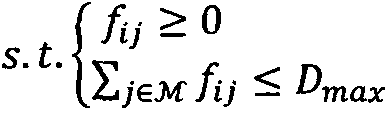
其中fi表示MEC节点i购买计算资源数量的策略集,F-i表示除MEC节点i其他节点购买计算资源数量的策略集,P表示所有停放车辆价格配置的策略集,φi表示MEC节点i的期望效用,R表示的固定奖励,r表示可变奖励,si表示第i个MEC节点要写入的区块大小,
停放车辆效用函数可以表示为:The utility function of parking vehicles can be expressed as:

s.t.0≤pij≤pmax st0≤p ij ≤p max
其中pj表示停放车辆j价格配置的策略集,pmax表示系统中计算资源价格上限, P-j表示除停放车辆j之外其他停放车辆价格配置的策略集,F表示所有MEC节点购买计算资源数量的策略集,η为单位能耗价格因子,设定当前轮次q=1。Where p j represents the policy set for the price configuration of parked vehicle j, p max represents the upper limit of the price of computing resources in the system, P -j represents the policy set for the price configuration of other parked vehicles except for parked vehicle j, and F represents the purchase of computing resources by all MEC nodes Quantity strategy set, η is the price factor of unit energy consumption, set the current round q=1.
步骤2,调整更新MEC节点计算资源需求。
步骤3,更新对偶变量λ。
步骤4,调整停放车辆价格配置使得停放车辆效用最大化。
步骤5,重复步骤2至步骤4,直到达到下列终止条件之一:1)达到最大循环次数;2)本轮次与上一轮次停放车辆总效用之差的绝对值小于给定阈值。停止后,可以获得最优卸载方案。
进一步的,在步骤1中,MEC节点i争取记账权成功的概率

其中
在步骤1中,MEC节点i选择停放车辆j的概率ωij计算方法为:In

其中α和β为权重因子,α+β=1;
bij=pmax-pij。b ij =p max −p ij .
进一步的,在步骤2中,MEC节点i计算资源需求更新方法为Further, in

其中t时刻表示MEC节点i未更新计算资源需求,t+1时刻表示MEC节点已更新完成计算资源需求;其中当i>k时ε=t+1,当i<k时ε=t;ρ是阻尼因子;
进一步的,在步骤3中,MEC节点i对偶变量更新方法为:Further, in

进一步的,在步骤4中,停放车辆j的价格配置更新方法为:Further, in

有益效果:本发明与现有技术相比,其显著有点在于首次考虑了多MEC节点利用停放车辆的闲置计算资源维护区块链网络鲁棒性的资源分配问题。并且通过将该资源分配问题建模为Stackelberg博弈模型,MEC节点与停放车辆交替优化自身的效用,达到纳什均衡。本发明不仅能够有效提高停放车辆辅助移动区块链网络中的系统总效用,并且方法简单,易于实施。Beneficial effects: Compared with the prior art, the present invention is remarkable in that it considers for the first time the resource allocation problem of multi-MEC nodes using idle computing resources of parked vehicles to maintain the robustness of the blockchain network. And by modeling the resource allocation problem as a Stackelberg game model, MEC nodes and parked vehicles alternately optimize their own utility to achieve Nash equilibrium. The invention can not only effectively improve the total utility of the system in the parked vehicle assisted mobile block chain network, but also has a simple method and is easy to implement.
附图说明Description of drawings
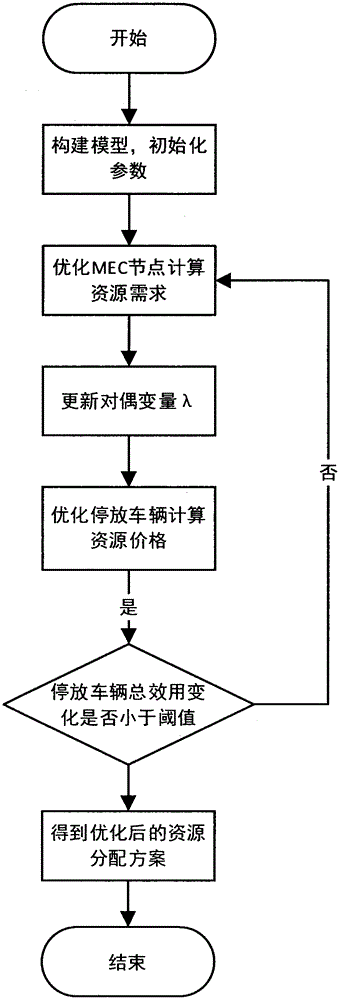
图1是本发明中算法整体流程图。Fig. 1 is the overall flowchart of the algorithm in the present invention.
图2是MEC节点在本算法迭代过程中效用变化曲线图。Figure 2 is a curve diagram of the utility change of MEC nodes during the iterative process of this algorithm.
图3是停放车辆在本算法迭代过程中效用变化曲线图。Fig. 3 is a curve diagram of utility change of parked vehicles during the iterative process of this algorithm.
具体实施方式Detailed ways
下面结合附图对于本发明作更一步的详细说明,本发明的整体流程图如图1所示。The present invention will be described in further detail below in conjunction with the accompanying drawings. The overall flow chart of the present invention is shown in FIG. 1 .
步骤1:构建停放车辆辅助移动区块链模型以及MEC节点与停放车辆预期效用模型。所述停放车辆辅助移动区块链模型包括M个MEC节点、N辆停放车辆以及区块链用户。Step 1: Build a parked vehicle-assisted mobility blockchain model and an expected utility model between MEC nodes and parked vehicles. The parked vehicle assisted mobile blockchain model includes M MEC nodes, N parked vehicles and blockchain users.
MEC节点收集区块链用户发布到网络的交易,通过租用停放车辆的计算资源来争夺记账权从而将交易写入网络并获得奖励。MEC nodes collect transactions published by blockchain users to the network, and compete for accounting rights by renting computing resources of parked vehicles to write transactions into the network and obtain rewards.
停放车辆通过将闲置计算资源租用给MEC节点获得收益。MEC节点通过调整自身租用的计算资源,使得自身效用最大化,自身效用最大化表达式为:Parked vehicles earn income by renting idle computing resources to MEC nodes. The MEC node maximizes its own utility by adjusting the computing resources it rents. The expression for maximizing its own utility is:

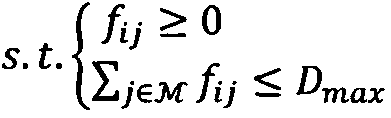
其中fi表示MEC节点i购买计算资源数量的策略集,F-i表示除MEC节点i其他节点购买计算资源数量的策略集,P表示所有停放车辆价格配置的策略集,φi表示MEC节点i的期望效用,R表示的固定奖励,r表示可变奖励,si表示第i个MEC节点要写入的区块大小,
停放车辆效用函数可以表示为:The utility function of parking vehicles can be expressed as:

s.t.0≤pij≤pmax st0≤p ij ≤p max
其中pj表示停放车辆j价格配置的策略集,pmax表示系统中计算资源价格上限, P-j表示除停放车辆j之外其他停放车辆价格配置的策略集,F表示所有MEC节点购买计算资源数量的策略集,η为单位能耗价格因子,设定当前轮次q=1。Where p j represents the policy set for the price configuration of parked vehicle j, p max represents the upper limit of the price of computing resources in the system, P -j represents the policy set for the price configuration of other parked vehicles except for parked vehicle j, and F represents the purchase of computing resources by all MEC nodes Quantity strategy set, η is the price factor of unit energy consumption, set the current round q=1.
(1)MEC节点i争取记账权成功的概率

其中
(2)MEC节点i选择停放车辆j的概率ωij计算方法为:(2) The calculation method of the probability ω ij of MEC node i choosing to park vehicle j is:

其中α和β为权重因子,α+β=1;
bij=pmax-Pij。b ij =p max -P ij .
步骤2,调整更新MEC节点计算资源需求。MEC节点i计算资源需求更新方法为

其中t时刻表示MEC节点i未更新计算资源需求,t+1时刻表示MEC节点已更新完成计算资源需求;其中当i>k时ε=t+1,当i<k时ε=t;ρ是阻尼因子;
步骤3,更新对偶变量λ。MEC节点i对偶变量更新方法为:

步骤4,调整停放车辆价格配置使得停放车辆效用最大化。停放车辆j的价格配置更新方法为:

步骤5,重复步骤2至步骤4,直到达到下列终止条件之一:1)达到最大循环次数;2)本轮次与上一轮次停放车辆总效用之差的绝对值小于给定阈值。停止后,可以获得最优卸载方案。
采用本发明方法进行仿真实验,设置有3个MEC节点,5俩停放车辆。实验结果如图2-3所示。图2是MEC节点在本算法迭代过程中效用变化曲线图。图3是停放车辆在本算法迭代过程中效用变化曲线图。The simulation experiment is carried out by using the method of the present invention, and 3 MEC nodes are arranged, and 5 vehicles are parked. The experimental results are shown in Figure 2-3. Figure 2 is a curve diagram of the utility change of MEC nodes during the iterative process of this algorithm. Fig. 3 is a curve diagram of utility change of parked vehicles during the iterative process of this algorithm.
本发明未详述之处,均为本领域技术人员的公知技术。The parts of the present invention that are not described in detail are known technologies of those skilled in the art.
以上详细描述了本发明的较佳具体实施例。应当理解,本领域的普通技术人员无需创造性劳动就可以根据本发明的构思做出诸多修改和变化。因此,凡本技术领域中技术人员依本发明的构思在现有技术的基础上通过逻辑分析、推理或者有限的实验可以得到的技术方案,皆应在由权利要求书所确定的保护范围内。The preferred specific embodiments of the present invention have been described in detail above. It should be understood that those skilled in the art can make many modifications and changes according to the concept of the present invention without creative effort. Therefore, all technical solutions that can be obtained by those skilled in the art based on the concept of the present invention through logical analysis, reasoning or limited experiments on the basis of the prior art shall be within the scope of protection defined by the claims.
Claims (6)







Priority Applications (1)
| Application Number | Priority Date | Filing Date | Title |
|---|---|---|---|
| CN202210959682.3A CN115334164A (en) | 2022-08-11 | 2022-08-11 | Parking vehicle resource allocation method based on mobile block chain |
Applications Claiming Priority (1)
| Application Number | Priority Date | Filing Date | Title |
|---|---|---|---|
| CN202210959682.3A CN115334164A (en) | 2022-08-11 | 2022-08-11 | Parking vehicle resource allocation method based on mobile block chain |
Publications (1)
| Publication Number | Publication Date |
|---|---|
| CN115334164A true CN115334164A (en) | 2022-11-11 |
Family
ID=83921019
Family Applications (1)
| Application Number | Title | Priority Date | Filing Date |
|---|---|---|---|
| CN202210959682.3A Pending CN115334164A (en) | 2022-08-11 | 2022-08-11 | Parking vehicle resource allocation method based on mobile block chain |
Country Status (1)
| Country | Link |
|---|---|
| CN (1) | CN115334164A (en) |
Citations (5)
| Publication number | Priority date | Publication date | Assignee | Title |
|---|---|---|---|---|
| US20190332702A1 (en) * | 2018-04-30 | 2019-10-31 | Hewlett Packard Enterprise Development Lp | System and method of decentralized management of multi-owner nodes using blockchain |
| US20190370760A1 (en) * | 2018-06-05 | 2019-12-05 | International Business Machines Corporation | Blockchain and cryptocurrency for real-time vehicle accident management |
| CN112911549A (en) * | 2021-02-25 | 2021-06-04 | 南通大学 | GPSR (gigabit passive sr) secure routing protocol implementation method based on block chain trust model |
| CN114418620A (en) * | 2021-12-29 | 2022-04-29 | 东南大学 | A distributed cloud fog network resource pricing method for mobile blockchain system |
| CN114760335A (en) * | 2022-03-24 | 2022-07-15 | 中国银行股份有限公司 | Vehicle data processing method and device based on block chain and server |
-
2022
- 2022-08-11 CN CN202210959682.3A patent/CN115334164A/en active Pending
Patent Citations (5)
| Publication number | Priority date | Publication date | Assignee | Title |
|---|---|---|---|---|
| US20190332702A1 (en) * | 2018-04-30 | 2019-10-31 | Hewlett Packard Enterprise Development Lp | System and method of decentralized management of multi-owner nodes using blockchain |
| US20190370760A1 (en) * | 2018-06-05 | 2019-12-05 | International Business Machines Corporation | Blockchain and cryptocurrency for real-time vehicle accident management |
| CN112911549A (en) * | 2021-02-25 | 2021-06-04 | 南通大学 | GPSR (gigabit passive sr) secure routing protocol implementation method based on block chain trust model |
| CN114418620A (en) * | 2021-12-29 | 2022-04-29 | 东南大学 | A distributed cloud fog network resource pricing method for mobile blockchain system |
| CN114760335A (en) * | 2022-03-24 | 2022-07-15 | 中国银行股份有限公司 | Vehicle data processing method and device based on block chain and server |
Non-Patent Citations (1)
| Title |
|---|
| 王汝言;梁颖杰;崔亚平;: "车辆网络多平台卸载智能资源分配算法", 电子与信息学报, no. 01, 15 January 2020 (2020-01-15) * |
Similar Documents
| Publication | Publication Date | Title |
|---|---|---|
| CN111405527B (en) | Vehicle-mounted edge computing method, device and system based on volunteer cooperative processing | |
| CN110888687B (en) | Mobile edge computing task unloading optimal contract design method based on contract design | |
| CN111556089A (en) | Resource joint optimization method based on blockchain-enabled mobile edge computing system | |
| Qiao et al. | A blockchain-based decentralized collaborative learning model for reliable energy digital twins | |
| CN114815598B (en) | Multi-level optimization control system and method based on Stackelberg-Nash differential game | |
| Zhang et al. | A vehicular task offloading method with eliminating redundant tasks in 5g hetnets | |
| Lin et al. | Sgcs: An intelligent stackelberg-game-based computation offloading and resource pricing scheme in blockchain-enabled mec for iiot | |
| CN103051730A (en) | Multi-source information service-resource allocating system and IA-Min allocating method in cloud-computing business environment | |
| Zhou et al. | Incentive-driven and energy efficient federated learning in mobile edge networks | |
| Zhong et al. | Electric vehicle charging load optimization strategy based on dynamic time-of-use tariff | |
| Dai et al. | Energy-Efficient Inference With Software–Hardware Co-Design for Sustainable Artificial Intelligence of Things | |
| CN109034472A (en) | Acquisition methods based on the PHEV optimal energy trading scheme that mist calculates | |
| CN115334164A (en) | Parking vehicle resource allocation method based on mobile block chain | |
| Wang et al. | A game theory-based computation offloading method in cloud-edge computing networks | |
| CN114519506A (en) | Energy support excitation method, system, computer device, storage medium and terminal | |
| Yang et al. | Study on the mechanism of green power-carbon market intrinsic coupling and power sector trading strategies | |
| CN116628410A (en) | A carbon emission accounting method and system for a regional power system | |
| Li et al. | Product R&D strategy of new energy vehicle enterprises embedded with technical services under the subsidy threshold | |
| Wang et al. | Joint caching and computing resource allocation for task offloading in vehicular networks | |
| He | Decision scheduling for cloud computing tasks relying on solving large linear systems of equations | |
| Zhao et al. | Multi-attribute Combinatorial Double Auction for Resource Trading in Multi-Parking-Lot PVEC | |
| Wen et al. | Secure incentive mechanism for energy trading in computing force networks enabled internet of vehicles: a contract theory approach: W. Wen et al. | |
| Gao et al. | Meta reinforcement learning based computation offloading strategy for vehicular networks | |
| Guo et al. | Edge network resource synergy for mobile blockchain in smart city | |
| Liu et al. | The Construction of Super Smart Cities and the Internet of Things Listed Companies' Total Factor Productivity |
Legal Events
| Date | Code | Title | Description |
|---|---|---|---|
| PB01 | Publication | ||
| PB01 | Publication | ||
| SE01 | Entry into force of request for substantive examination | ||
| SE01 | Entry into force of request for substantive examination | ||
| WD01 | Invention patent application deemed withdrawn after publication | ||
| WD01 | Invention patent application deemed withdrawn after publication |
Application publication date: 20221111 |