CN115309167A - Autonomous mobile device, control method thereof, and computer-readable storage medium - Google Patents
Autonomous mobile device, control method thereof, and computer-readable storage medium Download PDFInfo
- Publication number
- CN115309167A CN115309167A CN202211131073.5A CN202211131073A CN115309167A CN 115309167 A CN115309167 A CN 115309167A CN 202211131073 A CN202211131073 A CN 202211131073A CN 115309167 A CN115309167 A CN 115309167A
- Authority
- CN
- China
- Prior art keywords
- autonomous mobile
- mobile device
- path
- positioning accuracy
- walking
- Prior art date
- Legal status (The legal status is an assumption and is not a legal conclusion. Google has not performed a legal analysis and makes no representation as to the accuracy of the status listed.)
- Granted
Links
Images




Classifications
-
- G—PHYSICS
- G05—CONTROLLING; REGULATING
- G05D—SYSTEMS FOR CONTROLLING OR REGULATING NON-ELECTRIC VARIABLES
- G05D1/00—Control of position, course, altitude or attitude of land, water, air or space vehicles, e.g. using automatic pilots
- G05D1/20—Control system inputs
- G05D1/24—Arrangements for determining position or orientation
- G05D1/247—Arrangements for determining position or orientation using signals provided by artificial sources external to the vehicle, e.g. navigation beacons
- G05D1/248—Arrangements for determining position or orientation using signals provided by artificial sources external to the vehicle, e.g. navigation beacons generated by satellites, e.g. GPS
-
- G—PHYSICS
- G05—CONTROLLING; REGULATING
- G05D—SYSTEMS FOR CONTROLLING OR REGULATING NON-ELECTRIC VARIABLES
- G05D1/00—Control of position, course, altitude or attitude of land, water, air or space vehicles, e.g. using automatic pilots
- G05D1/02—Control of position or course in two dimensions
- G05D1/021—Control of position or course in two dimensions specially adapted to land vehicles
- G05D1/0231—Control of position or course in two dimensions specially adapted to land vehicles using optical position detecting means
- G05D1/0246—Control of position or course in two dimensions specially adapted to land vehicles using optical position detecting means using a video camera in combination with image processing means
-
- G—PHYSICS
- G05—CONTROLLING; REGULATING
- G05D—SYSTEMS FOR CONTROLLING OR REGULATING NON-ELECTRIC VARIABLES
- G05D1/00—Control of position, course, altitude or attitude of land, water, air or space vehicles, e.g. using automatic pilots
- G05D1/02—Control of position or course in two dimensions
- G05D1/021—Control of position or course in two dimensions specially adapted to land vehicles
- G05D1/0212—Control of position or course in two dimensions specially adapted to land vehicles with means for defining a desired trajectory
- G05D1/0225—Control of position or course in two dimensions specially adapted to land vehicles with means for defining a desired trajectory involving docking at a fixed facility, e.g. base station or loading bay
-
- G—PHYSICS
- G05—CONTROLLING; REGULATING
- G05D—SYSTEMS FOR CONTROLLING OR REGULATING NON-ELECTRIC VARIABLES
- G05D1/00—Control of position, course, altitude or attitude of land, water, air or space vehicles, e.g. using automatic pilots
- G05D1/02—Control of position or course in two dimensions
- G05D1/021—Control of position or course in two dimensions specially adapted to land vehicles
- G05D1/0255—Control of position or course in two dimensions specially adapted to land vehicles using acoustic signals, e.g. ultra-sonic singals
-
- G—PHYSICS
- G05—CONTROLLING; REGULATING
- G05D—SYSTEMS FOR CONTROLLING OR REGULATING NON-ELECTRIC VARIABLES
- G05D1/00—Control of position, course, altitude or attitude of land, water, air or space vehicles, e.g. using automatic pilots
- G05D1/02—Control of position or course in two dimensions
- G05D1/021—Control of position or course in two dimensions specially adapted to land vehicles
- G05D1/0257—Control of position or course in two dimensions specially adapted to land vehicles using a radar
-
- G—PHYSICS
- G05—CONTROLLING; REGULATING
- G05D—SYSTEMS FOR CONTROLLING OR REGULATING NON-ELECTRIC VARIABLES
- G05D1/00—Control of position, course, altitude or attitude of land, water, air or space vehicles, e.g. using automatic pilots
- G05D1/02—Control of position or course in two dimensions
- G05D1/021—Control of position or course in two dimensions specially adapted to land vehicles
- G05D1/0276—Control of position or course in two dimensions specially adapted to land vehicles using signals provided by a source external to the vehicle
-
- G—PHYSICS
- G05—CONTROLLING; REGULATING
- G05D—SYSTEMS FOR CONTROLLING OR REGULATING NON-ELECTRIC VARIABLES
- G05D1/00—Control of position, course, altitude or attitude of land, water, air or space vehicles, e.g. using automatic pilots
- G05D1/02—Control of position or course in two dimensions
- G05D1/021—Control of position or course in two dimensions specially adapted to land vehicles
- G05D1/0276—Control of position or course in two dimensions specially adapted to land vehicles using signals provided by a source external to the vehicle
- G05D1/0278—Control of position or course in two dimensions specially adapted to land vehicles using signals provided by a source external to the vehicle using satellite positioning signals, e.g. GPS
-
- G—PHYSICS
- G05—CONTROLLING; REGULATING
- G05D—SYSTEMS FOR CONTROLLING OR REGULATING NON-ELECTRIC VARIABLES
- G05D1/00—Control of position, course, altitude or attitude of land, water, air or space vehicles, e.g. using automatic pilots
- G05D1/60—Intended control result
- G05D1/644—Optimisation of travel parameters, e.g. of energy consumption, journey time or distance
- G05D1/6445—Optimisation of travel parameters, e.g. of energy consumption, journey time or distance for optimising payload operation, e.g. camera or spray coverage
-
- G—PHYSICS
- G05—CONTROLLING; REGULATING
- G05D—SYSTEMS FOR CONTROLLING OR REGULATING NON-ELECTRIC VARIABLES
- G05D2105/00—Specific applications of the controlled vehicles
- G05D2105/15—Specific applications of the controlled vehicles for harvesting, sowing or mowing in agriculture or forestry
-
- G—PHYSICS
- G05—CONTROLLING; REGULATING
- G05D—SYSTEMS FOR CONTROLLING OR REGULATING NON-ELECTRIC VARIABLES
- G05D2107/00—Specific environments of the controlled vehicles
- G05D2107/20—Land use
- G05D2107/23—Gardens or lawns
-
- G—PHYSICS
- G05—CONTROLLING; REGULATING
- G05D—SYSTEMS FOR CONTROLLING OR REGULATING NON-ELECTRIC VARIABLES
- G05D2109/00—Types of controlled vehicles
- G05D2109/10—Land vehicles
-
- Y—GENERAL TAGGING OF NEW TECHNOLOGICAL DEVELOPMENTS; GENERAL TAGGING OF CROSS-SECTIONAL TECHNOLOGIES SPANNING OVER SEVERAL SECTIONS OF THE IPC; TECHNICAL SUBJECTS COVERED BY FORMER USPC CROSS-REFERENCE ART COLLECTIONS [XRACs] AND DIGESTS
- Y02—TECHNOLOGIES OR APPLICATIONS FOR MITIGATION OR ADAPTATION AGAINST CLIMATE CHANGE
- Y02T—CLIMATE CHANGE MITIGATION TECHNOLOGIES RELATED TO TRANSPORTATION
- Y02T10/00—Road transport of goods or passengers
- Y02T10/60—Other road transportation technologies with climate change mitigation effect
- Y02T10/70—Energy storage systems for electromobility, e.g. batteries
Landscapes
- Engineering & Computer Science (AREA)
- Radar, Positioning & Navigation (AREA)
- Remote Sensing (AREA)
- Physics & Mathematics (AREA)
- Aviation & Aerospace Engineering (AREA)
- General Physics & Mathematics (AREA)
- Automation & Control Theory (AREA)
- Computer Vision & Pattern Recognition (AREA)
- Multimedia (AREA)
- Electromagnetism (AREA)
- Acoustics & Sound (AREA)
- Control Of Position, Course, Altitude, Or Attitude Of Moving Bodies (AREA)
Abstract
本发明提供一种自主移动设备及其控制方法和计算机可读存储介质,该方法包括:定时或实时获取自主移动设备采集的定位精度;当所述自主移动设备在第一位置时的定位精度低于预设阈值时,控制所述自主移动设备从所述第一位置开始随机行走;当所述自主移动设备的定位精度高于或等于所述预设阈值时,控制所述自主移动设备移动至第二位置,并从所述第二位置继续沿原规划的工作路径行走并执行所述工作任务,所述第一位置与第二位置间隔预设距离,且所述第一位置位于原规划的工作路径。本发明提高了自主移动设备的工作效率。

The present invention provides an autonomous mobile device, a control method thereof, and a computer-readable storage medium. The method includes: acquiring the positioning accuracy collected by the autonomous mobile device periodically or in real time; when the autonomous mobile device is at a first position, the positioning accuracy is low At a preset threshold, control the autonomous mobile device to randomly walk from the first position; when the positioning accuracy of the autonomous mobile device is higher than or equal to the preset threshold, control the autonomous mobile device to move to the second position, and continue to walk along the originally planned working path and perform the work task from the second position, the first position and the second position are separated by a preset distance, and the first position is located in the originally planned work path. working path. The invention improves the working efficiency of the autonomous mobile device.
Description
技术领域technical field
本发明涉及自主移动设备技术领域,尤其涉及一种自主移动设备及其控制方法和计算机可读存储介质。The present invention relates to the technical field of autonomous mobile equipment, in particular to an autonomous mobile equipment, a control method thereof, and a computer-readable storage medium.
背景技术Background technique
自主移动设备指的是可移动的设备,例如,自主移动设备为割草机、扫地机等。The autonomous mobile device refers to a movable device, for example, the autonomous mobile device is a lawn mower, a sweeper, and the like.
自主移动设备设置有定位模块,自主移动设备依赖定位模块定位的位置完成设置的工作任务。但定位模块受限于围栏、高墙、树冠、云层等不确定因素的影响,使得定位模块的定位精度下降,也即自主移动设备处于定位质量差的区域,导致自主移动设备无法基于准确的定位位置完成设置的工作任务。The autonomous mobile device is provided with a positioning module, and the autonomous mobile device completes the set work task depending on the location positioned by the positioning module. However, the positioning module is limited by uncertain factors such as fences, high walls, tree crowns, clouds, etc., which reduces the positioning accuracy of the positioning module, that is, the autonomous mobile device is in an area with poor positioning quality, resulting in the autonomous mobile device. The location completes the set work tasks.
示例性技术中,自主移动设备在位于定位精度较低的初始位置时,自主移动设备行走至定位质量高的位置,并会再次回到初始位置继续执行工作任务。但是自主移动设备在初始位置的定位精度低,使得自主移动设备又行走至定位质量高的位置,导致自主移动设备陷入从定位精度低的位置行走至定位精度高的位置的循环,造成自主移动设备的工作效率低。In an exemplary technology, when the autonomous mobile device is located at an initial position with low positioning accuracy, the autonomous mobile device walks to a position with high positioning quality, and returns to the initial position again to continue performing work tasks. However, the positioning accuracy of the autonomous mobile device at the initial position is low, which makes the autonomous mobile device walk to a position with high positioning quality, causing the autonomous mobile device to fall into a cycle of walking from a position with low positioning accuracy to a position with high positioning accuracy, causing the autonomous mobile device The work efficiency is low.
发明内容Contents of the invention
本发明提供一种自主移动设备及其控制方法和计算机可读存储介质,用以解决自主移动设备的工作效率低的问题。The invention provides an autonomous mobile device, its control method and a computer-readable storage medium to solve the problem of low working efficiency of the autonomous mobile device.
一方面,本发明提供一种自主移动设备的控制方法,包括:In one aspect, the present invention provides a method for controlling an autonomous mobile device, comprising:
定时或实时获取自主移动设备采集的定位精度;Obtain the positioning accuracy collected by autonomous mobile devices at regular intervals or in real time;
当所述自主移动设备在第一位置时的定位精度低于预设阈值时,控制所述自主移动设备从所述第一位置开始随机行走;When the positioning accuracy of the autonomous mobile device at the first position is lower than a preset threshold, control the autonomous mobile device to start random walking from the first position;
当所述自主移动设备的定位精度高于或等于所述预设阈值时,控制所述自主移动设备移动至第二位置,并从所述第二位置继续沿原规划的工作路径行走并执行所述工作任务,所述第一位置与第二位置间隔预设距离,且所述第一位置位于原规划的工作路径。When the positioning accuracy of the autonomous mobile device is higher than or equal to the preset threshold, control the autonomous mobile device to move to a second position, and continue to walk along the originally planned working path from the second position and execute the The above working task, the first position is separated from the second position by a preset distance, and the first position is located on the originally planned working path.
在一实施例中,所述控制所述自主移动设备移动至第二位置之前,还包括:In an embodiment, before the controlling the autonomous mobile device to move to the second location, further includes:
根据所述第一位置确定所述第二位置。The second location is determined based on the first location.
在一实施例中,所述原规划的工作路径包括第一行走路径和第二行走路径,所述根据所述第一位置确定所述第二位置包括:In an embodiment, the originally planned working path includes a first walking path and a second walking path, and determining the second location according to the first location includes:
确定所述第一位置所在的第一行走路径;determining a first walking path where the first position is located;
确定与所述第一行走路径相邻的第二行走路径,并在所述第二行走路径上确定所述第二位置。A second walking path adjacent to the first walking path is determined, and the second position is determined on the second walking path.
在一实施例中,所述原规划的工作路径包括第一行走路径,所述根据所述第一位置确定所述第二位置包括:In an embodiment, the originally planned working path includes a first walking path, and determining the second location according to the first location includes:
确定所述第一位置所在的第一行走路径;determining a first walking path where the first position is located;
在所述第一行走路径上确定所述第二位置。The second position is determined on the first travel path.
在一实施例中,还包括:In one embodiment, it also includes:
当所述自主移动设备的定位精度高于或等于所述预设阈值且所述自主移动设备处于第二位置时,控制所述自主移动设备以所述第二位置为起点重新规划路径;When the positioning accuracy of the autonomous mobile device is higher than or equal to the preset threshold and the autonomous mobile device is in a second position, controlling the autonomous mobile device to re-plan a path starting from the second position;
控制所述自主移动设备根据重新规划的路径行走。The autonomous mobile device is controlled to walk according to the replanned path.
在一实施例中,所述控制所述自主移动设备从所述第一位置开始随机行走之后,还包括:In an embodiment, after controlling the autonomous mobile device to start random walking from the first position, it further includes:
获取所述自主移动设备在随机行走过程中更换行走方向的次数;Obtain the number of times the autonomous mobile device changes the walking direction during the random walking process;
在所述次数达到预设次数时,输出提示信息和/或控制所述自主移动设备行走至预设位置,所述提示信息用于指示对所述自主移动设备进行人工处理。When the number of times reaches a preset number of times, output prompt information and/or control the autonomous mobile device to walk to a preset position, the prompt information is used to instruct manual processing on the autonomous mobile device.
在一实施例中,所述控制所述自主移动设备从所述第一位置开始随机行走之后,还包括:In an embodiment, after controlling the autonomous mobile device to start random walking from the first position, it further includes:
获取所述自主移动设备的定位精度低于所述预设阈值的持续时长;Obtaining a duration during which the positioning accuracy of the autonomous mobile device is lower than the preset threshold;
在所述持续时长达到预设时长时,输出提示信息和/或控制所述自主移动设备行走至预设位置,所述提示信息用于指示对所述自主移动设备进行人工处理。When the duration reaches a preset duration, output prompt information and/or control the autonomous mobile device to walk to a preset position, the prompt information is used to instruct manual processing on the autonomous mobile device.
在一实施例中,在所述定时或实时获取自主移动设备采集的定位信息的步骤之前,还包括:In one embodiment, before the step of obtaining the positioning information collected by the autonomous mobile device in a regular or real-time manner, it further includes:
规划自主移动设备的工作路径;Planning the work path of autonomous mobile devices;
控制所述自主移动设备沿所述工作路径行走并执行所述自主移动设备的工作任务。The autonomous mobile device is controlled to walk along the work path and perform work tasks of the autonomous mobile device.
在一实施例中,当所述自主移动设备在第一位置时的定位精度低于预设阈值时,控制所述自主移动设备返回充电桩。In an embodiment, when the positioning accuracy of the autonomous mobile device at the first position is lower than a preset threshold, the autonomous mobile device is controlled to return to the charging pile.
在一实施例中,当所述自主移动设备在第一位置时的定位精度低于预设阈值时,控制所述自主移动设备原地停止行进,并在预设时间后,返回所述充电桩。In one embodiment, when the positioning accuracy of the autonomous mobile device at the first position is lower than a preset threshold, the autonomous mobile device is controlled to stop traveling on the spot and return to the charging pile after a preset time .
另一方面,本申请还提供一种自主移动设备,包括:On the other hand, the present application also provides an autonomous mobile device, including:
获取模块,用于定时或实时获取自主移动设备采集的定位精度;The acquiring module is used for timing or real-time acquisition of the positioning accuracy collected by the autonomous mobile device;
控制模块,用于当所述自主移动设备在第一位置时的定位精度低于预设阈值时,控制所述自主移动设备从所述第一位置开始随机行走;A control module, configured to control the autonomous mobile device to start random walking from the first position when the positioning accuracy of the autonomous mobile device at the first position is lower than a preset threshold;
确定模块,用于当所述自主移动设备的定位精度高于或等于所述预设阈值时,控制所述自主移动设备移动至第二位置,并从所述第二位置继续沿原规划的工作路径行走并执行所述工作任务,所述第一位置与第二位置间隔预设距离,且所述第一位置位于原规划的工作路径。A determining module, configured to control the autonomous mobile device to move to a second position when the positioning accuracy of the autonomous mobile device is higher than or equal to the preset threshold, and continue to work along the original plan from the second position The path is walked and the working task is executed, the first position is separated from the second position by a preset distance, and the first position is located on the originally planned working path.
本发明提供的自主移动设备及其控制方法和计算机可读存储介质,定时或实时获取自主移动设备的定位精度,当自主移动设备在第一位置时的定位精度低于预设阈值,控制自主移动设备随机行走,并在当定位精度高于或等于预设阈值时,控制自主移动设备行走至第二位置继续执行工作任务。本发明中,在自主移动设备从定位精度低的位置行走至定位精度高的位置后,再行走至与第一位置相差预设距离的第二位置执行工作任务,避免自主移动设备直接回到定位精度低的第一位置,也即避免自主移动设备陷入从定位精度低的位置行走至定位精度高的位置的循环,提高了自主移动设备的工作效率。The autonomous mobile device and its control method and computer-readable storage medium provided by the present invention acquire the positioning accuracy of the autonomous mobile device at regular intervals or in real time, and when the positioning accuracy of the autonomous mobile device is lower than a preset threshold when the autonomous mobile device is in the first position, autonomous movement is controlled The device walks randomly, and when the positioning accuracy is higher than or equal to the preset threshold, the autonomous mobile device is controlled to walk to the second position and continue to perform work tasks. In the present invention, after the autonomous mobile device walks from a position with low positioning accuracy to a position with high positioning accuracy, it then walks to a second position that is different from the first position by a preset distance to perform work tasks, so as to prevent the autonomous mobile device from directly returning to positioning The low-precision first position, that is, prevents the autonomous mobile device from falling into a cycle of walking from a position with low positioning accuracy to a position with high positioning accuracy, thereby improving the working efficiency of the autonomous mobile device.
附图说明Description of drawings
此处的附图被并入说明书中并构成本说明书的一部分,示出了符合本公开的实施例,并与说明书一起用于解释本公开的原理。The accompanying drawings, which are incorporated in and constitute a part of this specification, illustrate embodiments consistent with the disclosure and together with the description serve to explain the principles of the disclosure.
图1为本发明自主移动设备的控制方法第一实施例的流程示意图;FIG. 1 is a schematic flowchart of a first embodiment of a method for controlling an autonomous mobile device according to the present invention;
图2为本发明自主移动设备的一工作示意图;Fig. 2 is a working schematic diagram of the autonomous mobile device of the present invention;
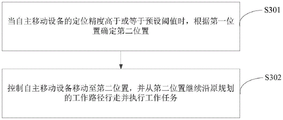
图3为本发明自主移动设备的控制方法第二实施例的流程示意图;FIG. 3 is a schematic flowchart of a second embodiment of the method for controlling an autonomous mobile device according to the present invention;
图4为本发明自主移动设备的控制方法第三实施例的流程示意图;FIG. 4 is a schematic flowchart of a third embodiment of the method for controlling an autonomous mobile device according to the present invention;
图5为本发明自主移动设备的控制方法第四实施例的流程示意图;5 is a schematic flowchart of a fourth embodiment of a method for controlling an autonomous mobile device according to the present invention;
图6为本发明自主移动设备的控制方法第五实施例的流程示意图;FIG. 6 is a schematic flowchart of a fifth embodiment of the method for controlling an autonomous mobile device according to the present invention;
图7为本发明自主移动设备的控制方法第六实施例的流程示意图;FIG. 7 is a schematic flowchart of a sixth embodiment of the method for controlling an autonomous mobile device according to the present invention;
图8为本发明自主移动设备的控制方法第七实施例的流程示意图;FIG. 8 is a schematic flowchart of a seventh embodiment of a method for controlling an autonomous mobile device according to the present invention;
图9为本发明自主移动设备的功能模块示意图;Fig. 9 is a schematic diagram of the functional modules of the autonomous mobile device of the present invention;
图10为本发明自主移动设备的硬件结构示意图。Fig. 10 is a schematic diagram of the hardware structure of the autonomous mobile device of the present invention.
通过上述附图,已示出本公开明确的实施例,后文中将有更详细的描述。这些附图和文字描述并不是为了通过任何方式限制本公开构思的范围,而是通过参考特定实施例为本领域技术人员说明本公开的概念。By means of the above-mentioned drawings, certain embodiments of the present disclosure have been shown and will be described in more detail hereinafter. These drawings and written description are not intended to limit the scope of the disclosed concept in any way, but to illustrate the disclosed concept for those skilled in the art by referring to specific embodiments.
具体实施方式Detailed ways
这里将详细地对示例性实施例进行说明,其示例表示在附图中。下面的描述涉及附图时,除非另有表示,不同附图中的相同数字表示相同或相似的要素。以下示例性实施例中所描述的实施方式并不代表与本公开相一致的所有实施方式。相反,它们仅是与如所附权利要求书中所详述的、本公开的一些方面相一致的装置和方法的例子。Reference will now be made in detail to the exemplary embodiments, examples of which are illustrated in the accompanying drawings. When the following description refers to the accompanying drawings, the same numerals in different drawings refer to the same or similar elements unless otherwise indicated. The implementations described in the following exemplary examples do not represent all implementations consistent with the present disclosure. Rather, they are merely examples of apparatuses and methods consistent with aspects of the present disclosure as recited in the appended claims.
下面以具体地实施例对本发明的技术方案以及本申请的技术方案如何解决上述技术问题进行详细说明。下面这几个具体的实施例可以相互结合,对于相同或相似的概念或过程可能在某些实施例中不再赘述。下面将结合附图,对本发明的实施例进行描述。The technical solution of the present invention and how the technical solution of the present application solves the above technical problems will be described in detail below with specific embodiments. The following specific embodiments may be combined with each other, and the same or similar concepts or processes may not be repeated in some embodiments. Embodiments of the present invention will be described below with reference to the accompanying drawings.
参照图1,图1为本发明自主移动设备的控制方法的第一实施例,自主移动设备的控制方法包括以下步骤:With reference to Fig. 1, Fig. 1 is the first embodiment of the control method of autonomous mobile equipment of the present invention, and the control method of autonomous mobile equipment comprises the following steps:
步骤S101,定时或实时获取自主移动设备采集的定位精度。Step S101, acquiring the positioning accuracy collected by the autonomous mobile device regularly or in real time.
在本实施例中,自主移动设备可以为扫地机或者割草机。为了便于描述,以下采用设备指代自主移动设备。In this embodiment, the autonomous mobile device may be a sweeper or a lawn mower. For ease of description, the device is used below to refer to an autonomous mobile device.
设备中设有定位模块,定位模块例如为GPS(Global Positioning System,全球定位系统)模块或RTK(Real-Time Kinematic,实时动态)模块。RTK模块通过实时处理两个测量站载波相位观测量进行定位。The device is provided with a positioning module, such as a GPS (Global Positioning System, Global Positioning System) module or an RTK (Real-Time Kinematic, real-time dynamic) module. The RTK module performs positioning by processing the carrier phase observations of two measuring stations in real time.
在当设备执行工作任务时,设备所在区域受到云层、高墙、树冠、人体等方面的影响,会导致定位模块的定位精度下降,从而使得设备所确定的位置不准确。对此,设备在执行工作任务时,会实时或定时获取自主移动设备的定位信息,再基于定位信息确定定位精度,也即设备实时或定时获取自主移动设备的定位精度。在一示例中,设备基于采样点的公共卫星观测频段的数量确定定位精度。When the device performs work tasks, the area where the device is located is affected by clouds, high walls, tree crowns, human bodies, etc., which will cause the positioning accuracy of the positioning module to decrease, thus making the position determined by the device inaccurate. In this regard, when the device performs work tasks, it will obtain the positioning information of the autonomous mobile device in real time or regularly, and then determine the positioning accuracy based on the positioning information, that is, the device obtains the positioning accuracy of the autonomous mobile device in real time or regularly. In an example, the device determines the positioning accuracy based on the number of common satellite observation frequency bands of the sampling points.
步骤S102,当自主移动设备在第一位置时的定位精度低于预设阈值时,控制自主移动设备从第一位置开始随机行走。Step S102, when the positioning accuracy of the autonomous mobile device at the first position is lower than a preset threshold, control the autonomous mobile device to start random walking from the first position.
设备在得到定位精度后,将定位精度与预设阈值进行比对。若是定位精度低于预设阈值,即可确定设备在当前位置的定位质量差,当前位置定义为第一位置。进一步的,可以根据公共卫星观测频段的数量与预设数量的比对来确定定位精度是否低于预设阈值。例如,公共卫星观测频段的数量大于预设数量,定位精度则高于预设阈值;若是公共卫星观测频段的数量小于预设数量,定位精度则低于预设阈值。After the device obtains the positioning accuracy, it compares the positioning accuracy with the preset threshold. If the positioning accuracy is lower than the preset threshold, it can be determined that the positioning quality of the device at the current position is poor, and the current position is defined as the first position. Further, it may be determined whether the positioning accuracy is lower than a preset threshold according to a comparison between the number of public satellite observation frequency bands and the preset number. For example, if the number of public satellite observation frequency bands is greater than the preset number, the positioning accuracy is higher than the preset threshold; if the number of public satellite observation frequency bands is less than the preset number, the positioning accuracy is lower than the preset threshold.
设备当前是按照原规划的工作路径执行工作任务,设备在第一位置的定位精度低于预设阈值,设备则进入随机行走模式,也即设备从第一位置开始随机行走。The device is currently performing work tasks according to the originally planned working path. The positioning accuracy of the device at the first position is lower than the preset threshold, and the device enters the random walking mode, that is, the device starts to walk randomly from the first position.
进一步的,设备在随机行走过程中会继续执行工作任务,例如,设备是割草机,割草机是按照规划的工作路径进行割草,若是在第一位置的定位精度低于预设阈值,则进行随机割草。本实施例中,自主移动设备从定位精度低的位置行走至定位精度高的位置的过程中会继续执行工作任务,增大了工作任务的完成进度,进一步提高了自主移动设备的工作效率。Furthermore, the device will continue to perform work tasks during random walking. For example, the device is a lawn mower, and the lawn mower mows grass according to the planned working path. If the positioning accuracy at the first position is lower than the preset threshold, Then random mowing is performed. In this embodiment, the autonomous mobile device will continue to perform work tasks while walking from a position with low positioning accuracy to a position with high positioning accuracy, which increases the completion progress of the work tasks and further improves the work efficiency of the autonomous mobile device.
需要说明的是,设备执行工作任务的方式有两种,一种是沿边工作模式,另一种是中心工作模式。沿边工作模式指的是设备沿着工作区域的边界执行工作任务,例如,割草机沿着边界割草。中心工作模式指的是设备在工作区域内规划工作路径,并按照工作路径执行工作任务,例如,工作路径是弓字形路径,割草机运行中心工作模式时,则按照弓字形路径进行割草。由于沿边工作模式是沿着边界执行工作任务,若是设备检测到定位精度低于预设阈值,设备进行随机行走,会走出边界进入非工作区域,从而会对人或动物等动态障碍物造成伤害,因此,设备检测到定位精度低于预设精度时,若设备运行沿边工作模式,设备不会进行随机行走。而设备检测到定位精度低于预设精度且设备运行中心工作模式,则可控制设备从第一位置开始随机行走并执行工作任务。It should be noted that there are two ways for the device to perform work tasks, one is the edge working mode, and the other is the central working mode. The working mode along the edge means that the equipment performs work tasks along the boundary of the working area, for example, a lawn mower cuts grass along the boundary. The central working mode means that the equipment plans the working path in the working area and executes the working tasks according to the working path. For example, the working path is a bow-shaped path, and when the lawn mower runs the central working mode, it mows according to the bow-shaped path. Since the working mode along the edge is to perform work tasks along the boundary, if the device detects that the positioning accuracy is lower than the preset threshold, the device will walk randomly and will go out of the boundary and enter the non-working area, which will cause damage to dynamic obstacles such as people or animals. Therefore, when the device detects that the positioning accuracy is lower than the preset accuracy, if the device operates in the edge-to-edge mode, the device will not perform random walks. If the device detects that the positioning accuracy is lower than the preset accuracy and the device operates in the central working mode, it can control the device to walk randomly from the first position and perform work tasks.
步骤S103,当自主移动设备的定位精度高于或等于预设阈值时,控制自主移动设备移动至第二位置,并从第二位置继续沿原规划的工作路径行走并执行工作任务,第一位置与第二位置间隔预设距离,且第一位置位于原规划的工作路径。Step S103, when the positioning accuracy of the autonomous mobile device is higher than or equal to the preset threshold, control the autonomous mobile device to move to the second position, and continue to walk along the originally planned working path from the second position and perform work tasks, the first position The second position is separated from the second position by a preset distance, and the first position is located on the originally planned working path.
设备是实时或定时获取定位精度的。在设备随机行走过程中,若是获取的定位精度高于或等于预设阈值,则控制设备移动至第二位置,再孔第二位置继续沿着原规划的工作路径行走并执行工作任务,也即控制设备按照原计划继续执行工作任务。The device obtains the positioning accuracy in real time or at regular intervals. During the random walking process of the device, if the obtained positioning accuracy is higher than or equal to the preset threshold, the control device moves to the second position, and then the second position continues to walk along the originally planned working path and perform the work task, that is, The control equipment continues to perform work tasks as originally planned.
需要说明的是,第二位置与第一位置之间间隔预设距离,使得设备在检测到定位精度高于或等于预设阈值时,不会回到定位精度低的第一位置。由于设备在随机行走前,是按照原规划的工作路径执行工作任务,因而第一位置是位于原规划的工作路径上。另外,第二位置是设备未经过的位置,也即设备未在第二位置执行工作任务。例如,设备是割草机,则第二位置是割草机为割草的位置。参照图2,设备按照原规划的工作路径执行工作任务,设备位于第一位置的定位精度低于预设阈值,设备则开始随机行走并执行工作任务,设备再检测到定位精度高于或等于预设阈值后,行走至第二位置,并基于第二位置沿着原规划的工作路径行走并执行工作任务。It should be noted that the second position is separated from the first position by a preset distance, so that when the device detects that the positioning accuracy is higher than or equal to the preset threshold, it will not return to the first position with low positioning accuracy. Since the device executes the work task according to the originally planned working path before random walking, the first position is located on the originally planned working path. In addition, the second location is a location where the equipment does not pass, that is, the equipment does not perform work tasks at the second location. For example, if the device is a lawn mower, the second location is where the lawn mower is mowing grass. Referring to Figure 2, the device executes the work task according to the originally planned work path. The positioning accuracy of the device at the first position is lower than the preset threshold, and the device starts to walk randomly and perform the work task. After the threshold is set, walk to the second location, and based on the second location, walk along the originally planned working path and execute the working task.
在本实施例中,定时或实时获取自主移动设备的定位精度,当自主移动设备在第一位置时的定位精度低于预设阈值,控制自主移动设备随机行走,并在当定位精度高于或等于预设阈值时,控制自主移动设备行走至第二位置继续执行工作任务。本发明中,在自主移动设备从定位精度低的位置行走至定位精度高的位置后,再行走至与第一位置相差预设距离的第二位置执行工作任务,避免自主移动设备直接回到定位精度低的第一位置,也即避免自主移动设备陷入从定位精度低的位置行走至定位精度高的位置的循环,提高了自主移动设备的工作效率。In this embodiment, the positioning accuracy of the autonomous mobile device is obtained regularly or in real time. When the positioning accuracy of the autonomous mobile device is lower than the preset threshold when the autonomous mobile device is in the first position, the autonomous mobile device is controlled to walk randomly, and when the positioning accuracy is higher than or When equal to the preset threshold, the autonomous mobile device is controlled to walk to the second position and continue to perform work tasks. In the present invention, after the autonomous mobile device walks from a position with low positioning accuracy to a position with high positioning accuracy, it then walks to a second position that is different from the first position by a preset distance to perform work tasks, so as to prevent the autonomous mobile device from directly returning to positioning The low-precision first position, that is, prevents the autonomous mobile device from falling into a cycle of walking from a position with low positioning accuracy to a position with high positioning accuracy, thereby improving the working efficiency of the autonomous mobile device.
在一实施例中,设备定时或实时获取自主移动设备的第一传感信息和第二传感信息,在根据自主移动设备的第一传感信息的定位精度低于预设阈值时,根据第二传感信息控制自主移动设备行走,直至自主移动设备的第一传感信息的定位精度高于预设阈值。In an embodiment, the device acquires the first sensing information and the second sensing information of the autonomous mobile device at regular intervals or in real time, and when the positioning accuracy according to the first sensing information of the autonomous mobile device is lower than a preset threshold, according to the first sensing information The second sensing information controls the autonomous mobile device to walk until the positioning accuracy of the first sensing information of the autonomous mobile device is higher than a preset threshold.
基于上述实施例可知,在第一传感信息的定位精度低于预设阈值时,设备基于第二传感信息在第一位置控制自身开始随机行走;在当第一传感信息的定位精度高于预设阈值,则切换为第一传感信息控制设备回到第二位置继续沿原规划的工作路径行走并执行工作任务。Based on the above embodiments, it can be seen that when the positioning accuracy of the first sensing information is lower than the preset threshold, the device controls itself to start random walking at the first position based on the second sensing information; when the positioning accuracy of the first sensing information is high If it is lower than the preset threshold, switch to the first sensing information control device to return to the second position to continue walking along the originally planned working path and perform working tasks.
设备获取第一传感信息的第一传感装置与获取第二传感信息的第二传感装置的工作原理不同。第一传感装置与第二传感装置采集数据的种类不同。两种数据对于环境信息的反馈不同。The working principle of the first sensing device for acquiring the first sensing information of the device is different from that of the second sensing device for acquiring the second sensing information. The types of data collected by the first sensing device and the second sensing device are different. The feedback of the two kinds of data to environmental information is different.
在一个实施例中,第一传感信息包括定位信息、图像信息、超声信息或里程累计信息中的至少一个,也可以是多种信息的融合信息。In one embodiment, the first sensory information includes at least one of positioning information, image information, ultrasound information, or mileage accumulation information, and may also be fusion information of multiple types of information.
第二传感信息包括定位信息、图像信息、超声信息或里程累计信息中的至少另一个,也可以是多种信息的融合信息,且第一传感信息区别于第二传感信息。The second sensing information includes at least another one of positioning information, image information, ultrasonic information, or mileage accumulation information, or fusion information of multiple types of information, and the first sensing information is different from the second sensing information.
设备中包括第一传感装置和第二传感装置,第一传感装置包括有定位模块,定位模块例如为GPS(Global Positioning System,全球定位系统)模块或RTK(Real-TimeKinematic,实时动态)模块。RTK模块通过实时处理两个测量站载波相位观测量进行定位。此外,第二传感装置包括图像采集模块或超声模块。图像采集模块可为摄像头或视觉传感器,超声模块可为超声波模块或者雷达。定位模块采集的定位信息定义为第一传感信息,图像采集模块采集的图像信息或超声模块采集的超声信息定义为第二传感信息;自主移动设备通过图像信息或超声信息可以实现障碍物识别、边界识别或路径规划等功能。设备会定时或实时采集第一传感信息以及第二传感信息。The equipment includes a first sensing device and a second sensing device. The first sensing device includes a positioning module, such as a GPS (Global Positioning System, Global Positioning System) module or RTK (Real-Time Kinematic, real-time dynamic) module. The RTK module performs positioning by processing the carrier phase observations of two measuring stations in real time. In addition, the second sensing device includes an image acquisition module or an ultrasound module. The image acquisition module can be a camera or a visual sensor, and the ultrasound module can be an ultrasound module or a radar. The positioning information collected by the positioning module is defined as the first sensing information, and the image information collected by the image acquisition module or the ultrasonic information collected by the ultrasonic module is defined as the second sensing information; autonomous mobile devices can realize obstacle recognition through image information or ultrasonic information , boundary recognition or path planning and other functions. The device collects the first sensing information and the second sensing information regularly or in real time.
在一个实施例中,第一传感装置包括RTK定位模块、IMU(Inertial MeasurementUnit,惯性测量单元)模块,第一传感信息是RTK信息与IMU信息的融合信息。第一传感装置还可以包括其他可实现定位的数据采集模块,第一传感信息也可以融合其他类型的定位数据。In one embodiment, the first sensing device includes an RTK positioning module and an IMU (Inertial Measurement Unit, inertial measurement unit) module, and the first sensing information is fusion information of RTK information and IMU information. The first sensing device may also include other data acquisition modules capable of positioning, and the first sensing information may also be fused with other types of positioning data.
在本实施例中,设备以第一传感装置的定位为主,当不稳定时,利用第二传感装置辅助随机行走,避障。而在当当第一传感装置稳定时,利用第一传感装置定位。In this embodiment, the device focuses on the positioning of the first sensing device, and uses the second sensing device to assist random walking and avoid obstacles when it is unstable. And when the first sensing device is stable, the first sensing device is used for positioning.
参照图3,图3为本发明自主移动设备的控制方法第二实施例的流程示意图,基于第一实施例,步骤S103包括:Referring to FIG. 3, FIG. 3 is a schematic flow chart of the second embodiment of the control method of the autonomous mobile device according to the present invention. Based on the first embodiment, step S103 includes:
步骤S301,当自主移动设备的定位精度高于或等于预设阈值时,根据第一位置确定第二位置。Step S301, when the positioning accuracy of the autonomous mobile device is higher than or equal to a preset threshold, determine a second position according to the first position.
步骤S302,控制自主移动设备移动至第二位置,并从第二位置继续沿原规划的工作路径行走并执行工作任务。Step S302, controlling the autonomous mobile device to move to the second location, and continue to walk along the originally planned working path from the second location and execute the working task.
在本实施例中,设备在随机行走过程中检测到定位精度高于或等于预设阈值后,基于第一位置确定第二位置,再控制自主移动设备移动至第二位置,并从第二位置继续沿原规划的工作路径行走并执行工作任务。In this embodiment, after the device detects that the positioning accuracy is higher than or equal to the preset threshold during random walking, it determines the second position based on the first position, and then controls the autonomous mobile device to move to the second position, and from the second position Continue to walk along the originally planned work path and perform work tasks.
在一示例中,第一位置与第二位置之间的之间距离是预设距离,设备可以以第一位置为圆心,预设距离为半径在初始地图上做圆,设备确定圆与工作路径的各个交点。由于第二位置是设备未经过的位置,设备在各个交点中确定设备未经过的交点,作为第二位置。In one example, the distance between the first location and the second location is a preset distance, and the device can make a circle on the initial map with the first location as the center and the preset distance as the radius, and the device determines the circle and the working path each point of intersection. Since the second position is a position not passed by the device, the device determines an intersection point not passed by the device among each intersection point as the second position.
在另一示例中,设备可以通过第一位置的位置信息确定第二位置的位置信息。第一位置的位置信息可以是第一位置在初始地图中的坐标,设备将预设距离分解为初始地图中坐标系中的横坐标值以及纵坐标值,再将第一位置的横坐标值与预设距离的横坐标值相加、且将第一位置的纵坐标值与预设距离的纵坐标值相加即可得到第二位置的横坐标值以及纵坐标值,第二位置的位置信息也是第二位置在初始地图中的坐标。或者,将第一位置的横坐标值与预设距离的横坐标值相减、且将第一位置的纵坐标值与预设距离的纵坐标值相减,也可得到第二位置的横坐标值以及纵坐标值。初始地图是设备建立的工作任务所对应的工作区域的地图。In another example, the device may determine the location information of the second location by using the location information of the first location. The position information of the first position may be the coordinates of the first position in the initial map. The device decomposes the preset distance into the abscissa value and the ordinate value in the coordinate system in the initial map, and then combines the abscissa value of the first position with the The abscissa value of the preset distance is added, and the ordinate value of the first position is added to the ordinate value of the preset distance to obtain the abscissa value and the ordinate value of the second position, and the position information of the second position Also the coordinates of the second location in the original map. Or, subtracting the abscissa value of the first position from the abscissa value of the preset distance, and subtracting the ordinate value of the first position from the ordinate value of the preset distance, the abscissa value of the second position can also be obtained value and ordinate value. The initial map is a map of the work area corresponding to the work task created by the device.
在本实施例中,设备在随机行走过程中检测到定位精度高于预设阈值,则基于第一位置准确的确定第二位置,再控制设备从第二位置继续执行工作任务,从而避免设备回到第一位置导致设备再次出现随机行走的情况,提高了设备的工作效率。In this embodiment, the device detects that the positioning accuracy is higher than the preset threshold during the random walk, then accurately determines the second position based on the first position, and then controls the device to continue to perform work tasks from the second position, thereby preventing the device from going back to the second position. Going to the first position causes the device to walk randomly again, which improves the working efficiency of the device.
参照图4,图4是本发明自主移动设备的控制方法第三实施例,基于第二实施例,步骤S301包括:Referring to FIG. 4, FIG. 4 is the third embodiment of the control method of the autonomous mobile device of the present invention. Based on the second embodiment, step S301 includes:
步骤S401,确定第一位置所在的第一行走路径。Step S401, determining the first walking route where the first location is located.
在本实施例中,设备是按照中心工作模式执行工作任务,中心工作模式下,设备按照弓字形线路行走。而弓字形线路包括多个行走路径。参照图2,工作路径的每个箭头对应一个行走路径。In this embodiment, the equipment executes work tasks according to the central working mode, and in the central working mode, the equipment walks along a bow-shaped route. And the bow-shaped route includes multiple walking paths. Referring to FIG. 2, each arrow of the working path corresponds to a walking path.
步骤S402,确定与第一行走路径相邻的第二行走路径,并在第二行走路径上确定第二位置。Step S402, determining a second walking path adjacent to the first walking path, and determining a second position on the second walking path.
第一位置与第二位置可位于不同的行走路径。设备则先确定第一位置所在的行走路径,该行走路径定义为第一行走路径。设备再确定与第一行走路径相邻的第二行走路径,第二行走路径上的任意位置均被为确定为第二位置。The first location and the second location may be located on different walking paths. The device first determines the walking path where the first location is located, and the walking path is defined as the first walking path. The device then determines a second walking path adjacent to the first walking path, and any position on the second walking path is determined as the second position.
需要说明的是,两条行走路径相邻指的是相交的路径,也可以距离最短的两条路径。例如,工作路径是弓字形线路,包括行走路径a、行走路径b、行走路径c、行走路径d等,行走路径a与行走路径b相接,且行走路径a与行走路径b之间的角度为90°;行走路径b与行走路径c相接,且行走路径b与行走路径c之间的角度为90°;行走路径c与行走路径d相接,且行走路径c与行走路径d之间的角度为90°;若是第一位置位于行走路径b,则与行走路径a相邻的行走路径可以是相交的行走路径b,或者是与行走路径a平行的行走路径c,也即第二位置可以位于行走路径b或行走路径c。It should be noted that two adjacent walking paths refer to intersecting paths, or two paths with the shortest distance. For example, the working path is a bow-shaped line, including walking path a, walking path b, walking path c, walking path d, etc., walking path a and walking path b are connected, and the angle between walking path a and walking path b is 90°; walking path b is connected to walking path c, and the angle between walking path b and walking path c is 90°; walking path c is connected to walking path d, and the angle between walking path c and walking path d The angle is 90°; if the first position is located on the walking path b, then the walking path adjacent to the walking path a can be the intersecting walking path b, or the walking path c parallel to the walking path a, that is, the second position can Located on walking path b or walking path c.
另外,第二行走路径是设备未行走过的路径,因而设备需要获取与第一行走路径相邻的行走路径作为第二行走路径,尽量减少未被设备处理的区域的面积,也即尽量提高设备的有效工作量。例如,设备是割草机,若是第二行走路径与第一行走路径首尾相接,则割草机未割草的路径最大值是第一行走路径+第二行走路径;若是第一行走路径与第三行走路径首尾相接,且第三行走路径与第二行走路径首尾相接,则割草机未割草的路径最大值是第一行走路径+第三行走路径+第三行走路径。对此,为了提高割草面积,割草机在与第一行走路径相邻的行走路径上选择第二位置。In addition, the second walking path is a path that the device has not traveled, so the device needs to obtain the walking path adjacent to the first walking path as the second walking path, and minimize the area of the area that is not processed by the device, that is, maximize the effective workload. For example, if the device is a lawnmower, if the second walking path is connected end to end with the first walking path, then the maximum value of the unmowed path of the lawnmower is the first walking path + the second walking path; if the first walking path and The third walking path is connected end to end, and the third walking path is connected end to end with the second walking path, then the maximum value of the unmowed path of the lawnmower is the first walking path + the third walking path + the third walking path. In this regard, in order to increase the mowing area, the mower selects a second position on a travel path adjacent to the first travel path.
此外,设备在执行工作任务时,随着设备的行走,会更新工作任务的进度。在第一位置时,设备暂停更新工作任务的进度,在当设备位于第二位置时,则基于第二行走路径与第一行走路径之间的位置关系,来更新工作任务的进度,从而使得设备可以从第二位置开始执行工作任务。In addition, when the device is performing a work task, the progress of the work task will be updated as the device moves. When the device is in the first position, the device pauses to update the progress of the work task, and when the device is in the second position, it updates the progress of the work task based on the positional relationship between the second walking path and the first walking path, so that the device Work tasks can be performed from the second location.
在本实施例中,设备确定第一位置所在的第一行走路径,再确定与第一行走路径相邻的第二行走路径,从而在第二行走路径上确定第二位置,提高了设备的有效工作量。In this embodiment, the device determines the first walking path where the first position is located, and then determines the second walking path adjacent to the first walking path, thereby determining the second position on the second walking path, which improves the effective operation of the device. workload.
参照图5,图5是本发明自主移动设备的控制方法第四实施例,基于第一直第三中任一实施例,步骤S103包括:Referring to Fig. 5, Fig. 5 is the fourth embodiment of the control method of the autonomous mobile device of the present invention, based on any one of the first to third embodiments, step S103 includes:
步骤S501,当自主移动设备的定位精度高于或等于预设阈值且自主移动设备处于第二位置时,控制自主移动设备以第二位置为起点重新规划路径。Step S501 , when the positioning accuracy of the autonomous mobile device is higher than or equal to a preset threshold and the autonomous mobile device is at a second position, control the autonomous mobile device to re-plan a route starting from the second position.
步骤S502,控制自主移动设备根据重新规划的路径行走。Step S502, controlling the autonomous mobile device to walk according to the replanned path.
在本实施例中,设备在随机行走过程中,会定时计算定位精度。若是定位精度高于或等于预设阈值,且设备已经回到第二位置时,设备则会以第二位置为起点重新规划路径。设备再按照重新会话的路径进行行走。In this embodiment, the device regularly calculates the positioning accuracy during random walking. If the positioning accuracy is higher than or equal to the preset threshold and the device has returned to the second location, the device will re-plan the path starting from the second location. The device then walks along the path of the re-session.
重新规划的路径会覆盖设备在随机行走过程中设备已经行走的区域以及未行走的区域,设备在已行走区域未执行工作,通过重新规划路径,能够查漏补缺,避免设备遗落未工作的区域,提升设备的有效工作量。能够完成所有区域的工作。The re-planned path will cover the area where the device has already walked and the area that has not traveled during the random walking process of the device. The device has not performed work in the area that has been walked. By re-planning the path, it is possible to check for omissions and fill in gaps, preventing the device from leaving the non-working area , Improve the effective workload of the equipment. Ability to complete work in all areas.
在一实施例中,工作路径包括第一行走路径。设备在确定第一位置所在的第一行走路径后,在第一行走路径上确定第二位置。In one embodiment, the working path includes a first walking path. After determining the first walking path where the first location is located, the device determines the second location on the first walking path.
在一示例中,第一行走路径包括设备已行走的路径和未行走的路径。第一位置是已行走的路径与未行走的路径之间的相接点。而第一位置与第二位置之间的距离是预设距离,则在未行走的路径上确定与第一位置相距预设距离的位置,作为第二位置。预设距离是大于零。In an example, the first walking path includes a path that the device has walked and a path that has not been walked. The first location is the junction between the traveled path and the untraveled path. If the distance between the first location and the second location is a preset distance, then a location that is a preset distance away from the first location is determined on the untraveled path as the second location. The default distance is greater than zero.
在本实施例中,通过在第一位置所在的行走路径上确定第二位置,能够使得设备回到与第一位置接近的位置继续执行工作任务,减少设备遗漏的工作面积,提高了设备的工作覆盖率。In this embodiment, by determining the second position on the walking path where the first position is located, the device can be returned to a position close to the first position to continue performing work tasks, reducing the missing work area of the device and improving the working efficiency of the device. coverage.
参照图6,图6是本发明自主移动设备的控制方法第五实施例,基于第一至第四中任一实施例,步骤S102之后,还包括:Referring to Fig. 6, Fig. 6 is the fifth embodiment of the control method of the autonomous mobile device of the present invention, based on any one of the first to fourth embodiments, after step S102, further includes:
步骤S601,获取自主移动设备在随机行走过程中更换行走方向的次数。Step S601, acquiring the number of times the autonomous mobile device changes the walking direction during the random walking process.
在本实施例中,设备在随机行走过程中,会随机更换行走方向并执行工作任务。随机更换行走方向的触发条件可以是设备检测到定位精度低于预设阈值,也即设备每间隔一段时间检测的定位精度低于预设阈值时,设备随机更换行走方向。在每次更换行走方向时,设备会更新更换行走方向的次数,也即在次数上加1得到更新后的次数。In this embodiment, during the random walking process, the device will randomly change the walking direction and perform work tasks. The trigger condition for randomly changing the walking direction may be that the device detects that the positioning accuracy is lower than the preset threshold, that is, when the device detects that the positioning accuracy is lower than the preset threshold at intervals, the device randomly changes the walking direction. Every time the walking direction is changed, the device will update the number of times of changing the walking direction, that is, add 1 to the number of times to obtain the updated number of times.
步骤S602,在次数达到预设次数时,输出提示信息和/或控制自主移动设备行走至预设位置,提示信息用于指示对自主移动设备进行人工处理。Step S602, when the number of times reaches the preset number of times, output prompt information and/or control the autonomous mobile device to walk to a preset position, and the prompt information is used to instruct manual processing on the autonomous mobile device.
在当次数达到预设次数后,即可确定设备一直处于定位信号不稳定的区域,且设备无法走出该区域,则需要人工介入。对此,设备输出提示信息,且停止行走。提示信息用于指示需对设备进行人工处理,也即通过人工的方式将设备移出定位信号不稳定区域。When the number of times reaches the preset number of times, it can be determined that the device has been in an area where the positioning signal is unstable, and the device cannot go out of the area, and manual intervention is required. In this regard, the device outputs a prompt message and stops walking. The prompt information is used to indicate that the device needs to be handled manually, that is, the device is manually moved out of the area where the positioning signal is unstable.
此外,当次数达到预设次数,还可控制设备行走至预设位置。预设位置是信号稳定区域中的位置,从而使得设备能够从信号不稳定区域走出。预设位置也可以是充电桩或基站所在的位置,避免设备一直位于信号不稳定区域导致断电。In addition, when the number of times reaches the preset number of times, the device can also be controlled to walk to the preset position. The preset position is a position in a stable signal area, so that the device can get out of the unstable signal area. The preset location can also be the location of the charging pile or the base station, so as to avoid power failure caused by the device being in an unstable signal area.
在本实施例中,当次数达到预设次数,输出提示信息和/或控制设备行走至预设位置,避免设备一直处于信号不稳定区域导致设备无法完成工作任务。In this embodiment, when the number of times reaches the preset number of times, a prompt message is output and/or the device is controlled to walk to a preset position, so as to prevent the device from being unable to complete the work task due to the device being in an unstable signal area.
参照图7,图7是本发明自主移动设备的控制方法第六实施例,基于第一至第五中任一实施例,步骤S102之后,还包括:Referring to Fig. 7, Fig. 7 is the sixth embodiment of the control method of the autonomous mobile device of the present invention, based on any one of the first to fifth embodiments, after step S102, further includes:
步骤S701,获取自主移动设备的定位精度低于预设阈值的持续时长。Step S701 , acquiring the duration of time during which the positioning accuracy of the autonomous mobile device is lower than a preset threshold.
步骤S702,在持续时长达到预设时长时,输出提示信息和/或控制自主移动设备行走至预设位置,提示信息用于指示对自主移动设备进行人工处理。Step S702, when the duration reaches the preset duration, output prompt information and/or control the autonomous mobile device to walk to a preset position, and the prompt information is used to instruct manual processing on the autonomous mobile device.
在本实施例中,设备在第一位置时的定位精度低于预设阈值后,设备获取设备的定位精度低于预设阈值的持续时长。In this embodiment, after the positioning accuracy of the device is lower than the preset threshold when the device is in the first position, the device acquires a duration for which the positioning accuracy of the device is lower than the preset threshold.
在当持续时长达到预设时长时,即可确定设备一直处于信号不稳定区域,也即设备一直是处于随机行走的状态执行工作任务,设备的工作任务无法执行完成。对此,设备输出提示信息和/或控制设备行走至预设位置。预设时长可以是任意合数的数值。提示信息以及预设位置参照上述说明,在此不再进行赘述。When the duration reaches the preset duration, it can be determined that the device has been in an unstable signal area, that is, the device has been performing work tasks in a state of random walking, and the work tasks of the device cannot be completed. For this, the device outputs prompt information and/or controls the device to walk to a preset position. The preset duration can be any composite number. For the prompt information and the preset position, please refer to the above description, and details will not be repeated here.
在本实施例中,当设备的定位精度持续低于预设阈值的时长达到预设时长,输出提示信息和/或控制设备行走至预设位置,避免设备一直处于信号不稳定区域导致设备无法完成工作任务。In this embodiment, when the positioning accuracy of the device continues to be lower than the preset threshold and reaches the preset duration, a prompt message is output and/or the device is controlled to walk to the preset position, so as to avoid the device being in an unstable signal area and causing the device to fail to complete. work tasks.
参照图8,图8为本发明自主移动设备的控制方法第七实施例的流程示意图,基于第一至第六中任一实施例,步骤S101之前,还包括:Referring to FIG. 8, FIG. 8 is a schematic flow chart of the seventh embodiment of the control method of the autonomous mobile device according to the present invention. Based on any one of the first to sixth embodiments, before step S101, it also includes:
步骤S801,规划自主移动设备的工作路径。Step S801, planning the working route of the autonomous mobile device.
在本实施例中,设备在执行工作任务前,需要基于工作任务的工作区域规划工作路径。In this embodiment, before the device executes the work task, it needs to plan the work path based on the work area of the work task.
具体的,设备中存储有工作任务对应的工作区域的工作地图。设备先确定执行工作任务所运行的工作模式。在工作模式是中心工作模式时,在工作地图中的虚拟边界内规划工作路径,工作路径可以是弓字形路径。虚拟边界是设备沿着工作区域的实体边界行走时所采集的各个位置拟合而成。实体边界是工作区域的实体边界,例如,工作区域是草坪,则实体边界是包围草坪的道路。在工作模式是沿边工作模式时,则工作路径是虚拟边界。可以理解的是,工作路径包括边界路径以及中间路径,中间路径例如为弓字形路径,边界路径例如为虚拟边界构成的路径。Specifically, a work map of a work area corresponding to a work task is stored in the device. The device first determines the working mode in which the working task is executed. When the working mode is the central working mode, the working path is planned within the virtual boundary in the working map, and the working path may be a bow-shaped path. The virtual boundary is fitted by each position collected when the equipment walks along the physical boundary of the working area. The entity boundary is the entity boundary of the work area, for example, if the work area is a lawn, then the entity boundary is the road surrounding the lawn. When the working mode is the working mode along the edge, the working path is a virtual boundary. It can be understood that the working path includes a boundary path and an intermediate path, the intermediate path is, for example, a bow-shaped path, and the boundary path is, for example, a path formed by a virtual boundary.
工作地图是设备在规划工作路径前建立的。设备接收到外部指令,基于外部指令控制设备沿着实体边界行走一周,并在行走过程中采集多个位置信息。设备再通过各个位置信息构建初始地图。位置信息可以是采集的位置的坐标,即可各个位置的坐标拟合成虚拟边界,即可构建初始地图。在构建初始地图后,需要进行测试。此时,设备接收到测试指令,基于测试指令沿着虚拟边界行走进行初始地图的测试,在测试成功后,初始地图即可作为工作地图。The work map is established by the equipment before planning the work path. The device receives external instructions, and based on the external instructions, the device is controlled to walk around the boundary of the entity, and collects multiple position information during the walking process. The device then constructs an initial map based on each location information. The position information may be the coordinates of the collected positions, that is, the coordinates of each position may be fitted into a virtual boundary, and an initial map may be constructed. After building the initial map, it needs to be tested. At this time, the device receives the test instruction, and walks along the virtual boundary based on the test instruction to test the initial map. After the test is successful, the initial map can be used as a working map.
步骤S802,控制自主移动设备沿工作路径行走并执行自主移动设备的工作任务。Step S802, controlling the autonomous mobile device to walk along the working path and execute the working tasks of the autonomous mobile device.
设备在确定工作路径后,则沿着工作路径行走并执行资助移动设备的工作任务。例如,工作任务是割草,设备则沿着工作路径进行割草。After the device determines the working path, it walks along the working path and executes the working tasks of supporting the mobile device. For example, the work task is to mow grass, and the equipment mows along the work path.
在本实施例中,设备规划工作路径,再控制设备沿着工作路径行走并执行工作任务,避免设备无序的执行工作任务,提高了设备的有效工作量。In this embodiment, the device plans the working path, and then controls the device to walk along the working path and perform the working task, so as to prevent the device from executing the working task out of order, and increase the effective workload of the device.
在一实施例中,在当设备在第一位置时的定位精度低于预设阈值时,控制设备返回充电桩。In an embodiment, when the positioning accuracy of the device at the first position is lower than a preset threshold, the device is controlled to return to the charging pile.
在一示例中,充电桩所处的位置是定位信号稳定的区域。设备从第一位置返回充电桩,使得设备能够处于定位精度高的位置,从而使得设备能够继续执行工作任务。In an example, the location of the charging pile is an area where the positioning signal is stable. The device returns to the charging pile from the first position, so that the device can be positioned at a position with high positioning accuracy, so that the device can continue to perform work tasks.
进一步的,设备在第一位置时的定位精度低于预设阈值,控制设备停止行进,并在预设时间后,返回充电桩。设备通过停止行进的方式进行报错,且报错一段时间,则自动返回充电桩。报错的时间即为预设时间,预设时间可为任意合适的时长。Further, when the positioning accuracy of the device at the first position is lower than the preset threshold, the device is controlled to stop traveling, and return to the charging pile after a preset time. The device reports an error by stopping the journey, and after reporting an error for a period of time, it will automatically return to the charging pile. The time when the error is reported is the preset time, and the preset time can be any suitable time.
在本实施例中,当设备在第一位置时的定位精度低于预设阈值,设备则返回充电桩,而设备在充电桩所在的位置的定位精度高,使得设备能够行进至定位精度高的位置,从而使得设备能够继续执行工作任务,提高了设备的工作效率。In this embodiment, when the positioning accuracy of the device at the first position is lower than the preset threshold, the device returns to the charging pile, and the positioning accuracy of the device at the location of the charging pile is high, so that the device can travel to a location with high positioning accuracy. location, so that the equipment can continue to perform work tasks and improve the work efficiency of the equipment.
本发明还提供一种自主移动设备,参照图9,自主移动设备900包括:The present invention also provides an autonomous mobile device. Referring to FIG. 9, the autonomous
获取模块910,用于定时或实时获取自主移动设备采集的定位精度;An
控制模块920,用于当自主移动设备在第一位置时的定位精度低于预设阈值时,控制自主移动设备从第一位置开始随机行走;A
控制模块920,用于当自主移动设备的定位精度高于或等于预设阈值时,控制自主移动设备移动至第二位置,并从第二位置继续沿原规划的工作路径行走并执行工作任务,第一位置与第二位置间隔预设距离,且第一位置位于原规划的工作路径。The
在一实施例中,自主移动设备900包括:In one embodiment, autonomous
确定模块,用于根据第一位置确定第二位置。A determination module, configured to determine the second position according to the first position.
在一实施例中,自主移动设备900包括:In one embodiment, autonomous
确定模块,用于确定第一位置所在的第一行走路径;A determining module, configured to determine the first walking path where the first position is located;
确定模块,用于确定与第一行走路径相邻的第二行走路径,并在第二行走路径上确定第二位置。A determining module, configured to determine a second walking path adjacent to the first walking path, and determine a second position on the second walking path.
在一实施例中,自主移动设备900包括:In one embodiment, autonomous
确定模块,用于确定第一位置所在的第一行走路径;A determining module, configured to determine the first walking path where the first position is located;
确定模块,用于在第一行走路径上确定第二位置。A determining module, configured to determine the second position on the first walking path.
在一实施例中,自主移动设备900包括:In one embodiment, autonomous
控制模块920,用于当自主移动设备的定位精度高于或等于预设阈值且自主移动设备处于第二位置时,控制自主移动设备以第二位置为起点重新规划路径;A
控制模块920,用于控制自主移动设备根据重新规划的路径行走。The
在一实施例中,自主移动设备900包括:In one embodiment, autonomous
获取模块910,用于获取自主移动设备在随机行走过程中更换行走方向的次数;The obtaining
输出模块,用于在次数达到预设次数时,输出提示信息和/或控制自主移动设备行走至预设位置,提示信息用于指示对自主移动设备进行人工处理。The output module is configured to output prompt information and/or control the autonomous mobile device to walk to a preset position when the number of times reaches a preset number of times, and the prompt information is used to instruct manual processing of the autonomous mobile device.
在一实施例中,自主移动设备900包括:In one embodiment, autonomous
获取模块910,用于获取自主移动设备的定位精度低于预设阈值的持续时长;An
输出模块,用于在持续时长达到预设时长时,输出提示信息和/或控制自主移动设备行走至预设位置,提示信息用于指示对自主移动设备进行人工处理。The output module is configured to output prompt information and/or control the autonomous mobile device to walk to a preset position when the duration reaches a preset duration, and the prompt information is used to instruct manual processing of the autonomous mobile device.
在一实施例中,自主移动设备900包括:In one embodiment, autonomous
规划模块,用于规划自主移动设备的工作路径;a planning module for planning the working path of the autonomous mobile device;
控制模块,用于控制自主移动设备沿工作路径行走并执行自主移动设备的工作任务。The control module is used to control the autonomous mobile device to walk along the working path and execute the working tasks of the autonomous mobile device.
在一实施例中,自主移动设备900包括:In one embodiment, autonomous
控制模块920,用于当自主移动设备在第一位置时的定位精度低于预设阈值时,控制自主移动设备返回充电桩。The
在一实施例中,自主移动设备900包括:In one embodiment, autonomous
控制模块920,用于当自主移动设备在第一位置时的定位精度低于预设阈值时,控制自主移动设备原地停止行进,并在预设时间后,返回充电桩。The
图10是根据一示例性实施例示出的一种自主移动设备的硬件结构示意图。Fig. 10 is a schematic diagram of a hardware structure of an autonomous mobile device according to an exemplary embodiment.
自主移动设备1000可以包括:处理器1001,例如CPU,存储器1002、收发器1003。本领域技术人员可以理解,图10中示出的结构并不构成对自主移动设备的限定,可以包括比图示更多或更少的部件,或者组合某些部件,或者不同的部件布置。存储器1002可以由任何类型的易失性或非易失性存储设备或者它们的组合实现,如静态随机存取存储器(SRAM),电可擦除可编程只读存储器(EEPROM),可擦除可编程只读存储器(EPROM),可编程只读存储器(PROM),只读存储器(ROM),磁存储器,快闪存储器,磁盘或光盘。The autonomous
处理器1001可以调用存储器1002内存储的计算机程序,以完成上述的自主移动设备的控制方法的全部或部分步骤。The
收发器1003用于接收外部设备发送的信息以及向外部设备发送信息。The
一种非临时性计算机可读存储介质,当该存储介质中的指令由自主移动设备的处理器执行时,使得自主移动设备能够执行上述自主移动设备的控制方法。A non-transitory computer-readable storage medium, when the instructions in the storage medium are executed by the processor of the autonomous mobile device, the autonomous mobile device can execute the above-mentioned control method of the autonomous mobile device.
一种计算机程序产品,包括计算机程序,当该计算机程序由自主移动设备的处理器执行时,使得自主移动设备能够执行上述自主移动设备的控制方法。A computer program product comprising a computer program which, when executed by a processor of an autonomous mobile device, enables the autonomous mobile device to execute the above-mentioned control method of the autonomous mobile device.
本领域技术人员在考虑说明书及实践这里公开的发明后,将容易想到本公开的其它实施方案。本发明旨在涵盖本公开的任何变型、用途或者适应性变化,这些变型、用途或者适应性变化遵循本公开的一般性原理并包括本公开未公开的本技术领域中的公知常识或惯用技术手段。说明书和实施例仅被视为示例性的,本公开的真正范围和精神由下面的权利要求书指出。Other embodiments of the present disclosure will be readily apparent to those skilled in the art from consideration of the specification and practice of the invention disclosed herein. The present invention is intended to cover any modification, use or adaptation of the present disclosure, and these modifications, uses or adaptations follow the general principles of the present disclosure and include common knowledge or conventional technical means in the technical field not disclosed in the present disclosure . The specification and examples are to be considered exemplary only, with a true scope and spirit of the disclosure being indicated by the following claims.
应当理解的是,本公开并不局限于上面已经描述并在附图中示出的精确结构,并且可以在不脱离其范围进行各种修改和改变。本公开的范围仅由所附的权利要求书来限制。It should be understood that the present disclosure is not limited to the precise constructions which have been described above and shown in the drawings, and various modifications and changes may be made without departing from the scope thereof. The scope of the present disclosure is limited only by the appended claims.
Claims (13)
Priority Applications (2)
| Application Number | Priority Date | Filing Date | Title |
|---|---|---|---|
| CN202211131073.5A CN115309167B (en) | 2022-09-16 | 2022-09-16 | Autonomous mobile apparatus, control method thereof, and computer-readable storage medium |
| PCT/CN2023/116606 WO2024055855A1 (en) | 2022-09-16 | 2023-09-01 | Autonomous mobile device and method for controlling the same, and computer readable storage medium |
Applications Claiming Priority (1)
| Application Number | Priority Date | Filing Date | Title |
|---|---|---|---|
| CN202211131073.5A CN115309167B (en) | 2022-09-16 | 2022-09-16 | Autonomous mobile apparatus, control method thereof, and computer-readable storage medium |
Publications (2)
| Publication Number | Publication Date |
|---|---|
| CN115309167A true CN115309167A (en) | 2022-11-08 |
| CN115309167B CN115309167B (en) | 2023-08-01 |
Family
ID=83866337
Family Applications (1)
| Application Number | Title | Priority Date | Filing Date |
|---|---|---|---|
| CN202211131073.5A Active CN115309167B (en) | 2022-09-16 | 2022-09-16 | Autonomous mobile apparatus, control method thereof, and computer-readable storage medium |
Country Status (2)
| Country | Link |
|---|---|
| CN (1) | CN115309167B (en) |
| WO (1) | WO2024055855A1 (en) |
Cited By (1)
| Publication number | Priority date | Publication date | Assignee | Title |
|---|---|---|---|---|
| WO2024055855A1 (en) * | 2022-09-16 | 2024-03-21 | Willand (Beijing) Technology Co., Ltd. | Autonomous mobile device and method for controlling the same, and computer readable storage medium |
Families Citing this family (1)
| Publication number | Priority date | Publication date | Assignee | Title |
|---|---|---|---|---|
| CN116339323A (en) * | 2023-02-28 | 2023-06-27 | 未岚大陆(北京)科技有限公司 | Virtual boundary construction method, device, self-moving lawn mowing device and user terminal |
Citations (6)
| Publication number | Priority date | Publication date | Assignee | Title |
|---|---|---|---|---|
| CN105353758A (en) * | 2015-11-10 | 2016-02-24 | 闫夙 | Precise automatic lawnmower distributed beacon laser positioning and trajectory control system |
| WO2017088811A1 (en) * | 2015-11-27 | 2017-06-01 | 科沃斯机器人股份有限公司 | Self-moving robot and walking mode conversion method and walking method therefor |
| CN107291077A (en) * | 2016-04-12 | 2017-10-24 | 苏州宝时得电动工具有限公司 | Automatic working system, self-moving device and control method thereof |
| WO2021093474A1 (en) * | 2019-11-12 | 2021-05-20 | 苏州宝时得电动工具有限公司 | Lawn mower navigation method and apparatus, and lawn mower |
| US20210157334A1 (en) * | 2017-05-26 | 2021-05-27 | Positec Power Tools (Suzhou) Co., Ltd | Moving object and positioning method therefor, automated working system, and storage medium |
| CN113671549A (en) * | 2020-05-15 | 2021-11-19 | 深圳市时空导航科技有限公司 | Positioning method, device, system, electronic equipment and storage medium |
Family Cites Families (5)
| Publication number | Priority date | Publication date | Assignee | Title |
|---|---|---|---|---|
| US9573275B2 (en) * | 2013-11-12 | 2017-02-21 | Husqvarna Ab | Navigation for a robotic working tool |
| US11714411B2 (en) * | 2018-03-19 | 2023-08-01 | Honda Motor Co., Ltd. | Autonomous traveling work machine |
| CN112799389B (en) * | 2019-11-12 | 2022-05-13 | 苏州宝时得电动工具有限公司 | Automatic walking area path planning method and automatic walking equipment |
| CN114322980A (en) * | 2020-09-30 | 2022-04-12 | 上海山科机器人有限公司 | Method for obtaining position coordinates and drawing electronic map, computer-readable storage medium, and autonomous operating apparatus |
| CN115309167B (en) * | 2022-09-16 | 2023-08-01 | 未岚大陆(北京)科技有限公司 | Autonomous mobile apparatus, control method thereof, and computer-readable storage medium |
-
2022
- 2022-09-16 CN CN202211131073.5A patent/CN115309167B/en active Active
-
2023
- 2023-09-01 WO PCT/CN2023/116606 patent/WO2024055855A1/en not_active Ceased
Patent Citations (6)
| Publication number | Priority date | Publication date | Assignee | Title |
|---|---|---|---|---|
| CN105353758A (en) * | 2015-11-10 | 2016-02-24 | 闫夙 | Precise automatic lawnmower distributed beacon laser positioning and trajectory control system |
| WO2017088811A1 (en) * | 2015-11-27 | 2017-06-01 | 科沃斯机器人股份有限公司 | Self-moving robot and walking mode conversion method and walking method therefor |
| CN107291077A (en) * | 2016-04-12 | 2017-10-24 | 苏州宝时得电动工具有限公司 | Automatic working system, self-moving device and control method thereof |
| US20210157334A1 (en) * | 2017-05-26 | 2021-05-27 | Positec Power Tools (Suzhou) Co., Ltd | Moving object and positioning method therefor, automated working system, and storage medium |
| WO2021093474A1 (en) * | 2019-11-12 | 2021-05-20 | 苏州宝时得电动工具有限公司 | Lawn mower navigation method and apparatus, and lawn mower |
| CN113671549A (en) * | 2020-05-15 | 2021-11-19 | 深圳市时空导航科技有限公司 | Positioning method, device, system, electronic equipment and storage medium |
Cited By (1)
| Publication number | Priority date | Publication date | Assignee | Title |
|---|---|---|---|---|
| WO2024055855A1 (en) * | 2022-09-16 | 2024-03-21 | Willand (Beijing) Technology Co., Ltd. | Autonomous mobile device and method for controlling the same, and computer readable storage medium |
Also Published As
| Publication number | Publication date |
|---|---|
| WO2024055855A1 (en) | 2024-03-21 |
| CN115309167B (en) | 2023-08-01 |
Similar Documents
| Publication | Publication Date | Title |
|---|---|---|
| US12153440B2 (en) | Map building method, self-moving device, and automatic working system | |
| CN112857368B (en) | Mower navigation method and device and mower | |
| US11944032B2 (en) | Autonomous vehicle systems and methods | |
| CN108267752B (en) | Method and device for partitioning working area of self-moving equipment and electronic equipment | |
| CN109634285B (en) | Mowing robot and control method thereof | |
| US20210100161A1 (en) | Robotic Mowing of Separated Lawn Areas | |
| US10598793B2 (en) | Navigation for a robotic work tool | |
| US8447454B2 (en) | Control method for a robot vehicle, and robot vehicle | |
| CN115309167B (en) | Autonomous mobile apparatus, control method thereof, and computer-readable storage medium | |
| CN109588101B (en) | Control method for improving operation coverage rate of intelligent mower | |
| WO2018214977A1 (en) | Moving object and positioning method therefor, automated working system, and storage medium | |
| KR20190064252A (en) | Moving Robot and controlling method | |
| CN115480564A (en) | Route determination method, route determination system, and route determination program | |
| CN114995444A (en) | Method, device, remote terminal and storage medium for establishing virtual working boundary | |
| CN115454077B (en) | Automatic mower, control method thereof and computer readable storage medium | |
| EP4086722B1 (en) | Map creating method and apparatus for autonomous robot, device, and storage medium | |
| KR20230104863A (en) | Autonomous driving system, autonomous driving method, and autonomous driving program | |
| CN113899376A (en) | Map generation method and system for self-moving equipment and automatic working system | |
| CN117075611A (en) | Path planning method, device and snowplow | |
| EP4098094A2 (en) | Automatic traveling method, automatic traveling system, and automatic traveling program | |
| EP4099122A1 (en) | Route generation method, route generation device, and route generation program | |
| CN116125971A (en) | Job management method, job management system, and job management program | |
| CN115291613A (en) | Autonomous mobile device, control method thereof, and computer-readable storage medium | |
| JP2016189171A (en) | Automatic traveling information management system | |
| TWI828330B (en) | Movement control method and system for an automated guided apparatus |
Legal Events
| Date | Code | Title | Description |
|---|---|---|---|
| PB01 | Publication | ||
| PB01 | Publication | ||
| SE01 | Entry into force of request for substantive examination | ||
| SE01 | Entry into force of request for substantive examination | ||
| GR01 | Patent grant | ||
| GR01 | Patent grant | ||
| CP03 | Change of name, title or address | ||
| CP03 | Change of name, title or address |
Address after: 100192 Zhongguancun Dongsheng Science Park, 66 xixiaokou Road, Haidian District, Beijing 203, floor 2, building A-1, Northern Territory Patentee after: Yulan Continent (Beijing) Science and Technology Co., Ltd. Country or region after: China Address before: 100192 Zhongguancun Dongsheng Science Park, 66 xixiaokou Road, Haidian District, Beijing 203, floor 2, building A-1, Northern Territory Patentee before: Weilan continental (Beijing) Technology Co.,Ltd. Country or region before: China |