CN115298790A - Method for adjusting operating parameters of an electrical device - Google Patents
Method for adjusting operating parameters of an electrical device Download PDFInfo
- Publication number
- CN115298790A CN115298790A CN202180020948.1A CN202180020948A CN115298790A CN 115298790 A CN115298790 A CN 115298790A CN 202180020948 A CN202180020948 A CN 202180020948A CN 115298790 A CN115298790 A CN 115298790A
- Authority
- CN
- China
- Prior art keywords
- user
- machine interface
- control
- operating parameter
- control device
- Prior art date
- Legal status (The legal status is an assumption and is not a legal conclusion. Google has not performed a legal analysis and makes no representation as to the accuracy of the status listed.)
- Pending
Links
Images


Classifications
-
- H—ELECTRICITY
- H01—ELECTRIC ELEMENTS
- H01H—ELECTRIC SWITCHES; RELAYS; SELECTORS; EMERGENCY PROTECTIVE DEVICES
- H01H71/00—Details of the protective switches or relays covered by groups H01H73/00 - H01H83/00
- H01H71/74—Means for adjusting the conditions under which the device will function to provide protection
-
- G—PHYSICS
- G06—COMPUTING OR CALCULATING; COUNTING
- G06F—ELECTRIC DIGITAL DATA PROCESSING
- G06F21/00—Security arrangements for protecting computers, components thereof, programs or data against unauthorised activity
- G06F21/70—Protecting specific internal or peripheral components, in which the protection of a component leads to protection of the entire computer
- G06F21/81—Protecting specific internal or peripheral components, in which the protection of a component leads to protection of the entire computer by operating on the power supply, e.g. enabling or disabling power-on, sleep or resume operations
-
- G—PHYSICS
- G06—COMPUTING OR CALCULATING; COUNTING
- G06F—ELECTRIC DIGITAL DATA PROCESSING
- G06F21/00—Security arrangements for protecting computers, components thereof, programs or data against unauthorised activity
- G06F21/30—Authentication, i.e. establishing the identity or authorisation of security principals
- G06F21/31—User authentication
-
- G—PHYSICS
- G06—COMPUTING OR CALCULATING; COUNTING
- G06F—ELECTRIC DIGITAL DATA PROCESSING
- G06F3/00—Input arrangements for transferring data to be processed into a form capable of being handled by the computer; Output arrangements for transferring data from processing unit to output unit, e.g. interface arrangements
- G06F3/01—Input arrangements or combined input and output arrangements for interaction between user and computer
- G06F3/048—Interaction techniques based on graphical user interfaces [GUI]
- G06F3/0484—Interaction techniques based on graphical user interfaces [GUI] for the control of specific functions or operations, e.g. selecting or manipulating an object, an image or a displayed text element, setting a parameter value or selecting a range
- G06F3/04847—Interaction techniques to control parameter settings, e.g. interaction with sliders or dials
-
- H—ELECTRICITY
- H02—GENERATION; CONVERSION OR DISTRIBUTION OF ELECTRIC POWER
- H02H—EMERGENCY PROTECTIVE CIRCUIT ARRANGEMENTS
- H02H3/00—Emergency protective circuit arrangements for automatic disconnection directly responsive to an undesired change from normal electric working condition with or without subsequent reconnection ; integrated protection
- H02H3/02—Details
- H02H3/04—Details with warning or supervision in addition to disconnection, e.g. for indicating that protective apparatus has functioned
-
- H—ELECTRICITY
- H02—GENERATION; CONVERSION OR DISTRIBUTION OF ELECTRIC POWER
- H02P—CONTROL OR REGULATION OF ELECTRIC MOTORS, ELECTRIC GENERATORS OR DYNAMO-ELECTRIC CONVERTERS; CONTROLLING TRANSFORMERS, REACTORS OR CHOKE COILS
- H02P29/00—Arrangements for regulating or controlling electric motors, appropriate for both AC and DC motors
- H02P29/02—Providing protection against overload without automatic interruption of supply
- H02P29/024—Detecting a fault condition, e.g. short circuit, locked rotor, open circuit or loss of load
- H02P29/027—Detecting a fault condition, e.g. short circuit, locked rotor, open circuit or loss of load the fault being an over-current
-
- H—ELECTRICITY
- H01—ELECTRIC ELEMENTS
- H01H—ELECTRIC SWITCHES; RELAYS; SELECTORS; EMERGENCY PROTECTIVE DEVICES
- H01H71/00—Details of the protective switches or relays covered by groups H01H73/00 - H01H83/00
- H01H2071/006—Provisions for user interfaces for electrical protection devices
-
- H—ELECTRICITY
- H01—ELECTRIC ELEMENTS
- H01H—ELECTRIC SWITCHES; RELAYS; SELECTORS; EMERGENCY PROTECTIVE DEVICES
- H01H71/00—Details of the protective switches or relays covered by groups H01H73/00 - H01H83/00
- H01H71/74—Means for adjusting the conditions under which the device will function to provide protection
- H01H2071/7472—Means for adjusting the conditions under which the device will function to provide protection with antitamper means for avoiding unauthorised setting
-
- H—ELECTRICITY
- H01—ELECTRIC ELEMENTS
- H01H—ELECTRIC SWITCHES; RELAYS; SELECTORS; EMERGENCY PROTECTIVE DEVICES
- H01H2300/00—Orthogonal indexing scheme relating to electric switches, relays, selectors or emergency protective devices covered by H01H
- H01H2300/03—Application domotique, e.g. for house automation, bus connected switches, sensors, loads or intelligent wiring
-
- H—ELECTRICITY
- H01—ELECTRIC ELEMENTS
- H01H—ELECTRIC SWITCHES; RELAYS; SELECTORS; EMERGENCY PROTECTIVE DEVICES
- H01H2300/00—Orthogonal indexing scheme relating to electric switches, relays, selectors or emergency protective devices covered by H01H
- H01H2300/03—Application domotique, e.g. for house automation, bus connected switches, sensors, loads or intelligent wiring
- H01H2300/032—Application domotique, e.g. for house automation, bus connected switches, sensors, loads or intelligent wiring using RFID technology in switching devices
-
- H—ELECTRICITY
- H01—ELECTRIC ELEMENTS
- H01H—ELECTRIC SWITCHES; RELAYS; SELECTORS; EMERGENCY PROTECTIVE DEVICES
- H01H71/00—Details of the protective switches or relays covered by groups H01H73/00 - H01H83/00
- H01H71/10—Operating or release mechanisms
- H01H71/12—Automatic release mechanisms with or without manual release
- H01H71/123—Automatic release mechanisms with or without manual release using a solid-state trip unit
-
- H—ELECTRICITY
- H01—ELECTRIC ELEMENTS
- H01H—ELECTRIC SWITCHES; RELAYS; SELECTORS; EMERGENCY PROTECTIVE DEVICES
- H01H83/00—Protective switches, e.g. circuit-breaking switches, or protective relays operated by abnormal electrical conditions otherwise than solely by excess current
- H01H83/20—Protective switches, e.g. circuit-breaking switches, or protective relays operated by abnormal electrical conditions otherwise than solely by excess current operated by excess current as well as by some other abnormal electrical condition
-
- H—ELECTRICITY
- H01—ELECTRIC ELEMENTS
- H01H—ELECTRIC SWITCHES; RELAYS; SELECTORS; EMERGENCY PROTECTIVE DEVICES
- H01H9/00—Details of switching devices, not covered by groups H01H1/00 - H01H7/00
- H01H9/16—Indicators for switching condition, e.g. "on" or "off"
- H01H9/168—Indicators for switching condition, e.g. "on" or "off" making use of an electromagnetic wave communication
-
- H—ELECTRICITY
- H01—ELECTRIC ELEMENTS
- H01H—ELECTRIC SWITCHES; RELAYS; SELECTORS; EMERGENCY PROTECTIVE DEVICES
- H01H9/00—Details of switching devices, not covered by groups H01H1/00 - H01H7/00
- H01H9/18—Distinguishing marks on switches, e.g. for indicating switch location in the dark; Adaptation of switches to receive distinguishing marks
- H01H9/181—Distinguishing marks on switches, e.g. for indicating switch location in the dark; Adaptation of switches to receive distinguishing marks using a programmable display, e.g. LED or LCD
-
- H—ELECTRICITY
- H01—ELECTRIC ELEMENTS
- H01H—ELECTRIC SWITCHES; RELAYS; SELECTORS; EMERGENCY PROTECTIVE DEVICES
- H01H9/00—Details of switching devices, not covered by groups H01H1/00 - H01H7/00
- H01H9/54—Circuit arrangements not adapted to a particular application of the switching device and for which no provision exists elsewhere
- H01H9/548—Electromechanical and static switch connected in series
-
- H—ELECTRICITY
- H02—GENERATION; CONVERSION OR DISTRIBUTION OF ELECTRIC POWER
- H02H—EMERGENCY PROTECTIVE CIRCUIT ARRANGEMENTS
- H02H1/00—Details of emergency protective circuit arrangements
- H02H1/0092—Details of emergency protective circuit arrangements concerning the data processing means, e.g. expert systems, neural networks
-
- Y—GENERAL TAGGING OF NEW TECHNOLOGICAL DEVELOPMENTS; GENERAL TAGGING OF CROSS-SECTIONAL TECHNOLOGIES SPANNING OVER SEVERAL SECTIONS OF THE IPC; TECHNICAL SUBJECTS COVERED BY FORMER USPC CROSS-REFERENCE ART COLLECTIONS [XRACs] AND DIGESTS
- Y02—TECHNOLOGIES OR APPLICATIONS FOR MITIGATION OR ADAPTATION AGAINST CLIMATE CHANGE
- Y02B—CLIMATE CHANGE MITIGATION TECHNOLOGIES RELATED TO BUILDINGS, e.g. HOUSING, HOUSE APPLIANCES OR RELATED END-USER APPLICATIONS
- Y02B90/00—Enabling technologies or technologies with a potential or indirect contribution to GHG emissions mitigation
- Y02B90/20—Smart grids as enabling technology in buildings sector
-
- Y—GENERAL TAGGING OF NEW TECHNOLOGICAL DEVELOPMENTS; GENERAL TAGGING OF CROSS-SECTIONAL TECHNOLOGIES SPANNING OVER SEVERAL SECTIONS OF THE IPC; TECHNICAL SUBJECTS COVERED BY FORMER USPC CROSS-REFERENCE ART COLLECTIONS [XRACs] AND DIGESTS
- Y04—INFORMATION OR COMMUNICATION TECHNOLOGIES HAVING AN IMPACT ON OTHER TECHNOLOGY AREAS
- Y04S—SYSTEMS INTEGRATING TECHNOLOGIES RELATED TO POWER NETWORK OPERATION, COMMUNICATION OR INFORMATION TECHNOLOGIES FOR IMPROVING THE ELECTRICAL POWER GENERATION, TRANSMISSION, DISTRIBUTION, MANAGEMENT OR USAGE, i.e. SMART GRIDS
- Y04S20/00—Management or operation of end-user stationary applications or the last stages of power distribution; Controlling, monitoring or operating thereof
- Y04S20/14—Protecting elements, switches, relays or circuit breakers
Landscapes
- Engineering & Computer Science (AREA)
- Theoretical Computer Science (AREA)
- General Engineering & Computer Science (AREA)
- Computer Security & Cryptography (AREA)
- General Physics & Mathematics (AREA)
- Physics & Mathematics (AREA)
- Computer Hardware Design (AREA)
- Software Systems (AREA)
- Human Computer Interaction (AREA)
- Power Engineering (AREA)
- Safety Devices In Control Systems (AREA)
- Remote Monitoring And Control Of Power-Distribution Networks (AREA)
- Feedback Control In General (AREA)
Abstract
提供用于将至少一个装置(2)连接到配电系统(3)的设备(1),所述设备(1)包括:人机接口HMI(4),其具有用于与所述设备(1)交互的元件,其中,人机接口元件(11、12)适于显示和/或调整至少一个连接的装置(2)的操作参数的设置值,其中,对一个或更多个人机接口元件的访问受到所述设备(1)的至少一个访问限制机制的限制,以增强经由所述设备(1)连接到所述配电系统(3)的至少一个装置(2)的操作安全性和/或增强所述设备(1)和/或所述配电系统(3)的操作安全性。
A device (1) for connecting at least one device (2) to a power distribution system (3) is provided, said device (1) comprising a human-machine interface HMI (4) having means for interfacing with said device (1) ) interactive elements, wherein the human-machine interface elements (11, 12) are adapted to display and/or adjust set values of operating parameters of at least one connected device (2), wherein the interaction of the one or more human-machine interface elements Access is restricted by at least one access restriction mechanism of said equipment (1) to enhance operational security and/or of at least one device (2) connected to said electrical distribution system (3) via said equipment (1) The operational safety of the device (1) and/or the power distribution system (3) is enhanced.
Description
技术领域technical field
本发明涉及用于调整经由控制设备连接到配电系统的电气装置的操作参数的计算机实现的方法。The present invention relates to a computer-implemented method for adjusting an operating parameter of an electrical device connected to a power distribution system via a control device.
背景技术Background technique
还称为面板的配电板形成电源系统的组件,该电源系统的组件可以将从配电系统或电力网络接收的电力划分为装置的辅助电路。配电板还可以为连接到配电板的装置的每个电路提供保护熔丝或断路器。工业控制面板可以包括一组组件,如电机控制器、过载继电器、熔丝断开开关,通过控制设备连接到配电系统的母线或轨道。连接的装置或负载的操作参数可以由用户设置。用户可以通过接口为连接到配电系统的负载或装置设置操作参数。操作参数的错误设置,特别是由未经授权的人或用户进行的错误设置可能对所连接的装置的操作产生严重后果。所连接装置的操作甚至可以以这样的方式受到影响,即,所连接的装置和/或用于将装置连接到配电系统的控制设备的安全操作不再能够得到保证。因此,连接到配电系统的装置的操作参数的错误设置可能损害用户的操作安全性以及个人安全性。The distribution board, also referred to as a panel, forms a component of a power system that can divide the power received from the power distribution system or the power network into auxiliary circuits of the device. The distribution board may also provide protective fuses or circuit breakers for each circuit of the equipment connected to the distribution board. Industrial control panels can include a group of components such as motor controllers, overload relays, fuse disconnect switches, connected to the busbar or rails of the power distribution system through control equipment. The operating parameters of the connected device or load can be set by the user. Users can set operating parameters for loads or devices connected to the power distribution system through the interface. Incorrect settings of operating parameters, especially by unauthorized persons or users, can have serious consequences for the operation of connected devices. The operation of the connected device may even be affected in such a way that safe operation of the connected device and/or of the control device for connecting the device to the power distribution system can no longer be guaranteed. Thus, incorrect settings of operating parameters of devices connected to the power distribution system may compromise the operational safety as well as personal safety of users.
发明内容Contents of the invention
因此,本发明的目的是提供一种提高连接到配电系统的装置的操作安全性和用户安全性的方法和设备。It is therefore an object of the present invention to provide a method and a device that increase the operational safety and user safety of devices connected to an electrical distribution system.
根据本发明的第一方面,该目的通过包括权利要求1的特征的计算机实现的方法来实现。According to a first aspect of the invention, this object is achieved by a computer-implemented method comprising the features of
根据另一方面,本发明提供了一种用于调整经由控制设备连接到配电系统的至少一个装置的操作参数的计算机实现的方法,According to another aspect, the invention provides a computer-implemented method for adjusting an operating parameter of at least one device connected to an electrical distribution system via a control device,
其中,所述计算机实现的方法包括以下步骤:Wherein, the computer-implemented method comprises the following steps:
响应于用户通过所述控制设备的人机接口的人机接口元件输入的所述装置的操作参数的设置,自动检查各个装置操作参数是否与所连接的装置的操作安全相关、与控制设备自身的操作安全相关和/或与配电系统的操作安全相关;In response to the setting of the operating parameters of the device entered by the user through the human-machine interface elements of the human-machine interface of the control device, it is automatically checked whether the respective device operating parameters are related to the operational safety of the connected device and the control device itself. Operational safety-related and/or related to the operational safety of power distribution systems;
如果发现用户输入的操作参数设置与安全相关,则执行用户的用户认证;If it is found that the operation parameter setting input by the user is related to security, then perform user authentication of the user;
评估由成功认证的用户输入的安全相关操作参数的操作参数设置,以确定输入的操作参数设置是否容许;以及Evaluate operational parameter settings of security-related operational parameters entered by a successfully authenticated user to determine whether the entered operational parameter settings are permissible; and
如果由认证用户输入的安全相关操作参数的评估操作参数设置被确定为容许,则自动执行所连接的电气装置的操作参数的调整。Adjustment of the operating parameter of the connected electrical device is automatically performed if the evaluated operating parameter setting of the safety-related operating parameter input by the authenticated user is determined to be permissible.
在相关联的从属权利要求中指示了根据本发明的第一方面的计算机实现的方法的可能实施方式。Possible implementations of the computer-implemented method according to the first aspect of the invention are indicated in the associated dependent claims.
在根据本发明的第一方面的计算机实现的方法的可能的实施方式中,确定输入操作参数设置是否容许的步骤包括由所述控制设备的控制单元的处理器处理经由控制和数据接口连接到所述控制设备的电气装置的预配置或加载的装置特性。In a possible implementation of the computer-implemented method according to the first aspect of the invention, the step of determining whether an input operating parameter setting is permissible comprises being processed by a processor of a control unit of the control device connected via a control and data interface to the Describes the preconfigured or loaded device characteristics of the electrical devices of the control equipment.
在根据本发明的第一方面的计算机实现的方法的可能实施方式中,确定输入操作参数设置是否容许的步骤包括通过在所述控制设备的控制单元的处理器上执行的设置值用户辅助算法(SUA)来分析相对于所连接的电气装置的装置特性的操作参数的设置值,以确定输入操作参数的设置值是否在相应电气装置的容许操作参数范围内。In a possible implementation of the computer-implemented method according to the first aspect of the present invention, the step of determining whether an input operating parameter setting is permissible comprises setting value user assistance algorithms ( SUA) to analyze the set value of the operating parameter with respect to the device characteristics of the connected electrical device to determine whether the set value of the input operating parameter is within the allowable operating parameter range of the corresponding electrical device.
在根据本发明的第一方面的计算机实现的方法的可能的实施方式中,经由所述控制设备的控制和数据接口从所连接的电气装置的本地存储器获取所连接的电气装置的装置特性,并将所获取的装置特性存储在所述控制设备的本地装置特性存储器中,以供所述控制设备的控制单元的处理器进一步处理。In a possible implementation of the computer-implemented method according to the first aspect of the invention, the device characteristics of the connected electrical device are retrieved from a local memory of the connected electrical device via the control and data interface of the control device, and The retrieved device characteristics are stored in a local device characteristics memory of the control device for further processing by a processor of a control unit of the control device.
在根据本发明第一方面的计算机实现的方法的可能实施方式中,如果输入操作参数设置值与其它操作参数冲突,则通过在所述控制设备的控制单元的处理器上执行的设置值用户辅助算法(SUA)来确定输入操作参数设置为不容许。In a possible implementation of the computer-implemented method according to the first aspect of the invention, if an input operating parameter setting conflicts with other operating parameters, the user is assisted by setting values executed on the processor of the control unit of the control device Algorithm (SUA) to determine that the input operation parameters are set as disallowed.
在根据本发明第一方面的计算机实现的方法的可能实施方式中,在所述控制设备的控制单元的处理器上执行的设置值用户辅助算法(SUA)根据所连接的电气装置的输入或检测到的类型和/或根据所连接的电气装置的监测到的操作状态和/或根据从设置在所连接的电气装置处的传感器接收的经处理的传感器数据,根据经由数据总线与其它控制单元的数据交换和/或根据所需的预定操作安全级别,来计算并调整所连接的电气装置的操作参数的自动容许操作参数范围。In a possible implementation of the computer-implemented method according to the first aspect of the invention, a Setpoint User Assisted Algorithm (SUA) executed on the processor of the control unit of the control device depends on the input or detection of the connected electrical device type and/or according to the monitored operating status of the connected electrical device and/or according to the processed sensor data received from the sensor provided at the connected electrical device, according to the communication with other control units via the data bus Data exchange and/or calculation and adjustment of automatically permissible operating parameter ranges for operating parameters of the connected electrical device according to the desired predetermined level of operational safety.
在根据本发明的第一方面的计算机实现的方法的可能实施方式中,如果发现用户输入的操作参数设置与安全无关,则在没有用户认证的情况下执行操作参数设置的自动调整。In a possible implementation of the computer-implemented method according to the first aspect of the invention, the automatic adjustment of the operating parameter settings is performed without user authentication if the user-input operating parameter settings are found not to be security-relevant.
在根据本发明第一方面的计算机实现的方法的可能实施方式中,如果用户未被成功认证,则抑制用户输入的操作参数设置,或者如果所评估的参数设置被确定为不容许,则抑制用户输入的操作参数设置。In a possible implementation of the computer-implemented method according to the first aspect of the invention, the operating parameter setting entered by the user is suppressed if the user is not successfully authenticated, or the user is suppressed if the evaluated parameter setting is determined not to be permissible. Enter the operating parameter settings.
在根据本发明第一方面的计算机实现的方法的可能实施方式中,通过由控制设备的控制单元的处理器执行的认证机制来执行用户的认证。In a possible implementation of the computer-implemented method according to the first aspect of the invention, the authentication of the user is performed by an authentication mechanism executed by the processor of the control unit of the control device.
在根据本发明第一方面的计算机实现的方法的可能实施方式中,如果在控制单元的处理器上执行的设置值用户辅助算法(SUA)发现操作参数的分析输入设置值是可容许的,则正反馈信号(特别是彩色编码的反馈信号)通过人机接口HMI的人机接口元件被输出给用户,指示操作参数的输入设置值是可容许的,并且连接的电气装置的相应操作参数由控制设备的控制单元相应地自动调整。In a possible implementation of the computer-implemented method according to the first aspect of the invention, if a setpoint user assistance algorithm (SUA) executing on the processor of the control unit finds that the analyzed input setpoint of the operating parameter is admissible, then Positive feedback signals (especially color-coded feedback signals) are output to the user through the human-machine interface elements of the human-machine interface HMI, indicating that the input setting value of the operating parameter is admissible, and the corresponding operating parameter of the connected electrical device is controlled by the The control unit of the device automatically adjusts accordingly.
在根据本发明第一方面的计算机实现的方法的可能实施方式中,如果在控制单元的处理器上执行的设置值用户辅助算法(SUA)发现操作参数的分析输入设置值是不容许的,则负反馈信号(特别是彩色编码的反馈信号)经由人机接口HMI的人机接口元件输出给用户,指示了操作参数的先前输入设置值的不容许性和/或改变操作参数的输入设置值的请求通过所述控制设备的人机接口HMI的人机接口元件被输出给用户,和/或通过设置值用户辅助算法(SUA)向用户建议可容许操作参数设置(特别是可容许操作参数范围中的操作参数设置)。In a possible implementation of the computer-implemented method according to the first aspect of the invention, if the set value user assistance algorithm (SUA) executed on the processor of the control unit finds that the analyzed input set value of the operating parameter is inadmissible, then Negative feedback signals (in particular color-coded feedback signals) are output to the user via the human machine interface elements of the HMI, indicating the impermissibility of previously entered settings of operating parameters and/or the risk of changing input settings of operating parameters Requests are output to the user via human machine interface elements of the human machine interface HMI of the control device, and/or advisable to the user via a setpoint user assistance algorithm (SUA) for admissible operating parameter settings (especially in the range of admissible operating parameters operating parameter settings).
在根据本发明第一方面的计算机实现的方法的可能实施方式中,在所述控制设备的控制单元的处理器上执行的故障排除用户辅助算法(TUA)在操作参数的设置值不容许的情况下向用户自动提供故障排除辅助,并且控制指示检测到的操作故障的根本原因位于何处的光信号源。In a possible implementation of the computer-implemented method according to the first aspect of the invention, the Troubleshooting User Assisted Algorithm (TUA) executed on the processor of the control unit of the control device is in a situation where the set values of the operating parameters do not allow Down automatically provides troubleshooting assistance to the user and controls the source of the optical signal indicating where the root cause of the detected operational failure is located.
在根据本发明第一方面的计算机实现的方法的可能实施方式中,经由人机接口HMI向用户显示在所连接的电气装置的操作期间发生的操作故障,并且通过在所述控制设备的控制单元的处理器上执行的故障排除用户辅助算法(TUA)来提供用于处理所显示的操作故障的故障排除辅助。In a possible implementation of the computer-implemented method according to the first aspect of the invention, operating faults occurring during operation of the connected electrical installation are displayed to the user via a human-machine interface HMI, and via a control unit of said control device A Troubleshooting User Assistance Algorithm (TUA) executed on the processor of the computer to provide troubleshooting assistance for handling displayed operational failures.
根据另一方面,本发明提供了一种控制设备,提供该控制设备用于将至少一个装置连接到配电系统,所述控制设备包括:According to another aspect, the invention provides a control device provided for connecting at least one device to a power distribution system, said control device comprising:
人机接口HMI,其具有用于与所述控制设备交互的人机接口元件,a human-machine interface HMI having human-machine interface elements for interacting with said control device,
其中,所述人机接口元件适于显示或调整所述至少一个连接的电气装置的操作参数的设置值,wherein said man-machine interface element is adapted to display or adjust a set value of an operating parameter of said at least one connected electrical device,
其中,通过根据本发明的第一方面的计算机实现的方法来执行所连接的电气装置的操作参数设置。Therein, the setting of the operating parameters of the connected electrical device is performed by a computer-implemented method according to the first aspect of the invention.
根据本发明第二方面的控制设备的可能实施方式由相应的从属权利要求保护。Possible embodiments of the control device according to the second aspect of the invention are protected by the corresponding dependent claims.
在根据本发明第二方面的控制设备的可能实施方式中,对人机接口HMI的一个或更多个人机接口元件的访问受到所述控制设备的至少一个访问限制机制(AR)的限制,以增强经由所述控制设备连接到所述配电系统的至少一个电气装置的操作安全性和/或增强控制设备和/或配电系统的操作安全性。In a possible implementation of the control device according to the second aspect of the invention, access to one or more human machine interface elements of a human machine interface HMI is restricted by at least one access restriction mechanism (AR) of said control device, in order to The operational safety of at least one electrical device connected to the power distribution system via the control device is increased and/or the operational safety of the control device and/or the power distribution system is enhanced.
在根据本发明第二方面的控制设备的可能实施方式中,所述控制设备包括具有至少一个处理器的控制单元,该至少一个处理器适于执行计算机实现的用户辅助算法(TUA)和/或适于执行计算机实现的访问限制机制(SAR),所述TUA向用户提供辅助以在错误的操作参数设置的情况下执行故障排除。In a possible implementation of the control device according to the second aspect of the invention, the control device comprises a control unit having at least one processor adapted to execute computer-implemented user assistance algorithms (TUA) and/or Adapted to implement a computer-implemented access restriction mechanism (SAR), the TUA provides assistance to the user to perform troubleshooting in case of incorrect operating parameter settings.
在根据本发明第二方面的控制设备的可能实施方式中,所述控制设备的访问限制机制(AR)包括机械访问限制机制(MAR),其由适于覆盖人机接口HMI的访问受限人机接口元件的至少部分透明保护盖来提供。In a possible implementation of the control device according to the second aspect of the invention, the access restriction mechanism (AR) of the control device comprises a mechanical access restriction mechanism (MAR) by an access restricted Provided is an at least partially transparent protective cover for the machine interface element.
在根据本发明第二方面的控制设备的可能实施方式中,机械访问限制机制(MAR)的保护盖可由密封件密封,在保护盖已被用户打开或移除之后,所述密封件可被用户打破获得对访问受限人机接口元件的访问。In a possible implementation of the control device according to the second aspect of the invention, the protective cover of the mechanical access restriction mechanism (MAR) can be sealed by a seal which can be sealed by the user after the protective cover has been opened or removed by the user. Breakout Gain access to restricted-access HMI elements.
在根据本发明第二方面的控制设备的可能实施方式中,所述控制设备的计算机实现的访问限制机制(SAR)包括由控制单元的处理器执行并用于执行用户的用户认证的认证机制。In a possible implementation of the control device according to the second aspect of the invention, the computer-implemented access restriction mechanism (SAR) of the control device comprises an authentication mechanism executed by the processor of the control unit and used to perform user authentication of the user.
在根据本发明第二方面的控制设备的可能实施方式中,计算机实现的访问限制机制(SAR)包括质询响应认证机制,其中经由人机接口HMI向用户呈现质询,并且在经由人机接口向所呈现的质询提供了有效响应之后成功认证用户。In a possible implementation of the control device according to the second aspect of the invention, the computer-implemented access restriction mechanism (SAR) comprises a challenge-response authentication mechanism, wherein a challenge is presented to the user via a human-machine interface (HMI), and upon completion of the The presented challenge successfully authenticates the user after providing a valid response.
在根据本发明第二方面的控制设备的可能实施方式中,通过在控制设备的控制单元的处理器上执行的设置值用户辅助算法(SUA)相对于至少一个连接的电气装置的装置特性来自动分析用户通过人机接口HMI的人机接口元件输入的操作参数的设置值,以检查操作参数的输入设置值是否容许,以增强所连接的电气装置的操作安全性和/或配电系统的操作安全性和/或控制设备的操作安全性。In a possible implementation of the control device according to the second aspect of the invention, the automatic control with respect to the device characteristics of at least one connected electrical device is performed by a setpoint user assistance algorithm (SUA) executed on the processor of the control unit of the control device. Analyzing the setting values of operating parameters entered by the user through the human-machine interface elements of the human-machine interface HMI to check whether the input setting values of the operating parameters are permissible in order to enhance the operational safety of the connected electrical installation and/or the operation of the power distribution system Safety and/or operational safety of control equipment.
在根据本发明第二方面的控制设备的可能实施方式中,如果用户输入的操作参数的分析设置值不在预定的可容许操作参数范围内或者与其它操作参数的设置值冲突,则发现操作参数的输入设置值不被在控制单元的处理器上执行的设置值用户辅助算法(SUA)容许。In a possible implementation of the control device according to the second aspect of the present invention, if the analyzed setting value of the operating parameter entered by the user is not within the predetermined permissible operating parameter range or conflicts with the setting values of other operating parameters, it is found that the operating parameter Entering a setpoint is not permitted by the Setpoint User Assisted Algorithm (SUA) executed on the processor of the control unit.
在根据本发明第二方面的控制设备的可能实施方式中,如果在控制单元的处理器上执行的设置值用户辅助算法(SUA)发现操作参数的分析输入设置值是可容许的,则正反馈信号(特别是颜色编码的反馈信号)通过人机接口HMI的人机接口元件被输出给用户,指示操作参数的输入设置值是可容许的,并且至少一个连接的电气装置的相应操作参数由控制设备的控制单元相应地自动调整。In a possible implementation of the control device according to the second aspect of the invention, positive feedback is provided if the set value user assistance algorithm (SUA) executed on the processor of the control unit finds the analyzed input set value of the operating parameter to be admissible A signal (in particular a color-coded feedback signal) is output to the user via the human machine interface elements of the HMI, indicating that the input set value of the operating parameter is admissible and that the corresponding operating parameter of at least one connected electrical device is controlled by the The control unit of the device automatically adjusts accordingly.
在根据本发明第二方面的控制设备的可能实施方式中,如果在控制单元的处理器上执行的设置值用户辅助算法(SUA)发现操作参数的分析输入设置值是不容许的,则负反馈信号(特别是彩色编码的反馈信号)经由人机接口HMI的人机接口元件输出给用户,指示了操作参数的先前输入设置值的不容许性和/或改变操作参数的输入设置值的请求通过所述控制设备的人机接口HMI的人机接口元件被输出给用户,和/或通过设置值用户辅助算法(SUA)建议可容许操作参数设置(特别是可容许操作参数范围中的操作参数设置)。In a possible implementation of the control device according to the second aspect of the invention, negative feedback is applied if the set value user assistance algorithm (SUA) executed on the processor of the control unit finds that the analyzed input set value of the operating parameter is not permissible Signals (in particular color-coded feedback signals) are output to the user via human-machine interface elements of the HMI, indicating inadmissibility of previously entered settings of operating parameters and/or requests to change input settings of operating parameters via Human-machine interface elements of the human-machine interface HMI of the control device are output to the user and/or suggest permissible operating parameter settings (in particular operating parameter settings in the range of permissible operating parameters) ).
在根据本发明第二方面的控制设备的可能实施方式中,根据所述至少一个连接的电气装置的类型、所述至少一个连接的电气装置的监测到的操作状态、所述配电系统的观察状态、从设置在所述至少一个连接的电气装置处的传感器接收的传感器数据、经由数据总线与其它控制单元交换的数据和/或根据所需的预定操作安全级别,在所述控制设备的控制单元的处理器上执行的设置值用户辅助算法(SUA)适于自动计算和调整连接到所述控制设备的至少一个电气装置的操作参数的可容许操作参数范围。In a possible implementation of the control device according to the second aspect of the invention, according to the type of said at least one connected electrical device, the monitored operating state of said at least one connected electrical device, observations of said power distribution system status, sensor data received from sensors arranged at said at least one connected electrical device, data exchanged with other control units via a data bus and/or according to a required predetermined level of operational security, in the control of said control device A Setpoint User Assisted Algorithm (SUA) executed on a processor of the unit is adapted to automatically calculate and adjust a permissible operating parameter range of an operating parameter of at least one electrical device connected to said control device.
在根据本发明第二方面的控制设备的可能实施方式中,其中,在所述控制设备的控制单元的处理器上执行的故障排除用户辅助算法(TUA)适于在操作参数的设置值不容许的情况下自动向用户提供故障排除辅助,并控制指示检测到的操作故障的根本原因位于何处的光信号源。In a possible implementation of the control device according to the second aspect of the invention, wherein a troubleshooting user assistance algorithm (TUA) executed on the processor of the control unit of the control device is adapted Automatically provides troubleshooting assistance to the user in the event of a malfunction and controls the source of an optical signal that indicates where the root cause of a detected operational failure is located.
在根据本发明第二方面的控制设备的可能实施方式中,其中,经由人机接口HMI向用户显示在连接到所述控制设备的至少一个电气装置的操作期间发生的操作故障,并且通过在所述控制设备的控制单元的处理器上执行的故障排除用户辅助算法(TUA)来提供用于处理所显示的操作故障的故障排除辅助。In a possible implementation of the control device according to the second aspect of the present invention, wherein an operational fault occurring during operation of at least one electrical device connected to said control device is displayed to the user via a human machine interface HMI, and by Troubleshooting User Assistance Algorithms (TUA) executed on the processor of the control unit of the control device to provide troubleshooting assistance for handling displayed operational faults.
在根据本发明第二方面的控制设备的可能实施方式中,控制设备包括有线或无线总线接口,用于将控制设备的控制单元连接到配电系统的数据总线,所述配电系统的不同控制设备的控制单元通过所述数据总线彼此通信以交换数据。In a possible implementation of the control device according to the second aspect of the invention, the control device comprises a wired or wireless bus interface for connecting the control unit of the control device to the data bus of the power distribution system, the different controls of the power distribution system The control units of the device communicate with each other via said data bus to exchange data.
在根据本发明第二方面的控制设备的可能实施方式中,所述配电系统包括适于利用连接的电气装置分配电力的母线、轨道或电线。In a possible implementation of the control device according to the second aspect of the invention, said power distribution system comprises bus bars, rails or wires adapted to distribute power with connected electrical devices.
在根据本发明第二方面的控制设备的可能实施方式中,所述控制设备包括适于保护连接的电气装置免受过电流的过电流保护电路、适于保护连接的电气装置免受过载的过载保护电路和/或适于控制从配电系统到连接的电气装置的电源的电源控制电路。In a possible implementation of the control device according to the second aspect of the invention, the control device comprises an overcurrent protection circuit adapted to protect the connected electrical device from overcurrent, an overload circuit adapted to protect the connected electrical device from overload Protection circuits and/or power control circuits adapted to control power from the power distribution system to connected electrical devices.
在根据本发明第二方面的控制设备的可能实施方式中,所述控制设备还包括用于将计算机装置连接到控制设备的数据接口和/或包括用于将移动用户设备连接到控制设备的无线或有线接口。In a possible implementation of the control device according to the second aspect of the invention, the control device further comprises a data interface for connecting computer means to the control device and/or comprises a wireless connection for connecting a mobile user device to the control device. or wired interface.
附图说明Description of drawings
下面参照附图更详细地描述本发明不同方面的可能实施例。Possible embodiments of the different aspects of the invention are described in more detail below with reference to the accompanying drawings.
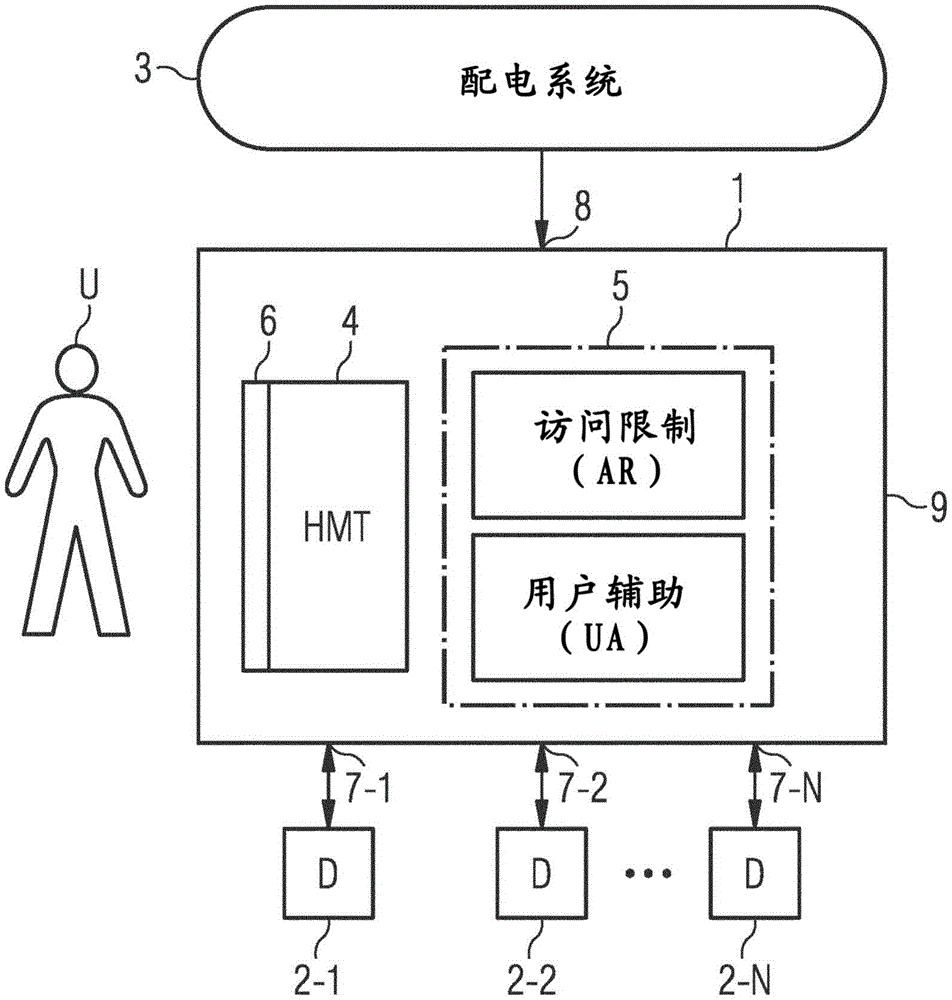
图1示出了根据本发明第一方面的设备的可能实施方式的示意图;Figure 1 shows a schematic diagram of a possible embodiment of a device according to the first aspect of the invention;
图2示出了根据本发明第一方面的设备的可能的示例性实施方式;Figure 2 shows a possible exemplary embodiment of a device according to the first aspect of the invention;
图3示出了用于例示根据本发明第一方面的设备的可能的示例性实施方式的框图;Figure 3 shows a block diagram illustrating a possible exemplary implementation of a device according to the first aspect of the invention;
图4示出了根据本发明第一方面的设备的可能的示例性实施方式的框图;Figure 4 shows a block diagram of a possible exemplary embodiment of a device according to the first aspect of the invention;
图5示出了用于例示根据本发明第一方面的设备的可能的示例性实施方式的另一框图;Figure 5 shows a further block diagram illustrating a possible exemplary embodiment of an apparatus according to the first aspect of the invention;
图6示出了用于例示根据本发明的第二方面的用于调整操作参数的计算机实现的方法的可能的示例性实施方式的流程图。Fig. 6 shows a flow chart illustrating a possible exemplary embodiment of a computer-implemented method for adjusting an operating parameter according to the second aspect of the invention.
具体实施方式Detailed ways
如可以在图1的示意图中看到的,提供根据本发明一方面的设备1以将至少一个装置2连接到公共配电系统3。在图1所示的实施方式中,N个装置经由设备1连接到配电系统3。装置2可以包括从配电系统3接收电源的负载。装置2例如可以包括经由设备1连接到配电系统3的电机。As can be seen in the schematic diagram of FIG. 1 , an
设备1包括人机接口4,人机接口4具有可由用户U使用以与图1所示的设备1交互的元件。人机接口4的人机接口元件适于显示和/或调整至少一个连接的装置2的操作参数的设置值。在图1所示的实施方式中,设备1包括具有至少一个处理器5A的控制器或控制单元5,如图4的示例性实施方式所示。在可能的实施方式中,控制单元5的处理器5A适于执行计算机实现的访问限制机制,该访问限制机制限制对设备1的一个或更多个人机接口元件的访问。该访问限制机制适于增强经由控制设备1连接到公共配电系统3的至少一个装置2(例如电机)的操作安全性。还可以提供访问限制机制以增强控制设备1自身的操作安全性。此外,可以提供访问限制机制以还增强配电系统3的操作安全性。除了计算机实现的访问限制机制之外,在可能的实施方式中,设备1还可以包括机械访问限制机制。在可能的实施方式中,该机械访问限制机制可以由保护盖6提供,该保护盖6适于覆盖人机接口4的人机接口元件。形成机械访问限制机制的保护盖6可以覆盖人机接口元件的全部或仅部分。在可能的实施方式中,保护盖6也可以是部分透明的,使得人机接口4的显示元件对于用户U是可见的,但是用户U不能手动地到达。机械访问限制机制的保护盖6在可能的实施方式中可以通过密封件密封。在保护盖6已经被用户U打开或移除之后,用户U可以打破密封以获得对人机接口4的访问受限人机接口元件的访问,即,用他/她的手指物理访问。在替代实施方式中,保护盖6也可以由锁定机构(例如钥匙)锁定。只有拥有钥匙的用户U才可以打开锁定机构并打开或移除人机接口4的保护盖6。The
在图1所示的实施方式中,设备1包括由保护盖6实现的机械访问限制机制和由控制单元5的处理器5A实现并可执行的计算机实现的访问限制机制两者。In the embodiment shown in FIG. 1 ,
在替代实施方式中,设备1可仅包括机械访问限制机制,例如保护盖6。In an alternative embodiment, the
在根据本发明的设备1的又一实施方式中,设备1可以仅包括计算机实现的访问限制机制。In yet another embodiment of the
在任何上述替代实施方式中,计算机实现的访问限制机制可以在可能的实现中包括质询响应认证机制,其中经由人机接口4向用户U呈现质询,并且在经由人机接口4向所呈现的质询提供了有效响应之后,用户U被成功认证。质询响应机制可以以不同方式实现。在简单实现中,可以请求用户U输入PIN号码或密码。在其它实现中,质询也可以是期望用户关于受影响系统的特定专家知识的查询。质询响应认证机制还可以包括用户U携带的令牌与设备1的读取设备之间的交互。如果用户U拥有令牌,则他被成功认证,并且准许对人机接口4的一些或所有人机接口元件的访问。人机接口4形成用户界面或仪表板,并且允许用户U或人与设备1和/或与连接的装置2中的至少一个的交互。人机接口4还可以允许用户U和配电系统3的控制器5的交互。在可能的实施方式中,人机接口4可以包括不同种类的人机接口元件。在可能的实施方式中,这些人机接口元件可以包括手动激活的开关、二极管或其它电控制元件。人机接口元件还可以包括显示元件或诸如声学输出元件之类的其它输出元件。人机接口元件还可以包括触敏显示元件或图形用户界面元件。在图1所示的实施方式中,至少安全或安全相关的人机接口元件可以由透明保护盖6覆盖。仅成功认证的用户U或拥有相应令牌的用户才能用他的手访问访问受限的人机接口元件。在可能的实施方式中,人机接口4可以包括图形用户界面GUI。人机接口4可以用于可视化和显示与所连接的装置2和/或配电系统3的操作相关的数据。人机接口元件可以包括人或用户可以触摸、看到或使用其来执行控制功能并从这些动作接收反馈的元件。In any of the above alternative embodiments, the computer-implemented access restriction mechanism may include, in a possible implementation, a challenge-response authentication mechanism, wherein a challenge is presented to the user U via the human-machine interface 4, and upon presentation of the challenge via the human-machine interface 4 After providing a valid response, user U is successfully authenticated. The challenge-response mechanism can be implemented in different ways. In a simple implementation, the user U may be requested to enter a PIN number or password. In other implementations, the challenge may also be a query that expects the user's specific expert knowledge about the affected system. The challenge-response authentication mechanism may also include an interaction between the token carried by the user U and the reading device of the
在可能的实施方式中,计算机实现的基于软件的访问限制机制(SAR)和例如由保护盖6提供的机械访问限制(MAR)机制可以彼此链接。在一个实施方式中,计算机实现的访问限制机制(SAR)可以包括质询响应过程,该质询响应过程可以通过人机接口4的输入和输出人机接口元件12-i通过透明保护盖6来执行,以检查用户U是否可以通过计算机实现的访问限制机制(SAR)来成功地认证。只有在用户U已经被计算机实现的访问限制机制(SAR)成功认证之后,机械访问限制机制(MAR)才变得对用户U可用,例如机械锁或机械密封。例如,在通过计算机实现的访问限制机制(SAR)成功认证用户U之后,设备1的壳体9中的盖板可以被打开或移除,从而提供对用于机械钥匙的钥匙孔的访问。在该实施方式中,用户U然后可以将机械钥匙插入钥匙孔中并且通过设备1的该机械访问限制机制(MAR)获得访问。在该实施方式中,认证包括用户U的软件实现的认证和机械认证。这提高了系统的操作安全性,特别是连接的装置2的操作安全性。In a possible embodiment, a computer-implemented software-based access restriction mechanism (SAR) and a mechanical access restriction (MAR) mechanism such as provided by the
计算机实现的基于软件的访问限制机制(SAR)还可以包括其它认证机制,特别是用户的生物特性认证(例如指纹认证)或语音识别。在该实施方式中,HMI 4包括传感器元件,例如触敏表面或麦克风。可以检测并处理用户的任何种类的生物特征以用于用户的认证。Computer-implemented software-based access restriction mechanisms (SAR) may also include other authentication mechanisms, in particular biometric authentication of the user (such as fingerprint authentication) or voice recognition. In this embodiment, the HMI 4 includes sensor elements, such as touch-sensitive surfaces or microphones. Any kind of biometrics of the user can be detected and processed for authentication of the user.
经认证的用户还可以自动获得不同的分配权限以执行关于所连接的装置2的调整。例如,如果认证用户属于第一熟练组,则他可以执行关键参数的调整,而如果认证用户属于另一非熟练组,则他可以仅执行不太关键的参数的调整。Authenticated users can also automatically obtain different assigned rights to perform adjustments with respect to the
在如图1所示的设备1的可能实施方式中,由用户U通过人机接口4的人机接口元件输入的操作参数的设置值通过在设备1的控制单元5的处理器5A上执行的用户辅助算法自动分析。由成功授权的用户U输入的操作参数的设置值在可能的实施方式中可以相对于至少一个连接的装置2的装置特性自动地分析,以检查操作参数的输入设置值是否可容许。只有当操作参数的输入设置值可容许时,设备1的控制单元5才执行相应连接的装置2的操作参数的自动调整。每个装置2-i可以经由控制和数据接口7连接到设备1。设备1还包括用于连接到配电系统3的至少一个输入端子8。在可能的实施方式中,设备1包括用于连接到配电系统3的三个不同电流相L1、L2、L3的三个输入端子。至少一个连接的装置2的装置特性可以在可能的实施方式中存储在设备1的本地特性存储器5C中。在可能的替代实施方式中,装置2的装置特性经由接口7从所连接的装置2的本地存储器获取并且存储在设备1的存储器中用于进一步处理。在可能的实现方式中,通过设备1和装置2之间的协议来实现握手机制,该协议用于检测连接的装置2的类型和/或用于从装置2的存储器获取特定的装置特性以加载到设备1的本地装置特性存储器5C中。在控制单元5的处理器5A上执行的用户辅助(UA)算法可以处理所连接的装置2的预先配置或加载的装置特性,以自动地检查操作参数的输入设置值是否可容许。例如,用户辅助算法(SUA)可以评估设置值以检查操作参数的设置值是否在容许范围内。如果用户U经由人机接口4输入的操作参数的分析设置值不在预定的可容许操作参数范围内,则发现操作参数的输入设置值不被执行的用户辅助算法容许。此外,如果输入设置值与其它操作参数的设置值冲突,则发现操作参数的输入设置值不被执行的用户辅助算法容许。In a possible implementation of the
在发现在控制单元5的处理器上执行的用户辅助算法不容许操作参数的分析输入设置值的情况下,则反馈信号(特别是颜色编码的反馈信号)经由人机接口4的人机接口元件12-i向用户U输出指示操作参数的输入设置值的不可容许性。In case it is found that the user-assisted algorithm executed on the processor of the
此外,在可能的实施方式中,如果在控制单元5的处理器5A上执行的用户辅助算法发现操作参数的分析输入设置值是不可容许的,则可以经由诸如设备1的人机接口4的显示元件之类的人机接口元件向相应用户U输出改变操作参数的先前设置的输入设置值的请求。该请求可以包括要求用户U改变相应参数的操作参数设置的语句,并且可以输出颜色编码的反馈信号(例如,红色的反馈信号),使得用户U意识到先前设置的操作参数值的不可容许性。颜色编码的反馈信号还可以编码相应的操作参数对于系统或连接的装置2的操作的关键程度,例如,黄色用于中等关键(例如警告),红色用于非常关键(错误、故障、关键操作状态、紧急情况)。可以以不同方式执行反馈信号的编码。例如,反馈信号还可以包括具有与操作参数对于操作系统的安全性的相关性相对应的频率的脉冲。Furthermore, in a possible embodiment, if a user-assisted algorithm executed on the
在可能的实施方式中,在设备1的控制单元5的处理器5A上执行的用户辅助算法(SUA)还适于根据至少一个连接的装置2的输入或检测到的类型来计算和调整连接到设备1的至少装置2的自动容许的操作参数范围或操作参数。此外,用户辅助算法还可以根据监测到的至少一个连接的装置2的操作状态和/或配电系统3的观察状态来计算和调整容许操作参数范围。在另一实施方式中,从设置在至少一个连接的装置2处的传感器接收传感器数据,并由用户辅助算法处理传感器数据,以根据处理的传感器数据来计算至少一个连接的装置2的操作参数的容许操作范围。传感器数据可以包括例如电流数据、电压数据、功率数据和/或环境数据,诸如指示所连接的装置2的组件的温度或装置2周围的环境温度的温度数据。在另一个可能的实施方式中,由设备1的控制单元5执行的用户辅助算法还可以处理经由系统的数据总线与其它类似设备1的其它控制单元5交换的数据。在又一可能的实施方式中,在控制单元5的处理器上执行的用户辅助算法还可以根据所需的预定操作安全级别来计算操作参数的可容许操作范围。操作安全级别可以预先配置或者可以由用户U经由人机接口4输入。In a possible embodiment, the User Assisted Algorithm (SUA) executed on the
此外,在控制单元5的处理器5A上执行的用户辅助算法可以包括故障排除用户辅助算法(TUA),其适于在操作参数的设置值不可容许的情况下向用户U自动提供故障排除辅助。例如,在设置的操作参数值不在容许参数范围内的情况下,用户辅助算法可以提供用于执行结构化故障排除的特定提示。Furthermore, the user assistance algorithms executed on the
在另一优选实施方式中,用户辅助算法还可以自动执行故障分析,以找到用户U经由人机接口4执行的参数设置不在可容许的参数范围内的原因。例如,连接的装置2中的至少一个的当前操作状态可以将特定操作参数的操作范围缩小到使得在装置2的正常状态下仍然有效的操作参数设置不再在容许范围内的程度。在该实施方式中,用户辅助算法可以通过人机接口4向用户U指示所连接的装置2的特定观察状态或者已经缩小所设置的操作参数的容许范围的配电系统3的特定观察状态。用户辅助算法可以提供结构化握手交互以识别无效输入参数设置的原因。在另一个可能的实施方式中,用户辅助算法还可以分析所连接的装置2(例如发动机或电机)的检测和通知的错误,并且可以经由人机接口4将相应的数据传递给用户U。In another preferred embodiment, the user-assisted algorithm can also automatically perform fault analysis to find the reason why the parameter setting performed by the user U via the man-machine interface 4 is not within the allowable parameter range. For example, the current operating state of at least one of the
在可能的实施方式中,用户辅助算法还可以提供附加信息或建议,如何处理连接的装置2的特定观察状态,特别是如何在检测到的情况下重新调整或重置其它操作参数,以提高连接的装置和/或连接到设备1的其它装置2的安全性以及配电系统3的操作安全性。In a possible implementation, the user assistance algorithm may also provide additional information or advice on how to deal with a particular observed state of the
在可能的实施方式中,用户辅助算法检查输入操作参数的合理性,并且经由人机接口4向用户U给出相应的反馈,特别是颜色编码的反馈。例如,如果所连接的装置2包括电动机,则计算机实现的访问限制机制仅设置已经被发现处于容许操作参数范围内的安全操作参数。在可能的实施方式中,故障排除用户辅助算法(TUA)可以控制HMI 4的人机接口元件12-1输出的彩色编码反馈信号的显示,特别是图2所示的LED 12-6、12-7。In a possible embodiment, a user assistance algorithm checks the plausibility of the input operating parameters and gives corresponding feedback, in particular color-coded feedback, to the user U via the man-machine interface 4 . For example, if the
如果在控制单元5的处理器5A上执行的设置值用户辅助算法(SUA)发现操作参数的分析输入设置值是可容许的,则另一反馈信号(特别是颜色编码的反馈信号)通过人机接口4的人机接口元件被输出给用户U,指示操作参数的输入设置值是可容许的,并且至少一个连接的装置2的相应操作参数由设备1的控制单元5相应地自动调整。反馈信号可以是颜色编码的反馈信号,例如绿色信号,其指示用户辅助算法发现操作参数的分析输入设置值是可容许的,例如如果操作参数在可容许的操作参数范围内。If the setpoint user assistance algorithm (SUA) executing on the
在如图1所示的设备1的另一可能实施方式中,设备1还可以包括总线接口17,总线接口17可以用于将设备1的控制单元5连接到配电系统3的数据总线26,如还参照图5所示的实施方式更详细地解释的。可以提供配电系统3的数据总线26,以提供连接到配电系统3的不同设备1的控制单元5之间的通信。数据总线26可以设置成在不同的控制单元5之间交换数据和/或在不同的控制单元5之间交换控制信号。In another possible implementation of the
如图1所示的配电系统3可以包括适于经由设备1将电力分配到连接的装置2的母线轨道或电线。在可能的实施方式中,设备1可以包括不同的电路,特别是用于连接至少一个连接的装置2的电路。在可能的实施方式中,设备1包括过电流保护电路,其适于保护连接的装置2免受过电流。设备1还可以包括过载保护电路,其适于保护连接的装置2免受过载。设备1还可以包括电源控制电路,其适于控制从配电系统3到连接的装置2的电源。The
图2示出了根据本发明第一方面的设备1的示例性实施方式。如图2的实施方式所示的控制设备1包括具有前侧和后侧的壳体9。设备1的后侧包括用于将设备1连接到配电系统3的接口8。在所示实施方式中,配电系统3包括用于供电网络的不同电相L的三个母线10-1、10-2、10-3。在前侧,设备1包括具有不同人机接口元件12的人机接口4。人机接口4的人机接口元件12的一部分在所示实施方式中由透明保护盖6覆盖。在图2所示的实施方式中,如图2所示,至少一个特定的人机接口元件11没有被保护盖6覆盖。图2中所示的未覆盖的人机接口元件11可用于通过所显示的菜单导航。人机接口元件11可以包括具有集成LED的键元件或按钮。人机接口元件11可以包括触摸显示元件。其它人机接口元件12由透明保护盖6覆盖。例如,人机接口4可以包括如图2所示的显示元件12-1。该显示元件12-1可以通过人机接口4的透明保护盖6向用户显示操作参数的菜单。显示单元12-1可以包括触敏显示单元。例如,可以在树结构内提供参数的层次结构。通过与菜单交互,用户U可以导航到他希望改变其设置的特定操作参数。在可能的实施方式中,操作参数的导航可以通过未被保护盖6覆盖的人机接口元件11来执行。保护盖6形成机械访问限制机制MAR,其允许用户U仅访问诸如机械输入元件11之类的可用人机接口元件的一部分。输入元件11可以是按钮元件,该按钮元件可以由用户U手动按压以通过透明保护盖6导航通过对他可见的显示菜单。在已经达到用于改变其设置值的期望操作参数之后,用户U必须通过至少一个访问限制机制来实现对用于执行设置值的调整的所需人机接口元件的访问。在可能的实施方式中,该访问限制机制可以包括由密封件或机械钥匙锁定的透明保护盖6提供的物理或机械访问限制机制(MAR)。在可能的实施方式中,如果用户U破坏密封件,则他可以打开或移除透明保护盖6,并且访问人机接口4的至少一个访问受限的人机接口元件,例如访问如图2所示的人机接口元件12-2至12-5。通过处理包括例如按钮的人机接口元件12-2至12-5,用户U则有可能改变他通过菜单按钮11到达的操作参数的操作设置值。人机接口元件12-2至12-5可以包括触摸显示元件或具有集成光信号源的按钮。图2还示出了作为HMI 4的接口元件的上部光信号源12-6和下部光信号源12-7。这些光信号源12-6、12-7可用于提供颜色编码信号,从而帮助用户找到检测到的技术问题(例如检测到的短路)的根本原因。光信号源12-6、12-7可以包括LED。在其它实施方式中,光信号源12-6、12-7可以包括OLED或光纤。光信号源12-6、12-7的位置可以根据使用情况而变化。其可以设置在HMI 4的前表面处,但也可以设置在壳体9的其它表面上,特别是在如图2所示的设备1的安装状态下的顶表面或底表面上。Figure 2 shows an exemplary embodiment of a
HMI 4的人机接口元件12-i可以根据使用情况而变化,并且还可以包括例如电位计或DIP开关。The human machine interface elements 12-i of the HMI 4 may vary depending on the use case, and may also include, for example, potentiometers or DIP switches.
在可能的实施方式中,壳体9由允许光信号通过的透明或半透明材料制成。在该实施方式中,诸如HMI 4的LED之类的发光信号源可以集成在设备1的壳体9内。In a possible embodiment, the
在另一实施方式中,设备1不连接到如图2所示的母线10,而是包括电源输入连接器插座以接收用于连接到配电系统3的插入式电源连接器。该插座可以例如在安装到安装板时设置在壳体9的顶侧。In another embodiment, the
在另一实施方式中,包括密封的透明保护盖6的设备1仅提供用户U可见的信息。在可能的实施方式中,只有当保护盖6已经打开时,即当密封件已经破裂时,用户U才能导航到所显示的设置。在该替代实施方式中,用户U在已经破坏保护盖6的密封件之后仅获得对菜单按钮11的访问。在该实施方式中,菜单按钮11位于人机接口4的透明保护盖6下方。密封件的破坏还可以包括经由人机接口4的显示元件向用户U输出警告消息或信号。In another embodiment, the
在图2所示的实施方式中,设备1包括用于将诸如电机之类的装置2连接到设备1的接口7。在所示实施方式中,如图2所示,该装置接口7位于设备1的壳体9的前侧。在另外的实施方式中,壳体9可以在壳体9的前侧包括多个装置接口7。在壳体9的背面上,设备1包括接口元件,用于提供到所示配电系统3的不同母线10-1、10-2、10-3的电连接。在可能的实施方式中,母线10-i还可以包括用于插入设备1的电气接触件的槽,以提供到配电系统3的电连接。In the embodiment shown in FIG. 2 , the
在优选实施方式中,装置或负载2通过位于设备1的壳体9的底侧或下侧的装置接口7连接,也如图2所示。在一个可能的实施方式中,在壳体的前侧,人机接口HMI 4具有附加的显示元件,例如LED 12-6、12-7,其支持用户寻找故障的根本原因并在执行故障排除时提供帮助。In a preferred embodiment, the device or
在可能的实施方式中,人机接口4包括位于人机接口4顶部的第一LED 12-6和位于人机接口4底部或下侧的第二LED 12-7,例如靠近图2所示的装置接口7。In a possible embodiment, the human-machine interface 4 includes a first LED 12-6 at the top of the human-machine interface 4 and a second LED 12-7 at the bottom or underside of the human-machine interface 4, for example close to the one shown in FIG. Device interface7.
在可能的实施方式中,位于HMI 4顶部的第一LED 12-6提供颜色编码指示,该颜色编码指示已经发生了与设备1的输入侧(即配电系统3侧)相关的故障。相反,位于HMI 4底部的第二LED 12-7提供颜色编码指示,该颜色编码指示已经发生了与设备1的输出侧相关的故障,即与设备1的至少一个装置接口7相关的故障。In a possible embodiment, a first LED 12-6 located at the top of the HMI 4 provides a color coded indication that a fault has occurred related to the input side of the device 1 (ie the
例如,如果确实发生与装置相关的短路,则位于受影响装置2的相应装置接口7附近的第二LED 12-7可以提供指示关于所连接的装置2的故障或错误的红色警告信号。短路检测由包括例如图4的实施方式中所示的线圈18的设备1的测量电路执行。此外,可以在HMI4的显示单元12-1上显示象征相应故障的符号,例如短路符号。此外,显示单元12-1可以在设备1的负载侧显示短路故障的可能原因的列表,并且还可以为用户显示如何处理这种情况的处理指令。例如,HMI 4的显示单元12-1可以向用户显示指令“检查装置的连接电缆是否可能短路”。For example, if a device-related short circuit does occur, a second LED 12-7 located near the corresponding device interface 7 of the affected
然而,如果故障涉及设备1的输入侧,则位于HMI 4顶部的第一LED 12-6可以提供红色警告信号。如果例如DC电源电压例如经由图5中所示的总线接口17从输入侧提供给设备1的控制单元5,并且失效或者例如从24伏的设定电压降低到例如19伏的较低的不足电压,则HMI 4顶部的第一LED提供红色警告信号,使得用户意识到无论发生了什么技术问题,都可以在设备1的输入侧(即面向配电系统3的一侧)发现故障。在该示例中,HMI 4的显示单元12-1还可以示出DC电源电压不足的符号并输出如何处理该故障的消息或建议。However, if the fault involves the input side of the
此外,可以经由HMI 4的扬声器输出具有特定指令的用于用户的声学反馈或者甚至声学辅助消息,以支持他发现和克服与分配系统3、设备1本身或者与连接到设备1的装置2相关的故障。Furthermore, acoustic feedback or even acoustic assistance messages for the user with specific instructions can be output via the loudspeaker of the HMI 4 to support him in finding and overcoming problems related to the
一旦用户修复了故障,HMI 4处的相应LED 12-6、12-7就可以从红色编码的警告信号切换回指示无故障操作状态的绿色编码的信号。Once the user fixes the fault, the corresponding LED 12-6, 12-7 at the HMI 4 can switch from a red-coded warning signal back to a green-coded signal indicating a fault-free operating state.
在可能的实施方式中,每个装置接口7包括相关联的LED 12-7。这便于找到与一组连接的装置2内的一个连接的装置2的故障有关的根本原因。In a possible embodiment, each device interface 7 includes an associated LED 12-7. This facilitates finding the root cause related to a failure of one
在可能的实施方式中,设备1包括用于将计算机装置连接到设备1的数据接口,特别是USB接口。该计算机装置可以运行服务软件工具,该服务软件工具适于在包括其人机接口元件11、12-i的计算机装置的屏幕上显示虚拟设备1。In a possible embodiment, the
设备1还可以包括无线接口,以将在移动电话上运行的计算机实现的应用链接到设备1。该应用可以包括提供与所连接的装置2相关的服务功能的服务应用。The
图3示出了用于例示根据本发明第一方面的设备1的可能的示例性实施方式的另一框图。在所示实施方式中,设备1包括在配电系统3和连接的装置2之间的供电路径13。在所示实施方式中,电源路径13包括过电流保护电路14、过载保护电路15和电源控制电路16。在可能的实施方式中,装置2可以包括诸如电机的感应负载。装置2还可以包括电容性负载或电阻性负载或其组合。电负载以电流的形式消耗电能,并且可以将该电能转换成其它形式,例如热、光、功等。设备1的输入端子8可以以可能的方式连接。代替母线,也可以使用其它电气承载型材。载流轨道或母线可以在水平或垂直方向上延伸,例如在开关柜中。如图1所示的设备1可以包括具有配电系统1的不同电相位的单个或多个供电路径13。Fig. 3 shows a further block diagram illustrating a possible exemplary embodiment of the
图3所示的控制单元5具有处理器或计算机,该处理器或计算机被提供用于通过HMI 4向用户提供用户辅助(UA)。用户辅助(UA)包括计算机实现的设置值辅助(SUA)过程以及计算机实现的故障排除辅助(TUA)过程。故障排除包括故障检测、根本原因分析和生成克服检测到的故障的建议。访问限制(AR)可以是机械(MAR)或基于软件的,包括计算机实现的基于软件的访问限制过程(SAR)。The
图4示出了包括人机接口4的设备1的可能实施方式,人机接口4可以用于将至少一个装置2连接到配电系统3。在图4所示的实施方式中,设备1包括具有至少一个处理器5A、数据存储器5B和特性存储器5C的控制单元5。控制单元5连接到人机接口4,人机接口4具有用户U用来与设备1交互的人机接口元件。如图4所示的人机接口4的人机接口元件适于显示和/或调整至少一个连接的装置2的操作参数的设置值。对人机接口元件的访问由至少一个访问限制机制限制。该访问限制机制可以包括在控制单元5的处理器5A上执行的诸如盖板6的机械访问限制机制MAR或基于软件的计算机实现的访问限制机制SAR。FIG. 4 shows a possible embodiment of a
在图4所示的实施方式中,设备1还包括总线接口17,总线接口17也连接到控制单元5。提供总线接口17以将设备1的控制单元5连接到配电系统3的数据总线26。数据总线26可以用于连接到配电系统的不同设备1的不同控制单元5之间的通信。此外,诸如传感器数据的数据可以通过总线接口17经由数据总线26交换。In the embodiment shown in FIG. 4 , the
如图4所示,电源路径13包括传感器组件18,例如与电源开关19串联连接的线圈、负载电流传感器组件20和继电器21。传感器组件18适于直接产生电压降,该电压降对应于从控制设备1的输入端子8经由电源路径13流到控制设备1的输出端子7的电负载电流的电流上升速度。图3的框图中所示的过电流保护电路14包括电源开关19,电气装置2从电源开关19接收电负载电流,并且传感器组件18与电源开关19串联连接。过电流保护电路14还包括驱动器电路22,驱动器电路22适于根据由传感器组件18产生的电压降和沿着电源开关19的电压降来检测发生的过电流。由传感器组件18产生的电压降和沿着电源开关19的电压降作为和电压施加到驱动器电路22。硬连线驱动器电路22适于在检测到具有小于5微秒的关断时段的过电流时自动关断电源开关19。该短的关断时段对应于由硬连线驱动器电路22内的硬件组件(例如逻辑门或比较器)以及由将传感器组件18连接到驱动器电路22的信号线以及将驱动器电路22连接到电源开关19的信号线引起的信号延迟。电源开关19上的非线性电压降被用作表示施加到集成在驱动器芯片中的驱动器电路22的输入引脚的和电压中的瞬时电流的值。因此,受保护的关断响应于电流的值和流过电源路径13的电流的变化率的值两者的组合。As shown in FIG. 4 , the
在图3的框图中示出的过载保护电路15包括传感器组件20,例如适于连续测量从输入端子8流到输出端子7的负载电流的霍尔传感器。测得的负载电流由传感器组件20通知给设备1的控制单元5,该控制单元5适于基于测得的负载电流分布来确定电负载2的过载状态。控制单元5进一步适于控制驱动器电路21,以在电负载或装置2的过载状态已经由控制单元5确定的情况下自动关断电源开关19。在图4所示的实施方式中,过载保护电路15的传感器组件20连接到相关联的模数转换器23。模数转换器23适于将从霍尔传感器20接收的测量的模拟负载电流分布转换为相应的测量值或采样,所述测量值或采样可以临时存储在控制单元5的数据存储器5B中用于进一步处理。The
在所示的实施方式中,设备1包括由分压器形成的另一传感器组件24,分压器适于在设备1的输入端子8处提供电源电压的一部分,以提供随时间的电源电压分布。如图4所示,传感器组件9经由模数转换器25连接到控制单元5。由模数转换器23、25提供的测量值作为数据样本存储在控制单元5的数据存储器5B中,作为负载电流分布数据和电源电压分布数据。In the embodiment shown, the
根据本发明的设备1的控制单元5还包括用于存储装置2的不同负载操作特性的存储器5C。The
在可能的实施方式中,由用户U通过人机接口4的人机接口元件输入的操作参数的设置值通过在设备1的控制单元5的处理器5A上执行的用户辅助算法针对至少一个连接的装置2的装置特性来自动分析,以检查操作参数的输入设置值是否为可容许。在可能的实施方式中,这些装置特性可以从控制单元5的特性存储器5C中读取。In a possible embodiment, the setting values of the operating parameters entered by the user U through the human-machine interface elements of the human-machine interface 4 are directed to at least one connected The device characteristics of the
图3的框图中所示的电源控制电路16包括传感器组件24,传感器组件24适于在设备1的输入端子8处测量通知给设备1的控制单元5的电源电压。控制单元5可以适于根据所连接的电气装置2的类型和/或当前操作模式来控制提供给电气装置2的电功率。电气装置的类型可以包括电阻性、电感性或电容性负载类型。因此,在图4的实现中示出的设备1为连接的装置2实现过电流保护、过载保护和/或电源控制。The
图5示出了用于例示根据本发明第一方面的设备1的可能的示例性实施方式的另一框图。在所示实施方式中,配电系统3包括用于三个不同电相L1、L2、L3的三个母线或其它导电轨10-1、10-2、10-3。对于每个电相,提供相应的供电路径13-1、13-2、13-3,用于将装置2连接到配电系统3。供电路径13-1、13-2、13-3的操作在内部由控制单元5的处理器5A控制,也如在图4的上下文中所描述的。控制单元5还连接到总线接口17,总线接口17连接到配电系统3的数据总线26,如图5所示。因此,图5所示的控制单元5可以经由总线接口17与同样连接到配电系统3的类似控制设备1的其它控制单元5通信。数据总线26可以包括用于交换数据的一条或更多条数据线。总线26还可以包括控制线,以在连接到配电系统3的不同控制单元5的处理器5A之间交换通信或控制信号。控制和数据总线26还可以连接到配电系统3的远程或外部控制器。图4的框图中所示的控制单元5可以包括适于执行计算机实现的访问限制机制(SAR)的至少一个处理器5A。在可能的实施方式中,在处理器5A上执行的访问限制机制可以经由数据总线与远程控制器和/或与在连接到配电系统3的其它控制设备1中实现的其它访问限制机制通信。在一种可能的实现方式中,只有在从配电系统3的远程控制器接收到启用信号之后,才通过在控制单元5中实现的访问限制机制来准许对人机接口4的一个或更多个人机接口元件的访问。在该实施方式中,配电系统3的远程控制器或中央控制单元可以首先启用在不同设备1的控制单元5上实现的分布式访问限制机制,然后例如通过经由设备1的人机接口4执行的本地质询响应认证机制来许可访问。此外,执行的访问限制机制还可以向配电系统3的远程中央控制器通知用户U的认证成功或失败。Fig. 5 shows a further block diagram illustrating a possible exemplary embodiment of the
图6示出说明根据本发明的计算机实现的方法的示例性实施方式的流程图。FIG. 6 shows a flowchart illustrating an exemplary embodiment of a computer-implemented method according to the present invention.
在第一步骤S1中,用户U利用与所连接的装置2相关的至少一个操作参数执行操作参数设置。在另一步骤S2中,检查在步骤S1中由用户U通过人机接口4的人机接口元件输入的装置2的操作参数设置是否与系统的安全性或安全性相关,即与所连接的装置2或控制设备1本身的安全性或安全性相关和/或与配电系统3的安全性和/或安全性相关。In a first step S1 , the user U performs an operating parameter setting with at least one operating parameter related to the
如果是这种情况,则在步骤S3中执行用户认证。在步骤S1中由用户U执行的操作参数设置不是安全或安全相关的情况下,由控制单元5执行操作参数设置的自动调整。If this is the case, user authentication is performed in step S3. In case the operating parameter setting performed by the user U in step S1 is not safety or safety related, automatic adjustment of the operating parameter setting is performed by the
在步骤S5中,检查用户认证是否成功执行。如果用户U不能通过由控制单元5的处理器5A执行的认证机制成功地认证,则阻止或抑制由用户U经由人机接口4执行的操作参数设置,使得不允许并执行对应操作参数的物理调整,并且如图6的流程图中的步骤S7所示地执行。In step S5, it is checked whether user authentication was successfully performed. If the user U cannot be successfully authenticated by the authentication mechanism executed by the
相反,如果用户U能够被成功认证,则在步骤S6中评估由认证的用户U输入的安全相关操作参数的参数设置,以在步骤S7中确定输入的操作参数设置是否是可容许的。Conversely, if the user U can be successfully authenticated, the parameter settings of the security-related operating parameters input by the authenticated user U are evaluated in step S6 to determine whether the input operating parameter settings are permissible in step S7.
如果在步骤S8中发现由认证用户U输入的安全相关操作参数的评估操作参数设置是可容许的,则在步骤S9中执行对应于输入操作参数设置的自动调整以物理地改变对应的操作参数。此外,经由人机接口4的显示元件向用户U提供正反馈信号,特别是颜色编码的反馈信号(例如绿色反馈信号)。If the evaluated operating parameter settings of the security-related operating parameters input by the authenticated user U are found to be permissible in step S8, an automatic adjustment corresponding to the input operating parameter settings is performed in step S9 to physically change the corresponding operating parameters. Furthermore, a positive feedback signal, in particular a colour-coded feedback signal (for example a green feedback signal), is provided to the user U via a display element of the man-machine interface 4 .
相反,如果在步骤S8中发现所评估的参数设置是不可容许的,则在步骤S11中抑制相应操作参数的调整,并且用户U在步骤S11中获得负反馈信号,特别是颜色编码的反馈信号。负颜色编码反馈信号例如可以包括红色反馈信号。此外,在步骤S11中,可以请求用户U改变容许操作参数设置。在这种情况下,流程返回到如图6的流程图所示的步骤S6。颜色编码的负反馈信号可以包括红色反馈信号,该红色反馈信号使得用户U知道不容许的操作参数设置。除了改变操作参数设置的请求之外,在控制单元5的处理器5A上执行的用户辅助算法还可以建议容许的操作参数设置,特别是在容许的操作参数范围中的操作参数设置。Conversely, if the evaluated parameter setting is found to be inadmissible in step S8, the adjustment of the corresponding operating parameter is suppressed in step S11 and the user U receives a negative feedback signal, in particular a color-coded feedback signal, in step S11. Negative color-coded feedback signals may include, for example, red feedback signals. Furthermore, in step S11, the user U may be requested to change the allowable operation parameter setting. In this case, the flow returns to step S6 as shown in the flowchart of FIG. 6 . The color-coded negative feedback signals may include a red feedback signal which makes the user U aware of impermissible operating parameter settings. In addition to requests to change operating parameter settings, a user assistance algorithm executed on
在优选实施方式中,配电系统3为包括例如三个不同电相L1、L2、L3的连接装置提供AC电源,也如图5所示。在替代实施方式中,配电系统3还可以为连接的装置2提供DC电源。In a preferred embodiment, the
控制设备1还可以包括至少一个变压器,其适于将接收的交流电流转换成直流(DC)电压。在可能的实施方式中,设备1包括电机起动器或变频驱动器VFD。在图4所示的实施方式中,设备1包括电子电路以提供过电流保护、过载保护和电源控制。设备1还可以包括用于保护作为负载2连接到设备1的机器或电机免受电力浪涌的电路。控制柜可以包括具有电源轨的本地配电系统3,多个设备1连接到电源轨。电源分配系统3可以提供220、440或更高伏特的AC。The
图4所示的总线接口17和总线26包括用于在不同设备1之间通信的有线总线系统。在可能的实施方式中,总线26还可以包括现场总线,例如以太网、Modbus或Profibus。在替代实施方式中,总线接口17还可以包括用于交换数据的无线总线接口。The
其它实施方式是可能的。在可能的实施方式中,人机接口4可以包括收发器,用于建立到诸如用户携带的移动电话或膝上型计算机之类的便携式用户设备UE的无线链路。在该实施方式中,部分或全部人机接口元件12-i可以由便携式用户设备UE的GUI的元件形成。无线链路可以包括NFC链路、WIFI/WLAN链路或蓝牙链路。Other implementations are possible. In a possible embodiment, the human machine interface 4 may comprise a transceiver for establishing a wireless link to a portable user equipment UE such as a mobile phone or a laptop computer carried by the user. In this embodiment, part or all of the human-machine interface elements 12-i may be formed by elements of the GUI of the portable user equipment UE. Wireless links may include NFC links, WIFI/WLAN links or Bluetooth links.
便携式用户设备UE也可以经由诸如USB电缆之类的电缆连接。设备1的壳体9可以包括一个或更多个USB槽以接收USB电缆或USB棒。USB接口或其它有线接口可用于将可由用户通过HMI 4的人机接口元件12-i来调整或微调的可连接装置2的特性和/或装置参数的默认参数设置值加载到控制单元5的特性存储器5C中。连接的装置2的特性或默认设置值也可以由设备1从连接的装置2本身的本地存储器加载。另一种选择是从系统的中央数据存储器经由数据总线26下载特性和/或默认参数设置值。Portable user equipment UE may also be connected via a cable such as a USB cable. The
在另一个可能的实施方式中,连接的装置2可以包括由设备1经由有线或无线接口从连接的装置2自动读取的相关联的装置标识符ID(例如序列号),用于确定单独的装置实例。以这种方式,例如可以将确定的故障分配给可能已经在同一故障生产批次中生产的各个装置或者记录各个装置2的错误。In another possible embodiment, the
在另一个可能的实施方式中,设备1的HMI 4也可以作为单独的实体插入到设备1的壳体9的正面接口中,并且可以与适合于连接到设备1的另一类型的装置2的另一类型的HMI 4交换。装置2的类型可以例如包括电感(例如电机)、电阻或电容负载类型。在另一实施方式中,可插拔HMI 4可以在用户手动地从设备1分离之后经由无线链路与设备1的收发器通信。在该实施方式中,可插拔HMI 4自身形成便携式用户设备UE。In another possible embodiment, the HMI 4 of the
控制设备1可以交互地解决不同的故障场景,诸如电机短路中的短路、供电电缆中的短路、机械磨损、电缆缺陷、欠电压、不对称负载、太高的环境温度或装置中的过温。The
根据本发明的计算机实现方法提供复杂的用户指导,包括调试助手,其中用户可以执行经由主按钮、箭头键和显示指示的参数的指导设置,并且还包括解决方案助手,其在显示器上显示警告和故障指示的情况下自动向用户提供故障排除的推荐,例如通过装置上的彩色LED信号(输入/输出)。The computer-implemented method according to the invention provides sophisticated user guidance, including a commissioning assistant, in which the user can perform guided setup of parameters indicated via the main buttons, arrow keys and display, and a solution assistant, which displays warnings and In the event of a fault indication, recommendations for troubleshooting are automatically provided to the user, e.g. via colored LED signals on the device (input/output).
例如,如果在连接到作为电机起动器操作的控制设备1的电机的起动期间检测到或观察到故障,则由控制设备1针对受影响的电机自动启动系统环境诊断,以根据所发现的故障的根本原因向用户提供相关的技术信息和建议。这些故障排除建议例如可以包括检查电机供电电缆、检查可用负载、检查非对称负载、或检查由于机械过载、磨损或绕组短路引起的过电流的建议。建议或信息还可以指示设置值是否关键,即安全性相关,并且是否在容许范围内,特别是考虑到检测到的电机类型或与相应AC或DC电机相关联的特性参数曲线和参数函数。For example, if a fault is detected or observed during the start-up of a motor connected to the
控制设备1还可以执行系统诊断和自诊断,即装置的自诊断、用于电机的系统环境诊断以及控制柜的母线配电系统的系统环境诊断。The
Claims (31)
Applications Claiming Priority (3)
| Application Number | Priority Date | Filing Date | Title |
|---|---|---|---|
| EP20209001.5 | 2020-11-20 | ||
| EP20209001.5A EP4002417A1 (en) | 2020-11-20 | 2020-11-20 | Power distribution connection apparatus |
| PCT/EP2021/082200 WO2022106567A1 (en) | 2020-11-20 | 2021-11-18 | A method for adjusting operation parameters of an electrical device |
Publications (1)
| Publication Number | Publication Date |
|---|---|
| CN115298790A true CN115298790A (en) | 2022-11-04 |
Family
ID=73543169
Family Applications (1)
| Application Number | Title | Priority Date | Filing Date |
|---|---|---|---|
| CN202180020948.1A Pending CN115298790A (en) | 2020-11-20 | 2021-11-18 | Method for adjusting operating parameters of an electrical device |
Country Status (6)
| Country | Link |
|---|---|
| US (1) | US11921909B2 (en) |
| EP (2) | EP4002417A1 (en) |
| CN (1) | CN115298790A (en) |
| ES (1) | ES2981817T3 (en) |
| PL (1) | PL4082034T3 (en) |
| WO (1) | WO2022106567A1 (en) |
Families Citing this family (2)
| Publication number | Priority date | Publication date | Assignee | Title |
|---|---|---|---|---|
| DE102022103812A1 (en) * | 2022-02-17 | 2023-08-17 | WAGO Verwaltungsgesellschaft mit beschränkter Haftung | COMPUTER-IMPLEMENTED METHOD FOR AT LEAST PARTIALLY AUTOMATED CONFIGURATION OF A FIELDBUS, FIELDBUS SYSTEM, COMPUTER PROGRAM, COMPUTER READABLE STORAGE MEDIUM, TRAINING DATA SET AND METHOD FOR TRAINING A CONFIGURATION AI MODEL |
| US12088081B2 (en) | 2022-12-22 | 2024-09-10 | Basis NZ Limited | System, device and method for configuring circuit protection device(s) |
Citations (12)
| Publication number | Priority date | Publication date | Assignee | Title |
|---|---|---|---|---|
| US4945443A (en) * | 1989-09-14 | 1990-07-31 | General Electric Company | Electronic circuit interrupter with combined keypad and display |
| US6289267B1 (en) * | 1998-03-19 | 2001-09-11 | Siemens Energy & Automation, Inc. | Graphical energy information display system having a menu for user selection of energy related information for an AC load control device |
| JP2005141408A (en) * | 2003-11-05 | 2005-06-02 | Dainippon Printing Co Ltd | Server device and electronic form |
| US20060230298A1 (en) * | 2005-04-11 | 2006-10-12 | Watlow Electric Manufacturing Company | Compact limiter and controller assembly and method |
| US20090206059A1 (en) * | 2008-02-19 | 2009-08-20 | Kiko Frederick J | Intelligent circuit breaker apparatus and methods |
| US20120030526A1 (en) * | 2010-07-30 | 2012-02-02 | Brother Kogyo Kabushiki Kaisha | Communication device |
| CN102742243A (en) * | 2009-08-31 | 2012-10-17 | Abb技术有限公司 | Check configuration modification for IED |
| CN102969793A (en) * | 2012-09-29 | 2013-03-13 | 广东电网公司电力调度控制中心 | Data control method and portable digital terminal based on power grid control system |
| CN105988401A (en) * | 2015-03-16 | 2016-10-05 | 西门子公司 | Method, computation apparatus, user unit and system for parameterizing an electrical device |
| CN106105139A (en) * | 2014-03-07 | 2016-11-09 | 微软技术许可有限责任公司 | The automatic detection of the authentication method being carried out by gateway |
| CN111538371A (en) * | 2020-07-07 | 2020-08-14 | 飞天诚信科技股份有限公司 | Real-time clock device, working method thereof and USB (universal serial bus) equipment |
| CN111651333A (en) * | 2020-05-28 | 2020-09-11 | 浙江谷地机械科技有限公司 | Safety management system based on CIP automatic cleaning machine |
Family Cites Families (6)
| Publication number | Priority date | Publication date | Assignee | Title |
|---|---|---|---|---|
| US20060229740A1 (en) * | 2005-04-11 | 2006-10-12 | Watlow Electric Manufacturing Company | Portable user interface assembly and method |
| ATE477584T1 (en) * | 2007-06-06 | 2010-08-15 | Bticino Spa | MOLDED HOUSING CIRCUIT BREAKER WITH PROCESSING UNIT WITH DATA VISUALIZATION FUNCTION |
| US8171543B2 (en) * | 2007-08-29 | 2012-05-01 | General Electric Company | Electronic trip units with limited read/write access |
| US8837103B2 (en) | 2010-10-19 | 2014-09-16 | Utility Relay Company | Circuit breaker trip unit with digital potentiometer |
| KR101697575B1 (en) * | 2011-06-23 | 2017-01-19 | 엘에스산전 주식회사 | Remote monitoring system and user interfacing method for digital protective relay |
| DE102014217292A1 (en) * | 2014-08-29 | 2016-03-03 | Siemens Aktiengesellschaft | Circuit breaker for interrupting a circuit |
-
2020
- 2020-11-20 EP EP20209001.5A patent/EP4002417A1/en not_active Withdrawn
-
2021
- 2021-11-18 US US17/759,394 patent/US11921909B2/en active Active
- 2021-11-18 CN CN202180020948.1A patent/CN115298790A/en active Pending
- 2021-11-18 ES ES21816018T patent/ES2981817T3/en active Active
- 2021-11-18 PL PL21816018.2T patent/PL4082034T3/en unknown
- 2021-11-18 WO PCT/EP2021/082200 patent/WO2022106567A1/en not_active Ceased
- 2021-11-18 EP EP21816018.2A patent/EP4082034B1/en active Active
Patent Citations (12)
| Publication number | Priority date | Publication date | Assignee | Title |
|---|---|---|---|---|
| US4945443A (en) * | 1989-09-14 | 1990-07-31 | General Electric Company | Electronic circuit interrupter with combined keypad and display |
| US6289267B1 (en) * | 1998-03-19 | 2001-09-11 | Siemens Energy & Automation, Inc. | Graphical energy information display system having a menu for user selection of energy related information for an AC load control device |
| JP2005141408A (en) * | 2003-11-05 | 2005-06-02 | Dainippon Printing Co Ltd | Server device and electronic form |
| US20060230298A1 (en) * | 2005-04-11 | 2006-10-12 | Watlow Electric Manufacturing Company | Compact limiter and controller assembly and method |
| US20090206059A1 (en) * | 2008-02-19 | 2009-08-20 | Kiko Frederick J | Intelligent circuit breaker apparatus and methods |
| CN102742243A (en) * | 2009-08-31 | 2012-10-17 | Abb技术有限公司 | Check configuration modification for IED |
| US20120030526A1 (en) * | 2010-07-30 | 2012-02-02 | Brother Kogyo Kabushiki Kaisha | Communication device |
| CN102969793A (en) * | 2012-09-29 | 2013-03-13 | 广东电网公司电力调度控制中心 | Data control method and portable digital terminal based on power grid control system |
| CN106105139A (en) * | 2014-03-07 | 2016-11-09 | 微软技术许可有限责任公司 | The automatic detection of the authentication method being carried out by gateway |
| CN105988401A (en) * | 2015-03-16 | 2016-10-05 | 西门子公司 | Method, computation apparatus, user unit and system for parameterizing an electrical device |
| CN111651333A (en) * | 2020-05-28 | 2020-09-11 | 浙江谷地机械科技有限公司 | Safety management system based on CIP automatic cleaning machine |
| CN111538371A (en) * | 2020-07-07 | 2020-08-14 | 飞天诚信科技股份有限公司 | Real-time clock device, working method thereof and USB (universal serial bus) equipment |
Non-Patent Citations (1)
| Title |
|---|
| 孙楠: "城市轨道交通供电系统调试试验技术", vol. 1, 31 July 2020, 中国铁道出版社, pages: 223 * |
Also Published As
| Publication number | Publication date |
|---|---|
| EP4082034B1 (en) | 2024-04-24 |
| US11921909B2 (en) | 2024-03-05 |
| ES2981817T3 (en) | 2024-10-10 |
| EP4002417A1 (en) | 2022-05-25 |
| PL4082034T3 (en) | 2024-07-15 |
| EP4082034C0 (en) | 2024-04-24 |
| WO2022106567A1 (en) | 2022-05-27 |
| EP4082034A1 (en) | 2022-11-02 |
| US20230055971A1 (en) | 2023-02-23 |
Similar Documents
| Publication | Publication Date | Title |
|---|---|---|
| JP5785362B2 (en) | Removable security module and associated method | |
| CN107110894B (en) | Method and apparatus for detecting the absence of voltage | |
| US10784061B2 (en) | Dynamic coordination of protection devices in electrical distribution systems | |
| US10969759B2 (en) | Safety controller module | |
| US9965013B1 (en) | Switchgear controller device | |
| EP4007925B1 (en) | A method for allowing access to an electrical enclosure | |
| CN115298790A (en) | Method for adjusting operating parameters of an electrical device | |
| TW201429096A (en) | Digital protection relay, digital protection relay test device, and method for testing digital protection relay | |
| US8132240B2 (en) | Electric field unit and method for executing a protected function of an electric field unit | |
| WO2017210240A1 (en) | System and method for securely changing network configuration settings to multiplexers in an industrial control system | |
| US20120136500A1 (en) | Operator interface for automation systems | |
| US20190165952A1 (en) | Method for securely registering a removable electrical device when installing it within an electrical system | |
| US10606239B2 (en) | Shaping plant and safety program | |
| Kanamaru et al. | Functional safety application using safety PLC | |
| EP4475016A1 (en) | Circuit breaker and circuit breaker permission management method | |
| CN104463714A (en) | Simulated overhauling device and method | |
| KR20250143573A (en) | Apparatus for protecting power system and system for inspectiing thereof | |
| HK1120875A (en) | Method for carrying out a protected function of an electrical field device, and an electrical field device |
Legal Events
| Date | Code | Title | Description |
|---|---|---|---|
| PB01 | Publication | ||
| PB01 | Publication | ||
| SE01 | Entry into force of request for substantive examination | ||
| SE01 | Entry into force of request for substantive examination |