Method for generating electricity on demand by using geological heat recovery
Technical Field
The present invention relates to closed loop energy recovery from geological formations having extractable heat, and more particularly, to a method of providing energy on demand using a closed loop production system.
Background
Previous activities in the field of geological heat/electricity production have been well documented. One of the early examples is found in U.S. patent publication 20120174581 by Vaughan et al, published on 7/12/2012.
Other examples include Mickelson U.S. patent publication 2007024572, published on 21/4/2004, mcHargue U.S. patent publication 201100480, published on 26/8/2009, lakic U.S. patent No. 8,281,591, published on 9/10/2012, and Muir et al U.S. patent No. 10,527,026, published on 7/1/2020.
These references represent a pioneering development in the prior art for heat recovery for power generation. Although useful, they are not instructive or authoritative in addressing the power production needs and how they are mixed with intermittent renewable energy sources.
Intermittent renewable energy sources have recently become competitive with fossil fuel prices and now produce a large portion (30-45%) of electricity in certain jurisdictions (california, germany, etc.).
These carbon-free sources have the potential to substantially reduce greenhouse gas emissions. However, the amount of solar/wind energy that can enter the grid is limited due to the inherent intermittency of energy generation. These intermittent or variable generation sources are also referred to as non-schedulable.
The high prevalence of solar/wind energy in the grid has led to problems with system integration, since it is difficult to replace the energy produced without sunlight and without wind. This concentration is reflected in california, where there is a high solar energy prevalence and a so-called "duck curve" (duck curve) is formed; (https://en.wikipedia.org/wiki/Duck_ curve)。
At present, solar power stations cannot be built in the state of california without some energy storage measures, typically 2-4 hours of lithium ion battery storage. However, the true energy storage capacity of 8 hours or more is very expensive.
From NREL "Power Generation Baseline report" ((R))https://www.nrel.gov/docs/fy17osti/67645.pdf) A comprehensive report on power sources is written describing the problem of integrating non-dispatchable technologies. Currently, there is no feasible solution to decarbonise the remaining approximately 50% of the grid.
Another problem with integrating intermittent renewable energy sources is that they tend to fall very quickly, known as a fast ramp down. Thus, one important and valuable feature desired in a dispatchable power supply is the ability to "ramp" up to offset the rapid decline in wind/solar energy. Many technologies lack this ability to ramp quickly (e.g., coal, nuclear, and some types of gas power generation cannot ramp quickly).
The challenge is to develop a cost effective energy system to schedule nighttime and nighttime loads when solar/wind energy is not available.
Traditional geothermal heat appears to be a natural choice to provide renewable dispatchable power. However, conventional geothermal systems operate at base load due to several fundamental problems that hinder the ability to provide flexible/schedulable power output.
Fluids from geothermal reservoirs cannot be accelerated without incurring large parasitic pumping losses. This is due to darcy and fracture flow regimes within the rock reservoir; a large amount of energy is required to accelerate the flow rate above the normal base load operating point.
The reservoir may be pressurized, however, this may result in loss of reservoir seal, initiation of fracturing, and induction of earthquakes.
In addition to the parasitic losses that offset any total power increase in the grading process, in conventional geothermal, there are many operational problems due to large up and down grading of flow rates, sand production, liner failure, pump operating range, liquid/gas flow regime variability, thermal expansion and cooling processes leading to geomechanical problems within the reservoir, injection well plugging, etc.
Bidding book of the U.S. department of energy (https://www.sbir.gov/sbirsearch/detail/1523867) Note that: "schedulable power generation" refers to a power source that may be turned on or off or whose power output may be adjusted according to an order. Geothermal power plants are typically used for base load power, rather than dispatchable power. The 8MW pervasion Facility in hawaii is the first fully dispatchable geothermal power plant (nordqquist et al, GRC Transactions, volume 37, 2013). As described by the Ormat group, it is not easy to retrofit base load power plants to full schedulability. The power plant needs to adjust its power output quickly to respond to the required ramp rate and maintain its frequency within close tolerances of the grid power. This is a challenge for geothermal power plants because the heat source cannot naturally respond quickly to changes in demand. To address this challenge, ormat decides to maintain the geothermal fluid flowing at a relatively steady rate while bypassing the power plant as needed. At part load, some geothermal fluid is pumped to the surface, bypassing the power plant, and re-injected into the ground without extracting any useful enthalpy. This approach is robust, but necessarily results in high parasitic power consumption at part load due to constant full flow pumping power requirements. "
The geothermal reservoir (underground system) in the above example is not producing at full capacity. So-called schedulability is actually only based on operating the geothermal underground capacity at a low capacity factor or, most of the time, operating the system at a potential heat output capacity below the geothermal system and, at the time of scheduling, at a potential heat output capacity equal.
Other researchers have focused on using the underground as a storage medium for compressed air energy storage for air reservoirs; in the articlehttps://asmedigitalcollection.asme.org/memagazineselect/article/137/12/36/ 380449/Earth-BatteryCarbon-Dioxide-Sequestration-UtilityCO2 or pressurized water. These systems all suffer from similar disadvantages. The key issue is that they are open systems (the volume of working fluid within the system is constantly changing) and therefore face the challenge of controlling and managing flow in porous media and a large number of variable fracture networks. Furthermore, they are primarily energy storage systems, not energy generation systems.
Still other researchers are studying the use of Thermal Energy Storage (TES), i.e. a system that stores heat generated by geothermal systems at the surface, to optimize the end user's daily energy output. However, one key challenge is the temperature loss caused by sensible heat (sensible heat) exchangers, and the resulting lower round-trip efficiency. Furthermore, the installation cost of large-scale high temperature TES suitable for power generation is currently prohibitive.
A very different but still related prior art area is the cryogenic underground thermal energy storage system. These are of two types, borehole Thermal Energy Storage (BTES) and Aquifer Thermal Energy Storage (ATES). Ats and BTES are essentially cryogenic heat pump systems that store and extract seasonal energy from summer to winter, and vice versa. BTES stores the heat of the air conditioner waste heat in summer, via heat conduction with surrounding rocks, and then extracts the heat in winter. Neither ats nor BTES are energy generation systems, nor even simple energy storage systems. Instead, they work with energy driven heat pumps, and the entire system is an energy consumer, albeit more efficient than standard AC and space heating technologies.
Cryogenic air storage is an attractive technology for storing excess electricity generated by renewable systems and discharging it when neededAnd (4) electricity. When used in combination with geothermal heat, the round trip efficiency of storage technology increases. Several researchers have studied this type of integration, for example
In Geothermol, low-temperature energy storage driven by geothermal energy, volume 77, geothermol, 2018).
The above-mentioned academic papers consider geothermal systems operating in base load mode, rather than the dispatchable geothermal systems disclosed herein. The main challenge with this approach and other prior art is that low temperature discharge occurs at several peak hours, however geothermal output is base load (i.e. a smooth output over 24 hours).
What is needed to improve the current technology and base load limiting issues is a new paradigm that can provide power to end users on demand at any time, and supplement and optimize intermittent renewable energy sources when needed.
The present technology, which will be discussed further herein, addresses all of the problems currently in power generation, infrastructure, and distribution, without relying on a base load source, non-dispatchable renewable energy source, or batteries.
Disclosure of Invention
It is an object of one embodiment of the present invention to provide a method of producing dispatchable, scalable and fast ramping power using a closed loop engineering geological heat recovery system.
It is a further object of an embodiment of the invention to provide a geothermal power output system having a base load distribution substantially equivalent to an oscillatory discontinuous output period averaged over a distribution period.
It is a further object of an embodiment of the present invention to provide a method for optimizing a characteristic potential heat output capacity of a well system, the well system including a working fluid thermally chargeable from a formation, the system having an inlet well and an outlet well and disposed within the formation having the characteristic potential heat output capacity, the method comprising: the circulation of the working fluid within the well system is regulated to oscillate the heat output from the thermally charged working fluid with respect to the predetermined potential heat output capacity of the property, wherein the average oscillating heat output is approximately equal to the predetermined potential heat output capacity of the formation.
In this embodiment, the heat output is unstable and cycles between a charging operation to thermally charge the working fluid by conduction of heat from the formation and a discharging operation to remove thermal energy for treatment.
The processing may include conversion to at least one of electrical energy, thermal energy, and combinations thereof.
In terms of regulation, this may take many forms, including at least one of a change in the flow rate of the working fluid, residence time in the system, duration of oscillation, duration of thermal charging, thermal discharging, and combinations thereof.
The practice of this method allows for the on-demand generation of energy for the end user through the interaction between the charged working fluid and the power generation equipment.
It is another object of an embodiment of the present invention to provide a method of providing on-demand power to an end user using a well system having an entry well and an exit well in a heat-producing geological formation (geological formation), the method comprising: forming a closed loop with a power generation device operatively connecting the inlet and the outlet; circulating a working fluid in the loop at a predetermined residence time to load the circulating working fluid with conductive heat from the formation; and adjusting a flow rate of the thermally loaded working fluid within the loop for power generation based on the user demand.
Depending on the specific parameters pertaining to the formation, the entry well and the exit well may be operatively and fluidly connected with an interconnected section configured for conduction in the thermogenic geological formation.
To enhance heat recovery and networking of the well system, as well as many other advantages, the entry well and the exit well may be connected with a plurality of interconnected sections in a predetermined pattern within the formation. Due to applicants' patents and published techniques, patterning of well systems, interconnect segments, well system networks is simplified and not limited from a system design perspective.
For power generation, output management and schedulability, selective adjustment of working fluid circulation may be performed within a predetermined section of a plurality of interconnected sections of a well system to oscillate heat output from a thermally charged working fluid with respect to a predetermined potential heat output capacity of a property of a formation, wherein an average oscillating heat output is approximately equal to the predetermined potential heat output capacity of the formation.
Where the well system comprises a plurality of well systems having a plurality of interconnected sections, selective adjustment of the working fluid may be effected in each interconnected section of the well system, in some or all of the interconnected sections, at a particular time and in a particular sequence and in a user-selected manner with adjacent well systems.
The method is based on flexibility of deployment and therefore any geological formation with a temperature above 90 ℃ can be mined regardless of the rock type, i.e. high permeability, low permeability, hot dry rock, geothermal formations, sedimentary formations, volcanic formations, variable permeability formations and combinations thereof. To increase flexibility, the method is not limited by rock formation inconsistencies, i.e., naturally cracked, fractured or cracked rock, synthetically cracked, fractured or cracked rock, and combinations thereof. The method can be applied to any scene.
In terms of working fluids, the desired fluid may be water, which may include drag reducing additives such as surfactants, polymeric compounds, suspensions, biological additives, stabilizers, scale inhibitors, corrosion inhibitors, drag reducing agents, anti-freeze chemicals, biocides, hydrocarbons, alcohols, organic fluids, and combinations thereof.
Other suitable fluids may include supercritical carbon dioxide, lower alkanes, e.g., C1-C10, fluids containing phase change materials, refrigerants. These examples are numerous and can be easily derived from the prior art.
Additives that promote maintenance of the well system are contemplated for use in the working fluid as compounds that enhance the thermodynamic efficiency of the working fluid.
It is a further object of an embodiment of the present invention to provide a method of providing energy on demand to an end user using a geothermal mechanism comprising an entry well, an exit well and an interconnected segment therebetween in a geological formation, the method comprising: forming a closed geothermal loop using a power plant connecting the inlet and the outlet; circulating a working fluid in the loop at a predetermined residence time to load the circulating working fluid with conductive heat from the formation; and adapting a flow rate of the thermally loaded working fluid within the loop based on user demand.
The geothermal wells and interconnecting sections may be newly formed or existing. If existing, the methods herein can be readily adapted to retrofit existing devices to increase efficiency.
Depending on the proposed end use, the energy may be electrical or thermal, with a residence time sufficient to facilitate power generation for the duration of the user's demand.
Interaction between the charged working fluid and the power generation equipment within the loop includes minimizing residence time by increasing the flow rate of the charged working fluid.
To further increase efficiency, thermal energy from the charged working fluid may be stored in the geothermal formation, and the working fluid may be supplemented with an energy charged working fluid from an adjacent well in the formation. Replenishment may take the form of rerouting of the working fluid from adjacent wells to the wells and power generation equipment according to user demand.
It is another object of an embodiment of the present invention to provide a method of delivering power on demand to an end user, comprising: providing an inlet well, an outlet well, and a well interconnecting section between the inlet well and the outlet well and disposed within a subterranean formation having a temperature of at least 90 ℃, the subterranean formation having a predetermined potential heat capacity; implementing a closed loop arrangement within the formation by connecting the outlet well to a power generation apparatus to recover energy from the well arrangement in a closed loop between the well and the power generation apparatus, the closed loop arrangement having a predetermined energy output within the available potential heat capacity; circulating a working fluid in the loop at least within the interconnected section at a predetermined dwell time to maximize energy transfer from the formation to form an energy charged working fluid; and generating energy on demand for an end user through interaction between the charged working fluid and the power generation equipment.
Consistent with the established flexibility of the present method, the interconnected sections may be cased, uncased, lined, chemically treated to enhance electrical conductivity, chemically sealed, self-healing when sealed, heat sealed, including combinations of optionally perforated single tubes, optionally perforated coaxial tubes, and continuous or discontinuous configurations thereof. The working fluid may be designed to maintain the integrity of the wellbore by sealing a breach or resulting permeability. If the wellbore is at risk of caving or collapse, the fluid density may be increased to provide sufficient compressive strength on the formation. Conversely, if the formation is sufficiently cooled, it may be at risk of tensile failure, in which case a fluid having a reduced density may be selected.
The working fluid may be circulated within the loop at a varying flow rate to oscillate the heat output with respect to a predetermined energy output capacity to produce electricity on demand, wherein the average heat output may be equal to the predetermined potential heat output capacity.
In an alternative embodiment, a plurality of interconnected sections (multilateral) common to the entry and exit wells are provided in a configuration to maximize heat recovery from the thermal gradient of the formation. The entry well and exit well may be co-located if the footprint of the arrangement is an issue.
In a further alternative embodiment, to exploit thermal gradients within the formation, the interconnect sections may be arranged to: symmetrical with respect to adjacent interconnect segments, asymmetrical with respect to adjacent interconnect segments, interdigitated with adjacent interconnect segments, coplanar with adjacent interconnect segments, parallel planar with adjacent interconnect segments, in a separate or grouped network, and suitable combinations thereof.
To improve power distribution, as will be further explained below, a plurality of closed loops with adjacent loop outlet wells can be selectively connected to the inlet wells of additional wells in a daisy chain configuration that can be further valved for selection by a user.
It is another object of an embodiment of the invention to provide a method for optimizing power distribution on a pre-existing power grid, comprising: providing an intermittent power generation arrangement having a designed maximum power generation and a second effective power generation on a pre-existing power grid; positioning an energy recovery and production closed loop within a heat-bearing subterranean formation adjacent to the intermittent power generation arrangement, the loop including an inlet well, an outlet well, an interconnected section between the inlet well and the outlet well, the interconnected section positioned in the formation to facilitate heat recovery in the formation, the formation having available latent heat capacity; positioning the closed loop in a configuration within the formation to produce a predetermined energy output from the available latent heat capacity; circulating a working fluid within the loop for a predetermined residence time to thermally charge the circulating working fluid by conduction from the formation; and selectively thermally discharging the working fluid through an intermittent power generation arrangement to increase power generation to an amount above the second effective power generation amount and below a designed maximum power generation amount, thereby optimizing total power generation using the pre-existing power grid.
The intermittent power generation arrangement and the energy recovery and production closed loop may be located on a common geographical footprint to produce energy on demand.
The selective thermal discharge of the working fluid by the intermittent power generation arrangement is achieved during periods of significant customer power demand and is transmitted using the transmission capacity and infrastructure of the pre-existing electrical grid of the intermittent power generation arrangement. Intermittent energy sources are well known as wind, solar and battery energy sources.
It is another object of an embodiment of the present invention to provide a method of generating electricity, comprising: providing a power transmission grid for transmitting the produced power to an end user, the grid having an output capacity; providing a power generation arrangement on the power grid having a designed maximum power generation and a second effective power generation; positioning an energy recovery and production closed loop within a heat-bearing subterranean formation adjacent to the intermittent power generation arrangement, the loop including an inlet well, an outlet well, an interconnected section between the inlet well and the outlet well, the interconnected section positioned in the formation to facilitate heat recovery in the formation, the formation having available latent heat capacity; positioning the closed loop in a configuration within the formation to produce a predetermined energy output from the available latent heat capacity; circulating a working fluid within the loop at a predetermined residence time to thermally charge the circulating working fluid by conduction from the formation; and selectively thermally discharging the working fluid through the power generation arrangement to maintain the amount of power generated throughout the grid at the capacity.
The grid may include a plurality of individual power distribution areas for distributing power within a geographical area, at least some of the power distribution areas including energy recovery and production closed loops.
It is therefore another object of an embodiment of the present invention to provide a power plant for providing a predetermined distribution to a user, comprising: a thermal energy recovery device configured to regulate circulation of a working fluid in the heat producing formation whereby thermal energy is transferred into the working fluid, the device for oscillating discrete output periods averaged over a power distribution period; and a power distribution device for distributing the average power output as a user-predetermined power output.
Having thus described the invention in general terms, reference will now be made to the accompanying drawings.
Industrial applicability
The techniques herein may be applied in the fields of energy recovery and power generation.
Drawings
FIG. 1 is a schematic illustration of an energy recovery arrangement disposed in a heat-bearing geological formation;
fig. 2A-2D are schematic diagrams of alternative interconnected or multi-sided segments for use in a retrieval arrangement;
FIG. 3 is an alternative to the recovery arrangement;
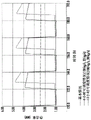
FIG. 4 is a graphical representation of a series of operational scenarios depicting temperature (heat output) as a function of time for each scenario;
FIG. 5 is a graph similar to FIG. 4, presenting data over several days;
FIG. 6 is a schematic diagram of heat output over 30 years for the particular scenario referenced in FIGS. 4 and 5;
FIG. 7 is a schematic diagram of a dispatchable geothermal system integrated with other non-dispatchable renewable energy sources;
FIG. 8 is a schematic diagram of a plurality of schedulable geothermal loops in a network;
FIG. 9 is a flow chart illustrating a process of planning, controlling and optimizing the integration of non-dispatchable renewable energy sources with dispatchable geothermal systems;
FIG. 10 is a schematic diagram of the combined power output capacity of the generator network;
FIG. 11 is a schematic diagram of mitigating grid saturation with an intermittent power source; and
fig. 12 is a schematic diagram of an alternate embodiment of the invention.
Like numbers refer to like elements throughout.
Detailed Description
Referring now to the drawings, FIG. 1 shows an example of a general arrangement for practicing embodiments of the methods described herein. The numeral 10 generally designates a general arrangement. The temperature of the geological formation 12 having thermal energy is at least 90 ℃ and may typically be above 150 ℃, or even 600 ℃ or higher, the geological formation 12 comprising a subterranean loop arrangement having an entry well 14 and an exit well 16, the entry well 14 and the exit well 16 may be co-located, interconnected with at least one interconnected section 18. In the example, several sections 18 are depicted. The thermal gradient will depend on the formation properties.
At the ground 20, the inlet 14 and outlet 16 are connected to a power generation facility 22. The device 22 completes a loop arrangement of a closed loop, which will be referred to as L for simplicity. It will be apparent that in order to recover thermal energy from the surrounding formation 12, a section 18 is provided within the geological formation. For clarity, the closed loop L and in particular the section 18 may comprise fractures, breaks, fissures within which fluid may be transported, however, this does not deviate from the gist of the closed loop concept; despite the fact that there may be localized multidirectional flow anomalies, the flow pattern remains closed in the combination of inlets, interconnections, outlets, elements of the power generation equipment 22.
The geological formation may be any formation that provides temperature as described above. In this regard, examples include geothermal formations, low permeability formations, hot dry rock, sedimentary formations, volcanic formations, high temperature formations, variable permeability formations, and combinations thereof. These are examples only; any number of other formations are within the scope of the present invention.
Depending on its nature, the formation will have a predetermined potential heat output capacity, which can be pre-analyzed by suitable techniques known to those skilled in the art. Of course, each formation will have a different output capacity.
In this regard, each loop L will have a predetermined potential heat output capacity that reflects its design parameters, such as the number of sections 18, its geometric arrangement, depth, length, formation temperature, formation rock properties, and the like. All these parameters will be apparent to the skilled person.
For recovery, the working fluid circulates through loop L and exits outlet well 16, flows through a power plant 22 that converts thermal and/or kinetic energy into electricity for use by an end user, generally designated by numeral 24, and/or is redistributed at 26 for alternate uses as will be discussed below. Once circulated as shown, the working fluid is reintroduced into the inlet 14.
By circulating the working fluid through the closed loop L at a relatively low flow rate during the charging period, the working fluid is thermally "charged" or loaded. The residence time of the working fluid within the subsurface flow path increases, and thus the fluid is heated to a high temperature via heat transfer with the surrounding formation 12.
The system is "discharged" by significantly increasing the flow rate and flushing out the volume of heated working fluid within the hot subsurface portion of the closed loop L.
The working fluid may comprise water, supercritical carbon dioxide, and the like, and includes drag reducing additives such as surfactants, polymeric compounds, suspensions, biological additives, stabilizers, scale inhibitors, corrosion inhibitors, drag reducing agents, antifreeze chemicals, biocides, hydrocarbons, alcohols, organic fluids, and combinations thereof. Other suitable examples will be appreciated by those skilled in the art. It is contemplated that the composition of the working fluid may be dynamically changed in the event of changes in the thermal properties of the subsurface.
Referring now to fig. 2A, 2B, 2C, and 2D, schematic diagrams of possible configurations and combinations of the interconnect segments 18 are shown. The figure generally illustrates that adjacent interconnect segments can be symmetric, asymmetric with respect to adjacent interconnect segments, interdigitated with adjacent interconnect segments, coplanar with adjacent interconnect segments, parallel planar with adjacent interconnect segments, in isolated or grouped networks, and combinations thereof. The specific geometric configuration will vary depending on the temperature gradient characteristics. The drawings are exemplary only; the designer will be aware of suitable variations.
FIG. 3 shows an example where the loop L includes a plurality of interconnected sections 18, where the output 16 of one section 18 serves as the input 14 to an adjacent section 18, collectively collected at the power plant 22. In this way, the loop L is subdivided into a daisy chain configuration for the operation of the method.
The potential heat output capacity is the maximum sustainable thermal energy output of the system. The heat output can be temporarily changed using the methods disclosed herein, but the long-term average output (i.e., average over months or years) cannot exceed the potential heat output capacity.
The overall geothermal efficiency of the system is equal to the average heat output divided by the potential heat output capacity, which is commonly referred to as the geothermal "capacity factor". It is advantageous to have a high capacity factor, or a high utilization of the potential heat output capacity available. Conventionally, this is achieved by a constant heat output at or near the potential heat output capacity. Many geothermal systems operate in this manner at a capacity factor greater than 90%, sometimes referred to as "base load" operation. The disclosed method enables a high geothermal heat capacity factor while also providing a flexible on-demand energy output rather than a constant output.
Fig. 4 shows an example of transient thermodynamic modeling based on the closed loop multilateral system described in applicant's co-pending application No. pct/CA2019000076, etc. The inputs to the thermodynamic model are shown in the table below.
FIG. 4 exemplary data
The figure shows three operational scenarios of the same geothermal loop: operating at a constant flow rate base load (base case), in which case the heat output is equal to the potential heat output capacity; run with a charge at 33kg/s for 16 hours and then a discharge at 130kg/s for 8 hours; and a charge at a rate of 30kg/s for 12 hours and then a discharge at a rate of 100kg/s for 12 hours.
Typically, the charging cycle will be performed when the energy price is low or the renewable energy supply is variable. This allows the interconnected section 18 previously mentioned herein to recover thermal energy from the formation.
Figure 5 shows the highlight detail over the 3 day time range. If the system is operating in a base load mode, the average flow rate over the combined charge/discharge cycle is approximately equal to the optimum fixed flow rate. In this example, if operating in base load mode, the same subterranean well arrangement as shown in the previous figures will always equal the potential heat output capacity at a flow rate equal to 60L/s. Colloquially, the system will operate with full underground geothermal capacity. This is a key distinction from some prior art (promat's oramat) where the average geothermal output of the combined "charge" and "discharge" cycles is significantly lower than the long-term capacity.
The charging cycle establishes a strong thermosiphon driven by the density difference of the cold fluid in the inlet well 14 relative to the hot fluid in the outlet well 16. During the charging cycle, the thermosiphon pressure drives a pressure higher than that required to maintain the desired flow rate. Thus, the flow rate is controlled by applying a pressure drop using a flow control valve or other device (not shown) to inhibit flow downstream of the outlet well 16. The flow control valve is automatic and can be controlled by software that uses a thermodynamic model to calculate the desired position of the valve. The control valve also helps manage the pressure in the subterranean loop to maintain it within desired limits based on the density of the working fluid and the pump discharge pressure.
When discharging, the flow rate can be immediately increased by releasing the choke valve (opening the control valve). This near instantaneous increase in flow rate enables a fast ramp capability. The flow rate can be increased until the hydraulic loss through the closed loop equals the thermosiphon pressure drive.
The use of a pump can increase the flow beyond this level, which would require a parasitic power load. However, as long as most of the pressure drive is generated by the thermosiphon effect, parasitic loads are practically acceptable.
Using these methods, the flow rate can be controlled to match the power output to the end user's requirements through the charge-discharge cycle and the residence time of the working fluid in the loop.
In the flow in conventional open geothermal systems or porous media of the prior art, the pumping pressure required to achieve high flow rates at discharge results in unacceptably high parasitic pump loads and significantly reduces or eliminates any gain in net power output. It has been found that practical limits are reached when the ratio of pressure loss in the circuit (circuit) to thermosiphon pressure drive is about 1.5. The system must be designed with hydraulic losses less than 1.5 times the thermosiphon pressure drive. Ideally, the pressure loss is less than 1 times the thermosiphon drive and the entire flow is driven by the thermosiphon. Therefore, there is no parasitic pump load.
Energy is stored in the working fluid itself. During the charging cycle, sufficient dwell time is required to heat the working fluid to accommodate the discharge cycle. For example, if the discharge period is typically 8 hours long, the fluid circuit transit time must be at least 8 hours (average of discharge and charge periods).
Energy may also be temporarily stored in the rock near the subsurface flow path and exit well 16 during the charging cycle. At low flow rates, heat is conductively transferred from hotter rocks in the formation 12 into the working fluid, and as the fluid progresses through the system, it encounters cooler rocks (typically shallower, e.g., in the exit well 16), where energy is transferred from the fluid to the cooler rocks and temporarily stored. During the discharge period, the average fluid temperature drops and the stored heat is transferred back to the working fluid.
The closed loop avoids the operational problems of conventional geothermal systems, which are exacerbated when the flow rates vary dramatically, as discussed herein. For example, common operational problems are caused by brine, solids, fouling, plugging, and dissolved gases.
The schedulability disclosed herein integrates well with cryogenic air storage (CES), hydrogen production, or other systems that use stored electrical energy. An example of a process flow is shown below. The CES charging cycle may use inexpensive excess power from the grid or co-located renewable energy sources (e.g., solar energy during peak daytime hours). CES may also be charged using produced geothermal energy, but this is not essential. In one embodiment, the geothermal system will produce a fixed amount of power throughout the charge and discharge cycle. The increase in thermal energy produced during the discharge cycle is used to heat the air stream from the CES process prior to expansion in the turbine.
There are several advantages to using CES with schedulable geothermal:
the heat engine (which converts thermal energy to electricity) is sized only for the charge cycle, not the peak output of the discharge cycle, thereby greatly reducing equipment and asset costs.
Less additional facilities are required to supply heat to the CES facility.
CES discharges only during a few peak hours of the day. The schedulable discharge period of the geothermal system may match the CES discharge period.
Fig. 6 shows the 30-year heat output for the "base case" and the "8-hour schedulable case" mentioned in the previous figures. The base case operates at base load and equals the available heat output capacity, while the "8 hour dispatchable case" while operating at dispatchable output, achieves an effective capacity factor of about 97% and is therefore approximately equal to the predetermined potential heat output capacity of the formation.
This illustrates the main invention that the output can be schedulable while still maintaining a high geothermal capacity factor, typically over 80% and close to 100%.
The transient thermodynamic simulation described above was tested in a prototype geothermal system in the middle of alberta, canada. The system comprised a 2.4km deep polygonal U-tube heat exchanger and was 2.5km from site to site on the ground. The results verify the modeling and demonstrate that schedulability can be predicted and controlled by adjusting the flow rate using an automatic control valve at the outlet well in this embodiment. Empirical results demonstrate that the system is very fast ramping and when combined with a power generation system such as an Organic Rankine Cycle (ORC), can meet the fast ramping requirements integrated with solar energy systems.
Fig. 7 illustrates how a dispatchable geothermal system may be used when integrated with other non-dispatchable renewable energy sources. The system is turned down during peak solar hours and is ramped up as solar energy falls. The schedulable geothermal fills the gap between energy demand and non-schedulable renewable energy sources. This is merely an example, and the output may be modified to match any combination of charge/discharge cycles, and the flow rate may be varied to meet any shape of output within physical limits.
Solar power generation is used as an example, however, the same schedulable mechanism may be used to integrate into a direct heat utilization application, such as a zone heating system or a zone cooling system.
Fig. 8 illustrates a plurality of schedulable geothermal loops in a network. The charge/discharge cycle can be predetermined for each loop so that the total output meets the desired shaped output curve. An automated control system coupled to a thermodynamic model is used to control flow rate, thermosiphon, and temperature in each loop. The charge and discharge cycles may be sequential or simultaneous, depending on the circumstances and the parameters of each loop.
FIG. 9 is a process flow diagram for planning, controlling and optimizing the integration of non-dispatchable renewable energy sources with dispatchable geothermal. A power grid system is provided having a time-varying demand profile, existing supply profiles from different non-dispatchable renewable resources (e.g., PV, wind, base load nuclear, etc.), the control technique optimizing the network of dispatchable renewable geothermal generators to fill the gap between the existing non-dispatchable supply and demand profiles. The optimization parameter may be to meet a net demand, or may be to maximize the received price or revenue (price multiplied by volume), or any other combination of factors. These may form only part of the optimization/scheduling algorithm.
In a network of dispatchable geothermal loops, a network of power generation modules (not shown) will be utilized which convert potential energy and thermal energy to electricity. These power generation systems may be ORCs, flash plants, pressure driven systems, direct turbines, or any other conversion component. The power generation modules may be arranged in series or parallel or in combination. The control system directs the flow from each geothermal loop to the appropriate conversion module based on proximity, scheduling, temperature, and other relevant factors.
Fig. 10 shows the combined power output capacity of the generator network, which is necessarily higher than the potential heat output capacity of the geothermal loop network. The power generation capacity is designed to meet the peak output of the geothermal network at the time of dispatch, which can be set to meet the peak demand from the end users. The figure illustrates that while the underground system has a high geothermal capacity factor, over 80% and often over 90% (where the denominator is the potential heat output capacity), the surface power conversion module has a relatively low capacity factor to enable scheduling.
Fig. 11 illustrates an embodiment of the present invention designed to mitigate grid saturation with an intermittent power source. In an example, the solar energy recovery arrangement 30 is operatively connected to a loop L (loop arrangement or solution), and more particularly to the array 30 at 32. The power generation device 22 is in electrical communication with a power grid (not shown) having a specified capacity. This is generally indicated by reference numeral 34.
For the following example, the loop arrangement or loop solution is intended to encompass the arrangements previously discussed herein, namely wells 14, 16 and interconnections 18 in a heat-bearing geological formation that may include a power generation device 22.
In the course of today's transition to newer, cleaner forms of energy, solar energy is in the lead. However, success has its own complications. Many power grids are now saturated with wind and solar energy such that it is difficult to absorb more intermittent energy sources. In this case, scalable green schedulable power is needed. The techniques herein may supplement new or even existing solar power plants.
A typical 10MW loop L unit combines a 5MW underground base load solution with an ORC and surface facilities extended to 10 MW. This is to facilitate the inherent schedulability of the energy generated by loop L. This can then be further extended by simply adding more loop arrangements L. For example, a 200MW loop L arrangement has the following operational data.
Example-grid saturation mitigation
Solar-only solution
For a 200MW solar power plant, on average, only 40MW of power can be produced due to its intermittent nature. If it is desired to increase the average power generation by a factor of 3.5 or on average by an additional 100MW, an additional 500MW solar power plant and an additional 500MW transmission capacity must be added, for the simple reason that the solar load factor will be between 10% and 25%. Unfortunately, this requires not only a 3.5 times increase in floor space but also a 3.5 times upgrade of the transmission network (or less desirably, the establishment of a new transmission line to a new solar power plant). This situation is further exacerbated because most of the increased capacity will be available for production during the day at times well below average prices.
Loop solution
In contrast, the same result can be obtained by incorporating the 200MW loop solution directly below the existing ground footprint of the current or planned solar power plant. Advantageously, no new land acquisition is required. Furthermore, since the loop arrangement will take advantage of its inherent schedulability to produce power at around 20% load factor of the solar power plant, no additional transmission capacity is required, saving time and money. Finally, although during peak solar energy production hours around noon, the loop does not have too much transport capacity to produce, noon production (which is generally of little value) can translate into attractive monetization as pricing premium prices can be achieved for dispatchable power, rather than intermittent or base load power.
Solar + battery solution
Of course, solar energy can mimic a loop solution by adding enough batteries, but at a considerable cost. Solar developers need to increase the solar capacity by 500MW instead of just 200MW loop solutions, which requires extensive surface footprint extension and 200MW 8 hour cell storage, resulting in an inevitable increase in cost and delay.
As a variation of this example, fig. 11 depicts an arrangement using a windmill 36 as the prime mover.
Referring now to fig. 12, another variation of this example is shown. Numeral 40 denotes a geographical area over which a power distribution centre 42 is arranged to provide power transmission to a power transmission grid (not shown) via 44. It is known that electrical networks have an output capacity. The center 42 contributes to a power generation system over the geographic area 40 having a designed maximum amount of power generation and a second effective or "actual" amount of power generation on the grid.
It will be apparent that "power limited" or other delivery anomalies occasionally occur over the broad area 40 between the centers 42 for various reasons known to those skilled in the art, such as peaks of large customer demand or redistribution between the centers 42.
To mitigate inconsistent transport problems, a loop arrangement L may be integrated over the loop of the hubs 42, such as between adjacent electrical communication hubs 42. As with the previous examples and description herein, a closed loop configuration may be provided within an underlying formation to produce a predetermined energy output from available latent heat capacity of the formation.
The working fluid may then be circulated as already discussed and selectively thermally discharged through the power generation arrangement 22 to maintain power generation to the capacity of the entire grid. This accordingly mitigates the above-mentioned anomalies or irregularities.
A main power distribution center 46 containing multiple loop arrangements L may add or replace some or all of the centers 42 and individually located loops L, depending on geographic area and other factors.