CN115236717A - A Critical Accident Detection Method - Google Patents
A Critical Accident Detection Method Download PDFInfo
- Publication number
- CN115236717A CN115236717A CN202210651316.1A CN202210651316A CN115236717A CN 115236717 A CN115236717 A CN 115236717A CN 202210651316 A CN202210651316 A CN 202210651316A CN 115236717 A CN115236717 A CN 115236717A
- Authority
- CN
- China
- Prior art keywords
- dose
- detector
- critical accident
- critical
- dose rate
- Prior art date
- Legal status (The legal status is an assumption and is not a legal conclusion. Google has not performed a legal analysis and makes no representation as to the accuracy of the status listed.)
- Pending
Links
Images


Classifications
-
- G—PHYSICS
- G01—MEASURING; TESTING
- G01T—MEASUREMENT OF NUCLEAR OR X-RADIATION
- G01T1/00—Measuring X-radiation, gamma radiation, corpuscular radiation, or cosmic radiation
- G01T1/02—Dosimeters
-
- G—PHYSICS
- G08—SIGNALLING
- G08B—SIGNALLING OR CALLING SYSTEMS; ORDER TELEGRAPHS; ALARM SYSTEMS
- G08B21/00—Alarms responsive to a single specified undesired or abnormal condition and not otherwise provided for
- G08B21/02—Alarms for ensuring the safety of persons
Landscapes
- Physics & Mathematics (AREA)
- General Physics & Mathematics (AREA)
- Health & Medical Sciences (AREA)
- Life Sciences & Earth Sciences (AREA)
- High Energy & Nuclear Physics (AREA)
- Molecular Biology (AREA)
- Spectroscopy & Molecular Physics (AREA)
- Business, Economics & Management (AREA)
- Emergency Management (AREA)
- Measurement Of Radiation (AREA)
Abstract
本发明涉及一种临界事故探测方法,属于临界事故探测领域,通过多信号多维度进行临界事故识别及报警,降低了临界识别的漏报率,提高了临界事故报警系统的临界事故识别能力,为工作人员的健康和安全防护提供了有利保证。为了提高临界事故探测精度和灵敏度,根据三维剂量场剂量率分布确定探测器的布置位置,并且在进行累积剂量计算时扣除了正常运行状态下探测器的本底累积剂量,使临界事故判定结果更加准确可信,为工作人员的健康和安全防护奠定了基础。采用本发明公开的一种临界事故探测方法,具有漏报率低,临界事故识别能力强、判定准确度高以及反应灵敏的优点。
The invention relates to a critical accident detection method, which belongs to the field of critical accident detection. The critical accident identification and alarm are carried out through multi-signal and multi-dimension, which reduces the omission rate of critical identification and improves the critical accident identification capability of a critical accident alarm system. The health and safety protection of workers provides favorable guarantees. In order to improve the detection accuracy and sensitivity of critical accidents, the location of the detector is determined according to the dose rate distribution of the three-dimensional dose field, and the background cumulative dose of the detector under normal operation is deducted when calculating the cumulative dose, so that the critical accident judgment result is more accurate. Accurate and credible, laying the foundation for the health and safety protection of workers. The critical accident detection method disclosed by the invention has the advantages of low false alarm rate, strong critical accident identification ability, high determination accuracy and sensitive response.
Description
技术领域technical field
本发明属于临界事故探测领域,具体涉及一种临界事故探测方法。The invention belongs to the field of critical accident detection, in particular to a critical accident detection method.
背景技术Background technique
依据GB15146.9等法规标准,在一个独立区域内,凡涉及总量超过700g235U、520g233U、450g钚的易裂变同位素或450g这些同位素的任意组合物的操作活动,必须评价设置临界事故报警系统的必要性。在要求临界事故报警覆盖的区域内,必须提供探测过量辐射剂量或剂量率并发出人员撤离信号的手段。According to GB15146.9 and other regulations and standards, in an independent area, any operation involving fissile isotopes of more than 700g 235 U, 520g 233 U, 450g plutonium or any combination of these isotopes must be evaluated. The need for an alarm system. In areas requiring critical accident alarm coverage, means must be provided to detect excess radiation doses or dose rates and to signal evacuation of personnel.
因此,一个重要的问题就是如何触发临界事故报警系统发生报警,临界报警系统的设计应能保证在发生所关心的最小临界事故时也可以触发报警,所关心的最小临界事故在GB15146.9中定义为,在无屏蔽条件下,60s内在距反应物体2m处的自由空气中所引起的中子和γ辐射的总吸收剂量为0.2Gy。从这个定义可以看出,所关心的最小临界事故的定义是基于剂量率的。Therefore, an important issue is how to trigger the critical accident alarm system to generate an alarm. The design of the critical alarm system should be able to ensure that the alarm can also be triggered when the minimum critical accident concerned occurs. The minimum critical accident concerned is defined in GB15146.9 The total absorbed dose of neutron and gamma radiation induced in free air at a distance of 2 m from the reacting object within 60 s is 0.2 Gy under unshielded conditions. From this definition, it can be seen that the definition of the minimum criticality accident of interest is based on the dose rate.
然而根据模拟实验可知,这一针对剂量率的临界事故判断标准只能对功率增长较快的临界事故进行识别并发出报警信号。而当发生一些功率增长较缓慢的临界事故时,其剂量率可能低于定义值,在这种情况下,如果未能识别为临界事故,未引起临界事故报警系统报警,工作人员暴露在这个事故下,长时间也会导致累积剂量较高,会对人体造成伤害。However, according to the simulation experiments, this critical accident judgment standard for dose rate can only identify the critical accident with rapid power growth and issue an alarm signal. When some critical accidents with slow power growth occur, the dose rate may be lower than the defined value. In this case, if it is not recognized as a critical accident, the critical accident alarm system is not alarmed, and the staff is exposed to this accident. It will also lead to a high cumulative dose for a long time, which will cause harm to the human body.
在这些剂量率在标准要求的0.2Gy/min以下的低功率的临界事故中,除了中子计数器,没有任何仪表可以指示发生了事故,也没有任何的声音或者光线能够指示出发生了事故,却会对工作人员造成伤害,甚至给工作人员带来致命伤害,因此仅根据剂量率进行临界事故识别及报警存在一定的局限性,存在漏报的可能,容易带来巨大的安全隐患。In these low-power critical accidents with a dose rate below the standard 0.2Gy/min, there is no instrument other than a neutron counter to indicate an accident, and no sound or light can indicate an accident, but It will cause harm to the staff, and even bring fatal injury to the staff. Therefore, the critical accident identification and alarm only based on the dose rate has certain limitations, there is the possibility of missing reports, and it is easy to bring huge security risks.
发明内容SUMMARY OF THE INVENTION
针对现有技术中存在的缺陷,本发明的目的在于提供一种临界事故探测方法,基于剂量率和累积剂量的进行临界事故识别及报警,提高了临界事故报警系统的临界事故识别能力,为工作人员的健康和安全防护提供了有利保证。Aiming at the defects existing in the prior art, the purpose of the present invention is to provide a critical accident detection method, which can identify and alarm critical accidents based on dose rate and cumulative dose, improve the critical accident identification capability of the critical accident alarm system, and improve work efficiency. The health and safety protection of personnel provides favorable guarantees.
为达到以上目的,本发明采用的技术方案是:In order to achieve the above purpose, the technical scheme adopted in the present invention is:
一种临界事故探测方法,所述方法包括步骤:A criticality accident detection method, the method comprises the steps of:
S1、根据标准规定以及厂房实际设备位置设置符合所述标准要求的临界事故源项;S1. Set up critical accident source items that meet the requirements of the standard according to the standard regulations and the actual equipment location of the plant;
S2、根据所述临界事故源项信息进行临界事故三维剂量场分析;S2, performing a three-dimensional dose field analysis of a critical accident according to the critical accident source item information;
S3、根据所述临界事故三维剂量场剂量率分布,确定探测器的布置位置以及所述探测器的探测限值,所述探测限制包括剂量率限制和累积剂量限制;S3. Determine the arrangement position of the detector and the detection limit of the detector according to the dose rate distribution of the three-dimensional dose field of the critical accident, where the detection limit includes a dose rate limit and a cumulative dose limit;
S4、将所述探测器探测数据的剂量率与所述剂量率限值进行比较,当所述探测器探测数据的剂量率超过所述剂量率限值时,则判定为临界事故;S4. Compare the dose rate of the detection data of the detector with the dose rate limit, and when the dose rate of the detector detection data exceeds the dose rate limit, it is determined as a critical accident;
如果未超过所述剂量率限值,则进一步将所述探测器探测数据的累积剂量与所述累积剂量限值进行比较,当所述探测器探测的累积剂量超过所述累积剂量限值时,则判定为临界事故。If the dose rate limit is not exceeded, the cumulative dose of the detector detection data is further compared with the cumulative dose limit, and when the cumulative dose detected by the detector exceeds the cumulative dose limit, It is judged as a critical accident.
这样,在发生微小临界事故时也可以较好地进行探测,以保障操作人员的健康。In this way, the detection can also be performed better when a small critical accident occurs, so as to protect the health of the operator.
进一步,步骤S1中所述标准为GB15146.9标准,所述GB15146.9标准所规定的剂量率为在距设备2m处产生的剂量率为0.2Gy/min。Further, the standard described in step S1 is the GB15146.9 standard, and the dose rate specified in the GB15146.9 standard is 0.2 Gy/min when the dose rate is generated at a distance of 2 m from the equipment.
进一步,步骤S2中所述临界事故源项信息包括所述临界事故源项对应设备的粒子数量和能谱。Further, the critical accident source item information in step S2 includes the particle number and energy spectrum of the equipment corresponding to the critical accident source item.
进一步,步骤S3中所述探测器的布置位置根据所述三维剂量场剂量率分布确定,所述探测器的剂量率限值为所述探测器的布置位置处对应的三维剂量场剂量率数值,所述探测器的累积剂量限值为所述标准规定时间t与所述剂量率限值之积。Further, in step S3, the arrangement position of the detector is determined according to the three-dimensional dose field dose rate distribution, and the dose rate limit value of the detector is the three-dimensional dose field dose rate value corresponding to the arrangement position of the detector, The cumulative dose limit of the detector is the product of the standard specified time t and the dose rate limit.
进一步,步骤S3中所述探测器的布置位置为所述三维剂量场剂量率最大值中心位置处,所述探测器的剂量率限值为所述三维剂量场剂量率最大值,所述探测器的累积剂量限值为所述标准规定时间t与所述三维剂量场剂量率最大值之积。Further, in step S3, the arrangement position of the detector is the central position of the maximum dose rate of the three-dimensional dose field, the dose rate limit of the detector is the maximum dose rate of the three-dimensional dose field, and the detector The cumulative dose limit of is the product of the standard specified time t and the maximum dose rate of the three-dimensional dose field.
进一步,所述探测器包括中子探测器和光子探测器,所述探测器探测数据包括所述中子探测器和所述光子探测器探测数据。Further, the detector includes a neutron detector and a photon detector, and the detection data of the detector includes the detection data of the neutron detector and the photon detector.
进一步,所述探测器探测数据的累积剂量为所述探测器探测的原始累积剂量数据减去正常运行时的累积本底剂量后得到的修正累积剂量。Further, the cumulative dose of the data detected by the detector is a corrected cumulative dose obtained by subtracting the cumulative background dose during normal operation from the original cumulative dose data detected by the detector.
进一步,正常运行时的累积本底剂量等于正常运行时所述探测器的本地剂量率乘以累积运行时间。Further, the cumulative background dose in normal operation is equal to the local dose rate of the detector in normal operation times the cumulative operating time.
进一步,步骤S4还包括:当判定为临界事故时,触发临界事故报警。Further, step S4 further includes: when it is determined as a critical accident, triggering a critical accident alarm.
进一步,所述标准规定时间t为60s。Further, the standard stipulates that the time t is 60s.
本发明的效果在于:本发明所公开的一种临界事故探测方法,可以通过多信号多维度进行临界事故识别及报警,降低了临界识别的漏报率,提高了临界事故报警系统的临界事故识别能力,为工作人员的健康和安全防护提供了有利保证。The effects of the present invention are: the critical accident detection method disclosed in the present invention can perform critical accident identification and alarm through multi-signal and multi-dimension, which reduces the missed alarm rate of critical identification and improves the critical accident identification of the critical accident alarm system. It provides a favorable guarantee for the health and safety protection of the staff.
进一步为了提高临界事故探测精度和灵敏度,将探测器设置于探测信号强度最大位置处,并且在进行累积剂量计算时扣除了正常运行状态下探测器的本底累积剂量,使临界事故判定结果更加准确可信,,为工作人员的健康和安全防护奠定了基础。In order to further improve the detection accuracy and sensitivity of critical accidents, the detector is set at the position with the maximum detection signal strength, and the background cumulative dose of the detector under normal operation is deducted when calculating the cumulative dose, so that the critical accident judgment result is more accurate. Credible, laying the foundation for the health and safety protection of workers.
附图说明Description of drawings
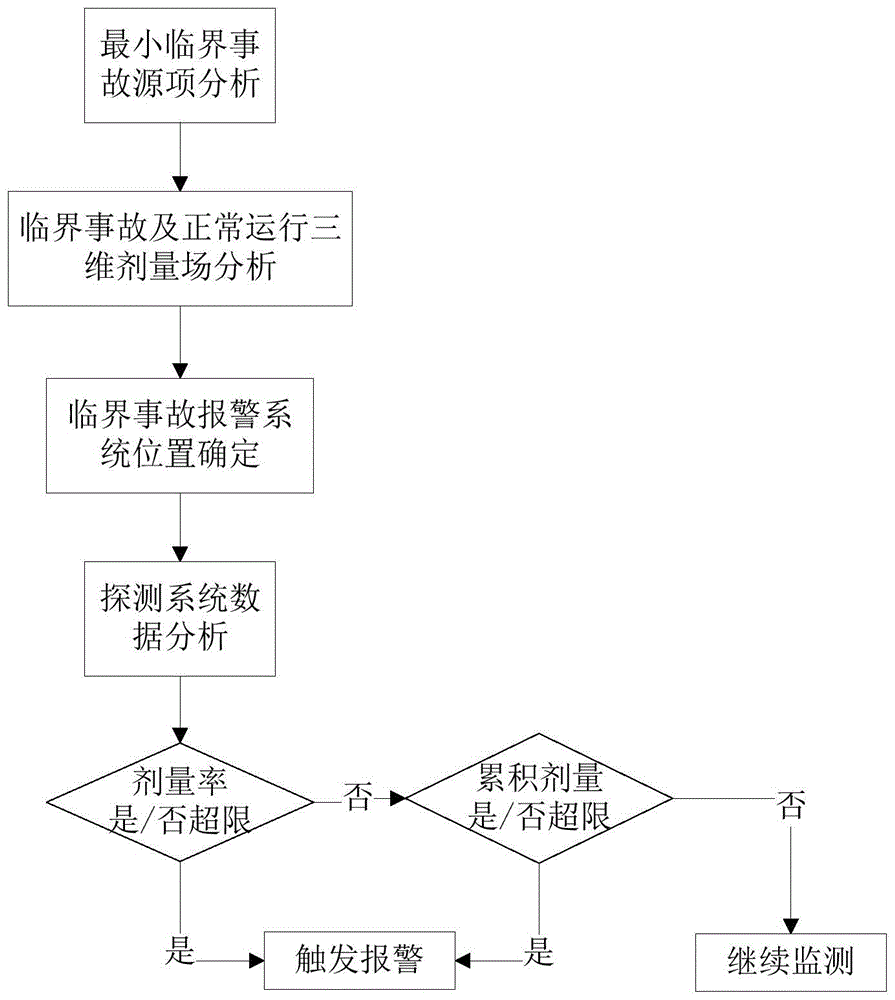
图1为本发明实施例示出的一种临界事故探测方法的方法流程图;1 is a method flowchart of a critical accident detection method shown in an embodiment of the present invention;
图2为采用符合标准要求的临界事故源项进行三维剂量场分析得到的临界事故时厂房墙壁剂量率分布图。Figure 2 is the distribution diagram of the dose rate distribution of the wall of the building during the critical accident, which is obtained by the three-dimensional dose field analysis using the critical accident source term that meets the requirements of the standard.
具体实施方式Detailed ways
下面结合附图和具体实施方式对本发明作进一步描述。The present invention will be further described below with reference to the accompanying drawings and specific embodiments.
实施例一Example 1
如图1所示,本发明实施例公开一种临界事故探测方法,所述方法包括步骤:As shown in FIG. 1, an embodiment of the present invention discloses a critical accident detection method, and the method includes the steps:
S1、根据标准要求以及厂房实际设备位置设置符合所述要求的临界事故源项。S1. According to the standard requirements and the actual equipment location of the plant, set up critical accident source items that meet the requirements.
在进行临界事故报警系统设计时,每路通道应包括一个中子探头和一个光子探头,在实际设计中,应考虑冗余,可同时采用两路或多路信道共同响应,由于每个通道等价,在本实施例中,仅对一路通道进行说明。When designing a critical accident alarm system, each channel should include a neutron probe and a photon probe. In the actual design, redundancy should be considered, and two or multiple channels can be used to respond together. In this embodiment, only one channel is described.
在本实施例中,根据标准GB15146.9中的定义,在距设备2m处产生的剂量率为0.2Gy/min时,即可将所述设备设置为对应的临界事故源项。假设针对某球型设备,计算得到当发生裂变的频率为9.06*E13次裂变/秒时,即可在距设备2m处产生0.2Gy/min的剂量率,以此作为临界事故源项。In this embodiment, according to the definition in the standard GB15146.9, when the dose rate generated at a distance of 2 m from the equipment is 0.2 Gy/min, the equipment can be set as the corresponding critical accident source item. Assuming that for a spherical device, it is calculated that when the frequency of fission is 9.06*E 13 fission/second, a dose rate of 0.2Gy/min can be generated at a distance of 2m from the device, which is regarded as the critical accident source term.
事实上所述选取的标准不限定于GB15146.9标准,可根据实际情况进行调整。In fact, the selected standard is not limited to the GB15146.9 standard, and can be adjusted according to the actual situation.
S2、根据步骤S1确定的临界事故源项信息进行临界事故三维剂量场分析。S2. Perform critical accident three-dimensional dose field analysis according to the critical accident source item information determined in step S1.
根据步骤S1确定的临界事故源项信息,确定在发生临界事故时,厂房的三维剂量场。According to the critical accident source item information determined in step S1, the three-dimensional dose field of the workshop is determined when a critical accident occurs.
临界事故源项信息包括所述源项设备的粒子数量和能谱。The critical accident source item information includes the particle number and energy spectrum of the source item equipment.
假设该球型设备位于厂房的中间,且厂房中只有这一个设备,临界事故报警系统拟布置在厂房内的墙壁上。如图2所述,采用步骤S1中的源项,进行三维量场分析计算得到厂房墙壁的剂量率。Assuming that the spherical equipment is located in the middle of the factory building, and there is only one device in the factory building, the critical accident alarm system is to be arranged on the wall of the factory building. As shown in Fig. 2, using the source term in step S1, the dose rate of the building wall is obtained by performing three-dimensional volume field analysis and calculation.
S3、根据临界事故三维剂量场,结合正常运行时的三维剂量场,确定探测器的布置位置。S3. According to the three-dimensional dose field of the critical accident, combined with the three-dimensional dose field during normal operation, determine the arrangement position of the detector.
一般而言,在人员可操作的厂房中,空气中的剂量较小,将探测器设置在剂量率最大位置处可提高探测器的响应速度以及探测信号的信噪比,事实上对此不作限定,只要探测器布置于剂量率相对较高的位置即可,在探测器布置位置处,采用探测信号强度在探测器的灵敏范围内的探测器。Generally speaking, in a factory where personnel can operate, the dose in the air is relatively small. Setting the detector at the maximum dose rate position can improve the response speed of the detector and the signal-to-noise ratio of the detection signal, which is not limited in fact. , as long as the detector is arranged at a position where the dose rate is relatively high, at the position where the detector is arranged, a detector whose detection signal strength is within the sensitive range of the detector is used.
由图可知,厂房墙壁的剂量率最大值为10mGy/h,将探测器设置在此处探测的信号强度最大,有利于提高探测器的响应响应速度以及探测信号的信噪比,提高探测精度和灵敏度。It can be seen from the figure that the maximum dose rate of the wall of the factory building is 10mGy/h, and the signal intensity detected by the detector set here is the largest, which is beneficial to improve the response speed of the detector and the signal-to-noise ratio of the detection signal, improve the detection accuracy and sensitivity.
因此在本实施例中将探测器放置在图中10mGy/h的中心位置,经分析,在正常运行条件下,该点位的剂量率为0.0001mGy/h。由于比事故状态下小了很多量级,在分析时可忽略不计。Therefore, in this embodiment, the detector is placed at the center position of 10 mGy/h in the figure. After analysis, under normal operating conditions, the dose rate at this point is 0.0001 mGy/h. Since it is many orders of magnitude smaller than the accident state, it can be ignored in the analysis.
S4、根据步骤S3,根据探测器位置处最大剂量率数值确定探测器的探测限值,对探测器探测信号进行处理,首先将中子和光子探测器探测的剂量率总和与探测限值进行比较,当中子和光子探测器探测的剂量率总和超过探测限值时,则判定为临界事故,触发临界事故报警。S4. According to step S3, the detection limit of the detector is determined according to the maximum dose rate value at the detector position, and the detection signal of the detector is processed. First, the sum of the dose rates detected by the neutron and photon detectors is compared with the detection limit. , when the sum of the dose rates detected by the neutron and photon detectors exceeds the detection limit, it is judged as a critical accident and a critical accident alarm is triggered.
如果未超过探测限值,则进一步将中子和光子探测器探测的累积剂量总和与标准规定剂量率对应的累积剂量限值进行比较,当中子和光子探测器探测的累积剂量总和超过标准规定剂量率对应的累积剂量限值时,则判定为临界事故,也触发临界事故报警。If the detection limit is not exceeded, the sum of the cumulative dose detected by the neutron and photon detectors is further compared with the cumulative dose limit corresponding to the standard specified dose rate, and the sum of the cumulative dose detected by the neutron and photon detectors exceeds the standard specified dose. When the cumulative dose limit corresponding to the rate is exceeded, it is judged as a critical accident, and a critical accident alarm is also triggered.
承接上例,根据步骤S2确定其剂量率限值为10mGy/h,当探测器光子和中子探头探测剂量率和超过10mGy/h时,则判定为临界事故,触发临界事故报警。Following the above example, according to step S2, the dose rate limit is determined to be 10mGy/h. When the total detected dose rate of the detector photon and neutron probe exceeds 10mGy/h, it is determined as a critical accident and a critical accident alarm is triggered.
针对步骤S2确定的剂量率限值为10mGy/h,按照1min的剂量水平来确定累积剂量限值,为0.167mGy(10mGy/h÷60min/h=0.167mGy/min),由于正常运行状态下有0.0001mGy/h的剂量率,因此,为了排除环境干扰,提高测量精度,应将探测器探测到的累积剂量减去正常运行时的累积本底剂量后得到的修正累积剂量与累积剂量限值进行比较,当探测器累积剂量减去正常运行剂量达到0.167mGy时,则判定为临界事故,同样会触发报警。The dose rate limit determined in step S2 is 10mGy/h, and the cumulative dose limit is determined according to the dose level of 1min, which is 0.167mGy (10mGy/h÷60min/h=0.167mGy/min). The dose rate is 0.0001mGy/h. Therefore, in order to eliminate environmental interference and improve the measurement accuracy, the corrected cumulative dose obtained after subtracting the cumulative background dose detected by the detector from the cumulative background dose during normal operation should be compared with the cumulative dose limit. In comparison, when the cumulative dose of the detector minus the normal operating dose reaches 0.167mGy, it is judged as a critical accident and an alarm will also be triggered.
举例来说,当某一瞬间,探测器记录到一个12mGy/h的剂量率时,超过剂量率限制10mGy/h,则判定为临界事故,报警系统会被触发。当探测器记录的剂量率水平一直在0.5mGy/h附近波动,没有超过10mGy/h,但在20分钟时,其累积剂量达到0.17mGy,减去20分钟正常运行产生的累积本底剂量0.0001*20=0.002mGy,为0.168mGy,超过0.167mGy,因此,也会触发报警。For example, when the detector records a dose rate of 12mGy/h at a certain moment, exceeding the dose rate limit of 10mGy/h, it is judged as a critical accident and the alarm system will be triggered. When the dose rate level recorded by the detector has been fluctuating around 0.5mGy/h, it did not exceed 10mGy/h, but at 20 minutes, its cumulative dose reached 0.17mGy, minus the cumulative background dose generated by normal operation for 20 minutes 0.0001* 20=0.002mGy, which is 0.168mGy, more than 0.167mGy, therefore, the alarm will also be triggered.
所述探测器探测数据的累积剂量为各个时刻探测剂量的积分。The accumulated dose of the detection data of the detector is the integral of the detection dose at each moment.
通过上述实施例可以看出,本发明公开的一种临界事故探测方法,通过多信号多维度进行临界事故识别及报警,降低了临界识别的漏报率,提高了临界事故报警系统的临界事故识别能力,为工作人员的健康和安全防护提供了有利保证。为了提高临界事故探测精度和灵敏度,将探测器设置于探测信号强度最大位置处,并且在进行累积剂量计算时扣除了正常运行状态下探测器的本底累积剂量,使临界事故判定结果更加准确可信,为工作人员的健康和安全防护奠定了基础。具有漏报率低,临界事故识别能力强、判定准确度高以及反应灵敏的优点。It can be seen from the above embodiments that the critical accident detection method disclosed in the present invention uses multi-signal and multi-dimensional identification and alarming of critical accidents, which reduces the missed alarm rate of critical identification and improves the critical accident identification of the critical accident alarm system. It provides a favorable guarantee for the health and safety protection of the staff. In order to improve the detection accuracy and sensitivity of critical accidents, the detector is set at the position with the maximum detection signal strength, and the background cumulative dose of the detector under normal operation is deducted when calculating the cumulative dose, so that the critical accident judgment result is more accurate and reliable. The letter laid the foundation for the health and safety protection of the staff. It has the advantages of low false negative rate, strong critical accident identification ability, high judgment accuracy and sensitive response.
本发明所述的方法并不限于具体实施方式中所述的实施例,本领域技术人员根据本发明的技术方案得出其他的实施方式,同样属于本发明的技术创新范围。The method described in the present invention is not limited to the examples described in the specific implementation manner. Those skilled in the art can obtain other implementation manners according to the technical solutions of the present invention, which also belong to the technical innovation scope of the present invention.
Claims (10)
Priority Applications (1)
| Application Number | Priority Date | Filing Date | Title |
|---|---|---|---|
| CN202210651316.1A CN115236717A (en) | 2022-06-10 | 2022-06-10 | A Critical Accident Detection Method |
Applications Claiming Priority (1)
| Application Number | Priority Date | Filing Date | Title |
|---|---|---|---|
| CN202210651316.1A CN115236717A (en) | 2022-06-10 | 2022-06-10 | A Critical Accident Detection Method |
Publications (1)
| Publication Number | Publication Date |
|---|---|
| CN115236717A true CN115236717A (en) | 2022-10-25 |
Family
ID=83669084
Family Applications (1)
| Application Number | Title | Priority Date | Filing Date |
|---|---|---|---|
| CN202210651316.1A Pending CN115236717A (en) | 2022-06-10 | 2022-06-10 | A Critical Accident Detection Method |
Country Status (1)
| Country | Link |
|---|---|
| CN (1) | CN115236717A (en) |
Citations (5)
| Publication number | Priority date | Publication date | Assignee | Title |
|---|---|---|---|---|
| US3878496A (en) * | 1971-06-14 | 1975-04-15 | Us Energy | Selectable level alarming personal dosimeter |
| US6108399A (en) * | 1998-01-15 | 2000-08-22 | Siemens Medical Systems, Inc. | System and method for dose monitoring in an intensity modulated radiation treatment system |
| KR200397230Y1 (en) * | 2005-07-01 | 2005-09-29 | 한맥방사선 주식회사 | Work field monitering alarm dosimeter |
| CN210038173U (en) * | 2019-02-25 | 2020-02-07 | 北京中康联医疗器械开发有限公司 | X-ray and gamma-ray alarm |
| CN112434403A (en) * | 2020-10-29 | 2021-03-02 | 中国核电工程有限公司 | Arrangement optimization and threshold selection method for nuclear critical accident alarm system |
-
2022
- 2022-06-10 CN CN202210651316.1A patent/CN115236717A/en active Pending
Patent Citations (5)
| Publication number | Priority date | Publication date | Assignee | Title |
|---|---|---|---|---|
| US3878496A (en) * | 1971-06-14 | 1975-04-15 | Us Energy | Selectable level alarming personal dosimeter |
| US6108399A (en) * | 1998-01-15 | 2000-08-22 | Siemens Medical Systems, Inc. | System and method for dose monitoring in an intensity modulated radiation treatment system |
| KR200397230Y1 (en) * | 2005-07-01 | 2005-09-29 | 한맥방사선 주식회사 | Work field monitering alarm dosimeter |
| CN210038173U (en) * | 2019-02-25 | 2020-02-07 | 北京中康联医疗器械开发有限公司 | X-ray and gamma-ray alarm |
| CN112434403A (en) * | 2020-10-29 | 2021-03-02 | 中国核电工程有限公司 | Arrangement optimization and threshold selection method for nuclear critical accident alarm system |
Non-Patent Citations (1)
| Title |
|---|
| 邵增: "核临界事故报警系统布置分析方法研究", 《辐射防护》, vol. 41, no. 6, 30 November 2021 (2021-11-30), pages 1 - 5 * |
Similar Documents
| Publication | Publication Date | Title |
|---|---|---|
| CN111798643B (en) | Novel global critical accident alarm method and system | |
| CN109613589B (en) | Method for evaluating public toxicity influence of nuclear facility accident consequences | |
| CN111366964A (en) | Fixed integrated device for monitoring regional gamma neutron radiation | |
| CN104217774A (en) | Nuclear power plant process radiation monitoring method and system | |
| CN106019354B (en) | Artificial radionuclide concentration monitoring method and device | |
| CN112434403A (en) | Arrangement optimization and threshold selection method for nuclear critical accident alarm system | |
| CN111337968A (en) | Radiation monitoring system | |
| CN115762831A (en) | Wide-range critical accident alarm device based on fission ionization chamber | |
| CN115236717A (en) | A Critical Accident Detection Method | |
| KR100765969B1 (en) | Automated Nuclear Analysis Site Digital Radiation Monitoring and Control System | |
| CN112330931B (en) | Optimized critical accident alarm method and system | |
| CN118965844A (en) | A wearable nuclear radiation protection device optimization configuration method and device | |
| CN206057589U (en) | A kind of critical gamma Rays alarm | |
| JP3524203B2 (en) | Neutron monitor and criticality management method for spent nuclear fuel | |
| CN212379578U (en) | Barrier-free array type rapid positioning system for radioactive source | |
| CN115238220B (en) | A method for determining the minimum criticality accident source term | |
| JP2025149523A (en) | Noise estimation device, control method and program for noise estimation device | |
| KR102892017B1 (en) | Real-Time Analysis System for Radioactive Aerosol | |
| RU2140660C1 (en) | Method detecting low fluxes of ionizing radiations | |
| CN111312417A (en) | Method for measuring reactivity | |
| CN112507509A (en) | Method for calculating minimum nuclear critical accident radiation source item | |
| KR102892022B1 (en) | Real-Time Radioactive Aerosol Analysis Method utilizing Artificial Neural Network | |
| JPH07140252A (en) | Criticality warning device | |
| Tyas et al. | Reliability of radiation portal monitor using false alarm testing | |
| Barbry et al. | The EDAC System and New Developments under Consideration at the Commissariat à I’Energie Atomique for Criticality Accident Detection |
Legal Events
| Date | Code | Title | Description |
|---|---|---|---|
| PB01 | Publication | ||
| PB01 | Publication | ||
| SE01 | Entry into force of request for substantive examination | ||
| SE01 | Entry into force of request for substantive examination | ||
| RJ01 | Rejection of invention patent application after publication | ||
| RJ01 | Rejection of invention patent application after publication |
Application publication date: 20221025 |