CN115220642A - Forecast storage array capacity - Google Patents
Forecast storage array capacity Download PDFInfo
- Publication number
- CN115220642A CN115220642A CN202110413675.9A CN202110413675A CN115220642A CN 115220642 A CN115220642 A CN 115220642A CN 202110413675 A CN202110413675 A CN 202110413675A CN 115220642 A CN115220642 A CN 115220642A
- Authority
- CN
- China
- Prior art keywords
- usage
- storage
- prediction
- model
- storage array
- Prior art date
- Legal status (The legal status is an assumption and is not a legal conclusion. Google has not performed a legal analysis and makes no representation as to the accuracy of the status listed.)
- Granted
Links
Images


Classifications
-
- G—PHYSICS
- G06—COMPUTING OR CALCULATING; COUNTING
- G06F—ELECTRIC DIGITAL DATA PROCESSING
- G06F11/00—Error detection; Error correction; Monitoring
- G06F11/30—Monitoring
- G06F11/34—Recording or statistical evaluation of computer activity, e.g. of down time, of input/output operation ; Recording or statistical evaluation of user activity, e.g. usability assessment
- G06F11/3442—Recording or statistical evaluation of computer activity, e.g. of down time, of input/output operation ; Recording or statistical evaluation of user activity, e.g. usability assessment for planning or managing the needed capacity
-
- G—PHYSICS
- G06—COMPUTING OR CALCULATING; COUNTING
- G06F—ELECTRIC DIGITAL DATA PROCESSING
- G06F11/00—Error detection; Error correction; Monitoring
- G06F11/30—Monitoring
- G06F11/3003—Monitoring arrangements specially adapted to the computing system or computing system component being monitored
- G06F11/3034—Monitoring arrangements specially adapted to the computing system or computing system component being monitored where the computing system component is a storage system, e.g. DASD based or network based
-
- G—PHYSICS
- G06—COMPUTING OR CALCULATING; COUNTING
- G06F—ELECTRIC DIGITAL DATA PROCESSING
- G06F3/00—Input arrangements for transferring data to be processed into a form capable of being handled by the computer; Output arrangements for transferring data from processing unit to output unit, e.g. interface arrangements
- G06F3/06—Digital input from, or digital output to, record carriers, e.g. RAID, emulated record carriers or networked record carriers
- G06F3/0601—Interfaces specially adapted for storage systems
- G06F3/0602—Interfaces specially adapted for storage systems specifically adapted to achieve a particular effect
- G06F3/0604—Improving or facilitating administration, e.g. storage management
-
- G—PHYSICS
- G06—COMPUTING OR CALCULATING; COUNTING
- G06F—ELECTRIC DIGITAL DATA PROCESSING
- G06F11/00—Error detection; Error correction; Monitoring
- G06F11/30—Monitoring
- G06F11/34—Recording or statistical evaluation of computer activity, e.g. of down time, of input/output operation ; Recording or statistical evaluation of user activity, e.g. usability assessment
- G06F11/3452—Performance evaluation by statistical analysis
-
- G—PHYSICS
- G06—COMPUTING OR CALCULATING; COUNTING
- G06F—ELECTRIC DIGITAL DATA PROCESSING
- G06F17/00—Digital computing or data processing equipment or methods, specially adapted for specific functions
- G06F17/10—Complex mathematical operations
- G06F17/18—Complex mathematical operations for evaluating statistical data, e.g. average values, frequency distributions, probability functions, regression analysis
-
- G—PHYSICS
- G06—COMPUTING OR CALCULATING; COUNTING
- G06F—ELECTRIC DIGITAL DATA PROCESSING
- G06F3/00—Input arrangements for transferring data to be processed into a form capable of being handled by the computer; Output arrangements for transferring data from processing unit to output unit, e.g. interface arrangements
- G06F3/06—Digital input from, or digital output to, record carriers, e.g. RAID, emulated record carriers or networked record carriers
- G06F3/0601—Interfaces specially adapted for storage systems
- G06F3/0628—Interfaces specially adapted for storage systems making use of a particular technique
- G06F3/0629—Configuration or reconfiguration of storage systems
-
- G—PHYSICS
- G06—COMPUTING OR CALCULATING; COUNTING
- G06F—ELECTRIC DIGITAL DATA PROCESSING
- G06F3/00—Input arrangements for transferring data to be processed into a form capable of being handled by the computer; Output arrangements for transferring data from processing unit to output unit, e.g. interface arrangements
- G06F3/06—Digital input from, or digital output to, record carriers, e.g. RAID, emulated record carriers or networked record carriers
- G06F3/0601—Interfaces specially adapted for storage systems
- G06F3/0628—Interfaces specially adapted for storage systems making use of a particular technique
- G06F3/0646—Horizontal data movement in storage systems, i.e. moving data in between storage devices or systems
- G06F3/0647—Migration mechanisms
-
- G—PHYSICS
- G06—COMPUTING OR CALCULATING; COUNTING
- G06F—ELECTRIC DIGITAL DATA PROCESSING
- G06F3/00—Input arrangements for transferring data to be processed into a form capable of being handled by the computer; Output arrangements for transferring data from processing unit to output unit, e.g. interface arrangements
- G06F3/06—Digital input from, or digital output to, record carriers, e.g. RAID, emulated record carriers or networked record carriers
- G06F3/0601—Interfaces specially adapted for storage systems
- G06F3/0628—Interfaces specially adapted for storage systems making use of a particular technique
- G06F3/0653—Monitoring storage devices or systems
-
- G—PHYSICS
- G06—COMPUTING OR CALCULATING; COUNTING
- G06F—ELECTRIC DIGITAL DATA PROCESSING
- G06F3/00—Input arrangements for transferring data to be processed into a form capable of being handled by the computer; Output arrangements for transferring data from processing unit to output unit, e.g. interface arrangements
- G06F3/06—Digital input from, or digital output to, record carriers, e.g. RAID, emulated record carriers or networked record carriers
- G06F3/0601—Interfaces specially adapted for storage systems
- G06F3/0668—Interfaces specially adapted for storage systems adopting a particular infrastructure
- G06F3/067—Distributed or networked storage systems, e.g. storage area networks [SAN], network attached storage [NAS]
-
- G—PHYSICS
- G06—COMPUTING OR CALCULATING; COUNTING
- G06F—ELECTRIC DIGITAL DATA PROCESSING
- G06F3/00—Input arrangements for transferring data to be processed into a form capable of being handled by the computer; Output arrangements for transferring data from processing unit to output unit, e.g. interface arrangements
- G06F3/06—Digital input from, or digital output to, record carriers, e.g. RAID, emulated record carriers or networked record carriers
- G06F3/0601—Interfaces specially adapted for storage systems
- G06F3/0668—Interfaces specially adapted for storage systems adopting a particular infrastructure
- G06F3/0671—In-line storage system
- G06F3/0673—Single storage device
-
- G—PHYSICS
- G06—COMPUTING OR CALCULATING; COUNTING
- G06F—ELECTRIC DIGITAL DATA PROCESSING
- G06F3/00—Input arrangements for transferring data to be processed into a form capable of being handled by the computer; Output arrangements for transferring data from processing unit to output unit, e.g. interface arrangements
- G06F3/06—Digital input from, or digital output to, record carriers, e.g. RAID, emulated record carriers or networked record carriers
- G06F3/0601—Interfaces specially adapted for storage systems
- G06F3/0668—Interfaces specially adapted for storage systems adopting a particular infrastructure
- G06F3/0671—In-line storage system
- G06F3/0683—Plurality of storage devices
Landscapes
- Engineering & Computer Science (AREA)
- Theoretical Computer Science (AREA)
- Physics & Mathematics (AREA)
- General Engineering & Computer Science (AREA)
- General Physics & Mathematics (AREA)
- Human Computer Interaction (AREA)
- Quality & Reliability (AREA)
- Computing Systems (AREA)
- Mathematical Physics (AREA)
- Computer Hardware Design (AREA)
- Data Mining & Analysis (AREA)
- Life Sciences & Earth Sciences (AREA)
- Evolutionary Biology (AREA)
- Mathematical Optimization (AREA)
- Bioinformatics & Cheminformatics (AREA)
- Probability & Statistics with Applications (AREA)
- Pure & Applied Mathematics (AREA)
- Bioinformatics & Computational Biology (AREA)
- Mathematical Analysis (AREA)
- Computational Mathematics (AREA)
- Software Systems (AREA)
- Databases & Information Systems (AREA)
- Algebra (AREA)
- Operations Research (AREA)
- Information Retrieval, Db Structures And Fs Structures Therefor (AREA)
Abstract
一种信息处置系统包括存储系统和远程处理系统。所述存储系统包括存储阵列和本地存储使用情况预测器。所述本地存储使用情况预测器从所述存储阵列接收使用情况信息,并基于所述使用情况信息来预测所述存储阵列的第一使用情况预测。所述远程处理系统包括远离所述存储系统的远程存储使用情况预测器。所述远程存储使用情况预测器接收所述使用情况信息,并基于所述使用情况信息来预测所述存储阵列的第二使用情况预测。
An information handling system includes a storage system and a remote processing system. The storage system includes a storage array and a local storage usage predictor. The local storage usage predictor receives usage information from the storage array and predicts a first usage prediction for the storage array based on the usage information. The remote processing system includes a remote storage usage predictor remote from the storage system. The remote storage usage predictor receives the usage information and predicts a second usage prediction for the storage array based on the usage information.
Description
技术领域technical field
本公开总体上涉及信息处置系统,并且更具体地涉及信息处置系统中的存储阵列容量。The present disclosure relates generally to information handling systems, and more particularly to storage array capacity in information handling systems.
背景技术Background technique
随着信息的价值和使用持续增长,个人和商家寻求额外方式来处理和存储信息。一个选项是信息处置系统。信息处置系统通常处理、编译、存储和/或传达用于商业、个人或其它目的的信息或数据。由于技术以及信息处置需要和要求可能在不同应用之间有所不同,因此信息处置系统也可能关于以下方面有所不同:处置什么信息,如何处置信息,处理、存储或传达多少信息,以及可多快速且多高效地处理、存储或传达信息。信息处置系统的变化允许信息处置系统是通用的或者针对特定用户或特定用途(例如财务事务处理、预定、企业数据存储或全球通信)进行配置。另外,信息处置系统可包括可被配置成处理、存储和传达信息的各种硬件和软件资源,并且可包括一个或多个计算机系统、数据存储系统以及联网系统。As the value and use of information continues to grow, individuals and businesses seek additional ways to process and store information. One option is an information disposition system. Information handling systems typically process, compile, store and/or communicate information or data for commercial, personal or other purposes. Since technical and information handling needs and requirements may vary from application to application, information handling systems may also vary in terms of what information is handled, how it is handled, how much information is processed, stored or communicated, and how much information can be handled. Process, store or communicate information quickly and efficiently. Variations of information handling systems allow information handling systems to be generic or configured for specific users or specific uses (eg, financial transactions, reservations, enterprise data storage, or global communications). Additionally, an information handling system may include various hardware and software resources that may be configured to process, store, and communicate information, and may include one or more computer systems, data storage systems, and networking systems.
发明内容SUMMARY OF THE INVENTION
信息处置系统可以包括存储系统和远程处理系统。存储系统包括存储阵列和本地存储使用情况预测器。本地存储使用情况预测器可以从存储阵列接收使用情况信息,并基于使用情况信息来预测存储阵列的第一使用情况预测。远程处理系统可以包括远离存储系统的远程存储使用情况预测器。远程存储使用情况预测器可以接收使用情况信息,并基于使用情况信息来预测存储阵列的第二使用情况预测。Information handling systems may include storage systems and remote processing systems. The storage system includes a storage array and a local storage usage predictor. The local storage usage predictor may receive usage information from the storage array and predict a first usage prediction for the storage array based on the usage information. The remote processing system may include a remote storage usage predictor remote from the storage system. The remote storage usage predictor may receive the usage information and predict a second usage forecast for the storage array based on the usage information.
附图说明Description of drawings
应了解,为了简单且清楚地进行说明,附图中示出的元件未必按比例绘制。例如,一些元件的尺寸相对于其它元件被放大。相对于本文呈现的附图示出和描述结合了本公开的教示的实施方案,在附图中:It will be appreciated that for simplicity and clarity of illustration, elements shown in the figures have not necessarily been drawn to scale. For example, the dimensions of some elements are exaggerated relative to other elements. Embodiments incorporating the teachings of the present disclosure are shown and described with respect to the drawings presented herein, in which:
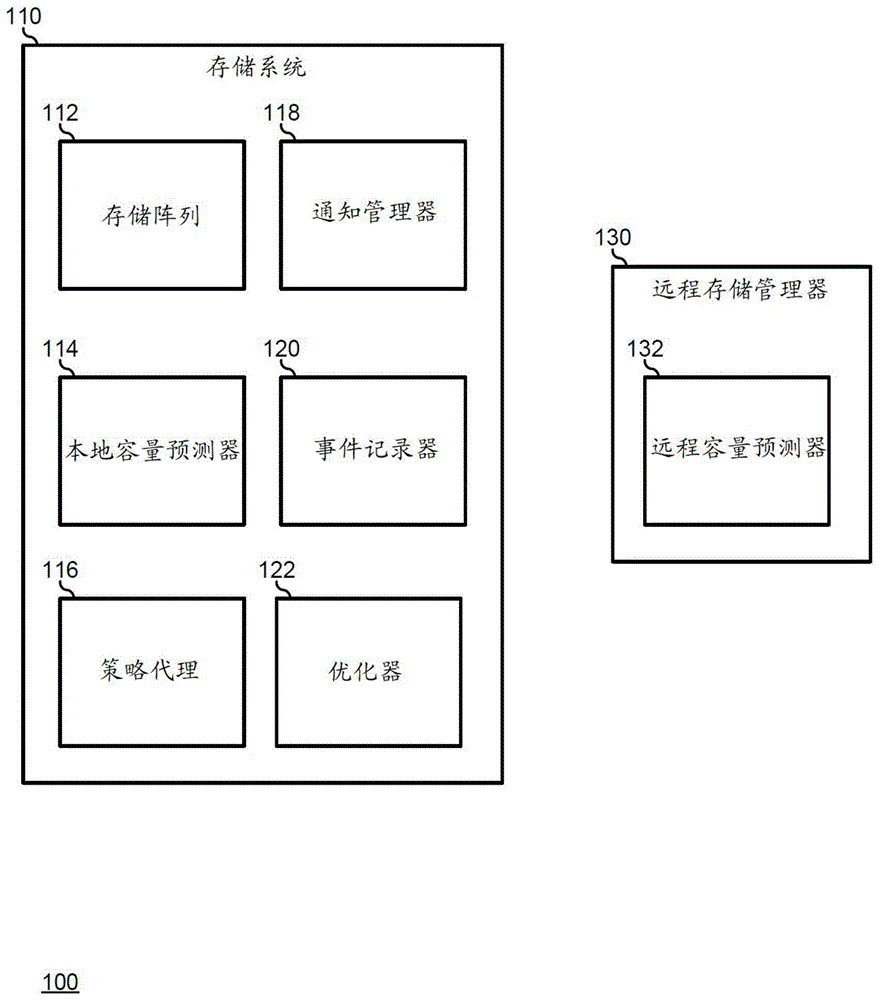
图1是示出根据本公开的实施方案的存储管理系统的框图;1 is a block diagram illustrating a storage management system according to an embodiment of the present disclosure;
图2是示出根据本公开的实施方案的用于预测存储系统中的存储容量的方法的流程图;2 is a flowchart illustrating a method for predicting storage capacity in a storage system according to an embodiment of the present disclosure;
图3是示出根据本公开的实施方案的用于进行本地容量预测的方法的流程图;3 is a flowchart illustrating a method for local capacity prediction in accordance with an embodiment of the present disclosure;
图4是示出根据本公开的实施方案的用于进行本地容量预测的方法的流程图;以及4 is a flowchart illustrating a method for local capacity prediction in accordance with an embodiment of the present disclosure; and
图5是示出根据本公开的另一实施方案的通用信息处置系统的框图。5 is a block diagram illustrating a general information handling system according to another embodiment of the present disclosure.
在不同附图中使用相同的参考符号表示类似或相同的项。The use of the same reference signs in different drawings indicates similar or identical items.
具体实施方式Detailed ways
提供结合附图进行的以下描述有助于理解本文所公开的教示。下面的讨论将集中在教示的特定实施方式和实施方案。提供这种集中性有助于描述教示,并且不应被解释为限制教示的范围或适用性。然而,其它教示当然也可以在此应用中使用。这些教示也可以用在其它应用中,并与几种不同类型的架构,例如分布式计算架构、客户端/服务器架构,或中间件服务器架构以及相关资源一起使用。The following description taken in conjunction with the accompanying drawings is provided to facilitate an understanding of the teachings disclosed herein. The following discussion will focus on specific implementations and implementations of the teachings. This focus is provided to help describe the teachings and should not be construed as limiting the scope or applicability of the teachings. However, other teachings can of course also be used in this application. The teachings can also be used in other applications and with several different types of architectures, such as distributed computing architectures, client/server architectures, or middleware server architectures and related resources.
图1示出了包括存储系统110和远程存储管理器120的存储管理系统100。存储系统110包括存储阵列112、本地容量预测器114、策略代理116、通知管理器118、事件记录器120和优化器122。远程存储管理器130包括远程容量预测器132。在典型的存储管理系统中,当例如存储阵列中的磁盘驱动器的存储资源达到警报阈值,例如存储容量阈值或数据带宽阈值时,会提供警报。然而,此类最后时刻的警报通常不允许足够的警告时间来增加存储阵列的存储容量,以防止耗尽存储阵列中的存储空间。通过设置较低的存储容量限制和数据带宽限制阈值,可以在某种程度上缓解这种情况。然而,设置较低的限制可能会导致非预期后果,即不必要地增加了存储管理系统提供的警报次数。FIG. 1 shows a
可以利用各种机器学习以及事件和阈值建模来尝试改进警报所提供的预测。具体地,可以使用例如线性回归建模的简单建模,但是此类简单建模通常不足以解释多种场景和复杂事件建模。可以利用更复杂的建模来解释更多不同的场景和更复杂的事件建模,但是此类解决方案通常需要庞大的数据和处理容量,从而限制了存储管理系统的可用存储空间和处理容量。此外,此类复杂模型通常不提供实时预测。Various machine learning and event and threshold modeling can be leveraged to try to improve the predictions provided by alerts. In particular, simple modeling such as linear regression modeling can be used, but such simple modeling is often insufficient to explain multiple scenarios and complex event modeling. More diverse scenarios and more complex event modeling can be explained with more sophisticated modeling, but such solutions typically require enormous data and processing capacity, limiting the available storage space and processing capacity of the storage management system. Furthermore, such complex models often do not provide real-time predictions.
在具体实施方案中,将混合预测模型应用于存储管理系统100,其中在存储系统110上实例化轻量级的预测模型,并且在远程存储管理器130处实例化更复杂的资源密集型预测模型。具体地,在存储系统110上实例化的本地轻量级预测模型利用相对较小的历史数据集和简单的预测算法来提供对存储阵列112的数据存储容量和所述存储阵列的数据带宽的实时短期预测。轻量级预测模型非常适合于提供紧急用例预测,以使存储管理系统100的管理员可以采取短期补救措施,例如打开额外存储服务器的电源、迁移工作负载、暂停不活动的工作负载等。In a particular embodiment, a hybrid predictive model is applied to the
轻量级预测模型可以利用线性回归建模、自回归(AR)、移动平均(MA)、自回归积分移动平均(ARIMA)等,这些已知为存储管理系统100的需求的短期预测提供令人满意的结果。在具体实施方案中,轻量级预测模型利用各种不同算法来确定对手头数据的最佳拟合。因此,可以快速解释存储系统100本地发生的事件,并将其合并到确定最佳拟合算法中。Lightweight predictive models may utilize linear regression modeling, autoregressive (AR), moving average (MA), autoregressive integral moving average (ARIMA), etc., which are known to provide compelling short-term forecasts of
本地事件的示例包括硬盘驱动器的安装或拆卸、一个或多个硬盘驱动器的故障、存储分区的重新分配等。在此,可以提供预测时间表以用于每日更新、每周更新、每小时更新等。因此,就所使用的算法类型而言,以及就存储系统110实施算法所需的处理资源量而言,轻量级预测模型均被称为“轻量级”。因此,存储管理系统100获得了良好的短期存储预测性能,而不会不必要地负担存储系统110的处理资源。Examples of local events include installation or removal of a hard drive, failure of one or more hard drives, reallocation of storage partitions, and the like. Here, forecast schedules can be provided for daily updates, weekly updates, hourly updates, and the like. Thus, a lightweight predictive model is referred to as "lightweight" both in terms of the type of algorithm used, and in terms of the amount of processing resources required by the
资源密集型预测模块非常适合于提供长期存储预测,例如购买和安装额外存储资产等。此处,利用存储系统110外部的更多处理资源,例如网络或数据中心服务器、云处理系统等来执行更复杂的预测处理以更准确地对存储系统110的行为进行建模。在此应理解,与轻量级预测模型相比,处理容量更大且时间约束更宽松。根据需要或期望,资源密集型预测模型可以利用长短期记忆(LSTM)建模,例如XGBoost等的梯度提升框架,或其它更加资源密集型预测模型。此外,资源密集型预测模型可以利用更广泛的因素,例如数据缩减百分比、快照数、快照大小、平均快照保留、复制会话数、复制平均恢复点目标(RPO)、I/O模式等。在此,可以提供预测时间线以用于每月更新、每季度更新等。The resource-intensive forecasting module is ideal for providing long-term storage forecasts, such as purchasing and installing additional storage assets. Here, more complex predictive processing is performed using more processing resources external to the
返回图1,存储阵列112表示存储系统110的数据存储介质,例如硬盘驱动器(HDD)、固态驱动器(SSD)、磁带备份,或根据需要或期望的其它存储介质。存储阵列112可以表示根据一种或多种数据存储标准的存储介质,例如SCSI存储装置、光纤通道存储装置等。本地容量预测器114实施轻量级预测模型,以对存储系统110生成快速短期容量预测。策略代理116为本地容量预测器114提供的预测定义策略条件。Returning to FIG. 1,
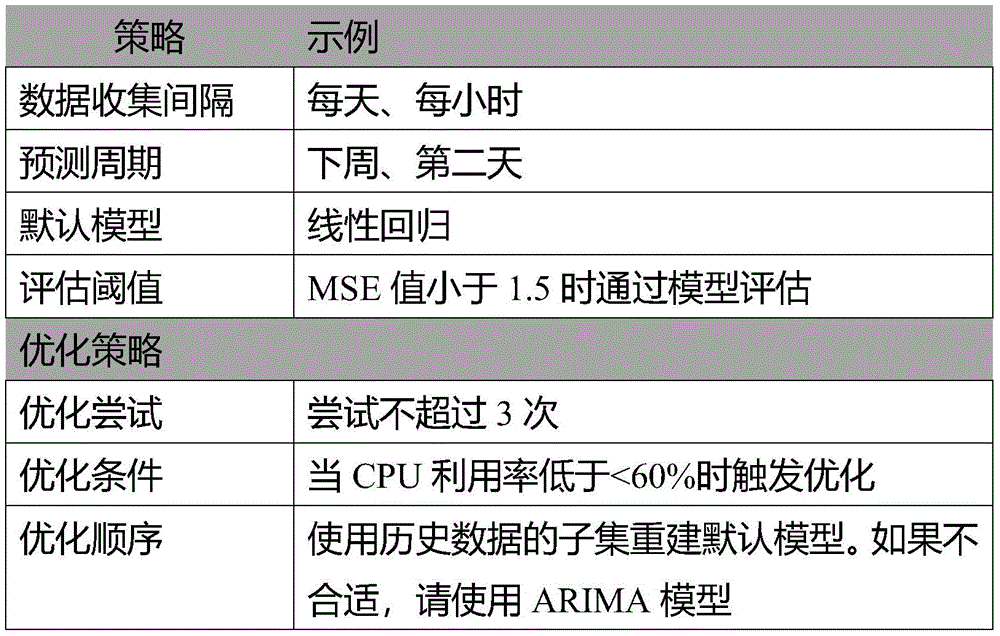
具体地,策略代理116定义用于在存储阵列112的条件下收集数据的间隔、预测频率、用于进行短期预测的默认预测模型、例如数据容量阈值或带宽容量的阈值、例如进行优化尝试的次数的优化策略、各种预测模型的使用顺序、确定优化预测模型的条件、优化顺序、优化条件等。下表1中给出了示例策略条件的表。Specifically,
表1–示例策略条件Table 1 – Example Policy Conditions
通知管理器118用于基于短期预测来生成通知。在具体实施方案中,通知管理器118还基于如上所述的长期预测来生成通知。事件记录器120用于记录影响本地预测的存储系统110中的事件,例如添加存储介质或从存储阵列110中移除存储介质、从大型存储对象的存储阵列中删除存储介质或将存储介质迁移至大型存储对象的存储阵列等。当所选模型未通过评估时,优化器122优化本地容量预测器114。
具体地,当所选模型未通过评估时,优化器122可用于缩小本地容量预测器114评估的历史数据的范围,确定是否发生了可能导致模型未能通过评估的系统事件,选择不同的预测算法等,以便从本地容量预测器获得更好的优化。远程容量预测器132实施如上所述的资源密集型预测模型。Specifically, when the selected model fails the evaluation, the
图2示出了从框200开始的用于预测存储系统中的存储容量的方法。在框202中,由存储系统本地的容量预测器提供短期存储容量预测,而在框204中,由远离存储系统的容量预测器提供长期存储容量预测。当在框206中相应预测指示容量不足时,进行基于框202和204中进行的预测的通知,并且方法在框208中结束。FIG. 2 illustrates a method for predicting storage capacity in a storage system beginning at
图3示出了从框300开始的用于进行本地容量预测的方法。在框302中收集用于存储阵列的数据。例如,可以根据策略代理例如以预定间隔在持续预定持续时间内等收集存储利用率或可用存储利用率、数据带宽等。在框204中建立本地预测模型。例如,默认预测模型可以包括线性回归算法。在框306中,利用收集到的数据评估所选模型。例如,可以对所选模型进行均方根值(RMS)、均方根误差(RMSE)值、R2值等评估。在判定框308中判定模型是否通过评估。例如,当值在阈值内,其中R2值大于最小值等时,可以确定RMS值通过评估。FIG. 3 illustrates a method for local capacity prediction beginning at
如果模型通过了评估,则采用判定框308的“是”分支,在框310中进行短期容量预测,在框312中将短期预测传递至通知管理器,并且方法在框314中结束。如果模型未通过评估,则采用判定块308的“否”分支,并在框316中判定模型是否与策略匹配。例如,策略代理可以确定用于确定预测值的尝试次数是否超过阈值,或者可以确定处理器利用率小于另一个阈值。如果模型与策略匹配,则采用判定框316的“是”分支,在框318中优化模型,并且方法返回至框304。如果模型与策略不匹配,则采用判定框316的“否”分支,在框320中发送未进行预测的通知,并且方法在框314中结束。If the model passes the evaluation, the "yes" branch of
图4示出了从框400开始的用于进行本地容量预测的方法。在框402中收集用于存储阵列的数据。在框204中建立远程预测模型。例如,默认预测模型可以包括LSTM算法。在框406中,利用收集到的数据评估所选模型。例如,可以对所选模型进行均方根值(RMS)、均方根误差(RMSE)值、R2值等评估。在判定框408中判定模型是否通过评估。例如,当值在阈值内,其中R2值大于最小值等时,可以确定RMS值通过评估。如果模型通过了评估,则采用判定框408的“是”分支,在框410中进行长期容量预测,在框412中将短期预测传递至通知管理器,并且方法在框414中结束。FIG. 4 illustrates a method for local capacity prediction beginning at
如果模型未通过评估,则采用判定块408的“否”分支,并在框416中判定模型是否与策略匹配。例如,策略代理可以确定用于确定预测值的尝试次数是否超过阈值,或者可以确定处理器利用率小于另一个阈值。如果模型与策略不匹配,则采用判定框416的“否”分支,在框418中优化模型,并且方法返回至框404。如果模型确实与策略匹配,则采用判定框416的“是”分支,在框420中发送未进行预测的通知,在框422中更新模型的时间间隔,并且方法在框414中结束。If the model fails the evaluation, the "no" branch of
图5示出信息处置系统500的通用实施方案。出于本公开的目的,信息处置系统可包括任何工具或工具集合,所述任何工具或工具集合可用于计算、分类、处理、传输、接收、检索、起始、转换、存储、显示、表明、检测、记录、再现、处置或利用用于商业、科学、控制、娱乐或其它目的的任何形式的信息、情报或数据。例如,信息处置系统500可以是个人计算机、膝上型计算机、智能电话、平板装置或其它消费型电子装置、网络服务器、网络存储装置、交换式路由器或另一种网络通信装置,或任何其它合适的装置,并且可在大小、形状、性能、功能和价格方面有所不同。FIG. 5 shows a generalized implementation of an
此外,信息处置系统500可以包括用于执行机器可执行代码的处理资源,例如中央处理单元(CPU)、可编程逻辑阵列(PLA)、例如片上系统(SoC)的嵌入式装置,或其它控制逻辑硬件。信息处置系统500还可以包括用于存储例如软件或数据的机器可执行代码的一种或多种计算机可读介质。信息处置系统500的额外组件可包括可存储机器可执行代码的一个或多个存储装置、用于与外部装置通信的一个或多个通信端口,以及各种输入和输出(I/O)装置(例如键盘、鼠标和视频显示器)。信息处置系统500还可包括可用于在各种硬件组件之间传输信息的一条或多条总线。Additionally, the
信息处置系统500可以包括体现下文描述的一个或多个装置或模块的装置或模块,并且用于执行下文描述的一个或多个方法。信息处置系统500包括处理器502和504、输入/输出(I/O)接口510、存储器520和525、图形接口530、基本输入和输出系统/通用可扩展固件接口(BIOS/UEFI)模块540、磁盘控制器550、硬盘驱动器(HDD)554、光盘驱动器(ODD)556、连接至外部固态驱动器(SSD)562的磁盘仿真器560、I/O桥570、一个或多个附加资源574、可信平台模块(TPM)576、网络接口580、管理装置590和电源595。处理器502和504,I/O接口510、存储器520、图形接口530、BIOS/UEFI模块540、磁盘控制器550、HDD 554、ODD 556、磁盘仿真器560、SSD 562、I/O桥570、附加资源574、TPM 576和网络接口580一起用于提供信息处置系统500的主机环境,所述主机环境用于提供信息处置系统的数据处理功能。主机环境用于执行机器可执行代码,包括平台BIOS/UEFI代码、设备固件、操作系统代码、应用程序、程序等,以执行与信息处置系统500相关联的数据处理任务。
在主机环境中,处理器502通过处理器接口506连接至I/O接口510,并且处理器504通过处理器接口508连接至所述I/O接口。存储器520通过存储器接口522连接至处理器502。存储器525通过存储器接口527连接至处理器504。图形接口530通过图形接口532连接至I/O接口510,并且向视频显示器534提供视频显示输出536。在具体实施方案中,信息处置系统500包括通过单独的存储器接口专用于处理器502和504中的每一个的单独的存储器。存储器520和530的示例包括随机存取存储器(RAM)(例如静态RAM(SRAM)、动态RAM(DRAM)、非易失性RAM(NV-RAM)等)、只读存储器(ROM)、另一种类型的存储器或其组合。In a host environment,
BIOS/UEFI模块540、磁盘控制器550和I/O桥570通过I/O通道512连接至I/O接口510。I/O通道512的示例包括外围组件互连(PCI)接口、PCI扩展(PCI-X)接口、高速PCI-Express(PCIe)接口、另一种工业标准或专有通信接口或其组合。I/O接口510还可包括一个或多个其它I/O接口,包括工业标准架构(ISA)接口、小型计算机串行接口(SCSI)接口、集成电路间(I2C)接口、系统分组接口(SPI)、通用串行总线(USB)、另一种接口或其组合。BIOS/UEFI模块540包括可用于检测信息处置系统500内的资源、提供资源的驱动器、初始化资源以及访问资源的BIOS/UEFI代码。BIOS/UEFI模块540包括用于检测信息处置系统500内的资源、提供资源的驱动器、初始化资源以及访问资源的代码。BIOS/
磁盘控制器550包括将磁盘控制器连接至HDD 554、ODD 556和磁盘仿真器560的磁盘接口552。磁盘接口552的示例包括集成驱动电子(IDE)接口、例如并行ATA(PATA)接口或串行ATA(SATA)接口的高级技术附件(ATA)、SCSI接口、USB接口、专有接口或其任何组合。磁盘仿真器560允许SSD 564通过外部接口562连接至信息处置系统500。外部接口562的示例包括USB接口、IEEE 1394(火线)接口、专有接口或它们的组合。替代地,固态驱动器564可以设置在信息处置系统500内。
I/O桥570包括将I/O桥连接至附加资源574、TPM 576和网络接口580的外围接口572。外围接口572可以是与I/O通道512相同类型的接口,或者可以是不同类型的接口。因此,当外围接口572和I/O通道为相同类型时,I/O桥570扩展了I/O通道512的容量,并且当它们为不同类型时,I/O桥将信息从适合于I/O通道的格式转换为适合于外围通道572的格式。附加资源574可以包括数据存储系统、附加图形接口、网络接口卡(NIC)、声音/视频处理卡、另一种附加资源或其组合。附加资源574可以位于主电路板上、位于设置在信息处置系统500内的单独电路板或附加卡上、位于信息处置系统外部的装置上或其组合。I/
网络接口580表示NIC,所述NIC设置在信息处置系统500内、位于信息处置系统的主电路板上、集成到例如I/O接口510的另一组件上、处于另一合适的位置中或其组合。网络接口装置580包括网络通道582和584,它们为信息处置系统500外部的装置提供接口。在具体实施方案中,网络通道582和584与外围通道572为不同的类型,并且网络接口580将信息从适合于外围通道的格式转换成适合于外部装置的格式。网络通道582和584的示例包括InfiniBand通道、光纤信道通道、千兆位以太网通道、专有通道架构或其组合。网络通道582和584可以连接至外部网络资源(未示出)。网络资源可以包括另一信息处置系统、数据存储系统、另一网络、网格管理系统、另一合适的资源或其组合。
管理装置590表示一个或多个处理装置,例如专用底板管理控制器(BMC)片上系统(SoC)装置、一个或多个相关联的存储器装置、一个或多个网络接口装置、复杂的可编程逻辑装置(CPLD)等,这些装置一起用于提供信息处置系统500的管理环境。具体地,管理装置590通过各种内部通信接口(例如,低引脚数(LPC)接口、集成电路间(I2C)接口、PCIe接口等)连接至主机环境的各种组件,以提供带外(OOB)机制来检索与主机环境的操作有关的信息、提供BIOS/UEFI或系统固件更新、管理信息处置系统500的非处理组件,例如系统冷却风扇和电源。管理装置590可以包括到外部管理系统的网络连接,并且管理装置可以与管理系统通信以报告信息处置系统500的状态信息,接收BIOS/UEFI或系统固件更新,或执行用于管理和控制信息处置系统500的操作的其它任务。管理装置590可以在与主机环境的组件分离的电源层之外操作,使得当信息处置系统另外被关闭时,管理装置接收电力以管理信息处置系统500。管理装置590的示例包括根据智能平台管理计划(IPMI)规范、Web服务管理(WSMan)接口、Redfish应用程序编程接口(API)、另一个分布式管理任务组(DMTF)或其它管理标准运行的市售BMC产品或其它装置,并且可以包括集成Dell远程访问控制器(iDRAC)、嵌入式控制器(EC)等。根据需要或期望,管理装置590还可包括相关联的存储器装置、逻辑装置、安全装置等。
虽然本文仅详细描述了几个示例性实施方案,但是本领域技术人员将容易了解,在不实质上脱离本公开的实施方案的新颖教示和优点的情况下,可对示例性实施方案进行许多修改。因此,所有此类修改意在包括于如所附权利要求书所定义的本公开的实施方案的范围内。在权利要求书中,装置加功能的条目意在覆盖本文中被描述为执行所叙述的功能的结构,并且不仅覆盖结构上的等效形式,而且还覆盖等效的结构。Although only a few exemplary embodiments have been described in detail herein, those skilled in the art will readily appreciate that many modifications are possible in the exemplary embodiments without materially departing from the novel teachings and advantages of the disclosed embodiments . Accordingly, all such modifications are intended to be included within the scope of embodiments of the present disclosure as defined by the appended claims. In the claims, means-plus-function clauses are intended to cover the structures described herein as performing the recited function and not only structural equivalents, but also equivalent structures.
上文公开的主题应被认为是说明性的而不是限制性的,并且随附的权利要求旨在覆盖任何或所有此类修改、增强以及落入本发明的范围内的其它实施方案。因此,在法律所允许的最大范围内,本发明的范围由随附权利要求及其等效要求的最广义许可的解释来确定,并且不应受前面的具体实施方式约束或限制。The above-disclosed subject matter is to be considered illustrative, and not restrictive, and the appended claims are intended to cover any and all such modifications, enhancements, and other embodiments, which fall within the scope of the present invention. Thus, to the maximum extent permitted by law, the scope of the present invention is to be determined by the broadest permissible interpretation of the appended claims and their equivalents, and shall not be restricted or limited by the foregoing detailed description.
Claims (20)
Priority Applications (2)
| Application Number | Priority Date | Filing Date | Title |
|---|---|---|---|
| CN202110413675.9A CN115220642B (en) | 2021-04-16 | 2021-04-16 | Predicting storage array capacity |
| US17/330,975 US11809299B2 (en) | 2021-04-16 | 2021-05-26 | Predicting storage array capacity |
Applications Claiming Priority (1)
| Application Number | Priority Date | Filing Date | Title |
|---|---|---|---|
| CN202110413675.9A CN115220642B (en) | 2021-04-16 | 2021-04-16 | Predicting storage array capacity |
Publications (2)
| Publication Number | Publication Date |
|---|---|
| CN115220642A true CN115220642A (en) | 2022-10-21 |
| CN115220642B CN115220642B (en) | 2025-08-12 |
Family
ID=83601377
Family Applications (1)
| Application Number | Title | Priority Date | Filing Date |
|---|---|---|---|
| CN202110413675.9A Active CN115220642B (en) | 2021-04-16 | 2021-04-16 | Predicting storage array capacity |
Country Status (2)
| Country | Link |
|---|---|
| US (1) | US11809299B2 (en) |
| CN (1) | CN115220642B (en) |
Families Citing this family (2)
| Publication number | Priority date | Publication date | Assignee | Title |
|---|---|---|---|---|
| CN115878018A (en) | 2021-09-28 | 2023-03-31 | 伊姆西Ip控股有限责任公司 | Method, electronic device and computer program product for managing storage device |
| US20230251933A1 (en) * | 2022-02-04 | 2023-08-10 | Kyndryl, Inc. | Predicting recovery point objective drifts |
Citations (6)
| Publication number | Priority date | Publication date | Assignee | Title |
|---|---|---|---|---|
| US20050187940A1 (en) * | 2004-02-23 | 2005-08-25 | Brian Lora | Systems, methods and computer program products for managing a plurality of remotely located data storage systems |
| US20110320469A1 (en) * | 2010-04-23 | 2011-12-29 | Datcard Systems, Inc. | Shared archives in interconnected content-addressable storage systems |
| CN105453061A (en) * | 2013-09-04 | 2016-03-30 | 英特尔公司 | Mechanism for facilitating dynamic storage management for mobile computing devices |
| CN105706049A (en) * | 2014-01-27 | 2016-06-22 | 上海兆芯集成电路有限公司 | Fractional use of prediction history storage for operating system routines |
| CN111752478A (en) * | 2019-03-28 | 2020-10-09 | 国际商业机器公司 | Implements a Redundant Array of Independent Disks (RAID) with compressed data stored in it |
| US20210334021A1 (en) * | 2020-04-28 | 2021-10-28 | EMC IP Holding Company LLC | Automatic management of file system capacity using predictive analytics for a storage system |
Family Cites Families (1)
| Publication number | Priority date | Publication date | Assignee | Title |
|---|---|---|---|---|
| JP5740529B2 (en) | 2011-06-03 | 2015-06-24 | アップル インコーポレイテッド | Cloud storage |
-
2021
- 2021-04-16 CN CN202110413675.9A patent/CN115220642B/en active Active
- 2021-05-26 US US17/330,975 patent/US11809299B2/en active Active
Patent Citations (7)
| Publication number | Priority date | Publication date | Assignee | Title |
|---|---|---|---|---|
| US20050187940A1 (en) * | 2004-02-23 | 2005-08-25 | Brian Lora | Systems, methods and computer program products for managing a plurality of remotely located data storage systems |
| US20110320469A1 (en) * | 2010-04-23 | 2011-12-29 | Datcard Systems, Inc. | Shared archives in interconnected content-addressable storage systems |
| CN105453061A (en) * | 2013-09-04 | 2016-03-30 | 英特尔公司 | Mechanism for facilitating dynamic storage management for mobile computing devices |
| US20160226972A1 (en) * | 2013-09-04 | 2016-08-04 | Sridhar Mahankali | Mechanism for facilitating dynamic storage management for mobile computing devices |
| CN105706049A (en) * | 2014-01-27 | 2016-06-22 | 上海兆芯集成电路有限公司 | Fractional use of prediction history storage for operating system routines |
| CN111752478A (en) * | 2019-03-28 | 2020-10-09 | 国际商业机器公司 | Implements a Redundant Array of Independent Disks (RAID) with compressed data stored in it |
| US20210334021A1 (en) * | 2020-04-28 | 2021-10-28 | EMC IP Holding Company LLC | Automatic management of file system capacity using predictive analytics for a storage system |
Also Published As
| Publication number | Publication date |
|---|---|
| US20220334945A1 (en) | 2022-10-20 |
| CN115220642B (en) | 2025-08-12 |
| US11809299B2 (en) | 2023-11-07 |
Similar Documents
| Publication | Publication Date | Title |
|---|---|---|
| US11126506B2 (en) | Systems and methods for predictive data protection | |
| US11657013B2 (en) | Inter-baseboard management controller (BMC) integration for high performance computing platforms | |
| US12339719B2 (en) | Power throttling of high performance computing (HPC) platform components | |
| US20210365301A1 (en) | System and method for power and thermal management of disaggregated server subsystems | |
| US10114438B2 (en) | Dynamic power budgeting in a chassis | |
| US10437477B2 (en) | System and method to detect storage controller workloads and to dynamically split a backplane | |
| CN115220642B (en) | Predicting storage array capacity | |
| US12001329B2 (en) | System and method for storage class memory tiering | |
| US11990784B2 (en) | Information handling system managing a power level within a battery | |
| US11822618B2 (en) | System and method for profiling for microsegmentation based on unique signature of a device | |
| US11157056B2 (en) | System and method for monitoring a maximum load based on an aggregate load profile of a system | |
| US20250147811A1 (en) | Workload migration between client and edge devices | |
| CN116266139B (en) | Optimizing the partitioning of memory and storage capacity on DC Persistent Memory Modules (DCPMMs) in hybrid mode | |
| US11662795B2 (en) | System and method for ending a power reduction protocol in an information handling system environment | |
| US20240103991A1 (en) | Hci performance capability evaluation | |
| US12430407B2 (en) | Intelligent accelerator license management | |
| US11392493B2 (en) | System and method for optimizing non-volatile random access memory usage | |
| US20250265296A1 (en) | Rule-based sideband data collection in an information handling system | |
| CN117806769A (en) | Dynamic adjustment of logging levels for microservices in HCI environments | |
| US11157322B2 (en) | Hyper-converged infrastructure (HCI) ephemeral workload/data provisioning system | |
| US12547741B2 (en) | Dynamically migrating drive locking keys across key management servers | |
| US20250272140A1 (en) | Information handling system to extend and scale a platform telemetry framework to a remote compute device | |
| US20250328657A1 (en) | Dynamically migrating drive locking keys across key management servers | |
| US20250139505A1 (en) | Estimation of process level energy consumption | |
| US20250103316A1 (en) | Applying attributes introduced in firmware updates |
Legal Events
| Date | Code | Title | Description |
|---|---|---|---|
| PB01 | Publication | ||
| PB01 | Publication | ||
| SE01 | Entry into force of request for substantive examination | ||
| SE01 | Entry into force of request for substantive examination | ||
| GR01 | Patent grant | ||
| GR01 | Patent grant |