CN115105293A - Object detection, analysis and prompting system for providing visual information to the blind - Google Patents
Object detection, analysis and prompting system for providing visual information to the blind Download PDFInfo
- Publication number
- CN115105293A CN115105293A CN202210737035.8A CN202210737035A CN115105293A CN 115105293 A CN115105293 A CN 115105293A CN 202210737035 A CN202210737035 A CN 202210737035A CN 115105293 A CN115105293 A CN 115105293A
- Authority
- CN
- China
- Prior art keywords
- headset
- visual information
- user
- camera
- vad
- Prior art date
- Legal status (The legal status is an assumption and is not a legal conclusion. Google has not performed a legal analysis and makes no representation as to the accuracy of the status listed.)
- Pending
Links
Images




Classifications
-
- A—HUMAN NECESSITIES
- A61—MEDICAL OR VETERINARY SCIENCE; HYGIENE
- A61F—FILTERS IMPLANTABLE INTO BLOOD VESSELS; PROSTHESES; DEVICES PROVIDING PATENCY TO, OR PREVENTING COLLAPSING OF, TUBULAR STRUCTURES OF THE BODY, e.g. STENTS; ORTHOPAEDIC, NURSING OR CONTRACEPTIVE DEVICES; FOMENTATION; TREATMENT OR PROTECTION OF EYES OR EARS; BANDAGES, DRESSINGS OR ABSORBENT PADS; FIRST-AID KITS
- A61F9/00—Methods or devices for treatment of the eyes; Devices for putting in contact-lenses; Devices to correct squinting; Apparatus to guide the blind; Protective devices for the eyes, carried on the body or in the hand
- A61F9/08—Devices or methods enabling eye-patients to replace direct visual perception by another kind of perception
-
- G—PHYSICS
- G06—COMPUTING OR CALCULATING; COUNTING
- G06F—ELECTRIC DIGITAL DATA PROCESSING
- G06F1/00—Details not covered by groups G06F3/00 - G06F13/00 and G06F21/00
- G06F1/16—Constructional details or arrangements
- G06F1/1613—Constructional details or arrangements for portable computers
- G06F1/163—Wearable computers, e.g. on a belt
-
- A—HUMAN NECESSITIES
- A61—MEDICAL OR VETERINARY SCIENCE; HYGIENE
- A61F—FILTERS IMPLANTABLE INTO BLOOD VESSELS; PROSTHESES; DEVICES PROVIDING PATENCY TO, OR PREVENTING COLLAPSING OF, TUBULAR STRUCTURES OF THE BODY, e.g. STENTS; ORTHOPAEDIC, NURSING OR CONTRACEPTIVE DEVICES; FOMENTATION; TREATMENT OR PROTECTION OF EYES OR EARS; BANDAGES, DRESSINGS OR ABSORBENT PADS; FIRST-AID KITS
- A61F9/00—Methods or devices for treatment of the eyes; Devices for putting in contact-lenses; Devices to correct squinting; Apparatus to guide the blind; Protective devices for the eyes, carried on the body or in the hand
- A61F2009/0035—Devices for immobilising a patient's head with respect to the instrument
Landscapes
- Engineering & Computer Science (AREA)
- Health & Medical Sciences (AREA)
- Theoretical Computer Science (AREA)
- Computer Hardware Design (AREA)
- General Health & Medical Sciences (AREA)
- Biomedical Technology (AREA)
- Life Sciences & Earth Sciences (AREA)
- Animal Behavior & Ethology (AREA)
- Heart & Thoracic Surgery (AREA)
- Public Health (AREA)
- Veterinary Medicine (AREA)
- Vascular Medicine (AREA)
- Human Computer Interaction (AREA)
- Physics & Mathematics (AREA)
- General Engineering & Computer Science (AREA)
- General Physics & Mathematics (AREA)
- Ophthalmology & Optometry (AREA)
- User Interface Of Digital Computer (AREA)
Abstract
Description
技术领域technical field
本发明大体上涉及用于向有视力障碍的人或盲人提供视觉信息的方法及设备。更具体而言,本发明涉及被设计成向完全失明的人提供检测和识别地标以及在其周围环境内导航的能力的方法及设备。该设备包括采集、分析和反馈的便携式闭环系统,其使用包含不引人注目的相机和与无线网络和/或远程平台无线通信的控制计算机的头戴装置。头戴装置的相机部件在待分析的活动(如,步行或查看房间)期间采集图像,并且将数据(例如,视觉数据)发送至控制器。控制器将数据传送至包括对在数据中呈现的图像信息进行分析的软件的远程平台上的数据库,然后将反馈提供至头戴装置。控制器可以独立地处理数据。头戴装置以触觉手段(例如,经由附接的口内装置的用户的舌头的电触觉刺激)和/或听觉手段(例如,经由扬声器)的形式将反馈提供至用户。The present invention generally relates to methods and apparatus for providing visual information to visually impaired or blind persons. More particularly, the present invention relates to methods and apparatus designed to provide a completely blind person with the ability to detect and identify landmarks and navigate within their surroundings. The device includes a portable closed-loop system of acquisition, analysis, and feedback using a headset that includes an unobtrusive camera and a control computer that communicates wirelessly with a wireless network and/or a remote platform. The camera component of the headset captures images during the activity to be analyzed (eg, walking or viewing a room) and sends data (eg, visual data) to the controller. The controller transmits the data to a database on a remote platform that includes software that analyzes the image information presented in the data, and then provides feedback to the headset. Controllers can process data independently. The headset provides feedback to the user in the form of tactile means (eg, electrical tactile stimulation of the user's tongue via an attached intraoral device) and/or auditory means (eg, via a speaker).
背景技术Background technique
美国盲人基金会(AFB)估计美国目前有大约130万的认定的盲人。这一数字是估计有大约4千万的全世界的认定的盲人总人口的很小部分。全世界近一半的认定的盲人群体生活在中国。The American Foundation for the Blind (AFB) estimates that there are currently approximately 1.3 million identified blind people in the United States. This number is a small fraction of the world's estimated blind population of approximately 40 million people. Nearly half of the world's identified blind people live in China.
失明患者传统上依靠手杖引导他们(例如,在街道或走廊上步行时,或在房间或商店中行动时)。然而,常规的行动手杖仅提供关于用户的周围环境(通常关于可由手杖物理触碰的物体)的很有限的信息。Blind patients have traditionally relied on a cane to guide them (eg, when walking down a street or corridor, or when moving around a room or store). However, conventional walking sticks only provide very limited information about the user's surroundings (often about objects that can be physically touched by the stick).
已经开发出了其它装置来向盲人或有视力障碍的人提供关于超过常规手杖的物理达到范围的他或她的周围环境的信息。例如,发声手杖通过声音反馈(回波定位)来提供信息。当使用发声手杖时,其发出音频信号,该信号从用户的周围环境内的物体反射或发出回声。用户转译回波来辨认环境的布局。其它装置发出光信号,光信号从使用者周围的物体反射。反射然后被转换成听觉信号,例如,咔擦声或可变音调的嘟嘟声,以将关于周围物体的信息传递回用户。Other devices have been developed to provide a blind or visually impaired person with information about his or her surroundings beyond the physical reach of a conventional cane. For example, vocal canes provide information through acoustic feedback (echolocation). When the vocal wand is used, it emits an audio signal that reflects or echoes from objects within the user's surroundings. The user interprets the echoes to identify the layout of the environment. Other devices emit light signals that reflect off objects around the user. The reflections are then converted into auditory signals, such as clicks or beeps of variable pitch, to convey information about surrounding objects back to the user.
美国专利申请序列第10/519,483号(公开号US2006/0098089A1)公开了一种包括用于检测和识别物体的电光装置的设备。控制单元用于接收和处理来自设备的信息。声音表示单元然后用于接收来自控制单元的指令,以用于向用户在听觉上描述物体的目的。US Patent Application Serial No. 10/519,483 (Publication No. US2006/0098089A1 ) discloses an apparatus including an electro-optical device for detecting and identifying objects. The control unit is used to receive and process information from the device. The sound representation unit is then used to receive instructions from the control unit for the purpose of aurally describing the object to the user.
美国专利申请序列第12/354,266号(公开号US2010/0177179)公开了一种包括与美国专利申请序列第10/519,483号中的那些部件类似的部件,但还包括耦合到用户可以在其上查看其周围环境的设备上的监视器。U.S. Patent Application Serial No. 12/354,266 (Publication No. US2010/0177179) discloses a device that includes components similar to those in U.S. Patent Application Serial No. 10/519,483, but also includes a A monitor on a device on which to view its surroundings.
美国专利申请序列第11/925,393号(公开号US2009/0312817)公开了一种视觉辅助和/或增强装置,其使用电触觉刺激来在用户的舌头上提供视觉想象。US Patent Application Serial No. 11/925,393 (Publication No. US2009/0312817 ) discloses a visual aid and/or enhancement device that uses electrical tactile stimulation to provide visual imagery on a user's tongue.
然而,这样的装置具有显著的局限性,原因在于,它们几乎不向深度失明的用户提供关于用户的远侧环境的信息。例如,依靠监视器来向盲人提供关于周围环境的信息的装置并未向人提供可使用的信息。另外,单独使用音频信号来将关于周围环境的信息传送给用户不适于嘈杂环境,例如,交通繁忙的街道,或不适于不能听到音频信号的聋盲人。此外,对于深度失明的用户,这些和其它现有的装置不能为盲人识别超出可以由手杖扫过和利用手杖触碰的距离的个人环境中的地标(例如,标志或导航提示)。However, such devices have significant limitations in that they provide a profoundly blind user with little information about the user's distal environment. For example, devices that rely on monitors to provide information about the surrounding environment to the blind do not provide usable information to the person. Additionally, the use of audio signals alone to convey information about the surrounding environment to the user is not suitable for noisy environments, eg, busy streets, or for deaf-blind people who cannot hear audio signals. Furthermore, for deeply blind users, these and other existing devices cannot identify landmarks (eg, signs or navigational cues) for the blind in the personal environment beyond the distance that can be swept by and touched with the cane.
发明内容SUMMARY OF THE INVENTION
本发明通过提供一种设备和方法来解决现有技术的方式中的问题,该设备和方法向盲人用户提供了扫描她或他的近处和远处的环境来检测和识别地标(例如,标志或其它导航指示)的能力,以及经由对用户的舌头的电触觉刺激来查看环境的能力。The present invention addresses the problems of the prior art approaches by providing an apparatus and method that provides a blind user with the ability to scan her or his near and far environment to detect and identify landmarks (eg, signs or other navigational indications), and the ability to view the environment via electrotactile stimulation of the user's tongue.
因此,在一个实施例中,本发明大体上涉及用于向视力障碍的人或盲人提供视觉信息的设备和方法。更具体而言,本发明涉及被设计成向完全失明的人提供检测和识别地标且在其周围环境内导航的能力的设备和方法。该设备包括采集、分析和反馈的便携式闭环系统,其使用包含不引人注目的相机和与无线网络和/或远程平台无线通信的控制计算机的头戴装置。头戴装置的相机部件在待分析的活动(如,步行或查看房间)期间采集图像,且将数据(例如,视觉数据)发送至控制器。控制器将数据传送至包括对在数据中表示的图像信息进行分析(例如,即时分析)的软件的远程平台上的数据库,然后将反馈(例如,即时反馈)提供至头戴装置。头戴装置控制器可以独立地处理数据。头戴装置以触觉手段(例如,经由附接的口内装置对用户的舌头的电触觉刺激)和/或听觉手段(例如,经由扬声器)的形式将反馈提供至用户。Accordingly, in one embodiment, the present invention generally relates to an apparatus and method for providing visual information to a visually impaired or blind person. More particularly, the present invention relates to devices and methods designed to provide a completely blind person with the ability to detect and identify landmarks and navigate within their surroundings. The device includes a portable closed-loop system of acquisition, analysis, and feedback using a headset that includes an unobtrusive camera and a control computer that communicates wirelessly with a wireless network and/or a remote platform. The camera component of the headset captures images during the activity to be analyzed (eg, walking or viewing a room) and sends data (eg, visual data) to the controller. The controller transmits the data to a database on a remote platform that includes software that analyzes (eg, instant analysis) the image information represented in the data, and then provides feedback (eg, instant feedback) to the headset. The headset controller can process data independently. The headset provides feedback to the user in the form of tactile means (eg, electrical tactile stimulation of the user's tongue via an attached intraoral device) and/or auditory means (eg, via a speaker).
因此,在一个实施例中,本发明的目的在于提供方法和设备来向盲人提供检测和识别其周围环境中的地标的能力。另一个目的在于在设备中提供提高的多功能性、效率、适应性和/或经济性,该设备包括采集、分析和反馈的便携式闭环系统,其使用包含不引人注目的相机和与无线网络和/或远程平台无线通信的控制计算机以用于地标检测和识别的头戴装置。Accordingly, in one embodiment, it is an object of the present invention to provide methods and apparatus to provide blind persons with the ability to detect and identify landmarks in their surroundings. Another object is to provide increased versatility, efficiency, adaptability and/or economy in a device comprising a portable closed-loop system of acquisition, analysis and feedback using an unobtrusive camera and a wireless network and/or a control computer that wirelessly communicates with a remote platform for a headset for landmark detection and recognition.
本发明的另一个目的在于提供由盲人穿戴的用于检测和识别相机视场内的物体的算法的方法及设备。另一个目的在于提供用于在远离头戴装置控制器的平台上的数据库内对传送的数据/信息进行分析的算法的方法及设备。在另一个实施例中,算法根据生成与被分析的传送的数据/信息有关的反馈信息,其中该反馈信息被传送(例如,通过无线网络)至头戴装置来传递至盲人。本发明不受将反馈信息传递至盲人的手段限制。示例性手段包括经由触觉(例如,人的舌头的电触觉刺激)以及听觉(例如,经由扬声器、耳机或骨传导)手段将反馈信息(例如,包含视觉信息)传递给盲人。Another object of the present invention is to provide an algorithmic method and apparatus for detecting and recognizing objects within a camera's field of view worn by a blind person. Another object is to provide a method and apparatus for algorithms for analyzing transmitted data/information within a database on a platform remote from the headset controller. In another embodiment, the algorithm is based on generating feedback information related to the analyzed transmitted data/information, wherein the feedback information is transmitted (eg, via a wireless network) to the headset for delivery to the blind. The present invention is not limited by means of delivering feedback information to the blind. Exemplary means include delivering feedback information (eg, including visual information) to the blind via tactile (eg, electrical tactile stimulation of the human tongue) and auditory (eg, via speakers, earphones, or bone conduction) means.
在一个实施例中,本发明提供了用于检测、识别和突出盲人用户的环境内的地标的方法及设备(例如,作为将用户引导至地标(例如,标志(例如,出口标志、厕所标志、人行横道标志或常用于环境中导航的其它标志))的手段)。本发明不限于突出地标的任何特定手段。若干非限制性示例包括利用电触觉刺激在用户的舌头上突出地标的算法的方法及设备,以及在用户使用相机扫描环境时向用户听觉地突出地标的算法的方法及设备,以利用电刺激在用户的舌头上提供视觉信息。In one embodiment, the present invention provides a method and apparatus for detecting, identifying, and highlighting landmarks within an environment of a blind user (eg, as a way to guide the user to landmarks (eg, signs (eg, exit signs, toilet signs, means of pedestrian crossing signs or other signs commonly used for navigation in the environment))). The present invention is not limited to any particular means of highlighting landmarks. Several non-limiting examples include methods and apparatuses of algorithms that highlight landmarks on a user's tongue using electrical tactile stimulation, and methods and apparatuses of algorithms that audibly highlight landmarks to a user using electrical stimulation as they scan the environment Provides visual information on the user's tongue.
在一个实施例中,本发明提供了有助于盲人检测、识别地标和/或朝地标移动(例如,在绕过、越过和/或穿过人的环境内的障碍物或建筑物时)的设备及方法。在一个实施例中,该设备包括头戴装置,该头戴装置包括包含不引人注目的相机和与无线网络和/或远程平台通信的控制计算机、用户控件、音频反馈部件、电池、互连电路、线缆、和用于口内装置的连接。在一个实施例中,头戴装置的相机部件在待分析的用户活动(如,步行或查看房间)期间采集环境的视觉信息,且将视觉信息发送至控制器,由此控制器将视觉信息数据(例如,由相机采集的全部视觉信息中的所有或部分)传送至远程平台上的数据库,该远程平台包括对在视觉信息数据中表示的的图像信息进行分析的软件,然后将关于视觉信息数据的反馈提供至头戴装置,头戴装置继而又将反馈提供至盲人用户(例如,经由触觉(例如,对人的舌头的电触觉刺激)和/或听觉(例如,经由扬声器、耳机或骨传导)手段)。In one embodiment, the present invention provides a feature that assists blind persons in detecting, recognizing, and/or moving toward landmarks (eg, while circumventing, passing, and/or passing through obstacles or buildings within a person's environment). equipment and methods. In one embodiment, the device includes a headset including a control computer including an unobtrusive camera and communicating with a wireless network and/or a remote platform, user controls, audio feedback components, batteries, interconnects Circuits, cables, and connections for intraoral devices. In one embodiment, the camera component of the headset collects visual information of the environment during the user activity to be analyzed (eg, walking or looking at a room) and sends the visual information to the controller, whereby the controller sends the visual information data (eg, all or part of the total visual information captured by the camera) is transmitted to a database on a remote platform that includes software that analyzes the image information represented in the visual information data, and then converts information about the visual information data provides feedback to the headset, which in turn provides feedback to the blind user (e.g., via tactile (e.g., electrical tactile stimulation of a person's tongue) and/or hearing (e.g., via speakers, headphones, or bone conduction) )means).
本发明的另一个目的在于提供用于从相机采集的视觉信息中检测和移除阴影的方法及设备。在一个实施例中,从相机采集的视觉信息(例如,数字图像流)检测和移除阴影包括由头戴装置控制器和/或远程平台(例如,使用处理器、算法、和/或其它计算机部件)处理视觉信息,以从视觉信息中移除阴影(例如,在将与由相机采集的视觉信息(例如,数字图像流)有关的反馈经由头戴装置提供至盲人之前)。Another object of the present invention is to provide a method and apparatus for detecting and removing shadows from visual information collected by a camera. In one embodiment, detecting and removing shadows from visual information (eg, a digital image stream) captured by the camera includes control by a headset controller and/or a remote platform (eg, using a processor, algorithm, and/or other computer) component) to process the visual information to remove shadows from the visual information (eg, before providing feedback to the blind via the headset regarding the visual information (eg, digital image stream) captured by the camera).
在一个实施例中,本发明提供了一种用于盲人检测、识别地标和/或朝地标移动(例如,在绕过、越过、和/或穿过人的环境内的障碍物或建筑物时)的方法,包括以下步骤:接收用户的环境的视觉信息,将视觉信息数据(例如,由相机采集的全部视觉信息的所有或部分)传送至远程平台(例如,至远程平台上的数据库),对远程平台上的视觉信息数据进行分析,以及将与视觉信息数据有关的反馈从远程平台发送至用户,从而使得用户能够检测、识别地标、和/或朝地标移动(例如,在绕过、越过和/或穿过人的环境内的障碍物或建筑物时)。In one embodiment, the present invention provides a method for blind persons to detect, identify, and/or move toward landmarks (eg, when going around, over, and/or through obstacles or buildings within a person's environment) ), comprising the steps of: receiving visual information of the user's environment, transmitting visual information data (eg, all or part of the total visual information captured by the camera) to a remote platform (eg, to a database on the remote platform), Analyzing the visual information data on the remote platform and sending feedback related to the visual information data from the remote platform to the user, thereby enabling the user to detect, identify, and/or move towards the landmark (e.g., when going around, over and/or when passing through obstacles or buildings within a human environment).
在一个实施例中,本发明提供了用于检测、识别和/或突出盲人用户环境内的地标的方法及设备(例如,作为将用户引导至地标(例如,标志(例如,出口标志、厕所标志、人行横道标志或常用于环境中导航的其它标志))的手段)。在一个实施例中,该设备包括包含相机以及与无线网络和/或远程平台无线通信的控制计算机的头戴装置,以及包括处理器部件、存储器部件和软件部件的远程平台,其中从相机获取的视觉信息在远程平台上被处理。在一个实施例中,远程平台包括检测、识别和/或突出视觉信息中存在的地标的算法。在另一个实施例中,远程平台包括用于检测和减少和/或消除视觉信息中的阴影的算法。在又一个实施例中,远程平台包括检测视觉信息中的物体的算法。在一个实施例中,设备包括用于将关于地标、阴影和/或物体的信息传递至盲人用户的装置。In one embodiment, the present invention provides methods and apparatus for detecting, identifying, and/or highlighting landmarks within the environment of a blind user (eg, as a way to guide the user to landmarks (eg, signs (eg, exit signs, toilet signs) , pedestrian crossing signs or other signs commonly used for navigation in the environment))). In one embodiment, the apparatus includes a headset including a camera and a control computer in wireless communication with a wireless network and/or a remote platform, and a remote platform including a processor component, a memory component, and a software component, wherein data obtained from the camera Visual information is processed on a remote platform. In one embodiment, the remote platform includes algorithms to detect, identify and/or highlight landmarks present in the visual information. In another embodiment, the remote platform includes algorithms for detecting and reducing and/or eliminating shadows in visual information. In yet another embodiment, the remote platform includes an algorithm to detect objects in the visual information. In one embodiment, the apparatus includes means for communicating information about landmarks, shadows and/or objects to a blind user.
本发明的另一个目的在于提供用于检测由相机采集的视觉信息中的物体的范围和距离信息的方法及设备。在一个实施例中,由相机采集的视觉信息(例如,数字图像流)中的物体的范围和距离信息包括由头戴装置控制器和/或远程平台(例如,使用处理器、算法和/或其它计算机部件)处理视觉信息,以计算视觉信息中的物体的范围和距离信息(例如,在将与由相机采集的视觉信息(例如,数字图像流)有关的反馈经由头戴装置提供至盲人之前)。Another object of the present invention is to provide a method and apparatus for detecting range and distance information of objects in visual information collected by a camera. In one embodiment, the range and distance information of objects in the visual information (eg, digital image stream) captured by the camera includes information generated by the headset controller and/or the remote platform (eg, using a processor, algorithm, and/or other computer components) processing the visual information to calculate range and distance information of objects in the visual information (eg, before providing feedback via the headset to the blind person about visual information (eg, digital image streams) captured by the camera) ).
本发明的另一个目的在于提供用于检测由相机采集的视觉信息中的物体的颜色和/或对比度信息的方法及设备。在一个实施例中,由相机采集的视觉信息(例如,数字图像流)中的物体的颜色和/或对比度信息包括由头戴装置控制器和/或远程平台(例如,使用处理器、算法和/或其它计算机部件)处理视觉信息,以计算视觉信息中的物体的颜色和/或对比度信息(例如,在将与由相机采集的视觉信息(例如,数字图像流)有关的反馈经由头戴装置提供至盲人之前)。Another object of the present invention is to provide a method and apparatus for detecting color and/or contrast information of an object in visual information collected by a camera. In one embodiment, color and/or contrast information of objects in visual information (eg, a digital image stream) captured by the camera is included by a headset controller and/or a remote platform (eg, using a processor, algorithms, and Process the visual information to calculate color and/or contrast information for objects in the visual information (eg, when passing feedback related to visual information (eg, digital image streams) captured by the camera via the headset) before the blind).
本发明的另一个目的在于提供用于检测由相机采集的视觉信息中的基于姿势的指令的方法及设备。在一个实施例中,由相机采集到的基于姿势的指令(例如,数字图像流)包括由头戴装置控制器和/或远程平台处理视觉信息(例如,使用处理器、算法和/或其它计算机部件)以检测视觉信息中的基于姿势的指令。Another object of the present invention is to provide a method and apparatus for detecting gesture-based instructions in visual information collected by a camera. In one embodiment, gesture-based instructions (eg, digital image streams) captured by the camera include processing of visual information (eg, using processors, algorithms, and/or other computers) by the headset controller and/or the remote platform components) to detect gesture-based instructions in visual information.
这些目的和上文未指出的其它目的通过本发明的示例性实施例实现,其中本发明的系统被设计成辅助盲人检测、识别和/或突出盲人用户的环境内的地标(例如,作为将用户引导至地标的(例如,标志(例如,出口标志、厕所标志、人行横道标志或常用于环境中导航的其它标志)的手段)。本发明的设备是紧凑且轻量的,并且可以安装到盲人的头上。本发明连同附加特征和其优点可以通过结合附图参照以下描述来被最佳地理解。These objects and others not indicated above are achieved by exemplary embodiments of the present invention, wherein the system of the present invention is designed to assist blind persons in detecting, recognizing, and/or highlighting landmarks within the environment of a blind user (eg, as an Means to lead to landmarks (eg, signs (eg, exit signs, toilet signs, crosswalk signs, or other signs commonly used for navigation in an environment)). The device of the present invention is compact and lightweight, and can be mounted to blind persons The present invention, along with its additional features and advantages, may be best understood by reference to the following description taken in conjunction with the accompanying drawings.
附图说明Description of drawings
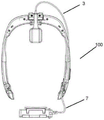
图1示出了本发明的用于盲人的视觉辅助装置(VAD)的非限制性实例。Figure 1 shows a non-limiting example of a visual aid device (VAD) for the blind of the present invention.
图2A-2G示出了本发明的视觉VAD的非限制性实例的附加视图。2A-2G illustrate additional views of non-limiting examples of visual VADs of the present invention.
图2H-2N示出了包含本发明的VAD的装置的示意图。2H-2N show schematic diagrams of a device incorporating the VAD of the present invention.
图3示出了包括包含由线缆互连的印刷电路组件(PCA)的一定数目的互连子系统的本发明的一个示例性VAD。3 illustrates an exemplary VAD of the present invention including a number of interconnection subsystems including printed circuit assemblies (PCAs) interconnected by cables.
图4A和4B示出了根据本发明的实施例的实施为膜片开关组件的示例性控制按钮。4A and 4B illustrate exemplary control buttons implemented as membrane switch assemblies in accordance with embodiments of the present invention.
图5示出了根据本发明的实施例的位于VAD的头戴装置框架的前部中的传感器子系统。Figure 5 shows a sensor subsystem located in the front of the headgear frame of the VAD, according to an embodiment of the present invention.
图6示出了根据本发明的实施例的利用电力线缆连接到VAD头戴装置上的VAD电池壳体。6 illustrates a VAD battery housing connected to a VAD headset with a power cable, according to an embodiment of the present invention.
图7示出了本发明的示例性VAD。Figure 7 shows an exemplary VAD of the present invention.
图8示出了根据本发明的实施例的集成到VAD中的示例性用户控件。Figure 8 illustrates an exemplary user control integrated into a VAD according to an embodiment of the present invention.
图9示出了有视力的同伴将看到的关于由本发明的VAD的用户获得的图像和状态信息的情况。Figure 9 shows what a sighted companion would see regarding images and status information obtained by a user of the VAD of the present invention.
图10示出了样本出口标志检测。(A)成功的检测。(B)矩形示出漏报(遗漏的检测),指出了由第二(SVM)分类器级不正确地拒绝的第一(Adaboost)分类器级检测到的候选物。(C)误报(假的)检测示出了建筑物立面中具有纹理的区域。Figure 10 shows sample exit sign detection. (A) Successful assay. (B) Rectangles show false negatives (missed detections), indicating candidates detected by the first (Adaboost) classifier stage that were incorrectly rejected by the second (SVM) classifier stage. (C) False positive (false) detections showing textured areas in the building facade.
图11示出了样本厕所标志检测。(A)成功的检测。(B)成功的检测。(C)两个矩形示出了两个漏报,即,未检测到的两个厕所图标。Figure 11 shows a sample toilet sign detection. (A) Successful assay. (B) Successful assay. (C) The two rectangles show two false negatives, ie, two toilet icons that were not detected.
图12示出了厕所标志检测器的接收器操作特征(精度对查全)曲线:曲线示出了没有跟踪的结果,X示出了具有跟踪的结果。跟踪提高查全,而其中精度仅适度降低。Figure 12 shows the receiver operating characteristic (accuracy versus recall) curve for the toilet sign detector: the curve shows the result without tracking, the X shows the result with tracking. Tracking improves recall with only a modest decrease in precision.
图13示出了出口标志检测器的接收器操作特征(精度对查全)曲线。曲线示出了没有跟踪的结果,X示出了具有跟踪的结果。Figure 13 shows the receiver operating characteristic (accuracy versus recall) curve for the exit sign detector. The curve shows the result without tracking, the X shows the result with tracking.
为了便于理解本发明,多个术语和短语定义如下:To facilitate understanding of the present invention, various terms and phrases are defined as follows:
如本文使用的,术语"放大器"是指产生作为相对应的电输出参数的函数的电输出,且借助于从外部来源吸收的能量来增大输入的大小(即,其引入增益)的装置。"放大"是指电子装置对电信号的重现(通常在增大的强度下)。"放大手段"是指使用放大器来放大信号。期望的是,放大手段还包括用于处理和/或过滤信号的手段。As used herein, the term "amplifier" refers to a device that produces an electrical output as a function of a corresponding electrical output parameter and increases the magnitude of the input (ie, it introduces gain) by means of energy absorbed from an external source. "Amplification" refers to the reproduction (usually at an increased intensity) of an electrical signal by an electronic device. "Amplification means" refers to the use of an amplifier to amplify a signal. Desirably, the amplifying means also include means for processing and/or filtering the signal.
如本文使用的,术语"接收器"是指将传送的波转换成期望形式的输出的系统的一部分。接收器在选择的性能(即,已知灵敏度水平)在其上操作的频率范围为该接收器的"带宽"。As used herein, the term "receiver" refers to a portion of a system that converts transmitted waves into an output in a desired form. The frequency range over which a receiver operates at a selected performance (ie, a known sensitivity level) is the "bandwidth" of the receiver.
如本文使用的,术语"变换器"是指将非电参数(例如,声音、压力或光)转换成电信号或反之的任何装置。As used herein, the term "transducer" refers to any device that converts a non-electrical parameter (eg, sound, pressure, or light) into an electrical signal or vice versa.
如本文使用的,术语"刺激器"和"促动器"在本文中指用于将刺激(例如,触觉振动、电触觉、热等)给予受验者的组织的装置的部件。在本文中提到时,术语刺激器提供了变换器的示例。除非相反描述,否则本文中描述的使用刺激器或促动器的实施例还可以采用其它形式的变换器。As used herein, the terms "stimulator" and "actuator" refer herein to a component of a device for delivering stimulation (eg, tactile vibrations, electrical haptics, heat, etc.) to a subject's tissue. As used herein, the term stimulator provides an example of a transducer. Unless described to the contrary, the embodiments described herein using stimulators or actuators may also employ other forms of transducers.
如本文使用的术语"电路"是指电流的完整路径。The term "circuit" as used herein refers to the complete path of electrical current.
如本文使用的,术语"电阻器"是指拥有电阻且由于该使用而被选择的电子装置。期望该术语涵盖所有类型的电阻器,包括但不限于固定值或可调整的碳、绕线式和薄膜电阻器。术语"电阻"(R;ohm)是指材料阻挡电流通过且将电能转换成热能的趋势。As used herein, the term "resistor" refers to an electronic device that possesses resistance and is selected for that use. The term is intended to encompass all types of resistors, including but not limited to fixed value or adjustable carbon, wire wound and thin film resistors. The term "resistance" (R; ohm) refers to the tendency of a material to block the passage of electrical current and convert electrical energy into thermal energy.
术语"磁体"是指具有吸引铁并且在其外部产生磁场,且在自由悬置时指向地球的磁极的属性的主体(例如,铁、钢或合金)。The term "magnet" refers to a body (eg, iron, steel, or alloy) that has the property of attracting iron and producing a magnetic field outside of it, which, when freely suspended, points toward the magnetic poles of the Earth.
如本文使用的,术语"磁场"是指在其中可以检测到磁力的磁体周围的区域。As used herein, the term "magnetic field" refers to the area around a magnet in which magnetic forces can be detected.
如本文使用的,术语"电极"是指用于与电路的非金属部分,特别是生物系统的部分(例如,舌头上的人类皮肤)建立电接触的导体。As used herein, the term "electrode" refers to a conductor used to establish electrical contact with non-metallic parts of electrical circuits, particularly parts of biological systems (eg, human skin on the tongue).
术语"壳体"是指包住或包围本发明的装置的至少一个部件的结构。在优选实施例中,"壳体"由"生物相容的"材料制成。在一些实施例中,壳体包括至少一个气密性导孔,引线经由其从壳体内部的部件延伸至壳体外部的位置。The term "housing" refers to a structure that encloses or encloses at least one component of the device of the present invention. In a preferred embodiment, the "housing" is made of a "biocompatible" material. In some embodiments, the housing includes at least one hermetically sealed guide hole through which leads extend from components inside the housing to locations outside the housing.
如本文使用的,术语"生物相容的"是指对周围组织具有最小(即,相比于控制没有看到明显差异)或没有刺激性或免疫效果的任何物质或化合物。还期望该术语用于指代为了最小化或避免与本发明的壳体或其它方面的免疫反应而使用的物质或化合物。特别优选的生物相容的材料包括但不限于钛、金、铂、蓝宝石、不锈钢、塑料和陶瓷。As used herein, the term "biocompatible" refers to any substance or compound that has minimal (ie, no significant difference is seen compared to a control) or no irritant or immunological effect on surrounding tissue. It is also intended that the term be used to refer to substances or compounds used to minimize or avoid immunoreactivity with the capsid or other aspects of the invention. Particularly preferred biocompatible materials include, but are not limited to, titanium, gold, platinum, sapphire, stainless steel, plastics, and ceramics.
如本文使用的,术语"气密性密封"是指以使得至少一定程度上防止位于装置外部的液体或气体进入装置内部的装置或物体。"完全气密性密封"是指以使得没有位于装置外的可检测到的液体或气体进入该装置内部的方式被密封的装置或物体。期望的是,密封通过各种手段实现,包括但不限于机械、胶或密封剂等。在特别优选的实施例中,气密性密封的装置被制造以使得其完全防漏(即,完全不允许液体或气体进入装置的内部)。As used herein, the term "hermetic seal" refers to a device or object such that liquids or gases located outside the device are at least somewhat prevented from entering the interior of the device. "Totally hermetic seal" refers to a device or object that is sealed in such a way that no detectable liquid or gas located outside the device enters the interior of the device. Desirably, sealing is accomplished by various means, including but not limited to mechanical, glue or sealants, and the like. In a particularly preferred embodiment, the hermetically sealed device is manufactured such that it is completely leak-proof (ie does not allow liquids or gases to enter the interior of the device at all).
如本文使用的,术语"处理器"是指能够从计算机存储器(例如,ROM或其它计算机存储器)读取程序并且根据该程序执行步骤的集合的装置。处理器可以包括非算法信号处理部件(例如,用于模拟信号处理)。As used herein, the term "processor" refers to a device capable of reading a program from computer memory (eg, ROM or other computer memory) and performing a set of steps in accordance with the program. The processor may include non-algorithmic signal processing components (eg, for analog signal processing).
如本文使用的,术语"存储器部件"、"计算机存储器"和"计算机存储器设备"是指可由计算机处理器读取的任何存储介质。计算机存储器的示例包括但不限于RAM、ROM、计算机芯片、数字视频盘(DVD)、光盘(CD)、硬盘驱动器(HDD),以及磁带。As used herein, the terms "memory component," "computer memory," and "computer memory device" refer to any storage medium readable by a computer processor. Examples of computer memory include, but are not limited to, RAM, ROM, computer chips, digital video disks (DVDs), compact disks (CDs), hard disk drives (HDDs), and magnetic tapes.
如本文使用的,术语"远程平台"是指与本发明的头戴装置控制器分离的任何远程计算机、电话、平板设备、个人计算机或包含处理器和存储器部件(例如,用于存储数据库)的其它装置。As used herein, the term "remote platform" refers to any remote computer, phone, tablet, personal computer, or computer containing a processor and memory components (eg, for storing a database) separate from the headset controller of the present invention. other devices.
如本文使用的,术语"计算机可读介质"是指用于存储和向计算机处理器提供信息(例如,数据和指令)的任何装置或系统。计算机可读介质的示例包括但不限于DVD、CD、硬盘驱动器、磁带、闪速存储器和网络上的用于流媒体的服务器。As used herein, the term "computer-readable medium" refers to any device or system for storing and providing information (eg, data and instructions) to a computer processor. Examples of computer-readable media include, but are not limited to, DVDs, CDs, hard drives, magnetic tapes, flash memory, and servers on a network for streaming media.
如本文使用的,术语"多媒体信息"和"媒体信息"被互换地使用,以指代对音频、视频、和/或文本进行编码和表示的信息(例如,数字化的信息和模拟信息)。多媒体信息还可以承载不与音频或视频相对应的信息。多媒体信息可通过方法来从一个位置或装置被传送至第二位置或装置,方法包括但不限于电、光和卫星传输等。As used herein, the terms "multimedia information" and "media information" are used interchangeably to refer to information that encodes and represents audio, video, and/or text (eg, digitized information and analog information). Multimedia information can also carry information that does not correspond to audio or video. Multimedia information may be transmitted from one location or device to a second location or device by methods including, but not limited to, electrical, optical, and satellite transmission, among others.
如本文使用的,术语"因特网"是指使用标准协议的网络的任何集合。例如,该术语包括由一组标准协议(如,TCP/IP、HTTP和FTP)链接在一起以形成全局的、分布式网络的互连(公共和/或私用)网络的集合。尽管该术语旨在指代一般称为因特网的网络,但其还旨在涵盖未来可能产生的变型,包括对现有标准协议的改变和添加或与其它媒体(例如,电视、无线电等)的集成。该术语还旨在涵盖非公共网络,例如专用(例如,企业)内联网。As used herein, the term "Internet" refers to any collection of networks using standard protocols. For example, the term includes a collection of interconnected (public and/or private) networks linked together by a set of standard protocols (eg, TCP/IP, HTTP, and FTP) to form a global, distributed network. Although the term is intended to refer to the network generally referred to as the Internet, it is also intended to cover possible future variations, including changes and additions to existing standard protocols or integration with other media (eg, television, radio, etc.) . The term is also intended to cover non-public networks, such as private (eg, enterprise) intranets.
如本文使用的,术语"安全协议"是指将对处理器、存储器的访问限制到被授权访问处理器的特定用户的电子安全系统(例如,硬件和/或软件)。例如,安全协议可以包括闭锁处理器的一个或多个功能直到输入正确密码为止的软件程序。As used herein, the term "security protocol" refers to an electronic security system (eg, hardware and/or software) that restricts access to a processor, memory, to specific users authorized to access the processor. For example, a security protocol may include a software program that locks out one or more functions of the processor until the correct password is entered.
如本文使用的,术语"资源管理器"是指优化处理器或另一系统的性能的系统。例如,资源管理器可以被配置为监测处理器或软件应用的性能以及管理数据和处理器分配、执行部件故障恢复、优化数据的接收和传输等。在一些实施例中,资源管理器包括在本发明的计算机系统上提供的软件程序。As used herein, the term "resource manager" refers to a system that optimizes the performance of a processor or another system. For example, a resource manager may be configured to monitor processor or software application performance and manage data and processor allocation, perform component failure recovery, optimize data reception and transmission, and the like. In some embodiments, the resource manager includes a software program provided on the computer system of the present invention.
如本文使用的,术语"电子通信"是指被配置为通过直接或间接信令来相互通信的电装置(例如,计算机、处理器、通信设备)。例如,会议桥通过线缆或线连接到处理器以使得信息可以在会议桥与处理器之间传递,这样的会议桥彼此电子通信。同样,被配置为将信息传送(例如,通过线缆、线、红外信号、电话线等)至另一个计算机或装置的计算机与其它计算机或装置电子通信。As used herein, the term "electronic communication" refers to electrical devices (eg, computers, processors, communication devices) that are configured to communicate with each other through direct or indirect signaling. For example, a conference bridge is connected to the processor by a cable or wire so that information can be passed between the conference bridge and the processor, such conference bridges being in electronic communication with each other. Likewise, a computer configured to communicate information (eg, via a cable, wire, infrared signal, telephone line, etc.) to another computer or device is in electronic communication with the other computer or device.
如本文使用的,术语"传送"是指使用任何适合的手段(例如,无线通信(例如,WIFI、因特网、云等)和有线通信)使信息(例如,数据)从一个位置移动至另一个位置(例如,从一个装置移动到另一个)。As used herein, the term "transfer" refers to moving information (eg, data) from one location to another using any suitable means (eg, wireless communications (eg, WIFI, Internet, cloud, etc.) and wired communications) (eg, moving from one device to another).
如本文使用的,术语"电触觉"是指负责感测功能的感测通道(例如,神经)由电流刺激的手段。在一些实施例中,该术语是指负责人的触觉(和/或味觉)感知的感测通道(例如,神经)由电流(经由表面(或植入)电极施加)刺激的手段。术语电触觉可与术语"皮肤电(electrocutaneous)"和"皮电(electrodermal)"互换使用。As used herein, the term "electrical haptics" refers to the means by which sensing channels (eg, nerves) responsible for sensing functions are stimulated by electrical current. In some embodiments, the term refers to the means by which the sensing channels (eg, nerves) responsible for a person's tactile (and/or taste) perception are stimulated by electrical current (applied via surface (or implanted) electrodes). The term electrohaptic is used interchangeably with the terms "electrocutaneous" and "electrodermal".
具体实施方式Detailed ways
本发明通过提供一种方法和设备来解决现有技术的途径中的问题,该方法和设备向盲人用户提供了扫描她或他的近处和远处的环境来检测和识别地标(例如,标志或其它导航指示物)的能力,以及经由用户的舌头的电触觉刺激查看环境的能力。The present invention addresses the problems of the prior art approaches by providing a method and apparatus that provides a blind user with the ability to scan her or his near and far environment to detect and identify landmarks (eg, landmarks) or other navigational indicators), and the ability to view the environment via electrical tactile stimulation of the user's tongue.
因此,在一个实施例中,本发明大体上涉及用于向有视力障碍的人或盲人提供视觉信息的设备和方法。更具体而言,本发明涉及被设计成向完全失明的人提供检测和识别地标且在其周围环境内导航的能力的设备(例如,视觉辅助装置(VAD)100,如图1,图2H-图2N,图6以及图7所示)和方法。该设备包括采集、分析和反馈的便携式闭环系统,其使用包含不引人注目的相机10和与无线网络和/或远程平台无线通信的控制计算机(或控制器)8的头戴装置1。头戴装置1的相机10在待分析的活动(如,步行或查看房间)期间采集图像,且将数据(例如,视觉数据)发送至控制器8。控制器8将数据传送至包括对在数据中表示的图像信息进行即时分析的软件的远程平台上的数据库,然后将即时反馈提供至头戴装置1。控制器8可独立地处理数据。头戴装置1经由附接的口内装置2以对用户舌头的电刺激的形式将反馈提供给用户。Accordingly, in one embodiment, the present invention generally relates to an apparatus and method for providing visual information to a visually impaired or blind person. More particularly, the present invention relates to a device (eg, a visual aid device (VAD) 100, such as Figure 1, Figure 2H- Figure 2N, Figure 6 and Figure 7) and method. The device comprises a portable closed loop system of acquisition, analysis and feedback using a
在一个实施例中,本发明的视觉辅助装置100(VAD,本文中也称为"V200"或"博瑞宝(BRAINPORT)V200")将由数码相机10采集到的物体的图像转变成提供至用户的舌头的电触觉信号。用户转译电触觉信号来感知视觉信息,该视觉信息包括但不限于物体的形状、尺寸、位置和运动。在进一步的实施例中,本发明的VAD100包含允许与一个或多个远程平台(例如,用于交换图像数据、状态和/或控制信息)无线连接/通信的部件。相比于常规装置,该功能显著地扩展了本发明的VAD100的能力(例如,通过利用处理一个或多个远程平台的计算机处理能力(例如,包括对因特网和相关服务的访问))。In one embodiment, the visual aid device 100 (VAD, also referred to herein as "V200" or "BRAINPORT V200") of the present invention converts images of objects captured by the
在一些实施例中,本发明的VAD100扩充了其它视觉协助技术(例如,手杖或导盲犬)。在其它实施例中,本发明的VAD100完全替代了其它视觉辅助技术(例如,手杖或导盲犬)。In some embodiments, the
图1-图2以及图4-图8中示出了本发明的用于盲人的视觉辅助装置100(VAD)及其中的各种组件的非限制性示例。在一个实施例中,本发明的VAD100可以包括没有到外部设备的物理连接(例如,在正常操作期间)的完全可穿戴的、电池操作的装置。该装置旨在用于便携使用。如图1中所示,本发明的VAD100可包括头戴装置1、口内装置(IOD)2、电池壳体4和/或充电器。头戴装置1提供装置的图像输入和输出功能。IOD2包含刺激电极(例如,布置成阵列(例如,20行x20列的阵列,其中两个边缘上移除了若干电极以便更好符合舌头))。IOD2可置于用户的舌头上,其中电极37与舌头接触。源自相机图像(或其它源,如,远程平台)的刺激图案输出至阵列。用户感觉到这些图案,且将它们转译为视觉信息(例如,由此感知关于用户前方和周围的场景和环境的信息)。A non-limiting example of a visual aid device 100 (VAD) for the blind of the present invention and various components therein is shown in FIGS. 1-2 and 4-8. In one embodiment, the
本发明不受电池5的类型限制。在一个实施例中,电池壳体4容纳锂聚合物可再充电池5(例如,可由用户移除或替换的电池)。电池壳体4经由可调整的带附接到头戴装置1上,并且可穿戴在头后方。这允许用户具有VAD100的完全免手持操作。The present invention is not limited by the type of
头戴装置1可以包括相机单元10、用户控件9、控制计算机(控制器,例如,模块上计算机(COM)或者模块上系统)8、互连电路、和相关联的线缆(例如,所有都容纳在类似于眼镜框的尺寸和形状的壳体内)。用户的简单头部运动将相机10视野引导至感兴趣的场景(例如,侧向地和/或水平地扫描环境)。相机10采集看到的场景来作为数字图像,其中图像被转发至控制器8(例如,用于处理和/或中继至远程平台)。IOD2上的电极阵列将表示相机图像的刺激图案呈现至用户的舌头。尽管本发明不受IOD2上的存在的电极的数目限制,但在一个实施例中,IOD2包含以20x20网格37布置的396个电极(每个前转角上的3个电极未安装,以使得转角可以圆角化)。电极在使用期间置于舌头的顶面上。在如图1中所示的一个实施例中,IOD2以柔性线缆3系到头戴装置1上,这允许IOD2在舌头上的容易的重定位和从口腔移除IOD2。在另一个实施例中,IOD2无线地连接到头戴装置1上。用户控件9和反馈位于头戴装置1上(例如,见图1,按钮膜片开关组件9)。本发明不由向用户的舌头提供触觉(电)刺激的手段限制。在一个实施例中,使用了美国专利申请序列第11/925,393号(公开号US2009/0312817)中所述的装置,其通过引用以其整体并入本文中。The
附加特征可以并入头戴装置1中(例如,见图1)。这些特征包括音频反馈装置(例如,音频扬声器12、音频连接插头13)、无线(例如,WIFI)模块上系统(SOM)8、光传感器27、接近传感器24、包括3轴加速计、3轴陀螺仪、3轴磁强计的运动跟踪单元(MTU)和温度传感器,以及用于每个部件的印刷电路组件。在某个实施例中,头戴装置1还包括IOD线缆14的连接或端口,电源线15的连接或端口,和/或鼻梁夹16用于使头戴装置1适应和/或符合用户的脸。Additional features may be incorporated into the headset 1 (eg, see Figure 1). These features include audio feedback devices (eg,
在一个实施例中,使用简单的头部运动,用户使相机10指向感兴趣的场景。相机10采集由场景中的物体反射的光,创建与其等效的数字图像。控制器接收该数字图像。在一个实施例中,相机图像的一部分(例如,图像的由用户选择的部分,或由存在于远程平台上的算法识别的部分)由控制器呈现为20x20像素的等效的舌头表示图像。在一个实施例中,对于较宽的视场,相机图像的适当尺寸的区域被空间平均以建立舌头图像中的对应的像素值。对于很窄的视场,相机像素重复。呈现的舌头表示图像然后被光栅扫描到IOD2上的电极的20x20矩阵上。存在于相机图像中的空间关系通过使用阵列上的电极的位置与用户选择的视场中的区域之间的一对一的映射来保持。每个电极处的刺激强度与由相机10采集的图像的对应区域的亮度成比例。本发明不受系统的帧率限制。在优选实施例中,系统的帧率足够快,使得用户将视觉信号感知为连续流。In one embodiment, using simple head movements, the user points the
用户控件9可位于头戴装置1(见图1及图8)上。在一个实施例中,由于用户具有有限或没有可用的天然视力,故控件9的放置和/或形状提供在控件9之间区分所需的触觉信息。多个不同类型的控件9可以被集成到本发明的VAD100中。例如,一个或多个控件9(例如,控制按钮)可提供以下核心功能:电源开/关36;系统状态33;刺激强度(例如,0到100%=0到16伏);相机图像缩/放(例如,3°到48°);刺激反向;对比度正常(灰度)或高(黑/白);边缘增强;音量,用于调整听觉音量(默认、低、静音);WiFi启用/停用;测试,呈现给电极阵列的测试图案,允许用户验证正确的刺激性能。在一个实施例中,头戴装置1上的相机壳体50可向下倾斜至45度,以在向下看时最小化用户的颈部负担。User controls 9 may be located on the headset 1 (see Figures 1 and 8). In one embodiment, the placement and/or shape of the
在一个实施例中,提供至用户的反馈(例如,按下控制按钮之后的VAD100状态(参阅图8,标号30-标号36),或来自位于远程平台上的算法的反馈)可以是非视觉的。例如,反馈可经由控制器内的触觉和/或听觉子系统提供。类似于诸如手机等的商业装置,本发明的VAD100可提供合成语音和音调来通知用户状态/改变和/或视觉信息。In one embodiment, the feedback provided to the user (eg, the state of the
图2A-2N中示出了本发明的VAD100的附加示例性附图。图2A是VAD100的四分之三透视图。图2B是VAD100的正视图。图2C是VAD100的后视图。图2D是VAD100的右视图。图2E是VAD100的左视图。图2F是VAD100的俯视图。图2G是VAD100的仰视图。图2H-图2N示出了一个装有头戴装置1的装置。图2H是该装置的四分之三透视图。图2I是该装置的正视图。图2J是该装置的后视图。图2K是该装置的右视图。图2L是该装置的左视图。图2M是该装置的俯视图。图2N是该装置的仰视图。Additional exemplary drawings of the
图1中示出了本发明的VAD100的头戴装置1。在一个实施例中,头戴装置1包含用于头戴装置1的部件的印刷电路组件(PCA)6,8,23和柔性线缆18,20,29,包括但不限于,膜片开关组件9;相机PCA;传感器PCA23;环境光PCA27;SOM载体PCA8;SOM2Sensor(SOM至传感器)线缆PCA(在各端处具有连接器的刚-挠性线缆18);天线PCA;和/或音频PCA13。头戴装置1还可包括眼镜脚(例如,左和右)、音频柔性线缆29、塑料壳体部件、带夹和/或臂插入件。FIG. 1 shows the
本发明的一个示例性VAD100可包括多个互连的子系统,其连同软件部件工作来提供装置的核心功能。如图3中所示和以下段落所述,这些子系统包括由定制线缆互连的印刷电路组件(PCA)。An
处理子系统。处理子系统位于头戴装置1壳体中。在一个实施例中,如所述和图3中所示,本发明提供了专门设计成容纳电路板和线缆的壳体。processing subsystem. The processing subsystem is located in the
TorpedoSOM。TorpedoSOM为LogicPDDM3730Torpedo+无线模块上系统8。SOM8安装在SOM载体PCA8上。天线(天线PCA)连接到与SOM8集成的WiFi模块上。SOM8经由电池PCA上的主电源被供电。SOM8经由SOM8载体PCA来监测和/或控制VAD100中的其它子系统。TorpedoSOM8为执行Linux操作系统和定制的VAD100应用软件的计算机。例如,SOM8功能可包括:在启动时配置装置设置;在操作期间修改装置设置;管理相机图像获取和处理;监测和响应用户控件9,包括但不限于开/关电源、状态请求和模式控制、电池状态、音量、WiFi、测试图像相关的状态/模式控制、强度、缩放、对比度、反转和/或边缘增强;生成音频输出(例如,将反馈提供至用户);创建和发送刺激图案至口内装置(IOD2);监测环境光传感器11(例如,跟踪照明条件);监测接近传感器24以确定头戴装置1何时被穿戴;监测惯性测量单元传感器(加速计、陀螺仪、指南针)来跟踪头戴装置1的运动和定向;监测电池状态(例如,经由电池燃料计);设置和监测实时时钟/日历部件;允许远程连接(例如,经由无线连接(例如,经由WiFi(802.11a/b/g/n)接口和天线));和/或将图像、命令和/或状态数据流式传输到远程平台/或从远程平台流式传输图像、命令、和/或状态数据。TorpedoSOM. TorpedoSOM is
SOM载体(未示于图中)。SOM载体PCA提供SOM8与其它头戴装置硬件部件之间的机电接口。TorpedoSOM8插入到SOM载体PCA上的接收连接器中。除SOM8连接器之外,SOM8载体PCA可包括:按钮电源开/关控制器(例如,在关状态中,瞬间按下电源按钮(例如,见图1中的用户控件9按钮)将启用电池PCA上的主电源,且装置将进入开状态;在处于开状态时,保持按压(例如,1到3秒)将停用主电源,且装置将进入关状态);电压转换器(例如,用于转换在不同电压处操作的装置之间的逻辑电压电平的装置);实时时钟/日历(例如,一旦由SOM8(例如,该装置可经由I2C总线与SOM8通信)设置,则保留当前的一天中的时间和日期的装置);IOD2VSTIM电源(例如,用于提供电力(例如,17V到100mA)至刺激电极(例如,供电可由TorpedoSOM8开启/关闭));SOM8电源(例如,用于将清洁的3.3V电力供应至TorpedoSOM8(例如,该供应可在主电源启动时启用));LED电路(例如,TorpedoSOM8在软件引导过程启动时点亮绿色LED,且在IODVSTIM电源启用时点亮琥珀色LED)。在一个实施例中,SOM载体经由具有内护套的6导线电力线缆7连接到电池PCA上。护套连接在SOM载体上。在一个实施例中,SOM载体通过定制的柔性线缆18(例如,30导线柔性线缆)连接到传感器PCA上。在一个实施例中,SOM载体经由具有内护套的IOD线缆3(例如,具有护套的6导线线缆)连接到IOD寻址PAC上。护套可连接在IOD端处。SOM vector (not shown in the figure). The SOM carrier PCA provides the electromechanical interface between the
天线PCA。天线PCA包括天线子系统,并且互连,并且可用于广播射频(RF)信号。其可经由定制长度的线缆直接地连接到SOM8上,且根据由LogicPD指定的规则设计,以确保SOM的FCC和ICID在无改变的情况下使用。其可在确保符合身体穿戴装置的特定吸收率(SAR)限制的位置置于VAD100壳体内。Antenna PCA. An antenna PCA includes an antenna subsystem, is interconnected, and can be used to broadcast radio frequency (RF) signals. It can be connected directly to the SOM8 via a custom length cable and is designed according to the rules specified by LogicPD to ensure that the SOM's FCC and ICID are used without changes. It can be placed within the VAD100 housing at a location that ensures compliance with the specific absorption rate (SAR) limits of the body-worn device.
电力。电力子系统也可位于电池壳体4中,电池壳体4由电力线缆7(例如,6导线线缆)连接到SOM载体PCA上。电池壳体4设计成容纳电池5、电池PAC6和电力线缆7。electricity. The power subsystem may also be located in the
电池。本发明的VAD100可使用任何类型的可再充电池5。在一个实施例中,VAD100使用VARTAEASYPAKXL电池或可在3.7V下提供220mAh(例如,符合IEC63133)的任何其它类型的电池。Battery. Any type of
电池PCA。电池PCA6可包括:电池连接器(例如,提供电池5的'+'和'-'连接端子);电池燃料计(例如,监测电池充电状态(例如,可直接地连接到电池上来用于监测目的,以及,经由I2C总线(电力线缆7上)连接到SOM8上(例如,允许SOM8针对查询燃料计以获取当前电池状态)));和/或主电源(例如,将电池电力转化成恒定的4.1V的供电(最大1A))。在优选实施例中,电池PCA6设计成配合在电池壳体4内。Battery PCA.
用户控件-硬件。在一个实施例中,用户控件9位于顶件上的头戴装置1框架的前部处(见图1及图8)。在一个实施例中,控制按钮30,31,32,33,34,35,36被实施为膜片开关组件9(见图4A和4B),以提供端接于柔性抽头17的7个单刀/单掷瞬时常开开关。柔性抽头17连接到传感器PCA23。每个控制按钮被实施为具有促动力的金属圆顶开关,例如,具有180g促动力的8mm直径的金属圆顶开关。User Controls - Hardware. In one embodiment, the
传感器子系统。在一个实施例中,传感器子系统(例如,集成了多个VAD100传感器)位于头戴装置1框架(见图5)的前部中。sensor subsystem. In one embodiment, the sensor subsystem (eg, integrating multiple VAD100 sensors) is located in the front of the frame of the headset 1 (see Figure 5).
传感器PCA。传感器子系统PCA23(参见图5)用作用于头戴装置1、用户控件9、和音频子系统12中的传感器的集成中心。传感器PCA23被定制设计为配合在VAD100头戴装置1前壳体内,且提供:传感器部件和SOM载体8和电池PCA6间的电力和信号连接;用于膜片开关垫9上的控制按钮的防反跳电路;用于环境光检测器27/接近检测器24和接近传感器LED的单独的电源(例如,3.3V电源);和/或用于膜片开关柔性抽头17、音频柔性线缆29、相机柔性抽头20、和/或SOM2传感器柔性线缆18的连接点。传感器子系统PCA23可以包括相机连接器19,SOM载体连接器22,音频连接器26,和/或膜片开关连接器28.Sensor PCA. Sensor subsystem PCA 23 (see FIG. 5 ) serves as an integration center for the sensors in
相机PCA(未示于图)。相机PCA安装在相机壳体50内(参见图5)。该PCA为刚-挠性设计,其包括数字图像传感器和透镜21。PCA的柔性电路延伸20允许相机PCA(其壳体内)向上或向下倾斜至45度。Camera PCA (not shown). The camera PCA is mounted within the camera housing 50 (see Figure 5). The PCA is a rigid-flex design and includes a digital image sensor and
图像传感器。在一个实施例中,本发明的VAD100的相机图像传感器具有以下特征:Image Sensor. In one embodiment, the camera image sensor of the VAD100 of the present invention has the following features:
表1、本发明的VAD100的相机图像传感器的示例性特征。Table 1. Exemplary features of the camera image sensor of the VAD100 of the present invention.
处理这些特征的任何传感器都可使用,包括但不限于APTINAMT9V024数字图像传感器。Any sensor that handles these characteristics can be used, including but not limited to the APTINAMT9V024 digital image sensor.
透镜。在一个实施例中,连同图像传感器使用的透镜21具有以下特征:有效焦距(EFL):3.3(例如,提供至少相机的45度视场的EFL);透镜高度;4.5mm+/-10%(例如,这能够配合在VAD100相机壳体/透镜座上);图像圆:>4.0mm;和/或IR滤波器:645nm。lens. In one embodiment, the
本发明的VAD100的IOD2阵列的电极被布置成网格(例如,20x20空间正方形网格)。为了匹配IOD2阵列的纵横比,VAD100裁剪图像传感器数据,以使得用于图像处理的像素的空间布置也是正方形,其中像素组的中心定心于图像传感器上。透镜21的'图像圆'必须至少覆盖选择的像素的集合。本发明不限于任何特定的透镜21。在一个实施例中,使用具有以下规格的14033MPF透镜:尺寸:1/4",EFL3.3mm,F2.8,M7*0.35具有IR滤波器的安装透镜。The electrodes of the IOD2 array of the
环境光传感器PCA。环境光传感器PCA27包括光-数字转化环境光光传感器,其将光强度转换成能够有直接I2C接口的数字信号输出。该数字输出由TorpedoSOM8监测,其中以lux为单位的亮度(环境光水平)是使用实验公式导出的以近似人眼响应。环境光传感器经由I2C通信总线连接到TorpedoSOM8上。本发明不限于任何特定的光传感器25。在一个实施例中,使用了具有数字(I2C)输出的APDS-9301微型环境光的光传感器。Ambient Light Sensor PCA. Ambient Light Sensor PCA27 includes a light-to-digital conversion ambient light light sensor that converts light intensity into a digital signal output capable of direct I2C interface. This digital output is monitored by the TorpedoSOM8, where the brightness in lux (ambient light level) is derived using an experimental formula to approximate the human eye response. The ambient light sensor is connected to the TorpedoSOM8 via the I2C communication bus. The present invention is not limited to any particular
接近传感器。传感器PCA的接近检测器24位于传感器PCB的后侧上,与头戴装置1中的开口和对应的保护透镜共线,允许其检测用户何时穿戴头戴装置1。通过监测该信号,一旦移除头戴装置1,则TorpedoSOM8可进入低功率或功率下降模式,由此显著地延长电池寿命(例如,不需要下调或升高设备功率的用户动作)。接近传感器24可检测高达100mm远的物体。接近传感器通过启用IRLED发射器,然后测量最近物体反射出且由IR检测器接收到的能量来实现。接近传感器24经由I2C通信总线连接到TorpedoSOM8上。本发明不限于任何特定接近传感器24。在一个实施例中,使用了AvagoAPDS-9130。Proximity sensor. The
运动跟踪单元。传感器PCA23包括运动跟踪单元(MTU),其可包括3轴加速计、3轴陀螺仪、3轴磁力计和温度传感器。通过监测MTU的数据输出,TorpedoSOM8可确定头戴装置1的取向,头戴装置1是否运动,以及运动的方向。MTU经由I2C通信总线连接到TorpedoSOM8上。本发明不限于任何特定的运动跟踪单元或其部件。在一个实施例中,使用了InvenSenseMPU-9250多芯片模块。Motion Tracking Unit.
舌头刺激。IOD2置于用户的舌头上,且刺激通过IOD2的底面上的电极37发生。电极与舌头之间的电流用于刺激舌头上的神经。用户将刺激描述为略微刺痛、嗡嗡声或起泡状感觉。在一个实施例中,不超过四个电极同时活动。在另一个实施例中,活动的电极由至少4个不活动的电极分开。在另一个实施例中,所有396个不活动的电极用作4个活动电极的公共回路。Tongue irritation. The IOD2 is placed on the user's tongue, and stimulation occurs through
口内装置(IOD)2组件包括IOD电极阵列PCA、IOD寻址PCA和用于将IOD组件2连接到头戴装置1上的IOD线缆3。在一个实施例中,IOD电极阵列37为定制的PCA,其包含每个电极一个开关电路(例如,394个开关电路)。电极布置成均匀间隔开(例如,以中心到中心1.32mm(0.52in))的网格(例如,20行乘20列的正方形网格)。电极阵列37经由高密度连接器连接到IOD寻址PCA上。电极行和列激活信号经由高密度连接器从寻址板接收。这些激活信号启用和停用阵列上的开关电路。在开关被启用时,电极阵列37使从寻址板到激活电极的模拟电压被选通。The intraoral device (IOD) 2 assembly includes an IOD electrode array PCA, an IOD addressing PCA, and an
IOD2寻址PCA为定制的印刷电路组件。寻址PCA接收来自TorpedoSOM8的刺激图案。其使用该数据来驱动电极行和列激活信号。行/列激活信号被实施为使得电极阵列以光栅扫描方式被激活。电压信号的大小与IOD2图像中的像素(例如,相机图像的20x20的呈现)的亮度成比例。IOD2图像像素对应于由行和列信号激活的电极。在电极阵列37的制造过程期间,寻址板和线缆3连结且然后封装在生物相容的环氧树脂中。环氧树脂保护电子装置,且向完整的组件提供机械刚性。在封装之后,环氧树脂被抛光来完全露出电极且移除任何粗糙边缘。置于柔性线缆上的硅套筒与环氧树脂的边缘对接,且利用硅胶胶合就位来完成子组件。The IOD2 addresses PCA as a custom printed circuit assembly. Addressed PCA receives stimulus patterns from TorpedoSOM8. It uses this data to drive electrode row and column activation signals. The row/column activation signals are implemented such that the electrode array is activated in a raster scan manner. The magnitude of the voltage signal is proportional to the brightness of the pixels in the IOD2 image (eg, a 20x20 representation of a camera image). IOD2 image pixels correspond to electrodes activated by row and column signals. During the manufacturing process of the
音频PCA。音频PCA包括扬声器、音频控制器、电源和放大器。此外,用于向实时时钟提供长期电力的超级电容器可位于该PCA上。在一个实施例中,本发明使用由TorpedoSOM8或MSP340音频控制器驱动的具有以下特征的扬声器来向用户提供音频反馈:频率范围:300Hz~17kHz;阻抗:8Ohm;声压水平:73.5dB;额定功率:600mW;最大功率:1.2W。Audio PCA. An audio PCA includes speakers, audio controllers, power supplies, and amplifiers. Additionally, the supercapacitors used to provide long-term power to the real-time clock can be located on the PCA. In one embodiment, the present invention provides audio feedback to the user using a speaker driven by a TorpedoSOM8 or MSP340 audio controller with the following characteristics: Frequency range: 300Hz-17kHz; Impedance: 8Ohm; Sound pressure level: 73.5dB; Rated power : 600mW; maximum power: 1.2W.
在一个实施例中,MSP340音频控制器执行嵌入固件,且具有来自TorpedoSOM8的单个的数字输入。当数字输入关闭时,MSP340音频控制器利用音频序列来驱动扬声器。当数字输入开启时,MSP340音频控制器将扬声器的控制释放给TorpedoSOM8,TorpedoSOM8然后可以利用其自身的音频序列来驱动扬声器12。此外,音频PCA包括2通道音频混合器,使得当耳机插头插入耳机插孔时,所有音频输出都被路由至耳机而不是扬声器12。In one embodiment, the MSP340 audio controller executes embedded firmware and has a single digital input from TorpedoSOM8. When the digital input is turned off, the MSP340 audio controller uses the audio sequence to drive the speakers. When the digital input is on, the MSP340 audio controller releases control of the speaker to the TorpedoSOM8, which can then drive the
V200电池壳体。在一个实施例中,电池壳体4为用于本发明的VAD100的电源,且包含以下:V200-3V7P-PowerPCA(PowerPCA);VARTAEasyPackXL3.7V,2260maH锂离子电池组。在一个实施例中,如图6中所示,VAD100电池壳体4利用电力线缆7连接到VAD100头戴装置1上(如图6所示)。V200 battery case. In one embodiment, the
图7中示出了本发明的示例性VAD100。图7中示出了若干可见的部件,包括:An
1.相机10用于采集穿戴者前方的场景1. The
2.扬声器12提供音频反馈2.
3.电池壳4包含可再充电的电池。利用可调整的带安装到头戴装置1的后部上。3. The
4.接近传感器24检测头戴装置1何时被穿戴。如果移除头戴装置1,则系统将在几分钟之后关闭4. The
5.IOD2包含将刺激图案提供给你的舌头的电极。5. The IOD2 contains electrodes that deliver the stimulation pattern to your tongue.
图8中示出了可集成到本发明的VAD100中的示例性用户控件9。如图8中所示,控制按钮可以被配置为控制An
电力(36)(例如,装置开/关按钮(例如,开启或关闭装置,按下按钮));Power (36) (eg, device on/off button (eg, to turn the device on or off, press the button));
系统(33)(例如,按钮滚动穿过系统特征(例如,系统旁边的上(34)和下(35)按钮,选择针对该特征的特定动作))。在一个实施例中,系统特征可以被如下配置:System (33) (eg, button scrolls through system features (eg, up (34) and down (35) buttons next to the system, selects a specific action for that feature)). In one embodiment, system features can be configured as follows:
状态:上/下将循环穿过以下状态报告,在每个停止处发布信息,Status: Up/Down will cycle through the following status reports, posting information at each stop,
-电池充电水平,- battery charge level,
-由装置检测到的照明条件,- the lighting conditions detected by the device,
-装置的版本;- the version of the device;
音量:上/下将循环穿过以下音量水平,将音量变为当前选择的特征Volume: Up/Down will cycle through the following volume levels, changing the volume to the currently selected characteristic
WiFi:上或下按钮启用或停用WiFi(例如,停用WiFi将有助于保留电池寿命);和/或WiFi: Up or Down button to enable or disable WiFi (for example, disabling WiFi will help preserve battery life); and/or
测试:上和下按钮选择测试模式(例如,用于解决装置操作故障)。Test: Up and Down buttons select a test mode (eg, for troubleshooting device operation).
成像(32)(例如,成像按钮32滚动穿过图像特征(例如,使用上(31)和下(30)按钮来选择针对每个特征期望的水平))。示例性图像特征包括但不限于:Imaging (32) (eg,
强度:刺激强度控制(例如,使用上31和下30按钮来(分别)增大或减小舌头上的刺激的强度(例如,装置将在刺激极限(例如,最高=100,最低=0)处发出嘟嘟声)。在功率升高时,刺激强度总是重置至零,且必须增大至舒适水平)。Intensity: stimulus intensity control (eg, use up 31 and down 30 buttons to (respectively) increase or decrease the intensity of the stimulus on the tongue (eg device will be at stimulus limits (eg max=100, min=0) beeps). Stimulus intensity is always reset to zero when power is increased and must be increased to a comfortable level).
缩放:相机视场(FOV)控制(例如,使用上和下按钮来缩小(较小FOV)或放大(较大FOV))。按下上按钮来增大相机缩放水平(减小相机的有效视场)。按下下按钮来减小相机缩放水平(增大相机的视场)。装置将在缩放极限(例如,最宽=48度,最窄=3度)下发出嘟嘟声。Zoom: Camera Field of View (FOV) control (for example, use the up and down buttons to zoom out (smaller FOV) or zoom in (larger FOV)). Press the upper button to increase the camera zoom level (decrease the camera's effective field of view). Press the down button to decrease the camera zoom level (increase the camera's field of view). The device will beep at the zoom limit (eg, widest = 48 degrees, narrowest = 3 degrees).
倒转:(例如,倒转刺激强度值,其中最强变为最弱,且反之亦然(例如,使用上和下按钮来在视场中的亮物体还是暗物体刺激舌头阵列之间切换))。Invert: (eg, invert stimulus intensity values, where strongest becomes weakest, and vice versa (eg, use up and down buttons to toggle between bright or dark objects in the field of view to stimulate the tongue array)).
对比度:图像对比度控制(例如,上和下按钮在正常对比度(默认)与高对比度模式之间切换)。高对比度将加强相机图像中的亮区域与暗区域之间的差异。Contrast: Image contrast controls (for example, the up and down buttons toggle between normal contrast (default) and high contrast mode). High contrast will accentuate the difference between light and dark areas in the camera image.
边缘增强:启用/停用边缘增强(例如,使用上和下按钮来启用或停用该功能(例如,在该模式中,相机图像中的边缘被增强来使得它们更容易辨认))。Edge Enhancement: Enable/disable edge enhancement (eg, use the up and down buttons to enable or disable the feature (eg, in this mode, edges in camera images are enhanced to make them easier to identify)).
图8中还示出了本发明的VAD100的附加部件。例如,如本文所述,头戴装置1的相机(10)可调整成直接从头戴装置1朝外指向或向下倾斜(至大约45度)来减小颈部疲劳。Additional components of the
在一个实施例中,本发明的VAD100包括陪同观察者。例如,训练员或有视力的同伴可使用网络浏览器来查看VAD100相机图像和基本状态信息。使用具有WiFi能力的移动装置(例如,膝上型计算机、平板设备、或智能电话),有视力的同伴可建立与VAD100的WiFi连接,且显示具有图像和状态信息的网页(例如,见图9)。In one embodiment, the
远程平台访问。如本文所述,在优选实施例中,本发明提供了VAD100,其不但包括位于头戴装置1中的控制器,而且包括启用与远程平台的连接的部件(例如,无线(例如,WIFI)连接和天线)。因此,在一个实施例中,远程平台经由WiFi(或其它无线连接方案)与本发明的VAD100连接。使用通信协议,远程平台上的应用程序可与VAD100交换数据。交换的数据可包括但不限于图像流、状态信息、和/或命令/控制序列。此外,数据交换可为双向的。例如,在一个实施例中,VAD100可将视觉信息(例如,由相机记录(例如,图像流))发送至远程平台(例如,由此远程平台处理图像流(例如,检测、识别和/或生成关于图像流的反馈)且将信息(例如,视觉信息(例如,处理的图像流))传送至VAD100(例如,用于增强或替换呈现给用户的信息(例如,经由IOD2和/或听觉信号)))。在一个实施例中,远程平台具有与多个VAD100的连接。在另一个实施例中,本发明的VAD100具有与一个以上的远程平台(例如,两个、三个、四个、五个或更多远程平台)的连接。Remote platform access. As described herein, in a preferred embodiment, the present invention provides a
在另一个实施例中,本发明提供了连同本发明的方法和/或设备使用的算法和/或软件(例如,软件在TorpedoSOM8和/或连同于本文所述的任何方法或设备的连接的远程平台上执行)。如本文所述,本发明不限于任何特定远程平台。实际上,多种远程平台可用于本发明的方法和设备中,远程平台包括但不限于,智能电话(例如,基于iOS和安卓的平板设备)、平板设备(例如,基于iOS和基于安卓的平板设备)、桌面PC(例如,运行可连接(例如,无线或硬连线)到本发明的VAD100的头戴装置1部件的任何操作系统)。此外,任何软件算法都可编码到硬件和/或软件中,以改善性能、降低成本等。In another embodiment, the present invention provides algorithms and/or software for use in conjunction with the methods and/or apparatuses of the present invention (eg, software remotely located on TorpedoSOM8 and/or in connection with any method or apparatus described herein) on the platform). As described herein, the present invention is not limited to any particular remote platform. Indeed, a variety of remote platforms can be used in the methods and devices of the present invention, including, but not limited to, smartphones (eg, iOS and Android-based tablets), tablet devices (eg, iOS and Android-based tablets) device), desktop PC (eg, any operating system running any operating system that can be connected (eg, wirelessly or hardwired) to the
地标检测和识别。对于盲人用户,能够定位感兴趣的地标(例如,标志、人行横道、建筑物、地理位置等)显著地改善了用户的生活质量。如本文详细所述,本发明的VAD100向盲人用户提供了上文不可用的检测、识别、突出地标和/或朝地标移动的能力(例如,在绕过、越过和/或穿过使用者的环境内的障碍物或结构时)。这些新得到的能力是对由本领域中可用的其它装置提供的那些能力的显著改善。例如,本发明的VAD100允许盲人用户准确地定位厕所或出口(例如,经由检测、识别厕所和/或出口标志和/或朝其引导),而不需要有视力的个人(例如,其可能没空)的协助。Landmark detection and recognition. For blind users, being able to locate landmarks of interest (eg, signs, crosswalks, buildings, geographic locations, etc.) significantly improves the user's quality of life. As described in detail herein, the
例如,在一个实施例中,使用VAD100装置的相机10部件,环境的视觉信息(例如,数字图像流)被采集、中继至控制器和/或远程平台、检查和/或处理(例如,由针对感兴趣的地标(例如,针对出口标志、女厕所标志或男厕所标志)的软件和/或硬件算法)。如果地标在相机10视场中,则VAD100提示用户(例如,通过提示手段(例如,触觉手段、听觉手段等))存在地标。在另一个实施例中,VAD100通过在经由IOD2提供至用户的视觉信息中突出地标来将用户引导至地标。For example, in one embodiment, using the
在一个实施例中,标志检测算法基于滑动窗方式,其中小窗口在整个图像上平移(例如,"滑动")。对于待检测的每个类型的目标标志,对应的滑动窗具有固定纵横比,且使用多个尺度来采集图像中不同表观尺寸的标志。例如,对于出口标志,这些窗口尺寸范围从18x12到216x144像素,而对于厕所标志,尺寸范围从12x32到120x320像素。在一个实施例中,每个图像块被转换成视觉描述符,其被馈送到分类器中,分类器确定图像块是否被分类为含有感兴趣的标志。搜索在多个尺度内进行,以适应观察距离的范围(例如,因数1.5分开的相邻的尺度,尽管该因数可以更高或更低)。在一个实施例中,针对被分类为"标志"(存在标志)或"无标志"(标志不在视场中)的每个图像,这产生大约~10个候选图像块。In one embodiment, the landmark detection algorithm is based on a sliding window approach, where a small window is translated (eg, "slid") across the image. For each type of target landmark to be detected, the corresponding sliding window has a fixed aspect ratio, and multiple scales are used to capture landmarks of different apparent sizes in the image. For example, for exit signs, these window sizes range from 18x12 to 216x144 pixels, while for toilet signs, the sizes range from 12x32 to 120x320 pixels. In one embodiment, each image patch is converted into a visual descriptor, which is fed into a classifier, which determines whether the image patch is classified as containing a marker of interest. The search is performed over multiple scales to accommodate the range of viewing distances (eg, adjacent scales separated by a factor of 1.5, although this factor may be higher or lower). In one embodiment, this yields approximately -10 candidate image patches for each image classified as "marker" (marker present) or "no marker" (marker not in field of view).
在一个实施例中,每个块的总体分类器基于升高的范例形式的滤波器级联,其中每级中的滤波器从随后的考虑中移除块(如果它们被分类为无标志);在每个连续层处,需要分析更少的图像块。在进一步的实施例中,最后,更有区别能力(但计算密集)的分类器用于在剩余的候选图像块上进行最终的标志/无标志决定,通常,数目上少得多(例如,每个图像几十个候选物)。In one embodiment, the overall classifier for each block is based on a cascade of filters in a raised paradigm form, where the filters in each stage remove blocks from subsequent consideration (if they are classified as unmarked); At each successive layer, fewer image patches need to be analyzed. In a further embodiment, finally, a more discriminative (but computationally intensive) classifier is used to make the final flag/no flag decision on the remaining candidate image patches, typically a much smaller number (eg, each image dozens of candidates).
在一个实施例中,涵盖包含检测到的地标的图像区域的兴趣区域(ROI)可用于在显示上的突出相对应区域,从而协助用户将标志保持在视场中(和朝标志导航)。In one embodiment, a region of interest (ROI) encompassing the image region containing the detected landmark may be used to highlight the corresponding region on the display, thereby assisting the user in keeping the landmark in the field of view (and navigating towards the landmark).
在一个实施例中,地标检测算法本地地(例如,在VAD100上)或远程地(例如,在远程平台上(例如,在智能电话、平板设备、PC或类似装置上(例如,使用WiFi或其它无线或有线连接)))执行。在一个实施例中,对于远程执行,在VAD100与远程平台之间使用数据交换协议。在一个实施例中,远程平台将音频/触觉反馈发送至用户。In one embodiment, the landmark detection algorithm is local (eg, on the VAD 100) or remotely (eg, on a remote platform (eg, on a smartphone, tablet, PC, or similar device) (eg, using WiFi or other Wireless or wired connection))) execution. In one embodiment, for remote execution, a data exchange protocol is used between the
在一个实施例中,正如本文所述,地标检测操作与阴影移除耦合以使得可以检测到由阴影挡住的标志。In one embodiment, as described herein, landmark detection operations are coupled with shadow removal such that landmarks occluded by shadows can be detected.
在本发明的实施例的开发期间生成的经验数据识别到根据本发明的VAD100的不足。具体而言,确定了可检测到相关标志的距离大约为7m,且实际上,由于相机/成像系统的像素密度限制,故用户可靠地对在3到4m处检测到的标志使用该装置。具体而言,该限制归因于成像系统的像素密度,这对于超过7m的VAD100装置,图像中的标志的高度仅为2到3像素(或更小)。因此,其难以检测。因此,在本发明的实施例的开发期间进行的附加实验通过使用具有更高像素密度的相机和/或通过实施像素增强算法来解决该问题,该算法在较长范围(例如,大于7m、大约8m、大于9m、大于10m、大于15m、大于20m、大于25m、大于30m、大于35m、大于40m、大于45m或大于50m)下增强像素密度。因此,通过使用具有更高像素密度和/或像素增强算法的相机,可检测到地标的范围被增大。在另一个实施例中,当检测到地标时,软件(例如,SOM8或远程)配置成采取特定动作来改善检测的准确性。例如,在一个实施例中,在检测时,命令相机'缩小'至检测位置,且/或命令相机提高图像分辨率。Empirical data generated during the development of embodiments of the present invention identified deficiencies in the
阴影检测和消除。在使用本发明的VAD100时,图像场景中的阴影可能使盲人用户混淆,因为用户可具有确定缺少刺激(例如,基于亮度)是由于存在孔或吸收光的其它物体,或是阴影由物体投射所引起的困难。因此,本发明提供了检测和减少和/或消除图像流中的阴影(例如,改善中继至用户和/或由用户感知的视觉信息)的方法及系统。例如,在一个实施例中,使用VAD100的相机10,检查数字图像流(例如,由存在于VAD100控制器8中和/或位于远程平台上的软件和/或硬件算法)来检测图像场景中的阴影状特征。在一个实施例中,如果阴影状特征位于相机的视场中,则阴影移除算法被应用于可疑区域(例如,从而允许用户体验和/或评估其没有阴影的环境/场景;可替代地,如果VAD100确定阴影状区域不是阴影,则VAD100将与视场中的阴影状特征有关的信息提供给用户(例如,从而允许用户避免阴影状特征(例如,物体)))。Shadow detection and removal. When using the
在一个实施例中,阴影移除算法在本地执行(例如,在VAD100上由VAD100控制器8)。在另一个实施例中,阴影移除算法远程地执行(例如,在远程平台上(例如,在智能电话、平板设备、PC或类似设备(例如,使用WiFi或其它无线或有线连接)上))。在一个实施例中,阴影移除算法本地地(例如,由VAD100控制器8)且远程地(例如,在远程平台上)执行。对于远程执行,在VAD100与远程平台之间使用数据交换协议。In one embodiment, the shadow removal algorithm is performed locally (eg, on the
在一个实施例中,本发明的VAD100包括监测用户数据(例如,移动、位置、定向等)的头戴装置1运动跟踪单元(MTU)。在一个实施例中,用户数据用于关联时间连续的图像(例如,以模仿通过使用多个相机实现的视差)。因此,在一个实施例中,取决于照明(例如,照明的方向)的场景特征被识别且适当地被分类为阴影或非阴影。在可替代的实施例中,VAD100的头戴装置1包括两个或两个以上相机10,从而允许根据对应的图像场景直接计算视差的差异。在另一个实施例中,连同软件/硬件算法或除其之外,活动的变换器耦合到VAD100相机图像流和并且与VAD100相机10图像流同步,以检测阴影区域中的特征。在一个实施例中,活动的换能器包括但不限于基于光(例如,任何波长)的渡越时间测距传感器(例如,单点、成像阵列等)和/或超声波测距仪。In one embodiment, the
障碍物检测和碰撞避免。在一个实施例中,本发明的VAD100的用户学习转译提供至舌头的刺激图案。该转译任务花费时间,这可由练习和/或指令改善。在一个实施例中,本发明的VAD100提供对障碍物的检测,从而辅助用户避免碰撞和/或有助于减轻用户的转译负担。例如,在一个实施例中,使用VAD100的相机,对数字图像流(例如,通过软件和/或硬件算法)进行检查,以推断障碍物是否在用户的道路中。在一个实施例中,如果障碍物在相机的视场中,则用户通过一种或多种手段(例如,音频手段或触觉手段)被提示。在一个实施例中,包括包含障碍物的图像区域的兴趣区域(ROI)用于在舌头显示上突出相对应的区域,从而有助于用户避开所述障碍物。在另一个实施例中,障碍物检测算法被本地地(例如,在VAD100上)和/或远程地(例如,在远程平台上(例如,在智能电话、平板设备、PC或类似装置上(例如,使用WiFi或其它无线或有线连接)))执行。对于远程执行,在VAD100与远程平台之间使用数字交换协议。Obstacle detection and collision avoidance. In one embodiment, the user of the
在进一步的实施例中,单独地或与软件/硬件算法结合,头戴装置1跟踪单元(MTU)用于监测用户数据(例如,辅助识别和避免与物体碰撞)。在另一个实施例中,除软件/硬件算法之外,活动的变换器耦合到VAD100相机图像并且与VAD100相机图像同步,以直接地检测相机的视场中和其用户附近的物体(例如,通过确定物体与用户的距离)。示例性的活动的变换器包括但不限于基于光(任何波长)的渡越时间测距传感器(例如,单点成像阵列等)和超声波测距仪。In further embodiments, alone or in combination with software/hardware algorithms, the
人行横道辅助。在一个实施例中,本发明提供了VAD100和使用其的方法来辅助盲人识别人行横道和/或穿过由交通信号和/或行人信号控制的街道。例如,在一个实施例中,使用本发明的VAD100,用户输入"行人横道模式",且一旦激活,则VAD100用户使相机朝向所认为的交通信号所在的区域。使用由VAD100的相机采集的视频图像流,连接的移动app应用(例如,位于远程平台上或在VAD100控制器上本地地运行)定位图像场中的信号,且将反馈发送至用户来帮助保持信号位于图像中心。在一个实施例中,移动应用分析图像(例如,确定信号是否指示允许穿过)和指示与人行横道的状态有关的用户(例如,向用户提供引导)。Pedestrian assistance. In one embodiment, the present invention provides
范围检测和过滤。在一个实施例中,当使用本发明的VAD100时,3维世界由2D图像传感器采集,其中2D图像传感器具有按2维数据处理的图像处理。在这些情形中,深度或距离信息难以由盲人用户获取。因此,本发明提供了用于实施用于用户确定与物体的距离的手段的方法及设备。除距离检测和报告之外,用户可基于距离来过滤图像数据,以便于减少无用的信息量(例如,消除20英尺外的任何物体(例如,从而允许对设置距离内的信息的更密切分析(例如,设置距离内的障碍物的识别)))。Range detection and filtering. In one embodiment, when using the
颜色检测。利用从亮度数据得到的灰度图像,盲人用户不能识别颜色,即使原始相机数据是彩色的。此外,当前刺激波形使用固定图案(脉冲频率)来将亮度数据呈现给用户的舌头。因此,在一个实施例中,本发明提供了VAD100,其将唯一的波形图案分配给特定颜色,从而允许用户感觉到针对每个颜色的不同感觉(例如,允许用户将特定的、唯一的感觉与特定颜色相关联)。Color detection. With grayscale images derived from luminance data, blind users cannot identify colors, even though the raw camera data is in color. Furthermore, the current stimulation waveform uses a fixed pattern (pulse frequency) to present luminance data to the user's tongue. Thus, in one embodiment, the present invention provides
对比度检测。已经注意到,在从亮度数据得到的灰度图像中,具有相同对比度的特征不能被盲人用户区分。因此,在一个实施例中,本发明提供了这样的VAD100,通过使用来自相机的彩色图像和对那些图像应用滤波器(例如,边缘增强),然后将经过滤的数据覆盖(添加)至亮度数据,具有相同对比度的特征能够由用户区分。Contrast detection. It has been noted that in grayscale images derived from luminance data, features with the same contrast cannot be distinguished by blind users. Thus, in one embodiment, the present invention provides a
基于姿势的控制。在一个实施例中,本发明提供了这样的VAD100,通过监测MTU数据,TorpedoSOM8或连接到装置上的远程平台上的软件,可确定头戴装置1的运动。在一个实施例中,在用户选择的模式"MTU姿势控制"中,单元将通过调整设置来响应某些身体移动。例如,在姿势控制模式中,前倾具有使相机视场'缩小'的效果,有效地使场景中的物体看起来更大。后倾具有相反效果'放大'。倾斜的速率和角度可影响缩放动作的大小。Gesture-based controls. In one embodiment, the present invention provides a
在一个实施例中,类似的姿势控制动作用于可由用户设置的任何参数。除倾斜之外,姿势移动包括转动或弯曲头(戴装置)、弹跳/跳跃等。此外,在"手势控制"模式中,TorpedoSOM8或远程连接的平台上的软件可检查相机图像数据以检测手的运动,且将运动转译为用户的输入来调整参数。例如,在姿势控制模式中,将手从相机视场的底部移动到顶部可提高刺激强度。手运动的速度可影响参数的变化率。类似的手势控制动作可用于可由用户设置的任何参数。在一个实施例中,手势控制与MTU手势控制单独地使用。在另一个实施例中,手和MTU姿势控制同时使用。In one embodiment, similar gesture control actions are used for any parameters that can be set by the user. In addition to leaning, postural movements include turning or bending the head (wearing the device), bouncing/jumping, etc. Additionally, in "gesture control" mode, software on the TorpedoSOM8 or remotely connected platform can examine camera image data to detect hand motion, and translate the motion into user input to adjust parameters. For example, in gesture control mode, moving the hand from the bottom to the top of the camera's field of view increases stimulus intensity. The speed of hand motion can affect the rate of change of the parameter. Similar gesture control actions can be used for any parameter that can be set by the user. In one embodiment, gesture control is used separately from MTU gesture control. In another embodiment, hand and MTU gesture controls are used simultaneously.
在另一个实施例中,本发明提供手势控制的使用,以激活口内装置的一个或多个电极。例如,手势可用作训练工具以供用户检测和感测(例如,经由对舌头的电触觉刺激)字母、形状或由手势识别且由本发明的系统辨认的其它物体。在一个实施例中,通过使受验者跟踪字母或物体以及使手势被检测、处理并且经由触觉和/或听觉手段反馈至用户,手势识别用于辅助用户来获知字母或物体(例如,图标语言(例如,中文))。在一个实施例中,本发明的系统激活IOD2上的电极,以在用户的舌头上表示由用户正跟踪的字母或物体(例如,用户使用他或她的手指来跟踪字母或物体,且在其舌头上"看到"该字母或物体)。在一个实施例中,本发明的系统经由IOD2上的电极的触动来在学习跟踪字母或物体时引导用户(例如,系统被编程为在用户跟踪字母或物体时沿正确方向、形状或路线移动他/她的手指时激活电极(例如,从而辅助用户获知形状或物体看起来是什么(例如,本发明的系统用作训练工具)))。In another embodiment, the present invention provides the use of gesture control to activate one or more electrodes of an intraoral device. For example, gestures can be used as training tools for users to detect and sense (eg, via electrical tactile stimulation of the tongue) letters, shapes, or other objects recognized by gestures and recognized by the systems of the present invention. In one embodiment, gesture recognition is used to assist the user in learning about letters or objects (eg, icon language (for example, Chinese)). In one embodiment, the system of the present invention activates electrodes on IOD2 to represent on the user's tongue the letter or object being tracked by the user (eg, the user is using his or her finger to track the letter or object and "sees" the letter or object on the tongue). In one embodiment, the system of the present invention guides the user in learning to track letters or objects via the actuation of electrodes on IOD2 (eg, the system is programmed to move the user in the correct direction, shape, or route when tracking letters or objects). Electrodes are activated when/her finger (eg, to assist the user in knowing what a shape or object looks like (eg, the system of the present invention is used as a training tool))).
在另一个实施例中,本发明的VAD100包括远程平台和触摸屏(例如,在平板设备、智能电话等上),以及在触摸屏上呈现IOD电极阵列的手段(例如,软件由VAD100执行来在触摸屏上显示IOD电极阵列)。在另一个实施例中,当用户触摸屏幕上的电极位置时,IOD2上的对应电极被激活(例如,具有基于触摸压力的强度,或具有预设强度)。当用户在触摸屏上四处移动她/他的手指(例如,触摸附加的电极)时,对应的电极在IOD2上激活。在一个实施例中,被激活的电极具有一定持续,使得其保持激活一定时间段(例如,可选择的和/或可编程的时间量(例如,毫秒、秒,或两秒、几秒、10、20、30、40、50、60或更多秒,或直到用户将信号去激活为止))。因此,在一个实施例中,本发明提供盲人用户可用的VAD100,以学习绘制字母和/或物体/形状,和/或玩游戏(例如,向用户提供字母、形状和/或物体的外形的认知的游戏)。在另一个实施例中,且如上文所述,作为触摸屏的替代,本发明的VAD100包括基于姿势的控制系统,其向用户提供在用户将他/她的手运动移动穿过相机前的空间时刺激由用户穿戴的IOD2上的电极的能力(例如,允许用户学习绘出字母和/或物体/形状,和/或玩游戏(例如,向用户提供字母、形状和/或物体的外形的认知的游戏)),In another embodiment, the
在一个实施例中,软件被配置为独立于其它软件运行。在其它实施例中,软件配置成在其它软件内或与其它软件一起运行,所述其他软件包括但不限于WINDOWS(例如,WINDOWS10(或较早版本)或其它基于WINDOWS的操作系统)、JAVA、手机操作系统或其它类型的软件。在一些实施例中,视觉信息和/或数据被本地地(例如,由位于头戴装置1中的控制器)或远程地(例如,在远程平台上)收集、记录和/或存储。在一个实施例中,存储的视觉信息由存储的视觉信息源自于其的同一用户使用。在另一个实施例中,存储的视觉信息由与存储的视觉信息源自于其的用户不同的用户使用。在一个实施例中,存储的信息被传送至被配置为跟踪或/或管理这样的信息的软件(例如,经由因特网、云或其它无线通信(例如,经由蓝牙、ZIGBEE、红外、FM、AM、蜂窝、WIMAX、WIFI或其它类型的无线技术))。在一个实施例中,使得由本发明的VAD100收集、记录和/或存储的信息和/或数据在网络上(例如,TCP/IP、SANS、ZIGBEE、无线、有线、USB和/或其它类型的网络)或经由移动信息记录装置(例如,闪存卡、记忆棒、盘、闪存盘等)可用。在一个实施例中,网络被配置为符合某些政府协议和/或规则。在一个实施例中,被配置为与本发明的VAD100交互的软件包括用于视场中的VAD100用户的移动资源。例如,在一些实施例中,软件被配置为向本发明的VAD100的用户提供各种信息,包括但不限于位置、周围地标、用户的视场内的地标、GPS坐标、天气、交通状态、用户的视场内的已知障碍物,或其它类型的信息。In one embodiment, the software is configured to run independently of other software. In other embodiments, the software is configured to run within or with other software, including but not limited to WINDOWS (eg, WINDOWS 10 (or earlier) or other WINDOWS-based operating systems), JAVA, Mobile operating systems or other types of software. In some embodiments, visual information and/or data is collected, recorded and/or stored locally (eg, by a controller located in the headset 1) or remotely (eg, on a remote platform). In one embodiment, the stored visual information is used by the same user from which the stored visual information originated. In another embodiment, the stored visual information is used by a different user than the user from which the stored visual information originated. In one embodiment, the stored information is communicated to software configured to track and/or manage such information (eg, via the Internet, cloud, or other wireless communication (eg, via Bluetooth, ZIGBEE, infrared, FM, AM, Cellular, WIMAX, WIFI or other types of wireless technology)). In one embodiment, the information and/or data collected, recorded and/or stored by the
在本发明的实施例的开发期间进行了实验,以便测试和特征化针对检测标志生成的系统、方法和算法。具体而言,本发明的系统和方法用于且实施为测试检测标志(例如,出口标志和男厕所和女厕所的标志)的能力。被测试的系统和方法使用桌面环境和输出至平板设备(例如,安卓平板计算机)中的标准的库,使用来自远程视频馈送的流式视频/图像(例如,来自VAD100或从因特网流式传输),或来自控制器的视频馈送(例如,容纳在控制器(例如,平板设备、智能电话等)内的相机)来实施的算法。Experiments were conducted during the development of embodiments of the present invention to test and characterize systems, methods and algorithms for detection marker generation. Specifically, the systems and methods of the present invention are used and implemented to test the ability to detect signs (eg, exit signs and signs of men's and women's restrooms). The tested systems and methods use desktop environments and standard libraries for output to tablet devices (eg, Android tablets), using streaming video/images from remote video feeds (eg, from VAD100 or streaming from the Internet) , or an algorithm implemented by a video feed from a controller (eg, a camera housed within a controller (eg, tablet, smartphone, etc.)).
检测算法。标志检测算法基于滑动窗方式(例如,见Wei和Tao的2010年6月13-18日的2010IEEE会议,3003-3010页),其中小窗口在整个图像上平移(例如,滑动)。对于待检测的每个类型的目标标志,对应的滑动窗具有固定纵横比,且使用多个尺度来采集图像中不同表观尺寸的标志。例如,作为非限制性实例,对于出口标志,这些窗口尺寸范围从18x12到216x144像素,而对于厕所标志,尺寸范围从12x32到120x320像素。每个图像块均被转换成视觉描述符(例如,见Freund和Schapire的JournalofComputerandSystemSciences,1997年55(1),119到139页),其被馈送到分类器中,分类器确定图像块被分类成包含感兴趣的标志或不包含感兴趣的标识。搜索在多个尺度上执行,以适应一定范围的查看距离(例如,其中相邻的尺度因数1.5分开)。针对每个图像,这产生被分类为标志或没有标志的大约~10个候选图像块。detection algorithm. Landmark detection algorithms are based on a sliding-window approach (eg, see Wei and Tao, 2010 IEEE Conference, Jun. 13-18, 2010, pp. 3003-3010), where a small window is translated (eg, slid) over the entire image. For each type of target landmark to be detected, the corresponding sliding window has a fixed aspect ratio, and multiple scales are used to capture landmarks of different apparent sizes in the image. For example, by way of non-limiting example, for exit signs, these window sizes range from 18x12 to 216x144 pixels, and for toilet signs, from 12x32 to 120x320 pixels. Each image patch is converted into a visual descriptor (see, for example, Freund and Schapire, Journal of Computer and System Sciences, 1997 55(1), pp. 119-139), which is fed into a classifier which determines that the image patch is classified as Include the logo of interest or not. The search is performed at multiple scales to accommodate a range of viewing distances (eg, where adjacent scales are separated by a factor of 1.5). For each image, this yields about -10 candidate image patches classified as flags or no flags.
每个块的总体分类器基于升高的范例形式的滤波器级联(例如,见Hastie等人的TheElementsofStatisticalLearning,2009年第二版,Springer;Schapire和Singer的MachineLearning,1999年,80-91页),其中每级中的滤波器从随后的考虑中移除块(如果它们被分类为无标志);在每个连续层处,需要分析更少的图像块。最后,更有区别能力(例如,更计算密集)的分类器用于在剩余候选图像块上进行最终标志/无标志决定,通常数目上少得多(例如,每个图像几十个候选物)。The overall classifier for each block is based on a cascade of filters in the form of an elevated paradigm (see, for example, Hastie et al., The Elements of Statistical Learning, 2nd ed. 2009, Springer; Schapire and Singer, MachineLearning, 1999, pp. 80-91) , where filters in each stage remove blocks from subsequent consideration (if they are classified as flagless); at each successive layer, fewer image blocks need to be analyzed. Finally, a more discriminative (eg, more computationally intensive) classifier is used to make the final flag/no flag decision on the remaining candidate image patches, usually in much smaller numbers (eg, dozens of candidates per image).
不同类型的标志。VAD100、方法和算法在用户选择用户想要检测的什么类型的标志时使用检测的出口标志和男厕所和女厕所标志。然而,并且如本文中详细所述,本发明不限于出口标志和男厕所和女厕所标志。实际上,本文所述的系统、方法和算法可用于检测任何类型的期望地标。此外,还有可能使用系统、方法和算法,以便同时检测多个类型的标志(例如,1、2、3、4、5、10、15、20、25、50,100个或者更多不同类型的标志(例如,如果用户期望(例如,用户可能希望每当检测到出口标志或特定性别的厕所标志时得到通知)))。当系统被配置为检测多个类型的标志时,需要附加的计算(例如,附加的计算处理带宽和功率消耗)。因此,在一个实施例中,针对每个标志使用单独的模式减小了计算负载,从而允许实时性能和改善的响应性,且还可能延长VAD100(例如,平板设备的)的电池寿命。然而,在另一个实施例中,当本发明的系统被配置为同时地检测多个类型的标志时,附加计算(例如,附加计算处理带宽和功率消耗)在远程处理器上执行(例如,可经由到因特网上可访问的服务器/处理器的连接(例如,无线连接)来访问)。使附加计算在远程服务器上执行减少了VAD100自身上的计算负载,从而允许实时性能和改善的响应性,且延长VAD100(例如,平板设备)的电池寿命。Different types of flags. The
第一级分类器。第一级级联使用GentleAdaboost(例如,见Schapire和Robert的Nonlinearestimationandclassification,SpringerNewYork,2003年,149到171页)分类器,其使用局部二进制模式(LBP)描述符(例如,见Ojala等人的第12届IAPRInternationalConferenceonPatternRecognition(ICPR)的会议记录,1994年,1卷,582-585页;Wang等人的InternationalConferenceonComputerVision(ICCV),2009)来描述图像。级联分类器的实施使用OpenCV的实施,其使用了一组简单决定的树形分类器作为弱分类器,且组合它们来学习被训练为最小化被丢失的实际标志的数目的单个的强分类器,这牺牲了精度(例如,可能包括一些非标志块)来实现该高查全率。这确保了感兴趣的标志在该级并非被消除,而是被传递至负责在其余检测中找到该标志(例如,如果其存在)的下一级。first-level classifier. The first-level cascade uses a GentleAdaboost (see, for example, Nonlinearestimation and classification by Schapire and Robert, Springer New York, 2003, pp. 149-171) classifiers that use the Local Binary Pattern (LBP) descriptor (see, for example, Ojala et al., p. 12 Proceedings of the IAPR International Conference on Pattern Recognition (ICPR), 1994, Vol. 1, pp. 582-585; Wang et al. International Conference on Computer Vision (ICCV), 2009) to describe images. The implementation of cascaded classifiers uses an OpenCV implementation that uses a set of simple decision tree classifiers as weak classifiers and combines them to learn a single strong classifier that is trained to minimize the number of actual landmarks that are lost , which sacrifices precision (eg, possibly including some non-marker blocks) to achieve this high recall. This ensures that the flag of interest is not eliminated at this stage, but passed on to the next stage responsible for finding the flag (eg, if it exists) in the remaining detections.
通常,图像中的单个目标将引起类似位置处和具有类似尺寸的多次检测,因为Adaboost分类器对于滑动窗中的目标的小平移和尺寸变化具有较好的鲁棒性。由于这些多次检测是冗余的,故群集步骤在第一级结束时实施,这识别具有相似的位置和尺寸的矩形的群集,且针对每个群集,仅选择单个的检测候选物(例如,矩形)。这减少了在第二级分类器中必须处理的检测候选物的数目,第二级分类器更有选择性,而且更加计算密集。Typically, a single object in an image will cause multiple detections at similar locations and with similar dimensions, since the Adaboost classifier is more robust to small translations and dimensional changes of objects in sliding windows. Since these multiple detections are redundant, a clustering step is performed at the end of the first stage, which identifies clusters of rectangles with similar positions and dimensions, and for each cluster only a single detection candidate is selected (e.g., rectangle). This reduces the number of detection candidates that must be processed in the second-level classifier, which is more selective and computationally intensive.
第二级分类器。在第一级级联分类器的输出处,候选物的数目减少至每个图像大约几十。级联中的第二层使用梯度方向直方图(HoG)(例如,见Dalal和Triggs的IEEEComputerSocietyConference,2005年第一卷,886-893页)作为视觉描述符,其补充第一层使用的LBP描述符。注意到,HoG过于计算密集而不能应用于所有~105个原始图像块(例如,原始图像块由级联的第一层分析),但第一层滤出这些块中的绝大多数。该描述符用作具有RBF内核的支持向量机(SVM)(例如,见Cristianini和Shawe-Taylor的IntelligentDataAnalysis,M.Berthold和D.J.Hand,Eds.SpringerBerlinHeidelberg,2007年,169-197页)的输入。Second-level classifier. At the output of the first-stage cascaded classifiers, the number of candidates is reduced to about tens per image. The second layer in the cascade uses a Histogram of Orientation of Gradients (HoG) (see, for example, Dalal and Triggs, IEEE Computer Society Conference, Vol. 1, 2005, pp. 886-893) as a visual descriptor, which complements the LBP description used by the first layer symbol. Note that HoG is too computationally intensive to apply to all ~105 original image patches (eg, the original image patches are analyzed by the cascaded first layer), but the first layer filters out the vast majority of these patches. This descriptor is used as input to a support vector machine (SVM) with an RBF kernel (see, for example, Intelligent Data Analysis by Cristianini and Shawe-Taylor, M. Berthold and DJ Hand, Eds. Springer Berlin Heidelberg, 2007, pp. 169-197).
SVM层将所有剩余块分类为标志或无标志。每个分类还被分配与该块为标识的可能性相对应的0到1之间的置信值,其中1是很可能,且0是很不可能。在分类为包含感兴趣的标志的块中,仅可能性超过设置阈值的那些被返回。如果没有块被分类为具有高于该阈值的置信度值的标志,则不报告检测。例如,基本厕所标志检测器等同地响应男厕所和女厕所标志,但附加处理级用于在男厕所与女厕所之间进行区分;第二和最后的SVM层在检测到厕所标志之后被应用,以便确定其是男厕所标志还是女厕所标志。The SVM layer classifies all remaining blocks as flagged or unflagged. Each classification is also assigned a confidence value between 0 and 1 corresponding to the likelihood that the block is an identity, where 1 is very likely and 0 is very unlikely. Of the blocks classified as containing the flag of interest, only those whose likelihood exceeds the set threshold are returned. If no block is classified as a flag with a confidence value above this threshold, no detection is reported. For example, the basic restroom sign detector responds equally to men's and women's restroom signs, but additional processing stages are used to differentiate between men's and women's restrooms; the second and last SVM layer is applied after the toilet sign is detected, in order to determine whether it is a men's restroom sign or a women's restroom sign.
跟踪。没有检测算法是完美可靠的,这意味着在一些帧中可能未检测到有效目标标志,而假的检测可能在其它帧中发生。此外,检测性能通常被相机运动模糊损害,这可能在相机运动的任何时间发生,且在低光条件(例如,室内环境)下尤其成问题。这些问题对与本文描述的由盲人和视力障碍的人(例如,需要关于每个感兴趣的目标的存在和位置的相干信息)使用的VAD系统和方法相结合的有效标志识别系统的开发提出了挑战。track. No detection algorithm is perfectly reliable, which means that valid target markers may not be detected in some frames, while false detections may occur in others. Furthermore, detection performance is often compromised by camera motion blur, which can occur anytime the camera is moving, and is especially problematic in low light conditions (eg, indoor environments). These issues raise questions for the development of an effective landmark recognition system in conjunction with the VAD systems and methods described herein for use by blind and visually impaired persons (eg, requiring coherent information about the presence and location of each object of interest). challenge.
为了解决和克服这些问题,在一个实施例中,在分类器级之后应用时间集成级(例如,如,运动跟踪)。例如,对将静止外形提示(例如,在独立视频帧中使用分类器来获得)与运动提示(例如,通过集成多个视频帧上的信息来获得)组合的手段进行测试。最后,运动跟踪用于使静止外形提示与运动提示组合,然而,本领域中已知的使静止外形提示与运动提示组合的任何其它手段也可应用于本发明中。因此,在一个实施例中,实施运动跟踪算法。每个候选物的运动经由穿过连续的帧的光流而被跟踪和验证,且有效标志仅在接下来的十五个连续视频帧(例如,对应于每秒三十帧的视频中的略微半秒的验证延迟)中的三个中的连续检测(例如,从分类器)之后被发布。该参数的选择是试探性地完成的;不太严格的标准(例如,需要每十五帧中的两个)将减小延迟(在低帧率中这可能是优选的),且更严格的标准(例如,需要每十帧中的三个)将以更大延迟为代价减少误报。To address and overcome these problems, in one embodiment, a temporal integration stage (eg, eg, motion tracking) is applied after the classifier stage. For example, a means to combine static shape cues (eg, obtained using a classifier in separate video frames) with motion cues (eg, obtained by integrating information over multiple video frames) is tested. Finally, motion tracking is used to combine stationary shape cues with motion cues, however, any other means known in the art for combining stationary shape cues with motion cues may also be used in the present invention. Therefore, in one embodiment, a motion tracking algorithm is implemented. The motion of each candidate is tracked and verified via optical flow through consecutive frames, and the valid sign is only on the next fifteen consecutive video frames (eg, corresponding to slightly less than thirty frames per second of video) Validation delay of half a second) is issued after successive detections (eg, from a classifier) in three of them. The selection of this parameter is done heuristically; less stringent criteria (eg, requiring two out of every fifteen frames) will reduce latency (which may be preferable at low frame rates), and more stringent criteria A standard (eg, requiring three out of every ten frames) will reduce false positives at the expense of greater latency.
目标在随后的帧中被跟踪,其中基于分类器选择目标候选物的基于静止外形的标准变松(例如,允许跟踪由于运动模糊而暂时变得更难以分辨的目标的可能性);例如,系统被配置为使得需要每10帧发生仅另一个成功验证的标志(例如,但参数可针对任何分辨率环境调整)。如果标志对于跟踪的10个连续的帧未验证,则该目标被从跟踪器删除。Objects are tracked in subsequent frames, where the stationary shape-based criteria for selecting object candidates based on the classifier are loosened (e.g., allowing the possibility of tracking objects that are temporarily more indistinguishable due to motion blur); e.g., the system Configured such that only another flag of successful verification needs to occur every 10 frames (eg, but parameters can be adjusted for any resolution environment). If the flag is not validated for 10 consecutive frames of the track, the target is removed from the tracker.
因此,在一些实施例中,跟踪算法具有消除伴随分类器发生的误报(例如,假的检测)和漏报(例如,遗漏的检测)的效果。在另一个实施例中,允许了同时跟踪多个目标。此外,在一个实施例中,通过锁定到目标上,在检测时仅针对每个标志提示用户一次(例如,因此减少盲人用户的潜在混淆(例如,在可能对用户而言,不清楚检测对应于同一物体的条件下))。Thus, in some embodiments, the tracking algorithm has the effect of eliminating false positives (eg, false detections) and false negatives (eg, missed detections) that occur with the classifier. In another embodiment, simultaneous tracking of multiple targets is allowed. Additionally, in one embodiment, by locking onto the target, the user is prompted only once for each sign upon detection (eg, thus reducing potential confusion for blind users (eg, where it may be unclear to the user that detection corresponds to condition of the same object)).
在出口标志检测试验中,对本文所述的系统、方法和算法进行了测试,且成功地证实了跟踪算法如何消除噪音检测。在跟踪开启和跟踪未开启的两种情况下尝试了检测实验和过程。当跟踪关闭时,存在很多漏报(例如,遗漏检测),甚至在出口标志由视频采集装置(例如,VAD100的摄像机)清楚地分辨时。在强烈对比下,在跟踪开启时,出口标志在短暂延迟之后连续地被检测,同时跟踪器需要锁定目标。因此,在一个实施例中,本发明提供了包括硬件和算法的VAD100,这允许盲人或视力障碍的人跟踪目标(例如,在目标保持在(例如,VAD100相机的)视图中时连续地跟踪,从而显著地提高提供的位置估计的准确性)。The systems, methods, and algorithms described herein were tested in exit sign detection experiments and successfully demonstrated how the tracking algorithm eliminates noise detection. Detection experiments and procedures were attempted in both cases with tracking turned on and tracking not turned on. When tracking is off, there are many false negatives (eg, missed detections), even when exit signs are clearly resolved by a video capture device (eg, a VAD100's camera). In strong contrast, when tracking is on, exit signs are detected continuously after a short delay while the tracker needs to lock onto the target. Accordingly, in one embodiment, the present invention provides a
图10和11示出了采集的图像中的样本检测,以及一些遗漏的和错误的检测。图10B中所示的遗漏的检测(矩形)为由第一分类器级(Adaboost)正确地采集但由第二分类器级(SVM)不正确地采集的标志的实例。尽管针对特定图像中的标志,可能仅有基于局部外形的证据是可用的,但运动连续提示(例如,用于跟踪算法)用于增强该标志的证据,且产生总体上成功的检测。Figures 10 and 11 show sample detections in the acquired images, as well as some missed and erroneous detections. The missed detections (rectangles) shown in Figure 10B are examples of landmarks that were correctly picked up by the first classifier stage (Adaboost) but incorrectly picked up by the second classifier stage (SVM). Although only local shape-based evidence may be available for a landmark in a particular image, motion continuation cues (eg, for a tracking algorithm) are used to enhance the evidence for the landmark and yield an overall successful detection.
使用ROC曲线客观地测量了包括算法性能的系统和方法,该曲线示出了精度和查全彼此之间可以如何被权衡。如本文使用的术语"精度"是指正确的检测的分数,而"查全"是指检测到的标志的分数。图12和13中示出了使用跟踪器相比于跟踪器关闭时的性能结果。使用与用来训练检测器的图像不同的视频馈送,查全和精度计算测量了整个检测器(厕所或出口)的性能。Systems and methods including algorithm performance are objectively measured using ROC curves showing how accuracy and recall can be traded off against each other. The term "precision" as used herein refers to the fraction of correct detections, while "recall" refers to the fraction of detected markers. The performance results with the tracker compared to when the tracker is turned off are shown in Figures 12 and 13. Recall and precision calculations measure the performance of the entire detector (toilet or exit) using a different video feed than the images used to train the detector.
因此,在一个示例性实施例中,本发明提供了用于标志检测的VAD100系统和方法。在一个实施例中,用户用应用程序(app(例如,windowsapp、MACapp或本文所述的其它操作系统的app))一起使用VAD100系统和方法来检测地标(例如,标志)。在一个实施例中,在安装时,app允许用户开启或关闭VAD100系统的跟踪功能。随后,用户能够选择视频源(例如,远程视频馈送(例如,来自VAD100或从因特网流式传输)或来自控制器的视频馈送(例如,容纳在控制器内的相机(例如,平板设备、智能电话等)))。用户然后可选择目标获取模式(例如,选择特定类型的目标来搜索(例如,出口或厕所标志),或者,选择搜索和获取多个目标)。在一个实施例中,每个检测在原始视频图像上被突出(例如,示为矩形(以特定颜色突出))和叠加(例如,以VGA分辨率获得)。本发明不限于此类检测通知。实际上,可以使用通知用户已经获取期望的目标(例如,地标)的附加手段,包括本文公开的那些手段。Accordingly, in one exemplary embodiment, the present invention provides a VAD100 system and method for marker detection. In one embodiment, a user uses the
以上说明书中提到的所有公开和专利通过引用并入本文中。本发明的所述方法和系统的各种改型和变型对本领域技术人员是显而易见的,而不脱离本发明的范围和精神。尽管已经结合了特定优选实施例描述了本发明,但应当理解的是,要求保护的发明的不应当过度限于这些特定实施例。实际上,对相关领域的技术人员显而易见的用于执行本发明的所述模式的各种改型旨在以下权利要求的范围内。All publications and patents mentioned in the above specification are incorporated herein by reference. Various modifications and variations of the described methods and systems of the present invention will become apparent to those skilled in the art without departing from the scope and spirit of the present invention. While the present invention has been described in connection with certain preferred embodiments, it should be understood that the claimed invention should not be unduly limited to these specific embodiments. Indeed, various modifications of the described modes for carrying out the invention that are obvious to those skilled in the relevant arts are intended to be within the scope of the following claims.
Claims (20)
Applications Claiming Priority (5)
| Application Number | Priority Date | Filing Date | Title |
|---|---|---|---|
| US201662304785P | 2016-03-07 | 2016-03-07 | |
| US62/304,785 | 2016-03-07 | ||
| US201662338271P | 2016-05-18 | 2016-05-18 | |
| US62/338,271 | 2016-05-18 | ||
| CN201610575980.7A CN107157717A (en) | 2016-03-07 | 2016-07-20 | Object detection, analysis and prompting system for providing visual information to the blind |
Related Parent Applications (1)
| Application Number | Title | Priority Date | Filing Date |
|---|---|---|---|
| CN201610575980.7A Division CN107157717A (en) | 2016-03-07 | 2016-07-20 | Object detection, analysis and prompting system for providing visual information to the blind |
Publications (1)
| Publication Number | Publication Date |
|---|---|
| CN115105293A true CN115105293A (en) | 2022-09-27 |
Family
ID=83330408
Family Applications (1)
| Application Number | Title | Priority Date | Filing Date |
|---|---|---|---|
| CN202210737035.8A Pending CN115105293A (en) | 2016-03-07 | 2016-07-20 | Object detection, analysis and prompting system for providing visual information to the blind |
Country Status (1)
| Country | Link |
|---|---|
| CN (1) | CN115105293A (en) |
Citations (6)
| Publication number | Priority date | Publication date | Assignee | Title |
|---|---|---|---|---|
| WO1999039670A1 (en) * | 1998-02-06 | 1999-08-12 | Wisconsin Alumni Research Foundation | Tongue placed tactile output device |
| US20130135201A1 (en) * | 2011-11-29 | 2013-05-30 | Ford Global Technologies, Llc | Vehicle with tactile information delivery system |
| US20130250078A1 (en) * | 2012-03-26 | 2013-09-26 | Technology Dynamics Inc. | Visual aid |
| US20150301592A1 (en) * | 2014-04-18 | 2015-10-22 | Magic Leap, Inc. | Utilizing totems for augmented or virtual reality systems |
| US20160030764A1 (en) * | 2013-03-15 | 2016-02-04 | Allan C. Entis | Non-tactile sensory substitution device |
| CN206214373U (en) * | 2016-03-07 | 2017-06-06 | 维看公司 | Object detection from visual information to blind person, analysis and prompt system for providing |
-
2016
- 2016-07-20 CN CN202210737035.8A patent/CN115105293A/en active Pending
Patent Citations (6)
| Publication number | Priority date | Publication date | Assignee | Title |
|---|---|---|---|---|
| WO1999039670A1 (en) * | 1998-02-06 | 1999-08-12 | Wisconsin Alumni Research Foundation | Tongue placed tactile output device |
| US20130135201A1 (en) * | 2011-11-29 | 2013-05-30 | Ford Global Technologies, Llc | Vehicle with tactile information delivery system |
| US20130250078A1 (en) * | 2012-03-26 | 2013-09-26 | Technology Dynamics Inc. | Visual aid |
| US20160030764A1 (en) * | 2013-03-15 | 2016-02-04 | Allan C. Entis | Non-tactile sensory substitution device |
| US20150301592A1 (en) * | 2014-04-18 | 2015-10-22 | Magic Leap, Inc. | Utilizing totems for augmented or virtual reality systems |
| CN206214373U (en) * | 2016-03-07 | 2017-06-06 | 维看公司 | Object detection from visual information to blind person, analysis and prompt system for providing |
Non-Patent Citations (1)
| Title |
|---|
| SALMAN H.KHAN,ET AL: "Automatic Shadow Detection and Removal from a Single", 《TRANSACTIONS ON PATTERN ANALYSIS AND MACHINE INTELLIGINCE》, 1 March 2016 (2016-03-01), pages 431 - 446, XP011597574, DOI: 10.1109/TPAMI.2015.2462355 * |
Similar Documents
| Publication | Publication Date | Title |
|---|---|---|
| CN206214373U (en) | Object detection from visual information to blind person, analysis and prompt system for providing | |
| US10528815B2 (en) | Method and device for visually impaired assistance | |
| US9792501B1 (en) | Method and device for visually impaired assistance | |
| US10592763B2 (en) | Apparatus and method for using background change to determine context | |
| Hoang et al. | Obstacle detection and warning system for visually impaired people based on electrode matrix and mobile Kinect | |
| US9805619B2 (en) | Intelligent glasses for the visually impaired | |
| US10265218B2 (en) | Object recognition and presentation for the visually impaired | |
| US10342428B2 (en) | Monitoring pulse transmissions using radar | |
| EP3336687A1 (en) | Voice control device and method thereof | |
| US10843299B2 (en) | Object recognition and presentation for the visually impaired | |
| CN105392094A (en) | Hearing assistance device comprising location identification unit | |
| US10867527B2 (en) | Process and wearable device equipped with stereoscopic vision for helping the user | |
| EP3427255A1 (en) | Object detection, analysis, and alert system for use in providing visual information to the blind | |
| EP4097992B1 (en) | Use of a camera for hearing device algorithm training. | |
| CN109257490B (en) | Audio processing method, device, wearable device and storage medium | |
| CN107888973B (en) | Electroencephalogram controlled video input auditory display blind guiding device and method | |
| CN109145847B (en) | Identification method and device, wearable device and storage medium | |
| CN103839054A (en) | Multi-functional mobile intelligent terminal sensor supporting iris recognition | |
| CN109241900B (en) | Wearable device control method and device, storage medium and wearable device | |
| Hoang et al. | Obstacle detection and warning for visually impaired people based on electrode matrix and mobile Kinect | |
| KR20120088320A (en) | Object recognition and for the visually impaired pedestrian guidance system | |
| CN115105293A (en) | Object detection, analysis and prompting system for providing visual information to the blind | |
| CN112291319A (en) | Method for simulating thinking and intelligent equipment | |
| KR101394168B1 (en) | A face information providing system and the face information providing service method for a hearing-impaired person | |
| US12380911B2 (en) | Audio input device |
Legal Events
| Date | Code | Title | Description |
|---|---|---|---|
| PB01 | Publication | ||
| PB01 | Publication | ||
| SE01 | Entry into force of request for substantive examination | ||
| SE01 | Entry into force of request for substantive examination |