CN115006605A - Drug coating balloon and preparation method and application thereof - Google Patents
Drug coating balloon and preparation method and application thereof Download PDFInfo
- Publication number
- CN115006605A CN115006605A CN202210863150.XA CN202210863150A CN115006605A CN 115006605 A CN115006605 A CN 115006605A CN 202210863150 A CN202210863150 A CN 202210863150A CN 115006605 A CN115006605 A CN 115006605A
- Authority
- CN
- China
- Prior art keywords
- drug
- nano
- balloon
- glycolic acid
- macrolide
- Prior art date
- Legal status (The legal status is an assumption and is not a legal conclusion. Google has not performed a legal analysis and makes no representation as to the accuracy of the status listed.)
- Pending
Links
- 239000003814 drug Substances 0.000 title claims abstract description 199
- 229940079593 drug Drugs 0.000 title claims abstract description 176
- 238000000576 coating method Methods 0.000 title claims abstract description 55
- 239000011248 coating agent Substances 0.000 title claims abstract description 53
- 238000002360 preparation method Methods 0.000 title claims abstract description 16
- 229920001577 copolymer Polymers 0.000 claims abstract description 62
- 239000004372 Polyvinyl alcohol Substances 0.000 claims abstract description 49
- 229920002451 polyvinyl alcohol Polymers 0.000 claims abstract description 49
- 239000003120 macrolide antibiotic agent Substances 0.000 claims abstract description 43
- 239000003937 drug carrier Substances 0.000 claims abstract description 41
- 239000002245 particle Substances 0.000 claims abstract description 28
- 238000000034 method Methods 0.000 claims abstract description 27
- 239000000654 additive Substances 0.000 claims abstract description 18
- 230000000996 additive effect Effects 0.000 claims abstract description 18
- 239000000546 pharmaceutical excipient Substances 0.000 claims abstract description 9
- 239000000243 solution Substances 0.000 claims description 62
- 239000000725 suspension Substances 0.000 claims description 31
- YMWUJEATGCHHMB-UHFFFAOYSA-N Dichloromethane Chemical compound ClCCl YMWUJEATGCHHMB-UHFFFAOYSA-N 0.000 claims description 24
- 239000000839 emulsion Substances 0.000 claims description 23
- JVTAAEKCZFNVCJ-UHFFFAOYSA-N lactic acid Chemical compound CC(O)C(O)=O JVTAAEKCZFNVCJ-UHFFFAOYSA-N 0.000 claims description 18
- 239000002904 solvent Substances 0.000 claims description 17
- 238000000502 dialysis Methods 0.000 claims description 16
- 238000011068 loading method Methods 0.000 claims description 16
- 239000002105 nanoparticle Substances 0.000 claims description 16
- 229920000642 polymer Polymers 0.000 claims description 16
- 239000012528 membrane Substances 0.000 claims description 15
- XLYOFNOQVPJJNP-UHFFFAOYSA-N water Substances O XLYOFNOQVPJJNP-UHFFFAOYSA-N 0.000 claims description 14
- 238000001914 filtration Methods 0.000 claims description 13
- 238000002156 mixing Methods 0.000 claims description 12
- 238000003756 stirring Methods 0.000 claims description 11
- AEMRFAOFKBGASW-UHFFFAOYSA-N Glycolic acid Chemical compound OCC(O)=O AEMRFAOFKBGASW-UHFFFAOYSA-N 0.000 claims description 10
- 239000003960 organic solvent Substances 0.000 claims description 10
- 238000010438 heat treatment Methods 0.000 claims description 9
- 239000004310 lactic acid Substances 0.000 claims description 9
- 235000014655 lactic acid Nutrition 0.000 claims description 9
- CGTADGCBEXYWNE-JUKNQOCSSA-N zotarolimus Chemical compound N1([C@H]2CC[C@@H](C[C@@H](C)[C@H]3OC(=O)[C@@H]4CCCCN4C(=O)C(=O)[C@@]4(O)[C@H](C)CC[C@H](O4)C[C@@H](/C(C)=C/C=C/C=C/[C@@H](C)C[C@@H](C)C(=O)[C@H](OC)[C@H](O)/C(C)=C/[C@@H](C)C(=O)C3)OC)C[C@H]2OC)C=NN=N1 CGTADGCBEXYWNE-JUKNQOCSSA-N 0.000 claims description 9
- 229950009819 zotarolimus Drugs 0.000 claims description 9
- 238000004945 emulsification Methods 0.000 claims description 8
- 239000011148 porous material Substances 0.000 claims description 8
- 238000005119 centrifugation Methods 0.000 claims description 7
- IAKHMKGGTNLKSZ-INIZCTEOSA-N (S)-colchicine Chemical compound C1([C@@H](NC(C)=O)CC2)=CC(=O)C(OC)=CC=C1C1=C2C=C(OC)C(OC)=C1OC IAKHMKGGTNLKSZ-INIZCTEOSA-N 0.000 claims description 6
- AOJJSUZBOXZQNB-TZSSRYMLSA-N Doxorubicin Chemical compound O([C@H]1C[C@@](O)(CC=2C(O)=C3C(=O)C=4C=CC=C(C=4C(=O)C3=C(O)C=21)OC)C(=O)CO)[C@H]1C[C@H](N)[C@H](O)[C@H](C)O1 AOJJSUZBOXZQNB-TZSSRYMLSA-N 0.000 claims description 6
- 238000007917 intracranial administration Methods 0.000 claims description 6
- 238000004519 manufacturing process Methods 0.000 claims description 6
- 238000000520 microinjection Methods 0.000 claims description 5
- 239000012982 microporous membrane Substances 0.000 claims description 5
- 238000000746 purification Methods 0.000 claims description 5
- HKVAMNSJSFKALM-GKUWKFKPSA-N Everolimus Chemical compound C1C[C@@H](OCCO)[C@H](OC)C[C@@H]1C[C@@H](C)[C@H]1OC(=O)[C@@H]2CCCCN2C(=O)C(=O)[C@](O)(O2)[C@H](C)CC[C@H]2C[C@H](OC)/C(C)=C/C=C/C=C/[C@@H](C)C[C@@H](C)C(=O)[C@H](OC)[C@H](O)/C(C)=C/[C@@H](C)C(=O)C1 HKVAMNSJSFKALM-GKUWKFKPSA-N 0.000 claims description 4
- ZDZOTLJHXYCWBA-VCVYQWHSSA-N N-debenzoyl-N-(tert-butoxycarbonyl)-10-deacetyltaxol Chemical compound O([C@H]1[C@H]2[C@@](C([C@H](O)C3=C(C)[C@@H](OC(=O)[C@H](O)[C@@H](NC(=O)OC(C)(C)C)C=4C=CC=CC=4)C[C@]1(O)C3(C)C)=O)(C)[C@@H](O)C[C@H]1OC[C@]12OC(=O)C)C(=O)C1=CC=CC=C1 ZDZOTLJHXYCWBA-VCVYQWHSSA-N 0.000 claims description 4
- 229960003668 docetaxel Drugs 0.000 claims description 4
- 229960005167 everolimus Drugs 0.000 claims description 4
- ZAHRKKWIAAJSAO-UHFFFAOYSA-N rapamycin Natural products COCC(O)C(=C/C(C)C(=O)CC(OC(=O)C1CCCCN1C(=O)C(=O)C2(O)OC(CC(OC)C(=CC=CC=CC(C)CC(C)C(=O)C)C)CCC2C)C(C)CC3CCC(O)C(C3)OC)C ZAHRKKWIAAJSAO-UHFFFAOYSA-N 0.000 claims description 4
- QFJCIRLUMZQUOT-HPLJOQBZSA-N sirolimus Chemical compound C1C[C@@H](O)[C@H](OC)C[C@@H]1C[C@@H](C)[C@H]1OC(=O)[C@@H]2CCCCN2C(=O)C(=O)[C@](O)(O2)[C@H](C)CC[C@H]2C[C@H](OC)/C(C)=C/C=C/C=C/[C@@H](C)C[C@@H](C)C(=O)[C@H](OC)[C@H](O)/C(C)=C/[C@@H](C)C(=O)C1 QFJCIRLUMZQUOT-HPLJOQBZSA-N 0.000 claims description 4
- 229960002930 sirolimus Drugs 0.000 claims description 4
- BSYNRYMUTXBXSQ-UHFFFAOYSA-N Aspirin Chemical compound CC(=O)OC1=CC=CC=C1C(O)=O BSYNRYMUTXBXSQ-UHFFFAOYSA-N 0.000 claims description 3
- HTTJABKRGRZYRN-UHFFFAOYSA-N Heparin Chemical compound OC1C(NC(=O)C)C(O)OC(COS(O)(=O)=O)C1OC1C(OS(O)(=O)=O)C(O)C(OC2C(C(OS(O)(=O)=O)C(OC3C(C(O)C(O)C(O3)C(O)=O)OS(O)(=O)=O)C(CO)O2)NS(O)(=O)=O)C(C(O)=O)O1 HTTJABKRGRZYRN-UHFFFAOYSA-N 0.000 claims description 3
- 229930012538 Paclitaxel Natural products 0.000 claims description 3
- 229960001138 acetylsalicylic acid Drugs 0.000 claims description 3
- 229960001338 colchicine Drugs 0.000 claims description 3
- UREBDLICKHMUKA-CXSFZGCWSA-N dexamethasone Chemical compound C1CC2=CC(=O)C=C[C@]2(C)[C@]2(F)[C@@H]1[C@@H]1C[C@@H](C)[C@@](C(=O)CO)(O)[C@@]1(C)C[C@@H]2O UREBDLICKHMUKA-CXSFZGCWSA-N 0.000 claims description 3
- 229960003957 dexamethasone Drugs 0.000 claims description 3
- 229960004679 doxorubicin Drugs 0.000 claims description 3
- 229960002897 heparin Drugs 0.000 claims description 3
- 229920000669 heparin Polymers 0.000 claims description 3
- 229960001592 paclitaxel Drugs 0.000 claims description 3
- FYPMFJGVHOHGLL-UHFFFAOYSA-N probucol Chemical compound C=1C(C(C)(C)C)=C(O)C(C(C)(C)C)=CC=1SC(C)(C)SC1=CC(C(C)(C)C)=C(O)C(C(C)(C)C)=C1 FYPMFJGVHOHGLL-UHFFFAOYSA-N 0.000 claims description 3
- 229960003912 probucol Drugs 0.000 claims description 3
- RCINICONZNJXQF-MZXODVADSA-N taxol Chemical compound O([C@@H]1[C@@]2(C[C@@H](C(C)=C(C2(C)C)[C@H](C([C@]2(C)[C@@H](O)C[C@H]3OC[C@]3([C@H]21)OC(C)=O)=O)OC(=O)C)OC(=O)[C@H](O)[C@@H](NC(=O)C=1C=CC=CC=1)C=1C=CC=CC=1)O)C(=O)C1=CC=CC=C1 RCINICONZNJXQF-MZXODVADSA-N 0.000 claims description 3
- 238000001704 evaporation Methods 0.000 claims description 2
- 239000000463 material Substances 0.000 abstract description 10
- 210000005077 saccule Anatomy 0.000 abstract description 9
- 210000000170 cell membrane Anatomy 0.000 abstract description 7
- 231100000419 toxicity Toxicity 0.000 abstract description 5
- 230000001988 toxicity Effects 0.000 abstract description 5
- 238000011282 treatment Methods 0.000 description 17
- 238000005507 spraying Methods 0.000 description 16
- 230000000052 comparative effect Effects 0.000 description 11
- 238000005538 encapsulation Methods 0.000 description 10
- 238000009826 distribution Methods 0.000 description 8
- 230000008569 process Effects 0.000 description 8
- HEBKCHPVOIAQTA-UHFFFAOYSA-N meso ribitol Natural products OCC(O)C(O)C(O)CO HEBKCHPVOIAQTA-UHFFFAOYSA-N 0.000 description 7
- FBPFZTCFMRRESA-KVTDHHQDSA-N D-Mannitol Chemical compound OC[C@@H](O)[C@@H](O)[C@H](O)[C@H](O)CO FBPFZTCFMRRESA-KVTDHHQDSA-N 0.000 description 6
- 229930195725 Mannitol Natural products 0.000 description 6
- 238000004458 analytical method Methods 0.000 description 6
- 210000004204 blood vessel Anatomy 0.000 description 6
- 239000000594 mannitol Substances 0.000 description 6
- 235000010355 mannitol Nutrition 0.000 description 6
- 210000001519 tissue Anatomy 0.000 description 6
- 230000002792 vascular Effects 0.000 description 6
- 238000001035 drying Methods 0.000 description 5
- 230000000694 effects Effects 0.000 description 5
- 238000012360 testing method Methods 0.000 description 5
- CURLTUGMZLYLDI-UHFFFAOYSA-N Carbon dioxide Chemical compound O=C=O CURLTUGMZLYLDI-UHFFFAOYSA-N 0.000 description 4
- 229920002614 Polyether block amide Polymers 0.000 description 4
- 210000004027 cell Anatomy 0.000 description 4
- 238000000338 in vitro Methods 0.000 description 4
- 238000004088 simulation Methods 0.000 description 4
- SERLAGPUMNYUCK-DCUALPFSSA-N 1-O-alpha-D-glucopyranosyl-D-mannitol Chemical compound OC[C@@H](O)[C@@H](O)[C@H](O)[C@H](O)CO[C@H]1O[C@H](CO)[C@@H](O)[C@H](O)[C@H]1O SERLAGPUMNYUCK-DCUALPFSSA-N 0.000 description 3
- WEVYAHXRMPXWCK-UHFFFAOYSA-N Acetonitrile Chemical compound CC#N WEVYAHXRMPXWCK-UHFFFAOYSA-N 0.000 description 3
- 206010060965 Arterial stenosis Diseases 0.000 description 3
- 201000001320 Atherosclerosis Diseases 0.000 description 3
- FBPFZTCFMRRESA-ZXXMMSQZSA-N D-iditol Chemical compound OC[C@@H](O)[C@H](O)[C@@H](O)[C@H](O)CO FBPFZTCFMRRESA-ZXXMMSQZSA-N 0.000 description 3
- 239000005715 Fructose Substances 0.000 description 3
- 229930091371 Fructose Natural products 0.000 description 3
- SQUHHTBVTRBESD-UHFFFAOYSA-N Hexa-Ac-myo-Inositol Natural products CC(=O)OC1C(OC(C)=O)C(OC(C)=O)C(OC(C)=O)C(OC(C)=O)C1OC(C)=O SQUHHTBVTRBESD-UHFFFAOYSA-N 0.000 description 3
- SKCKOFZKJLZSFA-UHFFFAOYSA-N L-Gulomethylit Natural products CC(O)C(O)C(O)C(O)CO SKCKOFZKJLZSFA-UHFFFAOYSA-N 0.000 description 3
- OKKJLVBELUTLKV-UHFFFAOYSA-N Methanol Chemical compound OC OKKJLVBELUTLKV-UHFFFAOYSA-N 0.000 description 3
- JVWLUVNSQYXYBE-UHFFFAOYSA-N Ribitol Natural products OCC(C)C(O)C(O)CO JVWLUVNSQYXYBE-UHFFFAOYSA-N 0.000 description 3
- 239000007864 aqueous solution Substances 0.000 description 3
- 238000006065 biodegradation reaction Methods 0.000 description 3
- SKCKOFZKJLZSFA-FSIIMWSLSA-N fucitol Chemical compound C[C@H](O)[C@H](O)[C@@H](O)[C@H](O)CO SKCKOFZKJLZSFA-FSIIMWSLSA-N 0.000 description 3
- FBPFZTCFMRRESA-GUCUJZIJSA-N galactitol Chemical compound OC[C@H](O)[C@@H](O)[C@@H](O)[C@H](O)CO FBPFZTCFMRRESA-GUCUJZIJSA-N 0.000 description 3
- 238000004128 high performance liquid chromatography Methods 0.000 description 3
- 230000002209 hydrophobic effect Effects 0.000 description 3
- CDAISMWEOUEBRE-GPIVLXJGSA-N inositol Chemical compound O[C@H]1[C@H](O)[C@@H](O)[C@H](O)[C@H](O)[C@@H]1O CDAISMWEOUEBRE-GPIVLXJGSA-N 0.000 description 3
- 229960000367 inositol Drugs 0.000 description 3
- 239000000905 isomalt Substances 0.000 description 3
- 235000010439 isomalt Nutrition 0.000 description 3
- HPIGCVXMBGOWTF-UHFFFAOYSA-N isomaltol Natural products CC(=O)C=1OC=CC=1O HPIGCVXMBGOWTF-UHFFFAOYSA-N 0.000 description 3
- 239000000845 maltitol Substances 0.000 description 3
- VQHSOMBJVWLPSR-WUJBLJFYSA-N maltitol Chemical compound OC[C@H](O)[C@@H](O)[C@@H]([C@H](O)CO)O[C@H]1O[C@H](CO)[C@@H](O)[C@H](O)[C@H]1O VQHSOMBJVWLPSR-WUJBLJFYSA-N 0.000 description 3
- 235000010449 maltitol Nutrition 0.000 description 3
- 229940035436 maltitol Drugs 0.000 description 3
- 239000000203 mixture Substances 0.000 description 3
- 229920002401 polyacrylamide Polymers 0.000 description 3
- 229920000036 polyvinylpyrrolidone Polymers 0.000 description 3
- 239000001267 polyvinylpyrrolidone Substances 0.000 description 3
- 235000013855 polyvinylpyrrolidone Nutrition 0.000 description 3
- 239000002244 precipitate Substances 0.000 description 3
- HEBKCHPVOIAQTA-ZXFHETKHSA-N ribitol Chemical compound OC[C@H](O)[C@H](O)[C@H](O)CO HEBKCHPVOIAQTA-ZXFHETKHSA-N 0.000 description 3
- CDAISMWEOUEBRE-UHFFFAOYSA-N scyllo-inosotol Natural products OC1C(O)C(O)C(O)C(O)C1O CDAISMWEOUEBRE-UHFFFAOYSA-N 0.000 description 3
- 239000000126 substance Substances 0.000 description 3
- 239000006228 supernatant Substances 0.000 description 3
- 231100000057 systemic toxicity Toxicity 0.000 description 3
- 238000001291 vacuum drying Methods 0.000 description 3
- 239000002699 waste material Substances 0.000 description 3
- 238000005303 weighing Methods 0.000 description 3
- FBPFZTCFMRRESA-FSIIMWSLSA-N D-Glucitol Natural products OC[C@H](O)[C@H](O)[C@@H](O)[C@H](O)CO FBPFZTCFMRRESA-FSIIMWSLSA-N 0.000 description 2
- HEBKCHPVOIAQTA-QWWZWVQMSA-N D-arabinitol Chemical compound OC[C@@H](O)C(O)[C@H](O)CO HEBKCHPVOIAQTA-QWWZWVQMSA-N 0.000 description 2
- FBPFZTCFMRRESA-JGWLITMVSA-N D-glucitol Chemical compound OC[C@H](O)[C@@H](O)[C@H](O)[C@H](O)CO FBPFZTCFMRRESA-JGWLITMVSA-N 0.000 description 2
- 229920002307 Dextran Polymers 0.000 description 2
- UNXHWFMMPAWVPI-UHFFFAOYSA-N Erythritol Natural products OCC(O)C(O)CO UNXHWFMMPAWVPI-UHFFFAOYSA-N 0.000 description 2
- RFSUNEUAIZKAJO-ARQDHWQXSA-N Fructose Chemical compound OC[C@H]1O[C@](O)(CO)[C@@H](O)[C@@H]1O RFSUNEUAIZKAJO-ARQDHWQXSA-N 0.000 description 2
- 208000032382 Ischaemic stroke Diseases 0.000 description 2
- 239000002202 Polyethylene glycol Substances 0.000 description 2
- 208000006011 Stroke Diseases 0.000 description 2
- FZNCGRZWXLXZSZ-CIQUZCHMSA-N Voglibose Chemical compound OCC(CO)N[C@H]1C[C@](O)(CO)[C@@H](O)[C@H](O)[C@H]1O FZNCGRZWXLXZSZ-CIQUZCHMSA-N 0.000 description 2
- TVXBFESIOXBWNM-UHFFFAOYSA-N Xylitol Natural products OCCC(O)C(O)C(O)CCO TVXBFESIOXBWNM-UHFFFAOYSA-N 0.000 description 2
- 238000010521 absorption reaction Methods 0.000 description 2
- 238000002399 angioplasty Methods 0.000 description 2
- 230000000975 bioactive effect Effects 0.000 description 2
- 239000001569 carbon dioxide Substances 0.000 description 2
- 229910002092 carbon dioxide Inorganic materials 0.000 description 2
- 239000008199 coating composition Substances 0.000 description 2
- 210000004351 coronary vessel Anatomy 0.000 description 2
- 230000007547 defect Effects 0.000 description 2
- 238000010586 diagram Methods 0.000 description 2
- 238000005516 engineering process Methods 0.000 description 2
- -1 heptatol Chemical compound 0.000 description 2
- 206010020718 hyperplasia Diseases 0.000 description 2
- 239000000832 lactitol Substances 0.000 description 2
- 235000010448 lactitol Nutrition 0.000 description 2
- VQHSOMBJVWLPSR-JVCRWLNRSA-N lactitol Chemical compound OC[C@H](O)[C@@H](O)[C@@H]([C@H](O)CO)O[C@@H]1O[C@H](CO)[C@H](O)[C@H](O)[C@H]1O VQHSOMBJVWLPSR-JVCRWLNRSA-N 0.000 description 2
- 229960003451 lactitol Drugs 0.000 description 2
- 239000007788 liquid Substances 0.000 description 2
- 229920002521 macromolecule Polymers 0.000 description 2
- VUZPPFZMUPKLLV-UHFFFAOYSA-N methane;hydrate Chemical compound C.O VUZPPFZMUPKLLV-UHFFFAOYSA-N 0.000 description 2
- 229920001223 polyethylene glycol Polymers 0.000 description 2
- 229920000136 polysorbate Polymers 0.000 description 2
- 229950008882 polysorbate Drugs 0.000 description 2
- 239000002994 raw material Substances 0.000 description 2
- 208000037803 restenosis Diseases 0.000 description 2
- 239000000600 sorbitol Substances 0.000 description 2
- 230000002195 synergetic effect Effects 0.000 description 2
- 230000001225 therapeutic effect Effects 0.000 description 2
- 229960001729 voglibose Drugs 0.000 description 2
- 239000000811 xylitol Substances 0.000 description 2
- 235000010447 xylitol Nutrition 0.000 description 2
- HEBKCHPVOIAQTA-SCDXWVJYSA-N xylitol Chemical compound OC[C@H](O)[C@@H](O)[C@H](O)CO HEBKCHPVOIAQTA-SCDXWVJYSA-N 0.000 description 2
- 229960002675 xylitol Drugs 0.000 description 2
- OWEGMIWEEQEYGQ-UHFFFAOYSA-N 100676-05-9 Natural products OC1C(O)C(O)C(CO)OC1OCC1C(O)C(O)C(O)C(OC2C(OC(O)C(O)C2O)CO)O1 OWEGMIWEEQEYGQ-UHFFFAOYSA-N 0.000 description 1
- DBTMGCOVALSLOR-UHFFFAOYSA-N 32-alpha-galactosyl-3-alpha-galactosyl-galactose Natural products OC1C(O)C(O)C(CO)OC1OC1C(O)C(OC2C(C(CO)OC(O)C2O)O)OC(CO)C1O DBTMGCOVALSLOR-UHFFFAOYSA-N 0.000 description 1
- GUBGYTABKSRVRQ-XLOQQCSPSA-N Alpha-Lactose Chemical compound O[C@@H]1[C@@H](O)[C@@H](O)[C@@H](CO)O[C@H]1O[C@@H]1[C@@H](CO)O[C@H](O)[C@H](O)[C@H]1O GUBGYTABKSRVRQ-XLOQQCSPSA-N 0.000 description 1
- 208000031104 Arterial Occlusive disease Diseases 0.000 description 1
- 208000037260 Atherosclerotic Plaque Diseases 0.000 description 1
- RXVWSYJTUUKTEA-UHFFFAOYSA-N D-maltotriose Natural products OC1C(O)C(OC(C(O)CO)C(O)C(O)C=O)OC(CO)C1OC1C(O)C(O)C(O)C(CO)O1 RXVWSYJTUUKTEA-UHFFFAOYSA-N 0.000 description 1
- UNXHWFMMPAWVPI-QWWZWVQMSA-N D-threitol Chemical compound OC[C@@H](O)[C@H](O)CO UNXHWFMMPAWVPI-QWWZWVQMSA-N 0.000 description 1
- 239000004386 Erythritol Substances 0.000 description 1
- 206010016654 Fibrosis Diseases 0.000 description 1
- 238000012404 In vitro experiment Methods 0.000 description 1
- GUBGYTABKSRVRQ-QKKXKWKRSA-N Lactose Natural products OC[C@H]1O[C@@H](O[C@H]2[C@H](O)[C@@H](O)C(O)O[C@@H]2CO)[C@H](O)[C@@H](O)[C@H]1O GUBGYTABKSRVRQ-QKKXKWKRSA-N 0.000 description 1
- GUBGYTABKSRVRQ-PICCSMPSSA-N Maltose Natural products O[C@@H]1[C@@H](O)[C@H](O)[C@@H](CO)O[C@@H]1O[C@@H]1[C@@H](CO)OC(O)[C@H](O)[C@H]1O GUBGYTABKSRVRQ-PICCSMPSSA-N 0.000 description 1
- 208000031481 Pathologic Constriction Diseases 0.000 description 1
- 229920000954 Polyglycolide Polymers 0.000 description 1
- 206010063837 Reperfusion injury Diseases 0.000 description 1
- 229930006000 Sucrose Natural products 0.000 description 1
- CZMRCDWAGMRECN-UGDNZRGBSA-N Sucrose Chemical compound O[C@H]1[C@H](O)[C@@H](CO)O[C@@]1(CO)O[C@@H]1[C@H](O)[C@@H](O)[C@H](O)[C@@H](CO)O1 CZMRCDWAGMRECN-UGDNZRGBSA-N 0.000 description 1
- 208000007536 Thrombosis Diseases 0.000 description 1
- 206010053649 Vascular rupture Diseases 0.000 description 1
- 230000002378 acidificating effect Effects 0.000 description 1
- 230000009471 action Effects 0.000 description 1
- 239000000853 adhesive Substances 0.000 description 1
- 230000001070 adhesive effect Effects 0.000 description 1
- 230000002411 adverse Effects 0.000 description 1
- 230000002776 aggregation Effects 0.000 description 1
- 238000004220 aggregation Methods 0.000 description 1
- 229920003232 aliphatic polyester Polymers 0.000 description 1
- 208000021328 arterial occlusion Diseases 0.000 description 1
- 210000001367 artery Anatomy 0.000 description 1
- 230000009286 beneficial effect Effects 0.000 description 1
- GUBGYTABKSRVRQ-QUYVBRFLSA-N beta-maltose Chemical compound OC[C@H]1O[C@H](O[C@H]2[C@H](O)[C@@H](O)[C@H](O)O[C@@H]2CO)[C@H](O)[C@@H](O)[C@@H]1O GUBGYTABKSRVRQ-QUYVBRFLSA-N 0.000 description 1
- 239000012867 bioactive agent Substances 0.000 description 1
- 229920002988 biodegradable polymer Polymers 0.000 description 1
- 239000004621 biodegradable polymer Substances 0.000 description 1
- 239000012620 biological material Substances 0.000 description 1
- 230000015572 biosynthetic process Effects 0.000 description 1
- 230000036770 blood supply Effects 0.000 description 1
- 230000015556 catabolic process Effects 0.000 description 1
- 230000004663 cell proliferation Effects 0.000 description 1
- 239000013043 chemical agent Substances 0.000 description 1
- 238000003889 chemical engineering Methods 0.000 description 1
- 239000003153 chemical reaction reagent Substances 0.000 description 1
- 238000004140 cleaning Methods 0.000 description 1
- 238000004581 coalescence Methods 0.000 description 1
- 150000001875 compounds Chemical class 0.000 description 1
- 230000001054 cortical effect Effects 0.000 description 1
- 238000006731 degradation reaction Methods 0.000 description 1
- 230000000916 dilatatory effect Effects 0.000 description 1
- 201000010099 disease Diseases 0.000 description 1
- 208000037265 diseases, disorders, signs and symptoms Diseases 0.000 description 1
- 238000012377 drug delivery Methods 0.000 description 1
- 235000019414 erythritol Nutrition 0.000 description 1
- UNXHWFMMPAWVPI-ZXZARUISSA-N erythritol Chemical compound OC[C@H](O)[C@H](O)CO UNXHWFMMPAWVPI-ZXZARUISSA-N 0.000 description 1
- 229940009714 erythritol Drugs 0.000 description 1
- 238000000605 extraction Methods 0.000 description 1
- 230000004761 fibrosis Effects 0.000 description 1
- BJHIKXHVCXFQLS-UYFOZJQFSA-N fructose group Chemical group OCC(=O)[C@@H](O)[C@H](O)[C@H](O)CO BJHIKXHVCXFQLS-UYFOZJQFSA-N 0.000 description 1
- 230000036541 health Effects 0.000 description 1
- 210000003701 histiocyte Anatomy 0.000 description 1
- 230000003301 hydrolyzing effect Effects 0.000 description 1
- 230000003993 interaction Effects 0.000 description 1
- 239000008101 lactose Substances 0.000 description 1
- 230000003902 lesion Effects 0.000 description 1
- 150000002632 lipids Chemical class 0.000 description 1
- 230000007774 longterm Effects 0.000 description 1
- 229940041033 macrolides Drugs 0.000 description 1
- FYGDTMLNYKFZSV-UHFFFAOYSA-N mannotriose Natural products OC1C(O)C(O)C(CO)OC1OC1C(CO)OC(OC2C(OC(O)C(O)C2O)CO)C(O)C1O FYGDTMLNYKFZSV-UHFFFAOYSA-N 0.000 description 1
- 238000005259 measurement Methods 0.000 description 1
- 229940127554 medical product Drugs 0.000 description 1
- 238000001471 micro-filtration Methods 0.000 description 1
- 238000012986 modification Methods 0.000 description 1
- 230000004048 modification Effects 0.000 description 1
- 239000000178 monomer Substances 0.000 description 1
- 230000003000 nontoxic effect Effects 0.000 description 1
- 231100000956 nontoxicity Toxicity 0.000 description 1
- 231100000915 pathological change Toxicity 0.000 description 1
- 230000036285 pathological change Effects 0.000 description 1
- 229920000747 poly(lactic acid) Polymers 0.000 description 1
- 239000004633 polyglycolic acid Substances 0.000 description 1
- 239000004626 polylactic acid Substances 0.000 description 1
- 230000000379 polymerizing effect Effects 0.000 description 1
- 239000000047 product Substances 0.000 description 1
- 230000035755 proliferation Effects 0.000 description 1
- 108090000623 proteins and genes Proteins 0.000 description 1
- 208000037921 secondary disease Diseases 0.000 description 1
- 238000000935 solvent evaporation Methods 0.000 description 1
- 230000036262 stenosis Effects 0.000 description 1
- 208000037804 stenosis Diseases 0.000 description 1
- 230000002966 stenotic effect Effects 0.000 description 1
- 238000006467 substitution reaction Methods 0.000 description 1
- 239000005720 sucrose Substances 0.000 description 1
- 230000008961 swelling Effects 0.000 description 1
- 238000003786 synthesis reaction Methods 0.000 description 1
- 230000004102 tricarboxylic acid cycle Effects 0.000 description 1
- 150000003627 tricarboxylic acid derivatives Chemical class 0.000 description 1
- 238000000825 ultraviolet detection Methods 0.000 description 1
- 208000019553 vascular disease Diseases 0.000 description 1
- 210000004509 vascular smooth muscle cell Anatomy 0.000 description 1
- FYGDTMLNYKFZSV-BYLHFPJWSA-N β-1,4-galactotrioside Chemical compound O[C@@H]1[C@@H](O)[C@H](O)[C@@H](CO)O[C@H]1O[C@@H]1[C@H](CO)O[C@@H](O[C@@H]2[C@@H](O[C@@H](O)[C@H](O)[C@H]2O)CO)[C@H](O)[C@H]1O FYGDTMLNYKFZSV-BYLHFPJWSA-N 0.000 description 1
Images


Classifications
-
- A—HUMAN NECESSITIES
- A61—MEDICAL OR VETERINARY SCIENCE; HYGIENE
- A61M—DEVICES FOR INTRODUCING MEDIA INTO, OR ONTO, THE BODY; DEVICES FOR TRANSDUCING BODY MEDIA OR FOR TAKING MEDIA FROM THE BODY; DEVICES FOR PRODUCING OR ENDING SLEEP OR STUPOR
- A61M25/00—Catheters; Hollow probes
- A61M25/10—Balloon catheters
- A61M25/1002—Balloon catheters characterised by balloon shape
-
- A—HUMAN NECESSITIES
- A61—MEDICAL OR VETERINARY SCIENCE; HYGIENE
- A61L—METHODS OR APPARATUS FOR STERILISING MATERIALS OR OBJECTS IN GENERAL; DISINFECTION, STERILISATION OR DEODORISATION OF AIR; CHEMICAL ASPECTS OF BANDAGES, DRESSINGS, ABSORBENT PADS OR SURGICAL ARTICLES; MATERIALS FOR BANDAGES, DRESSINGS, ABSORBENT PADS OR SURGICAL ARTICLES
- A61L29/00—Materials for catheters, medical tubing, cannulae, or endoscopes or for coating catheters
- A61L29/04—Macromolecular materials
- A61L29/06—Macromolecular materials obtained otherwise than by reactions only involving carbon-to-carbon unsaturated bonds
-
- A—HUMAN NECESSITIES
- A61—MEDICAL OR VETERINARY SCIENCE; HYGIENE
- A61L—METHODS OR APPARATUS FOR STERILISING MATERIALS OR OBJECTS IN GENERAL; DISINFECTION, STERILISATION OR DEODORISATION OF AIR; CHEMICAL ASPECTS OF BANDAGES, DRESSINGS, ABSORBENT PADS OR SURGICAL ARTICLES; MATERIALS FOR BANDAGES, DRESSINGS, ABSORBENT PADS OR SURGICAL ARTICLES
- A61L29/00—Materials for catheters, medical tubing, cannulae, or endoscopes or for coating catheters
- A61L29/08—Materials for coatings
- A61L29/085—Macromolecular materials
-
- A—HUMAN NECESSITIES
- A61—MEDICAL OR VETERINARY SCIENCE; HYGIENE
- A61L—METHODS OR APPARATUS FOR STERILISING MATERIALS OR OBJECTS IN GENERAL; DISINFECTION, STERILISATION OR DEODORISATION OF AIR; CHEMICAL ASPECTS OF BANDAGES, DRESSINGS, ABSORBENT PADS OR SURGICAL ARTICLES; MATERIALS FOR BANDAGES, DRESSINGS, ABSORBENT PADS OR SURGICAL ARTICLES
- A61L29/00—Materials for catheters, medical tubing, cannulae, or endoscopes or for coating catheters
- A61L29/14—Materials characterised by their function or physical properties, e.g. lubricating compositions
- A61L29/148—Materials at least partially resorbable by the body
-
- A—HUMAN NECESSITIES
- A61—MEDICAL OR VETERINARY SCIENCE; HYGIENE
- A61L—METHODS OR APPARATUS FOR STERILISING MATERIALS OR OBJECTS IN GENERAL; DISINFECTION, STERILISATION OR DEODORISATION OF AIR; CHEMICAL ASPECTS OF BANDAGES, DRESSINGS, ABSORBENT PADS OR SURGICAL ARTICLES; MATERIALS FOR BANDAGES, DRESSINGS, ABSORBENT PADS OR SURGICAL ARTICLES
- A61L29/00—Materials for catheters, medical tubing, cannulae, or endoscopes or for coating catheters
- A61L29/14—Materials characterised by their function or physical properties, e.g. lubricating compositions
- A61L29/16—Biologically active materials, e.g. therapeutic substances
-
- A—HUMAN NECESSITIES
- A61—MEDICAL OR VETERINARY SCIENCE; HYGIENE
- A61M—DEVICES FOR INTRODUCING MEDIA INTO, OR ONTO, THE BODY; DEVICES FOR TRANSDUCING BODY MEDIA OR FOR TAKING MEDIA FROM THE BODY; DEVICES FOR PRODUCING OR ENDING SLEEP OR STUPOR
- A61M25/00—Catheters; Hollow probes
- A61M25/10—Balloon catheters
- A61M25/1027—Making of balloon catheters
- A61M25/1029—Production methods of the balloon members, e.g. blow-moulding, extruding, deposition or by wrapping a plurality of layers of balloon material around a mandril
-
- A—HUMAN NECESSITIES
- A61—MEDICAL OR VETERINARY SCIENCE; HYGIENE
- A61M—DEVICES FOR INTRODUCING MEDIA INTO, OR ONTO, THE BODY; DEVICES FOR TRANSDUCING BODY MEDIA OR FOR TAKING MEDIA FROM THE BODY; DEVICES FOR PRODUCING OR ENDING SLEEP OR STUPOR
- A61M25/00—Catheters; Hollow probes
- A61M25/10—Balloon catheters
- A61M25/104—Balloon catheters used for angioplasty
-
- A—HUMAN NECESSITIES
- A61—MEDICAL OR VETERINARY SCIENCE; HYGIENE
- A61L—METHODS OR APPARATUS FOR STERILISING MATERIALS OR OBJECTS IN GENERAL; DISINFECTION, STERILISATION OR DEODORISATION OF AIR; CHEMICAL ASPECTS OF BANDAGES, DRESSINGS, ABSORBENT PADS OR SURGICAL ARTICLES; MATERIALS FOR BANDAGES, DRESSINGS, ABSORBENT PADS OR SURGICAL ARTICLES
- A61L2300/00—Biologically active materials used in bandages, wound dressings, absorbent pads or medical devices
- A61L2300/20—Biologically active materials used in bandages, wound dressings, absorbent pads or medical devices containing or releasing organic materials
- A61L2300/216—Biologically active materials used in bandages, wound dressings, absorbent pads or medical devices containing or releasing organic materials with other specific functional groups, e.g. aldehydes, ketones, phenols, quaternary phosphonium groups
-
- A—HUMAN NECESSITIES
- A61—MEDICAL OR VETERINARY SCIENCE; HYGIENE
- A61L—METHODS OR APPARATUS FOR STERILISING MATERIALS OR OBJECTS IN GENERAL; DISINFECTION, STERILISATION OR DEODORISATION OF AIR; CHEMICAL ASPECTS OF BANDAGES, DRESSINGS, ABSORBENT PADS OR SURGICAL ARTICLES; MATERIALS FOR BANDAGES, DRESSINGS, ABSORBENT PADS OR SURGICAL ARTICLES
- A61L2300/00—Biologically active materials used in bandages, wound dressings, absorbent pads or medical devices
- A61L2300/40—Biologically active materials used in bandages, wound dressings, absorbent pads or medical devices characterised by a specific therapeutic activity or mode of action
- A61L2300/404—Biocides, antimicrobial agents, antiseptic agents
-
- A—HUMAN NECESSITIES
- A61—MEDICAL OR VETERINARY SCIENCE; HYGIENE
- A61L—METHODS OR APPARATUS FOR STERILISING MATERIALS OR OBJECTS IN GENERAL; DISINFECTION, STERILISATION OR DEODORISATION OF AIR; CHEMICAL ASPECTS OF BANDAGES, DRESSINGS, ABSORBENT PADS OR SURGICAL ARTICLES; MATERIALS FOR BANDAGES, DRESSINGS, ABSORBENT PADS OR SURGICAL ARTICLES
- A61L2300/00—Biologically active materials used in bandages, wound dressings, absorbent pads or medical devices
- A61L2300/60—Biologically active materials used in bandages, wound dressings, absorbent pads or medical devices characterised by a special physical form
- A61L2300/602—Type of release, e.g. controlled, sustained, slow
- A61L2300/604—Biodegradation
-
- A—HUMAN NECESSITIES
- A61—MEDICAL OR VETERINARY SCIENCE; HYGIENE
- A61L—METHODS OR APPARATUS FOR STERILISING MATERIALS OR OBJECTS IN GENERAL; DISINFECTION, STERILISATION OR DEODORISATION OF AIR; CHEMICAL ASPECTS OF BANDAGES, DRESSINGS, ABSORBENT PADS OR SURGICAL ARTICLES; MATERIALS FOR BANDAGES, DRESSINGS, ABSORBENT PADS OR SURGICAL ARTICLES
- A61L2300/00—Biologically active materials used in bandages, wound dressings, absorbent pads or medical devices
- A61L2300/60—Biologically active materials used in bandages, wound dressings, absorbent pads or medical devices characterised by a special physical form
- A61L2300/62—Encapsulated active agents, e.g. emulsified droplets
- A61L2300/624—Nanocapsules
-
- A—HUMAN NECESSITIES
- A61—MEDICAL OR VETERINARY SCIENCE; HYGIENE
- A61L—METHODS OR APPARATUS FOR STERILISING MATERIALS OR OBJECTS IN GENERAL; DISINFECTION, STERILISATION OR DEODORISATION OF AIR; CHEMICAL ASPECTS OF BANDAGES, DRESSINGS, ABSORBENT PADS OR SURGICAL ARTICLES; MATERIALS FOR BANDAGES, DRESSINGS, ABSORBENT PADS OR SURGICAL ARTICLES
- A61L2420/00—Materials or methods for coatings medical devices
- A61L2420/02—Methods for coating medical devices
-
- A—HUMAN NECESSITIES
- A61—MEDICAL OR VETERINARY SCIENCE; HYGIENE
- A61L—METHODS OR APPARATUS FOR STERILISING MATERIALS OR OBJECTS IN GENERAL; DISINFECTION, STERILISATION OR DEODORISATION OF AIR; CHEMICAL ASPECTS OF BANDAGES, DRESSINGS, ABSORBENT PADS OR SURGICAL ARTICLES; MATERIALS FOR BANDAGES, DRESSINGS, ABSORBENT PADS OR SURGICAL ARTICLES
- A61L2420/00—Materials or methods for coatings medical devices
- A61L2420/08—Coatings comprising two or more layers
-
- A—HUMAN NECESSITIES
- A61—MEDICAL OR VETERINARY SCIENCE; HYGIENE
- A61M—DEVICES FOR INTRODUCING MEDIA INTO, OR ONTO, THE BODY; DEVICES FOR TRANSDUCING BODY MEDIA OR FOR TAKING MEDIA FROM THE BODY; DEVICES FOR PRODUCING OR ENDING SLEEP OR STUPOR
- A61M25/00—Catheters; Hollow probes
- A61M25/10—Balloon catheters
- A61M25/1027—Making of balloon catheters
- A61M25/1029—Production methods of the balloon members, e.g. blow-moulding, extruding, deposition or by wrapping a plurality of layers of balloon material around a mandril
- A61M2025/1031—Surface processing of balloon members, e.g. coating or deposition; Mounting additional parts onto the balloon member's surface
-
- A—HUMAN NECESSITIES
- A61—MEDICAL OR VETERINARY SCIENCE; HYGIENE
- A61M—DEVICES FOR INTRODUCING MEDIA INTO, OR ONTO, THE BODY; DEVICES FOR TRANSDUCING BODY MEDIA OR FOR TAKING MEDIA FROM THE BODY; DEVICES FOR PRODUCING OR ENDING SLEEP OR STUPOR
- A61M25/00—Catheters; Hollow probes
- A61M25/10—Balloon catheters
- A61M2025/1043—Balloon catheters with special features or adapted for special applications
- A61M2025/105—Balloon catheters with special features or adapted for special applications having a balloon suitable for drug delivery, e.g. by using holes for delivery, drug coating or membranes
-
- A—HUMAN NECESSITIES
- A61—MEDICAL OR VETERINARY SCIENCE; HYGIENE
- A61M—DEVICES FOR INTRODUCING MEDIA INTO, OR ONTO, THE BODY; DEVICES FOR TRANSDUCING BODY MEDIA OR FOR TAKING MEDIA FROM THE BODY; DEVICES FOR PRODUCING OR ENDING SLEEP OR STUPOR
- A61M25/00—Catheters; Hollow probes
- A61M25/10—Balloon catheters
- A61M2025/1043—Balloon catheters with special features or adapted for special applications
- A61M2025/1075—Balloon catheters with special features or adapted for special applications having a balloon composed of several layers, e.g. by coating or embedding
-
- A—HUMAN NECESSITIES
- A61—MEDICAL OR VETERINARY SCIENCE; HYGIENE
- A61M—DEVICES FOR INTRODUCING MEDIA INTO, OR ONTO, THE BODY; DEVICES FOR TRANSDUCING BODY MEDIA OR FOR TAKING MEDIA FROM THE BODY; DEVICES FOR PRODUCING OR ENDING SLEEP OR STUPOR
- A61M2207/00—Methods of manufacture, assembly or production
Landscapes
- Health & Medical Sciences (AREA)
- Life Sciences & Earth Sciences (AREA)
- Animal Behavior & Ethology (AREA)
- Veterinary Medicine (AREA)
- Public Health (AREA)
- General Health & Medical Sciences (AREA)
- Heart & Thoracic Surgery (AREA)
- Engineering & Computer Science (AREA)
- Epidemiology (AREA)
- Biomedical Technology (AREA)
- Pulmonology (AREA)
- Hematology (AREA)
- Anesthesiology (AREA)
- Biophysics (AREA)
- Child & Adolescent Psychology (AREA)
- Chemical & Material Sciences (AREA)
- Chemical Kinetics & Catalysis (AREA)
- Medicinal Chemistry (AREA)
- Molecular Biology (AREA)
- Vascular Medicine (AREA)
- Manufacturing & Machinery (AREA)
- Medicinal Preparation (AREA)
- Pharmaceuticals Containing Other Organic And Inorganic Compounds (AREA)
Abstract
The invention relates to a drug coating balloon and a preparation method and application thereof, wherein the drug coating balloon comprises a balloon body, and a hydrophilic coating and a drug-loaded layer which are sequentially arranged on the surface of the balloon body; the drug-loaded layer comprises an additive with bonding and excipient functions and a nano drug carrier; the nano-drug carrier comprises a combination of polylactic acid-glycolic acid copolymer, macrolide drugs and polyvinyl alcohol. According to the invention, the drug coating saccule has small and uniform particle size, can rapidly penetrate through a cell membrane to be absorbed after the saccule is expanded, so that the bioavailability of the drug is greatly improved, and meanwhile, all materials in the drug coating saccule can be biodegraded without generating toxicity on the whole body of a human body. The method has the advantages of simple preparation process, high efficiency, stability and convenience in operation.
Description
Technical Field
The invention relates to the technical field of drug-coated balloons, in particular to a drug-coated balloon and a preparation method and application thereof.
Background
Ischemic stroke is one of the major diseases endangering human health at present, and one of the main causes of ischemic stroke is intracranial arterial stenosis caused by atherosclerosis and further insufficient blood supply to cause stroke. Atherosclerosis is an important cause of arterial stenosis, and intimal focal fibrosis of a blood vessel forms atheromatous plaques, so that the blood vessel wall becomes hard, a lumen is narrowed, and a series of secondary diseases are caused.
For symptomatic intracranial arterial stenosis, the treatment scheme comprises drug treatment and intravascular stent treatment, wherein the incidence rate of stroke of patients with drug conservative treatment is still high, and the long-term curative effect of intravascular stent treatment is controversial. The main risks of intracranial stenotic stenting treatments are (1) vascular rupture; (2) reperfusion injury; (3) thrombosis; (4) transecting arterial occlusion; (5) perforating cortical artery; (6) restenosis. Meanwhile, a phenomenon that the stent cannot reach a diseased part is pointed out by individual reports, and the reasons are that intracranial and extracranial blood vessels cannot be in place due to excessive tortuosity angulation.
The existence of balloon angioplasty offers an effective solution to the above-mentioned problem, an established method of treating vascular disease by physically dilating an area of atherosclerosis, reduced lumen diameter or stenosis in a diseased vessel, relative to a stent, the balloon being softer and smaller in diameter, enabling access to the tiny vessels inaccessible to the stent.
The drug-coated balloon (DCB) is a novel therapeutic balloon drug release technology developed on the basis of interventional technologies such as balloon dilatation, balloon angioplasty and the like, and the principle is that the active drugs in the coating inhibit the excessive proliferation of vascular smooth muscle cells in a lesion area to avoid vascular restenosis. The method is characterized in that the intervention method is used for locally delivering the medicine to the affected part through the active medicine loaded coating on the surface of the balloon catheter, the clinical operability is strong, the defects of insufficient medicine loading amount, uneven medicine distribution, poor histocompatibility, high manufacturing cost and the like caused by small surface area of the intravascular medicine coating stent can be overcome, and the endothelialization obstacle caused by continuous contact of the medicine is also avoided.
CN113476669A discloses a drug coating composition, which comprises the following components: excipient, bioactive medicine for treating vascular inner wall hyperplasia, polymer, excipient solvent, bioactive medicine solvent and polymer solvent. The coating process comprises the following steps: fully mixing an excipient and an excipient solvent to prepare an excipient solution with the concentration of 0.1-10 g/mL; fully mixing the biological active medicine for treating the vascular inner wall hyperplasia and the biological active medicine solvent to prepare a biological active medicine solution with the concentration of 0.1 mg/mL-10 g/mL; the excipient solution and the bioactive agent solution are sprayed or dip-coated onto the surface of the medical device according to a predetermined coating method. The disclosed drug coating composition can reduce the loss of the drug in the process of entering blood vessels and avoid the falling off of the drug coating in the process of entering the blood vessels. In addition, the balloon medicine coating acts on a pathological change part, and the medicine can be quickly absorbed by vascular histiocyte, so that the cell proliferation can be well inhibited, and a very good treatment effect is achieved.
However, the drug-coated balloon has some problems, firstly, in terms of coating adhesion, when the adhesion is too small, the coating is easy to fall off when the balloon is conveyed to a diseased region, so that drug loss is caused; and if the adhesive force is too large, the phenomenon that the coating cannot be released or cannot be quickly and sufficiently released after the balloon is expanded can occur. Both conditions result in insufficient drug delivery to the affected area, thereby affecting the therapeutic effect. Meanwhile, if the lipid solubility of the active drug loaded in the coating is poor or the molecular weight of the drug is large, the active drug cannot effectively penetrate affected tissues and cells on the inner wall of the blood vessel and enters the cells through cell membranes within tens of seconds of balloon expansion, the actual bioavailability of the drug entering the body is extremely low, and the drug which is released by the balloon but not absorbed by the tissues can also generate systemic toxicity, which causes a new problem.
In conclusion, it is important to develop a drug-coated balloon with controllable drug loading and fast delivery.
Disclosure of Invention
Aiming at the defects of the prior art, the invention aims to provide a drug coating balloon and a preparation method and application thereof, the drug coating balloon has small and uniform particle size, can quickly penetrate through a cell membrane to be absorbed after the balloon is expanded, greatly improves the bioavailability of a drug, and simultaneously all materials in the drug coating balloon can be biodegraded without generating toxicity on the whole body of a human body. The method has the advantages of simple preparation process, high efficiency, stability and convenient operation.
In order to achieve the purpose, the invention adopts the following technical scheme:
in a first aspect, the invention provides a drug-coated balloon, which comprises a balloon body, and a hydrophilic coating and a drug-loaded layer which are sequentially arranged on the surface of the balloon body;
the drug-loaded layer comprises an additive with bonding and excipient functions and a nano drug carrier;
the nano-drug carrier comprises a combination of polylactic acid-glycolic acid copolymer, macrolide drugs and polyvinyl alcohol.
According to the invention, the nano-drug carrier comprises a combination of polylactic acid-glycolic acid copolymer, macrolide drugs and polyvinyl alcohol, the polylactic acid-glycolic acid copolymer and the polyvinyl alcohol are matched and have a synergistic effect, the formed drug coating saccule has small and uniform particle size and can rapidly penetrate through a cell membrane to be absorbed after the saccule is expanded, the bioavailability of the drug is greatly improved, and meanwhile, all materials in the drug coating saccule can be biodegraded without generating toxicity to the whole body of a human body.
Among them, the polylactic acid-glycolic acid copolymer is a biodegradable polymer with good performance, is an aliphatic polyester, and has been approved by the U.S. Food and Drug Administration (FDA) for application to the human body in 2008 due to its excellent biodegradability, biocompatibility and non-toxic properties.
The polylactic acid-glycolic acid copolymer is formed by polymerizing polylactic acid and polyglycolic acid monomers according to a certain proportion, has the characteristics of biodegradability, biocompatibility and no toxicity, and also has the function of protecting the activity of biological macromolecules. The polylactic acid-glycolic acid copolymer is broken into small molecular substances in the biodegradation process, enters a tricarboxylic acid cycle in the forms of lactic acid and the like, and is finally degraded into carbon dioxide and water. An acid-base balance system in the organism can quickly neutralize and decompose acidic substances released by the polylactic acid-glycolic acid copolymer, and local pH is not changed greatly. Therefore, the polylactic acid-glycolic acid copolymer nano-particle can safely and effectively entrap and deliver various medicines (including hydrophilic and hydrophobic macromolecules and the like), gene segments and the like in the biological application field.
Preferably, the thickness of the hydrophilic coating is 0.05-0.2 μm, such as 0.1 μm, 0.12 μm, 0.14 μm, 0.16 μm, 0.18 μm, and the like.
Preferably, the drug loading of the drug-coated balloon is 1-10 mug/mm 2 E.g. 2. mu.g/mm 2 、4μg/mm 2 、6μg/mm 2 、8μg/mm 2 、10μg/mm 2 And the like.
In a second aspect, the present invention provides a method for preparing the drug-coated balloon of the first aspect, the method comprising the following steps:
(1) mixing a polyvinyl alcohol solution with a solution containing a polylactic acid-glycolic acid copolymer and a macrolide drug to form an emulsion;
(2) stirring and heating the emulsion, and evaporating the organic solvent to form a suspension;
(3) purifying the suspension to form a nano-drug carrier;
(4) mixing a nano-drug carrier, an additive and a solvent to form a polymer drug-loaded nano-particle suspension;
(5) and arranging polymer nano-drug carrier suspension on the surface of the balloon body containing the hydrophilic coating, and drying to form a drug-loaded layer to obtain the drug-coated balloon.
In the invention, the polylactic acid-glycolic acid copolymer is broken into small molecular substances in the biodegradation process, enters tricarboxylic acid circulation in the forms of lactic acid and the like, is finally degraded into carbon dioxide and water, and has no biotoxicity; the polyvinyl alcohol belongs to an amphiphilic polymer, and is added in the synthesis process to stabilize emulsified liquid drops and reduce the coalescence and aggregation of newly formed nanoparticles in a water phase, and in addition, the amphiphilic PVA can enhance the encapsulation of active drugs in the nanoparticles through hydrophobic interaction. The prepared nanoparticles have uniform particle size, and the particles can be quickly absorbed by cells while the drug loading is ensured; moreover, the drug-coated balloon prepared by the method disclosed by the invention is accurate and controllable in drug-loading rate, and avoids waste and systemic toxicity in a human body caused by insufficient drug-loading to reach a treatment target and excessive drug-loading.
Preferably, in step (1), the mixing comprises: and (3) dropwise adding a solution containing the polylactic acid-glycolic acid copolymer and the macrolide medicine into the polyvinyl alcohol solution, and carrying out ultrasonic emulsification to form emulsion.
Preferably, the solute in the emulsion has a particle size of 650nm or less, such as 580nm, 560nm, 540nm, 520nm, 500nm, and the like.
Preferably, the means for instilling comprises a micro-syringe pump.
Preferably, the rate of the dropwise addition is 0.01-99.99mL/min, such as 0.1mL/min, 0.5mL/min, 1mL/min, 5mL/min, 10mL/min, 20mL/min, 30mL/min, 40mL/min, 50mL/min, 60mL/min, 70mL/min, 80mL/min, 90mL/min, and the like.
Preferably, the concentration of the polyvinyl alcohol solution is 1-10mg/mL, such as 2mg/mL, 4mg/mL, 6mg/mL, 8mg/mL, etc., and more preferably 3-8 mg/mL.
Preferably, the solvent in the polyvinyl alcohol solution comprises water.
Preferably, the solvent in the solution containing the polylactic acid-glycolic acid copolymer and the macrolide drug comprises an organic solvent.
Preferably, the organic solvent comprises dichloromethane.
Preferably, in the polylactic acid-glycolic acid copolymer, the mass ratio of lactic acid to glycolic acid is 1: (1-6), wherein 1-6 may be 2, 3, 4, 5, etc., and more preferably 1: 1.
In the invention, the polylactic acid-glycolic acid copolymer has different molecular weights and different physicochemical characteristics due to different ratios of lactic acid and glycolic acid, and the content of lactic acid directly influences the mechanical strength, swelling behavior, hydrolytic capacity and biodegradation rate of the polylactic acid-glycolic acid copolymer. Lactic acid is more hydrophobic than glycolic acid, so polylactic acid-glycolic acid copolymer with higher lactic acid content is less hydrophilic, absorbs less water, and degrades more slowly. By adjusting the ratio of polylactic acid-glycolic acid copolymer lactic acid to glycolic acid, the proper period of drug release, degradation and absorption can be selected within a certain range.
Preferably, the polylactic acid-glycolic acid copolymer has a molecular weight of 5000-.
Preferably, the concentration of the polylactic acid-glycolic acid copolymer in the solution containing the polylactic acid-glycolic acid copolymer and the macrolide drug is 6-13mg/mL, such as 7mg/mL, 8mg/mL, 9mg/mL, 10mg/mL, 11mg/mL, 12mg/mL, and the like.
In the solution containing the polylactic acid-glycolic acid copolymer and the macrolide medicine, the concentration of the polylactic acid-glycolic acid copolymer is controlled to be within the range of 6-13mg/mL, the concentration of the polylactic acid-glycolic acid copolymer is too high, so that the polylactic acid-glycolic acid copolymer cannot be fully dissolved in a solvent, and the excessive polylactic acid-glycolic acid copolymer has adverse effects on subsequent experimental steps; the polylactic acid-glycolic acid copolymer with too low concentration can not fully coat macrolide medicines or the coating amount is insufficient, the medicine can not be delivered into cells under the due action of a medicine carrier, and the medicine encapsulation rate is too low, so that the medicine waste is caused.
Preferably, the concentration of the macrolide drug in the solution containing the polylactic-co-glycolic acid and the macrolide drug is 2 to 5mg/mL, for example, 2.5mg/mL, 3mg/mL, 3.5mg/mL, 4mg/mL, 4.5mg/mL, or the like.
Preferably, the volume ratio of the polyvinyl alcohol solution to the solution containing the polylactic acid-glycolic acid copolymer and the macrolide drug is (2-10):1, wherein 2-10 may be 4, 6, 8, etc., more preferably (2-7):1, and still more preferably (2-4): 1.
In the invention, the volume ratio of the polyvinyl alcohol solution to the solution containing the polylactic acid-glycolic acid copolymer and the macrolide drugs is (2-10):1, and the mass ratio of the polyvinyl alcohol solution to the solution containing the polylactic acid-glycolic acid copolymer and the macrolide drugs is too high, so that the relative content of the macrolide drugs in the coating of the balloon surface in unit mass is too low, and the balloon surface cannot play a role in treatment or has a poor treatment effect; the mass ratio of the two is too low, so that the relative content of the carrier is too low, the drug encapsulation efficiency is too low, and the capability of passing through cell membranes is also reduced.
Preferably, the macrolide includes any one or a combination of at least two of rapamycin, everolimus, zotarolimus, dexamethasone, paclitaxel, docetaxel, probucol, colchicine, heparin, aspirin or doxorubicin, wherein typical but non-limiting combinations include: a combination of rapamycin and everolimus, a combination of zotarolimus, dexamethasone, paclitaxel and docetaxel, a combination of docetaxel, probucol, colchicine, heparin, aspirin and doxorubicin, and the like.
Preferably, in the step (2), the temperature of the stirring and heating is 30 to 50 ℃, for example, 32 ℃, 34 ℃, 36 ℃, 38 ℃, 40 ℃, 42 ℃, 44 ℃, 46 ℃, 48 ℃ and the like.
Preferably, the stirring is carried out until the organic solvent in the solution containing the polylactic acid-glycolic acid copolymer and the macrolide medicine is completely volatilized.
Preferably, in step (3), the purification comprises filtration, dialysis and centrifugation in this order.
Preferably, the means for filtering comprises a microporous filtration membrane.
Preferably, the pore size of the microfiltration membrane is 0.4 to 1.0. mu.m, such as 0.5. mu.m, 0.6. mu.m, 0.8. mu.m, etc., and further preferably 0.45. mu.m and 0.8. mu.m.
Preferably, the means of dialysis comprises a dialysis membrane.
Preferably, the dialysis membrane has a molecular weight cut-off of 500-.
Preferably, the rotational speed of the centrifugation is 10000-30000r/min, such as 12000r/min, 14000r/min, 16000r/min, 18000r/min, 20000r/min, 22000r/min, 24000r/min, 26000r/min, 28000r/min and the like.
Preferably, the time of centrifugation is 10-60min, such as 15min, 20min, 25min, 30min, 35min, 40min, 45min, 50min, 55min, and the like.
Preferably, the particle size of the nano-drug carrier is 30nm to 300nm, such as 160nm, 180nm, 200nm, 220nm, 240nm, 260nm, 280nm, and the like.
Preferably, step (4) comprises: firstly, dispersing the nano-drug carrier in a solvent, and then mixing the nano-drug carrier with an additive.
Preferably, the solvent comprises water.
Preferably, in step (4), the concentration of the nano-drug carrier in the polymer drug-loaded nanoparticle suspension is 13-40mg/mL, such as 15mg/mL, 20mg/mL, 25mg/mL, 30mg/mL, 35mg/mL, etc.
Preferably, the additive is 1-20 parts by mass, such as 2 parts, 4 parts, 6 parts, 8 parts, 10 parts, 12 parts, 14 parts, 16 parts, 18 parts, etc., based on 100 parts by mass of the nano-drug carrier.
Illustratively, the additive includes any one or a combination of at least two of dextran, polysorbate, sorbitol, fructose, sucrose, lactose, maltose, erythritol, threitol, arabitol, ribitol, mannitol, galactitol, fucitol, iditol, inositol, heptatol, isomalt, maltitol, lactitol, maltotriotol, voglibose, xylitol, or polyethylene glycol, wherein typical but non-limiting combinations include: a combination of dextran, polysorbate and sorbitol, ribitol, mannitol, galactitol, fucitol, iditol, inositol, heptatol, isomalt, maltitol, a combination of arabitol, ribitol, mannitol, galactitol, fucitol, iditol, inositol, heptatol, isomalt, maltitol, lactitol, maltotriose, voglibose, xylitol and polyethylene glycol, and the like.
Preferably, in step (5), the curing temperature is 40-70 ℃, such as 45 ℃, 50 ℃, 55 ℃, 60 ℃, 65 ℃ and the like.
As a preferred technical scheme, the preparation method comprises the following steps:
(1) dripping solution containing polylactic acid-glycolic acid copolymer and macrolide drugs into polyvinyl alcohol solution at the speed of 0.01-99.99mL/min through a micro-injection pump, and performing ultrasonic emulsification until the particle size of solute is less than or equal to 650nm to form emulsion;
(2) stirring and heating the emulsion at 30-50 ℃ until the organic solvent in the emulsion is completely volatilized to form a suspension;
(3) filtering the suspension with microporous membrane with pore diameter of 0.4-1.0 μm, dialyzing with dialysis membrane with cut-off molecular weight of 500-7000 dalton, and centrifuging at 10000-30000r/min for 10-60min to obtain nanometer drug carrier with particle diameter of 30-300 nm;
(4) dispersing the nano-drug carrier in water, and mixing with an additive to form a polymer drug-loaded nano-particle suspension;
(5) and arranging polymer nano-drug carrier suspension on the surface of the balloon body containing the hydrophilic coating, and drying at 40-70 ℃ to form a drug-loaded layer to obtain the drug-coated balloon.
In a third aspect, the present invention provides a drug-coated balloon according to the first aspect, or a drug-coated balloon prepared by the method according to the second aspect, for use in an intracranial drug-coated balloon.
Compared with the prior art, the invention has the following beneficial effects:
(1) according to the invention, the drug coating saccule has small and uniform particle size, can rapidly penetrate through a cell membrane to be absorbed after the saccule is expanded, so that the bioavailability of the drug is greatly improved, and meanwhile, all materials in the drug coating saccule can be biodegraded without generating toxicity on the whole body of a human body.
(2) The drug-coated balloon prepared by the invention has accurate and controllable drug-loading rate, and avoids waste and systemic toxicity in human bodies caused by insufficient drug-loading to achieve the treatment target and excessive drug-loading.
(3) The preparation method is simple, efficient, stable and convenient to operate.
(4) The average particle size of the drug-coated balloon is within 276.4nm, the particle size distribution is between 30nm and 1260nm, the drug encapsulation rate is between 9 percent and 73 percent, and the drug absorption ratio in unit time (0.5h) is between 4 percent and 25 percent.
Drawings
FIG. 1 is a schematic structural view of a drug-coated balloon as described in example 1;
FIG. 2 is a graph showing the particle size distribution of PLGA-PVA copolymer drug-loaded nanoparticles in suspension after phacoemulsification and complete solvent evaporation, and before purification, when prepared according to the method described in example 1;
wherein, 1-balloon body; 2-a hydrophilic coating; 3-drug-loaded layer.
Detailed Description
For the purpose of facilitating an understanding of the present invention, the present invention will now be described by way of examples. It should be understood by those skilled in the art that the examples are only for the understanding of the present invention and should not be construed as the specific limitations of the present invention.
In the present invention, the purchase information of raw materials in each example is as follows:
a balloon body: pebax material selected from the group consisting of suzhou midday medical products;
polylactic-co-glycolic acid (PLGA): purchased from Bolii biomaterial, Inc., Shenzhen city;
polyvinyl alcohol (PVA): available from alatin reagent (shanghai) ltd;
polyvinylpyrrolidone: purchased from national drug group chemical agents, ltd;
microporous filter membrane: purchased from Tianjin testing equipment Co., Ltd, and is a needle type sample filter, PES material, the pore diameter includes 0.45 μm, 0.8 μm;
dialysis membrane: purchased in biological laboratory of seventh port, and has the specification of MD 551000 and MD 553500.
Example 1
The embodiment provides a drug-coated balloon, a schematic structural diagram of which is shown in fig. 1, the drug-coated balloon comprises a balloon body 1, and a hydrophilic coating 2 and a drug-loaded layer 3 which are sequentially arranged on the surface of the balloon body;
the drug-loaded layer comprises an additive and a nano drug carrier;
the nano-drug carrier comprises a combination of polylactic acid-glycolic acid copolymer, macrolide drugs and polyvinyl alcohol.
The balloon body is made of Pebax material;
the thickness of the hydrophilic coating is 0.1 μm;
the drug loading of the drug coating balloon is 2 mug/mm 2 。
The drug-coated balloon is prepared by the following method, and the preparation method comprises the following steps:
(1) preparing 20mL of 5mg/mL PVA aqueous solution to form a polyvinyl alcohol solution;
weighing 65mg of PLGA and 30mg of zotarolimus in 10mL of dichloromethane to form a solution containing polylactic acid-glycolic acid copolymer and macrolide medicines;
dripping solution containing polylactic acid-glycolic acid copolymer and macrolide drugs into polyvinyl alcohol solution at the speed of 0.1mL/min through a micro-injection pump, and performing ultrasonic emulsification for 20min to form emulsion;
(2) stirring and heating the emulsion at 37 ℃ until dichloromethane in the emulsion is completely volatilized to form a suspension;
(3) filtering the suspension with microporous membrane with pore diameter of 0.8 μm, dialyzing with dialysis membrane (MD 551000) with molecular weight cutoff of 1000 Dalton, centrifuging at 20000r/min for 15min, removing supernatant, and collecting precipitate to form nanometer medicinal carrier;
(4) dispersing a nano-drug carrier in water, and adding 15mg of additive mannitol to form a polymer drug-loaded nano-particle suspension;
(5) carry out hydrophilic treatment with the sacculus body, the process of hydrophilic treatment specifically is: polyacrylamide (Cenglong science and chemical engineering, Mw 300 ten thousand) with the mass concentration of 1 percent passes through the sprayingThe coating equipment is uniformly sprayed on the surface of the balloon, and the spraying amount is 20 mu g/mm 2 After the spraying is finished, the mixture is placed in a vacuum drying oven to be dried for 24 hours under the conditions of 0.5atm and 60 ℃;
uniformly spraying a nano-drug carrier suspension on the surface of the balloon body containing the hydrophilic coating by using ultrasonic spraying equipment, and drying at 50 ℃ to form a drug-loaded layer to obtain the drug-coated balloon.
Example 2
The embodiment provides a drug-coated balloon, which comprises a balloon body, and a hydrophilic coating and a drug-loaded layer which are sequentially arranged on the surface of the balloon body;
the drug-loaded layer comprises an additive and a nano drug carrier;
the nano-drug carrier comprises a combination of polylactic acid-glycolic acid copolymer, macrolide drugs and polyvinyl alcohol.
The balloon body is made of Pebax material;
the thickness of the hydrophilic coating is 0.1 μm;
the drug loading of the drug coating balloon is 2 mug/mm 2 。
The drug-coated balloon is prepared by the following method, and the preparation method comprises the following steps:
(1) preparing 20mL of 5mg/mL PVA aqueous solution to form a polyvinyl alcohol solution;
weighing 130mg of PLGA and 30mg of zotarolimus in 10mL of dichloromethane to form a solution containing polylactic acid-glycolic acid copolymer and macrolide medicines;
dripping solution containing polylactic acid-glycolic acid copolymer and macrolide drugs into polyvinyl alcohol solution at the speed of 0.2mL/min through a micro-injection pump, and performing ultrasonic emulsification for 20min to form emulsion;
(2) stirring and heating the emulsion at 37 ℃ until dichloromethane in the emulsion is completely volatilized to form a suspension;
(3) filtering the suspension with microporous membrane with pore diameter of 0.8 μm, dialyzing with dialysis membrane with molecular weight cutoff of 3500 Dalton (specification of MD 553500), centrifuging at 20000r/min for 15min, removing supernatant, and collecting precipitate to obtain nanometer medicinal carrier;
(4) dispersing a nano-drug carrier in water, and adding 15mg of additive mannitol to form a polymer drug-loaded nano-particle suspension;
(5) carry out hydrophilic treatment with the sacculus body, the process of hydrophilic treatment specifically is: uniformly spraying polyacrylamide (Mw 300 ten thousand) with the mass concentration of 1% on the surface of the balloon by spraying equipment, wherein the spraying amount is 20 mu g/mm 2 After the spraying is finished, the mixture is placed in a vacuum drying oven to be dried for 24 hours under the conditions of 0.5atm and 60 ℃;
uniformly spraying nano-drug carrier suspension on the surface of the balloon body containing the hydrophilic coating by using ultrasonic spraying equipment, and drying at 40 ℃ to form a drug-loaded layer to obtain the drug-coated balloon.
Example 3
The embodiment provides a drug-coated balloon, which comprises a balloon body, and a hydrophilic coating and a drug-loaded layer which are sequentially arranged on the surface of the balloon body;
the drug-loaded layer comprises an additive and a nano drug carrier;
the nano-drug carrier comprises a combination of polylactic acid-glycolic acid copolymer, macrolide drugs and polyvinyl alcohol.
The balloon body is made of Pebax material;
the thickness of the hydrophilic coating is 0.1 μm;
the drug loading of the drug coating balloon is 2 mug/mm 2 。
The drug-coated balloon is prepared by the following method, and the preparation method comprises the following steps:
(1) preparing 20mL of 5mg/mL PVA aqueous solution to form a polyvinyl alcohol solution;
weighing 65mg of PLGA and 30mg of zotarolimus in 15mL of dichloromethane to form a solution containing polylactic acid-glycolic acid copolymer and macrolide medicines;
dripping solution containing polylactic acid-glycolic acid copolymer and macrolide drugs into polyvinyl alcohol solution at the speed of 0.1mL/min through a micro-injection pump, and performing ultrasonic emulsification for 20min to form emulsion;
(2) stirring and heating the emulsion at 37 ℃ until dichloromethane in the emulsion is completely volatilized to form a suspension;
(3) filtering the suspension with microporous membrane with pore diameter of 0.45 μm, dialyzing with dialysis membrane with cut-off molecular weight of 1000 Dalton (MD 551000), centrifuging at 20000r/min for 15min, removing supernatant, and collecting precipitate to obtain nanometer medicinal carrier;
(4) dispersing a nano-drug carrier in water, and adding 15mg of additive mannitol to form a polymer drug-loaded nano-particle suspension;
(5) carrying out hydrophilic treatment on the balloon body, wherein the hydrophilic treatment process specifically comprises the following steps: uniformly spraying polyacrylamide (Mw 300 ten thousand) with the mass concentration of 1% on the surface of the balloon by spraying equipment, wherein the spraying amount is 20 mu g/mm 2 After the spraying is finished, the mixture is placed in a vacuum drying oven to be dried for 24 hours under the conditions of 0.5atm and 60 ℃;
and uniformly spraying nano-drug carrier suspension on the surface of the balloon body containing the hydrophilic coating by using ultrasonic spraying equipment, and drying at 40 ℃ to form a drug-loaded layer to obtain the drug-coated balloon.
Example 4
This example differs from example 1 in that the polyvinyl alcohol solution has a concentration of 15mg/mL, and is otherwise the same as example 1.
Example 5
The present example is different from example 1 in that the amount of the zotarolimus added is 60mg, and the rest is the same as example 1.
Example 6
This example is different from example 1 in that the amount of PLGA added was 260mg, and the rest was the same as example 1.
Example 7
This example differs from example 1 in that the volume of the polyvinyl alcohol solution is 10mL, that is, the volume ratio of the polyvinyl alcohol solution to the solution containing polylactic-co-glycolic acid and macrolide is 1:1, and the rest is the same as example 1.
Example 8
This example differs from example 1 in that the volume of the polyvinyl alcohol solution is 80mL, i.e., the volume ratio of the polyvinyl alcohol solution to the solution containing polylactic acid-glycolic acid copolymer and macrolide is 8:1, and the rest is the same as example 1.
Example 9
This example is different from example 1 in that no filtration operation is performed in step (3), and the rest is the same as example 1.
Example 10
This example is different from example 1 in that no dialysis operation is performed in step (3), and the rest is the same as example 1.
Example 11
This example differs from example 1 in that the zotarolimus was replaced with an equal mass of rapamycin, and the rest was the same as example 1.
Example 12
This example differs from example 1 in that the zotarolimus is replaced with an equal mass of everolimus, all the other things remaining the same as example 1.
Comparative example 1
This comparative example differs from example 1 in that the polyvinyl alcohol was replaced with an equal mass of polyvinylpyrrolidone, and the rest was the same as example 1.
Comparative example 2
The comparative example is different from example 1 in that the polylactic acid-glycolic acid copolymer is replaced by polyvinylpyrrolidone of equal mass, and the rest is the same as example 1.
Comparative example 3
This comparative example differs from example 1 in that the polyvinyl alcohol was replaced with an equal mass of fructose (available from sigma aldrich trade ltd), and the rest was the same as example 1.
Comparative example 4
This comparative example is different from example 1 in that the polylactic acid-glycolic acid copolymer is replaced with fructose of equal mass, and the rest is the same as example 1.
Performance testing
The drug-coated balloons described in examples 1-12 and comparative examples 1-4 were tested as follows:
(1) particle size distribution and average particle size measurement: the nanoparticle size distribution and average particle size were determined using a Masterriser 2000E + zs90 laser particle sizer.
(2) And (3) measuring the drug loading capacity: and repeatedly cleaning the prepared drug coating on the drug coating balloon by using methanol and collecting the drug coating to a volumetric flask for constant volume. The drug concentration in the volumetric flask is measured by HPLC, and the drug loading rate can be calculated according to the concentration. The HPLC test conditions are as follows: agilent 1260Infinity ii hplc, column: agilent C18, RRHD 1.8 μm, 3.0X 50mm, mobile phase: water to acetonitrile 10: 90, column temperature: 50 ℃, ultraviolet detection wavelength: 278nm, flow rate: 0.6 mL/min.
(3) In vitro experiment, the medicine intake of the vascular tissue is measured for 0.5 h: in vitro simulation tests were performed using porcine coronary vessels to simulate the target vessels of the coronary artery system. The prepared drug-coated balloon catheter was inserted into a simulated target vessel, and the balloon was punched to 12atm using a liquid medium. The ratio of the balloon diameter to the target vessel diameter is about 1.1-1.2. The balloon was inflated for 60s, then deflated and removed from the in vitro simulation system. Target vascular tissue was collected and analyzed for drug content in the target tissue and residual drug on the balloon by tissue extraction and HPLC.
The test results are summarized in table 1 and fig. 2.
TABLE 1

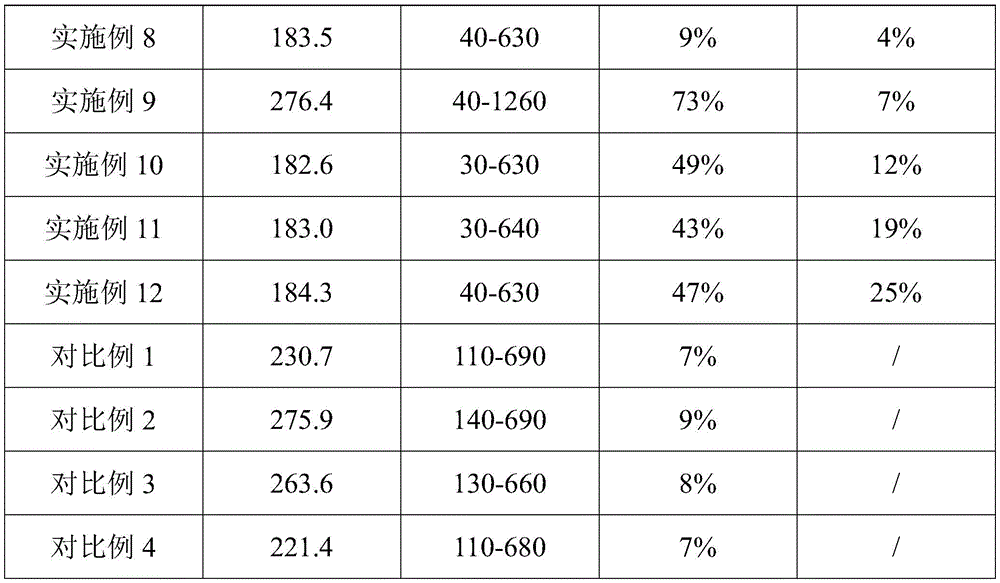
The data in the table 1 are analyzed, so that the average particle size of the drug-coated balloon is within 276.4nm, the particle size distribution is between 30 and 1260nm, the drug encapsulation rate is between 9 and 73 percent, and the proportion of absorbed drugs in unit time (0.5h) is between 4 and 25 percent; the drug coating balloon has small and uniform particle size, can quickly penetrate through a cell membrane to be absorbed after the balloon is expanded, greatly improves the bioavailability of the drug, and simultaneously, all materials in the method can be biodegraded without generating toxicity on the whole body of a human body. In addition, the preparation process is simple, efficient, stable and convenient to operate.
In a preferred range, the average particle size of the drug-coated balloon is within 185.3nm, the particle size distribution is between 30 and 630nm, and the encapsulation efficiency is between 43 and 47 percent.
Taking example 1 as an example, fig. 2 is a particle size distribution diagram of PLGA-PVA copolymer drug-loaded nanoparticles after ultrasonic emulsification and complete volatilization of solvent and before purification, and it can be seen from the figure that the drug-coated balloon of the present invention has small and uniform particle size.
As can be seen from the analysis of comparative examples 1-4 and example 1, comparative examples 1-4 are inferior to example 1 in performance, and it is proved that in the drug-loaded layer, polyvinyl alcohol and polylactic acid-glycolic acid copolymer are used in combination, and both have synergistic effect, either one of the polyvinyl alcohol and the polylactic acid-glycolic acid copolymer is replaced by other compounds of the same type, or only one of the polyvinyl alcohol and the polylactic acid-glycolic acid copolymer is arranged, and the drug encapsulation rate of the formed drug-coated balloon is too low (considering cost reasons, no in vitro simulation experiment is carried out).
As can be seen from the analysis of example 4 and example 1, the performance of example 4 is inferior to that of example 1, and the drug-coated balloon prepared by controlling the concentration of the polyvinyl alcohol solution within the range of 3-8mg/mL has better performance.
As is clear from the analysis of example 5 and example 1, example 5 is inferior in performance to example 1, and it was confirmed that the concentration of the macrolide drug in the solution containing the polylactic acid-glycolic acid copolymer and the macrolide drug in the preparation was in the range of 2 to 5mg/mL, and the encapsulation efficiency of the drug was higher.
As is clear from the analysis of example 6 and example 1, example 6 is inferior in performance to example 1, and it was confirmed that the concentration of the polylactic acid-glycolic acid copolymer in the solution containing the polylactic acid-glycolic acid copolymer and the macrolide drug in the preparation was in the range of 6 to 13mg/mL, and the encapsulation efficiency of the drug was higher.
As is clear from the analysis of examples 7 to 8 and example 1, examples 7 to 8 are inferior in performance to example 1, and it was confirmed that the balloon performance of the drug coating formed by controlling the volume ratio of the polyvinyl alcohol solution to the solution containing the polylactic acid-glycolic acid copolymer and the macrolide agent to be in the range of (2-7):1, and more preferably (2-4):1, was better in the production.
Analysis of examples 9-10 and example 1 shows that, although the encapsulation efficiency of the drug is not lower than that of example 1 in examples 9-10, the drug utilization rate in the in vitro simulation experiment is significantly lower than that of example 1, which proves that the balloon coated with the drug formed by filtration, dialysis and centrifugation is better in purification.
The applicant states that the present invention is illustrated in detail by the above examples, but the present invention is not limited to the above detailed methods, i.e. it is not meant that the present invention must rely on the above detailed methods for its implementation. It should be understood by those skilled in the art that any modifications of the present invention, equivalent substitutions of the raw materials of the product of the present invention, and the addition of auxiliary components, selection of specific modes, etc., are within the scope and disclosure of the present invention.
Claims (10)
1. The drug coating balloon is characterized by comprising a balloon body, and a hydrophilic coating and a drug-loaded layer which are sequentially arranged on the surface of the balloon body;
the drug-loaded layer comprises an additive with bonding and excipient functions and a nano drug carrier;
the nano-drug carrier comprises a combination of polylactic acid-glycolic acid copolymer, macrolide drugs and polyvinyl alcohol.
2. The drug-coated balloon of claim 1, wherein the hydrophilic coating has a thickness of 0.05-0.2 μ ι η;
preferably, the drug loading of the drug-coated balloon is 1-10 mug/mm 2 。
3. A method of making a drug-coated balloon as in claim 1 or 2, comprising the steps of:
(1) mixing a polyvinyl alcohol solution with a solution containing a polylactic-co-glycolic acid and a macrolide to form an emulsion;
(2) stirring and heating the emulsion, and evaporating the organic solvent to form a suspension;
(3) purifying the suspension to form a nano-drug carrier;
(4) mixing a nano-drug carrier, an additive and a solvent to form a polymer drug-loaded nano-particle suspension;
(5) and arranging polymer nano-drug carrier suspension on the surface of the balloon body containing the hydrophilic coating, and curing to form a drug-loaded layer to obtain the drug-coated balloon.
4. The method according to claim 3, wherein in the step (1), the mixing includes: dripping a solution containing polylactic acid-glycolic acid copolymer and macrolide medicines into a polyvinyl alcohol solution, and performing ultrasonic emulsification to form emulsion;
preferably, the particle size of the solute in the emulsion is less than or equal to 650 nm;
preferably, the means for instilling comprises a micro-syringe pump;
preferably, the dropping rate is 0.01-99.99 mL/min;
preferably, the concentration of the polyvinyl alcohol solution is 1-10 mg/mL;
preferably, the solvent in the polyvinyl alcohol solution comprises water;
preferably, the solvent in the solution containing the polylactic acid-glycolic acid copolymer and the macrolide drug comprises an organic solvent;
preferably, the organic solvent comprises dichloromethane;
preferably, in the polylactic acid-glycolic acid copolymer, the mass ratio of lactic acid to glycolic acid is 1: (1-6);
preferably, the molecular weight of the polylactic acid-glycolic acid copolymer is 5000-300000 daltons;
preferably, the macrolide includes any one or a combination of at least two of rapamycin, everolimus, zotarolimus, dexamethasone, paclitaxel, docetaxel, probucol, colchicine, heparin, aspirin, or doxorubicin;
preferably, in the solution containing the polylactic acid-glycolic acid copolymer and the macrolide medicine, the concentration of the polylactic acid-glycolic acid copolymer is 6-13 mg/mL;
preferably, in the solution containing the polylactic acid-glycolic acid copolymer and the macrolide drug, the concentration of the macrolide drug is 2-5 mg/mL;
preferably, the volume ratio of the polyvinyl alcohol solution to the solution containing the polylactic acid-glycolic acid copolymer and the macrolide drug is (2-10): 1.
5. The production method according to claim 3 or 4, wherein in the step (2), the temperature of the stirring heating is 30 to 50 ℃;
preferably, the stirring is carried out until the organic solvent in the solution containing the polylactic acid-glycolic acid copolymer and the macrolide medicine is completely volatilized.
6. The production method according to any one of claims 3 to 5, wherein in the step (3), the purification comprises filtration, dialysis and centrifugation in this order;
preferably, the means for filtering comprises a microporous filtration membrane;
preferably, the pore diameter of the microporous filter membrane is 0.4-1.0 μm;
preferably, the means of dialysis comprises a dialysis membrane;
preferably, the dialysis membrane has a molecular weight cut-off of 500-;
preferably, the rotation speed of the centrifugation is 10000-;
preferably, the time of centrifugation is 10-60 min;
preferably, the particle size of the nano-drug carrier is 30-300 nm.
7. The production method according to any one of claims 3 to 6, wherein the step (4) comprises: dispersing a nano-drug carrier in a solvent, and then mixing the nano-drug carrier with an additive;
preferably, the solvent comprises water.
8. The preparation method according to any one of claims 3 to 7, wherein in the step (4), the concentration of the nano-drug carrier in the polymer drug-loaded nanoparticle suspension is 13-40 mg/mL;
preferably, the mass part of the additive is 1-20 parts based on 100 parts of the total mass of the nano-drug carrier;
preferably, in step (5), the temperature of the curing is 40-70 ℃.
9. The method according to any one of claims 3 to 8, characterized by comprising the steps of:
(1) dripping solution containing polylactic acid-glycolic acid copolymer and macrolide drugs into polyvinyl alcohol solution at the speed of 0.01-99.99mL/min through a micro-injection pump, and performing ultrasonic emulsification until the particle size of solute is less than or equal to 650nm to form emulsion;
(2) stirring and heating the emulsion at 30-50 ℃ until the organic solvent in the emulsion is completely volatilized to form a suspension;
(3) filtering the suspension with microporous membrane with pore diameter of 0.4-1.0 μm, dialyzing with dialysis membrane with cut-off molecular weight of 500-7000 dalton, and centrifuging at 10000-30000r/min for 10-60min to obtain nanometer drug carrier with particle diameter of 30-300 nm;
(4) dispersing a nano-drug carrier in water, and mixing with an additive to form a polymer drug-loaded nano-particle suspension;
(5) and arranging polymer nano-drug carrier suspension on the surface of the balloon body containing the hydrophilic coating, and curing at 40-70 ℃ to form a drug-loaded layer to obtain the drug-coated balloon.
10. Use of a drug-coated balloon according to claim 1 or 2, or a drug-coated balloon prepared by a method according to any one of claims 3 to 9, in an intracranial drug-coated balloon.
Priority Applications (2)
| Application Number | Priority Date | Filing Date | Title |
|---|---|---|---|
| CN202210863150.XA CN115006605A (en) | 2022-07-20 | 2022-07-20 | Drug coating balloon and preparation method and application thereof |
| PCT/CN2022/126117 WO2024016498A1 (en) | 2022-07-20 | 2022-10-19 | Drug-coated balloon, preparation method therefor and use thereof |
Applications Claiming Priority (1)
| Application Number | Priority Date | Filing Date | Title |
|---|---|---|---|
| CN202210863150.XA CN115006605A (en) | 2022-07-20 | 2022-07-20 | Drug coating balloon and preparation method and application thereof |
Publications (1)
| Publication Number | Publication Date |
|---|---|
| CN115006605A true CN115006605A (en) | 2022-09-06 |
Family
ID=83081101
Family Applications (1)
| Application Number | Title | Priority Date | Filing Date |
|---|---|---|---|
| CN202210863150.XA Pending CN115006605A (en) | 2022-07-20 | 2022-07-20 | Drug coating balloon and preparation method and application thereof |
Country Status (2)
| Country | Link |
|---|---|
| CN (1) | CN115006605A (en) |
| WO (1) | WO2024016498A1 (en) |
Cited By (1)
| Publication number | Priority date | Publication date | Assignee | Title |
|---|---|---|---|---|
| WO2024016498A1 (en) * | 2022-07-20 | 2024-01-25 | 苏州中天医疗器械科技有限公司 | Drug-coated balloon, preparation method therefor and use thereof |
Families Citing this family (2)
| Publication number | Priority date | Publication date | Assignee | Title |
|---|---|---|---|---|
| CN119345440B (en) * | 2024-09-23 | 2025-10-21 | 上海市第六人民医院 | Nerve suture and preparation method thereof |
| CN120093993B (en) * | 2025-03-04 | 2025-12-02 | 苏州祥利医疗科技有限公司 | A drug-eluting capsule, a drug coating, and a method for preparing the same. |
Citations (12)
| Publication number | Priority date | Publication date | Assignee | Title |
|---|---|---|---|---|
| CA2062303A1 (en) * | 1991-09-04 | 1993-03-05 | Yoshiaki Kawashima | Method of preparation of nanocapsules |
| WO1996020698A2 (en) * | 1995-01-05 | 1996-07-11 | The Board Of Regents Acting For And On Behalf Of The University Of Michigan | Surface-modified nanoparticles and method of making and using same |
| CN1903365A (en) * | 2005-07-28 | 2007-01-31 | 中国医学科学院生物医学工程研究所 | Drug-carried nanometer particles, and its preparing process for preparing medicien prepn. for anti-restenosis of blood-vessel |
| US20080118544A1 (en) * | 2006-11-20 | 2008-05-22 | Lixiao Wang | Drug releasing coatings for medical devices |
| US20110022027A1 (en) * | 2008-03-12 | 2011-01-27 | Hosokawa Micron Corporation | Drug-eluting catheter and method of manufacturing the same |
| CN102657899A (en) * | 2012-05-22 | 2012-09-12 | 东莞科威医疗器械有限公司 | Medicament coating stent capable of preventing blood vessel restenosis and preparation method thereof |
| CN204182007U (en) * | 2014-05-14 | 2015-03-04 | 山东瑞安泰医疗技术有限公司 | A kind of ultrasonically controlled-release medicine eluting balloon catheter |
| CN105055312A (en) * | 2015-09-07 | 2015-11-18 | 苏州纳诺康生物技术有限公司 | Method for preparing docetaxel drug-loaded nanoparticles with polylactic acid/hydroxyglycollic acid copolymer as material |
| CN107049984A (en) * | 2017-03-14 | 2017-08-18 | 武汉理工大学 | A kind of preparation method for carrying taxol polylactic-co-glycolic acid microballoon |
| CN109985280A (en) * | 2017-12-29 | 2019-07-09 | 先健科技(深圳)有限公司 | Drug balloon and preparation method thereof |
| CN111001044A (en) * | 2019-12-30 | 2020-04-14 | 上海申淇医疗科技有限公司 | Medicine balloon, preparation of medicine coated on medicine balloon and preparation method of medicine balloon |
| CN112370638A (en) * | 2020-12-04 | 2021-02-19 | 上海康德莱医疗器械股份有限公司 | Medicine balloon |
Family Cites Families (7)
| Publication number | Priority date | Publication date | Assignee | Title |
|---|---|---|---|---|
| US20070148251A1 (en) * | 2005-12-22 | 2007-06-28 | Hossainy Syed F A | Nanoparticle releasing medical devices |
| ES2676537T3 (en) * | 2009-06-02 | 2018-07-20 | Concept Medical Inc. | Rejuvenation of the coronary artery by improving blood flow with the help of inserting nano-balls (encapsulated nanoparticles) containing therapeutic agents by means of a non-implantable tissue device and, thus, providing tissue release treat the required cell cycle |
| WO2011090569A1 (en) * | 2009-12-30 | 2011-07-28 | Boston Scientific Scimed, Inc. | Drug-delivery balloons |
| KR101333821B1 (en) * | 2010-10-08 | 2013-11-29 | 연세대학교 산학협력단 | Drug-eluting balloon catheter multilayer coating with drug-embeded nanoparticles and polymers and preparation method thereof |
| CN108030995A (en) * | 2017-12-22 | 2018-05-15 | 鼎科医疗技术(苏州)有限公司 | medicinal balloon processing method |
| CN112402702A (en) * | 2020-12-04 | 2021-02-26 | 上海康德莱医疗器械股份有限公司 | A drug coating composition and a drug coating balloon |
| CN115006605A (en) * | 2022-07-20 | 2022-09-06 | 苏州中天医疗器械科技有限公司 | Drug coating balloon and preparation method and application thereof |
-
2022
- 2022-07-20 CN CN202210863150.XA patent/CN115006605A/en active Pending
- 2022-10-19 WO PCT/CN2022/126117 patent/WO2024016498A1/en not_active Ceased
Patent Citations (12)
| Publication number | Priority date | Publication date | Assignee | Title |
|---|---|---|---|---|
| CA2062303A1 (en) * | 1991-09-04 | 1993-03-05 | Yoshiaki Kawashima | Method of preparation of nanocapsules |
| WO1996020698A2 (en) * | 1995-01-05 | 1996-07-11 | The Board Of Regents Acting For And On Behalf Of The University Of Michigan | Surface-modified nanoparticles and method of making and using same |
| CN1903365A (en) * | 2005-07-28 | 2007-01-31 | 中国医学科学院生物医学工程研究所 | Drug-carried nanometer particles, and its preparing process for preparing medicien prepn. for anti-restenosis of blood-vessel |
| US20080118544A1 (en) * | 2006-11-20 | 2008-05-22 | Lixiao Wang | Drug releasing coatings for medical devices |
| US20110022027A1 (en) * | 2008-03-12 | 2011-01-27 | Hosokawa Micron Corporation | Drug-eluting catheter and method of manufacturing the same |
| CN102657899A (en) * | 2012-05-22 | 2012-09-12 | 东莞科威医疗器械有限公司 | Medicament coating stent capable of preventing blood vessel restenosis and preparation method thereof |
| CN204182007U (en) * | 2014-05-14 | 2015-03-04 | 山东瑞安泰医疗技术有限公司 | A kind of ultrasonically controlled-release medicine eluting balloon catheter |
| CN105055312A (en) * | 2015-09-07 | 2015-11-18 | 苏州纳诺康生物技术有限公司 | Method for preparing docetaxel drug-loaded nanoparticles with polylactic acid/hydroxyglycollic acid copolymer as material |
| CN107049984A (en) * | 2017-03-14 | 2017-08-18 | 武汉理工大学 | A kind of preparation method for carrying taxol polylactic-co-glycolic acid microballoon |
| CN109985280A (en) * | 2017-12-29 | 2019-07-09 | 先健科技(深圳)有限公司 | Drug balloon and preparation method thereof |
| CN111001044A (en) * | 2019-12-30 | 2020-04-14 | 上海申淇医疗科技有限公司 | Medicine balloon, preparation of medicine coated on medicine balloon and preparation method of medicine balloon |
| CN112370638A (en) * | 2020-12-04 | 2021-02-19 | 上海康德莱医疗器械股份有限公司 | Medicine balloon |
Non-Patent Citations (4)
| Title |
|---|
| 苗立夫;杨菁;黄超联;宋存先;曾玉杰;陈连凤;朱文玲;: "包载雷帕霉素聚乳酸-聚乙醇酸纳米粒子的制备、表征及体外释放试验", 中国组织工程研究与临床康复, no. 41, pages 107 - 110 * |
| 苗立夫;杨菁;黄超联;宋存先;曾玉杰;陈连凤;朱文玲;: "雷帕霉素聚乳酸-聚乙醇酸纳米粒子的制备、表征及血管内局部给药效能", 中国医学科学院学报, no. 04 * |
| 薛静;黄岳山;: "正交优化聚乳酸-羟基乙酸纳米粒的制备", 中国组织工程研究与临床康复, no. 42, pages 46 - 50 * |
| 马红燕;王俊;于拔萃;: "黄芩素聚乳酸-羟基乙酸共聚物纳米粒的制备", 中国药物与临床, vol. 20, no. 01, pages 127 - 128 * |
Cited By (1)
| Publication number | Priority date | Publication date | Assignee | Title |
|---|---|---|---|---|
| WO2024016498A1 (en) * | 2022-07-20 | 2024-01-25 | 苏州中天医疗器械科技有限公司 | Drug-coated balloon, preparation method therefor and use thereof |
Also Published As
| Publication number | Publication date |
|---|---|
| WO2024016498A1 (en) | 2024-01-25 |
Similar Documents
| Publication | Publication Date | Title |
|---|---|---|
| CN111317907B (en) | Composite drug coating balloon, preparation method thereof and composite drug coating balloon dilatation catheter | |
| CN110292701B (en) | Drug eluting balloon catheter and preparation method thereof | |
| CN115006605A (en) | Drug coating balloon and preparation method and application thereof | |
| US10729819B2 (en) | Drug delivery medical device | |
| EP2768571B1 (en) | Drug delivery medical device | |
| CA2888776C (en) | Drug delivery medical device | |
| CN102791302B (en) | Hydrophobic therapeutic agent for the sacculus of coated with drug and solid emulsifier coating | |
| US10188772B2 (en) | Drug delivery medical device | |
| CN107206129B (en) | Drug coated medical devices | |
| US9162014B2 (en) | Method and an insertable medical device for delivering one or more pro-healing agents to a target site within a blood vessel post-deployment of a stent | |
| CN102847200B (en) | A method for preparing electrostatically self-assembled drug carried layer | |
| CN111672018B (en) | Drug-loaded medical device and preparation method thereof, drug balloon and drug coating preparation method | |
| KR101333821B1 (en) | Drug-eluting balloon catheter multilayer coating with drug-embeded nanoparticles and polymers and preparation method thereof | |
| US9259518B2 (en) | Re-establishment of blood flow in blocked human arteries by transferring nano-encapsulated drug through medical devices, designed for the same and releasing the nano-encapsulated drug in human artery with body ph | |
| CN111249536A (en) | Novel drug eluting balloon catheter and preparation method thereof | |
| CN116099108B (en) | Drug coating, drug eluting balloon catheter and preparation method thereof | |
| CN115501395B (en) | Medicine carrying saccule and preparation method thereof | |
| Chandy et al. | Development of poly (Lactic acid)/chitosan co-matrix microspheres: controlled release of taxol-heparin for preventing restenosis | |
| CN111588914A (en) | Medicine coating for interventional or implanted medical apparatus and preparation method thereof | |
| CN115414538A (en) | Lipid nanocapsule drug-loaded particles with uniform particle size, drug balloon, and preparation method and application thereof |
Legal Events
| Date | Code | Title | Description |
|---|---|---|---|
| PB01 | Publication | ||
| PB01 | Publication | ||
| SE01 | Entry into force of request for substantive examination | ||
| SE01 | Entry into force of request for substantive examination |